
The living room serves as the heart of every home—a space where families gather, guests are entertained, and memories are created. At the center of this sanctuary often sits one of the most important furniture pieces: the sofa. A light grey sofa has emerged as a design staple that transcends fleeting trends, offering a versatile canvas that adapts to countless interior styles while maintaining an air of sophisticated simplicity. This neutral foundation piece possesses the remarkable ability to anchor a room while allowing other design elements to shine, creating spaces that feel both curated and comfortable.
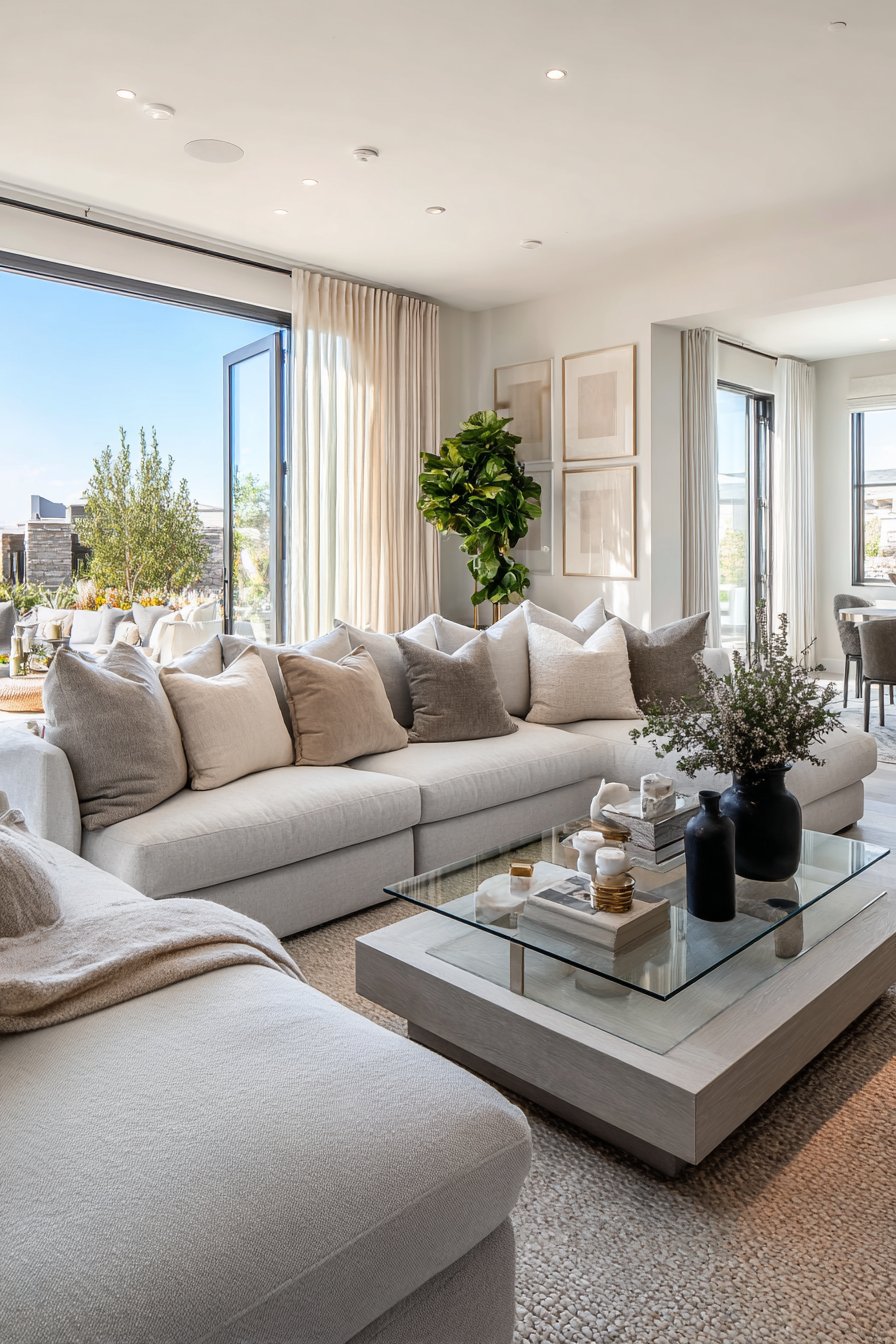
Choosing a light grey sofa isn’t merely about selecting furniture—it’s about making a deliberate design decision that impacts the entire aesthetic and functionality of your living space. The beauty of this choice lies in its chameleon-like quality: pair it with warm woods and you achieve cozy farmhouse charm; surround it with metals and concrete for industrial edge; or complement it with natural textures for Scandinavian serenity. The light grey palette serves as a sophisticated neutral that works harmoniously with virtually any color scheme, from bold jewel tones to soft pastels, making it an investment piece that evolves with your changing tastes.
In this comprehensive guide, we’ll explore nineteen distinctive light grey sofa living room concepts that showcase the remarkable versatility of this timeless furniture piece. From minimalist Scandinavian retreats to luxurious velvet-clad sanctuaries, from family-friendly spaces to sophisticated urban lofts, each design demonstrates how a light grey sofa can be the foundation for diverse aesthetic visions. Whether you’re furnishing a compact apartment or designing an expansive open-concept space, these ideas will inspire you to create a living room that reflects your personal style while maintaining the practical functionality modern life demands.

1. Scandinavian-Inspired Minimalist Serenity
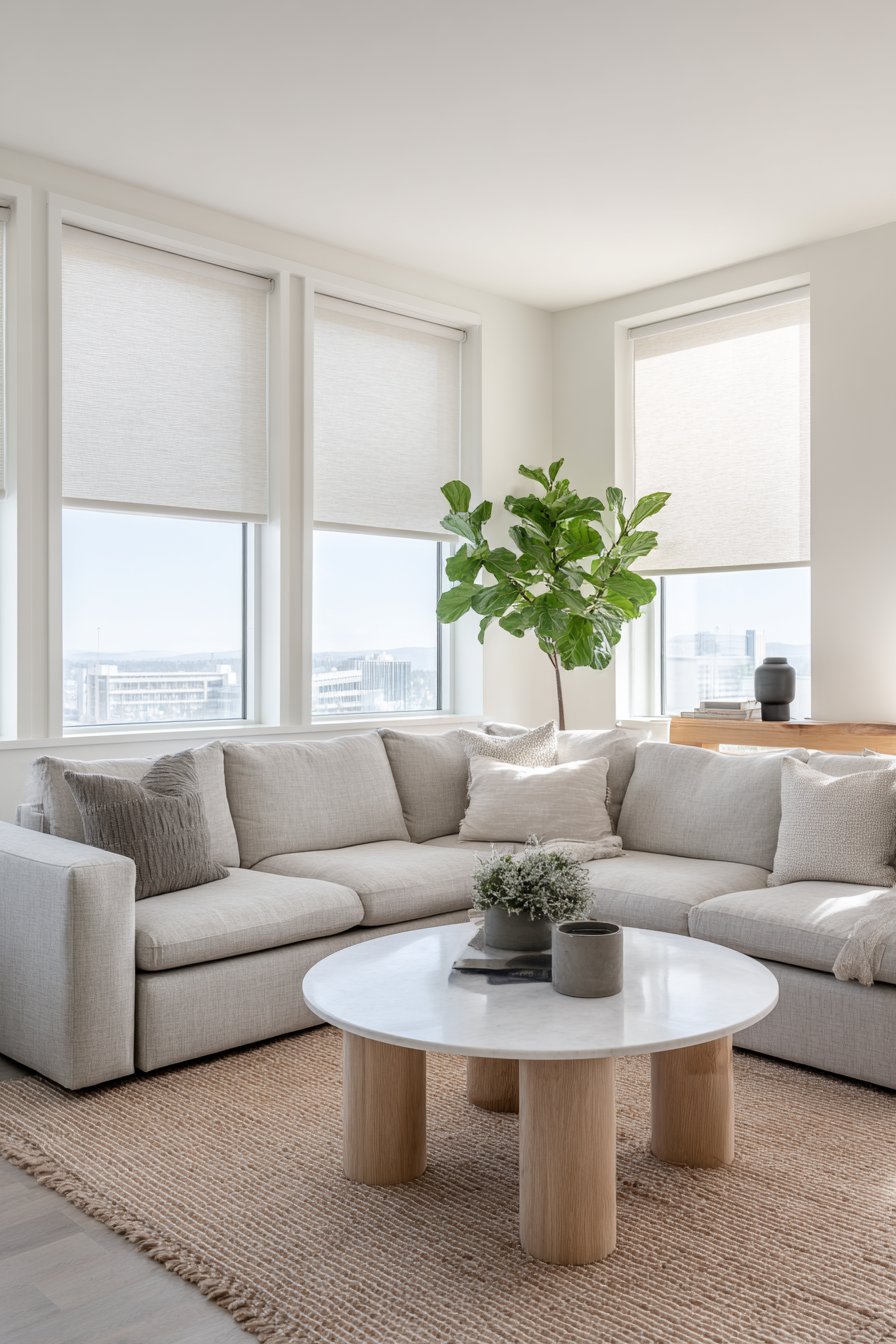
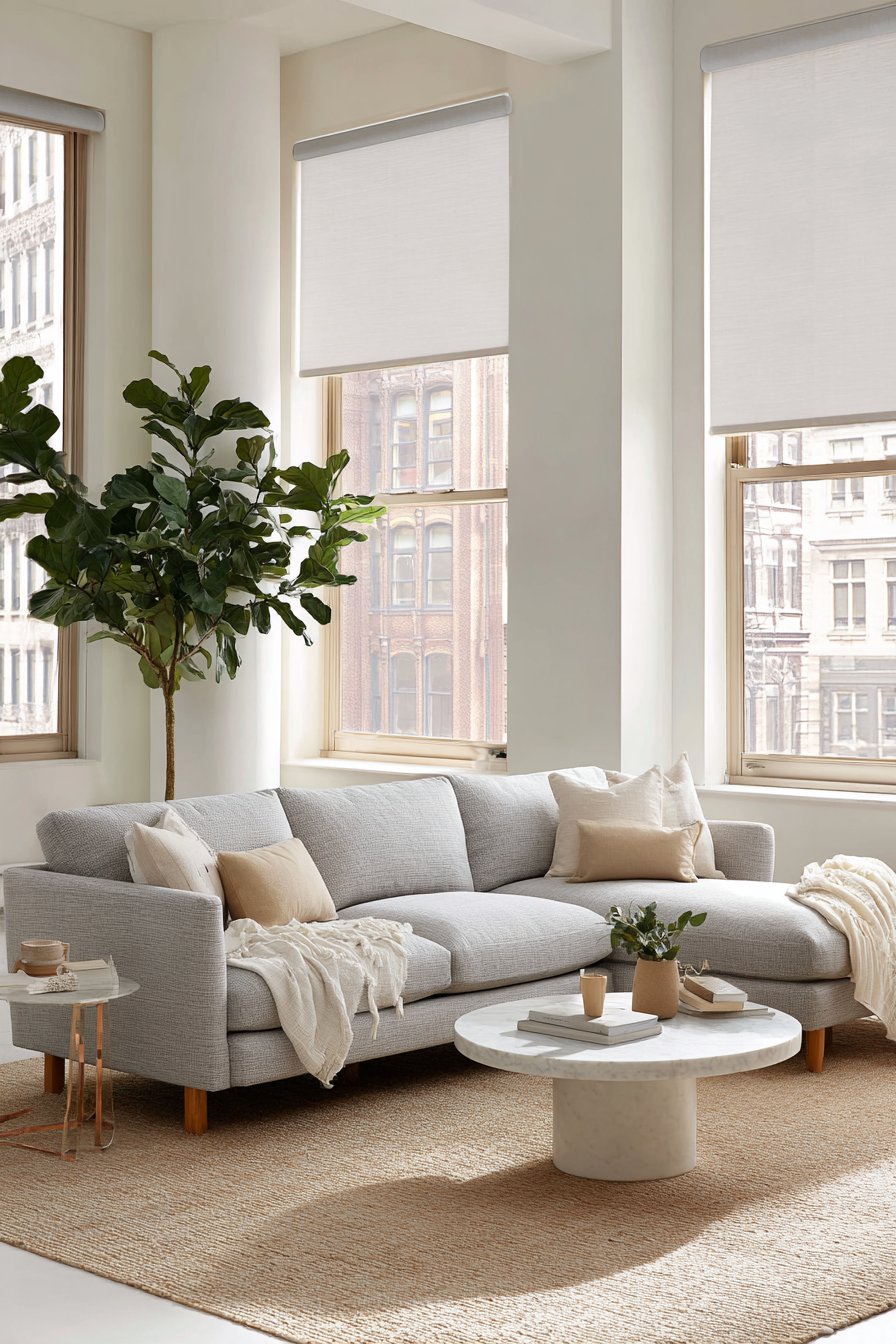
The Scandinavian approach to interior design celebrates the beauty of simplicity, and nowhere is this philosophy more evident than in a light grey sofa living room that embraces Nordic minimalism. Picture a three-seater sectional upholstered in soft grey linen, its visible weave texture adding subtle interest while maintaining the clean aesthetic that defines Scandinavian style. The natural oak legs provide the perfect counterpoint to the neutral upholstery, introducing warmth through organic wood tones that prevent the space from feeling cold or sterile. This careful balance between cool and warm elements creates a room that feels both refreshing and inviting.
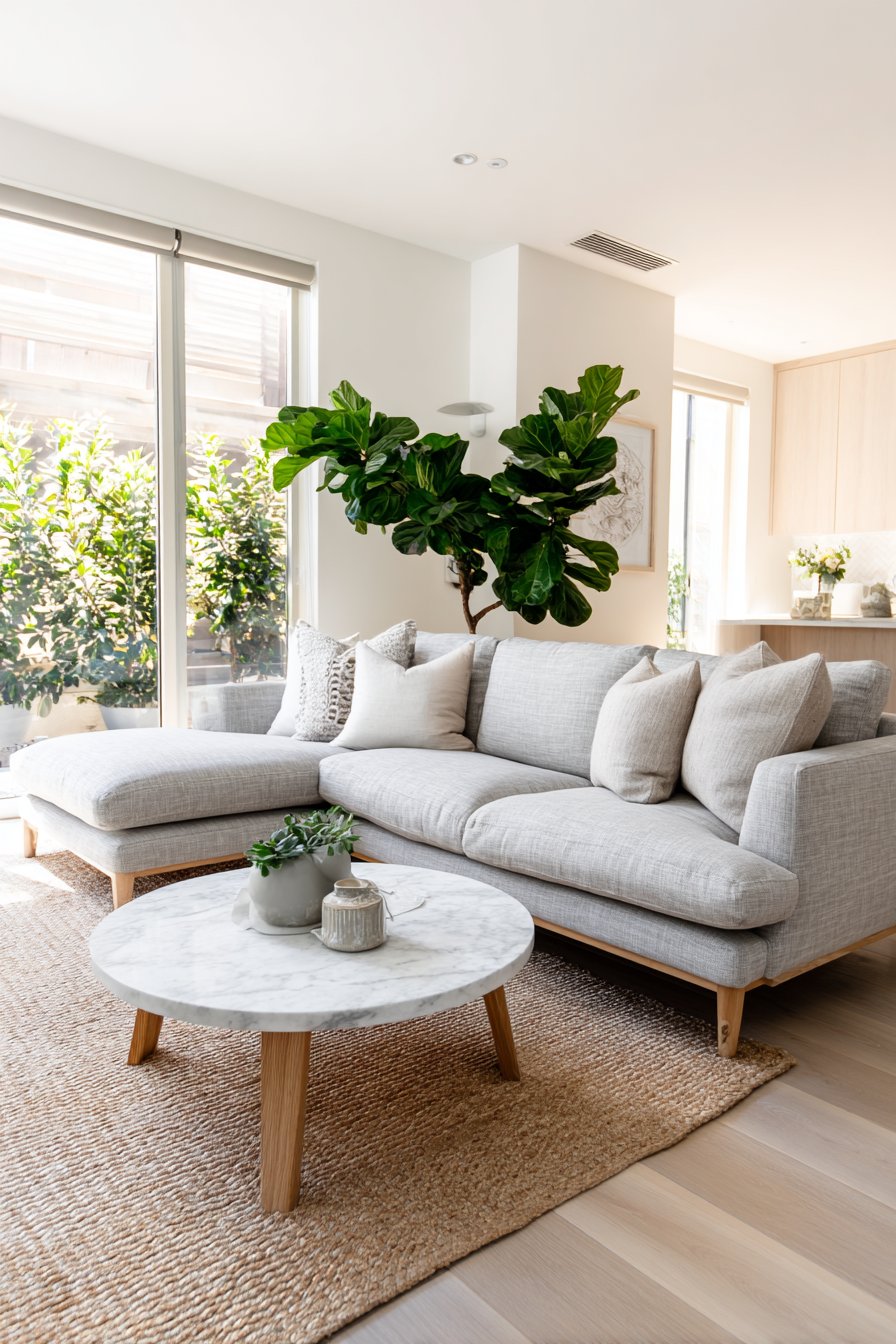
The furnishings in this space follow the “less is more” principle without sacrificing functionality or comfort. A round marble coffee table centers the arrangement, its smooth surface and elegant veining providing a touch of luxury while maintaining the minimalist ethos. Beneath it, a jute area rug introduces natural texture that grounds the seating area and adds tactile warmth underfoot. The simplicity of these pieces allows each element to be appreciated individually while contributing to a cohesive whole that feels effortlessly composed.
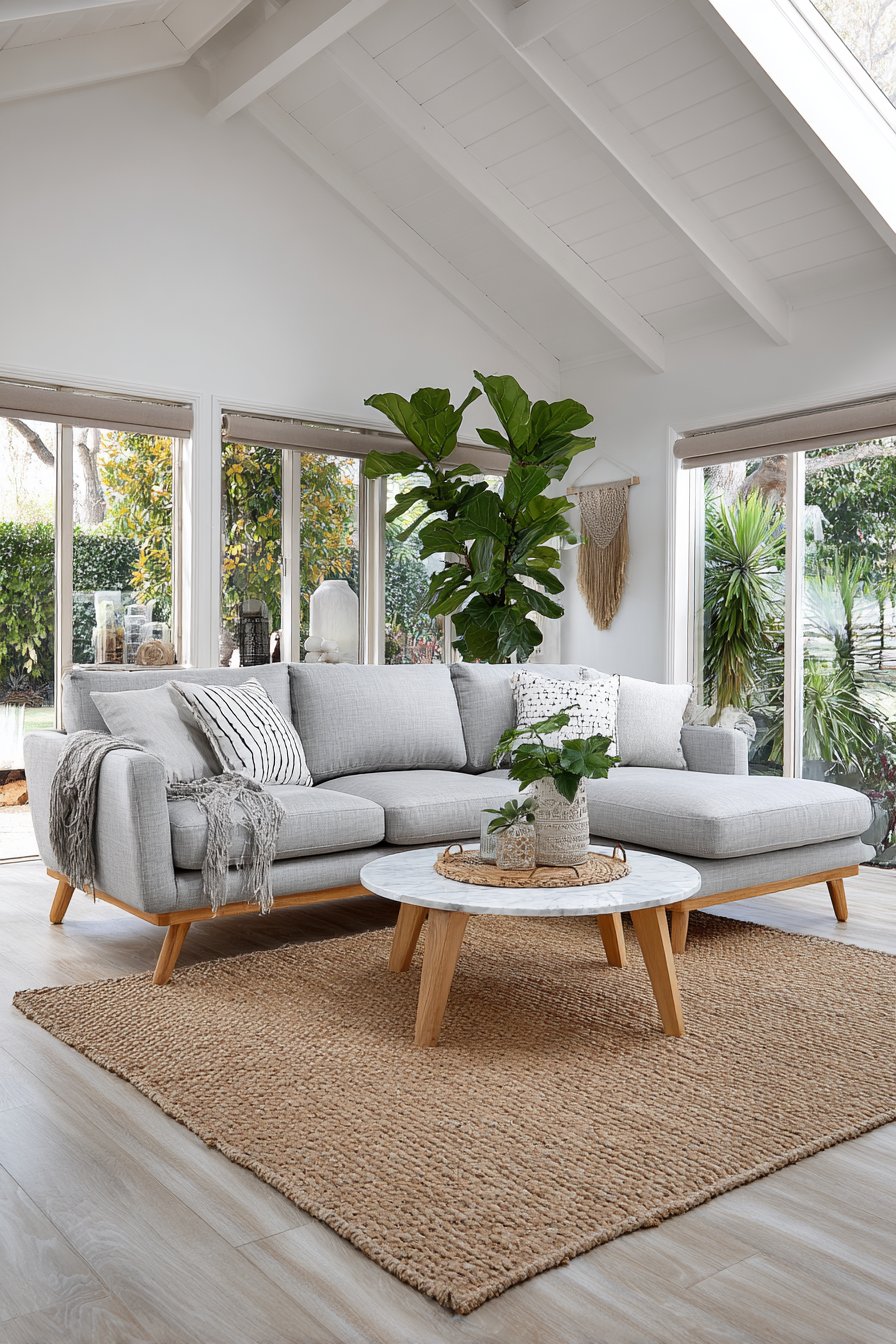
Natural light plays a starring role in Scandinavian design, and this living room maximizes daylight through large windows dressed with light-filtering roller shades. The soft, diffused illumination that floods the space enhances the light grey sofa’s fabric texture, creating subtle plays of shadow and light throughout the day. White walls amplify this brightness while providing a crisp backdrop that makes the grey sofa appear even more refined. A single potted fiddle leaf fig adds organic contrast, its deep green leaves providing the only bold color in an otherwise neutral palette—a testament to the Scandinavian belief that nature provides the best decoration.
Key Design Tips:
- Select a light grey linen sofa with visible texture to add visual interest without compromising the minimalist aesthetic
- Incorporate natural wood elements like oak legs and frames to introduce warmth and prevent the space from feeling cold
- Maximize natural light with simple window treatments that filter rather than block daylight
- Limit your color palette to neutrals with one or two organic green plants as accent pieces
- Choose furniture with clean lines and functional design that serves a purpose without unnecessary ornamentation
2. Modern Farmhouse Comfort and Character
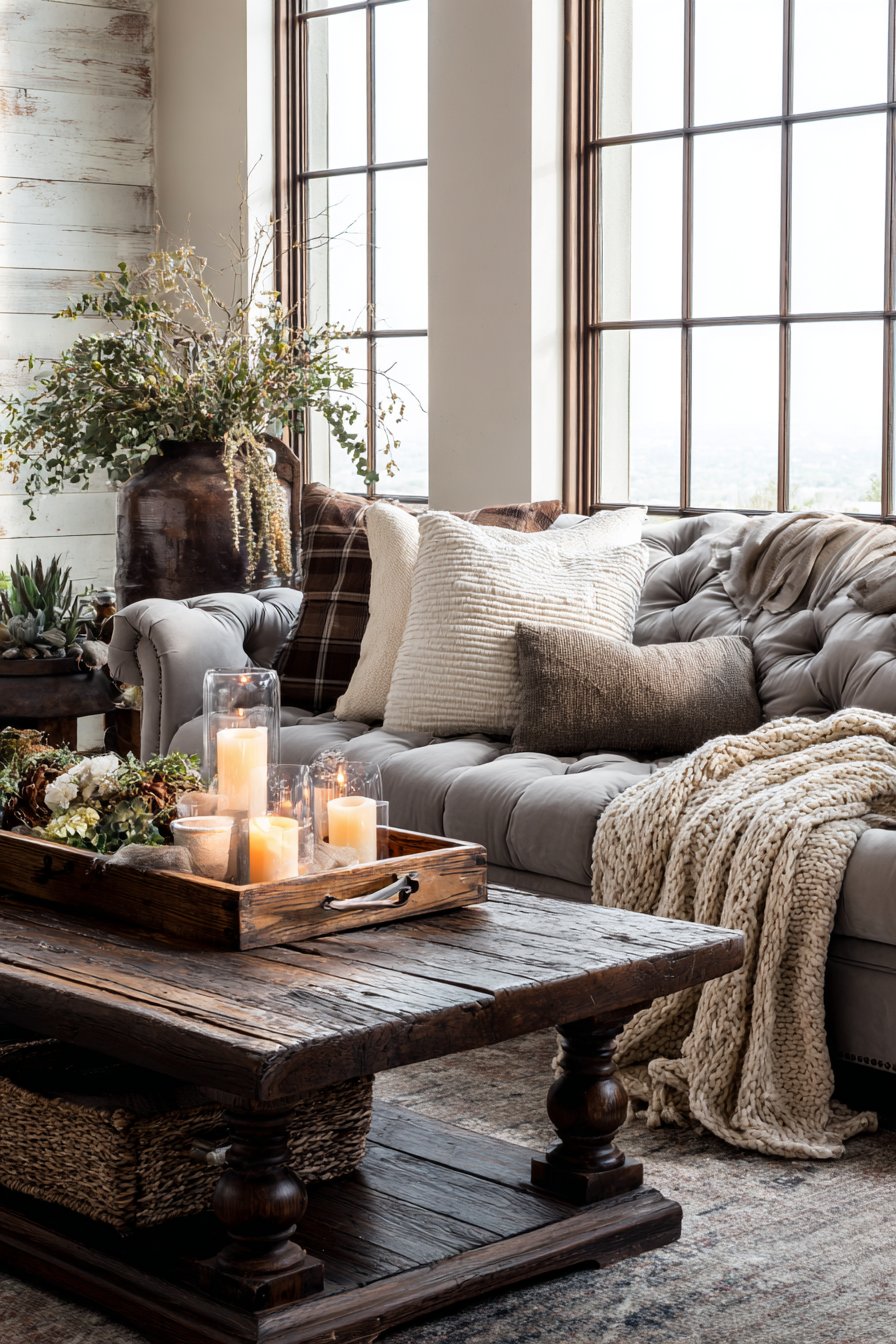
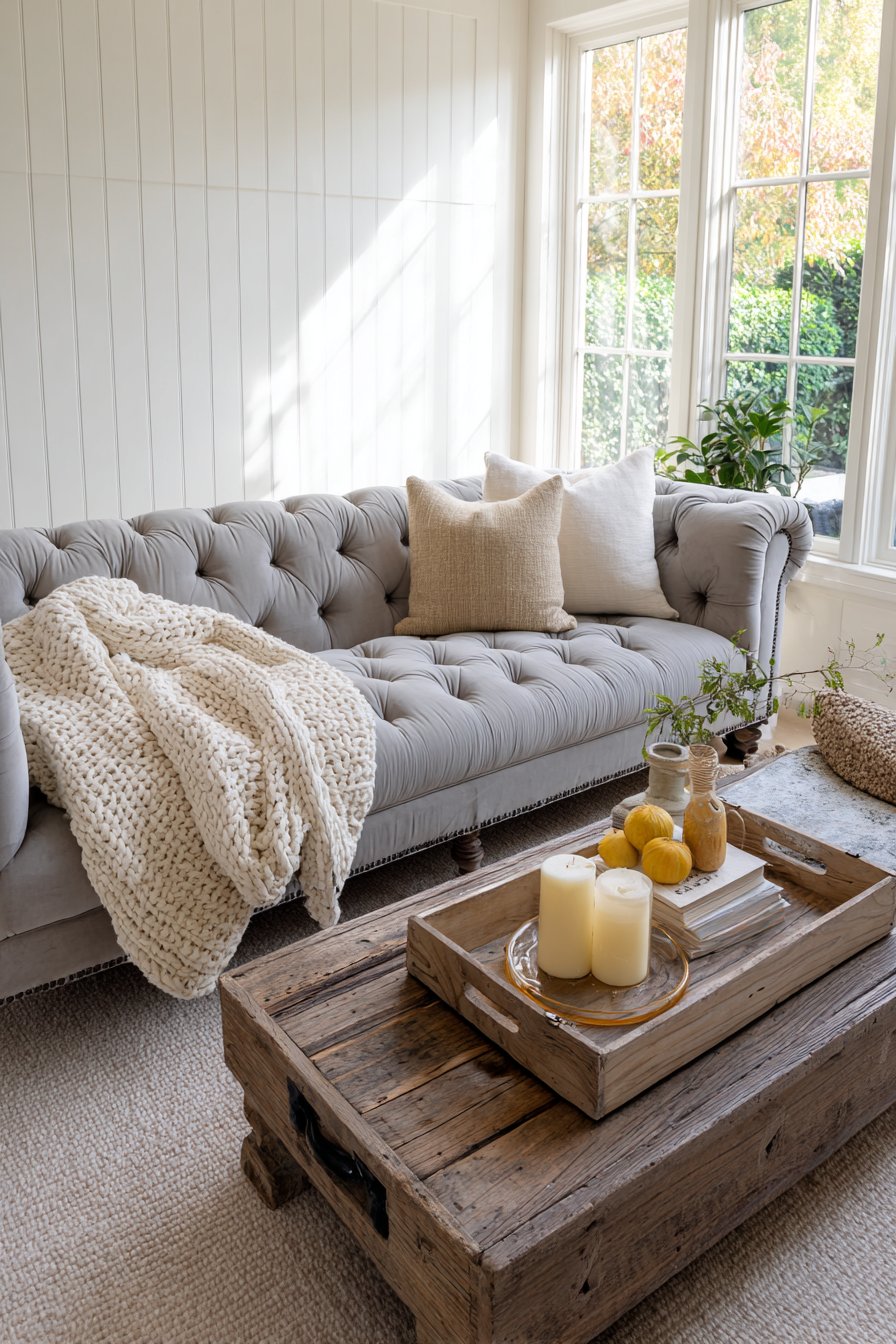
The modern farmhouse aesthetic has captured hearts by blending rustic charm with contemporary comfort, and a light grey sofa living room executed in this style achieves the perfect marriage of refined and relaxed. Imagine a tufted grey velvet sofa with rolled arms and turned wooden legs finished in weathered oak—a piece that honors traditional farmhouse silhouettes while updating them with luxurious upholstery. The button tufting adds dimensional interest while the velvet fabric catches light beautifully, creating subtle variations in the grey tone that prevent monotony and add depth to the overall composition.
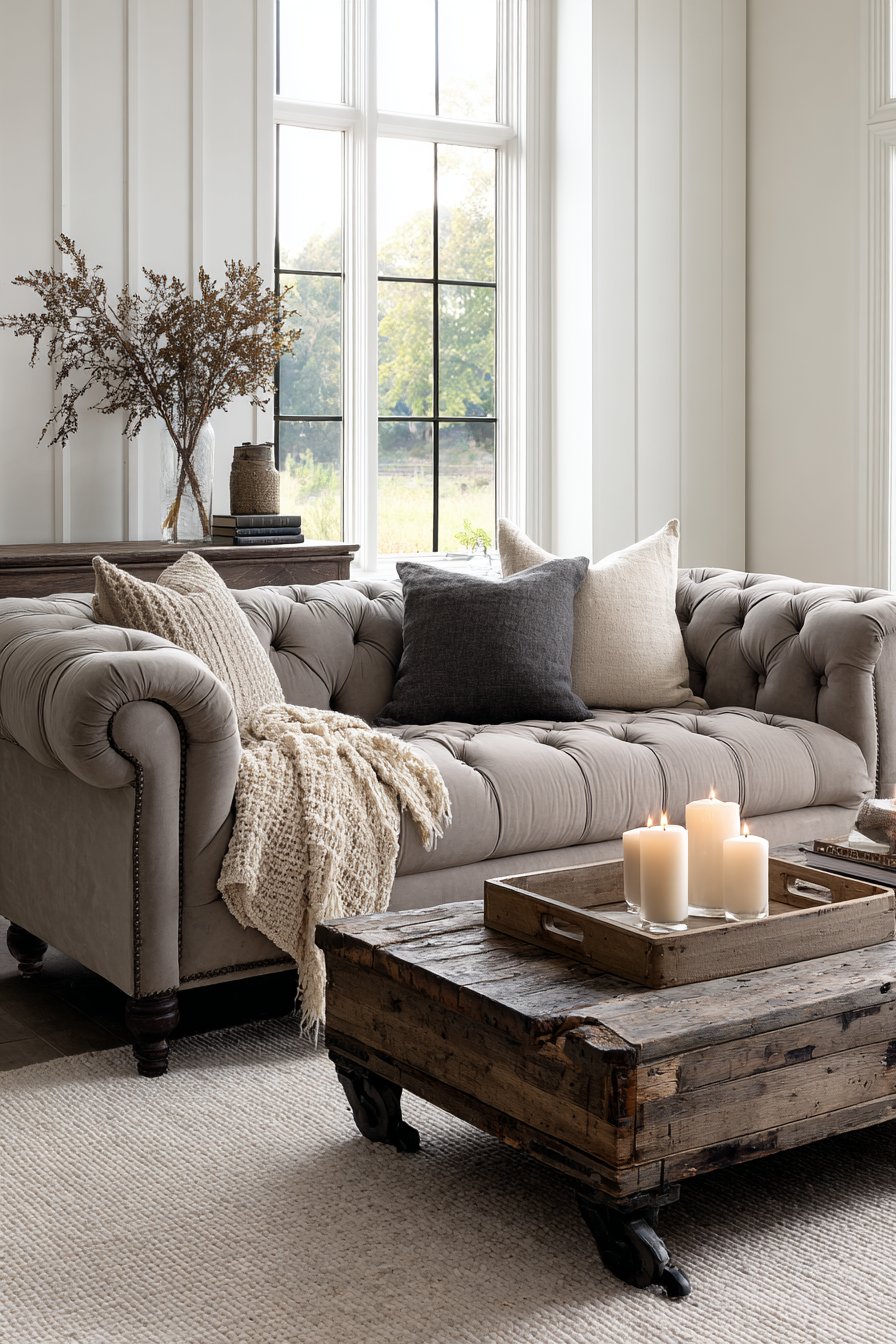
Layering textures becomes essential in farmhouse design, where comfort and coziness take precedence over minimalism. Chunky knit throw blankets in cream and oatmeal drape casually over the sofa’s arm, inviting you to curl up with a book on lazy afternoons. Linen pillows in various sizes provide both visual and physical comfort, their natural wrinkles adding to the lived-in appeal that defines authentic farmhouse style. The coffee table—fashioned from reclaimed wood with visible knots and grain variations—serves as both functional surface and conversation piece, displaying a vintage wooden tray arranged with pillar candles in varying heights.
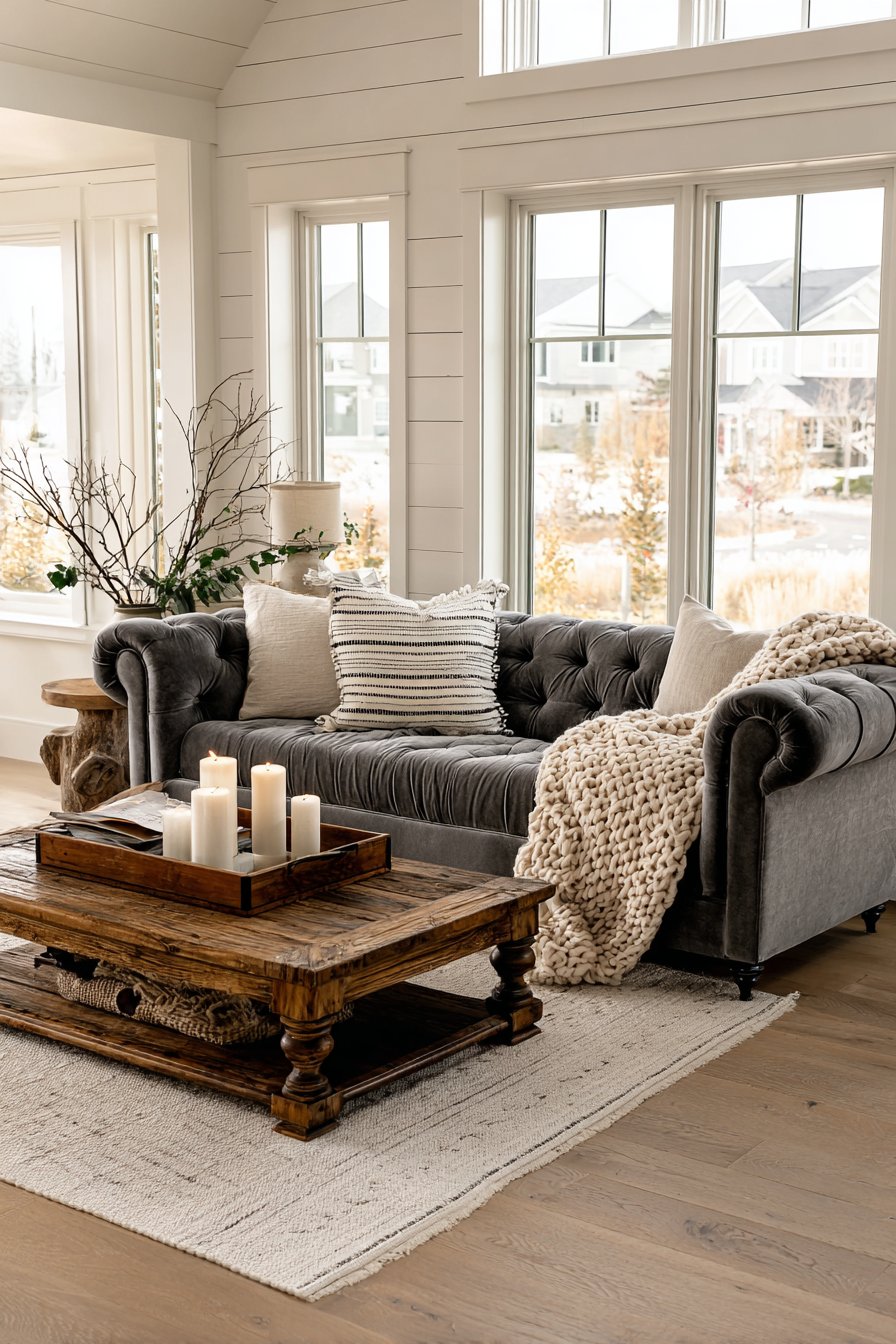
The backdrop for this cozy arrangement features a shiplap accent wall painted in soft white, providing the textural interest that farmhouse interiors crave without overwhelming the space. This architectural element adds character while maintaining a light, airy feeling that prevents the room from feeling heavy despite the layered textiles. Natural afternoon light streams through tall windows, highlighting the various textures and creating an inviting golden glow that makes the space feel perpetually ready for gathering with loved ones.
Key Design Tips:
- Choose a tufted velvet sofa to add luxury while maintaining the traditional farmhouse form with rolled arms and wooden legs
- Layer multiple textures through throws, pillows, and rugs to create the cozy, lived-in feeling essential to farmhouse style
- Incorporate reclaimed or distressed wood pieces to add authentic character and history to the space
- Use shiplap or other architectural details on accent walls to introduce pattern through texture rather than color
- Embrace natural materials like linen, cotton, and wool that improve with age and develop character over time
3. Contemporary Minimalist Urban Sophistication
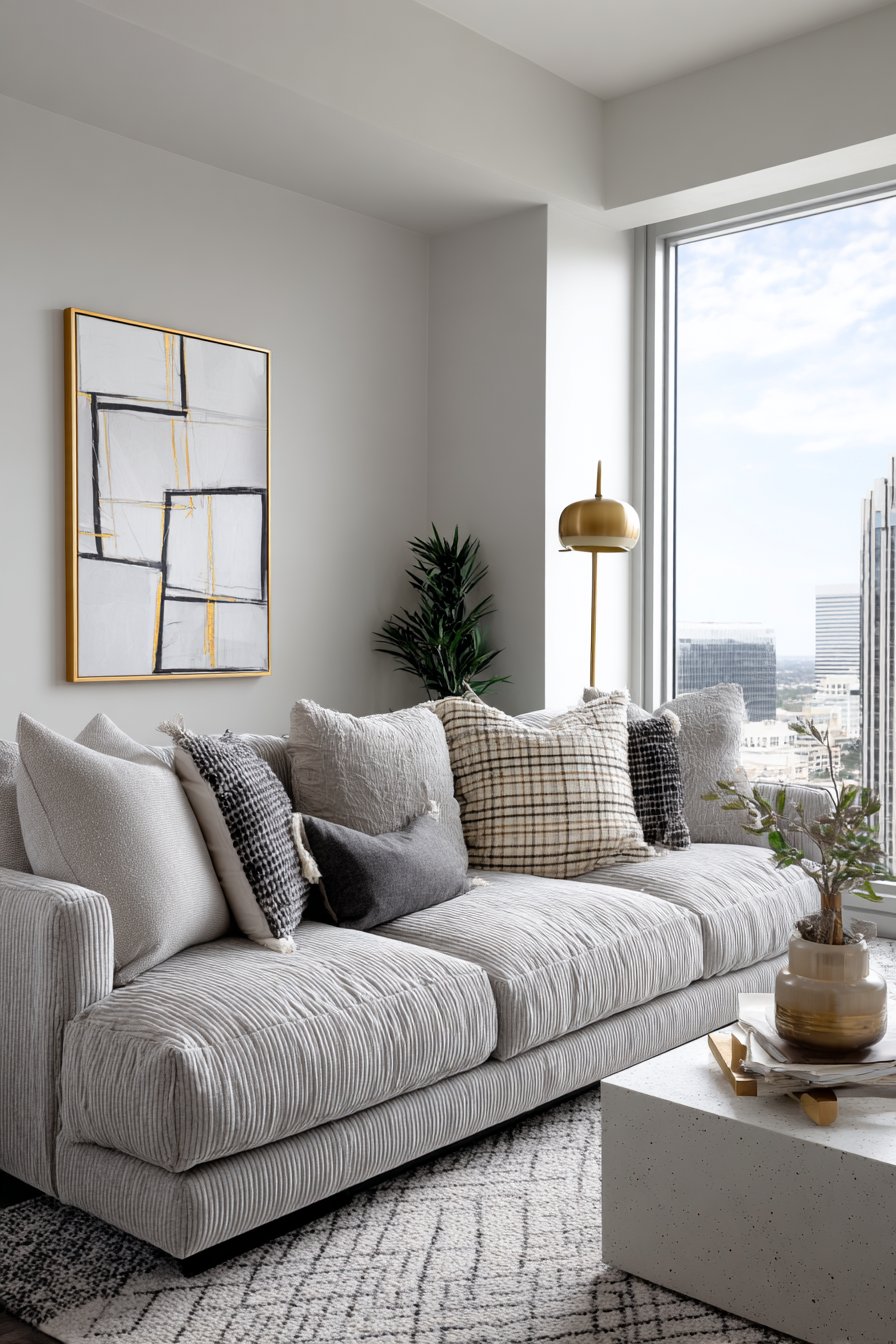
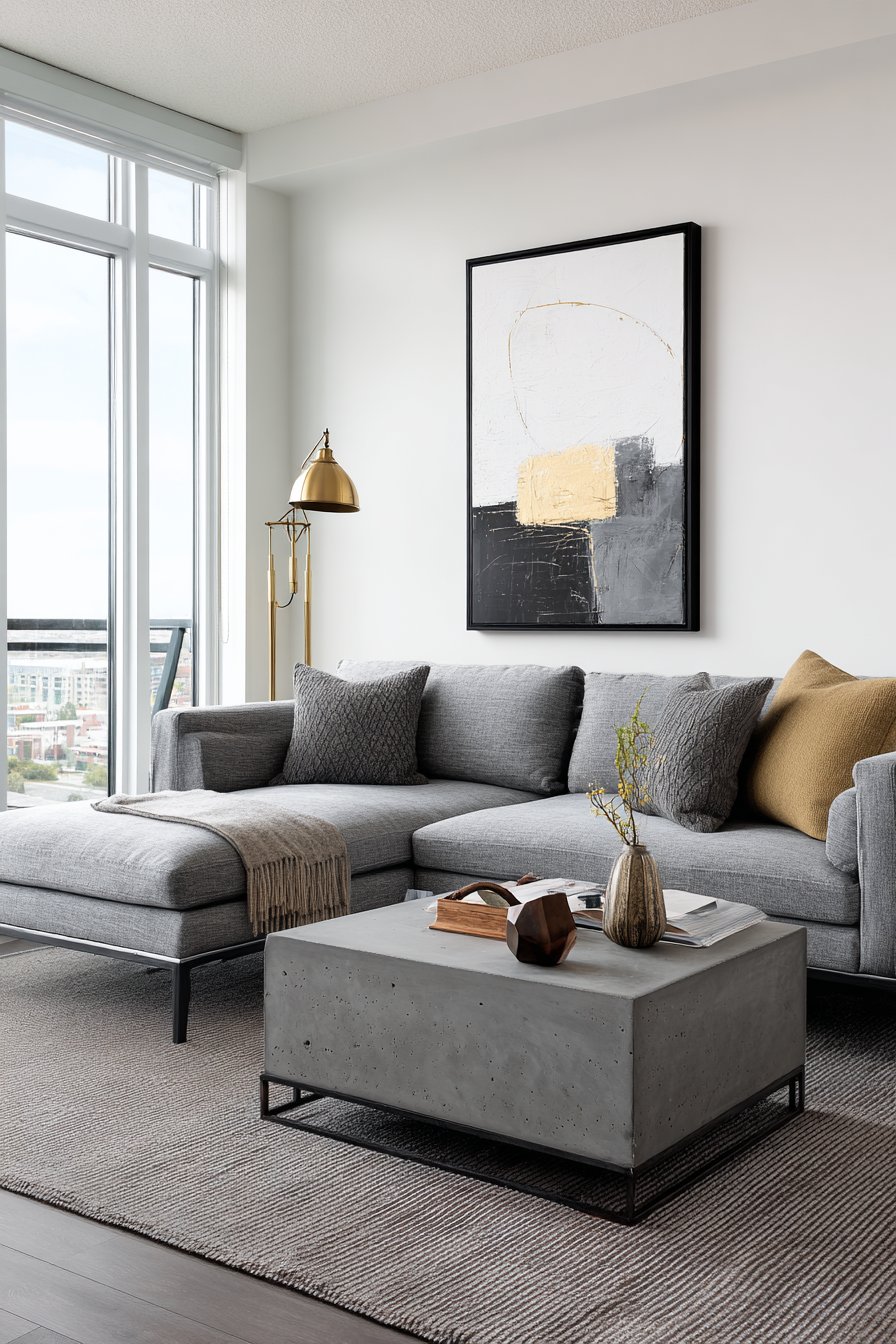
For those who appreciate clean lines and uncluttered spaces, a contemporary light grey sofa living room offers a sanctuary of calm in our increasingly busy world. The foundation of this design features a low-profile modular grey sofa upholstered in high-performance fabric—a practical choice that doesn’t compromise aesthetics. The clean, horizontal lines of the piece emphasize the room’s width while metal legs add an industrial touch that prevents the minimalist aesthetic from feeling too soft or overly residential. This sofa becomes a study in restraint, proving that simplicity requires no apology when executed with confidence and precision.
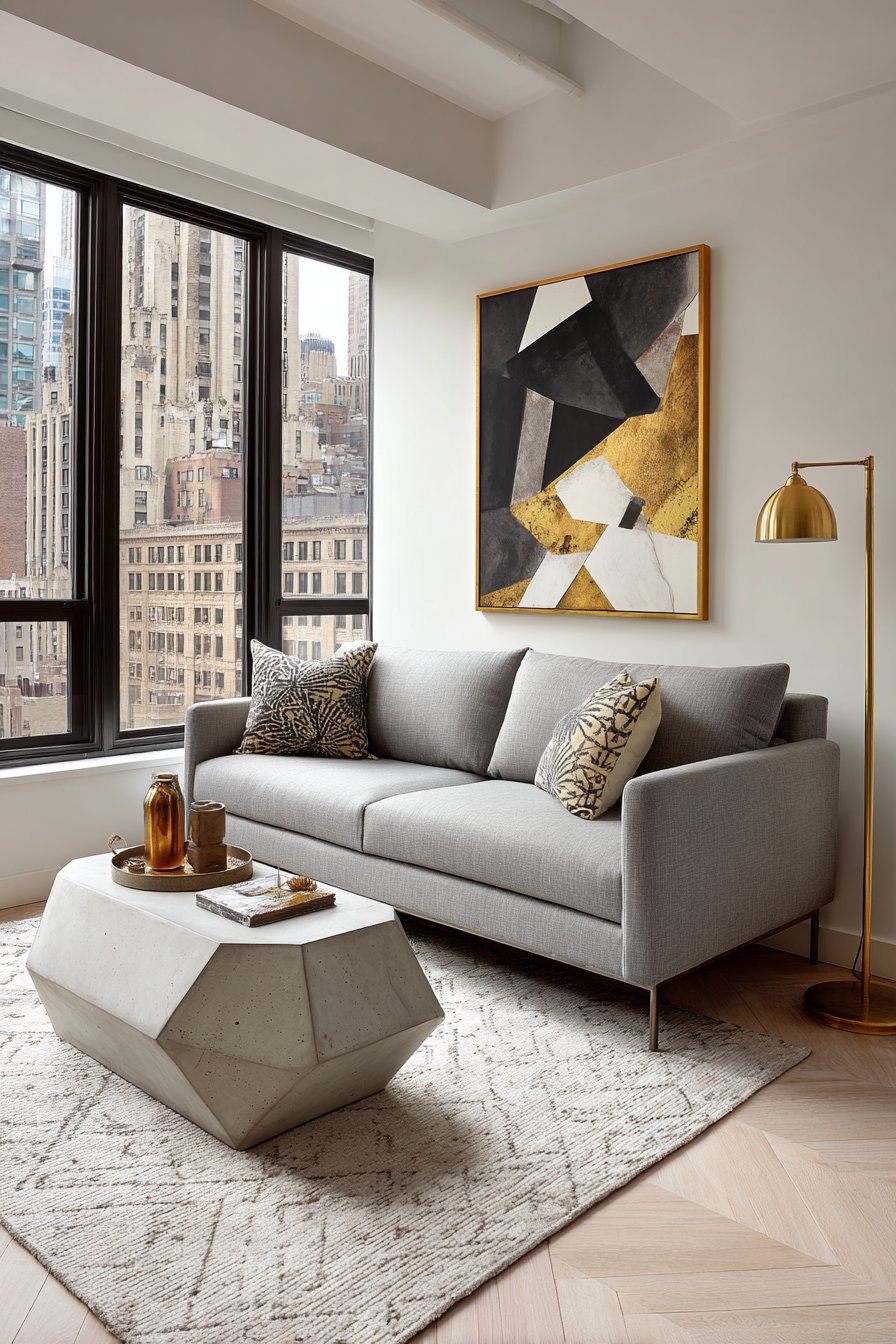
The supporting cast in this contemporary space consists of carefully curated pieces that each serve a specific purpose. A geometric concrete coffee table introduces architectural interest through its angular form, the raw material adding textural contrast against the sofa’s smooth upholstery. Above the sofa, abstract artwork in a limited palette of black, white, and gold creates a focal point that draws the eye upward, adding vertical interest to the horizontal emphasis of the furniture arrangement. A floor lamp with a brass finish provides both task lighting and a touch of warmth, its slender profile maintaining the room’s uncluttered appearance.
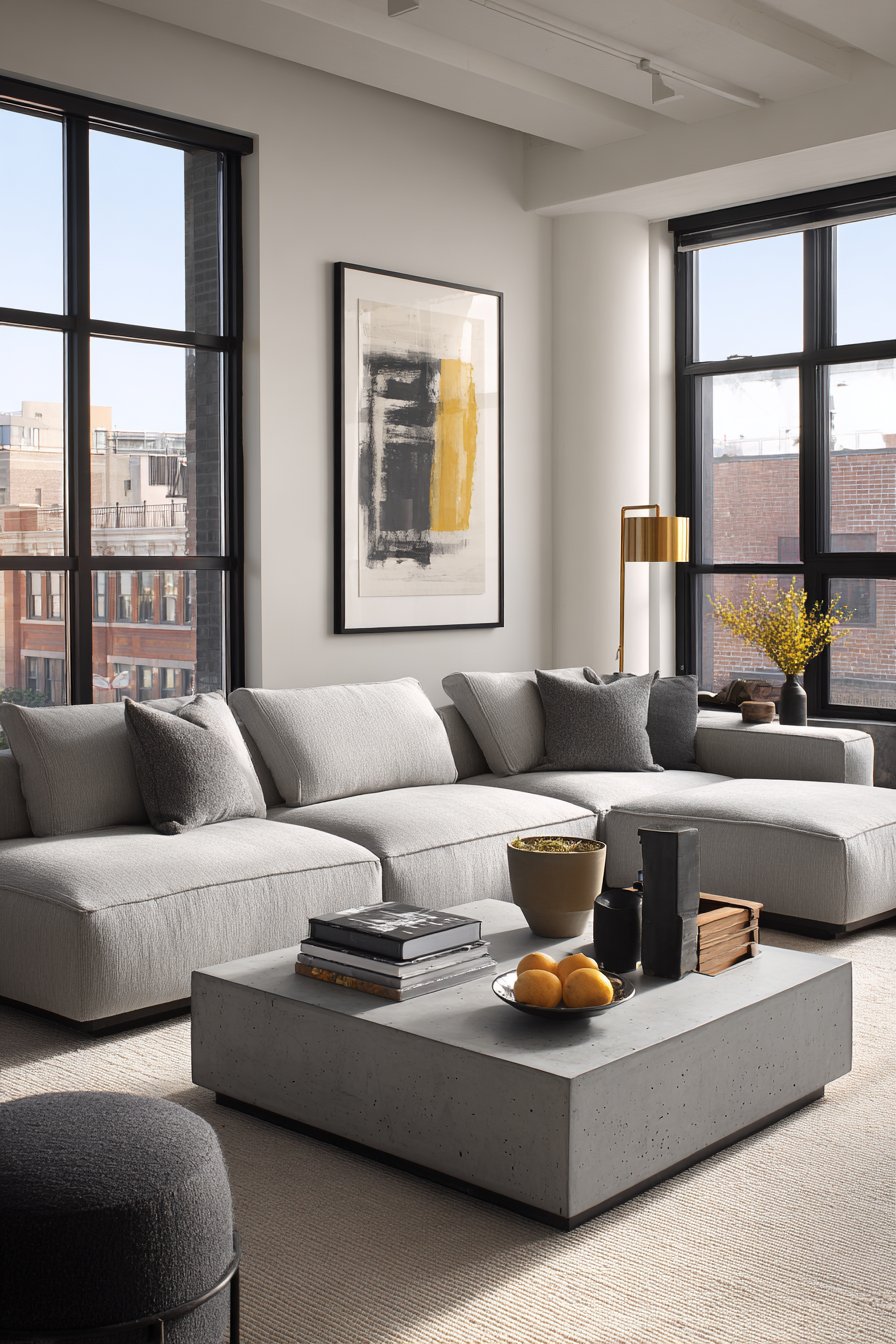
What truly distinguishes this contemporary approach is what it doesn’t include—the absence of window treatments on large windows that showcase city views becomes a deliberate design choice rather than an oversight. This transparency connects the interior with the urban landscape beyond, blurring boundaries between inside and outside. The natural light that floods the space changes character throughout the day, creating an ever-evolving environment where the light grey sofa appears slightly different with each passing hour—sometimes cool and silvery, sometimes warm and inviting, always sophisticated.
Key Design Tips:
- Select a low-profile modular sofa in performance fabric that offers flexibility for different arrangements and practical durability
- Introduce industrial elements through metal legs and geometric forms to add edge to the minimalist palette
- Limit decorative objects to a few high-impact pieces like large-scale abstract art rather than collections of smaller items
- Embrace negative space as a design element—empty surfaces and open floor areas enhance the feeling of calm and order
- Consider the view through windows as part of your design, eliminating treatments when privacy permits to maintain connection with the outside world
4. Small Space Solutions with Maximum Style
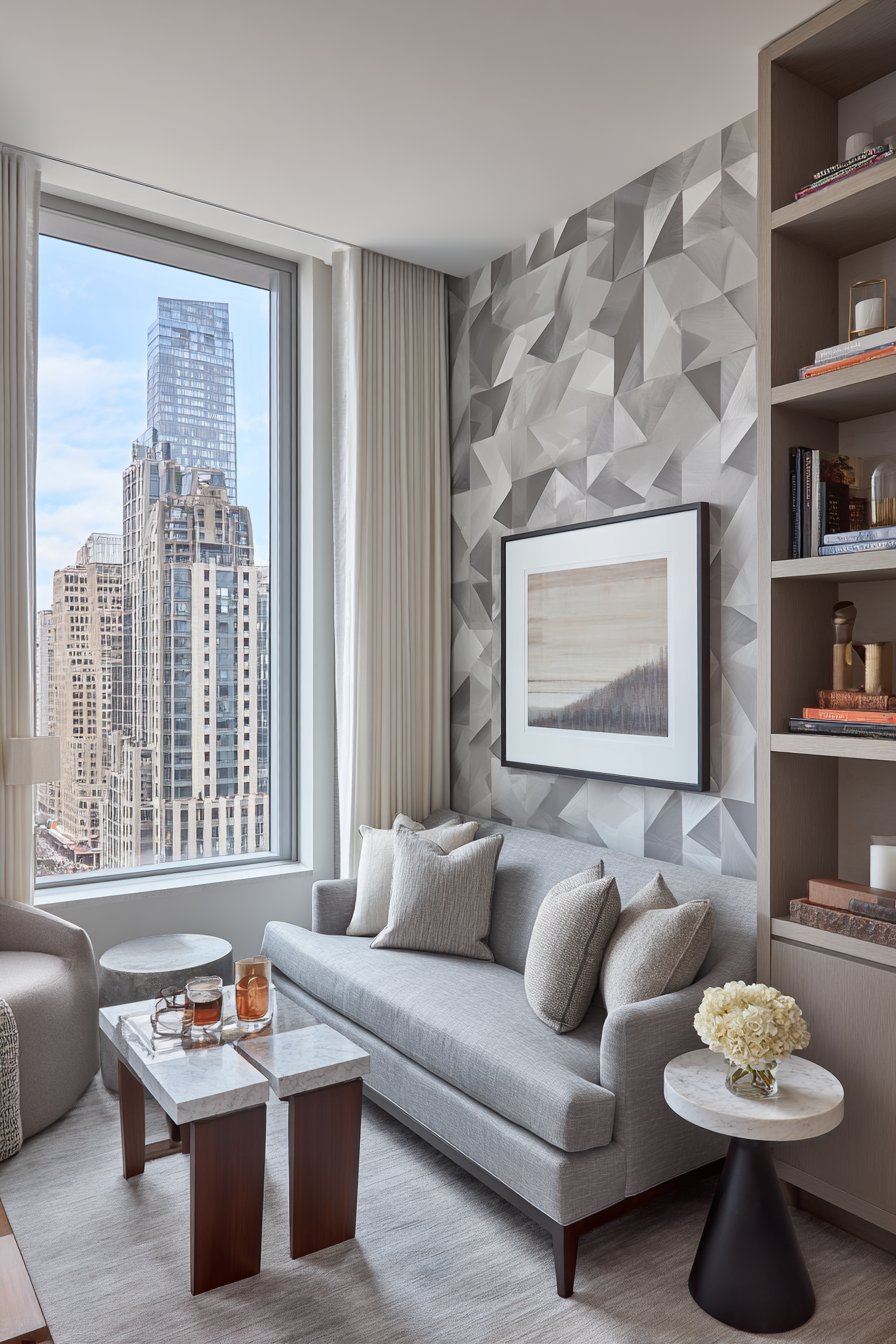
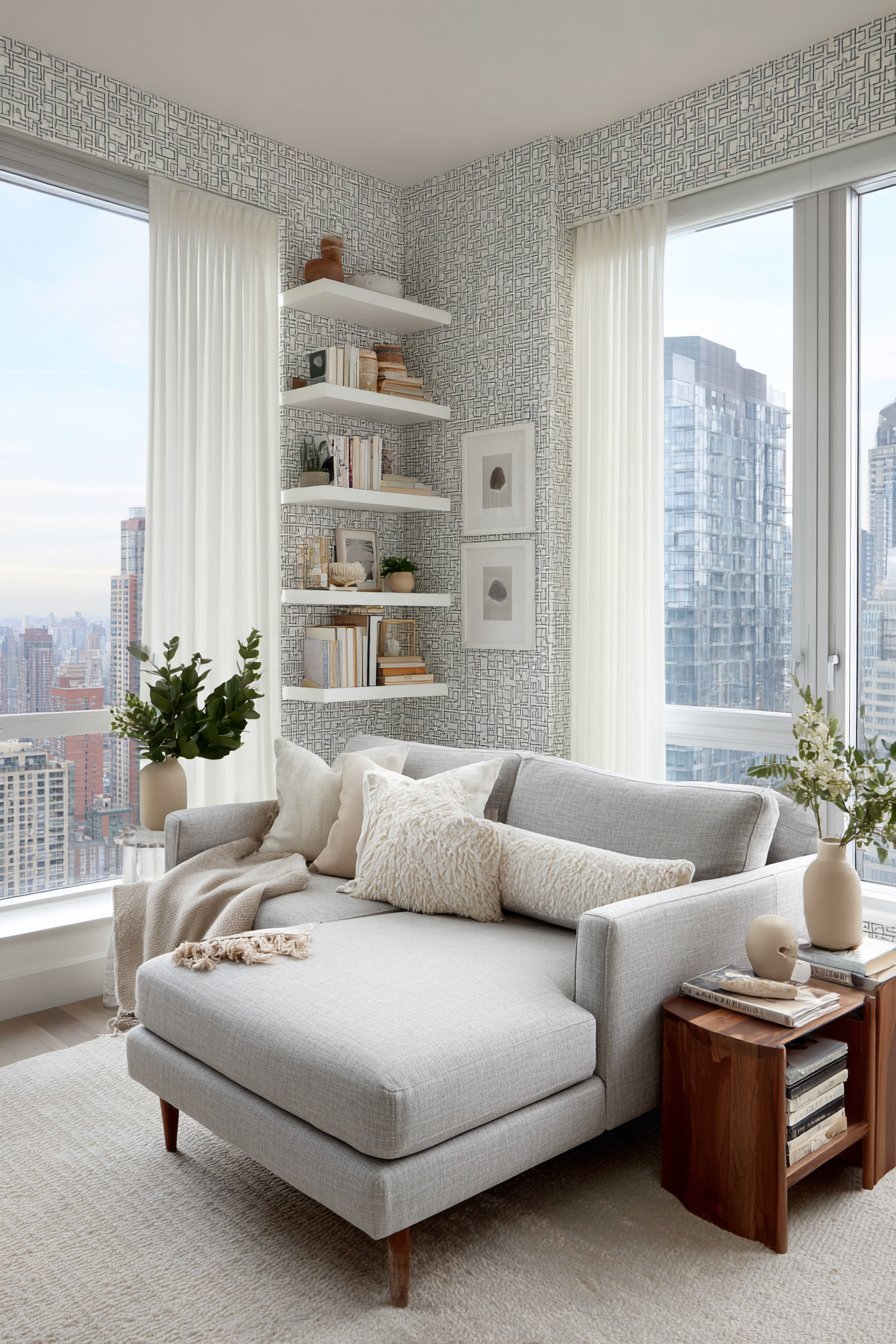
Creating a beautiful living room in a compact apartment presents unique challenges, but a light grey sofa can anchor a small space with style and sophistication without overwhelming limited square footage. Picture a compact grey loveseat with tapered wooden legs positioned against a feature wall adorned with peel-and-stick geometric wallpaper in soft grey patterns. This strategic placement maximizes floor space while the scaled-down furniture proportions keep the room from feeling cramped. The geometric wallpaper adds visual interest and personality without the commitment of permanent installation—perfect for renters or those who enjoy refreshing their spaces frequently.
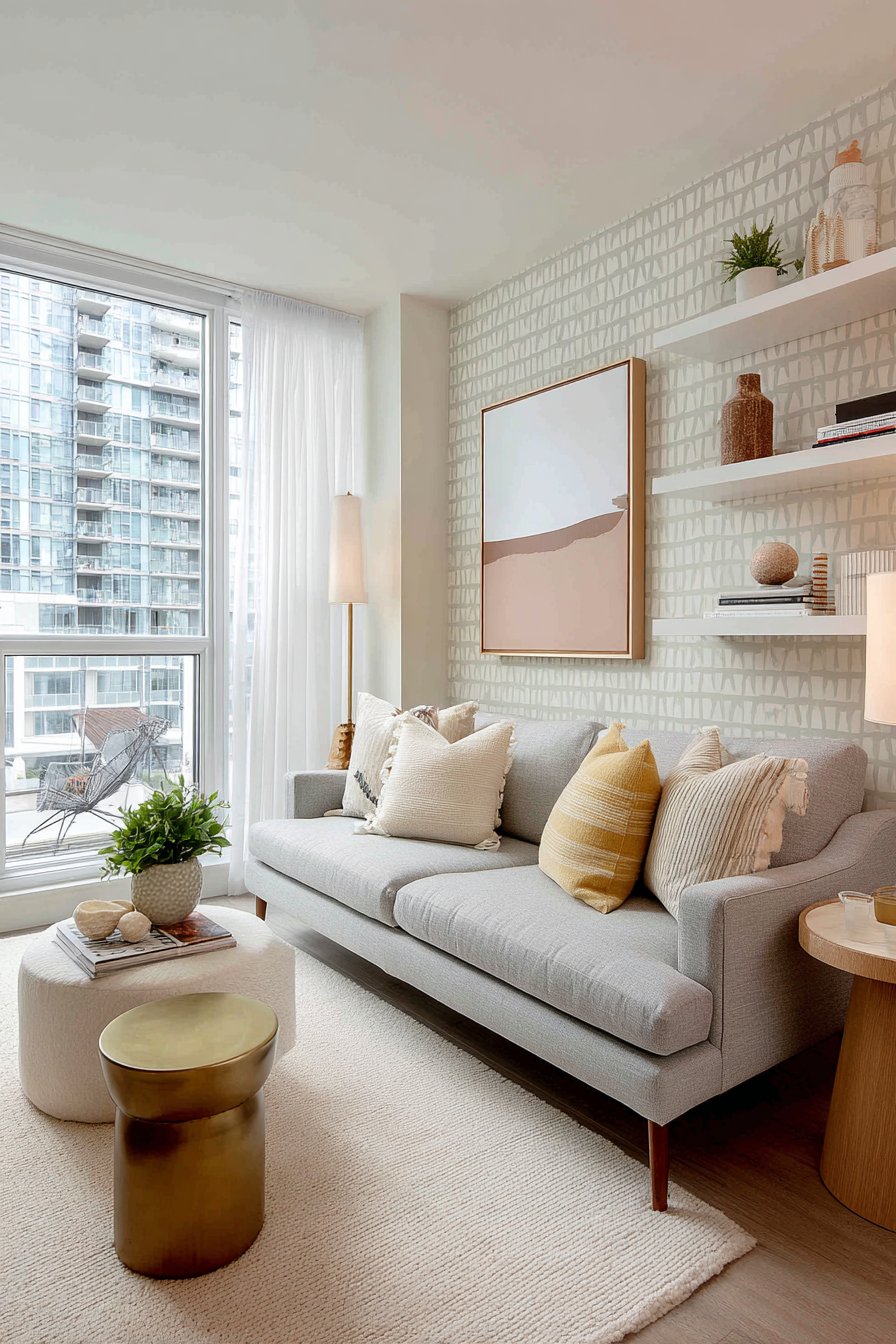
Functionality becomes paramount in small spaces, and every piece must earn its place through multi-purpose design. Nesting side tables in mixed materials—perhaps a combination of metal and wood—provide surface area when needed but tuck away to free up floor space when the room requires more breathing room. Floating shelves mounted above the sofa display curated decorative objects and books, utilizing vertical space that might otherwise go unused. This approach to storage keeps essential items within reach while maintaining the clean aesthetic that prevents small spaces from feeling cluttered or chaotic.
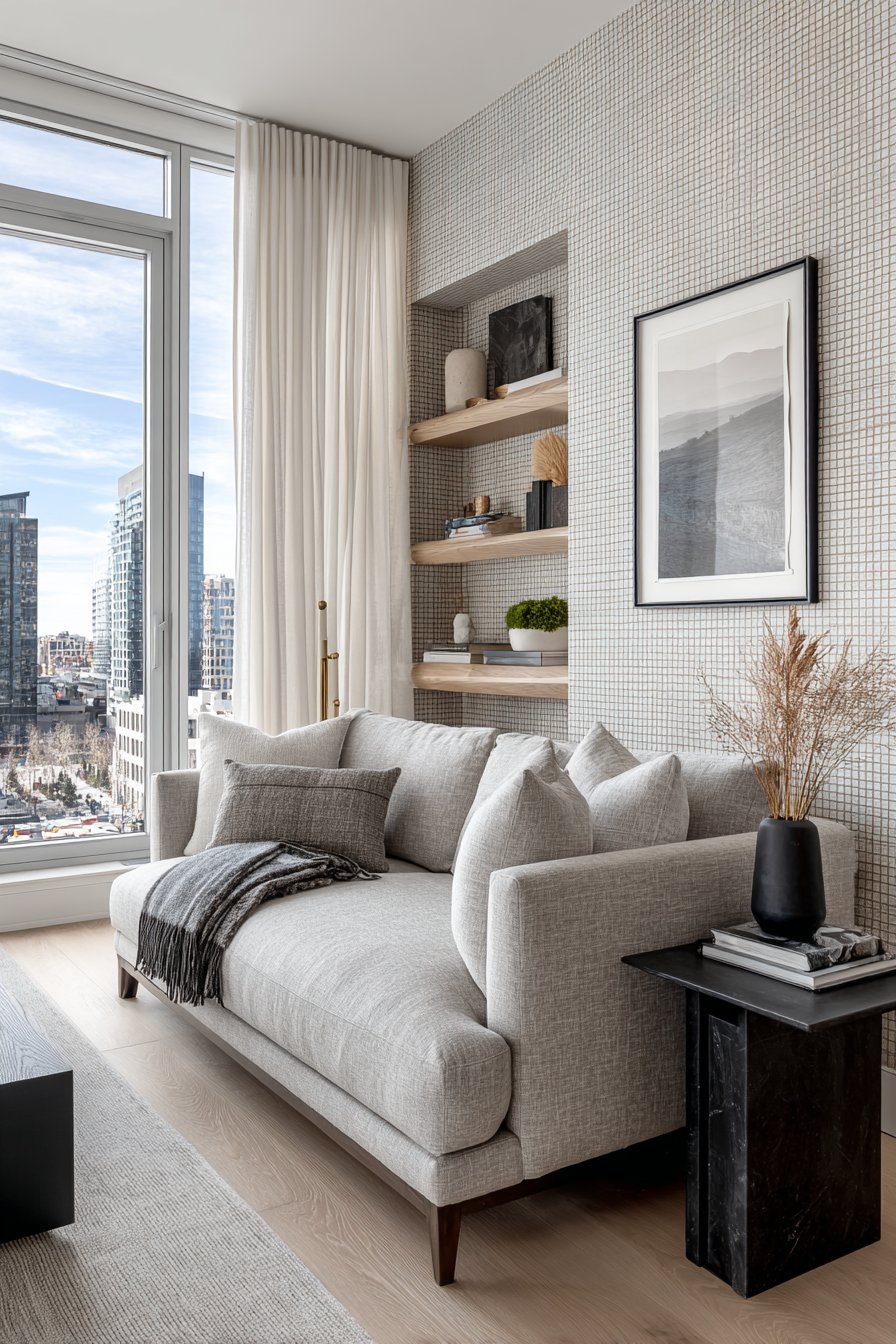
Light manipulation becomes a crucial strategy in compact living rooms. Sheer white curtains soften the window area without blocking precious natural light that makes small spaces feel larger. The light grey sofa reflects available light rather than absorbing it, contributing to an overall sense of airiness. Strategic lighting placement—perhaps a slim floor lamp tucked behind the sofa or wall-mounted sconces—provides illumination without consuming valuable floor or table space. The result is a small living room that feels thoughtfully designed rather than merely furnished, proving that limited square footage need not limit style or comfort.
Key Design Tips:
- Choose furniture scaled appropriately for your space—a loveseat or apartment-sized sofa rather than oversized sectionals
- Utilize vertical space through floating shelves and wall-mounted lighting to keep floor space open and uncluttered
- Select multi-functional furniture like nesting tables and ottomans with hidden storage to maximize every piece’s utility
- Use removable wallpaper or decals to add personality without permanent commitment, ideal for renters or frequent redecorators
- Embrace light colors and reflective surfaces that bounce light around the room, making compact spaces feel more expansive
5. Transitional Elegance Bridging Traditional and Modern
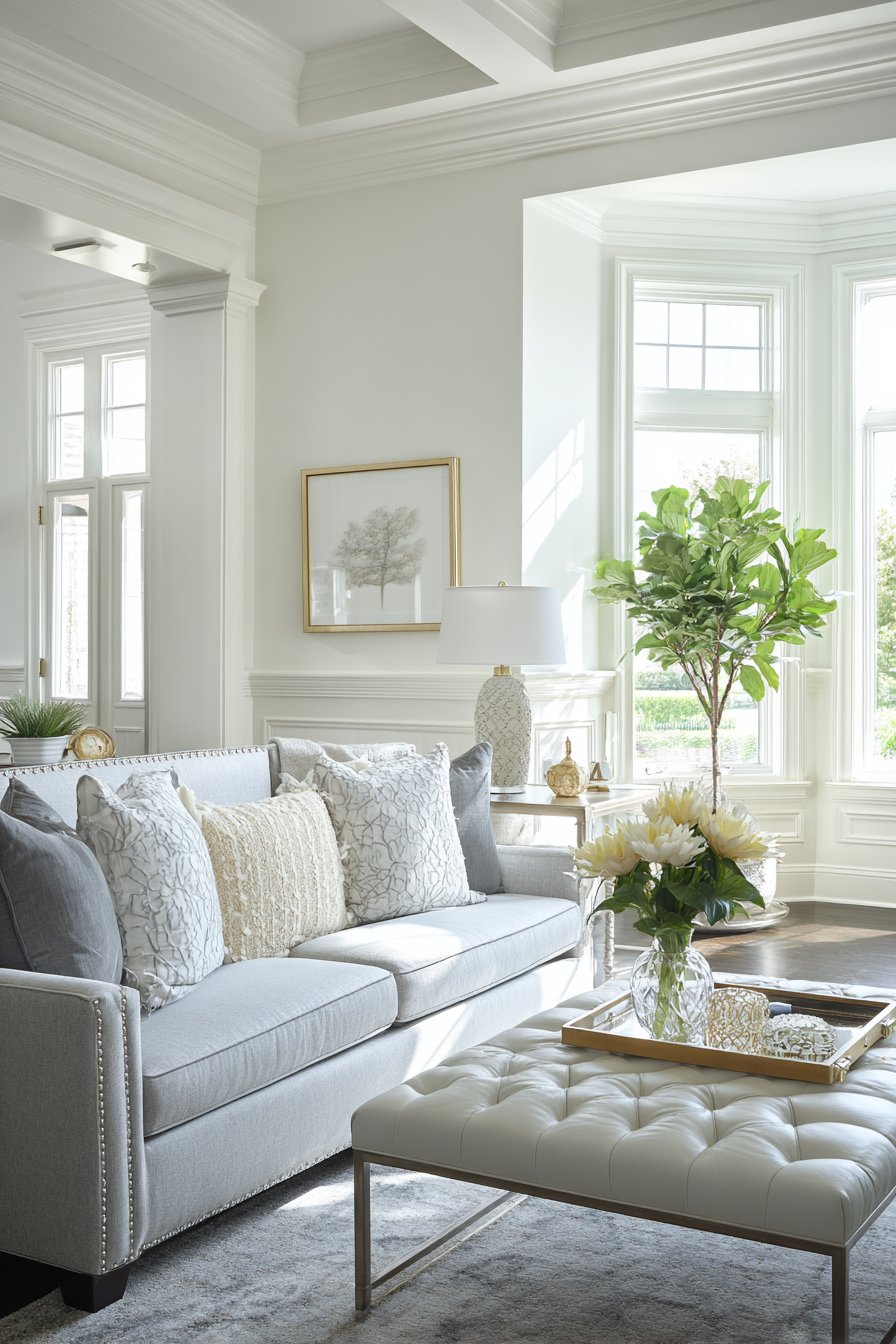
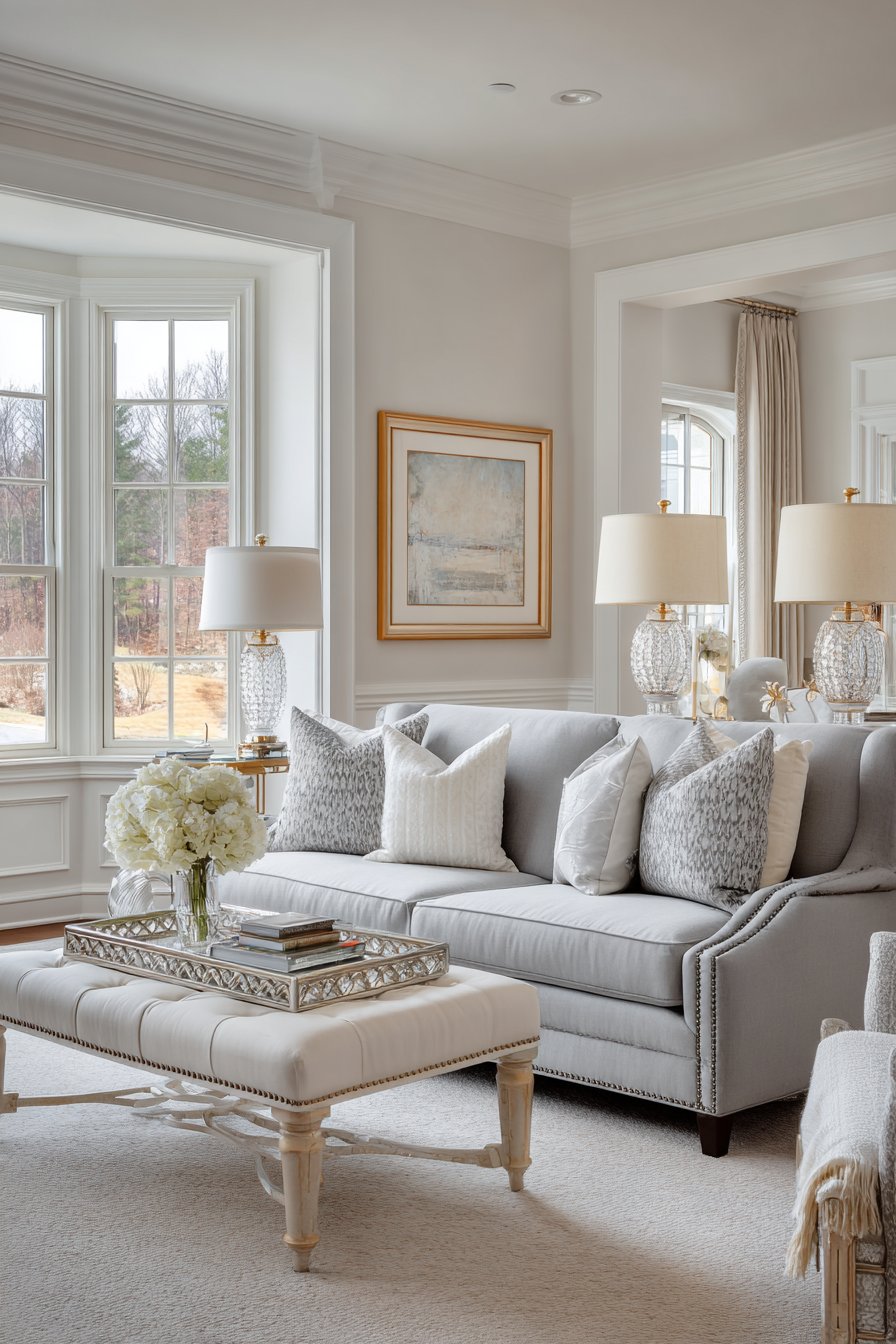
The transitional design style gracefully bridges the gap between traditional comfort and contemporary clean lines, creating spaces that feel both established and current. A light grey sofa living room executed in this aesthetic features an elegant sofa with classic nailhead trim detailing—a traditional embellishment that adds subtle sophistication. However, the updated grey linen fabric and streamlined silhouette give this piece contemporary relevance, demonstrating how transitional design honors the past while living firmly in the present. This careful balance appeals to those who appreciate timeless elegance but desire the fresh, uncluttered feeling of modern interiors.
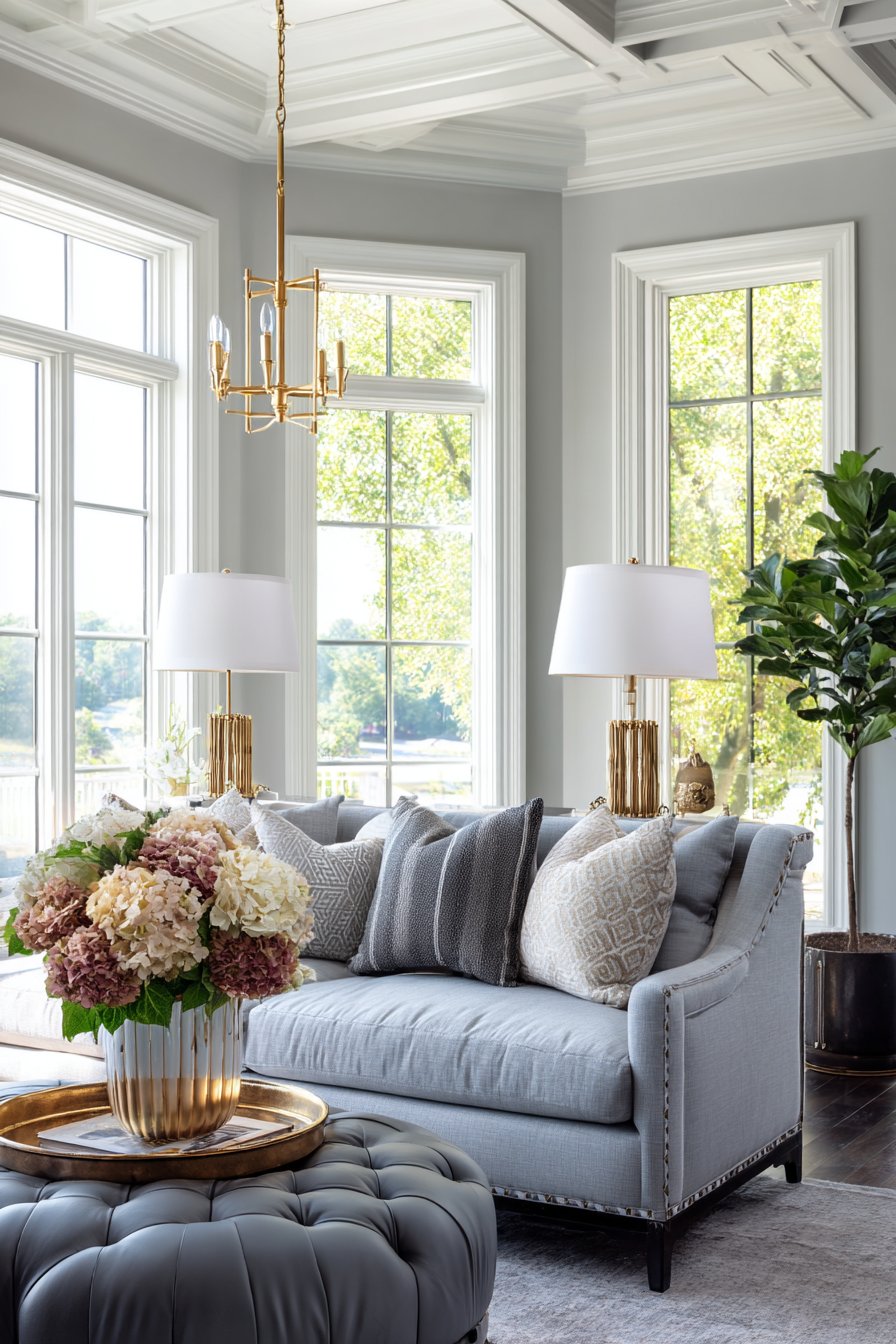
The supporting furnishings in this space demonstrate the same thoughtful blend of old and new. A tufted ottoman serves as the coffee table, its soft upholstered surface topped with a decorative tray that provides a stable surface for beverages and books. The flexibility of an ottoman—which can also provide extra seating or serve as a footrest—exemplifies the practical thinking that often characterizes transitional spaces. Lighting combines antique brass and crystal elements in table lamps that reference traditional elegance while maintaining proportions and silhouettes that feel current rather than dated.
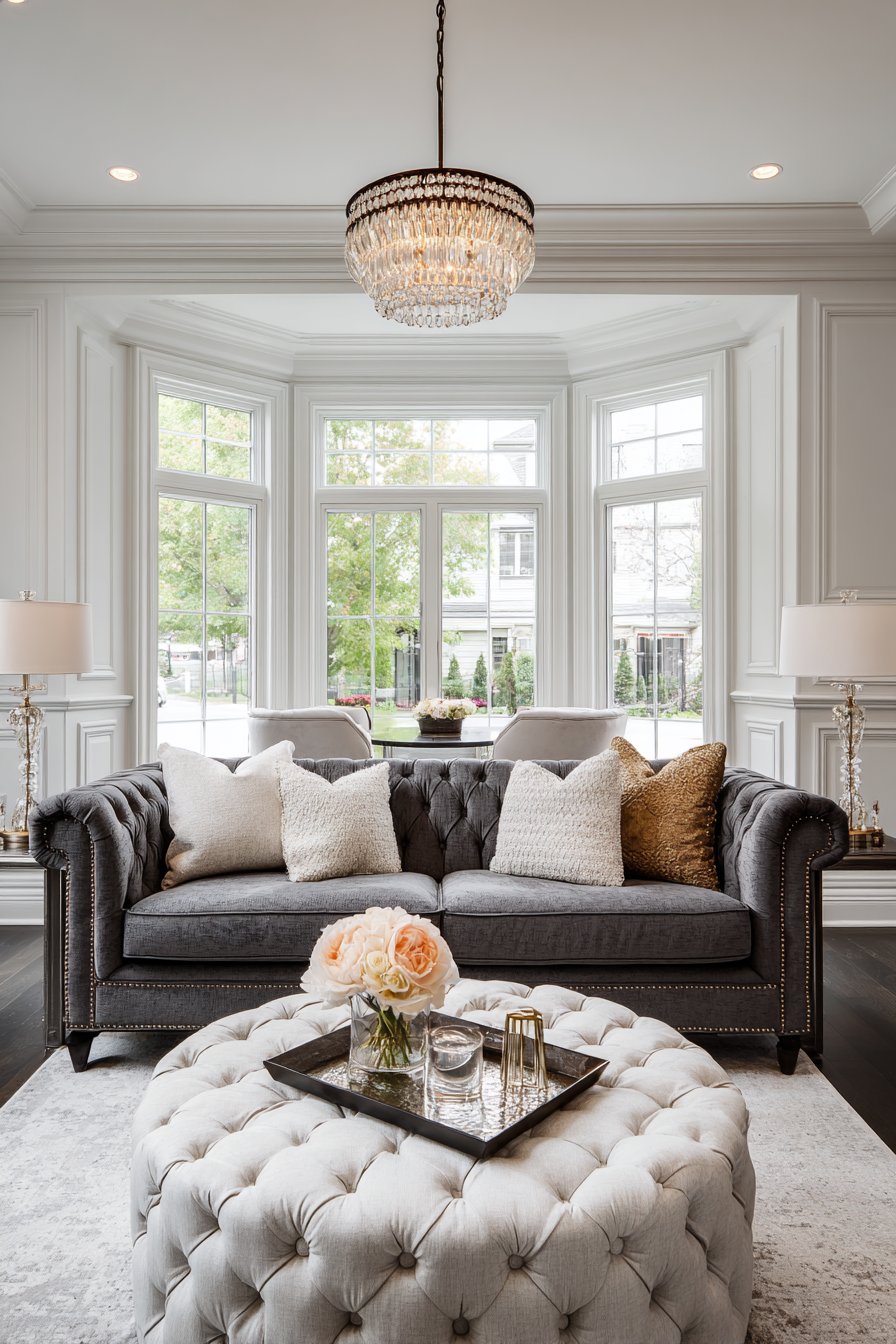
Architectural details add character and permanence to this transitional living room. Crown molding and wainscoting painted in crisp white frame the space, providing the kind of architectural interest typically associated with traditional homes while the clean paint treatment and careful proportions keep these elements from feeling fussy or overly ornate. Soft natural light from bay windows creates dimensional shadows that highlight these architectural features while illuminating the light grey sofa’s refined upholstery. The overall effect is a room that could exist comfortably in a historic townhouse or a newly constructed home—the hallmark of successful transitional design.
Key Design Tips:
- Combine traditional elements like nailhead trim and tufting with contemporary silhouettes and clean-lined forms
- Use updated versions of classic pieces, such as ottomans replacing traditional coffee tables for increased flexibility
- Incorporate architectural details like molding and wainscoting but keep them painted in neutral tones for a fresh appearance
- Mix metal finishes—antique brass with brushed nickel or chrome—to blend old and new seamlessly
- Choose classic furniture forms updated with contemporary fabrics and colors to achieve the transitional balance

6. Bohemian Eclectic Collected Charm
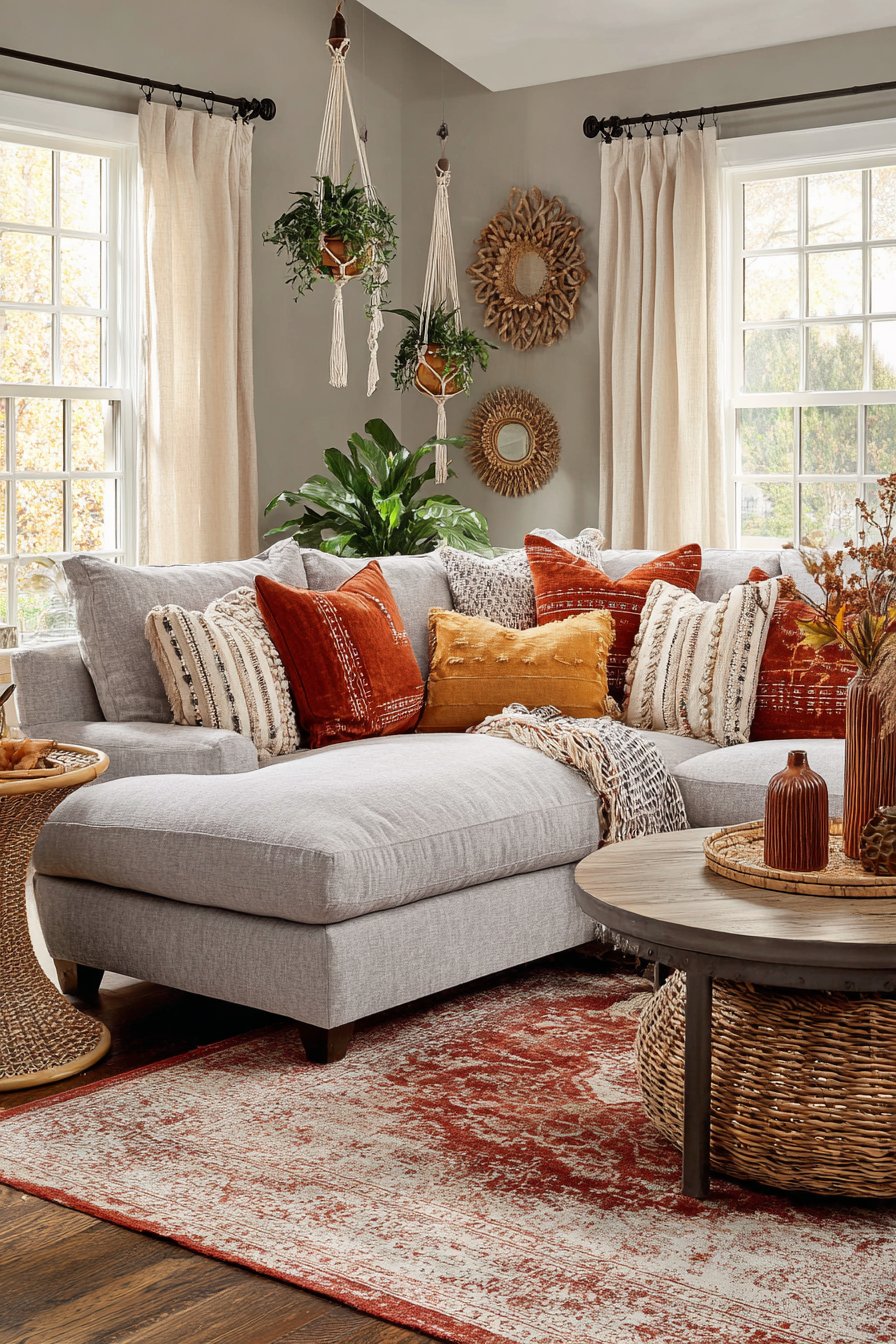
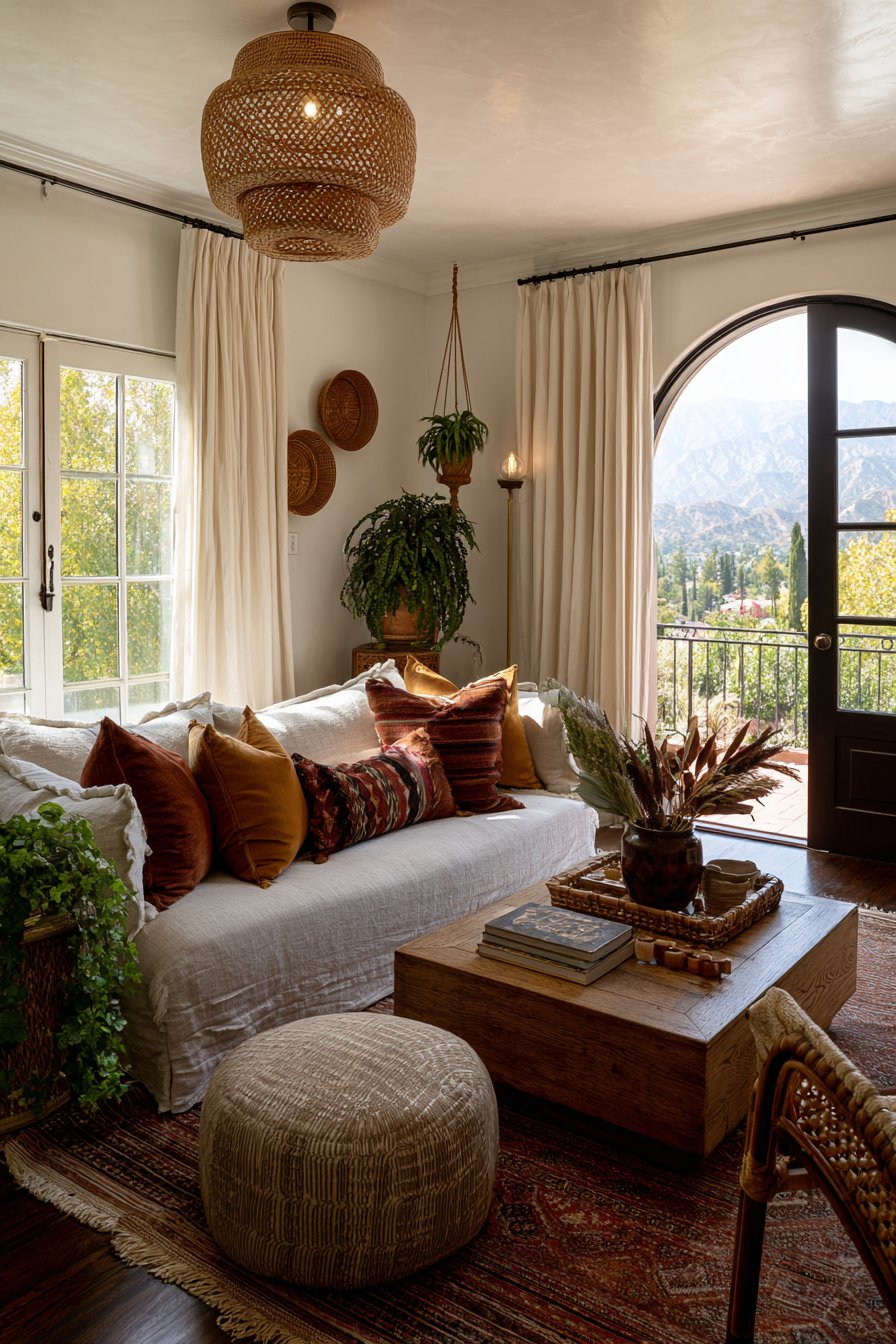
For free spirits who view their homes as ever-evolving collections of treasured finds and meaningful objects, a light grey sofa living room with bohemian styling provides the perfect foundation for personal expression. The light grey linen sofa serves as a neutral anchor in a sea of pattern and color, its slouchy, lived-in silhouette inviting hours of lounging. Adorned with an eclectic mix of throw pillows in terracotta, mustard, and cream tones, the sofa becomes a canvas for textile artistry—each pillow telling its own story through pattern, texture, and origin. The relaxed draping of these elements creates an unstudied appearance that belies the careful curation required to achieve this effortless bohemian aesthetic.
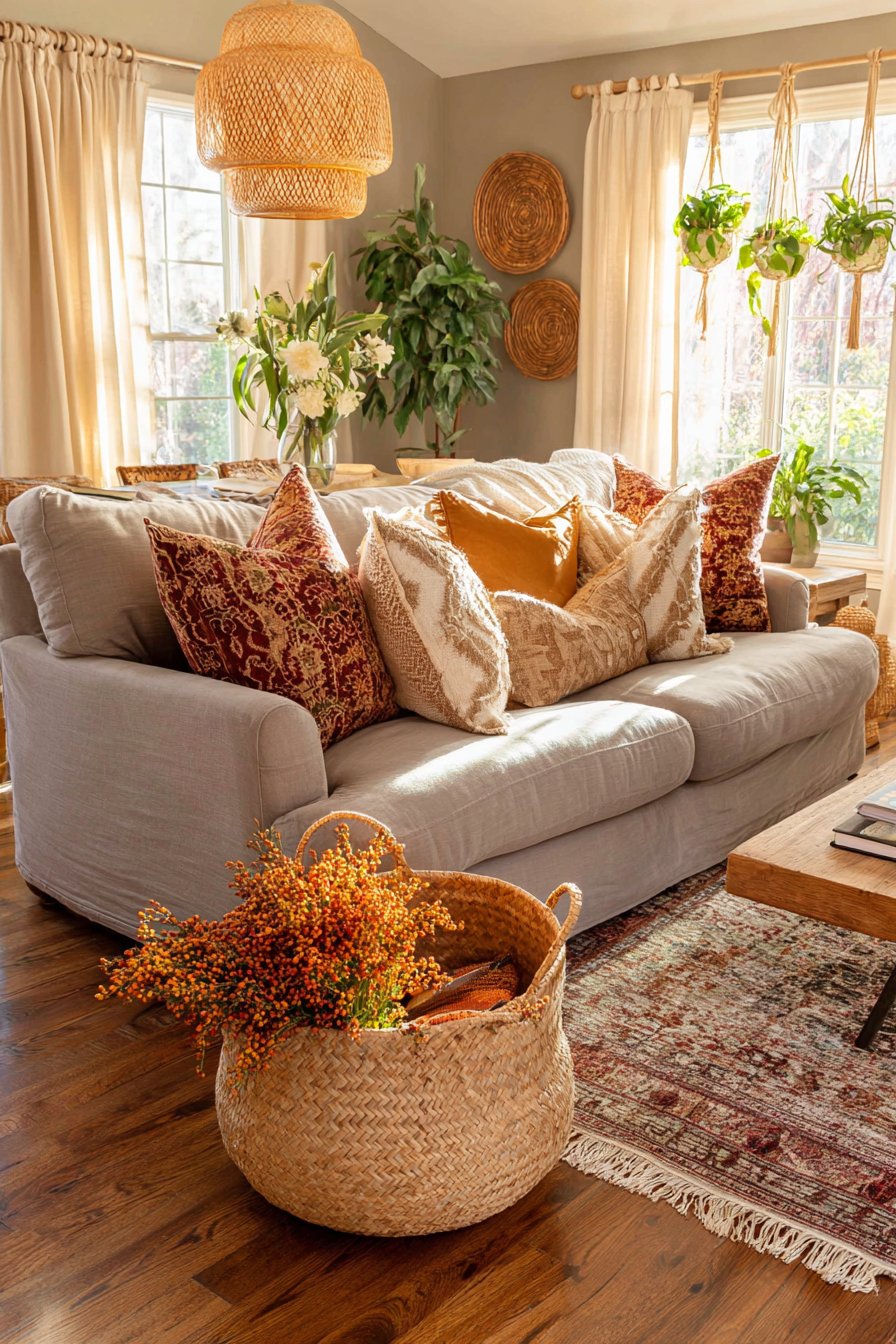
Layering defines bohemian design, and this living room demonstrates the principle through multiple strata of texture and pattern. Vintage rugs in warm earth tones layer atop each other, their slightly mismatched patterns creating visual richness that draws the eye downward and adds warmth underfoot. A rattan coffee table introduces organic texture while maintaining a light visual weight that prevents the layered space from feeling heavy. Woven wall hangings add vertical interest and soften hard surfaces, while macramé plant hangers suspend greenery at varying heights, bringing the outdoors in and adding dimension to the room’s composition.
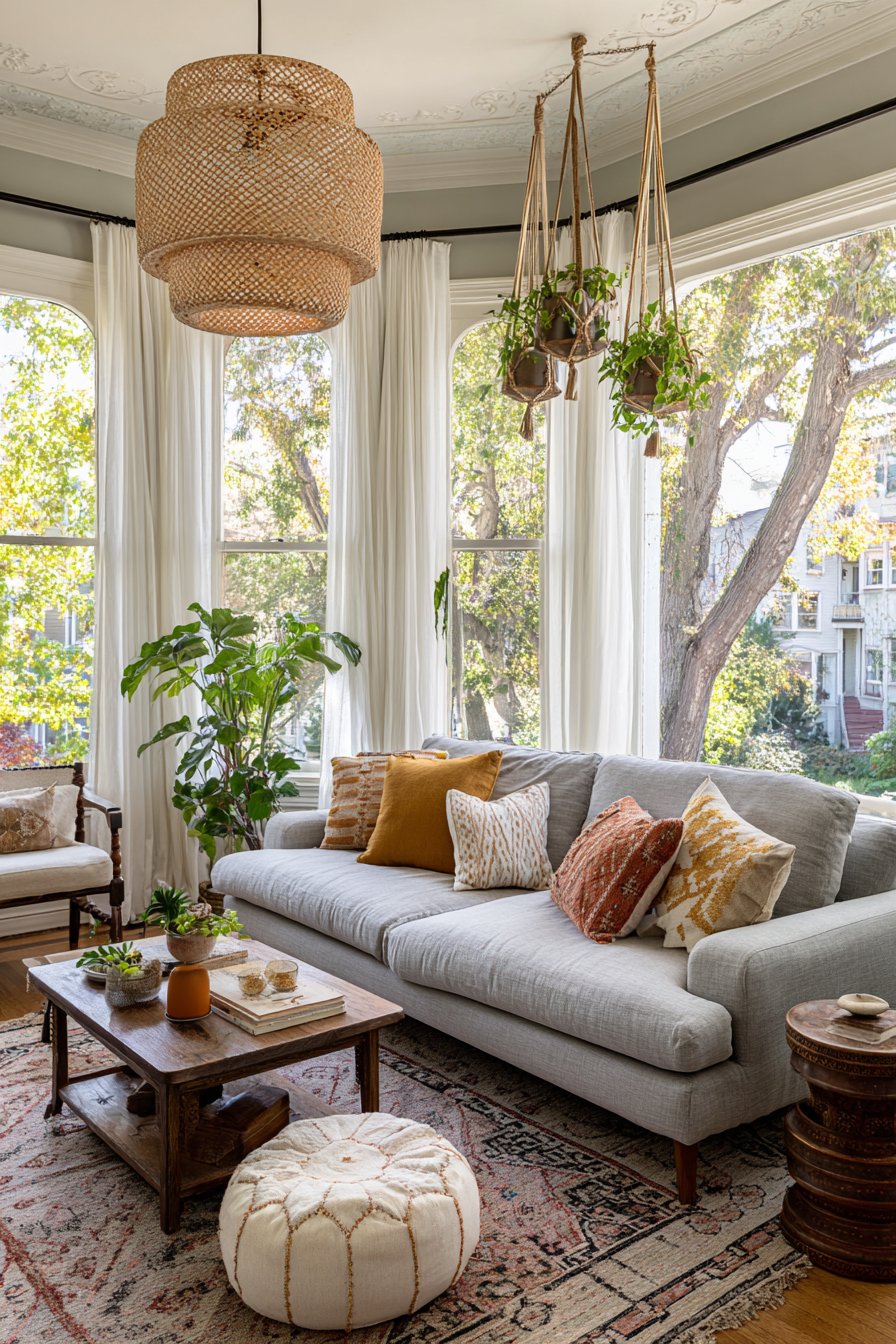
Golden hour natural lighting transforms this bohemian living room into something magical. As afternoon sun filters through gauzy curtains, it casts a warm glow across the layered textiles and creates subtle shadows that emphasize the room’s dimensional quality. The light grey sofa appears almost luminous in this light, its neutral tone serving as a grounding element amidst the rich colors and busy patterns. Potted plants scattered throughout the space—from trailing pothos to architectural cacti—add organic life and contribute to the collected, worldly feeling that defines authentic bohemian style.
Key Design Tips:
- Use the light grey sofa as a neutral foundation that allows colorful pillows and textiles to take center stage without visual competition
- Layer rugs of different sizes, patterns, and textures to create the dimensional, collected look essential to bohemian style
- Incorporate global textiles and handcrafted elements like macramé and woven pieces to add artisanal character
- Suspend plants at varying heights to add vertical interest and bring nature indoors, a key element of bohemian design
- Embrace golden hour lighting and natural illumination that enhances warm tones and creates an inviting, cozy atmosphere
7. Mid-Century Modern Timeless Appeal
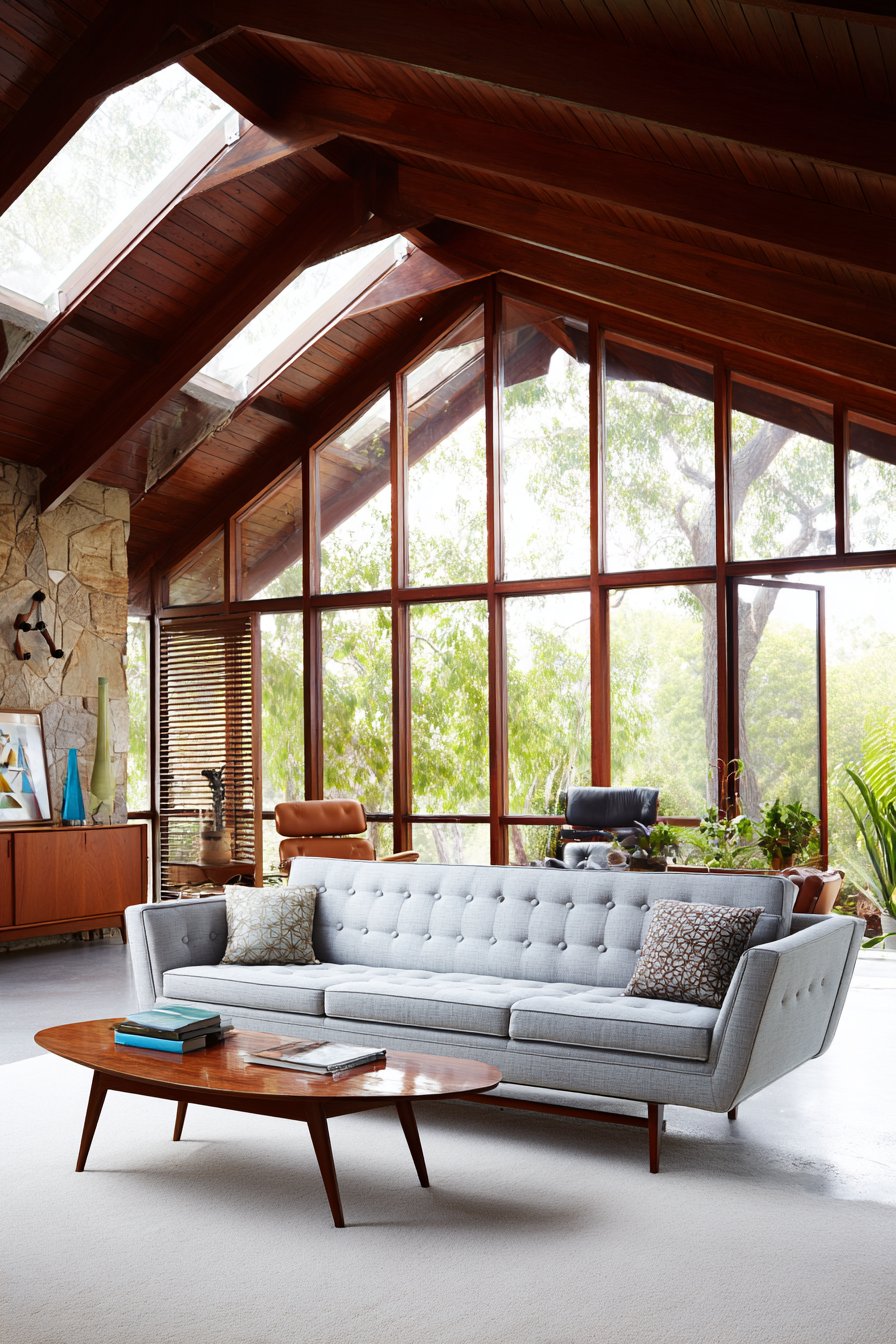
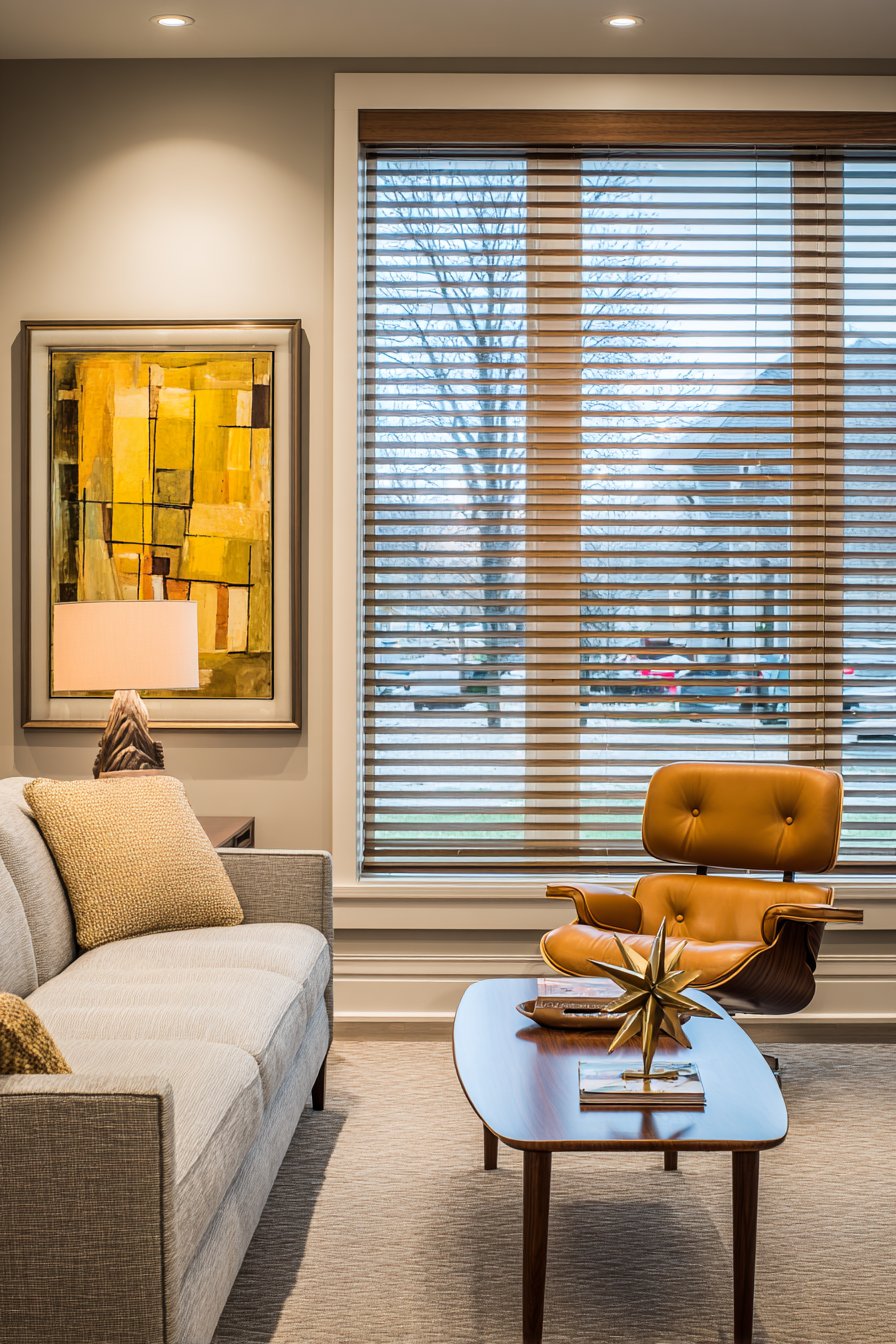
The enduring popularity of mid-century modern design testifies to its timeless aesthetic principles, and a light grey sofa living room executed in this iconic style captures the era’s optimistic spirit and innovative design thinking. The sofa itself features characteristic button tufting and angled walnut legs that instantly evoke the 1950s and 60s, yet the light grey upholstery gives this classic form contemporary relevance. The tailored appearance and clean lines demonstrate mid-century design’s marriage of form and function—beautiful objects that work efficiently and honestly without unnecessary ornamentation.
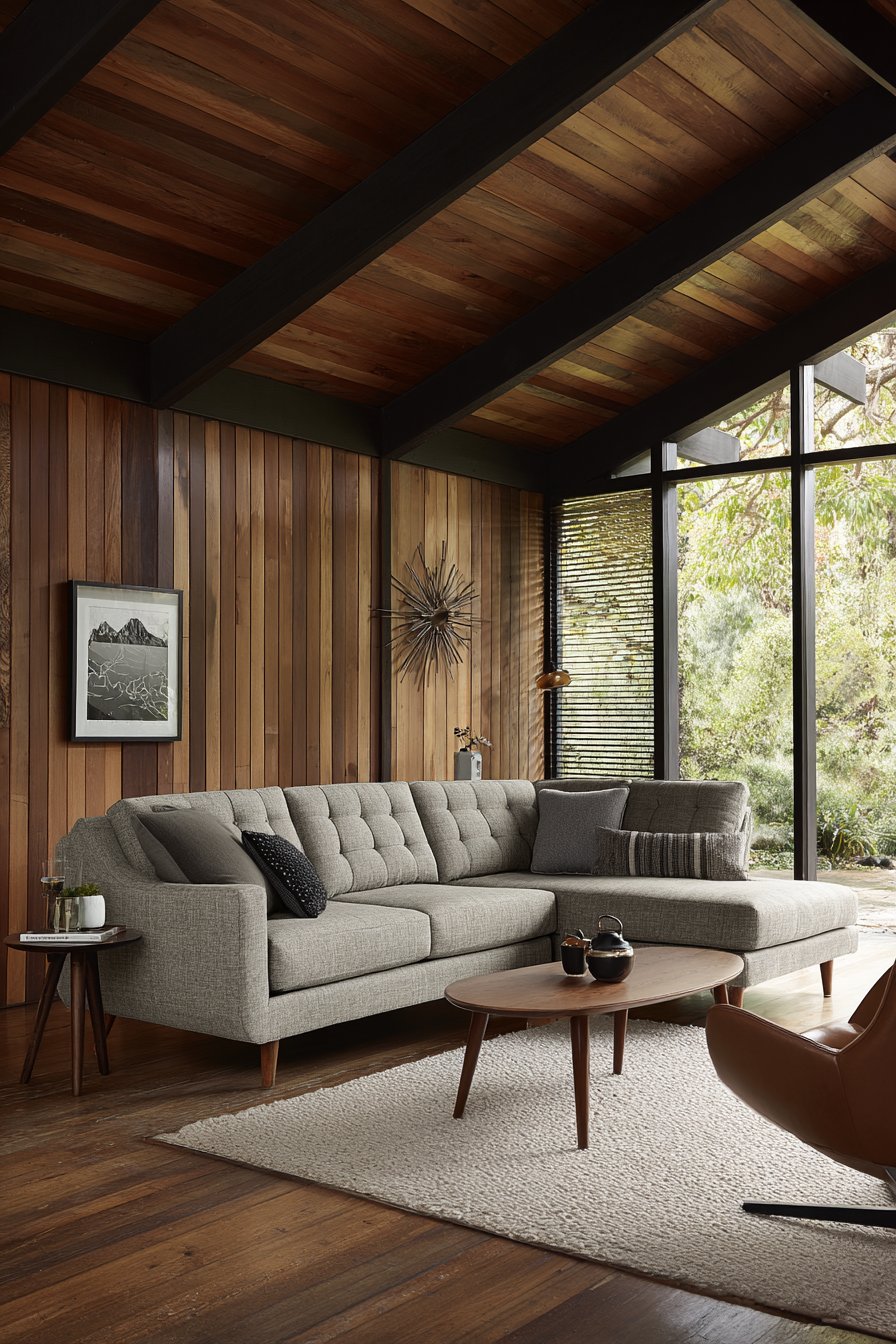
Period-appropriate supporting pieces complete the authentic mid-century vision. A kidney-shaped coffee table crafted from rich teak wood centers the arrangement, its organic form representing the era’s fascination with biomorphic shapes inspired by nature. An iconic lounge chair in cognac leather—perhaps a reproduction of an Eames or Wegner design—provides complementary seating while introducing the warm leather tones that perfectly balance grey upholstery. These pieces aren’t mere reproductions but rather thoughtful selections that honor mid-century principles while functioning perfectly in contemporary life.
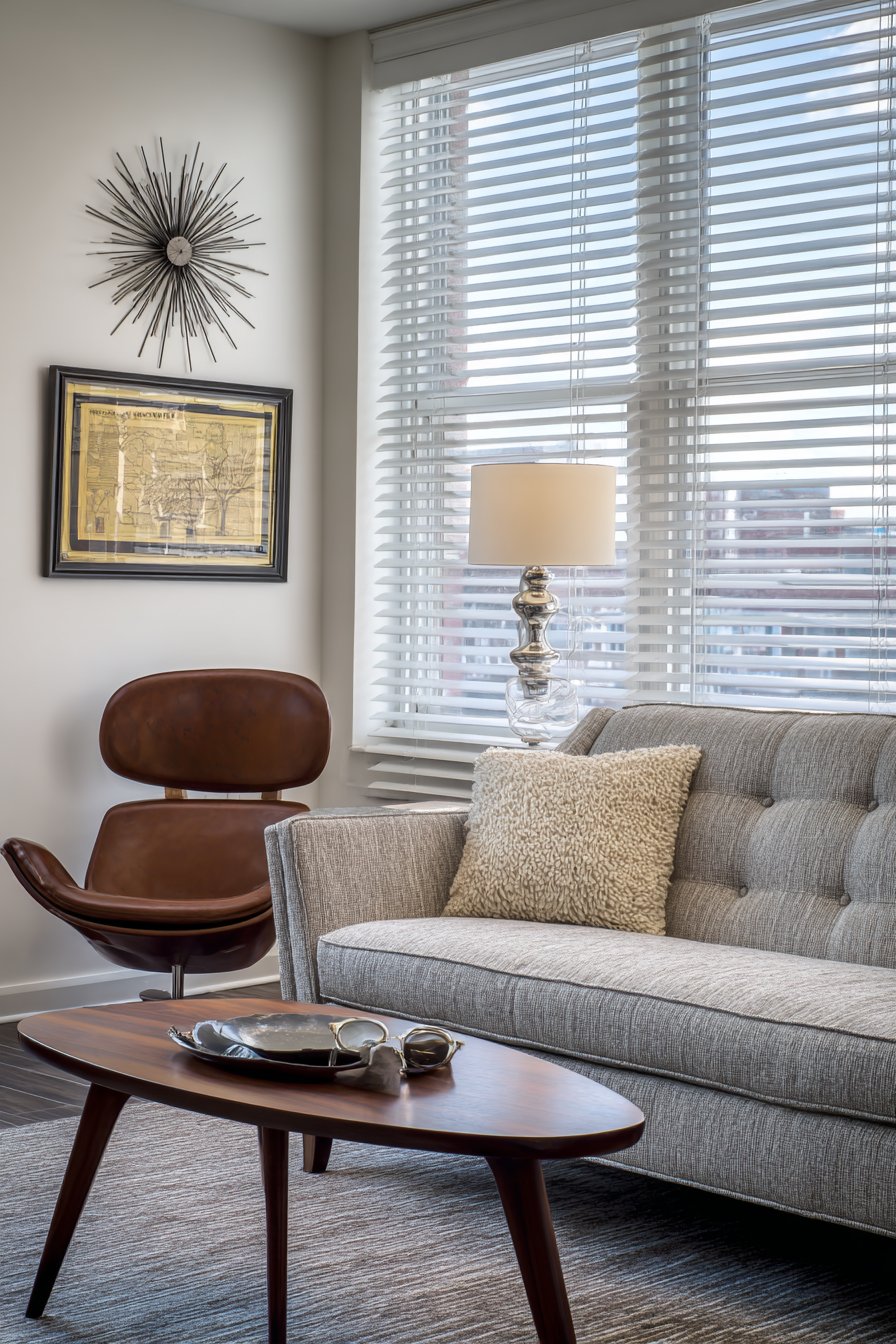
The decorative elements in this mid-century living room demonstrate the period’s distinctive aesthetic sensibilities. A starburst clock mounted on the wall references the atomic age optimism that characterized the era, while abstract geometric art in bold colors adds focal interest without referencing specific objects or scenes—a hallmark of mid-century modernism. Large picture windows with simple horizontal blinds frame views while allowing abundant natural light to illuminate the space, reflecting the period’s emphasis on bringing the outdoors in and dissolving boundaries between interior and exterior spaces.
Key Design Tips:
- Select a sofa with characteristic mid-century details like button tufting and angled wooden legs in walnut or teak
- Incorporate iconic furniture shapes like kidney-formed tables and egg-shaped chairs that defined the era
- Choose warm wood tones in walnut, teak, or rosewood to provide organic warmth against cool grey upholstery
- Add period-appropriate decorative elements like starburst designs and abstract geometric art
- Maximize natural light with simple window treatments that don’t obstruct views or compete with the clean-lined furniture
8. Coastal Breeze Relaxed Beach House Living
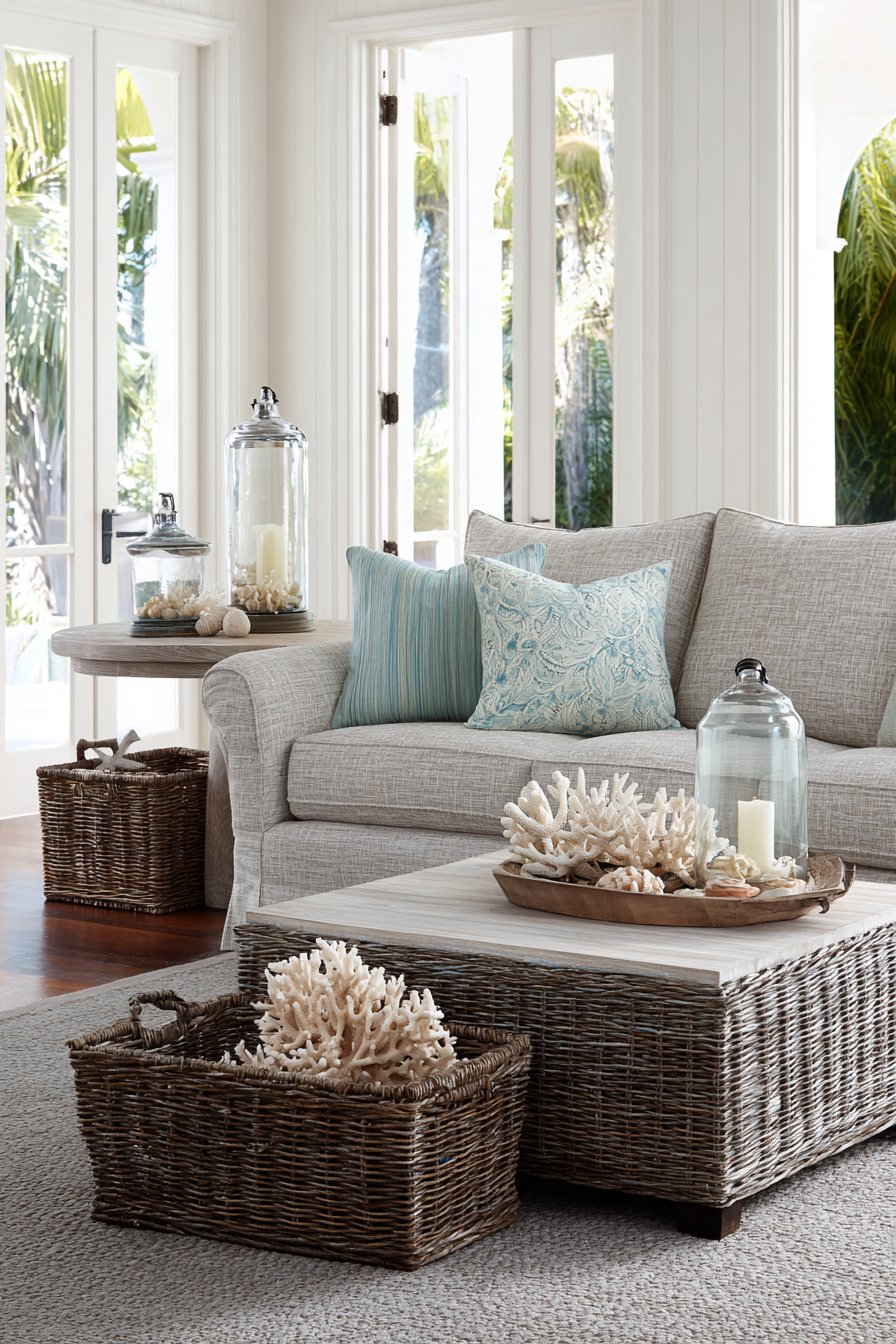
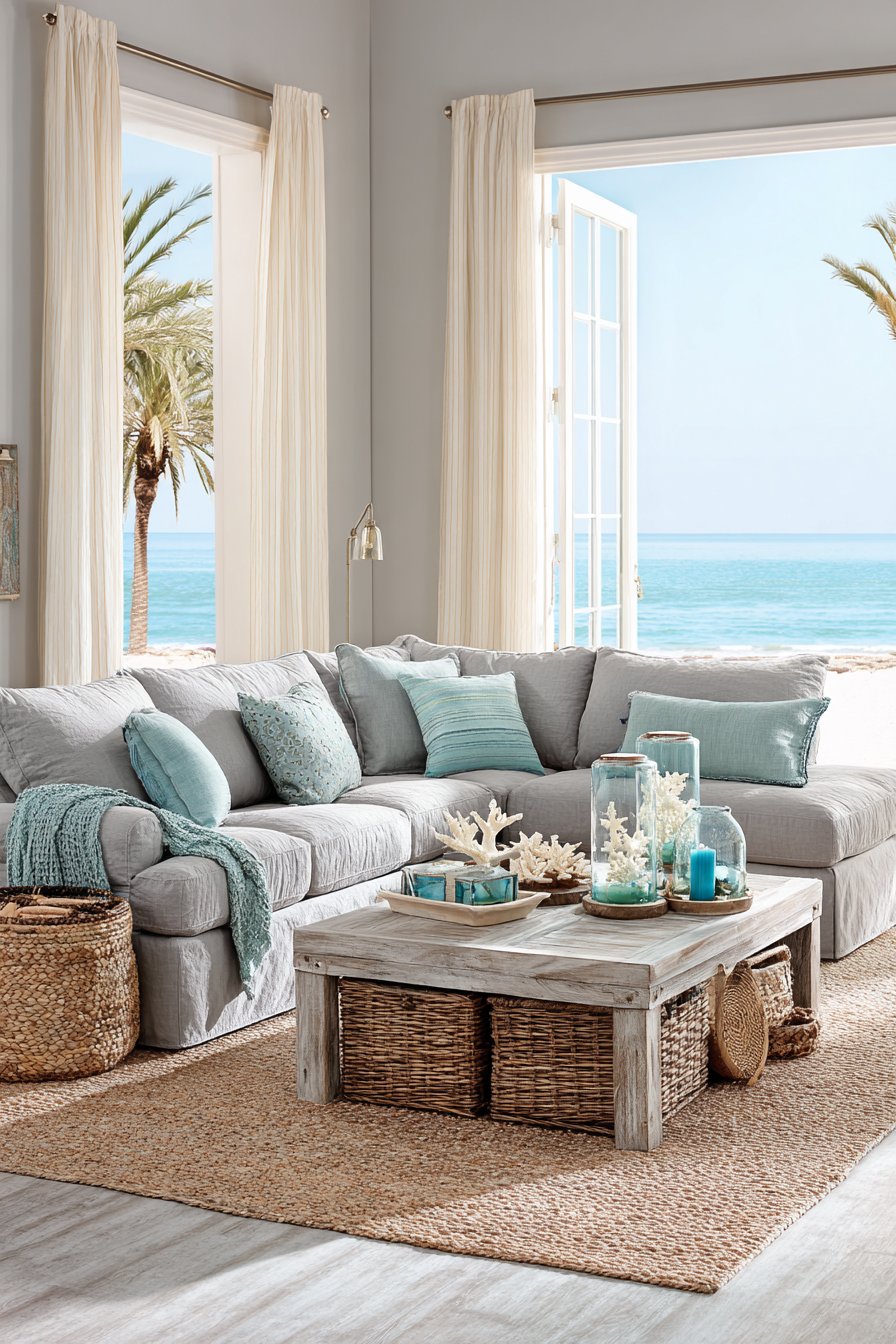
Capturing the relaxed elegance of coastal living, a light grey sofa living room with beach-inspired styling creates a perpetual vacation atmosphere that soothes the soul. The foundation piece features a slipcovered grey sofa in washable cotton fabric—a practical choice for coastal environments where sand, salt air, and casual living demand easy-care solutions. The loose slipcover drapes softly over the frame, creating the slightly rumpled appearance that characterizes authentic beach house style and invites immediate relaxation. This casual elegance strikes the perfect balance between refinement and approachability.
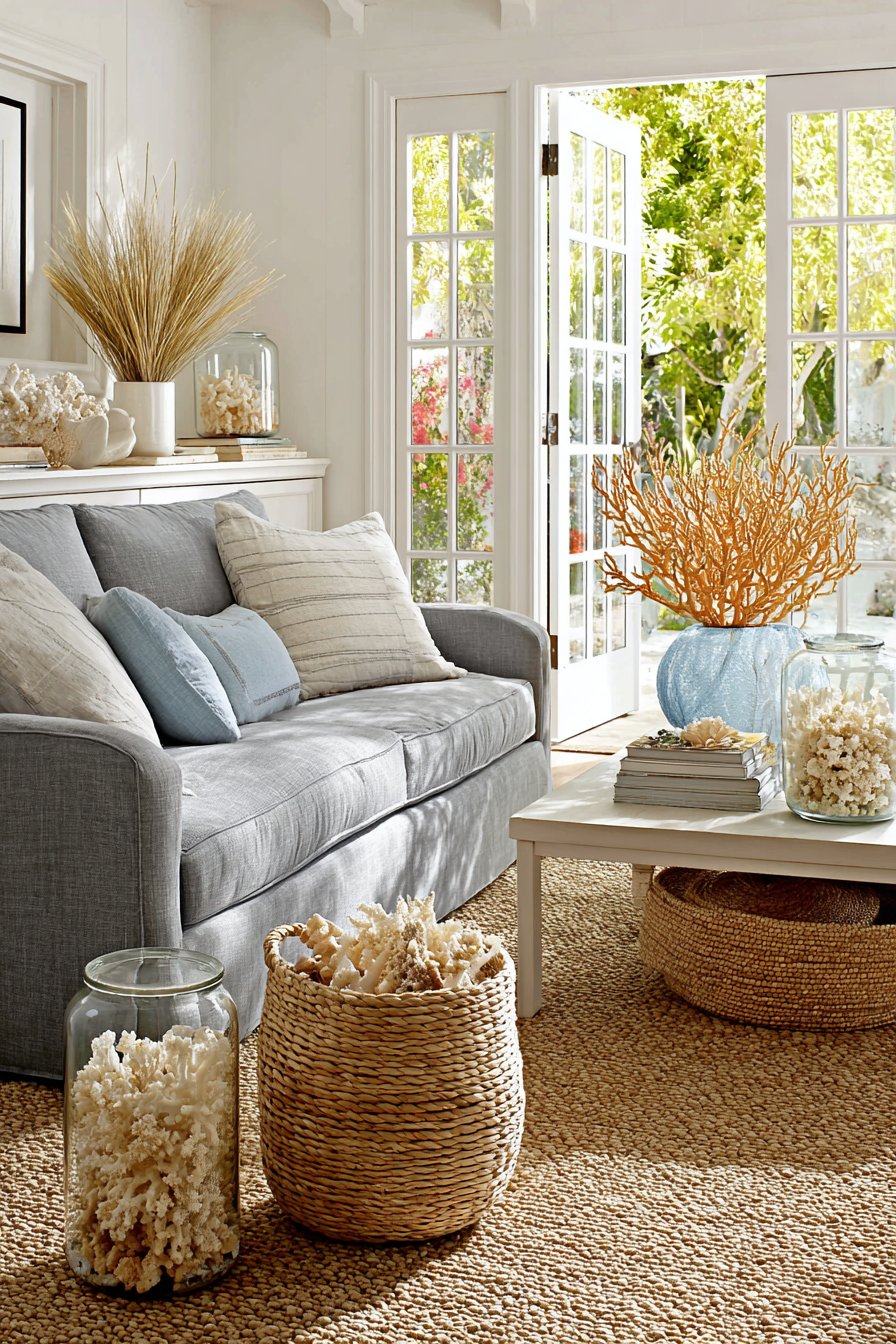
Natural materials and ocean-inspired elements reinforce the coastal theme throughout the space. A whitewashed coffee table—perhaps crafted from reclaimed driftwood or given a lime-washed finish—anchors the seating area while maintaining the light, airy feeling essential to beach house design. Woven seagrass baskets tucked beneath the table or beside the sofa provide casual storage for throws, magazines, or beach reading, their organic texture adding visual interest while solving practical needs. Driftwood decorative elements and coral specimens displayed in glass hurricanes reference the nearby ocean without resorting to clichéd nautical motifs.
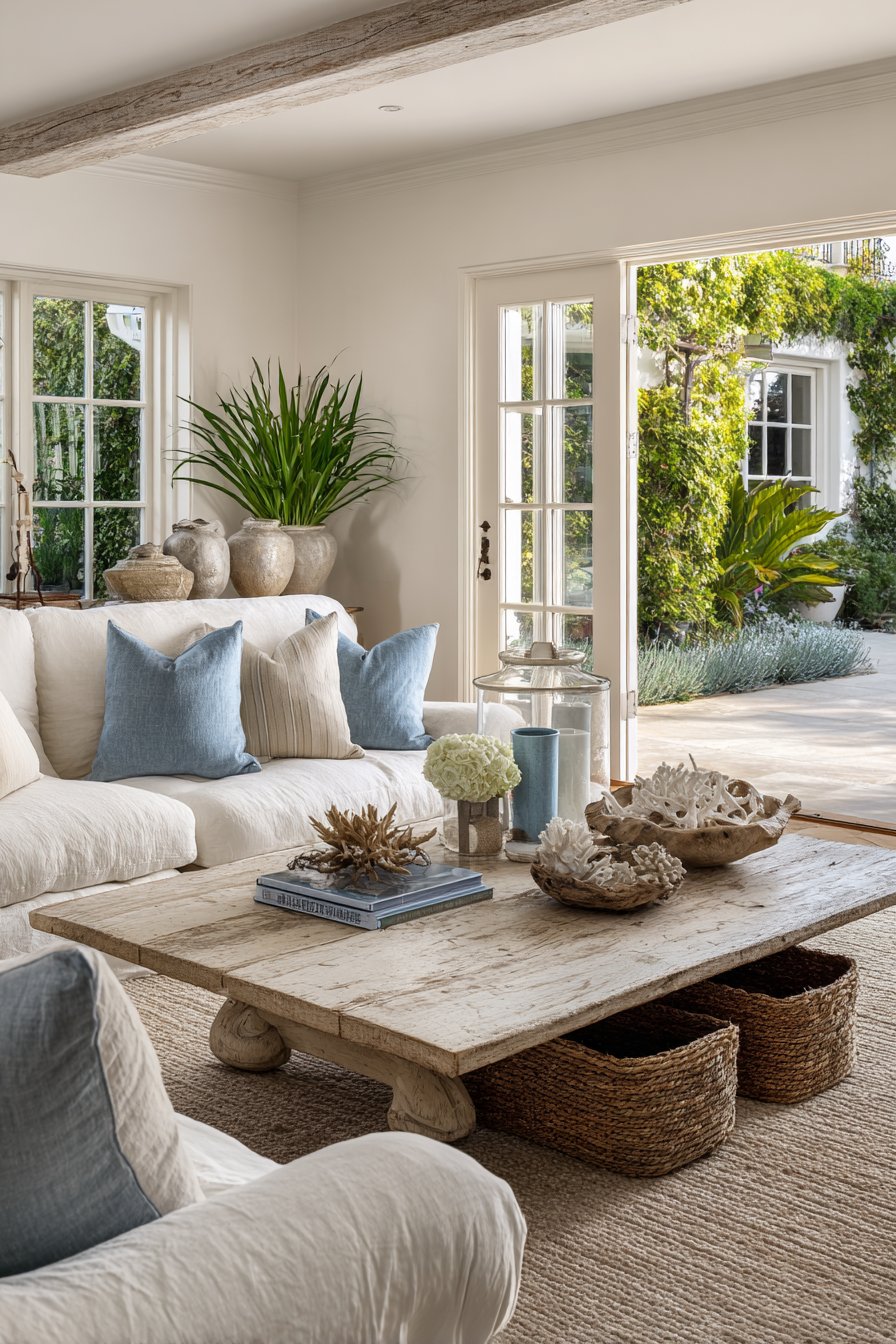
The color palette in this coastal living room draws directly from beach and sea—soft blues reminiscent of calm waters, sandy neutrals echoing sun-bleached dunes, and crisp whites suggesting sea foam. These colors complement the light grey sofa while building a cohesive coastal story. Bright natural daylight floods the space through French doors leading to outdoor areas, blurring the line between inside and outside—a characteristic feature of successful coastal design. The overall effect is a room that feels like a deep breath, where the stresses of daily life dissolve like footprints in wet sand.
Key Design Tips:
- Choose a slipcovered sofa in washable fabric that stands up to sand, moisture, and casual beach house living
- Incorporate natural materials like seagrass, driftwood, and jute that reference coastal environments organically
- Build a color palette inspired by beach and sea—soft blues, sandy neutrals, and crisp whites alongside the grey sofa
- Display ocean-inspired elements like coral and shells in glass vessels for refined coastal references
- Maximize indoor-outdoor connections through French doors or large windows that bring in abundant natural light
9. Multipurpose Living and Working Space Integration
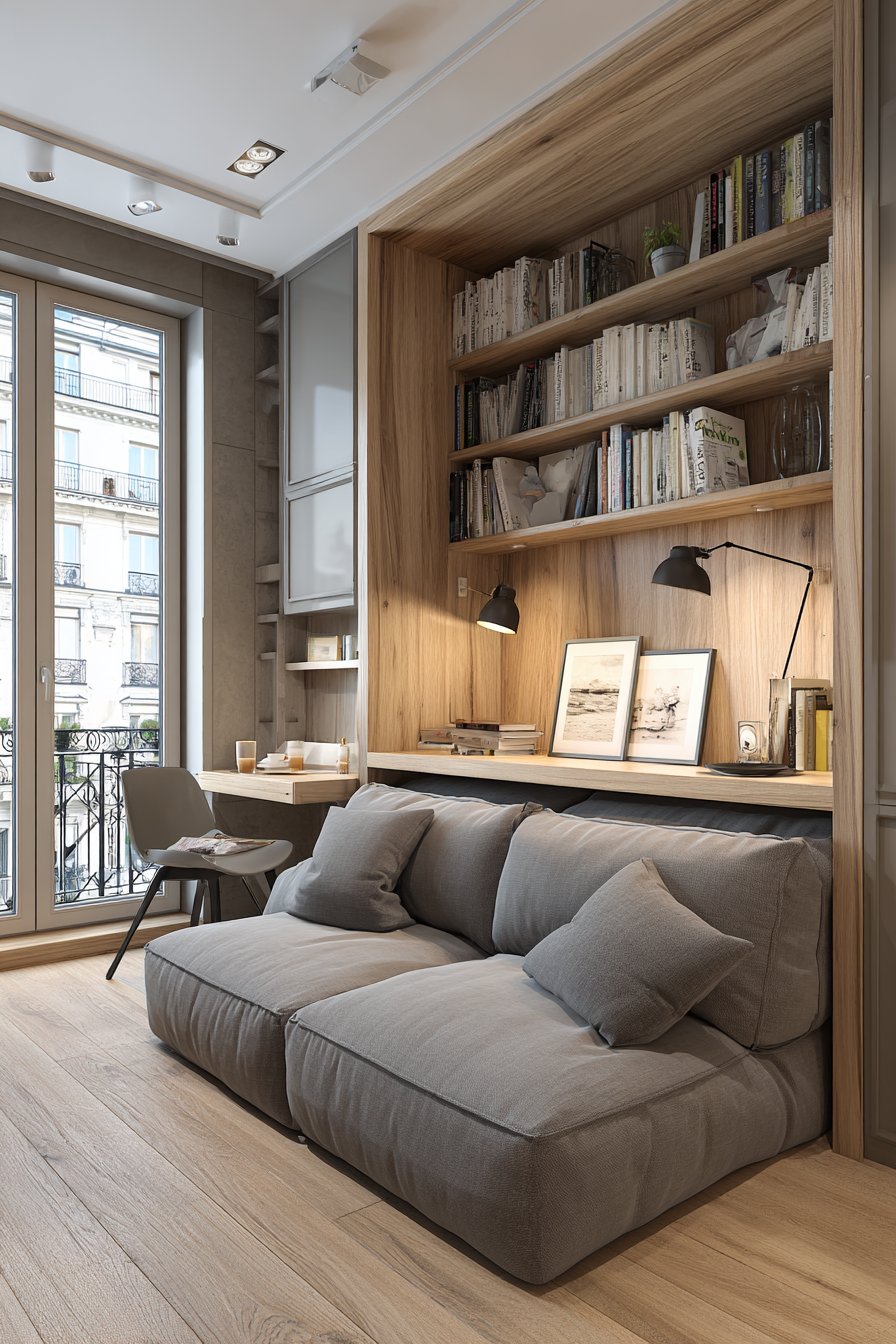
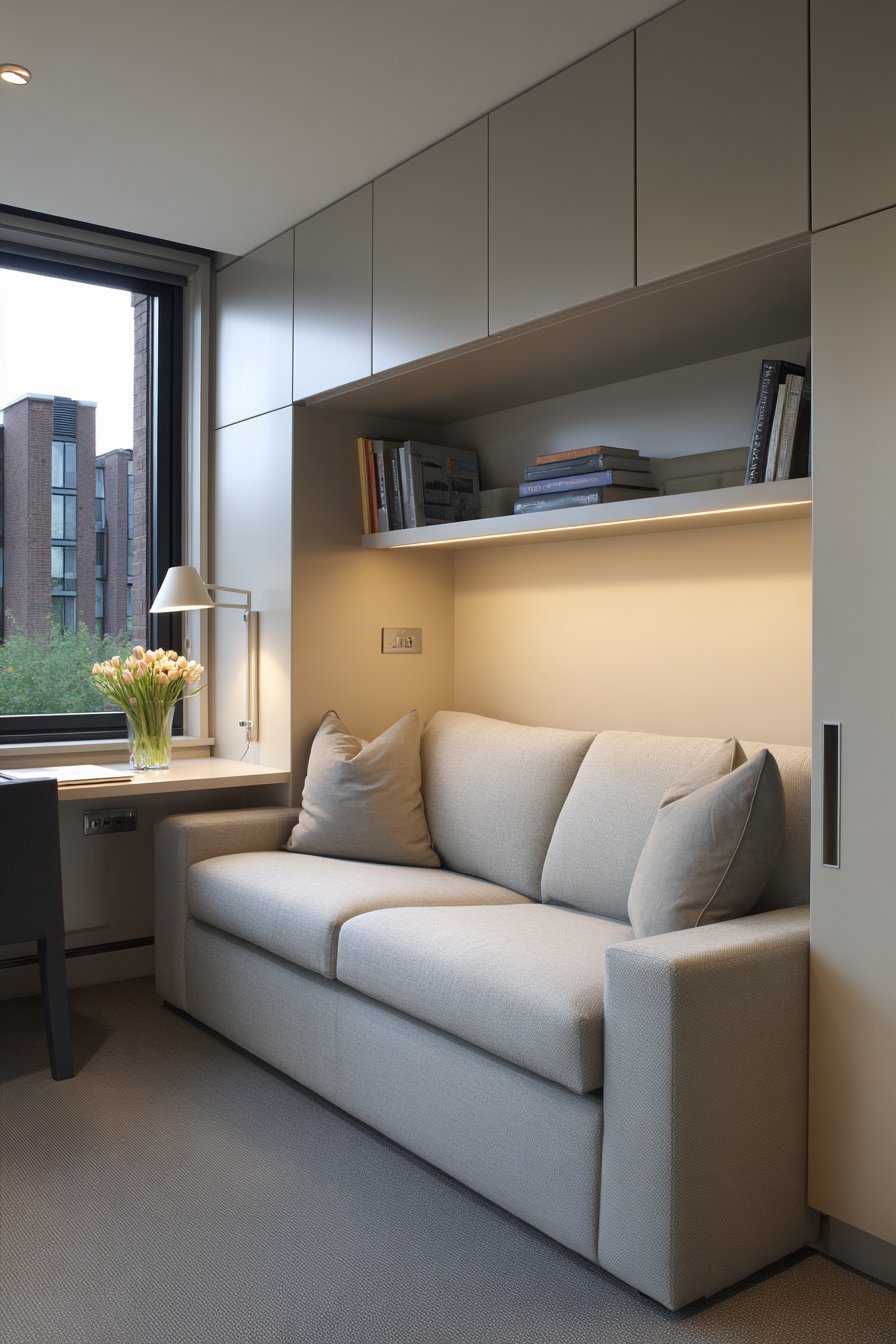
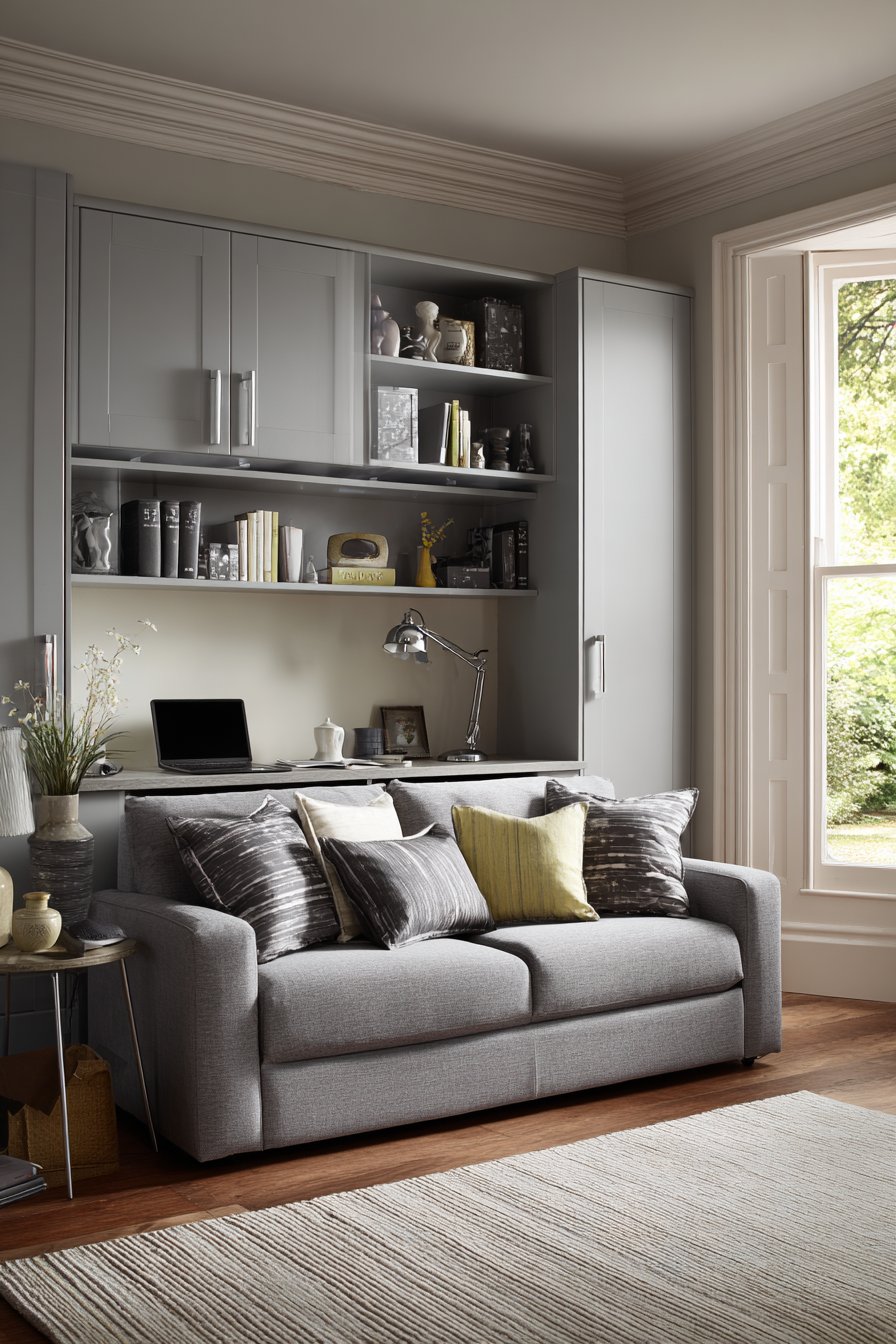
As remote work becomes increasingly common, creating living rooms that seamlessly integrate office functionality represents one of contemporary design’s key challenges. A light grey sofa living room with incorporated home office elements demonstrates how thoughtful planning can create zones for both relaxation and productivity within a single space. The grey sofa positions strategically to define the seating area while a sleek desk occupies the opposite wall, creating visual separation between work and leisure zones without requiring physical barriers. This open arrangement maintains the room’s spacious feeling while acknowledging the multifunctional demands of modern life.
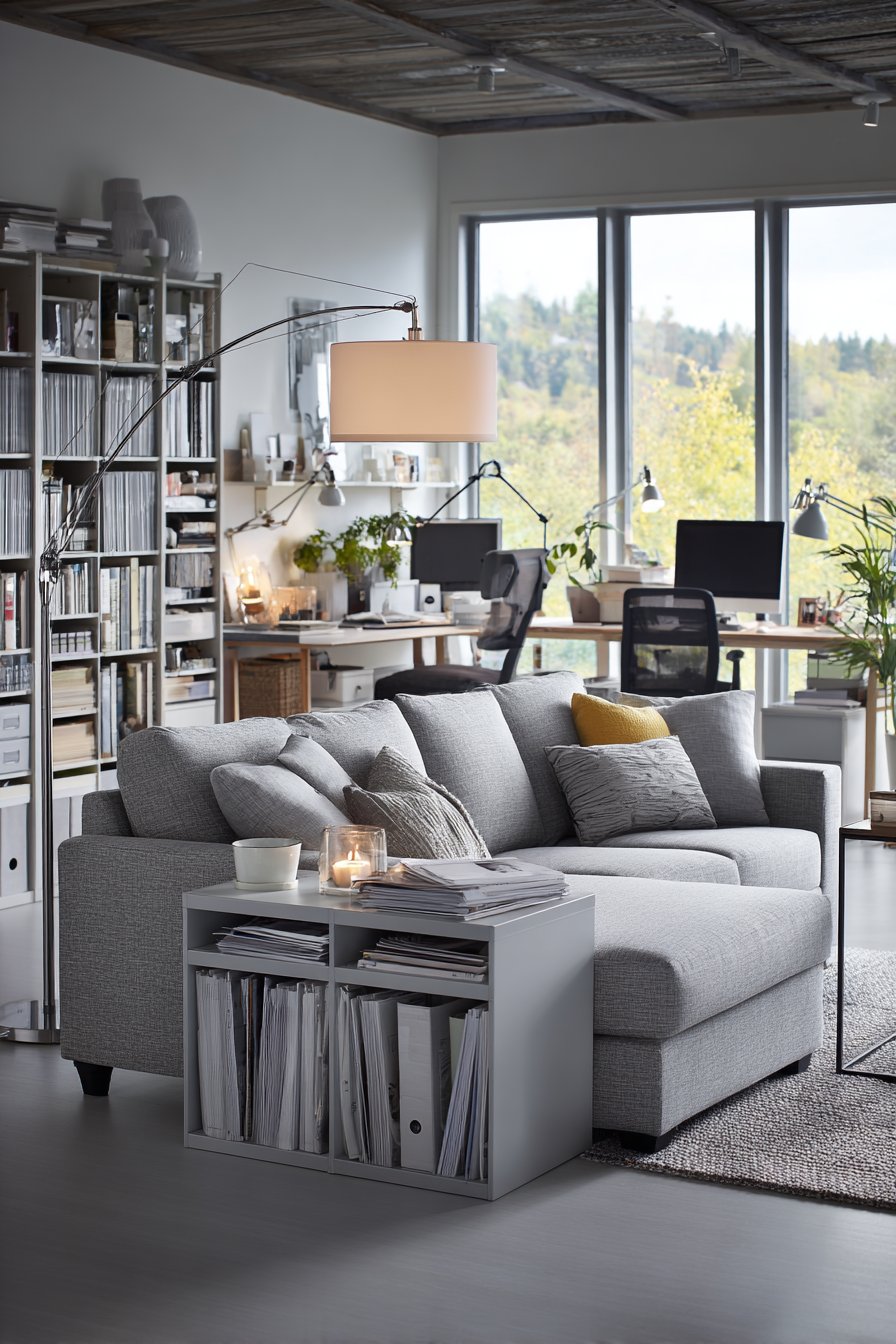
Coordinated storage solutions throughout the space maintain visual cohesion while serving distinct purposes. A console table positioned behind the sofa provides additional work surface or display space, demonstrating furniture’s ability to serve multiple functions depending on immediate needs. Storage pieces in matching grey tones—perhaps a bookcase, file cabinet, or credenza—keep work materials organized and accessible while blending seamlessly with the living room aesthetic. This thoughtful coordination prevents the space from feeling like an awkward combination of office and living room, instead creating a cohesive environment designed for contemporary living.
Lighting design becomes particularly important in multipurpose spaces where different activities demand different illumination types. Adjustable task lighting at the desk provides focused light for computer work and detailed tasks, while an ambient floor lamp near the sofa creates a warmer glow suitable for reading or entertaining. Natural light from side windows illuminates both zones, reducing eye strain and maintaining connection with the outside world during work hours. The result is a flexible space that adapts to changing needs throughout the day—professional enough for video calls, comfortable enough for evening relaxation.
Key Design Tips:
- Position the sofa to define the living zone while placing work surfaces along opposite walls to create functional separation
- Choose furniture pieces that serve multiple purposes, like console tables that work as desks or display surfaces
- Coordinate storage solutions in matching tones to maintain visual cohesion between work and living zones
- Layer lighting types—task, ambient, and natural—to accommodate different activities throughout the day
- Select performance fabrics and durable materials that withstand daily use in high-functioning multipurpose spaces
10. Industrial Chic Urban Loft Character
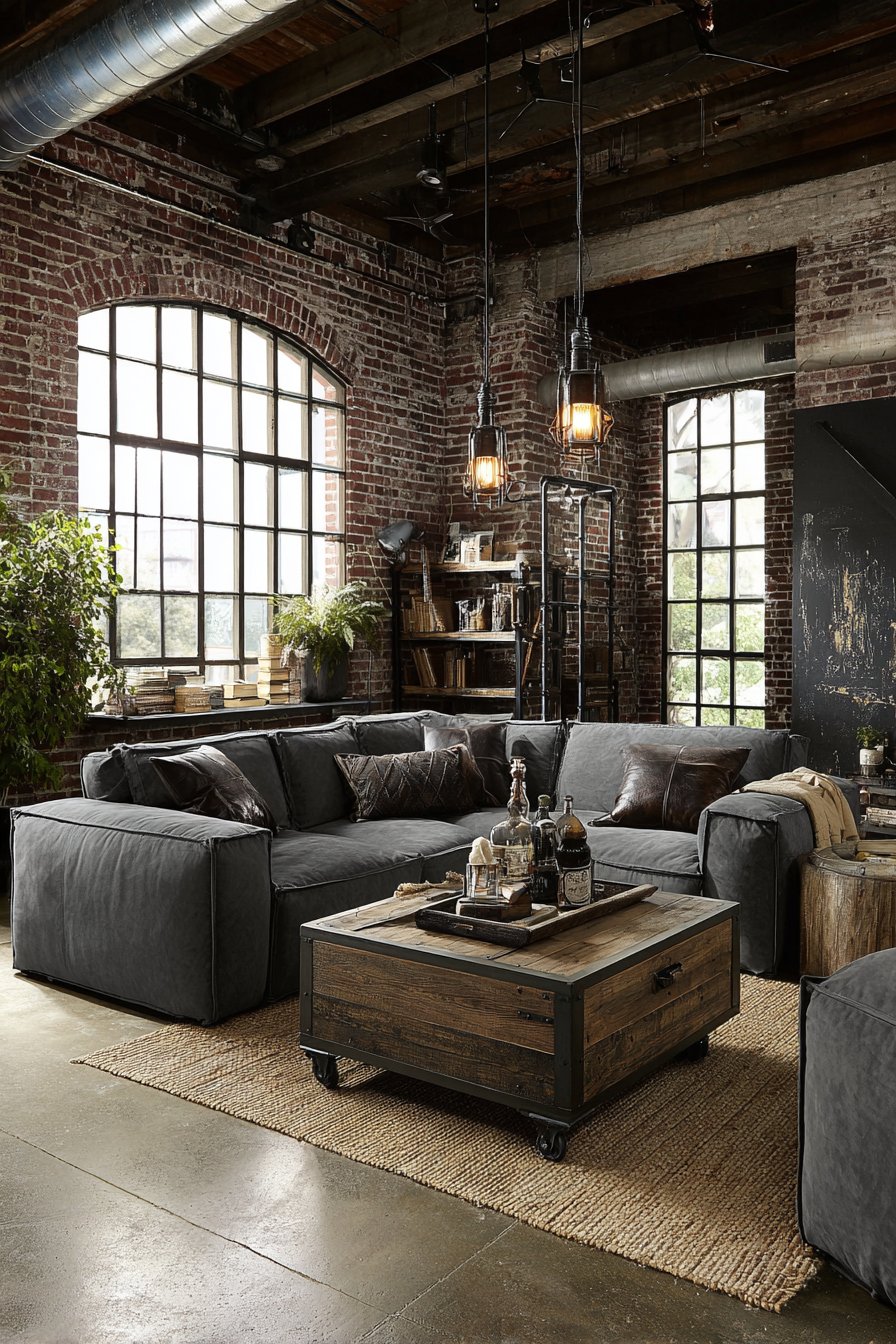
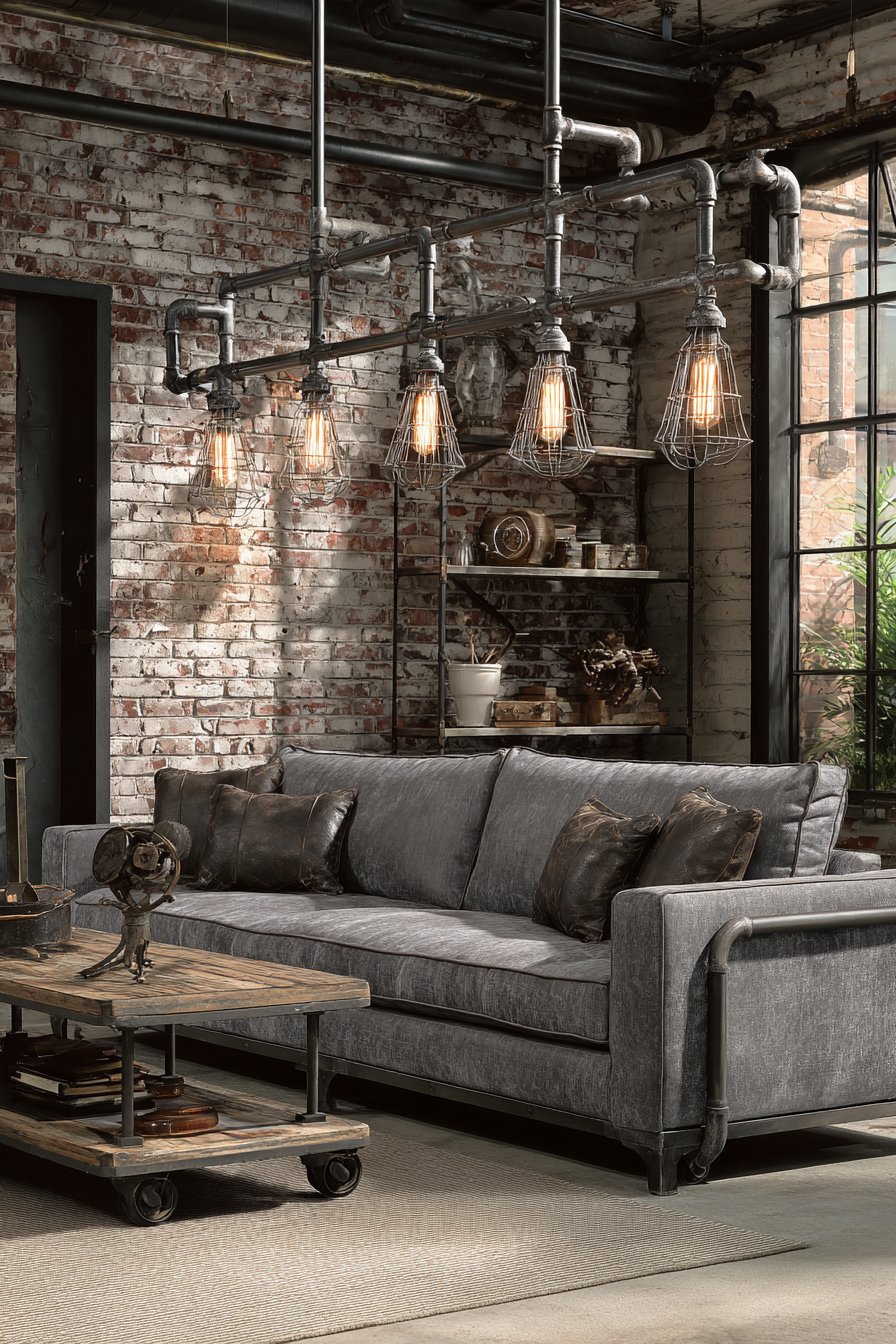
The industrial aesthetic celebrates raw materials and utilitarian forms, transforming architectural elements typically hidden into design features worth showcasing. A light grey sofa living room with industrial styling creates a sophisticated urban environment where refined furnishings meet honest materials. The sofa itself features a metal frame and clean-lined upholstery that references the industrial tradition of functional design, while distressed leather accent pillows add texture and a sense of history. This combination of new and worn, refined and raw, captures the essence of industrial style’s appeal.
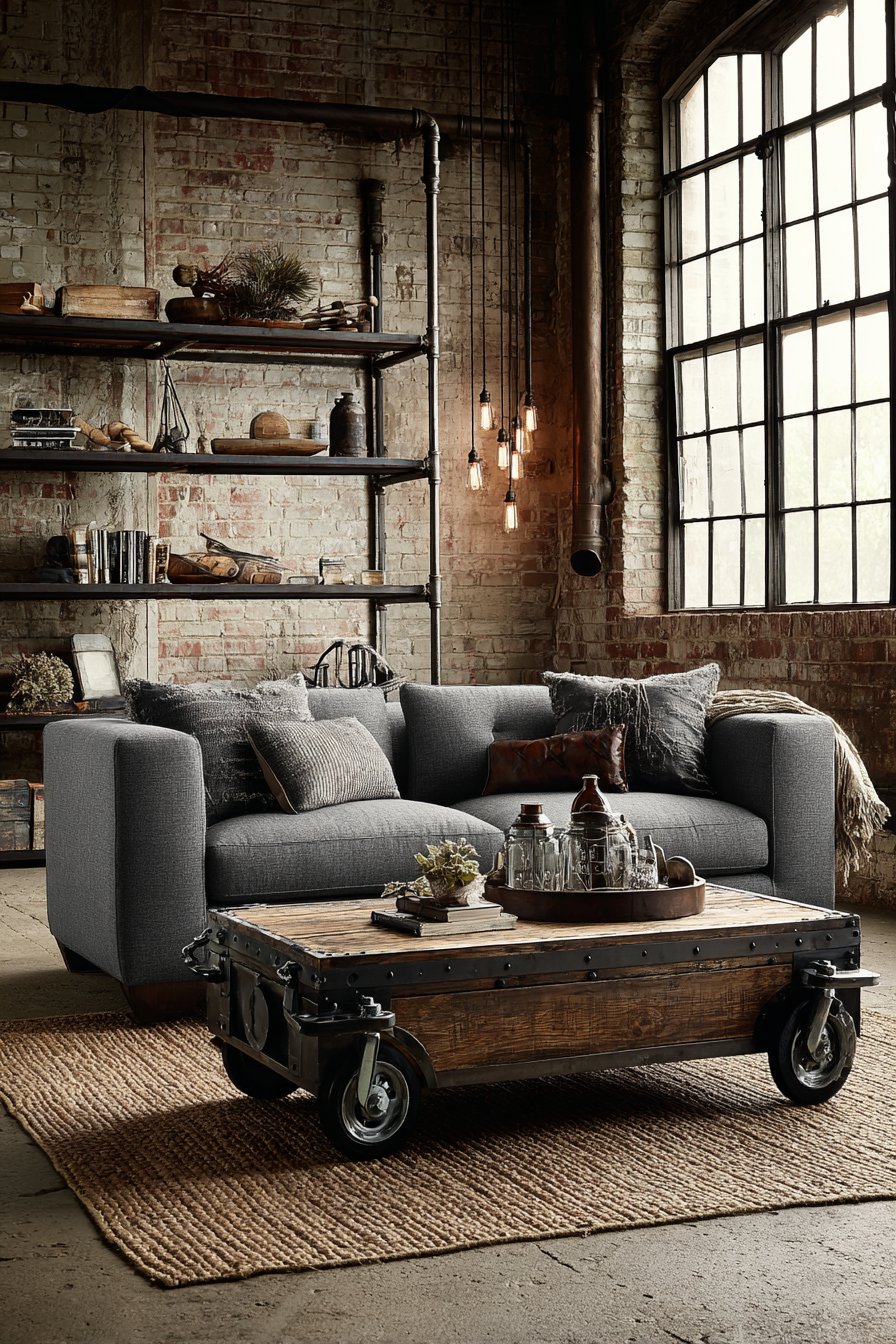
Reclaimed materials play a starring role in industrial design, connecting contemporary spaces with manufacturing heritage. A coffee table crafted from reclaimed wood mounted on industrial metal caster wheels serves as both functional furniture and conversation piece, its weathered surface bearing the marks of its previous life. Metal pipe shelving mounted against exposed brick displays books and objects while celebrating the honest structural approach that defines industrial aesthetics. These elements don’t attempt to hide their utilitarian origins but rather embrace them as sources of authentic character.
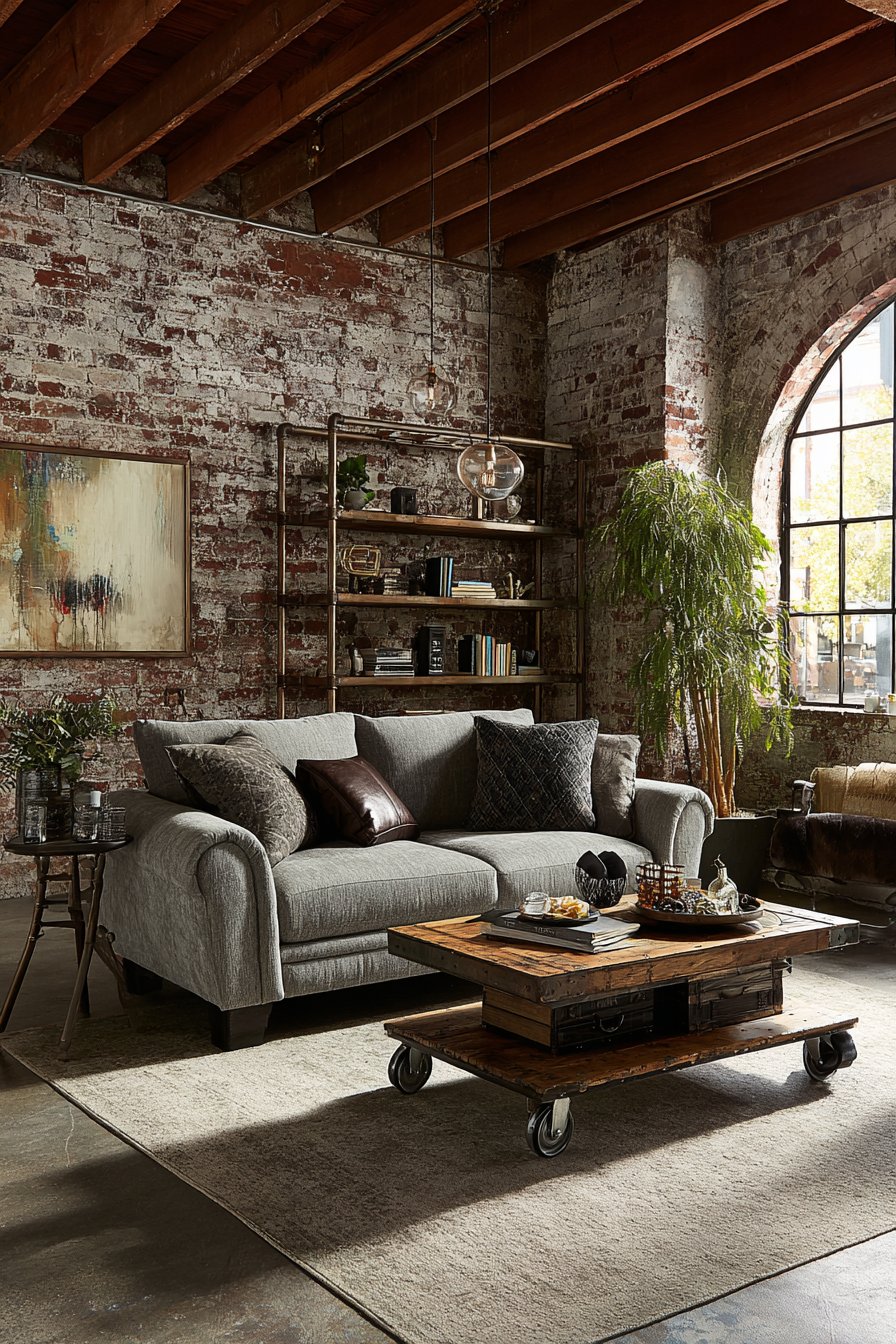
The architectural backdrop enhances the industrial narrative through exposed elements typically concealed in conventional interiors. Brick accent walls provide textural contrast against the smooth grey upholstery, their warm red tones complementing rather than competing with the neutral sofa. Concrete floors—perhaps polished or acid-stained—contribute to the urban warehouse feeling while providing durable, low-maintenance surfaces. Edison bulb pendant lights suspended from exposed ceiling infrastructure provide ambient lighting while referencing early industrial electrical systems. Natural light from factory-style windows with black frames creates dramatic shadows that emphasize the room’s raw materials and authentic character.
Key Design Tips:
- Select furniture with exposed metal frames and clean lines that honor industrial design’s utilitarian roots
- Incorporate reclaimed wood pieces that show authentic wear and history rather than artificially distressed new materials
- Celebrate rather than conceal architectural elements like exposed brick, concrete, and visible ductwork
- Use vintage-style Edison bulbs in simple fixtures that reference early industrial lighting without feeling costume-like
- Balance raw materials with refined upholstery to prevent the space from feeling too rough or unfinished
11. Dramatic Moody Sophistication with Dark Accents
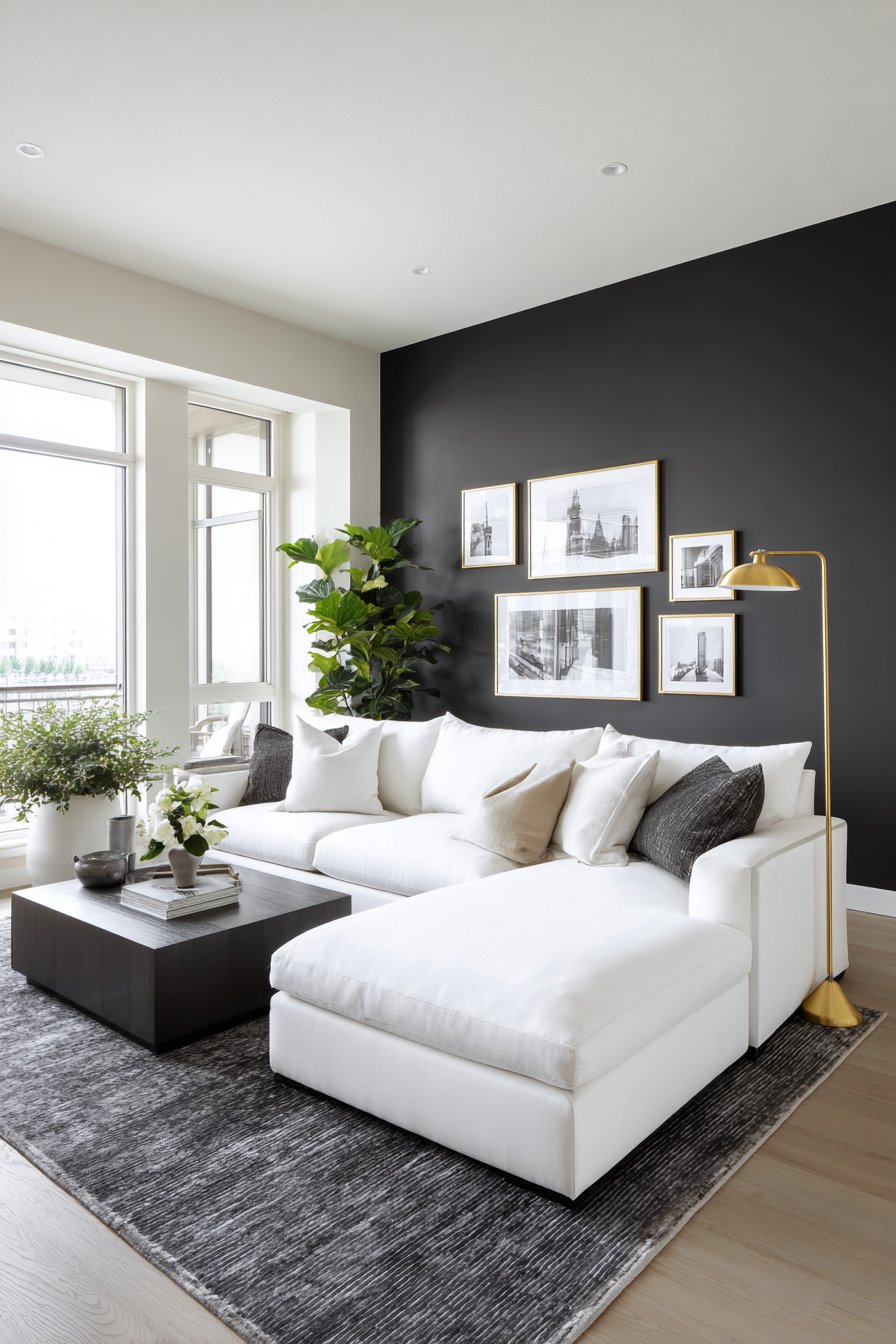
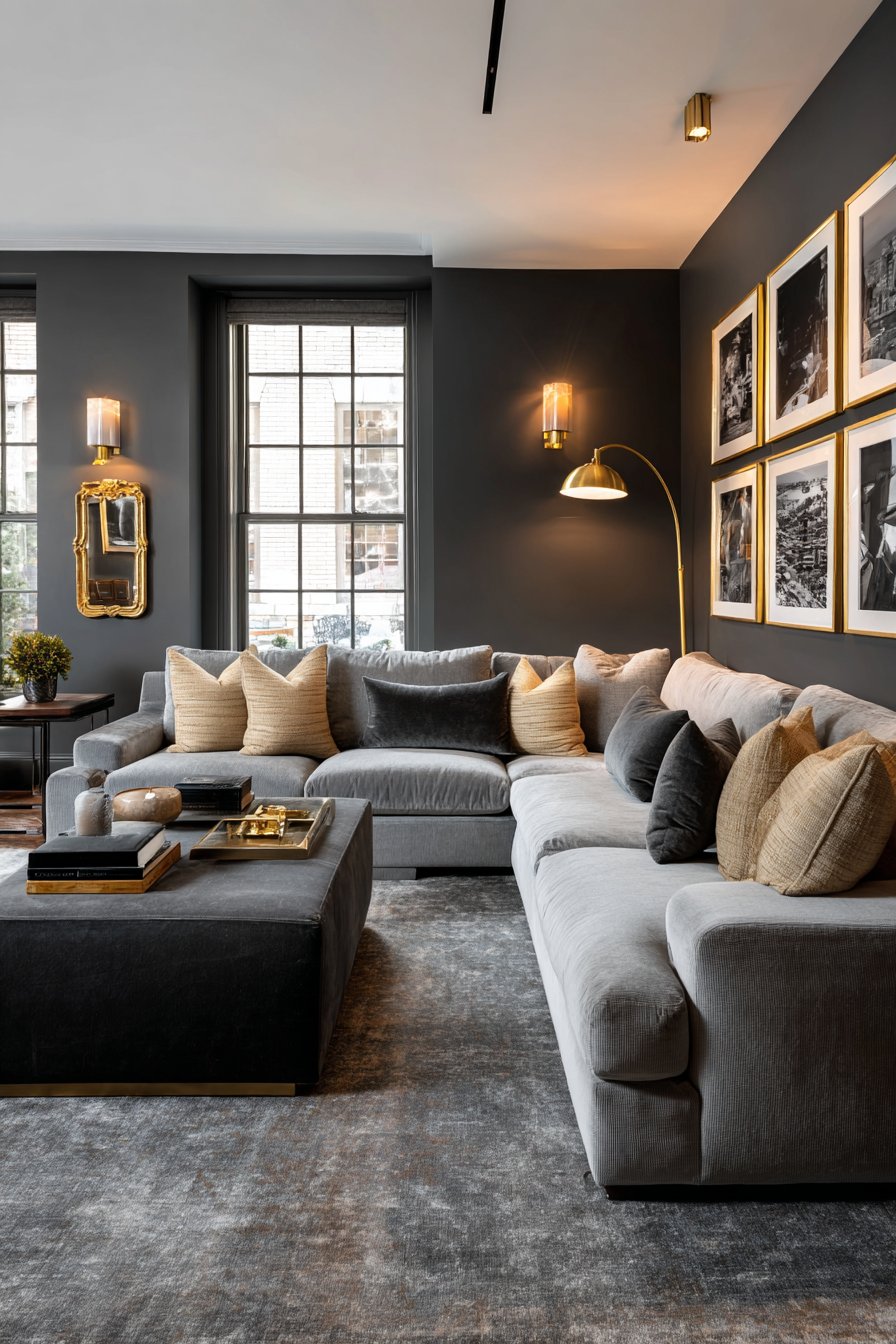
While light grey sofas often appear in bright, airy spaces, pairing this neutral piece with dramatic dark elements creates unexpected sophistication and depth. Picture a light grey velvet sofa positioned against a charcoal grey accent wall, the striking contrast immediately establishing visual drama. The velvet upholstery catches and reflects light in constantly changing ways, creating subtle variations in tone that add life and movement to the space. This bold backdrop transforms the light sofa from merely neutral to genuinely luminous, demonstrating how context dramatically impacts perception.
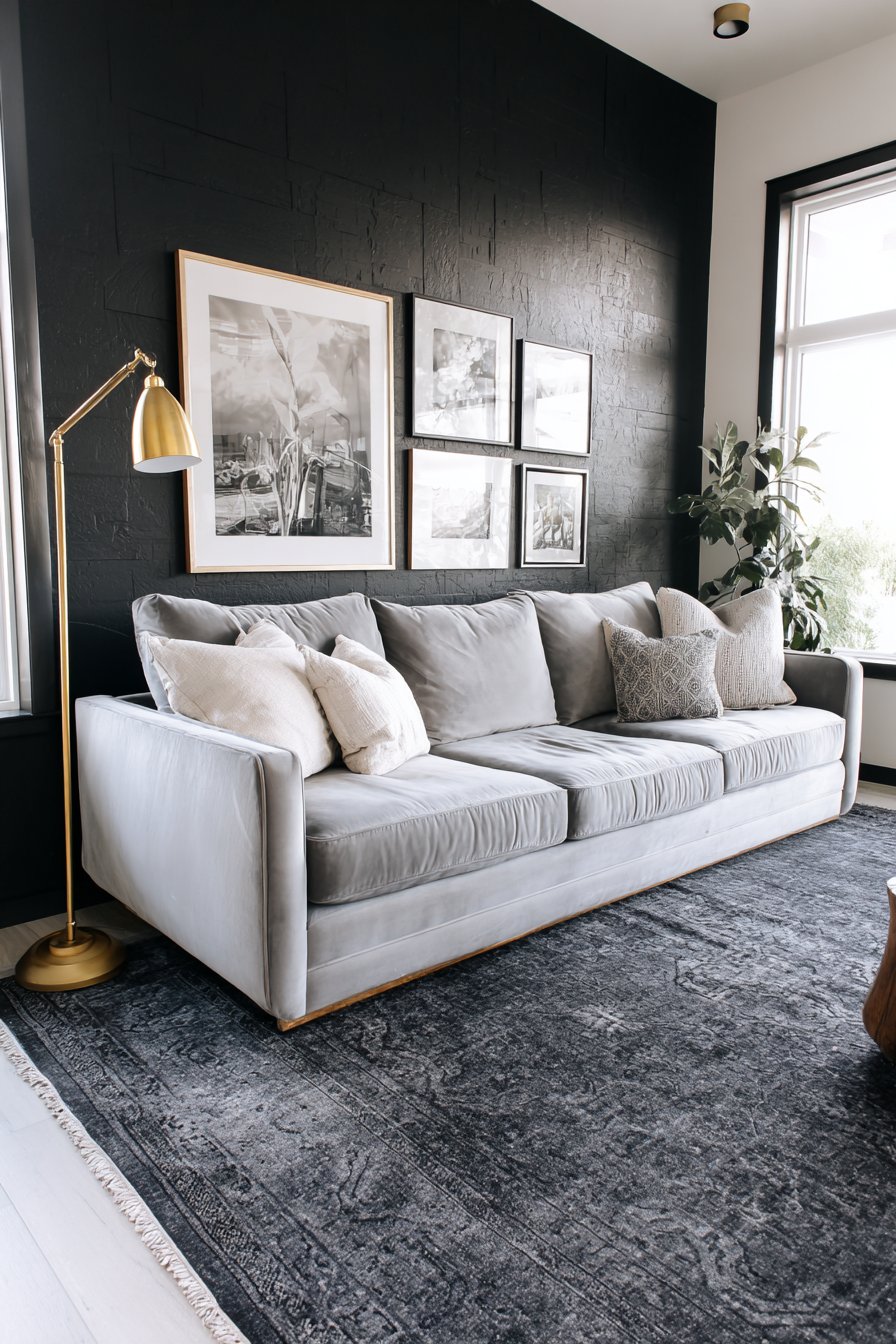
Metallic accents in warm tones provide the perfect bridge between light and dark elements. A brass floor lamp arcs gracefully over the sofa, its warm metallic finish glowing against the dark wall while directing light onto the seating area. A gold-framed mirror positioned strategically reflects both natural and artificial light sources, multiplying illumination and adding dimensional interest. These reflective elements prevent the dark wall from overwhelming the space, instead creating a sophisticated interplay of light and shadow that feels intentional and controlled.
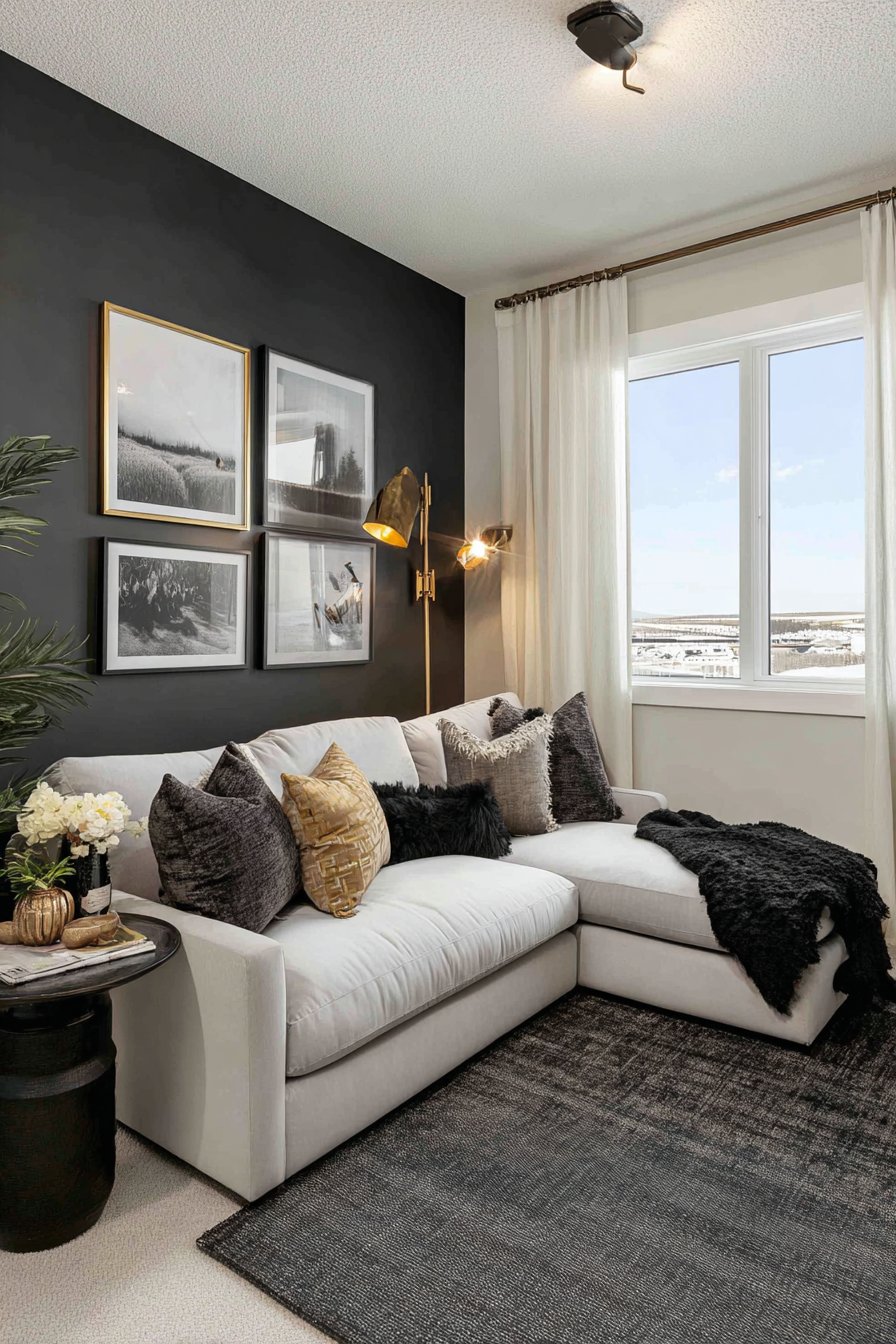
The art program in this moody living room reinforces the sophisticated aesthetic through careful curation. A gallery wall of black and white photography creates focal interest on the dark wall, the monochromatic images feeling simultaneously dramatic and cohesive. A plush area rug in deep grey with subtle pattern grounds the seating arrangement while extending the tonal sophistication to the floor. The lighting strategy becomes crucial—soft natural light from side windows balanced with carefully placed warm artificial sources creates the dimensional atmosphere that makes moody interiors feel enveloping rather than oppressive.
Key Design Tips:
- Pair a light grey sofa with dark accent walls to create dramatic contrast that makes the sofa appear more luminous
- Choose velvet upholstery that catches light and creates subtle tonal variations adding visual interest
- Incorporate warm metallic elements like brass and gold that glow against dark surfaces and warm the palette
- Use mirrors strategically to reflect and multiply light sources, preventing dark walls from overwhelming the space
- Layer lighting carefully with both natural and artificial sources to create depth and prevent the space from feeling cave-like
12. Family-Friendly Livable Luxury
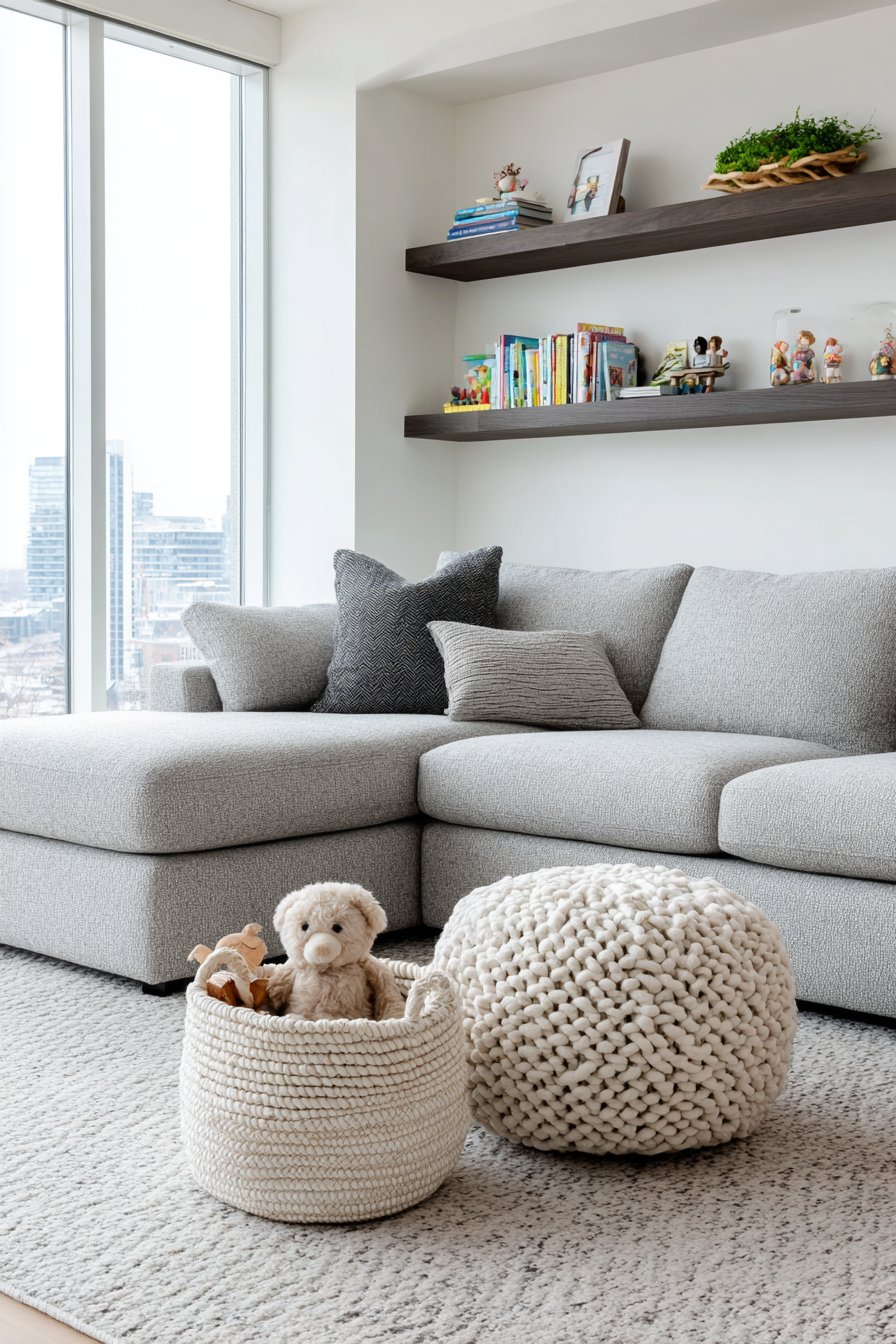
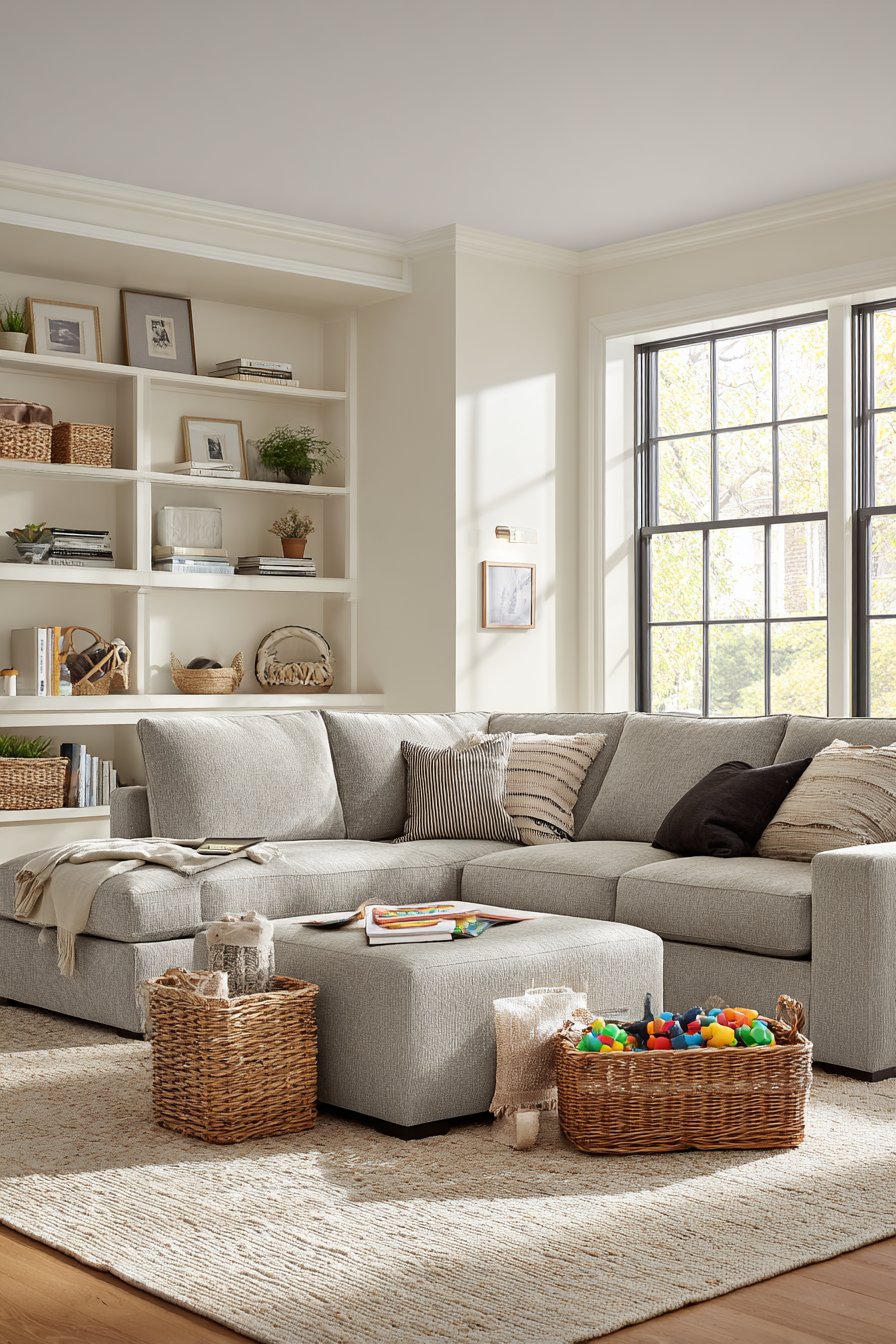
Creating a beautiful living room that accommodates family life—with all its spills, activity, and joyful chaos—requires thoughtful planning and smart material choices. A light grey sofa living room designed for families proves that style and practicality need not be mutually exclusive. The foundation piece features durable performance fabric that resists stains and cleans easily, while deep seats and plush cushions with washable covers ensure comfort for movie nights and weekend lounging. This isn’t furniture to be admired from a distance but rather pieces meant to be lived with and loved.
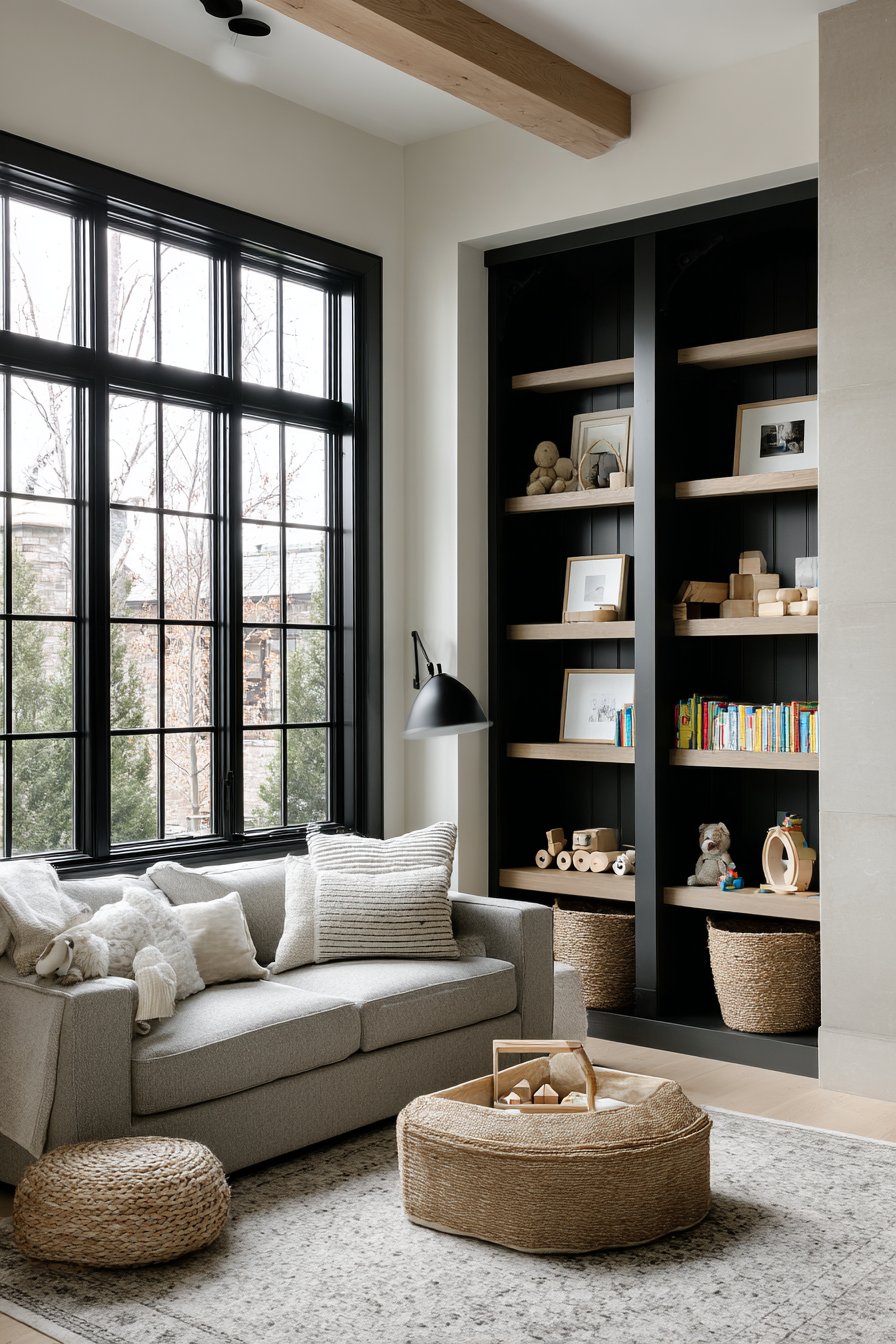
Storage solutions integrated throughout the space address family life’s practical realities without sacrificing aesthetic appeal. An ottoman with hidden storage serves triple duty as coffee table, extra seating, and toy storage—its tufted top providing a soft surface that’s forgiving when little ones are learning to walk. Woven baskets in coordinating tones contain children’s toys and games, keeping clutter contained while maintaining visual harmony with the overall design. Built-in shelving displays family photos and books at accessible heights, encouraging reading and creating spaces for personal treasures.
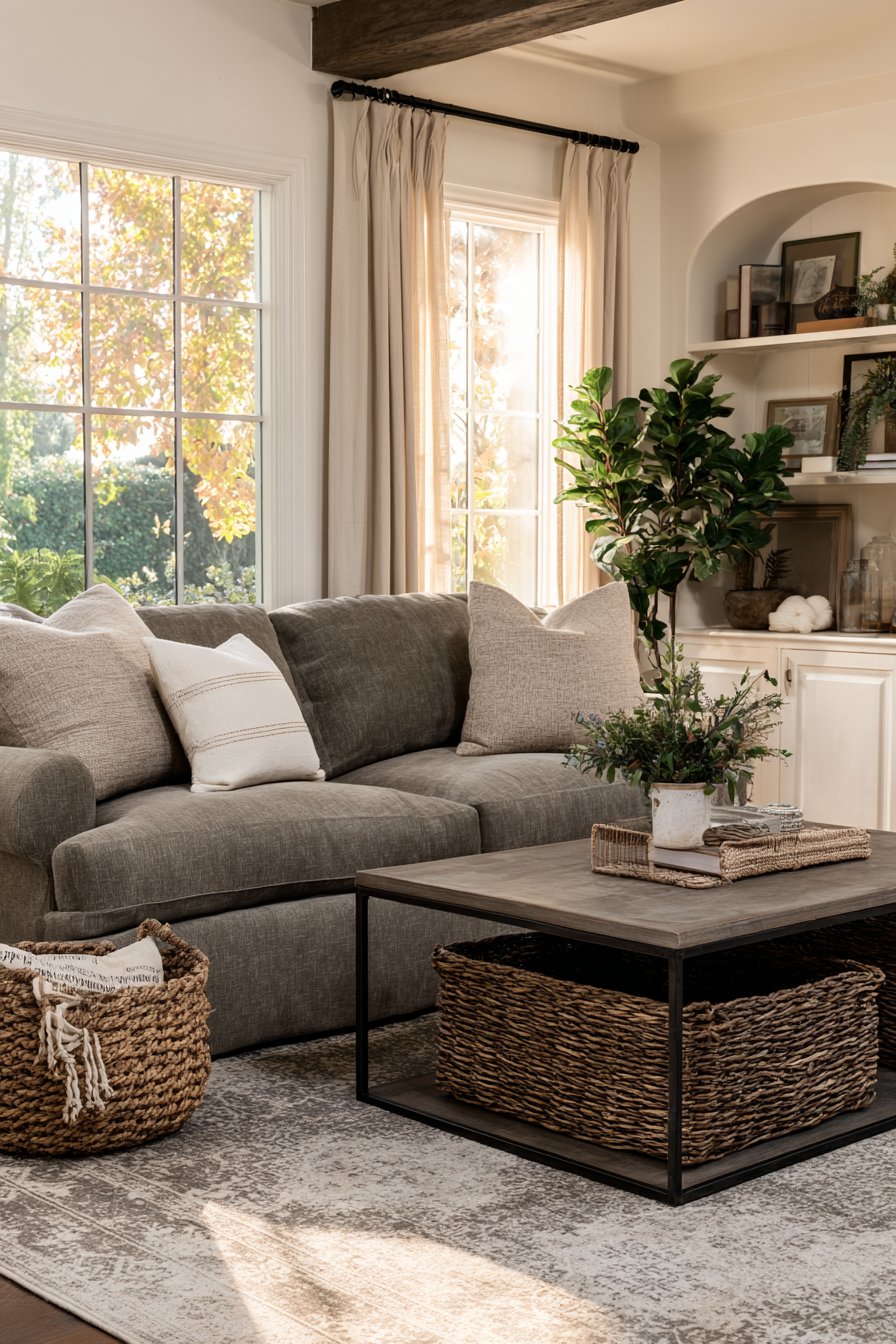
The materials and finishes throughout this family living room prioritize durability and easy maintenance. An area rug in a forgiving pattern conceals the inevitable wear that comes with active family life, while the pattern itself adds visual interest without demanding perfection. Natural afternoon light creates a warm, inviting atmosphere that makes the space perpetually ready for family activities—from board game marathons to impromptu dance parties. Realistic signs of daily life—a throw blanket casually draped, books stacked on the coffee table ottoman—create an authentic, livable aesthetic that invites actual use rather than museum-quality preservation.
Key Design Tips:
- Choose performance fabrics specifically engineered to resist stains, fading, and wear from daily family use
- Incorporate furniture with hidden storage like ottomans and lift-top coffee tables to contain clutter attractively
- Select rugs with patterns that disguise wear and spills rather than solid colors that show every mark
- Opt for washable cushion covers and throws that can be refreshed easily when life’s inevitable accidents occur
- Create low storage accessible to children, teaching organizational skills while keeping toys from overtaking the space
13. Luxurious Velvet Sophistication
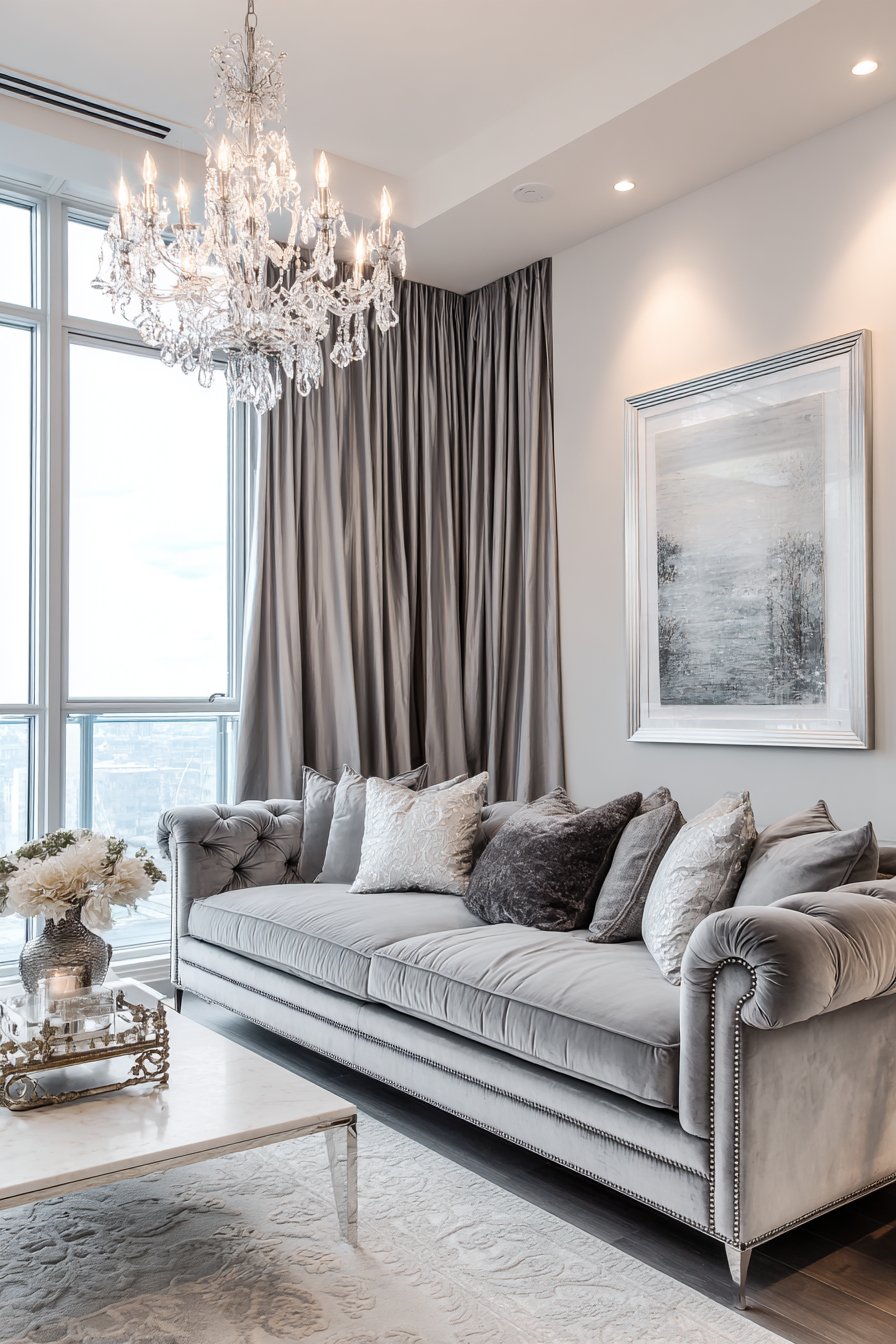
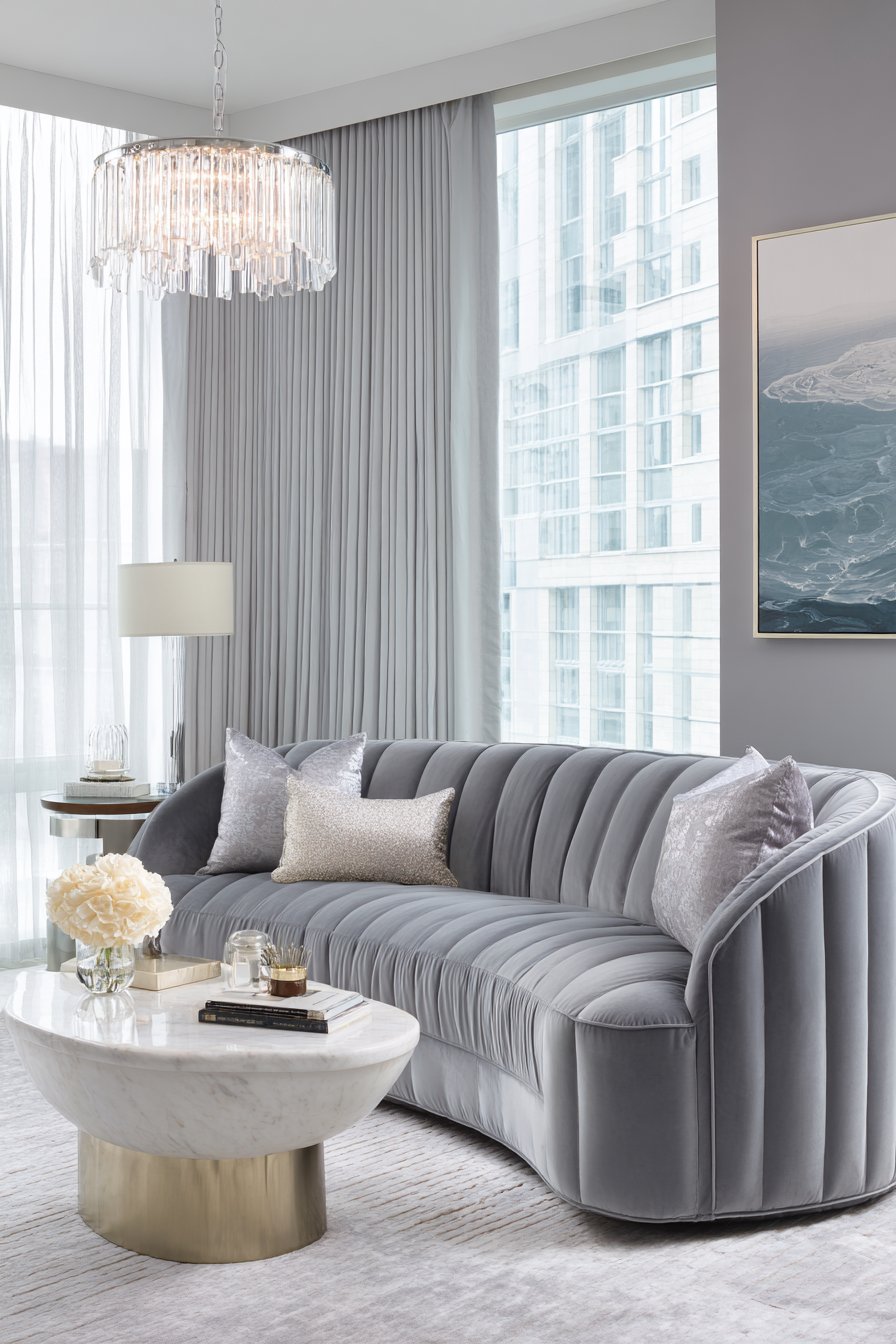
Elevating the light grey sofa to its most luxurious expression, a living room featuring channel-tufted grey velvet creates an environment of refined elegance. The sophisticated sofa boasts deep channel tufting that creates vertical linear interest across its surface, while polished chrome legs add a touch of glamorous sparkle. The velvet upholstery transforms throughout the day as light moves across its surface—appearing lighter and more silvery in direct sunlight, deeper and richer as evening approaches. This dynamic quality elevates the sofa from mere furniture to a focal point that commands attention and admiration.
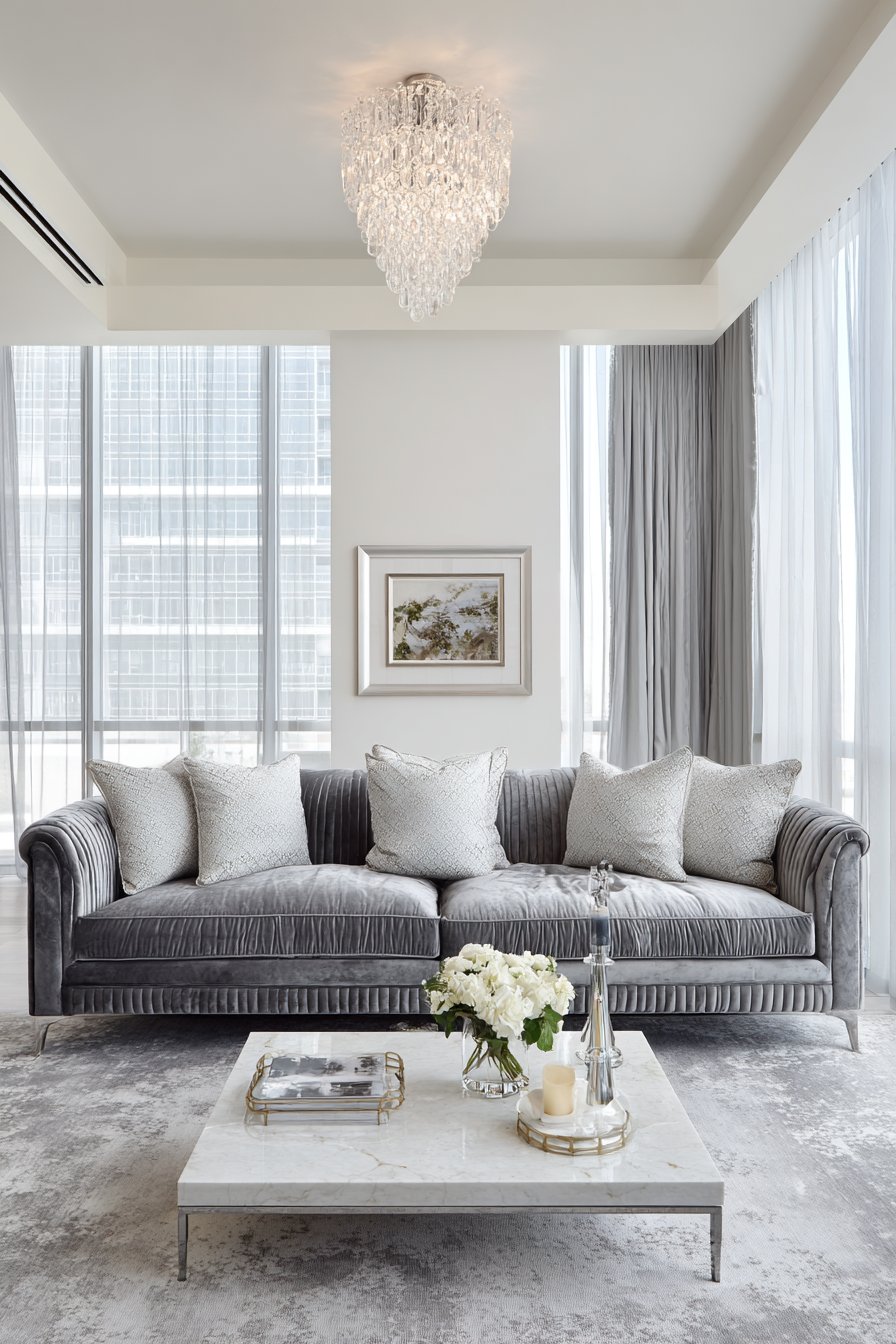
Supporting pieces in this luxurious space demonstrate the same commitment to quality materials and refined design. A marble coffee table with brass inlay detail serves as a sculptural centerpiece, its natural veining creating an organic pattern that contrasts beautifully with the geometric channel tufting of the sofa. A silk-blend area rug in subtle grey pattern adds another layer of luxury underfoot, its slight sheen catching light and contributing to the room’s overall sense of refinement. These pieces aren’t chosen merely for their function but for their ability to elevate the everyday into something extraordinary.
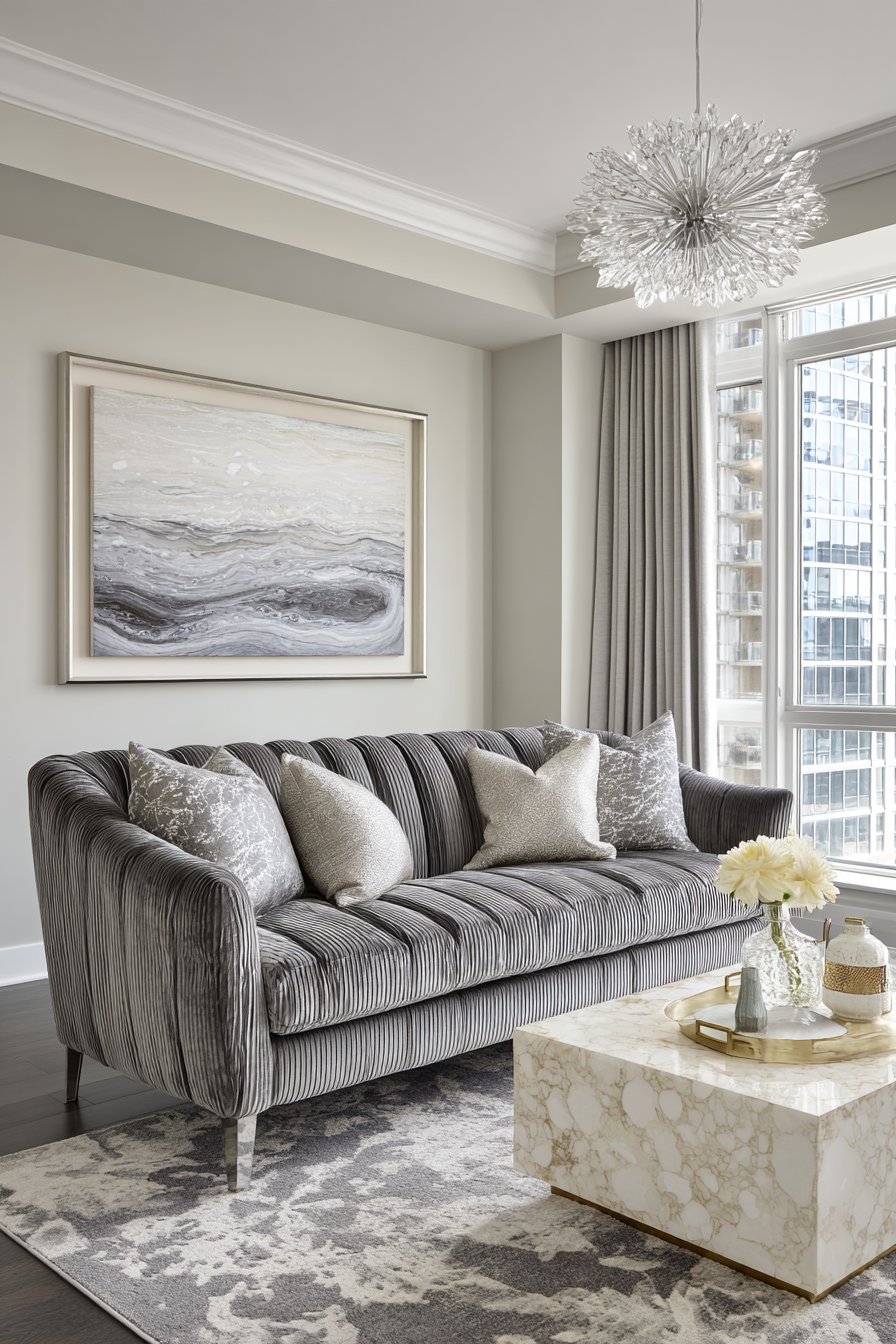
Lighting design in this luxurious living room creates ambiance worthy of the refined furnishings. A crystal chandelier provides elegant ambient lighting, its faceted drops casting prismatic light across the space and adding a touch of traditional glamour. Recessed spotlights highlight artwork and architectural features, creating layers of illumination that add depth and drama. Floor-to-ceiling drapery in grey silk frames tall windows, filtering natural light through sheers during the day while providing privacy in the evening. The result is a living room that feels perpetually special—a space where ordinary moments feel elevated simply by the surroundings.
Key Design Tips:
- Select channel-tufted velvet upholstery to add luxurious texture and create interesting light play across the sofa’s surface
- Choose statement pieces like marble tables and crystal lighting that serve as sculptural elements beyond their function
- Layer high-quality textiles including silk-blend rugs and drapery that add subtle sheen and refined texture
- Incorporate metallic finishes in brass, gold, or polished chrome that add glamorous sparkle and reflect light
- Create layered lighting with ambient, task, and accent sources that allow you to control the mood and atmosphere
14. Japandi Harmonious Fusion
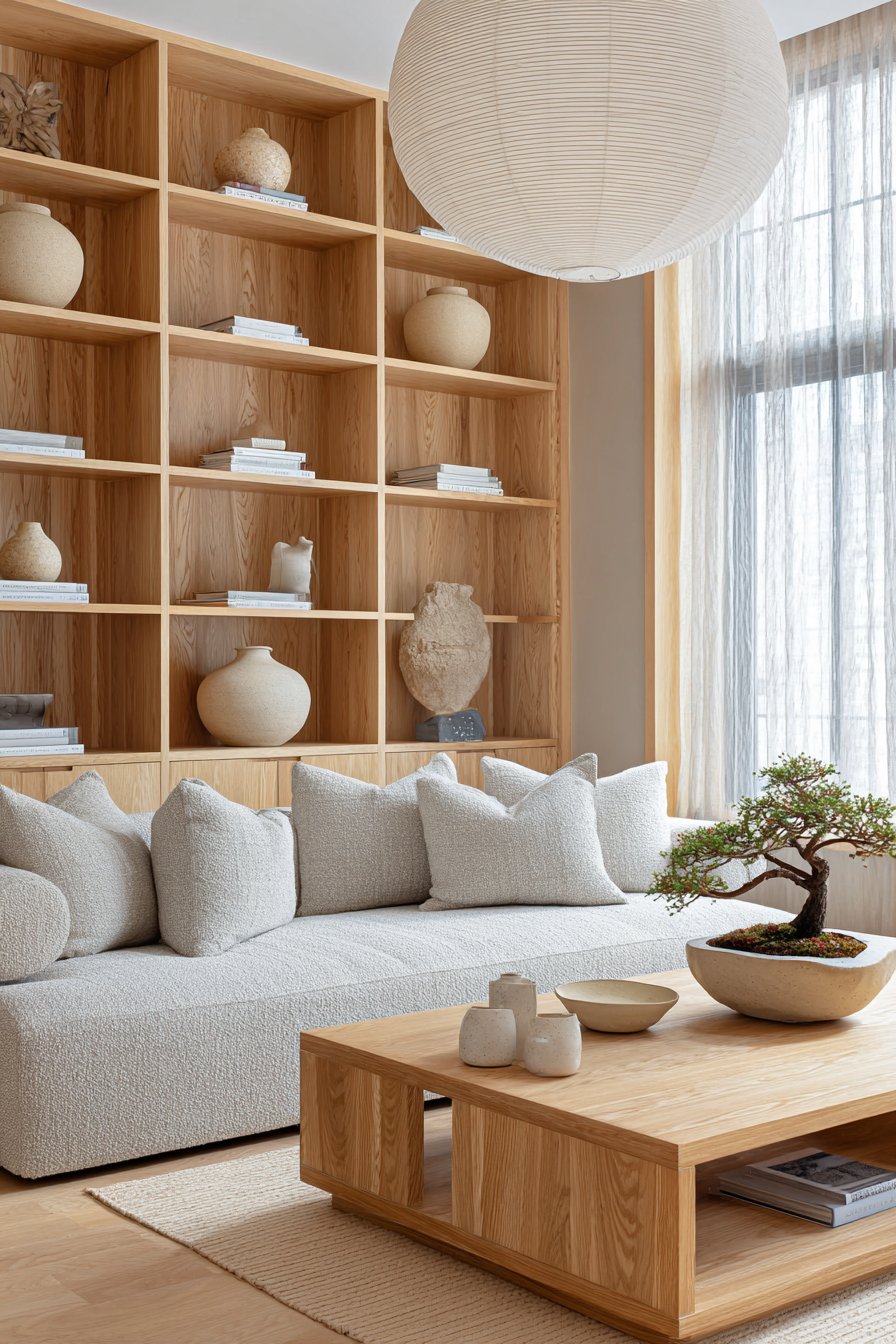
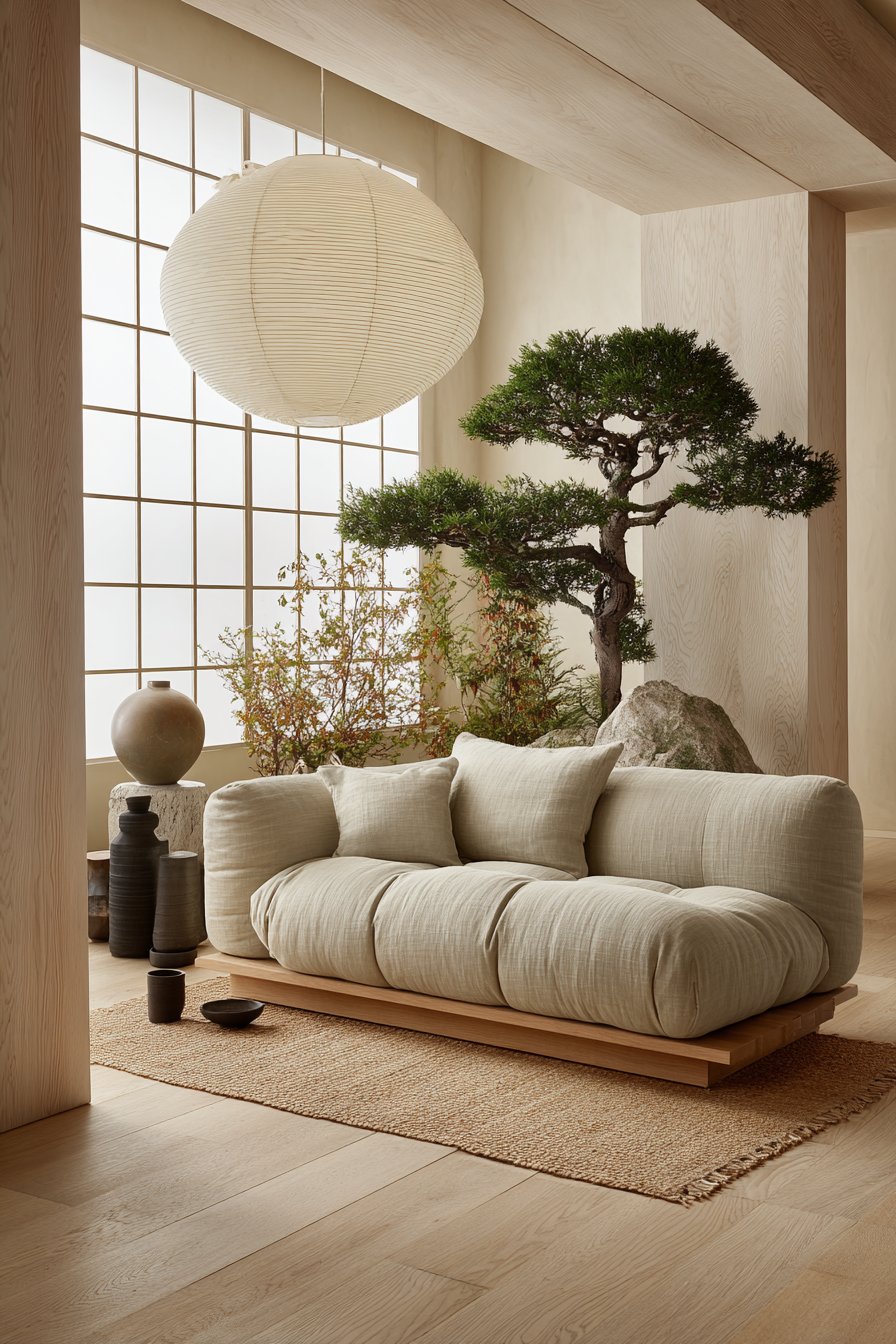
The Japandi aesthetic—a thoughtful fusion of Japanese minimalism and Scandinavian warmth—creates living spaces that feel simultaneously serene and welcoming. A light grey sofa living room executed in this style features a low-profile sofa with simple wooden frame in light oak, embodying the Japanese principle of simplicity while incorporating the Scandinavian love of natural wood. The grey linen upholstery provides comfortable seating without excessive cushioning or ornamentation, reflecting both design traditions’ appreciation for functional beauty and honest materials.
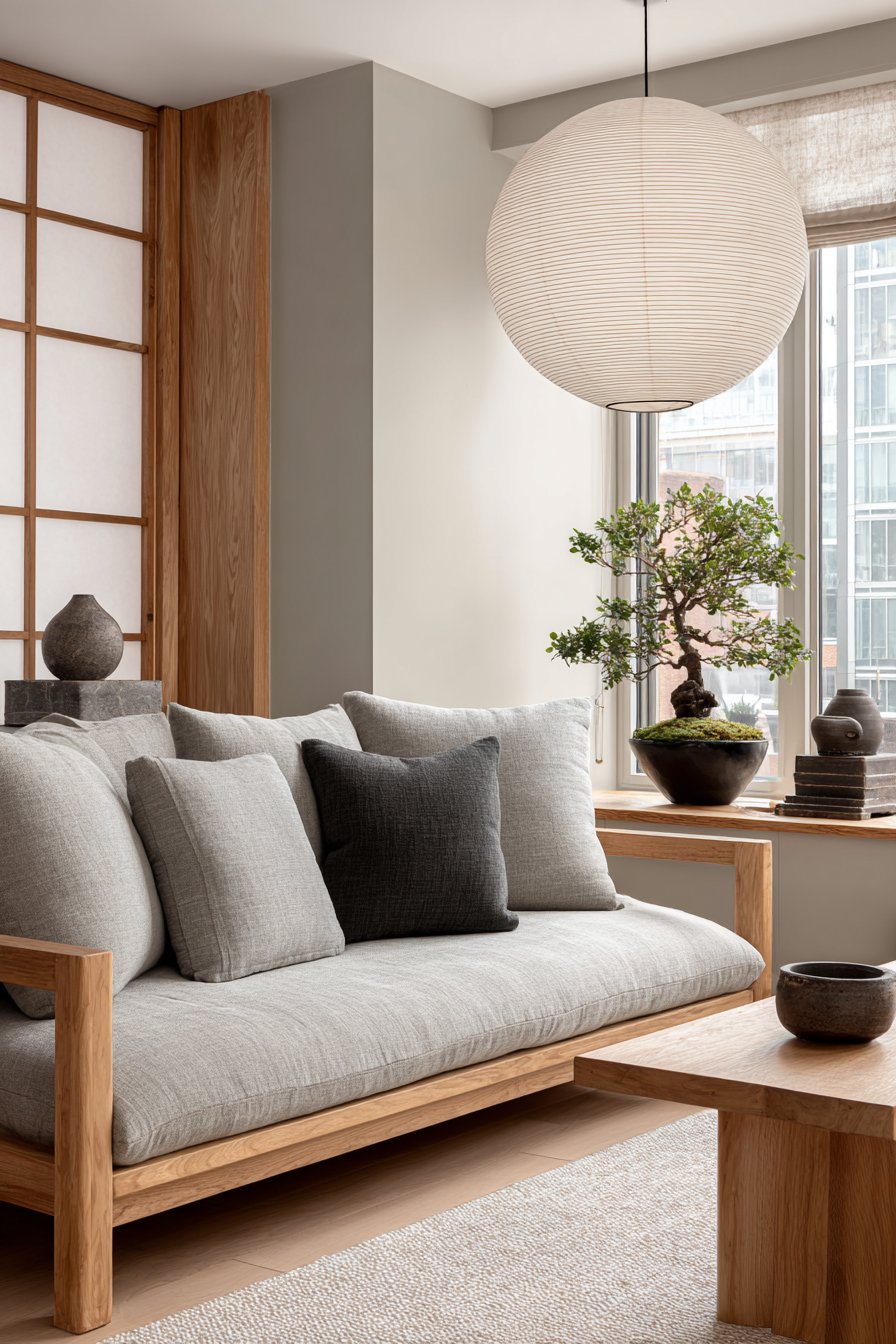
Carefully selected decorative elements reflect the Japandi philosophy of intentional curation and connection to nature. Handcrafted ceramic vessels in organic shapes display seasonal branches or single stems, demonstrating the Japanese concept of ma—the importance of negative space and thoughtful arrangement. A miniature bonsai tree serves as a living sculpture, its carefully trained form representing patience and harmony with nature. These elements aren’t abundant but rather carefully chosen, each piece earning its place through beauty, meaning, or function.
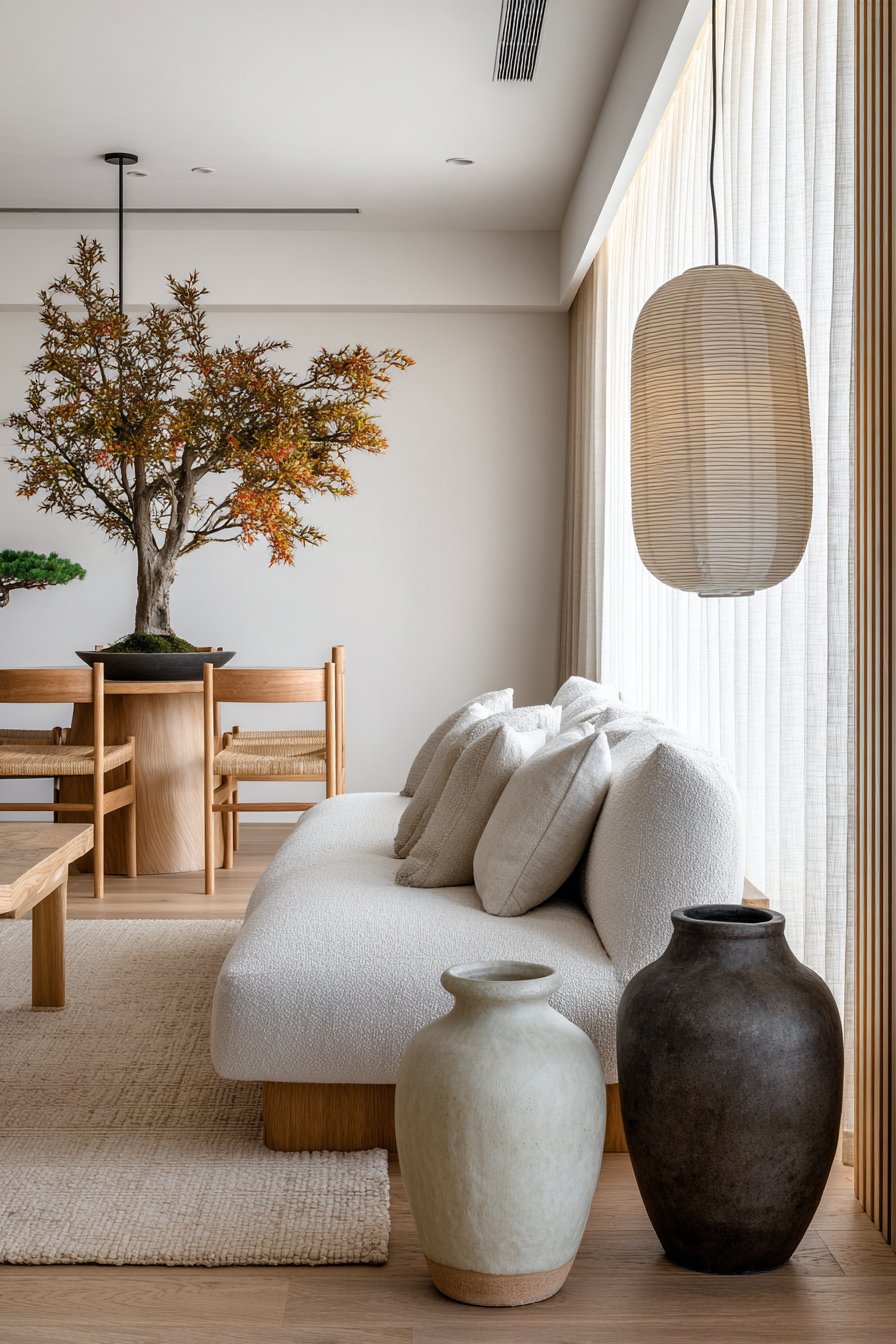
The material palette throughout this Japandi living room celebrates natural substances in their most authentic forms. A tatami-inspired area rug references Japanese traditional interiors while providing textural interest underfoot. A paper lantern pendant light creates soft, diffused illumination that recalls Japanese shoji screens. Natural maple flooring and white oak built-ins emphasize quality craftsmanship and the inherent beauty of wood grain. Diffused natural light from shoji-inspired window treatments creates a serene atmosphere that changes gently throughout the day, supporting meditation, reading, or quiet conversation.
Key Design Tips:
- Choose a low-profile sofa with exposed wooden frame that honors both Japanese simplicity and Scandinavian craft traditions
- Curate decorative objects carefully, selecting only pieces with meaning or exceptional beauty rather than filling surfaces
- Incorporate natural materials like wood, paper, and natural fibers that improve with age and develop character
- Create diffused lighting through paper shades or sheer panels that soften harsh light and create serene ambiance
- Embrace negative space as an essential design element rather than something to be filled with more objects
15. Open-Concept Flow and Cohesion
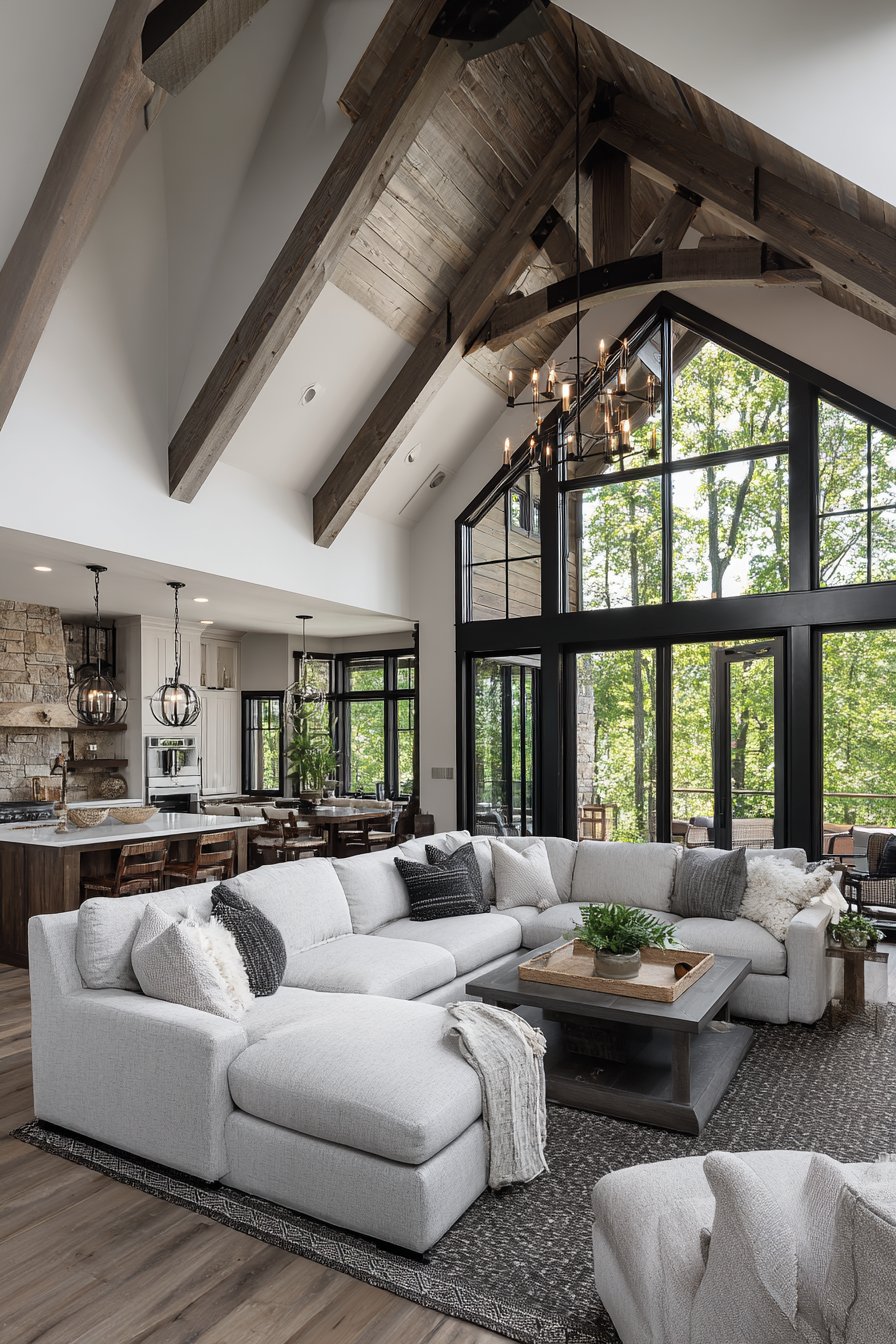
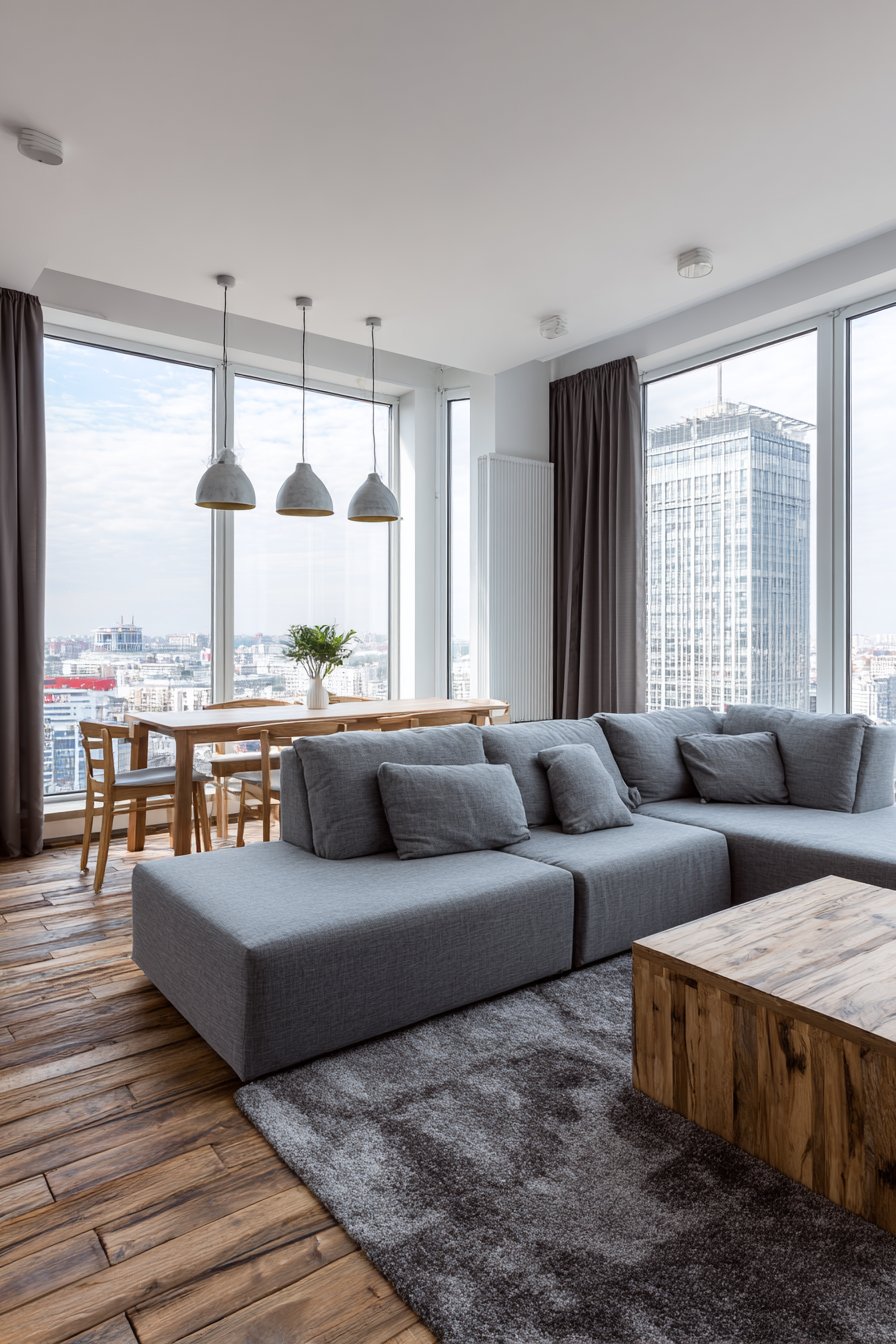
As open-concept floor plans become increasingly common, designing living spaces that maintain distinct identities while flowing seamlessly into adjacent areas presents unique challenges. A light grey sofa living room within an open-concept layout demonstrates how thoughtful furniture placement and design continuity create functional zones without physical barriers. The grey sectional sofa defines the living area without blocking sightlines to the dining space beyond, maintaining the openness that makes these layouts appealing while creating a sense of enclosure necessary for comfortable conversation areas.
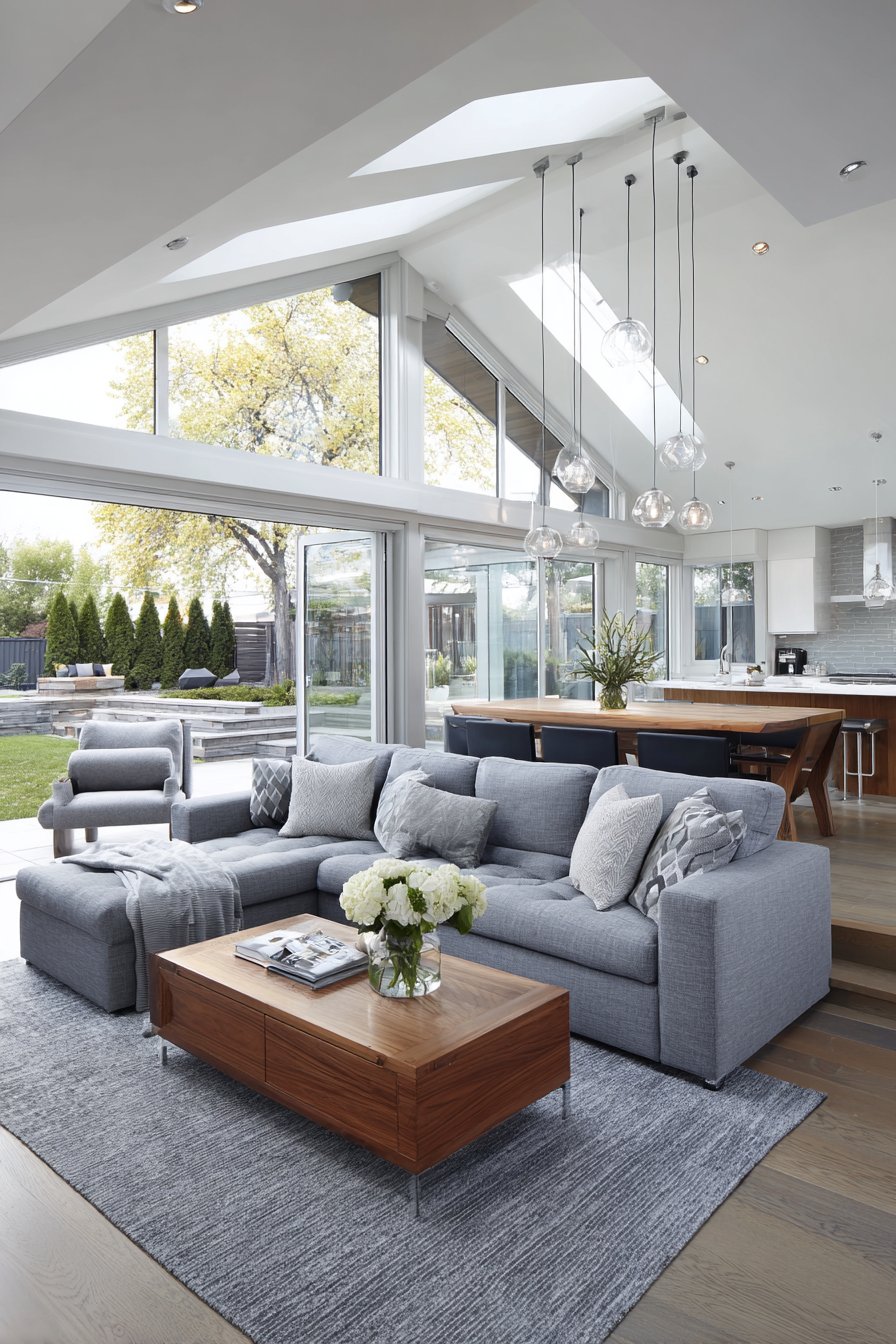
Material and color consistency throughout the open space creates visual flow that unifies distinct functional zones. Consistent wide-plank oak flooring extends through both living and dining areas, providing cohesion and making the combined space feel larger. A coordinated color palette of greys, whites, and natural wood maintains visual harmony while allowing each zone to express its specific function. An area rug anchors the living room seating arrangement, defining the zone through texture and providing visual separation from the dining area where pendant lights serve a similar delineating function.
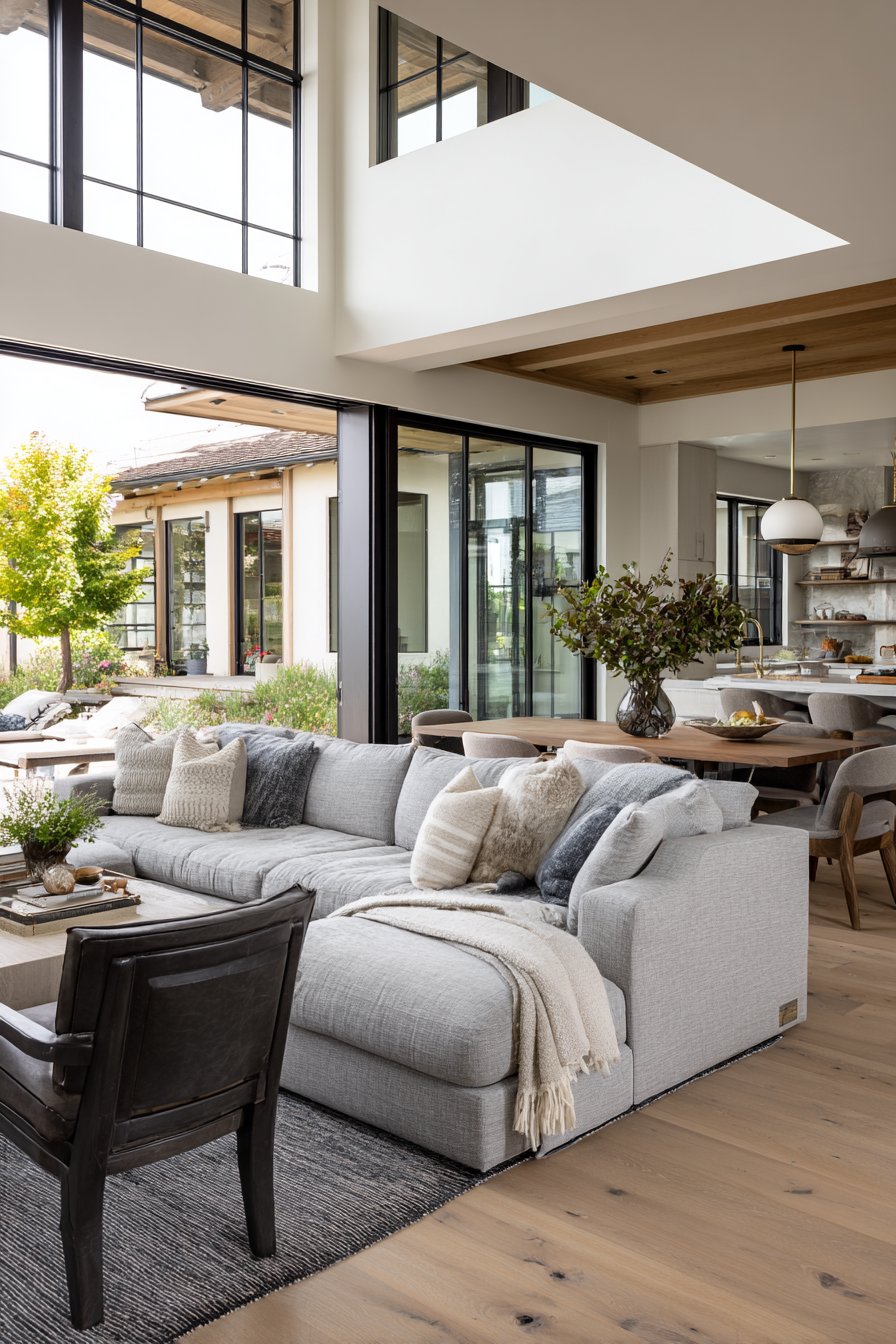
The furniture arrangement in this open-concept space considers traffic flow and functional relationships between zones. The sofa’s placement allows easy movement between living and dining areas without requiring navigation around furniture obstacles. Large windows spanning both zones provide abundant natural light that illuminates the combined space, enhancing the sense of openness and connection with the outdoors. The result is a harmonious environment where family members can engage in different activities while remaining connected—cooking in the kitchen while conversing with someone in the living area, or supervising homework at the dining table while watching television.
Key Design Tips:
- Position sectional sofas to define living zones without creating visual barriers that interrupt open-concept flow
- Maintain consistent flooring materials throughout adjacent spaces to enhance the feeling of spaciousness
- Use area rugs and lighting fixtures to define functional zones without physical walls or dividers
- Coordinate color palettes across adjacent areas to create visual harmony while allowing subtle variations for zone identity
- Consider traffic patterns when placing furniture, ensuring easy movement between functional areas
16. Eclectic Curated Collections
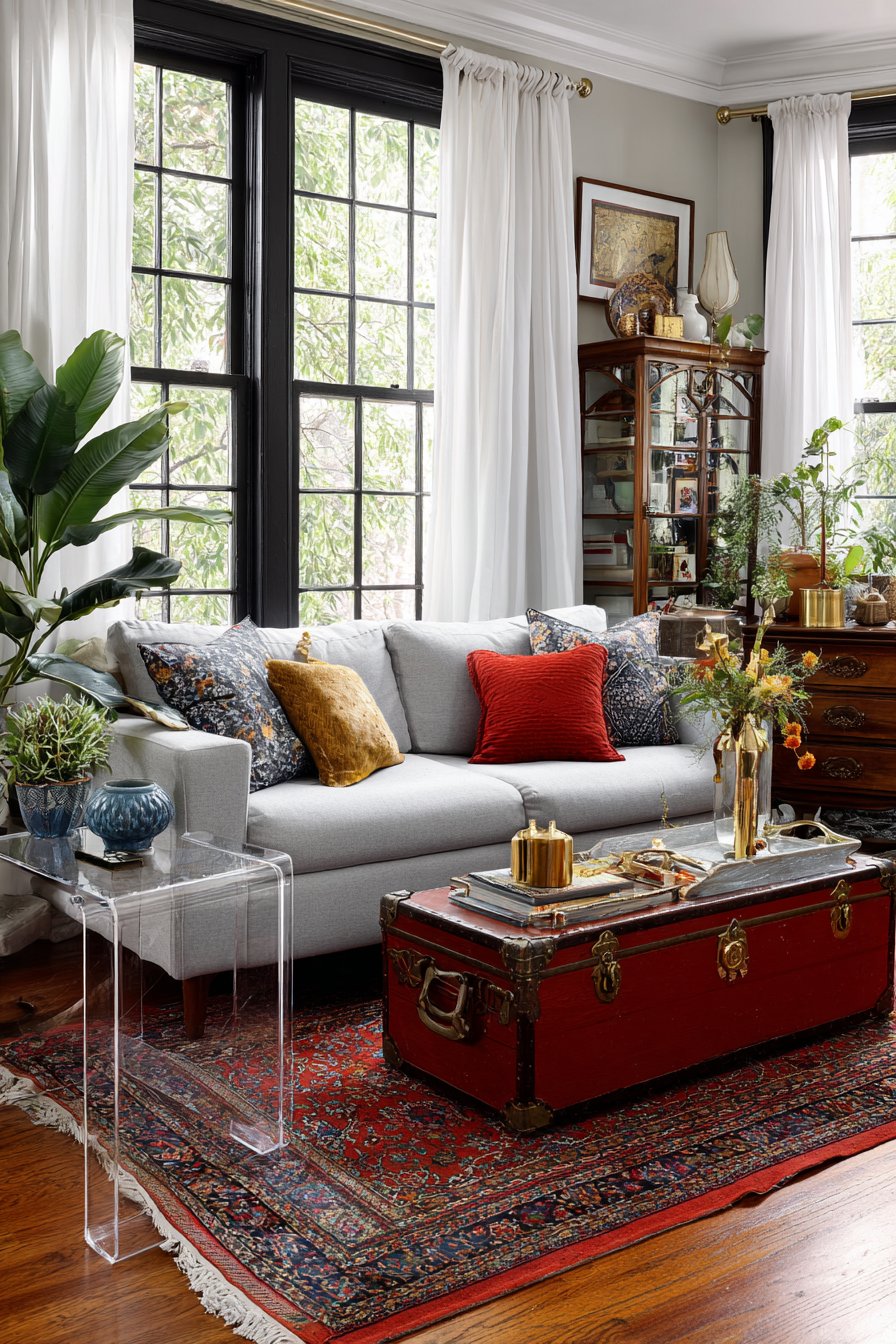
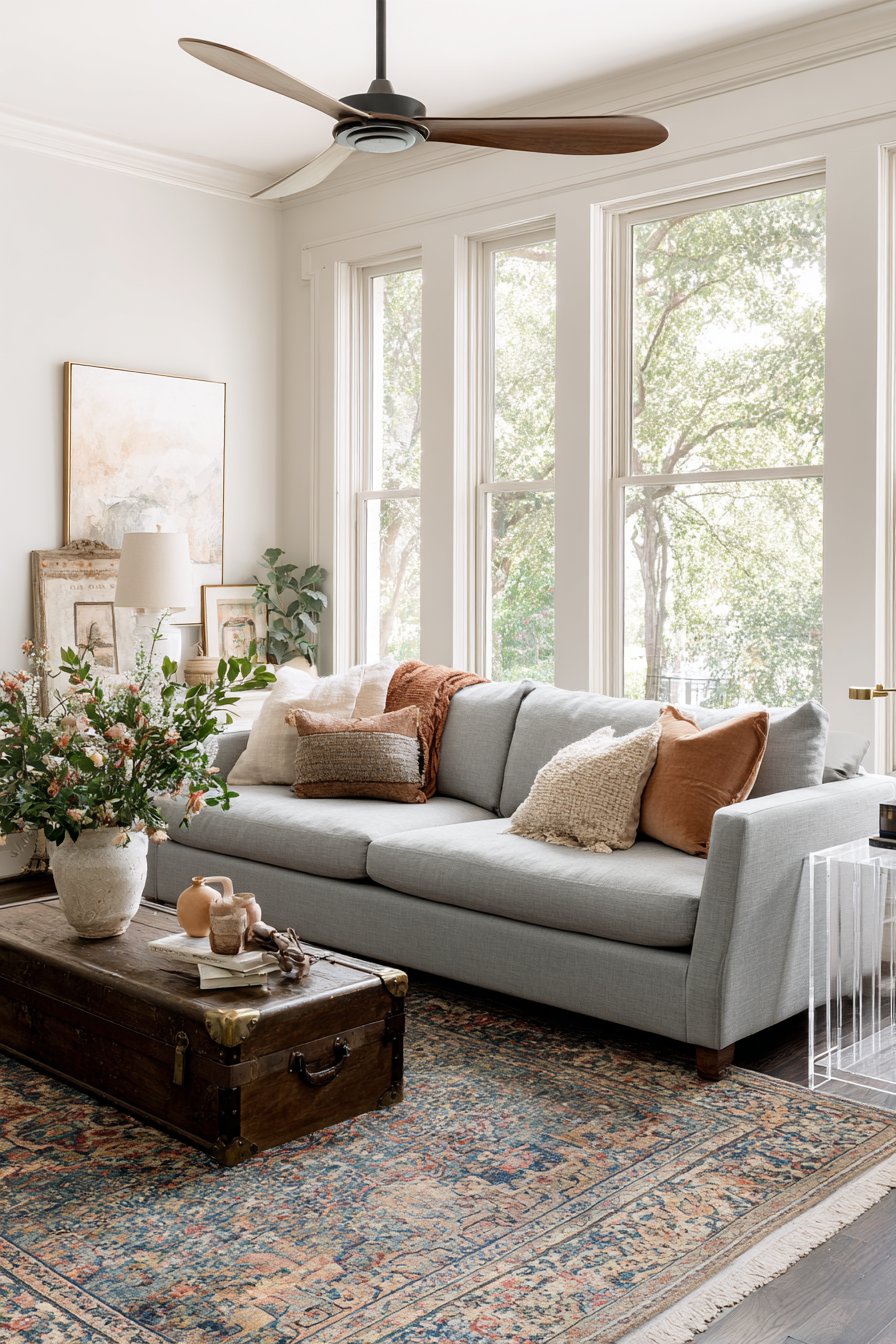
For those who view decorating as a lifelong journey of discovery rather than a one-time event, an eclectic light grey sofa living room celebrates personal history and evolving taste. The light grey sofa serves as a neutral foundation that grounds diverse collected pieces spanning different eras, styles, and origins. This democratic approach to design values objects for their individual merit rather than their adherence to a single aesthetic, creating spaces that feel genuinely personal rather than professionally staged. The sofa’s neutrality prevents visual competition, allowing each collected piece to maintain its distinctive character.
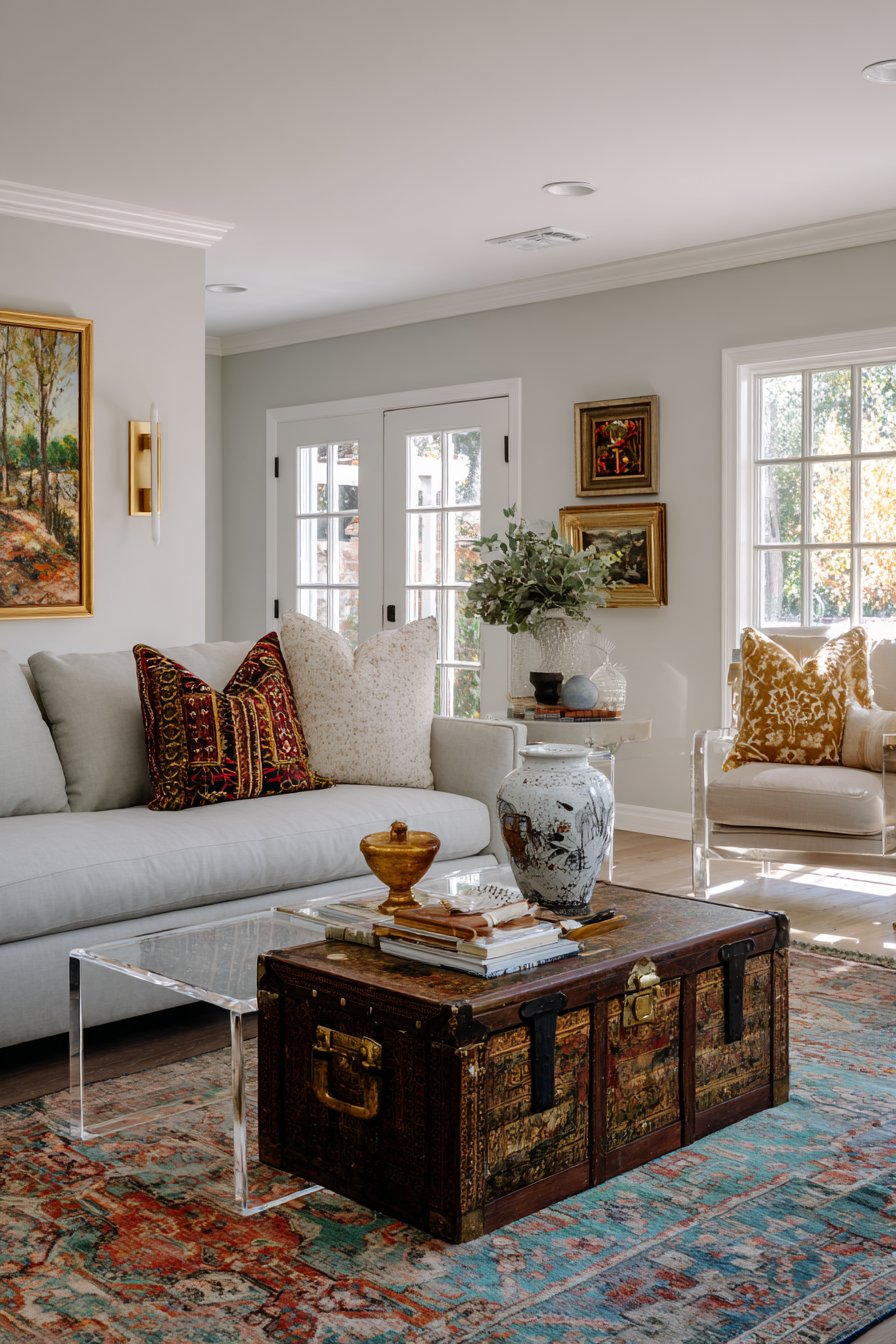
The supporting cast in this eclectic space tells a story of curiosity and discovery. An antique trunk serves as an unexpected coffee table, its weathered surface and vintage hardware offering a tangible connection to the past. Positioned nearby, a modern acrylic side table provides transparency that prevents visual clutter while adding contemporary contrast. The gallery wall becomes a personal museum combining family heirlooms, flea market finds, and contemporary art prints—each piece selected for meaning rather than matching. This layered approach creates visual richness that reveals new discoveries with each viewing.
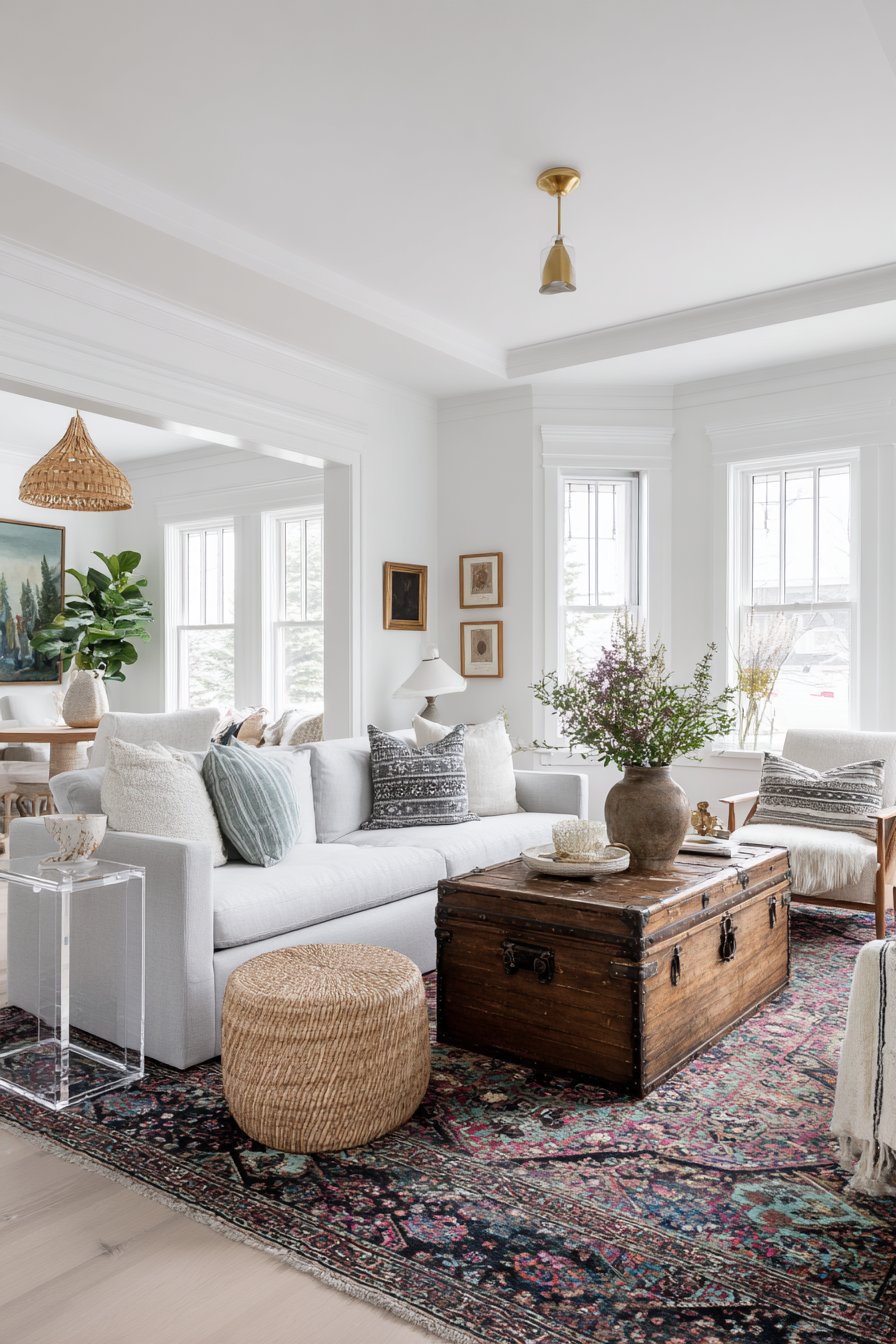
Textiles and accessories add color and pattern to the neutral backdrop. A Persian rug in faded jewel tones grounds the seating area, its slightly worn condition adding character that pristine rugs lack. A mix of accessories in brass, wood, and ceramic represents different periods and styles, yet the careful curation prevents the space from feeling chaotic. Natural light from multiple windows highlights the layered, personal aesthetic, casting shadows that emphasize the dimensional quality of collected objects. The result is a living room that couldn’t exist anywhere else—a space that reflects its owner’s unique journey and evolving aesthetic sensibilities.
Key Design Tips:
- Use the light grey sofa as a neutral anchor that allows diverse collected pieces to coexist without visual competition
- Mix furniture from different periods and styles, selecting pieces for individual merit rather than matching sets
- Create gallery walls combining family treasures with flea market finds and contemporary art for personal storytelling
- Layer textiles with history and patina that add character through signs of age and use rather than pristine perfection
- Curate accessories in mixed materials and styles, ensuring each piece earns its place through beauty or meaning
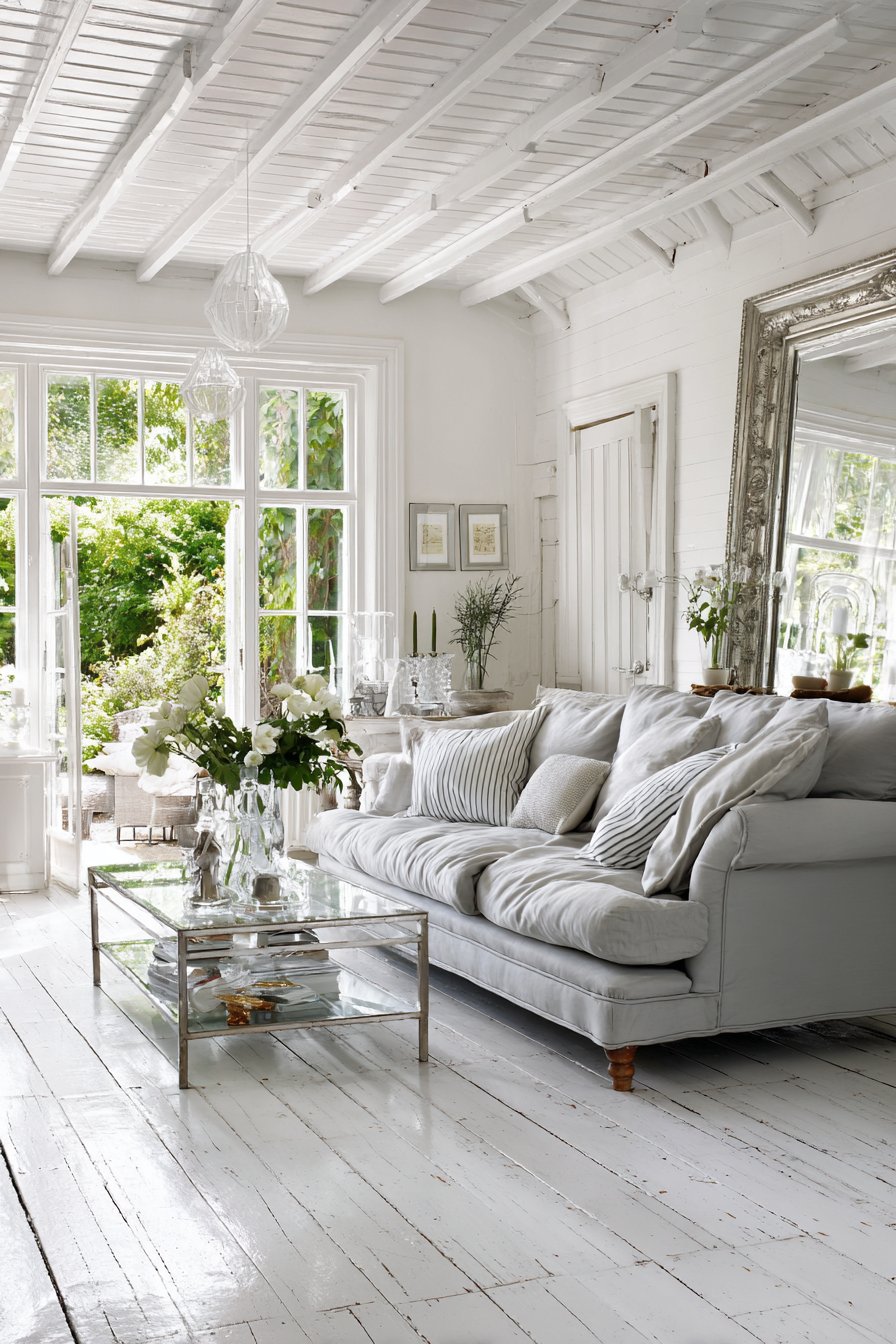
17. Light-Maximizing Bright and Airy Design
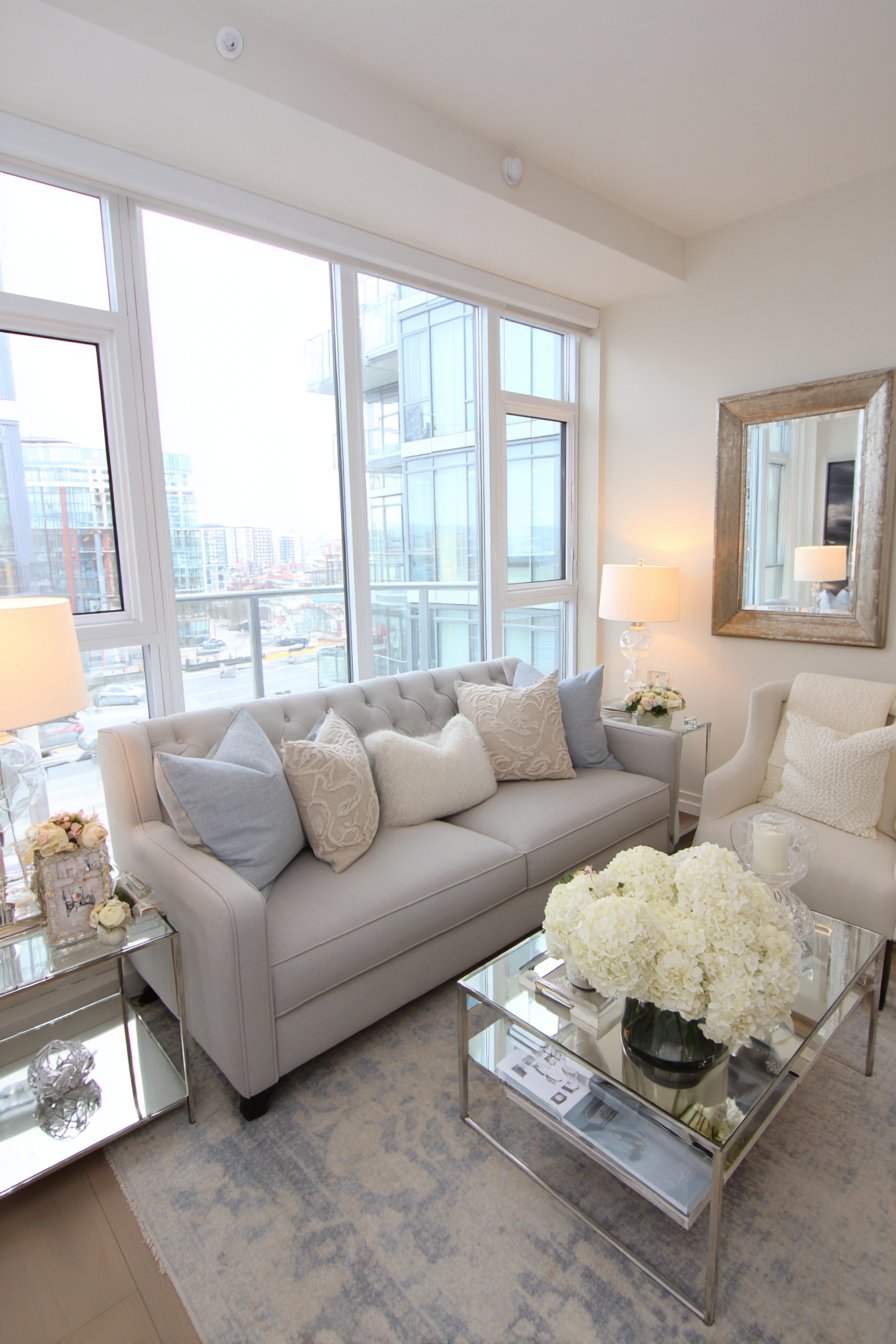
For spaces where natural light is a prized commodity, strategic design choices can amplify available illumination to create living rooms that feel perpetually sun-drenched. A light grey sofa positioned to face large windows captures views and daylight, its pale upholstery reflecting rather than absorbing precious light. The sofa’s placement becomes intentional rather than arbitrary, considering both the quality of light at different times of day and the desire to enjoy views or outdoor connections. This light-forward approach transforms the sofa from mere seating into a vantage point for experiencing changing natural conditions.
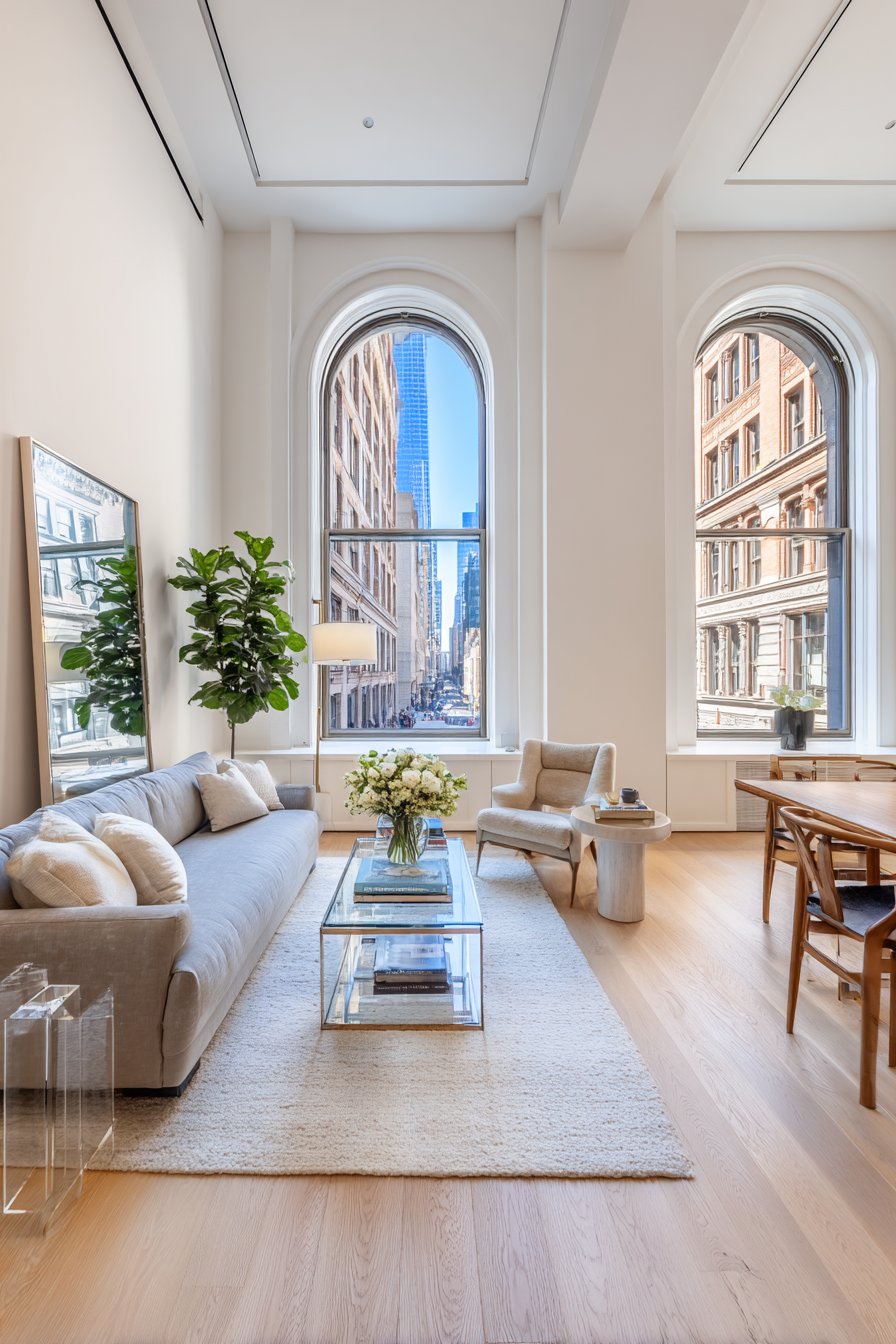
Reflective surfaces throughout the space multiply available light through strategic placement. An oversized leaning mirror on an adjacent wall creates the illusion of additional windows while doubling perceived light and space—a classic design trick that never fails to deliver impact. A glass coffee table maintains visual lightness by allowing sight lines through the furniture arrangement, preventing the space from feeling cluttered despite functional furnishings. Lucite accent pieces—perhaps a side table or decorative objects—continue the transparency theme, their invisible quality allowing light to pass through unobstructed.
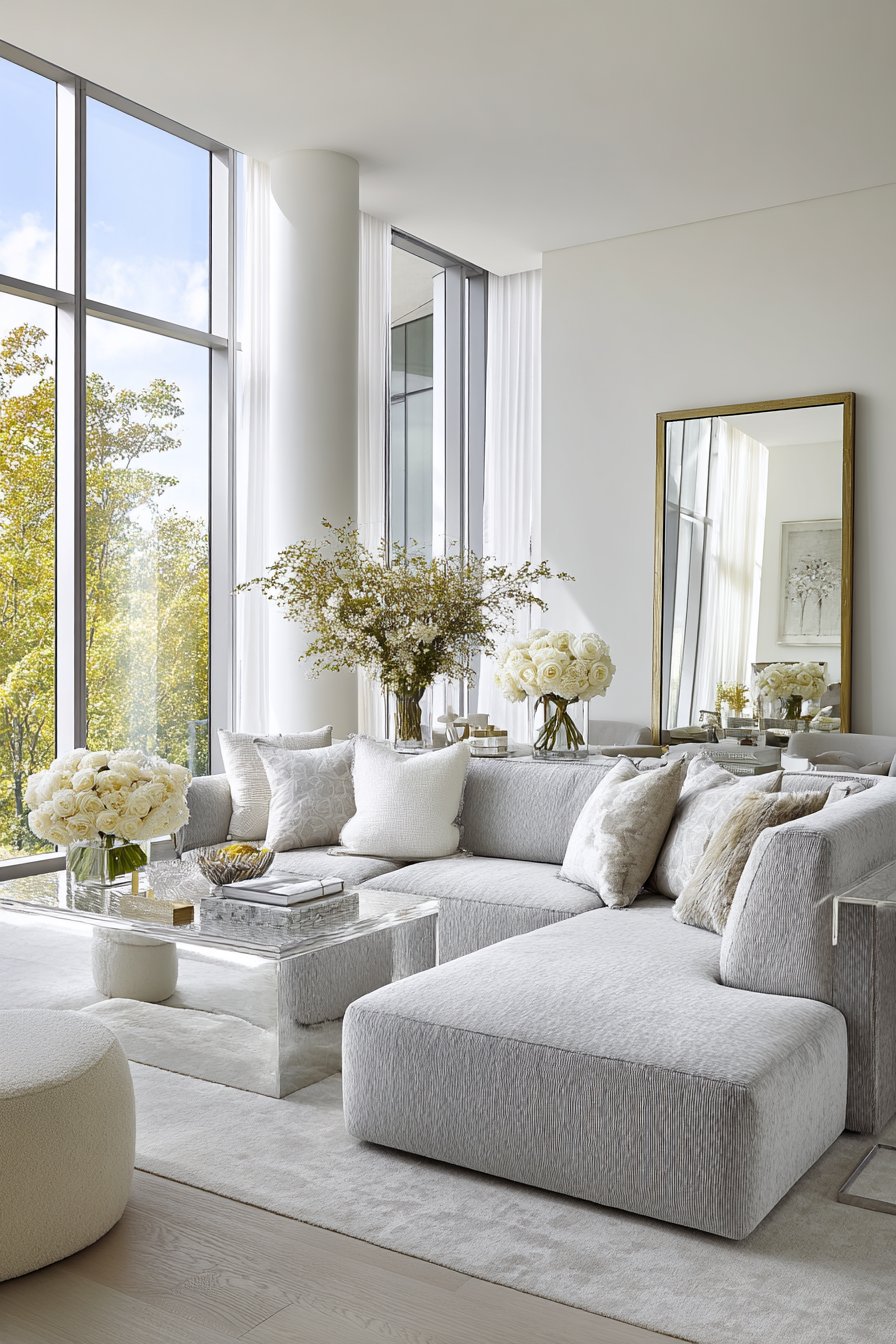
The material palette throughout this light-maximizing living room prioritizes pale tones and reflective finishes. White walls and ceiling provide the ultimate reflective surface, bouncing light throughout the space and making rooms feel larger. Pale wood floors in whitewashed oak or light ash add warmth without heaviness, their subtle grain providing texture without visual weight. Minimal window treatments preserve maximum natural illumination—perhaps sheer panels that filter harsh direct sun while maintaining brightness, or no treatments at all when privacy permits. The result is a living room that celebrates light as a design element, creating spaces that lift spirits and enhance wellbeing through connection to natural cycles.
Key Design Tips:
- Position the sofa to maximize natural light exposure and capture views, treating it as a vantage point for light enjoyment
- Use oversized mirrors strategically to reflect and multiply available light while creating the illusion of additional space
- Choose transparent or reflective furniture materials like glass and lucite that allow light to pass through
- Paint walls and ceilings in pure white or very pale tones that reflect maximum light throughout the day
- Minimize window treatments or select sheer fabrics that filter without blocking precious natural illumination
18. Layered Textiles for Depth and Comfort
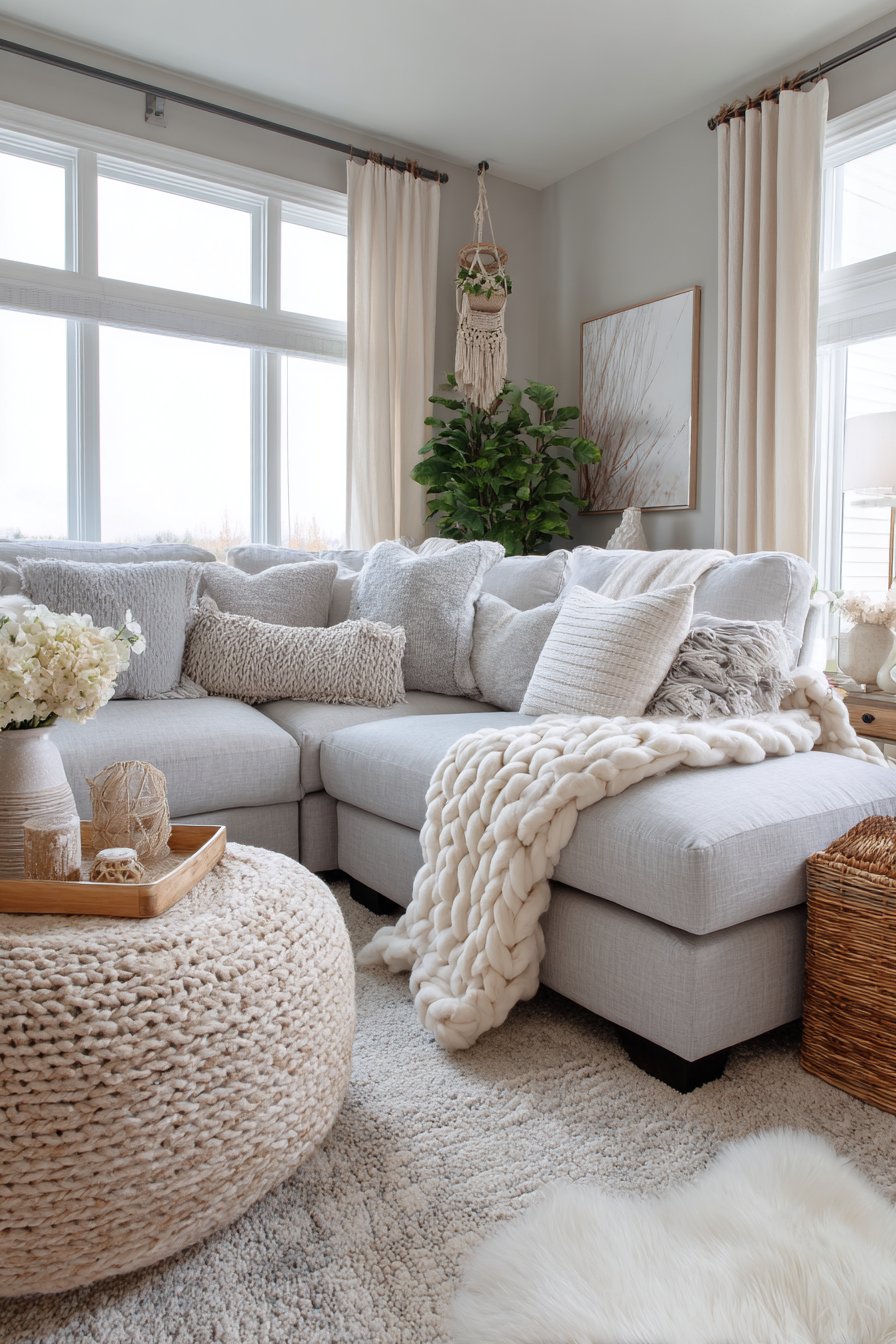
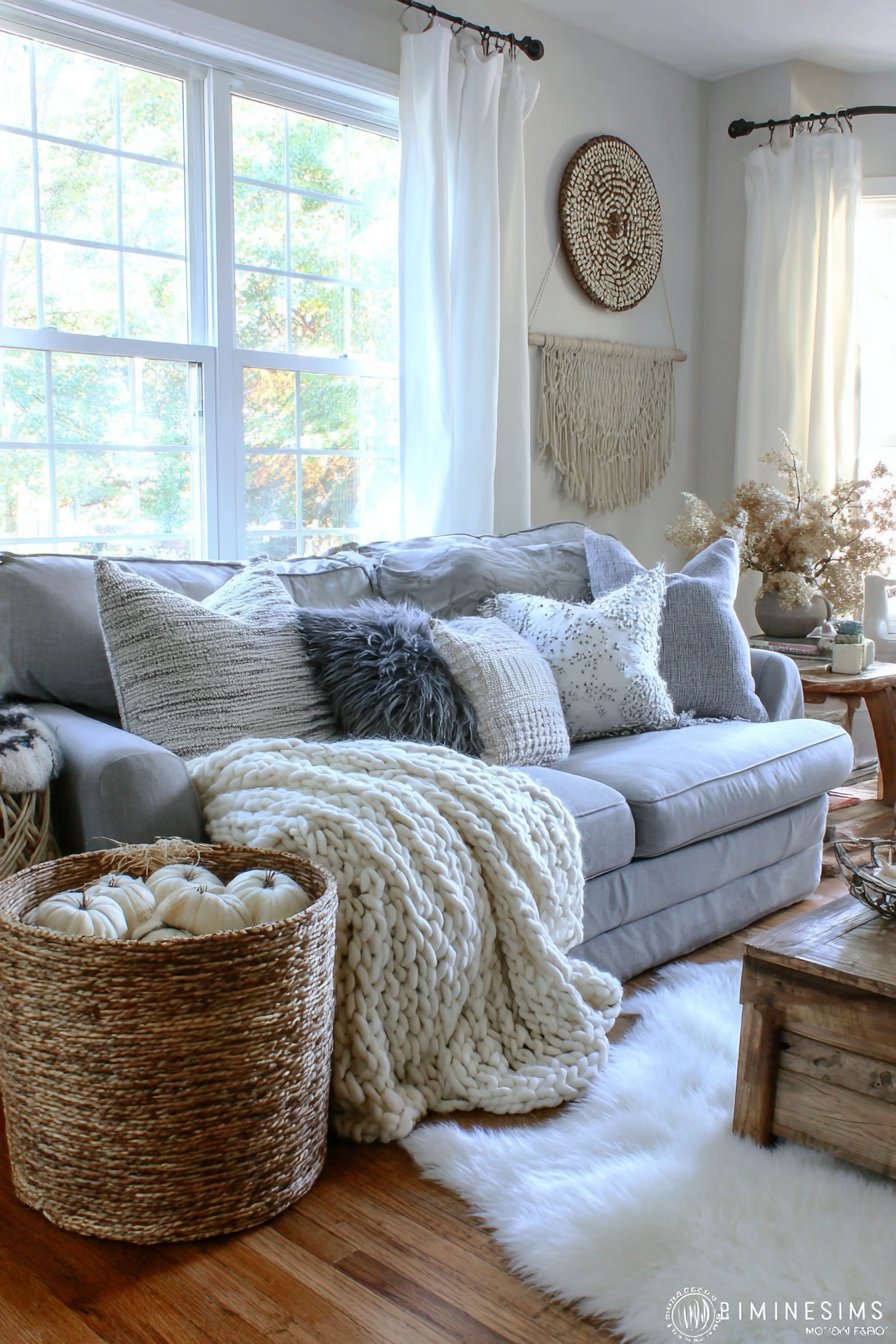
Texture becomes the star in a light grey sofa living room that celebrates tactile richness through layered textiles. The grey linen sofa serves as a canvas for textile artistry, displaying throw pillows in varying grey tones but diverse textures—plush velvet, nubby wool, smooth cotton, and perhaps a few with subtle embroidery or appliqué. This textural variation creates visual interest within a monochromatic palette, proving that color isn’t necessary when texture provides dimensional complexity. Each pillow invites touch, transforming the sofa from a visual element into a multisensory experience.
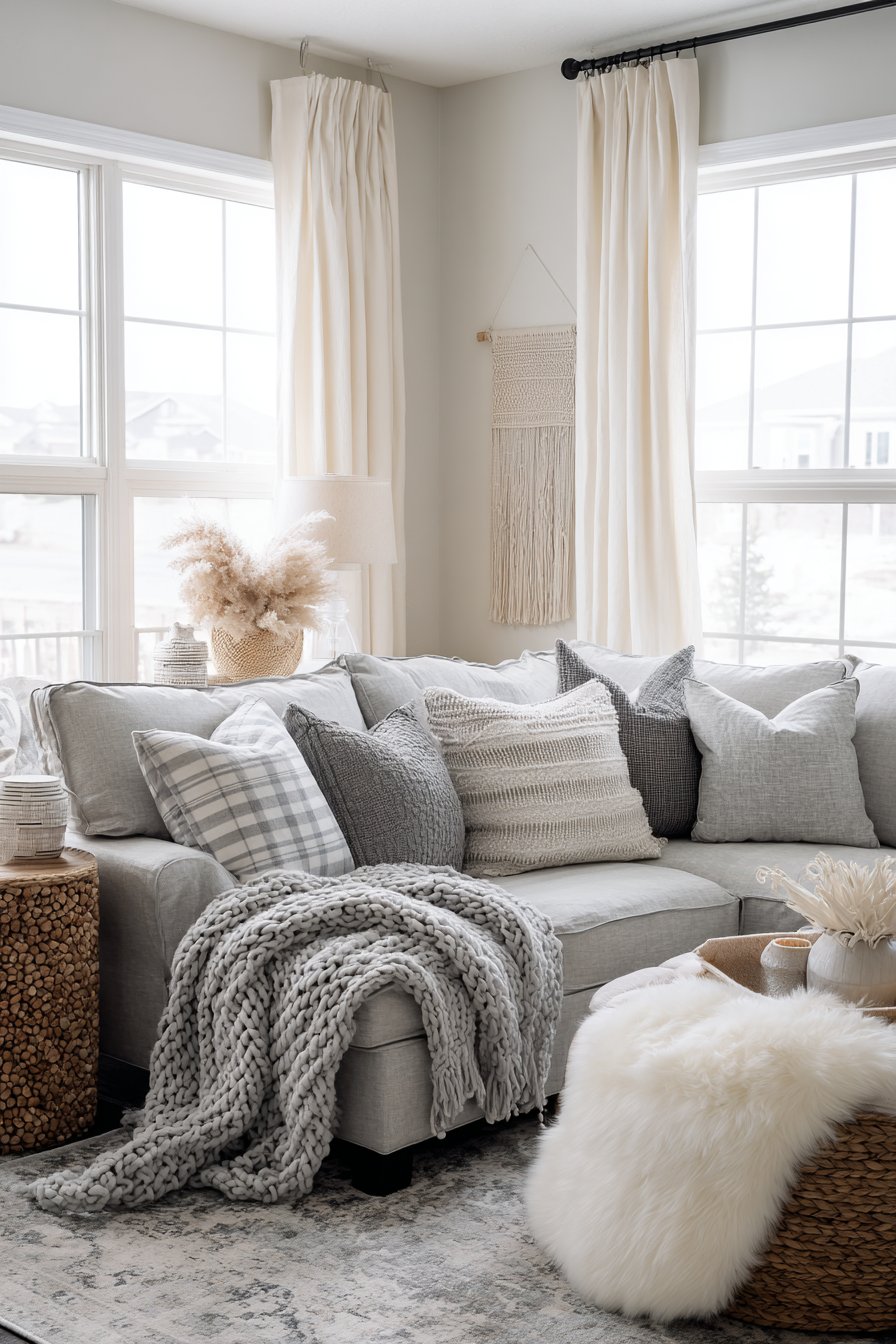
The layering strategy extends beyond the sofa to encompass the entire room. A chunky knit blanket drapes casually over the sofa’s arm, its oversized weave creating dramatic texture while promising cozy warmth. Area rugs layer beneath the coffee table—a flatweave jute rug provides natural texture and durability while a plush sheepskin throw adds luxurious softness for bare feet. This approach to layering creates depth and dimension that flat, single-surface treatments cannot achieve, making the space feel collected and considered rather than simply furnished.
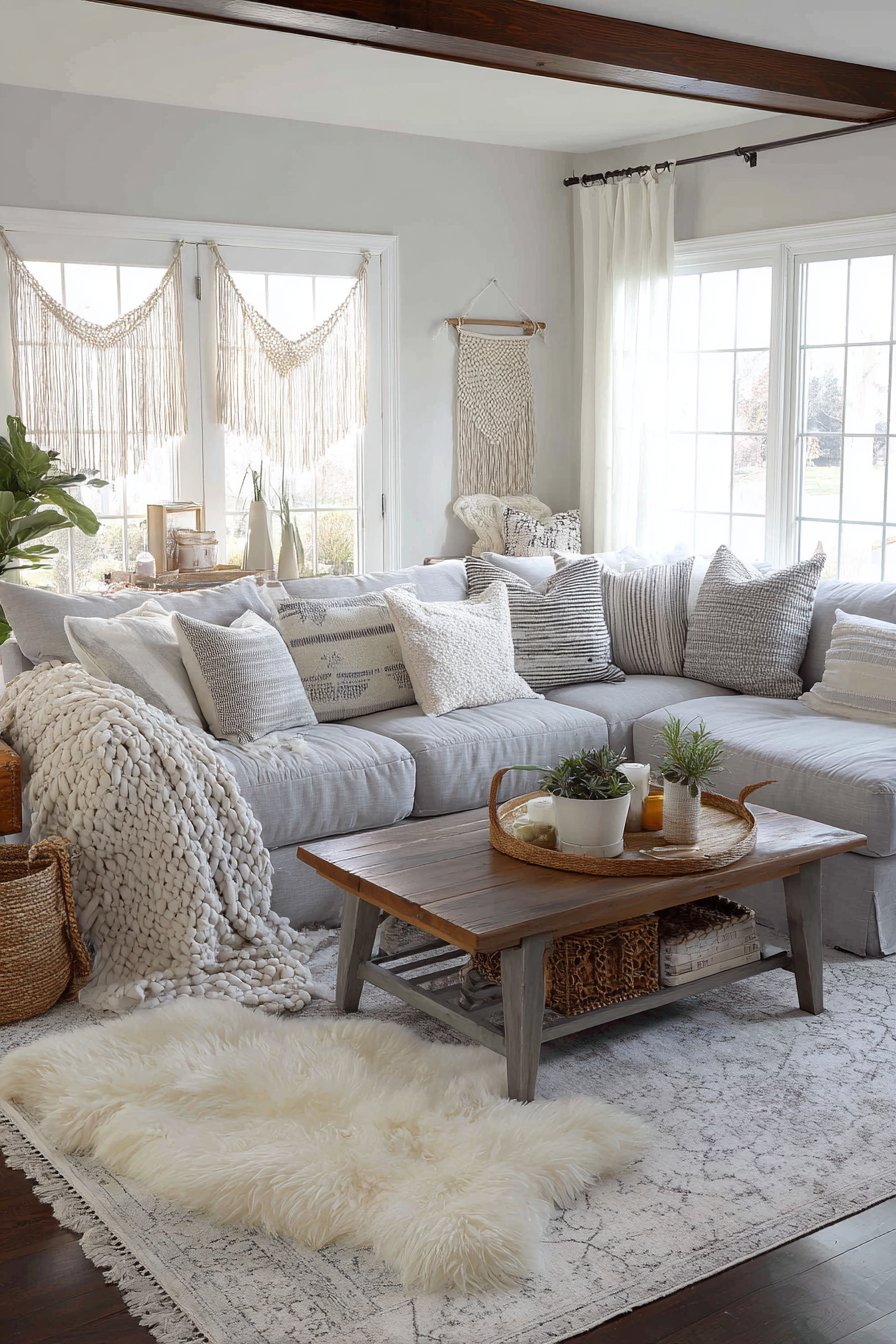
Natural materials throughout contribute organic texture that connects the interior with nature. Linen curtains at the windows add soft texture while filtering light, their natural wrinkles proving that perfection isn’t always desirable. Woven baskets provide practical storage while introducing basketry’s characteristic texture. A macramé wall hanging—perhaps vintage or handcrafted—adds vertical textural interest and references textile craft traditions. Natural diffused lighting from north-facing windows highlights these rich textile layers without creating harsh shadows, allowing the textural variations to read clearly and create their subtle magic.
Key Design Tips:
- Create pillow arrangements with consistent color but varied textures to add visual interest within a monochromatic scheme
- Layer rugs of different materials to add dimensional depth and provide zones of different tactile experiences
- Incorporate oversized knit throws and woven elements that create dramatic texture through scale and craft technique
- Choose natural fiber textiles like linen and jute that bring organic texture and improve with age and use
- Use diffused natural lighting that highlights textural variations without creating harsh shadows that obscure subtle details
19. Urban Loft Raw Industrial Architecture
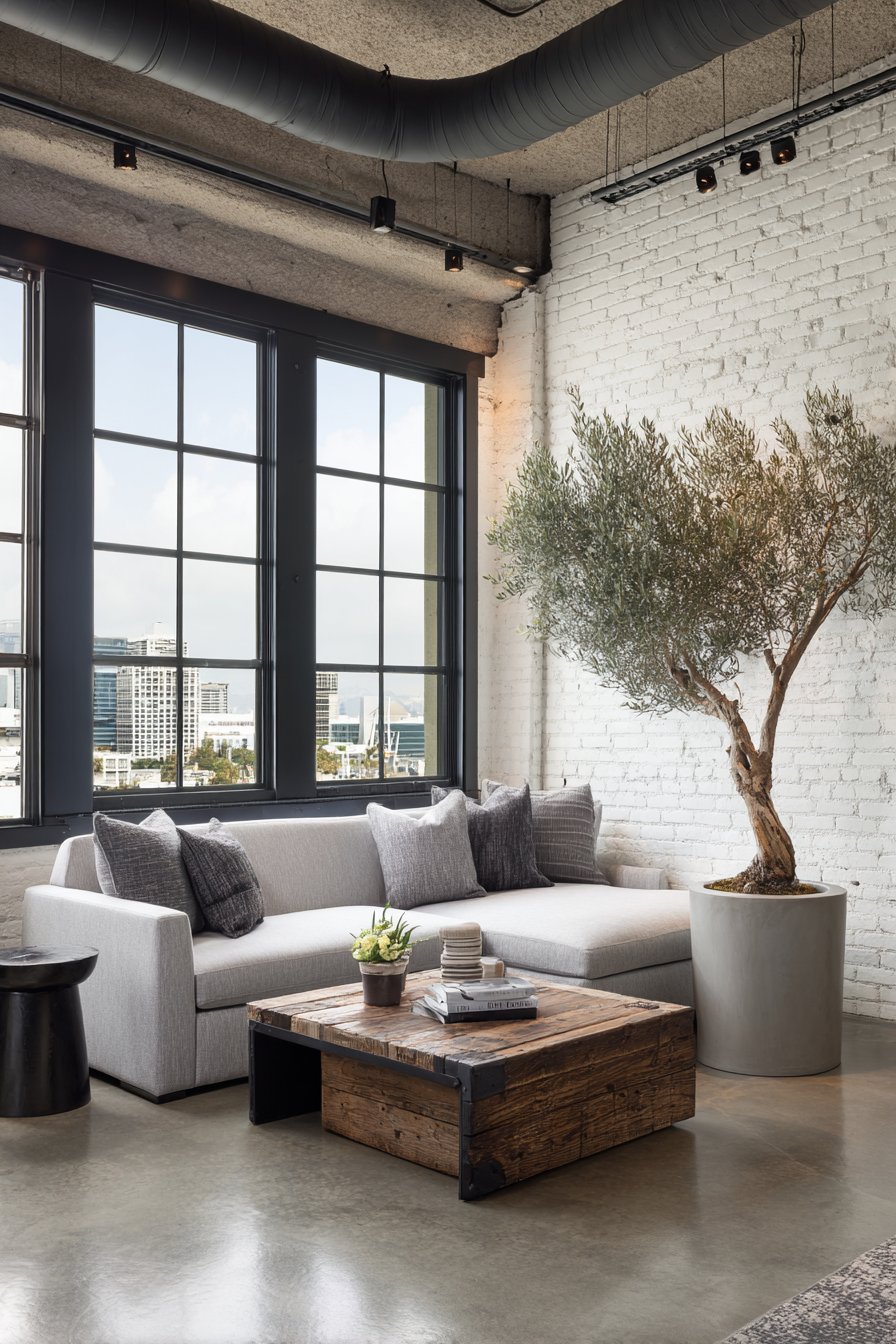
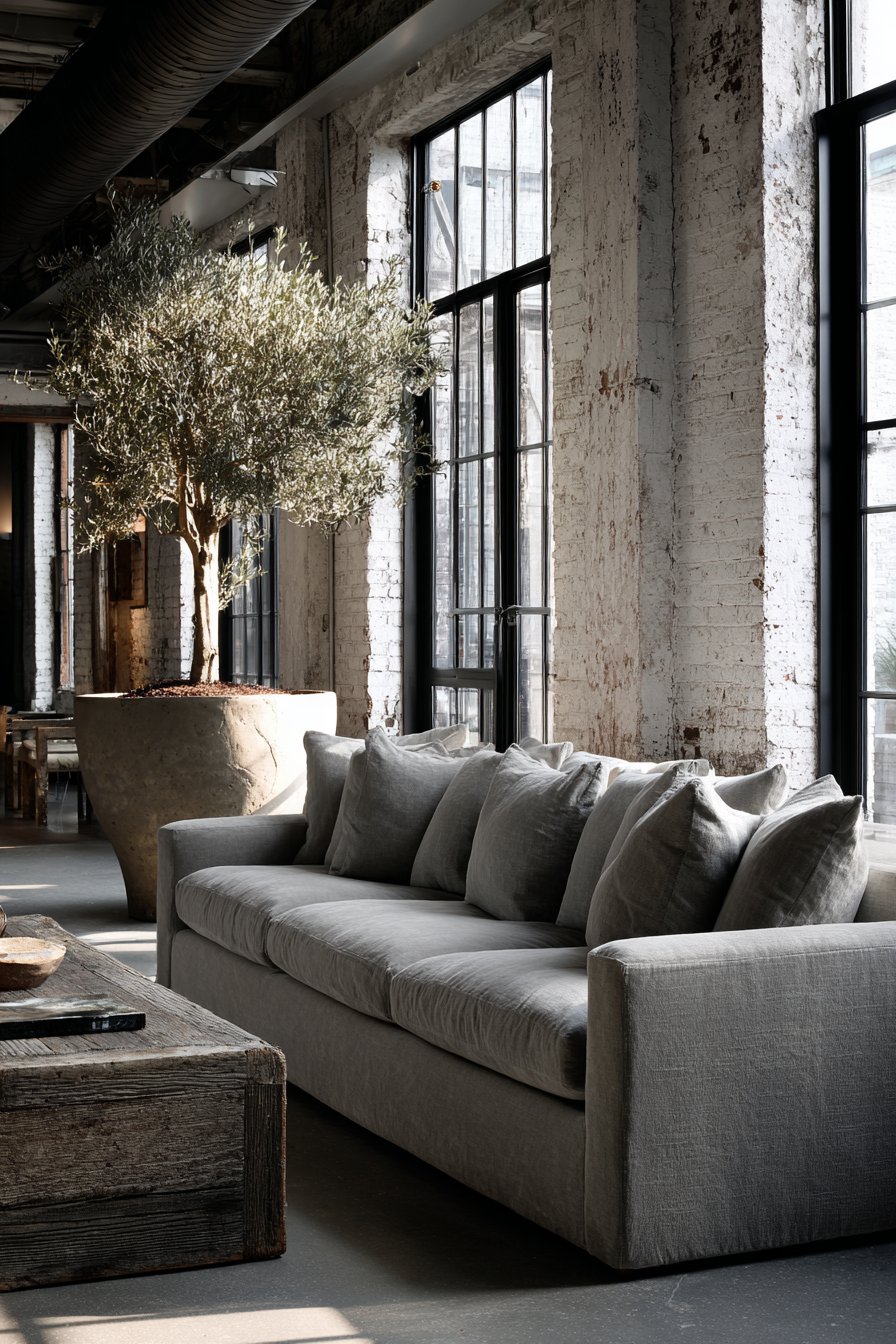
The ultimate expression of industrial design occurs in authentic loft spaces where exposed architectural elements aren’t added for effect but rather represent the building’s honest structural bones. A light grey sofa living room in such a loft demonstrates how refined furnishings humanize raw industrial shells. The modern grey sofa with clean lines provides comfortable seating that contrasts beautifully with the building’s rough textures—concrete floors, white-painted brick walls, and visible ductwork finished in matte black. This juxtaposition of refined and raw creates dynamic tension that gives industrial lofts their distinctive character.
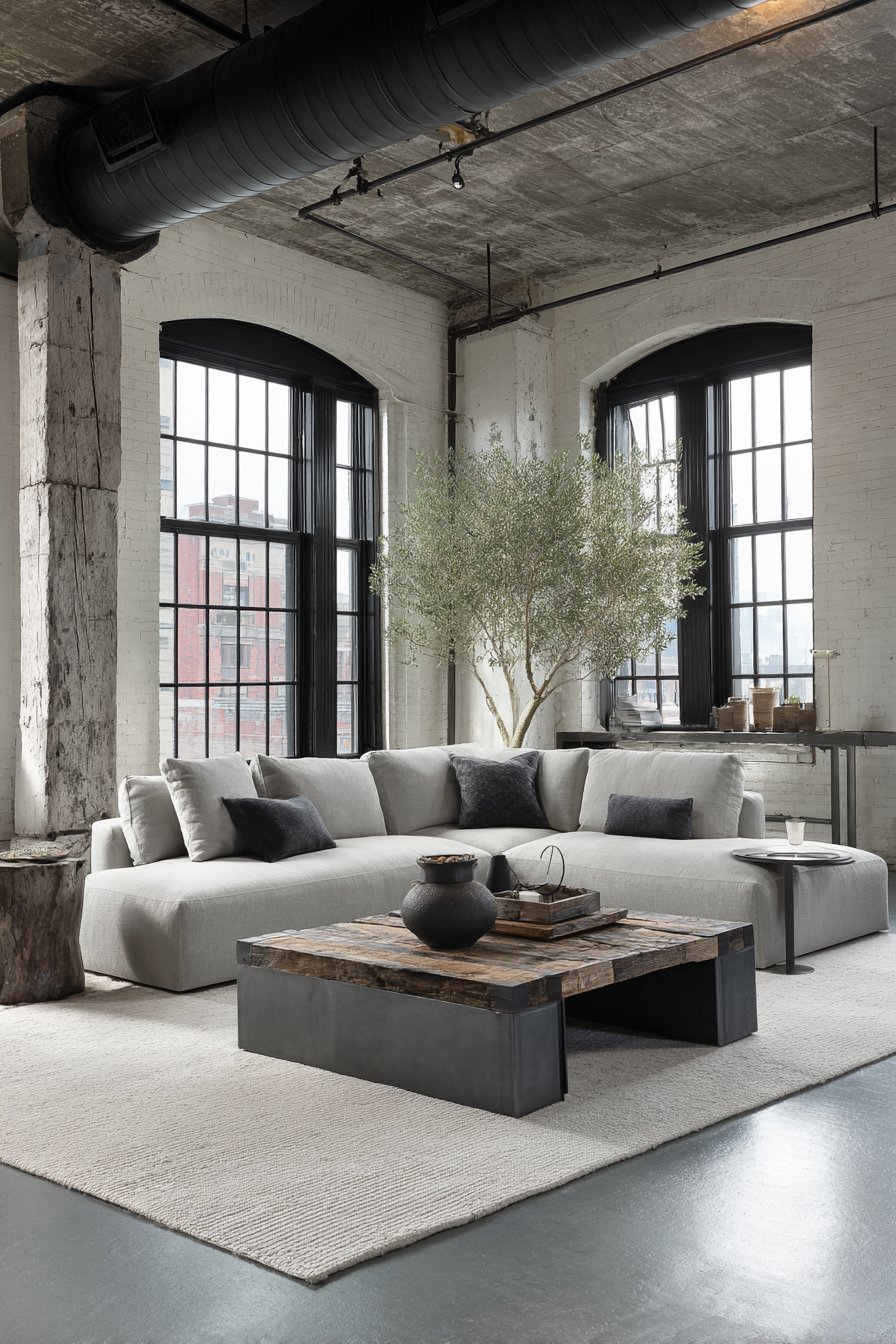
The furnishings in this loft maintain a minimal aesthetic that respects the architectural drama. A coffee table fabricated from raw steel and reclaimed wood combines materials honestly, its simple construction revealing rather than concealing its joinery and assembly. The supporting pieces remain deliberately understated, allowing the architectural elements to command attention. Large factory windows with black frames flood the space with dramatic natural light that creates strong shadows, emphasizing the play between smooth upholstery and rough architectural surfaces. This quality of light changes dramatically throughout the day, transforming the space from bright and energizing during midday to moody and atmospheric as evening approaches.
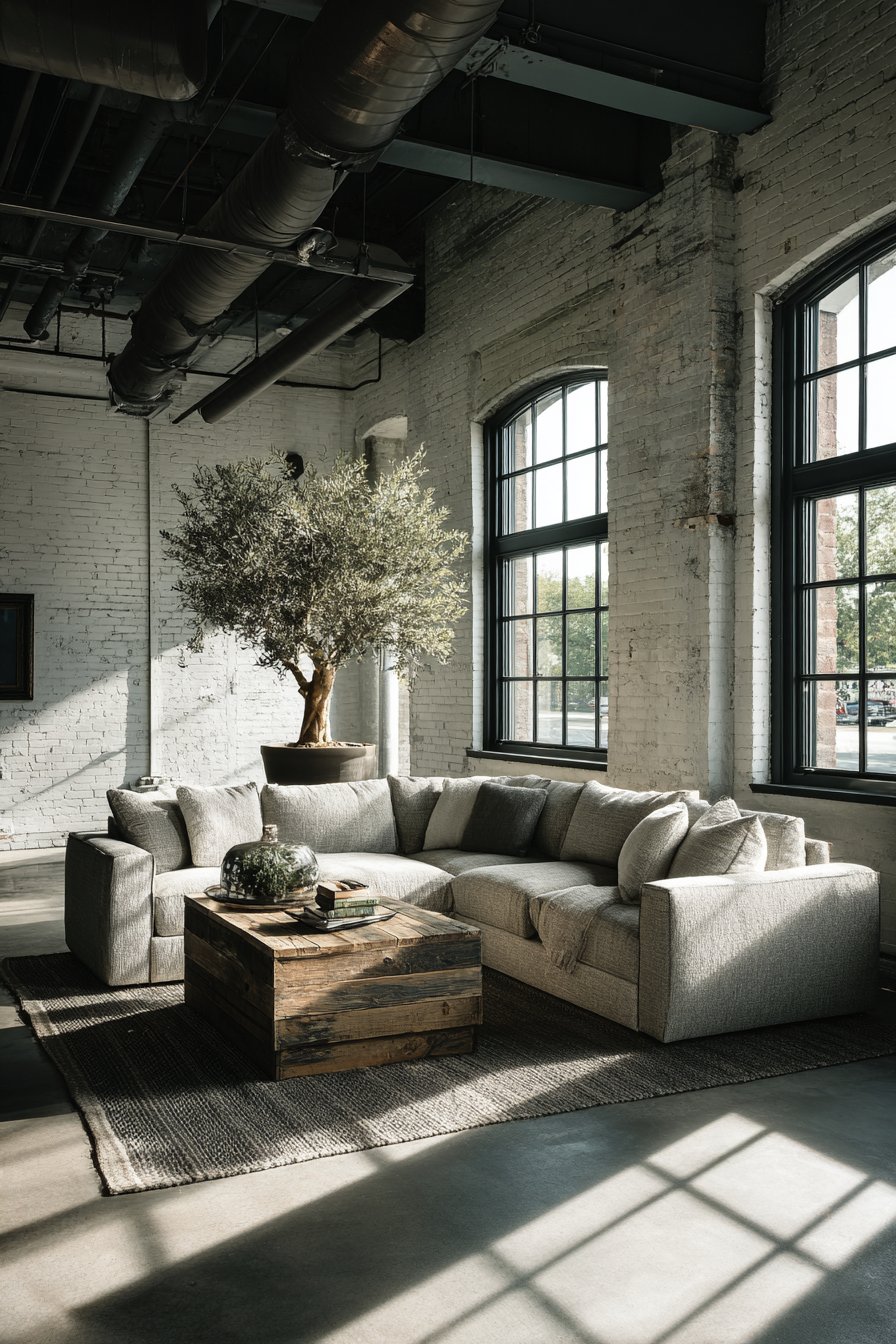
Organic elements soften the industrial hardness without compromising the aesthetic. A potted olive tree in a simple concrete planter adds living greenery, its silvery leaves complementing the grey sofa while its organic form contrasts with the room’s geometric architecture. This single dramatic plant makes more impact than multiple small plants could achieve, demonstrating the power of scale and restraint in industrial design. The overall composition celebrates the building’s manufacturing heritage while creating a livable, comfortable home—proving that industrial spaces can be both authentic and welcoming, both dramatic and intimate.
Key Design Tips:
- Allow architectural elements like concrete, brick, and exposed systems to remain the visual focus of the space
- Choose refined modern furniture that contrasts with rather than mimics the raw architectural materials
- Embrace dramatic natural light from industrial windows that creates strong shadows emphasizing textural contrasts
- Add single dramatic organic elements like large plants rather than multiple small decorative objects
- Maintain a minimal furniture approach that respects and showcases the architectural drama of the authentic loft space
Why These Light Grey Sofa Living Room Designs Represent the Best in Contemporary Interior Design
The nineteen light grey sofa living room concepts presented throughout this article demonstrate why this furniture choice has become a cornerstone of contemporary interior design. The light grey sofa’s extraordinary versatility allows it to anchor spaces ranging from minimalist Scandinavian sanctuaries to richly layered bohemian retreats, from sophisticated urban lofts to comfortable family-friendly spaces. This adaptability makes the light grey sofa an intelligent investment—unlike trend-driven furniture in specific colors or dramatic styles that may feel dated within a few years, a quality light grey sofa remains relevant through changing tastes and evolving design preferences.
From a practical perspective, grey upholstery offers significant advantages over both lighter and darker alternatives. Unlike white or cream sofas that show every mark and require constant maintenance, light grey conceals minor imperfections while remaining bright and fresh. Compared to dark upholstery that can absorb light and create visual heaviness, light grey reflects illumination and contributes to airy, spacious feelings. The specific tone of light grey walks a perfect middle ground—substantial enough to anchor a room design, neutral enough to complement virtually any color palette, and sophisticated enough to elevate the overall aesthetic regardless of accompanying style elements.
These diverse design approaches also illustrate how light grey sofas succeed across various practical considerations. The Scandinavian minimalist concept demonstrates how grey upholstery enhances natural light in spaces where illumination is prioritized. The family-friendly design proves that performance fabrics in grey tones offer durability without sacrificing style. The small space solution shows how lighter upholstery colors make compact rooms feel more spacious. The multipurpose living and working integration reveals how neutral furniture eases the challenge of creating cohesive spaces serving multiple functions. Each design addresses real-world concerns while maintaining aesthetic excellence.
The material variations explored throughout these concepts—from casual cotton slipcovers to luxurious channel-tufted velvet—prove that “light grey sofa” encompasses a wide spectrum of options suitable for different budgets, lifestyles, and aesthetic preferences. The coastal slipcovered version offers washable practicality for beach houses and family homes, while the sophisticated velvet option provides luxury appropriate for formal entertaining spaces. The mid-century modern tailored version references design history, while the contemporary low-profile modular approach addresses current preferences for flexibility and clean lines. This range ensures that choosing a light grey sofa doesn’t mean sacrificing personal style or practical requirements.
Color theory principles explain the light grey sofa’s success as a design element. Grey occupies a unique position on the color spectrum—technically achromatic, it contains no hue yet reads as neither stark nor boring. Light grey specifically offers enough tonal value to provide substance without creating visual weight. This quality allows light grey sofas to anchor color schemes without competing with accent colors. Whether paired with warm earth tones in bohemian or farmhouse settings, cool blues and whites in coastal or Scandinavian spaces, or jewel tones in eclectic or traditional environments, light grey upholstery harmonizes rather than clashes.
The psychological impact of grey deserves consideration as well. Unlike bold colors that can energize or agitate, grey promotes calm and contemplation—qualities increasingly valued in our overstimulated world. Light grey specifically offers these calming properties without the potential coldness of darker greys or the sterility of pure white. In living rooms where relaxation and conversation are primary activities, this psychological effect supports the space’s intended function. The various styling approaches demonstrated—from moody sophistication with dark accents to bright and airy light-maximizing design—show how context and surrounding elements can modulate grey’s psychological impact while maintaining its fundamentally calming nature.
From a design evolution perspective, the light grey sofa represents contemporary design’s movement toward sophisticated simplicity. Previous decades often featured furniture in wood tones, bold colors, or busy patterns as statement pieces. The current preference for neutral upholstery reflects broader cultural shifts toward minimalism, sustainability, and investment in quality over quantity. A light grey sofa makes fewer demands on surrounding design elements, allowing homeowners to refresh their spaces through accessories, art, and accents rather than replacing major furniture pieces—a more sustainable and economical approach to evolving personal style.
The technical aspects of photographing and visualizing interiors also favor light grey upholstery. In an era where homes are documented and shared through photography more than ever before, light grey sofas photograph exceptionally well across various lighting conditions. They neither wash out under bright light nor disappear into shadow in dimmer conditions. This photogenic quality extends beyond social media sharing to practical considerations like real estate listings, rental properties, and vacation home advertisements—spaces where appealing photography significantly impacts perception and value.
Professional interior designers frequently specify light grey sofas precisely because they serve clients’ long-term interests. Unlike trendy colors that may soon feel dated, requiring costly reupholstering or replacement, grey maintains relevance across design cycles. This staying power means clients can allocate more budget to quality construction and premium fabrics rather than replacing furniture to keep pace with trends. The longevity of grey upholstery also supports sustainability goals by reducing furniture disposal and the environmental impact of manufacturing and transportation associated with frequent replacements.
The global appeal of light grey sofas transcends regional design preferences and cultural aesthetics. From Scandinavian minimalism to Japanese-inspired Japandi fusion, from American farmhouse to European contemporary, light grey upholstery appears across international design traditions. This universal applicability makes grey sofas appropriate for diverse populations in multicultural urban centers and increasingly globalized residential design. Where specific colors might carry cultural associations or regional preferences, grey remains broadly neutral and widely acceptable across different backgrounds and design traditions.
Conclusion
The journey through these nineteen distinctive light grey sofa living room designs reveals the extraordinary versatility and enduring appeal of this furniture choice. From the serene simplicity of Scandinavian minimalism to the raw authenticity of industrial lofts, from the layered comfort of family-friendly spaces to the sophisticated luxury of velvet-clad elegance, the light grey sofa proves itself capable of anchoring virtually any aesthetic vision. This remarkable adaptability stems from grey’s unique position as a true neutral—substantial enough to provide visual weight, refined enough to elevate surrounding elements, yet flexible enough to complement any color palette or design style.
The practical advantages of light grey upholstery extend far beyond aesthetics. Performance fabrics in grey tones offer families the durability needed for daily life without sacrificing style. The tone conceals minor wear better than lighter alternatives while maintaining the brightness and airiness that darker upholstery cannot achieve. For those navigating small spaces, the light-reflecting properties of grey upholstery contribute to feelings of spaciousness. In multipurpose rooms serving both living and working functions, neutral furniture eases the challenge of creating cohesive environments. These functional benefits ensure that choosing a light grey sofa represents smart design thinking rather than mere aesthetic preference.
As you consider implementing these ideas in your own home, remember that successful interior design balances inspiration with practicality, aspiration with livability. The most beautiful living room matters little if it doesn’t serve your actual lifestyle needs. Consider how you use your space—do you entertain frequently or prefer quiet evenings with family? Do you need durability for children and pets, or can you prioritize luxury fabrics? Does your space receive abundant natural light or require careful lighting design? Let these considerations guide your choices while drawing inspiration from the diverse approaches presented here.
The light grey sofa’s enduring popularity suggests it will remain a design staple for years to come, making it a sound investment for those furnishing or refreshing their living spaces. Whether you gravitate toward the collected eclecticism of bohemian style, the clean lines of contemporary minimalism, the warm nostalgia of mid-century modern, or any other aesthetic explored in these pages, a quality light grey sofa provides the foundation for creating a living room that reflects your personal style while serving your practical needs. Begin with this versatile anchor piece, then layer in the colors, textures, and elements that make a house feel like your unique home.


