
The living room serves as the heart of every home—a space where families gather, guests are entertained, and countless memories are created. In the ever-evolving world of interior design, one element has emerged as a timeless cornerstone of sophisticated living spaces: the gray couch. Far from being bland or lifeless, a gray sofa offers an incredibly versatile foundation that can anchor virtually any design aesthetic, from ultra-modern minimalism to cozy farmhouse charm. Its neutral sophistication allows homeowners to experiment with bold accent colors, varied textures, and diverse decorative elements without overwhelming the space.
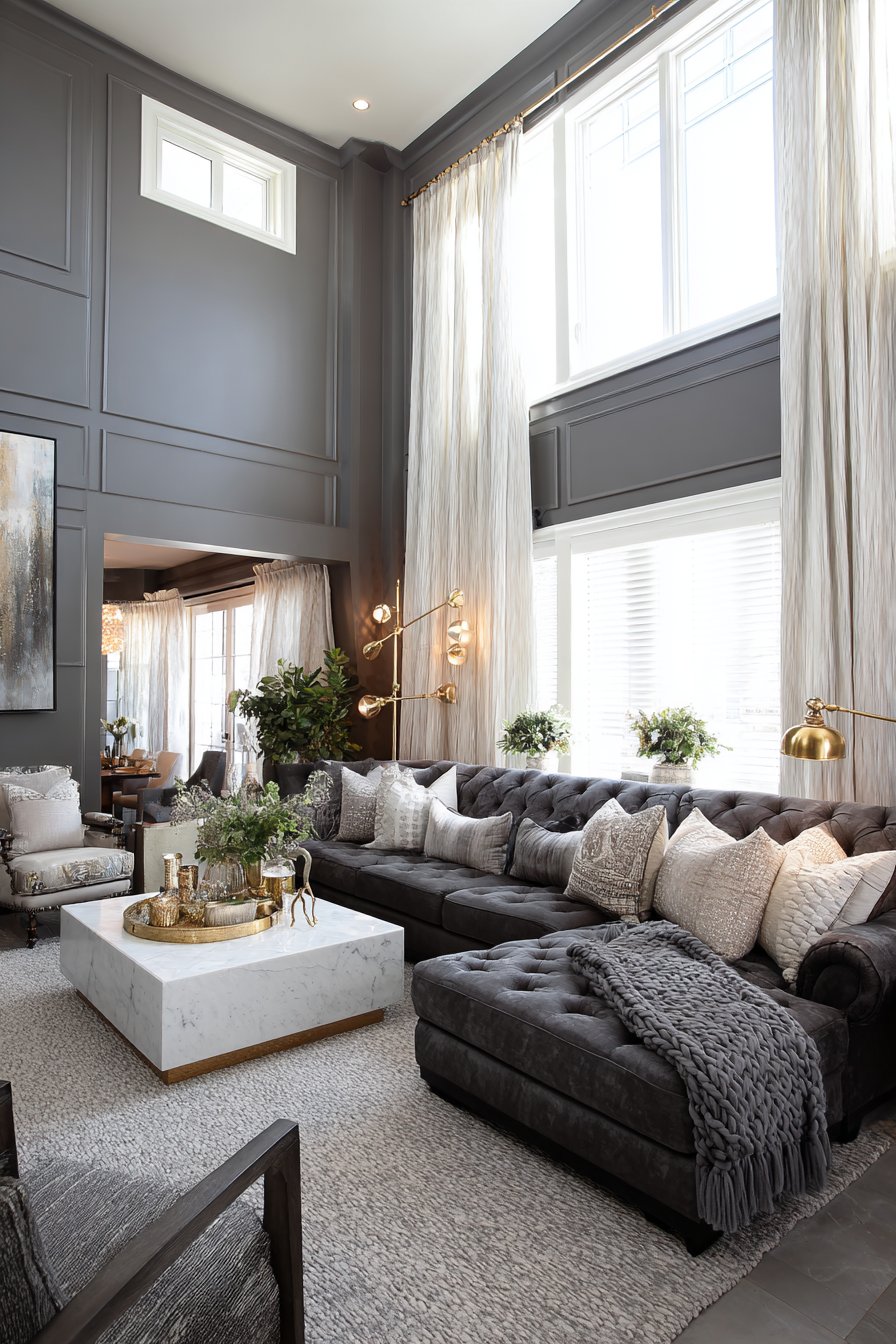
What makes gray couches particularly appealing is their chameleon-like ability to adapt to changing styles and seasons. Unlike statement pieces in bold colors that may feel dated after a few years, a gray sofa remains perpetually relevant, serving as a blank canvas for your evolving taste. Whether you’re drawn to the sleek lines of contemporary design, the warmth of rustic elements, or the eclectic mix of bohemian styling, a gray couch seamlessly integrates into your vision. The color itself offers remarkable depth—from pale silver and dove gray to rich charcoal and slate—each shade bringing its own character and mood to the room.
This comprehensive guide explores twenty-one distinct approaches to styling living rooms around gray couches, each offering unique perspectives on how this versatile piece can transform your space. From compact urban apartments to spacious suburban homes, from budget-conscious makeovers to luxury retreats, these ideas demonstrate the incredible range of possibilities that await when you choose gray as your foundational color. Whether you’re starting from scratch or looking to refresh your existing space, you’ll discover practical tips, design inspiration, and expert guidance to help you create a living room that perfectly reflects your personality and lifestyle.

1. Minimalist Scandinavian Serenity
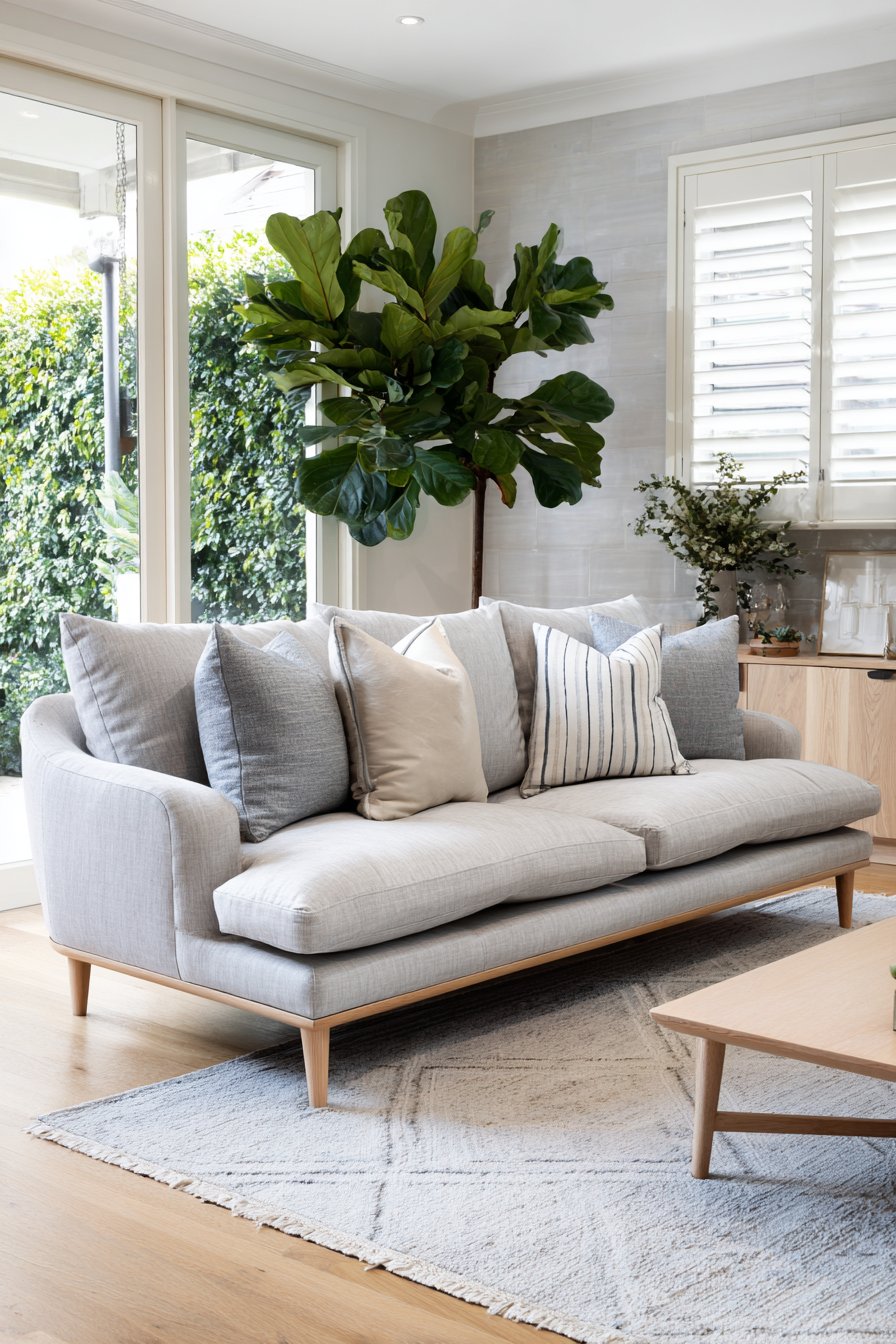
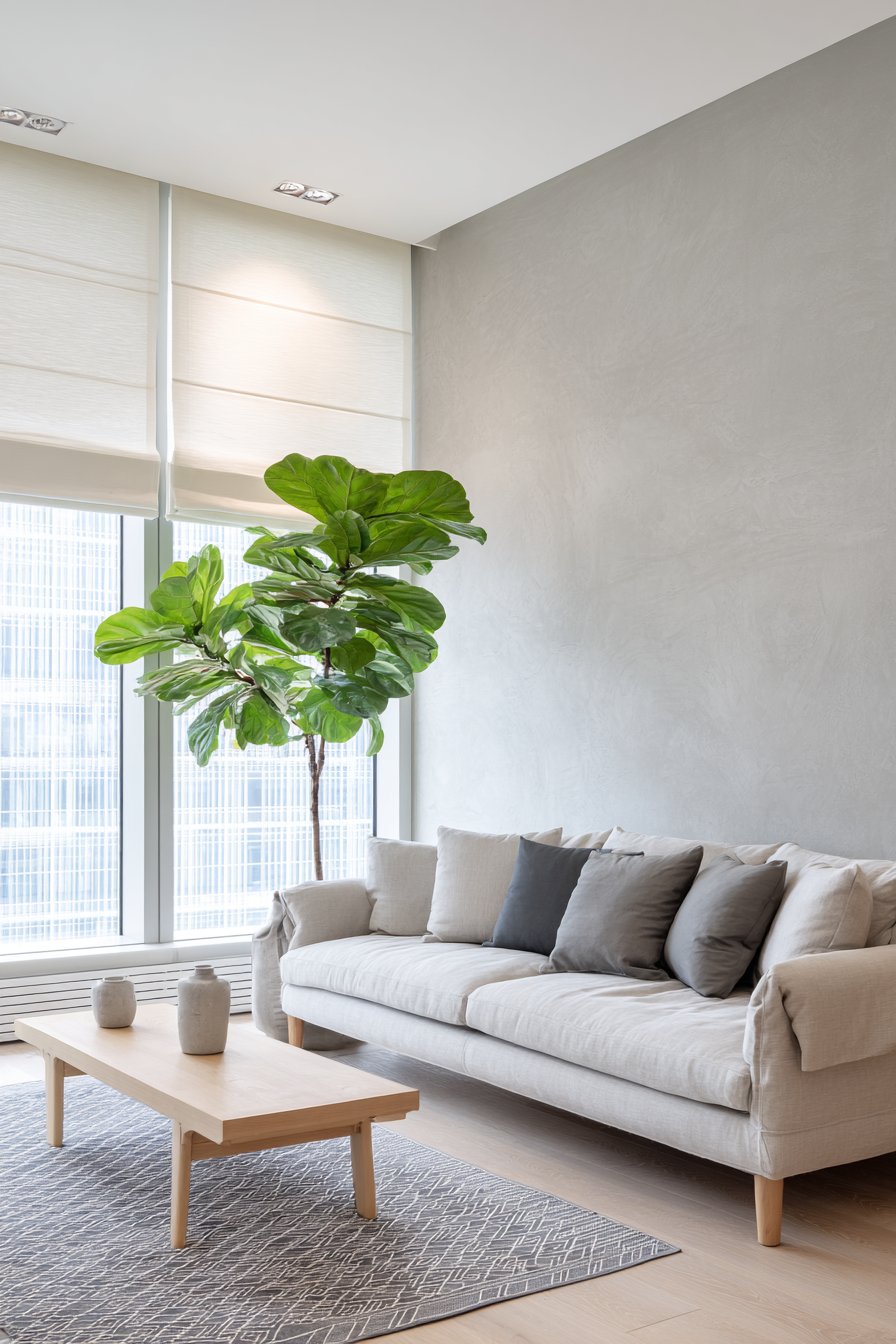
Step into a living room where less truly becomes more, centered around a low-profile grey linen sofa that embodies the essence of Scandinavian design philosophy. The clean lines and wooden tapered legs of this understated piece create a sense of airiness, while the natural linen fabric adds subtle texture without visual noise. Against a light grey accent wall with barely perceptible texture, the sofa becomes a study in restraint and intentionality. The surrounding space breathes with openness, featuring a simple white oak coffee table that brings organic warmth to the monochromatic palette, positioned perfectly on a geometric grey and white area rug that adds just enough visual interest without overwhelming the senses.
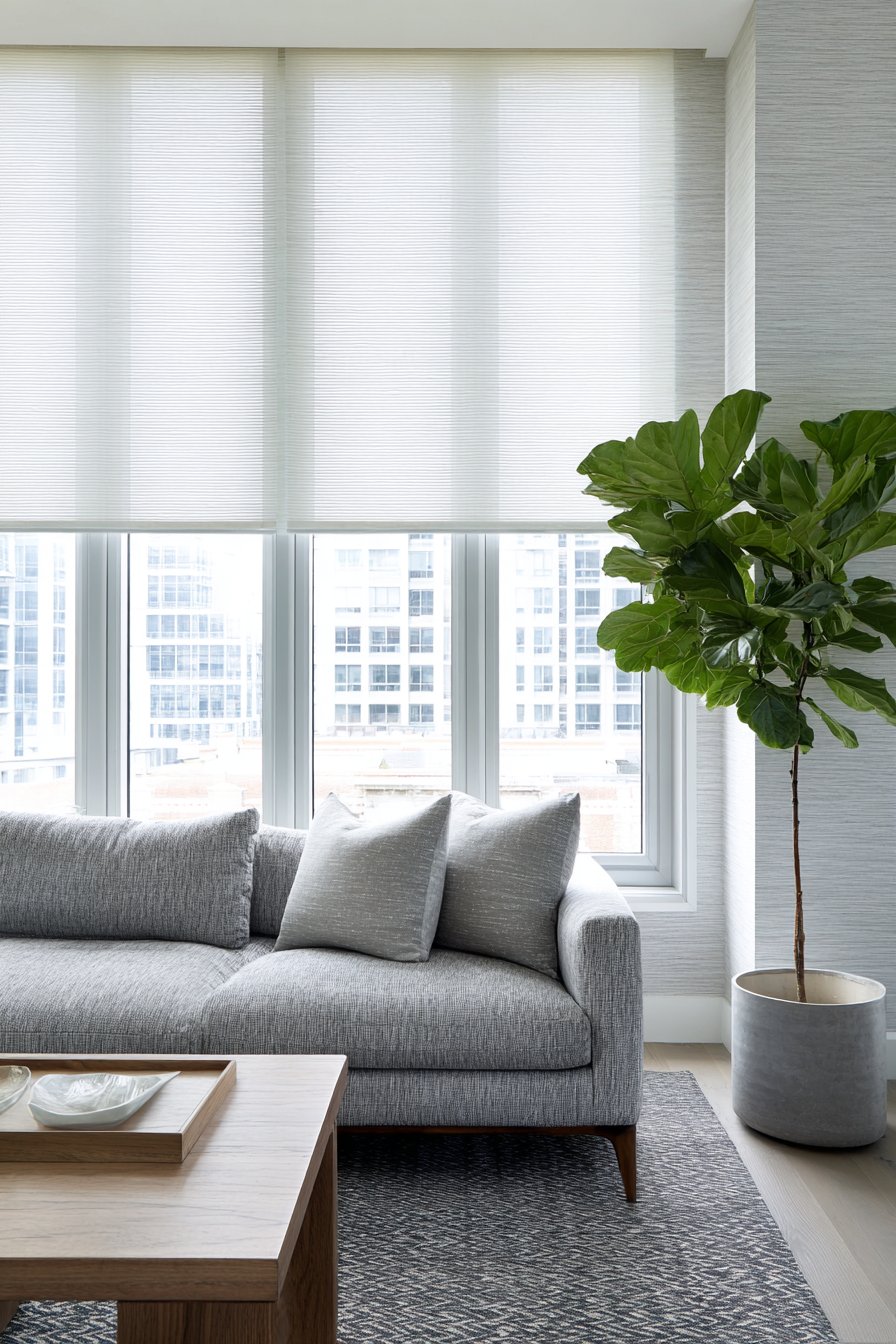
Natural light plays a starring role in this Nordic-inspired sanctuary, streaming through large windows dressed with white roller shades that provide privacy while maintaining the room’s luminous quality. The filtered daylight creates a soft, diffused glow that changes throughout the day, transforming the space from energizing morning brightness to calm evening tranquility. A single potted fiddle leaf fig stands as the room’s organic element, its vibrant green leaves providing the only departure from the grey-and-white palette, connecting the interior to nature in true Scandinavian fashion.
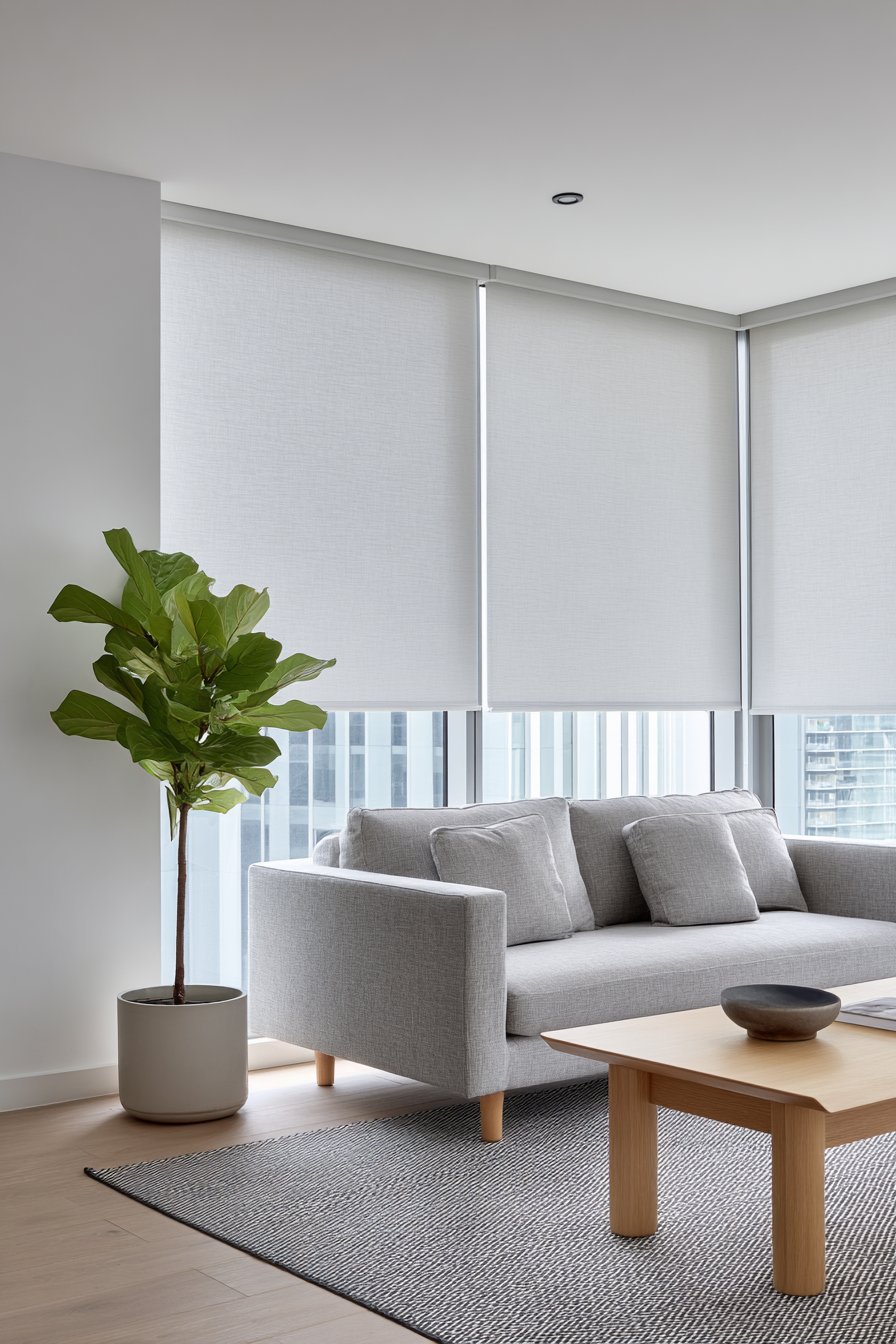
The genius of this design lies in its commitment to functionality and beauty in equal measure. Every element serves a purpose, yet nothing feels utilitarian or cold. The grey linen sofa invites relaxation with its deep cushions while maintaining the visual lightness essential to the aesthetic. Wide-angle interior photography captures the serene simplicity of the composition, with soft diffused lighting highlighting the interplay of textures—from the nubby linen upholstery to the smooth oak surfaces and the geometric precision of the rug pattern.
Key Design Tips:
- Select furniture with exposed wooden legs to maintain visual lightness and allow light to flow underneath
- Layer different shades of grey and white to create depth without introducing competing colors
- Maximize natural light with minimal window treatments, using sheer or light-filtering options
- Choose one statement plant rather than multiple small ones for greater visual impact
- Invest in natural materials like linen, wool, and wood to add warmth to the neutral palette
2. Velvet Comfort and Cozy Textures
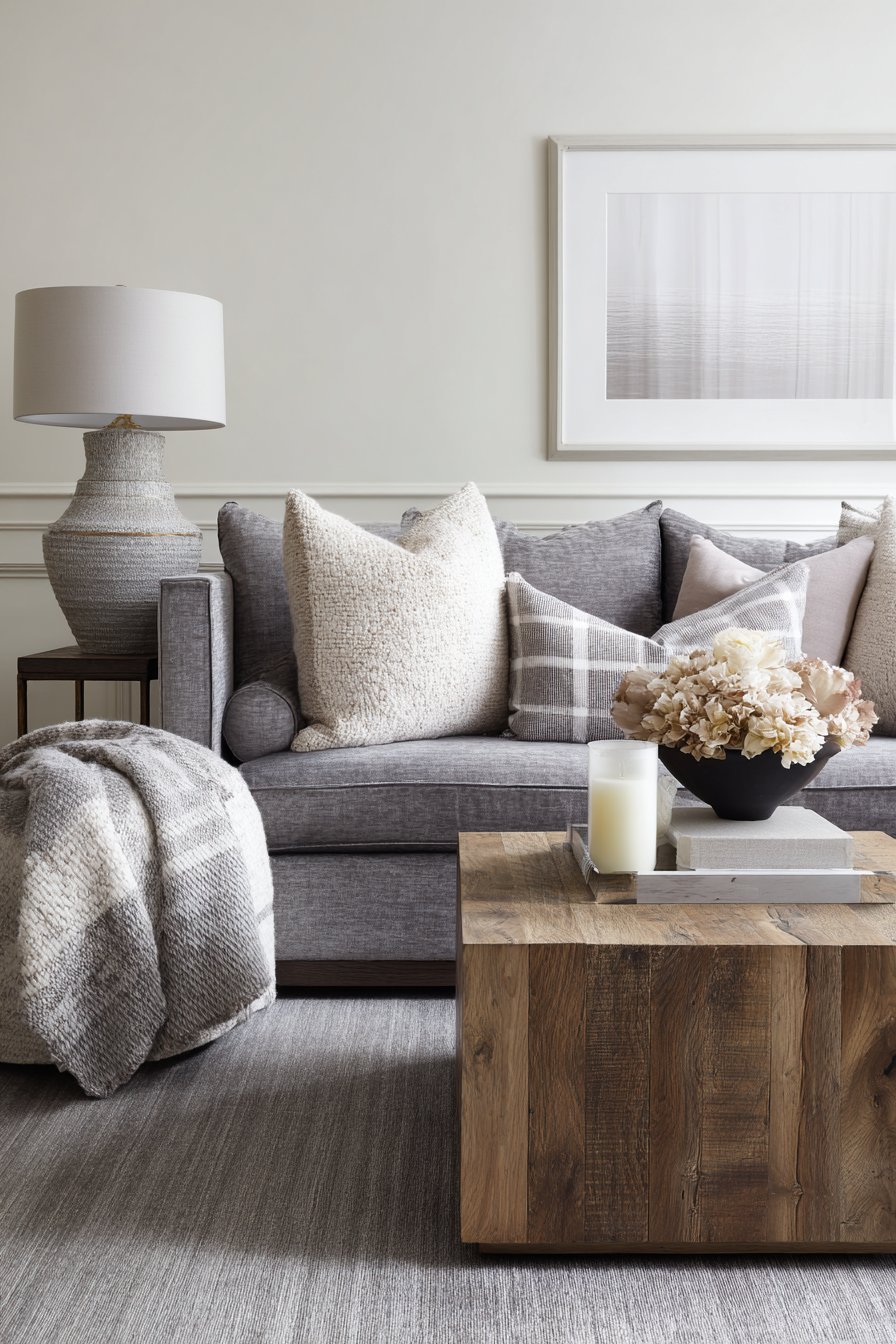
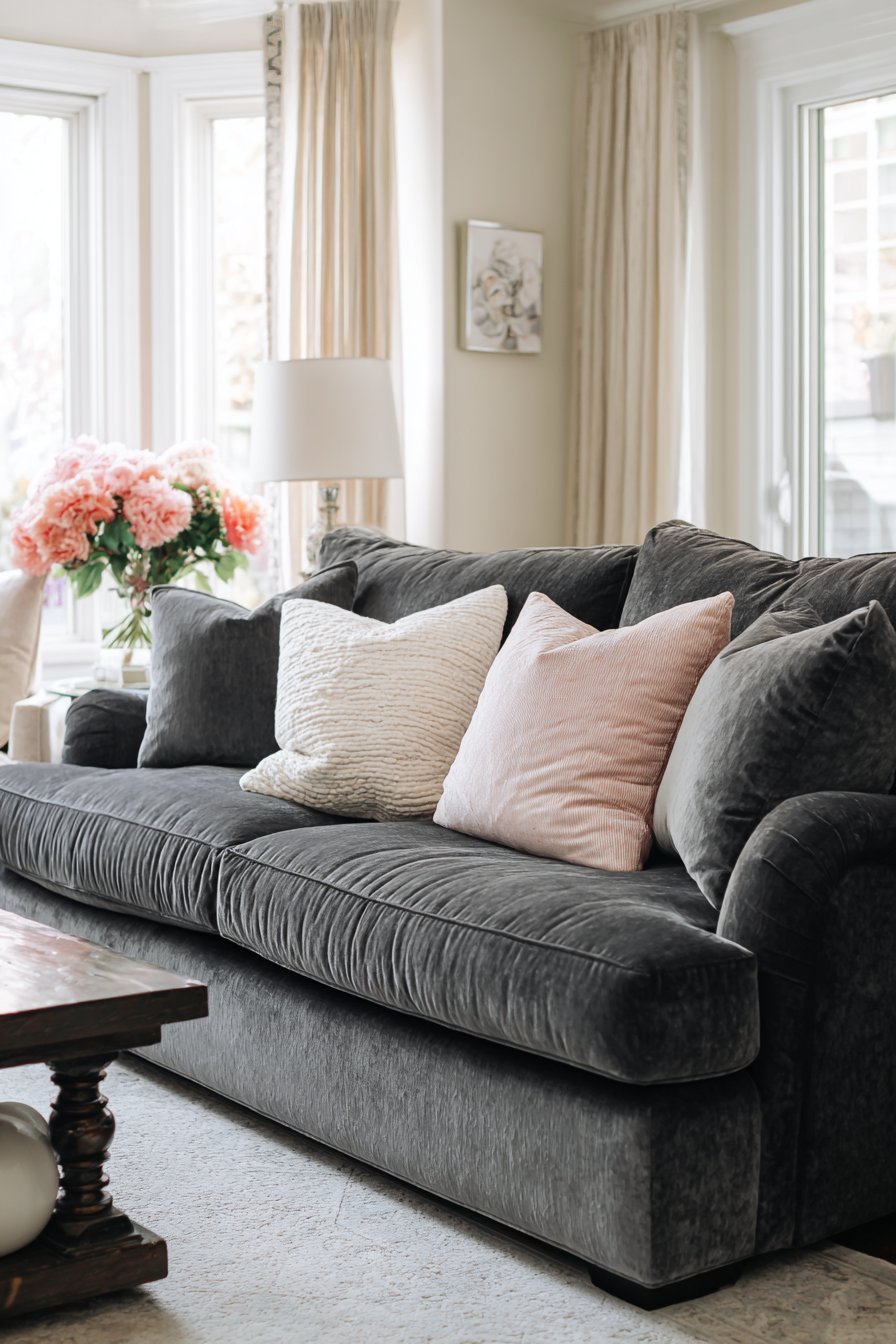
Imagine sinking into the plush embrace of a deep-seated grey velvet sofa, where luxury meets comfort in perfect harmony. This living room concept celebrates tactile richness, with the sofa’s sumptuous velvet upholstery catching and reflecting light in ways that flat fabrics simply cannot achieve. The rolled arms add classical elegance while the generous seat depth promises hours of comfortable lounging. Layered across the sofa, textured throw pillows in varying shades of grey create dimensional interest, with touches of cream and blush pink introducing just enough warmth to prevent the space from feeling too cool or austere.
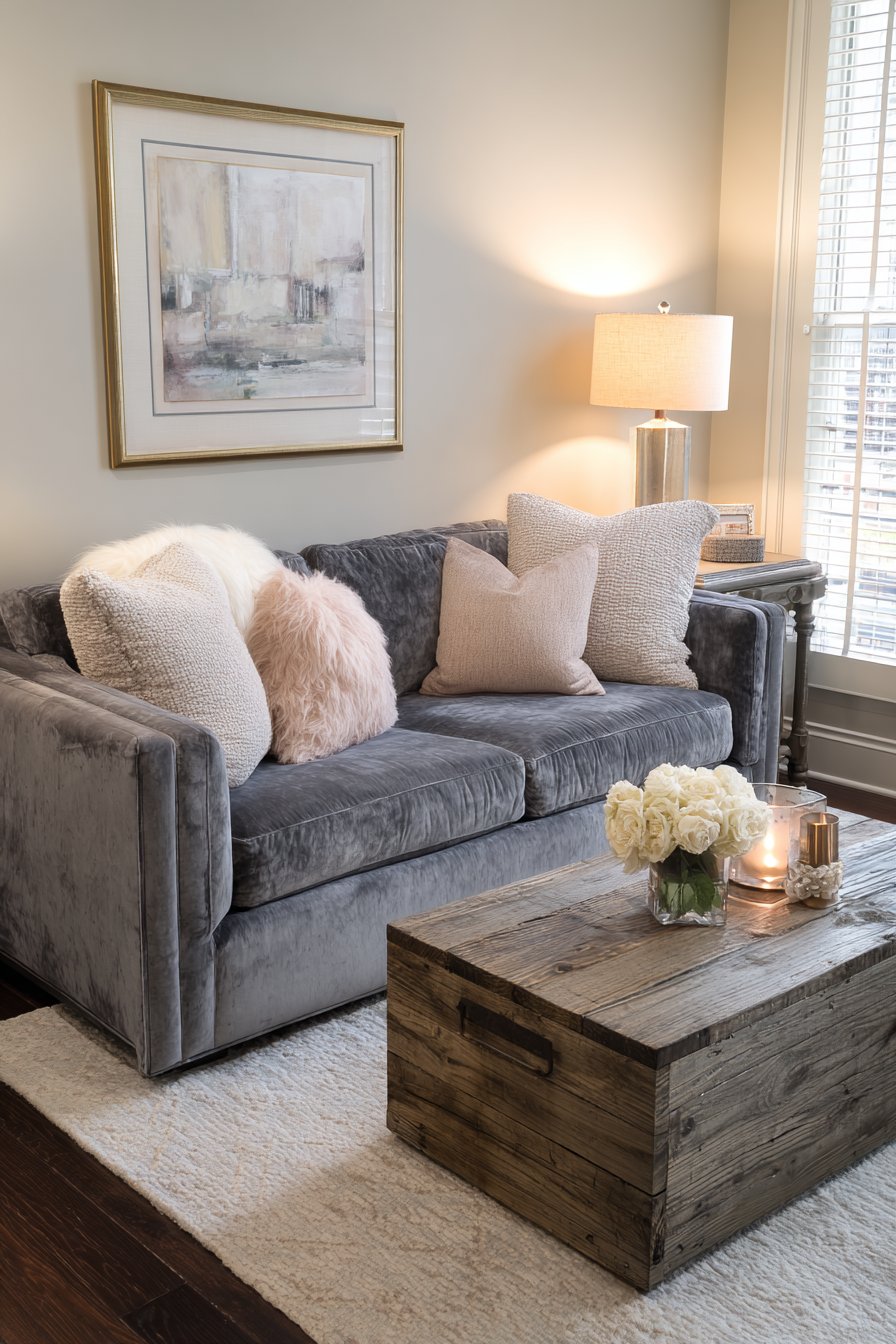
The juxtaposition of refined and rustic defines this inviting space. A reclaimed wood coffee table provides the perfect counterpoint to the sofa’s sophisticated velvet, its weathered surface telling stories of its previous life while grounding the room with organic warmth. The visible grain patterns, subtle imperfections, and honest character of the recycled wood create visual intrigue and authenticate the space, preventing it from feeling too precious or untouchable. Cream-colored walls serve as a gentle backdrop that enhances rather than competes with the carefully curated furnishings.
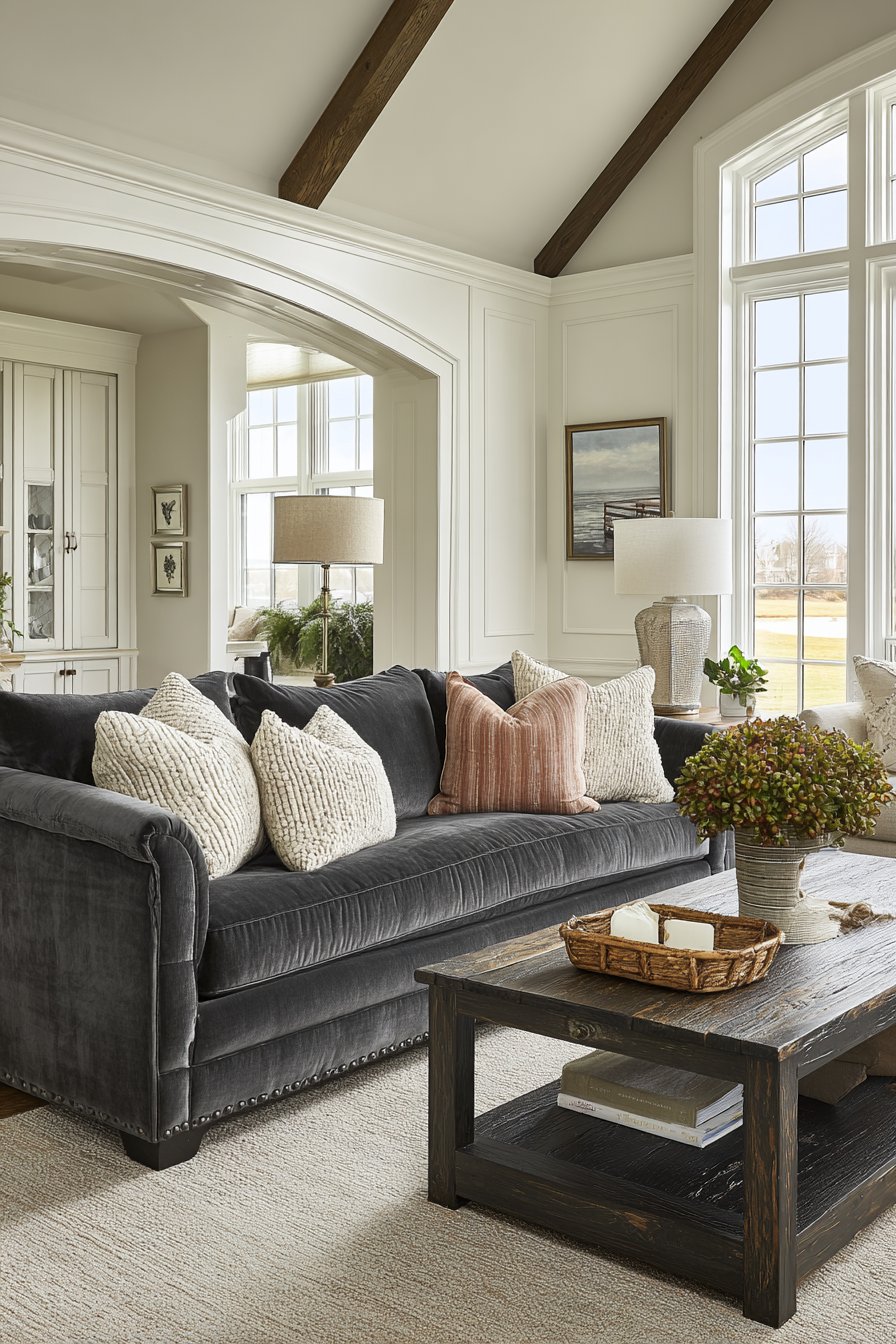
Lighting in this space focuses on creating ambiance rather than merely providing illumination. Table lamps with textured bases and soft-glow bulbs cast gentle pools of light that invite intimate conversation and relaxation. The professional interior photography captures the room’s comfortable, lived-in quality, with natural shadows that add depth and dimension. Realistic fabric textures are evident in every detail—from the way the velvet nap changes direction to catch the light differently, to the gentle wrinkles in the throw pillows that prove this is a space meant for actual living, not just admiration.
Key Design Tips:
- Choose velvet in medium to dark grey tones to hide wear while maximizing the fabric’s light-reflecting properties
- Mix pillow textures including velvet, linen, and cotton to create tactile variety
- Balance luxurious upholstery with rustic wood elements to prevent the space from feeling overly formal
- Layer lighting sources at different heights to create depth and ambiance
- Select a coffee table with character and history to add soul to the refined aesthetic
3. Modern Functionality and Clean Lines
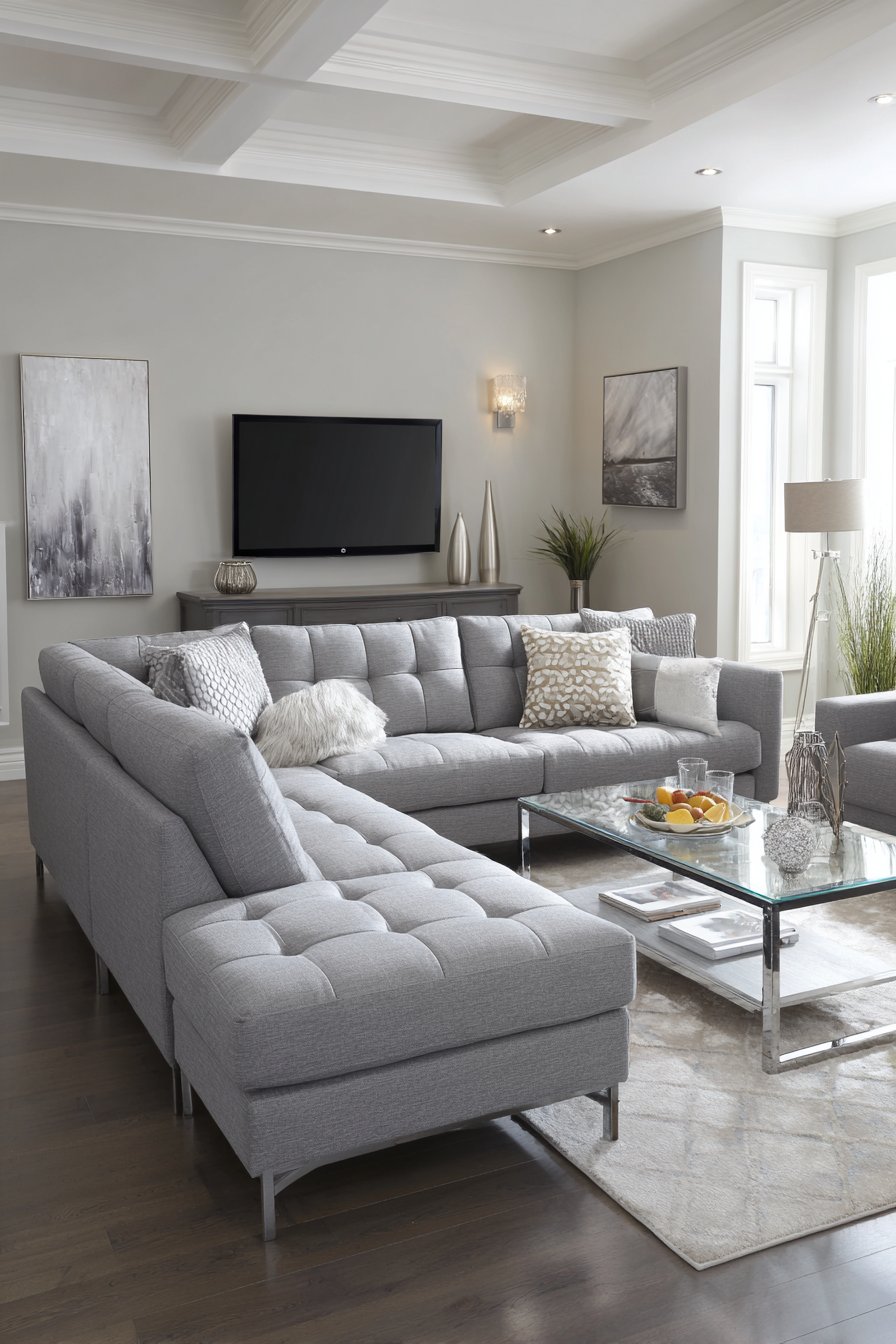
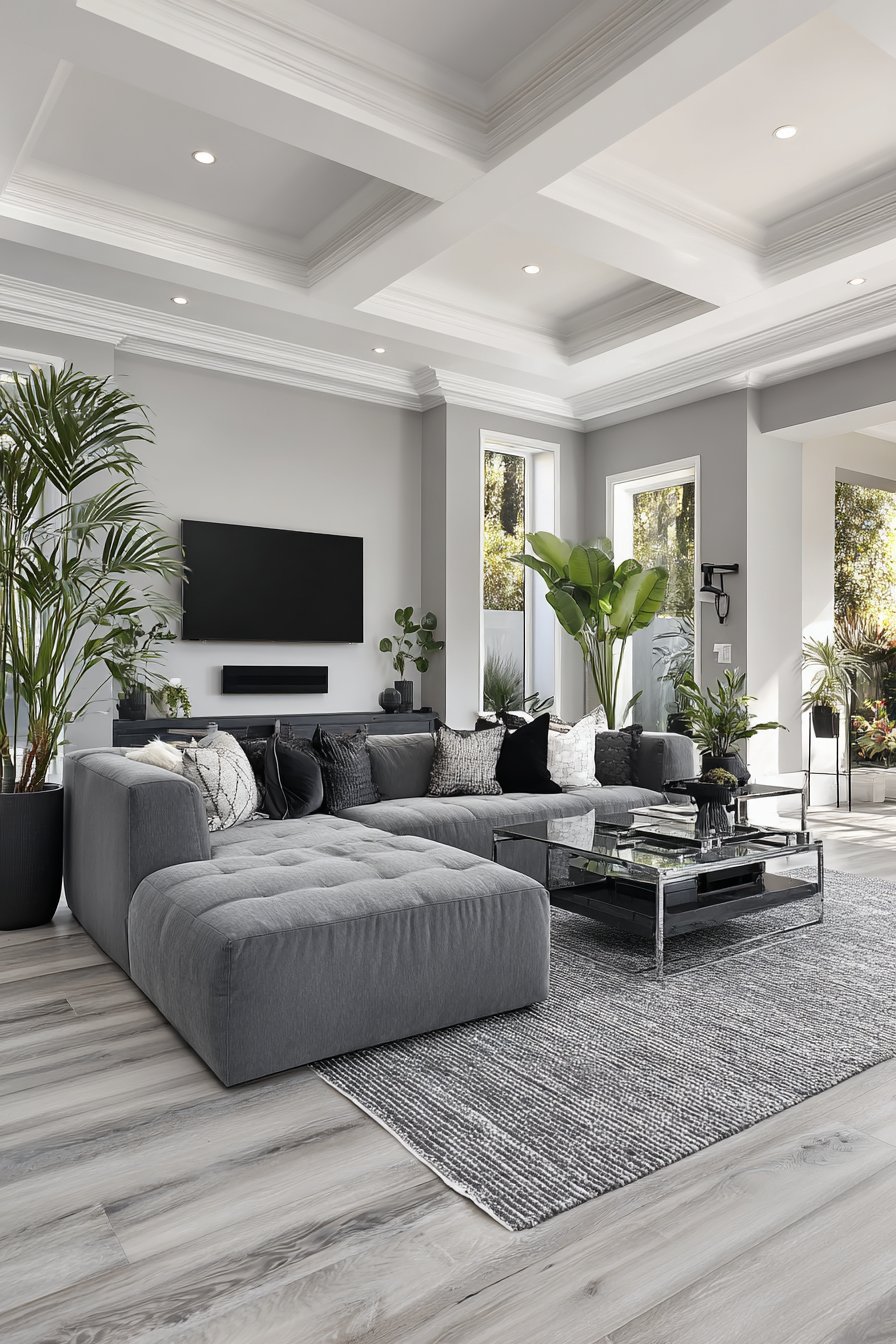
This living room embraces contemporary practicality, featuring a modular grey sectional in high-performance fabric that proves modern design can be both beautiful and family-friendly. The L-shaped configuration creates a natural gathering space, inviting conversation while providing ample seating without overcrowding the room. The sectional faces a wall-mounted flat-screen television with thoughtfully concealed cable management, demonstrating that technology can integrate seamlessly into well-designed spaces without creating visual clutter. The performance fabric, specially treated to resist stains and wear, offers peace of mind for households with children, pets, or frequent entertaining.
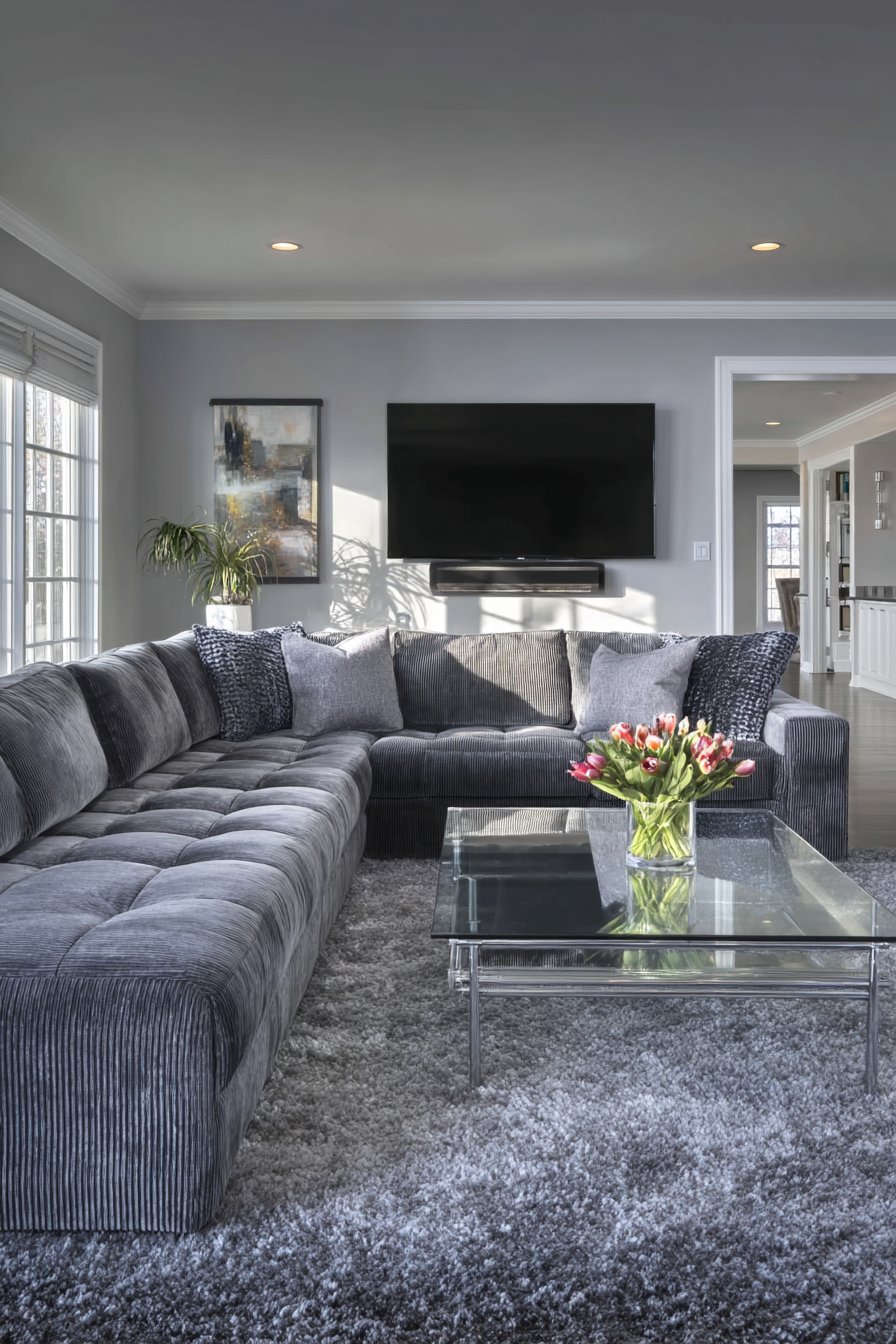
Light grey walls and crisp white trim establish a clean, contemporary backdrop that allows the furniture to define the space. A glass-top coffee table with chrome legs maintains the room’s modern aesthetic while providing practical surface space without visual weight—a crucial consideration in spaces where maintaining an open, airy feel is paramount. The transparency of the glass allows sightlines to continue through the room, making even modest spaces feel more expansive and less cluttered.
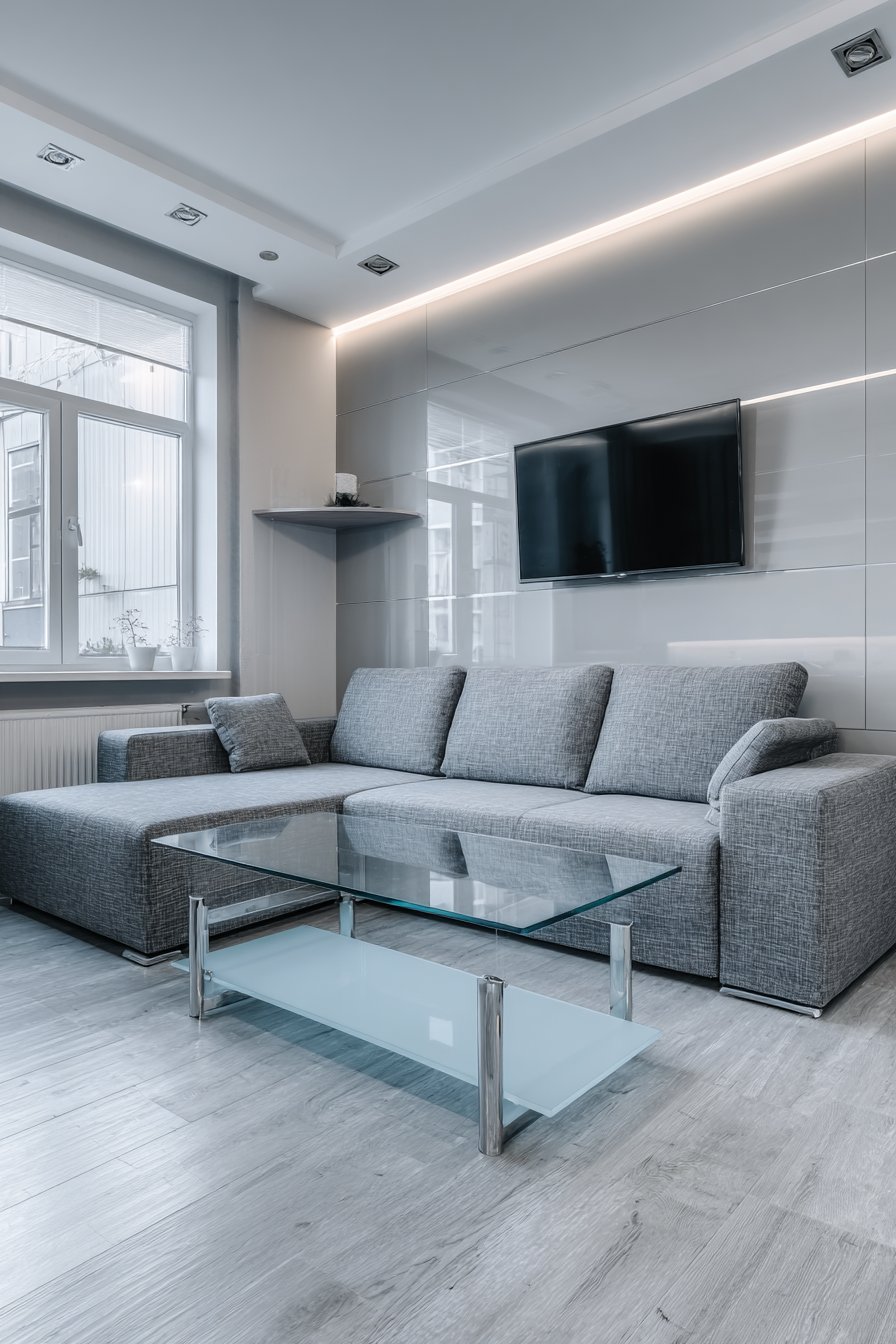
Illumination comes from multiple sources, creating layers of light that serve different functions throughout the day and evening. Recessed ceiling lights provide overall ambient lighting, while natural light from a side window offers changing quality throughout the day. The interior design photography showcases practical furniture placement that real families can replicate, with balanced exposure that reveals the room’s true colors and proportions. This is achievable modern styling at its finest—sophisticated enough to impress guests yet functional enough for everyday living.
Key Design Tips:
- Invest in performance fabrics that combine aesthetic appeal with practical durability
- Choose modular sectionals that can be reconfigured as needs change
- Implement cable management solutions during installation rather than as an afterthought
- Use glass or lucite furniture pieces to maintain visual openness in compact spaces
- Layer different types of lighting to serve various activities and moods
4. Industrial Edge with Urban Character
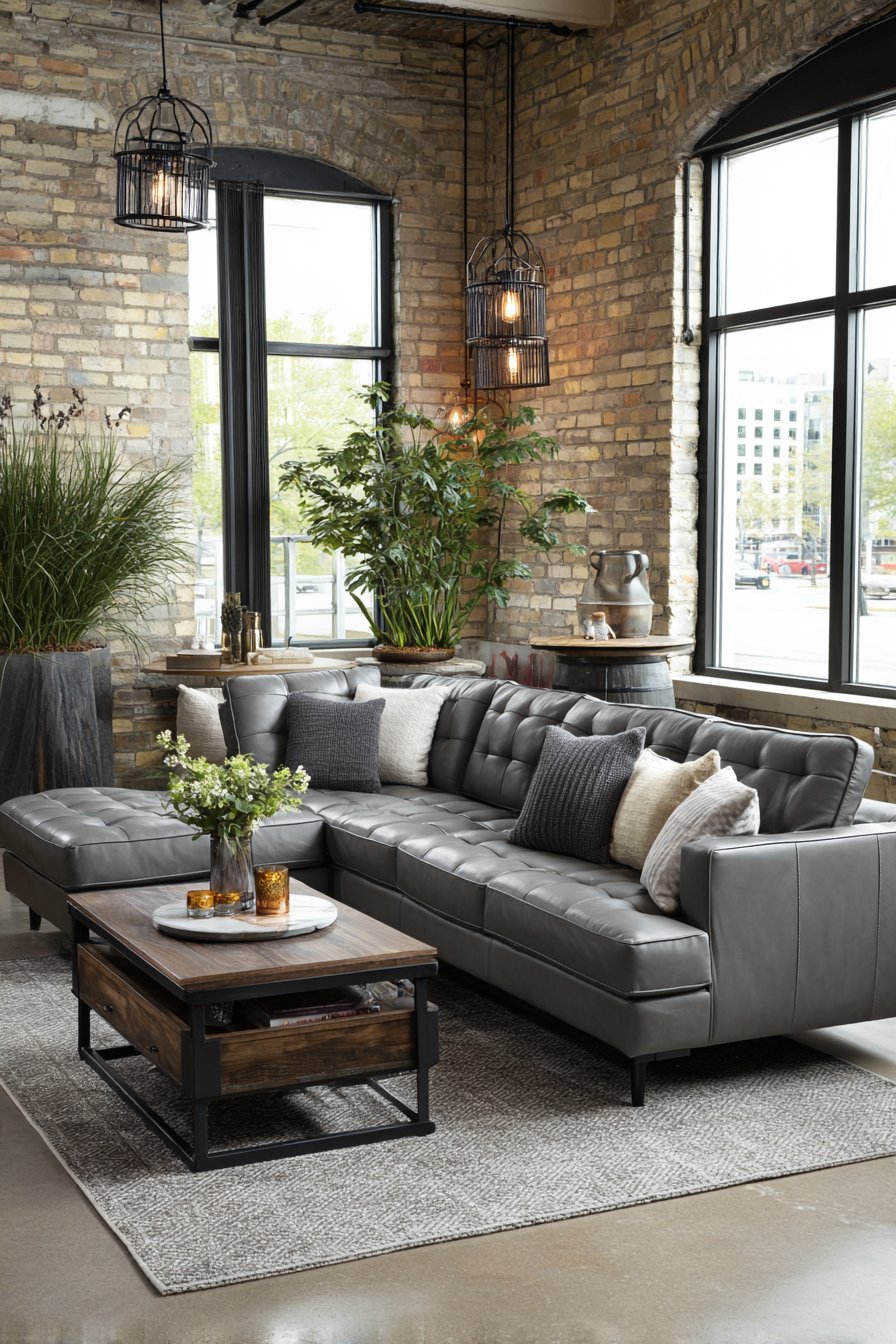
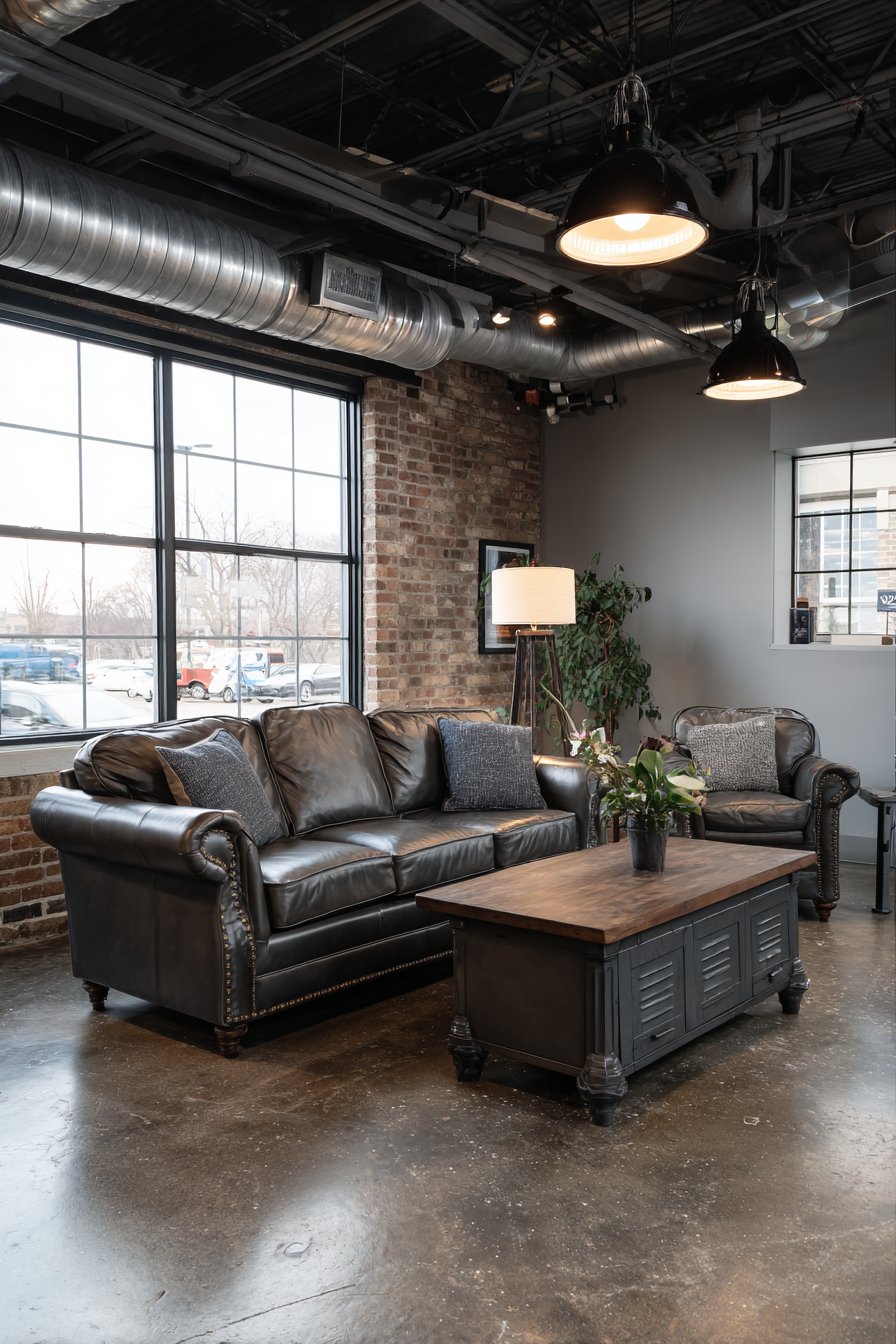
Raw authenticity defines this industrial-inspired living room, where a structured grey leather sofa with visible stitching and metal legs anchors a space that celebrates urban grit and honest materials. The leather’s slightly weathered appearance and visible construction details speak to the industrial aesthetic’s appreciation for craftsmanship and durability. Against an exposed brick accent wall in charcoal grey tones, the sofa finds its perfect complement—the brick’s irregular texture and varied coloring providing organic contrast to the leather’s smooth consistency and manufactured precision.
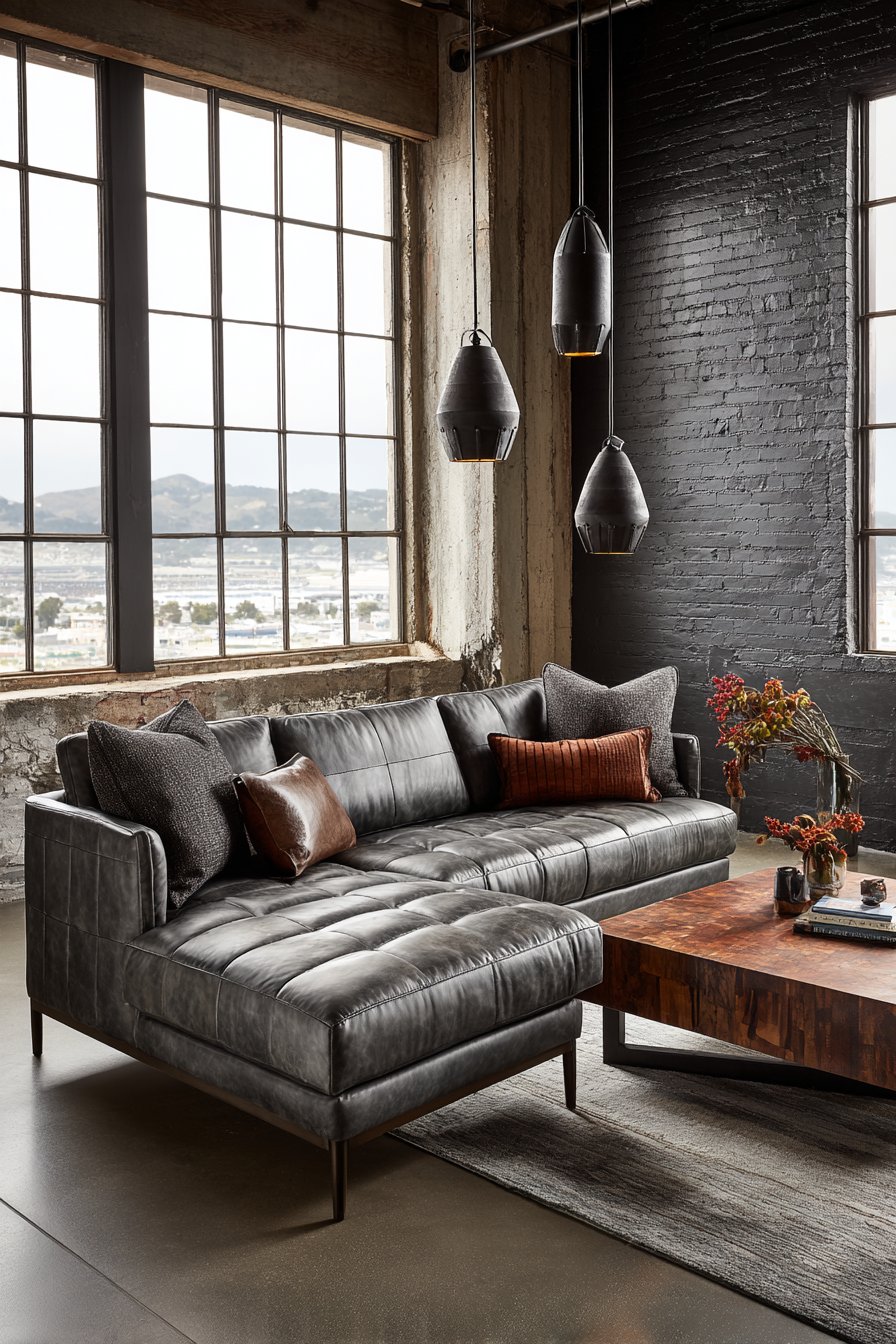
The supporting elements reinforce the industrial narrative. A coffee table combining metal framework with reclaimed wood surfaces bridges the gap between refined and rough, while polished concrete floors reflect the space’s commitment to materials typically associated with commercial or warehouse spaces. Black metal pendant lights hang overhead with purposeful simplicity, their Edison bulbs visible within cage-like fixtures that reference factory lighting from an earlier industrial era. Large factory-style windows with black frames admit dramatic shafts of natural light that move across the space throughout the day, highlighting different textures and creating ever-changing shadow patterns.
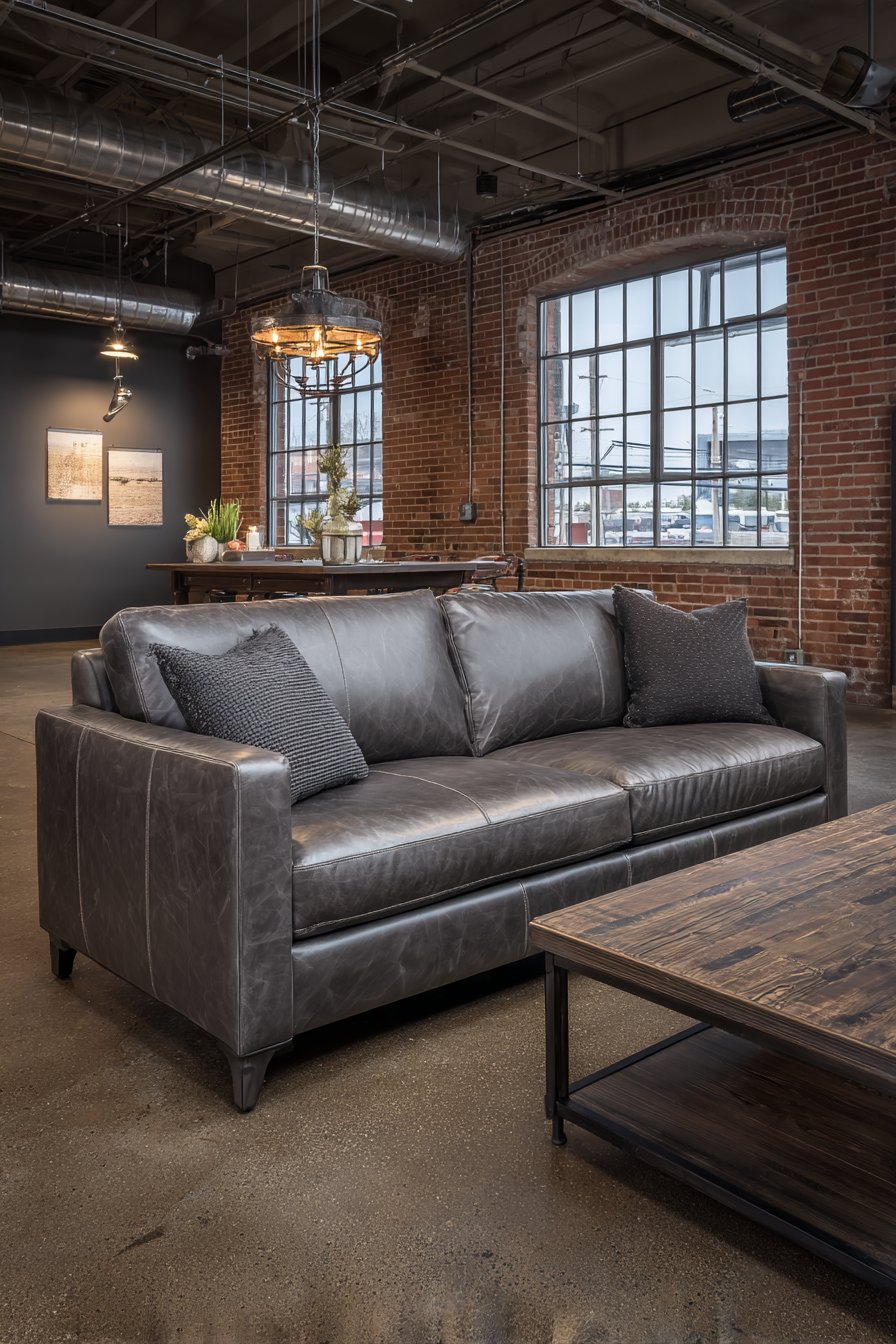
Wide-angle interior photography emphasizes the interplay of grey textures throughout this space—from the smooth leather to the rough brick, from the cold metal to the warm wood. The industrial aesthetic’s beauty lies in its honest celebration of materials and construction, with nothing hidden or apologized for. This approach creates living spaces with tremendous character and visual interest, proving that grey need never be boring when combined with varied textures and authentic materials.
Key Design Tips:
- Select leather in grey tones rather than traditional browns for a more contemporary industrial feel
- Leave brick walls unpainted to showcase their authentic texture and color variation
- Choose lighting fixtures with exposed bulbs and metal cages for genuine industrial character
- Incorporate mixed materials—metal, wood, leather, and concrete—for textural richness
- Embrace imperfections and signs of age as design features rather than flaws
5. Transitional Elegance and Timeless Appeal
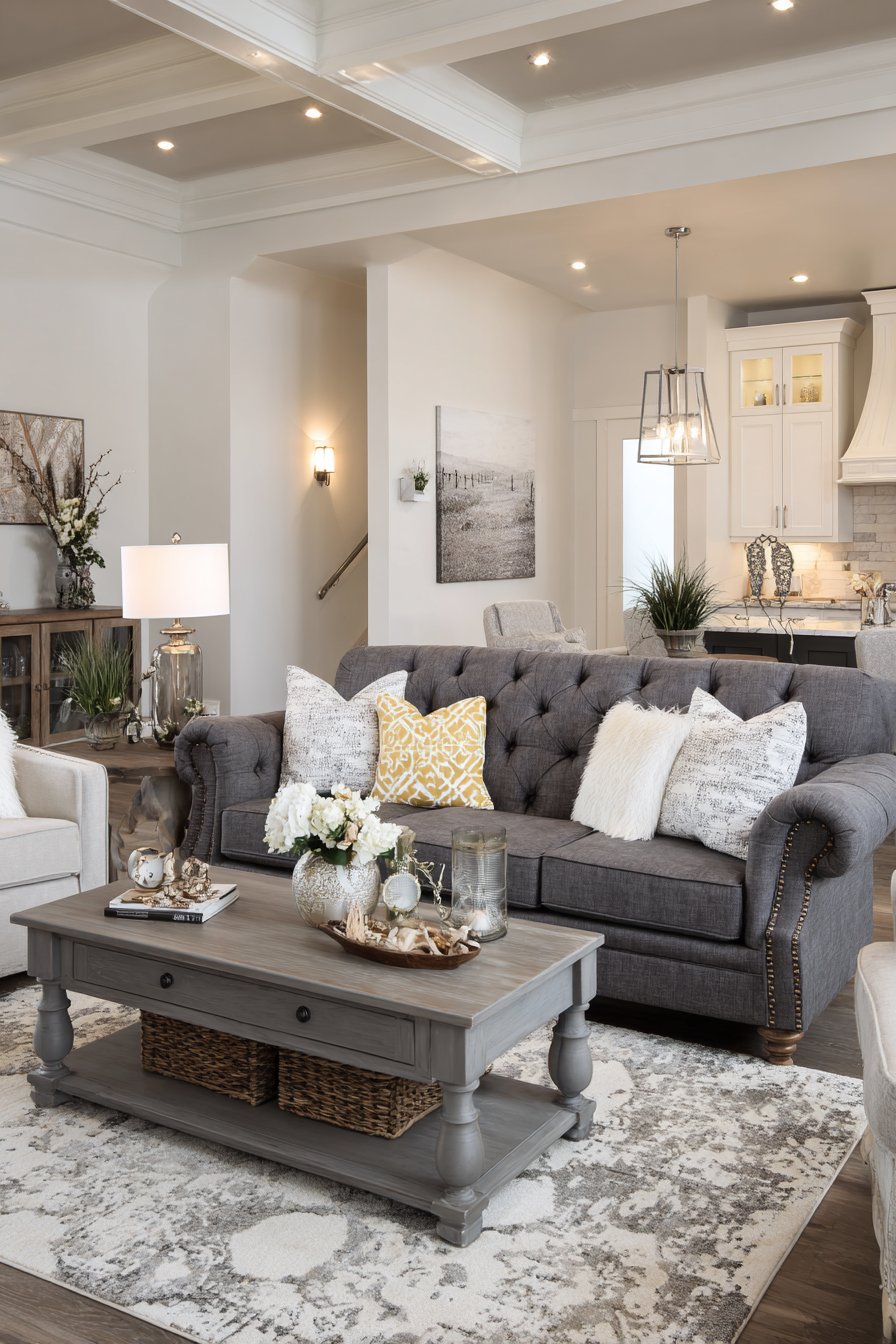
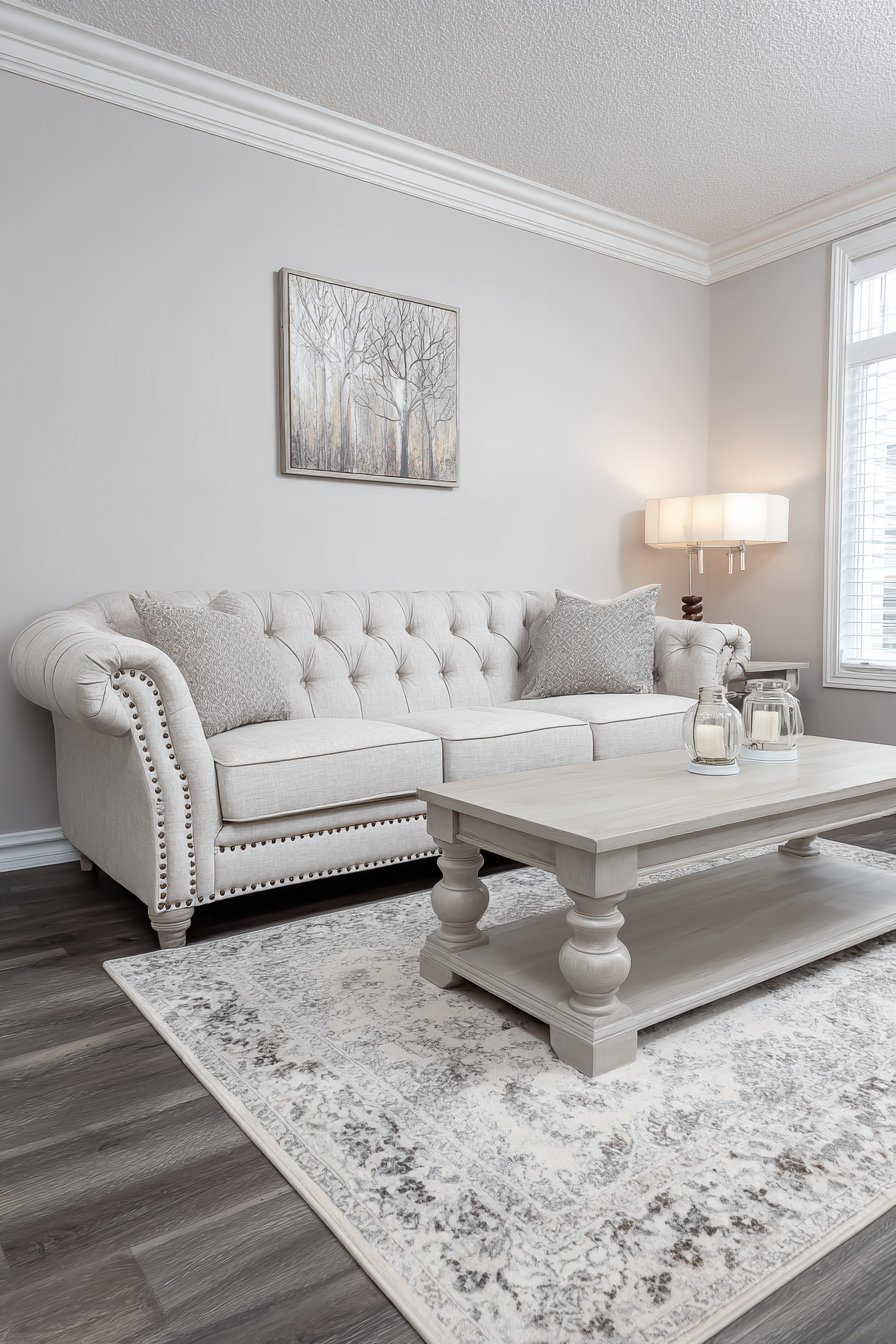
This living room strikes the perfect balance between traditional comfort and contemporary simplicity, featuring a grey tufted sofa with nailhead trim that bridges classic and modern sensibilities. The button tufting adds dimensional interest and subtle pattern, while the nailhead detailing provides refined edging without excessive ornamentation. Rolled arms offer classical proportions that feel familiar and welcoming, making this sofa equally at home in a historic brownstone or a newly constructed suburban home. Against pale grey walls enhanced by traditional crown molding, the space achieves a sophisticated neutrality that transcends passing trends.
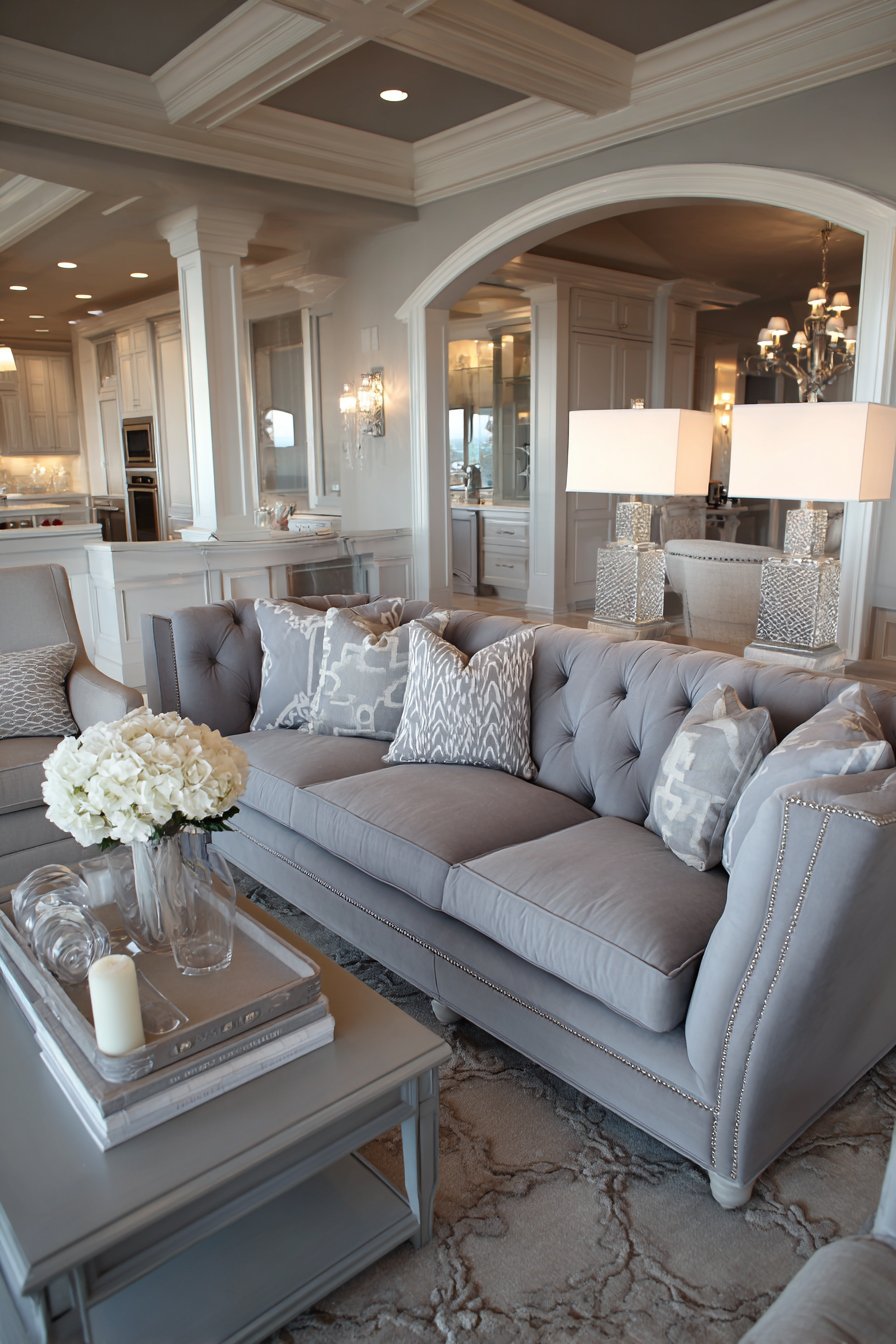
A painted grey coffee table with tapered legs centers the seating area, its finish coordinating with the sofa while its form references classical furniture design. The cream and grey patterned area rug grounds the arrangement, its subtle pattern adding visual interest without overwhelming the space or competing with the sofa’s tufted texture. Table lamps with white shades provide soft ambient lighting that flatters both people and furnishings, while their traditional forms with slight contemporary updates perfectly embody the transitional approach.
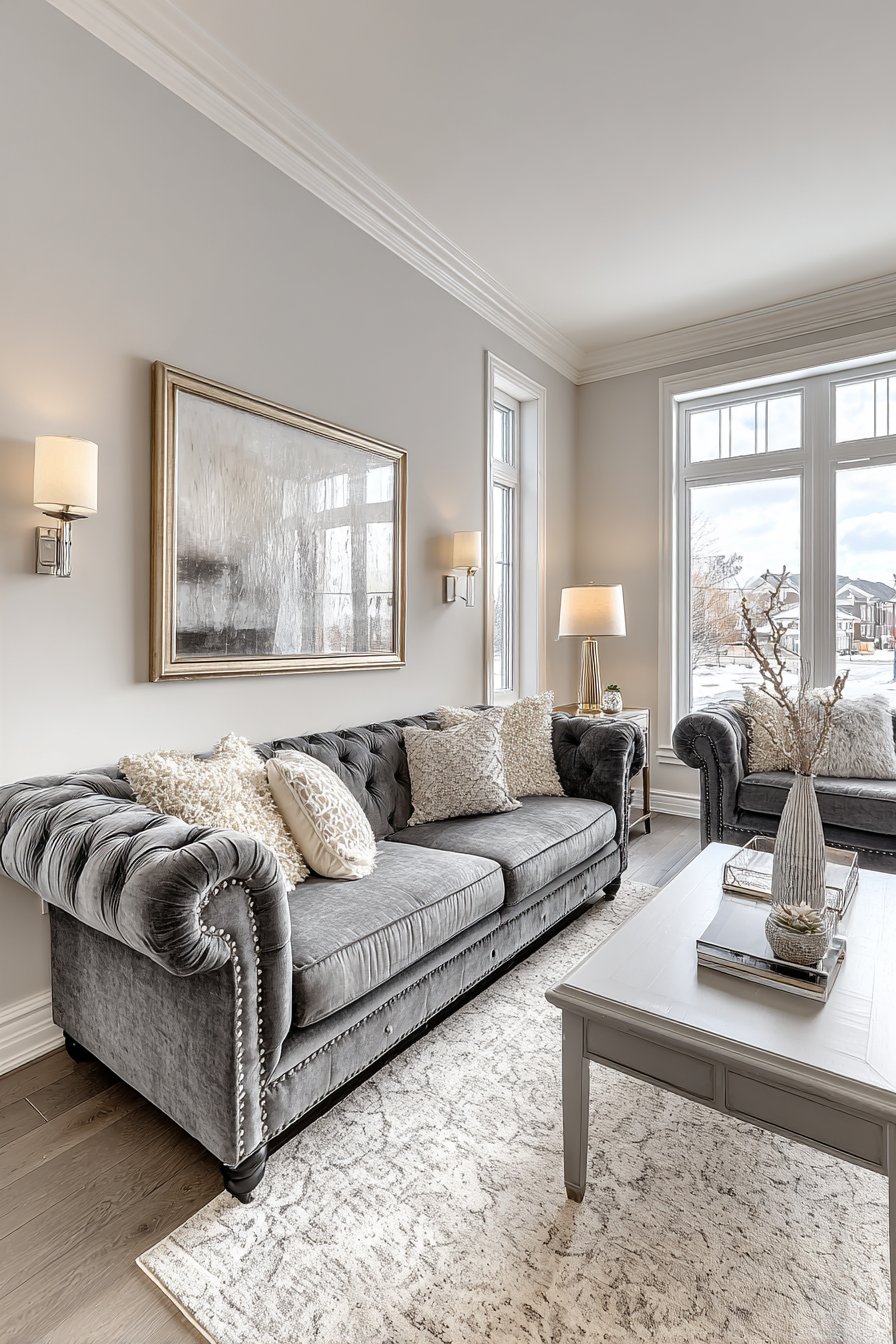
Professional interior photography with balanced exposure captures how this design successfully blends classic and contemporary elements without committing fully to either extreme. The grey color palette serves as the perfect mediator between old and new, neither too bold nor too safe. This approach offers tremendous versatility for homeowners who appreciate traditional quality but desire a fresher, more current aesthetic. The result is a living room that feels collected over time rather than decorated all at once, with layers of sophistication that reveal themselves gradually.
Key Design Tips:
- Choose upholstery with one classical detail (tufting, nailheads, or rolled arms) rather than all three to keep the look current
- Paint traditional architectural details in coordinating grey tones rather than stark white for a softer, more integrated appearance
- Select area rugs with subtle patterns that add interest without dominating the space
- Incorporate both classic and contemporary accessories to reinforce the transitional aesthetic
- Use grey as your primary color to bridge traditional forms with contemporary freshness

6. Small Space Solutions and Smart Design
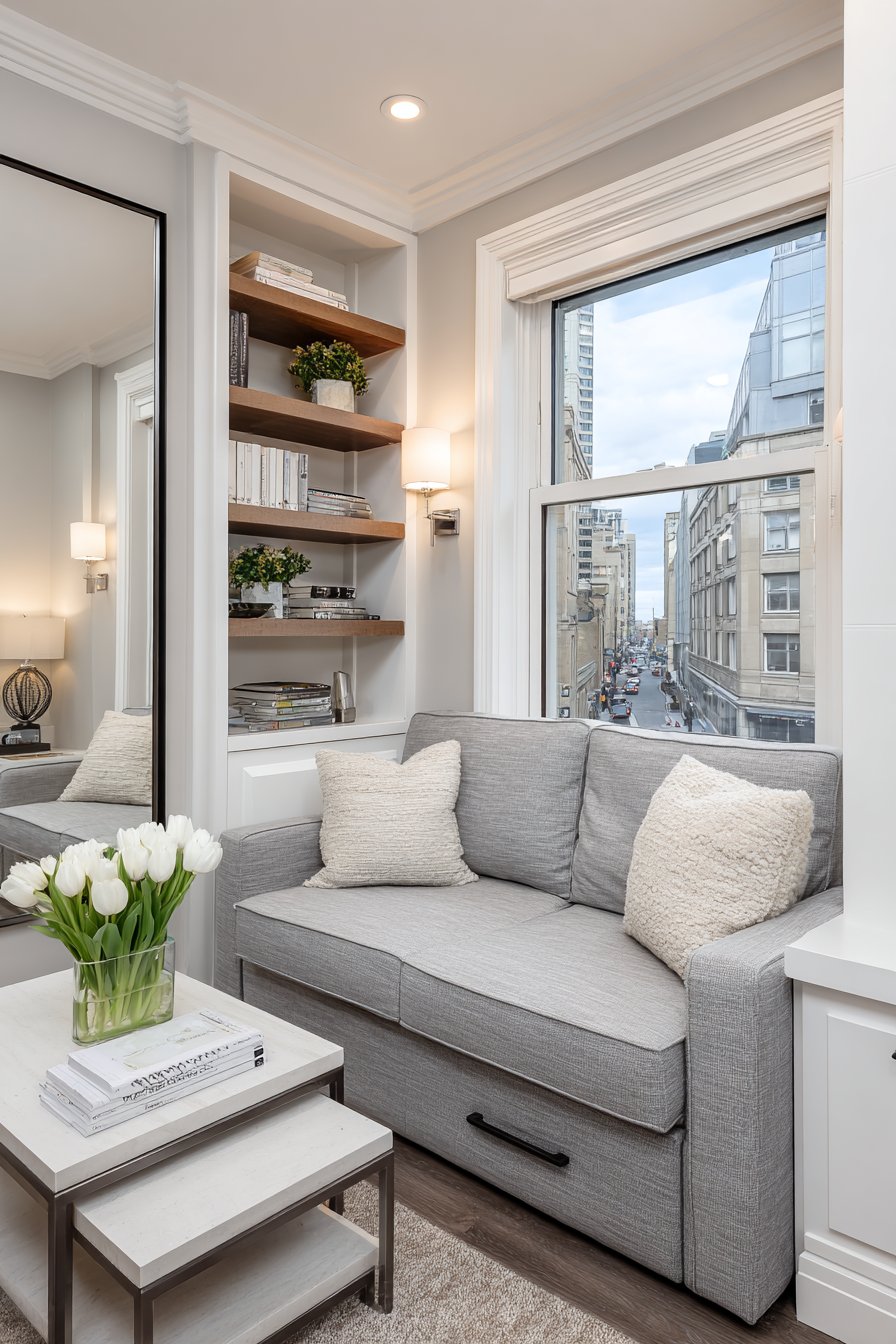
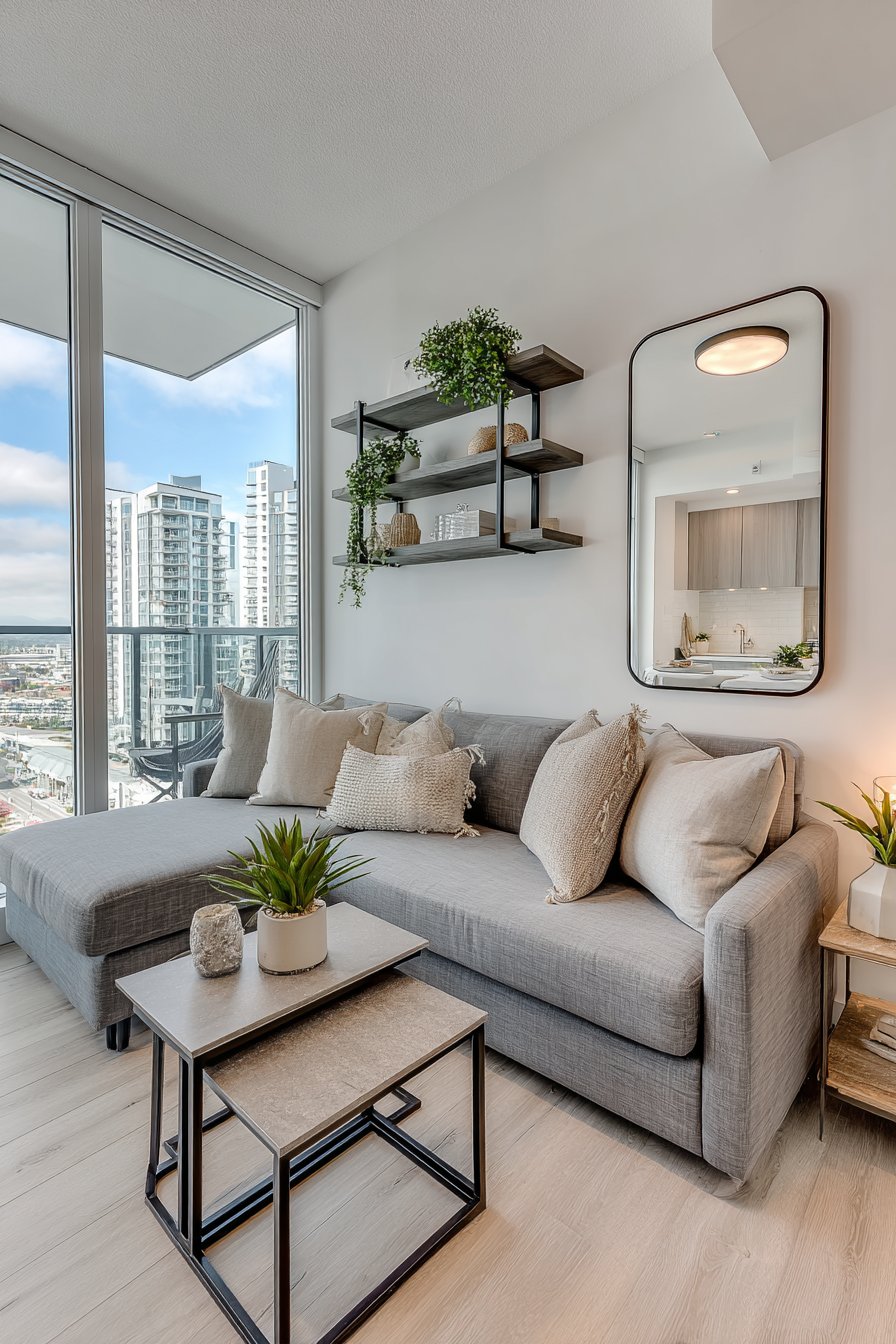
Compact living requires creative thinking, and this small space design demonstrates how a grey loveseat can anchor a diminutive living room without overwhelming it. The compact sofa features hidden storage underneath—a crucial space-saving innovation that eliminates the need for additional furniture while keeping necessities close at hand. Positioned strategically against the room’s longest wall, the loveseat maximizes floor space while providing comfortable seating. A nesting coffee table set offers flexible functionality, with individual tables that can be separated when needed for entertaining or pushed together when space is at a premium.
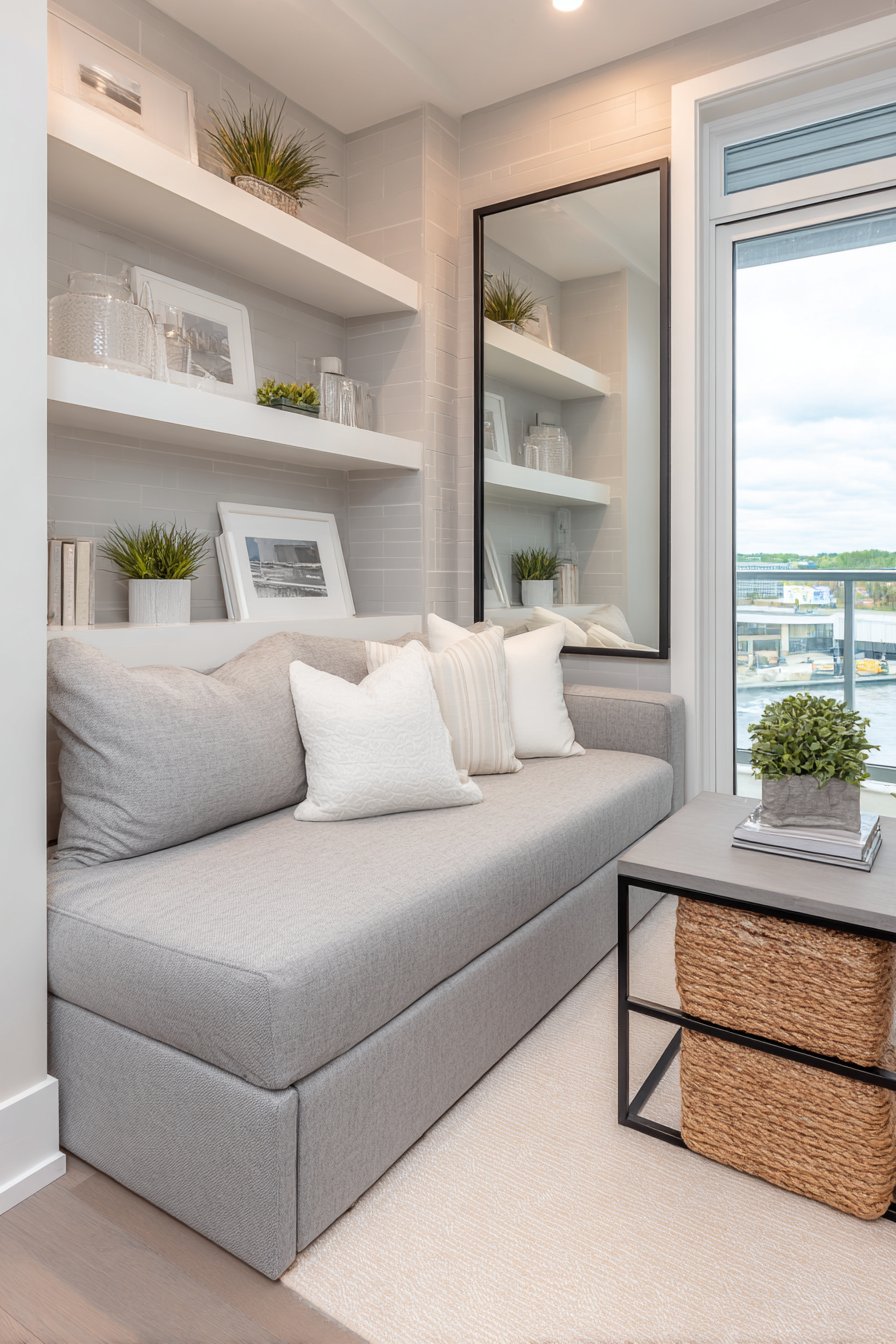
Light grey walls create an essential sense of expansiveness in the compact room, reflecting available light and preventing the space from feeling cramped or cave-like. A large mirror positioned opposite the window performs double duty, reflecting natural light deeper into the room while creating the optical illusion of additional square footage. Wall-mounted shelving maximizes vertical storage without consuming precious floor space, demonstrating the small-space principle that utilization of walls is just as important as furniture selection.
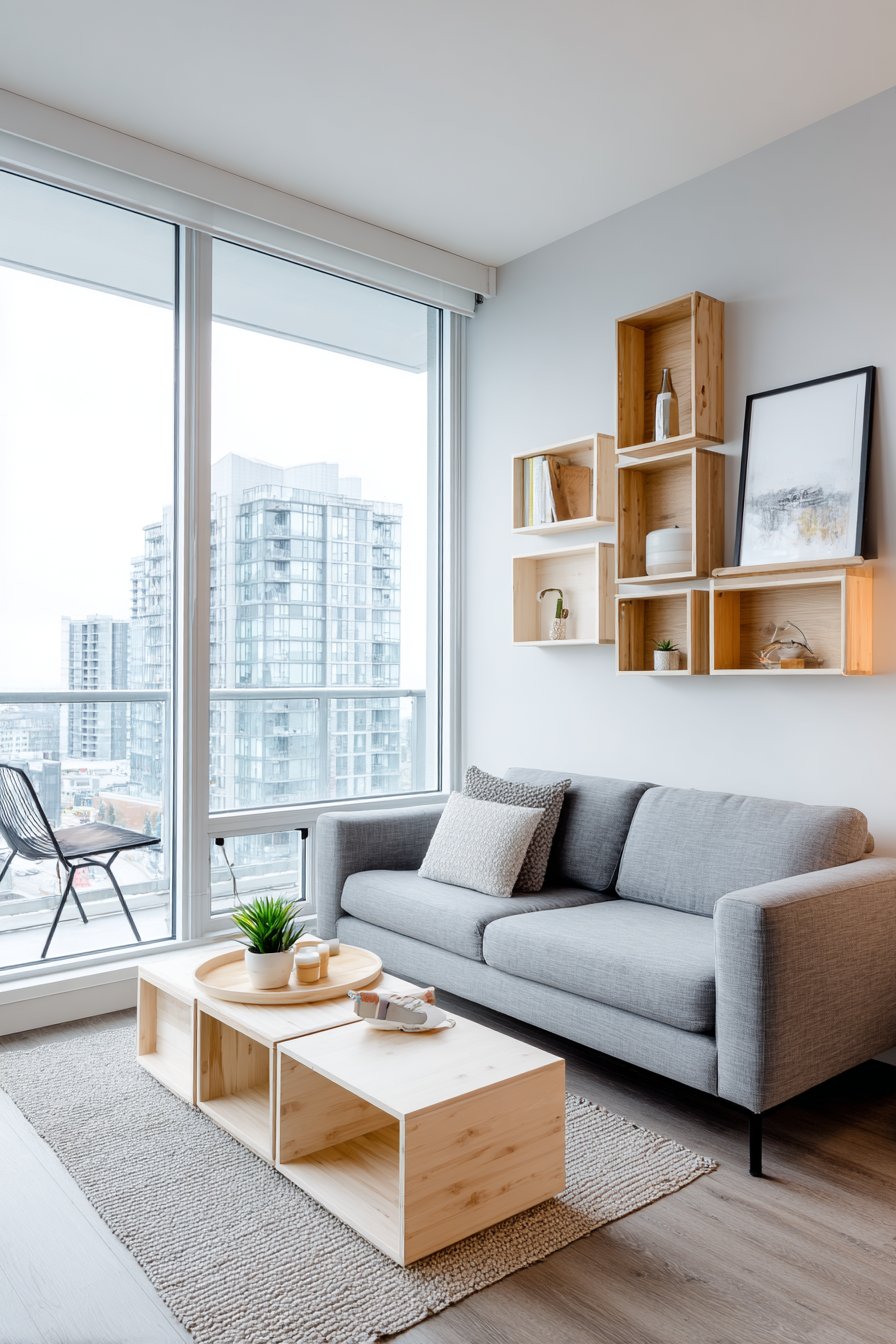
Interior design photography demonstrates smart small-space solutions with grey serving as the unifying color that creates visual continuity. In compact rooms, limiting the color palette helps prevent visual fragmentation that can make spaces feel even smaller. The grey sofa, grey walls, and grey-toned accessories create a cohesive envelope that tricks the eye into perceiving more space than actually exists. Every element serves multiple purposes, and nothing is included merely for decoration—a crucial discipline in small space design.
Key Design Tips:
- Choose furniture with hidden storage to maximize functionality in limited square footage
- Select nesting or stacking pieces that offer flexibility without permanent space commitment
- Paint walls in light grey tones to maximize light reflection and create visual expansion
- Use large mirrors strategically to multiply available light and create depth
- Mount shelving and lighting on walls to preserve floor space for movement and furniture
7. Bohemian Eclecticism and Global Inspiration
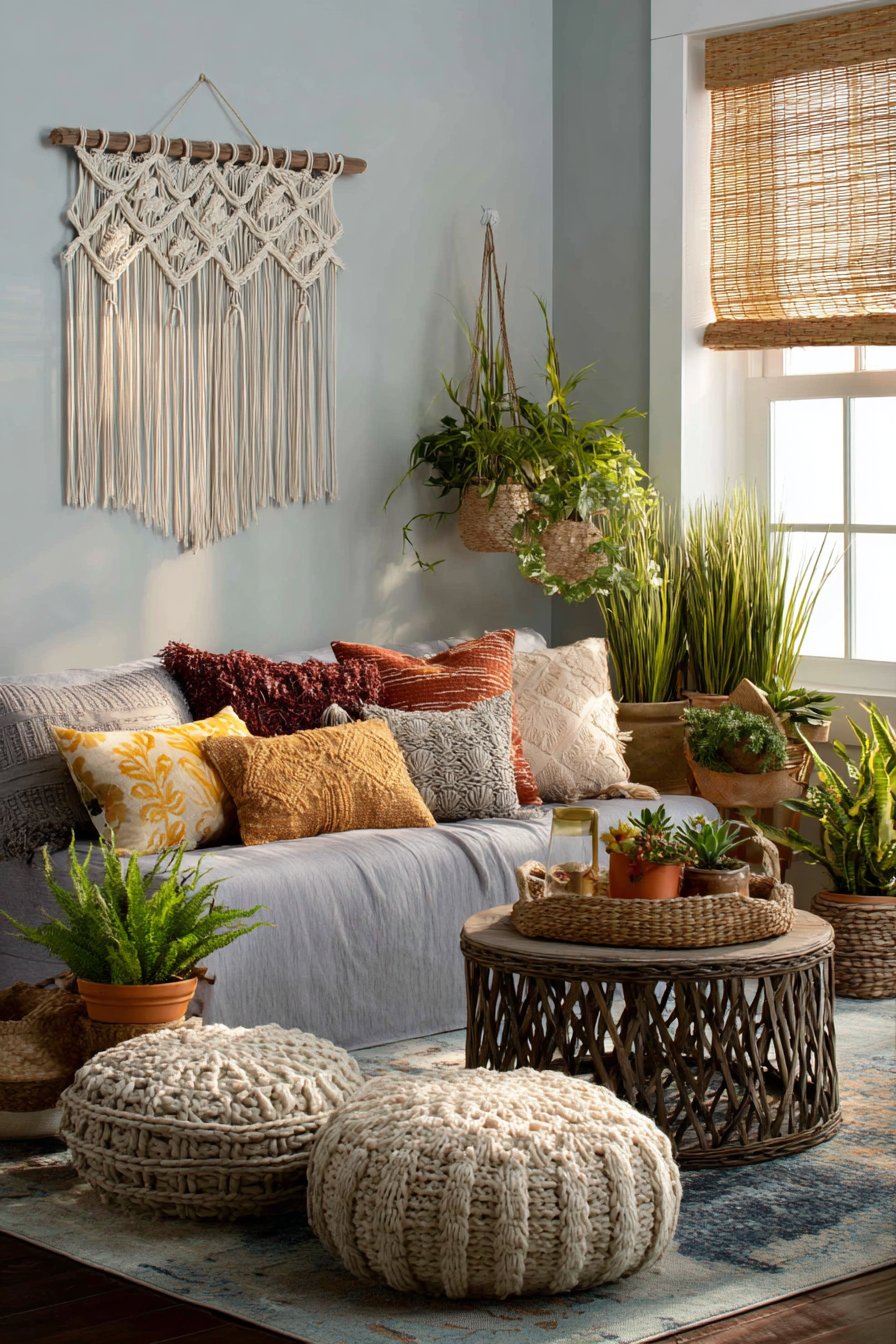
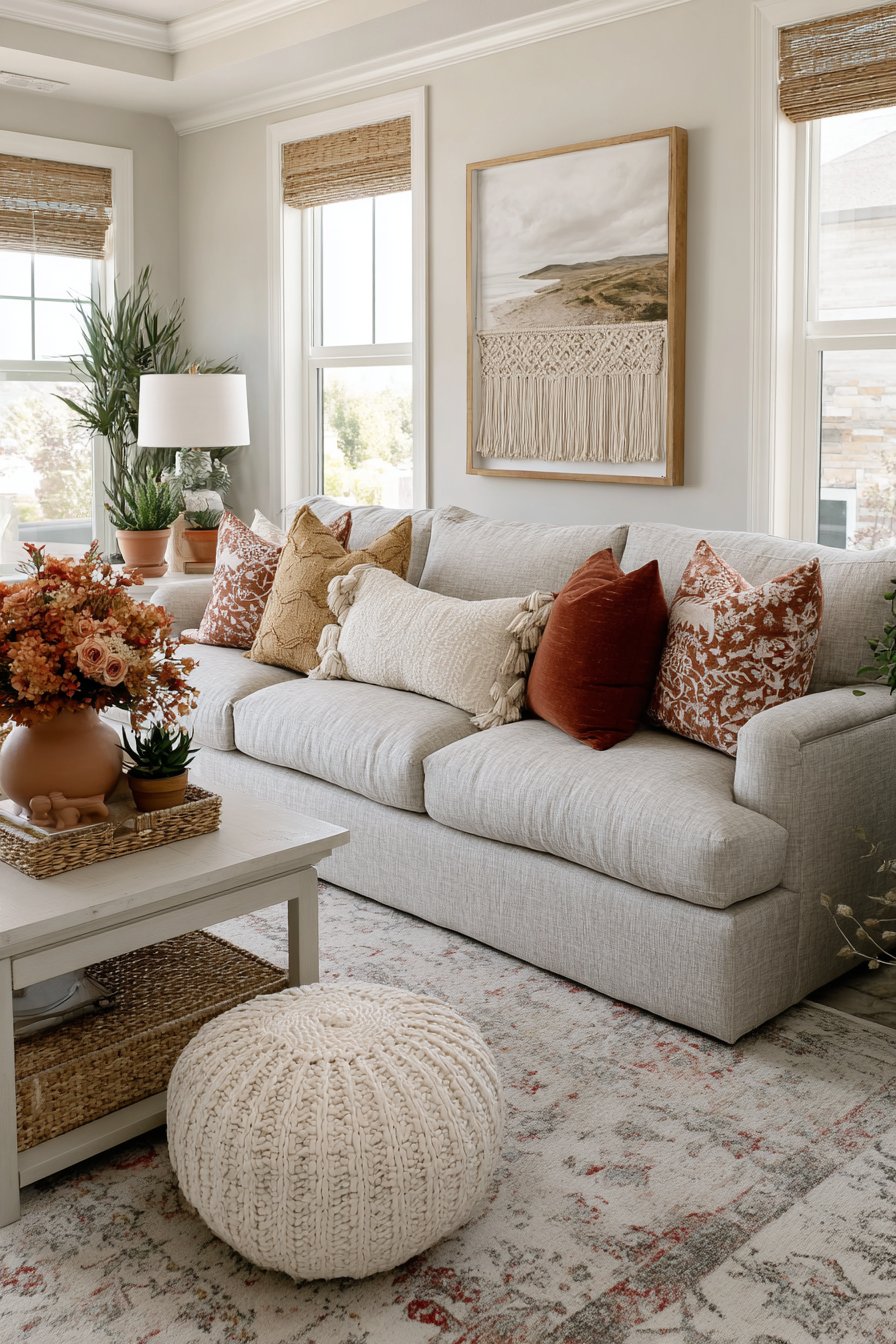
Free-spirited creativity defines this bohemian living room, where a low grey linen sofa provides a neutral foundation for an explosion of patterns, textures, and collected treasures. The sofa’s understated form and natural fabric become a canvas for personality, layered with an eclectic mix of throw pillows in terracotta, mustard, and cream that reference global textiles and artisan craftsmanship. Above the sofa, a macramé wall hanging adds vertical interest and showcases the bohemian appreciation for handcrafted textiles, its intricate knotwork creating dimension and shadow play against the wall.
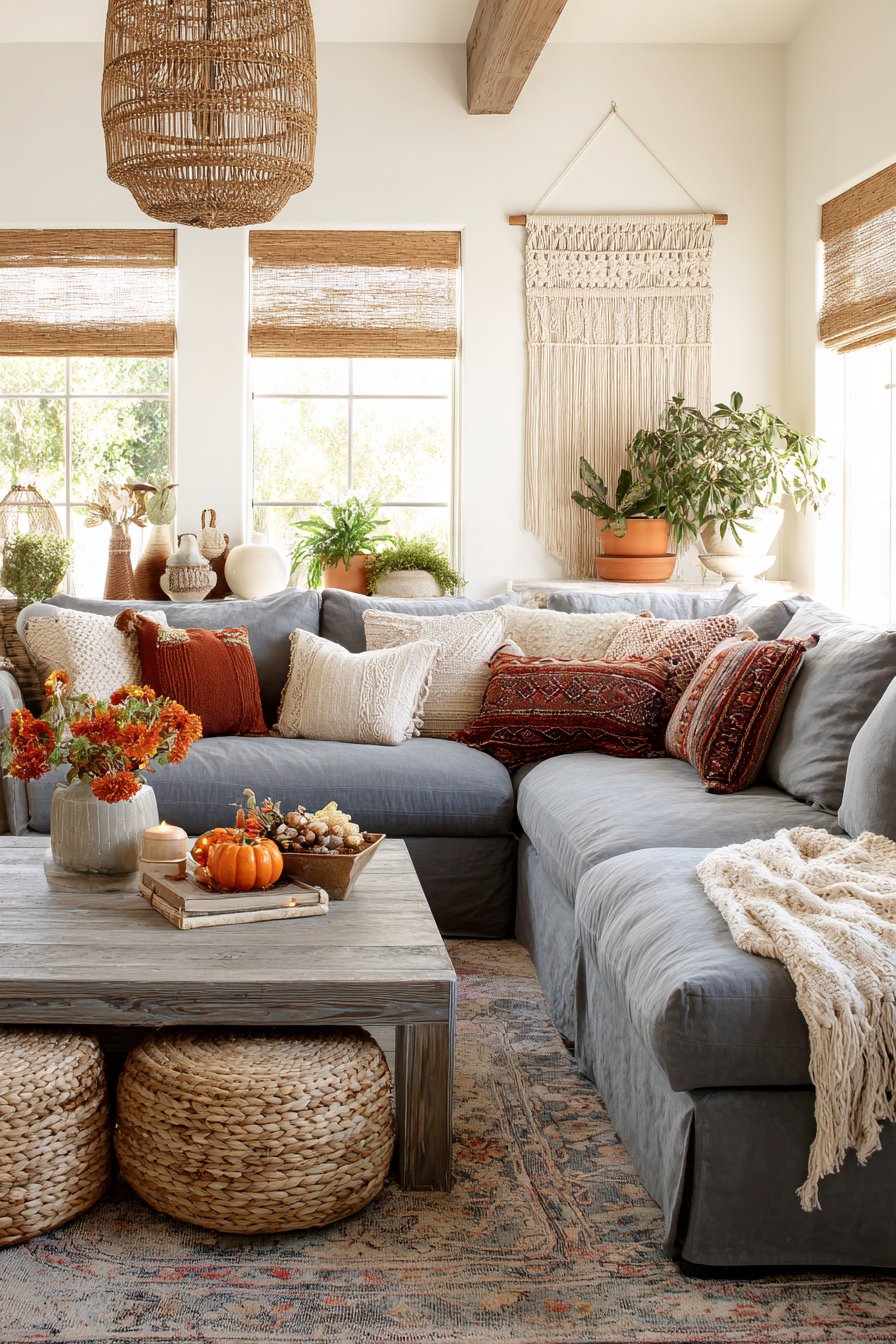
The supporting furniture pieces celebrate natural materials and artisan production. A rattan coffee table with organic imperfections tells of its handwoven construction, while poufs in various sizes and patterns provide casual, movable seating that encourages relaxed gatherings and spontaneous rearrangement. Multiple potted plants in terracotta and ceramic planters bring abundant life to the space, their green foliage creating vibrant contrast against the grey foundation while connecting the interior to nature in the bohemian tradition of bringing the outdoors in.
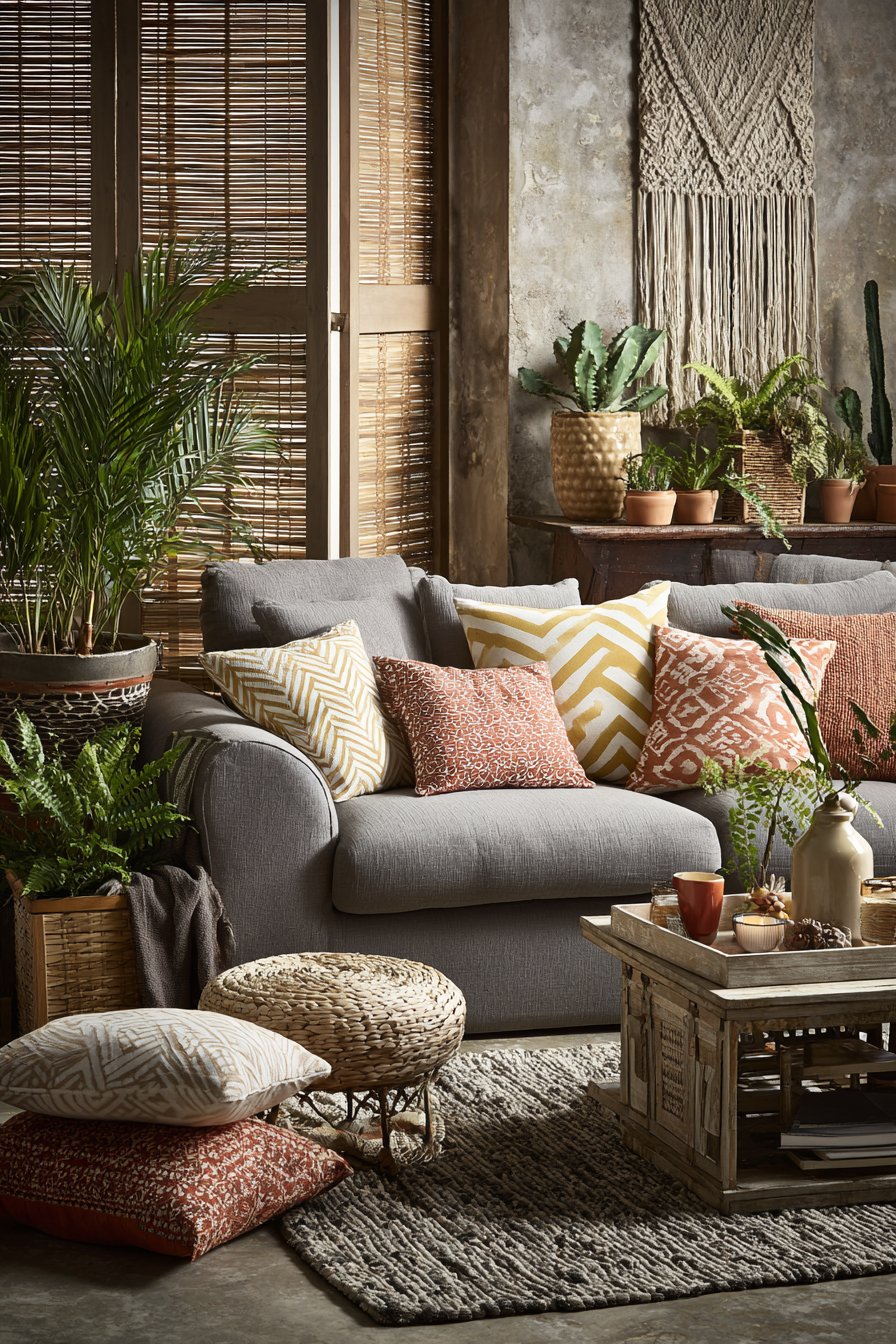
Natural light filters through bamboo shades, creating striped shadow patterns that change throughout the day and add dynamic visual interest. Interior photography captures the relaxed, collected-over-time aesthetic that defines bohemian style, with grey serving as the grounding neutral that prevents the eclectic mix from becoming chaotic. This approach demonstrates how a grey couch can disappear into the background when desired, allowing accessories, textiles, and personal collections to take center stage.
Key Design Tips:
- Use a neutral grey sofa as a foundation that won’t compete with bold patterns and colors in accessories
- Layer multiple pillow patterns and textures, ensuring they share at least one common color for cohesion
- Incorporate handcrafted elements like macramé, woven textiles, and ceramic pottery for authentic bohemian character
- Group plants at varying heights to create lush, layered greenery
- Mix furniture materials including rattan, wood, metal, and fabric for textural richness
8. Coastal Casual and Breezy Sophistication
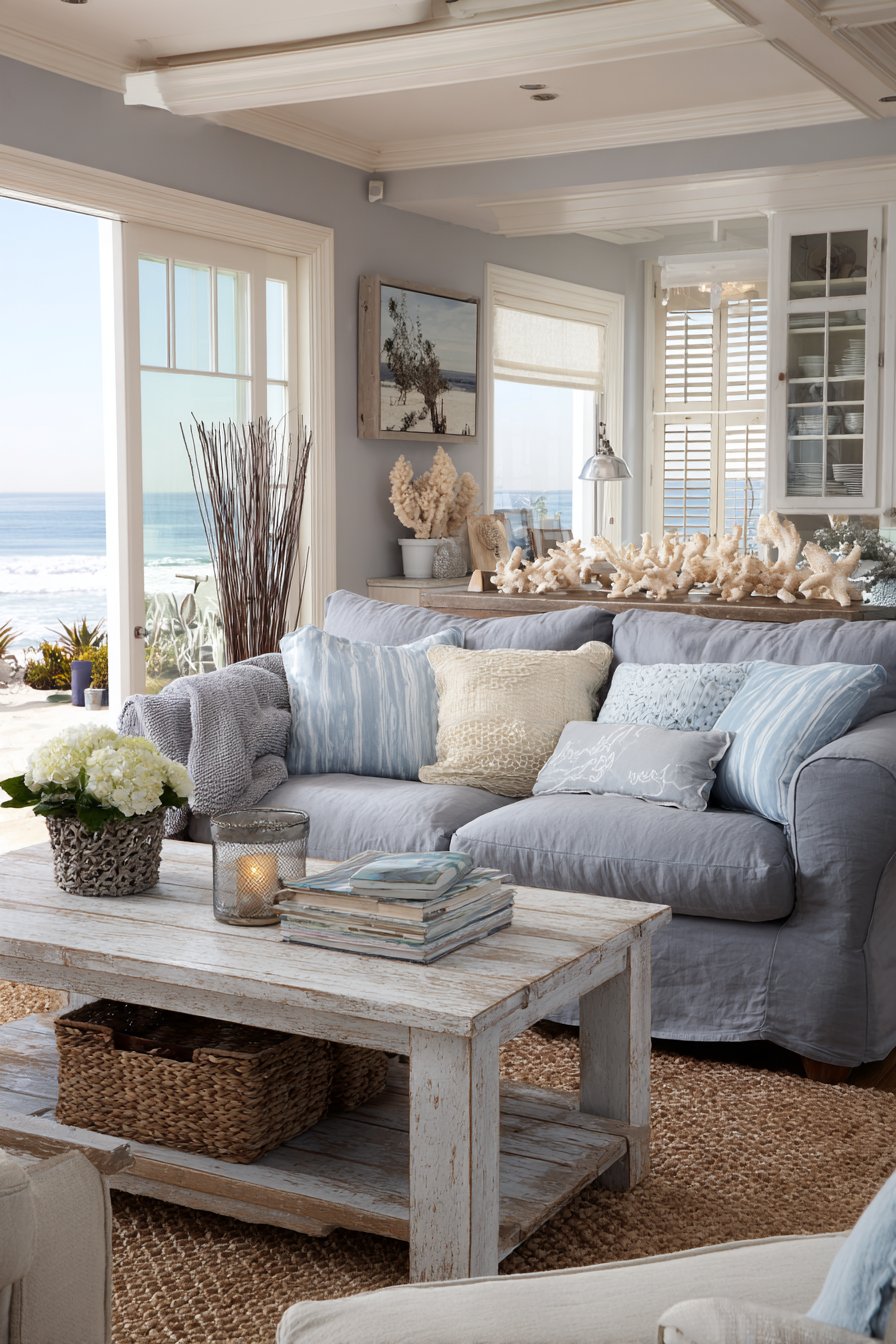
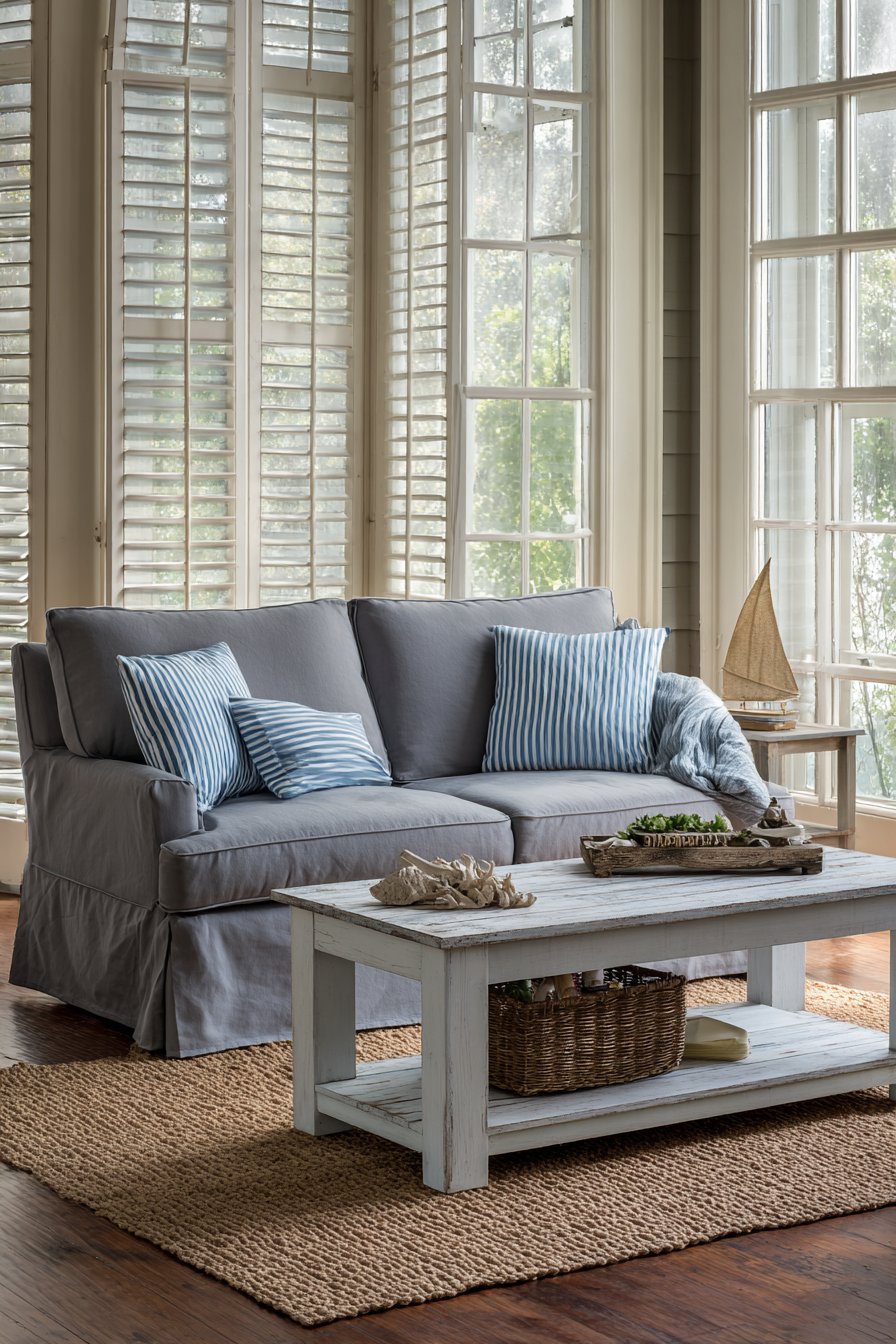
Ocean-inspired tranquility permeates this coastal living room, centered around a slipcovered grey sofa in washable linen fabric that embodies the relaxed, unpretentious spirit of beach living. The slipcover’s loose, casual styling creates soft folds and wrinkles that signal comfort over formality, while its removable construction offers practical benefits for homes where sand, saltwater, and sunshine are regular visitors. Paired with a whitewashed wood coffee table that references driftwood found along shorelines, the space achieves an effortless aesthetic that feels both sophisticated and approachable.
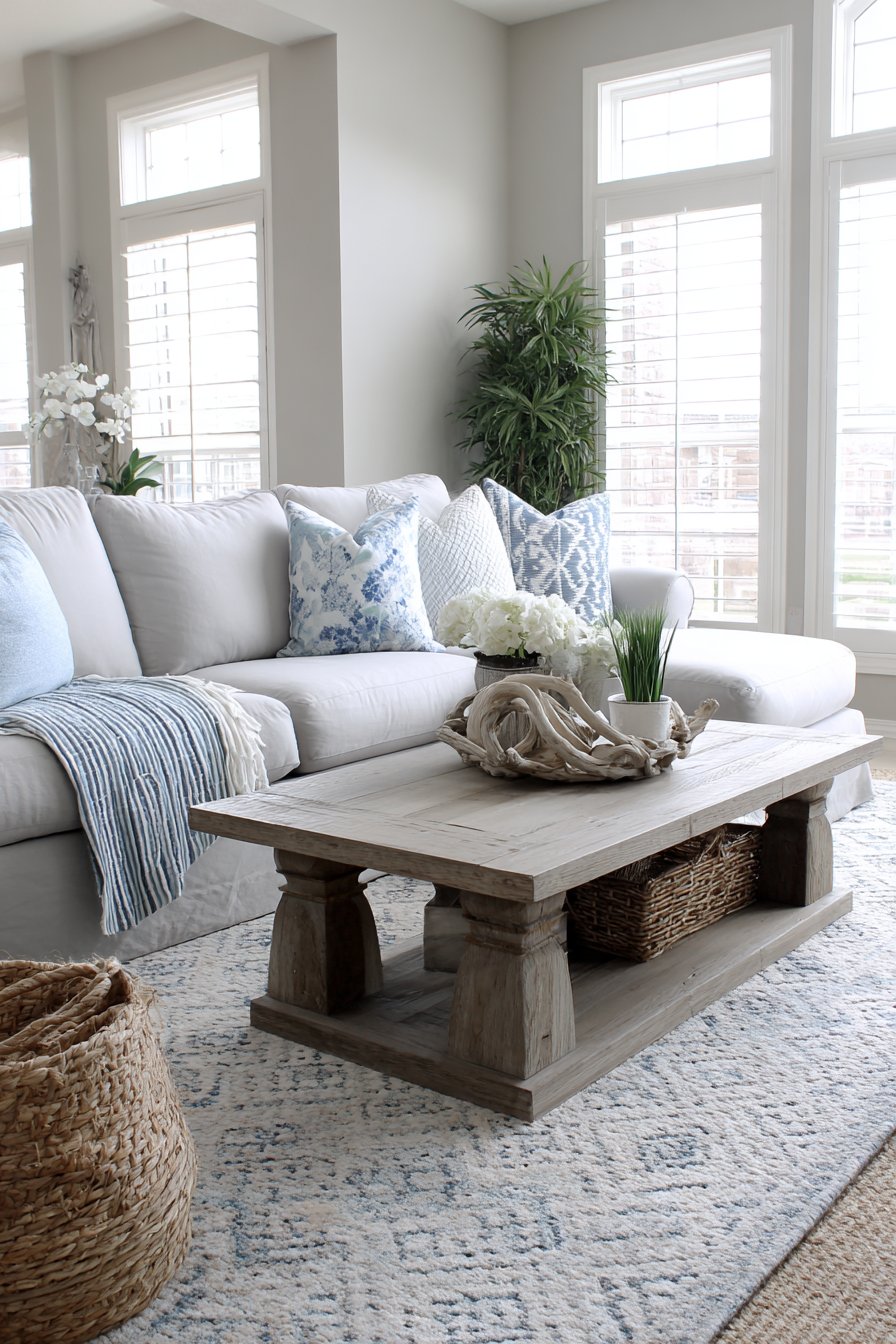
Natural fiber elements reinforce the coastal theme without resorting to obvious nautical clichés. A jute area rug brings organic texture underfoot while its neutral tone allows the grey sofa to remain the focal point. Soft blue and white striped throw pillows provide the only direct reference to maritime traditions, their classic pattern adding just enough thematic clarity without overwhelming the space with beach house stereotypes. Driftwood decor pieces and seagrass baskets add layers of coastal-appropriate texture while serving practical storage and display functions.
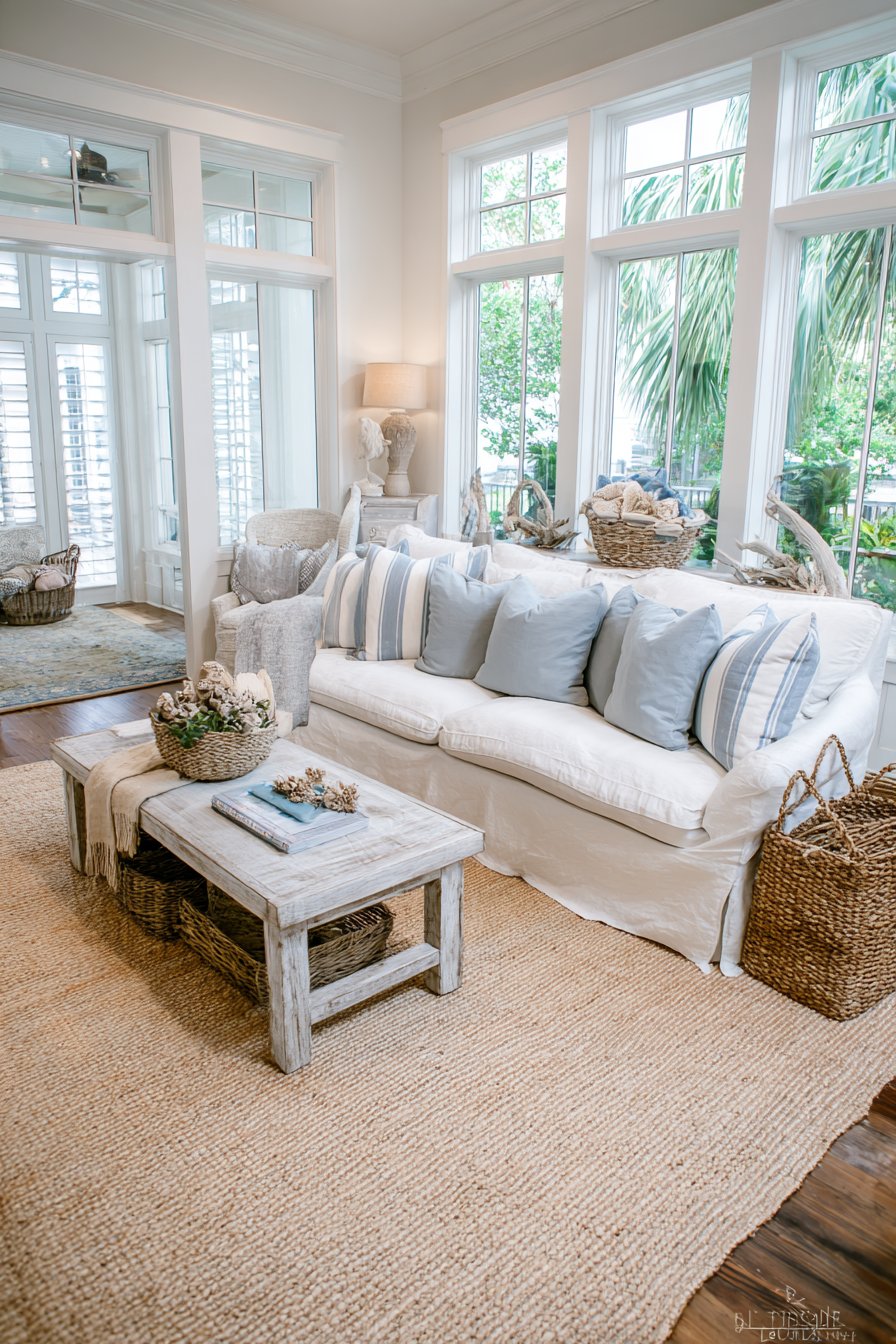
Large windows dressed with white plantation shutters invite abundant natural light while offering flexible control over privacy and sun exposure. The bright, airy quality created by maximized natural light is essential to coastal design, evoking the sun-drenched quality of beachside living regardless of actual proximity to water. Professional interior photography emphasizes the breezy, coastal-casual atmosphere, with grey serving as a sophisticated neutral base that elevates the aesthetic beyond typical beach house kitsch.
Key Design Tips:
- Choose slipcovered furniture in light grey tones for easy cleaning and casual coastal style
- Incorporate whitewashed or weathered wood finishes that reference natural beach elements
- Use jute, sisal, or seagrass rugs for texture that’s appropriate to coastal environments
- Limit overtly nautical elements to one or two pieces to avoid theme-park aesthetics
- Maximize natural light with white or natural window treatments to create sun-filled spaces
9. Mid-Century Modern Revival and Retro Cool
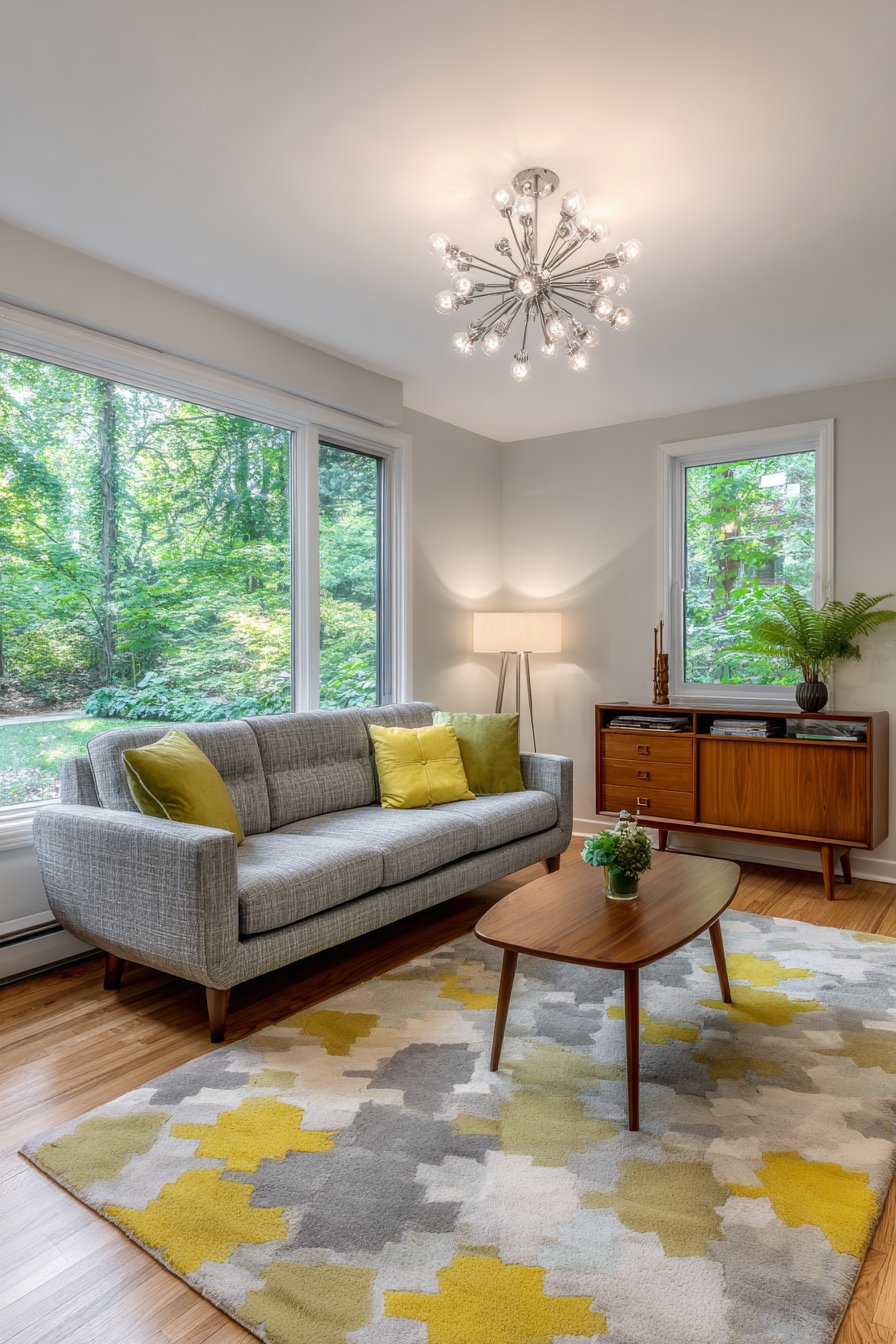
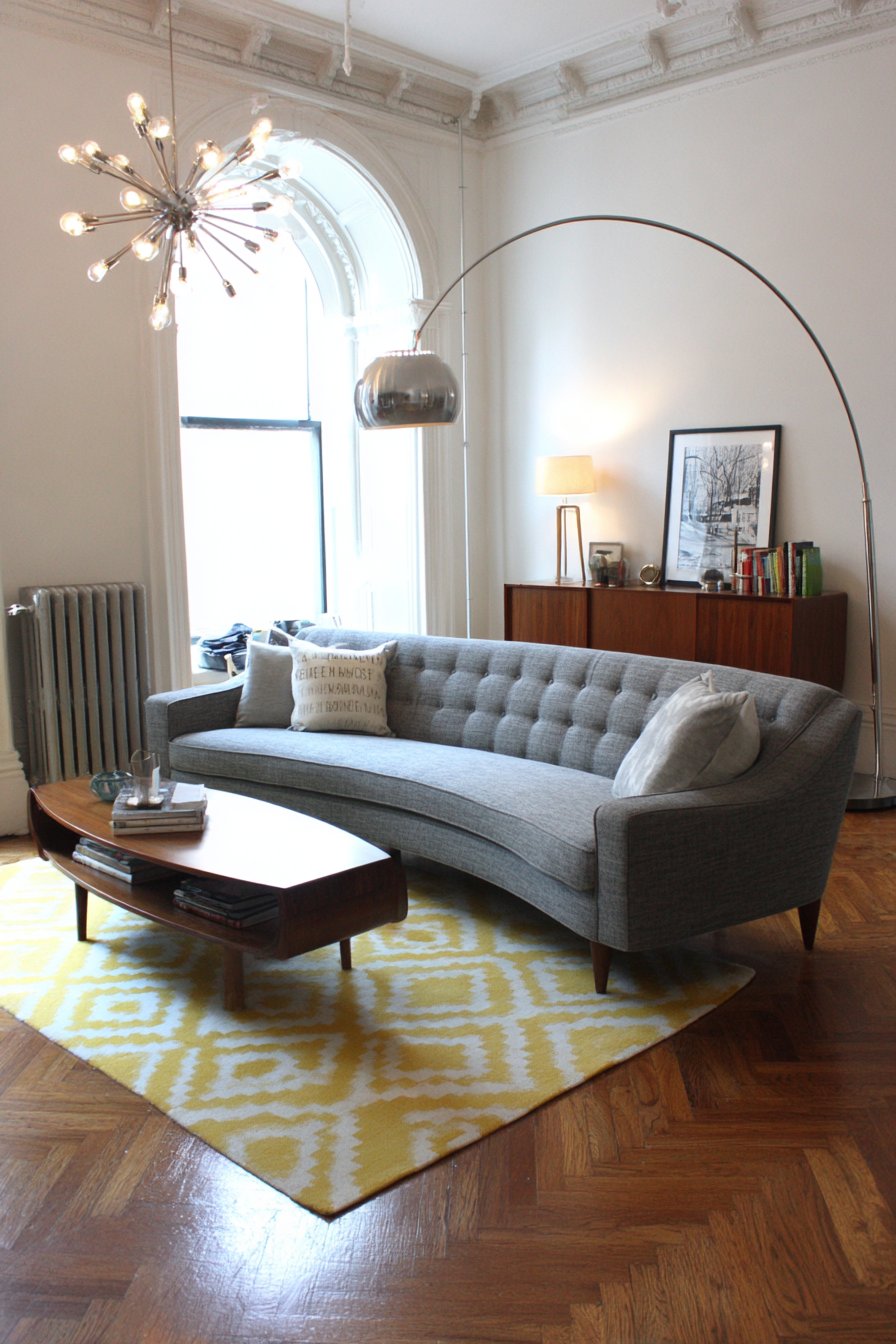
Time-traveling elegance defines this mid-century modern living room, where a grey tweed sofa with tapered walnut legs and button-tufted back cushions captures the essential aesthetic of 1950s and 60s design. The tweed upholstery, with its subtle texture and multicolored weave, adds visual interest while remaining neutral enough to work with various accent colors. The exposed wooden legs, slightly splayed in characteristic mid-century fashion, create visual lightness and allow light to flow under the furniture—a hallmark of the period’s design philosophy. Facing the sofa, a teak credenza serves double duty as media console and display surface, its sliding doors and tapered legs exemplifying the era’s commitment to functional beauty.
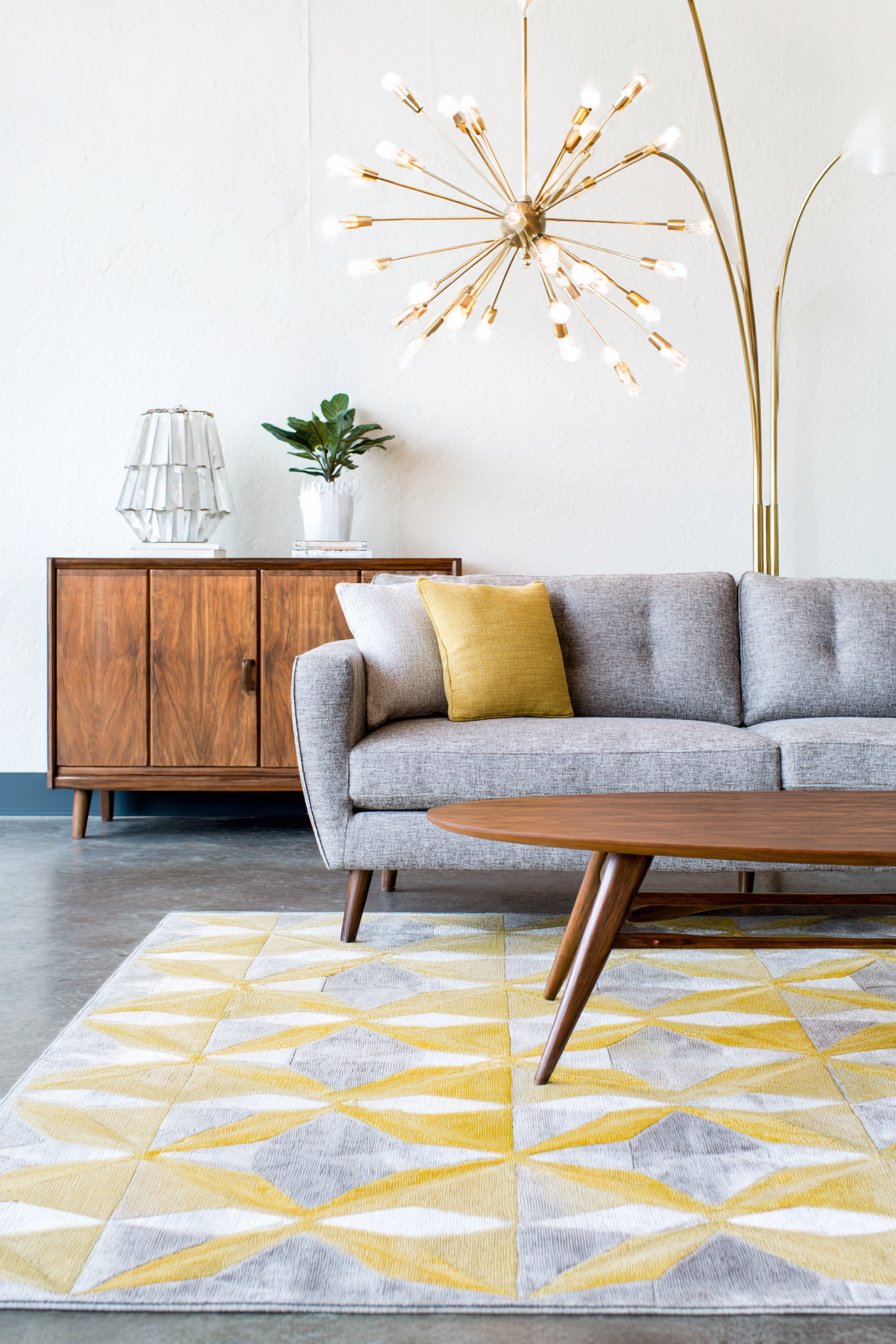
A kidney-shaped coffee table in walnut veneer centers the seating area, its organic form providing pleasing contrast to the sofa’s linear geometry. This combination of rectangular and curvilinear forms creates the dynamic tension that makes mid-century spaces so visually interesting. A geometric grey and yellow area rug adds period-appropriate color while grounding the furniture arrangement, its pattern referencing the abstract art and design motifs popular during the era. Overhead, a sputnik chandelier provides sculptural drama, its radiating arms and multiple bulbs creating a focal point that commands attention even when unlit.
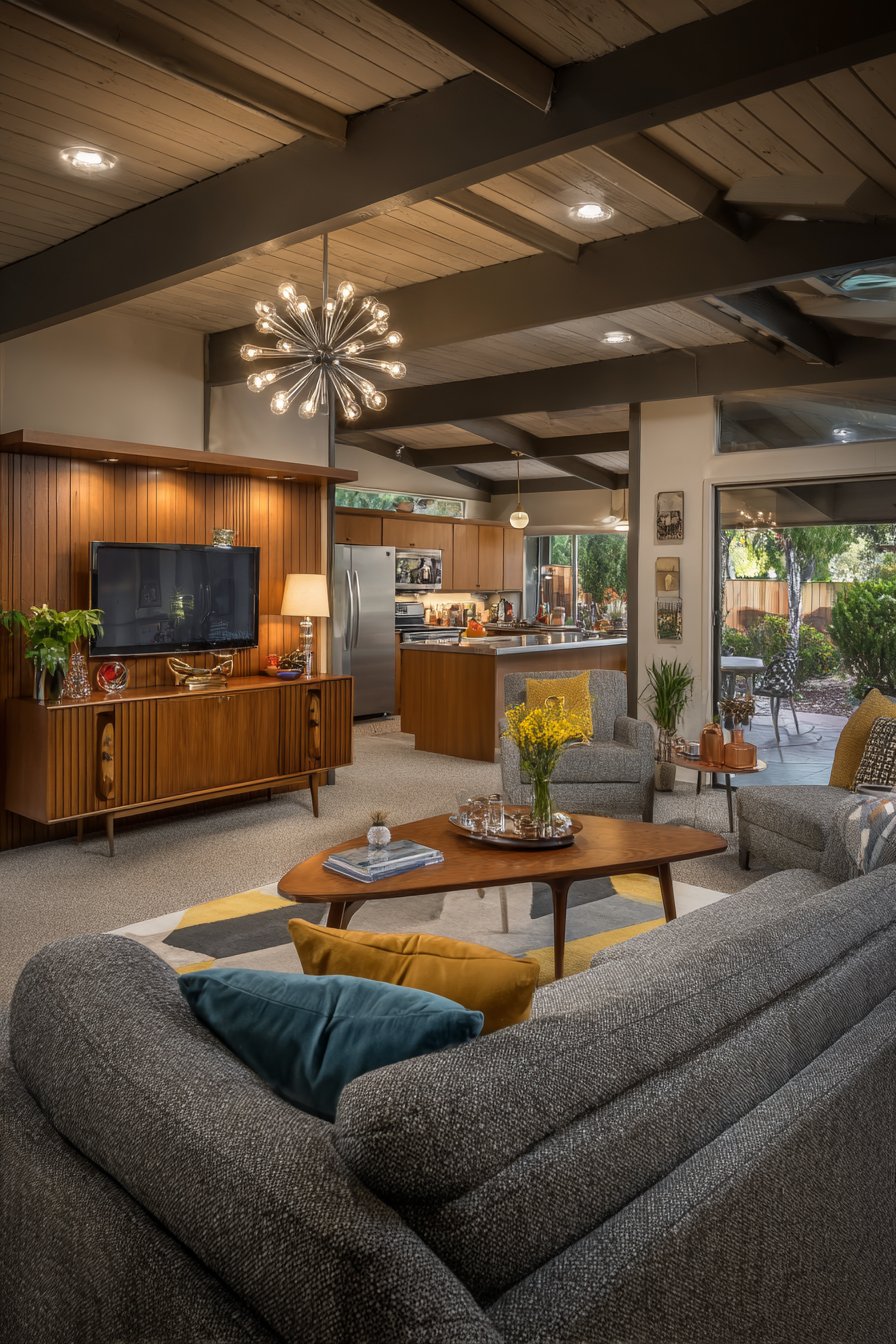
Interior design photography highlights authentic mid-century design elements executed with grey as the primary upholstery choice—a historically accurate decision that speaks to the period’s embrace of neutral foundations enlivened by pops of color. An arc floor lamp curves gracefully over the seating area, providing task lighting while contributing to the room’s sculptural quality. This design demonstrates how grey couches have been sophisticated choices for decades, not merely a recent trend.
Key Design Tips:
- Select furniture with exposed tapered legs in walnut or teak for authentic mid-century character
- Incorporate organic, curvilinear shapes (kidney coffee tables, egg chairs) to contrast with rectangular forms
- Choose one or two period-appropriate accent colors rather than attempting to use the entire rainbow
- Install statement lighting fixtures like sputnik chandeliers or arc floor lamps as sculptural elements
- Display authentic mid-century accessories and ceramics to complete the vintage aesthetic
10. Farmhouse Comfort and Rustic Simplicity
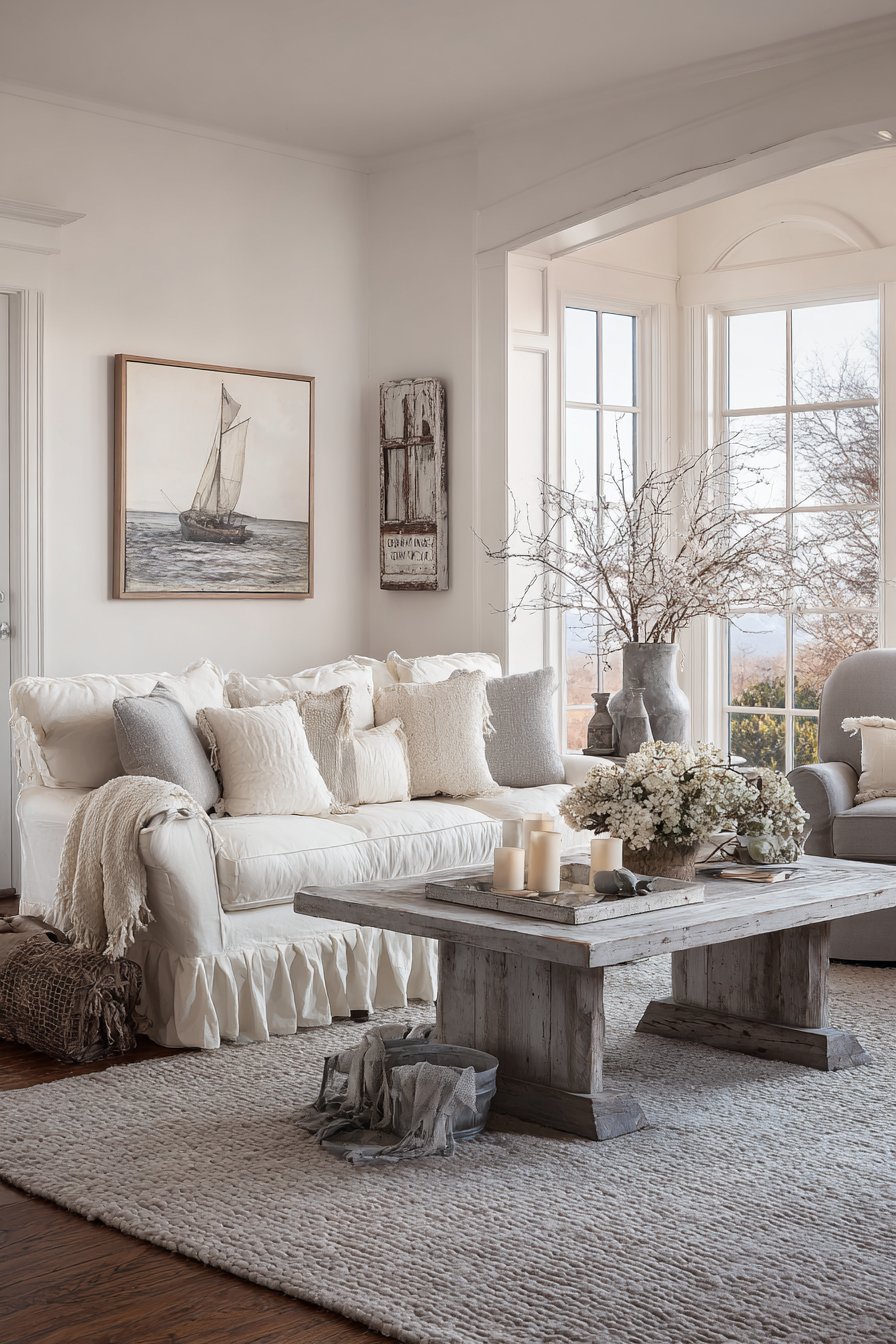
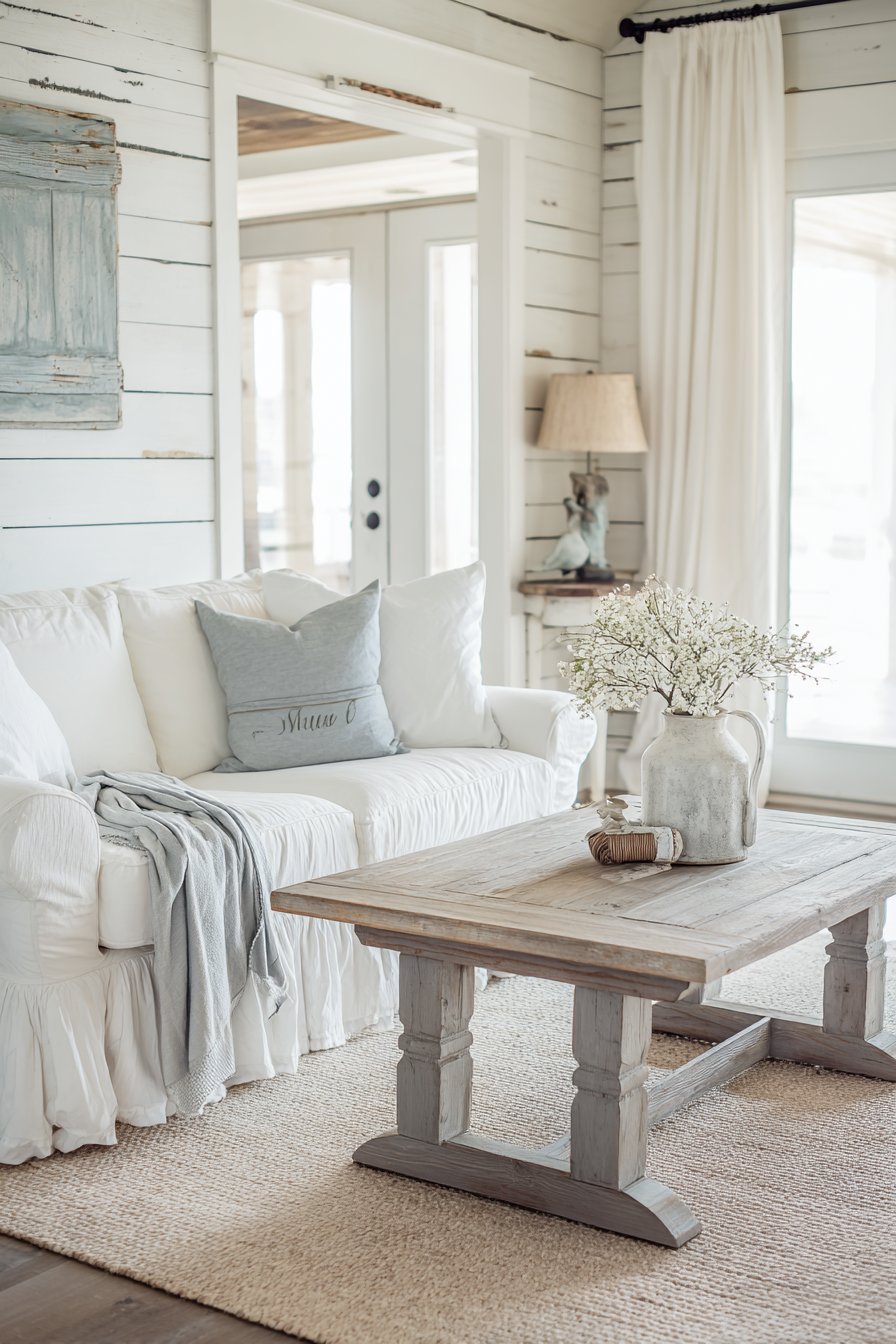
Welcoming warmth radiates from this farmhouse-inspired living room, where a grey slipcovered sofa with ruffled skirt brings casual, comfortable styling that invites immediate relaxation. The slipcover’s soft grey hue coordinates beautifully with the room’s rustic elements while maintaining a fresh, updated feel that prevents the space from skewing too country or dated. Against a distressed white shiplap accent wall, the sofa finds its perfect backdrop—the horizontal boards adding texture and architectural interest while their weathered finish reinforcing the farmhouse aesthetic’s appreciation for aged, authentic materials.
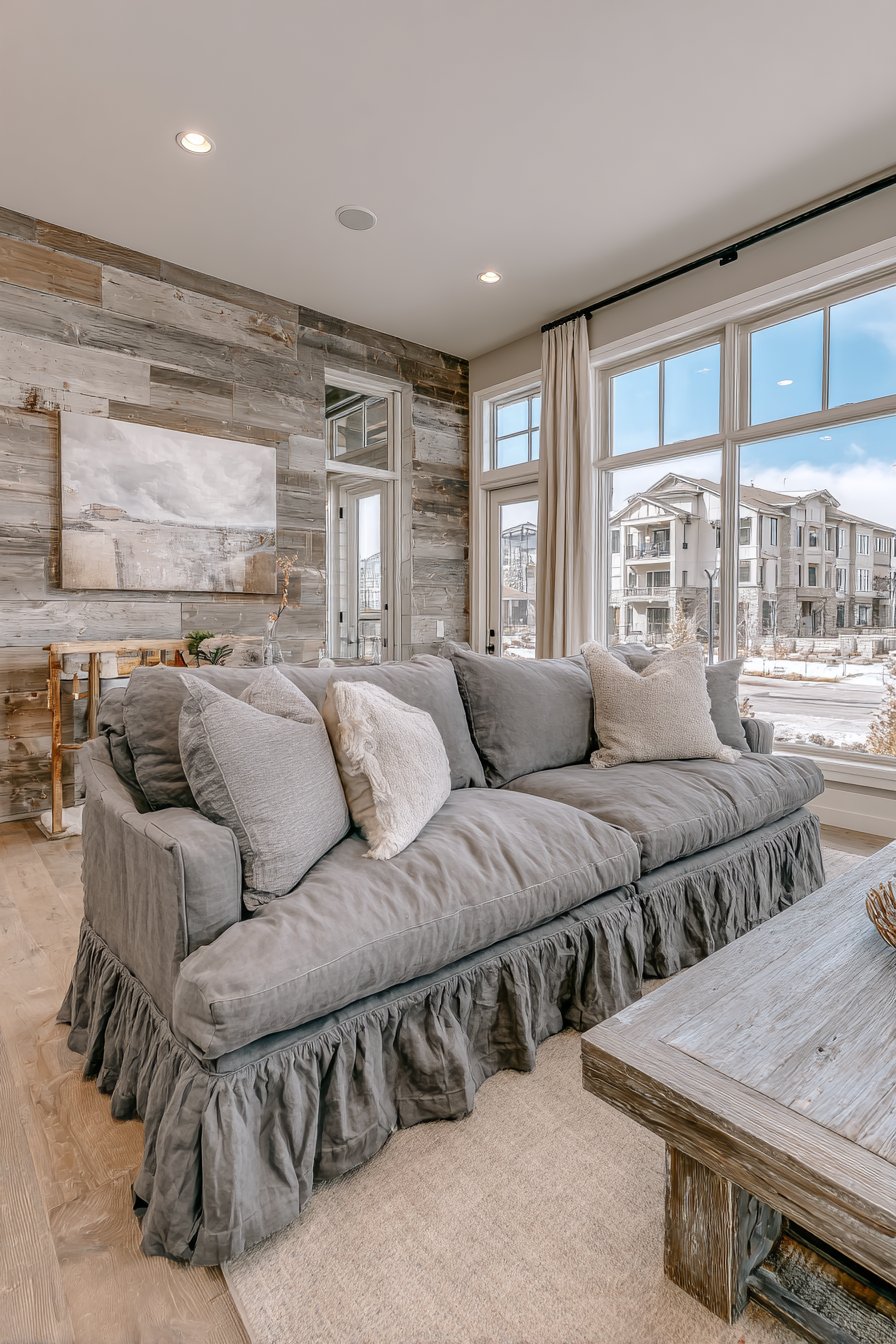
A weathered grey wood coffee table with chunky, substantial legs provides farmhouse character while coordinating with the sofa’s neutral palette. Its distressed finish, complete with dings and worn edges, tells stories of family dinners, homework sessions, and game nights—exactly the kind of honest wear that farmhouse style celebrates rather than conceals. Galvanized metal decor pieces reference agricultural heritage without being overly literal, while cotton throw blankets in cream and grey add textural layers that invite snuggling on cool evenings.
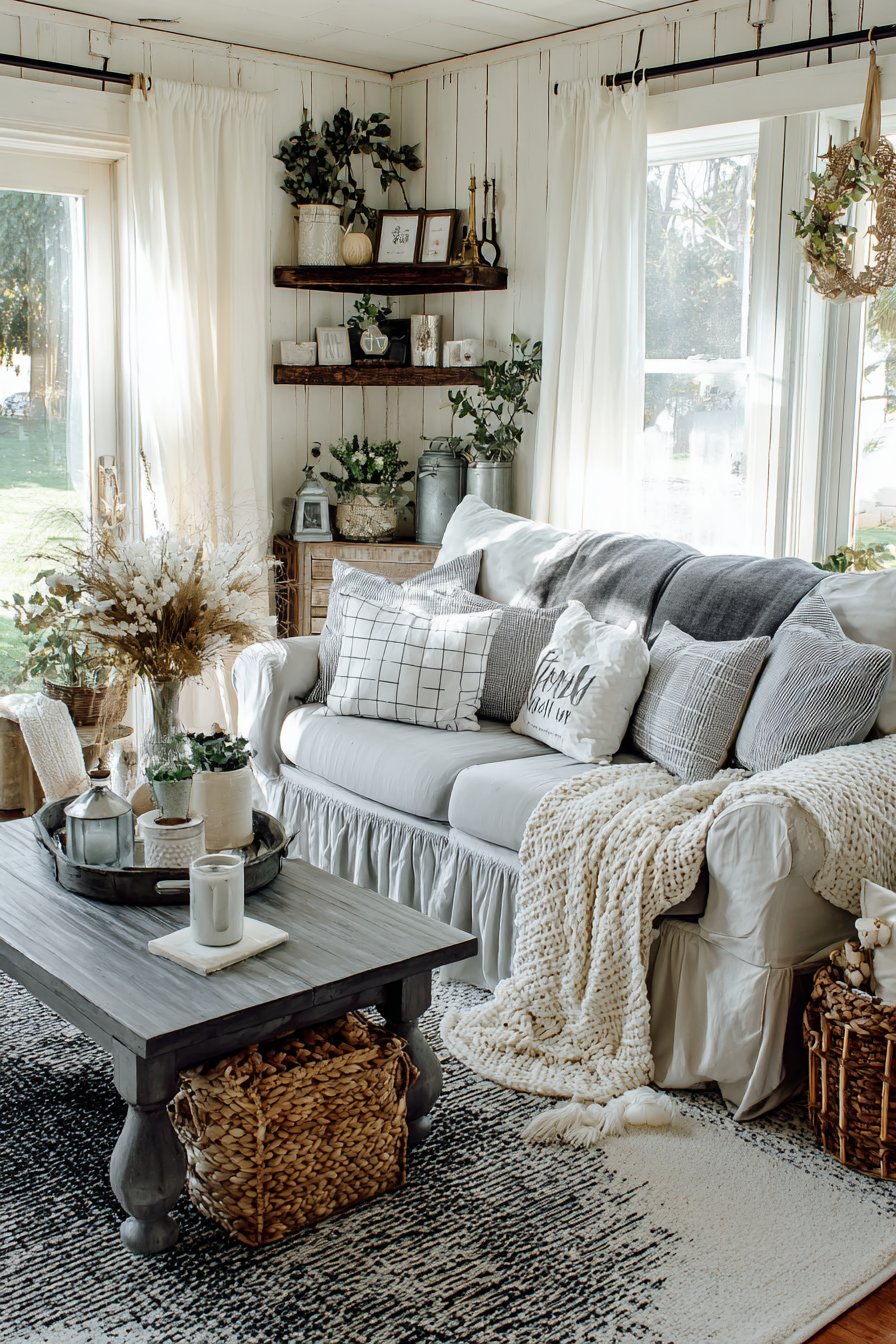
Natural light streams generously through windows dressed with simple white linen curtains that puddle slightly on the floor, creating the relaxed, unfussy window treatment approach typical of farmhouse design. Wide-angle interior photography captures the lived-in, welcoming farmhouse aesthetic, with grey serving as the soft neutral foundation that prevents the rustic elements from overwhelming the space. This is farmhouse style for the modern era—comfortable and authentic without being costume-like or overly themed.
Key Design Tips:
- Choose slipcovered furniture in soft grey tones for casual comfort that’s still sophisticated
- Install shiplap or board-and-batten wall treatments for authentic farmhouse architectural detail
- Select coffee tables and furniture with chunky proportions and distressed finishes
- Incorporate galvanized metal accessories sparingly to reference agricultural heritage
- Use natural, textured fabrics like linen and cotton for curtains and throws
11. Contemporary Minimalism and Architectural Precision
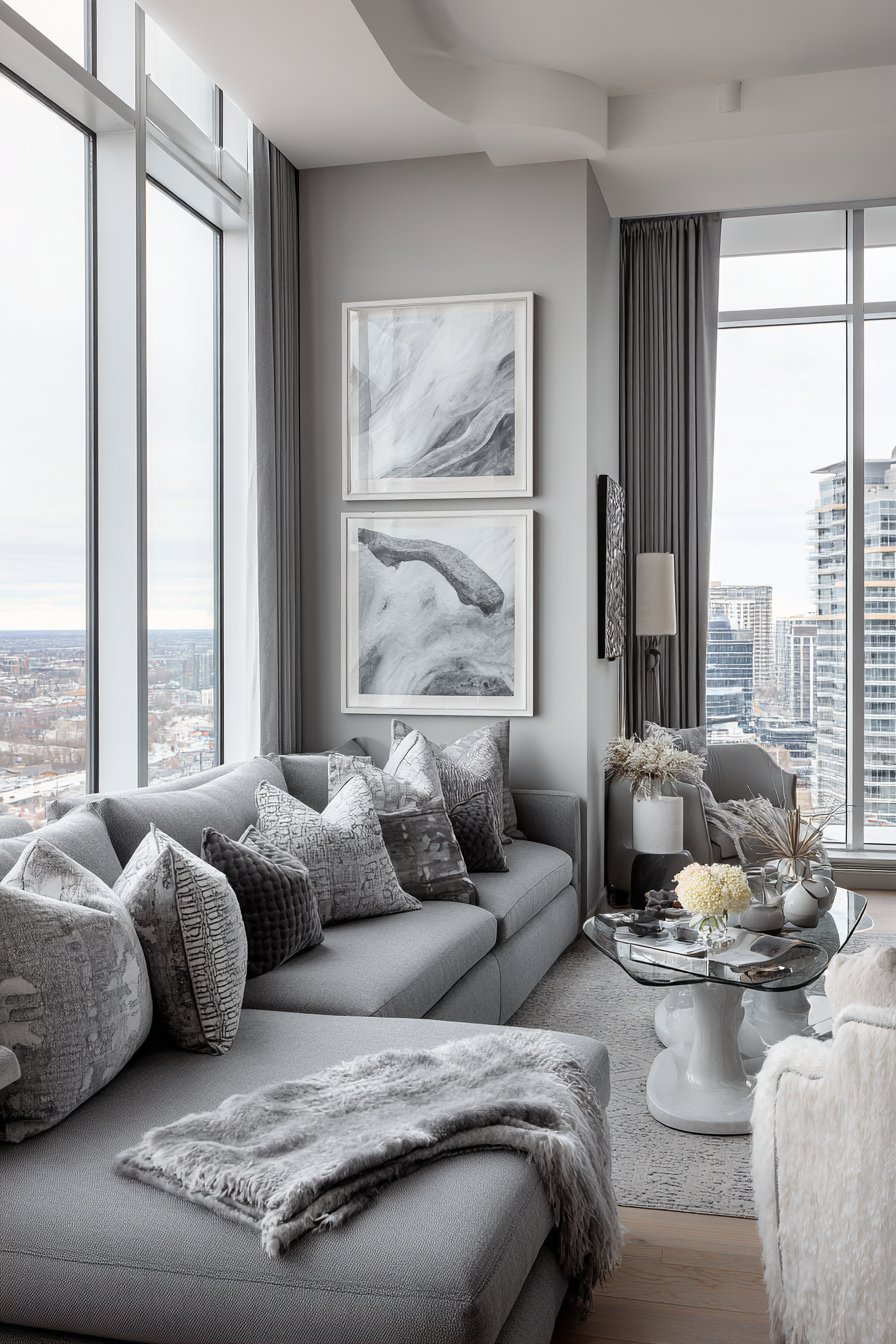
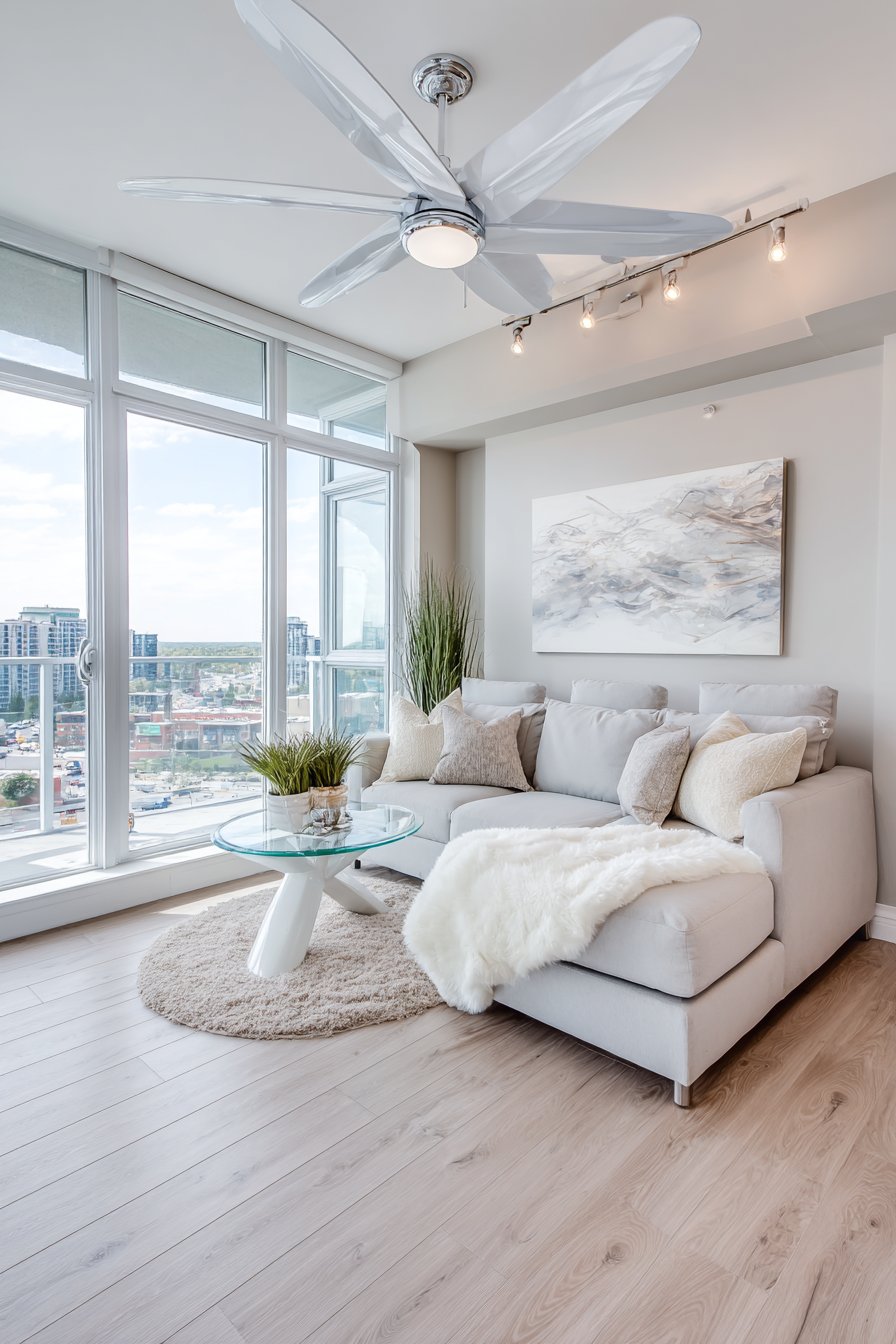
Sophisticated restraint defines this contemporary living room, featuring a sleek grey sectional with such a low profile and minimal visible legs that it appears to float above the floor. This optical illusion creates an incredibly modern aesthetic while maintaining comfort—the seemingly weightless sofa is actually deeply cushioned and generously proportioned for long-term lounging. The sectional wraps around a modern glass coffee table with sculptural base, its transparent surface maintaining sightlines and visual openness essential to contemporary design’s emphasis on uncluttered space.
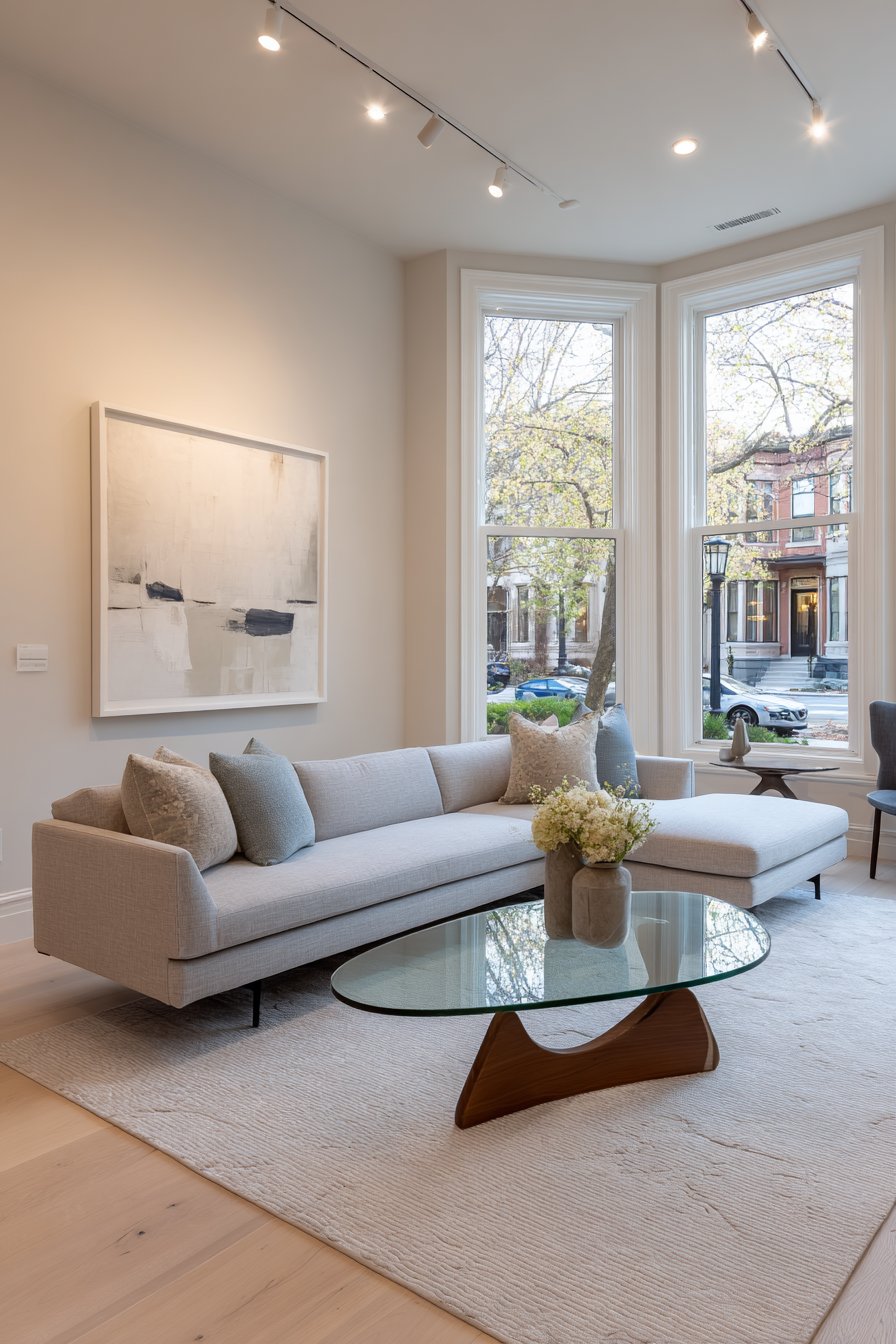
Pale grey walls and white oak hardwood floors create a clean, neutral canvas that allows architectural elements and carefully selected furnishings to command attention. Track lighting provides flexible, directional illumination that can highlight artwork, provide task lighting, or create ambient mood depending on which fixtures are activated. Floor-to-ceiling windows flood the space with natural light while framing outdoor views as living artwork—a key principle of contemporary design’s goal to connect interior and exterior environments.
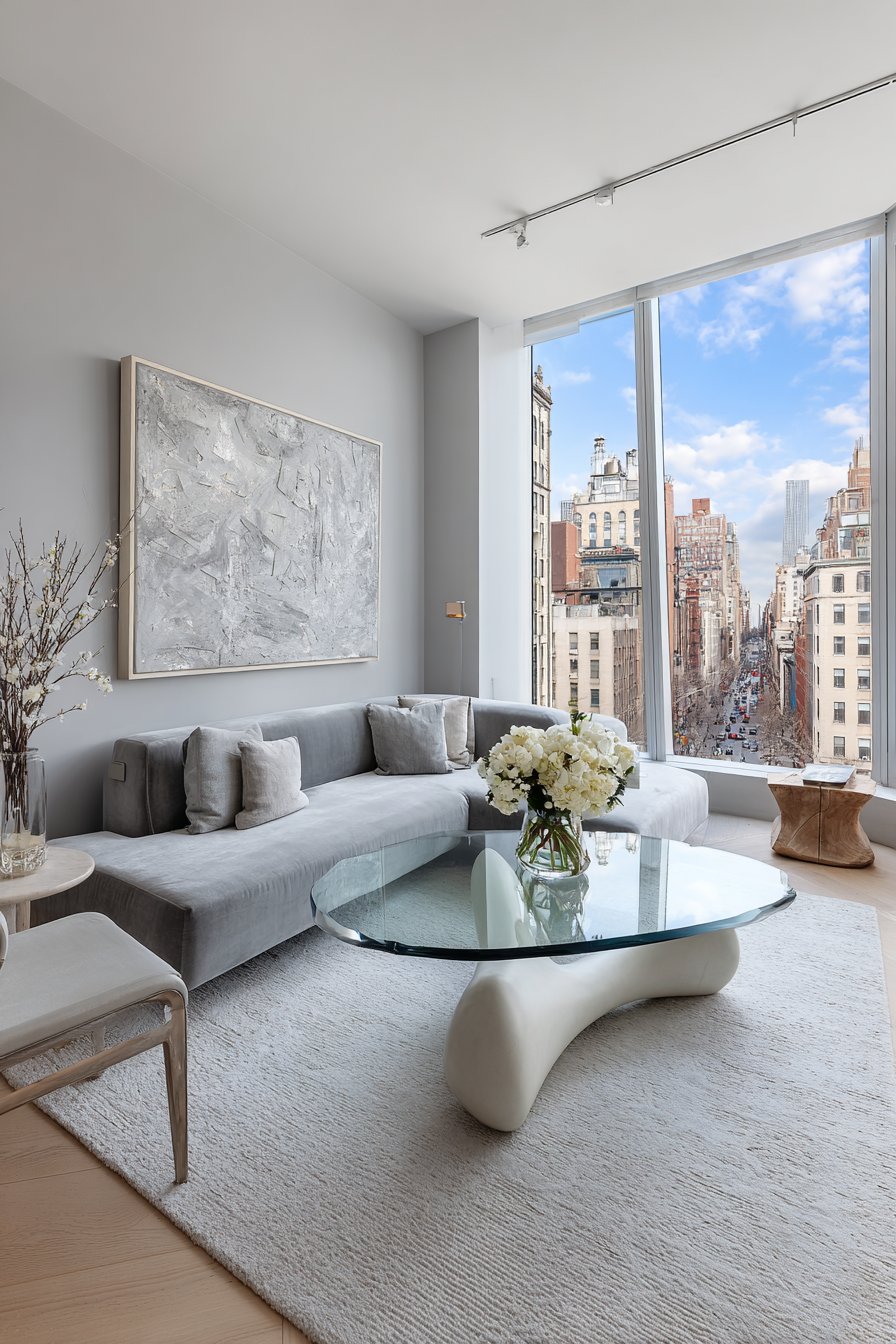
Abstract artwork in grey and white tones adorns the wall, its large scale and confident composition providing visual interest without introducing competing colors or representational imagery. Professional interior photography with balanced exposure showcases sophisticated contemporary design with a cohesive grey palette that creates serene unity. This approach demonstrates how grey can achieve both warmth and coolness depending on undertone selection and material choices, with the sectional’s upholstery reading as inviting rather than cold despite the minimalist aesthetic.
Key Design Tips:
- Choose low-profile furniture with minimal visible legs for a floating, contemporary appearance
- Use glass or lucite coffee tables to maintain visual openness in seating arrangements
- Install floor-to-ceiling windows when possible to maximize natural light and views
- Select large-scale abstract artwork in coordinating tones rather than multiple small pieces
- Implement track or recessed lighting for clean ceilings free from visual clutter
12. Traditional Elegance and Timeless Luxury
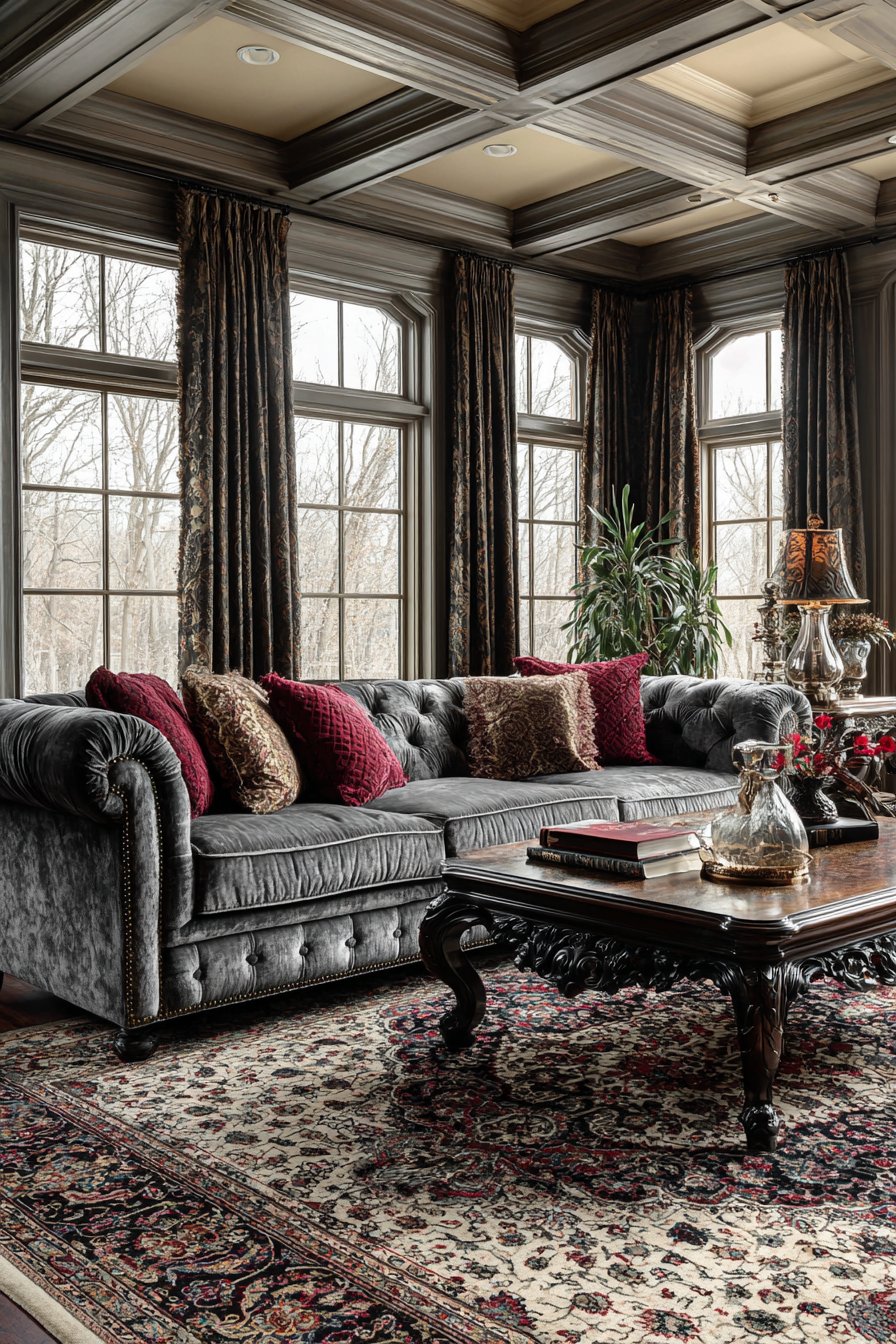
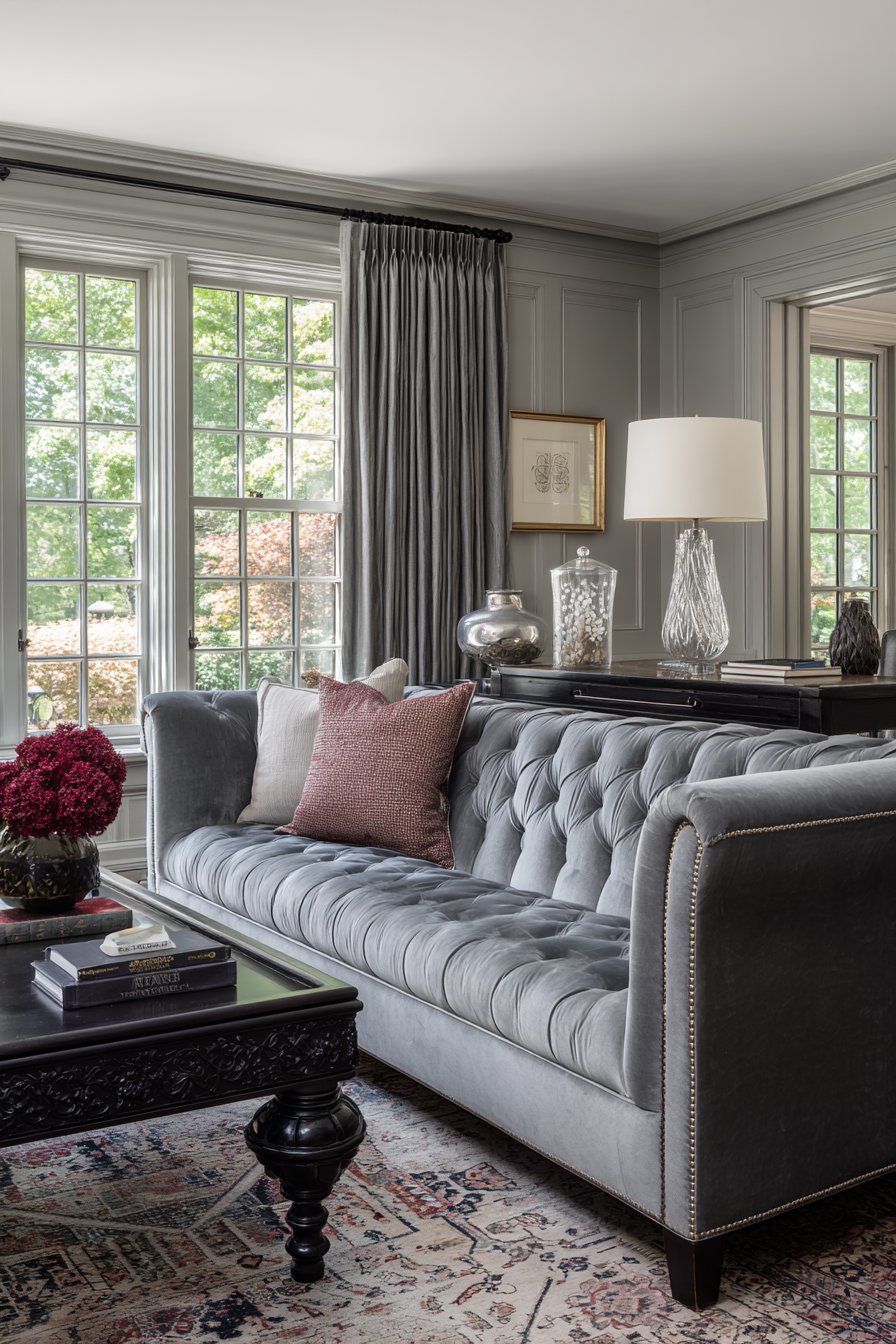
Classical sophistication reaches its zenith in this traditional living room, centered around a formal grey velvet Chesterfield sofa with deep button tufting and gracefully rolled arms. This iconic furniture style, with origins in 18th century England, brings instant gravitas and refinement to any space, while the grey upholstery updates the classic form for contemporary sensibilities. The sofa rests on a Persian-style area rug incorporating grey, cream, and burgundy tones, its intricate pattern providing visual richness without overwhelming the space with color.
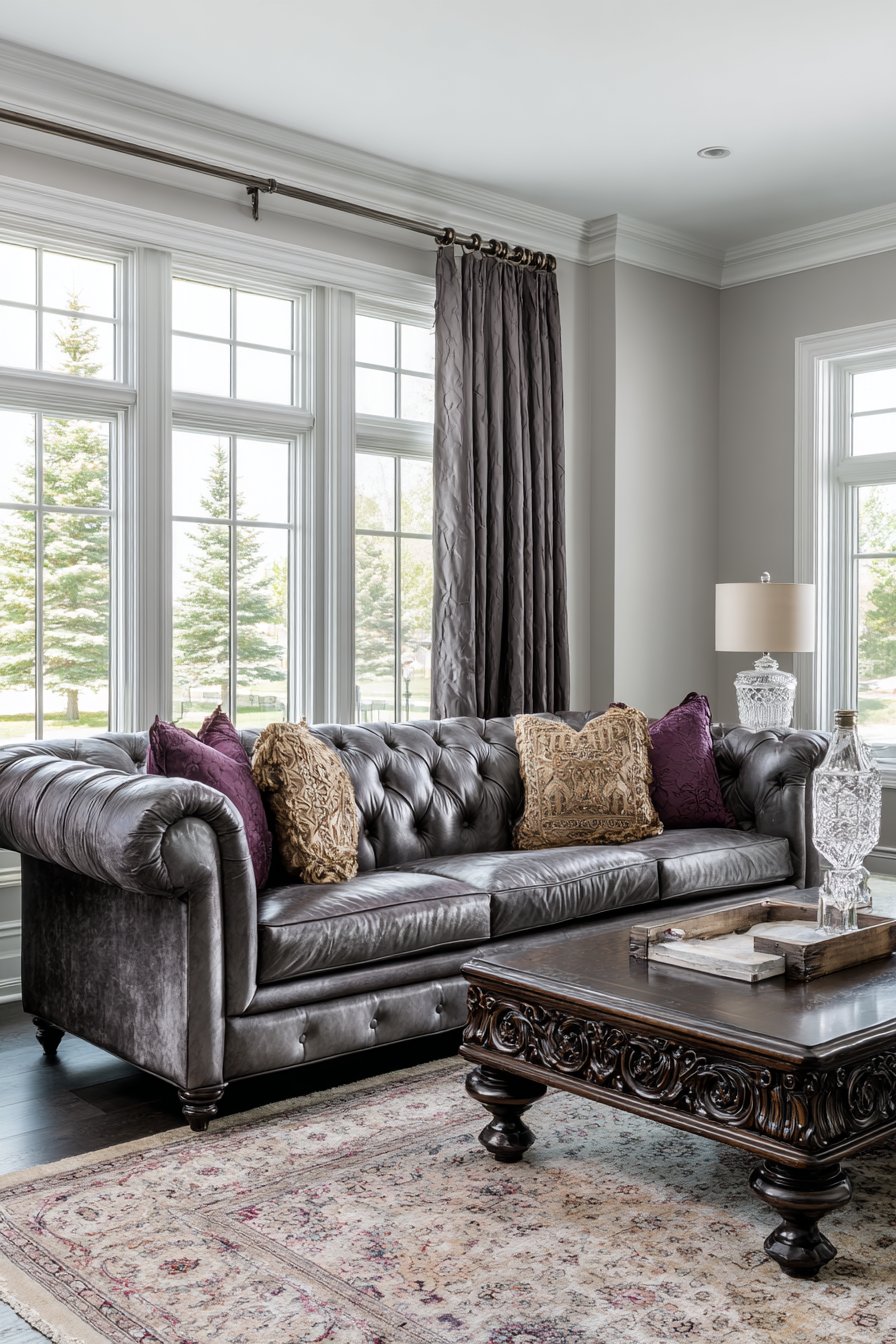
Supporting furniture maintains the traditional aesthetic with a dark wood coffee table featuring ornate carved details that showcase craftsmanship and attention to detail. Crystal table lamps with pleated shades provide elegant illumination while their sparkle adds subtle glamour to the room. Heavy grey draperies frame tall windows, their substantial fabric and formal heading style reinforcing the room’s commitment to traditional luxury. The curtains’ grey tone coordinates with the sofa while adding another layer to the room’s sophisticated monochromatic palette.
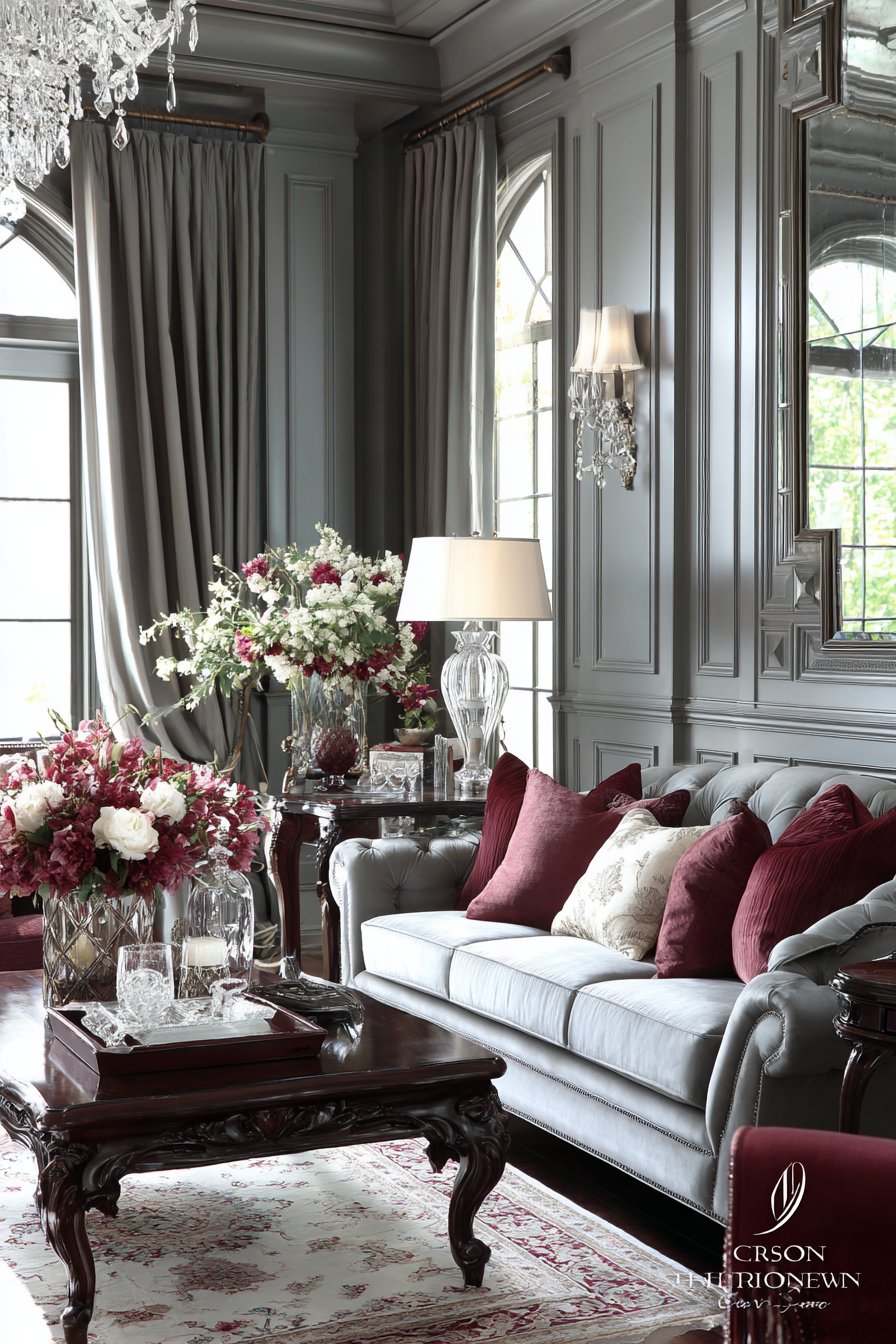
Architectural details elevate the entire space, with crown molding and wainscoting painted in complementary grey tones adding dimensional interest to the walls. Interior design photography emphasizes classic sophistication and the timeless nature of grey upholstery in formal settings. This traditional approach demonstrates that grey need not be modern or minimalist—it can equally support ornate, layered, formal aesthetics when paired with appropriate supporting elements and architectural details.
Key Design Tips:
- Invest in a quality Chesterfield sofa for instant traditional credibility and long-term durability
- Layer pattern through area rugs rather than upholstery for flexibility in future updates
- Choose wood furniture with carved details to add craftsmanship and visual interest
- Install or enhance architectural molding and millwork for authentic traditional character
- Use grey tones on walls and trim for sophisticated alternative to stark white
13. Nordic Hygge and Cozy Minimalism
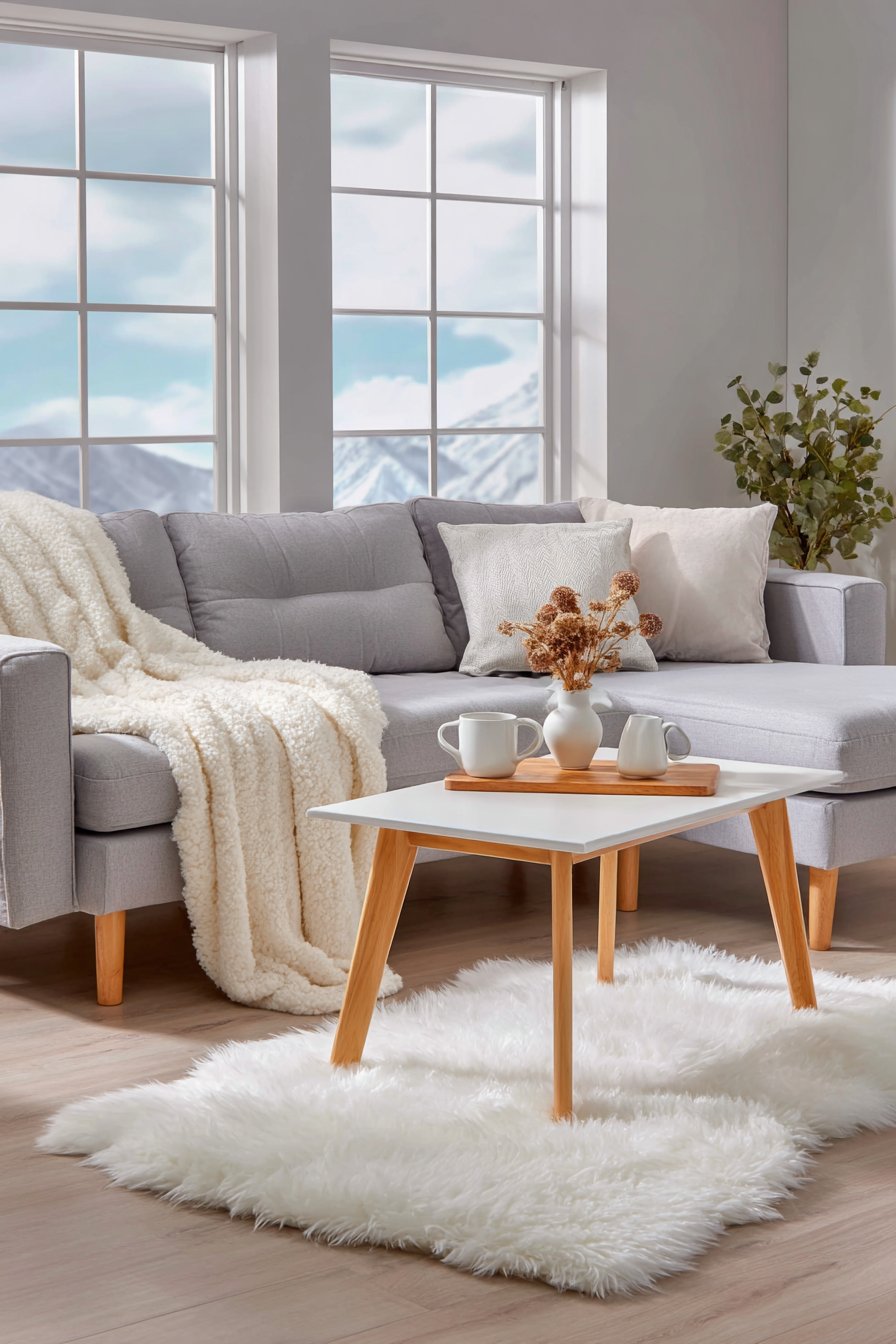
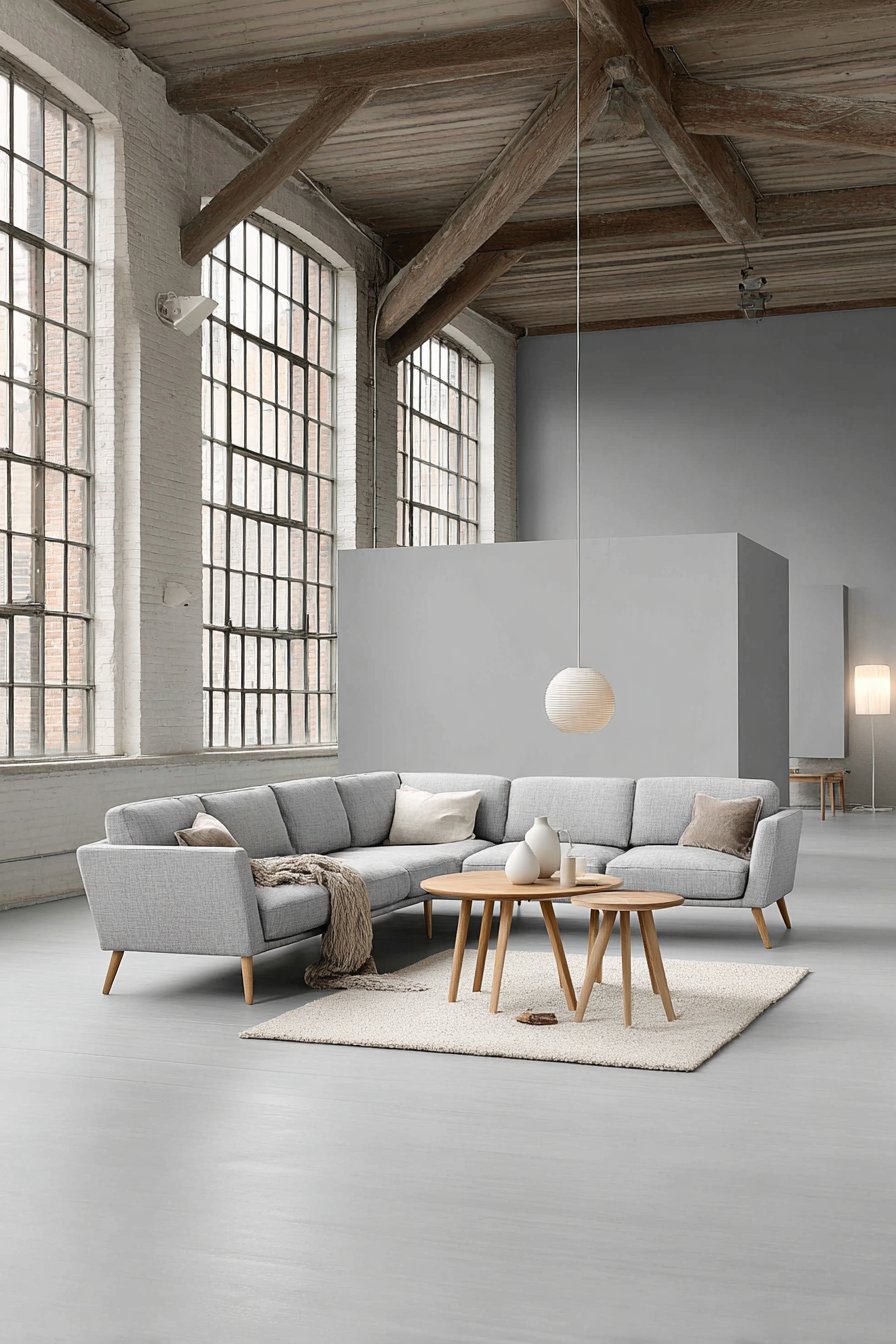
Danish comfort concepts inform this Scandinavian living room, where a modular grey fabric sofa with removable, washable covers and simple wooden legs embodies the Nordic principle of practical beauty. The sofa’s modular construction allows reconfiguration as needs change—sections can be added, removed, or rearranged to accommodate different spaces or uses over time. This flexibility represents the Scandinavian value of investing in quality pieces that adapt rather than purchasing and discarding furniture as circumstances change. A light oak coffee table with clean lines and visible grain patterns brings natural warmth without unnecessary ornamentation.
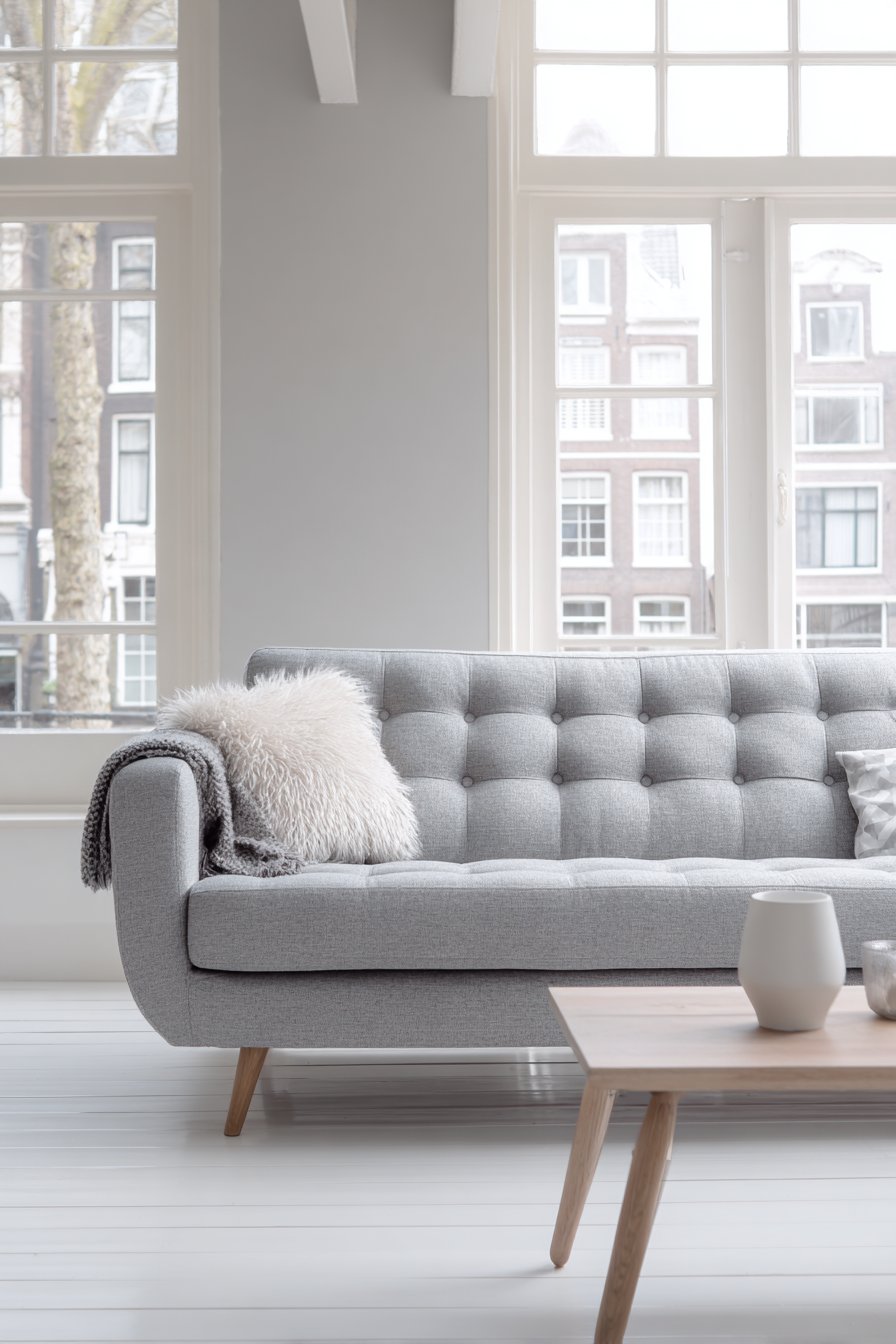
Soft grey walls and white-painted floorboards create the airy Nordic aesthetic that maximizes light in regions where winter days are short and natural illumination precious. The light-reflective qualities of this color palette make even modest spaces feel expansive and welcoming. A sheepskin throw draped casually over the sofa and a chunky wool blanket provide cozy texture, inviting the kind of comfortable relaxation that Danes call hygge—that uniquely Scandinavian concept of contentment and well-being through simple pleasures.
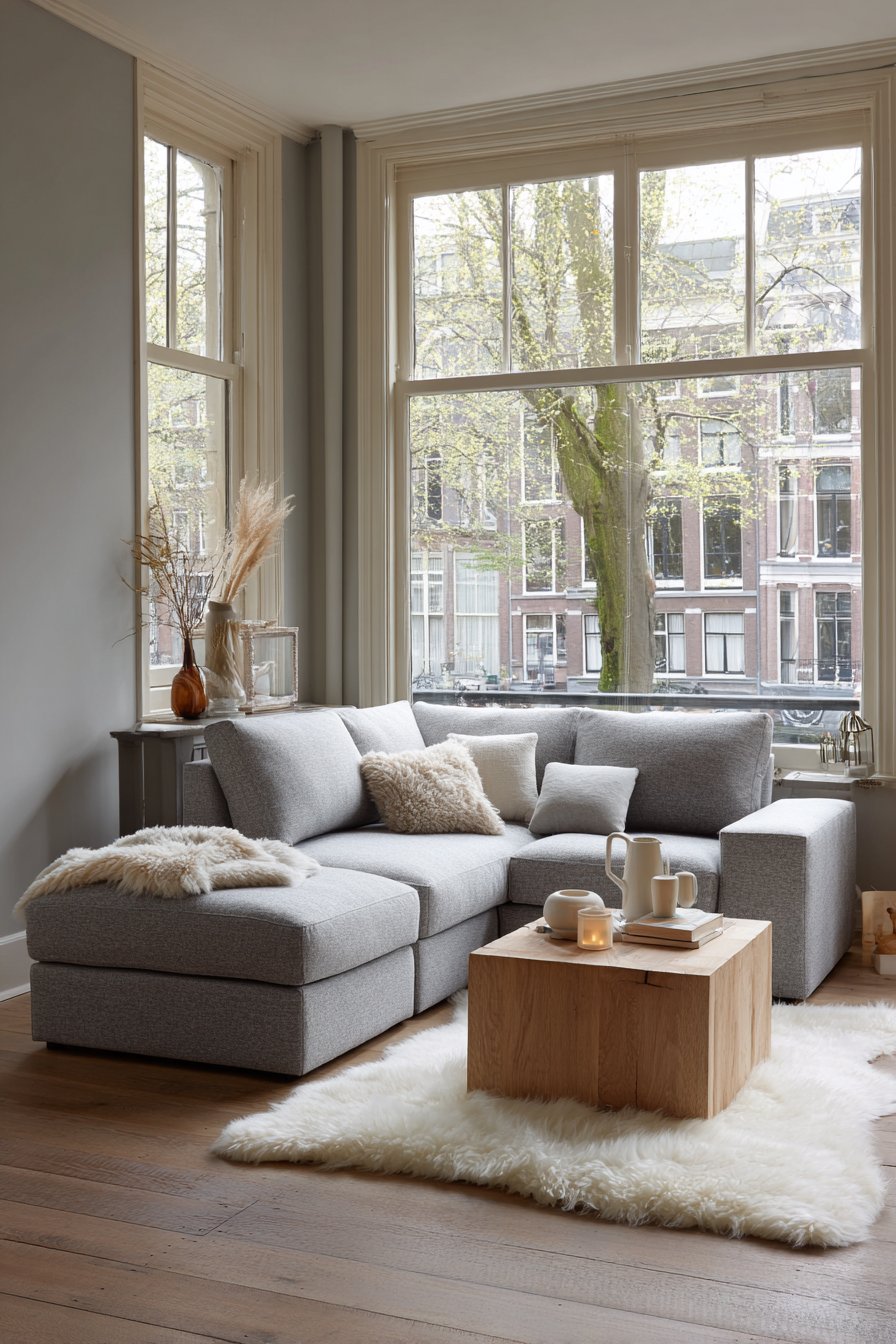
Large windows with minimal window treatments maximize natural light infiltration, a crucial consideration in Nordic design where bringing the outside in helps combat long, dark winters. Simple white ceramic accessories maintain the minimalist aesthetic while contributing to the room’s serene atmosphere. Interior photography captures the essence of hygge with grey as the calming, neutral anchor that allows the space’s innate comfort and quality to shine through without distraction.
Key Design Tips:
- Select modular furniture that can be reconfigured as needs and spaces change
- Choose light, natural wood tones to add warmth without heaviness or darkness
- Paint floors white or light grey to maximize light reflection in darker months
- Layer cozy textiles like wool, sheepskin, and chunky knits for hygge comfort
- Minimize window treatments to allow maximum natural light entry
14. Eclectic Curation and Collected Character
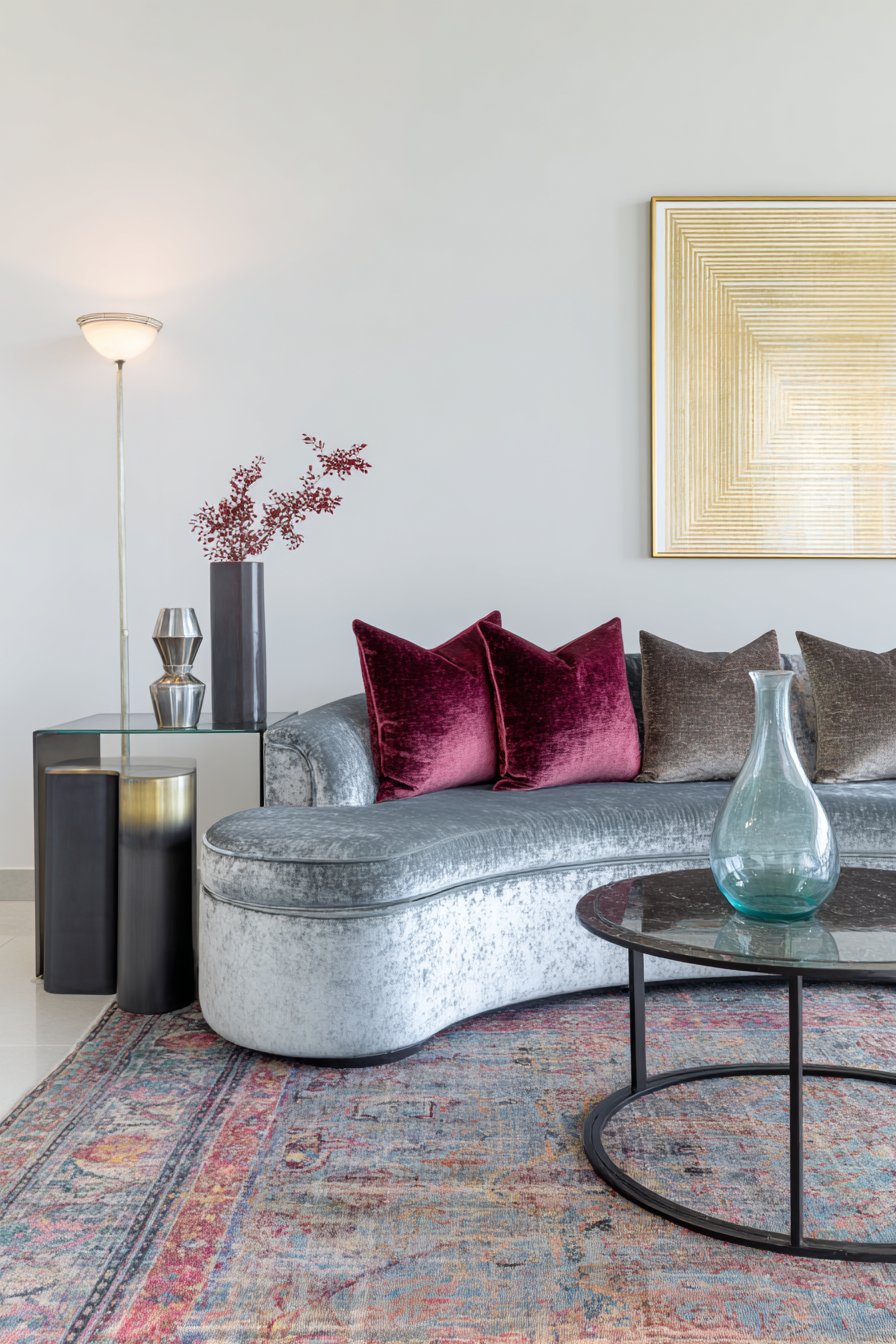
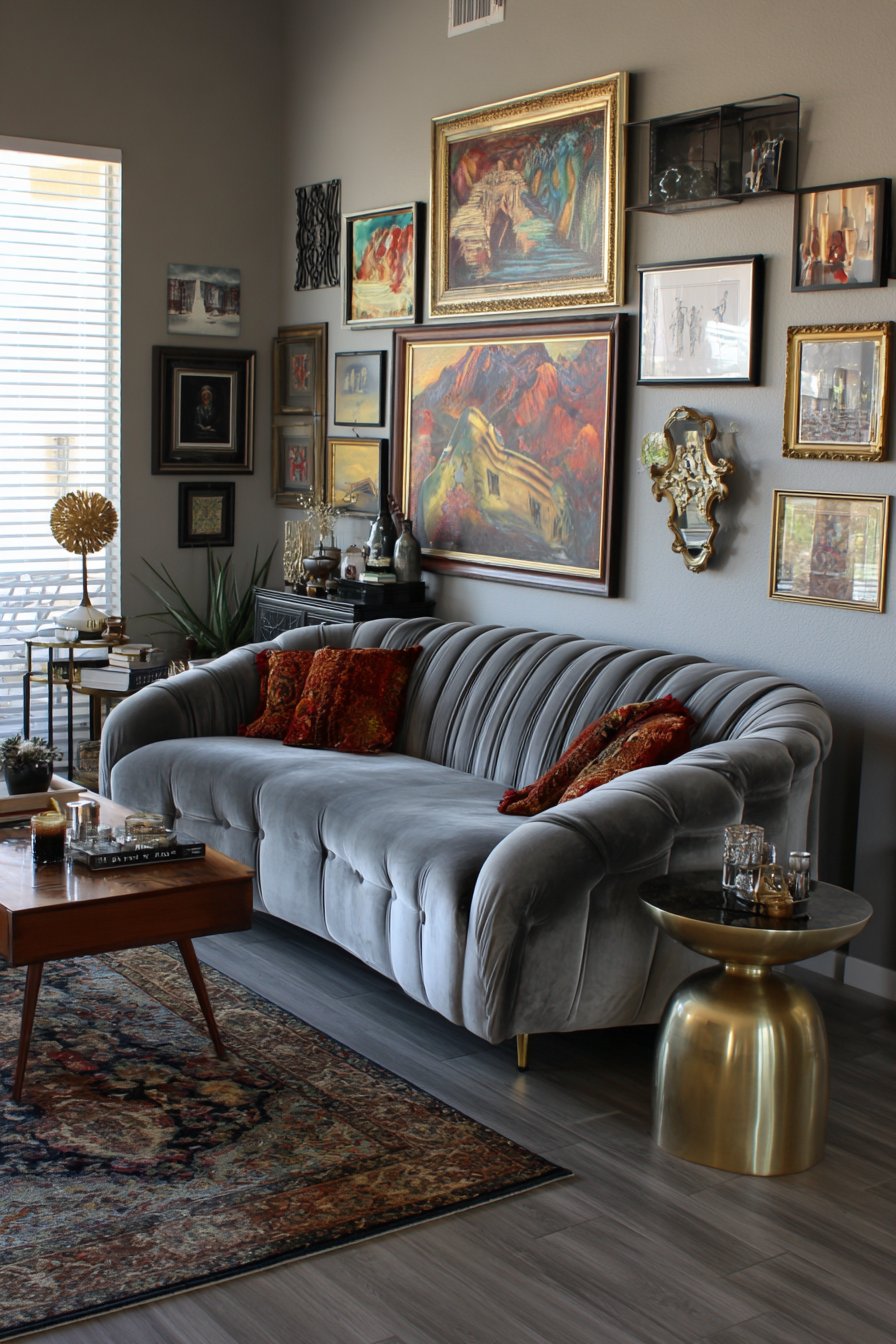
Fearless style mixing characterizes this eclectic living room, where a vintage-style grey velvet sofa with distinctive curved arms provides a neutral foundation for an intentionally mismatched collection of furniture and accessories. The sofa’s classic silhouette and luxurious fabric read as sophisticated and timeless, allowing it to play well with the room’s diverse supporting cast. A mid-century coffee table brings 1950s sensibility, while modern side tables contribute contemporary edge, and a traditional area rug in grey and jewel tones anchors the collection with pattern and color.
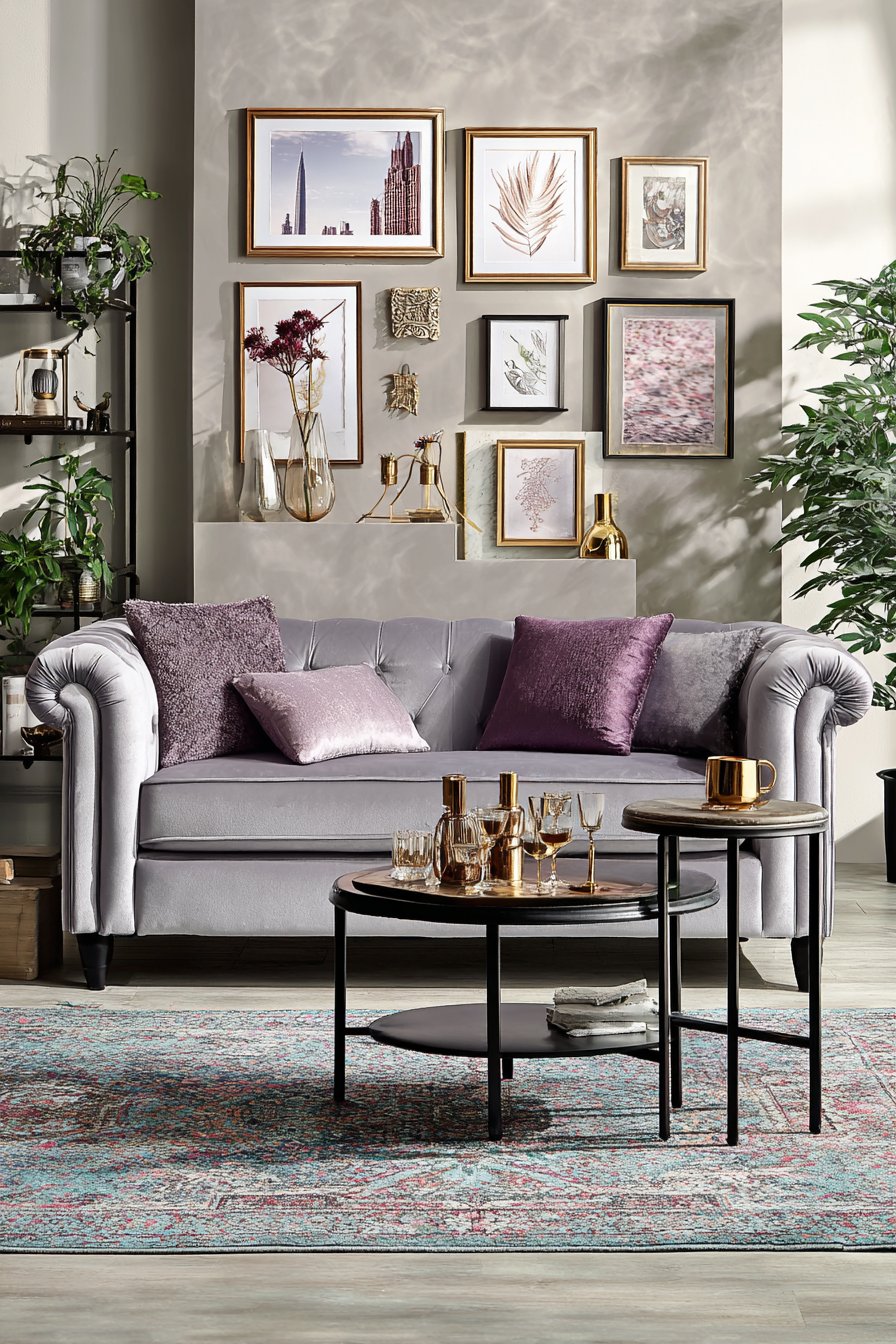
A gallery wall with mixed frame styles and artwork spanning various periods and techniques provides visual interest and reveals the homeowner’s evolving taste and collected treasures. This approach to wall decoration tells a story—each piece was chosen for personal significance rather than matching a predetermined scheme. Brass and black metal accents create a collected look that suggests the room came together over time rather than being decorated all at once in a single shopping trip.
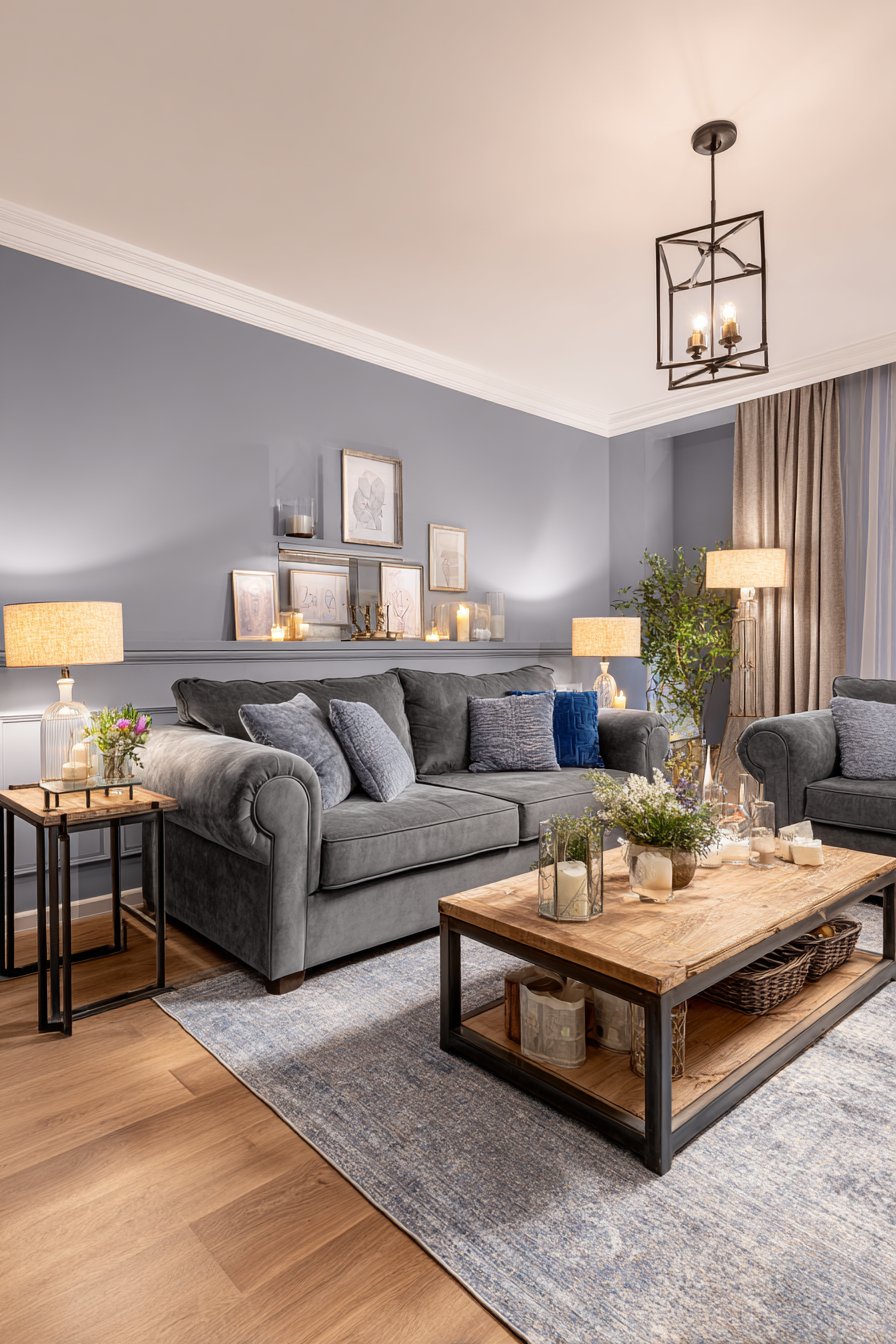
Natural daylight from windows combines with carefully placed artificial lighting to highlight the room’s curated mix without creating dark corners or harsh shadows. Professional interior photography showcases successful style mixing with the grey sofa serving as the versatile foundation that unifies disparate elements. This approach demonstrates that eclectic doesn’t mean chaotic—thoughtful curation and a unifying neutral foundation allow diverse pieces to coexist harmoniously.
Key Design Tips:
- Choose a neutral grey sofa as the unifying element when mixing diverse furniture styles
- Build gallery walls gradually over time rather than purchasing everything at once
- Mix metal finishes (brass, black, chrome) to create collected, layered character
- Select one traditional, one modern, and one vintage piece for balanced eclecticism
- Use a patterned area rug to tie together furniture pieces in various styles
15. Luxury Living and High-End Materials
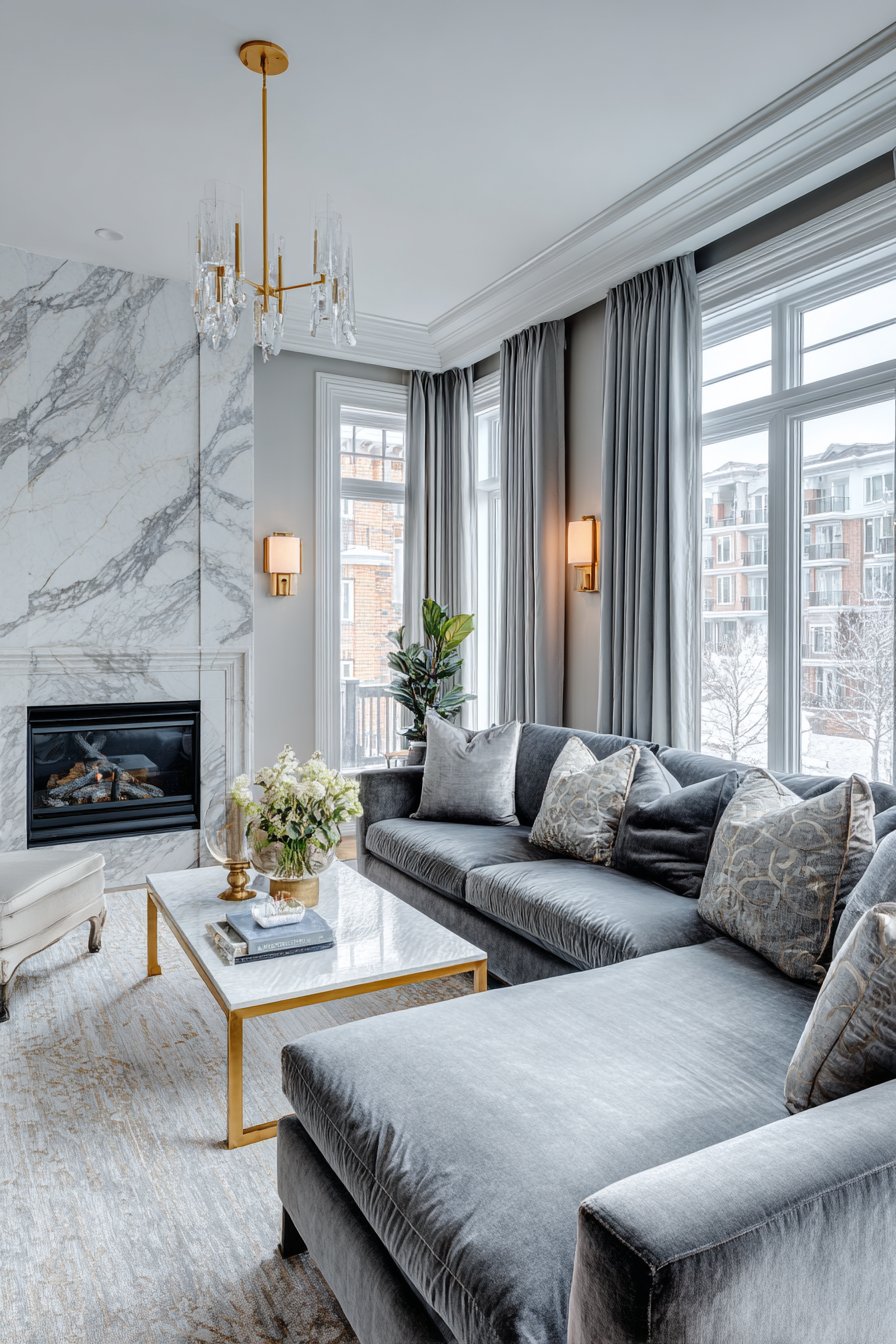
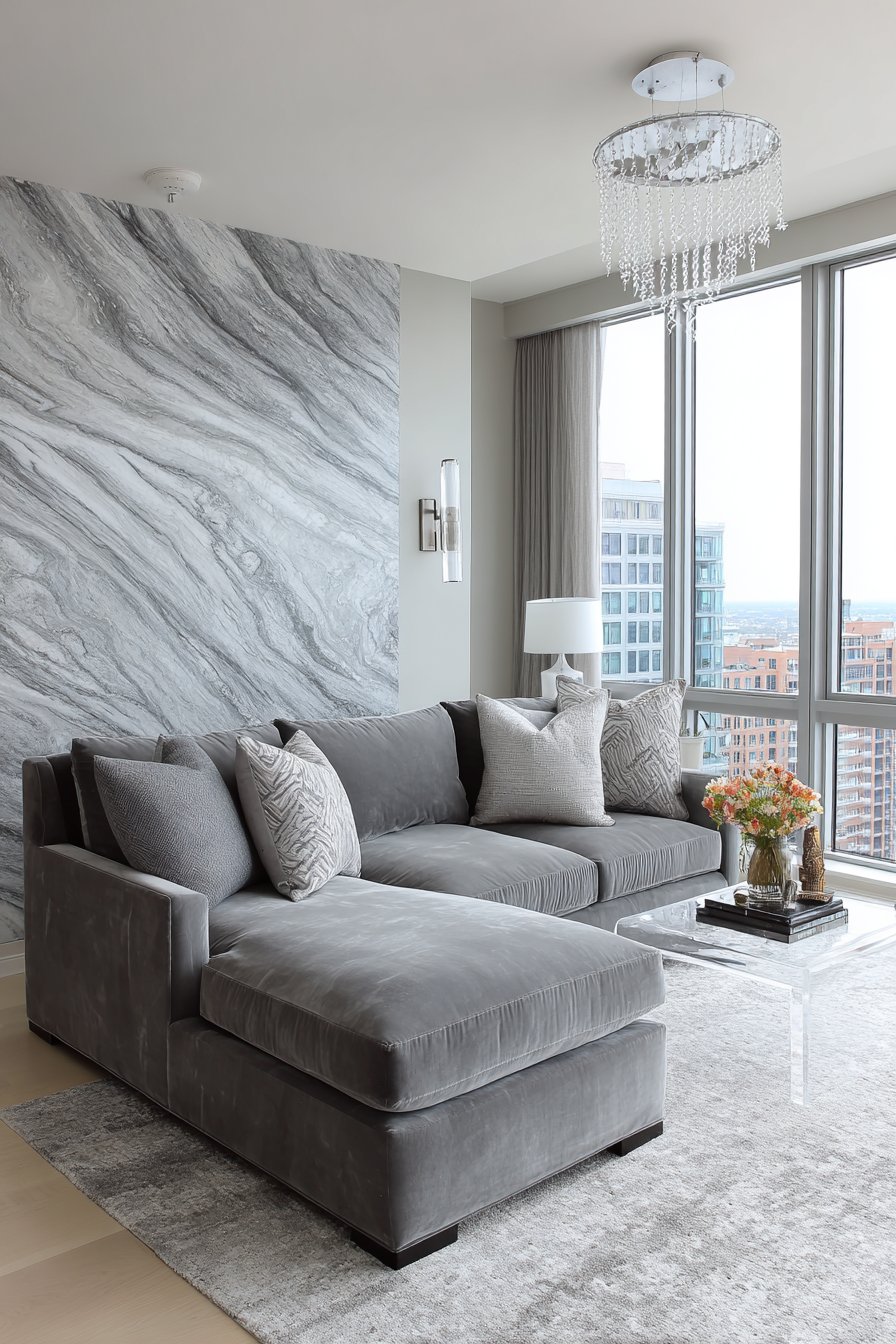
Uncompromising quality defines this luxury living room, featuring a custom grey velvet sectional with deep seats and feather-down cushions that prioritize comfort without sacrificing sophistication. The sectional’s generous proportions and sumptuous upholstery fabric immediately communicate luxury, while its grey tone keeps the space from feeling ostentatious or overly bold. Facing a marble fireplace with grey veining that echoes the sofa’s color, the seating arrangement creates a conversation area centered around the architectural focal point.
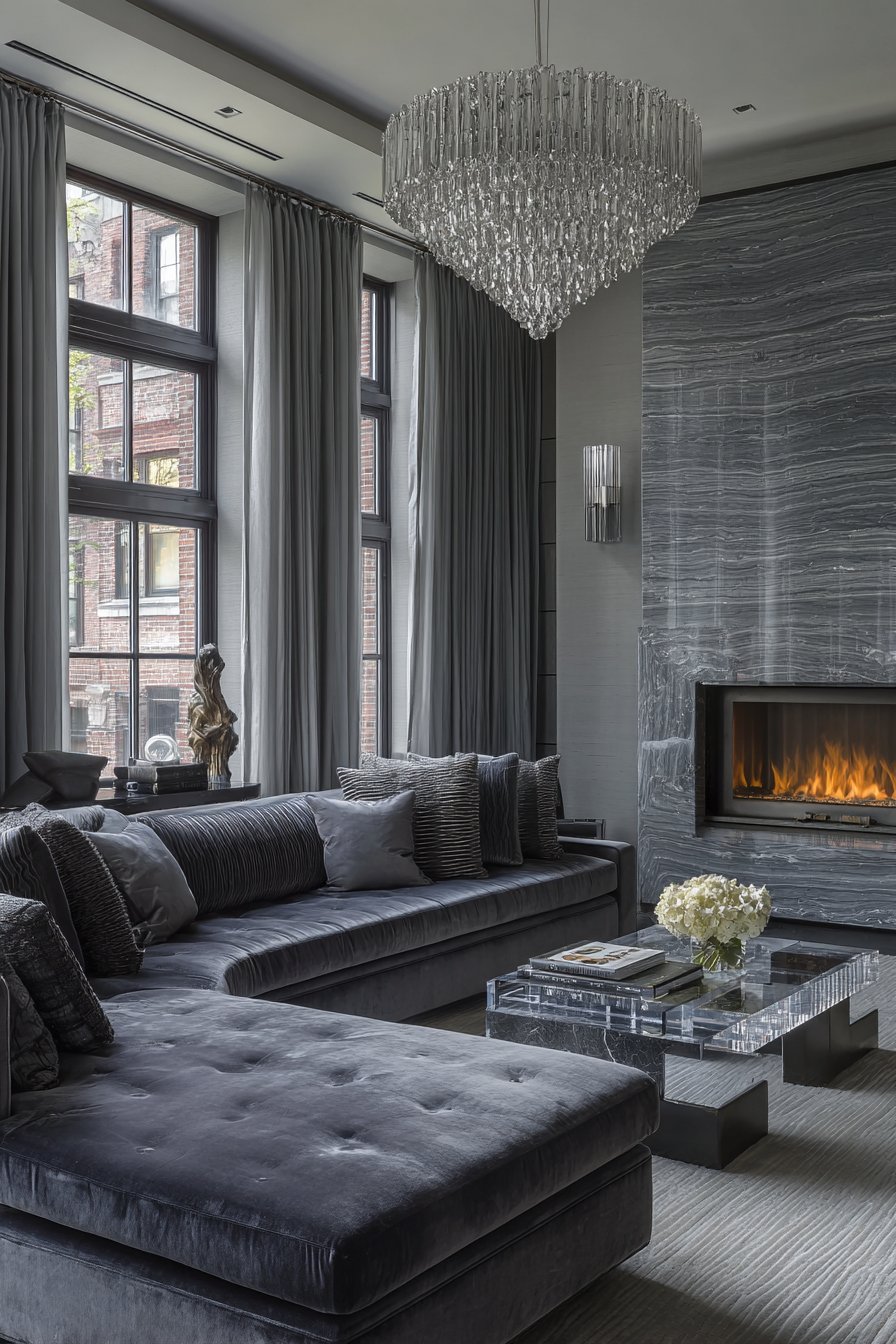
High-end materials dominate every surface and detail. Grey silk and velvet throw pillows in coordinating tones add sophisticated texture through fabric choices that catch and reflect light beautifully. A lucite and brass coffee table maintains elegant transparency while introducing metallic glamour through its brass frame—a combination that reads as both modern and luxurious. Silk draperies in platinum grey frame floor-to-ceiling windows, their substantial weight and lustrous sheen conveying quality and refinement.
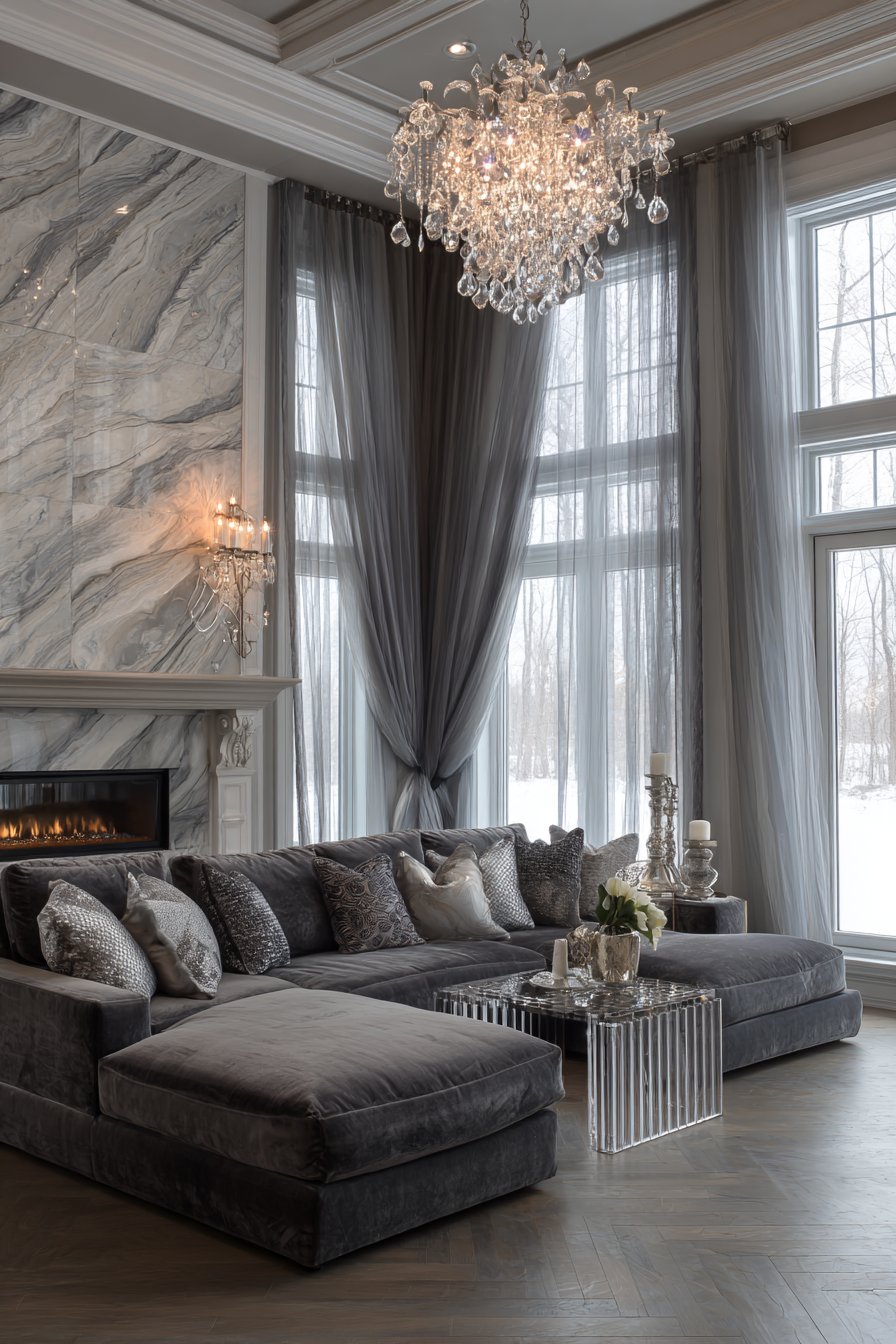
A crystal chandelier suspended above the seating area and coordinating wall sconces provide layered lighting that flatters both people and furnishings. The fixtures’ sparkle adds subtle glamour without relying on ostentation or excessive scale. Interior design photography with impeccable styling showcases high-end materials and the refined grey palette that speaks to sophisticated taste and substantial investment. This is luxury that whispers rather than shouts, proving that grey can be the ultimate power color when executed with quality materials and expert proportions.
Key Design Tips:
- Invest in custom upholstery with feather-down cushions for ultimate comfort and longevity
- Select multiple luxury fabrics (velvet, silk, linen) in coordinating grey tones for textural richness
- Choose furniture with lucite or glass elements to add glamour without visual weight
- Install statement lighting fixtures like chandeliers to add sparkle and focus
- Incorporate marble or stone elements to introduce natural luxury and permanent quality
16. Masculine Sophistication and Bold Restraint
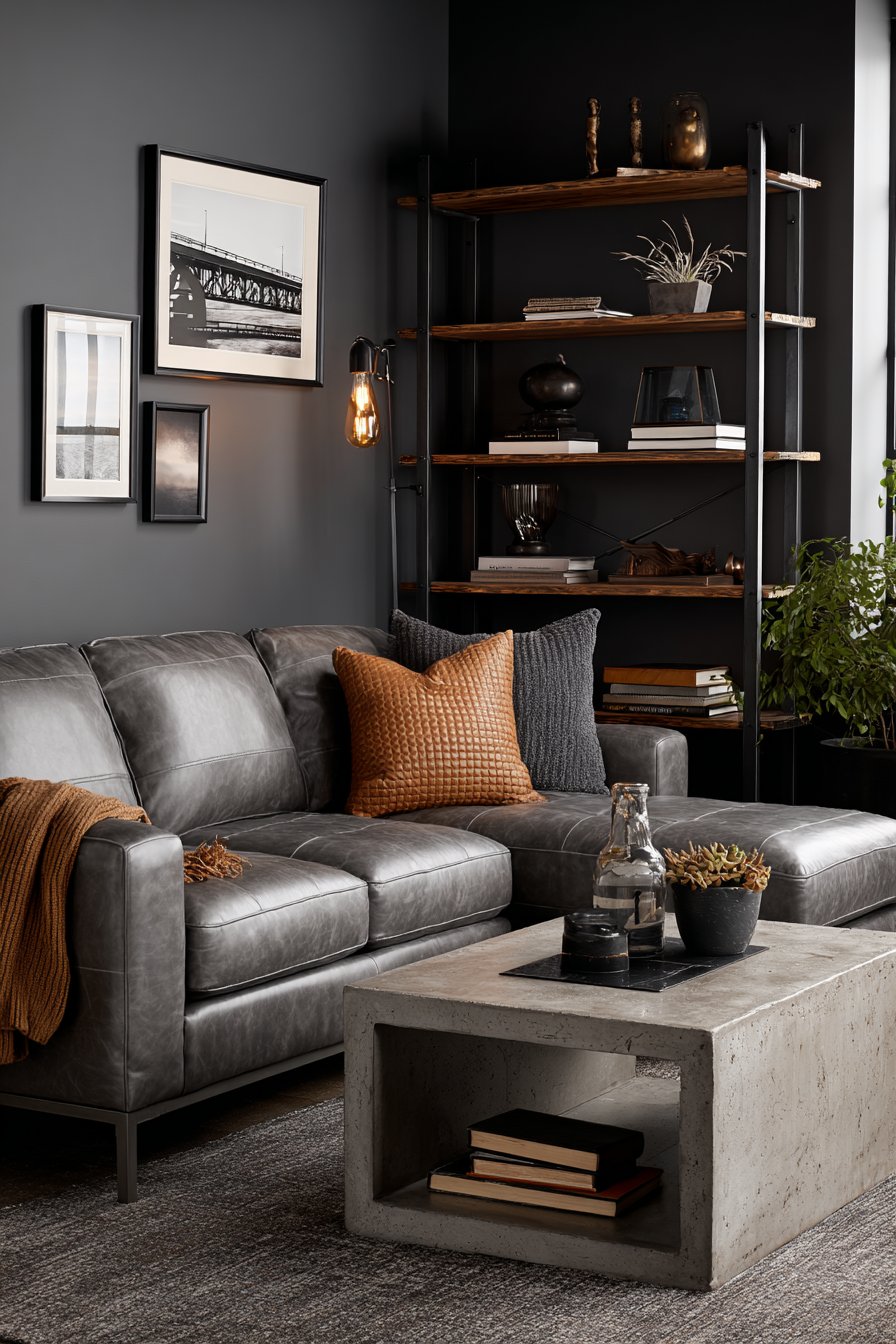
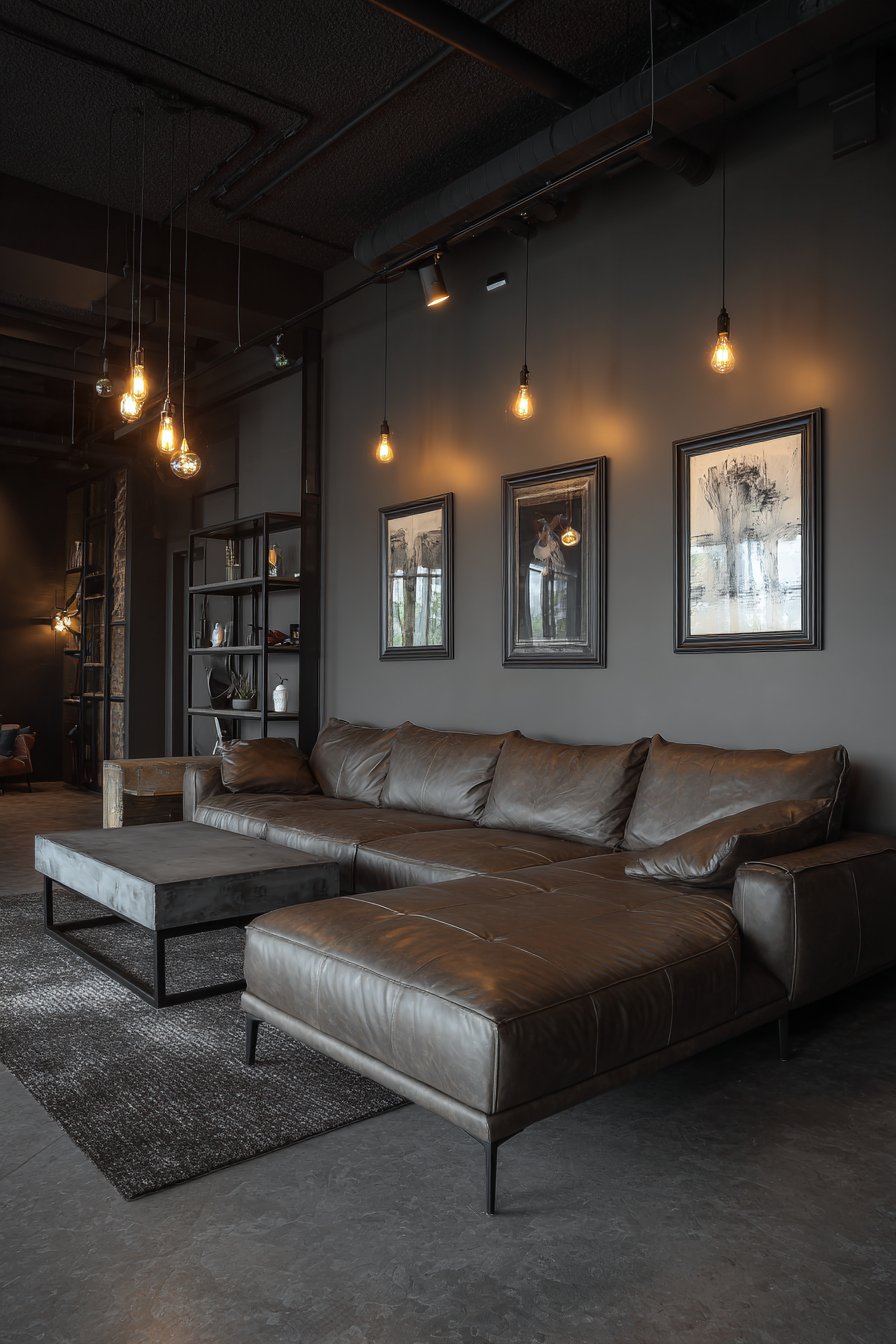
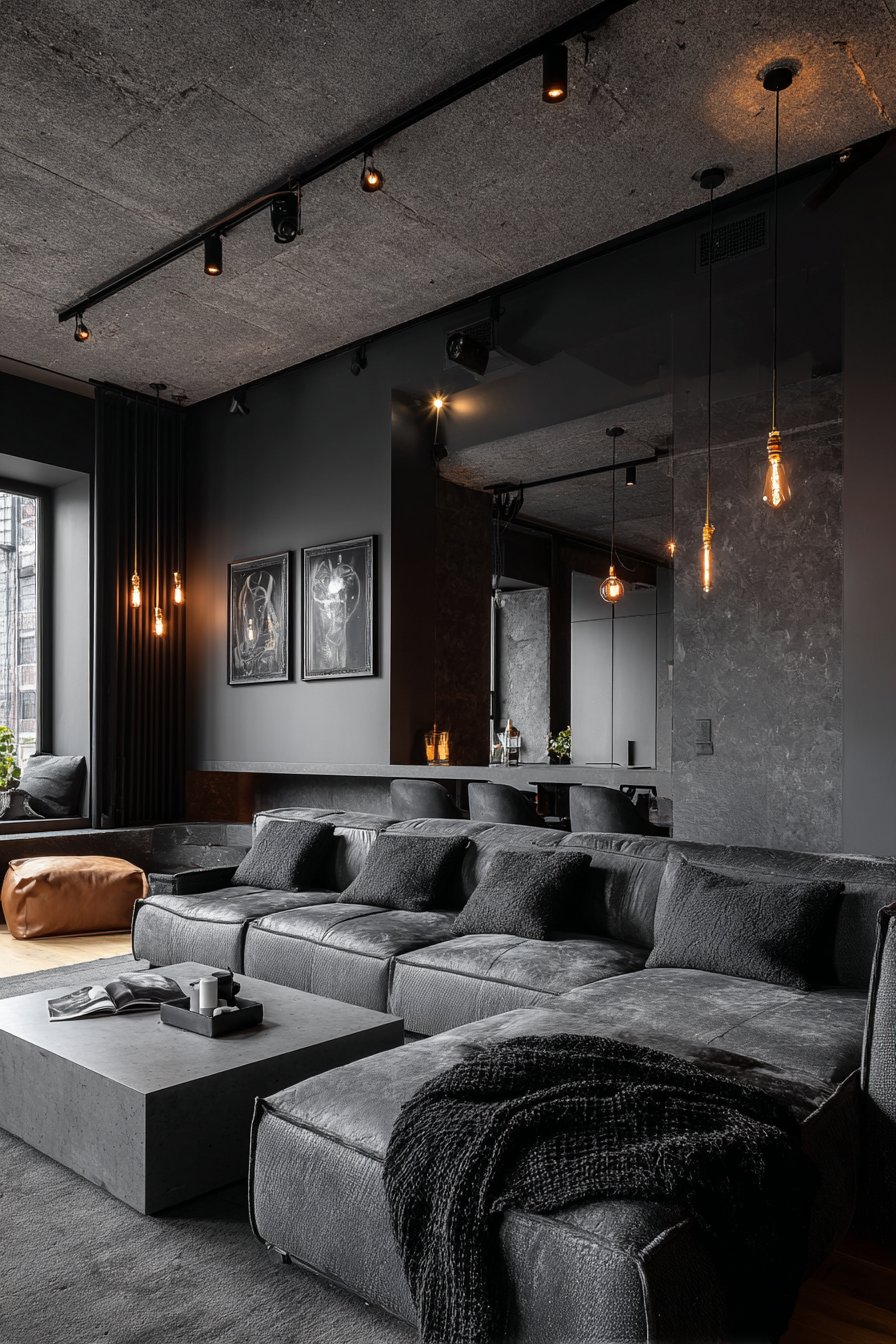
Confident masculinity permeates this living room, featuring a structured grey leather sofa with clean lines and metal legs that projects strength and sophistication. The leather’s smooth finish and precise stitching convey quality craftsmanship while its grey tone offers a contemporary alternative to traditional brown leather’s more rustic associations. Dark grey walls make a bold statement, creating dramatic backdrop that elevates the space beyond safe neutrality into confident territory.
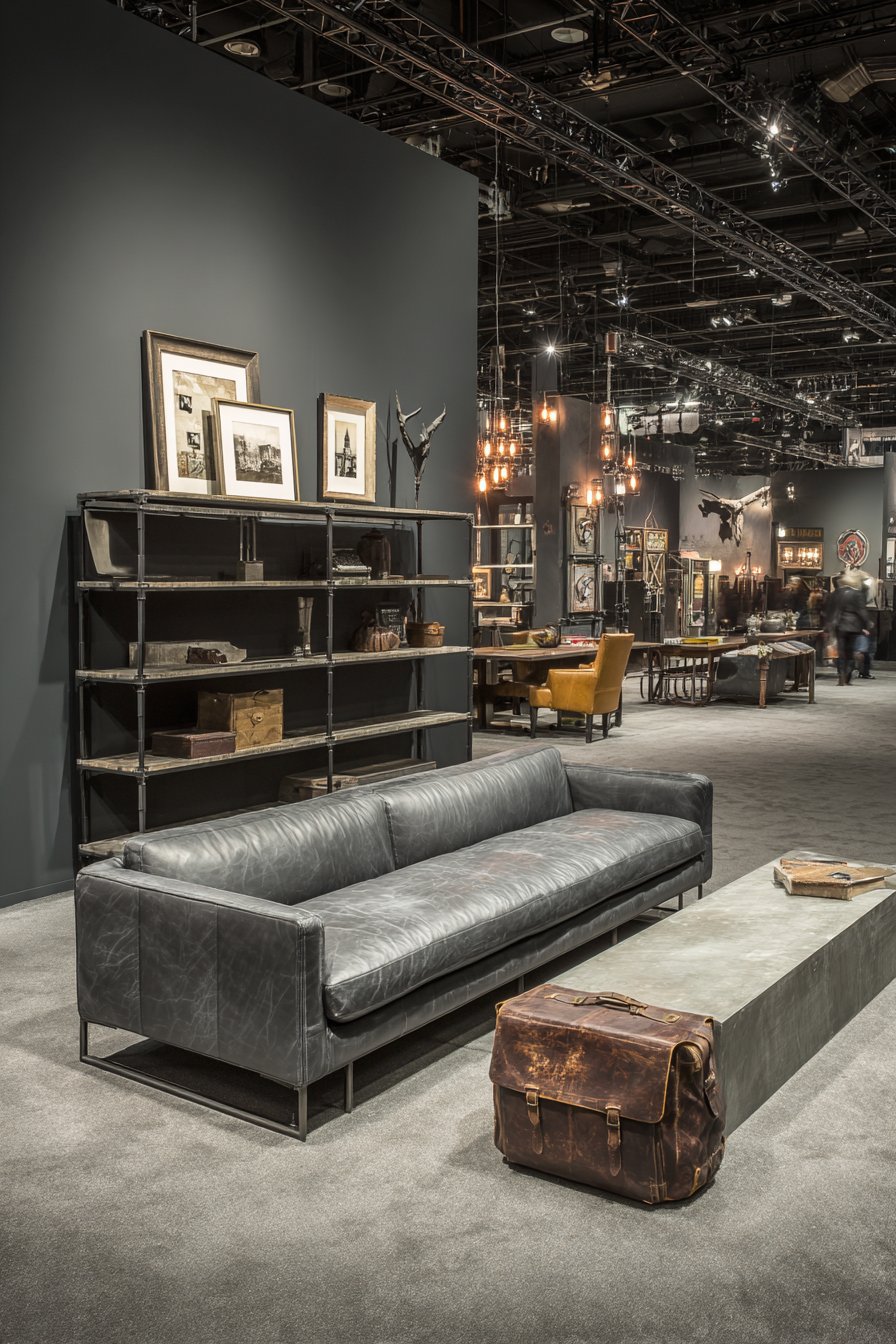
Black-framed artwork with graphic compositions adorns the walls, while industrial metal shelving provides both storage and display without introducing softening elements. A concrete and steel coffee table grounds the seating area with substantial presence and honest materials that celebrate industrial masculinity. Edison bulb fixtures and focused task lighting provide illumination that serves function over decorative purposes, their exposed elements and utilitarian forms reinforcing the masculine aesthetic.
Minimal accessories in black, grey, and cognac leather maintain the refined masculine approach without creating sterility or coldness. A leather throw blanket, perhaps a few coffee table books on architecture or design, and a single substantial plant provide the only softening elements in this edited space. Wide-angle interior photography emphasizes the bold, streamlined design with grey leather serving as the anchor that proves masculine spaces can be sophisticated without resorting to stereotypical dark woods and heavy furniture.
Key Design Tips:
- Choose structured leather furniture in grey rather than brown for contemporary masculine style
- Paint at least one wall in dark grey or charcoal to create dramatic, confident atmosphere
- Select artwork with graphic, bold compositions rather than representational imagery
- Incorporate industrial materials like concrete, metal, and leather for authentic masculine character
- Edit accessories severely, keeping only substantial, purposeful objects on display
17. Family-Friendly Functionality and Real-Life Durability
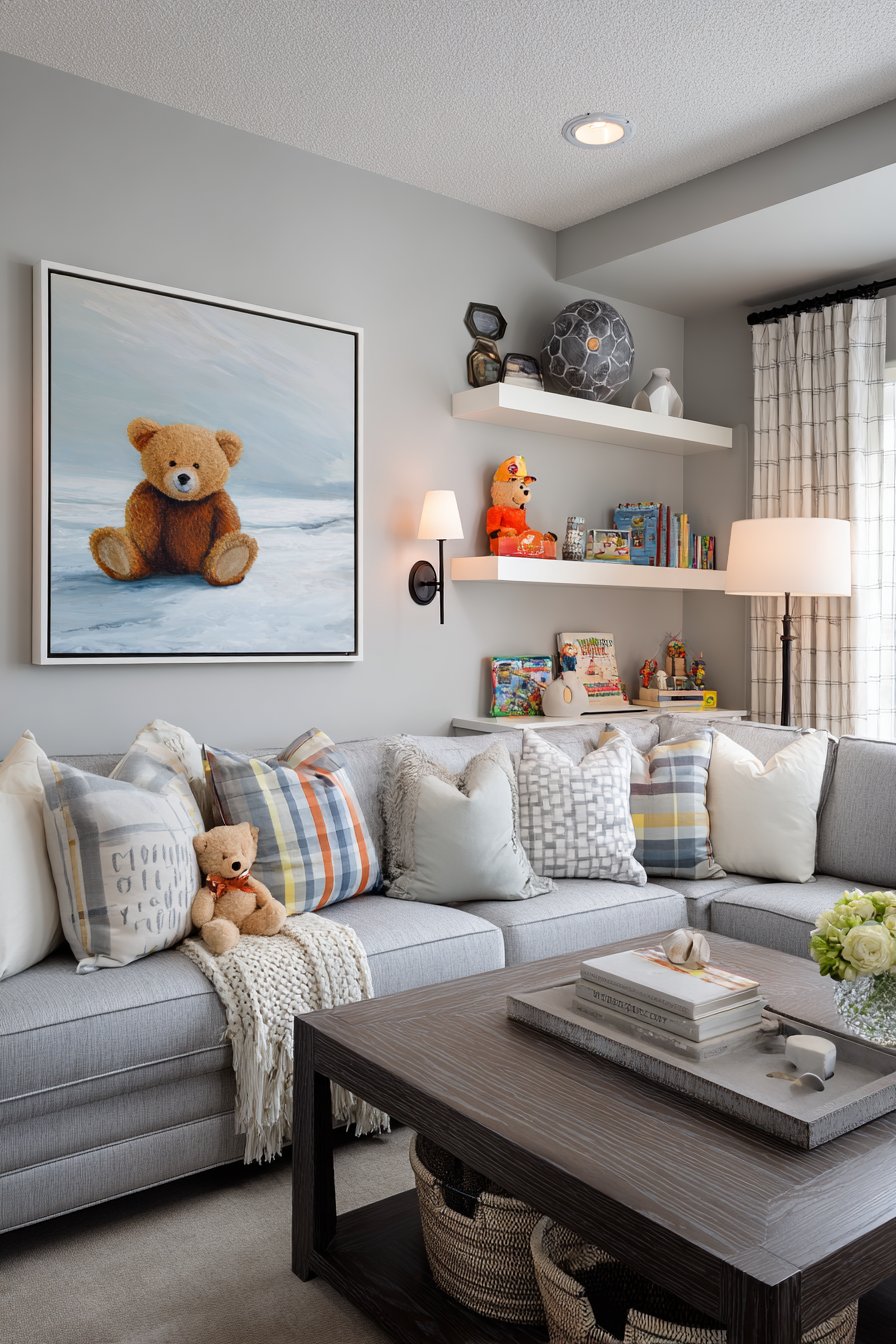
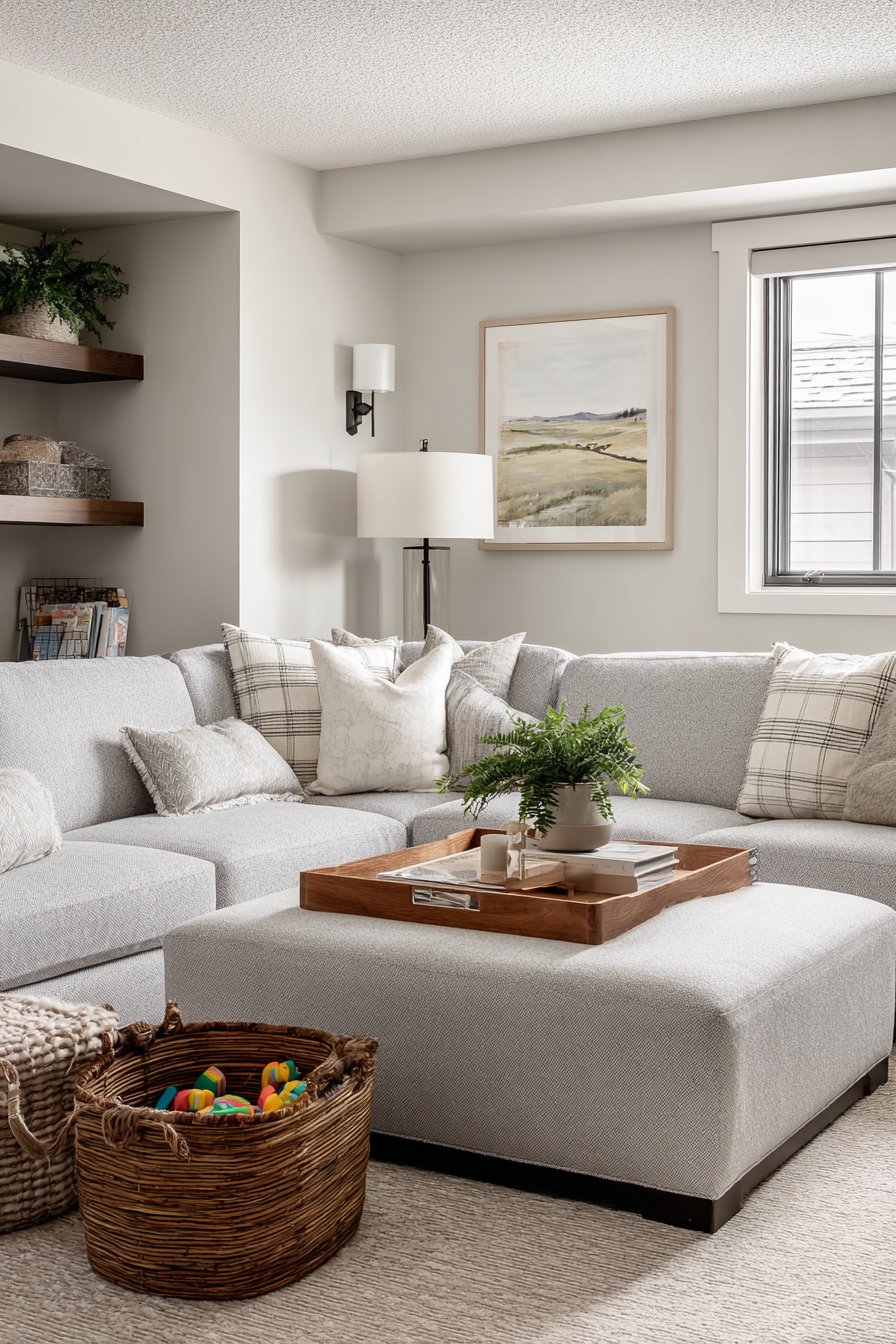
Practical luxury defines this family-friendly living room, featuring a durable grey performance fabric sectional with stain-resistant upholstery and washable cushion covers that prove family living need not sacrifice style for functionality. The sectional’s generous size provides ample seating for family movie nights and visiting friends, while its high-performance fabric resists the inevitable spills, stains, and wear that come with active household use. Built-in storage baskets tucked beneath end tables and around the room’s perimeter contain toys and clutter discreetly, maintaining the space’s adult aesthetic while acknowledging the reality of family life.
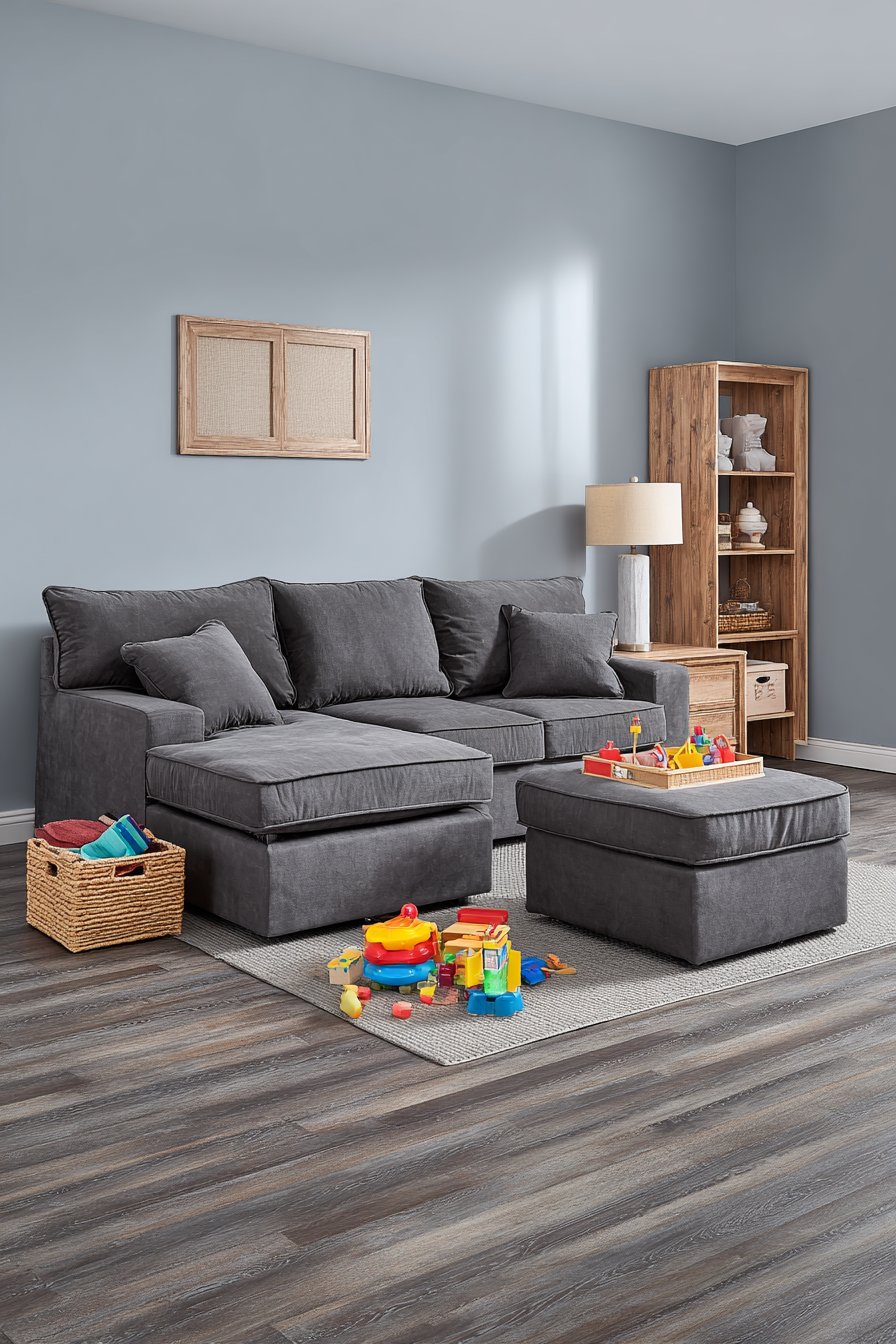
Soft grey walls create a forgiving backdrop for the chaos of family living, hiding fingerprints and scuffs better than stark white while maintaining brightness and openness. Durable laminate flooring in grey-washed oak finish provides the look of hardwood with enhanced scratch and moisture resistance—crucial considerations for homes with children and pets. The flooring’s grey tone coordinates with the sectional while creating visual continuity throughout the space.
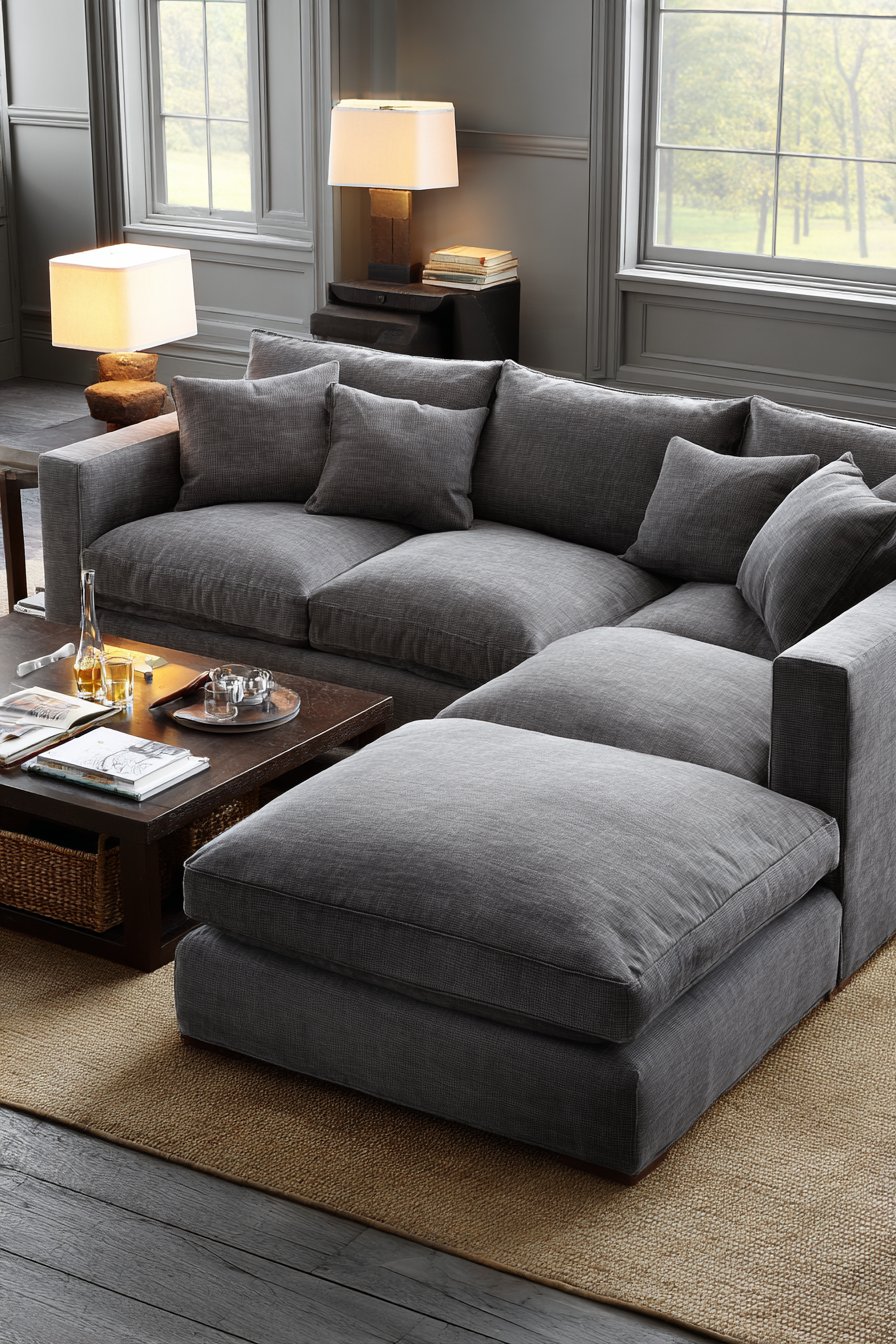
Table lamps with sturdy, weighted bases provide safe lighting that won’t topple easily during energetic play sessions or when bumped by passing family members. Interior photography shows realistic family living space with grey serving as the practical, forgiving color choice that hides daily wear while remaining sophisticated enough for adult appreciation. This design proves that family-friendly and stylish are not mutually exclusive categories—thoughtful material selection allows spaces to serve multiple needs simultaneously.
Key Design Tips:
- Invest in performance fabrics with stain-resistant treatments for worry-free family living
- Choose washable cushion covers that can be removed and laundered as needed
- Select durable flooring that mimics high-end materials while offering enhanced resistance to damage
- Incorporate hidden storage solutions to contain toys and clutter while maintaining adult aesthetic
- Choose lighting fixtures with weighted bases that resist tipping during active household use
18. Monochromatic Mastery and Tonal Sophistication
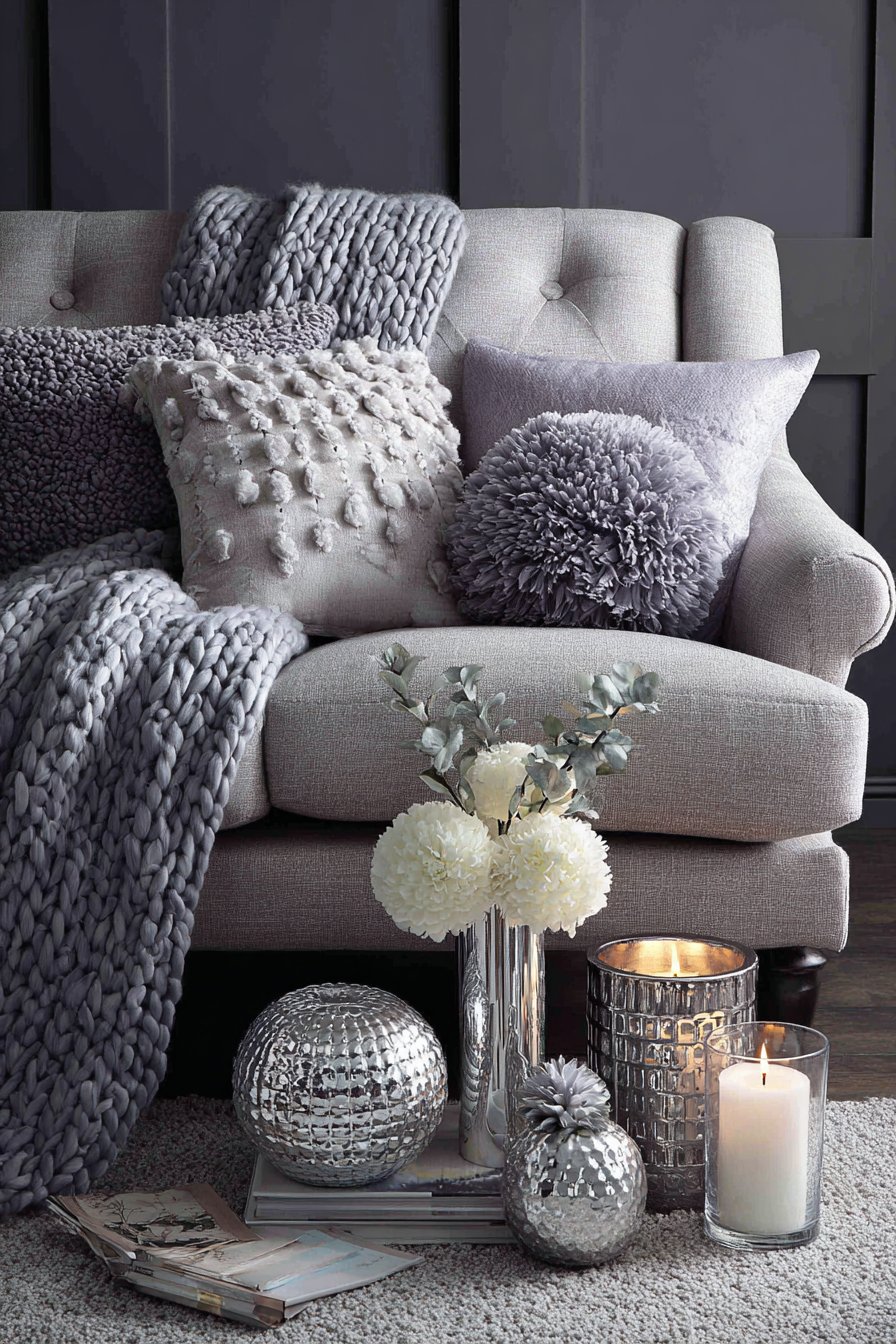
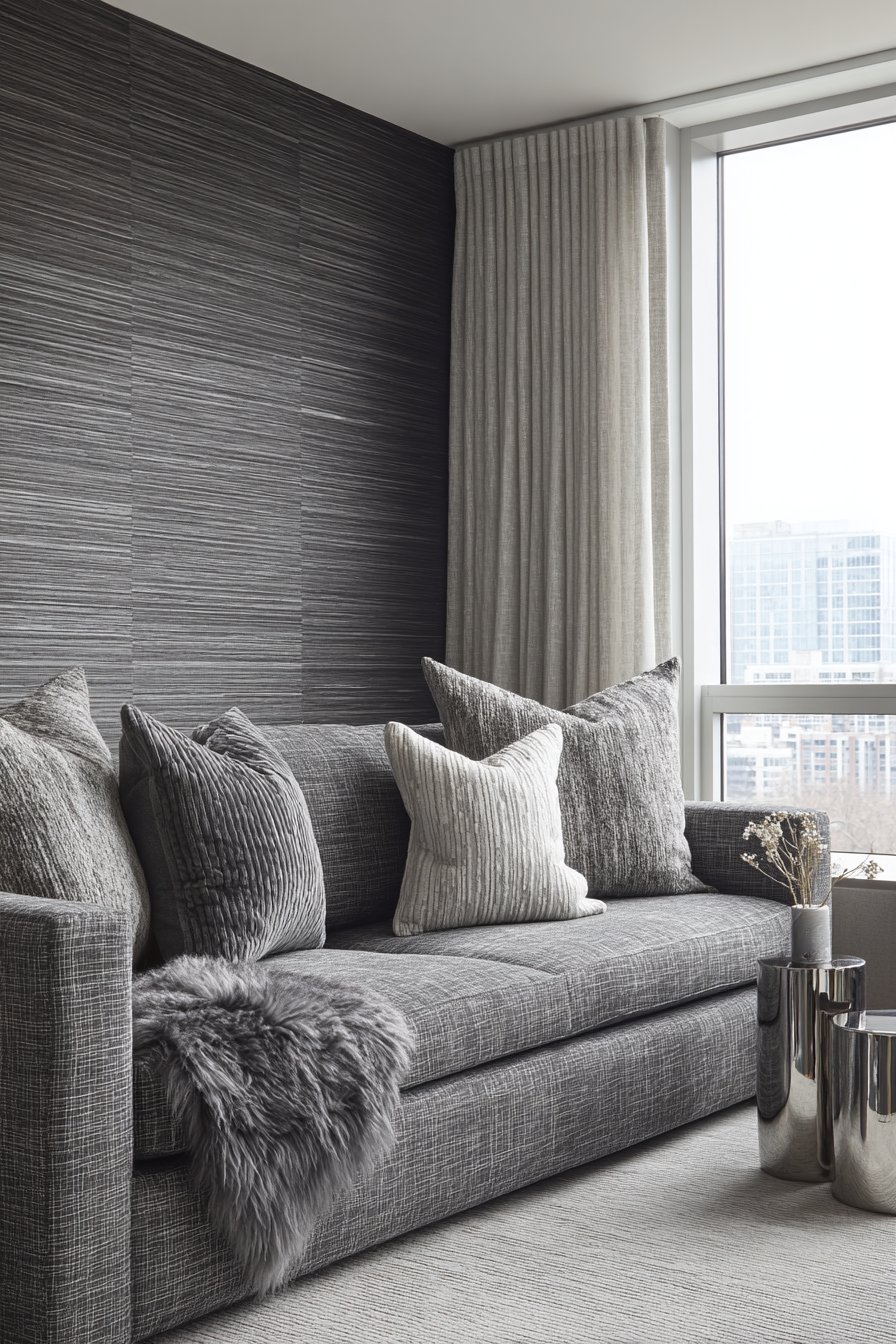
Intentional layering of grey tones from charcoal to pearl creates remarkable depth in this monochromatic living room, proving that single-color schemes need never be boring or flat. A medium grey linen sofa centers the space against a darker graphite accent wall, creating dimensional contrast through tonal variation rather than competing colors. The layering continues through a light grey area rug, silver metallic accessories, and various grey textured pillows that add tactile interest while maintaining the strict color discipline.
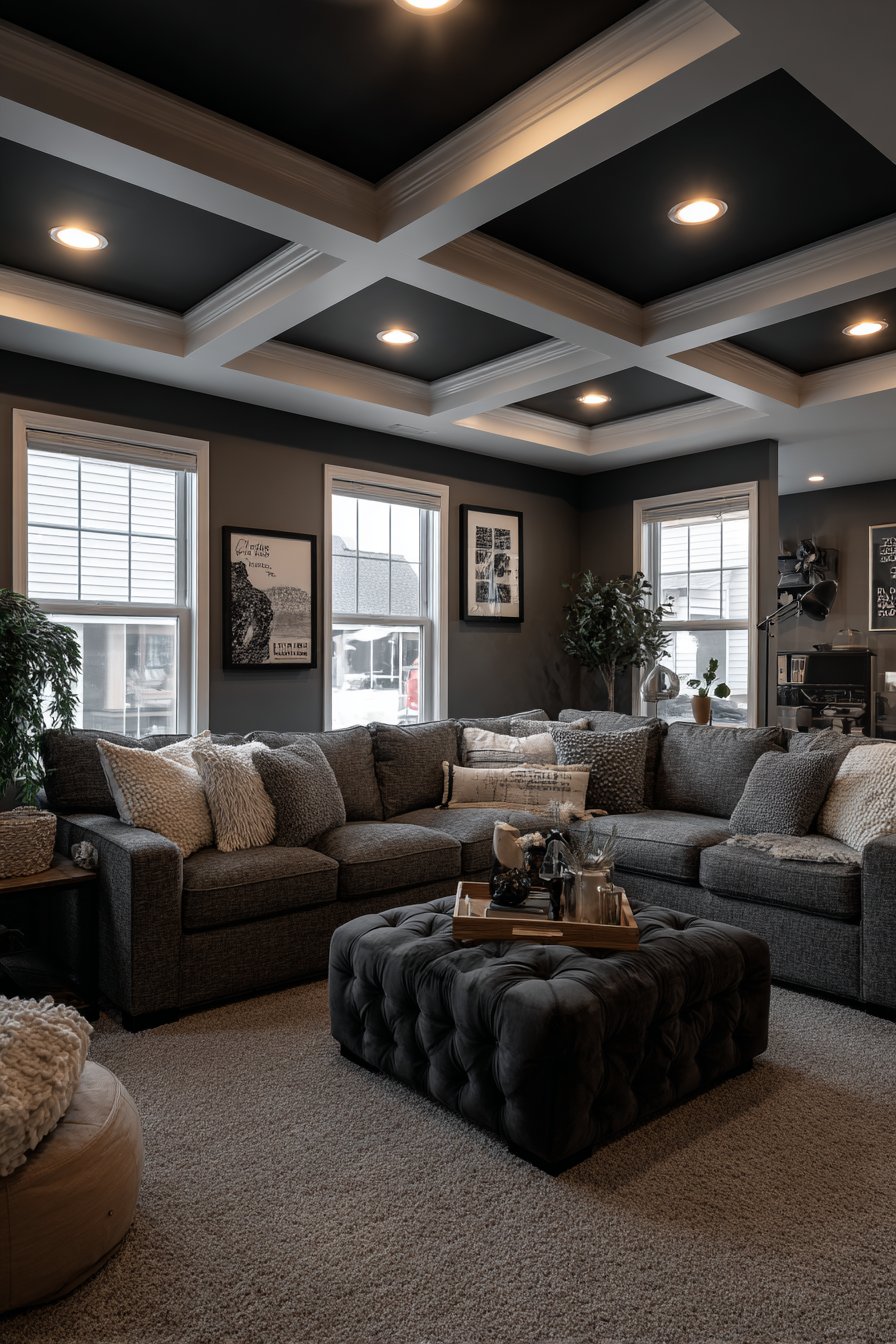
White trim and ceiling prevent the space from feeling dark or oppressive, providing visual relief and architectural definition that frames the grey elements. The contrast between crisp white molding and varied grey surfaces creates graphic impact without introducing competing hues. Strategic lighting plays a crucial role in monochromatic spaces, with carefully positioned fixtures highlighting the nuanced grey palette and creating shadows that add depth and dimension.
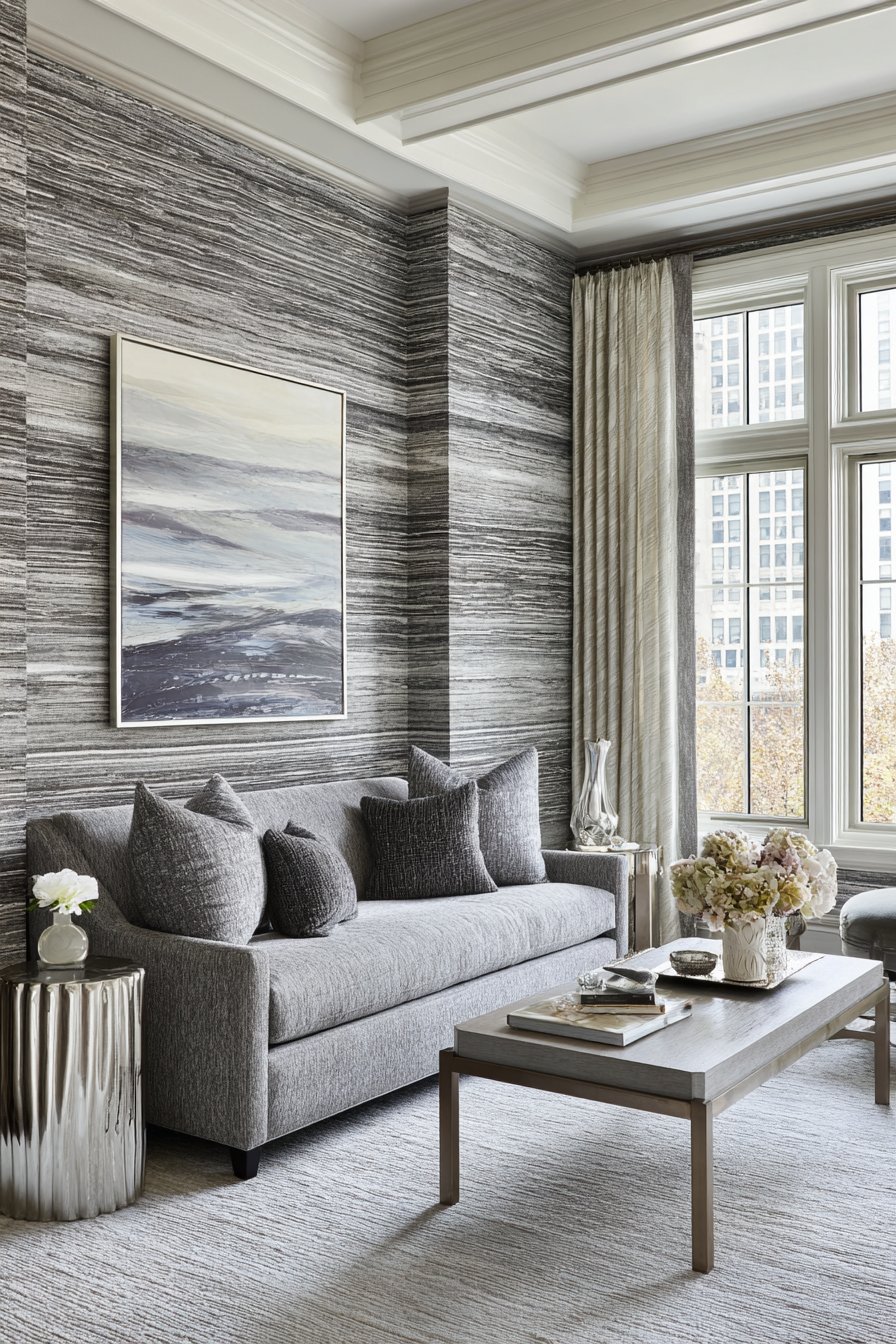
Professional interior photography with careful exposure control showcases sophisticated monochromatic design and grey’s versatile range from nearly black to almost white. The photography captures how different grey tones interact with light throughout the day, some reading warmer or cooler depending on the quality of natural light. This approach demonstrates that restricting your palette can actually increase design impact, forcing attention to texture, form, and tonal variation rather than relying on color contrast for interest.
Key Design Tips:
- Select at least five different grey tones from light to dark for proper monochromatic depth
- Use one accent wall in darker grey to create focal point without introducing new colors
- Incorporate varied textures (smooth leather, nubby linen, metallic finishes) for visual interest
- Paint trim and ceiling white to provide relief and prevent space from feeling cave-like
- Install multiple light sources to highlight tonal variations and create dimensional shadows
19. Open Concept Definition and Spatial Clarity
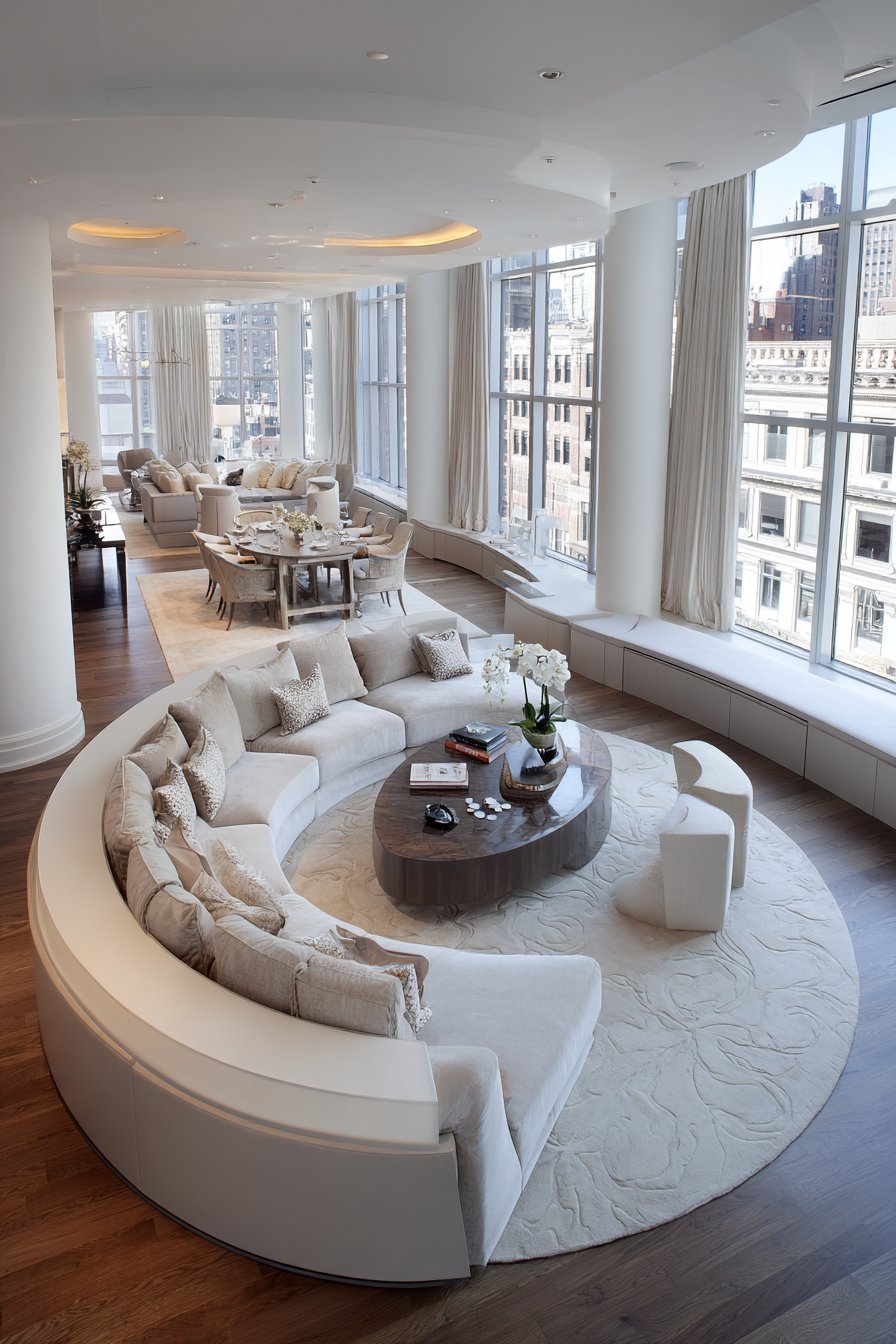
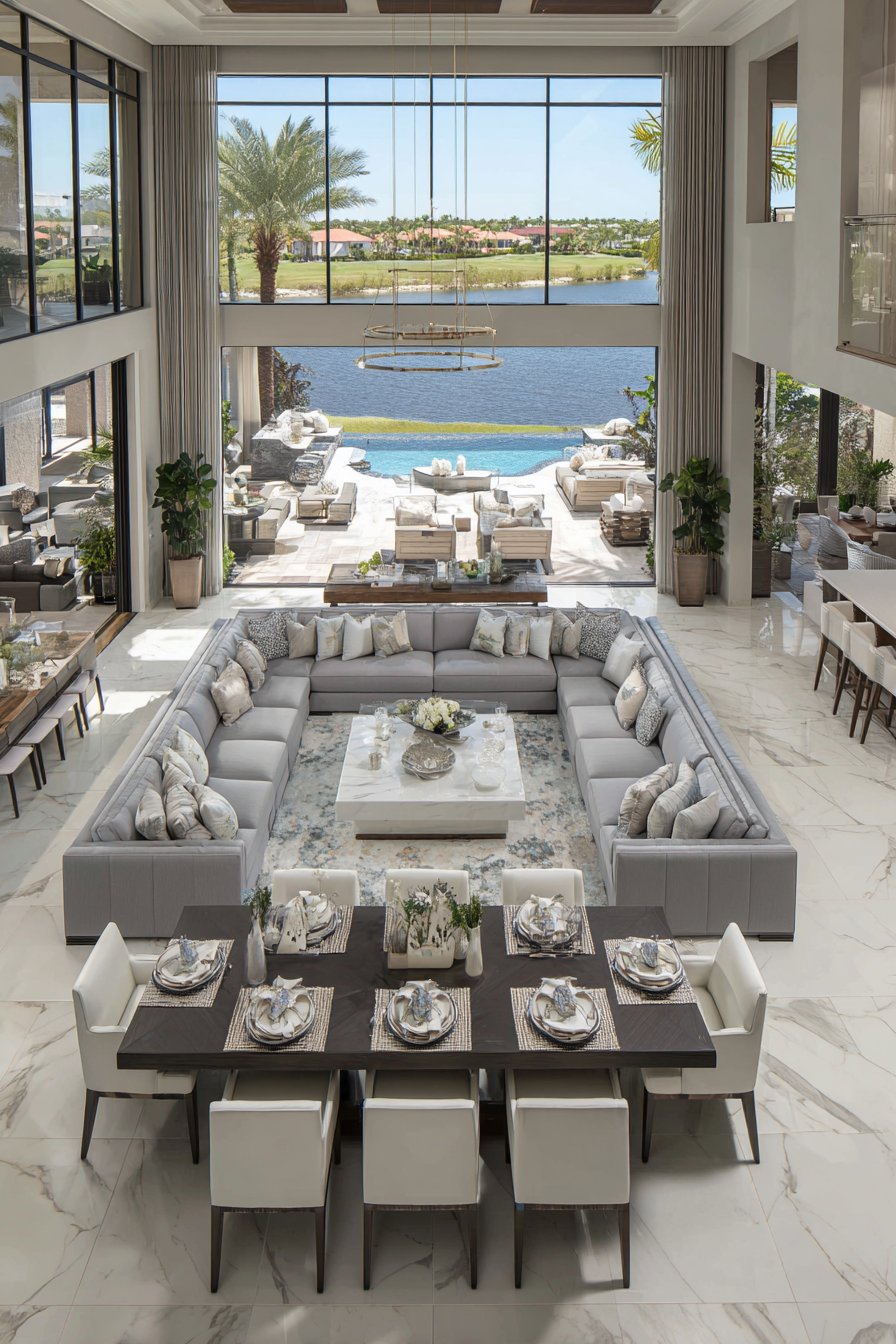
Smart spatial planning characterizes this open concept living room, where a grey modular sectional defines the living area within a larger open floor plan. The sectional faces away from the adjacent dining area, creating subtle psychological division that separates activities without requiring walls or permanent partitions. This furniture placement allows sight lines and conversation to flow between spaces while maintaining distinct zones for different functions—crucial in modern open-plan homes where spaces must work both independently and collectively.
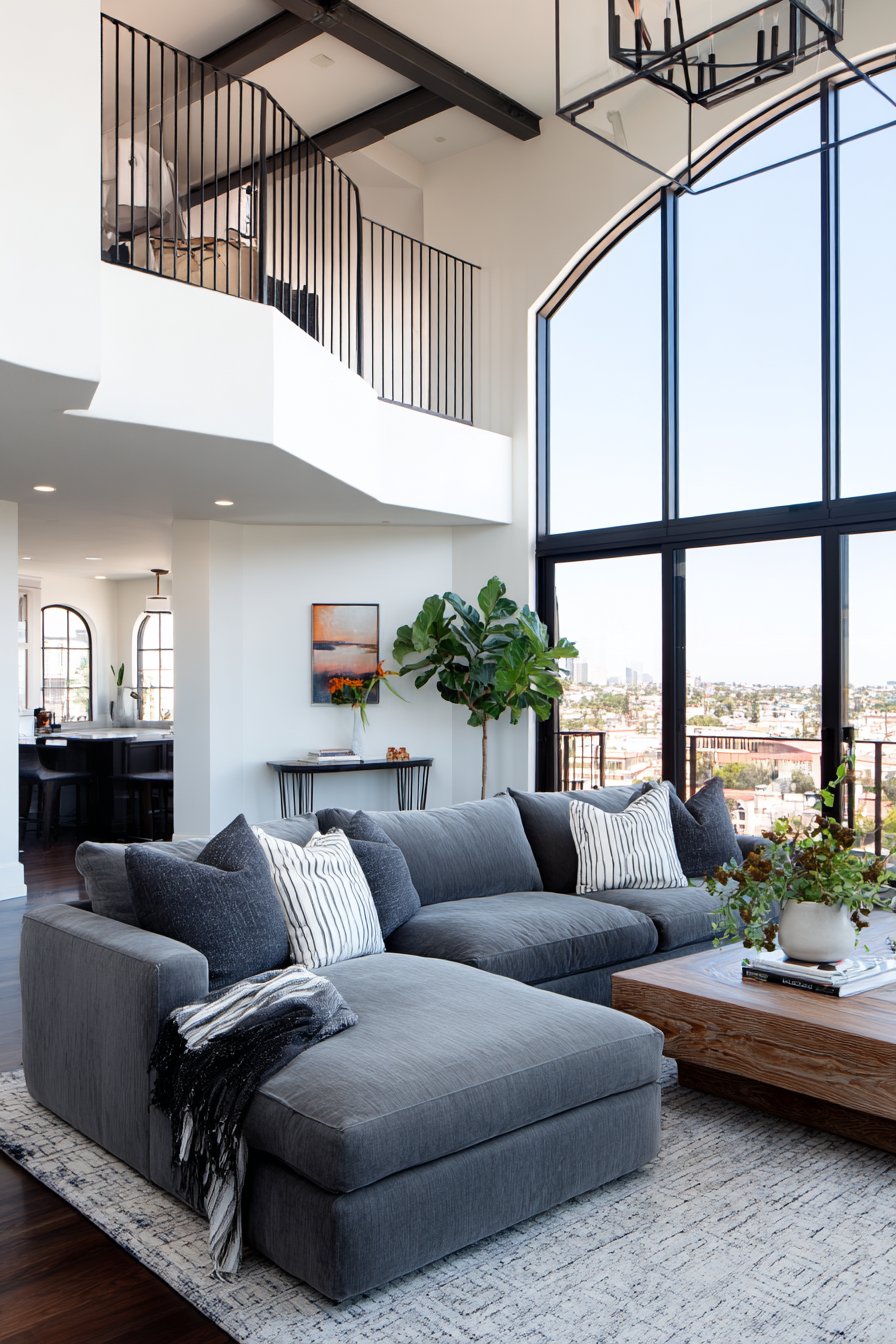
A grey and cream area rug anchors the seating zone, its edges defining the living area’s boundaries and visually separating it from adjacent spaces with different flooring treatments or rug placements. A console table positioned behind the sofa provides additional surface space for lamps, accessories, or casual dining without blocking sightlines or creating barriers. This doubles the sofa’s utility, making its back view attractive and functional rather than an afterthought.
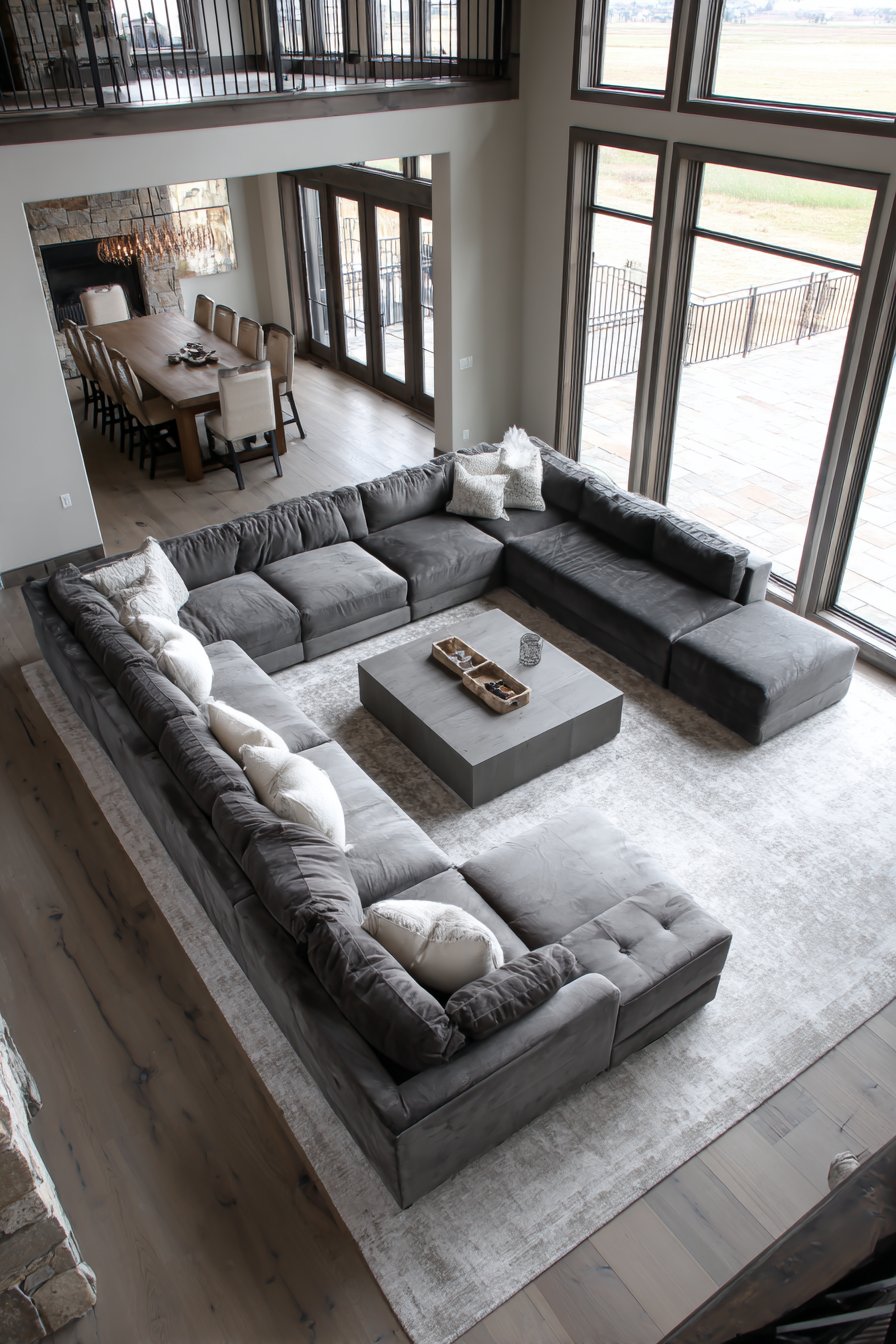
Large windows provide natural light throughout the open space, with the grey sectional’s neutral tone ensuring it works harmoniously with adjacent areas that may have different color schemes or design treatments. Wide-angle interior photography showcases smart furniture placement and grey’s role in defining zones within open layouts. This approach demonstrates how grey furniture provides flexibility in open-plan living, working as a unifying neutral that connects different areas while maintaining distinct identities.
Key Design Tips:
- Position sectionals perpendicular to adjacent spaces to create subtle room division
- Use area rugs to define activity zones within larger open spaces
- Add console tables behind sofas to create functional room dividers with storage and display
- Choose neutral grey furniture that coordinates with multiple adjacent color schemes
- Maintain visual connection between spaces while creating distinct functional areas
20. French Country Romance and Soft Sophistication
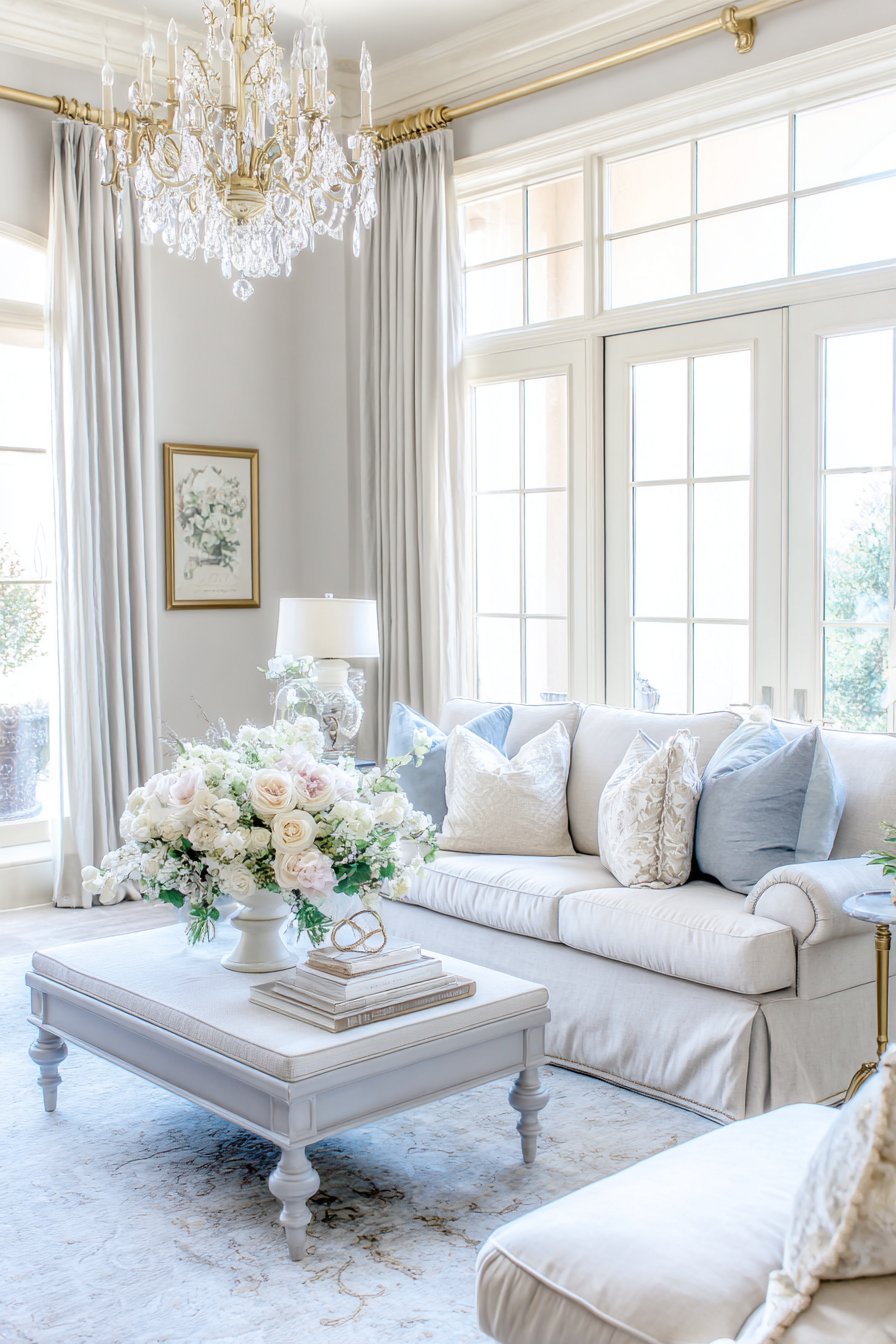
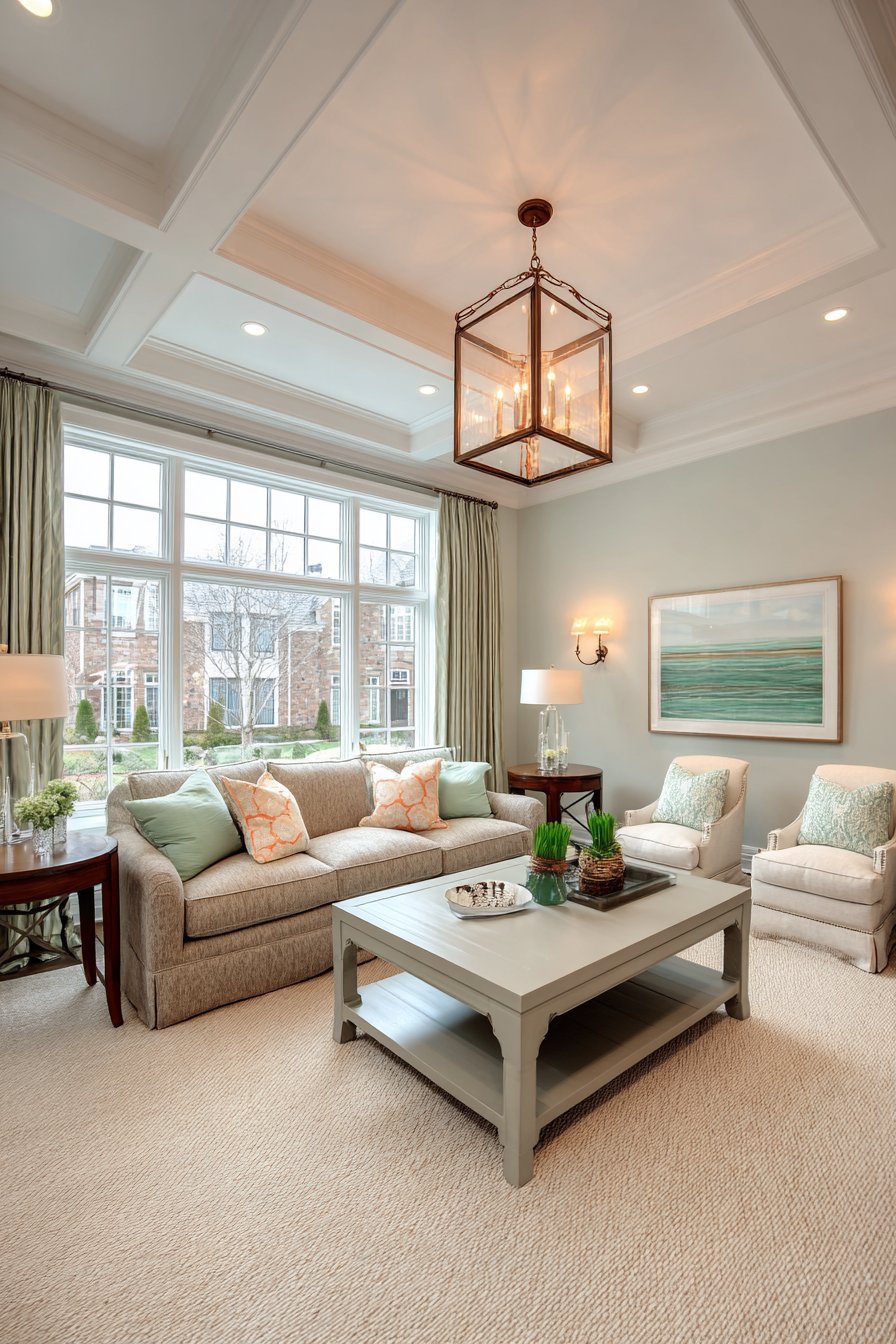
Romantic elegance infuses this transitional living room with French country influence, featuring a grey linen sofa with soft, rounded arms and skirted base that references traditional European furniture forms. The sofa’s grey linen upholstery provides sophisticated neutrality while its relaxed tailoring prevents excessive formality. Pale grey walls with white trim create elegant simplicity that evokes French country homes’ understated refinement, while a painted grey coffee table with turned legs centers the seating area with classical proportions.
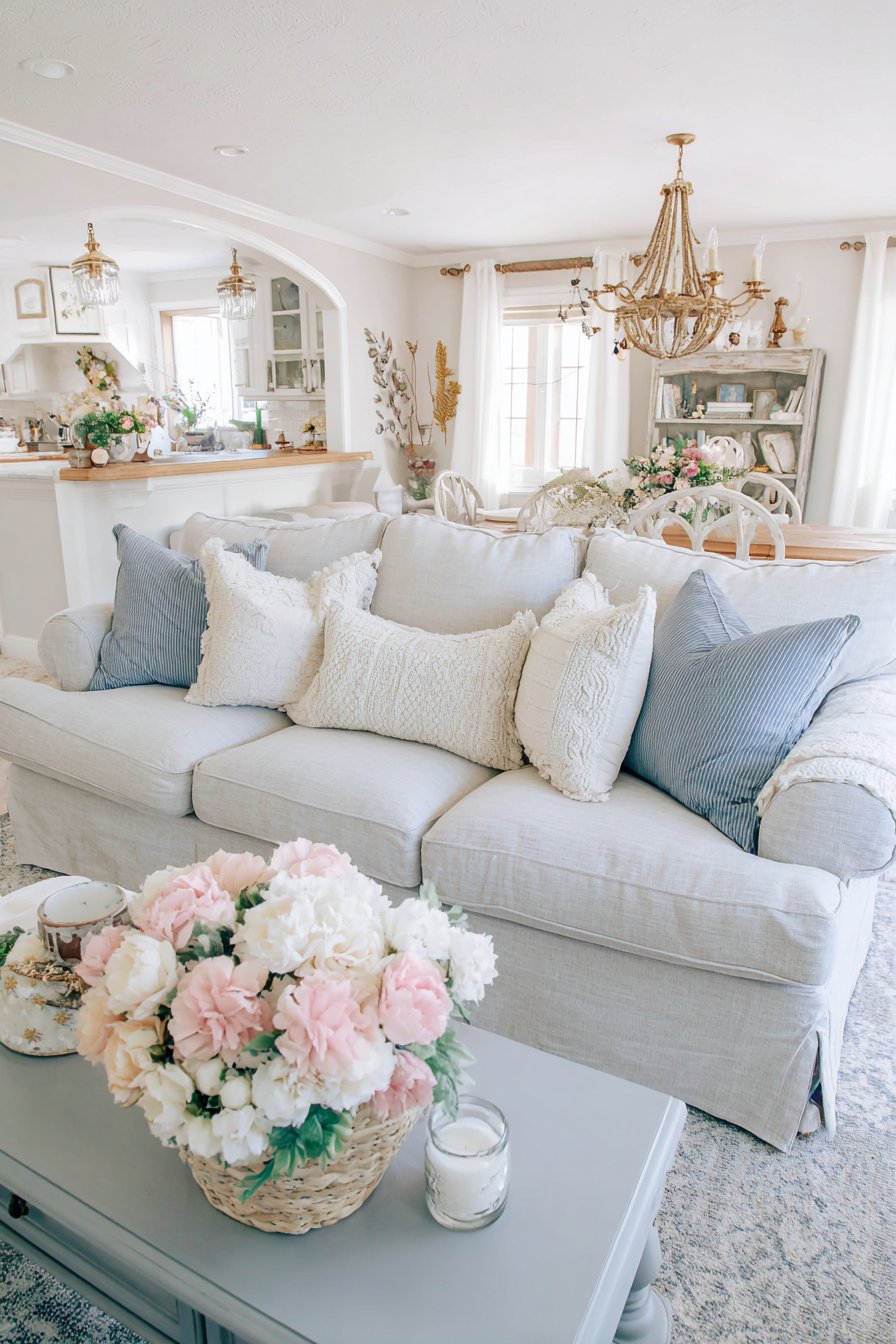
Soft blue and cream accents in pillows and curtains add gentle color that enhances rather than dominates the grey foundation. These touches reference the soft color palettes typical of French country design—faded blues, dusty lavenders, soft greens—colors that appear aged by sunlight and time rather than fresh from the paint can. Antique brass picture lights illuminate artwork with warm, focused beams, while a vintage-style chandelier with crystal accents provides ambient lighting with romantic sparkle.
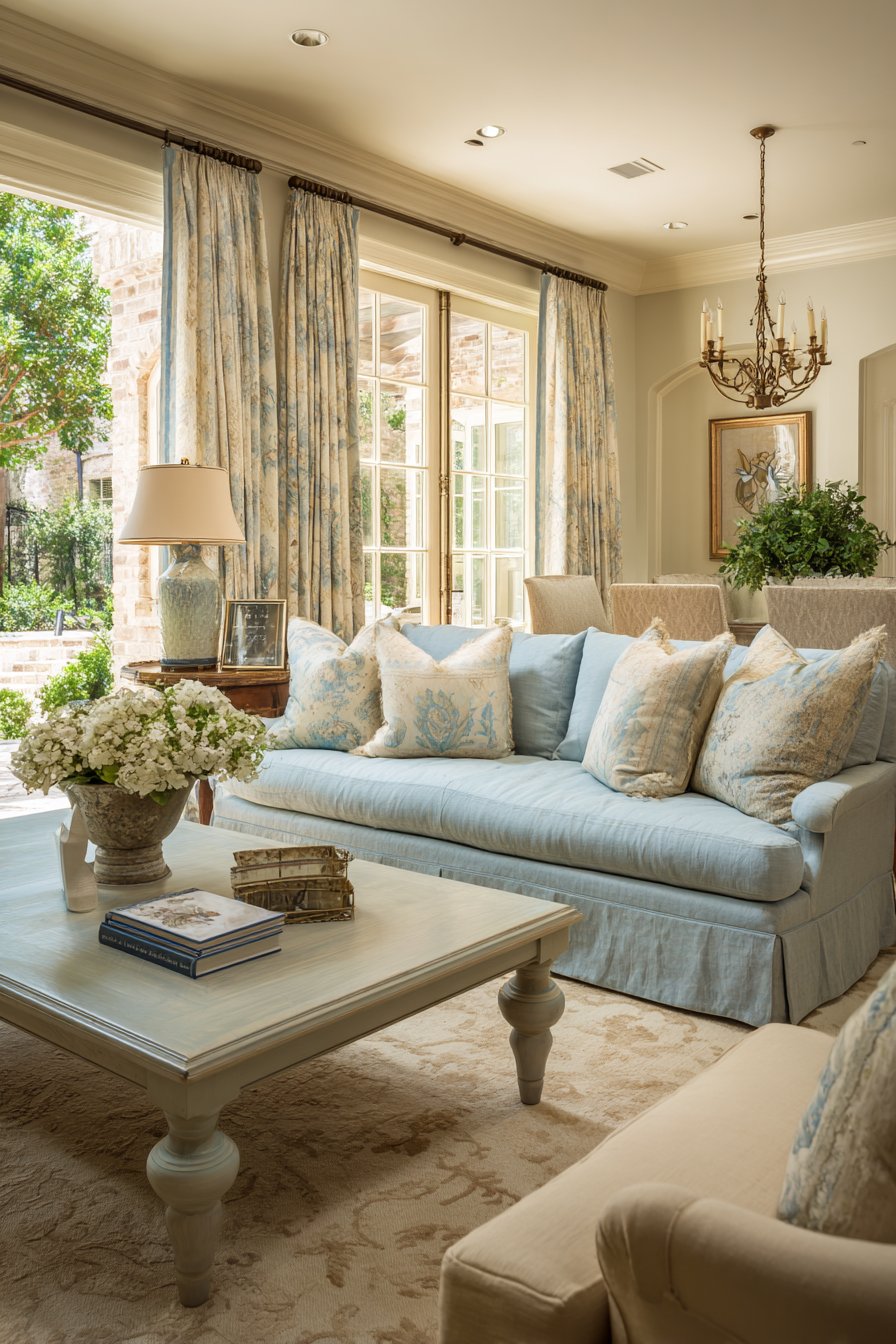
Interior design photography captures the romantic, timeless quality of French country design with grey as the soft, sophisticated foundation. The space feels collected over time rather than decorated all at once, with furniture and accessories suggesting inheritance and careful curation rather than coordinated purchase. This aesthetic demonstrates how grey can support romantic, feminine design just as successfully as it anchors masculine or modern spaces—it’s all in the supporting materials, forms, and color accents.
Key Design Tips:
- Choose linen upholstery in soft grey for authentic French country texture and sophistication
- Select furniture with classical details like turned legs, skirted bases, and rounded arms
- Add muted color accents in soft blues, lavenders, or greens rather than saturated hues
- Install antique brass lighting fixtures for warm, romantic illumination
- Create a collected look by mixing furniture periods and styles within the French country aesthetic
21. Budget-Friendly Beauty and Accessible Style
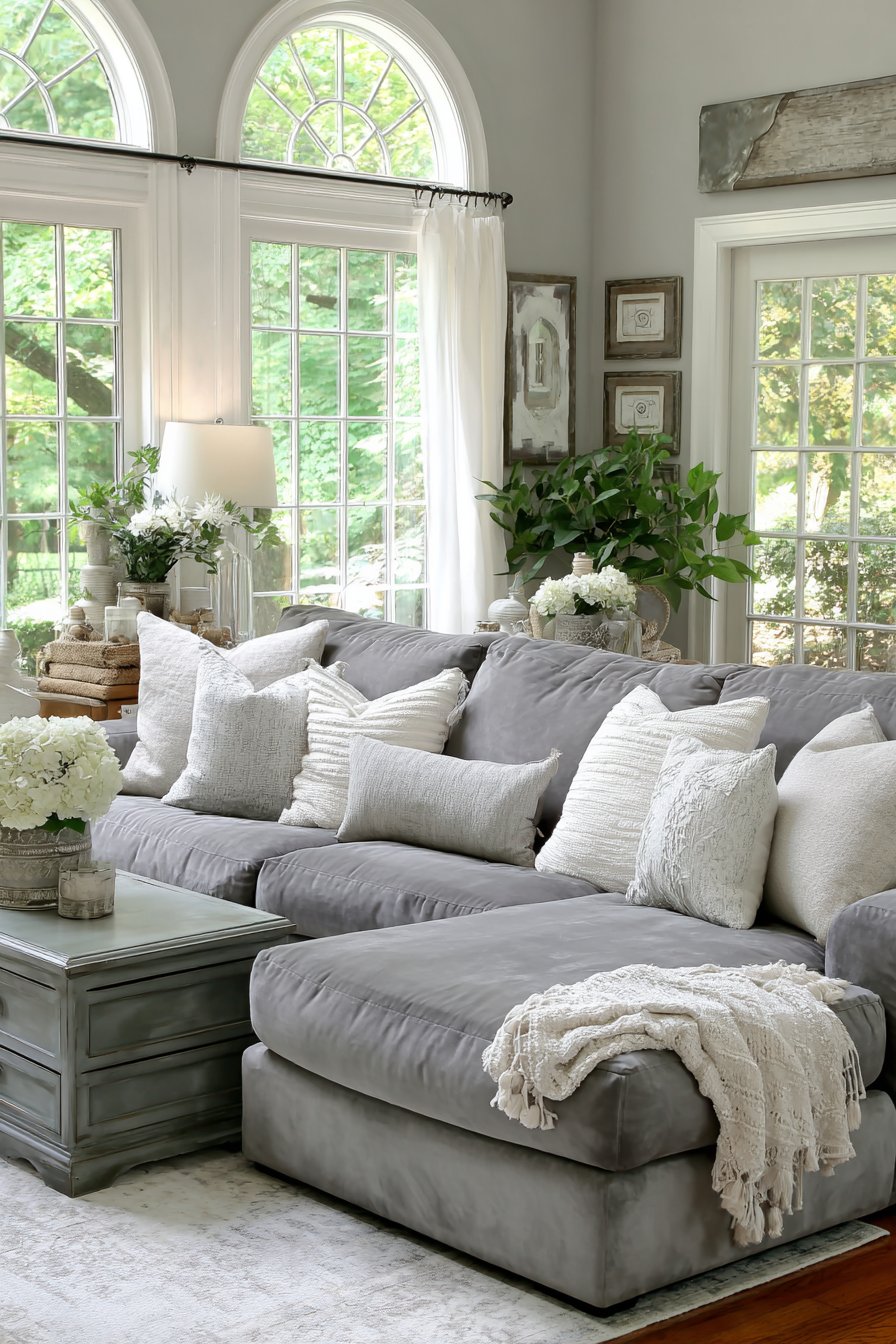
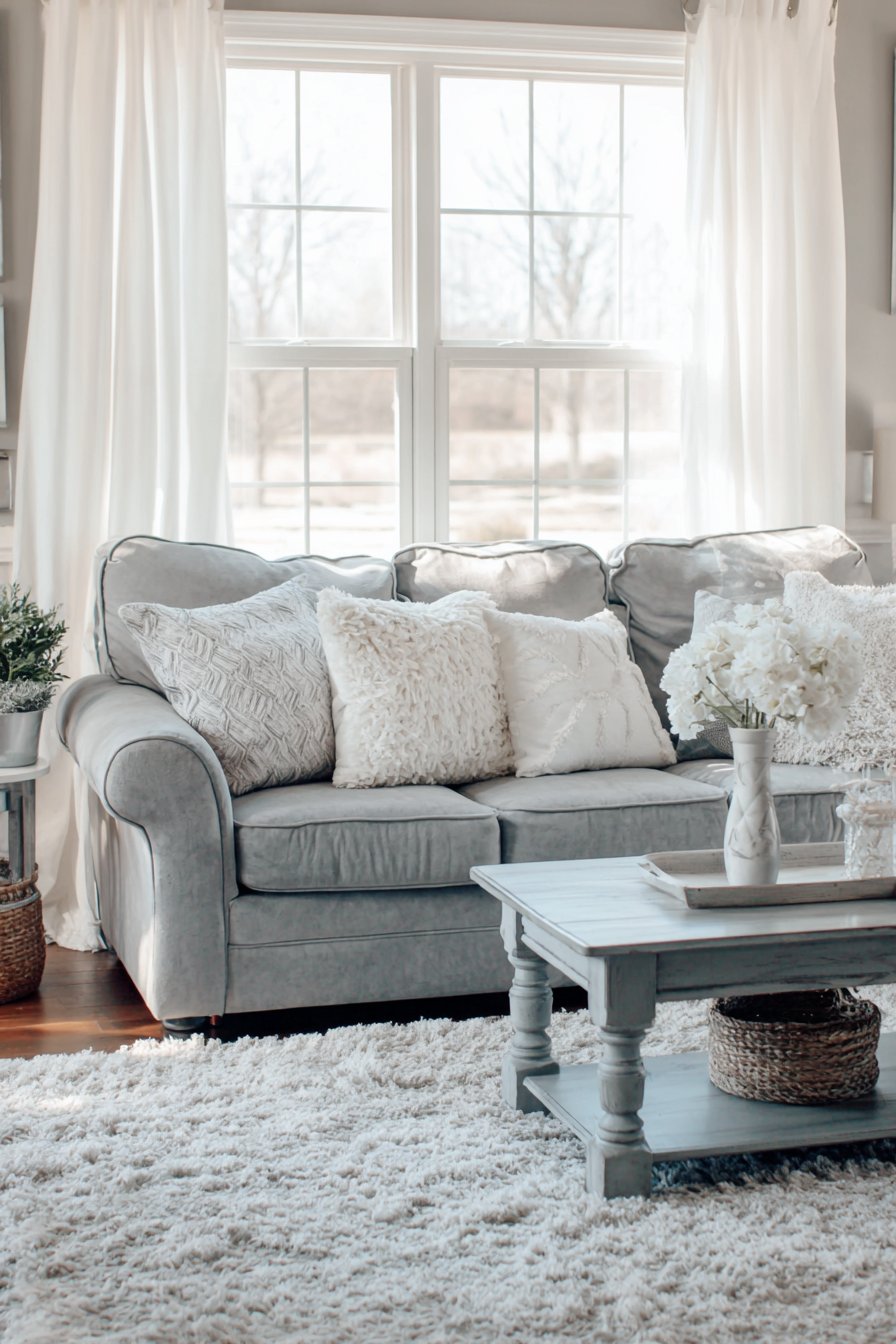
Proving that beautiful design need not require unlimited budgets, this living room features an affordable grey sofa from a major furniture retailer styled to appear far more expensive than its actual cost. The key lies not in the sofa itself but in how it’s presented and accessorized. A DIY painted grey accent wall adds custom-looking architectural interest for the cost of a gallon of paint and a weekend’s labor. A thrifted coffee table, carefully painted in a complementary grey tone, demonstrates how secondhand finds can be transformed into coordinated pieces that look intentionally collected.
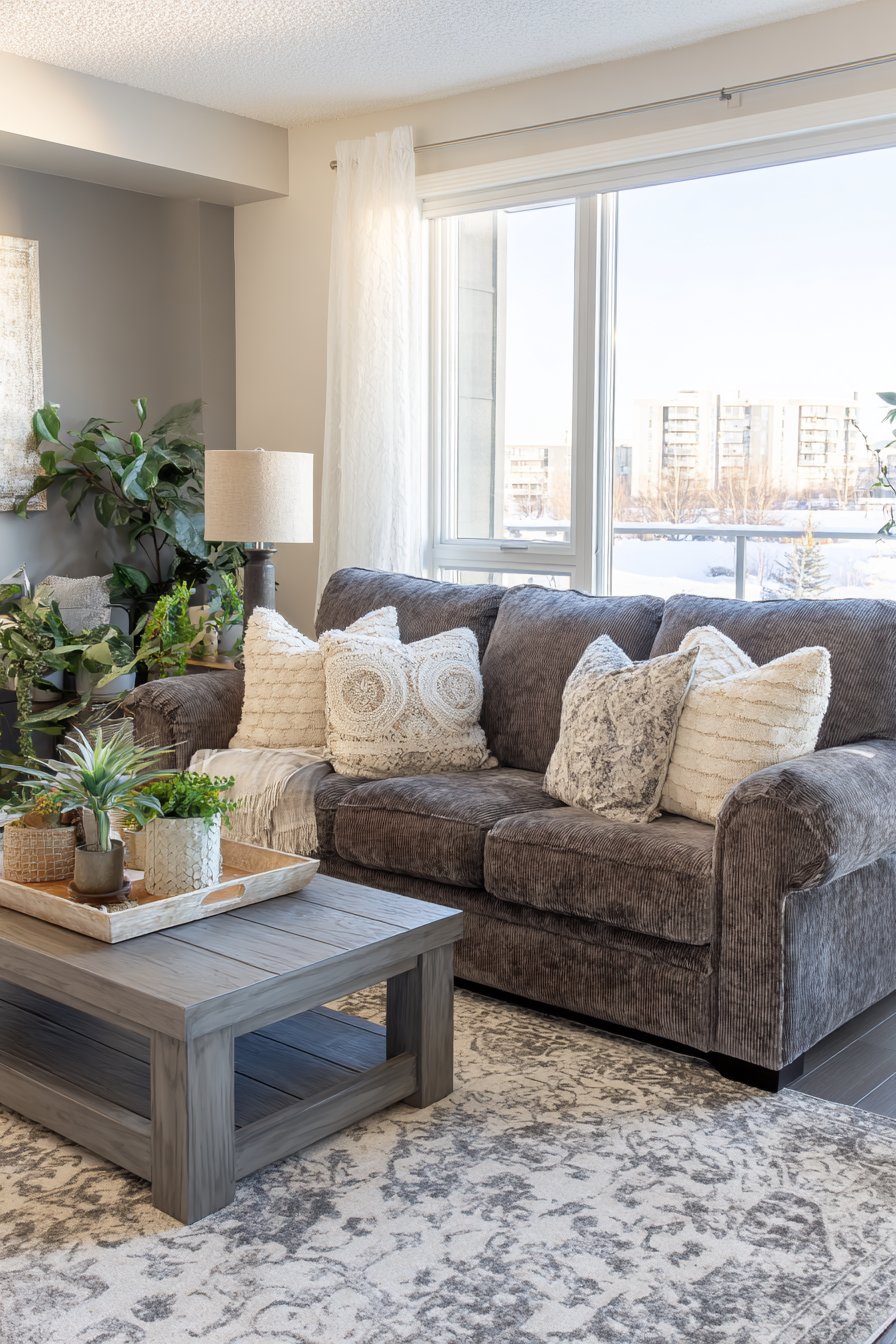
Budget throw pillows in coordinating greys and neutrals layer the sofa, proving that mixing price points creates more interesting results than purchasing expensive matching sets. Simple white curtains from affordable retailers frame windows without custom workroom costs, while indoor plants from local nurseries bring life and color without significant investment. The strategic use of grey as the unifying color allows mix-and-match pieces from various sources to appear intentionally coordinated rather than assembled from necessity.
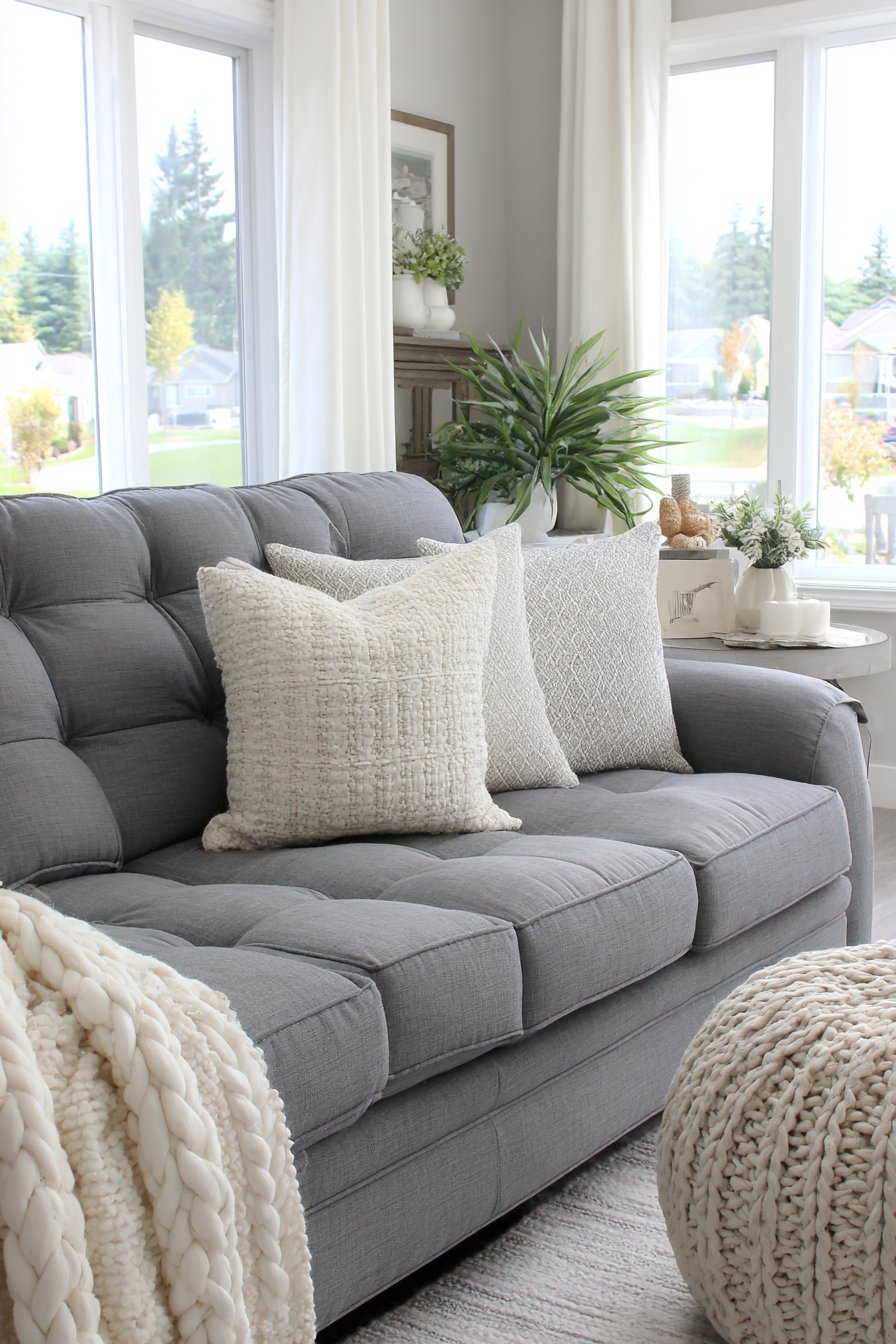
Natural window lighting eliminates the need for expensive light fixtures in this photograph, while minimal accessories create clean, achievable style that real people can replicate. Interior photography demonstrates that grey living rooms can be beautiful at any budget, with thoughtful styling and DIY effort compensating for limited funds. This approach proves that the principles of good design—scale, proportion, cohesive color, and intentional editing—matter far more than price tags.
Key Design Tips:
- Select basic grey sofas from affordable retailers and elevate them with styling and accessories
- Create accent walls with paint rather than expensive wallpaper or architectural treatments
- Shop thrift stores and refinish finds in coordinating grey tones for custom-looking cohesion
- Mix budget and investment pieces, spending on items that touch your body (sofa, bedding) and saving on decorative elements
- Use grey as a unifying color that makes mixed sources appear intentionally coordinated
Why These Gray Couch Living Room Ideas Represent the Best in Interior Design
The twenty-one living room concepts presented in this comprehensive guide represent the pinnacle of modern interior design thinking, demonstrating how a single furniture piece—the grey couch—can serve as the foundation for dramatically different aesthetic approaches. What makes these designs truly exceptional is their careful balance of visual appeal and practical functionality, proving that beautiful spaces must also be livable spaces. Each concept addresses real-world considerations including budget constraints, spatial limitations, lifestyle needs, and maintenance realities while maintaining uncompromising attention to aesthetic quality and design integrity.
The versatility demonstrated across these grey couch living room ideas showcases interior design’s evolution toward personalization and away from rigid style categories. Today’s homeowners need not choose between traditional and contemporary, formal and casual, or luxurious and practical—they can blend elements from multiple approaches to create spaces that authentically reflect their unique personalities and lifestyles. The grey sofa serves as the perfect anchor for this flexibility, its neutral sophistication allowing it to work equally well in minimalist Scandinavian interiors, ornate traditional settings, or eclectic bohemian spaces.
From a practical standpoint, these designs excel because they acknowledge real life. The family-friendly concept addresses stain resistance and durability without sacrificing style. The small-space solution demonstrates how clever planning and multifunctional furniture maximize limited square footage. The budget-conscious approach proves that beautiful design is accessible regardless of financial constraints. These real-world considerations elevate these concepts beyond mere aesthetic exercises into genuinely useful guides that readers can adapt and implement in their own homes.
The emphasis on grey as the foundational color provides numerous advantages that make these designs particularly relevant for contemporary living. Grey serves as the ultimate neutral, working with warm and cool color palettes equally well. Unlike stark white, which can feel sterile or clinical, or beige, which can read as dated or boring, grey offers sophisticated neutrality that feels current and intentional. Its ability to range from nearly black charcoal to pale silver provides remarkable flexibility, allowing homeowners to adjust the mood and atmosphere of their spaces through tonal variation while maintaining color consistency.
These grey couch living room ideas also excel in their attention to lighting—both natural and artificial. Each concept addresses how light interacts with grey surfaces, recognizing that this color family appears dramatically different depending on light quality, intensity, and direction. The designs that incorporate abundant natural light demonstrate grey’s ability to reflect and amplify available illumination, making spaces feel larger and more inviting. Concepts featuring dramatic artificial lighting showcase how grey surfaces interact with various light temperatures, from warm golden hues to cool white tones, proving that thoughtful lighting design can completely transform grey’s appearance and the room’s overall atmosphere.
The material diversity across these twenty-one concepts deserves particular recognition. From sumptuous velvet and structured leather to casual linen and durable performance fabrics, these designs demonstrate that grey upholstery can be executed in virtually any material to achieve different effects. This material flexibility allows grey sofas to work in everything from formal traditional settings requiring luxe fabrics to casual family rooms needing washable, kid-proof surfaces. The supporting materials—from rustic reclaimed wood to sleek polished metal, from natural rattan to sophisticated marble—further demonstrate how grey coordinates beautifully with virtually any material palette.
Style consistency within each concept while maintaining diversity across the collection represents another significant achievement. The industrial design doesn’t accidentally incorporate elements that would be more appropriate in a French country setting, and the minimalist Scandinavian space doesn’t suddenly include ornate traditional details. This design discipline ensures that each concept presents a cohesive vision that readers can understand and replicate. Yet across the full collection, the diversity is remarkable—twenty-one distinctly different approaches that share only a grey couch as their common element, proving this furniture piece’s extraordinary versatility.
The scalability of these designs enhances their practical value. While some concepts specifically address small spaces or luxury budgets, most can be adapted to different scales and price points. The principles demonstrated—balancing proportions, layering textures, coordinating tones, creating focal points—apply regardless of room size or budget constraints. A reader might be inspired by the luxury living concept’s material layering but execute it with more affordable alternatives, or adapt the small-space solutions for a larger room by simply scaling up the furniture pieces while maintaining the organizational principles.
Color theory expertise runs throughout these grey couch living room ideas, with each concept demonstrating sophisticated understanding of how colors interact and influence perception. The monochromatic design showcases how tonal variation creates depth without multiple hues. The coastal concept illustrates how grey provides sophisticated neutrality that elevates potentially clichéd beach themes. The bohemian space demonstrates grey’s ability to ground eclectic color combinations without competing for attention. This expert color handling ensures that each design feels intentional and professional rather than accidental or amateur.
The cultural and historical references embedded in these concepts add depth that transcends superficial trendiness. The mid-century modern design honors authentic period aesthetics rather than generic retro pastiche. The French country concept references actual European design traditions rather than theme-park interpretations. The industrial space celebrates genuine materials and honest construction rather than artificial distressing. This authenticity ensures these designs will remain relevant and appealing far beyond current trend cycles.
Environmental and sustainability considerations also inform several of these grey couch living room ideas. The Scandinavian concept emphasizes quality pieces designed for longevity and adaptation rather than disposability. The budget-friendly approach demonstrates how thrifting and refinishing extends furniture life cycles. The family-friendly design showcases how durable materials and smart planning reduce the need for frequent replacement. These sustainable principles align with contemporary values while proving that environmental responsibility and aesthetic beauty coexist comfortably.
The photography style specified throughout these concepts deserves mention as well. By emphasizing professional interior design photography techniques—wide-angle perspectives, balanced exposure, attention to material textures, realistic lighting—these designs present achievable goals rather than impossible fantasies. The photography captures how real rooms look in natural and artificial light, with subtle shadows and texture details that help readers visualize these concepts in their own homes. This realistic presentation builds confidence that these designs are genuinely achievable rather than requiring impossible perfection.
Conclusion
The journey through these twenty-one grey couch living room ideas reveals a fundamental truth about contemporary interior design: sophisticated spaces emerge from thoughtful planning, intentional material selection, and authentic personal expression rather than unlimited budgets or professional designer intervention. The grey sofa—whether clad in sumptuous velvet or durable performance fabric, whether structured and formal or relaxed and casual—provides the perfect neutral foundation upon which to build living rooms that reflect individual personalities, accommodate real-life needs, and create environments where families genuinely want to spend time.
What makes grey such a powerful choice for primary upholstery extends beyond mere aesthetic fashion. This color family’s remarkable range from nearly black to almost white, its ability to read warm or cool depending on undertones and lighting, and its compatibility with virtually every other color and material make it genuinely versatile rather than safely neutral. Grey doesn’t disappear into bland invisibility—instead, it creates sophisticated backdrops that allow architectural features, cherished accessories, and carefully curated collections to shine while maintaining visual cohesion and intentional design.
As you consider implementing these ideas in your own home, remember that the most successful interiors balance inspiration with adaptation. Use these concepts as starting points rather than rigid formulas, adjusting for your specific space constraints, lifestyle needs, existing architectural features, and personal preferences. Perhaps you’re drawn to the Scandinavian aesthetic’s serene minimalism but need the family-friendly concept’s practical durability. Maybe the luxury living approach’s material richness appeals, but your budget aligns more closely with the affordable styling ideas. Combine elements from multiple concepts to create something uniquely yours—after all, the most beautiful spaces tell their inhabitants’ stories rather than mimicking magazine spreads.
The grey couch stands ready to anchor whatever vision you create, offering sophistication, flexibility, and timeless appeal that will serve you well through evolving tastes and changing life stages. Whether you’re furnishing your first apartment, refreshing a longtime home, or creating a dream space in a new residence, these ideas demonstrate that beautiful, functional, personally meaningful living rooms await those willing to invest thought, creativity, and intention into their spaces. The path to your perfect grey couch living room begins with a single decision—and continues through countless choices that gradually transform an empty room into the heart of your home.


