
The television has evolved from a mere electronic appliance to a central focal point in modern living spaces. No longer relegated to a simple stand or basic mount, today’s TV installations demand thoughtful integration into the overall interior design scheme. A well-designed TV panel can elevate your entertainment area from functional to spectacular, serving as an architectural feature that anchors the room while providing essential storage and display opportunities. The art of creating the perfect TV panel lies in balancing aesthetics with functionality, ensuring that technology seamlessly blends with your chosen design style rather than disrupting it.
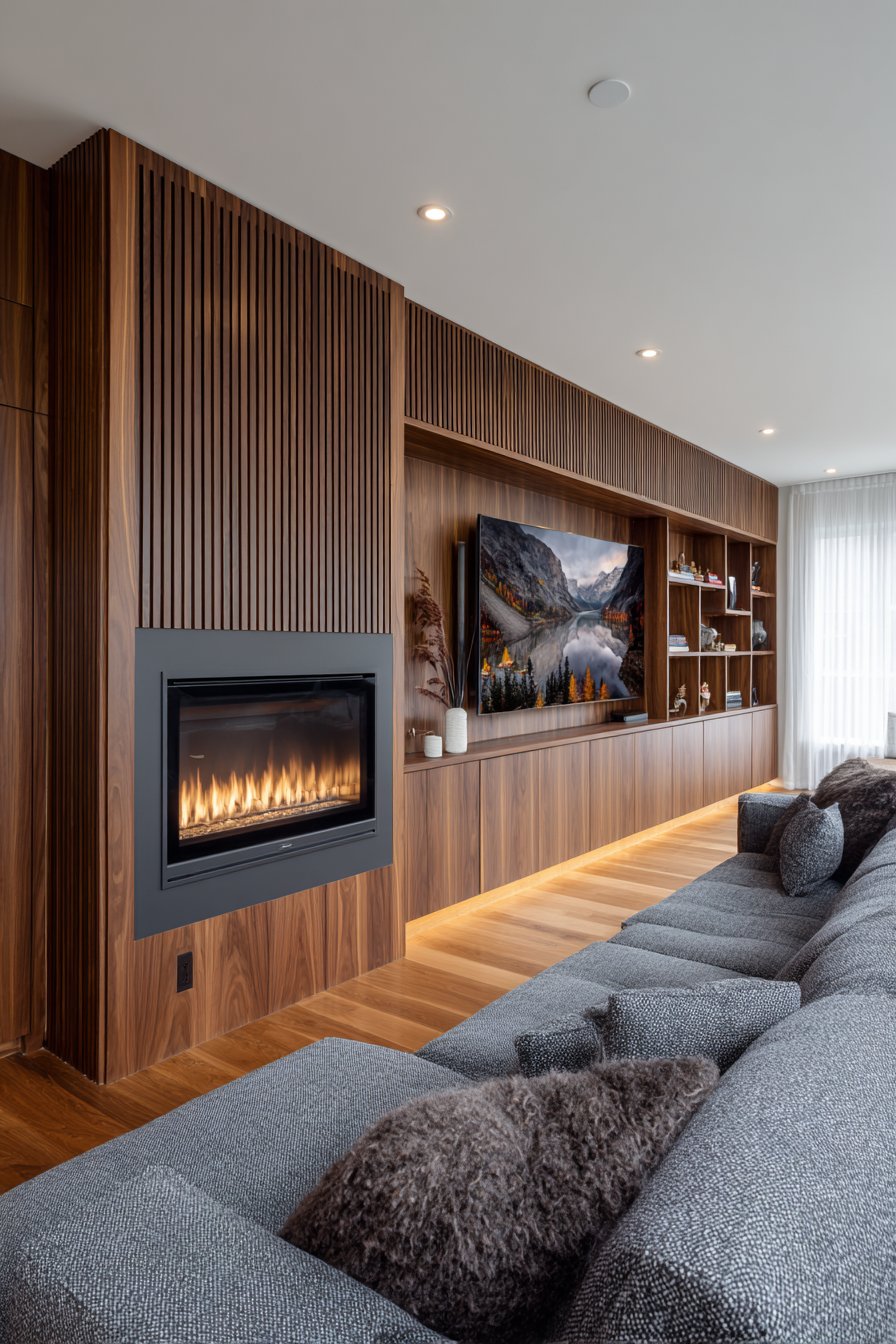
Contemporary homeowners increasingly recognize that the wall behind their television represents valuable real estate in their interior landscape. This space offers endless possibilities for creative expression, from sleek minimalist designs that celebrate simplicity to elaborate built-in systems that combine storage, display, and entertainment functions. The right TV panel can define your room’s character, establish visual hierarchy, and create a cohesive look that ties together all other design elements. Whether you’re working with a compact apartment or a spacious great room, strategic TV panel design can maximize both form and function.
In this comprehensive guide, we’ll explore twenty-three distinctive TV panel ideas that span the spectrum of design styles and practical solutions. From rustic reclaimed wood installations to high-tech smart home integrations, from coastal-inspired shiplap to luxurious velvet-upholstered panels, each approach offers unique benefits and aesthetic appeal. These designs demonstrate how thoughtful material selection, strategic lighting, clever storage solutions, and attention to architectural detail can transform your entertainment wall into a stunning design statement that reflects your personal style while enhancing your viewing experience.

1. Modern Geometric Entertainment Center
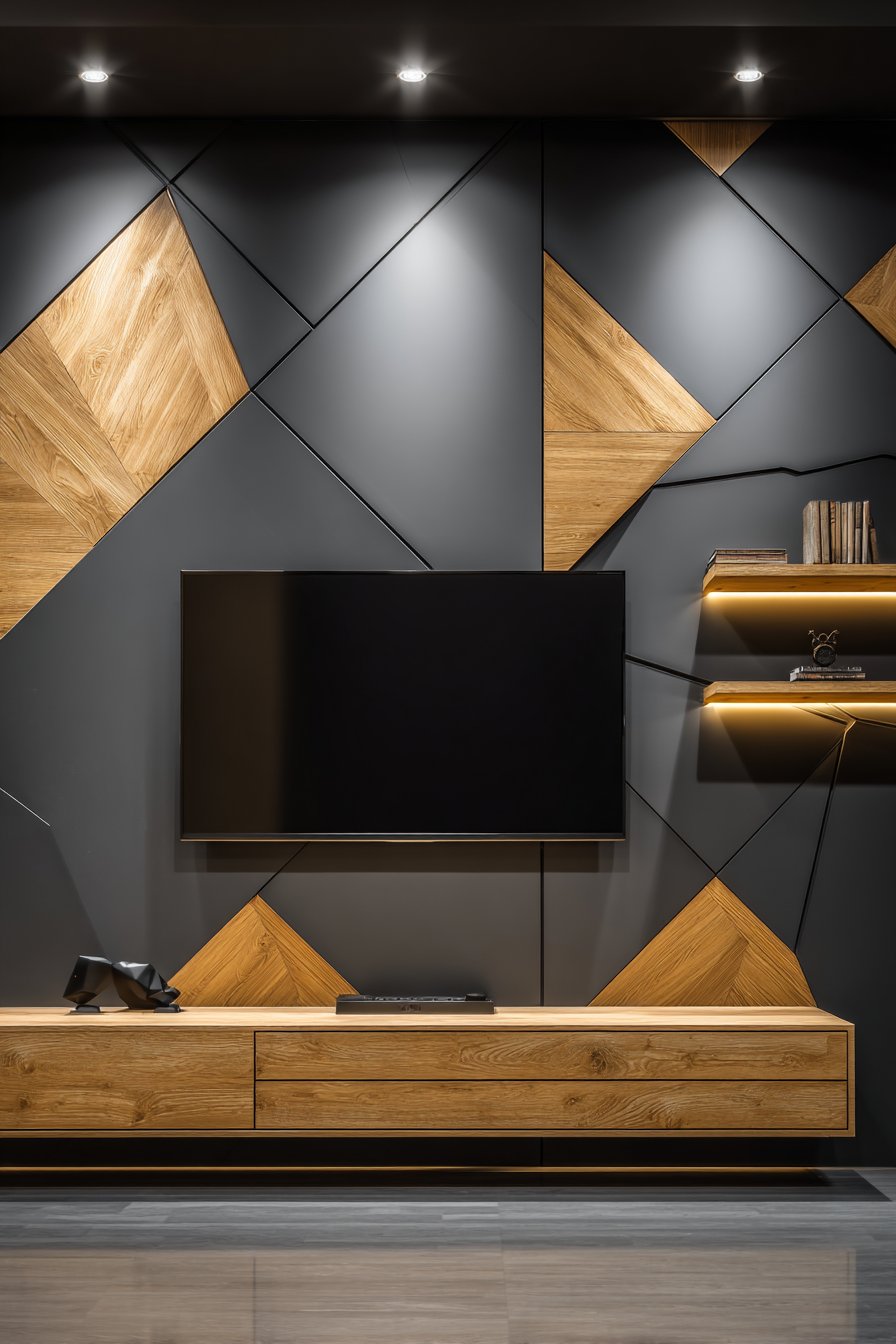
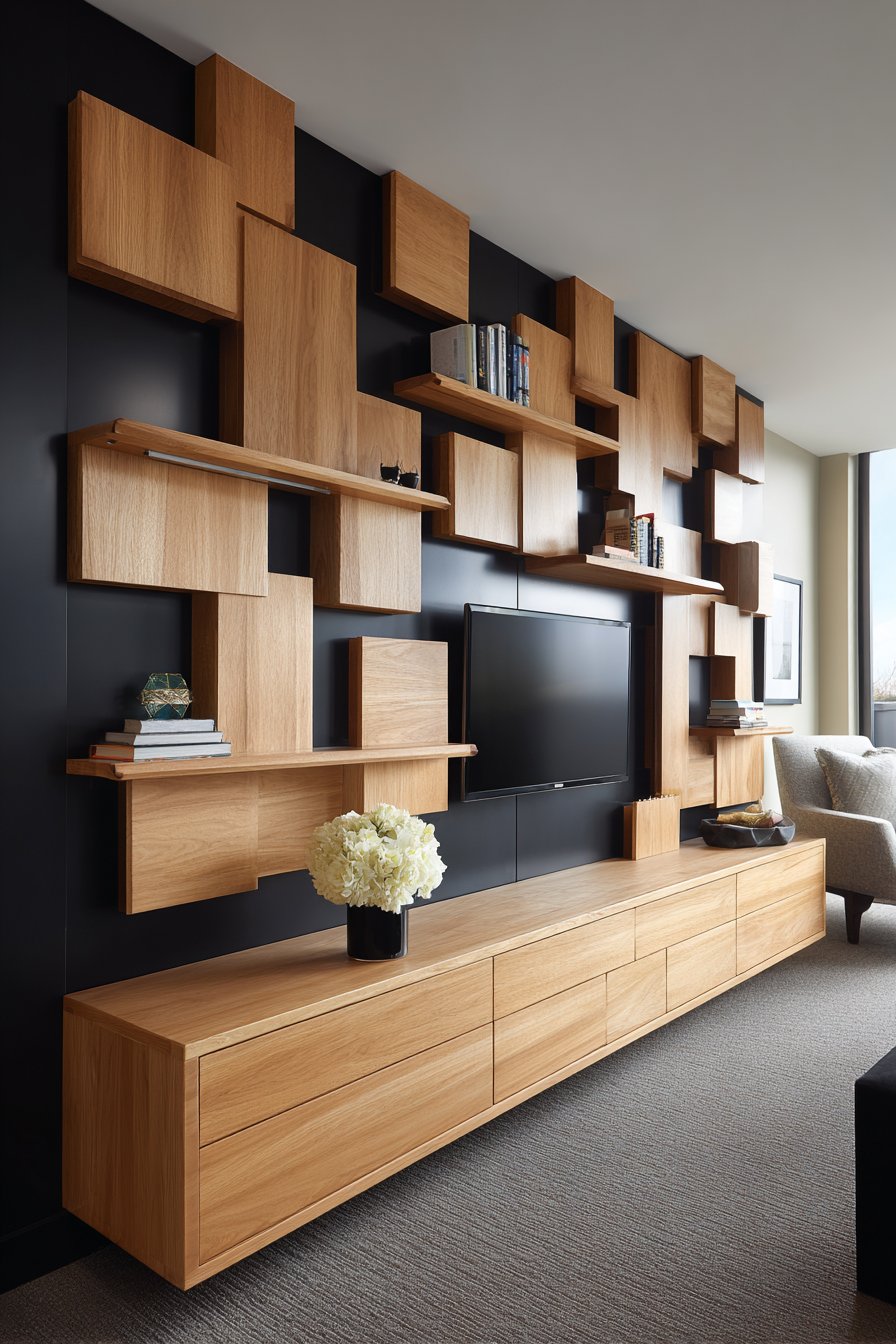
Step into a living room where architecture meets artistry through a striking TV panel that combines matte black and natural oak wood panels in an asymmetric geometric composition. This contemporary design creates visual drama through the interplay of contrasting materials and colors, with each panel carefully positioned to create dynamic movement across the wall. The flat screen television sits perfectly flush within the paneling, appearing almost as part of the wall itself rather than an afterthought. Integrated LED strip lighting hidden behind select panels adds dimensionality, casting subtle shadows that change throughout the day as natural light shifts.
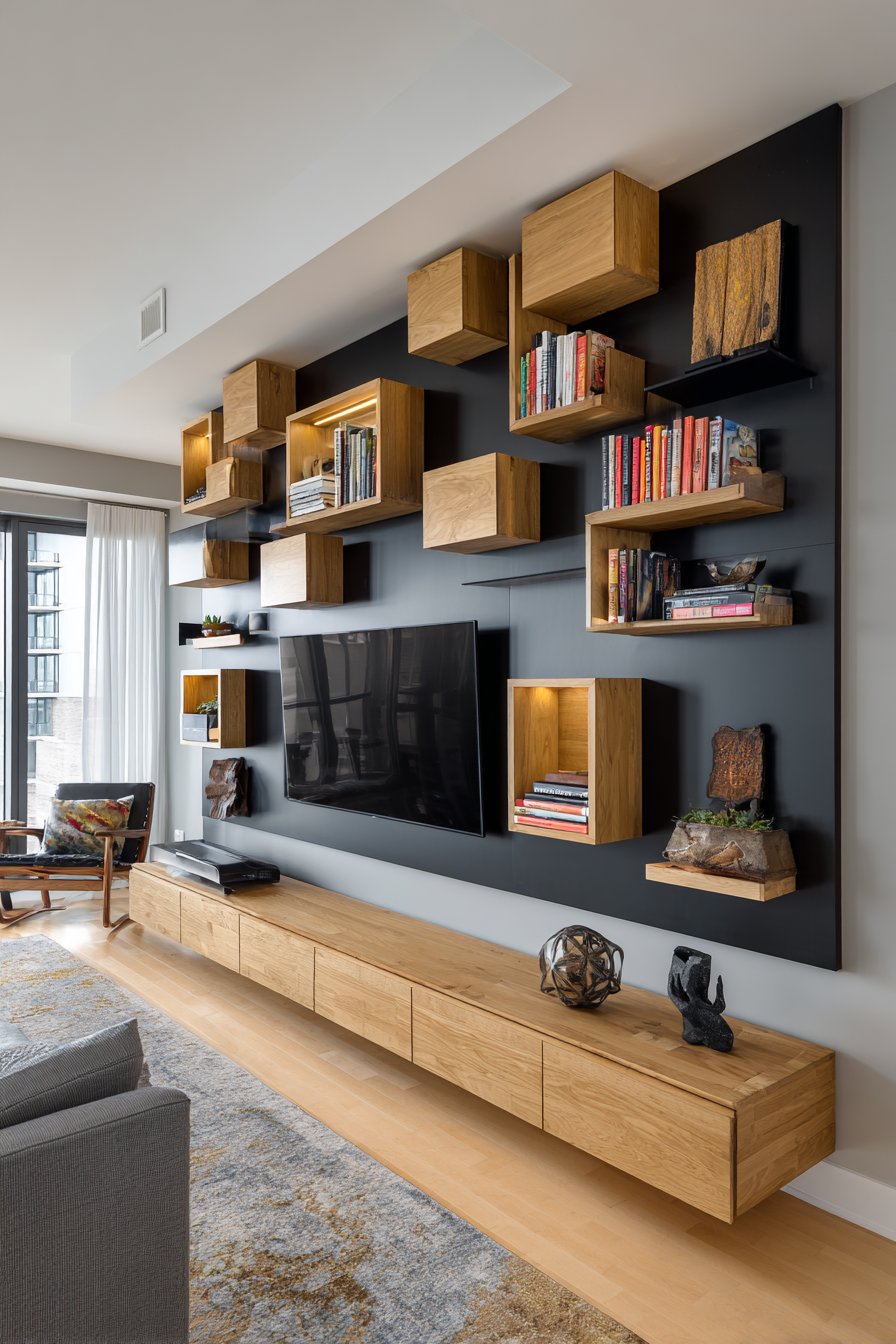
The floating media console below continues the material story, featuring push-to-open drawers that maintain the clean lines without visible hardware interrupting the aesthetic. The asymmetric floating shelves provide carefully curated display opportunities for books, art objects, and personal treasures, each shelf positioned at heights that create visual interest while maintaining balance. The geometric patterns draw the eye across the entire wall, making the television just one element in a larger composition rather than the sole focus.
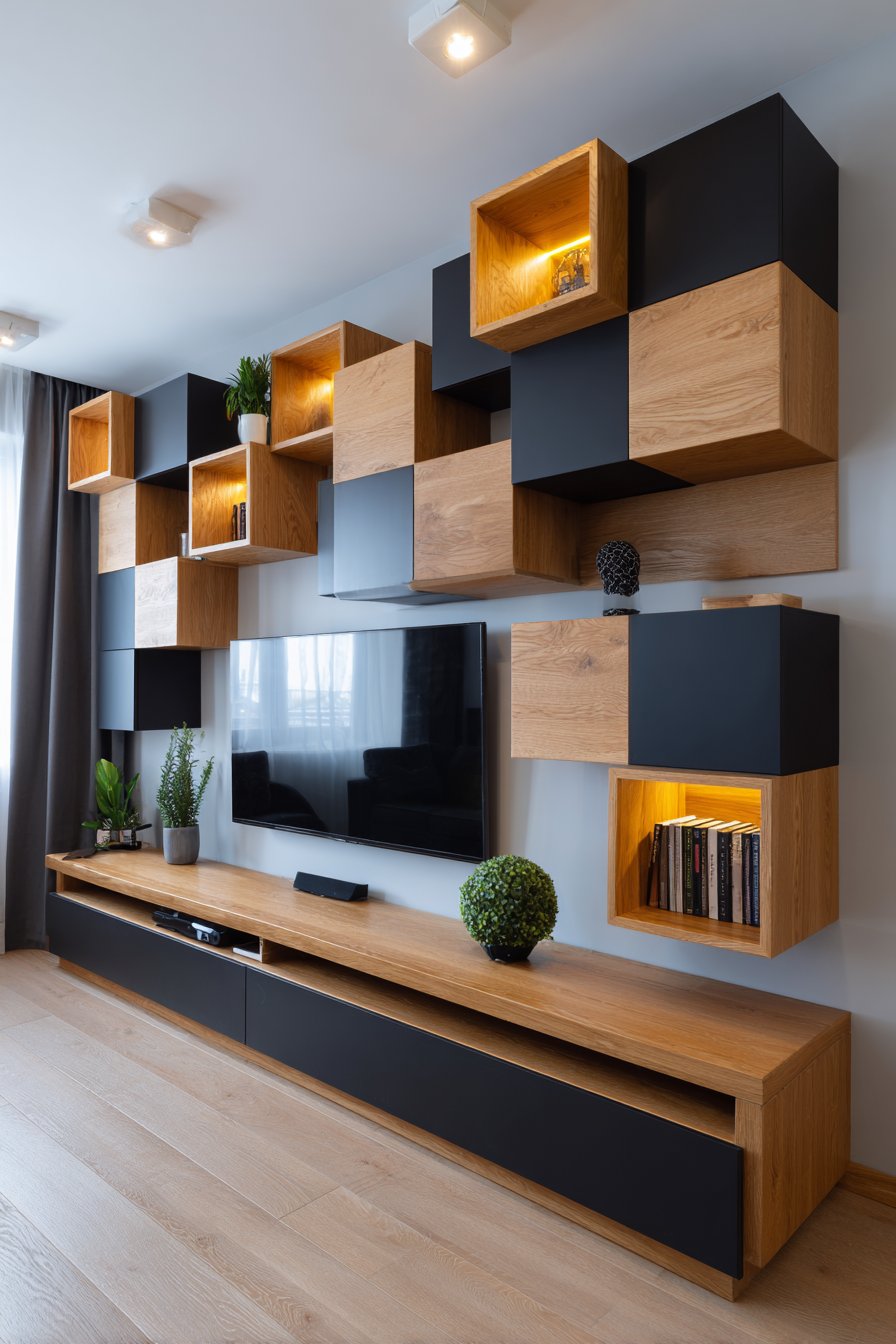
Professional interior photography captures how the textural contrast between the smooth matte black surfaces and the warm oak grain creates depth and sophistication. The wide-angle perspective reveals how this full-wall treatment transforms the entire room, creating an architectural feature that elevates the space beyond typical entertainment center installations. Natural light from adjacent windows highlights the fine details in the wood grain while the recessed LED lighting ensures the design remains equally impressive in evening hours.
Key Design Tips: Choose panels in odd numbers for more dynamic asymmetric compositions that feel intentional rather than haphazard. Ensure your TV sits at proper viewing height regardless of panel placement, typically with the center of the screen at seated eye level. Invest in quality LED strips with dimming capabilities to adjust ambiance for different activities from movie watching to entertaining. Consider cable management from the initial design phase, incorporating channels within the paneling for completely concealed wiring. Use a mixture of open and closed storage to balance display opportunities with practical media equipment storage needs.
2. Minimalist Floating Entertainment Unit
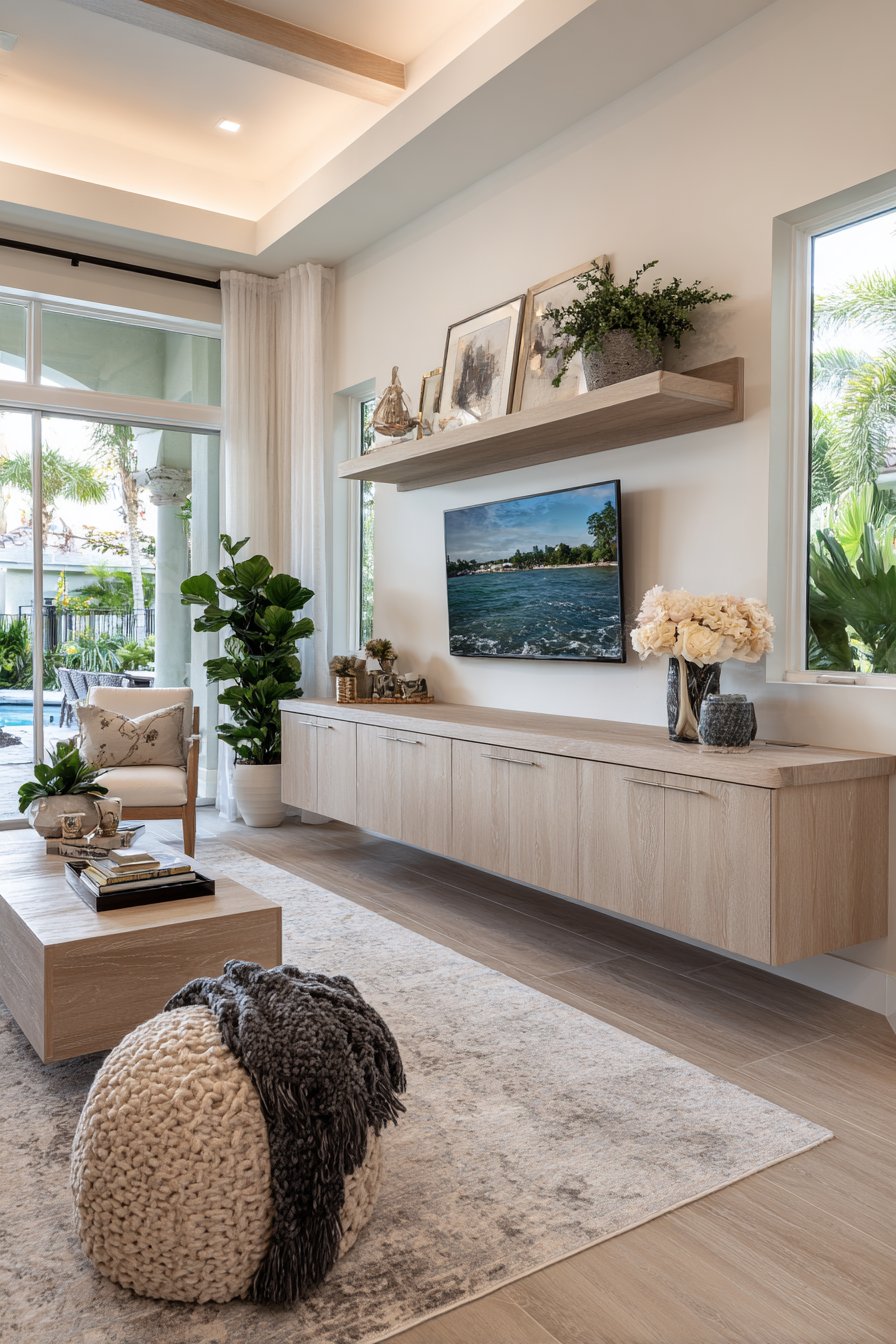
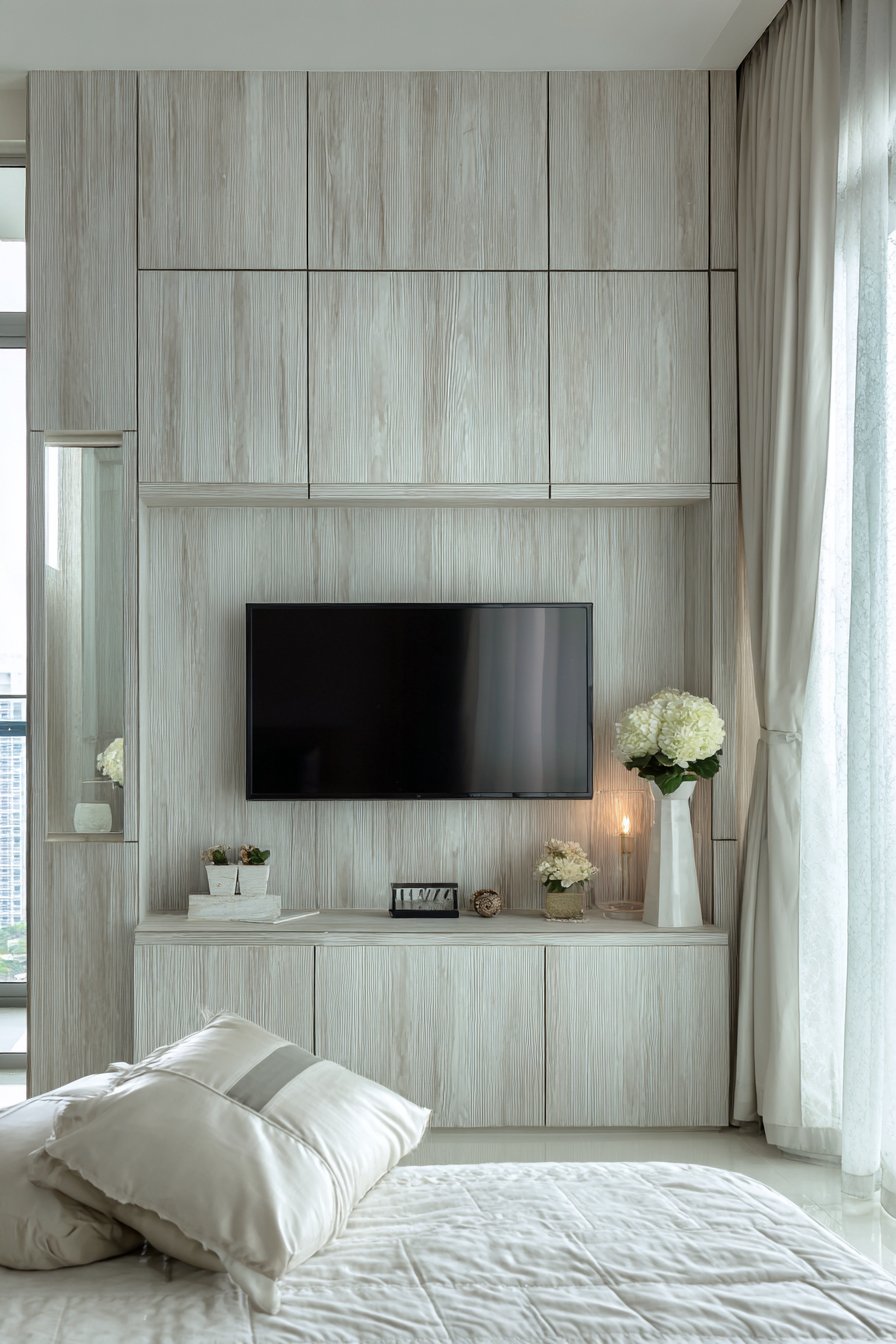
Embrace the beauty of restraint with a streamlined TV panel showcasing a floating entertainment unit in light ash wood that extends horizontally across the wall with elegant simplicity. The twelve-foot expanse creates impressive visual impact through clean lines and handleless cabinetry that opens with gentle pressure, eliminating all visual clutter from knobs and pulls. Thin horizontal grooves carved into the wood surface provide subtle texture and visual interest without overwhelming the serene aesthetic, creating gentle shadow lines that shift with changing light throughout the day.
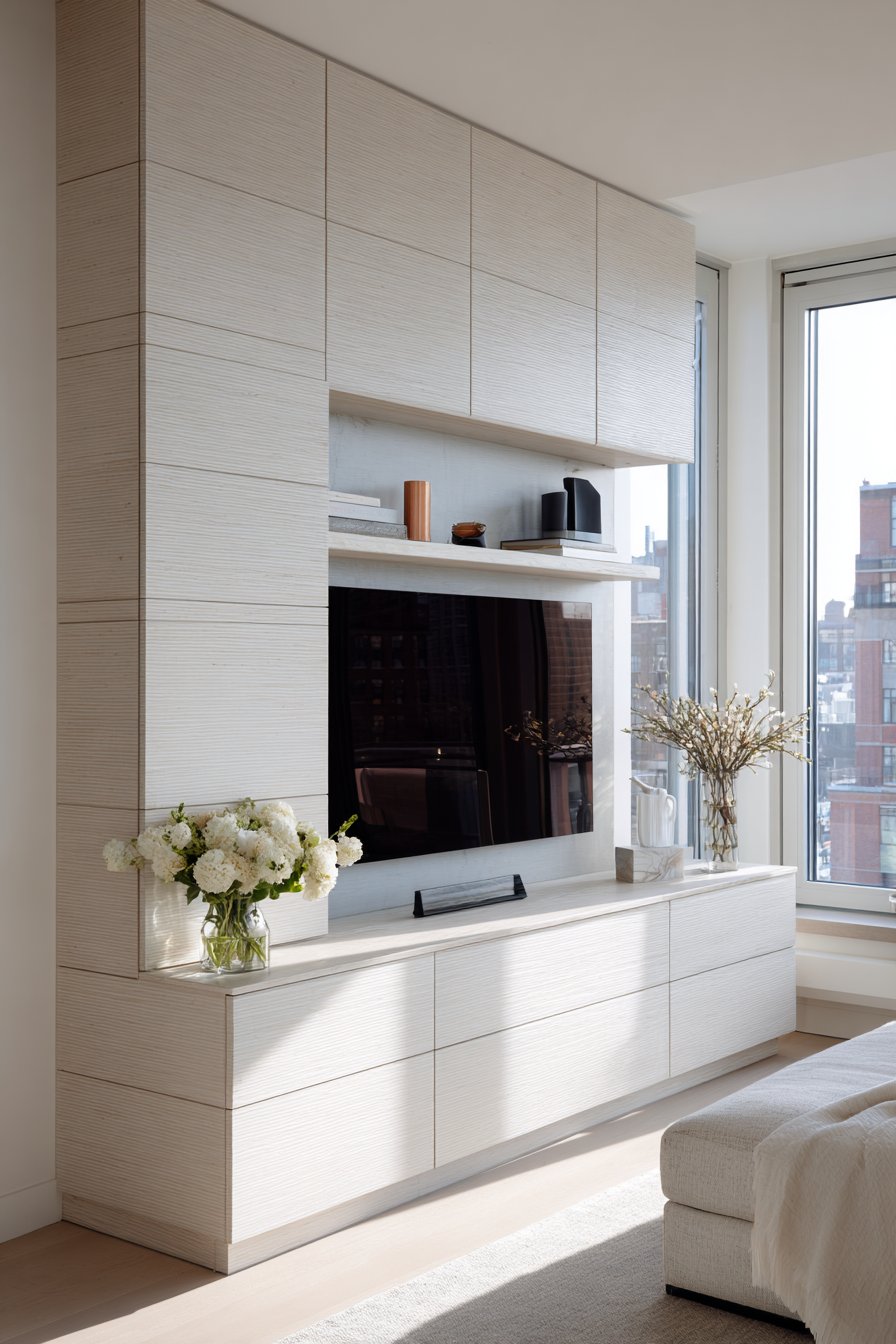
The television centers perfectly within this composition, mounted to appear as though floating against the soft white wall behind. Concealed storage compartments flank both sides, offering ample space for media components, gaming systems, and personal items while maintaining the uninterrupted horizontal flow. The light ash wood brings warmth to the minimalist palette, its fine grain visible enough to add natural beauty without competing for attention. Natural light from nearby windows plays across the surface, highlighting the wood’s subtle variations in tone and the precise craftsmanship of the joinery.
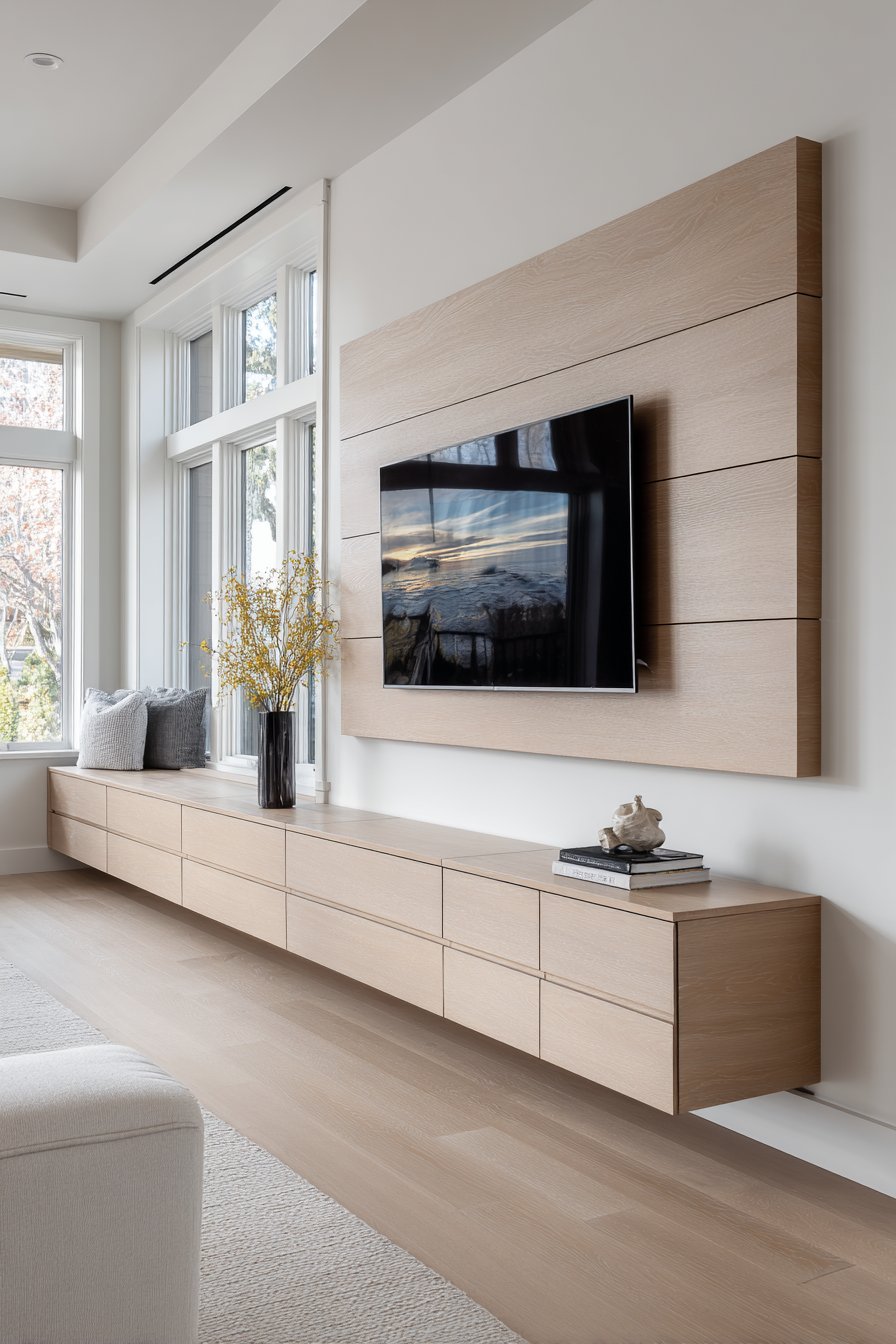
This design exemplifies how minimalism doesn’t mean cold or sterile—rather, it represents thoughtful editing where every element serves a purpose and nothing extraneous remains. The balanced exposure captured in professional interior photography showcases how proper lighting design is crucial to minimalist spaces, where fewer elements means each one receives greater visual emphasis. The functional elegance of this approach suits both small spaces where visual simplicity creates an illusion of greater square footage and larger rooms where the clean lines provide calm sophistication.
Key Design Tips: Select wood with consistent grain patterns for the most cohesive minimalist appearance, avoiding dramatic figure or color variation. Install floating units with robust hidden mounting systems rated for the combined weight of the unit plus stored items. Maintain strict symmetry in placement and proportion to achieve the balanced aesthetic essential to minimalist design. Choose ash, oak, or maple for light wood tones that bring warmth without heaviness to neutral palettes. Plan interior compartment organization carefully so concealed storage remains functional rather than becoming cluttered chaos behind closed doors.
3. Luxurious Marble-Look Entertainment Wall
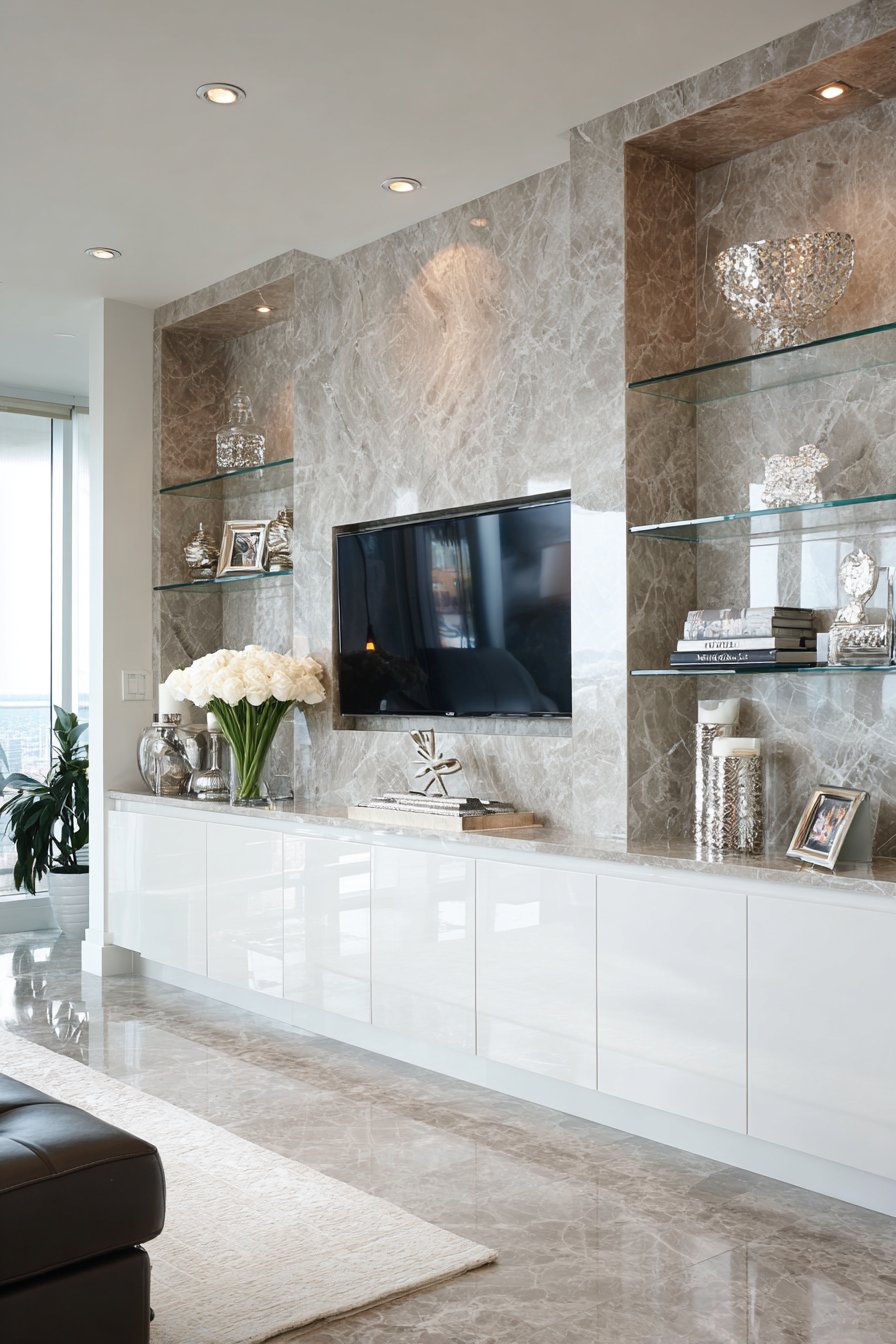
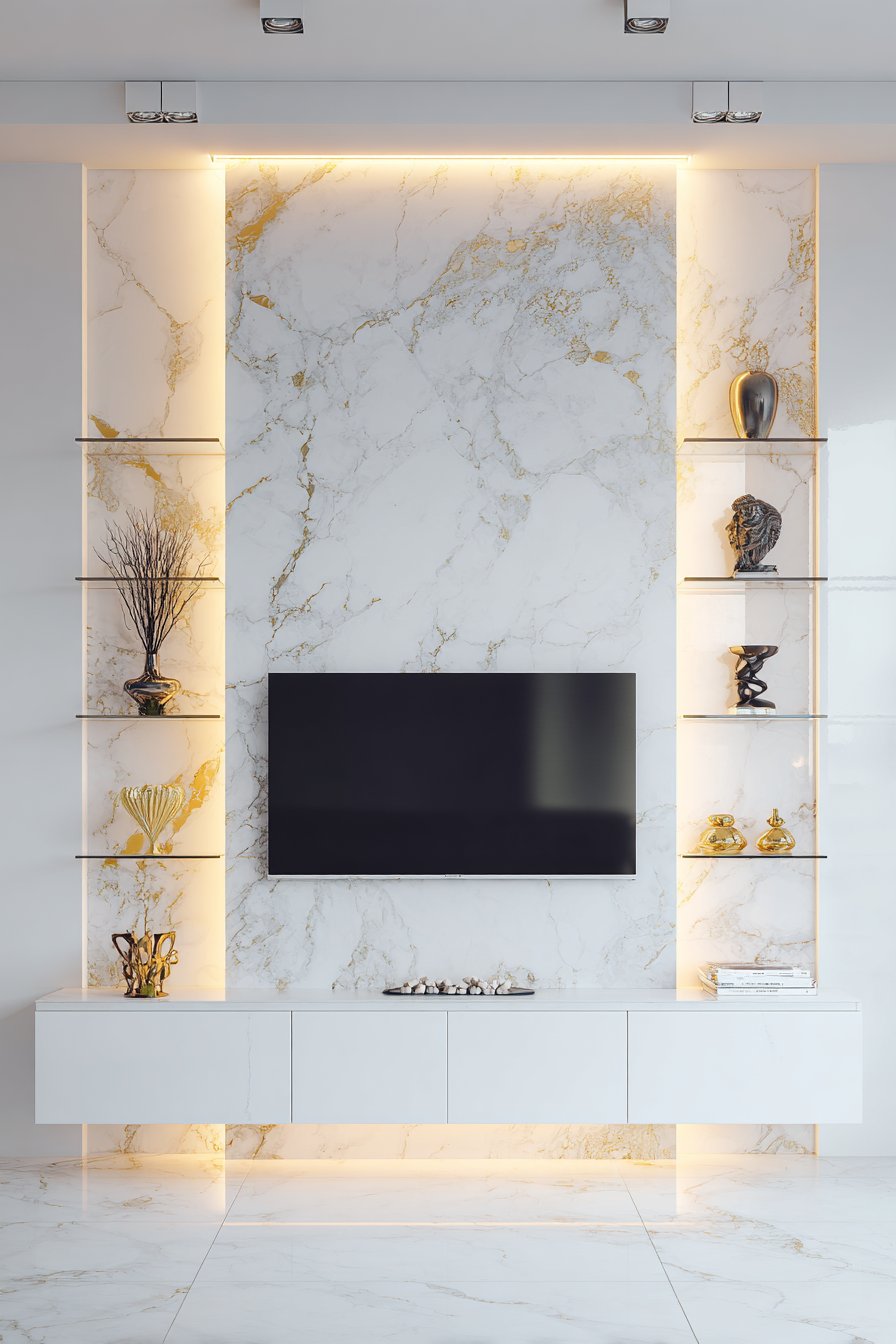
Elevate your living space to hotel-suite sophistication with floor-to-ceiling marble-look porcelain panels creating an elegant backdrop for your entertainment area. The soft grey panels with delicate white veining establish immediate luxury, their book-matched installation creating mirror-image patterns that sophisticated observers notice and appreciate. The television recesses into a carefully calculated section, framed by brushed brass accent strips that catch light and add warmth against the cool stone aesthetic. These metallic details provide just enough glamour without tipping into ostentation.
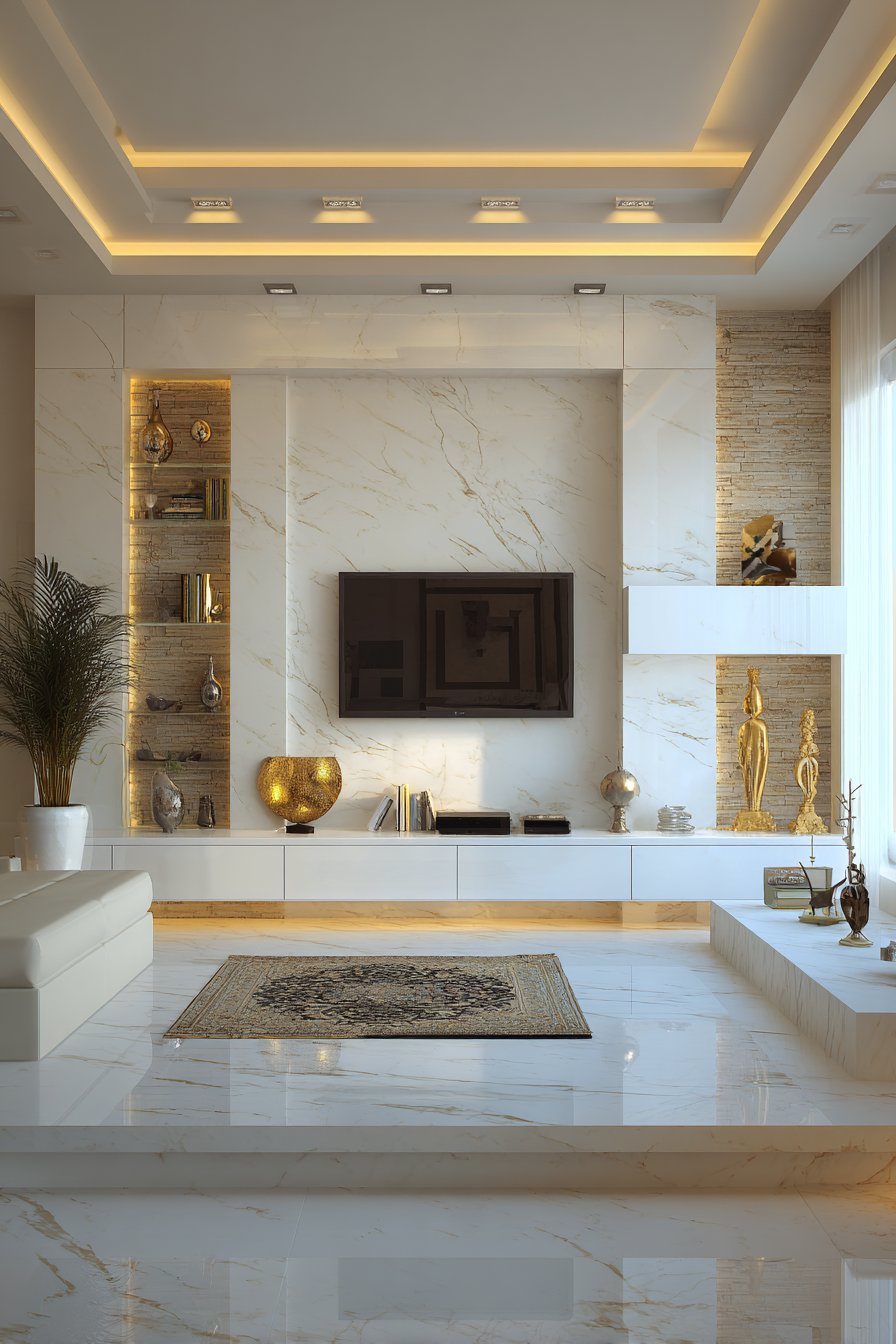
Below the television, floating cabinets in high-gloss white finish appear to levitate against the stone backdrop, their reflective surfaces bouncing light around the room and contributing to an airy, upscale atmosphere. Glass shelving positioned on either side of the TV provides display space for carefully curated art objects, coffee table books, and sculptural pieces that deserve individual attention. The transparency of glass ensures these shelves don’t visually compete with the stunning stone panels behind them, instead allowing the veining patterns to remain visible through the shelving.
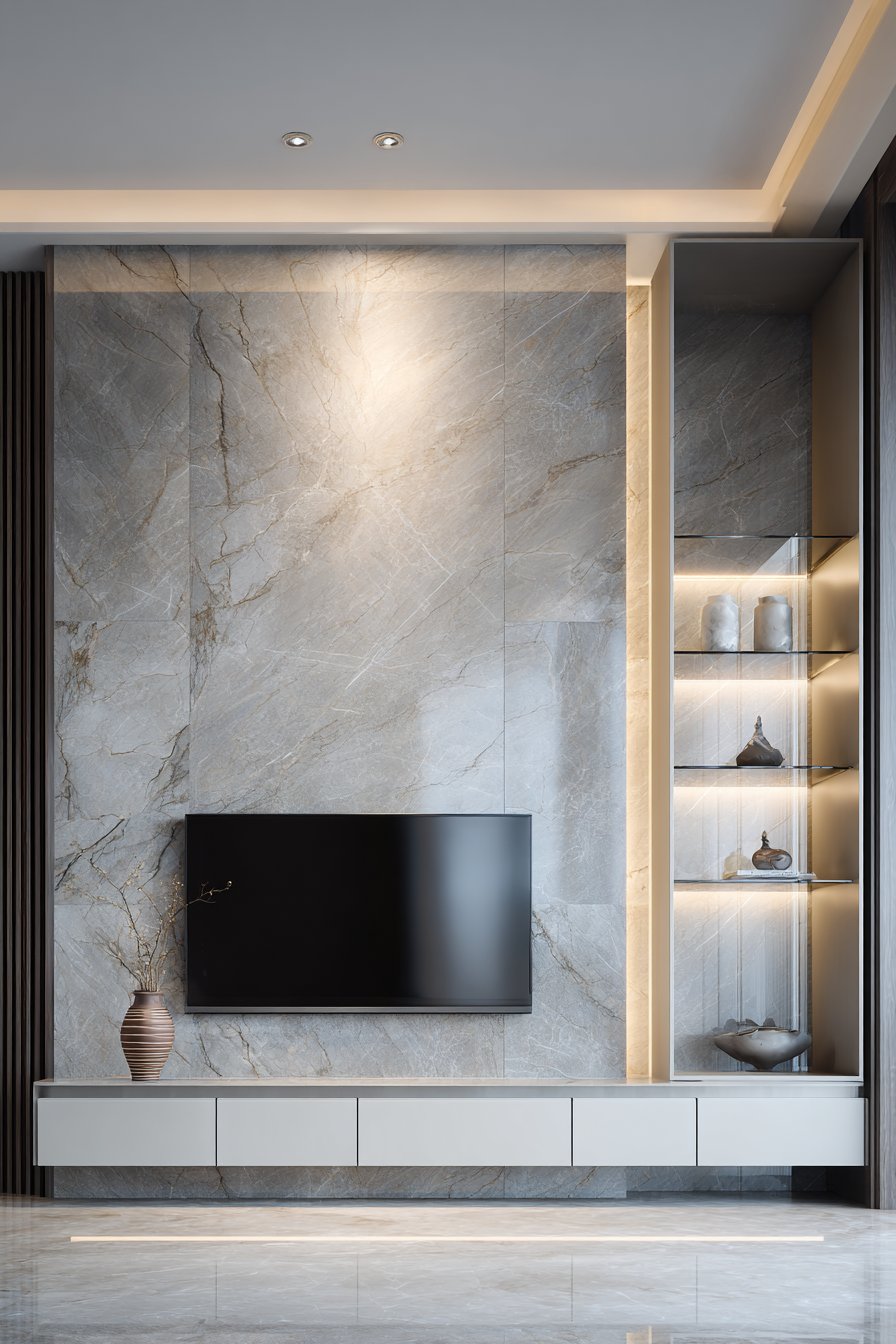
Warm recessed lighting positioned at strategic intervals creates dramatic shadows that accentuate the stone’s natural variations and three-dimensional qualities. Professional architectural photography captures how the interplay between the cool marble aesthetic and warm brass accents creates balanced sophistication rather than choosing between cold contemporary or overly traditional warmth. The material choices speak to quality and permanence, suggesting a thoughtfully designed space rather than trendy installation that might feel dated in coming years.
Key Design Tips: Select large-format porcelain tiles to minimize grout lines and create more convincing stone appearance while avoiding the weight and cost of genuine marble slabs. Book-match your panels for the most luxurious appearance, where adjacent tiles mirror each other’s veining patterns. Install LED strip lighting behind floating cabinets to enhance the levitating effect and add ambient illumination. Choose brushed or satin brass finishes rather than high-polish for more sophisticated, less flashy metallic accents. Budget for professional installation as large-format tiles and precision mounting require expertise to achieve flawless results.
4. Rustic Reclaimed Barn Wood Feature Wall
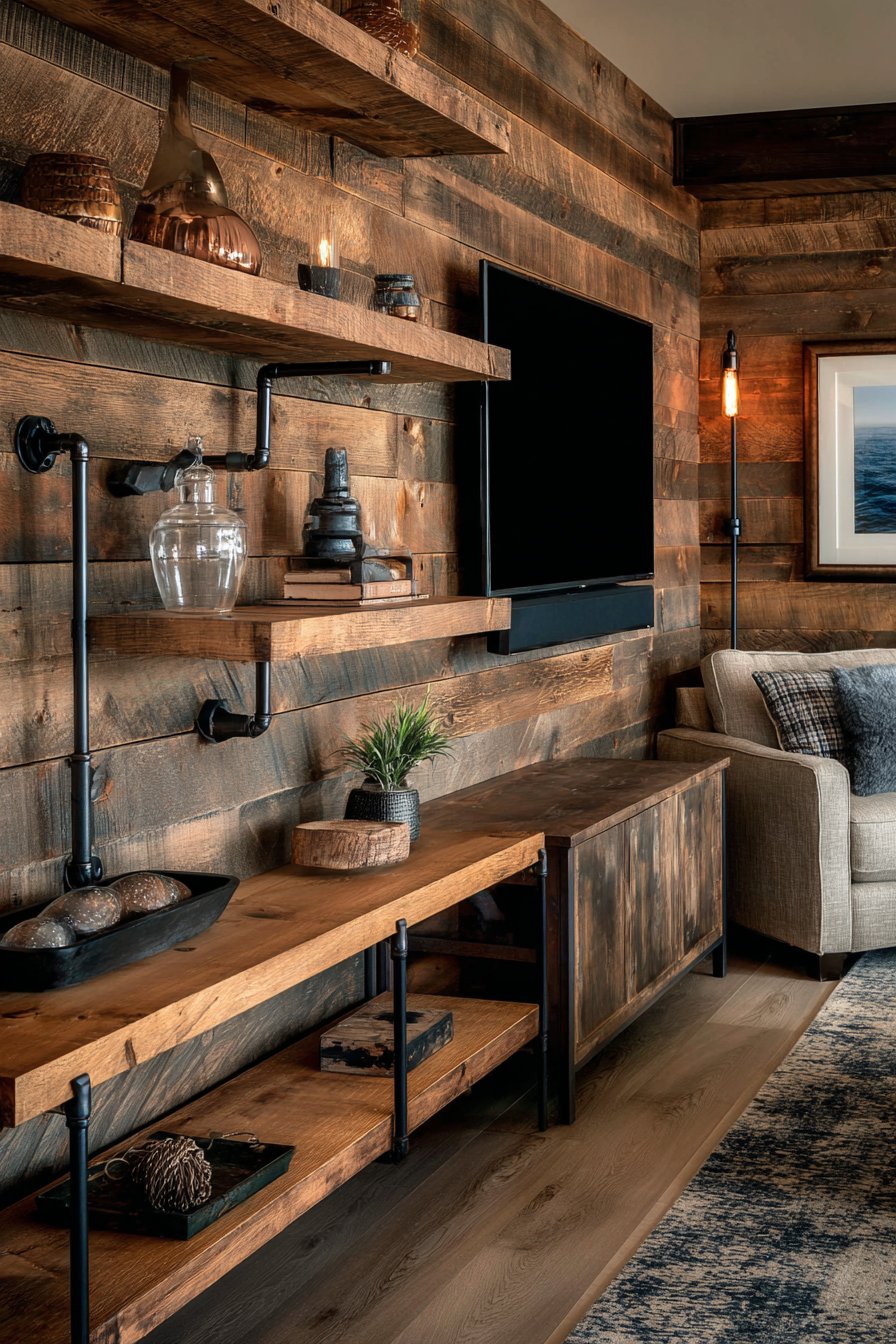
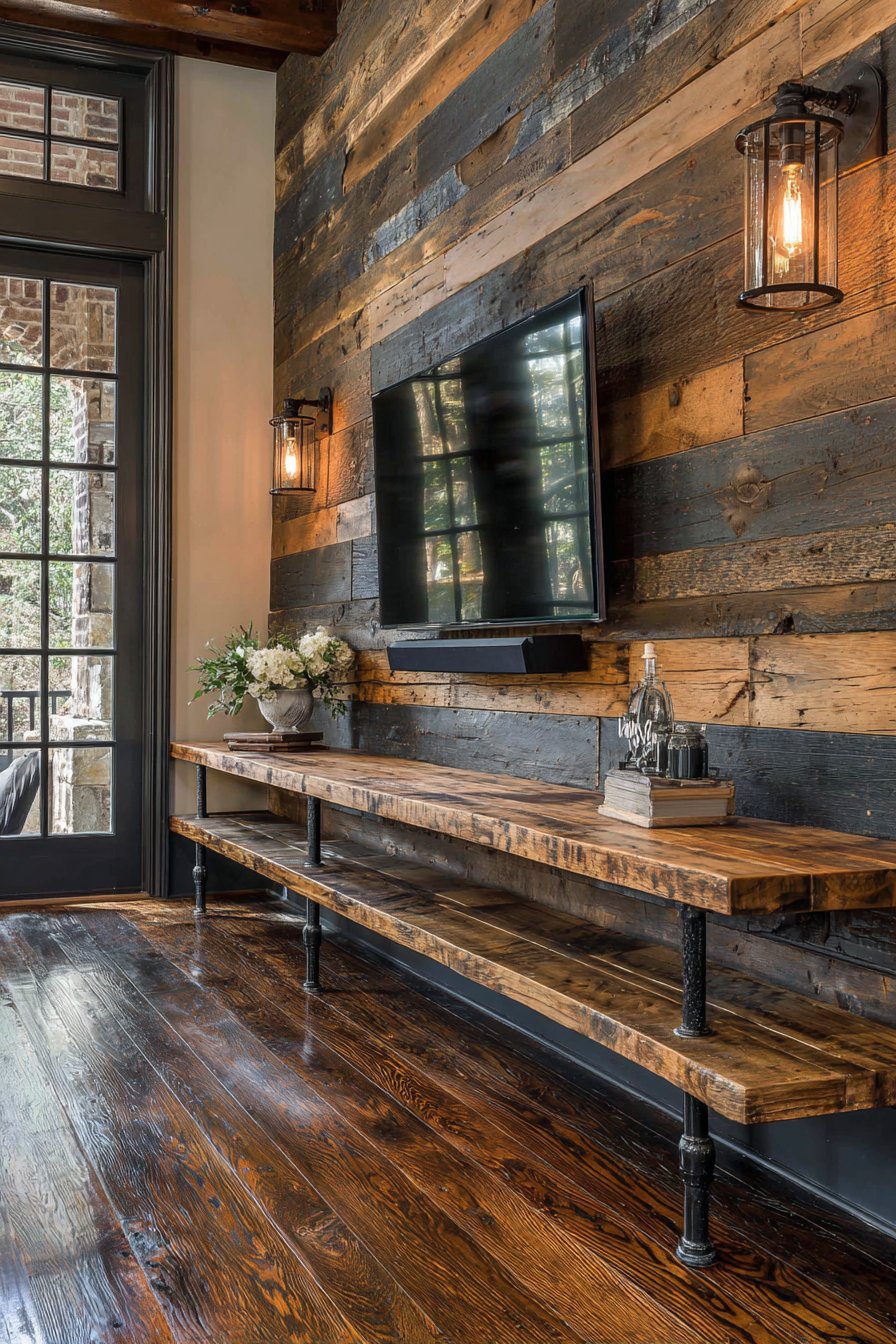
Transport your entertainment space to a modern farmhouse aesthetic with horizontal shiplap planks of reclaimed barn wood creating authentic character and warmth. Each plank tells a story through natural variations in tone ranging from warm honey to deep chocolate brown, with weathered surfaces showing the passage of time through subtle grain patterns, nail holes, and gentle wear marks. This collected-over-time appearance brings instant history to new construction, creating the soul that mass-produced materials simply cannot replicate.
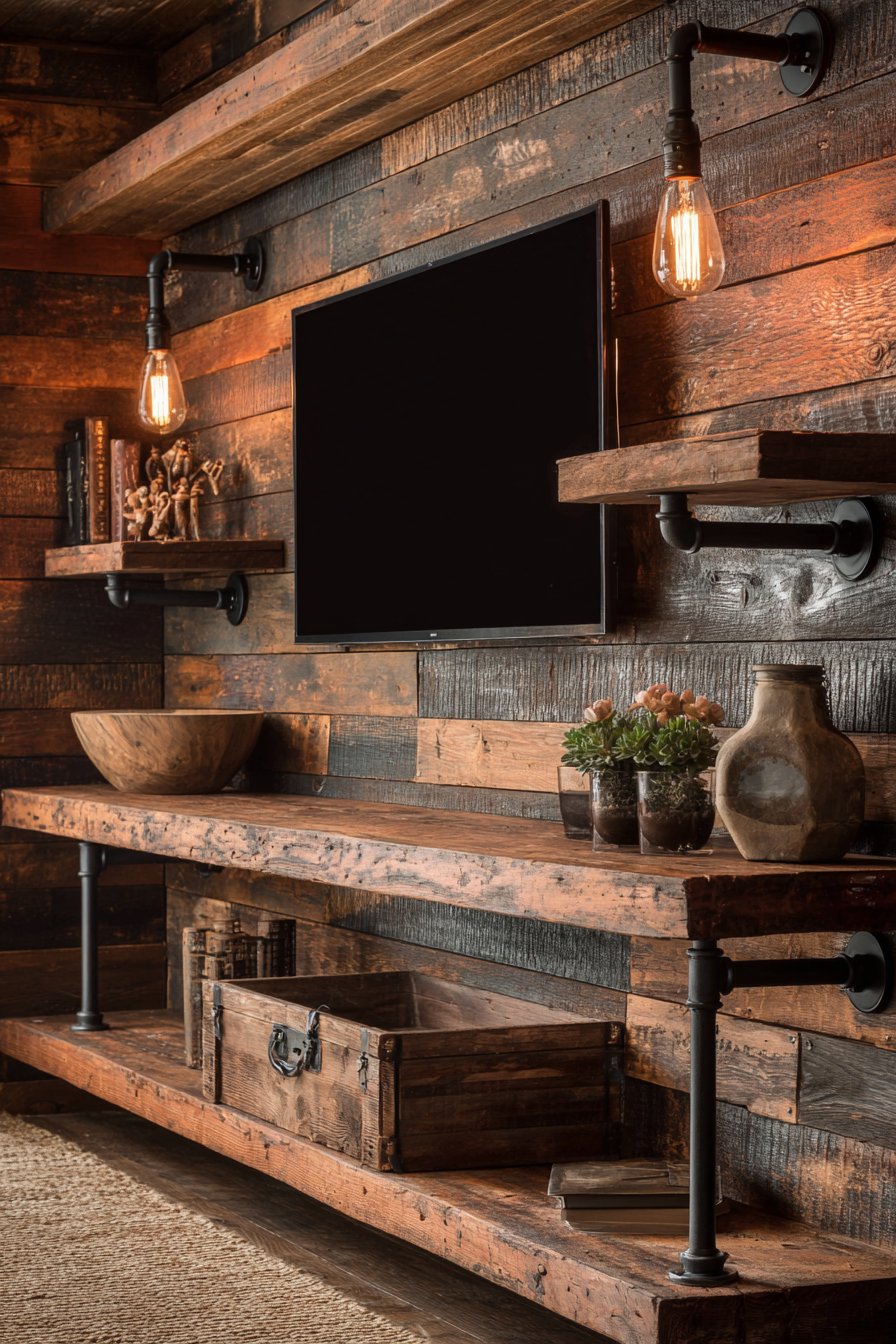
A simple black metal TV mount holds the screen against this textured backdrop, its industrial simplicity allowing the wood to remain the star while providing secure, adjustable positioning. Industrial-style floating shelves constructed from thick wood slabs—likely salvaged from old factory floors or warehouse beams—rest on black pipe brackets that echo the utilitarian aesthetic. These shelves provide both storage and display opportunities while maintaining the honest, unfussy approach that defines authentic rustic design.
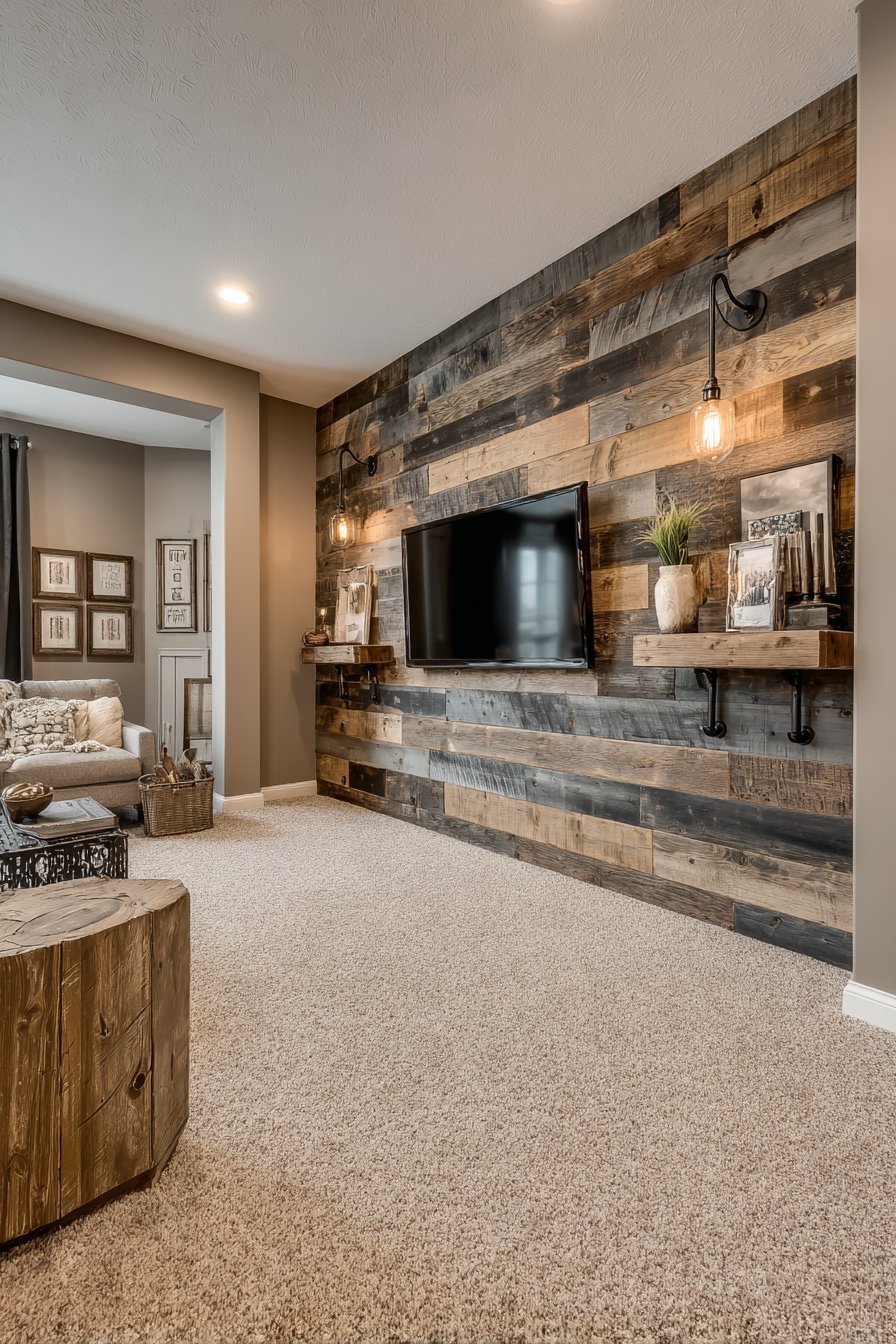
Edison bulb wall sconces flanking the television add ambient lighting that enhances the warm wood tones while staying true to the industrial-meets-rustic aesthetic. Wide-angle interior photography emphasizes the authentic texture and character of these reclaimed materials, capturing how each plank’s unique patina contributes to the overall composition. The design works particularly well in open-concept spaces or converted lofts where the rustic elements provide warmth against contemporary architecture, creating the popular modern farmhouse fusion that balances old and new.
Key Design Tips: Source reclaimed wood from reputable dealers who properly clean, treat, and prepare materials for indoor use to avoid pest or moisture issues. Arrange planks to create pleasing color distribution, avoiding clustering all dark or light pieces in one area. Seal reclaimed wood with matte finish polyurethane to protect surfaces while maintaining the natural appearance and preventing splinters. Use proper wall anchors rated for the combined weight of shelving, brackets, and displayed items to ensure safety. Consider the television’s heat output and ensure adequate ventilation behind the screen when mounting against wood surfaces.
5. Industrial Exposed Brick Entertainment Center
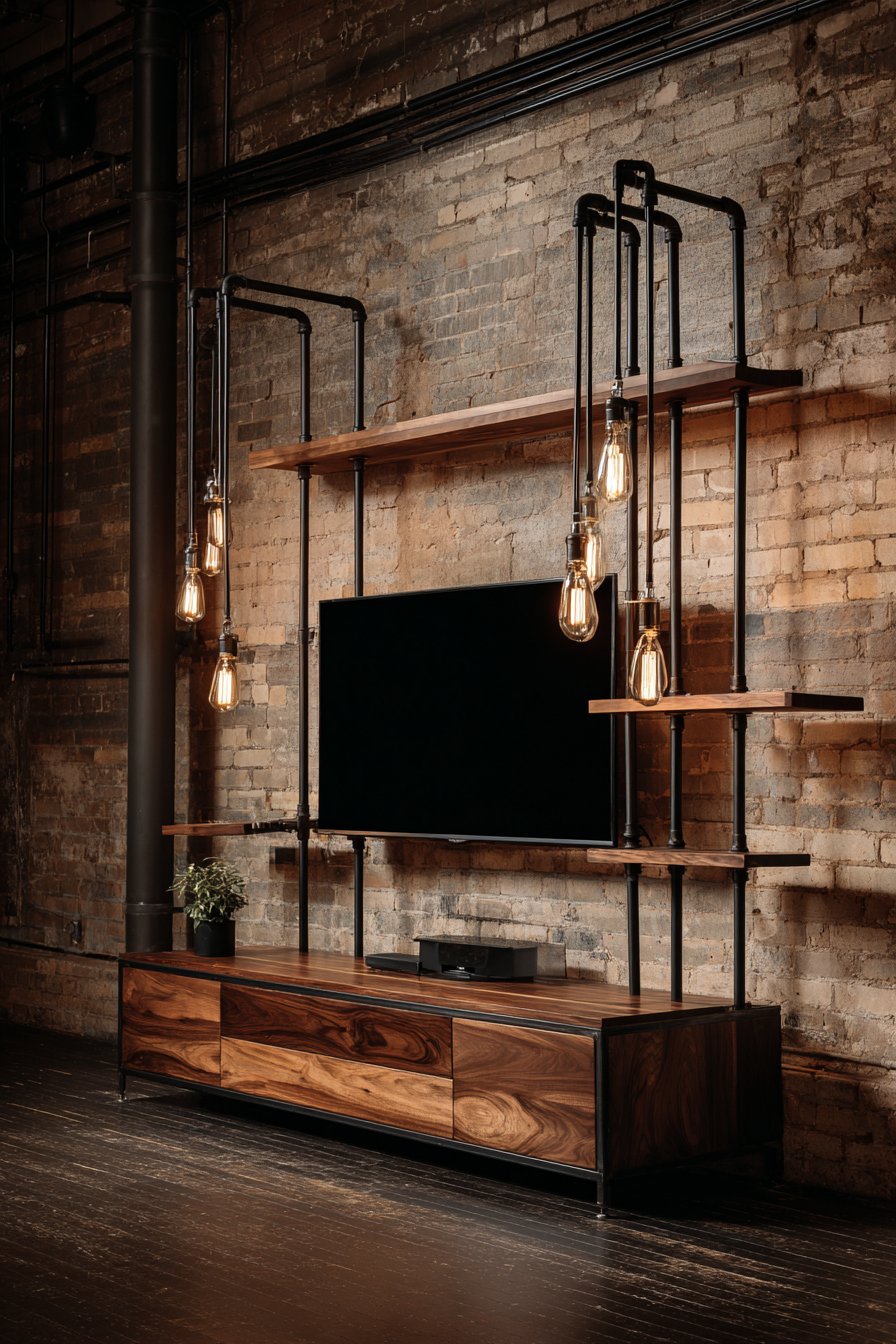
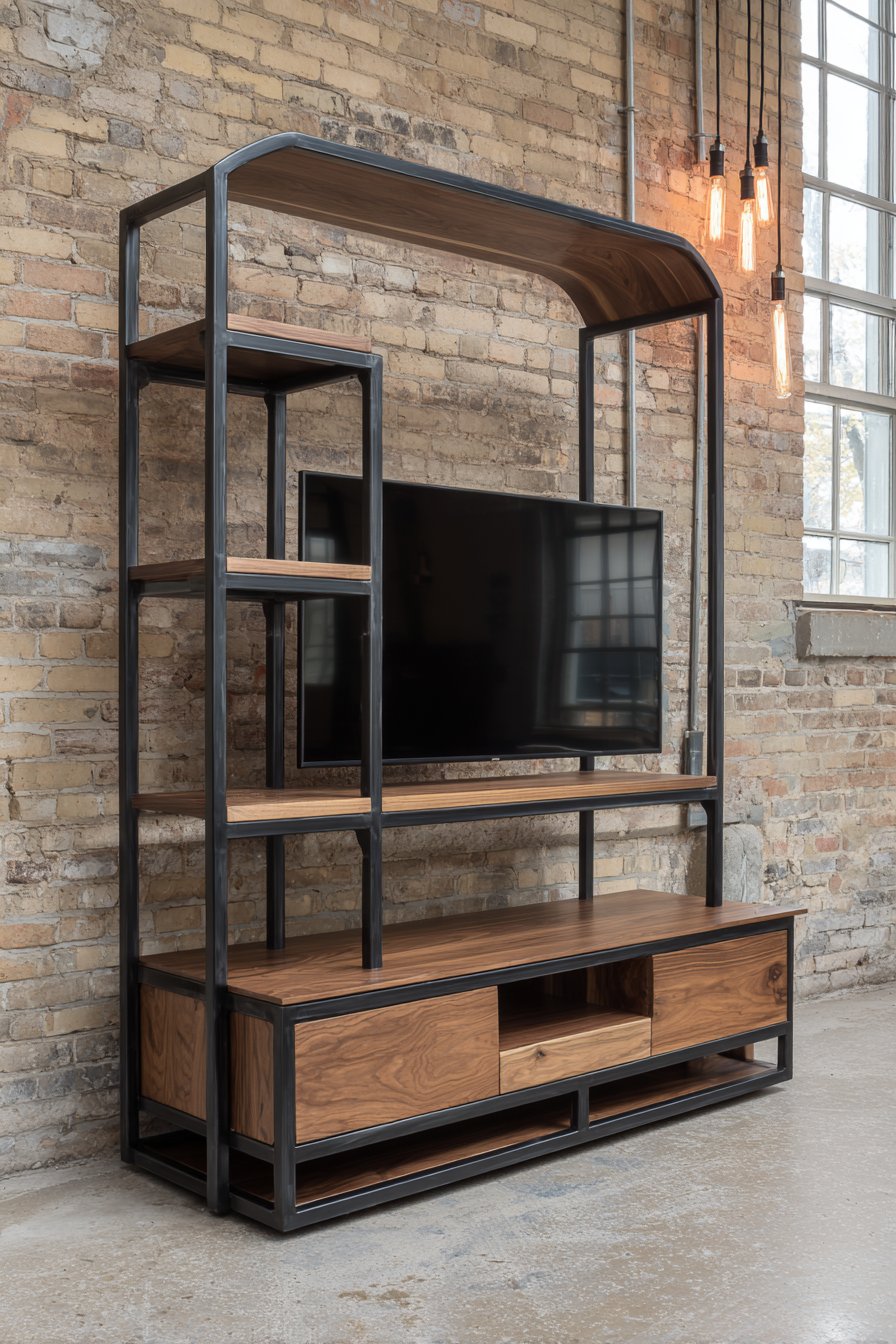
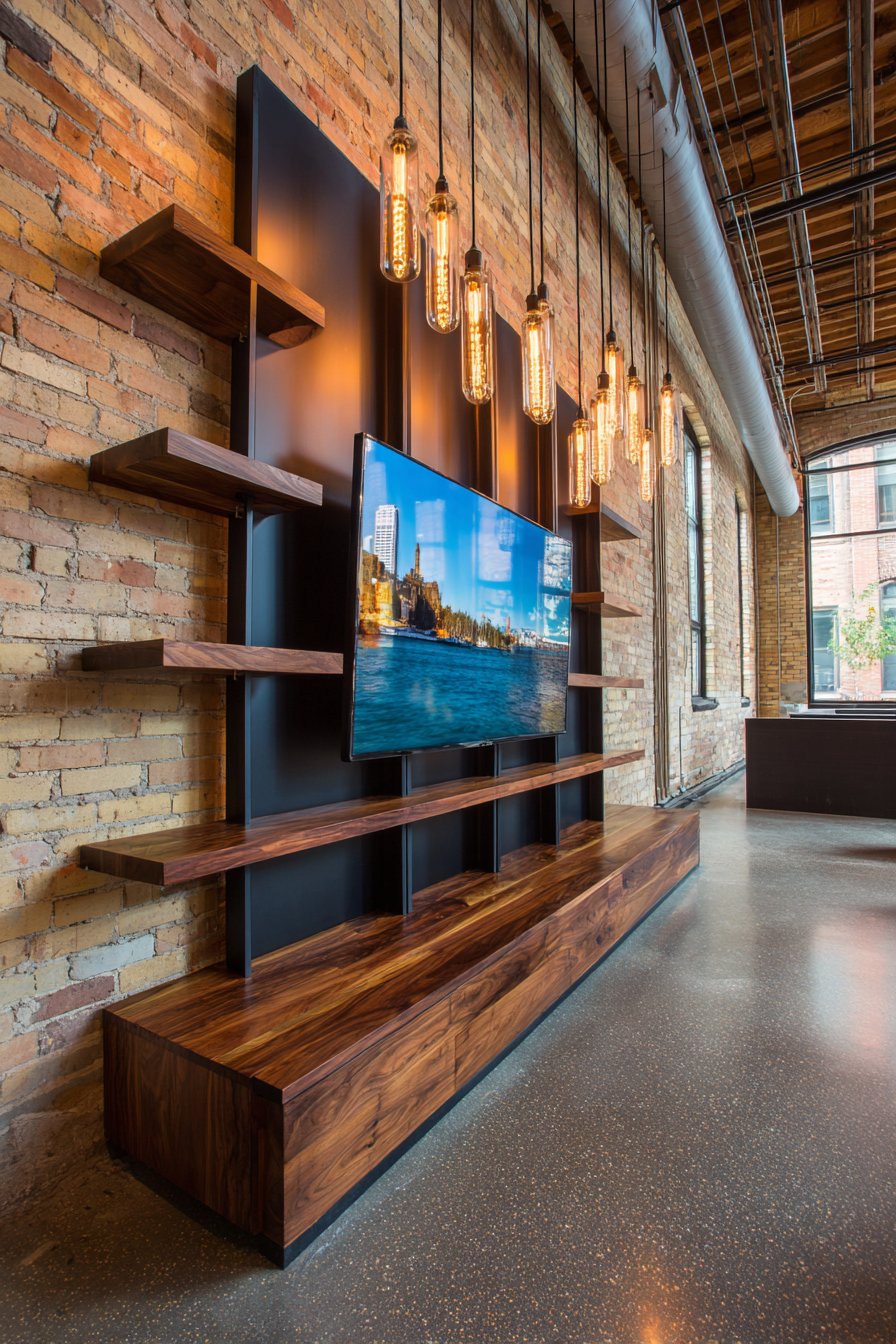
Celebrate raw, honest materials with an industrial TV panel showcasing exposed brick as the authentic backdrop for a custom steel and wood entertainment unit. The brick wall, whether original to an older building or newly installed thin brick veneer, provides the textural foundation that defines industrial style. The custom framework features blackened steel vertical supports that create strong vertical lines, paired with thick walnut wood shelves that bring warmth and organic contrast to the metallic elements. This open storage system surrounds the mounted television, creating visual interest through the interplay of void and solid, horizontal and vertical.
Metal conduit piping serves double duty as both visible cable management and intentional design element, running vertically from ceiling to floor or horizontally along the back edge of shelves. Rather than hiding technology’s necessary components, this approach celebrates them as part of the aesthetic, transforming potential eyesores into authentic industrial details. The honest expression of structure and function represents the core philosophy of industrial design, where beauty emerges from purpose rather than decoration.
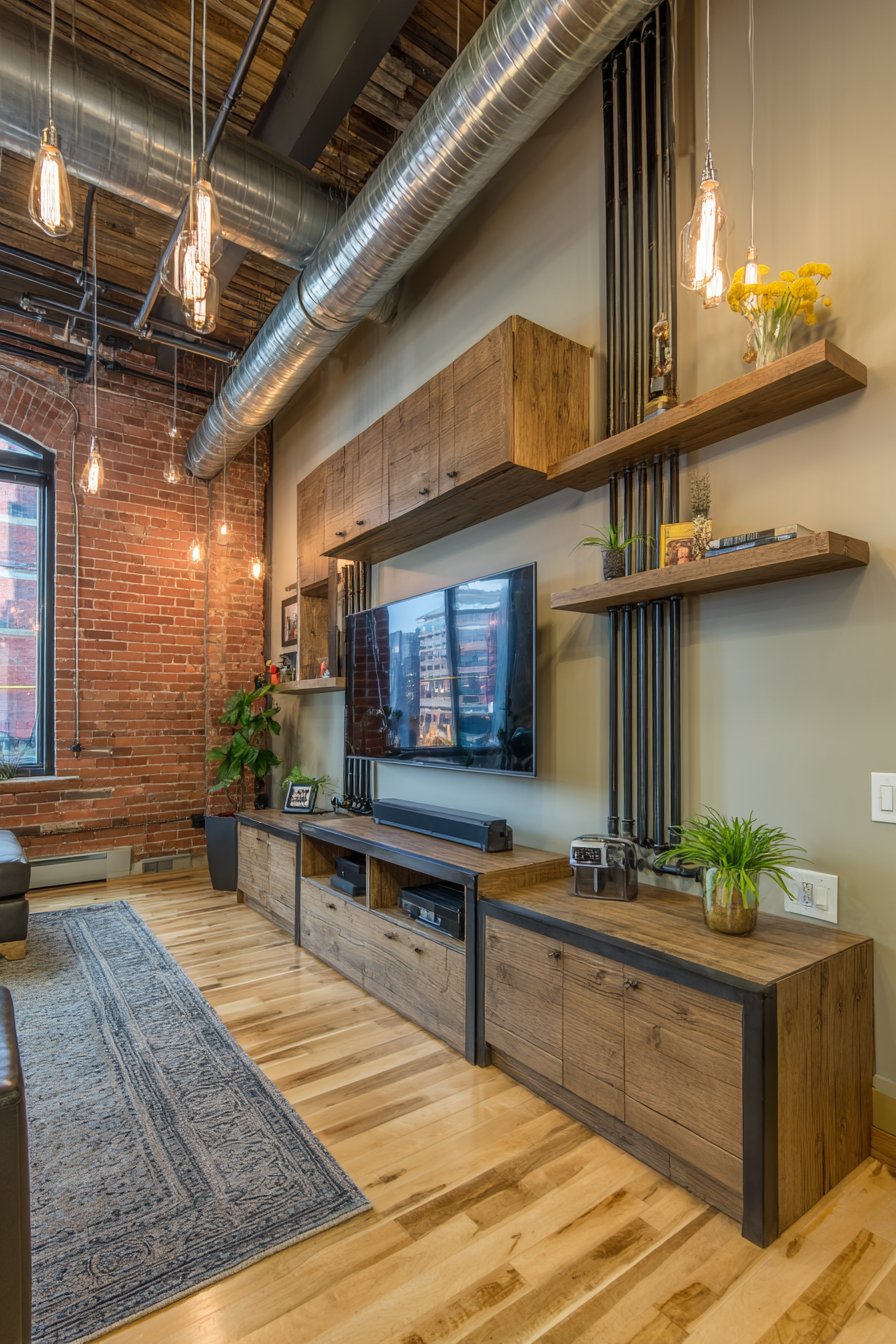
Pendant lights with vintage Edison bulbs hang at varying heights, their amber glow creating pools of warm light against the brick and metal. The exposed filaments visible through clear glass shades nod to early electrical systems, maintaining historical authenticity while providing contemporary LED efficiency in Edison-style bulbs. Interior design photography with dramatic lighting captures how shadows play across the brick’s irregular surface and how the metal framework creates geometric patterns, demonstrating why industrial style has become beloved for its combination of ruggedness and refinement.
Key Design Tips: If installing new brick veneer, choose used or tumbled bricks for more authentic aged appearance rather than pristine new bricks. Seal brick walls with breathable masonry sealer to prevent dust and deterioration while allowing moisture to escape. Ensure steel framework connects to wall studs with proper hardware rated for the combined weight of shelves and stored items. Apply matte black paint or powder coating to steel components to prevent rust and achieve the blackened industrial aesthetic. Run electrical conduit strategically to serve both decorative and functional purposes, housing actual cables within the visible metal piping.

6. Scandinavian White Paneled Simplicity
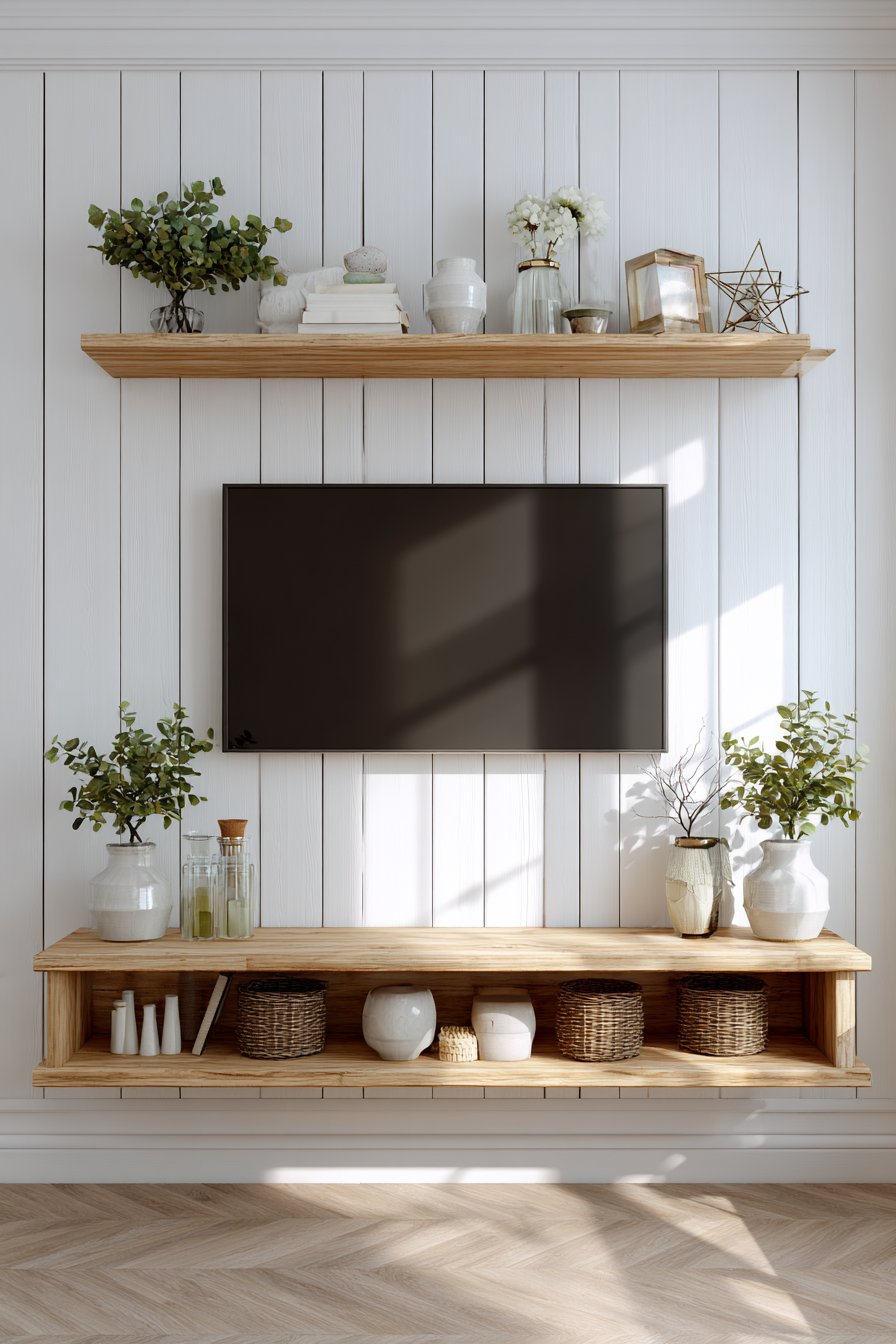
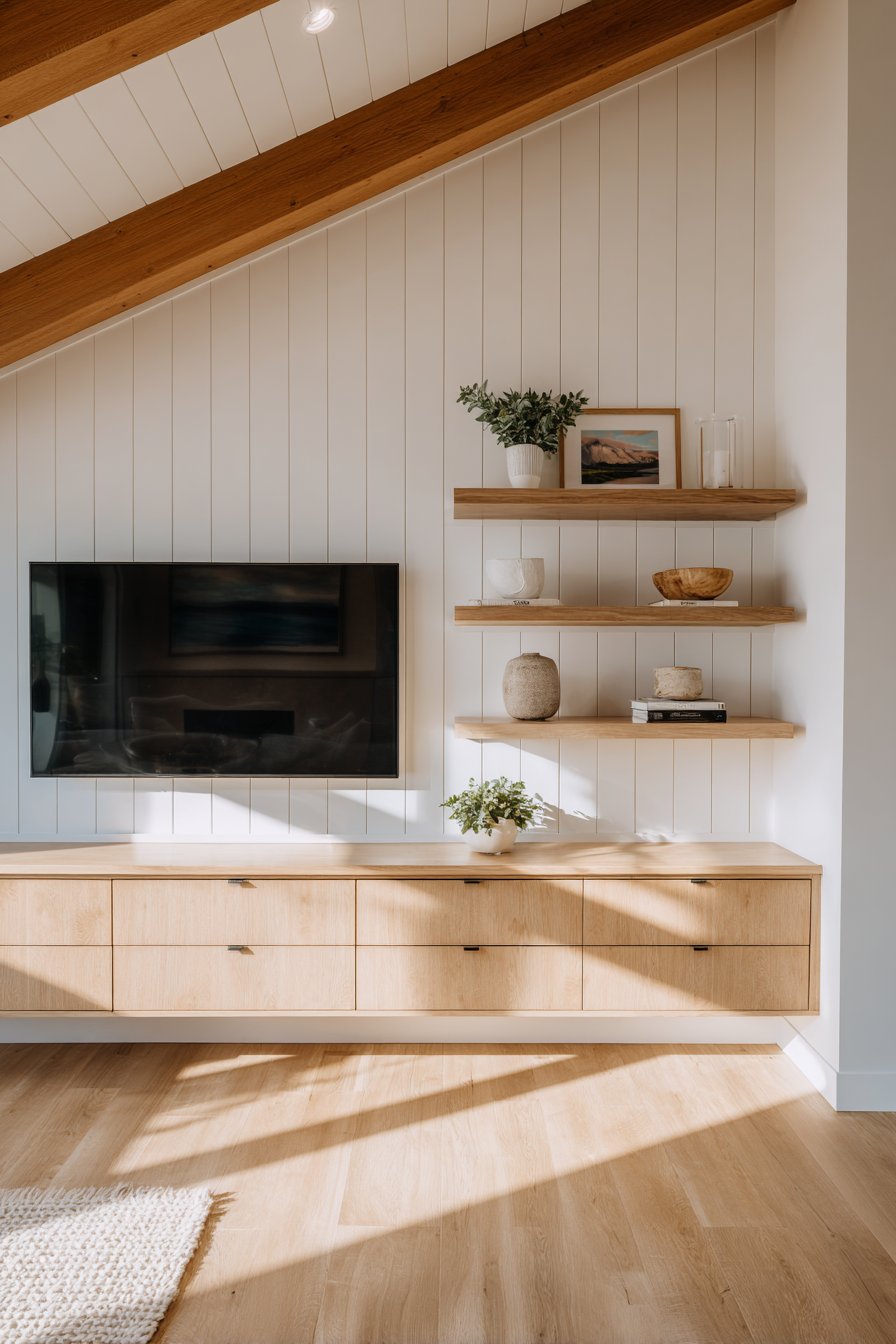
Discover the serene beauty of Nordic-inspired design with a crisp white TV panel featuring vertical tongue-and-groove boards creating subtle texture through light and shadow. The matte white finish allows the dimensional quality of the paneling to shine without glossy distraction, each board catching light differently to create gentle variation across the surface. This treatment transforms a flat wall into an architectural feature through the most economical means—simple lumber installed with careful attention to spacing and alignment.
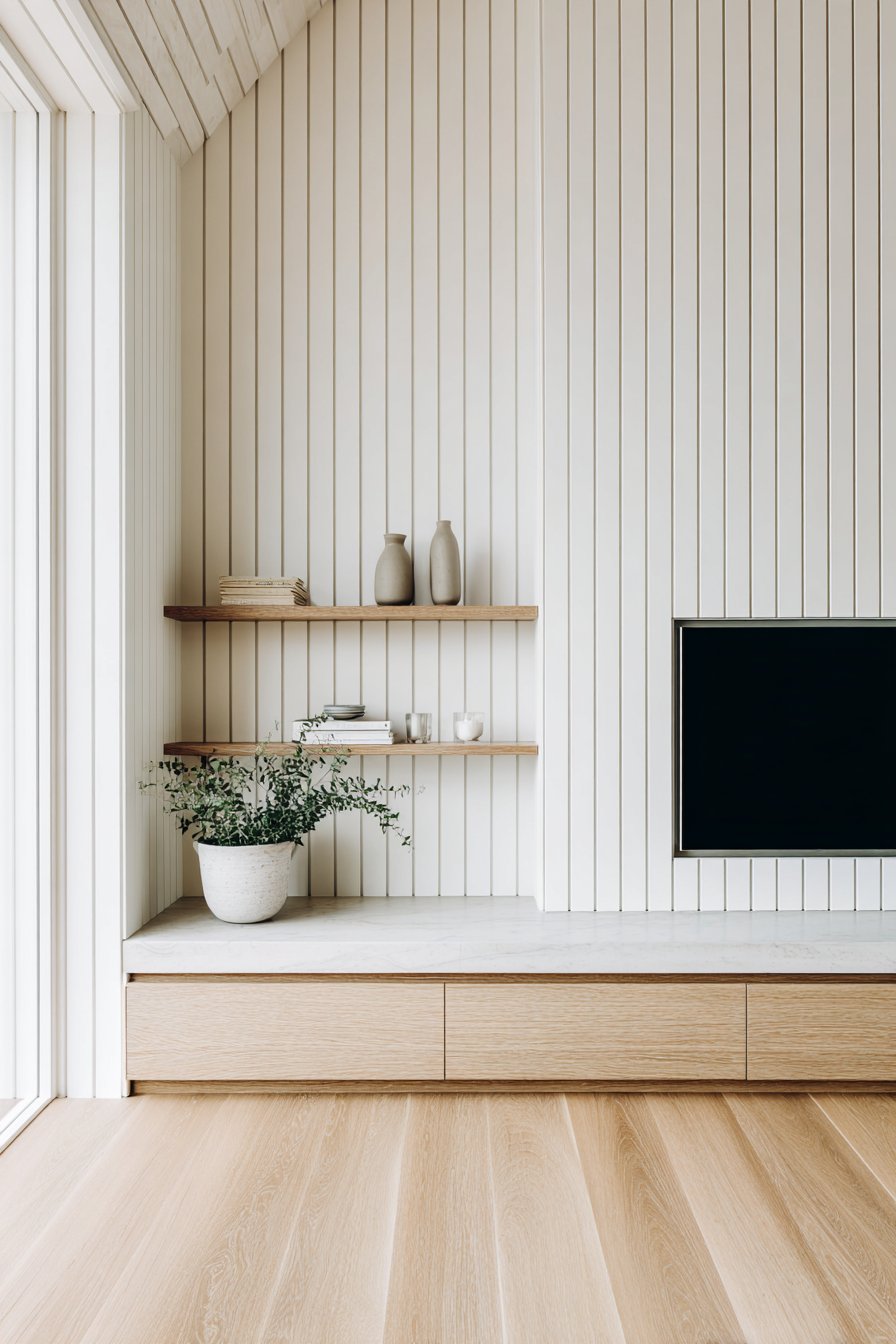
A floating media console in light birch wood provides minimal storage beneath the wall-mounted television, its pale tone and simple form honoring Scandinavian principles of functionality and natural materials. The console appears to hover, creating visual lightness essential to the airy Nordic aesthetic where heavy, grounded furniture would feel oppressive. Small decorative ledges mounted at varying heights display carefully curated Nordic-inspired ceramics, small potted plants, and perhaps a single art print, demonstrating the Scandinavian approach of “lagom”—not too much, not too little, just right.
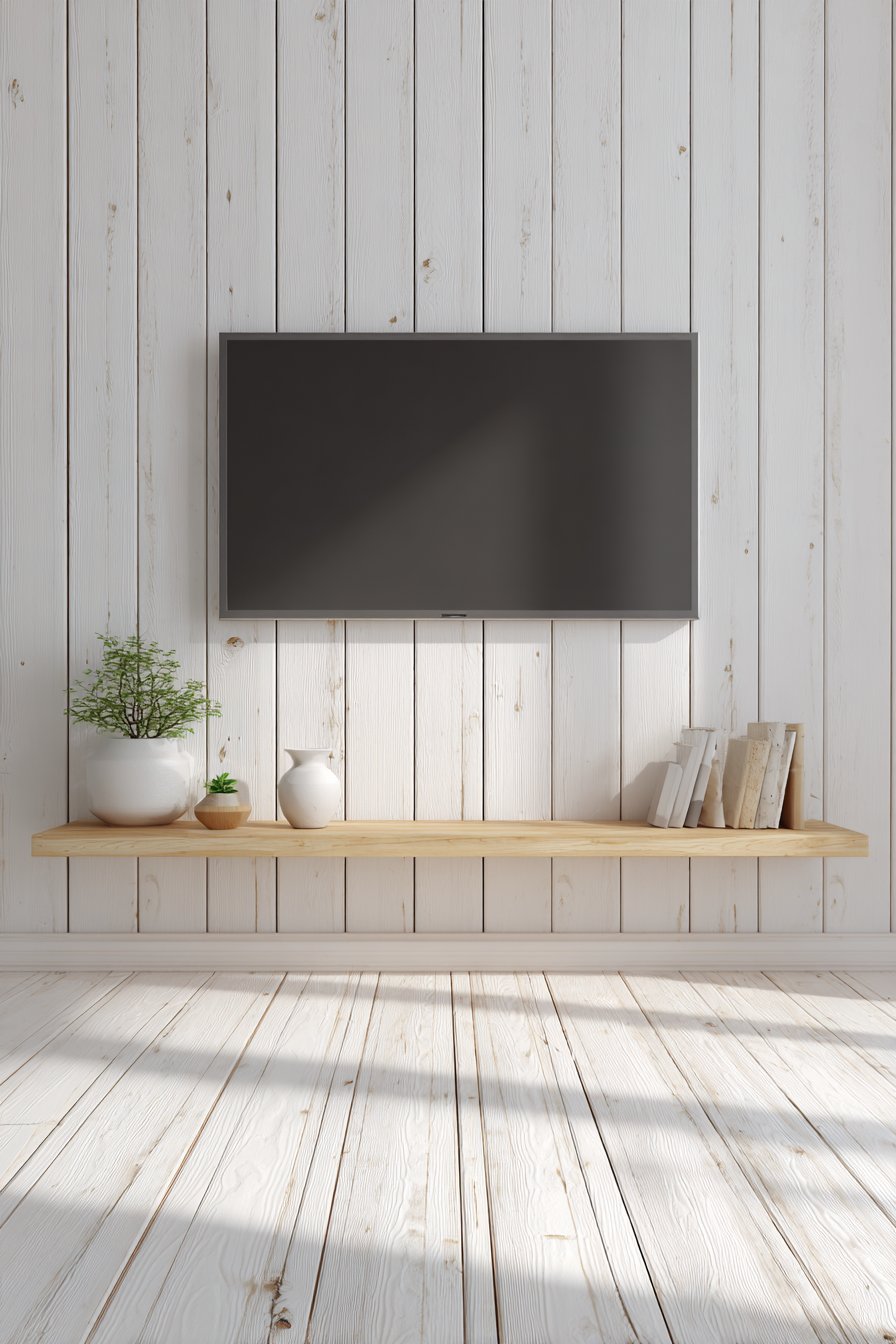
Soft natural lighting from nearby windows creates gentle shadows between the vertical panels, emphasizing their dimensional quality while maintaining the overall sense of brightness and space. Professional interior photography captures the subtle white-on-white texture details that might otherwise go unnoticed, showing how proper exposure techniques reveal the richness possible within a monochromatic palette. The design emphasizes negative space as intentional rather than merely empty, where restraint creates calm rather than sparseness.
Key Design Tips: Paint tongue-and-groove boards with at least two coats of quality matte white paint before installation for easier application and better coverage. Install panels with consistent spacing using a thin spacer board to ensure uniform gaps that create regular shadow lines. Choose birch, beech, or light oak for Scandinavian-appropriate wood species that bring warmth without darkness. Limit decorative displays to odd numbers of carefully chosen objects rather than filling every available surface. Maximize natural light through sheer white curtains or bare windows to maintain the bright, airy atmosphere essential to Nordic design.
7. Three-Dimensional Textured Wave Panels
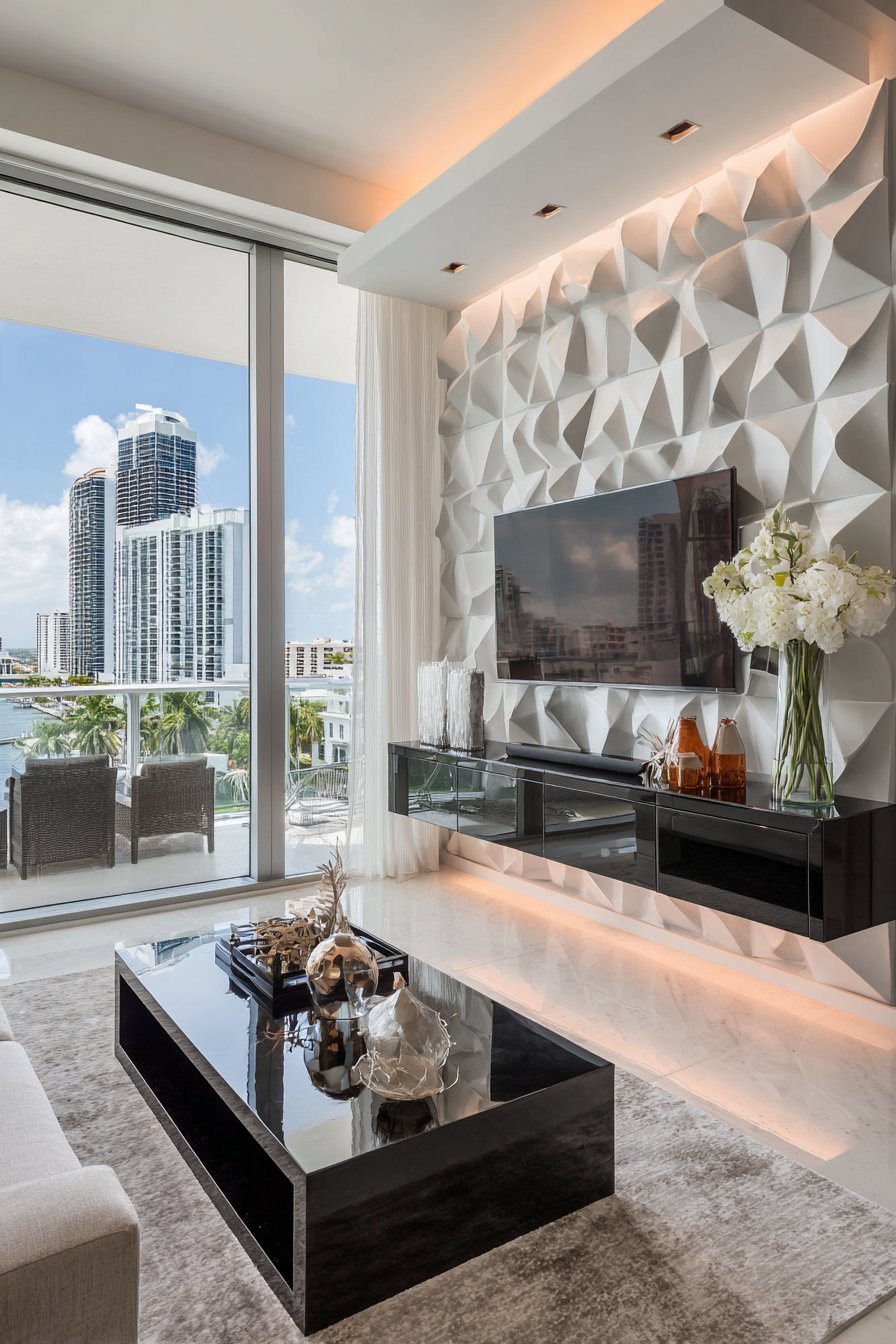
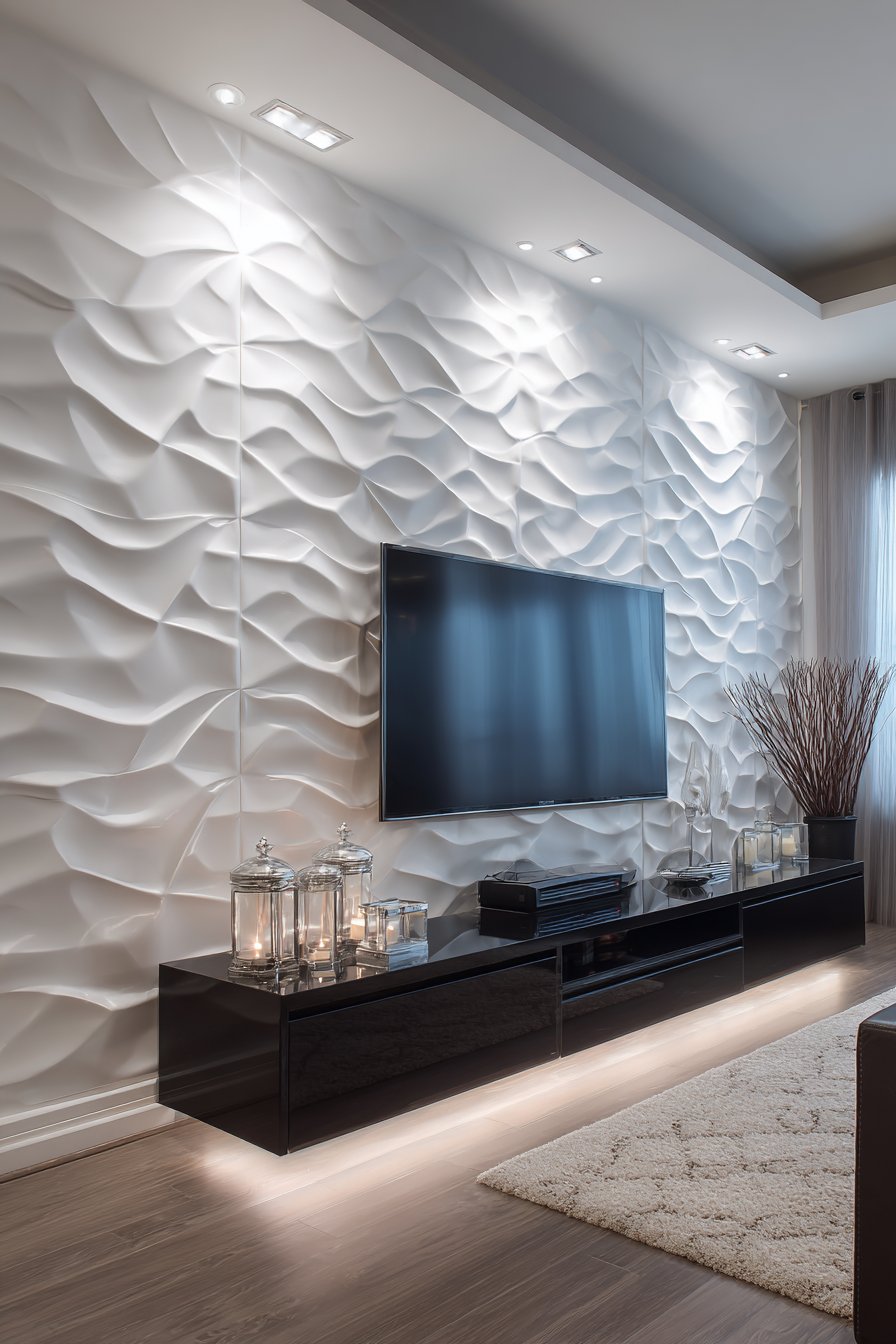
Create mesmerizing visual impact with contemporary three-dimensional textured wall panels in soft grey geometric patterns that catch and reflect light throughout the day. These dimensional panels form wave-like patterns that appear to move across the wall, creating organic flow within geometric structure. As sunlight shifts position through the day, different facets of the panels catch highlights while others fall into shadow, creating ever-changing visual interest that flat walls simply cannot achieve.
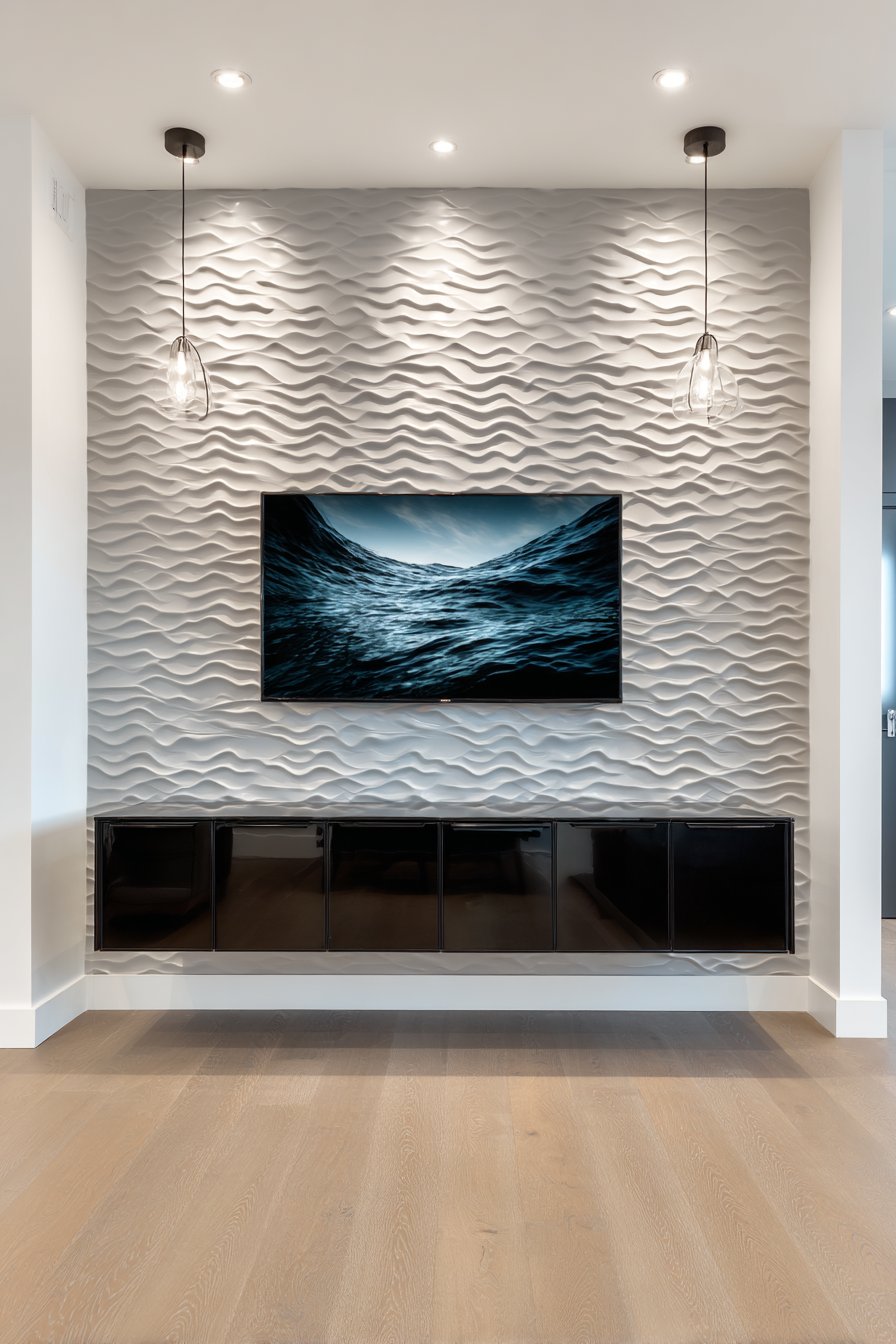
A sleek black floating TV stand with high-gloss finish provides dramatic contrast against the textured grey backdrop, its reflective surface doubling the visual impact through mirror-like qualities. Hidden LED lighting installed along the edges of the stand creates a floating effect, making the substantial piece appear to levitate impossibly above the floor. This lighting also provides ambient illumination perfect for evening viewing, adding atmospheric glow without the harshness of overhead fixtures.
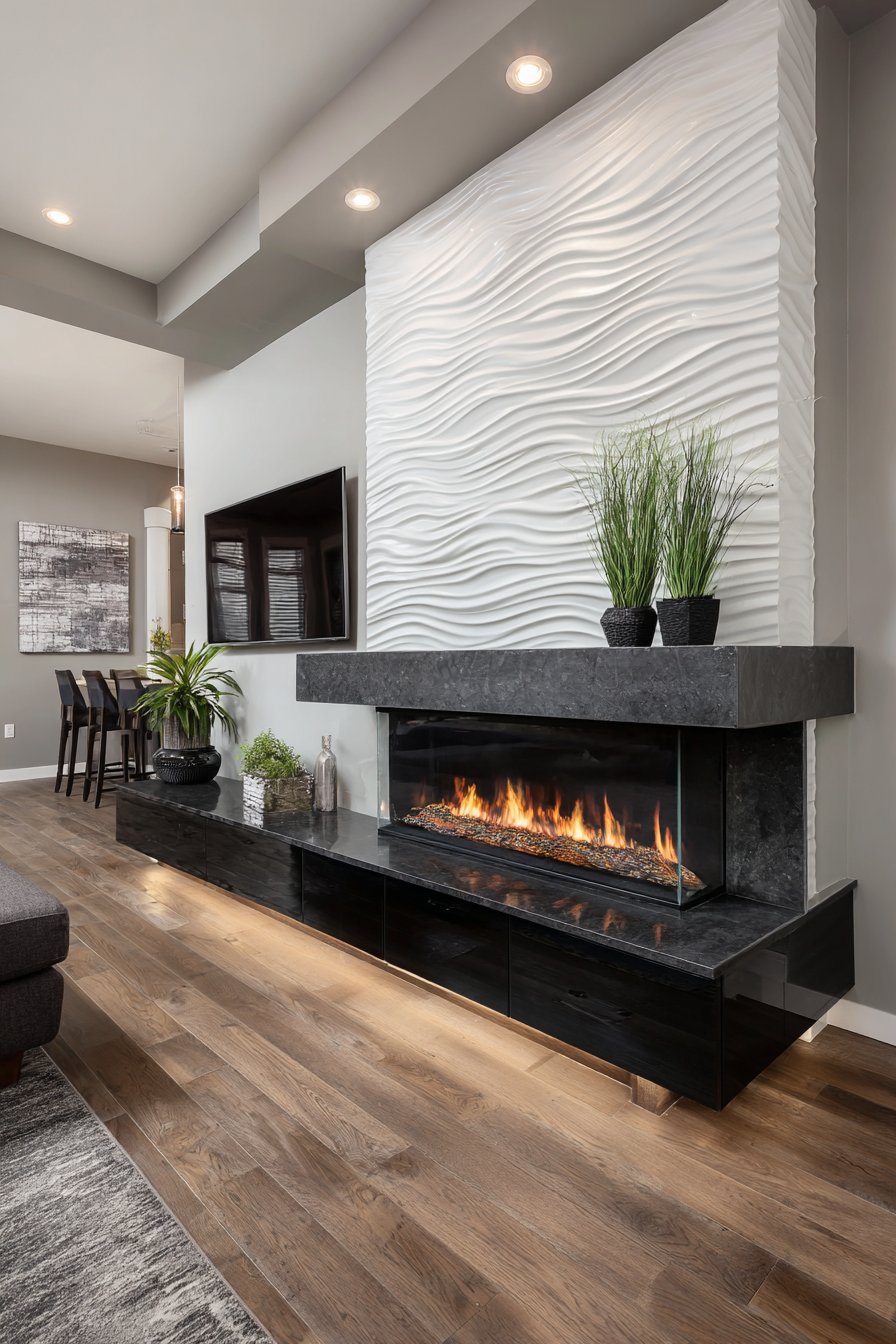
Wide-angle interior photography captures the dramatic interplay of light across the textured surface, showing how professional lighting techniques enhance the dimensional quality rather than flattening it. The panels typically come in interlocking squares or rectangles that can be arranged in various patterns, allowing customization while maintaining consistent depth and shadow quality. This design works particularly well in contemporary or transitional spaces where architectural interest is desired without the permanence of structural changes like coffered ceilings or extensive millwork.
Key Design Tips: Purchase sample panels before committing to an entire wall to evaluate how they catch light in your specific space at different times of day. Install panels with proper adhesive rated for their weight and your wall type, following manufacturer instructions precisely. Consider the viewing angle from your seating area to ensure the dimensional effect is visible rather than viewing the panels straight-on where depth disappears. Use dimmable LED strips for adjustable ambient lighting that can be brightened for cleaning or dimmed for movie watching. Clean textured surfaces regularly with a soft brush attachment on your vacuum to prevent dust accumulation in crevices.
8. Traditional Built-In Shaker Cabinetry
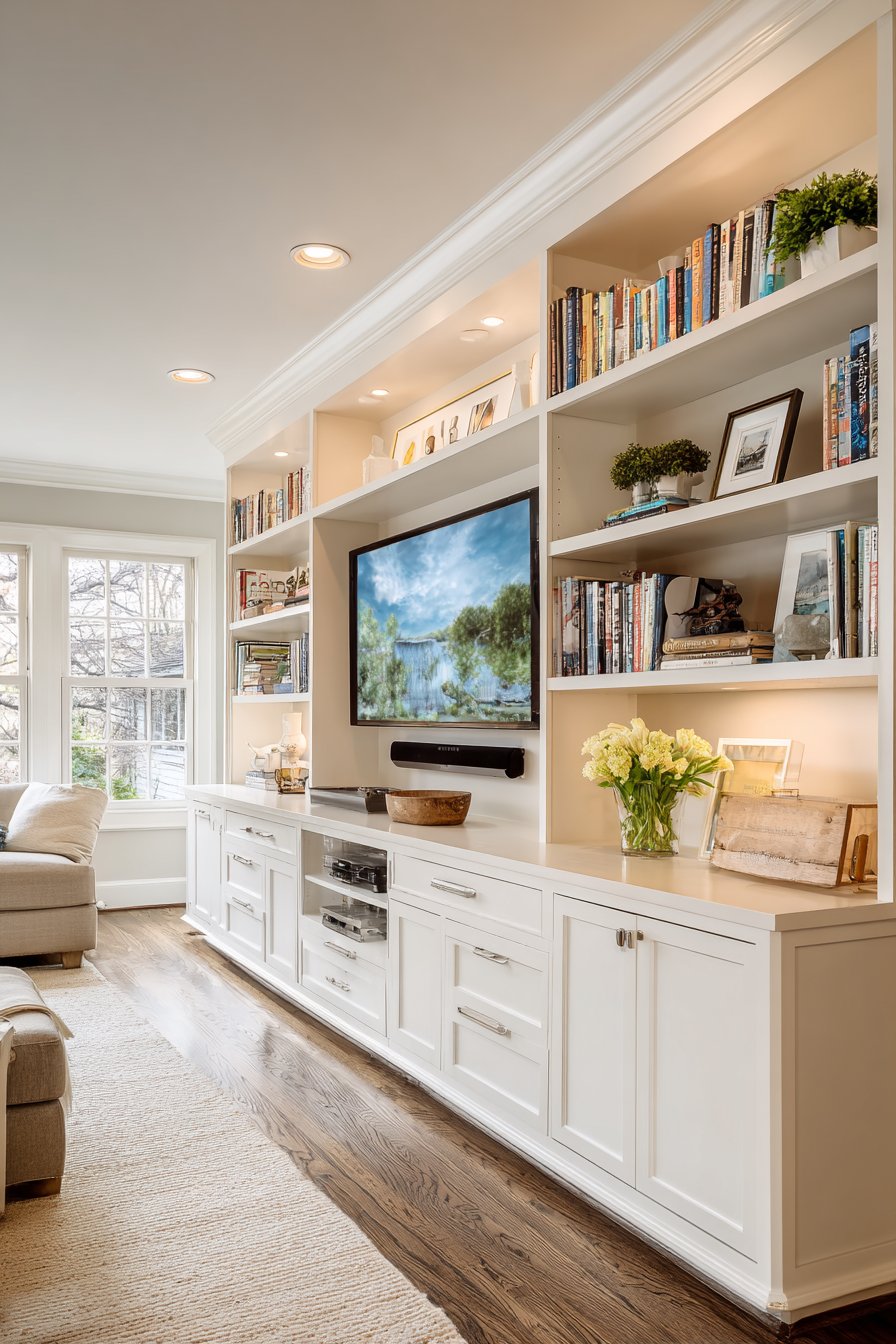
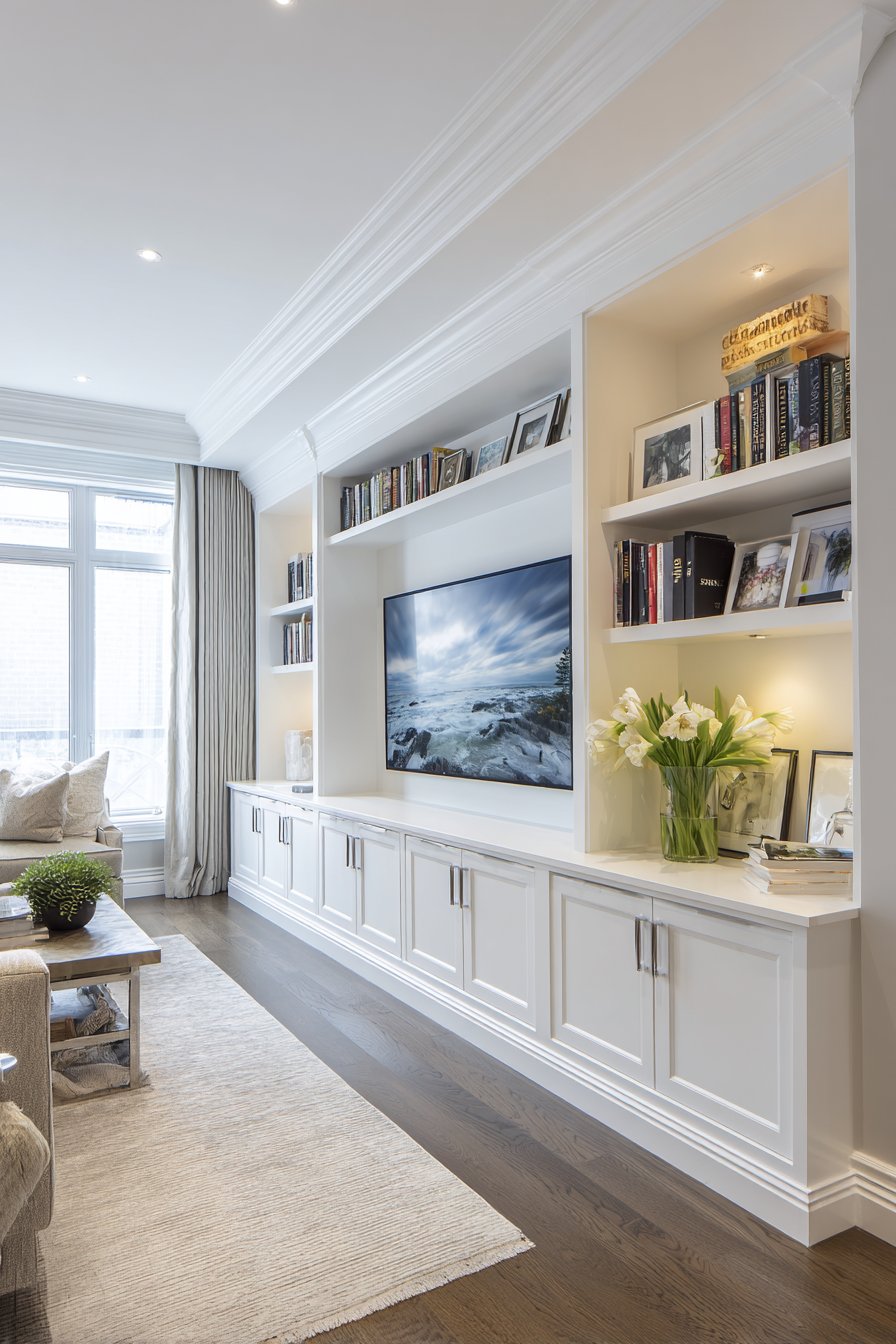
Embrace timeless elegance with custom white shaker-style cabinetry forming a complete wall unit that integrates the television into traditional architectural detailing. This built-in approach treats the entertainment center as permanent architecture rather than furniture, with the TV nestled into the central section surrounded by adjustable shelving, closed cabinet storage, and thoughtful proportions that echo classic library built-ins. The shaker style’s simple recessed panel doors and face frames provide subtle detail without excessive ornamentation, striking the perfect balance between plain and decorative.
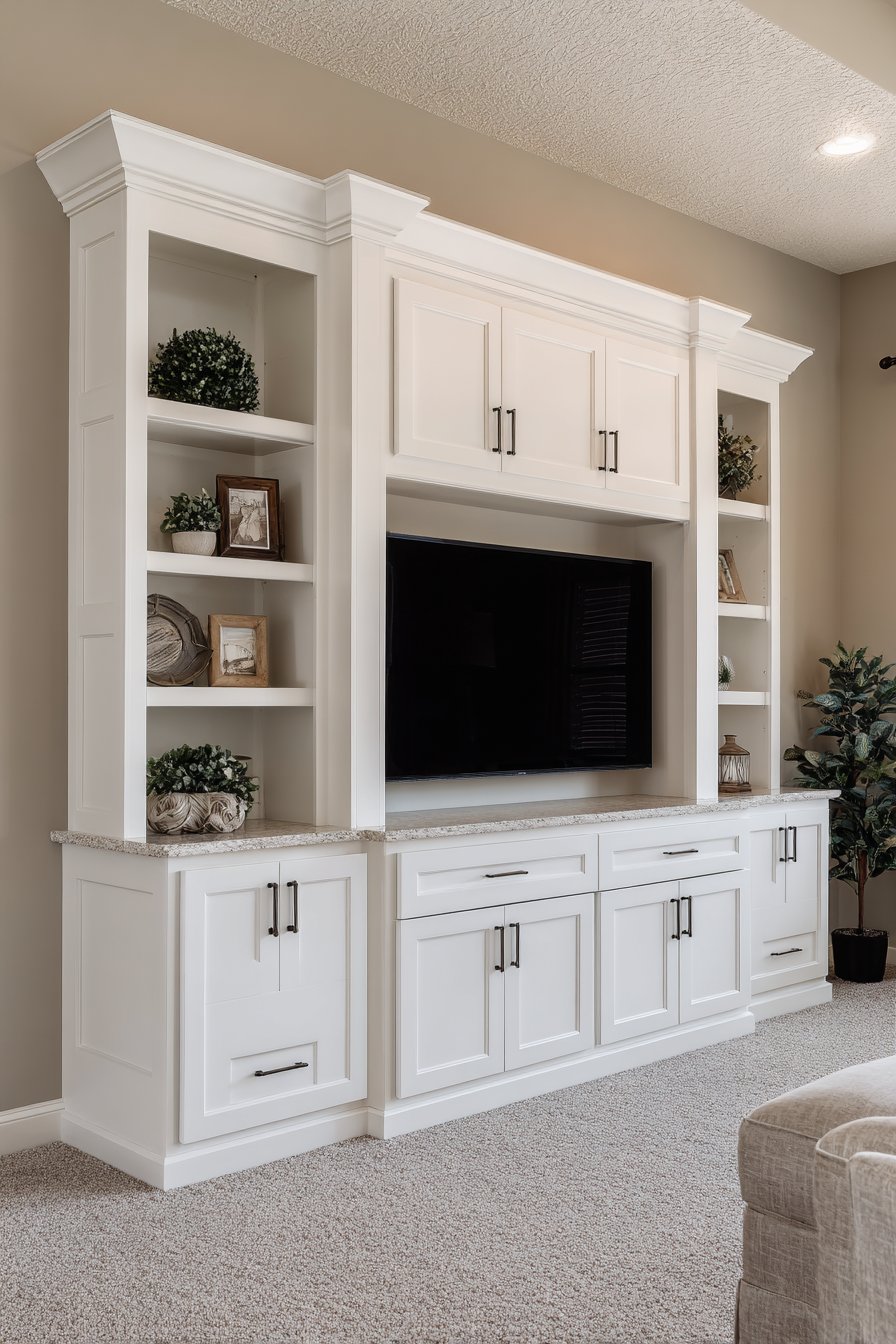
Adjustable shelving throughout the upper sections allows for flexible display of books, family photos, decorative objects, and personal collections, with each shelf supported by hidden metal pins that can be repositioned as needs change. Lower cabinets with solid doors conceal less attractive necessities like electronics, media storage, gaming systems, and cable boxes, maintaining the refined appearance while providing essential functionality. Brushed nickel hardware on each door and drawer adds subtle jewelry-like detail, the metal catching light and providing tactile quality.
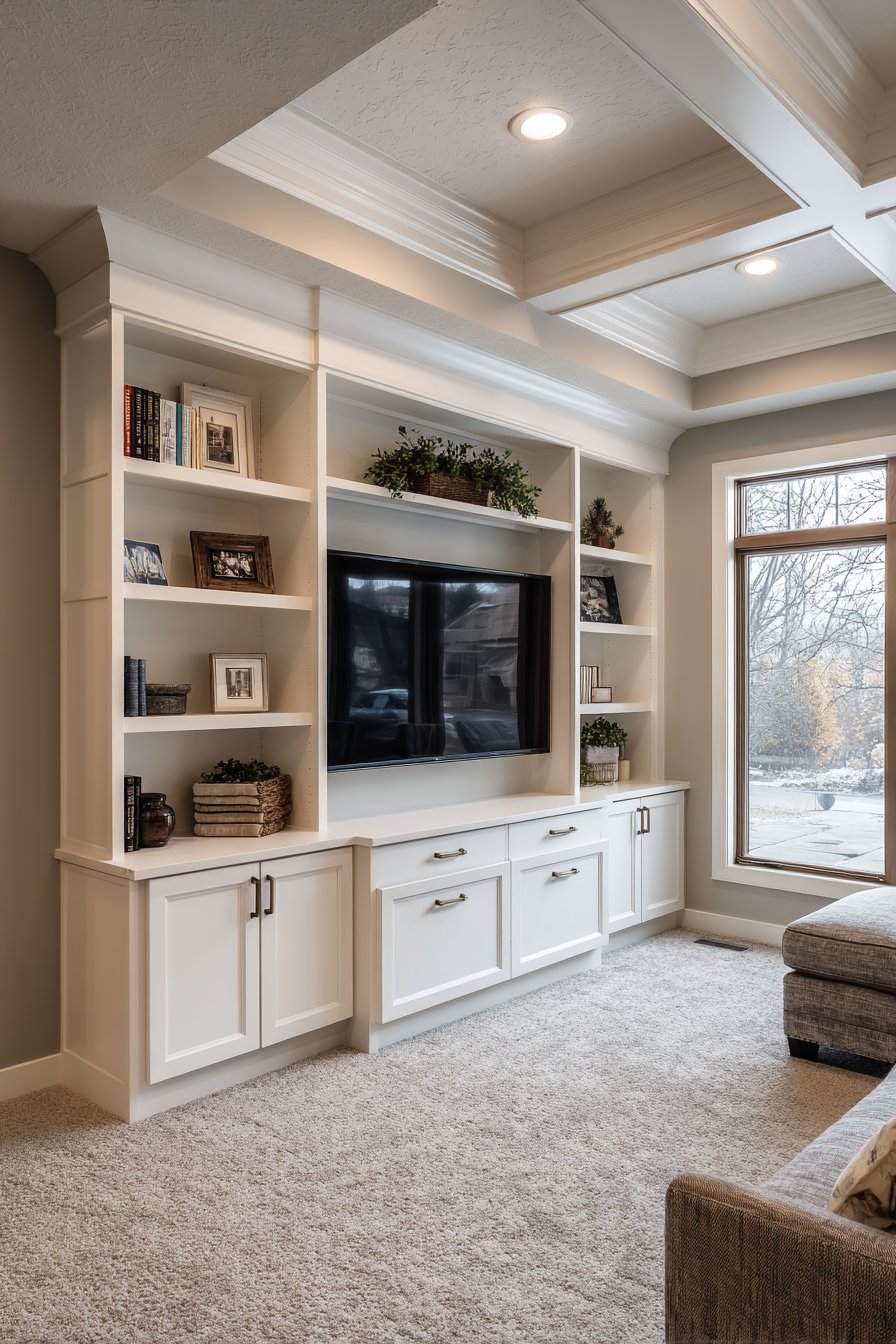
Crown molding at the ceiling and baseboards at the floor create a finished, architectural appearance that suggests the unit was always intended for this space rather than added afterward. Natural daylight from the room highlights the classic craftsmanship and clean white finish, while interior cabinet lighting can illuminate displayed collections. Interior design photography with soft, even lighting captures how this timeless built-in design creates a traditional yet fresh aesthetic appropriate for transitional homes that honor both classic and contemporary influences.
Key Design Tips: Design built-ins to appear as though they’re recessed into the wall by extending them ceiling-to-floor and using crown molding that matches existing trim. Ensure TV placement allows proper viewing height from your primary seating area, which may mean offsetting it slightly rather than perfect vertical centering. Include ventilation in closed cabinets housing electronics to prevent heat buildup that can damage equipment. Choose adjustable shelving to accommodate books and objects of varying heights without wasted space. Paint built-ins the same color as walls for seamless integration or use a slightly lighter or darker shade to define them as architectural features.
9. Mid-Century Modern Walnut Slat Wall
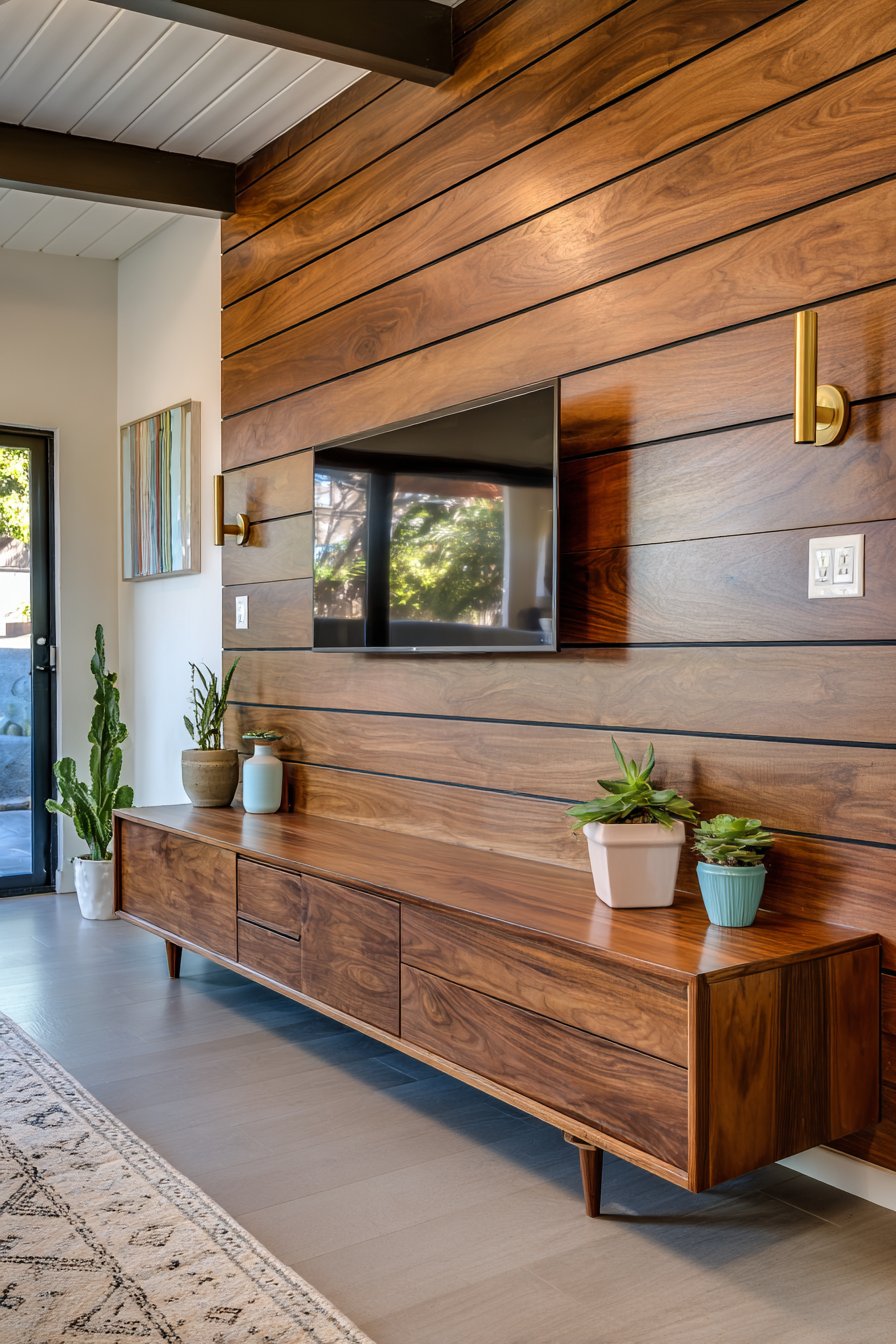
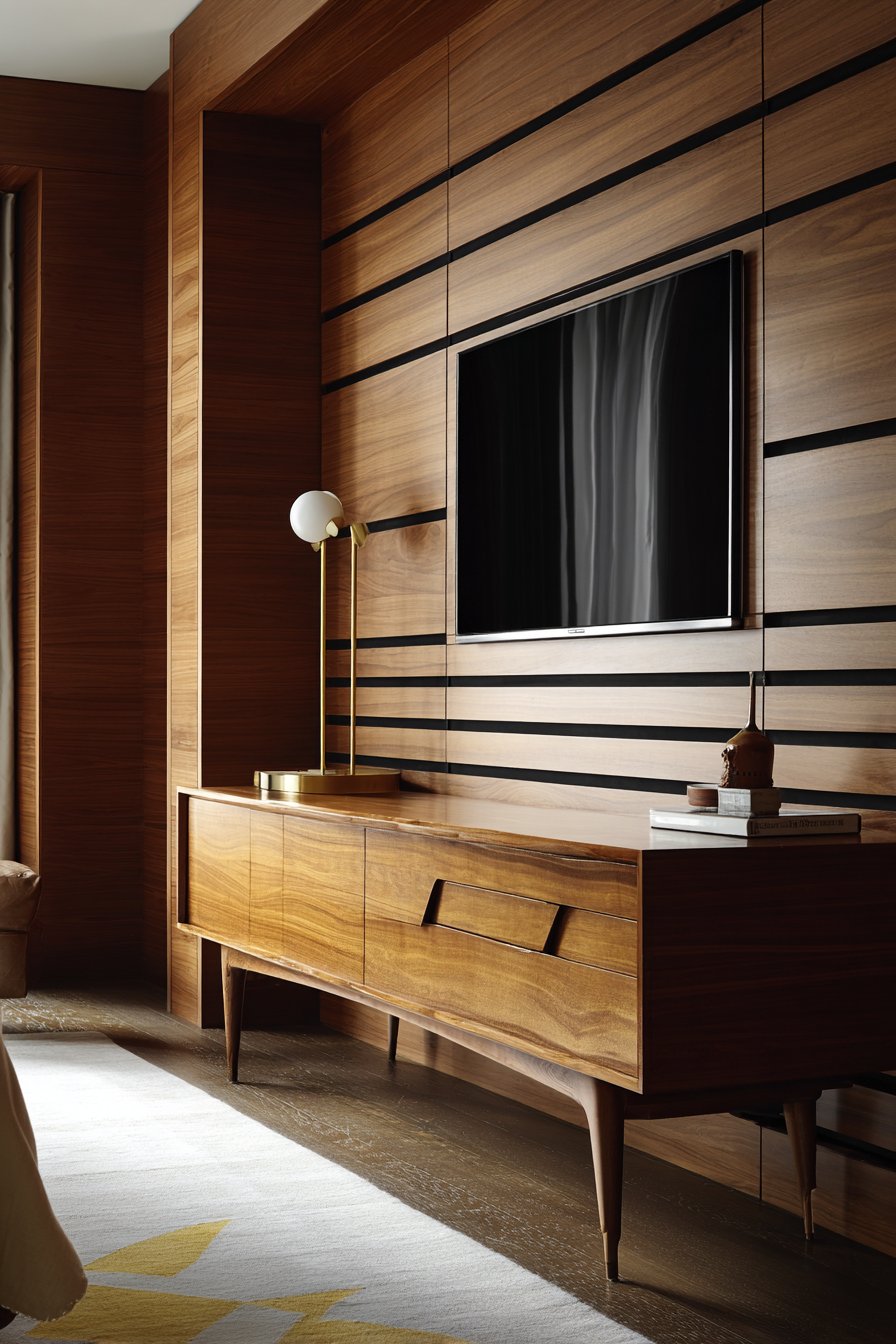
Travel back to the golden age of design with horizontal walnut wood slats creating linear rhythm and unmistakable mid-century modern character across your entertainment wall. The slats maintain consistent spacing, each gap measured precisely to create regular intervals that establish visual rhythm while allowing the wall behind to peek through. Thin black metal strips separate each slat, adding refined detail while preventing the wood pieces from appearing to blur together into a solid mass. This attention to proportion and spacing exemplifies the mid-century emphasis on thoughtful, mathematical design.
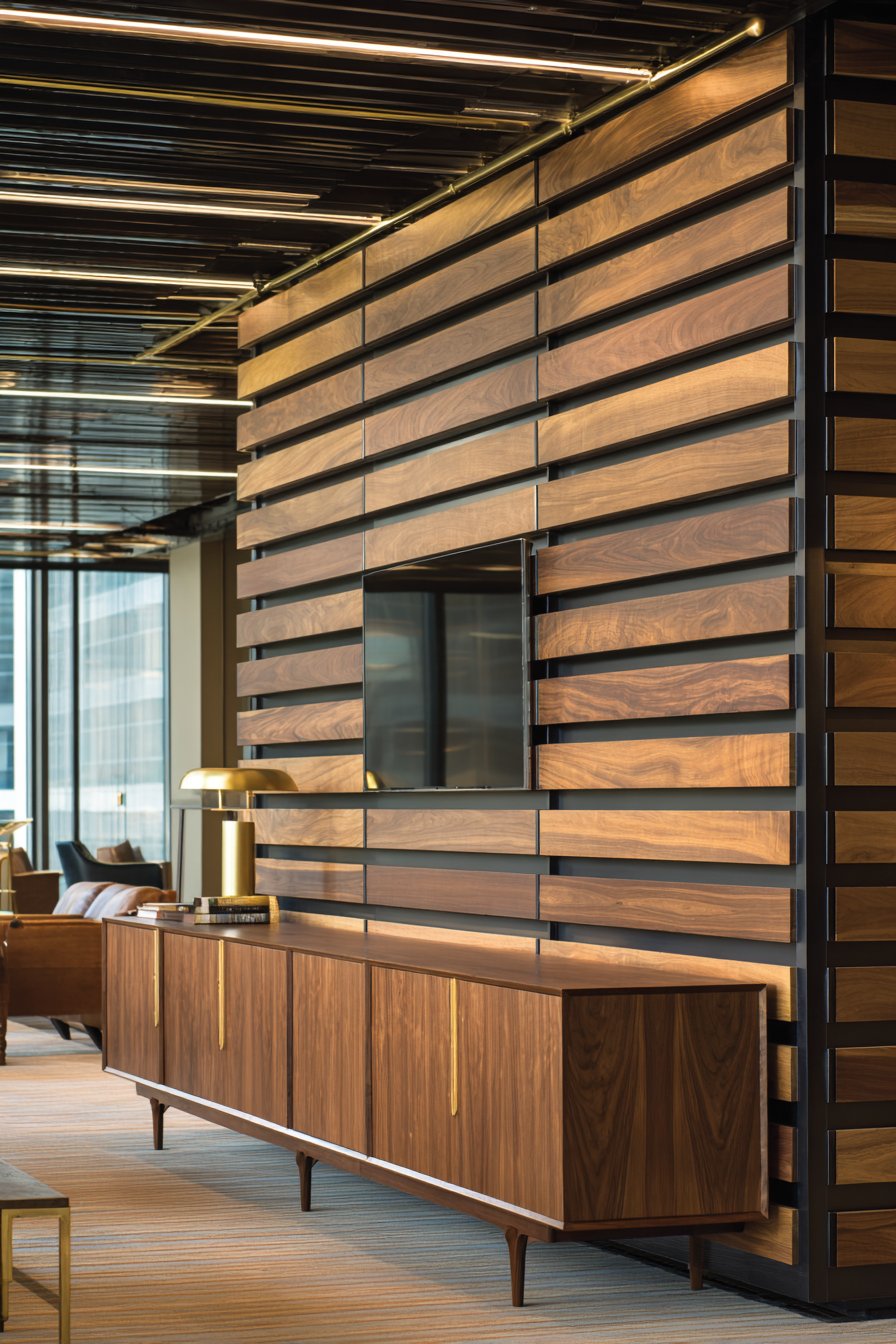
The television sits within a smooth section where slats are intentionally omitted, creating a recessed niche that frames the screen while maintaining the overall horizontal flow. This approach integrates the TV into the composition rather than disrupting it, demonstrating how mid-century designers would have solved the challenge of incorporating modern technology into their aesthetic. A low-profile credenza in matching walnut with signature tapered legs provides media storage below, its authentic mid-century form featuring sliding doors, compartmentalized interior organization, and beautiful joinery details.
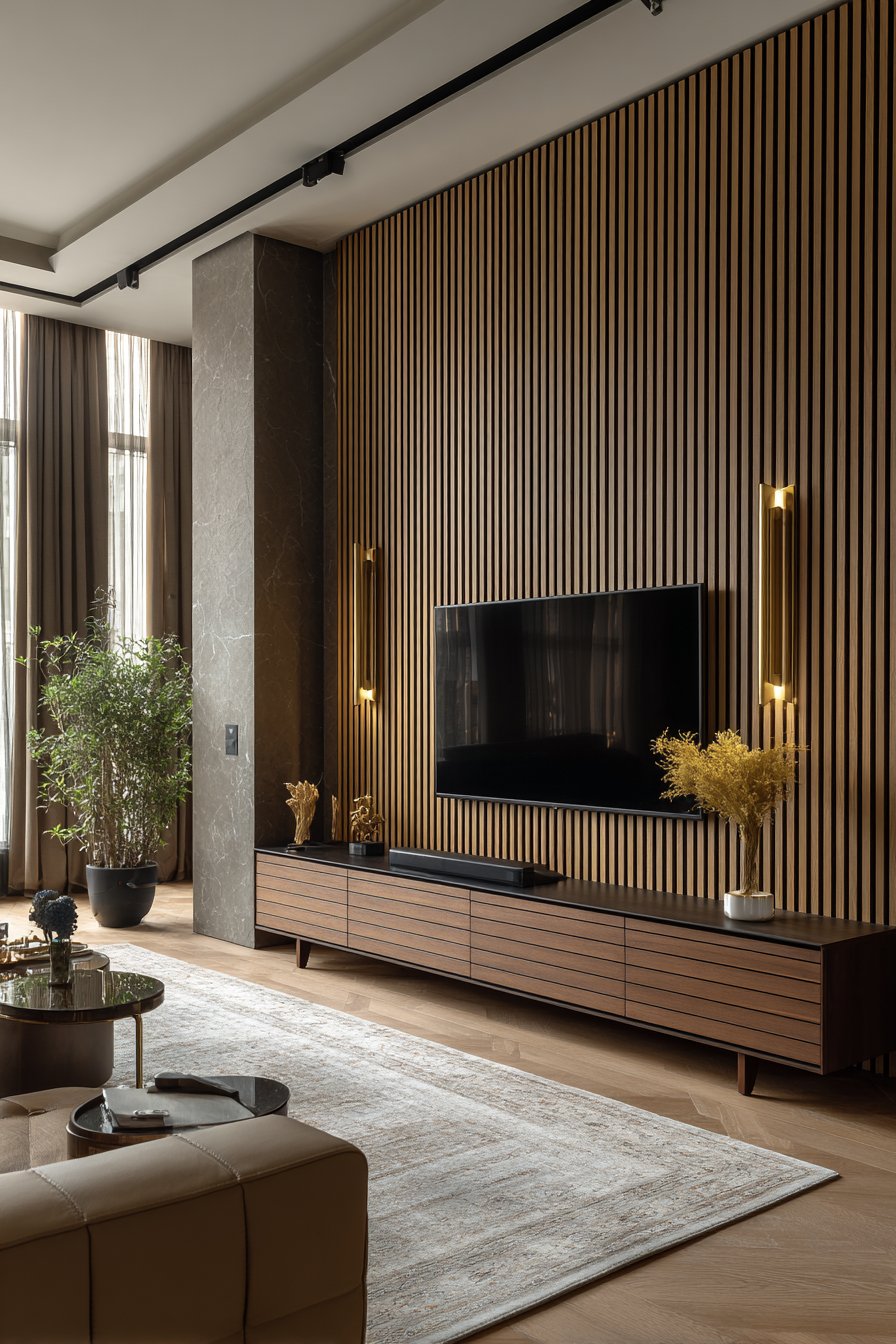
Brass accents throughout—perhaps drawer pulls on the credenza, wall sconces flanking the TV, or decorative objects displayed on surfaces—add warmth and period-appropriate metallic shine. Period lighting, whether authentic vintage pieces or quality reproductions, completes the authentic mid-century atmosphere. Professional photography captures the warm wood tones and clean geometric composition, showing how balanced natural lighting enhances the walnut’s rich grain patterns and golden undertones that define this beloved design era.
Key Design Tips: Source genuine walnut or high-quality walnut veneer plywood for authentic mid-century appearance, as cheaper wood species stained to mimic walnut lack the characteristic grain pattern. Maintain slat spacing between one to two inches for optimal visual effect and proper proportion at residential scale. Use adjustable metal brackets to mount slats, allowing for future removal or modification without wall damage. Choose brass with slightly aged or satin finish rather than bright polish for more authentic mid-century aesthetic. Position credenza at standard media console height (around 24-30 inches) to maintain mid-century proportions while accommodating modern equipment.
10. Coastal Whitewashed Shiplap
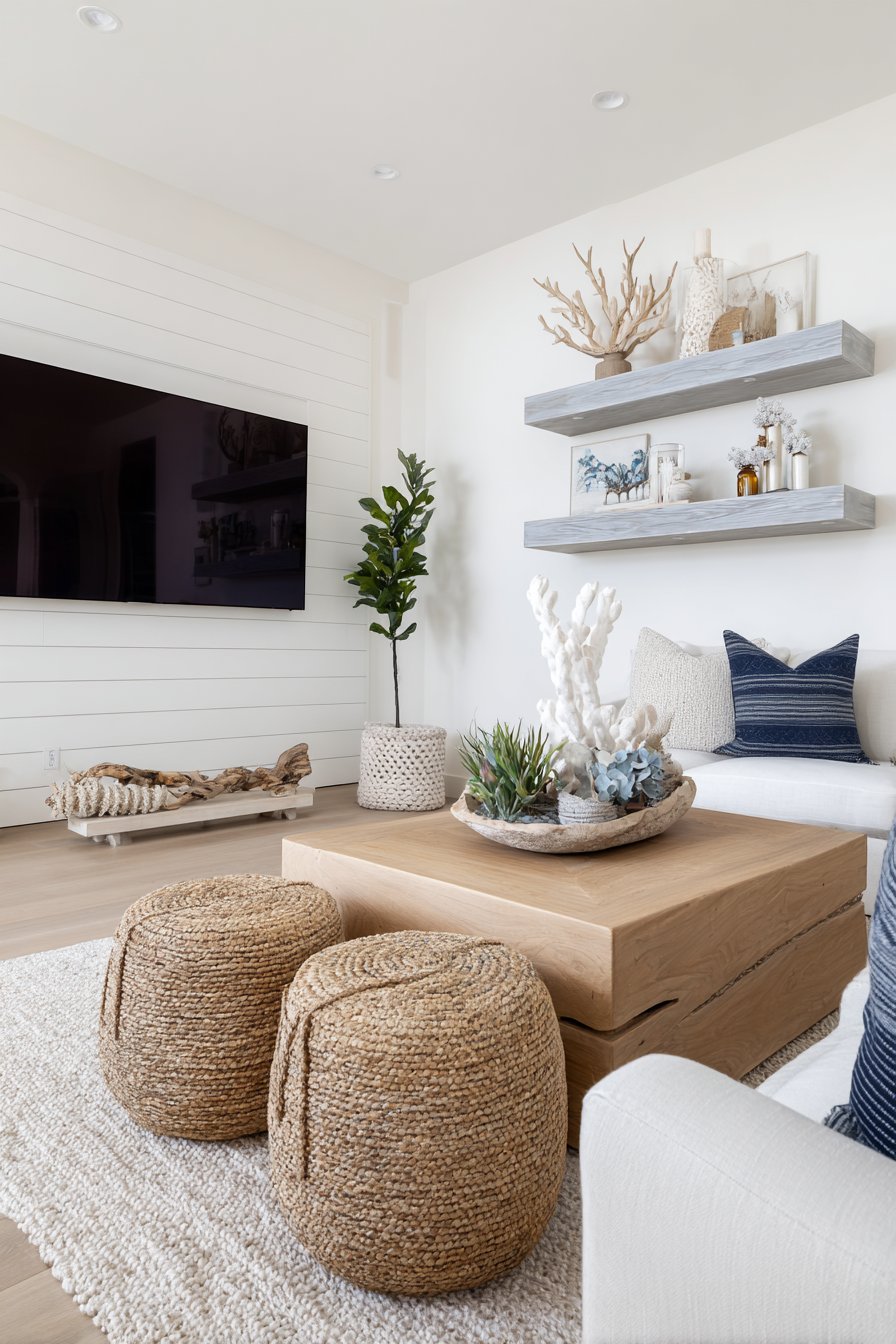
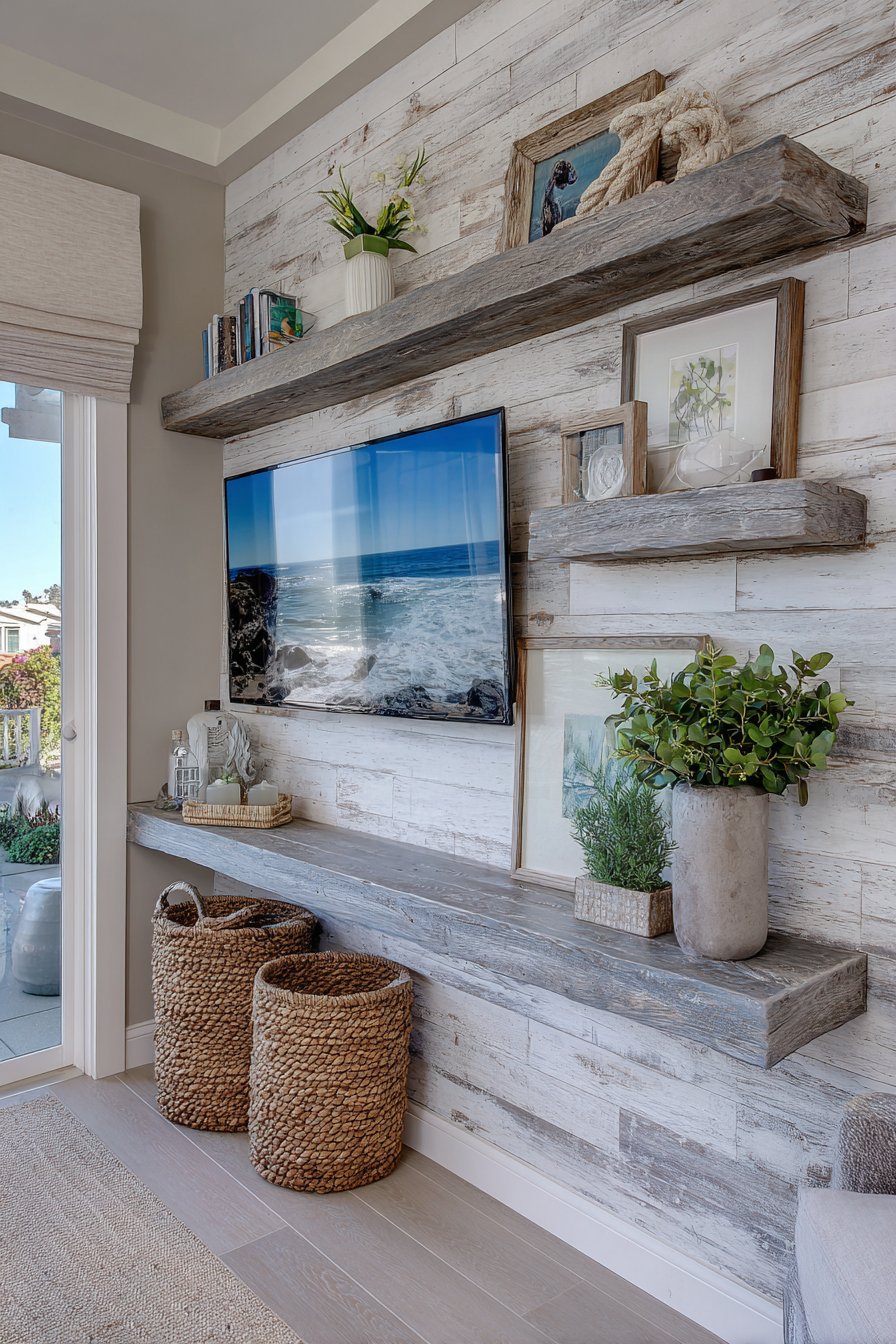
Bring beach house serenity indoors with whitewashed shiplap boards arranged horizontally across the entertainment wall, creating relaxed coastal ambiance through texture and color. The whitewash technique allows the wood grain to remain visible beneath a translucent white finish, providing the perfect balance between the bright, clean aesthetic coastal style demands and the natural warmth that prevents spaces from feeling cold or sterile. Each board’s grain pattern shows through differently depending on the wood’s porosity and original tone, creating subtle variation that adds character.
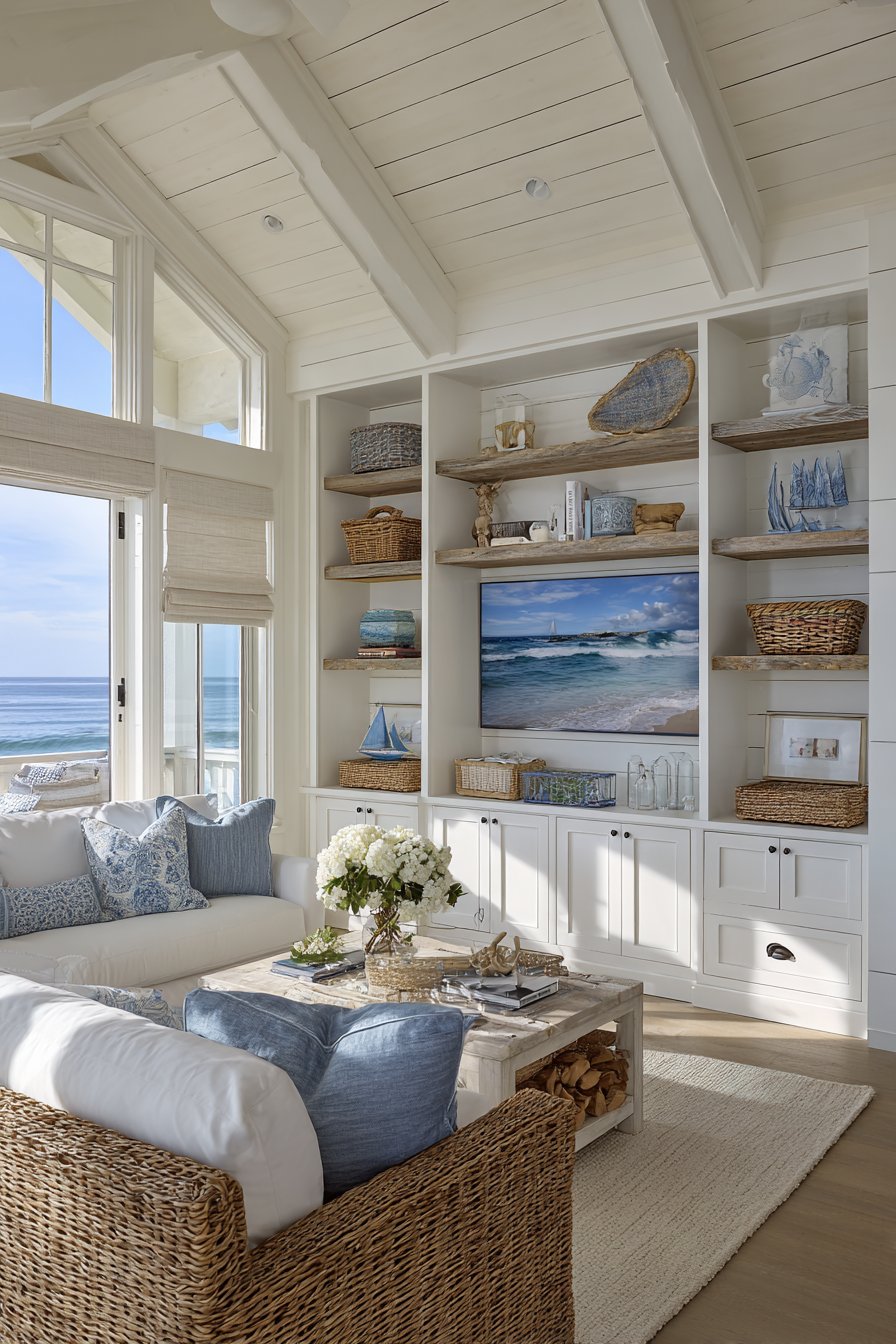
Light blue-grey floating shelves crafted from driftwood-style reclaimed wood flank the television, their weathered appearance and organic edges bringing authentic beachcomber charm. These shelves display coastal-inspired accessories—perhaps white coral, collected shells, beach glass in Mason jars, or nautical brass items that catch light. Woven basket storage below the TV tucks away remotes, media components, and other necessities while adding natural texture through seagrass, water hyacinth, or rattan construction. Rope-wrapped accents, whether around shelf brackets or decorative objects, provide quintessential nautical touches.
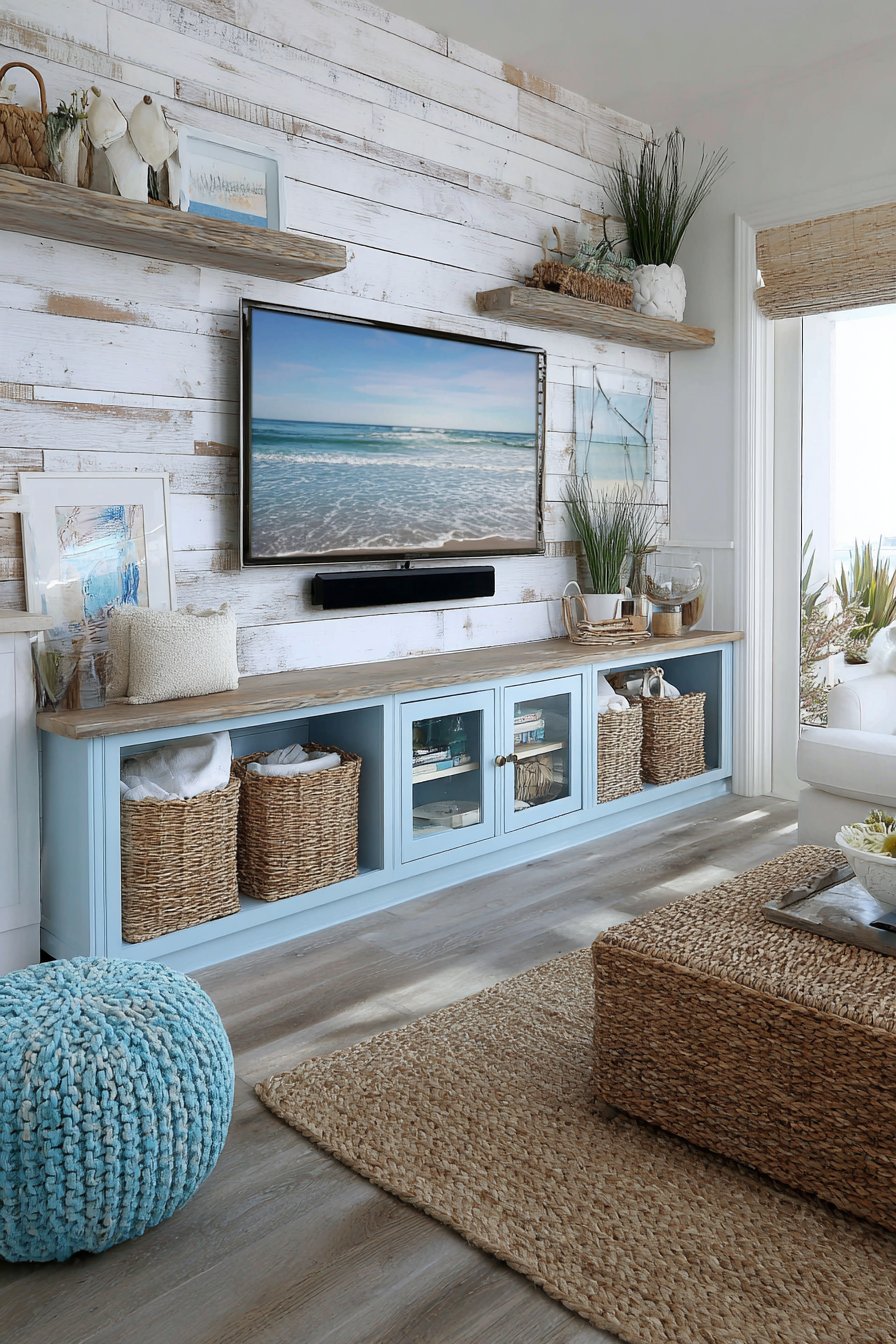
Soft white linen Roman shades at nearby windows filter natural light, creating the bright, diffused illumination that coastal interiors require. The overall effect feels like a permanent beach vacation, with the soothing palette and natural materials creating calm that helps residents and guests decompress. Interior photography emphasizes the light, airy feel through bright natural lighting that highlights the weathered wood textures and coastal color palette of soft whites, weathered greys, and ocean-inspired blues.
Key Design Tips: Create whitewash finish by diluting white paint with water (approximately 1:1 ratio) and applying thin coats that allow wood grain to show through. Distress edges and surfaces slightly with sandpaper for authentic weathered appearance before applying whitewash. Choose naturally weather-resistant wood species like cedar or pine that will age gracefully if moisture levels fluctuate. Incorporate natural fiber storage like seagrass baskets for authentic coastal texture while providing practical organization. Keep metallic finishes to brass, brushed nickel, or galvanized steel rather than chrome or polished silver for appropriate coastal aesthetic.
11. Dramatic Velvet-Upholstered Panel System
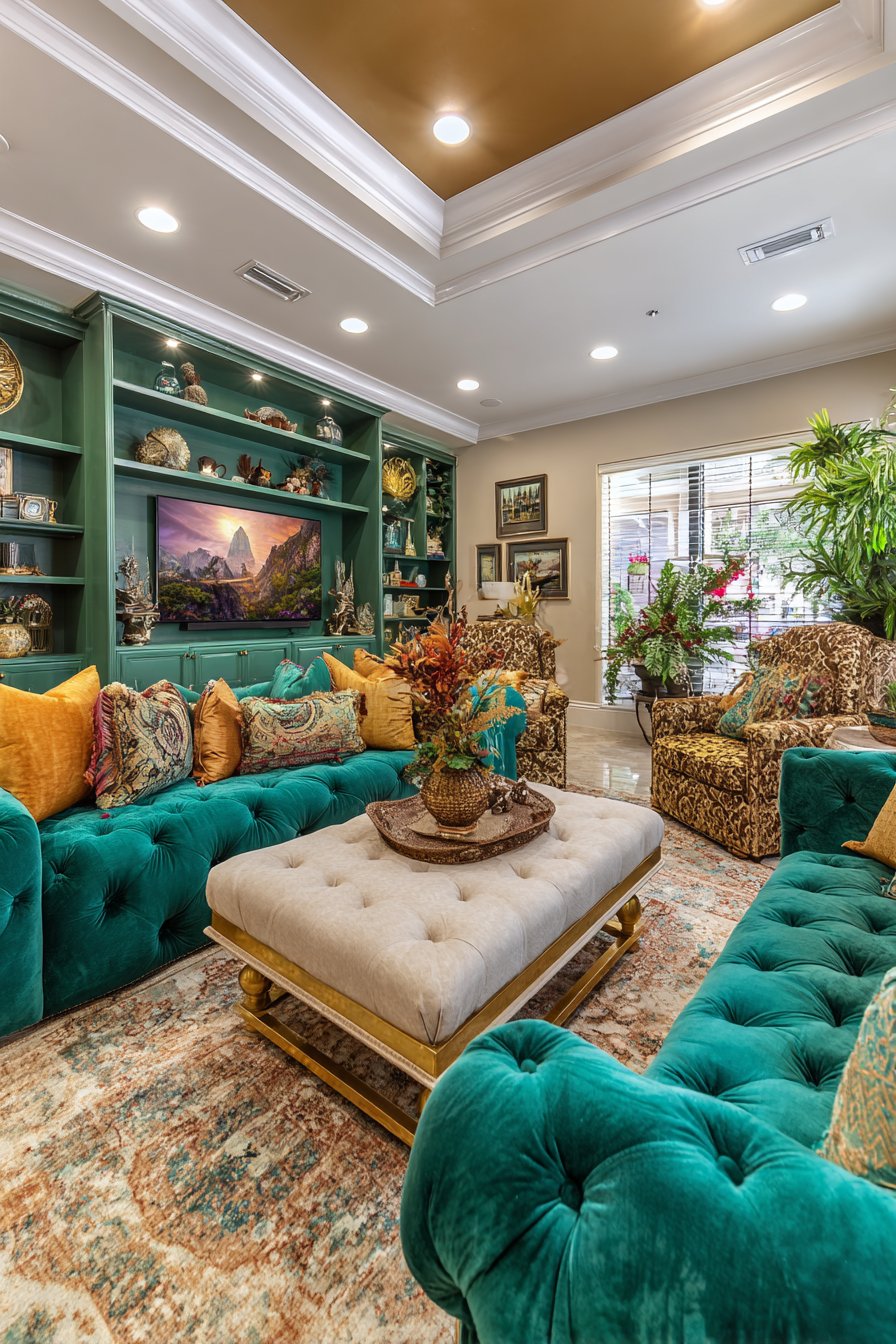
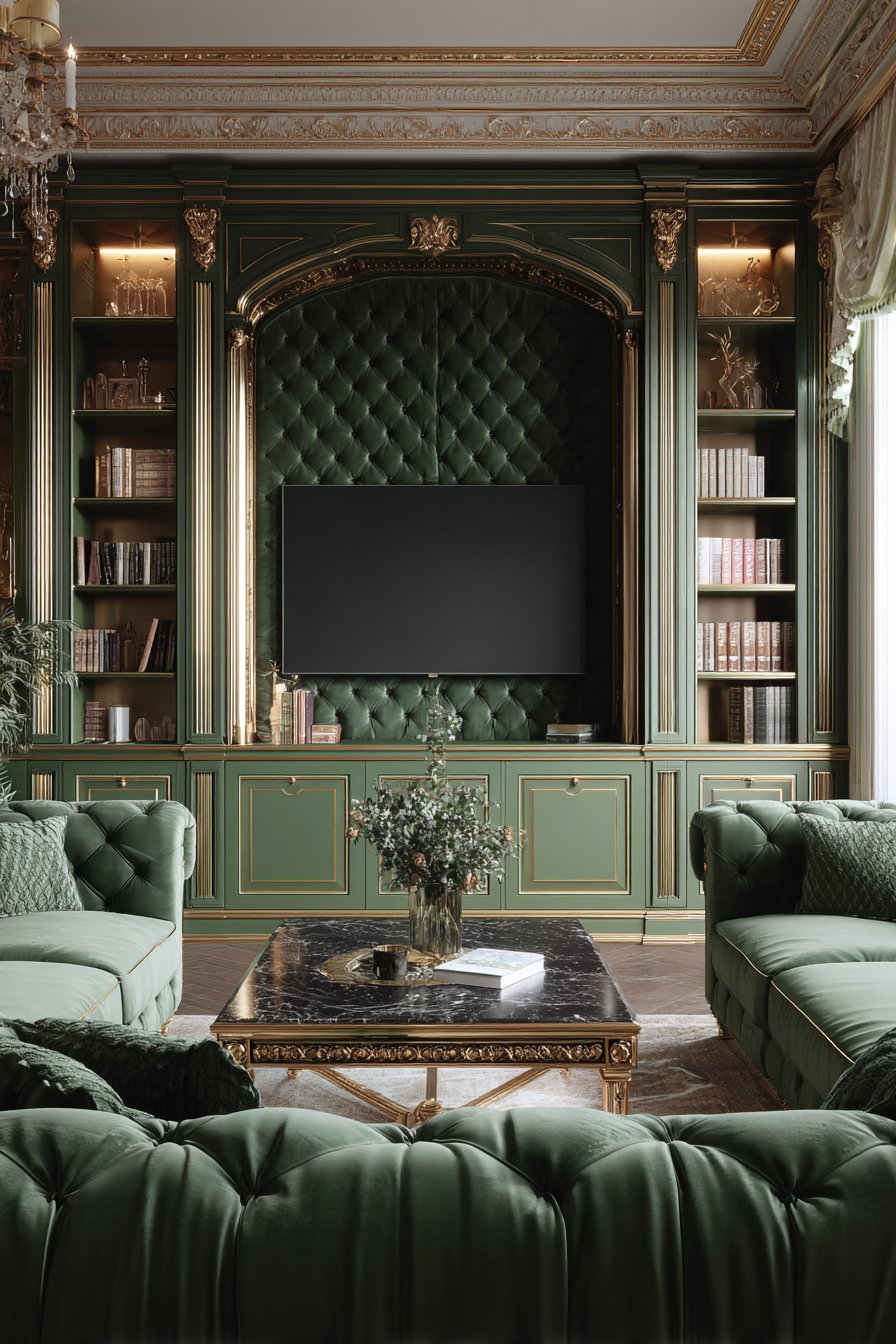
Make an unforgettable statement with a maximalist TV panel featuring luxurious dark green velvet upholstery with deep button tufting across the entertainment wall. The jewel-toned velvet creates immediate drama and sophistication, its pile reflecting light differently depending on viewing angle to create rich depth and visual interest. The deep button tufting adds dimensional texture, creating regular geometric patterns across the soft surface while the technique’s association with traditional upholstered furniture brings old-world elegance into contemporary context.
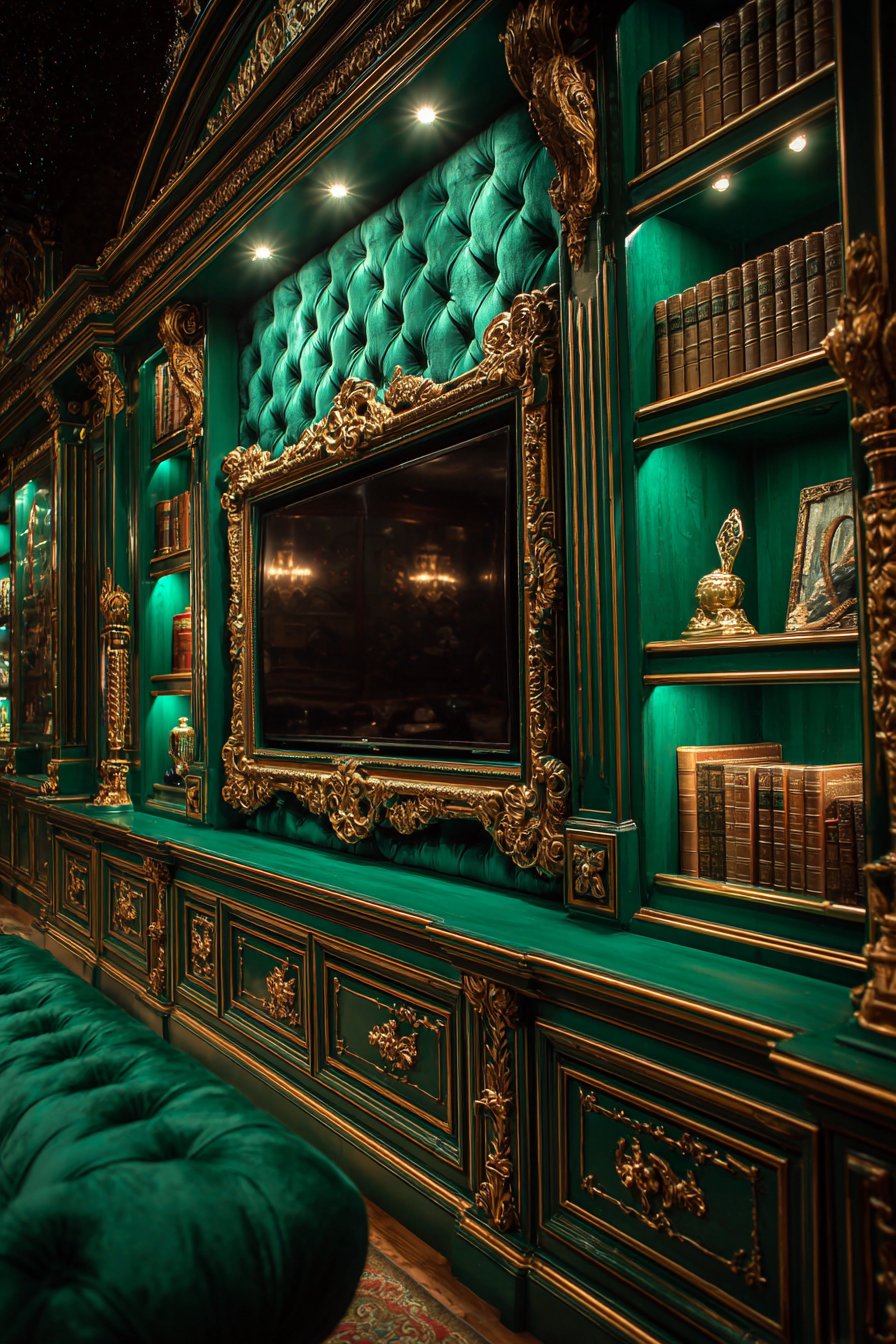
Gold metal trim frames the television section with refined precision, the warm metallic providing elegant contrast against the dark green while catching and reflecting light. Built-in shelving integrated into the upholstered panels features matching green lacquer finish, creating a cohesive monochromatic scheme that displays decorative objects, art books, and treasured collections. Integrated warm LED lighting behind crown molding creates ambient glow that enhances the room’s luxurious atmosphere, casting soft illumination upward while highlighting the ceiling and creating the impression of greater height.
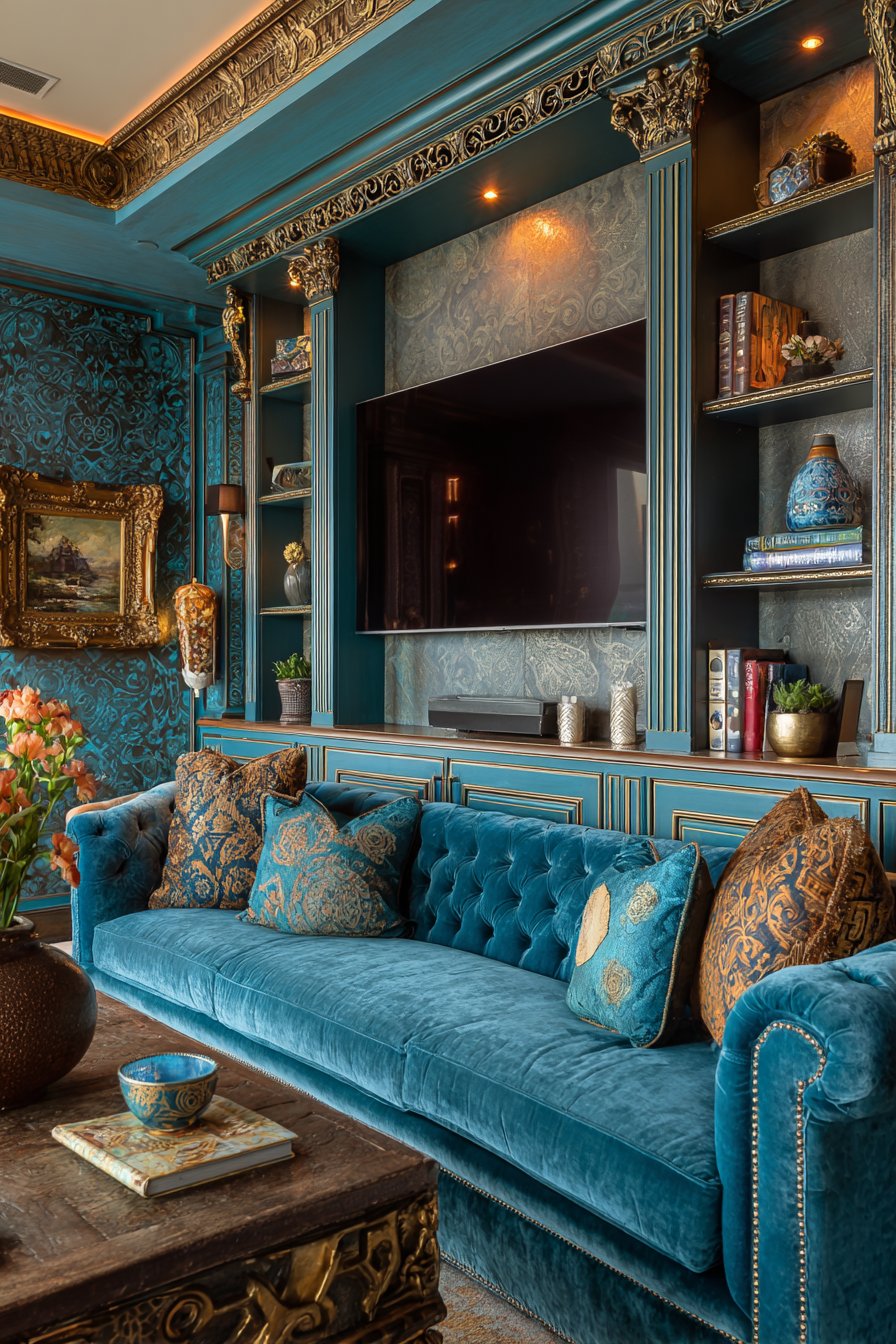
Ornate details throughout—perhaps carved wood accents painted gold, decorative brackets, or brass hardware—contribute to the opulent maximalist approach where more is indeed more. Rich materials and elaborate craftsmanship create environments for those who appreciate abundance and visual richness. Professional interior photography with carefully balanced lighting captures the depth of color and sumptuous textures, showing how dramatic design choices can create sophisticated rather than overwhelming spaces when executed with attention to quality and cohesion.
Key Design Tips: Choose high-quality velvet with dense pile that will maintain its appearance under regular use and resist crushing or matting. Install upholstered panels over sturdy backer boards to provide smooth, stable surface for tufting and mounting. Ensure television placement allows adequate ventilation as upholstered surfaces can trap heat more than hard materials. Incorporate dimmable ambient lighting to adjust the mood from dramatic evening entertaining to softer daytime viewing. Treat velvet with fabric protector to resist stains and make cleaning easier while maintaining the luxurious texture.
12. Japanese-Inspired Zen Entertainment Area
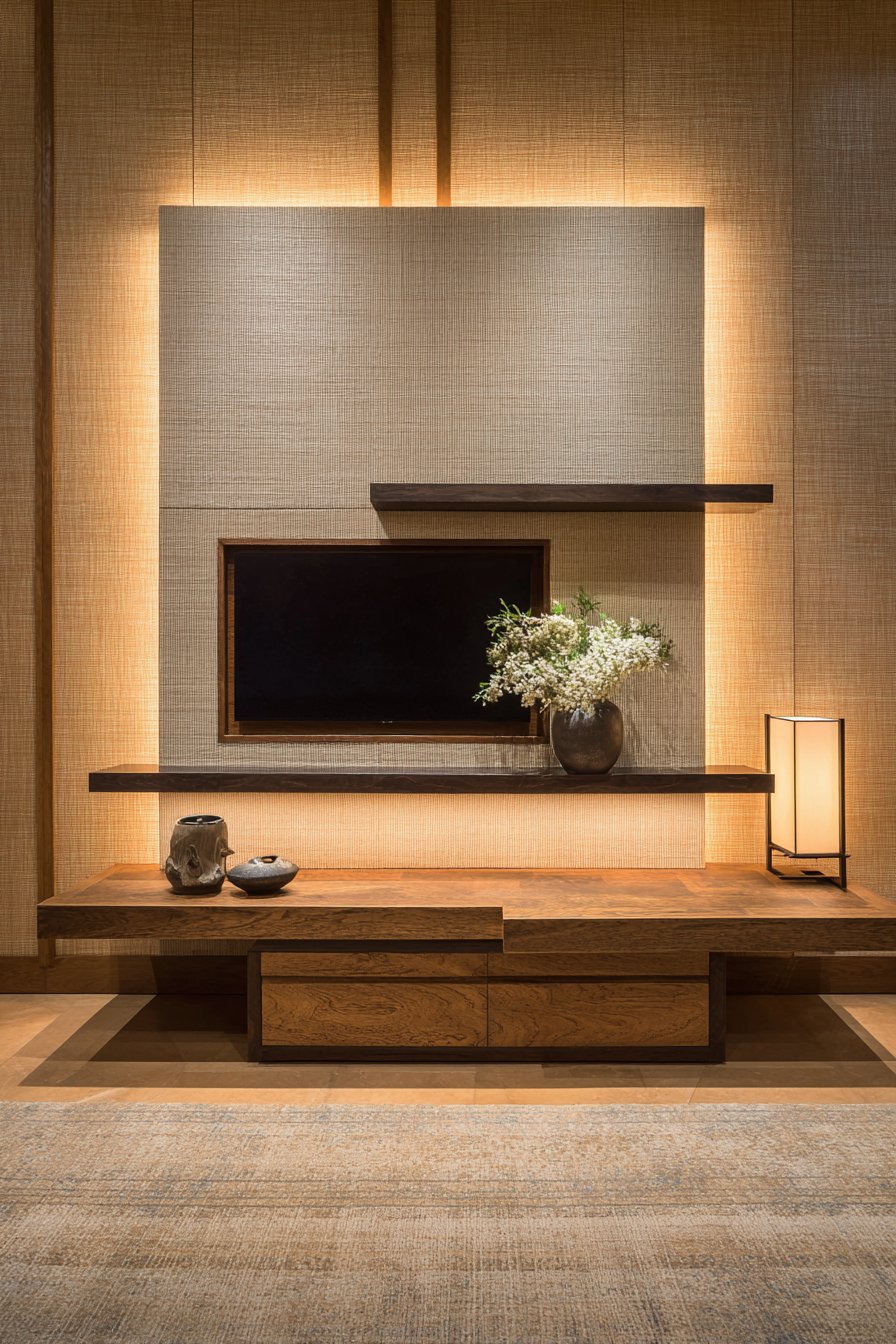
Find tranquility through Japanese-inspired design featuring tatami-textured wall covering in natural beige with subtle woven pattern creating organic warmth. This textured covering references traditional Japanese flooring while adapting it for vertical application, bringing the materiality and craftsmanship of Japanese design into contemporary entertainment spaces. The natural beige color palette provides neutral serenity while the visible weave pattern adds sufficient visual interest to prevent plainness.
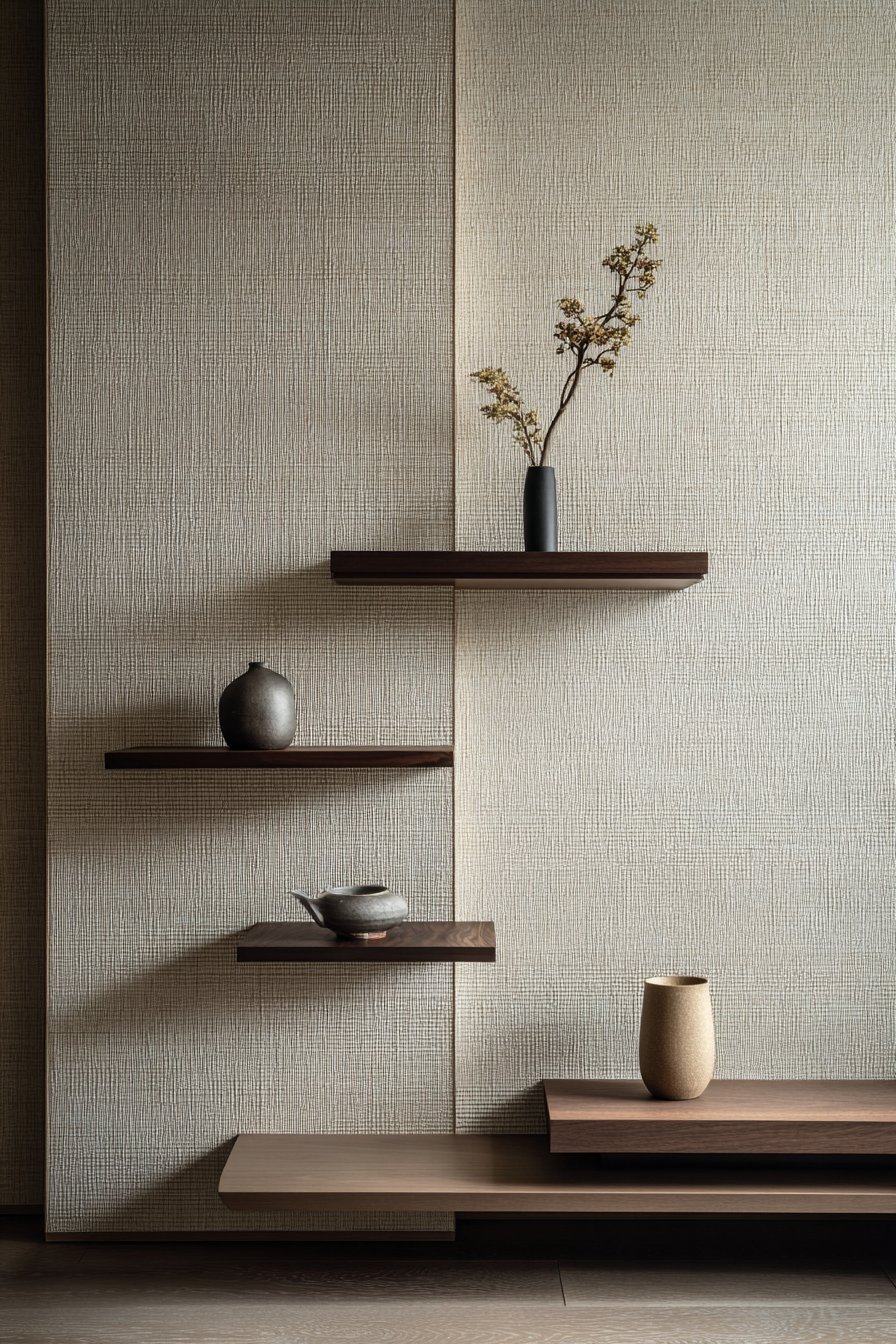
Simple floating shelves in dark stained oak with clean edges and no visible hardware provide minimalist storage following Japanese design principles of restrained beauty and essential function. The shelves display carefully chosen objects with intention—perhaps a single ikebana flower arrangement, a ceramic piece by a valued artisan, or a few thoughtfully selected books. This curated approach reflects the Japanese aesthetic principle of “ma,” or negative space, where emptiness is valued as highly as objects themselves.
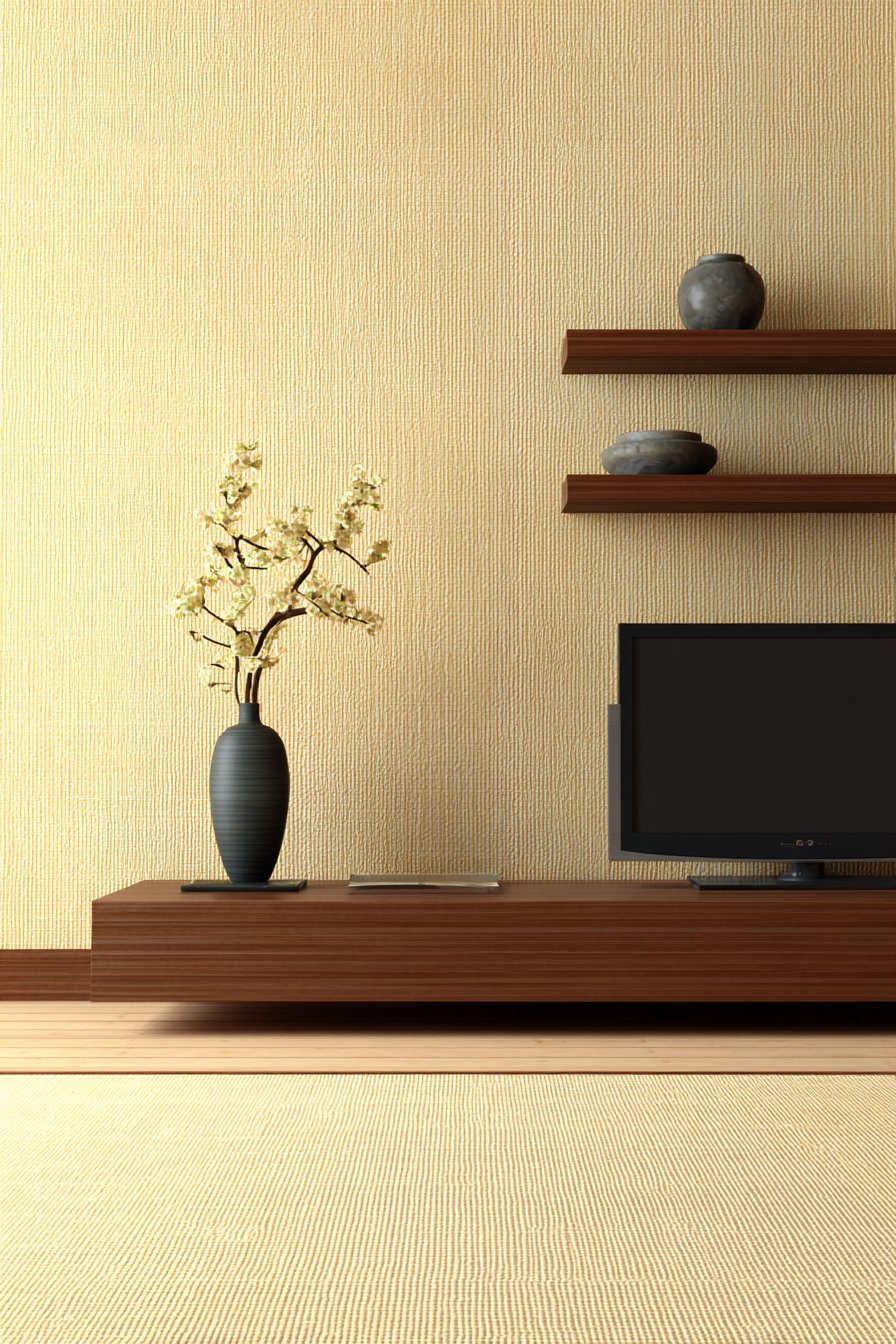
The television sits on a low platform-style media console following Japanese preferences for low furniture that creates different visual proportions and relationship with the floor. The console likely features sliding doors rather than swinging ones, compartmentalized interior organization, and simple hardware that doesn’t demand attention. Soft diffused lighting creates peaceful ambiance without harsh shadows or bright spots, supporting the zen-like atmosphere. Interior design photography captures this simplicity and attention to natural materials and negative space, showing how restraint creates richness through what’s left out rather than what’s included.
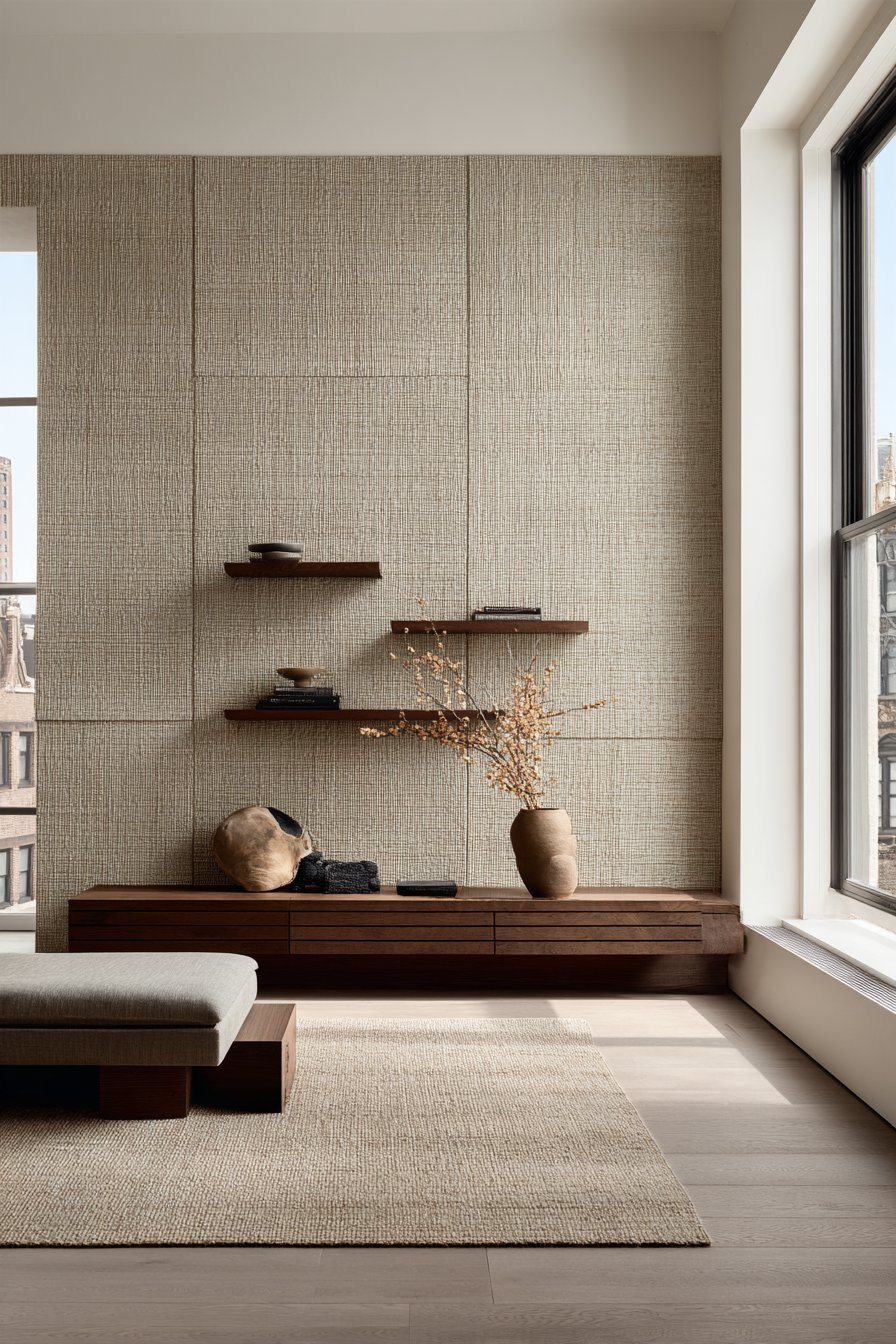
Key Design Tips: Choose natural materials like grasscloth, linen, or paper-based wall coverings for authentic Japanese aesthetic rather than synthetic alternatives. Maintain low furniture heights throughout the room to create cohesive Japanese proportions and visual harmony. Display very few carefully chosen objects rather than collections, allowing each piece to be appreciated individually. Incorporate natural elements like bamboo, stone, or plants to bring organic materials into the controlled interior environment. Use diffused lighting from paper lanterns or shaded fixtures rather than exposed bulbs or harsh directional lighting.
13. Compact Multi-Functional Wall Unit
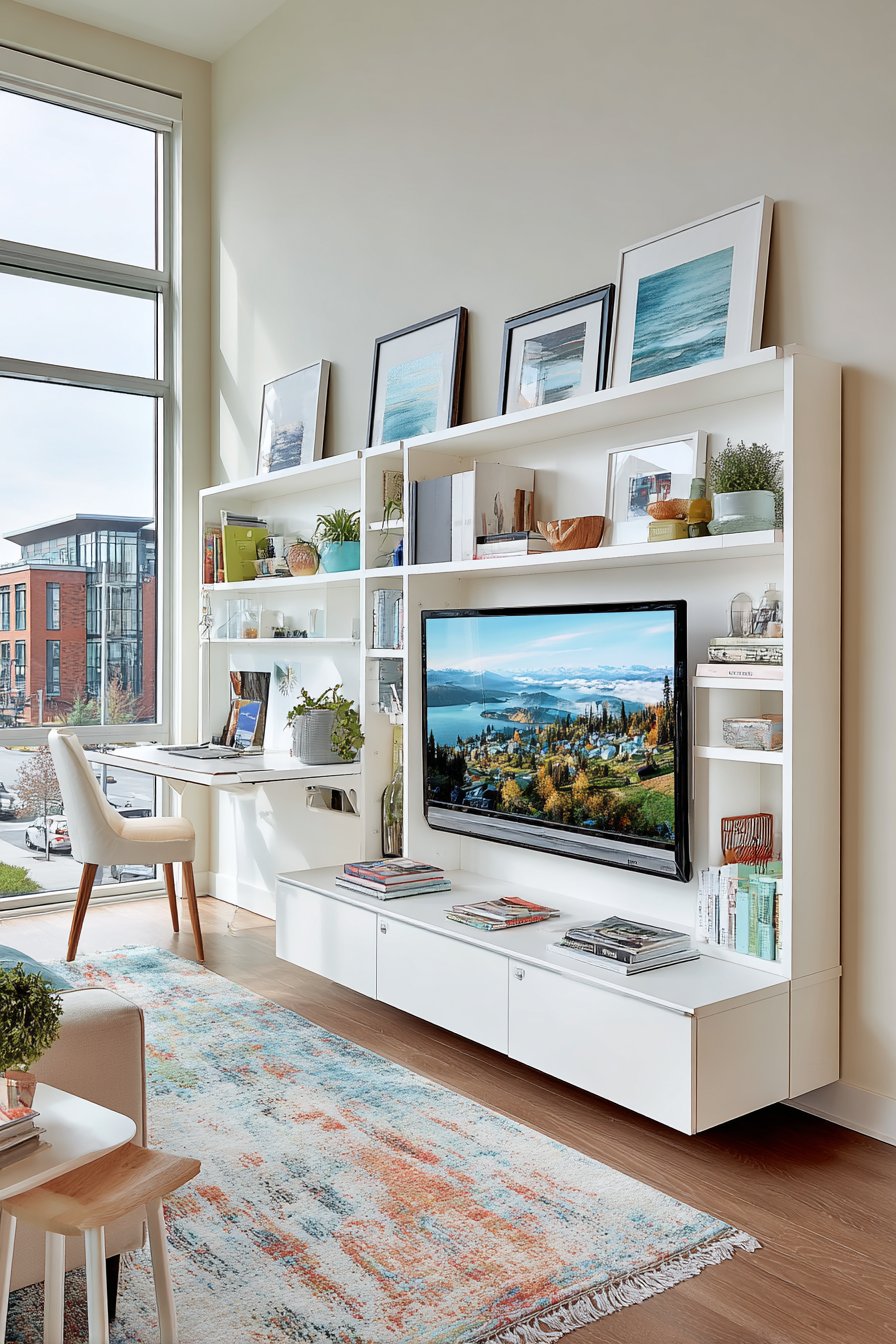
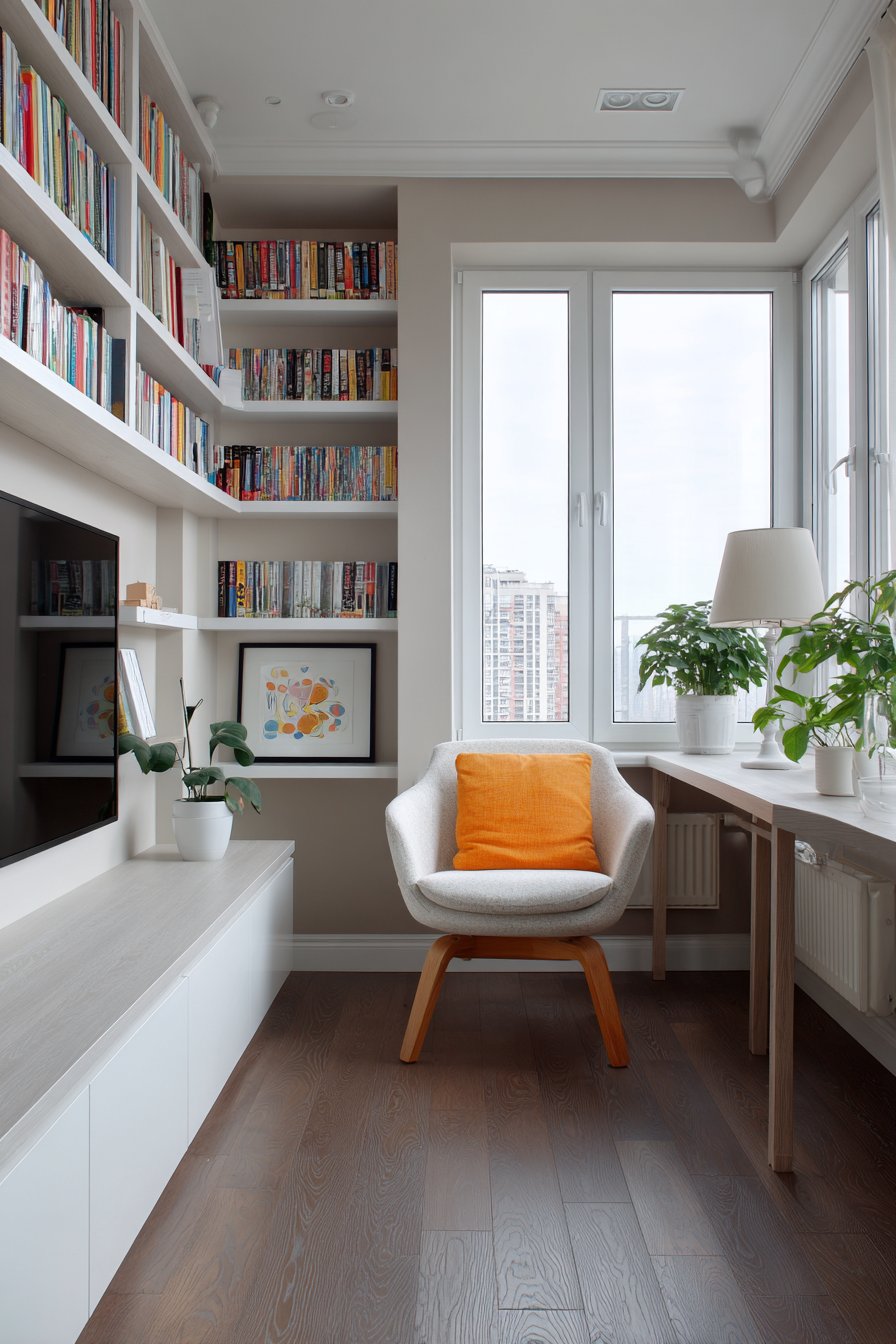
Maximize limited square footage with a space-saving TV panel optimizing every inch through multi-functional design in light grey laminate. This comprehensive wall unit incorporates a fold-down desk section that transforms the entertainment area into a workspace when needed, demonstrating how contemporary living demands furniture that serves multiple purposes. Concealed storage with push-open doors eliminates protruding hardware that would make the compact space feel more cluttered, while narrow shelving provides vertical storage for decor without consuming valuable floor space.
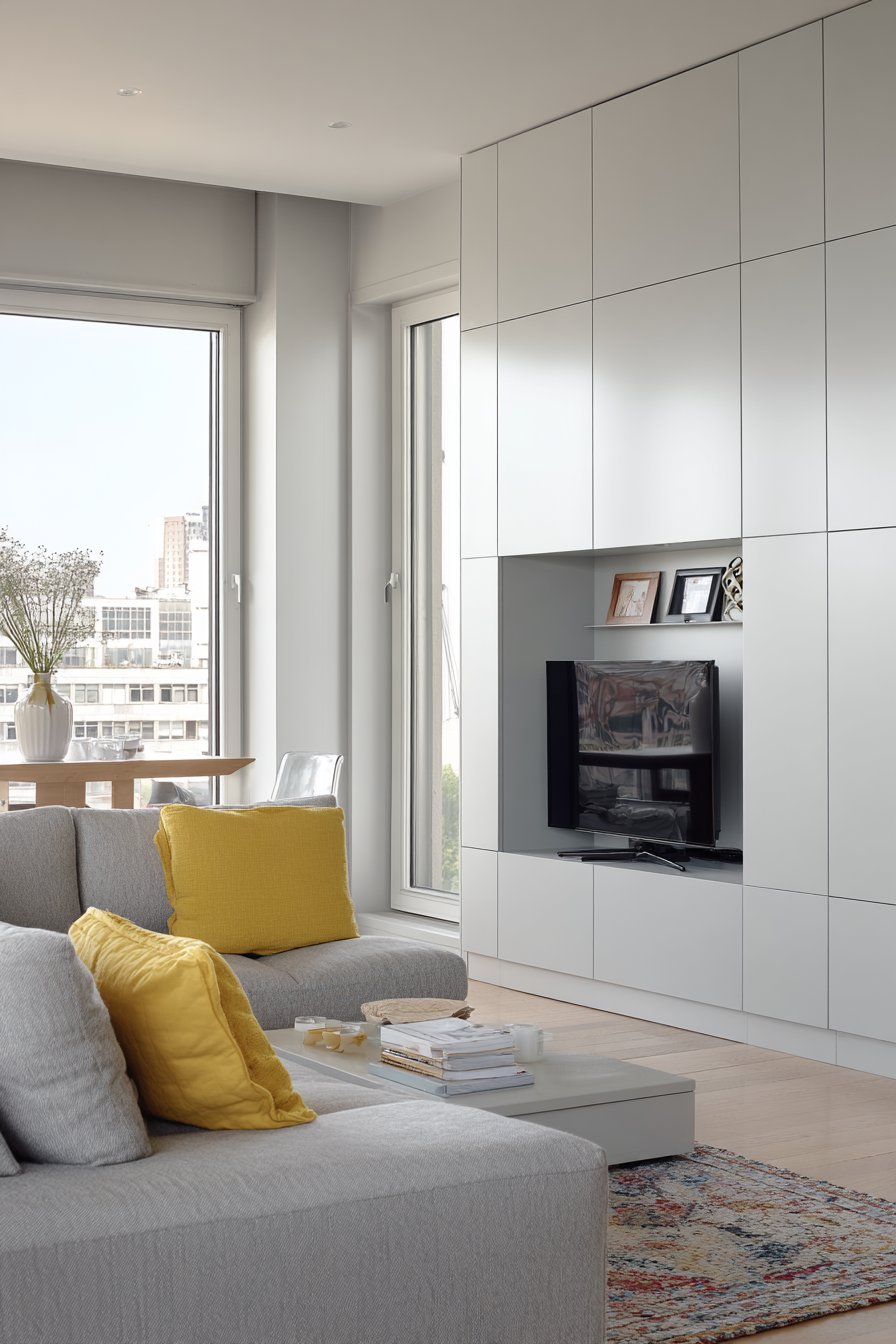
The television mounts at optimal viewing height with all cable management hidden within vertical channels integrated into the unit’s structure, ensuring the streamlined appearance remains uncompromised by visible wires. The design maximizes function without creating visual clutter—every storage compartment, shelf, and surface serves clear purpose while maintaining cohesive aesthetic. In small apartments or studios where single rooms must accommodate multiple functions, this type of integrated wall system proves invaluable.
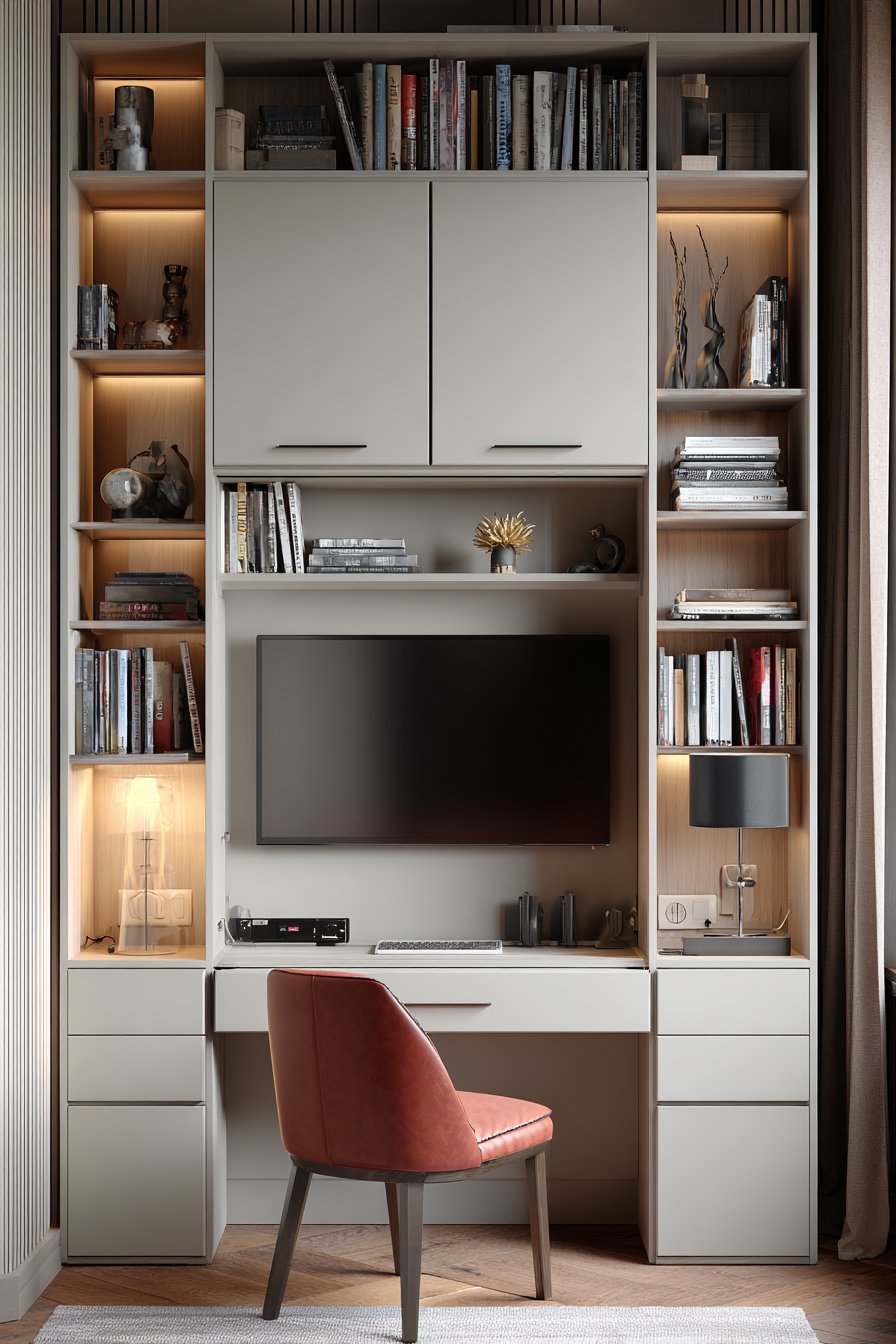
Wide-angle photography demonstrates the space-saving solutions and practical organization possible in efficiently designed small apartment living rooms. The light grey finish keeps the substantial wall unit from feeling heavy or oppressive, while the laminate material provides durability and easy maintenance essential in compact spaces where everything receives more use and wear. This design proves that limited square footage doesn’t require sacrificing either style or function when approached with creativity and careful planning.
Key Design Tips: Measure your space precisely and design for your exact dimensions rather than purchasing prefabricated units that may not maximize your specific area. Include fold-down or slide-out elements that provide function when needed but disappear when not in use. Choose light colors and reflective surfaces to prevent compact spaces from feeling smaller or darker. Install proper wall anchors rated for the substantial weight of multi-functional units that house TVs, desks, and storage. Plan interior storage with specific items in mind, using drawer dividers and shelf risers to maximize vertical storage within closed compartments.
14. Bohemian Macramé Backdrop
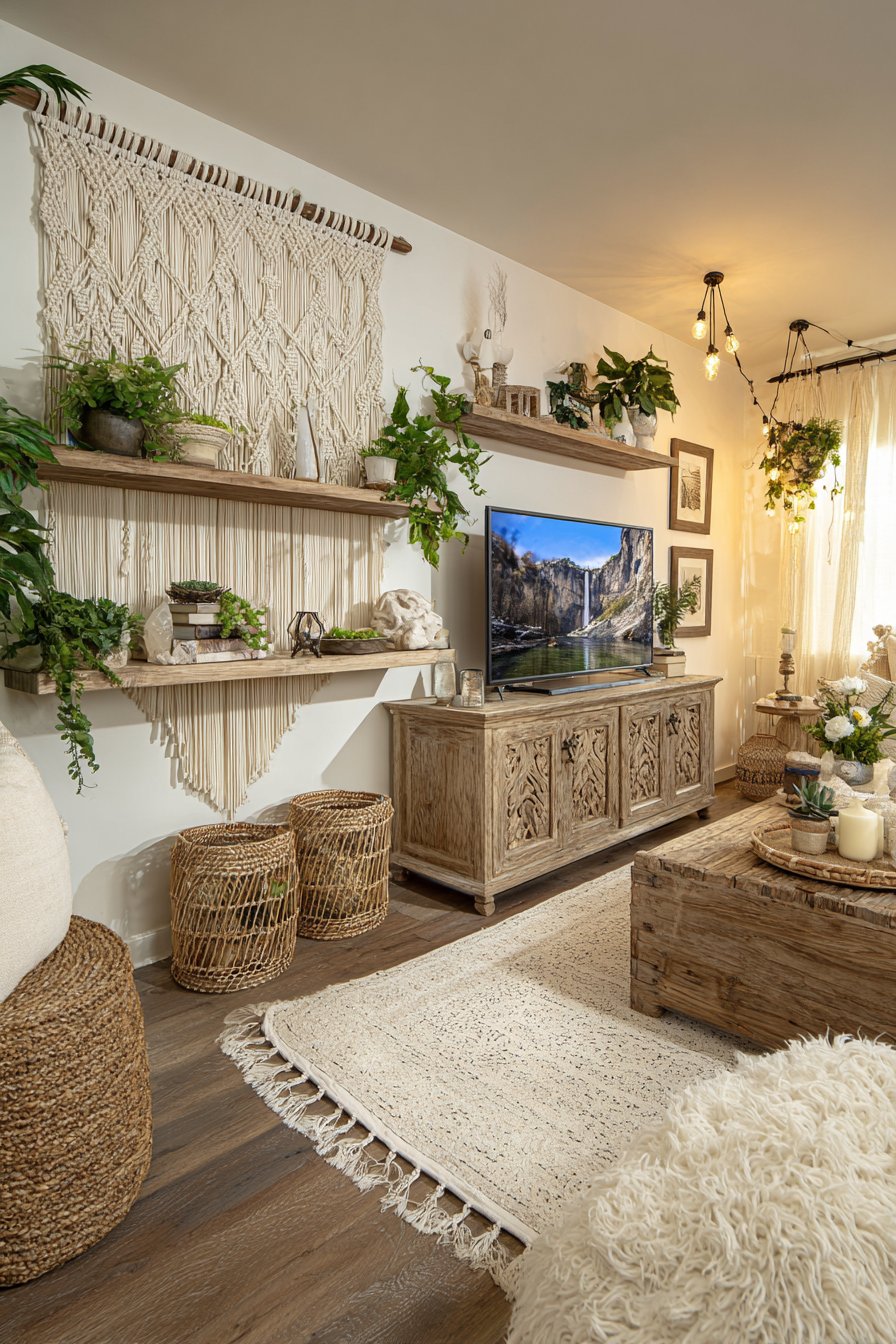
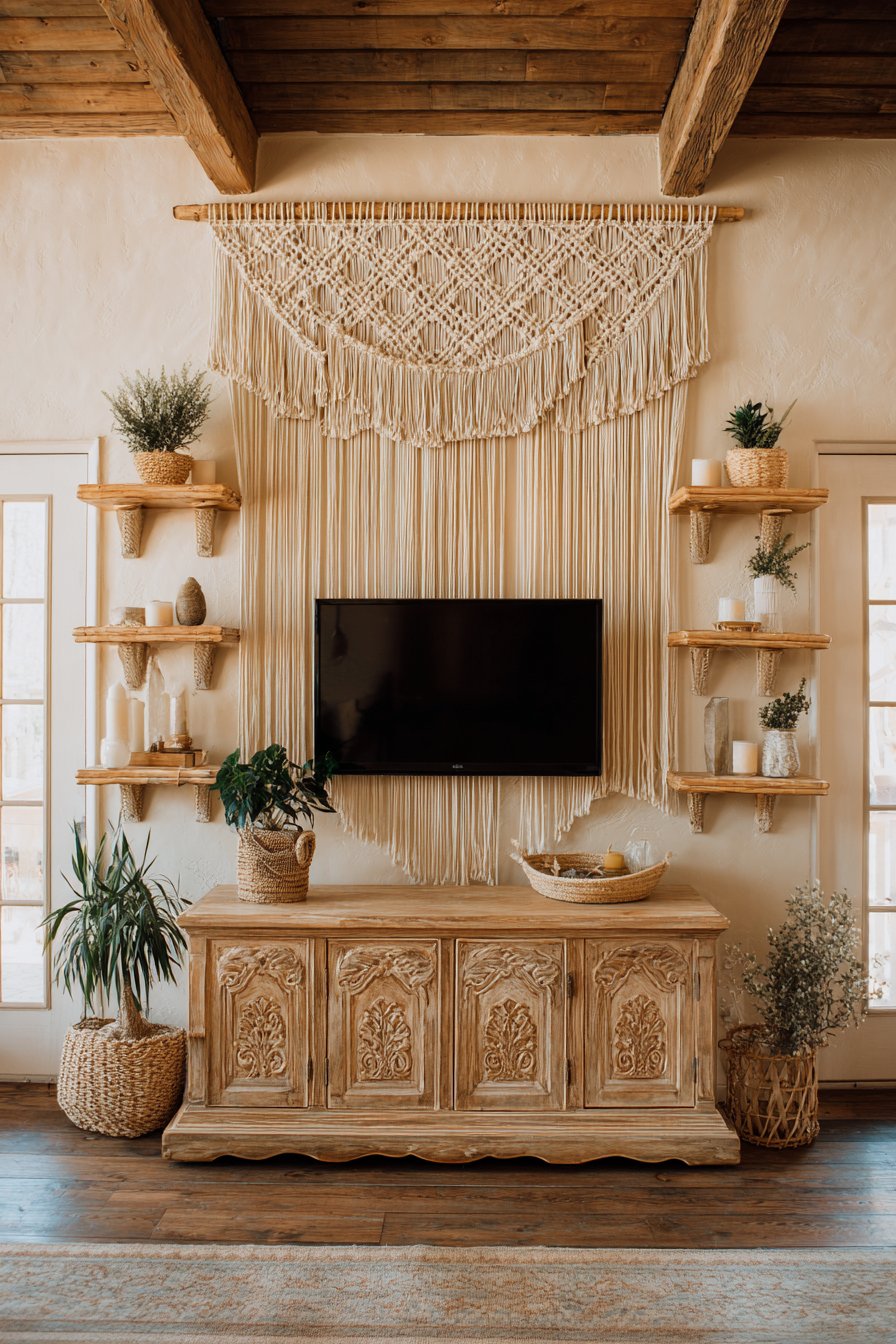
Embrace artistic, free-spirited style with a bohemian TV panel featuring an intricate macramé wall hanging backdrop creating organic texture behind the entertainment area. The handcrafted knotwork in natural cotton creates complex patterns through the ancient art of decorative knotting, bringing artisanal craftsmanship and tactile warmth to technology’s cold precision. The macramé hangs from a wooden dowel or branch, draping behind the television in cascading layers of knots, fringe, and geometric patterns.
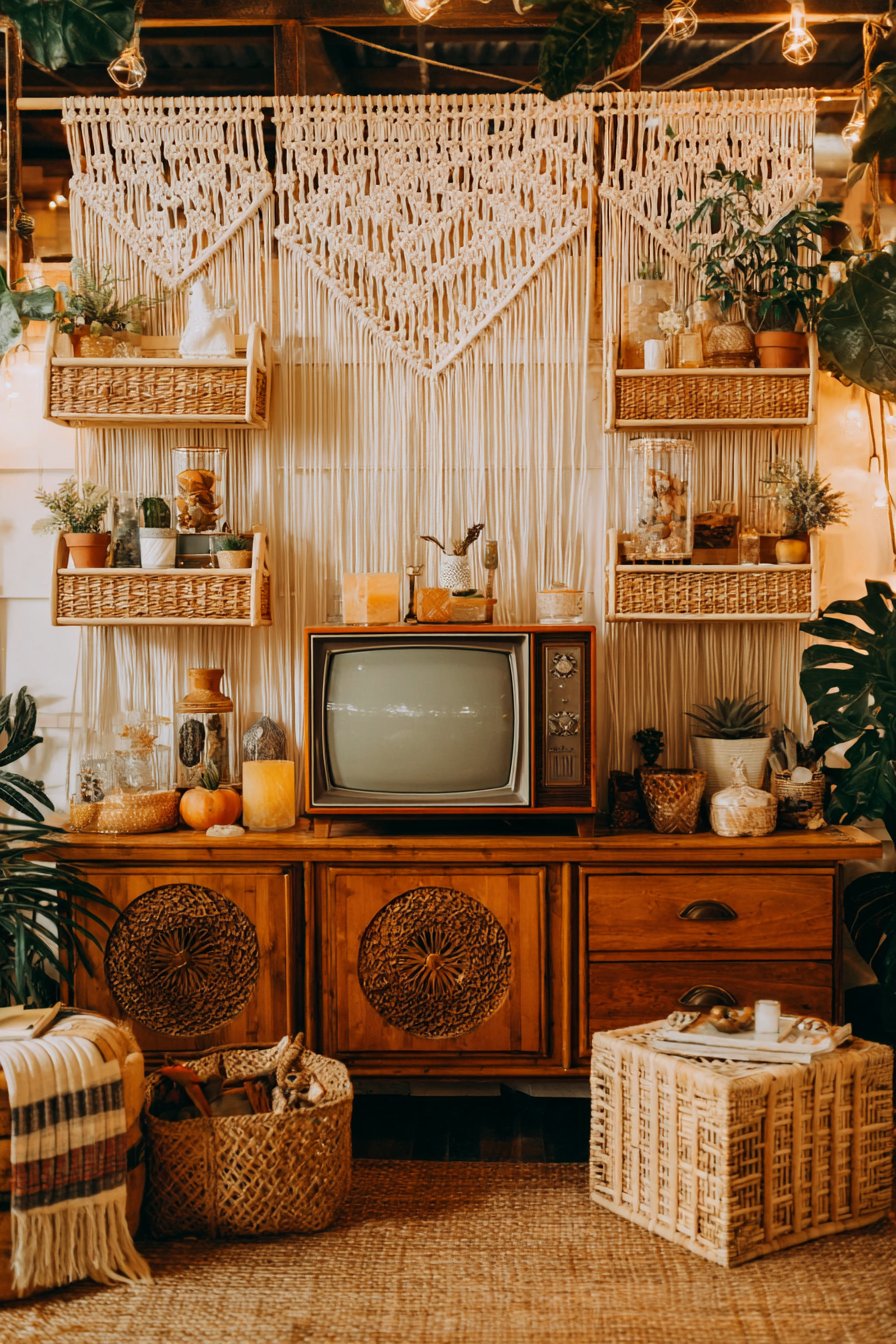
Woven rattan floating shelves positioned at varying heights rather than symmetrical placement provide bohemian informality while displaying the eclectic collections that define boho style—potted plants, crystals, global textiles, vintage finds, and handmade ceramics. The television sits on a vintage wooden credenza featuring carved details, perhaps discovered at a flea market or antique shop, bringing the collected-over-time aesthetic essential to authentic bohemian interiors. Nothing matches perfectly, yet everything works together through shared commitment to natural materials, handcrafted quality, and personal meaning.
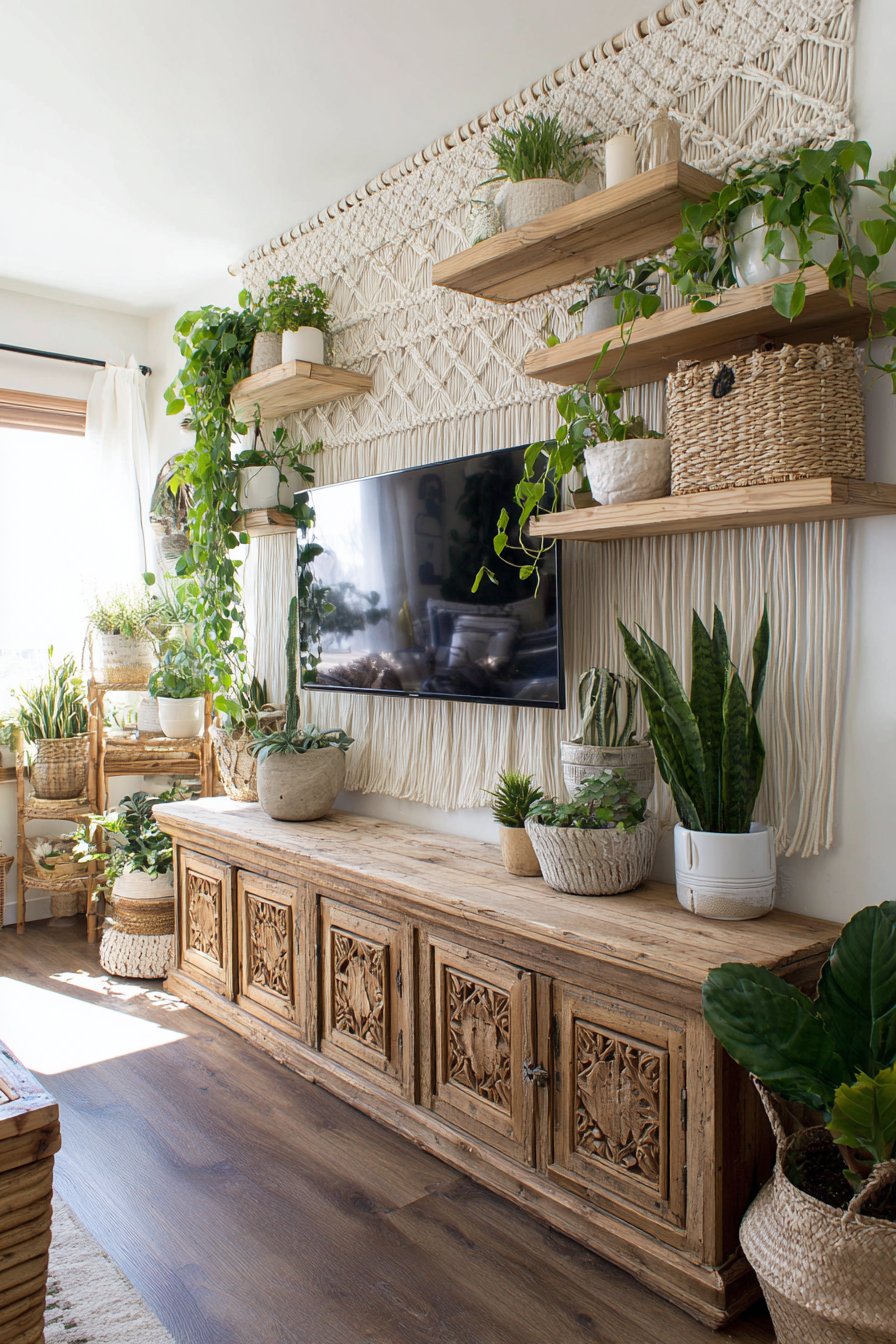
Abundant greenery throughout—trailing pothos, sculptural fiddle leaf figs, or hanging spider plants—brings life and organic shapes that soften the television’s geometric form. Warm Edison bulb string lights add magical ambiance and practical illumination, their exposed filaments and casual draping contributing to the relaxed, artistic vibe. Natural lighting highlights the handcrafted textures while interior photography captures the layered, collected aesthetic that makes bohemian style feel personal and welcoming rather than designed or staged.
Key Design Tips: Choose or create macramé pieces at substantial scale to make appropriate visual impact behind today’s large television screens. Layer multiple textile elements through throws, pillows, and wall hangings to achieve the rich bohemian layering without appearing cluttered. Incorporate plants at various heights and in various containers for the abundant greenery essential to boho style. Mix furniture and decor from different eras and origins rather than purchasing coordinated sets for authentic collected appearance. Use warm-toned lighting from Edison bulbs, Himalayan salt lamps, or candles to create the golden glow that makes bohemian spaces feel inviting.
15. Bold Black Accent Wall
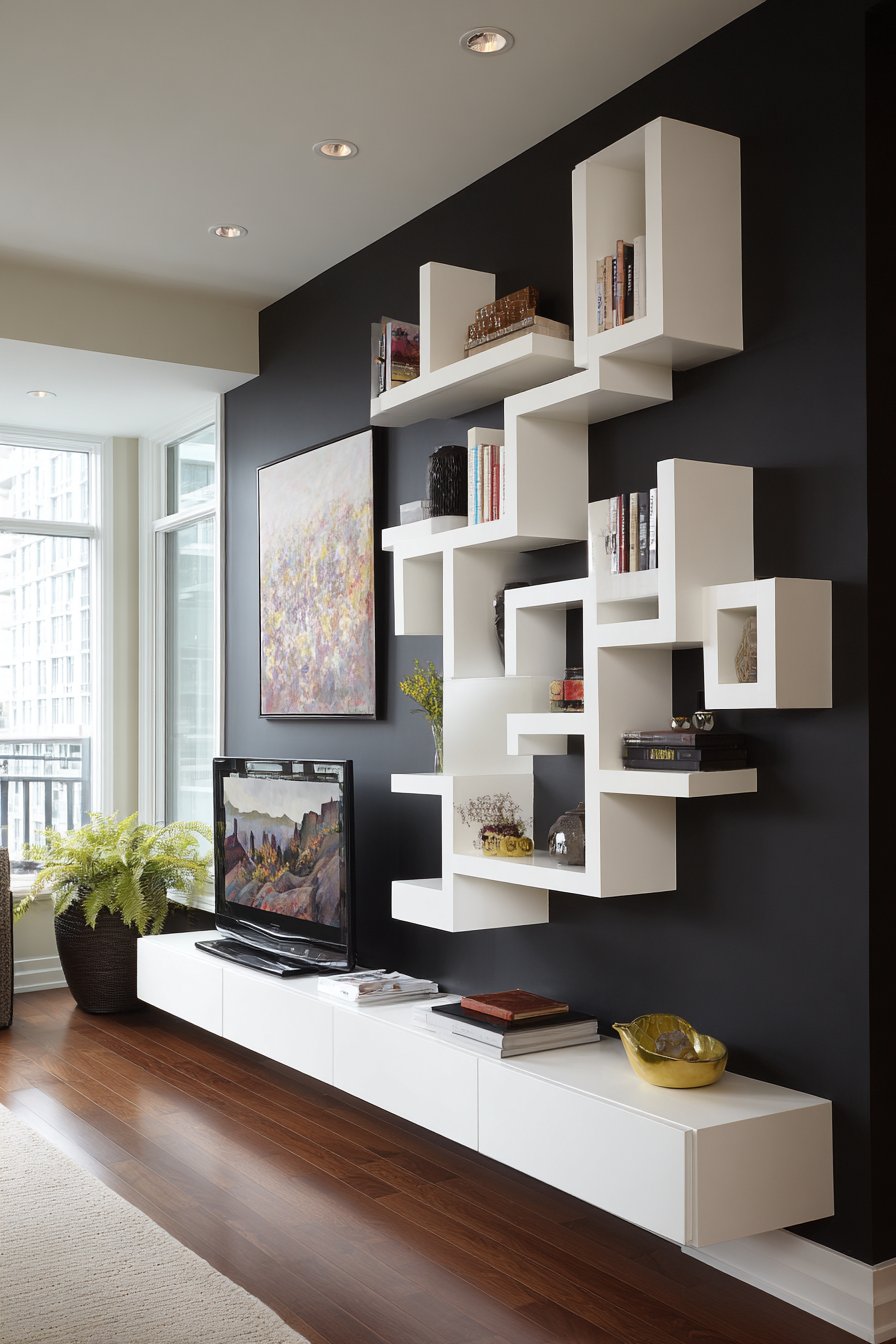
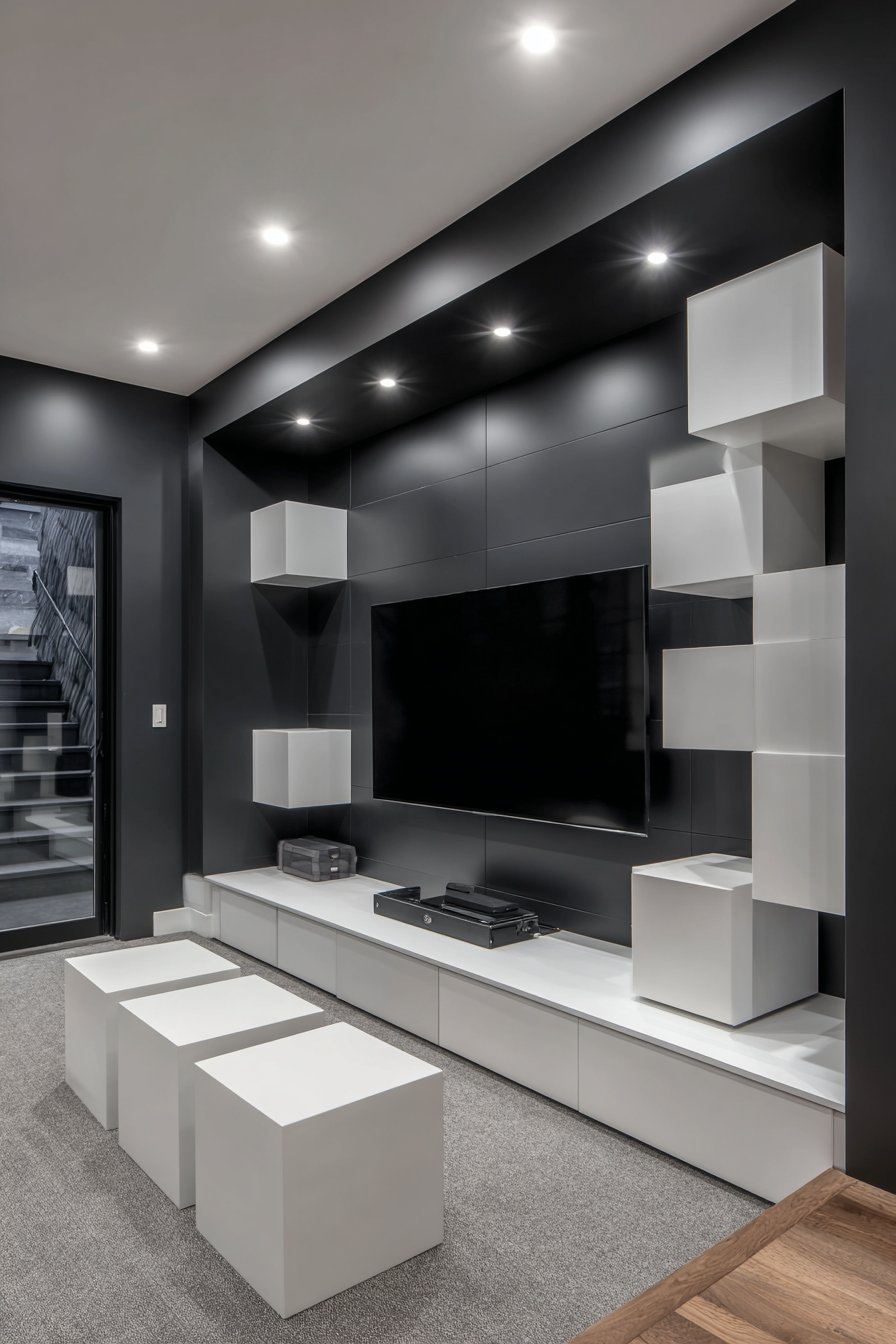
Create striking contemporary drama with a bold black accent wall featuring matte black paint as the powerful backdrop for a sleek entertainment system. The deep black surface absorbs light rather than reflecting it, creating depth and sophistication while making colorful elements and metallic accents appear even more vibrant through contrast. This dramatic choice works particularly well in rooms with abundant natural light that prevents the dark wall from making spaces feel cave-like or oppressive.
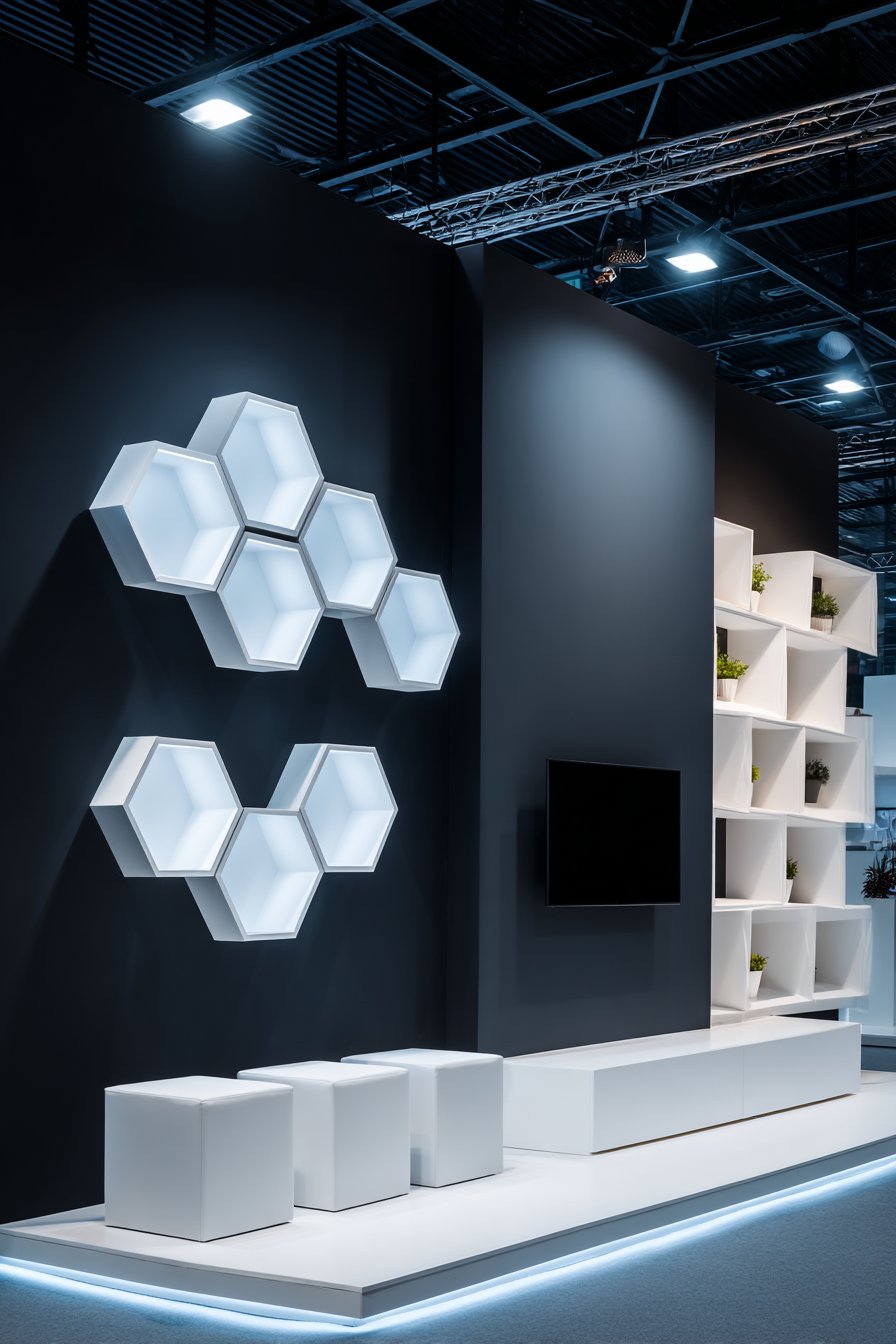
A floating media console in white lacquer creates striking visual contrast, appearing almost luminous against the dark background. The high-gloss finish reflects surrounding light, bouncing illumination back into the room and preventing the black wall from absorbing all available light. The wall-mounted TV appears to float against the dark surface, its black frame disappearing into the wall to create a nearly frameless viewing experience. Minimalist white shelving cubes in asymmetric arrangement provide storage and display opportunities while maintaining the bold graphic quality of black-and-white contrast.
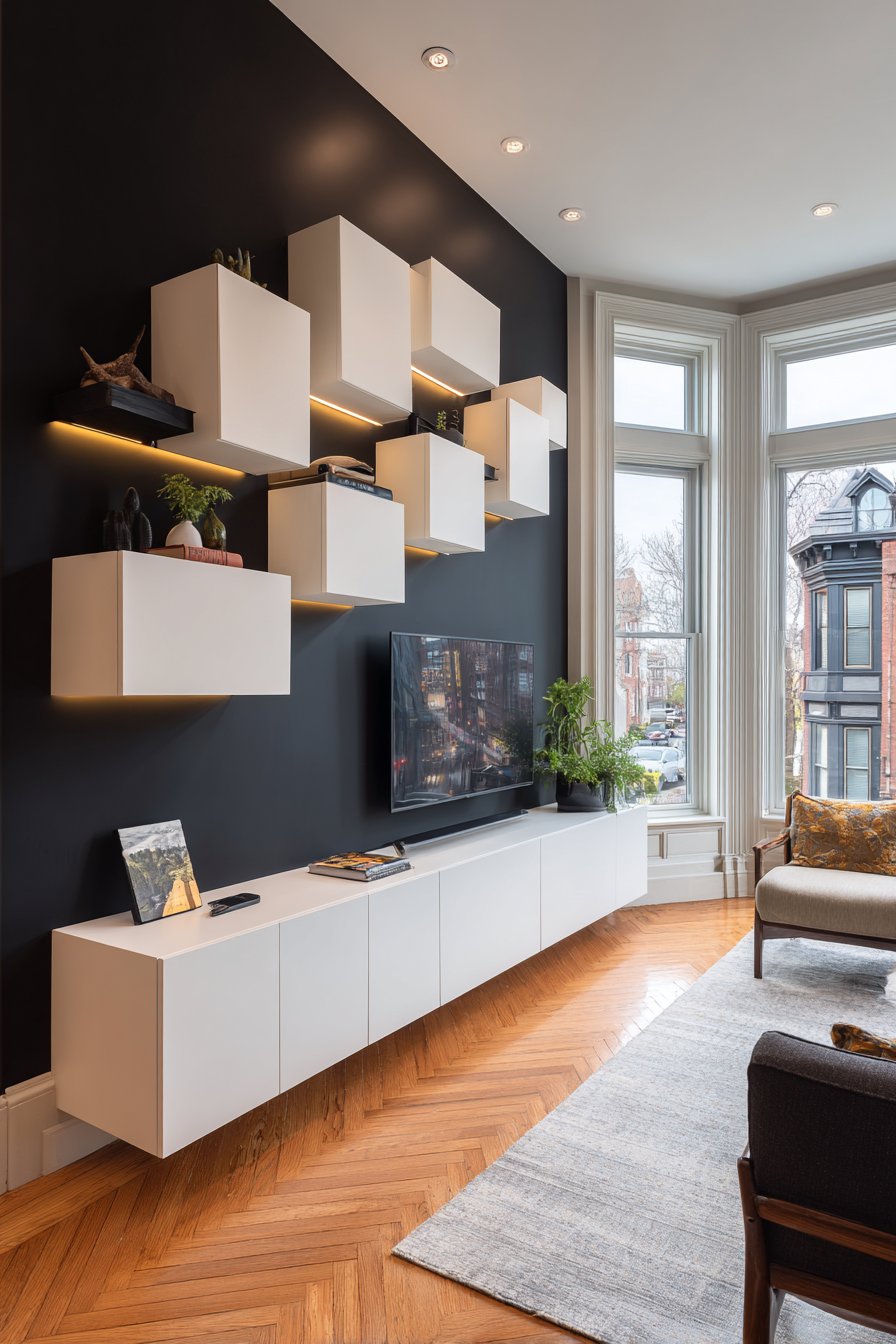
Recessed LED lighting creates dramatic highlights, perhaps grazing down the black wall to reveal its texture or uplighting to create ambient glow. Professional interior photography with careful exposure balancing captures both the deep black wall and bright white elements, demonstrating the technical skill required to photograph high-contrast spaces without losing detail in shadows or highlights. The bold contemporary design statement works beautifully in modern spaces where dramatic gestures feel appropriate and residents appreciate striking visual impact.
Key Design Tips: Use several coats of quality matte black paint to achieve deep, rich color without streaking or variation. Balance the dark accent wall with lighter colors on remaining walls and ceiling to prevent the room from feeling too dark or enclosed. Ensure adequate lighting through multiple sources to compensate for the black wall’s light-absorbing qualities. Choose pure white rather than cream or off-white for maximum contrast against the black backdrop. Consider the room’s natural light exposure before committing to black walls, as north-facing or naturally dark rooms may feel too dim.
16. Transitional Board-and-Batten Design
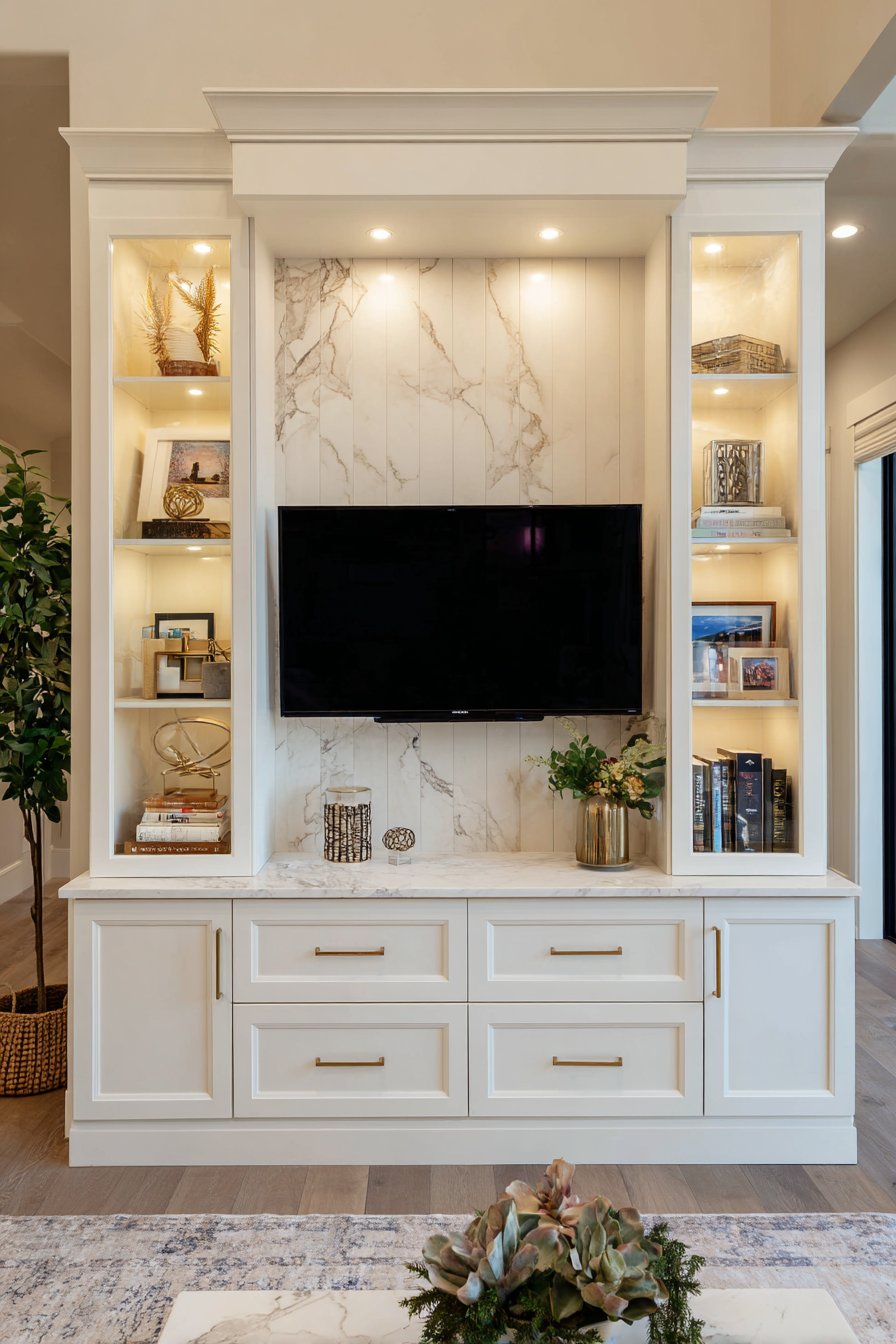
Bridge traditional and contemporary aesthetics with a transitional TV panel blending classic molding details and modern materials through vertical board-and-batten paneling. This traditional wall treatment features flat boards applied vertically to the wall with narrow “batten” strips covering the seams, creating elegant vertical lines and dimensional interest. Painted in warm greige—that perfect fusion of grey and beige—the paneling provides neutral sophistication that works with both traditional and contemporary furnishings.
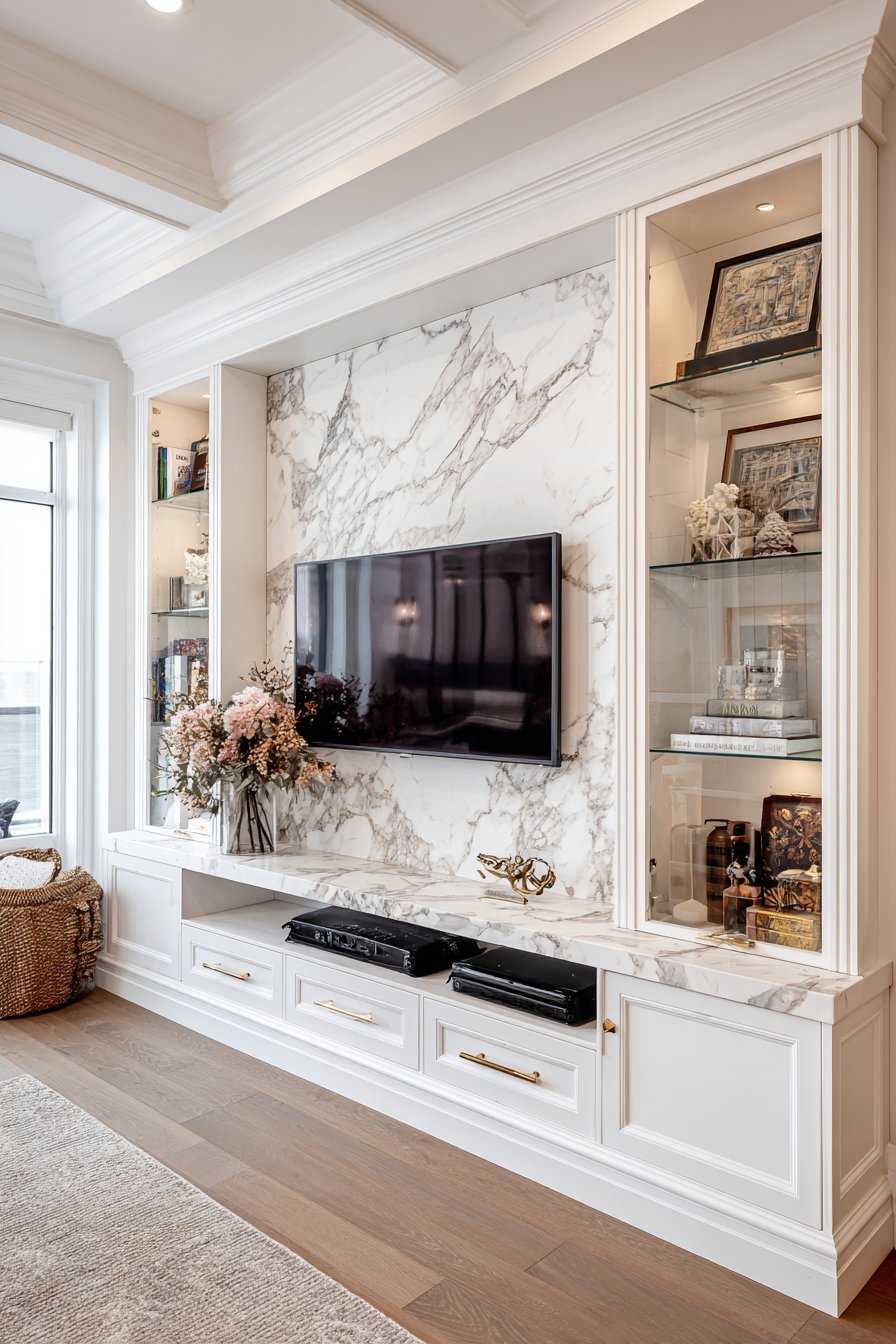
The television mounts within a central panel section, the board-and-batten treatment framing it naturally while providing architectural interest around the screen. Flanking built-in bookcases with glass doors and interior lighting showcase collections of books, family heirlooms, or decorative objects, the glass fronts keeping items dust-free while remaining visible. A marble or quartz floating shelf beneath the TV provides minimal styling space for a few carefully chosen objects—perhaps a small plant, decorative box, or sculptural piece.
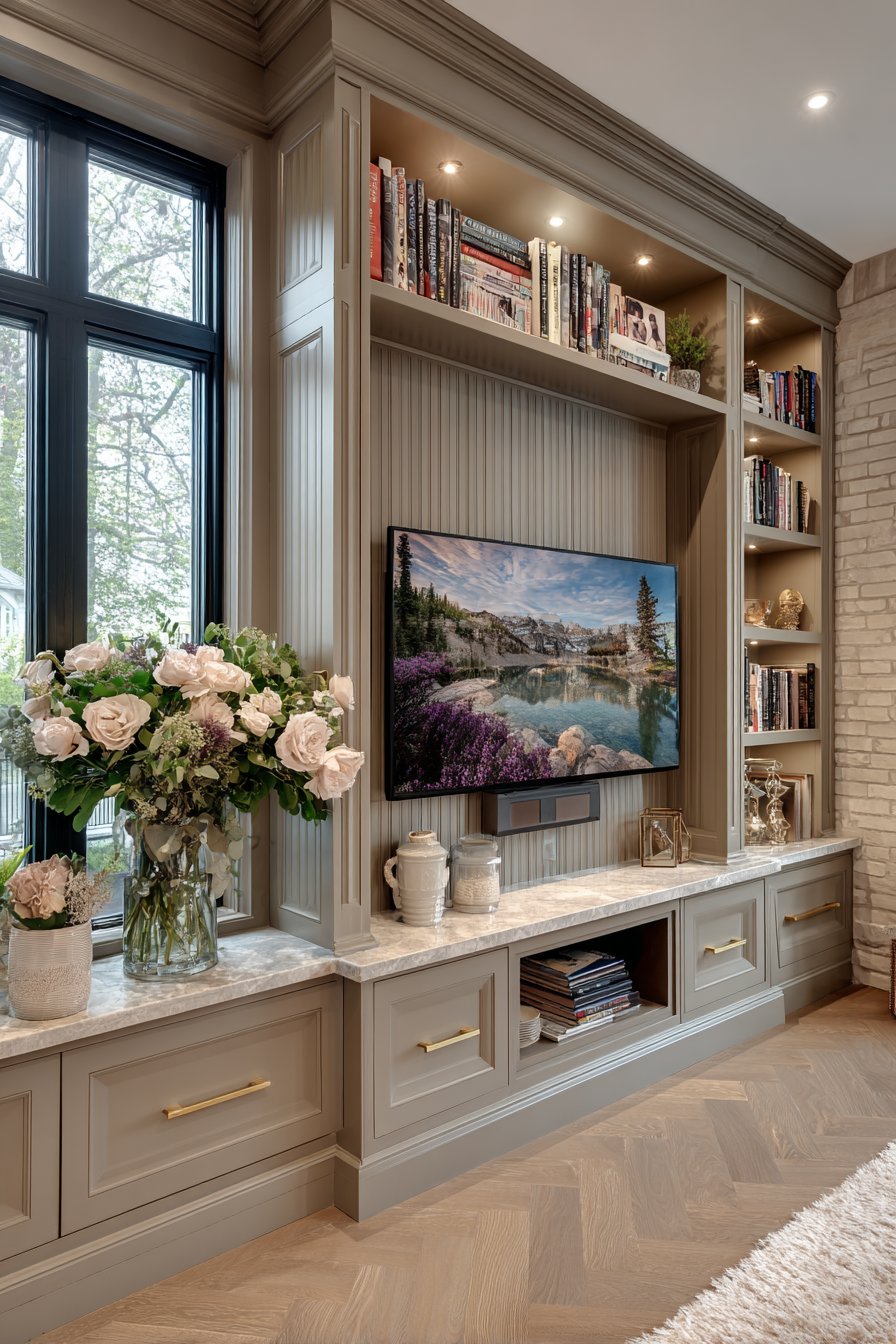
Mixed metals throughout—brushed nickel cabinet hardware combined with aged brass picture lights or sconces—exemplify the transitional approach of blending different finish families for collected, eclectic appeal rather than strict coordination. The successful combination of traditional architectural details with modern materials and clean-lined furnishings creates spaces that feel both rooted in classic design principles and relevant to contemporary living. Interior design photography shows this careful balance of traditional architecture and modern functionality that defines successful transitional design.
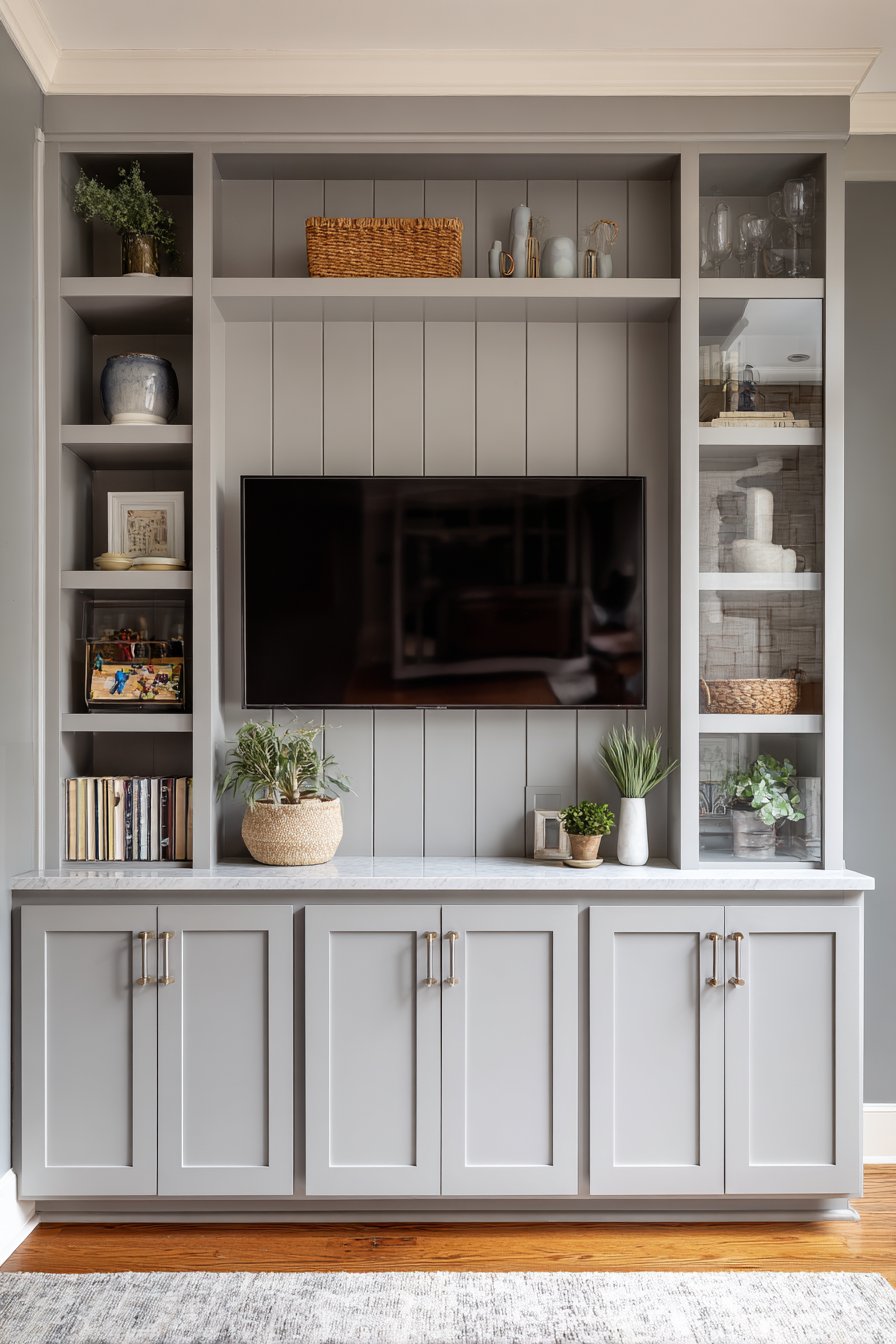
Key Design Tips: Install board-and-batten with consistent spacing using a jig or template to ensure uniform vertical lines throughout the wall. Prime and paint paneling before installation for easier application and better coverage in recessed areas. Choose greige or similar warm neutral colors that work with both cool and warm color schemes for maximum versatility. Mix metal finishes intentionally rather than haphazardly, perhaps choosing one primary finish and one accent finish used consistently. Include both traditional elements (molding, built-ins) and contemporary elements (floating shelves, minimalist hardware) to achieve true transitional style.
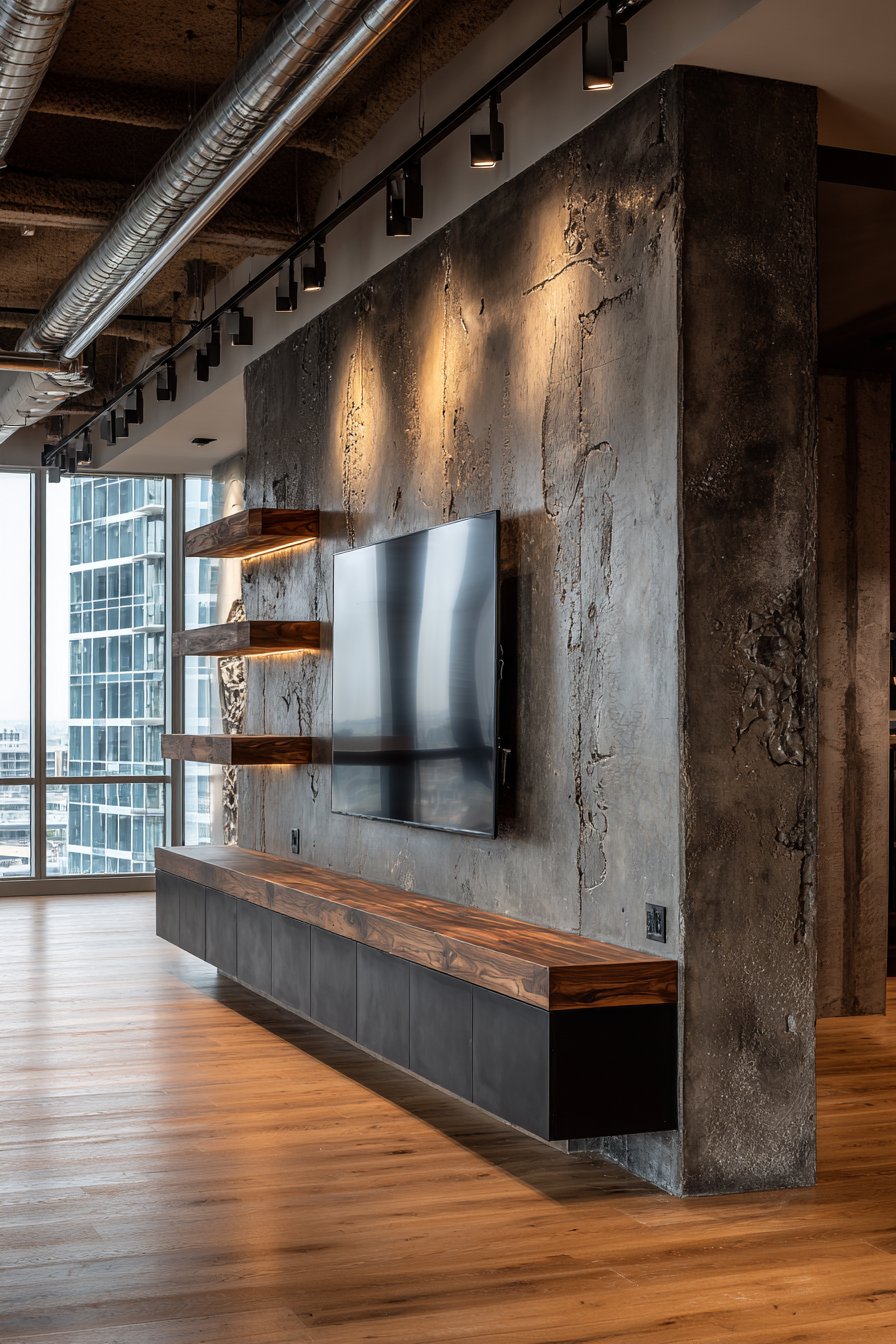
17. Industrial Polished Concrete Statement
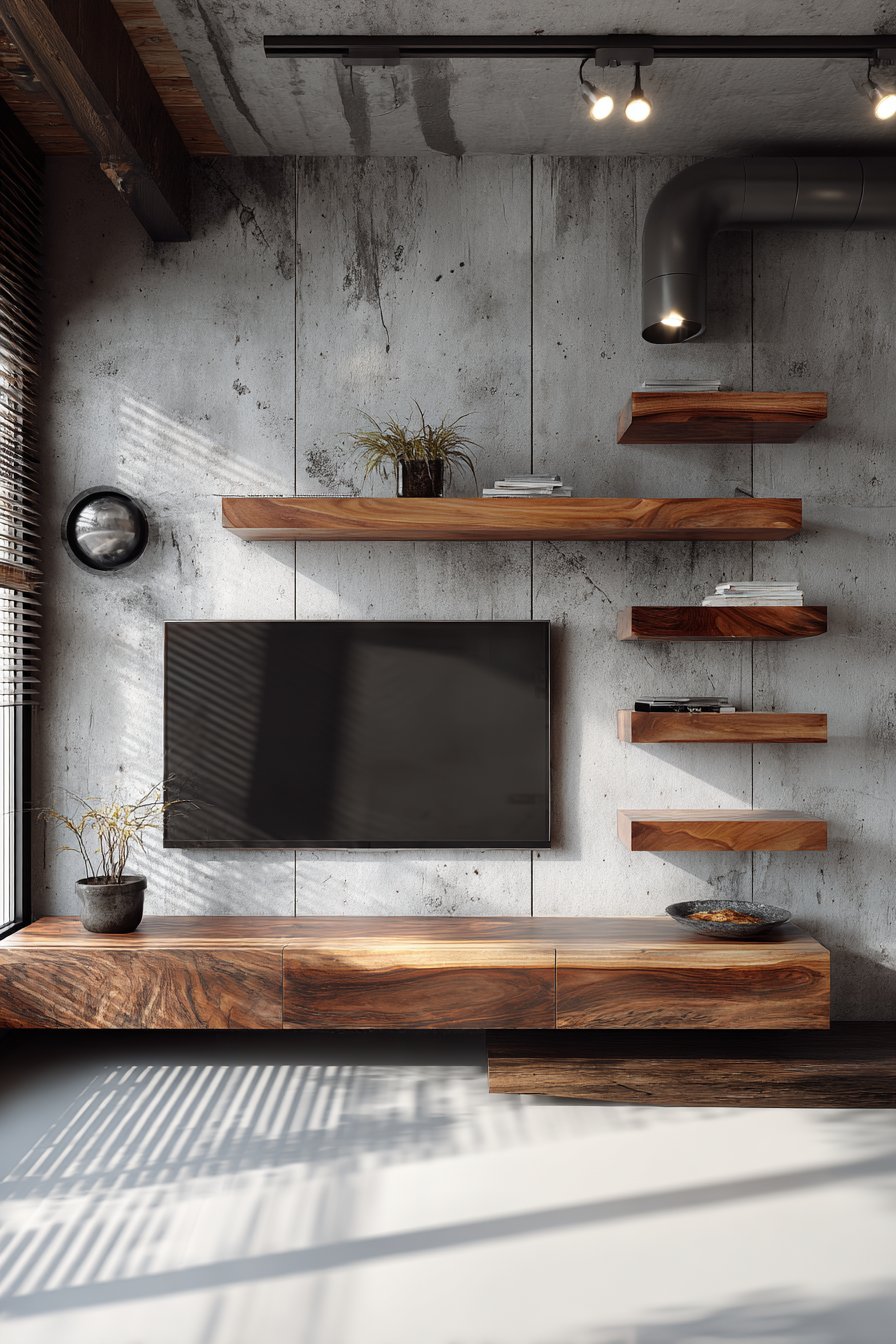
Make a bold industrial-chic statement with polished concrete panels showcasing the raw beauty of this utilitarian material. The concrete extends floor-to-ceiling with subtle trowel marks and natural variations in tone creating organic interest within the industrial aesthetic. The surface treatment might include exposed aggregate for added texture or smooth polished finish that catches light like stone. The raw concrete provides neutral grey backdrop that works surprisingly well as a canvas for both modern and industrial furnishings.
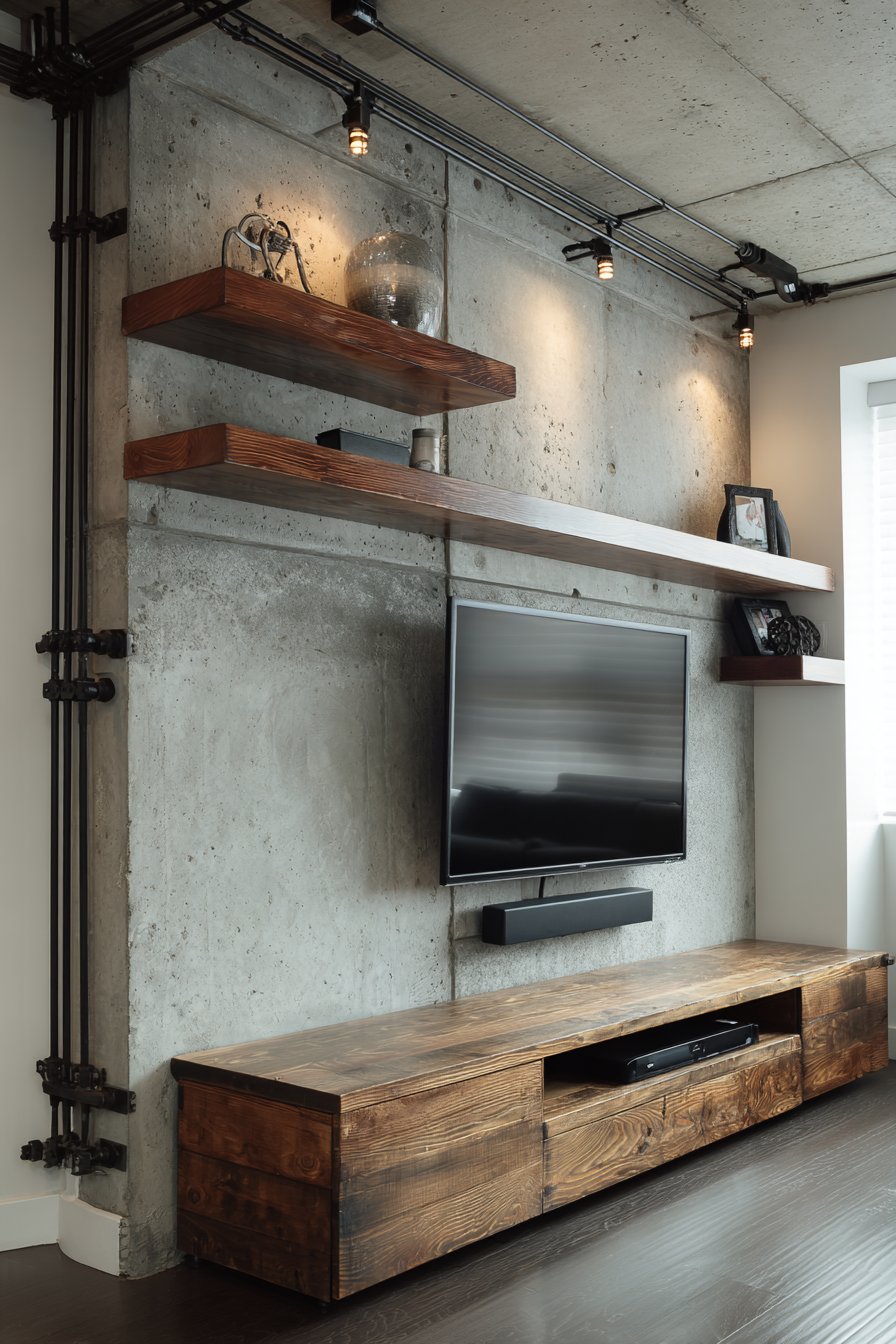
The television mounts on a slim black bracket allowing the concrete to remain the dominant visual element, the screen appearing to float against the textured surface. Floating shelves in live-edge walnut wood provide organic contrast to the industrial concrete, their natural edges and visible grain bringing warmth and nature into the urban-industrial aesthetic. The combination of raw concrete and natural wood exemplifies the industrial-organic fusion that has become increasingly popular in contemporary design.
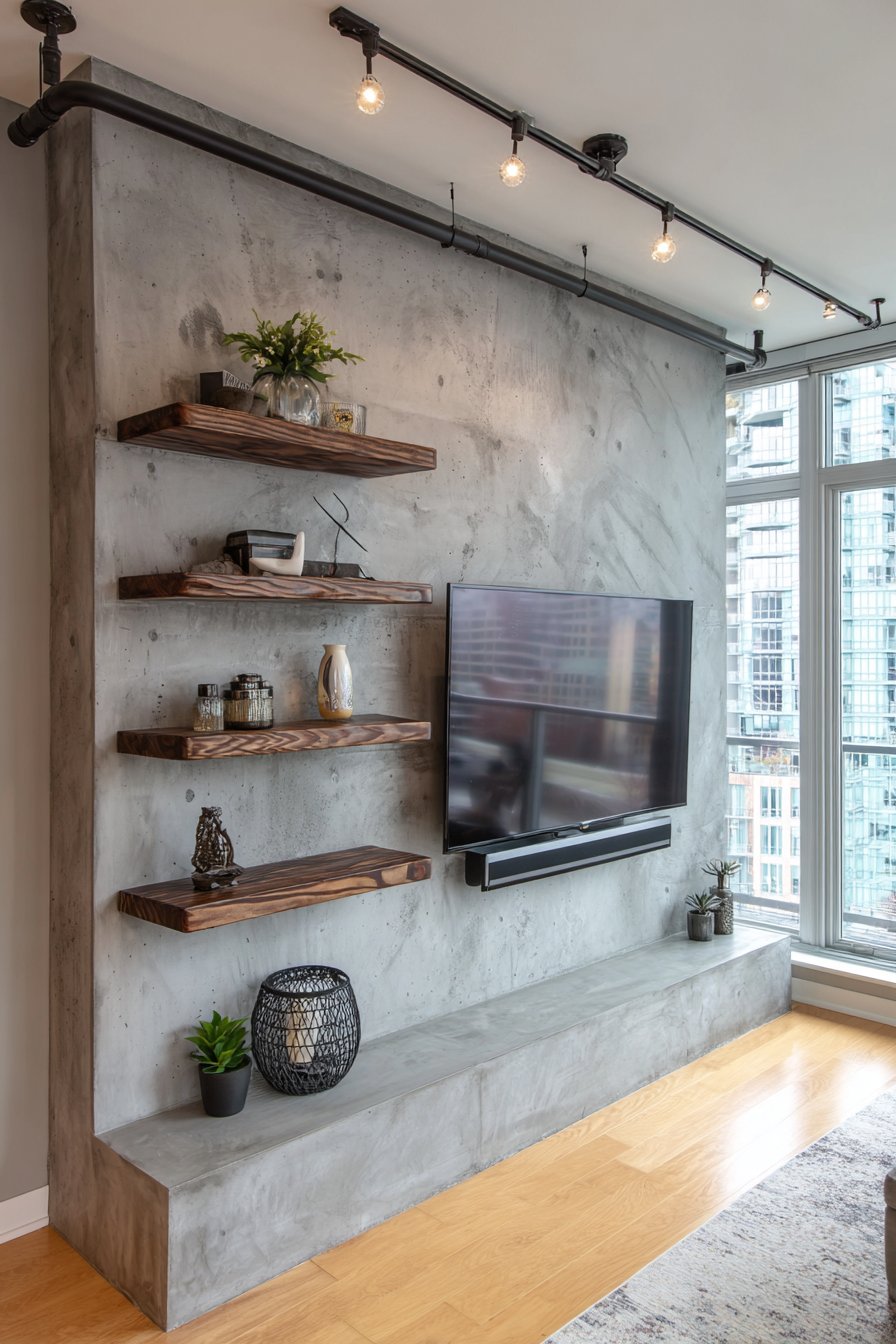
Exposed metal conduit runs along the wall providing honest expression of electrical wiring while maintaining the utilitarian aesthetic where structure and systems are revealed rather than concealed. Minimalist track lighting on black fixtures provides adjustable illumination, the industrial hardware complementing the overall aesthetic while offering practical flexibility. Professional photography captures the textural quality of the concrete surface and interplay between rough and refined materials, showing how dramatic side lighting enhances the dimensional qualities and reveals the concrete’s subtle imperfections that contribute to its authentic character.
Key Design Tips: Use concrete panels or veneer rather than attempting to pour concrete directly on walls unless you have professional expertise and proper structural support. Seal concrete surfaces with penetrating sealer to prevent dusting and staining while maintaining the natural appearance. Ensure television mounting hardware uses appropriate concrete anchors rated for the weight of your specific TV and mount. Balance the cool, hard concrete with warm wood elements and soft textiles to prevent spaces from feeling too harsh or cold. Incorporate adequate lighting as concrete’s grey tones can make spaces feel darker than they actually are.
18. Glamorous Mirrored Art Deco Panels
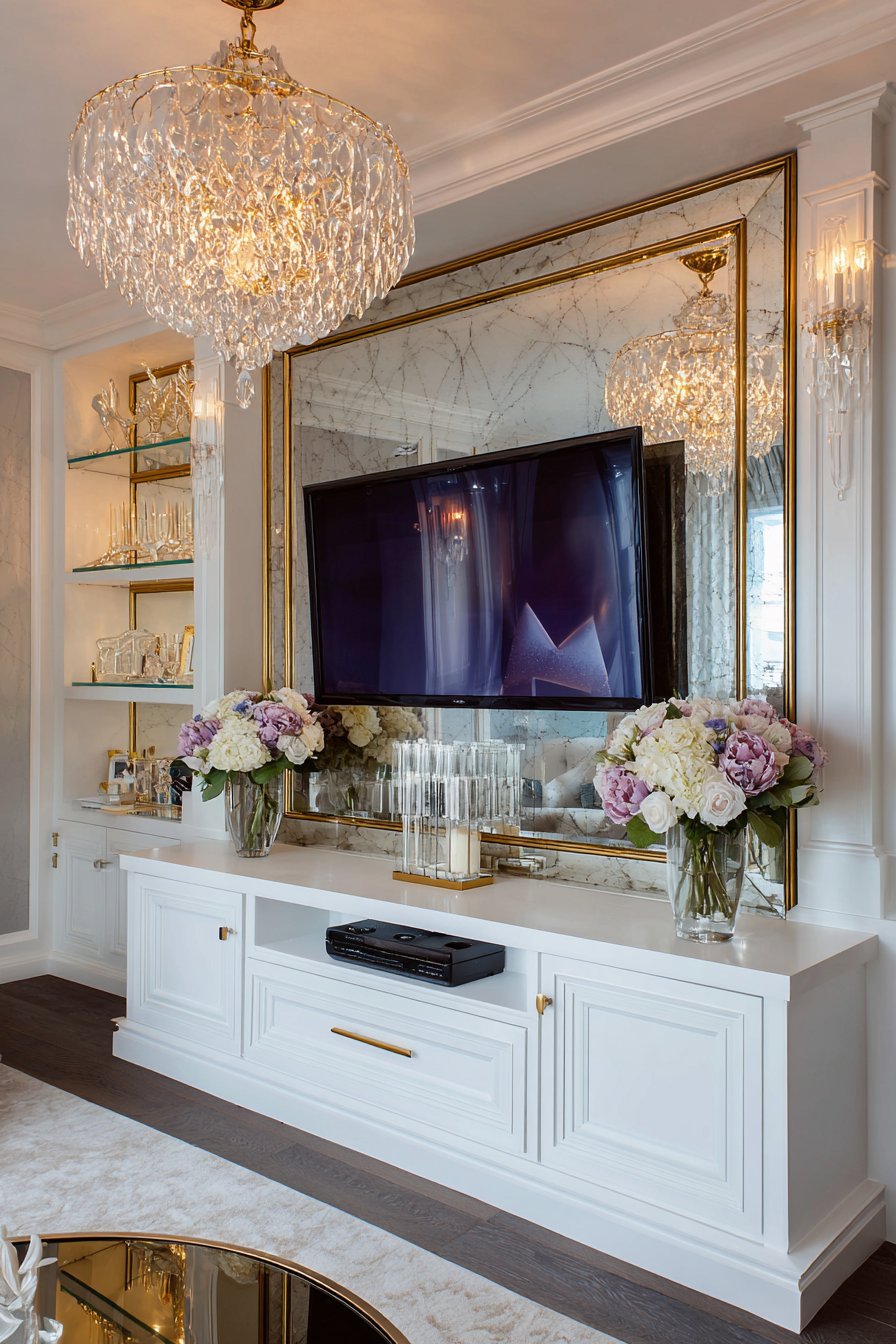
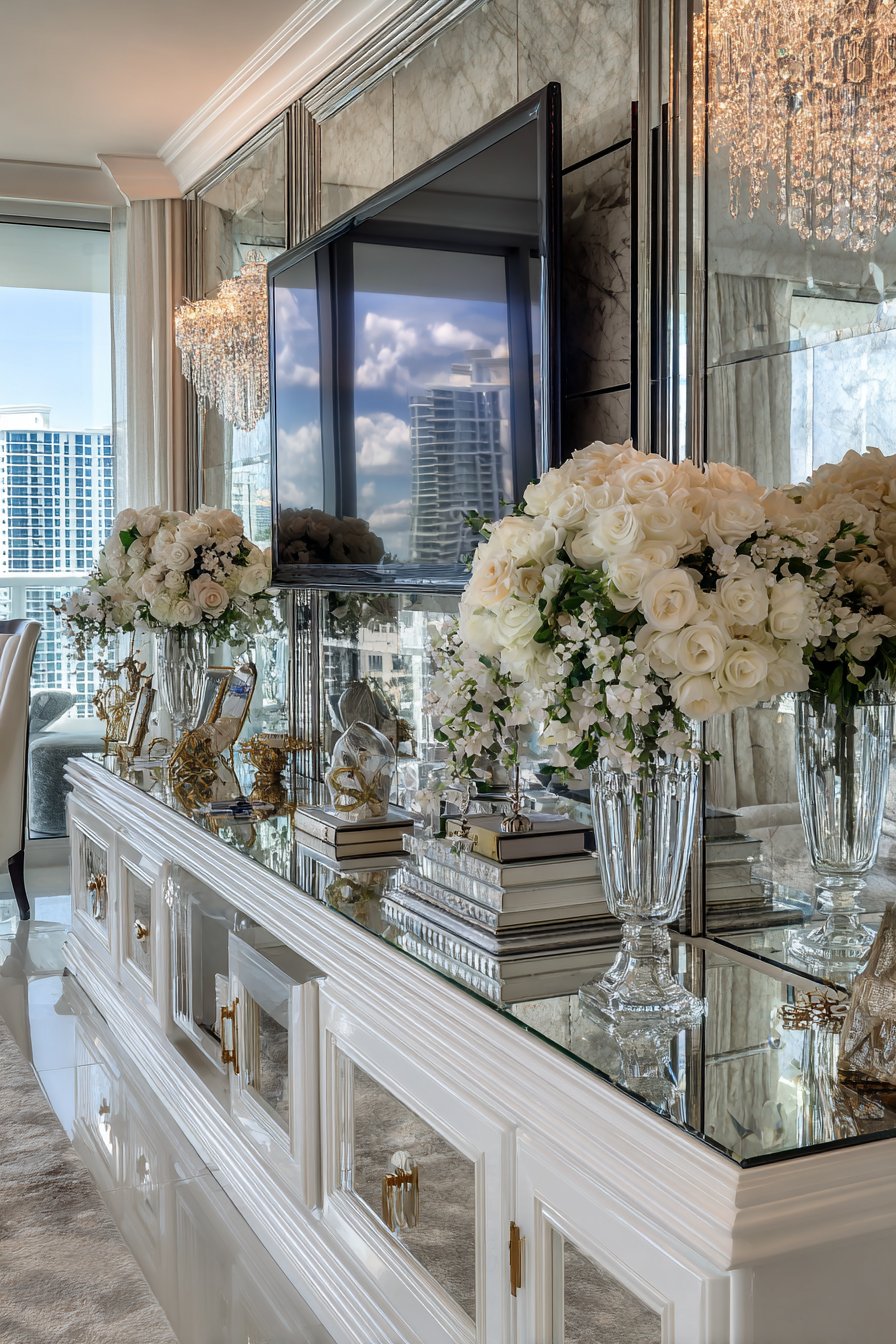
Bring Hollywood Regency glamour into your home with mirrored panels featuring beveled edges creating art deco inspired geometry behind the entertainment center. The reflective surfaces amplify light and create the illusion of expanded space—a particularly valuable quality in smaller rooms or spaces with limited natural light. The beveled edges catch and refract light, creating sparkle and visual interest while the geometric arrangement of mirror panels creates sophisticated pattern reminiscent of 1920s and 1930s design.
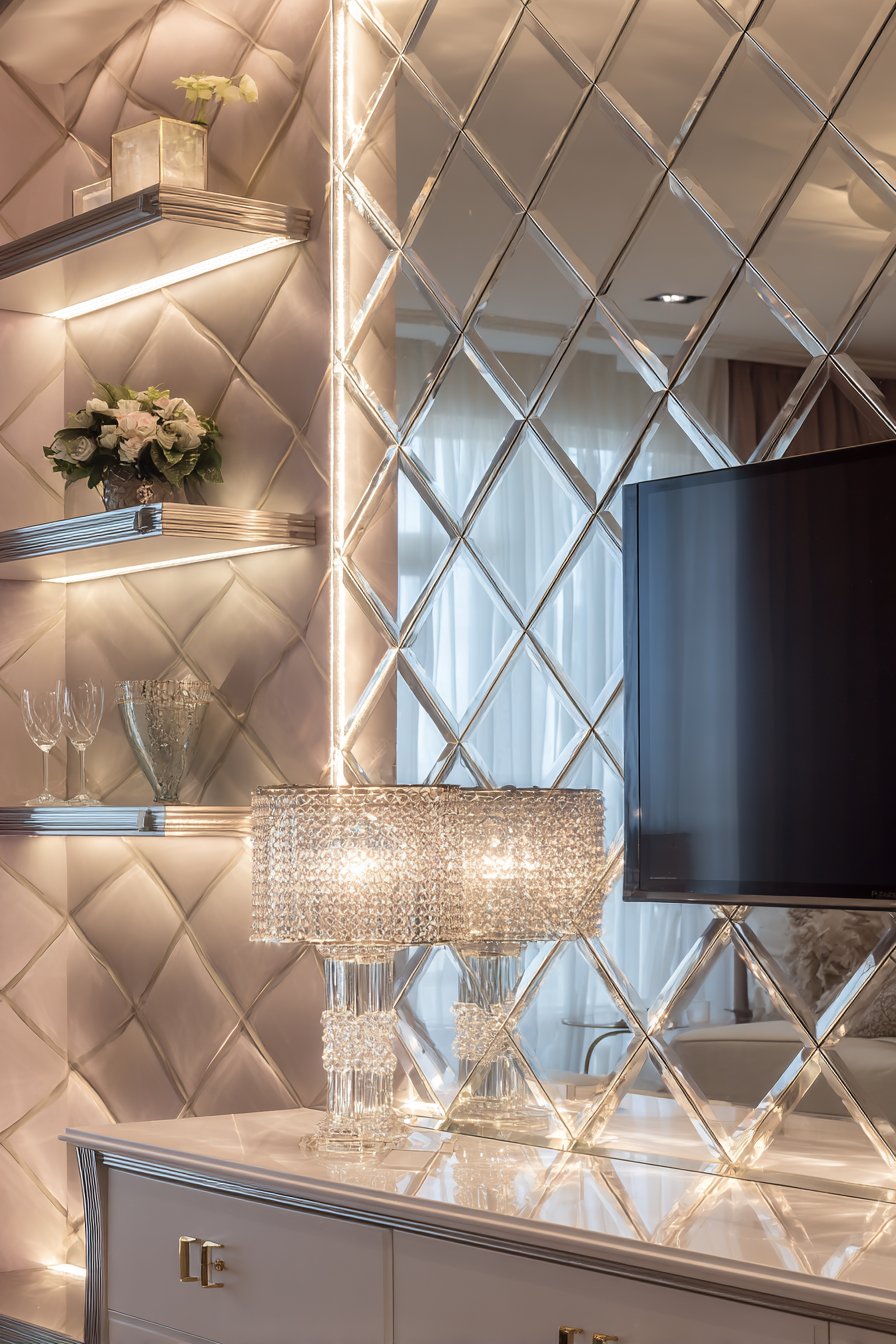
A sleek white lacquer media console with gold hardware anchors the design, its high-gloss finish reflecting the mirrored wall above and doubling the glamorous impact. Floating glass shelves supported by brass or gold-finished brackets maintain the transparent quality while providing display space for crystal accessories, art glass, or other objects that catch and reflect light. The overall effect feels luxurious and sophisticated without requiring enormous square footage or budget.
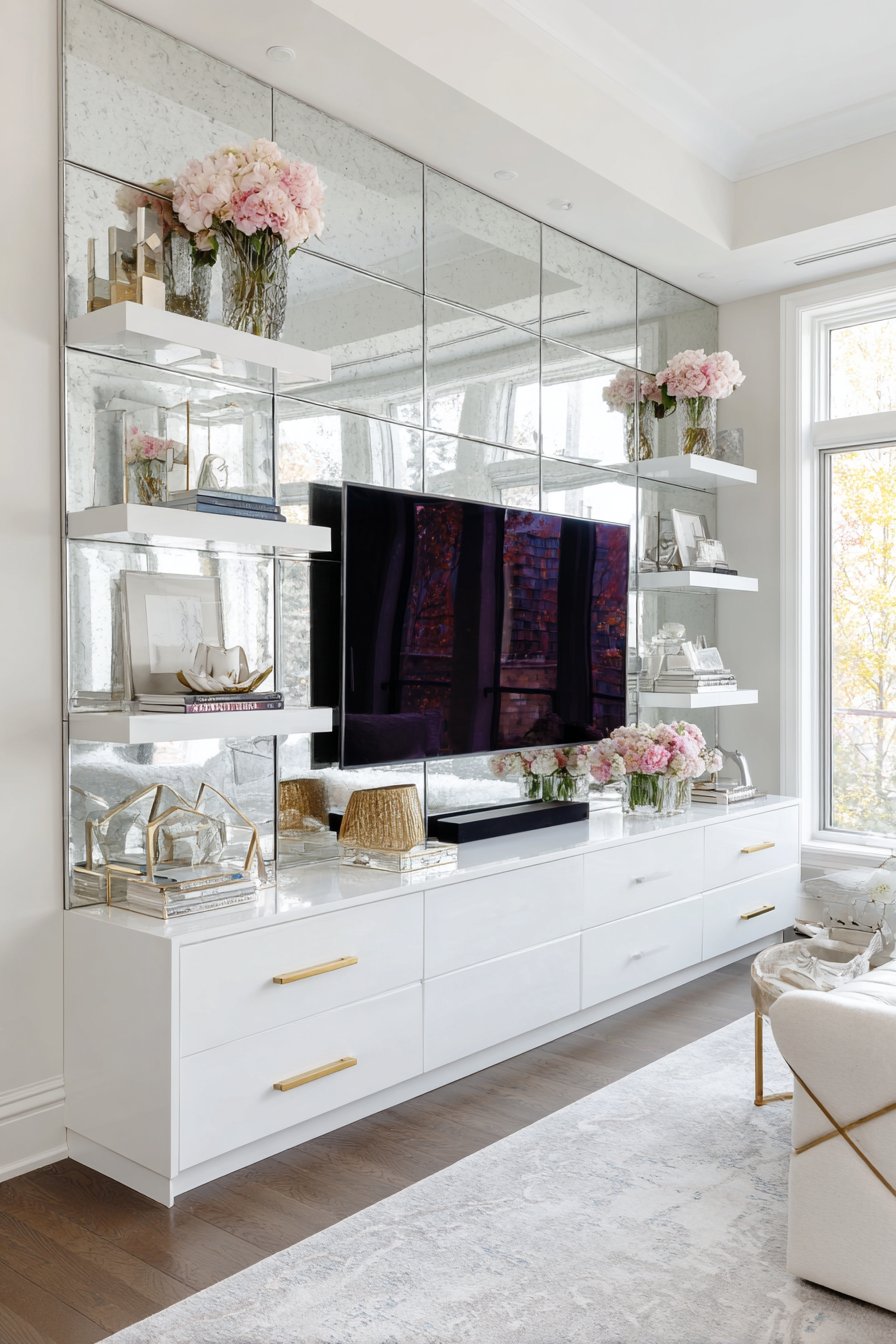
Integrated lighting creates glamorous reflections multiplied through the mirrored surfaces, turning the entire wall into a light-amplifying feature. The design requires careful planning to manage reflections and avoid creating visual confusion or unflattering mirror angles. Interior design photography with careful lighting control captures the luminous quality and sophisticated elegance while managing reflections to ensure clarity and visual appeal rather than confusing or distracting mirror effects.
Key Design Tips: Plan mirror placement to avoid reflecting unflattering angles or creating views directly into personal spaces from seating areas. Use beveled-edge mirrors rather than plain mirrors for more sophisticated appearance and light-refracting qualities. Clean mirrored surfaces regularly with appropriate glass cleaner to maintain the sparkling appearance essential to glamorous style. Control lighting carefully to create strategic reflections without creating glare that makes television viewing difficult. Install mirrors with proper adhesive and additional mechanical fasteners for safety, as mirrors are heavy and potential safety hazards if they fall.
19. Kid-Friendly Playful Storage Wall
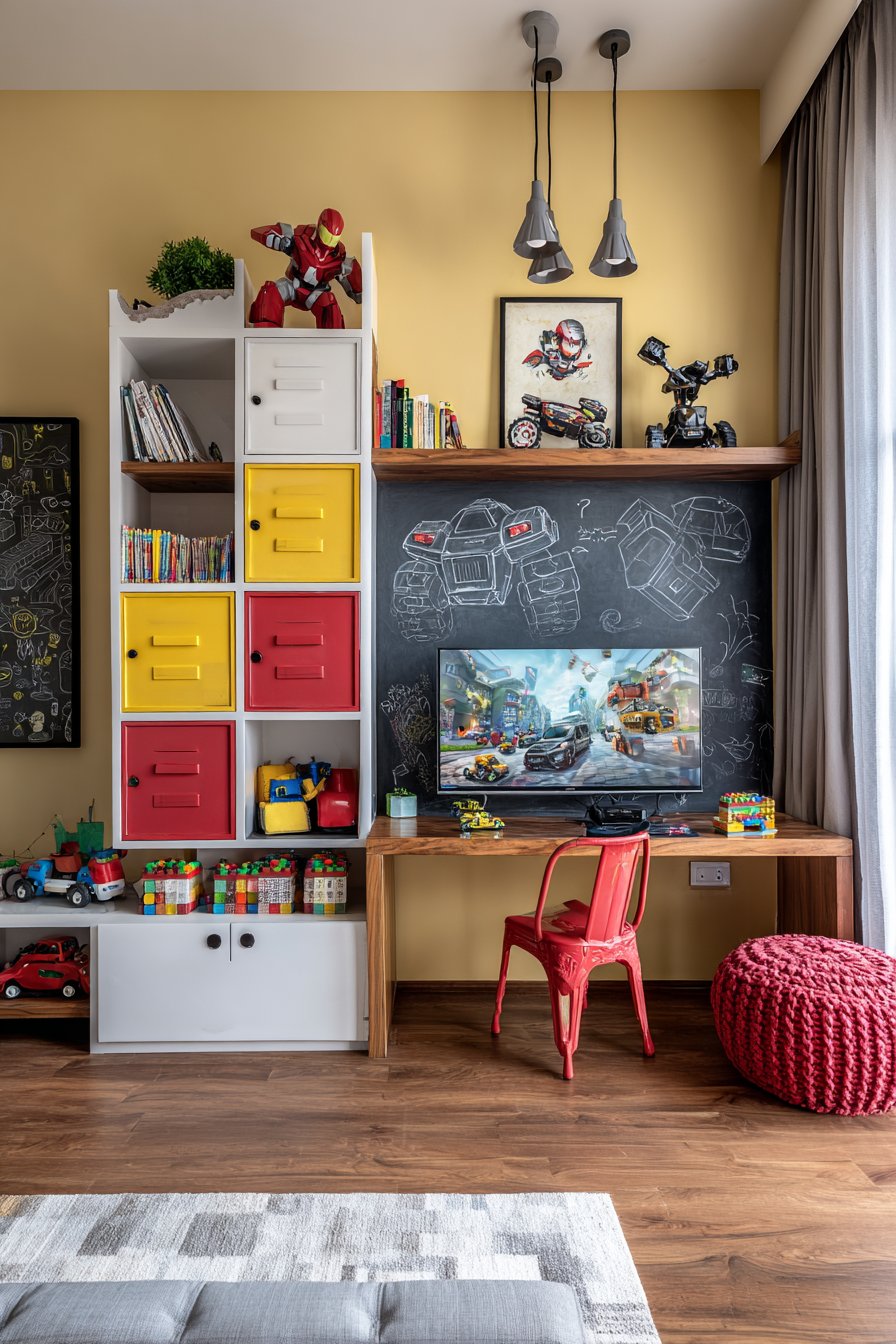
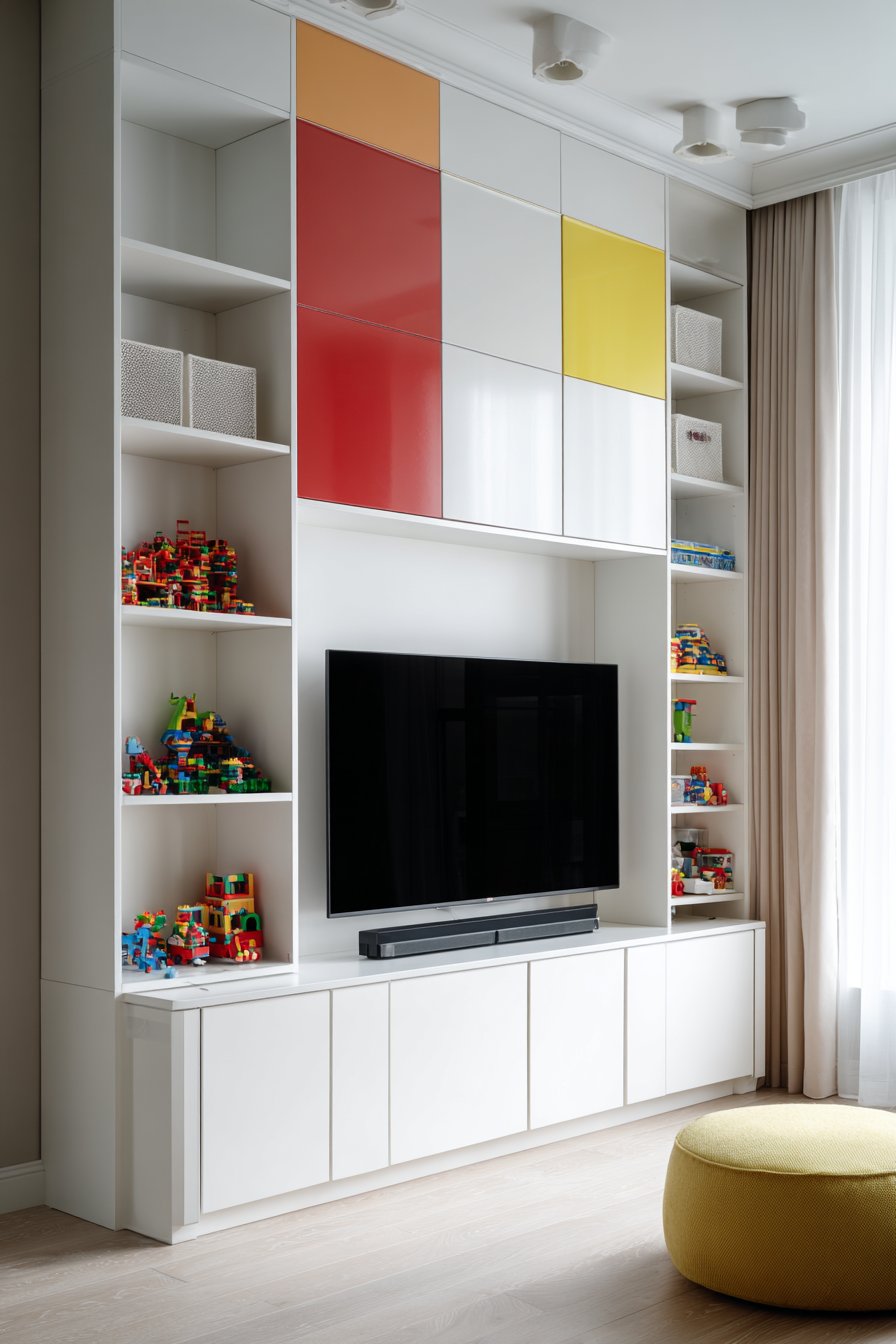
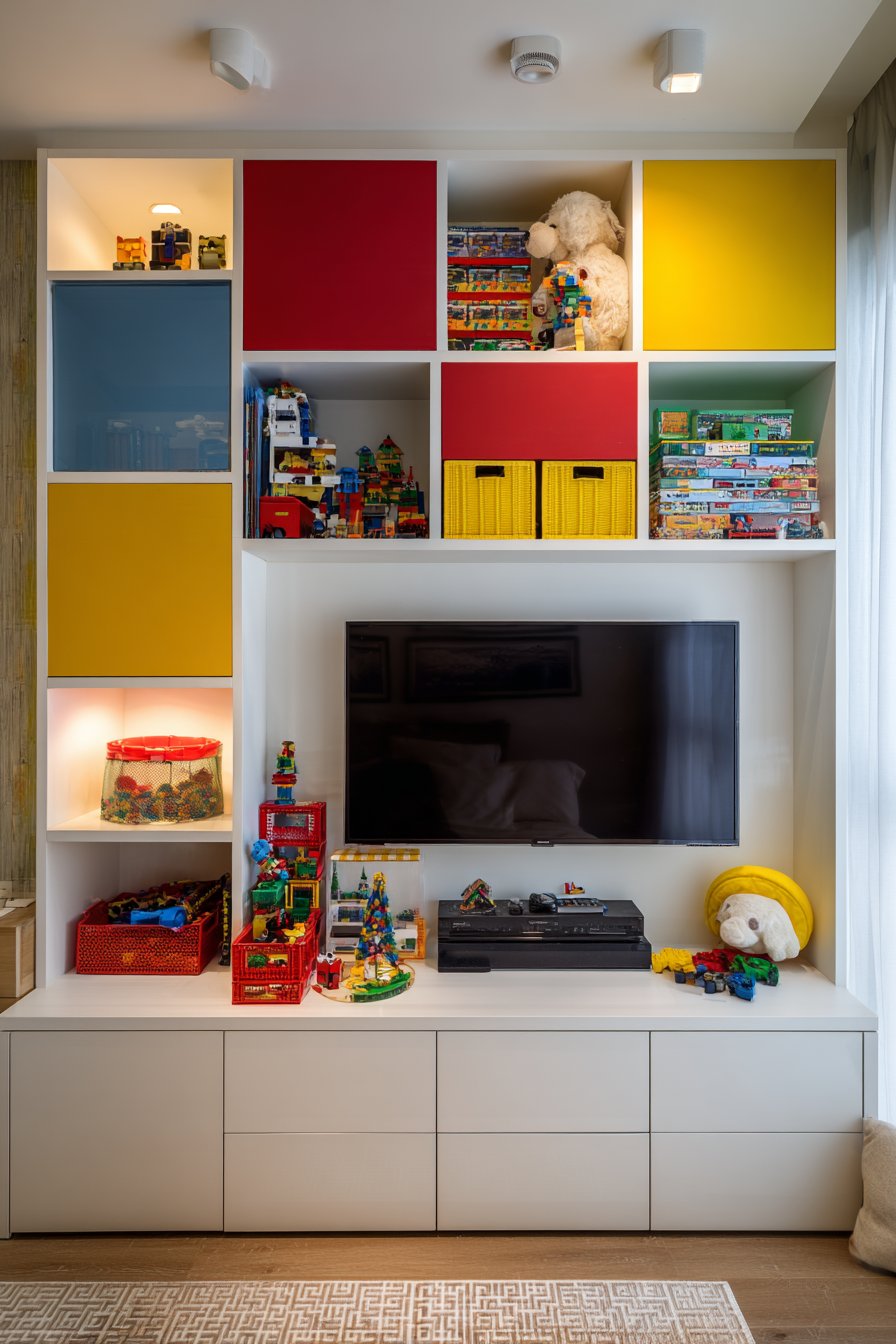
Design with durability and whimsy in mind through a kid-friendly TV panel incorporating colorful storage cubes in primary colors integrated into white laminate paneling. The bright red, blue, and yellow storage cubes bring cheerful energy while providing practical organization for toys, games, books, and media. The white paneling surrounding these colorful elements keeps the overall design from feeling chaotic while the primary color scheme references classic childhood toys and creates age-appropriate visual appeal.
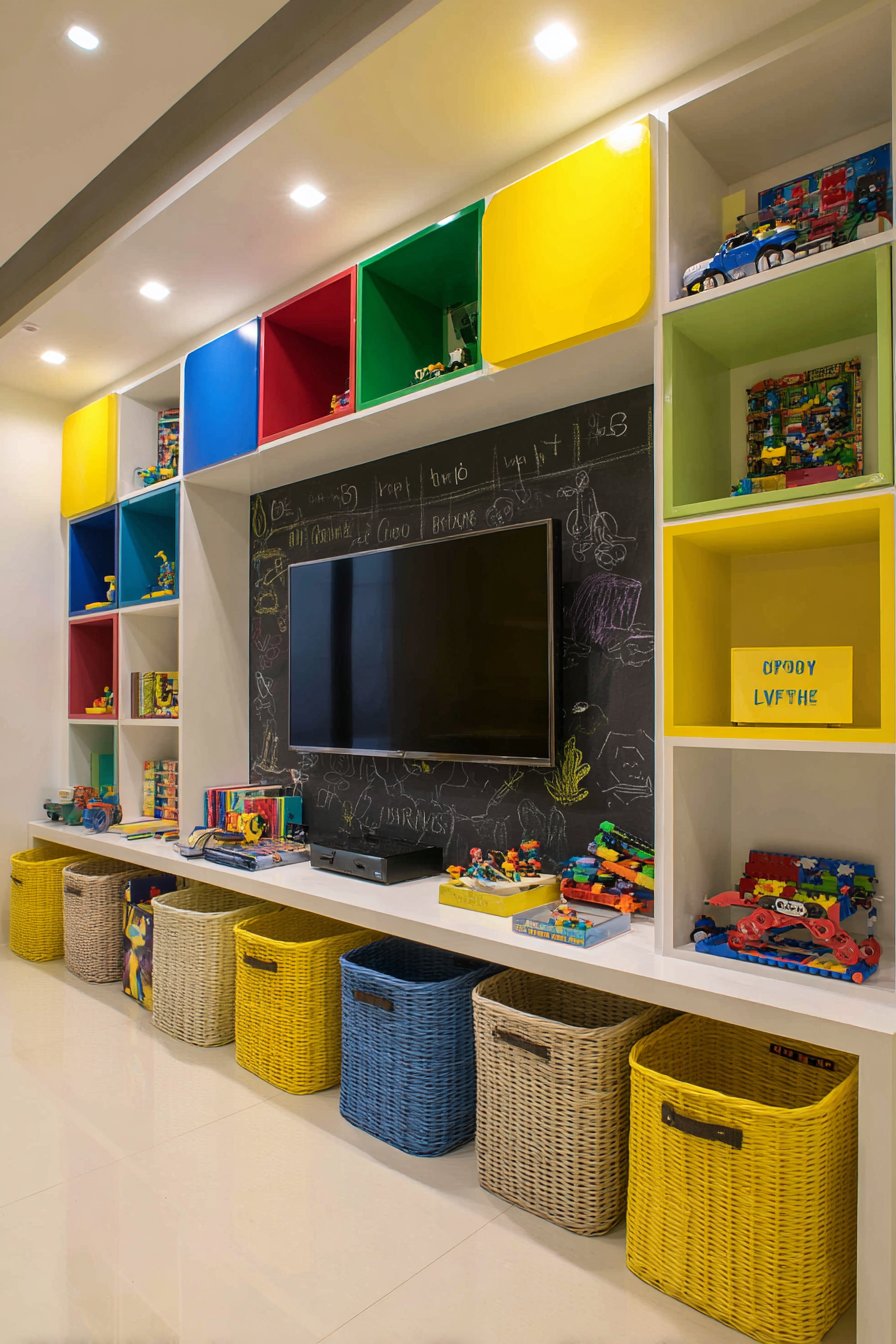
The wall unit features low-height open shelving accessible to children, encouraging independence as kids retrieve and return their own belongings. Labeled bins with picture labels help pre-readers identify where items belong, teaching organizational skills while making cleanup easier. The gaming console section includes designated storage for controllers, headsets, and game cartridges, with thoughtful cable management keeping cords safely out of the way. The television positions at child-appropriate height for comfortable viewing from floor play or low seating.
Rounded corner protective panels ensure safety, eliminating sharp edges that could cause injury during active play. Chalkboard paint sections allow creative expression without damaging walls, providing designated space for artistic exploration. Impact-resistant materials throughout ensure the design withstands the wear and tear of active childhood. Wide-angle photography shows the functional, family-friendly design with organized storage solutions clearly visible, demonstrating how thoughtful design can create spaces that serve children’s needs while maintaining visual appeal.
Key Design Tips: Choose durable laminate or painted surfaces that can be easily cleaned and will withstand impacts better than delicate materials. Install all furniture and shelving with anti-tip hardware to prevent dangerous tipping accidents as children climb or pull on elements. Position frequently used items within children’s reach to encourage independence and self-sufficiency. Use closed storage for small items that pose choking hazards or items you want to control access to. Incorporate flexibility in the design knowing children’s needs change rapidly as they grow and develop new interests.
20. Warm Farmhouse Sliding Barn Doors
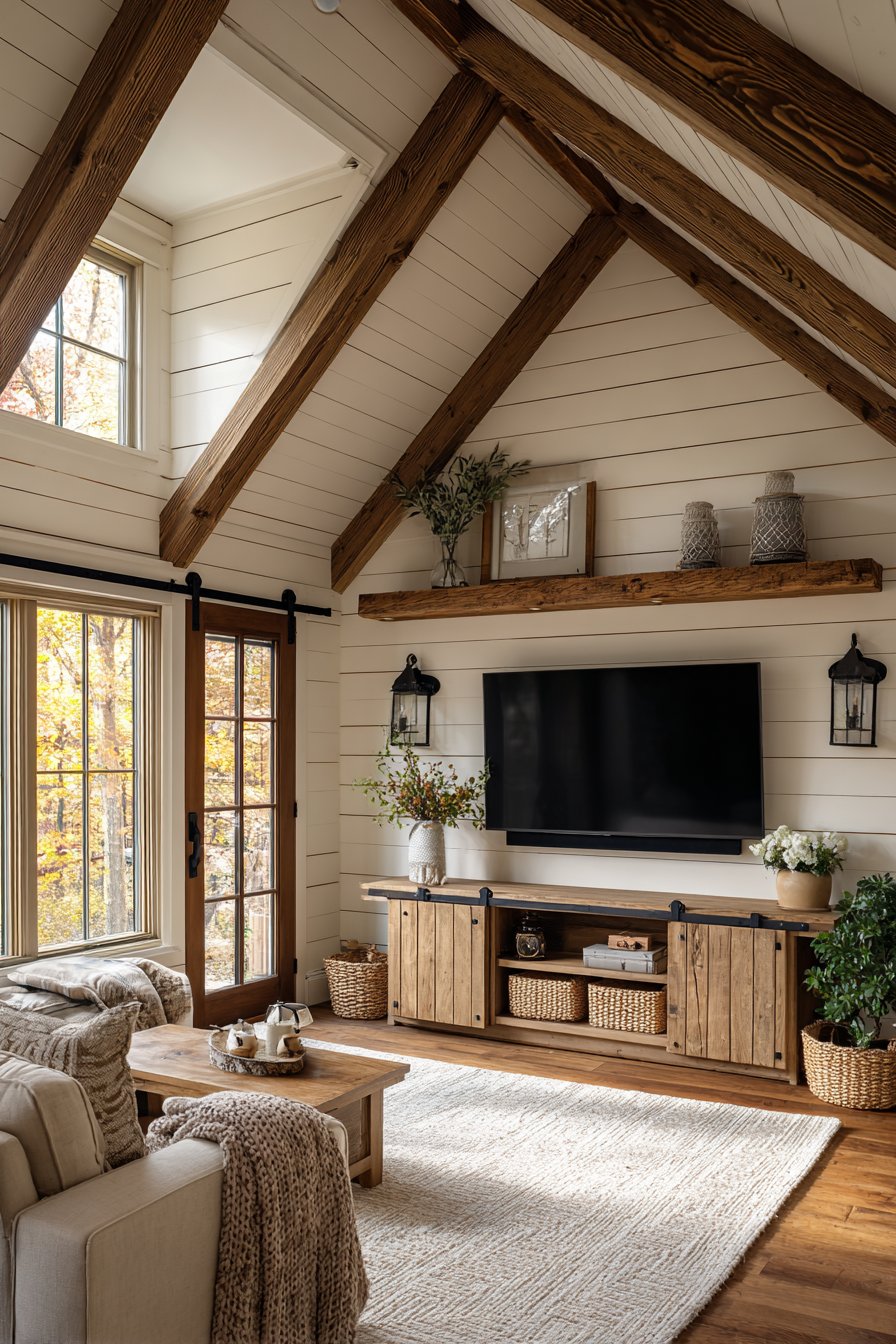
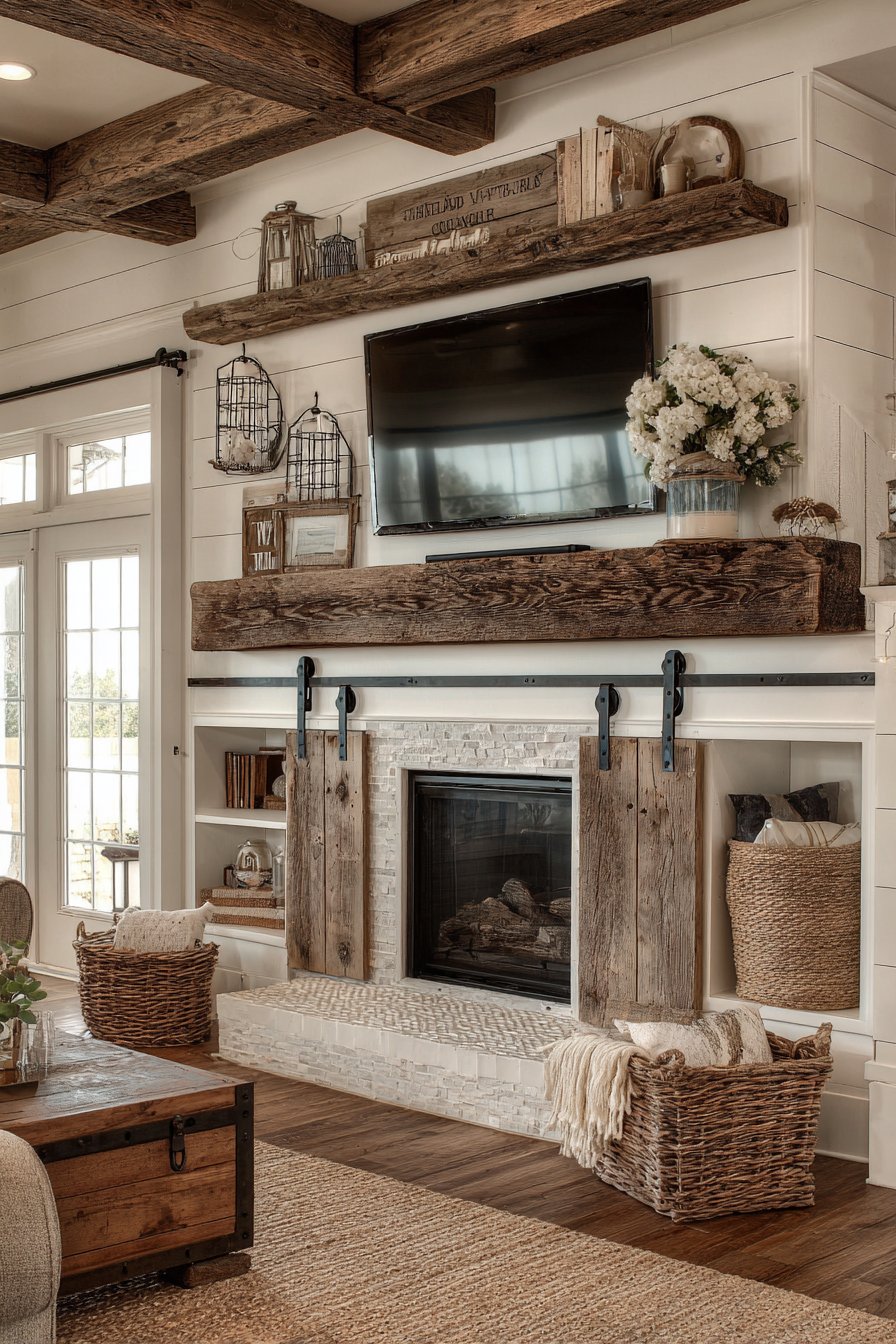
Embrace authentic farmhouse charm with shiplap wall treatment in warm white showing visible wood grain through the paint for genuine texture and character. The horizontal boards create gentle shadow lines while the grain pattern prevents the white surface from appearing flat or sterile. A chunky beam-style floating mantel shelf beneath the television provides rustic focal point and generous display space for vintage farmhouse decor—perhaps antique ironstone pitchers, old books, or galvanized containers filled with cotton stems.
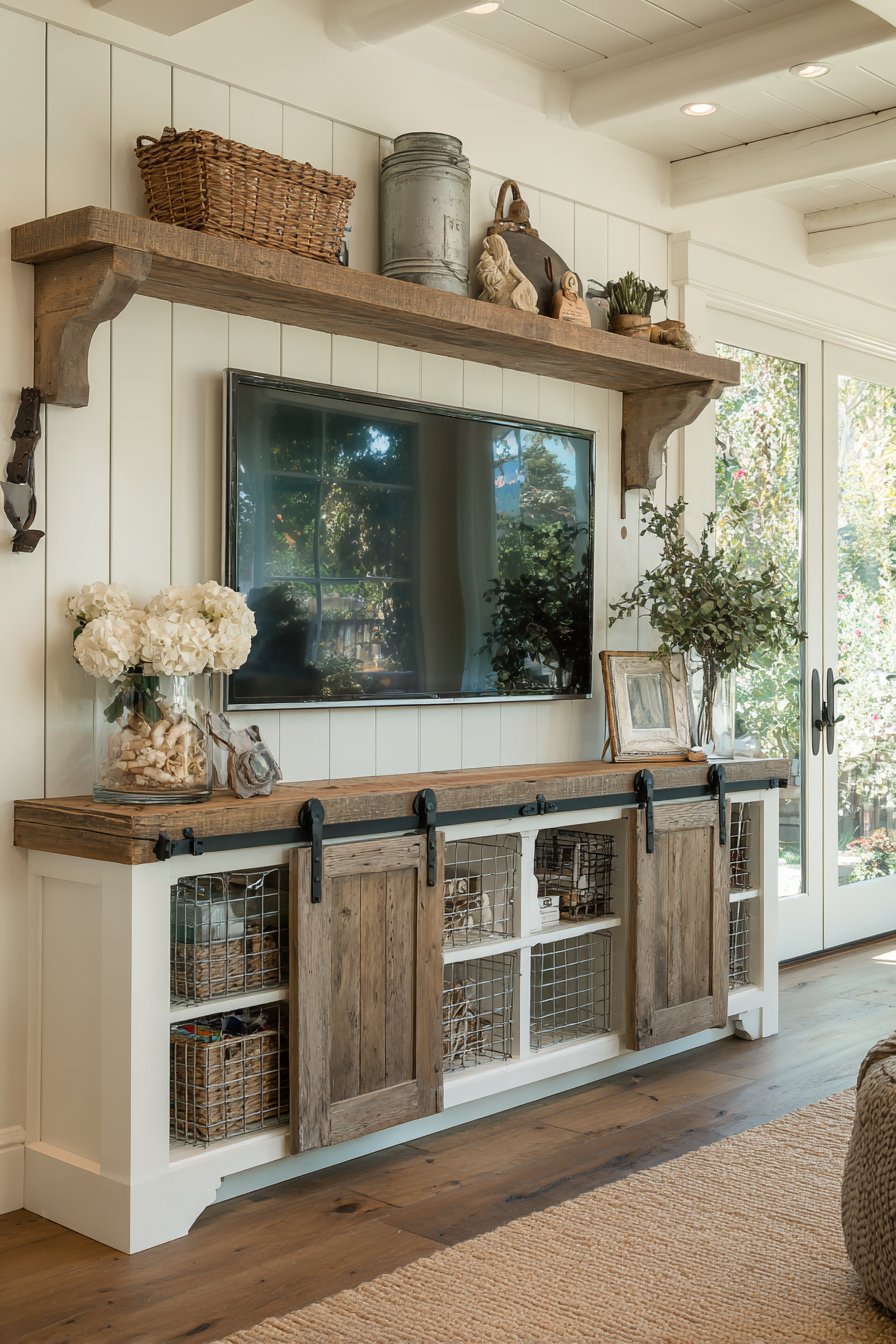
Sliding barn door cabinets on black metal hardware flank the television, their functional sliding mechanism adding interactive element while concealing media equipment behind authentic farmhouse styling. The barn doors might feature X-bracing, vertical planking, or frame-and-panel construction depending on your preferred farmhouse interpretation. Wire baskets and galvanized metal accents throughout bring farmhouse authenticity while providing practical storage for remotes, magazines, or throws.
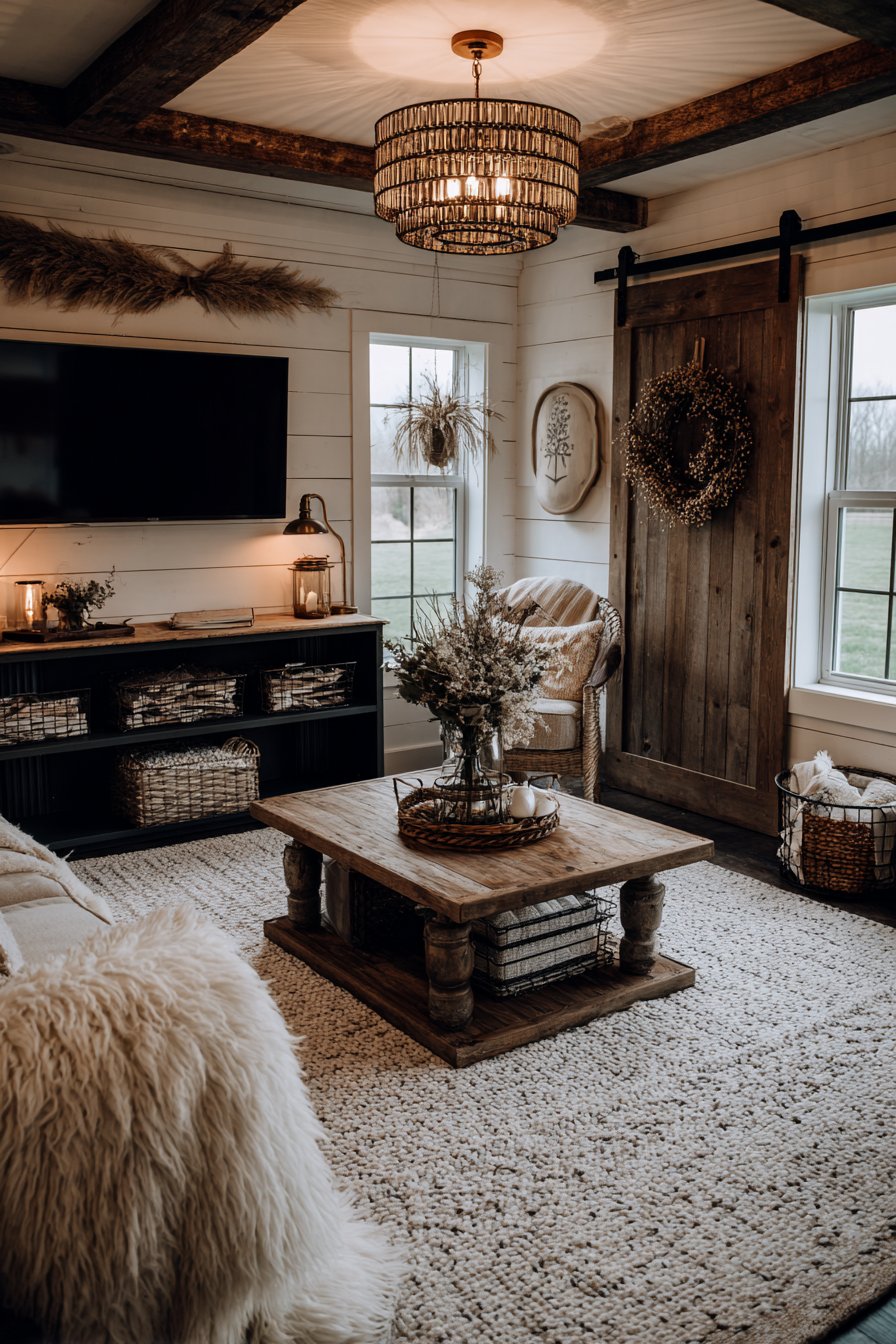
Natural light from windows emphasizes the layered textures—the wood grain showing through white paint, the chunky beam shelf, the metal hardware and accessories—that give farmhouse style its tactile appeal and lived-in warmth. Interior photography captures the cozy, welcoming quality and authentic farmhouse details, showing how this style creates approachable, comfortable spaces that invite family gatherings and casual entertaining. The design works beautifully in both rural farmhouses and suburban homes seeking to capture farmhouse charm.
Key Design Tips: Choose pine or poplar for economical shiplap that accepts paint well while showing attractive grain pattern when whitewashed. Install authentic barn door hardware rated for the weight of your doors rather than decorative-only hardware that may fail. Add soft-close mechanisms to prevent barn doors from slamming and creating noise or damage. Distress painted surfaces lightly with sandpaper at edges and high-wear areas for authentic aged appearance. Incorporate authentic vintage or reproduction vintage elements rather than obviously new interpretations of farmhouse accessories.
21. High-Tech Smart Home Integration
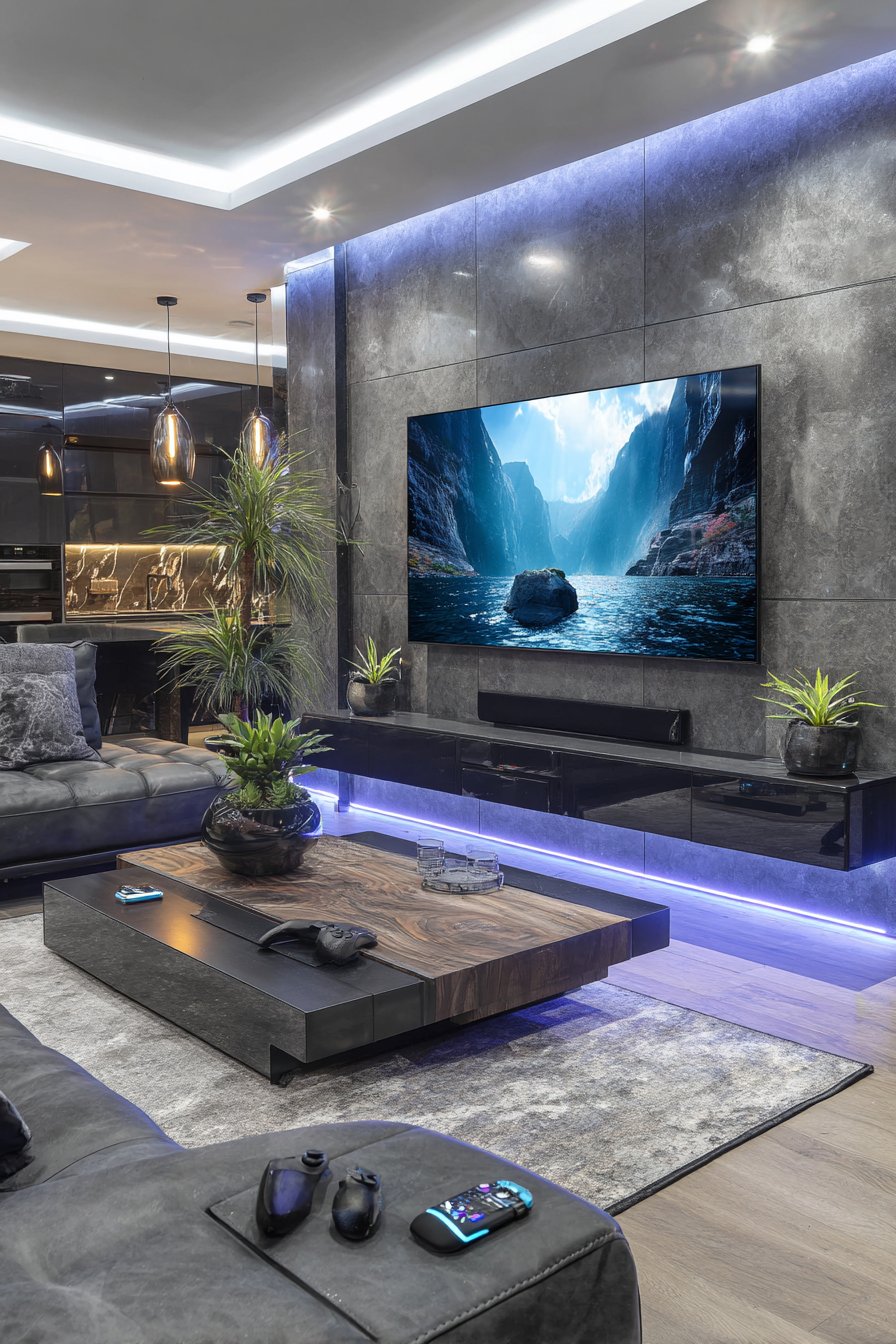
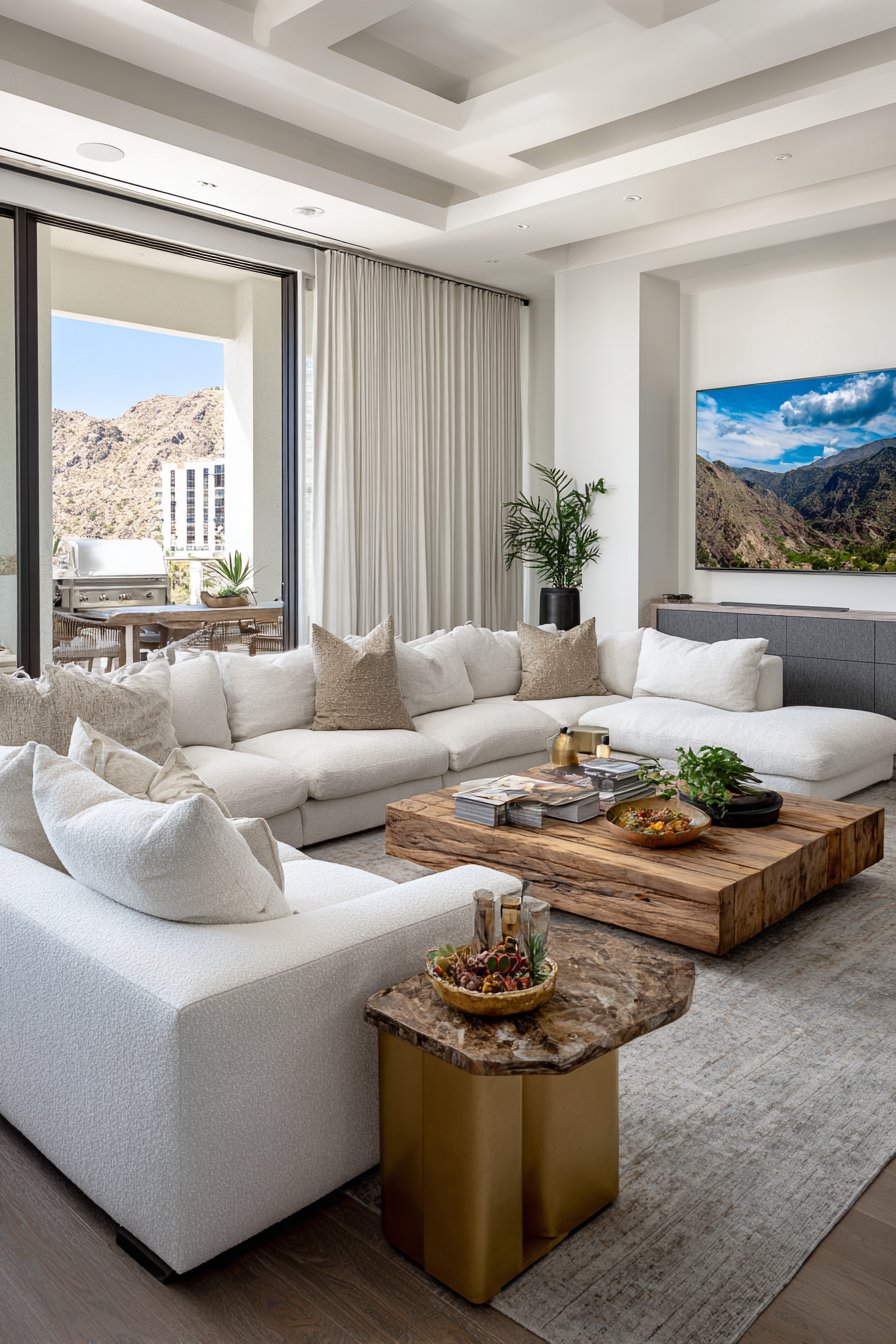
Step into the future with a cutting-edge TV panel incorporating seamless smart home integration through motorized panels that slide to reveal or conceal the television screen. When not in use, the TV disappears behind panels that match the surrounding wall treatment, maintaining clean aesthetics and eliminating the black rectangle that dominates many living spaces. At the touch of a button or voice command, panels glide open silently to reveal the screen for viewing.
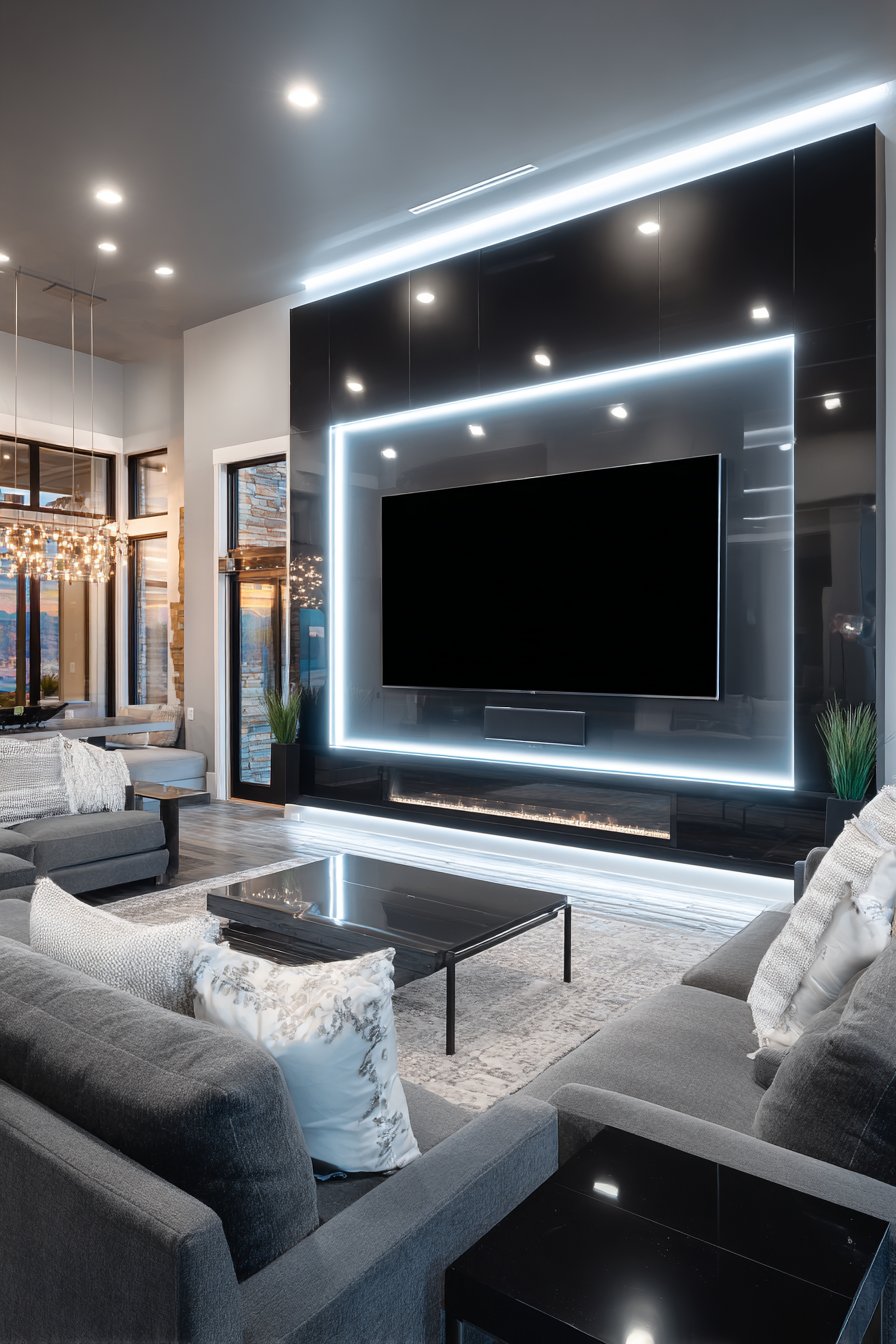
The wall features acoustic fabric panels in charcoal grey optimizing sound quality for the integrated speaker system hidden throughout the entertainment wall. These fabric-wrapped panels absorb sound reflections, reducing echo and creating theater-quality audio without visible speakers disrupting the minimalist aesthetic. LED lighting responds to content being played, creating immersive ambient lighting that extends the viewing experience beyond the screen—blues and greens during ocean documentaries, warm oranges during sunset scenes, dynamic changing during action sequences.
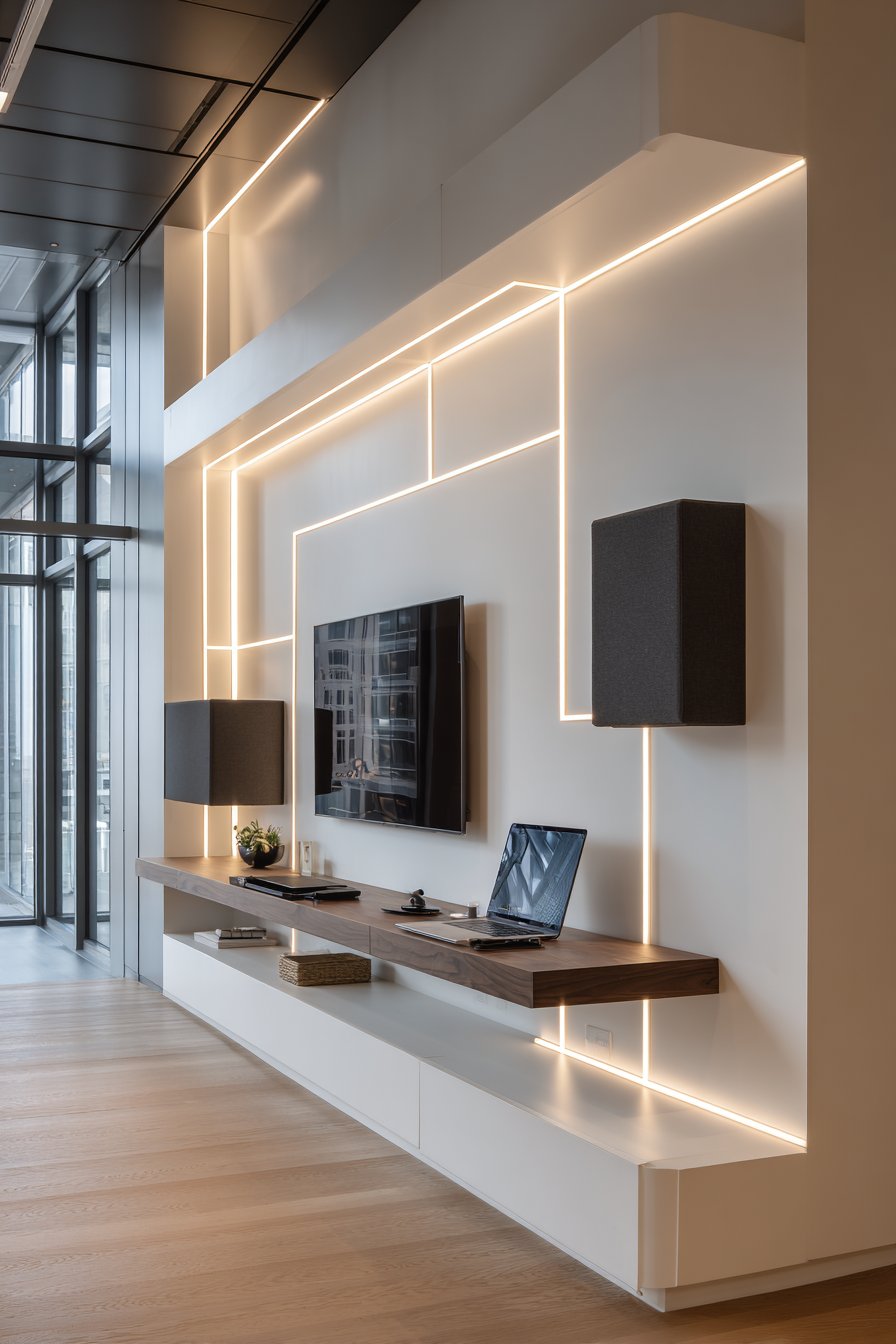
Wireless charging stations integrate discretely into floating side tables flanking the seating area, while USB ports and data connections hide within pull-out compartments that reveal technology only when needed. Clean lines and hidden technology create futuristic yet sophisticated aesthetic where technology enhances rather than dominates the living space. Professional photography captures the sleek integration of advanced technology with minimal visual disruption, showing how contemporary design increasingly conceals technology’s physical presence while maximizing its functional benefits.
Key Design Tips: Work with qualified electricians and AV specialists to ensure proper installation of motorized components and integrated systems. Include manual override options for motorized panels in case of power failure or mechanical issues. Ensure adequate ventilation for concealed electronics and speakers to prevent overheating and maintain equipment longevity. Program smart lighting to include manual control options beyond automated responses to viewing content. Plan for future technology upgrades by including accessible wiring pathways and modular components that can be updated without major renovation.
22. Mediterranean Terracotta Warmth
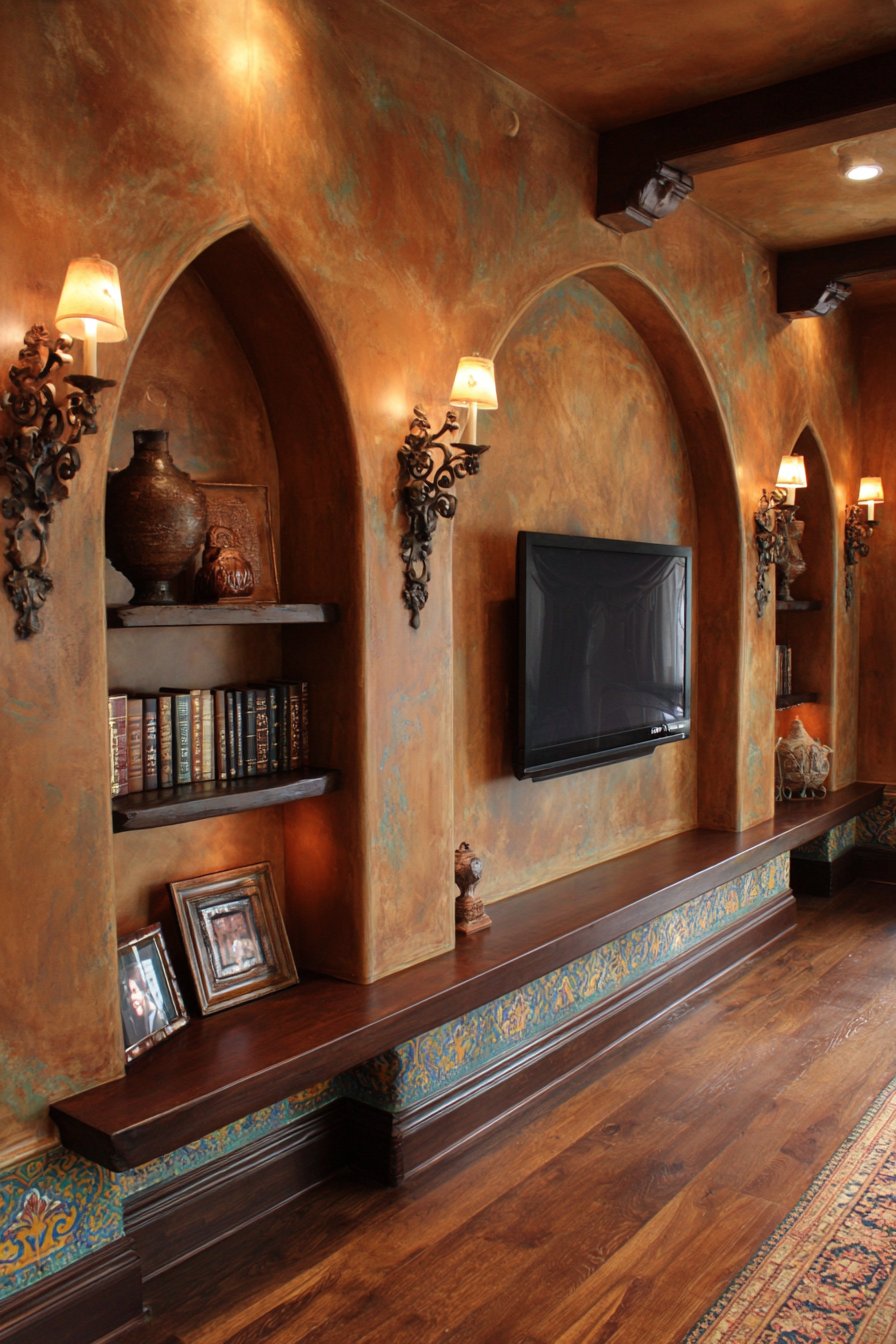
Transport yourself to sun-drenched Mediterranean villas through warm terracotta-colored textured plaster walls creating Old World charm and authentic regional character. The hand-troweled finish shows subtle variations and intentional imperfections that machine-perfect surfaces cannot replicate, bringing artisanal quality and historical authenticity. The warm orange-brown tones evoke the sun-baked earth of the Mediterranean coast, creating immediate warmth and inviting atmosphere.
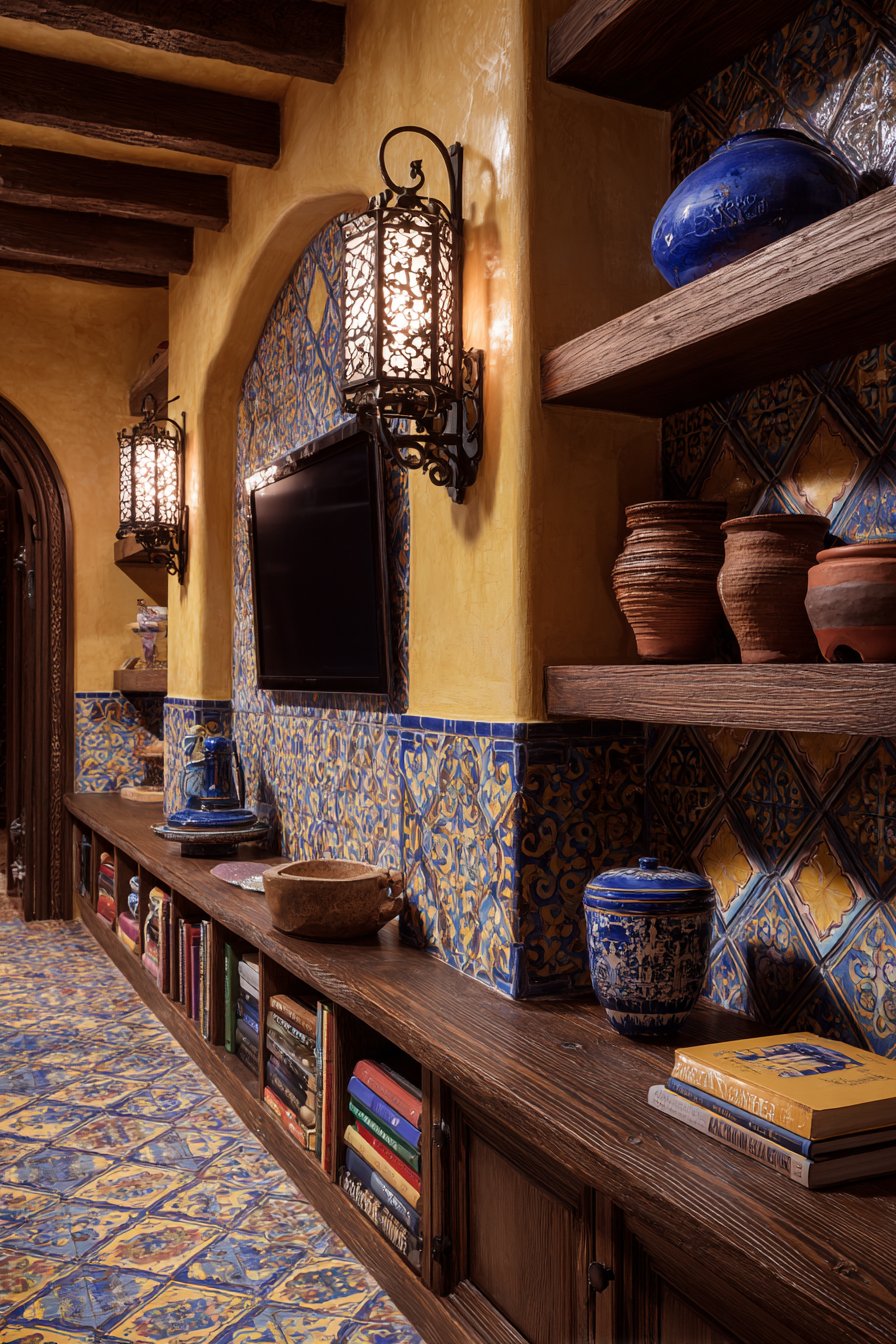
Wrought iron brackets featuring scrollwork and hand-forged details support thick wooden shelves in dark walnut stain, the combination of ornate metalwork and substantial wood exemplifying Mediterranean design’s mixture of rustic and refined elements. These shelves display collections of pottery—perhaps hand-painted ceramics from Spain, Italy, or Greece—alongside leather-bound books and other treasures that suggest well-traveled sophistication and appreciation for craftsmanship.
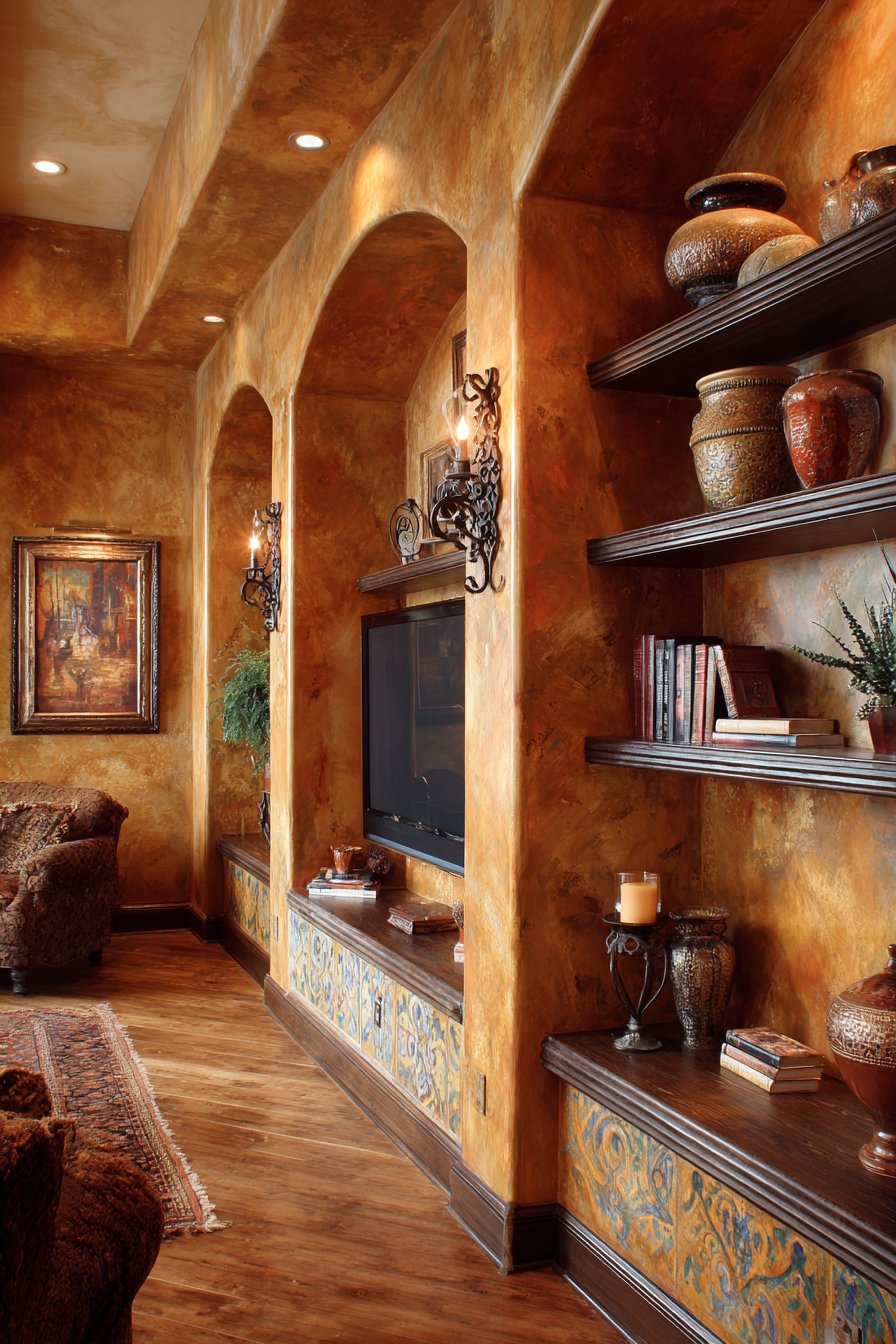
An arched niche frames the television, the curved form echoing traditional Mediterranean architecture where arches provide both structural and decorative function. Decorative tile accents in cobalt blue and sunny yellow bring authentic regional color, perhaps appearing as a border around the arch or as a small backsplash behind floating shelves. Warm ambient lighting from wall sconces creates inviting glow perfect for evening entertaining. Interior design photography emphasizes the textural wall finish and warm, earthy color palette characteristic of Mediterranean design, showing how this style creates welcoming spaces that celebrate craftsmanship, natural materials, and regional tradition.
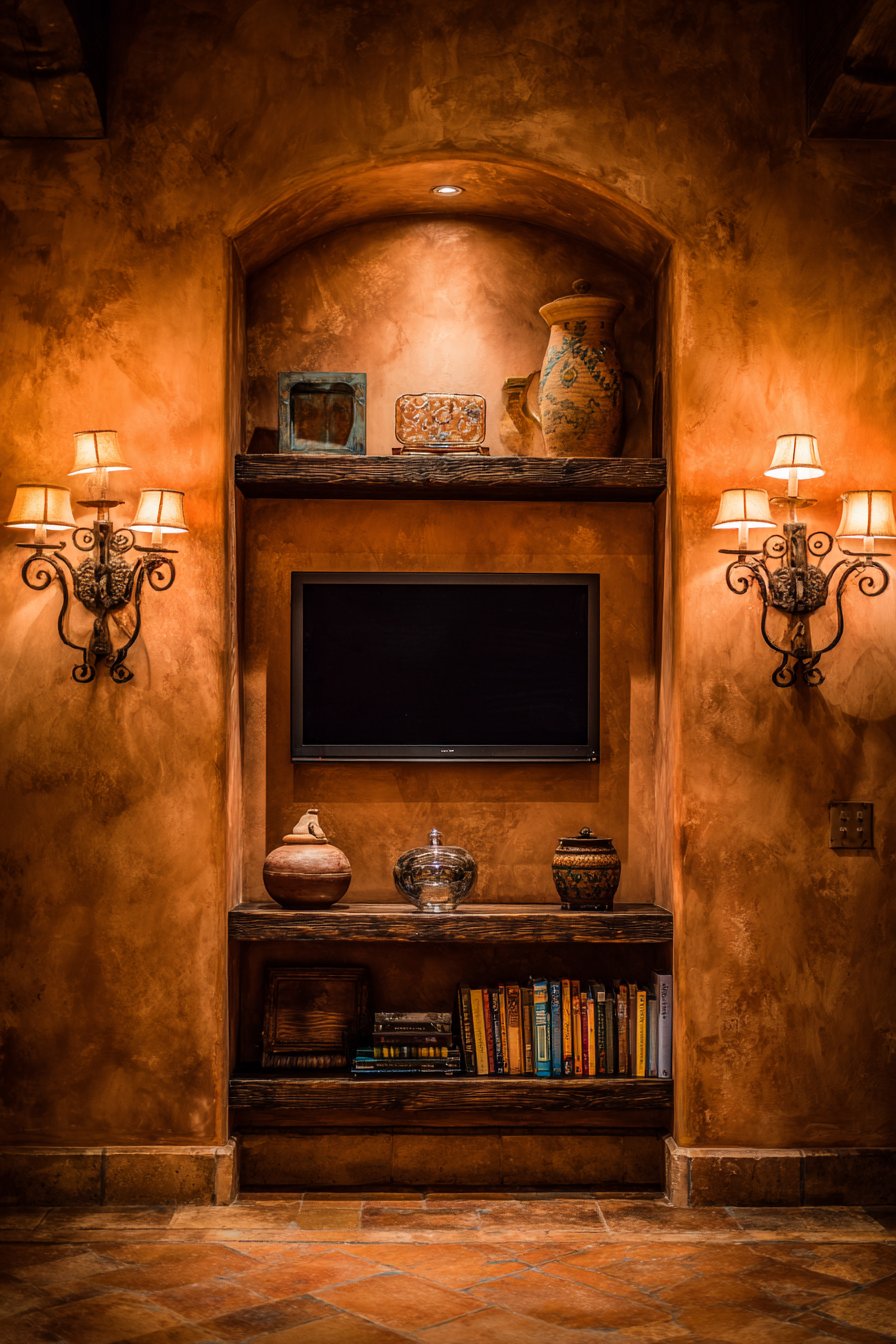
Key Design Tips: Apply textured plaster in multiple coats using hand-troweling techniques for authentic appearance rather than relying on textured paint that looks mass-produced. Choose warm terracotta or ochre tones rather than cool oranges to achieve authentic Mediterranean color. Incorporate wrought iron or cast iron hardware and accessories for the metalwork essential to Mediterranean style. Add hand-painted ceramic tiles as accents rather than covering large areas to keep costs reasonable while achieving authentic detail. Include arched openings or niches if architecturally possible, as these curved forms define Mediterranean and Spanish Colonial styles.
23. Biophilic Living Wall Integration
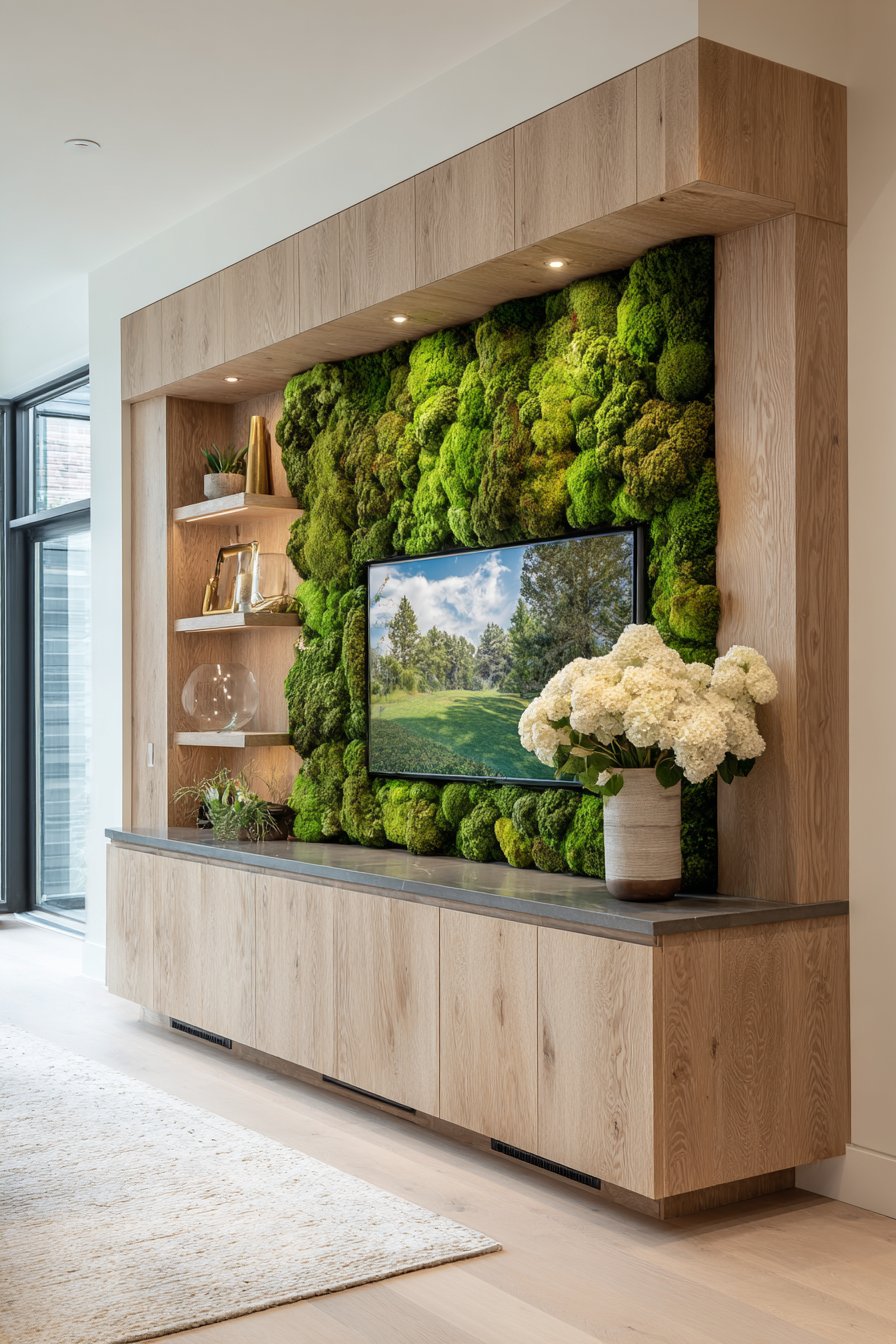
Connect with nature indoors through an innovative TV panel featuring preserved moss panels creating an organic, biophilic backdrop that brings the outdoors inside. The living wall uses preserved rather than living moss, requiring no maintenance, watering, or special lighting while providing all the visual and psychological benefits of natural elements. The moss comes in varying shades of green from bright lime to deep forest, creating natural color variation and organic texture that contrasts beautifully with technology’s geometric precision.
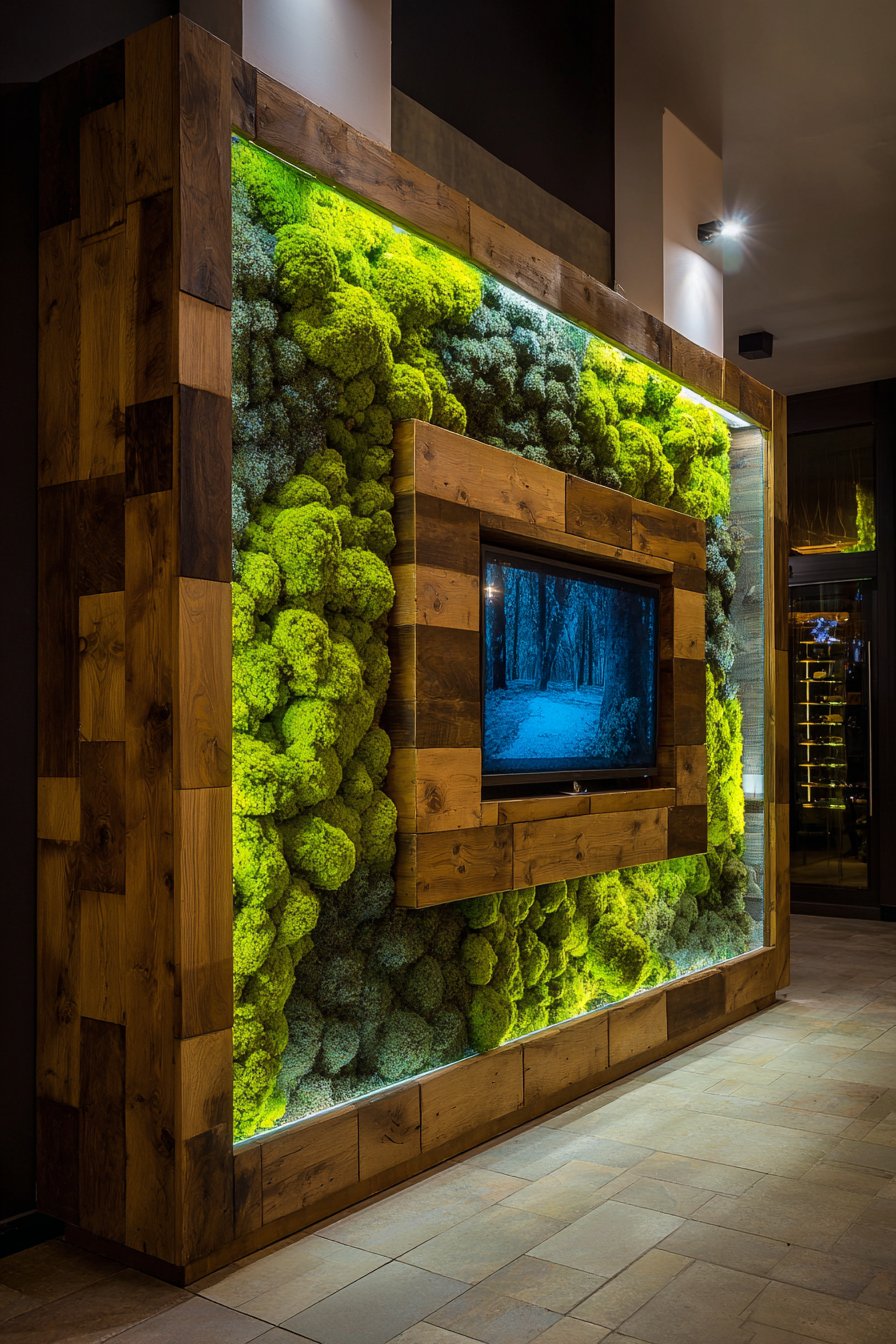
The television mounts within a clear section surrounded by the moss texture, appearing almost to float within a vertical garden. The preserved moss feels soft and maintains its lush appearance indefinitely without growth or change, providing static natural beauty. Wooden elements in natural unstained finish frame the composition, bringing additional organic materials into the design while creating clean boundaries between the moss sections and the rest of the room.
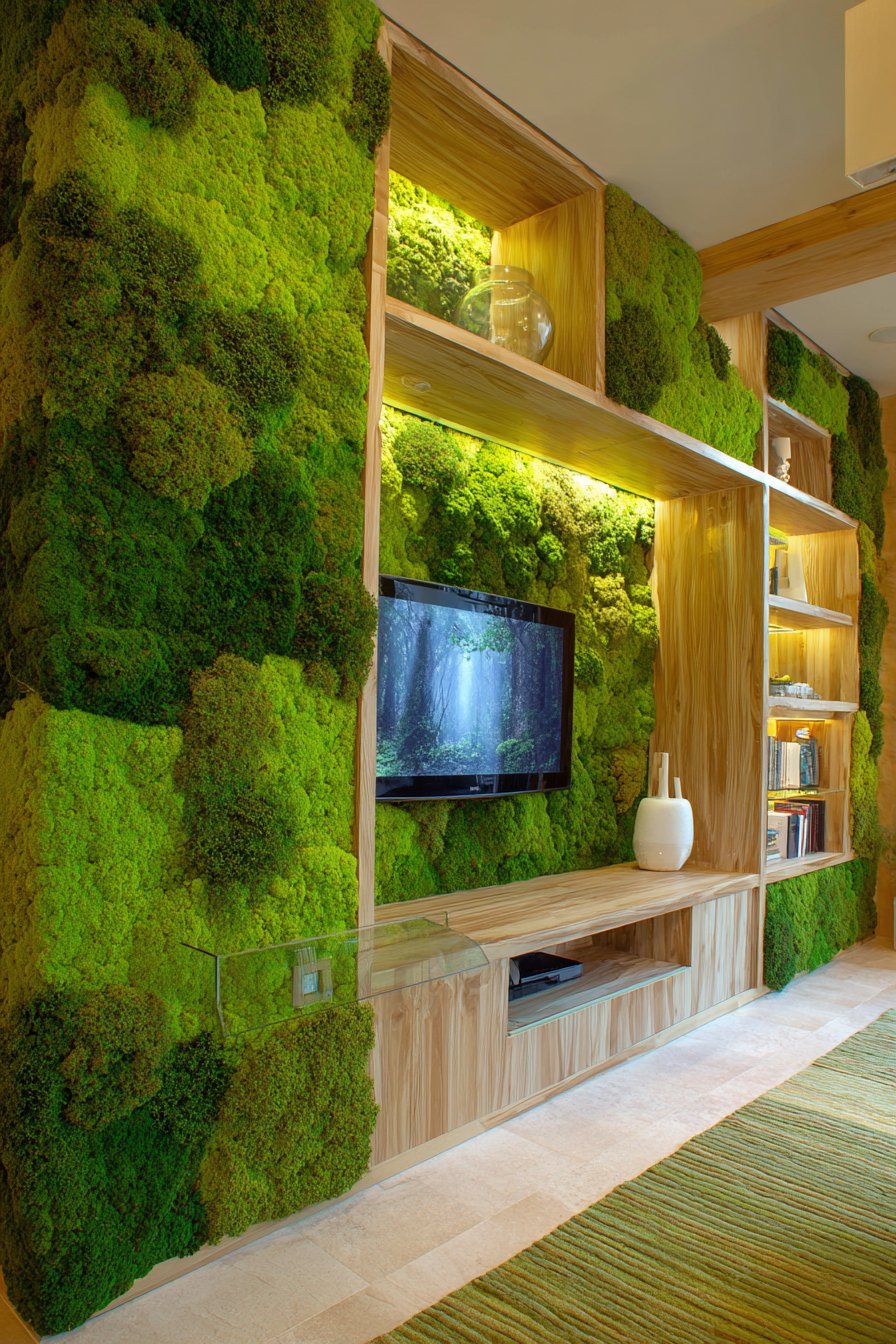
Subtle grow lights enhance the verdant appearance while providing ambient illumination, their warm spectrum bringing out the rich green tones. The design brings calming natural elements indoors, responding to increasing research showing that biophilic design—incorporating natural materials, patterns, and elements into built environments—reduces stress, improves focus, and enhances wellbeing. Professional interior photography with balanced lighting captures the rich green tones and unique organic texture while maintaining focus on the functional entertainment space, showing how nature and technology can coexist beautifully in contemporary interiors.
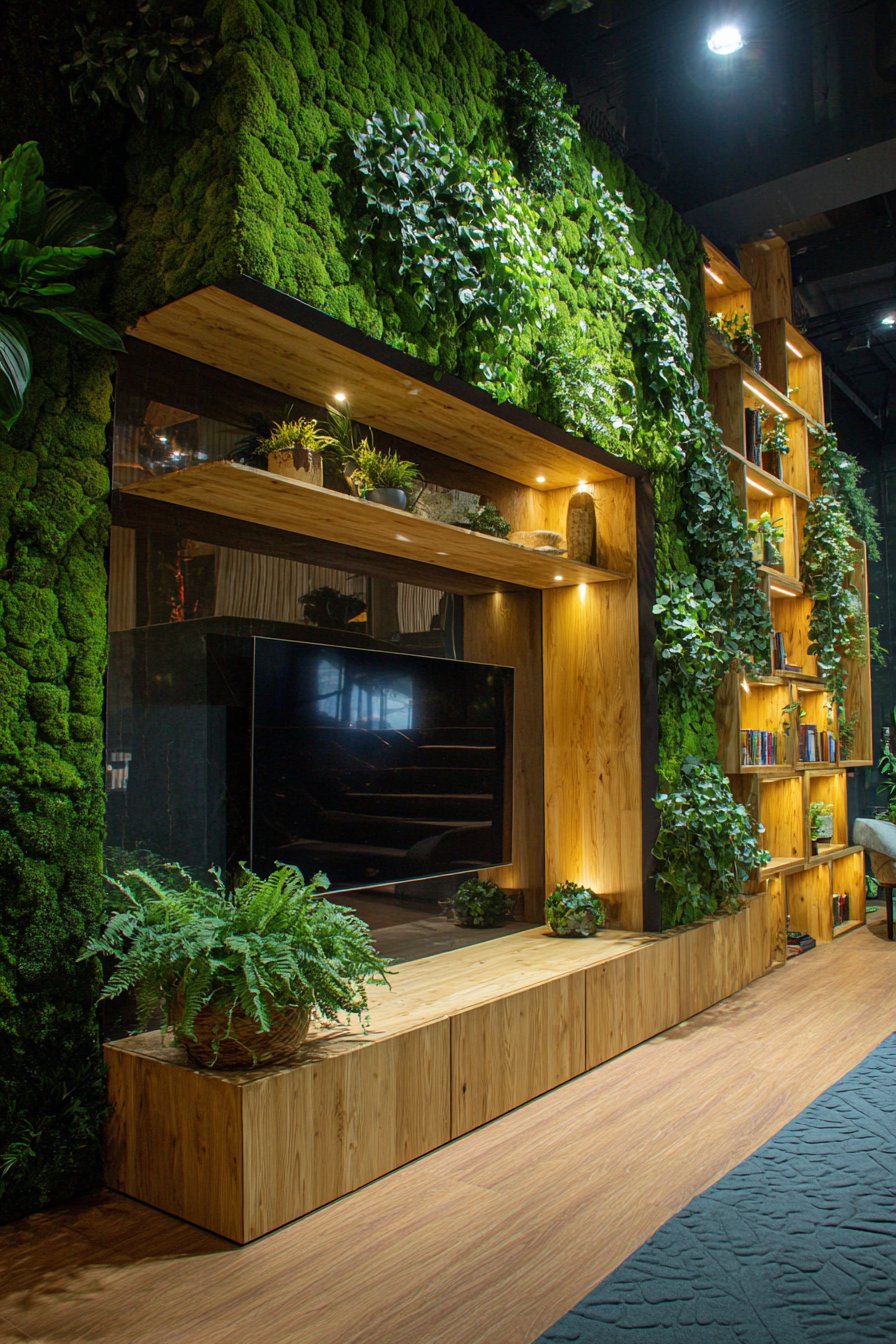
Key Design Tips: Source preserved moss from reputable suppliers who use sustainable harvesting and preservation practices. Ensure preserved moss remains away from high-humidity areas as excessive moisture can affect preservation and potentially allow mold growth. Clean preserved moss gently with soft brush or low-pressure air to remove dust without disturbing delicate texture. Plan adequate lighting to maintain the moss’s green appearance, as inadequate light can make it appear dull or brownish. Consider the room’s overall humidity levels as very dry conditions may cause preserved moss to become brittle over time.
Why These TV Panel Ideas Represent the Best in Entertainment Wall Design
The twenty-three TV panel ideas presented throughout this comprehensive guide represent the pinnacle of contemporary entertainment wall design, each approach offering distinct advantages for specific aesthetic preferences, functional requirements, and spatial constraints. These designs succeed because they address the fundamental challenge of integrating technology into living spaces—transforming the television from a potentially disruptive black rectangle into a thoughtfully incorporated element within a larger architectural composition.
The modern geometric entertainment center demonstrates how contemporary design can create visual drama through material contrast and asymmetric composition, perfect for homeowners who appreciate bold architectural statements and cutting-edge aesthetics. Its combination of matte black and natural oak represents the sophisticated material pairing that defines high-end contemporary interiors, while the integrated LED lighting shows how illumination has become integral to wall design rather than mere afterthought. This approach works particularly well in open-concept living spaces where the entertainment wall serves as a focal point visible from multiple rooms.
Minimalist designs like the floating entertainment unit prove that less truly can be more when executed with precision and attention to proportion. The light ash wood construction brings natural warmth without visual weight, demonstrating how minimalism succeeds through careful material selection and impeccable craftsmanship rather than mere absence of decoration. This aesthetic appeals to those seeking calm, uncluttered environments where every element serves clear purpose and nothing extraneous remains—particularly relevant in our overstimulated modern world where homes increasingly function as peaceful retreats.
Luxurious approaches utilizing marble-look porcelain panels or velvet upholstery create sophisticated environments that elevate everyday television viewing into occasions worthy of beautiful surroundings. These designs acknowledge that our entertainment spaces deserve the same design attention as formal living rooms or dining rooms, especially as television quality has improved to deliver cinema-worthy viewing experiences at home. The investment in premium materials and detailed craftsmanship creates permanent value, transforming entertainment walls from utilitarian necessities into architectural features that enhance property value and daily living quality.
Rustic and farmhouse designs address the growing desire for authenticity and connection to traditional craftsmanship in an increasingly digital world. Reclaimed barn wood panels and shiplap treatments bring genuine history and character that mass-produced materials cannot replicate, creating spaces with soul and story. These approaches work beautifully in both rural homes where they reflect regional vernacular architecture and urban spaces where they provide counterbalance to contemporary surroundings and reconnection with traditional building methods.
Industrial designs celebrate honest materials and visible structure, appealing to those who appreciate transparency in construction and the aesthetic of utilitarian function. Exposed brick walls, blackened steel frameworks, and concrete panels showcase the bones of buildings rather than concealing them, creating authenticity that resonates with contemporary values of transparency and substance. This aesthetic particularly suits loft conversions, urban apartments, and modern homes where industrial elements create compelling contrast with polished contemporary furnishings.
Traditional and transitional designs prove that classic approaches remain relevant and desirable, particularly when executed with quality materials and proper proportions. Built-in shaker cabinetry and board-and-batten paneling demonstrate how traditional millwork creates timeless architecture that transcends passing trends. These approaches work especially well in traditional homes where they maintain architectural consistency or in new construction where they add instant character and substance.
Space-saving designs address the very real challenges of limited square footage in urban apartments and compact homes, proving that spatial constraints need not compromise either style or function. Multi-functional wall units that incorporate fold-down desks, abundant concealed storage, and clever organizational systems maximize every vertical inch while maintaining attractive aesthetics. These solutions demonstrate the increasing importance of furniture and built-ins that serve multiple purposes as housing costs rise and average living spaces shrink.
Culturally-inspired designs like Japanese zen entertainment areas and Mediterranean terracotta walls bring global perspectives and regional traditions into contemporary American homes. These approaches offer alternatives to the dominant Scandinavian and farmhouse trends, introducing different material palettes, proportional systems, and philosophical approaches to spatial design. They work beautifully for those with personal connections to these cultures or those seeking distinctive aesthetics that stand apart from prevailing trends.
Innovative approaches like smart home integration and biophilic living walls demonstrate how entertainment wall design continues to evolve alongside technology and growing environmental consciousness. Motorized concealment systems respond to the desire to hide technology when not in use, while preserved moss installations bring nature indoors without maintenance demands. These cutting-edge designs appeal to early adopters and those seeking solutions that address contemporary concerns about screen time, sustainability, and connection with nature.
The variety of styles presented—from bohemian macramé backdrops to glamorous mirrored art deco panels—ensures that every design preference and lifestyle receives thoughtful representation. Bold black accent walls create contemporary drama for confident homeowners willing to make strong statements, while kid-friendly storage walls acknowledge the practical realities of family life where durability and organization trump delicate aesthetics. Coastal whitewashed shiplap brings beach house serenity to landlocked locations, while mid-century modern walnut slats celebrate the enduring appeal of 1950s and 1960s design principles.
What unites these diverse approaches is their shared commitment to thoughtful integration rather than superficial decoration. Each design treats the entertainment wall as architecture rather than furniture placement, considering material selection, spatial proportion, lighting design, and functional requirements from initial concept through final execution. They demonstrate understanding that successful TV panel design requires balancing multiple considerations—aesthetic appeal, practical storage, proper viewing ergonomics, cable management, ventilation for electronics, and integration with the room’s overall design scheme.
These designs also reflect increasing sophistication in how homeowners approach entertainment spaces, moving beyond simple TV stands toward comprehensive wall treatments that create architectural focal points. The elevation of entertainment walls from functional necessities to design opportunities parallels broader trends in residential design where previously utilitarian spaces like kitchens, bathrooms, and laundry rooms now receive significant design attention and investment.
The best TV panel designs succeed by creating cohesive visual compositions where the television becomes one element within a larger architectural statement rather than dominating the space. Whether through symmetric built-in cabinetry that frames the screen, textured wall treatments that provide interesting backdrop, or floating shelves that create asymmetric balance, these approaches ensure that when the television is off, the wall remains visually compelling. This consideration becomes increasingly important as screen sizes grow larger and televisions consume more wall real estate.
Material quality emerges as crucial factor separating exceptional TV panel designs from mediocre attempts. Real wood versus laminate, genuine stone versus printed tiles, hand-applied plaster versus textured paint—these distinctions create substantial differences in final appearance, longevity, and perceived value. The best designs invest in quality materials that improve with age rather than deteriorating, developing authentic patina rather than showing wear.
Lighting design receives appropriate emphasis throughout these approaches, whether through integrated LED strips, recessed downlights, decorative sconces, or natural illumination from adjacent windows. Proper lighting ensures entertainment walls function beautifully throughout the day and evening, highlighting textures and materials while providing practical illumination for different activities from movie watching to reading. The integration of dimmable systems allows occupants to adjust lighting levels according to time of day and specific needs.
Storage solutions vary dramatically across these designs but share common goals of concealing clutter while keeping essential items accessible. Some approaches favor open shelving for displaying curated collections, while others emphasize closed cabinetry for hiding media equipment and less attractive necessities. The best designs often combine both approaches, providing varied storage types that accommodate different organizational needs while maintaining visual interest through the interplay of open and closed elements.
These TV panel ideas also demonstrate how entertainment walls can establish room style and influence the entire interior design scheme. A rustic reclaimed wood wall suggests casual, comfortable furnishings throughout the space, while glamorous mirrored panels set expectations for sophisticated, polished interiors. The entertainment wall often becomes the room’s largest and most prominent design element, making material and style choices crucial to creating cohesive, intentional spaces.
Installation considerations vary significantly across these approaches, with some requiring professional contractors for safe installation while others accommodate skilled DIY execution. Understanding these differences helps homeowners make informed decisions about which designs align with their budgets, timelines, and capabilities. The most elaborate built-in systems justify professional installation to ensure structural integrity, while simpler approaches like painted accent walls or mounted shelving systems suit homeowner installation with proper tools and techniques.
Ultimately, these twenty-three TV panel ideas represent thoughtful solutions to the challenge of incorporating large screens into residential interiors without sacrificing aesthetic quality or spatial harmony. They demonstrate that with creativity, quality materials, and attention to proportion and detail, entertainment walls can become genuine design assets that enhance both function and beauty in contemporary homes.
Conclusion
The evolution of TV panel design from simple mounting solutions to comprehensive architectural features reflects broader changes in how we live with technology and approach interior design. The twenty-three diverse approaches explored throughout this guide demonstrate that there is no single correct solution—rather, the best TV panel design for any space depends on individual style preferences, functional requirements, spatial constraints, and budget considerations. From minimalist floating units to elaborate built-in systems, from rustic reclaimed wood to polished concrete, from traditional shaker cabinetry to futuristic smart home integration, the options available today allow every homeowner to find an approach that resonates with their aesthetic sensibilities and practical needs.
The key to successful TV panel design lies in thoughtful planning that considers the entertainment wall as architecture rather than mere furniture placement. This means selecting materials that will age gracefully, planning lighting that functions throughout the day, incorporating adequate storage for changing technology needs, ensuring proper viewing ergonomics, and creating visual interest that remains compelling whether the television is on or off. Quality materials, careful craftsmanship, and attention to proportion and detail separate exceptional installations from mediocre attempts, making the investment in professional design and installation worthwhile for those seeking lasting value and daily enjoyment.
As you consider implementing these ideas in your own home, remember that the most successful designs honor both the room’s architectural context and your personal lifestyle requirements. Don’t hesitate to adapt elements from multiple approaches to create custom solutions perfectly suited to your space—perhaps combining the material warmth of rustic wood with the clean lines of minimalist design, or blending traditional built-in cabinetry with contemporary materials and finishes. The entertainment wall represents valuable real estate in your home, and investing time and resources in creating a thoughtful, well-executed design pays dividends in both daily enjoyment and long-term property value. Let these ideas inspire you to transform your television from a potential design challenge into an opportunity for creating a stunning architectural focal point that enhances your living space for years to come.


