
Every living room has them – those awkward corner spaces that seem to defy practical use and often end up as forgotten zones collecting dust or housing random items. Yet these overlooked areas present some of the most exciting opportunities for creative interior design. Thoughtful corner design can transform dead space into functional, beautiful focal points that enhance both the aesthetic appeal and practical utility of your living room.
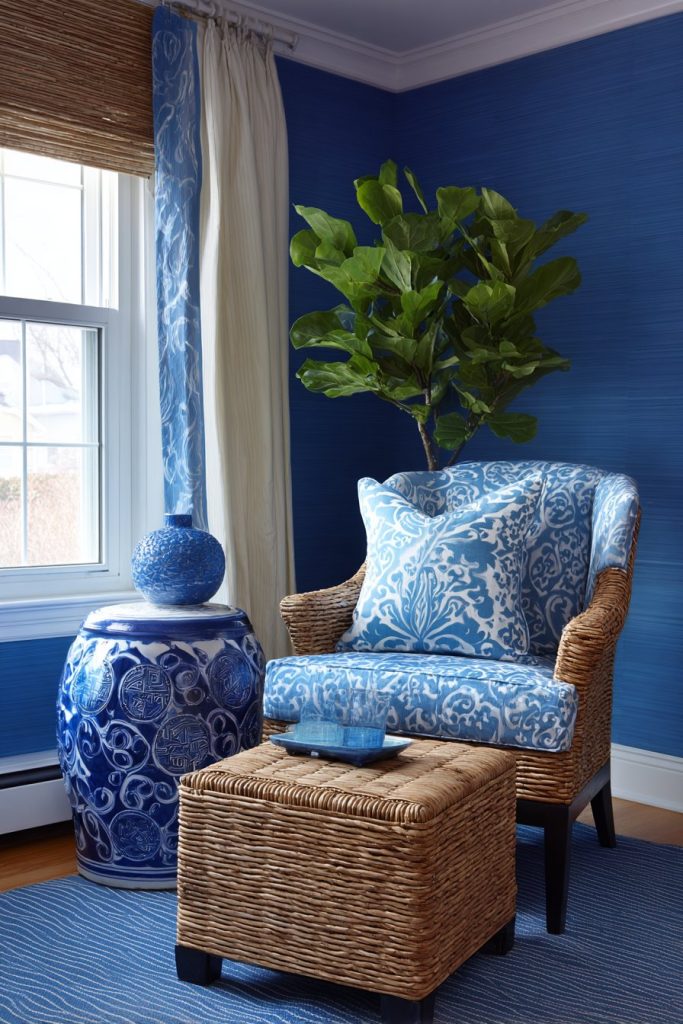
The key to successful corner design lies in understanding that these spaces offer unique possibilities for vertical display, intimate seating arrangements, and specialized functionality that wouldn’t work elsewhere in the room. Whether you’re dealing with a small apartment where every square foot matters or a spacious home where corners provide opportunities for creative expression, the right approach can turn these challenging areas into your room’s most compelling features.
From cozy reading nooks that invite quiet contemplation to dynamic entertainment centers that bring families together, corner spaces can accommodate an incredible variety of design themes and functional purposes. The twenty innovative corner concepts we’ll explore demonstrate how different design styles – from minimalist Scandinavian to bold industrial aesthetics – can transform these spaces to reflect diverse personalities and lifestyle needs while maximizing both form and function.

1. Curved Sectional Seating Sanctuary
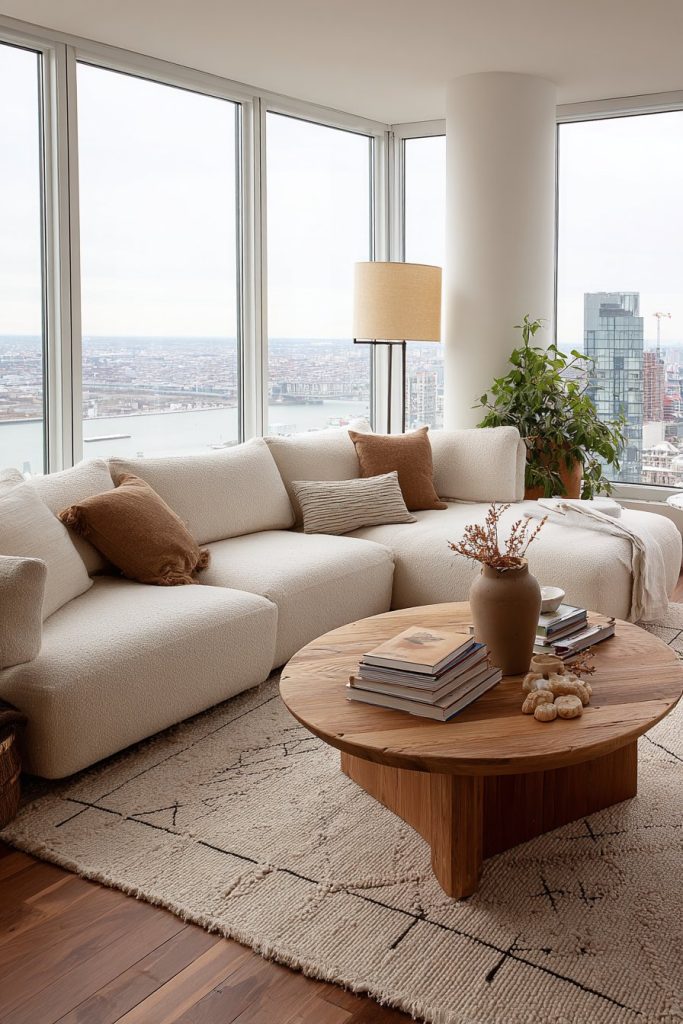
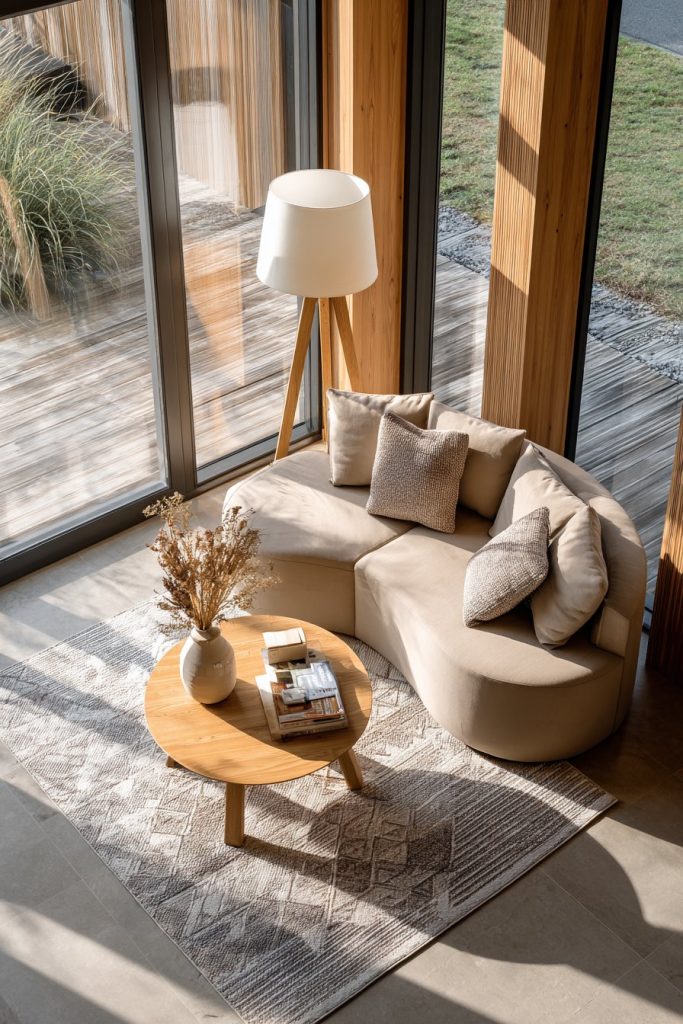
The curved sectional sofa represents one of the most sophisticated approaches to corner design, creating a natural gathering space that feels both intimate and welcoming. This setup maximizes seating capacity while maintaining elegant proportions that don’t overwhelm the room. The warm beige upholstery provides a neutral foundation that works beautifully with various color schemes and seasonal decor changes.
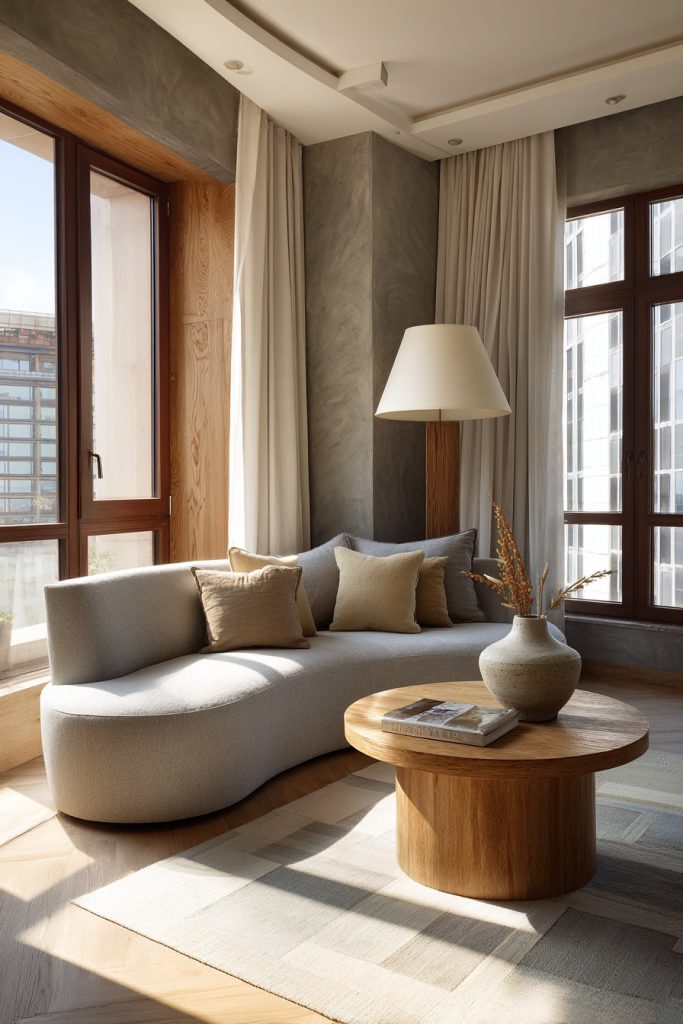
The genius of this arrangement lies in how the curved form follows the natural flow of the corner space, creating a conversation area that feels intentionally designed rather than simply pushed into leftover space. The round wooden coffee table with its natural oak finish serves as both a functional surface and a visual anchor that complements the sofa’s organic curves. The interplay between the soft upholstery and warm wood tones creates a sophisticated yet comfortable atmosphere.
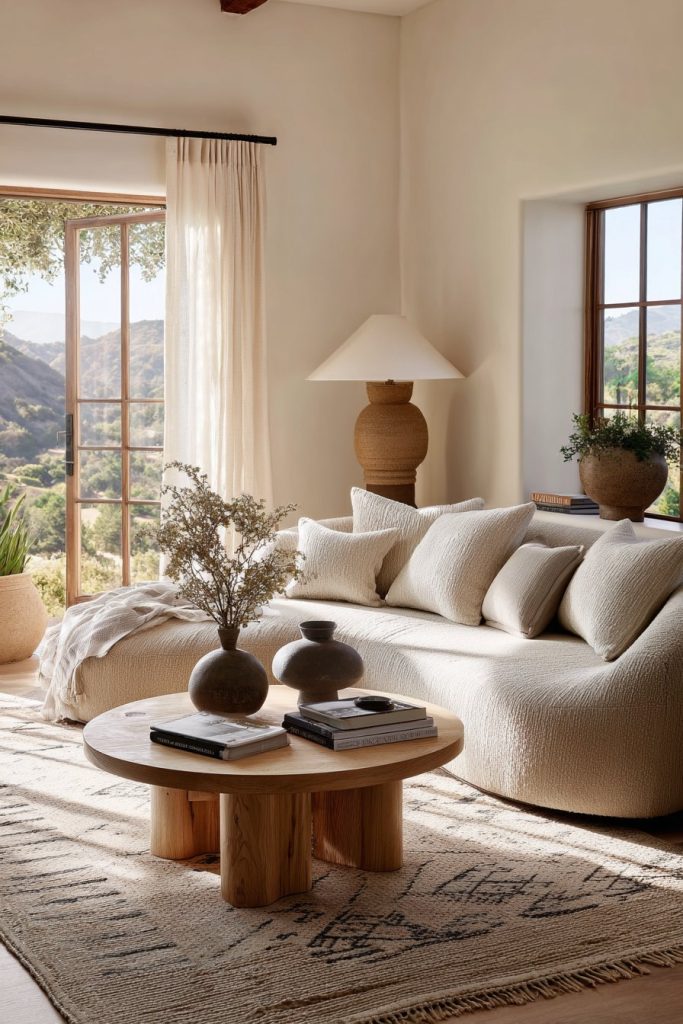
Professional interior photographers often highlight how natural daylight enhances the textural elements in such arrangements. The geometric area rug in neutral tones helps define the seating area while adding visual interest through pattern and texture. A tall floor lamp with a linen shade provides essential task lighting for evening use while contributing to the overall design aesthetic.
Key Design Tips:
- Position curved furniture to follow the natural corner angle for optimal flow
- Choose neutral upholstery colors that adapt to changing decor themes
- Use round tables to echo curved lines and maintain visual harmony
- Layer textures through rugs, pillows, and throws for added comfort
- Ensure adequate lighting for both ambient and task needs
2. Window-Side Reading Retreat
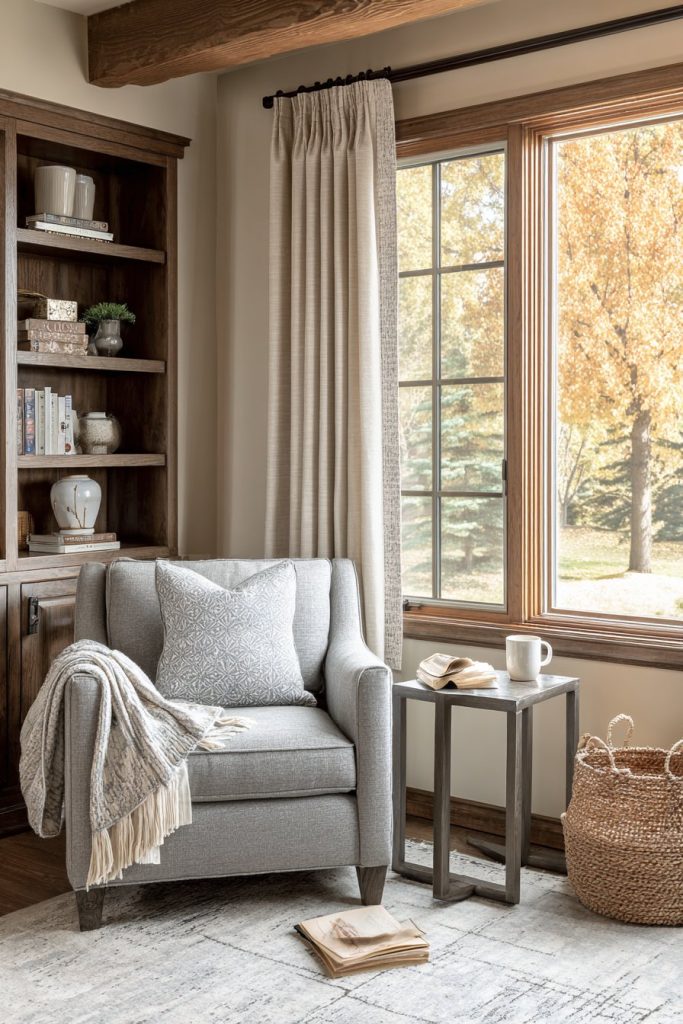
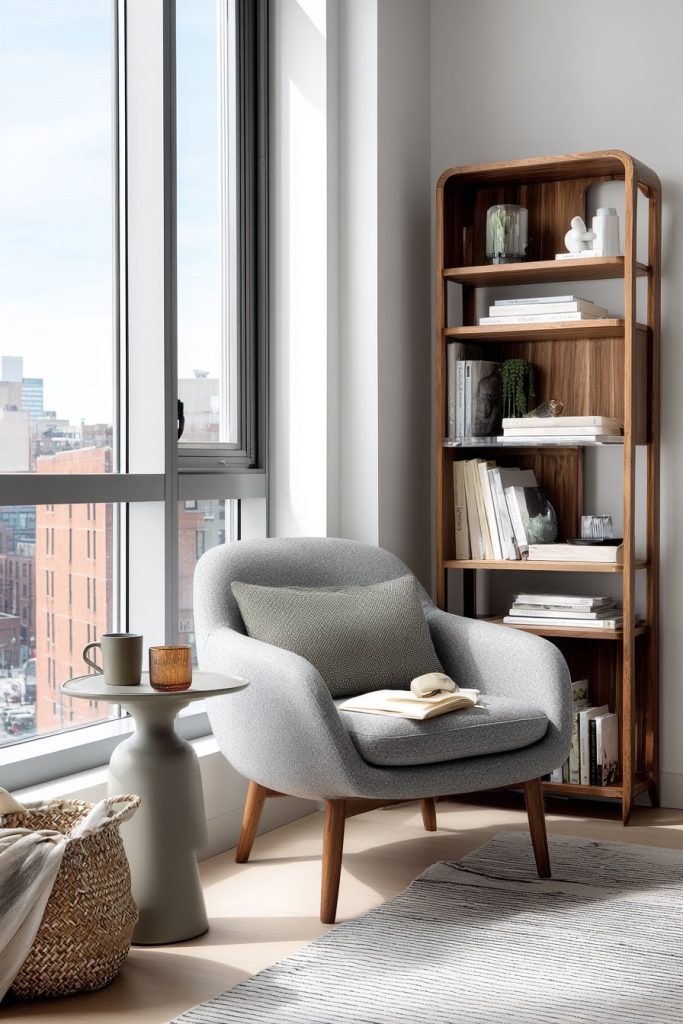
Creating a dedicated reading nook in a corner near a large window transforms an underutilized space into a personal sanctuary for book lovers. The soft grey accent chair provides comfortable seating that’s perfectly scaled for the intimate corner space, while the proximity to natural light makes it ideal for extended reading sessions.
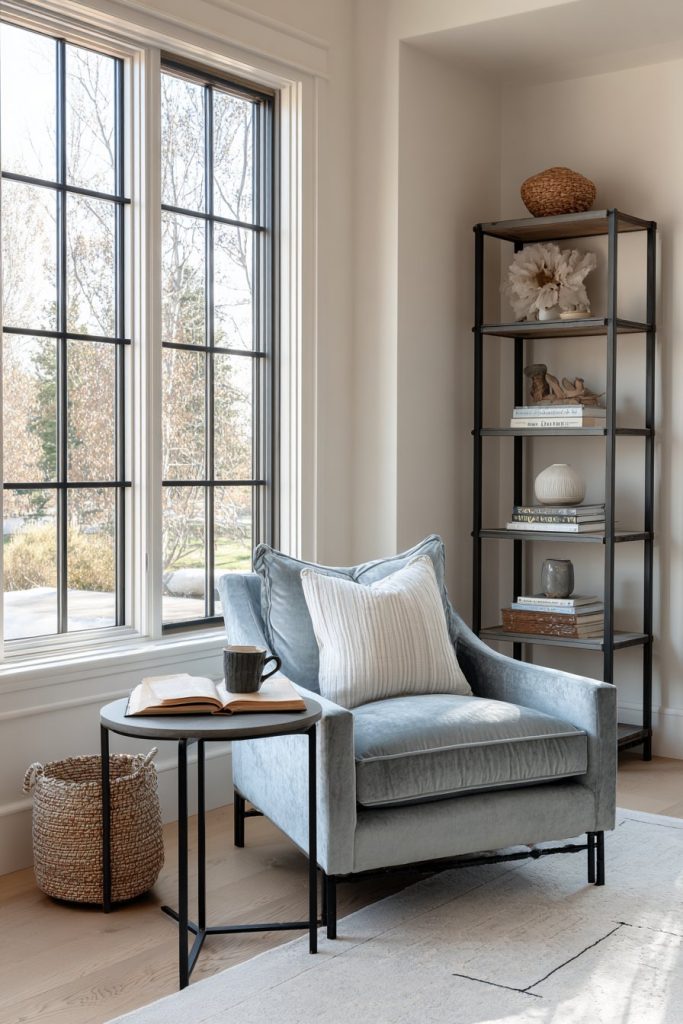
The sleek side table serves multiple functions – holding the essential coffee mug, providing a surface for the current book, and offering a convenient spot for reading glasses or bookmarks. The tall bookshelf creates vertical storage that maximizes the corner’s potential while displaying both literary collections and decorative objects that reflect the owner’s personality.
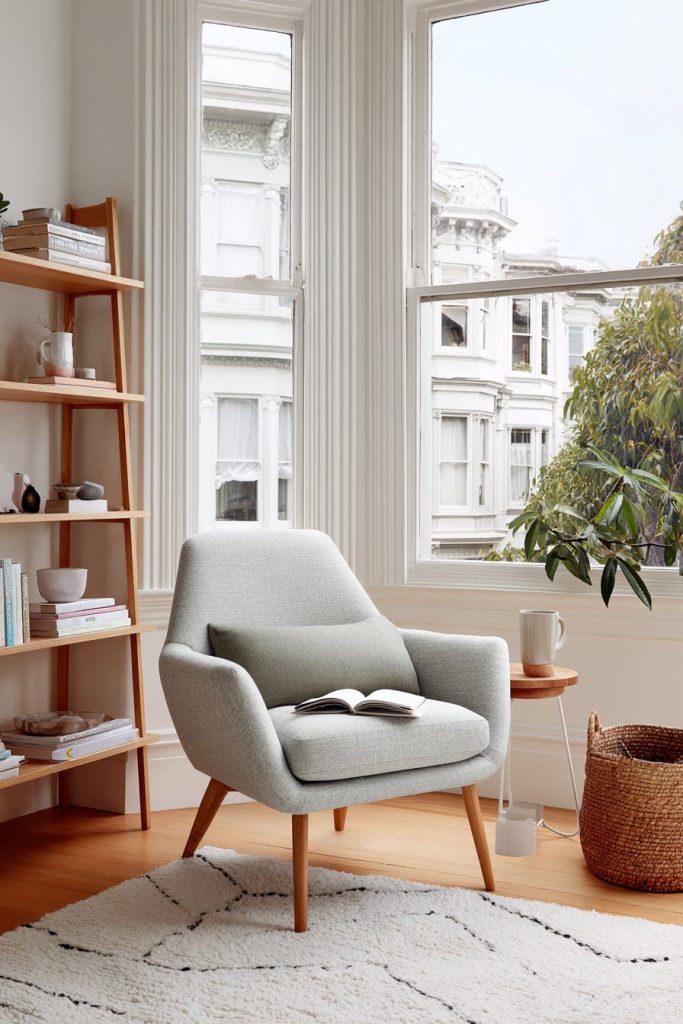
Storage solutions play a crucial role in maintaining the nook’s functionality and visual appeal. The woven basket provides hidden storage for throw blankets, extra pillows, or seasonal reading materials, while the small area rug with subtle geometric patterns helps define the space and adds warmth underfoot.
Key Design Tips:
- Position seating to take advantage of natural light from windows
- Include easily accessible side table storage for reading essentials
- Use vertical shelving to maximize storage without consuming floor space
- Add soft furnishings like baskets and rugs for comfort and organization
- Choose furniture scales appropriate for the intimate corner setting
3. Floating Corner Shelf Display
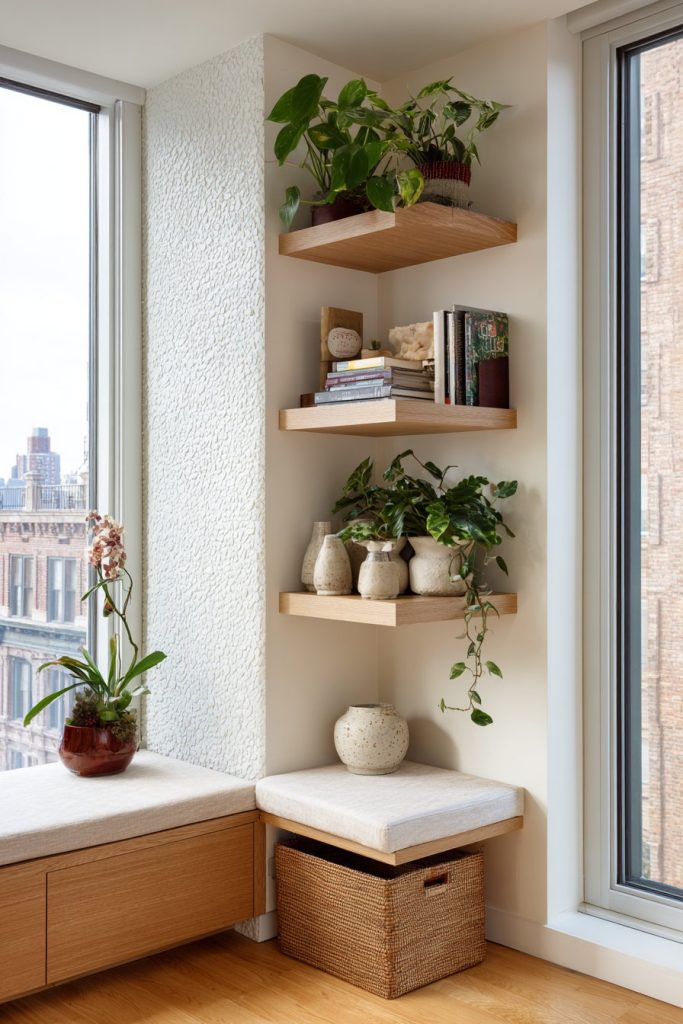
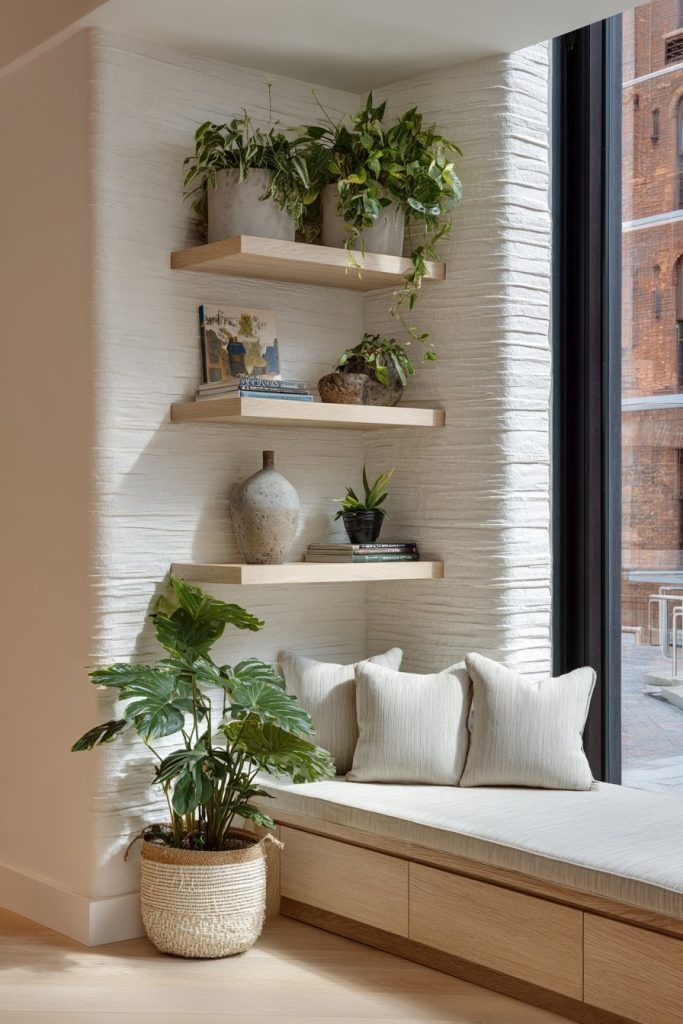
Modern floating shelf systems represent the perfect marriage of form and function in corner design. The three-tier white oak shelving creates an elegant display opportunity that draws the eye upward while providing practical storage for books, plants, and carefully curated decorative objects. This approach works particularly well in contemporary and minimalist interiors where clean lines and uncluttered aesthetics are priorities.
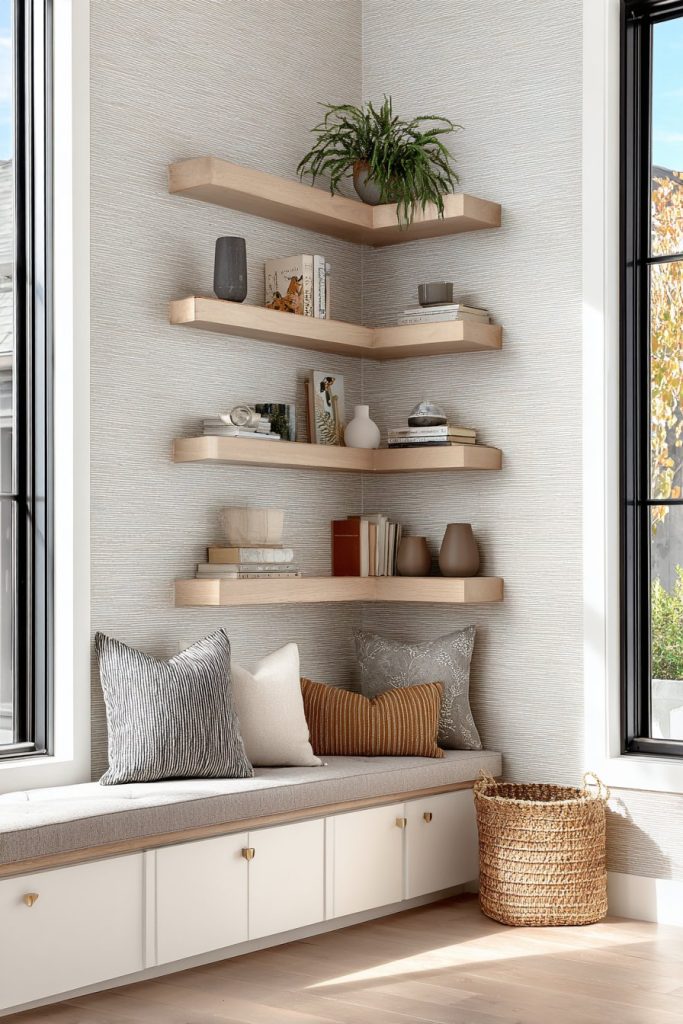
The low-profile bench beneath the shelves serves dual purposes – providing additional seating when needed and offering hidden storage through built-in compartments. This combination ensures that the corner remains functional for daily life while maintaining its aesthetic appeal. The warm white walls with subtle texture create a perfect backdrop that allows the displayed items to shine.
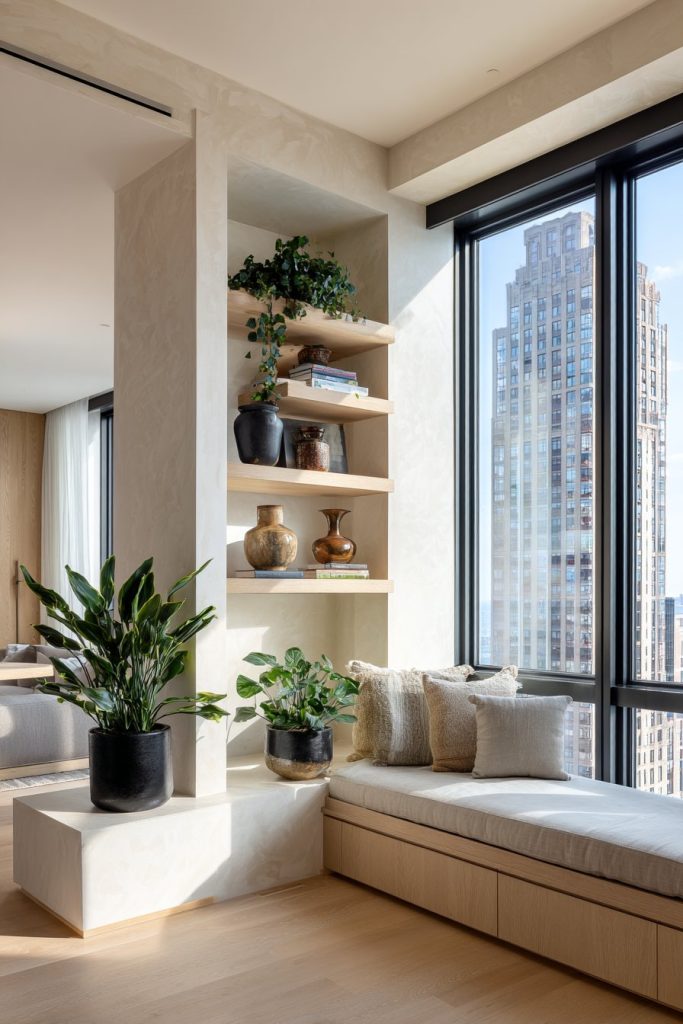
Natural light from adjacent windows plays a crucial role in this design’s success, creating soft highlights that emphasize the beauty of the displayed ceramics, book spines, and plant foliage. The interplay of light and shadow adds depth and visual interest throughout the day as the sun’s angle changes.
Key Design Tips:
- Install floating shelves at varying heights to create visual rhythm
- Mix books, plants, and decorative objects for balanced display composition
- Choose storage benches that complement the overall design aesthetic
- Use wall texture and color to enhance rather than compete with displays
- Position shelving to take advantage of natural light patterns
4. Scandinavian Corner Workspace
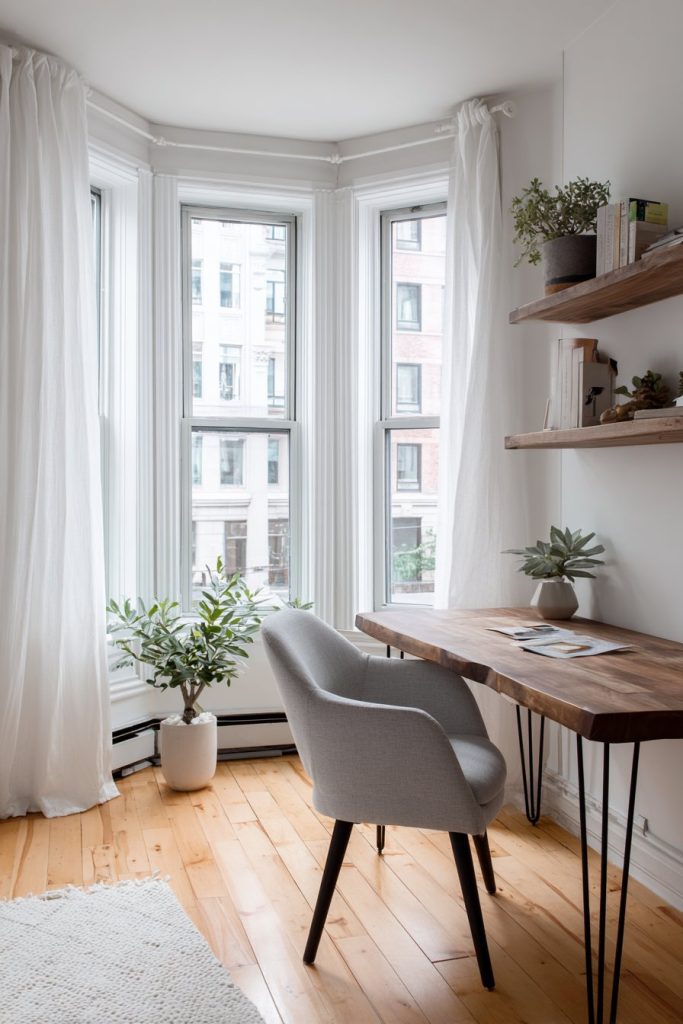
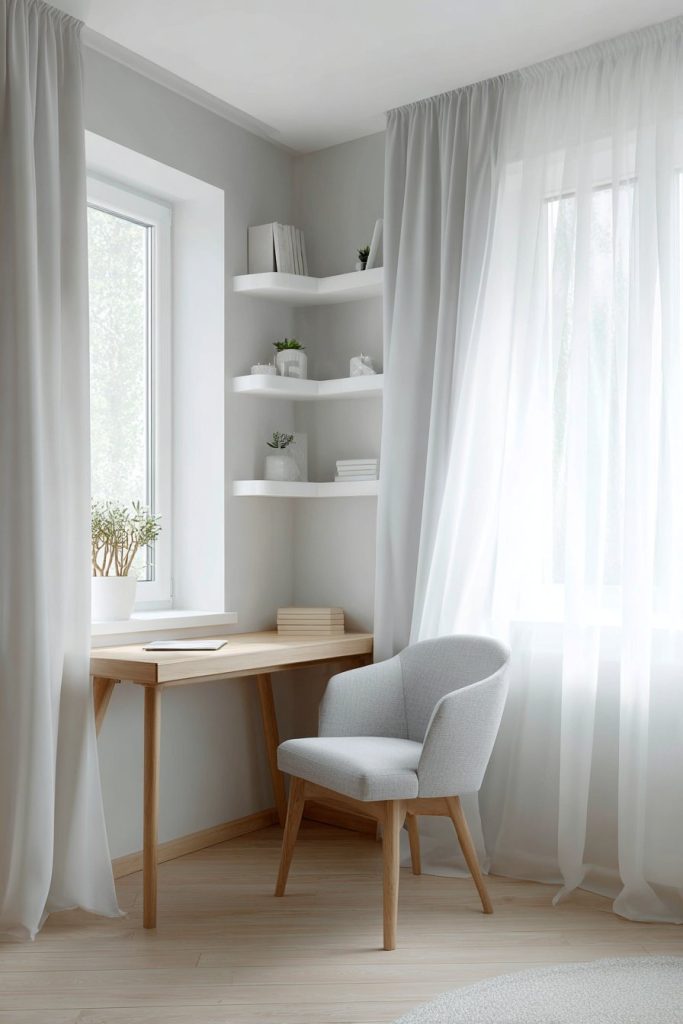
The minimalist corner desk setup exemplifies Scandinavian design principles, where functionality meets understated elegance. The simple wooden desk with hairpin legs positioned diagonally in the corner maximizes workspace while maintaining the clean, uncluttered aesthetic that defines Nordic interior design. This approach proves that home offices can be both highly functional and visually appealing.
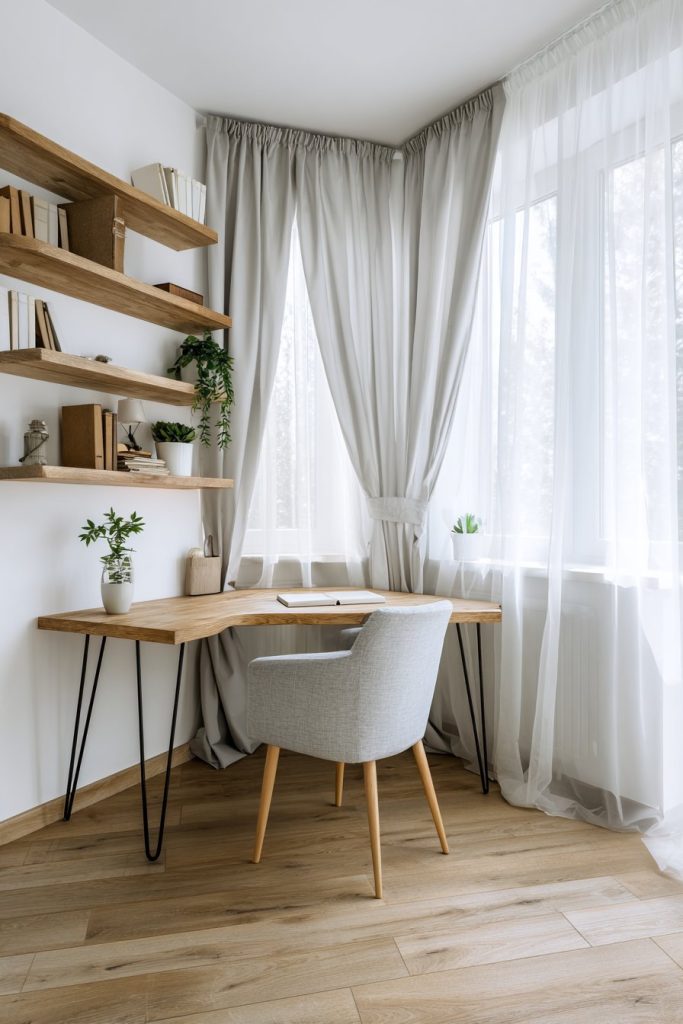
The light grey upholstery on the comfortable desk chair provides ergonomic support for extended work sessions while contributing to the overall light, airy feeling that characterizes Scandinavian interiors. The floating shelves above the workspace display minimal office supplies and a small succulent, demonstrating how even practical storage can become part of the room’s decorative scheme.
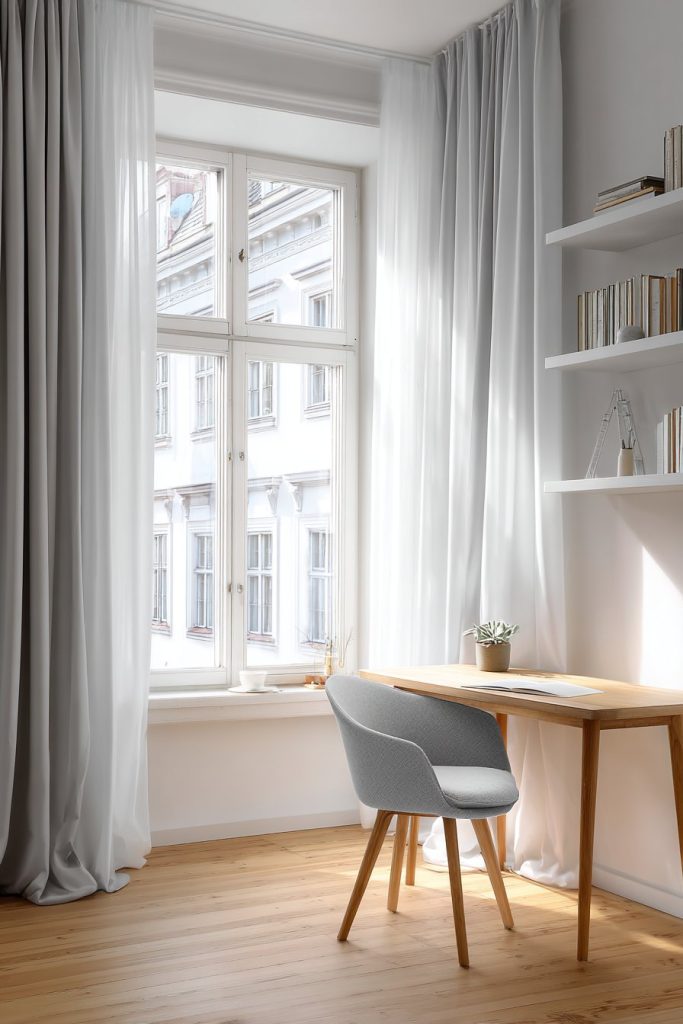
Abundant natural light from two intersecting windows eliminates the need for harsh artificial lighting during daylight hours, while sheer white curtains provide privacy without blocking the clean, bright illumination that’s essential to Scandinavian design philosophy.
Key Design Tips:
- Choose furniture with clean lines and natural materials like wood and metal
- Position desks diagonally to maximize corner space efficiency
- Use floating storage to maintain uncluttered surfaces
- Incorporate plants to add life and connection to nature
- Maximize natural light while maintaining privacy with sheer window treatments
5. Indoor Plant Paradise Corner
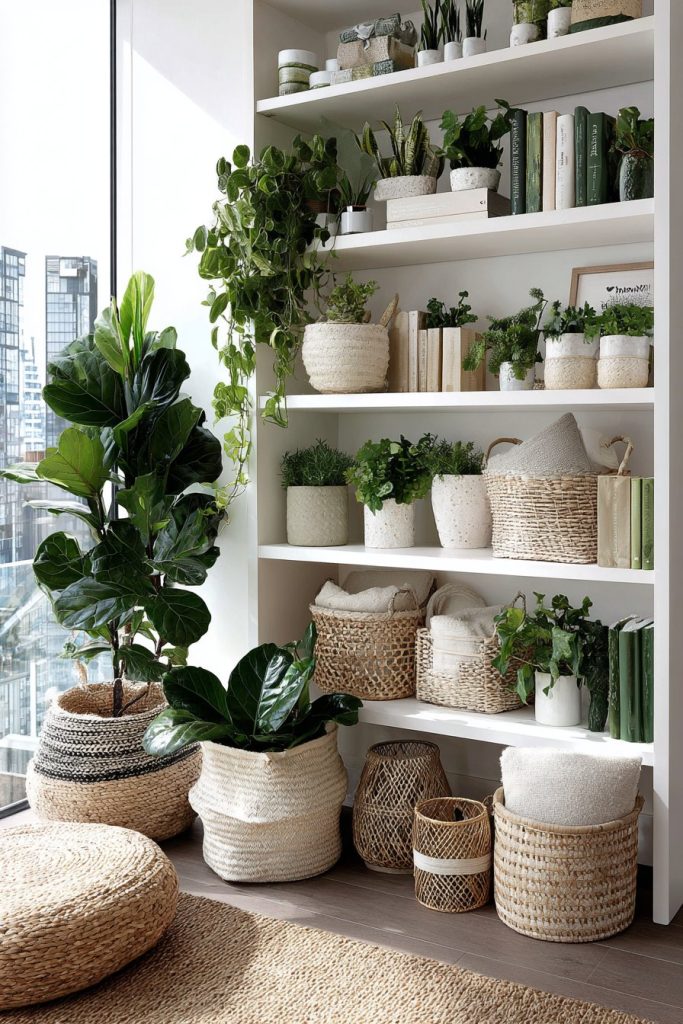
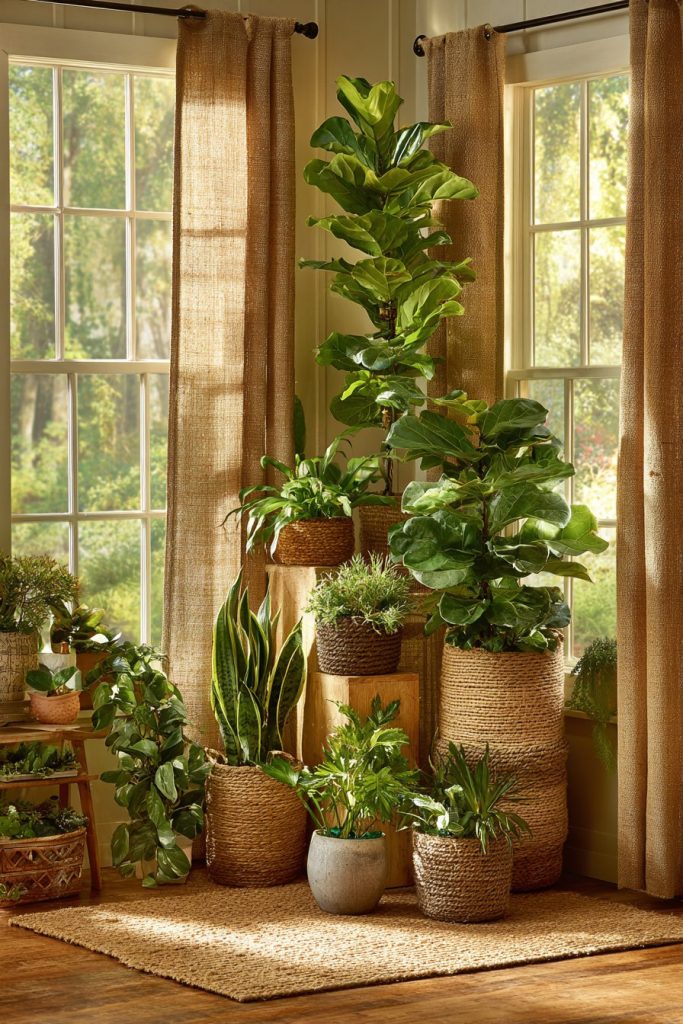
Transforming a corner into a plant paradise creates a living focal point that brings natural beauty and improved air quality to your living space. This arrangement showcases how different plant varieties, container materials, and heights can create a dynamic, ever-changing display that evolves with the seasons and the plants’ growth cycles.
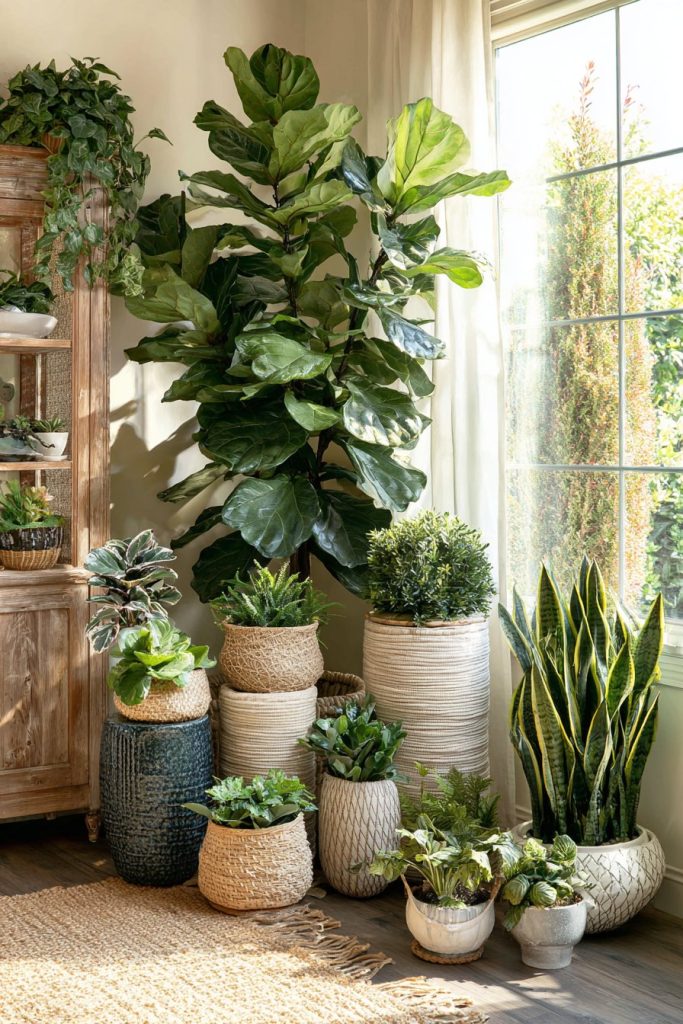
The tall fiddle leaf fig serves as the anchor plant, providing substantial visual weight and tropical appeal that draws attention to the corner. Smaller plants like pothos and snake plants create layered greenery at different levels, adding texture and variety while requiring different care routines that keep the corner interesting for plant enthusiasts.
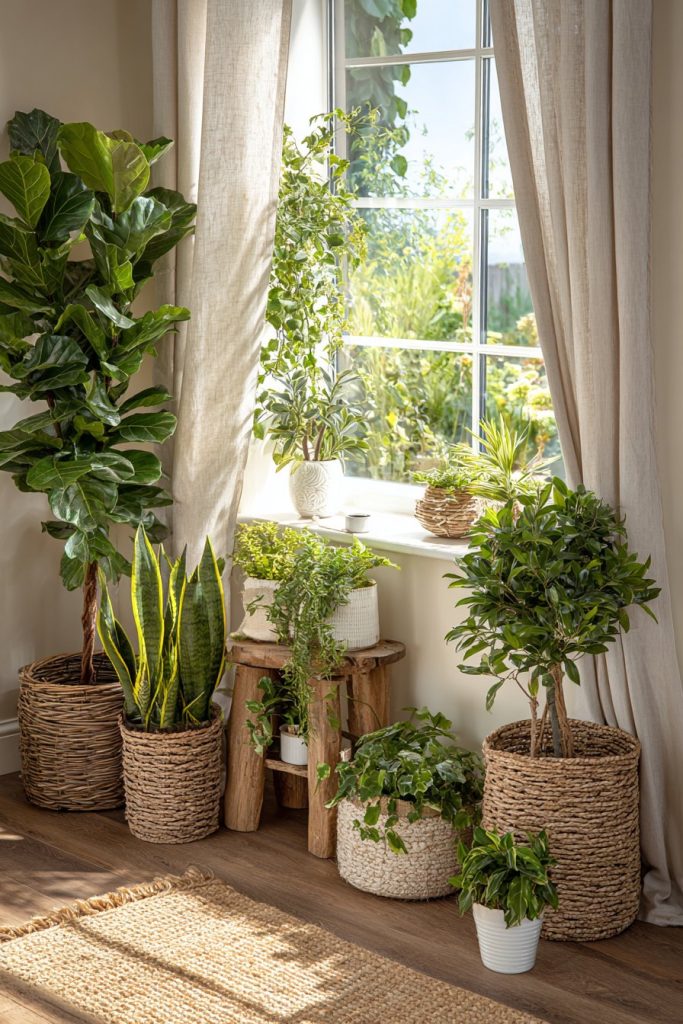
The combination of woven baskets and ceramic planters in various sizes adds textural interest while providing practical benefits – woven materials offer excellent drainage and breathability for plant roots, while ceramic containers provide stability for larger plants and complement modern interior aesthetics.
Key Design Tips:
- Use plants of varying heights to create visual layers and depth
- Mix container materials like woven baskets and ceramics for textural interest
- Choose plants with different leaf shapes and colors for visual variety
- Position taller plants as anchors with smaller plants filling in around them
- Ensure adequate natural light and consider plant care requirements when selecting varieties

6. Industrial Corner Bar Setup
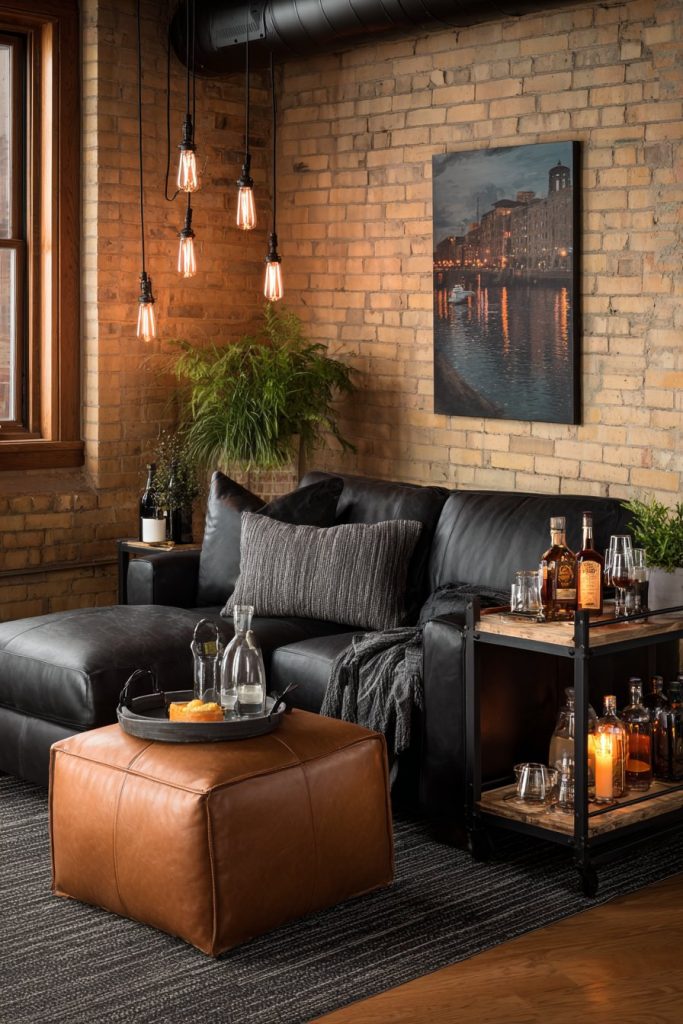
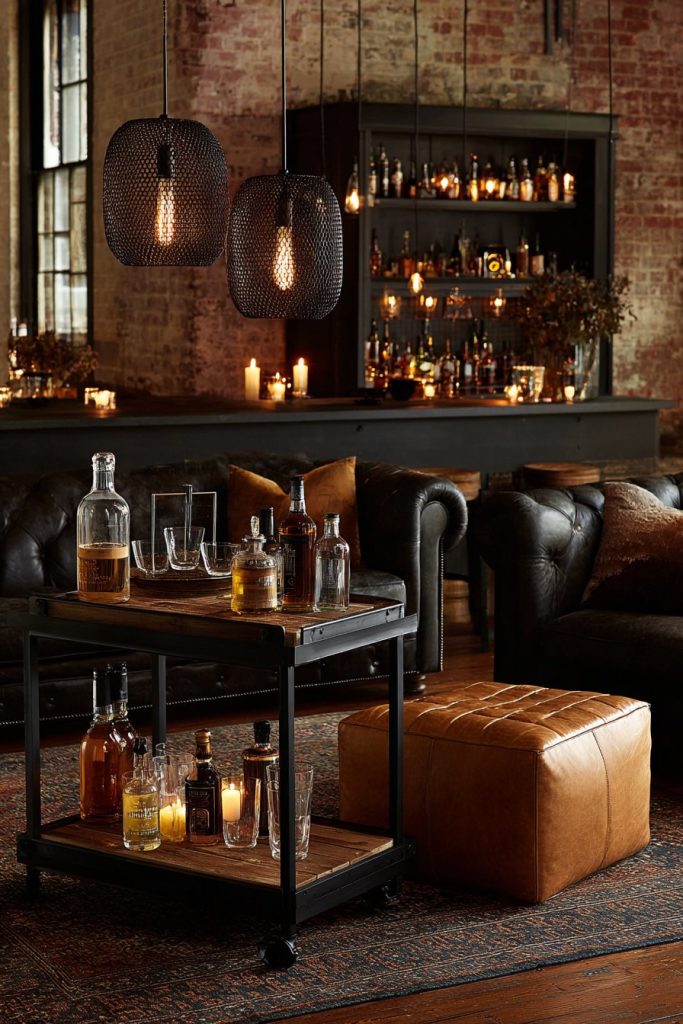
The industrial aesthetic transforms a corner into an entertainment hub that celebrates raw materials and functional design. The black metal and reclaimed wood bar cart creates a perfect serving station that can accommodate everything from casual drinks to formal entertaining, while the exposed brick walls provide authentic industrial texture and visual interest.
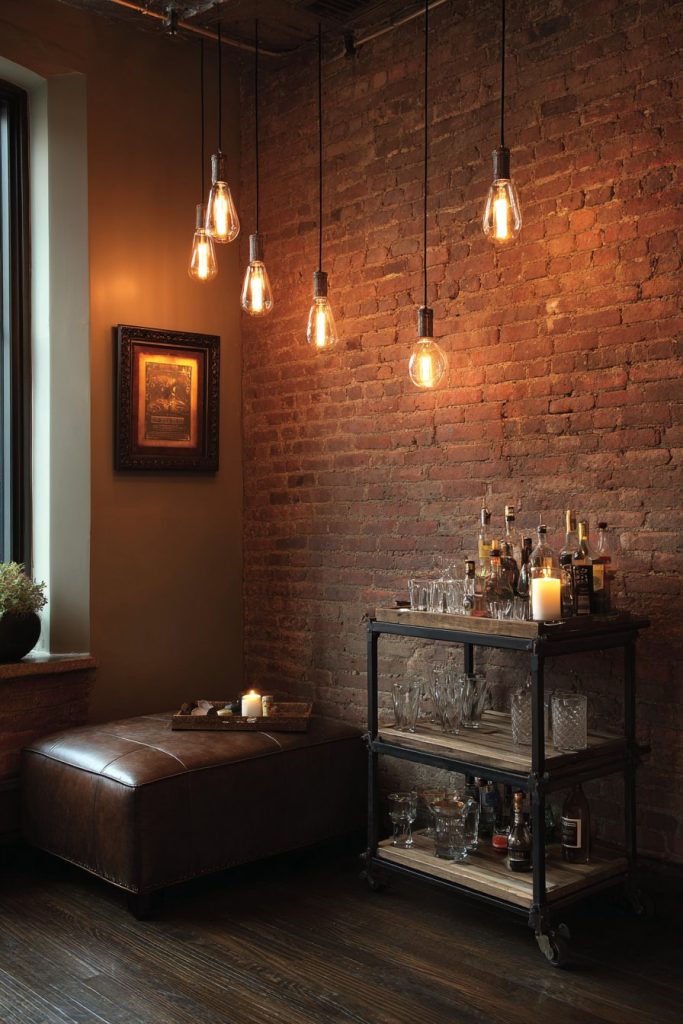
The purposeful organization of glassware, bottles, and bar accessories demonstrates how functional storage can become part of the design narrative. Each item is carefully placed to be both accessible and visually appealing, creating a curated look that suggests the owner’s sophistication and attention to detail.
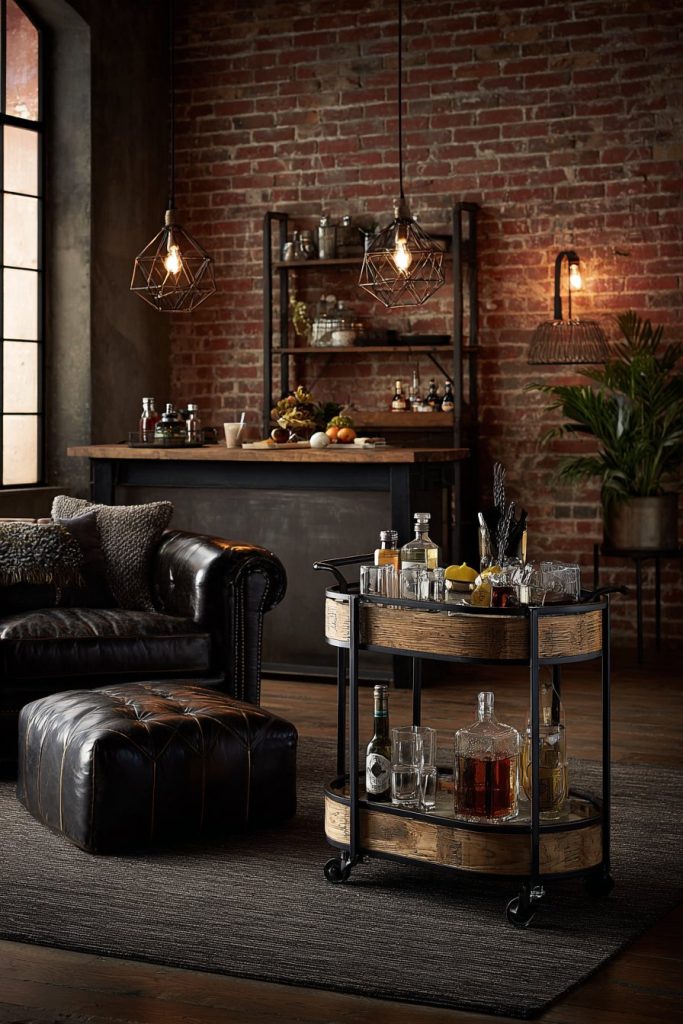
Pendant lighting with Edison bulbs provides essential task lighting for drink preparation while contributing to the industrial atmosphere through vintage-inspired design elements. The small leather ottoman nearby offers additional seating and reinforces the industrial theme through its rich material and masculine appeal.
Key Design Tips:
- Combine metal and wood elements to achieve authentic industrial aesthetics
- Use exposed brick or concrete surfaces to add textural depth
- Choose vintage-inspired lighting fixtures with visible bulbs
- Organize bar accessories for both function and visual appeal
- Include leather or other rich materials to soften the industrial edge
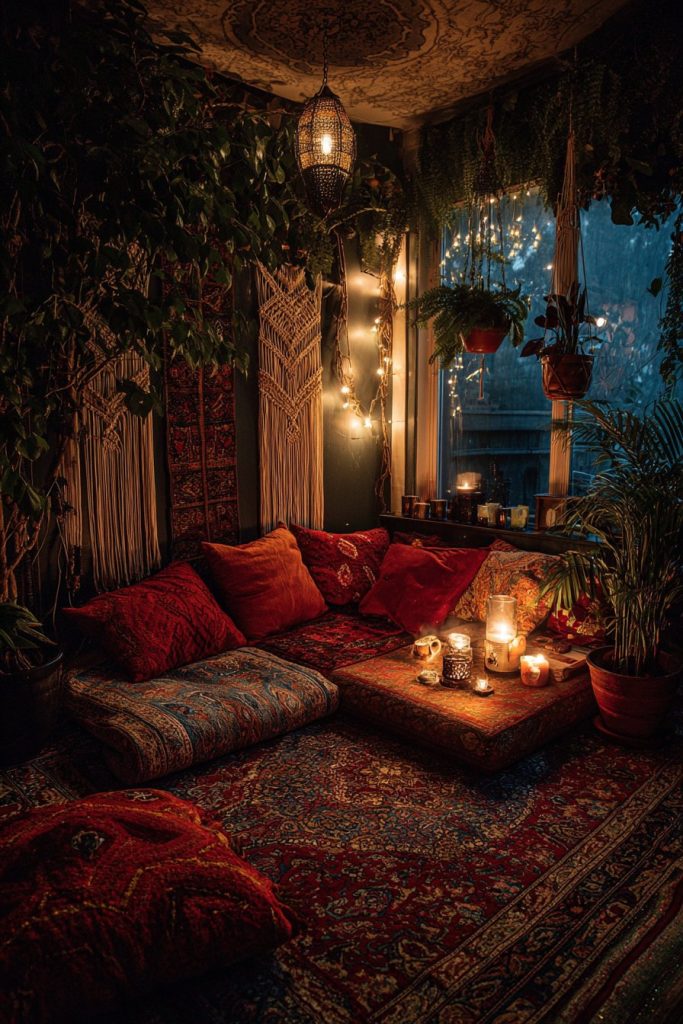
7. Bohemian Floor Seating Oasis
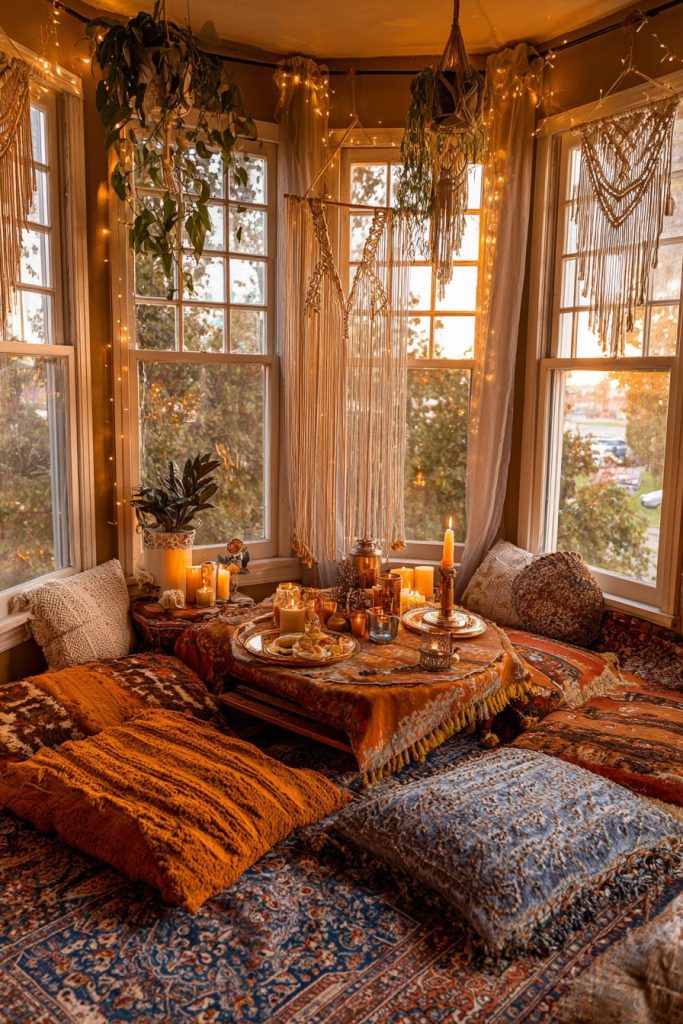
The bohemian corner seating area celebrates layered textures, rich colors, and eclectic cultural influences that create a relaxed, worldly atmosphere. Large colorful cushions and throws arranged on a vintage Persian rug provide comfortable floor seating that encourages casual conversation and relaxation in a way that traditional furniture cannot match.
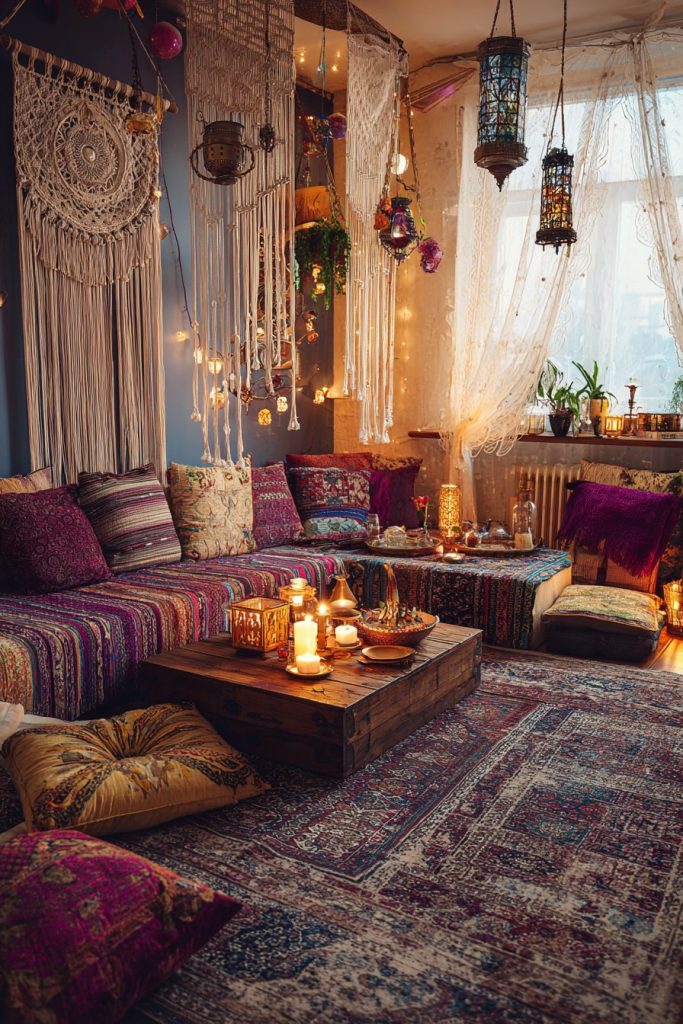
Macrame wall hangings and hanging plants create vertical interest while adding handcrafted elements that reflect the bohemian philosophy of celebrating artisanal work and natural materials. These elements also help soften hard corner angles and create a more organic, flowing feel within the geometric constraints of the room’s architecture.
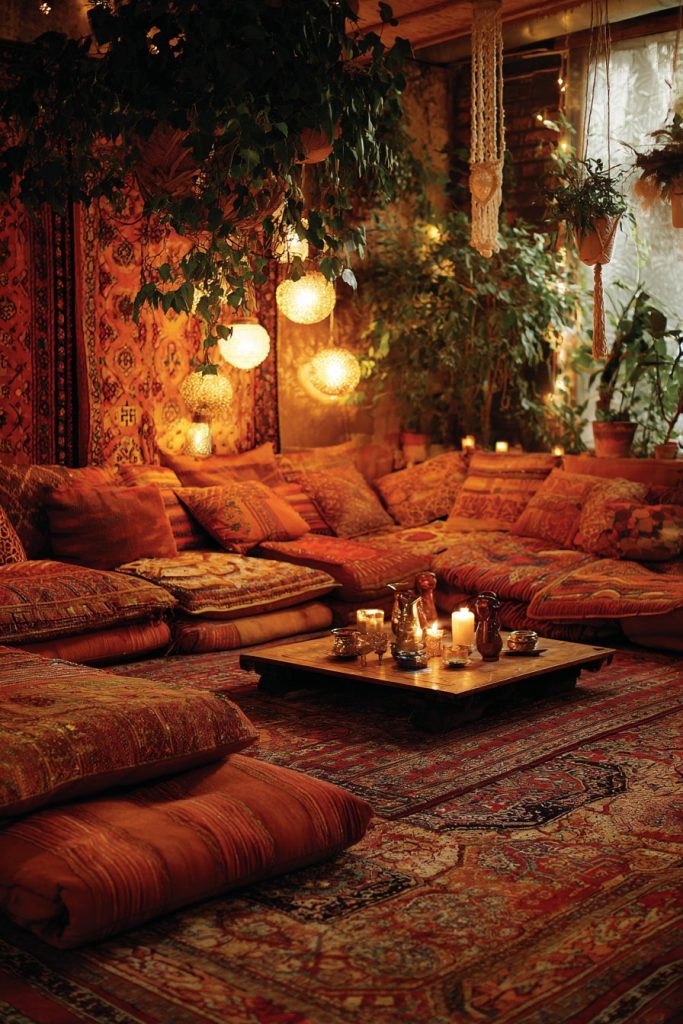
The low wooden table serves as a gathering point for candles, decorative objects, and personal items that tell stories about travels and experiences. Warm string lights add magical ambient lighting that transforms the corner into an enchanting retreat perfect for intimate gatherings or solitary contemplation.
Key Design Tips:
- Layer rugs, cushions, and throws in rich colors and varied textures
- Include handcrafted elements like macrame and woven textiles
- Use low furniture to maintain the relaxed, floor-level seating concept
- Add warm lighting through candles and string lights for ambiance
- Display personal objects and travel mementos to create authentic bohemian character
8. Entertainment Media Corner
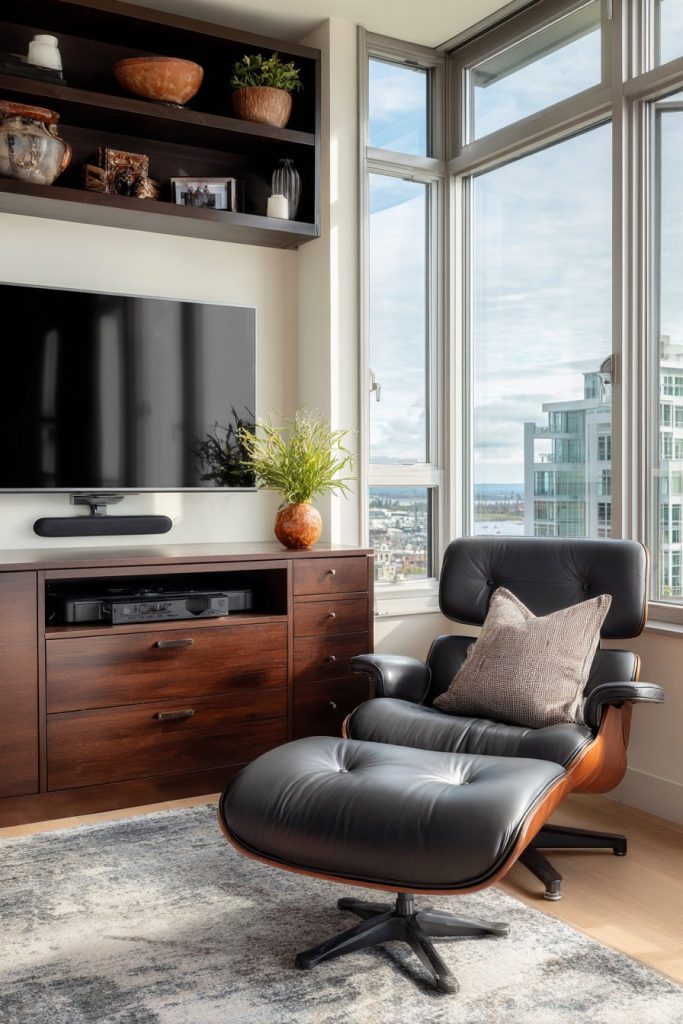
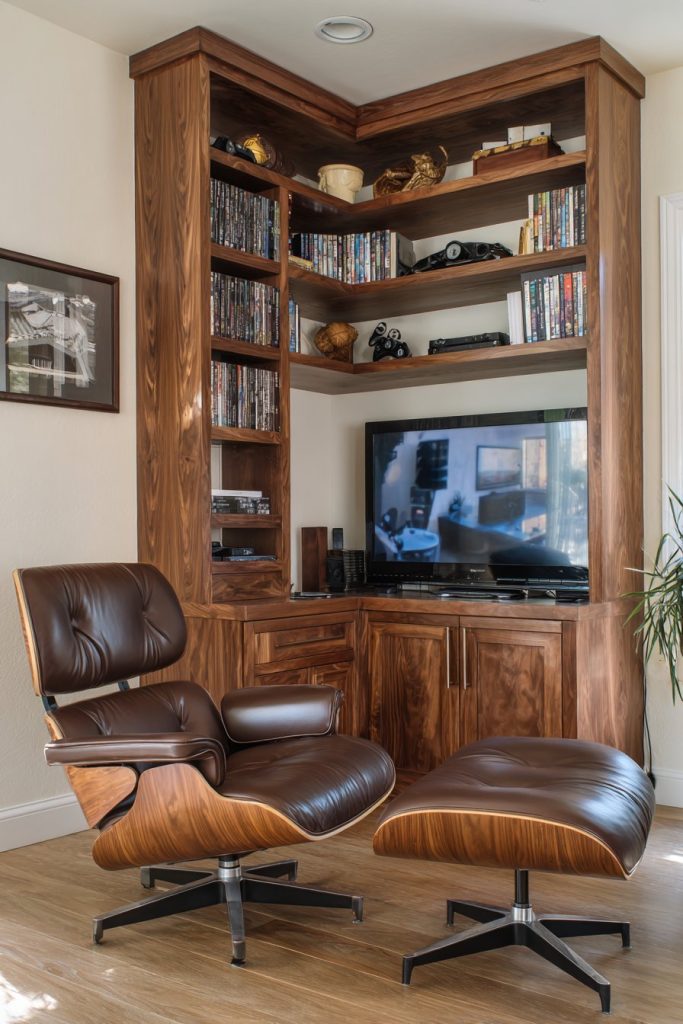
The modern media corner demonstrates how technology can be integrated seamlessly into living room design without dominating the space. The sleek corner TV stand in dark walnut wood provides ample storage for gaming consoles and media components while maintaining clean architectural lines that complement contemporary interior design.
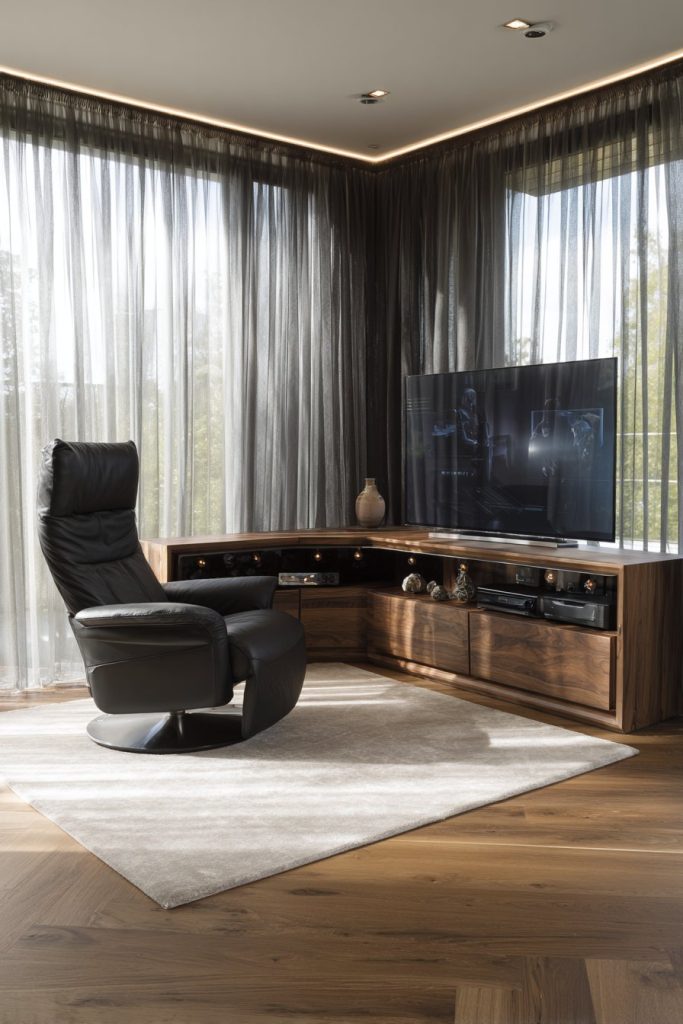
Integrated cable management systems keep unsightly wires hidden and organized, maintaining the clean aesthetic that modern design demands. The hidden compartments allow for easy access to equipment while keeping the visual focus on the beautiful wood grain and sophisticated design rather than electronic clutter.
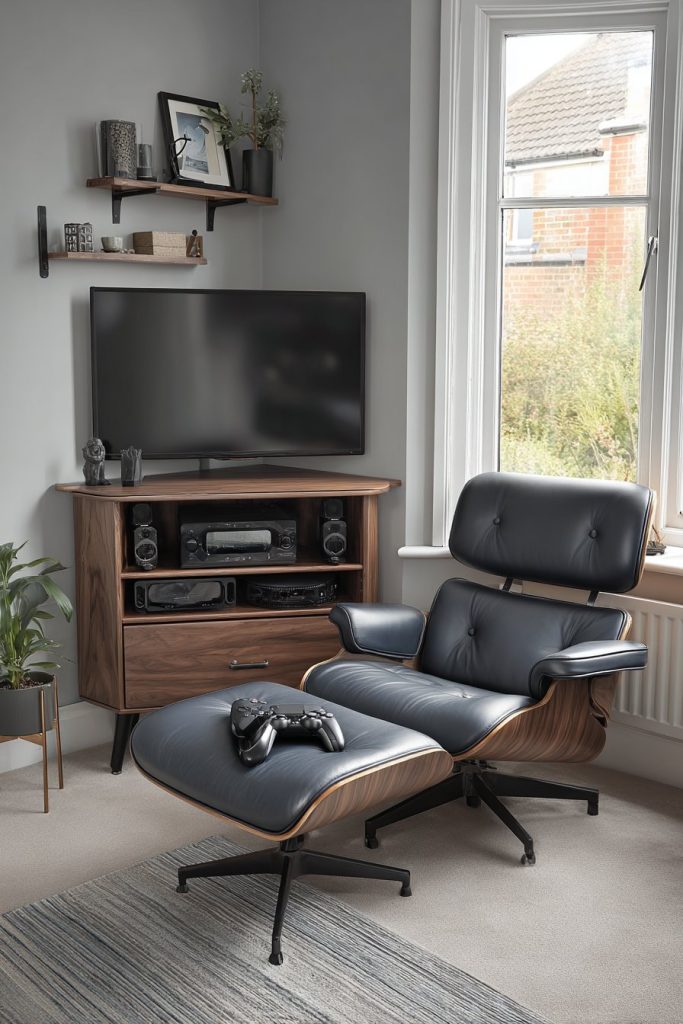
The comfortable reclining chair positioned at the optimal viewing angle completes the entertainment experience while providing ergonomic support for extended viewing sessions. Professional interior photography techniques minimize screen glare while highlighting the rich wood tones and sophisticated material choices.
Key Design Tips:
- Choose media furniture with integrated cable management systems
- Position seating at appropriate viewing angles and distances
- Use rich wood tones to add warmth to technology-focused spaces
- Hide electronic clutter in closed storage compartments
- Consider lighting placement to minimize screen glare during use
9. Farmhouse Gallery Wall Corner
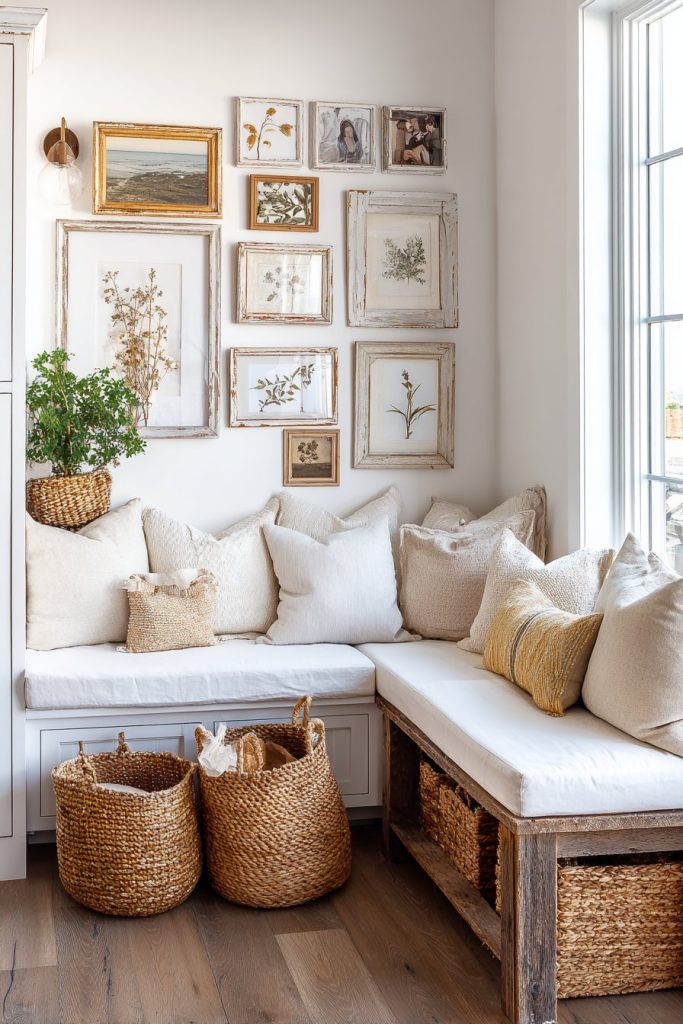
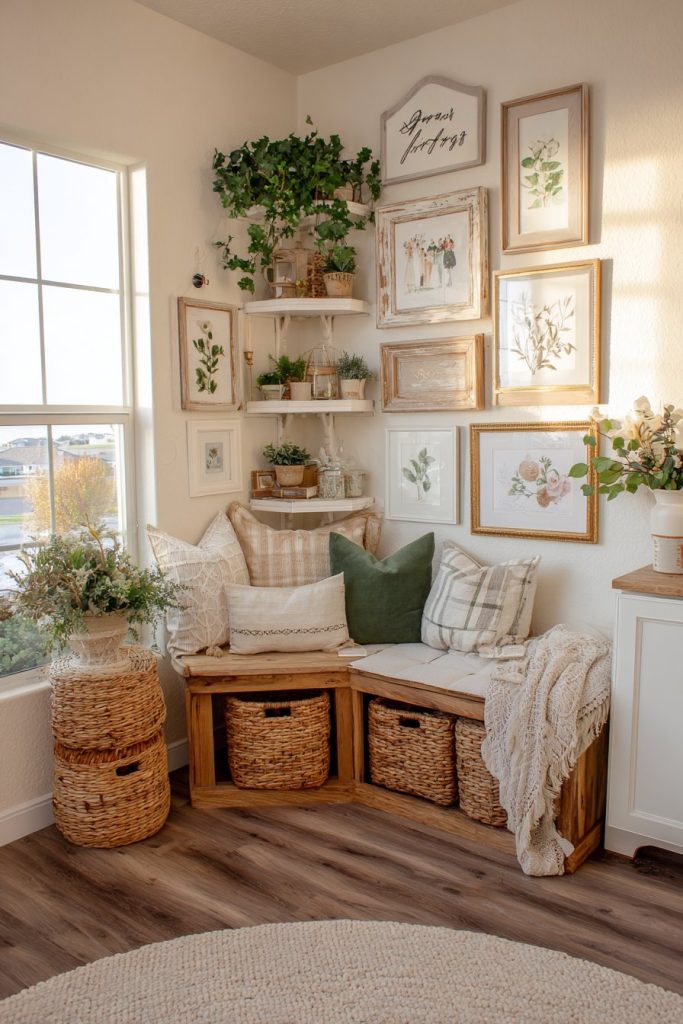
The farmhouse corner showcases how personal memories and vintage aesthetics can transform a simple corner into a storytelling focal point. The mix of vintage frames in distressed white and natural wood finishes creates visual variety while maintaining cohesive farmhouse character through consistent aging and patina effects.
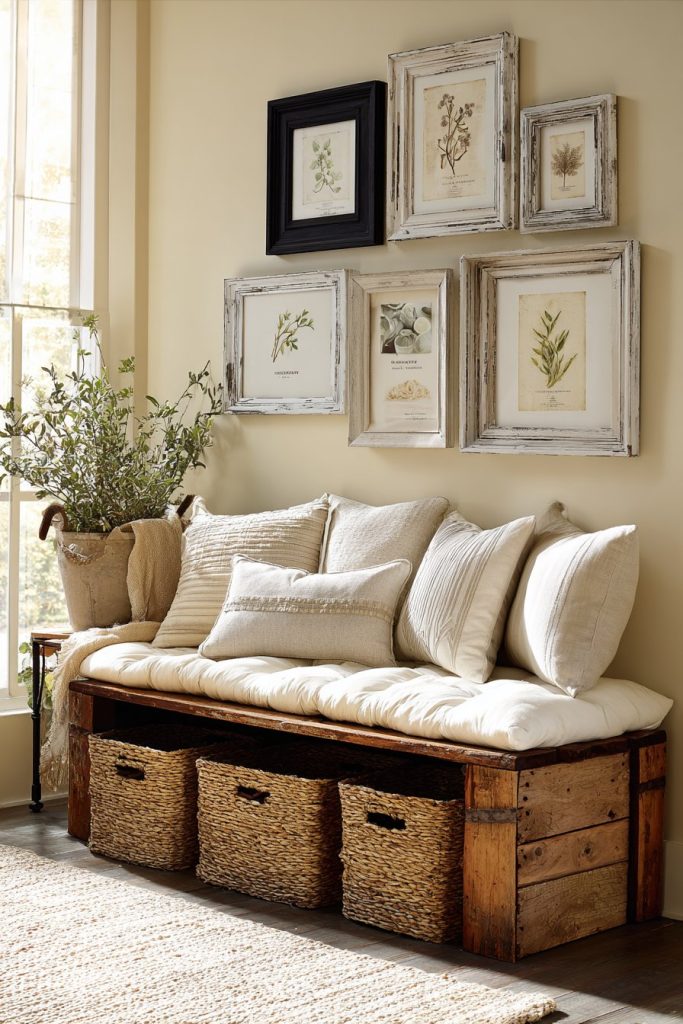
Family photos and botanical prints provide personal connection and natural beauty that reflect the farmhouse philosophy of celebrating both family heritage and connection to the natural world. The carefully curated display demonstrates how mixing different image types and frame styles can create visual interest without appearing cluttered or chaotic.
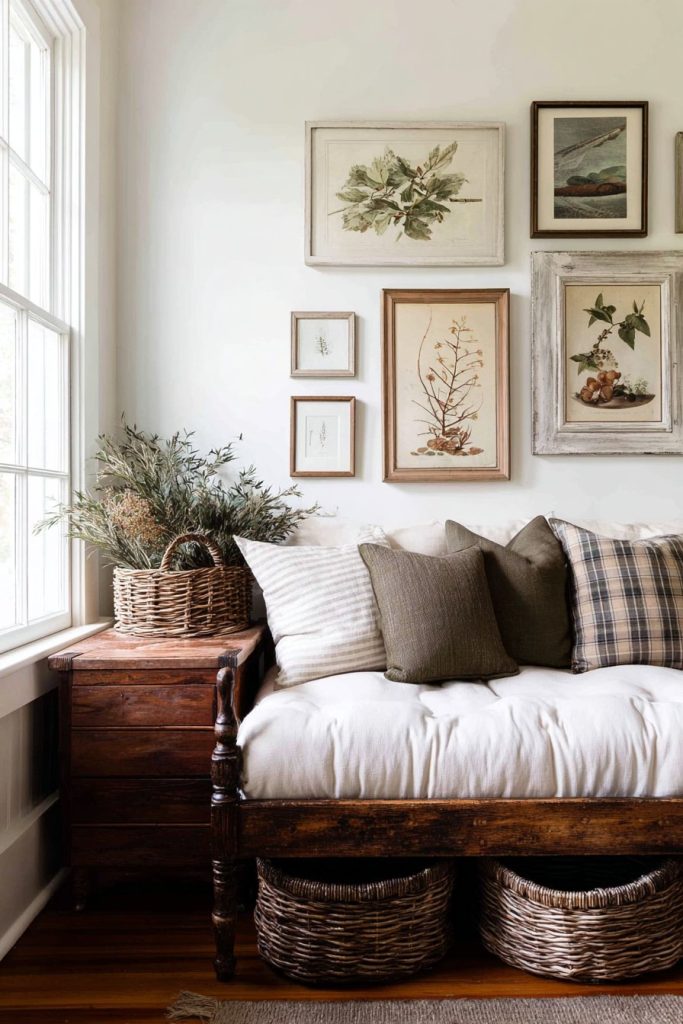
The vintage wooden bench with worn patina provides practical seating while serving as a display surface for woven baskets that offer additional storage. This combination of function and beauty exemplifies farmhouse design principles where every piece serves multiple purposes while contributing to the overall aesthetic narrative.
Key Design Tips:
- Mix frame styles and finishes while maintaining consistent aging effects
- Combine family photos with nature-inspired artwork for personal connection
- Use weathered wood furniture to add authentic farmhouse character
- Include woven baskets for both storage and textural interest
- Allow natural aging and patina to add authentic vintage appeal
10. Contemporary Fireplace Feature
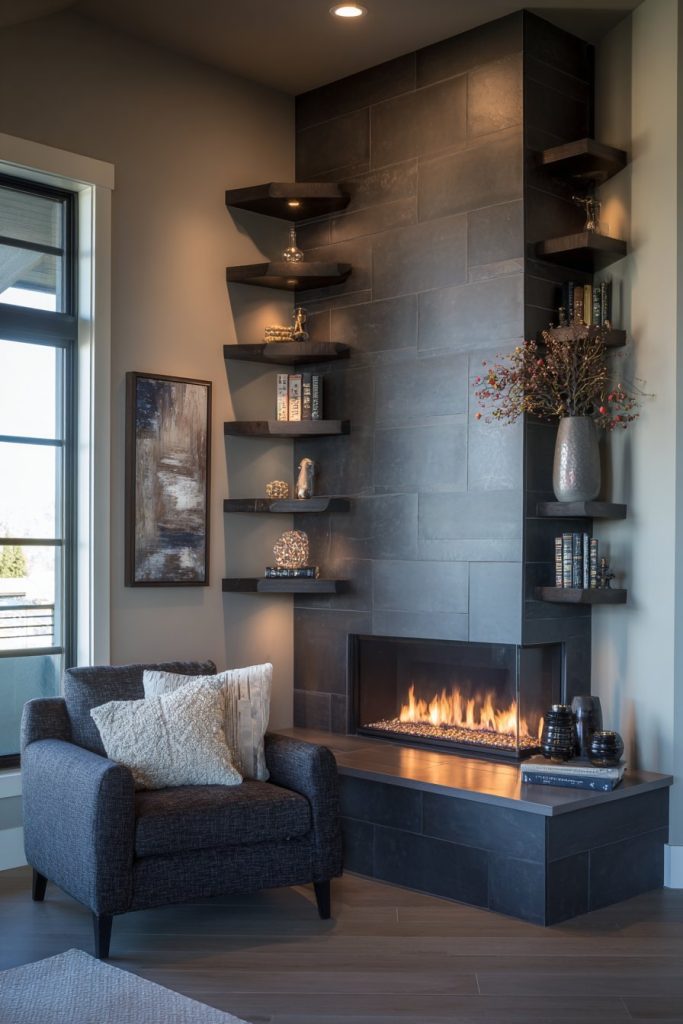
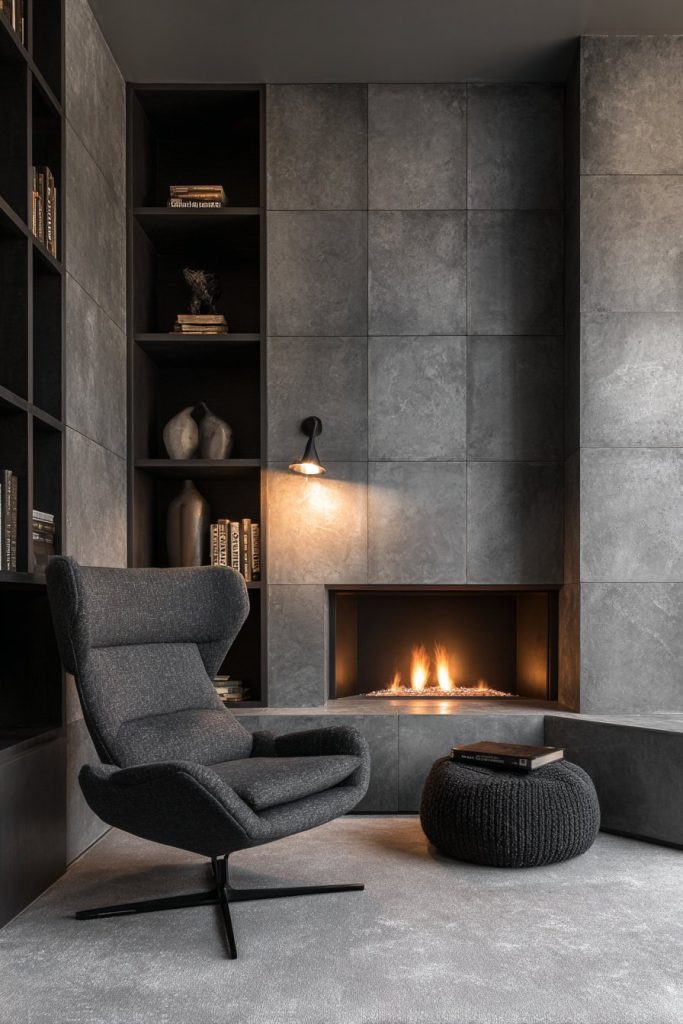
The sleek corner fireplace represents the pinnacle of contemporary design, where clean architectural lines meet the primal appeal of fire and warmth. The linear gas insert surrounded by dark slate tiles creates a sophisticated focal point that serves as both heating source and dramatic design element that draws attention and creates atmosphere.
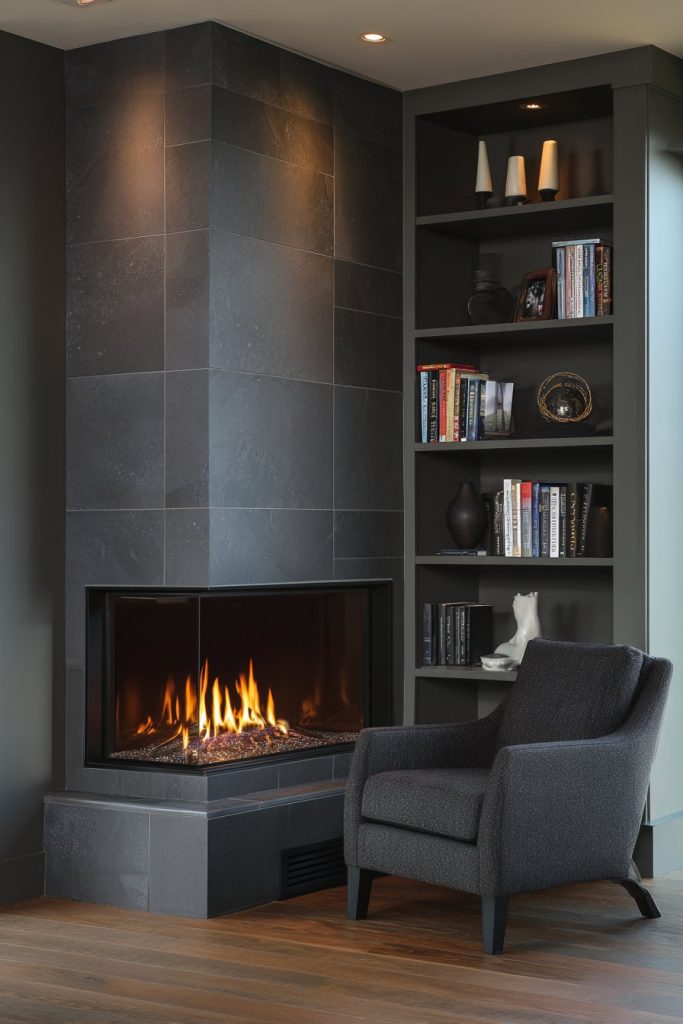
Built-in shelving on either side of the fireplace provides display opportunities for books and decorative objects arranged in asymmetrical compositions that reflect contemporary design principles. This approach avoids the formal symmetry of traditional design in favor of more dynamic, visually interesting arrangements that feel current and sophisticated.
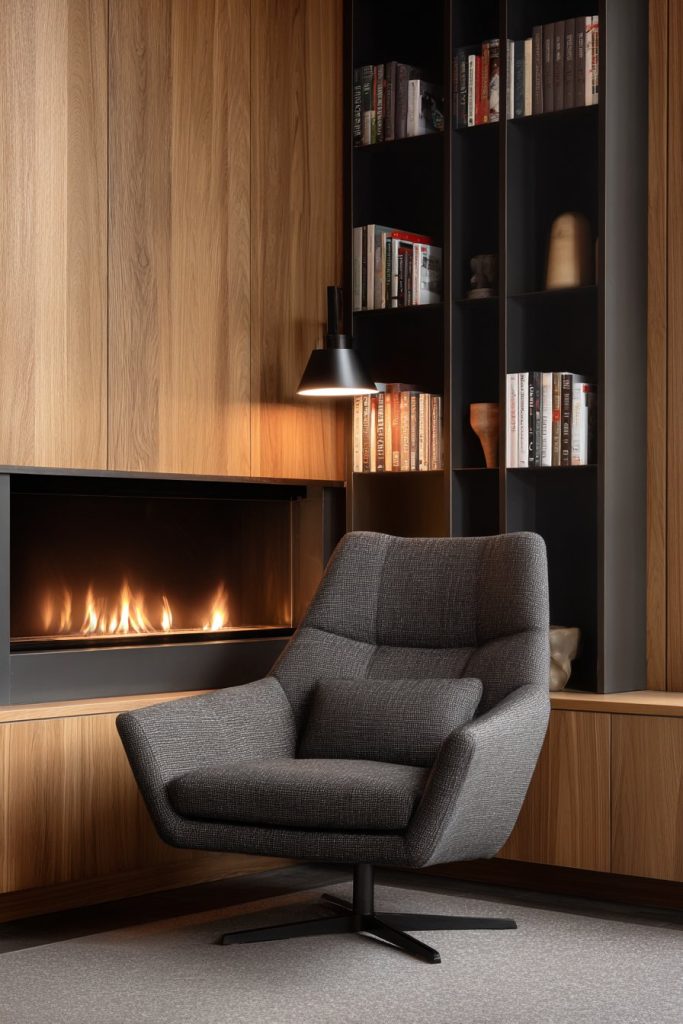
The modern accent chair in charcoal fabric positioned to enjoy the fireplace view creates an intimate seating area perfect for quiet evenings or intimate conversations. The chair’s sleek profile and neutral color palette ensure it complements rather than competes with the fireplace’s dramatic presence.
Key Design Tips:
- Choose linear fireplace designs for contemporary clean-lined aesthetics
- Use dark materials like slate to create dramatic contrast and sophistication
- Arrange built-in shelving asymmetrically for modern visual appeal
- Position seating to take advantage of both fireplace warmth and views
- Select furniture with sleek profiles that complement architectural elements
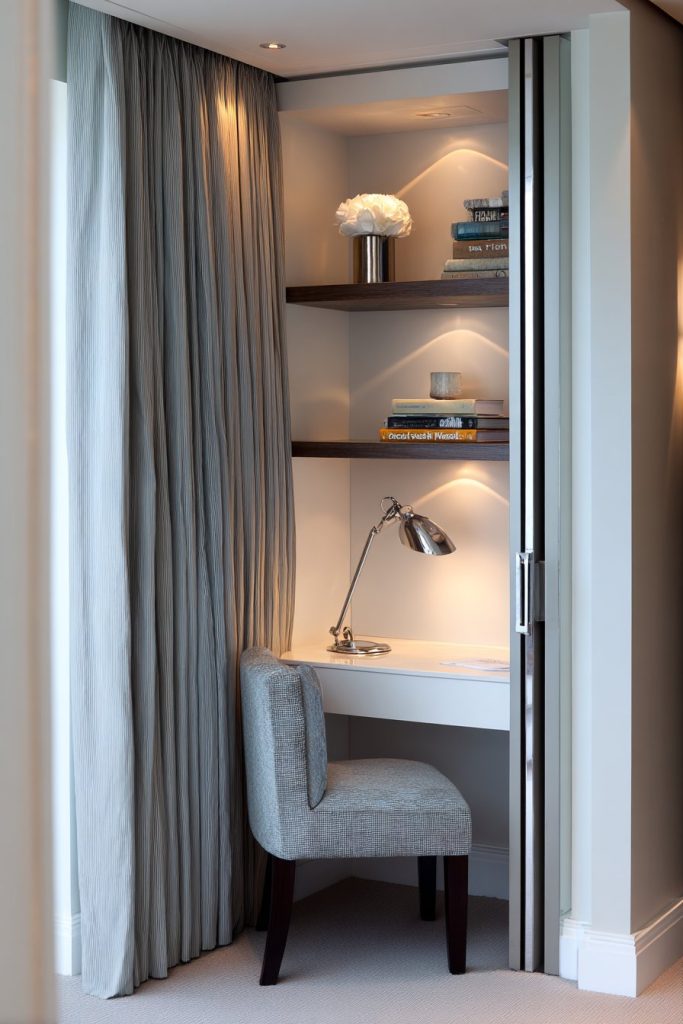
11. Compact Corner Workstation
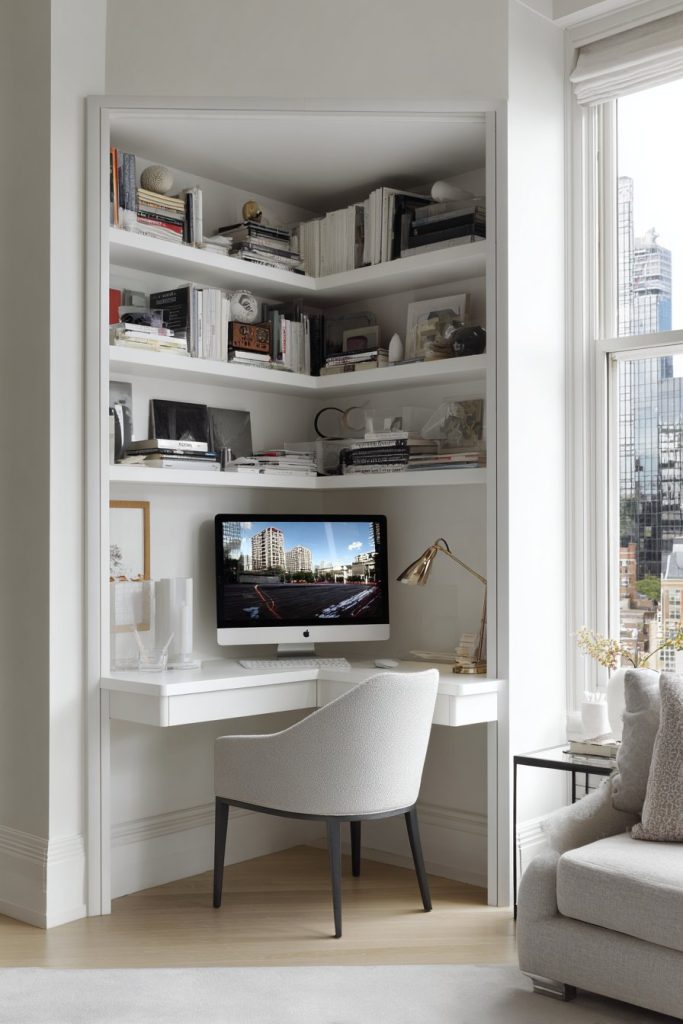
Small space living requires creative solutions that maximize functionality without sacrificing style, and this compact corner workstation demonstrates how careful planning can create an efficient home office in minimal square footage. The white lacquer desk fits precisely into the corner angle, utilizing every available inch while maintaining a clean, uncluttered appearance that helps small spaces feel larger.
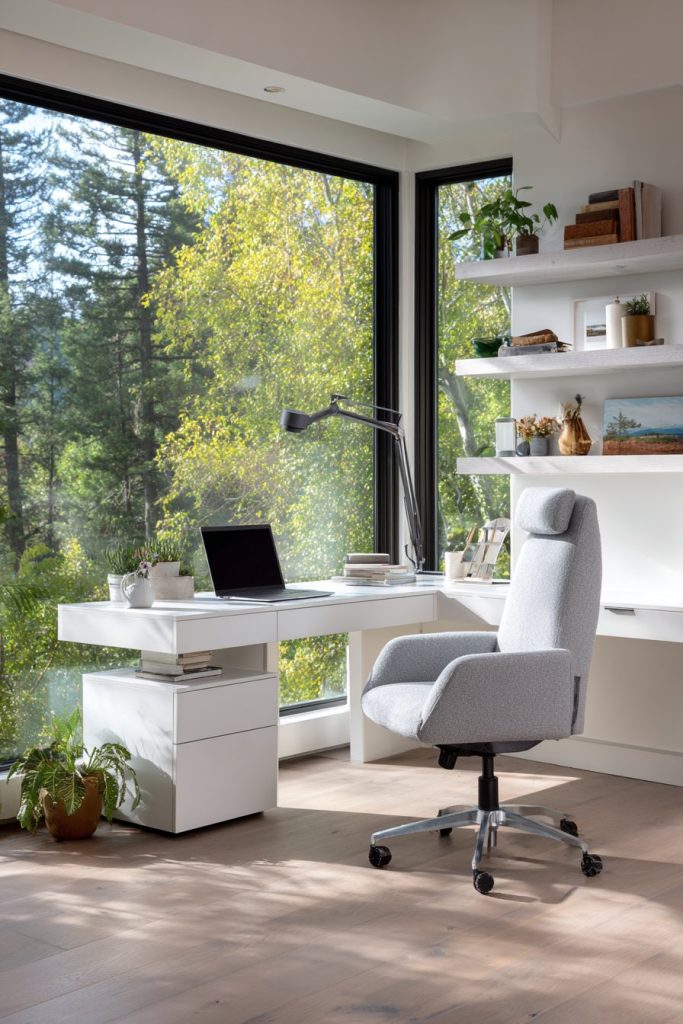
The ergonomic chair in soft grey fabric ensures comfort during extended work sessions without overwhelming the limited space with bulky furniture. Wall-mounted shelving above provides essential storage for books, supplies, and decorative objects without consuming precious floor space that’s at a premium in small living areas.
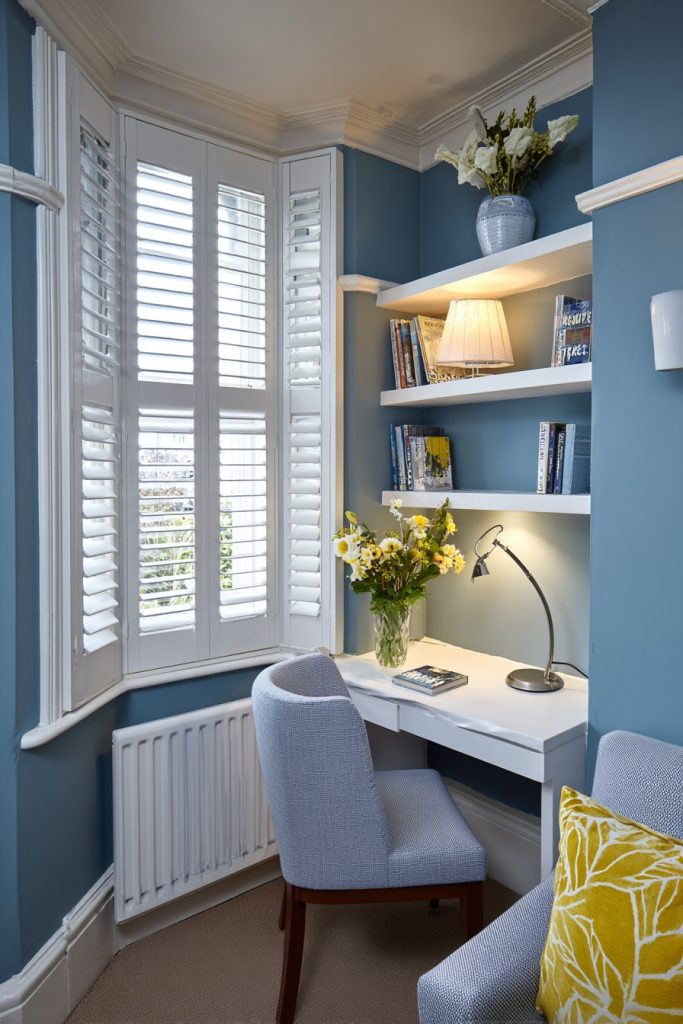
The adjustable arm task lamp ensures proper lighting for detailed work while taking up minimal desktop real estate. This attention to lighting quality and positioning prevents eye strain during computer work while contributing to the overall design aesthetic through careful selection of fixtures that complement the clean, modern approach.
Key Design Tips:
- Choose furniture sized specifically for available corner dimensions
- Use wall-mounted storage to preserve floor space in small areas
- Select multi-functional pieces that serve storage and aesthetic purposes
- Ensure adequate task lighting without cluttering work surfaces
- Maintain light color palettes to help small spaces feel more spacious
12. Mid-Century Modern Credenza Display
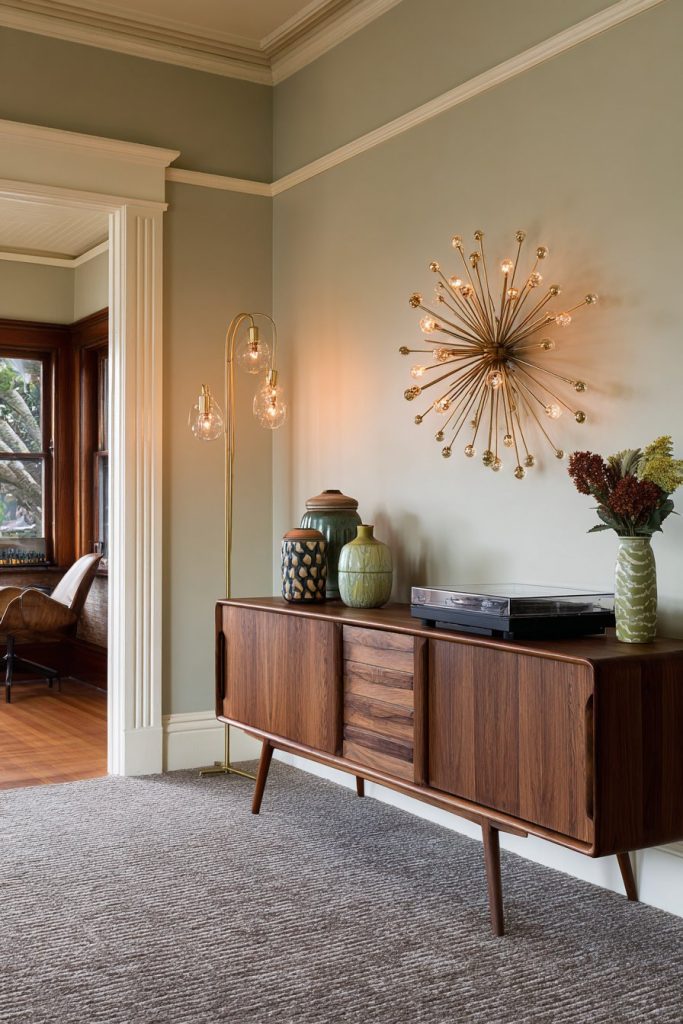
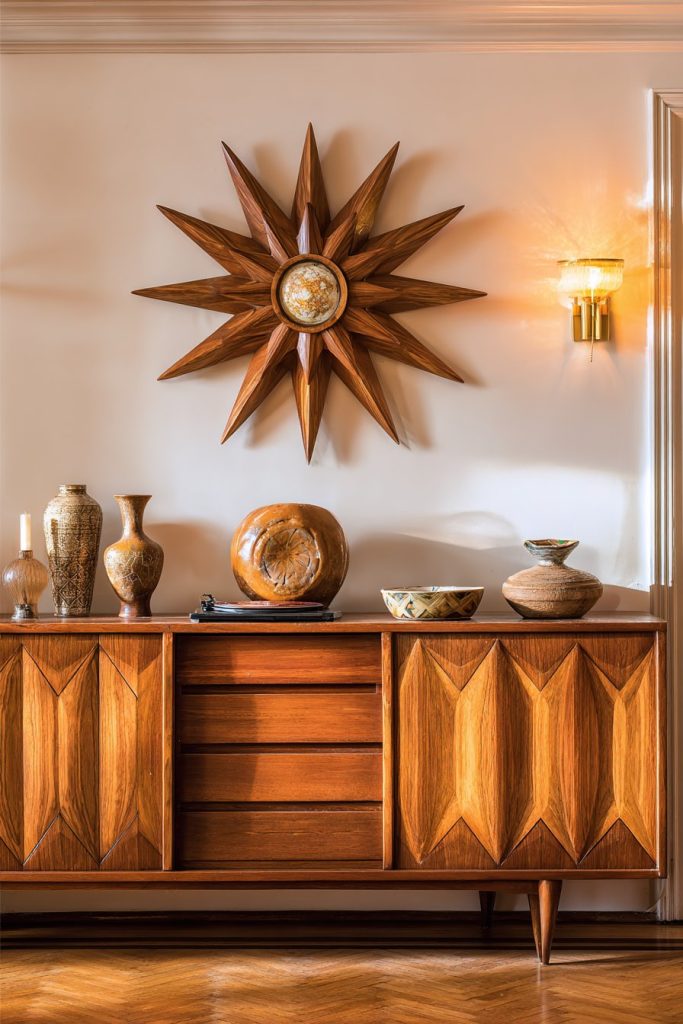
The vintage corner credenza exemplifies mid-century modern design principles through its rich walnut wood construction, tapered legs, and sliding door functionality that defined furniture design in the 1950s and 1960s. This piece serves as both storage solution and display platform for period-appropriate ceramics and a vintage record player that celebrate the era’s design aesthetic.
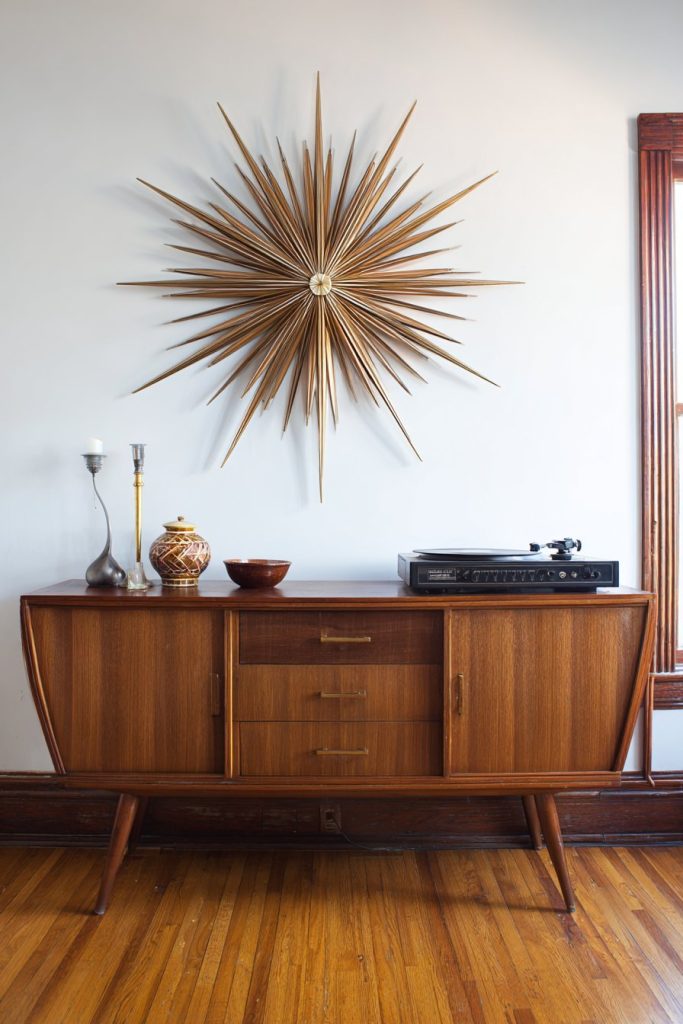
The starburst clock on the wall above reinforces the mid-century theme while providing functional timekeeping in a design that has become iconic of the period. These authentic details create a cohesive design narrative that transports viewers to the optimistic, forward-looking aesthetic that characterized mid-century American design.
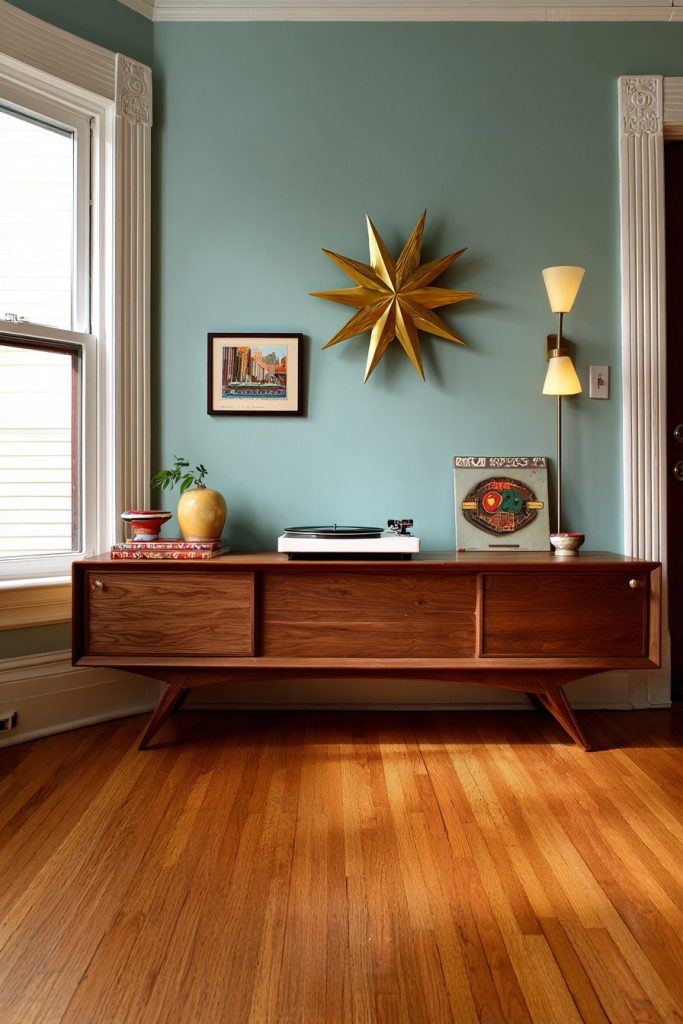
The sleek floor lamp with brass accents provides task lighting while contributing to the overall design through its period-appropriate materials and proportions. The warm lighting enhances the rich wood tones and creates an inviting atmosphere that encourages lingering and enjoying the carefully curated vintage accessories.
Key Design Tips:
- Choose furniture with authentic mid-century proportions and materials
- Display period-appropriate accessories like ceramics and vintage electronics
- Use iconic design elements like starburst patterns and tapered legs
- Incorporate brass accents for authentic metallic elements
- Maintain warm lighting to enhance rich wood tones and create atmosphere
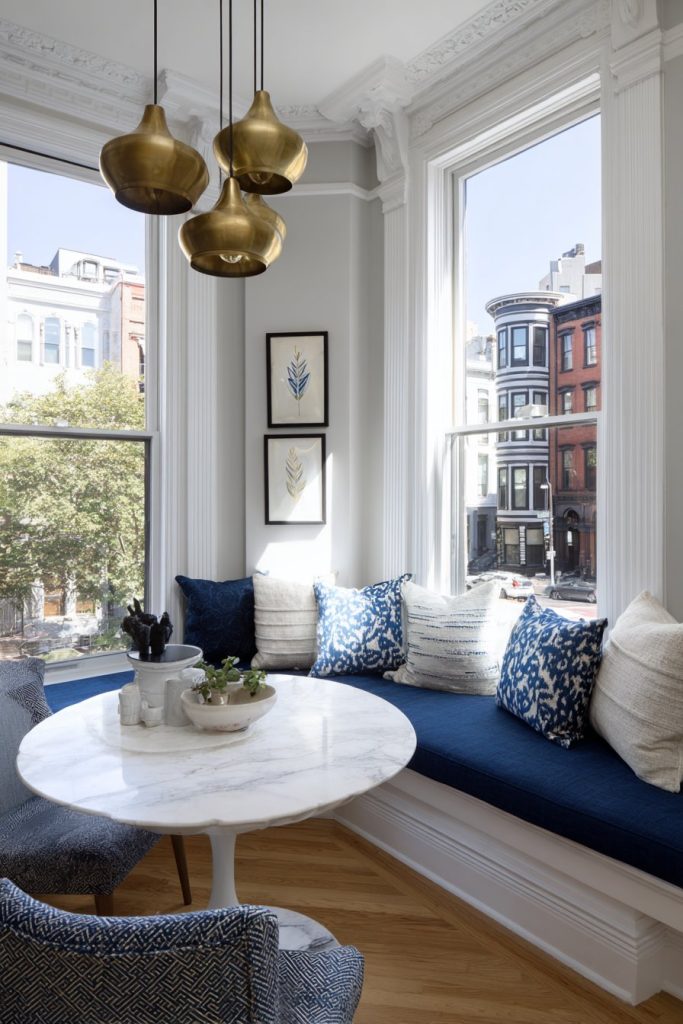
13. Corner Banquette Dining Nook
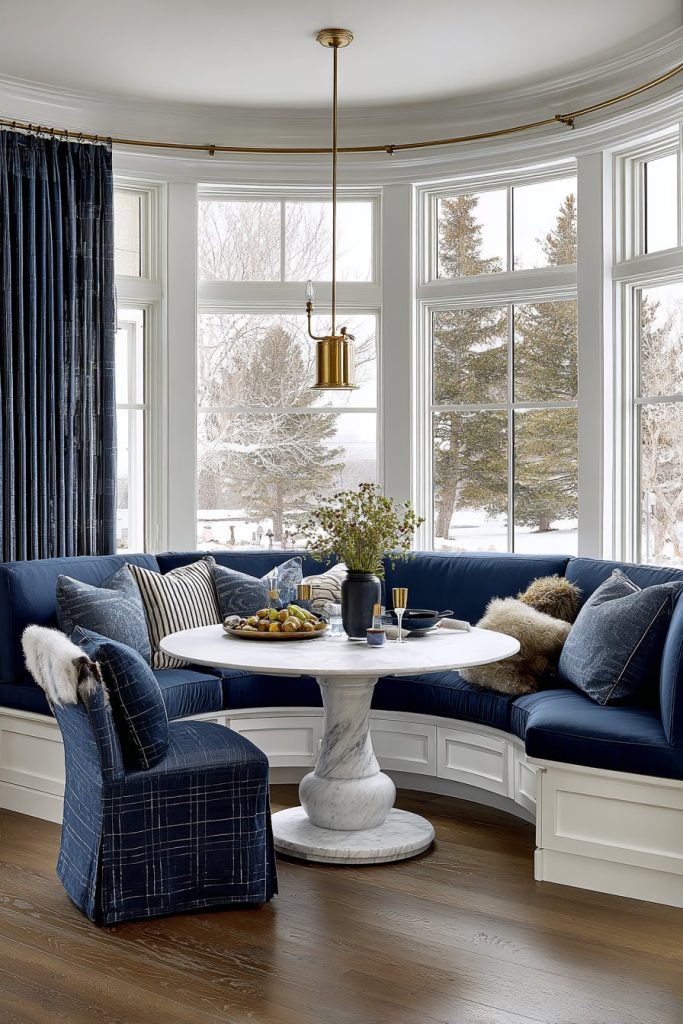
The corner banquette seating area demonstrates how dining functionality can be integrated into living room design, creating casual eating spaces that encourage family interaction and efficient use of corner areas. The built-in bench seating upholstered in navy blue fabric provides comfortable seating for multiple people while offering potential storage within the bench structure.
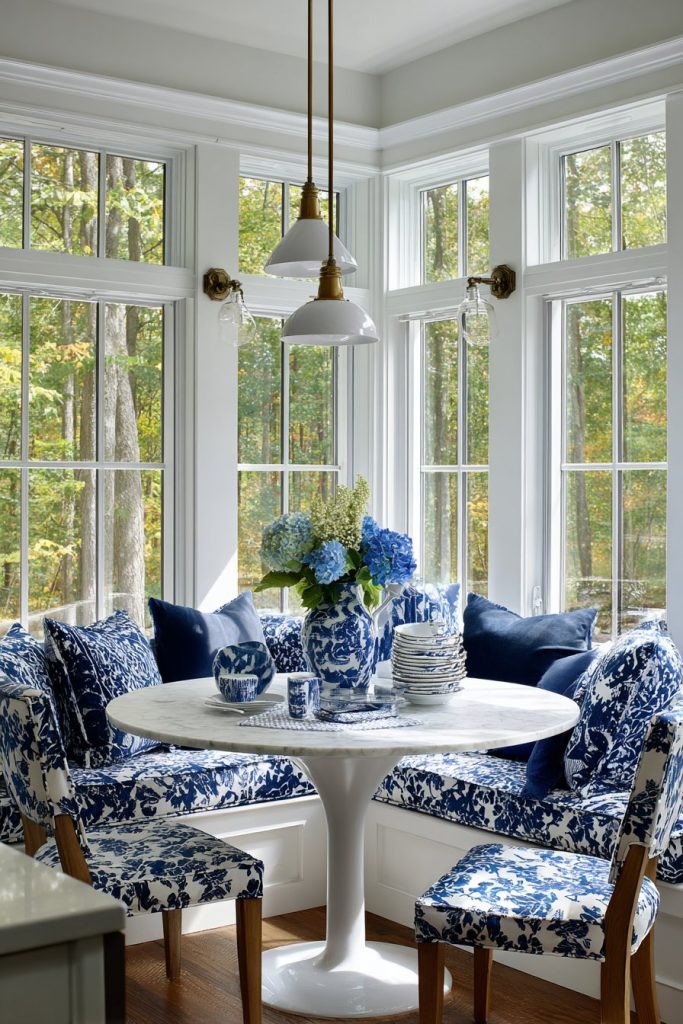
Coordinating throw pillows add comfort and color while allowing for seasonal updates and personal expression through textile choices. The round pedestal table in white marble creates an elegant dining surface that accommodates intimate meals and casual snacking while contributing to the overall sophistication of the space.
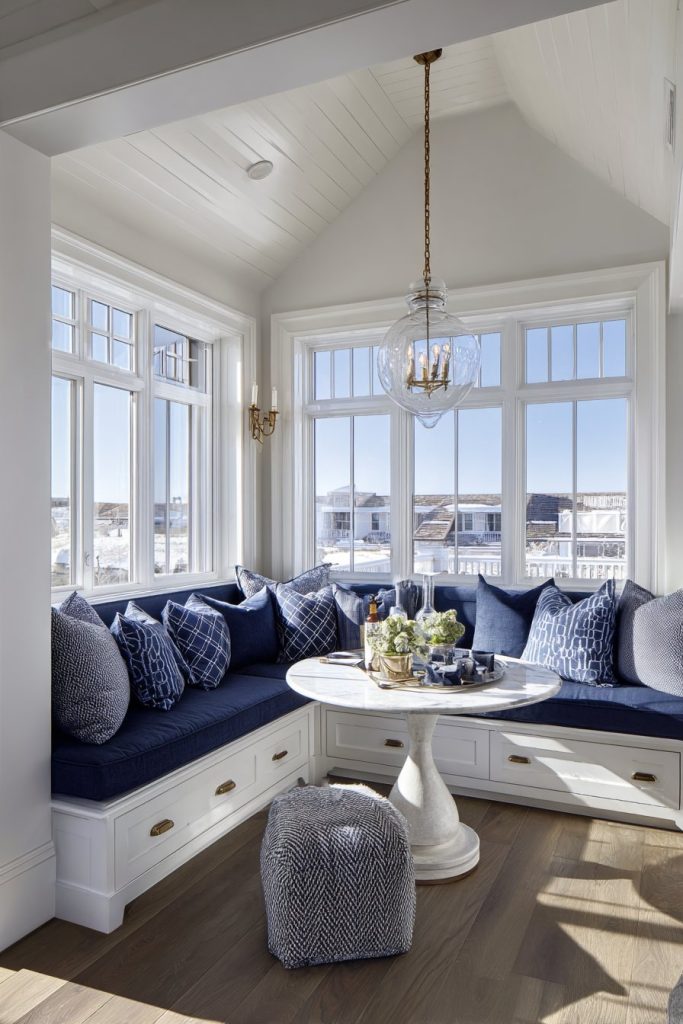
Pendant lighting with brass fixtures provides focused illumination for dining activities while creating visual interest through carefully selected hardware and proportions. Large windows on both corner walls flood the area with natural light during daytime hours, making the space feel bright and welcoming for family meals and entertaining.
Key Design Tips:
- Use built-in seating to maximize corner space efficiency
- Choose durable upholstery fabrics for high-use dining areas
- Select round tables to facilitate conversation and traffic flow
- Install focused pendant lighting at appropriate heights for dining
- Position seating to take advantage of natural light from multiple windows
14. Traditional Display Cabinet Corner
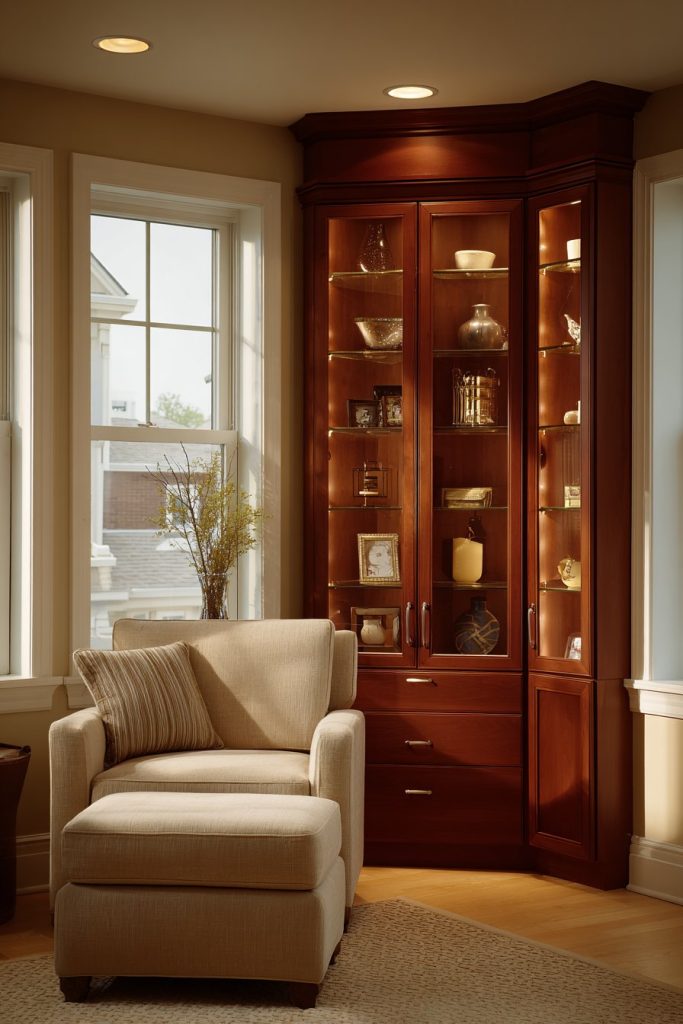
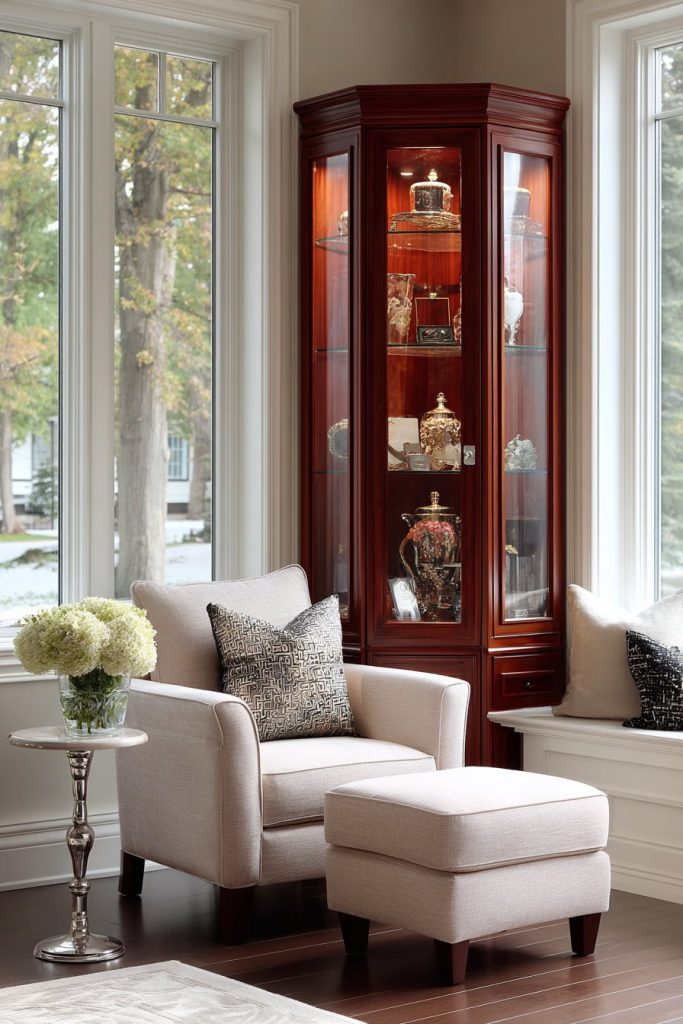
The corner display cabinet represents traditional interior design at its finest, with glass doors and interior lighting that showcase collectibles and decorative objects while protecting them from dust and damage. The rich cherry wood finish with traditional hardware details creates timeless appeal that works beautifully in formal living rooms and traditional home settings.
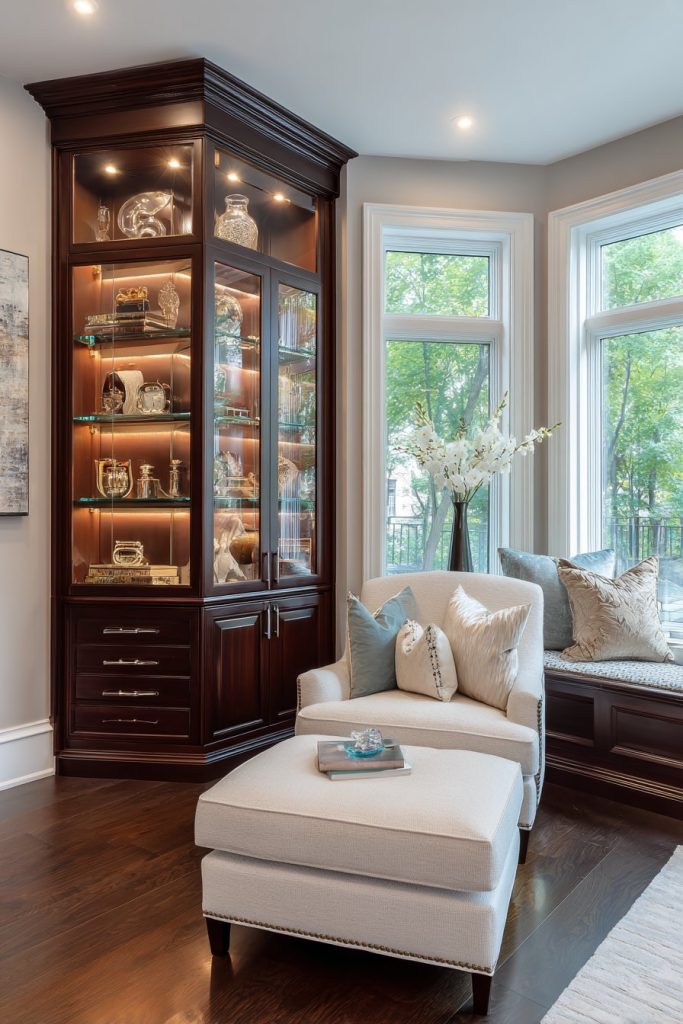
Interior LED lighting provides focused illumination that highlights the beauty of displayed objects while creating dramatic effects through glass and reflective surfaces. This professional display approach elevates personal collections and transforms them into focal points that contribute to the room’s overall design narrative.
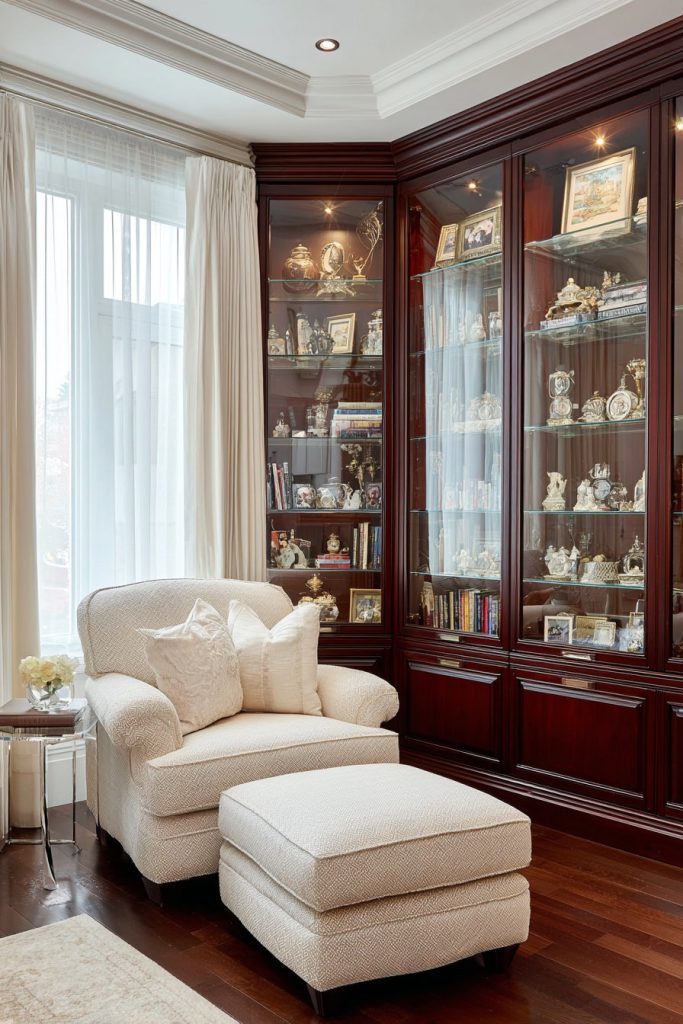
The comfortable reading chair in soft beige fabric positioned nearby creates a complementary seating area where the display can be enjoyed and appreciated. The coordinating ottoman provides additional comfort while maintaining the traditional aesthetic through carefully coordinated fabrics and proportions.
Key Design Tips:
- Choose display cabinets with glass doors to protect valuable collections
- Install interior lighting to showcase displayed objects professionally
- Select traditional wood finishes and hardware for timeless appeal
- Position comfortable seating nearby to encourage enjoyment of displays
- Coordinate furniture fabrics and finishes for cohesive traditional aesthetics
15. Corner Fitness and Wellness Zone
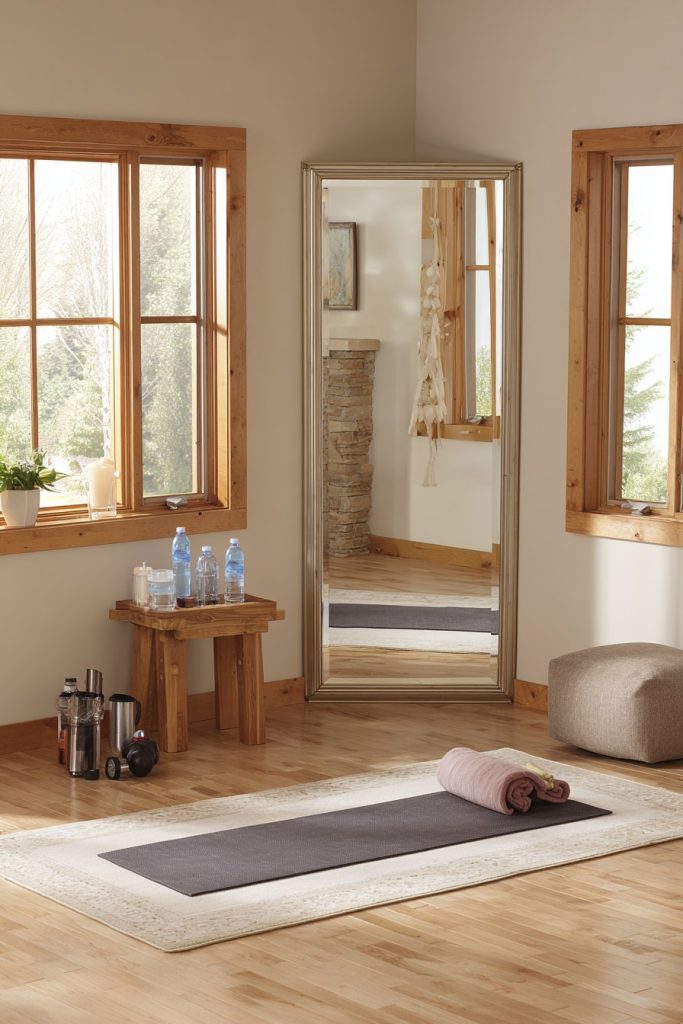
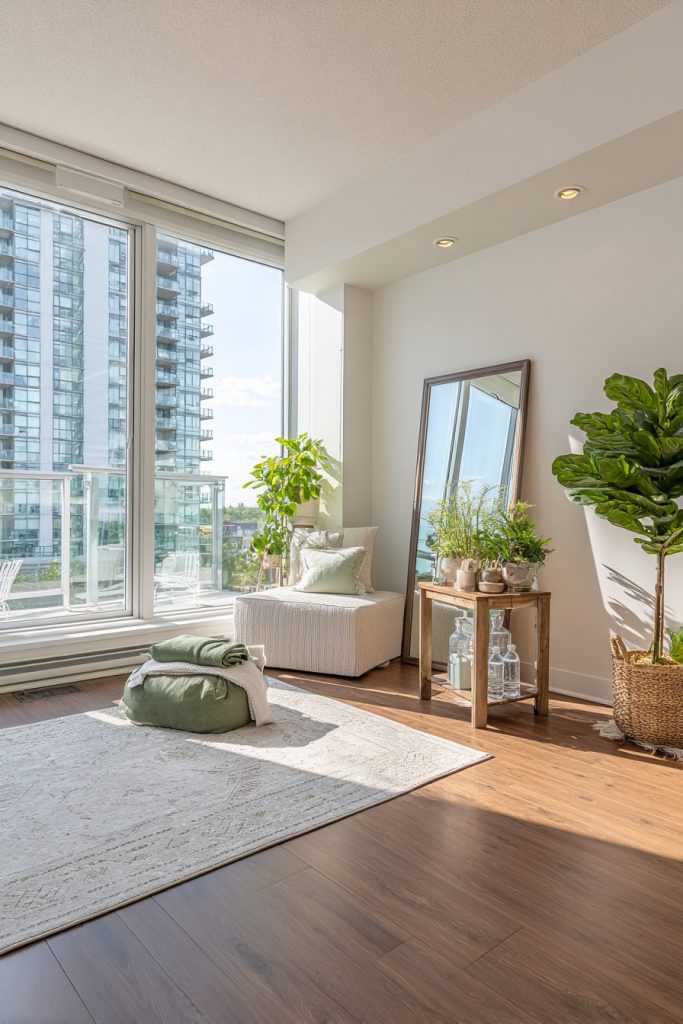
Modern living increasingly incorporates wellness activities into daily routines, and this corner exercise area demonstrates how fitness functionality can be integrated into living spaces without compromising aesthetic appeal. The yoga mat, meditation cushion, and storage ottoman create a dedicated space for physical and mental wellness activities that can be easily maintained and accessed.
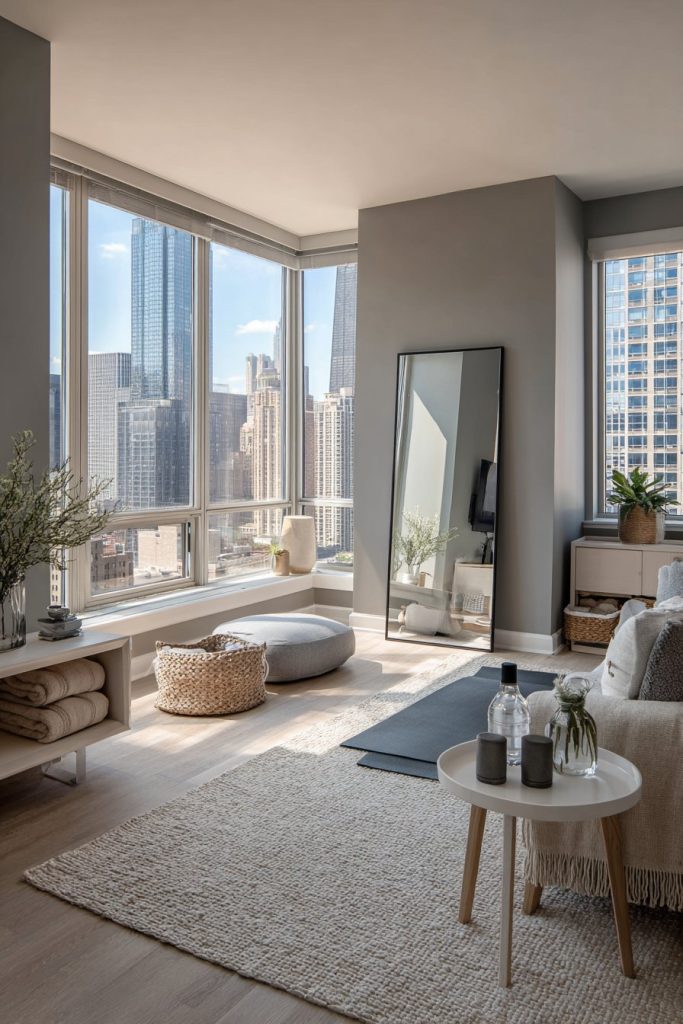
The full-length mirror serves dual purposes – providing essential feedback during exercise routines while creating the illusion of expanded space through reflection. This optical trick is particularly valuable in smaller living areas where every design element needs to contribute to the overall sense of spaciousness.
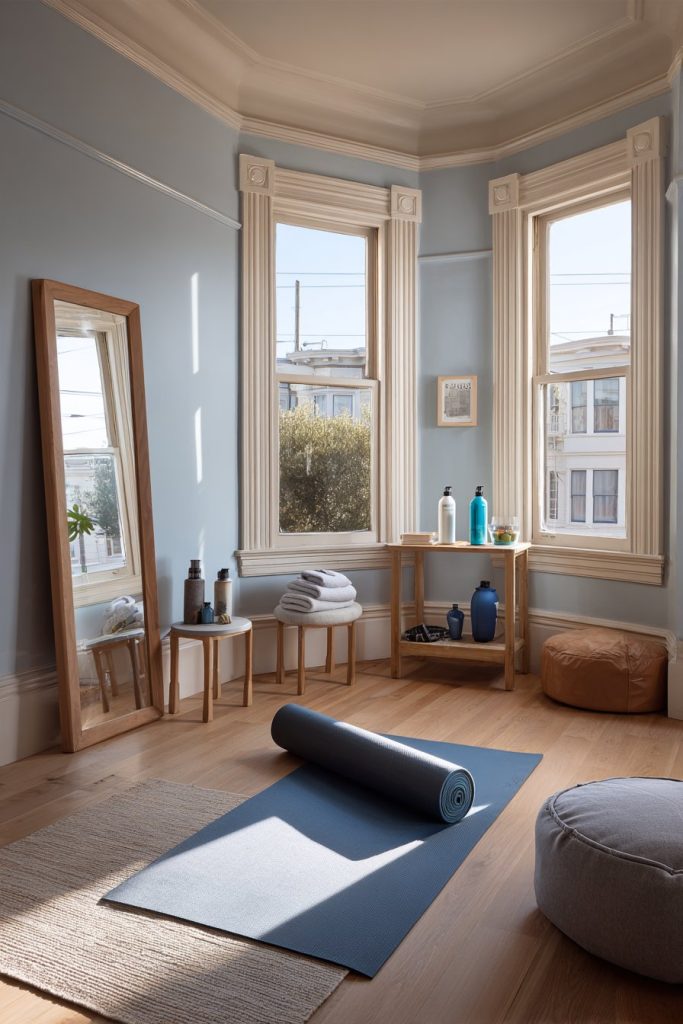
The small side table provides convenient storage for water bottles, towels, and other wellness accessories while maintaining the organized, serene atmosphere that’s essential for successful fitness and meditation practices. Light hardwood flooring with a subtle area rug provides appropriate surface treatment for floor exercises while contributing to the overall design aesthetic.
Key Design Tips:
- Create dedicated zones for wellness activities within living spaces
- Use mirrors to expand perceived space while providing functional benefits
- Include organized storage for exercise and wellness accessories
- Choose appropriate flooring materials for various exercise activities
- Maintain clean, uncluttered aesthetics to support mindful practices
16. Coastal Corner Seating Area
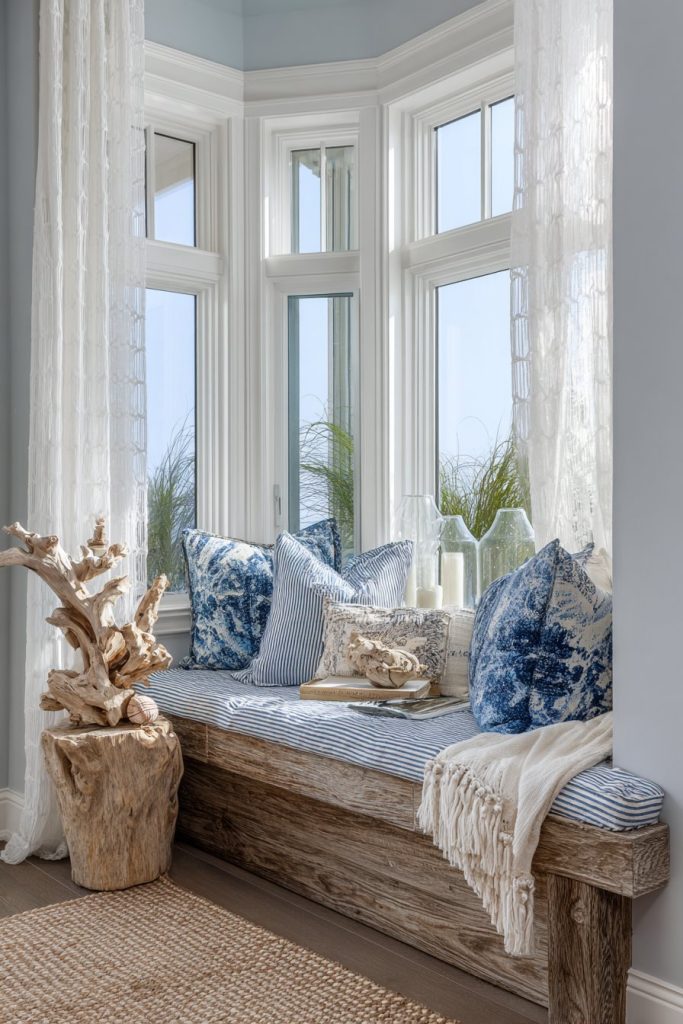
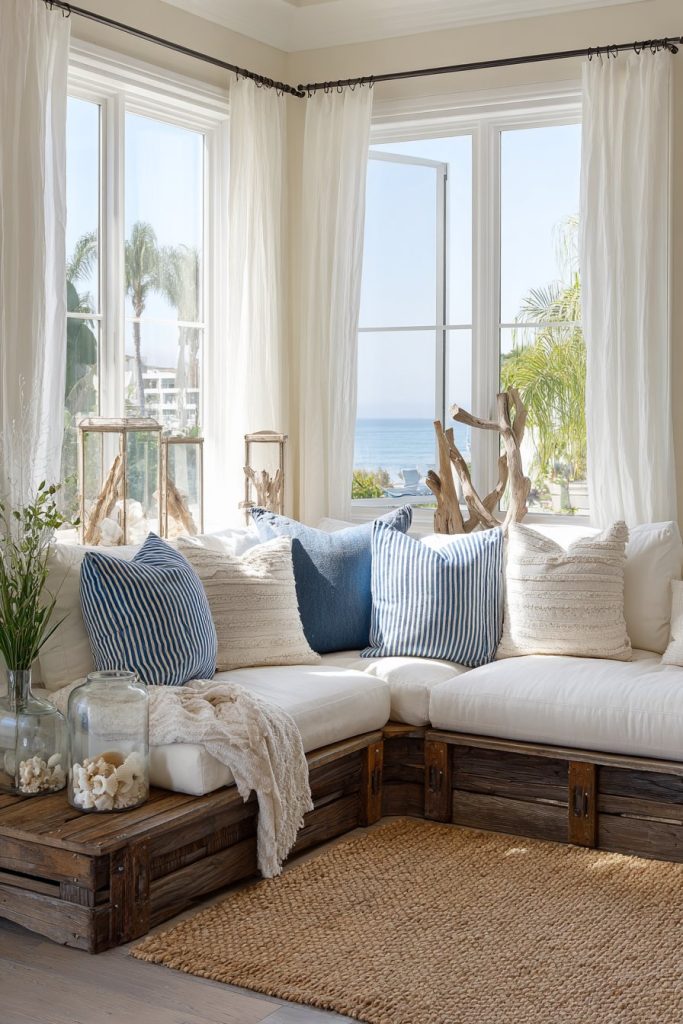
The coastal corner seating area captures the relaxed, vacation-like atmosphere of beach house living through carefully selected materials, colors, and accessories that evoke seaside environments. The weathered wood bench topped with blue and white striped cushions creates comfortable seating while reinforcing the nautical theme through classic maritime color combinations.
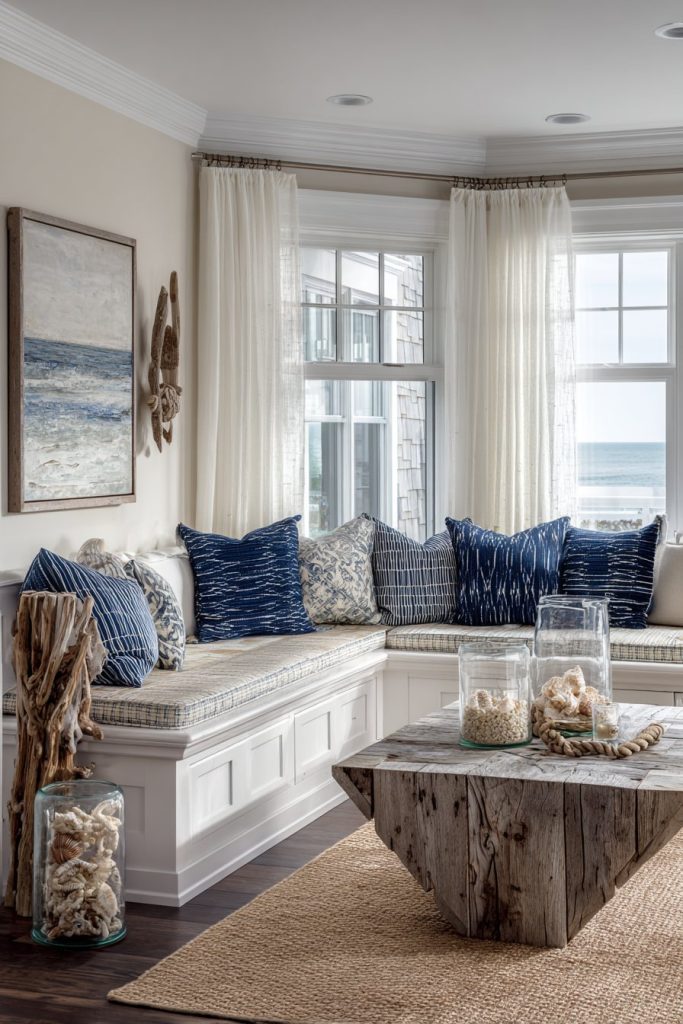
Decorative elements including driftwood sculptures, seashells in glass vessels, and nautical rope details add authentic coastal character while providing textural interest and visual focal points. These natural materials create connections to the beach environment while maintaining sophisticated interior design principles.
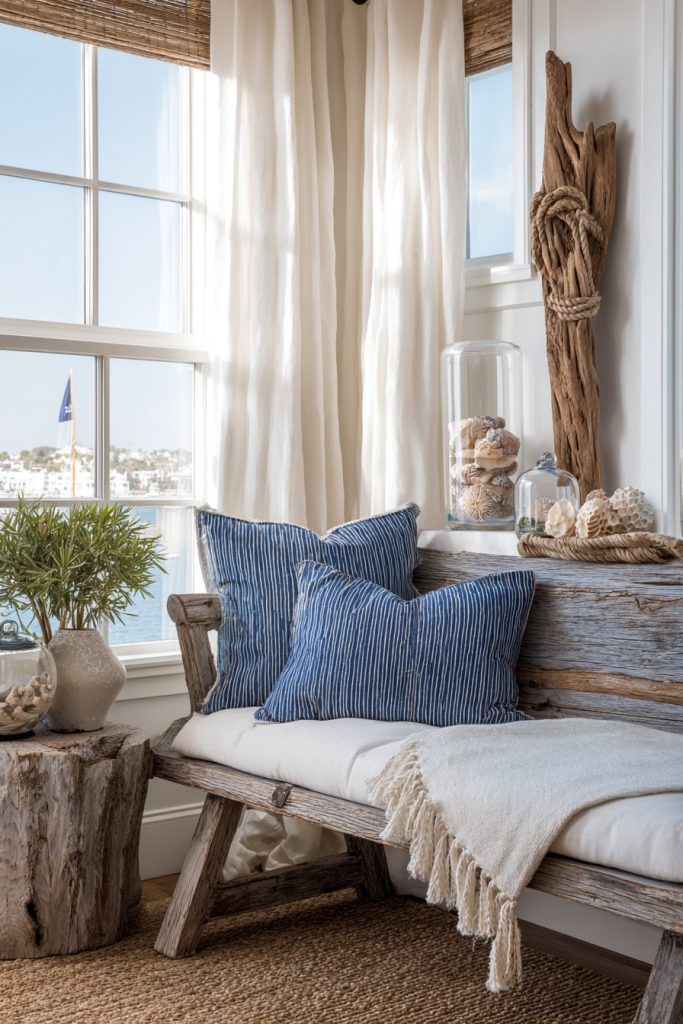
Sheer white curtains on corner windows allow soft, diffused natural light to filter through while maintaining privacy and creating the bright, airy atmosphere that’s essential to successful coastal interior design. The jute rug underneath completes the natural material palette while providing comfort and definition for the seating area.
Key Design Tips:
- Use weathered wood and natural materials for authentic coastal character
- Incorporate classic nautical colors like blue and white stripes
- Display natural objects like shells and driftwood as decorative elements
- Choose light, airy window treatments that maximize natural light
- Layer natural fiber rugs for texture and comfort underfoot
17. Dedicated Music Corner
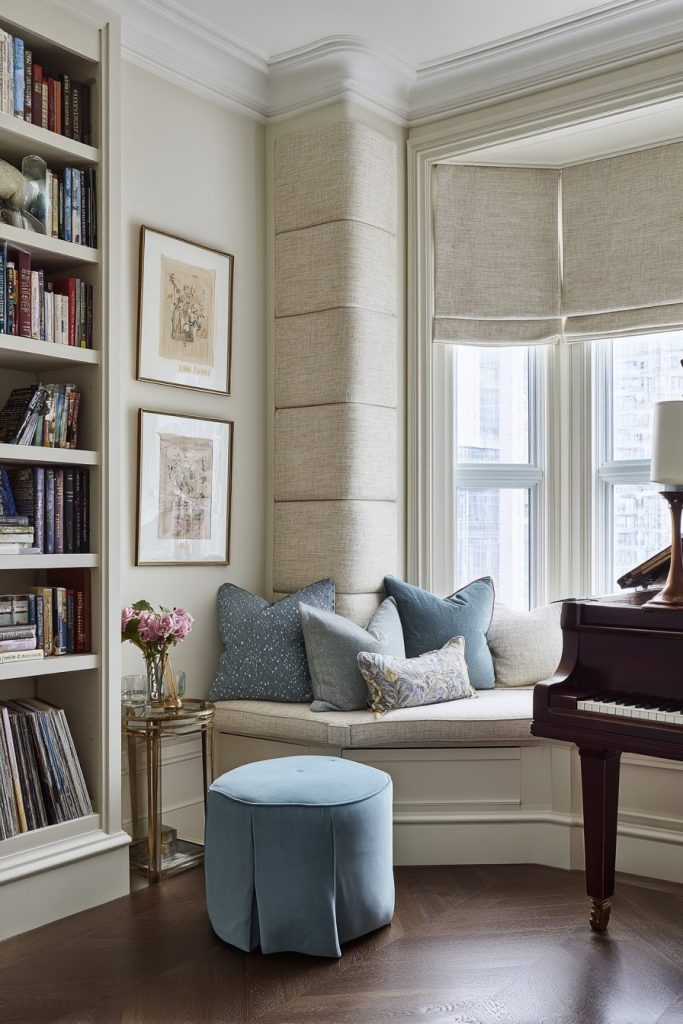
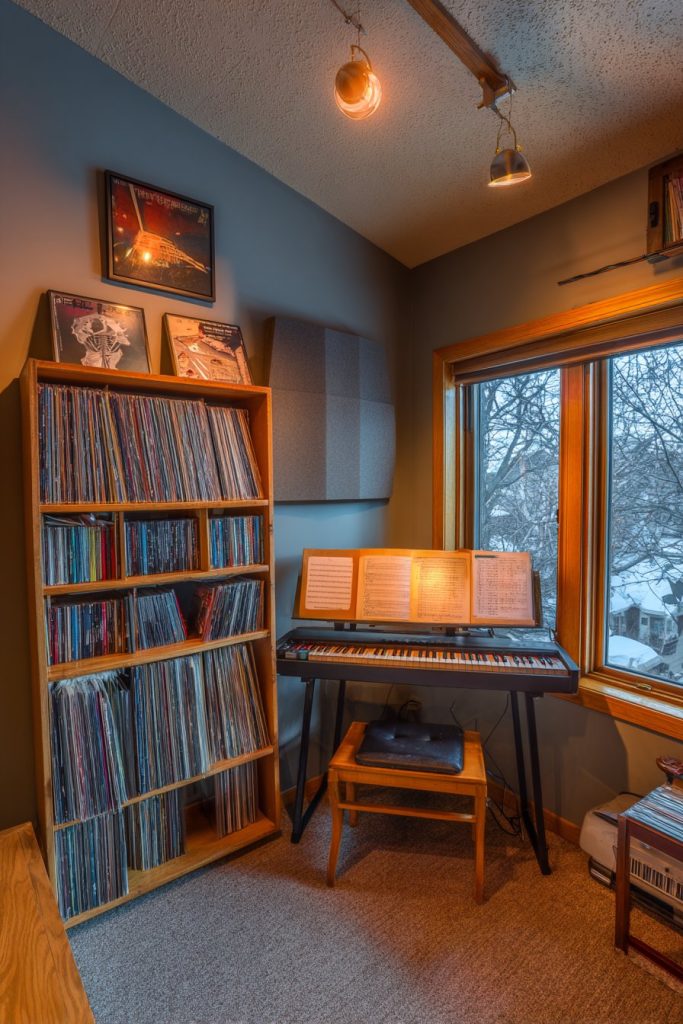
Music lovers require specialized spaces that accommodate both instrument storage and practice activities, and this corner setup demonstrates how musical functionality can be integrated into living room design. The corner stand for piano or keyboard provides stable support while maximizing corner space efficiency for larger instruments that might not fit elsewhere in the room.
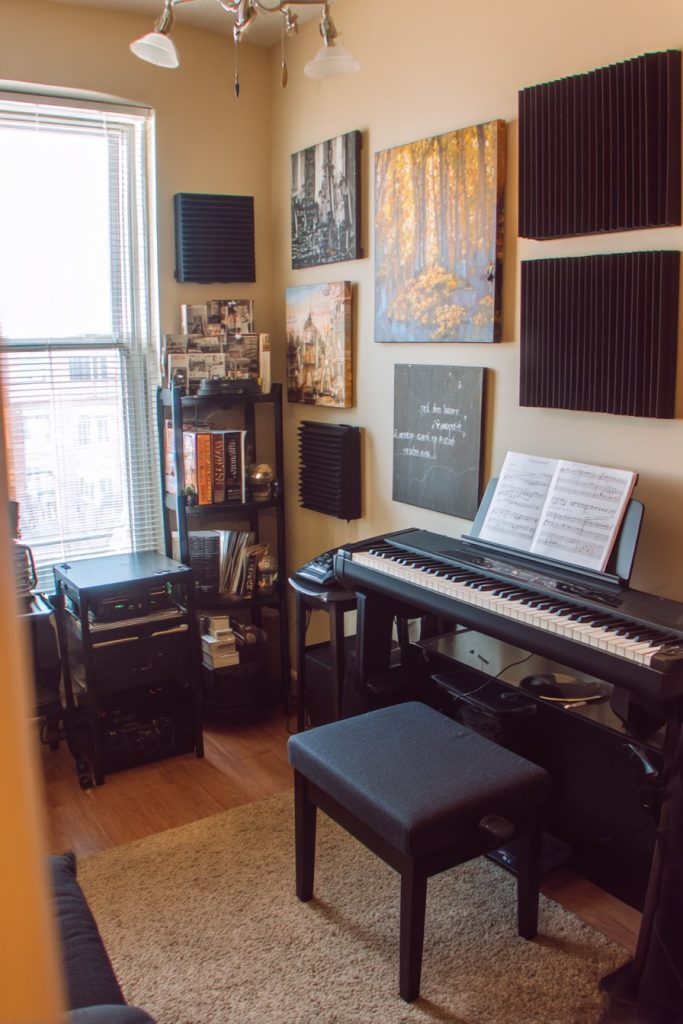
Sheet music storage integrated into nearby bookshelves ensures that musical materials remain organized and easily accessible while contributing to the overall aesthetic through careful arrangement and display. Acoustic panels on walls provide sound treatment that improves practice sessions while protecting neighbors from excessive noise.
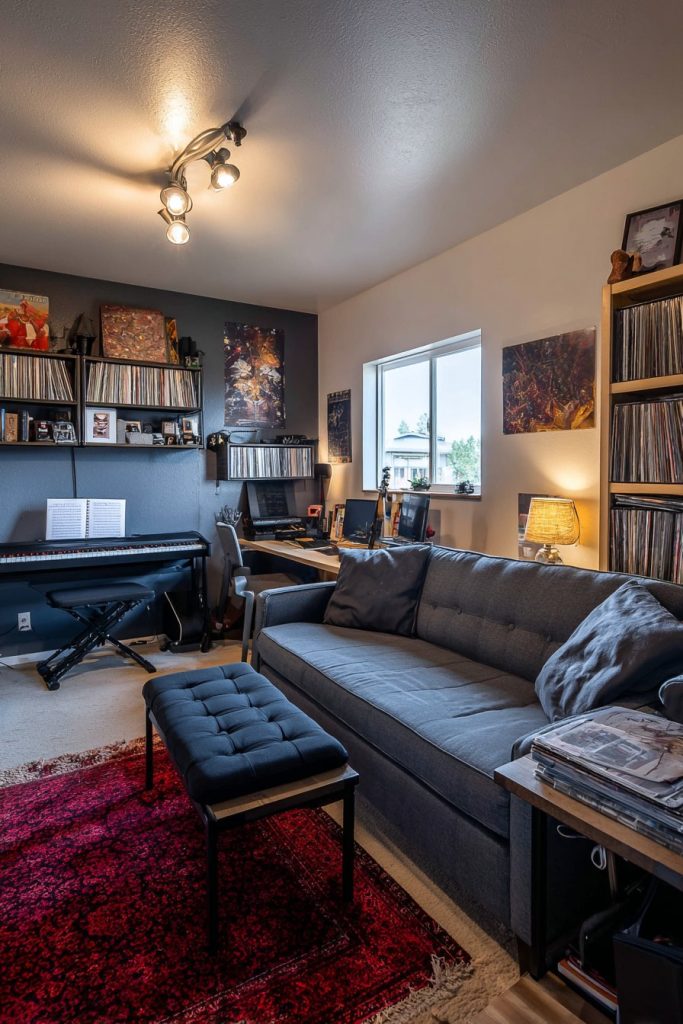
The music stand and small side table for accessories complete the functional requirements for serious musical practice while maintaining visual appeal through coordinated materials and proportions. Interior lighting combines natural light from corner windows with focused task lighting for reading music during practice sessions.
Key Design Tips:
- Position musical instruments to take advantage of corner space efficiency
- Integrate music storage with existing bookshelf and display systems
- Include acoustic treatment for sound quality and neighbor consideration
- Provide adequate task lighting for reading sheet music
- Choose furniture and accessories that support both function and aesthetics
18. Rustic Corner Display Area
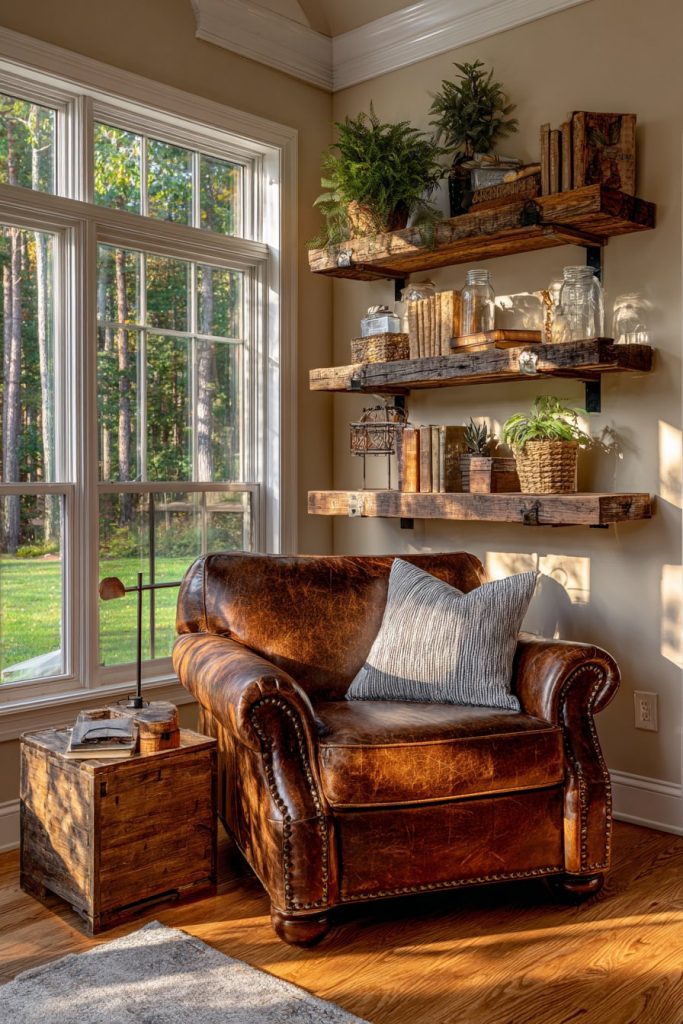
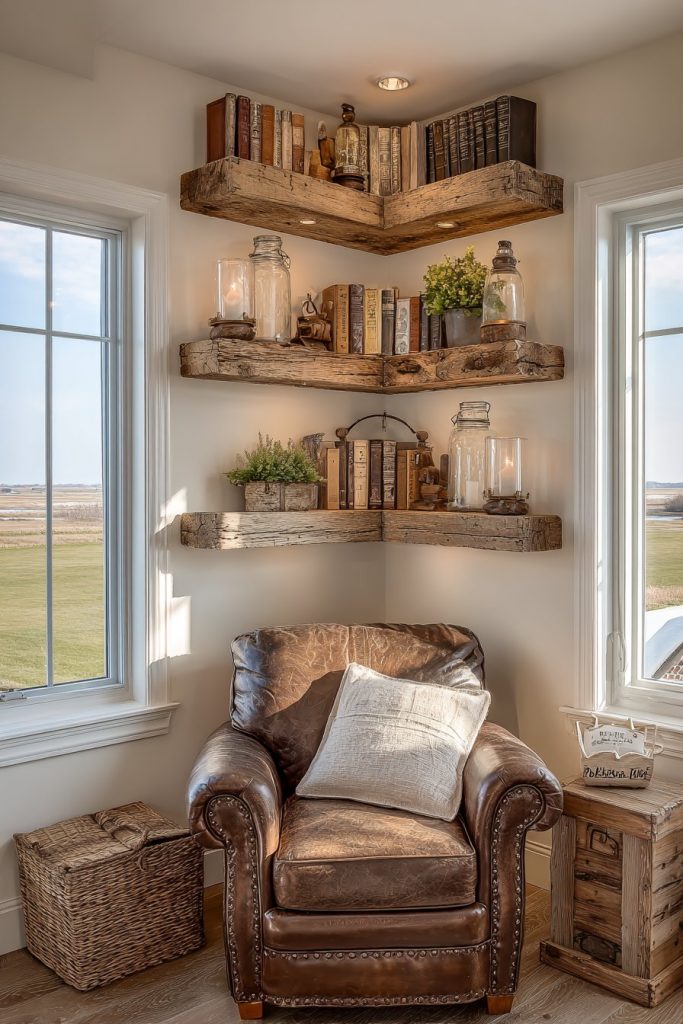
The rustic corner celebrates the beauty of aged materials and natural textures through reclaimed wood floating shelves that display vintage books, mason jar planters, and authentic rustic decorative objects. This approach creates warmth and character that reflects appreciation for handcrafted items and natural aging processes.
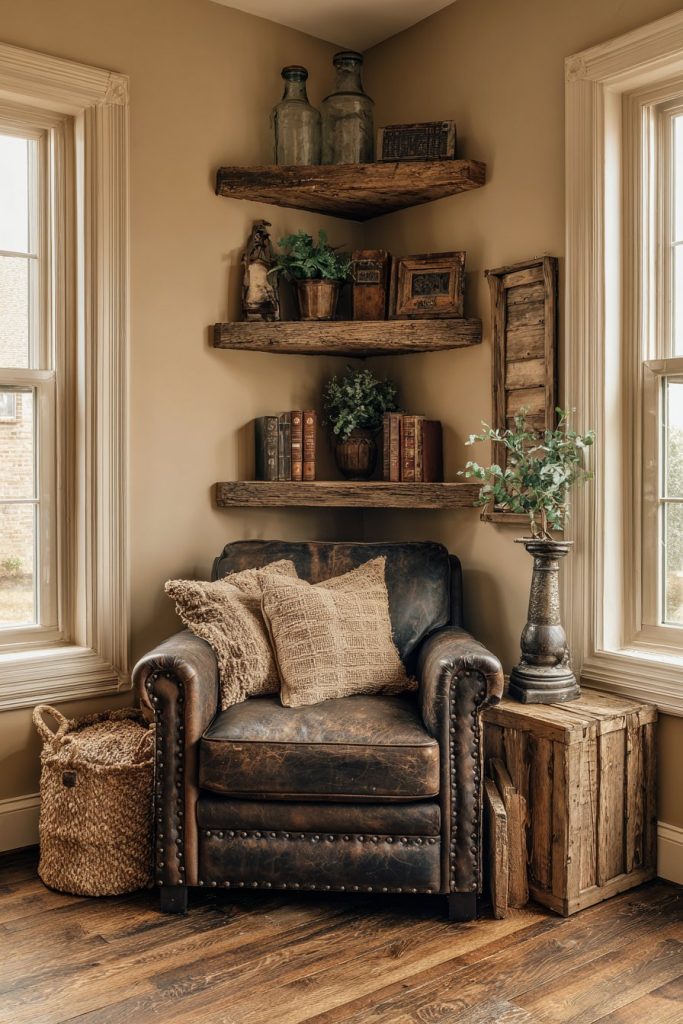
The distressed leather armchair with nailhead trim provides comfortable seating while reinforcing the rustic theme through rich materials and traditional craftsmanship details. Natural elements including woven baskets for storage and vintage wooden crates as side tables add functional beauty while maintaining authentic rustic character.
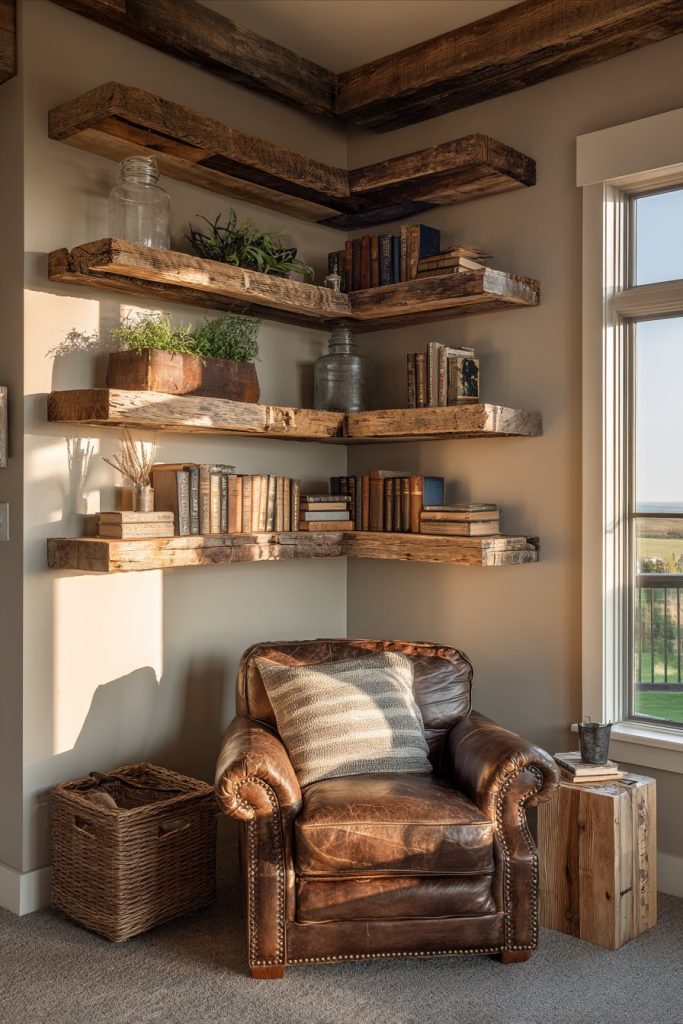
Warm natural lighting from corner windows creates gentle highlights that emphasize the weathered wood textures and natural patina that develop over years of use and aging. This interplay of light and shadow adds depth and visual interest while celebrating the natural beauty of aged materials.
Key Design Tips:
- Use reclaimed and weathered materials for authentic rustic character
- Display vintage and handcrafted objects that tell stories
- Include natural storage solutions like woven baskets and wooden crates
- Choose furniture with traditional craftsmanship details like nailhead trim
- Allow natural aging and patina to add authentic vintage appeal
19. Creative Corner Art Studio
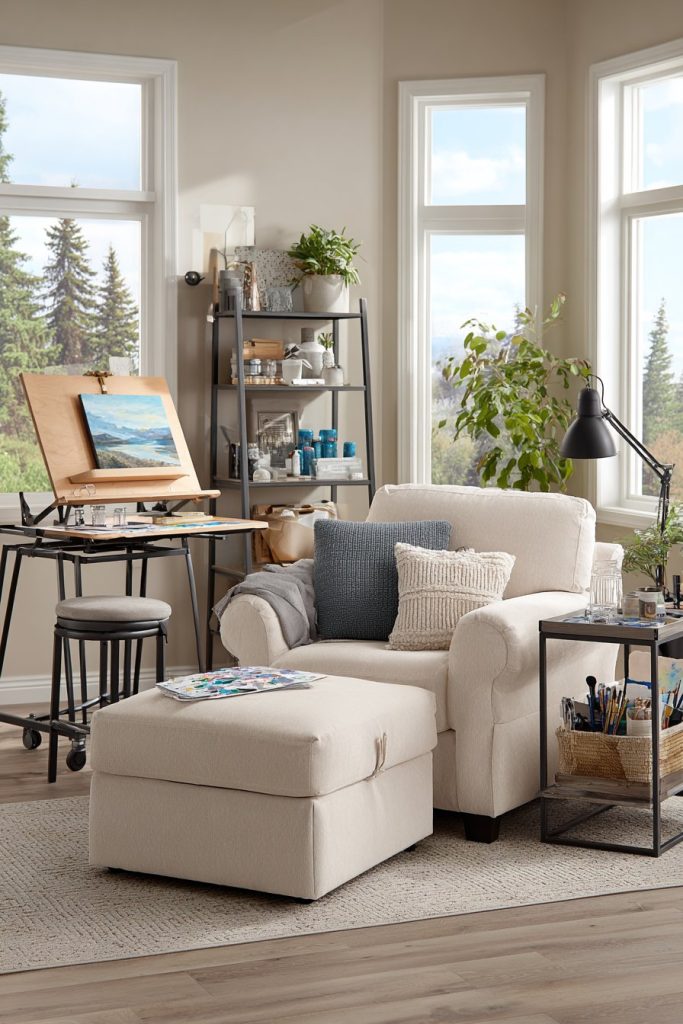
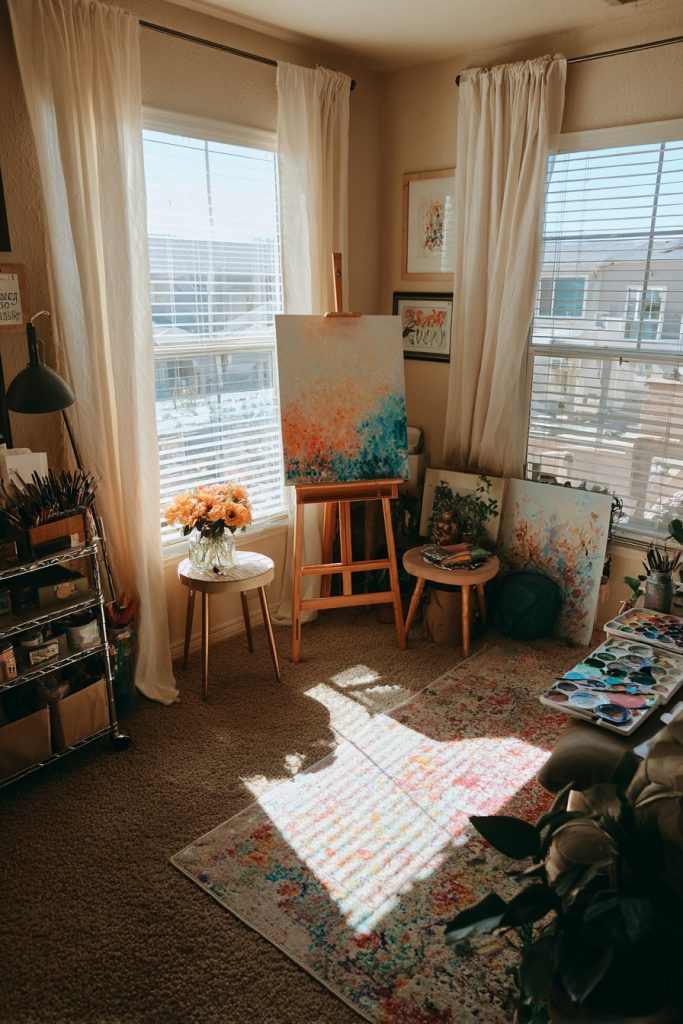
The corner art studio setup transforms unused space into a dedicated creative zone that supports artistic pursuits while maintaining living room functionality. The small easel and rolling cart for art supplies create a professional setup that can be easily moved or stored when not in use, maintaining flexibility in multi-purpose living spaces.
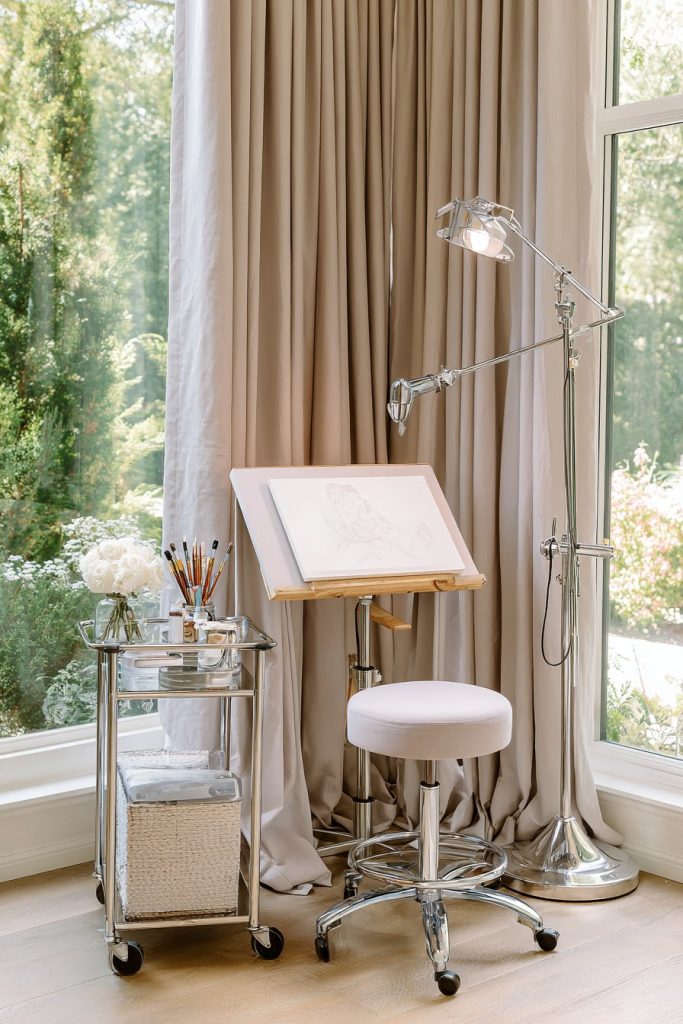
Proper task lighting from an adjustable floor lamp ensures adequate illumination for detailed artwork creation while providing flexibility for different artistic activities and times of day. Natural light from corner windows provides ideal conditions for color accuracy and artistic work during daylight hours.
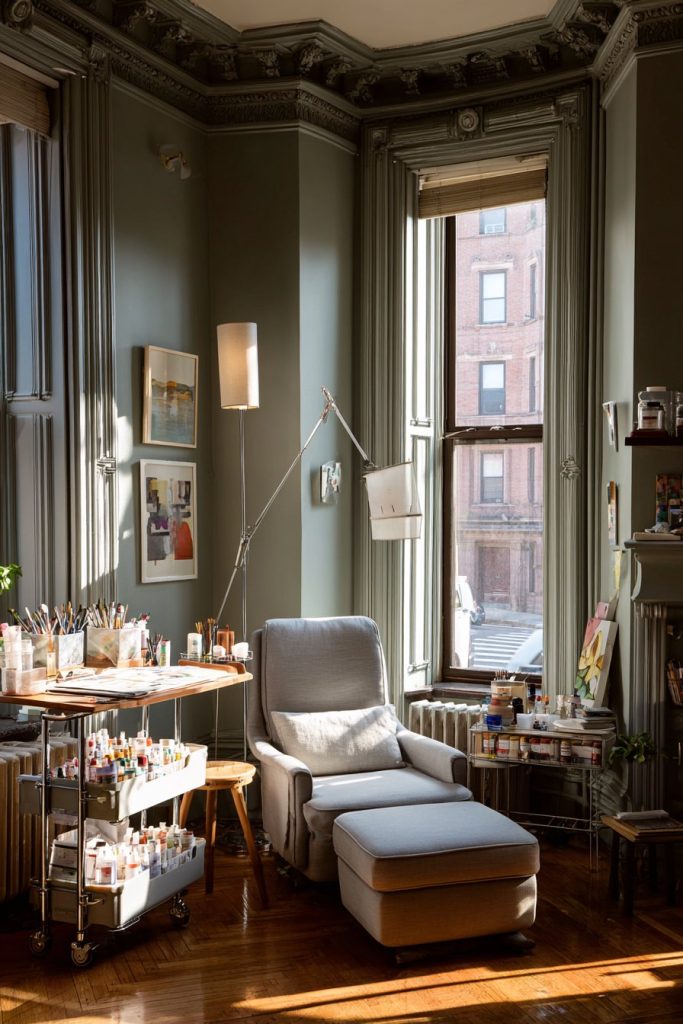
The comfortable stool and small side table for palettes and brushes complete the functional requirements while storage solutions keep supplies organized and accessible. This organized approach maintains the living room’s aesthetic appeal while supporting serious artistic pursuits.
Key Design Tips:
- Choose mobile art furniture that can be easily stored or moved
- Provide both natural and adjustable artificial lighting for artistic work
- Include organized storage solutions for art supplies and materials
- Select furniture appropriate for extended creative sessions
- Maintain flexibility for multi-purpose room usage
20. Minimalist Meditation Corner
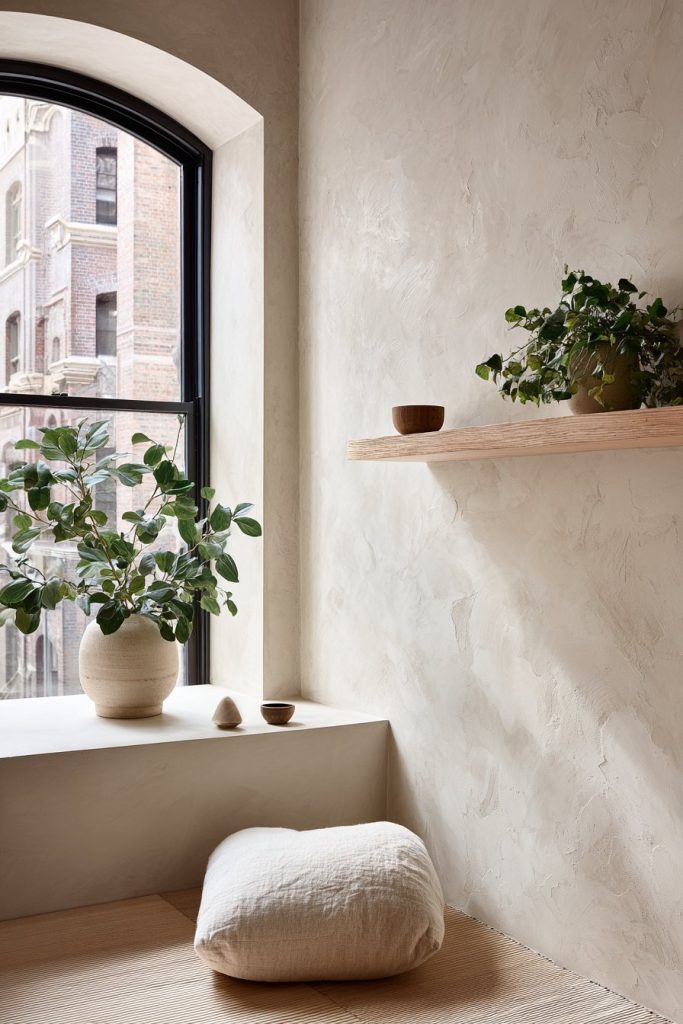
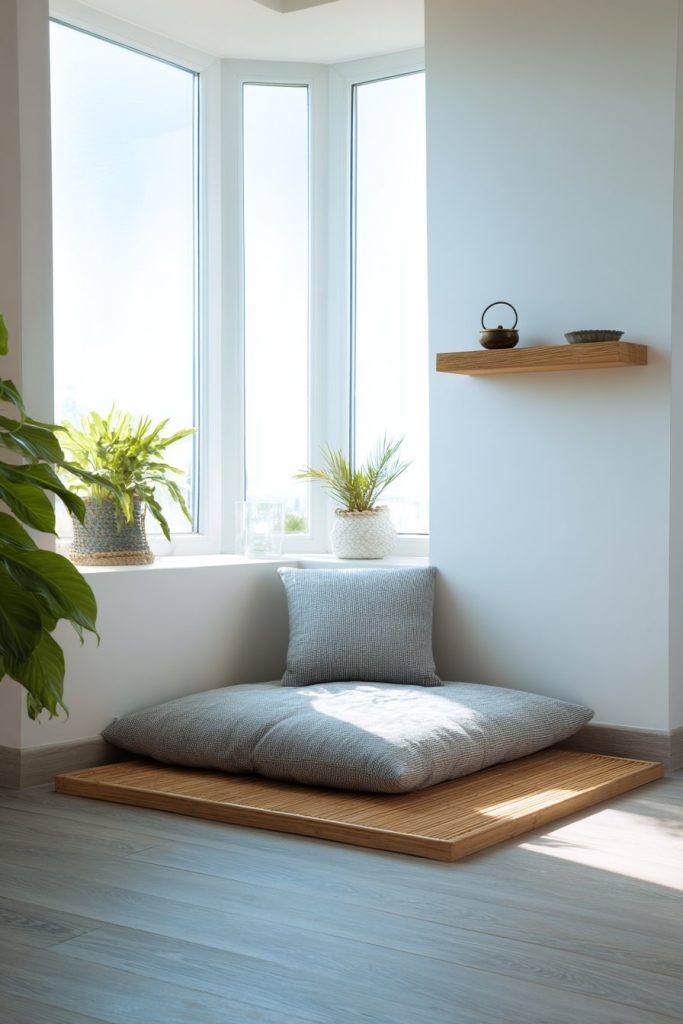
The minimalist meditation corner represents the ultimate expression of peaceful simplicity, where every element serves a specific purpose in creating a serene environment for contemplation and mindfulness practices. The single floor cushion in natural linen fabric on a bamboo mat provides comfortable seating while maintaining the clean, uncluttered aesthetic that supports meditative practices.
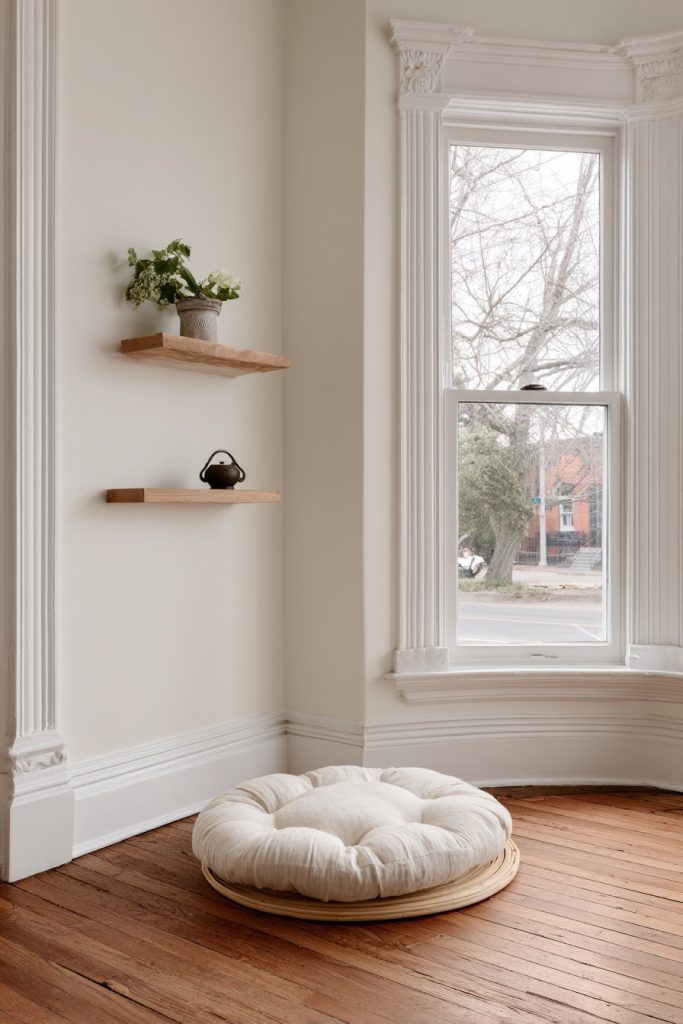
Clean white walls with subtle texture create a neutral backdrop that eliminates visual distractions while the small wooden shelf holds only essential items – a single plant and meditation bell – that contribute to the peaceful atmosphere without creating clutter or visual noise.
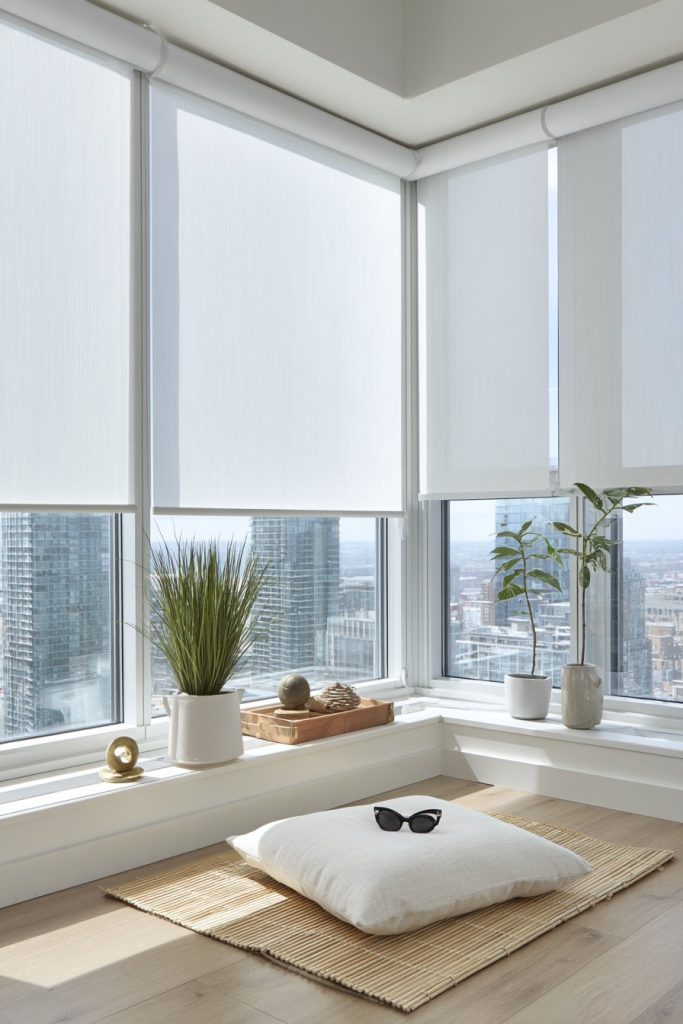
Large corner windows with no window treatments allow maximum natural light to create the bright, airy atmosphere that’s essential for successful meditation and mindfulness practices. This approach celebrates the beauty of simplicity while creating a dedicated space for mental wellness and spiritual practices.
Key Design Tips:
- Eliminate unnecessary elements to create peaceful, uncluttered environments
- Use natural materials like linen and bamboo for authentic simplicity
- Maximize natural light to create bright, uplifting atmospheres
- Include only essential items that directly support intended activities
- Maintain clean lines and neutral colors for visual calm
Why These Corner Ideas Represent the Best in Interior Design
These twenty corner design concepts represent the finest examples of how thoughtful interior design can transform challenging spaces into functional, beautiful focal points that enhance both the aesthetic appeal and practical utility of living rooms. Each approach demonstrates key principles of successful interior design while addressing specific lifestyle needs and design preferences.
The curved sectional sanctuary and corner banquette dining nook excel at maximizing seating capacity while creating intimate gathering spaces that encourage family interaction and entertaining. These designs prove that corner spaces can become the heart of social activity when properly planned and executed with appropriate furniture selection and spatial arrangement.
Storage-focused solutions like the floating corner shelf display and compact corner workstation demonstrate how small spaces can be maximized through vertical design strategies and multi-functional furniture choices. These approaches are particularly valuable in modern urban living where every square foot must serve multiple purposes while maintaining aesthetic appeal.
Lifestyle-specific corners including the music corner, art studio setup, and meditation area show how personal interests and hobbies can be integrated into living spaces without compromising overall design coherence. These specialized zones support individual pursuits while contributing to the room’s overall functionality and personal expression.
Style-focused approaches such as the industrial bar setup, Scandinavian workspace, and bohemian floor seating demonstrate how different design aesthetics can be successfully implemented in corner spaces. Each style brings its own material palette, color scheme, and spatial arrangement principles that create distinctive atmospheres and visual appeal.
The plant paradise corner and coastal seating area represent biophilic design principles that connect interior spaces with natural elements and environments. These approaches improve air quality, reduce stress, and create healthier living environments while providing stunning visual focal points that change with seasons and growth cycles.
Entertainment and technology integration through the media corner and contemporary fireplace feature show how modern lifestyle requirements can be accommodated through sophisticated design solutions that hide clutter while providing essential functionality. These designs prove that technology can enhance rather than detract from beautiful interior spaces.
Traditional and vintage-inspired corners including the farmhouse gallery wall and mid-century credenza display celebrate craftsmanship, heritage, and timeless design principles that create emotional connections and personal meaning within living spaces. These approaches demonstrate how historical design elements can be successfully integrated into contemporary homes.
The wellness-focused corners including the fitness zone and reading retreat acknowledge modern lifestyle needs for health, relaxation, and personal renewal within home environments. These designs support physical and mental well-being while maintaining sophisticated aesthetic appeal that enhances rather than compromises overall interior design.
Each of these corner design approaches succeeds because it addresses specific functional requirements while maintaining sophisticated aesthetic appeal through careful attention to materials, proportions, lighting, and spatial relationships. The best corner designs seamlessly integrate practical needs with beautiful visual elements that enhance the overall living experience while maximizing the potential of otherwise challenging architectural spaces.
Conclusion
Corner spaces in living rooms present unique opportunities for creative interior design solutions that can transform challenging architectural features into stunning focal points. The twenty design approaches explored in this comprehensive guide demonstrate how thoughtful planning, appropriate furniture selection, and attention to lighting and materials can create functional, beautiful spaces that enhance both daily living and aesthetic appeal.
Whether you’re drawn to the clean simplicity of Scandinavian minimalism, the rich textures of bohemian design, the sophisticated materials of contemporary aesthetics, or the warmth of rustic farmhouse charm, corner spaces can accommodate virtually any design preference while providing essential functionality for modern living requirements.
The key to successful corner design lies in understanding your specific needs – whether that’s additional seating, storage solutions, workspace functionality, or personal retreat spaces – and then selecting design approaches that address those requirements while contributing to your home’s overall aesthetic narrative and personal expression.
Remember that the best corner designs evolve over time as your needs change and your design preferences develop. Start with one approach that speaks to your current lifestyle and aesthetic preferences, then allow the space to grow and change as you discover new ways to maximize its potential and enhance your daily living experience.


