
In the ever-evolving world of interior design, color choices play a pivotal role in defining the character and atmosphere of our most intimate spaces. The bedroom, being our personal sanctuary where we begin and end each day, deserves thoughtful consideration when it comes to aesthetic decisions. Dark green has emerged as a remarkably sophisticated choice for bedroom design, offering a perfect balance between bold statement-making and serene tranquility. This rich, nature-inspired hue brings depth, elegance, and a sense of grounded calm that few other colors can match. From deep hunter greens reminiscent of ancient forests to luxurious emerald tones that evoke precious gemstones, the spectrum of dark green offers endless possibilities for creating a bedroom that feels both contemporary and timeless.
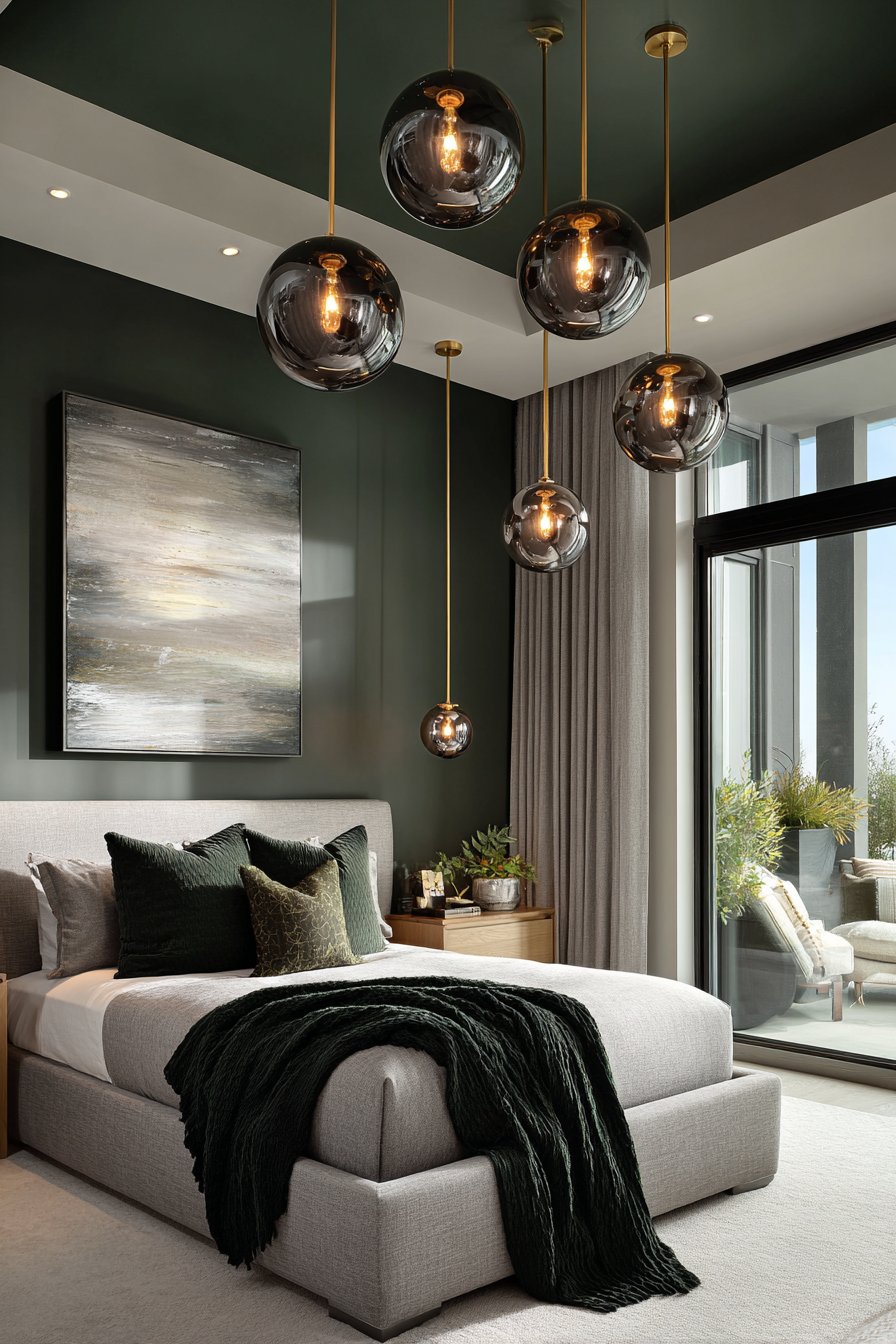
The beauty of incorporating dark green into bedroom design lies in its remarkable versatility and psychological impact. Unlike lighter, more neutral tones that can sometimes feel sterile or impersonal, dark green creates an enveloping cocoon of comfort while maintaining an air of refined sophistication. This color works harmoniously with various design styles—from minimalist Scandinavian aesthetics to opulent traditional interiors, from industrial-chic lofts to bohemian retreats. The organic connection to nature that green inherently possesses makes it particularly conducive to rest and rejuvenation, as our minds instinctively associate these tones with peaceful outdoor environments, lush foliage, and the restorative power of the natural world.
Throughout this comprehensive guide, we’ll explore twenty-one distinct approaches to incorporating dark green into your bedroom design. Each concept offers unique perspectives on how this magnificent color can transform your sleeping quarters into a space that reflects your personal style while promoting relaxation and well-being. Whether you’re considering a complete bedroom renovation or simply looking to refresh your current space with strategic dark green accents, these carefully curated ideas will provide the inspiration and practical guidance needed to achieve professional-quality results. From dramatic full-wall treatments to subtle accent pieces, from luxurious textile applications to innovative architectural elements, discover how dark green can elevate your bedroom from ordinary to extraordinary.

1. Deep Hunter Green Wall Embrace
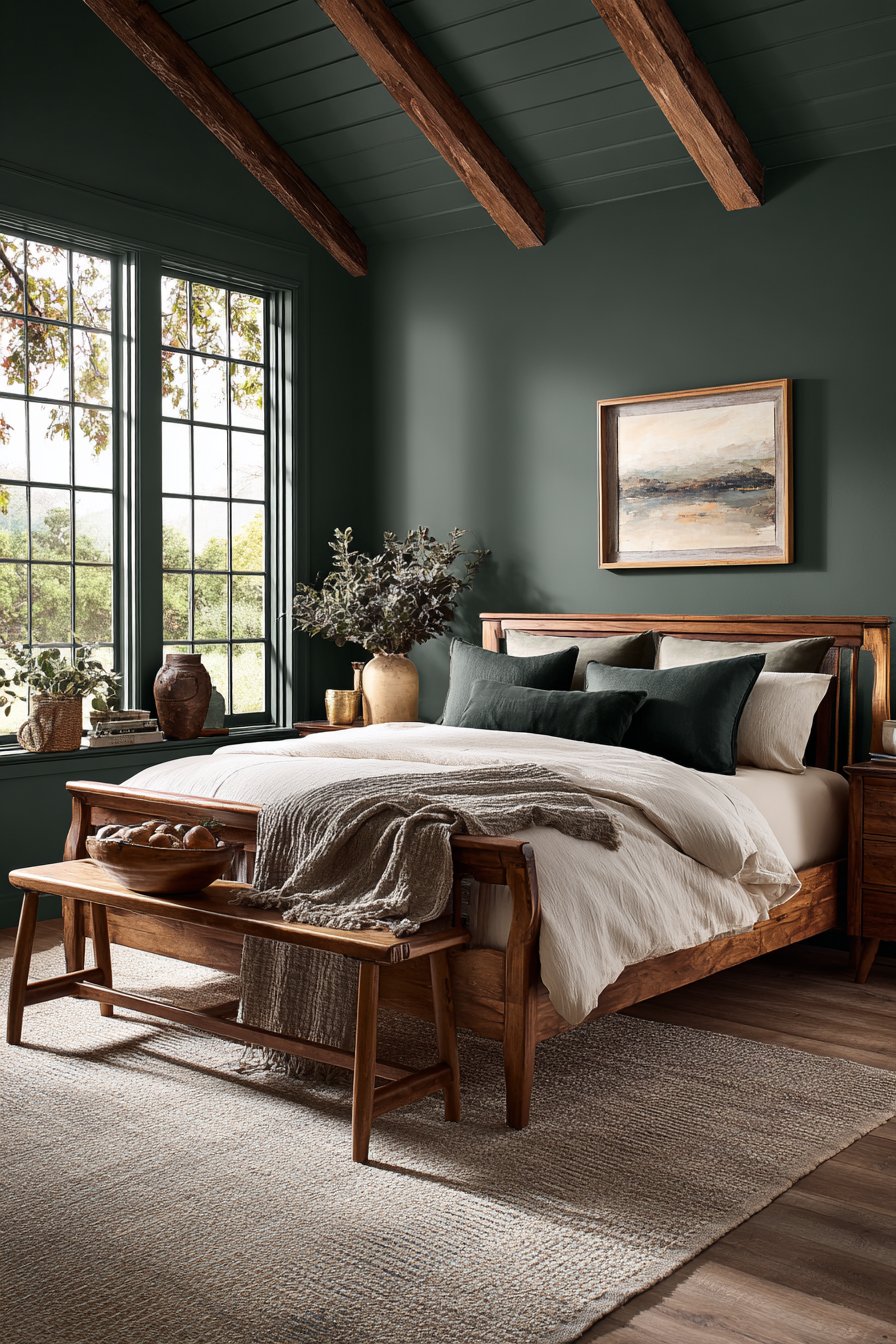
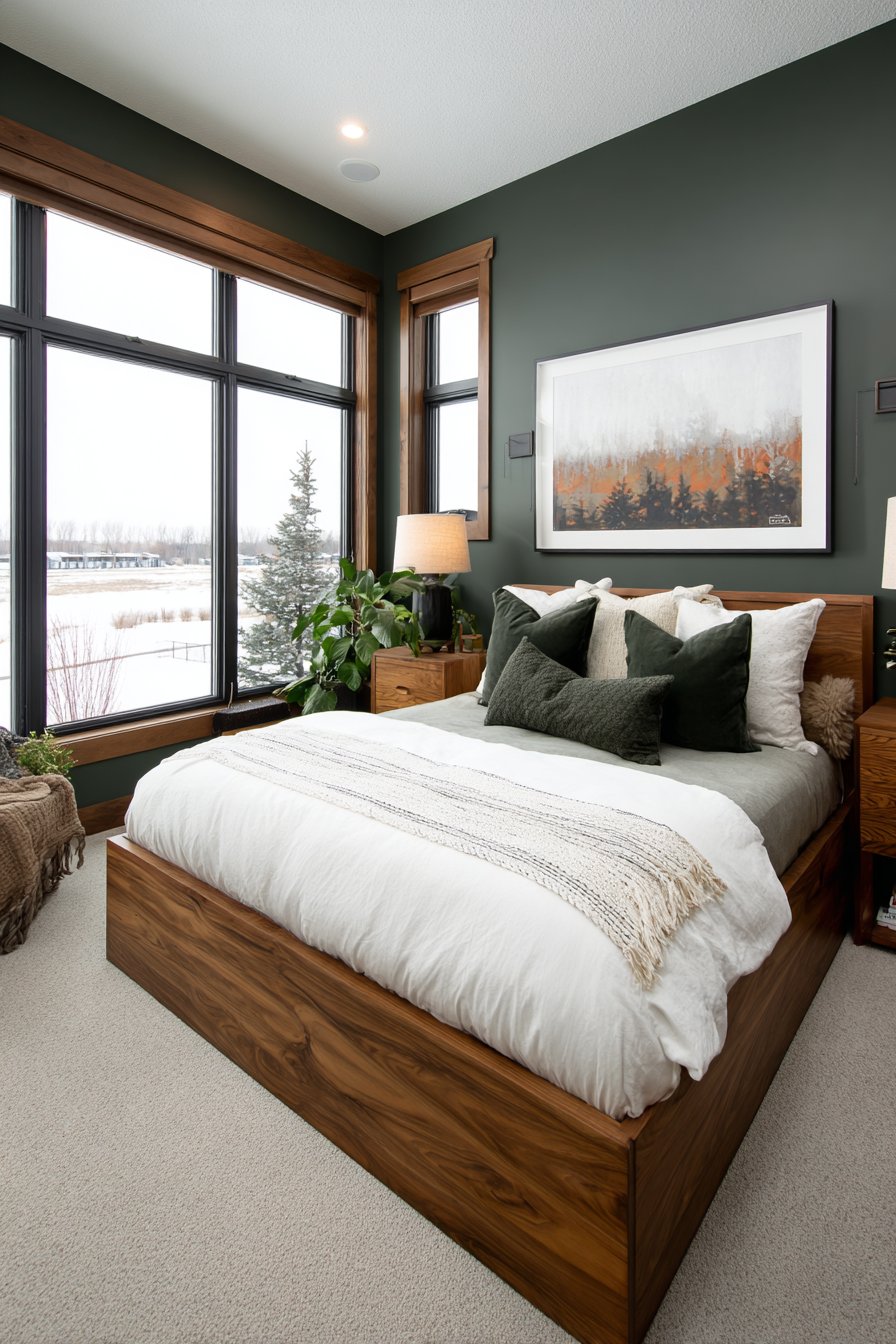
The foundation of sophisticated bedroom design often begins with bold wall color choices, and deep hunter green walls with a subtle matte finish exemplify this principle beautifully. This approach creates an immediate sense of intimacy and warmth, transforming your bedroom into a personal retreat that feels worlds away from the outside chaos. The wooden platform bed in warm walnut tones provides a natural counterpoint to the rich wall color, creating a harmonious dialogue between the depth of the green and the organic warmth of the wood grain. White linen bedding introduces essential visual breathing room, preventing the space from feeling too heavy or enclosed while adding a crisp, clean element that keeps the overall aesthetic fresh and contemporary.
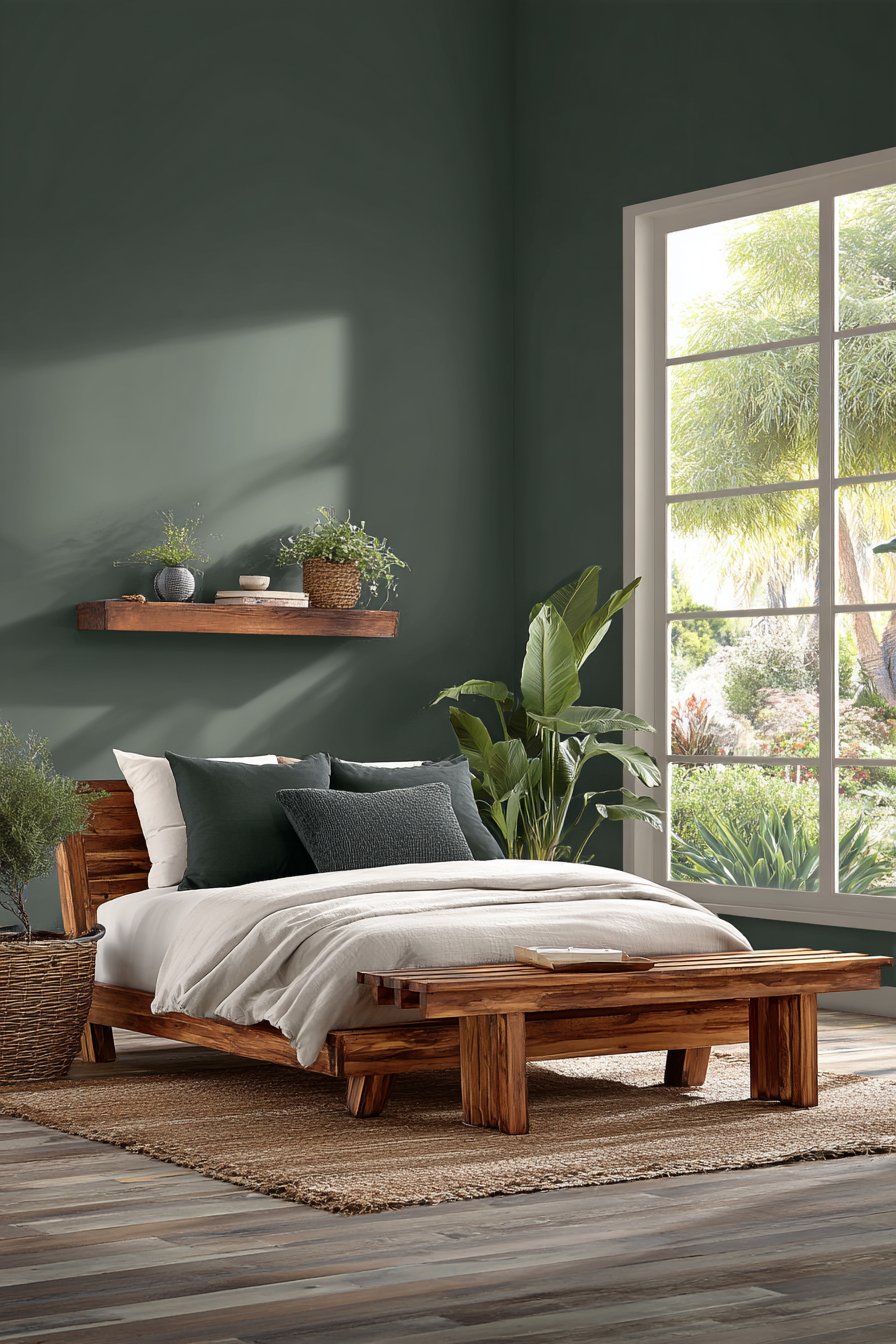
Natural light becomes a crucial player in this design scenario, as it interacts dynamically with the dark green surfaces throughout the day. Morning sunlight creates a lighter, more energetic feel, while afternoon rays add golden warmth, and evening light deepens the green to its most luxurious, cocoon-like state. The gentle shadows cast by window light emphasize the wall color’s richness and create subtle variations in tone that add depth and visual interest. This interplay between light and color demonstrates why proper window placement and treatment consideration is essential when working with darker wall colors—they need natural light to truly shine and reveal their full character.
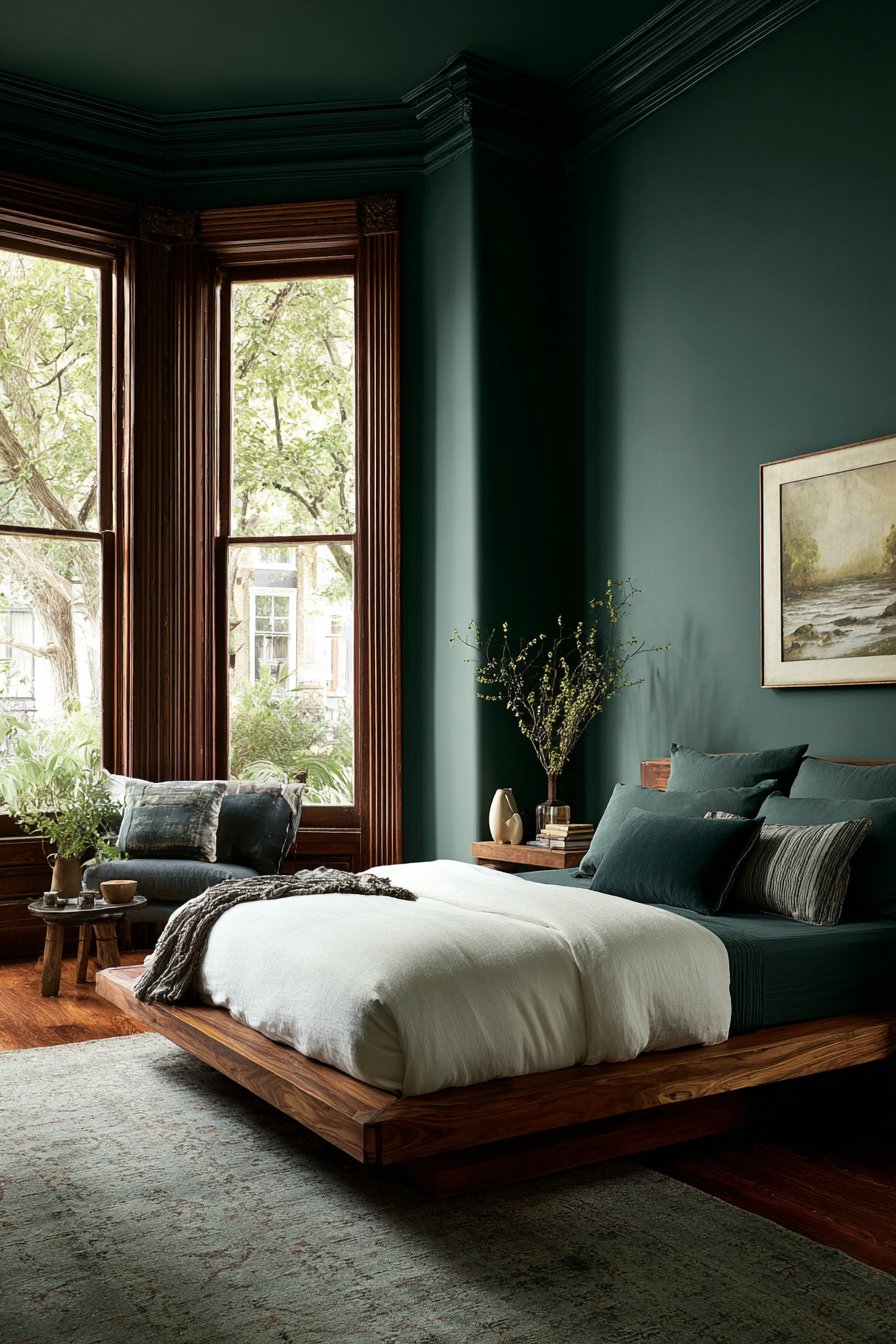
The monochromatic palette centered on dark green offers a masterclass in sophisticated restraint. Rather than introducing multiple competing colors, this design allows the various shades and textures of green to create interest through subtle variation. Dark green accent pillows on the white bedding provide tonal continuity without overwhelming the senses, while the matte wall finish absorbs light in a way that feels soft and welcoming rather than stark. The warm walnut bed frame serves as the perfect transitional element, its honey-toned wood grain providing just enough contrast to define the space while maintaining overall harmony.
Key Design Tips:
- Select a matte finish for dark green walls to create a sophisticated, light-absorbing surface that feels cocoon-like rather than glossy
- Choose warm-toned wood furniture to complement cool-toned greens and add necessary warmth to the palette
- Layer white or cream bedding generously to provide visual relief and prevent the space from feeling too dark or enclosed
- Position the bed to maximize natural light exposure, allowing the green walls to showcase their beautiful color variations throughout the day
- Consider the room’s existing light levels before committing to dark walls—rooms with ample natural light handle deep colors most successfully
2. Emerald Accent Wall Drama
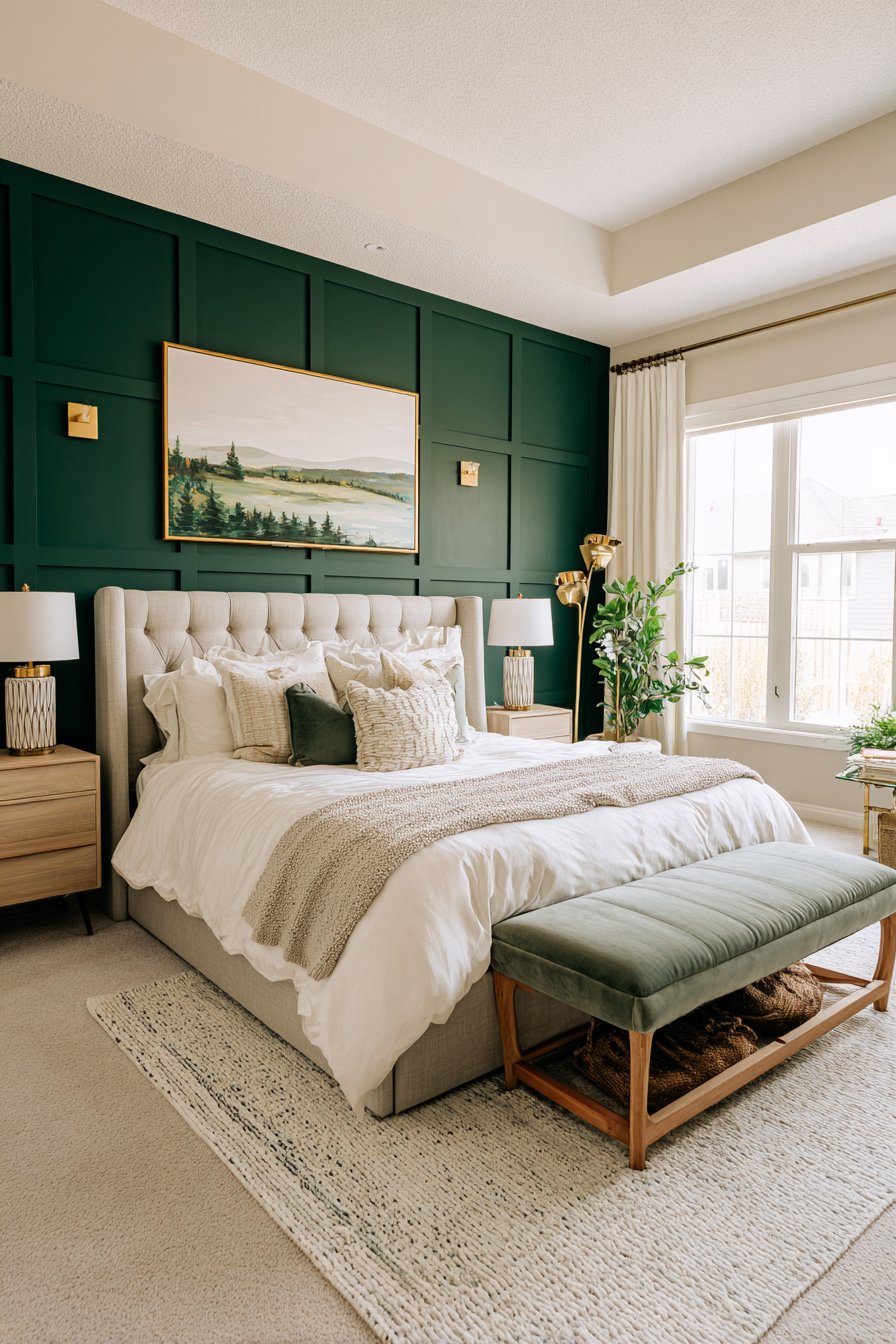
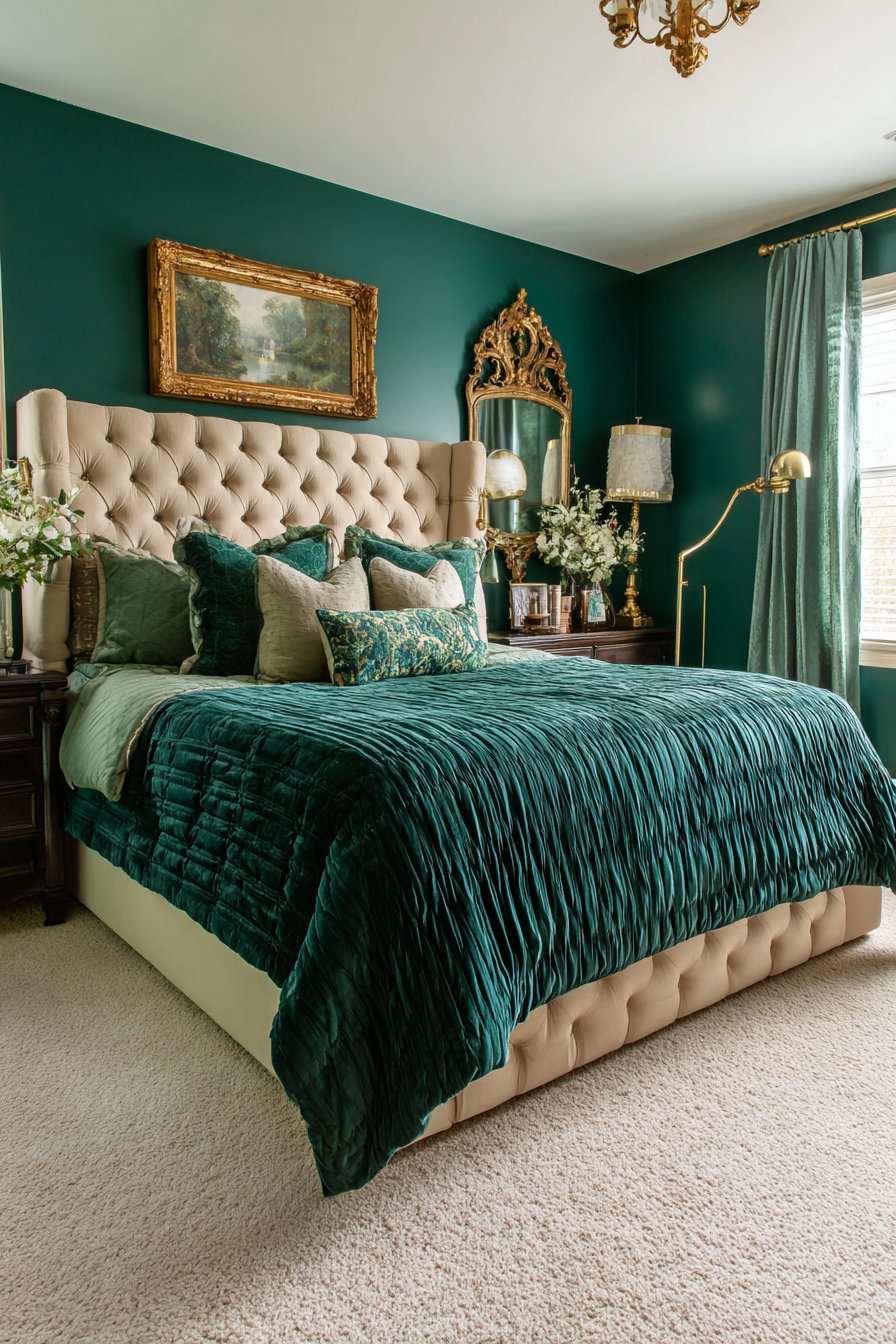
Creating a focal point through strategic color placement represents one of the most effective design techniques available to home decorators, and an emerald green accent wall exemplifies this approach perfectly. By limiting the dark green to a single wall behind the bed, this design achieves maximum impact while maintaining overall brightness and spaciousness in the room. The tufted headboard upholstered in complementary sage velvet creates luxurious textural interest and reinforces the green color story without overwhelming the senses. The remaining cream-colored walls provide essential balance, ensuring the room feels open and airy while allowing the emerald accent wall to truly command attention as the undisputed focal point.
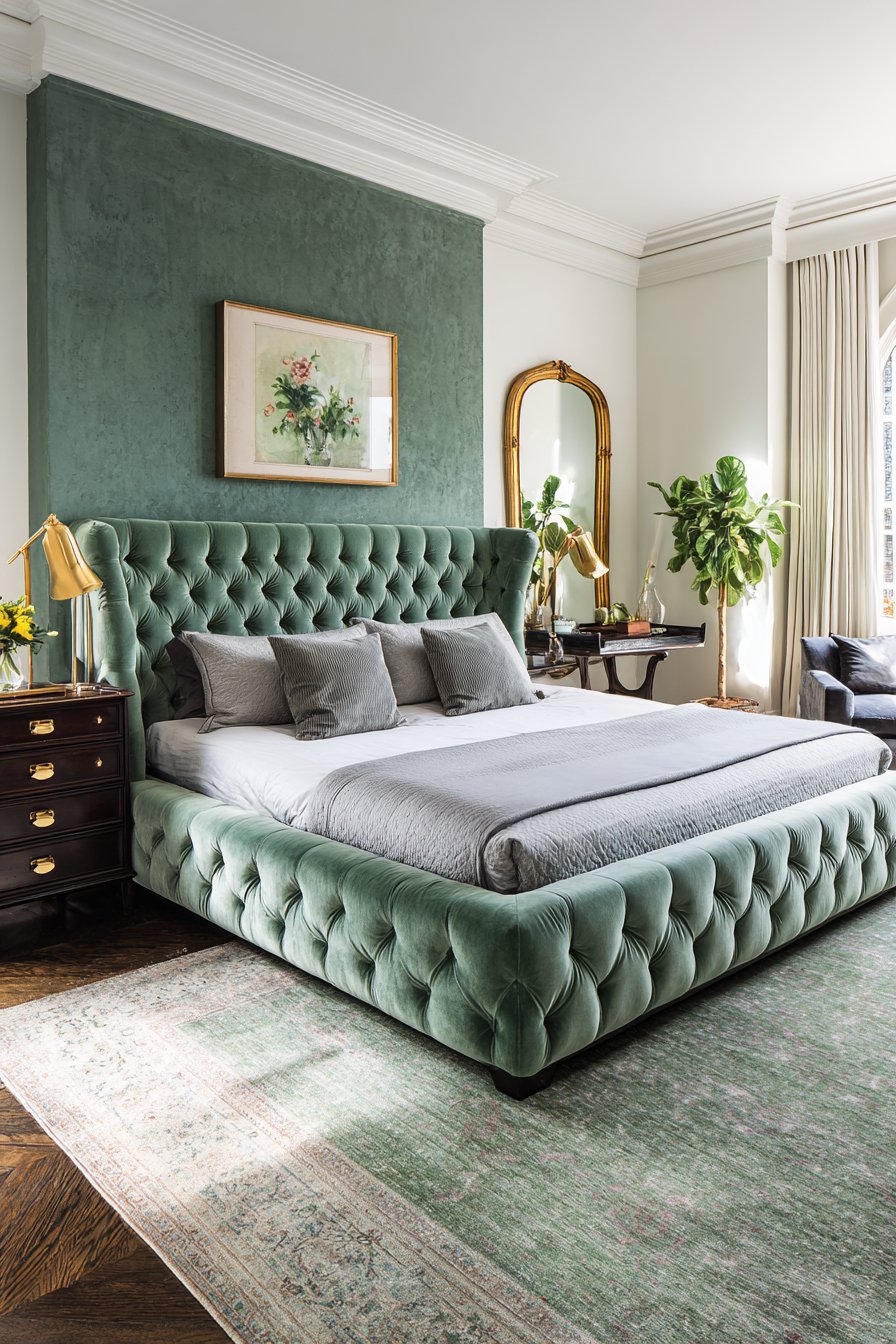
Metallic accents in brass and gold introduce warmth and glamour that elevate the entire design scheme. A brass floor lamp with its sculptural form and warm metallic finish catches and reflects light beautifully, creating points of visual interest and adding functional illumination for reading or evening relaxation. The gold-framed mirror serves double duty—it reflects both natural and artificial light to brighten the space while its ornate frame adds a touch of traditional elegance that prevents the room from feeling too stark or modern. These warm metallic elements create a sophisticated dialogue with the cool emerald tones, demonstrating how thoughtful material selection can create a cohesive, high-end aesthetic.
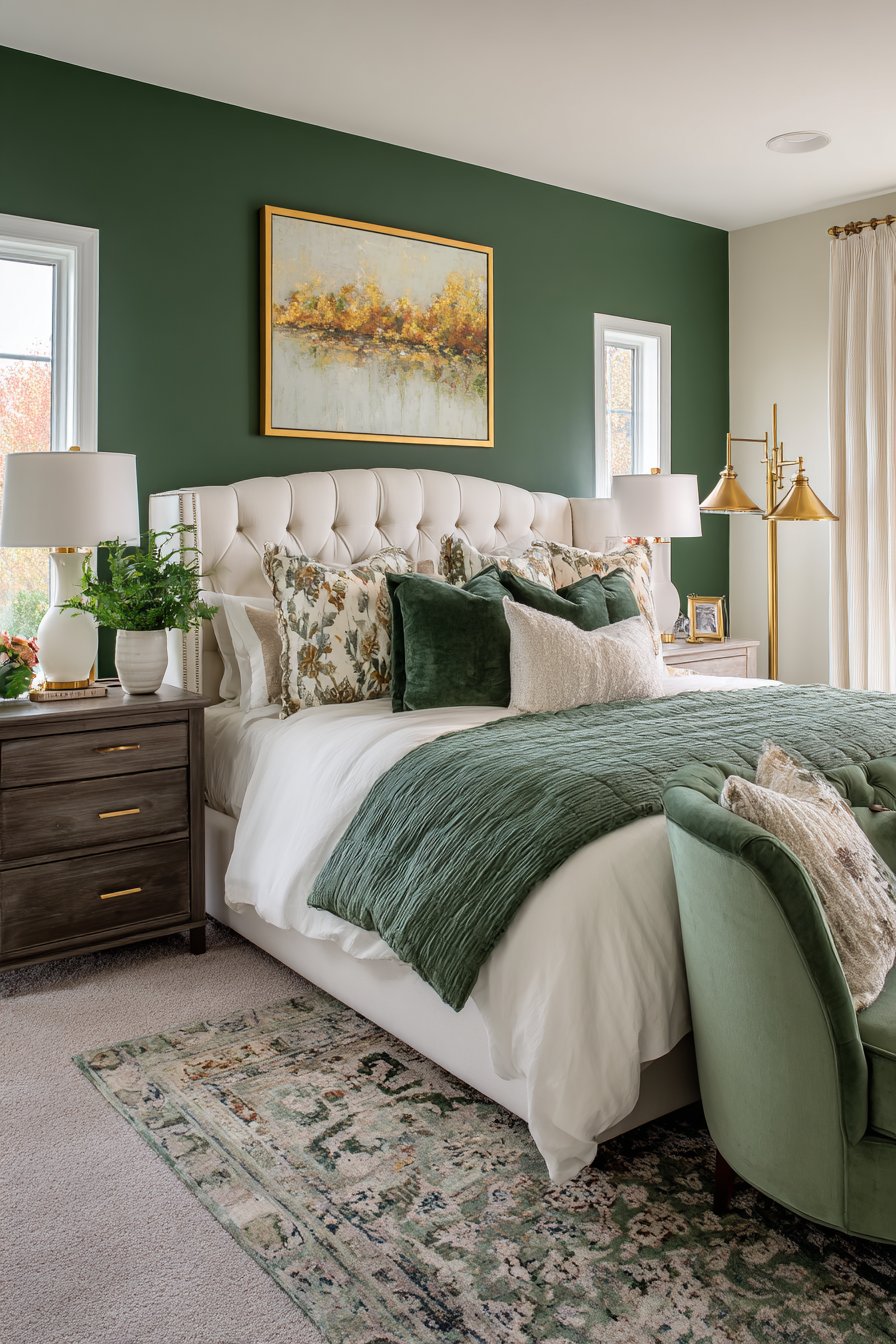
The layered green tones present in this design—from deep emerald on the accent wall to softer sage on the headboard—showcase the beautiful complexity possible within a single color family. This tonal variation creates depth and visual interest without introducing jarring color contrasts. The velvet upholstery on the headboard adds another dimension through its distinctive texture, which catches light differently than the flat paint on the wall, creating subtle variations in how we perceive the green hues. This attention to textural variety within a limited color palette demonstrates sophisticated design thinking that creates richness without clutter.
Key Design Tips:
- Paint only the wall behind the bed in dark green to create a dramatic focal point while maintaining overall room brightness
- Choose velvet upholstery for furniture pieces to add luxurious texture that enhances the perceived richness of green tones
- Incorporate warm metallic finishes like brass or gold to complement cool green hues and add glamorous touches
- Use mirrors strategically to reflect light and make the space feel larger while showcasing the beautiful accent wall from multiple angles
- Balance the dark accent wall with lighter neutral walls in cream, white, or soft beige to prevent the space from feeling enclosed
3. Forest Green Velvet Curtain Sanctuary
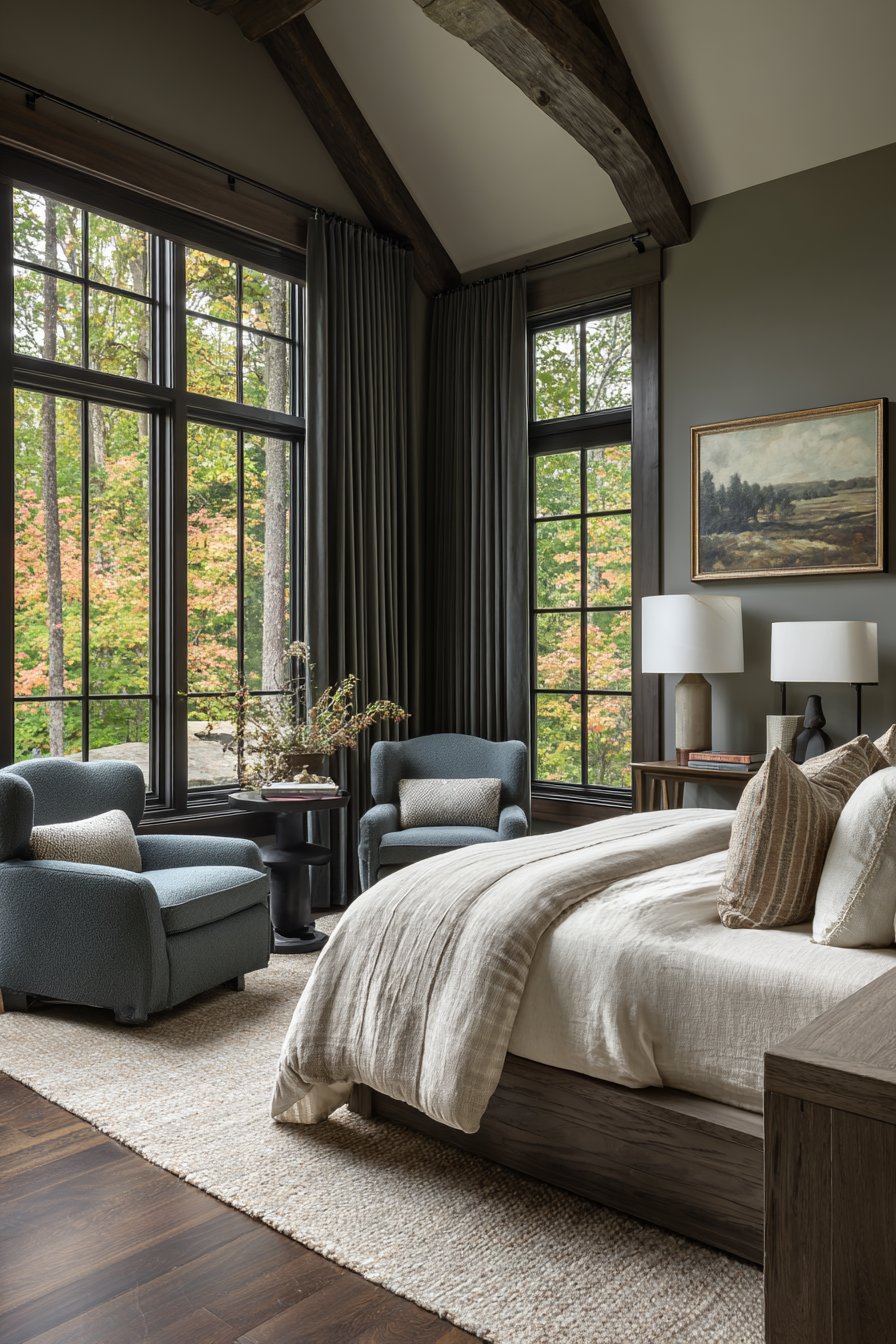
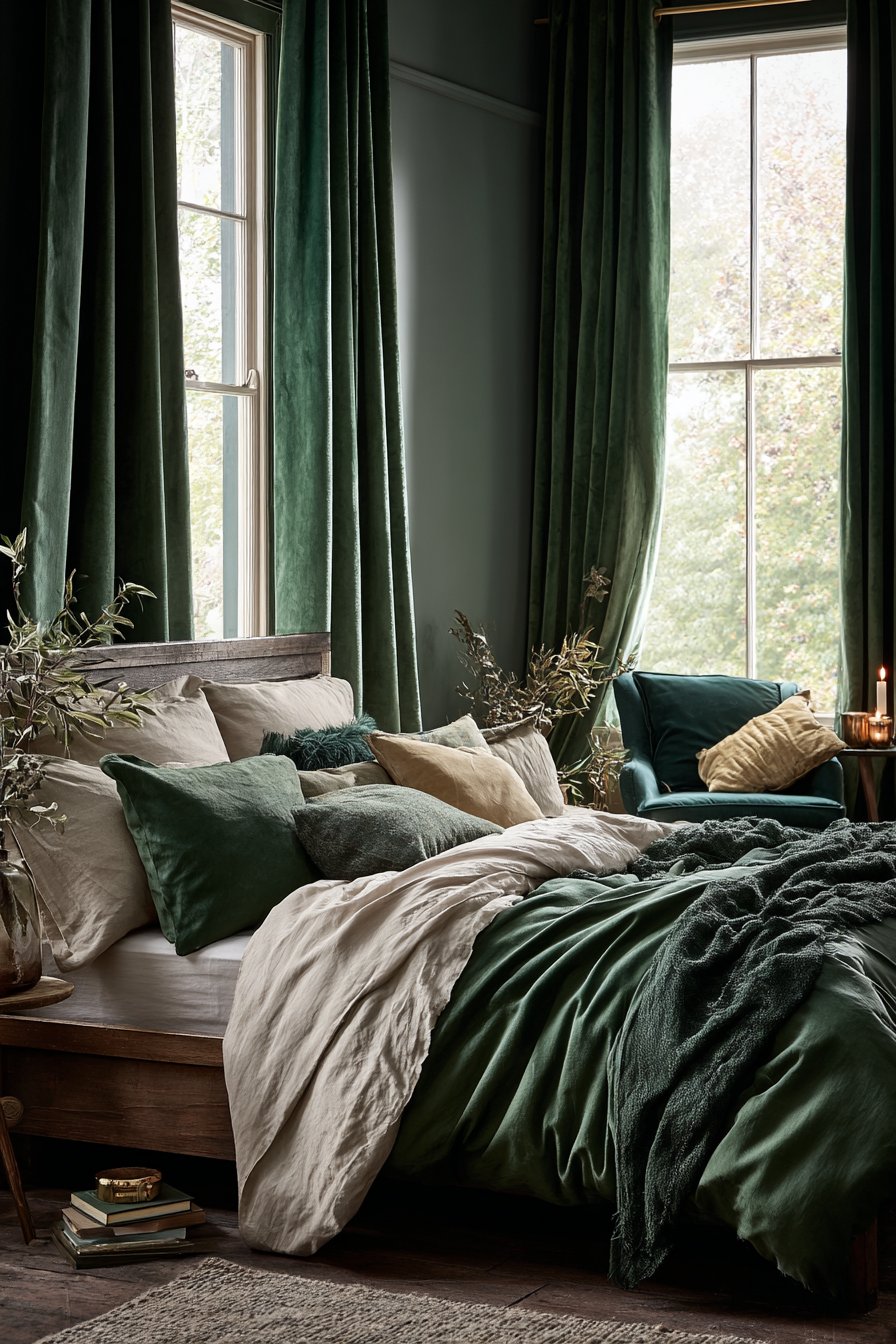
Floor-to-ceiling window treatments in rich forest green velvet transform ordinary windows into dramatic architectural features that anchor the entire bedroom design. These substantial curtains create vertical visual impact that draws the eye upward, making ceilings appear higher and the room feel more spacious despite the depth of the dark green color. The velvet fabric itself offers incredible depth and dimension, with its distinctive pile catching light to create subtle variations in tone that shift throughout the day. When drawn, these curtains create an enveloping sense of privacy and intimacy, while during daylight hours, they frame the windows beautifully and add sculptural presence to the room.
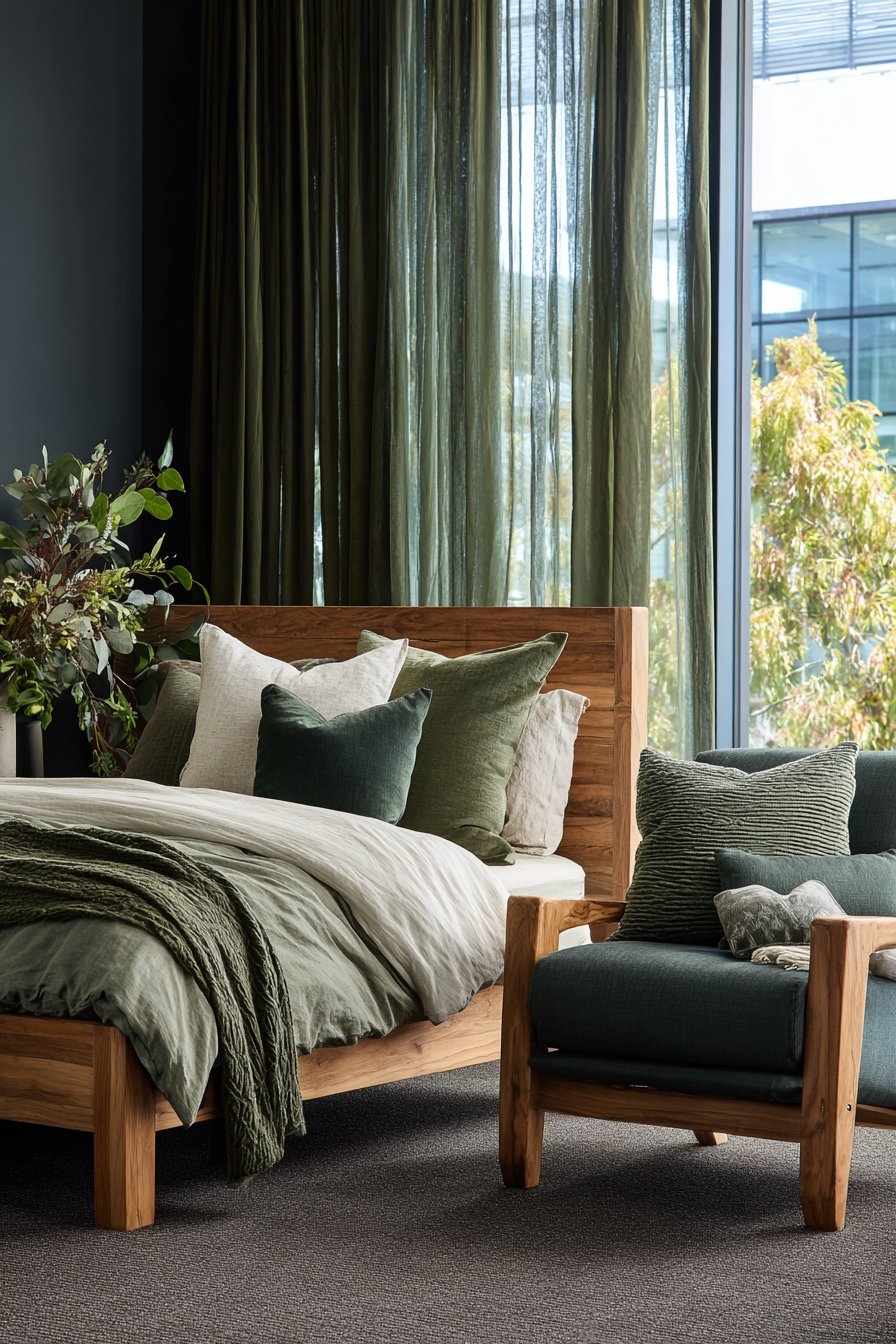
The simple wooden bed frame and mixed bedding in ivory and olive tones provide essential balance to the dramatic curtain treatment. By keeping furniture lines clean and uncomplicated, the design allows the curtains to remain the star while ensuring the room doesn’t feel overly busy or cluttered. The ivory bedding introduces crucial brightness and creates a restful focal point at eye level, while olive accent pillows create tonal continuity with the forest green curtains. This thoughtful color coordination demonstrates how limiting your palette to variations within the same color family creates cohesion and sophistication.
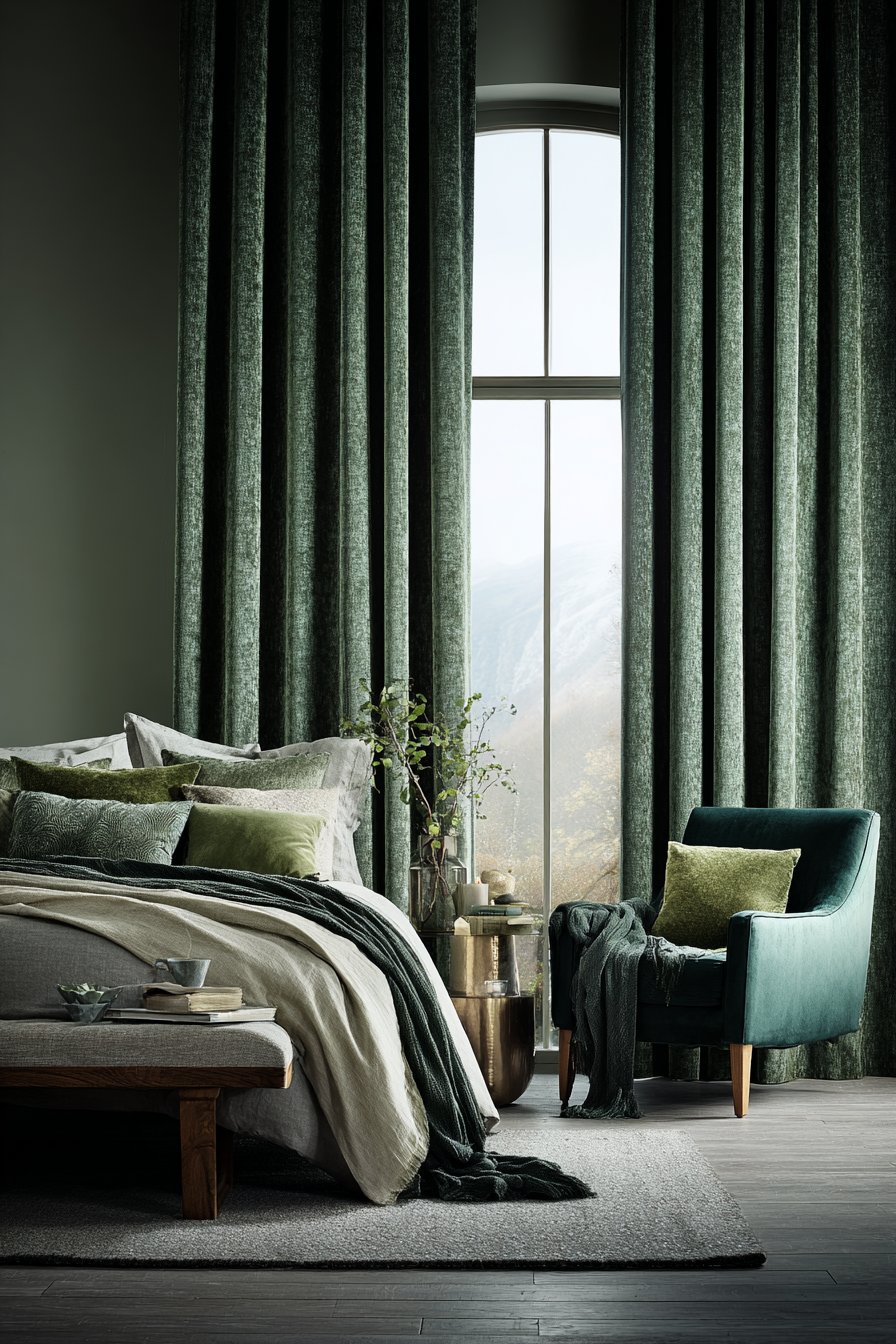
A comfortable armchair positioned near the windows creates the perfect reading nook, taking full advantage of natural light while offering a cozy retreat within the larger bedroom space. Upholstered in complementary dark teal, this seating area extends the cool-toned color story while providing functional variety. The strategic placement near the window maximizes natural daylight for reading during the day, while the proximity to the lush curtains creates a sense of being nestled in a private, green-wrapped sanctuary. The sheer underlayers beneath the velvet curtains deserve special mention—they allow filtered natural light to enter when privacy isn’t paramount, creating a soft, diffused glow that highlights the depth and texture of the velvet.
Key Design Tips:
- Invest in floor-to-ceiling curtains to create dramatic vertical lines and make ceilings appear higher
- Choose velvet fabric for dark green curtains to maximize texture and light-catching properties that create visual interest
- Install sheer underlayer curtains to provide daytime privacy while allowing soft, filtered natural light to illuminate the space
- Position a comfortable reading chair near windows to create a functional nook that takes advantage of natural light
- Keep bedding and furniture simple when using dramatic window treatments to maintain visual balance and prevent overwhelming the space
4. Moss Green Built-In Storage Innovation
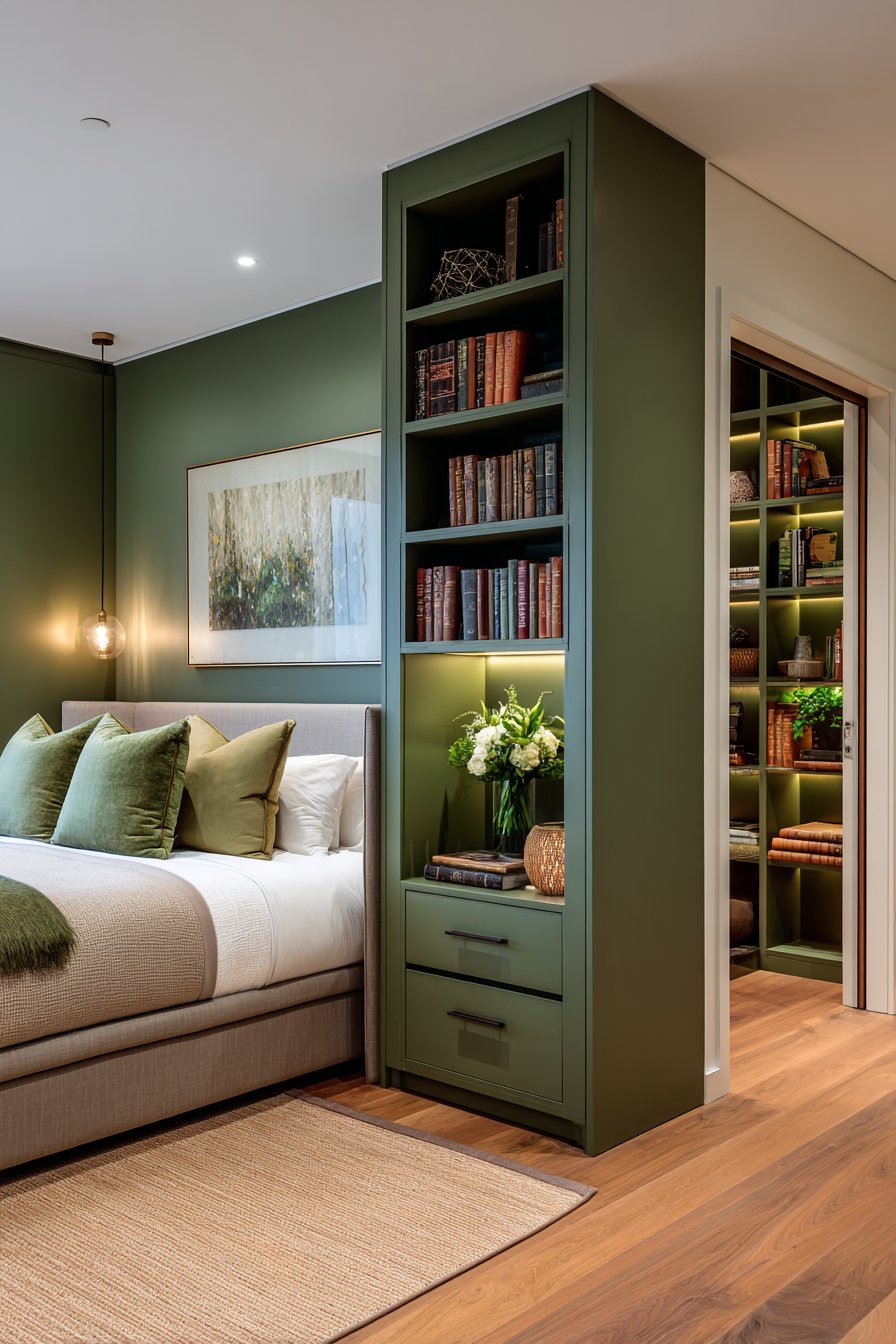
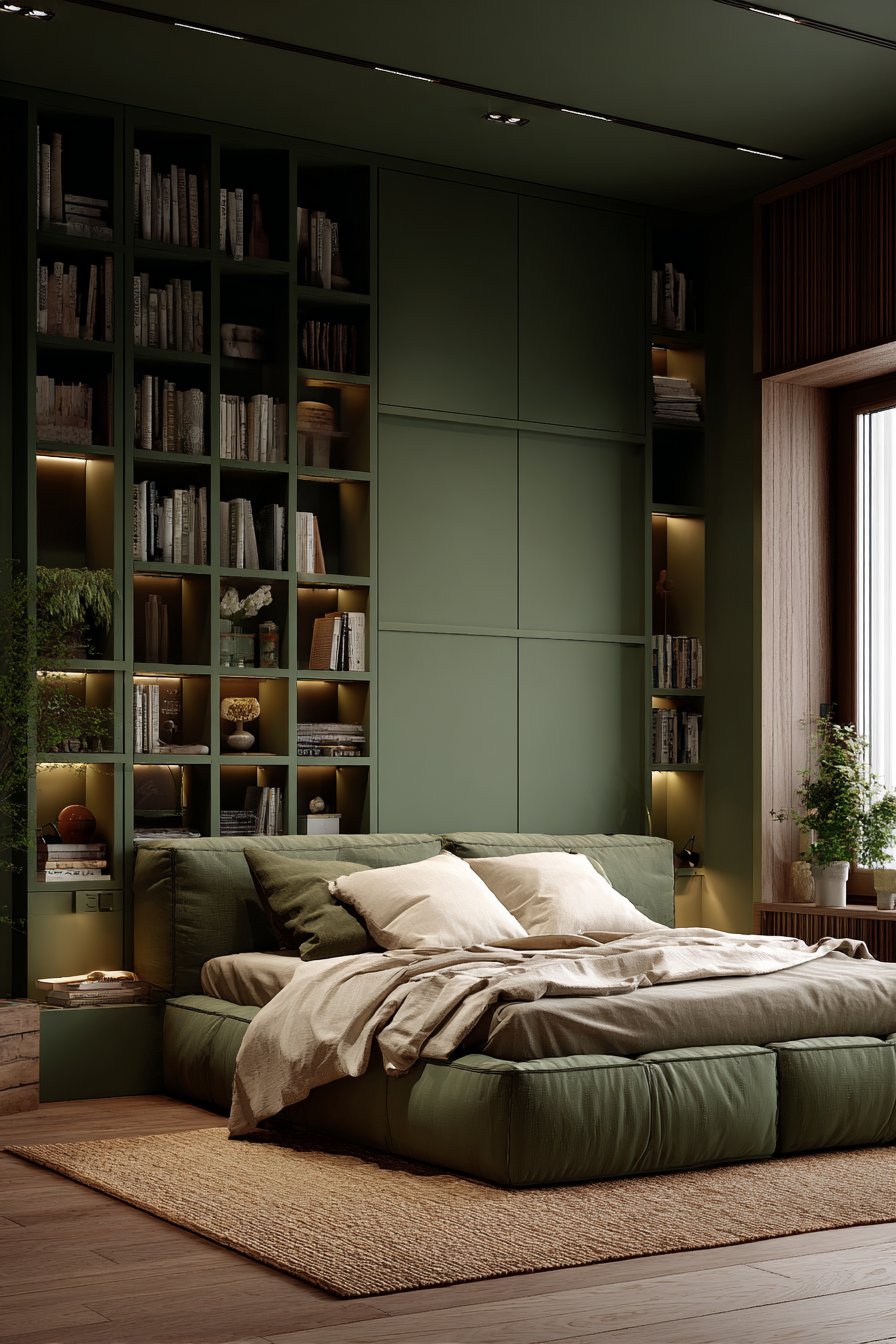
Built-in shelving painted in deep moss green represents a perfect marriage of functionality and aesthetic impact, transforming necessary storage into a striking design feature. This approach works particularly well in bedrooms where space optimization is crucial, as built-in units maximize every inch while providing ample display and storage opportunities. The deep moss green color creates dramatic visual impact that draws attention to the architectural element, making it a focal point rather than an afterthought. Against the darker shelving backdrop, books and carefully curated decorative objects pop with enhanced contrast, creating a gallery-like display that adds personality and character to the bedroom.
The strategic decision to maintain neutral cream walls in the bed area demonstrates sophisticated design restraint and practical thinking. While the dark green shelving makes a bold statement, keeping the sleeping area lighter ensures the space doesn’t feel too enclosed or oppressive. This zoning approach—using color to define different functional areas within the same room—creates visual interest and helps organize the space psychologically. The eye naturally distinguishes between the storage/display area marked by dark green and the rest/sleep area marked by softer neutral tones, even though no physical barriers separate these zones.
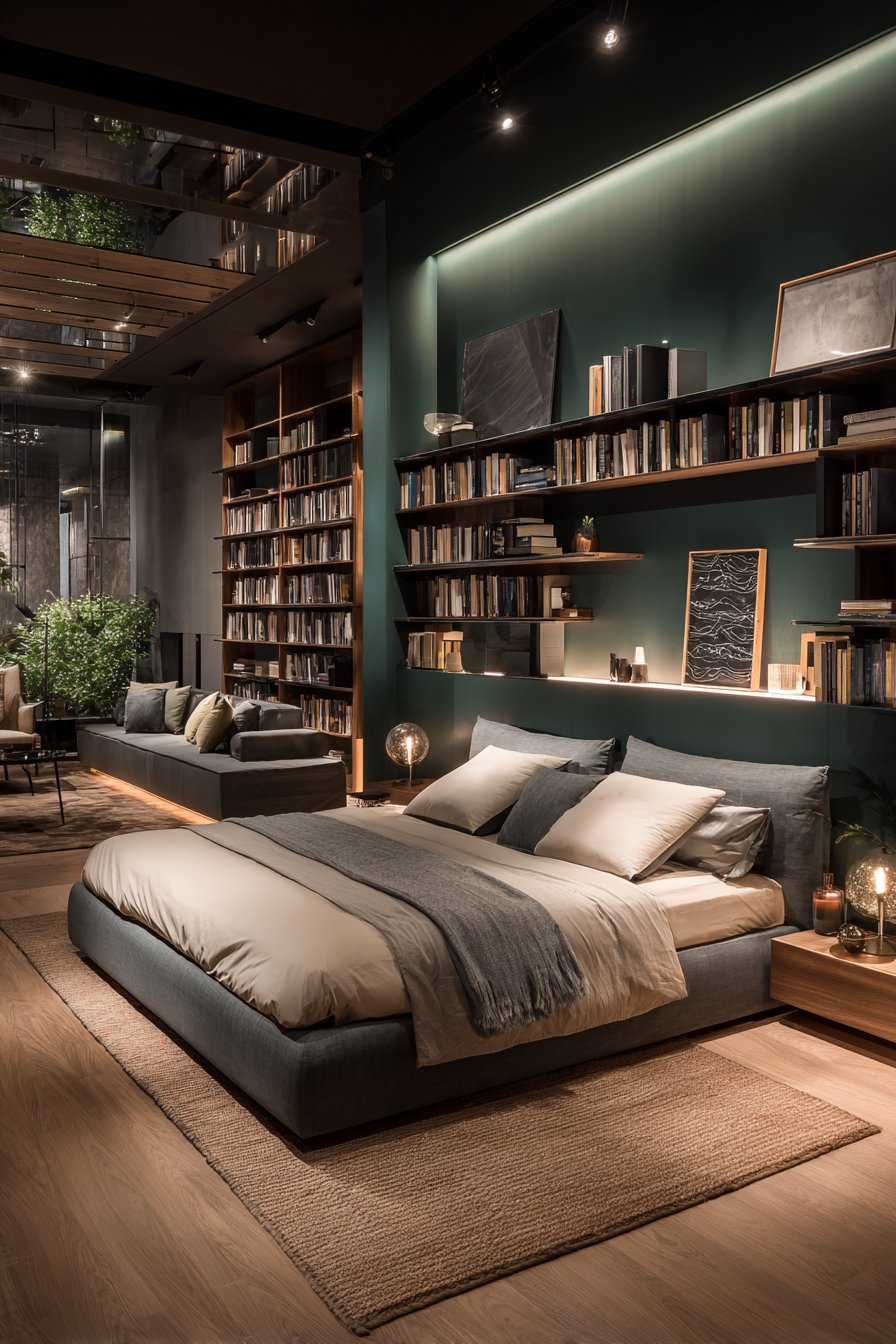
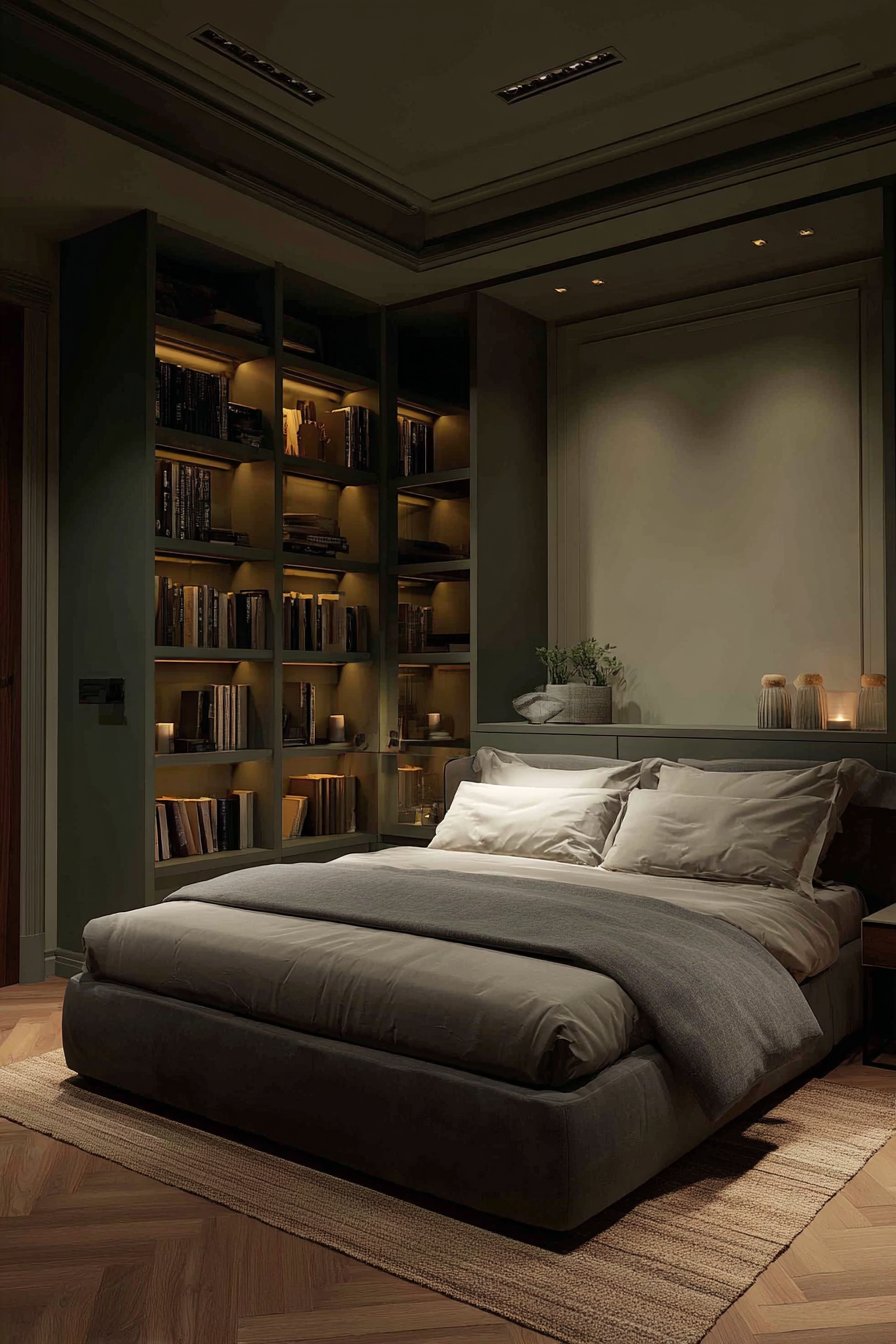
Warm wood flooring and a jute area rug introduce essential natural textures that ground the design and prevent it from feeling too color-focused or one-dimensional. The honey tones in the wood flooring create warmth that balances the cool green shelving, while the jute rug’s organic texture adds tactile interest and reinforces the nature-inspired aesthetic that dark green naturally evokes. Soft recessed lighting within or near the shelving units adds functional illumination for nighttime reading or item retrieval while creating ambient mood lighting that highlights the beautiful moss green color and casts gentle shadows that emphasize the shelving’s architectural depth.
Key Design Tips:
- Paint built-in storage units in dark green to transform functional elements into striking design features
- Maintain neutral walls in the sleeping area to balance dramatic shelving and prevent the room from feeling too dark
- Install recessed or integrated lighting within shelving to provide functional illumination and highlight displayed items
- Choose warm wood flooring to complement cool green tones and add necessary warmth to the overall palette
- Style shelves thoughtfully with varied heights and carefully edited collections rather than overcrowding, allowing the green backdrop to shine
5. Pine Green Ceiling Surprise
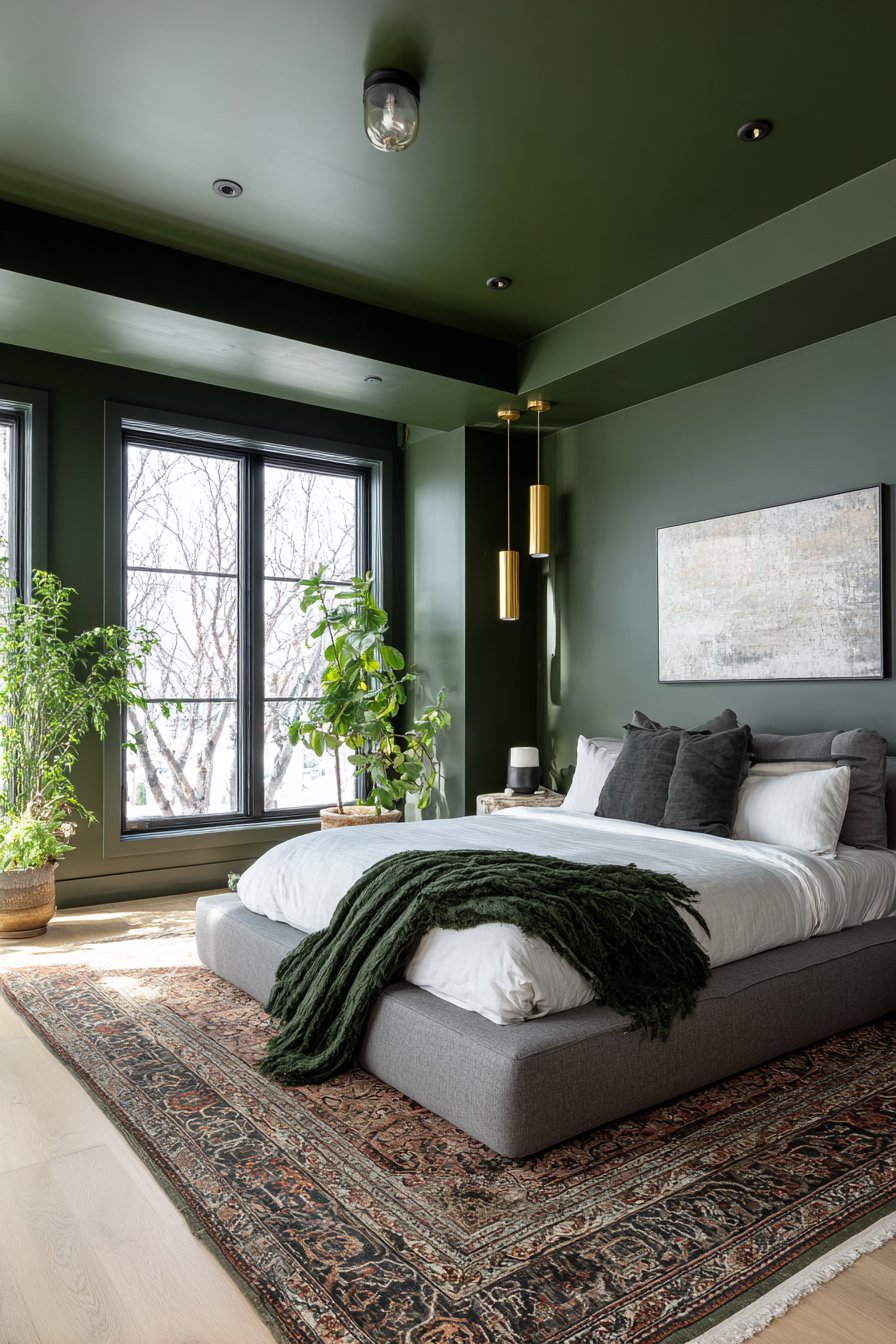
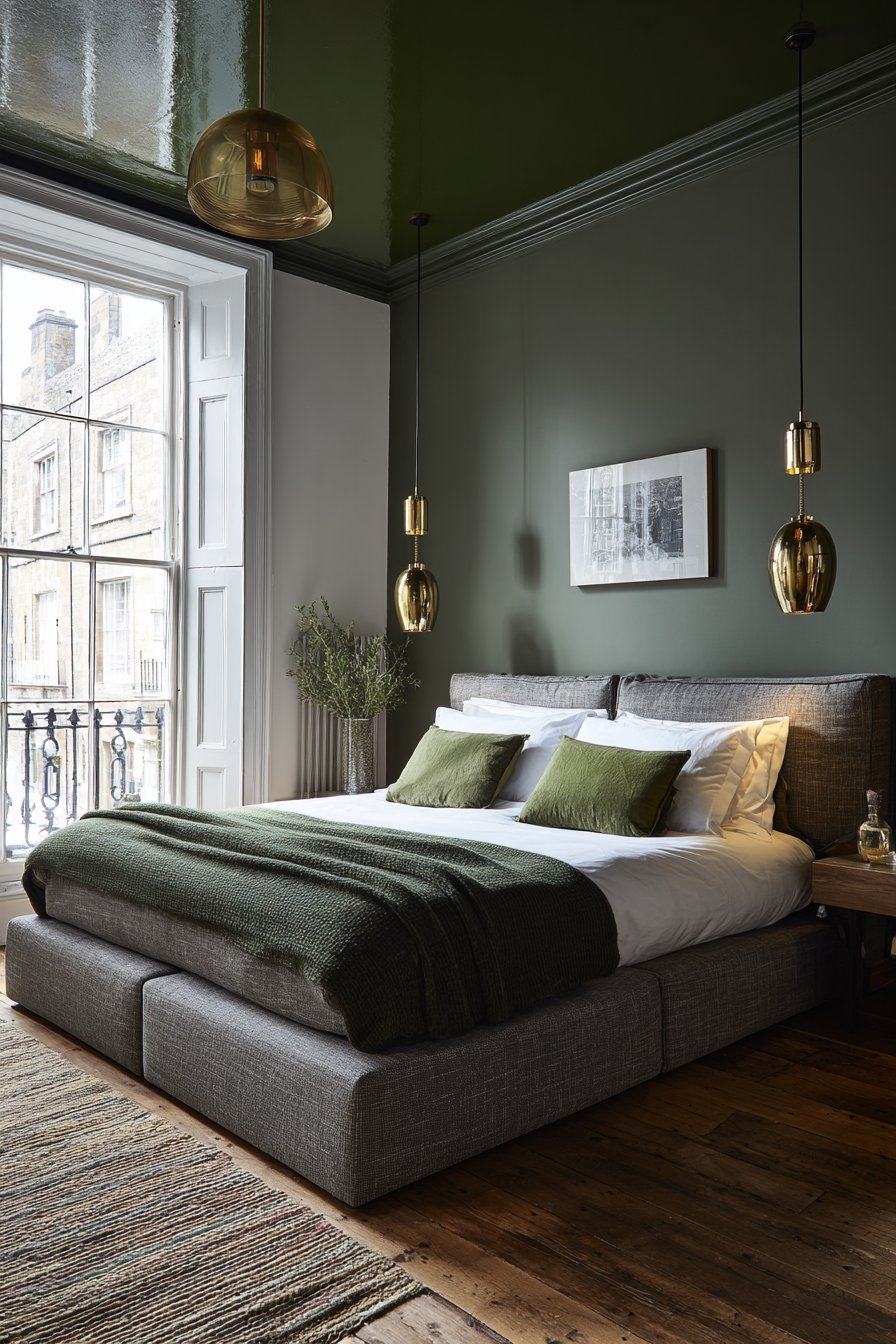
Painting the ceiling in deep pine green while maintaining white walls represents an unexpected and sophisticated approach to incorporating dark color into bedroom design. This unconventional placement creates immediate visual intrigue—our eyes naturally travel upward, discovering the rich green expanse overhead with delighted surprise. The psychological effect differs markedly from dark walls; rather than feeling enclosed, the space feels wrapped in color from above, like resting beneath a canopy of evergreen trees. This approach works particularly well in rooms with good ceiling height, as it emphasizes the vertical dimension while the light walls maintain openness and brightness at eye level.
The low-profile bed with grey upholstery provides the perfect grounding element for this ceiling-focused design. By keeping furniture lines low and simple, the design ensures sight lines remain clear to appreciate the ceiling treatment fully. The grey upholstery offers neutral sophistication that doesn’t compete with the overhead green, while dark green throw blankets create tonal continuity and bring touches of the ceiling color down to the functional living level. This vertical color connection—echoing the ceiling color in accessories at lower levels—helps integrate the unexpected overhead treatment into the overall design scheme rather than leaving it feeling isolated or disconnected.
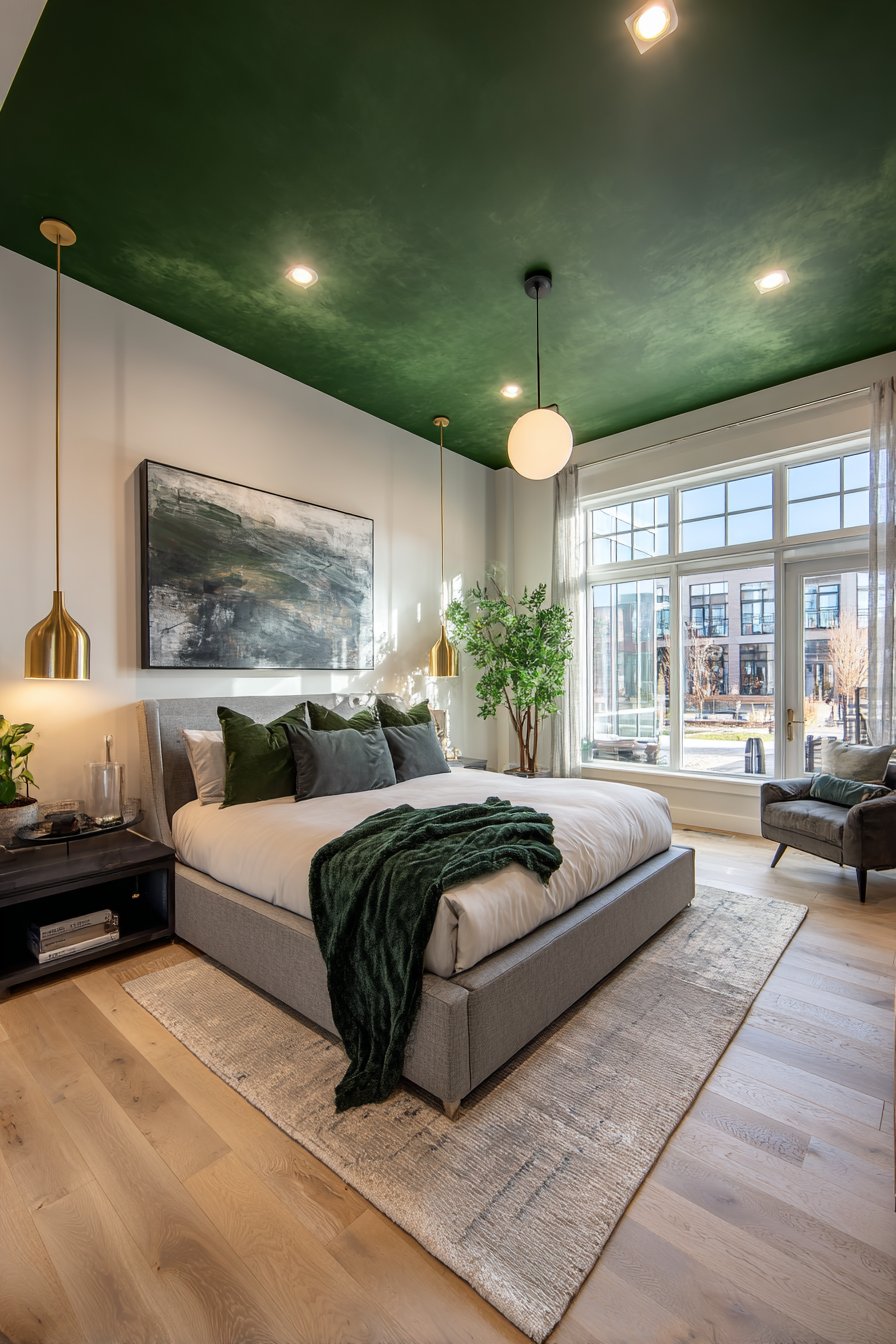
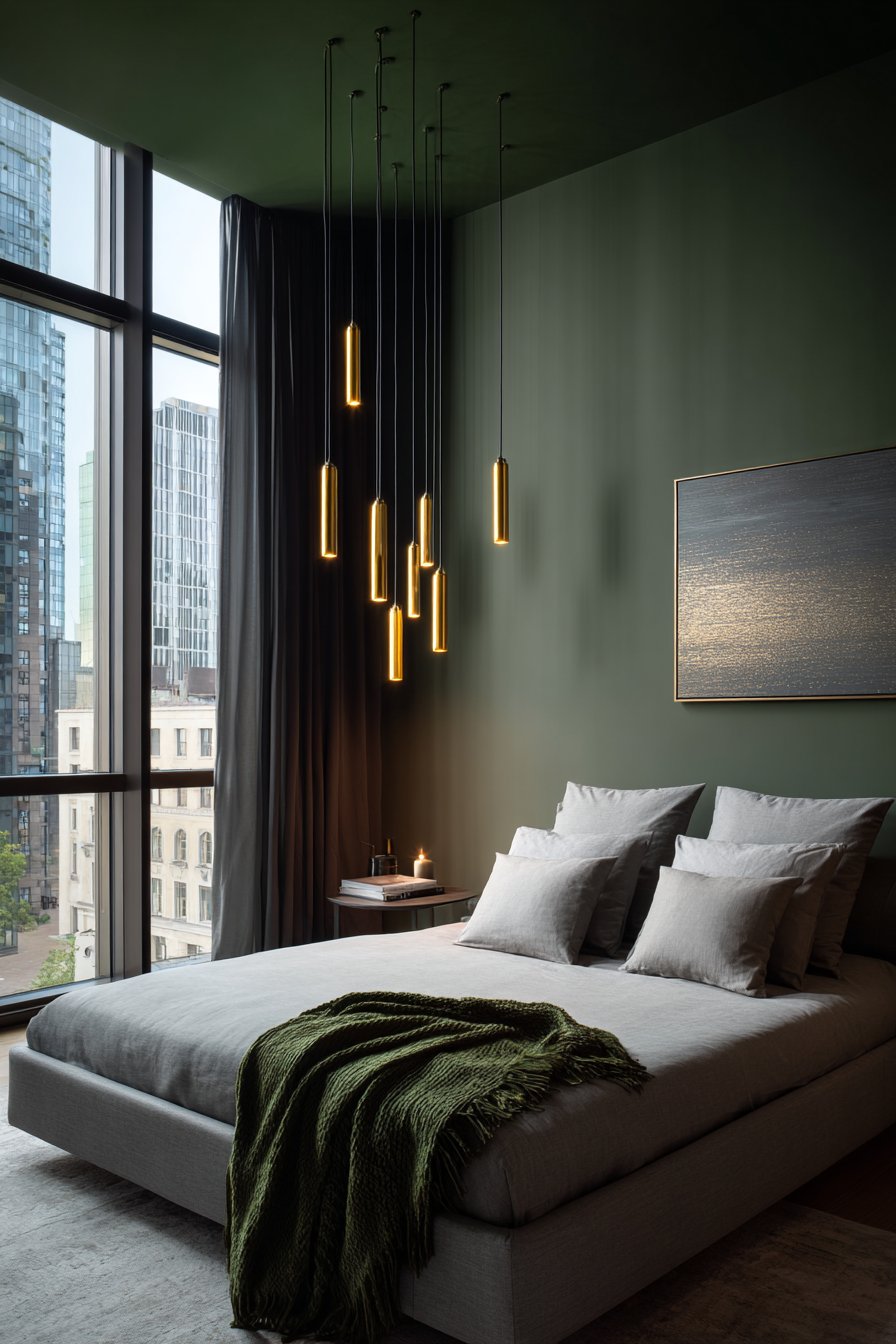
Pendant lights hanging at varying heights introduce dynamic visual interest and serve as sculptural elements that bridge the white walls and green ceiling. With brass finishes that catch and reflect light, these fixtures add warmth and glamour while their varied heights create rhythm and movement that guides the eye around the room. The interplay between natural light, the green ceiling, and the pendant fixtures throughout the day creates constantly shifting shadows and highlights that keep the space feeling fresh and alive. Morning light reveals the green ceiling’s truest color, while evening artificial light from the brass pendants adds golden warmth that makes the pine green feel richer and more inviting.
Key Design Tips:
- Paint ceilings in dark green for unexpected visual impact that feels less enclosing than dark walls
- Choose low-profile furniture to maintain clear sight lines and emphasize the ceiling treatment
- Install pendant lights at varying heights to create visual rhythm and bridge the ceiling color with the rest of the room
- Use throw blankets or pillows in ceiling-matching green to create color continuity throughout the vertical space
- Ensure adequate natural light to prevent the dark ceiling from making the room feel cave-like—this approach works best in bright rooms

6. Bohemian Sage Green Haven
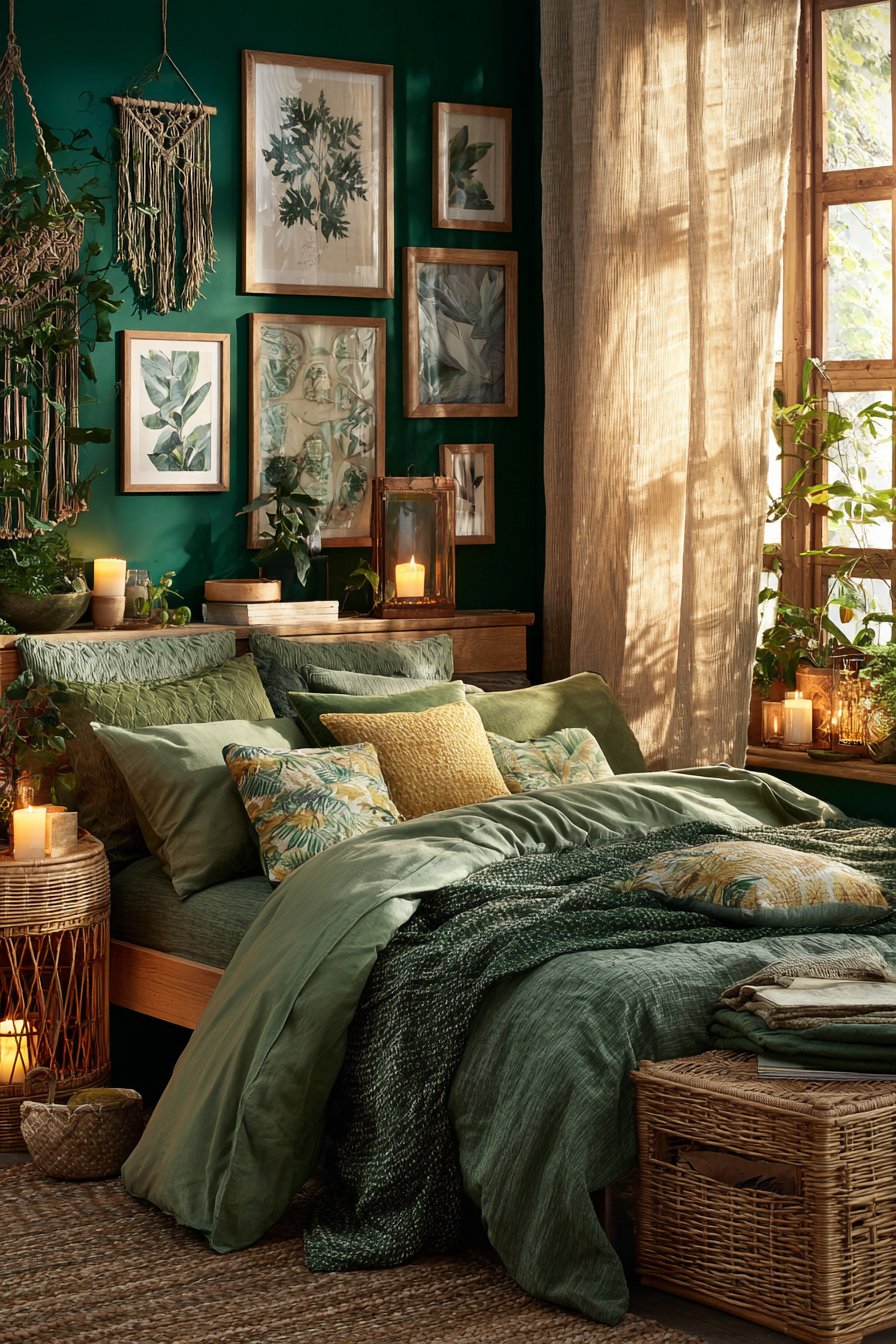
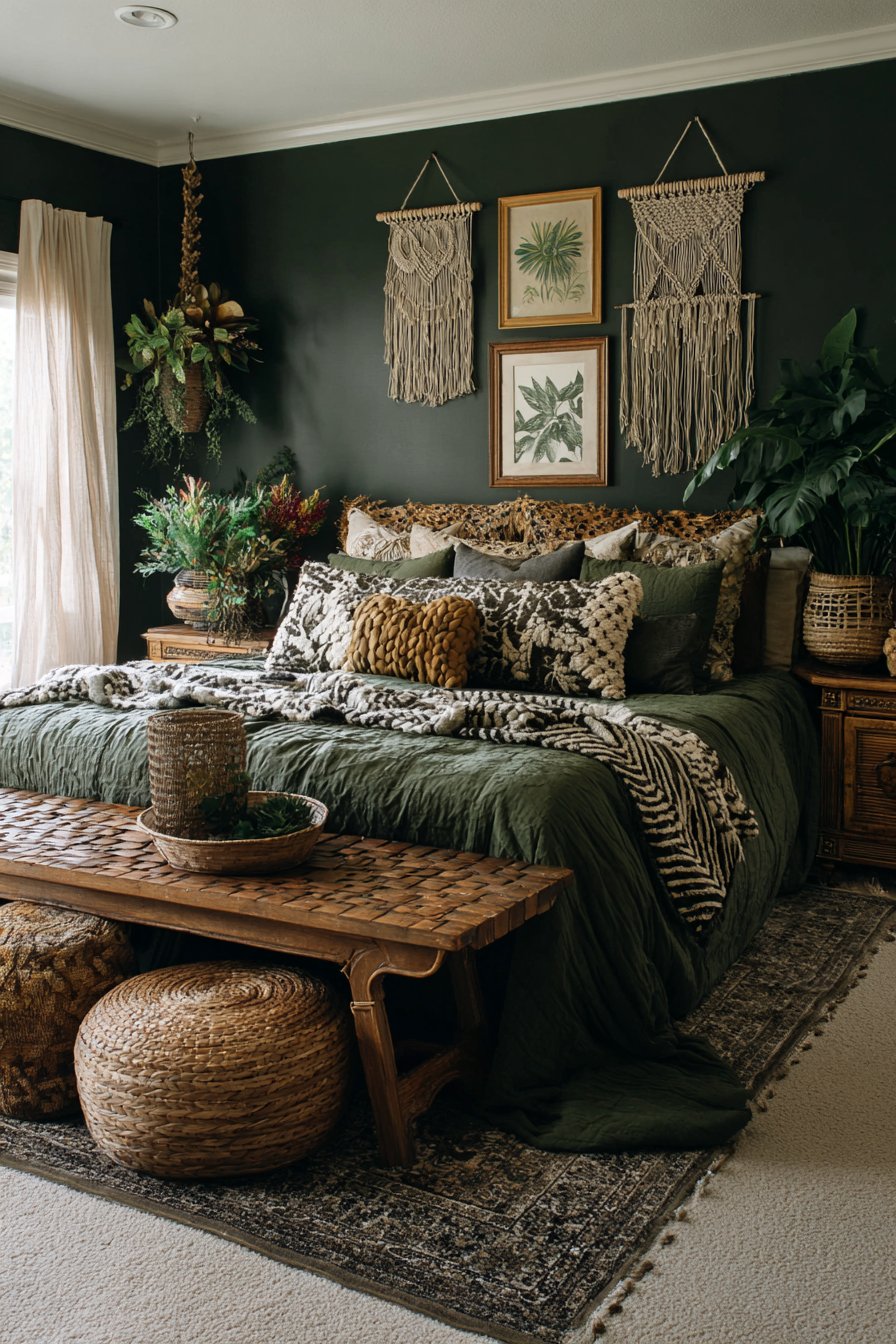
A bohemian approach to dark green bedroom design centers on creating layered, organic spaces filled with personal character and natural textures. The dark sage green accent wall serves as the perfect backdrop for an eclectic collection of macramé wall hangings and botanical prints housed in natural wood frames. This combination celebrates handcrafted artistry and brings nature indoors through both color and imagery, creating a space that feels personally curated rather than commercially designed. The slightly darker, more muted sage tone works beautifully in bohemian interiors because it provides depth without the formality that deeper emerald or hunter greens might impose.
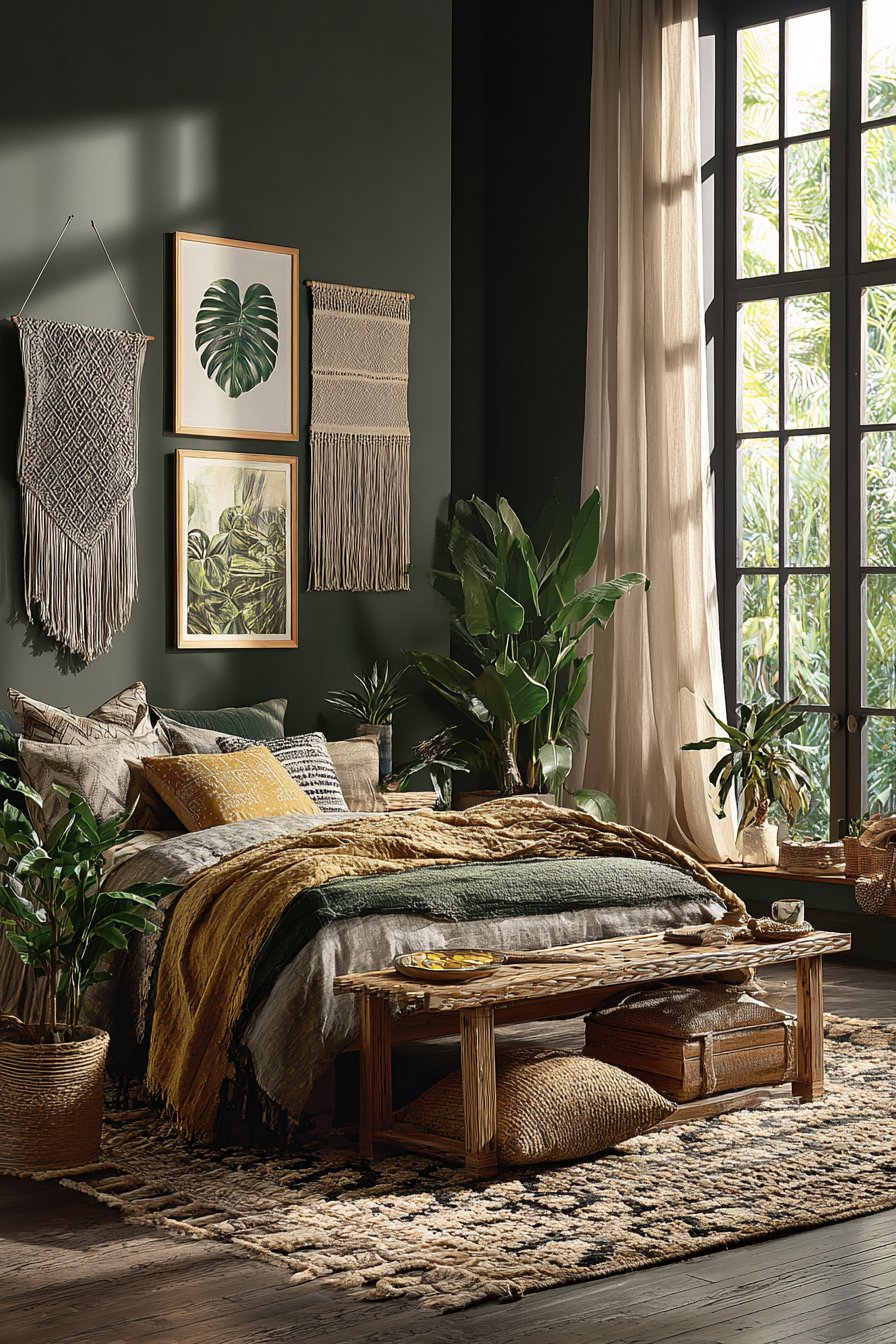
The bed becomes a textural playground in this design, with layers upon layers of textiles in various green tones ranging from soft olive to rich emerald. This approach to bedding—mixing patterns, textures, and shades within the same color family—exemplifies bohemian design philosophy that celebrates abundance and personal expression. Embroidered throws, woven blankets, printed duvet covers, and varied pillow textures create visual richness that invites touch and promises comfort. The varied green tones prevent the space from feeling too matchy-matchy while maintaining overall color cohesion, and the natural variations in handmade or artisanal textiles add authentic character.
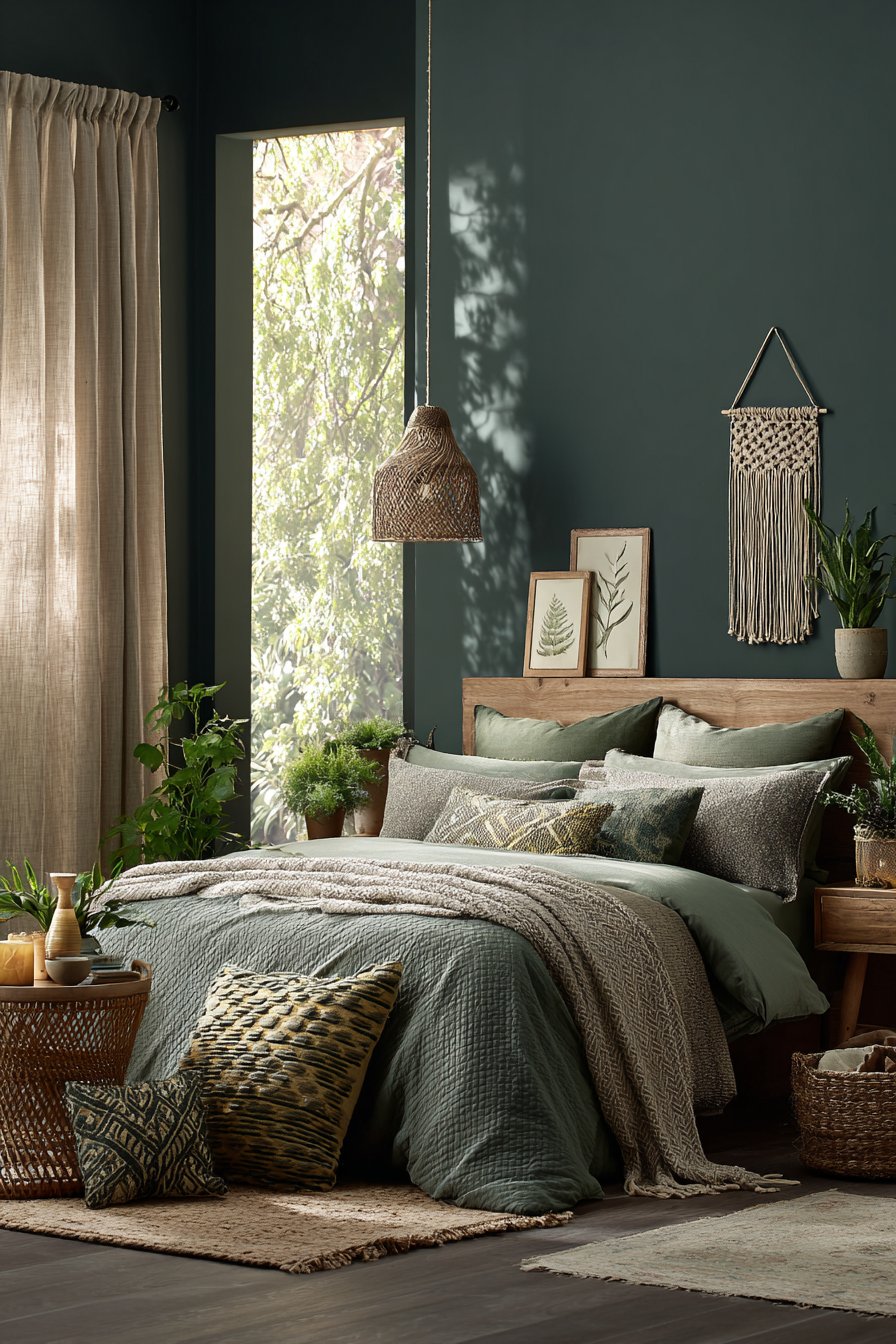
Rattan bedside tables and an abundance of potted plants reinforce the organic, nature-inspired aesthetic central to both bohemian style and the dark green color palette. The rattan’s honey tones and visible weave texture add warmth and handcrafted appeal, while the plants introduce living green elements that complement and extend the painted green tones. Golden hour lighting—that magical time when sunlight takes on warm, honeyed quality—transforms this bedroom into something truly special, casting warm highlights on the dark sage wall and making all the layered textiles glow with inviting warmth. Gauzy curtains filter this beautiful light softly, creating a dreamy, romantic atmosphere perfect for bohemian sensibilities.
Key Design Tips:
- Layer multiple textile patterns and textures in varying green shades for authentic bohemian richness
- Incorporate handmade elements like macramé or woven wall hangings to add artisanal character
- Choose natural wood furniture in warm tones like rattan or bamboo to complement green walls
- Add abundant live plants to reinforce the organic aesthetic and introduce living green elements
- Install gauzy, lightweight curtains that filter natural light softly rather than blocking it completely
7. Bottle Green Paneled Sophistication
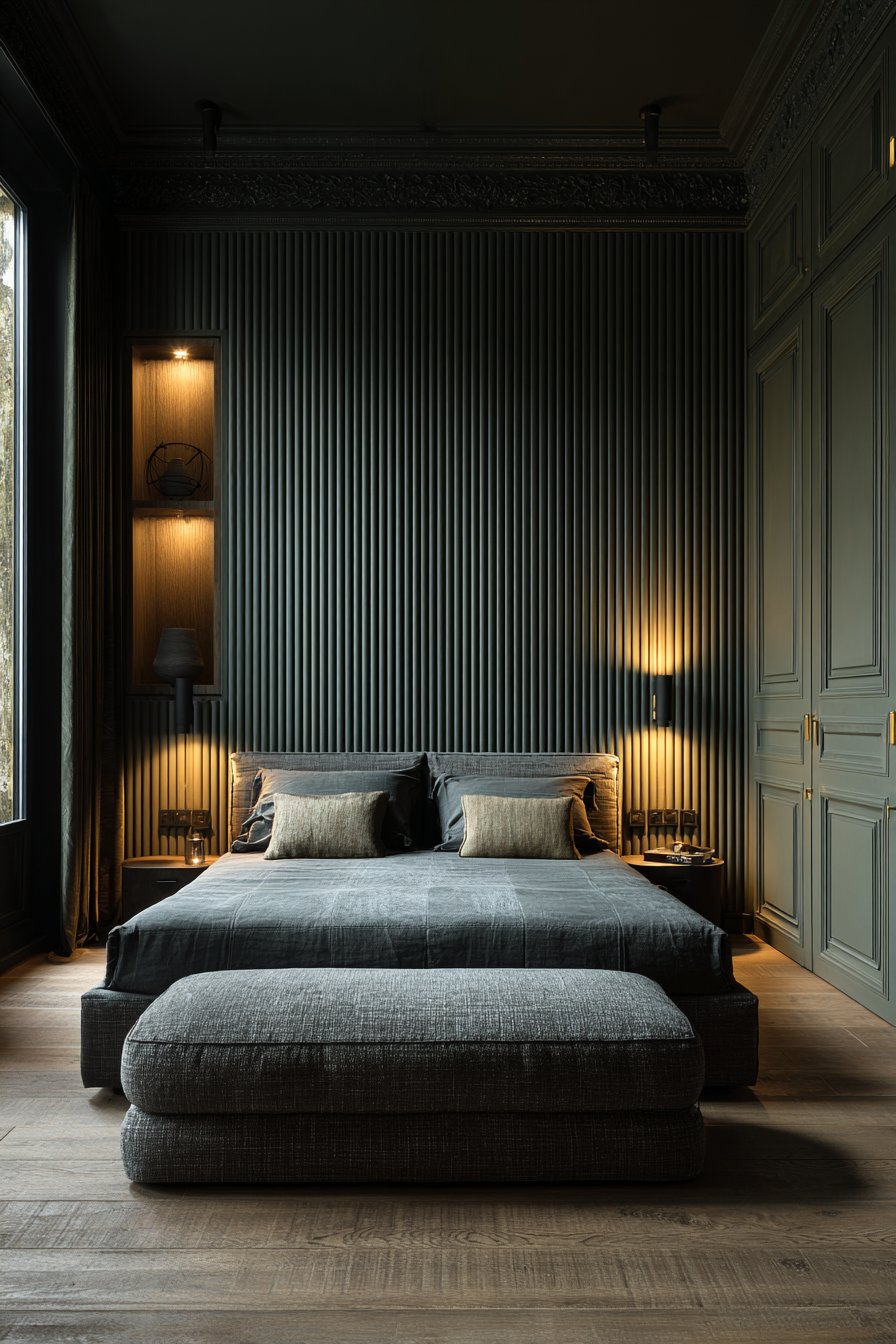
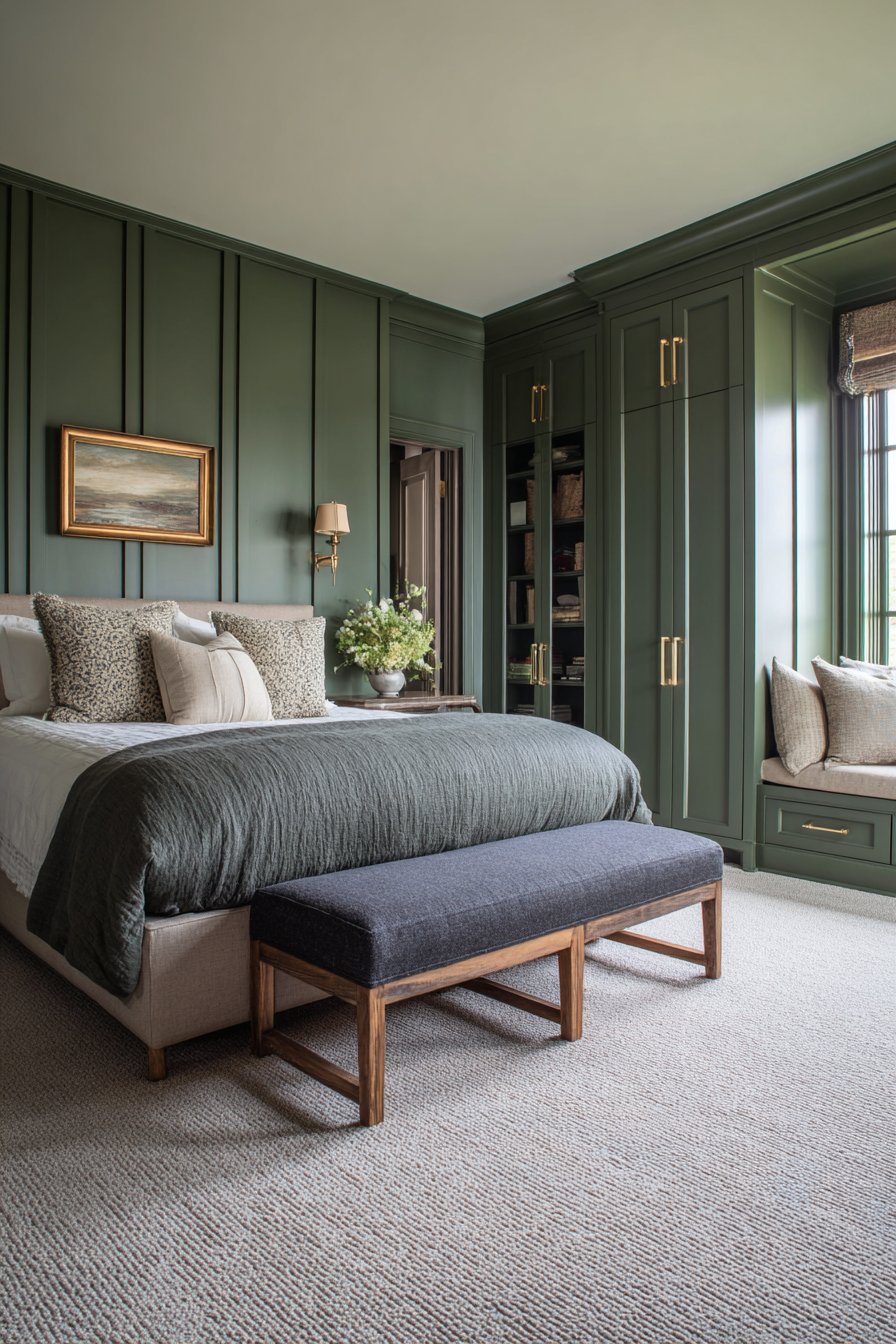
Wall paneling in deep bottle green with subtle vertical grooves represents the pinnacle of architectural sophistication in bedroom design. This treatment elevates dark green from simple paint color to true architectural feature, adding dimension and shadow-play that flat walls cannot achieve. The vertical grooves create subtle lines that draw the eye upward, making ceilings appear higher while adding refined texture that changes throughout the day as light angles shift. The bottle green shade—deeper and richer than many other greens—exudes luxury and creates the feeling of a high-end hotel suite or exclusive private club.
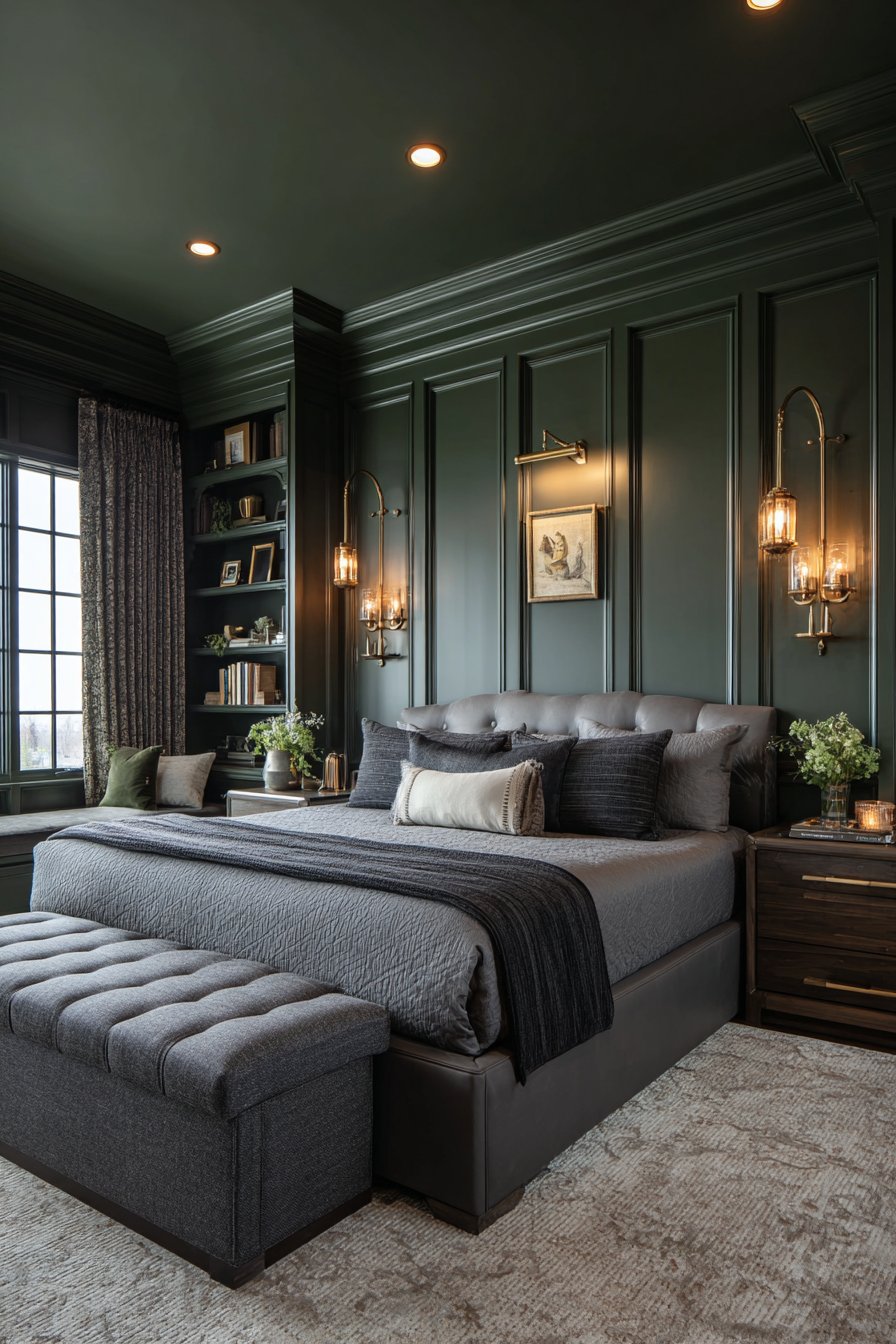
An upholstered bench positioned at the foot of the bed in complementary charcoal grey demonstrates how neutral elements can enhance rather than diminish a bold color scheme. The grey provides sophisticated contrast without introducing jarring color conflicts, and the upholstered surface adds softness that balances the paneling’s structured formality. This functional piece serves multiple purposes—providing seating for putting on shoes, a place to lay out tomorrow’s outfit, or simply an additional surface that extends the room’s usable space. The charcoal grey creates a visual bridge between the deep green walls and lighter bedding, helping integrate all elements into a cohesive whole.
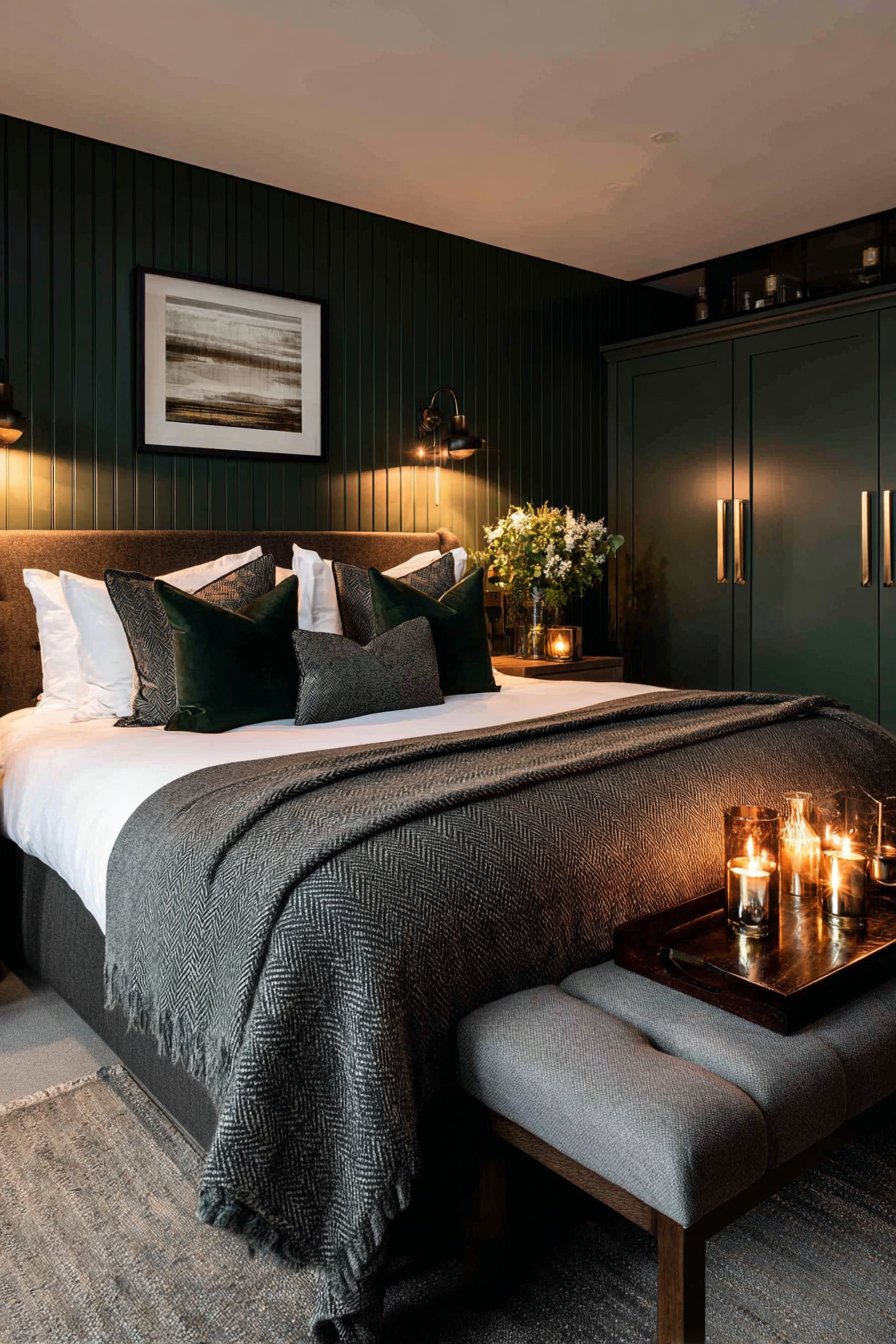
Brushed gold hardware on built-in closet doors introduces carefully measured glamour that prevents the sophisticated color scheme from feeling too serious or masculine. These metallic accents catch both natural and artificial light, creating sparkle and visual interest that enlivens the deep green backdrop. Wall sconces flanking the bed provide layered lighting that’s essential in rooms with dark walls—the soft ambient glow they cast creates gentle shadows that emphasize the paneling’s texture and depth. The brushed rather than shiny gold finish maintains the room’s sophisticated restraint, adding warmth and light reflection without appearing ostentatious or overly decorative.
Key Design Tips:
- Install wall paneling with vertical grooves to add architectural interest and create shadow-play with dark green paint
- Choose deep, rich green shades like bottle green for maximum luxury and sophistication
- Add upholstered furniture in neutral greys or charcoals to provide contrast without color conflict
- Incorporate brushed gold or brass hardware and fixtures to add warmth and light reflection
- Install wall sconces for essential ambient lighting that highlights paneling texture and prevents dark walls from feeling gloomy
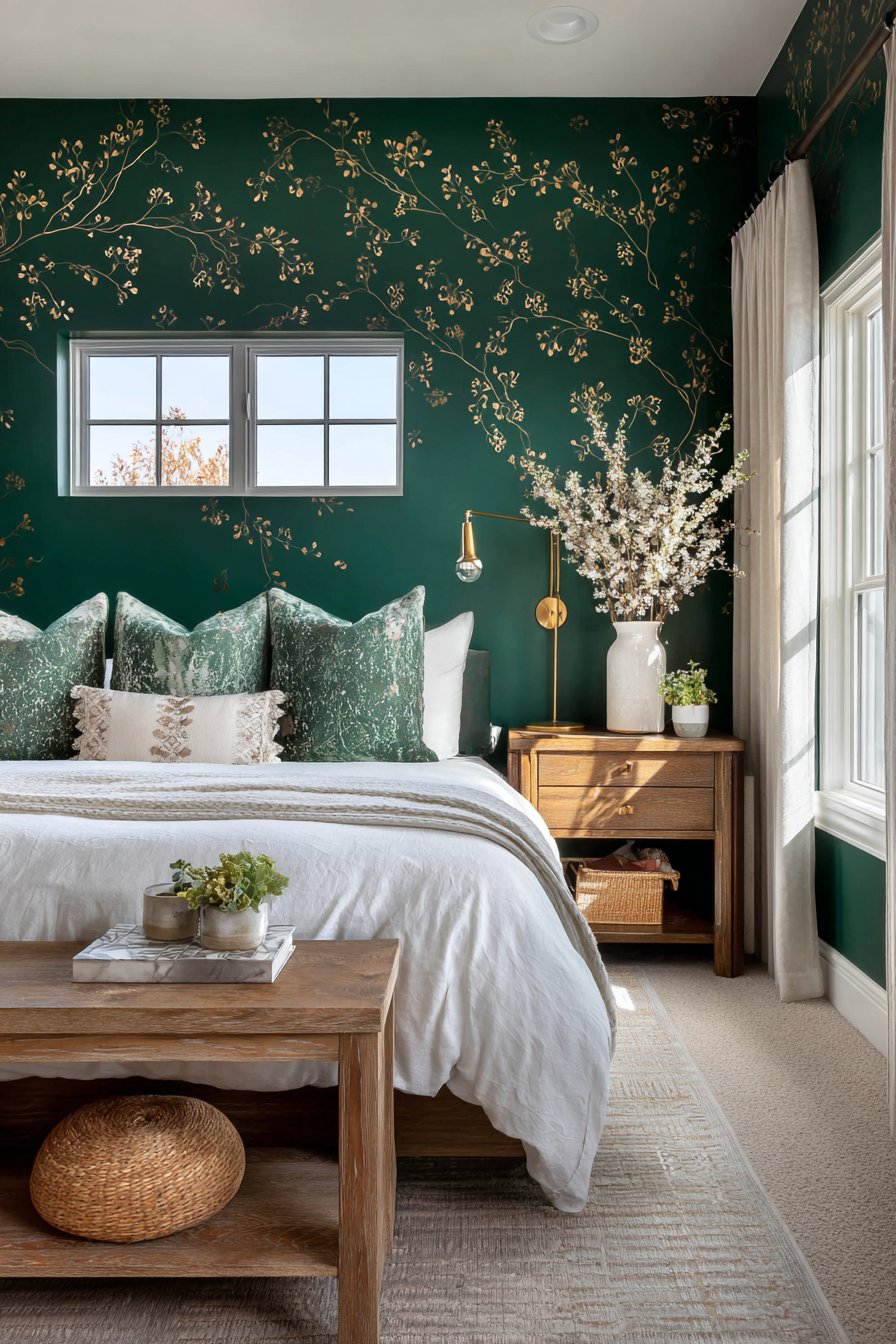
8. Emerald Botanical Wallpaper Elegance
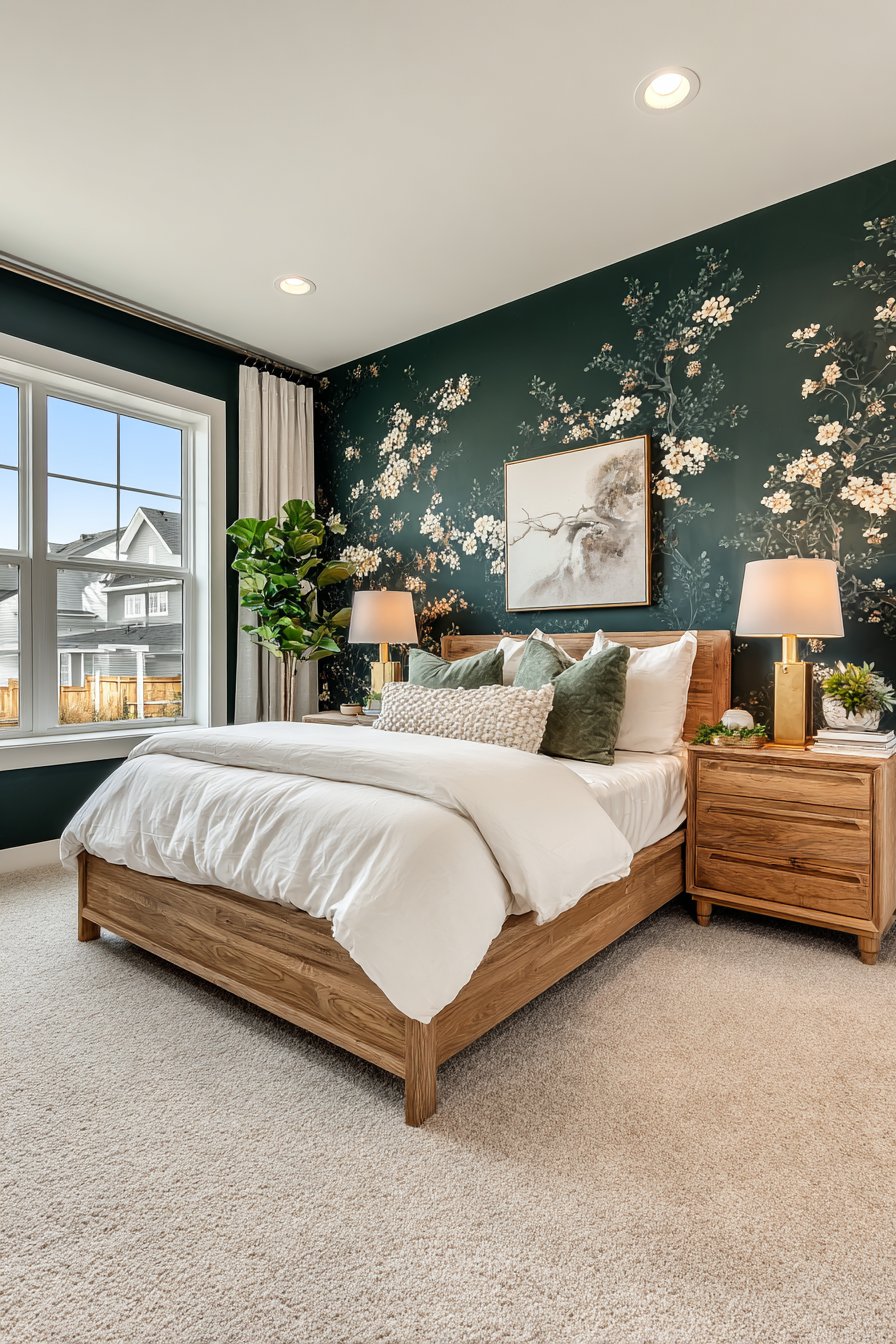
Wallpaper featuring a dark emerald background adorned with delicate gold botanical patterns represents a perfect synthesis of color, pattern, and metallic accent in a single application. This approach allows you to introduce dark green dramatically while simultaneously adding visual interest through pattern and the glamour of gold details. The botanical motif maintains the nature connection inherent to green while the gold elevations add a level of sophistication and luxury that plain green walls cannot achieve. Quality wallpaper with this type of design becomes an investment piece that transforms the entire room, creating a boutique hotel or designer showroom aesthetic.
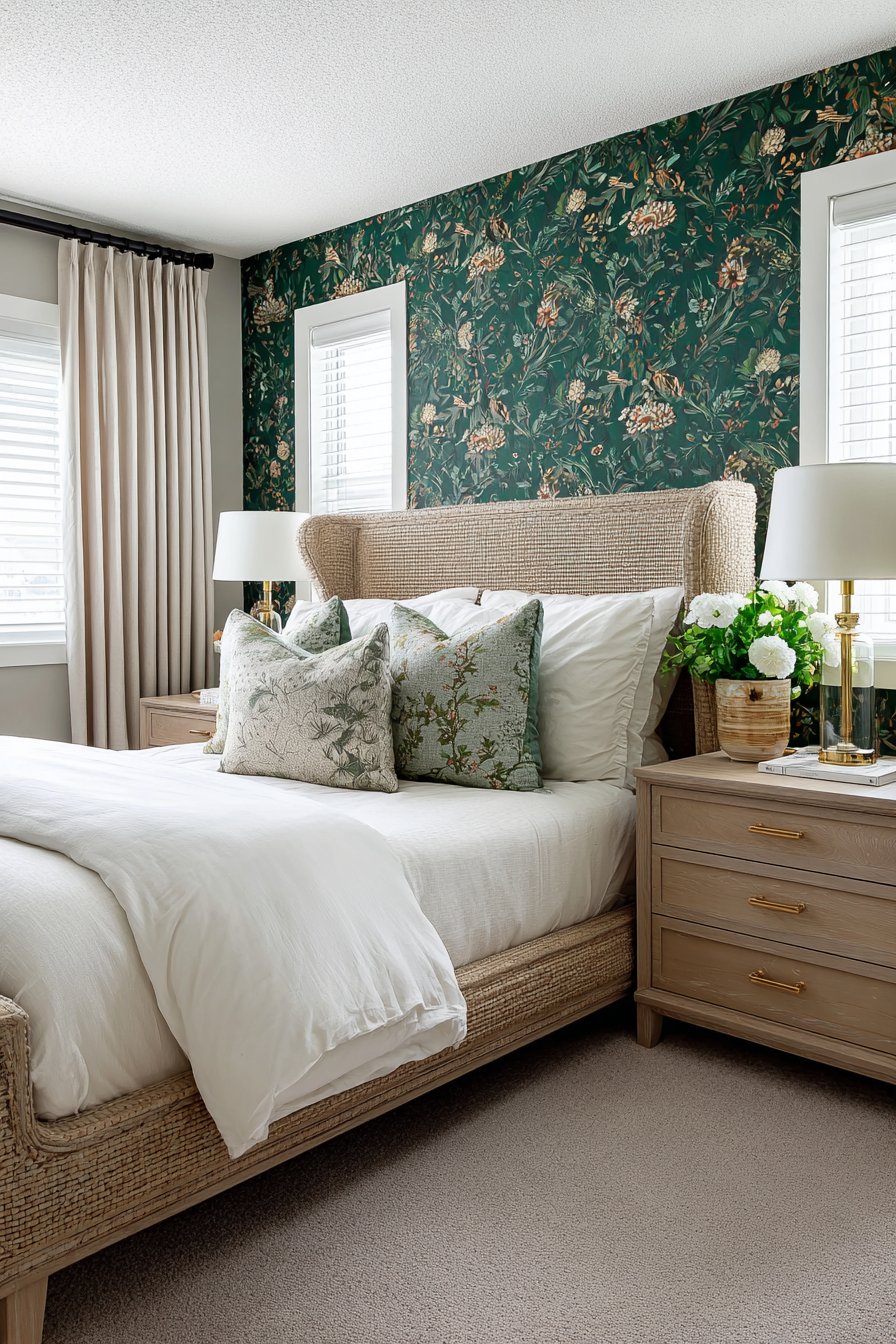
The decision to keep the bed simple with white bedding demonstrates wise design restraint—when walls make a strong statement through pattern and color, furniture and bedding should recede to supporting roles. The pristine white bedding creates essential visual rest for the eyes and prevents the space from feeling overwhelming or chaotic. This contrast between the ornate, patterned walls and clean, simple bedding creates dynamic tension that keeps the design interesting while maintaining livability. The white also reflects light beautifully, helping to brighten the space and prevent it from feeling too dark despite the deep emerald wallpaper.
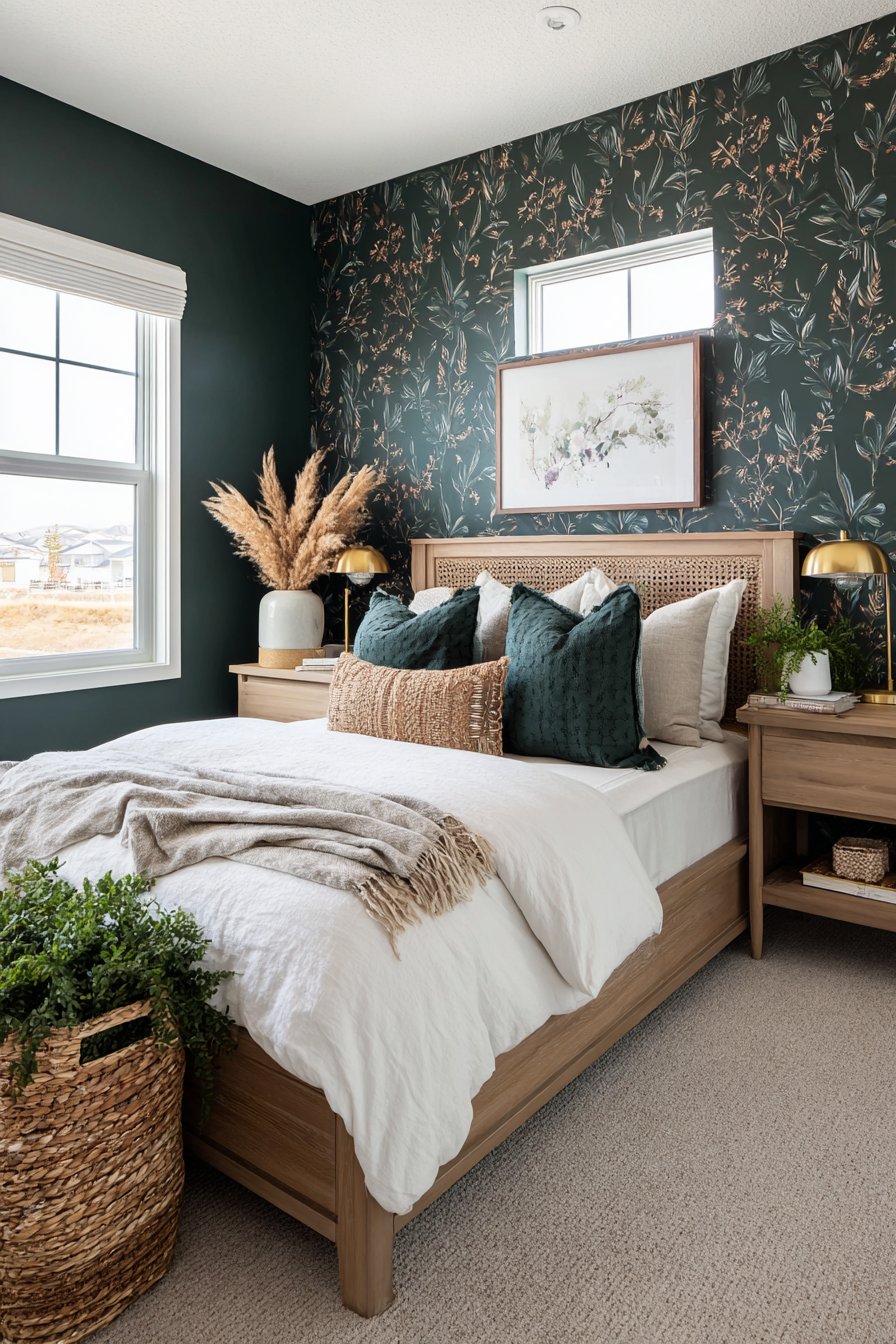
Natural oak nightstands with brass lamp bases create perfect complementary elements that enhance the wallpaper’s gold botanical pattern without competing with it. The oak’s warm honey tones relate to the gold accents while providing organic texture, and the brass lamp bases create metallic continuity that makes the gold in the wallpaper feel intentional rather than isolated. Natural window light becomes crucial with patterned wallpaper, as it reveals the intricate design details that might be lost in dim lighting. Throughout the day, shifting light angles highlight different aspects of the botanical pattern, creating an ever-changing visual experience that keeps the room feeling fresh and alive.
Key Design Tips:
- Choose wallpaper with dark green backgrounds and metallic accents for maximum visual impact with a single application
- Keep bedding simple and neutral when using bold patterned wallpaper to prevent visual overwhelm
- Select nightstands and furniture in warm wood tones to complement gold accents in the wallpaper pattern
- Ensure adequate natural light to showcase wallpaper details and prevent patterns from becoming muddy or indistinct
- Use brass or gold lamp bases and fixtures to create metallic continuity with wallpaper accents
9. Olive Green Upholstered Headboard Statement
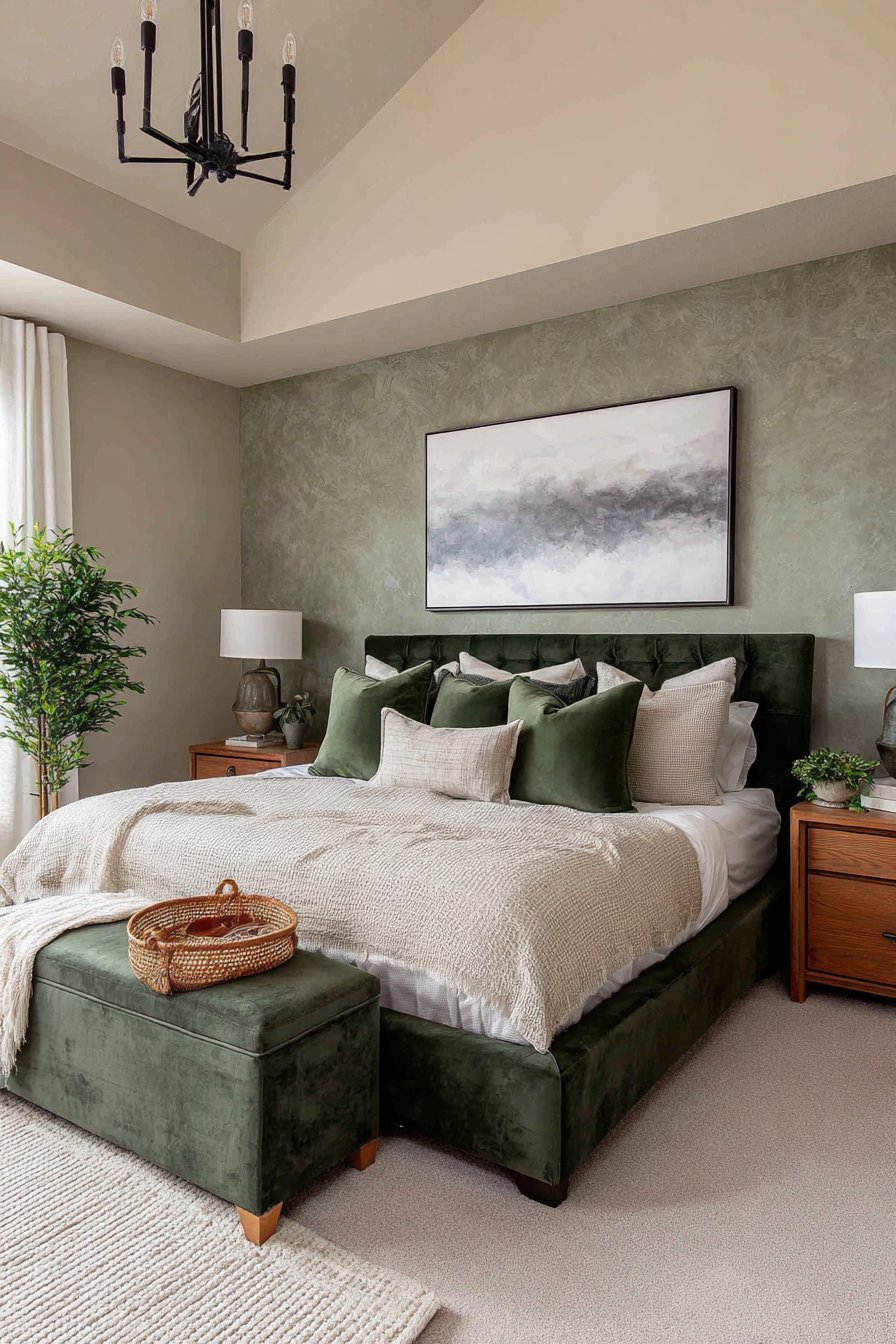
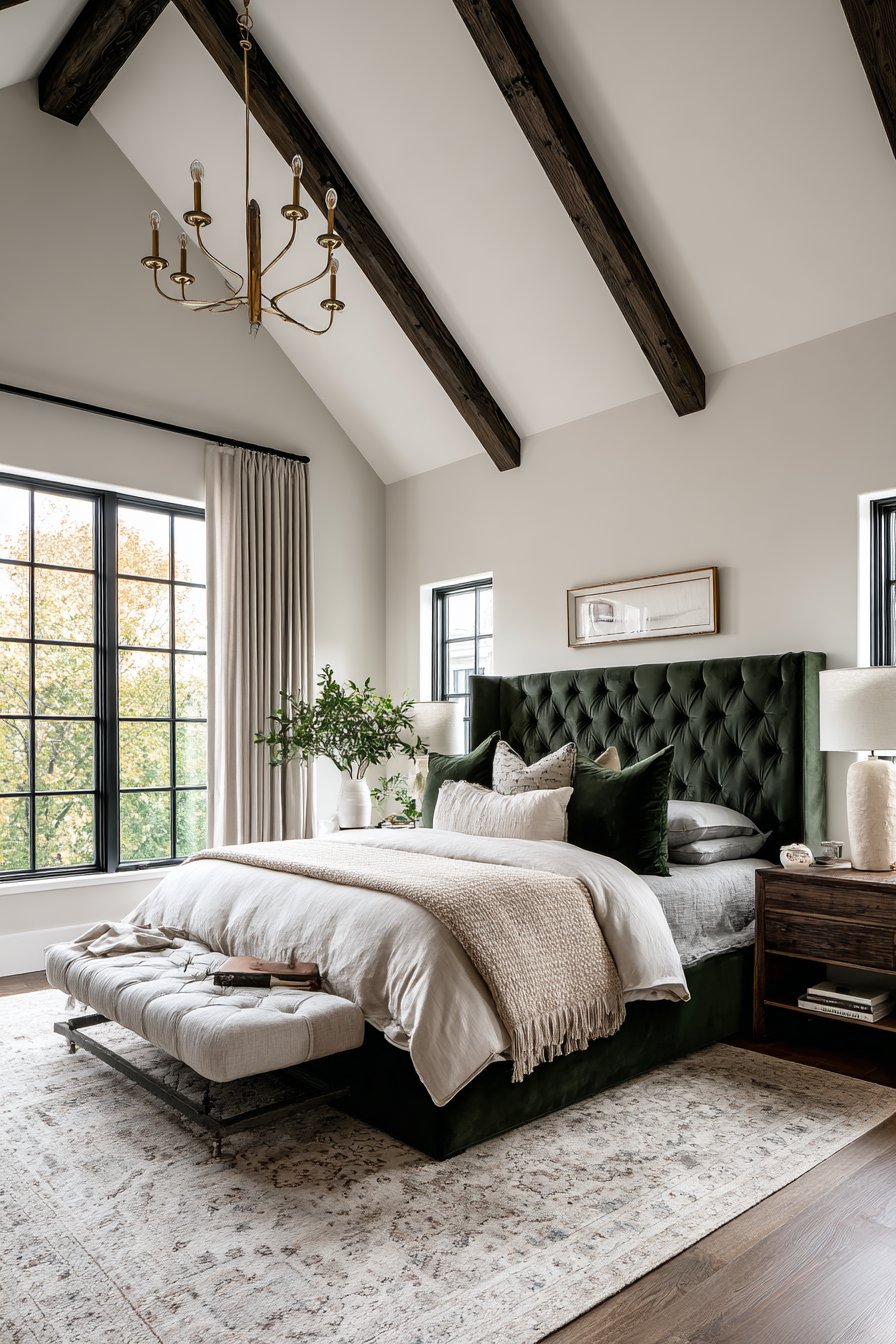
A tall, dark olive green upholstered headboard extending nearly to the ceiling creates dramatic vertical impact while maintaining overall room brightness through neutral beige wall colors. This approach concentrates the dark green in a single, substantial furniture piece that dominates the bed wall without overwhelming the entire space. The headboard’s impressive height draws the eye upward, creating the illusion of higher ceilings while providing substantial visual weight that anchors the bed as the room’s undisputed focal point. The olive shade of green offers slightly warmer tones than hunter or emerald, making it particularly compatible with beige and other warm neutrals.
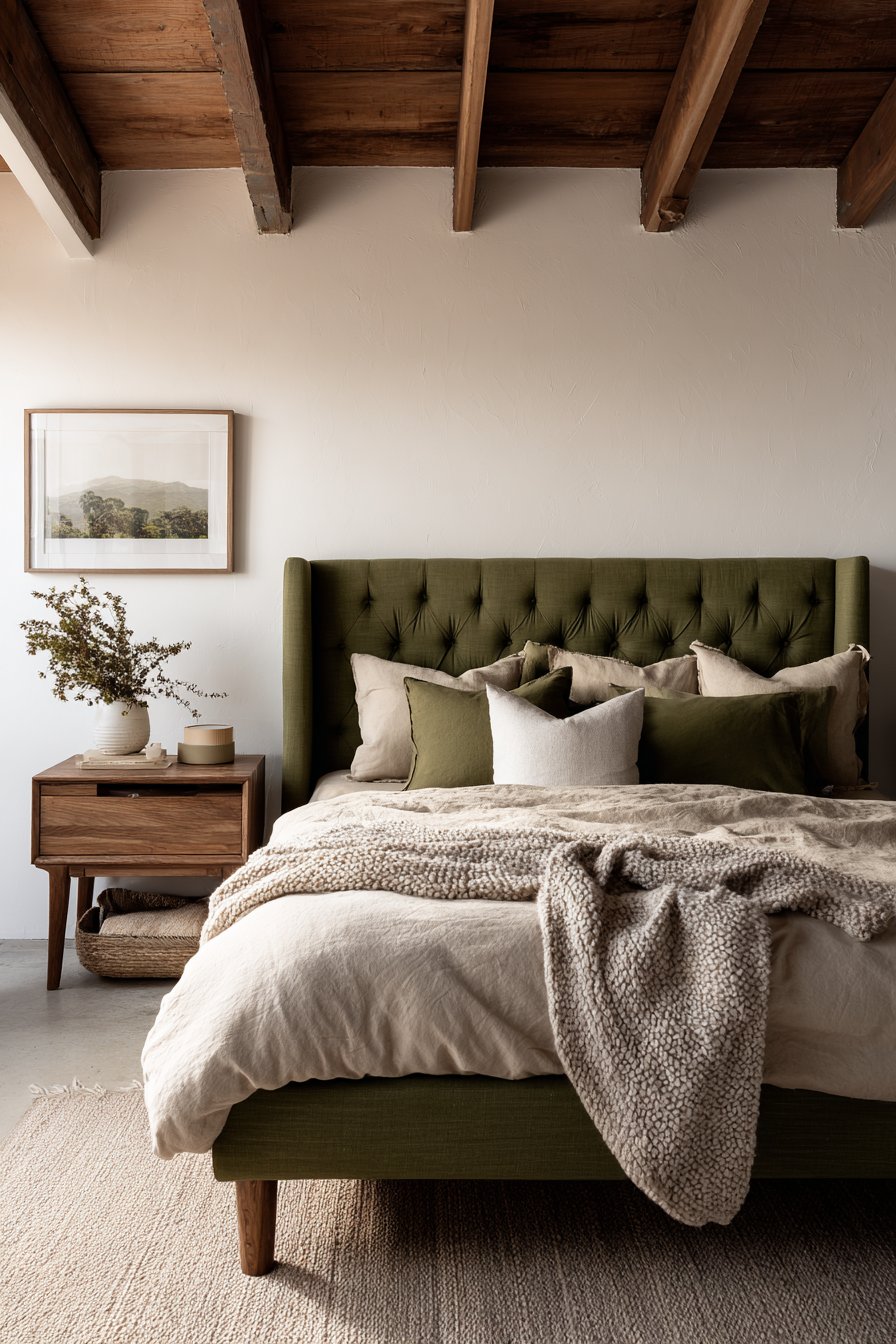
Layered bedding in cream, taupe, and forest green creates sophisticated tonal variation that connects the dark green headboard with the neutral walls and overall room palette. This graduated approach to color—moving from the dark green headboard through medium forest green pillows to lighter cream and taupe sheets and blankets—creates visual flow that’s pleasing to the eye. The various textures in the layered bedding add another dimension of interest; quilted coverlets, smooth cotton sheets, chunky knit throws, and velvet pillows each catch light differently and contribute unique tactile experiences. This attention to textural variety prevents the neutral color scheme from feeling bland or one-dimensional.
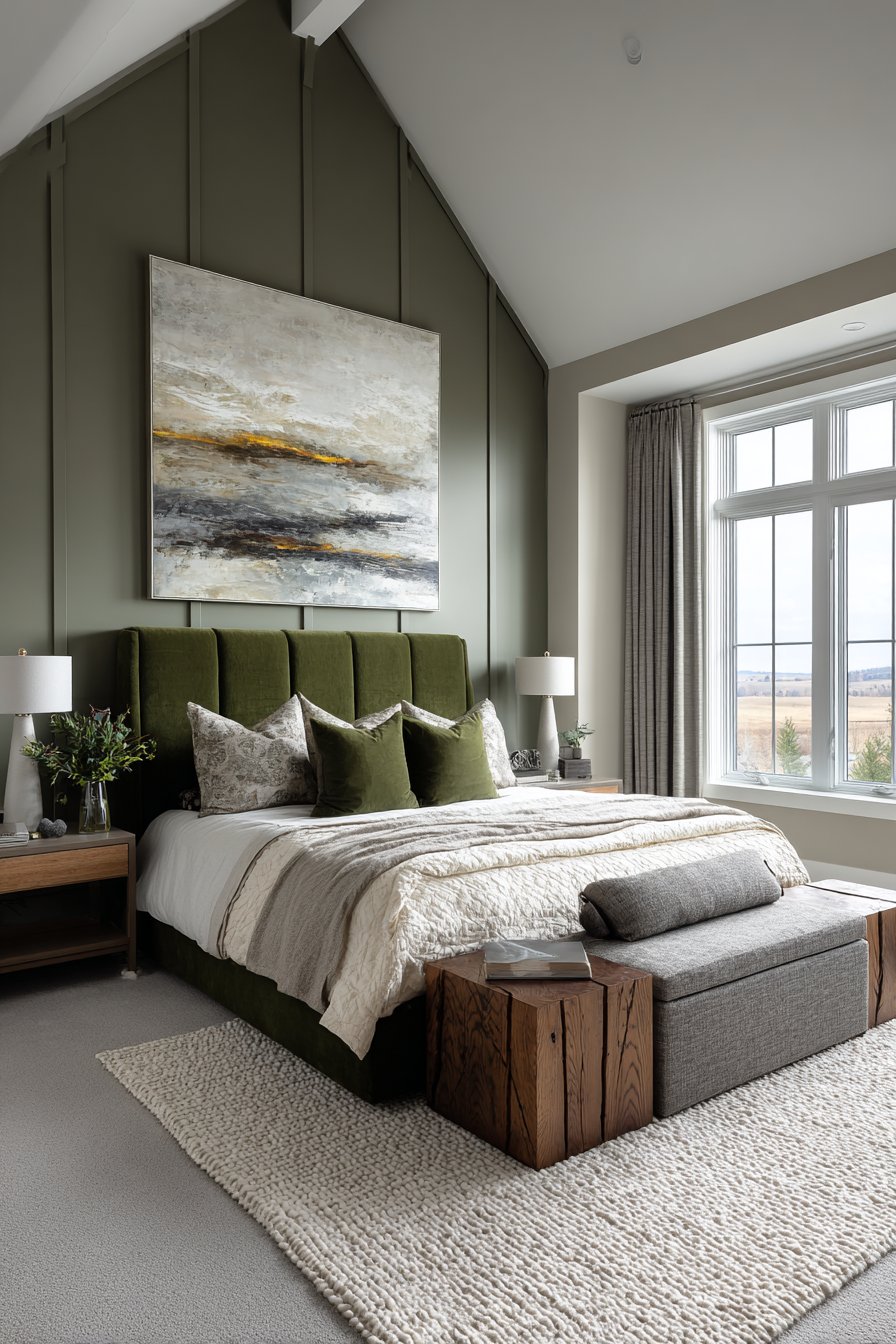
Simple wooden side tables and a natural fiber area rug ground the design with organic materials that reinforce the connection to nature that green inherently suggests. The wood’s visible grain provides subtle pattern and warmth without competing with the headboard’s solid color impact, while the natural fiber rug—whether jute, sisal, or seagrass—adds essential texture underfoot and visual weight at the room’s base. This creates balanced visual distribution, with the tall headboard drawing attention upward while the substantial rug grounds the space below. The overall effect feels thoughtfully composed rather than accidentally assembled, demonstrating how a single bold furniture piece in dark green can anchor an entire bedroom design.
Key Design Tips:
- Choose a tall upholstered headboard in dark green to create vertical drama while maintaining bright walls
- Layer bedding in graduated tones from dark to light to create visual flow and color connection
- Include multiple textures in bedding—quilted, knit, velvet, cotton—to add dimension and tactile interest
- Ground the design with natural fiber rugs and simple wood furniture to reinforce organic aesthetic
- Extend the headboard close to the ceiling height to emphasize vertical space and create impressive scale
10. Hunter Green Industrial Brick
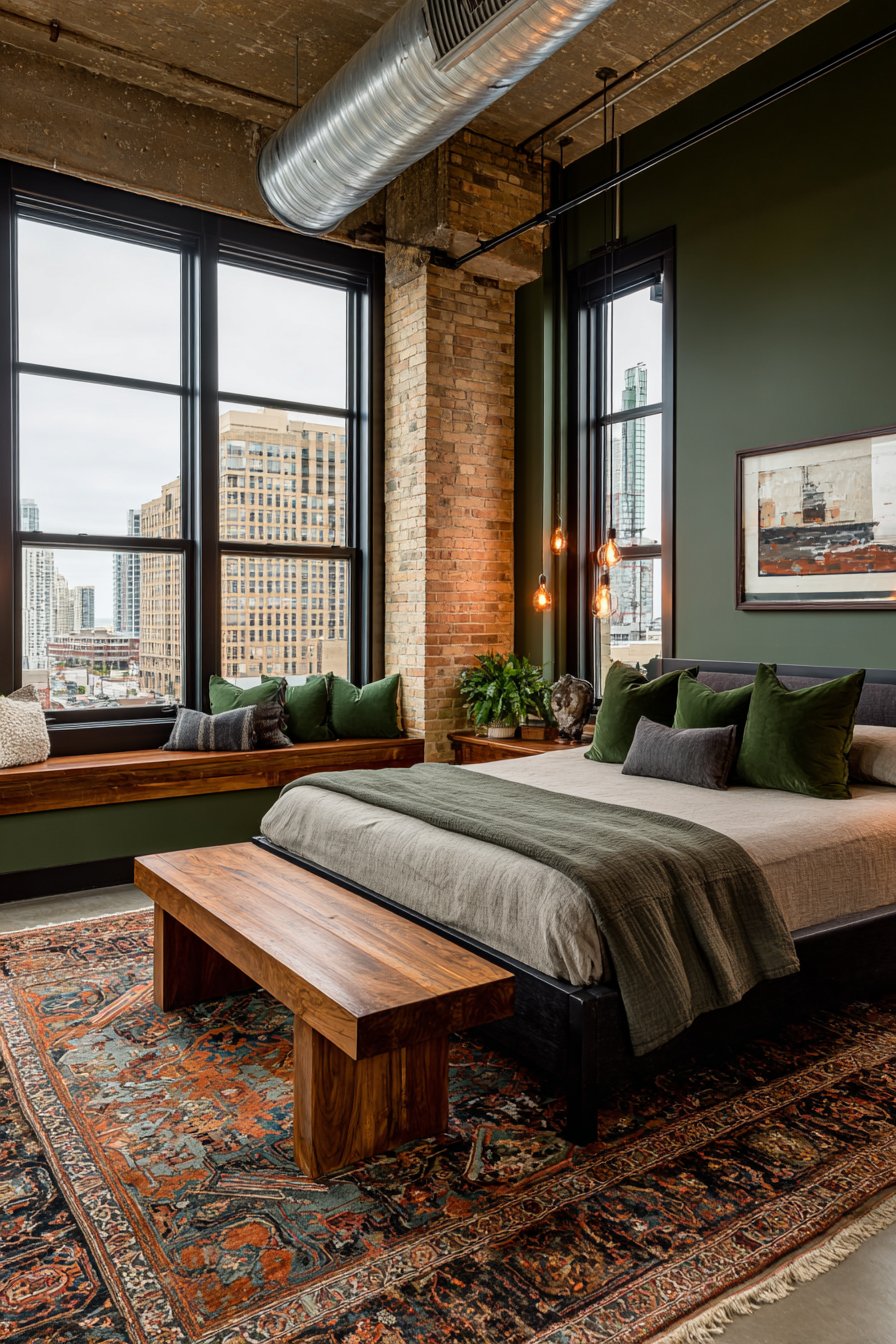
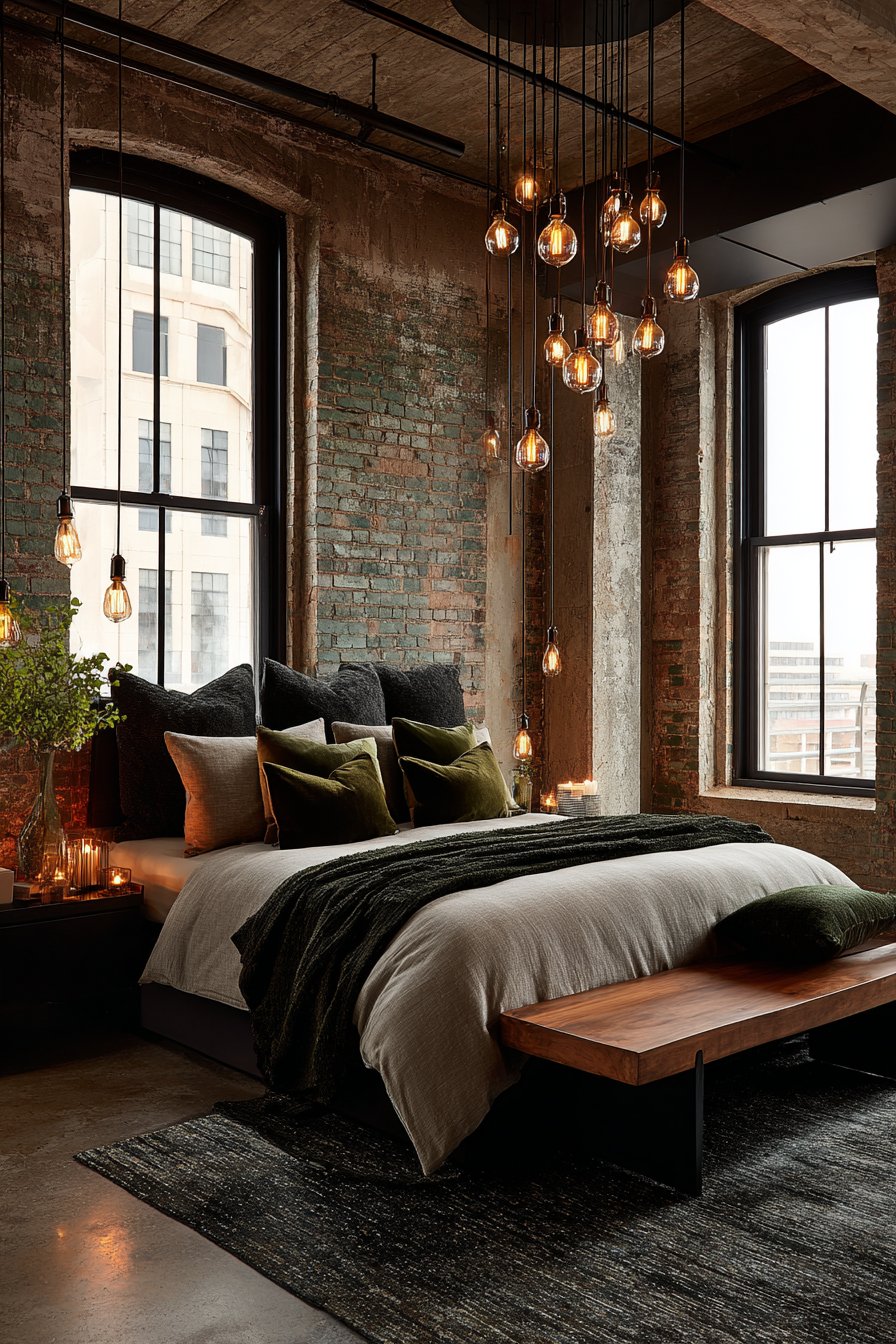
Exposed brick painted in deep hunter green creates an unexpected industrial-meets-nature aesthetic that feels both edgy and organic. This bold treatment transforms utilitarian architectural elements into design features, celebrating the texture and character of brick while infusing it with sophisticated color. The painted brick retains its dimensional texture—each brick and mortar line remains visible and tactile—but the unified green color creates cohesion and intentionality. Paired with raw concrete flooring, this combination of industrial materials painted in nature-inspired tones creates fascinating contrast between the hard-edged urban aesthetic and the organic associations of deep green.
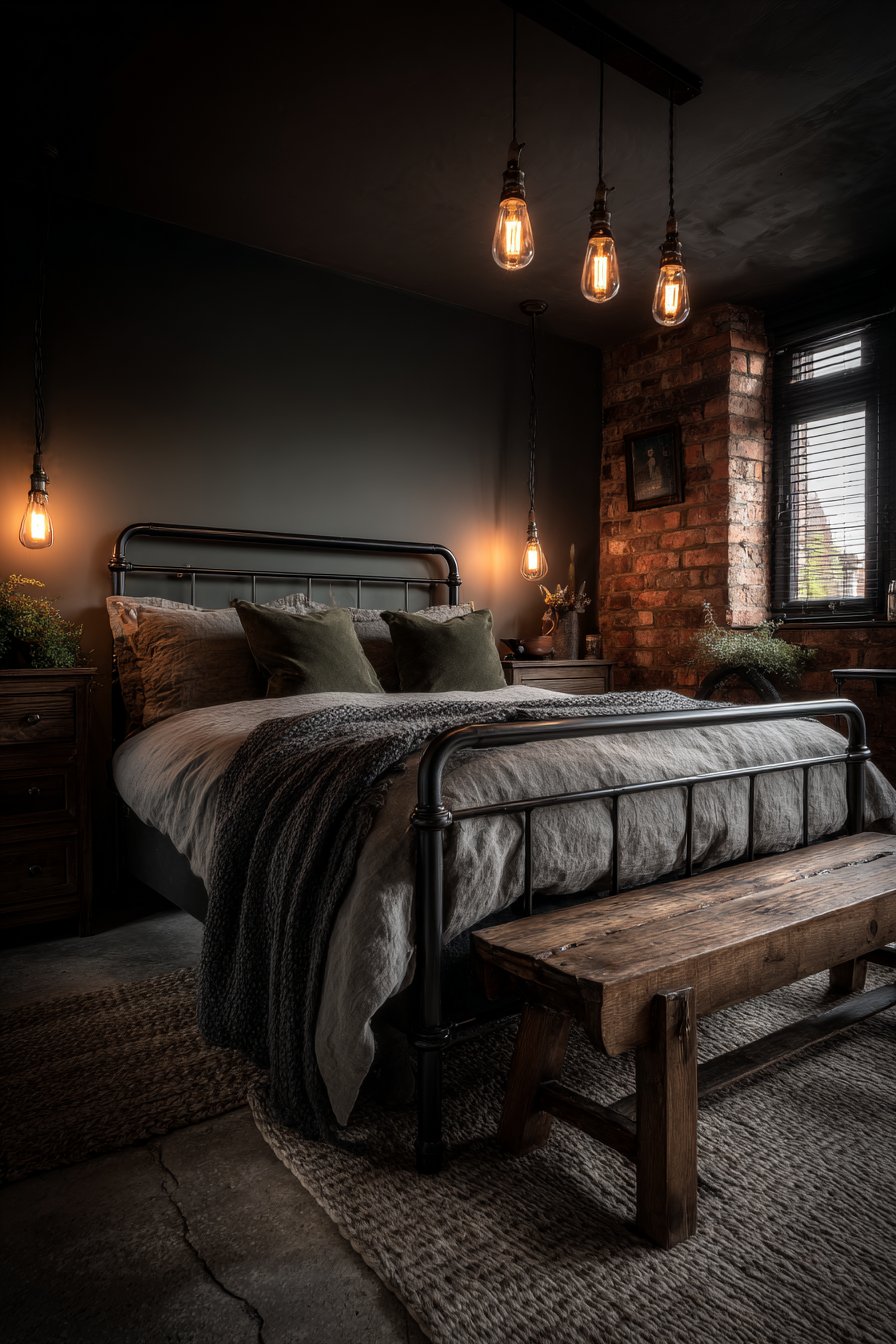
A matte black metal bed frame reinforces the industrial aesthetic while providing strong graphic presence that holds its own against the textured green brick wall. The simple, clean lines of metal framework create visual breathing room and prevent the space from feeling too busy or texturally overwhelming. Neutral linen bedding with dark green throw pillows maintains the color story while providing essential softness and comfort that balances the harder surfaces surrounding the bed. The linen’s natural texture and slight variation in tone add organic warmth that prevents the industrial elements from feeling too cold or unwelcoming.
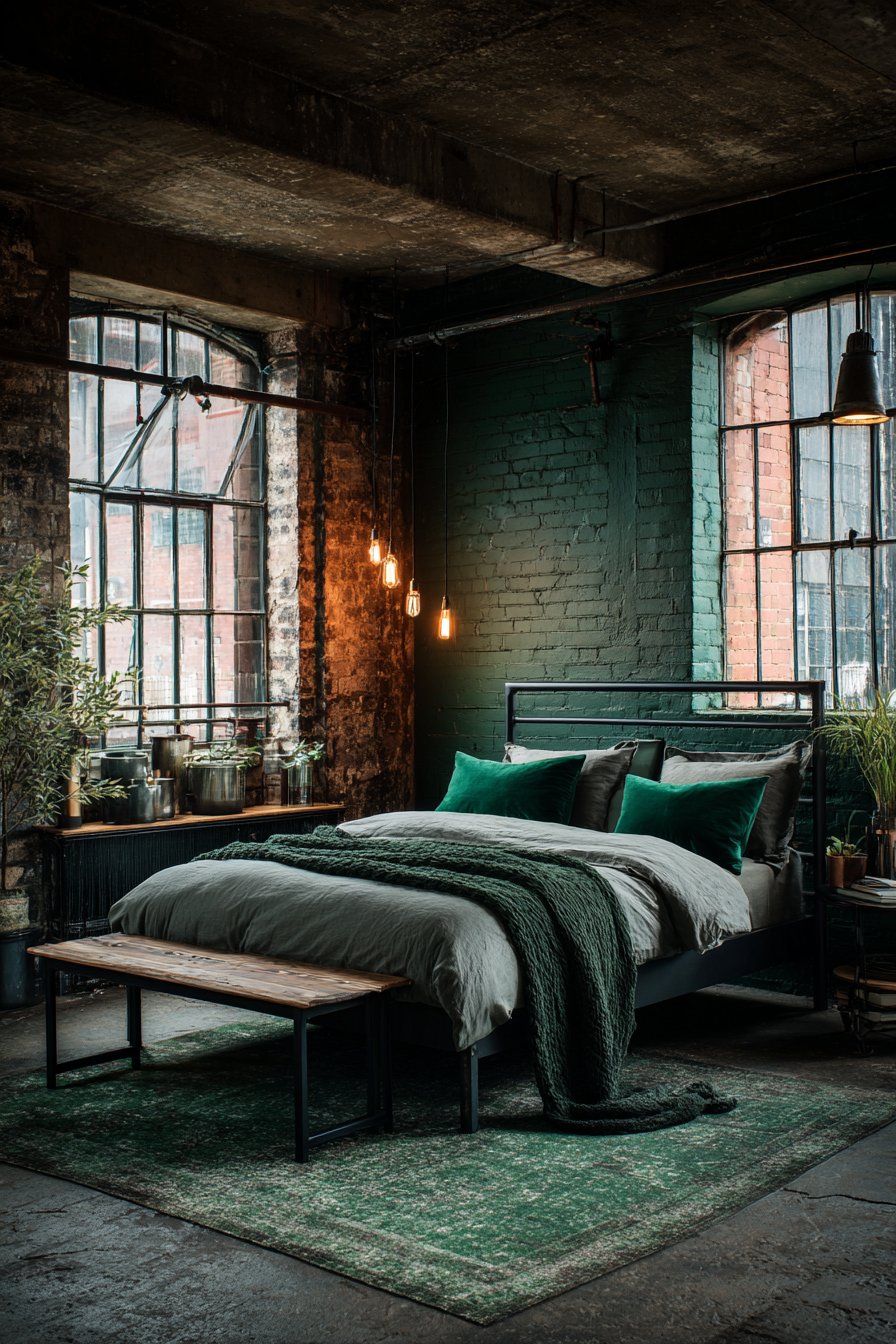
Edison bulb pendant lights suspended at varying heights contribute authentic industrial character while providing warm, amber-toned illumination that makes the hunter green brick glow with inviting warmth. These vintage-style bulbs create dramatic shadow-play against the textured brick surface, emphasizing every bump and groove while adding romantic ambiance that softens the industrial edge. A vintage wooden bench at the foot of the bed introduces necessary warmth and provides functional seating while its aged patina and visible wear tell stories of previous lives. This piece serves as a crucial bridge between the industrial materials and the nature-inspired green color, reminding us that wood and green both originate in forests and organic growth.
Key Design Tips:
- Paint exposed brick in dark green to create unexpected fusion of industrial texture and nature-inspired color
- Choose metal bed frames in matte black to provide strong graphic presence compatible with both industrial and green aesthetics
- Install Edison bulb fixtures for warm, ambient lighting that enhances rather than fights the dark green color
- Include one significant wood piece—bench, dresser, or side table—to add warmth and organic connection
- Keep concrete or hard flooring to maintain industrial authenticity while adding soft area rugs for comfort and warmth
11. Sheer Dark Green Canopy Romance
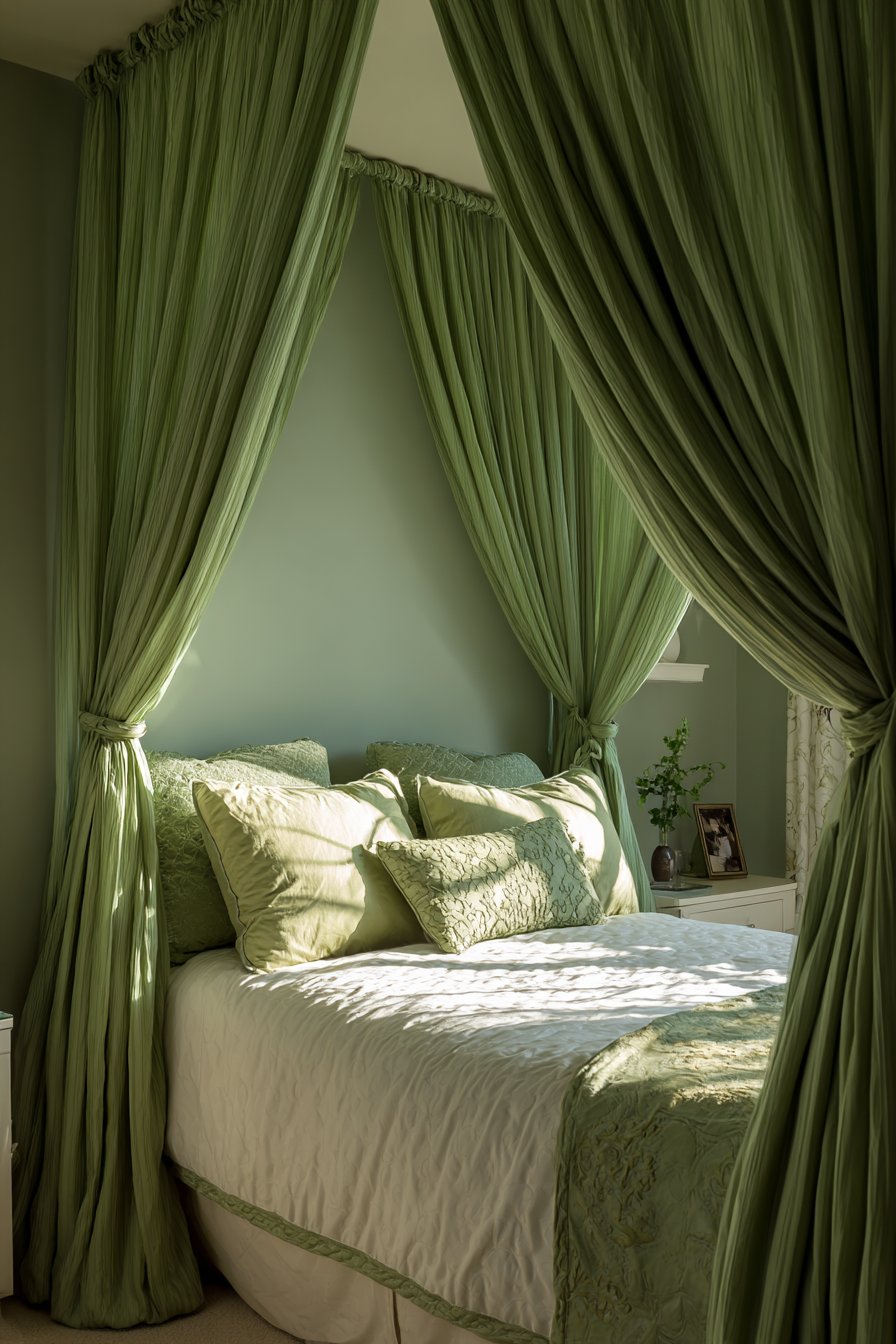
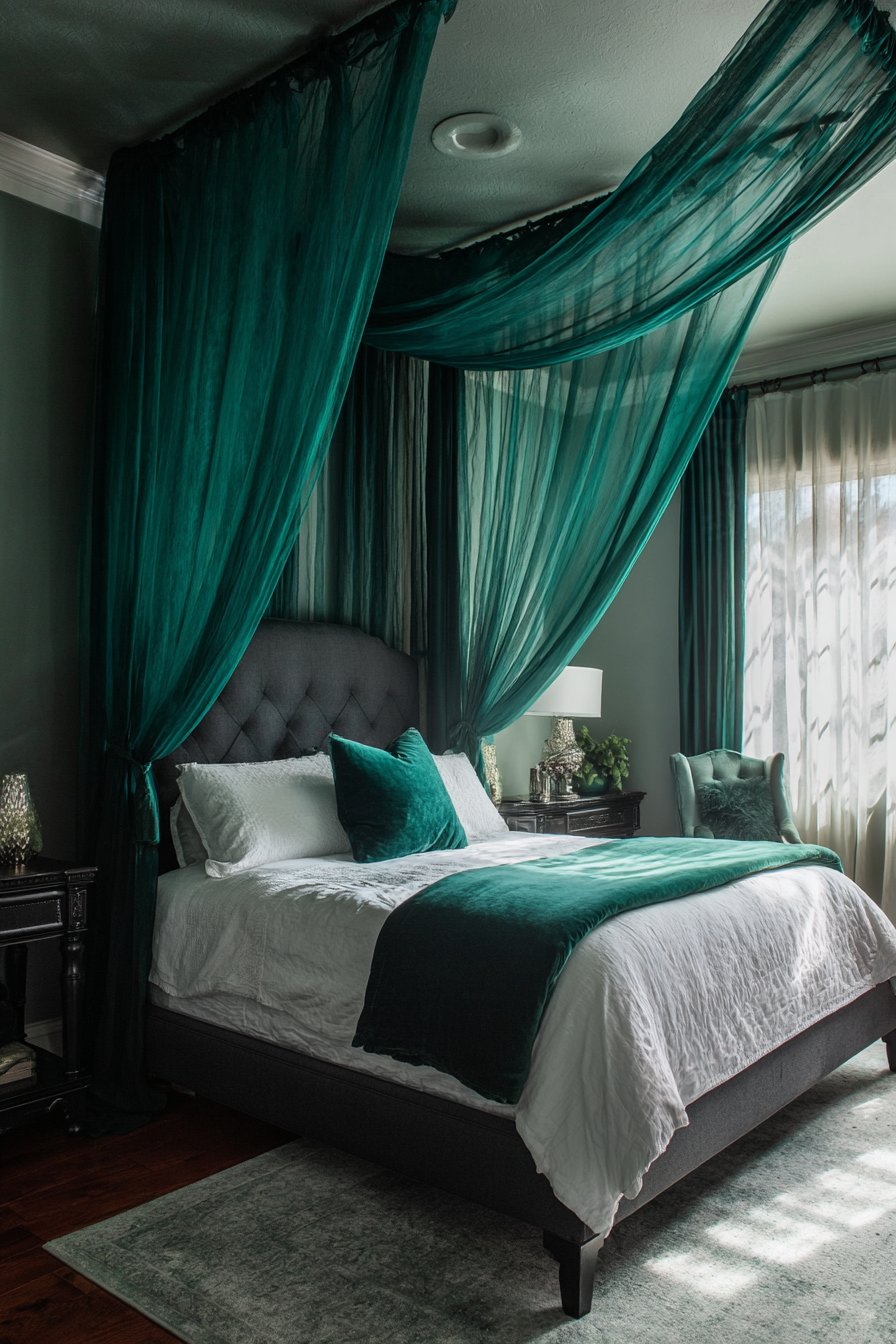
A canopy bed draped with sheer dark green fabric creates an ethereal, romantic atmosphere that feels both protective and elegant. The ceiling-mounted rails allow the fabric to drape gracefully around the bed, creating a room-within-a-room effect that defines the sleeping area as especially private and special. The sheer quality of the fabric is crucial—heavy, opaque curtains would feel too enclosing, but the semi-transparent dark green material filters light beautifully while maintaining airiness. When light passes through the fabric, it casts everything within the canopy in a subtle green glow, creating a unique visual experience that changes throughout the day.
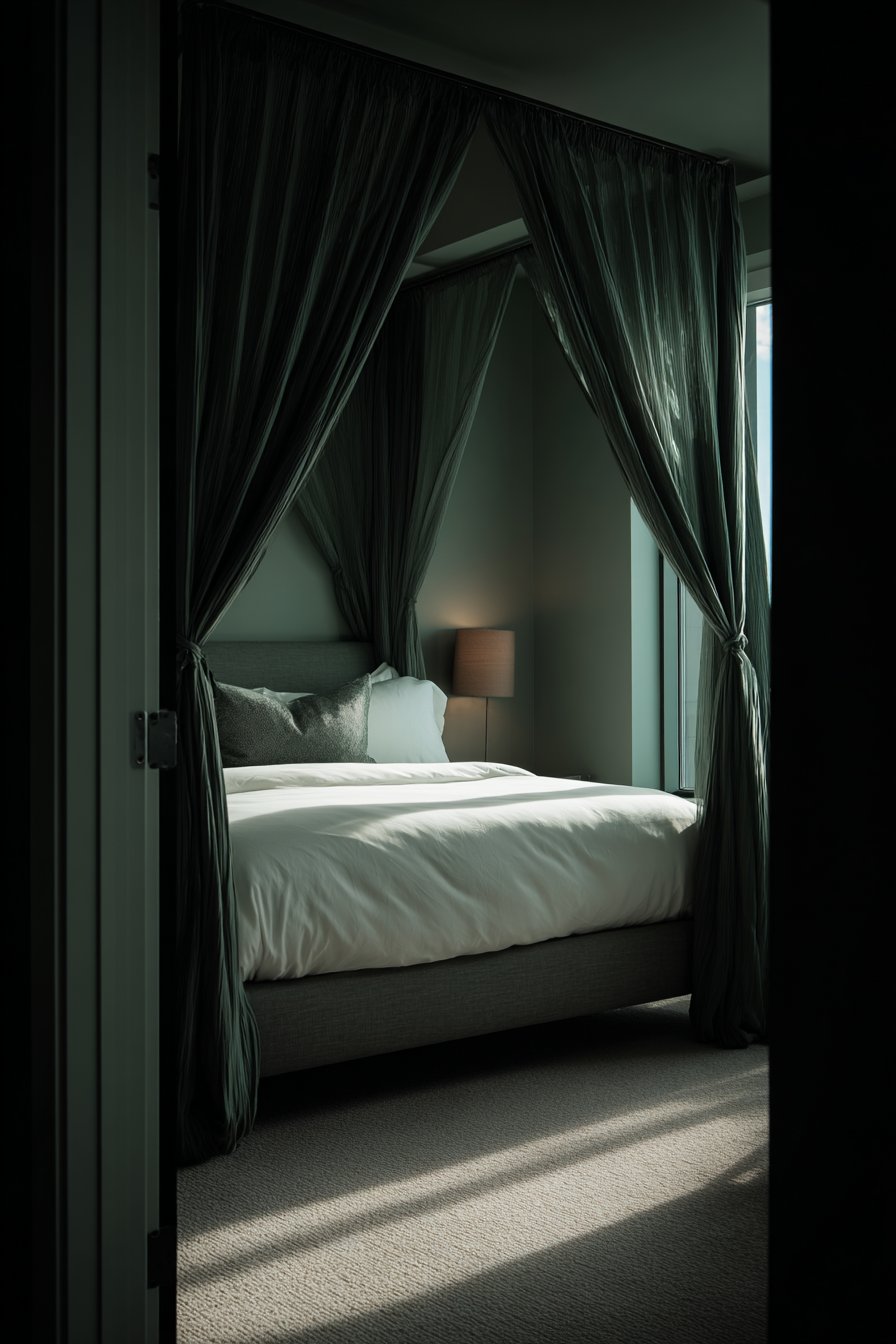
The walls painted in soft grey-green provide subtle color continuity without overwhelming the space or competing with the canopy’s impact. This muted wall color creates a cohesive environment where the darker canopy fabric feels like an intentional deepening of the overall green theme rather than a jarring introduction of new color. White bedding inside the canopy creates essential contrast and ensures the sleeping area feels fresh and inviting rather than too dark. The white also catches and reflects the green-filtered light beautifully, taking on subtle emerald or sage tints depending on the time of day and angle of sunlight.
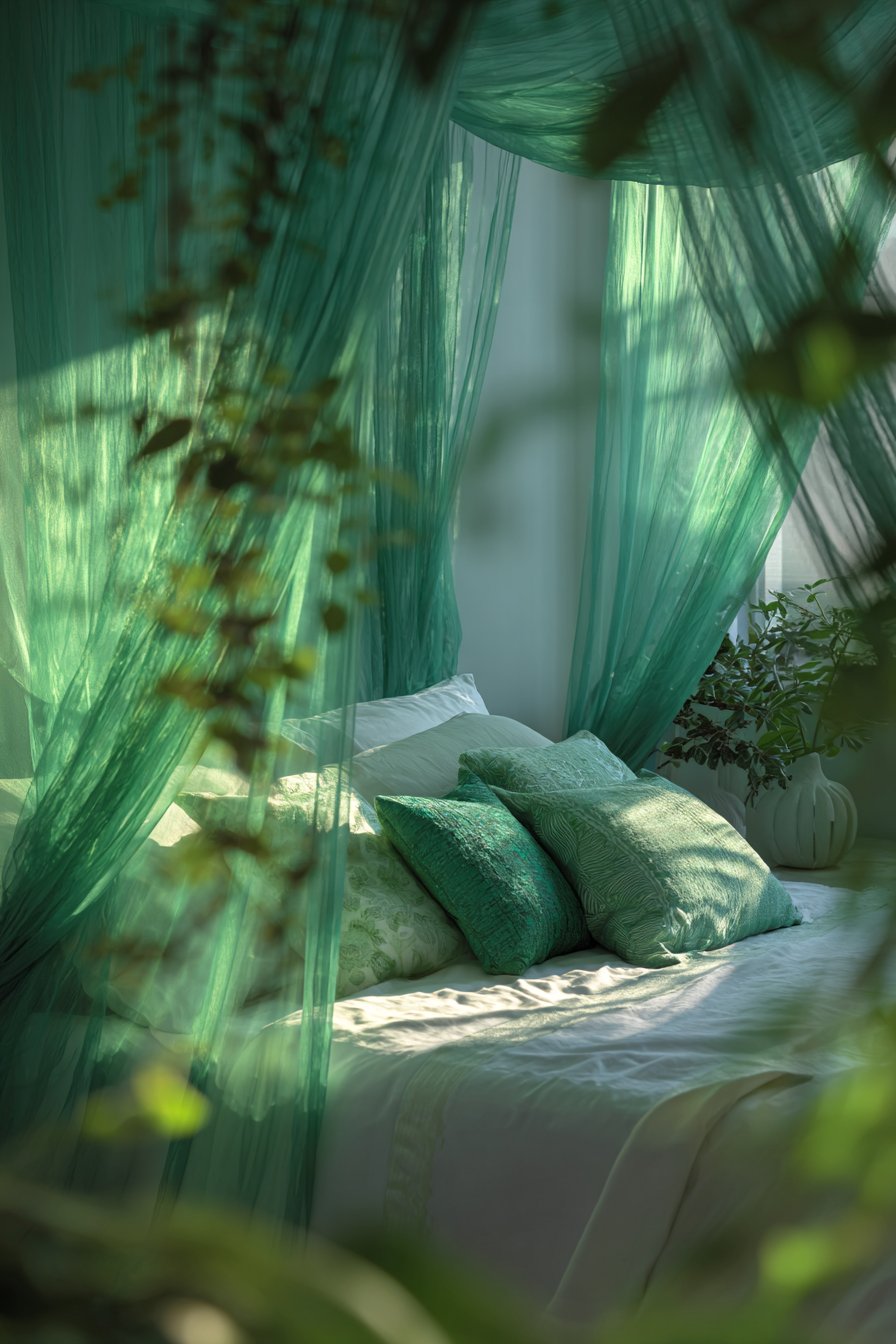
Natural light interaction with the sheer canopy fabric creates the most magical aspect of this design. Direct sunlight filtering through the dark green material creates dappled shadows reminiscent of sunlight through forest canopy, bringing the peaceful essence of nature indoors. These shadows dance and shift throughout the day as the sun moves, creating constantly changing patterns on the white bedding and grey-green walls. Evening artificial light sources create different effects—bedside lamps glowing through the sheer fabric create intimate, cozy ambiance perfect for reading or winding down before sleep. This design demonstrates how thoughtful use of sheer fabrics in dark colors can create atmosphere and romance without sacrificing brightness or creating feelings of enclosure.
Key Design Tips:
- Choose sheer or semi-transparent fabric for dark green canopies to maintain airiness while creating atmosphere
- Install ceiling-mounted tracks or rails for professional-looking drapery that hangs smoothly and adjusts easily
- Paint walls in coordinating but lighter green tones to create color harmony without overwhelming the space
- Use white or cream bedding inside the canopy to provide contrast and ensure the sleeping area feels fresh
- Position the bed to maximize natural light filtering through the canopy fabric for beautiful dappled shadow effects
12. Evergreen Built-In Window Seat
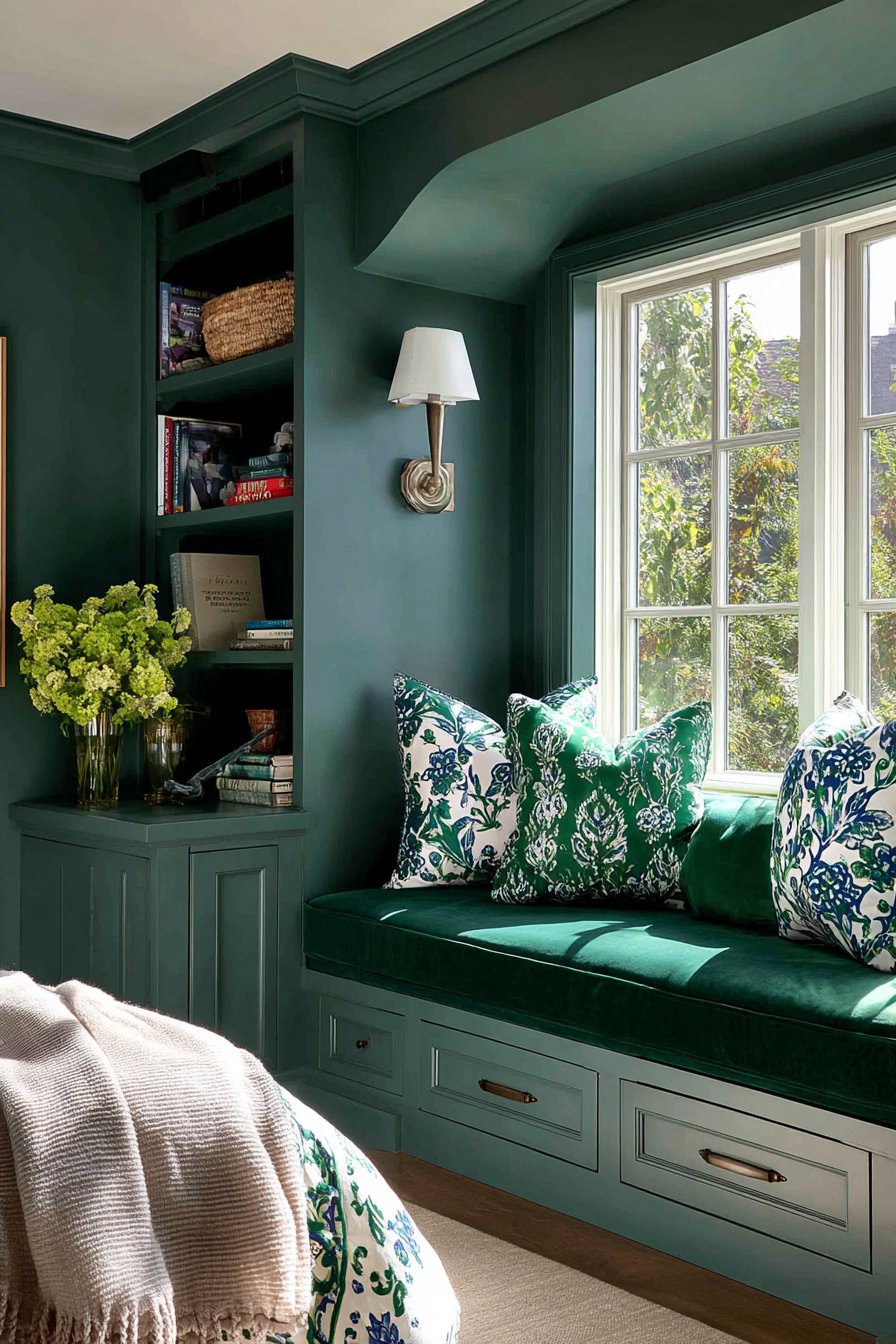
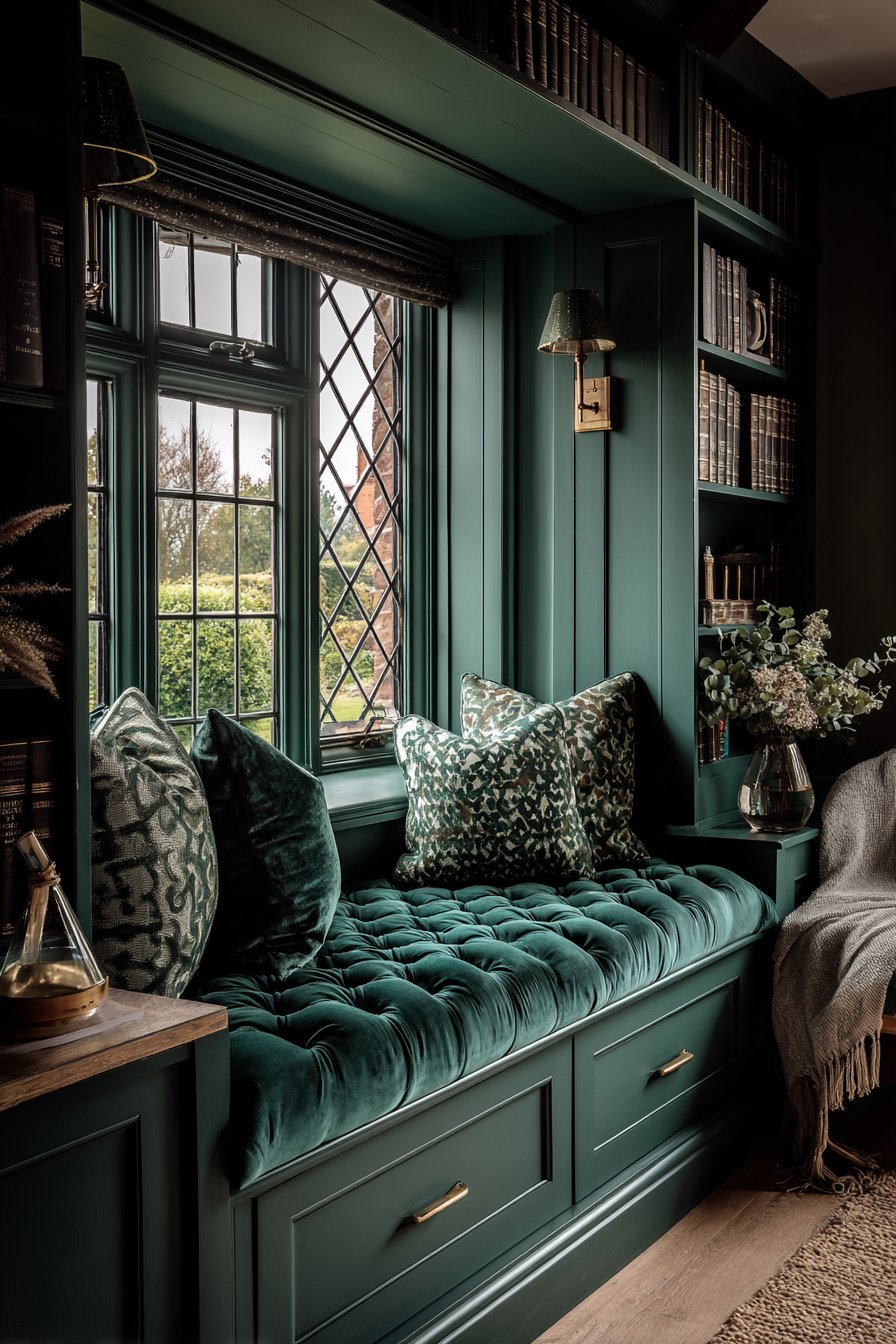
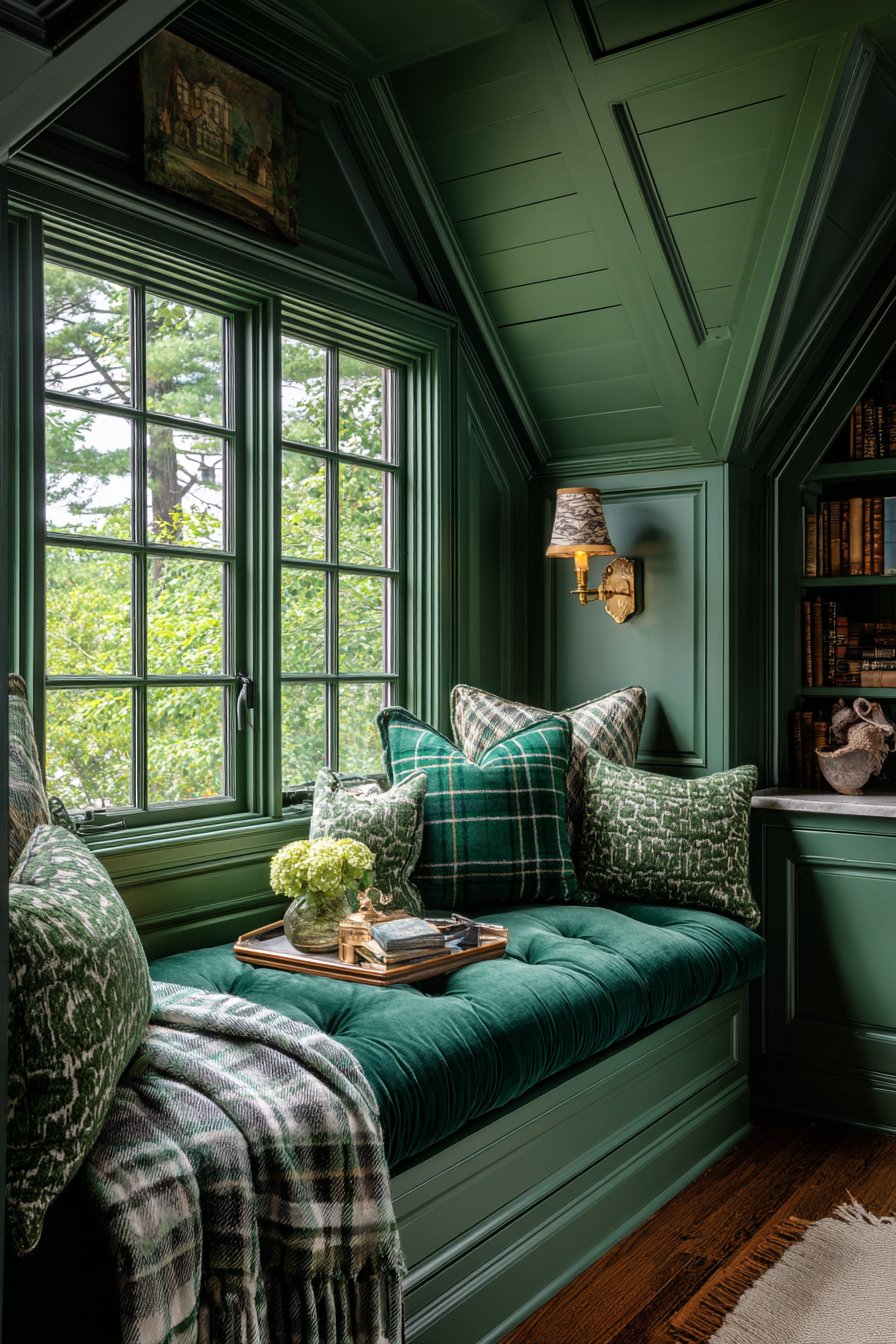
Built-in window seating upholstered in deep evergreen velvet transforms an architectural feature into a luxurious focal point that combines comfort, functionality, and dramatic color impact. The alcove walls painted to match the upholstery create an enveloping cocoon effect that makes the window seat feel like a special retreat within the larger bedroom. This complete color immersion in the alcove—walls and seating all in deep evergreen—creates bold visual impact that draws attention and invites use. The velvet upholstery adds crucial luxury and comfort, transforming what could be a merely decorative element into a genuinely inviting spot for reading, daydreaming, or simply gazing out the window.
The main bedroom walls in lighter sage green provide essential balance and prevent the space from feeling too dark or color-saturated. This graduated approach to color—moving from deep evergreen in the window alcove to lighter sage throughout the rest of the room—creates visual interest and depth while maintaining overall color harmony. The lighter walls ensure the bedroom feels spacious and bright, while the darker alcove becomes a jewel-box moment of concentrated color and luxury. This zoning through color helps psychologically define different areas within the same space, with the window seat reading as a distinct zone for relaxation separate from the main sleeping area.
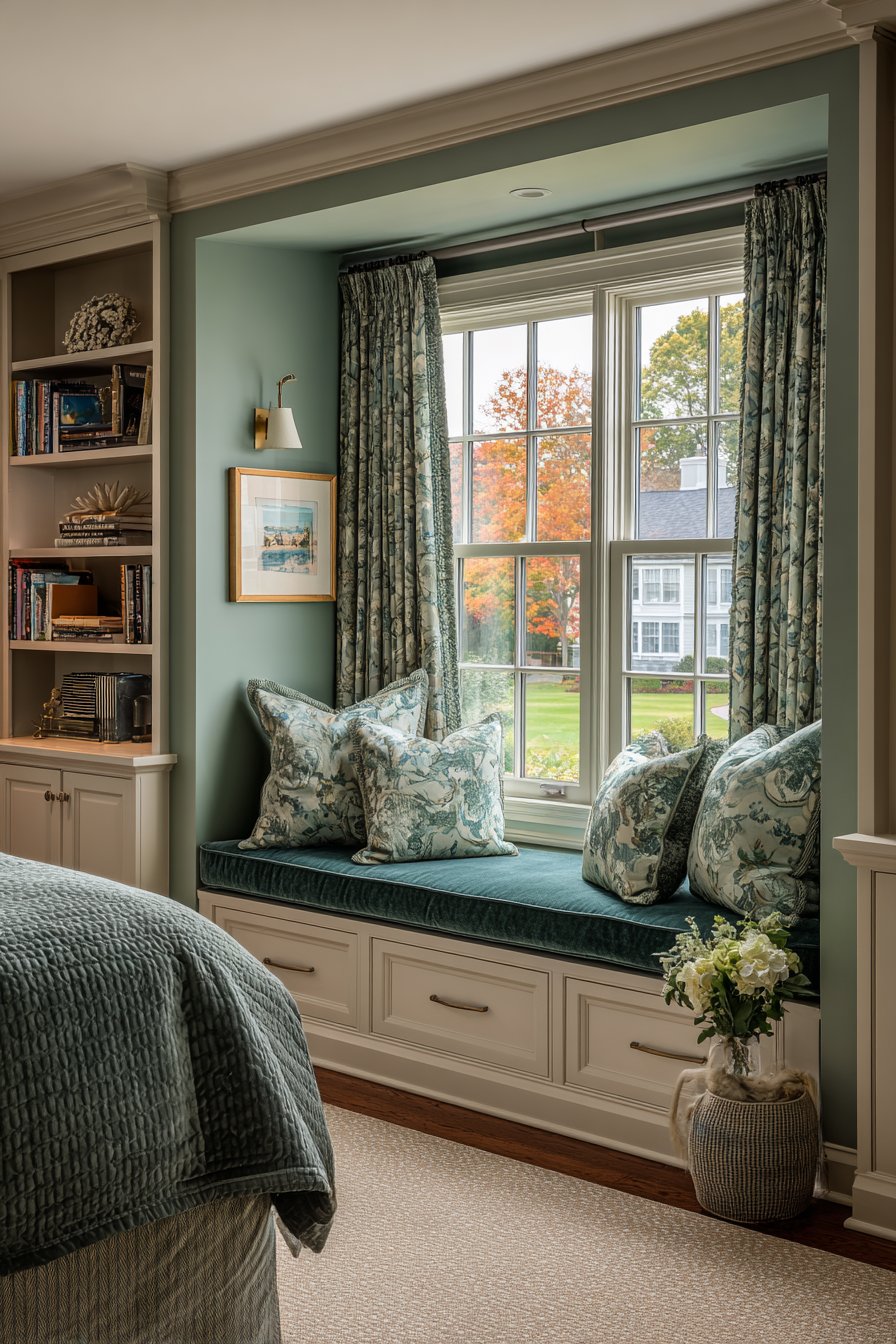
Throw pillows in varied green patterns add visual interest and personality to the window seat without introducing color conflicts. These might include botanical prints, geometric designs, or textured solid fabrics—all within the green color family but offering visual variety that prevents the space from feeling too uniform or boring. The patterns and textures create points of visual interest that reward closer inspection and add personality to the space. Natural daylight streaming through the window illuminates the rich velvet texture beautifully, creating variations in tone from deep shadow in the folds to lighter highlights on the surface. This natural light also makes the window seat functionally useful for daytime reading or crafts, combining beauty with practical utility.
Key Design Tips:
- Build or upholster window seats in deep green velvet for luxurious focal points that invite actual use
- Paint alcove walls to match seating upholstery for enveloping, cocoon-like color impact
- Use lighter green shades on main bedroom walls to balance the darker alcove and maintain brightness
- Add patterned throw pillows in varied green tones to create visual interest without color conflict
- Position the window seat to maximize natural light for both illuminating the velvet texture and providing functional reading light
13. Charcoal-Green Minimalist Zen
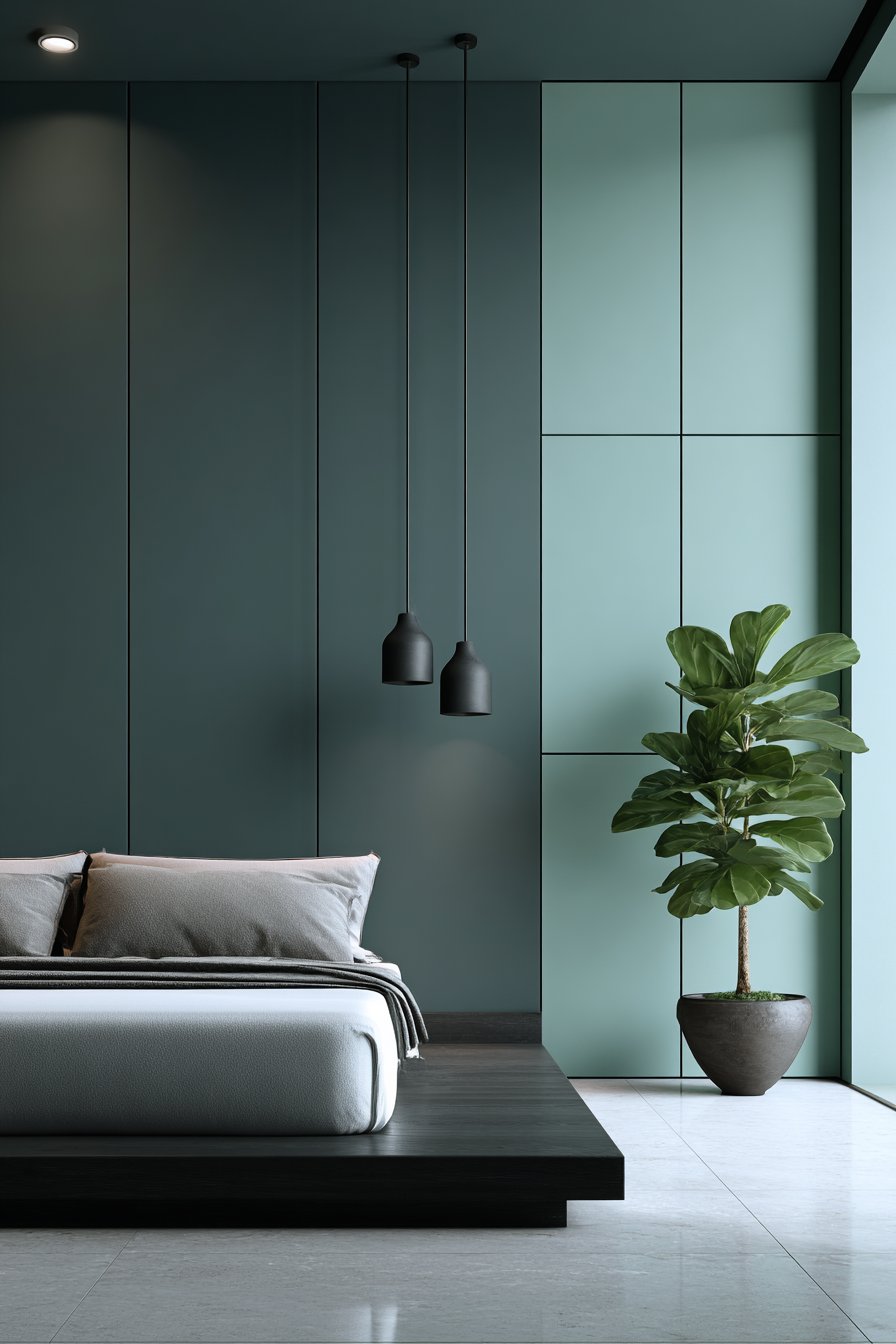
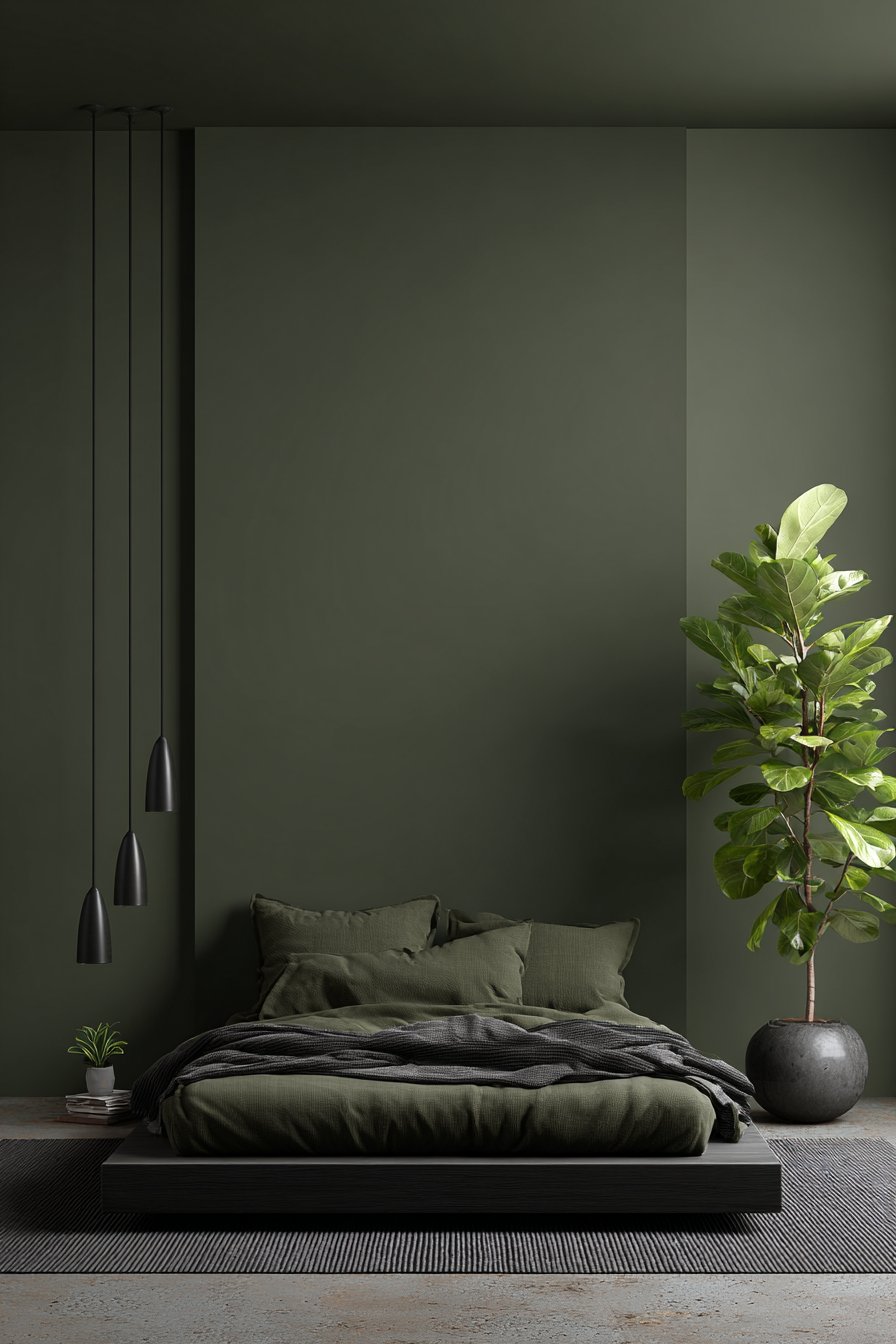
A single accent wall in matte charcoal-green behind a low Japanese-style platform bed exemplifies minimalist design principles while incorporating sophisticated dark green tones. This approach demonstrates that bold color can exist within minimalist aesthetics when applied with restraint and intention. The charcoal-green shade—a sophisticated blend of grey and green—feels more neutral than pure green, making it particularly compatible with minimalist sensibilities that typically favor subdued palettes. The single accent wall provides just enough color to create interest and define the sleeping area without overwhelming the clean, uncluttered aesthetic that minimalism requires.
The remaining walls in crisp white maintain the brightness and visual simplicity essential to minimalist design. This dramatic contrast between the dark accent wall and white surrounding surfaces creates clear definition and visual impact without additional decoration or ornamentation. The low platform bed in Japanese style reinforces the minimalist aesthetic through its clean lines, lack of fussy details, and close-to-ground positioning that creates horizontal emphasis and calm. Simple pendant lights with black cords hanging asymmetrically add functional illumination while their deliberately imperfect placement introduces subtle visual interest that prevents the space from feeling too rigid or overly controlled.
A single potted fiddle leaf fig provides the only organic element, its large sculptural leaves adding visual interest and living presence without cluttering the space or contradicting minimalist principles. The plant’s deep green leaves create color continuity with the accent wall while its organic form contrasts beautifully with the room’s geometric lines and flat surfaces. The composition emphasizes negative space—the areas left empty and undecorated—as much as the objects themselves, demonstrating how minimalism creates calm through what it excludes as much as what it includes. This design proves that dark green can enhance rather than conflict with minimalist aesthetics when applied thoughtfully and combined with ample negative space and natural light.
Key Design Tips:
- Limit dark green to a single accent wall when pursuing minimalist aesthetics to maintain visual simplicity
- Choose charcoal-green shades that blend grey and green for more neutral tones compatible with minimalism
- Use low-profile, Japanese-inspired platform beds to emphasize horizontal lines and create calm
- Hang pendant lights asymmetrically for subtle visual interest that doesn’t contradict minimalist principles
- Include one significant plant for organic presence while maintaining the uncluttered aesthetic essential to minimalism
14. Scandinavian Sage Green Light
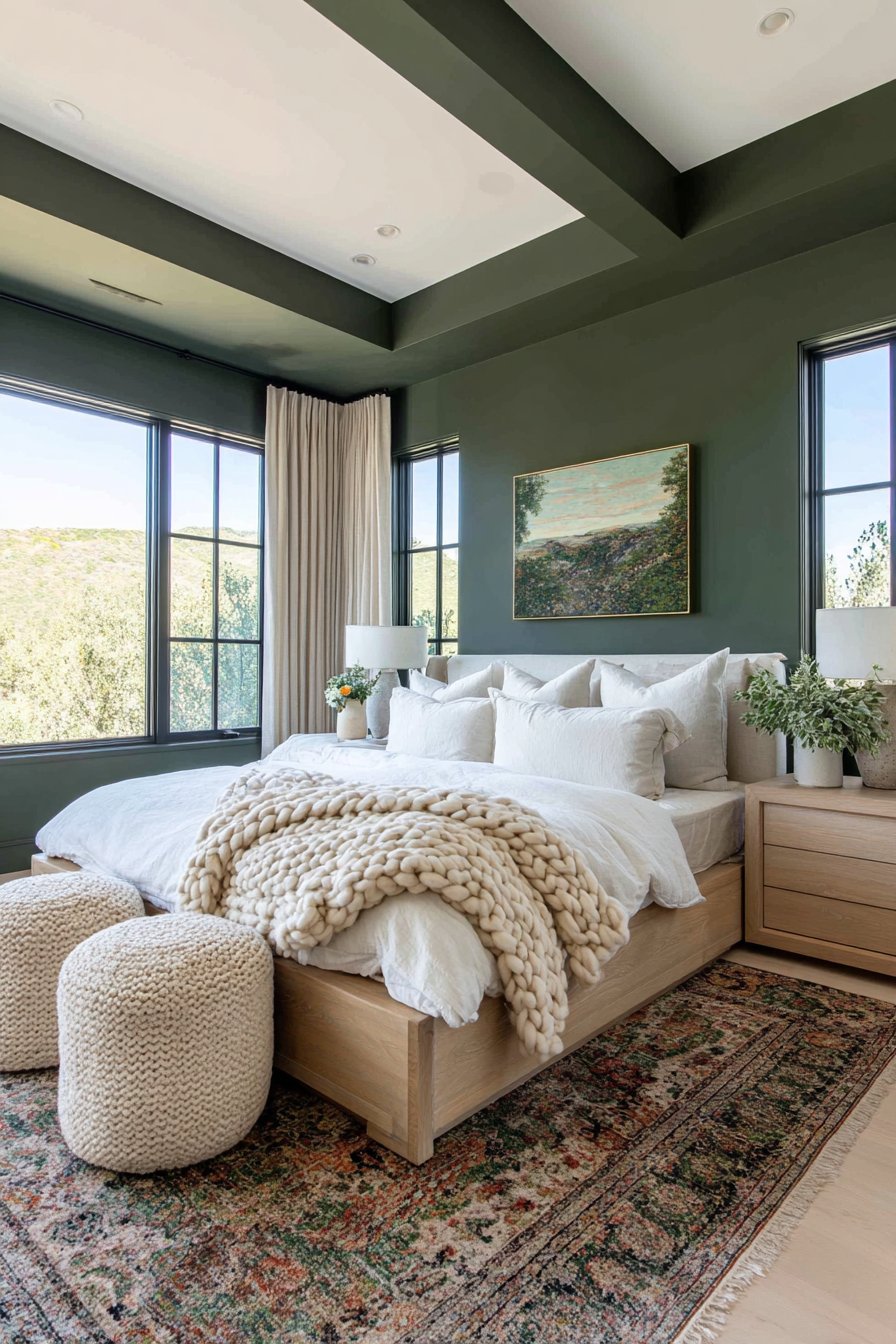
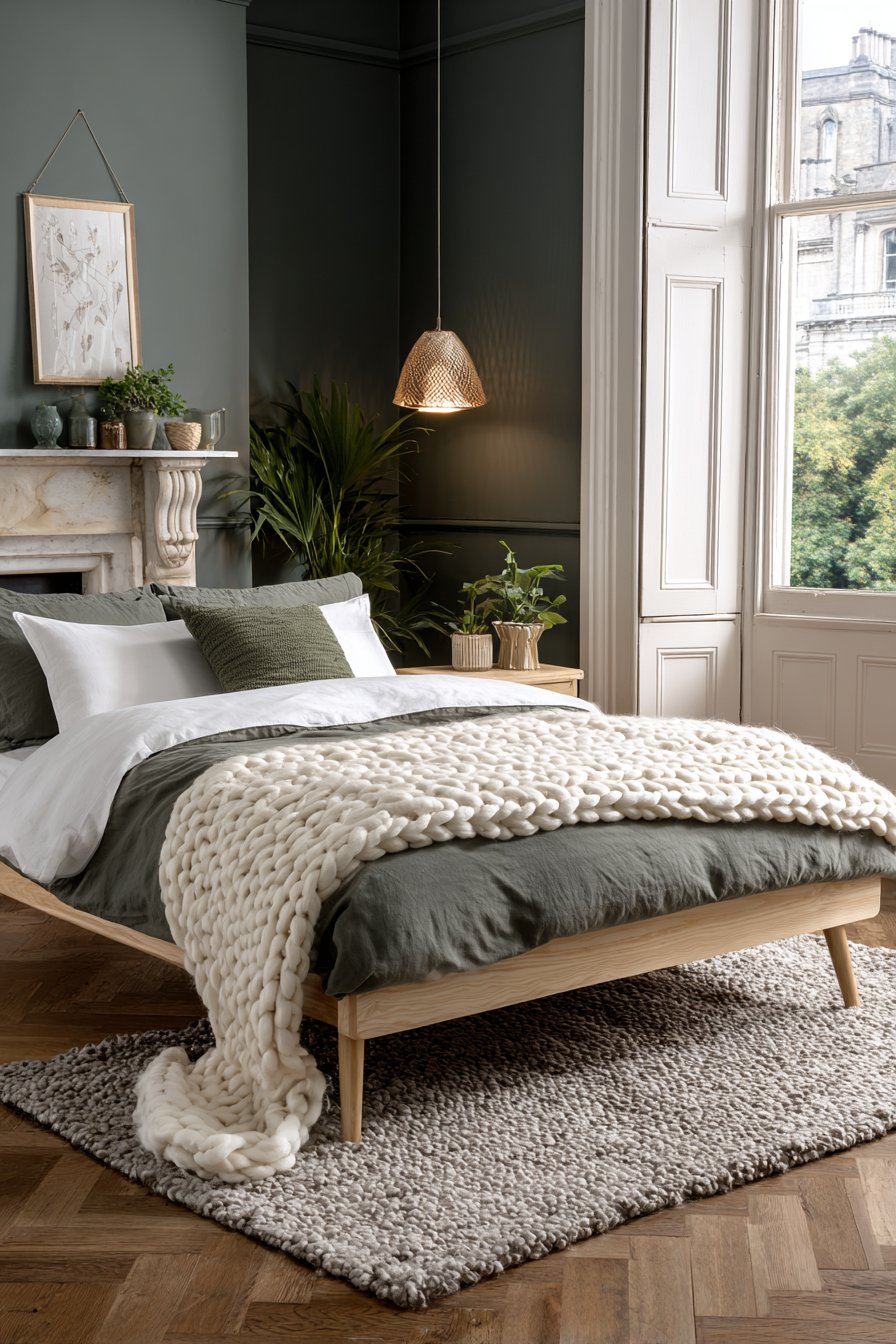
Muted dark sage green walls paired with light blonde wood furniture demonstrates how dark green can successfully integrate into Scandinavian design sensibilities traditionally associated with bright, airy spaces. The key lies in choosing the right shade—this dark sage has grey undertones that mute its intensity, making it feel calm and restful rather than bold or dramatic. Combined with the characteristic Scandinavian preference for natural materials and abundant light, the result feels both grounded and uplifting, proving that Nordic design can embrace deeper colors without sacrificing its essential brightness and connection to nature.
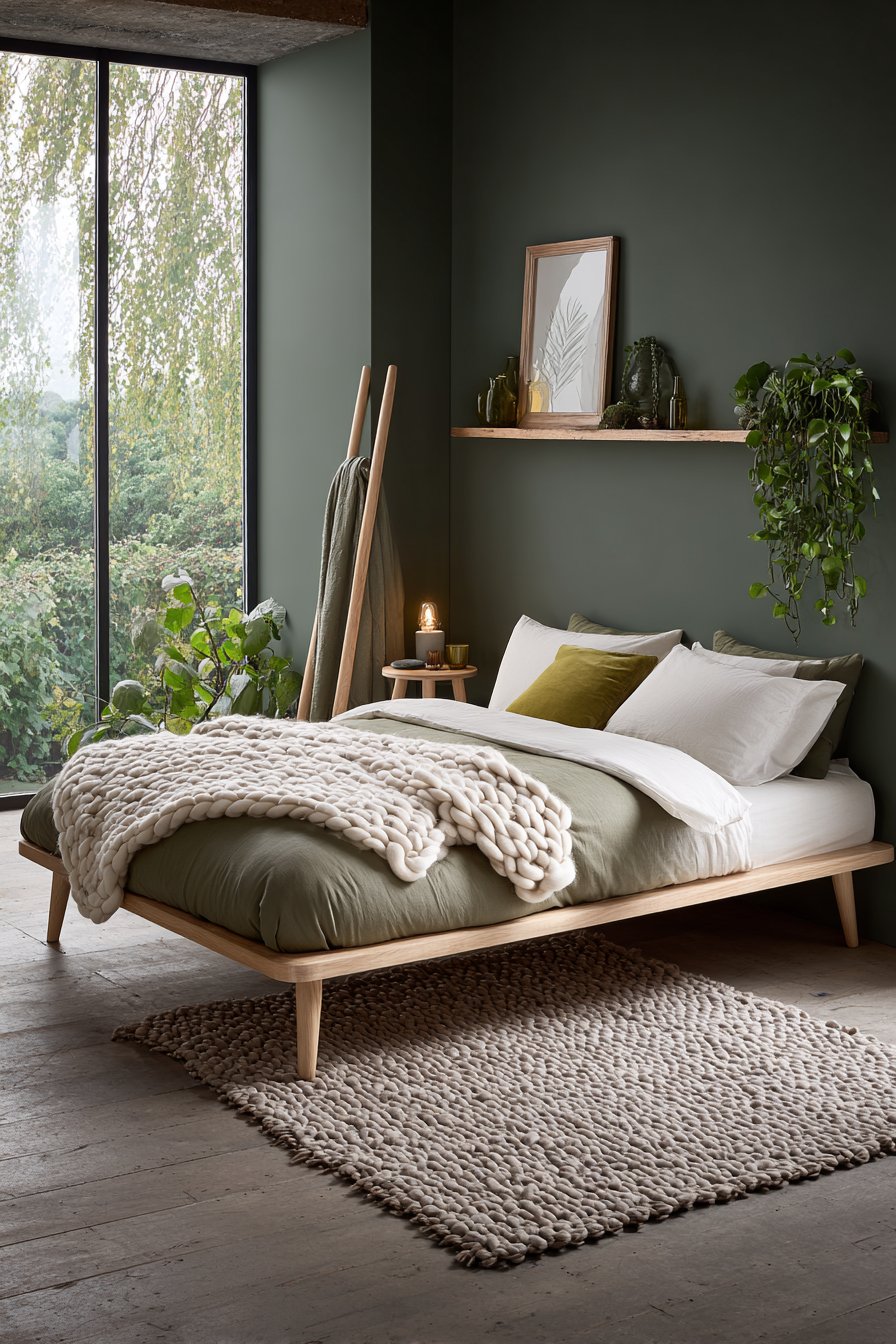
The simple bed frame in natural pine exemplifies Scandinavian design values—honest materials showing their true character, clean lines without excessive ornamentation, and quality craftsmanship evident in precise joinery and smooth finishes. The light blonde wood creates beautiful contrast against the darker sage walls, its pale honey tones seeming to glow against the muted green backdrop. White bedding maintains the Scandinavian commitment to crisp, clean textiles while a chunky knit throw in cream adds essential texture and hygge—that uniquely Scandinavian concept of cozy contentment. The visible texture of the hand-knit throw invites touch and provides visual warmth that prevents the space from feeling too minimalist or cold.
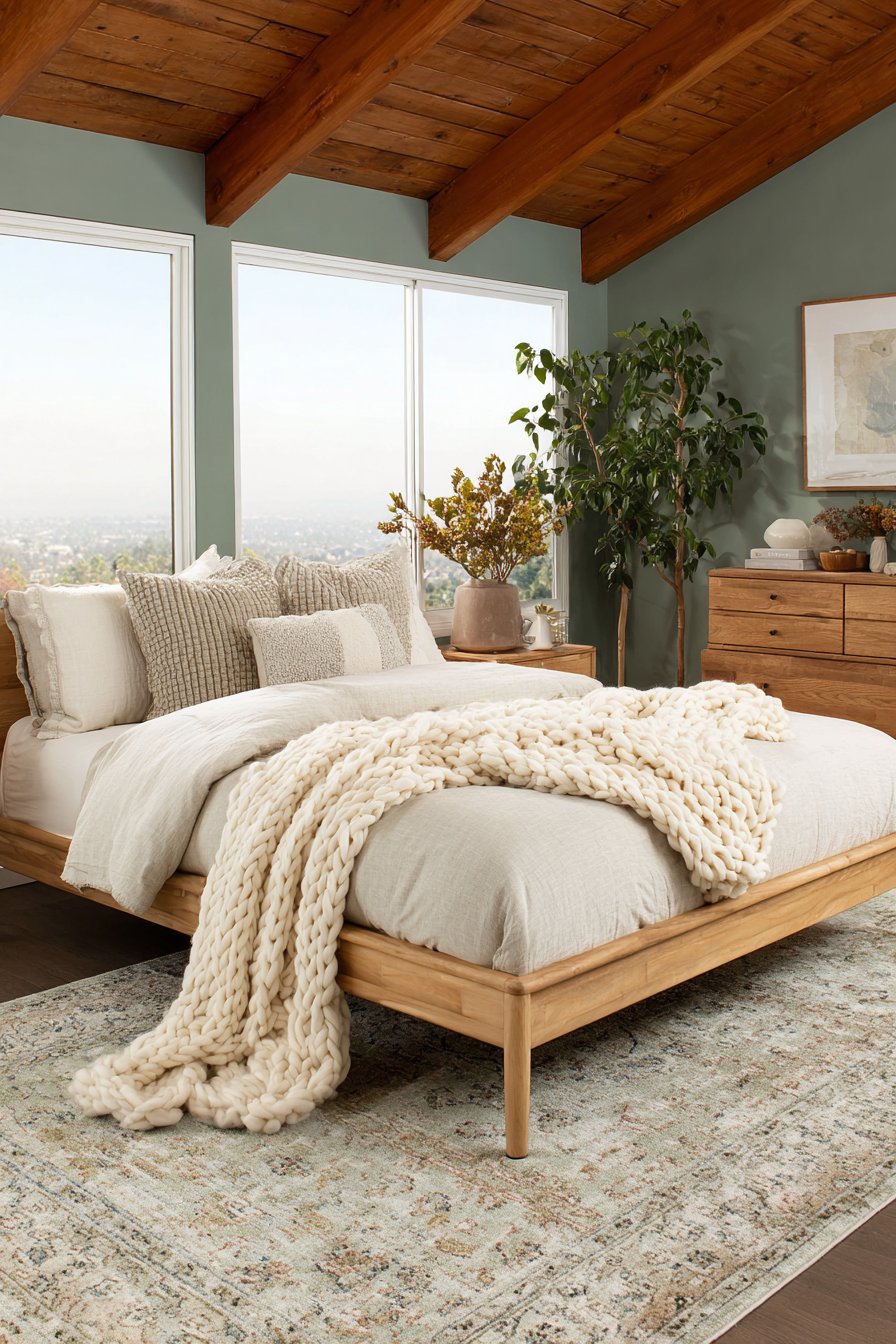
Large windows with minimal treatments represent perhaps the most crucial element in making dark walls work within Scandinavian design. The abundant natural light that floods through unobstructed windows prevents the dark sage walls from making the space feel enclosed or gloomy. Instead, the daylight reveals subtle variations in the wall color—areas of direct sun appear lighter and more grey-green, while shadowed areas show deeper sage tones. This play of light throughout the day keeps the space feeling dynamic and alive, proving that with sufficient natural light, even design traditions emphasizing brightness can successfully incorporate darker, moodier wall colors.
Key Design Tips:
- Choose muted dark greens with grey undertones for compatibility with Scandinavian design principles
- Pair dark green walls with light blonde wood furniture to create characteristic Nordic contrast
- Maximize natural light through large, minimally-treated windows to prevent dark walls from feeling oppressive
- Include white bedding and cream textiles to maintain Scandinavian commitment to fresh, clean aesthetics
- Add chunky knit throws or textured accessories for hygge without cluttering the space
15. Jade Green Velvet Luxury
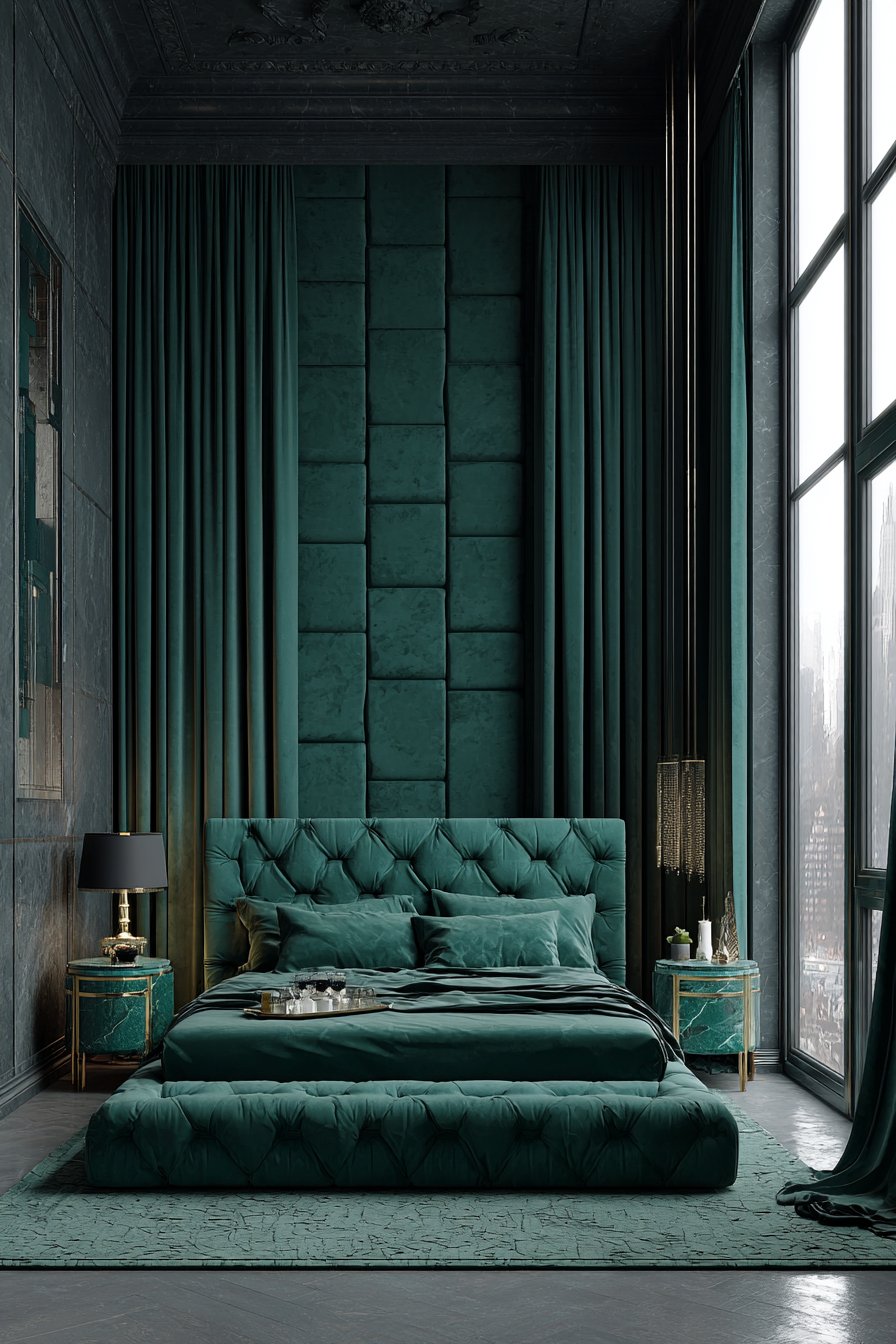
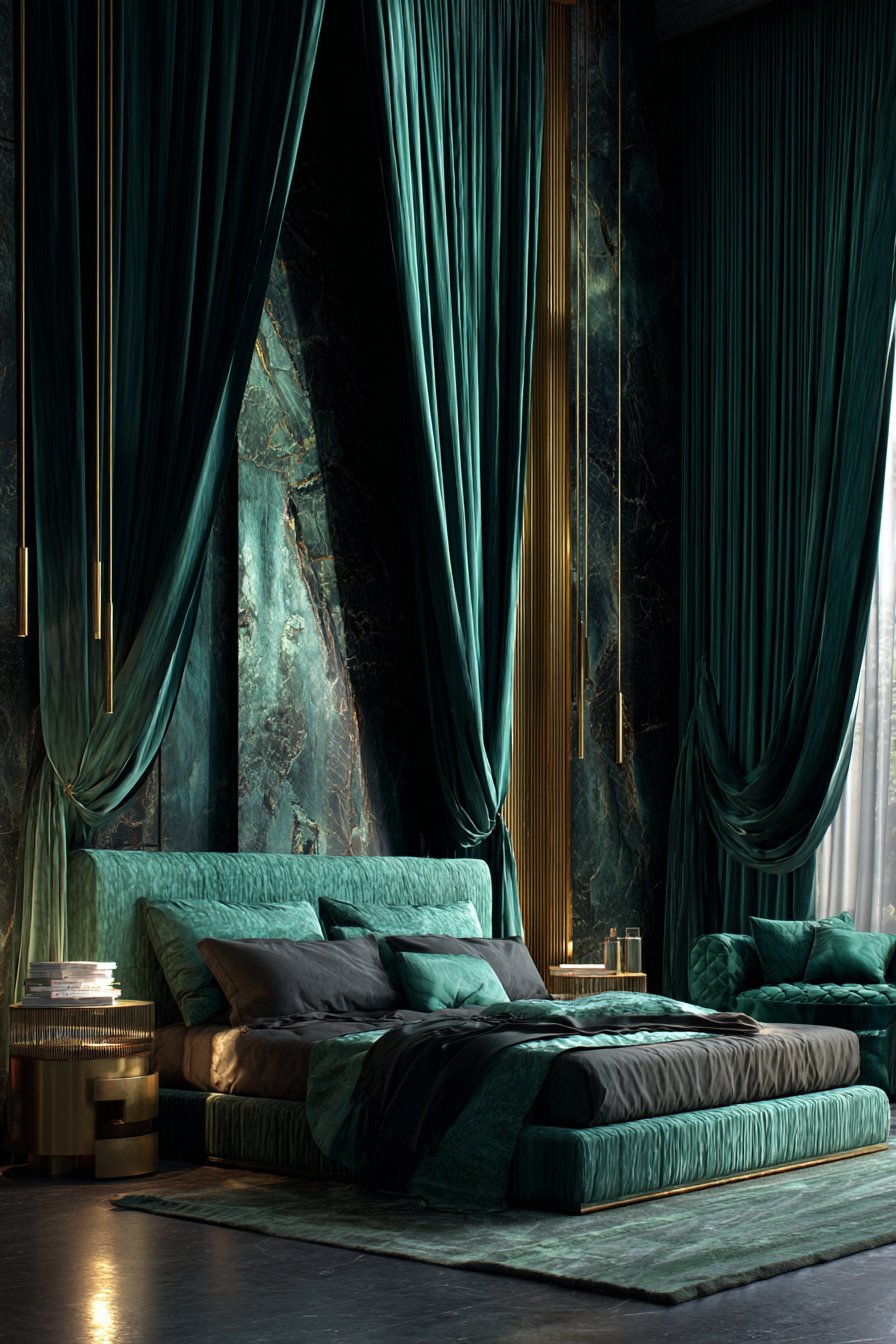
Floor-to-ceiling curtains in deep jade green velvet pooling slightly on the floor create incomparable luxury and drama in bedroom design. The substantial fabric weight and generous fullness required for proper pooling demonstrate quality and abundance—these are not merely functional window coverings but integral design elements that transform the room’s entire character. The velvet pile catches light in distinctive ways, creating subtle variations in tone from deep shadow in the folds to lighter sheen on the surface. When drawn closed, these curtains create complete privacy and sound dampening while their rich color envelops the room in jewel-toned elegance.
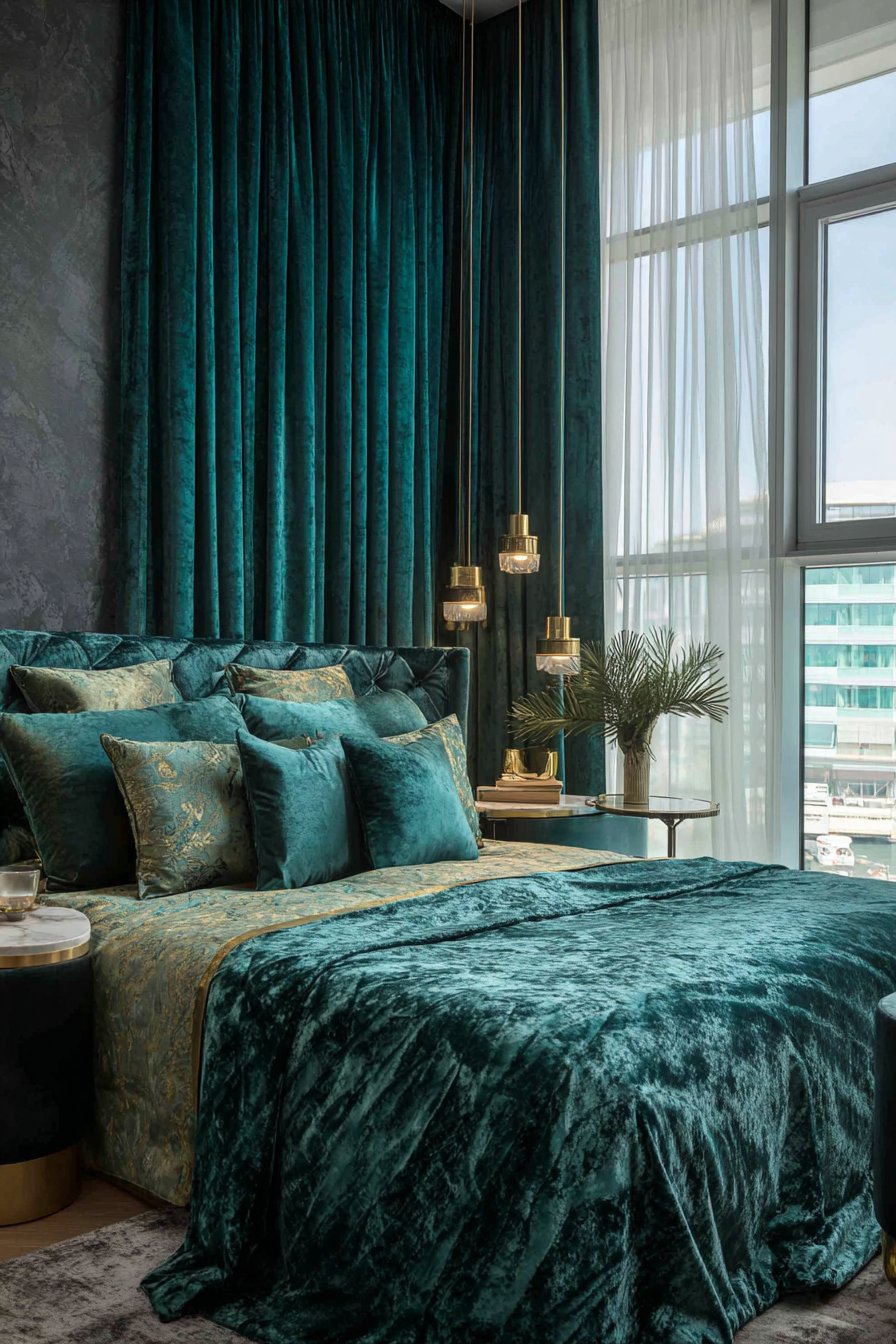
The quilted headboard in coordinating dark teal extends the cool-toned, luxurious aesthetic while providing textural contrast to the smooth velvet curtains. The quilting creates dimensional pattern through fabric manipulation rather than print, adding visual interest that rewards closer inspection. The teal shade—slightly bluer than the jade curtains—creates subtle color variation within the same cool-toned family, preventing the space from feeling too matchy but maintaining overall harmony. Marble-topped nightstands with brass legs introduce additional luxury through material choice and metallic accent, their cool veining complementing the cool green tones while the brass adds necessary warmth.
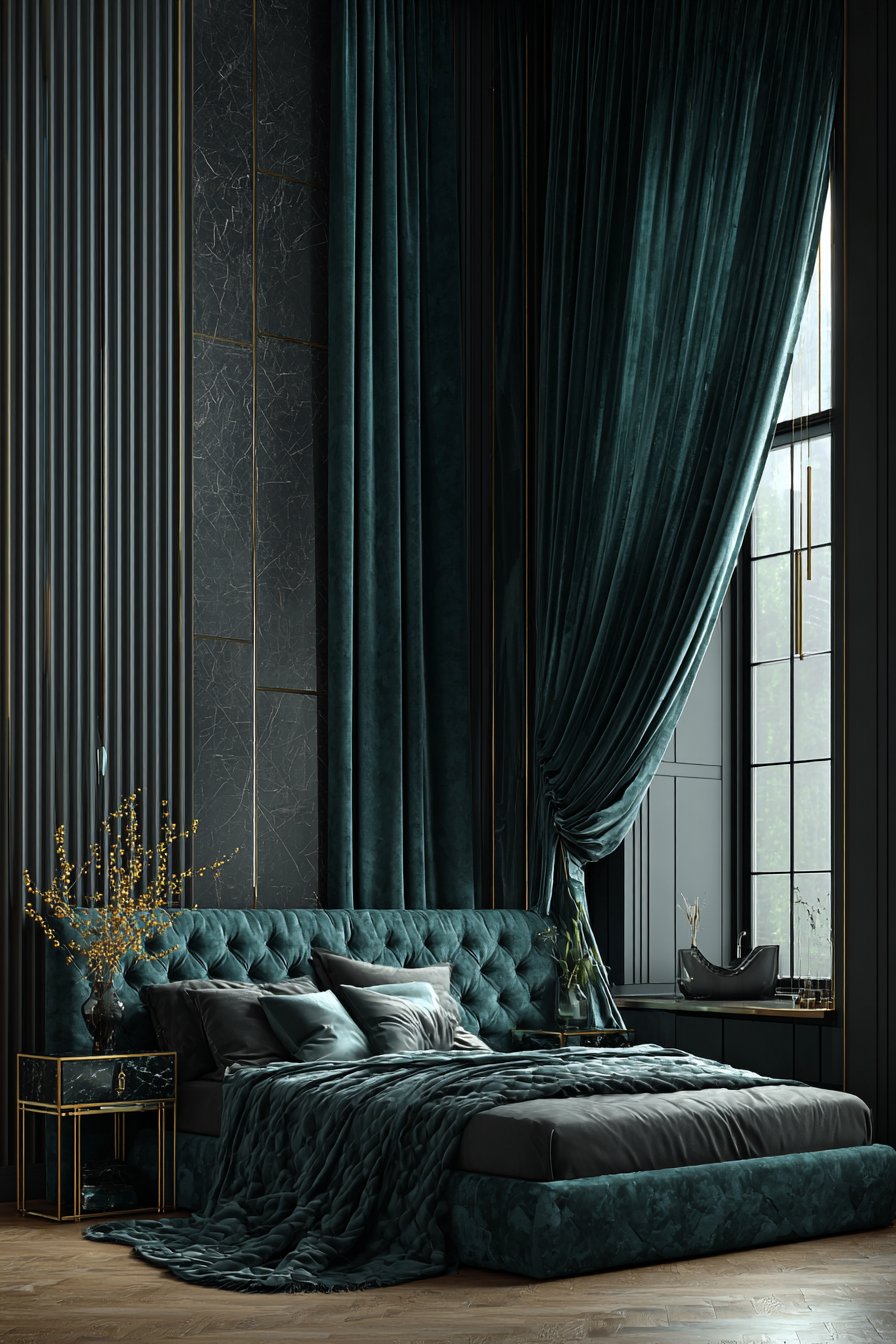
Soft diffused lighting becomes essential in this luxurious design, as proper illumination reveals the sumptuous velvet texture and creates the sheen variations that make velvet so visually compelling. Harsh, direct lighting would flatten the fabric’s dimensional quality, but soft ambient light from multiple sources creates the gentle highlights and shadows that showcase velvet’s unique properties. Natural light filtering through the semi-sheer underlayers during the day creates one lighting scenario, while evening illumination from bedside lamps and perhaps recessed ceiling fixtures creates another, each revealing different aspects of the jade green velvet’s rich beauty and changing throughout hours and seasons.
Key Design Tips:
- Invest in generous yardage for velvet curtains to achieve proper fullness and luxurious pooling at the floor
- Install sheer underlayers beneath velvet curtains for daytime light filtering and privacy without darkness
- Choose quilted or dimensionally textured headboards to add pattern through fabric manipulation rather than print
- Include marble and brass accents to enhance luxury aesthetic and add material variety
- Layer multiple soft lighting sources to properly illuminate velvet’s texture and create sheen variations
16. Forest Green Gallery Wall
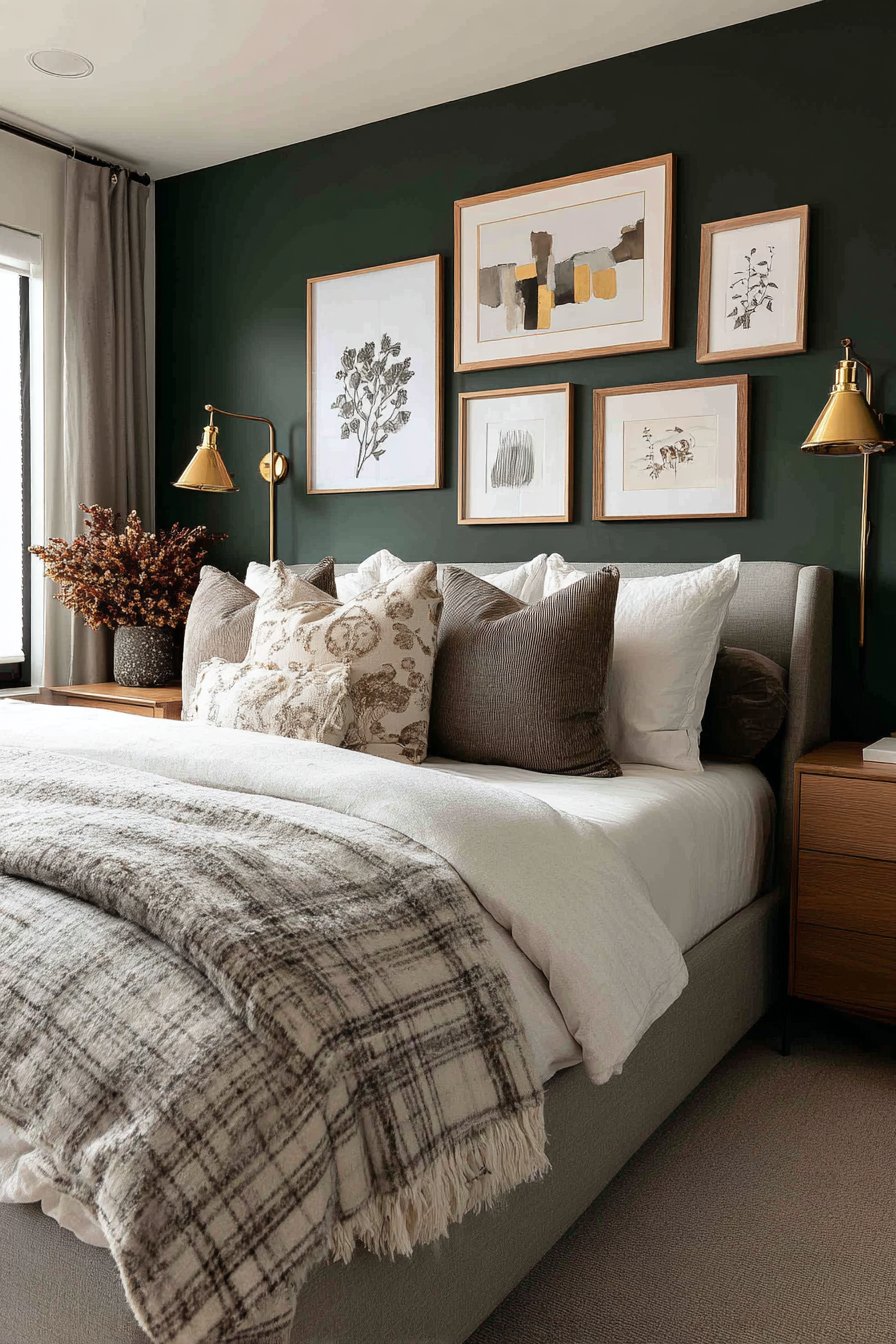
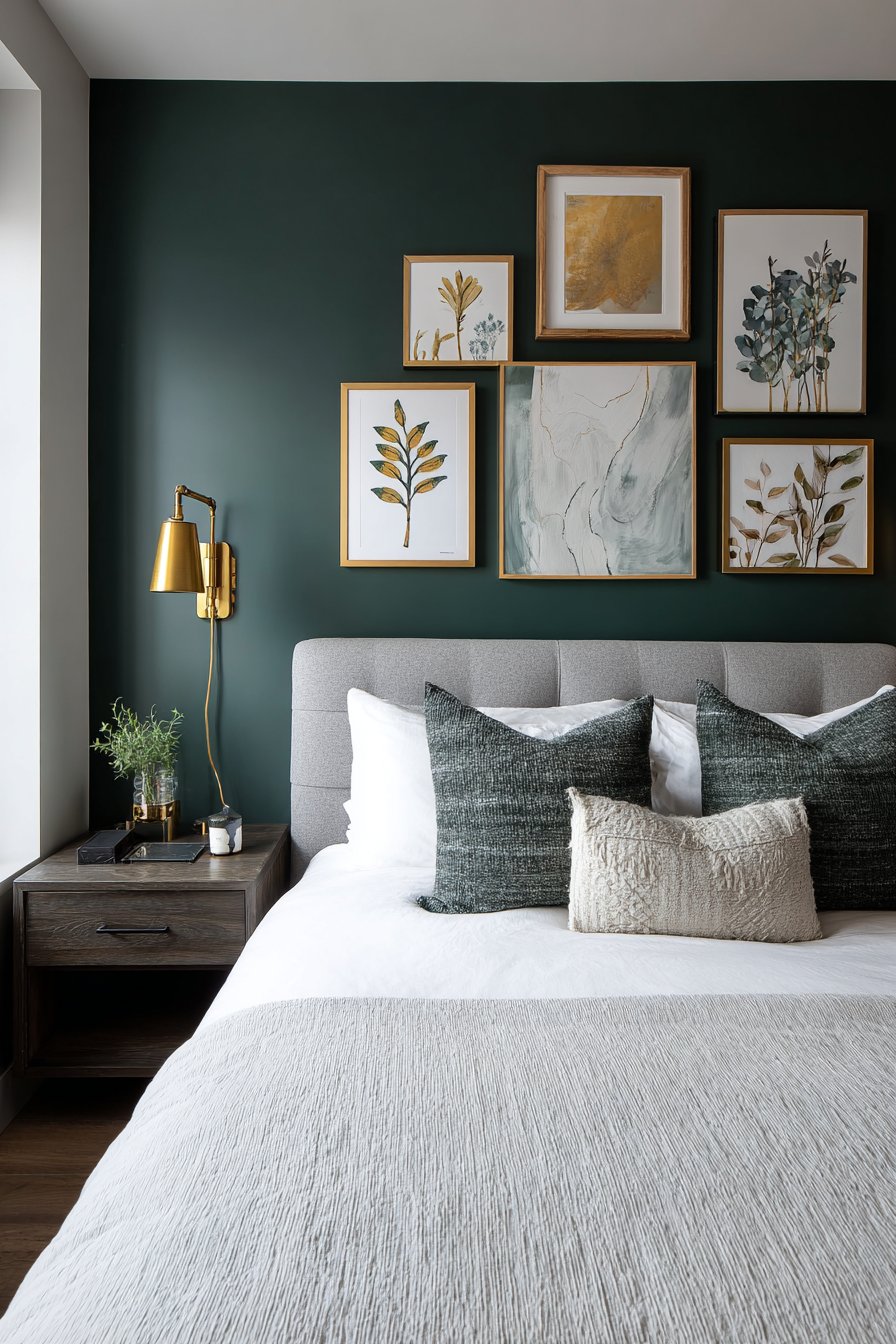
A gallery wall arrangement displayed against a deep forest green accent wall transforms art display into a dramatic design feature that showcases both the artwork and the bold wall color. The dark background creates unprecedented impact for framed pieces, making colors pop with increased vibrancy and creating sophisticated contrast that white walls cannot achieve. Botanical prints feel particularly appropriate against forest green, creating thematic continuity between the nature-inspired wall color and the organic subject matter of the art. Gold and natural wood frames add warmth and elegance, their metallic and organic finishes creating beautiful interaction with the rich green backdrop.
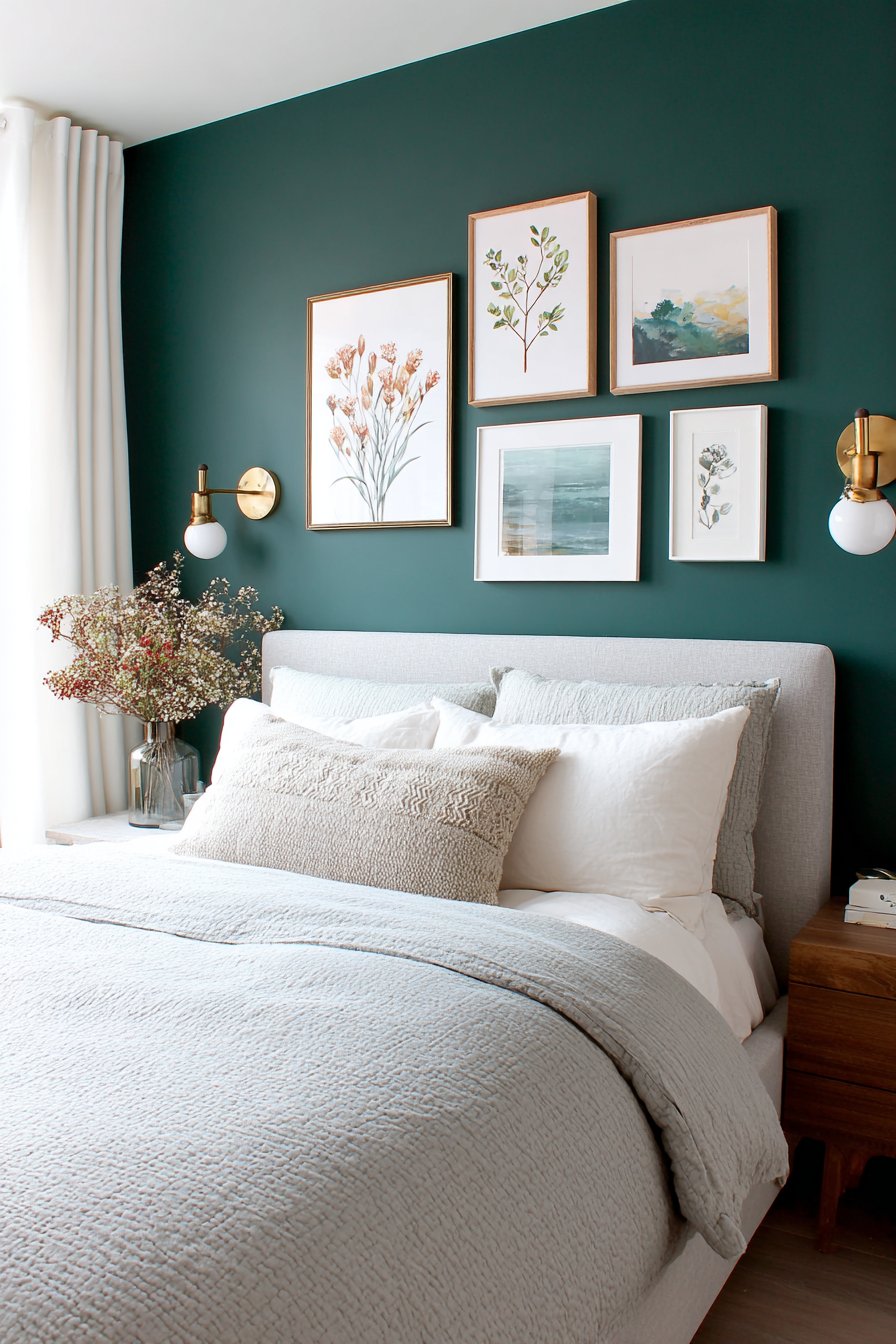
The simple upholstered bed in light grey provides essential visual rest from the dramatic gallery wall, ensuring the bedroom maintains balance and doesn’t feel overwhelming. By keeping the bed and its surrounding area neutral and understated, the design allows the gallery wall to remain the focal point without competition. The light grey upholstery creates soft, calming contrast to the deep green wall, while its neutral character ensures flexibility—the gallery wall artwork can be changed and updated without requiring furniture changes. This demonstrates wise long-term design thinking that creates a flexible framework for personal expression through art.
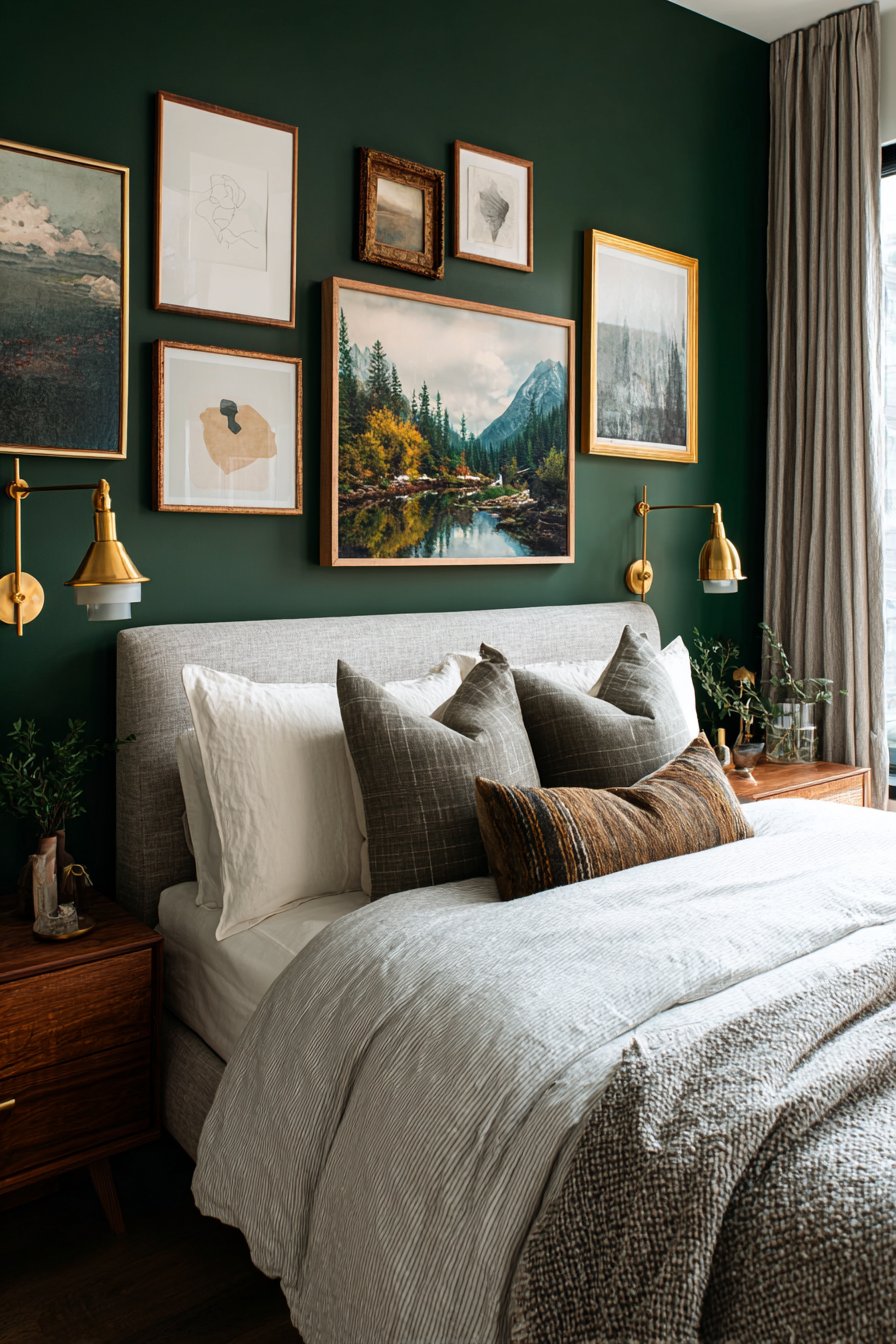
Small brass picture lights mounted above selected frames add gallery-like sophistication while providing functional illumination that makes the artwork visible even in low ambient light. These directional lights create dramatic highlighting that emphasizes favorite pieces and adds another layer of visual interest through the interplay of light and shadow. The picture lights also create warm pools of golden light against the forest green wall in the evening, adding ambiance and intimacy that transforms the gallery wall from daytime focal point to evening mood-setter. The combination of carefully curated art, elegant frames, professional lighting, and that moody forest green background creates a bedroom feature that rivals boutique hotel or gallery sophistication.
Key Design Tips:
- Choose deep green accent walls specifically to enhance art display and create gallery-worthy impact
- Mix gold and natural wood frames to add warmth and variety while maintaining cohesion
- Keep bed area simple and neutral when creating dramatic gallery walls to prevent visual overwhelm
- Install individual picture lights to illuminate artwork and create gallery-like sophistication
- Curate art thoughtfully, editing collection to only include pieces worthy of the dramatic presentation dark green walls provide
17. Hunter Green Painted Furniture
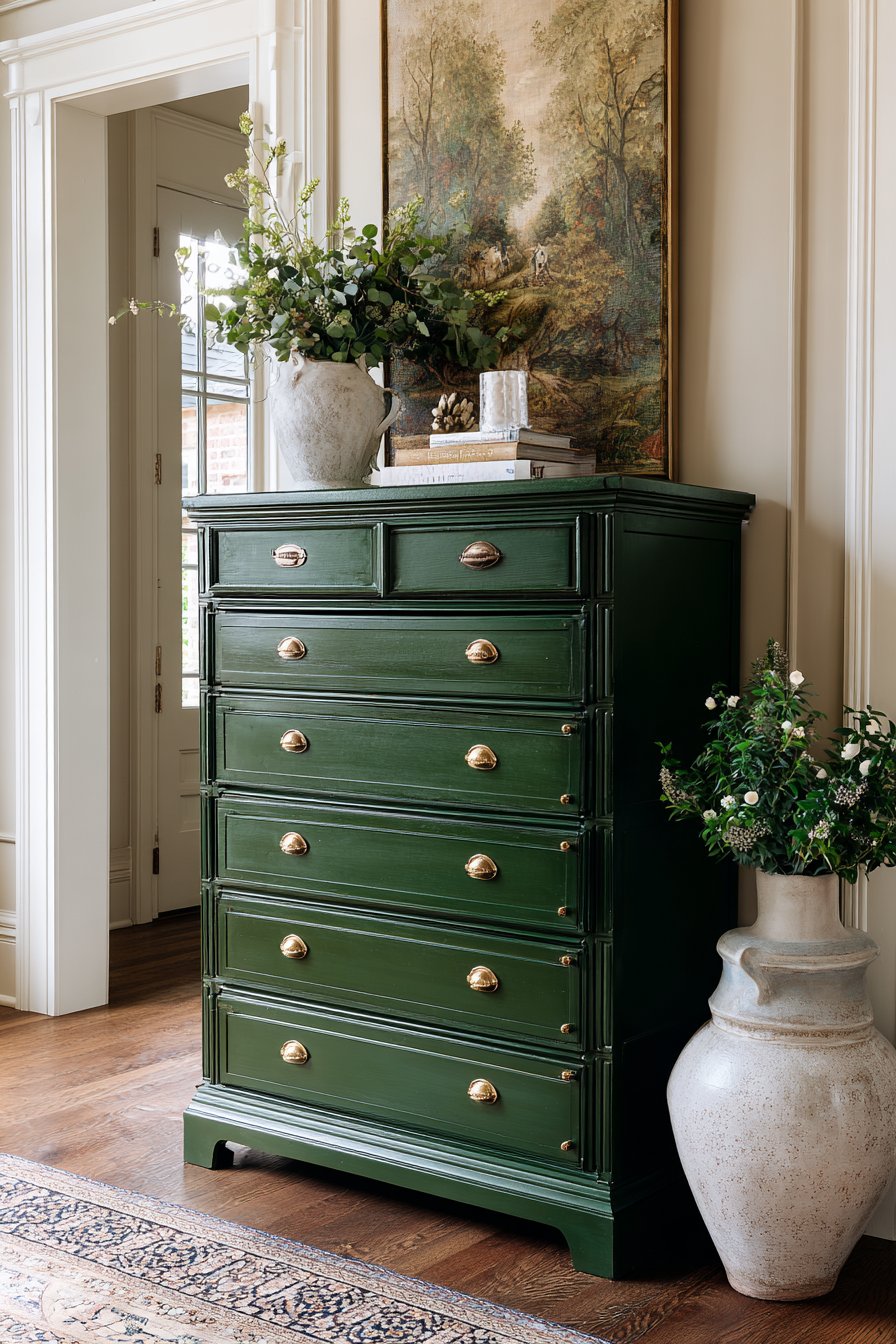
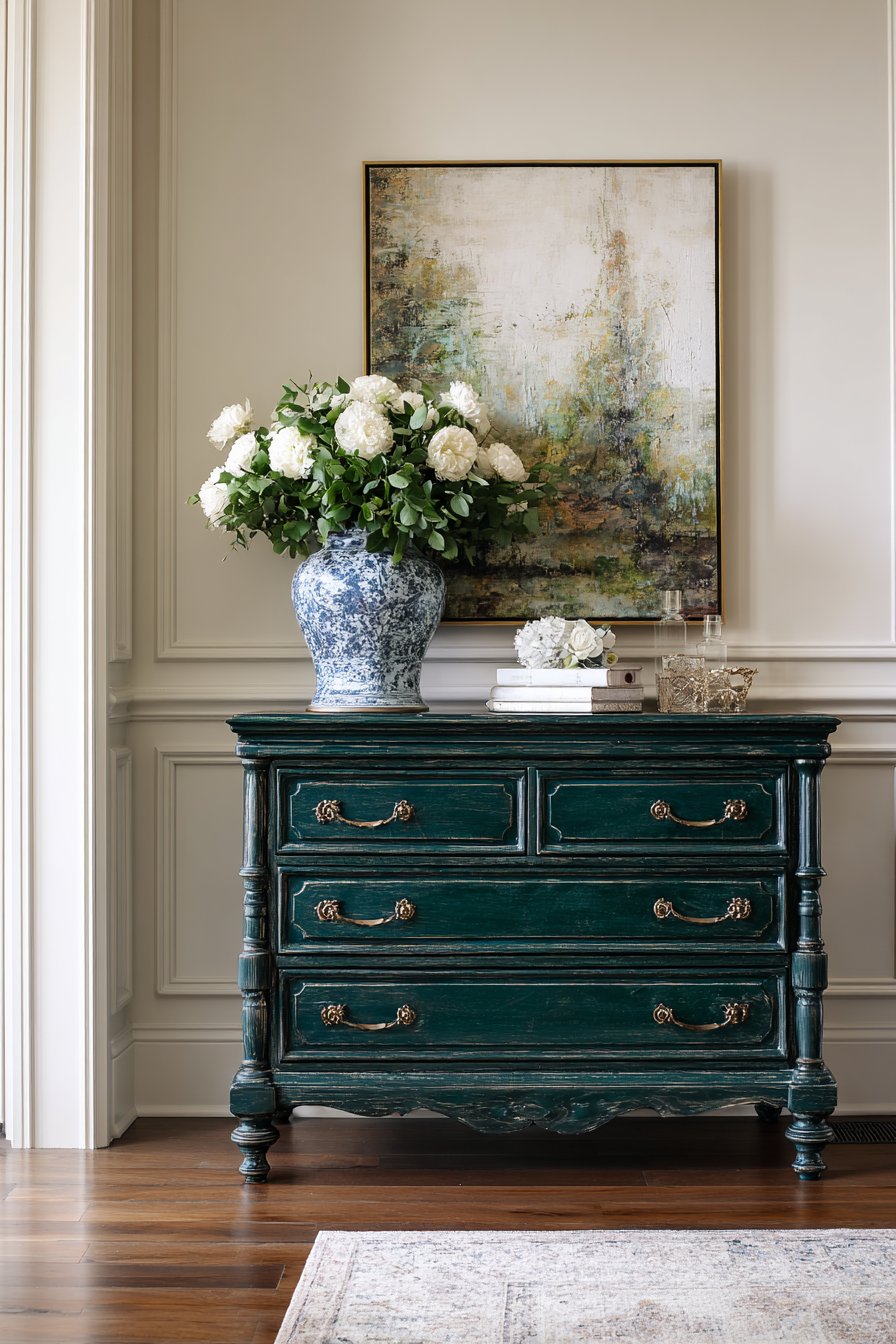
A refinished vintage dresser painted in dark hunter green with original brass hardware demonstrates how painted furniture can introduce dark green elegantly into bedrooms while maintaining neutral wall colors. This approach offers flexibility and lower commitment than painting walls—if you tire of the color, repainting furniture is significantly easier than repainting entire rooms. The vintage piece brings character and history, with its original brass hardware adding authentic patina and warmth that new furniture cannot replicate. The hunter green paint color transforms ordinary wood furniture into statement pieces that anchor the room and provide sophisticated color impact.
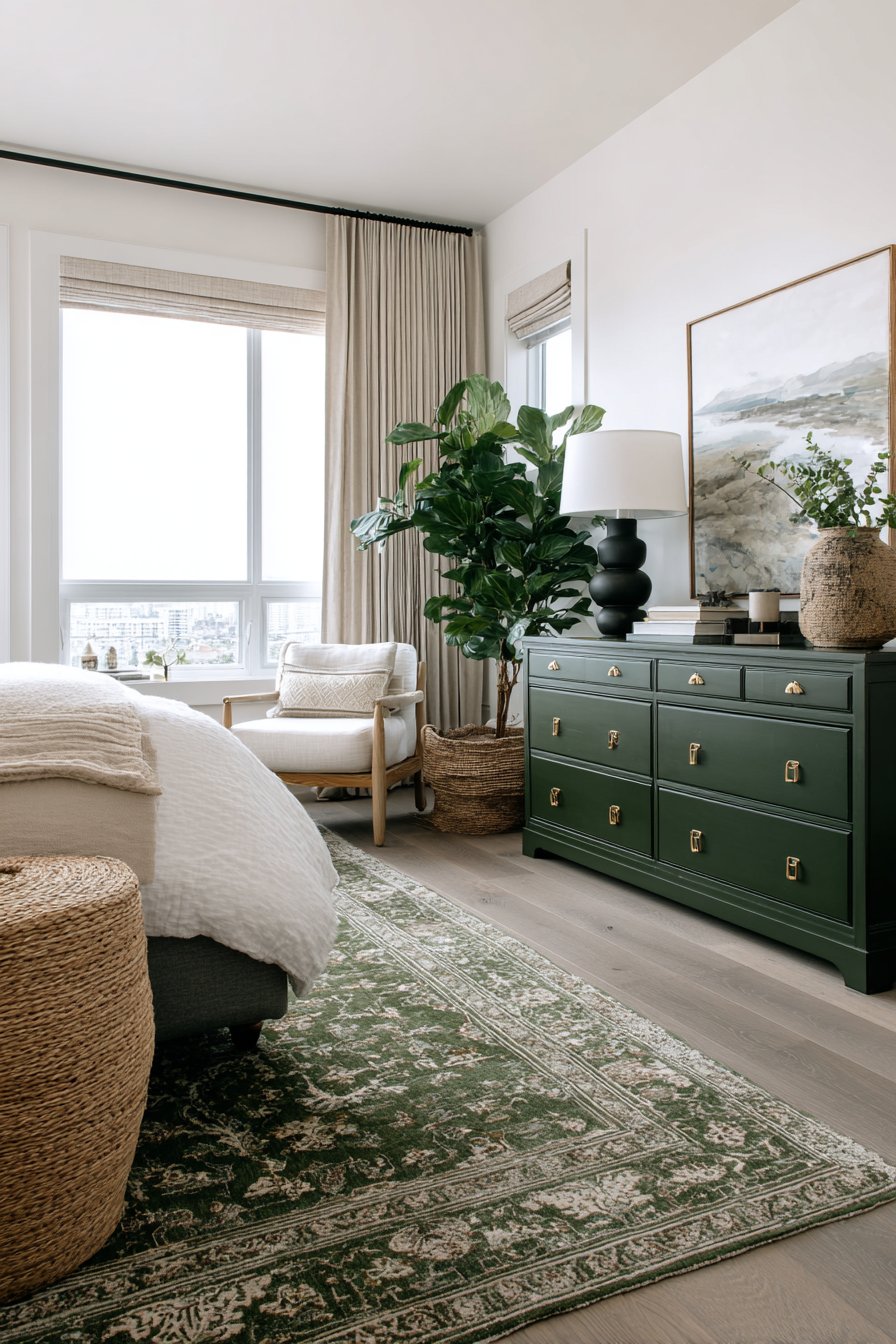
Keeping walls in neutral cream allows the dark green furniture to truly stand out and read as intentional design choices rather than overwhelming color saturation. The cream walls create soft, warm backdrop that makes the hunter green appear richer and more jewel-like, while maintaining overall brightness and spaciousness. A matching nightstand continues the painted furniture theme without overdoing it, creating visual balance on either side of the bed while demonstrating intentional color coordination. The decision to paint only select furniture pieces rather than everything shows restraint and creates more interesting visual variety than a completely matched bedroom suite.
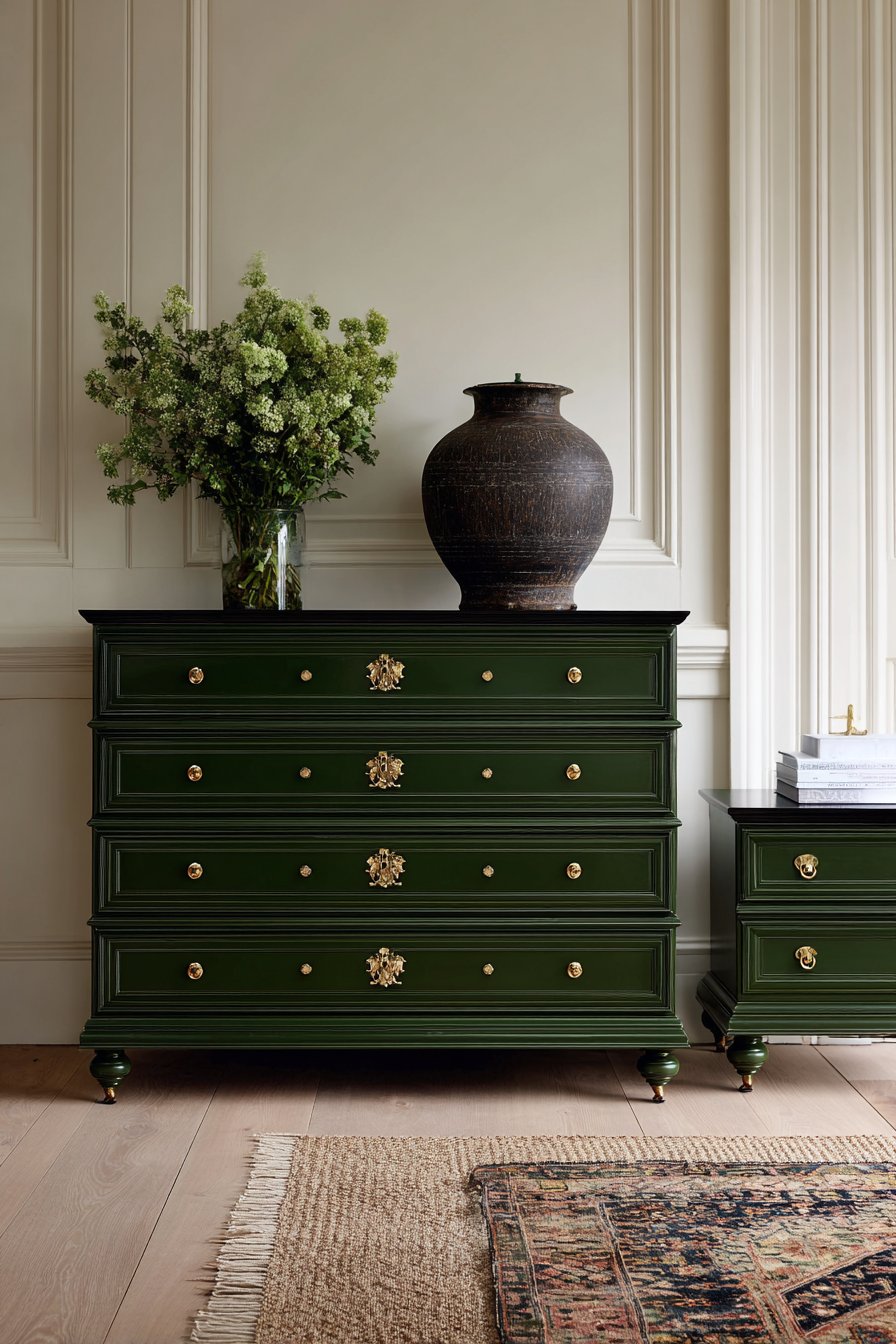
Natural wood flooring and a traditional area rug ground the space with organic materials and classic patterns that prevent the painted furniture from reading as too trendy or contemporary. The wood floor’s warm honey tones create beautiful harmony with the brass hardware on the painted pieces, while the rug’s pattern and texture add visual interest at the room’s foundation. This combination of painted statement furniture, neutral walls, and traditional grounding elements creates timeless design that feels both fresh and classic, demonstrating how dark green can integrate into various design styles and time periods rather than being locked into current trends.
Key Design Tips:
- Paint vintage or thrift store furniture in dark green for affordable, flexible color introduction
- Retain original brass or metal hardware to add authentic character and warm metallic accents
- Keep walls neutral to allow painted furniture to stand out as intentional focal points
- Paint 2-3 coordinating pieces rather than all furniture to create balance without monotony
- Combine painted furniture with natural wood flooring and traditional textiles for timeless rather than trendy aesthetics
18. Olive Green Textile Layering
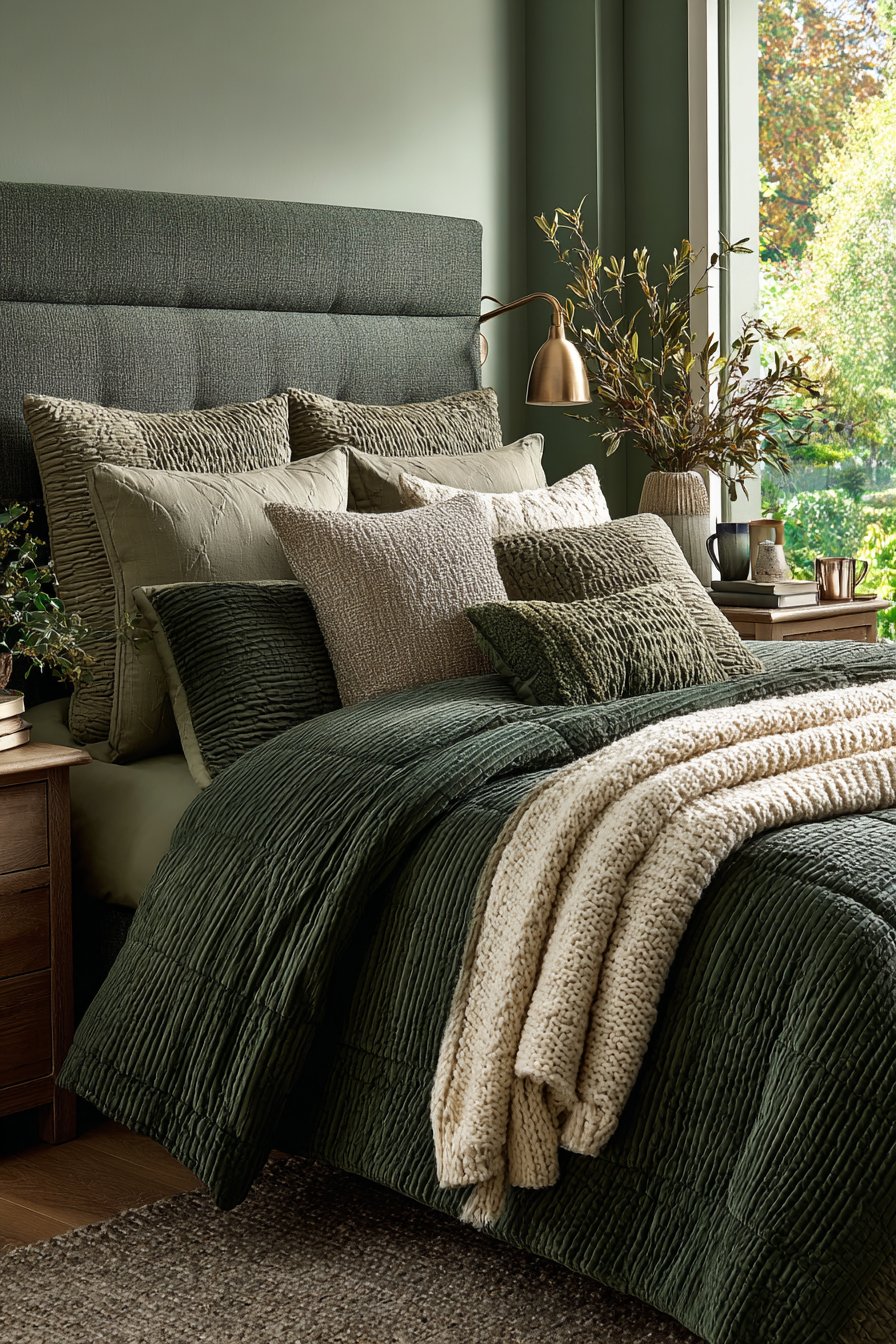
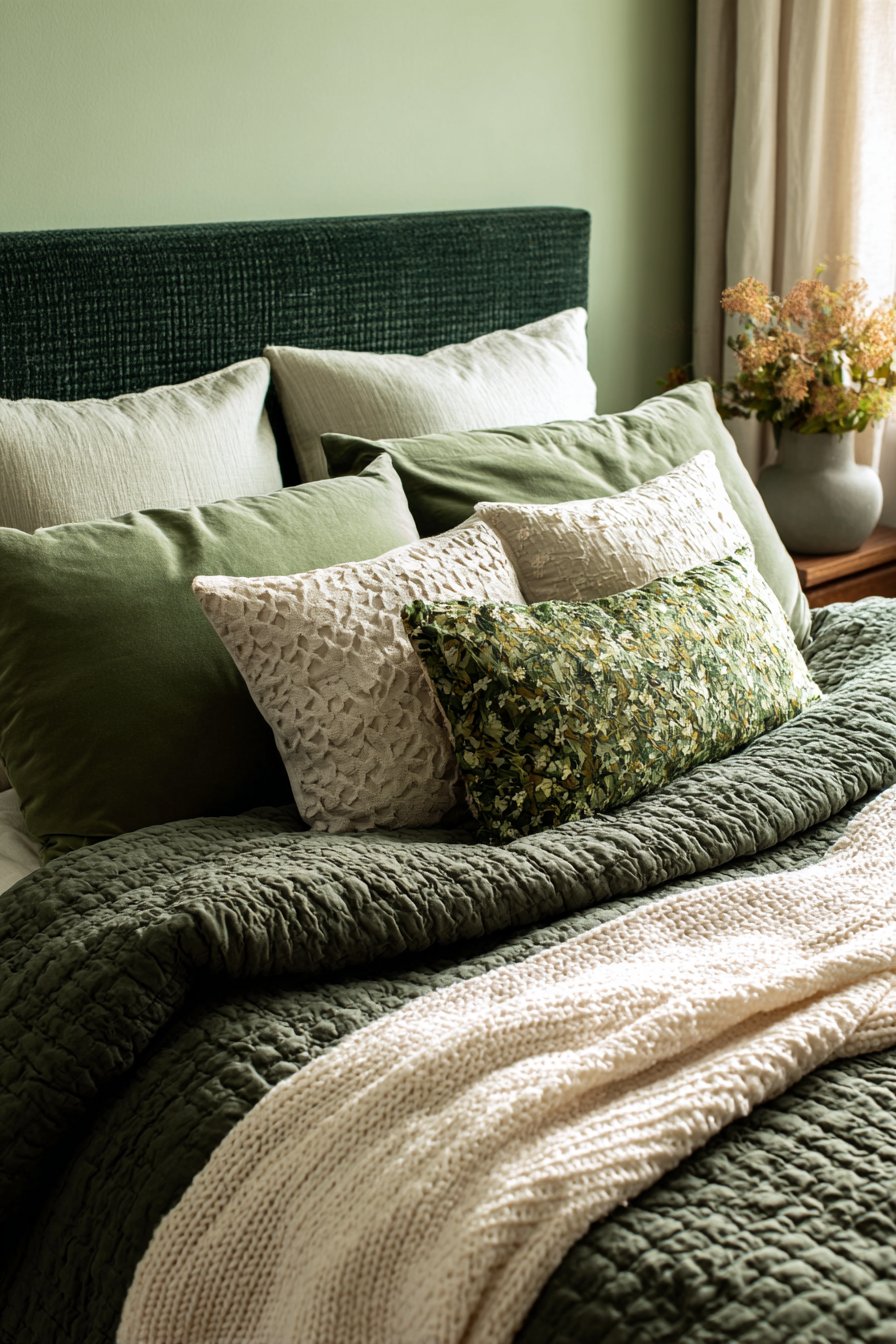
Dark olive green quilts as the base layer topped with lighter sage pillows and cream knit throws demonstrates sophisticated textile layering that creates depth, texture, and tonal variation within the green color family. This approach centers the dark green in the most tactilely engaging part of the bedroom—the bedding itself—where its richness can be directly experienced through touch as well as sight. The olive shade offers slightly warmer tones than hunter or emerald greens, making it particularly inviting and cozy for bedding applications where warmth and comfort are paramount. The quilt’s weight and texture provide physical as well as visual comfort, inviting you to burrow into layers of green-toned softness.
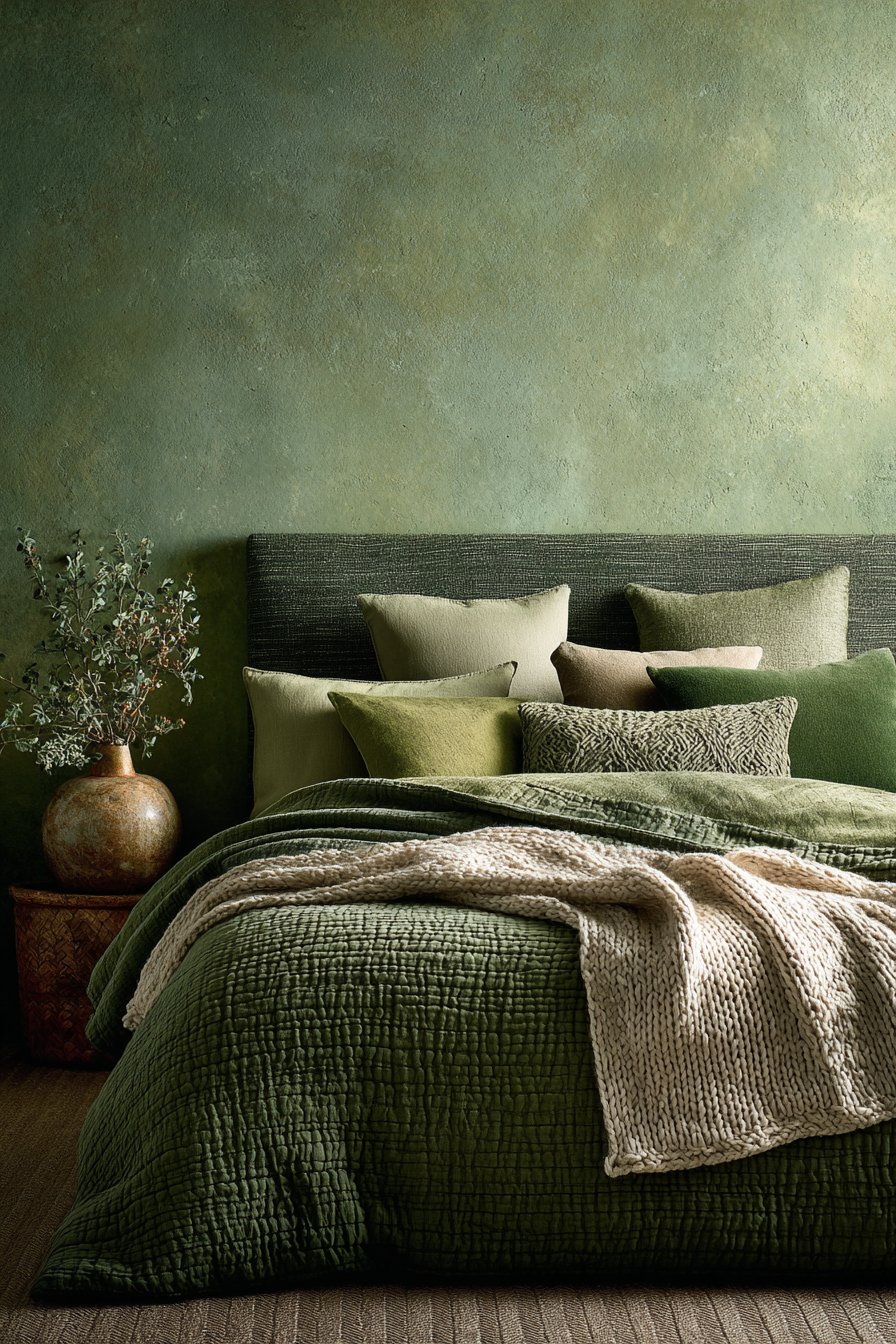
The headboard upholstered in textured dark green linen with visible weave creates perfect coordination with the layered bedding while adding additional textural interest. The linen’s natural texture—with its characteristic slubs and variations—adds organic character that prevents the green from feeling too perfect or artificial. The visible weave catches light differently throughout the day, creating subtle highlights and shadows that add dimensional interest. Coordinating walls in pale green maintain color harmony while ensuring the room feels bright and spacious, creating graduated tones from the deep olive quilt through medium green headboard to light green walls.
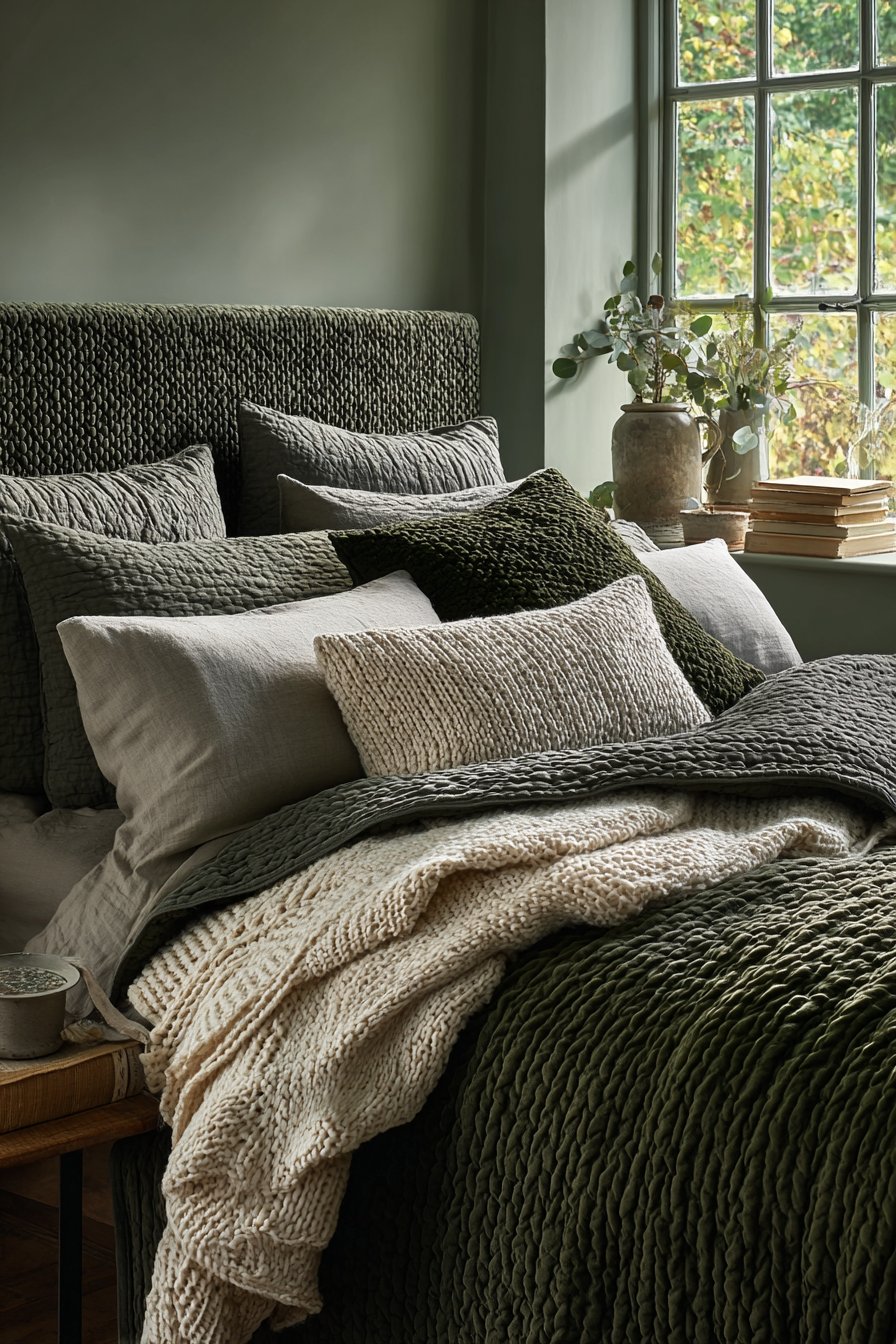
Natural morning light streaming through windows creates the most beautiful illumination for this layered textile approach, revealing all the subtle texture differences between quilted cotton, knit wool, smooth linen, and velvet pillows. The varied materials catch and reflect light differently—the quilt’s surface creates small shadows in its quilted pattern, the knit throw’s raised texture creates interesting light play, and the velvet pillows show characteristic sheen variations. This attention to textural variety within a limited color palette demonstrates sophisticated design thinking that creates richness through tactile diversity rather than color chaos, proving that monochromatic schemes need not be boring when texture receives proper attention.
Key Design Tips:
- Layer multiple bedding textures in graduated green tones from dark to light for dimensional interest
- Choose textured linen for headboard upholstery to add organic character and visible weave detail
- Paint walls in the lightest green tone to create tonal progression and maintain brightness
- Include varied materials—quilted cotton, knit wool, smooth linen, velvet—to create tactile diversity
- Position the bed to receive morning natural light that beautifully illuminates layered textile textures
19. Deep Pine Green Geometric Dimension
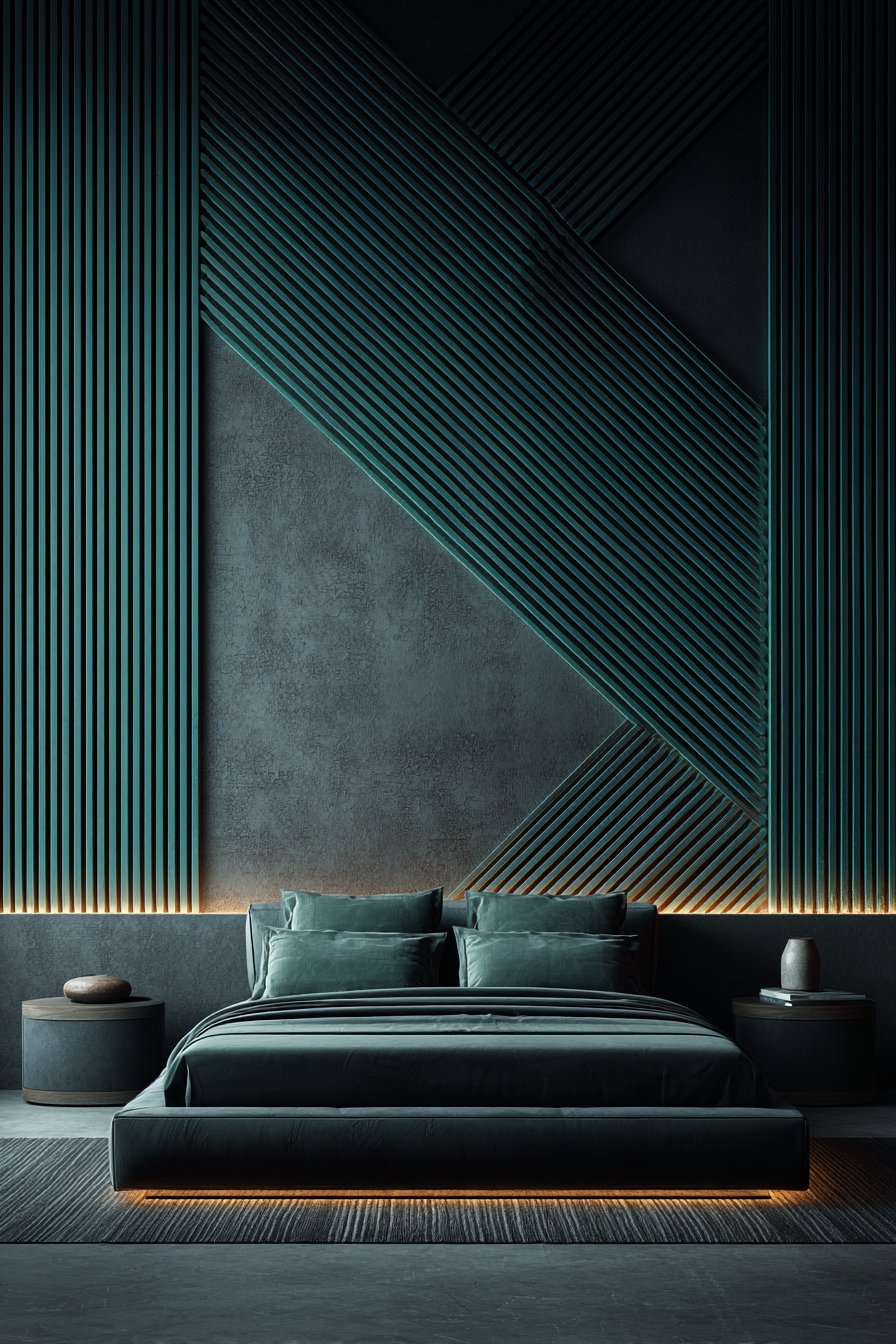
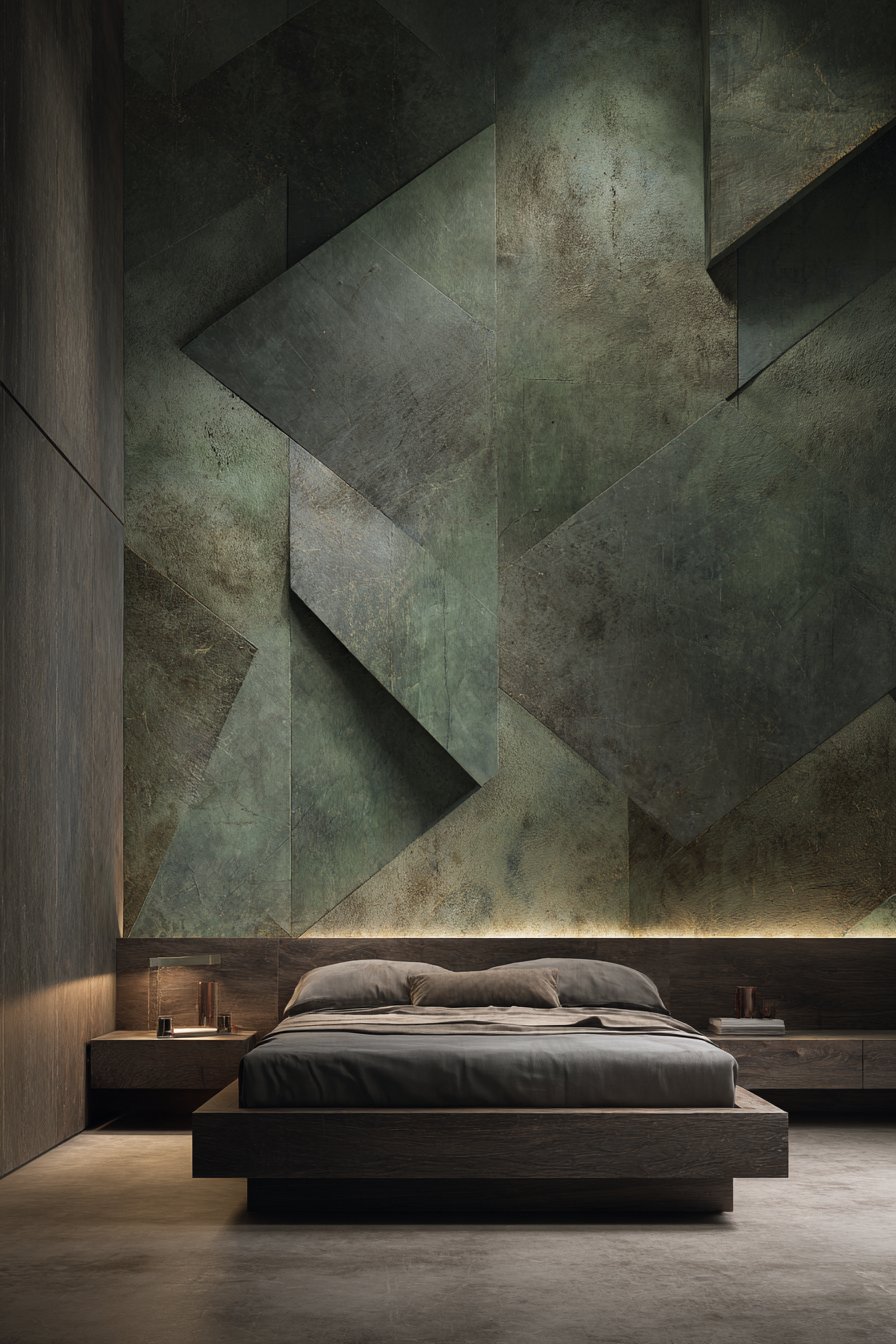
Geometric wall panels in alternating shades of dark green and charcoal create three-dimensional architectural interest that transforms flat walls into sculptural features. This treatment represents the intersection of art, architecture, and interior design, turning the bedroom wall into a dynamic surface that changes throughout the day as light angles shift. The geometric pattern—whether squares, rectangles, hexagons, or other shapes—creates rhythm and visual movement that draws the eye and provides endless interest. The alternating colors between deep pine green and charcoal create additional depth, as the eye perceives subtle shadows and highlights even before considering the actual dimensional quality of the raised panels.
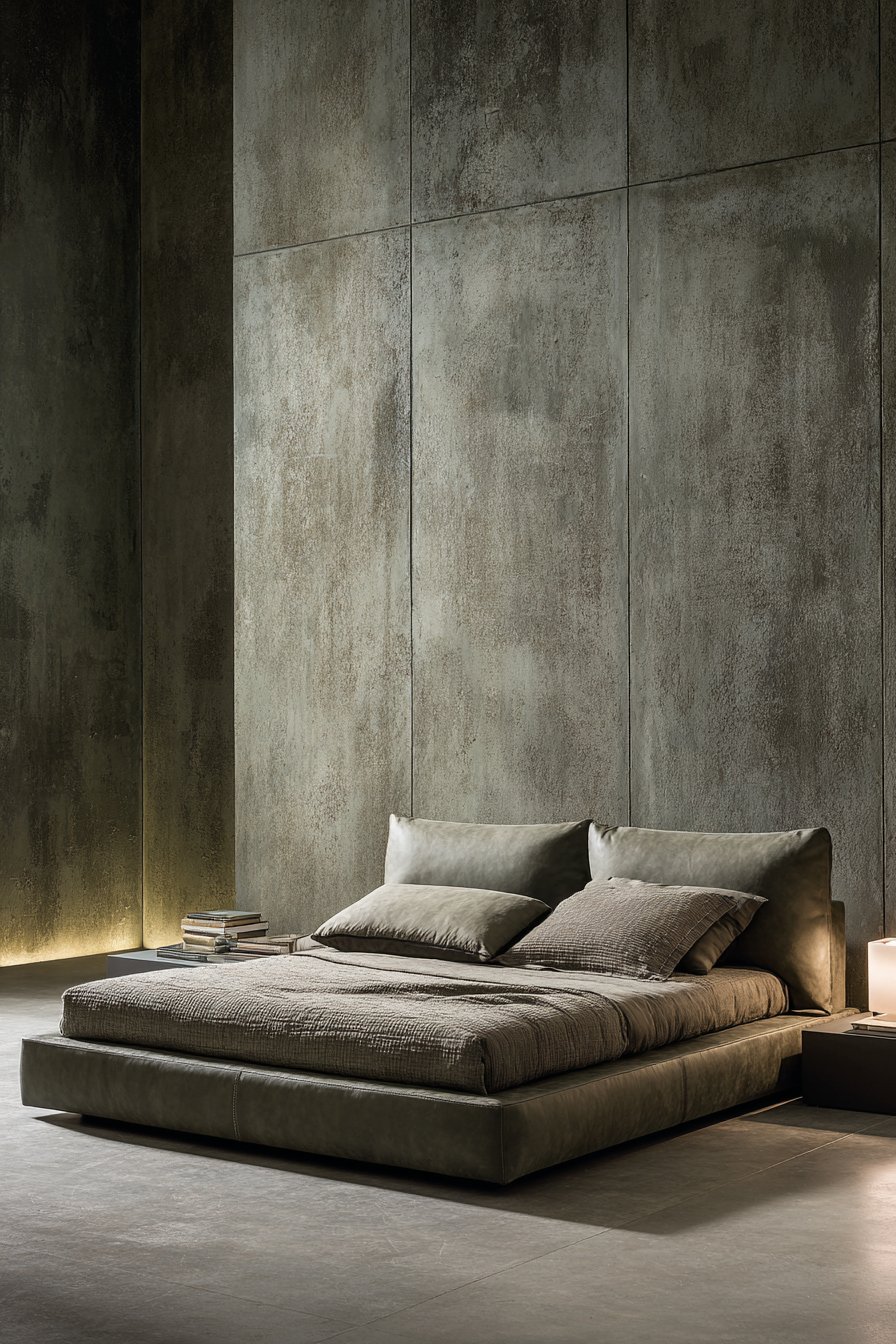
The modern platform bed with integrated side tables demonstrates how contemporary furniture design can complement bold architectural treatments. The clean, horizontal lines of the platform bed create calm counterpoint to the vertical or geometric emphasis of the wall panels, while the integrated side tables show space-efficient thinking that keeps the floor area less cluttered. Minimal decor maintains focus on the architectural wall treatment, recognizing that when walls make such strong statements, accessories should recede to supporting roles. A few carefully chosen items—perhaps a single plant, one piece of meaningful art, or a beautiful lamp—provide personality without competing for attention.
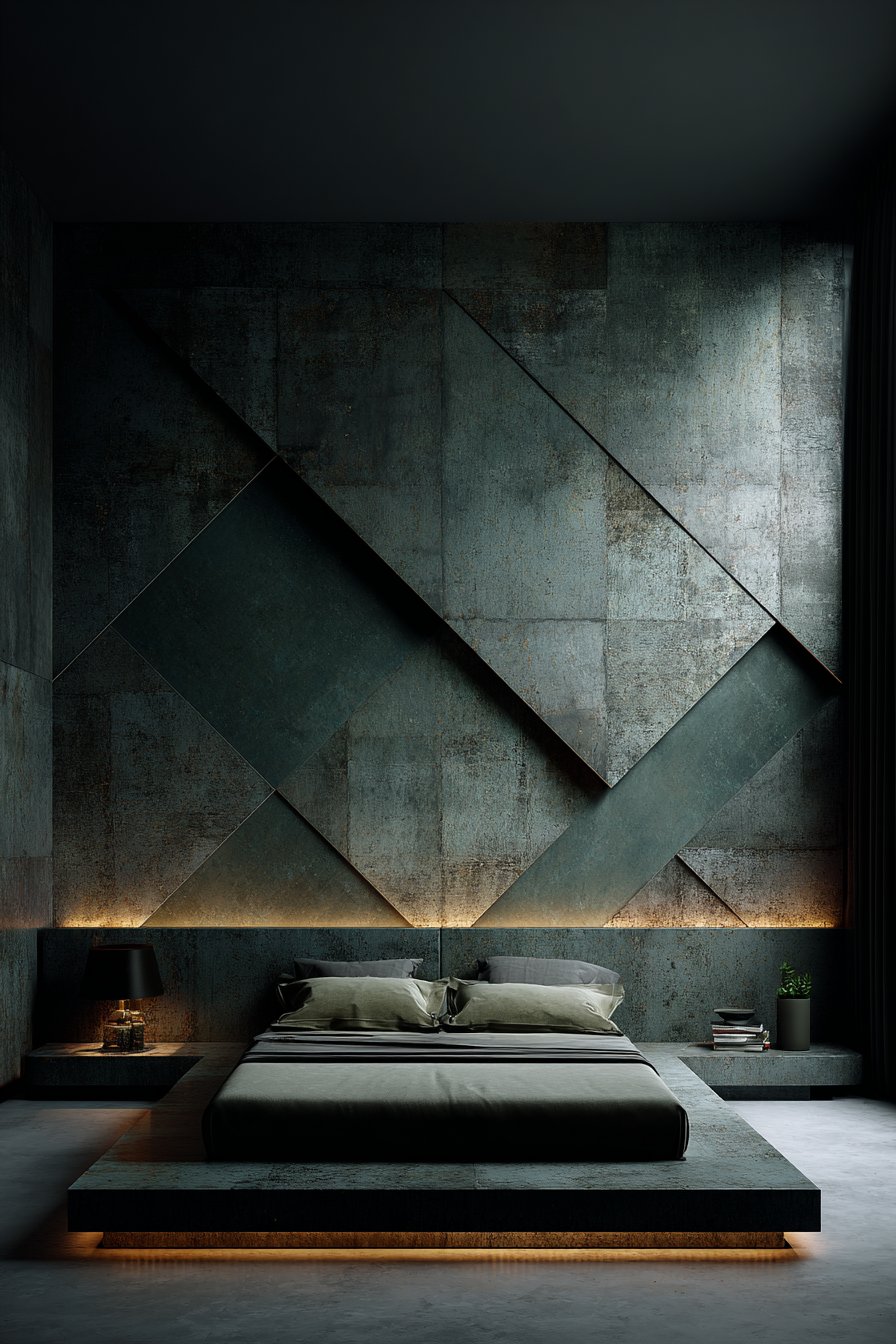
LED strip lighting installed behind or between the geometric panels creates stunning backlighting effects that emphasize the dimensional quality and create ambient mood lighting perfect for evening relaxation. This hidden lighting casts subtle glows around panel edges, creating a floating effect and highlighting the geometric patterns through light rather than relying solely on color contrast. The ability to dim or color-adjust LED lighting adds flexibility—brighter settings for morning energy, dimmer warmth for evening wind-down. This integration of lighting technology with architectural features demonstrates how contemporary design can enhance traditional concepts like dark green walls through innovative technical applications.
Key Design Tips:
- Install three-dimensional wall panels to transform dark green from flat color to architectural feature
- Alternate between deep green and charcoal for geometric patterns that create additional depth perception
- Choose modern platform beds with clean lines to complement rather than compete with dramatic wall treatments
- Keep decor minimal and carefully edited to maintain focus on the architectural wall feature
- Install LED strip lighting behind panels for dramatic backlighting and adjustable ambient mood setting
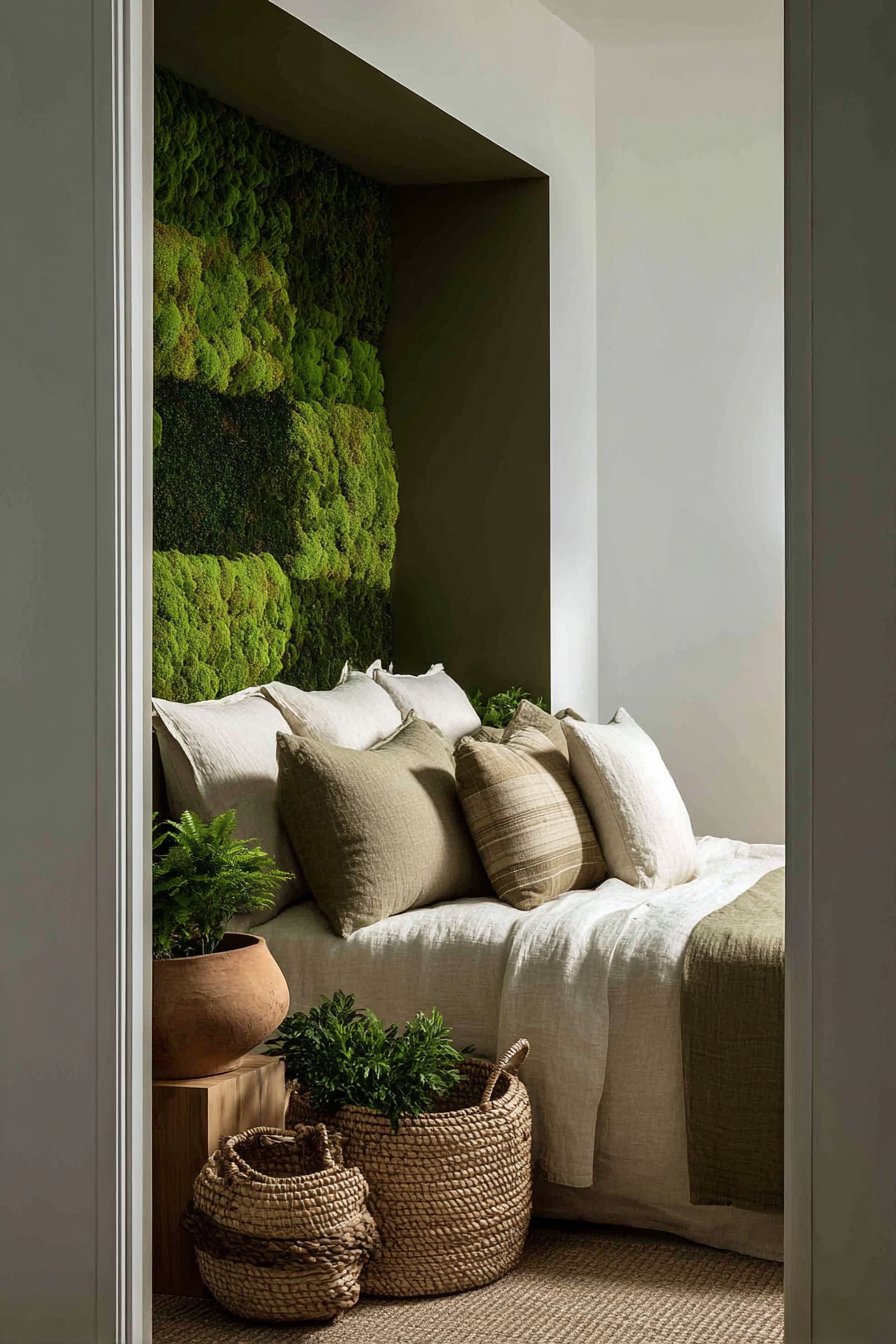
20. Deep Pine Green Living Moss Wall
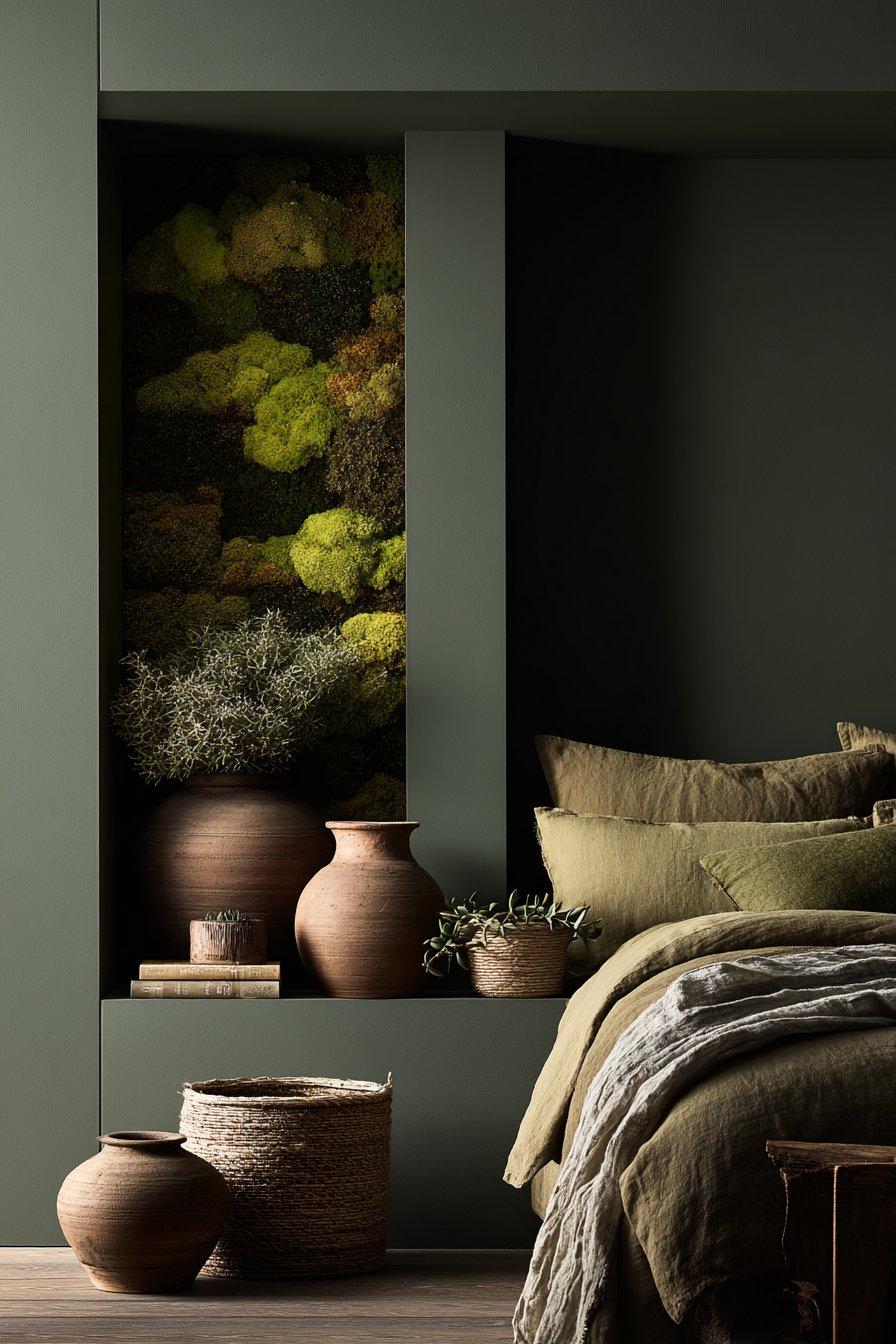
A living moss wall installation set within a recessed niche painted deep pine green represents the ultimate expression of bringing nature indoors through both living plants and nature-inspired color. This biophilic design element provides actual air purification and humidity regulation benefits while creating a stunning visual focal point that connects bedroom occupants with the natural world. The preserved or living moss requires minimal maintenance while providing maximum impact, its varied textures and subtle color variations creating organic interest. The deep pine green painted recess creates perfect backdrop that makes the moss pop visually while maintaining color harmony.
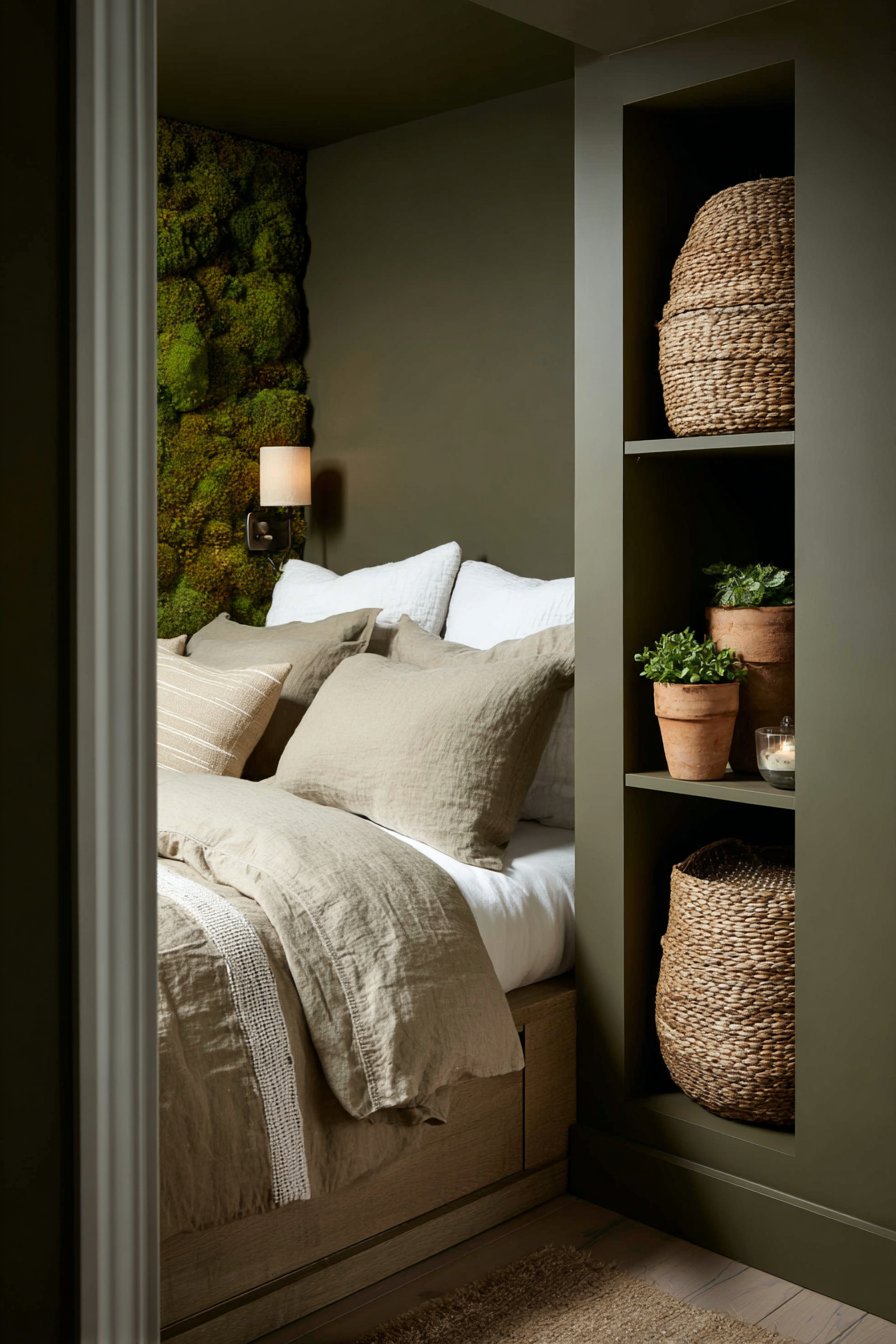
Clean white walls elsewhere in the bedroom provide essential contrast and prevent the moss installation from feeling too earthy or overwhelming. This strategic placement of the dramatic natural element against an otherwise neutral backdrop demonstrates sophisticated design restraint—the moss wall becomes a treasured focal point rather than competing with other elements. The bed dressed in natural linen bedding in earth tones extends the organic aesthetic without replicating the green directly, creating tonal variation through beiges, taupes, and warm greys that complement rather than match. Terracotta plant pots and woven baskets scattered thoughtfully around the room reinforce the natural materials theme and create visual connections to the moss wall installation.
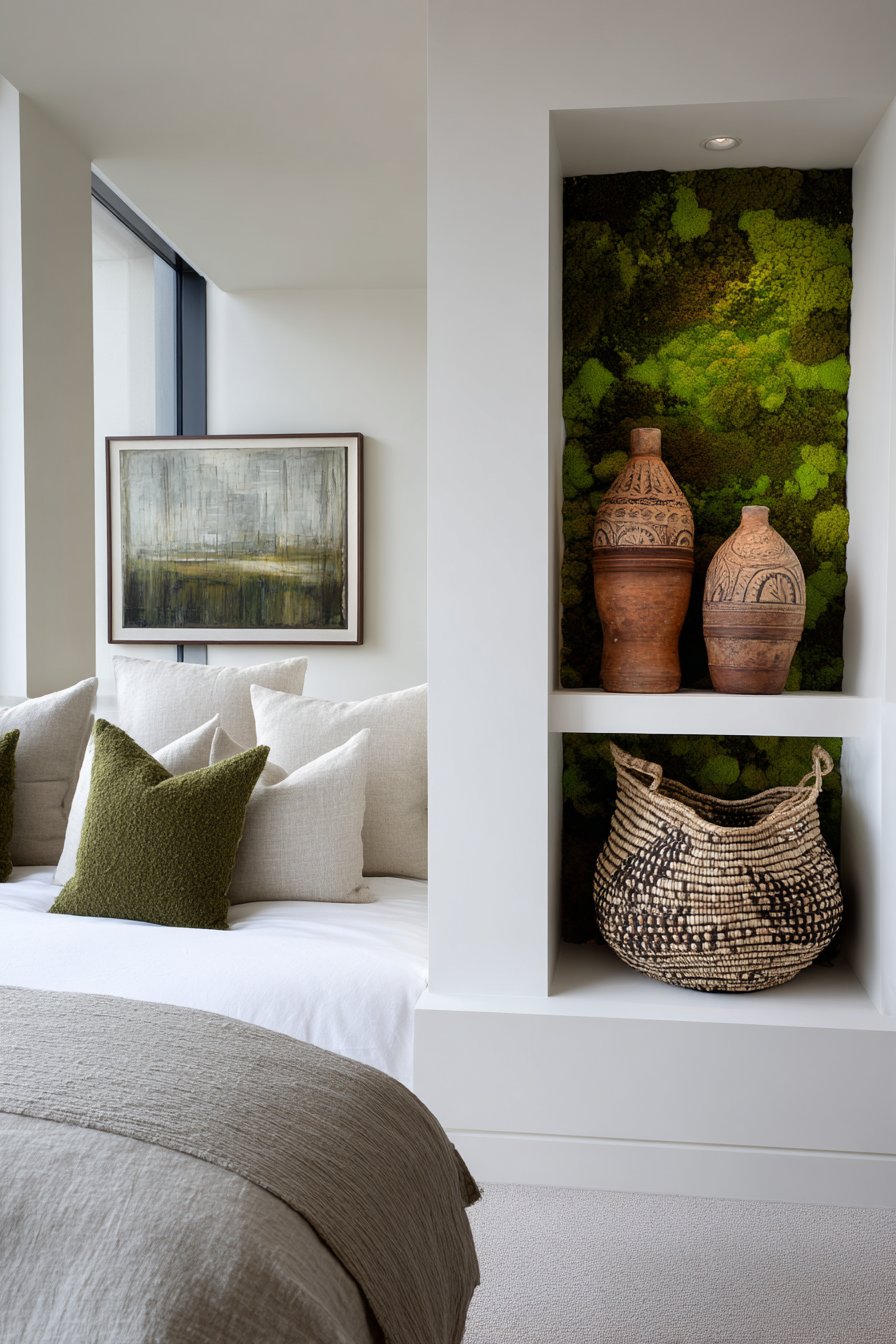
Soft natural lighting becomes crucial for properly illuminating the moss wall and revealing its textural complexity. Direct harsh light would dry out living moss and flatten its dimensional quality visually, but gentle natural light or carefully positioned grow lights maintain moss health while showcasing its beautiful variations. The interplay between the deep pine green painted recess and the varied natural greens in the moss creates subtle tonal conversation—sometimes the paint appears darker, sometimes the moss shadows appear deeper, creating ever-changing visual interest. This design demonstrates how dark green serves not just as color choice but as philosophical commitment to bringing nature’s calm and beauty into our most intimate living spaces.
Key Design Tips:
- Install preserved or living moss walls in recessed niches painted deep green for dramatic biophilic focal points
- Maintain white or neutral walls elsewhere to allow the moss installation to stand out without overwhelming
- Choose natural linen bedding in earth tones to extend organic aesthetic without replicating green directly
- Include terracotta, woven baskets, and natural materials to reinforce biophilic design principles
- Provide soft natural or specialized grow lighting to maintain moss health and properly illuminate its textural beauty
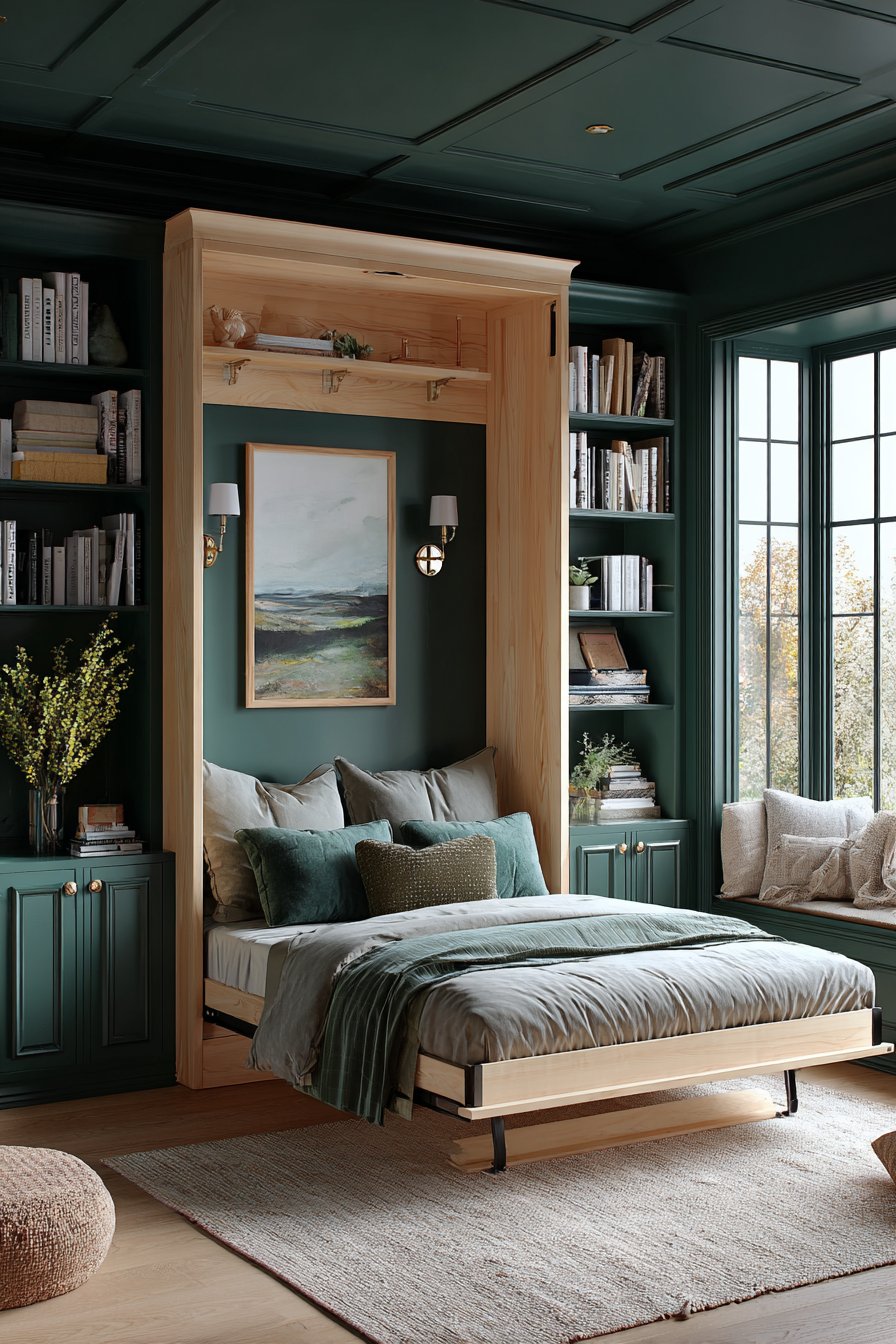
21. Bottle Green Space-Efficient Design
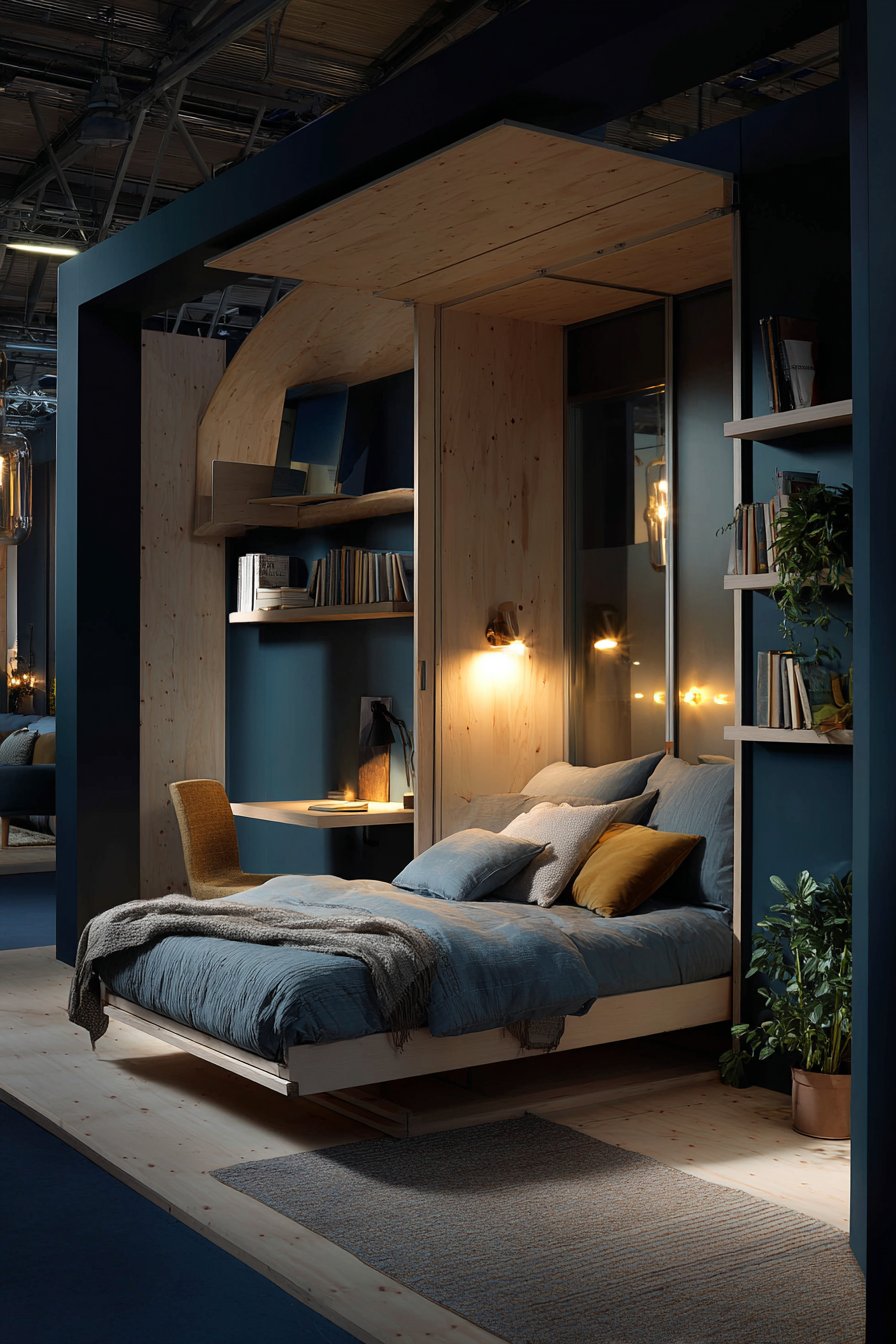
A small bedroom painted with one wall in deep bottle green while strategically using mirrors on other walls demonstrates how dark colors can actually work in compact spaces when paired with light-multiplying strategies. The mirror placement amplifies both natural and artificial light, creating the illusion of expanded space while preventing the dark green wall from making the room feel cramped. This approach challenges the conventional wisdom that small spaces must always use light colors, proving that with thoughtful design and strategic light management, even dramatic dark colors can enhance rather than diminish petite bedrooms.
A space-saving murphy bed or wall-mounted bed frame in light wood folds against the dark green wall when not in use, maximizing floor space during waking hours. This functional furniture choice demonstrates how small bedrooms require multipurpose thinking, with each element serving multiple roles. The light wood finish creates beautiful contrast against the deep bottle green while maintaining visual lightness essential in compact quarters. When the bed folds up, the dark green wall serves as dramatic backdrop for the room’s daytime use, while at night, the deployed bed becomes the focal point with the green wall providing cocoon-like enclosure.
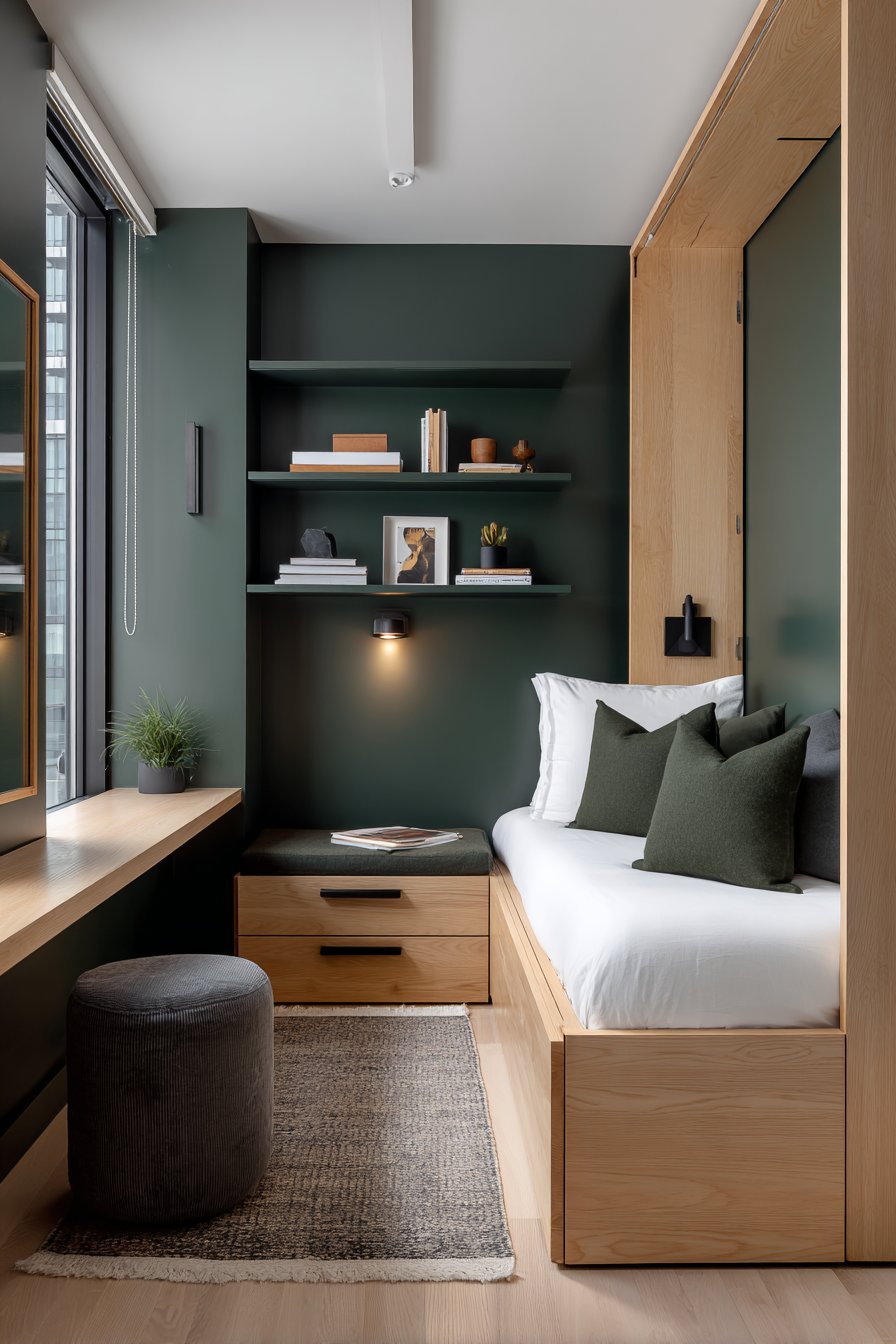
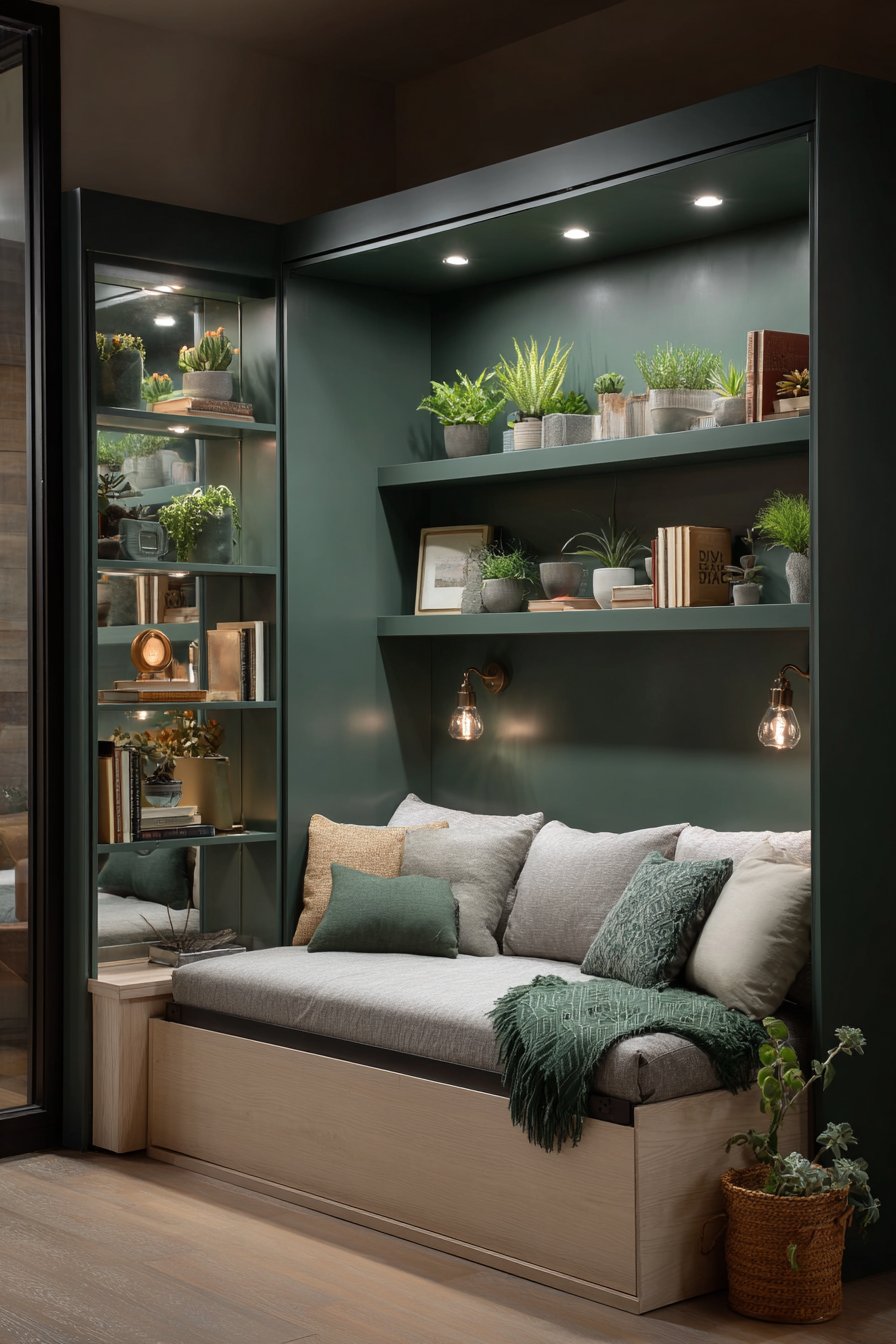
Floating shelves in matching dark green provide essential storage without consuming floor space, their wall-mounted installation keeping the floor area open and uncluttered. The decision to paint these shelves the same bottle green as the accent wall creates intentional color coordination that makes the shelving feel integrated rather than added-on. Strategic lighting from wall sconces creates ambient glow that’s essential in small spaces with dark walls—the directed light prevents shadows from accumulating in corners while creating inviting warmth. This design proves that small bedrooms can successfully incorporate dark green through thoughtful space planning, strategic mirror use, multi-functional furniture, and careful lighting design that respects the unique challenges of compact quarters.
Key Design Tips:
- Use mirrors extensively to amplify light and create spaciousness when incorporating dark walls in small rooms
- Choose multi-functional furniture like murphy beds to maximize usable floor space in compact bedrooms
- Paint storage elements to match accent walls for integrated appearance that feels intentional rather than cluttered
- Install wall-mounted furniture and floating shelves to keep floor space open and maintain visual flow
- Layer multiple light sources including wall sconces to prevent dark walls from creating gloomy corners in small spaces
Why These Dark Green Bedroom Designs Represent the Best Approaches
These twenty-one dark green bedroom ideas represent the best contemporary approaches to incorporating this sophisticated, nature-inspired color into sleeping spaces for numerous compelling reasons. Each design demonstrates professional-level understanding of color theory, spatial composition, lighting dynamics, and material coordination that separates amateur attempts from truly successful interior design. The collection encompasses diverse style preferences—from minimalist Scandinavian to opulent traditional, from industrial edge to bohemian warmth—proving that dark green transcends stylistic boundaries and adapts beautifully to virtually any aesthetic direction when applied with knowledge and intention.
The strategic use of dark green in these designs respects fundamental principles of successful color application in residential spaces. Rather than overwhelming rooms with unrelieved darkness, these approaches demonstrate sophisticated restraint through accent walls, strategic furniture choices, textile applications, and architectural features that introduce dramatic color while maintaining livability and brightness. The consistent attention to balancing dark green with neutrals, warm woods, metallic accents, and adequate natural light prevents the psychological heaviness that poorly executed dark color schemes can create. Each design shows awareness that bedrooms must function as restful sanctuaries, and that dark green—when properly implemented—actually enhances rather than impedes this essential function through its calming, nature-connected qualities.
Material selection and textural variation represent another crucial factor elevating these designs above ordinary applications. The sophisticated use of velvet, linen, painted wood, wallpaper, brass, marble, concrete, and other materials demonstrates understanding that monochromatic or limited-palette schemes require exceptional textural diversity to maintain visual interest. Dark green serves as the unifying color thread while varied materials and finishes create the dimensional complexity that prevents spaces from feeling flat or boring. The attention to how different materials catch and reflect light—velvet’s directional pile, linen’s natural slubs, brass’s warm glow, marble’s cool veining—shows professional awareness of how material properties interact with color to create truly layered, sophisticated interiors.
Lighting consideration throughout these designs reflects crucial understanding that dark colors absolutely require thoughtful illumination to reveal their beauty and maintain livability. The consistent emphasis on maximizing natural light through appropriate window treatments, supplementing with layered artificial lighting from multiple sources, and using metallic accents to reflect and amplify available light demonstrates professional-level awareness. Dark green walls in poorly lit rooms become muddy, oppressive, and claustrophobic, but when properly illuminated as these designs recommend, they reveal gorgeous depth, subtle tonal variations, and that enveloping luxury that makes dark bedroom colors so appealing. The strategic use of LED strips, picture lights, sconces, pendants, and table lamps creates flexible lighting scenarios appropriate for different activities and moods throughout the day.
The biophilic design principles evident throughout these approaches—incorporating living plants, natural materials, organic textures, and nature-inspired patterns alongside the inherently organic dark green color—reflect contemporary understanding of how interior environments affect human well-being. Dark green’s psychological associations with forest canopies, peaceful gardens, and restorative natural environments make it uniquely suited to bedroom applications where stress reduction and sleep quality are paramount. These designs maximize this natural connection through complementary plant life, wooden furniture, natural fiber textiles, and botanical artwork that reinforce rather than contradict the color’s organic essence, creating bedrooms that feel genuinely connected to the natural world even in urban settings.
The practical applicability and range of budget considerations represented across these twenty-one approaches ensures accessibility for various homeowners and renters. From expensive architectural installations like custom paneling and moss walls to affordable interventions like painted furniture and curtain changes, the collection demonstrates that dark green bedroom design excellence doesn’t require unlimited budgets. The emphasis on achievable, realistic applications rather than magazine-fantasy perfection makes these designs genuinely useful for people looking to improve their actual living spaces. The inclusion of both permanent architectural changes and more temporary, renter-friendly applications like furniture painting and textile changes shows awareness of diverse housing situations and commitment levels.
Style versatility represents perhaps the most impressive aspect of this collection, as it definitively proves dark green’s chameleon-like ability to adapt to virtually any design aesthetic. The same color family that creates moody industrial edge with exposed painted brick and metal beds also creates romantic bohemian sanctuaries with layered textiles and macramé, sophisticated traditional elegance with brass accents and gallery walls, and serene minimalist zen with single accent walls and platform beds. This adaptability makes dark green an exceptionally wise investment color choice—it can evolve with changing tastes, accommodate new furniture and accessories easily, and work within both trendy contemporary schemes and timeless classic approaches. The varied applications show that dark green isn’t a limiting choice but rather an enabling foundation that supports diverse aesthetic expressions.
The attention to spatial considerations—from tiny apartments using mirrors and multi-functional furniture to spacious rooms with dramatic ceiling treatments and full-wall applications—demonstrates awareness that color application must respect and respond to actual room dimensions and characteristics. The small-space solutions prove that dark colors need not be avoided in compact quarters when paired with light-multiplying strategies and space-efficient furniture. Conversely, the expansive applications show how generous spaces can handle more dramatic full-wall or full-ceiling dark green treatments that would overwhelm smaller rooms. This spatial awareness prevents the frustration of attempting designs ill-suited to actual room conditions and ensures successful outcomes across various bedroom sizes and proportions.
Finally, these designs represent best practices because they demonstrate sophisticated understanding of how dark green bedroom schemes will actually live and function over time rather than just how they photograph for initial impact. The emphasis on washable fabrics, durable finishes, flexible lighting, and timeless rather than trendy applications shows awareness that bedrooms must function successfully for years, not just create Instagram moments. The incorporation of practical storage, functional seating, appropriate task lighting, and comfortable textiles alongside aesthetic considerations reflects holistic design thinking that prioritizes livability equally with beauty. This practical sophistication separates these professional-quality approaches from amateur attempts that may look attractive initially but fail to support daily life comfortably and sustainably over the long term.
Conclusion
Dark green bedroom design represents one of the most sophisticated and rewarding color choices available to contemporary homeowners seeking to create sleeping spaces that feel both stylish and serene. Throughout these twenty-one carefully considered approaches, we’ve explored the remarkable versatility of this nature-inspired hue, discovering how it adapts beautifully to diverse design styles, various room sizes, different budget levels, and unique personal preferences. From dramatic full-wall applications to subtle accent pieces, from luxurious velvet textiles to practical painted furniture, dark green proves itself capable of transforming ordinary bedrooms into extraordinary sanctuaries that promote rest, rejuvenation, and authentic personal expression.
The key takeaways from this comprehensive exploration emphasize several crucial principles for successful dark green bedroom implementation. First, balance remains paramount—even the boldest dark green applications require thoughtful pairing with lighter neutrals, warm wood tones, or reflective metallics to maintain visual harmony and prevent overwhelming the space. Second, lighting consideration cannot be overstated; dark colors absolutely demand adequate natural light supplemented by layered artificial sources to reveal their true beauty and maintain livability. Third, textural variety becomes essential in monochromatic or limited-palette schemes, with different materials and finishes creating the dimensional interest that prevents visual monotony.
As you contemplate bringing dark green into your own bedroom, remember that successful implementation doesn’t require perfect replication of any single approach presented here. Rather, use these ideas as inspiration and starting points, adapting elements that resonate with your personal style, spatial constraints, and practical needs. Perhaps you’ll combine the drama of a deep emerald accent wall with the practicality of painted vintage furniture, or merge the romance of sheer canopy fabric with the modern edge of geometric wall panels. The beauty of dark green lies in its adaptability—it welcomes creative interpretation and personal customization while maintaining its essential character as a sophisticated, calming, nature-connected color choice.
Whether you’re planning a complete bedroom renovation or simply seeking to refresh your current space with strategic updates, dark green offers a compelling path forward. Start small if bold commitment feels daunting—a set of forest green curtains, a painted dresser, or layered bedding in varied green tones can introduce this beautiful color without overwhelming your space or budget. As you live with these initial applications and observe how the color transforms your room’s atmosphere and your own emotional response to the space, you’ll gain confidence to potentially expand the dark green presence through additional applications. The journey toward creating your ideal dark green bedroom should feel exciting and empowering rather than stressful, guided by your authentic preferences and enhanced by the professional insights these twenty-one approaches provide.
Ultimately, the best bedroom design is one that supports your well-being, reflects your personality, and brings genuine daily joy. If dark green speaks to your aesthetic sensibilities and promises the serene, sophisticated atmosphere you seek in your personal sanctuary, embrace this remarkable color confidently. Armed with the knowledge, inspiration, and practical guidance provided throughout this article, you’re well-equipped to create a dark green bedroom that will serve you beautifully for years to come, evolving gracefully as your life changes while maintaining its essential character as a timeless, elegant, and deeply restful space. Sweet dreams await in your beautifully transformed dark green sanctuary.


