
Creating the perfect dining room atmosphere begins with a thoughtfully designed centerpiece that serves as the focal point of your table. A well-crafted centerpiece not only enhances the aesthetic appeal of your dining space but also sets the mood for countless memorable meals and gatherings. Whether you’re hosting an intimate dinner party or enjoying everyday family meals, the right centerpiece can elevate your dining experience from ordinary to extraordinary.
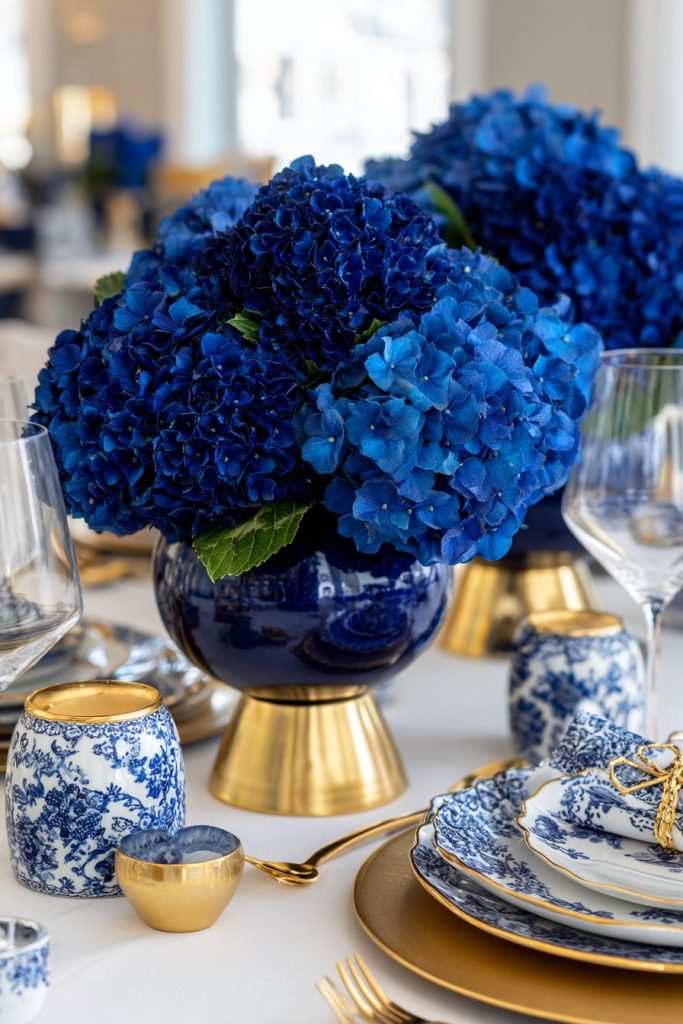
The art of centerpiece design has evolved significantly over the years, embracing diverse styles that cater to every taste and lifestyle preference. From minimalist Scandinavian arrangements to opulent traditional displays, each approach offers unique opportunities to express your personality while creating functional beauty. Modern homeowners increasingly seek centerpieces that balance visual impact with practicality, ensuring that decorative elements enhance rather than hinder the dining experience.
In this comprehensive guide, we’ll explore twenty distinctive centerpiece concepts that span various design philosophies, seasonal themes, and material palettes. Each idea has been carefully selected to inspire your creativity while providing practical implementation strategies that work within different budgets and skill levels.

1. Sophisticated Natural Elements with Warm Candlelight
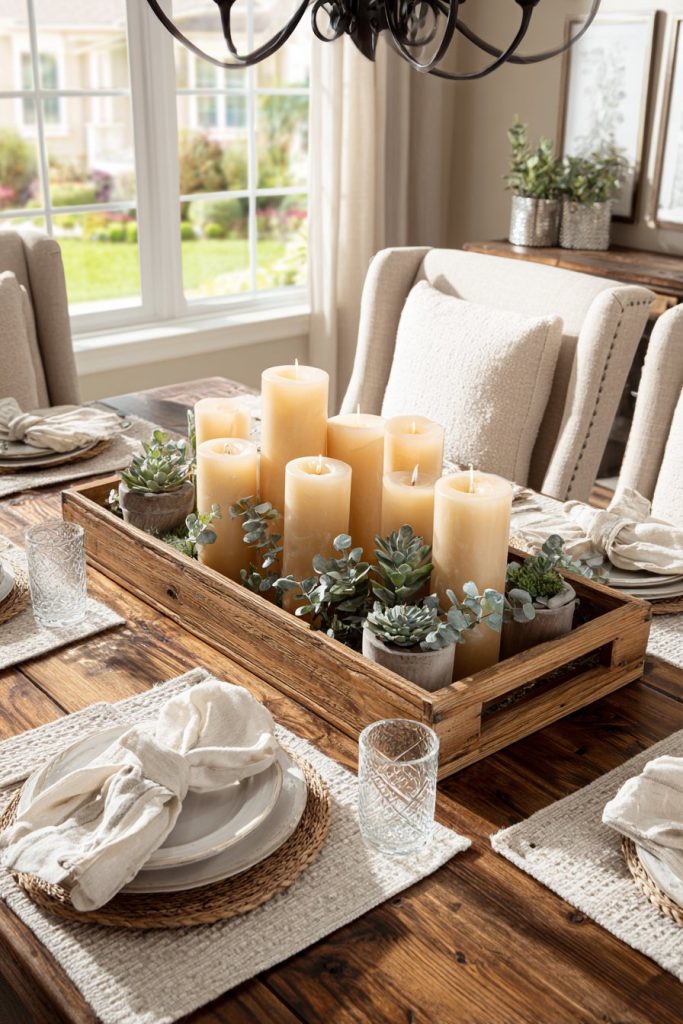
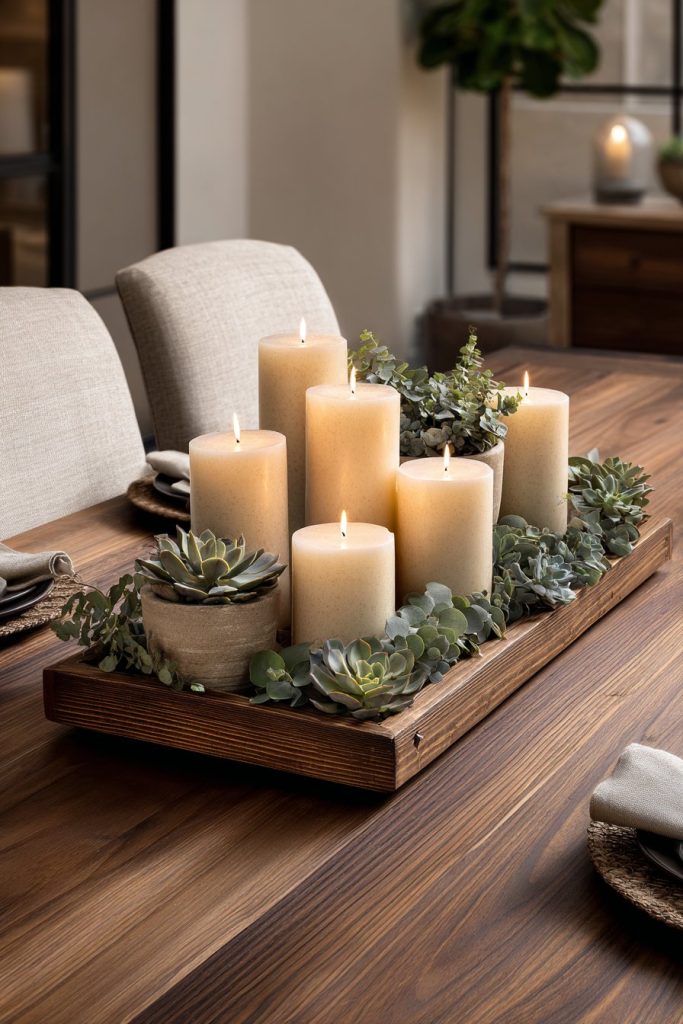
The timeless combination of natural materials and soft illumination creates an atmosphere of refined elegance that works beautifully in both formal and casual dining settings. A long wooden tray becomes the foundation for this sophisticated arrangement, supporting varying heights of pillar candles in natural beeswax tones that provide both visual interest and ambient lighting. The organic warmth of beeswax complements the rich walnut grain of the dining table, creating a harmonious material palette that feels both luxurious and approachable.
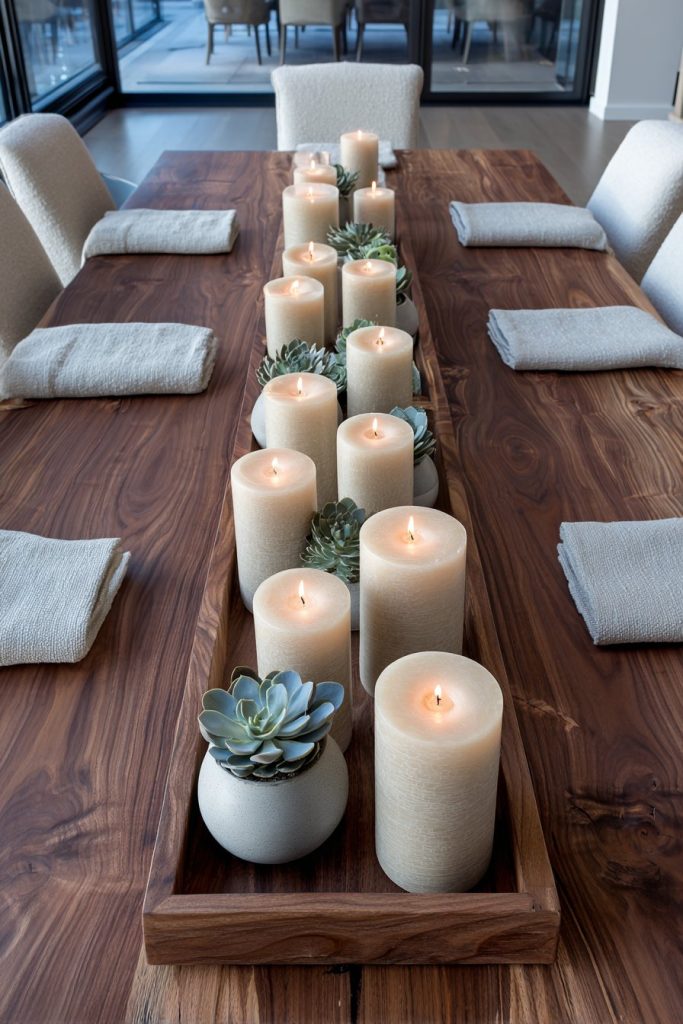
Eucalyptus sprigs add a fresh, aromatic element that brings life to the arrangement without overwhelming the space. The silvery-green foliage provides textural contrast against the smooth candle surfaces while maintaining the natural color scheme. Small potted succulents introduce additional organic texture and serve as living elements that guests can appreciate up close. These hardy plants require minimal maintenance while adding a contemporary touch to the traditional candle-and-greenery combination.
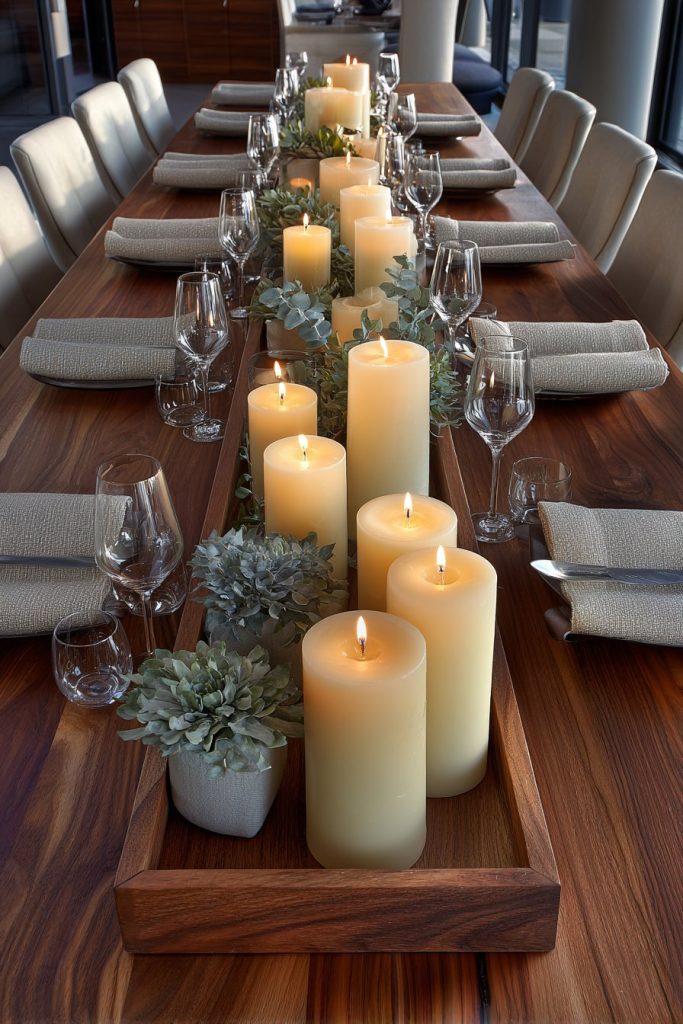
The interplay between the varying candle heights creates dynamic shadows and highlights that change throughout the evening as the candles burn down. This evolving quality keeps the centerpiece visually engaging throughout long dinner parties. The warm linen fabric of the surrounding upholstered chairs echoes the natural tones of the centerpiece, creating a cohesive design story that feels intentional and refined.
Key Design Tips:
- Choose pillar candles in three different heights to create visual rhythm and prevent monotony
- Select eucalyptus for its long-lasting freshness and pleasant, subtle fragrance
- Position succulents at varying intervals to break up the linear arrangement
- Use unscented beeswax candles to avoid competing with food aromas during meals
- Ensure the wooden tray is treated for food safety if serving items will be placed directly on it
2. Contemporary Minimalism with Seasonal Elements
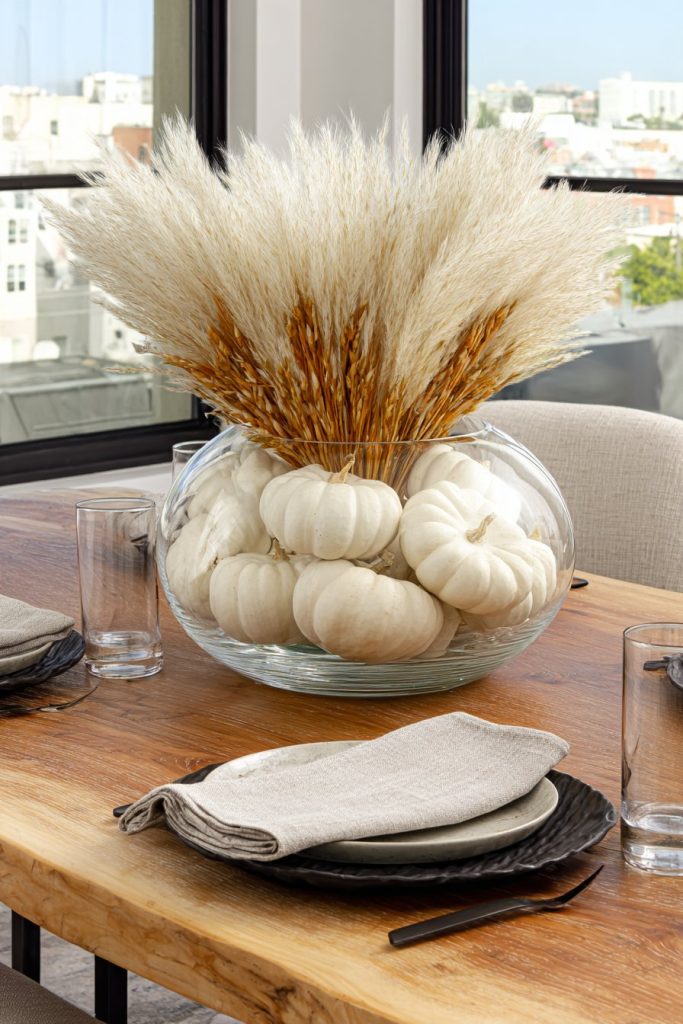
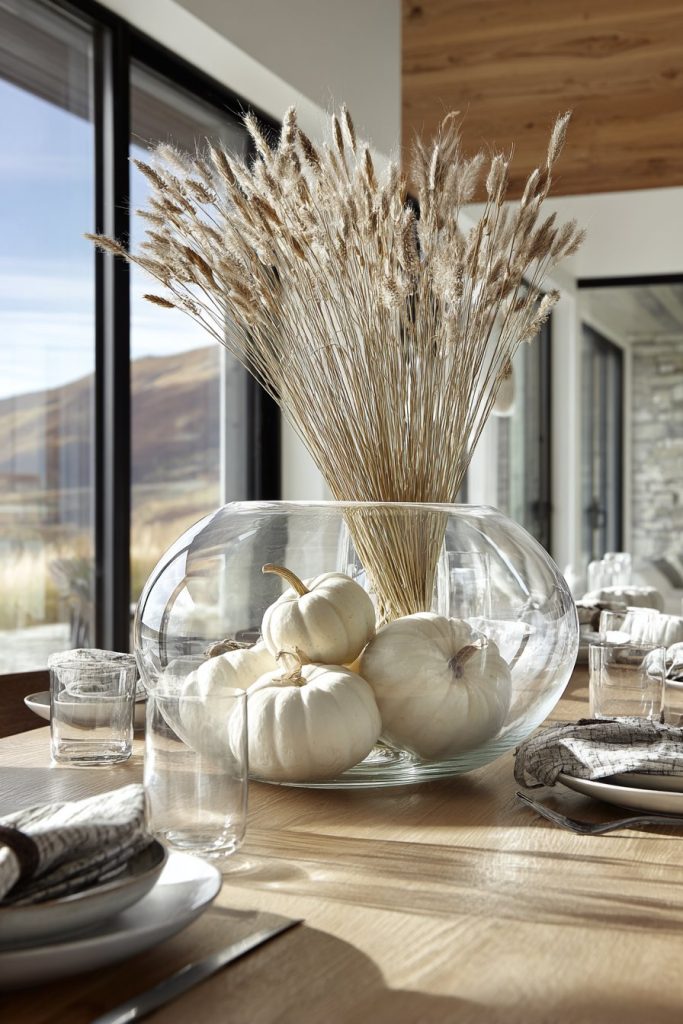
Modern design principles shine in this clean, sophisticated approach to centerpiece creation that celebrates the beauty of restraint and purposeful selection. A minimalist glass bowl serves as the perfect vessel for seasonal white pumpkins and dried wheat stalks, creating an arrangement that feels both contemporary and connected to natural cycles. The transparency of the glass allows the eye to focus on the organic shapes and textures within while maintaining the clean lines that define modern aesthetics.
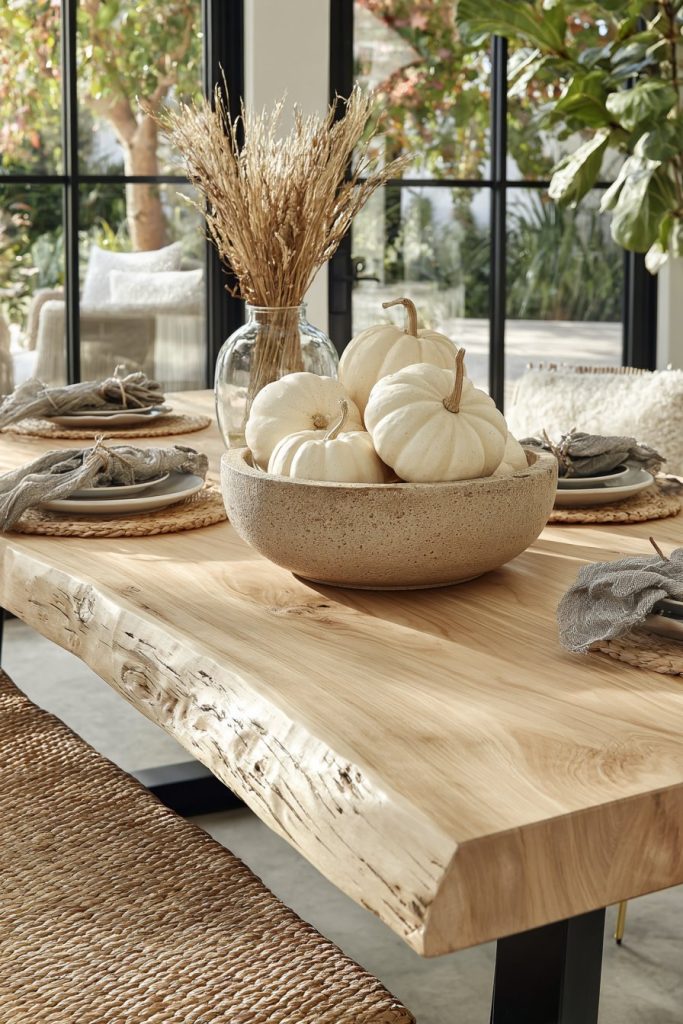
The choice of white pumpkins over traditional orange varieties demonstrates how color selection can dramatically alter the mood and style of seasonal decorations. These pale gourds feel fresh and modern while still honoring autumn traditions. Dried wheat stalks add vertical interest and introduce a golden warmth that complements the live-edge oak dining table’s natural grain patterns. The contrast between the organic edge of the table and the geometric precision of the black metal legs exemplifies successful modern design integration.
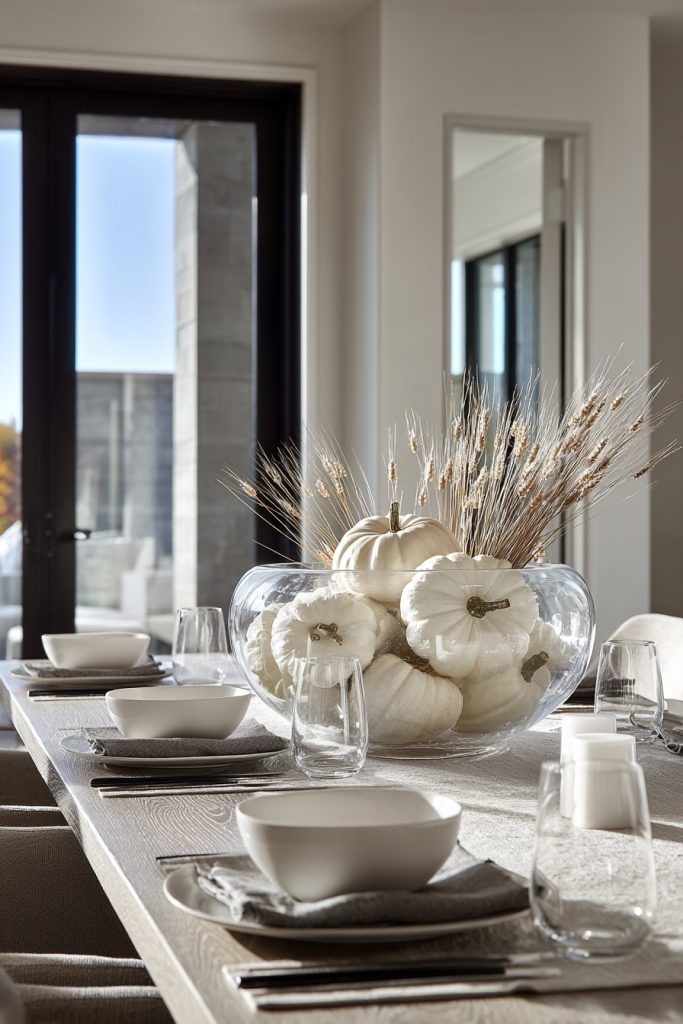
Natural daylight streaming through nearby windows becomes an integral part of the design, creating soft highlights that emphasize the glass bowl’s clarity and the subtle variations in the wheat’s golden tones. This dependence on natural light reinforces the connection between indoor and outdoor spaces that characterizes contemporary design philosophy. The neutral-toned place settings maintain the sophisticated restraint while ensuring the centerpiece remains the focal point.
Key Design Tips:
- Select white or cream-colored seasonal elements for a more sophisticated color palette
- Use odd numbers of objects (3-5 pumpkins) for more natural, pleasing arrangements
- Choose a glass bowl that’s wide enough to prevent crowding but shallow enough for conversation
- Position the centerpiece to take advantage of natural light throughout the day
- Keep surrounding table settings neutral to let the centerpiece command attention
3. Rustic Farmhouse Charm with Living Elements
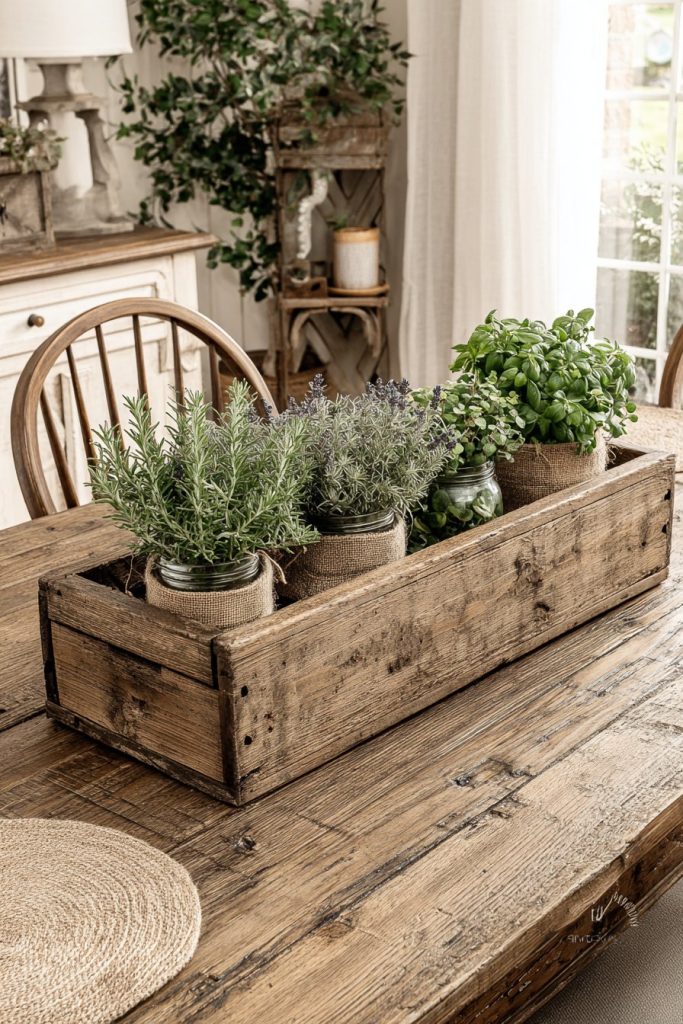
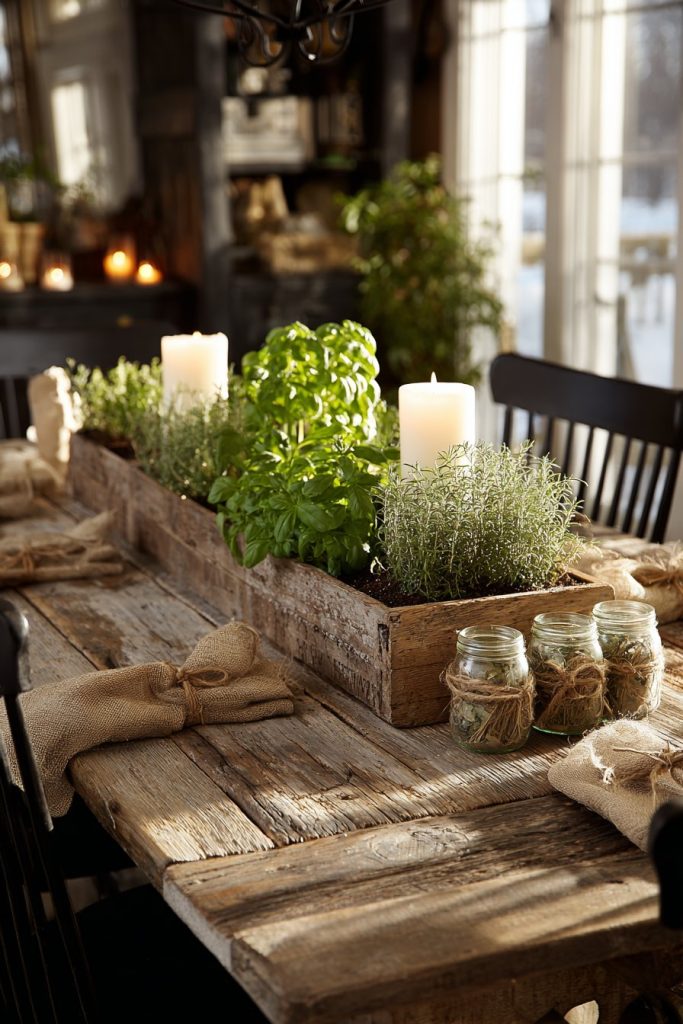
The farmhouse aesthetic embraces the beauty of imperfection and the charm of functional design elements repurposed for decorative use. A reclaimed wood box planter brings authentic character to the dining table while serving as a practical container for fresh herbs including rosemary, thyme, and sage. This living centerpiece engages multiple senses, providing visual appeal, aromatic pleasure, and the potential for culinary use during meal preparation.
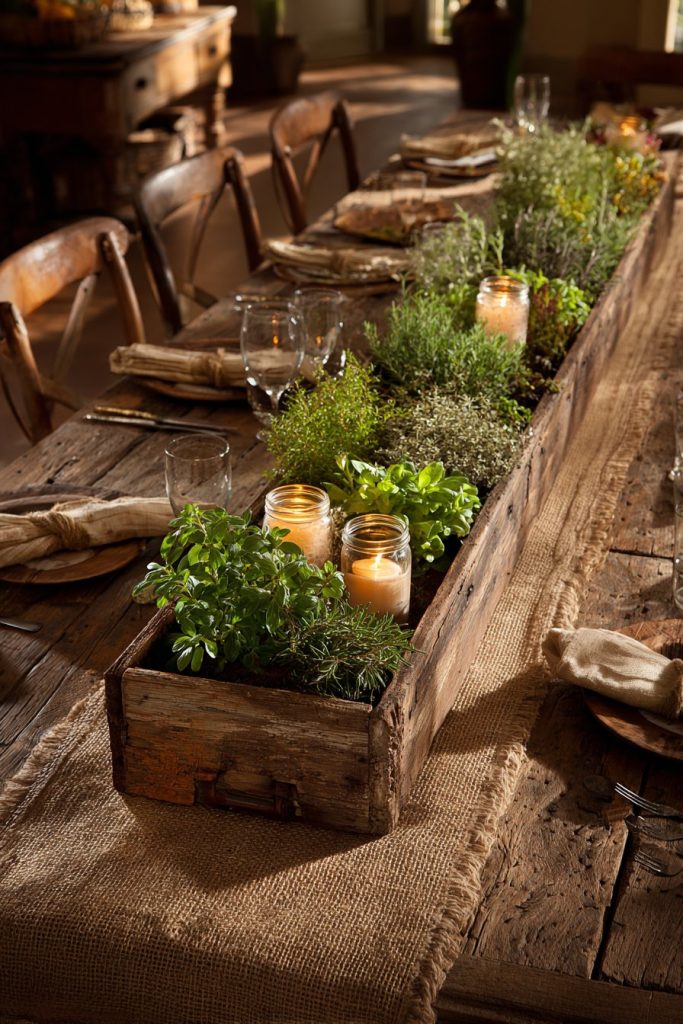
Mason jar candle holders wrapped with burlap ribbon flanking the herb garden create symmetrical balance while reinforcing the rustic theme through material choices. The combination of glass, burlap, and reclaimed wood tells a story of rural simplicity and sustainable living that resonates with many contemporary homeowners seeking authenticity in their design choices. These elements work together to create a centerpiece that feels collected over time rather than purchased as a matched set.
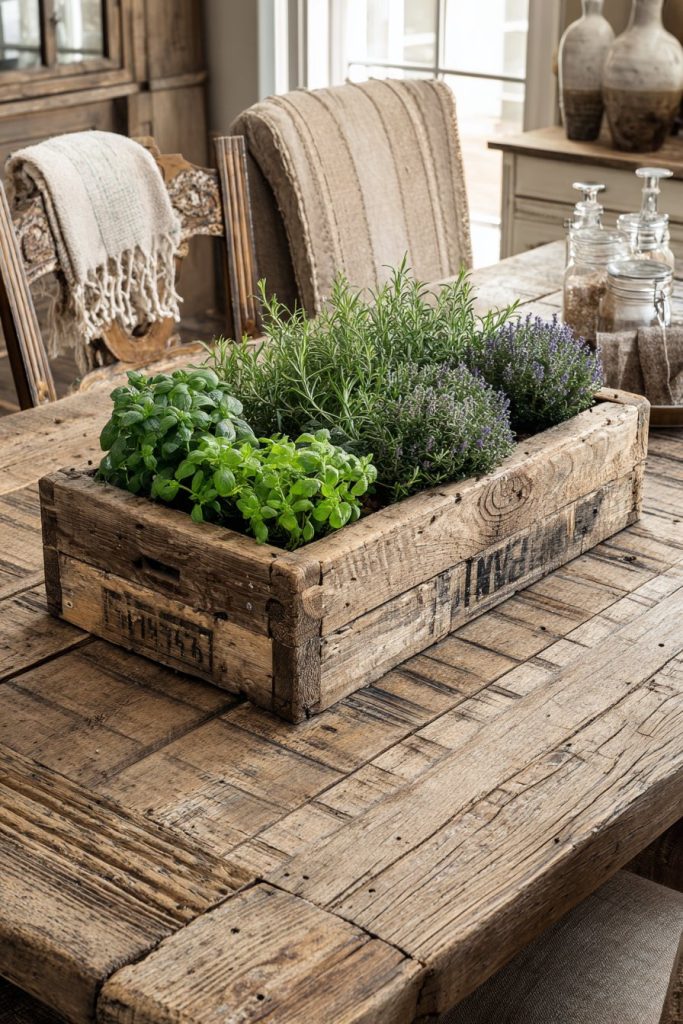
The weathered farm table provides the perfect foundation for this rustic arrangement, its naturally distressed surface complementing the reclaimed wood planter’s aged patina. Mismatched vintage chairs add to the authentic farmhouse character, suggesting a history of family gatherings and shared meals. The afternoon lighting highlights the texture variations in the aged wood and emphasizes the fresh green color of the herbs, creating a connection between the indoor dining space and outdoor garden elements.
Key Design Tips:
- Choose herbs that thrive indoors with minimal care, such as rosemary and thyme
- Drill drainage holes in wooden planters to prevent water damage and root rot
- Use battery-operated candles in mason jars for safety around fresh plants
- Select herbs that complement your cooking style for practical as well as aesthetic value
- Rotate herb varieties seasonally to maintain interest and freshness
4. Elegant Traditional Sophistication
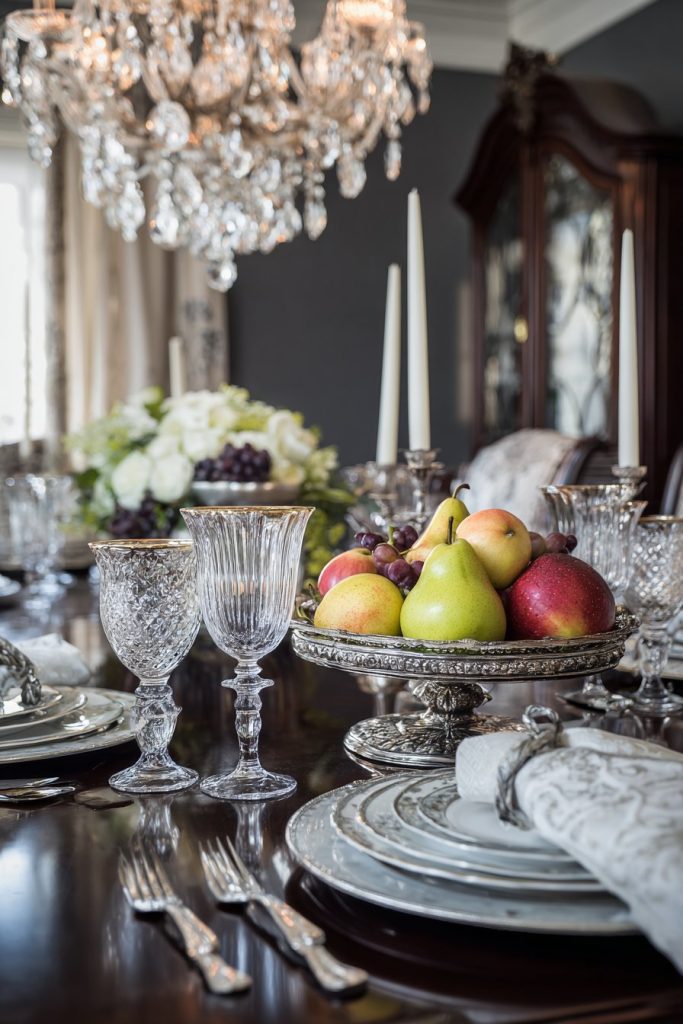
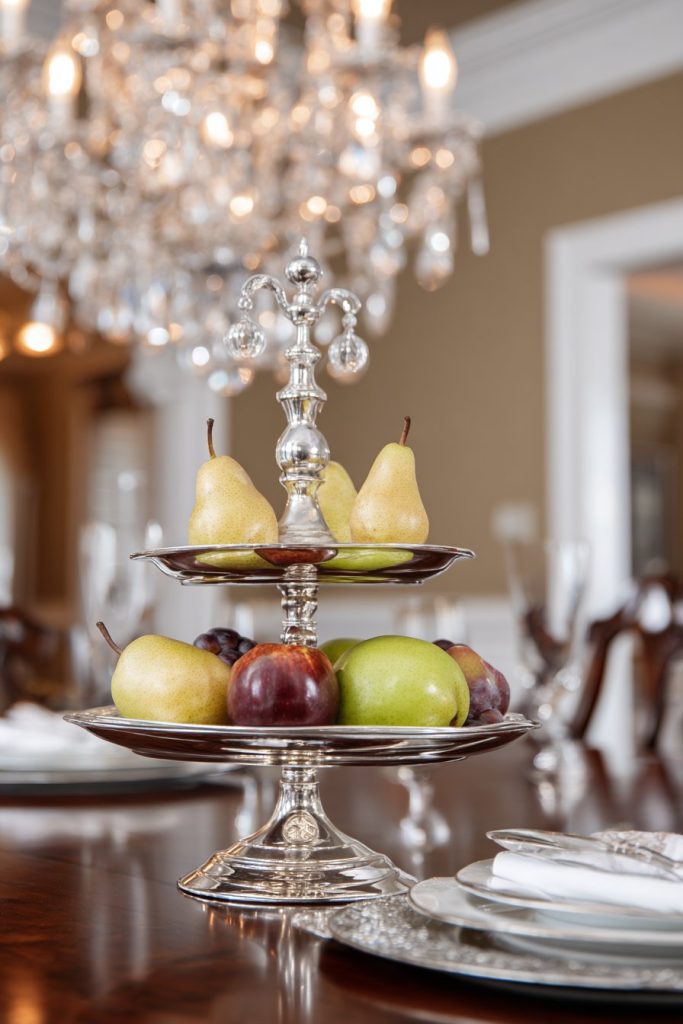
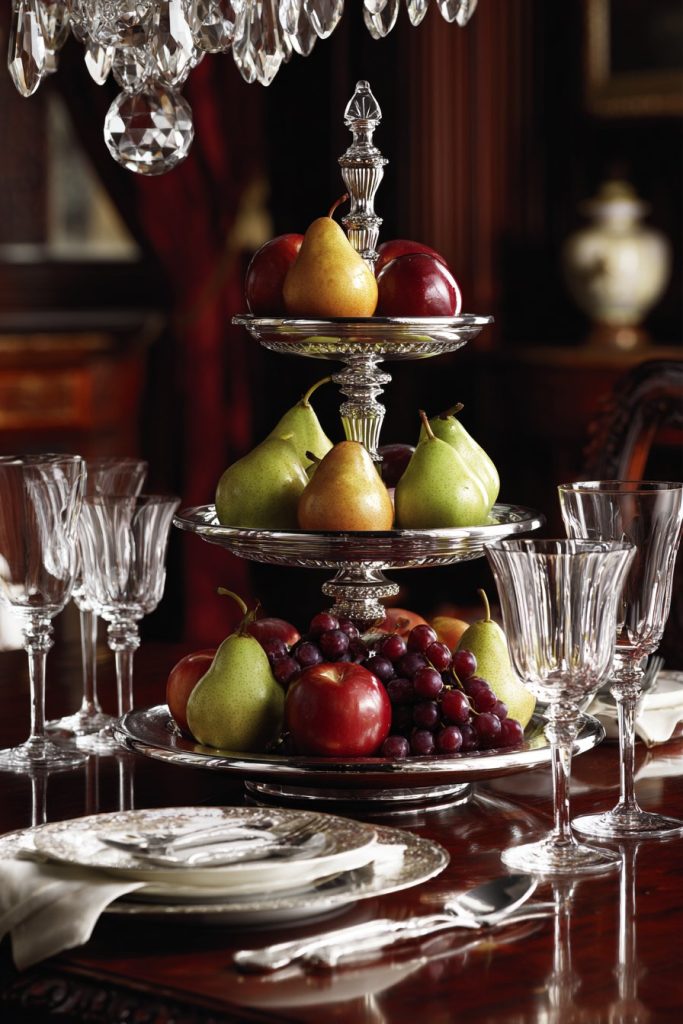
Classic elegance finds its perfect expression in this refined approach to centerpiece design that celebrates formal dining traditions. A tiered silver serving stand creates dramatic height variation while providing multiple levels for artistic fruit arrangement. The lustrous silver surface reflects ambient light from the crystal chandelier above, creating sparkles and highlights that add glamour to the dining experience. This metallic element serves as a bridge between the warm mahogany table and the cool crystal stemware.
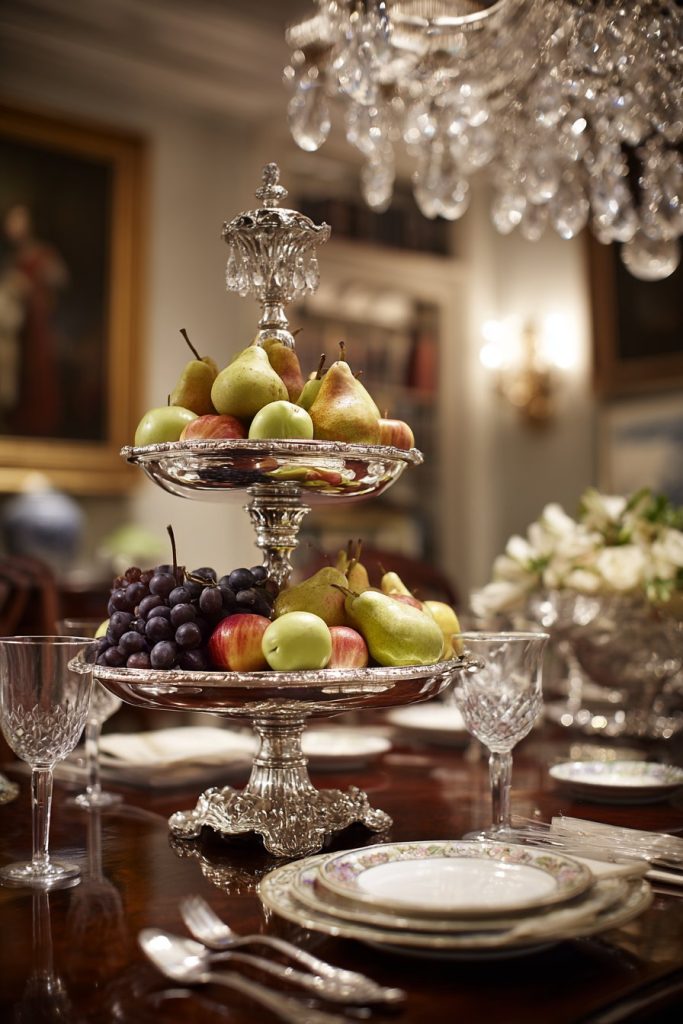
The careful selection and arrangement of seasonal fruits transforms everyday items into an artistic display worthy of still-life paintings. Pears, apples, and grapes are chosen not only for their visual appeal but also for their complementary colors and shapes. The natural wax finish on the fruits creates subtle highlights that echo the crystal’s brilliance while maintaining the organic authenticity that prevents the arrangement from feeling artificial or sterile.
Fine china place settings and crystal stemware complete the formal dining atmosphere, creating a coordinated luxury that speaks to special occasions and celebratory meals. The mahogany dining table’s rich grain patterns provide warmth and depth that ground the metallic and glass elements, preventing the overall effect from feeling cold or intimidating. Professional lighting techniques ensure that every surface catches and reflects light beautifully, creating an atmosphere of refined celebration.
Key Design Tips:
- Polish silver serving pieces regularly to maintain their reflective quality and prevent tarnishing
- Choose fruits that maintain their appearance for several days without refrigeration
- Arrange fruits with varying sizes and colors to create visual rhythm and interest
- Position the tiered stand to catch and reflect chandelier light effectively
- Include a few artificial fruits if needed to maintain the arrangement’s appearance longer
5. Seasonal Autumn Warmth with Ambient Lighting
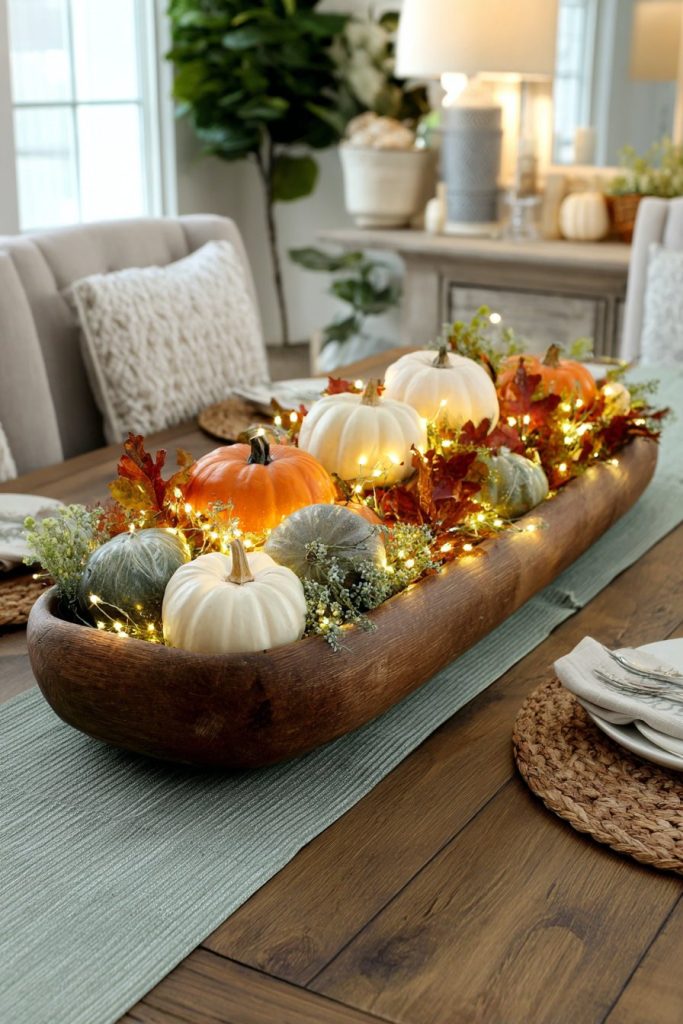
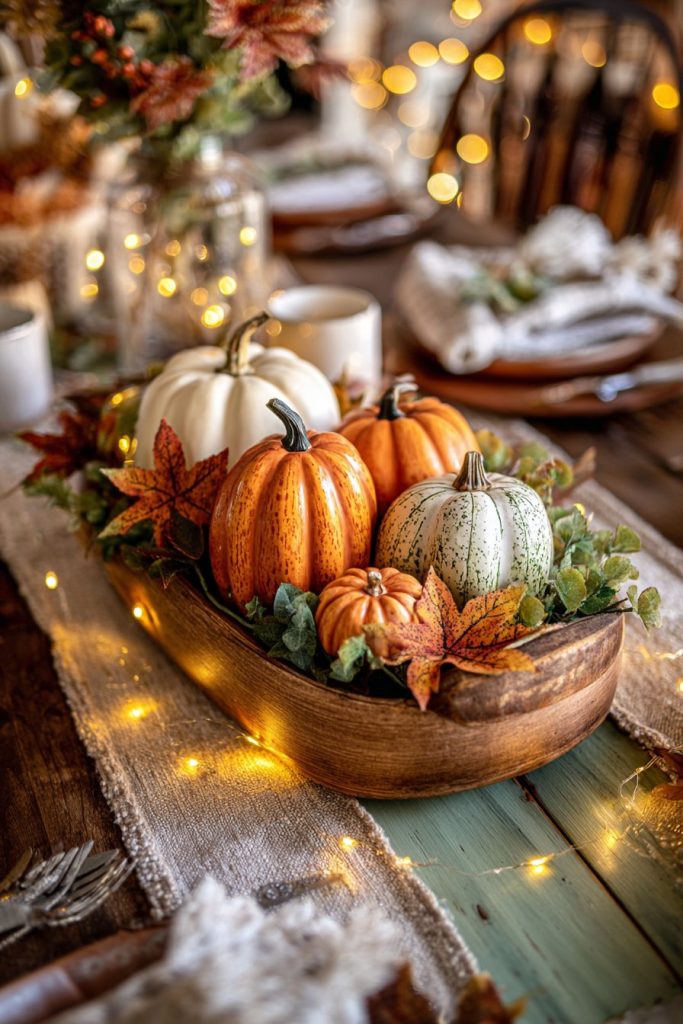
Autumn’s rich color palette and cozy atmosphere find perfect expression in this seasonal centerpiece that celebrates harvest abundance and gathering traditions. A long wooden dough bowl provides rustic authenticity while offering ample space for an abundant display of mini pumpkins, gourds, and colorful fall leaves. The bowl’s elongated shape works particularly well on rectangular tables, creating a centerpiece that doesn’t impede conversation while providing visual interest from every angle.
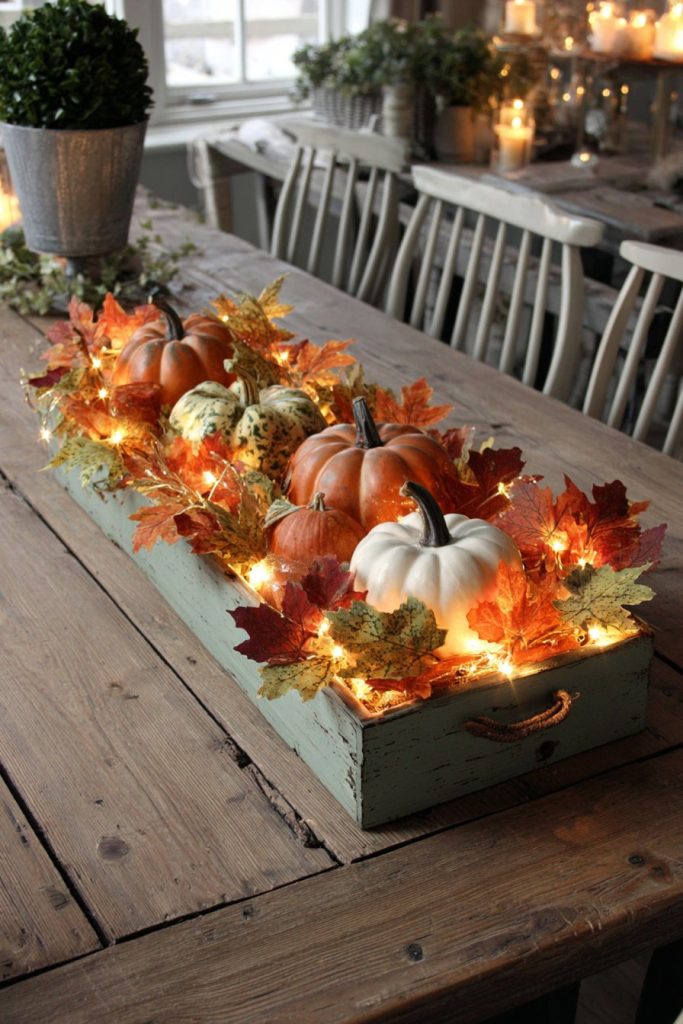
Battery-operated fairy lights woven throughout the arrangement add magical ambiance without the safety concerns of open flames around dried natural materials. These tiny lights create points of interest that draw the eye through the arrangement while providing soft illumination that enhances the warm orange, amber, and burgundy tones of the autumn elements. The warm glow complements the painted farmhouse table’s sage green base, creating a color harmony that feels both sophisticated and welcoming.
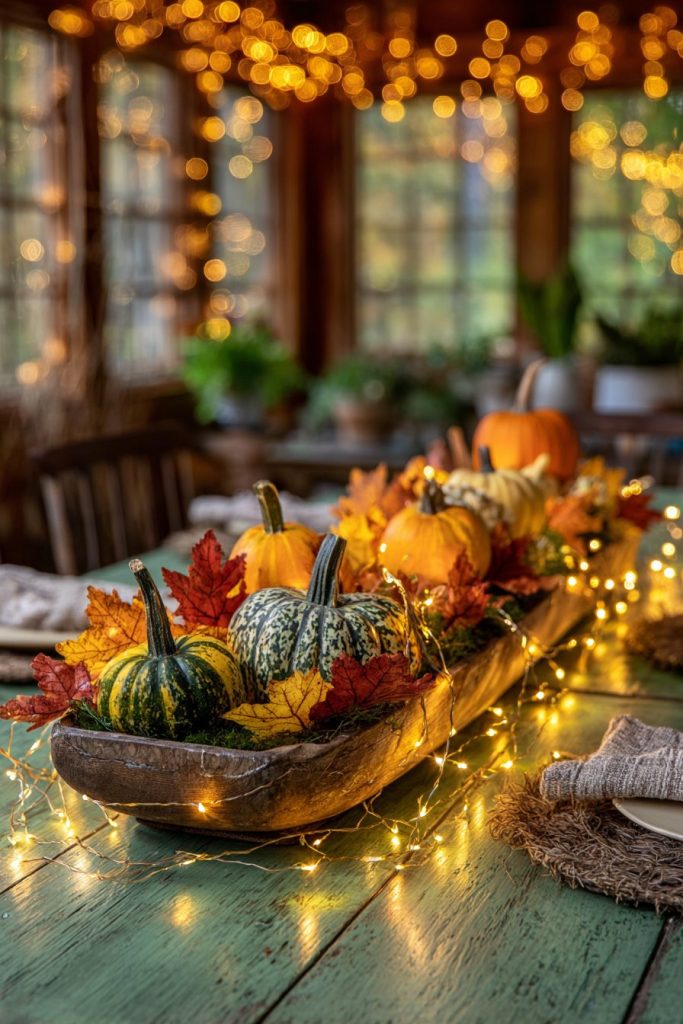
The combination of textures within this arrangement creates rich visual and tactile appeal. Smooth mini pumpkins contrast with the rough bark-like surfaces of some gourds, while delicate autumn leaves add papery lightness to the display. The battery-operated lights eliminate concerns about wax dripping or fire hazards while providing the warm glow that makes autumn evenings feel special. This practical approach to ambient lighting extends the centerpiece’s usability throughout the season.
Key Design Tips:
- Choose mini pumpkins and gourds in various sizes and textures for visual interest
- Test battery-operated lights before installation to ensure even illumination
- Preserve autumn leaves with glycerin solution to extend their usable life
- Use a timer function on battery lights to automate daily illumination
- Refresh natural elements weekly to maintain the arrangement’s fresh appearance

6. Mediterranean Warmth with Aromatic Elements
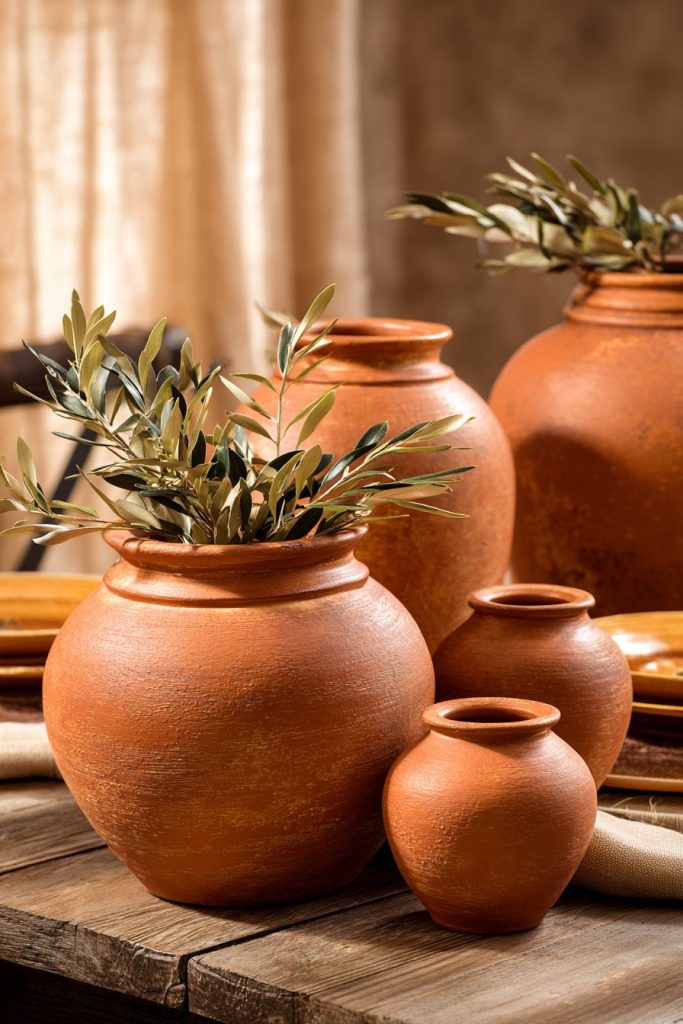
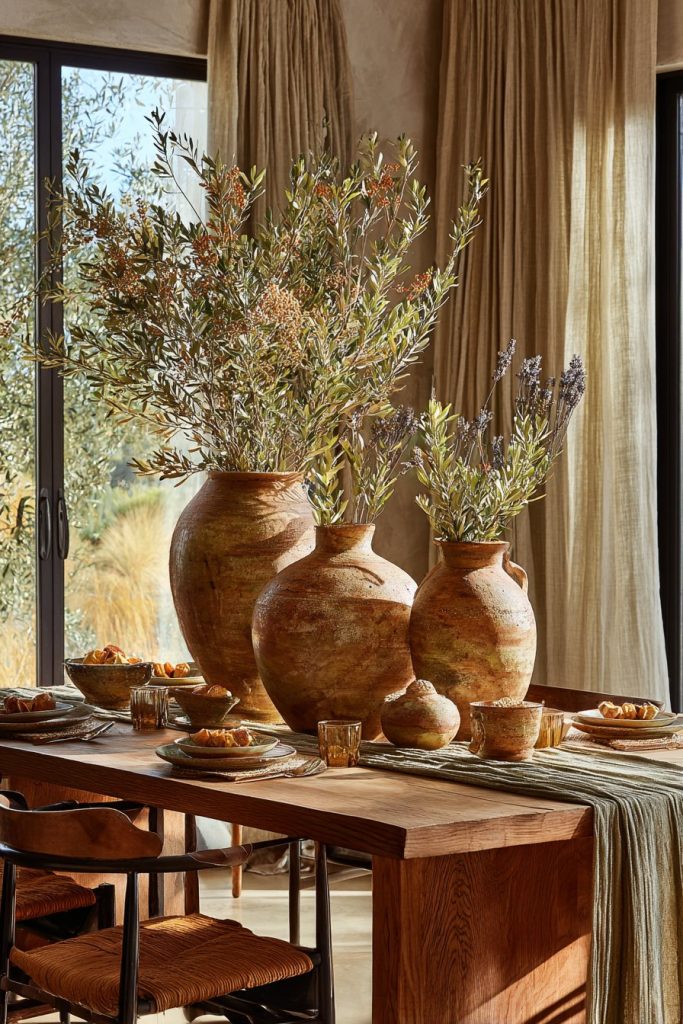
The sun-soaked Mediterranean aesthetic brings warmth and natural beauty to dining spaces through carefully selected materials and aromatic plants that evoke coastal European charm. Terracotta pots in varying sizes create visual rhythm while providing authentic containers for olive branches and lavender sprigs. The warm, earthy tones of the terracotta complement the rustic pine dining table while the wrought iron details add Mediterranean metalwork traditions that speak to artisanal craftsmanship.
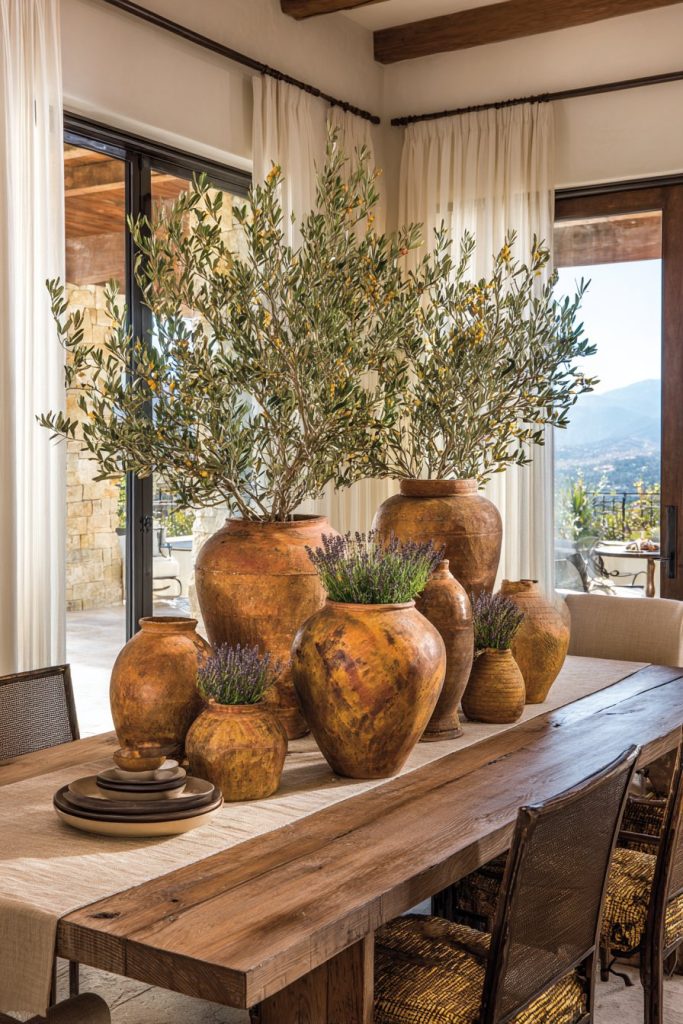
Olive branches bring silvery-green foliage that catches and reflects light beautifully, creating subtle movement and visual interest even in still air. These hardy branches maintain their appearance for weeks when properly cared for, making them an excellent choice for long-lasting arrangements. Lavender sprigs add both color and fragrance, introducing the purple tones that are synonymous with Mediterranean landscapes while providing aromatherapy benefits that enhance the dining experience.
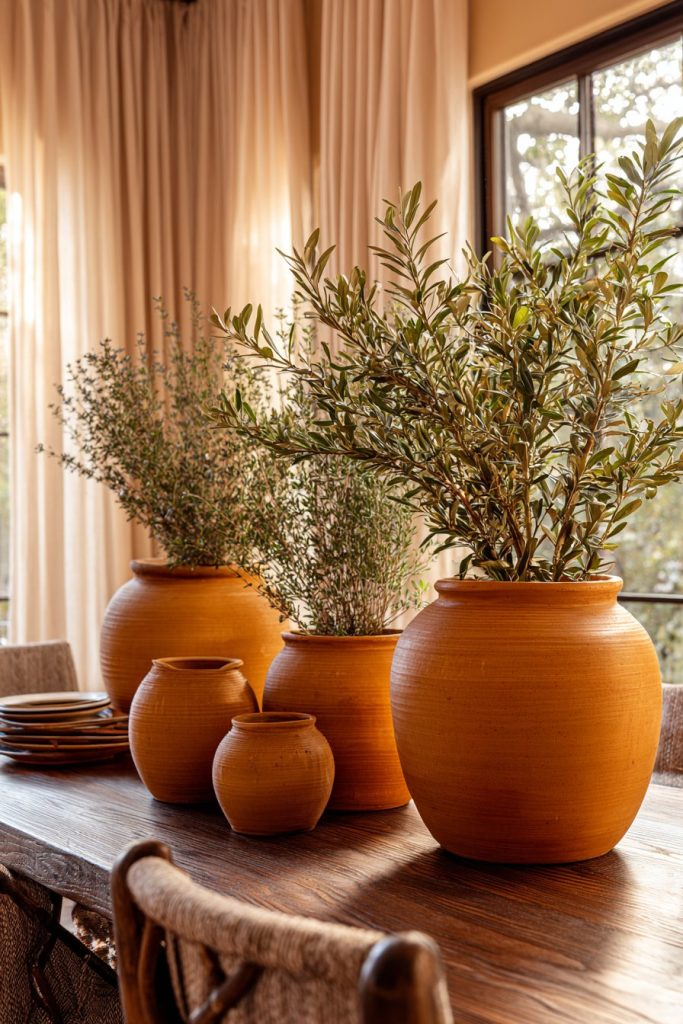
The golden hour lighting filtering through sheer curtains mimics the warm, diffused light of Mediterranean afternoons, creating an atmosphere that transports diners to coastal European destinations. This quality of light enhances the textured surfaces of the terracotta pottery and brings out the silver undertones in the olive foliage. Warm earth-toned linens and ceramic dinnerware complete the regional aesthetic while maintaining the natural, unpretentious character that defines Mediterranean style.
Key Design Tips:
- Choose terracotta pots with drainage holes and use waterproof saucers to protect table surfaces
- Mist olive branches lightly to maintain their silvery appearance and prevent browning
- Select dried lavender for longer-lasting color and consistent fragrance
- Group pots in odd numbers for more natural, pleasing visual arrangements
- Position the arrangement to take advantage of warm afternoon light when possible
7. Industrial Chic with Modern Elements
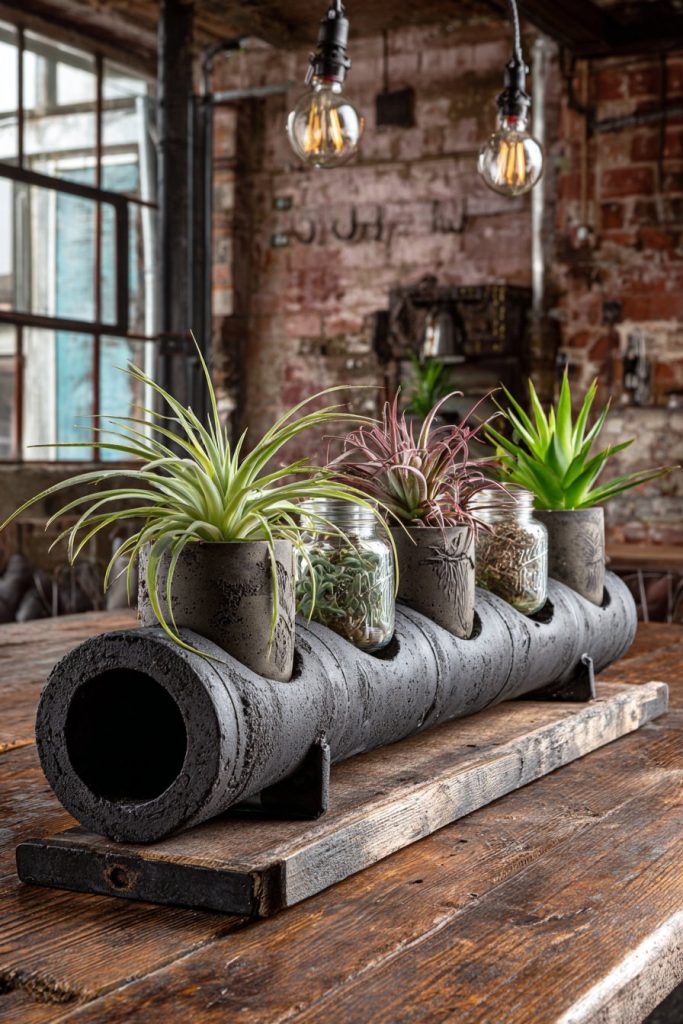
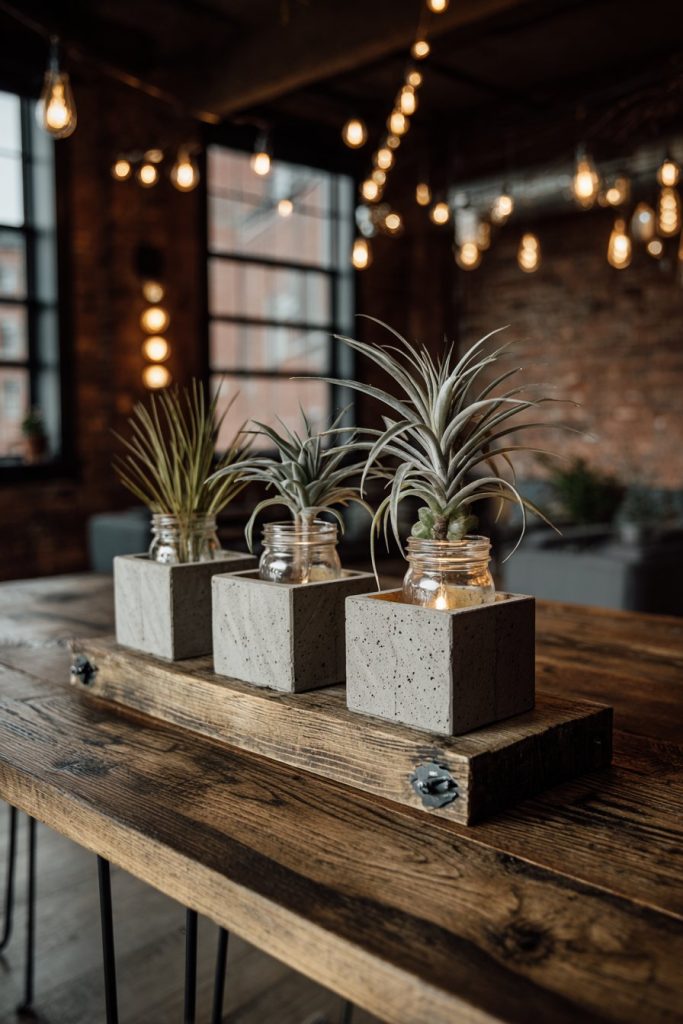
The industrial aesthetic transforms raw materials and utilitarian objects into sophisticated design elements that celebrate both form and function. A custom serving tray constructed from metal pipes and reclaimed wood planks demonstrates the industrial approach to repurposing materials while creating unique functional art. This base supports geometric concrete planters that house air plants, creating a striking contrast between hard industrial materials and soft, organic plant forms.

Edison bulb string lights arranged in mason jars provide atmospheric lighting that references industrial history while serving contemporary decorative purposes. The warm glow of filament bulbs creates intimate ambiance that softens the harder edges of metal and concrete elements. This lighting choice bridges the gap between the raw industrial materials and the comfort expected in dining spaces, making the aesthetic approachable rather than cold or unwelcoming.
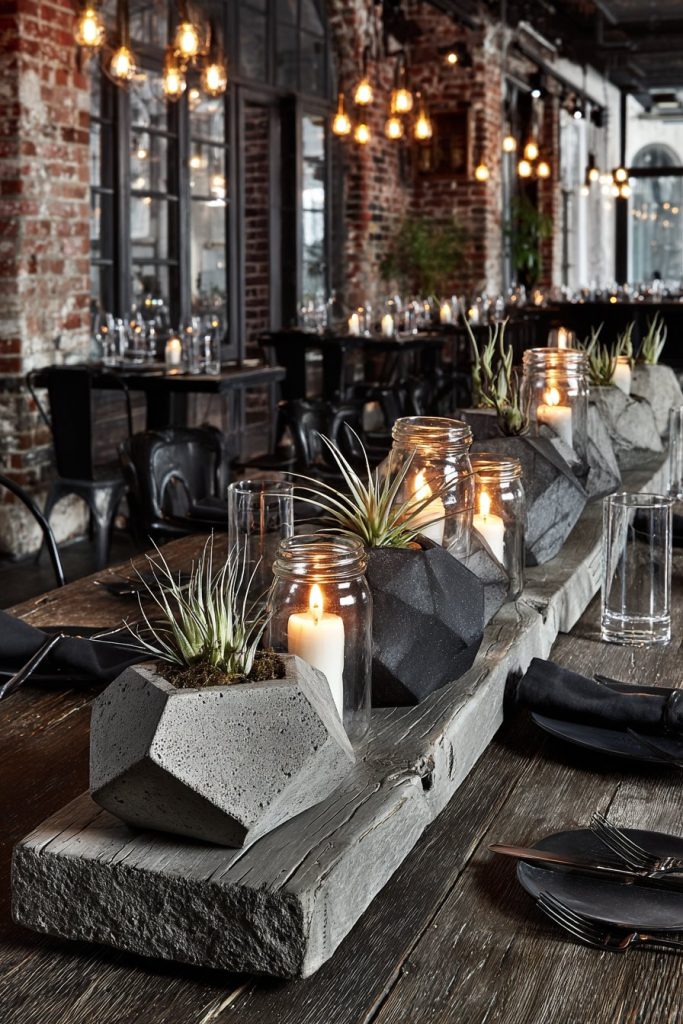
The reclaimed wood table with black steel hairpin legs epitomizes industrial design’s emphasis on honest materials and functional beauty. Exposed brick walls and metal fixtures complete the urban loft atmosphere while providing textural richness that prevents the space from feeling stark. The wide-angle photography perspective captures the full impact of the industrial aesthetic while emphasizing the successful integration of hard and soft elements.
Key Design Tips:
- Use food-safe sealers on reclaimed wood surfaces that may contact food or dishes
- Choose air plants for their low maintenance requirements and sculptural appearance
- Install dimmer switches for Edison bulb fixtures to control ambient lighting levels
- Select concrete planters with proper drainage to prevent water damage
- Balance hard industrial elements with soft textiles and warm lighting for comfort
8. Coastal Tranquility with Beach-Inspired Elements
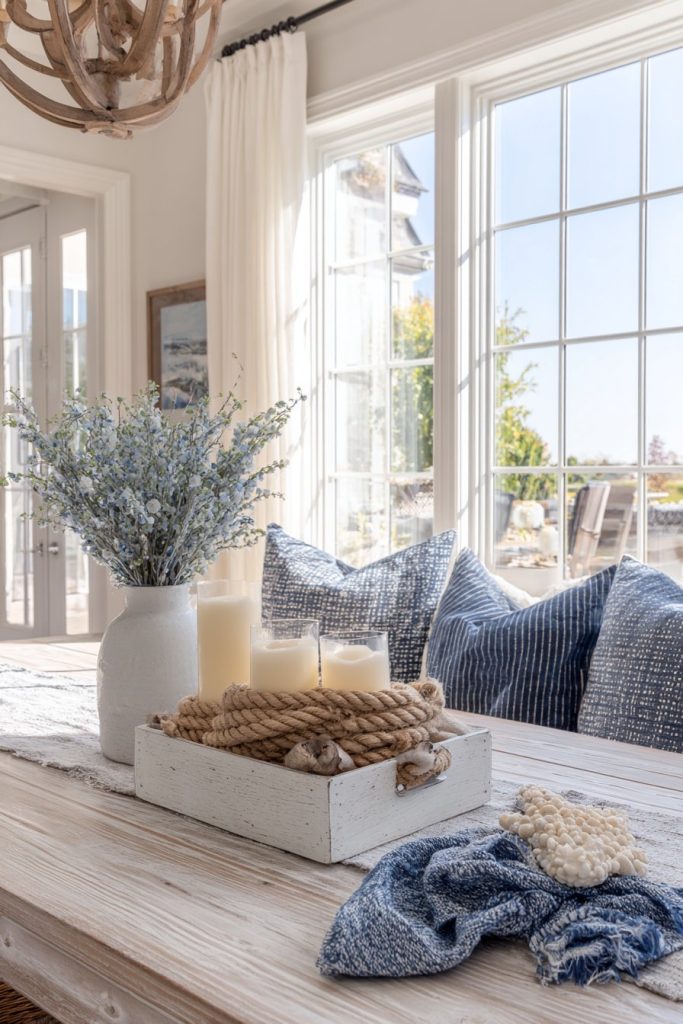
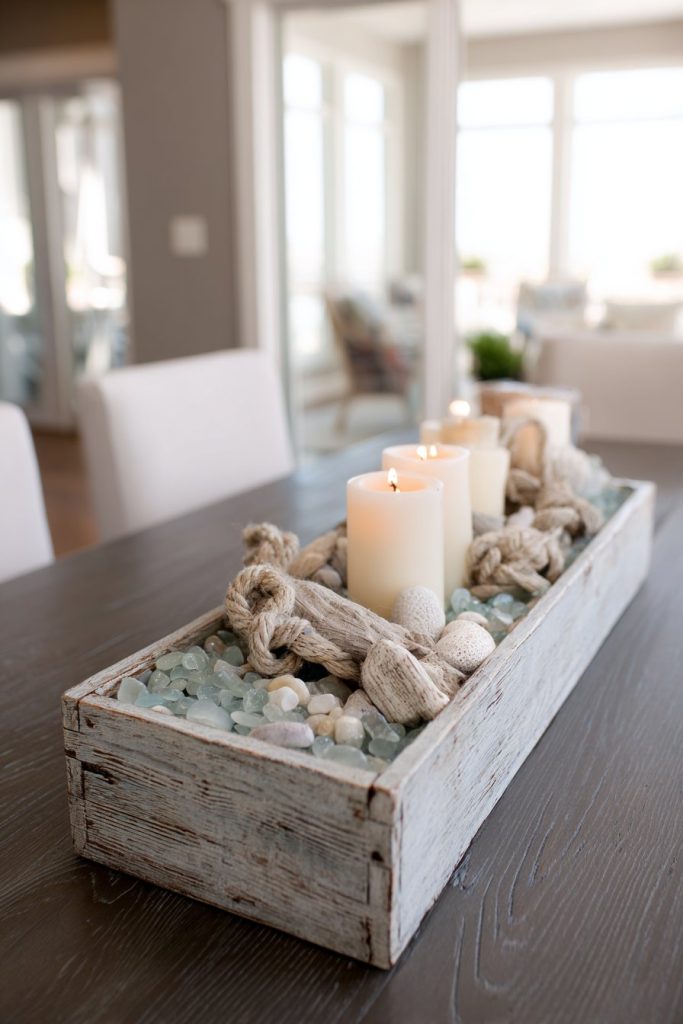
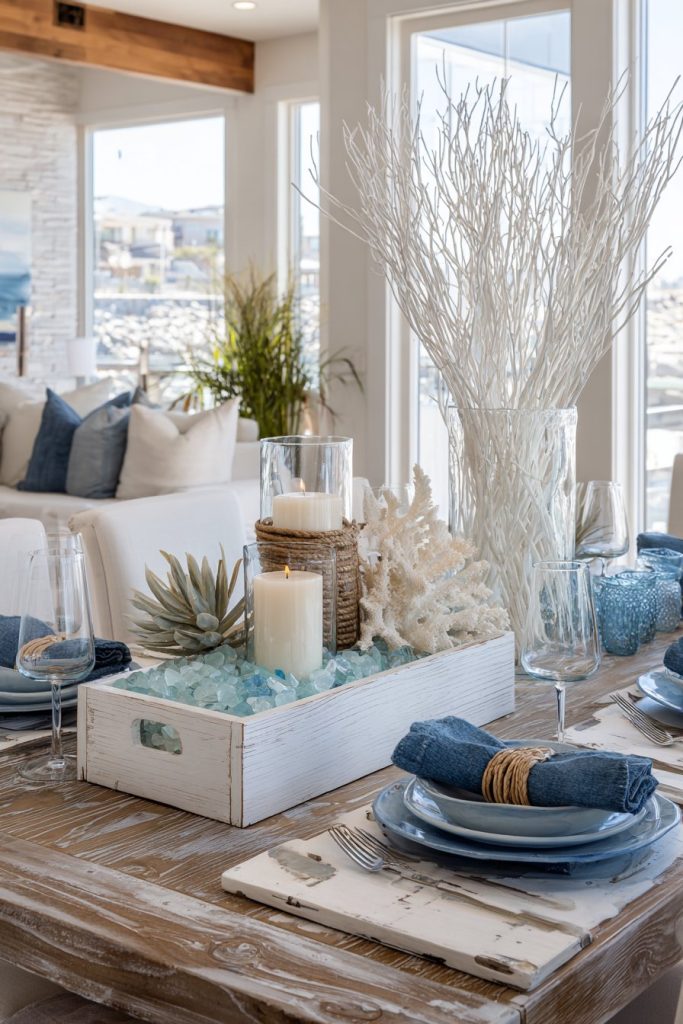
The relaxed elegance of coastal design brings the serenity of oceanside living to inland dining spaces through carefully curated natural elements and a soothing color palette. A whitewashed wooden box serves as the foundation for a collection of beach glass, driftwood pieces, and rope-wrapped candles that tell stories of seaside walks and ocean treasures. The weathered appearance of the container mirrors the natural aging process that occurs when wood meets salt air and sun.
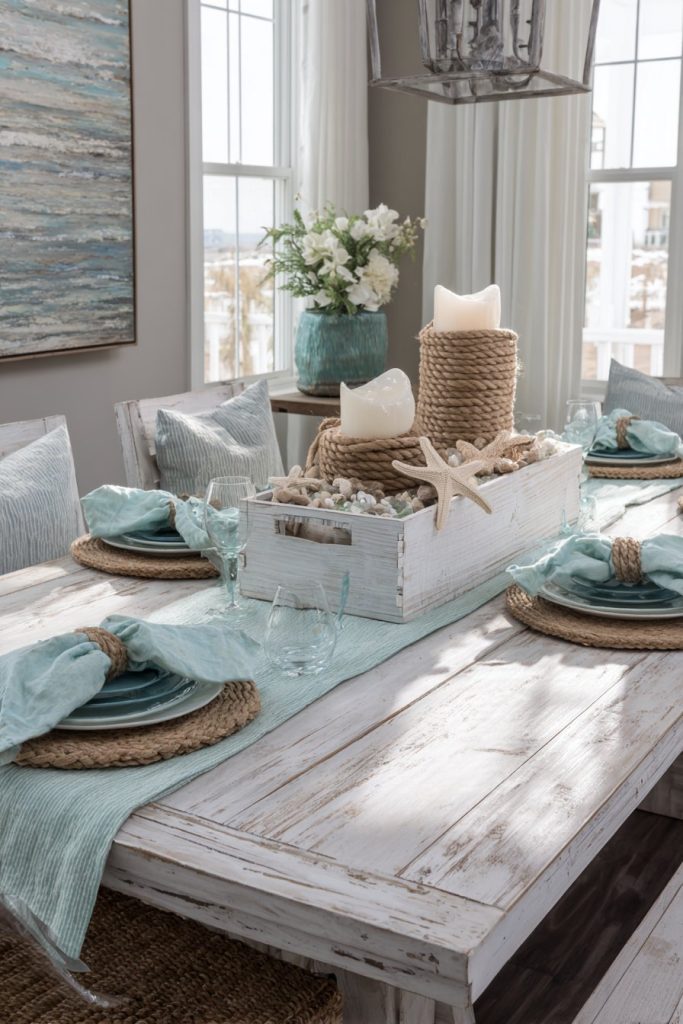
Beach glass in various shades of blue, green, and white creates jewel-like accents that catch and refract light beautifully, mimicking the way sunlight plays on ocean waves. Driftwood pieces add organic sculptural elements that provide textural contrast while maintaining the natural color palette. Rope-wrapped candles introduce the nautical elements that are essential to coastal design while providing functional lighting that enhances the relaxed atmosphere.
The weathered white painted dining table perfectly complements the coastal aesthetic, with natural wood planks showing through in areas where the paint has worn away naturally. This authentic distressing speaks to the effects of coastal weather and creates visual interest through texture and color variation. Soft blue and white linens reinforce the oceanic color scheme while maintaining the fresh, clean feeling that characterizes successful coastal design.
Key Design Tips:
- Collect authentic beach glass and driftwood for the most natural appearance
- Use battery-operated candles in rope wrapping for safety around dried natural materials
- Choose weathered white paint finishes that show underlying wood for authentic coastal character
- Incorporate various shades of blue to mimic the ocean’s changing colors
- Position the arrangement to catch natural light that mimics bright coastal sunshine
9. Scandinavian Simplicity with Natural Elements
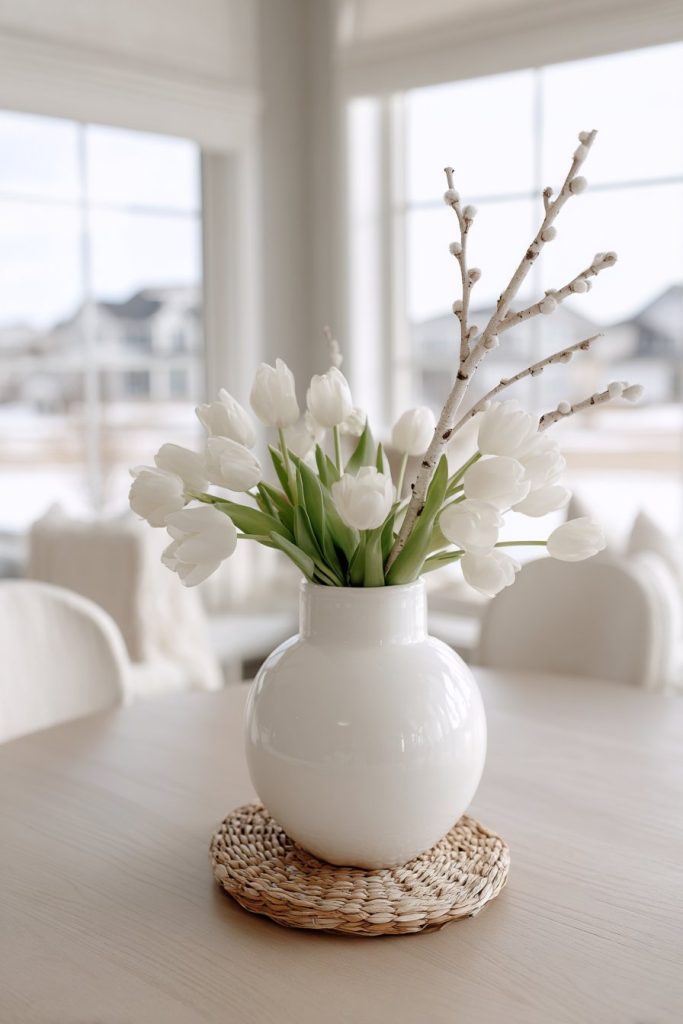
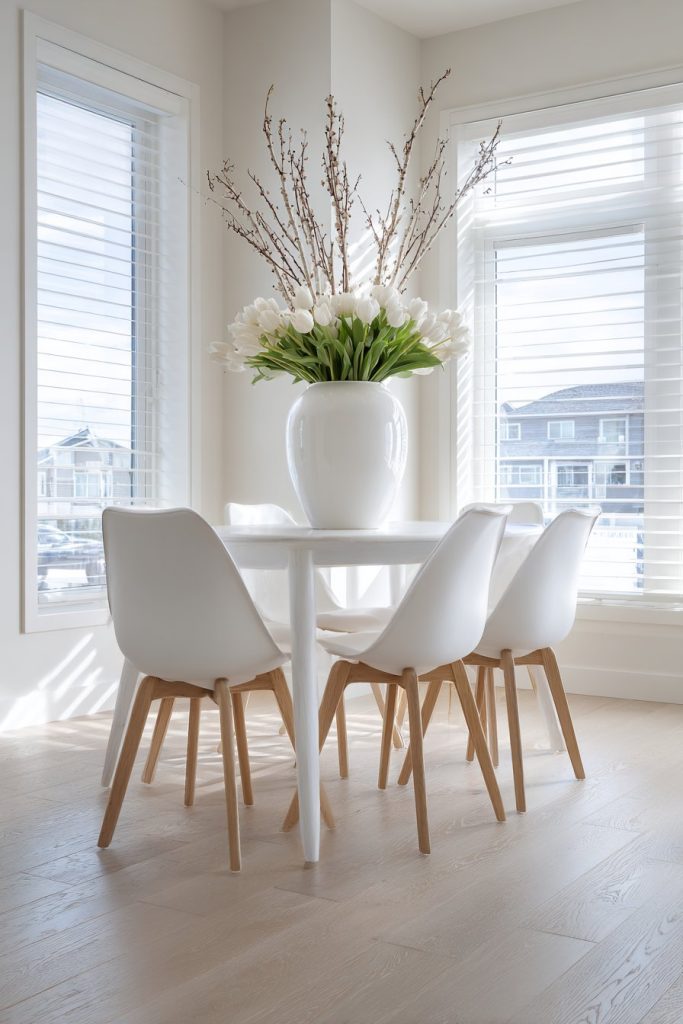
The Scandinavian design philosophy of hygge finds perfect expression in this serene centerpiece that celebrates the beauty of simplicity and connection to nature. A simple white ceramic vase provides a clean, unadorned foundation that allows the natural beauty of birch branches and white tulips to command attention. The stark white container disappears visually, creating the illusion that the flowers are floating above the table surface while maintaining the clean lines essential to Nordic aesthetics.
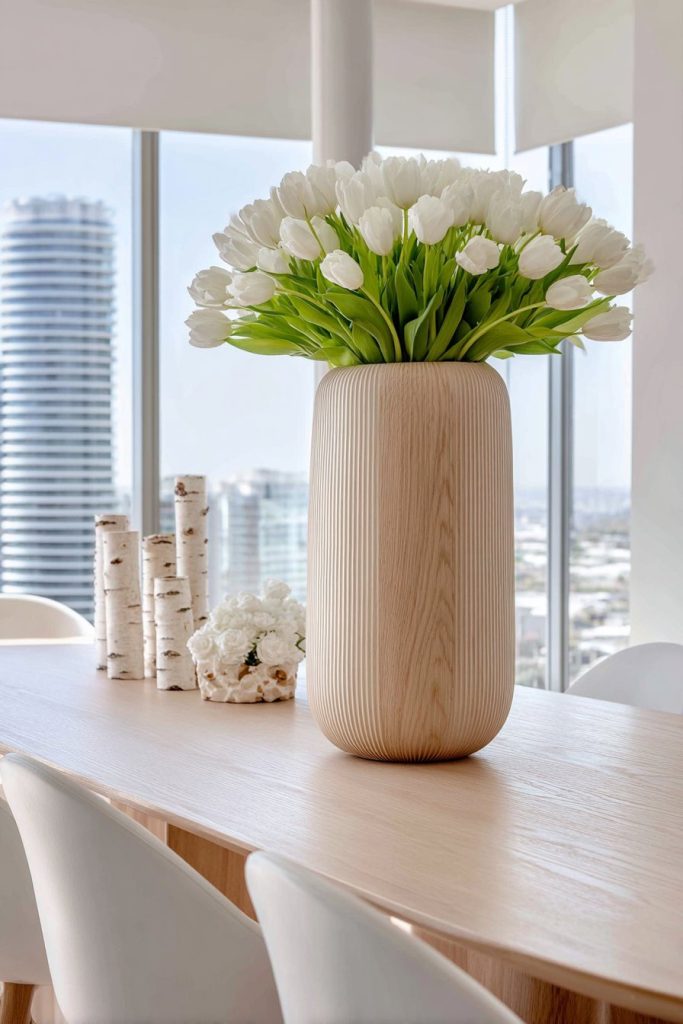
Birch branches introduce the natural wood elements that are fundamental to Scandinavian design while their white bark echoes the ceramic vase and creates visual continuity. The delicate branching patterns add organic complexity that contrasts beautifully with the geometric precision of the tulip forms. White tulips provide soft, sculptural shapes that feel both elegant and unpretentious, embodying the Scandinavian approach to luxury through simplicity rather than ostentation.
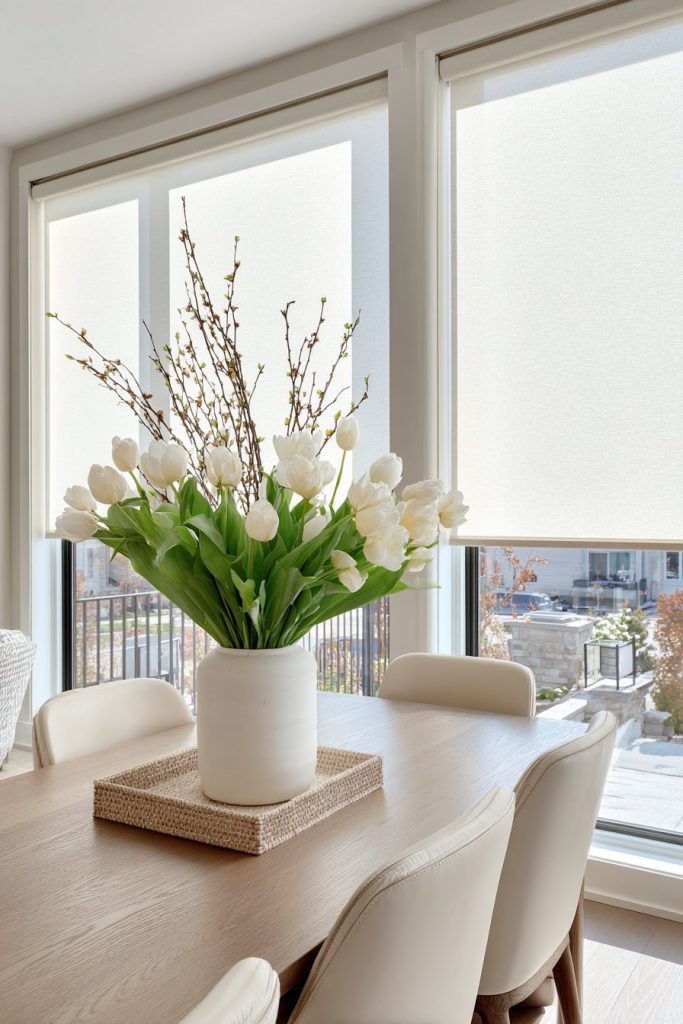
The light oak dining table with tapered legs exemplifies Scandinavian furniture design’s emphasis on clean lines, natural materials, and functional beauty. The pale wood tone creates warmth without heaviness while the tapered legs add visual lightness that maintains the airy feeling essential to Nordic interiors. Large windows with white roller shades flood the space with natural light, creating the bright, clean atmosphere that characterizes successful Scandinavian design implementation.
Key Design Tips:
- Choose white or cream flowers to maintain the monochromatic color scheme
- Select branches with interesting natural forms that create sculptural silhouettes
- Use ceramic or glass vases in simple, geometric shapes without decorative details
- Maximize natural light through window treatments that provide privacy without blocking illumination
- Keep surrounding elements minimal to let the centerpiece’s simple beauty shine
10. Bohemian Eclecticism with Global Influences
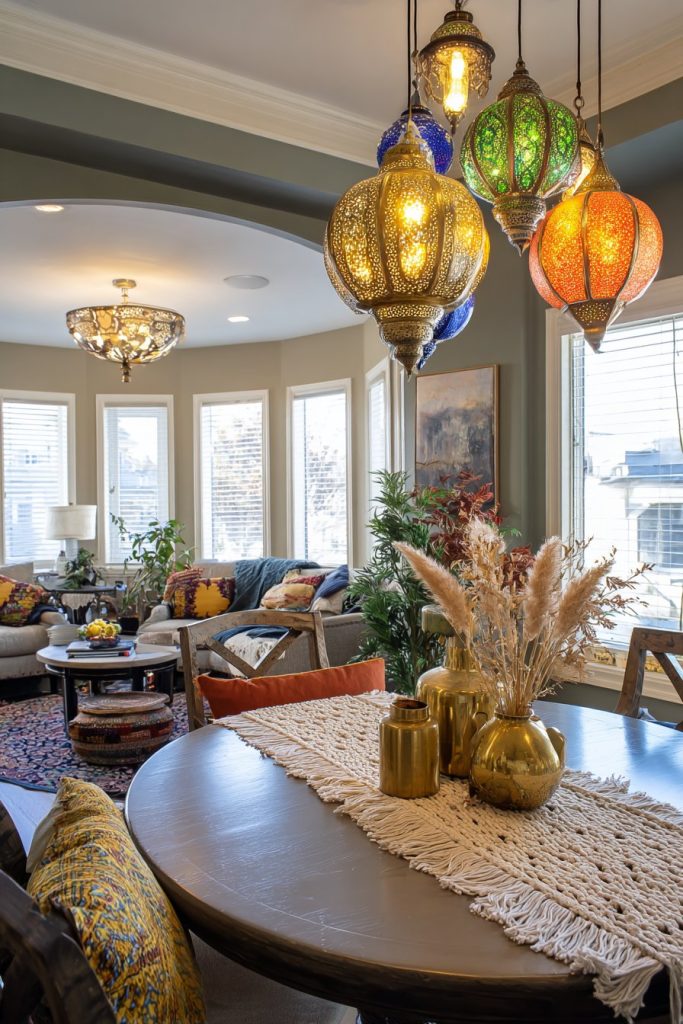
The bohemian aesthetic celebrates creative expression and cultural diversity through layered textures, rich colors, and collected objects that tell stories of travel and artistic appreciation. A macrame table runner provides textural foundation while introducing the fiber arts traditions that characterize boho style. This handcrafted element creates visual interest through its intricate knotwork patterns while serving as a unifying base for the varied objects placed upon it.
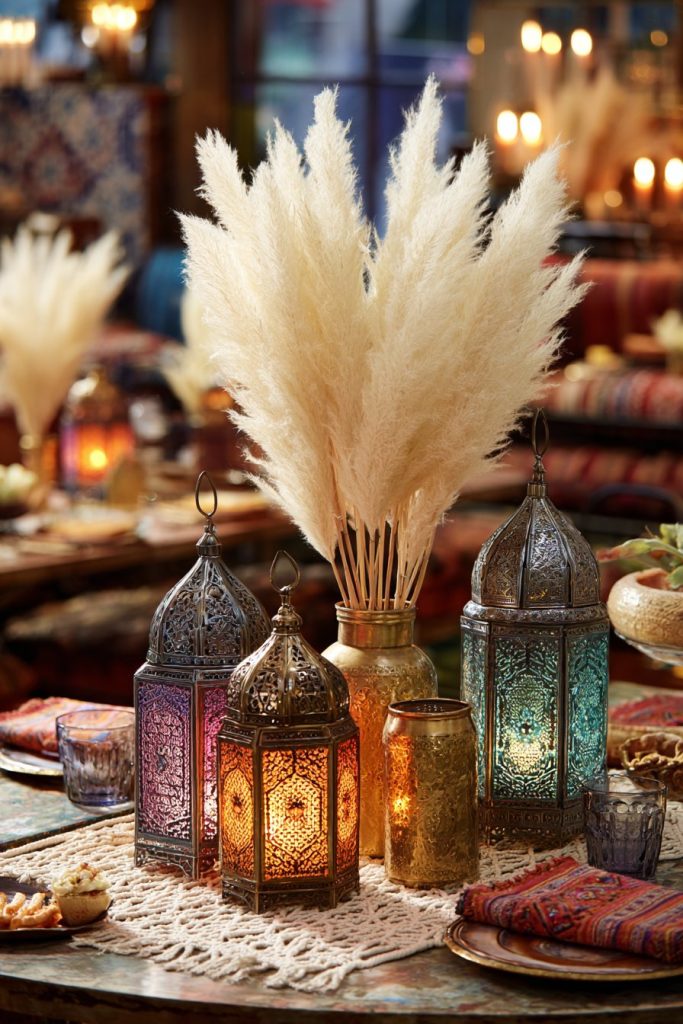
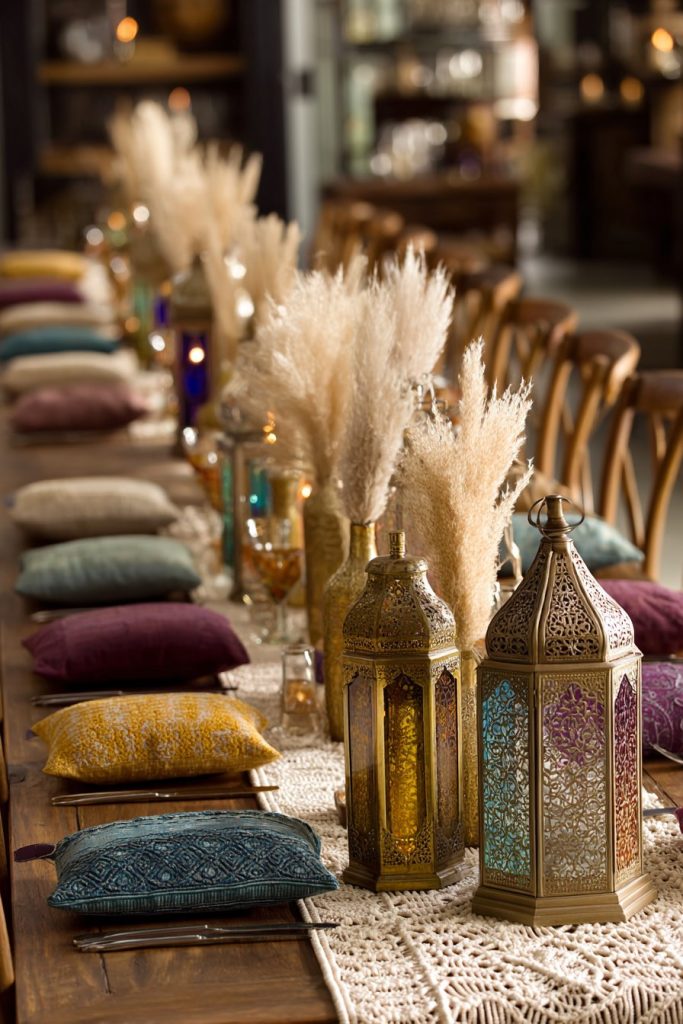
Brass vessels of varying heights create a metallic foundation that catches and reflects light while providing containers for pampas grass and dried flowers. The warm golden tones of brass complement the natural fibers and dried botanicals while adding an element of global craft traditions. Moroccan-inspired lanterns with colored glass panels introduce jewel tones that energize the neutral base palette while providing atmospheric lighting that creates magical color patterns on surrounding surfaces.
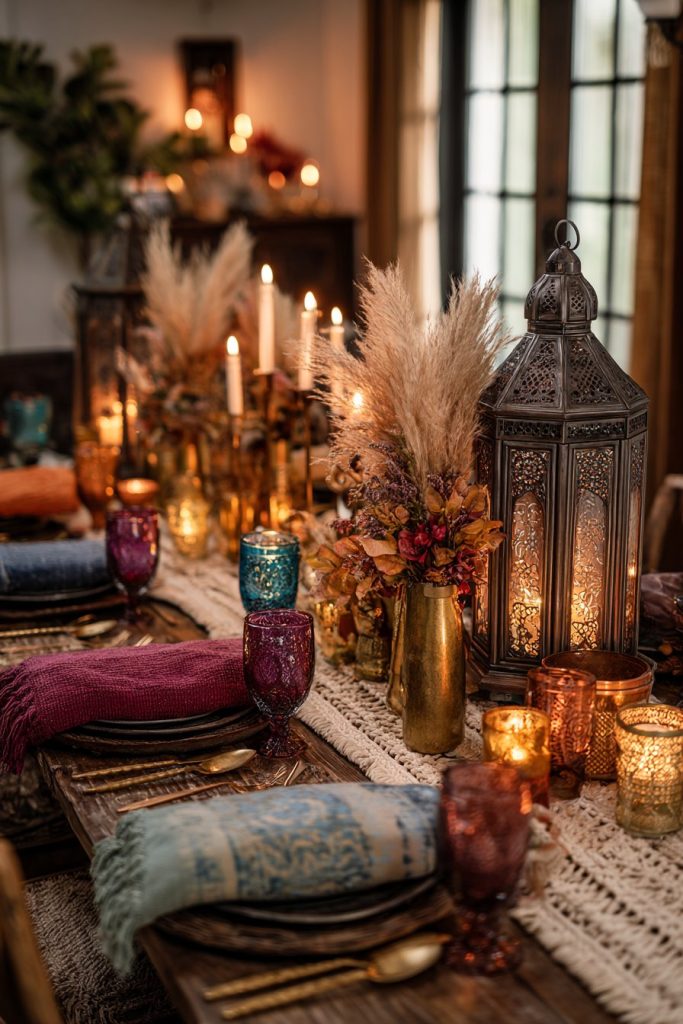
The round carved wood table surrounded by mix-matched vintage chairs exemplifies the bohemian approach to furniture selection that values character and history over matching sets. Each chair tells its own story while contributing to an overall narrative of collected treasures and global influences. Colorful cushions add comfort and additional pattern opportunities while reinforcing the layered, maximalist approach that defines successful bohemian design.
Key Design Tips:
- Layer different textures and materials to create rich visual interest
- Choose brass accessories that develop natural patina over time for authentic character
- Mix various heights and shapes in vessel selection to create dynamic arrangements
- Incorporate handmade elements like macrame for authentic bohemian character
- Use battery-operated candles in decorative lanterns for safety with delicate materials
11. Holiday Elegance with Festive Traditions
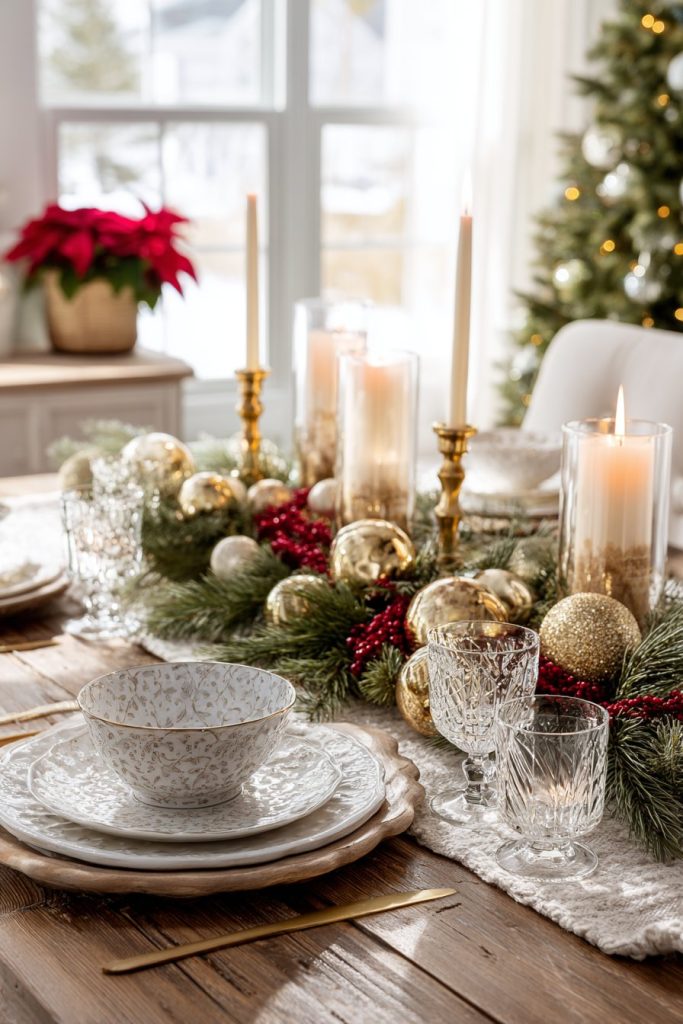
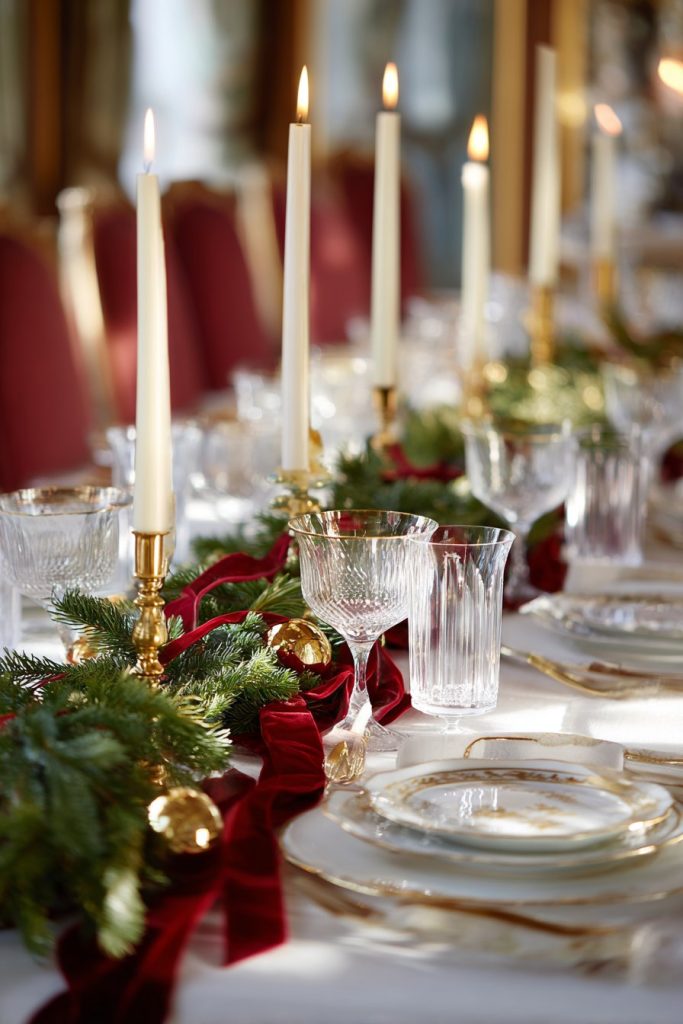
Traditional holiday entertaining reaches its pinnacle in this elegant centerpiece that honors seasonal celebrations while maintaining sophisticated design principles. Fresh evergreen garland forms the foundation of this linear arrangement, providing aromatic beauty that engages the senses while creating a lush green backdrop for additional decorative elements. The natural fragrance of pine, fir, or cedar adds an essential sensory component that artificial alternatives cannot replicate.
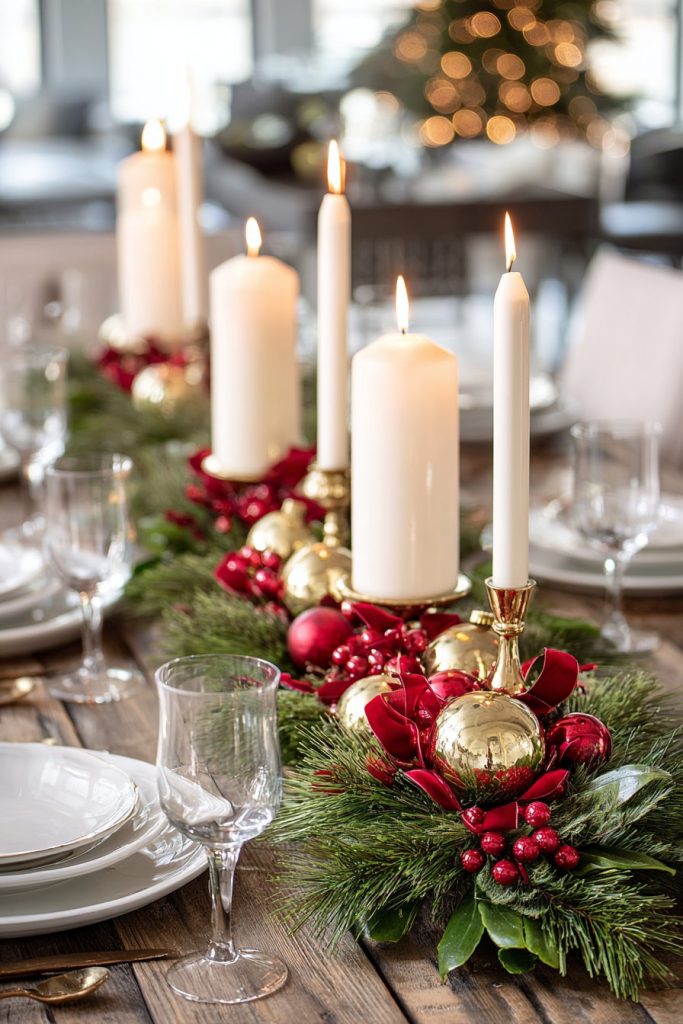
Red velvet ribbon woven throughout the evergreen garland introduces the rich, luxurious color that defines traditional holiday palettes while adding textural contrast to the natural greenery. Gold ornaments strategically placed along the garland create points of light reflection and metallic warmth that elevate the arrangement from simple to spectacular. The combination of natural and crafted elements creates visual richness while maintaining the balance essential to successful centerpiece design.
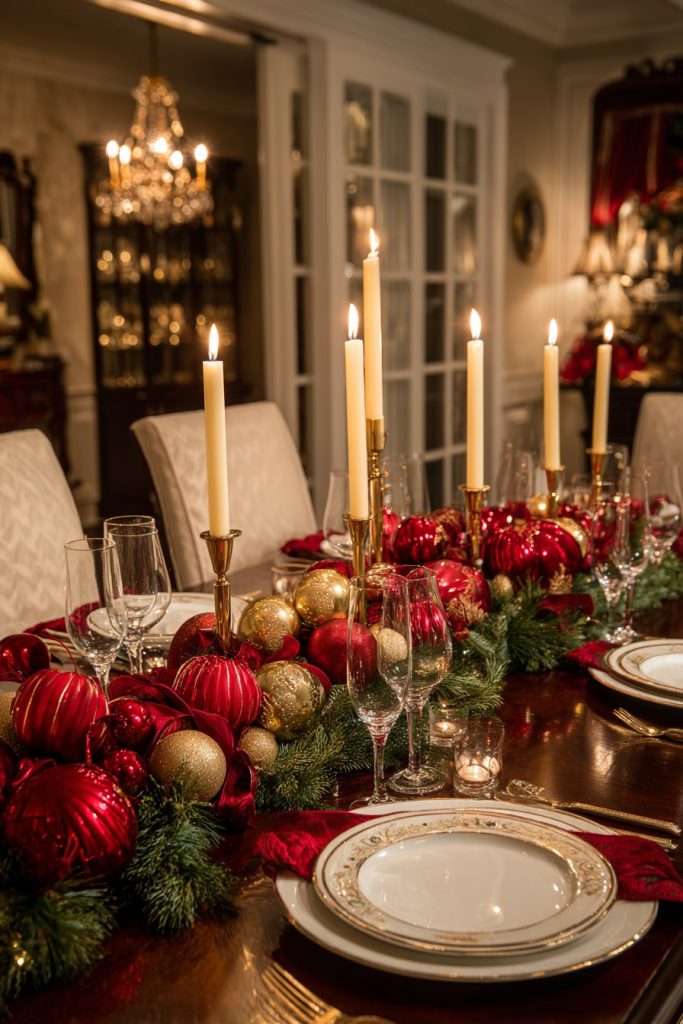
Tall taper candles in brass holders provide elegant vertical elements that create dramatic shadows and warm illumination perfect for festive dining. The brass holders complement the gold ornaments while adding substantial weight that grounds the lighter garland elements. Fine china and crystal stemware complete the formal holiday table setting, creating an atmosphere worthy of special celebrations and memorable gatherings that become treasured family traditions.
Key Design Tips:
- Choose fresh evergreen varieties that maintain their needles well, such as noble fir or Fraser fir
- Use LED candles in brass holders if the arrangement will be used for extended periods
- Select ornaments in complementary metallic finishes for cohesive color coordination
- Mist evergreen garland lightly to maintain freshness and prevent needle drop
- Position candles safely away from greenery and never leave burning candles unattended
12. Contemporary Sophistication with Architectural Plants
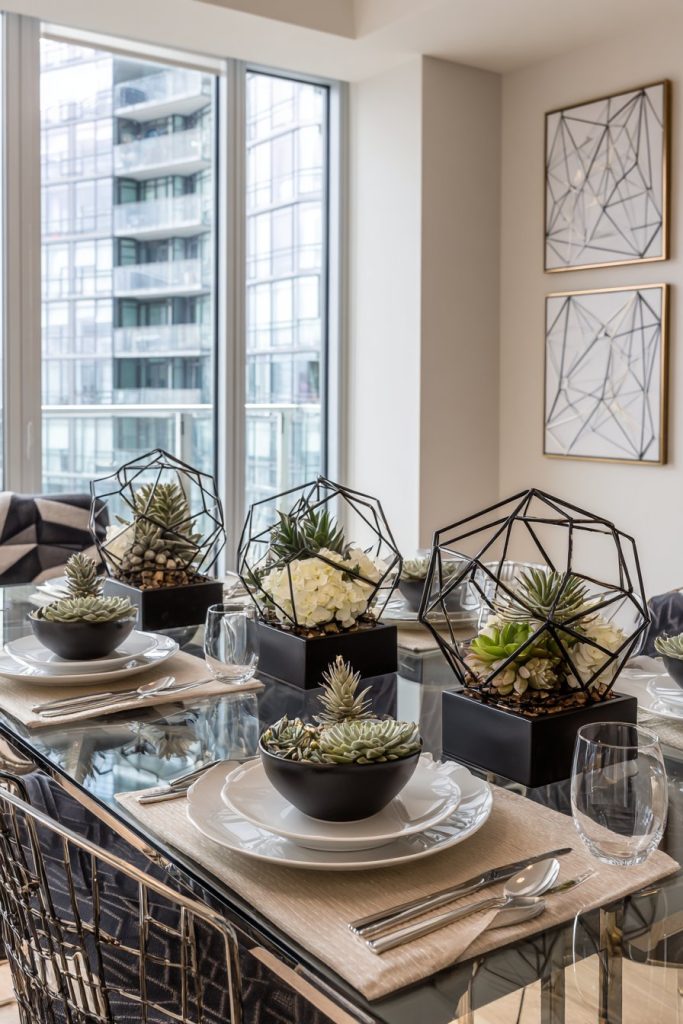
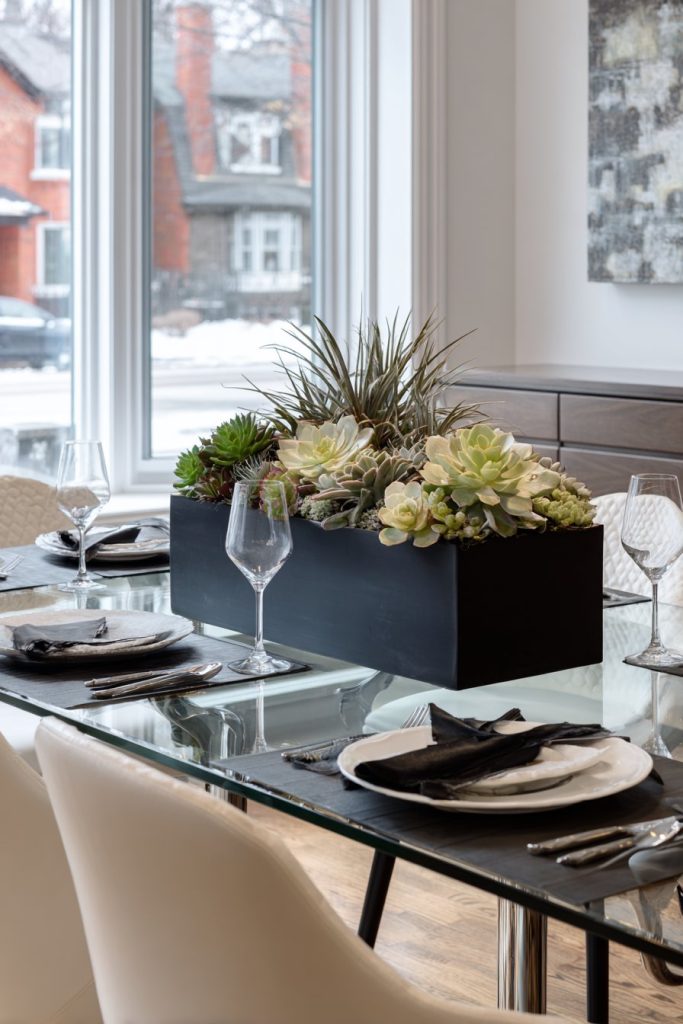
Modern design principles emphasize clean geometry and sophisticated material combinations that create visual impact through restraint and precision rather than ornamentation. A sleek rectangular planter box in matte black metal provides the perfect foundation for architectural succulents and air plants that serve as living sculptures. The container’s geometric precision complements the glass-top dining table while creating striking contrast against the chrome pedestals.
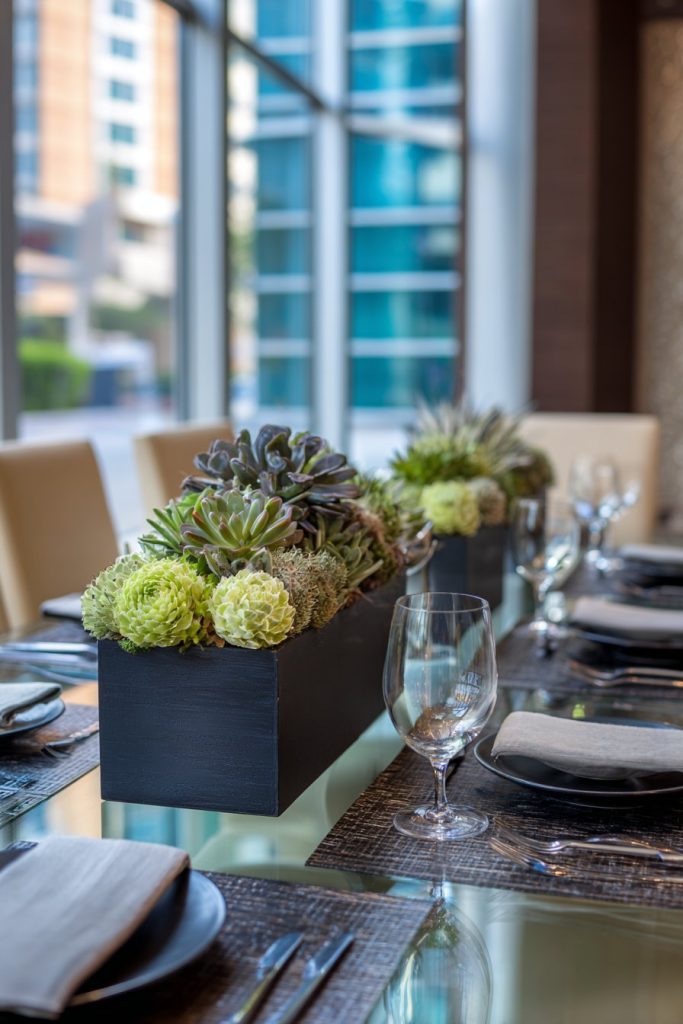
Architectural succulents chosen for their sculptural forms and geometric growth patterns embody the contemporary aesthetic’s appreciation for natural elements that display structural beauty. Varieties such as echeveria, haworthia, and jade plants offer diverse forms and textures while maintaining the green color palette that feels fresh and modern. Air plants add delicate, ethereal elements that provide textural contrast while requiring minimal maintenance, making them ideal for busy contemporary lifestyles.
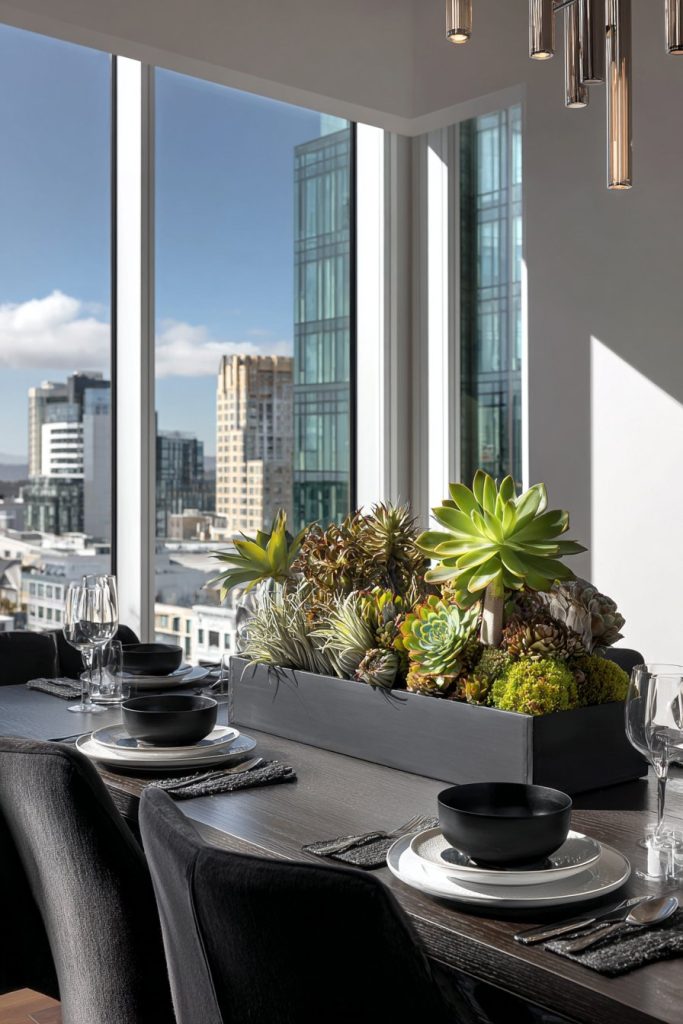
The glass-top dining table with chrome pedestals exemplifies contemporary furniture design’s emphasis on transparency and reflective surfaces that create visual lightness and spatial expansion. Monochromatic place settings in black and white reinforce the sophisticated color restraint while ensuring that the living centerpiece remains the focal point. Clean natural lighting emphasizes the geometric forms and contemporary materials while creating the bright, uncluttered atmosphere that defines successful modern interiors.
Key Design Tips:
- Choose succulents with strong geometric forms that maintain their sculptural appearance
- Use a planter with proper drainage to prevent water damage to metal finishes
- Select air plants that complement rather than compete with succulent forms
- Arrange plants at varying heights to create visual interest within the geometric container
- Rotate plants occasionally to ensure even light exposure and healthy growth patterns
13. French Country Romance with Cottage Garden Elements
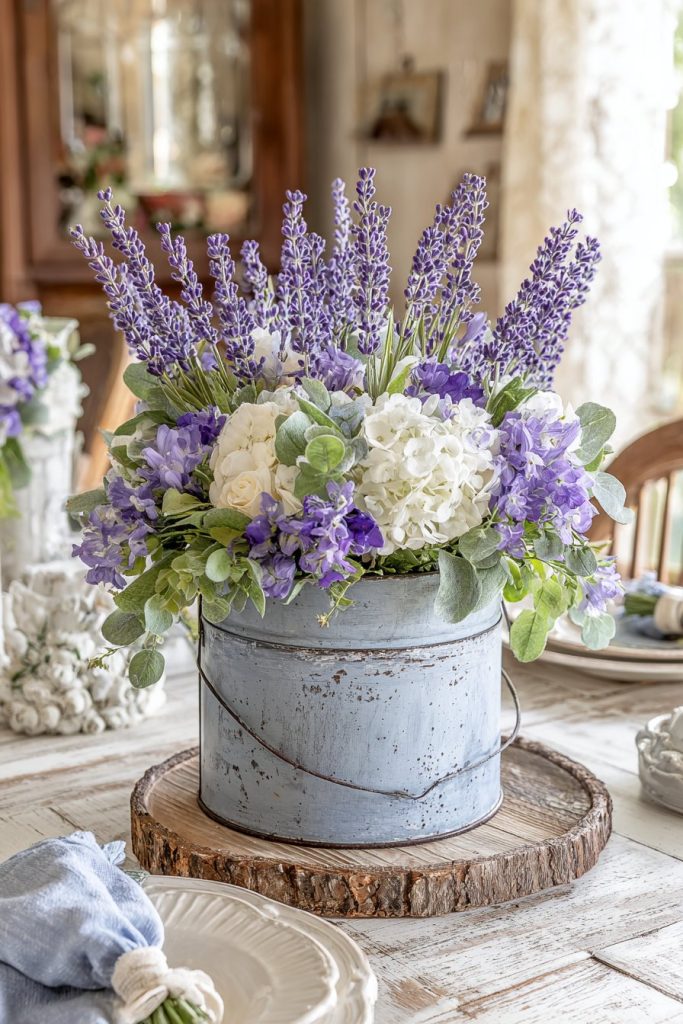
The timeless appeal of French country design lies in its ability to combine rustic authenticity with romantic refinement, creating spaces that feel both elegant and approachable. A vintage galvanized bucket serves as the perfect vessel for this charming arrangement, its weathered metal surface telling stories of practical use in cottage gardens and rural farmyards. This authentic container choice grounds the arrangement in genuine country traditions while providing ample space for generous floral displays.
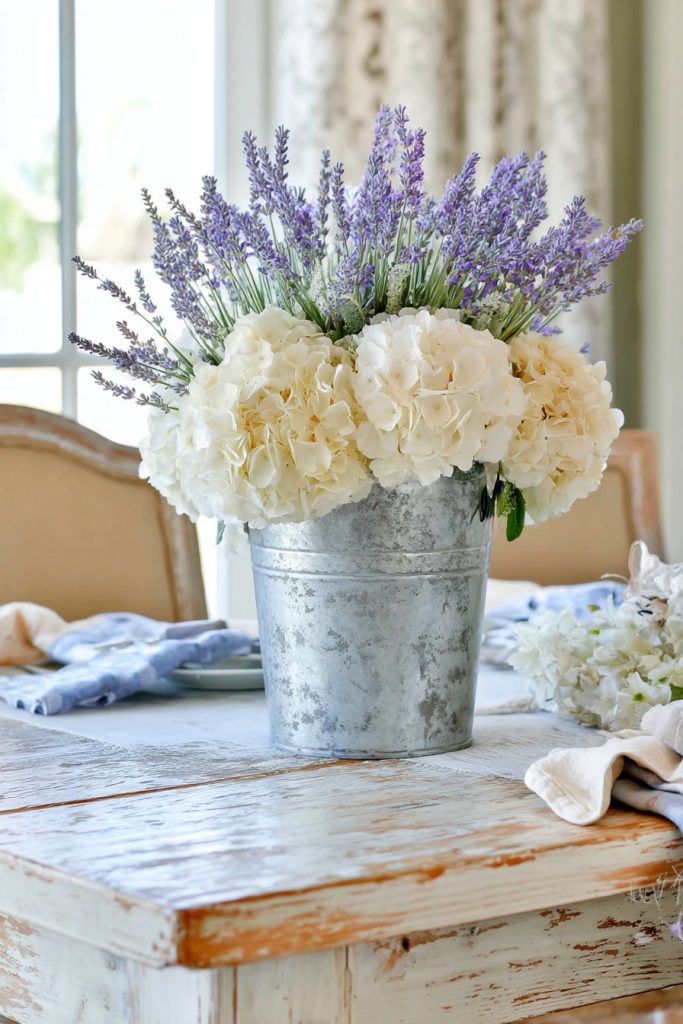
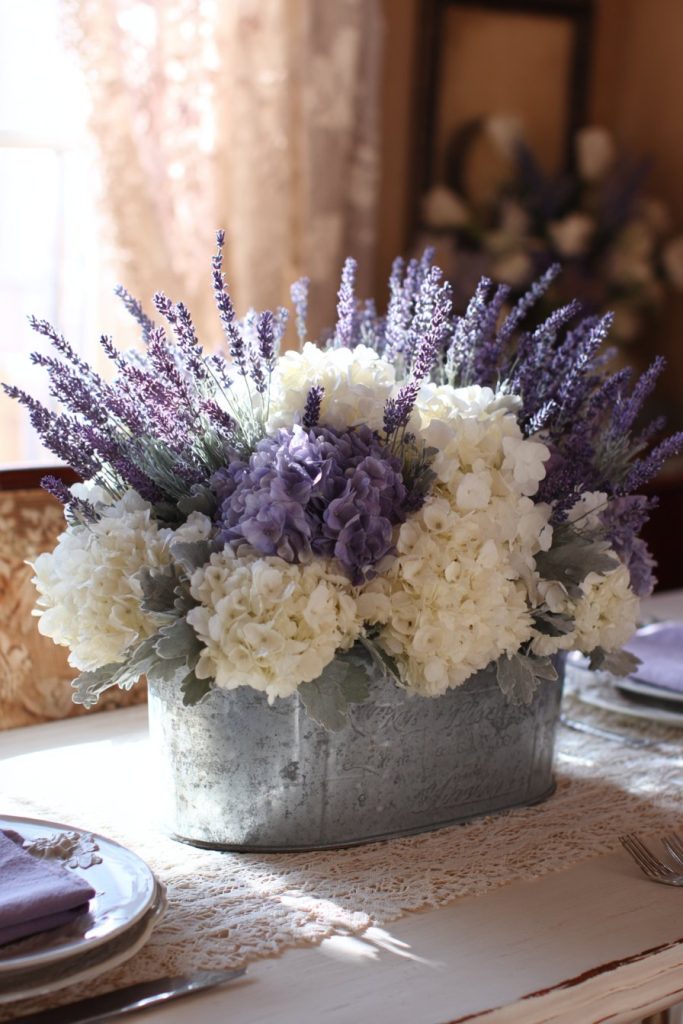
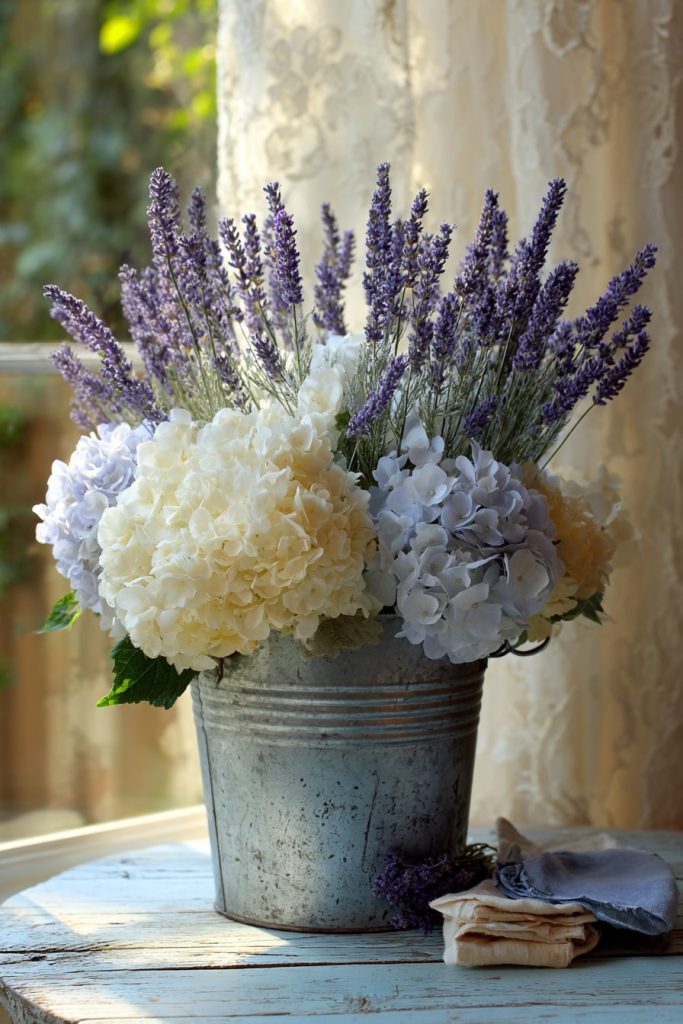
Fresh lavender stems bring both visual beauty and aromatic pleasure to the arrangement, their purple spikes adding vertical interest while releasing the signature fragrance that defines Provence and French country gardens. White hydrangeas provide full, rounded forms that balance the linear lavender while introducing the soft, romantic color palette that characterizes this beloved design style. The combination of purple and white creates classic color harmony while maintaining the fresh, garden-picked appearance that makes French country style so appealing.
The painted dining table in antique white with naturally distressed edges demonstrates the French country approach to furniture finishing that celebrates the beauty of age and wear. Where the white paint has worn away to reveal natural wood underneath, the table tells stories of family meals and daily use that add authenticity to the design. Linen napkins in soft blue and cream tones complement the floral arrangement while introducing the natural fiber textures that are essential to country French aesthetics.
Key Design Tips:
- Choose containers with authentic wear patterns rather than artificially distressed pieces
- Select flowers that thrive in cottage garden conditions for the most natural appearance
- Use galvanized metal containers with proper drainage holes to prevent rust and plant damage
- Incorporate soft, muted colors that reflect the weathered beauty of French countryside
- Position arrangements to take advantage of soft, diffused natural lighting
14. Minimalist Zen with Pure Forms
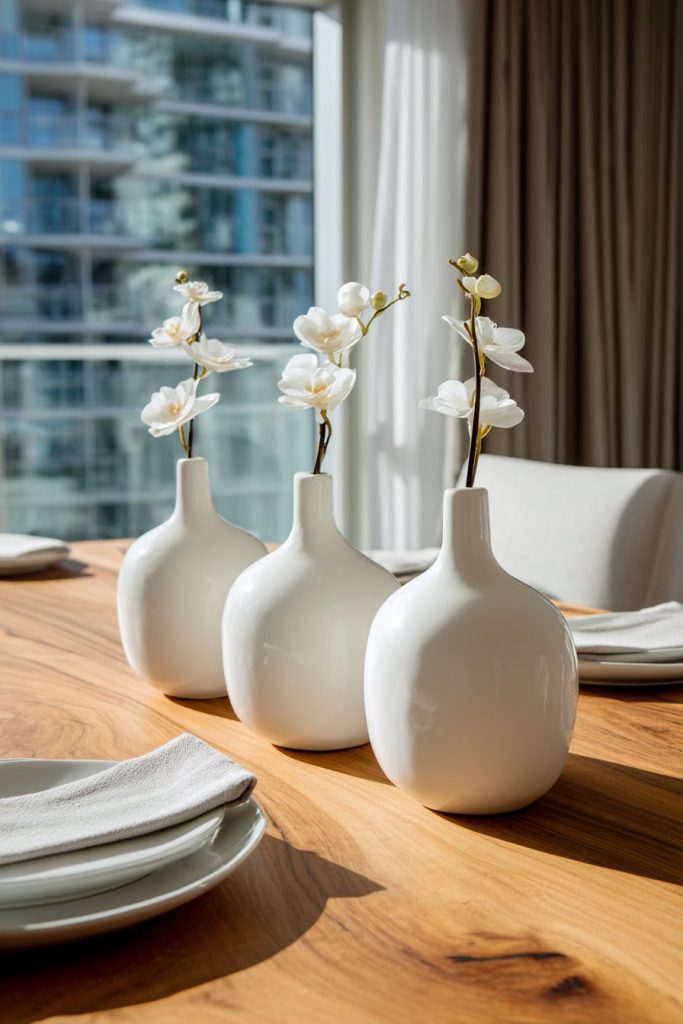
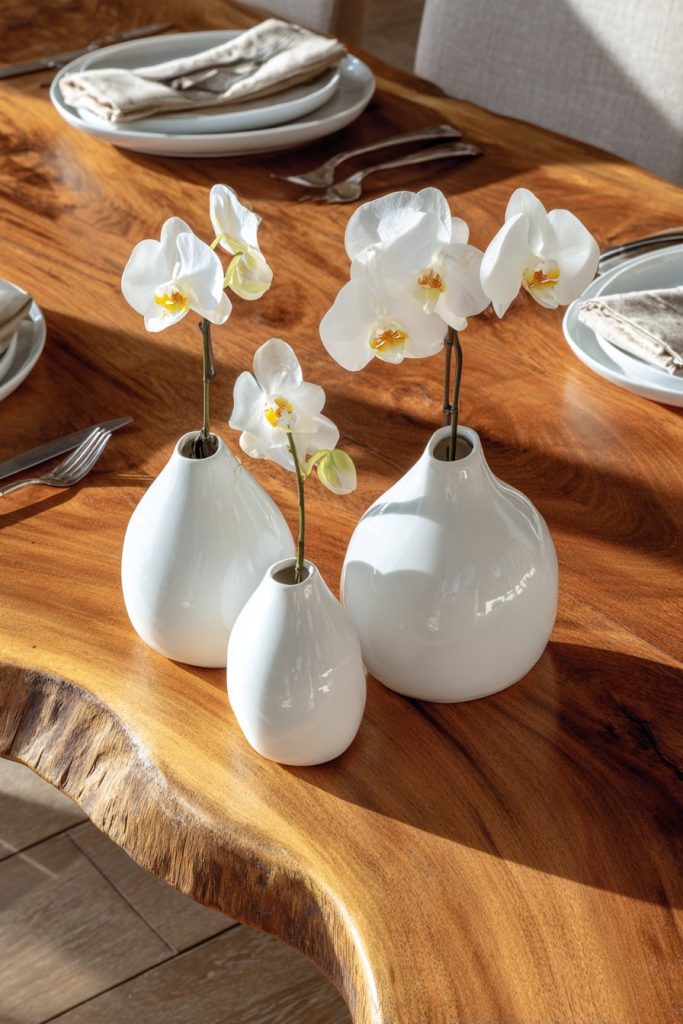
The minimalist aesthetic achieves maximum impact through careful selection and precise placement of elements that embody pure form and natural beauty. Three identical white ceramic vessels of graduated heights create rhythmic progression while demonstrating the minimalist principle that repetition with variation creates visual harmony. Each vessel holds a single stem of white orchid, transforming these exotic flowers into sculptural elements that celebrate both natural beauty and geometric precision.
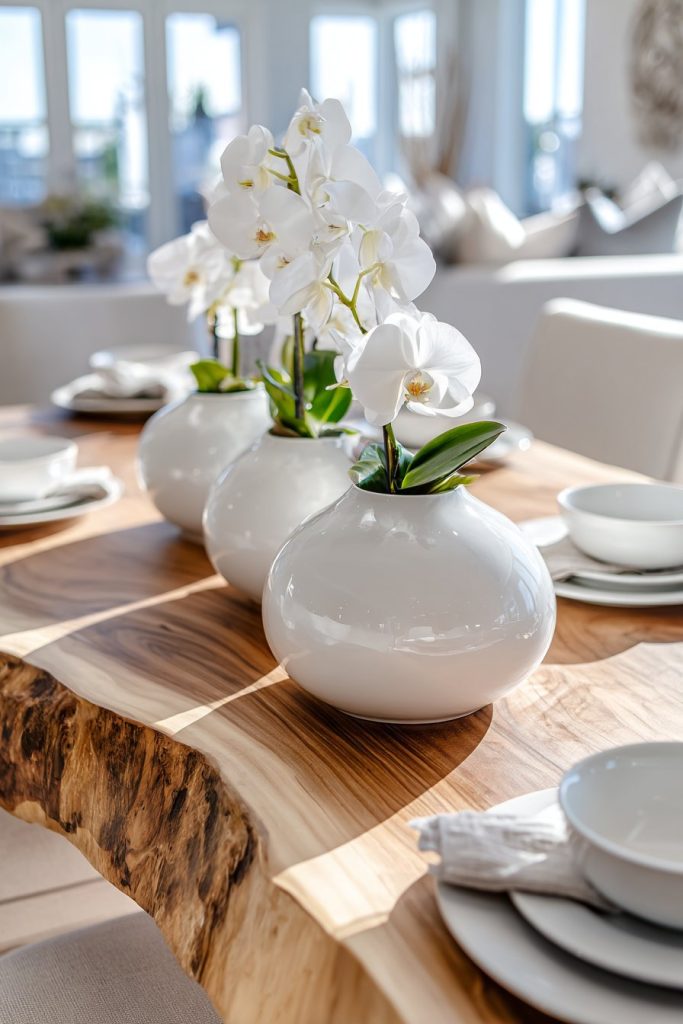
The sparse but impactful arrangement sits confidently on a walnut slab dining table with live edges that showcase the natural wood grain and organic form. This table selection demonstrates how minimalist design can incorporate natural elements without compromising the clean aesthetic, as long as the forms are strong and uncluttered. The contrast between the refined ceramic vessels and the organic wood grain creates visual interest while maintaining the serene atmosphere essential to successful minimalist design.
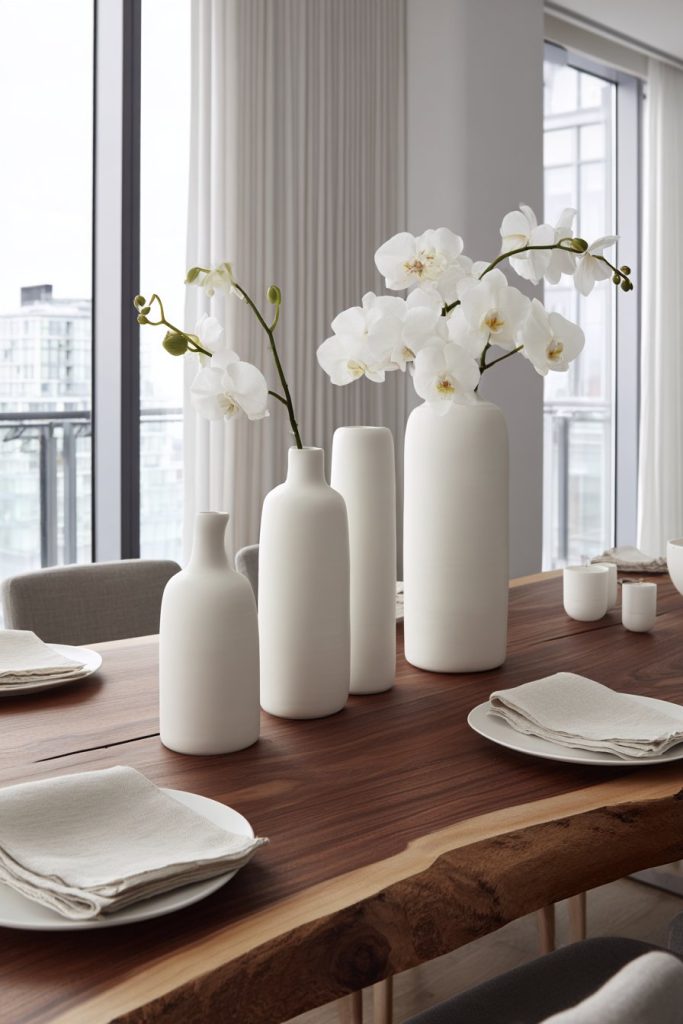
Simple white dinnerware and linen napkins maintain the clean aesthetic while ensuring that nothing competes with the centerpiece for attention. The monochromatic color scheme creates calm sophistication while the natural materials prevent the space from feeling cold or sterile. Natural daylight creates subtle shadows that emphasize the pure forms and natural wood grain, demonstrating how lighting becomes an integral design element in minimalist spaces.
Key Design Tips:
- Choose flowers with strong, architectural forms that stand alone as sculptural elements
- Use odd numbers of identical containers for more pleasing visual rhythm
- Select table linens and dinnerware in neutral tones that support rather than compete
- Position arrangements to take advantage of natural light that creates subtle shadow play
- Maintain generous negative space around centerpiece elements to preserve the minimalist impact
15. Vintage Elegance with Antique Charm
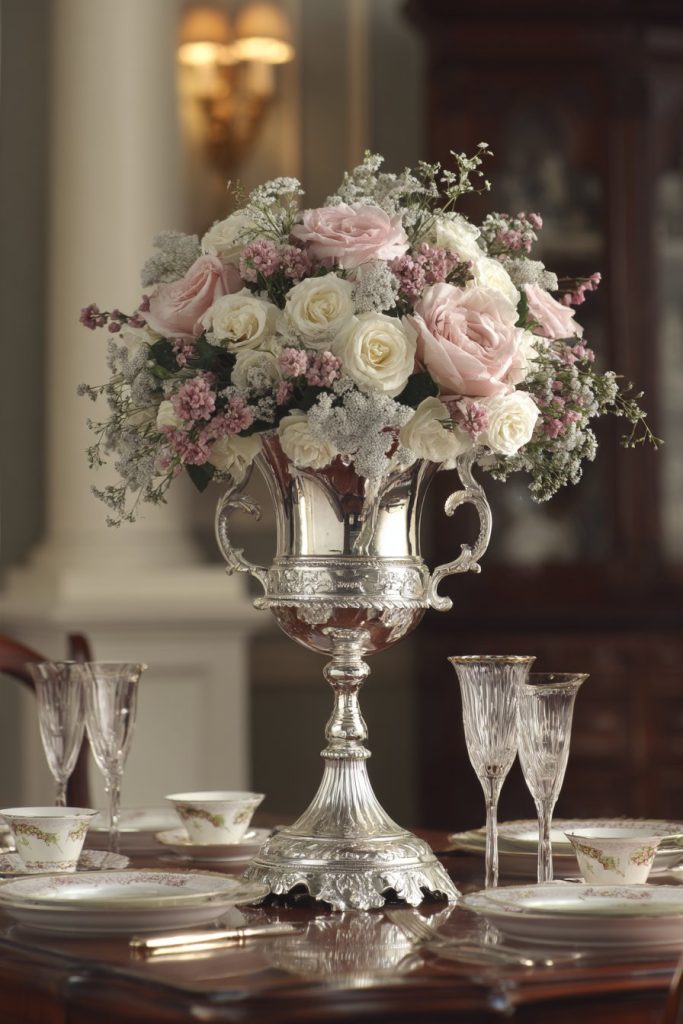
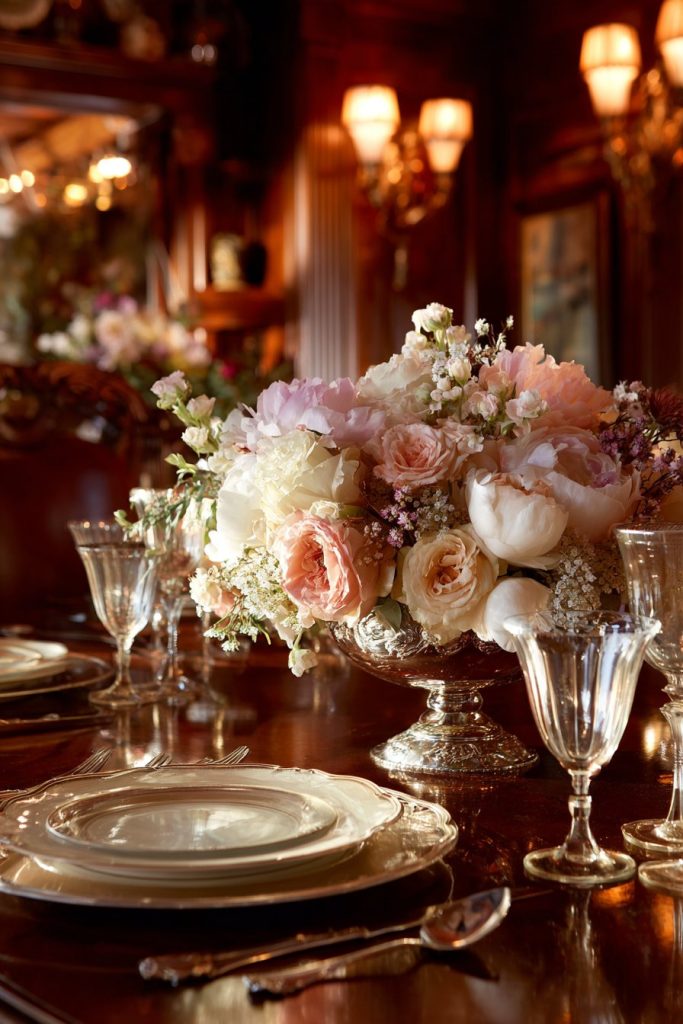
The sophisticated beauty of vintage design celebrates the craftsmanship and elegance of bygone eras through carefully preserved antique pieces and time-honored floral arrangements. An antique silver epergne provides the perfect foundation for this elegant display, its multiple tiers and ornate details reflecting the Victorian era’s appreciation for decorative abundance and skilled metalwork. The tarnished silver surface tells stories of elegant dinner parties and special occasions spanning generations.
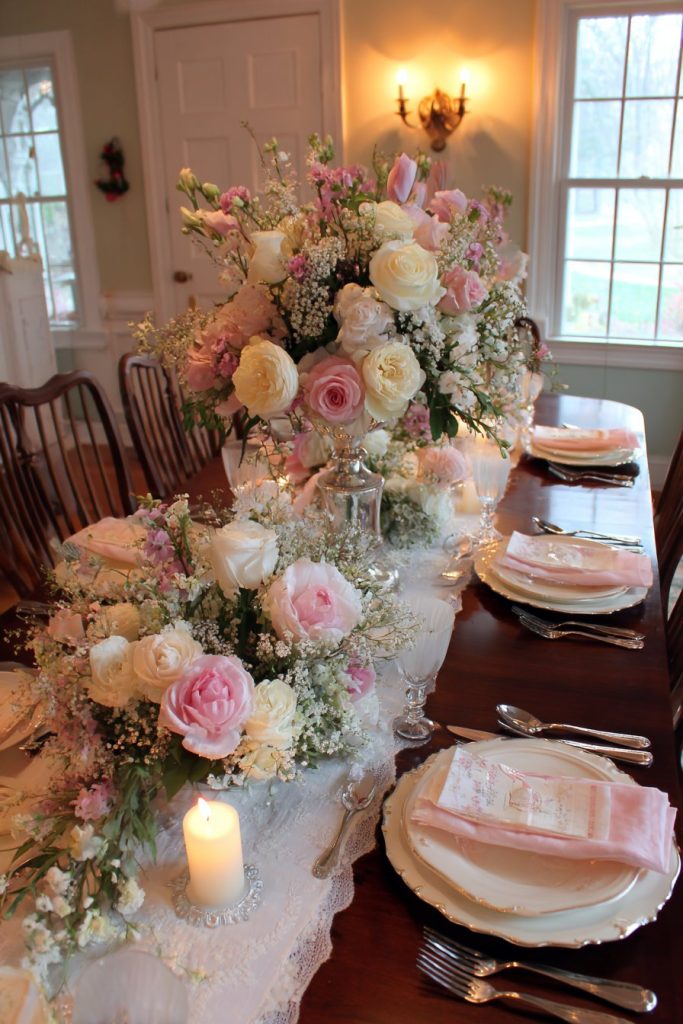
Seasonal flowers including roses, peonies, and baby’s breath create romantic abundance while maintaining the soft color palette that complements vintage silver. The selection of pink and cream tones provides gentle warmth that softens the cooler metallic elements while creating the romantic atmosphere that defines successful vintage design. These classic flower choices reference traditional bouquet styles while providing varied textures and forms that create visual interest throughout the arrangement.
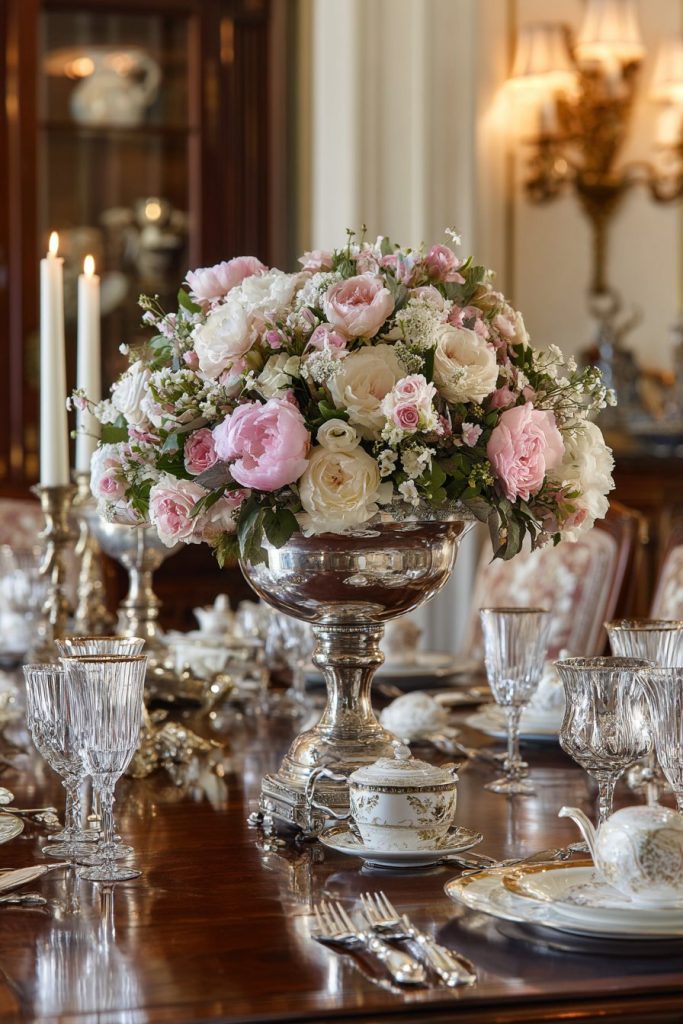
Fine bone china and sterling silver flatware complete the vintage table setting, creating coordinated elegance that speaks to formal dining traditions and special occasion celebrations. The mahogany dining table provides rich warmth that grounds the cooler silver elements while its deep grain patterns add natural beauty that prevents the formal elements from feeling overly precious or intimidating. Period-appropriate wall sconces provide romantic lighting that creates intimate shadows while highlighting the lustrous surfaces and delicate floral elements.
Key Design Tips:
- Polish antique silver pieces regularly to maintain their reflective beauty without removing natural patina
- Choose flowers in soft, romantic colors that complement rather than compete with silver tones
- Use fine bone china that complements the antique silver without exactly matching for authentic vintage character
- Arrange flowers with varying heights and textures for classical proportions and visual interest
- Position lighting to create romantic ambiance while highlighting the metallic and floral elements
16. Tropical Paradise with Exotic Elements
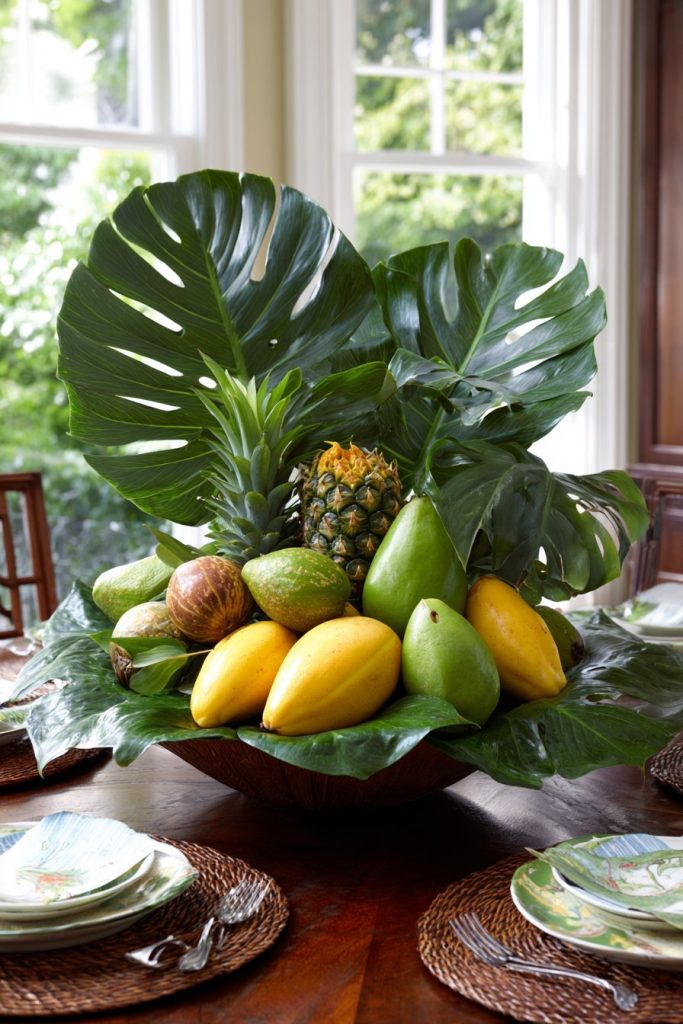
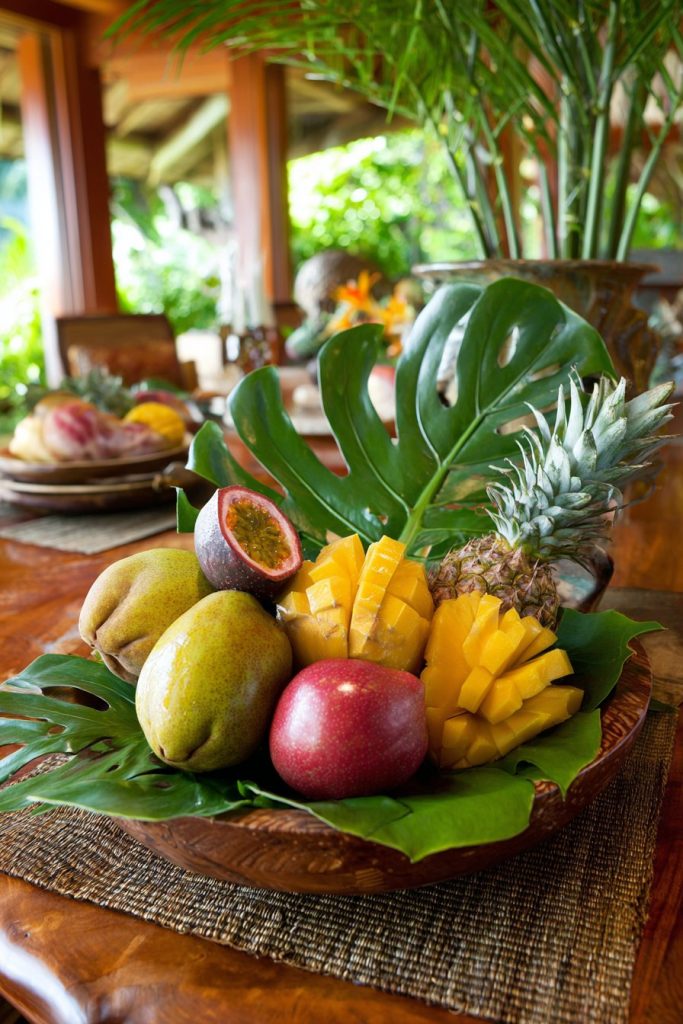
The vibrant energy of tropical design brings vacation resort luxury to everyday dining through exotic fruits, lush foliage, and natural materials that evoke paradise destinations. A low wooden bowl provides the perfect foundation for displaying exotic fruits including pineapple, mango, and passion fruit that celebrate the abundance and vibrant colors of tropical regions. The natural wood container grounds the arrangement while allowing the brilliant colors and varied textures of the fruits to command attention.
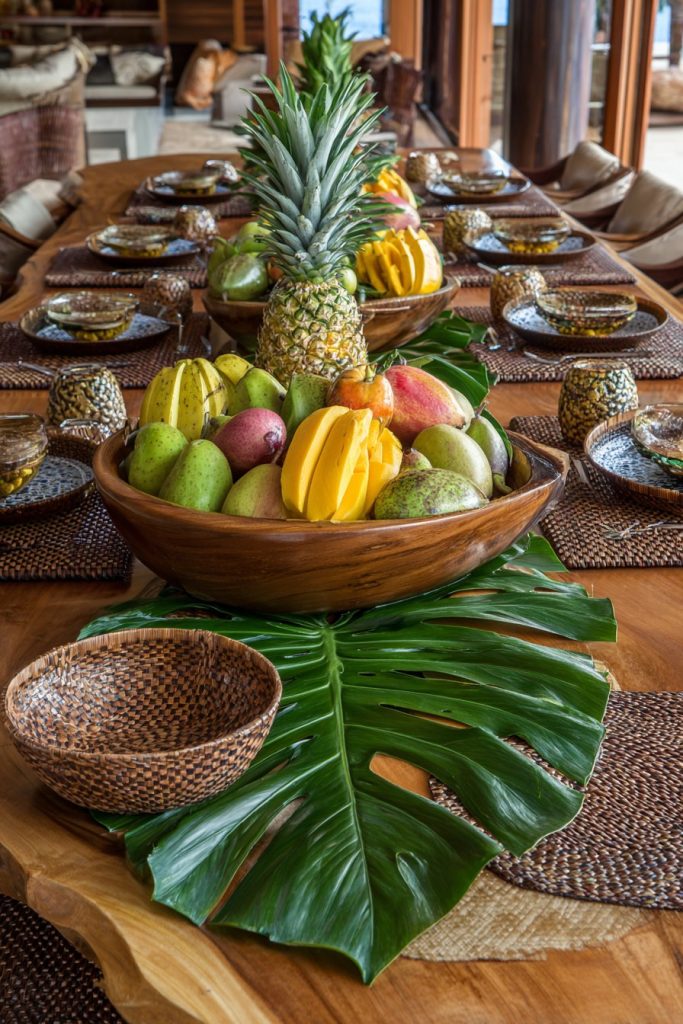
Large monstera leaves create dramatic backdrop elements that introduce the lush green colors and bold forms that characterize tropical landscapes. These sculptural leaves provide scale and visual weight that balance the smaller fruit elements while creating the layered, jungle-like abundance that makes tropical design so appealing. The natural wax finish on the fruits creates subtle highlights that catch and reflect light beautifully, mimicking the way tropical sunshine illuminates natural elements.
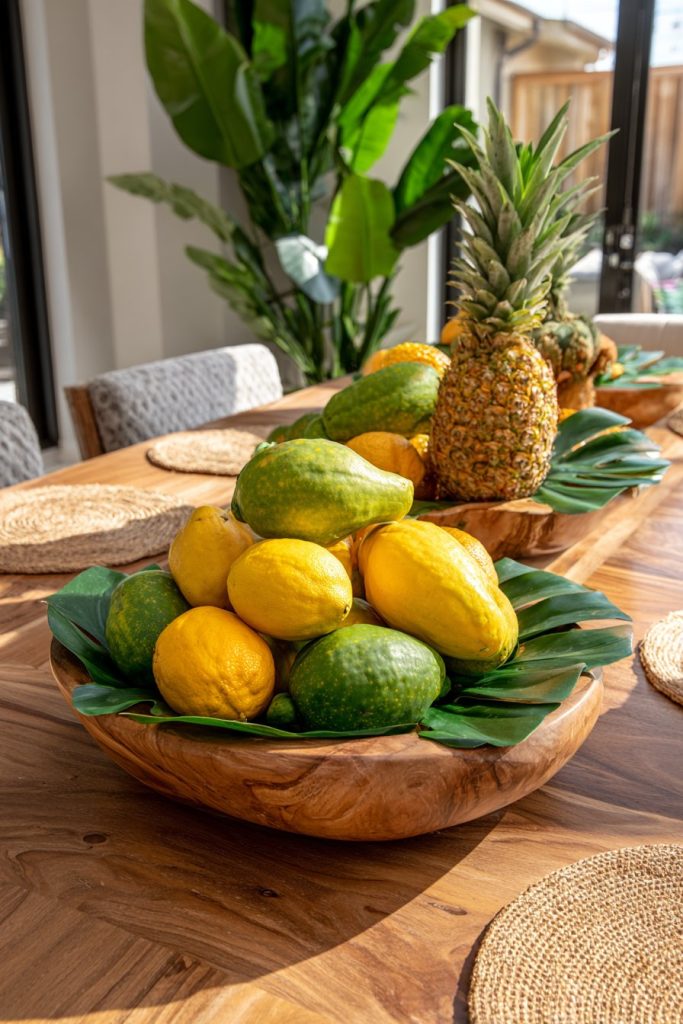
Bamboo charger plates and natural fiber placemats complement the organic centerpiece while reinforcing the tropical material palette of natural fibers and sustainable materials used in resort destinations. The dining table’s natural teak finish with organic edge details continues the natural material story while providing warm golden tones that harmonize with the tropical color scheme. Bright natural lighting mimics tropical sunshine, creating the vibrant atmosphere that transports diners to exotic vacation destinations.
Key Design Tips:
- Choose exotic fruits at their peak ripeness for the most vibrant colors and appealing forms
- Use monstera leaves that are fresh and unblemished for the most dramatic impact
- Select natural material placemats and chargers that complement without competing
- Position the arrangement in bright natural light to emphasize the tropical color palette
- Replace fresh elements regularly to maintain the lush, abundant appearance
17. Art Deco Glamour with Geometric Luxury
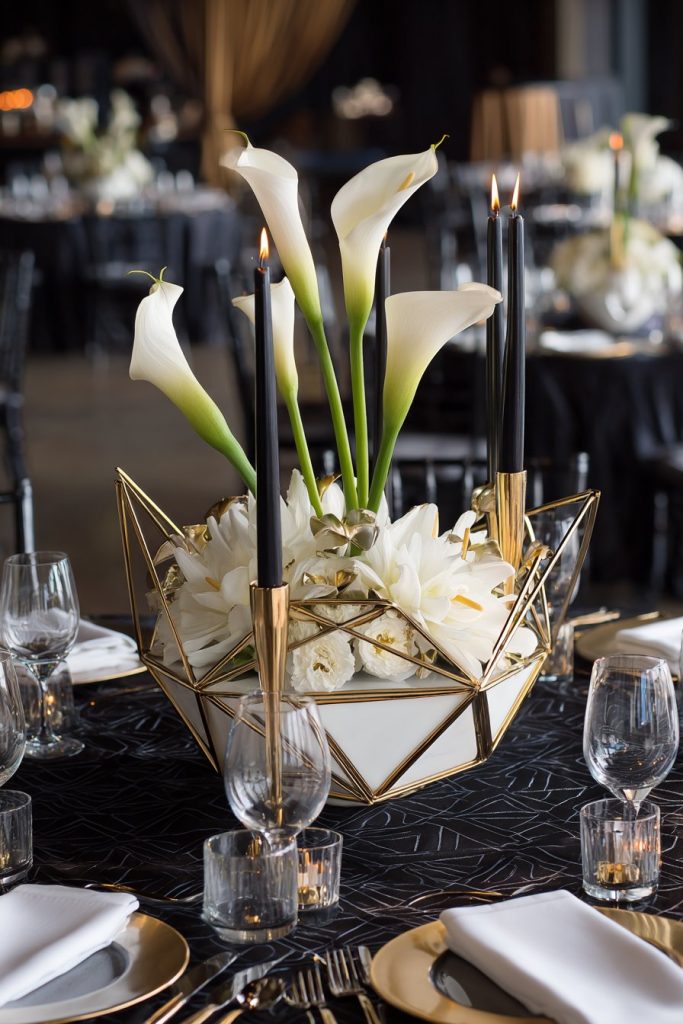
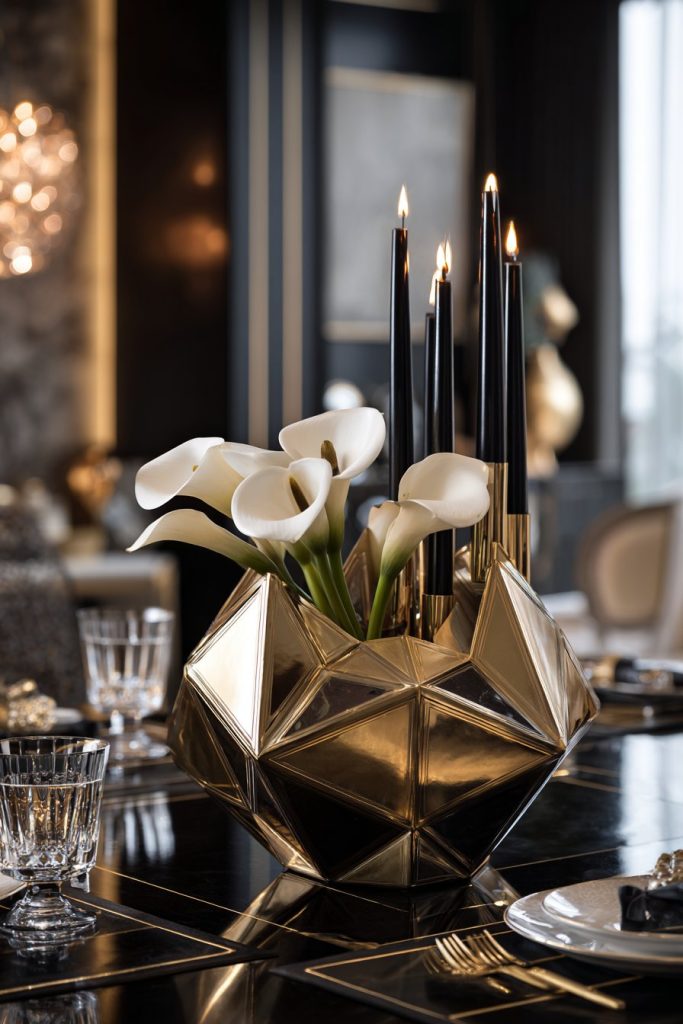
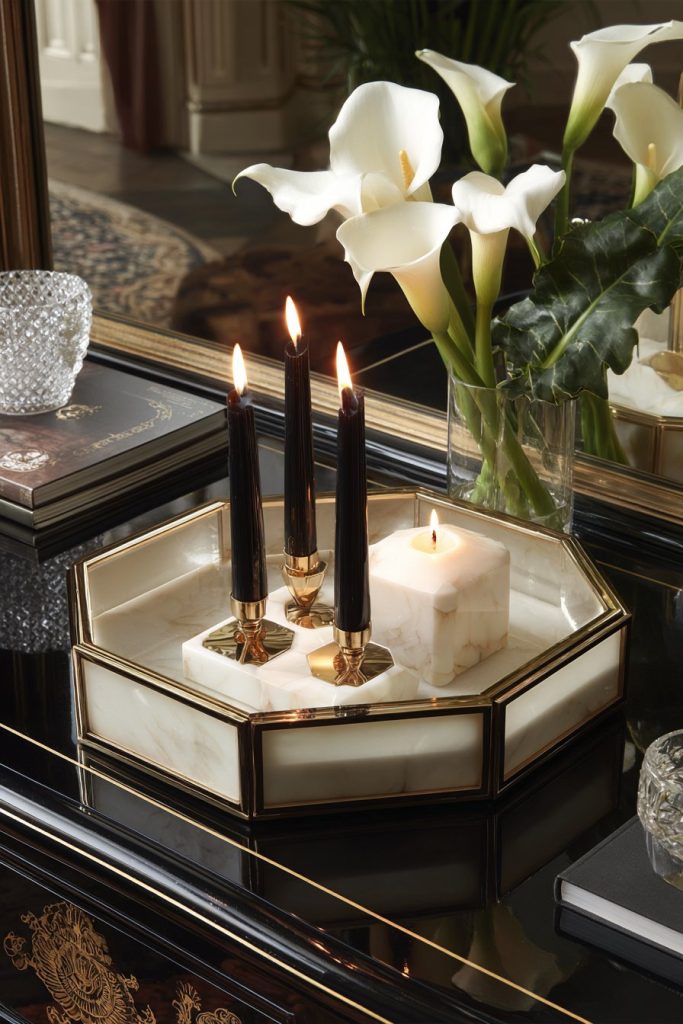
The sophisticated drama of Art Deco design celebrates geometric forms, luxurious materials, and bold contrasts that create unmistakably glamorous atmosphere. A geometric brass and marble serving piece demonstrates the period’s appreciation for mixed materials and angular forms while providing a stunning foundation for dramatic floral and lighting elements. The combination of warm brass and cool marble creates visual tension that energizes the arrangement while maintaining sophisticated elegance.
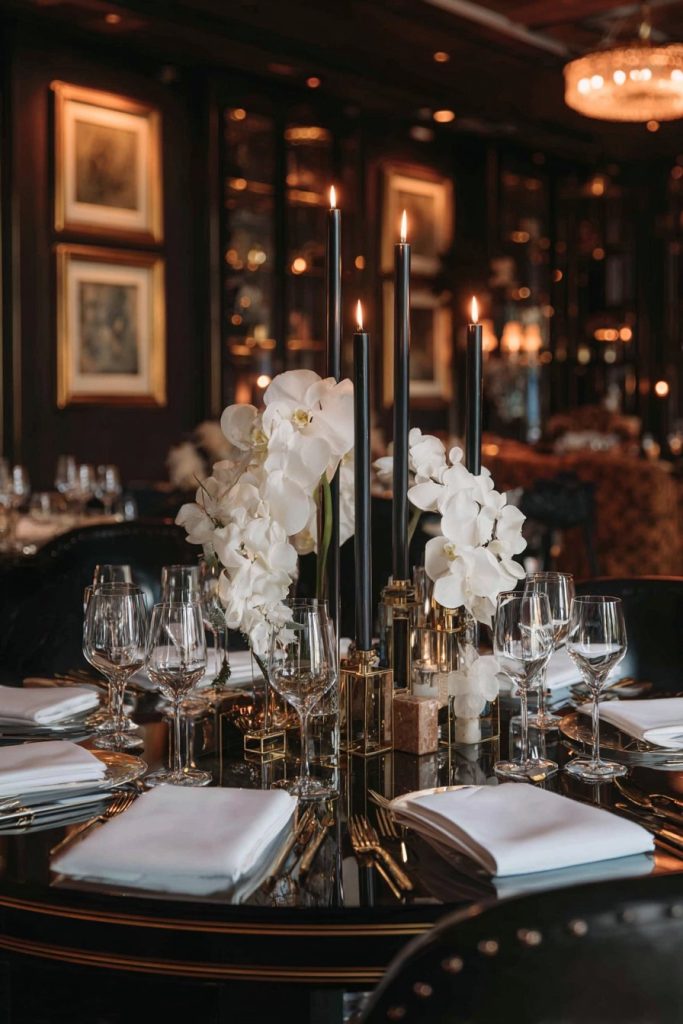
Tall black taper candles provide dramatic vertical elements that create strong silhouettes against lighter backgrounds while introducing the high contrast that defines Art Deco aesthetics. White calla lilies offer sculptural flower forms that complement the geometric serving piece while their pure white color creates striking contrast against the black candles. These sophisticated flower choices reference the period’s appreciation for exotic blooms and dramatic floral arrangements.
The lacquered black dining table with gold inlay details epitomizes Art Deco furniture design’s emphasis on luxury materials and geometric patterns. Crisp white linens and gold-rimmed stemware complete the glamorous setting while maintaining the high contrast color scheme that creates visual drama. Professional lighting creates strong contrasts between light and shadow, emphasizing the bold geometric forms and luxurious materials that make Art Deco design so distinctive and memorable.
Key Design Tips:
- Choose geometric containers and serving pieces that reference Art Deco angular forms
- Use high contrast color combinations, particularly black, white, and metallic accents
- Select flowers with strong sculptural forms that complement rather than soften geometric elements
- Incorporate multiple metallic finishes in brass, gold, and chrome for authentic period character
- Position dramatic lighting to create strong shadows and highlight geometric patterns
18. Rustic Modern Fusion with Organic Materials
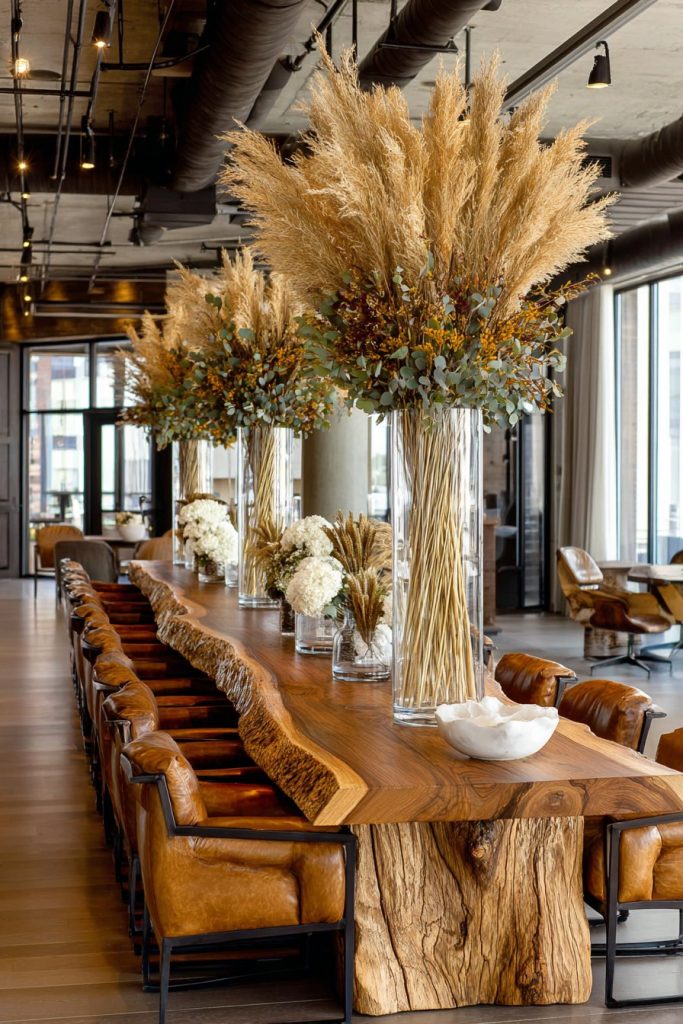
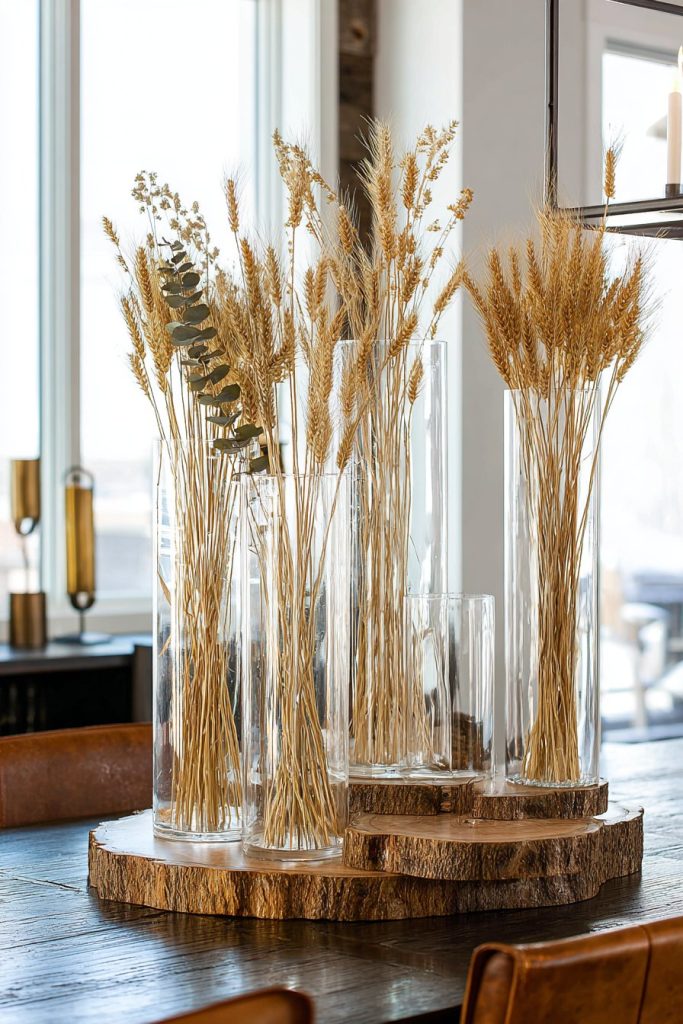
The successful fusion of rustic and modern aesthetics demonstrates how contrasting design philosophies can create sophisticated harmony through careful material selection and thoughtful proportions. A live-edge walnut slab serves as both functional serving surface and natural art piece, its organic contours and rich grain patterns providing textural foundation for the clean geometric vessels placed upon it. This juxtaposition of raw natural beauty with refined glass forms exemplifies the rustic modern approach to design integration.
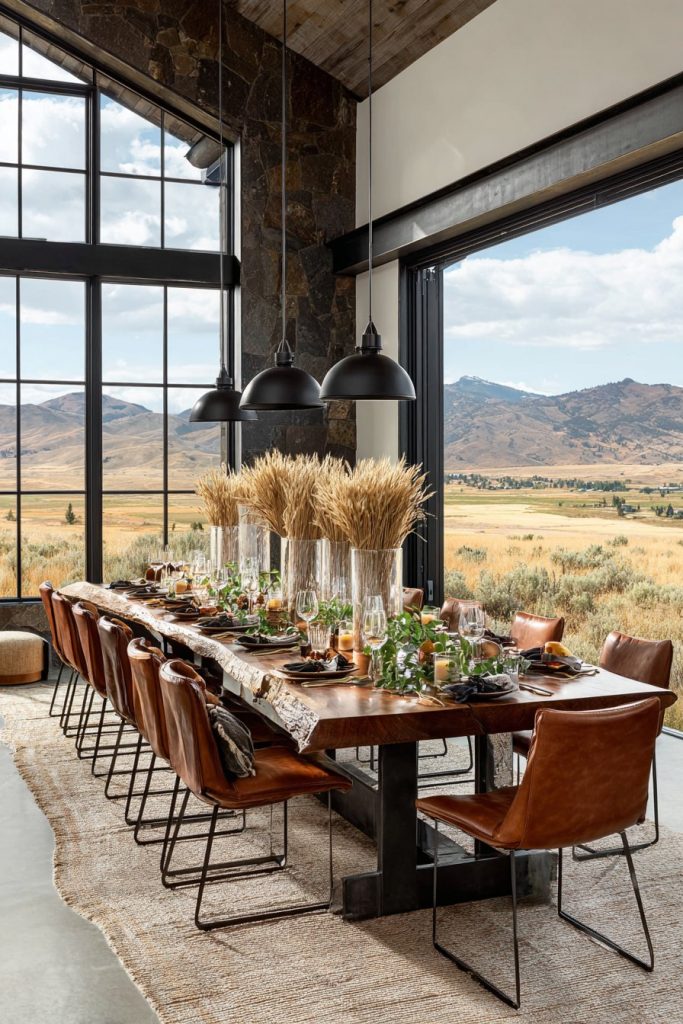
Clear glass cylinder vases in varying heights create rhythmic progression while their geometric precision contrasts beautifully with the organic walnut base. Filled with wheat stalks and eucalyptus branches, these vessels celebrate the natural materials that ground rustic design while maintaining the clean lines essential to modern aesthetics. The transparency of glass allows the natural beauty of both the wood base and botanical contents to shine without visual interference.
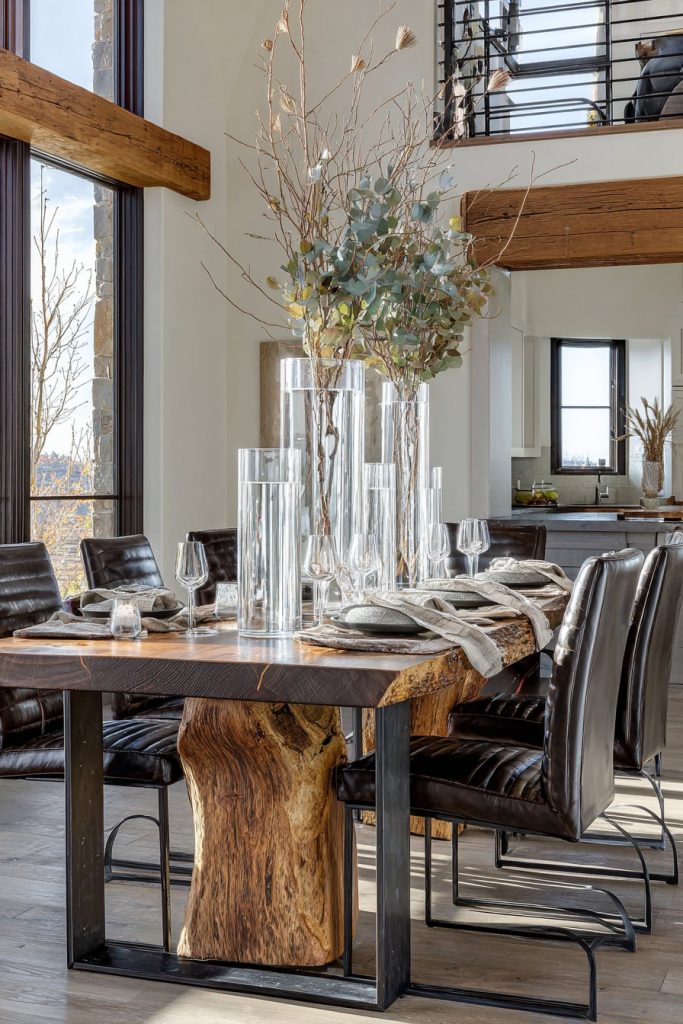
The steel and reclaimed wood dining table surrounded by leather and metal chairs demonstrates how rustic modern design successfully combines industrial elements with natural materials. The contrast between refined leather upholstery and raw reclaimed wood creates visual interest while maintaining the sophisticated restraint that prevents rustic elements from overwhelming modern sensibilities. Natural lighting highlights the interplay between raw and refined materials while emphasizing the textural richness that makes this fusion style so appealing.
Key Design Tips:
- Choose live-edge wood pieces that showcase natural beauty while maintaining refined proportions
- Use clear glass containers that don’t compete with natural wood grain patterns
- Select botanicals with strong architectural forms that complement modern geometric elements
- Balance rough and refined textures throughout the arrangement for visual harmony
- Position natural lighting to emphasize material contrasts and textural details
19. Traditional Refinement with Classic Elements
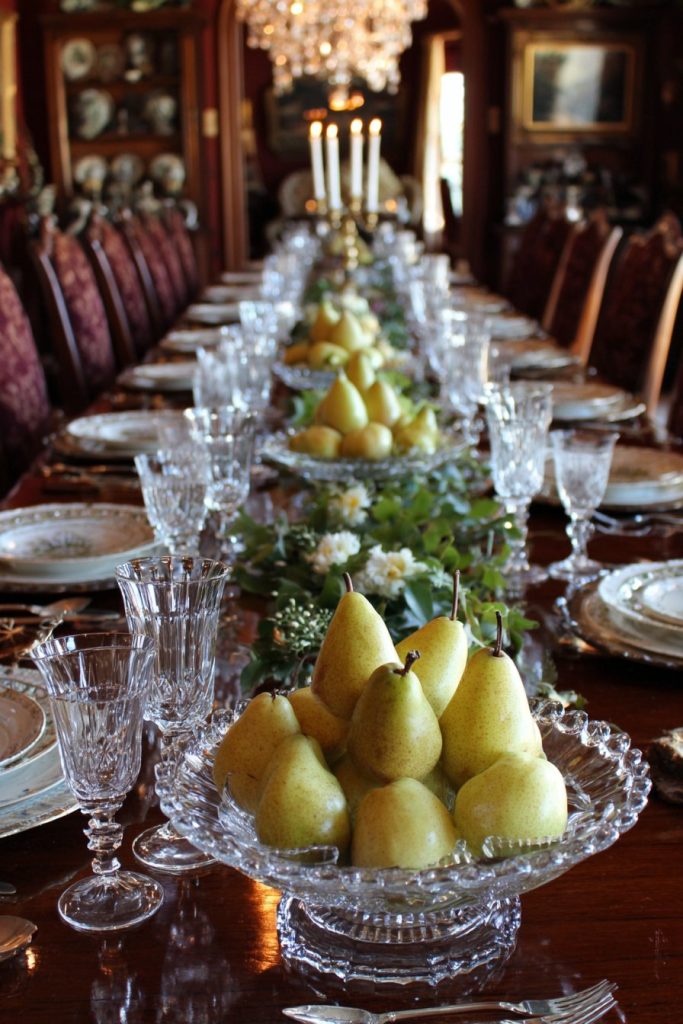
The enduring appeal of traditional design lies in its celebration of time-tested elements that create formal elegance and sophisticated comfort. A crystal compote bowl provides the perfect vessel for displaying polished apples and pears surrounded by ivy garland with delicate white flowers. The crystal’s brilliance creates sparkles and highlights that add glamour to the natural fruit display while its elevated form provides dramatic presentation that honors traditional formal dining customs.
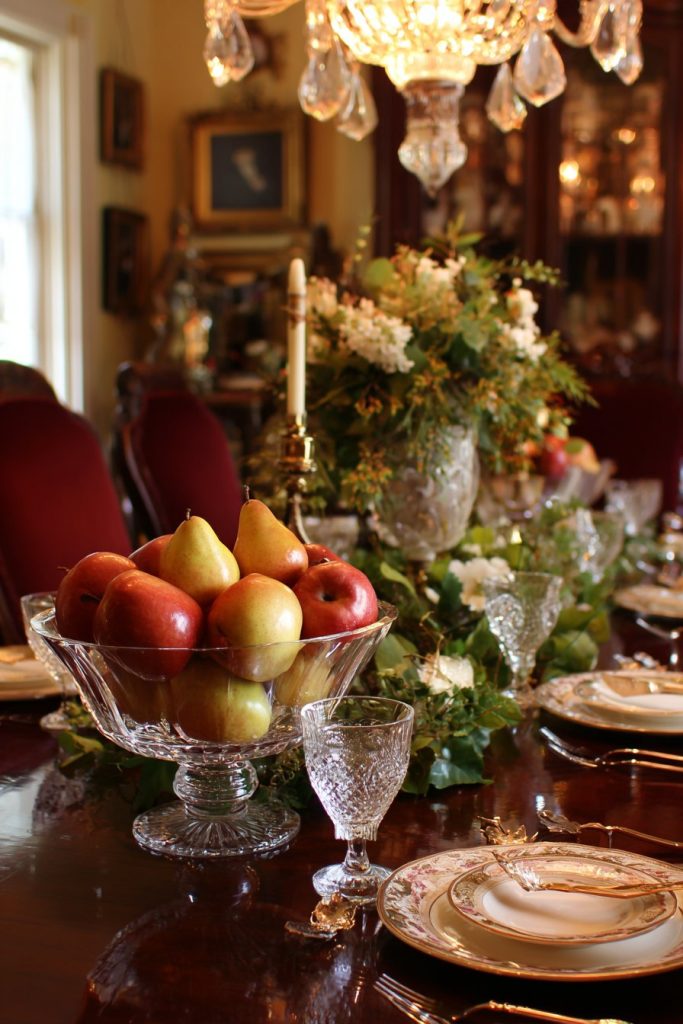
The careful selection and arrangement of polished fruit transforms everyday elements into artistic display while maintaining the natural authenticity that prevents traditional design from feeling artificial. Apples and pears chosen for their perfect forms and glossy surfaces create sculptural elements that catch and reflect light beautifully. Ivy garland introduces flowing organic lines that soften the crystal’s geometric precision while small white flowers add delicate details that reference traditional bouquet styles.
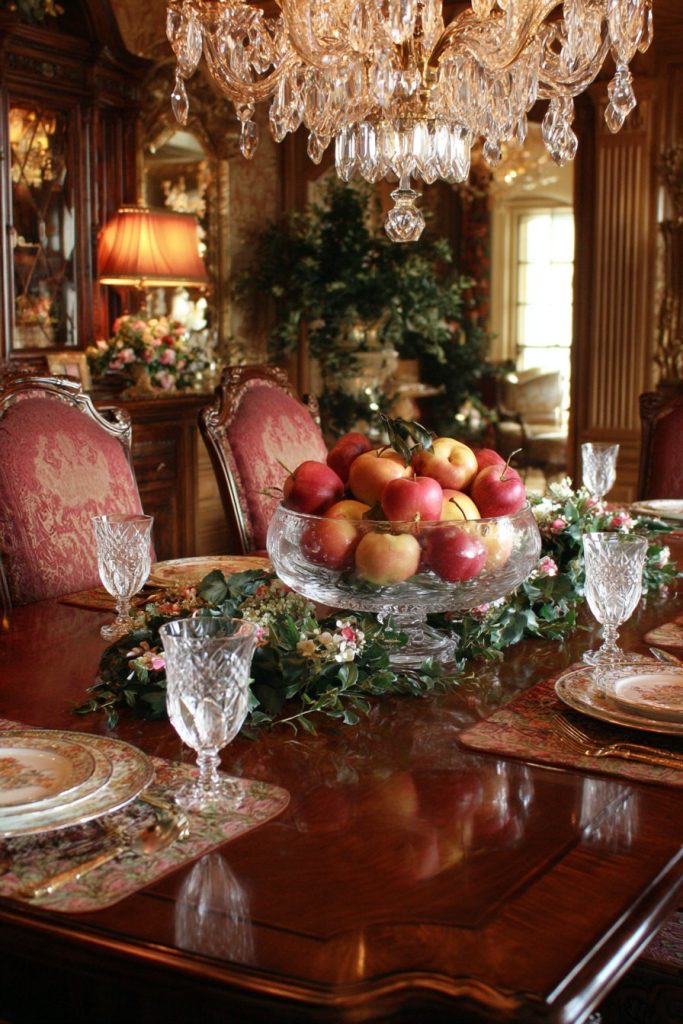
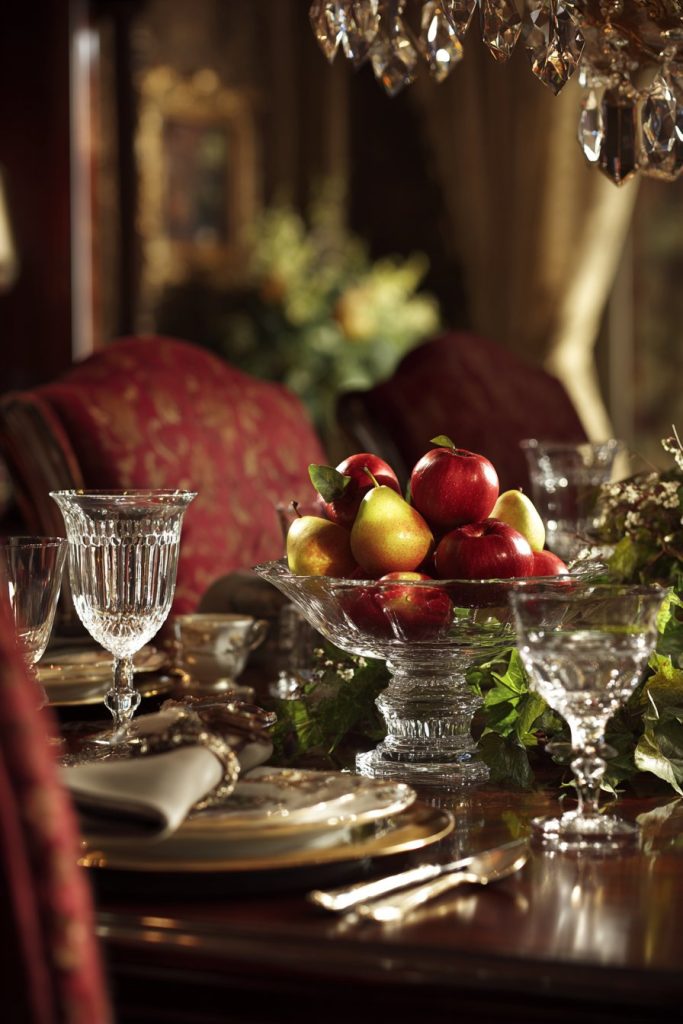
Fine china place settings and crystal water goblets create coordinated luxury that speaks to formal dining traditions and special occasion celebrations. The mahogany dining table provides rich warmth and deep grain patterns that ground the lighter crystal elements while upholstered chairs in burgundy fabric introduce the deeper colors that add richness to traditional interiors. Warm chandelier lighting creates gentle highlights on crystal and glossy fruit surfaces while establishing the intimate atmosphere essential to successful traditional dining rooms.
Key Design Tips:
- Choose crystal pieces with traditional cut patterns that reflect light beautifully
- Select fruits with perfect forms and glossy surfaces that create sculptural beauty
- Use ivy garland that drapes naturally while maintaining fresh green color
- Coordinate china and crystal patterns for formal elegance without exact matching
- Position chandelier lighting to create sparkles and highlights on reflective surfaces
20. Eclectic Personalization with Curated Collections
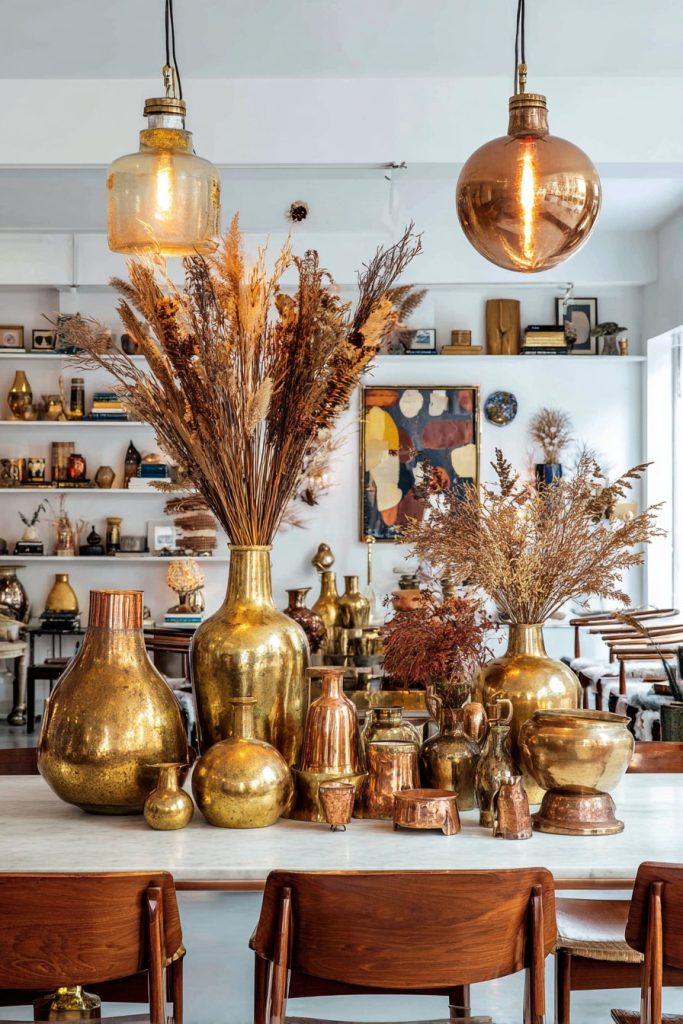
The eclectic aesthetic celebrates personal expression and collecting passion through thoughtfully curated displays that tell individual stories while creating cohesive visual harmony. A collection of vintage brass and copper vessels in various shapes and sizes demonstrates how similar materials in different forms can create unified diversity. Each piece contributes its own character while participating in the larger narrative of collected treasures and personal taste development over time.
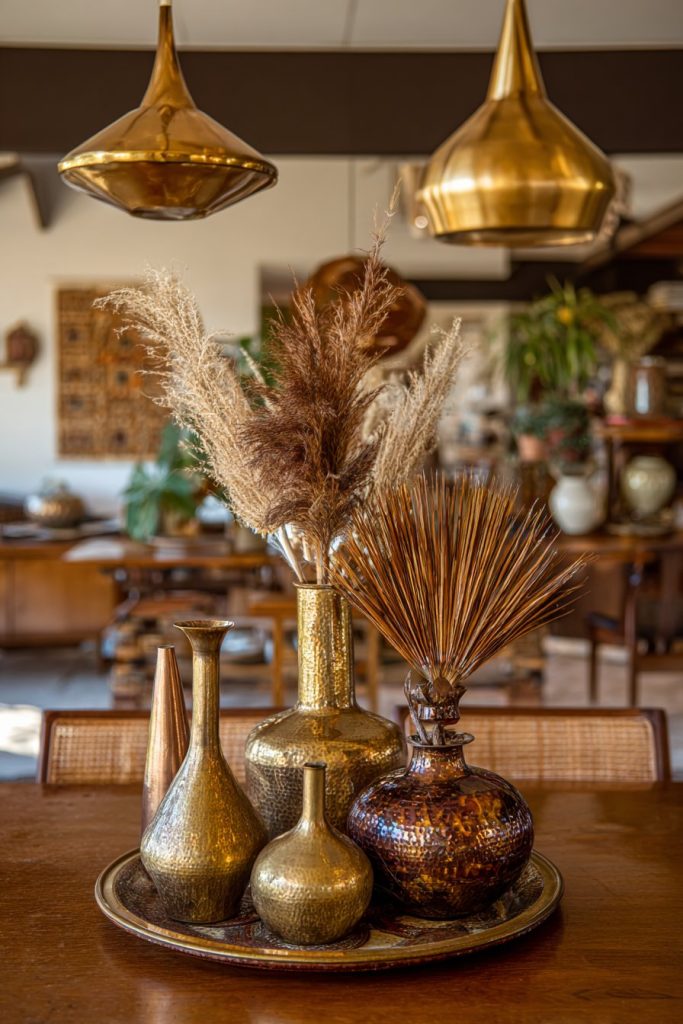
Filled with dried grasses, feathers, and branches in natural tones, these varied containers create textural richness while maintaining the earth-toned color palette that unifies the diverse elements. The combination of metallic surfaces with organic contents creates visual interest while the varied heights and forms provide dynamic silhouettes that engage viewers from multiple angles. This approach to centerpiece design celebrates the beauty of imperfection and the charm of collected objects.
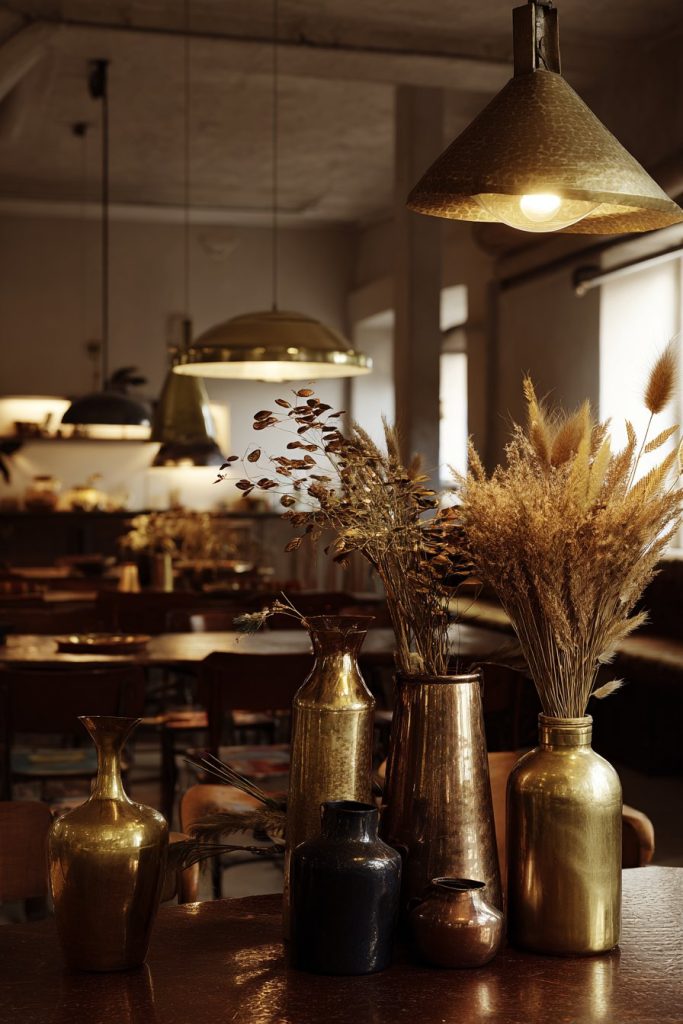
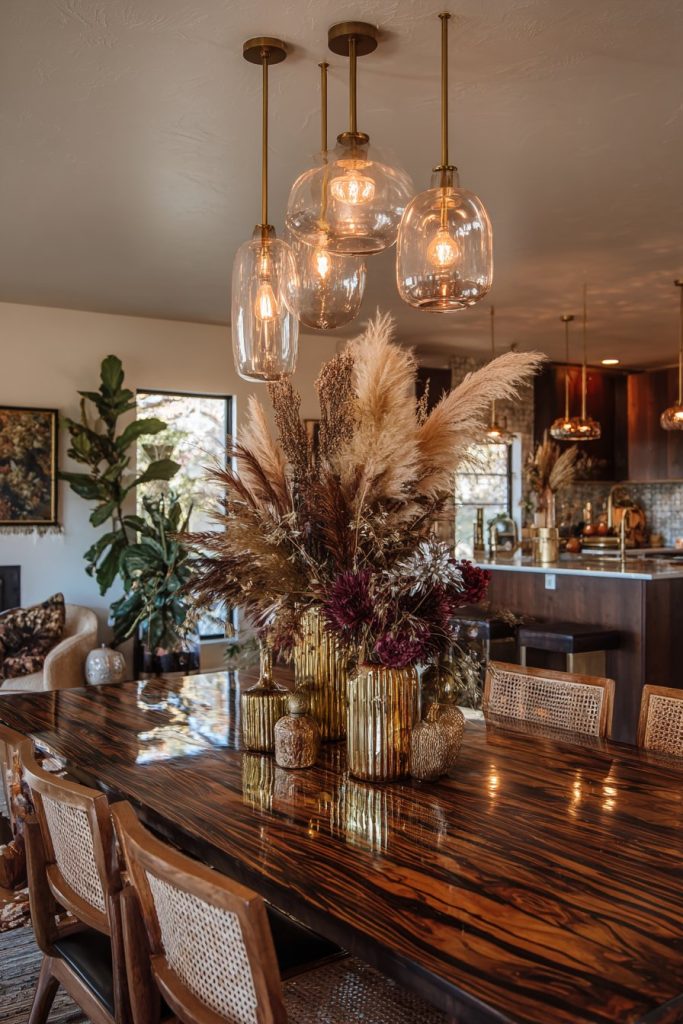
The refinished mid-century dining table surrounded by mix-matched chairs collected over time exemplifies the eclectic approach to furniture selection that values character and history over matching sets. Each chair tells its own story while contributing to the overall narrative of personal taste and careful curation. Vintage pendant fixtures provide warm ambient lighting that highlights the patina and varied textures of the collected pieces while creating the layered, authentic atmosphere that makes eclectic design so personally satisfying.
Key Design Tips:
- Collect vintage pieces gradually to build authentic character rather than purchasing complete sets
- Choose vessels in similar materials but different forms for unified diversity
- Use natural dried botanicals that complement metallic patinas and vintage character
- Mix different periods and styles while maintaining common material or color threads
- Display collections with generous spacing to appreciate each piece’s individual character
Conclusion
The twenty centerpiece ideas presented in this comprehensive guide demonstrate the endless possibilities for creating stunning focal points that enhance your dining experience while reflecting your personal style. From the sophisticated natural elements of candlelit arrangements to the bold geometric forms of Art Deco glamour, each approach offers unique opportunities to transform your dining space into a more beautiful and functional environment.
The key to successful centerpiece design lies in understanding how different elements work together to create harmony while serving the practical needs of dining. Whether you prefer the minimalist restraint of Scandinavian design or the abundant textures of bohemian eclecticism, the most important consideration is selecting elements that enhance rather than hinder the social aspects of dining together.
As you explore these ideas and adapt them to your own space and lifestyle, remember that the best centerpieces evolve with the seasons, occasions, and changing needs of your household. Don’t be afraid to combine elements from different styles or to modify arrangements based on your available materials and skill level. The goal is always to create a welcoming atmosphere that brings people together around your table for memorable meals and meaningful conversations that last long after the dishes are cleared away.


