
The modern home has evolved dramatically over the past few decades, with open-plan living becoming the gold standard for contemporary interior design. Yet, while the seamless flow between living and dining areas creates an expansive, airy feeling, it also presents a unique challenge: how do you define distinct functional zones without sacrificing the openness that makes these layouts so appealing? The answer lies in thoughtful partition solutions that balance separation with connection, privacy with transparency, and function with aesthetic beauty.
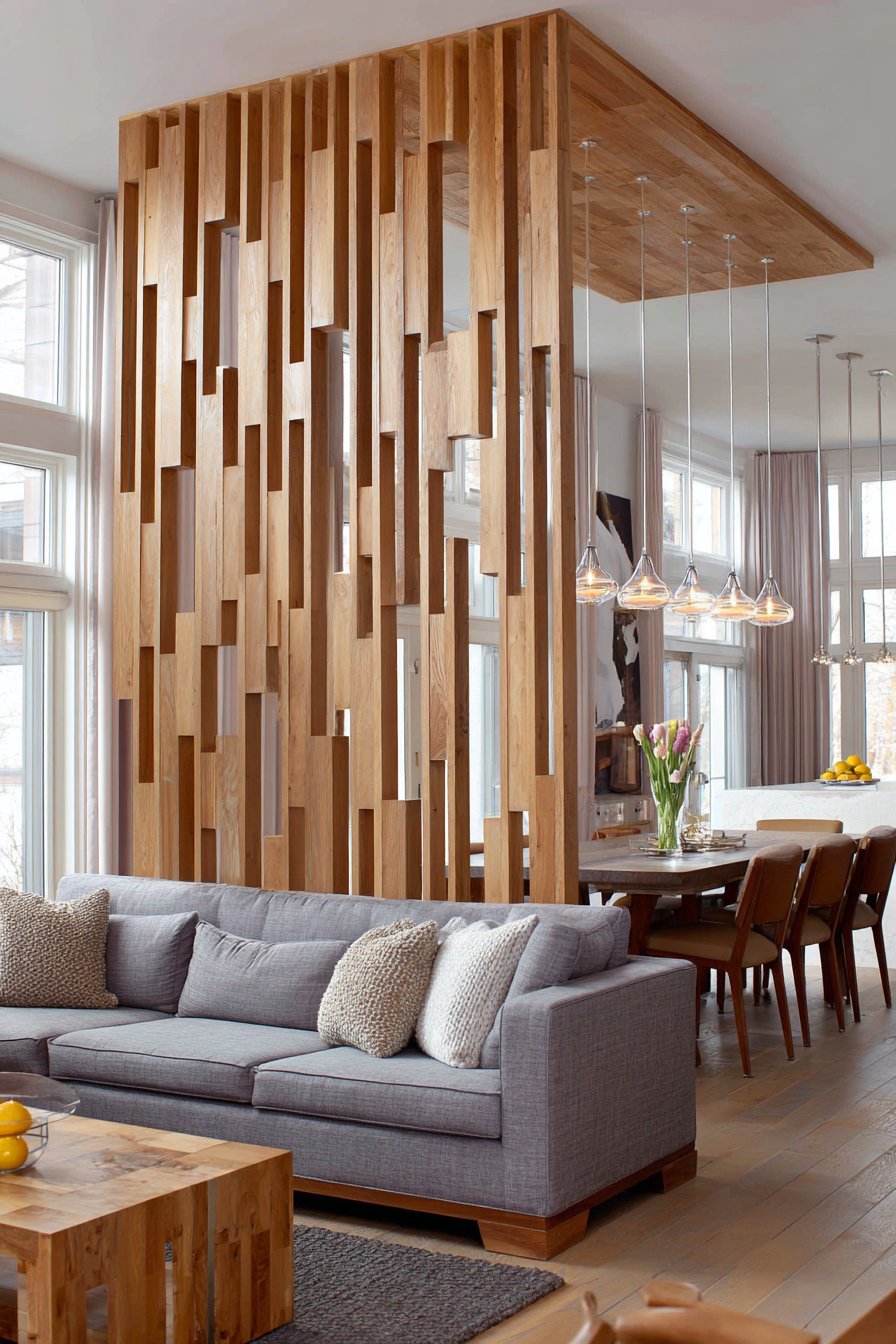
Living and dining room partitions serve far more than a purely practical purpose. They are architectural statements, design focal points, and spatial organizers that can dramatically transform the character of your home. Whether you’re working with a compact studio apartment where every square foot matters, or a sprawling open-concept space that needs visual anchoring, the right partition can redefine how you experience your living environment. From transparent glass panels that maintain sightlines while reducing noise, to sculptural room dividers that double as artwork, the possibilities are as diverse as they are inspiring.
This comprehensive guide explores twenty-one innovative partition ideas that span the full spectrum of design styles and functional approaches. We’ll journey through minimalist Scandinavian solutions that prioritize light and simplicity, explore rustic farmhouse dividers that celebrate natural materials and craftsmanship, and discover cutting-edge contemporary installations that incorporate technology and unexpected materials. Each concept has been carefully selected to offer practical inspiration for real homes, with attention to both aesthetic impact and everyday livability. Whether you’re drawn to the organic warmth of natural wood, the industrial edge of metal and brick, or the ethereal beauty of textile installations, you’ll find partition ideas that resonate with your personal style while solving the spatial challenges of open-plan living.

1. Contemporary Geometric Metal Screen Divider
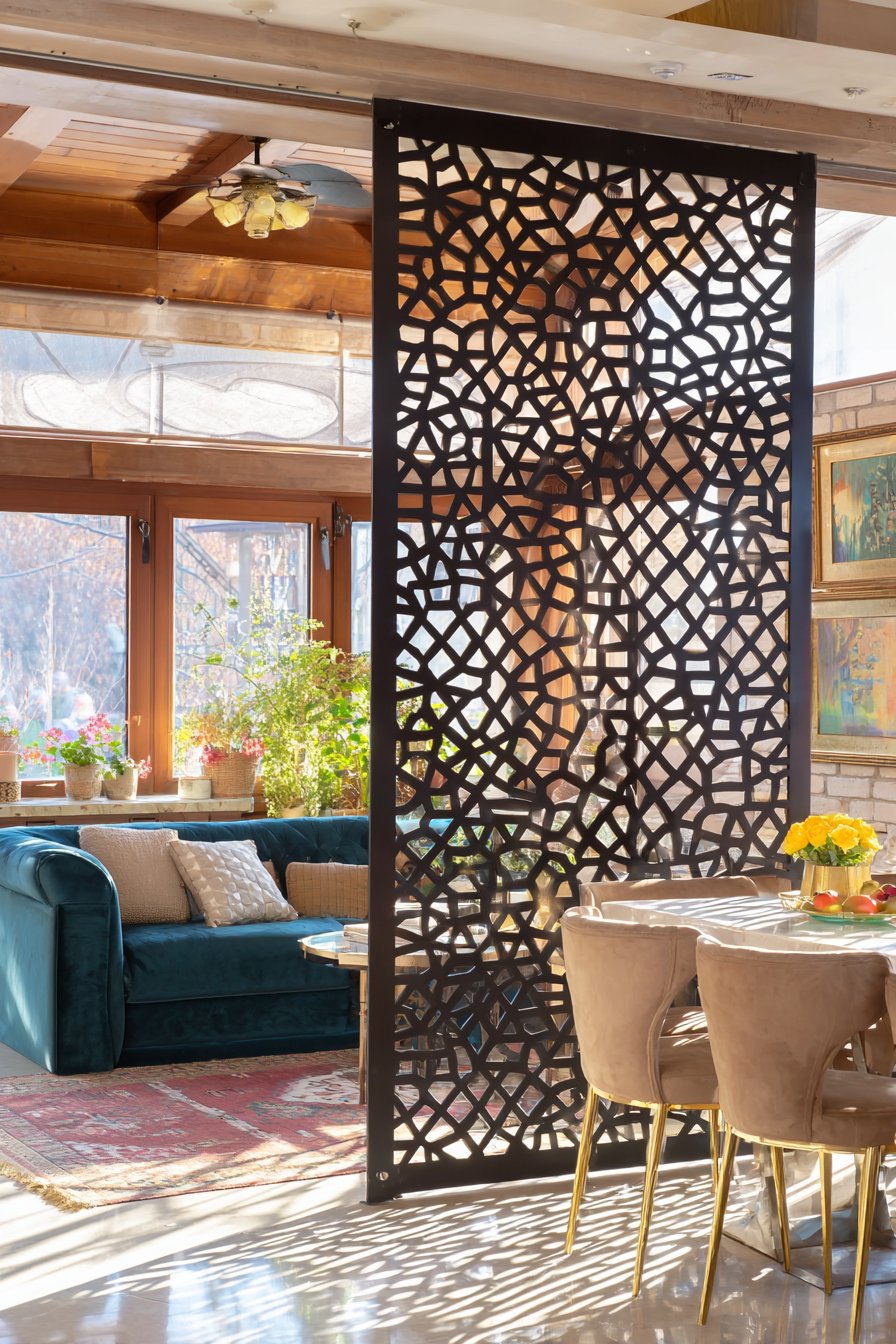
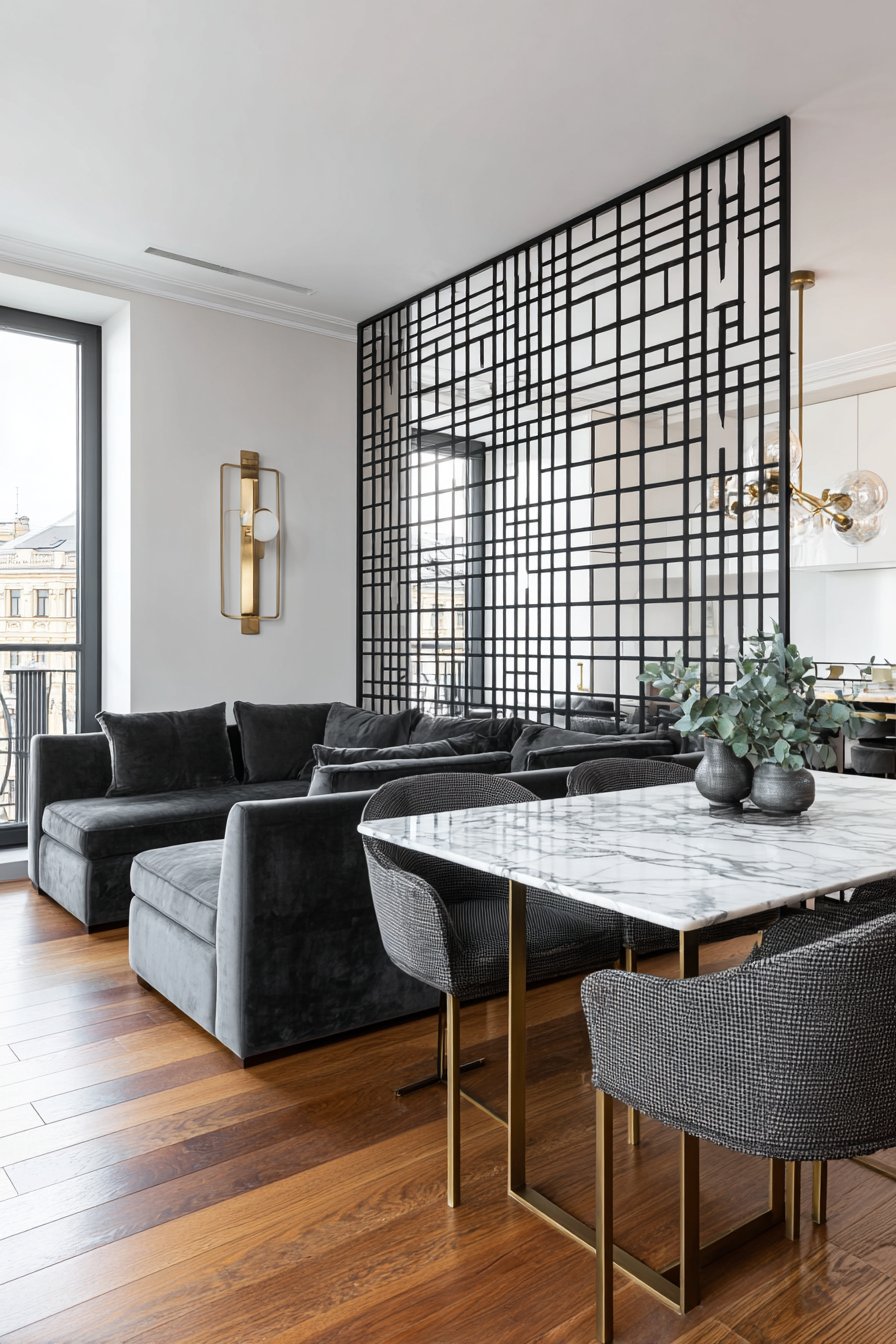
The geometric metal screen divider represents the perfect marriage of contemporary art and functional design, transforming the practical need for spatial division into a striking visual statement. This living and dining room partition idea features a custom-fabricated screen in matte black finish, with an intricate pattern of intersecting lines and angular shapes that create dynamic visual interest from every angle. The open framework allows light to pass through freely while establishing clear boundaries between the living and dining zones, making it ideal for homes where maintaining a sense of openness is paramount.
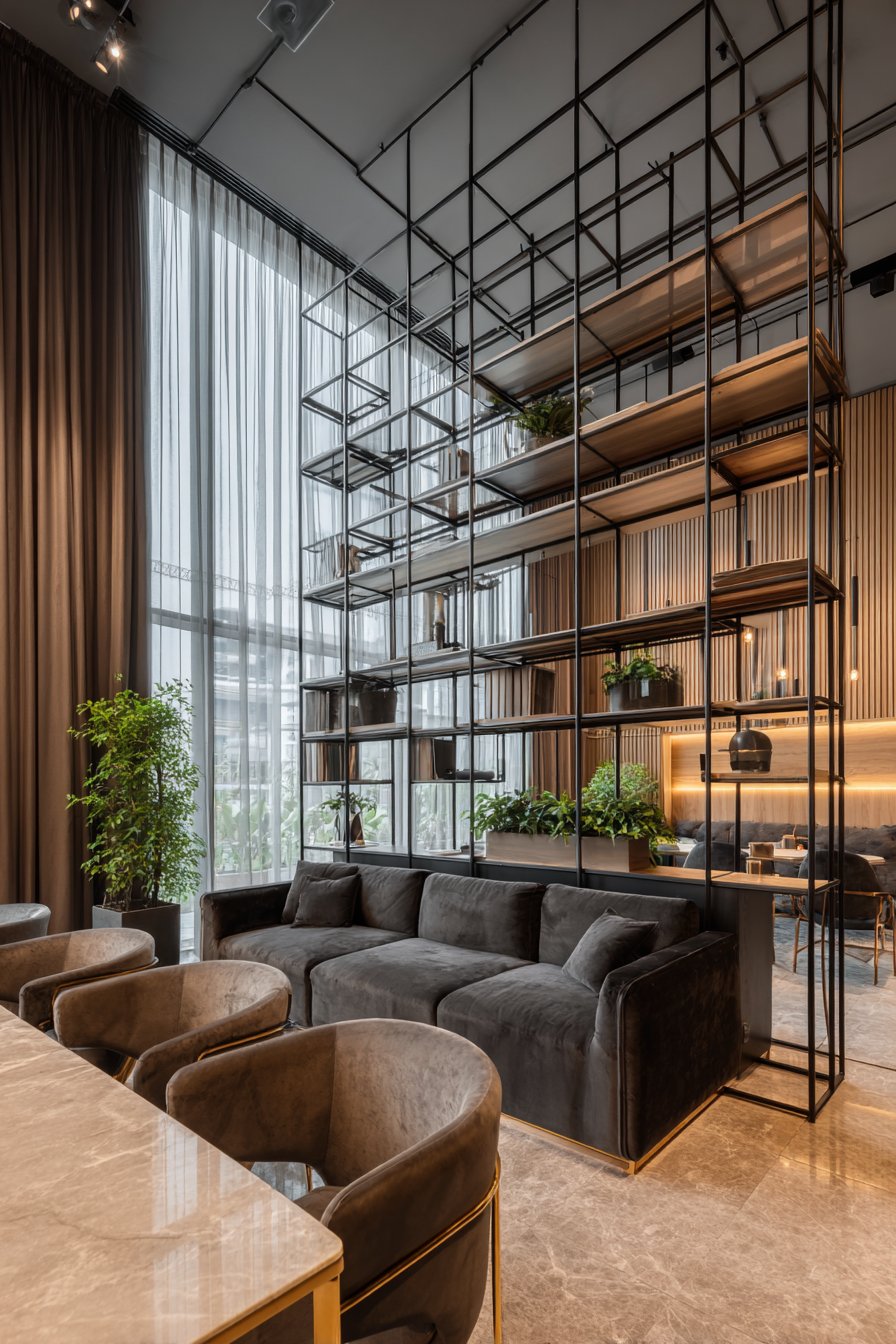
The beauty of this partition lies in its ability to cast ever-changing shadow patterns throughout the day as natural light moves across the space. During morning hours, crisp geometric shadows dance across the flooring and adjacent walls, adding an unexpected layer of visual complexity to the interior. The matte black finish provides sophisticated contrast against lighter wall colors and furnishings, while the metal construction ensures durability and minimal maintenance requirements. This type of divider works exceptionally well in loft-style apartments or modern homes with industrial influences, where the raw materiality of metal complements exposed ductwork, concrete surfaces, or polished concrete floors.
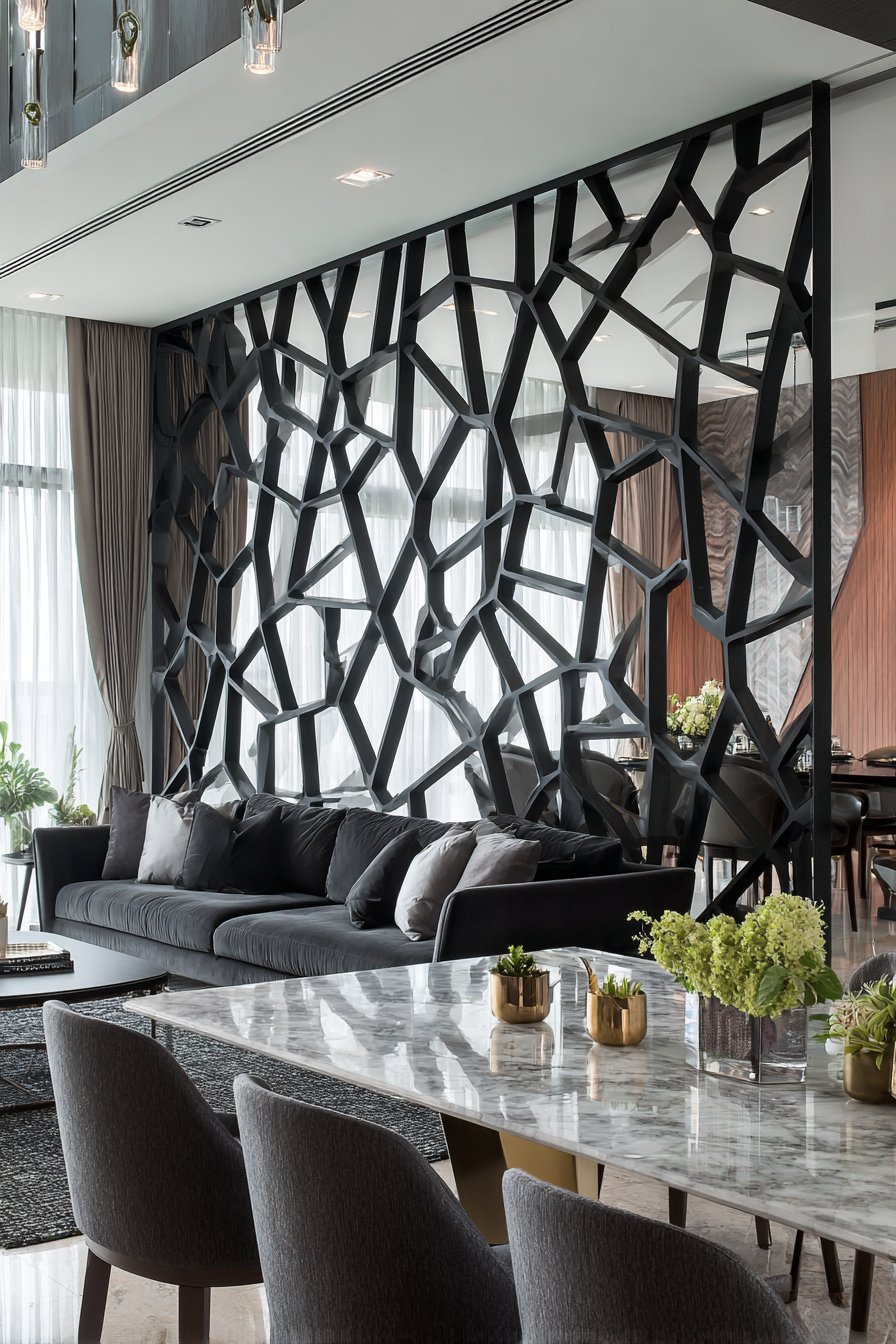
The living area anchored by a plush charcoal grey velvet sofa demonstrates how luxury textures can soften the industrial edge of the metal partition. The rich, tactile quality of velvet creates an inviting seating area that balances the geometric precision of the divider. Meanwhile, the dining side showcases a completely different aesthetic with its marble-topped table and brass-legged chairs, proving that partitions allow you to experiment with contrasting styles within a single open space. The brass legs pick up warm metallic tones that play beautifully against the cool matte black of the screen, creating a sophisticated interplay of finishes that elevates the entire design scheme.
Key Design Tips: Choose a custom fabricator who can adjust the pattern density to your specific privacy needs and aesthetic preferences. Consider the scale of the geometric pattern in relation to your room size—larger spaces can accommodate bolder, more substantial patterns while smaller rooms benefit from delicate, airier designs. Install the screen securely from floor to ceiling for maximum impact and stability. Ensure proper lighting on both sides of the partition to prevent either zone from feeling dark or cave-like. Maintain consistency in your metal finishes throughout the space, using matte black hardware, light fixtures, or furniture legs to create a cohesive design narrative.
2. Minimalist Glass Panel Partition with Bronze Frames
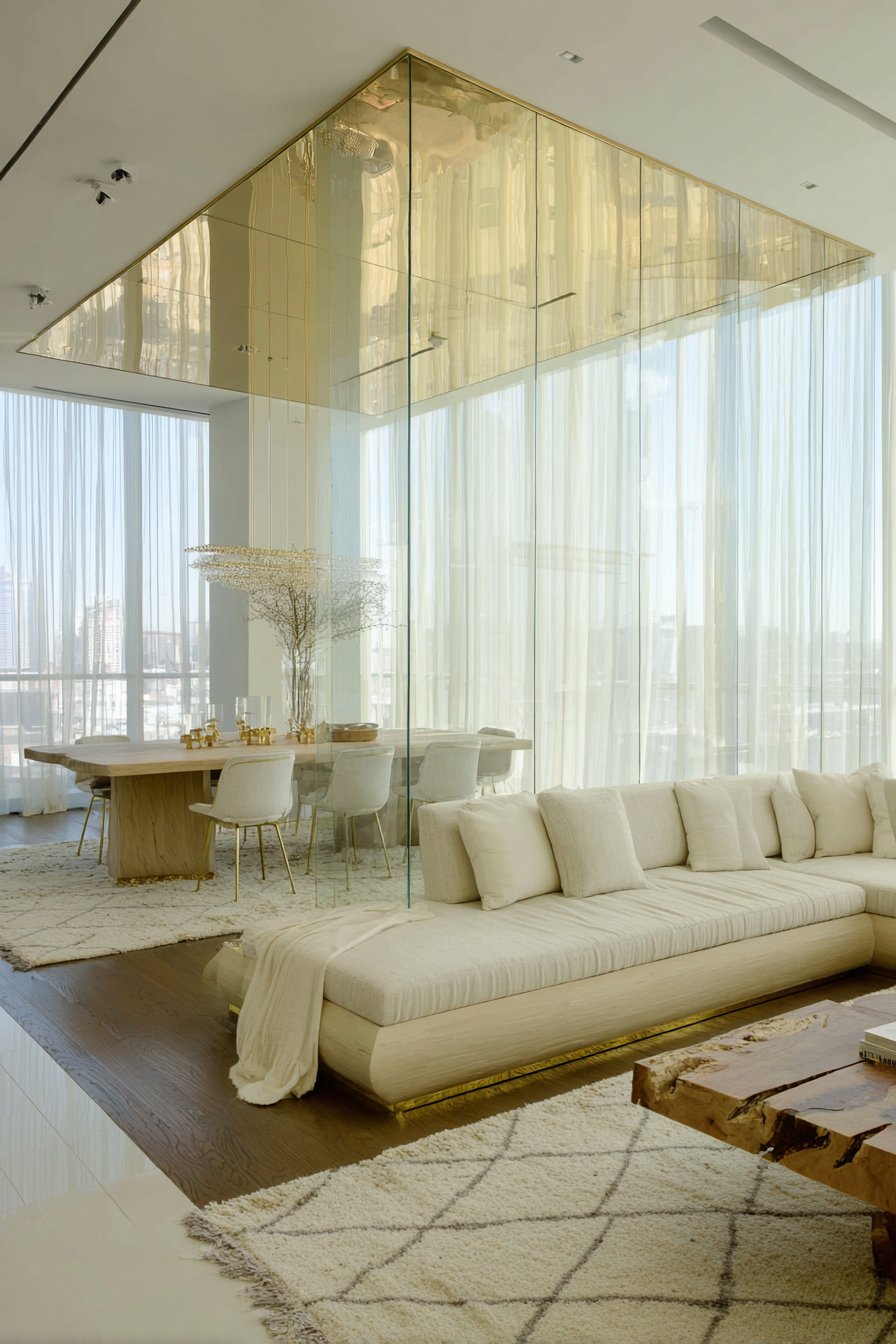
The transparent glass panel divider epitomizes minimalist elegance while addressing one of the most common concerns in open-plan living: maintaining visual connection while creating acoustic and functional separation. This living and dining room partition idea uses floor-to-ceiling glass panels set within slender bronze metal frames, creating an almost invisible boundary that preserves sightlines and natural light flow throughout the space. The transparency of glass ensures that neither zone feels closed off or diminished, making it an excellent choice for smaller homes or apartments where preserving a sense of spaciousness is crucial.
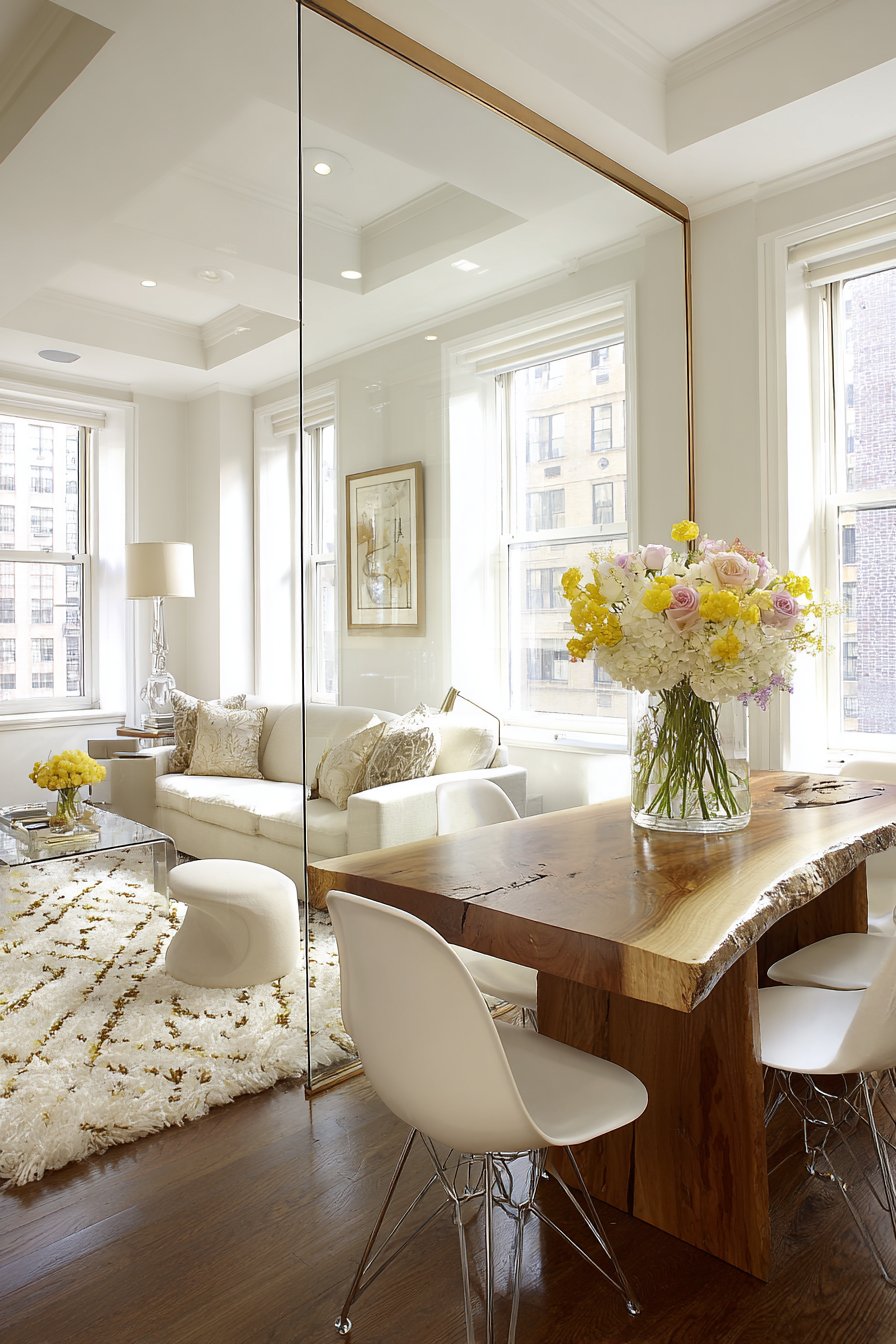
Bronze framing adds a layer of warmth and sophistication that distinguishes this partition from more common black or silver metal options. The rich, slightly aged quality of bronze brings a luxurious touch that works beautifully in both contemporary and transitional interiors. The frames are intentionally slim—typically no more than two inches wide—to minimize their visual presence and allow the glass itself to be the primary feature. This restraint creates a floating, ethereal quality that makes the partition feel more like an architectural detail than a physical barrier.
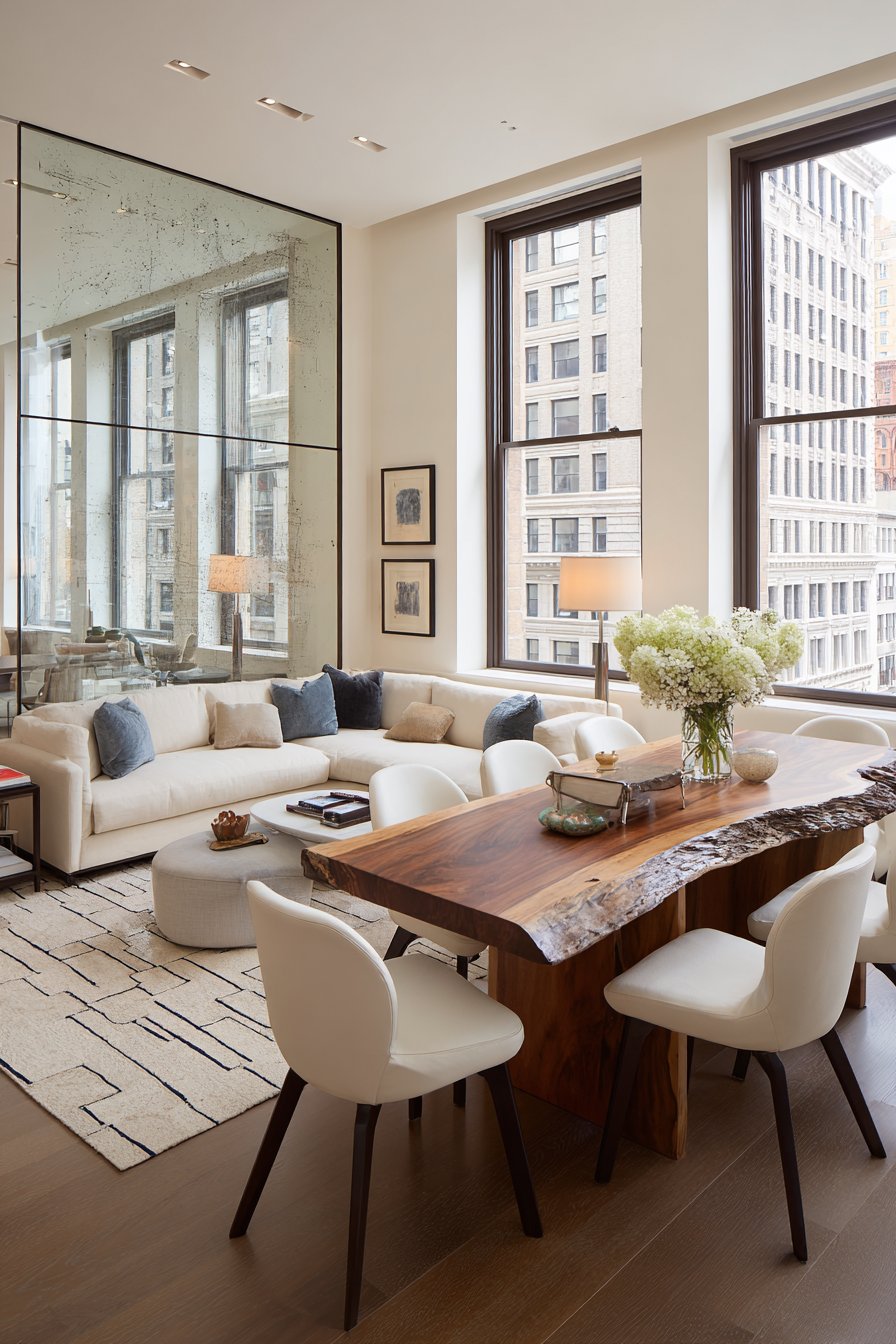
The living space features a low-profile cream linen sofa that exemplifies the clean, uncluttered aesthetic of minimalist design. The natural fiber provides subtle texture without overwhelming the serene color palette, while the low profile maintains visual openness across the space. A geometric rug grounds the seating area, adding pattern interest through shape rather than color. On the dining side, a live-edge wooden table introduces organic contrast to the manufactured precision of the glass partition, with its natural contours and visible wood grain celebrating the beauty of imperfection. Modern white chairs keep the dining area feeling light and fresh, ensuring that the transparency of the partition is fully utilized.
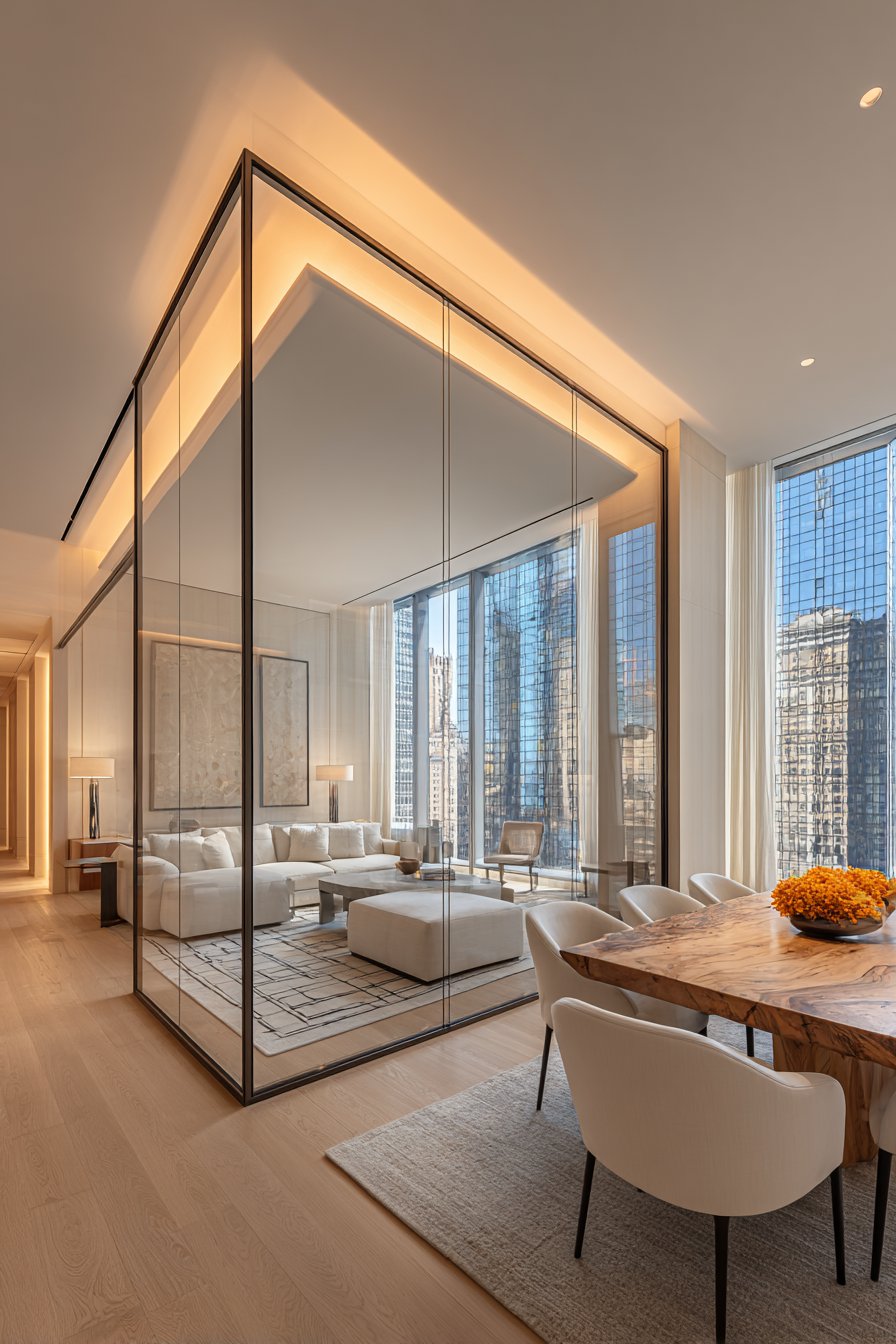
The soft, diffused daylight from surrounding windows is perhaps the most crucial element in making this partition successful. Glass dividers rely heavily on abundant natural light to avoid feeling dark or oppressive. The wide-angle perspective reveals how light moves freely through the transparent panels, illuminating both zones equally and creating a cohesive, bright environment. During evening hours, consider the placement of lighting on both sides to prevent glare and reflection issues that can sometimes compromise the elegance of glass partitions.
Key Design Tips: Invest in high-quality tempered glass that’s at least 10mm thick for safety and acoustic performance. Consider frosted or textured glass options for the lower portion if you want to disguise clutter or create more visual privacy while seated. Ensure the bronze frames have a protective finish to prevent excessive patina development unless you prefer the aged look. Budget for professional installation with proper floor and ceiling anchoring systems. Keep glass panels clean with streak-free cleaners to maintain their transparency. Install soft-close mechanisms if the panels are operable to prevent slamming and potential damage.
3. Rustic-Modern Reclaimed Wood Beam Structure
The reclaimed wood beam partition brilliantly demonstrates how living and dining room partition ideas can serve multiple functions simultaneously while celebrating the beauty of salvaged materials. This substantial divider features thick wooden beams arranged in a post-and-beam configuration with integrated open shelving that serves both spaces. The dual-purpose design transforms what could be a simple visual barrier into a functional storage and display system, maximizing the utility of every square inch in your open-plan layout. The aged character of reclaimed wood—complete with weathered grain patterns, nail holes, and subtle color variations—adds instant warmth and history to contemporary or industrial interiors.
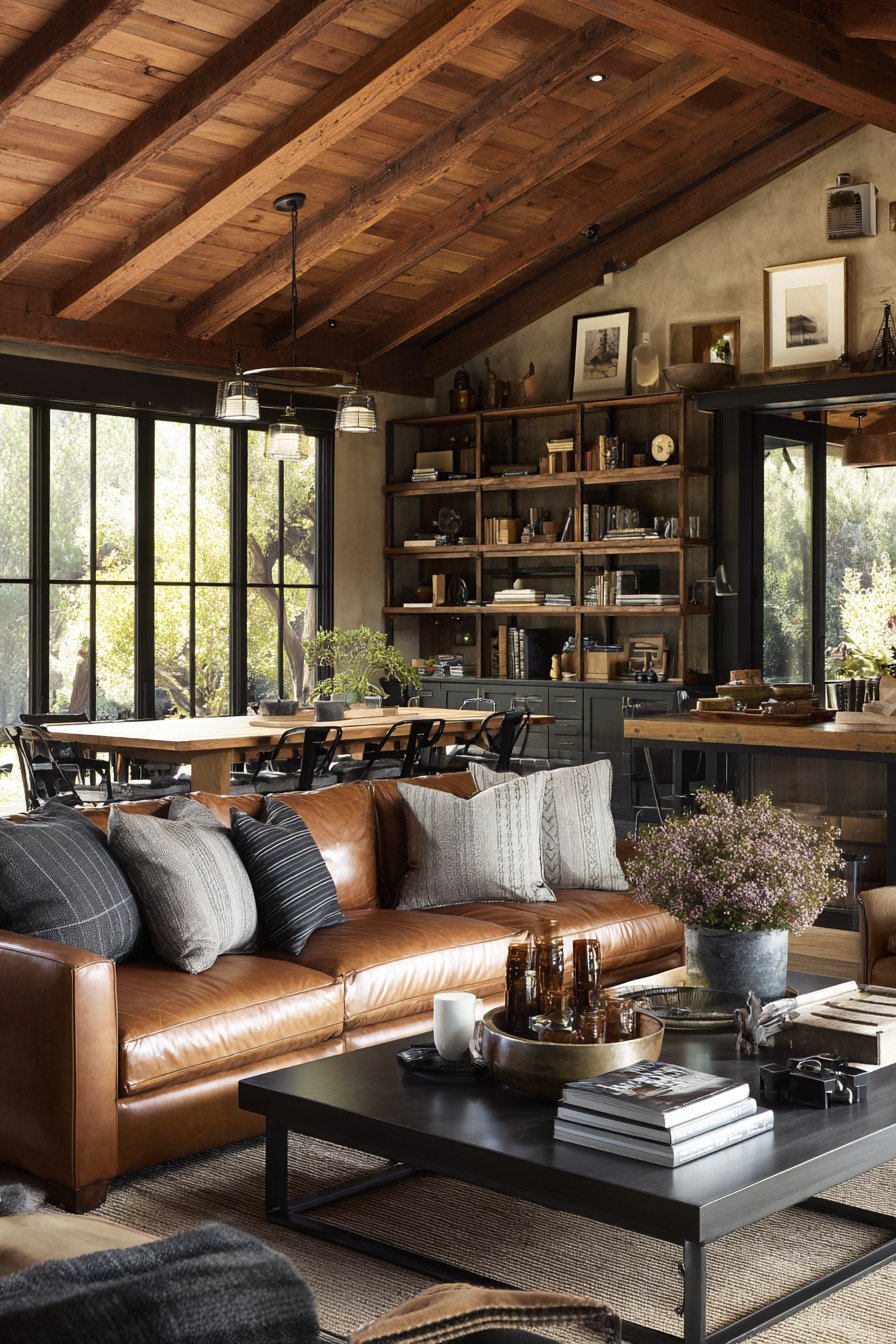
The architectural weight of the beam structure creates a powerful focal point that anchors the entire open-plan space. Unlike lightweight screens or transparent partitions, this substantial divider makes a bold statement about permanence and craftsmanship. The vertical and horizontal beams frame the built-in shelving units, which can be configured with a combination of open cubbies and closed storage to suit your specific needs. Display decorative objects, books, plants, and personal collections on the open shelves, using them as an opportunity to add color, texture, and personality to both the living and dining areas simultaneously.
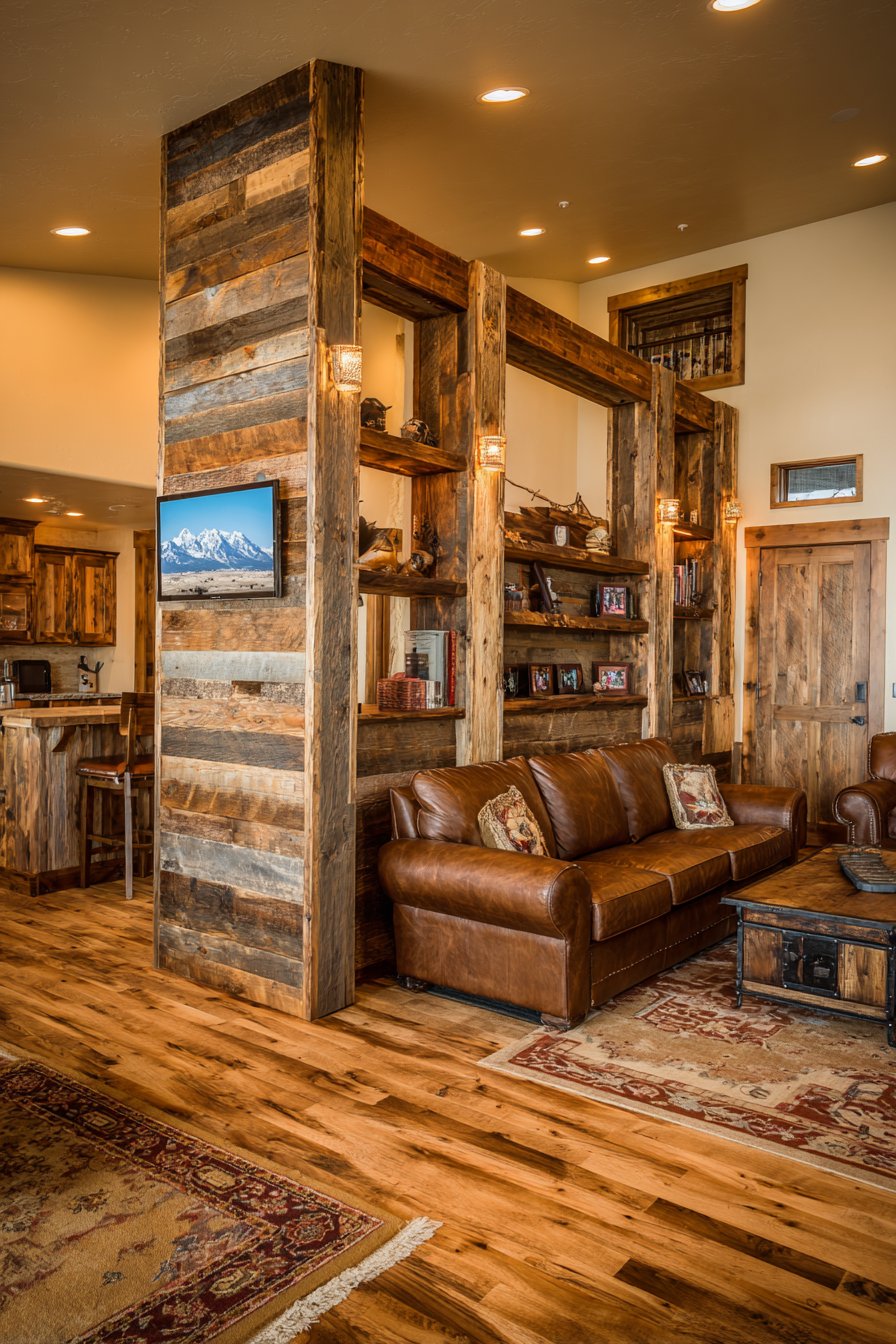
The living side features leather seating paired with an industrial coffee table, creating a masculine, sophisticated atmosphere that complements the rugged character of the reclaimed wood. The patina of aged leather develops beautifully over time, echoing the organic aging process of the wooden partition itself. The industrial coffee table—perhaps featuring a metal base and wood or stone top—reinforces the mixed-material aesthetic that makes this design so compelling. On the dining side, a farmhouse-style table with mixed seating continues the rustic theme while introducing variety through different chair styles, a popular approach in contemporary casual dining spaces.
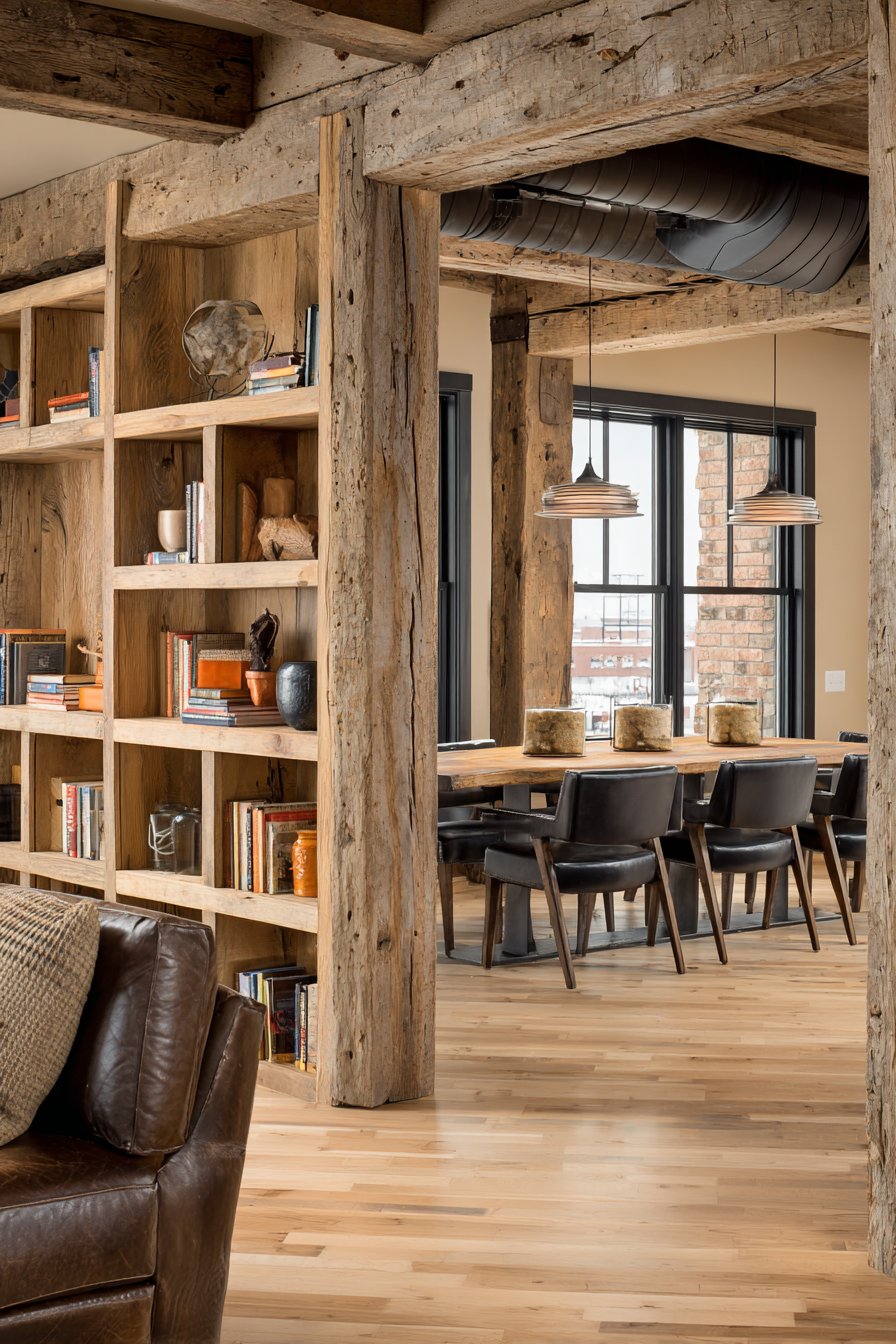
Natural oak flooring flows seamlessly throughout both spaces, creating visual continuity that’s essential when using a substantial partition. The consistent flooring material prevents the divider from feeling like a wall that chops the space into separate rooms, instead allowing it to read as an intentional design feature within a unified area. The warm honey tones of oak complement the varied browns and grays found in reclaimed wood, creating a cohesive natural material palette.
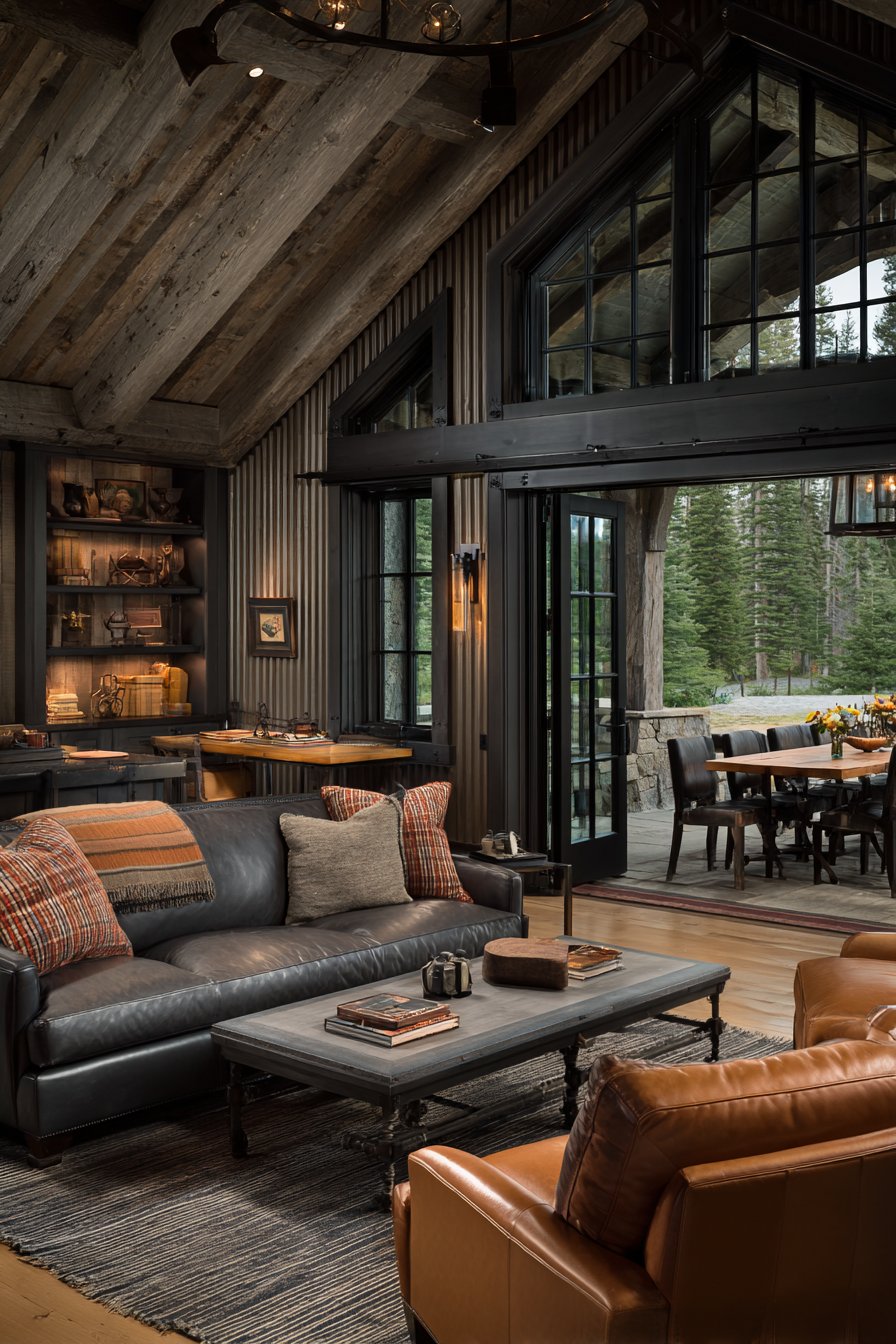
Key Design Tips: Source reclaimed wood from reputable suppliers who can verify its origin and ensure it’s been properly treated for insects and moisture. Consider the load-bearing requirements if you plan to display heavy objects on the shelving—proper anchoring to floor joists and wall studs is essential. Seal the reclaimed wood with a clear matte finish to protect it from moisture and staining while preserving its authentic weathered appearance. Plan the shelving depth carefully—12 to 14 inches works well for books and decorative objects without protruding excessively into either space. Install subtle LED strip lighting on the underside of shelves to illuminate displayed objects and add ambient lighting to both zones. Style shelves with a curated mix of objects, avoiding overcrowding that can make the partition feel cluttered and heavy.
4. Scandinavian Vertical Rope Divider
The vertical rope divider represents one of the most ethereal and organic living and dining room partition ideas, bringing natural texture and gentle movement into your open-plan space. This innovative partition uses natural jute rope suspended from a ceiling-mounted track system, with individual strands hanging from floor to ceiling at regular intervals. The result is a soft, permeable boundary that suggests separation rather than enforcing it, maintaining exceptional light flow and visual connection while still defining distinct functional zones. The tactile quality of natural rope introduces organic warmth that perfectly complements Scandinavian design principles of simplicity, natural materials, and connection to nature.
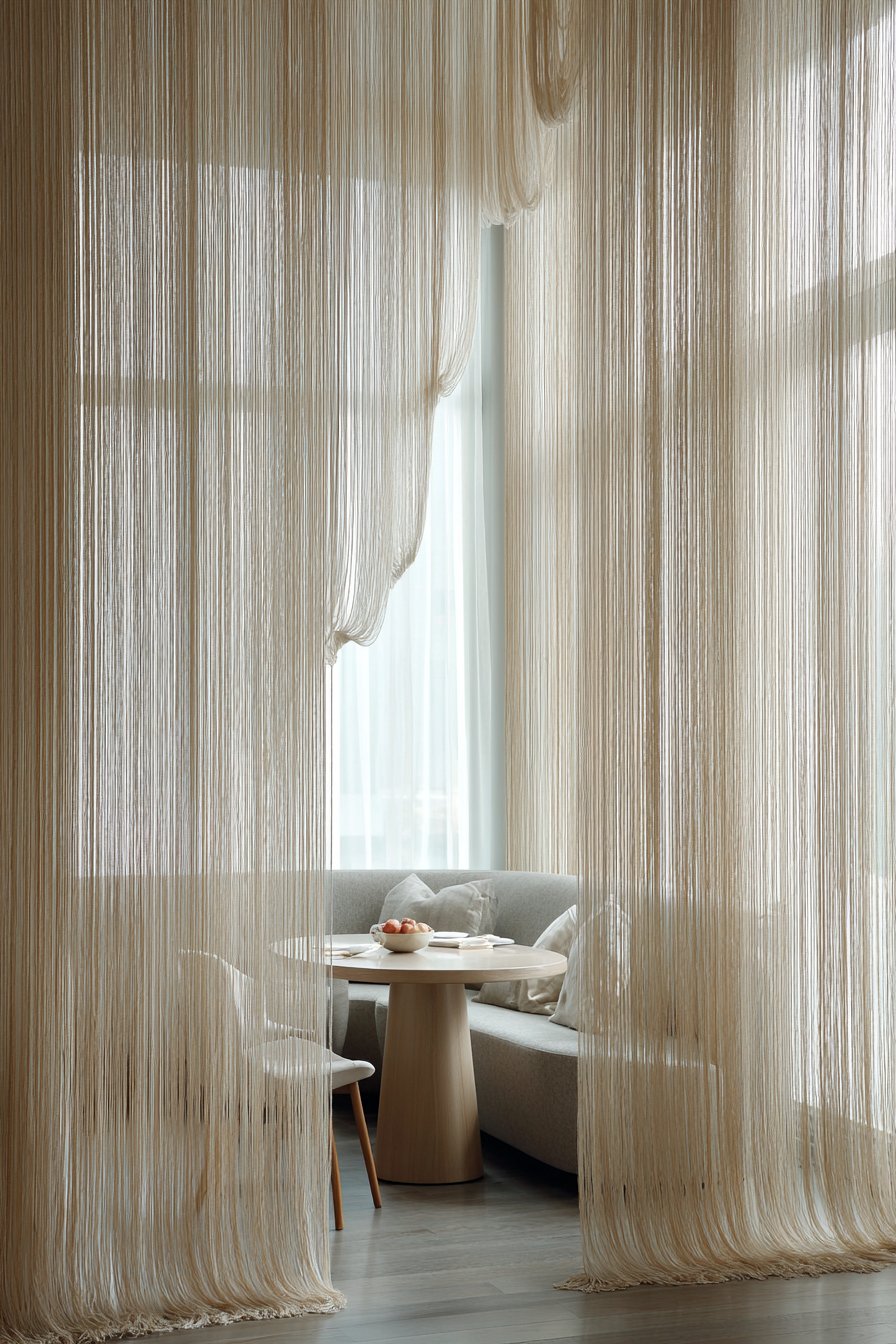
The beauty of this partition style lies in its inherent flexibility and lightness. Unlike solid dividers, the rope strands move gently with air currents, creating a subtle sense of animation and life within the space. This kinetic quality prevents the partition from feeling static or oppressive, instead adding a dynamic element that changes throughout the day. The spacing between individual rope strands can be adjusted to control the degree of visual separation—closer spacing creates more privacy and definition, while wider spacing maintains maximum openness. The natural color of jute rope ranges from golden beige to soft brown, introducing warm neutral tones that work beautifully with the light wood and white palette typical of Scandinavian interiors.
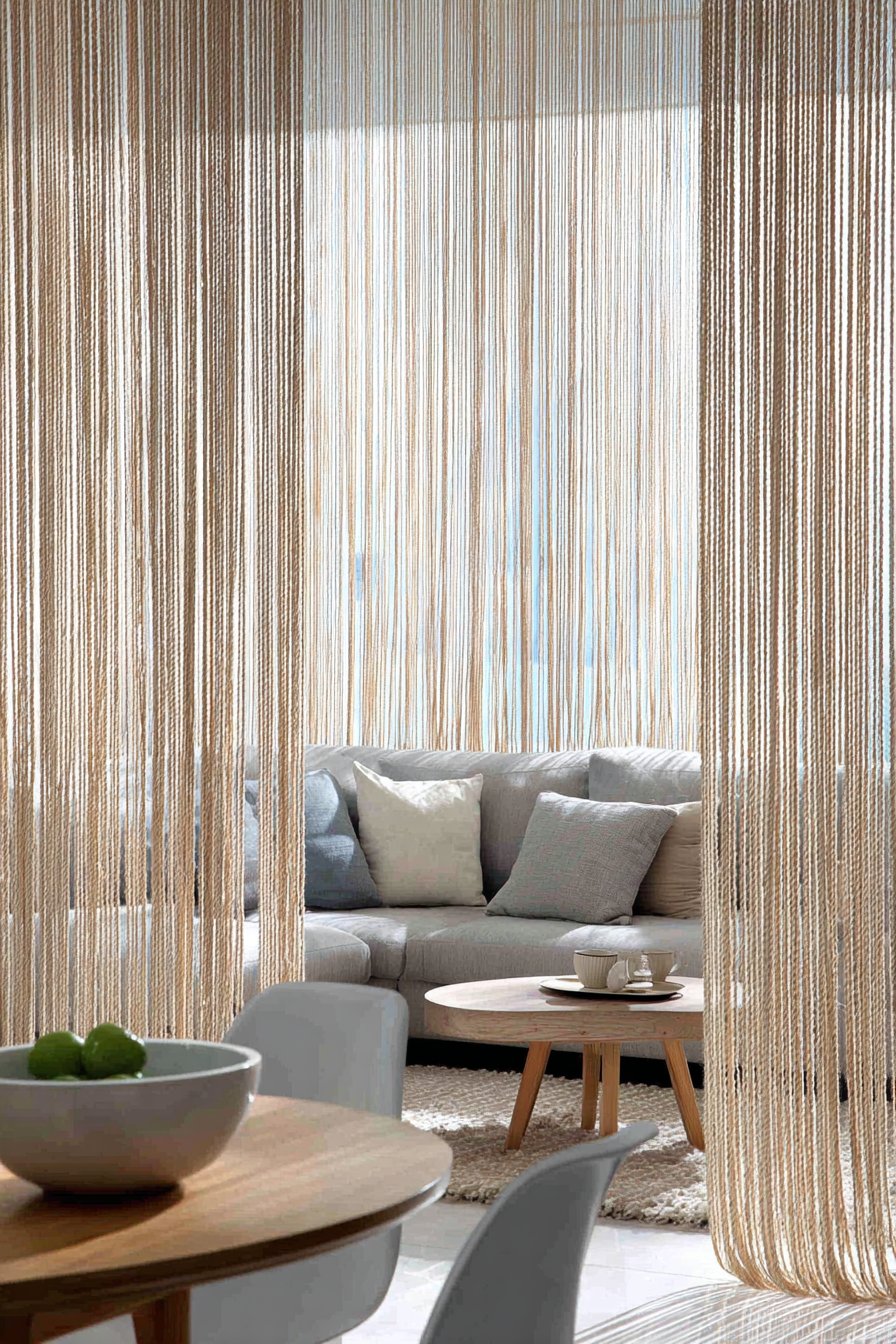
The living area showcases the quintessential Scandinavian aesthetic with a light grey fabric sofa featuring clean lines and minimal ornamentation. The sofa’s low profile and simple form embody the “less is more” philosophy, while the light grey upholstery provides a neutral foundation that allows natural materials and textures to take center stage. White oak accents throughout the space—perhaps in coffee tables, shelving, or side tables—introduce the blonde wood tones that are a hallmark of Nordic design. These pieces typically feature simple, functional forms with honest joinery details that celebrate craftsmanship without unnecessary decoration.
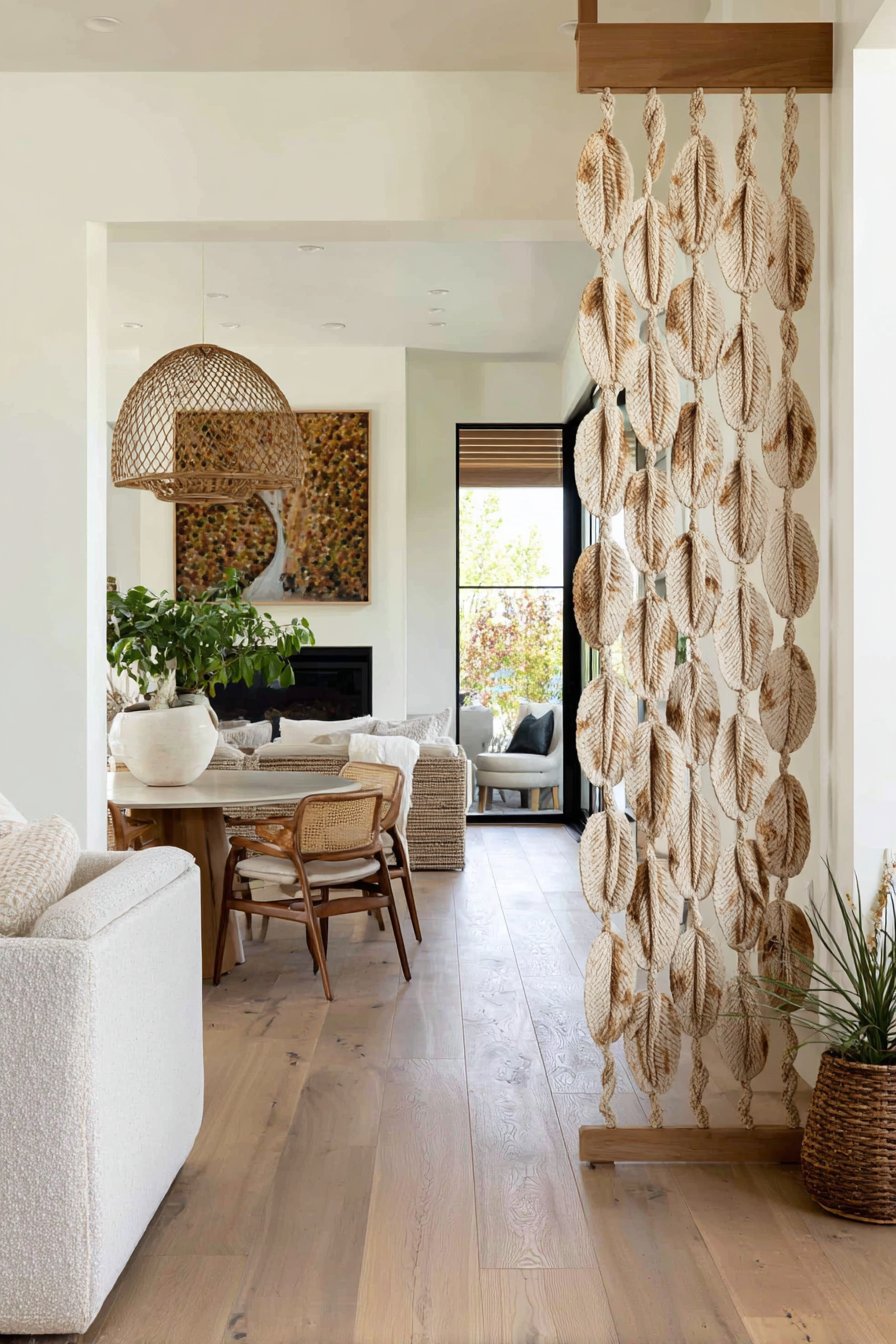
The dining zone continues the minimalist theme with a simple round table that encourages conversation and democratic seating arrangements. Round tables work particularly well in Scandinavian interiors because they soften the geometric precision of the architecture and create a more intimate, egalitarian dining experience. Eames-style chairs add mid-century modern influence, a natural companion to Scandinavian design that shares similar values of functional simplicity and organic forms. The abundant natural light that floods both spaces is essential to making this partition successful—the rope strands cast delicate linear shadows that add visual interest without darkness or heaviness.
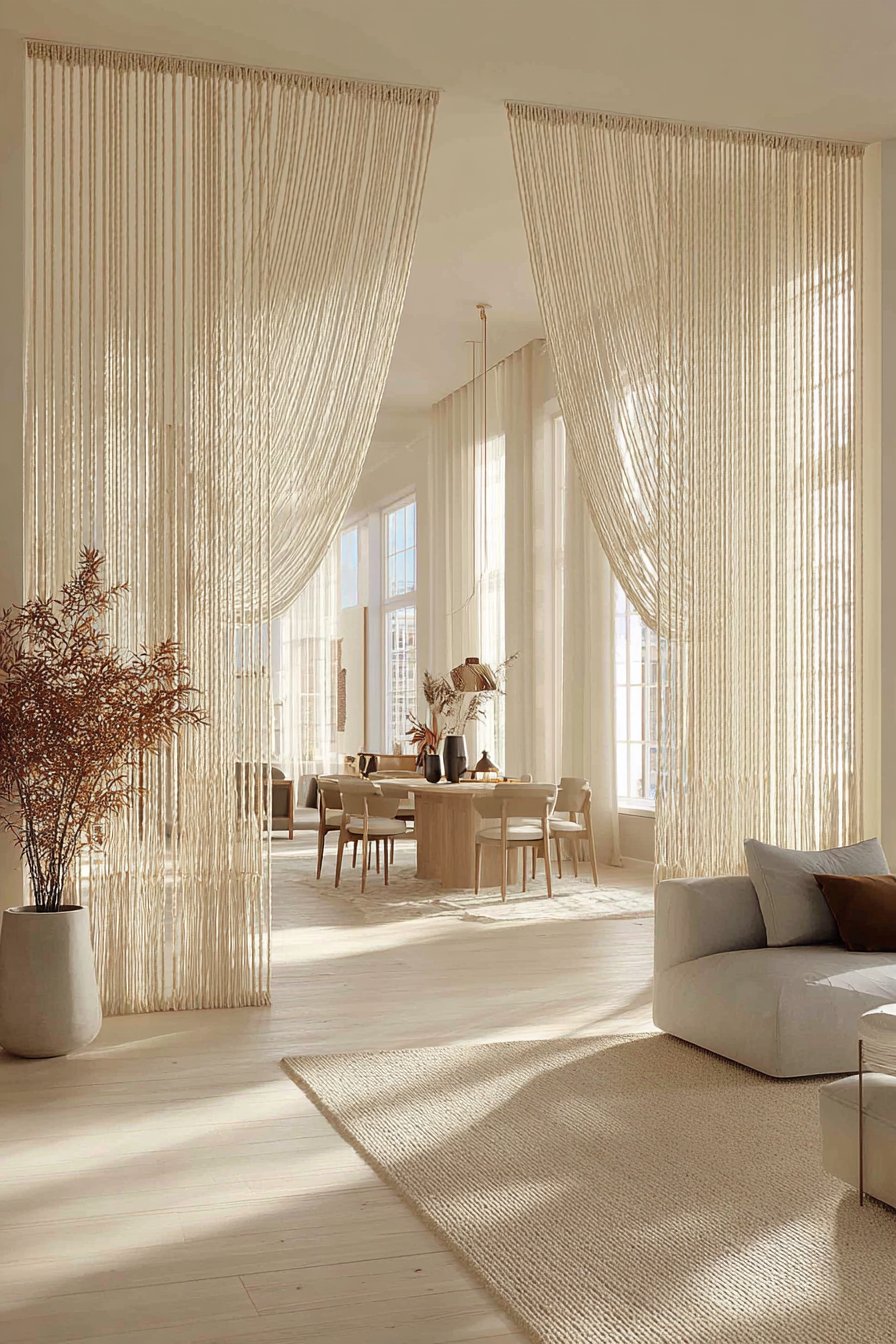
Key Design Tips: Choose natural fiber ropes that haven’t been chemically treated to maintain the organic, eco-friendly character of Scandinavian design. Install a robust ceiling track system capable of supporting the weight of multiple rope strands—consult with a contractor about proper ceiling joist anchoring. Consider rope diameter carefully—thicker ropes create more visual weight and texture, while thinner ropes appear more delicate and refined. Maintain the natural rope with occasional dusting using a soft brush attachment on your vacuum cleaner. Treat the rope with a natural fiber protector to help resist moisture and staining while maintaining its organic appearance. Plan the spacing between ropes based on your desired level of separation—4 to 6 inches apart creates substantial visual division while 8 to 12 inches maintains maximum openness.
5. Luxurious Custom-Built Bookshelf Divider
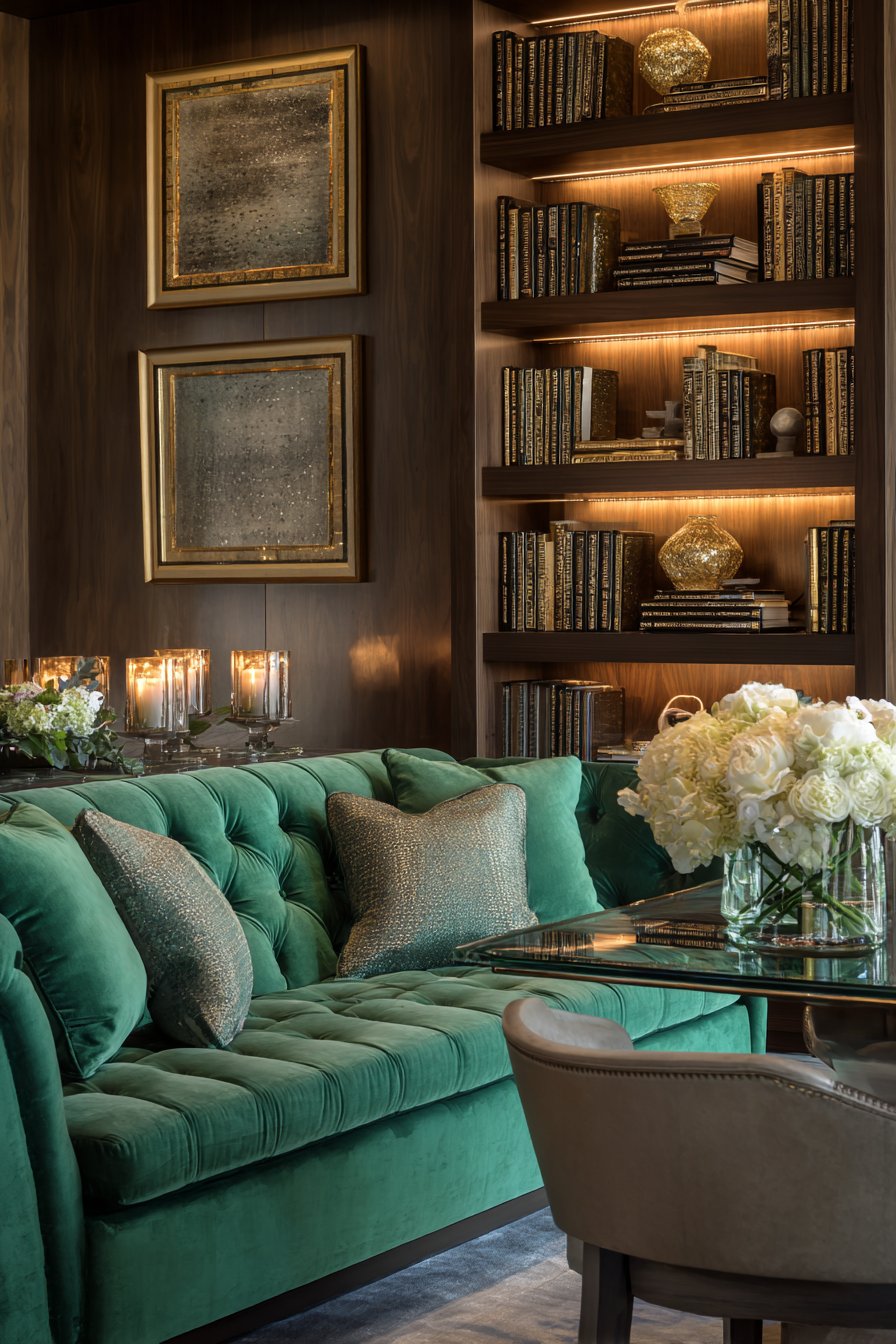
The double-sided bookshelf partition represents the pinnacle of functional luxury among living and dining room partition ideas, transforming storage needs into an architectural showpiece. This custom-built divider extends from floor to ceiling in rich walnut wood, featuring integrated LED lighting that transforms books and displayed objects into illuminated focal points. The double-sided design serves both spaces equally, with carefully planned shelving configurations that accommodate everything from book collections to decorative objects, family photos, and small plants. The substantial presence of a floor-to-ceiling bookshelf creates powerful visual separation while the open shelving maintains some degree of visual connection between zones.
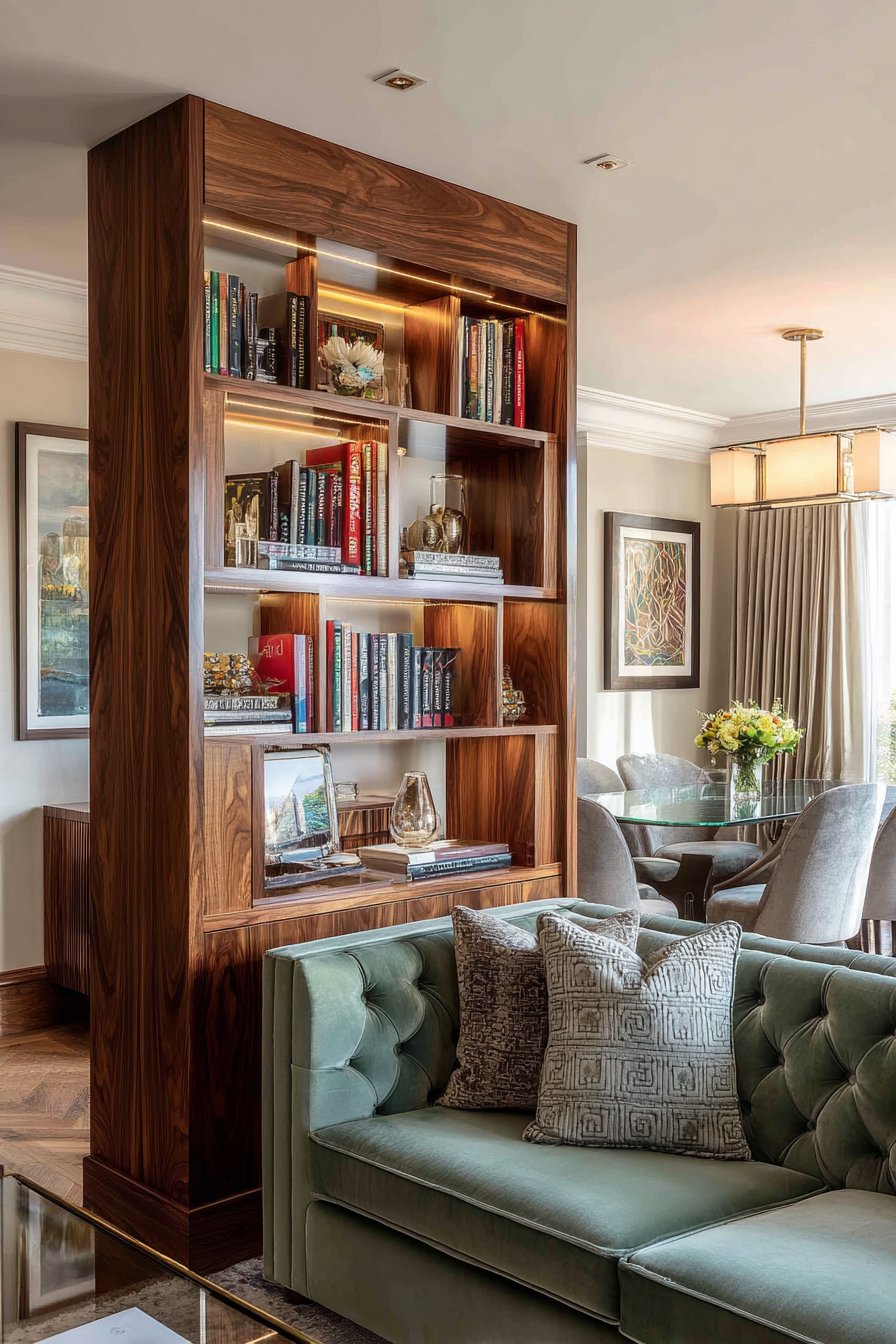
The material choice of walnut brings unparalleled richness and sophistication to this partition. Walnut’s deep chocolate brown tones with subtle purple undertones create warmth and luxury that elevates the entire space. The natural grain patterns visible in quality walnut provide organic visual interest that prevents the large expanse of the bookshelf from feeling flat or monotonous. As a hardwood, walnut offers exceptional durability and ages beautifully, developing a deeper patina over decades of use. The investment in custom cabinetry using premium materials like walnut represents a long-term enhancement to your home that can increase property value while providing daily pleasure.
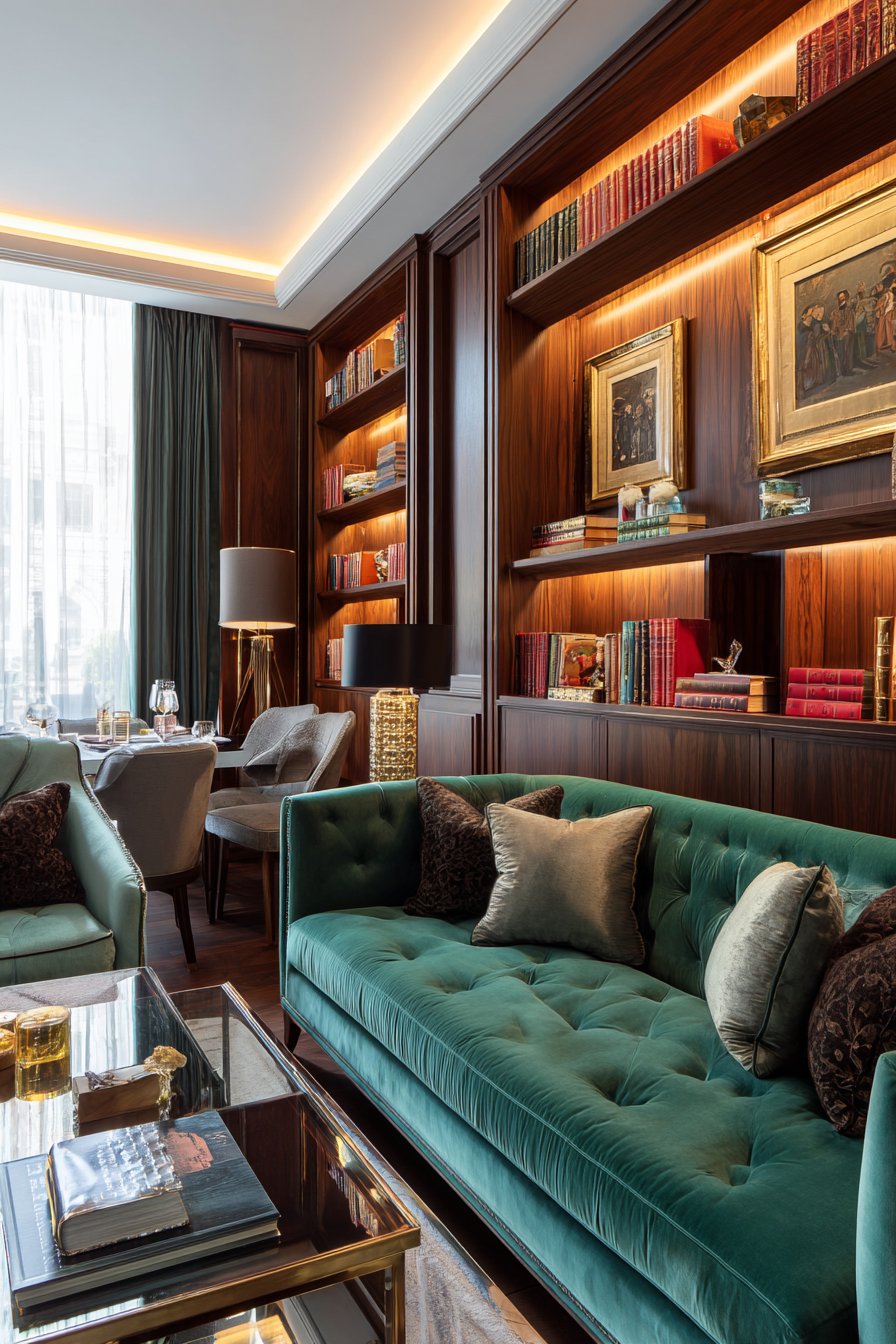
The integrated LED lighting system is a crucial element that transforms this functional storage into a dramatic design feature. Recessed LED strips installed on the underside of shelves cast soft downward light that illuminates displayed objects without glare or harsh shadows. This lighting serves multiple purposes: it highlights treasured possessions and creates visual interest, provides ambient lighting to both spaces during evening hours, and adds depth and dimension to the bookshelf that prevents it from reading as a flat wall. The warm glow from the LEDs during evening hours creates an intimate, gallery-like atmosphere that makes both the living and dining areas feel curated and intentional.
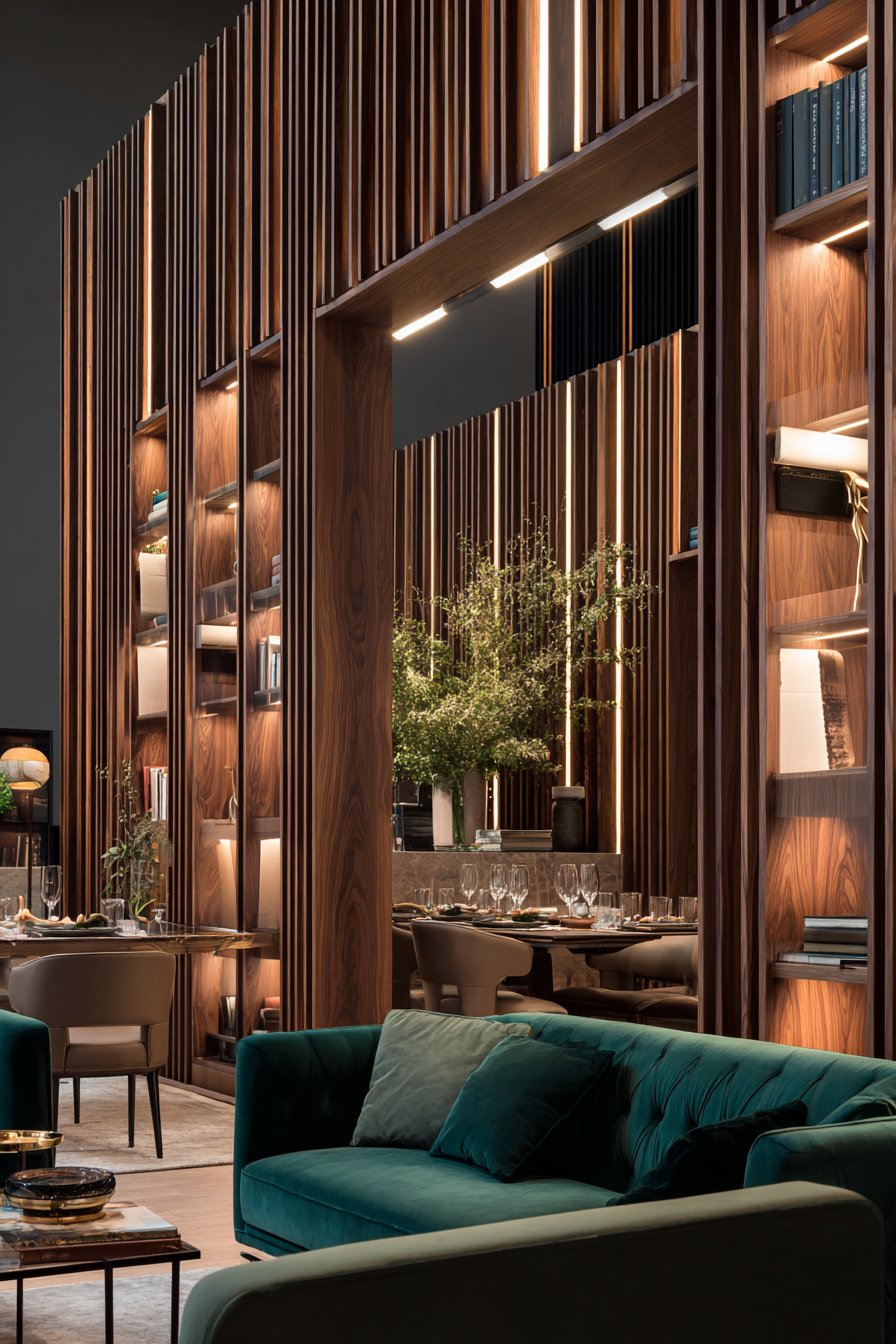
The living area features a tufted velvet sofa in emerald green, a bold color choice that demonstrates the confidence this partition brings to the overall design. The luxurious texture and jewel-tone color create a sophisticated seating area that matches the quality and investment represented by the custom bookshelf. The emerald green provides striking contrast against the walnut tones, creating a rich, layered color palette. The dining side showcases an elegant glass table with upholstered chairs, introducing transparency and refinement that balance the substantial presence of the wooden partition. The glass table ensures the dining area doesn’t feel heavy despite the large bookshelf nearby, while upholstered chairs add comfort and softness.
Key Design Tips: Work with a skilled carpenter or cabinetry company to design a bookshelf system that’s structurally sound and securely anchored to both floor and ceiling joists. Plan for a mix of shelf heights to accommodate everything from oversized art books to small decorative objects. Include some closed cabinet sections at the bottom for concealing less attractive items like electronics or office supplies. Ensure the LED lighting is on dimmable switches so you can adjust the ambiance for different occasions. Consider installing glass or acrylic panels on some shelves to prevent items from being accidentally pushed through to the other side. Style shelves thoughtfully, using the rule of thirds and varying heights to create visual rhythm—avoid overcrowding that makes the bookshelf feel chaotic.

6. Bohemian Macramé Hanging Panel Divider
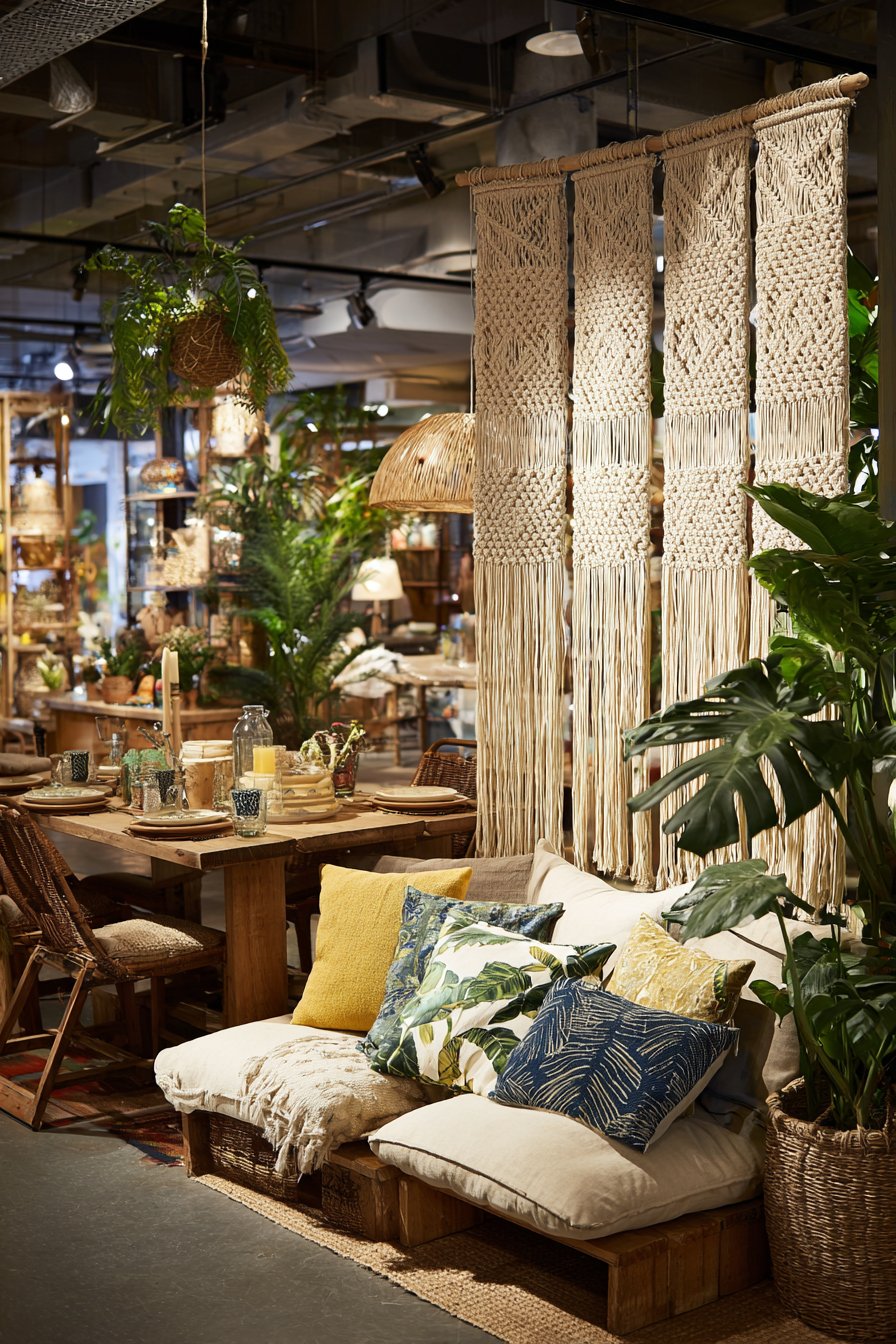
The macramé hanging panel partition celebrates handcrafted artistry and textile texture, bringing bohemian warmth and creative spirit to living and dining room partition ideas. This distinctive divider features multiple macramé panels crafted from natural cotton rope, showcasing intricate knotwork patterns that range from simple geometric designs to complex, lacy compositions. The textile nature of this partition introduces softness and organic irregularity that contrasts beautifully with the hard surfaces typical in contemporary homes—polished floors, painted walls, and upholstered furniture. The handmade quality communicates authenticity and artistic value, transforming a functional room divider into a statement piece that reflects personal style and appreciation for traditional crafts.
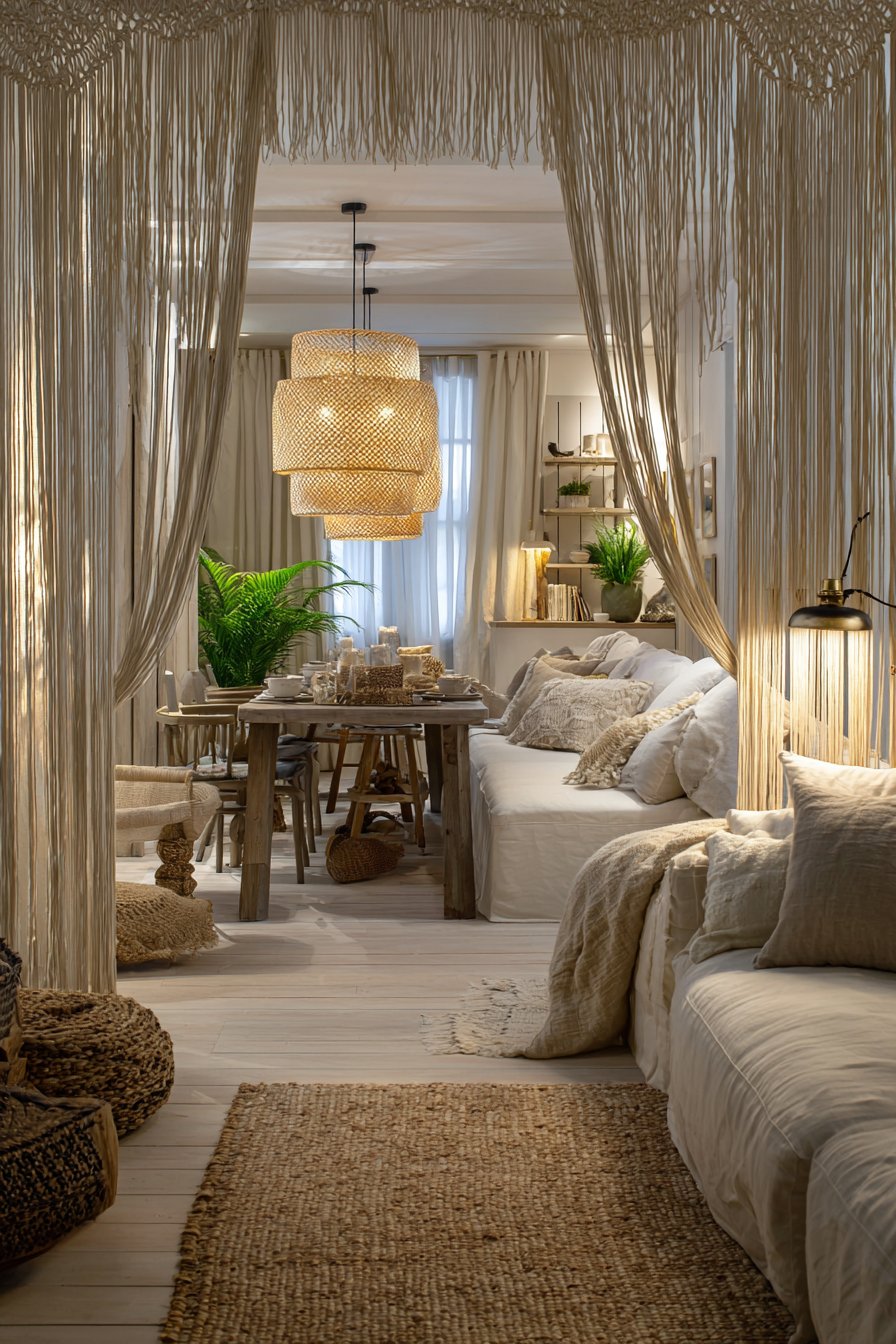
The creation of macramé panels involves ancient knotting techniques that date back centuries, with contemporary artists and artisans reviving these traditional methods to create stunning decorative pieces. Each panel becomes a unique work of fiber art, with subtle variations in tension and execution that emphasize its handcrafted nature. The cotton material provides beautiful drape and movement, allowing the panels to sway gently with air circulation and creating that sense of organic life within the space. The neutral cream or white color of natural cotton works harmoniously with the eclectic mix of colors and patterns typical in bohemian interiors, providing a textural backdrop that doesn’t compete with other decorative elements.
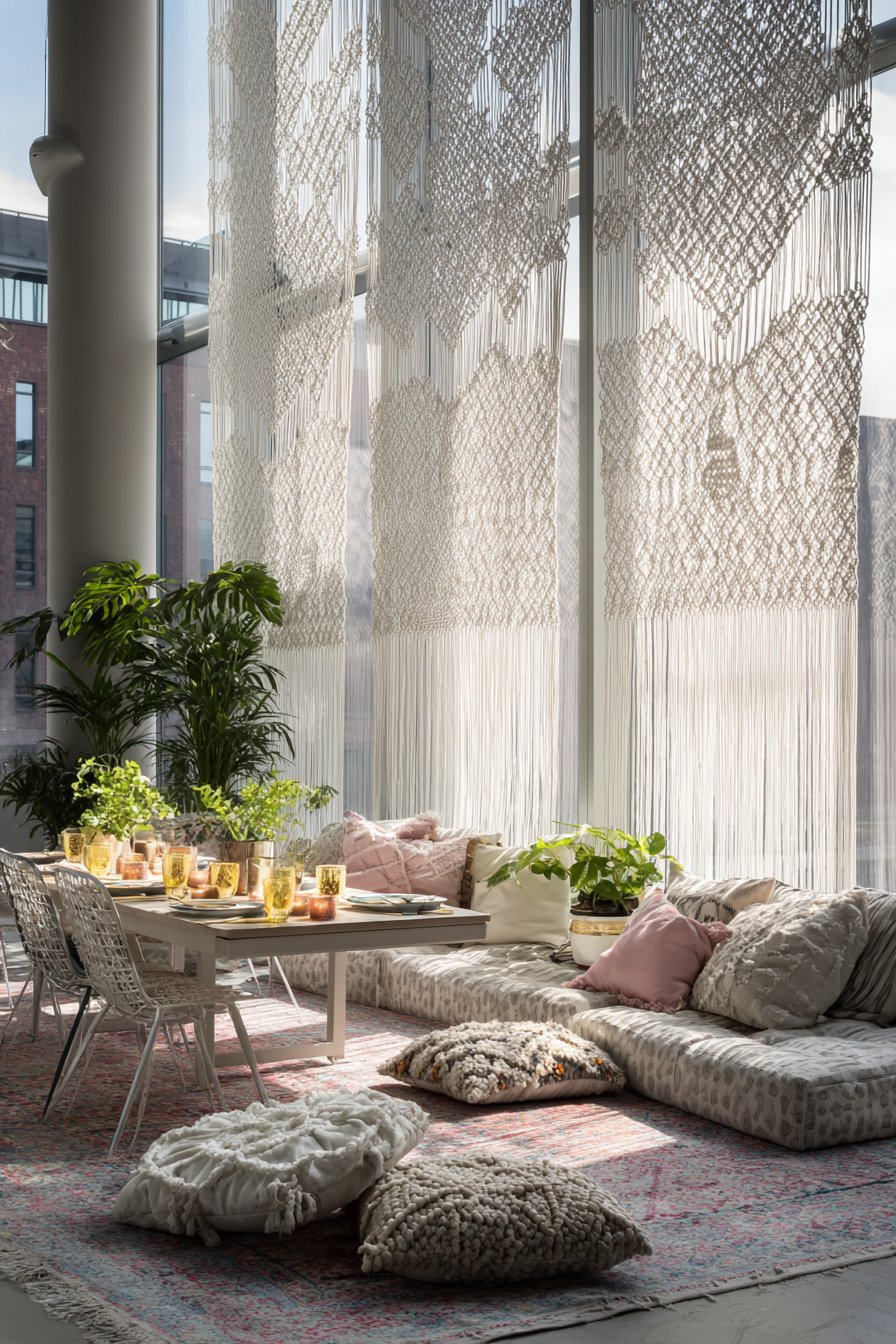
The living zone embraces the bohemian aesthetic with low seating arrangements surrounded by abundant floor cushions in various sizes, patterns, and textures. This casual, floor-level seating creates an informal, relaxed atmosphere perfect for conversation and gathering. The profusion of cushions introduces opportunities for mixing patterns—paisley, ikat, suzani, tribal prints—in the layered, collected-over-time aesthetic that defines bohemian style. Abundant plants throughout the living area reinforce the connection to nature, with trailing pothos, sculptural fiddle leaf figs, and hanging spider plants adding life and air-purifying benefits. The plants’ organic forms and vibrant greens provide essential vitality to the neutral palette of the macramé partition.
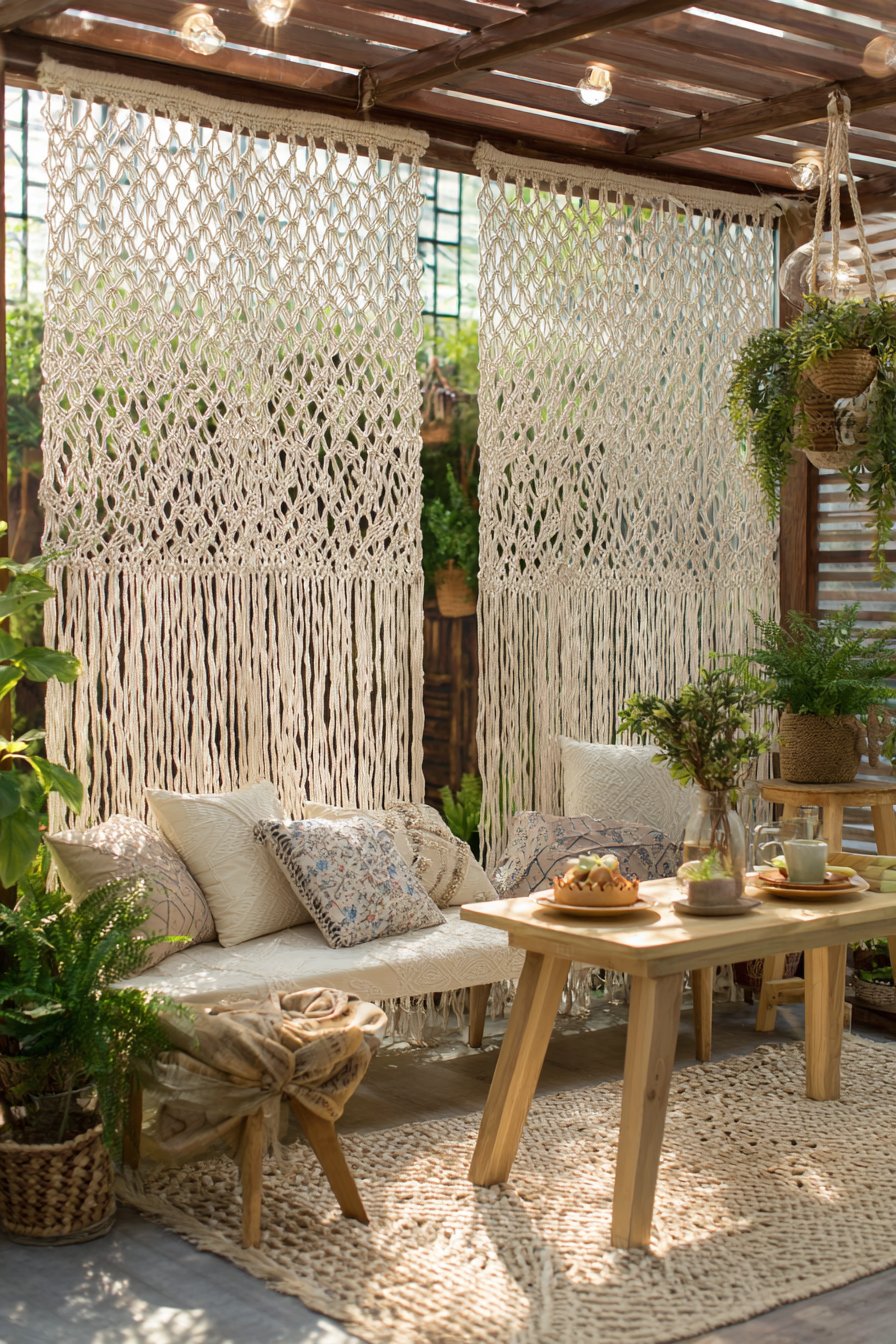
The dining area continues the bohemian narrative with a vintage wooden table that shows character through age and use—perhaps featuring a distressed finish or visible patina. Mismatched chairs sourced from different eras and styles epitomize the eclectic collecting approach central to bohemian design. Rather than appearing haphazard, the varied seating creates visual interest and tells stories about travels, thrift store discoveries, and inherited pieces. The golden hour lighting filtering through the woven macramé panels creates the most magical effect, casting intricate shadow patterns across surfaces and walls while bathing both spaces in warm, amber light that enhances the cozy, welcoming atmosphere.
Key Design Tips: Commission macramé panels from local fiber artists or learn the techniques yourself for a truly personal touch. Ensure the hanging system is robust enough to support the weight of the cotton panels—typically requiring ceiling-mounted curtain tracks or sturdy hooks anchored into joists. Consider the density of the knotwork in relation to your privacy needs—tighter, more complex patterns provide more visual screening while looser, airier designs maintain maximum openness. Maintain the cotton panels by gently vacuuming with a brush attachment or taking them outside for a gentle shake to remove dust. Avoid placing the panels where they might absorb cooking odors from the dining area. Protect the natural cotton from excessive sun exposure which can cause yellowing over time. Mix panel sizes and patterns for added visual interest rather than using identical panels throughout.
7. Small-Space Sliding Barn Door System
The sliding barn door partition offers one of the most practical and space-efficient living and dining room partition ideas for compact homes and apartments. This system features frosted glass panels set within black metal frames that slide smoothly along a wall-mounted track, allowing you to open or close the partition based on your immediate needs. The flexibility this provides is invaluable in smaller spaces where adaptability is key—close the partition during dinner parties to define the dining zone and reduce noise, or slide it completely open during daily life to maximize the feeling of spaciousness. The industrial aesthetic of black metal and frosted glass brings contemporary edge to the design while the barn door hardware adds a touch of rustic charm that softens the overall effect.
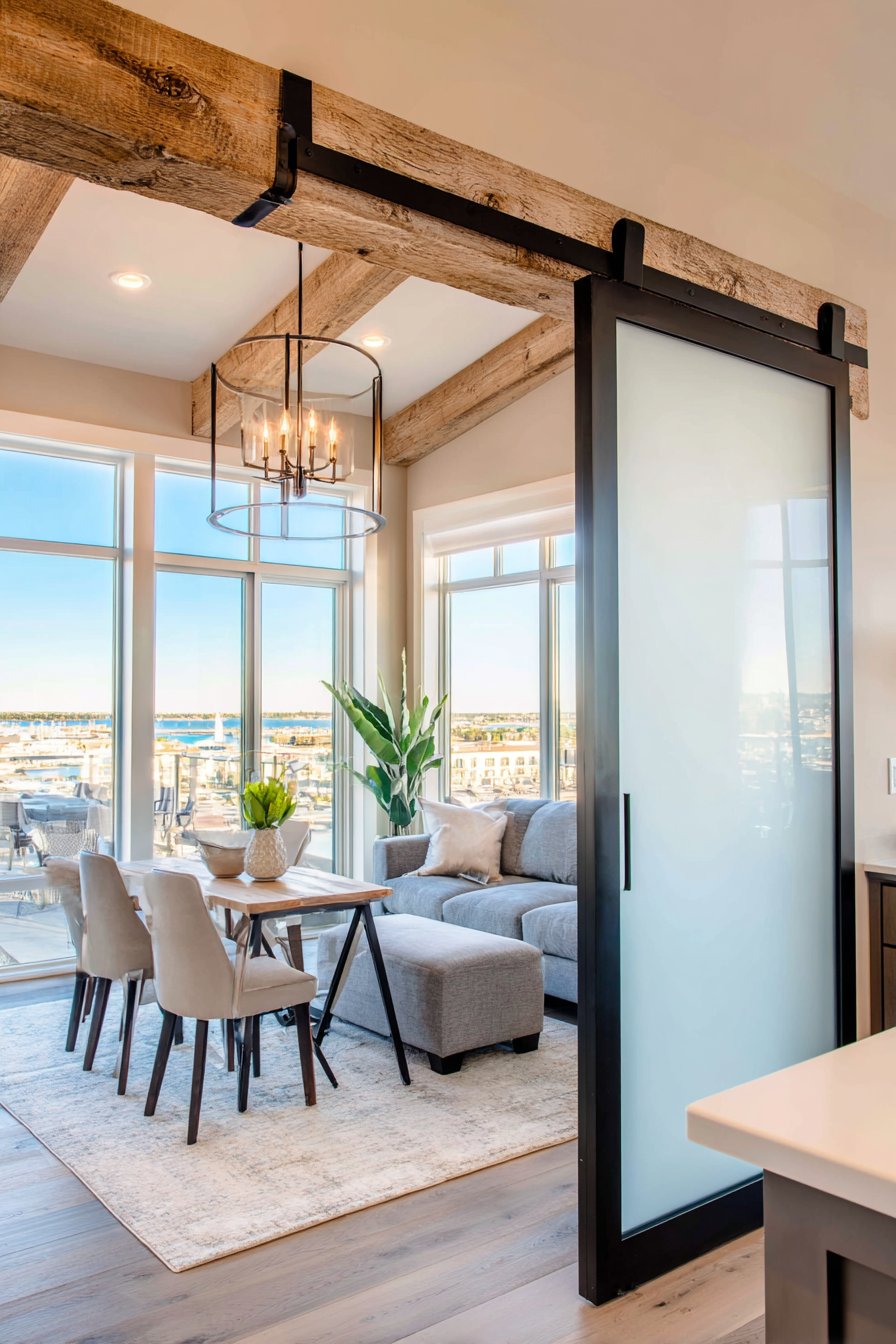
The frosted glass panels provide an excellent balance between privacy and light transmission, allowing natural light to flow between spaces while obscuring sightlines enough to create genuine separation when needed. The translucent quality of frosted glass maintains a sense of airiness that solid doors would sacrifice, preventing either zone from feeling closed off even when the partition is fully deployed. The black metal frames create strong graphic lines that add architectural interest and visual weight, ensuring the partition reads as a deliberate design feature rather than an afterthought. The contrast between the dark frames and light glass creates a striking visual that works beautifully in contemporary and industrial interiors.
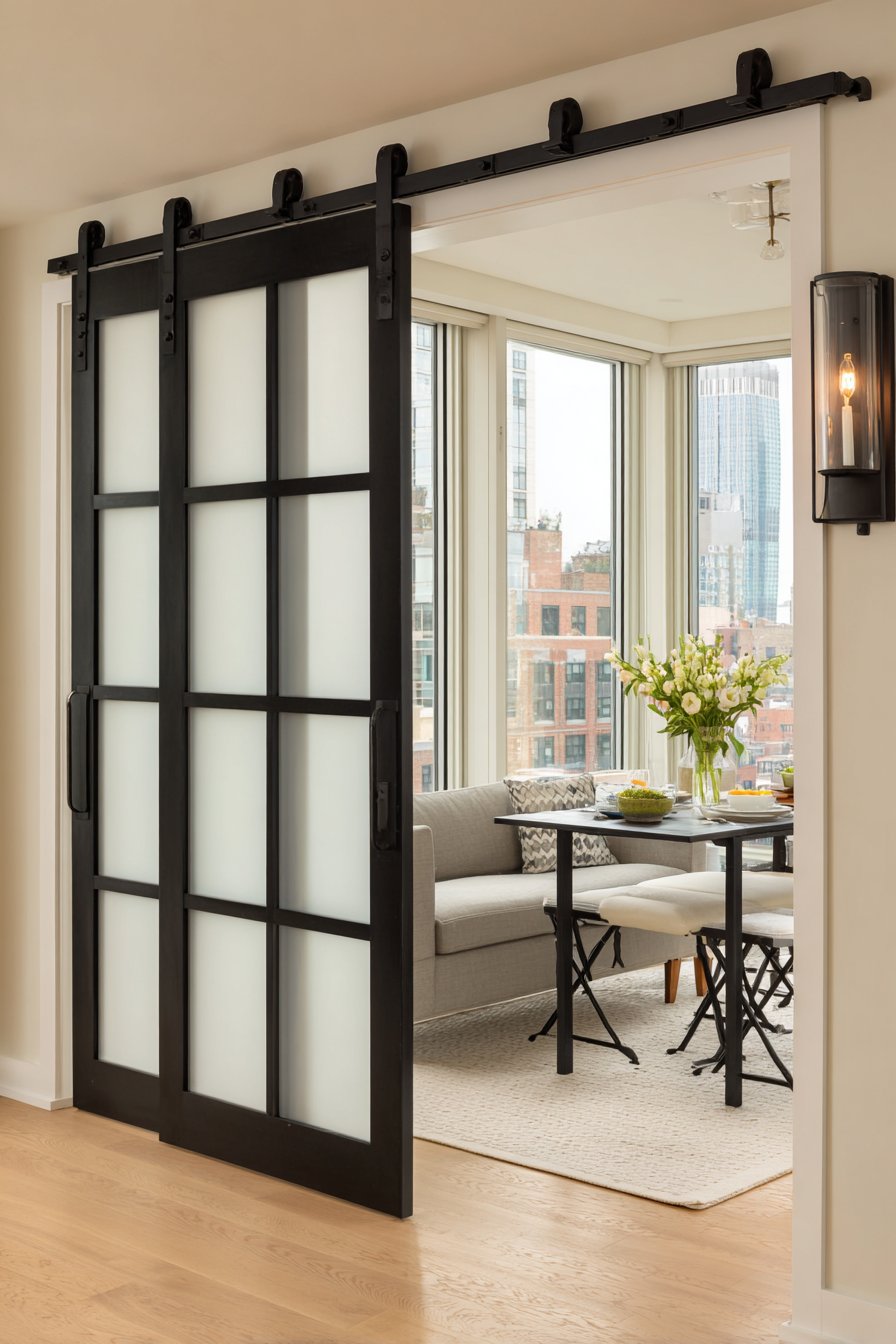
The living area demonstrates intelligent furniture selection for small spaces, with a compact grey sofa that provides ample seating without overwhelming the room. A storage ottoman serves multiple functions—as a coffee table, extra seating when needed, and concealed storage for throws, magazines, or other living room essentials. This multifunctional approach is crucial in smaller homes where every piece of furniture must work harder. The grey upholstery provides a neutral foundation that won’t visually clutter the limited space, while its tailored appearance maintains a polished, intentional look.
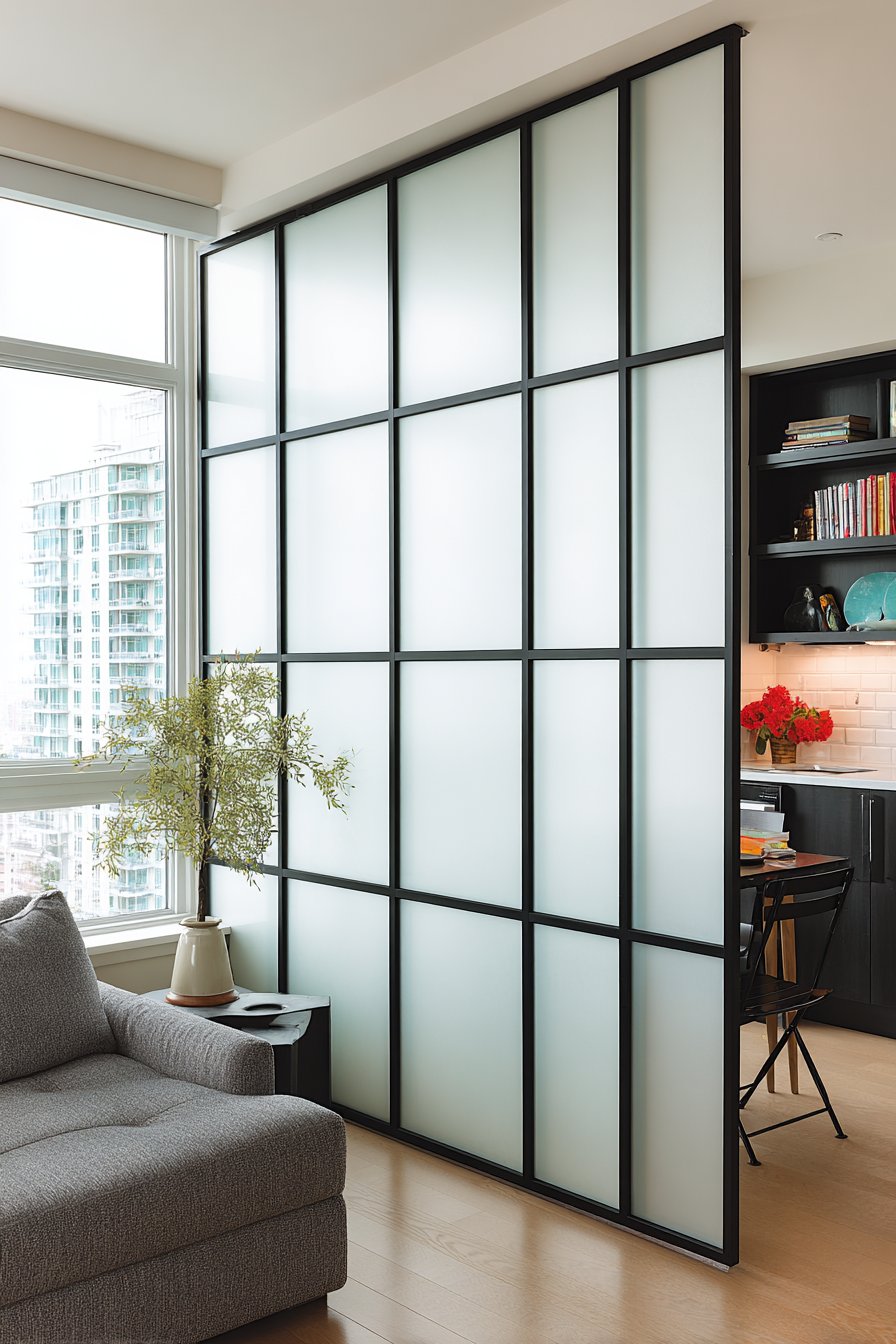
The dining nook maximizes functionality through space-saving furniture choices. A drop-leaf table expands for meals and collapses against the wall when not in use, recovering precious floor space for circulation. Folding chairs can be stored in a closet or hung on wall hooks when not needed, further enhancing the space-saving approach. These practical solutions demonstrate that small-space living doesn’t require sacrifice—it requires smart planning and flexible furniture selections.
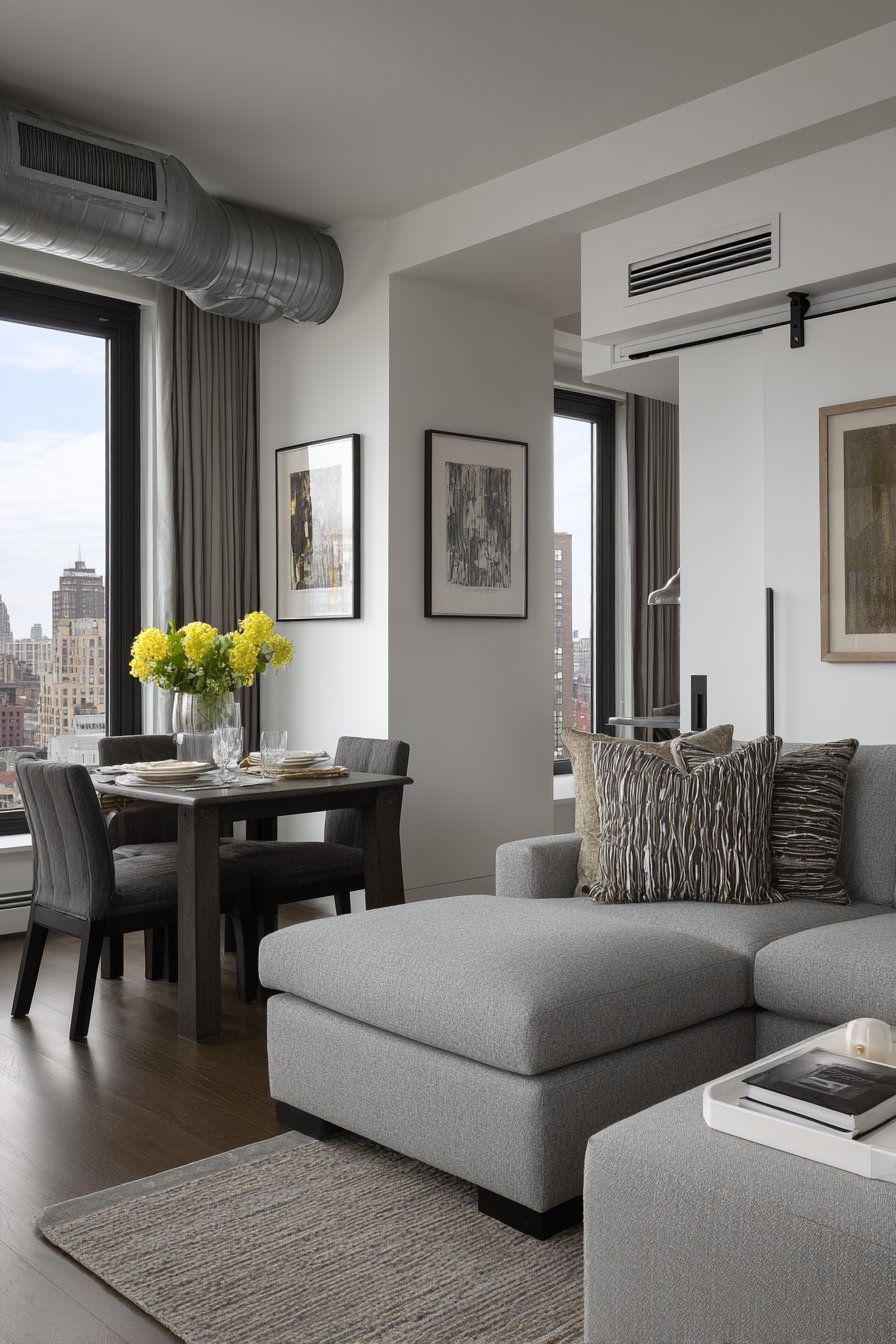
Key Design Tips: Measure carefully before purchasing to ensure the track system can accommodate the door panels in their fully open position—you’ll need clear wall space equal to the width of the panels. Choose a high-quality track system with smooth-rolling mechanisms that won’t require constant adjustment. Install the track securely into wall studs or use appropriate anchors rated for the weight of the glass panels. Consider soft-close mechanisms that prevent slamming and extend the life of the system. Keep the track clean and occasionally lubricate the rollers for optimal performance. Select frosted glass with the appropriate opacity level—some frosted glass is more translucent than others. Install the track at the correct height to leave a small gap at the floor for clearance and easier sliding. Add floor guides at the bottom of the panels to prevent swinging while maintaining smooth sliding action.
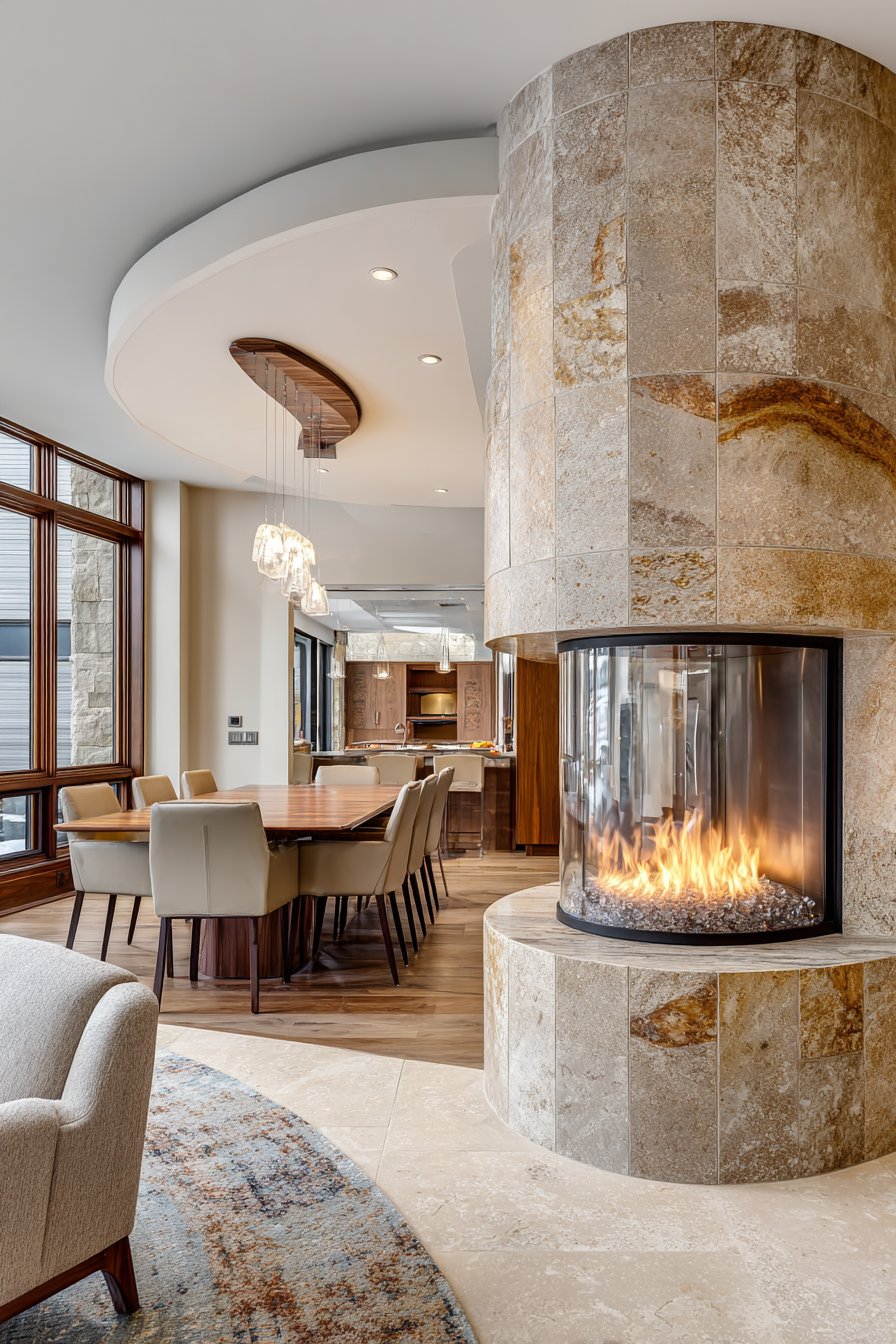
8. Architectural Two-Sided Fireplace Divider
The two-sided fireplace represents one of the most dramatic and architecturally significant living and dining room partition ideas, transforming a functional heating element into a stunning focal point that serves both spaces simultaneously. This contemporary gas fireplace installation features a floor-to-ceiling stone surround that creates substantial visual and physical separation while maintaining the warm, inviting ambiance of an open hearth. The flames visible from both the living and dining sides create a mesmerizing focal point that draws the eye and anchors both zones around a central element of warmth and comfort. The architectural presence of the stone surround provides the weight and permanence of a structural wall while the transparency of the fire chamber maintains visual connection between spaces.
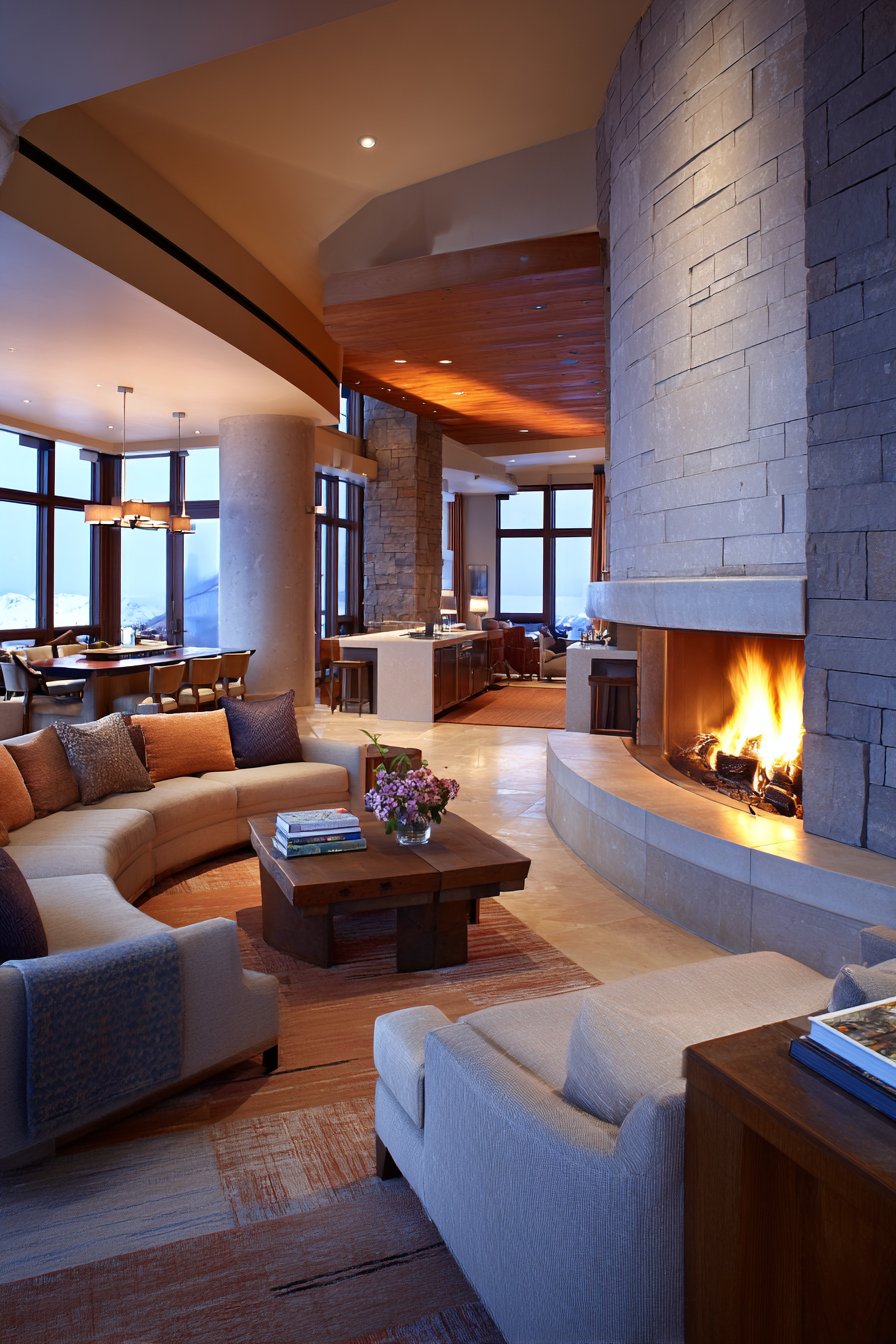
The choice of stone for the fireplace surround dramatically impacts the overall aesthetic. Natural stone options like stacked slate, limestone, or granite introduce organic texture and color variation that connects the interior to natural landscapes. Each piece of stone brings unique mineral patterns, subtle color shifts, and surface irregularities that create depth and visual interest impossible to replicate with manufactured materials. Alternatively, sleek porcelain or ceramic tiles in large format can create a more contemporary, streamlined appearance with minimal grout lines and smooth surfaces. The vertical emphasis of a floor-to-ceiling surround creates the illusion of height, making the ceiling feel loftier while establishing the fireplace as an undeniable central feature.
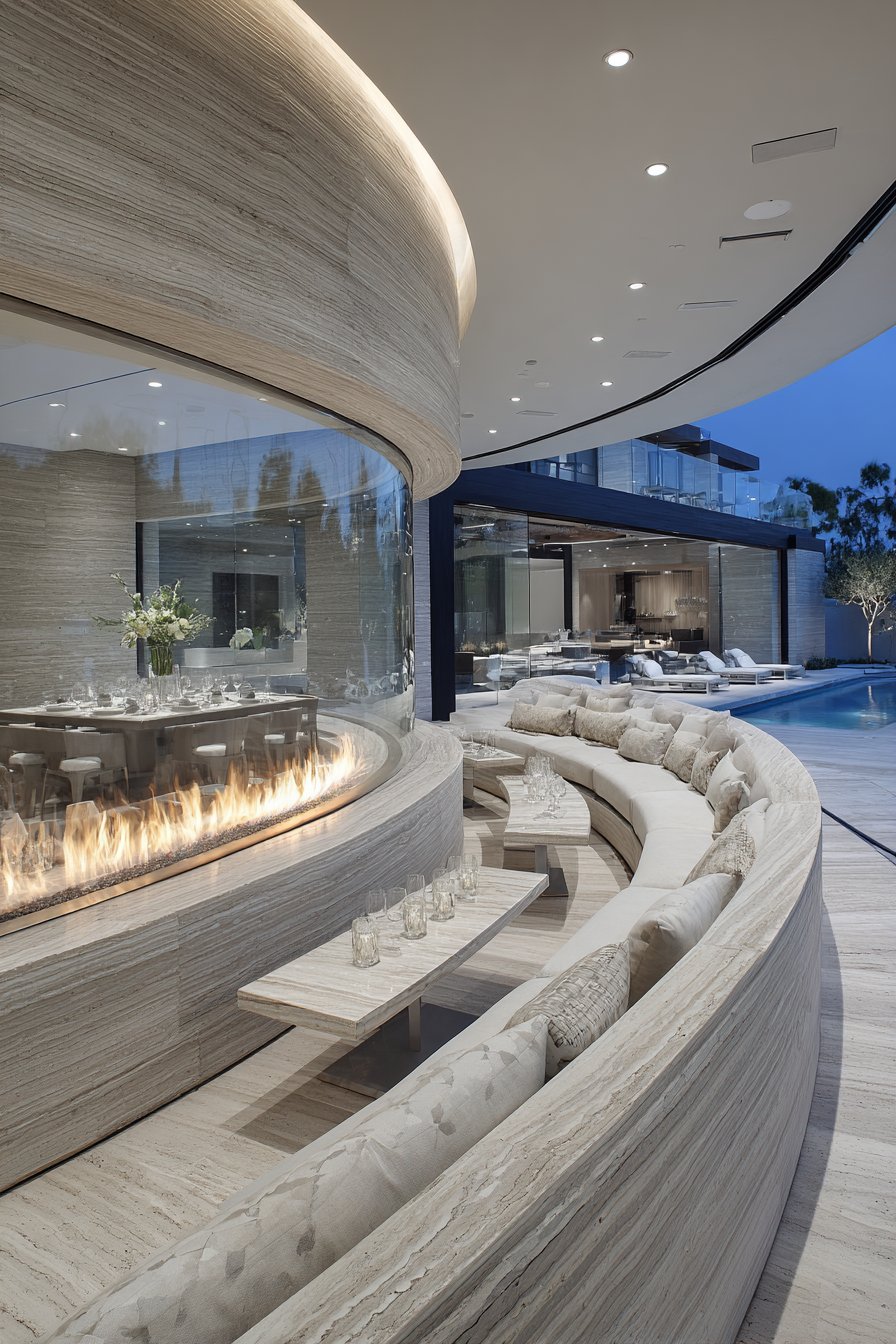
The living side features a curved sectional sofa positioned to face the fire, creating an intimate conversation area where the flames become the natural focus during evening gatherings. Curved seating brings a softer, more organic quality to the space while encouraging social interaction—the curve naturally draws people together rather than creating the formal facing that straight sofas can impose. The generous proportions of a sectional provide ample seating for entertaining while the curved form prevents the large piece from feeling boxy or rigid. The positioning facing the fire takes full advantage of the warmth and visual interest the fireplace provides, making this the natural gathering spot during cooler months.
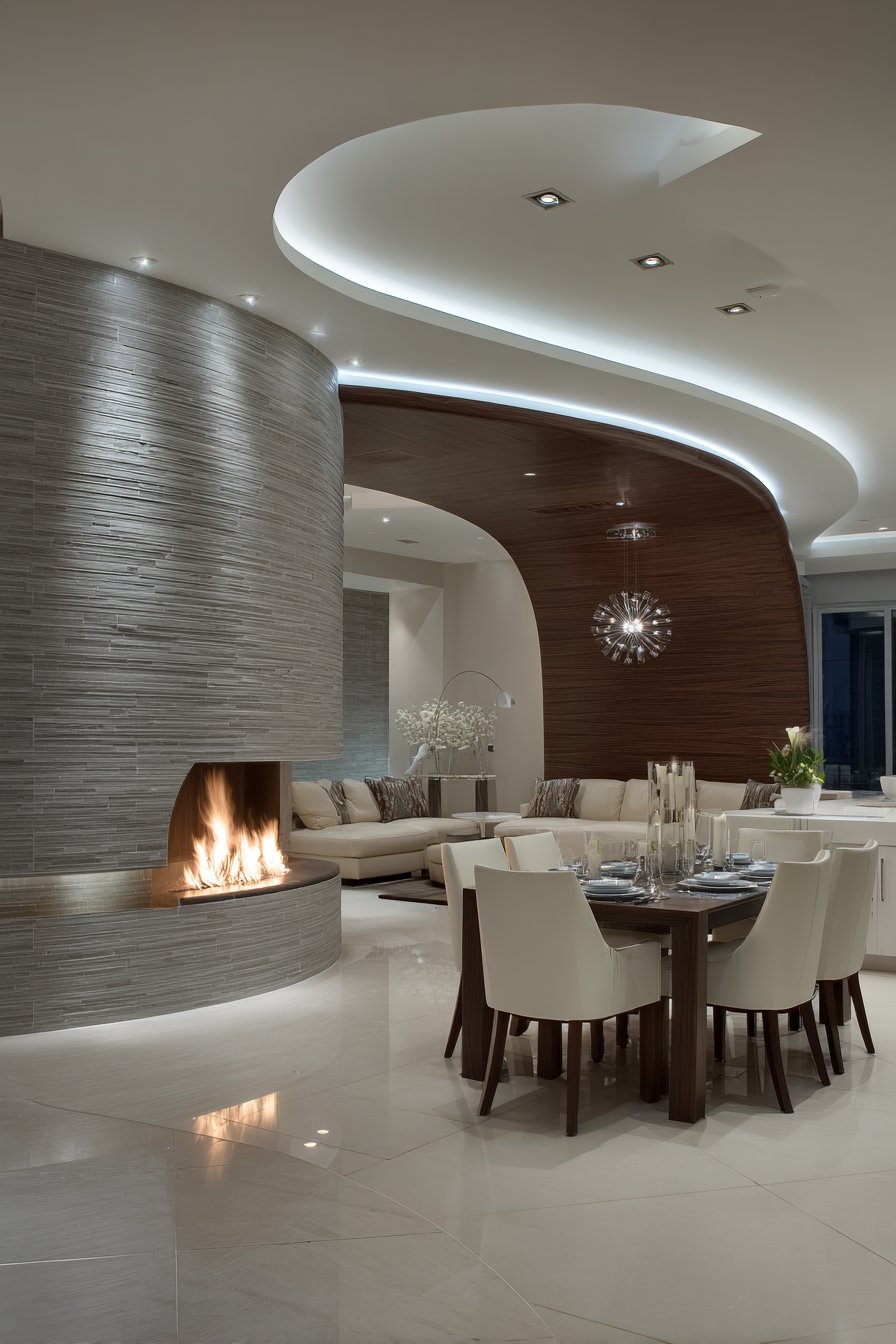
The dining area takes a different approach with a rectangular table positioned to enjoy the fire’s ambiance from a perpendicular angle. This placement allows diners to appreciate the flickering flames as atmospheric backdrop rather than direct focal point, creating the perfect balance between ambiance and conversation. The combination of soft lighting from the fireplace and recessed ceiling fixtures creates layered illumination that can be adjusted for different moods and occasions—bright for family dinners, dimmed for romantic meals, or glowing primarily from the fire for intimate gatherings.
Key Design Tips: Consult with a licensed contractor and obtain necessary permits before installing a two-sided fireplace—this is a significant structural modification requiring proper venting, gas lines, and fire safety compliance. Consider the heat output carefully, especially in smaller spaces where a powerful fireplace might create uncomfortable temperatures. Install the fireplace with adequate clearance from combustible materials according to manufacturer specifications and local building codes. Plan the stone surround to extend at least 12 inches beyond the fire opening on all sides for safety and proportion. Consider including built-in storage or display niches within the stone surround to add functionality. Install the fireplace with convenient controls accessible from the living area for easy operation. Ensure proper ventilation to prevent any carbon monoxide concerns. Budget appropriately—a custom two-sided fireplace represents a significant investment but adds substantial value and enjoyment to your home.
9. Japanese Shoji Screen Panel System
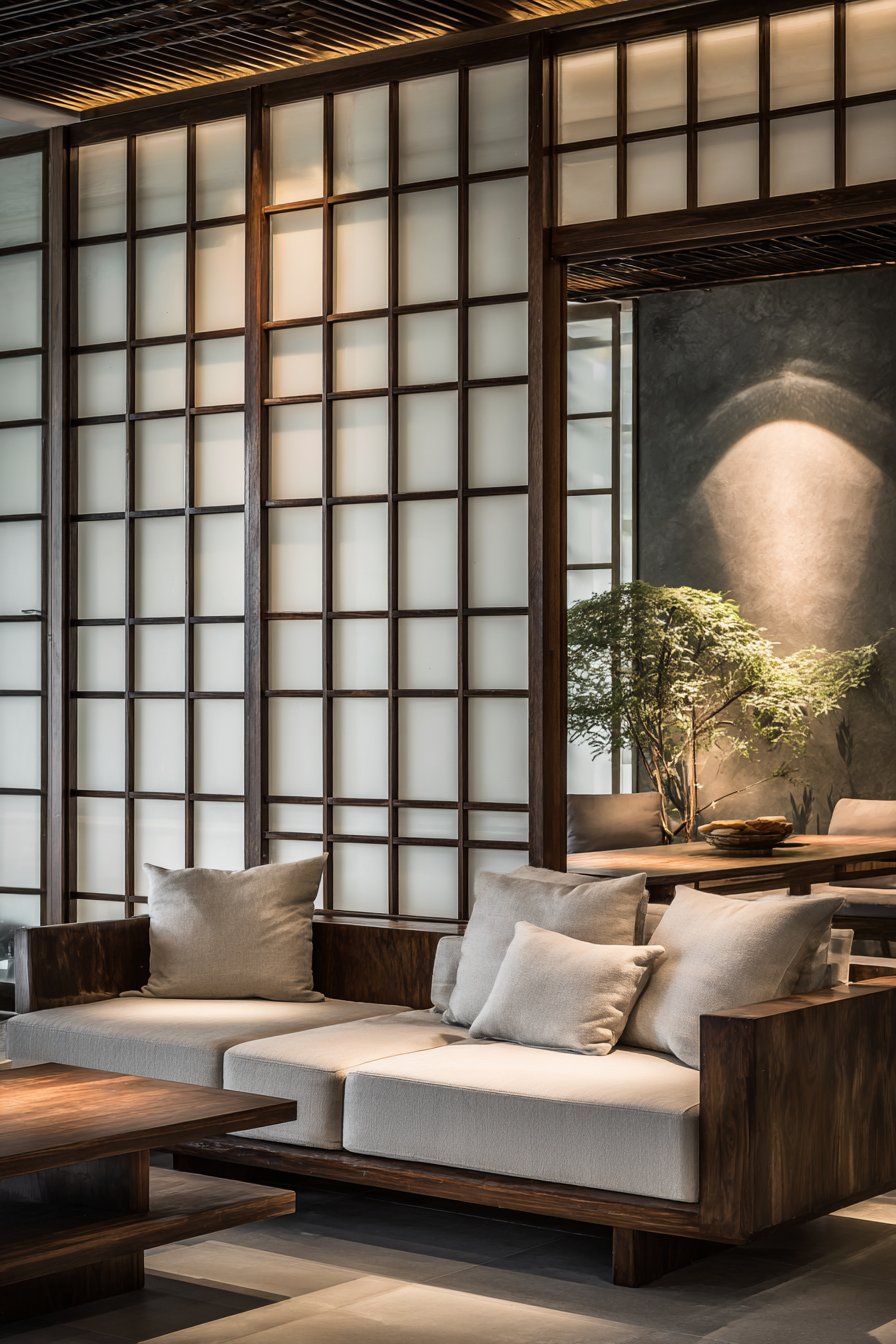
The Japanese shoji screen partition brings centuries of refined aesthetic tradition and thoughtful craftsmanship to living and dining room partition ideas. These traditional sliding panels feature translucent rice paper or modern synthetic alternatives stretched within dark wood frames, creating a divider that diffuses natural light beautifully while providing adjustable privacy. The shoji system embodies fundamental Japanese design principles: simplicity, natural materials, connection to light, and flexibility of space. The panels slide smoothly along floor and ceiling tracks, allowing you to completely reconfigure your space based on daily needs—fully open for an expansive feel, partially closed for subtle definition, or fully closed for complete separation.
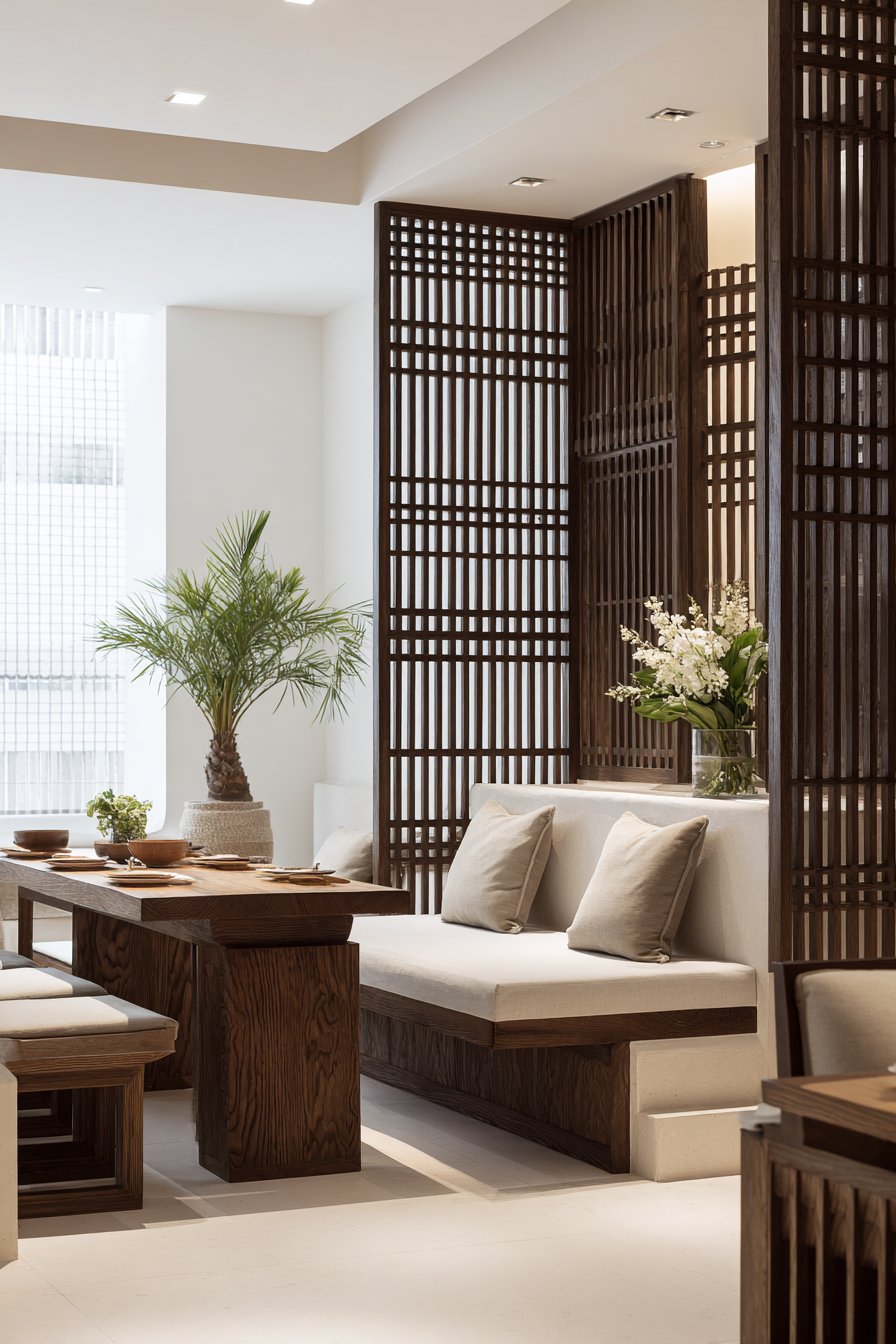
The construction of authentic shoji screens requires meticulous craftsmanship and attention to detail. The wooden frames—traditionally made from Japanese cypress, cedar, or pine—feature precise joinery with subtle reveals and perfectly fitted corners that demonstrate woodworking mastery. The grid pattern created by the frame mullions provides geometric order and rhythm, with spacing carefully calculated to create pleasing proportions based on traditional Japanese measurements. The rice paper or synthetic alternative stretched within each grid opening diffuses light in a way that solid or clear glass cannot replicate, creating a soft, ethereal glow that transforms harsh sunlight into gentle, even illumination. This quality of light creates a serene atmosphere that changes throughout the day, celebrating the passage of time and the beauty of natural cycles.
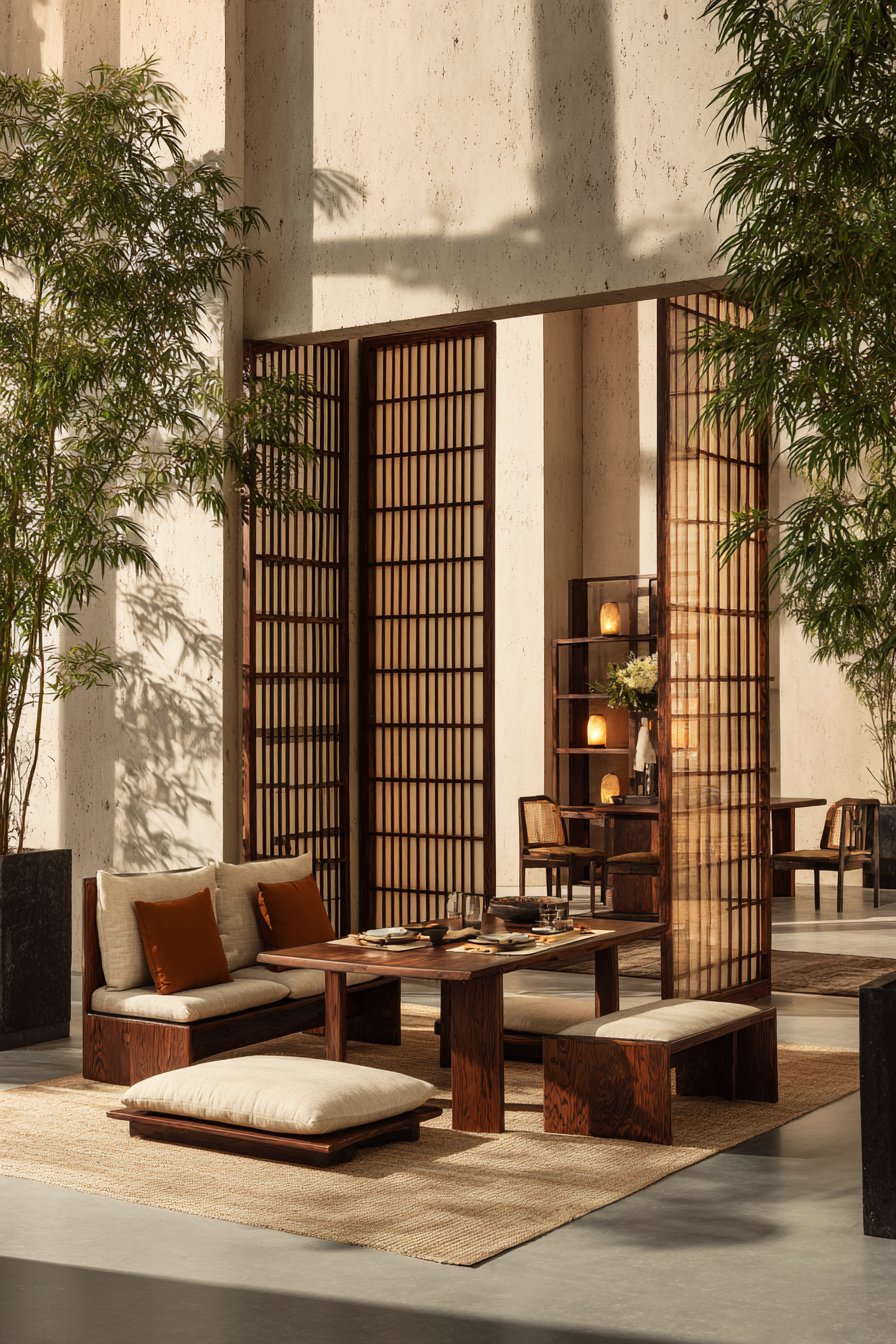
The living space demonstrates restraint and intentionality with low platform seating that keeps the sight lines horizontal and emphasizes connection to the ground plane. This low furniture approach is traditional in Japanese design, where sitting closer to the floor creates a more humble, meditative relationship with the space. Neutral cushions in natural fabrics like cotton, linen, or silk provide comfort without introducing visual clutter through excessive color or pattern. The minimal approach to accessories and decoration allows the architecture—including the beautiful shoji screens—to be the primary focus, creating a calm environment free from unnecessary stimulation.
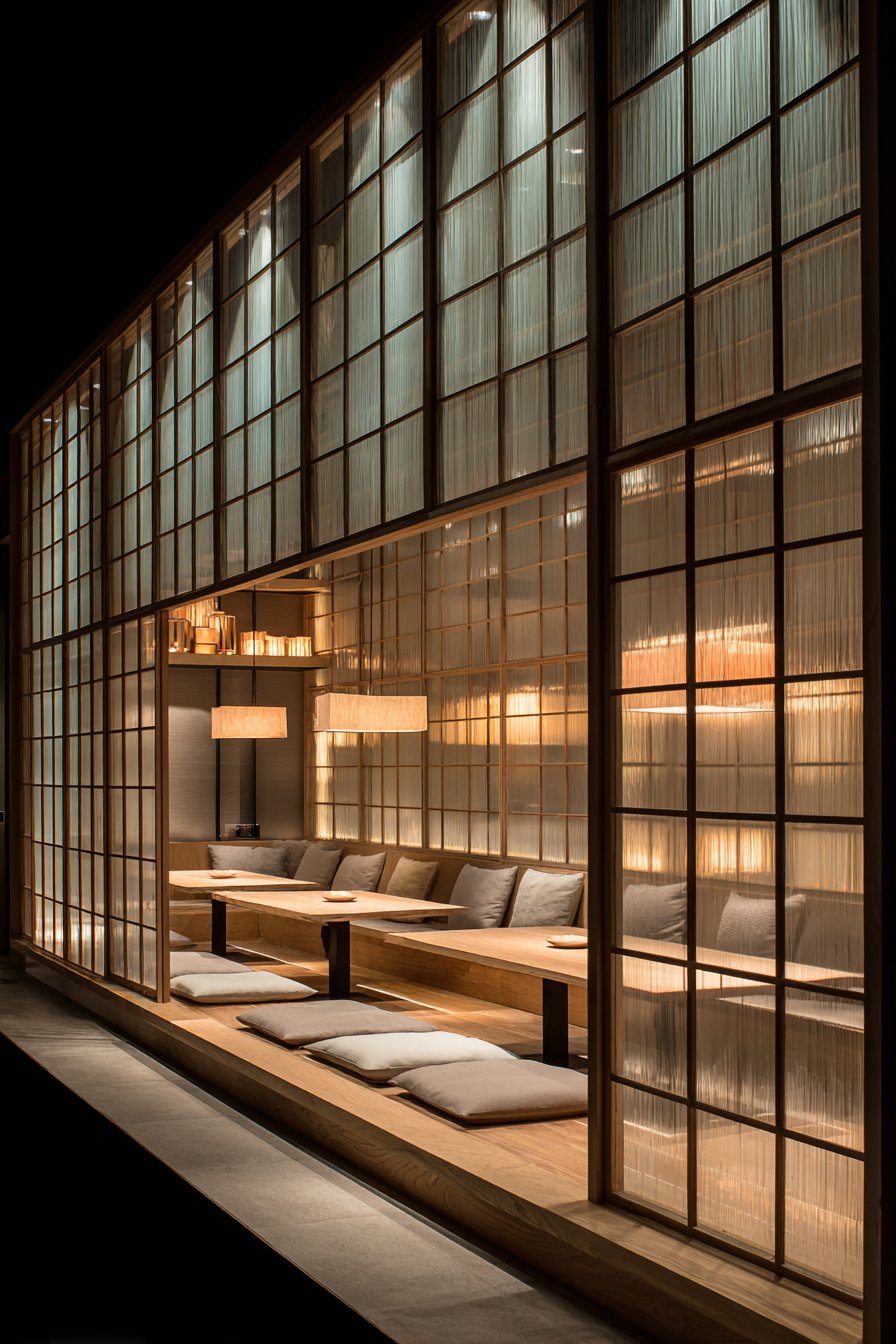
The dining area continues the Japanese aesthetic with a simple wooden table crafted from solid wood with visible grain patterns that celebrate the natural beauty of the material. Bench seating on one or both sides of the table reinforces the low, horizontal emphasis while providing flexible seating capacity. The soft ambient lighting creates gentle shadows on the translucent shoji screens, emphasizing their texture and the delicate grid pattern of the frames. This quality of light supports the zen atmosphere, creating spaces that feel sanctuary-like in their peacefulness and intentional simplicity.
Key Design Tips: Source authentic shoji screens from Japanese craftspeople or reputable suppliers who understand traditional construction methods, or work with a skilled woodworker who can replicate the aesthetic with proper techniques. Ensure the track system is precisely installed for smooth, effortless sliding—even slight misalignment will cause binding and frustration. Consider using modern synthetic papers designed to mimic rice paper but with better durability and resistance to tearing, especially in homes with children or pets. Protect the rice paper from moisture and direct contact which can cause tearing or staining. Maintain the wooden frames with occasional gentle cleaning using barely damp cloths—avoid excessive moisture which can warp the wood. Replace torn rice paper panels as needed to maintain the crisp, pristine appearance. Install screens with adequate clearance from furniture and traffic patterns to prevent accidental damage. Embrace the honest simplicity of the design by keeping adjacent walls and furnishings minimal and uncluttered.
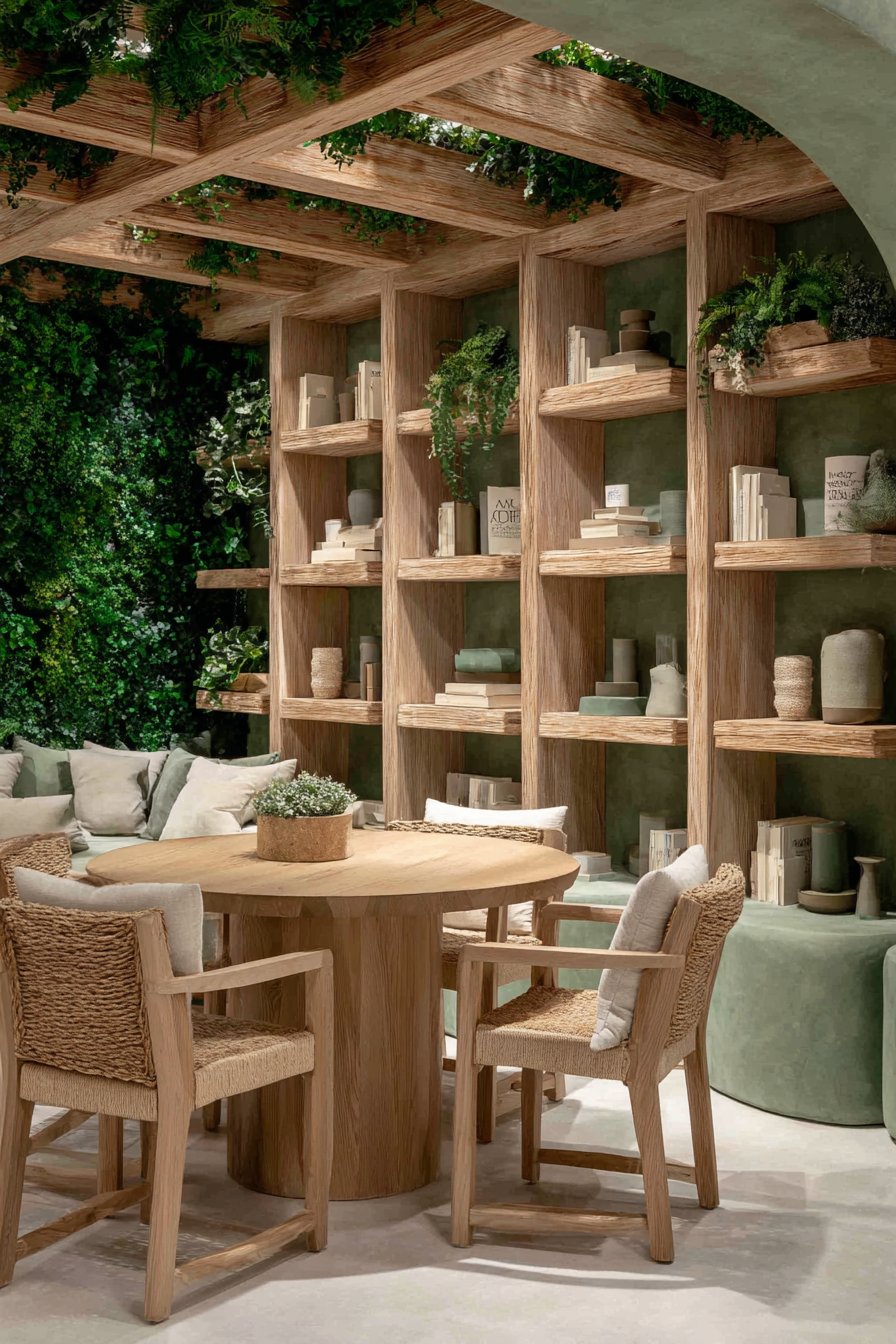
10. Biophilic Vertical Garden Wall Partition
The living wall partition represents one of the most innovative and environmentally conscious living and dining room partition ideas, bringing the vitality and air-purifying benefits of nature directly into your interior spaces. This stunning divider features a vertical garden system with modular planters arranged floor-to-ceiling, supporting a diverse collection of living plants that create a lush green separation between zones. The biophilic design approach—incorporating natural elements into built environments—offers proven benefits for mental health, stress reduction, and overall wellbeing, making this partition choice both beautiful and therapeutic. The integrated irrigation system ensures plants receive consistent moisture without requiring daily hand-watering, making maintenance manageable even for busy households.
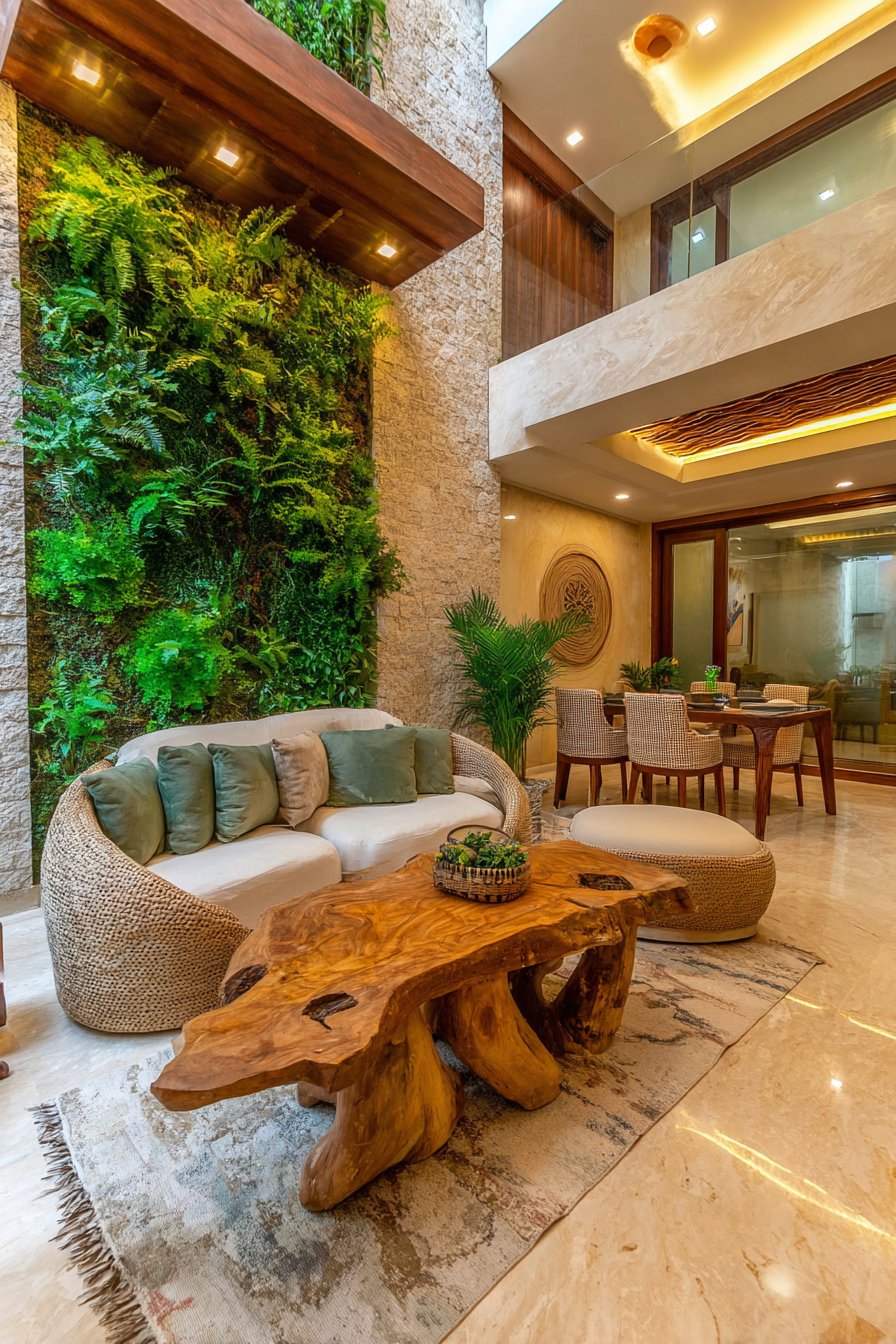
The selection of plants for a vertical garden wall requires careful consideration of light conditions, maintenance requirements, and visual composition. Ideal candidates include pothos varieties with their trailing vines and heart-shaped leaves, ferns that bring delicate texture and lush fullness, spider plants with their architectural form and air-purifying properties, and philodendrons that offer reliable growth and varied leaf shapes. Combining different plant types creates visual interest through varied leaf sizes, shapes, and shades of green—from deep forest tones to bright lime—while different growth habits provide dimensional variety with trailing, upright, and bushy forms all working together. The living nature of this partition means it constantly evolves and changes, growing fuller over time and requiring periodic trimming and maintenance to keep it looking its best.
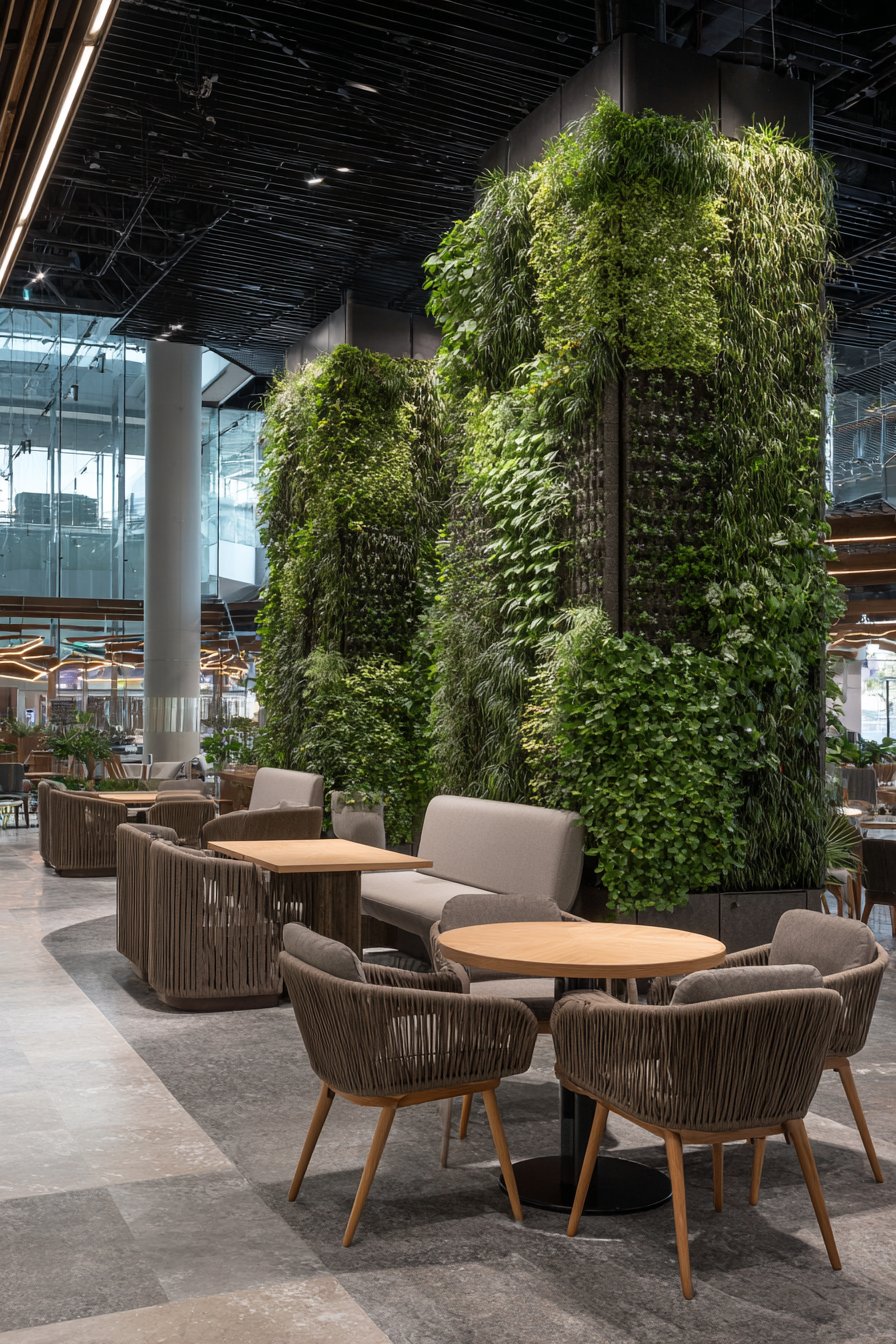
The living area embraces organic forms and natural materials with furniture featuring curved lines and earth-tone upholstery that complements the green wall. Organic-shaped pieces—perhaps a sculptural coffee table with flowing lines or a sofa with rounded arms—echo the irregular, natural forms found in the plant wall, creating visual harmony between furnishings and the living partition. Earth tones including terracotta, warm browns, sandy beiges, and soft ochres create a natural color palette that allows the vibrant green of the plants to be the star while grounding the space in colors drawn from nature. Natural fiber textiles like jute, sisal, cotton, and linen reinforce the organic, eco-conscious aesthetic.
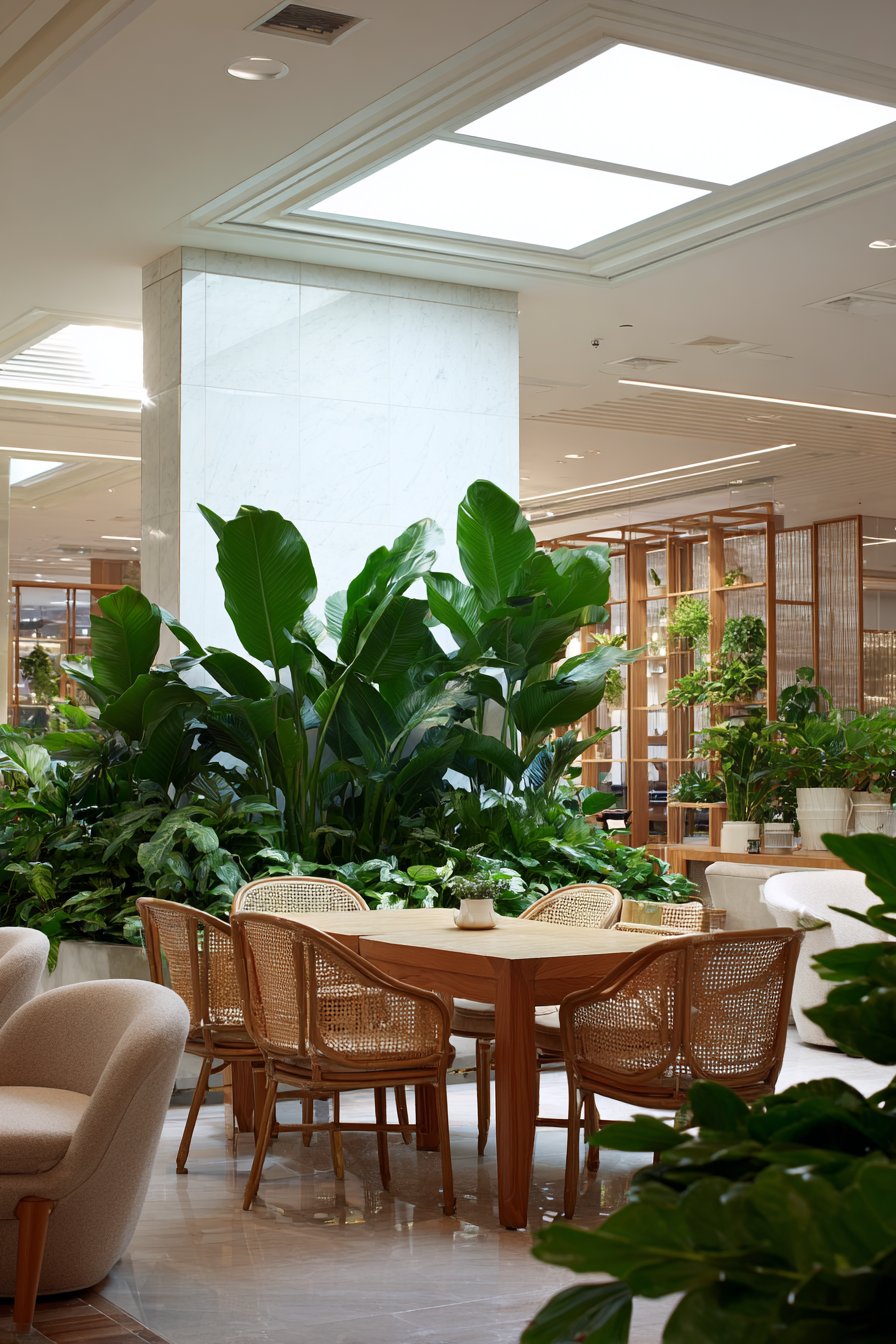
The dining zone features a natural wood table celebrating visible grain patterns and organic edge profiles that might follow the tree’s natural contours. Woven rattan chairs introduce additional natural materials and traditional craftsmanship while their open, airy construction prevents the dining area from feeling heavy despite the substantial plant wall nearby. The natural light from skylights serves the crucial function of nourishing the plants while illuminating both spaces with soft, diffused daylight. The skylight positioning ensures the living wall receives adequate light for photosynthesis—a critical consideration when planning a vertical garden installation.
Key Design Tips: Consult with a professional living wall installer who can design an appropriate irrigation system with proper drainage to prevent water damage to your floors and walls. Ensure adequate natural or artificial light reaches all plants—most indoor plants require at least 6-8 hours of bright, indirect light daily. Start with low-maintenance, indoor-appropriate plants that are forgiving of occasional neglect. Plan for regular maintenance including pruning, dead-heading, fertilizing, and occasional plant replacement. Consider the weight of the entire system including planters, soil, plants, and water—ensure your floor and wall structure can support the load. Install waterproofing behind the living wall system to protect the building structure. Choose a planter system that allows for easy plant replacement without dismantling the entire wall. Budget for ongoing maintenance costs including plant replacement, fertilizer, and potential professional maintenance visits. Ensure good air circulation around the living wall to prevent mold growth and promote plant health.
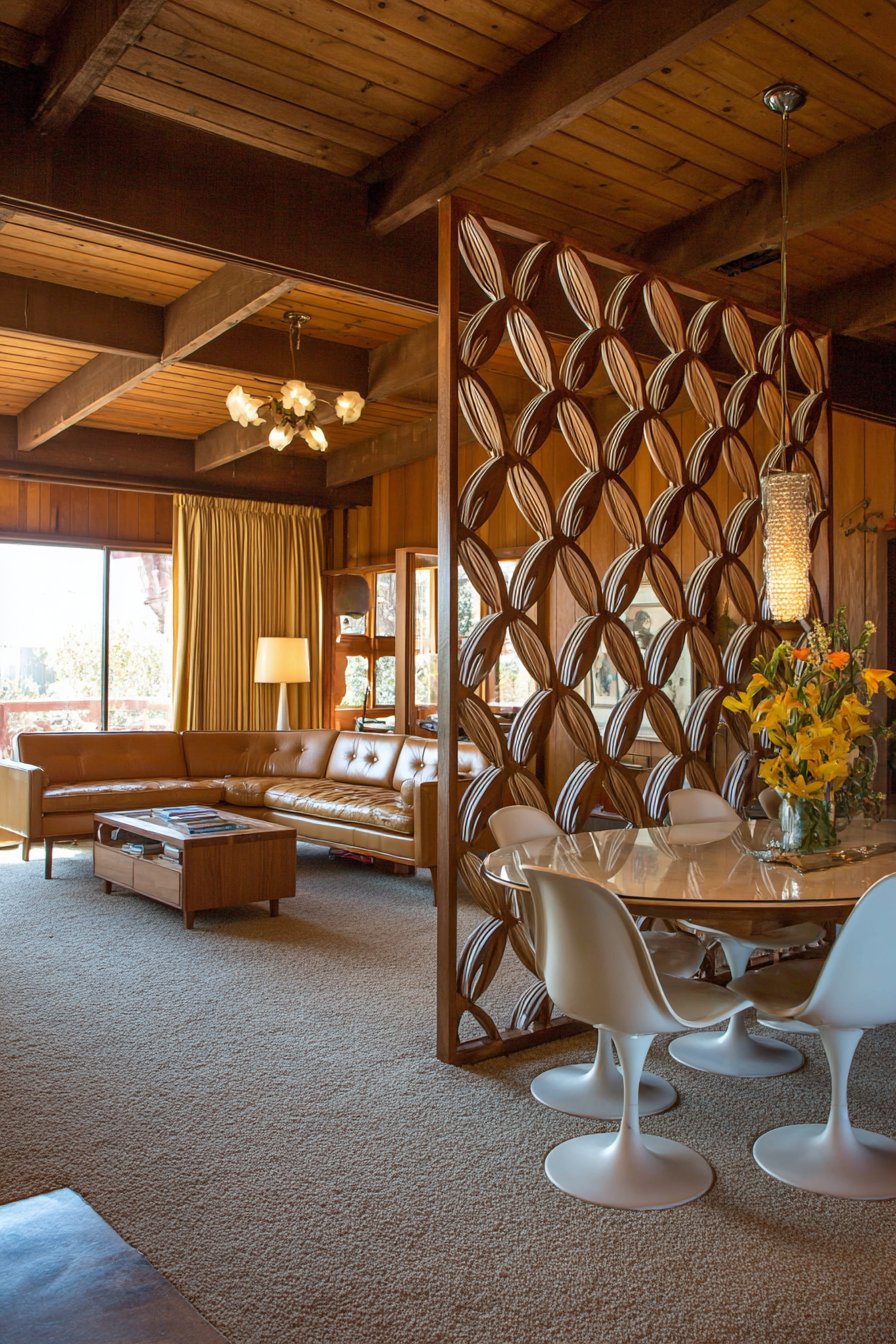
11. Mid-Century Modern Teak Lattice Screen
The teak lattice partition perfectly captures the sophisticated simplicity and organic warmth of mid-century modern design, offering living and dining room partition ideas that feel both nostalgic and timeless. This vintage-inspired divider showcases teak wood—prized for its beautiful honey-brown color, straight grain pattern, and natural oil content that makes it exceptionally durable. The geometric diamond pattern creates visual rhythm and interest while the open lattice construction maintains light flow and visual connection between spaces. The angles and intersections of the diamond grid create ever-changing shadow patterns as light moves throughout the day, adding dynamic visual interest that solid partitions cannot provide.
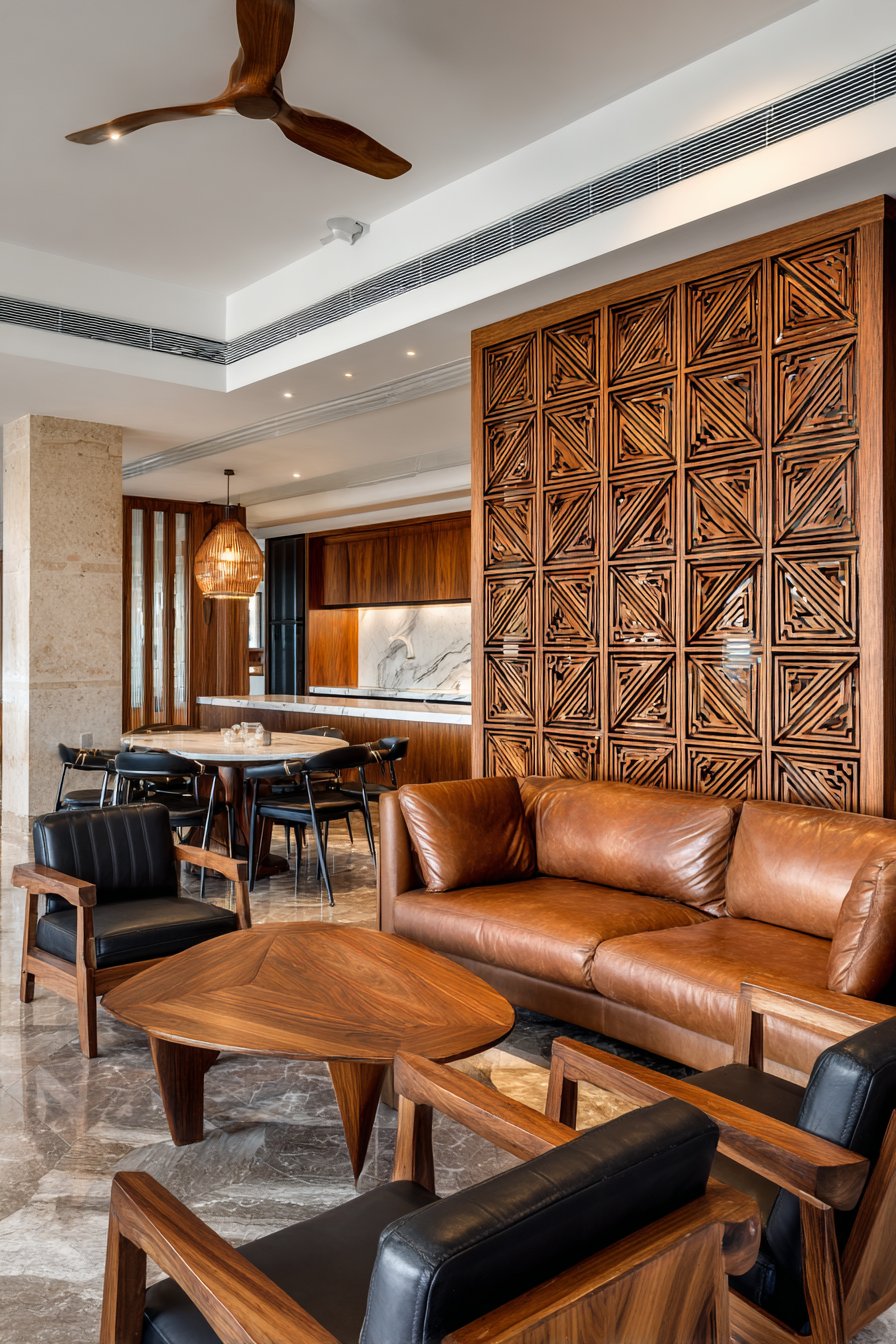
The inherent qualities of teak make it an ideal material for furniture and architectural elements that will be enjoyed for generations. The natural oils within teak protect it from moisture damage, insect infestation, and deterioration, while the dense grain structure ensures exceptional strength and durability. Over time, teak develops a rich patina that deepens its color and character, improving with age rather than declining. The straight, even grain typical of quality teak creates subtle visual texture that adds warmth without being distracting. The warm honey to medium brown tones of teak bring organic warmth that grounds mid-century modern spaces which can sometimes feel cool or austere with excessive use of manufactured materials.
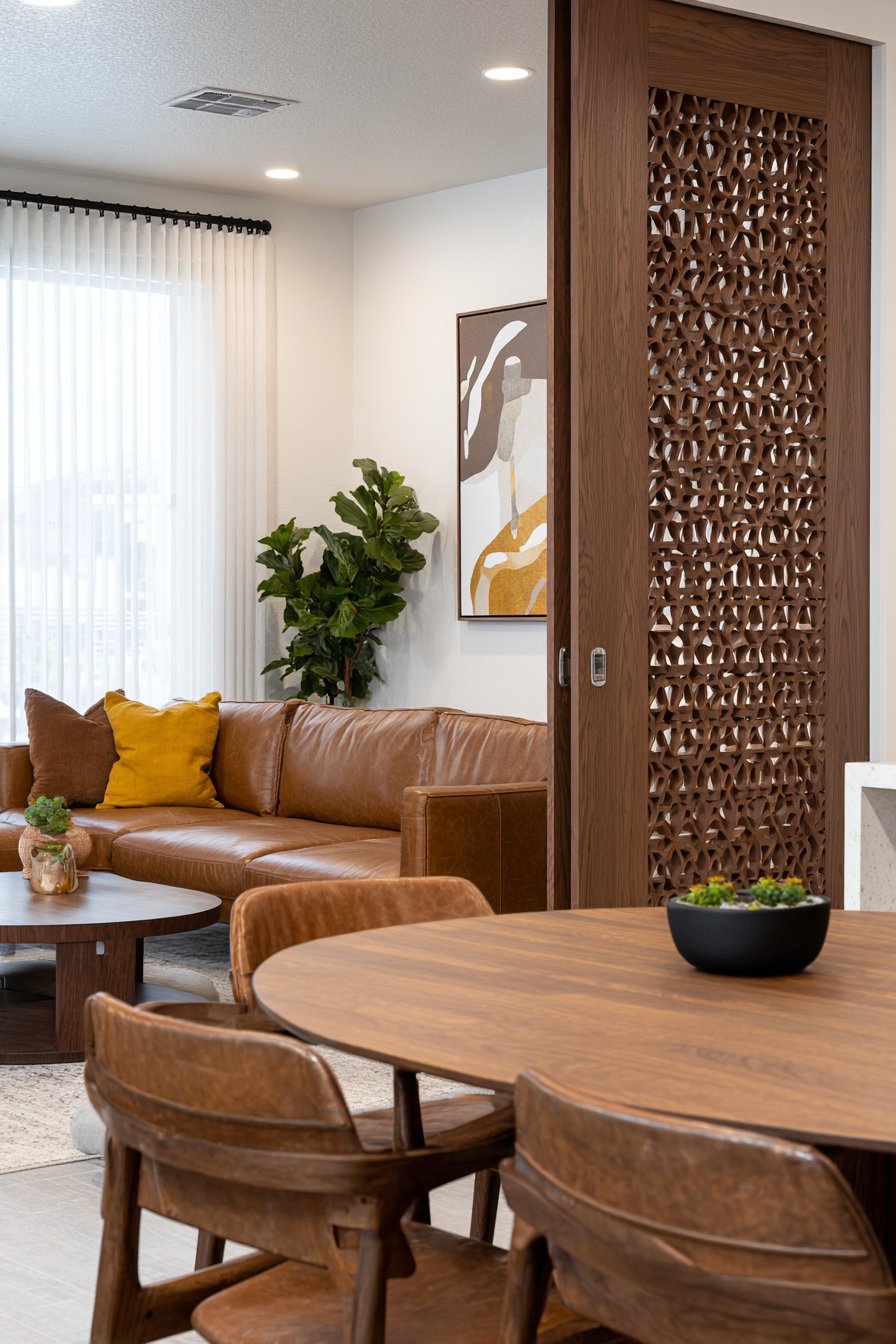
The living side features a cognac leather sofa that represents the height of mid-century luxury and style. The rich, warm brown leather with its natural patina and subtle grain variations creates an inviting seating piece that improves with age and use. Cognac leather—sometimes called caramel or tan leather—offers versatility that works with many color schemes while bringing enough warmth to balance cooler elements in the space. Walnut side tables continue the wood theme with their deep chocolate tones that complement the teak partition without matching it exactly—mid-century design often celebrates varied wood tones rather than insisting on matched wood species.
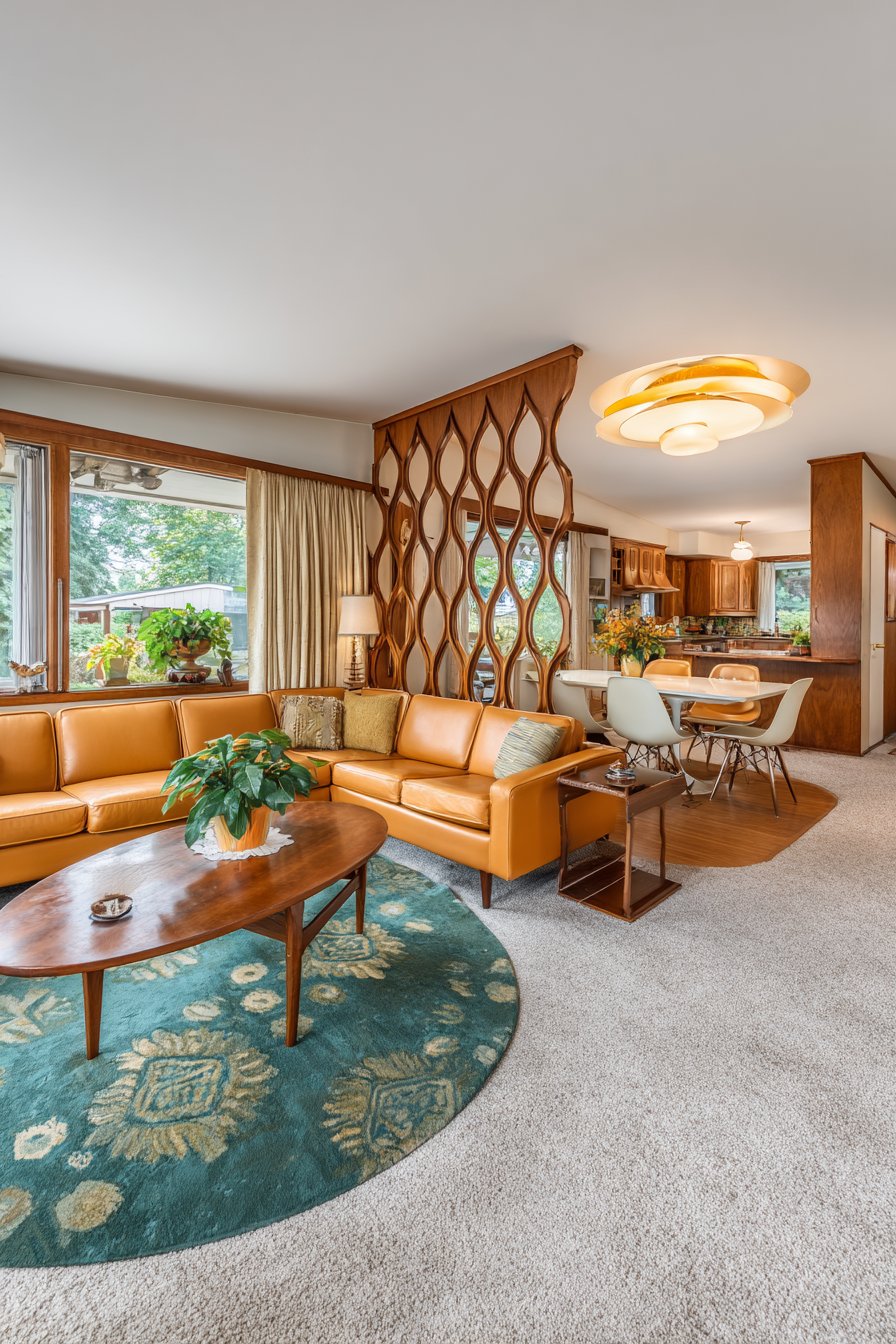
The dining area showcases iconic mid-century furniture with an oval tulip table—that sculptural pedestal base design that seems to defy gravity—paired with molded plastic chairs that demonstrate the era’s embrace of new materials and manufacturing techniques. The oval shape softens the geometry of the space while the white or cream finish creates contrast against the warm wood tones. The molded chairs, perhaps in colors like orange, turquoise, or avocado green, introduce the playful pops of color characteristic of mid-century style. The warm natural lighting that highlights the wood grain patterns throughout creates the cohesive, organic atmosphere that makes mid-century modern design so enduringly appealing.
Key Design Tips: Source authentic vintage pieces for true mid-century character or invest in quality reproductions from reputable manufacturers who respect the original designs. Ensure teak pieces have been properly restored and sealed if vintage—look for even color, tight joinery, and smooth surfaces. Position the lattice screen where it won’t be subjected to excessive moisture or heat which can affect even durable teak over time. Maintain teak with occasional cleaning using a slightly damp cloth and gentle wood cleaner formulated for oiled woods. Embrace the natural patina development rather than trying to keep teak looking brand new. Consider having a furniture restoration specialist periodically oil the teak to preserve its rich color and protect the wood. Ensure the lattice pattern is securely constructed—the angled pieces should be properly jointed rather than simply nailed together. Anchor the screen securely to floor and ceiling to prevent tipping. Complement teak tones with brass, copper, or bronze metal accents rather than chrome or silver which feel too cool beside warm wood.
12. Coastal White-Painted Shutter Panels
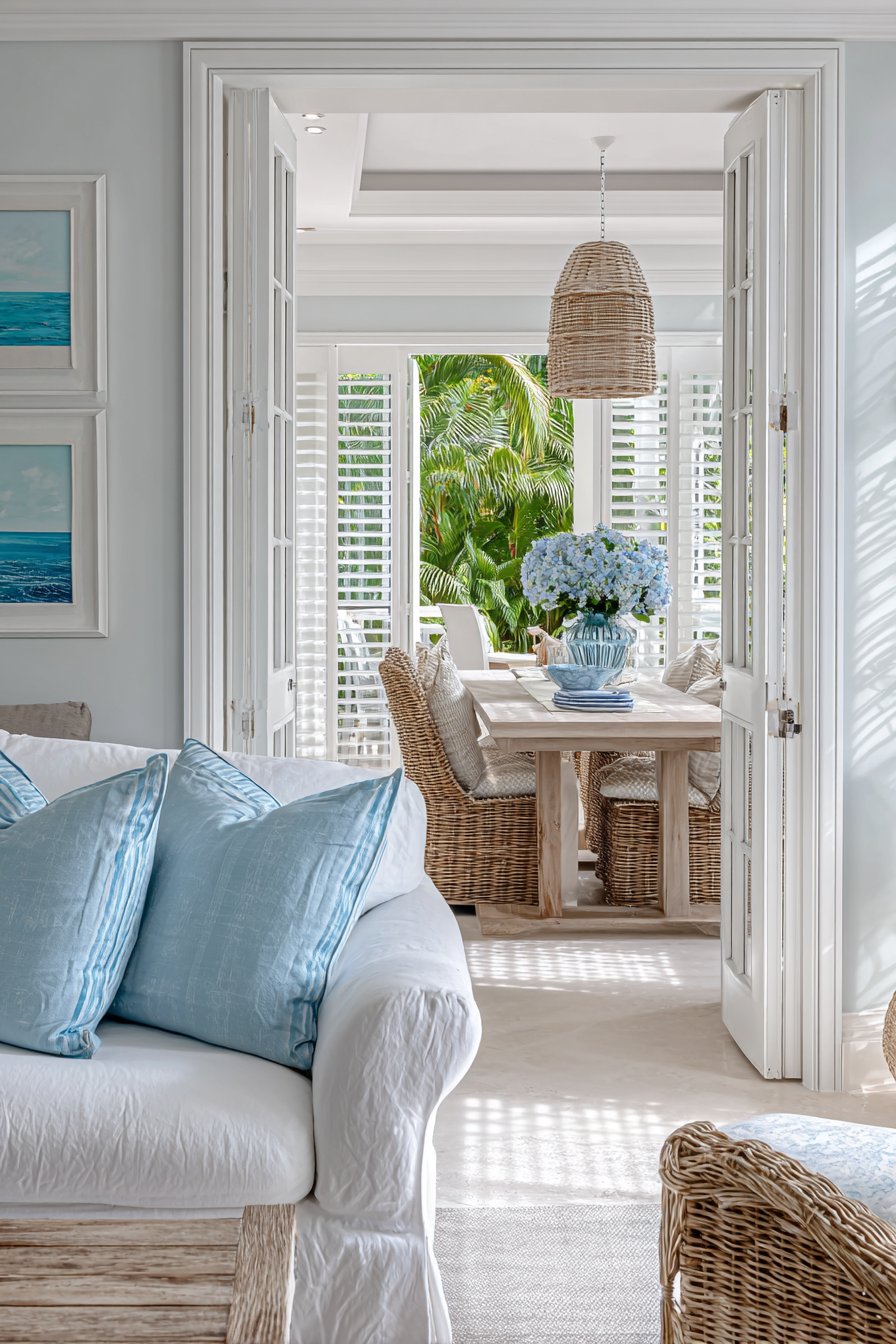
The folding shutter partition brings breezy, beach-inspired casualness to living and dining room partition ideas while offering exceptional flexibility and practical function. These white-painted wood shutters feature traditional louvered design that allows air circulation and adjustable light control—characteristics that made shutters essential in coastal climates but remain appealing in any setting. The folding panel configuration creates a versatile system that can be adjusted to various positions: fully extended for maximum separation, partially folded for subtle definition, or completely collapsed and pushed aside when you want a completely open floor plan. The painted finish in clean, crisp white creates the light, airy feeling essential to coastal design while the natural wood construction ensures durability and substantiality.
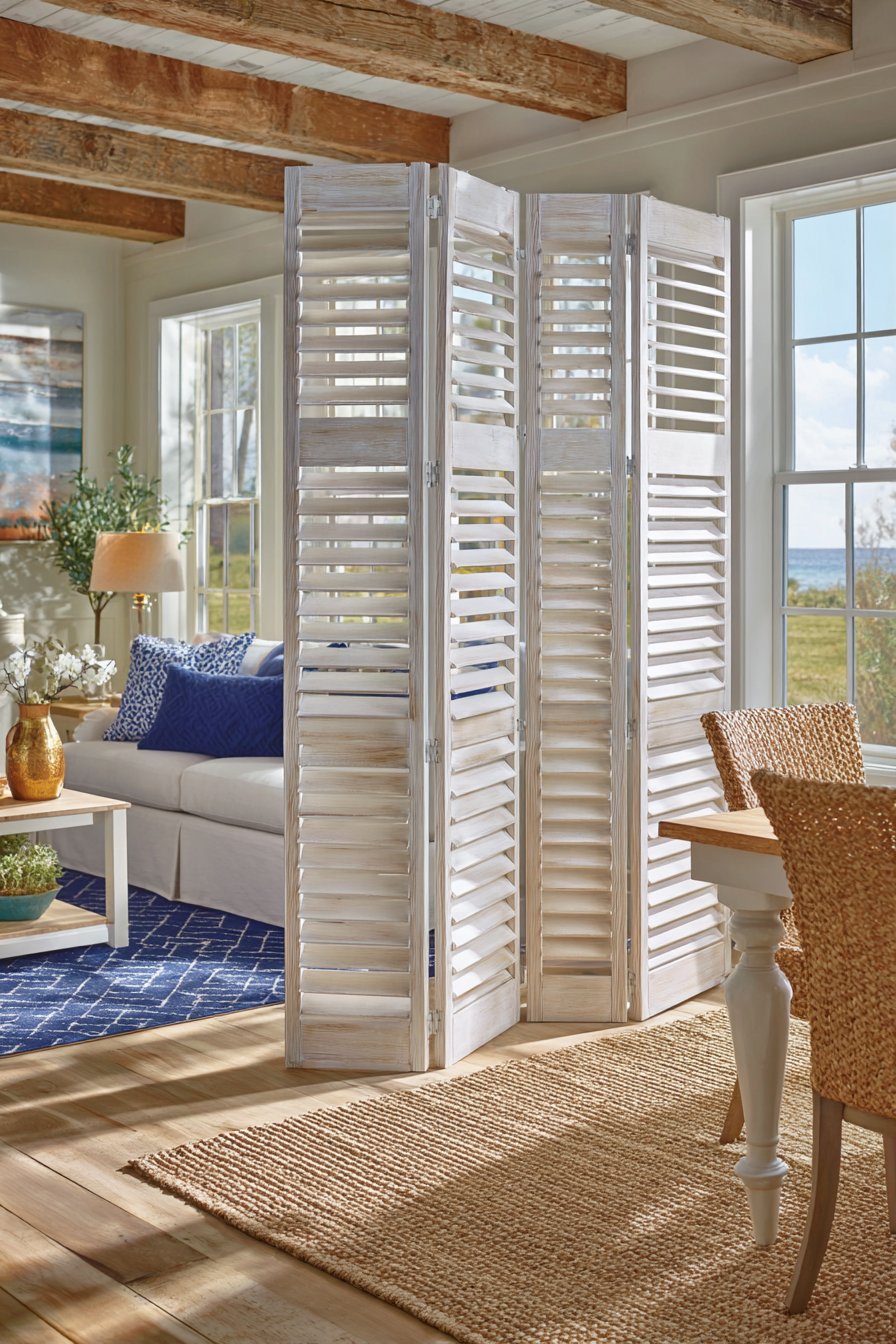
The louvered design of plantation shutters serves both practical and aesthetic purposes. The angled slats can be adjusted to control light levels and privacy—closed louvers create nearly complete privacy while open louvers allow air circulation and indirect light to filter through. This adjustability makes shutters ideal for partition use because you can modify the level of openness based on your immediate needs without moving the entire partition. The horizontal lines created by the louvers add visual interest and rhythm, breaking up the vertical expanse of the partition into human-scaled increments. The shadow patterns cast by angled louvers create additional visual complexity that changes throughout the day as light angles shift.
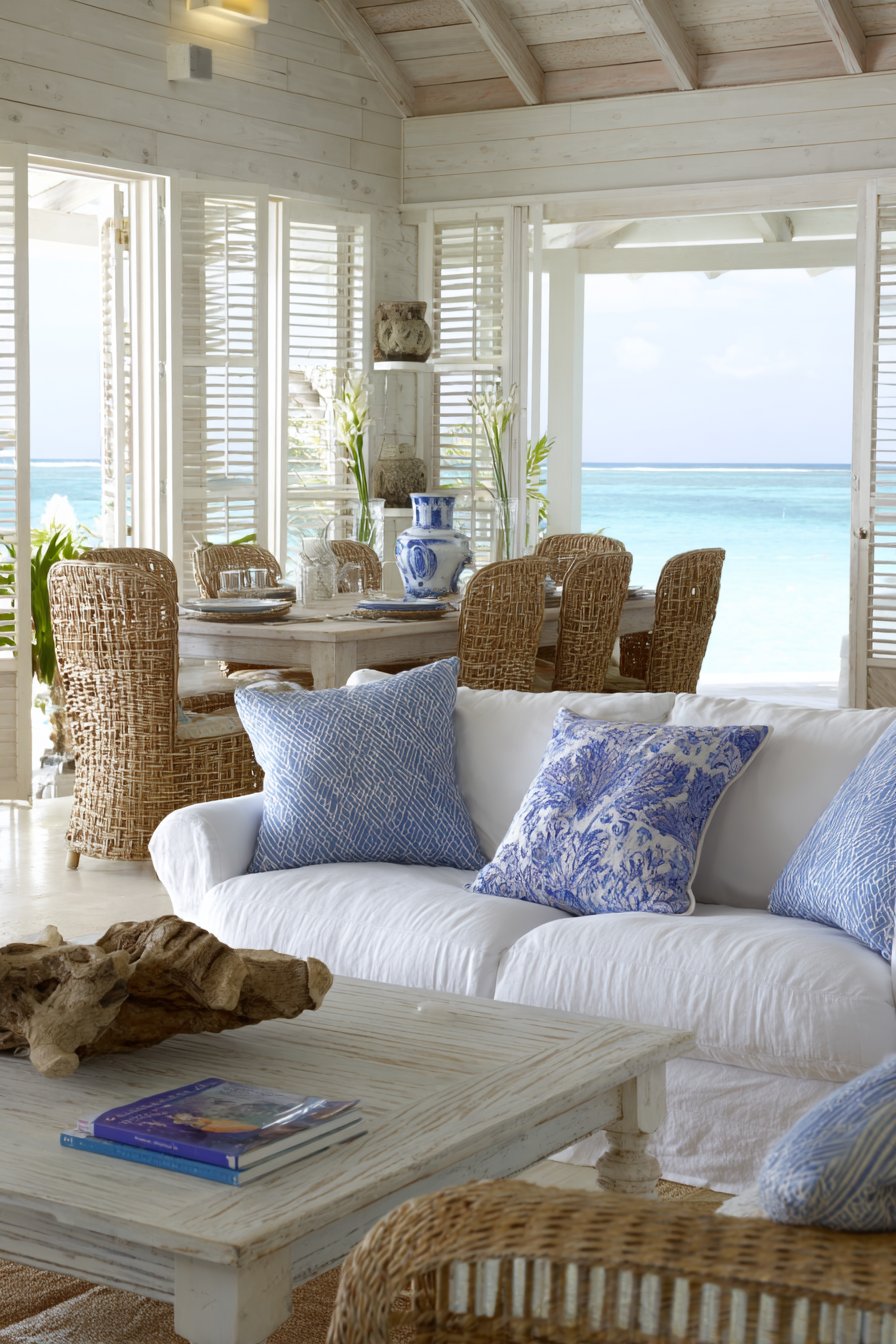
The living space embraces coastal comfort with a white slipcovered sofa that epitomizes relaxed, casual elegance. Slipcovers offer practical benefits—easy cleaning and seasonal updates—while their slightly rumpled, informal appearance conveys the lived-in comfort essential to coastal style. Blue accent pillows introduce the oceanic color connection, with shades ranging from soft sky blue to deep navy creating layers of aquatic reference. The white and blue color scheme creates the clean, refreshing feeling of sea and sand while remaining versatile enough to work with various decorating approaches.
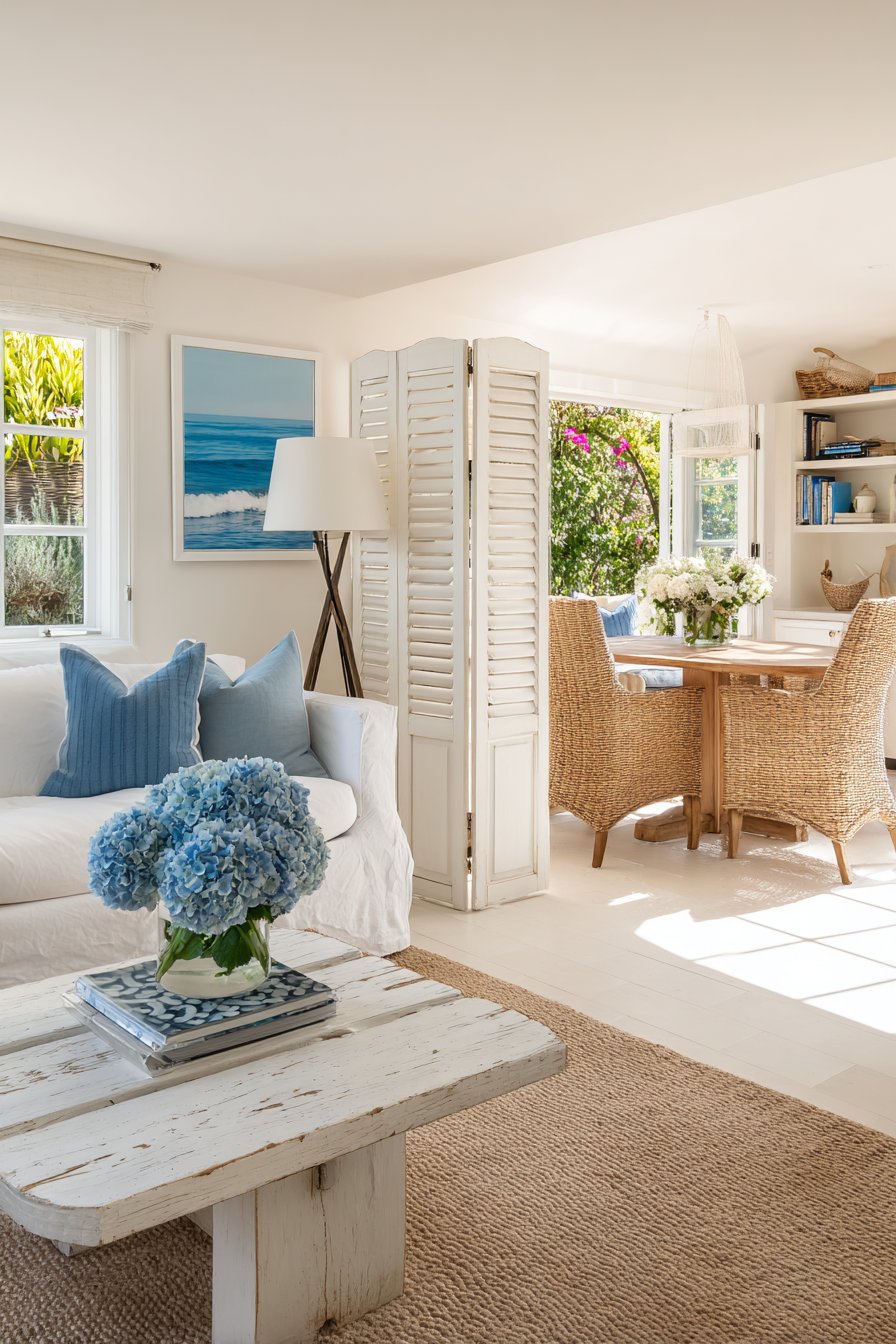
The dining area continues the coastal aesthetic with a whitewashed table that shows subtle wood grain texture through translucent white finish. This whitewashing technique celebrates the natural beauty of wood while lightening the overall appearance to match the bright, sun-filled aesthetic of beach houses. Natural fiber chairs woven from materials like rattan, seagrass, or wicker introduce organic texture and artisanal character. These natural materials bring essential warmth and dimensionality that prevent all-white coastal spaces from feeling sterile or cold. The bright daylight streaming through windows creates the ultimate coastal atmosphere—spaces flooded with natural light that blur the boundaries between interior and exterior, bringing the outdoors in.
Key Design Tips: Choose solid wood shutters rather than hollow core for better durability and more substantial feel. Invest in quality hinges that will withstand regular folding and unfolding without sagging or binding. Apply multiple coats of durable white paint suitable for high-use applications—semi-gloss or satin finishes are easier to clean than flat paint. Install floor-mounted pivot points and ceiling tracks or guides to prevent the folding partition from swaying or tipping. Adjust louver angles to control light and air flow based on your needs throughout the day. Maintain painted shutters with gentle cleaning using slightly damp cloths—avoid harsh chemicals that might damage the paint. Touch up any paint chips or scratches promptly to prevent moisture damage to the underlying wood. Consider installing the shutter panels on a track system that allows them to be completely pushed aside when not needed. Ensure adequate clearance for the folding panels to operate smoothly without hitting furniture or walls.
13. Industrial Exposed Brick Archway Divider
The exposed brick archway represents one of the most architecturally dramatic living and dining room partition ideas, transforming a structural element into a defining aesthetic feature. This partition celebrates the raw, honest materials of industrial construction—genuine masonry with its variations in brick color, mortar joints, and surface texture—paired with substantial steel beams that emphasize the structural honesty central to industrial style. The archway form creates natural division between spaces while maintaining generous openness for circulation and sightlines. Unlike added partitions, an exposed brick arch reads as original architecture, bringing gravitas and permanence that suggests the bones of the building itself.
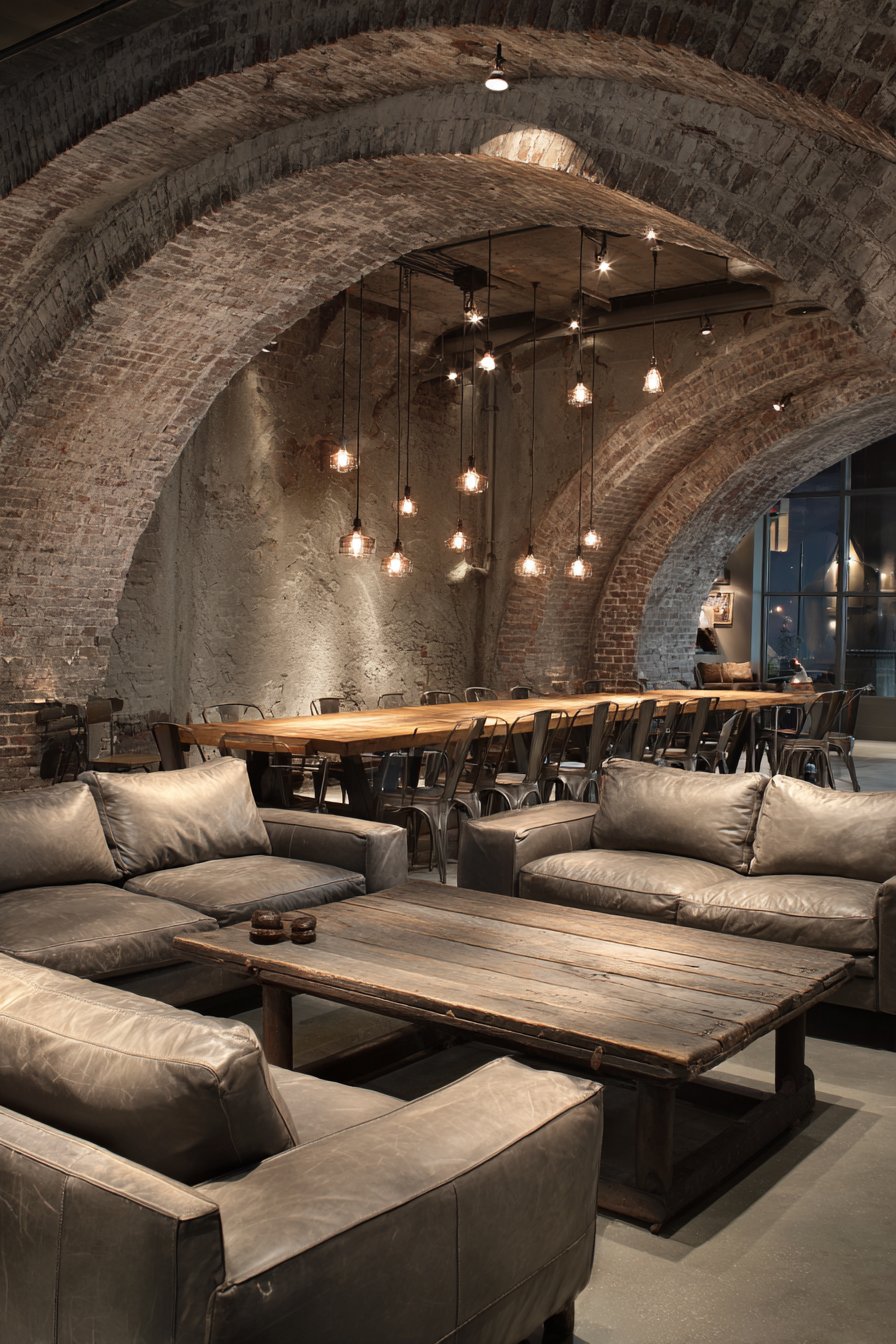
The visual appeal of exposed brick lies in its authentic imperfection and handcrafted quality. Each brick shows subtle color variations from the firing process, with tones ranging from deep red to orange, brown, and even purple undertones all appearing within a single wall. The mortar joints create horizontal and vertical rhythm, emphasizing the individual units that combine to create the whole structure. Surface texture varies from smooth, hard-fired faces to rougher textures that might show fingerprints or marks from the manufacturing process—evidence of human hands in the creation. Time adds additional character through slight crumbling, color shifts from oxidation or smoke exposure, and the general patina of age that gives exposed brick its soul.
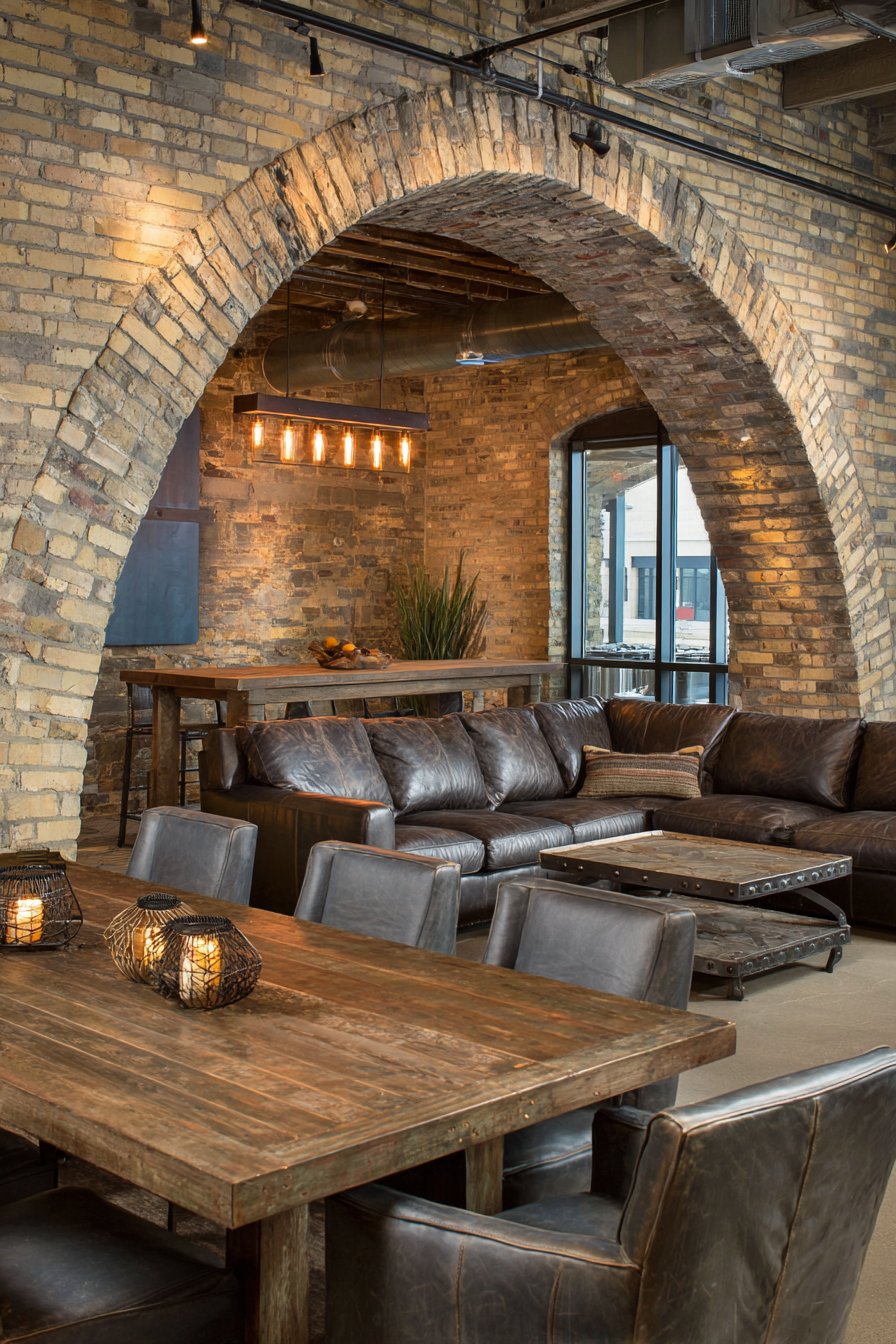
The steel beam support visible at the crown of the arch performs both structural and aesthetic functions. The massive beam—perhaps an I-beam or H-beam—carries the loads of the structure above while its industrial form and material become powerful design elements. The raw steel might show mill scale, slight surface rust, or could be sealed with clear coating to prevent further oxidation while preserving the authentic industrial appearance. The contrast between the warm, earthy tones of brick and the cool grey of steel creates material diversity that exemplifies industrial aesthetic—the honest celebration of construction materials in their unadorned state.
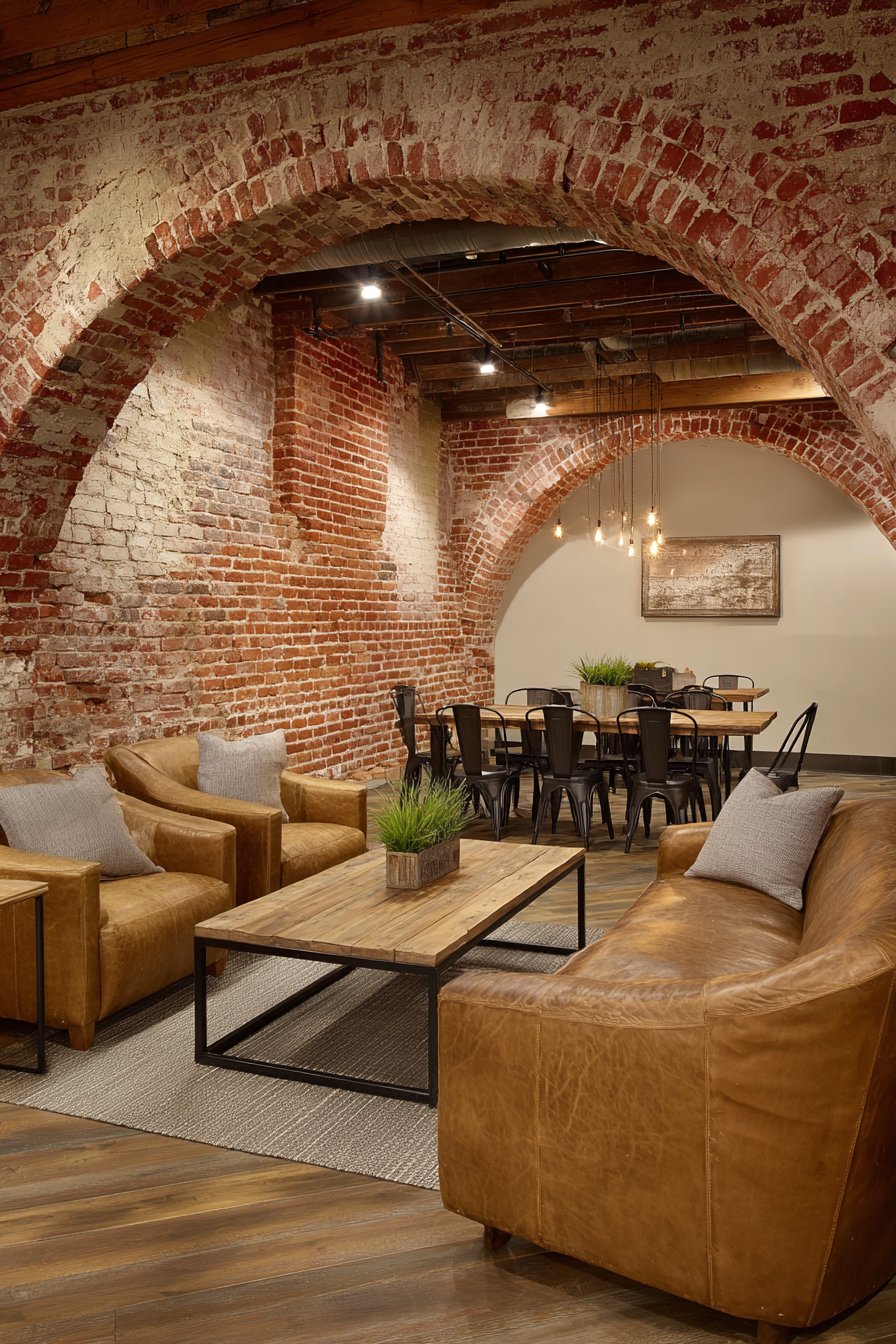
The living area features distressed leather seating with aged patina and visible wear that complements the vintage industrial setting. The leather might show color variations, subtle cracking, and the kind of character that only develops through years of use—qualities that feel at home beside century-old exposed brick. A metal coffee table with a industrial-style base—perhaps featuring pipe fittings, angle iron, or repurposed factory cart wheels—reinforces the utilitarian aesthetic. The dining side continues the theme with a reclaimed wood table showing rough-sawn texture and nail holes from its previous life paired with metal factory chairs that might include perforated seats, riveted construction, or stackable design from their original commercial use. Edison bulb pendant lighting adds vintage industrial character with visible filaments that glow warmly, suspended from fabric-wrapped cords or industrial pipe fixtures.
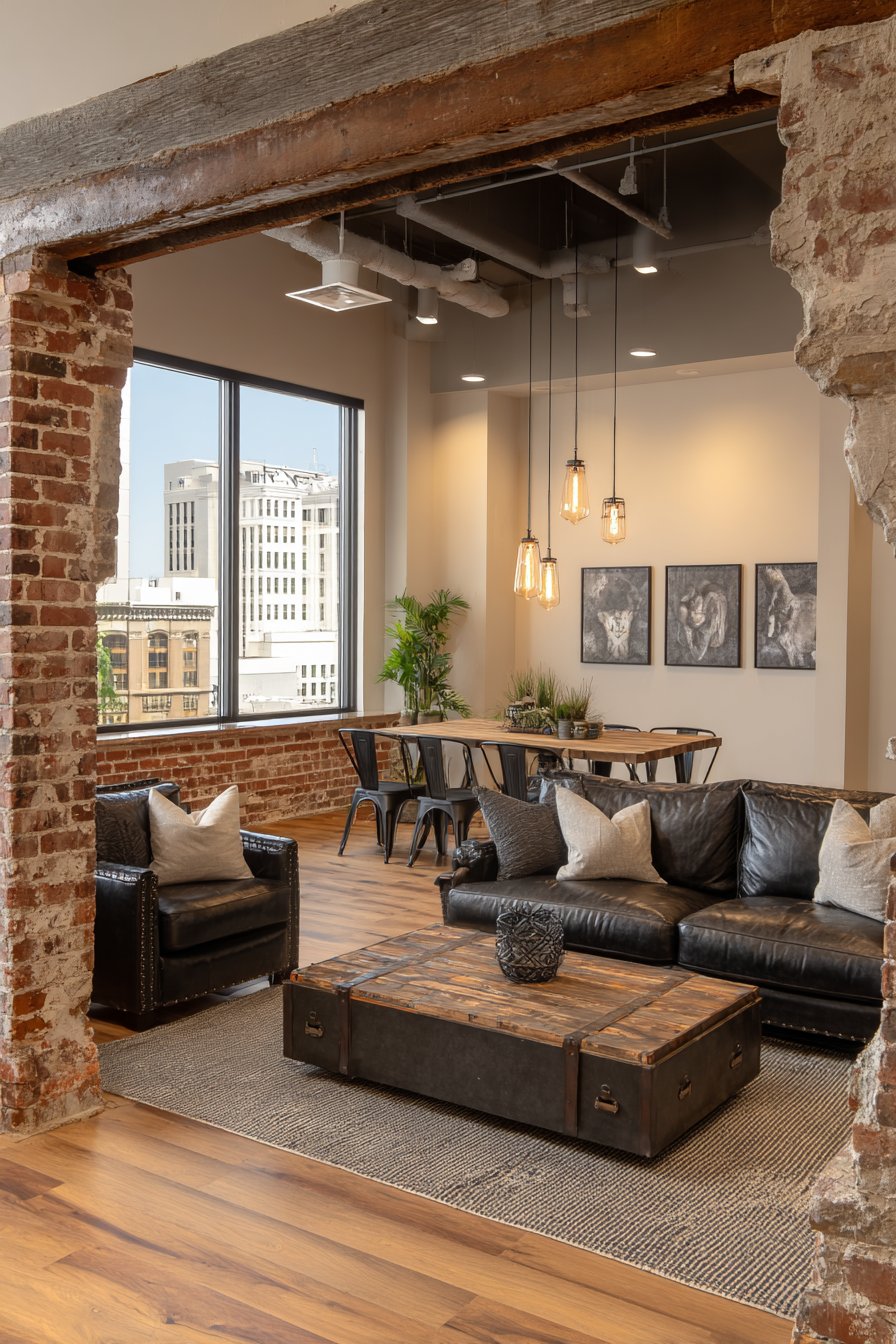
Key Design Tips: If your home doesn’t have existing exposed brick, consult with a structural engineer before removing plaster or drywall—some brick was never meant to be exposed and may require sealing or treatment. Clean exposed brick gently using dry brushing or low-pressure washing to remove loose mortar and debris without damaging the masonry. Consider applying a breathable masonry sealer to protect the brick from moisture and staining while allowing the wall to “breathe.” Repair damaged mortar joints with appropriate pointing techniques to maintain structural integrity. Leave steel beams in their raw state or apply clear sealer to prevent excessive rust while maintaining the industrial appearance. Light exposed brick dramatically to emphasize texture—use directional spotlights or track lighting to create shadows that reveal the three-dimensional quality. Embrace imperfections like chips, cracks, and color variations as character rather than flaws. Be cautious about drilling into exposed brick—use proper masonry anchors and avoid areas where mortar has deteriorated. Consider the scale of furniture and decor—industrial spaces with exposed brick can handle larger, more substantial pieces than refined contemporary interiors.
14. Transitional Half-Wall with Decorative Columns
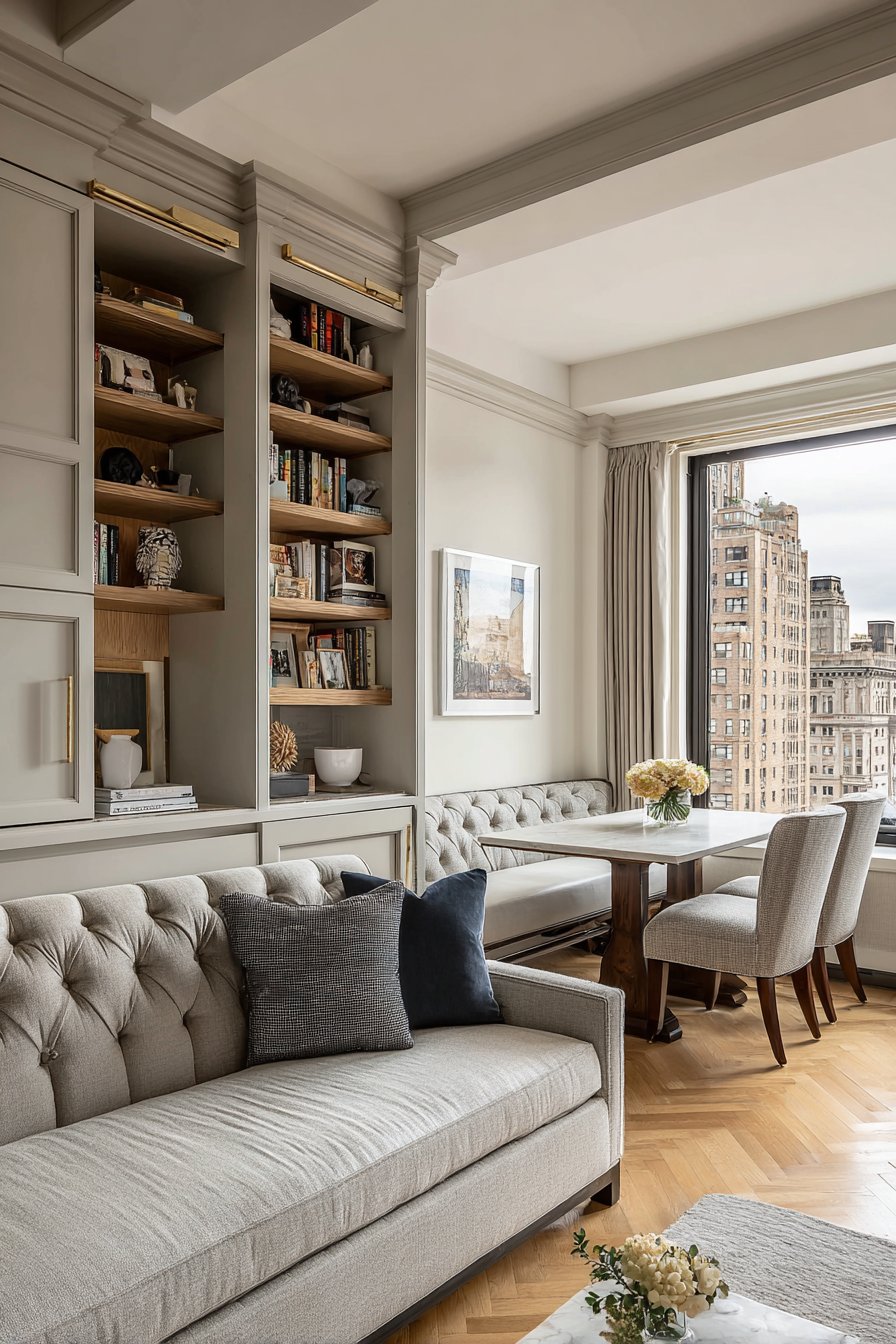
The half-wall partition with architectural columns represents a refined, traditional approach to living and dining room partition ideas that creates separation while maintaining exceptional openness and visual flow. This partition style rises from the floor to approximately counter height—typically 36 to 42 inches—creating a physical boundary at the lower level while leaving the upper portion of the space completely open. The decorative millwork details including base molding, raised panels, and column capitals add classical elegance that elevates this functional element into an architectural feature worthy of attention. The columns—whether simple square posts or more elaborate turned profiles—frame openings that allow passage between spaces while emphasizing the intentional nature of the division.
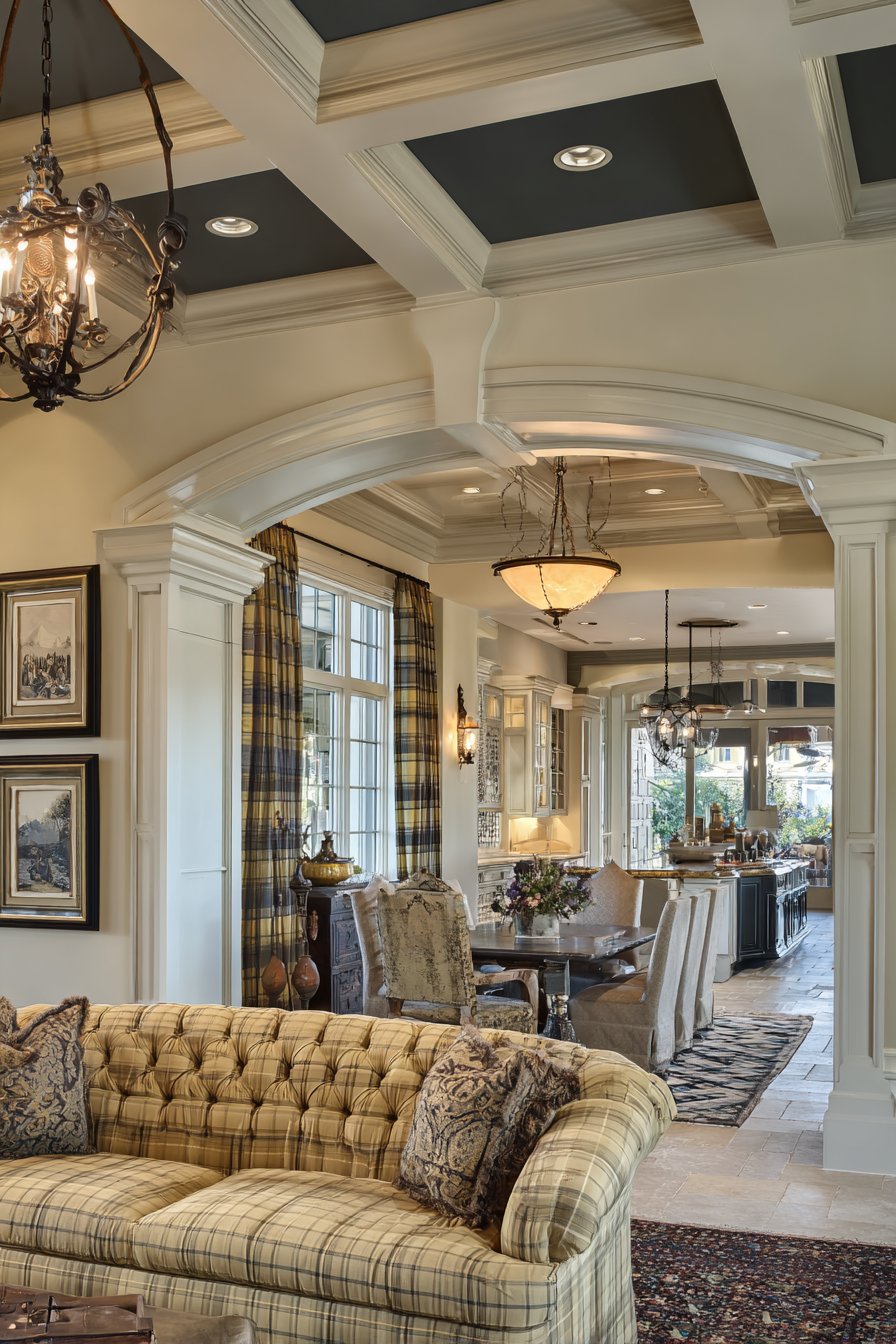
The architectural language of this partition style draws from classical and traditional design traditions where the quality of craftsmanship and attention to detail communicate refinement and permanence. The millwork might include raised panel wainscoting on the half-wall portion, creating subtle three-dimensional relief through frame-and-panel construction where individual panels sit within deeper frames. Base molding at the floor and cap molding at the top edge create refined transitions and shadow lines that add visual weight and importance. The columns might feature bases, shafts, and capitals that reference classical orders—Doric, Ionic, or Corinthian—in simplified form appropriate for residential scale. The careful proportions and honest craftsmanship of these elements create architecture that feels substantial and valuable.
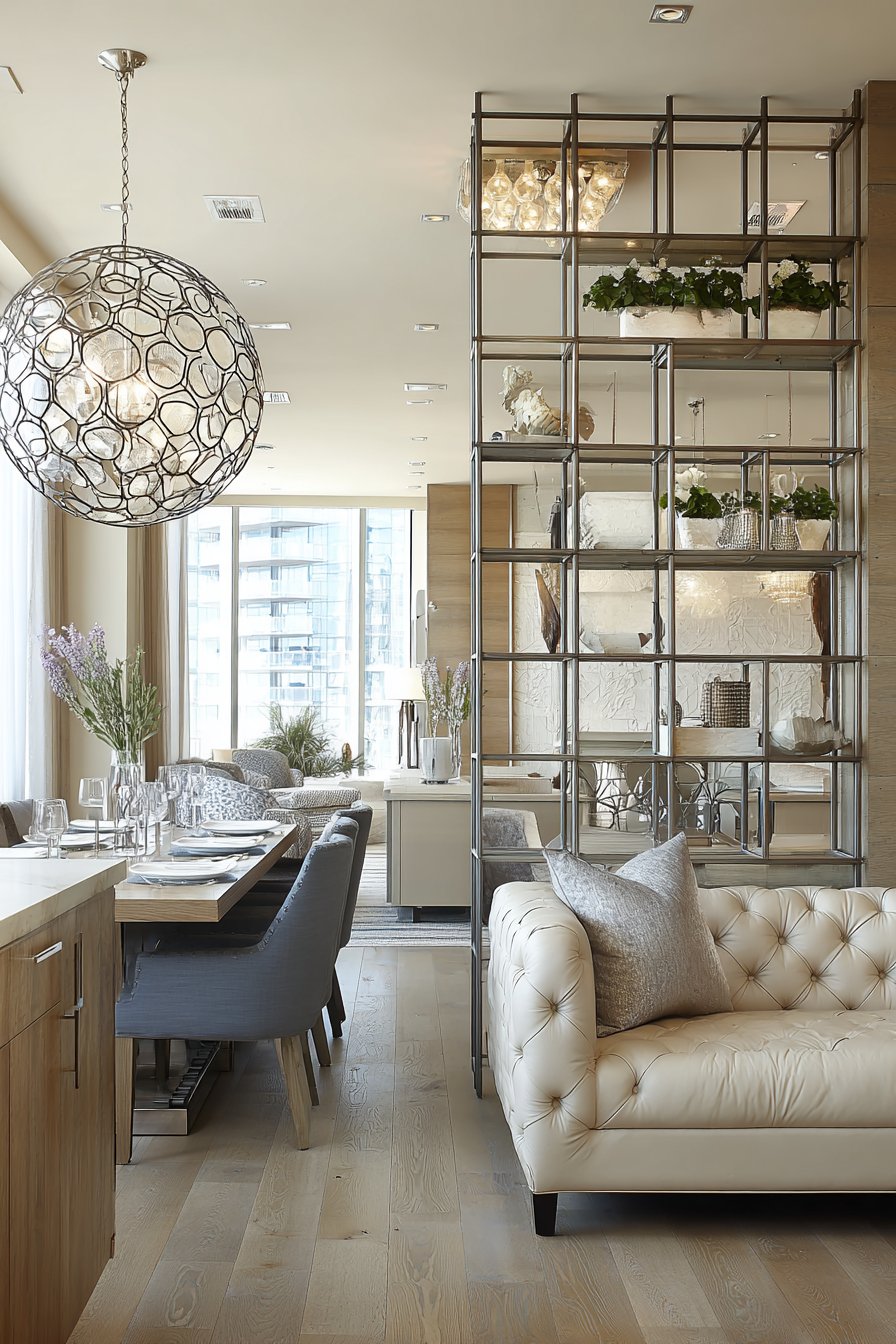
The painted finish of the millwork deserves careful consideration because color choice dramatically impacts the overall effect. Classic white or cream creates crisp contrast against colored walls while emphasizing the architectural details through their shadow lines. Soft grey offers contemporary sophistication while maintaining traditional form. Colors matched to existing trim throughout the home create cohesive architecture that feels original to the house. Multiple coats of durable paint with proper priming and surface preparation ensure the millwork maintains its pristine appearance through years of daily contact and cleaning.
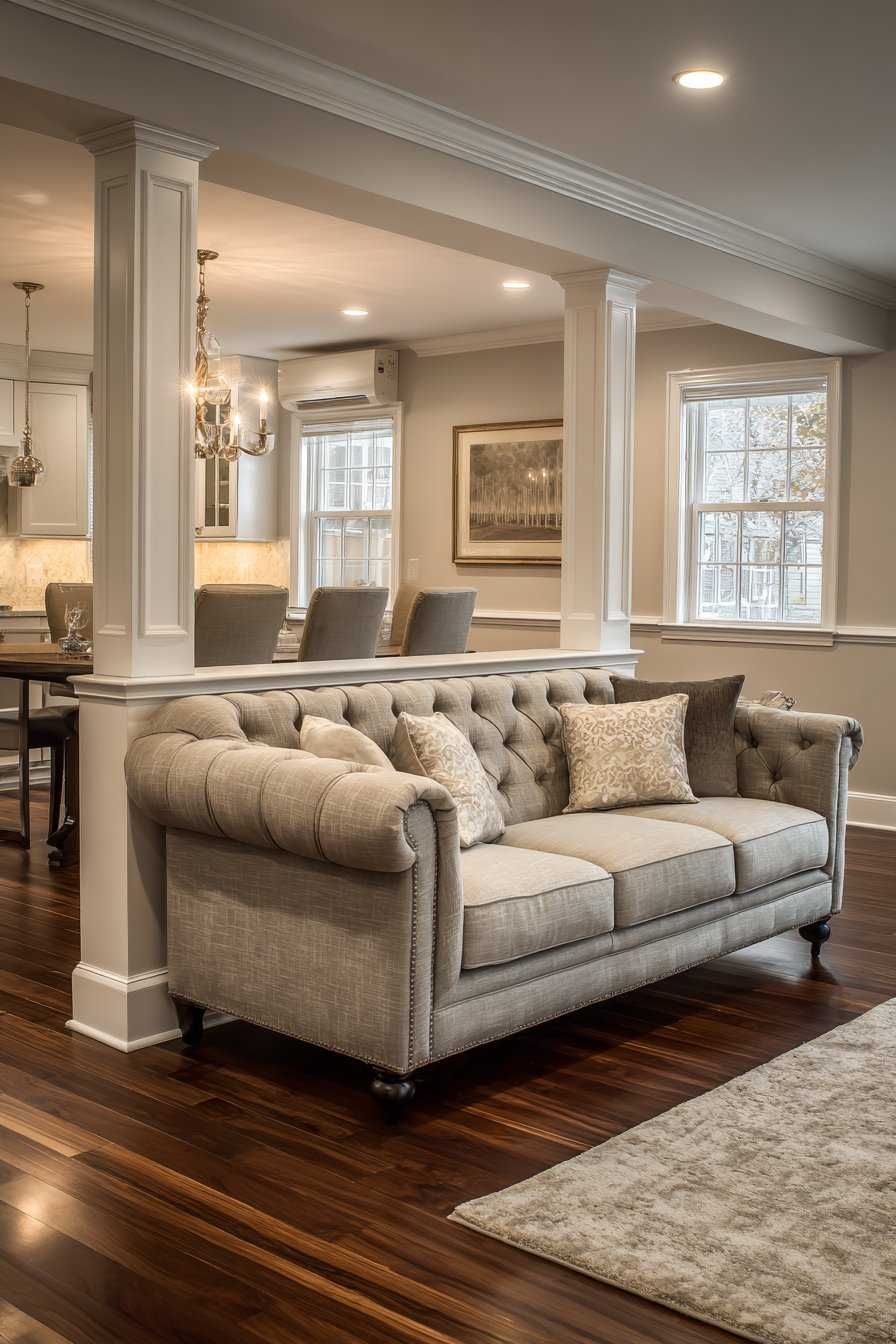
The living zone features a neutral tufted sofa with classic styling—perhaps button tufting on the back, rolled arms, and turned wood legs—that complements the traditional architectural character of the partition. The neutral upholstery in beige, grey, or cream creates a foundation that works with various decorating directions while maintaining the refined atmosphere. The dining area showcases a traditional pedestal table with carved details and a turned center support that elevates this functional piece into furniture with architectural presence. Upholstered dining chairs with tight upholstery, exposed wood frames, and subtle design details like nailhead trim or carved legs create comfortable seating with refined appearance. The combination of natural daylight and carefully chosen artificial lighting creates balanced illumination that prevents either zone from feeling dark while highlighting the millwork details through shadow and light.
Key Design Tips: Work with a skilled carpenter who understands traditional millwork techniques and proper proportions—poorly executed details can make this partition style look cheap rather than refined. Ensure the half-wall is properly constructed with adequate structural support—it should feel solid and immovable despite its partial height. Paint millwork with durable, washable paint in semi-gloss or satin finish that can withstand cleaning without showing marks. Consider the sight lines from seated positions—the half-wall should create separation without blocking views at normal seating height. Install the cap molding at a height that prevents it from being an awkward leaning surface but maintains proper proportion with the overall space. Use the top surface of the half-wall as display space for decorative objects, plants, or accent lighting. Ensure adequate electrical outlets on both sides of the partition for lamps and other accessories. Match the millwork style to existing architectural details in your home for cohesive design. Keep the color palette simple and classic to ensure the partition ages well and works with evolving decorating schemes.
15. Contemporary Suspended Acrylic Panel Installation
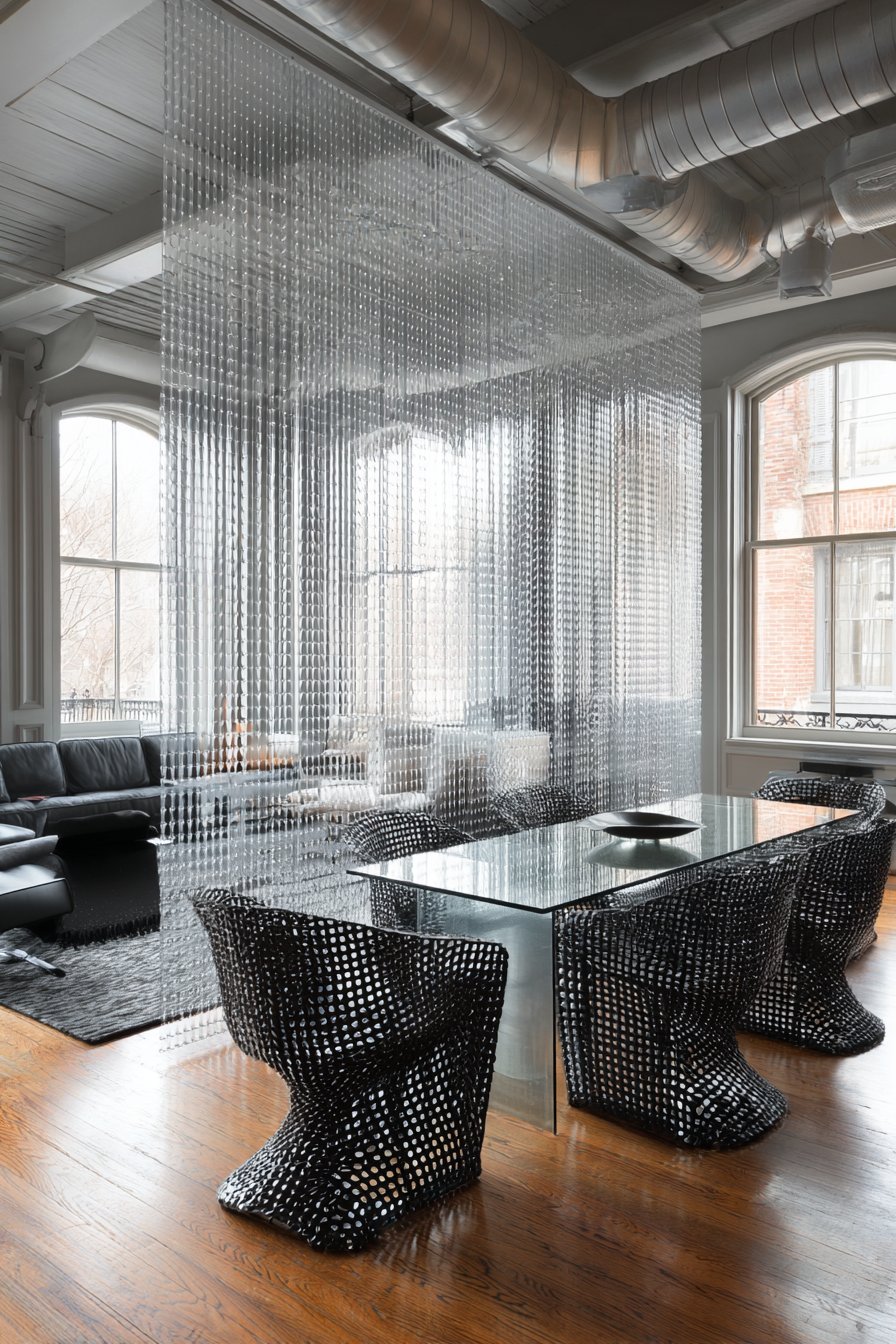
The suspended acrylic panel partition represents cutting-edge innovation among living and dining room partition ideas, incorporating modern materials and integrated lighting technology to create a divider that feels almost otherworldly. This dramatic installation features translucent acrylic panels suspended from ceiling-mounted cables or minimal metal supports, creating the visual illusion that the partition floats without visible connection to the floor. The embedded LED lighting system transforms the panels into glowing, ethereal elements after dark while maintaining their transparent, unobtrusive presence during daylight hours. This high-tech approach to spatial division appeals to those who appreciate contemporary design, innovative materials, and dramatic visual effects.
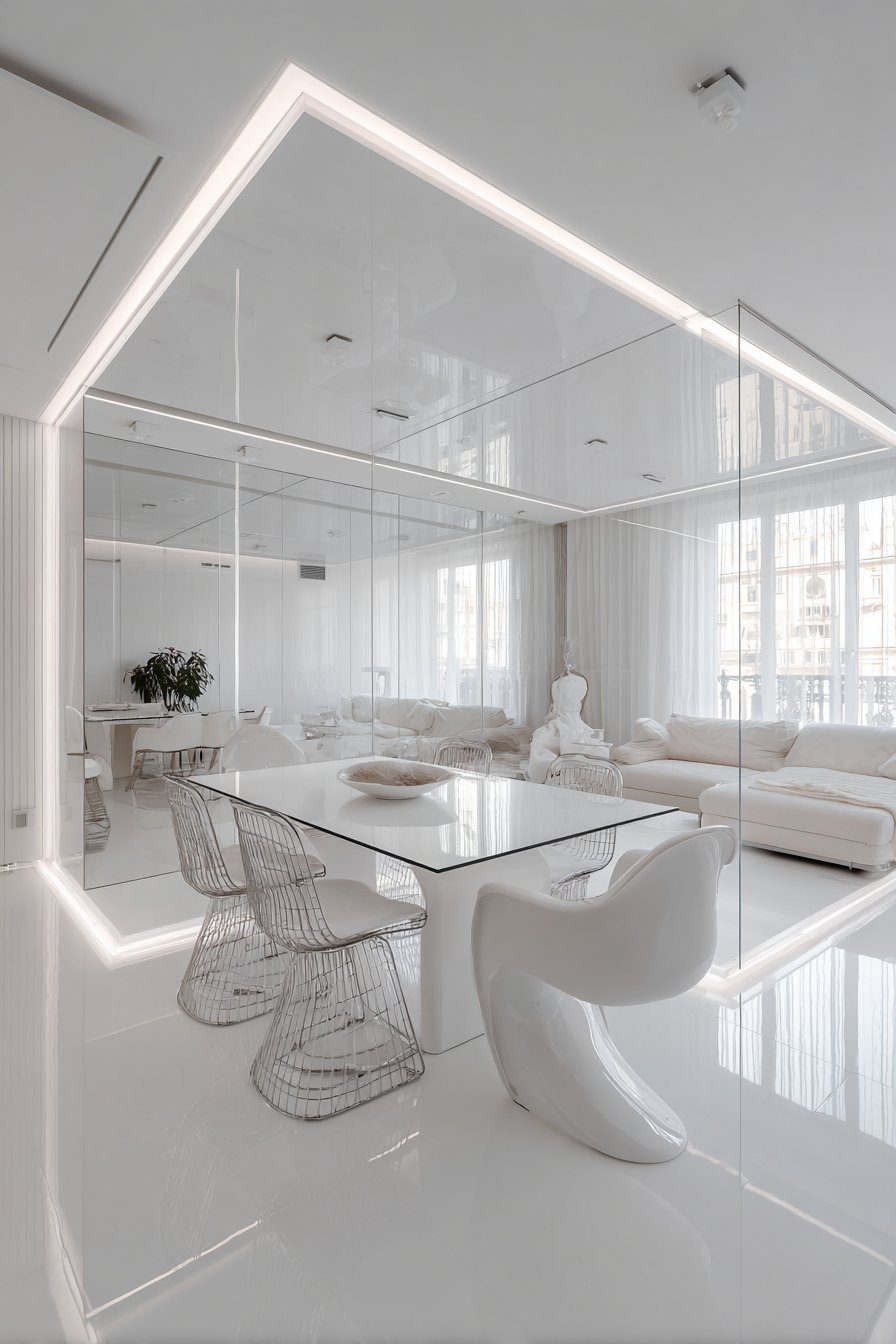
The material properties of acrylic make it ideal for this application. Unlike glass, acrylic is significantly lighter, making ceiling suspension practical without requiring heavy-duty structural support. The material can be manufactured in various levels of transparency, from completely clear to translucent white or even colored tints that introduce subtle hue to the divider. Acrylic accepts edge-lighting beautifully—when LED strips are installed along the edges of panels, light conducts through the material and glows along the entire surface, creating that magical floating effect. The material is also more impact-resistant than glass, an important safety consideration especially in homes with children or pets.
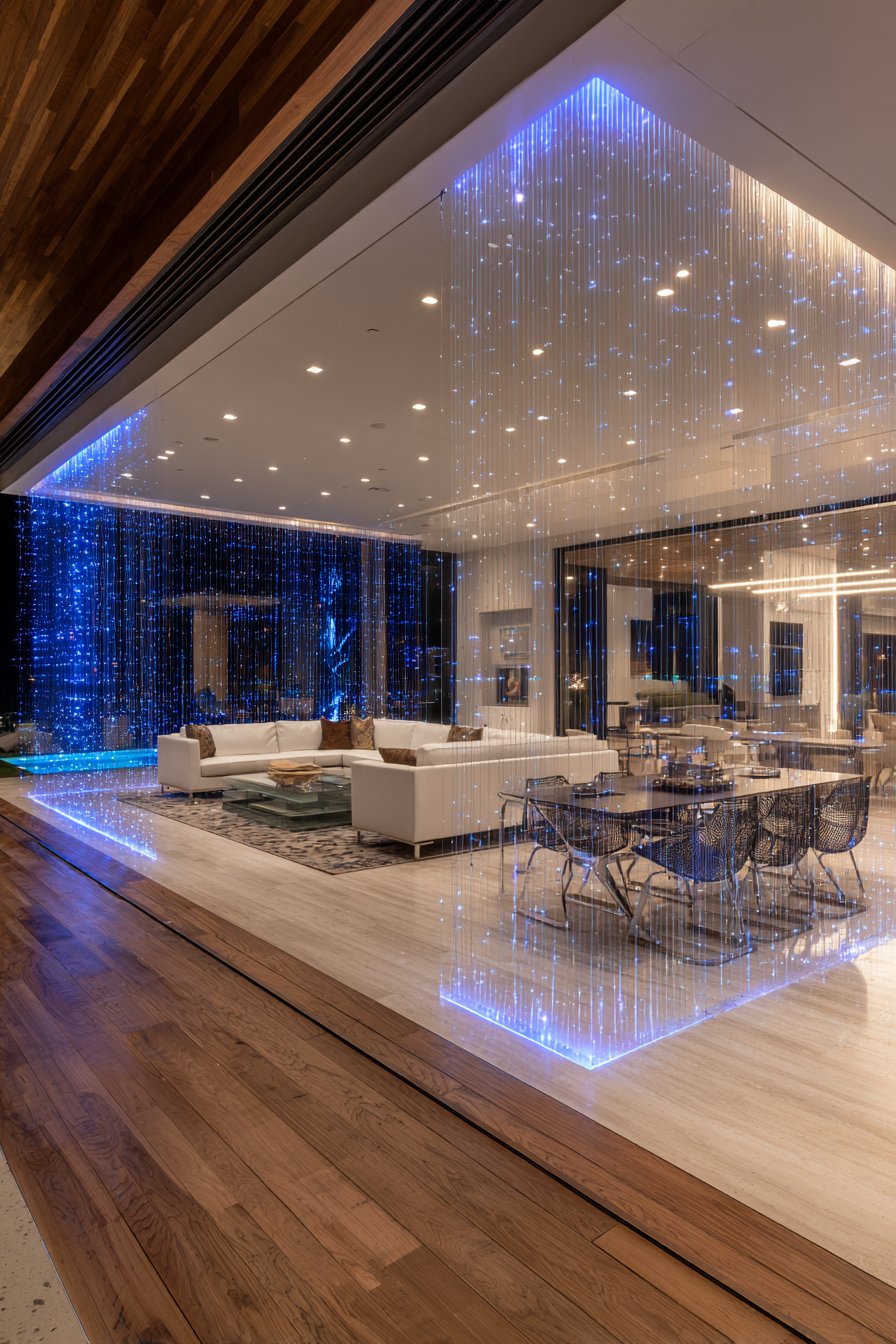
The embedded LED lighting system represents the true innovation of this partition. Thin LED strips mounted along panel edges or within the mounting system illuminate the acrylic from within, creating soft, diffused light that serves both functional and atmospheric purposes. The lighting can be controlled by dimmer switches or smart home systems, allowing you to adjust brightness based on time of day, activity, or mood. At full brightness, the glowing panels provide significant ambient lighting to both zones. Dimmed, they create subtle accent lighting that adds drama without overwhelming the space. Some systems offer color-changing capability, allowing you to shift the partition’s appearance from warm white to cool blue or even vibrant colors for special occasions.
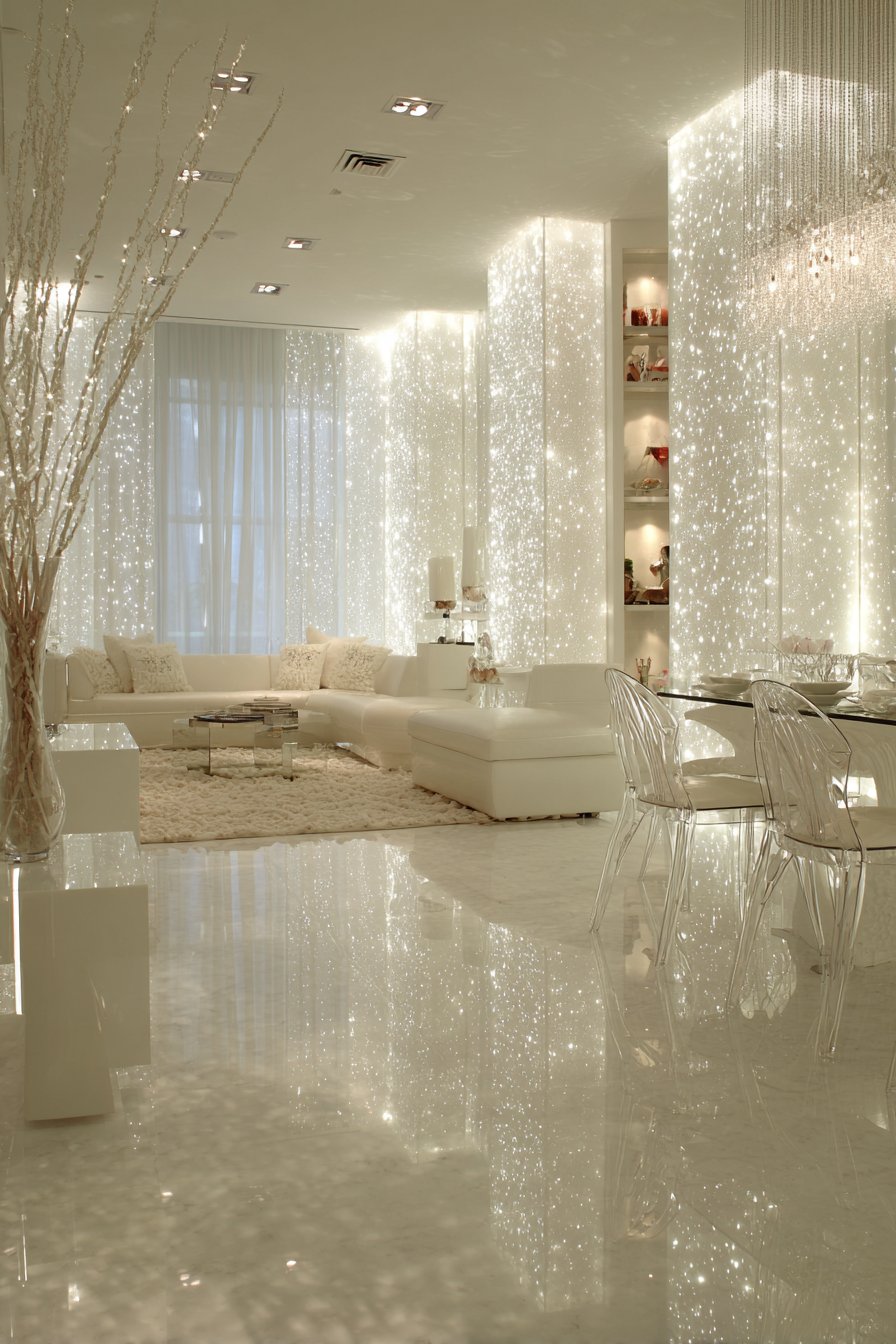
The living space features sleek modern furniture in a monochromatic scheme that complements the high-tech partition. Low-profile pieces with clean lines, minimal ornamentation, and geometric forms create the sophisticated contemporary aesthetic that works harmoniously with the innovative acrylic divider. A monochromatic palette—perhaps all-white, shades of grey, or black and white—prevents visual competition with the glowing partition. The dining area continues the contemporary theme with a glass table featuring metal or lucite base that maintains the transparency and lightness essential to making this dramatic partition successful. Sculptural metal chairs with innovative forms become modern art pieces that celebrate contemporary design and manufacturing techniques. The dramatic lighting effects possible with this system transform ordinary spaces into something extraordinary—the glowing panels create ambiance impossible to achieve with traditional room dividers.
Key Design Tips: Work with a professional installer experienced in acrylic fabrication and LED integration—this is not a DIY-friendly project. Ensure ceiling structure can support the weight of panels and mounting system with appropriate safety factors. Use high-quality cast acrylic rather than cheaper extruded acrylic for better clarity and fewer imperfections. Plan the LED system with quality components and proper drivers that will provide years of reliable operation. Consider using smart lighting controls that allow for dimming, scheduling, and even color changes. Keep panels clean with appropriate acrylic cleaners that won’t scratch or cloud the surface—avoid ammonia-based cleaners. Install panels where they won’t be subject to direct impact from doors, furniture, or foot traffic. Budget significantly for this cutting-edge installation—materials and custom fabrication create premium pricing. Consider maintenance access to LED components for eventual bulb replacement. Use this dramatic partition as the focal point of your design and keep other elements relatively simple to avoid visual competition.
16. Farmhouse Sliding Barn Door on Track
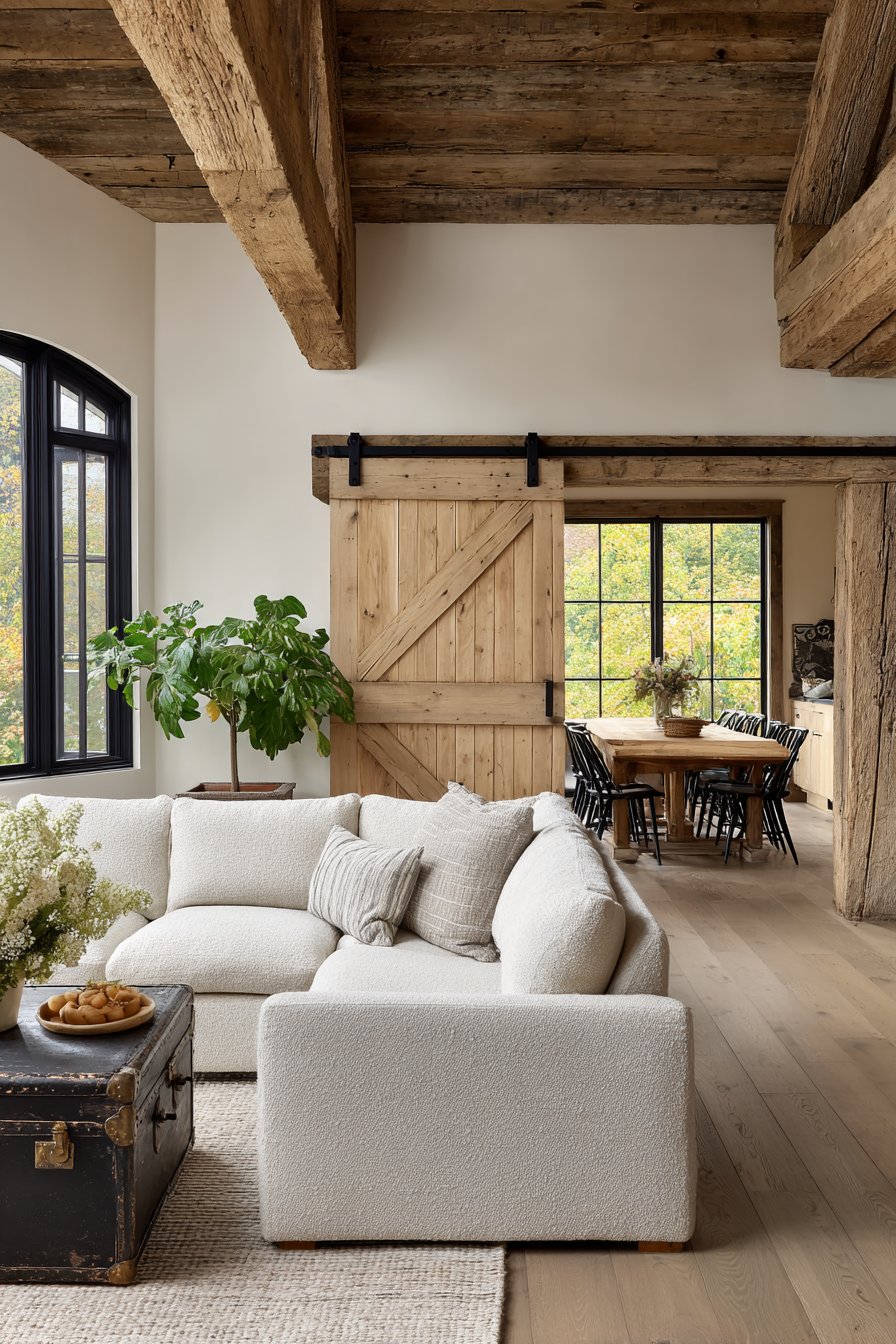
The rustic sliding barn door brings authentic farmhouse character and practical flexibility to living and dining room partition ideas, celebrating reclaimed materials and traditional construction methods. This substantial divider features a wide door panel crafted from reclaimed wood planks arranged vertically with diagonal or Z-pattern cross-bracing that provides structural support and visual interest. The wood shows authentic age and character—weathered grain patterns, color variations from sun exposure, nail holes and saw marks from previous use, and the gentle patina that only develops over decades or centuries. The sliding mechanism uses industrial black metal hardware including a top-mounted track, rollers, and decorative bracket details that emphasize the utilitarian origins of barn architecture.
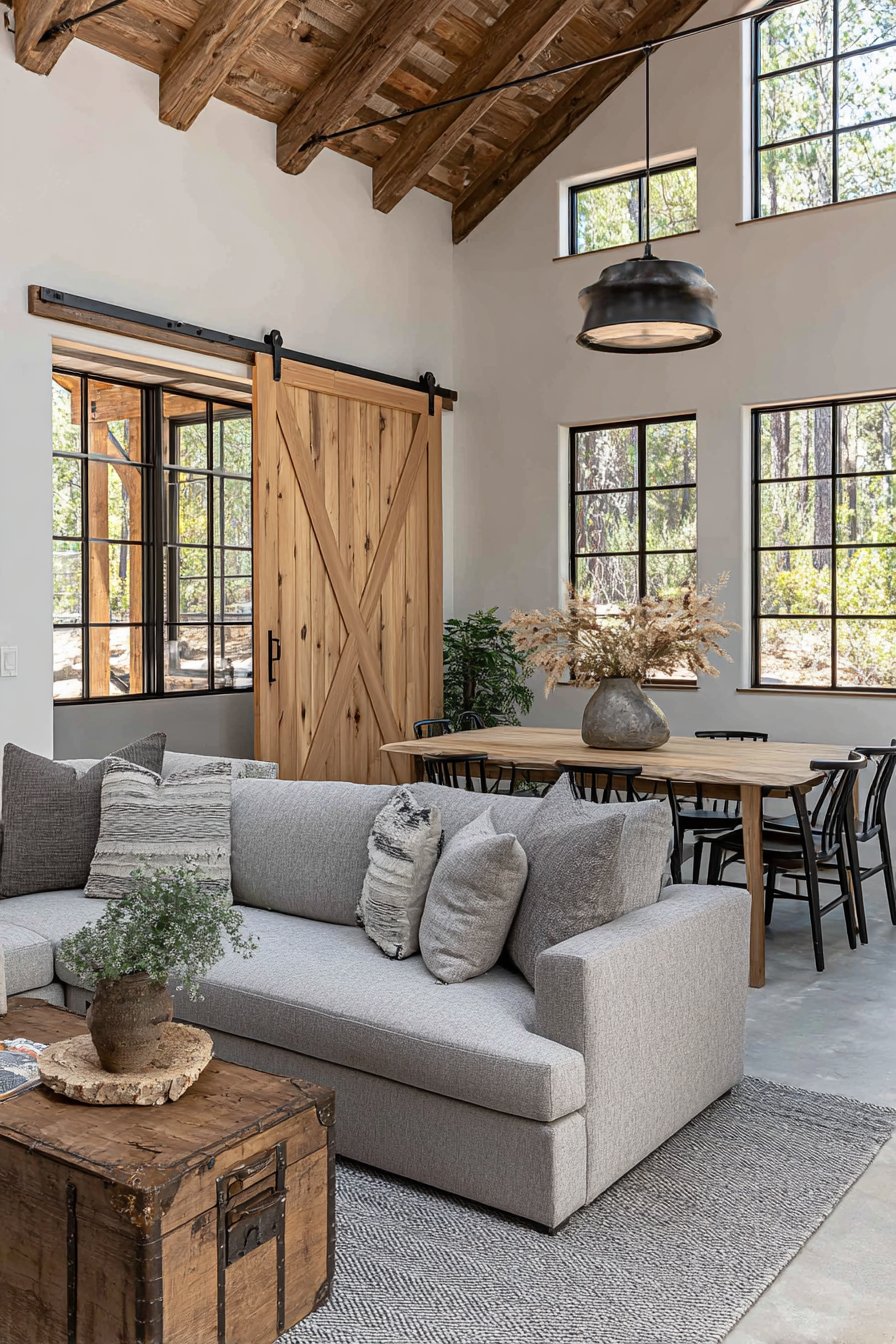
The appeal of reclaimed wood extends beyond pure aesthetics into sustainability and historical connection. Each board tells a story—perhaps salvaged from a demolished barn, old factory building, or dismantled fence—bringing its history and embodied energy into your home. The weathering patterns reveal how the wood was previously used: boards with one grey, weathered face likely came from exterior siding, while evenly aged pieces might have been interior structural elements. Nail holes and bolt marks show where previous fasteners held the wood in earlier incarnations. Color variations from knots, mineral deposits, and natural grain patterns create organic visual interest impossible to replicate with new wood. Using reclaimed materials makes an environmental statement, diverting usable wood from landfills while avoiding the harvesting of new trees.
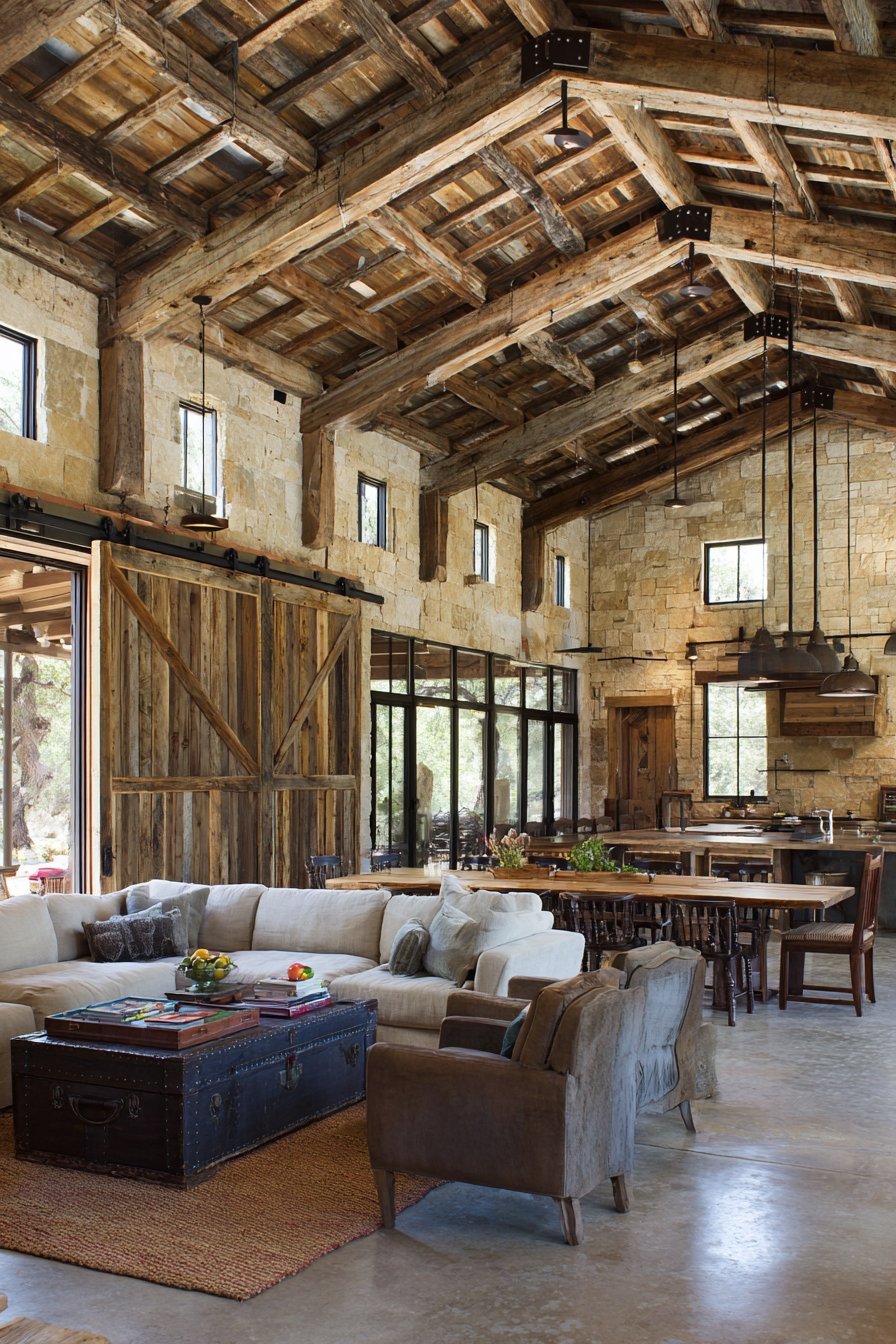
The metal hardware provides essential industrial contrast to the organic warmth of reclaimed wood. The track system—typically mounted on the wall surface rather than recessed—becomes a visible design element that celebrates functional mechanics. Flat bar tracks, heavy-duty rollers with industrial bearings, and decorative brackets with bolt details or hammered textures bring blacksmith-style metalwork into the design. The matte black finish creates strong visual contrast against light walls and weathered wood tones. The hardware might include floor guides that prevent the door from swinging while allowing smooth sliding, and comfortable pulls or handles crafted from matching metal, leather straps, or chunky wood.
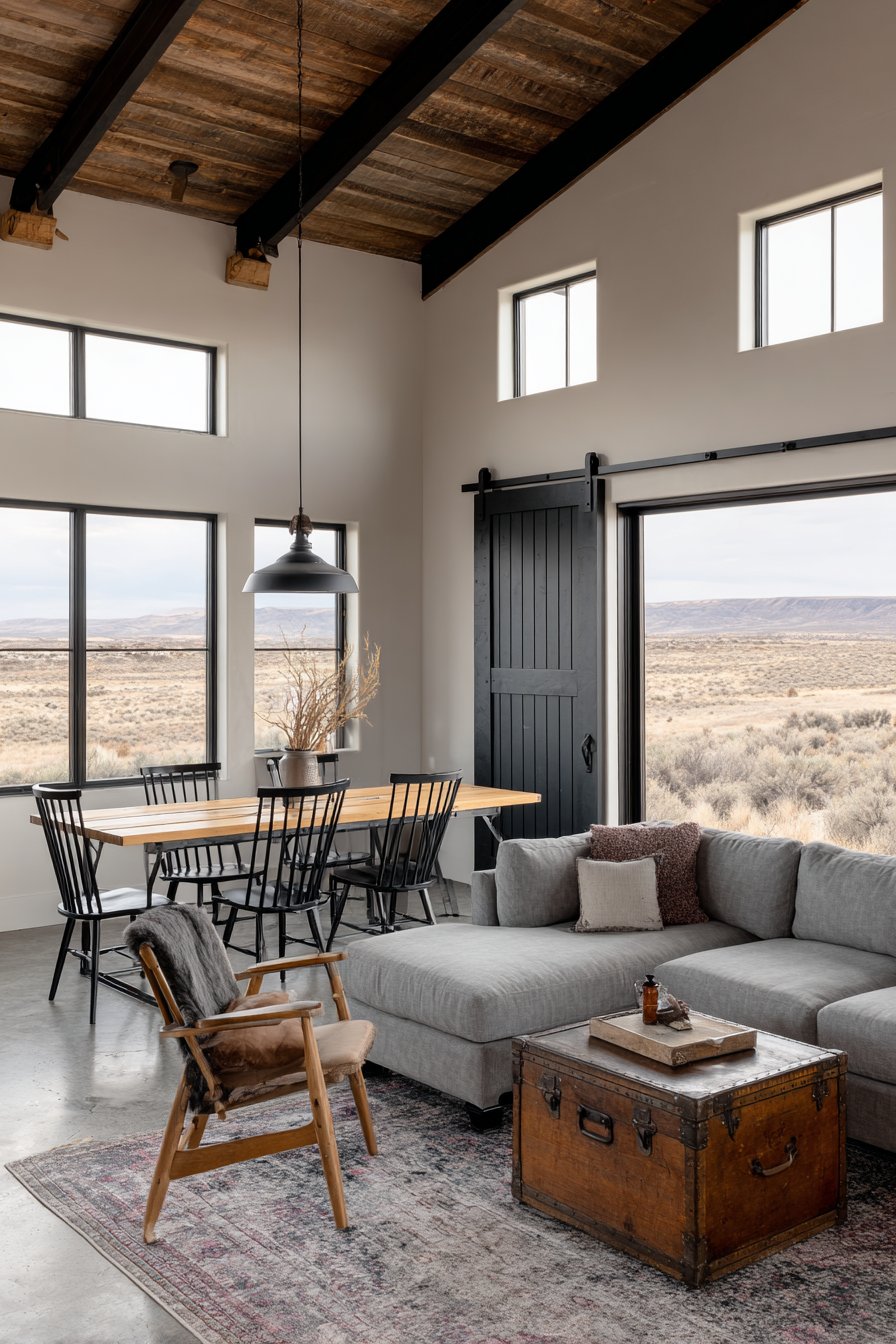
The living area features a comfortable slipcovered sectional that brings casual, livable comfort appropriate to farmhouse style. The slipcover—ideally in natural linen or cotton—softens the substantial presence of the barn door while its relaxed fit and subtle wrinkles communicate the lived-in comfort central to farmhouse aesthetic. A vintage trunk serving as coffee table adds additional reclaimed character while providing storage for throws, games, or entertainment essentials. The dining side showcases a farm table—perhaps a thick plank top on trestle-style base—that could accommodate large family gatherings. Windsor-style chairs with their distinctive spindle backs and shaped seats bring traditional American furniture design that feels historically appropriate beside reclaimed materials. Natural light from multiple windows highlights the wood texture and creates the bright, welcoming atmosphere essential to farmhouse style.
Key Design Tips: Source reclaimed wood from reputable dealers who can verify its origin and ensure it’s been properly treated for insects—untreated salvaged wood might harbor wood-boring beetles or other pests. Ensure reclaimed wood is properly dried and dimensionally stable before construction to prevent warping after installation. Consider having the wood lightly cleaned and sealed with clear matte finish to protect it from staining while preserving its authentic weathered appearance. Invest in heavy-duty barn door hardware rated for the weight of your door—reclaimed wood doors can be quite heavy. Install the track into wall studs with lag bolts for secure mounting that won’t sag over time. Plan adequate wall space beside the door opening for the door to slide fully open without blocking windows, switches, or other important elements. Install floor guides to prevent the door from swinging during sliding. Consider soft-close mechanisms that prevent slamming. Maintain hardware with occasional light lubrication of rollers and track for smooth operation. Embrace variations in the reclaimed wood rather than trying to make it look uniform—the character lies in the diversity of the boards.
17. Maximalist Ornate Wrought Iron Screen
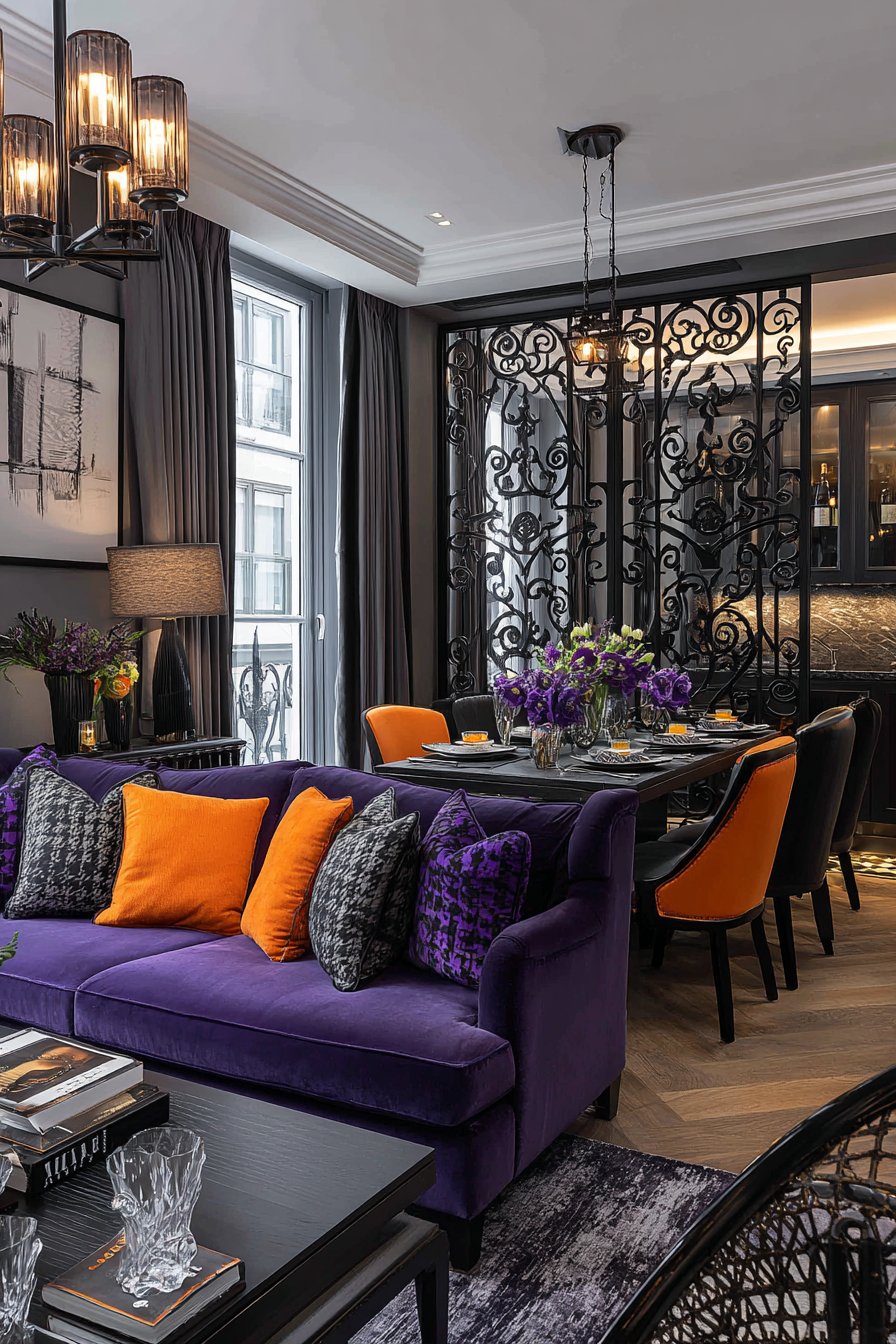
The wrought iron scrollwork screen celebrates decorative excess and artistic craftsmanship, bringing maximalist personality to living and dining room partition ideas. This elaborate divider features intricate metalwork in ornate patterns—scrolls, leaves, flowers, and curving organic forms—crafted through traditional forging techniques or modern fabrication methods that replicate handcrafted appearance. The antique bronze finish brings aged elegance with color variations, subtle verdigris, and patina that suggest generations of history. The substantial weight and density of the metalwork creates permanent, architectural presence while the scrollwork’s openness maintains light flow and visual connection. This partition serves as functional artwork—a three-dimensional sculpture that happens to divide space while creating beauty.
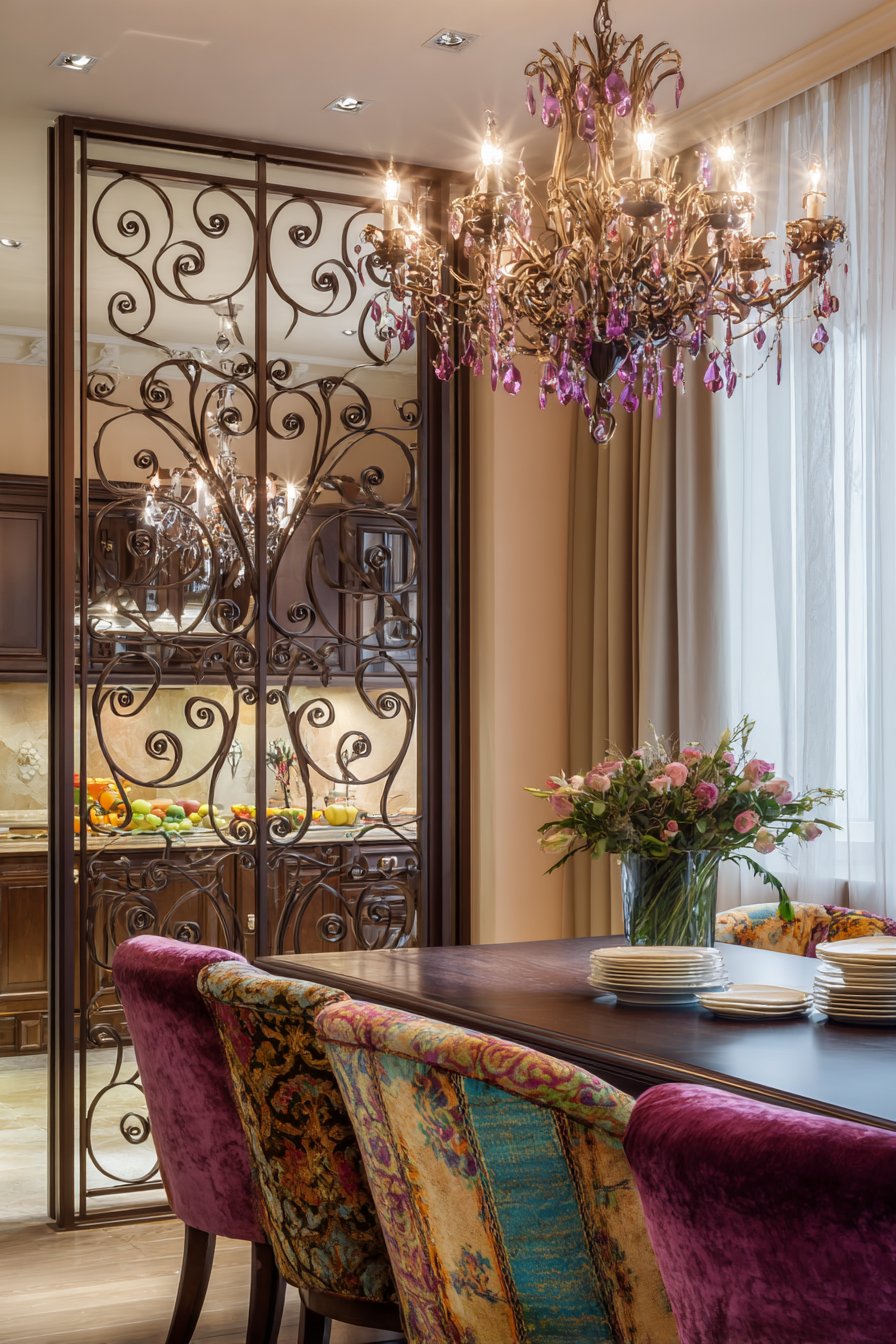
The artistry of wrought iron scrollwork lies in the fluid, organic forms that seem to grow and flow rather than being constructed from rigid industrial materials. Traditional blacksmithing techniques heat metal to malleability, allowing craftspeople to shape it into graceful curves and delicate details that belie the material’s strength. Leaves might show subtle surface textures that simulate natural veining, flowers feature dimensional layering of petals, and scrolls taper and thicken with organic rhythm. The symmetry or asymmetry of pattern creates either formal balance or dynamic movement depending on design intent. The antique bronze finish is typically achieved through multi-layer patination processes that add depth and complexity impossible with single-color paint, creating highlights, shadows, and color variations that emphasize the three-dimensional relief of the metalwork.
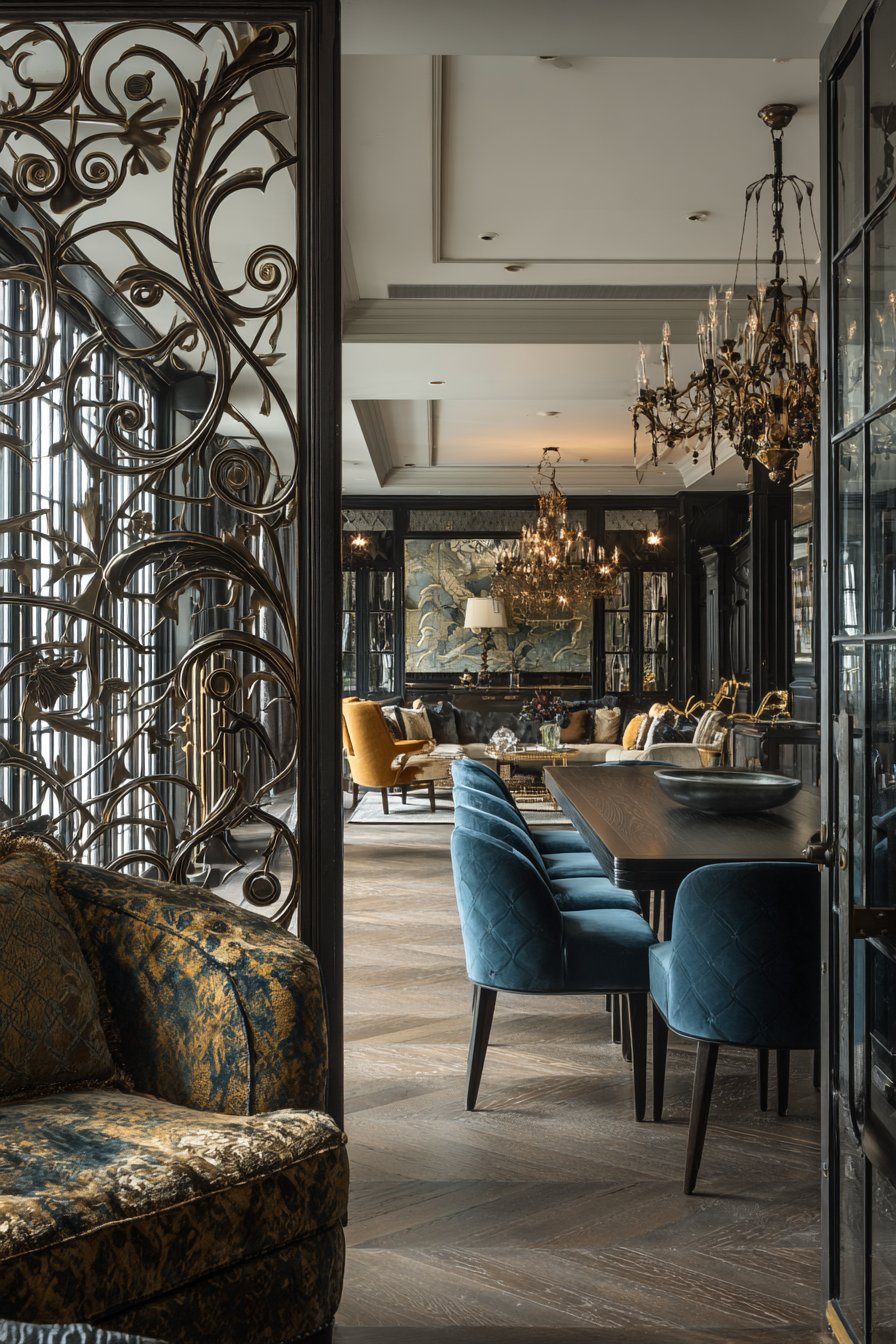
The decorative divider serves double duty as sculptural artwork and spatial definition, making it worthy of investment in quality materials and craftsmanship. The open scrollwork allows viewing from either side, so the design is equally attractive from living and dining zones—both spaces benefit from the partition’s beauty. The substantial frame around the perimeter provides structural integrity while creating a finished, deliberate appearance. The bottom might feature additional decorative details or simply rest on small feet that elevate the screen slightly above the floor for easier cleaning beneath.
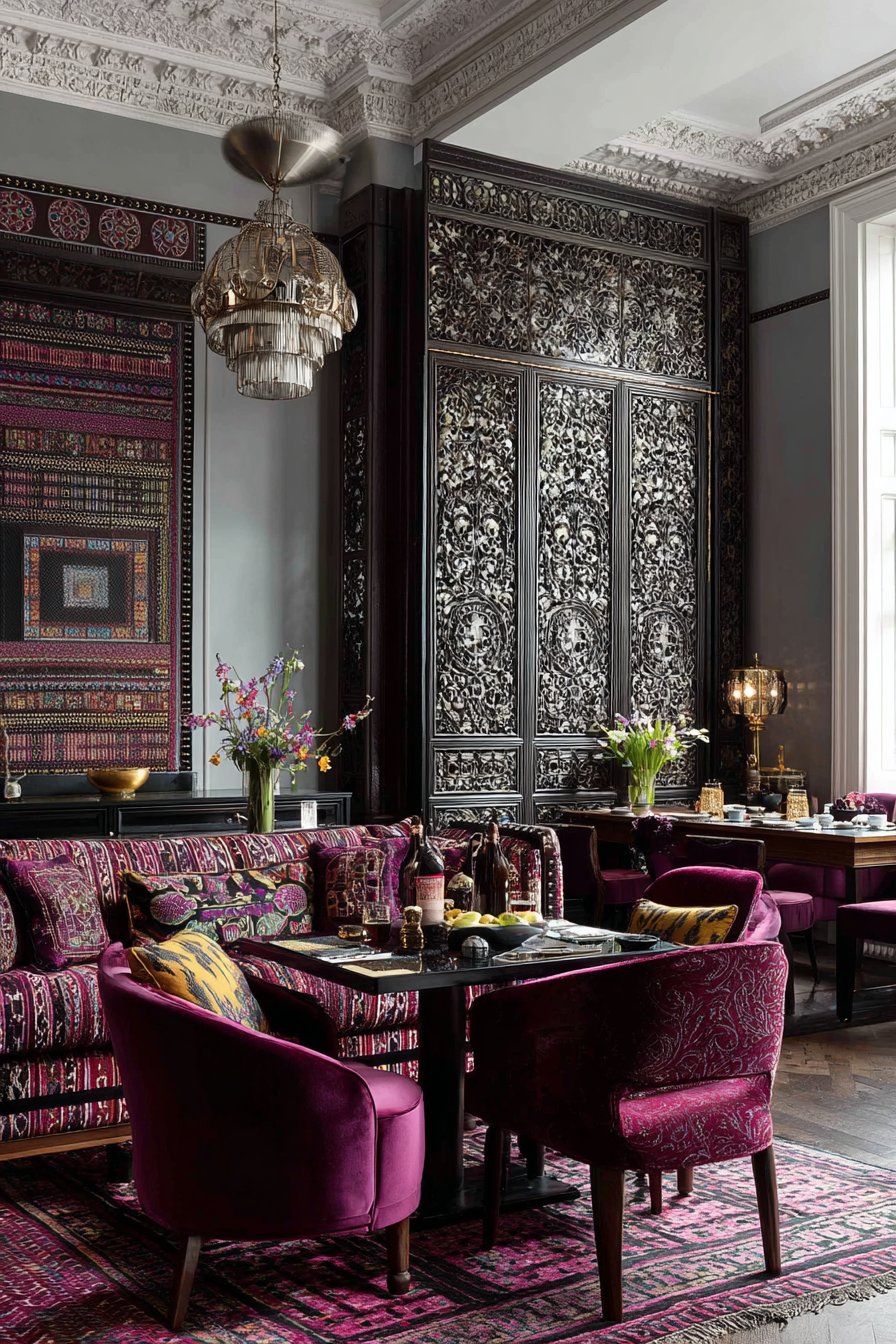
The living zone embraces maximalist layering with richly patterned upholstery in jewel tones—emerald, sapphire, ruby, amethyst—that create sumptuous visual richness. Mixing patterns confidently—perhaps florals with stripes, damask with geometric prints—creates the abundant, collected-over-time appearance central to maximalist style. Jewel-tone accents through throw pillows, artwork, or accessories add spots of saturated color that sing against the bronze tones of the metalwork partition. The dining area features a dark wood table with traditional styling—perhaps carved legs, inlaid details, or shaped edges—that provides substantial presence appropriate to the ornate partition. Velvet-upholstered chairs in deep, rich colors bring luxurious texture and color saturation. Layered lighting from chandelier, table lamps, and accent lights creates warm glow that catches and reflects off the bronze metalwork, emphasizing its dimensional details and creating magical interplay of light and shadow.
Key Design Tips: Source wrought iron screens from specialized metal artists or reputable manufacturers who focus on quality rather than mass production. Ensure the screen is properly weighted at the base or secured to prevent tipping—ornate metal screens can be surprisingly heavy. Clean metalwork periodically with soft, dry cloths to remove dust that can accumulate in crevices. Avoid harsh chemical cleaners that might damage the antiqued finish. Apply paste wax occasionally to protect the finish and enhance its depth. Position the screen where it won’t be subjected to excessive moisture which can cause rust even on finished metalwork. Consider the visual weight of the ornate screen when selecting surrounding furniture and decor—this dramatic partition can handle equally bold furnishings. Budget appropriately for quality wrought iron work which represents significant investment. Install adequate lighting to emphasize the three-dimensional qualities of the scrollwork. Embrace the dramatic, unapologetic decorative quality rather than trying to make it blend invisibly into the space.
18. Modern Farmhouse Shiplap and Glass Hybrid
The modern farmhouse partition brilliantly combines traditional and contemporary elements, creating living and dining room partition ideas that honor heritage while embracing clean, current design. This hybrid divider features a substantial half-wall constructed from white shiplap boards—those horizontal planks with subtle reveal joints that have become synonymous with farmhouse style—topped with floor-to-ceiling glass panels set within black metal frames. The combination creates visual interest through material contrast while solving practical challenges: the shiplap provides solid separation at lower levels, hiding clutter and defining the floor plane, while the glass upper portion maintains openness and light flow. The black frames introduce contemporary edge that prevents the design from feeling too rustic or traditional.
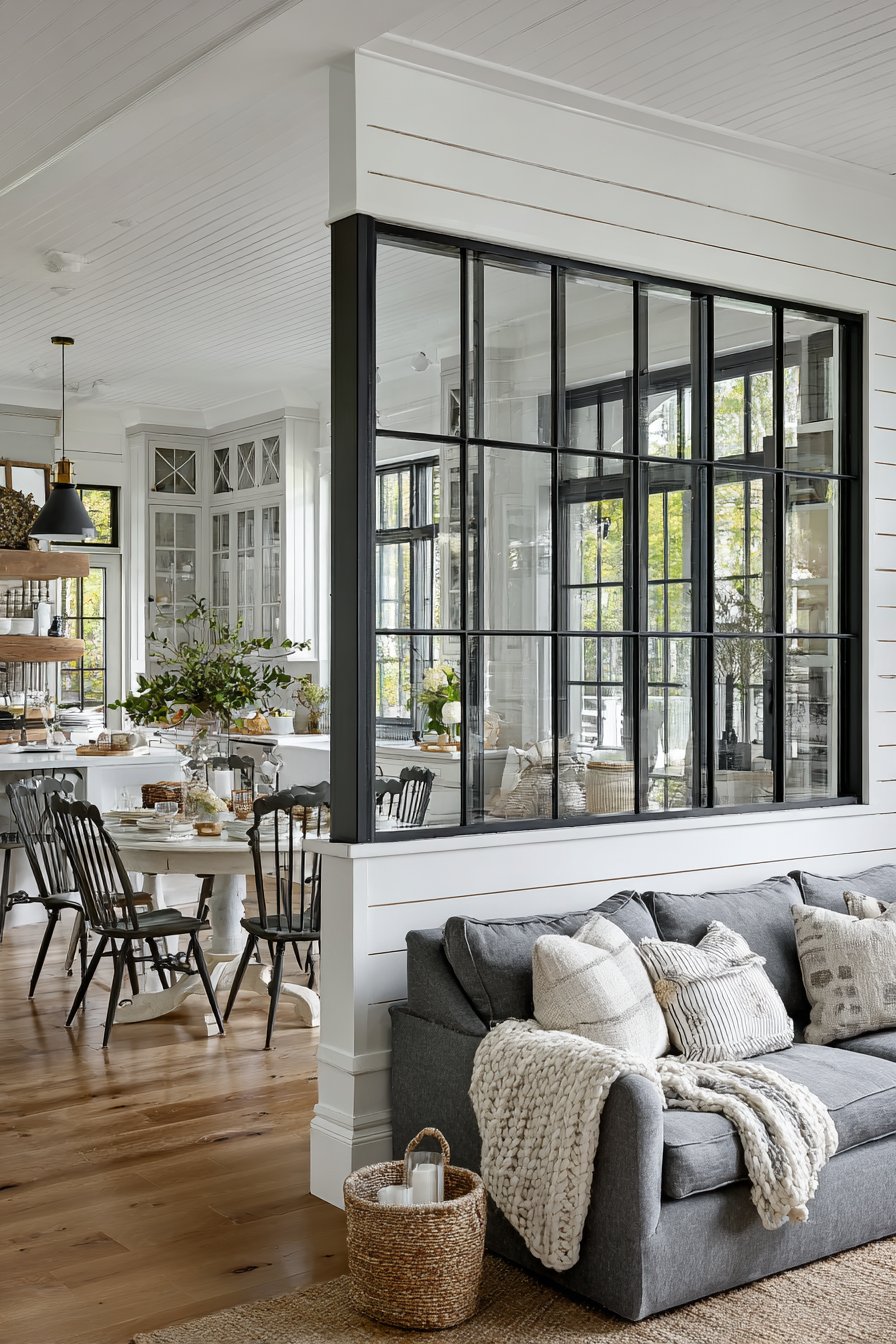
The shiplap construction brings authentic farmhouse character through its distinctive horizontal installation and the narrow gaps—called reveals—between boards. Originally a practical exterior siding method where overlapping boards shed rain, shiplap has been embraced as interior finish that adds texture and visual interest to otherwise plain walls. The boards are typically installed with their long edge grain running horizontally, creating strong horizontal lines that make walls feel wider and spaces more expansive. The subtle shadow line created by the reveal between boards adds three-dimensional quality and rhythm. Painted white, shiplap brightens spaces while its texture prevents plain white walls from feeling flat or sterile.
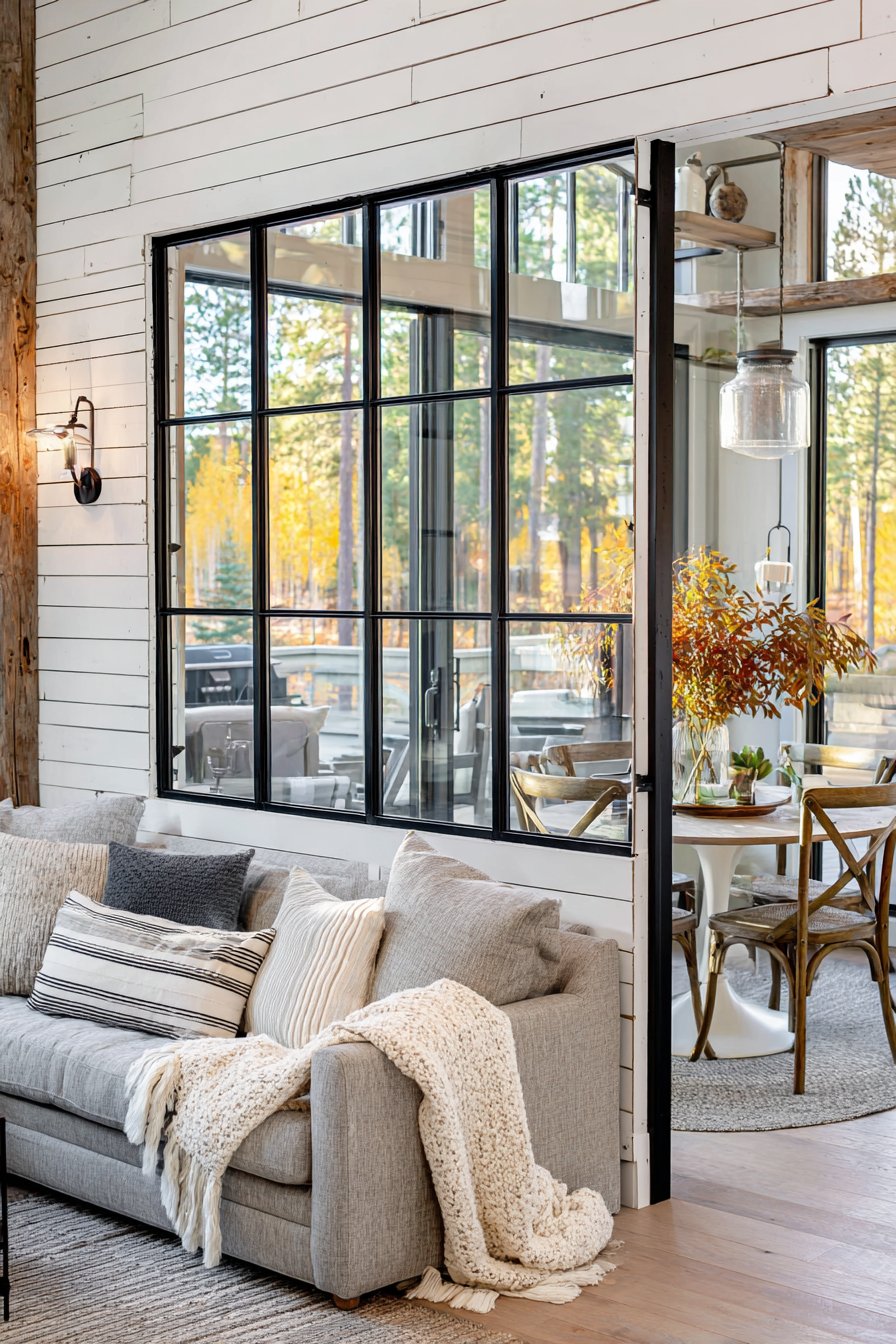
The glass upper portion balances the solid lower half, ensuring the partition doesn’t feel like a wall that chops the space into separate rooms. Clear glass maintains complete visual connection at eye level when standing, allowing you to see completely from one zone to the other. The glass might extend from the top of the shiplap wall—perhaps at 42 inches—all the way to the ceiling, creating generous transparency. Black metal frames surrounding the glass panels create architectural definition and contemporary contrast against the white shiplap. The frames might be narrow and minimal or more substantial with traditional muntin patterns that reference historic window designs updated with modern proportions and clean lines.
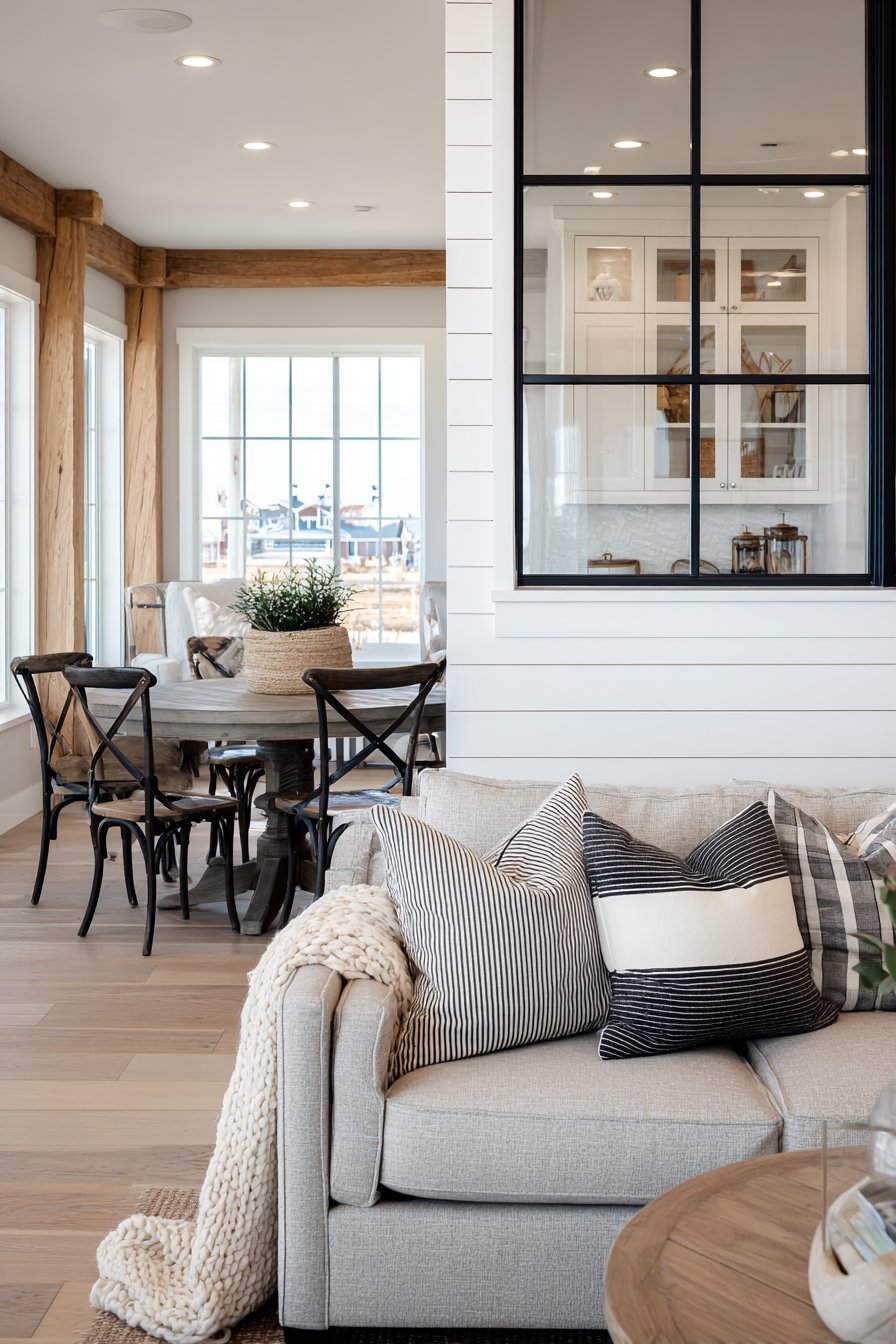
The living space features a grey linen sofa that brings sophisticated neutrality and natural fiber texture. Linen offers beautiful drape, subtle slubs and irregularities that add visual interest, and the kind of casual elegance that works perfectly in modern farmhouse interiors. Chunky knit throws in cream or grey add cozy texture and layering opportunities. The dining nook continues the modern farmhouse aesthetic with a round pedestal table—the single center support is practical in smaller spaces—painted white or left in natural wood with whitewashed finish. X-back chairs bring traditional styling with their characteristic crossed back slats that have been farmhouse favorites for generations. Soft natural lighting emphasizes the clean lines and neutral palette, creating bright, welcoming spaces that feel both comfortable and refined.
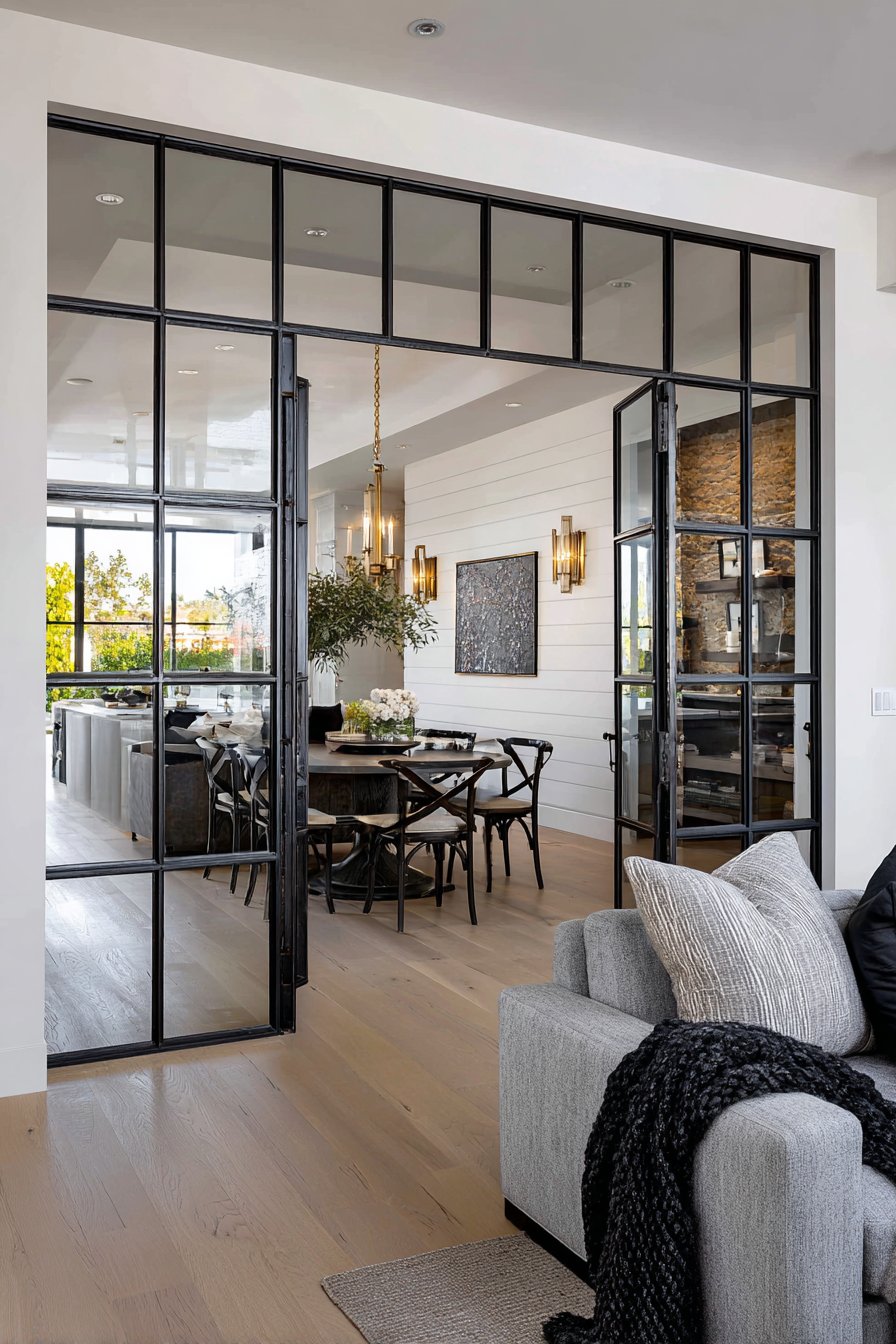
Key Design Tips: Install shiplap with proper spacing between boards—typically 1/8 inch—to create the reveal line that gives shiplap its distinctive appearance. Use real wood shiplap rather than vinyl or MDF for authentic appearance and better durability. Prime and paint shiplap thoroughly, ensuring paint reaches into the reveal gaps for complete coverage. Install the glass panels with proper sealing and support to prevent rattling or air infiltration. Ensure the shiplap wall is properly framed and secured to floor joists and wall structure for stability. Consider the sight line height of the shiplap carefully—42 to 48 inches typically works well to hide counters and clutter while maintaining views when standing. Match the black metal frames to other black accents in the space for cohesive design. Use tempered safety glass for the upper panels. Keep the color palette simple with whites, greys, and natural woods to maintain the modern farmhouse aesthetic. Add warmth through textiles and natural materials rather than through color.
19. Art Deco Stepped Geometric Brass Screen
The art deco brass screen brings glamorous sophistication and geometric precision to living and dining room partition ideas, celebrating the luxury and optimism of the golden age of design. This stunning divider features a stepped geometric pattern reminiscent of skyscraper architecture, sunburst motifs, and the machine-age aesthetic that defined the Art Deco movement. The polished brass construction catches and reflects light beautifully, creating sparkling highlights and warm metallic glow. Frosted glass inserts within the geometric framework provide subtle translucency while the brass frame creates bold graphic lines. This partition serves as jewelry for your interior—a precious, glamorous element that elevates the entire space into something extraordinary.
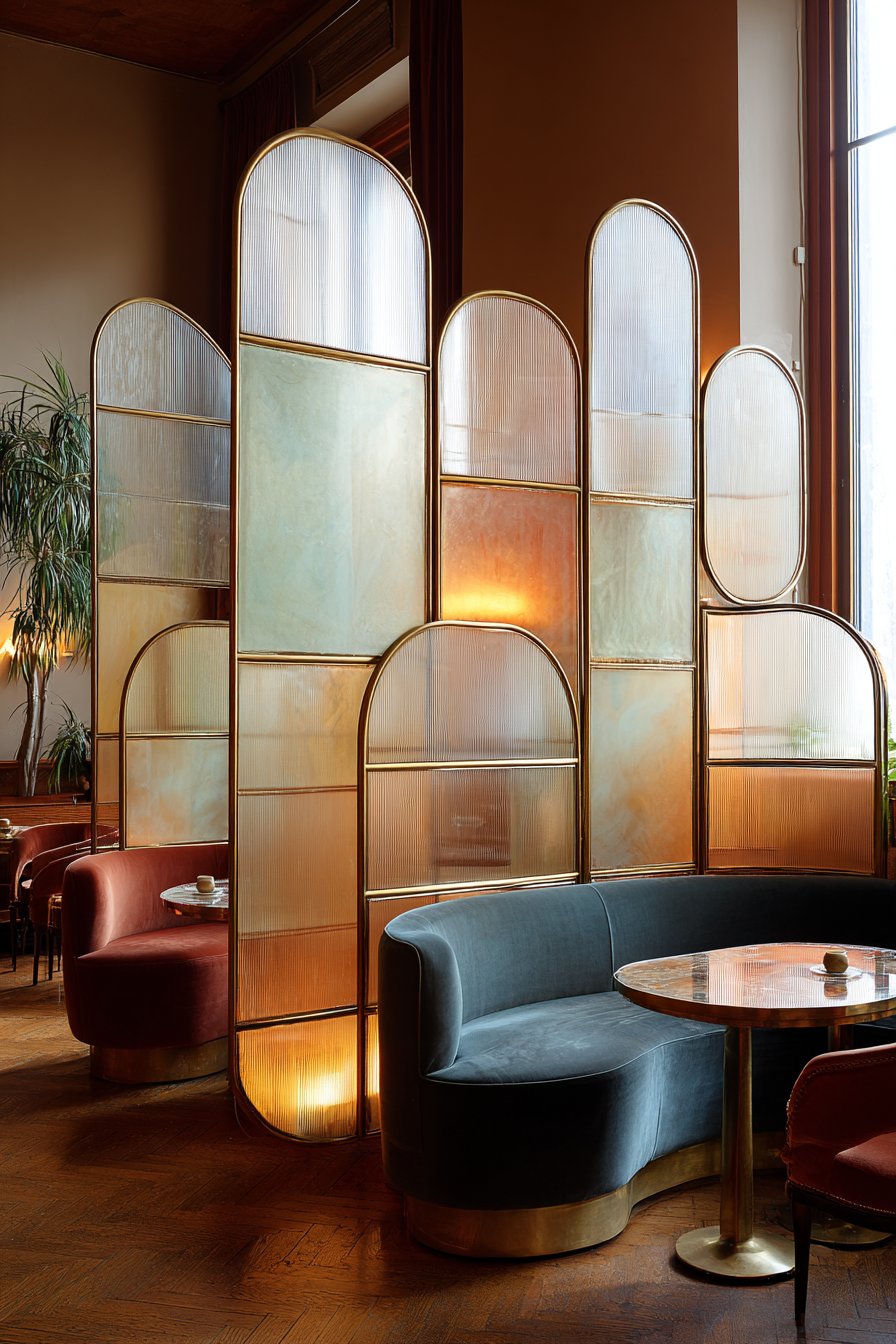
The geometric language of Art Deco emphasizes symmetry, stepped forms, and stylized natural motifs reinterpreted through modern, mechanical sensibilities. The patterns might include chevrons, zigzags, sunbursts, stylized flowers or foliage, and the stepped pyramid forms that reference ancient civilizations while celebrating contemporary progress. These motifs create visual rhythm and movement through repetition and variation. The brass construction—whether solid brass or brass-plated steel—brings warm metallic tones that glow under proper lighting. Polished to high shine, brass creates reflective surfaces that catch light and throw brilliant highlights. The frosted glass inserts soften the geometry while providing some visual screening, their translucent quality creating mysterious, veiled views between spaces.
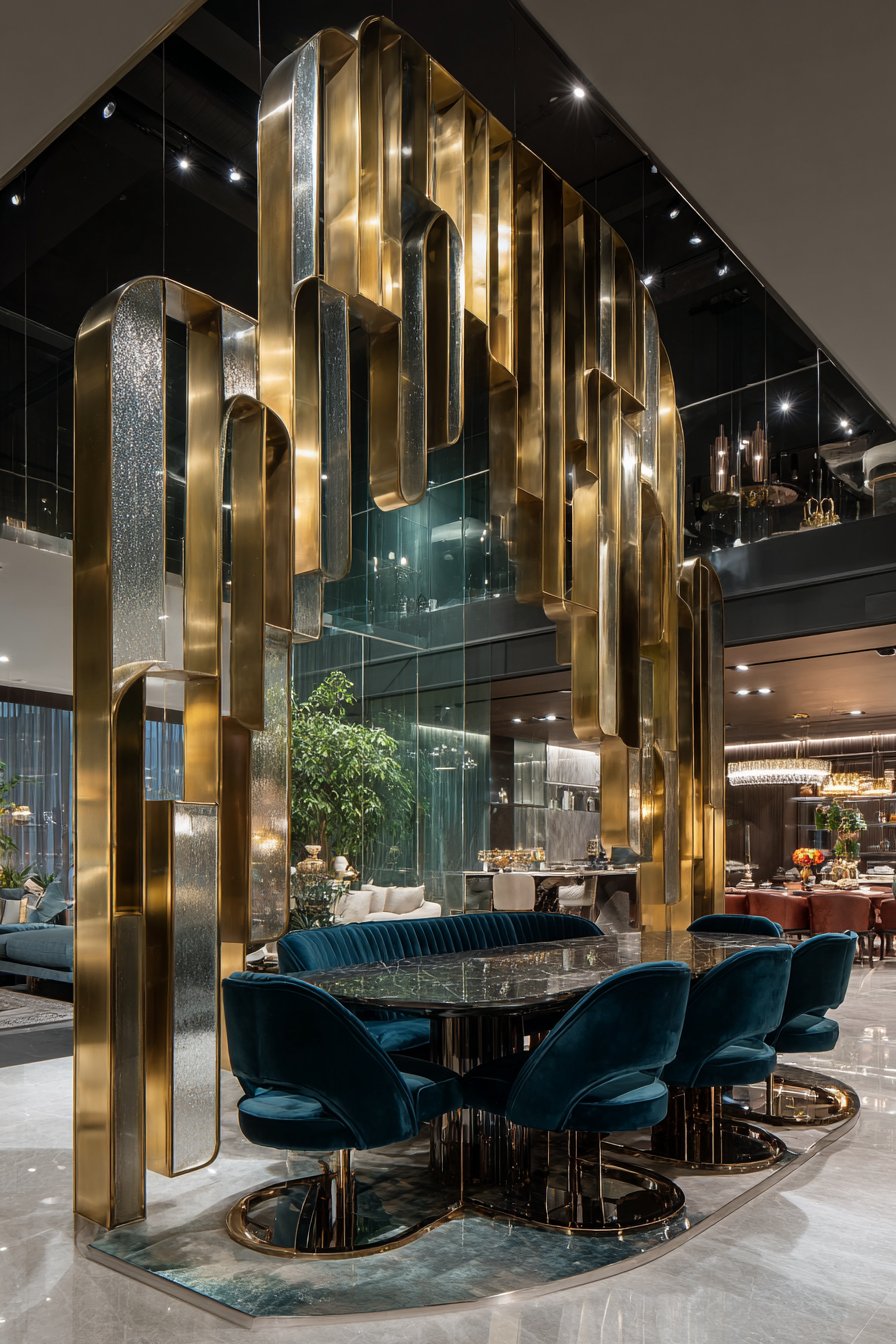
The craftsmanship required for an authentic Art Deco screen demands precision and attention to detail. The geometric patterns must be executed with perfect symmetry and alignment—Art Deco tolerates no sloppiness or casualness. Joints between metal elements should be smooth and nearly invisible, creating the appearance of continuous flowing forms. The brass finish must be perfectly even and free from scratches or imperfections. The frosted glass should be uniformly treated without variations or flaws. This perfectionism reflects the optimism and confidence of the Art Deco era when modern manufacturing and skilled craftsmanship came together to create objects of unprecedented beauty and precision.
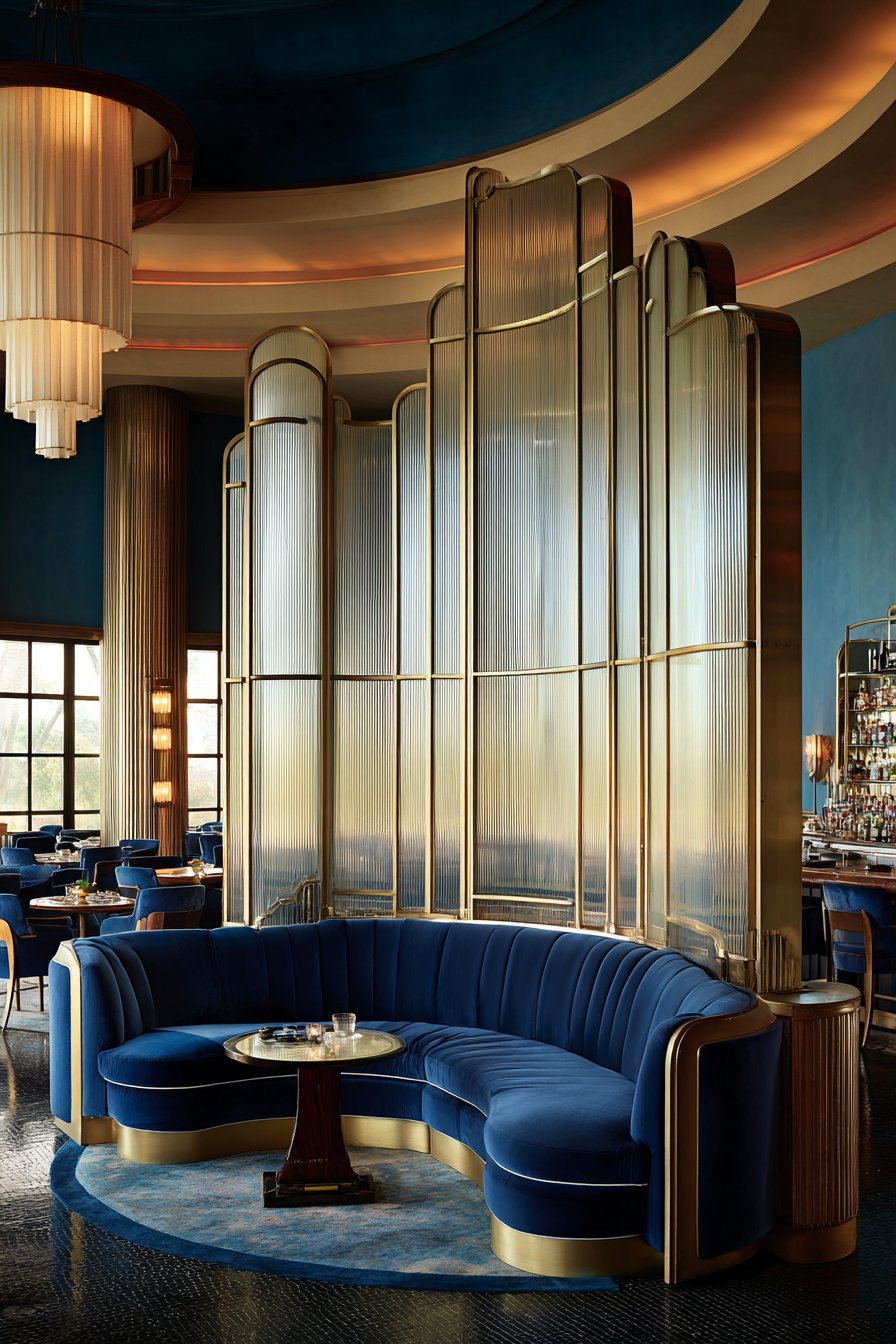
The living area displays a curved velvet sofa in navy blue—that sophisticated, saturated color that brings depth and luxury. Velvet’s lustrous pile catches light beautifully, creating subtle highlights and shadows that add visual interest and emphasize the sofa’s curved form. The curve softens the geometric precision of the brass screen while creating elegant, flowing lines. The dining zone features a mirrored table that reflects light and surroundings, creating visual magic and apparent spaciousness. Upholstered Art Deco chairs with characteristic features—curved arms, tapered legs, luxurious fabrics—bring period-authentic seating. Strategic accent lighting highlights metallic finishes through spotlights or directional fixtures that create dramatic interplay of light on brass and mirror surfaces.
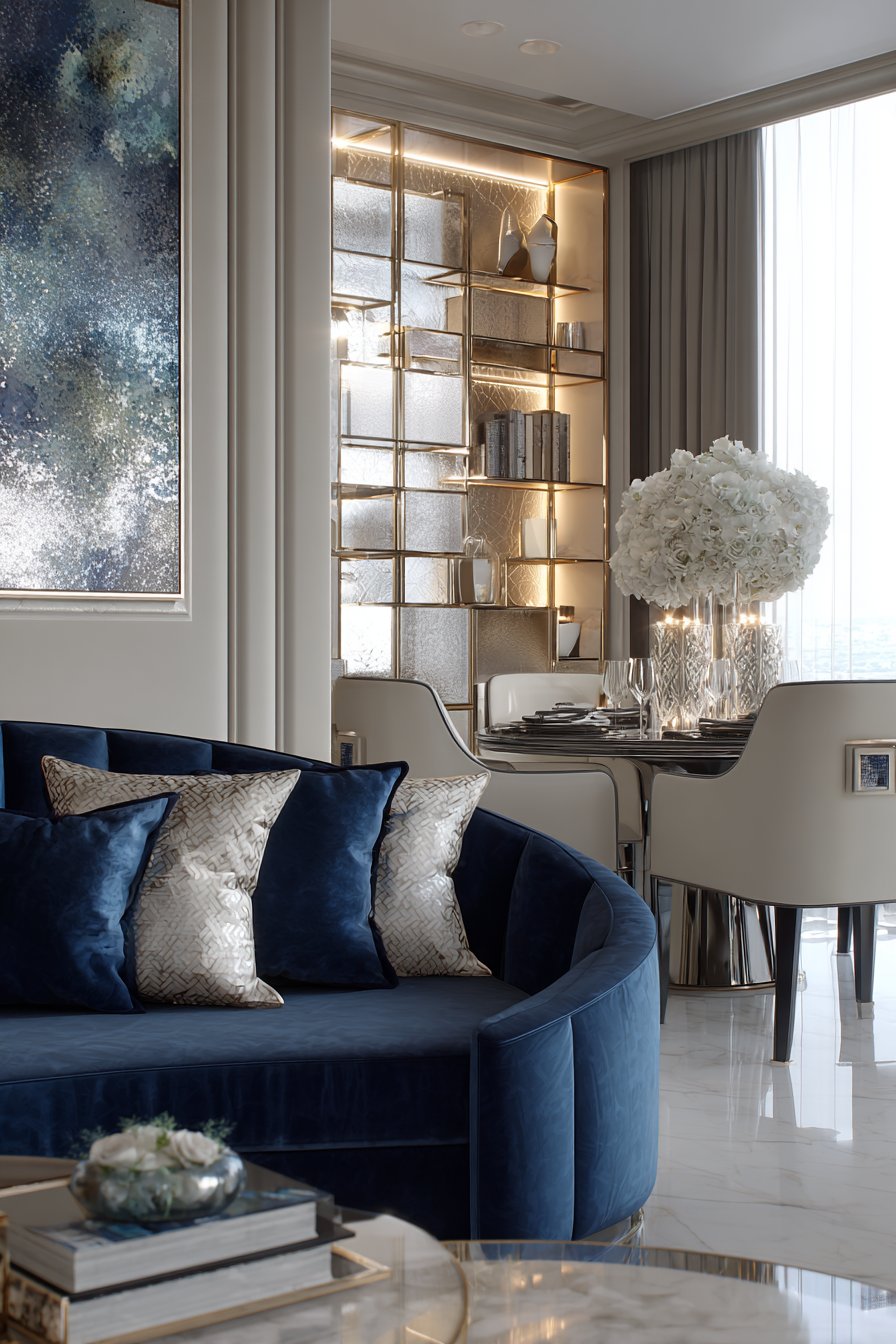
Key Design Tips: Source Art Deco screens from specialists who understand period details and proportions or commission custom fabrication from skilled metalworkers. Maintain polished brass through regular cleaning and polishing to prevent tarnish and maintain brilliant finish. Consider applying protective lacquer to slow tarnishing if you prefer not to polish regularly. Ensure proper support and installation—brass screens can be heavy and require secure mounting. Position the screen where it will catch light from windows or fixtures to maximize its reflective beauty. Complement the brass with other metallic accents in appropriate finishes—chrome, mirror, gold—that reinforce the glamorous aesthetic. Use the screen as the focal point of your design and select surrounding elements that honor its sophistication. Budget significantly for authentic Art Deco metalwork which represents substantial investment. Embrace symmetry and geometric patterns in other design elements to create cohesive Art Deco atmosphere. Light the screen dramatically to create the glamorous, theatrical quality essential to Art Deco style.
20. Zen-Minimalist Fabric Panel Curtain System
The fabric panel partition represents the most flexible and minimalist approach to living and dining room partition ideas, using simple textile curtains on ceiling-mounted track to create adjustable separation. This system features natural linen panels in neutral colors—white, cream, beige, or soft grey—that can be drawn closed for privacy or pulled completely open when full spatial flow is desired. The soft, drapable quality of linen brings organic warmth and subtle texture while the ceiling-mounted track system disappears into the architecture, allowing the fabric itself to be the visible element. This minimal intervention approach works beautifully in zen-inspired spaces where simplicity, flexibility, and natural materials align with spiritual principles of non-attachment and mindful living.
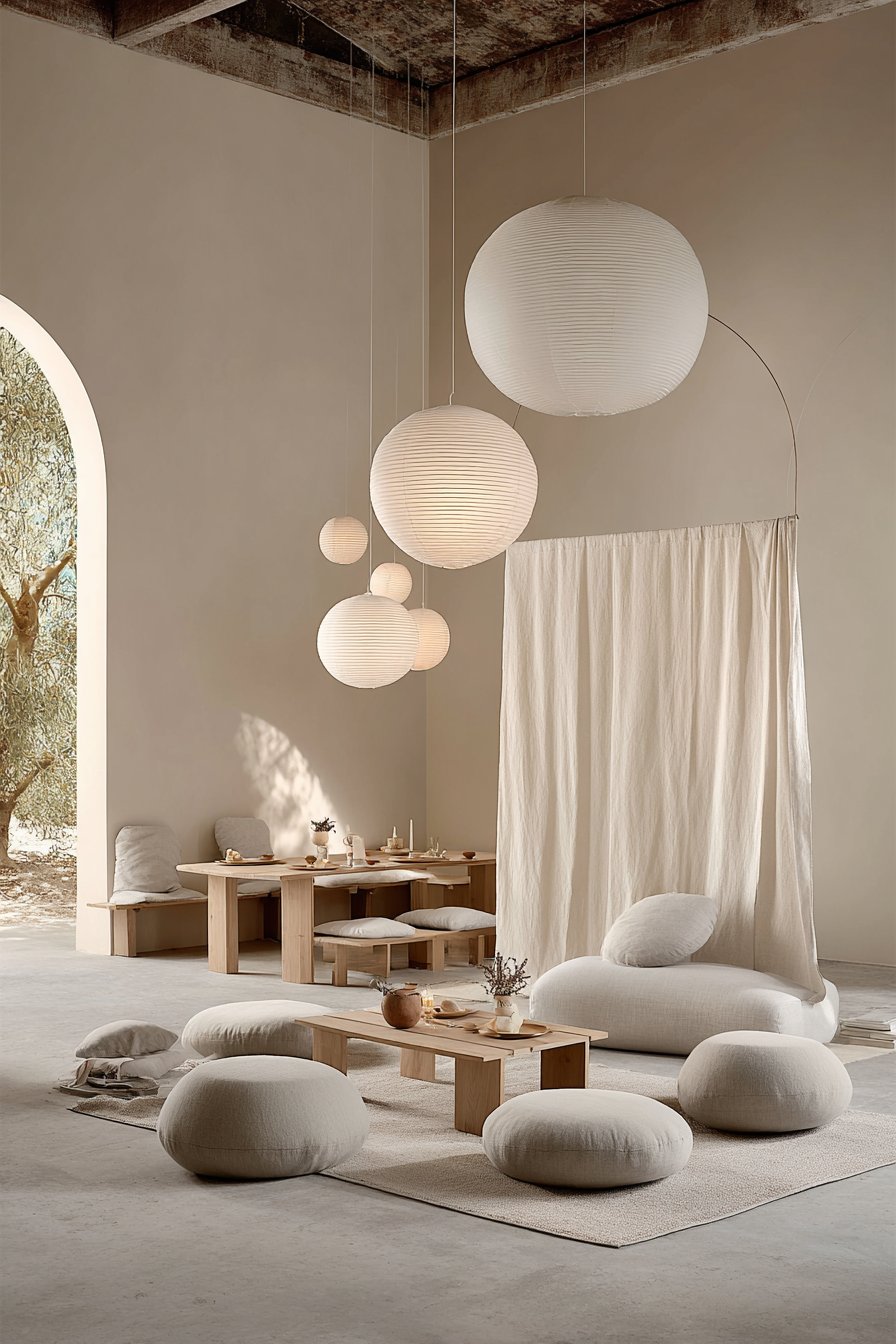
The choice of natural linen as the fabric material carries both practical and philosophical significance. Linen is one of humanity’s oldest textiles, woven from flax fibers through processes that have remained essentially unchanged for millennia. The fabric possesses beautiful natural irregularities—subtle slubs, slight thickness variations, and the characteristic crisp hand that softens with use and washing. Linen drapes beautifully with substantial body that holds gentle folds rather than hanging limply. The natural fiber breathes well, doesn’t hold dust or odors like synthetic fabrics, and ages gracefully, developing a soft patina that enhances rather than diminishes its appearance. The neutral colors maintain the serene, uncluttered aesthetic essential to zen-minimalist spaces while the natural fiber reinforces connection to nature.
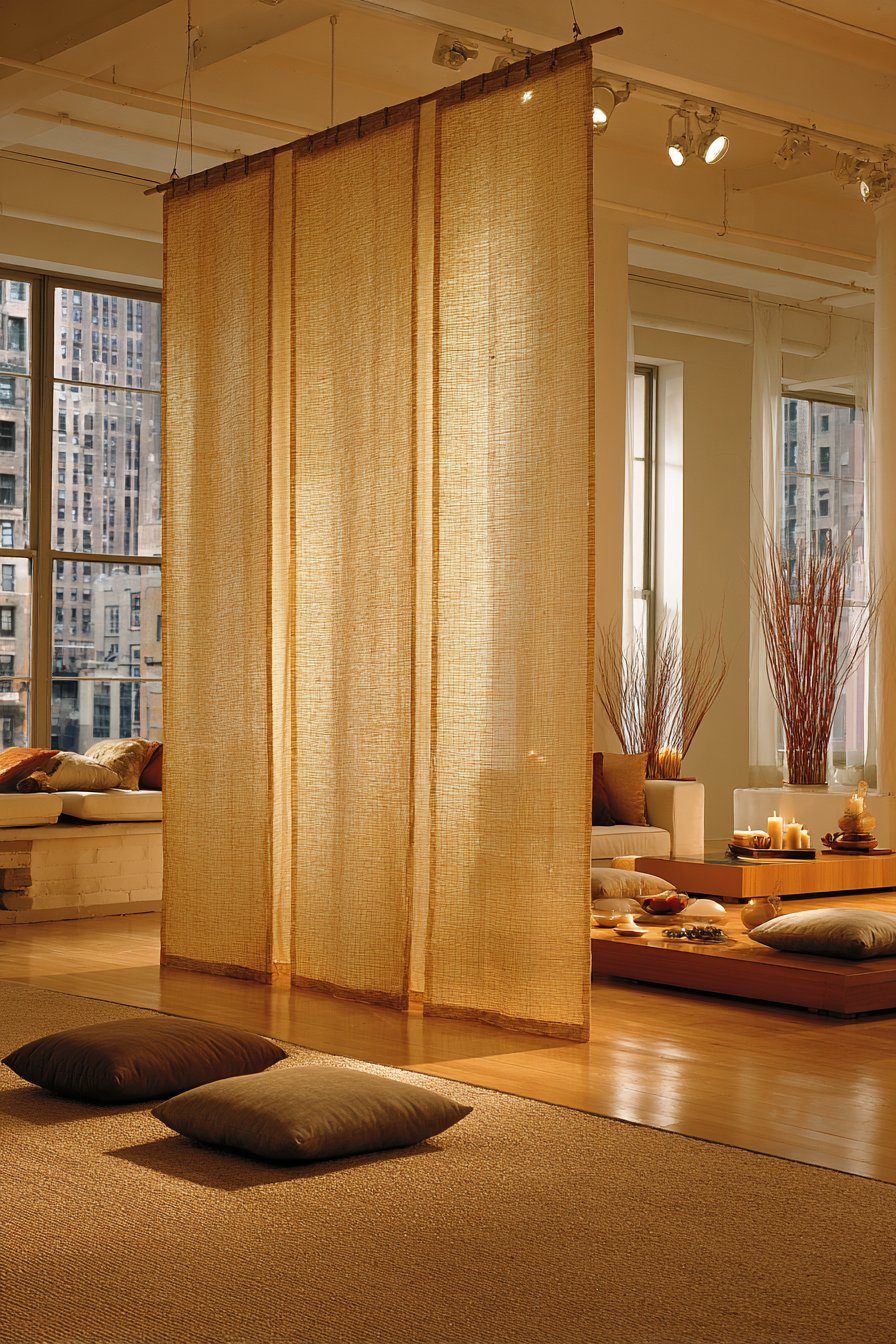
The ceiling-mounted track system enables the flexibility that makes this partition so practical. Industrial-quality tracks—similar to those used in commercial installations—allow the linen panels to slide smoothly and quietly with minimal effort. The panels might be configured as individual sections that stack to one or both sides, or as overlapping panels that can be adjusted to various positions. During typical daily life, the curtains might remain open, disappearing against the walls and leaving the space completely unobstructed. For entertaining or when you want to define distinct zones, the curtains slide closed to create soft separation. The ability to modify your space instantly without moving furniture or making permanent changes embodies the zen concept of flow and adaptability.
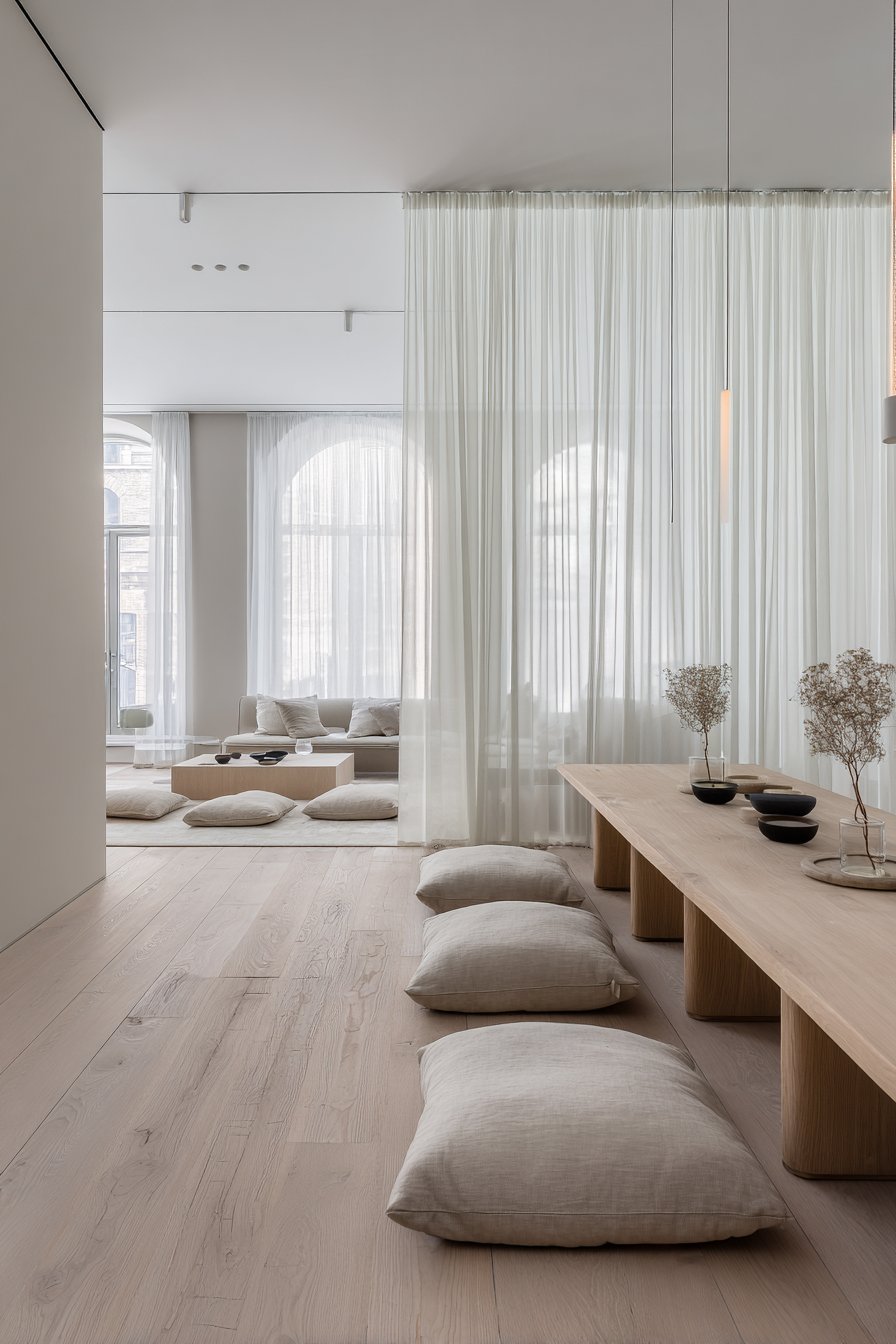
The living space features low-profile furniture in neutral tones that keeps visual weight near the ground and creates horizontal emphasis. Platform sofas or floor cushions encourage sitting closer to the earth, a position that promotes groundedness and calm. Minimal accessories—perhaps a single sculptural vase, a carefully chosen art piece, or a small collection of stones—prevent visual clutter that could disturb the peaceful atmosphere. The dining area embraces simplicity with a plain wooden table free from decoration or embellishment, its beauty derived from honest materials and good proportions. Meditation-style floor cushions—zafu or zabuton in natural fabrics—offer seating that encourages mindful posture and present-moment awareness. Diffused natural light creates peaceful atmosphere free from harsh shadows or strong contrasts, supporting the contemplative quality of zen-inspired spaces.
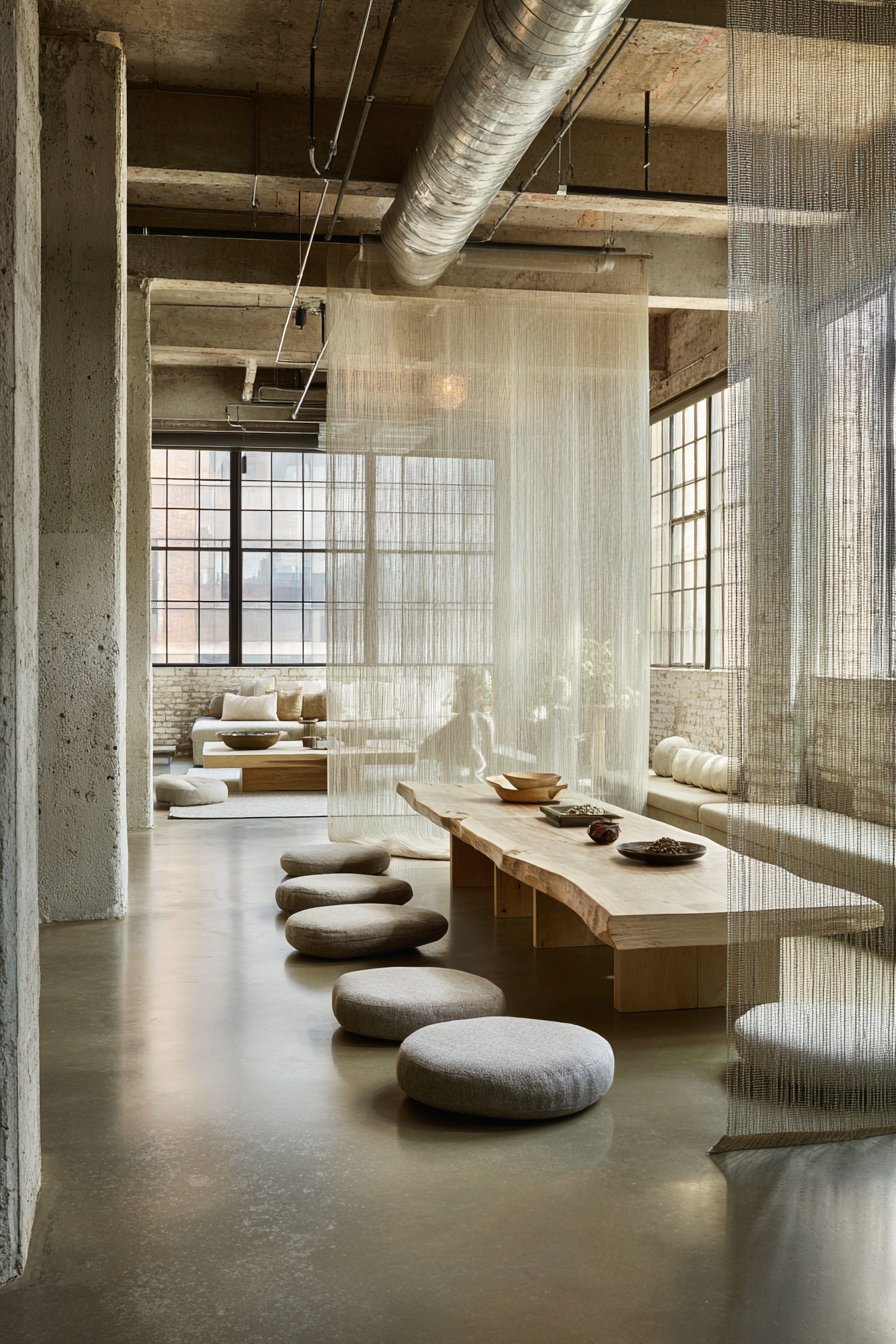
Key Design Tips: Choose heavyweight linen—at least 6-8 ounces per square yard—for better drape and opacity. Allow linen to be slightly longer than floor-to-ceiling measurement so panels puddle gently on the floor for luxurious appearance. Install commercial-quality track systems designed for daily use rather than lightweight residential curtain tracks. Select neutral colors in natural, undyed linen or lightly pigmented tones that won’t show fading. Consider blackout lining if you need complete light blocking, though this adds weight and reduces the airy quality. Maintain linen curtains with occasional gentle washing or dry cleaning to keep them fresh and remove dust. Embrace the natural wrinkling of linen rather than ironing excessively—the relaxed texture is part of its appeal. Keep the track system clean and occasionally lubricate moving parts for smooth operation. Consider installing the curtains with generous fullness—panels should be 1.5 to 2 times the width they’ll cover for rich, full draping. Avoid over-decorating the space—let the simple beauty of the linen panels shine as a quiet, contemplative element.
21. Eclectic Vintage Window Frame Collection
The repurposed window frame partition celebrates creative upcycling and personal expression, transforming architectural salvage into unique living and dining room partition ideas. This one-of-a-kind divider features a carefully curated collection of vintage window frames in various sizes, styles, and conditions, assembled into a cohesive structure that divides space while telling stories through each frame’s individual character. The mixed materials—weathered wood, aged metal frames, wavy antique glass, missing panes replaced with chicken wire or fabric—create visual complexity and textural interest impossible to achieve with manufactured pieces. Each window carries history from its previous life—perhaps salvaged from a demolished Victorian home, a rural schoolhouse, or an industrial building—bringing that embodied history and authentic patina into your contemporary space.
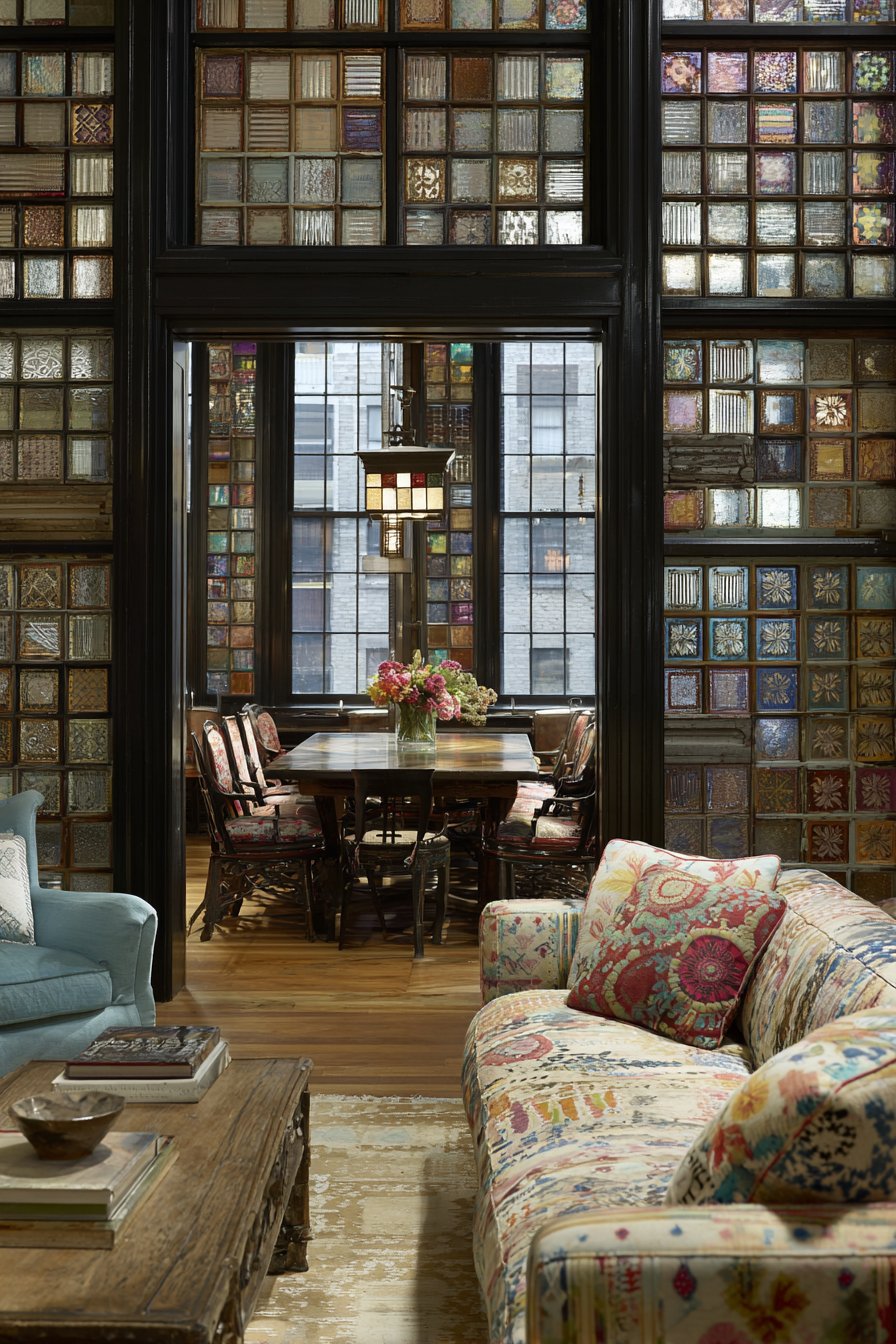
The art of assembling vintage windows into a successful partition requires curatorial sensibility and compositional skill. The frames must be selected for compatibility—not necessarily matching, but harmonious in scale, color, and character. Varied sizes create visual rhythm through the interplay of large and small elements, while consistent color tones (all painted white, all natural wood, or all grey, for example) unify the diverse components. The arrangement considers both practical function and visual composition—taller windows might anchor the outer edges while smaller panes fill the center, or the collection might be organized in grid-like regularity for more formal appearance. The frames are connected through a supporting structure—perhaps a simple wood or metal frame—that holds everything securely while remaining as invisible as possible.
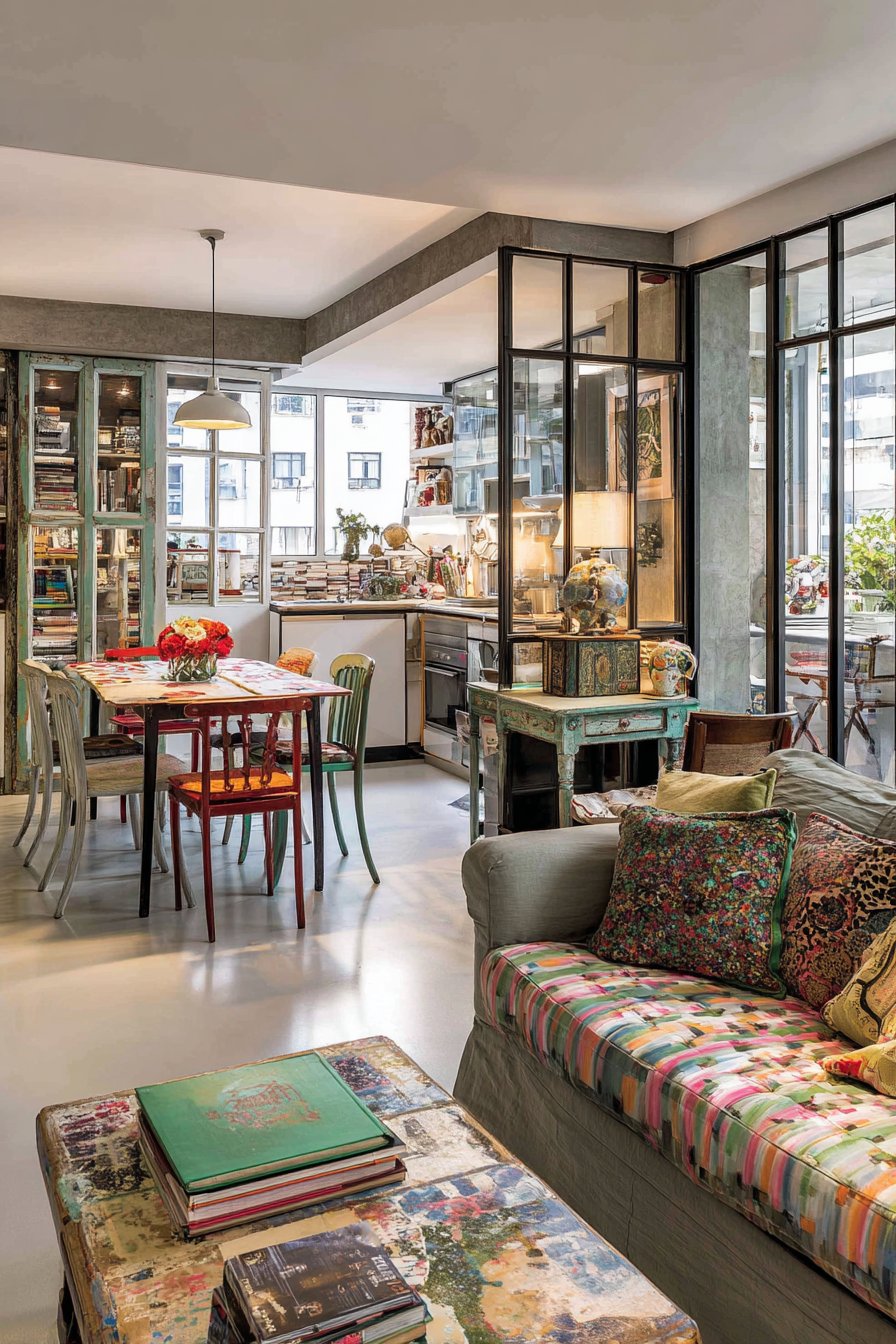
The various glass conditions and pane replacements add additional character and creative opportunity. Original antique glass with subtle waves and imperfections brings authentic period character and diffuses light beautifully. Empty frames where glass has been removed create open passages that increase air flow and visual connection. Panes replaced with chicken wire bring industrial or farmhouse reference while maintaining some transparency. Fabric inserts in complementary colors or patterns add softness and privacy while introducing another material layer. Wire mesh, pressed tin ceiling tiles, or decorative metal grilles offer additional creative infill options. This mix-and-match approach creates unique character impossible to replicate—each partition becomes a genuine original.
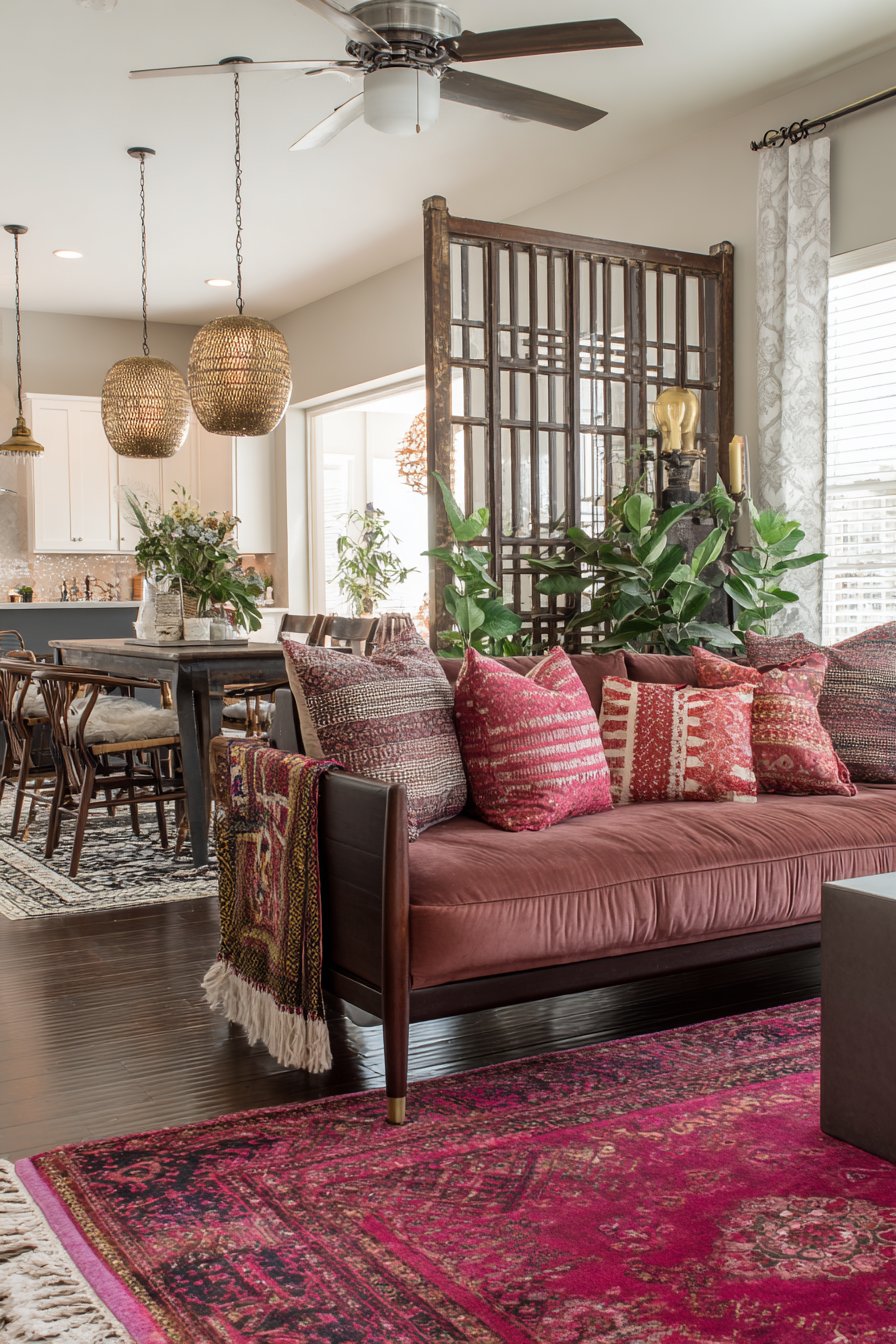
The living side embraces eclectic collecting with a colorful sofa covered in global-inspired textiles—perhaps ikat patterns, suzani embroidery, or Kantha quilting—that bring handcrafted character and cultural richness. The mixing of patterns and colors creates vibrant visual energy that complements the collected character of the window partition. The dining area continues the eclectic theme with a painted vintage table—perhaps with deliberately distressed finish that shows layers of previous paint colors—surrounded by mismatched chairs collected from various sources. Each chair tells its own story through its style, condition, and finish, creating seating that’s anything but boring. Natural light filtering through the various glass panes creates interesting light patterns, with the antique glass creating soft diffusion, clear sections allowing direct views, and fabric or mesh inserts casting textured shadows.
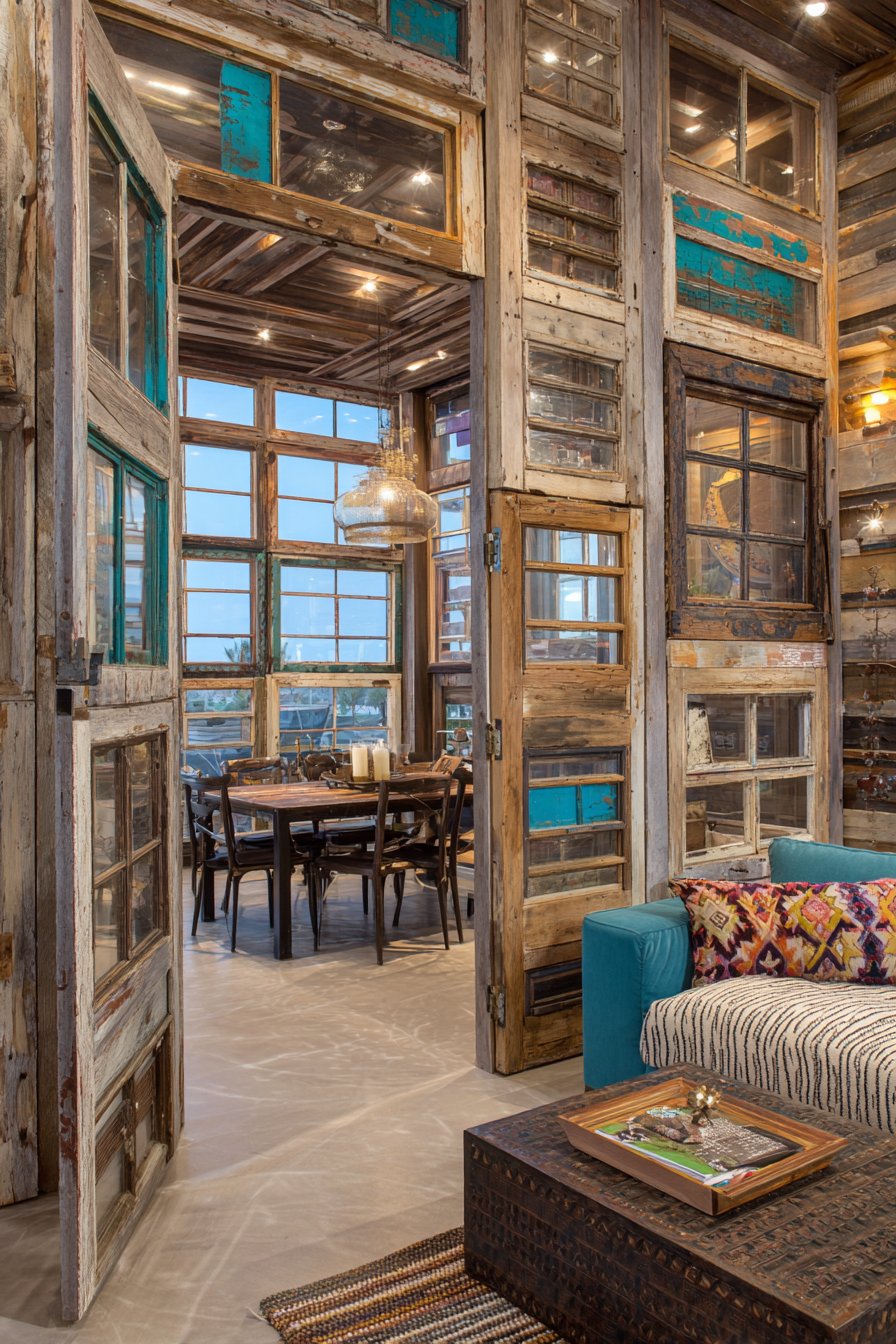
Key Design Tips: Source vintage windows from architectural salvage yards, estate sales, flea markets, or online marketplaces. Inspect frames carefully for structural integrity—avoid severely damaged pieces that cannot be safely stabilized. Clean vintage windows gently, preserving patina rather than trying to make them look new. Create or commission a sturdy supporting frame to hold the window collection securely—this is not a project for amateur carpentry given safety concerns. Anchor the assembled partition securely to floor and ceiling to prevent tipping. Consider sight lines through glass panes—you might want some privacy while maintaining openness. Replace missing glass panes thoughtfully with materials that add character rather than trying to restore them to perfect condition. Consider the overall composition from both sides of the partition since it’s equally visible from living and dining areas. Embrace imperfection as character—chips, peeling paint, and wear add authenticity. Balance the visual complexity of the window partition with simpler surrounding elements to prevent visual chaos. Create adequate clearance around the partition to prevent accidental damage to fragile vintage glass.
Why These Partition Ideas Work Best
These twenty-one living and dining room partition ideas represent the finest approaches to spatial division in open-plan homes because they address the fundamental challenge of creating definition without sacrifice. Each solution balances the competing demands of openness and separation, transparency and privacy, architectural impact and practical function. The diversity of styles ensures that regardless of your personal aesthetic preferences—whether minimalist or maximalist, traditional or contemporary, rustic or refined—you’ll find partition approaches that resonate with your vision while solving real spatial challenges.
The best partition ideas share several critical characteristics. First, they respect the architectural character of the space rather than fighting against it. A Victorian home with traditional architectural details calls for different partition solutions than a modern loft with industrial bones or a mid-century ranch with clean lines and horizontal emphasis. The most successful partitions feel integrated into the overall design narrative rather than appearing as afterthoughts or corrections. Second, they provide genuine functional benefit without creating new problems. Effective partitions define zones without blocking light, create privacy without isolation, reduce noise transmission without feeling closed-off, and may offer bonus functions like storage, display, or artistic impact. Third, they’re executed with appropriate attention to quality, materials, and craftsmanship. A poorly constructed partition—regardless of how good the concept—will always disappoint, while a well-executed design brings daily pleasure and long-term value.
The material choices represented across these partition ideas span the full spectrum of possibilities, each offering distinct advantages. Natural materials like wood, stone, rope, and plants bring organic warmth and connection to nature that synthetic alternatives cannot replicate. Metal—whether the industrial honesty of exposed steel, the luxurious gleam of polished brass, or the contemporary sophistication of matte black—introduces structural strength and visual contrast. Glass and acrylic provide transparency options ranging from completely clear to frosted, tinted, or technologically enhanced with lighting. Textiles add softness, flexibility, and acoustic absorption that harder materials lack. The most successful partitions often combine multiple materials, creating interest through contrast and complexity while allowing each material to contribute its unique properties.
Lighting consideration separates adequate partition solutions from truly exceptional ones. The best partitions either enhance natural light flow through transparency, translucency, or open frameworks, or they incorporate artificial lighting as integral design elements. Partitions that block precious daylight create dark, cave-like spaces that feel oppressive despite potentially being beautifully designed. Solutions that celebrate light—glass panels catching sun rays, rope strands casting linear shadows, embedded LEDs creating ethereal glow, or open metalwork creating dynamic shadow patterns—transform partitions from spatial dividers into light modulators that affect the quality and character of illumination throughout the day.
Scale and proportion matter enormously in partition design. Floor-to-ceiling dividers create maximum separation and architectural presence but require generous ceiling heights to avoid feeling oppressive—standard eight-foot ceilings may be better served by partial-height options. The thickness of partitions affects their visual weight and the space they consume—delicate screens take up minimal square footage while substantial bookshelf dividers or double-sided fireplaces require significant floor area. The density of screening elements—whether closely spaced rope strands, fine metalwork, or large glass panels—controls the degree of visual connection and privacy. Successful partition design carefully calibrates these dimensional factors to the specific space, ensuring appropriate scale that feels neither too timid nor overwhelming.
Flexibility represents one of the most valuable characteristics a partition can offer, particularly in smaller homes where adaptability extends functionality. Sliding systems, folding panels, and curtain arrangements allow you to modify your space based on immediate needs—open for daily living, closed for entertaining or when you need defined zones. This flexibility accommodates the reality that our spatial needs change throughout the day, week, and year. Static partitions sacrifice this adaptability but gain permanence, architectural presence, and potentially additional functions like storage or display that moveable systems cannot provide. Understanding which approach suits your lifestyle requires honest assessment of how you actually use your space rather than how you imagine you might.
The integration of storage, display, or other secondary functions transforms partitions from space dividers into multifunctional elements that earn their footprint through multiple contributions. Bookshelf partitions provide visual separation plus storage and display opportunities on both sides. Fireplace dividers offer warmth and atmospheric focal points. Living walls purify air while bringing biophilic benefits. Even apparently simple partitions can incorporate thoughtful details: half-walls might include electrical outlets, rope dividers can support hanging planters, and glass systems might integrate shelving or display ledges. These layered functions justify the space partitions occupy and increase their value within your home’s overall design.
Acoustic considerations, while less visually dramatic than aesthetic factors, dramatically affect the practical success of partitions in real living. Open-plan spaces notoriously suffer from noise transmission—dinner conversation bleeding into the television viewing area, kitchen sounds intruding on reading time, or general acoustic chaos when multiple activities occur simultaneously. Solid partitions including shiplap walls, bookshelf dividers, and substantial wood screens provide meaningful sound absorption. Textile elements like curtains, macramé panels, and upholstered surfaces absorb sound energy rather than reflecting it. Living walls contribute acoustic dampening through their plant mass and soil. Glass partitions offer less acoustic benefit but still reduce some sound transmission compared to completely open layouts. Strategic partition selection based partly on acoustic performance creates more peaceful, functional living environments.
The investment spectrum for these partition solutions ranges from budget-friendly DIY projects to substantial architectural modifications requiring professional design and installation. Fabric curtain systems and simple rope dividers represent the accessible end—achievable with modest budgets and basic skills. Custom metalwork screens, built-in bookcases, and two-sided fireplaces inhabit the premium category, requiring significant financial investment but delivering exceptional visual impact and potential increase in home value. The middle ground—sliding doors, half-walls with millwork, and modular systems—offers balance between investment and impact. Understanding this spectrum allows you to select partition approaches appropriate to your budget while ensuring you don’t under-invest in solutions that will disappoint or over-invest in elaboration your space doesn’t require.
Style longevity should inform partition selection, particularly for permanent installations representing significant investment. Highly trendy solutions may feel dated within a few years, while classic approaches remain appealing across decades. Natural materials, honest construction, good proportions, and quality craftsmanship transcend temporary fashion cycles. The most enduring partition designs connect to broader architectural or design traditions—Japanese screens drawing from centuries of refinement, Art Deco metalwork referencing a defined historical period, farmhouse elements tapping into agricultural heritage—rather than chasing momentary trends. This doesn’t mean avoiding contemporary styles, but rather selecting approaches rooted in thoughtful design principles rather than fleeting fashion.
Conclusion
Living and dining room partition ideas offer remarkable opportunities to enhance open-plan spaces through thoughtful spatial division that preserves openness while creating functional definition. The twenty-one solutions explored in this comprehensive guide demonstrate the extraordinary range of possibilities available—from transparent glass systems that maintain visual connection to substantial architectural elements that make bold statements, from flexible textile panels that adapt to changing needs to permanent installations that become defining features of your home’s character.
The most successful partition implementations begin with honest assessment of your specific needs, lifestyle patterns, and aesthetic preferences. Consider how you actually use your space rather than how you imagine you might. Evaluate your budget realistically, accounting for not just initial installation but long-term maintenance requirements. Think carefully about the architectural character of your home and select partition approaches that harmonize with rather than fight against existing elements. Consider the practical implications—how much separation do you truly need, how important is flexibility, what secondary functions might your partition provide, and how will it affect light flow and acoustic comfort?
These partition ideas prove that spatial division need not mean sacrifice. With thoughtful design, appropriate material selection, quality craftsmanship, and attention to both functional and aesthetic concerns, you can create beautiful open-plan living that enjoys the best of both worlds—the expansive flow and light of open layouts combined with the definition and functionality of distinct zones. Whether you’re drawn to the minimalist purity of Scandinavian rope dividers, the architectural drama of two-sided fireplaces, the creative expression of repurposed vintage windows, or the cutting-edge innovation of LED-lit acrylic panels, you’ll find approaches that transform your living and dining areas into thoughtfully designed spaces that serve your daily life beautifully while inspiring you every time you come home. The key lies not in following trends but in selecting solutions that resonate with your personal style while solving your specific spatial challenges—creating partitions that feel not like afterthoughts but like essential, beloved elements of your home’s unique character and story.


