
The modern living room has evolved far beyond its traditional role as a simple gathering space. Today’s homes demand versatility, with open-concept layouts becoming increasingly popular while simultaneously creating a need for thoughtful space division. Living room partitions have emerged as the perfect solution to this design challenge, offering functionality without sacrificing aesthetic appeal. Whether you’re working with a studio apartment that requires clever zoning, a sprawling open floor plan that needs definition, or simply want to create distinct areas for different activities, the right partition can transform your living space into a harmonious blend of form and function.
The beauty of living room partitions lies in their incredible diversity. From architectural elements like half-walls and glass blocks to flexible solutions such as screens and curtains, partition options span every design style imaginable. They can serve multiple purposes simultaneously—providing storage, displaying art, incorporating greenery, or even housing functional elements like fireplaces and aquariums. The key is selecting a partition that not only divides your space effectively but also enhances your overall interior design scheme while reflecting your personal style.
In this comprehensive guide, we’ll explore twenty-five innovative living room partition ideas that demonstrate the full spectrum of possibilities available to homeowners and renters alike. Each concept showcases unique materials, design approaches, and functional benefits, from minimalist modern solutions to richly textured traditional options. Whether you’re drawn to the clean lines of Scandinavian design, the warmth of rustic farmhouse aesthetics, the edge of industrial chic, or the serenity of biophilic design, you’ll find inspiration that speaks to your vision. These carefully curated partition ideas prove that dividing space doesn’t mean compromising on style—instead, it offers an opportunity to add architectural interest, enhance functionality, and create rooms that truly work for the way you live.

1. Modern Geometric Metal Frame Divider
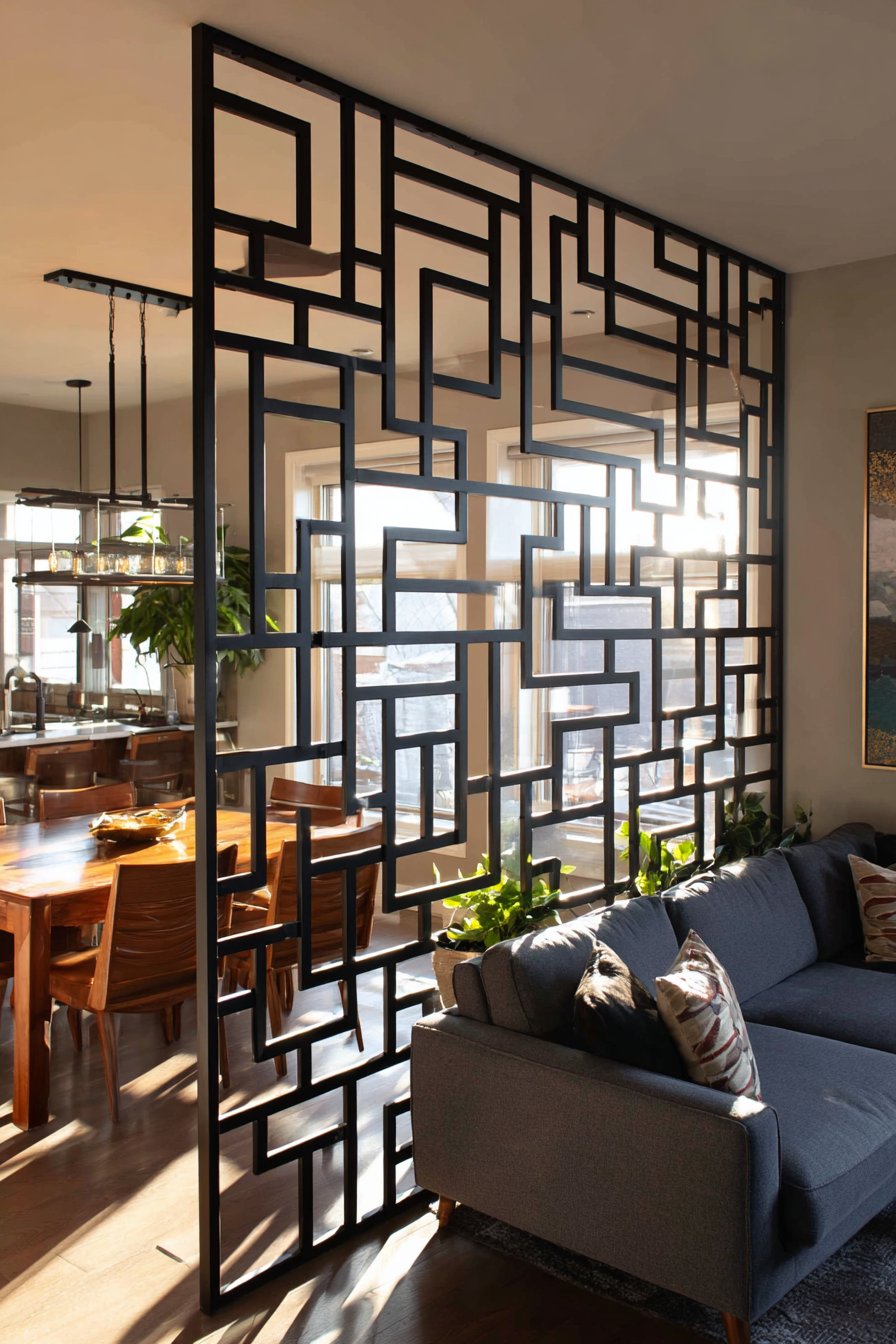
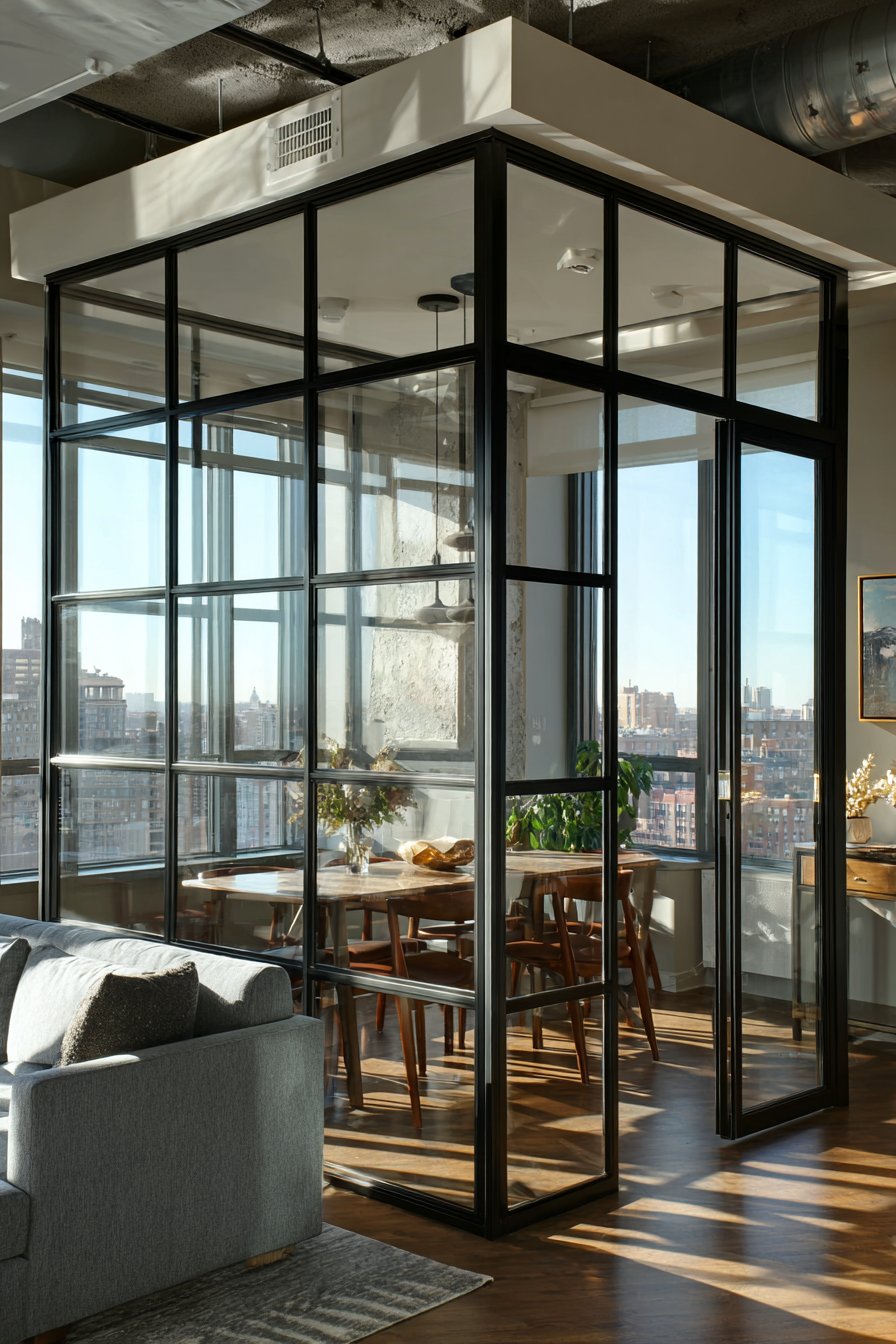
The contemporary living space finds one of its most sophisticated expressions in the geometric metal frame partition, a design element that masterfully balances industrial aesthetics with modern minimalism. This partition concept features a matte black metal framework arranged in clean geometric patterns, creating an architectural statement that defines space without overwhelming it. The true genius lies in the integration of floating glass panels within the metal structure, allowing light to flow freely while maintaining visual connection between zones. On one side, a contemporary grey sectional sofa establishes the primary seating area, while the opposite side accommodates a wooden dining table surrounded by mid-century modern chairs, creating a seamless transition between relaxation and dining functions.
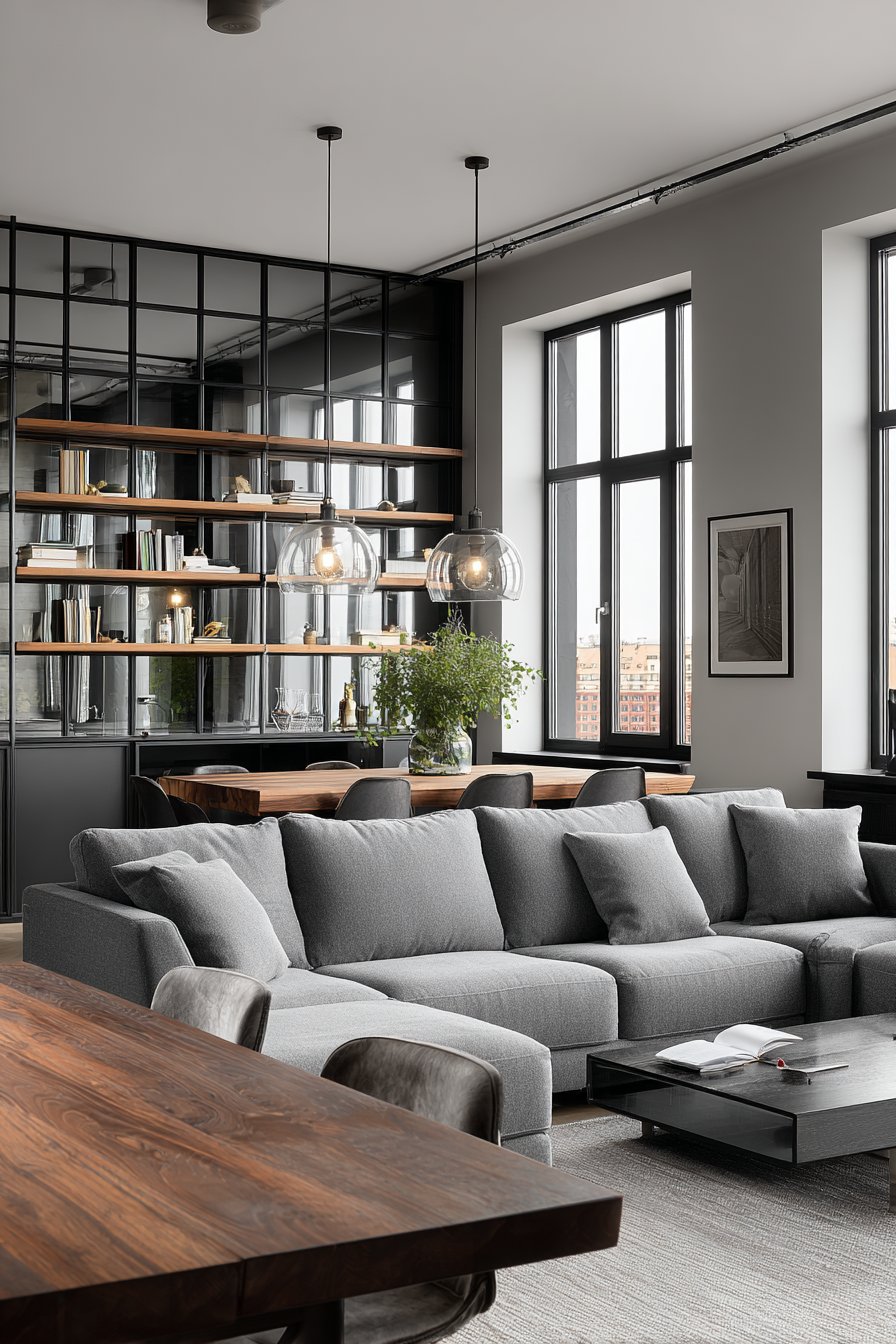
The interplay of materials in this design demonstrates sophisticated spatial planning. The matte black metal provides strong visual lines that guide the eye and establish boundaries, while the glass panels offer transparency that prevents the space from feeling closed off or cramped. Natural daylight streaming through nearby windows creates ever-changing shadow patterns through the partition’s geometric framework, adding dynamic visual interest throughout the day. This interaction between light and shadow transforms the partition from a static divider into a living element that responds to environmental conditions, creating subtle variations in ambiance from morning through evening.
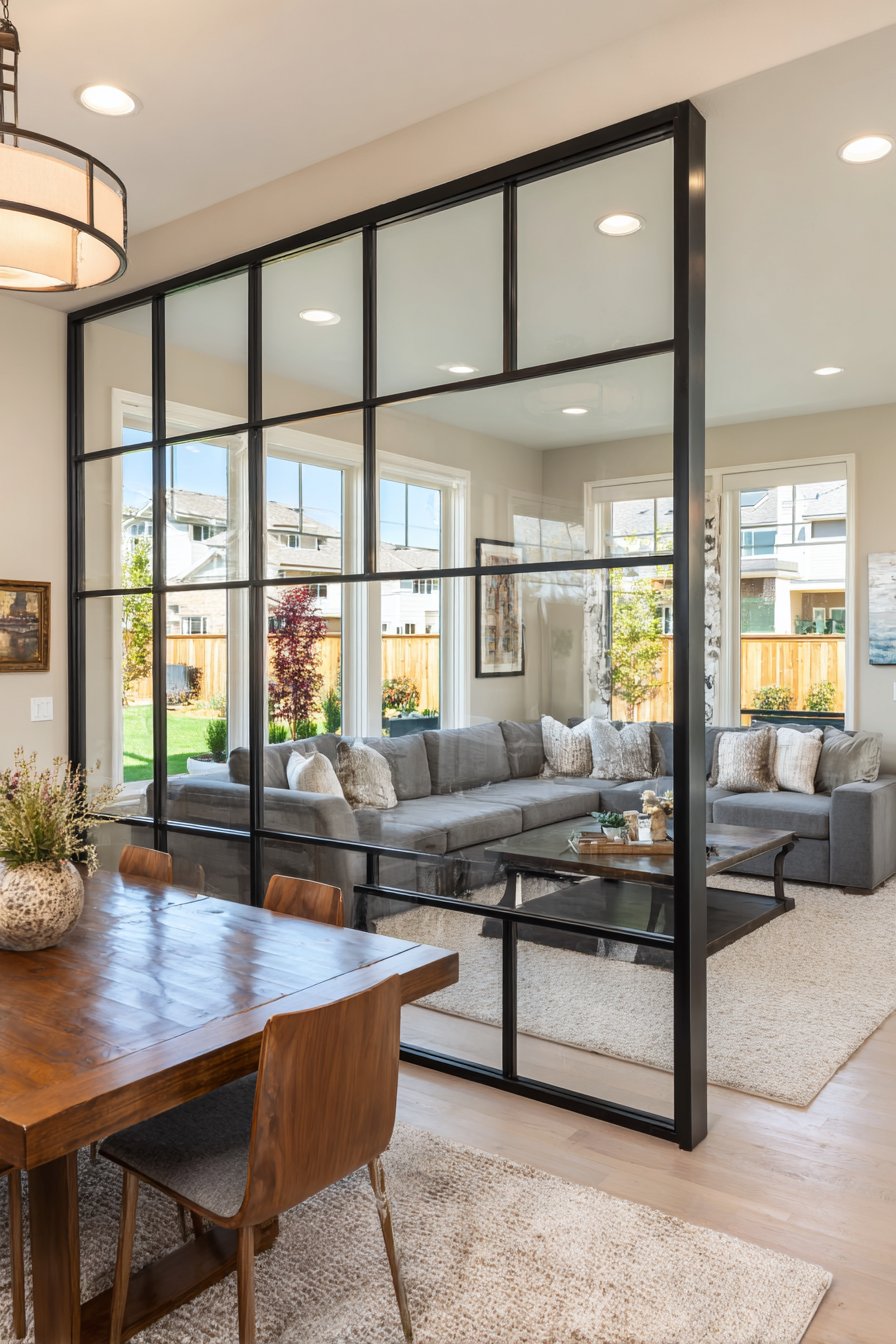
The practical advantages of this partition style extend beyond aesthetics. The open framework design maintains air circulation throughout the space, an often-overlooked consideration in room division. The combination of solid metal framing and transparent glass creates zones that feel distinct yet connected, ideal for maintaining conversation flow during gatherings while still defining separate functional areas. The industrial-chic aesthetic pairs beautifully with contemporary furniture styles, exposed brick, concrete flooring, and other urban design elements, making it particularly well-suited for loft apartments and modern homes with open floor plans.
Key Design Tips: Choose high-quality powder-coated steel for durability and consistent finish. Ensure glass panels are tempered safety glass for household use. Consider the partition’s proportions carefully—too dense and it blocks too much light, too sparse and it loses its defining presence. Install proper anchoring to ceiling and floor for stability. Coordinate the metal finish with other hardware in the space for cohesion. Position the partition to maximize natural light flow while still creating meaningful separation. Consider incorporating adjustable panels if flexibility is desired. Maintain clean lines in surrounding furniture to complement the geometric aesthetic.
2. Double-Sided Bookshelf Room Divider
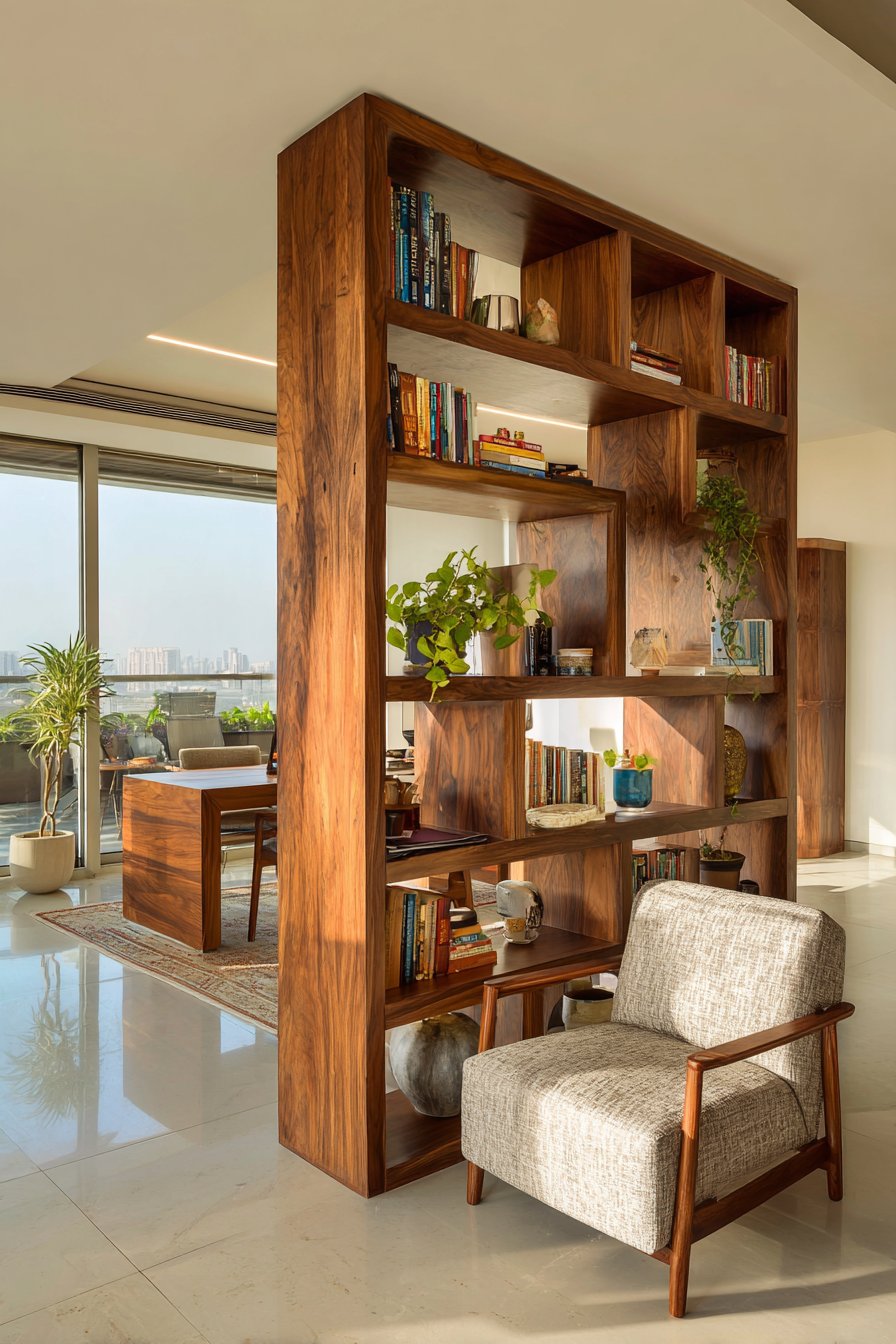
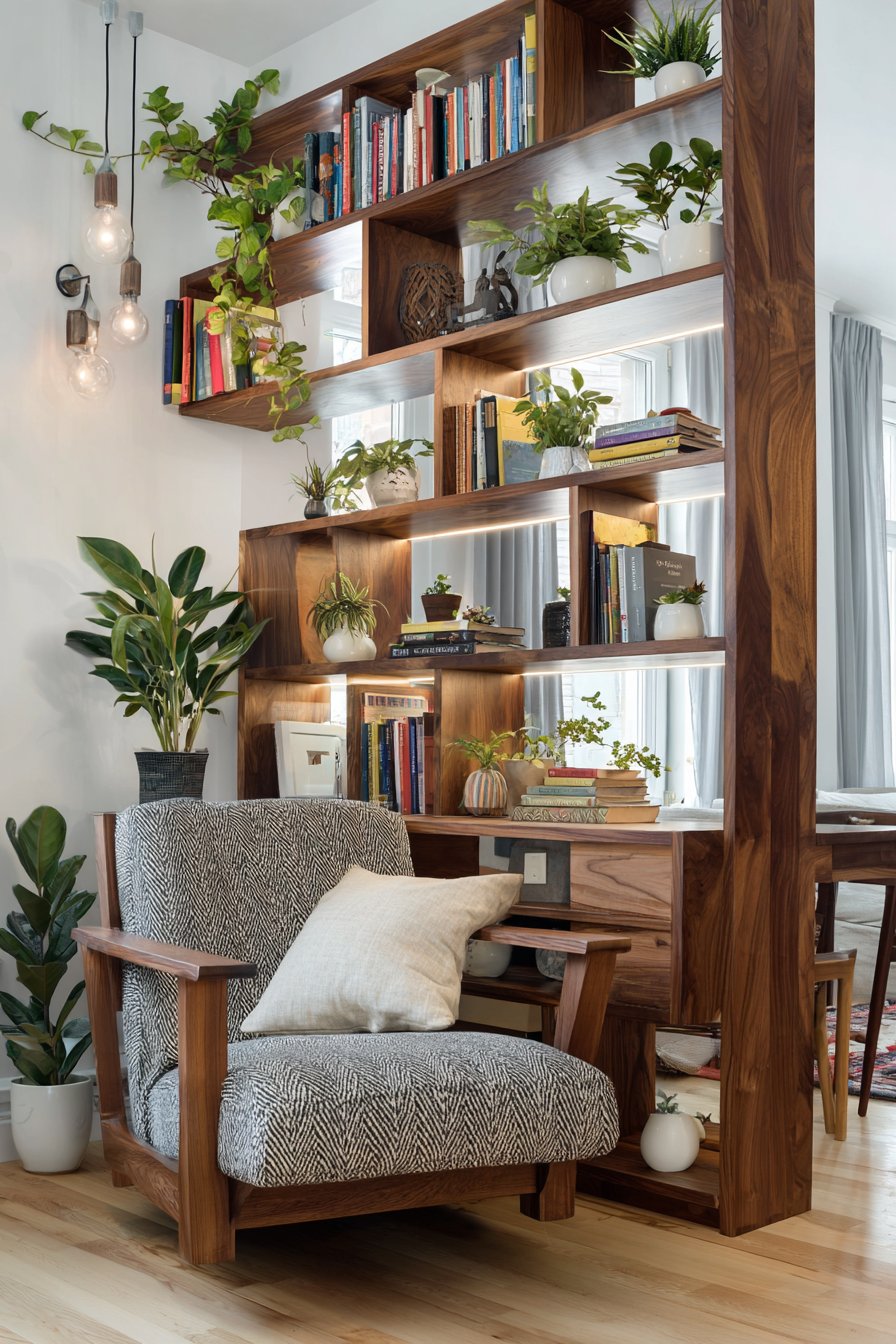
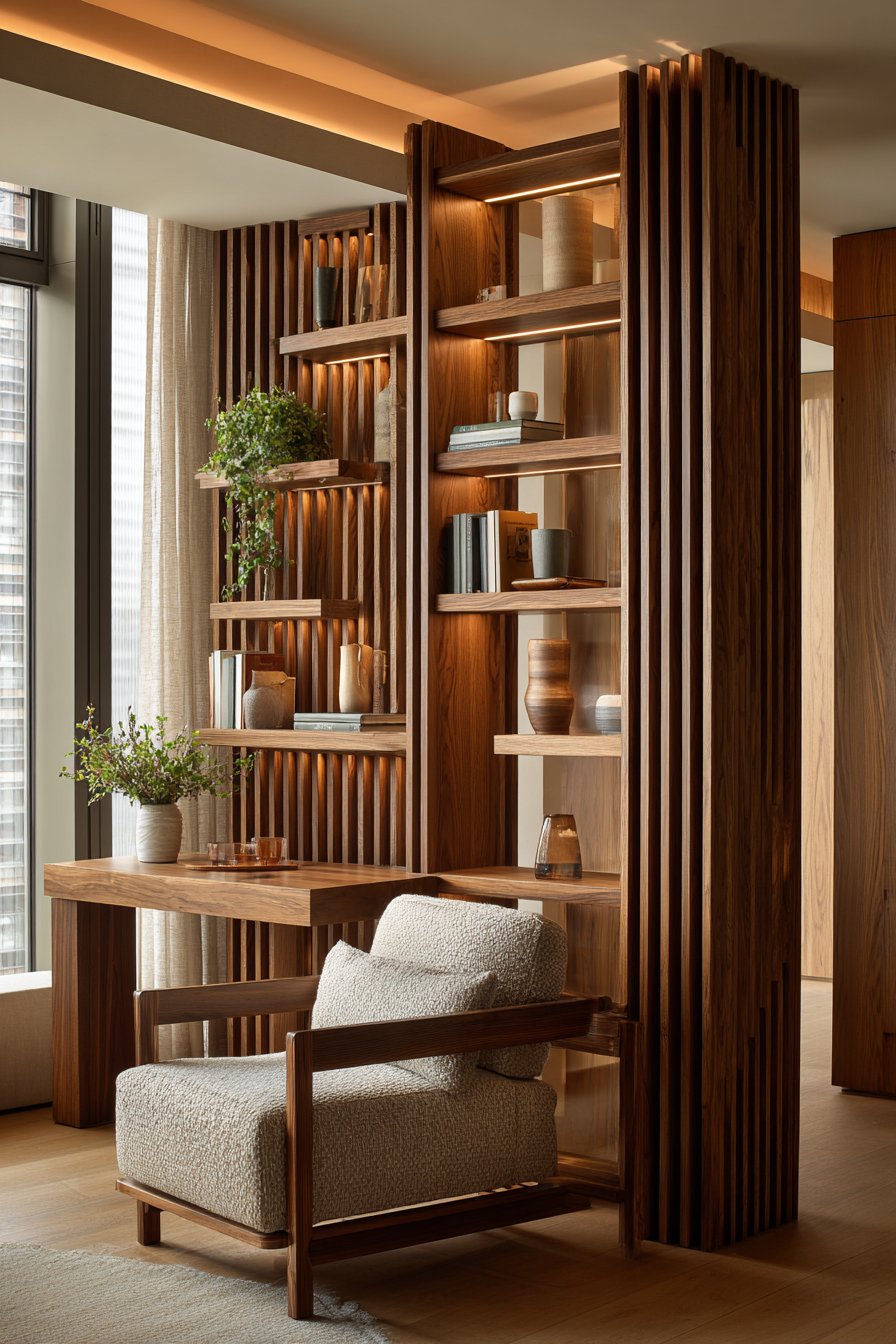
Few partition solutions combine functionality and aesthetics as effectively as the floor-to-ceiling bookshelf divider, a timeless design that transforms necessary storage into an architectural feature. Crafted from natural walnut wood with its characteristic rich, warm tones and distinctive grain patterns, this double-sided unit serves both the living area and adjacent home office space with equal elegance. The shelving displays a carefully curated collection of books, decorative objects, pottery pieces, and potted plants, creating a living gallery that’s accessible and visually appealing from both sides. Built-in LED strip lighting illuminates each shelf level, ensuring that the display remains visually striking even during evening hours while providing practical task lighting for reading book spines and finding items.
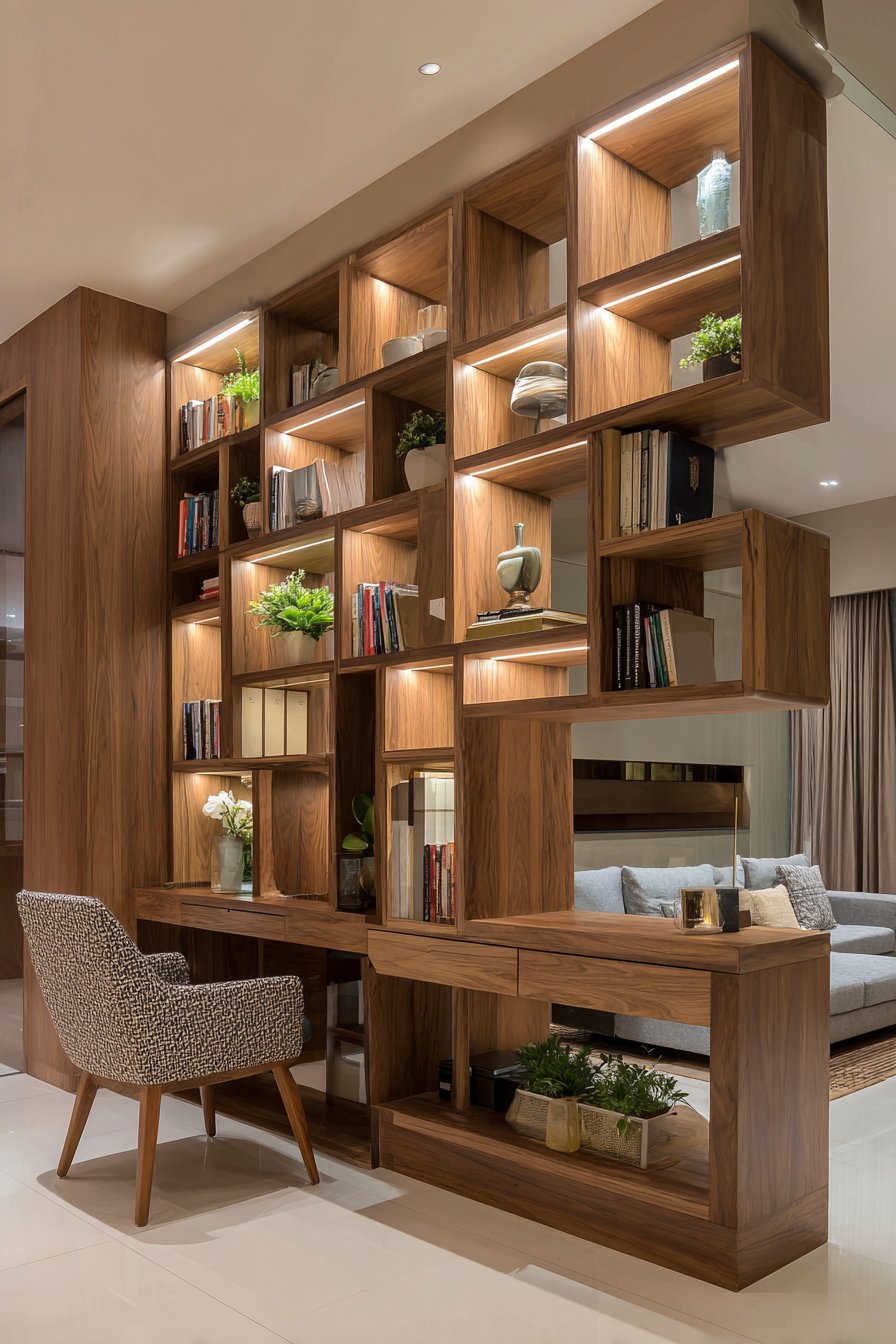
The genius of this partition design lies in its multifunctionality. Beyond its obvious storage capabilities, the bookshelf creates a soft, textured boundary that feels far more inviting than a solid wall. The varied heights and depths of objects on the shelves create visual interest and rhythm, while strategically placed gaps allow glimpses through to the other side, maintaining a sense of connection between spaces. On the living room side, a cozy reading chair upholstered in textured fabric invites relaxation with a book pulled from nearby shelves. The home office side features a minimalist desk setup that benefits from both the partition’s organizational capacity and its acoustic dampening properties—books and objects naturally absorb sound, creating quieter, more focused work environments.
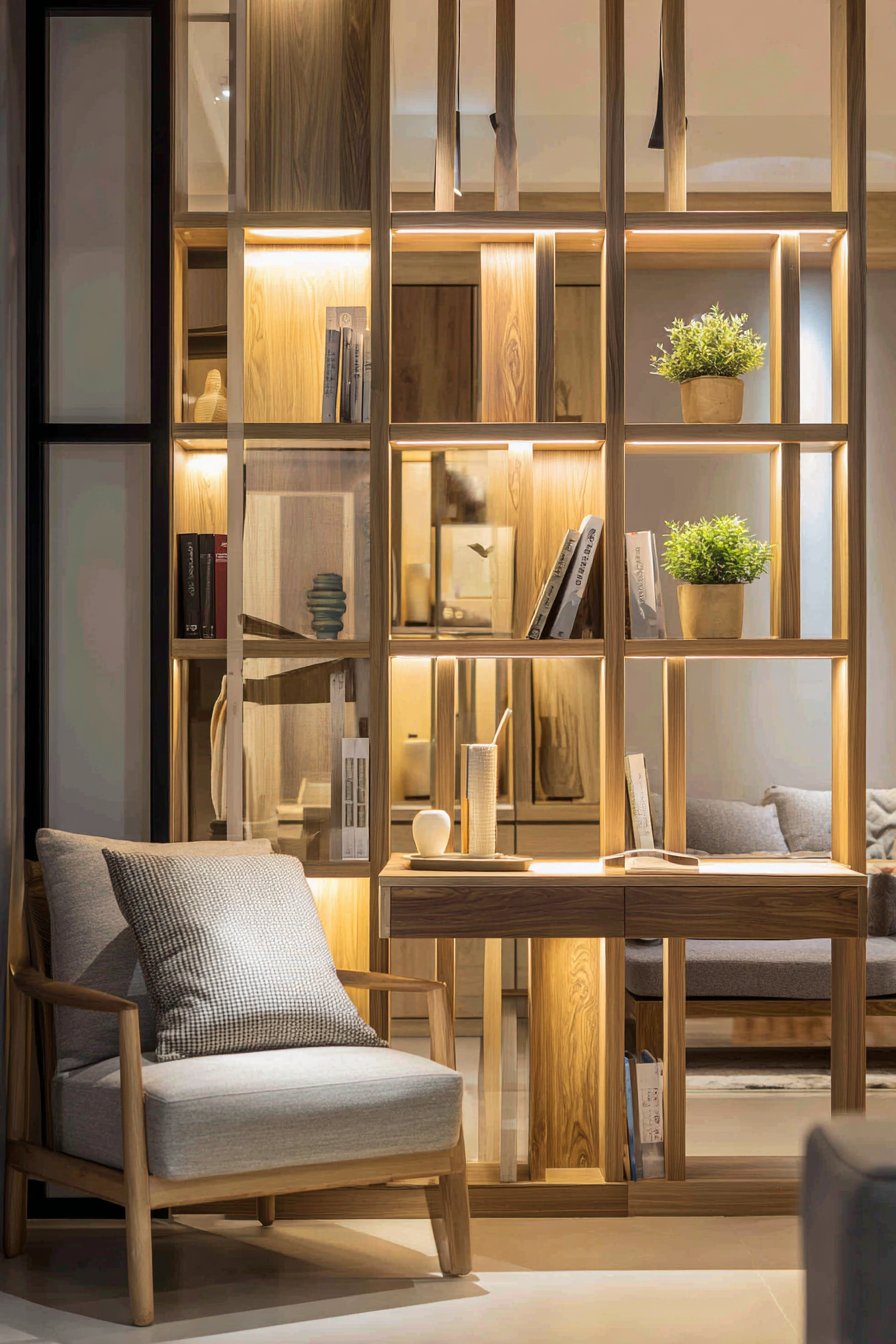
This partition approach works exceptionally well in homes where space is at a premium but storage needs are high. The vertical design maximizes storage capacity without consuming valuable floor space, while the double-sided accessibility ensures no wasted potential. The natural wood finish brings warmth and organic texture to spaces that might otherwise feel sterile or cold, particularly in modern or minimalist interiors. The inclusion of living plants on various shelves introduces biophilic elements that improve air quality and create psychological benefits associated with nature exposure. The shelving can evolve over time, with displays changing seasonally or as collections grow, making it a dynamic rather than static design element.
Key Design Tips: Ensure the unit is properly anchored to both floor and ceiling for stability given its height and weight when loaded. Space shelves at varying heights to accommodate different object sizes and create visual interest. Include a mix of open and closed storage options if you need to hide some items. Choose LED strips with adjustable color temperature to control ambiance. Arrange items with intentional negative space—avoid overcrowding shelves which can appear cluttered. Place heavier items on lower shelves for better weight distribution. Use cordless LED strips or carefully conceal wiring for a clean appearance. Consider the sight lines from both sides when arranging objects to ensure attractive views from all angles.
3. Sliding Barn-Style Frosted Glass Doors
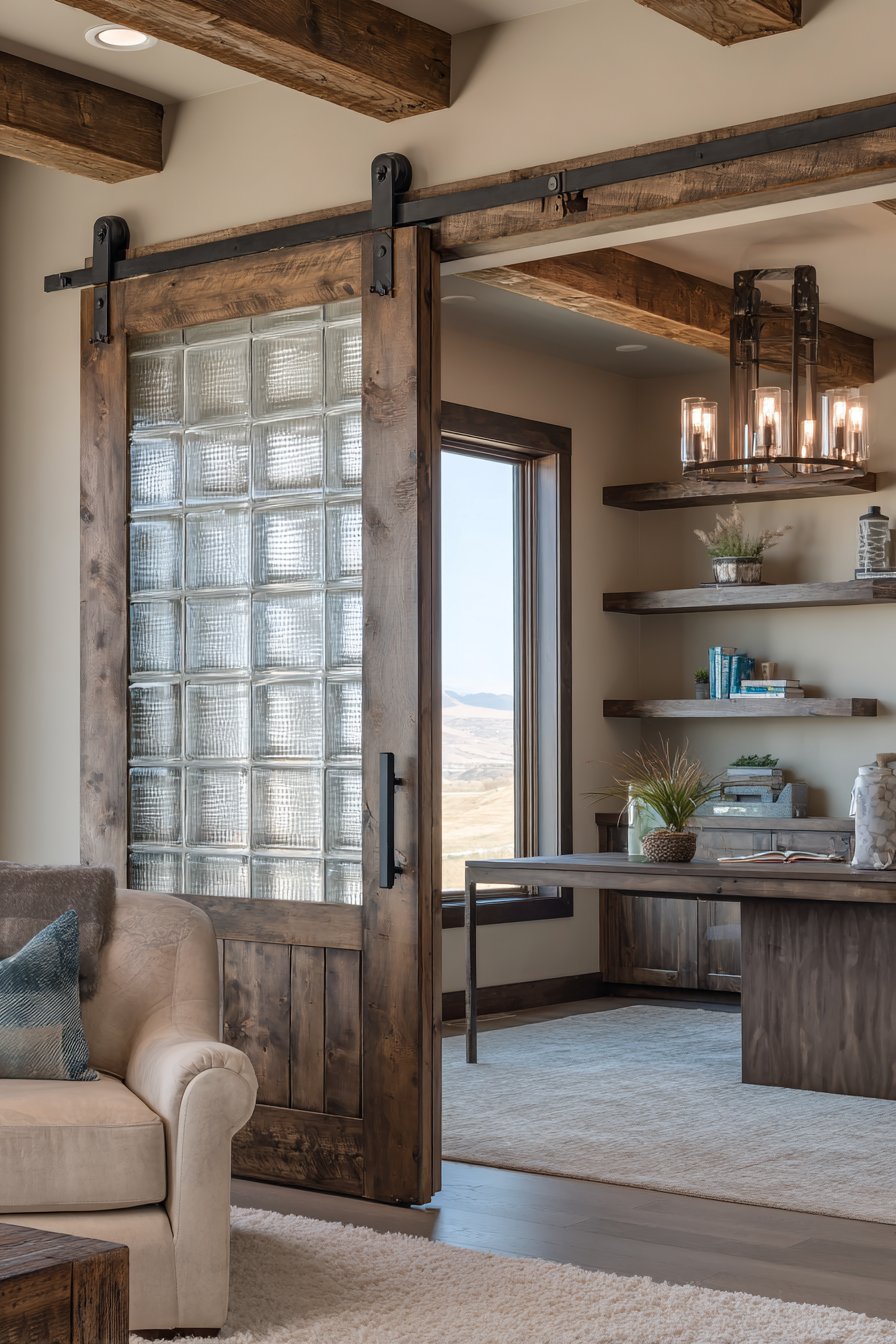
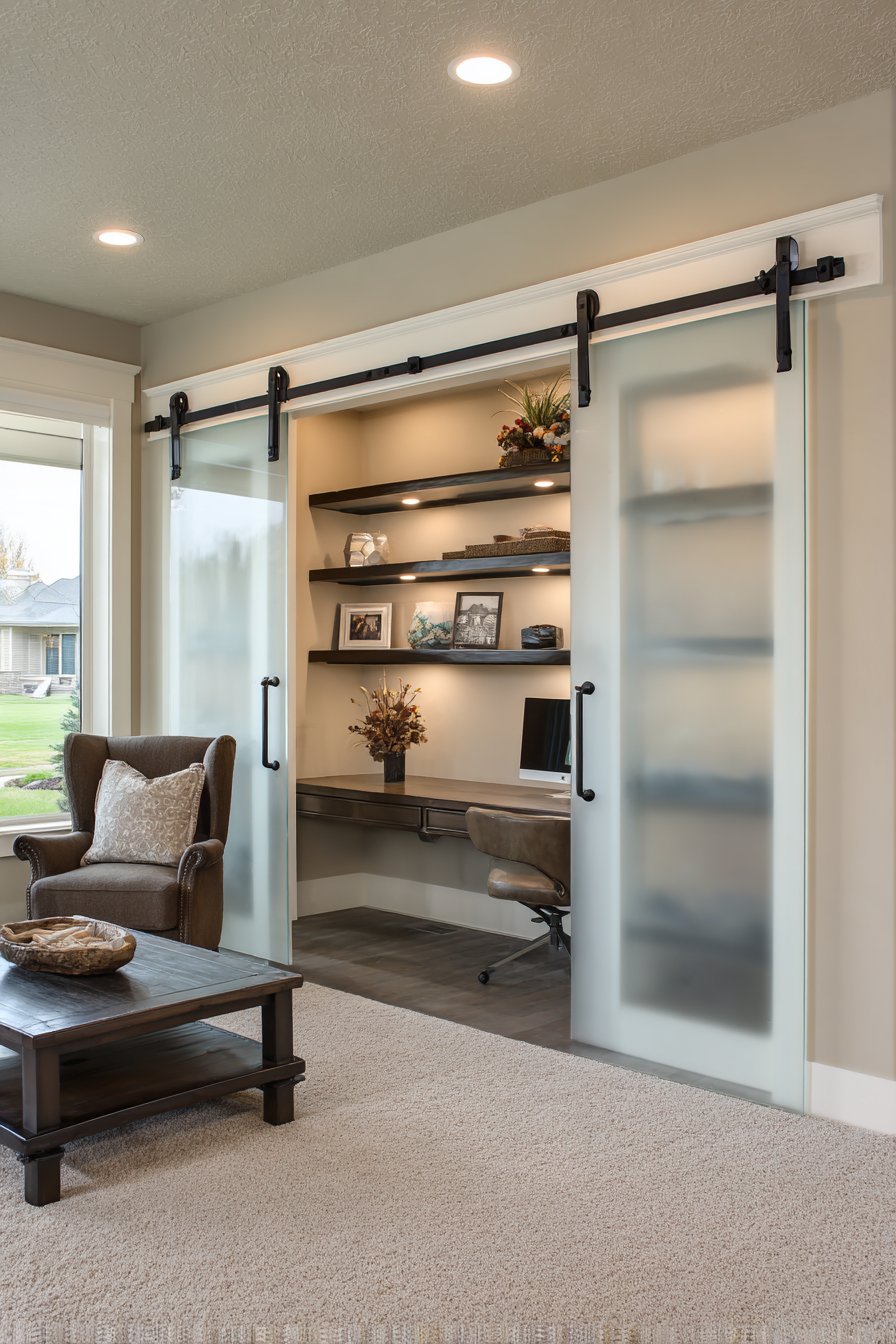
The fusion of rustic farmhouse aesthetics with modern functionality finds perfect expression in sliding barn-style partition doors featuring frosted glass panels. This partition design offers unparalleled flexibility, allowing spaces to open completely for social gatherings or close for privacy during work hours or quiet activities. The exposed black metal track system mounted to the ceiling or beam above serves as both functional hardware and design feature, its industrial character creating appealing contrast with the softer, translucent glass panels. Behind the partition, a compact home workspace benefits from the option of visual privacy during video calls or focused work sessions, while the main living area maintains its open, airy feel when the doors slide completely aside.
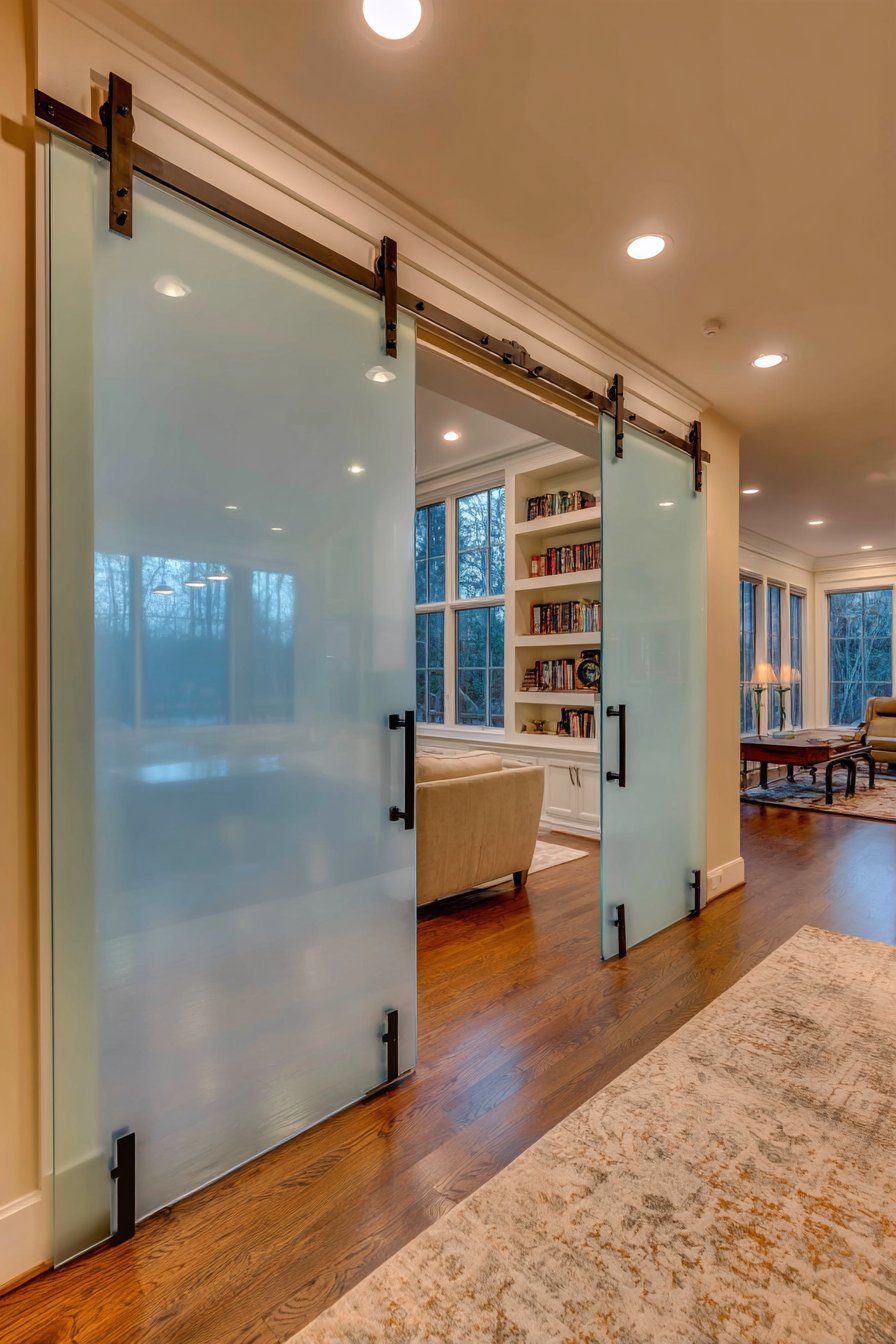
The frosted glass panels strike an ideal balance between separation and connection. Unlike solid doors that completely isolate spaces, the translucent quality allows natural light to flow through while obscuring visual details, creating a sense of privacy without darkness. When artificial lighting is used in either space, the frosted glass takes on a warm, luminous quality that becomes a subtle ambient light source for the adjacent area. The sliding mechanism means no floor space is sacrificed to door swing radius, a crucial consideration in smaller homes or apartments where every square foot matters. The substantial feel of the glass panels gliding smoothly along their track provides satisfying tactile feedback that solid screens simply cannot match.
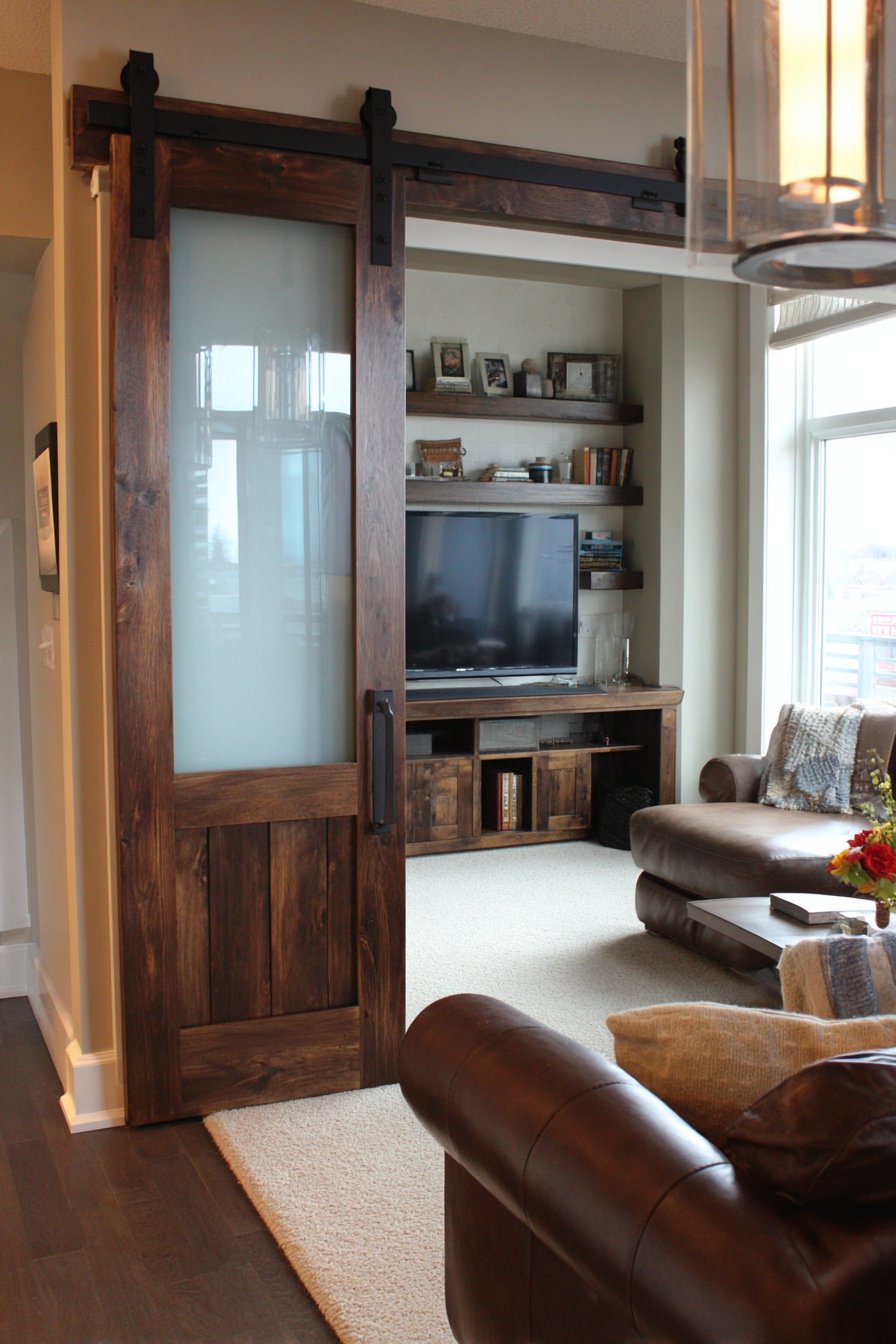
This partition style particularly appeals to those who appreciate the modern farmhouse aesthetic, where rustic elements like barn door hardware coexist harmoniously with contemporary materials like glass and metal. The design works equally well in urban lofts, suburban homes, and even traditional spaces seeking a touch of modern functionality. The contrast between the heavy-looking metal hardware and the delicate appearance of frosted glass creates visual tension that keeps the design interesting. When doors are partially open, they create diagonal lines that add dynamic geometry to the space, breaking up the orthogonal nature of most interior architecture.
Key Design Tips: Invest in high-quality rolling hardware for smooth, quiet operation that will last years. Ensure the mounting surface can support the weight of both track and doors. Consider soft-close mechanisms to prevent slamming and extend hardware life. Choose tempered glass for safety. Coordinate the metal finish with other fixtures in the space. Plan for adequate wall space on either side for doors to slide completely open. Install a floor guide to prevent the bottom of doors from swinging. Consider the door width carefully—wider panels make a bolder statement but require more clearance. Use proper lighting on both sides to maximize the luminous quality of frosted glass.
4. Vertical Garden Living Wall Partition
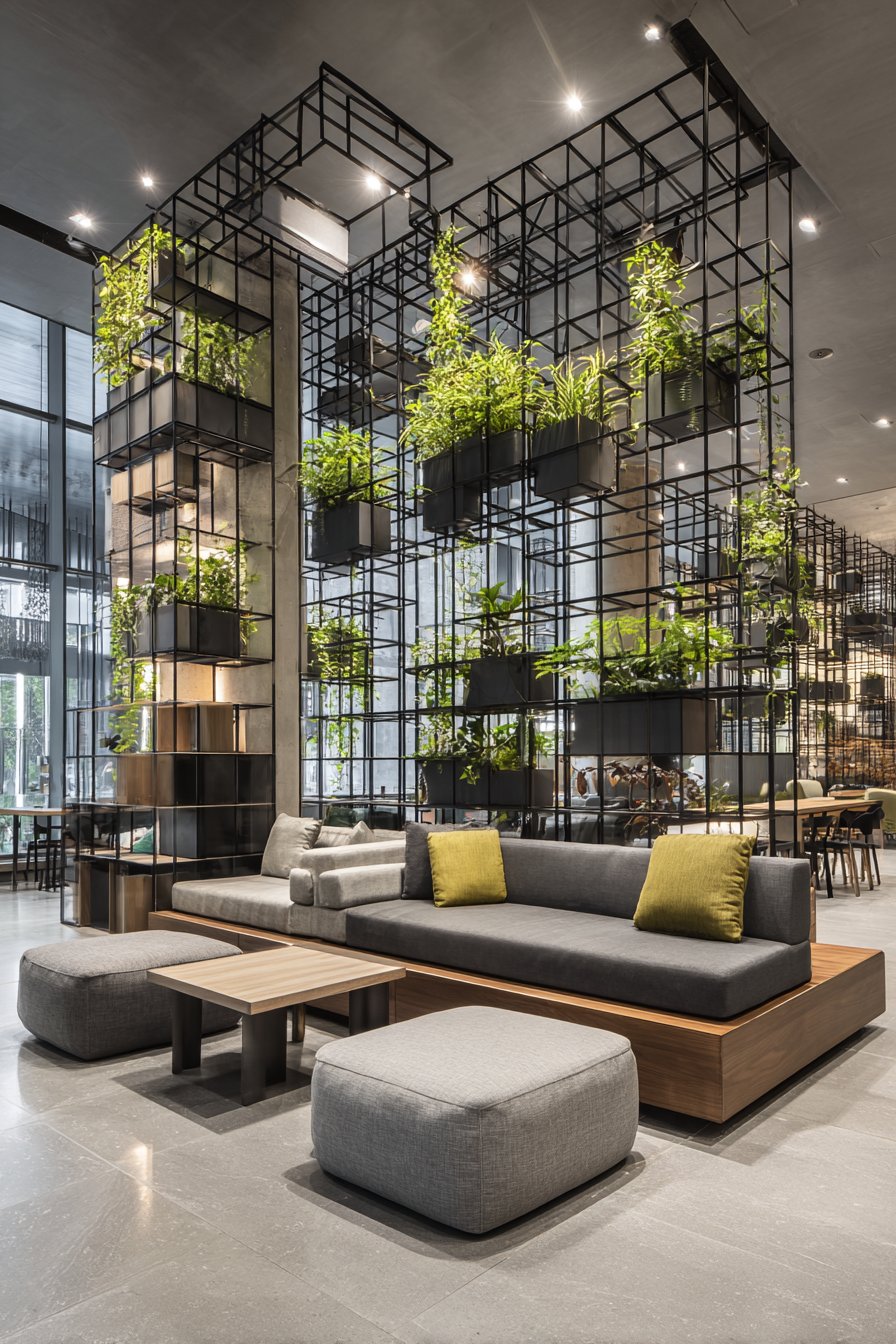
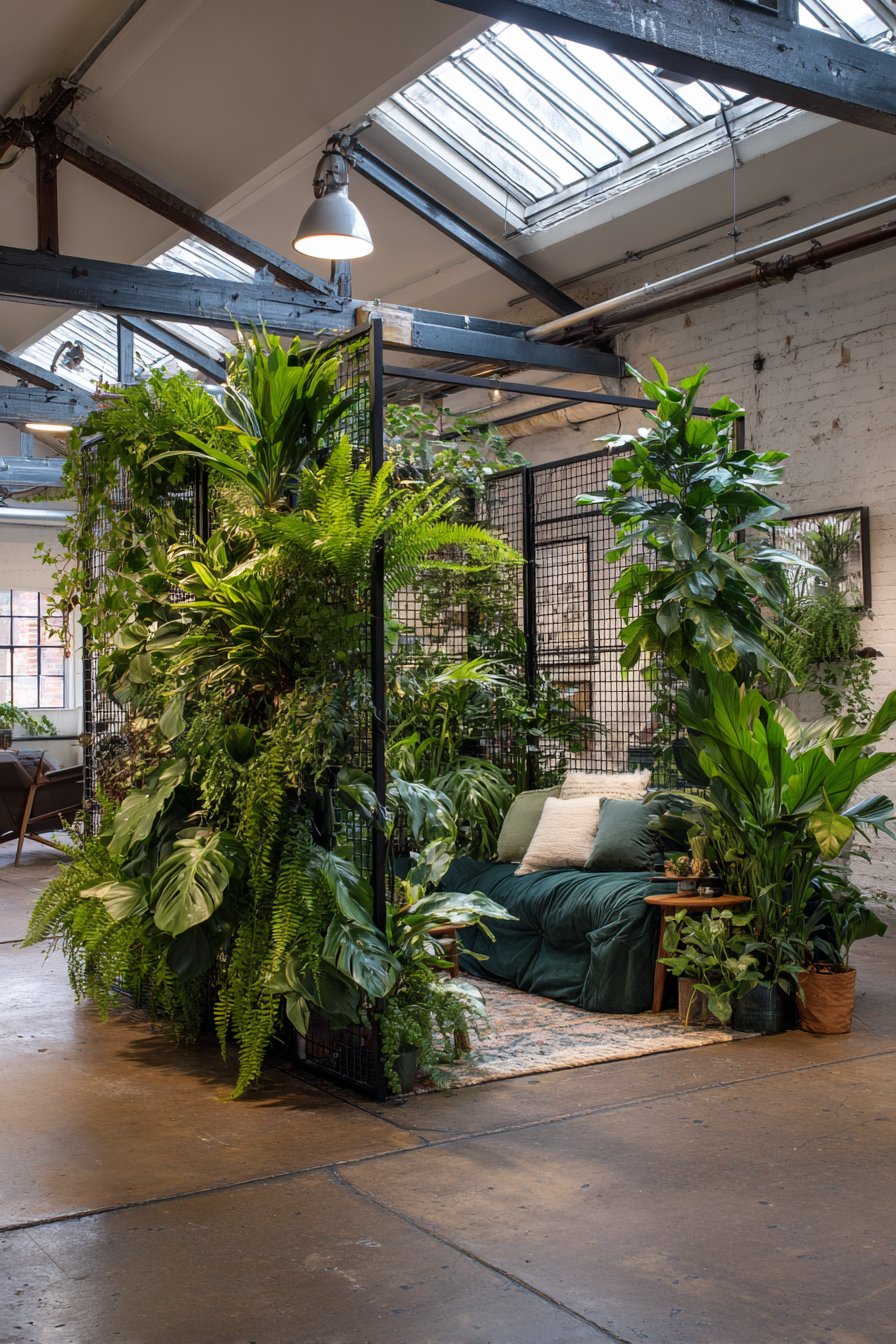
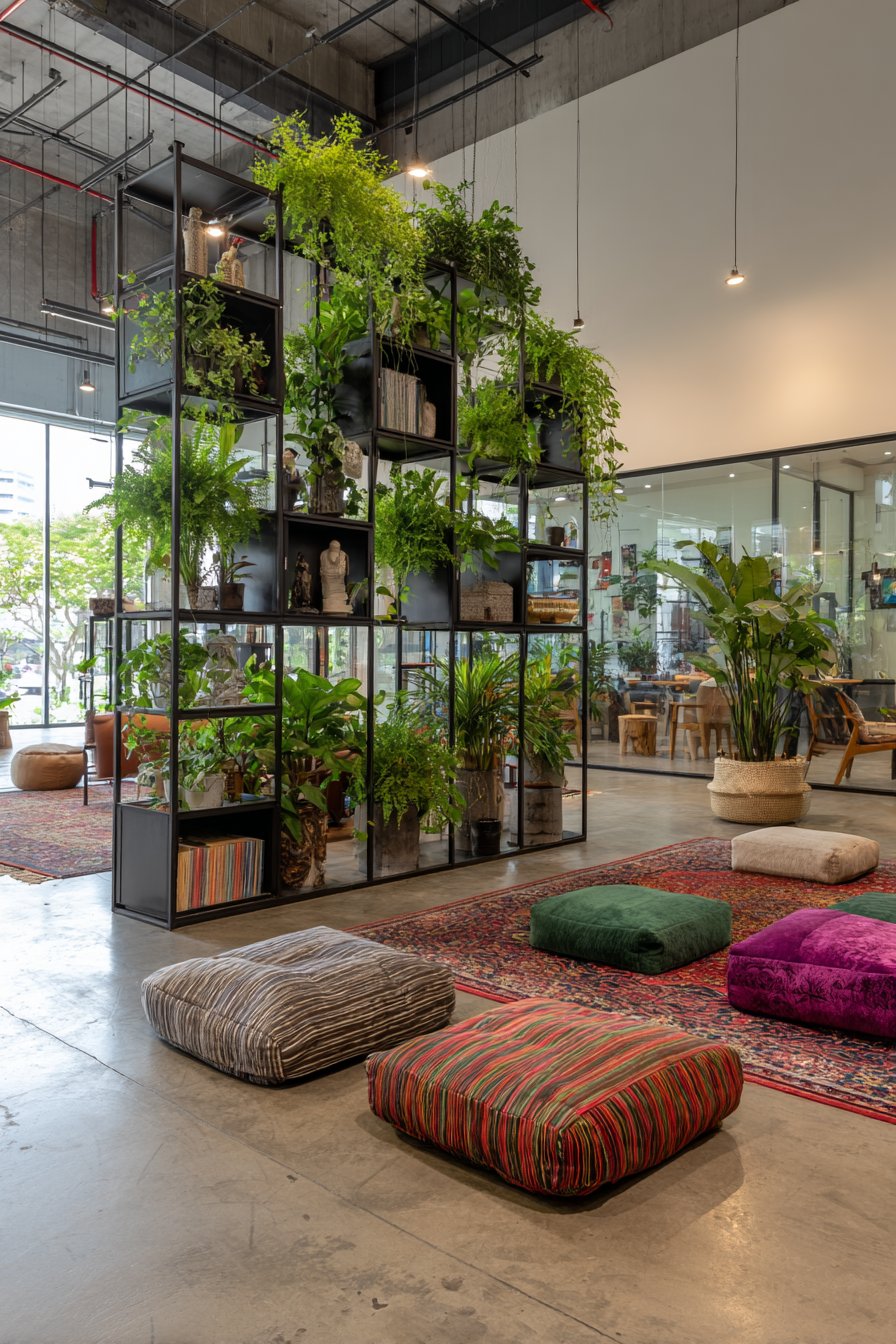
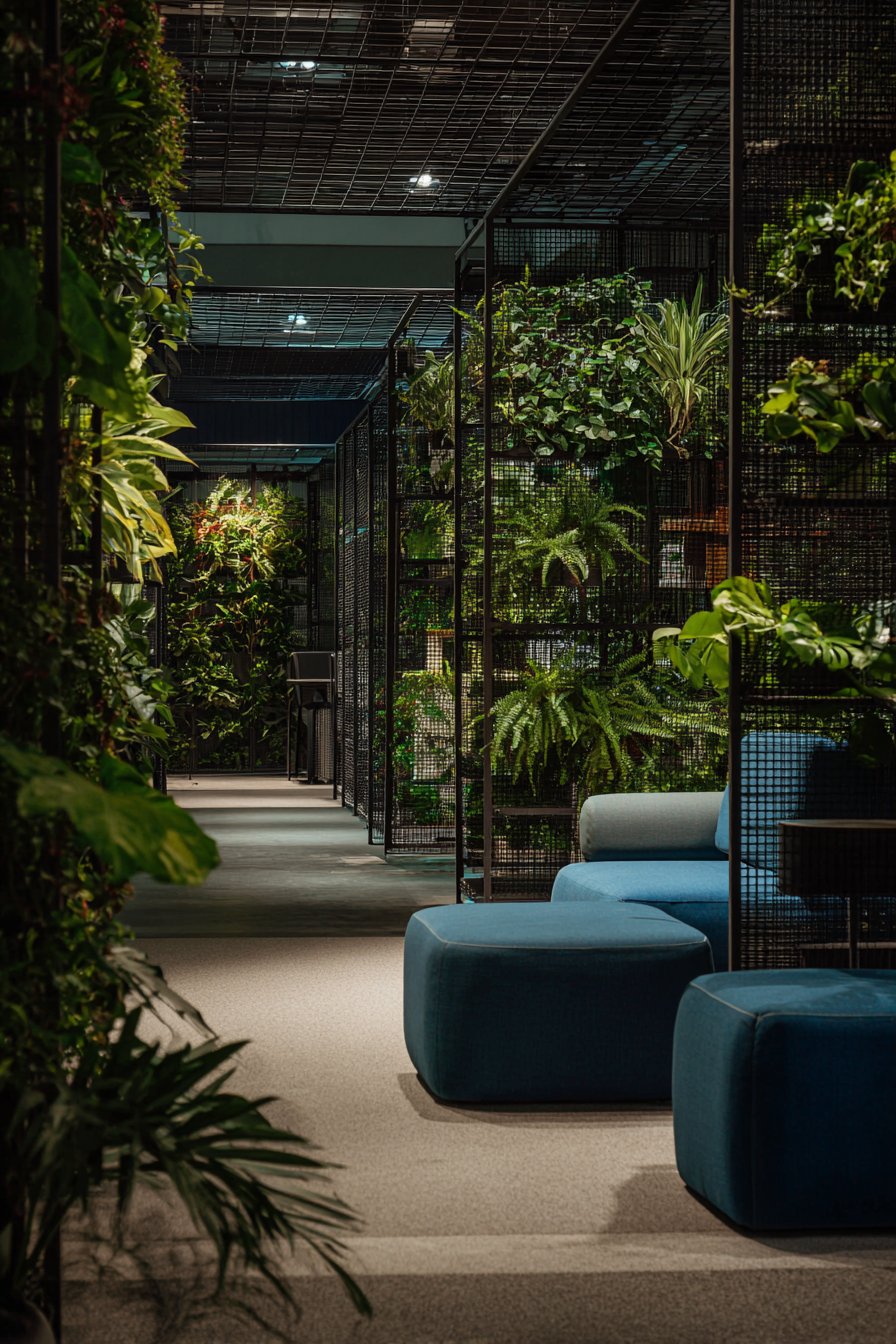
Biophilic design reaches its zenith in the living wall partition, a breathtaking integration of nature into interior architecture that serves both aesthetic and wellness functions. This vertical garden features lush tropical plants arranged in modular planters mounted to a black metal grid framework, creating a dense, green barrier that feels alive and organic. The plant selection includes cascading pothos with its heart-shaped leaves, delicate ferns that add textural softness, and robust philodendrons that provide fuller coverage, all thriving in a hydroponic system that ensures consistent moisture and nutrients. The verdant partition separates a meditation corner furnished with comfortable floor cushions from the main living area with its contemporary furniture, creating a serene sanctuary within the larger space.
The sensory experience of this partition extends far beyond visual appeal. Living plants naturally purify air by absorbing toxins and releasing oxygen, creating measurably healthier indoor environments. The subtle sounds of water circulating through the hydroponic system provide gentle white noise that helps mask distracting sounds from adjacent spaces. The varied textures of different plant species—from glossy pothos leaves to feathery ferns—create tactile interest that solid partitions cannot match. The natural color variations within the green spectrum, ranging from deep forest tones to bright lime hues, provide more visual complexity than any manufactured material could achieve.
This partition style requires more maintenance than passive dividers but rewards that investment with continuously evolving beauty. Plants grow and change with seasons, creating a dynamic rather than static design element. The modular planter system allows for easy plant replacement if specimens falter or when you desire different varieties. Soft natural lighting from skylights or windows positioned to illuminate the living wall ensures healthy plant growth while creating dappled light patterns reminiscent of forest floors. The black metal grid framework provides necessary structural support while visually receding, allowing the plants to take center stage. The integration of biophilic elements addresses the increasingly recognized human need for nature connection, particularly crucial in urban environments where access to green spaces may be limited.
Key Design Tips: Choose plant varieties with similar light and water requirements for easier maintenance. Ensure proper drainage and waterproofing to protect flooring beneath. Install the hydroponic system with accessible reservoirs for easy refilling. Consider automatic watering systems for vacation-proofing. Position the living wall where it receives adequate natural light or install grow lights. Start with hardy, low-maintenance plants if you’re new to indoor gardening. Include a mix of trailing, upright, and bushy plants for textural variety. Plan for regular pruning to maintain desired density and shape. Consider the weight of the fully planted wall when determining mounting requirements.
5. Half-Wall Partition with Horizontal Wood Slats
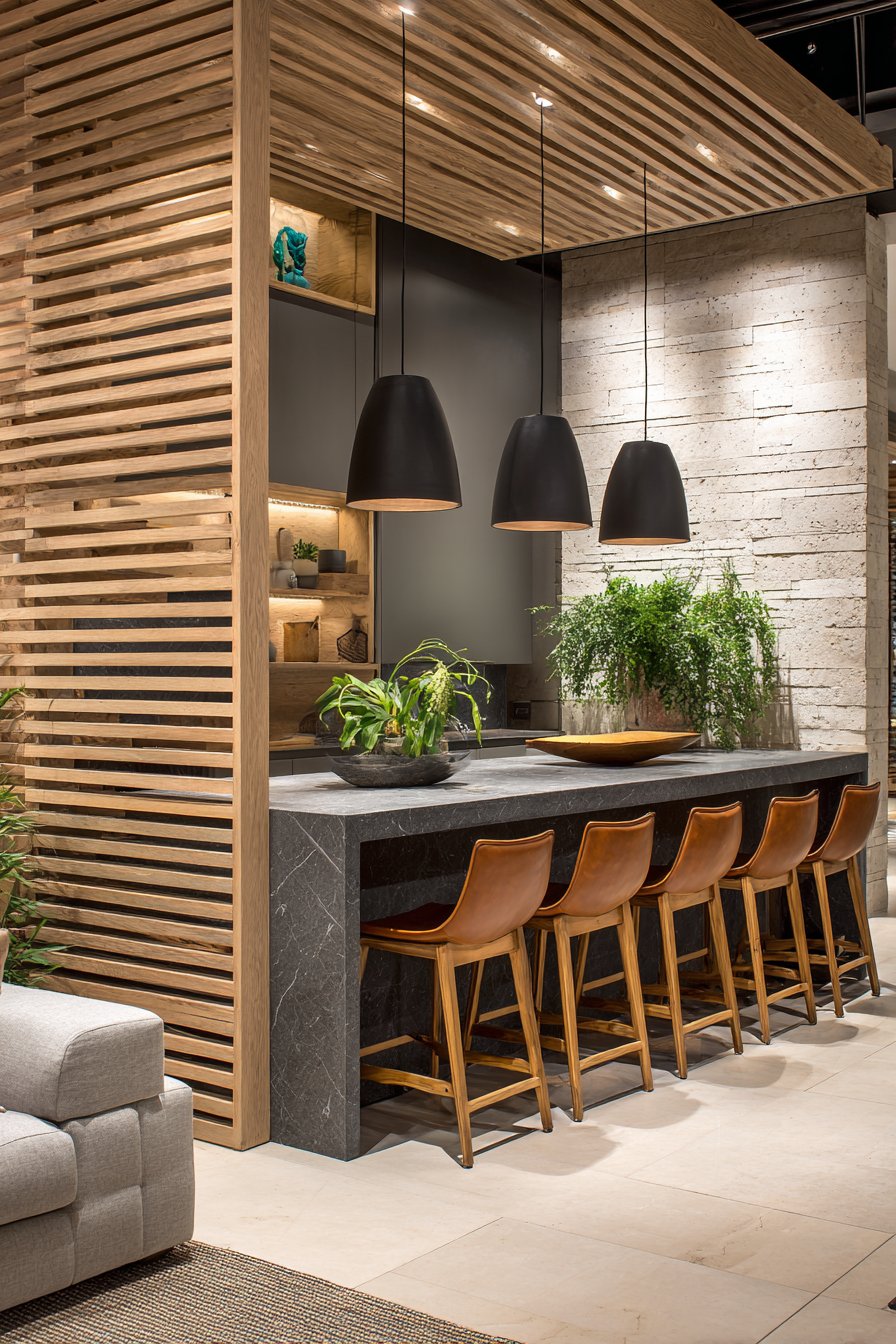
The half-wall partition represents a perfect middle ground between complete separation and total openness, offering definition without isolation. This design features horizontal wood slats in light ash finish, their pale tone and subtle grain creating contemporary warmth without overwhelming the space. The slats are topped with a sleek granite countertop surface that extends the partition’s functionality, transforming it into a serving counter or casual dining bar between the living room and kitchen areas. Bar stools with leather seats line the kitchen side, creating informal seating that encourages conversation between cooks and guests while maintaining distinct zones for food preparation and relaxation.
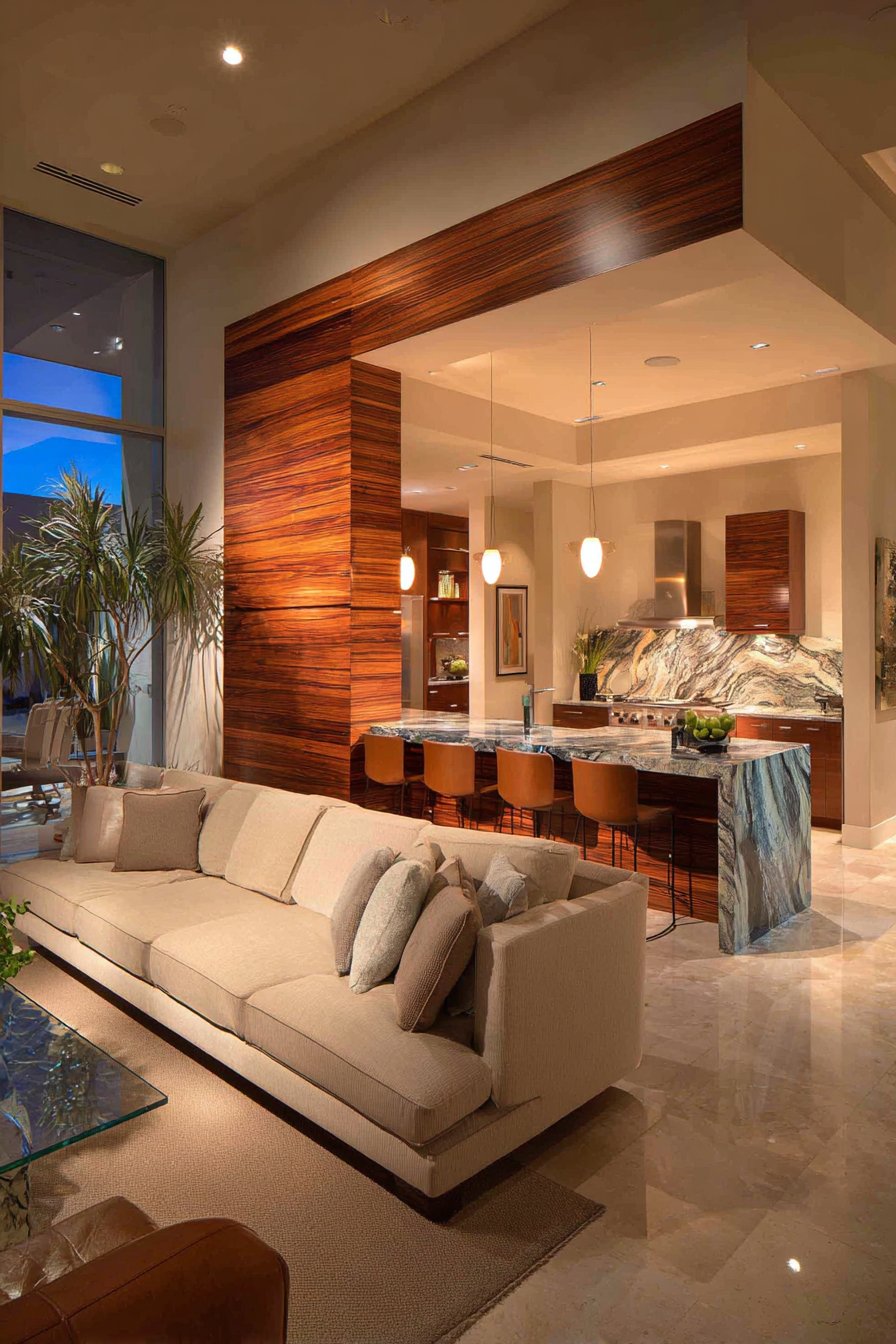
The horizontal orientation of the wood slats creates visual lines that draw the eye across the space, emphasizing width and making rooms feel more expansive. The gaps between slats maintain crucial sight lines, allowing those in the kitchen to feel connected to living room activities while working. This semi-permeable quality also permits air and light circulation, preventing either space from feeling boxed in or stuffy. The granite countertop adds practical surface area for setting down drinks, displaying decorative items, or serving buffet-style meals during gatherings. Its cool, polished surface provides pleasing material contrast to the warm, matte wood below, creating a layered design that engages multiple senses.
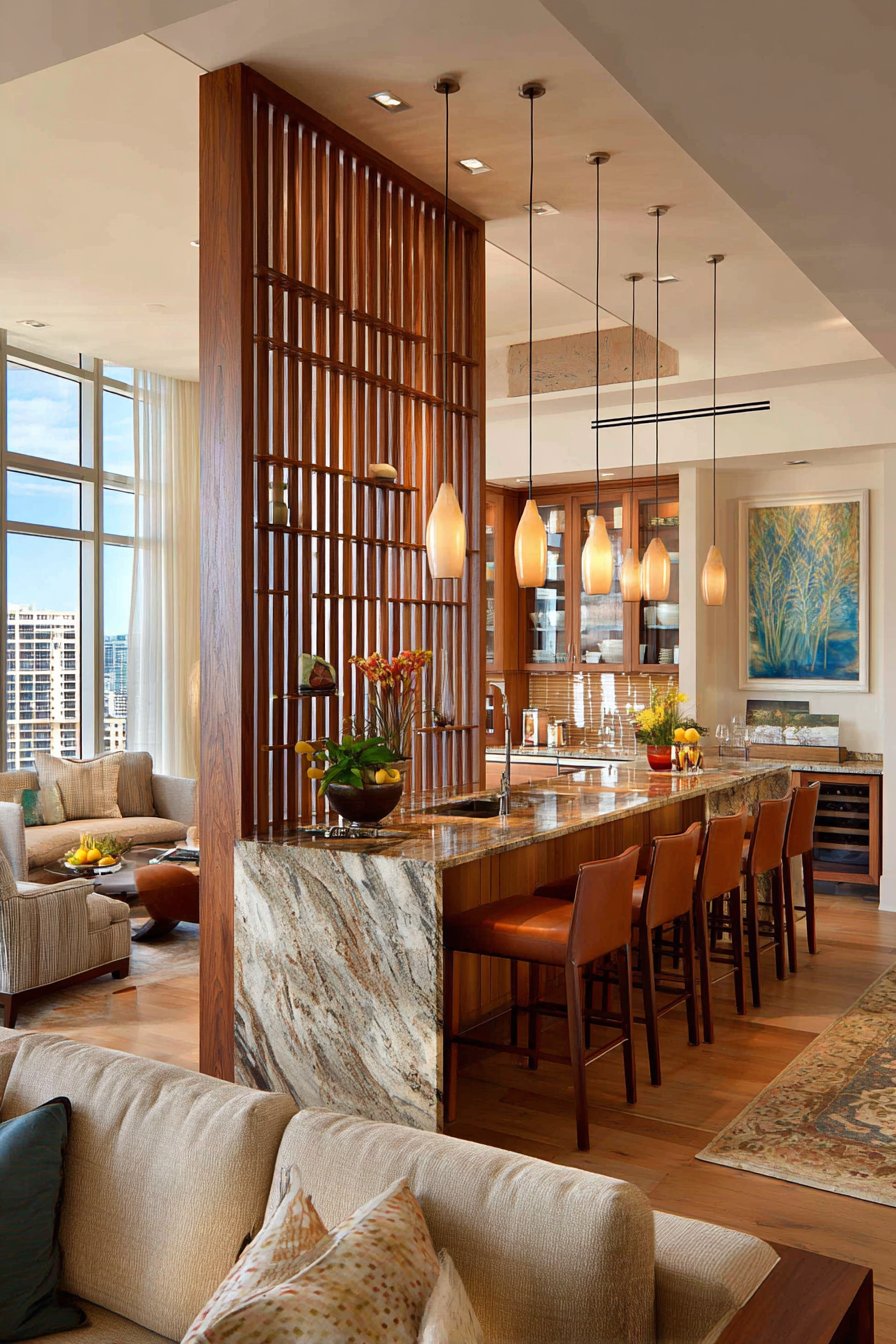
Pendant lights hanging above the counter illuminate the workspace while creating a visual anchor that emphasizes the partition’s presence. The lighting also highlights the wood’s natural grain and the granite’s subtle color variations and crystalline sparkle. This partition style works particularly well in open-concept homes where completely closing off the kitchen feels wrong, but some separation helps contain cooking clutter and smells. The half-wall height preserves the open feeling that makes these floor plans desirable while addressing their common challenge—lack of defined zones. The casual dining option creates flexible entertaining space, perfect for morning coffee, homework sessions, or cocktail parties.
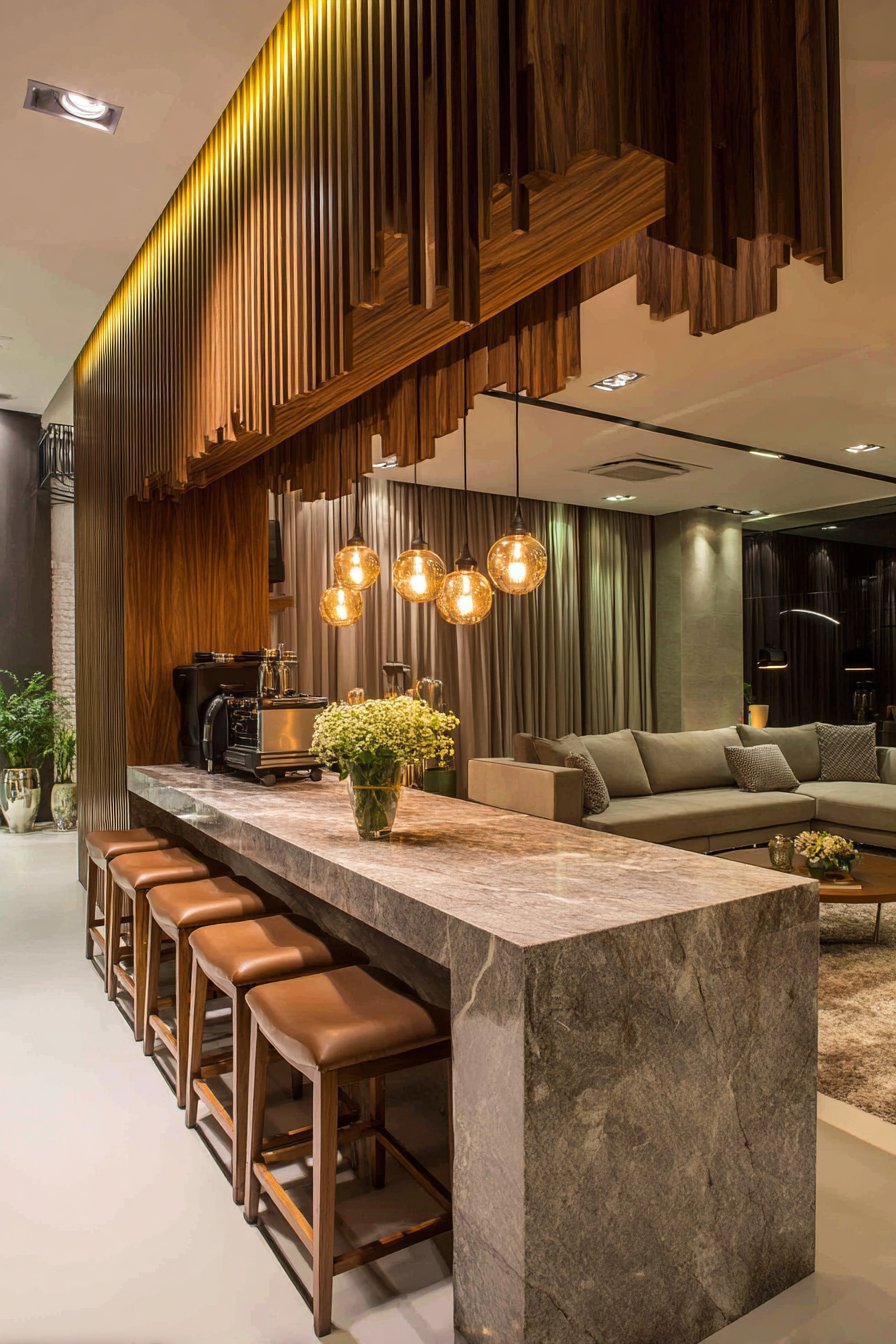
Key Design Tips: Determine the ideal counter height based on standard bar stool dimensions for comfortable seating. Ensure slats are evenly spaced and securely mounted to framing. Seal wood properly to protect against moisture and spills from the kitchen side. Choose granite with subtle veining that complements rather than competes with wood tones. Install adequate structural support for the granite countertop’s weight. Consider adding electrical outlets on the living room side for lamp or device charging convenience. Use under-counter lighting to create ambient glow in the evening. Coordinate bar stool style with other seating in the space. Maintain the half-wall height below eye level for seated living room occupants to preserve sightlines.

6. Bohemian Rope Dividers
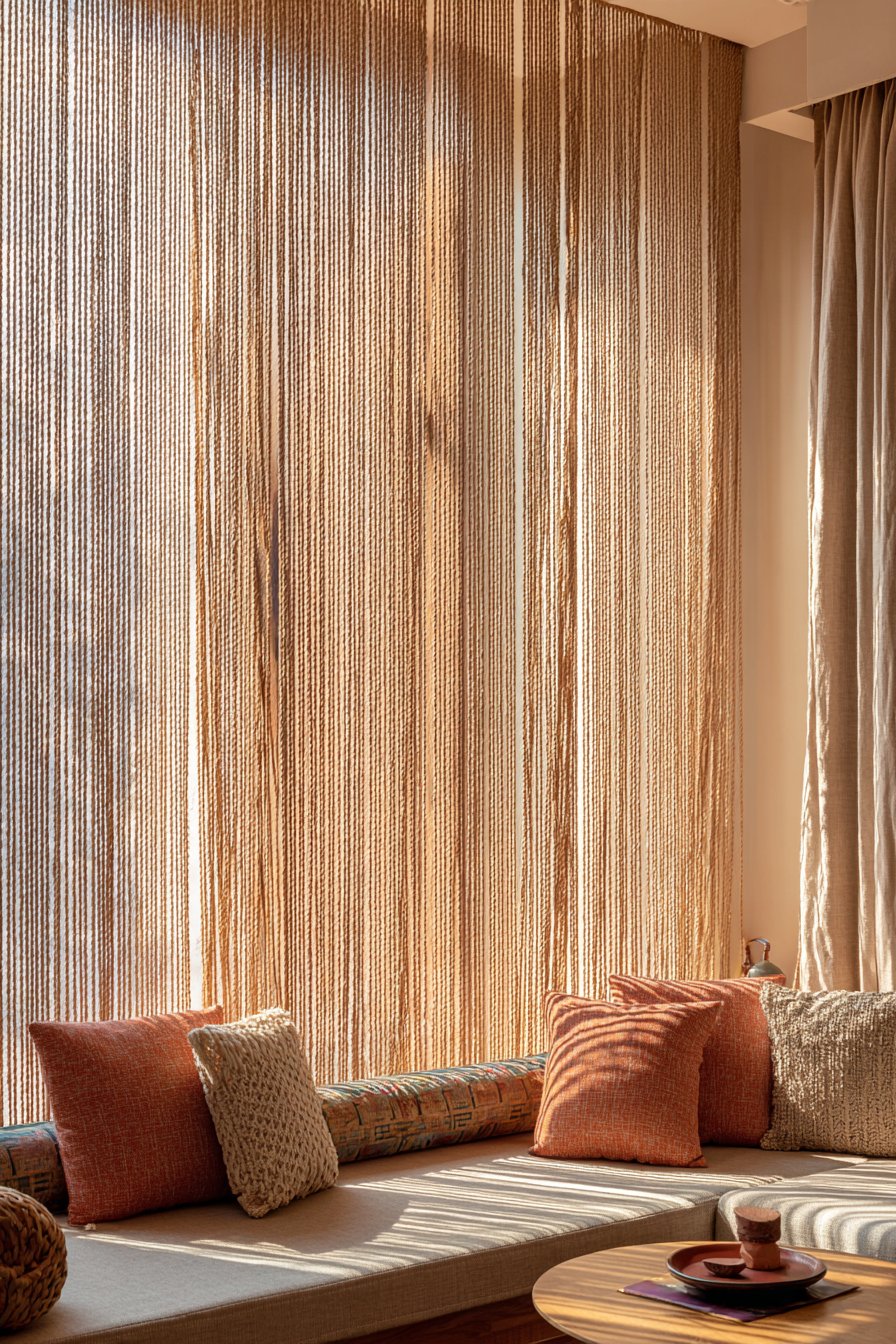
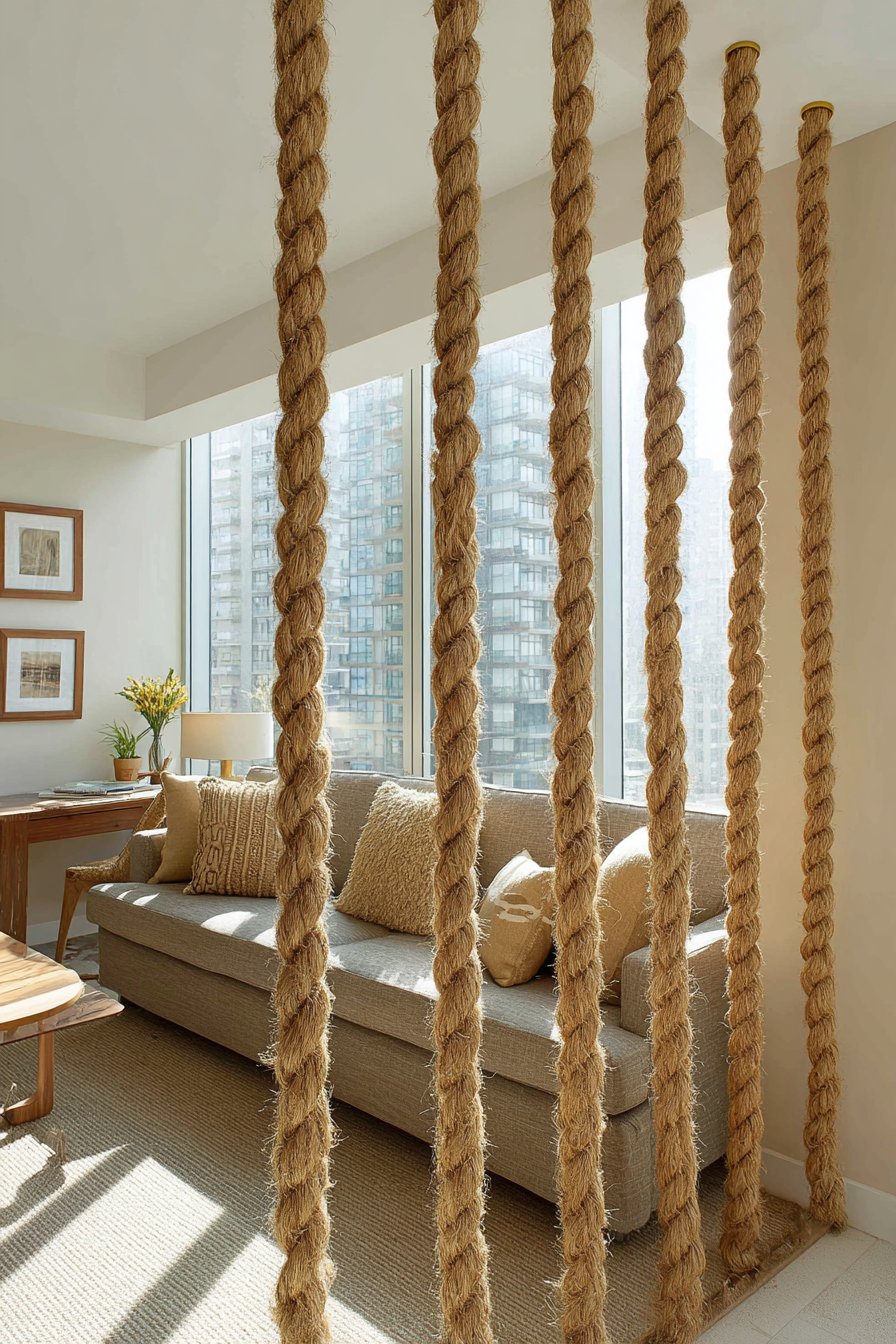
For those drawn to coastal aesthetics and organic materials, rope dividers offer a uniquely tactile partition solution that brings natural texture and movement into interior spaces. This bohemian-inspired design features thick natural jute ropes suspended from ceiling-mounted brass hardware, their substantial diameter creating visual presence while their soft composition maintains a relaxed, informal atmosphere. The vertical rope strands hang at varying lengths, creating visual rhythm and interest while allowing maximum light and air flow between zones. This partition approach separates a cozy lounge area furnished with textured throw pillows and a low-profile sofa from a small workspace, defining territories without visual heaviness.
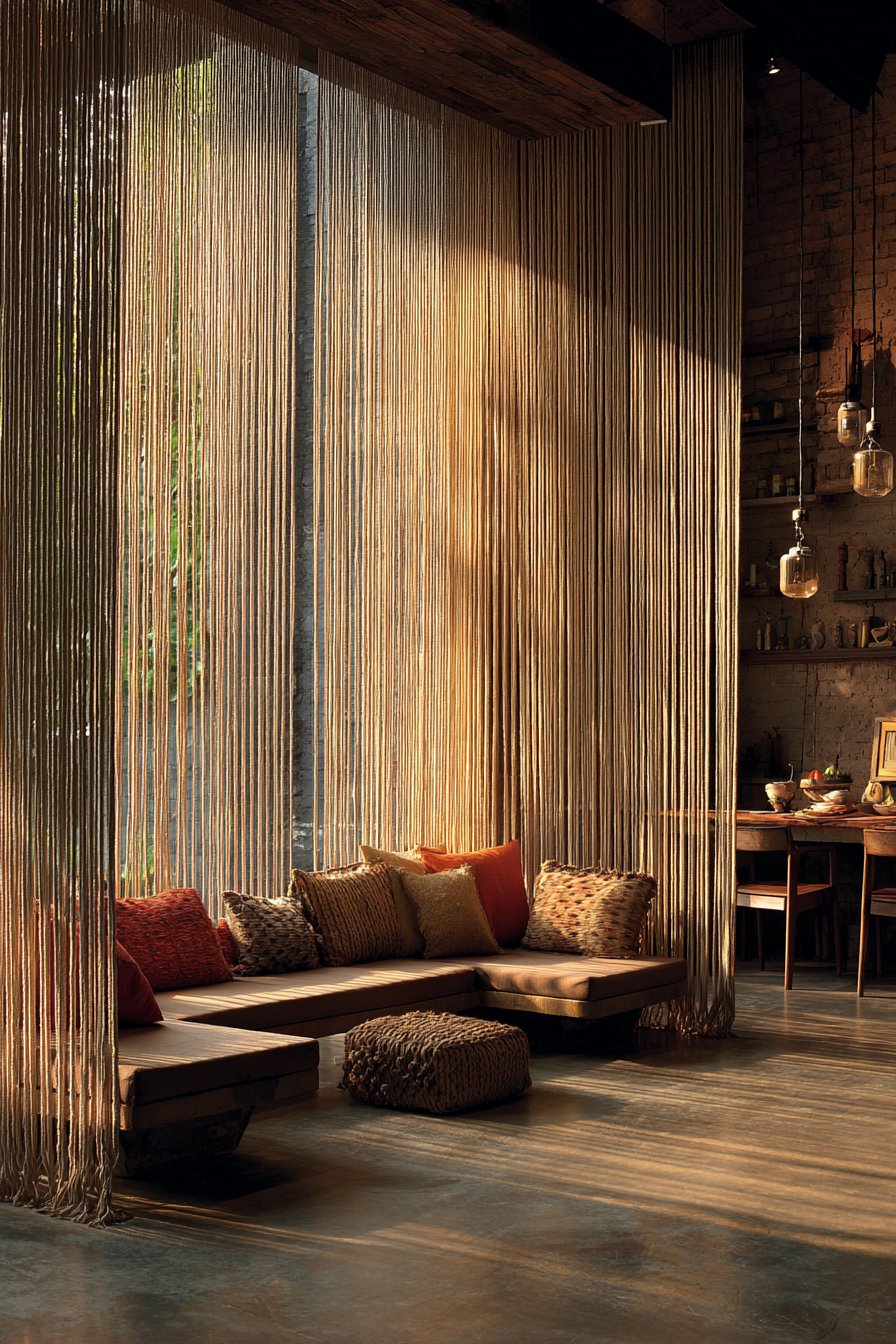
The choice of natural jute brings multiple advantages beyond aesthetics. The rope’s neutral, warm beige tone coordinates effortlessly with virtually any color palette, from crisp whites to deep jewel tones. The material’s texture absorbs and diffuses light rather than reflecting it harshly, creating soft ambiance throughout the day. Golden hour natural lighting transforms the ropes into glowing amber strands, casting gentle shadows that dance across floors and walls. The slight movement of ropes in response to air currents from HVAC systems or passing foot traffic adds subtle animation to the space, a quality impossible to achieve with rigid partitions.
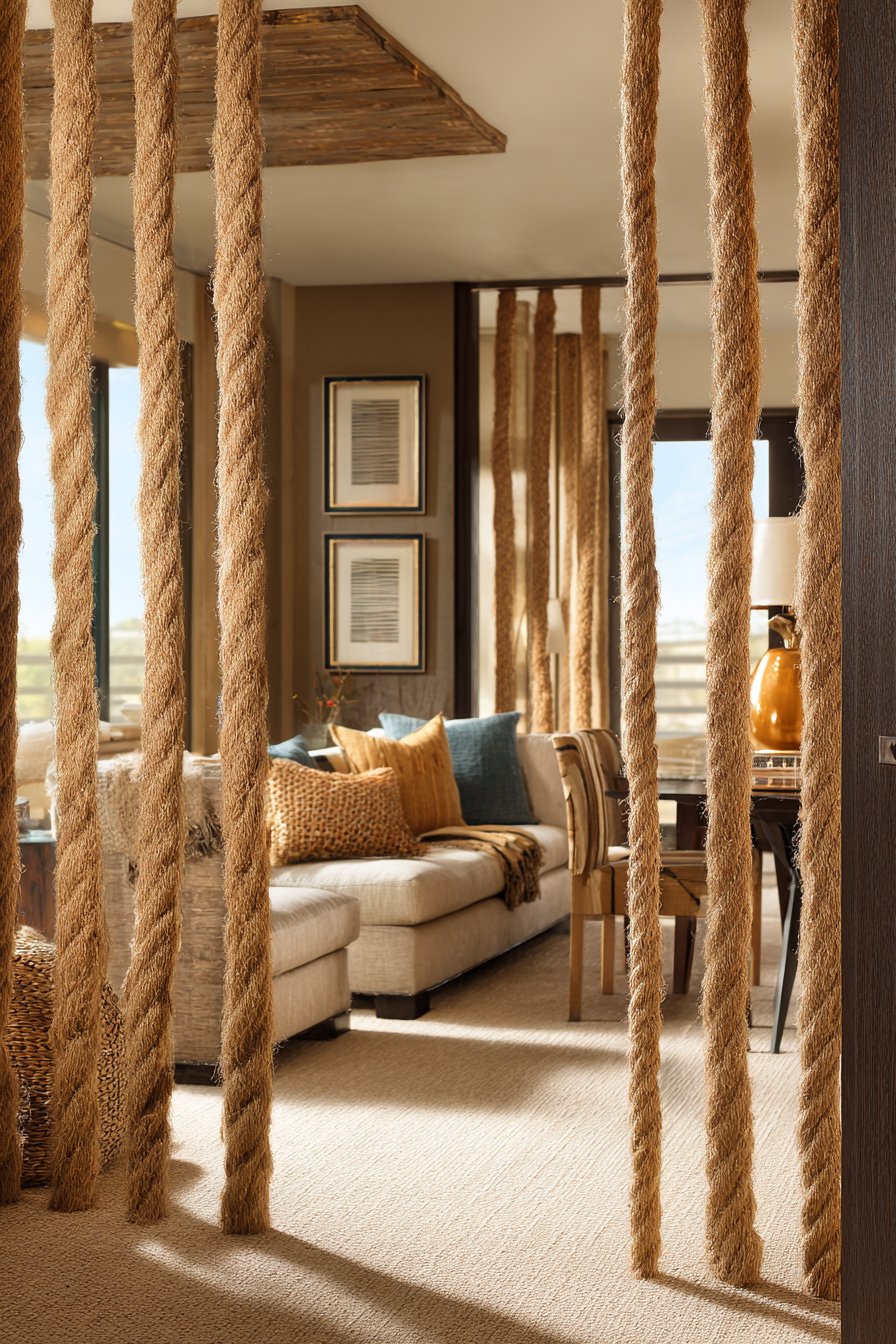
This partition style embodies the laid-back sophistication of bohemian design, where natural materials, handcrafted elements, and global influences combine to create spaces that feel collected and personal rather than decorated. The brass mounting hardware adds subtle metallic gleam that elevates the rustic rope, preventing the overall effect from feeling too casual. The flexibility of this approach allows for easy customization—rope spacing can be adjusted to create denser coverage or more open passage, and the system can be easily removed or relocated when needs change. The installation process is relatively simple compared to permanent architectural modifications, making it ideal for renters or those who frequently refresh their spaces.
Key Design Tips: Choose marine-grade or hemp rope for durability and resistance to fraying. Ensure ceiling mounting hardware is properly anchored to joists or beams for weight support. Consider treating rope with fire-retardant spray for added safety. Space ropes close enough to create visual definition but far enough apart to maintain openness—typically 2-4 inches. Cut rope ends cleanly and seal with clear nail polish or specialized rope whipping to prevent unraveling. Vary rope lengths intentionally rather than randomly for a curated appearance. Consider adding beads or knots at intervals for additional visual interest. Clean ropes periodically with vacuum brush attachment to remove dust. Position the partition where it won’t interfere with daily traffic patterns since ropes can be displaced by contact.
7. Custom Asymmetric Shelving Unit Partition
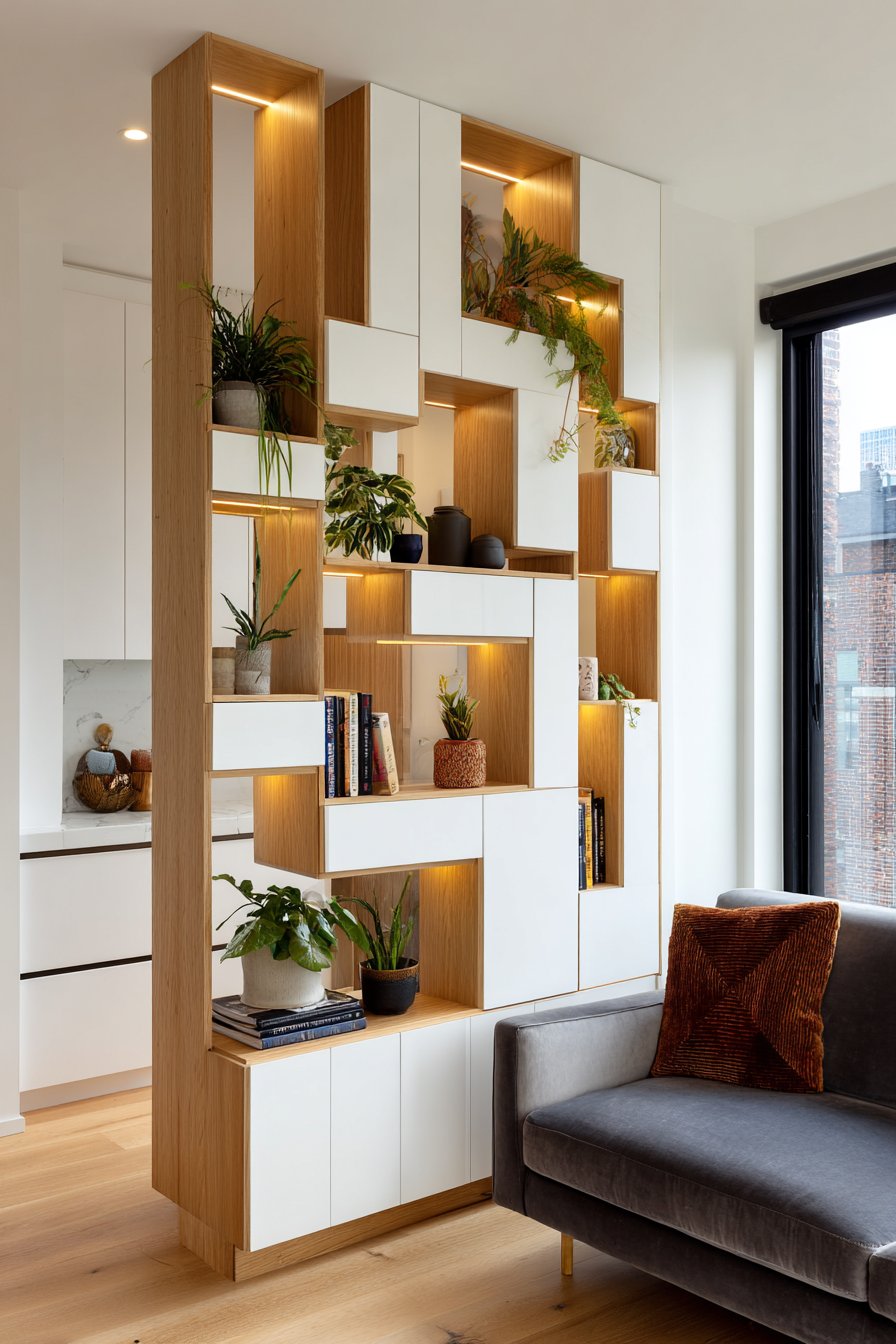
Modern design celebrates asymmetry and unexpected proportions, principles beautifully embodied in the custom-built shelving unit partition featuring irregular open compartments. This contemporary piece combines white lacquer and warm oak accents, creating a two-tone effect that adds visual interest while maintaining cohesion. The asymmetric arrangement of compartments—varying in size, shape, and orientation—creates a sculptural quality that transcends mere functionality, transforming the partition into an art piece that happens to hold objects. The design displays decorative items, books, and small plants while creating distinct zones for an entertainment center on one side and a reading nook on the other.
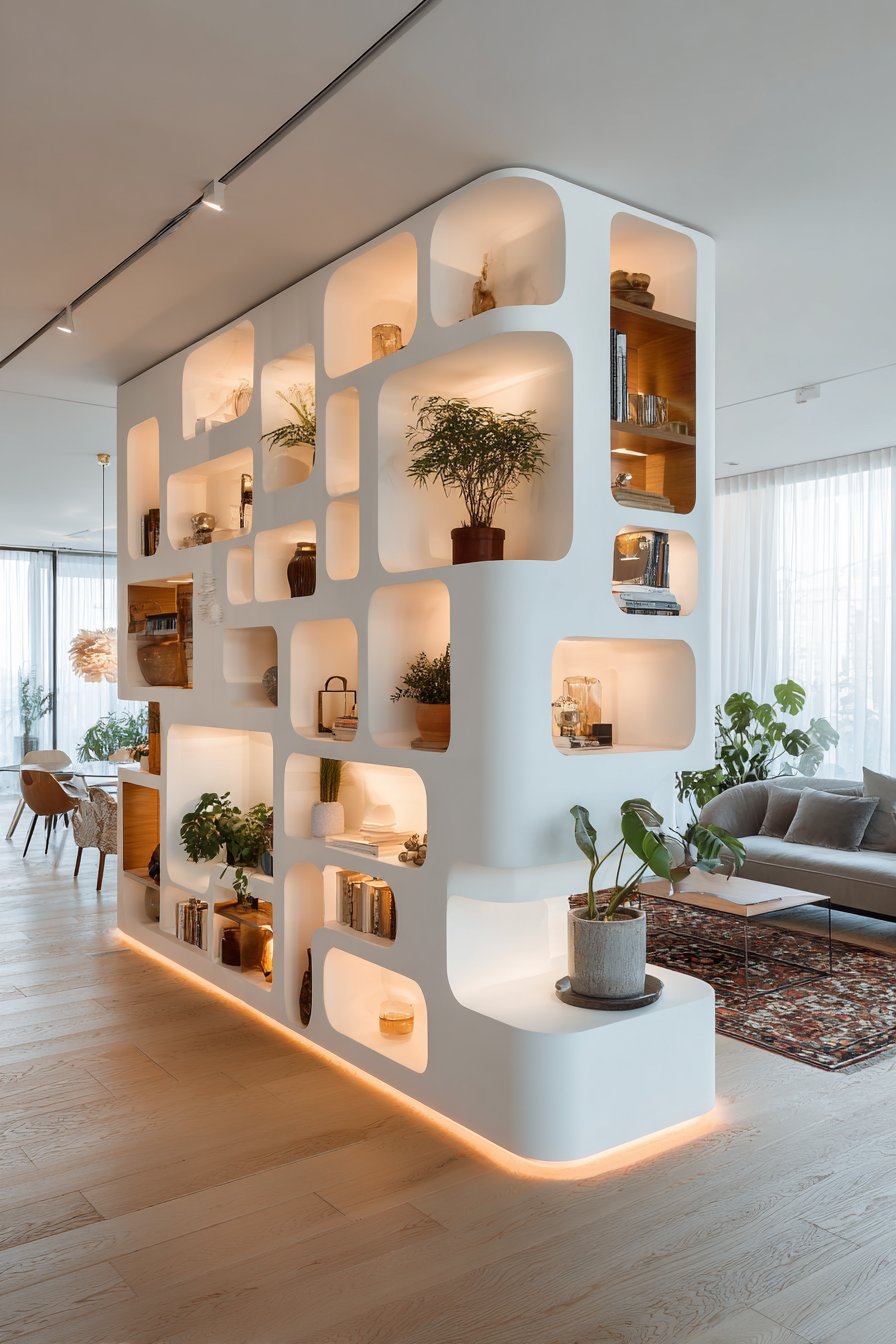
The integration of LED lighting within select compartments adds another design layer, providing gentle ambient illumination that highlights displayed objects while creating a soft glow that enhances evening atmosphere. This built-in lighting transforms the partition into a feature that actively contributes to the room’s lighting scheme rather than simply occupying space. The white lacquer surfaces reflect light beautifully, making the space feel brighter and more open, while the oak accents introduce organic warmth that prevents the design from feeling too clinical or cold. A grey velvet sofa positioned to face the partition creates a cozy viewing area, its plush texture providing sensory contrast to the shelving’s smooth, hard surfaces.
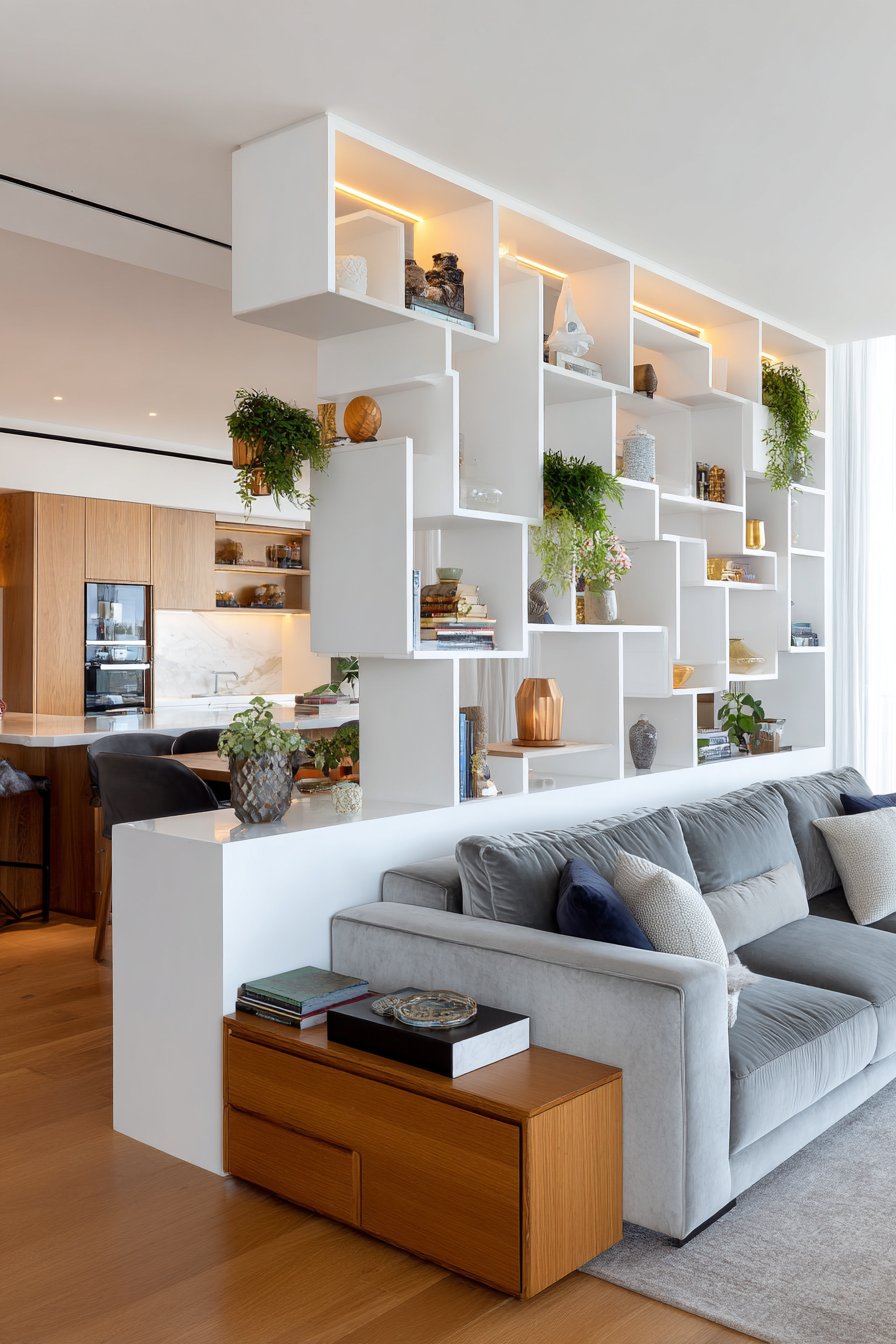
This partition style particularly appeals to those who appreciate contemporary design’s emphasis on clean lines, geometric forms, and carefully considered proportions. The asymmetric arrangement creates more visual interest than traditional grid-based shelving while offering varied compartment sizes that accommodate different object types—from large decorative bowls to small sculptural pieces. The combination of open display and the implication of defined zones makes this partition style ideal for showcasing collections, rotating seasonal decor, or displaying meaningful personal items. The custom nature of the piece means it can be precisely sized to fit specific spatial requirements and designed to accommodate particular functional needs.
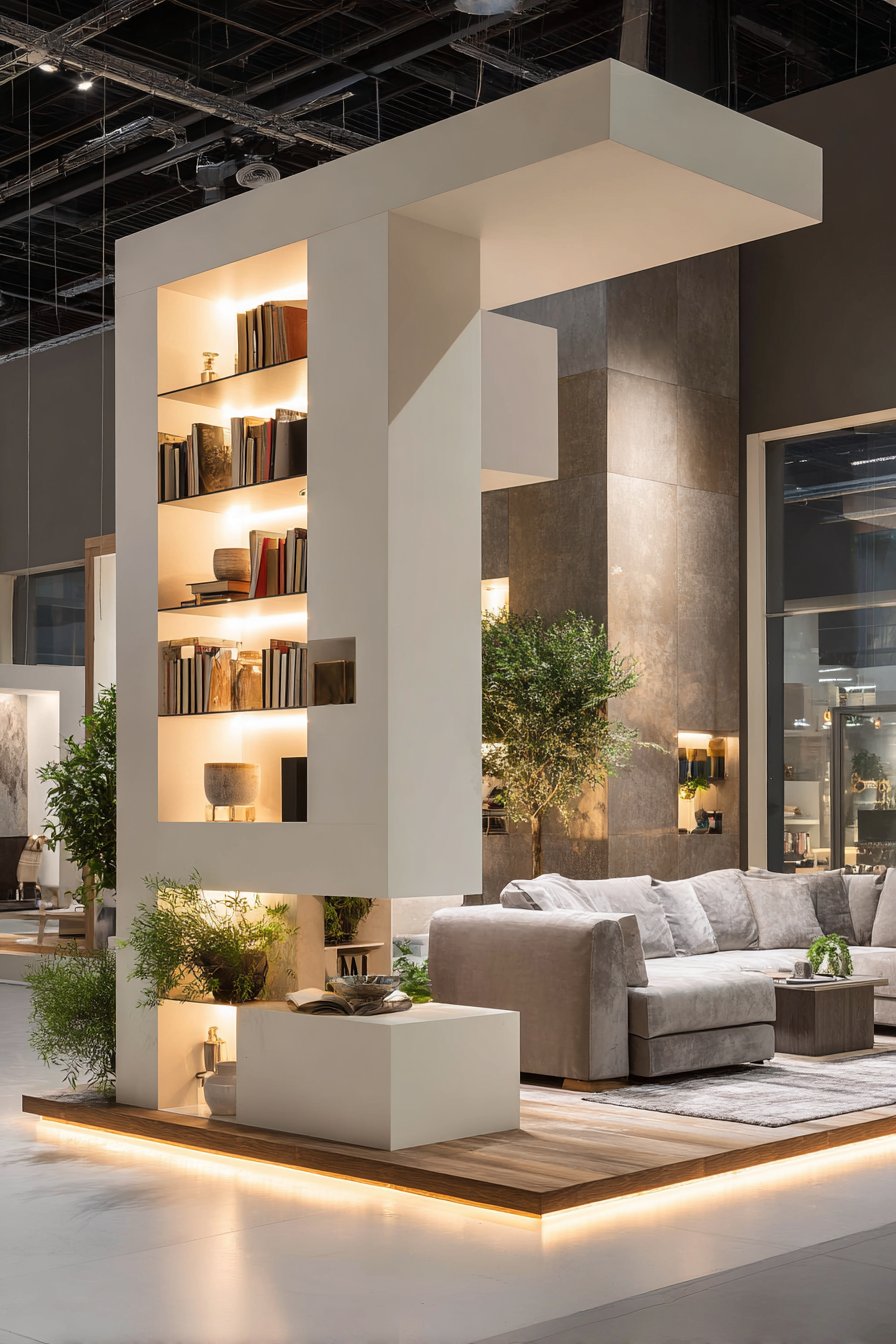
Key Design Tips: Work with experienced carpenters or millworkers for custom fabrication to ensure structural integrity. Plan compartment sizes thoughtfully based on items you’ll display. Use high-quality lacquer and proper sealing techniques for durability. Install LED strips with appropriate color temperature for the mood you want to create—warmer tones for cozy ambiance, cooler for contemporary feel. Ensure adequate structural support for the unit’s weight plus displayed items. Consider including some compartments with backs to hide less attractive storage while keeping others open for through-views. Coordinate the oak tone with other wood elements in your space. Plan for cable management if you’ll plug in decorative lighting or charge devices within compartments. Style shelves with intentional negative space to maintain the clean, modern aesthetic.
8. Accordion-Style Fabric Folding Screens
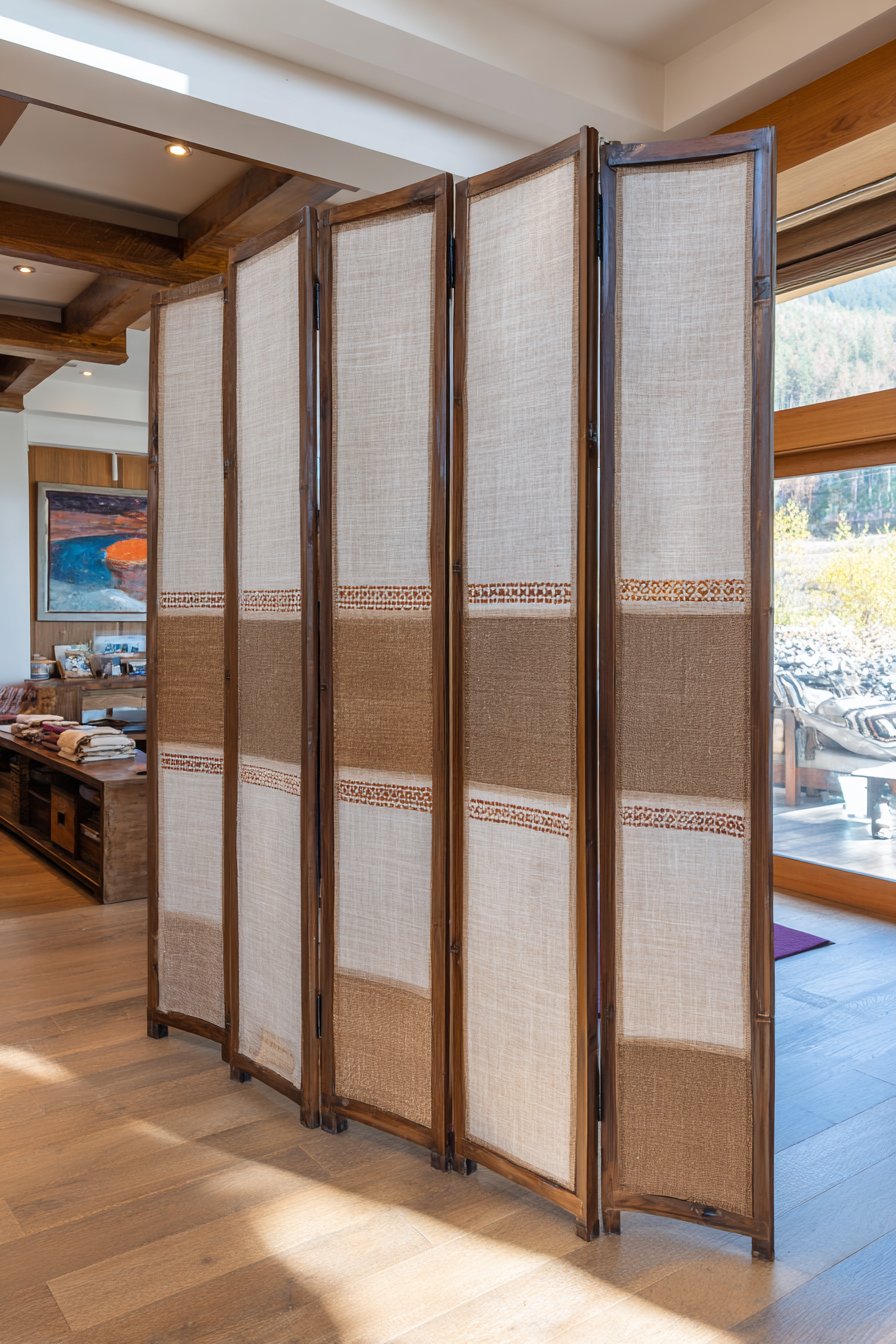
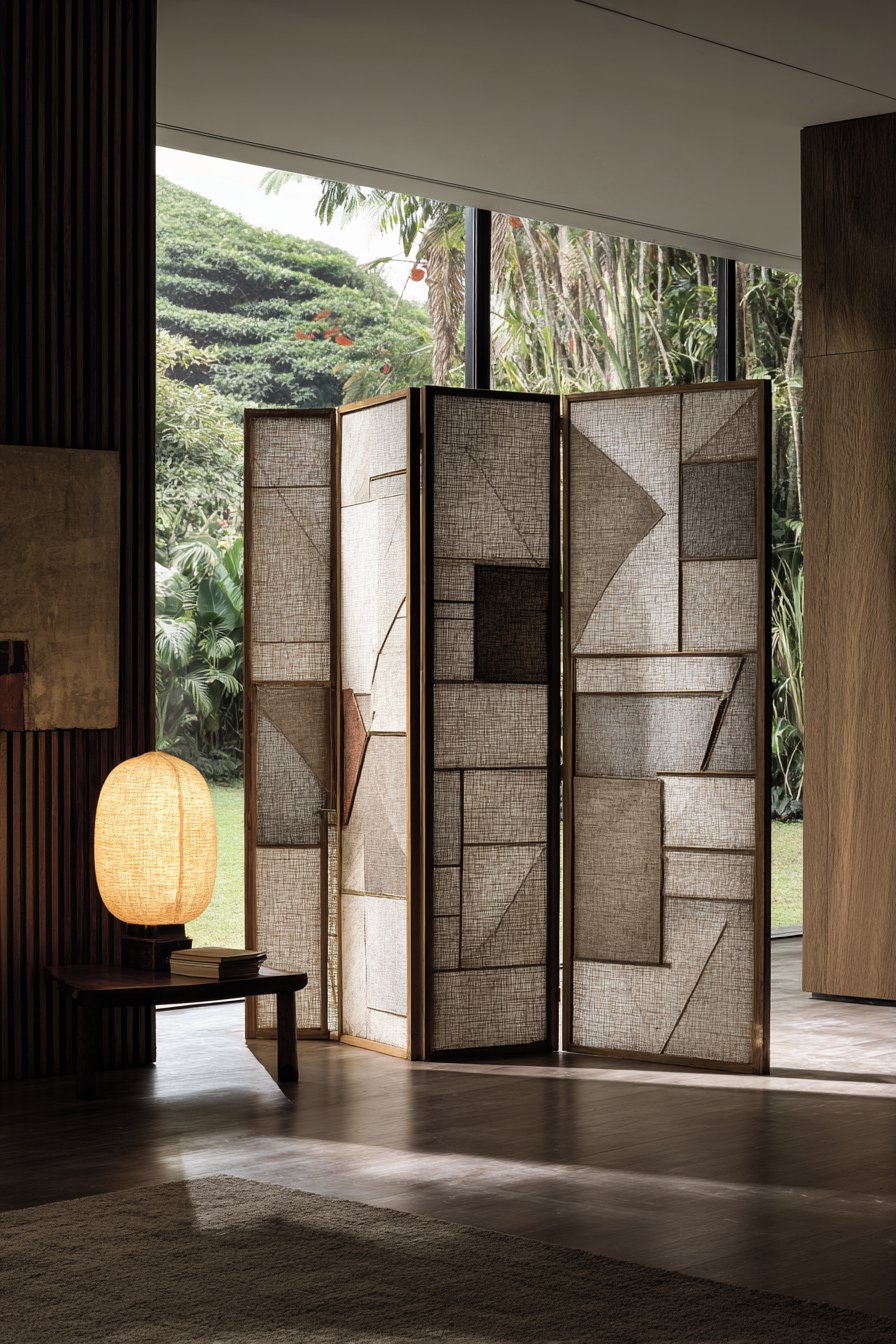
Flexibility reaches its peak with accordion-style folding screens, portable partitions that adapt to changing needs while contributing significant style to interiors. This design features fabric panels in neutral linen with geometric embroidery patterns, mounted within a natural bamboo frame that brings organic warmth and structural support. The portable nature of this partition makes it ideal for creating temporary zones—shown here partially extended to separate a yoga practice area from the main seating space, demonstrating how the same tool can serve meditation one moment and create intimate conversation areas the next. The textured fabric provides visual privacy while the folding mechanism allows complete removal when open-plan entertaining is desired.
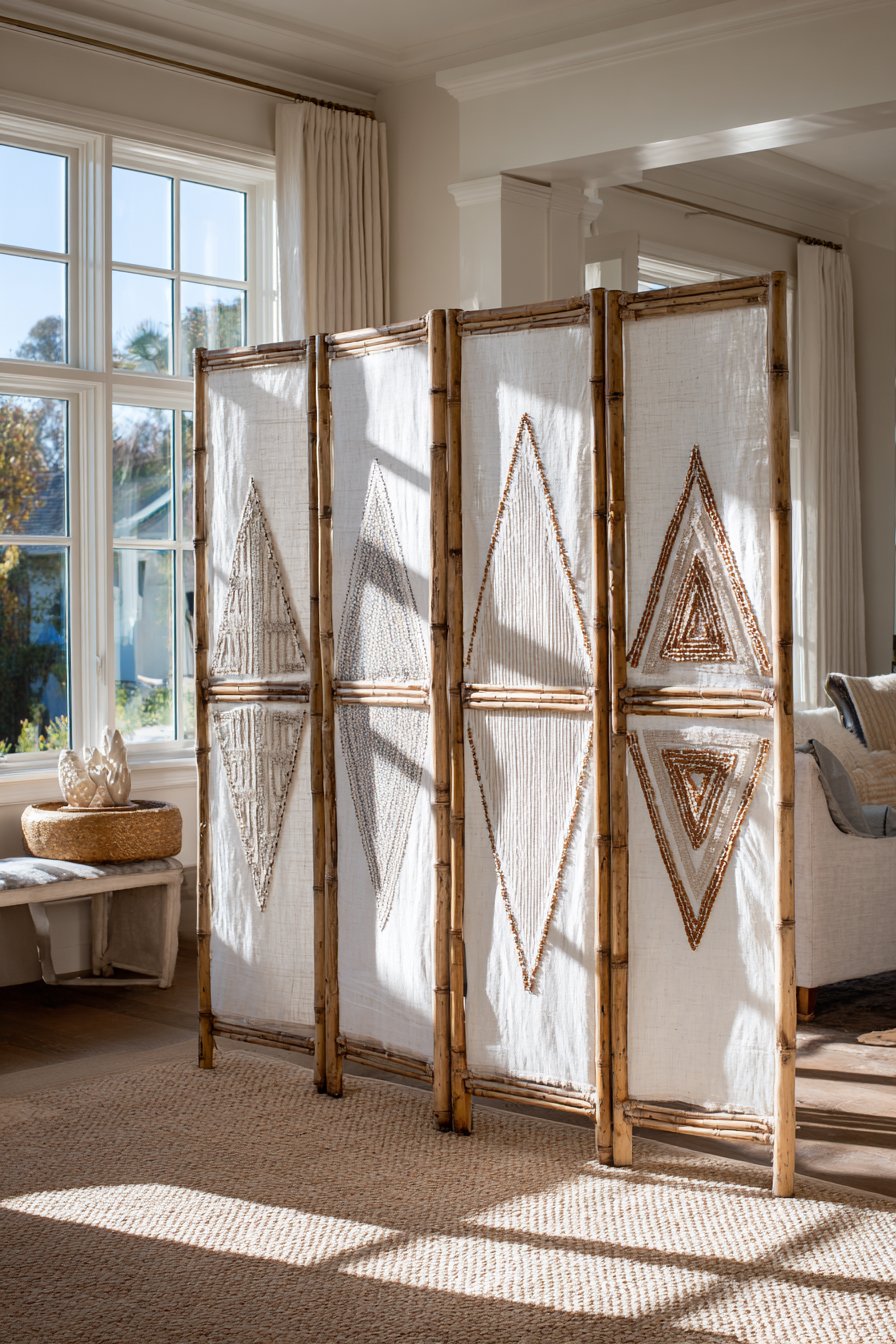
The choice of natural linen fabric with geometric embroidery elevates this partition beyond purely functional status into the realm of textile art. The neutral color palette ensures the screen coordinates with changing decor schemes and seasonal accessories, while the embroidery adds just enough pattern interest to prevent blandness. The fabric’s texture becomes particularly beautiful when backlit, with soft diffused natural lighting from large windows creating a luminous quality similar to shoji screens. The bamboo frame’s vertical lines and natural grain add visual structure and natural variation, each screen becoming unique due to bamboo’s inherent material qualities.
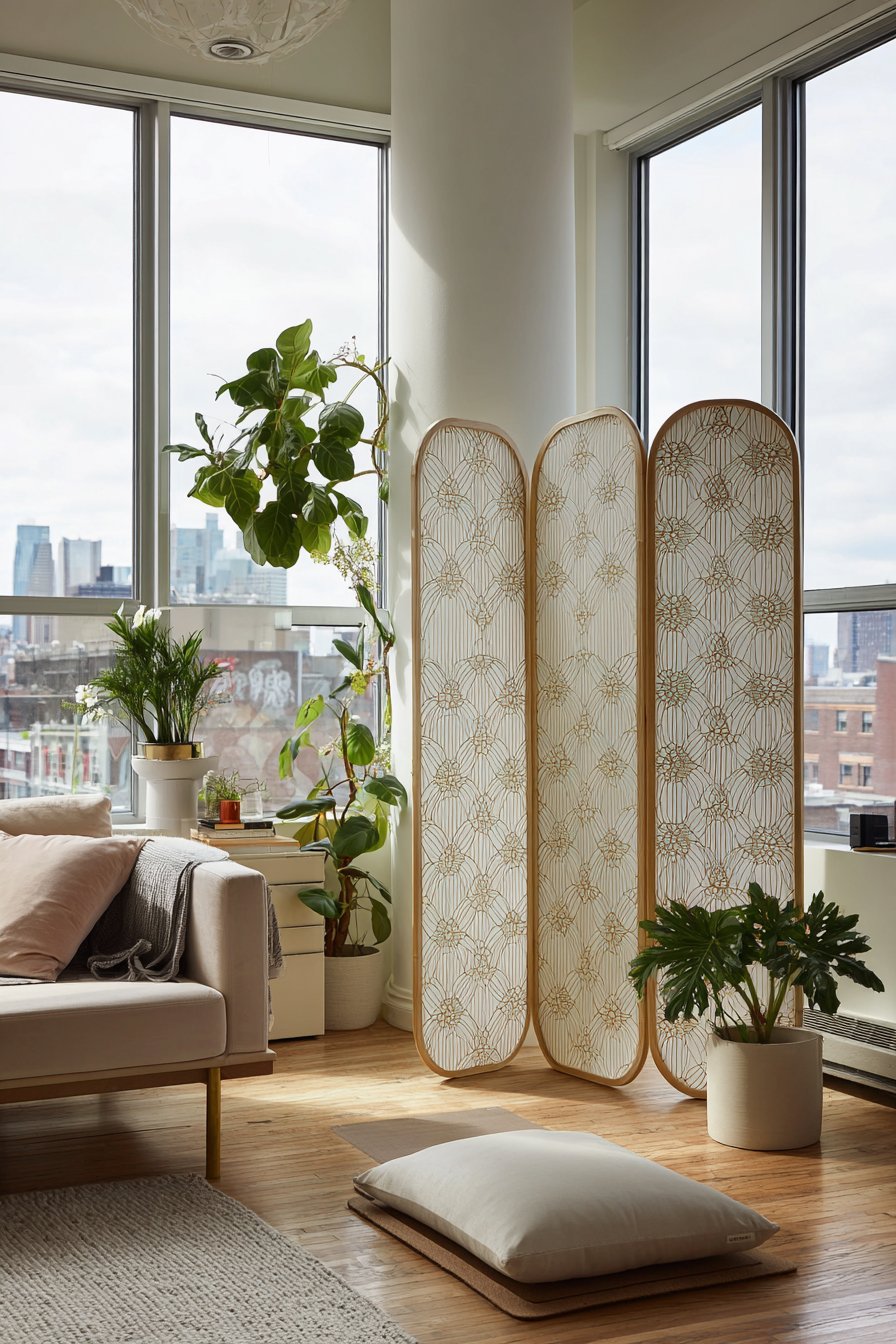
This partition style embodies the bohemian principle of flexibility and personal expression. Unlike permanent architectural elements, folding screens can be easily moved, adjusted, or completely removed based on daily needs or seasonal preferences. The accordion folding mechanism allows for various configurations—fully extended for maximum privacy, partially folded for partial separation, or completely collapsed for storage when not needed. The portability makes these screens equally at home in rental properties or owned homes, requiring no installation or wall modifications. The lightweight construction means one person can easily reposition the screen, encouraging experimentation with different spatial arrangements.
Key Design Tips: Choose high-quality hinges that allow smooth folding without binding or excessive looseness. Ensure fabric is properly tensioned within frames to prevent sagging over time. Consider treating fabric with stain-resistant spray for longevity, especially if used near eating areas. Position screens on flat, level surfaces for stability. Store carefully when not in use to prevent damage to hinges or fabric. Consider having multiple panels to create longer partitions when needed. Choose embroidery patterns that coordinate with your overall design aesthetic. Clean fabric regularly with vacuum brush attachment or spot clean as needed. Test screen stability if you have pets or children who might accidentally bump into it. Consider weighted bases if additional stability is desired.
9. Glass Block Wall Partition
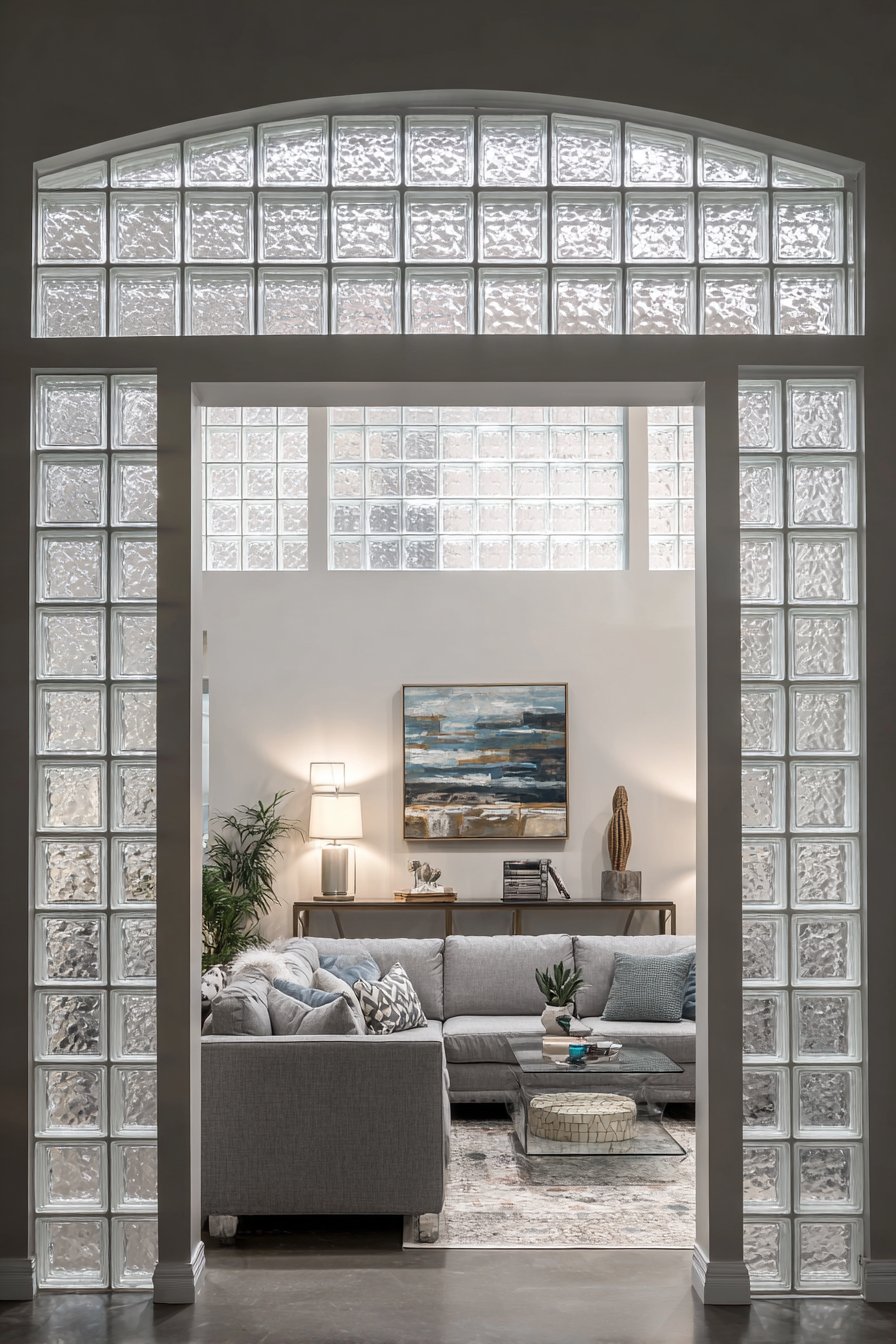
The glass block wall partition represents a fascinating marriage of mid-century modern sensibilities with contemporary minimalism, creating a architectural element with distinctive character. This design features translucent architectural glass bricks arranged in a precise grid pattern, their uniform spacing creating strong geometric rhythm while allowing natural light penetration throughout the space. Stainless steel framing provides structural support and adds industrial elegance, its reflective surface catching and scattering light in subtle ways. The substantial partition separates the main living area from the entryway, providing visual screening for guests arriving while maintaining the open feeling that characterizes contemporary design. A modern grey sofa arrangement faces away from the partition while a decorative console table positioned against it displays art and accessories.
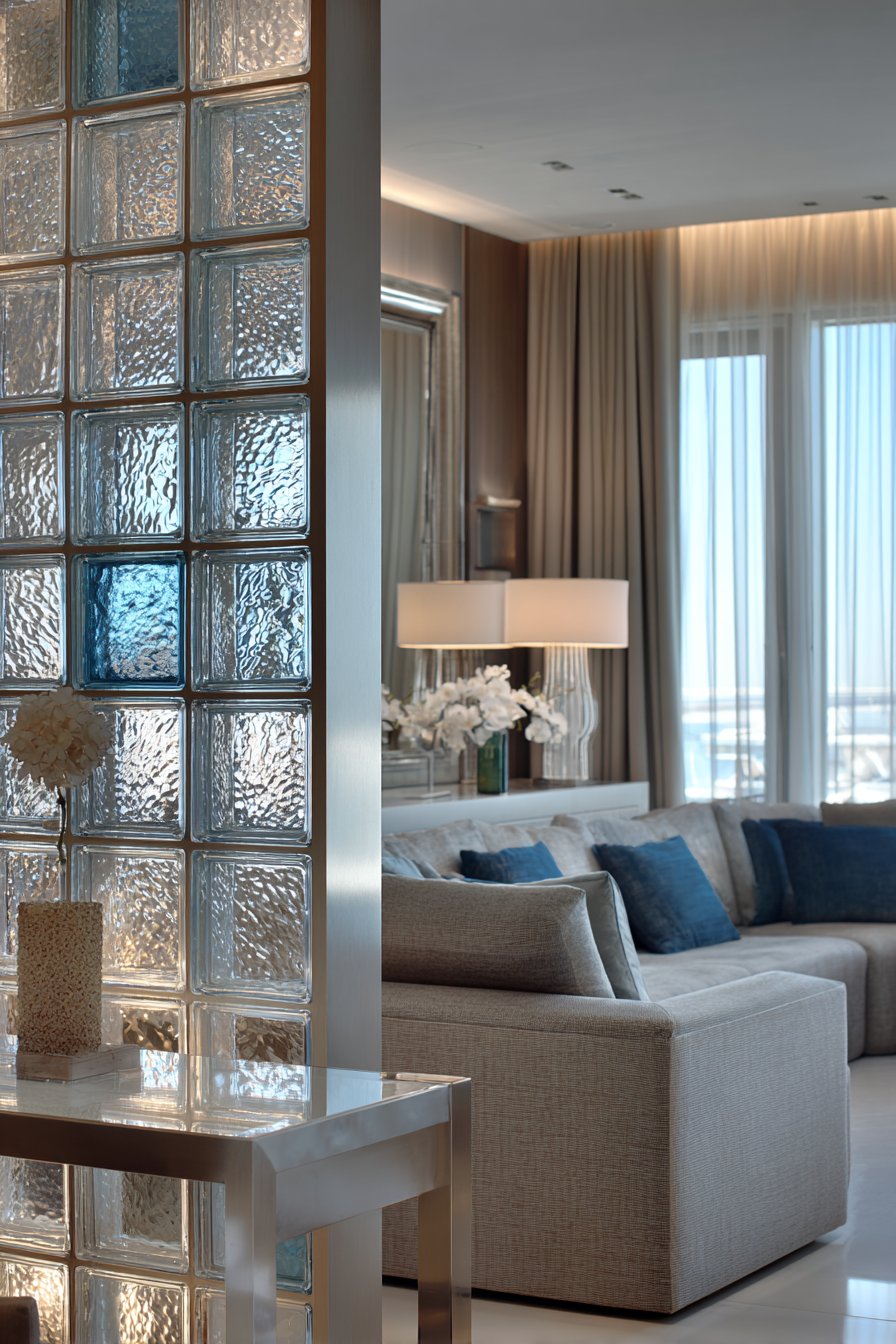
The translucent quality of glass blocks creates one of this partition’s most compelling features—the way it handles light. Unlike clear glass that provides unobstructed views, glass blocks diffuse and soften light, creating a gentle, filtered glow that feels peaceful and spa-like. The textured surface of each block—often featuring subtle patterns or bubbles within the glass—creates visual interest at close range while reading as a cohesive surface from distance. Natural light passing through creates subtle variations throughout the day as sun angles change, making the partition a dynamic element that responds to environmental conditions. The substantial thickness of glass blocks provides some acoustic dampening, muffling sound transmission between zones more effectively than thin glass panels.
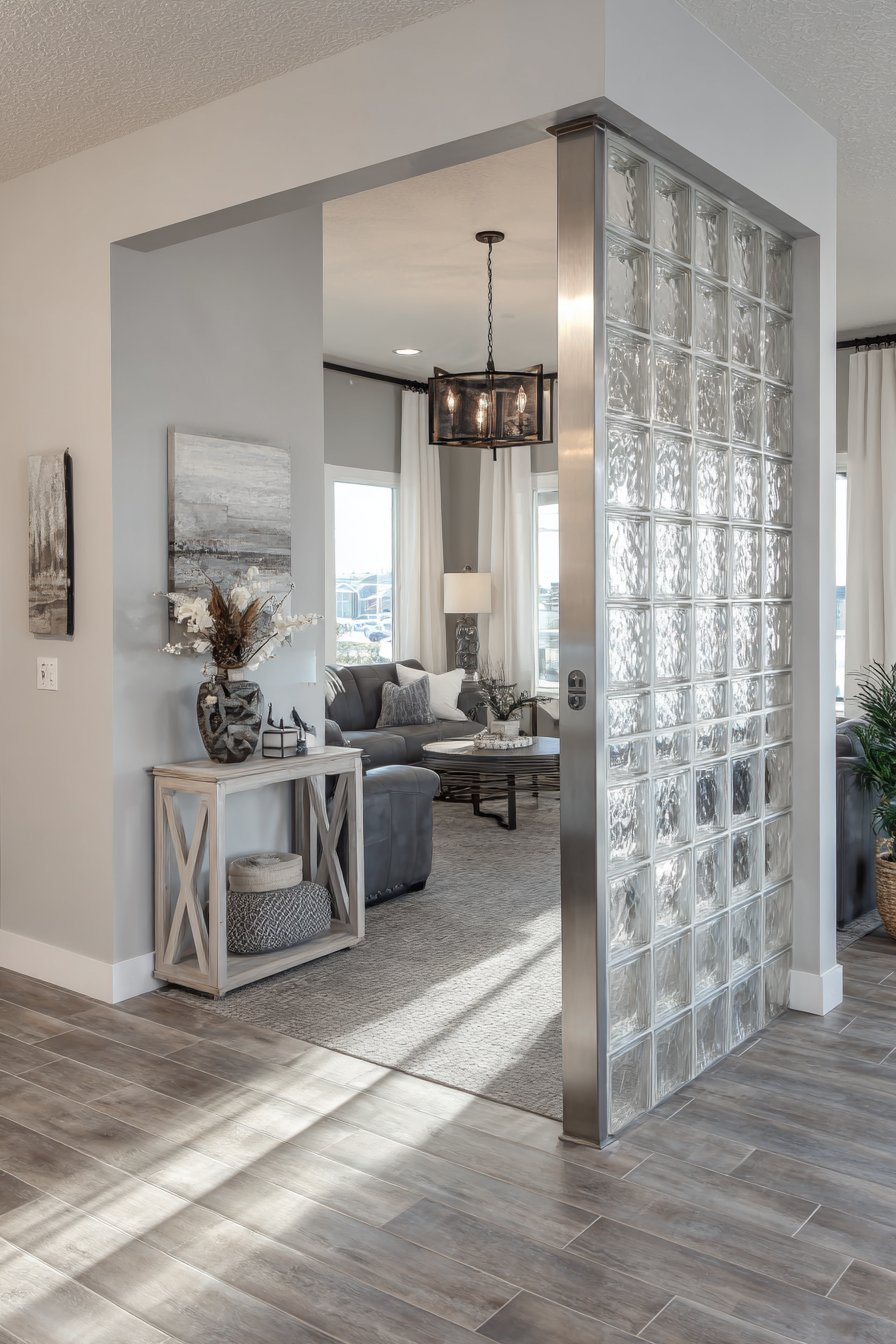
This partition style particularly suits homes with mid-century architecture or contemporary spaces seeking to add character without traditional ornamentation. The grid pattern provides strong architectural presence without stylistic specificity, allowing it to work with minimalist, modern, or transitional decor schemes. The industrial elegance of steel framing complements other metal fixtures, from lighting to cabinet hardware, creating material cohesion throughout the space. The permanent nature of glass block installation makes it most suitable for homeowners committed to long-term design schemes, though the timeless quality of the material ensures it won’t feel dated as trends evolve.
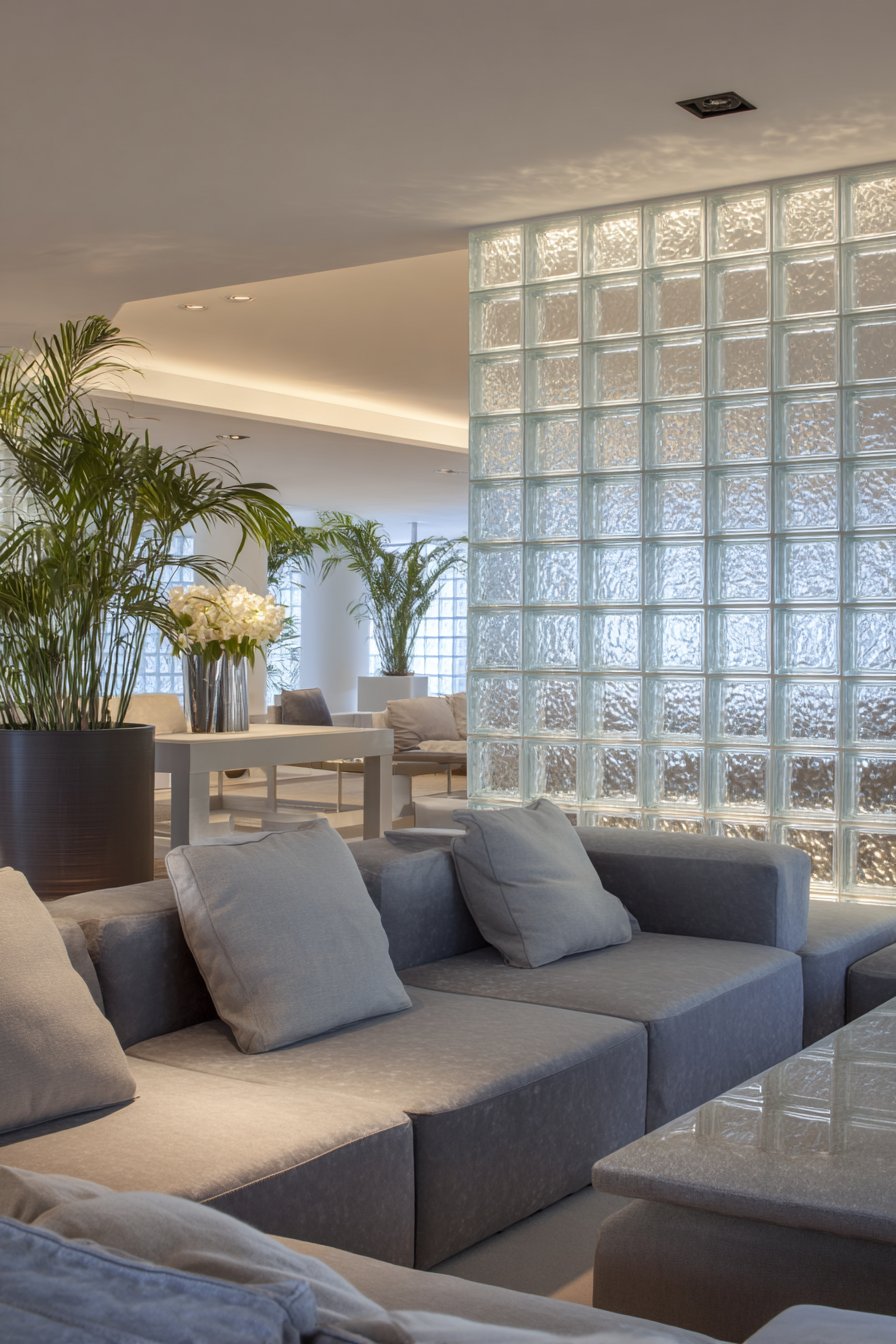
Key Design Tips: Hire experienced masons familiar with glass block installation for proper structural support and weatherproofing. Choose glass block patterns based on desired light diffusion—clear blocks transmit more light, textured blocks offer more privacy. Ensure proper footer and header installation for structural integrity. Consider the weight of glass blocks in structural planning—they’re substantially heavier than drywall. Use spacers during installation for consistent mortar joints. Select mortar color carefully as it significantly affects the final appearance—white creates strong grid lines, grey tones blend more subtly. Plan for adequate lighting on both sides to maximize the luminous quality. Clean glass surfaces regularly to maintain clarity and light transmission. Consider the permanence of installation before committing—glass block walls are challenging to modify once installed.
10. Japanese-Inspired Shoji Screen Divider
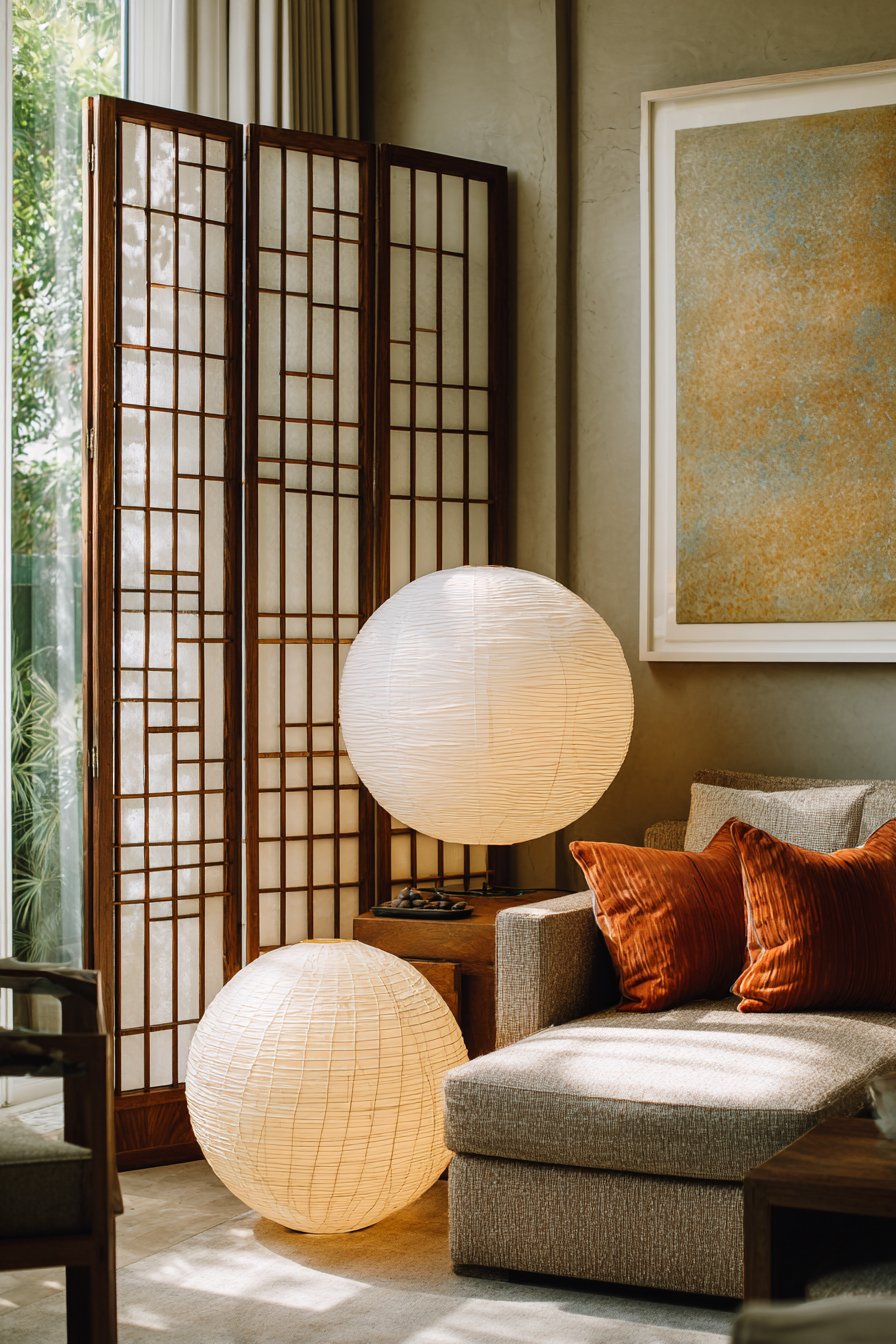
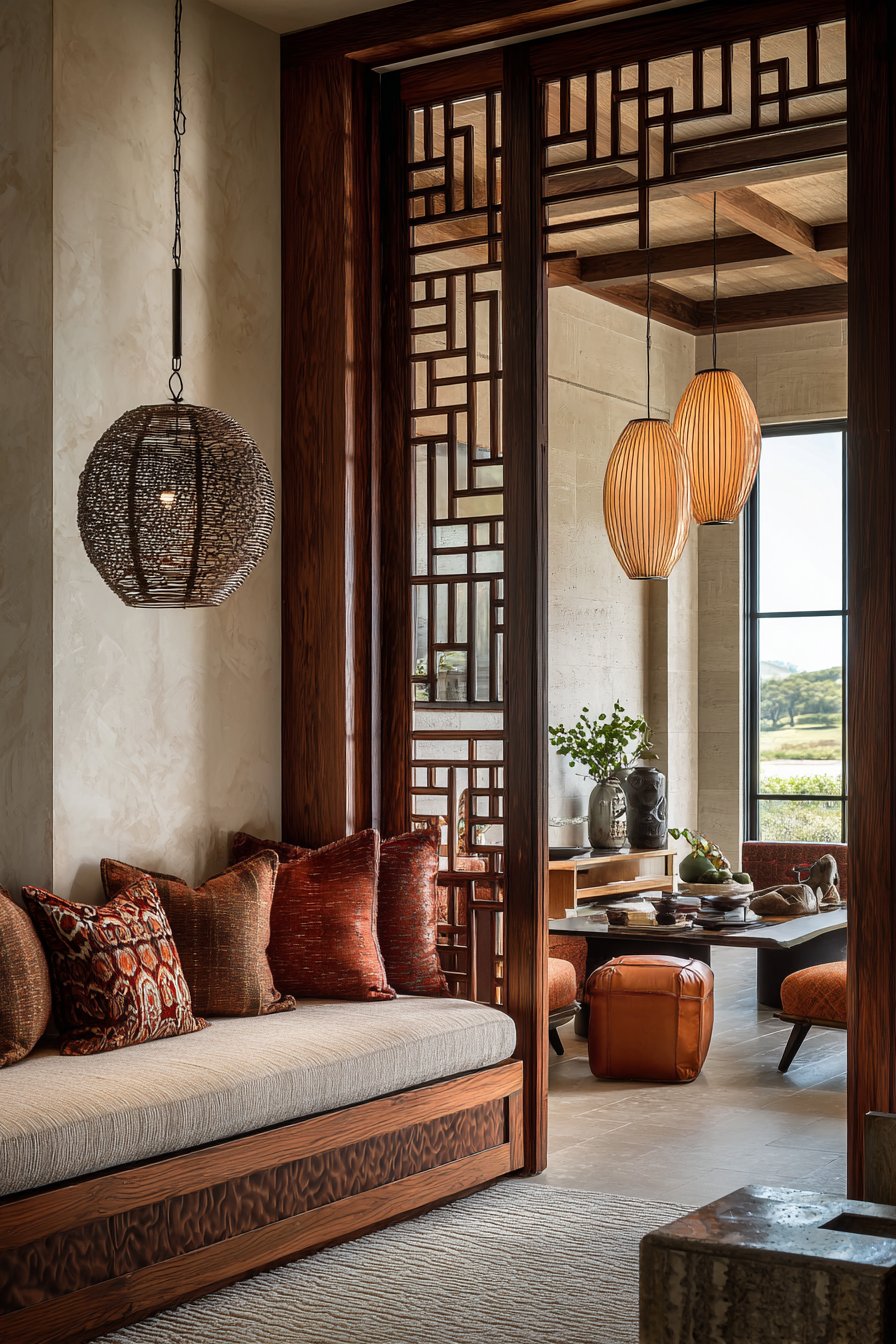
The timeless elegance of Japanese design finds expression in the shoji screen room divider, a traditional form that remains remarkably relevant in contemporary interiors. This three-panel divider features white rice paper panels stretched across dark stained wood lattice framework, creating a study in contrasts between light and dark, solid and void, opacity and translucence. The traditional design creates intimate separation between a tea corner furnished with low cushioned seating and the main living area with contemporary furniture, bridging cultural aesthetics while serving practical zoning needs. Soft natural lighting from paper lanterns complements daylight filtering through the translucent panels, creating a serene, contemplative atmosphere that promotes calm and mindfulness.
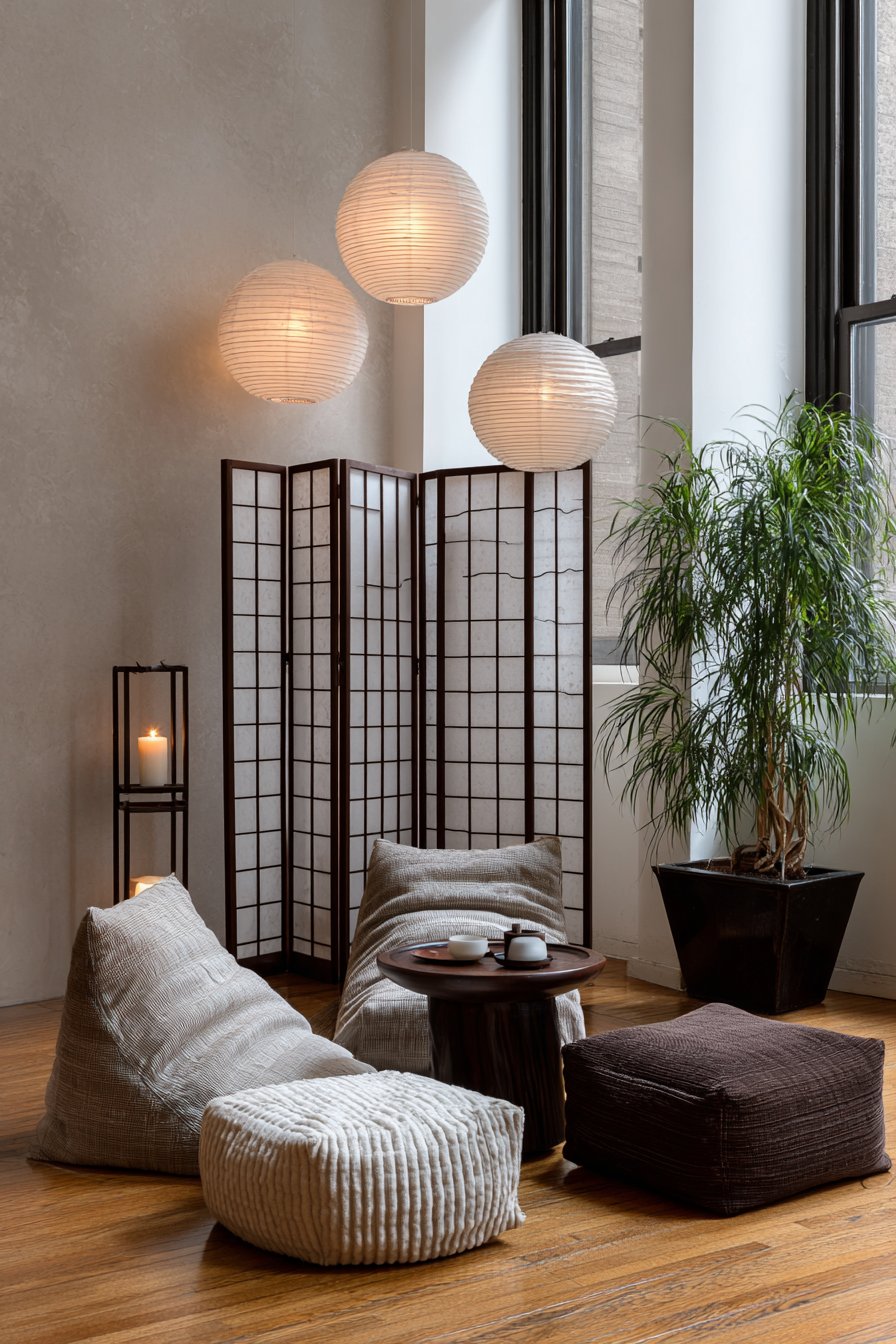
The rice paper panels embody the Japanese aesthetic principle of subtle beauty—their translucent quality allows light to pass through while obscuring details, creating privacy without complete visual separation. This filtered light has a distinctively soft, diffused quality that feels gentle and restful, lacking the harsh edges of direct illumination. The dark wood lattice creates strong geometric patterns that provide structural support while adding visual interest, the framework becoming increasingly visible in silhouette as backlighting increases. The three-panel configuration allows for various arrangements—fully extended for maximum coverage, angled to create alcoves, or folded partially for adjustable separation.
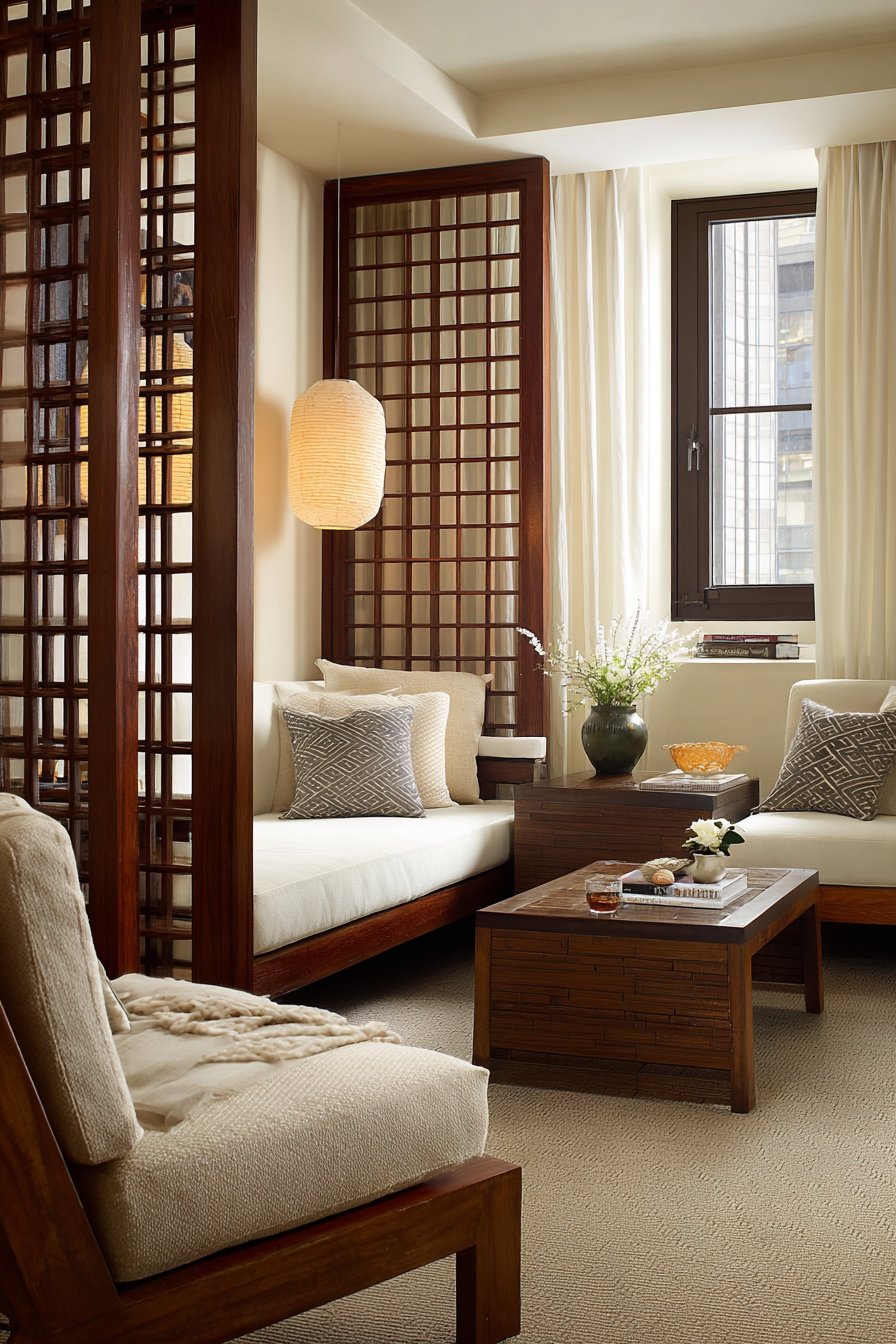
This partition style appeals particularly to those drawn to zen aesthetics, minimalist design, or Asian-influenced interiors. The shoji screen’s simplicity creates visual rest in busy contemporary spaces while its traditional craftsmanship brings handmade quality to machine-dominated environments. The lightweight construction means screens can be easily moved or removed, offering flexibility without commitment. The natural materials—wood and paper—bring organic warmth and texture that synthetic materials cannot replicate. The screen’s presence encourages mindful living, its deliberate simplicity reminding us that beauty doesn’t require complexity or excess.
Key Design Tips: Choose high-quality wooden frames with properly mitered corners for durability. Source authentic rice paper or high-quality Japanese paper specifically designed for shoji screens. Ensure panels are evenly tensioned to prevent sagging or wrinkling. Position screens away from high-traffic areas to prevent accidental damage to delicate paper. Clean frames with barely damp cloth to avoid warping wood. Handle paper carefully during cleaning—use feather duster or very soft brush. Consider UV-protective paper if screens will be near windows to prevent premature yellowing. Store carefully when not in use, laying flat rather than standing to prevent warping. Replace damaged paper panels promptly as repairs are relatively simple. Coordinate the wood stain with other furniture for cohesive appearance.
11. Hanging Chain Curtain Partition
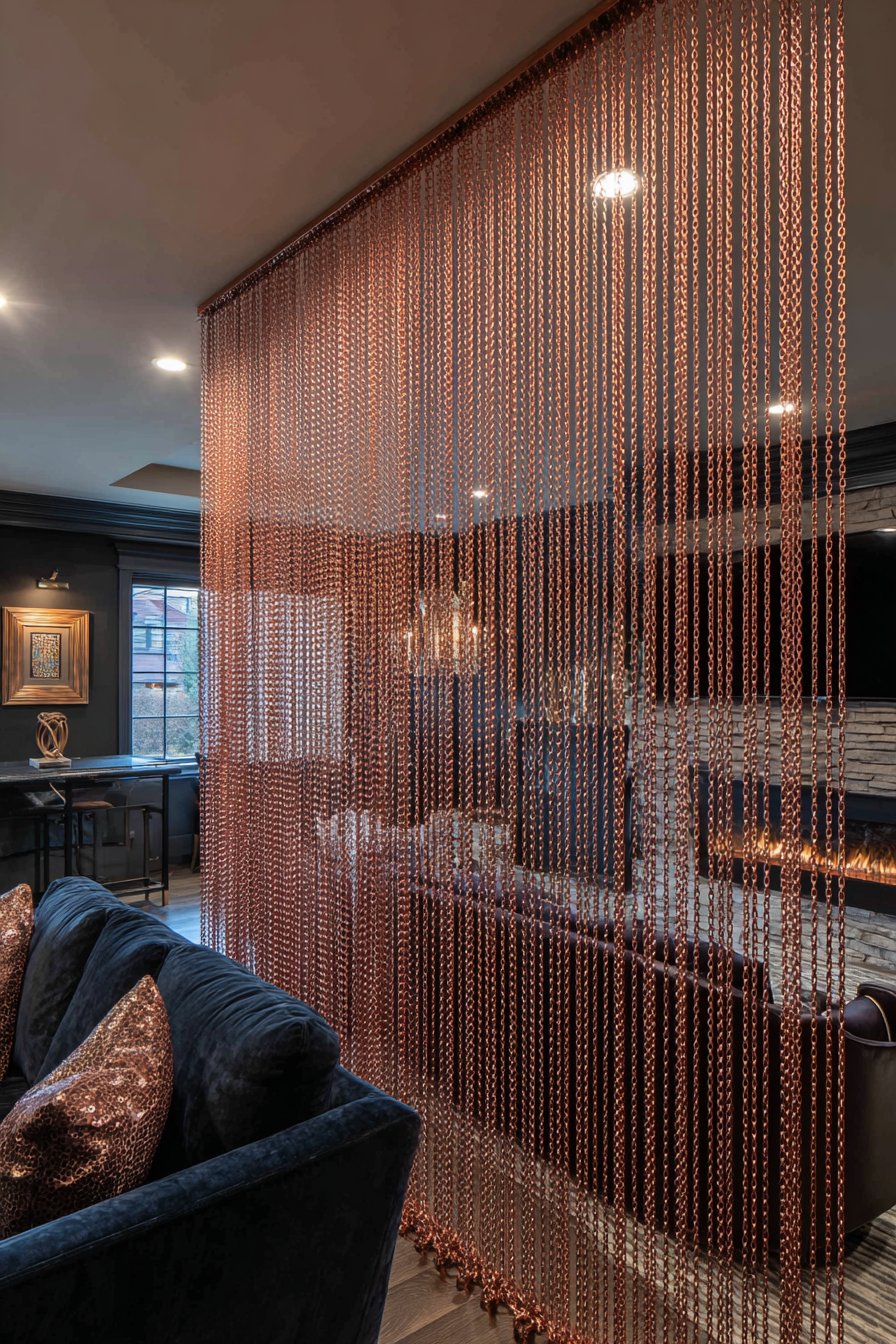
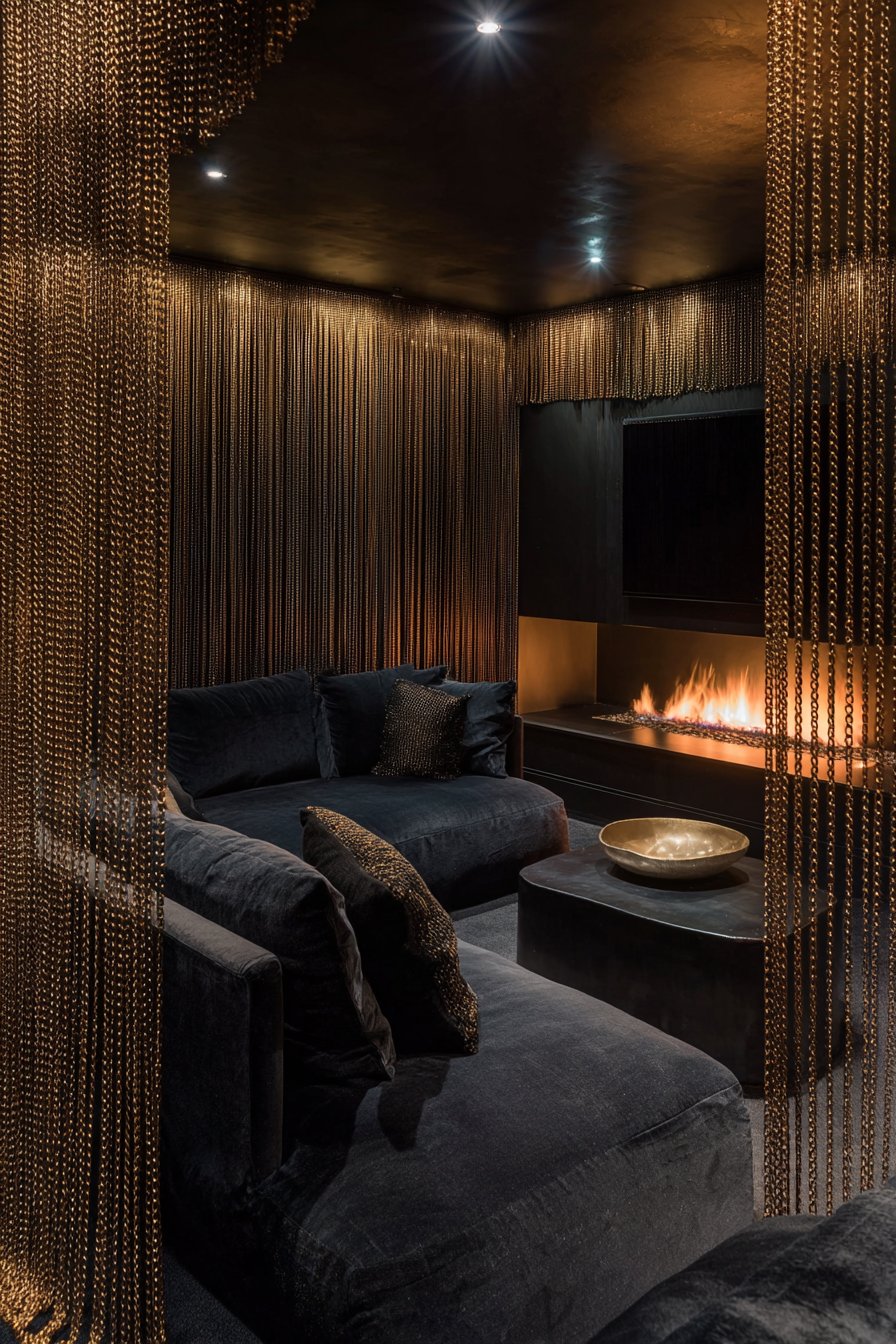
For those seeking drama and glamour in interior design, the hanging chain curtain partition offers a sculptural solution that captures and plays with light in mesmerizing ways. This unconventional divider features metallic copper-toned chains cascading from ceiling to near-floor level, their continuous vertical lines creating rhythm and movement within the space. The chains separate an intimate lounge area featuring velvet seating from an entertainment zone with media console, defining territories while maintaining visual connection. The metallic finish catches and reflects light from recessed fixtures, creating shimmering highlights that dance across the chains as they subtly move in response to air currents, bringing constant subtle animation to the space.
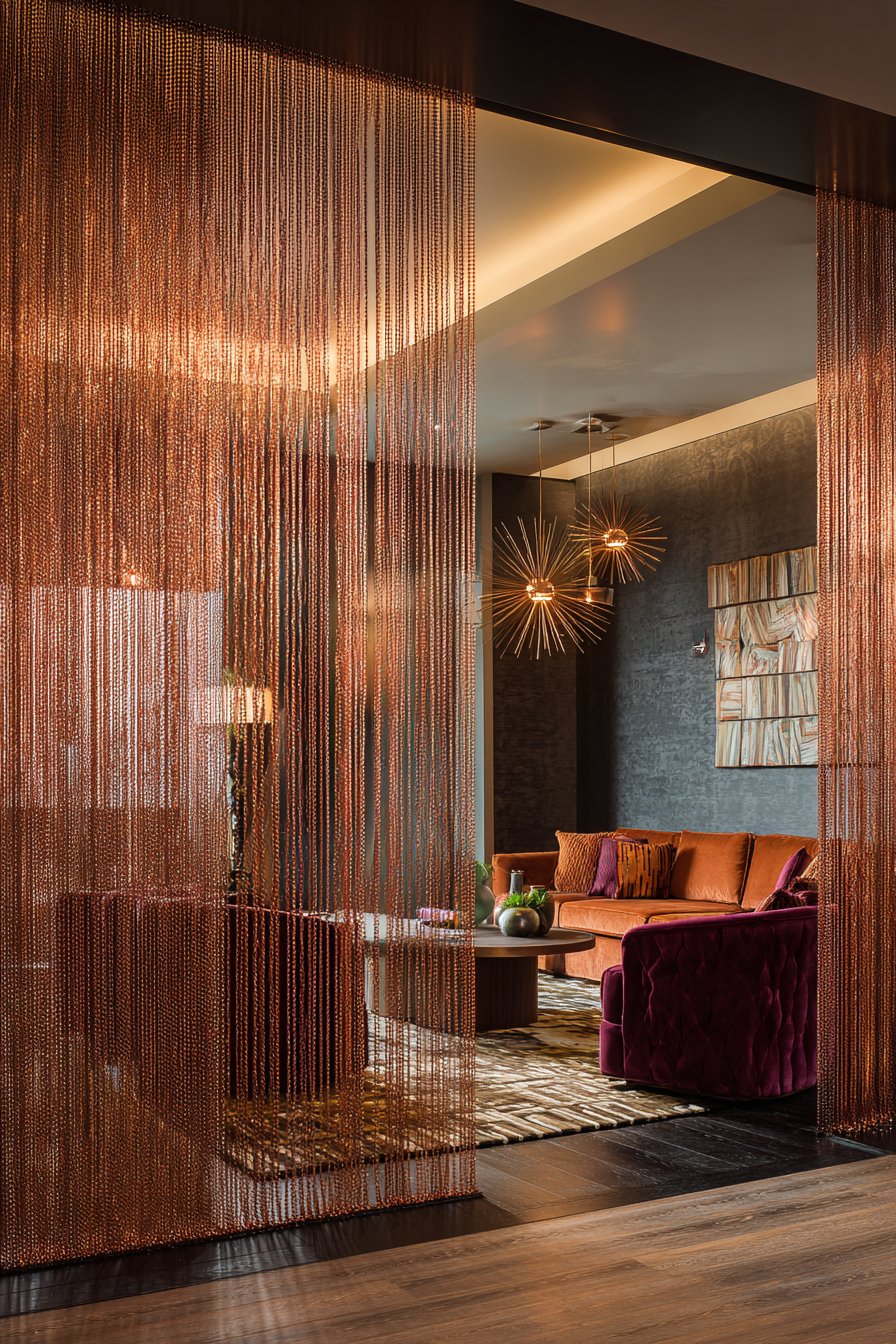
The sensory experience of this partition extends beyond visual appeal. The gentle sound of chains moving against each other creates subtle auditory texture, a soft metallic whisper that adds another dimension to the space. The tactile quality invites interaction—running fingers through chains produces satisfying sound and sensation, making the partition an engagement point rather than a mere boundary. The copper toning adds warmth that pure silver or gold tones wouldn’t provide, the burnished finish suggesting aged patina rather than shiny newness. Against a dark accent wall, the chains create striking contrast that emphasizes their linear quality and metallic gleam.
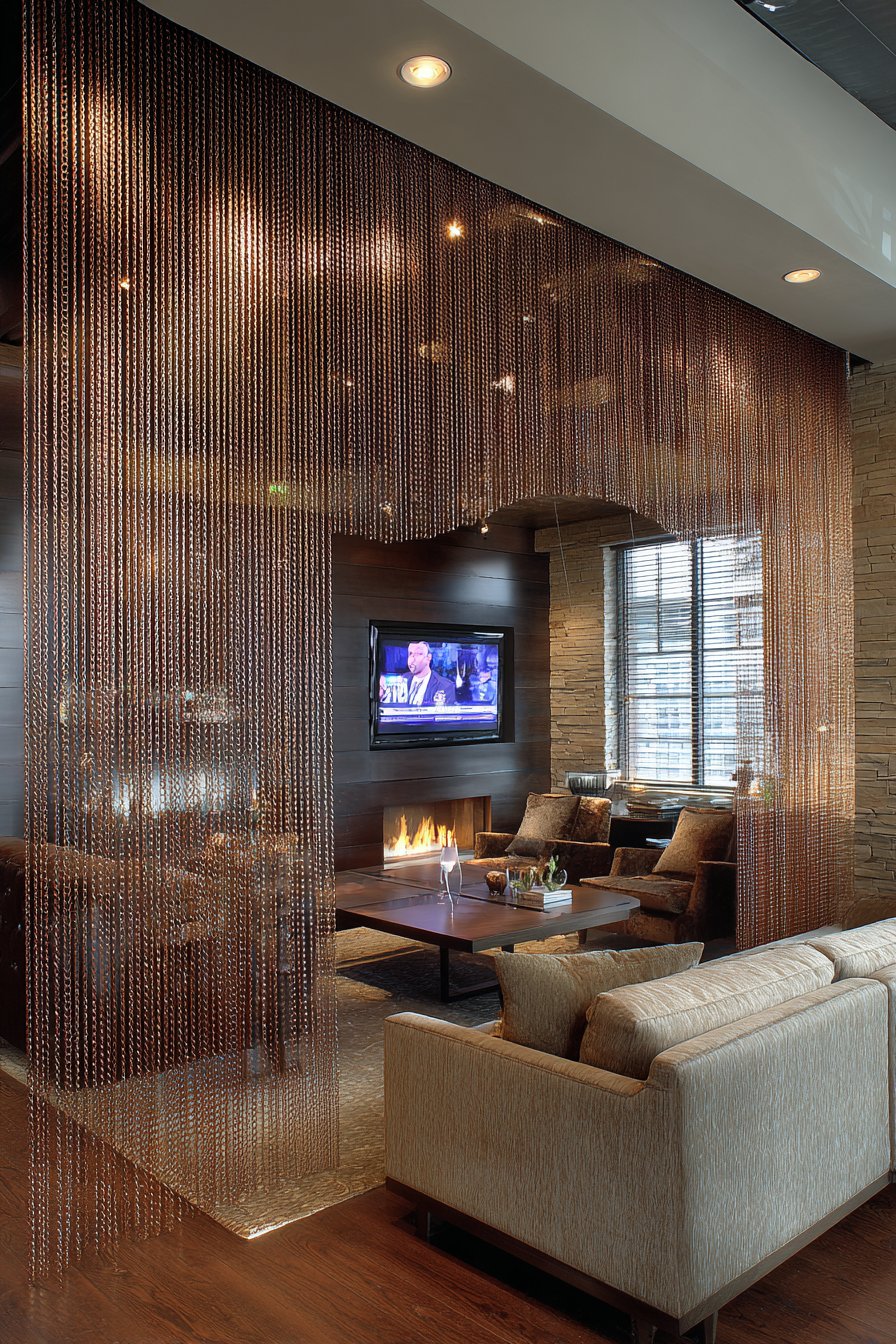
This partition style suits contemporary, glamorous, or eclectic interiors where bold design gestures are celebrated rather than minimized. The transparency of the hanging chains maintains spatial openness while clearly defining zones, a challenging balance to achieve with solid partitions. The installation creates Instagram-worthy moments, particularly when photographed with backlighting that emphasizes the chains’ metallic qualities. The contemporary bohemian aesthetic embraces such unexpected materials and dramatic gestures, celebrating personality and creative expression over conventional design rules. The partition becomes conversation piece, artistic installation, and functional divider simultaneously.
Key Design Tips: Ensure ceiling mounting hardware is securely anchored to support the total chain weight. Choose chains with appropriate gauge—too thin and they tangle easily, too thick and they’re overwhelming. Consider the sound factor—chains will create noise when disturbed. Hang chains at consistent lengths for formal appearance or varied lengths for organic feel. Coordinate metal finish with other fixtures and hardware in the space. Position the partition where foot traffic won’t constantly disturb chains. Consider magnetic or weighted bottom attachments if you want chains to hang perfectly straight. Plan for regular dusting as chains will collect dust between links. Install adequate lighting to maximize the shimmering effect. Consider the maintenance requirements—untangling chains can be time-consuming if they become twisted.
12. Modular Cube Storage System Partition
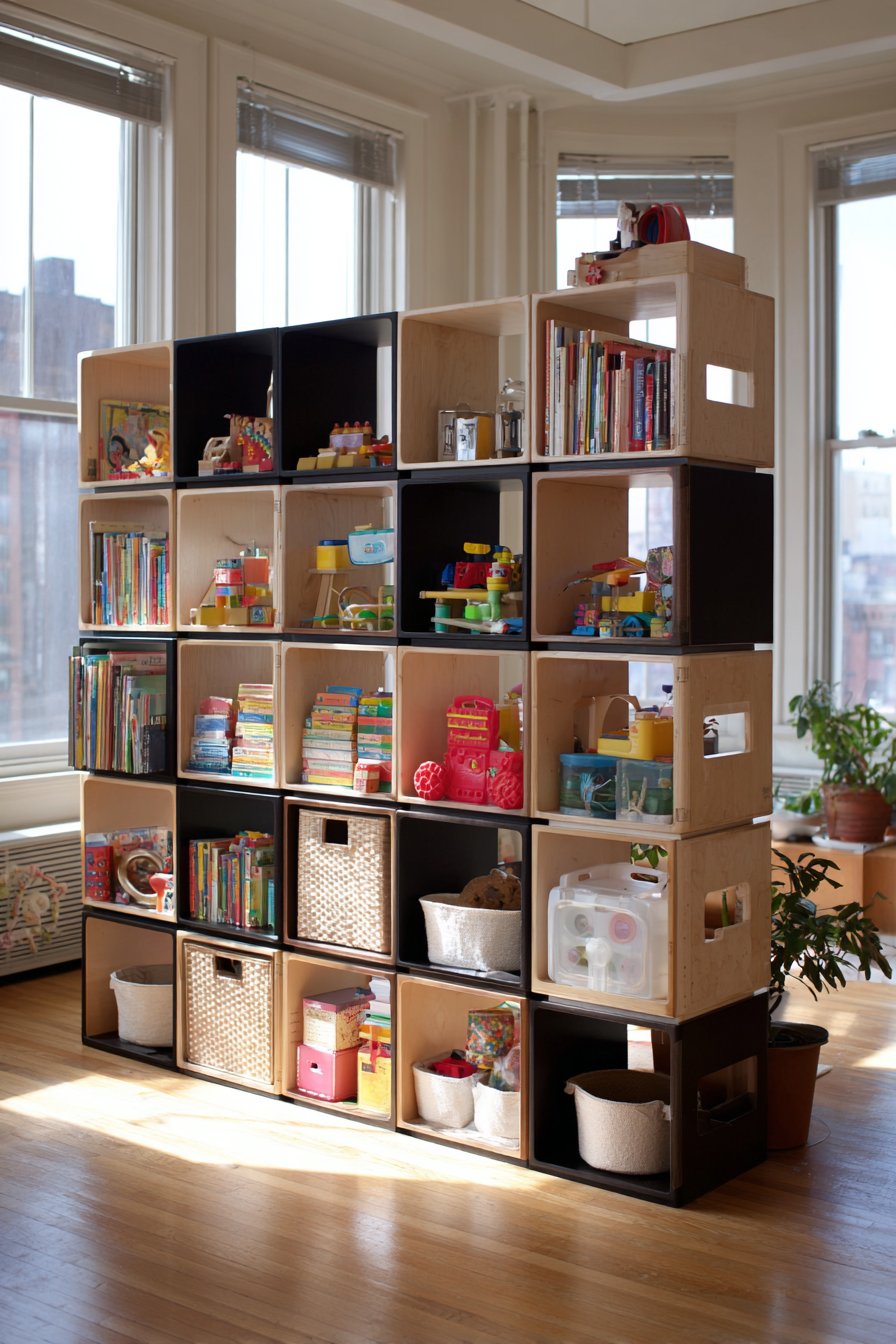
Family-friendly design finds its champion in the modular cube storage system partition, a practical solution that combines organization with space division. This versatile unit features alternating open and closed compartments in charcoal grey and natural beech wood, the two-tone design creating visual interest while coordinating with diverse decor schemes. The partition serves double duty as a room divider between living and play areas while providing extensive storage for books, toys, and decorative items. Some compartments feature fabric storage bins that conceal clutter while maintaining the clean aesthetic, while others remain open to display items attractively and allow visual flow between spaces.
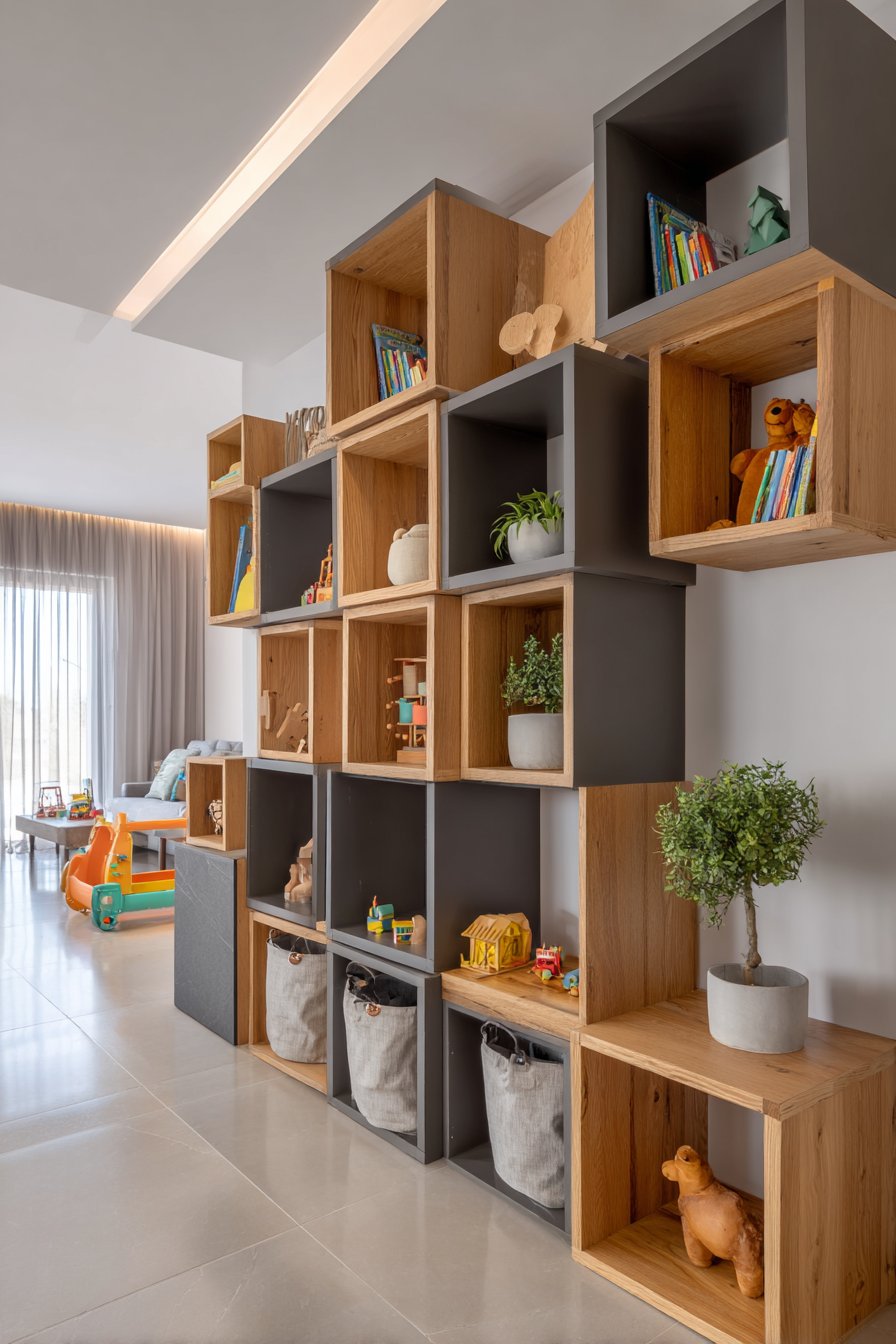
The genius of this partition lies in its adaptability to changing family needs. As children grow, the contents of compartments evolve from toy storage to book displays to teen accessories, the neutral cube structure accommodating these transitions seamlessly. The modular nature means additional cubes can be added or removed as spatial needs change, offering flexibility impossible with permanent built-ins. The combination of open and closed storage addresses the reality of family life—some items deserve display while others need concealment. The accessibility from both sides means the living room can access books and games while the play area benefits from organizational systems designed specifically for children’s use.
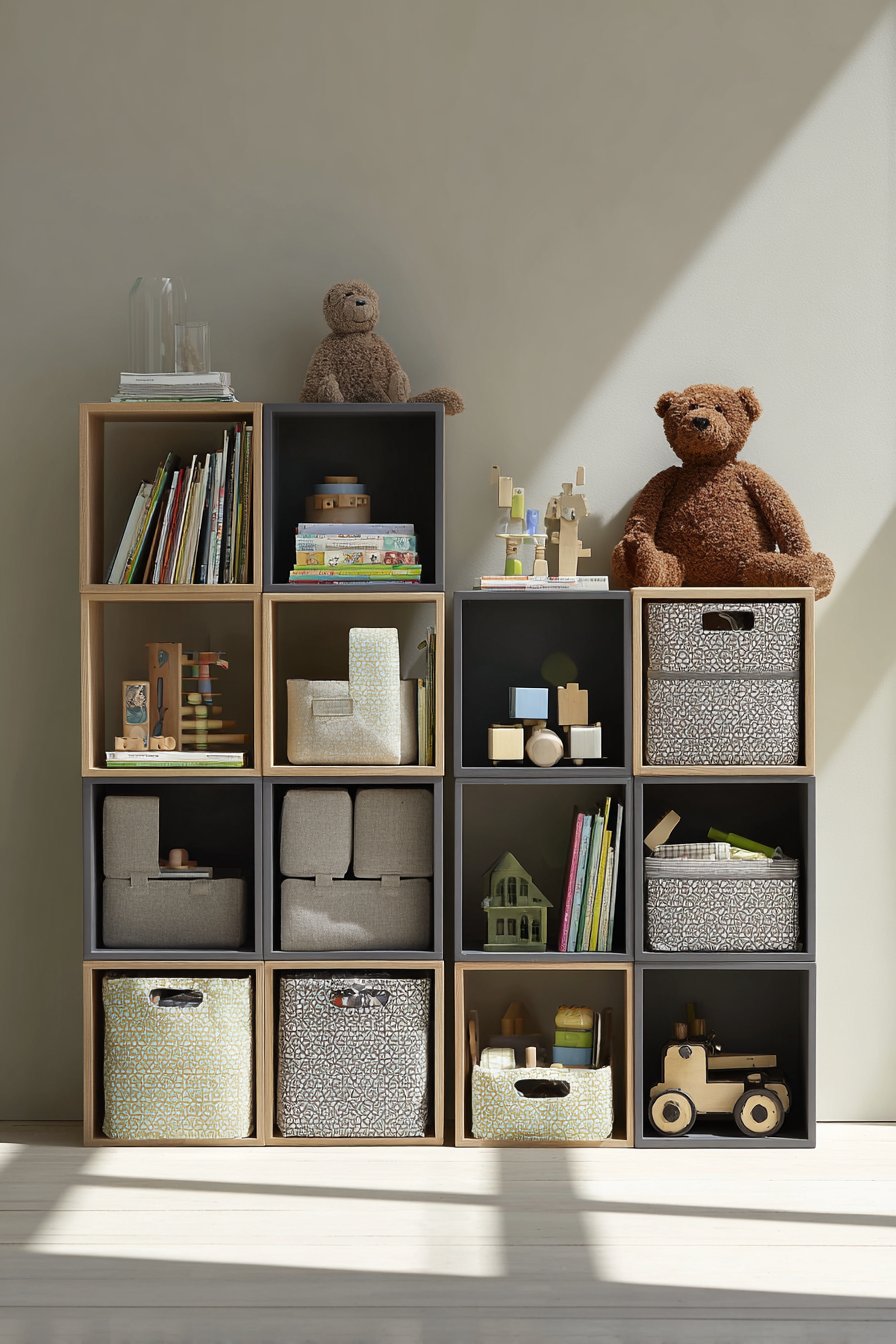
Natural daylight creates depth and dimension through the geometric arrangement of cubes, the shadows and highlights emphasizing the three-dimensional nature of the structure. The varying depths of compartments create visual rhythm that prevents monotony, while the color-blocked design in charcoal and beech adds contemporary style to what could otherwise be purely utilitarian furniture. The substantial presence of the storage system creates clear territorial definition without completely isolating spaces, important for parents who want to supervise play areas while occupying living room spaces.
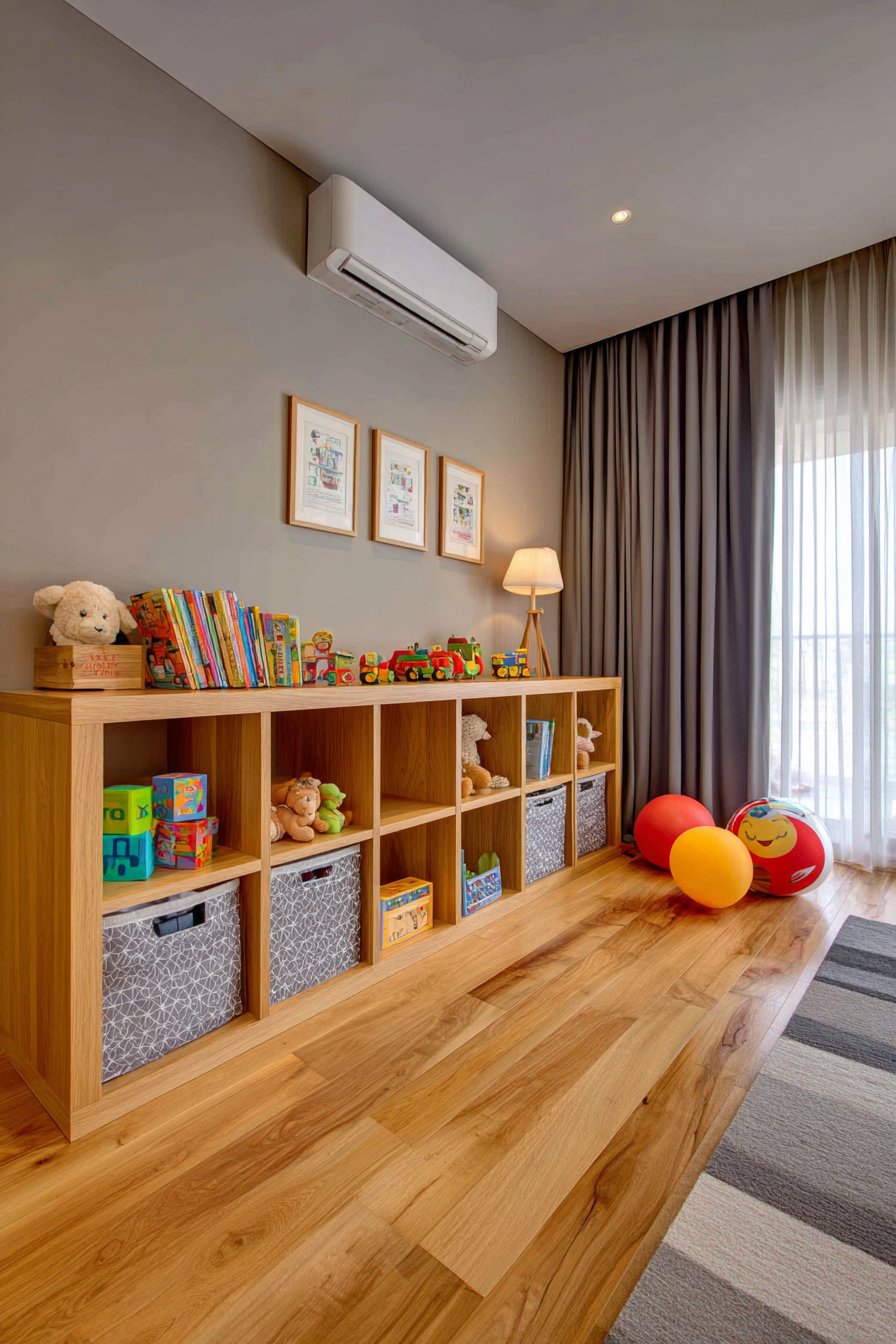
Key Design Tips: Anchor the unit securely to walls and floor to prevent tipping hazards, especially important with children in the home. Choose fabric bins in durable, washable materials that can withstand frequent use. Plan cube sizes based on items you’ll store—measure toys, books, and bins before selecting units. Consider placing frequently accessed items in lower compartments that children can reach independently. Use a mix of compartment sizes for storage flexibility. Coordinate bin colors with your overall palette for cohesive appearance. Include some compartments at adult eye level for decorative displays. Consider adding labels or picture cues for younger children to support independent cleanup. Maintain some empty compartments to prevent overstuffed appearance. Choose cube finish that hides fingerprints and minor scuffs well.
13. Laser-Cut Decorative Metal Panels
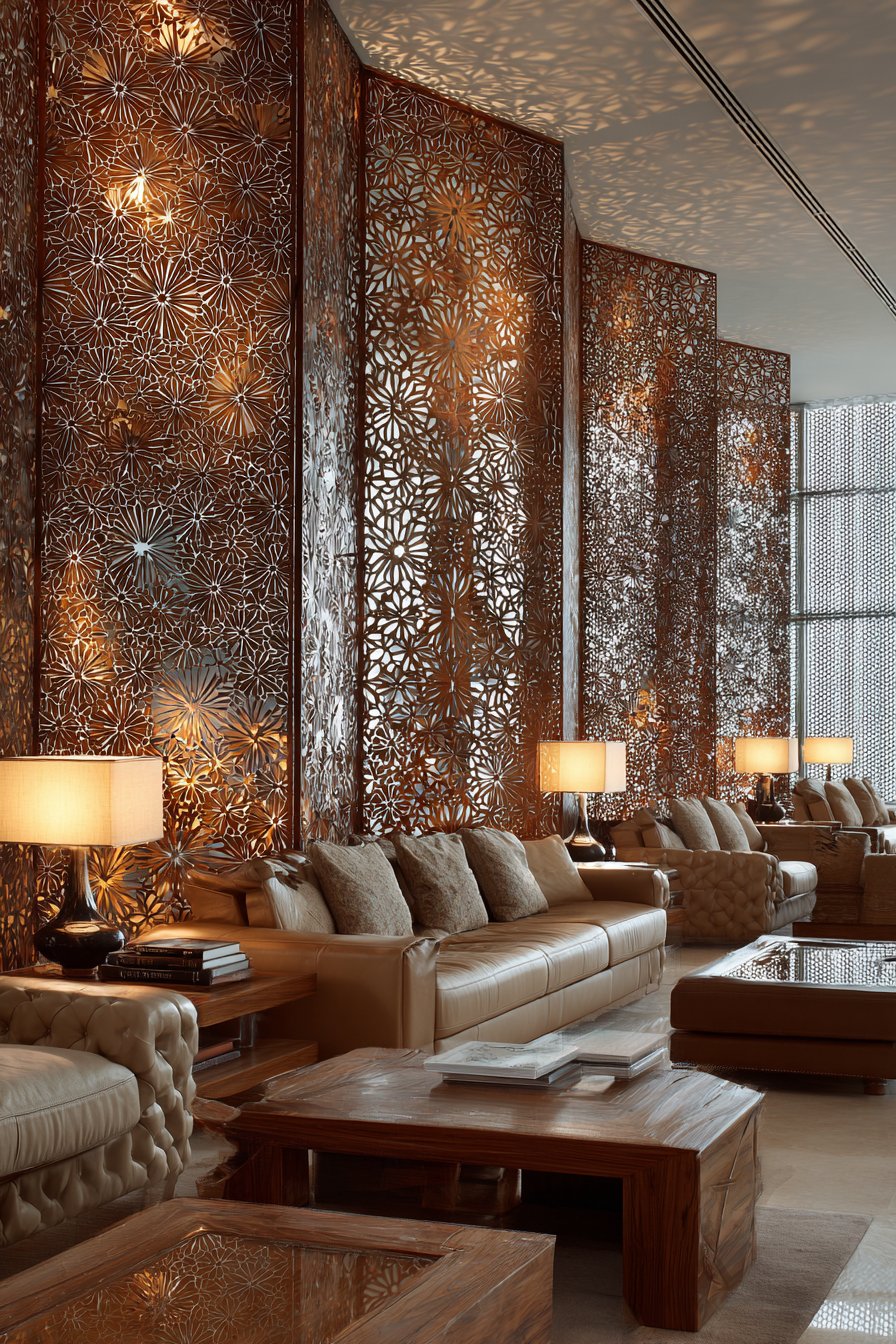
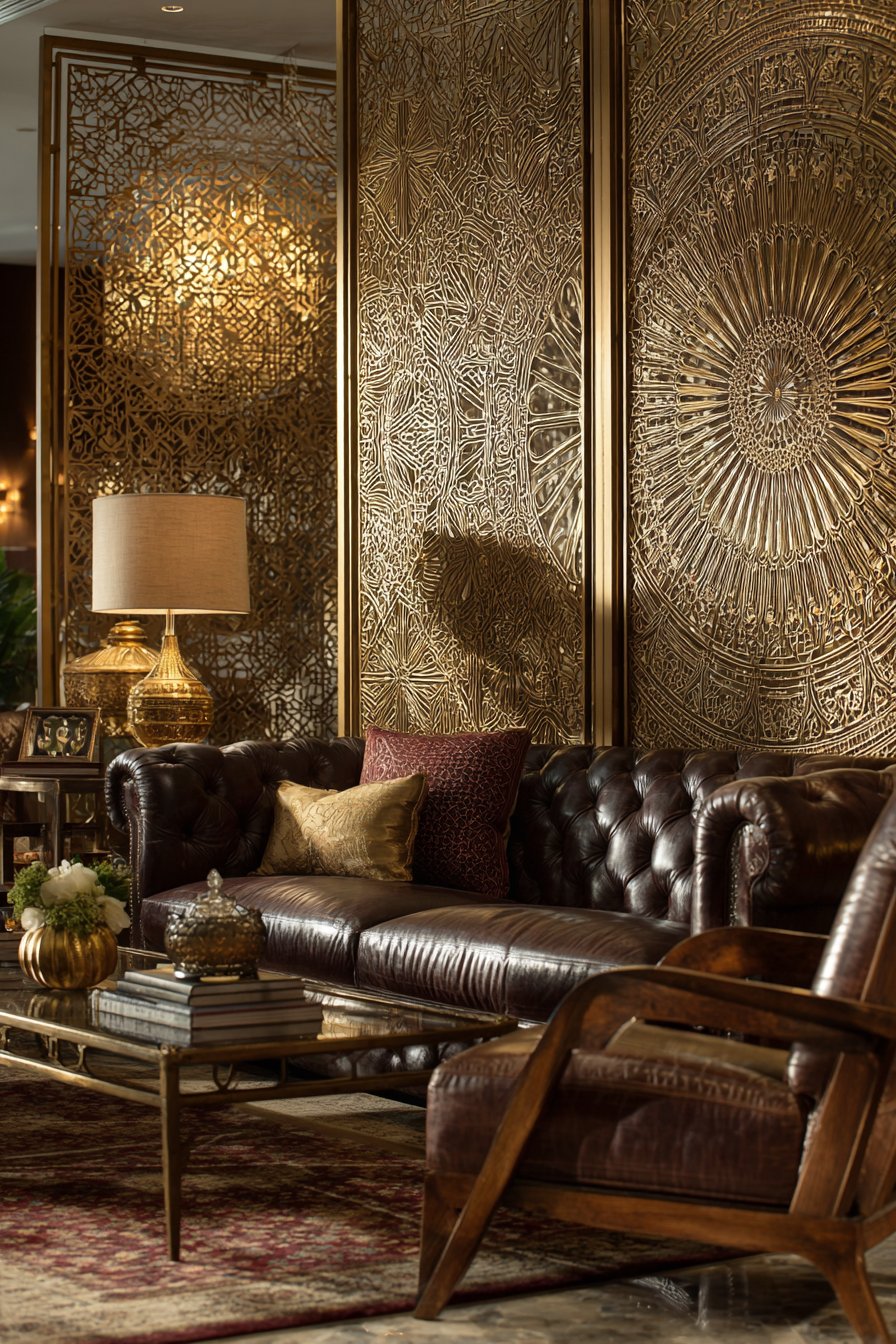
Artistry and functionality merge beautifully in laser-cut decorative metal panels, transforming room division into an opportunity for sculptural expression. This partition features intricate mandala patterns precisely cut into bronze-finished metal screens, the complex geometric designs creating visual fascination at multiple viewing distances. Mounted in a three-panel arrangement that allows flexible positioning, the ornate screens separate a formal seating area furnished with tufted furniture from a casual reading corner, establishing distinct zones while maintaining artistic continuity. The true magic reveals itself with backlighting positioned behind the panels, which creates dramatic pattern projections on surrounding walls, transforming the entire room into an immersive environment where light and shadow dance together.
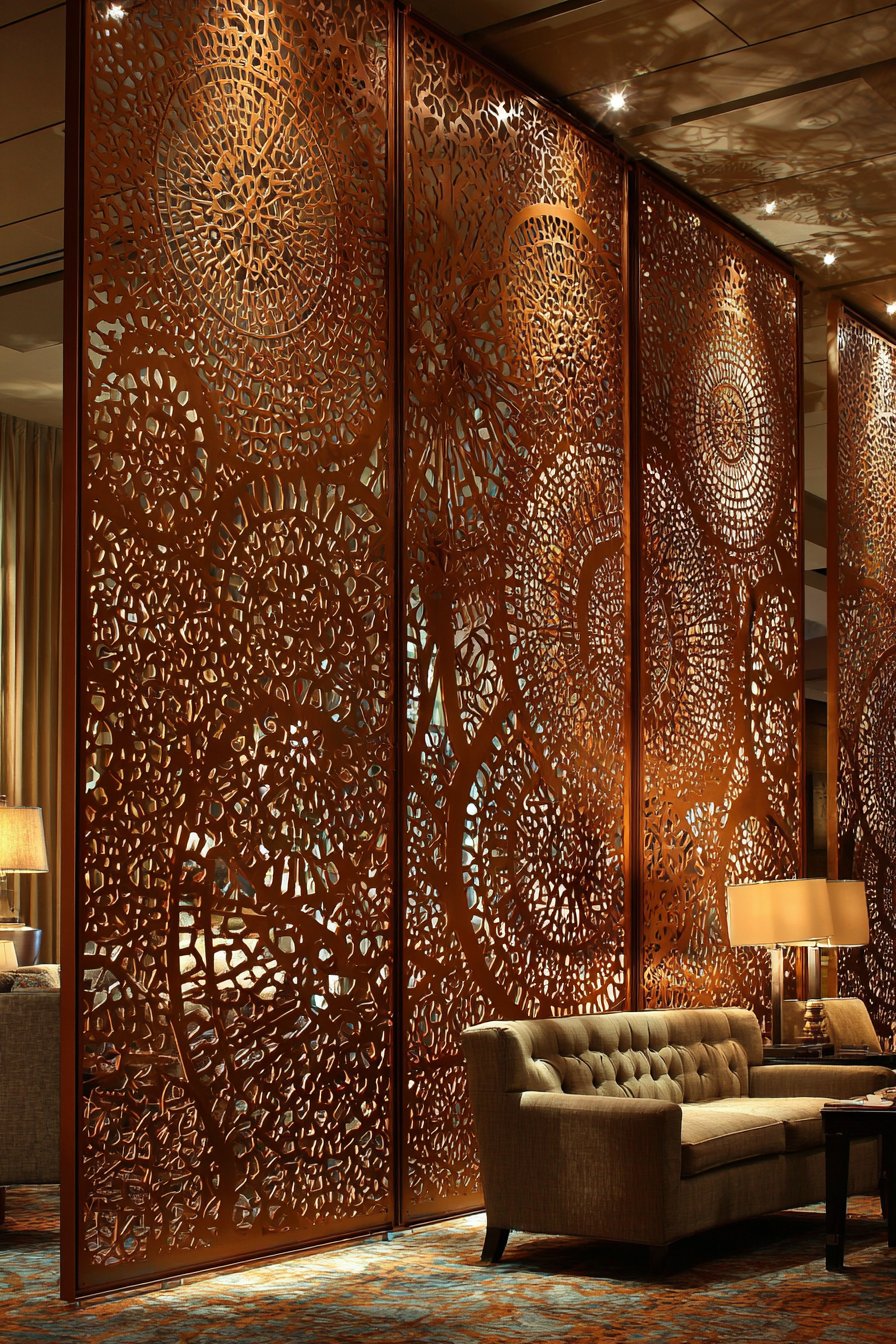
The laser-cutting process allows for pattern complexity impossible with traditional metalworking techniques, enabling designs with hundreds of precisely rendered details. The mandala motif—with its radiating symmetry and intricate details—draws the eye inward toward central focal points, creating meditative visual experiences that complement the formal seating area’s contemplative atmosphere. The bronze finish adds warmth and sophistication, the metal’s slight variations in tone and patina creating depth and visual interest. The substantial weight and solidity of metal panels create a sense of permanence and quality that lighter materials cannot match.
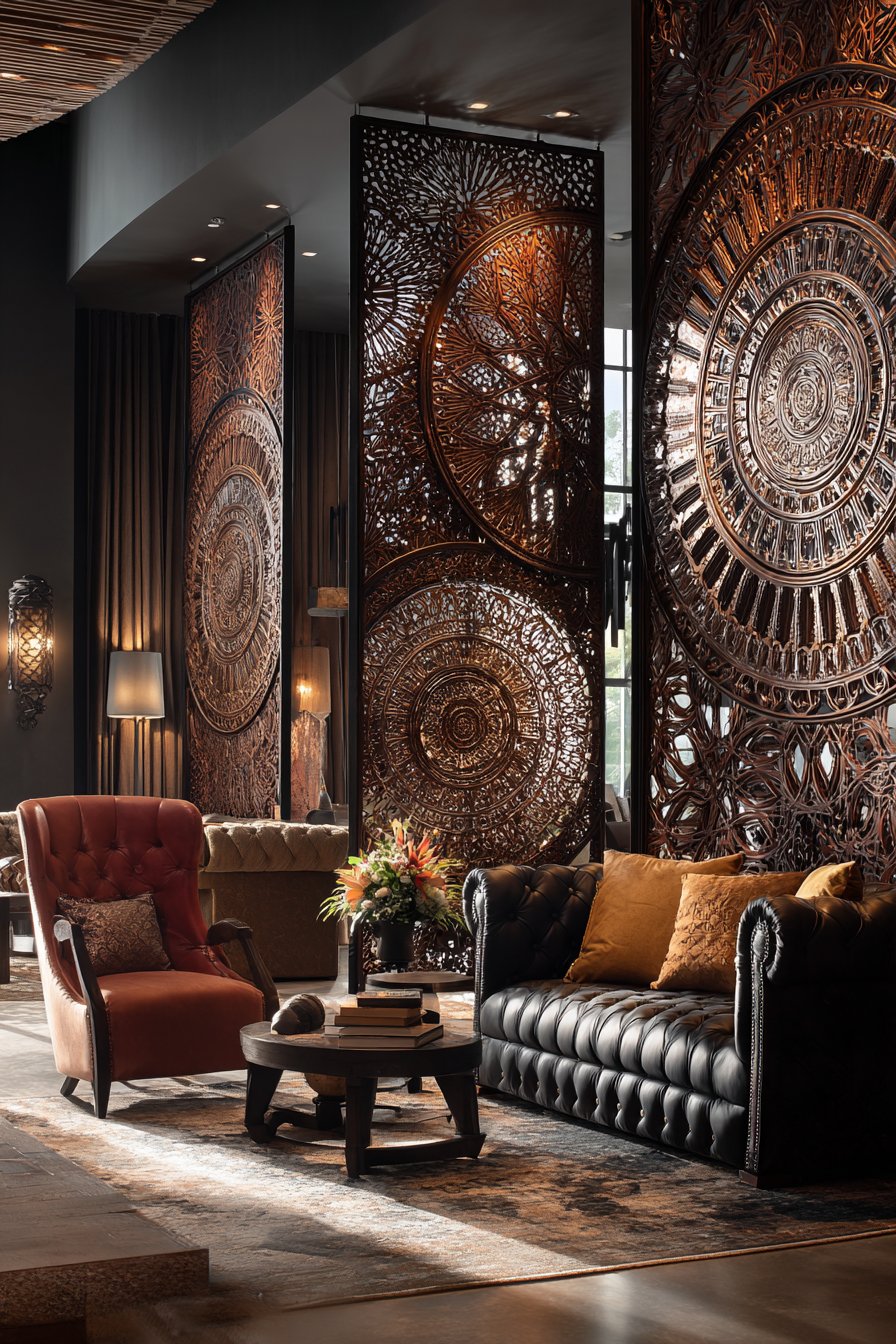
This partition style particularly appeals to those who view their homes as galleries for artistic expression. The shadow projections transform throughout the day as light angles change, making the partition a dynamic art installation that never looks quite the same twice. The formal nature of the design suits sophisticated interiors where attention to detail and quality craftsmanship are paramount. The flexibility of the three-panel arrangement allows repositioning to accommodate different entertaining needs—angled for intimate conversation groupings or extended straight for maximum separation. The conversation-starting nature of such distinctive partition makes it ideal for those who love hosting and appreciate guests’ admiration of thoughtful design choices.
Key Design Tips: Work with experienced metal fabricators who understand laser-cutting precision requirements. Choose metal gauge thick enough for rigidity but not so heavy that panels become unwieldy. Consider the bronze finish’s maintenance requirements—some patinas require periodic sealing. Plan lighting placement carefully to maximize shadow projection effects. Position panels on stable flooring that won’t allow wobbling. Consider the weight of metal panels when determining if they’ll be moved frequently or remain in place. Coordinate the pattern style with other decorative elements in the space. Clean panels regularly to maintain the precision of cut patterns—dust can accumulate in intricate details. Consider how patterns look from both sides as some designs are directional. Ensure panels are properly stabilized with weighted bases or floor anchoring for safety.
14. Double-Sided Fireplace Partition
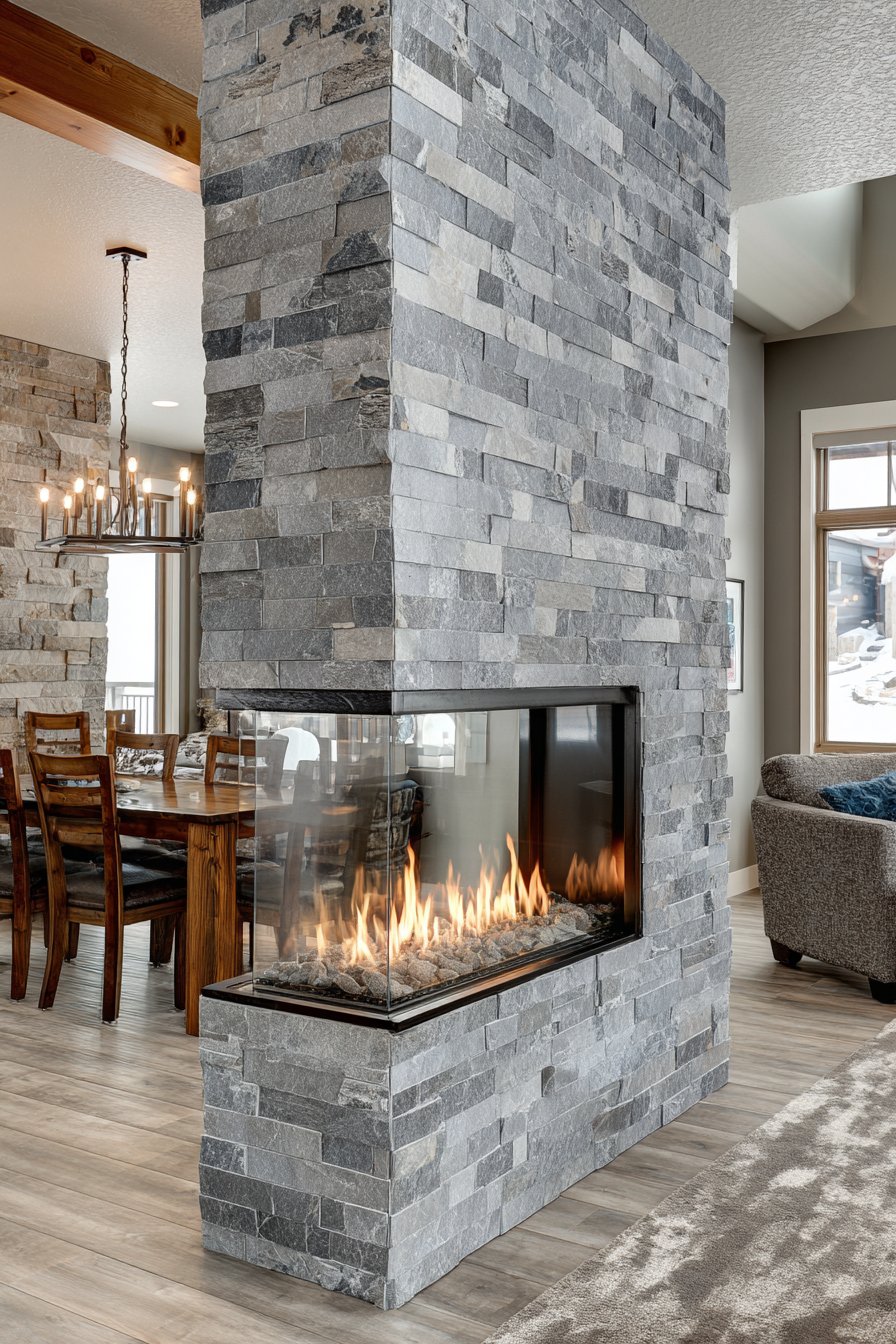
Few partition elements combine functionality, architectural presence, and ambiance as effectively as the double-sided fireplace, a feature that transforms room division into an experiential centerpiece. This contemporary design features a linear gas insert housed within a floor-to-ceiling surround of grey slate tile arranged in horizontal stacking pattern, the stone’s natural texture and color variations creating organic visual interest. The fireplace separates open-concept living from the dining area while providing warmth and ambiance to both spaces simultaneously, its flames visible from multiple viewing angles creating focal points in each zone. Built-in recessed shelving flanks each side, offering display opportunities for art, books, or decorative objects that personalize the architectural feature.
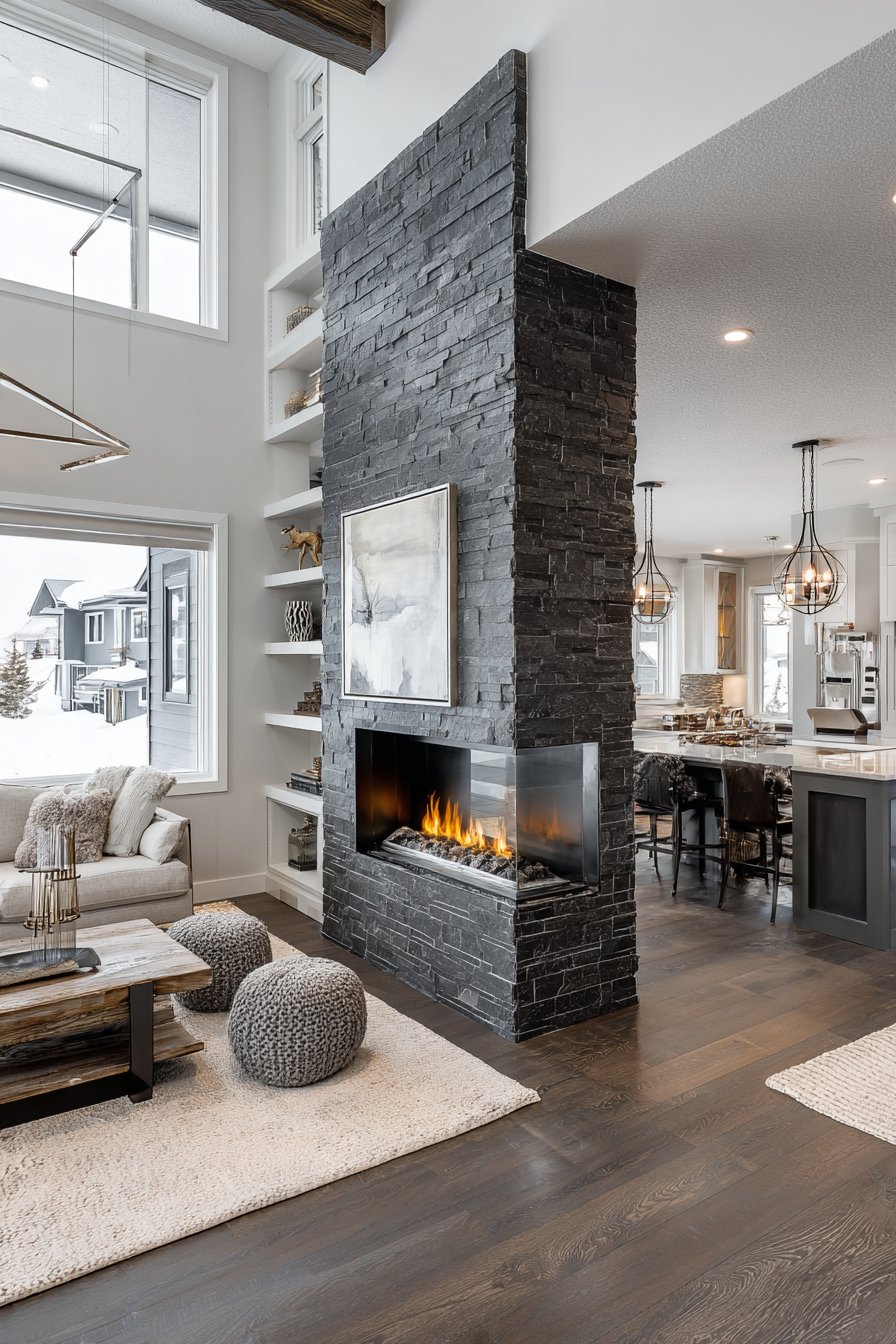
The visual impact of a see-through fireplace cannot be overstated—the dancing flames create mesmerizing focal points that draw the eye and anchor attention, while the warm glow bathes both spaces in flattering light that makes everyone look and feel good. The horizontal stacking pattern of slate tiles creates strong linear emphasis that draws the eye upward, emphasizing ceiling height and creating a sense of grandeur. The grey stone tones coordinate beautifully with contemporary color palettes while maintaining enough natural variation to prevent monotony. The linear gas insert provides consistent, controllable flame patterns without the maintenance requirements of wood-burning fireplaces, making it practical for modern lifestyles.
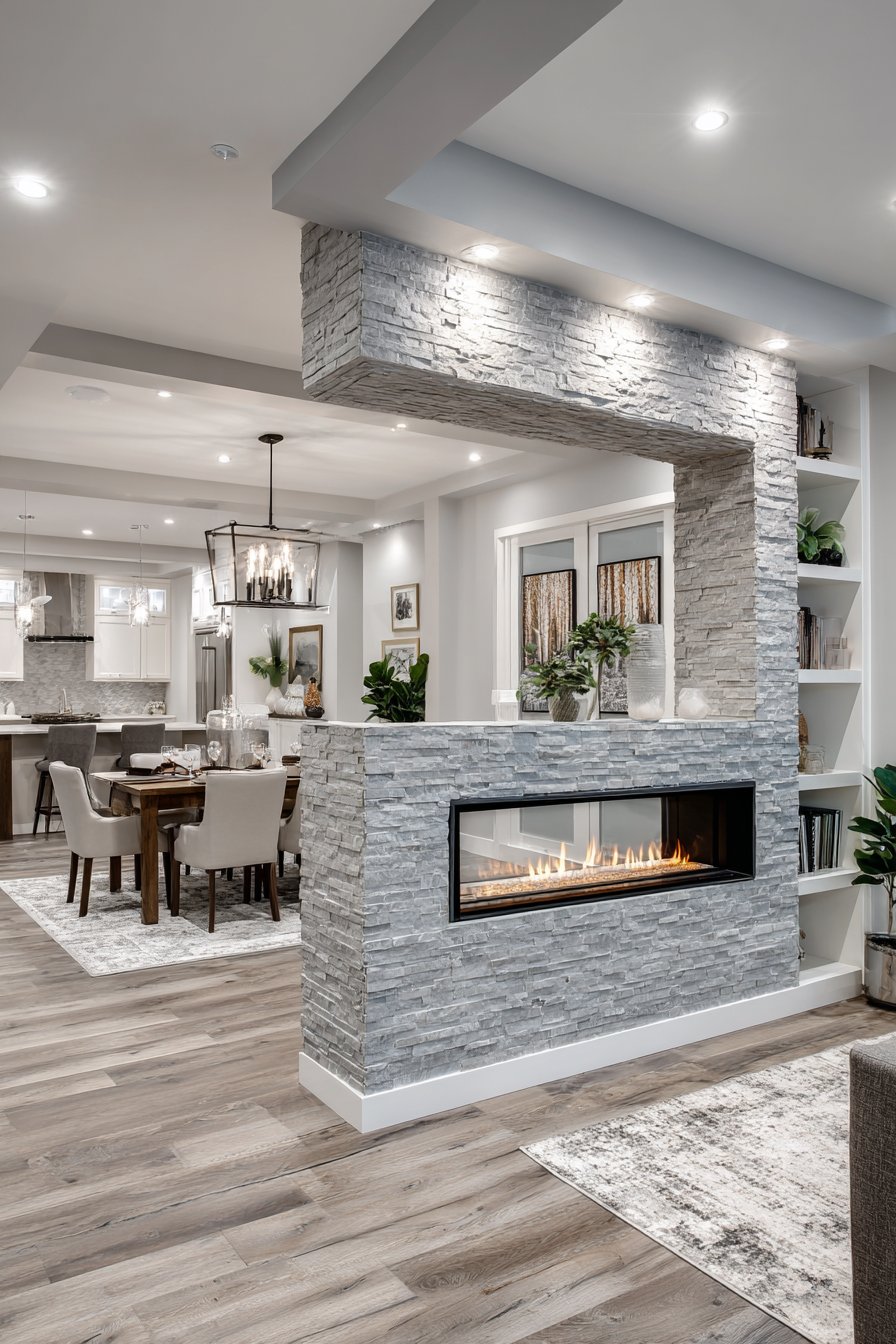
This partition solution works particularly well in homes where entertaining is frequent, as the fireplace creates natural gathering points in both living and dining zones. The ambient heating benefits extend beyond mere warmth—fireplaces create psychological comfort and coziness that encourage lingering conversations and relaxed socializing. The architectural presence establishes permanence and substance, transforming new construction’s often-generic quality into spaces with character and distinction. The built-in shelving prevents the fireplace from feeling like a flat wall, adding three-dimensional interest and practical functionality. The combination of natural materials, fire’s primal appeal, and thoughtful spatial division creates rooms that feel both sophisticated and welcoming.
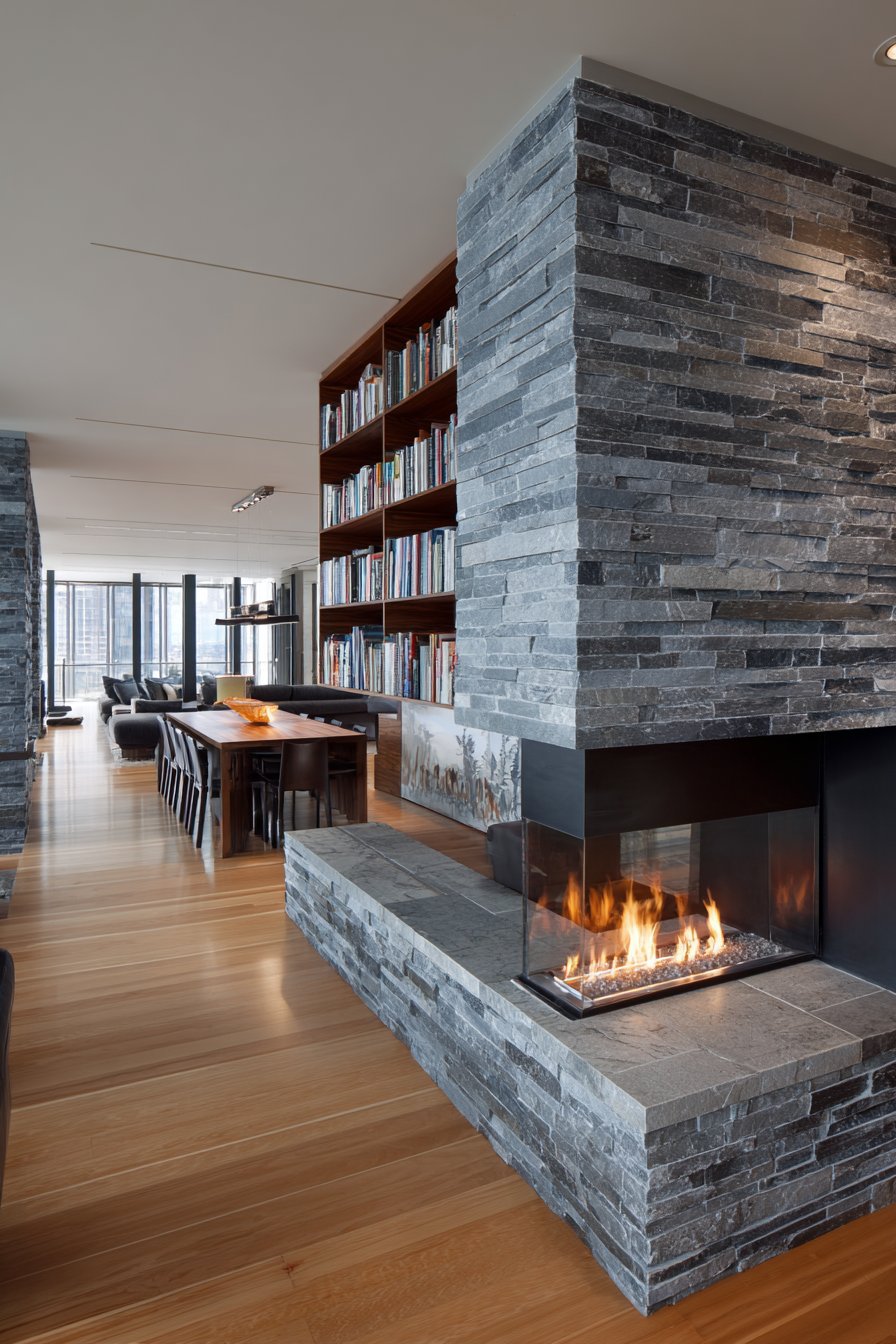
Key Design Tips: Work with certified gas fireplace installers for safe, code-compliant installation. Ensure proper venting for gas combustion byproducts. Choose slate tiles with relatively consistent thickness for easier installation. Use high-temperature mortar and grout rated for fireplace applications. Consider the heat output when positioning furniture—maintain appropriate clearances. Install proper structural support for the fireplace surround’s weight. Plan for regular chimney and gas line maintenance. Choose a fireplace insert with remote control for convenience. Consider installing glass doors for safety if children or pets are present. Style flanking shelves with heat-resistant decorative items. Ensure adequate clearance between fireplace opening and any combustible materials. Consider energy efficiency ratings when selecting the gas insert. Plan lighting for shelving areas to maintain visibility when the fireplace isn’t operating.
15. Macrame Hanging Dividers
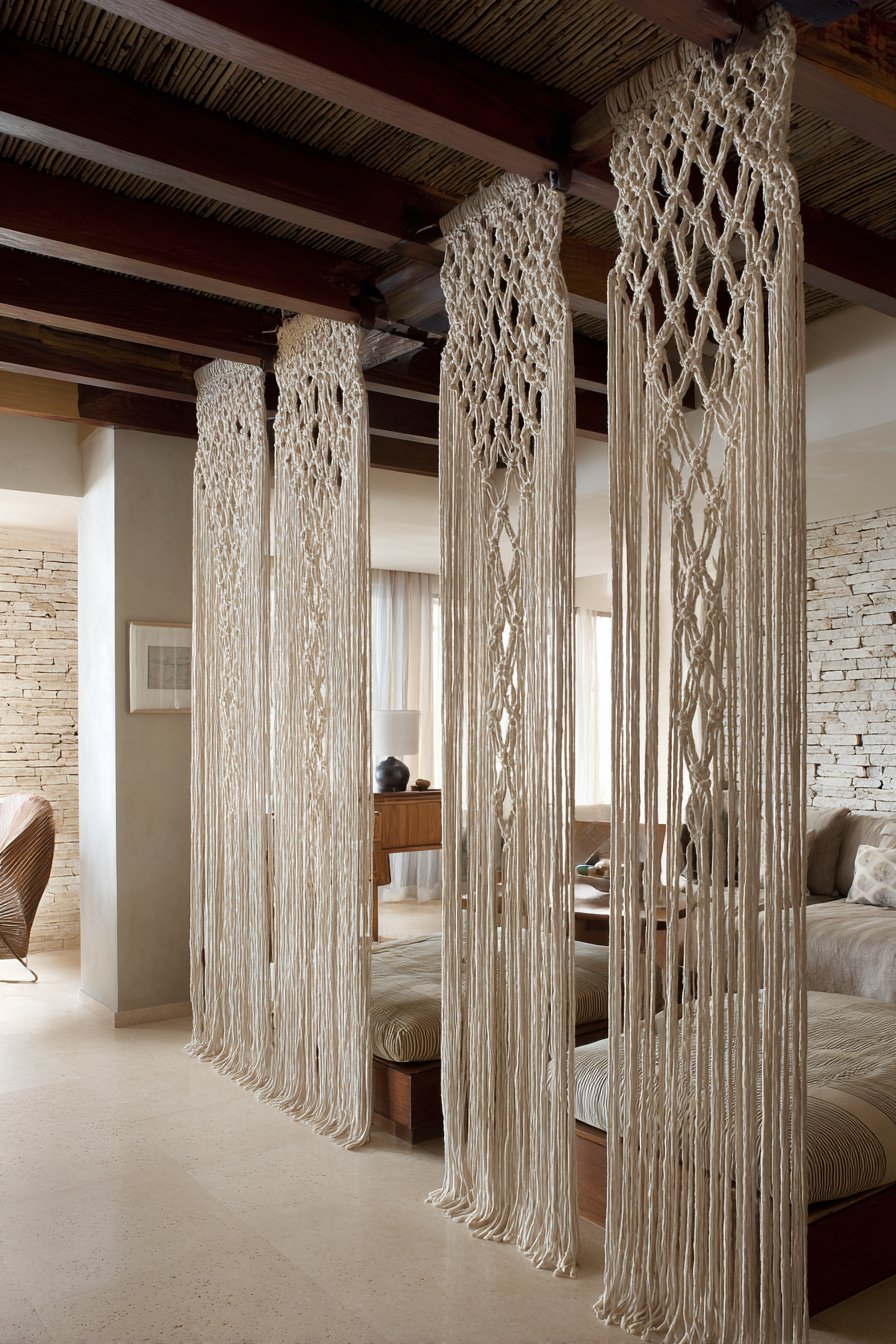
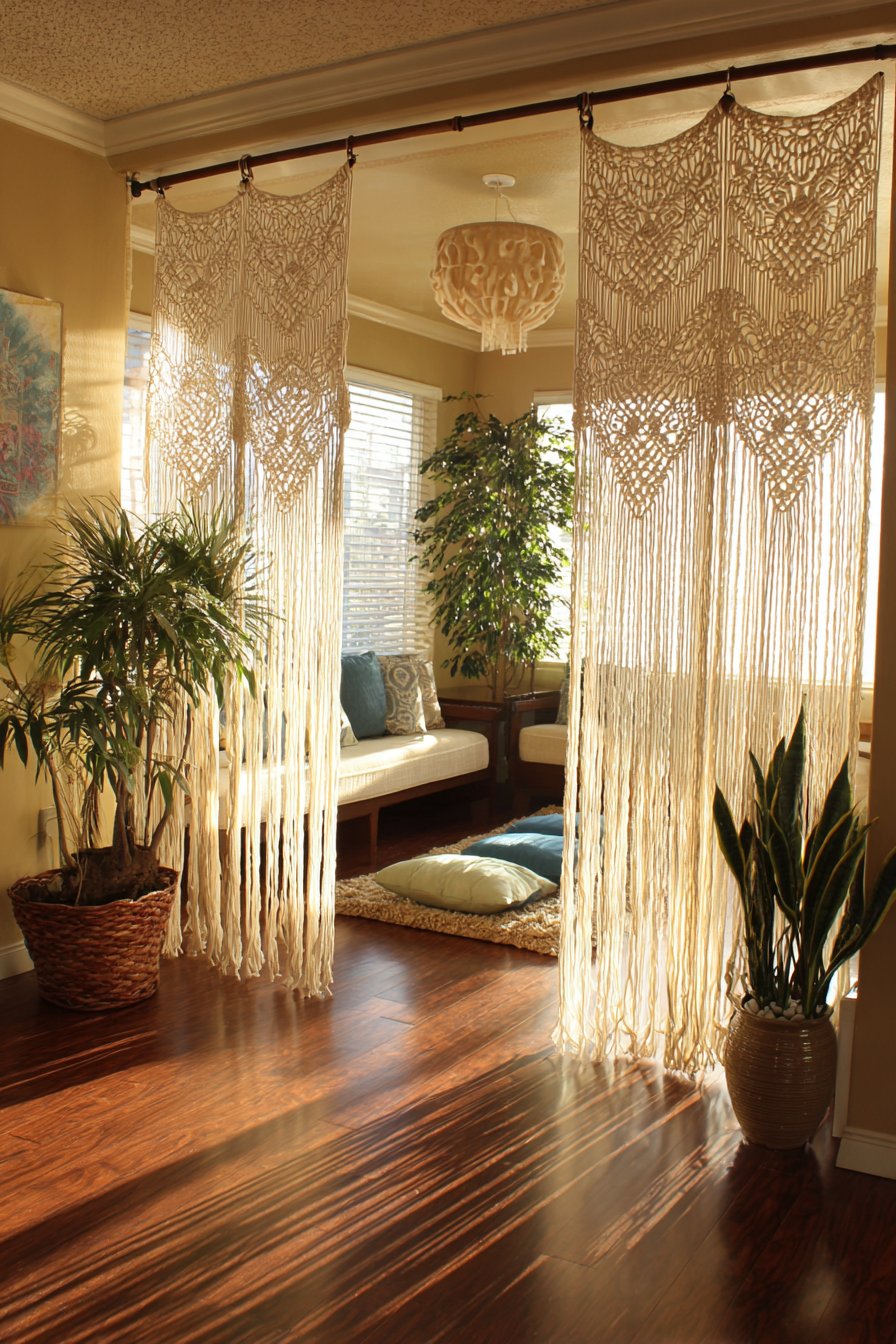
The resurgence of fiber arts in interior design reaches beautiful expression in macrame hanging dividers, partitions that celebrate handcrafted artistry while serving practical zoning needs. This design features thick cotton rope in natural cream tones, expertly knotted in intricate macrame patterns that showcase traditional techniques and contemporary design sensibilities. The handcrafted panels hang from dark stained wooden dowels suspended by leather straps, the combination of materials creating textural richness and organic warmth. The flowing design with its elaborate knotwork patterns separates a meditation space furnished with floor cushions from the main living area, establishing a boundary that feels soft and welcoming rather than harsh or imposing.
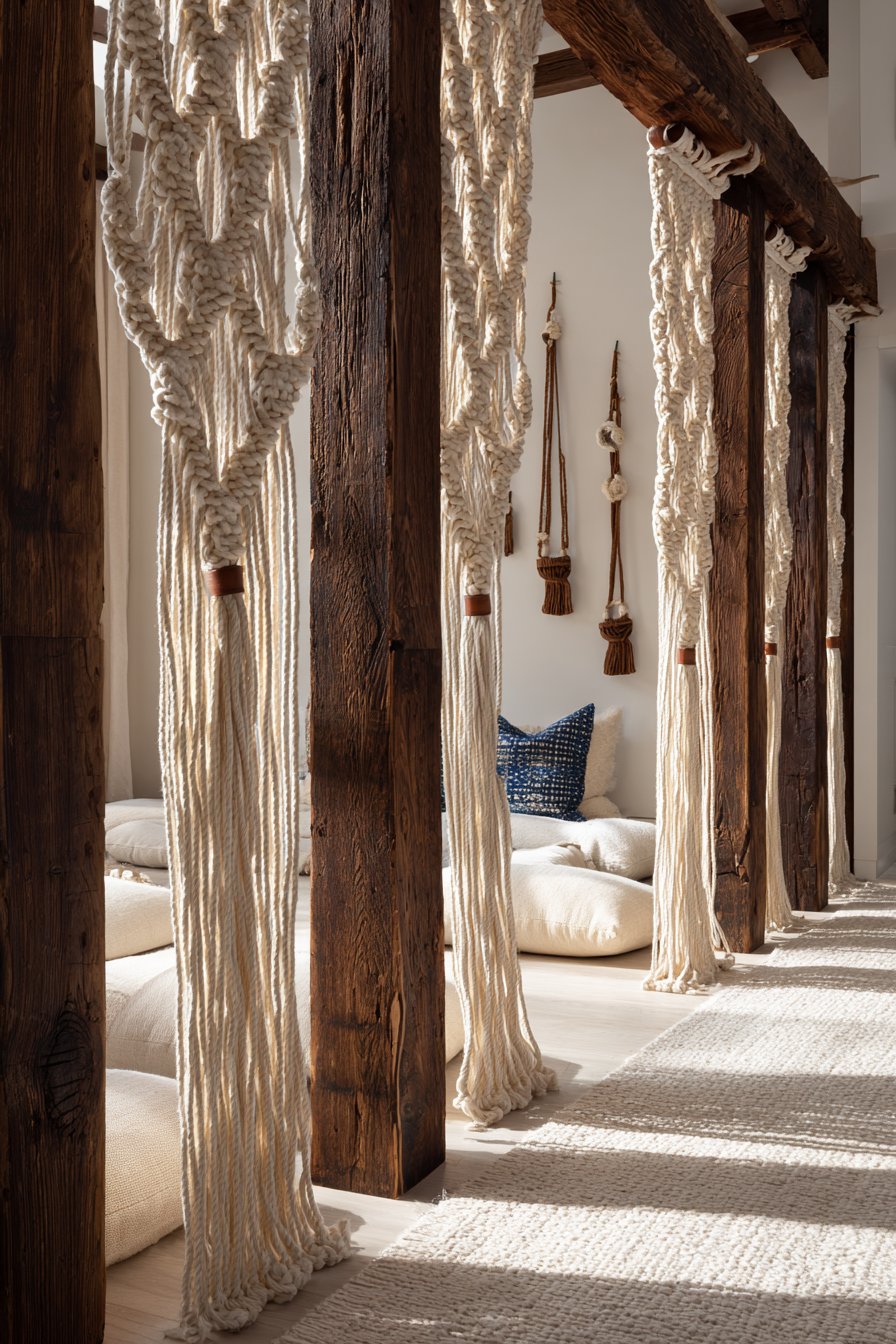
The three-dimensional nature of macrame creates fascinating visual depth as light passes through the varied densities of knotwork. Softer, more loosely knotted sections allow significant light penetration while denser patterns provide more visual screening, the variation creating rhythm and visual interest throughout the panel height. The natural cotton rope’s texture becomes particularly beautiful when backlit by soft natural lighting, creating glowing highlights along rope edges and casting intricate shadow patterns. The gentle movement of hanging panels in response to air currents adds subtle animation, the slight swaying creating calming visual effects particularly appropriate for meditation spaces.
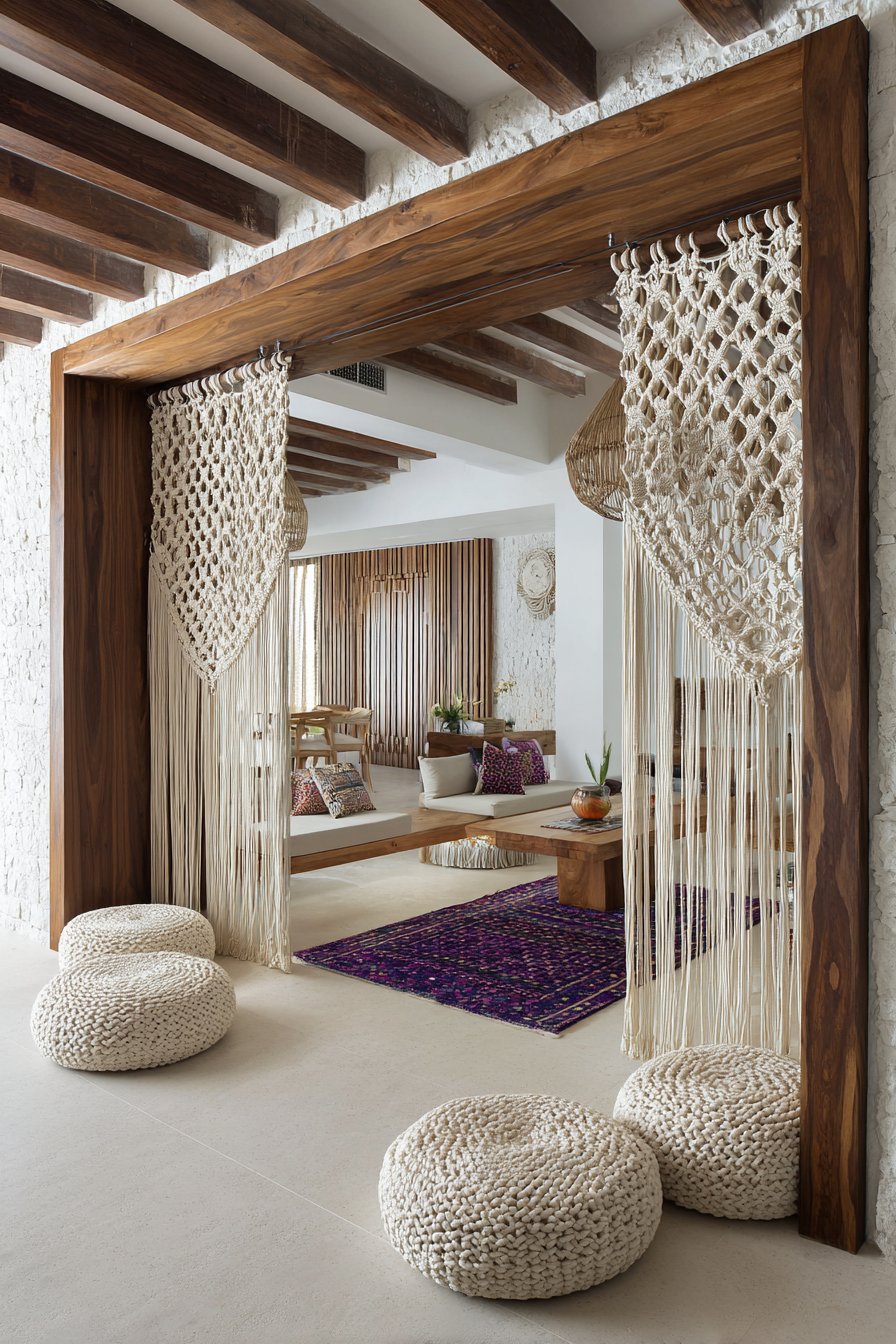
This partition style embodies the bohemian aesthetic’s celebration of handcraft, natural materials, and artistic expression. Each macrame panel represents hours of skilled handwork, making it fundamentally different from mass-produced partition solutions. The natural cream color coordinates effortlessly with bohemian palettes rich in earth tones, though macrame can be created in various colors for those seeking bolder statements. The portability of hanging dividers allows seasonal rotation or complete removal when open floor plans are desired. The DIY potential appeals to crafters who might create their own macrame partitions, adding personal creative satisfaction to functional home improvement.
Key Design Tips: Source high-quality cotton rope specifically designed for macrame to ensure consistent thickness and texture. Learn basic macrame knots or hire skilled fiber artists for custom pieces. Ensure ceiling mounting hardware can support the weight of completed panels. Consider treating cotton with stain-resistant spray for longevity, especially in high-traffic areas. Plan panel dimensions based on the space you want to divide—too small and they won’t create meaningful separation. Hang panels at heights that provide coverage while allowing floor clearance for easy passage. Clean macrame regularly with gentle vacuum attachment to prevent dust accumulation in rope fibers. Consider the maintenance implications of natural materials—cotton can yellow over time with sun exposure. Coordinate wooden dowel stain with other wood tones in your space. Ensure leather hanging straps are properly secured and inspected periodically for wear.
16. Stacked Stone Veneer Half-Wall
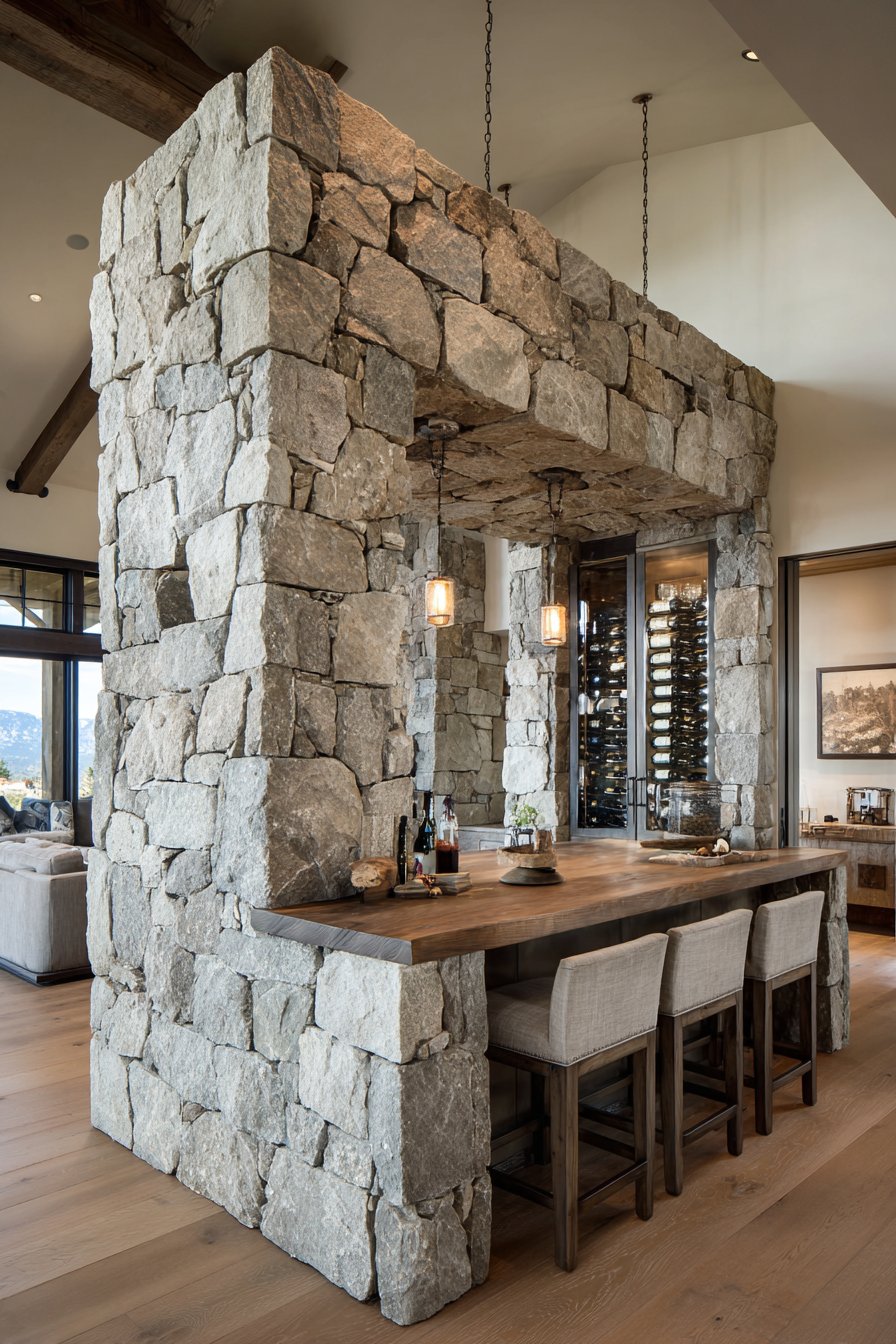
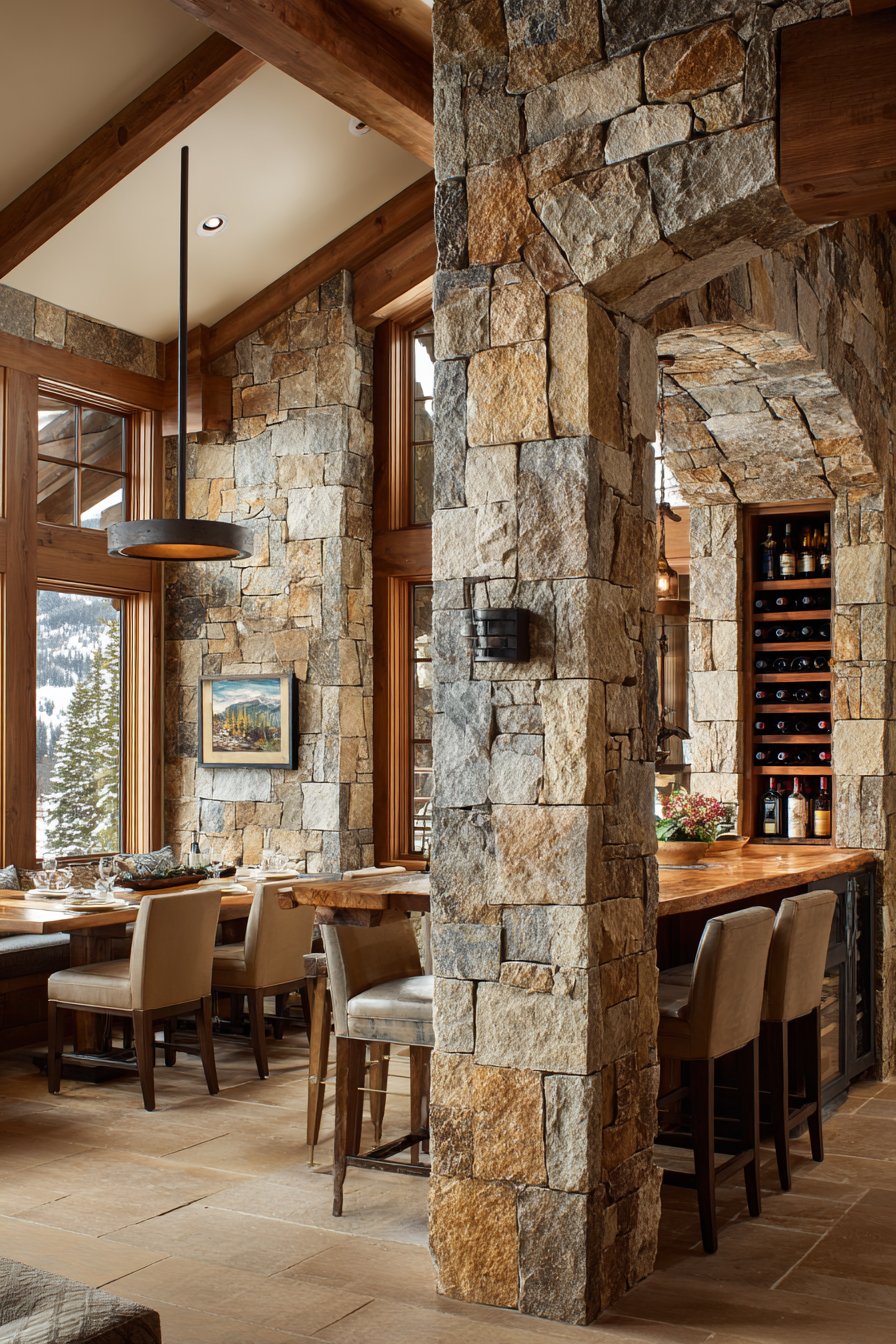
For those who appreciate substantial, permanent architectural elements with natural material authenticity, the stacked stone veneer half-wall partition offers enduring beauty and solid presence. This design features natural stones in grey and taupe tones, their irregular shapes and varied textures creating organic visual interest impossible to achieve with manufactured materials. The masonry element separates the living area from a home bar or beverage station, topped with a solid wooden beam countertop that provides practical serving surface and material contrast. Built-in wine storage visible on one side adds functionality while warm pendant lighting positioned above highlights the stone’s texture variations and the wood’s grain patterns.
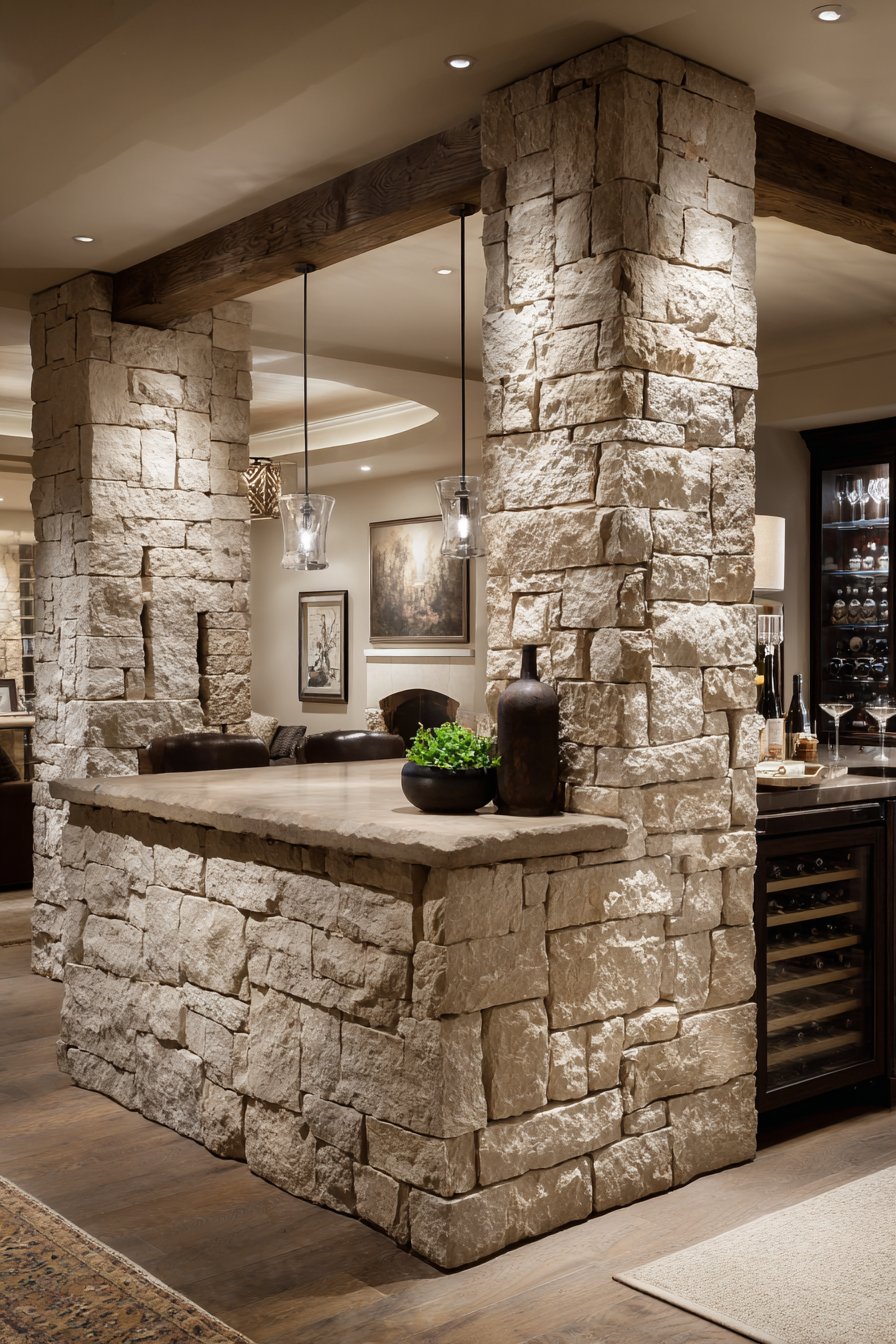
The tactile quality of natural stone creates immediate sensory engagement—the varied surface textures, from smooth river-washed stones to roughly fractured faces, provide visual and tactile interest at close range. The color variations within the grey and taupe palette ensure no two areas of the wall look identical, creating natural beauty that manufactured products struggle to replicate. The substantial mass of the stone wall provides excellent sound dampening between zones, a practical benefit in entertaining spaces where conversations and music might otherwise create acoustic conflicts. The permanence of masonry construction creates architectural presence that elevates new construction from builder-grade to custom quality.
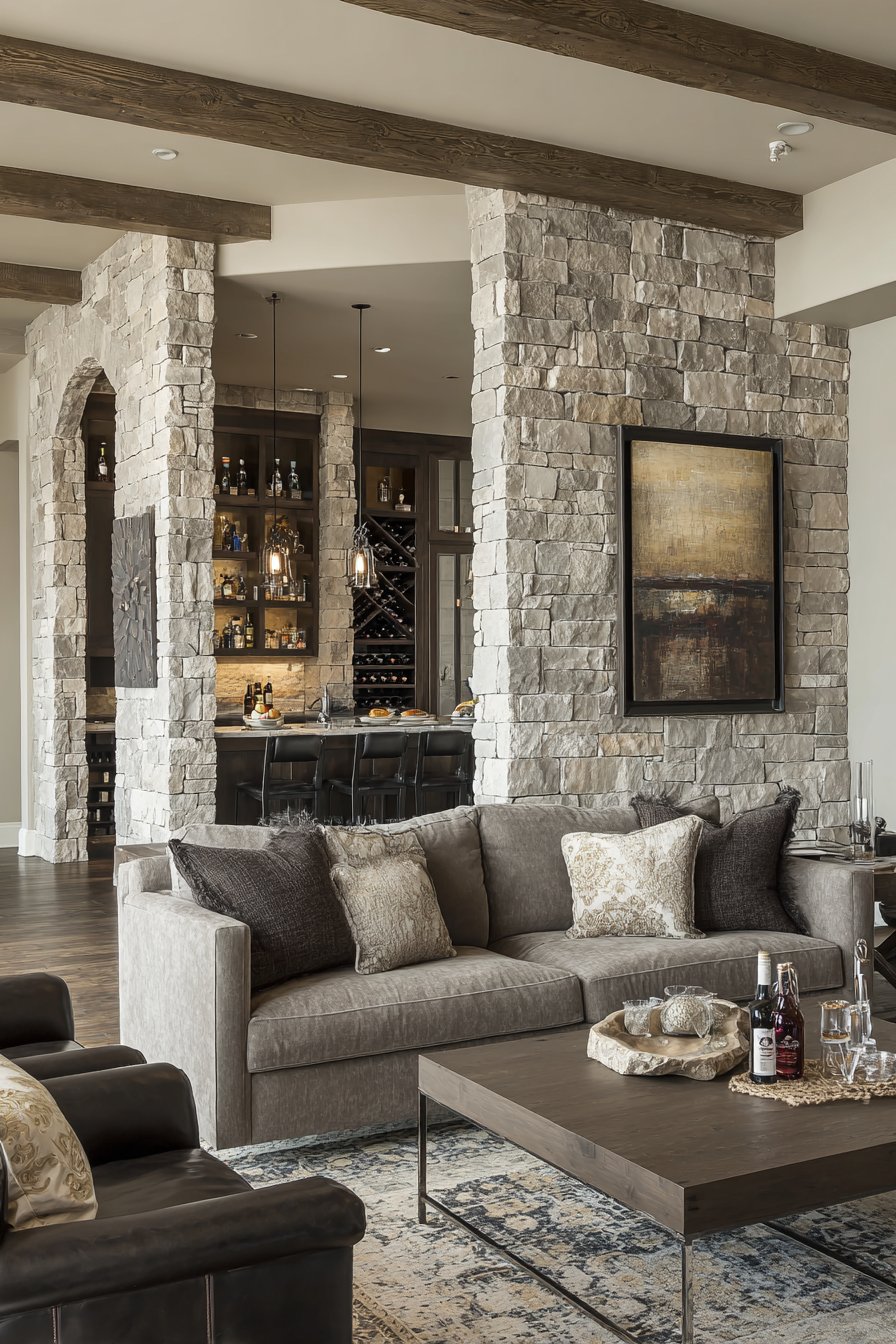
This partition style particularly suits homes with rustic, transitional, or lodge aesthetics where natural materials and substantial construction are valued. The stone’s organic quality brings outside elements inside, creating connection to natural landscapes. The half-wall height maintains visual connection between spaces while clearly defining different functional zones. The wooden beam countertop’s warmth and organic grain prevent the stone from feeling cold or austere, while also providing practical surface for setting drinks, displaying floral arrangements, or serving appetizers during gatherings. The built-in wine storage demonstrates how thoughtful partition design can incorporate specialized functions rather than simply occupying space.
Key Design Tips: Hire experienced masons familiar with stacked stone installation for proper structural support and professional appearance. Ensure adequate footer support for the stone wall’s substantial weight. Choose stones with relatively flat backs for easier installation and better wall adhesion. Use high-quality stone veneer adhesive and grout rated for interior applications. Plan for proper sealing to protect stone from spills and stains, especially near beverage areas. Select a wooden beam with interesting grain patterns to create visual interest in the countertop. Ensure proper structural support for the beam, which can be quite heavy depending on dimensions. Coordinate stone colors with your overall palette—request sample boards before committing to large quantities. Consider the permanent nature of masonry installation before proceeding. Plan lighting placement to maximize stone texture highlights. Include wine storage dimensions in initial planning to ensure proper fit. Allow mortar to cure fully before applying sealer or exposing to moisture.
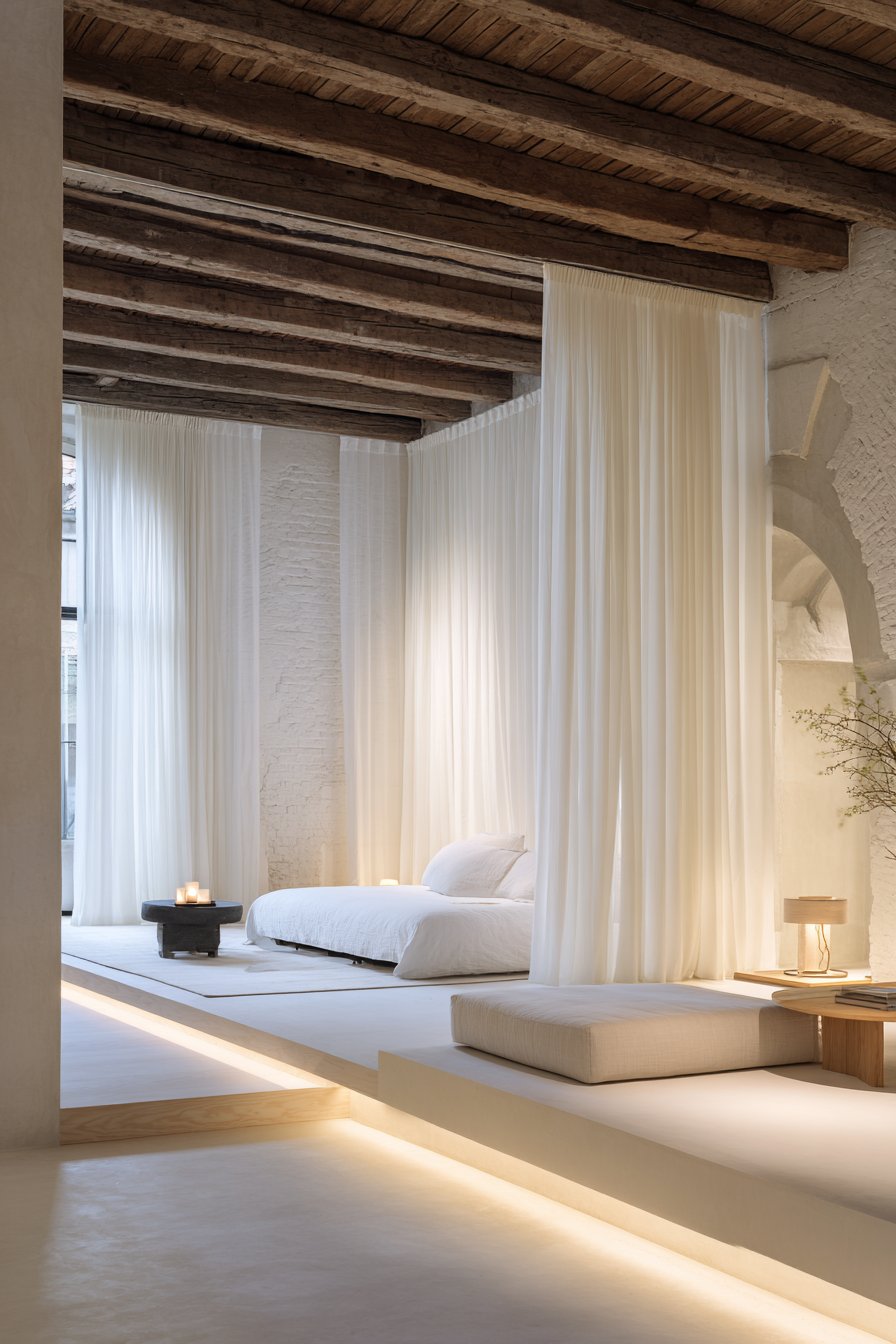
17. Tension-Mounted Sheer Curtain System
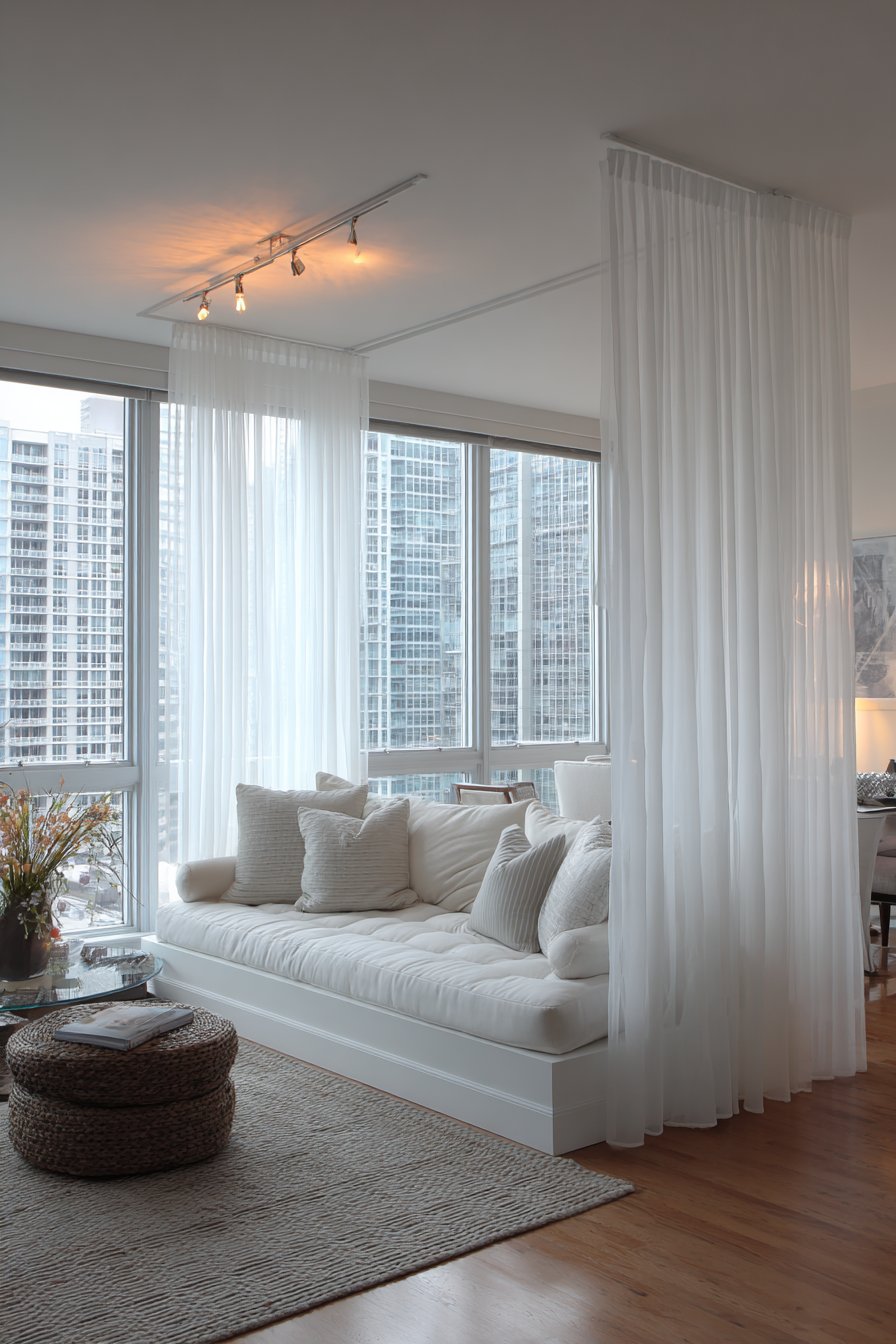
Space-saving ingenuity meets ethereal beauty in the tension-mounted pole system with flowing sheer curtain panels, a partition solution particularly well-suited to studio apartments and compact living spaces. This design features lightweight fabric in soft white that gently separates a sleeping alcove with platform bed from the main living space, creating privacy without visual heaviness or permanent modifications. The ceiling-mounted track system allows curtains to slide smoothly along their course, opening completely to unite the space or closing for nighttime privacy or daytime naps. The sheer quality of the fabric ensures that even when closed, natural lighting filters through creating luminous ambiance that prevents the sleeping area from feeling dark or enclosed.
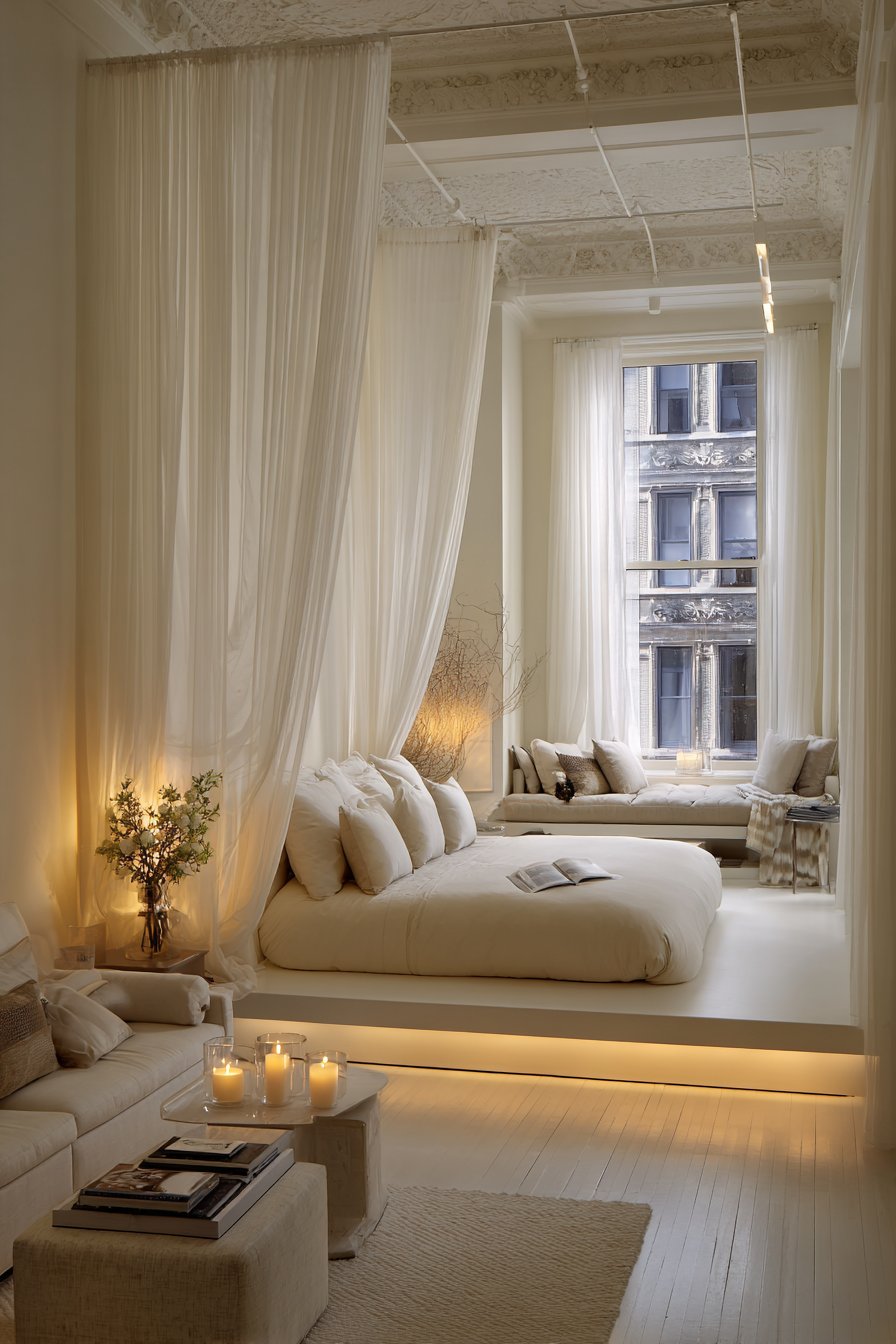
The transformative nature of this partition cannot be overstated—with a simple pull, the entire spatial experience shifts from open loft-like studio to compartmentalized bedroom-plus-living room. This flexibility supports varying needs throughout the day and across different activities. The flowing fabric adds softness and movement to spaces often dominated by hard surfaces and rigid angles, the gentle draping creating organic shapes that contrast beautifully with architectural rectilinearity. The white color maintains brightness and maximizes light reflection, crucial in smaller spaces where every design choice affects perceived spaciousness. The tension-mounted system requires no wall mounting, making it ideal for rental properties where permanent modifications aren’t allowed.
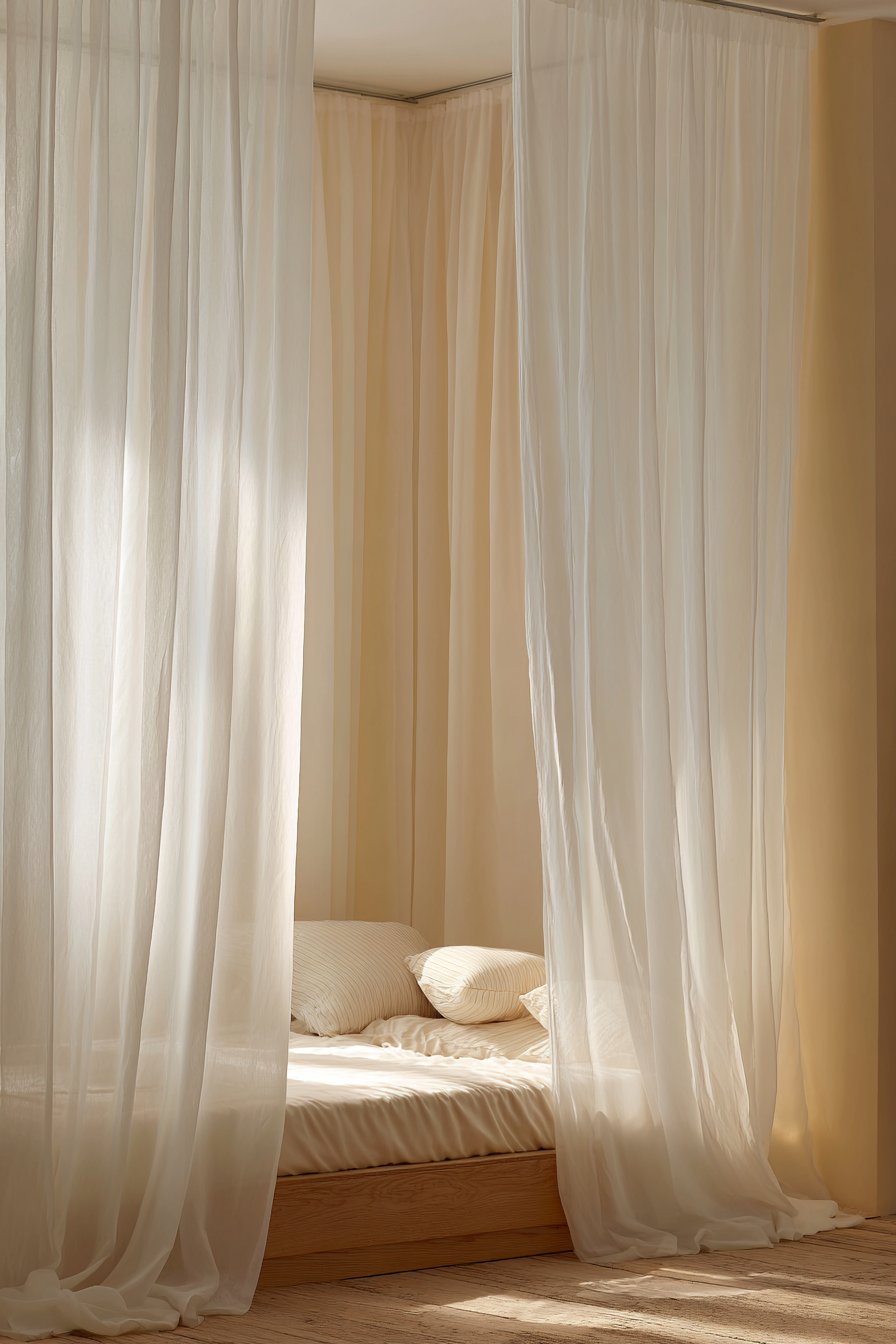
This partition style embodies the studio apartment dweller’s eternal challenge—creating distinct zones for sleeping, living, and sometimes working within limited square footage. The ethereal quality of sheer fabric transforms a practical necessity into a design asset, with the translucent curtains becoming beautiful features rather than mere functional elements. The minimal visual weight ensures the partition doesn’t overwhelm small spaces, while the ceiling mounting draws the eye upward, emphasizing vertical space and making ceilings feel higher. The sliding mechanism means no floor space is sacrificed to curtain swing or fold-back, maximizing precious square footage.
Key Design Tips: Choose tension rods rated for the curtain weight and span distance. Ensure ceiling and walls can support tension mounting pressure without damage. Select sheer fabrics with enough weight to hang properly without excessive billowing. Consider blackout liners that can attach when complete darkness is desired for sleeping. Plan curtain length to brush the floor gently without excessive puddling that creates trip hazards. Choose hardware finishes that coordinate with other metals in the space. Consider double-track systems if you want both sheer and blackout options. Maintain the curtains with regular gentle washing to prevent dust accumulation that can dull their luminous quality. Test the sliding mechanism regularly to ensure smooth operation. Consider tiebacks or holdbacks to secure curtains when open for completely unobstructed space. Plan for curtain coverage that slightly overlaps when closed for privacy. Choose washable fabrics for practical maintenance.
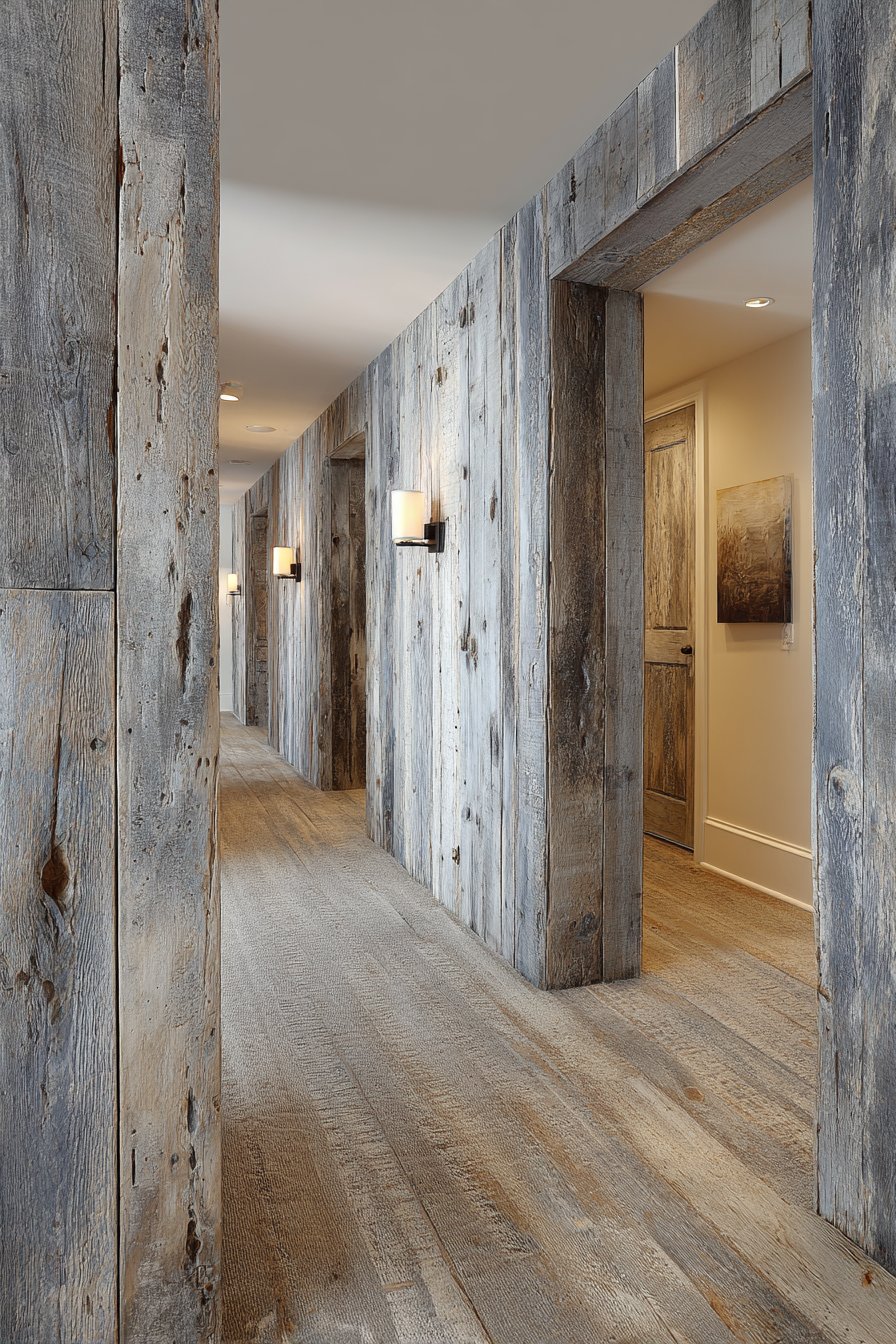
18. Reclaimed Barn Wood Plank Partition
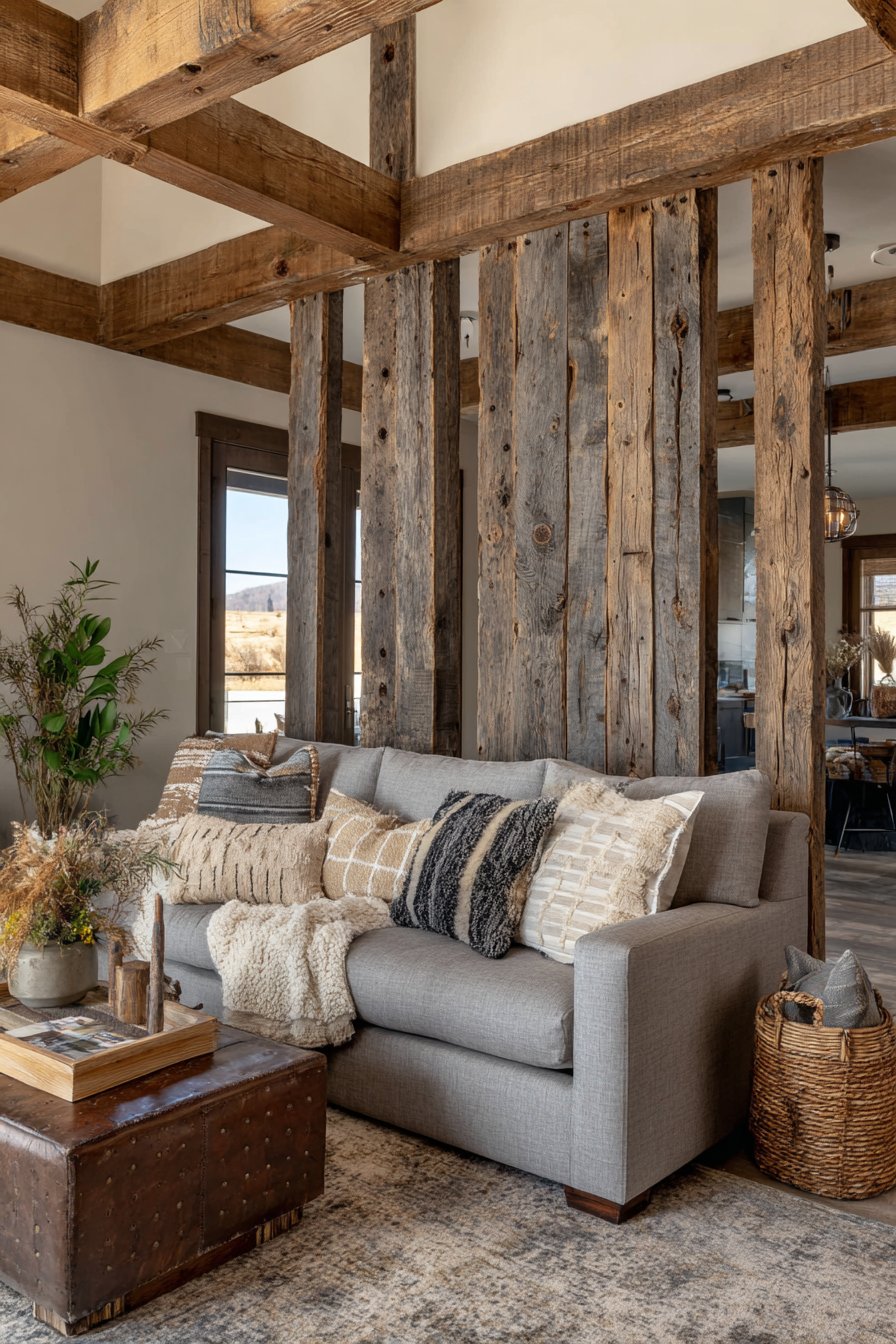
Authenticity and sustainability converge in the reclaimed barn wood plank partition, a design element that brings historical character and environmental consciousness into contemporary interiors. This floor-to-ceiling installation features weathered grey wood with visible nail holes, authentic wear patterns, and natural aging that new materials cannot replicate. The horizontal plank arrangement creates strong linear emphasis while showcasing each board’s unique history—varied wood tones, distinctive grain patterns, and honest imperfections that tell stories of decades past. The rustic farmhouse partition separates open living from the mudroom entry area, creating practical screening for coats and shoes while establishing aesthetic continuity with farmhouse design principles. Vintage industrial hardware accents complement the aged wood character.
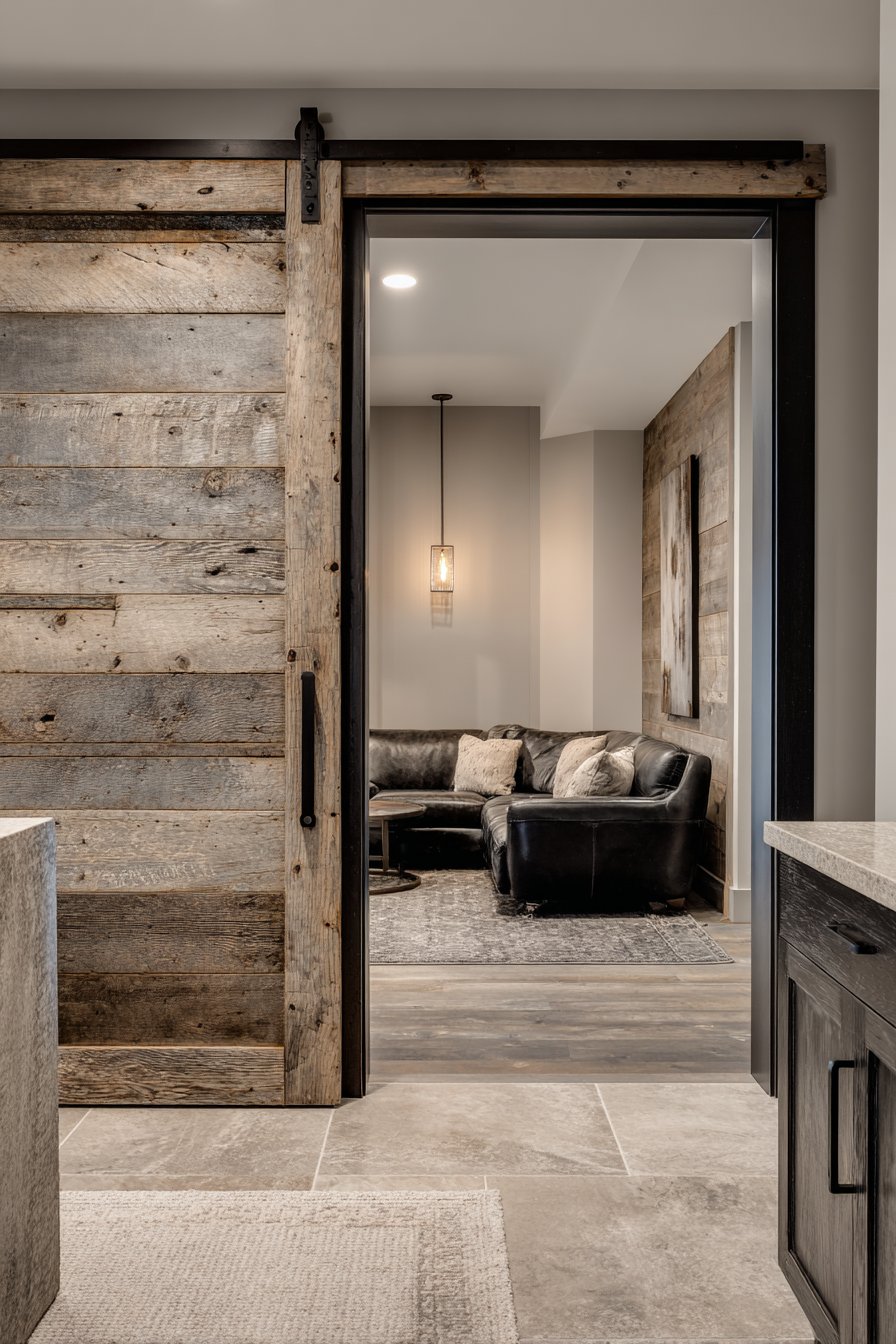
The environmental story of reclaimed materials adds meaningful depth to this partition beyond pure aesthetics. Each board represents wood salvaged from demolished barns, factories, or warehouses, preventing useful material from entering landfills while preserving the character-rich wood that old-growth timber provides. The weathering process—years of exposure to elements, changing temperatures, and natural aging—creates patinas and color variations impossible to manufacture convincingly. The authenticity of reclaimed wood speaks to growing desires for genuine materials and sustainable practices in home design. The history embedded in the wood creates conversation opportunities and personal connection to past eras.
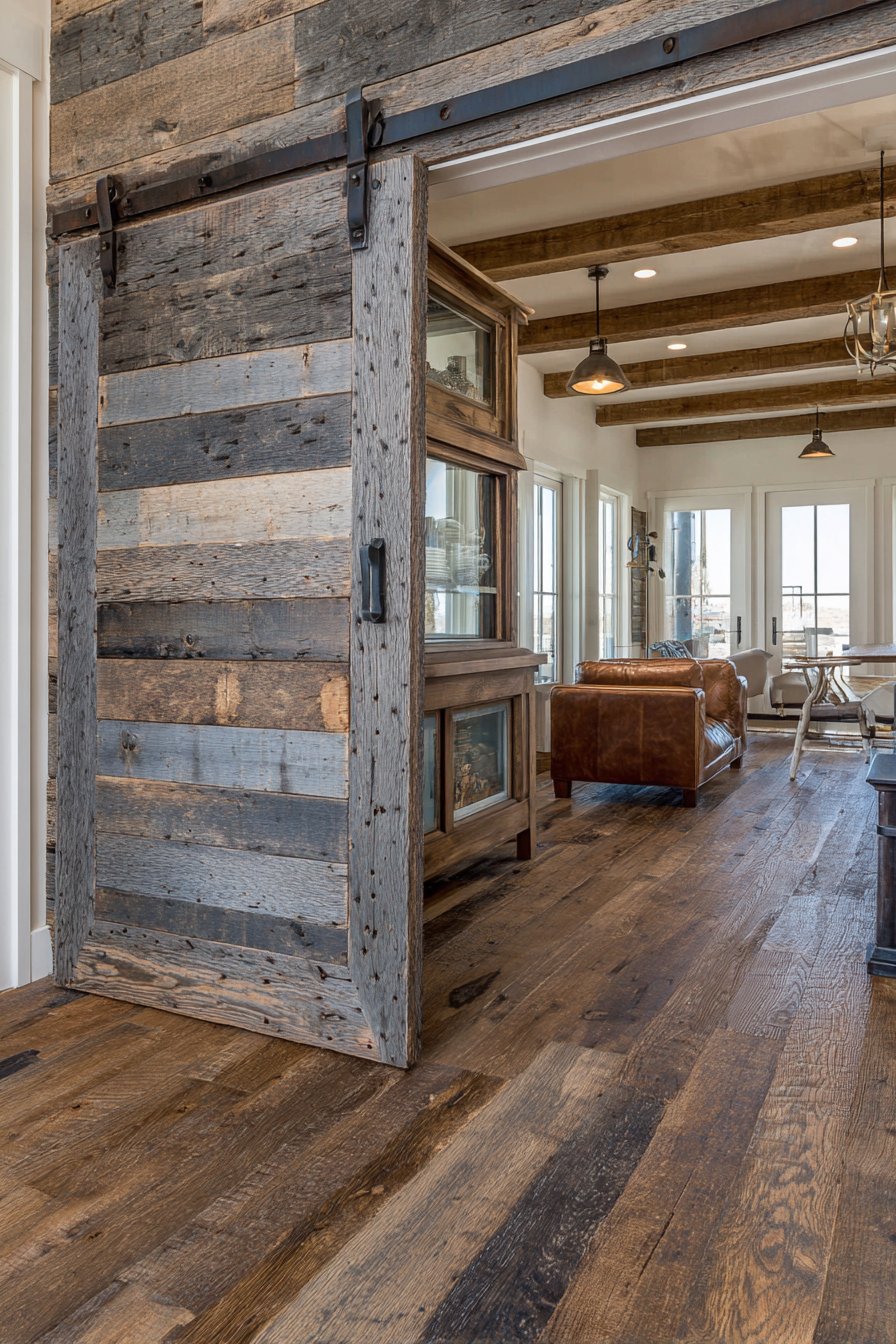
This partition style particularly appeals to those drawn to farmhouse, rustic, or industrial aesthetics where material authenticity and historical character are highly valued. The substantial presence of floor-to-ceiling wood creates strong architectural impact, transforming generic new construction into spaces with personality and depth. The horizontal orientation creates visual width emphasis while the varied board widths prevent monotony. The grey toning—result of natural weathering rather than applied stain—provides a sophisticated neutral that coordinates with contemporary color palettes while maintaining rustic character. The partition becomes a focal point that anchors the room’s entire design scheme.
Key Design Tips: Source reclaimed wood from reputable suppliers who properly kiln-dry and treat materials to eliminate pests and excessive moisture. Inspect boards carefully for structural integrity—weathered doesn’t mean weak but some boards may be too deteriorated for use. Plan for varied board widths and lengths to create authentic reclaimed appearance. Consider the wood’s history and any remaining paint, which may contain lead requiring proper handling. Install moisture barriers if the partition will be near exterior walls or humid areas. Seal wood properly to protect against further deterioration while maintaining authentic appearance—matte sealers preserve weathered character better than glossy finishes. Embrace imperfections like nail holes, minor splits, and color variations as authentic character marks. Coordinate hardware finishes with industrial aesthetics—aged bronze, wrought iron, or blackened steel work well. Ensure proper structural framing behind planks to support the substantial weight. Consider the finished wall thickness when planning—reclaimed planks plus framing may be deeper than standard stud walls.
19. Modern Aquarium Partition
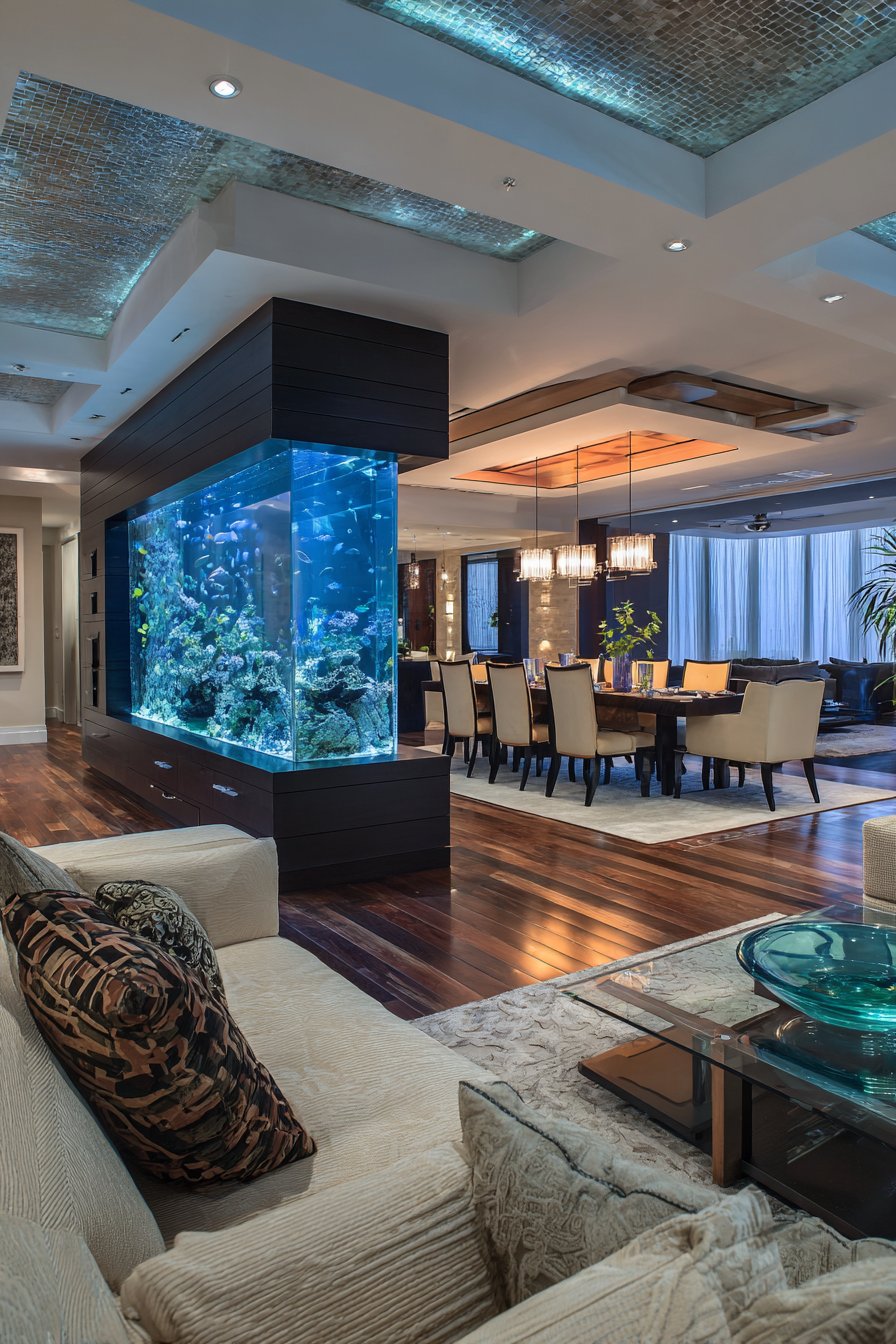
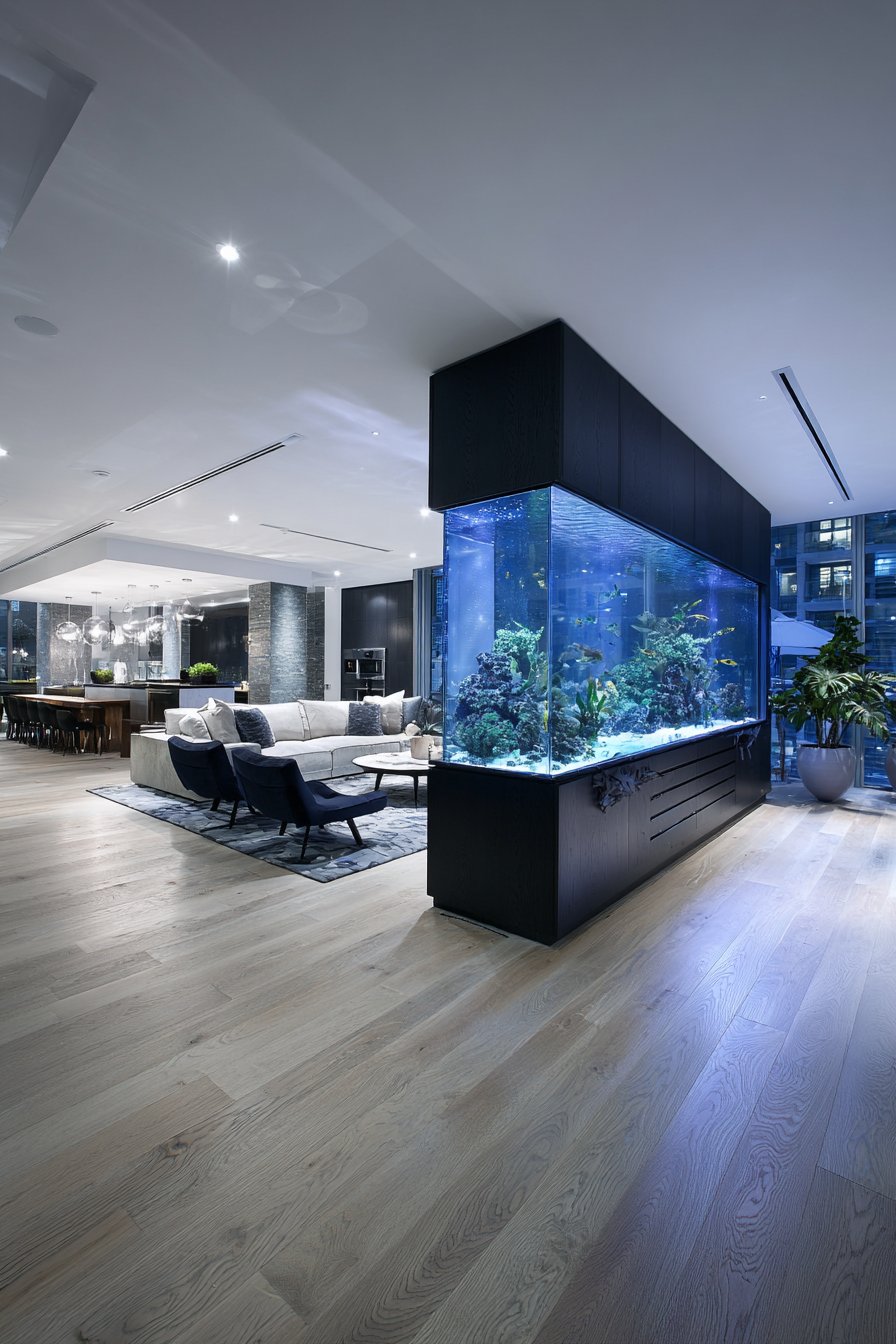
Innovation in partition design reaches fascinating heights with the modern aquarium partition, a living room divider that combines functional space definition with captivating aquatic display. This large rectangular tank with black frame houses tropical fish and aquatic plants, creating a living ecosystem that separates dining area from lounge space while providing entertainment and natural beauty. The transparent water provides visual connection while clearly defining zones, the swimming fish creating constant gentle movement that draws the eye and promotes relaxation. Custom cabinetry below houses filtration equipment, heaters, and supplies, maintaining clean lines above while ensuring all technical requirements remain accessible but hidden. The ambient aquarium lighting creates calming blue-green glow that transforms evening atmosphere.
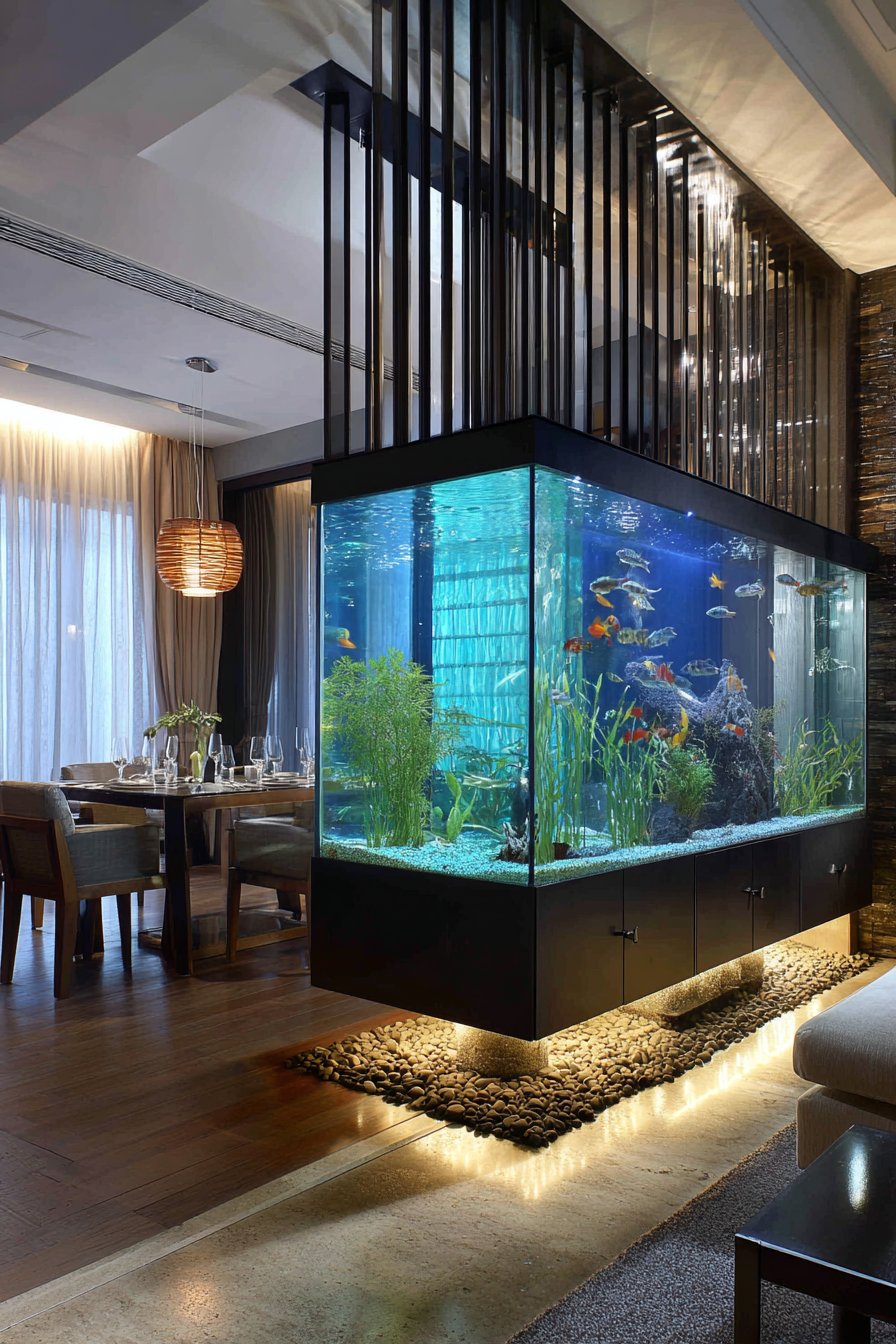
The multisensory experience of an aquarium partition extends far beyond visual appeal. The gentle gurgling of water circulation provides soothing white noise that masks less pleasant sounds from adjacent spaces or outside traffic. The rhythmic swimming patterns of fish create naturally calming visual effects similar to watching flames in a fireplace—our brains find these organic, unpredictable movements deeply relaxing. The presence of living creatures introduces biophilic elements that connect us to nature even within completely artificial interior environments. The blue-green lighting spectrum affects mood positively, creating associations with water, sky, and natural environments that promote psychological wellbeing.
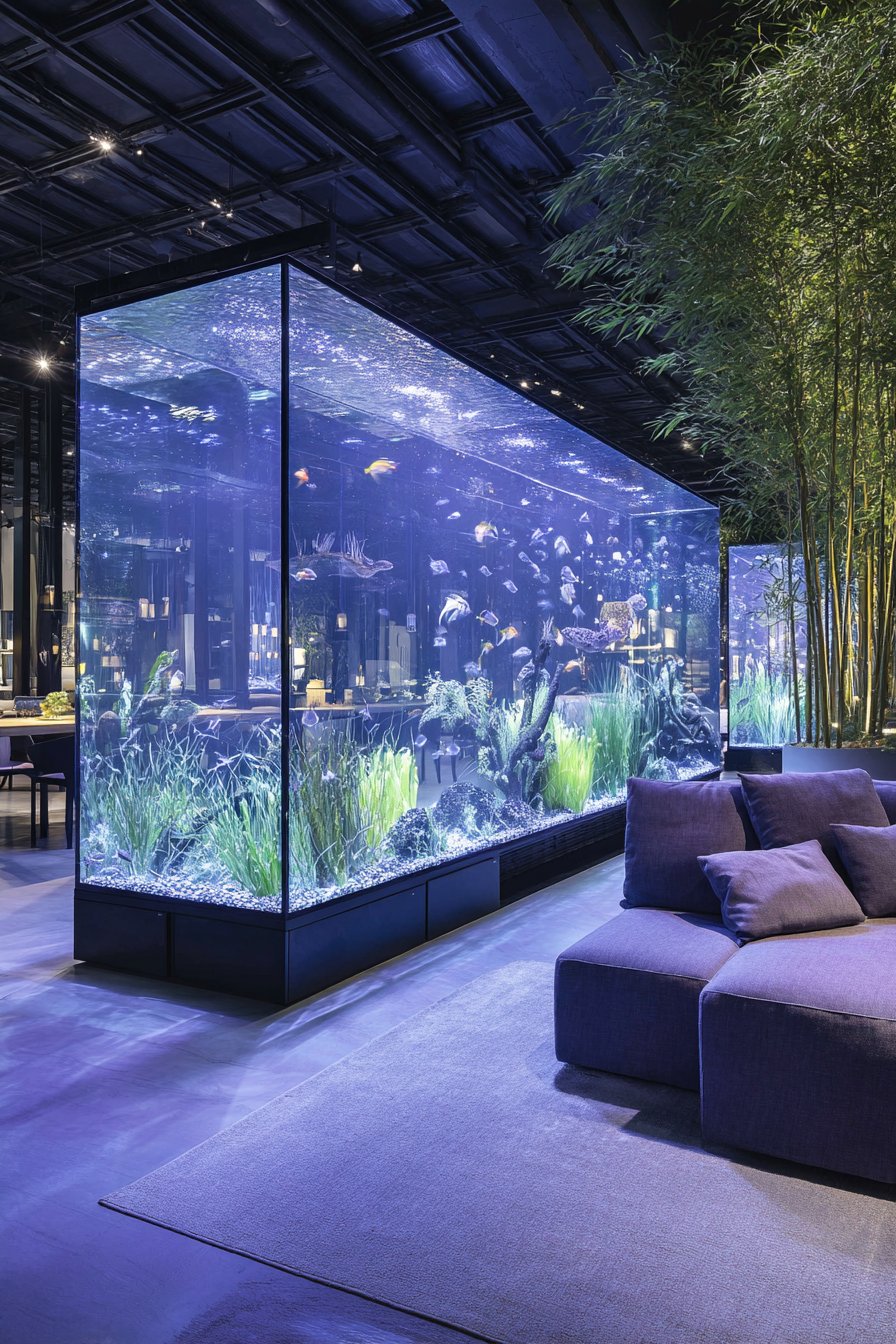
This partition style suits contemporary homes where innovation and unique design elements are celebrated. The aquarium becomes a living art installation that changes continuously as fish grow, plants spread, and the ecosystem evolves. The commitment required—regular maintenance, feeding, water chemistry monitoring—means this partition suits dedicated hobbyists who view the care as pleasure rather than burden. The transparent quality maintains spatial openness while the visual interest of the aquarium creates natural focal points in both dining and living areas. The built-in nature of the design transforms what might be an ordinary divider into a signature home feature that guests remember and admire.
Key Design Tips: Work with experienced aquarium installers for proper tank sizing, support structure, and equipment integration. Ensure floor can support the substantial weight of water, gravel, decorations, and the tank itself. Plan for regular maintenance access—all equipment should be easily reachable. Choose fish species appropriate for the tank size and compatible with each other. Research proper filtration and circulation requirements before installation. Consider automatic feeding systems if you travel frequently. Plan for backup power solutions to protect fish during electrical outages. Maintain consistent water temperature and chemistry for fish health. Choose aquatic plants that match your lighting and can thrive in your fish’s environment. Budget for ongoing costs including electricity, food, replacement filters, and occasional equipment repairs. Consider starting with hardy fish species if you’re new to aquarium keeping. Install adequate structural support to handle the partition’s weight. Plan for how you’ll handle aquarium maintenance without disrupting living spaces. Consider professional aquarium maintenance services if DIY upkeep seems overwhelming.
20. Pegboard Wall Partition System
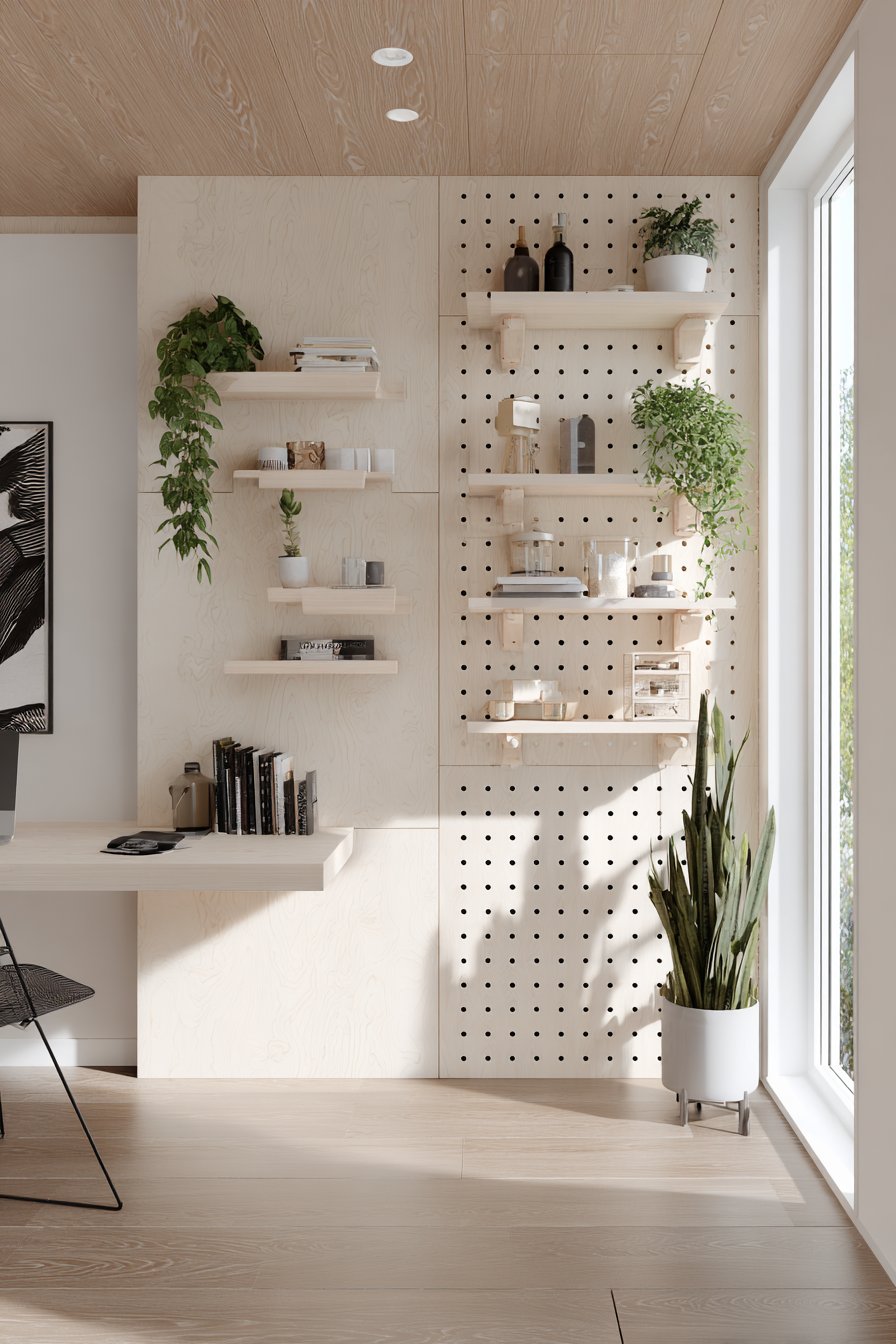
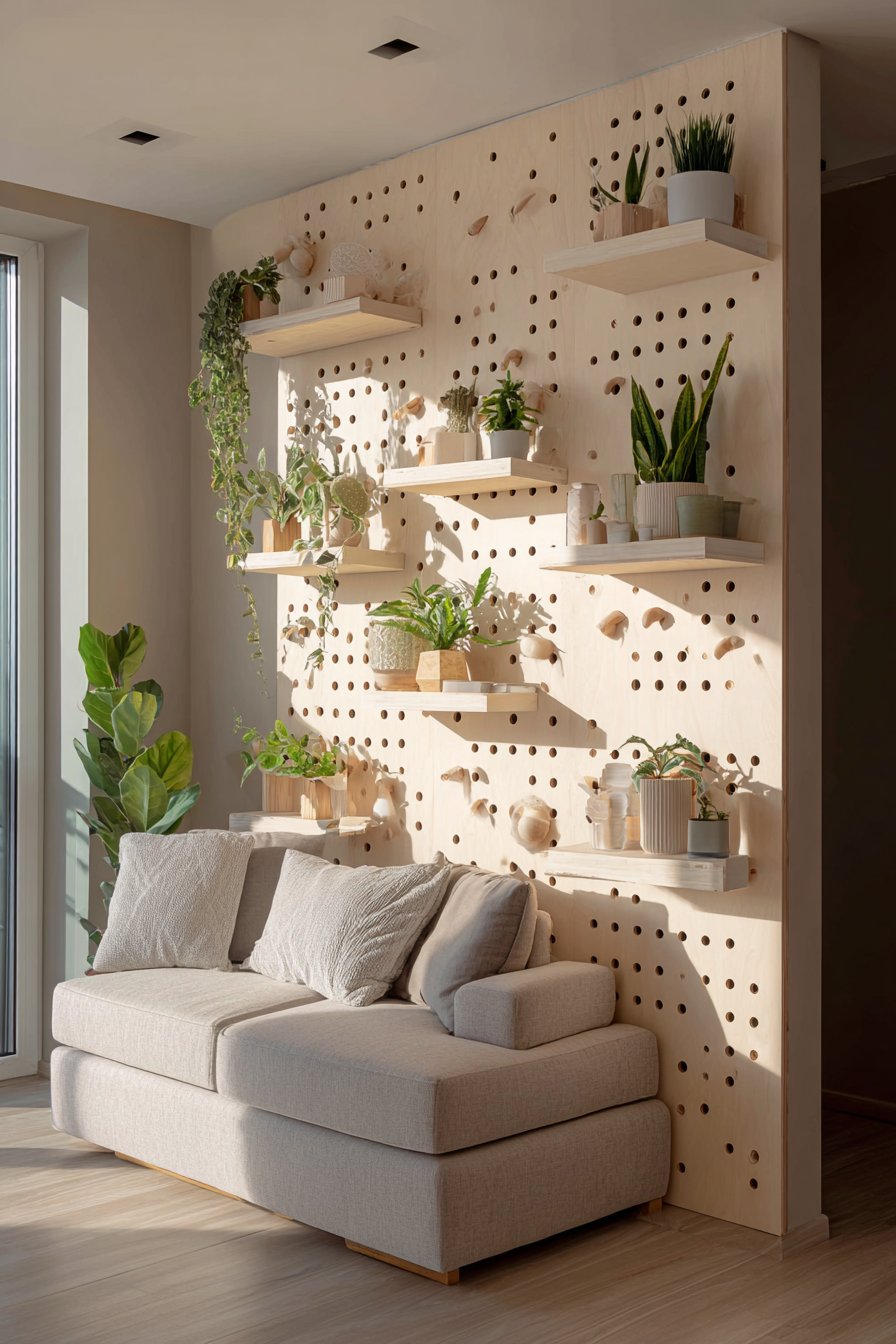
Scandinavian design principles of functionality, simplicity, and adaptability find perfect expression in the pegboard wall partition system, a modular solution that combines room division with customizable display and storage. This design features natural birch plywood with its characteristic pale tone and subtle grain, perforated with a regular grid of holes that accept adjustable wooden pegs. The system displays hanging plants in macrame holders, small floating shelves supporting books and decorative objects, and framed artwork, all easily rearranged as needs or aesthetics change. The partition separates a workspace from the living area while providing organizational infrastructure that evolves with changing requirements. Natural lighting creates interesting shadow patterns through the perforated surface, adding visual dimension to the functional design.
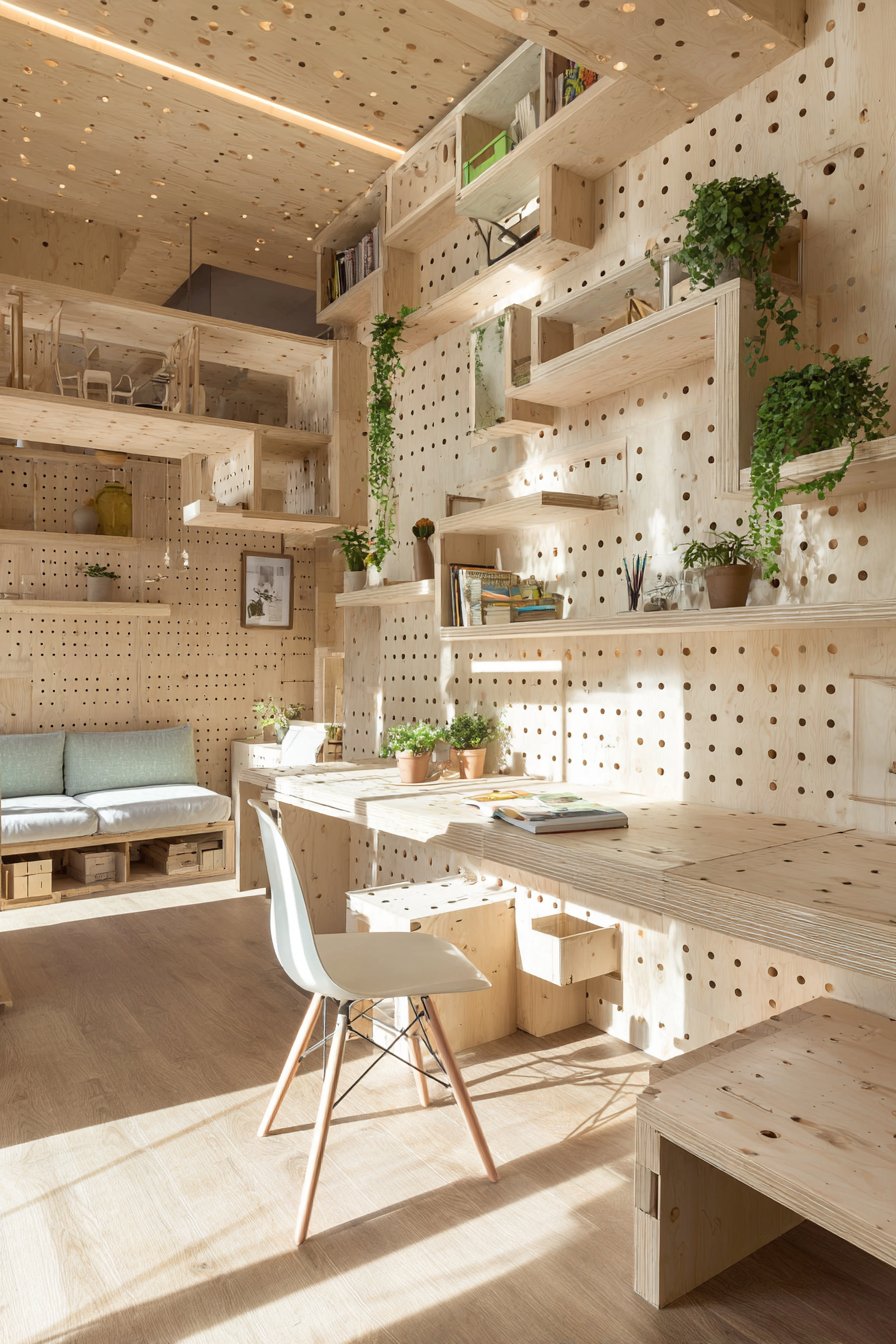
The genius of pegboard systems lies in their infinite customizability—every element can be moved, replaced, or removed without tools or permanent modifications. This flexibility supports experimentation and seasonal refreshes, preventing design stagnation. The natural birch maintains the light, airy aesthetic characteristic of Scandinavian design, its pale tone reflecting light and preventing the partition from feeling heavy despite its functional density. The regular grid pattern creates visual order while the varied heights and types of attached elements introduce organic variation that prevents rigidity. The combination of display and storage functions means the partition actively contributes to room organization rather than merely occupying space.
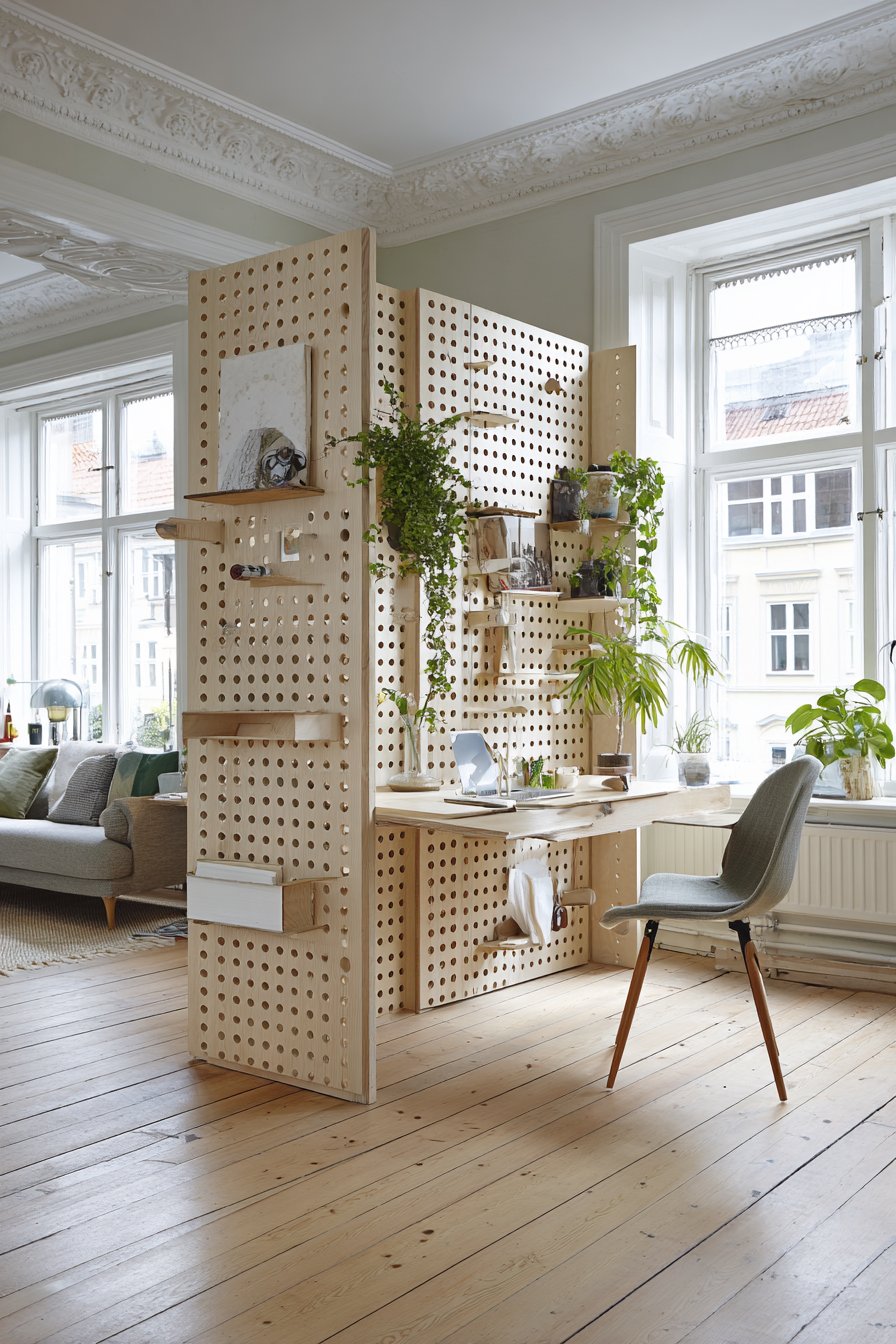
This partition style particularly appeals to creative personalities who enjoy rearranging their environments, DIY enthusiasts who appreciate hands-on customization, and those working with limited budgets who want maximum design flexibility. The pegboard’s industrial origins in workshops and garages have been reimagined through contemporary design sensibilities, transforming utilitarian material into stylish interior element. The system works beautifully in home offices where organizational needs evolve, in craft rooms where tool storage requirements change with projects, or in living areas where display preferences shift seasonally. The Scandinavian aesthetic ensures the functional focus never sacrifices beauty.
Key Design Tips: Choose high-quality birch plywood with smooth, finished surfaces for refined appearance. Ensure proper structural framing behind pegboard to support both the panel and items hung on it. Space holes according to standard pegboard patterns for accessory compatibility. Finish edges cleanly to prevent splinters and create polished appearance. Source a variety of peg types, lengths, and accessories to maximize organizational potential. Plan the partition size based on items you’ll display—too small and it can’t fulfill storage needs. Consider painting pegboard if you want color rather than natural wood—use paint that won’t clog holes. Arrange items with intentional negative space to prevent cluttered appearance. Rotate displays seasonally to keep the design fresh and engaging. Consider weight distribution when hanging heavier items—place these where framing provides best support. Use consistent peg colors or varied ones depending on desired aesthetic. Plan lighting to minimize shadows that could make finding specific pegs difficult. Consider the partition’s depth including items that protrude—ensure adequate clearance from traffic patterns.
21. Brick Veneer Column Partition
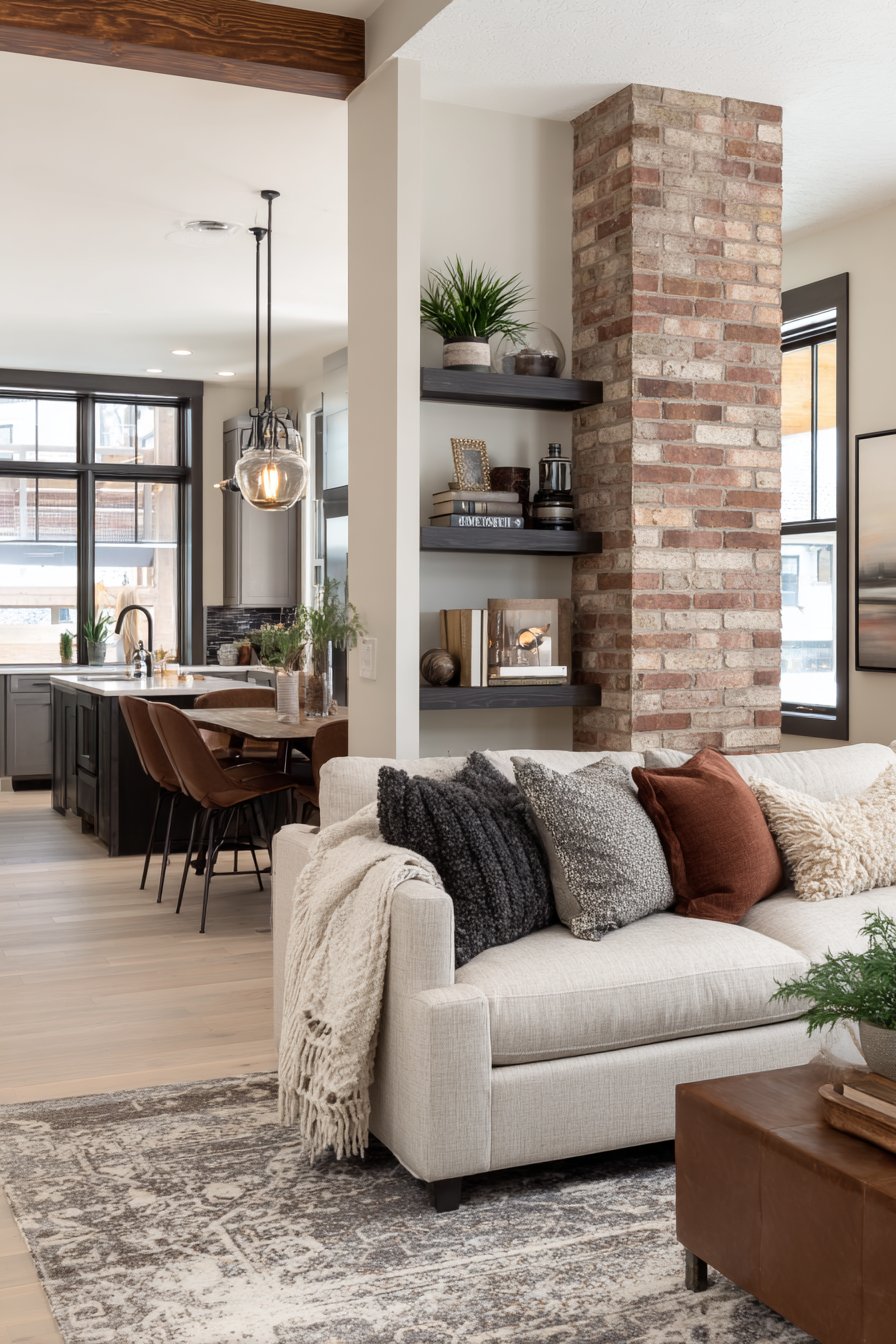
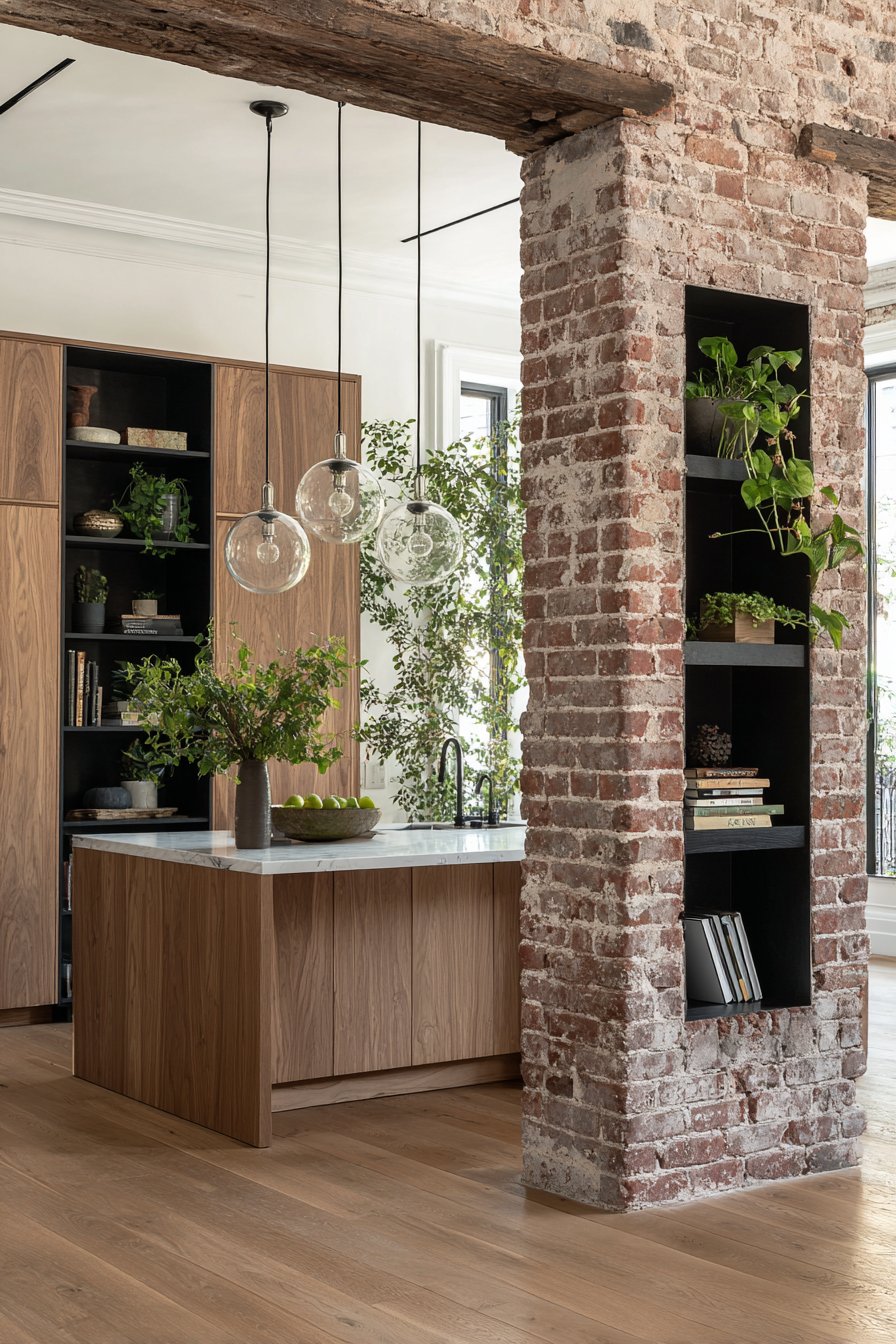
Industrial loft aesthetics find authentic expression in the brick veneer column partition, an architectural element that brings raw urban character into residential interiors. This design features exposed red clay bricks arranged in traditional running bond pattern, their warm terracotta tones and slightly irregular surfaces creating textural richness and authentic masonry appearance. The partial wall with open sides separates kitchen from living area while maintaining crucial visual connection between zones, preventing either space from feeling isolated. Built-in floating shelves on both sides—crafted from reclaimed wood or raw steel—display plants and books while adding functional storage. Edison bulb pendant lights hanging nearby enhance the industrial aesthetic while providing practical task lighting.
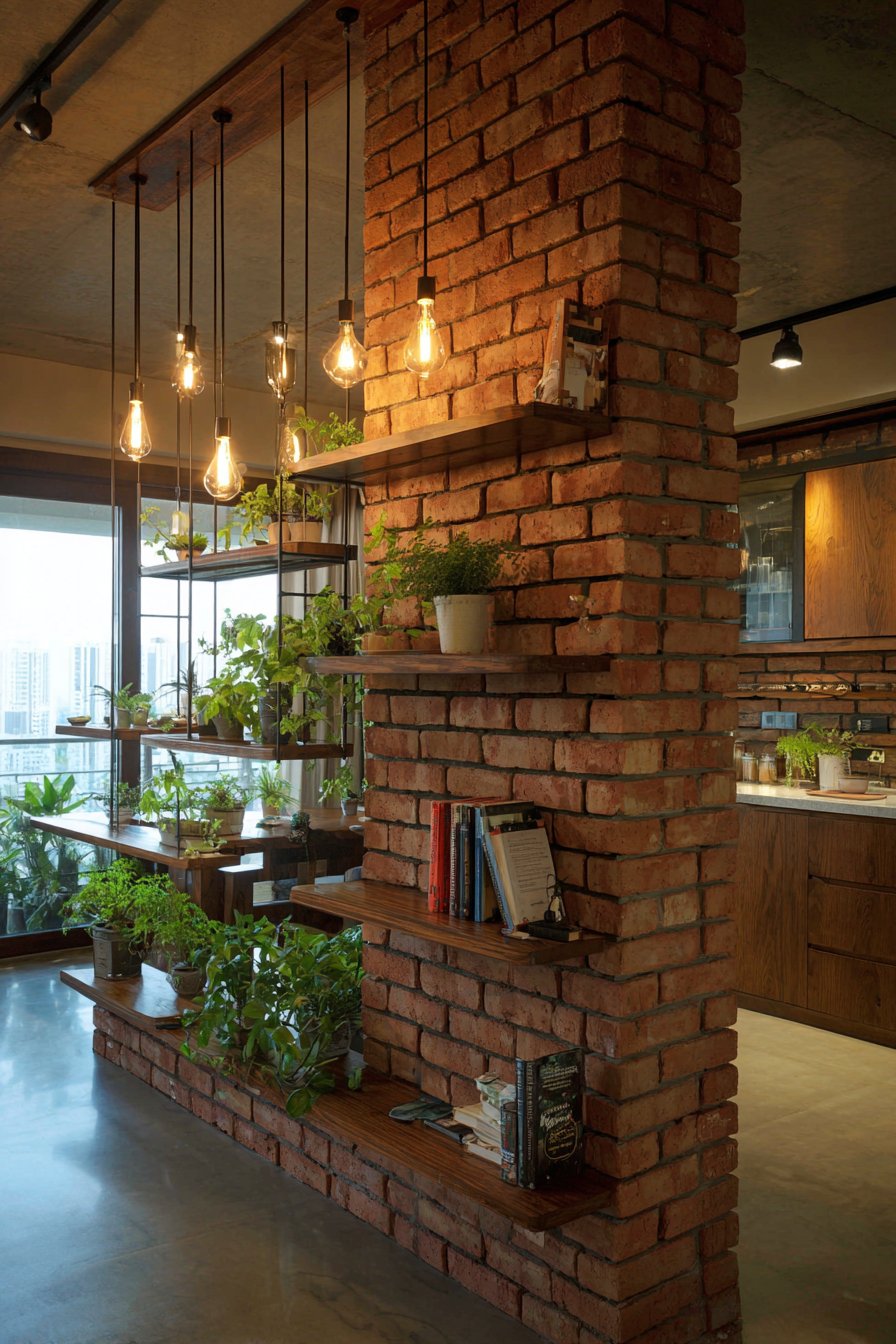
The visual warmth of exposed brick contrasts beautifully with the harder edges of industrial design elements like steel shelving and modern appliances. The red-orange tones introduce color into spaces often dominated by neutrals, grey concrete, and black metal, preventing industrial interiors from feeling cold or unwelcoming. The mortar joints create additional texture and pattern, their light grey contrasting with brick red to emphasize the masonry construction. The column format—partial wall rather than floor-to-ceiling surface—provides enough presence to define zones without completely blocking sightlines or light flow, crucial in loft spaces where openness is a defining characteristic.
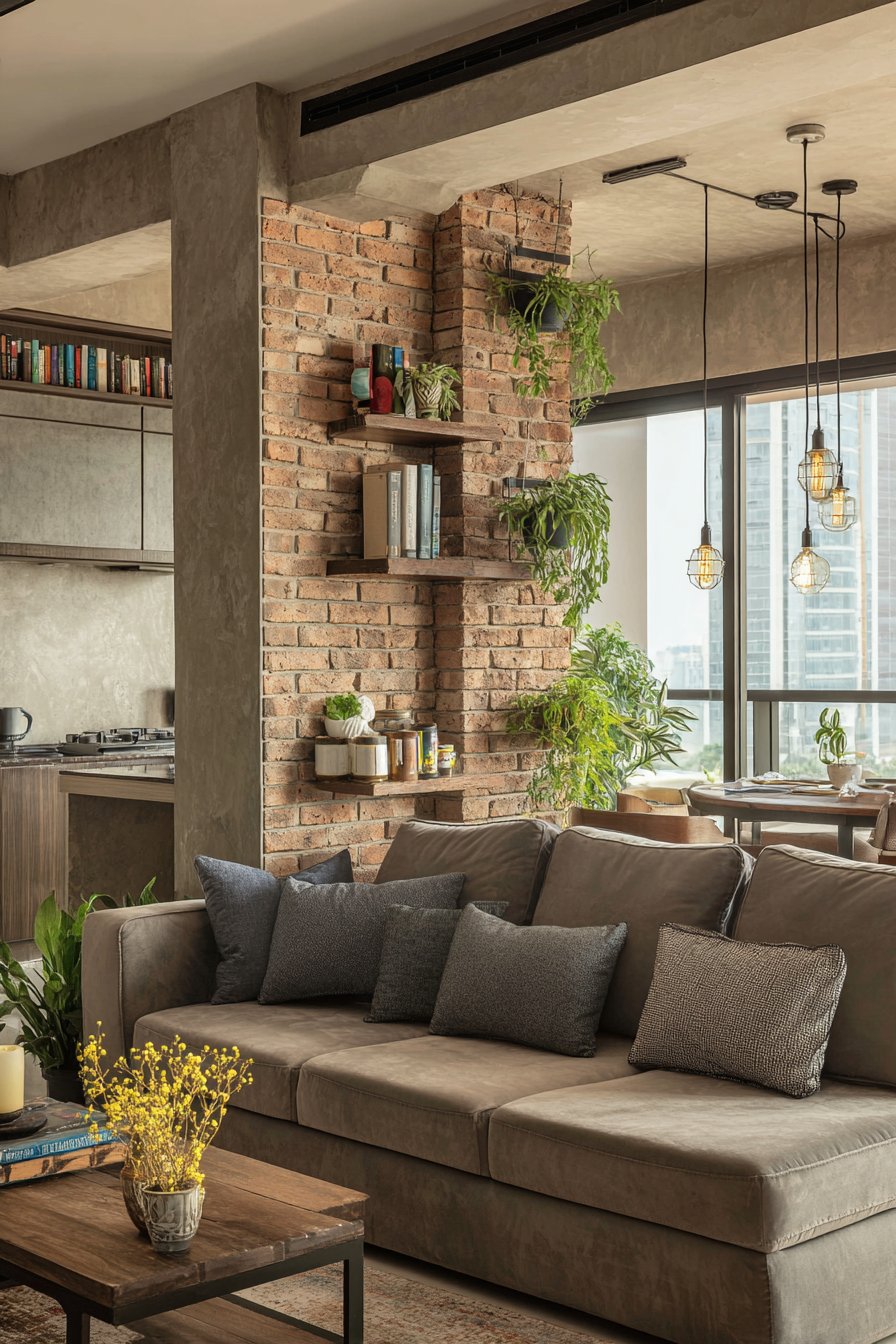
This partition style suits urban loft apartments, converted industrial spaces, or new construction seeking authentic warehouse aesthetics. The brick connects to architectural history, evoking images of century-old factories and warehouses that housed manufacturing before conversion to residential use. The permanence of masonry construction creates substantial architectural presence that temporary partitions cannot match. The built-in shelving transforms the partition from pure divider into active storage and display element, maximizing functionality in spaces where square footage comes at premium prices. The combination with Edison bulbs and industrial materials creates cohesive design narratives that feel intentional and curated.
Key Design Tips: Decide between real brick and brick veneer based on structural requirements and budget—veneer is lighter and easier to install. Ensure proper structural support for brick or brick veneer weight. Choose mortar color carefully as it significantly affects final appearance—traditional grey, bright white, or matched to brick tones. Consider sealing brick to prevent dust shedding and ease cleaning, especially in kitchen areas. Plan shelf brackets that coordinate with industrial aesthetic—raw steel, black iron, or brass work well. Coordinate brick tones with your overall color palette—some bricks read very red, others more orange or brown. Consider mixing new and reclaimed bricks for varied appearance. Plan adequate structural support for floating shelves, especially if displaying heavy items. Ensure pendant lights are positioned to illuminate both sides of the partition. Consider the permanent nature of brick installation. Clean brick periodically to remove dust and grease accumulation. Plan for how utility lines will run through or around the partition. Consider acoustic implications—brick provides some sound dampening between zones.
22. Carved Wooden Screen with Moroccan Patterns
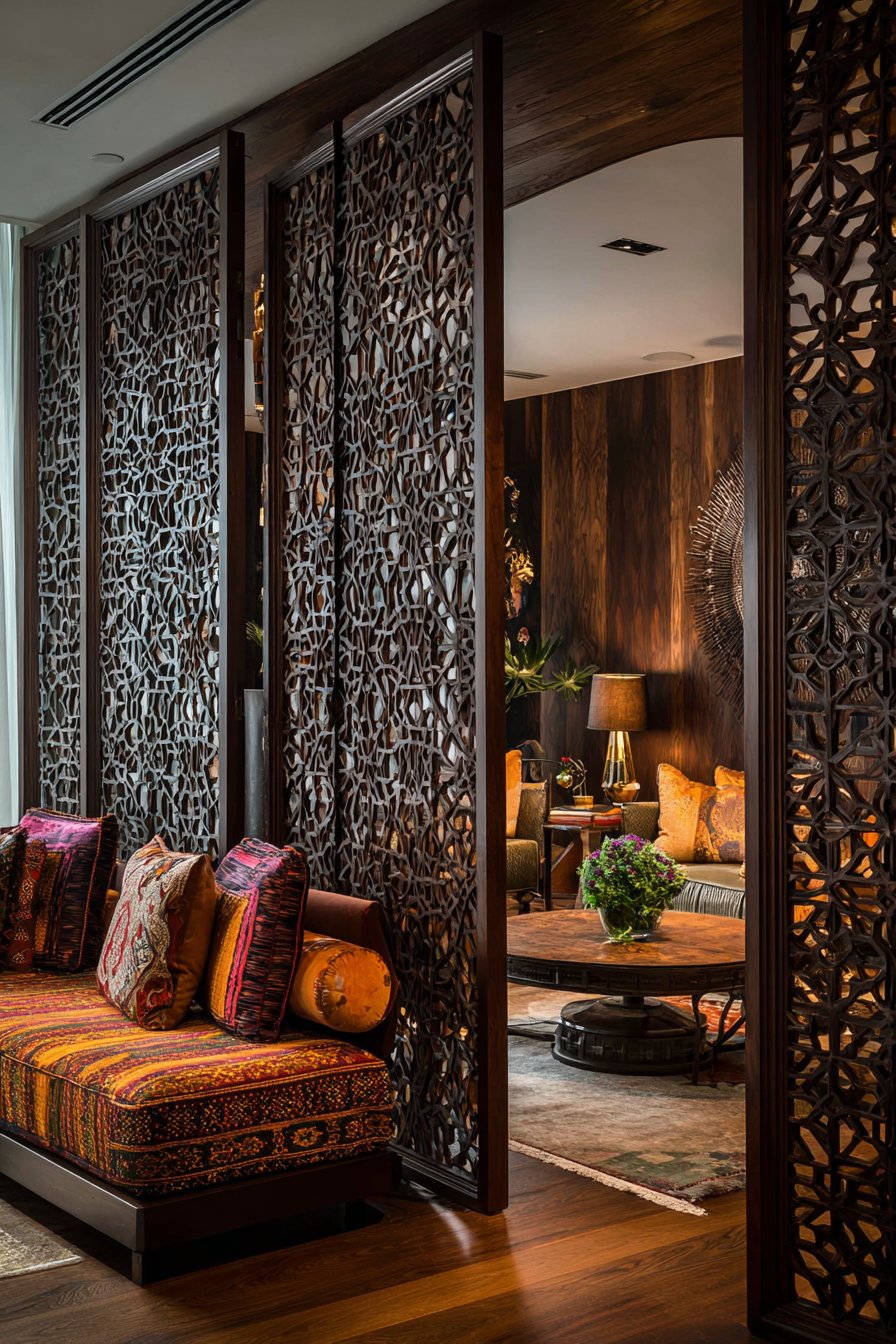
Global design influences bring exotic beauty into interiors through carved wooden screens with traditional Moroccan-inspired lattice patterns, partitions that transform room division into artistic statements. This three-panel folding screen features intricate geometric cutouts in dark walnut stain, the complex patterns derived from centuries of Islamic architectural tradition. The ornate design separates a lounge area furnished with low seating and colorful textiles from the main living space, creating intimate alcoves perfect for conversation or quiet contemplation. Ambient lighting positioned behind the screen creates dramatic pattern shadows that project onto surrounding walls, transforming the entire room into an immersive environment where light and shadow dance in geometric harmony.
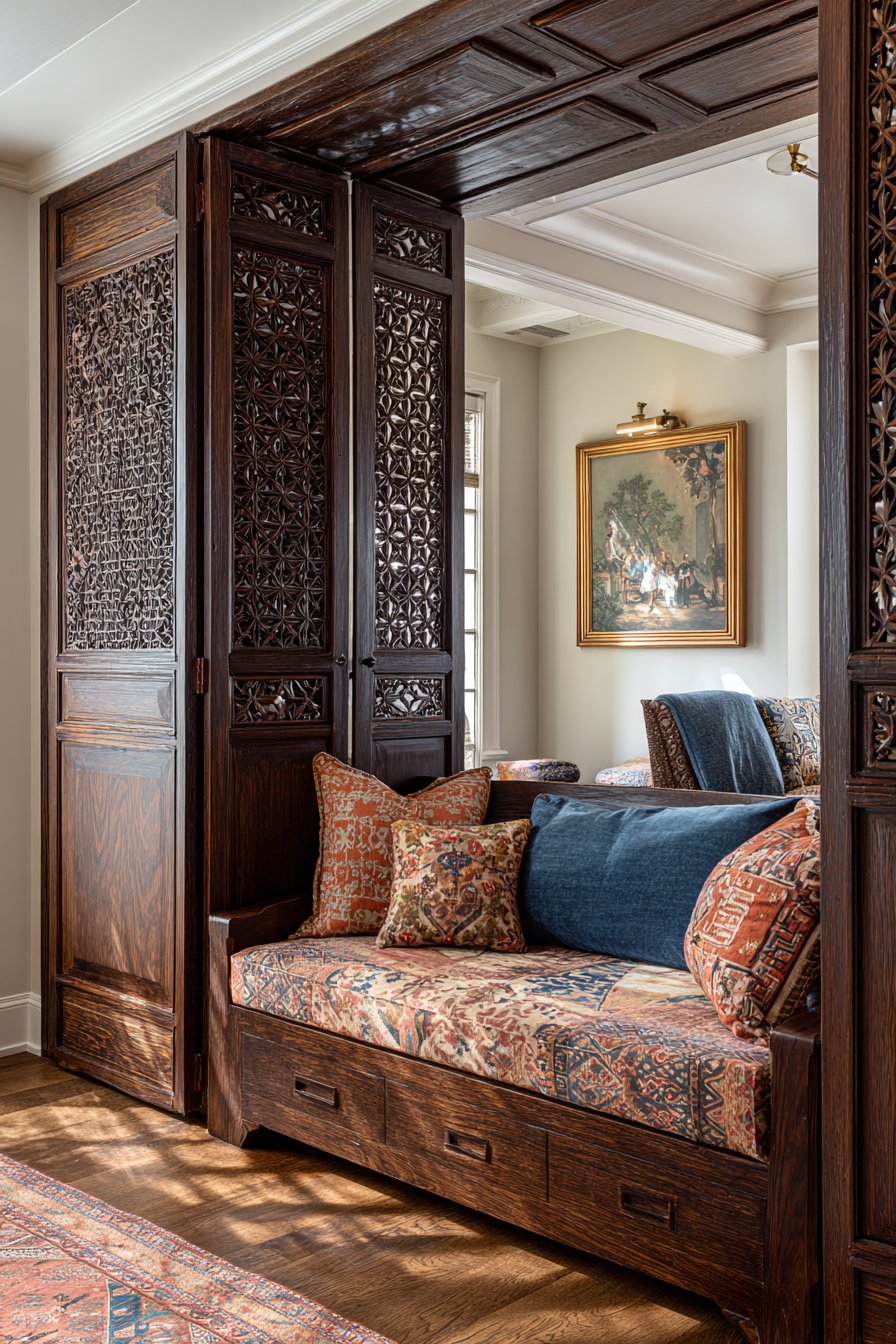
The level of detail in traditional Moroccan patterns demonstrates exceptional craftsmanship—interlocking stars, tessellating polygons, and flowing arabesque curves combine to create designs of stunning complexity. The dark walnut stain emphasizes the depth of carved details while the rich brown tones add warmth and sophistication. The three-dimensional nature of carved elements means the screen presents different visual appearances depending on viewing angle and lighting conditions, creating designs that reward close inspection and reveal new details over time. The cultural heritage embedded in these patterns connects contemporary interiors to centuries of artistic tradition, adding depth of meaning beyond pure aesthetics.
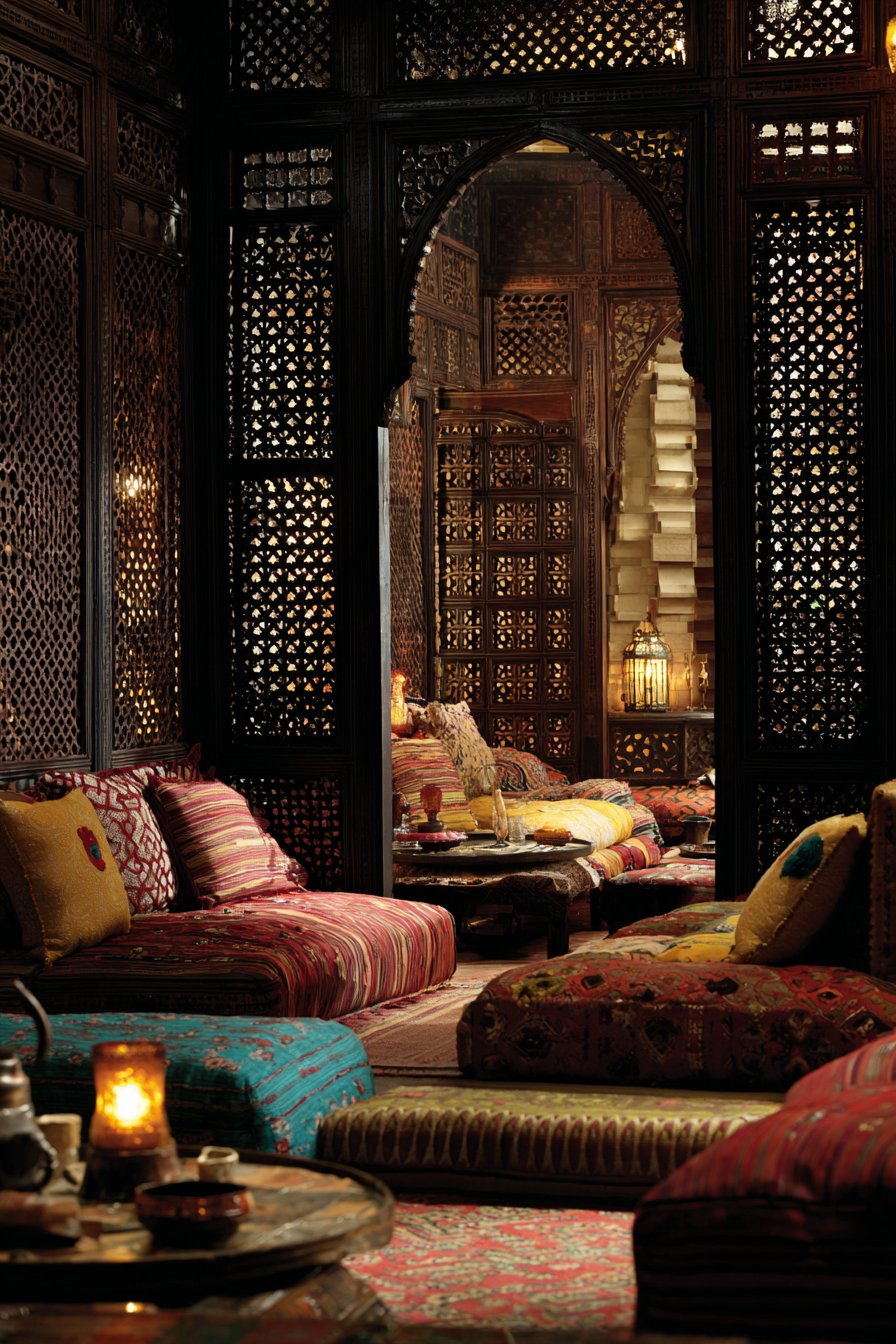
This partition style appeals to those drawn to global design, bohemian eclecticism, or anyone appreciating exceptional woodworking artistry. The screen becomes a focal point and conversation piece, its elaborate patterns commanding attention and admiration. The portability of folding screens allows seasonal rotation or complete removal, though designs this striking tend to remain permanent fixtures. The lounge arrangement with low seating and colorful textiles creates cohesive cultural aesthetic, the partition reinforcing rather than conflicting with surrounding decor. The projected shadow patterns extend the screen’s visual impact beyond its physical dimensions, affecting the entire room’s atmosphere.
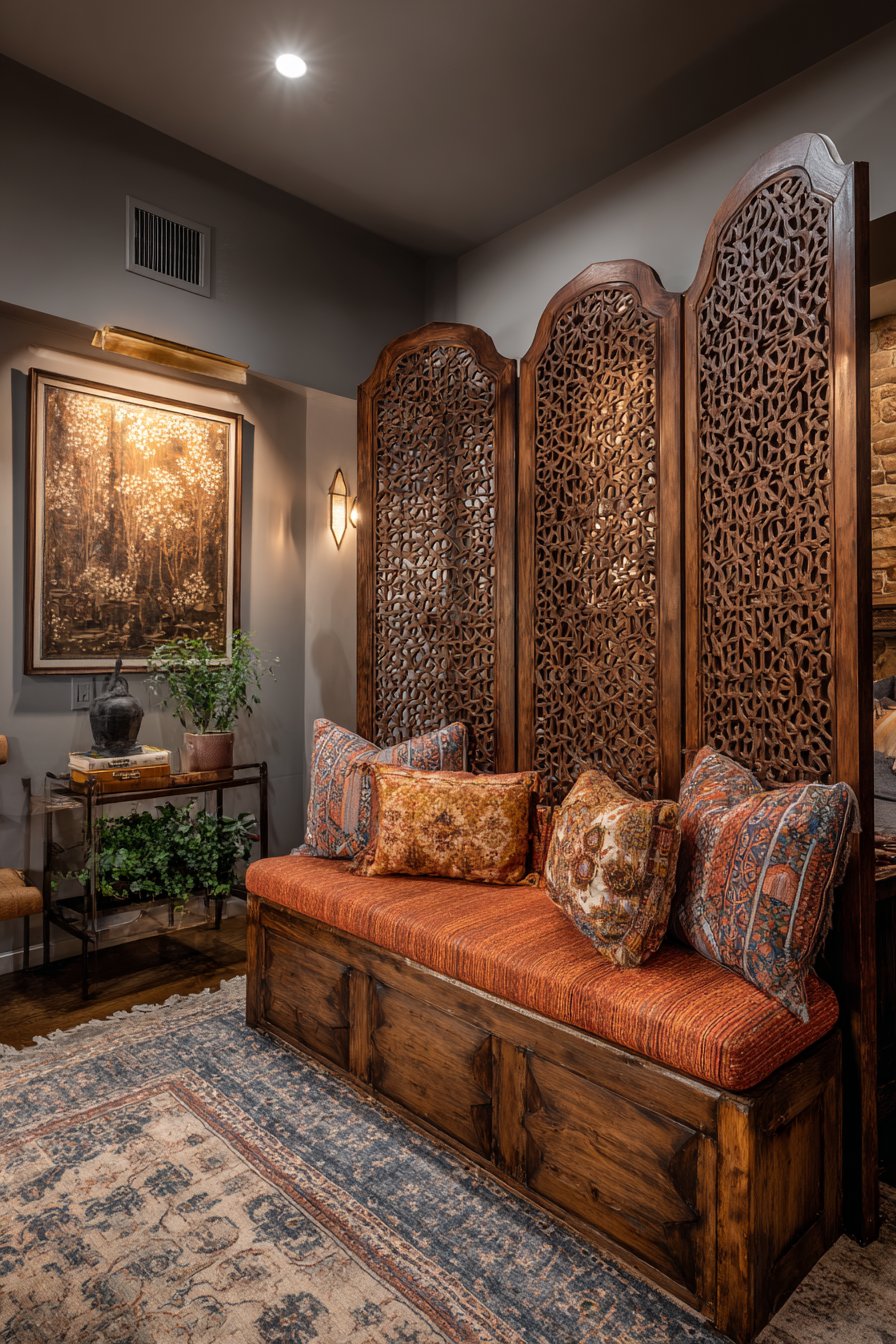
Key Design Tips: Source screens from skilled woodworkers familiar with traditional Moroccan pattern vocabulary for authentic designs. Ensure hinges are high quality to support the screen’s weight and allow smooth folding. Consider the screen’s weight if you plan to move it frequently. Position backlighting carefully to maximize shadow projection effects—LED strips work well. Coordinate the wood stain with other furniture finishes in your space. Clean carved details regularly as dust accumulates in intricate patterns. Protect the wood with appropriate finish that enhances grain while preventing damage. Consider commissioning custom dimensions if standard screens don’t fit your space properly. Arrange surrounding decor to complement the screen’s cultural aesthetic rather than compete with it. Consider the screen’s presence from all viewing angles in the room. Ensure stable footing on your floor type—carpets may require weighted bases. Appreciate that highly detailed screens create busy visual fields—balance with simpler surrounding elements. Consider professional installation if the screen is particularly large or heavy.
23. Minimalist White Panel with Vertical Grooves
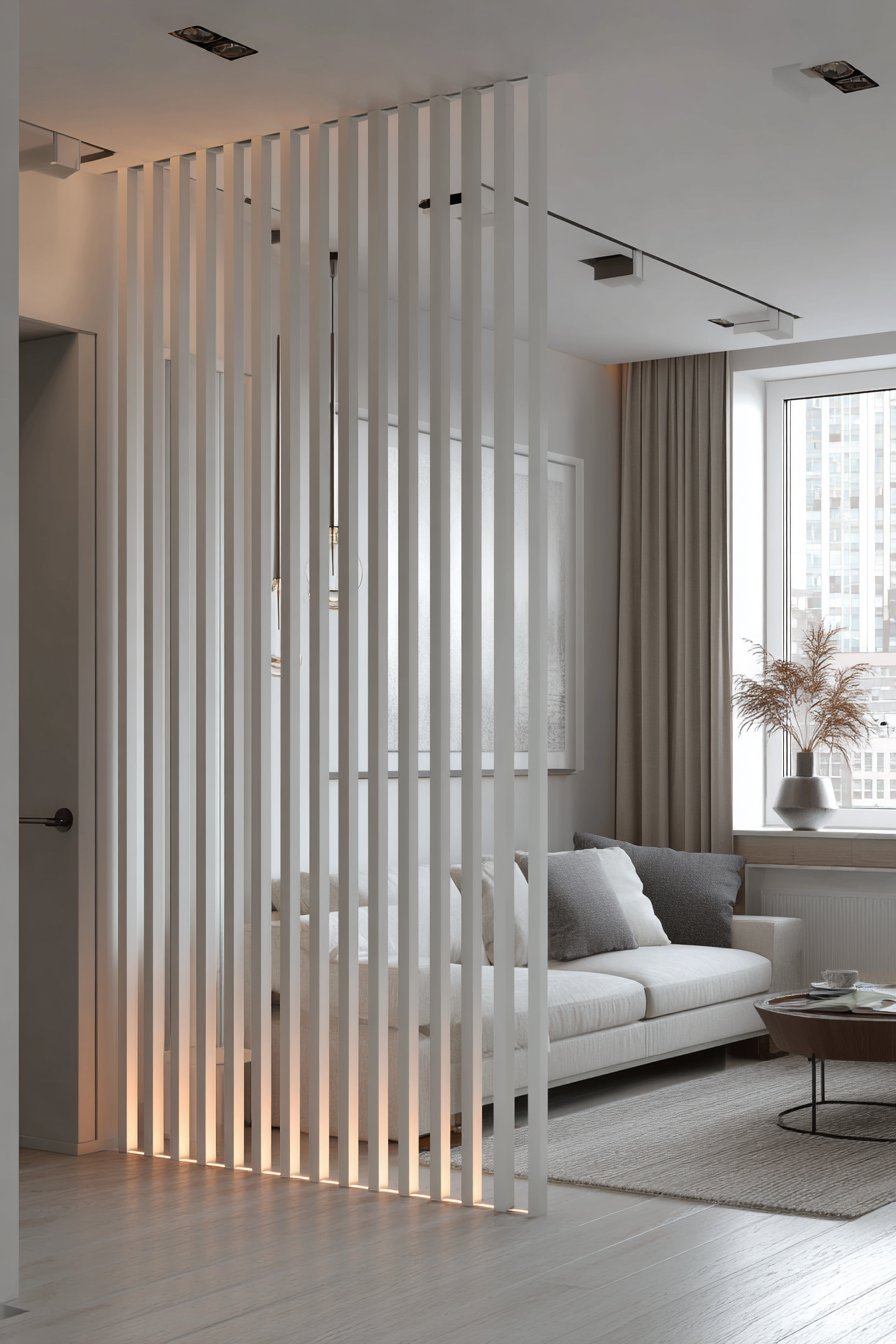
Sophisticated simplicity defines the minimalist white panel partition with clean vertical grooves, a design that proves restraint can be as impactful as elaboration. This floor-to-ceiling installation features white painted MDF with subtle texture created through regularly spaced vertical grooves that add dimensional interest without pattern complexity. The partition separates entryway from living area with refined elegance, its pristine surface and architectural presence creating sophisticated first impressions. Integrated LED strip lighting positioned within the grooves provides soft ambient glow that transforms evening atmosphere while highlighting the textural details. Light grey flooring and white walls maintain cohesive minimal aesthetic, the monochromatic palette creating serene, gallery-like spaces.
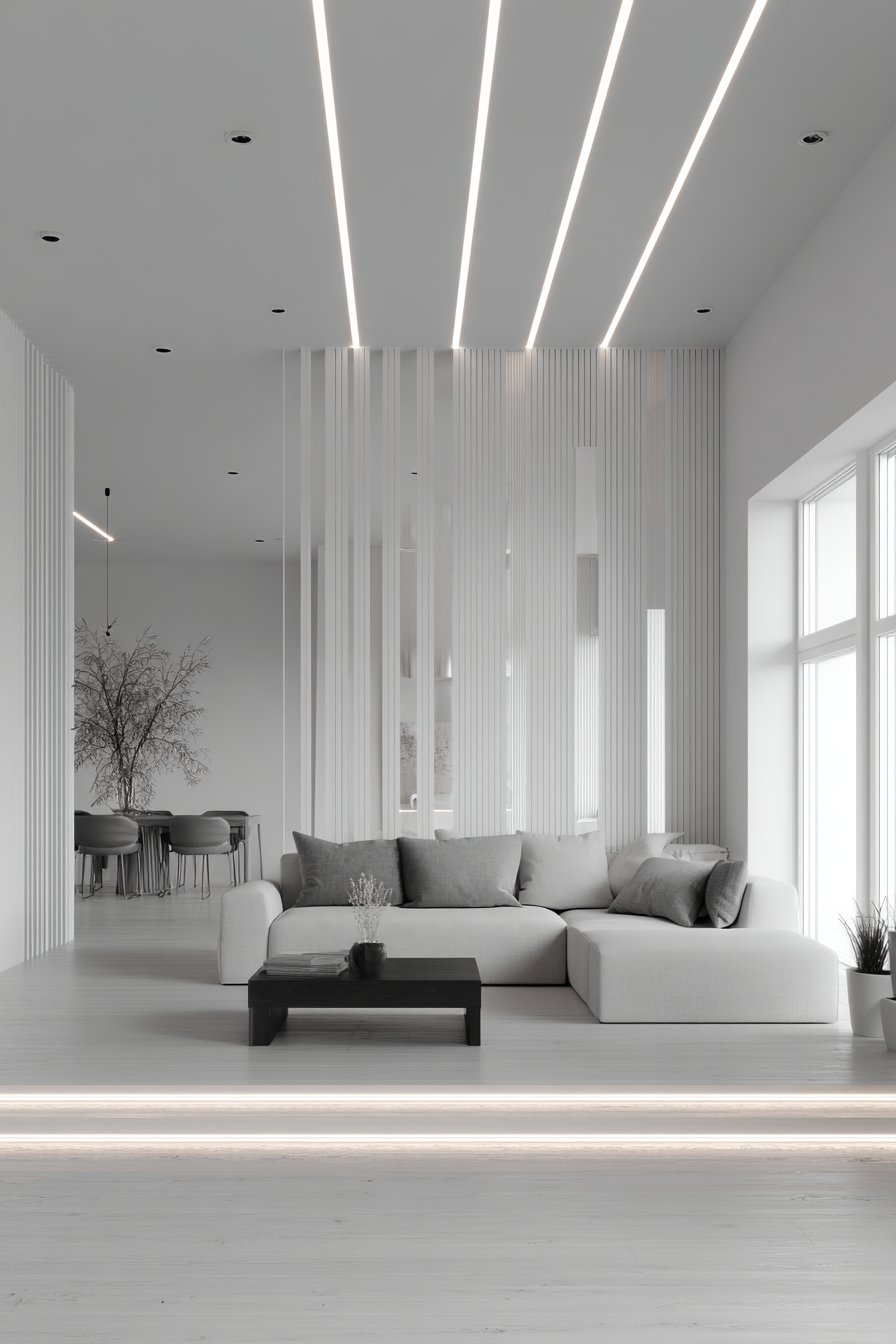
The vertical groove pattern serves multiple design functions simultaneously. The vertical lines draw the eye upward, emphasizing ceiling height and creating a sense of grandeur despite the partition’s clean simplicity. The grooves create subtle shadow lines that change throughout the day as natural light angles shift, adding organic variation to surfaces that might otherwise read as flat. The narrow LED strips integrate so seamlessly that light appears to emanate from the grooves themselves rather than from visible fixtures, creating an almost magical floating-light effect. The white color maximizes light reflection, crucial for maintaining brightness in entryways that often lack direct window access.
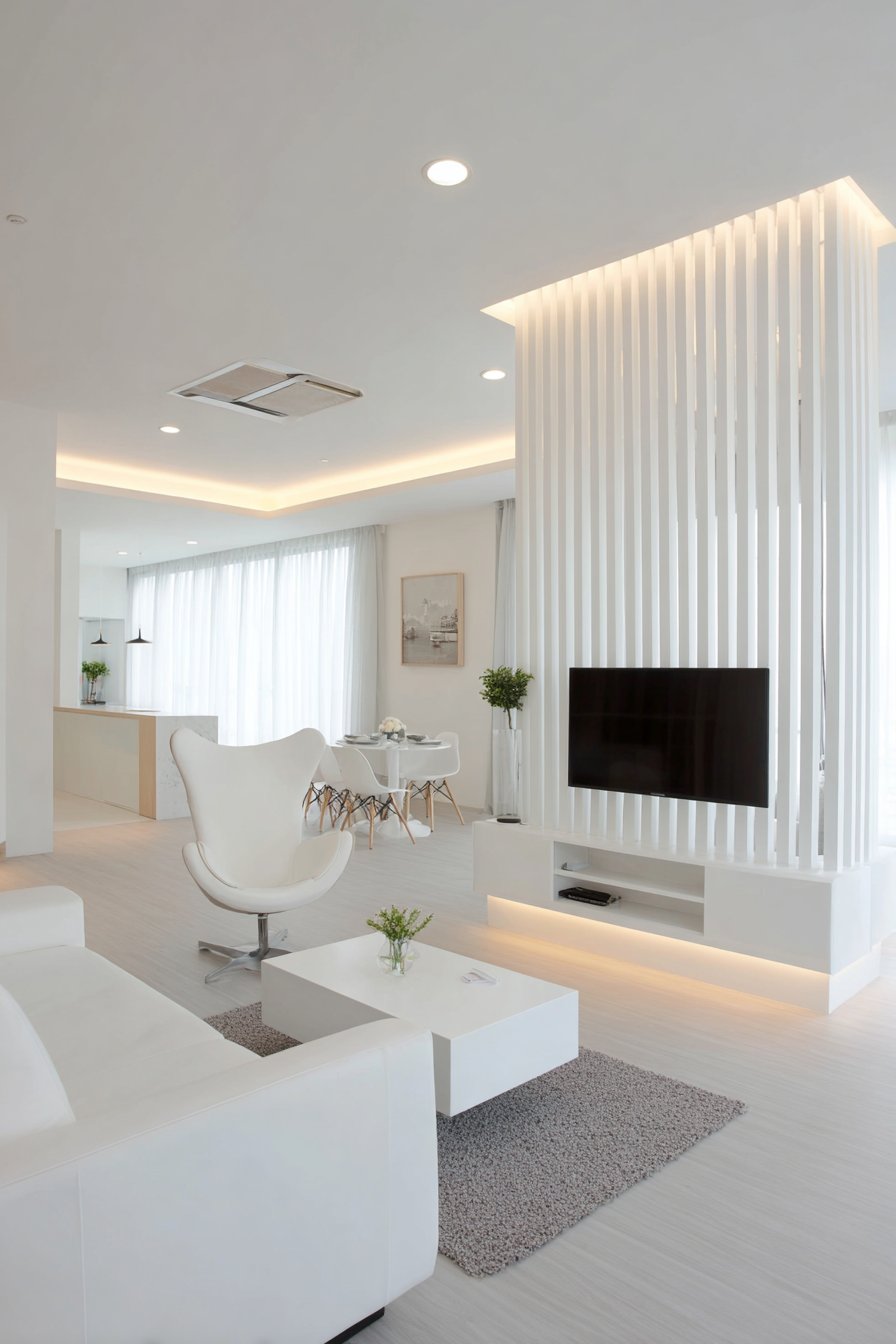
This partition style epitomizes contemporary minimalist design where every element serves clear purpose and nothing superfluous remains. The clean aesthetic appeals to those who find peace in uncluttered spaces and appreciate architecture’s ability to create beauty through proportion, light, and subtle texture rather than decoration or color. The permanent installation creates substantial architectural presence that establishes quality and thoughtfulness. The neutral palette ensures the partition will remain current as trends evolve, making it a timeless investment rather than a dated statement. The refined simplicity provides calm backdrop for living while making strong design statement about the homeowner’s aesthetic values.
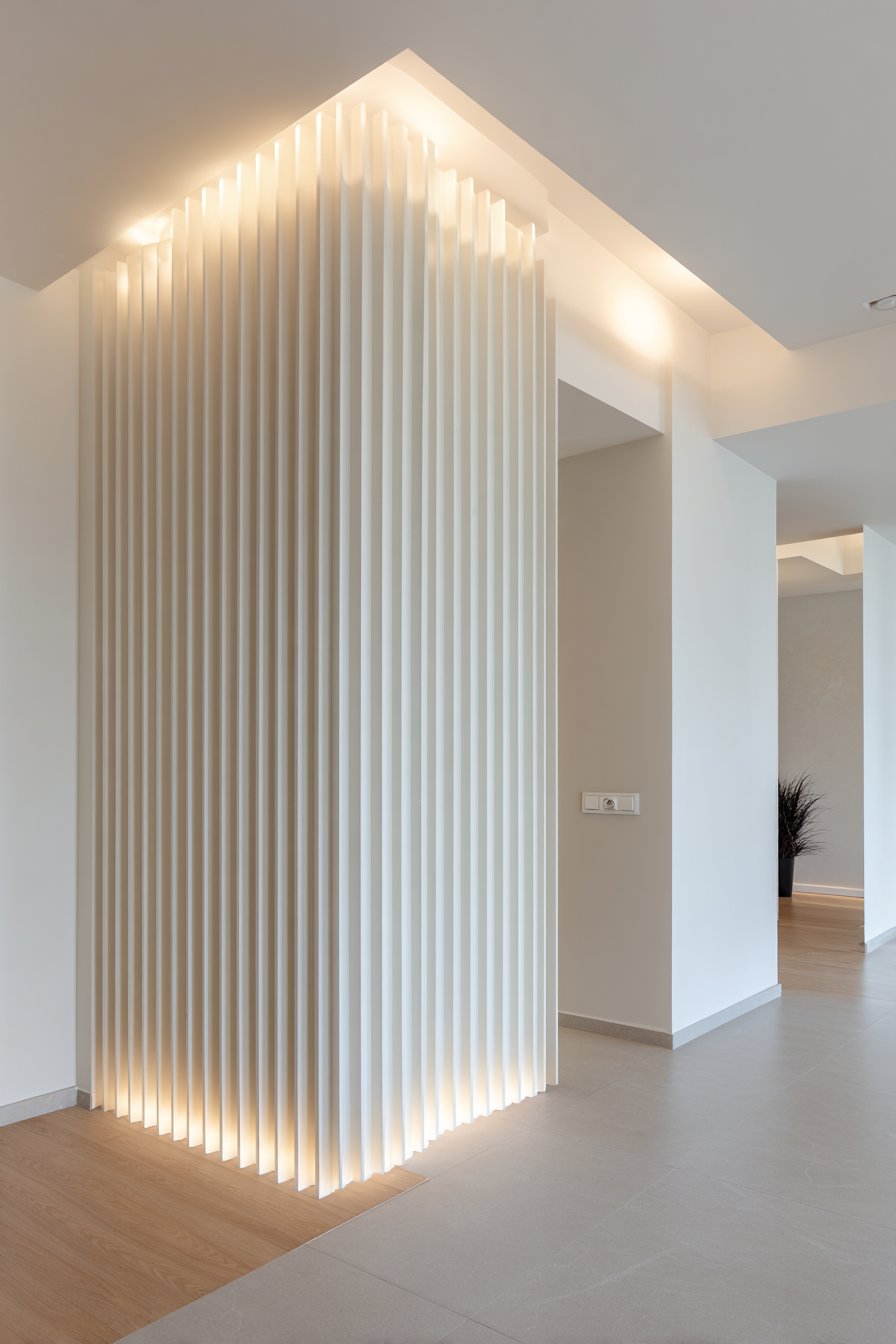
Key Design Tips: Use high-quality MDF with smooth surfaces for paintable finish that won’t show imperfections. Prime and paint carefully for flawless white finish—multiple light coats work better than single heavy coat. Route grooves at consistent depths and spacing for professional appearance. Consider groove width relative to panel size—too narrow and they disappear from distance, too wide and they dominate. Choose LED strips with appropriate color temperature for desired mood—warmer tones for cozy ambiance, cooler for crisp modern feel. Plan for proper electrical access for integrated lighting. Ensure structural framing provides adequate support for floor-to-ceiling installation. Coordinate with room trim and baseboards for cohesive architectural appearance. Clean white surfaces regularly to maintain pristine appearance. Consider touch-up paint for inevitable minor scuffs. Ensure proper anchoring for stability. Plan for how the partition interfaces with flooring—does it sit on finished floor or extend below? Consider acoustic properties if sound isolation between entryway and living area is desired. Choose paint with appropriate finish—matte hides imperfections better but shows marks more easily than satin.
24. Wire Mesh Industrial Partition
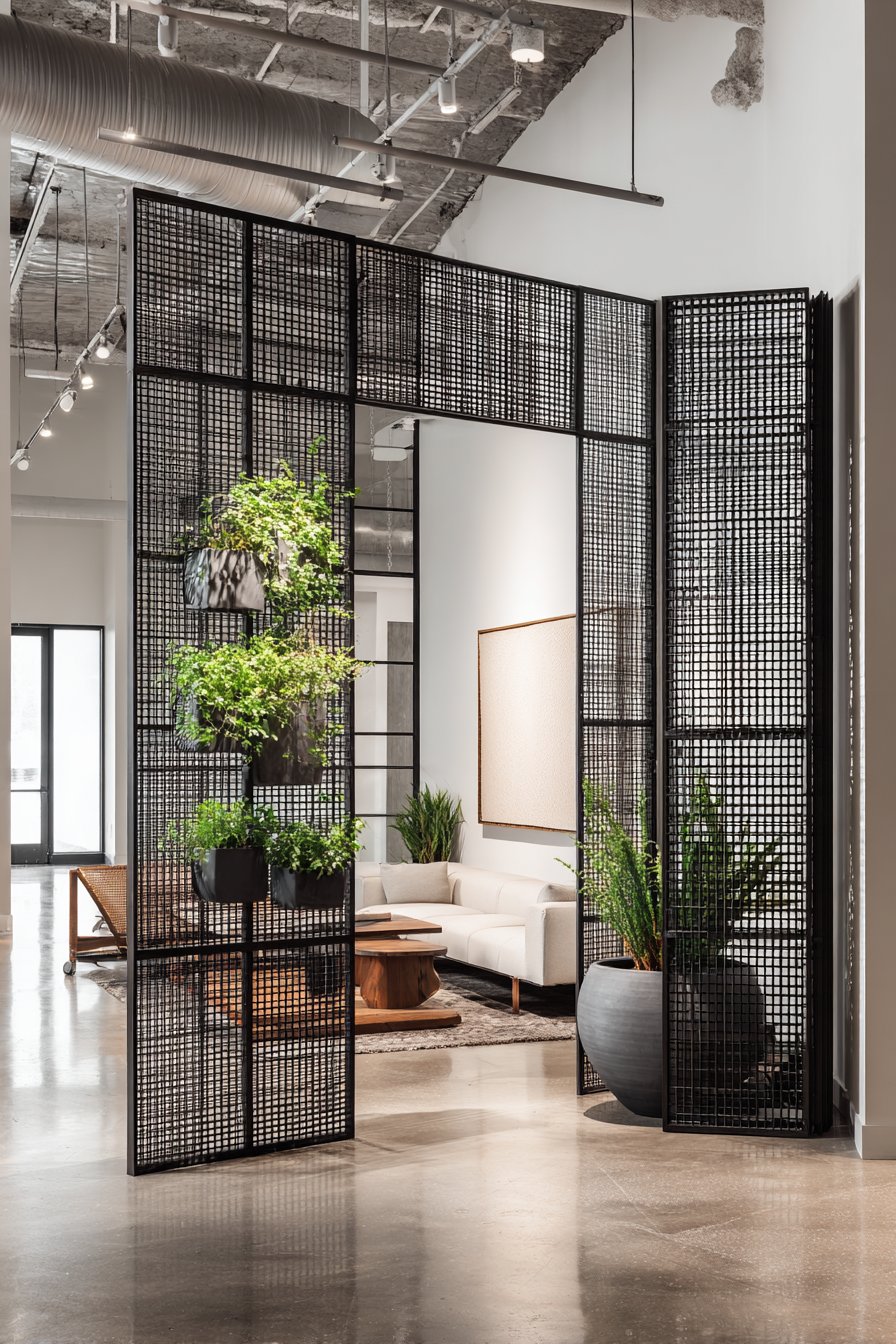
Raw, edgy aesthetic reaches full expression in the wire mesh partition with black powder-coated steel grid, a design element that celebrates industrial materials while creating semi-transparent room division. This partition separates living area from home gym space, its utilitarian character perfectly suited to fitness zone aesthetics while maintaining visual connection between spaces. The open grid design maintains excellent airflow and light penetration, crucial for gym areas that can become stuffy during workouts. Climbing plants grow up the mesh surface, their verdant foliage softening the hard industrial edges and introducing biophilic elements that make the gym space more inviting. Concrete flooring and exposed ductwork complement the utilitarian aesthetic, creating cohesive industrial design narratives.
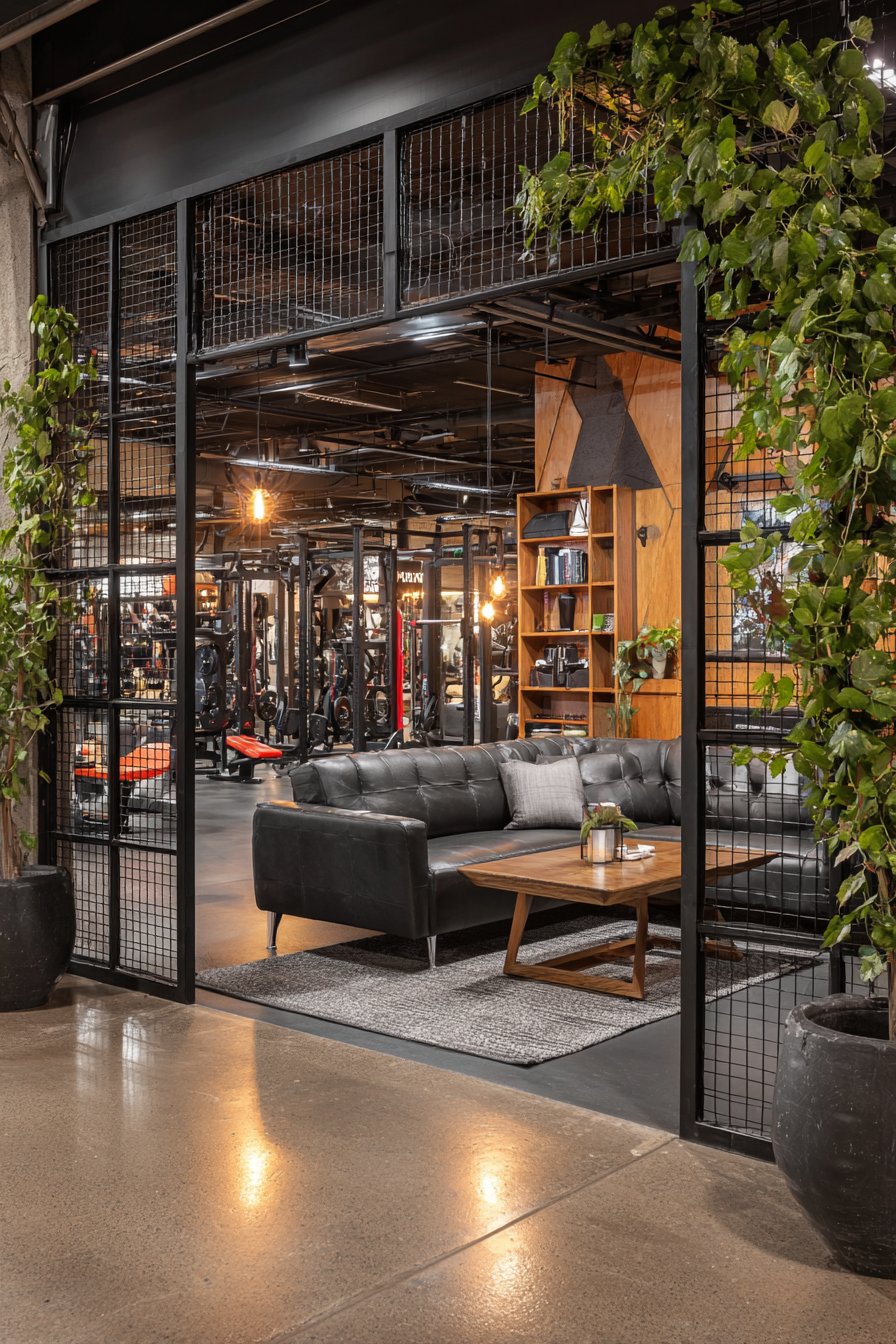
The semi-transparent quality of wire mesh creates interesting visual effects—solid enough to define zones clearly but open enough to maintain spatial connection. The black powder coating provides durability and consistent finish while creating strong graphic lines against white walls or lighter backgrounds. The grid pattern creates regular geometry that reads as orderly and intentional rather than chaotic, the repeating squares creating rhythmic visual patterns. The integration of climbing plants transforms purely industrial material into living element, the contrast between natural organic growth and manufactured geometric structure creating visual tension that keeps the design interesting.
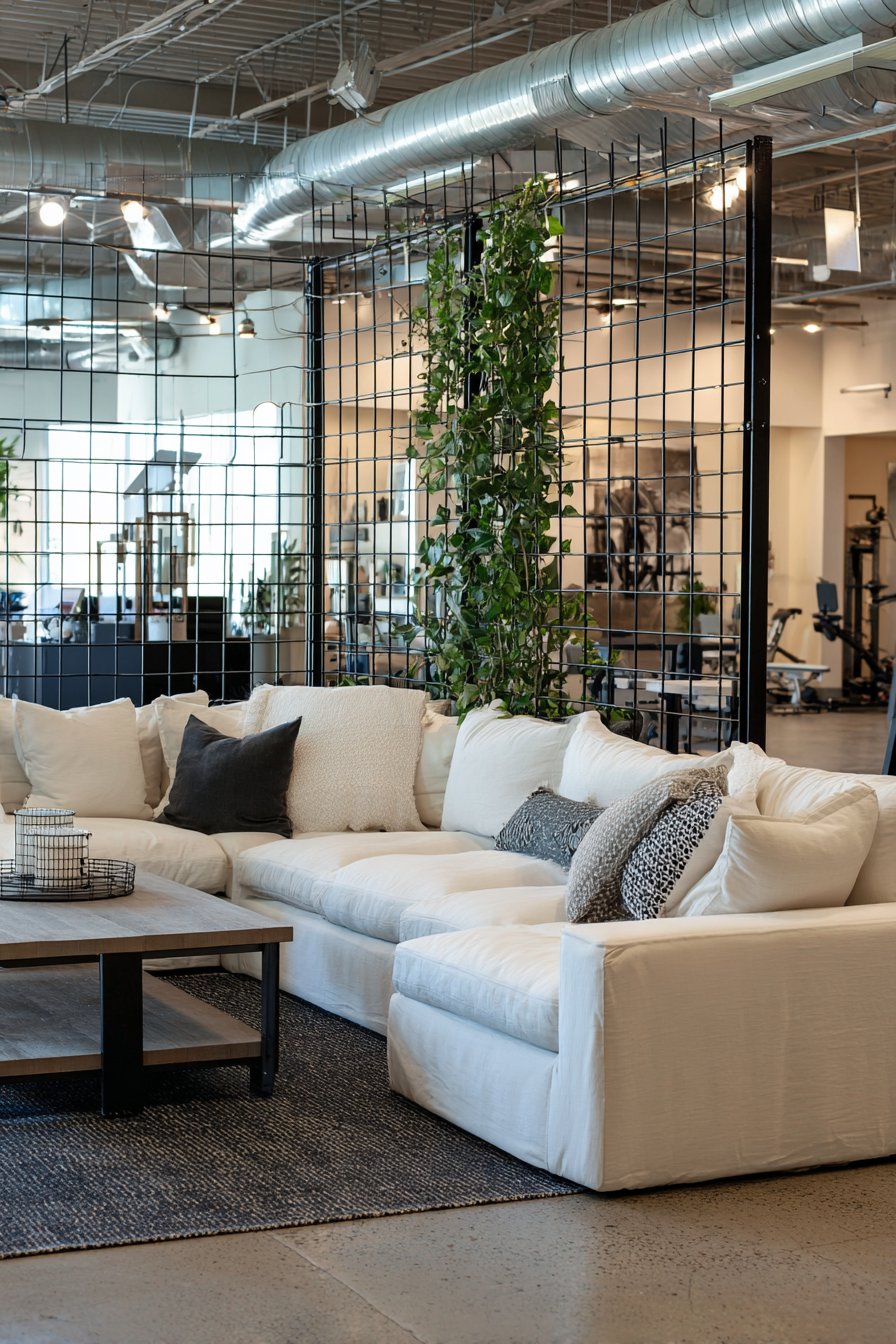
This partition style appeals to those drawn to urban industrial aesthetics, fitness enthusiasts who want dedicated workout spaces, or anyone appreciating honest materials and functional design. The transparency prevents the gym area from feeling isolated while the clear definition keeps workout equipment visually separated from living spaces. The ability to train climbing plants on the mesh creates built-in vertical garden without requiring separate support structures. The durability of powder-coated steel ensures longevity even in humid conditions from workout sessions. The raw material aesthetic celebrates function over decoration, perfect for spaces where authenticity and utility take precedence over traditional prettiness.
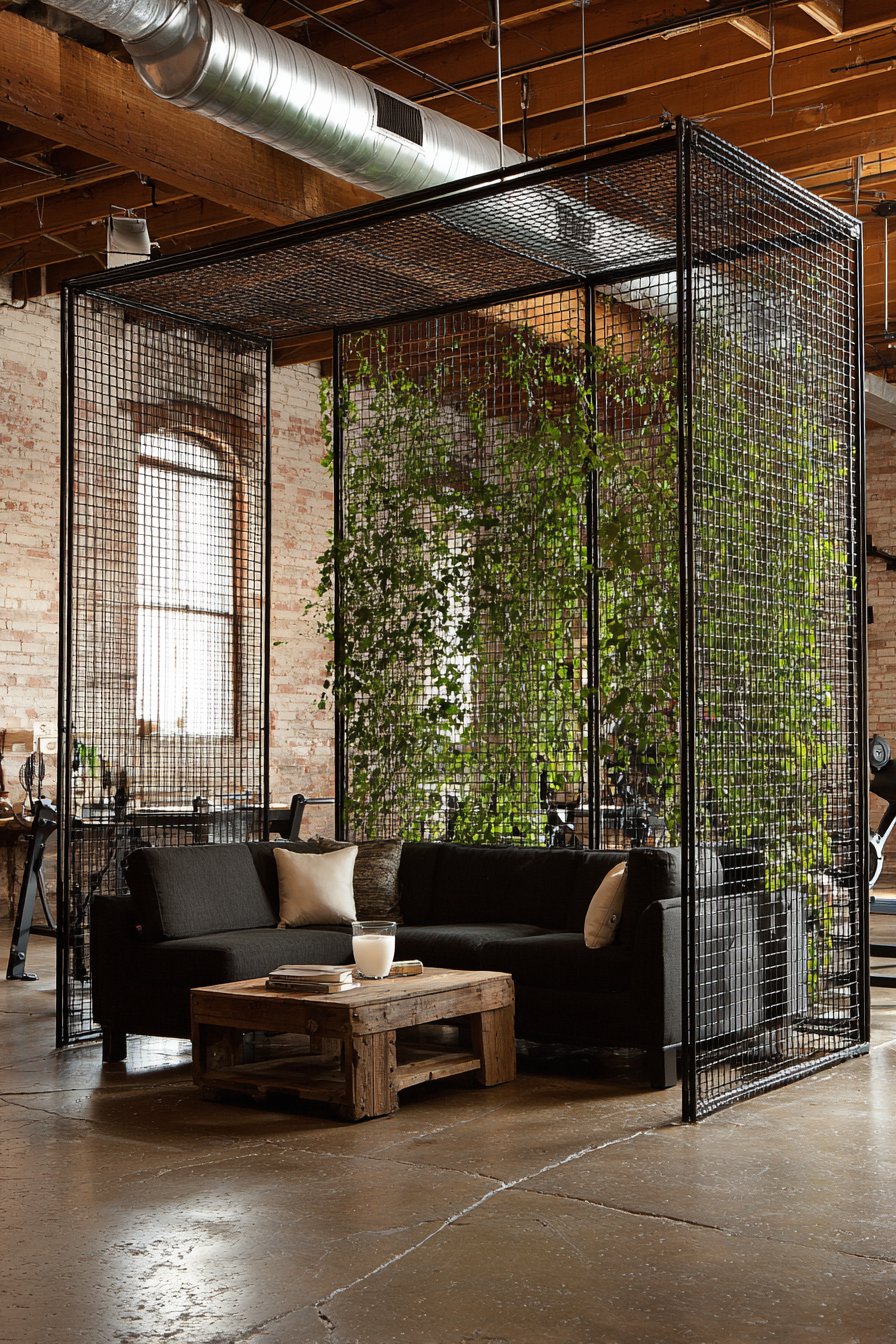
Key Design Tips: Choose powder-coated steel for rust resistance and durable finish. Ensure proper structural support for the mesh panel’s weight plus any plants. Consider wire gauge based on desired visual weight—thicker wire creates more substantial presence. Plan for adequate floor anchoring to prevent the panel from tipping. Consider how plants will be watered—have drainage plan to protect flooring. Choose climbing plants suited to indoor conditions and available light. Start plants in floor planters that position them to grow up the mesh. Consider the maintenance of keeping plants healthy and trimmed. Coordinate the black steel with other industrial elements like exposed pipes or metal shelving. Ensure adequate lighting for both gym function and plant health. Consider acoustic implications—wire mesh provides minimal sound dampening. Plan for how the partition interfaces with floor—direct contact or mounted with standoffs. Clean mesh regularly to remove dust that can accumulate in grid pattern. Consider safety if there are children who might be tempted to climb the mesh.
25. Living Moss Wall Partition
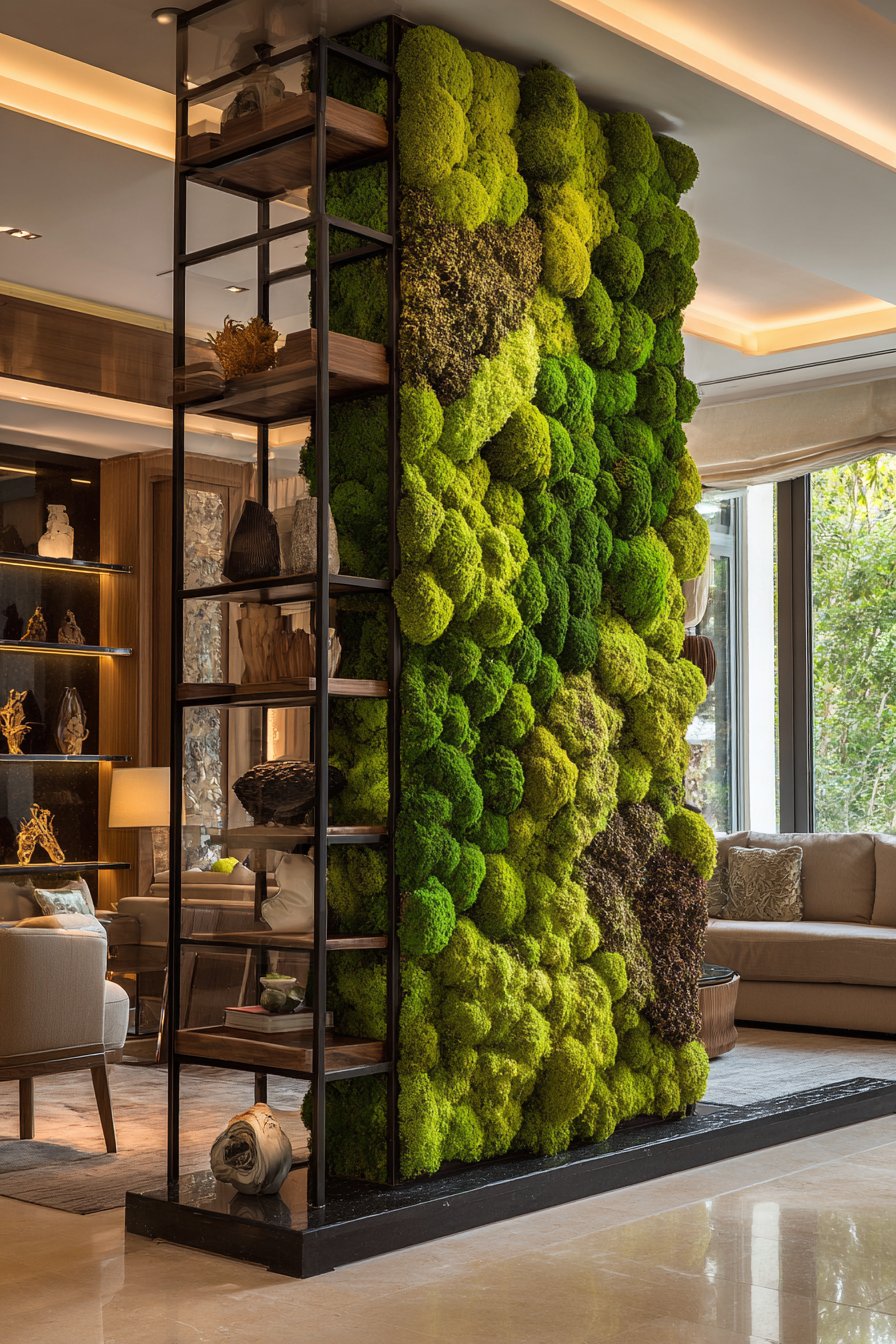
Biophilic design reaches its most dramatic expression in the living moss wall partition, an installation that brings forest-floor beauty into interior environments while providing wellness benefits beyond aesthetics. This design features preserved moss in varied green tones—from deep forest hues to bright lime shades—creating textured organic surface within black metal framing. The three-dimensional moss surface provides natural acoustic dampening benefits, absorbing sound that would otherwise reflect off hard surfaces. The maintenance-free botanical installation separates formal sitting area from casual family room, creating zones with distinct characters while introducing natural elements throughout. Integrated grow lights maintain the preserved moss’s appearance, ensuring consistent color and texture over time.
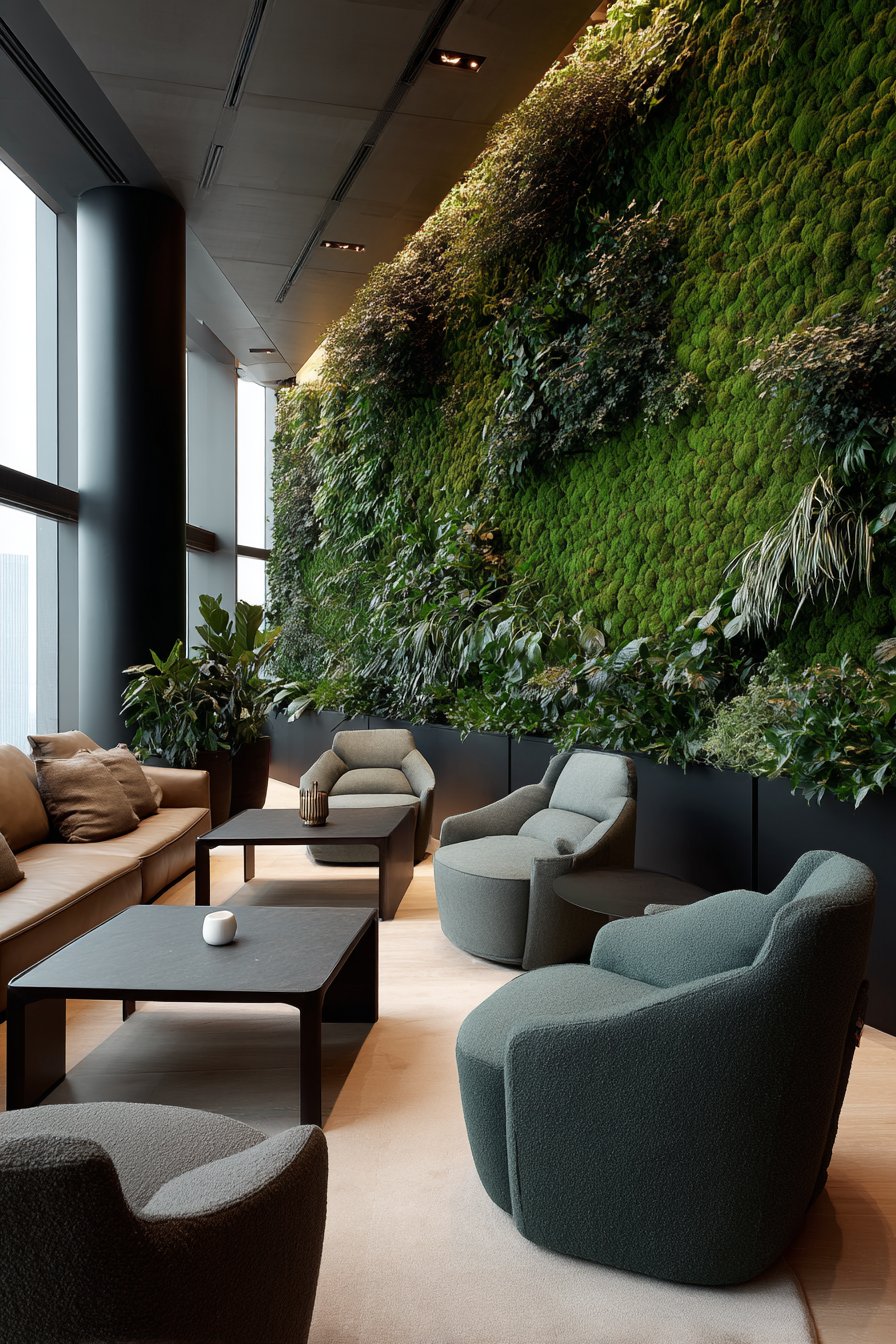
The sensory richness of moss walls engages multiple senses simultaneously. The visual texture—densely packed moss creating three-dimensional surfaces with infinite small variations—provides visual complexity that our brains find inherently satisfying. The varied green tones prevent monotony while remaining cohesive, the natural color palette promoting psychological calm and connection to outdoor environments. The slight sponginess of moss provides acoustic benefits, with the organic material absorbing sound waves and reducing echo in ways that smooth surfaces cannot. The knowledge that you’re surrounded by natural materials, even preserved ones, creates psychological benefits associated with biophilic design principles.
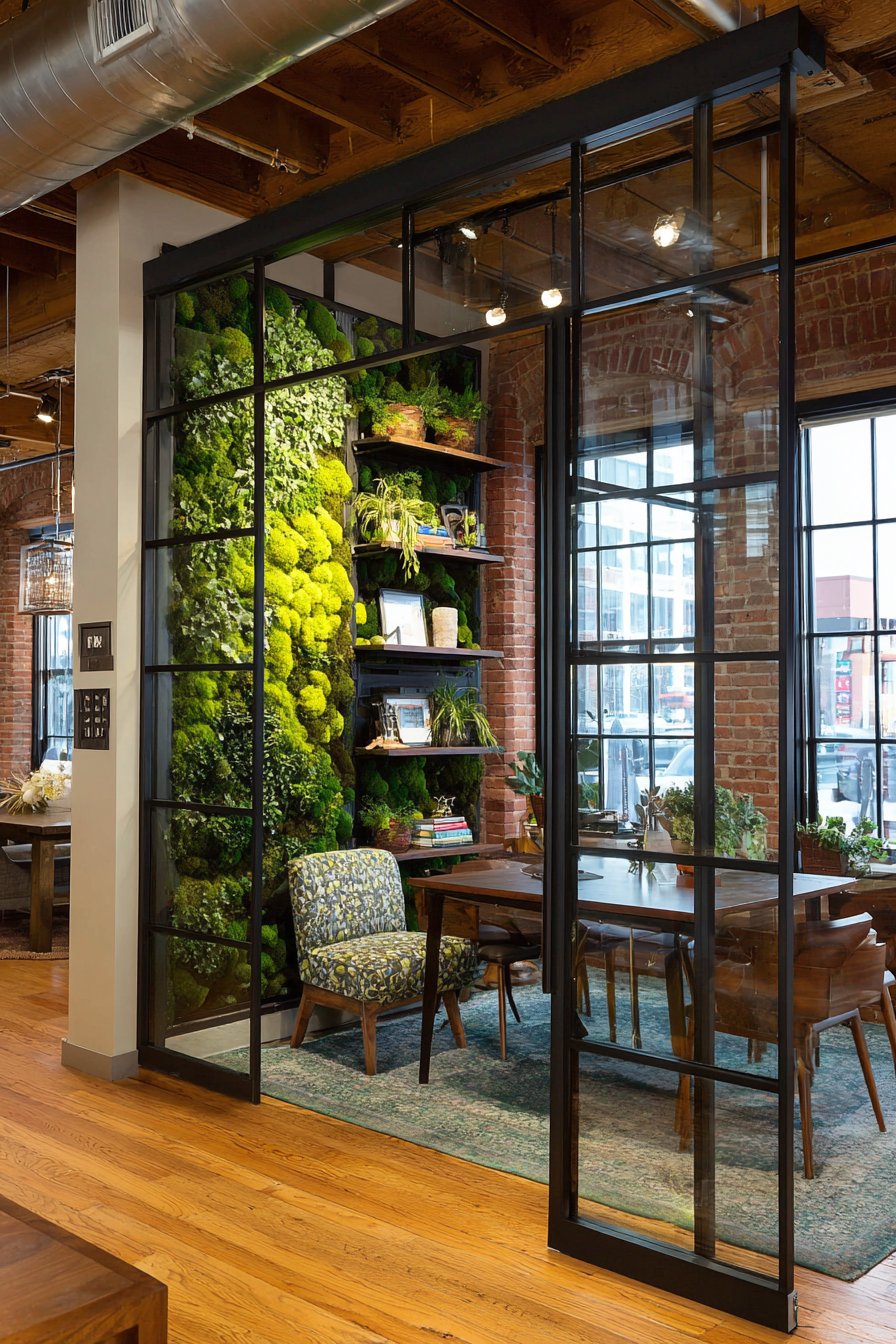
This partition style suits wellness-focused individuals, those with strong environmental values, or anyone seeking to bring nature indoors in dramatic fashion. The preserved moss requires no watering, soil, or typical plant maintenance, making it practical for those wanting natural aesthetics without gardening commitment. The black metal framing provides structural support while creating strong graphic lines that prevent the organic moss from appearing too casual or rustic. The substantial presence of a full moss wall creates focal points and conversation pieces, transforming ordinary room division into distinctive design features. The investment in quality moss installation pays dividends in uniqueness, wellness benefits, and enduring natural beauty.
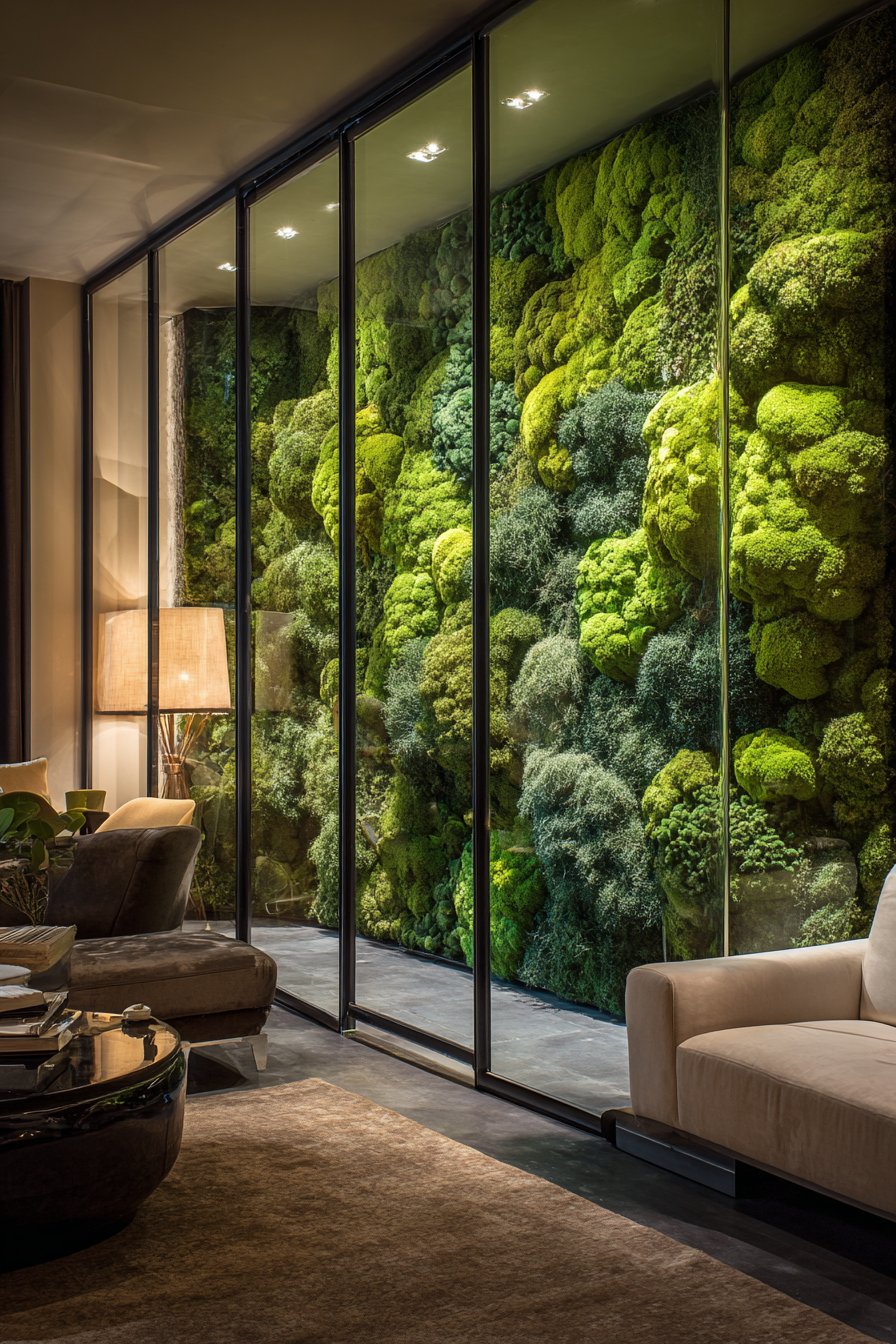
Key Design Tips: Source preserved moss from reputable suppliers who use safe preservation processes. Understand that preserved moss is no longer living—it won’t grow but also requires minimal maintenance. Ensure proper mounting structure for moss wall weight. Work with professionals experienced in moss wall installation for best results. Choose moss varieties with textures and colors that appeal to you—reindeer moss, sheet moss, and cushion moss offer different looks. Consider mixing moss types for varied texture. Plan for integrated grow lights if using living moss or preserve color in preserved moss. Keep moss walls away from direct sunlight which can fade colors. Avoid high-humidity areas as excessive moisture can damage preserved moss. Don’t place moss walls where they’ll be frequently touched—oils from hands can damage preservation. Consider acoustic goals when sizing moss wall—larger installations provide more sound absorption. Coordinate frame finish with other architectural elements. Budget appropriately as quality moss installations require professional expertise. Expect periodic maintenance to replace any sections that become damaged. Consider starting with smaller moss panels before committing to full wall installations.
Why These Living Room Partition Ideas Represent the Best Design Solutions
The collection of twenty-five living room partition ideas presented here represents the pinnacle of contemporary spatial design thinking, encompassing every major aesthetic movement, material innovation, and functional approach currently shaping residential interiors. These partition solutions demonstrate that room division has evolved far beyond simple walls or curtains into sophisticated design elements that enhance spaces aesthetically, functionally, and psychologically. From industrial metal frameworks to organic living walls, from traditional shoji screens to innovative aquarium installations, these ideas span the full spectrum of possibility while maintaining practical applicability for real homes and genuine lifestyles.
The material diversity showcased throughout these partition concepts reflects both technological advancement and renewed appreciation for traditional craftsmanship. Modern solutions like laser-cut metal panels and glass block walls demonstrate how contemporary manufacturing techniques enable intricate designs and precise installations previously impossible or prohibitively expensive. Simultaneously, the inclusion of handcrafted elements like macrame dividers, carved wooden screens, and reclaimed barn wood partitions celebrates artisanal traditions and authentic materials that mass production cannot replicate. This balance between innovation and heritage ensures that regardless of your personal aesthetic preferences—whether you gravitate toward cutting-edge contemporary design or embrace time-honored traditional approaches—you’ll find partition solutions that resonate with your vision.
The functional versatility demonstrated across these designs addresses the multifaceted challenges of contemporary living. Many modern homes feature open floor plans that maximize spatial flow and natural light but simultaneously create challenges around privacy, noise management, and territorial definition. The partition ideas presented here solve these problems through various approaches: transparent materials like glass and sheer curtains maintain visual connection while providing separation; substantial elements like stone walls and fireplaces create strong zoning with architectural presence; flexible solutions like sliding doors and folding screens adapt to changing needs throughout the day. Storage-integrated partitions—including bookshelf dividers, pegboard systems, and modular cube arrangements—address space constraints by combining room division with organizational infrastructure. These multifunctional approaches maximize value and utility in every square foot, crucial considerations in homes where space comes at premium prices.
The biophilic design elements woven throughout multiple partition concepts reflect growing recognition of nature’s psychological and physiological benefits. Living wall partitions, moss installations, rope dividers with hanging plants, and aquarium features introduce natural elements that improve air quality, reduce stress, and create meaningful connections to the organic world. Research consistently demonstrates that biophilic design reduces anxiety, improves concentration, accelerates healing, and enhances overall wellbeing. In urban environments where access to nature may be limited, these partition designs bring forest floors, flowing water, and living greenery into daily domestic experience. The integration of natural materials like wood, stone, cotton, and jute provides similar benefits even when not living—the textures, colors, and authentic qualities of organic materials create psychological responses that synthetic alternatives cannot match.
The style diversity encompassed in these partition ideas ensures relevance regardless of existing interior design schemes or personal aesthetic preferences. Minimalist enthusiasts will appreciate clean-lined solutions like white panel partitions, Scandinavian pegboard systems, and simple sheer curtains. Those drawn to maximalist expression can embrace ornate carved screens, elaborate macrame installations, and decorative metal panels. Industrial aesthetic lovers find perfect expression in exposed brick columns, wire mesh dividers, and metal frame partitions. Traditional sensibilities appreciate shoji screens, stacked stone walls, and reclaimed barn wood installations. Contemporary spaces benefit from glass block walls, asymmetric shelving units, and linear fireplace features. Bohemian spirits embrace rope curtains, living walls, and fabric folding screens. This comprehensive style range demonstrates that effective spatial division transcends aesthetic boundaries—good design principles apply universally even as surface treatments vary dramatically.
The flexibility spectrum represented—from permanent architectural installations to easily relocated portable solutions—addresses different commitment levels and lifestyle situations. Homeowners planning long-term residence can invest in substantial permanent partitions like double-sided fireplaces, brick veneer columns, or glass block walls that add genuine architectural value and appeal to future buyers. Those in rental situations or anticipating lifestyle changes benefit from portable options like folding screens, tension-mounted curtains, or freestanding bookshelf units that move or adapt as circumstances evolve. This range ensures that regardless of your housing situation, budget constraints, or future plans, appropriate partition solutions exist that balance your need for spatial definition with practical realities.
The lighting integration throughout many designs demonstrates sophisticated understanding of illumination’s role in creating ambiance and functionality. Built-in LED strips in shelving units, backlighting behind decorative screens, pendant fixtures above half-walls, and ambient glow from aquarium installations all show how partitions can actively contribute to lighting schemes rather than merely occupying space. The interplay between partition materials and light—whether shadows cast through rope dividers, luminosity of frosted glass, or highlights on textured stone—creates dynamic environments that change throughout the day. This attention to lighting transforms partitions from static dividers into living elements that respond to and shape their environments.
The acoustic considerations addressed by various partition designs reflect growing awareness of sound management’s importance in open-plan living. Soft materials like fabric screens, macrame hangings, and moss walls absorb sound waves, reducing echo and creating quieter environments. Substantial elements like stone walls, bookshelf dividers filled with books, and double-sided fireplaces provide meaningful sound barriers between zones. These acoustic properties prove particularly valuable in homes where multiple activities occur simultaneously—work calls while children play, television viewing during meal preparation, music practice while others read—the right partition can significantly reduce acoustic conflicts that mar open-plan living.
The sustainability themes running through multiple partition concepts reflect contemporary environmental consciousness and desire for responsible consumption. Reclaimed barn wood installations prevent historical materials from entering landfills while preserving character-rich timber. Living wall partitions improve indoor air quality naturally. Modular systems allow reconfiguration without replacement. Preserved moss walls require no water consumption for maintenance. Natural materials like bamboo, jute, cotton, and stone represent renewable or abundant resources. This environmental thoughtfulness adds meaningful depth to design choices, allowing homeowners to feel their spaces reflect their values while serving practical needs.
The investment range represented—from budget-friendly DIY solutions to professional custom installations—ensures accessibility regardless of financial resources. Simple tension-mounted curtain systems or basic folding screens cost hundreds rather than thousands of dollars, making spatial definition accessible even on tight budgets. Mid-range options like bookshelf units, barn door systems, or pegboard installations offer excellent value with professional appearance. High-end solutions including custom aquarium partitions, double-sided fireplaces, or living moss walls require substantial investment but deliver unmatched visual impact and architectural presence. This financial spectrum demonstrates that effective spatial division exists at every price point—budget constraints should never prevent thoughtful zoning.
These partition ideas succeed because they address fundamental human needs beyond mere spatial division. We need privacy for focused work, intimate conversations, and personal activities. We need defined territories that signal different functions and appropriate behaviors—where we relax versus where we work, where we entertain versus where we retreat. We need visual interest and beauty that make daily life more pleasant. We need flexibility to adapt spaces as our needs evolve. We need connection to nature and natural materials that ground us and promote wellbeing. We need solutions that reflect our personal style and values, making our homes true expressions of identity. These twenty-five partition concepts address all these needs while maintaining practical functionality and aesthetic appeal.
The enduring relevance of these partition approaches stems from their foundation in timeless design principles rather than fleeting trends. Proportion, scale, material honesty, functional integration, and thoughtful detail never go out of style—even as surface treatments and specific aesthetics evolve, these fundamental principles remain constant. A well-designed partition from any of these categories will remain effective and attractive for decades because it addresses core spatial needs and human responses to environment. This timeless quality makes partition investments wise rather than risky, improvements that enhance daily living and property value rather than date spaces or require frequent replacement.
The inspirational value of these diverse partition concepts lies not just in their direct replication but in the creative possibilities they suggest. Each design presented here can be modified, combined with elements from others, or adapted to specific circumstances and constraints. The geometric metal frame might inspire a custom wood version; the living wall concept could scale down to smaller moss panels; the barn wood aesthetic might translate to reclaimed wood shutters. The true value lies in understanding the principles each partition embodies—transparency versus opacity, permanent versus flexible, decorative versus utilitarian, natural versus manufactured—and applying these insights to your unique spatial challenges and design vision.
Conclusion
Living room partitions have evolved from purely functional necessities into sophisticated design elements that shape how we experience and use our homes. The twenty-five concepts explored in this comprehensive guide demonstrate the remarkable breadth of creative solutions available to homeowners seeking to define spaces without sacrificing openness, light, or aesthetic appeal. From the industrial edge of wire mesh dividers to the organic serenity of living moss walls, from the time-honored beauty of Japanese shoji screens to the contemporary innovation of aquarium installations, these partition ideas prove that room division offers opportunities for artistic expression and functional enhancement.
The most successful partition designs balance multiple considerations simultaneously: they define territories while maintaining connection, provide privacy without isolation, add architectural interest while serving practical needs, and reflect personal style while coordinating with overall design schemes. Whether you’re working with a compact studio apartment requiring flexible zoning, an expansive open-concept home needing subtle definition, or a traditional layout seeking updated flow, thoughtful partition selection transforms spatial challenges into design opportunities. The key lies in understanding your specific needs—both functional and aesthetic—and choosing solutions that address these requirements while enhancing your daily living experience.
As you consider implementing partition ideas in your own space, remember that the best solution balances your lifestyle needs, aesthetic preferences, budget realities, and long-term vision. Don’t be afraid to experiment, to combine elements from different approaches, or to adapt concepts to your unique circumstances. Start with clear identification of what you want your partition to achieve—storage, privacy, visual screening, architectural presence, or multiple goals simultaneously—then select materials, styles, and configurations that fulfill these purposes while bringing beauty into your everyday environment. Your living room partition should enhance how you live, not just how your space looks, creating functional beauty that serves you well for years to come.


