
White curtains have long been celebrated as one of the most versatile and transformative elements in interior design. Their ability to soften harsh lines, filter natural light, and create an atmosphere of serenity makes them an essential component in living room design. Whether you’re drawn to the crisp minimalism of Scandinavian interiors, the relaxed charm of coastal living, or the sophisticated elegance of traditional spaces, white curtains offer a canvas upon which countless design stories can unfold. They possess the remarkable ability to make rooms feel larger, brighter, and more inviting while serving as the perfect backdrop for both bold statement pieces and subtle, understated décor.
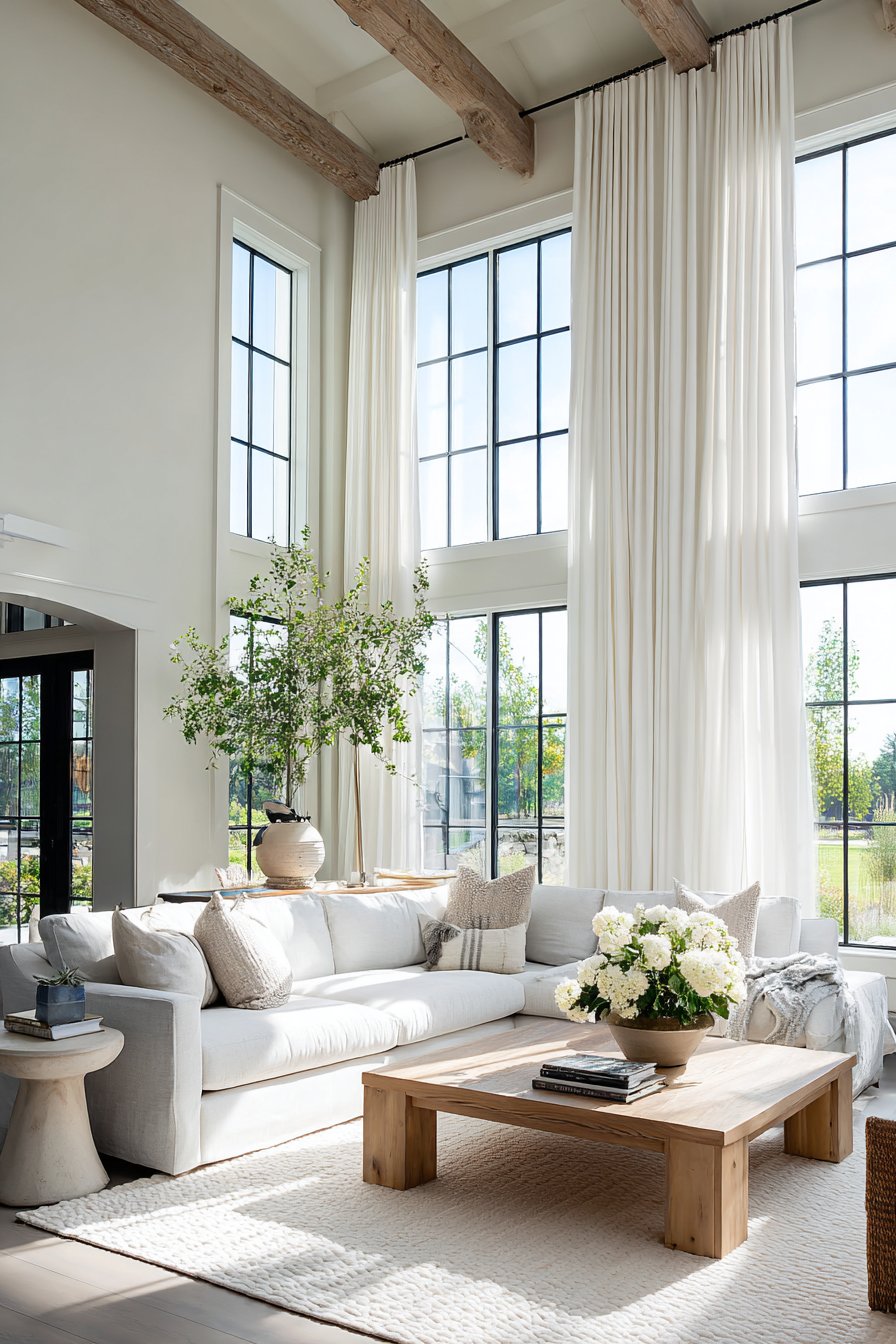
The beauty of white curtains lies not only in their aesthetic appeal but also in their remarkable adaptability. From sheer voiles that dance in the breeze to heavyweight linens that provide privacy and insulation, white curtains come in countless fabrications, each offering unique benefits and visual qualities. They can anchor a monochromatic color scheme, provide contrast against dark walls, or blend seamlessly into light, airy spaces. The right white curtains can transform harsh sunlight into a soft, diffused glow, create the illusion of higher ceilings when hung from ceiling to floor, and even serve functional purposes beyond their decorative appeal.
In this comprehensive guide, we’ll explore twenty-one distinct approaches to incorporating white curtains into your living room design. Each concept demonstrates how this seemingly simple design element can be adapted to suit different architectural styles, personal preferences, and practical needs. From small apartment solutions to grand formal spaces, from bohemian retreats to industrial lofts, you’ll discover how white curtains can elevate your living room while maintaining both beauty and functionality. These ideas will inspire you to reimagine your own space and demonstrate the transformative power of thoughtful window treatments.

1. Scandinavian Serenity with Sheer White Linen
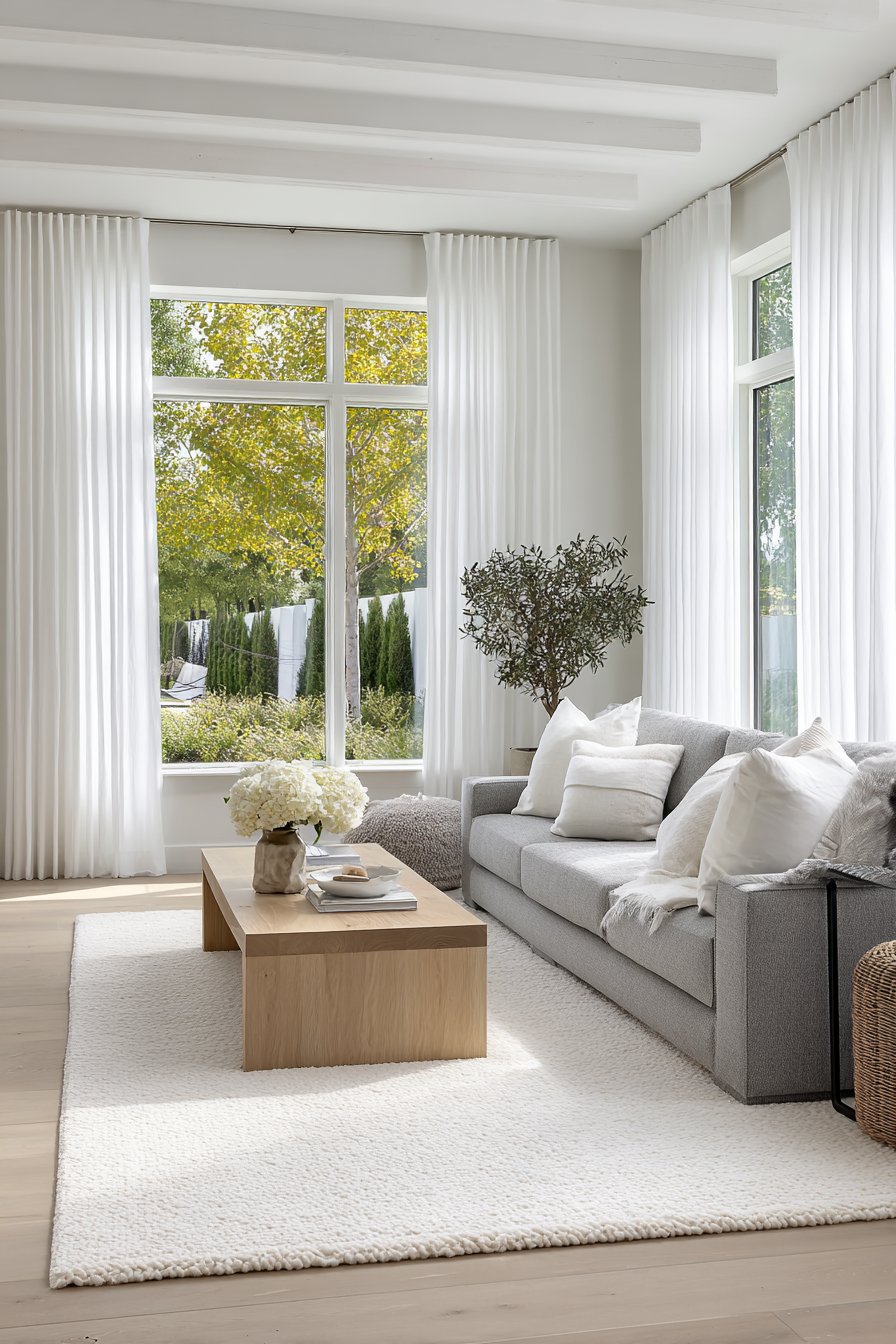
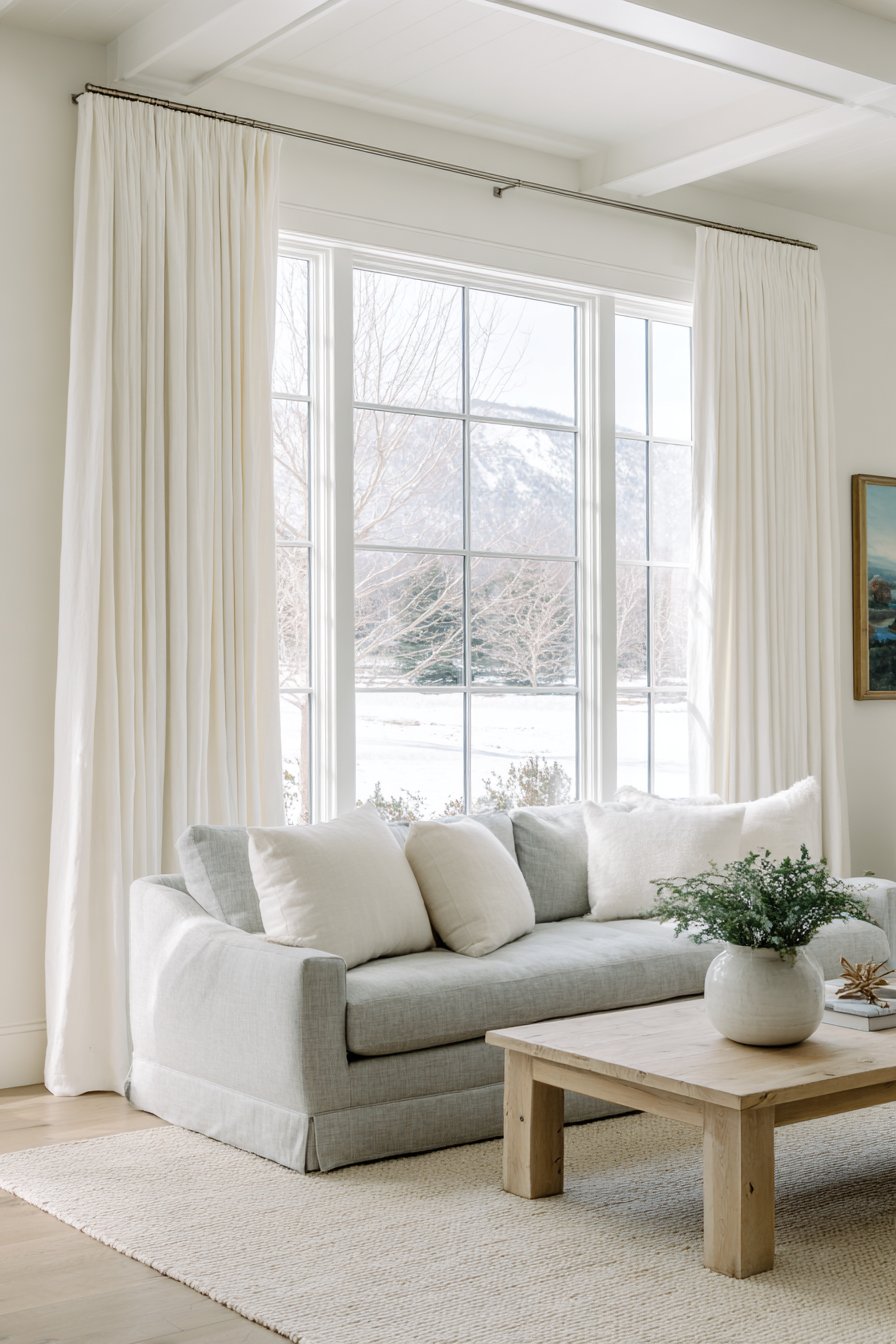
The essence of Scandinavian design reveals itself beautifully in a living room where sheer white Belgian linen curtains take center stage. These curtains, suspended from ceiling-mounted brushed nickel rods, create an immediate sense of height and airiness that characterizes Nordic interiors. The natural fibers of Belgian linen possess a distinctive texture that becomes even more apparent when backlit by sunlight, with each weave visible and creating subtle patterns of light and shadow across the floor. This organic quality prevents the white palette from feeling sterile, instead imbuing the space with warmth and authenticity.
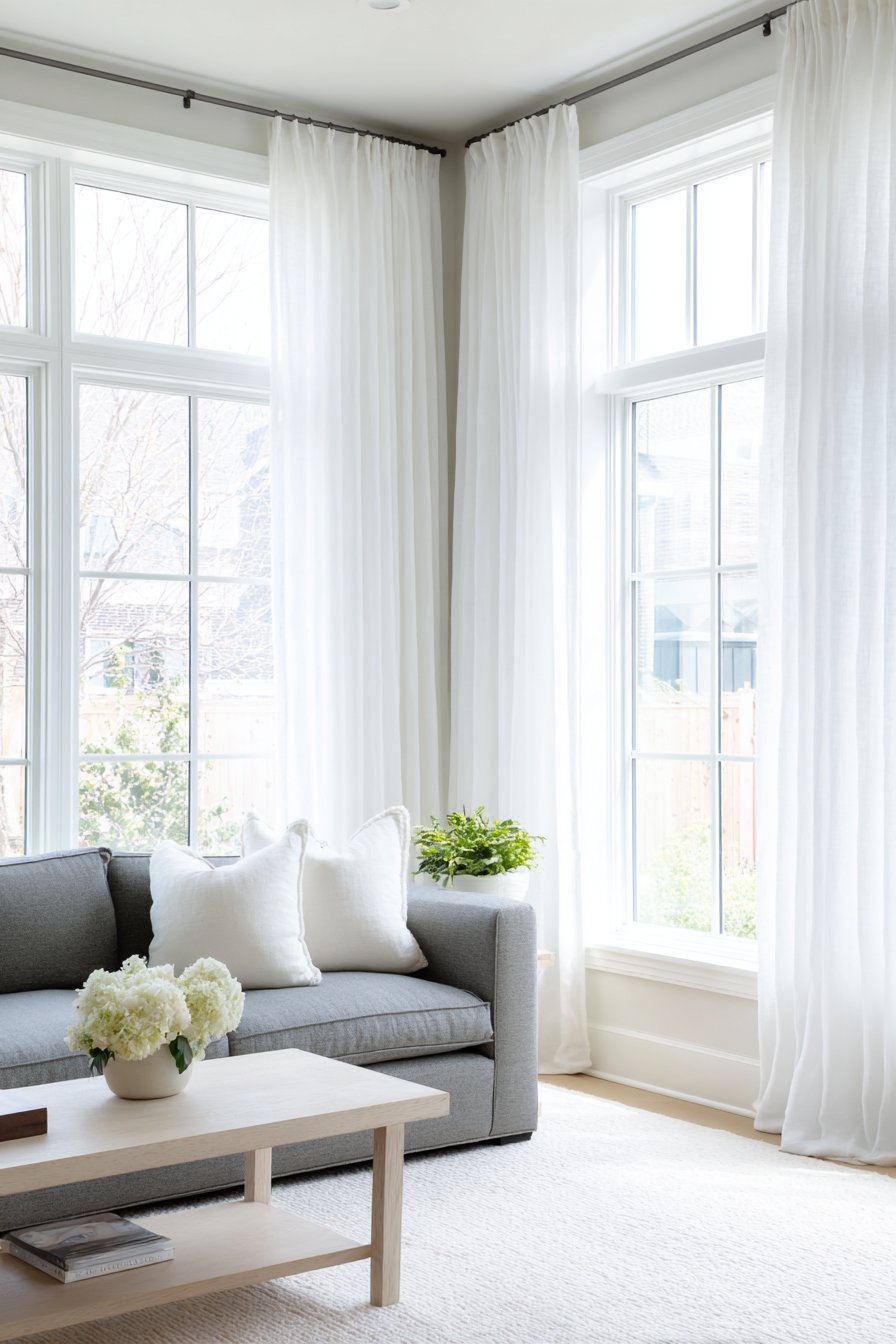
The curtains frame expansive windows that serve as the room’s primary light source, a fundamental principle in Scandinavian design where maximizing natural light compensates for long, dark winters. Beneath these flowing panels sits a minimalist grey sofa adorned with white throw pillows, its clean lines and neutral tones allowing the curtains to remain the focal point. A light oak coffee table rests on a cream wool rug, introducing natural wood tones that ground the ethereal quality of the white textiles. The interplay between soft fabrics and solid wood creates the balanced harmony that defines hygge—the Danish concept of cozy contentment.
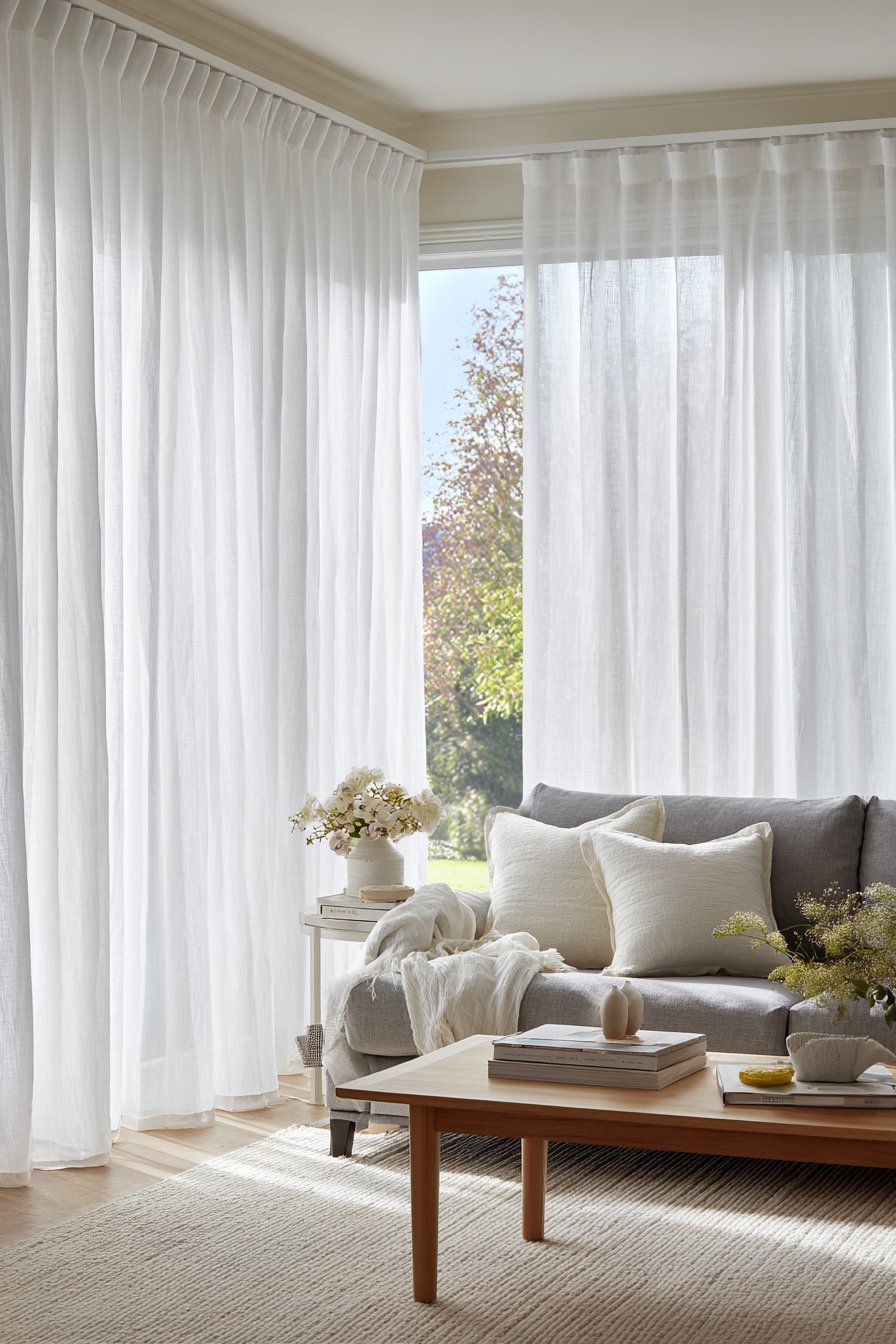
The visual lightness achieved through sheer white curtains makes this approach particularly effective in smaller living rooms or spaces with limited natural light. The translucent nature of the fabric allows sunlight to penetrate while still providing a degree of privacy, creating that characteristic Scandinavian glow that makes spaces feel larger and more welcoming. During evening hours, interior lighting filters through the curtains outward, creating a warm beacon effect that’s both beautiful and inviting. This design demonstrates how white curtains can serve as both functional window coverings and essential architectural elements.
Key Design Tips:
- Install curtain rods at ceiling height rather than just above the window frame to maximize the perception of vertical space and create drama
- Choose Belgian linen or similar natural fiber curtains for authentic texture that prevents white from appearing flat or clinical
- Maintain a neutral color palette throughout with careful attention to varying tones of white, cream, and grey to create depth without introducing color
- Position furniture to take advantage of natural light filtered through the curtains, creating comfortable reading nooks and conversation areas
- Layer textures through rugs, throws, and cushions to add warmth while maintaining the minimalist aesthetic
2. Layered Luxury with Dual White Treatments
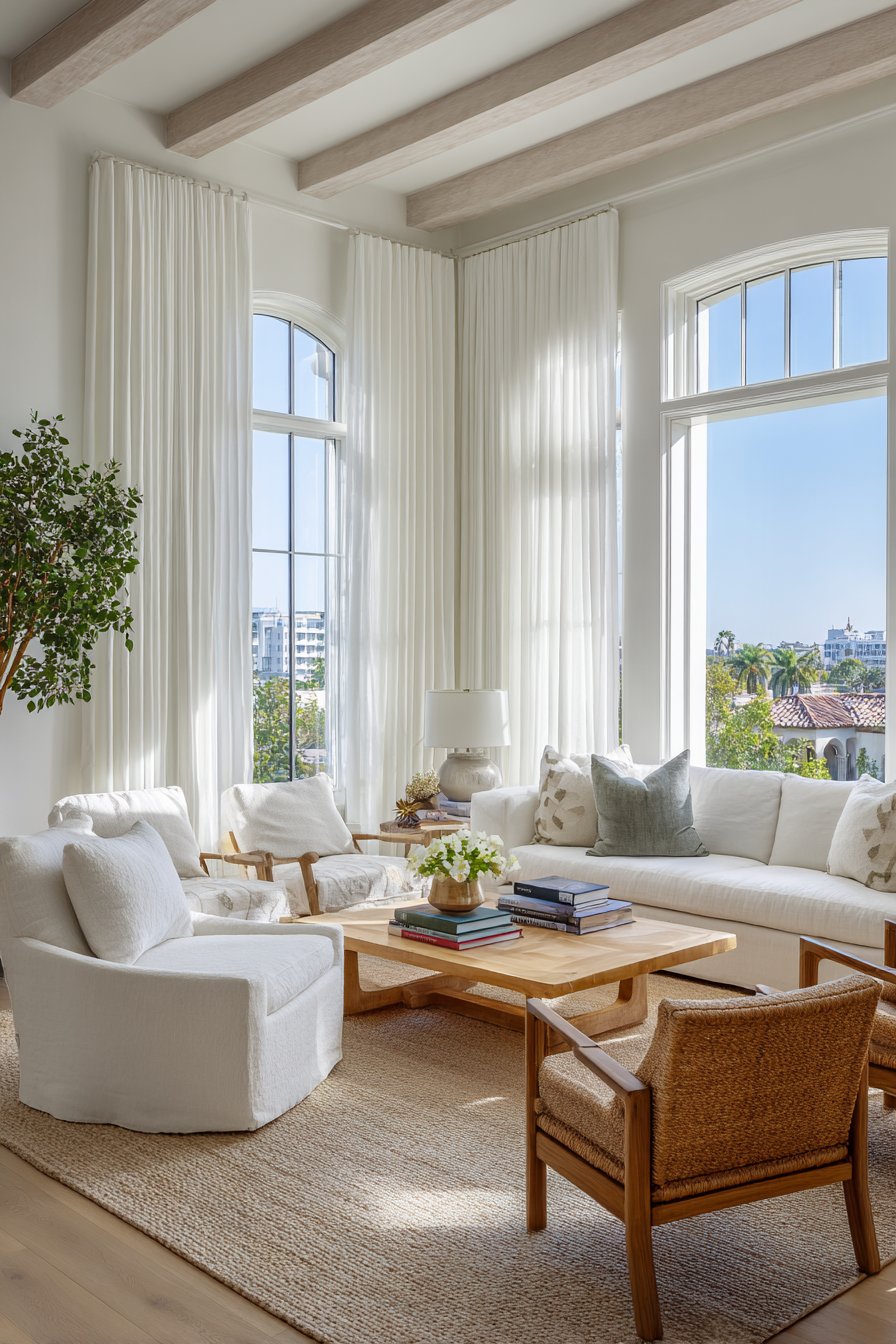
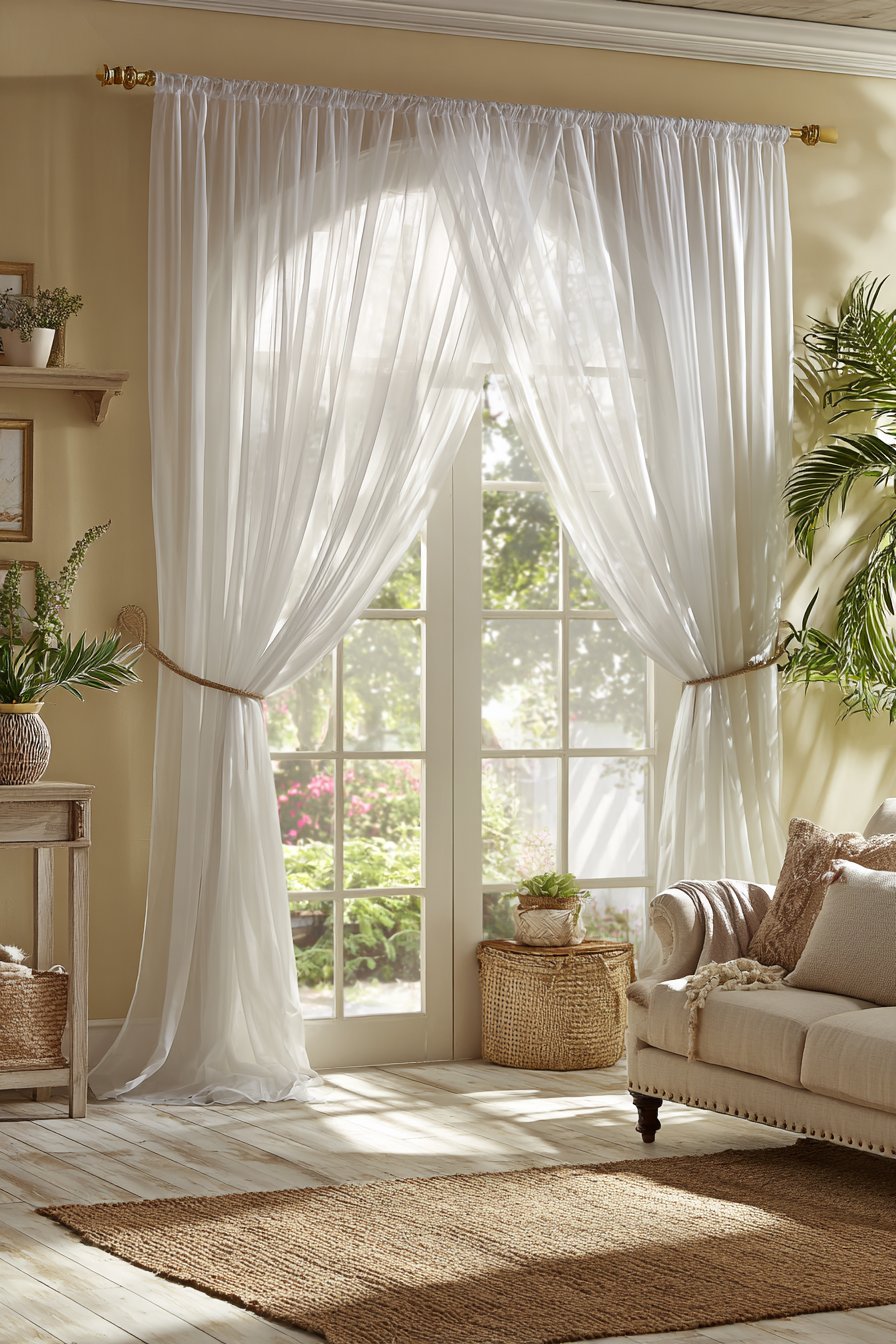
Sophisticated window dressing reaches new heights when sheer white voile curtains are paired with heavier white cotton drapes on a dual rod system. This layered approach offers both aesthetic appeal and practical functionality, allowing homeowners to adjust light levels and privacy throughout the day. The sheer inner layer provides daytime privacy while maintaining visibility and light transmission, while the outer cotton drapes can be drawn for complete privacy, light blocking, or simply to create a more formal, finished appearance during evening hours.
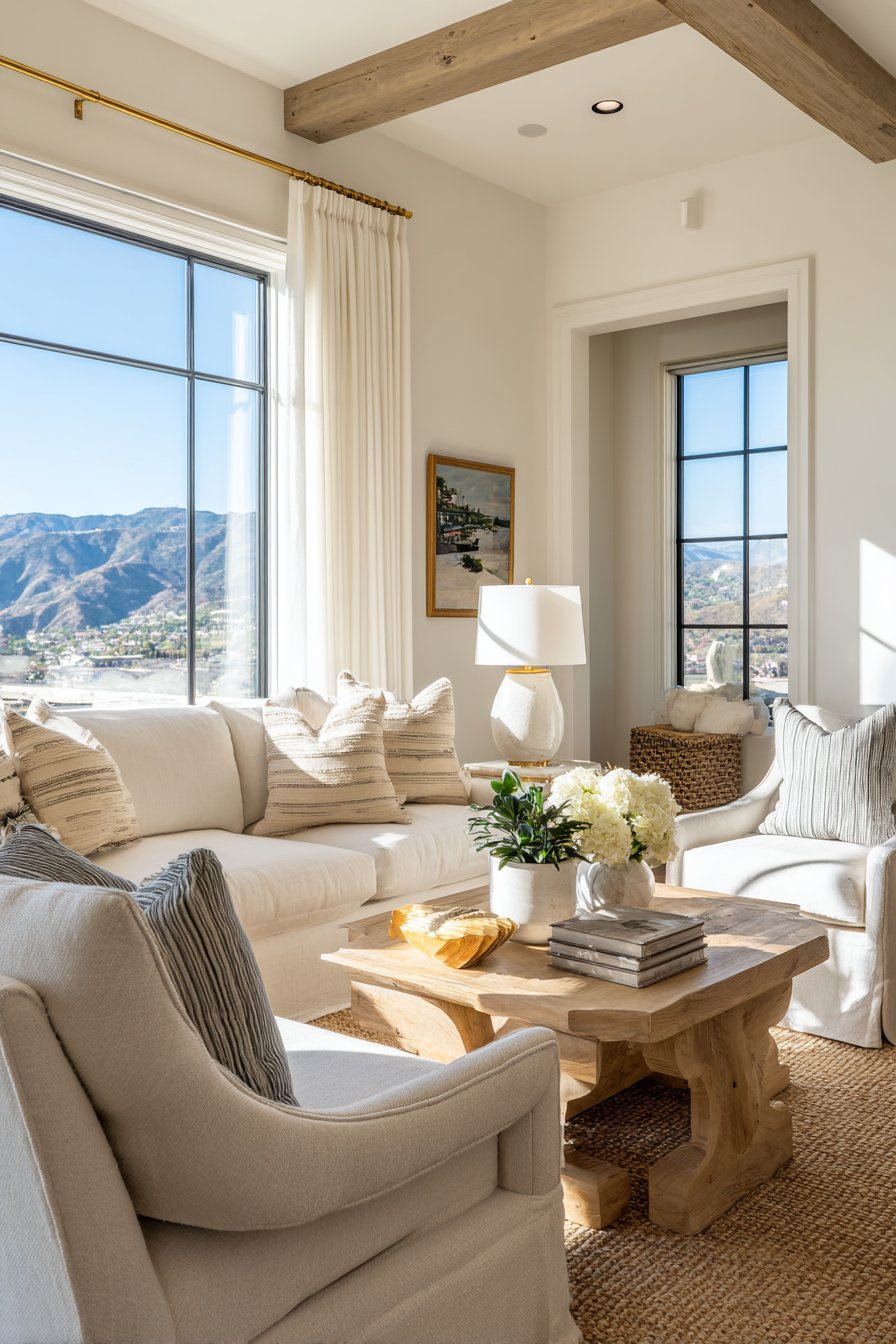
The elegant living room that houses these layered treatments features a carefully curated neutral palette with beige upholstered furniture that complements rather than competes with the window treatments. Natural jute rugs ground the space with organic texture, while whitewashed wood floors reflect light upward, amplifying the brightness introduced by the white curtains. This combination of materials creates subtle tonal variations that prevent the monochromatic scheme from feeling monotonous. Each element contributes its own texture—the smooth cotton drapes, the gauzy voile sheers, the nubby jute, and the grainy wood—building a rich sensory experience.
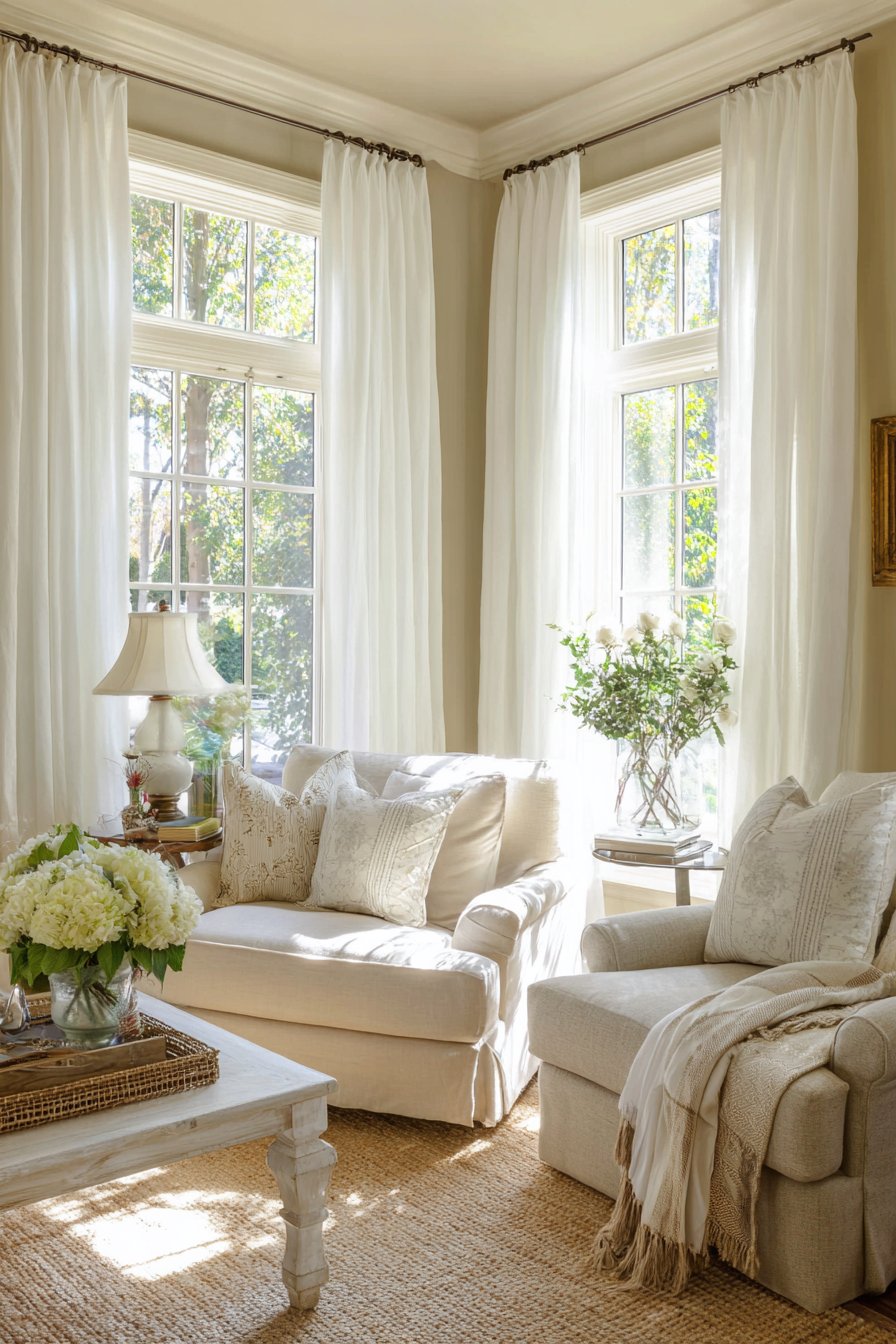
Golden hour sunlight streaming through these layered white curtains creates one of the most magical effects in interior design. The combination of sheer and opaque fabrics creates dimensional shadows and highlights, with the heavier outer drapes casting deeper shadows along their folds while the inner sheers glow luminously. This interplay of light and fabric transforms throughout the day, ensuring the living room never appears static but instead evolves with natural light patterns. The investment in dual treatments pays dividends not only in functionality but in the ever-changing visual interest they provide.
Key Design Tips:
- Select complementary white fabrics with different weights and textures to create visual interest while maintaining color cohesion
- Install a quality dual rod system with smooth operation mechanisms to ensure frequent adjustments remain effortless
- Consider the transparency level of sheer curtains carefully—too transparent sacrifices privacy while too opaque defeats the purpose of layering
- Measure precisely to ensure outer drapes hang slightly wider and longer than inner sheers for proper proportions
- Train the curtains after installation by steaming and arranging folds to maintain their elegant draping qualities
3. Modern Farmhouse Charm with Textured Linen
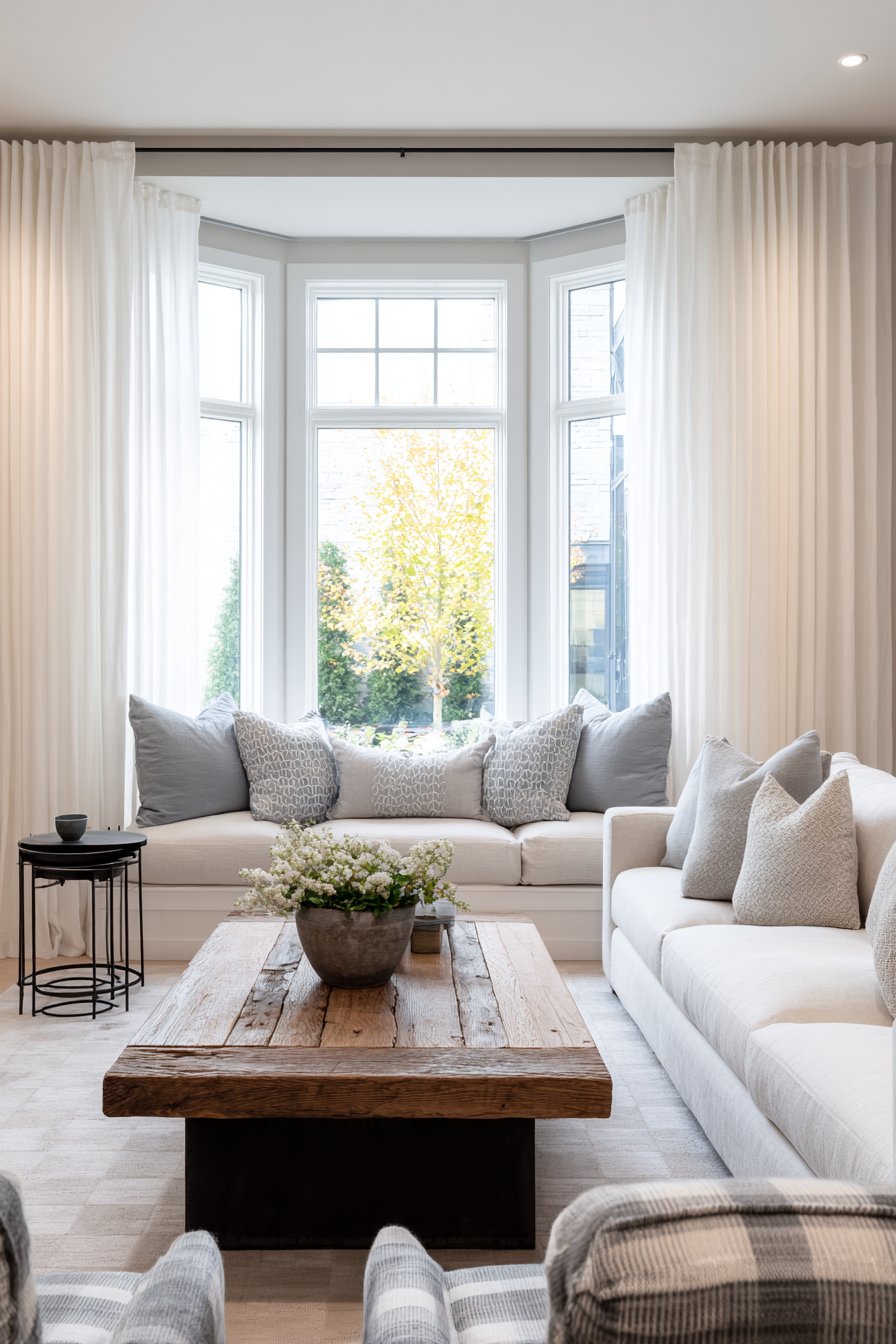
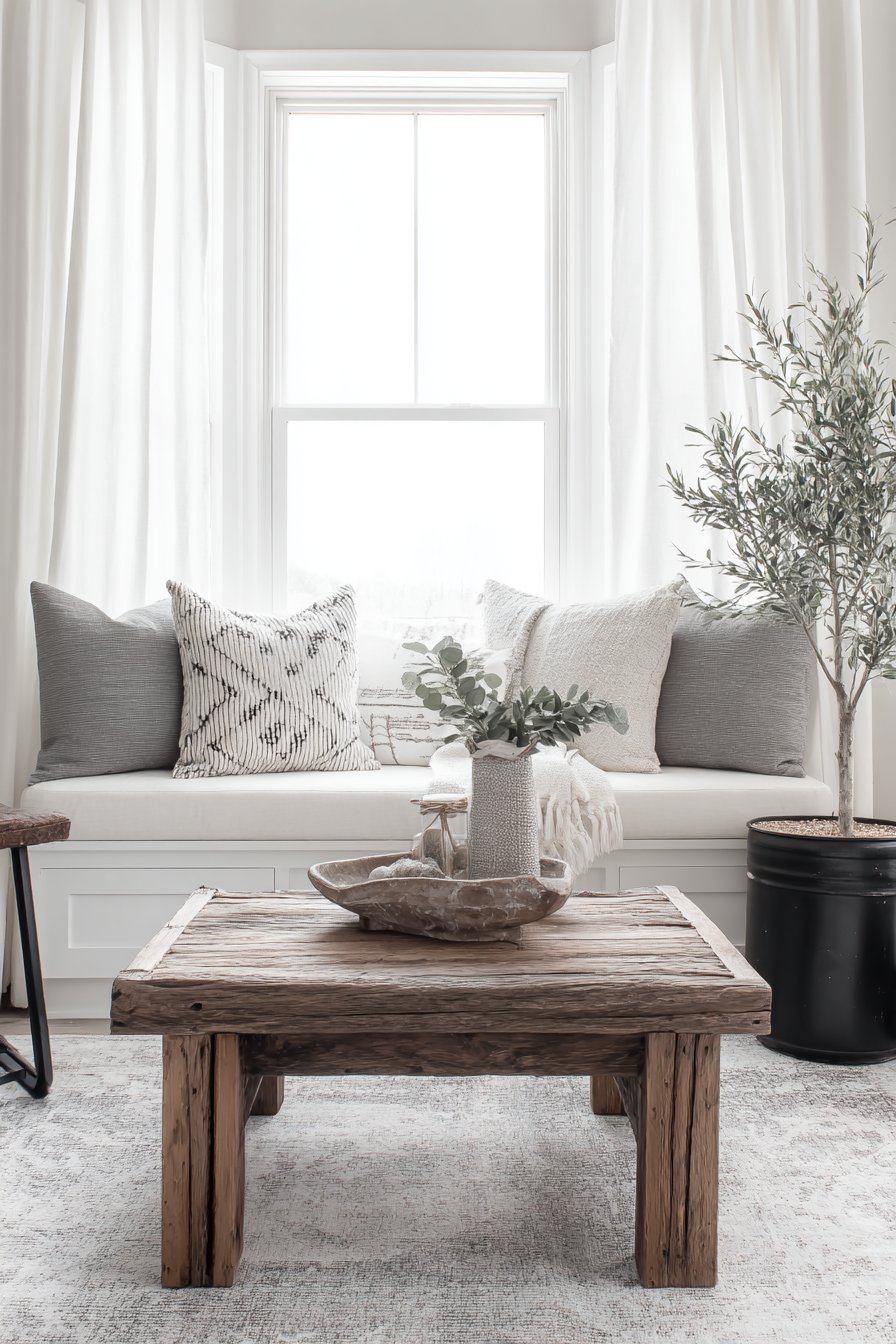
Modern farmhouse style finds perfect expression through floor-length white linen curtains that embrace natural wrinkles and organic texture rather than fighting against them. These curtains, deliberately left unpressed, capture the relaxed, lived-in quality that defines authentic farmhouse aesthetics. The subtle creases catch light differently than smooth fabrics, creating a play of highlights and shadows that adds depth and character. This approach celebrates the inherent qualities of natural materials rather than trying to force them into unnatural perfection—a philosophy central to farmhouse design.
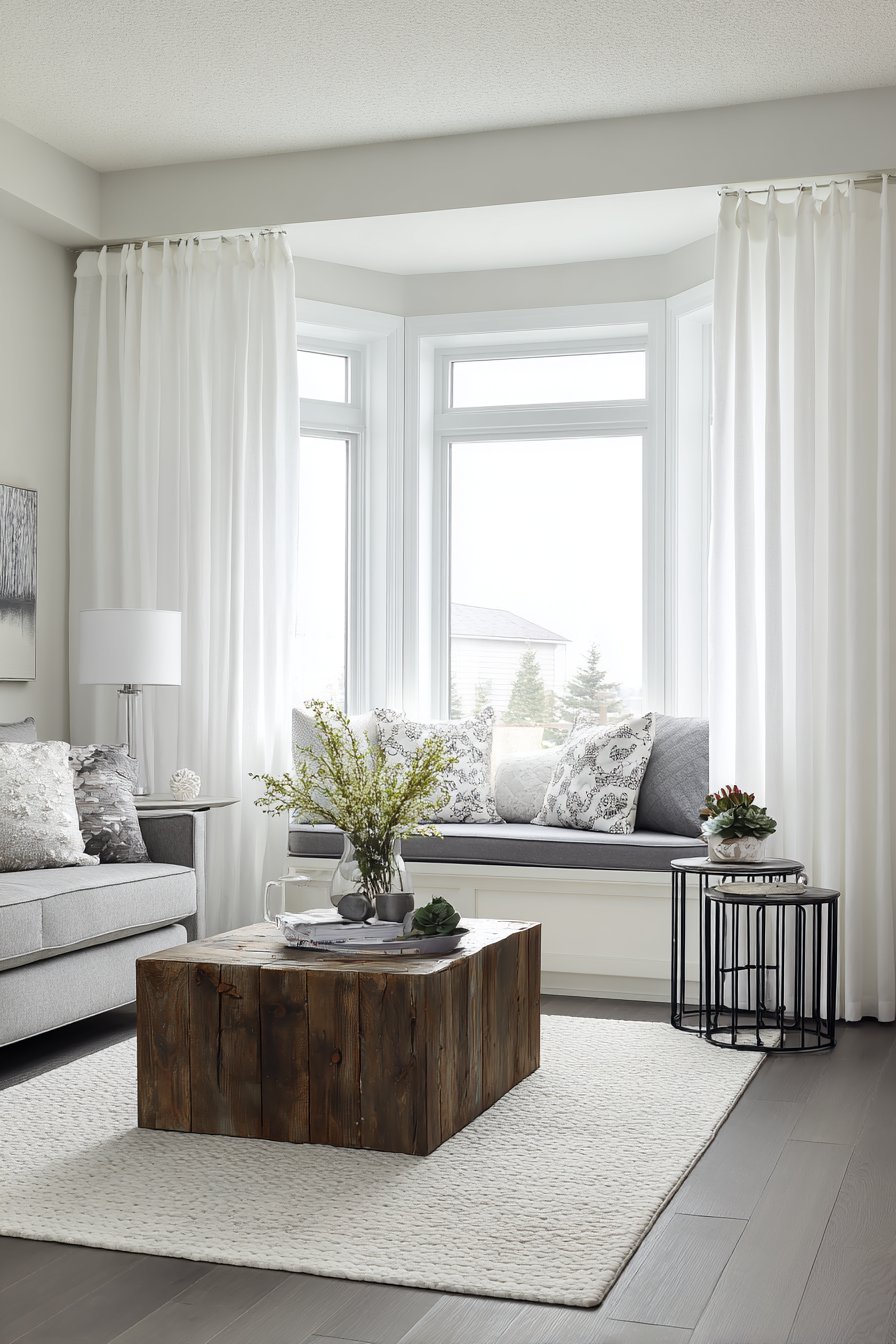
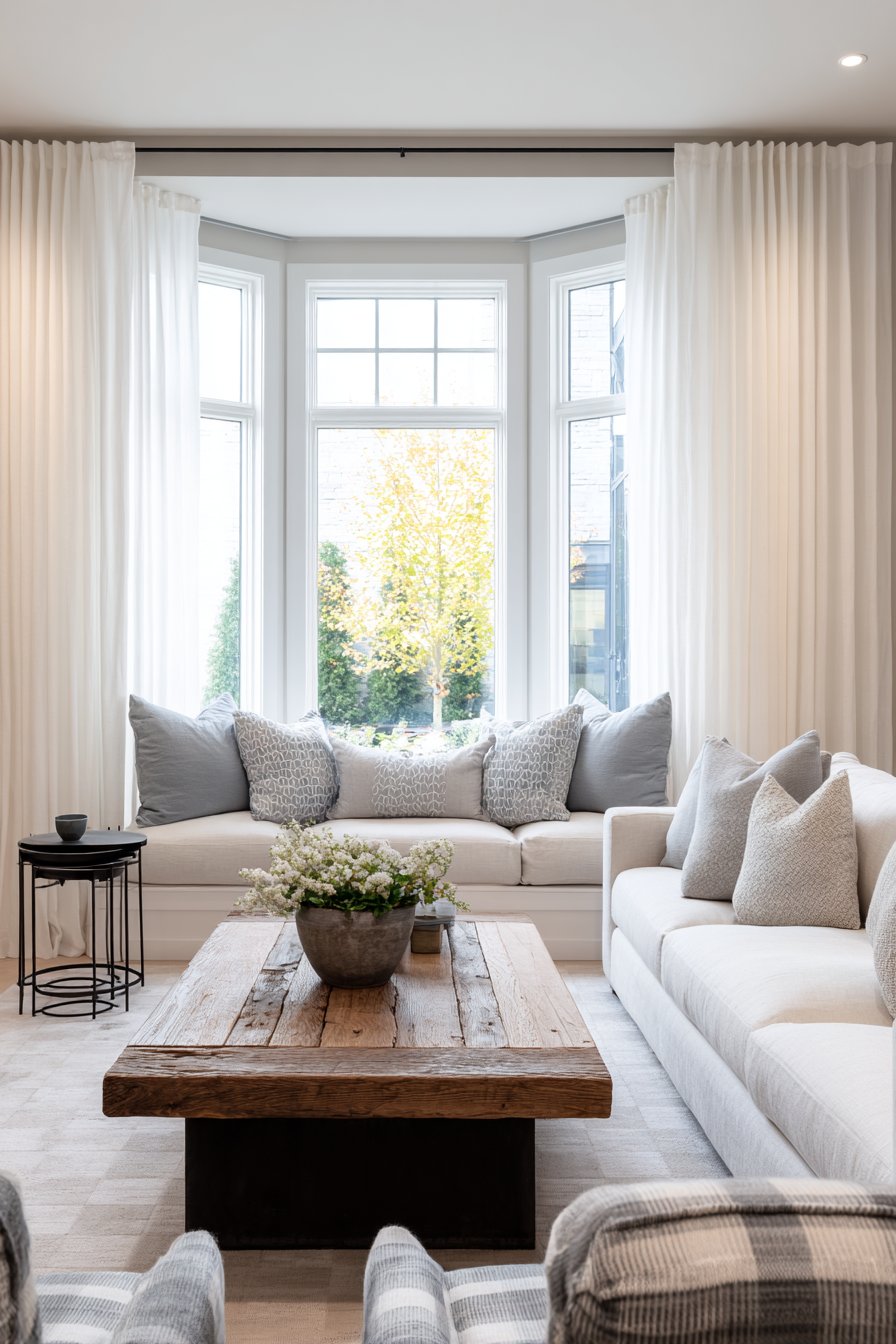
The curtains flank a charming bay window seat fitted with plush grey cushions and an assortment of patterned pillows that introduce subtle color and visual interest. This window seat becomes a destination within the room, a cozy retreat for reading, conversation, or simply gazing outdoors while wrapped in the soft embrace of the white curtains. Below, a reclaimed wood coffee table bears the marks of its previous life—nail holes, weathering, and patina—while an industrial metal side table provides contrast with its clean lines and darker finish. These contrasting elements create the eclectic mix that makes farmhouse interiors feel collected over time rather than decorated all at once.
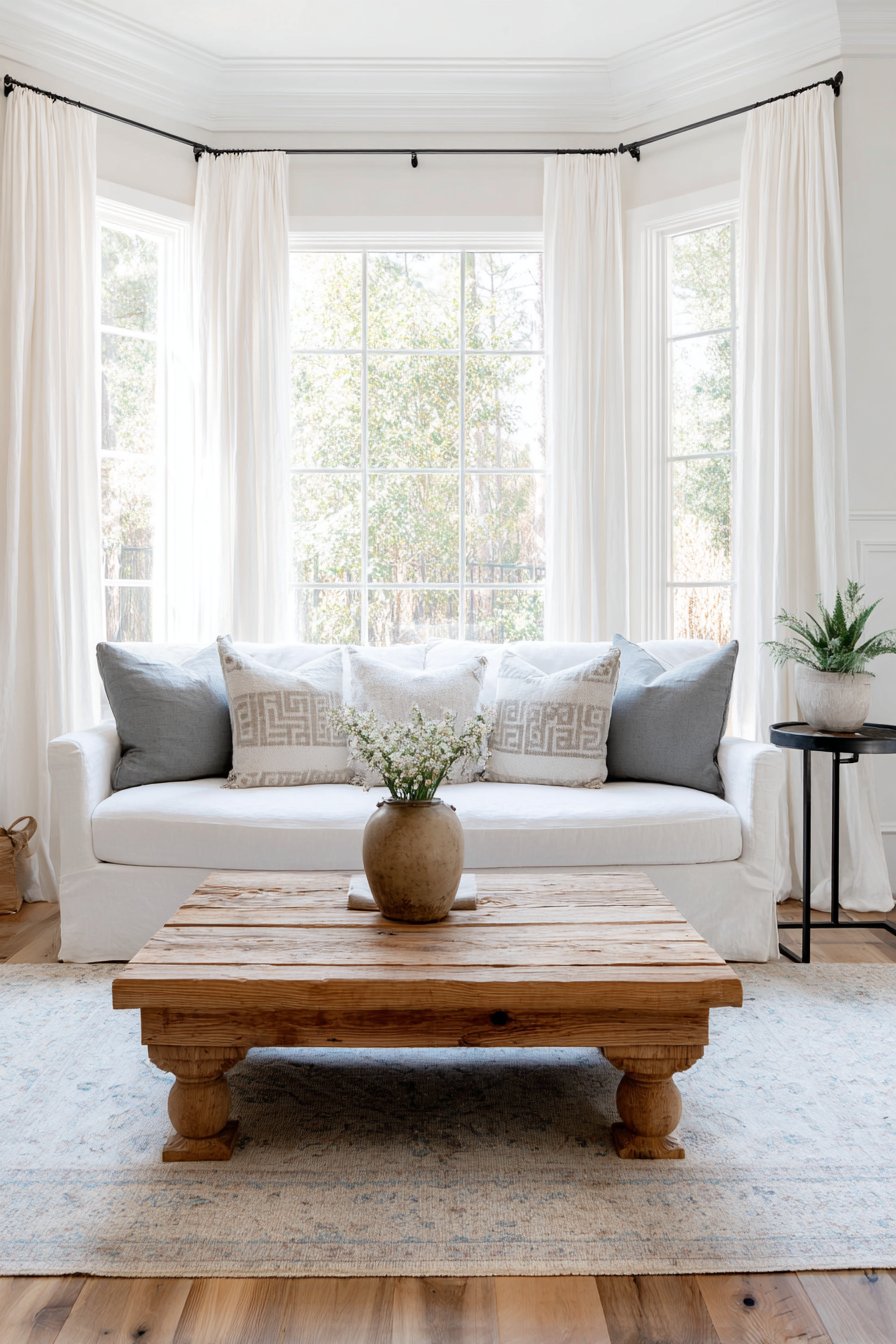
The success of this design lies in its ability to feel both polished and approachable. The white linen curtains provide the polished element, their floor-length elegance elevating the space, while the rustic furniture and casual fabric treatment keep the room from feeling too precious. This balance allows the living room to function as a true gathering space where family and friends feel comfortable relaxing without worrying about perfection. The curtains’ natural wrinkles actually contribute to this welcoming atmosphere, signaling that this is a home meant for living, not a museum display.
Key Design Tips:
- Embrace the natural wrinkles in linen curtains as a design feature rather than an imperfection to eliminate through constant ironing
- Choose curtains with slightly more fullness (1.5 to 2 times window width) to create beautiful, natural folds when open
- Combine white curtains with reclaimed or weathered wood elements to establish the farmhouse aesthetic
- Create focal points like window seats that are enhanced by the framing effect of white curtains
- Mix industrial and rustic elements to achieve the modern farmhouse balance between refined and relaxed
4. Coastal Breeze with Rope Holdback Details
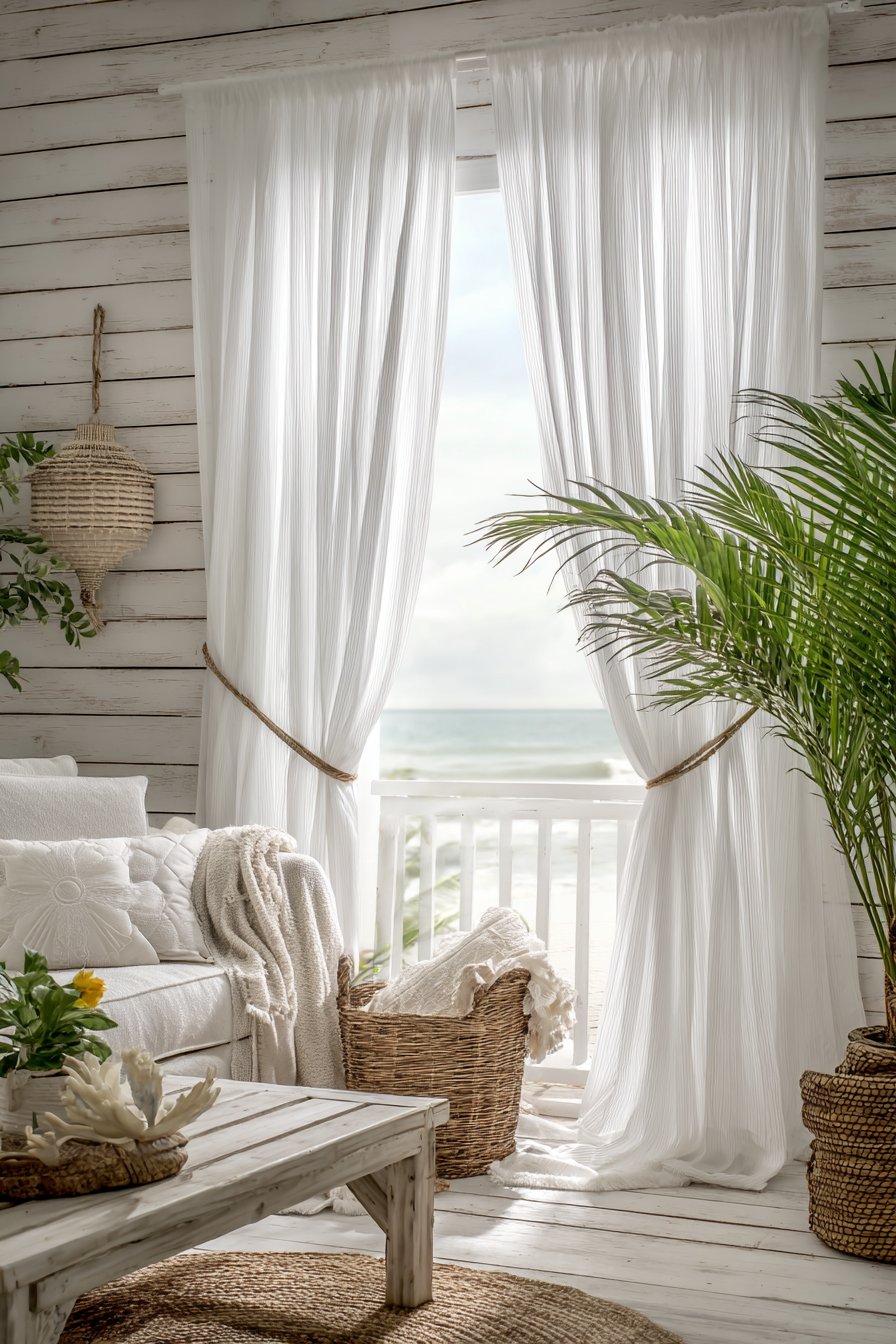
Coastal design comes alive through flowing white cotton curtains casually tied back with natural rope holdbacks, immediately evoking seaside living and breezy relaxation. These curtains embody the effortless style characteristic of beach houses, where formality gives way to comfort and connection with the outdoors. The rope holdbacks serve both functional and decorative purposes, securing the curtains while introducing a nautical detail that reinforces the coastal theme. When released, the curtains billow gently in the breeze, creating movement and life within the space.
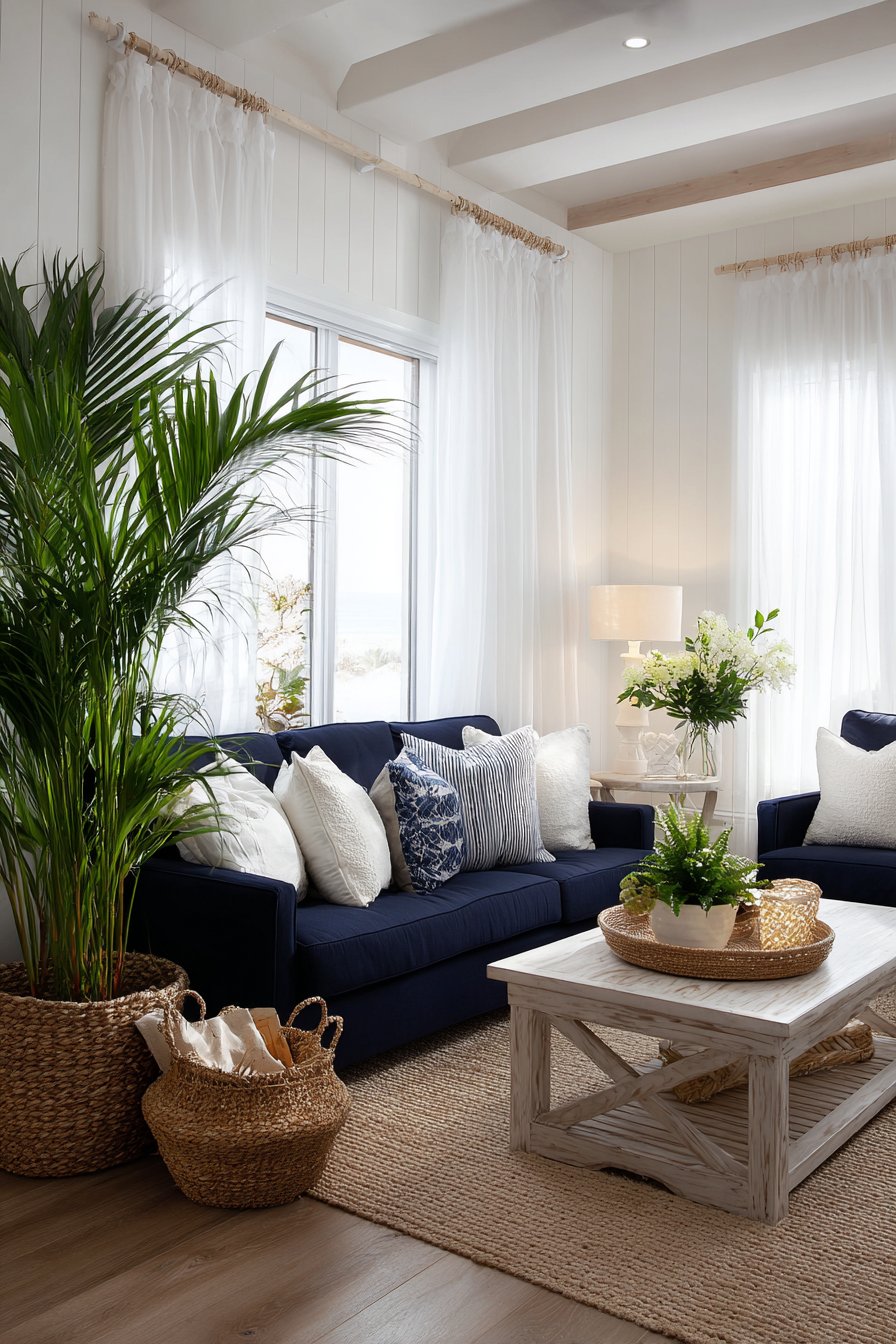
The living room’s whitewashed shiplap walls provide the perfect backdrop for this coastal vision, their horizontal lines subtly directing the eye across the space while adding textural interest through the wood grain visible beneath the white finish. Navy blue accent chairs introduce the classic maritime color combination, their deeper hue providing necessary visual weight and contrast against all the white. A driftwood coffee table serves as the room’s centerpiece, its organic sculptural form and weathered grey tones telling stories of time spent in ocean waves. Seagrass baskets tucked beneath console tables and alongside seating areas provide practical storage while reinforcing the natural, beachy aesthetic.
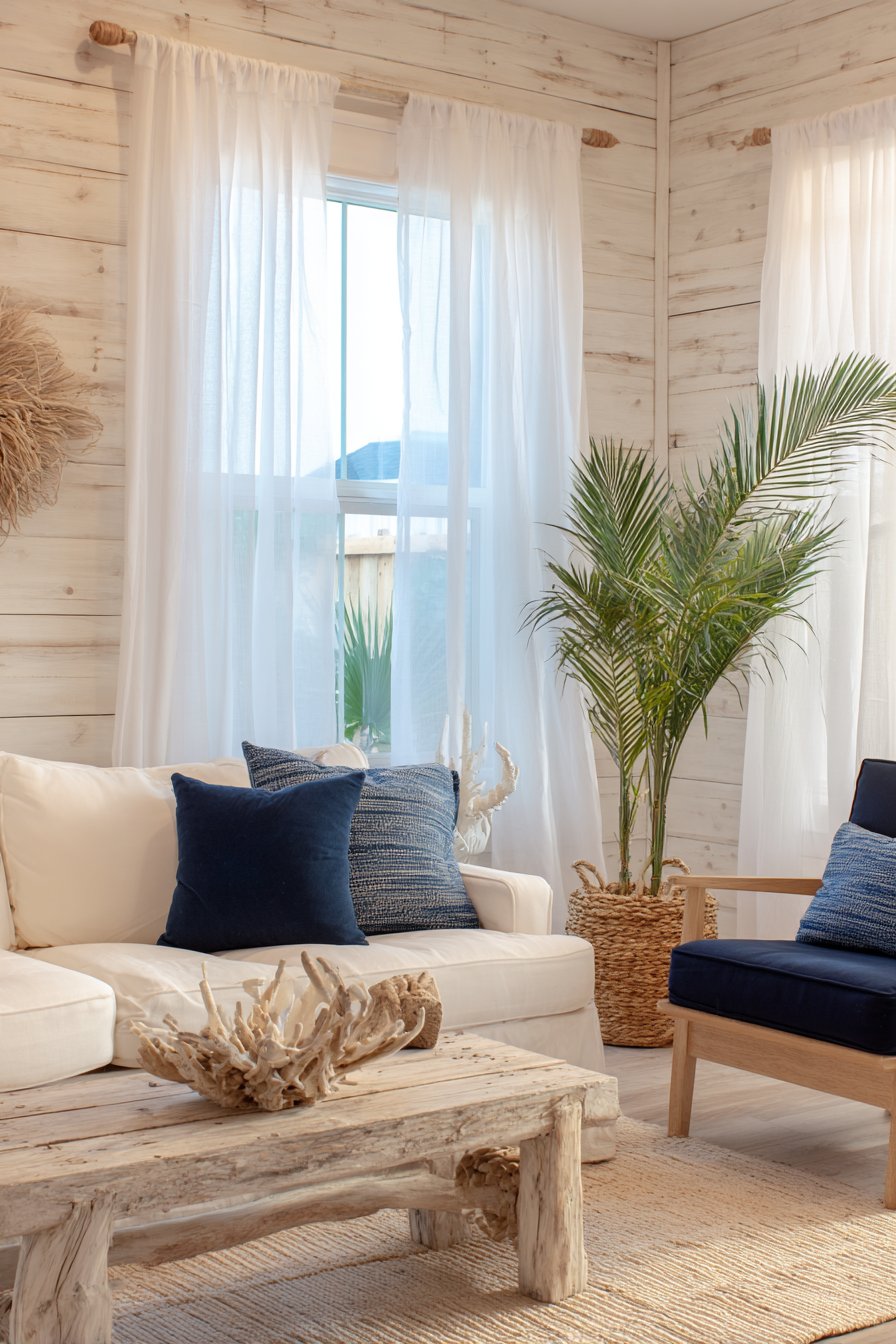
Natural light plays a starring role in coastal interiors, and these white cotton curtains facilitate that relationship beautifully. Unlike heavy drapes that block views and light, these lightweight curtains filter sunshine while maintaining the indoor-outdoor connection essential to beach house living. The white fabric seems to capture and amplify the quality of coastal light—that special bright yet soft illumination that defines seaside locations. When breezes catch the curtains, they dance and sway, bringing the movement of ocean waves inside and creating a dynamic, living quality within the space.
Key Design Tips:
- Use natural fiber rope for holdbacks to maintain authenticity and avoid synthetic materials that feel out of place in coastal design
- Position curtains to maximize natural light and views while still providing privacy when needed
- Incorporate navy blue or other classic maritime colors through furniture and accessories to prevent an all-white space from feeling washed out
- Choose lightweight cotton or linen curtains that can move with breezes rather than heavy fabrics that hang stiffly
- Add natural elements like driftwood, seagrass, and potted palms to complete the coastal atmosphere
5. Traditional Elegance with Silk Triple-Pleat
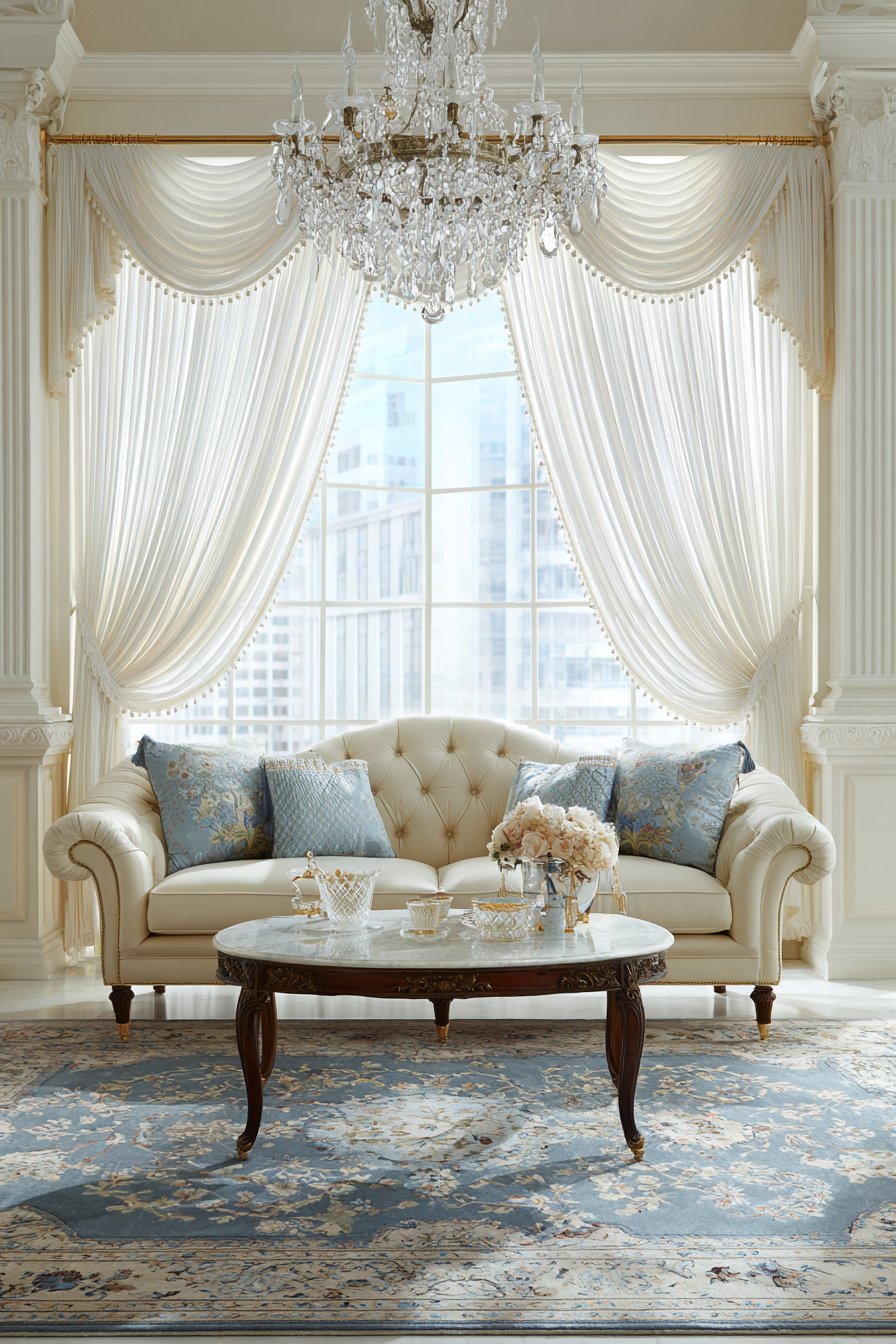
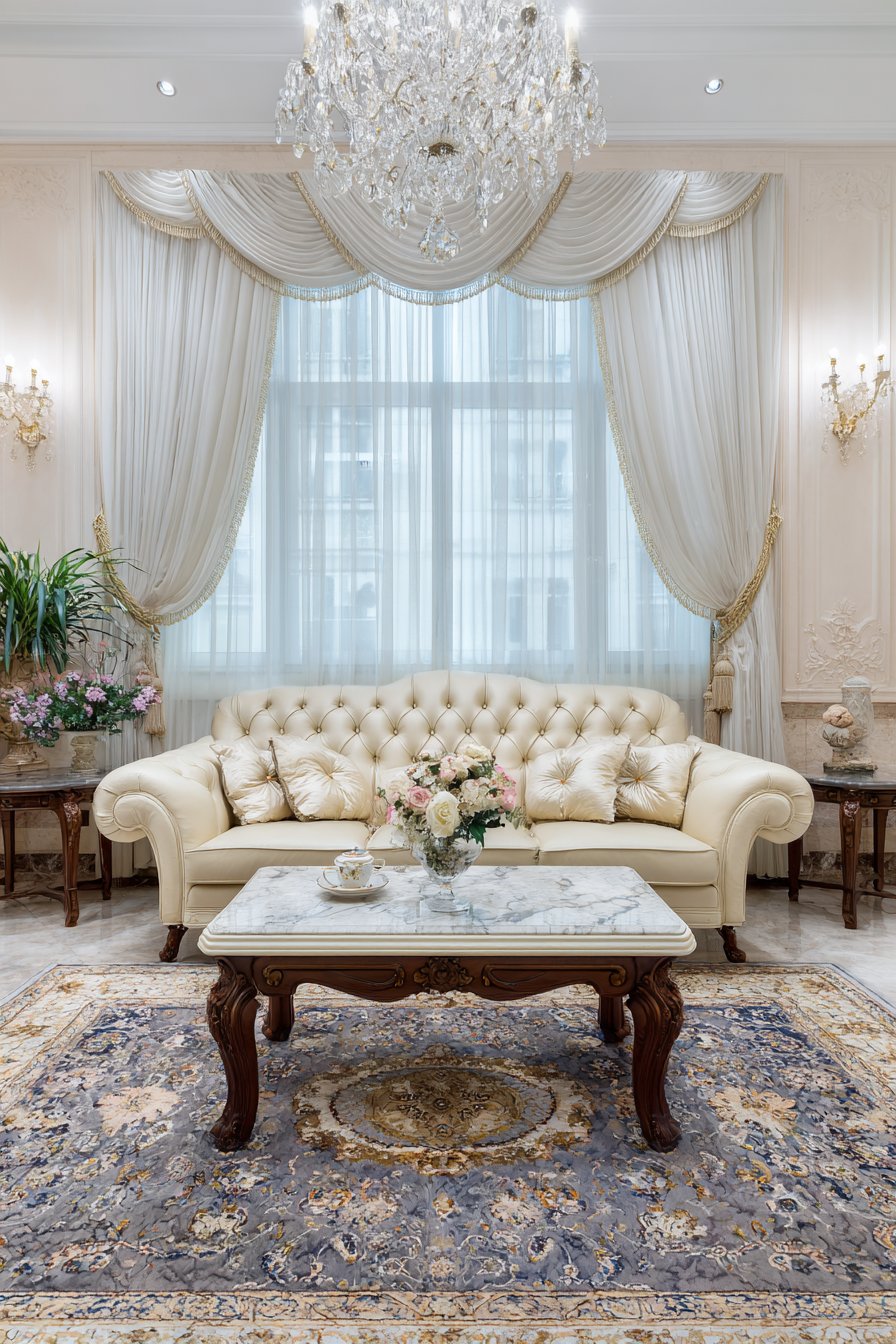
Sophisticated traditional interiors find their perfect complement in triple-pleat white silk curtains that exude formal elegance and timeless refinement. These curtains represent the pinnacle of classic window treatments, with their carefully crafted pleats creating deep, regular folds that hang with impeccable precision. The silk fabric introduces a subtle sheen that catches and reflects light, creating luminous highlights that elevate the entire space. Mounted on antique brass rods that gleam warmly against the white fabric, these curtains make an unmistakable statement of quality and attention to detail.
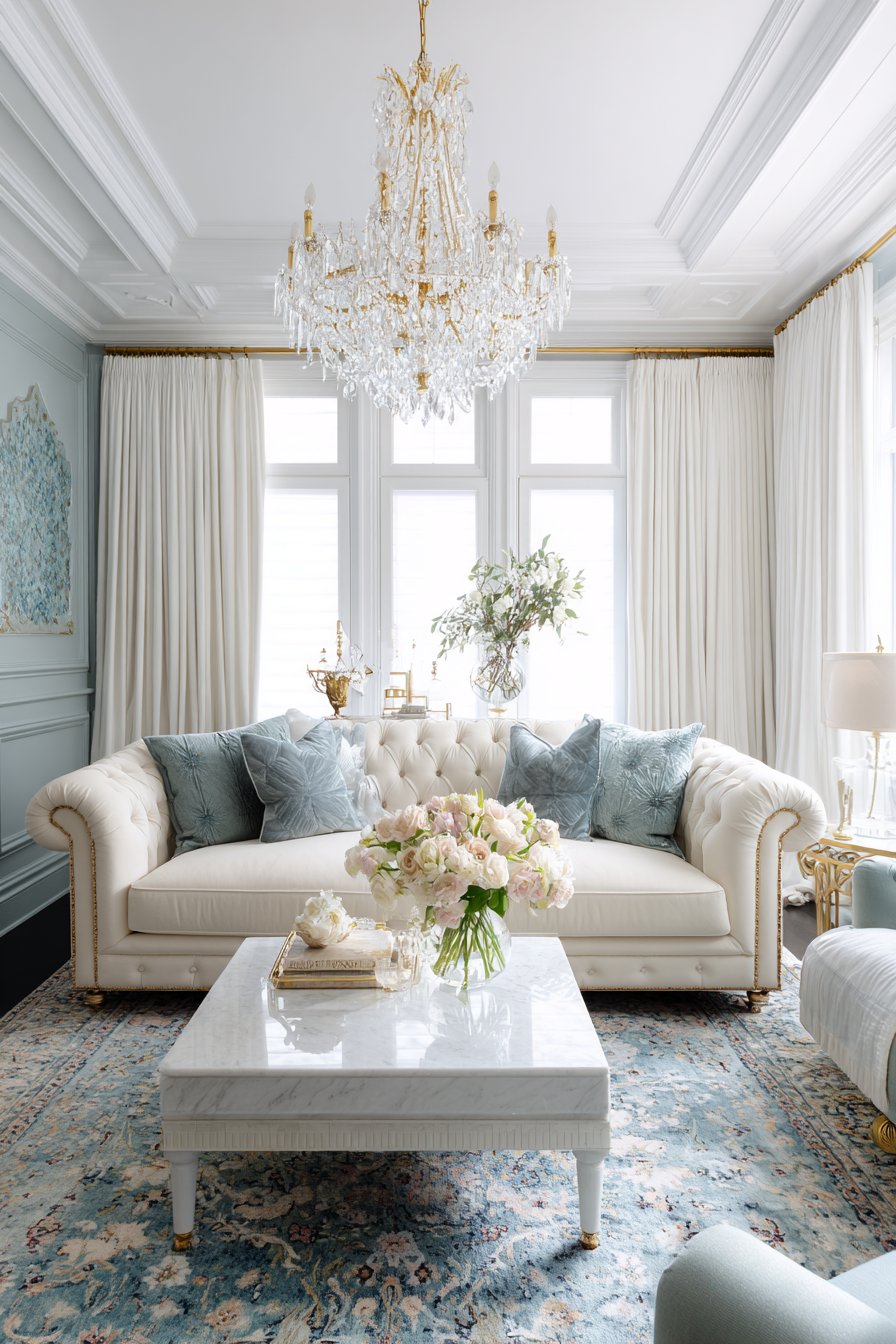
The traditional living room housing these elegant curtains features furnishings befitting their formality. A tufted cream sofa upholstered in luxurious fabric provides comfortable yet refined seating, its button tufting and rolled arms speaking to classic design principles. A marble-top coffee table adds another layer of luxury, its cool stone surface and brass legs coordinating with the curtain hardware. Beneath, a Persian rug in soft blues and ivories introduces pattern and warmth while maintaining the room’s elegant color palette. Above, a crystal chandelier catches light from the windows, creating prismatic effects that dance across the white curtains.
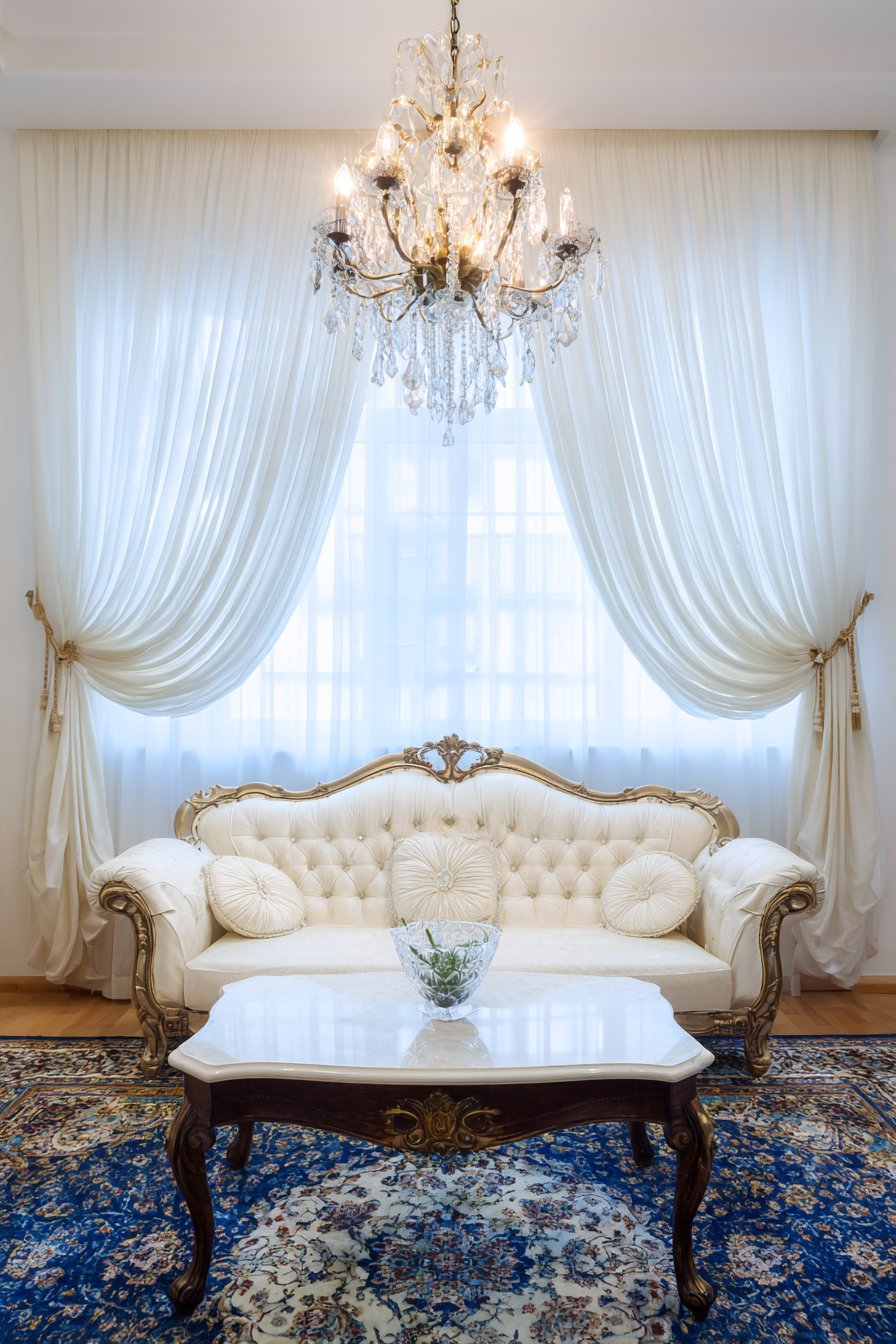
This design approach demonstrates how white curtains can enhance rather than diminish formality. The pristine white silk provides a clean, sophisticated backdrop that allows other luxurious elements to shine while contributing its own beauty through fabric quality and expert tailoring. The pleated heading creates architectural interest at the top of the window, while the generous fabric fullness ensures beautiful draping throughout the length. During evening gatherings, interior lighting reflects off the silk’s surface, creating a warm glow that enhances the room’s welcoming yet elegant atmosphere.
Key Design Tips:
- Invest in quality silk or silk-blend curtains for traditional spaces where fabric quality is paramount to achieving authentic luxury
- Professional pleating and installation ensure crisp, uniform folds that maintain their shape over time
- Coordinate hardware finish with other metallic elements in the room for a cohesive, considered appearance
- Allow curtains to break slightly at the floor (1-2 inches of extra length) for the traditional puddle or kiss effect
- Balance the formality of silk curtains with equally refined furnishings to create a harmonious, elegant space

6. Space-Smart Solutions for Small Apartments
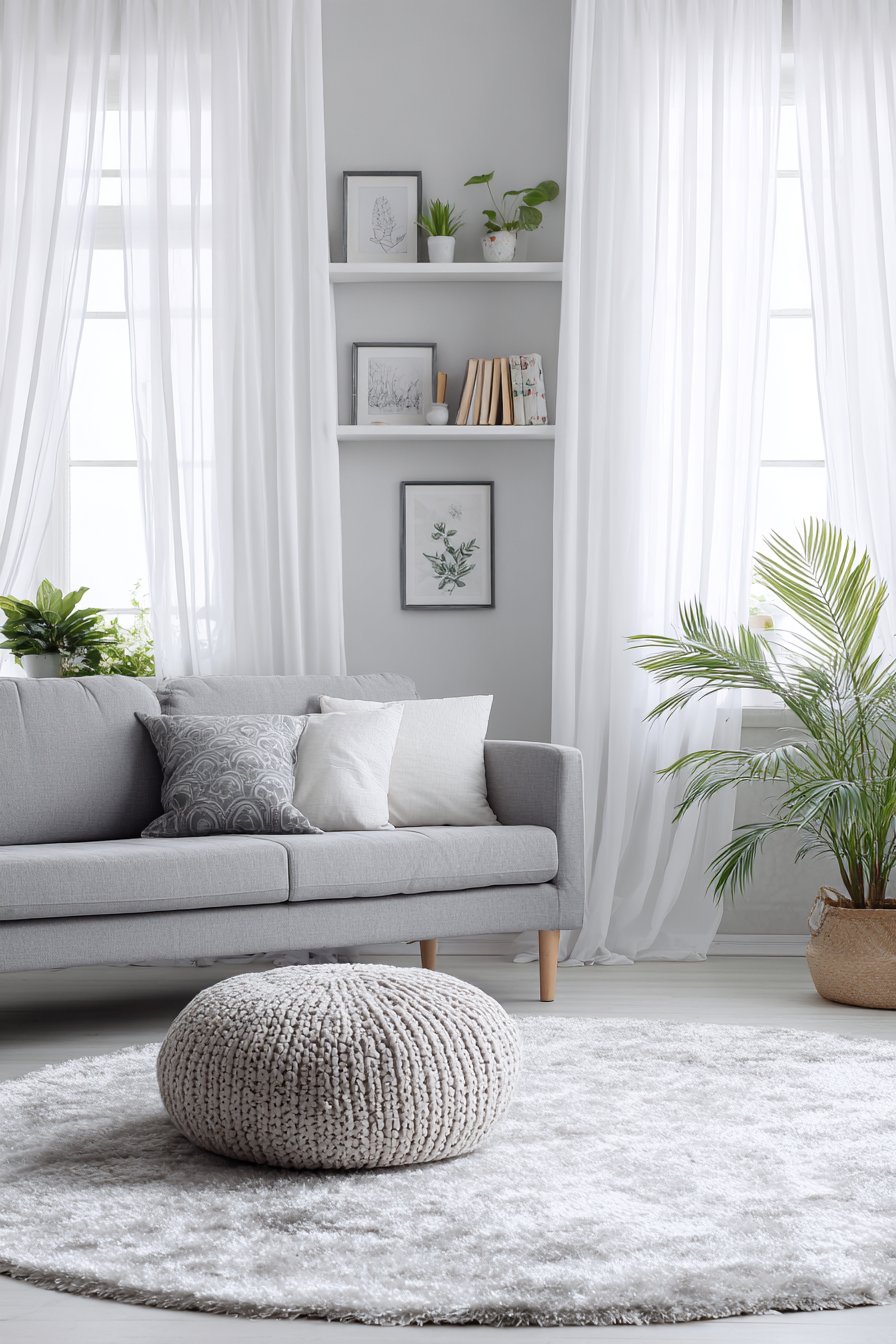
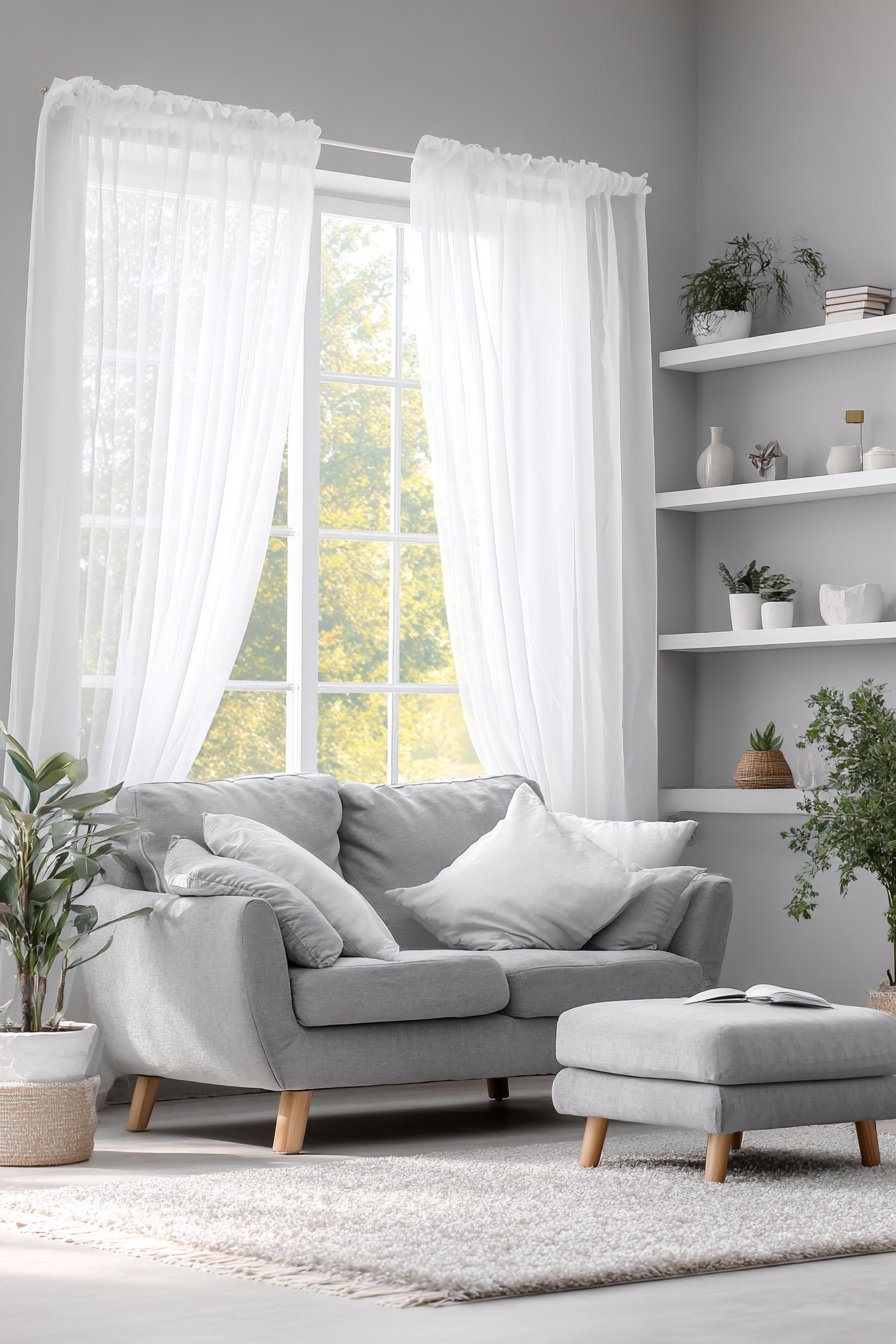
Small apartment living demands clever solutions, and sheer white curtains on slim tension rods deliver both style and space efficiency. These streamlined window treatments maximize every precious inch, with tension rods eliminating the need for bulky hardware or wall-mounting that might damage rental property walls. The sheer white fabric serves multiple purposes: it provides privacy without sacrificing the natural light crucial in small spaces, creates the illusion of height when hung high and close to the ceiling, and introduces softness that prevents compact rooms from feeling harsh or confined.
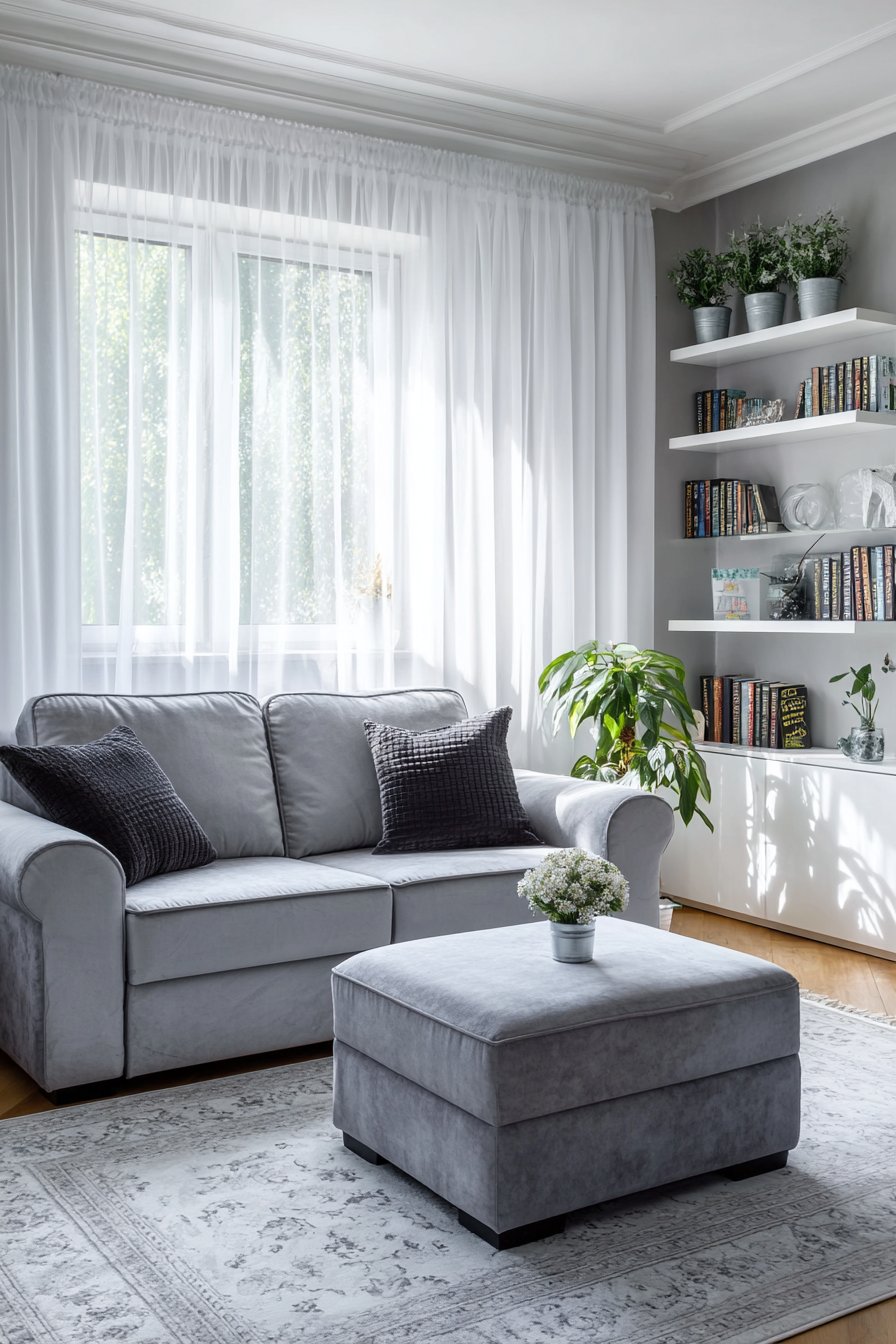
The thoughtfully arranged compact living room demonstrates how white curtains enhance space-conscious design. A grey loveseat scaled appropriately for the room provides comfortable seating without overwhelming the space, while floating shelves mounted on the walls offer storage and display opportunities without consuming floor area. A multi-functional ottoman serves as coffee table, extra seating, and hidden storage—the kind of versatile piece essential in small spaces. The white curtains frame the windows without visual heaviness, their light color and transparent quality keeping the walls from feeling closed in.
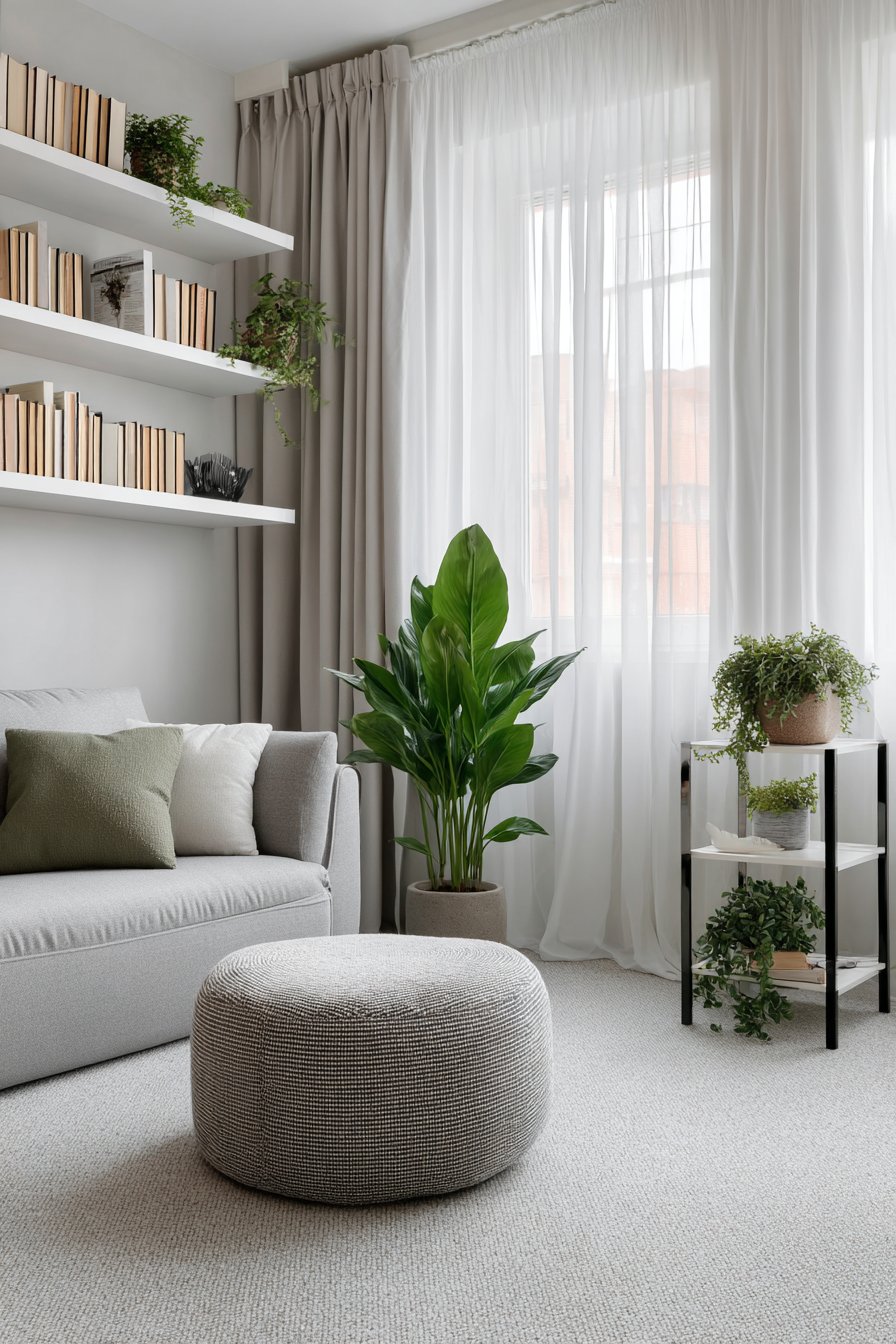
Natural light becomes even more critical in small apartments where limited square footage can feel claustrophobic without adequate illumination. These sheer white curtains function as light amplifiers, capturing sunshine and diffusing it throughout the room while softening harsh direct rays. The white color reflects rather than absorbs light, bouncing illumination back into the space to create brightness that makes the apartment feel more spacious. This strategic use of window treatments demonstrates how thoughtful design choices compound to create significant impact even in challenging spaces.
Key Design Tips:
- Use tension rods for damage-free installation that respects rental agreements while providing professional-looking window treatments
- Choose sheer fabrics that maximize light transmission while still providing adequate privacy for ground-floor or close-proximity windows
- Hang curtains as high as possible and wider than the window frame to create the illusion of larger windows and taller walls
- Keep the color palette light and bright with white curtains serving as the foundation for an airy, spacious feeling
- Select multi-functional furniture that works as hard as the curtains do, maximizing utility in limited space
7. Bohemian Romance with Macramé Details
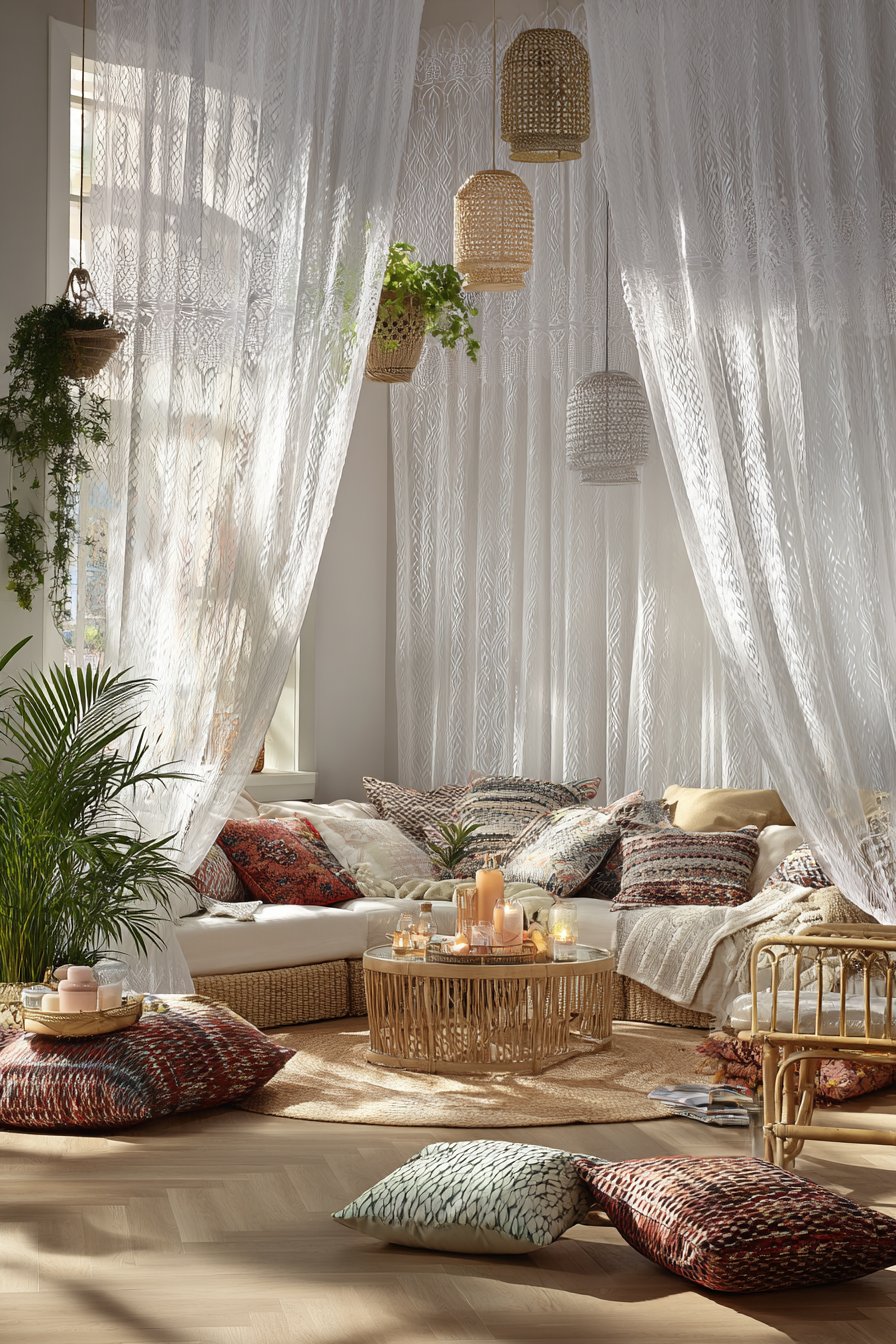
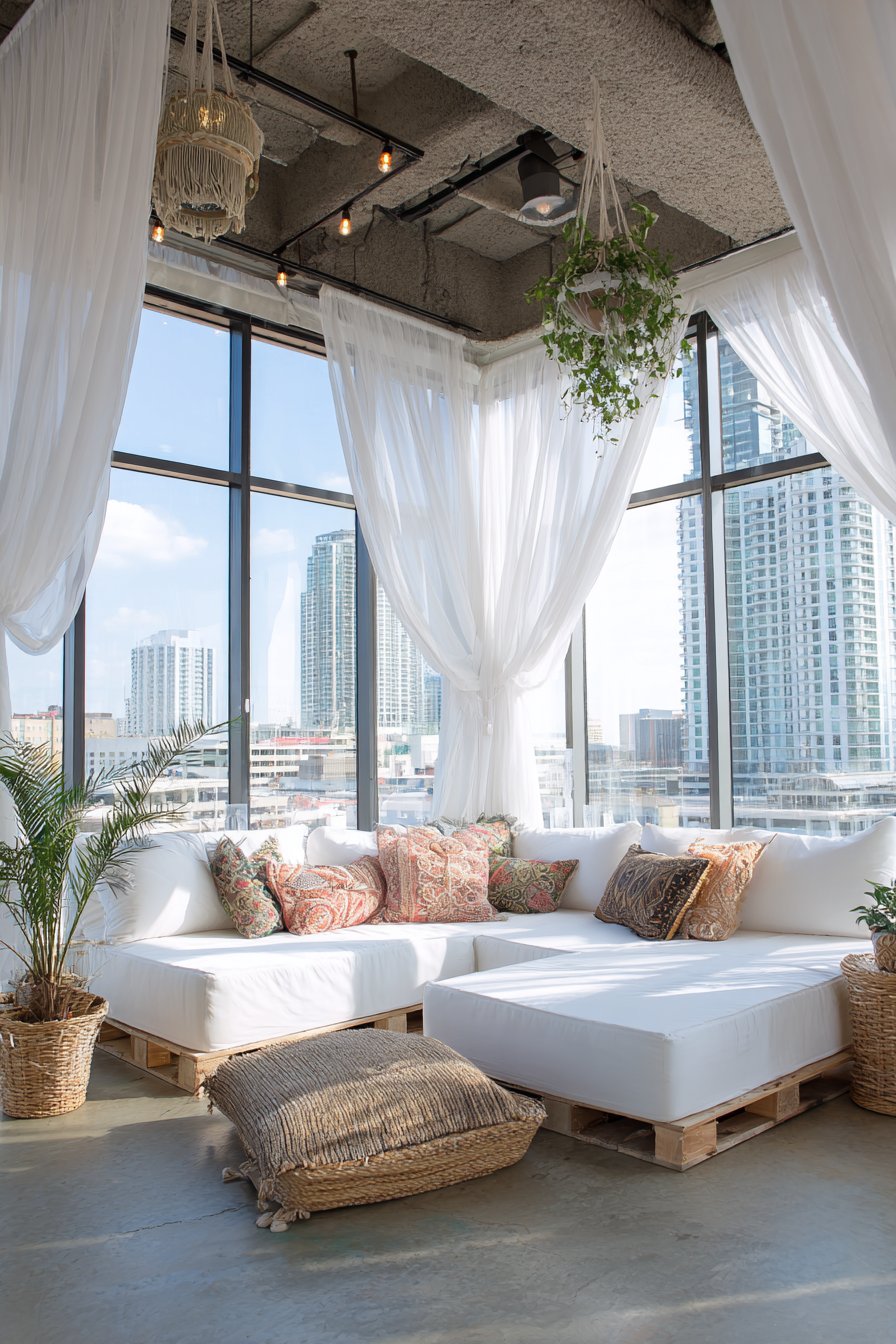
Bohemian style embraces artistic expression and eclectic charm, perfectly embodied in flowing white cotton curtains adorned with handcrafted macramé trim. These curtains transcend simple window coverings to become textile art, with intricate knotwork adding romantic detail along the edges or bottom hem. The macramé detailing introduces dimension and shadow play that catches the eye while maintaining the organic, handmade quality central to boho aesthetics. When backlit, the openwork trim creates beautiful silhouettes, casting intricate shadows that dance across walls and floors.
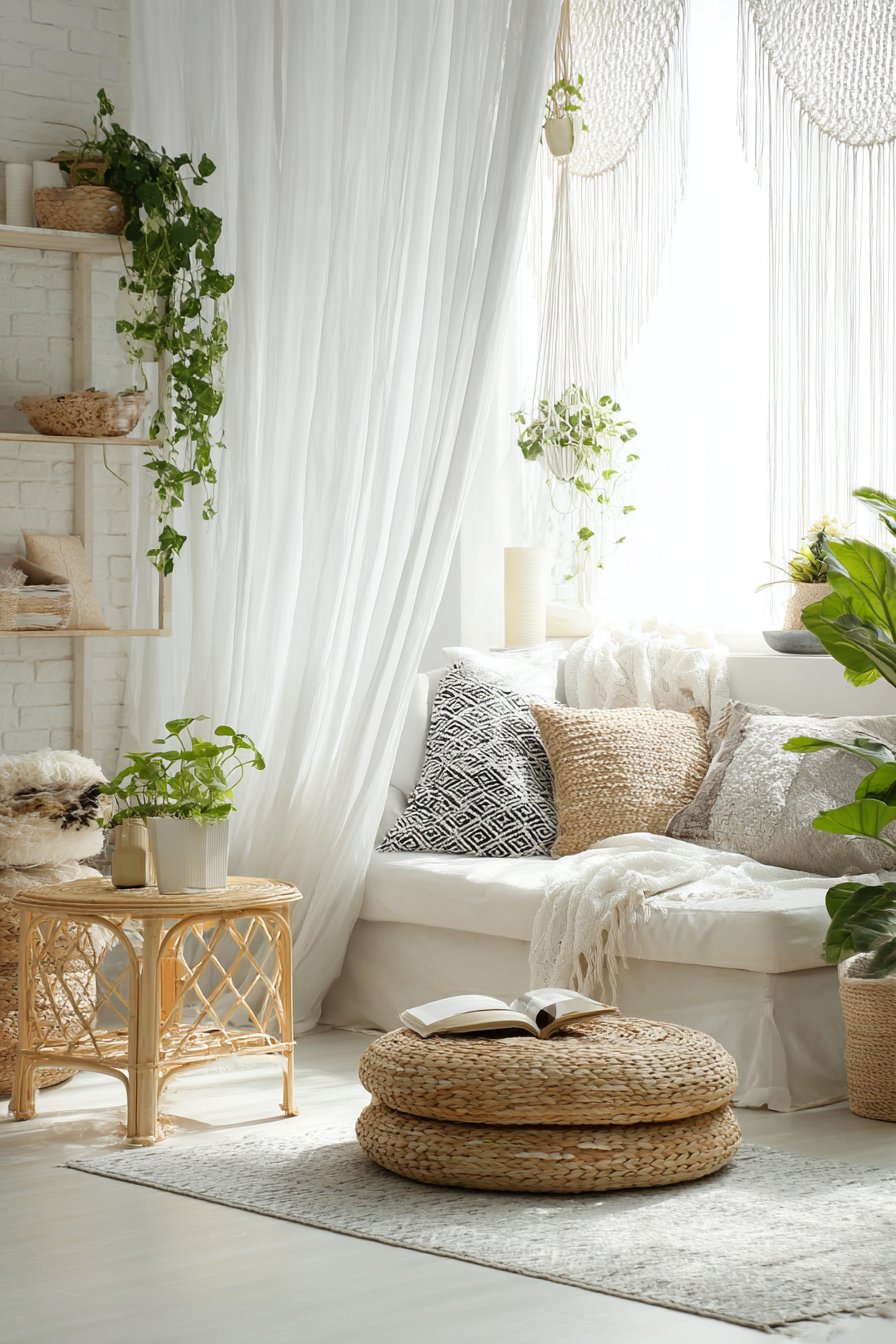
The living room surrounding these artistic curtains layers pattern, texture, and collected treasures in the quintessential bohemian manner. A low-profile sectional upholstered in natural fabric provides ample seating while maintaining the relaxed, floor-focused quality of boho interiors. Mixed pattern throw pillows in earth tones—terracotta, mustard, sage, and burnt sienna—create visual interest without overwhelming the space, their varied textures from velvet to embroidered cotton adding tactile appeal. Rattan furniture pieces introduce natural warmth and organic forms, while hanging plants cascade from ceiling hooks, their trailing vines creating living curtains that complement the white fabric ones.
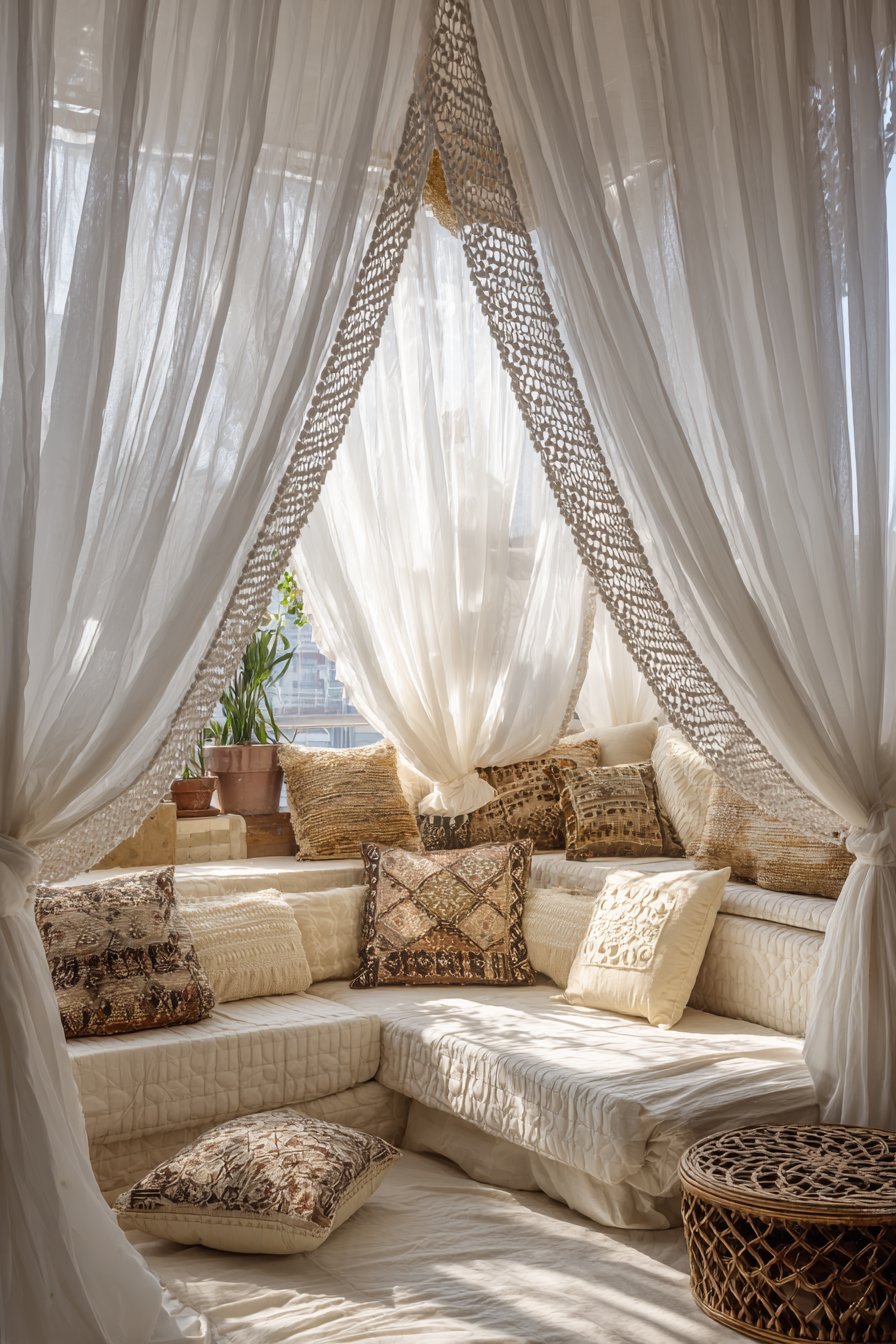
Layered textiles form the foundation of bohemian interiors, and these white curtains with macramé details fit perfectly within that framework. Vintage rugs overlap on the floor, their patterns and colors telling stories of distant places and times. Woven wall hangings, embroidered cushions, and fringed throws all contribute to the rich, collected atmosphere. The white curtains provide visual breathing room within this abundance, their light color and flowing form preventing the layered look from feeling cluttered or heavy. They soften the overall composition while their decorative trim ensures they remain interesting and integrated rather than plain or overlooked.
Key Design Tips:
- Seek curtains with hand-crafted macramé details rather than machine-made alternatives to maintain authentic bohemian character
- Layer multiple textile types and patterns while anchoring the scheme with white curtains that provide visual rest
- Incorporate abundant plant life to create the indoor jungle effect that defines modern bohemian style
- Mix furniture styles, eras, and materials for the collected-over-time aesthetic rather than matched sets
- Use natural fibers throughout—cotton, linen, rattan, jute—to maintain the organic, earthy quality
8. Smart Home Integration with Motorized Systems
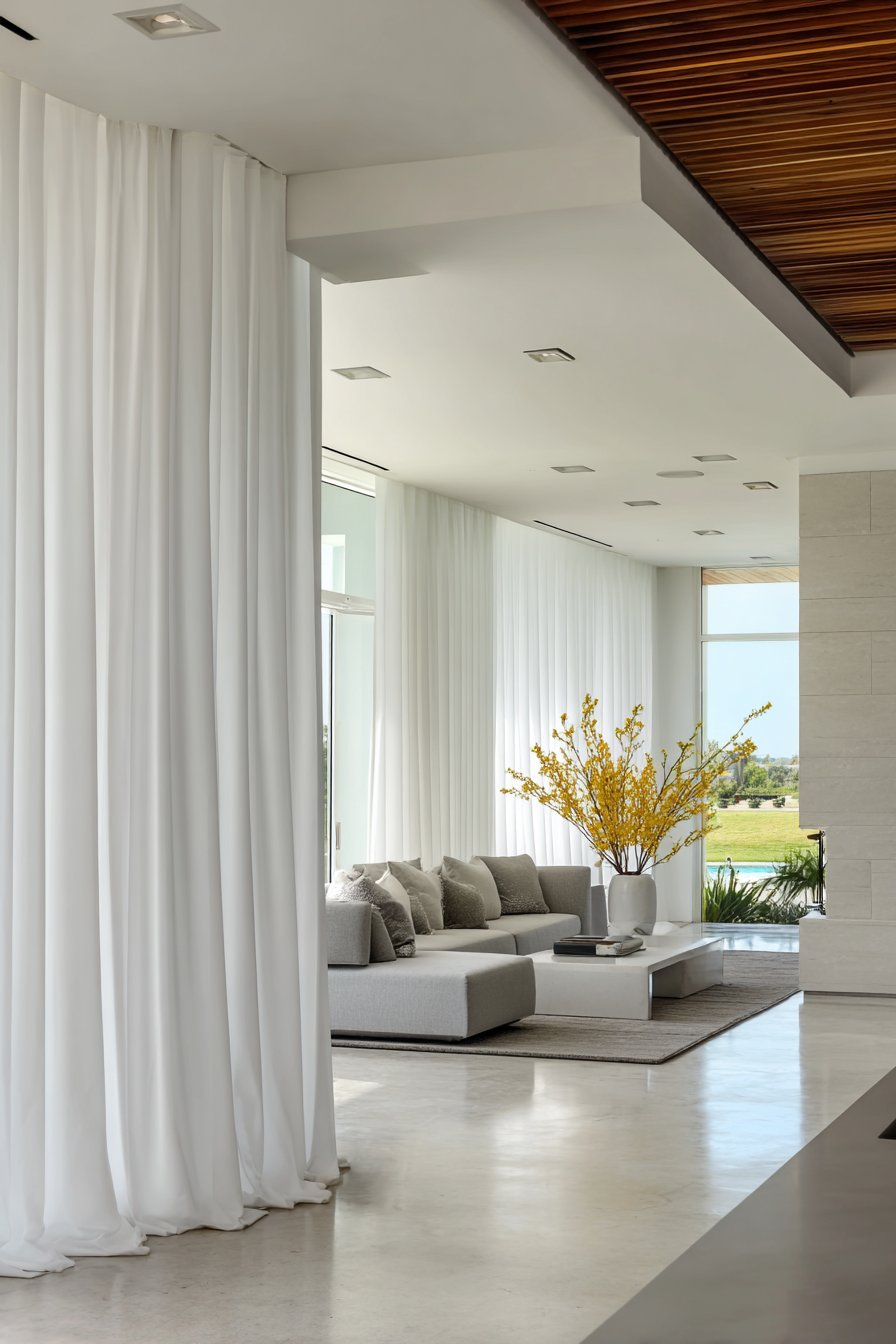
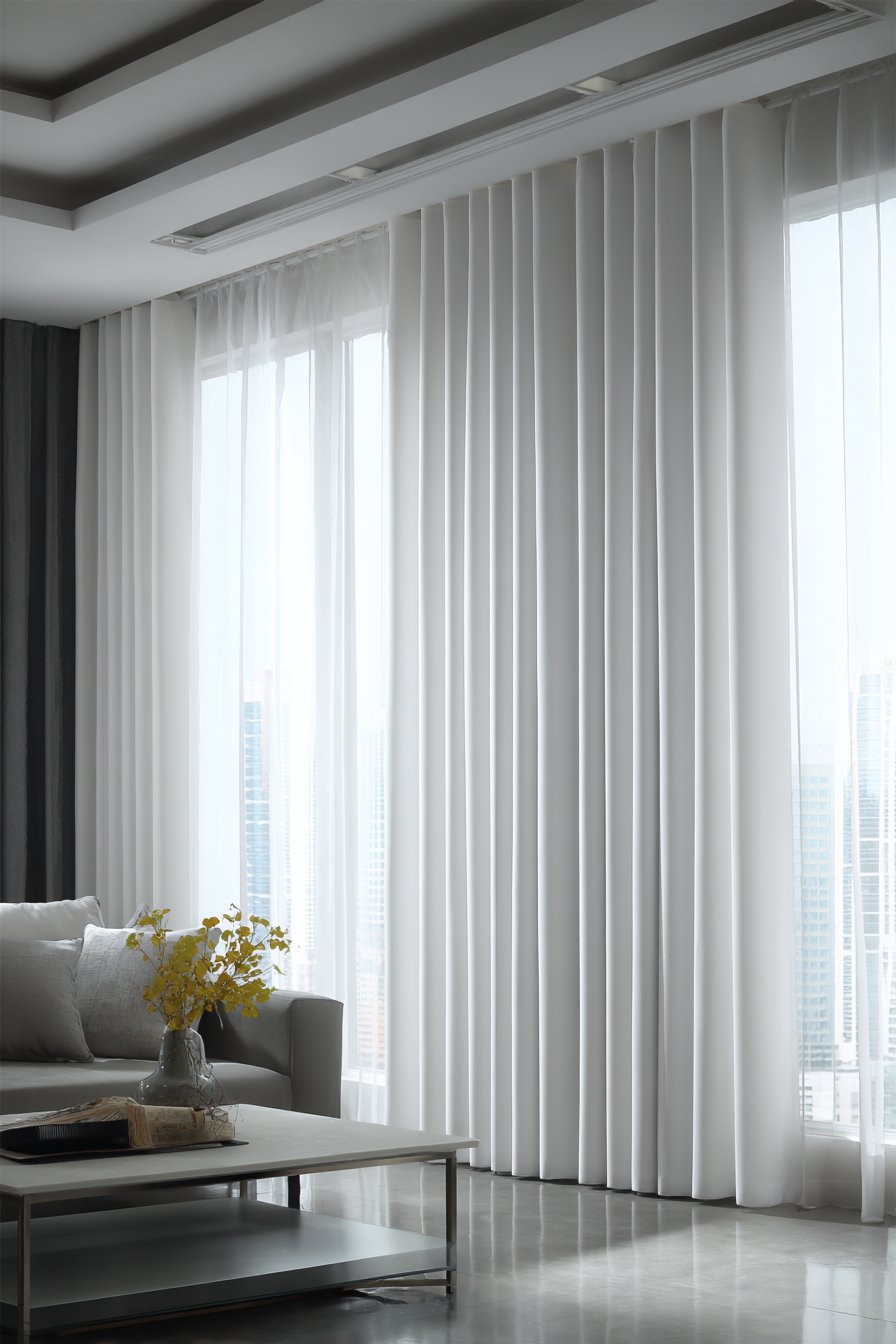
Contemporary living embraces technology seamlessly, and motorized white blackout-lined curtains on sleek track systems represent the intersection of design and innovation. These automated window treatments offer unprecedented convenience, opening and closing at programmed times, responding to voice commands, or adjusting via smartphone app. The white exterior maintains aesthetic appeal while the blackout lining provides complete light control—essential for home theaters, temperature regulation, or simply ensuring quality sleep in bedrooms visible from living areas in open-plan homes.
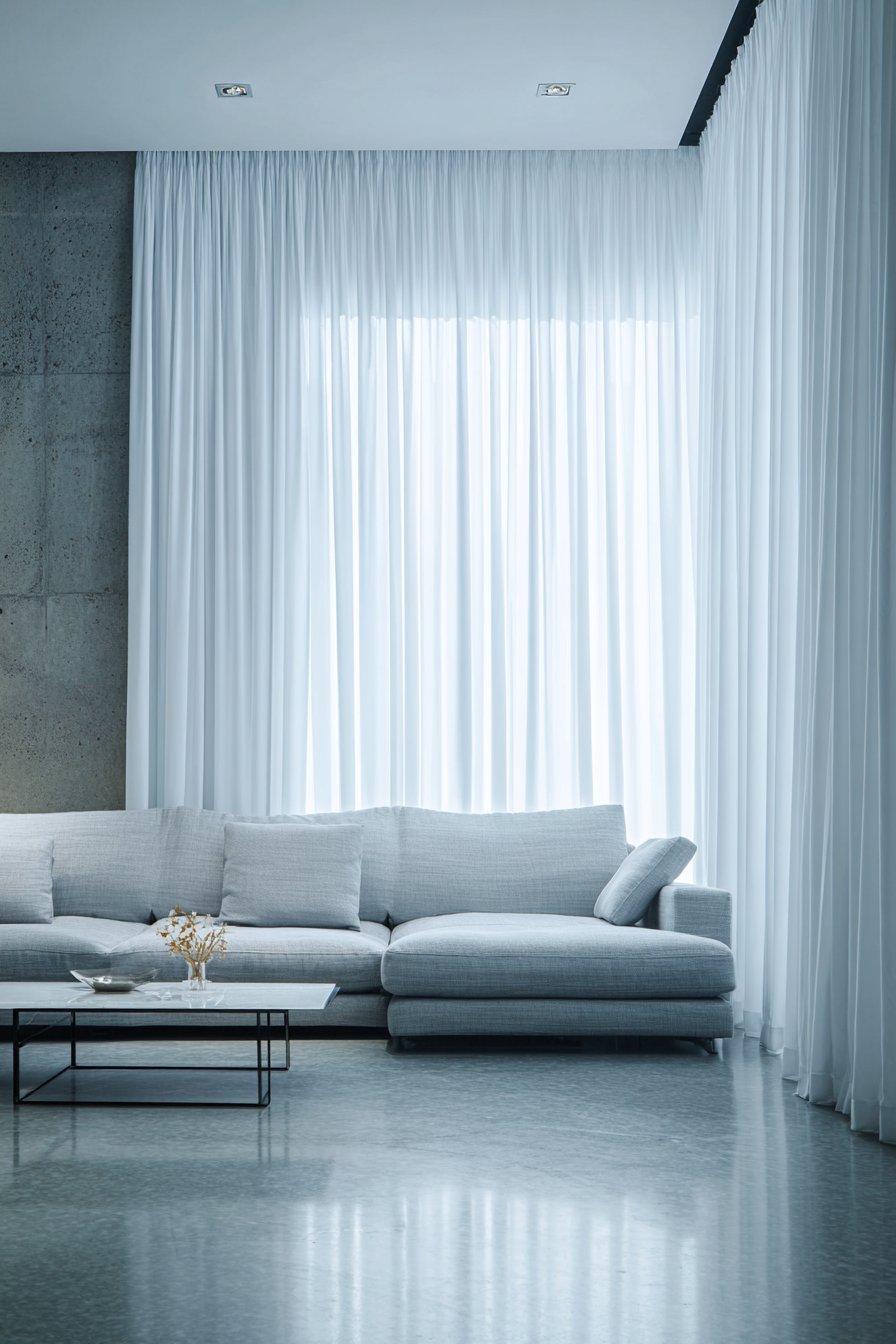
The minimalist living room housing this smart technology reflects contemporary design principles with its emphasis on clean lines and uncluttered spaces. A low-profile grey sofa floats in the space rather than pushing against walls, its simple form requiring no decorative details because its proportions and upholstery quality speak for themselves. A glass coffee table virtually disappears, maintaining sight lines and preventing visual clutter, while polished concrete floors provide an industrial edge that balances the softness of the white curtains. Recessed lighting throughout ensures even illumination without visible fixtures, maintaining the streamlined aesthetic.
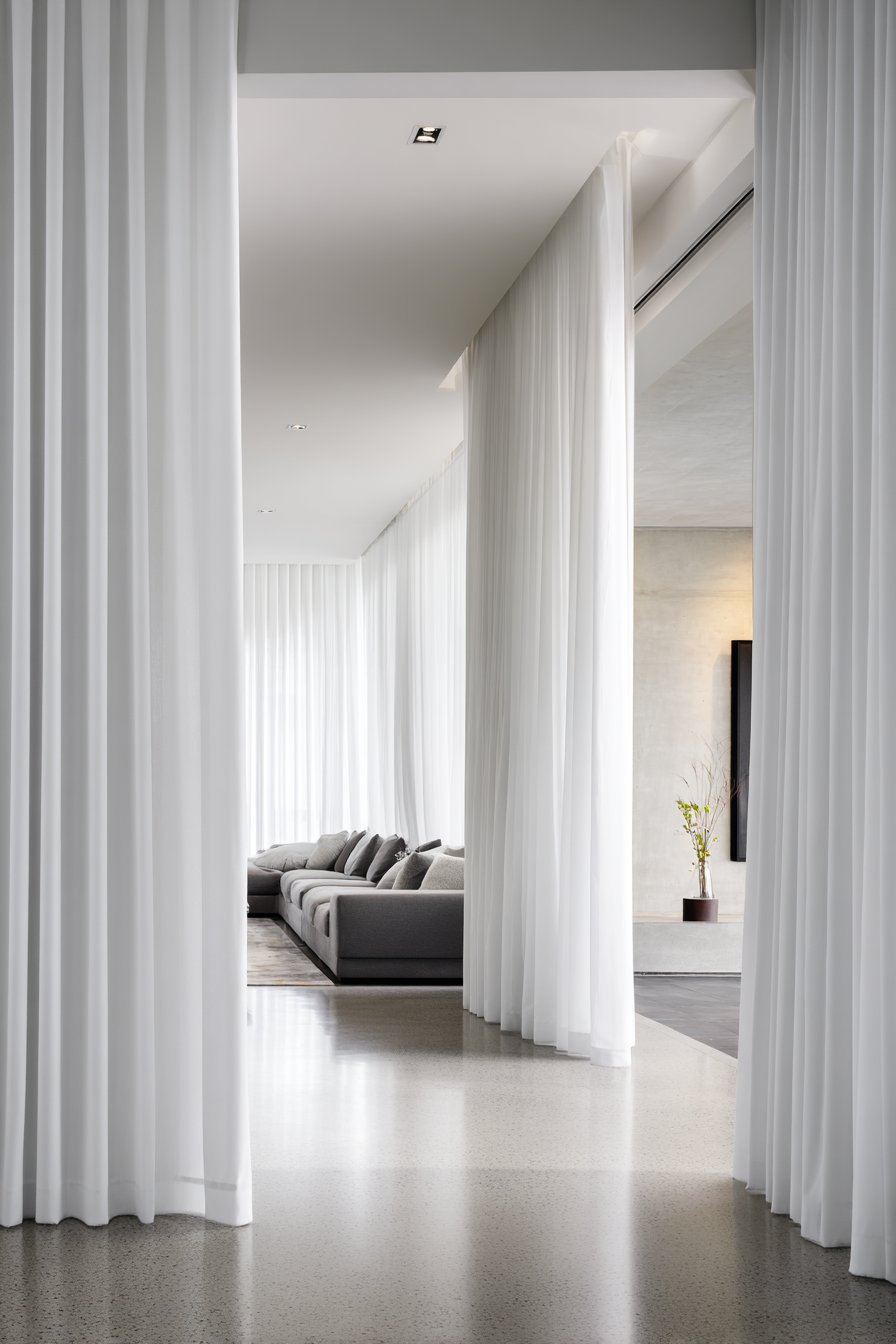
The beauty of motorized curtains extends beyond mere convenience to include practical benefits like consistent opening and closing that maintains curtain lifespan, scheduled automation that enhances home security when away, and precise light control throughout the day. Programming curtains to open gradually with sunrise creates a gentle, natural wake-up experience, while closing them automatically at sunset provides privacy without requiring thought. The white fabric choice ensures these high-tech treatments remain timeless despite their cutting-edge functionality, proving that smart home features need not compromise aesthetic principles.
Key Design Tips:
- Invest in quality motorization systems from reputable manufacturers to ensure reliability and longevity
- Choose blackout lining for complete light control while maintaining the white exterior aesthetic
- Program schedules that align with natural rhythms and daily routines for seamless integration
- Ensure strong Wi-Fi connectivity in curtain areas for responsive smart home operation
- Select sleek, minimal track systems that complement contemporary design rather than bulky hardware
9. Transitional Balance with Grommet-Top Casual Elegance
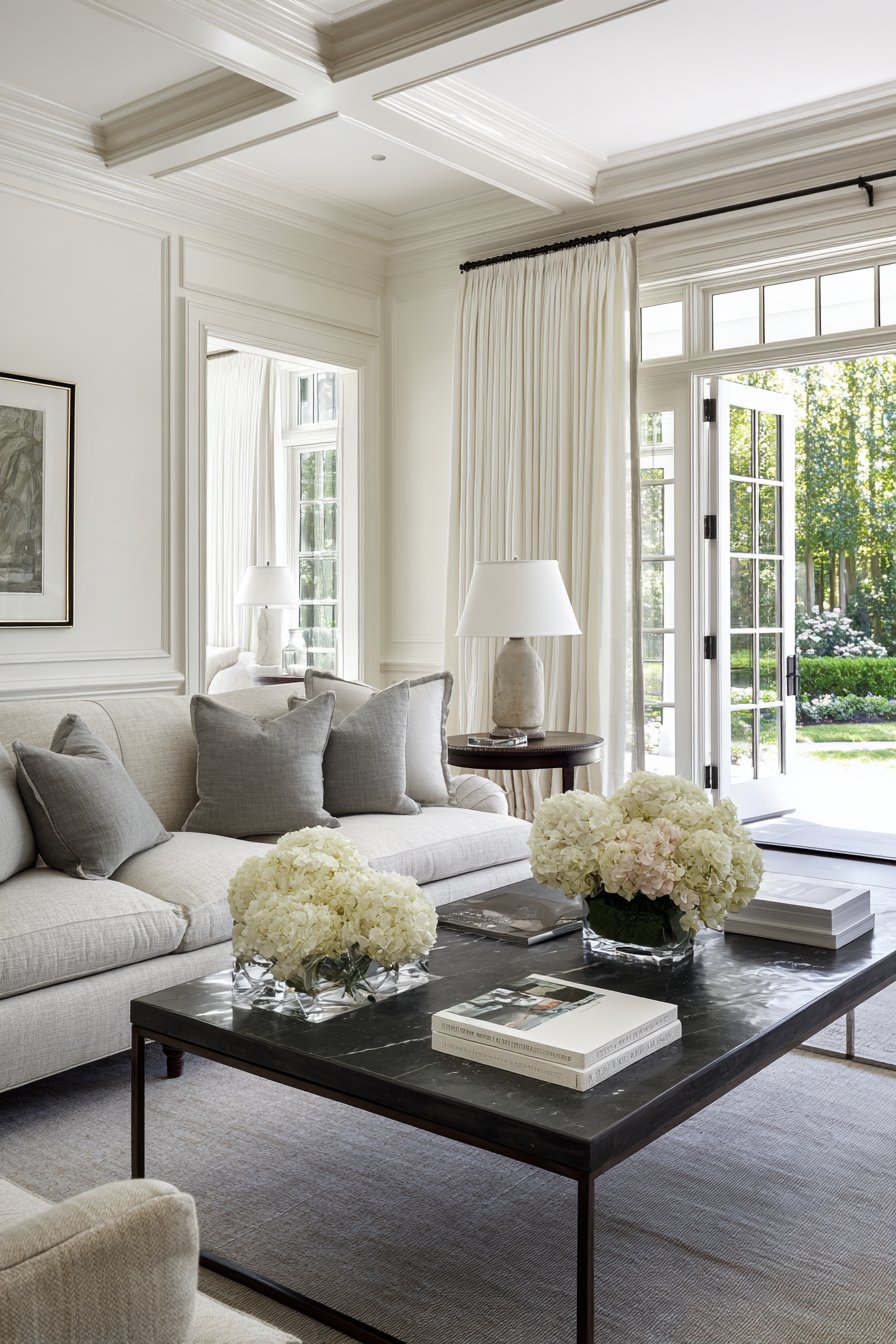
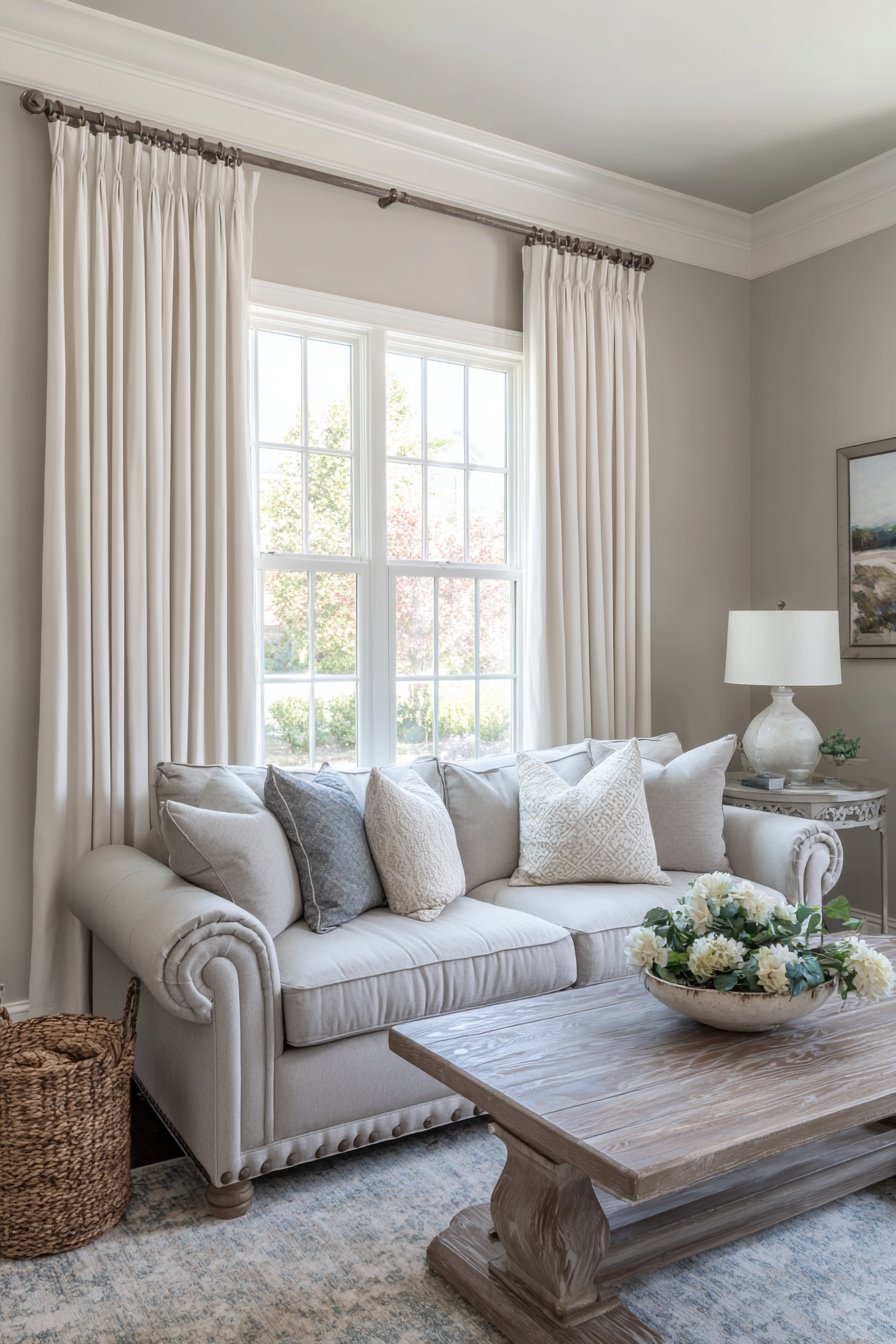
Transitional style masterfully bridges traditional and contemporary design, and grommet-top white canvas curtains embody this balanced approach. The grommet heading offers clean, modern functionality with its metal rings sliding smoothly along the rod, while the white canvas fabric provides substance and quality associated with more traditional treatments. This combination creates casual elegance—polished enough for formal entertaining yet relaxed enough for everyday family living. The curtains hang with gentle, even folds created by the grommet spacing, their precise 1-inch floor break creating a polished pooling effect that signals attention to detail.
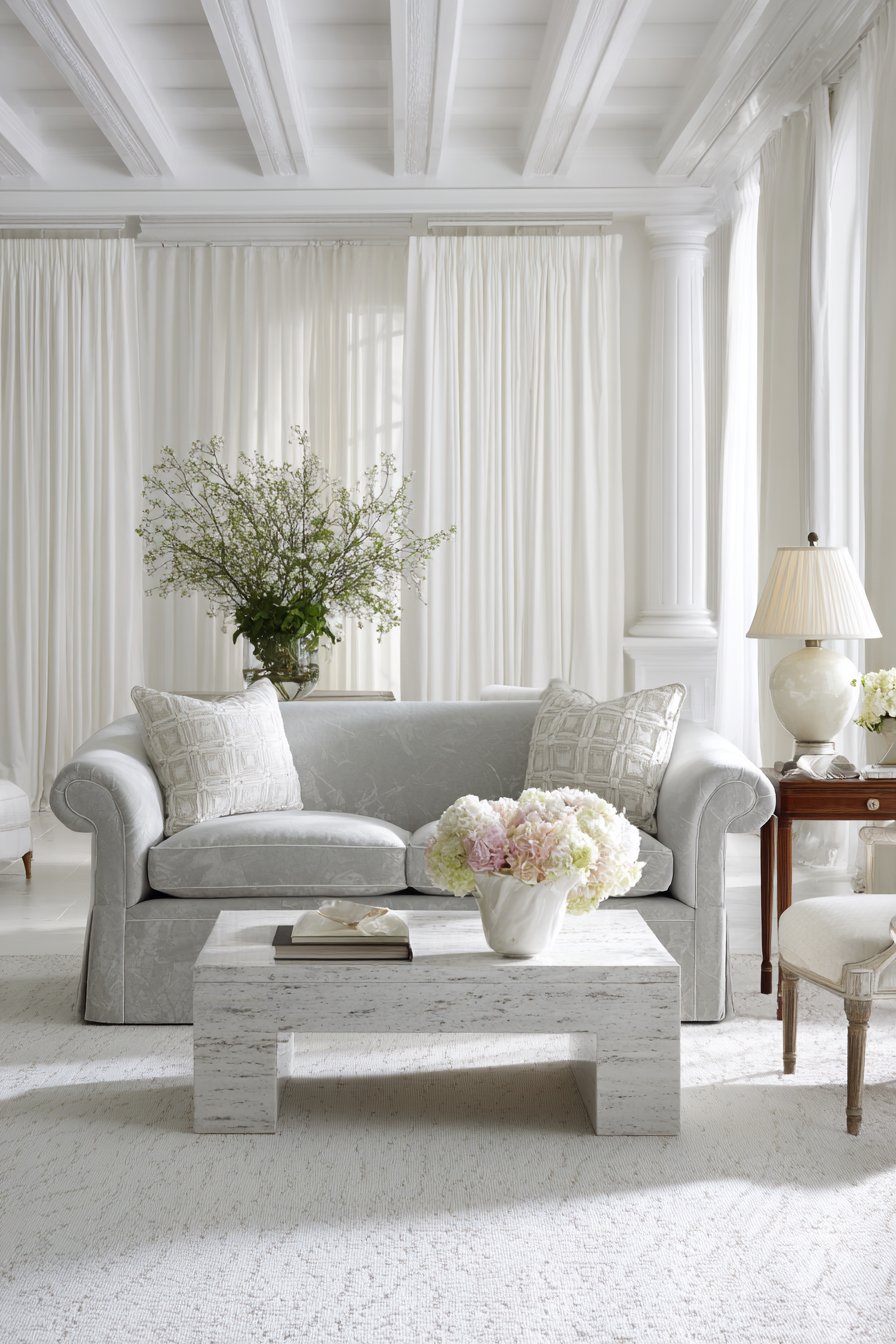
The living room showcasing these versatile curtains demonstrates transitional design’s fundamental principle: harmonizing elements from different style eras. A rolled-arm sofa upholstered in soft grey fabric represents traditional comfort with its classic silhouette, while a contemporary glass and metal coffee table introduces modern transparency and reflective surfaces. Table lamps with traditional turned bases topped by clean drum shades bridge both aesthetics. The white grommet curtains serve as neutral mediators, their simple elegance complementing both traditional and modern elements without favoring either direction.
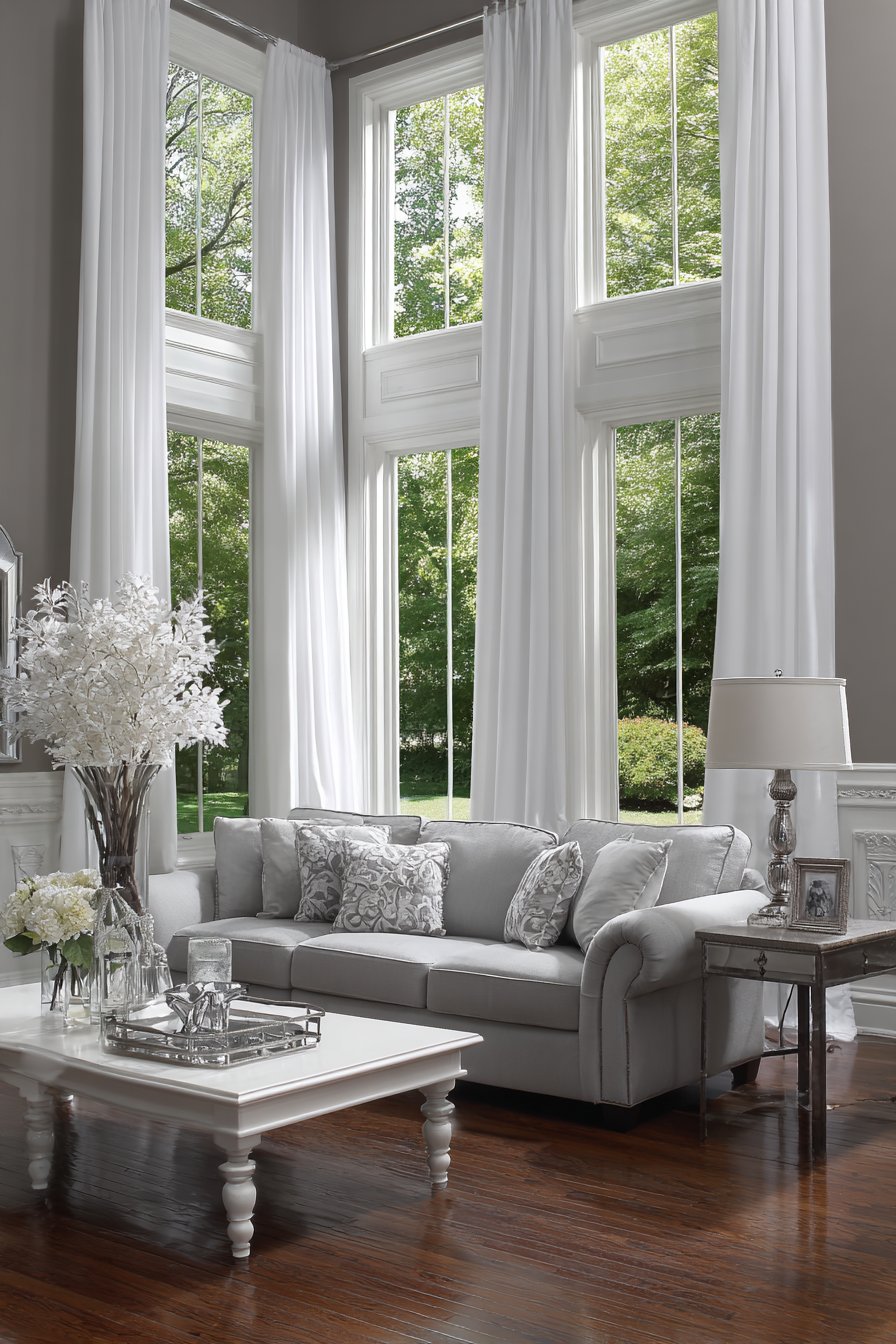
Proper curtain length and installation prove critical to achieving this polished look. The curtains hang from rods positioned to maximize window height, with the fabric brushing the floor with exactly one inch of extra length—enough to create a subtle fold but not so much that it appears sloppy or unintentional. This precise measurement demonstrates the attention to detail that elevates good design to great. The even grommet spacing creates regular folds that drape beautifully whether the curtains are open or closed, maintaining their attractive appearance in all positions.
Key Design Tips:
- Choose quality canvas or linen-cotton blend fabrics that provide structure and weight for beautiful draping
- Measure precisely for the proper floor break—too little looks unfinished while too much appears sloppy
- Space grommets evenly (typically 6-8 inches apart) to create attractive, uniform folds
- Select rod finishes that coordinate with other hardware throughout the space for cohesive design
- Combine traditional and contemporary furniture pieces with white curtains as the unifying neutral element
10. Industrial Softness in Urban Lofts
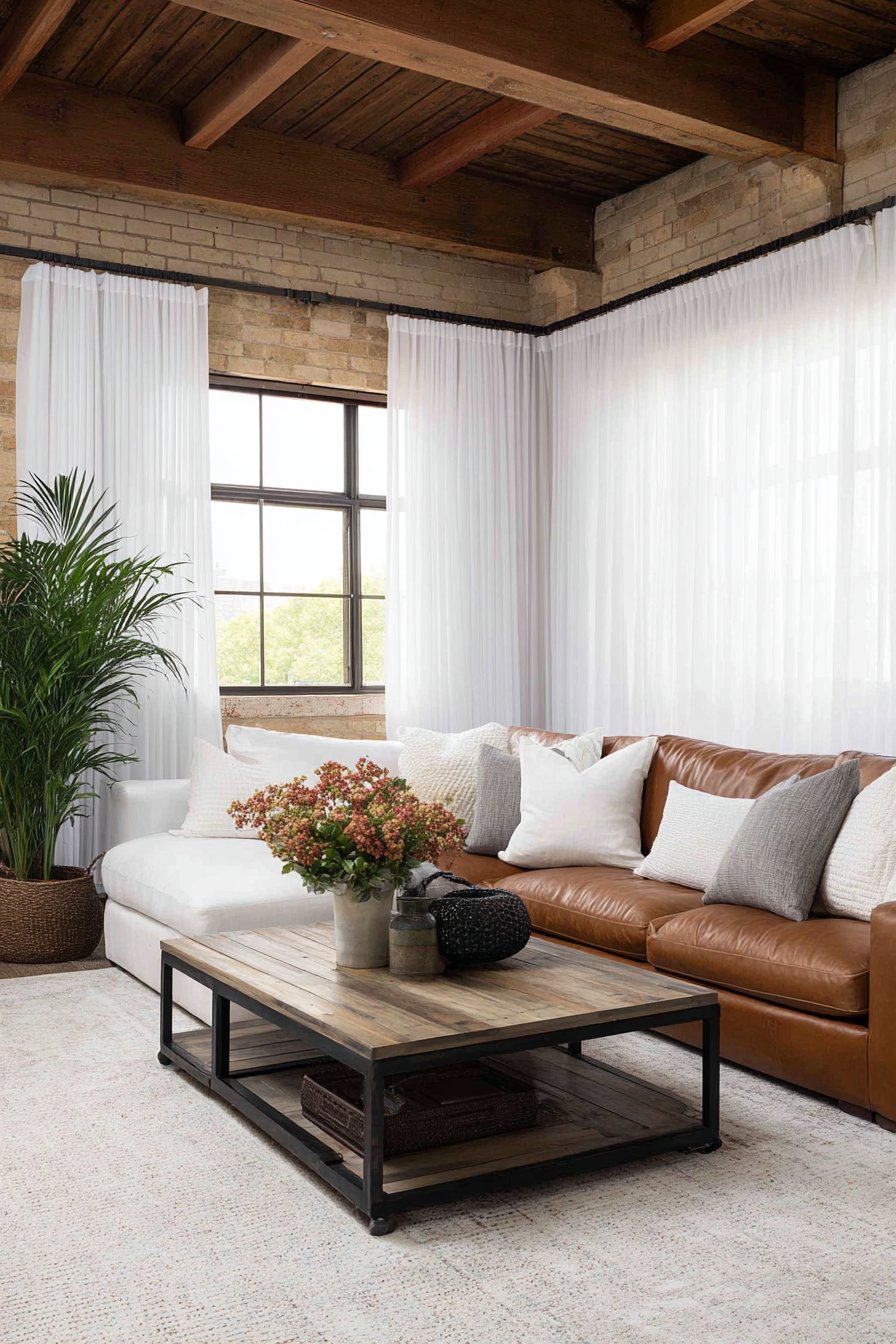
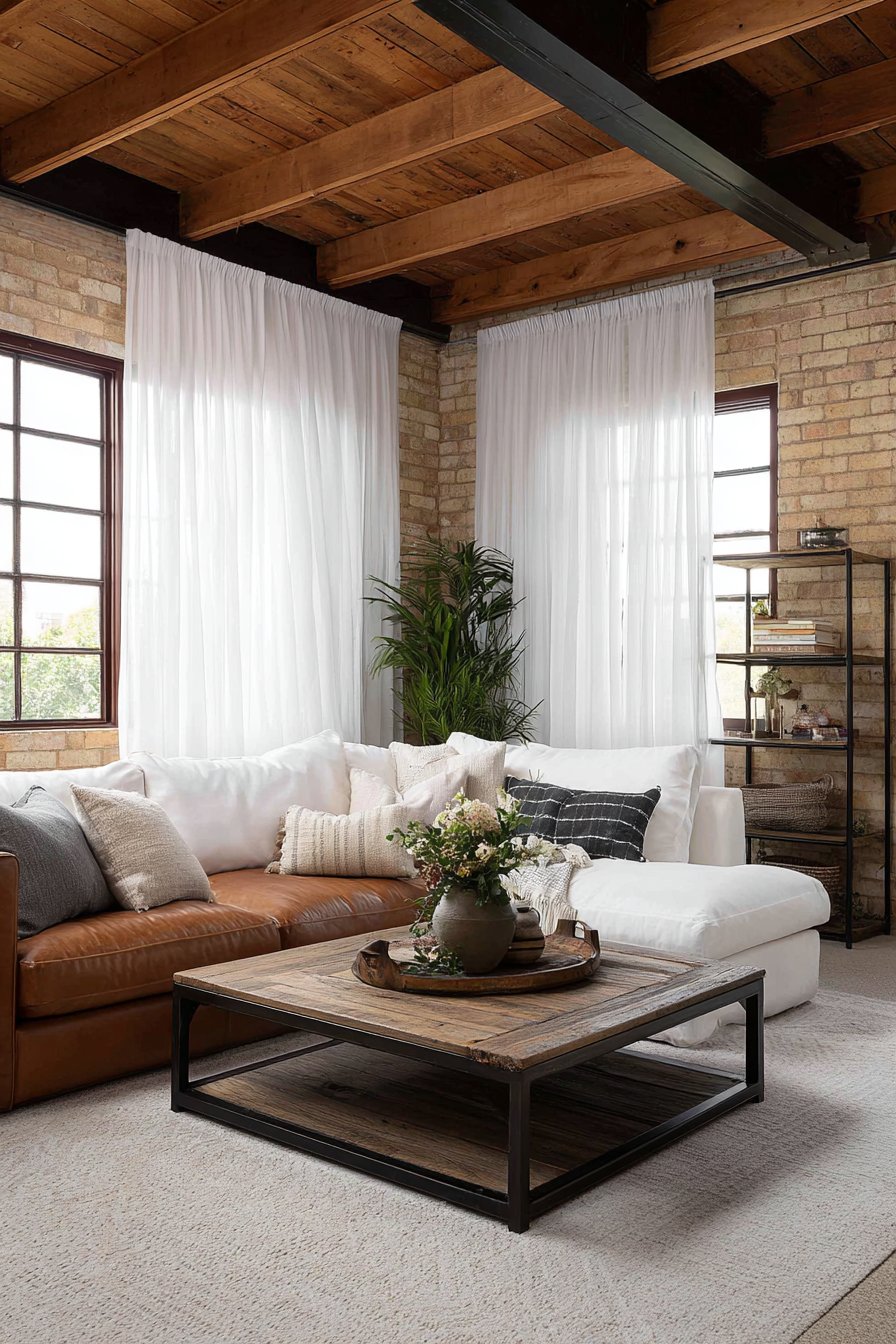
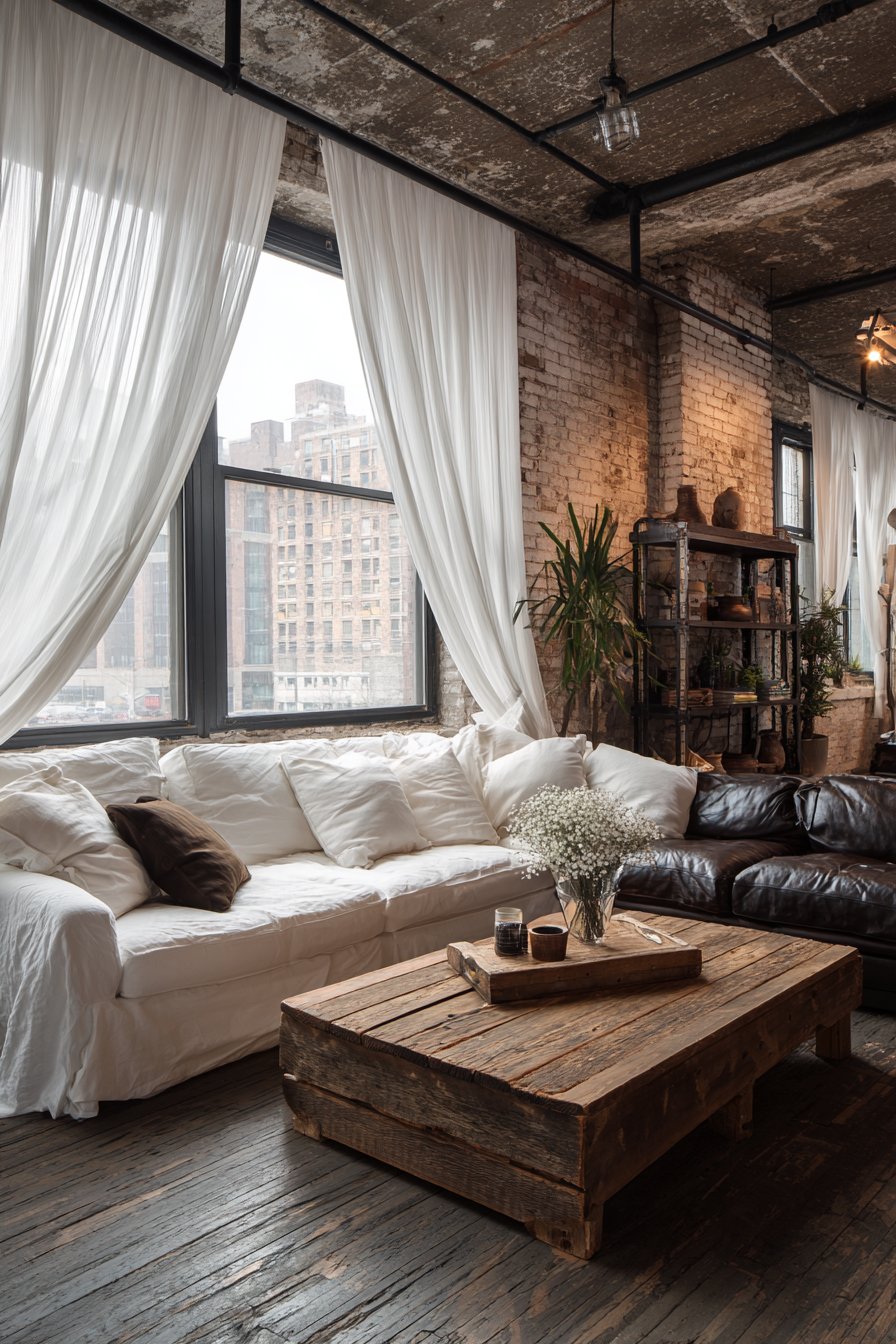
Industrial lofts present unique design challenges with their raw materials and soaring spaces, and white gauze curtains provide essential softening against exposed brick walls and metal-framed windows. These delicate curtains create deliberate contrast with the rugged architectural elements, their ethereal quality tempering the hard edges and rough textures inherent in industrial spaces. The gauze fabric’s loosely woven structure allows light to filter through while obscuring specific views, providing privacy without sacrificing the open, loft-like feeling. Against brick walls darkened by age and urban soot, the white curtains seem to glow, creating focal points of light and softness.
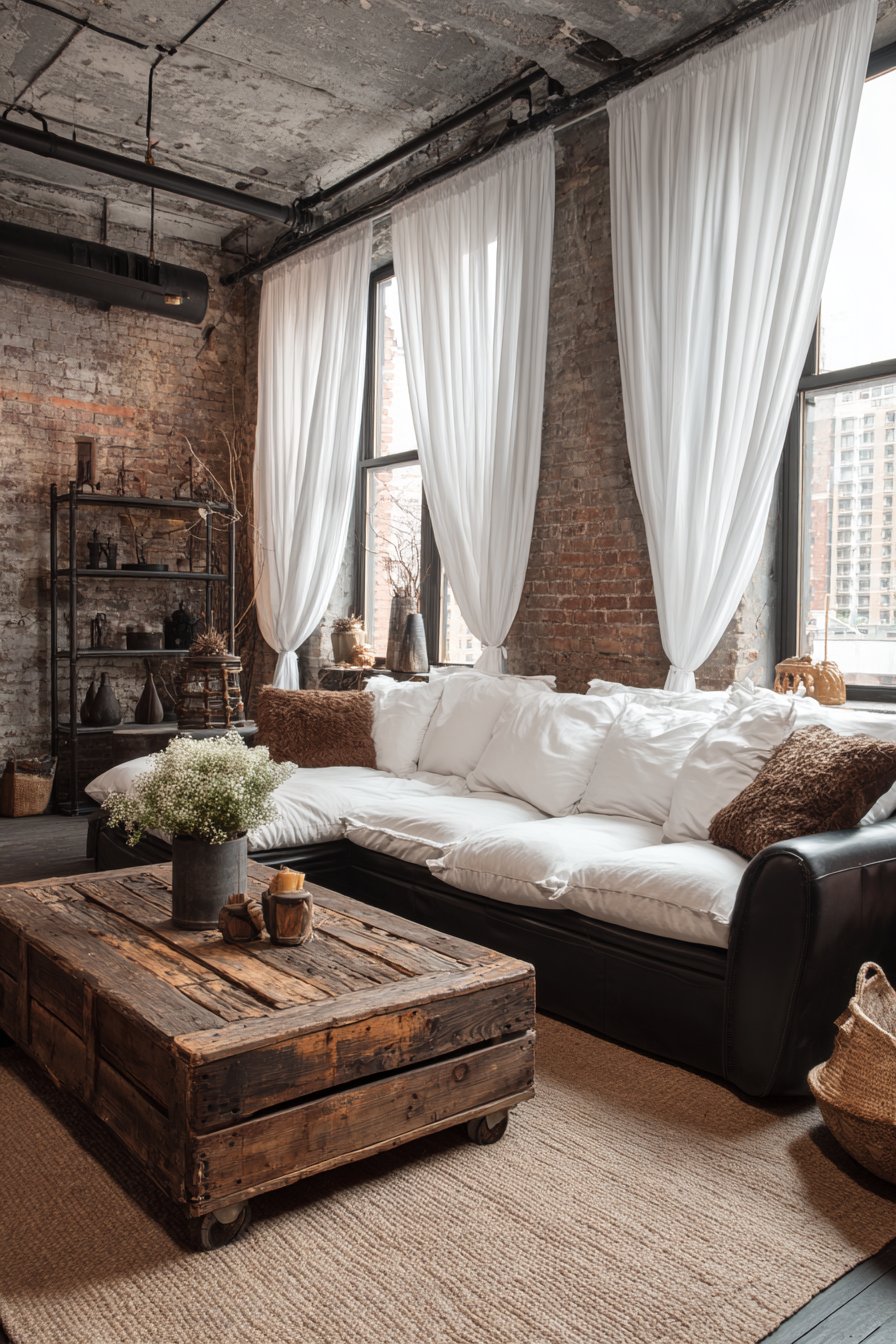
The urban living room embraces industrial authenticity with a rich brown leather sofa that will only improve with age and wear, developing the patina that makes leather furniture treasured possessions. A reclaimed wood coffee table with visible saw marks and natural imperfections provides surface area while honoring the industrial principle of celebrating materials’ honest qualities. Vintage metal shelving units, perhaps rescued from old factories or workshops, offer both storage and display opportunities while reinforcing the industrial aesthetic. Against these substantial, weighty elements, the white gauze curtains appear almost weightless, floating and ephemeral.
Floor-to-ceiling windows common in loft spaces create dramatic opportunities when dressed with ceiling-mounted white curtains. The vertical emphasis draws the eye upward, showcasing the impressive ceiling heights that make lofts so desirable. The white curtains’ length transforms them into architectural features themselves, their soft folds and gentle movement providing dynamic interest in spaces that might otherwise feel static despite their size. This juxtaposition of delicate fabric against industrial materials creates the layered complexity that makes great interiors fascinating rather than one-note.
Key Design Tips:
- Choose lightweight gauze or sheer curtains that provide movement and softness without blocking loft architecture
- Install curtains at ceiling height in lofts to maximize the dramatic vertical space
- Embrace the contrast between delicate white curtains and raw industrial materials rather than trying to match aesthetics
- Allow natural material aging on leather and wood while keeping white curtains fresh and clean for maximum contrast
- Consider the reflective and light-absorbing qualities of different materials—white curtains brighten against dark brick
11. French Country Romance with Ruffled Details
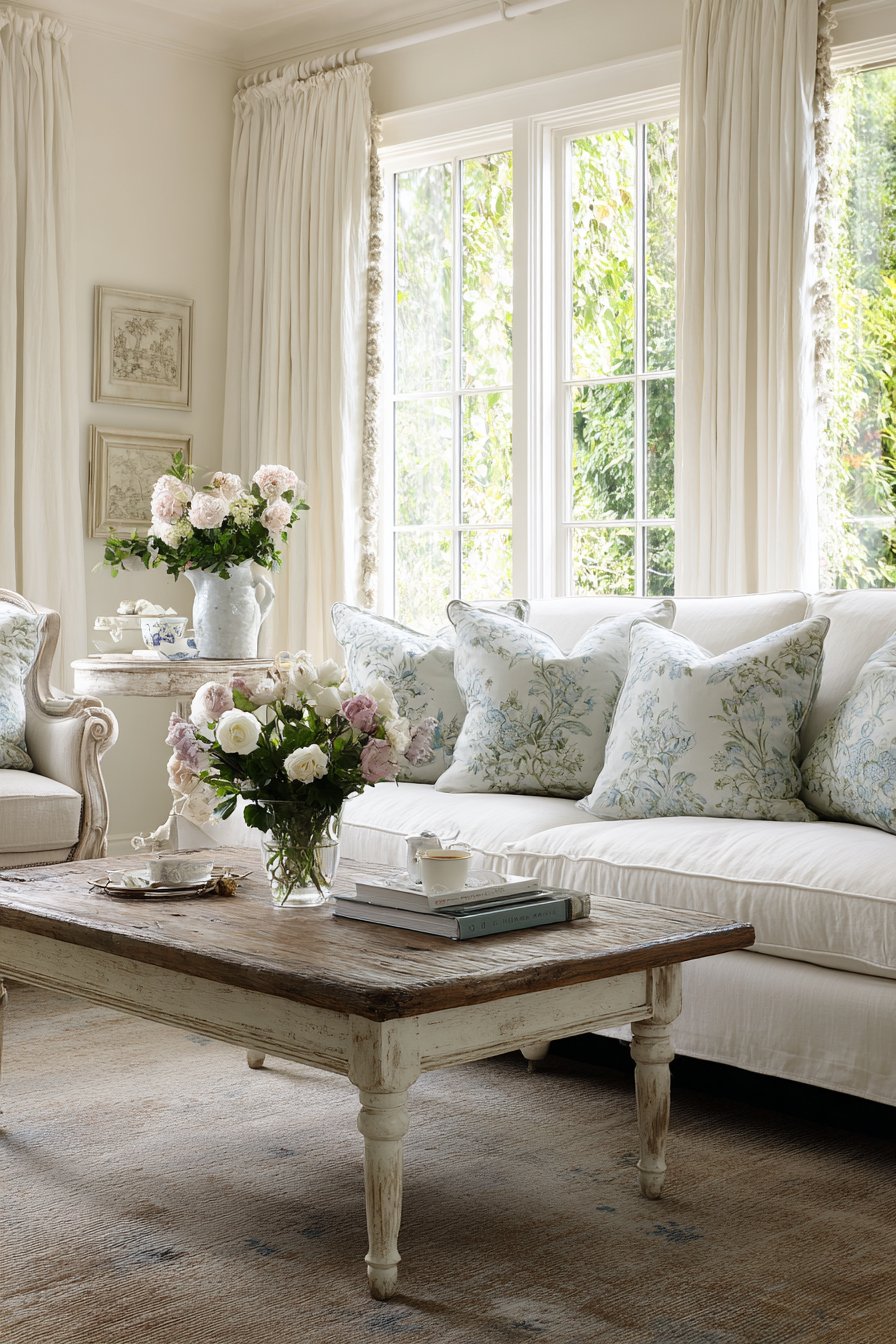
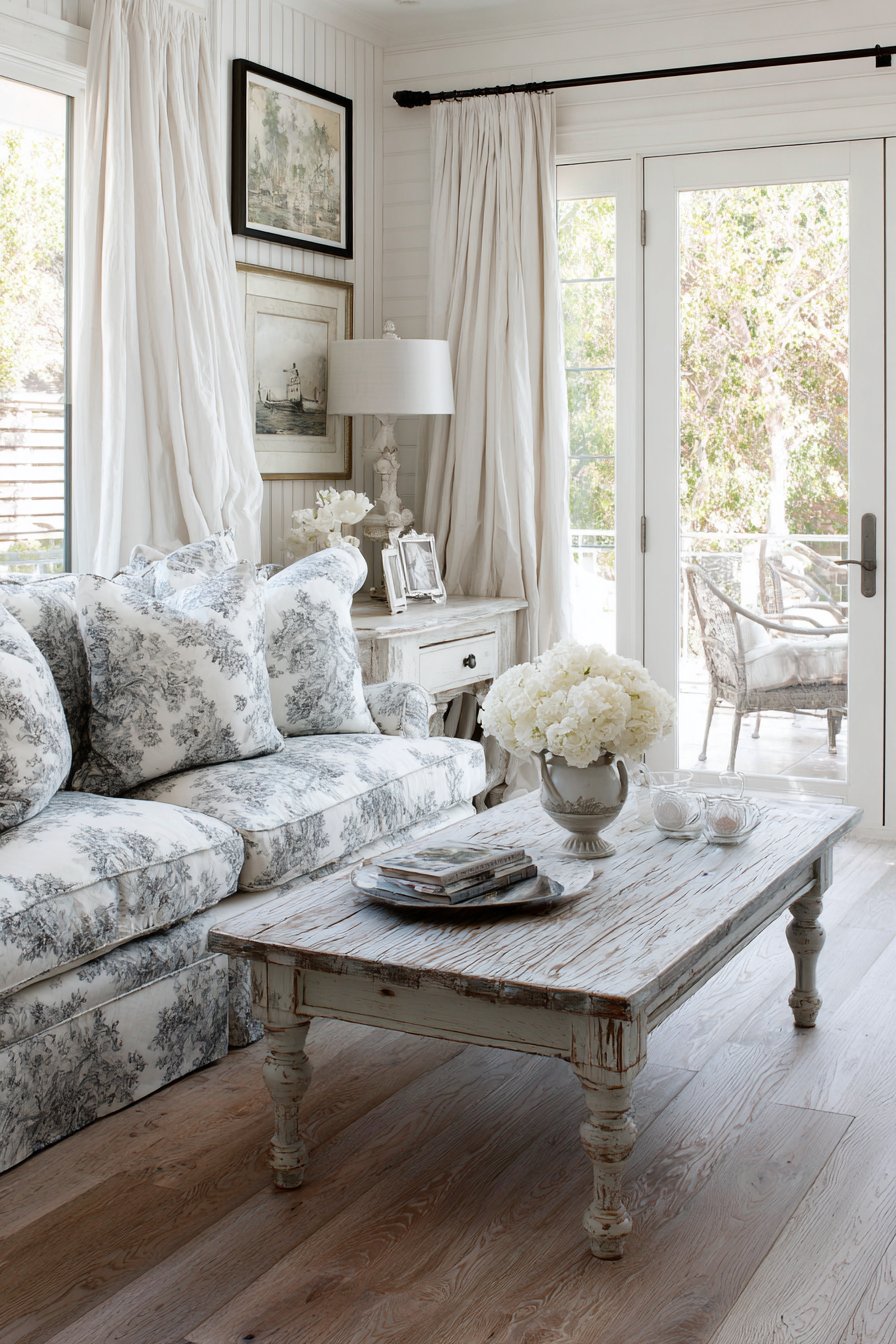
French country style celebrates romantic details and provincial charm, perfectly expressed through white cotton curtains featuring delicate ruffled hems and tie-tops. These feminine curtain details immediately establish the gentle, romantic mood characteristic of French countryside homes. The ruffles add three-dimensional texture and movement, catching light and creating shadows that prevent the white fabric from appearing flat. Tie-top headers allow the curtains to gather into soft, irregular folds rather than precise pleats, contributing to the relaxed, lived-in quality that makes French country interiors so inviting.
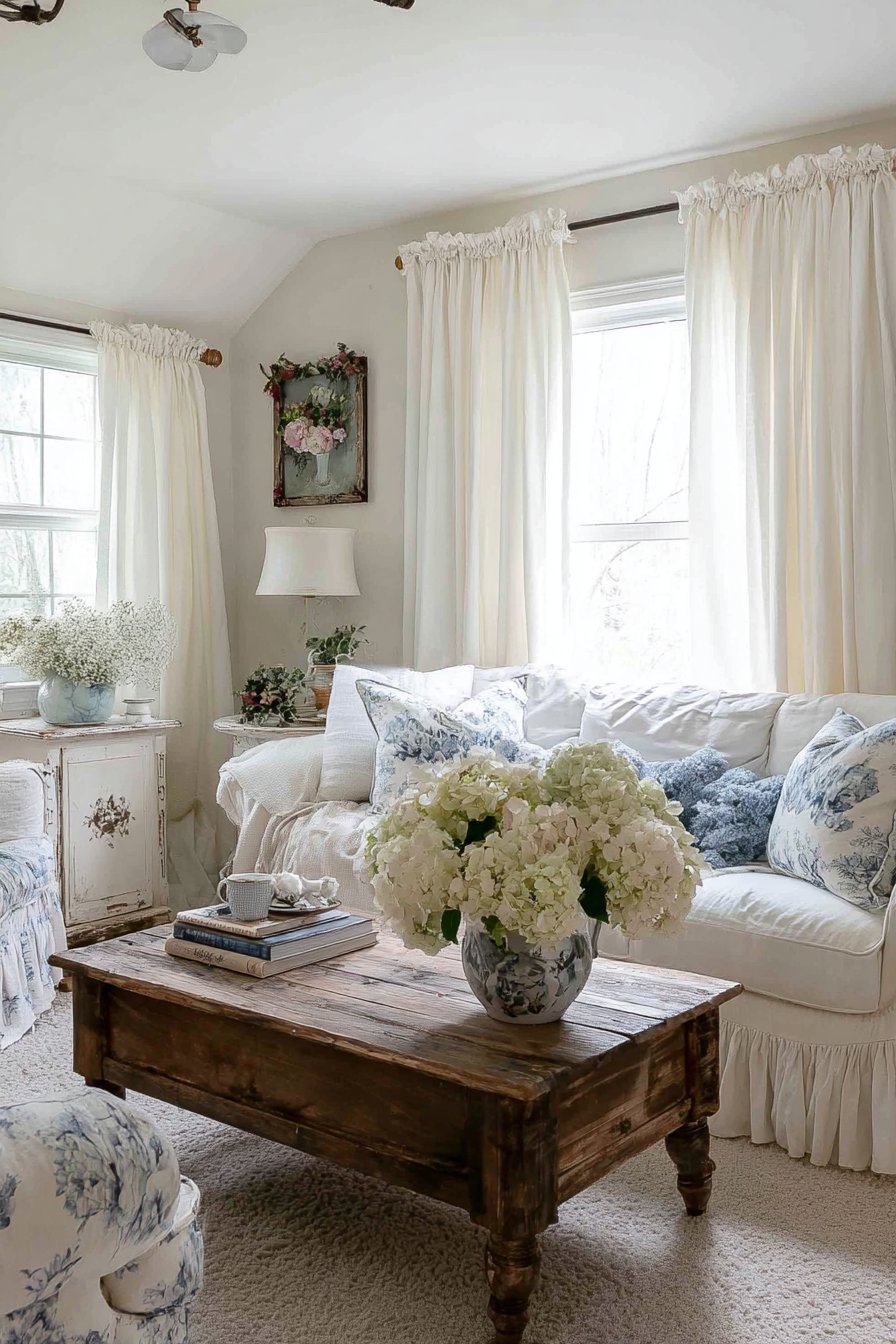
Antique white furniture throughout the living room reinforces the provincial aesthetic, its distressed finish suggesting pieces collected over generations rather than purchased all at once. Toile patterns—the classic French fabric featuring pastoral scenes rendered in single-color line drawings—appear on cushions and upholstery, their narrative quality adding visual interest while maintaining the blue-and-white or red-and-white color schemes traditional to the style. A weathered wood coffee table with turned legs bears the marks of use, its surface patina testifying to decades of service. These collected elements create an interior that feels inherited and treasured rather than decorated.
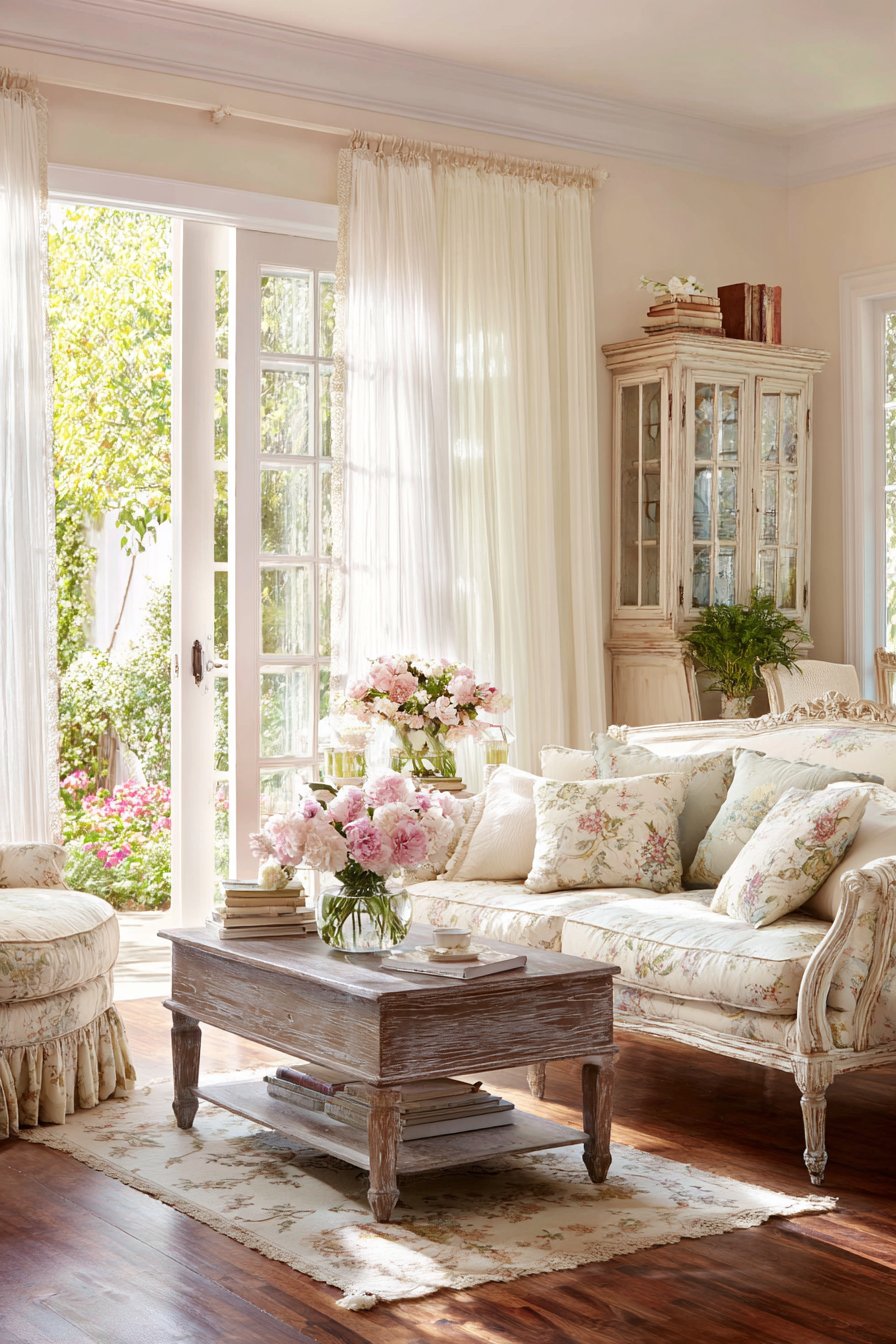
Soft morning light filtering through the gathered white curtains creates the luminous quality essential to French country interiors. The cottage-style aesthetic depends on this gentle illumination, which makes white walls glow warmly and highlights the texture in fabrics and aged wood surfaces. The ruffled curtains diffuse direct sunlight, preventing harsh shadows while maintaining brightness. This quality of light transforms throughout the day, creating ever-changing patterns and highlights that keep the space feeling alive and dynamic despite its traditional foundations.
Key Design Tips:
- Seek curtains with hand-finished details like ruffles and ties for authentic French country character
- Layer patterns through toile, checks, and florals while anchoring with white curtains for cohesive design
- Choose antique or antique-finish furniture in soft whites and creams rather than bright white
- Create the collected look by mixing furniture styles, eras, and finishes unified by color palette
- Position furniture to capture morning light filtering through ruffled curtains for that characteristic French country glow
12. Energy-Efficient Elegance with Thermal Damask
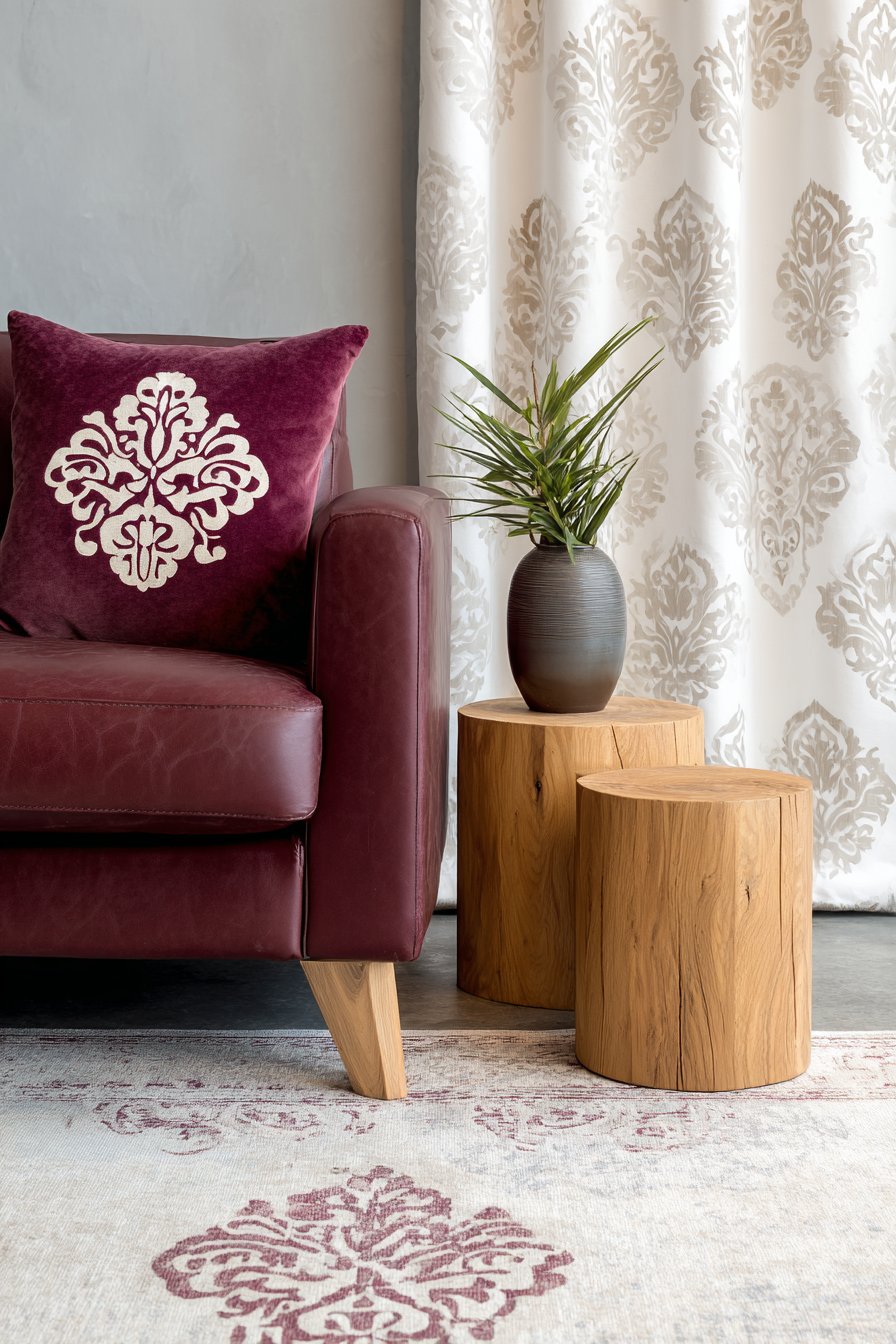
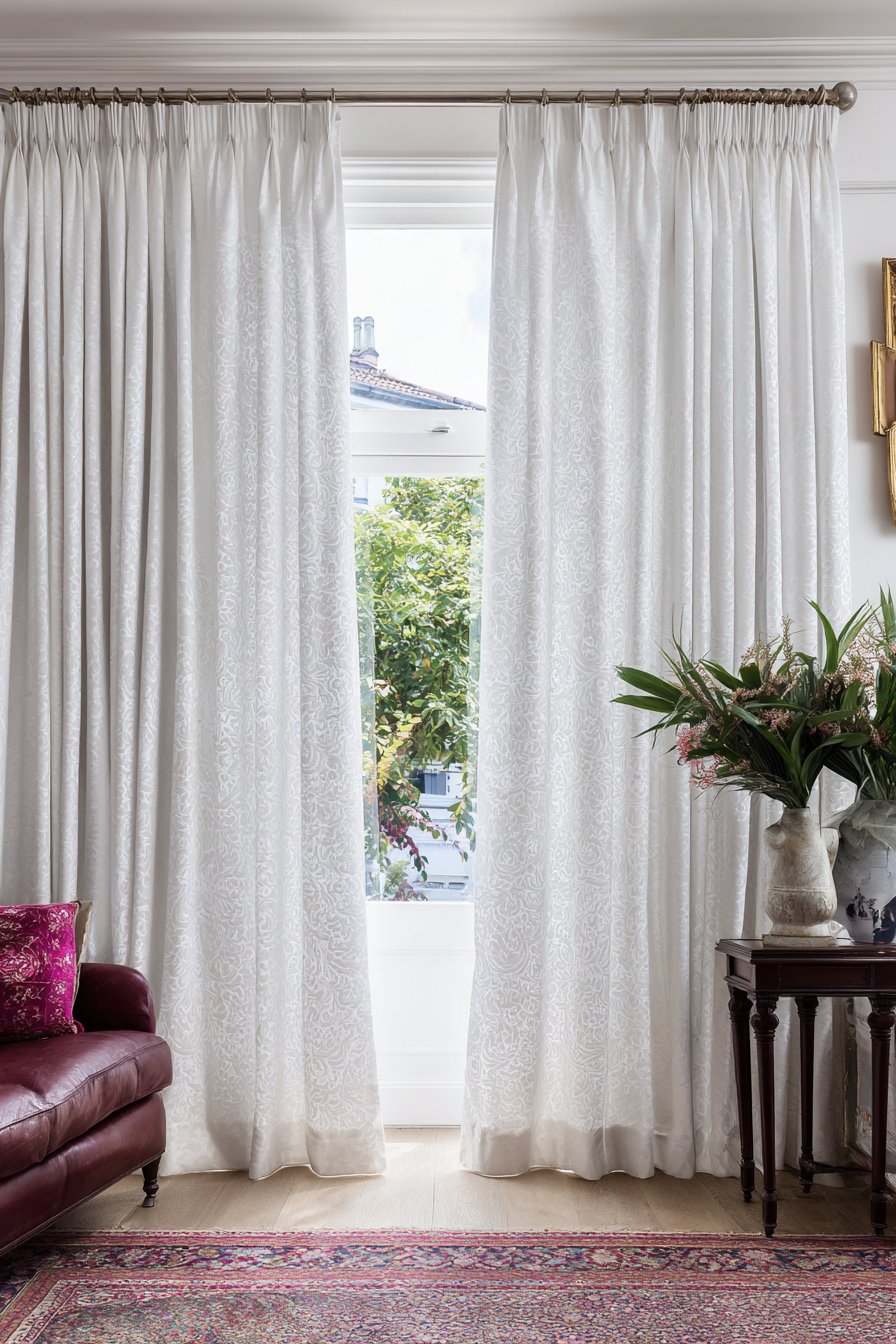
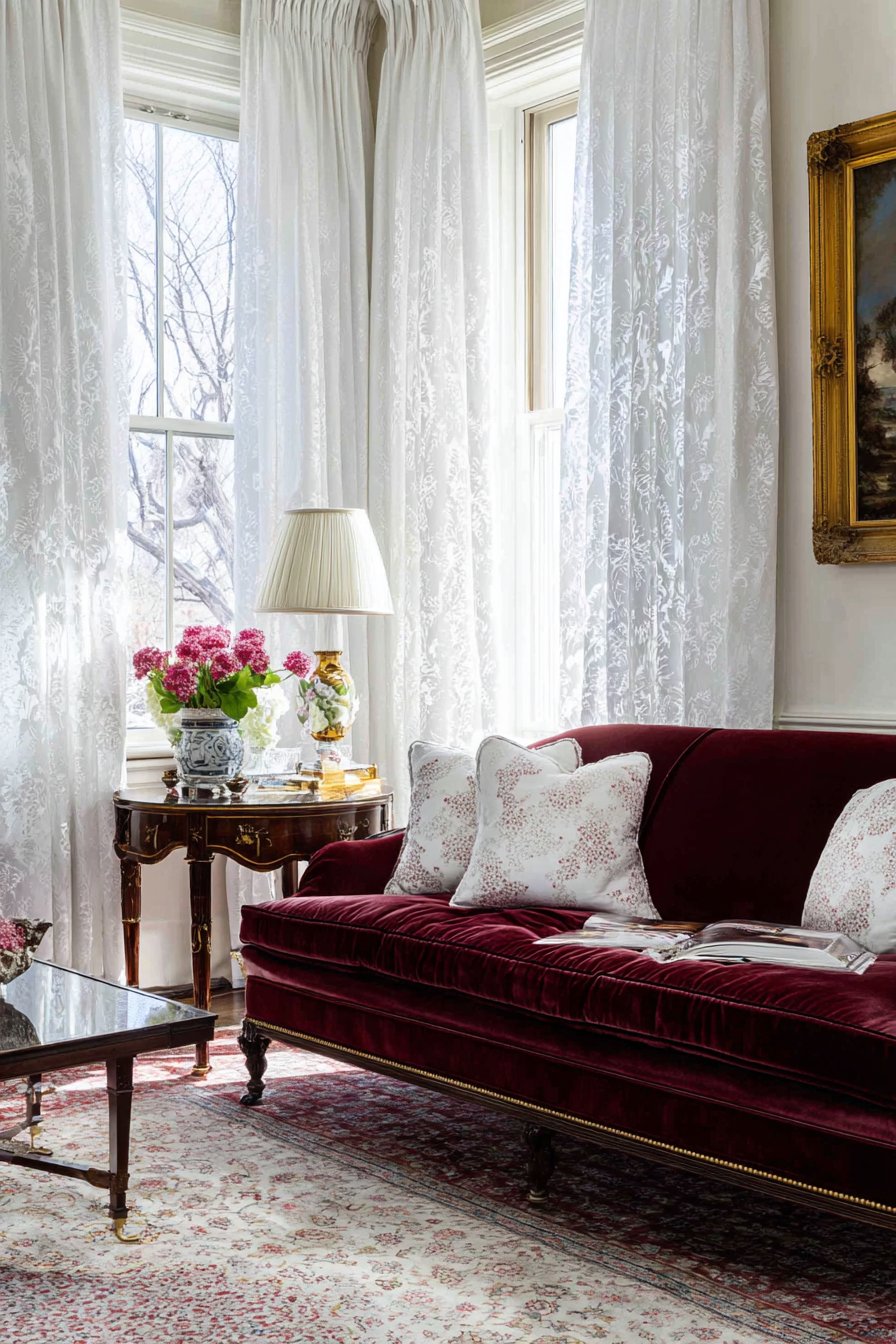
Practical considerations need not sacrifice aesthetic appeal, as demonstrated by white thermal-insulated curtains featuring subtle damask patterns. These curtains serve double duty, providing elegant window treatments while significantly improving energy efficiency through their insulated construction. The damask pattern—traditional woven designs that create tonal variations within the white fabric—adds visual interest and sophistication without introducing color or busy patterns. This textured approach to monochromatic design creates depth and richness, preventing solid white curtains from appearing flat or boring.
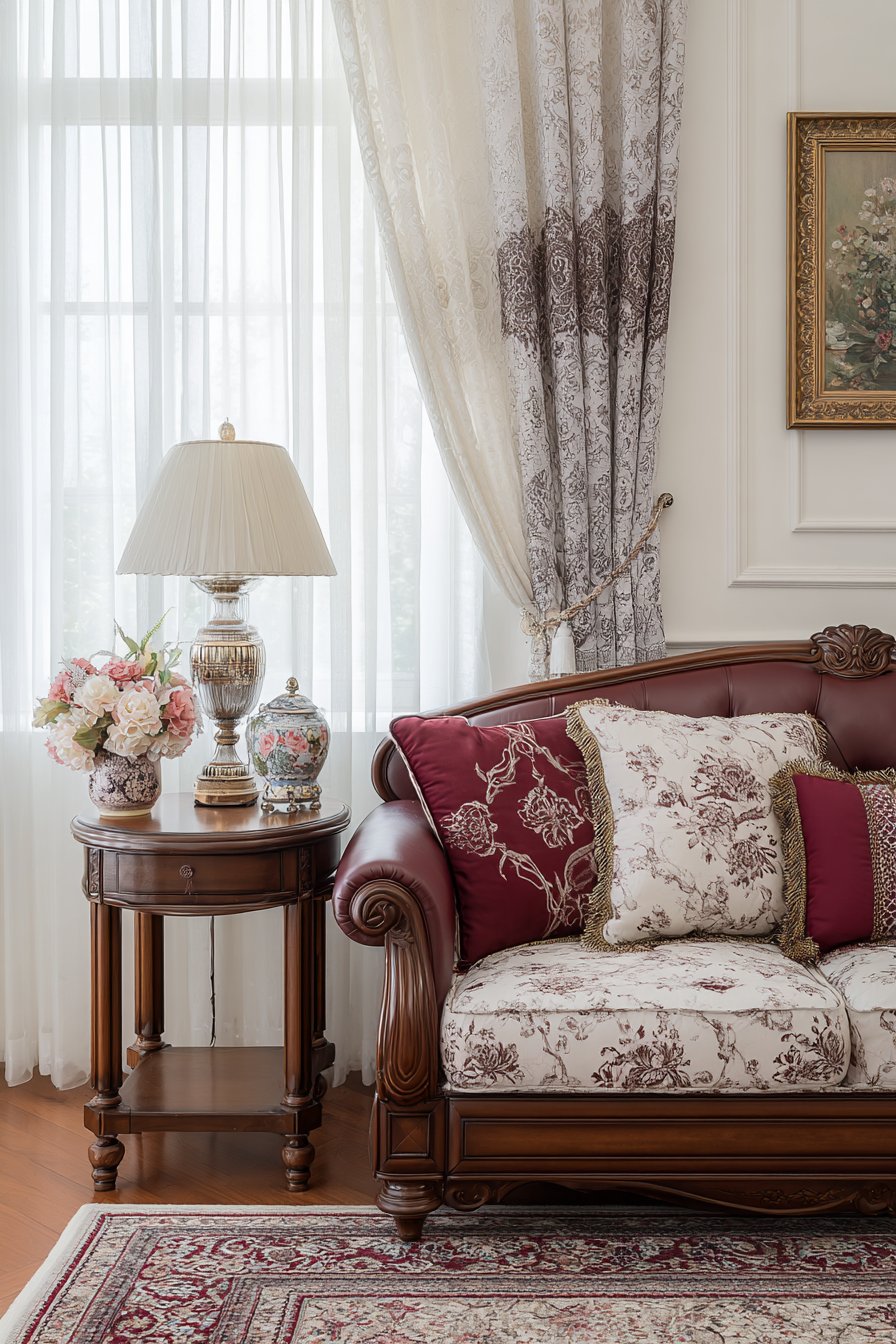
The traditional living room housing these functional yet beautiful curtains embraces rich colors and substantial furnishings. A burgundy leather sofa introduces deep, warm tones that anchor the space, while mahogany side tables provide wood tones and classic styling. An oriental rug in jewel tones spreads beneath the furniture arrangement, its intricate patterns and saturated colors creating visual weight and warmth. Against this richness, the white damask curtains provide essential balance, their light color and elegant pattern complementing rather than competing with the bold furniture choices.
The thermal properties of these curtains deliver tangible benefits beyond aesthetics. In summer, they block heat gain, keeping living rooms cooler and reducing air conditioning costs. During winter months, they provide insulation that retains warmth and prevents cold air infiltration around windows. These practical benefits make thermal curtains wise investments, particularly in older homes with less efficient windows. The white color choice ensures maximum light reflection and heat rejection during summer while the substantial fabric weight provides winter insulation. That these practical benefits come wrapped in elegant damask patterns proves that beauty and function can coexist harmoniously.
Key Design Tips:
- Select thermal curtains with integrated insulation rather than separate liners for better performance and appearance
- Choose subtle patterns like damask that add interest without overwhelming spaces featuring bold furniture
- Ensure proper fit with minimal gaps around edges to maximize thermal benefits
- Pair white thermal curtains with dark furniture and rich colors to create balanced, grounded interiors
- Consider the energy savings of thermal curtains as long-term investment in home efficiency
13. Mid-Century Modern Simplicity with Pinch-Pleat Classics
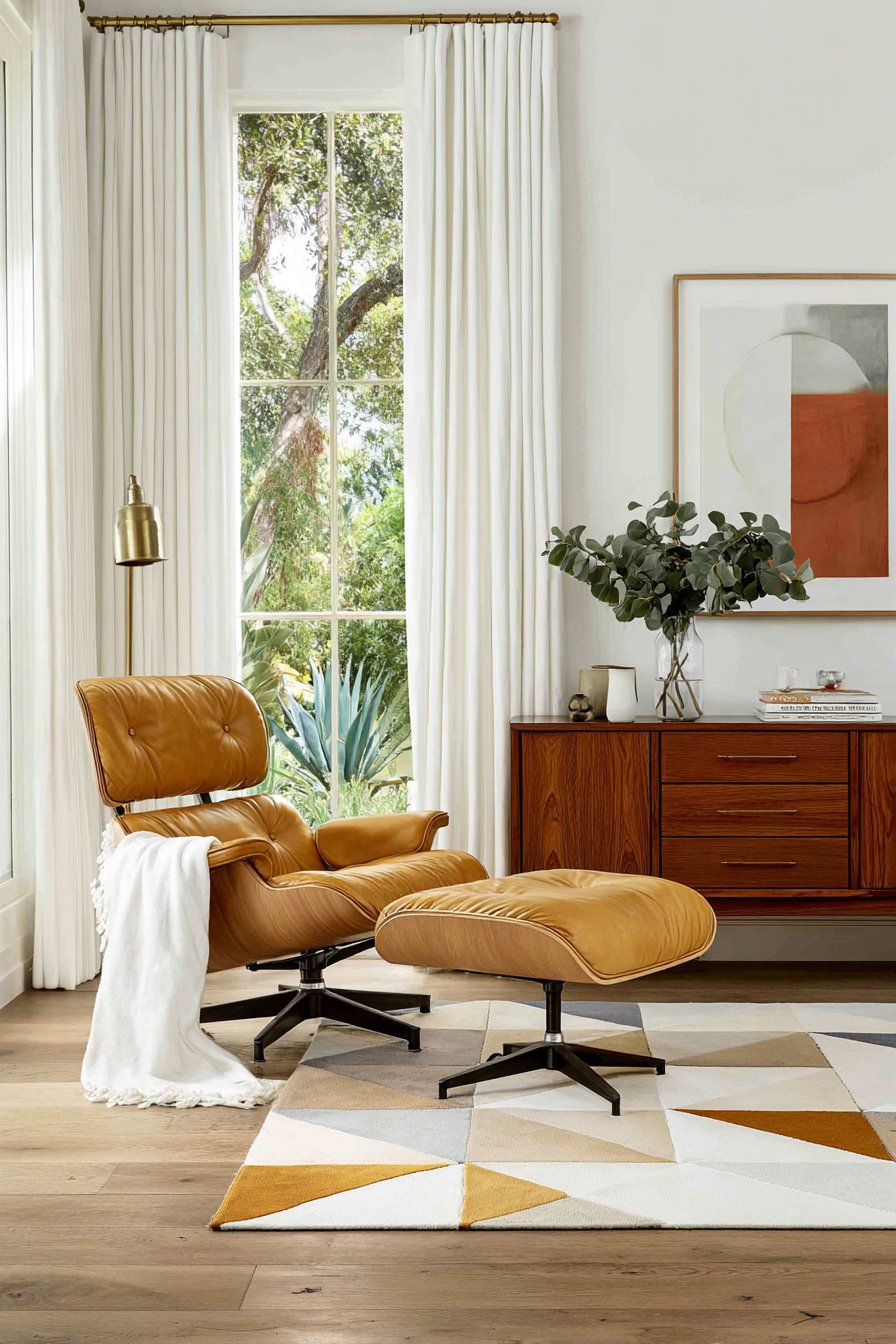
Mid-century modern design principles emphasize clean lines, organic forms, and functional beauty—all qualities embodied in simple white cotton pinch-pleat curtains on slim brass rods. These curtains reference the period’s preference for unadorned functionality, with pinch pleats providing structured elegance without excessive decoration. The brass rods contribute warm metallic accents characteristic of mid-century design, their slim profiles maintaining the streamlined aesthetic. Together, these elements create window treatments that enhance rather than distract from the iconic furniture pieces central to this enduring style.
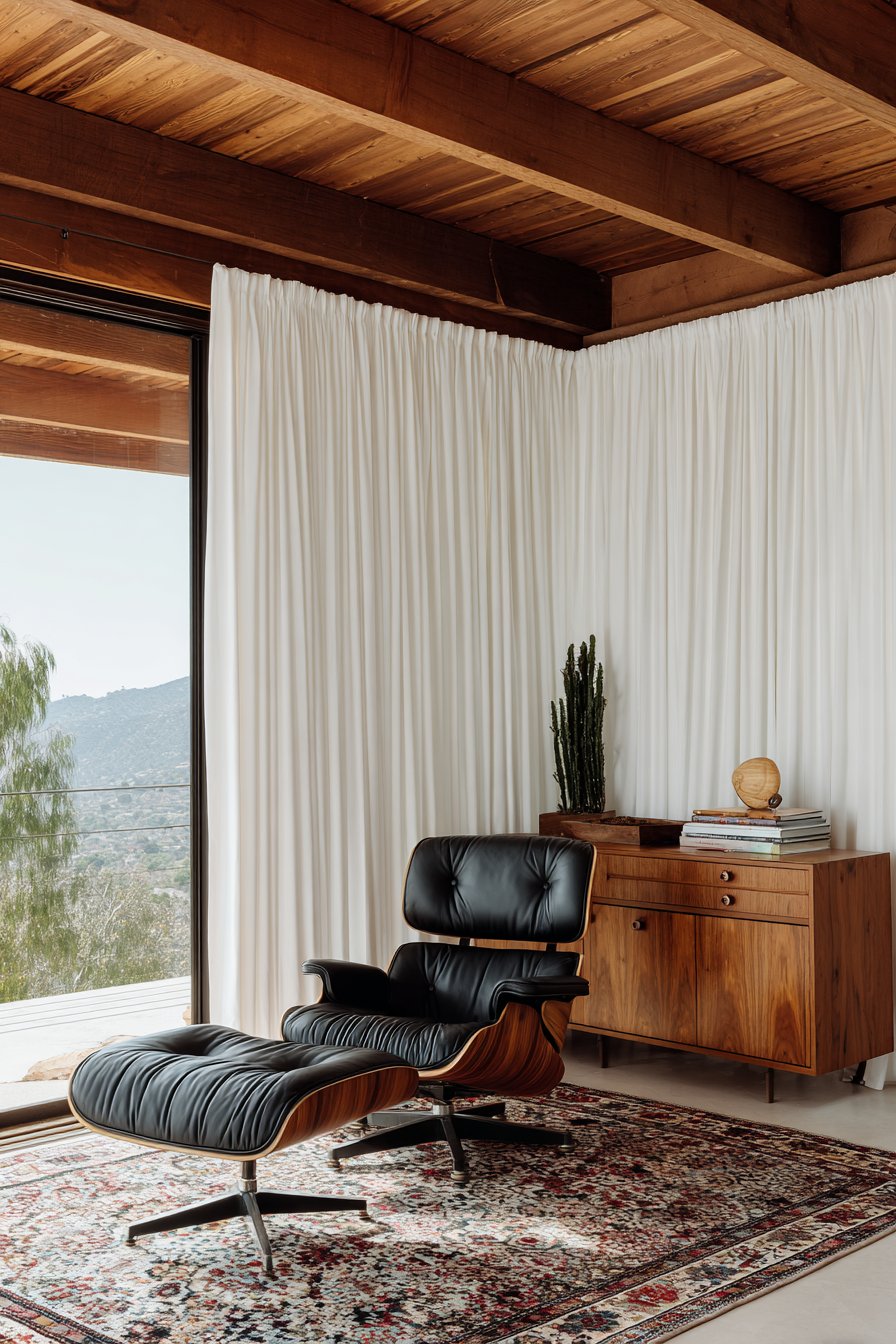
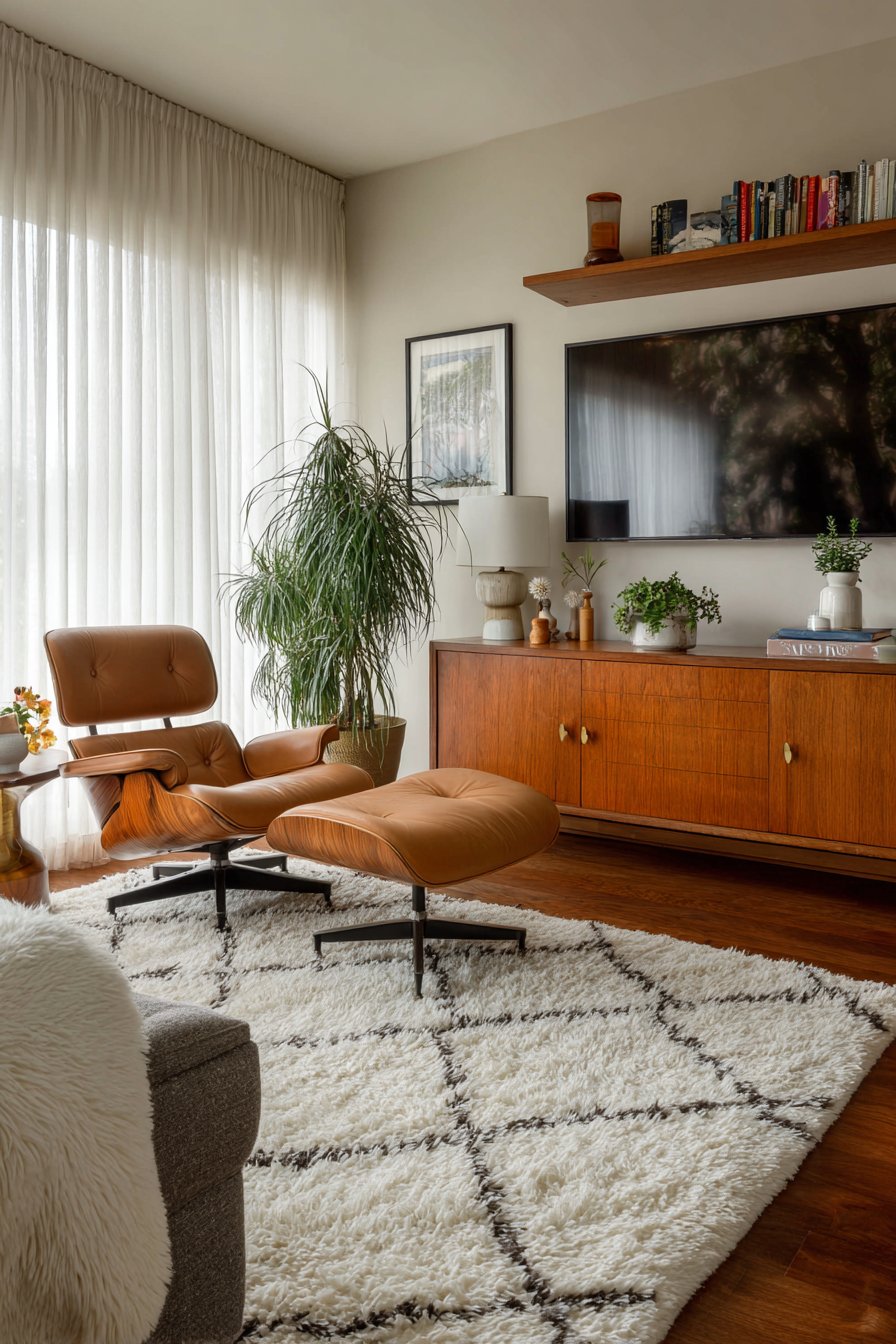
The living room showcases mid-century modern classics: an Eames lounge chair replica with its molded plywood and leather upholstery, a teak credenza with tapered legs and clean-lined drawers, and a geometric area rug in burnt orange and cream. These pieces represent the era’s marriage of form and function, where beautiful objects serve practical purposes without unnecessary ornament. The white pinch-pleat curtains support this philosophy, providing privacy and light control while maintaining visual simplicity. Their understated presence allows the sculptural quality of the furniture to remain focal, exactly as period-appropriate window treatments should.
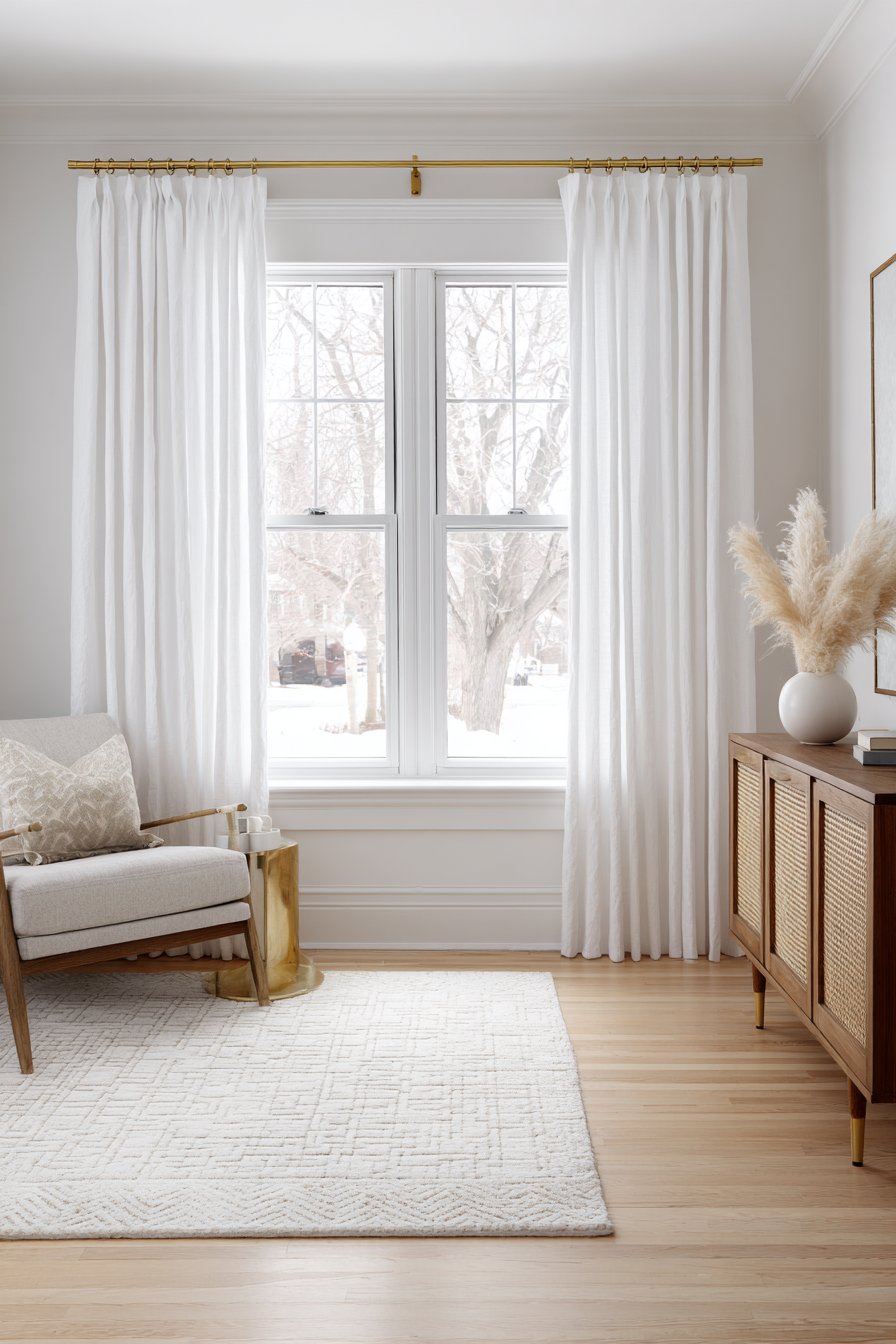
Proper proportion and scale prove critical in mid-century modern interiors, where every element receives consideration for its contribution to the overall composition. The white curtains’ simple elegance matches the furniture’s refined simplicity, neither competing for attention nor disappearing entirely. The pinch-pleat heading creates just enough structure to appear finished and intentional without the elaborate treatments that would feel excessive in this context. This restraint—knowing when to hold back rather than add more—defines successful mid-century modern design and explains its enduring popularity decades after its inception.
Key Design Tips:
- Choose simple pleat styles like pinch pleats that provide structure without excessive decoration
- Select brass or warm-toned metal hardware to complement mid-century furniture finishes
- Maintain clean lines throughout window treatments, avoiding elaborate trims or embellishments
- Allow iconic furniture pieces to serve as focal points with curtains providing clean, simple backdrop
- Reference period-appropriate materials like cotton and linen rather than synthetic fabrics
14. Flexible Space Division with Curtain Room Dividers
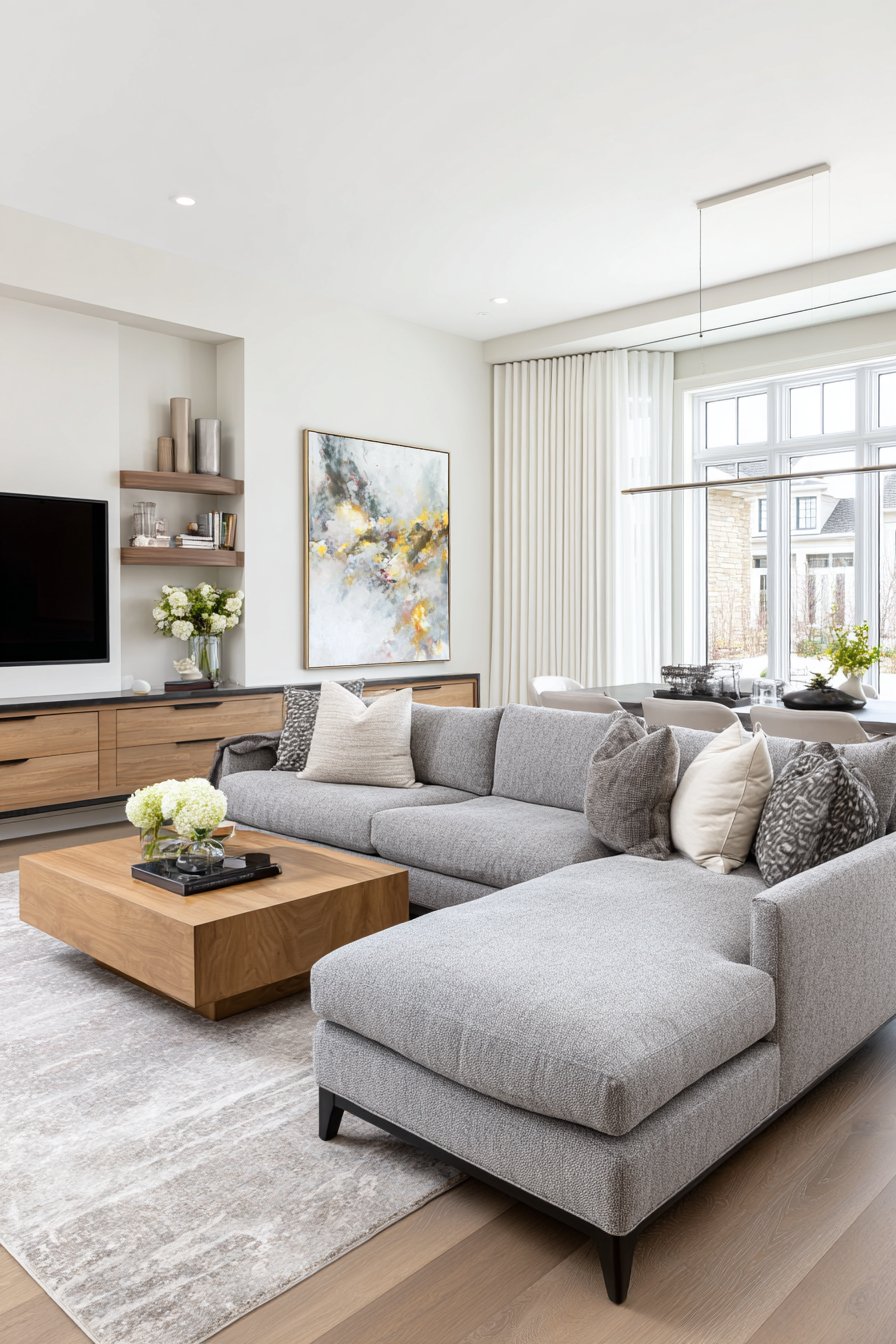
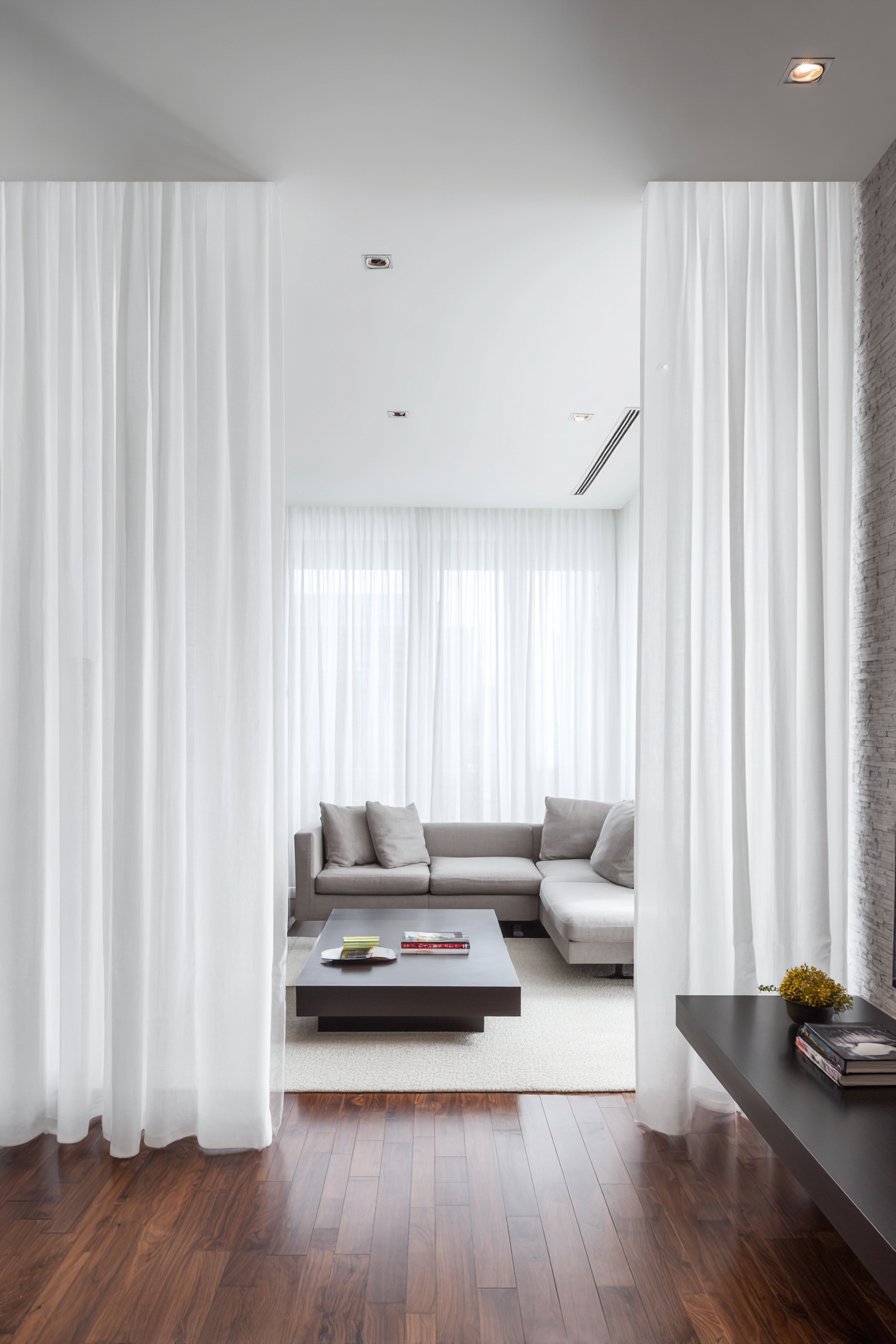
Open-concept living requires creative solutions for defining spaces while maintaining flow, and white linen curtains on ceiling-mounted tracks offer elegant flexibility. These curtains transform from decorative window treatments to functional room dividers, creating privacy or separation when needed while disappearing when open floor plans serve better. The ceiling tracks allow smooth, silent operation, while the white linen maintains visual continuity between spaces rather than creating harsh divisions. This solution provides the adaptability modern living demands without permanent walls that limit future layout changes.
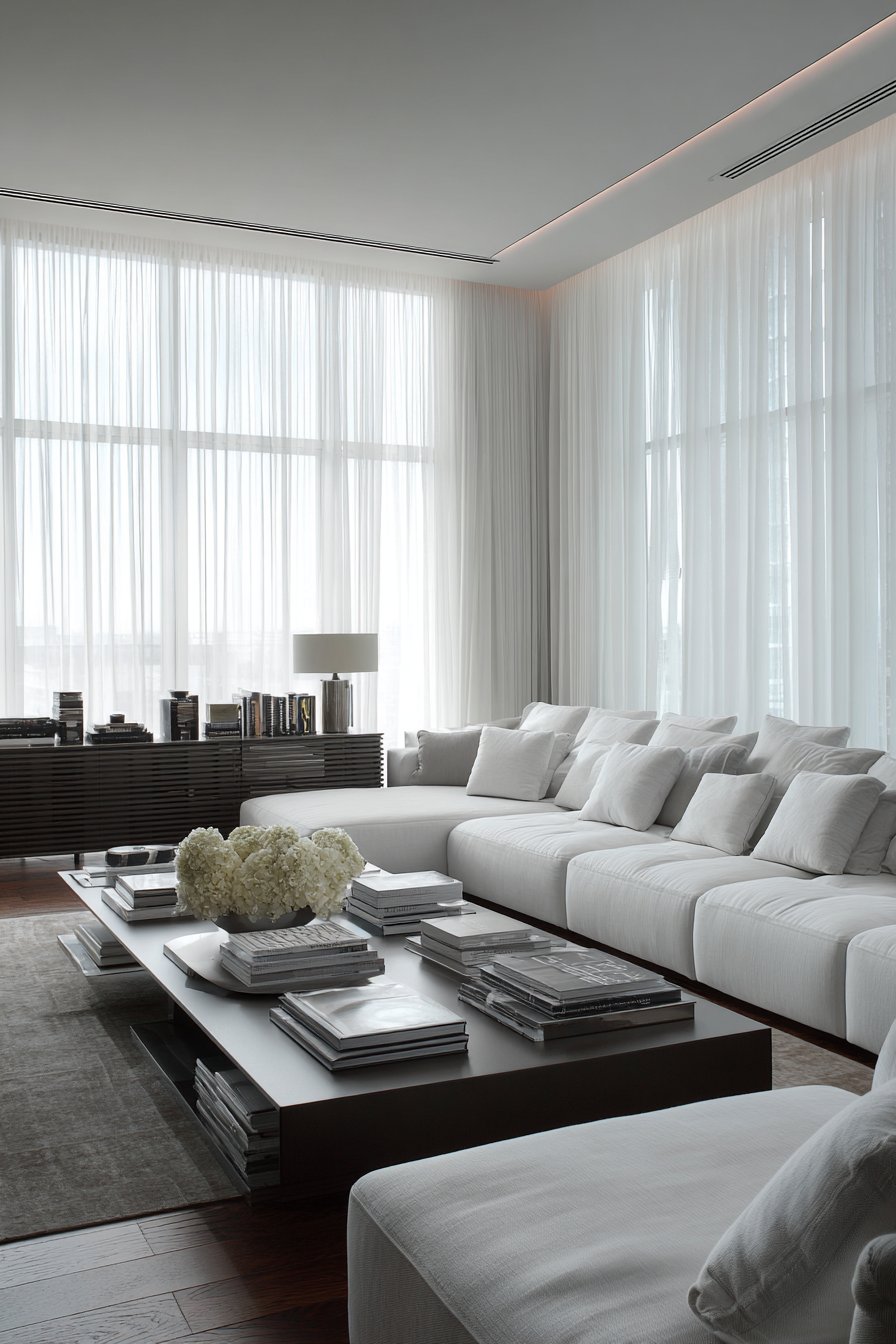
The contemporary open-concept space demonstrates this flexible approach with a grey sectional defining the living area, while a dining table visible beyond establishes the separate dining zone. A floating media console mounted to the wall maintains the open feeling while providing entertainment storage. Polished wood floors flow seamlessly throughout, reinforcing spatial continuity. When the white linen curtains draw closed along their ceiling tracks, they create instant privacy for either zone—useful when entertaining in one area while another household member works or relaxes in the other, or when visual separation enhances activities.
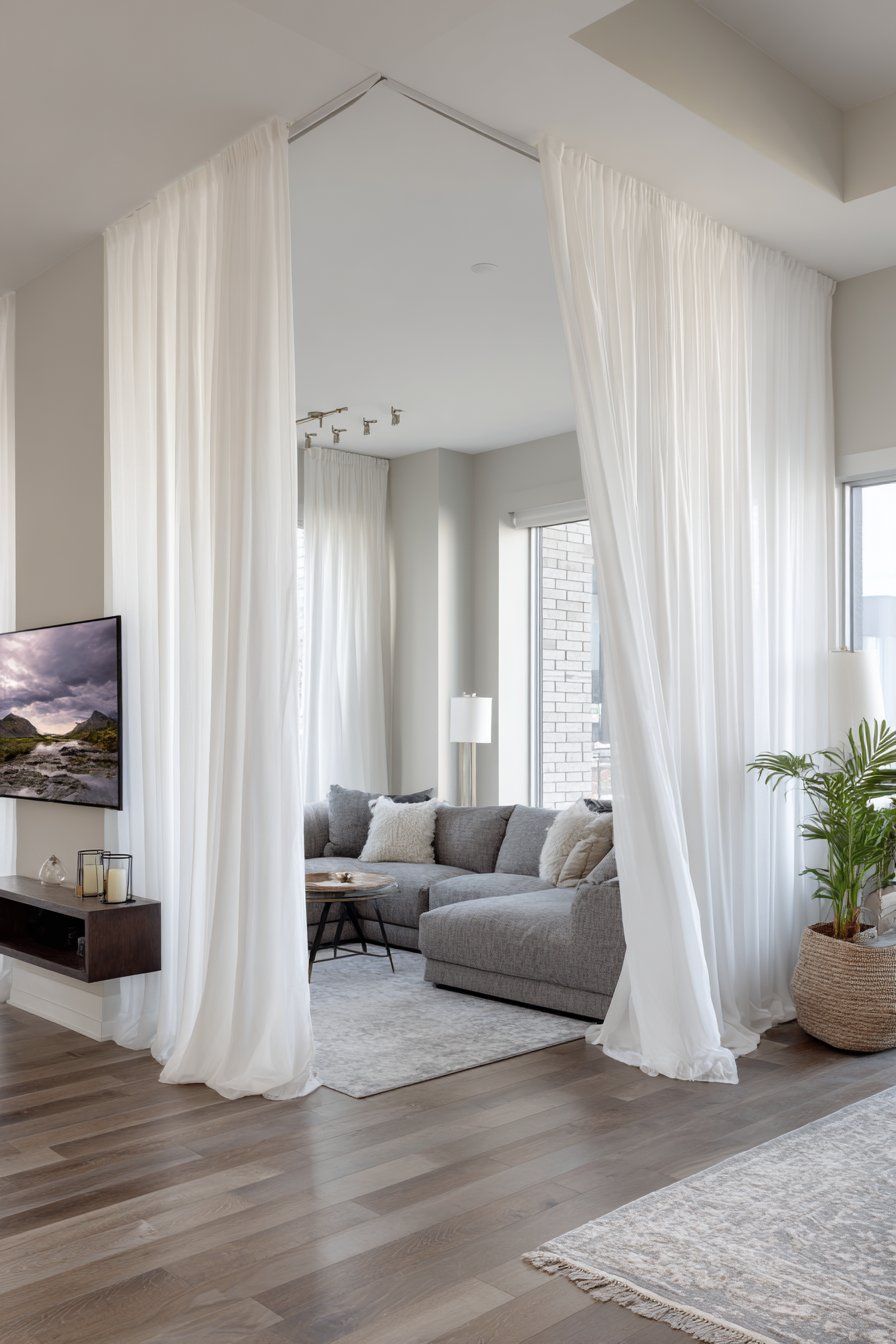
This approach to space planning acknowledges that needs change—sometimes we want openness and connection, other times privacy and definition. The white curtains provide options without commitment, their neutral color ensuring they blend rather than dominate when closed, their transparent quality when open maintaining sight lines and light flow. The ceiling-mounted installation maximizes the architectural impact, drawing the eye upward and emphasizing ceiling height. This versatile solution proves particularly valuable in smaller homes where permanent room divisions would compromise the sense of space.
Key Design Tips:
- Install high-quality ceiling track systems designed for frequent use and smooth operation
- Choose medium-weight linen that provides separation when closed while maintaining some light transmission
- Consider the view from both sides when selecting curtain patterns or textures
- Position tracks to create functional divisions that respect furniture arrangements in both configurations
- Test the curtains in both open and closed positions during furniture planning to ensure functionality
15. Glamorous Luxury with Velvet Textures
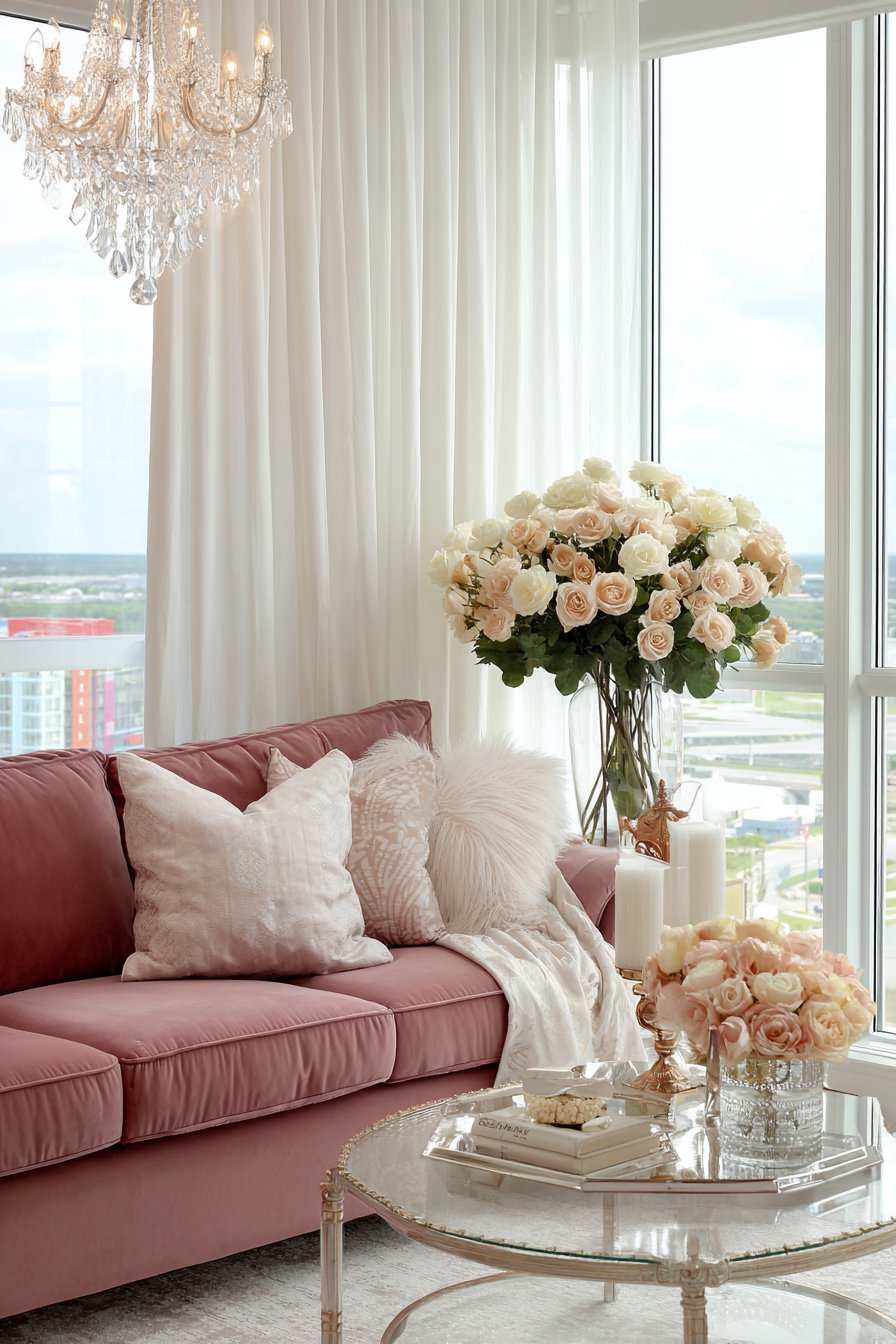
Glamorous interiors demand luxurious materials, and white velvet curtains deliver sophisticated texture and light-playing qualities that elevate spaces to new heights of elegance. The plush pile of velvet fabric creates dimension that flat fabrics cannot match, with each fold catching and reflecting light differently. The white color choice prevents the rich texture from overwhelming spaces while maintaining velvet’s characteristic luxury. These curtains make statement pieces that anchor glamorous design schemes while their neutral color allows other luxe elements—metallics, crystals, jewel tones—to shine.
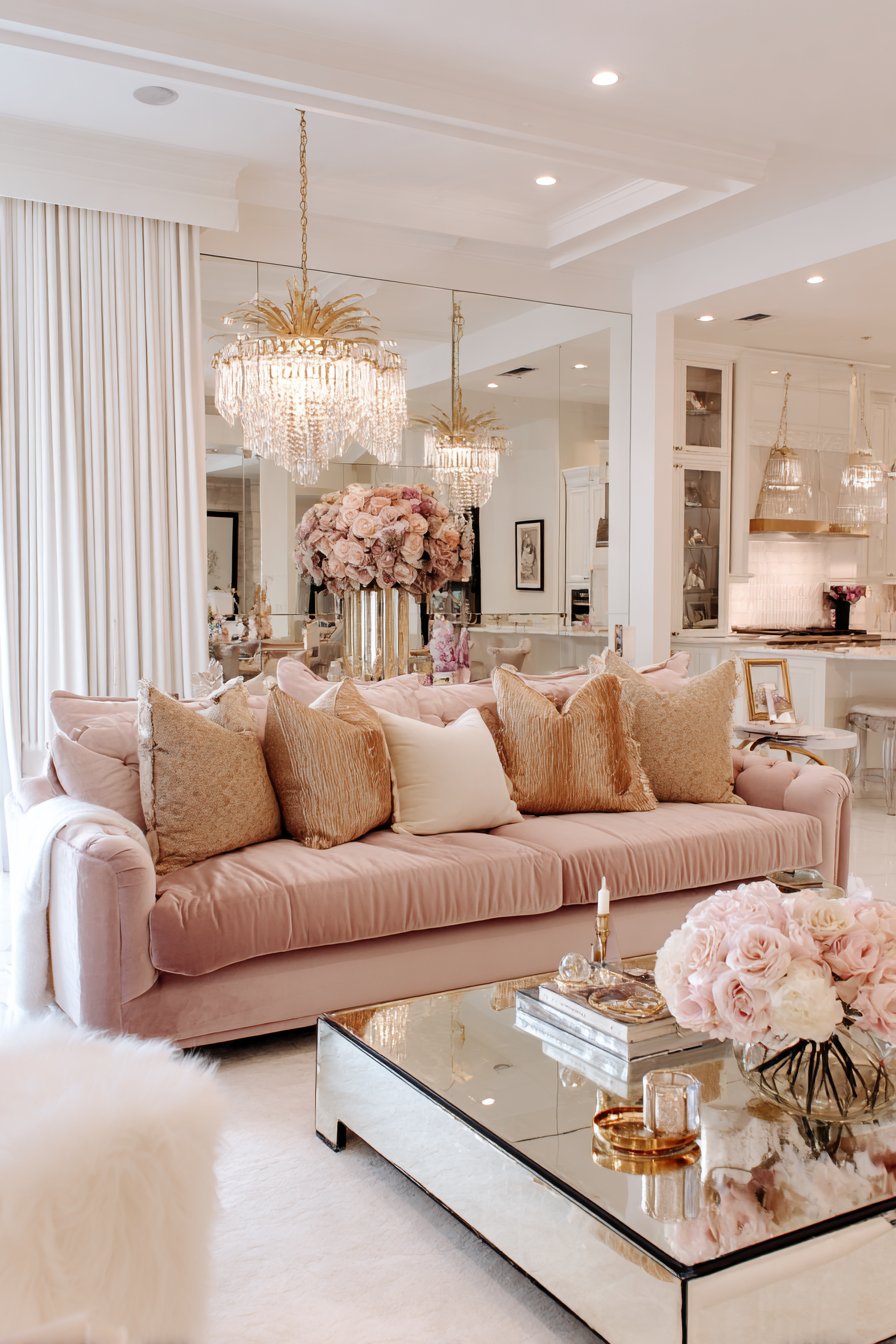
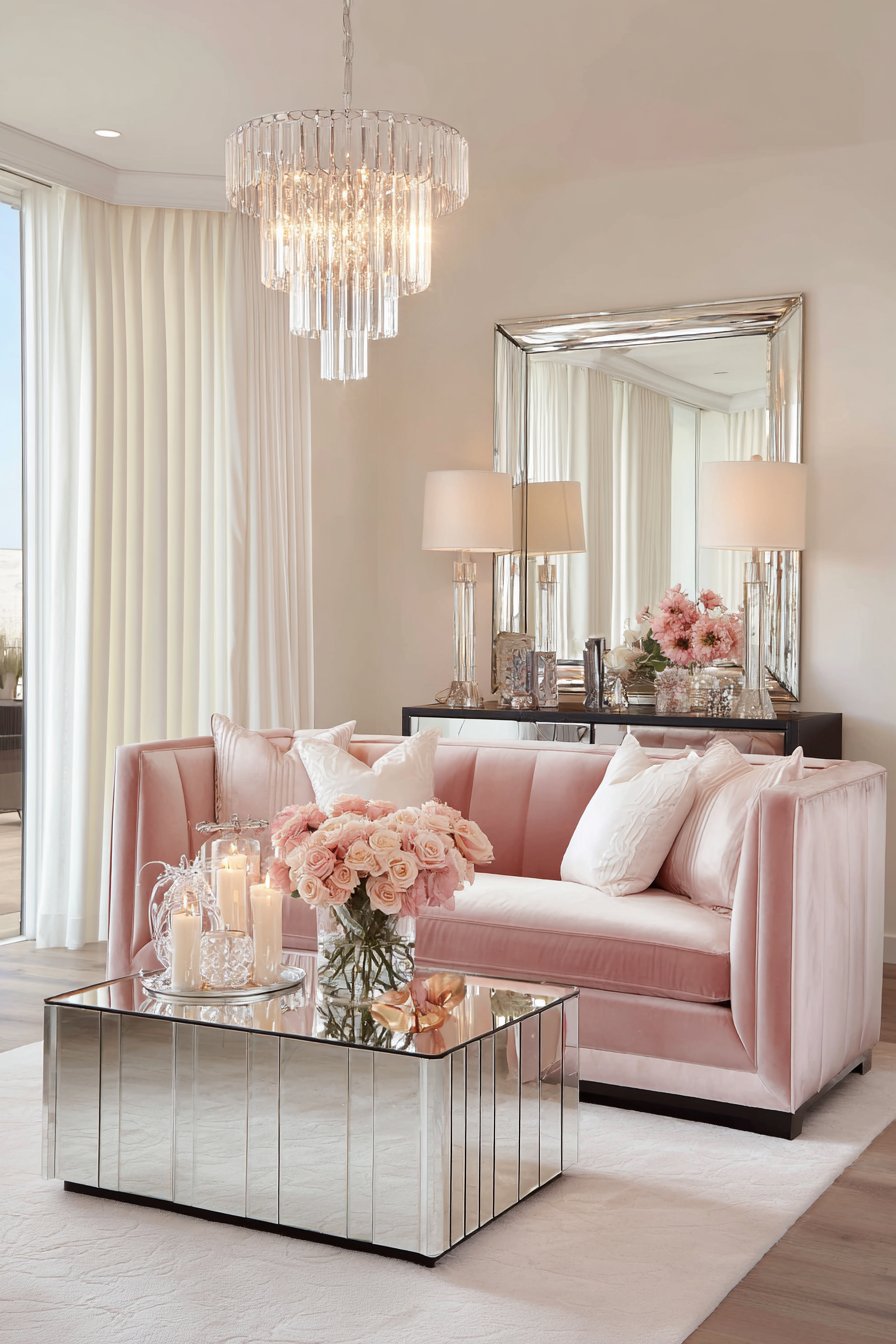
The sophisticated living room pairs these velvet curtains with equally sumptuous elements: a blush pink velvet sofa that introduces soft color while maintaining textural theme, a mirrored coffee table that multiplies light and creates visual intrigue, and crystal accents throughout that catch and refract illumination. A statement chandelier overhead serves as jewelry for the room, its prismatic crystals creating rainbow effects that dance across the white velvet curtains. Gold or brass accents in frames, lamp bases, and decorative objects introduce warm metallic notes that enhance the glamorous atmosphere without appearing gaudy.
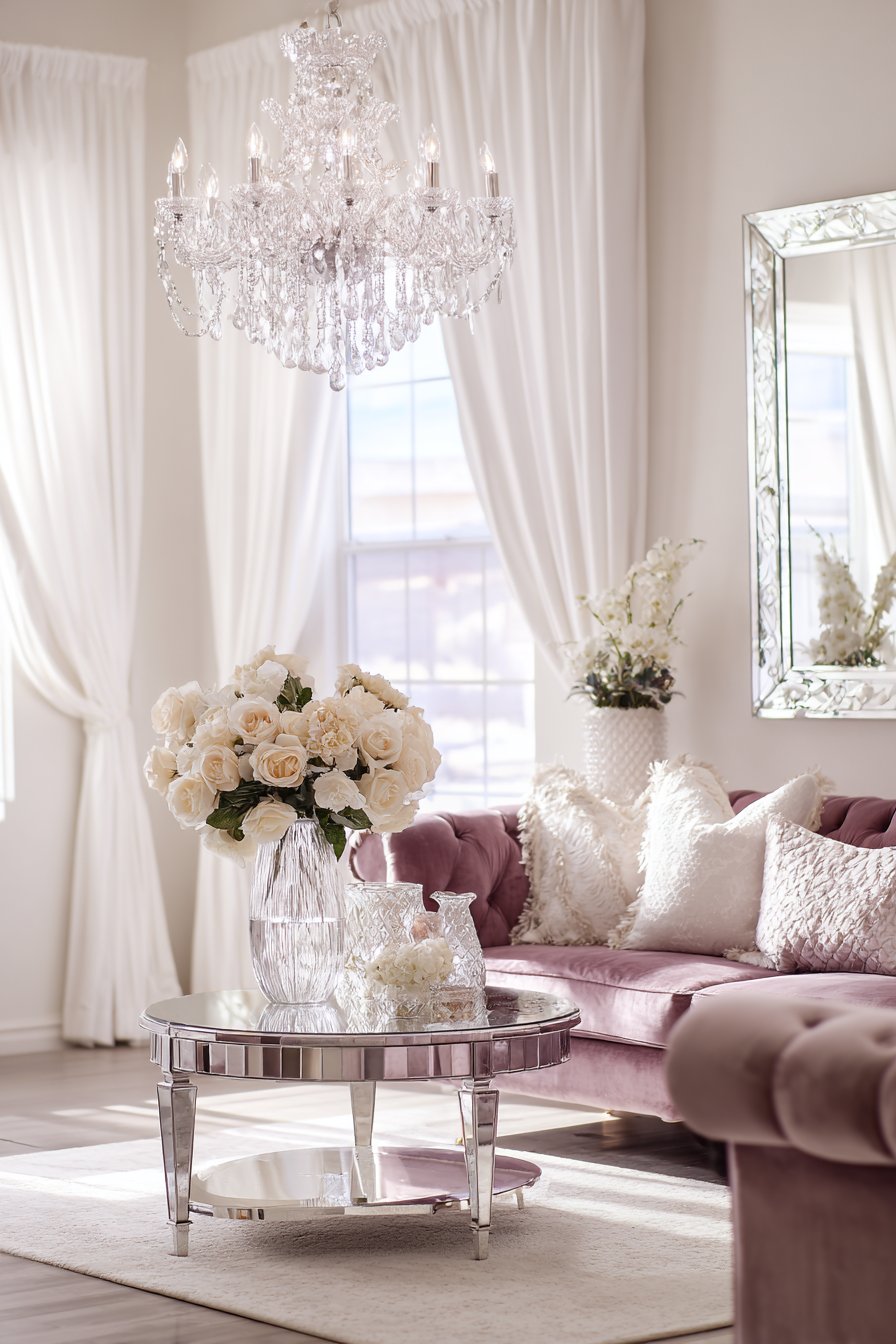
The interplay of light on various luxurious textures defines glamorous interiors, and white velvet curtains participate beautifully in this dance. Chandelier light reflects off the mirrored coffee table, bounces across the velvet sofa, and creates luminous highlights in the white velvet curtain folds. This multiplication and transformation of light creates depth and interest that keeps glamorous spaces from feeling flat despite their often monochromatic or limited color palettes. The white curtains both reflect and diffuse light, serving as both mirrors and filters in the room’s complex lighting scheme.
Key Design Tips:
- Invest in quality velvet curtains with dense pile that maintains appearance and doesn’t crush easily
- Coordinate with other luxurious textures like silk, satin, and fur for layered glamour
- Incorporate reflective surfaces—mirrors, crystals, metallics—that interact with velvet’s light-playing qualities
- Choose white or cream velvet curtains to provide luxury without overwhelming color in already rich spaces
- Consider the weight of velvet curtains and install appropriately sturdy hardware to support them
16. Indoor-Outdoor Living with Weather-Resistant Treatments
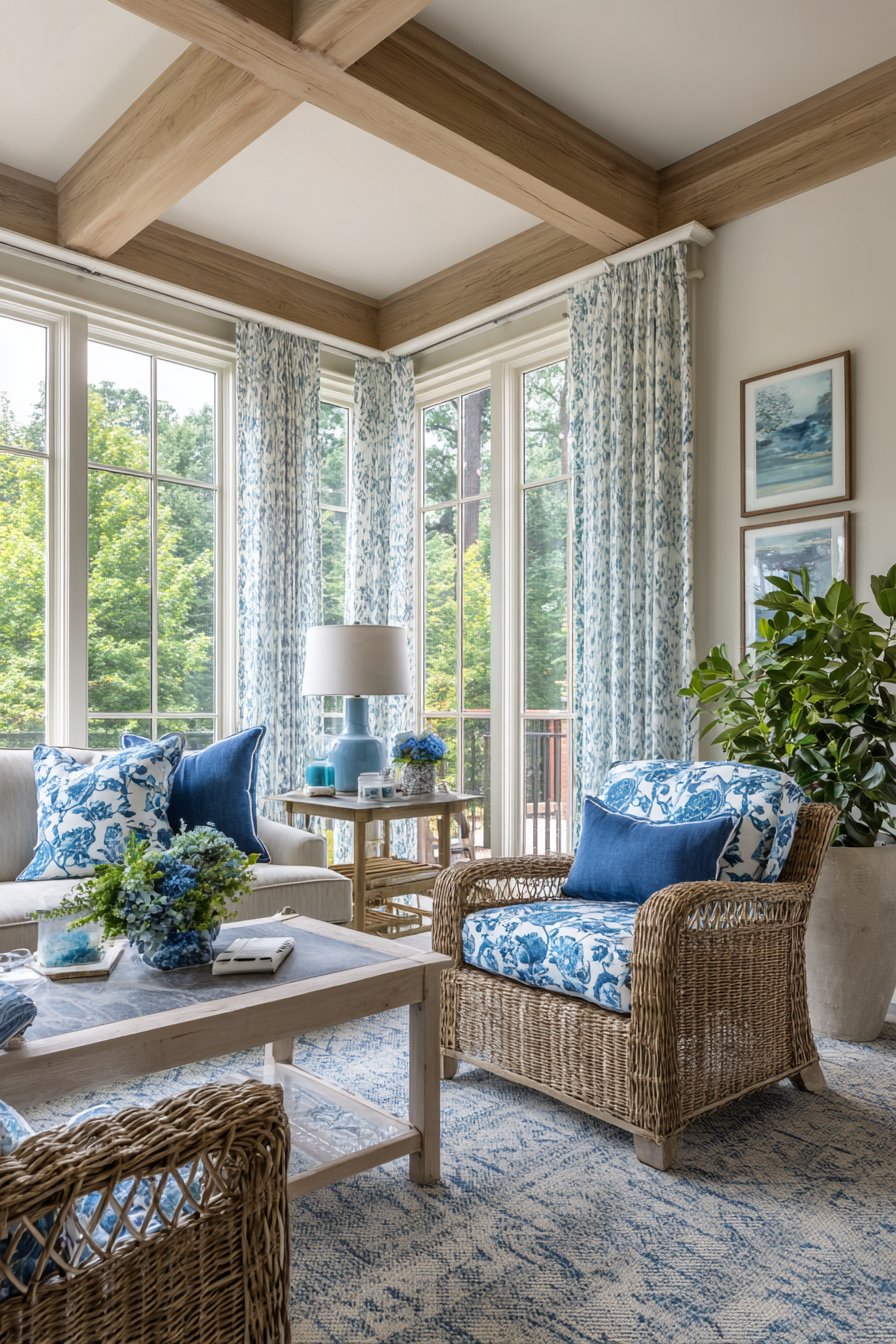
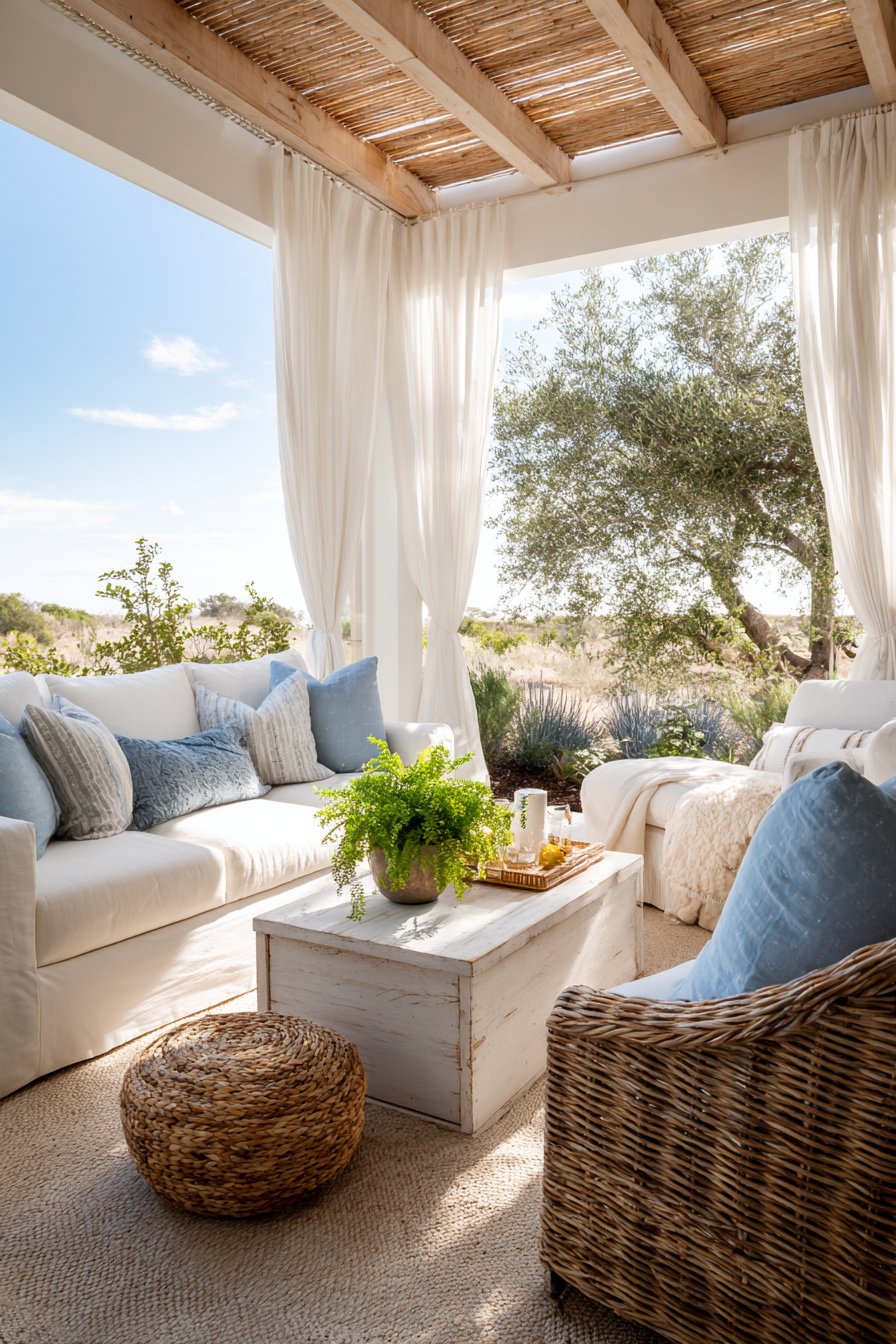
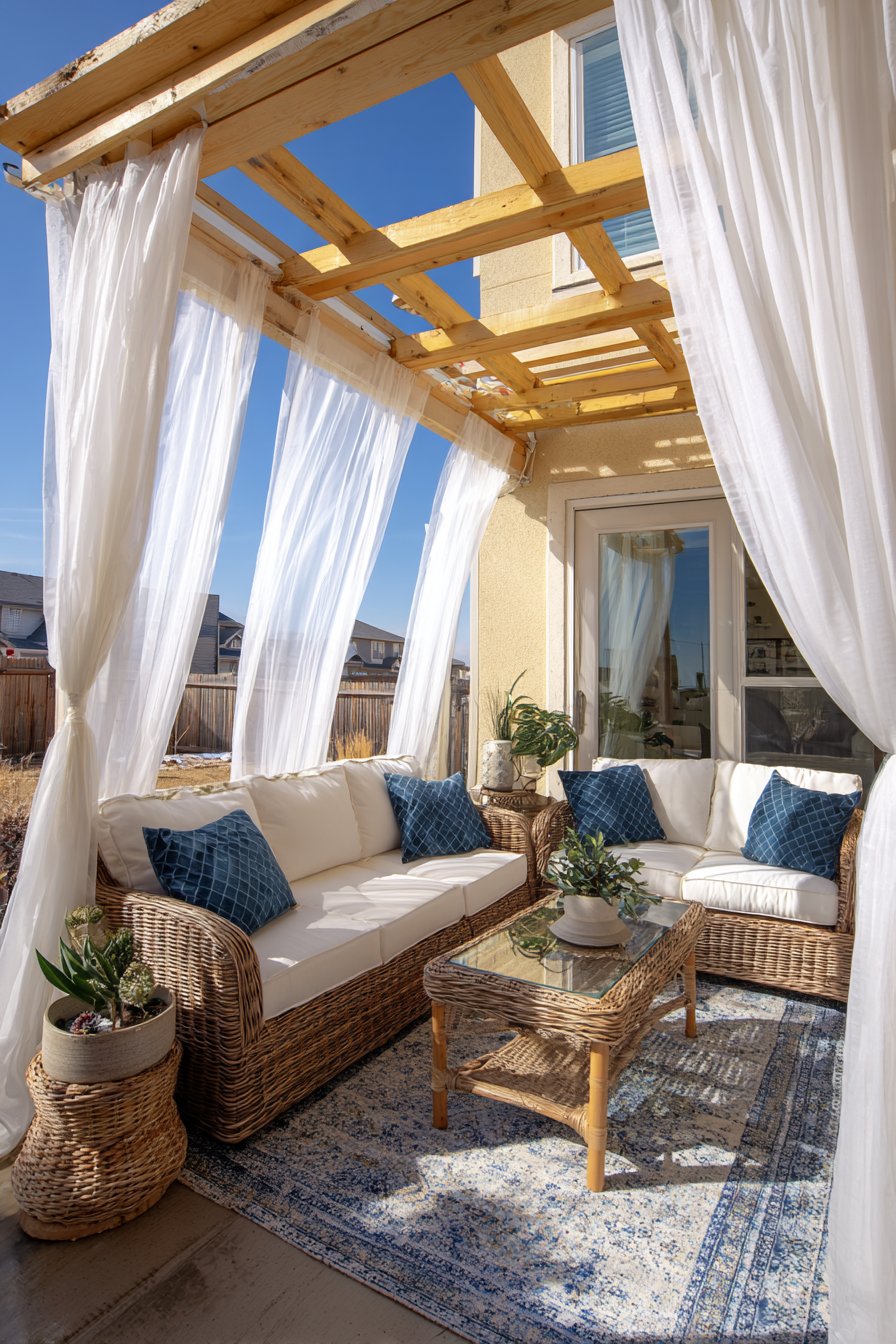
The boundary between indoor and outdoor living blurs beautifully when white outdoor curtains transform a screened porch into an extended living room. These weather-resistant curtains withstand the elements while providing the same aesthetic appeal as interior treatments, creating seamless transition between inside and outside spaces. Hung from pergola-style structures or porch beams, they offer shade control, privacy options, and visual softness against outdoor architectural elements. The white fabric brightens covered outdoor spaces while maintaining the airy, open feeling essential to successful indoor-outdoor living.
The screened porch living area embraces all-weather furnishings that don’t sacrifice comfort or style. Wicker furniture with plump cushions in nautical blue creates comfortable seating arrangements that withstand humidity and temperature changes. Side tables of weather-resistant materials provide surface area for drinks and books, while outdoor rugs define zones and add pattern. Potted plants and hanging baskets introduce living greenery that connects the space to the surrounding landscape. The white outdoor curtains tie everything together, their clean color and flowing form softening the structure while providing flexible climate control as the day progresses and weather changes.
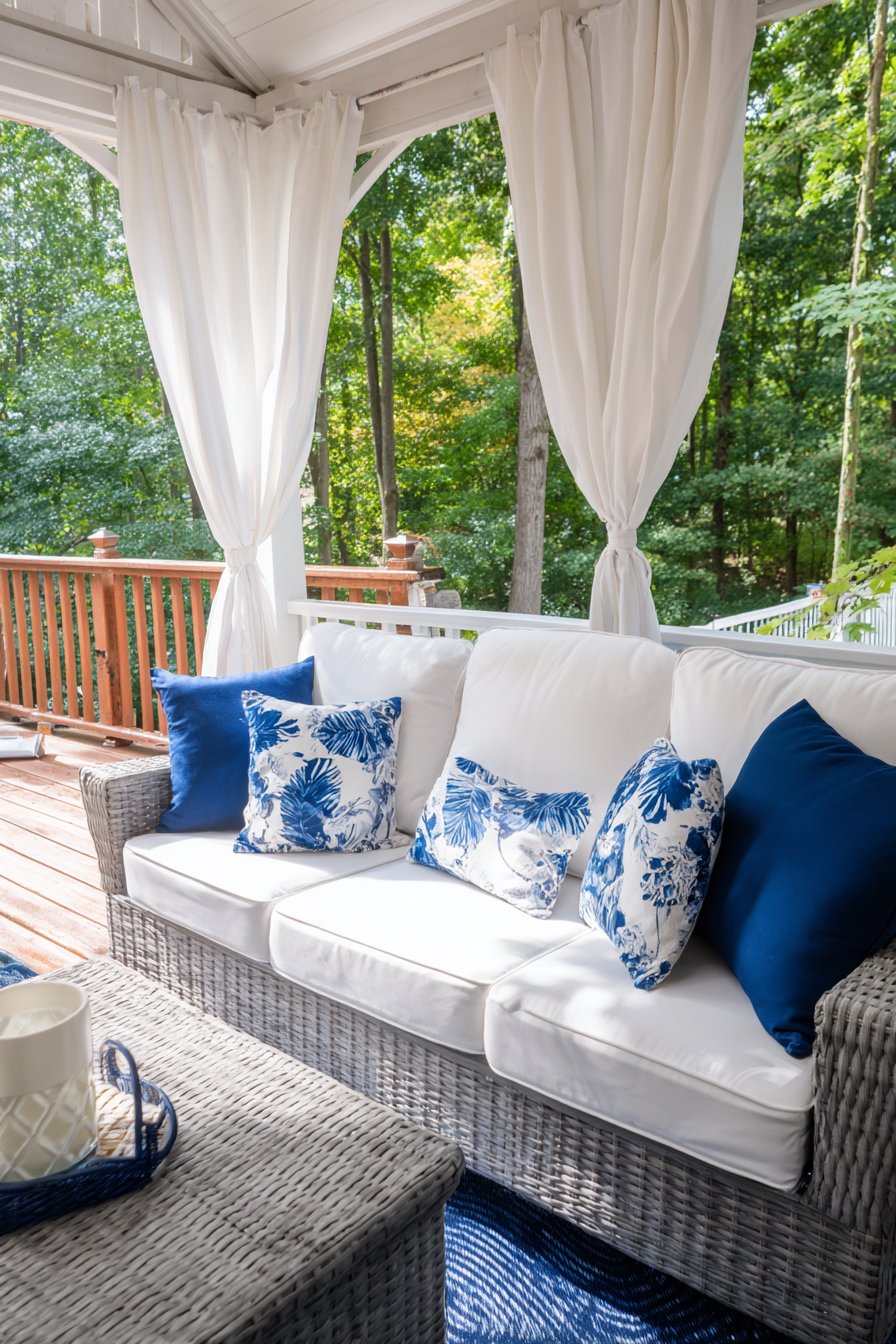
Natural afternoon light filtering through white outdoor curtains creates the perfect ambiance for outdoor living. The fabric diffuses harsh sun while maintaining brightness, creating comfortable conditions for reading, conversation, or dining. As evening approaches, the curtains can draw closed for privacy and wind protection, transforming the open porch into a more intimate, enclosed feeling space. This flexibility makes outdoor rooms truly functional extensions of interior living areas rather than spaces used only in perfect weather conditions. The white color keeps the outdoor room feeling fresh and bright while showing less dirt than darker fabrics might reveal.
Key Design Tips:
- Select curtains specifically designed for outdoor use with UV-resistant and mildew-resistant treatments
- Install sturdy hanging systems that withstand wind without damage to curtains or structures
- Choose white or light colors that resist heat absorption and maintain brightness in covered spaces
- Coordinate outdoor curtain style with interior window treatments for visual continuity and flow
- Consider how curtains will look when wet from rain—outdoor fabrics should dry quickly without water spotting
17. Japandi Minimalism with Natural Wood Integration
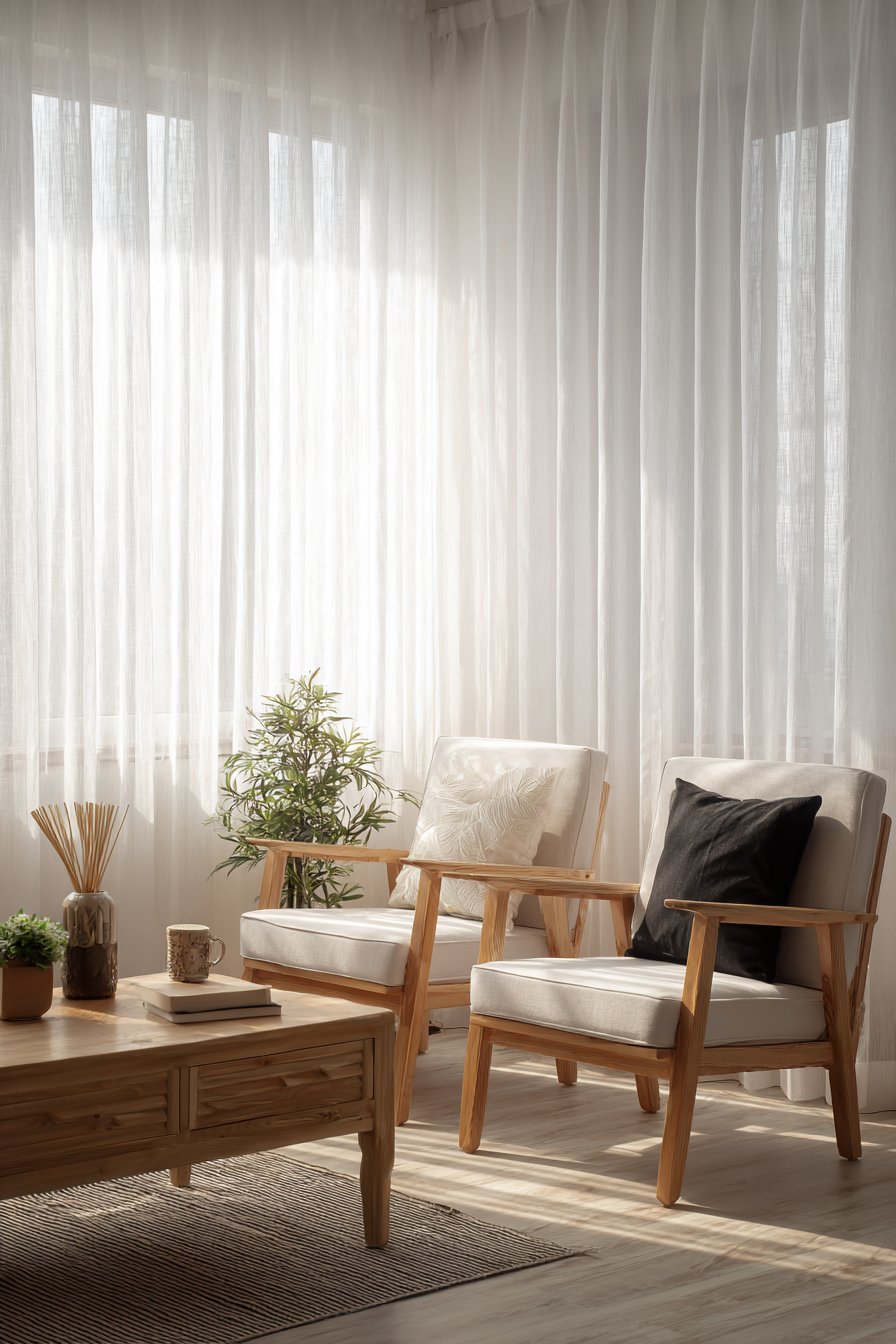
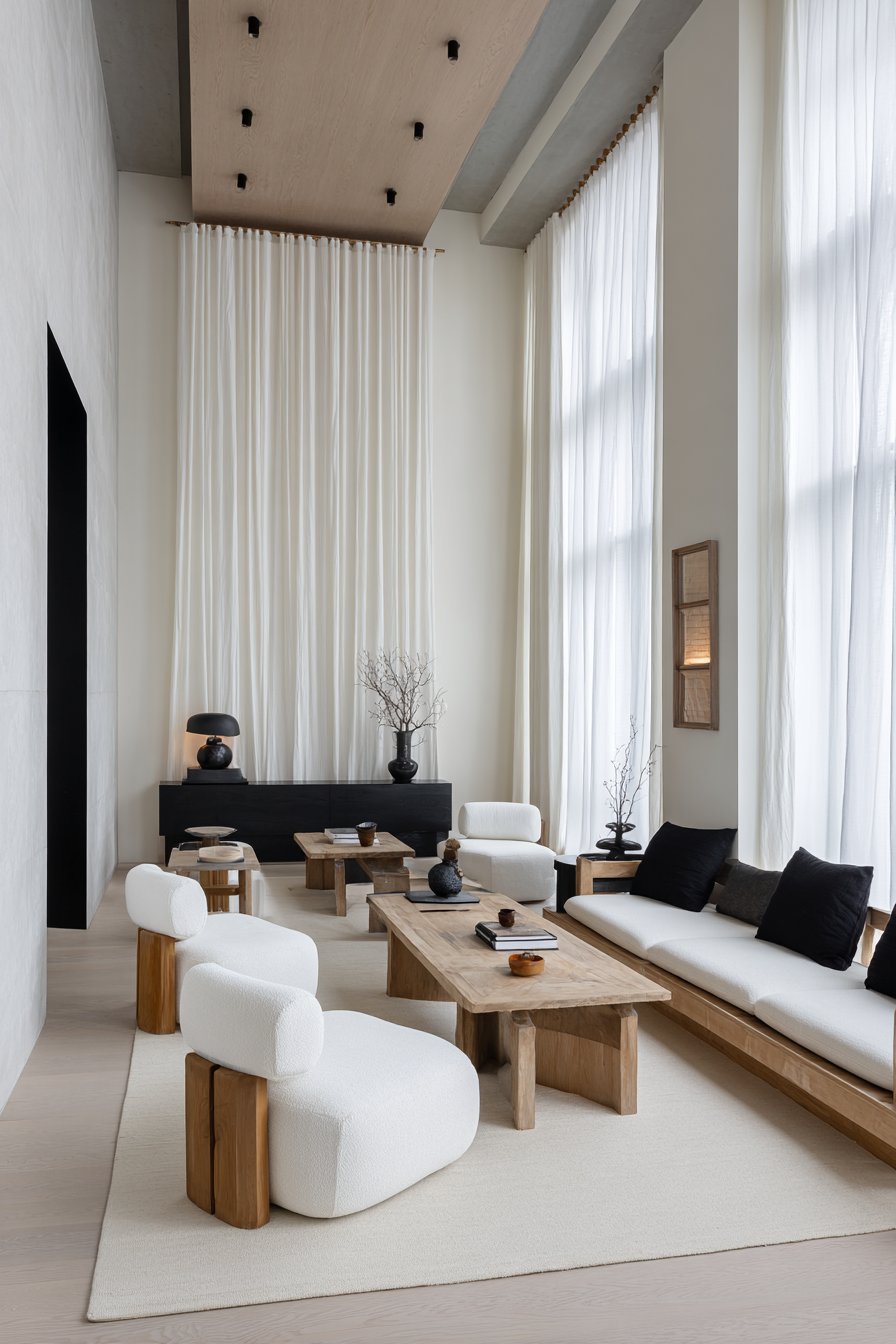
Japandi style—the fusion of Japanese and Scandinavian design principles—finds perfect expression in minimalist white linen curtains hung from natural wood rods. This combination honors both aesthetic traditions: Japanese minimalism’s emphasis on natural materials and negative space, and Scandinavian design’s love of light woods and functional beauty. The white linen curtains provide the clean backdrop essential to minimalist spaces while their natural fiber content maintains organic authenticity. The wooden rods, whether light ash or deeper walnut, introduce warmth that prevents minimalism from feeling cold or sterile.
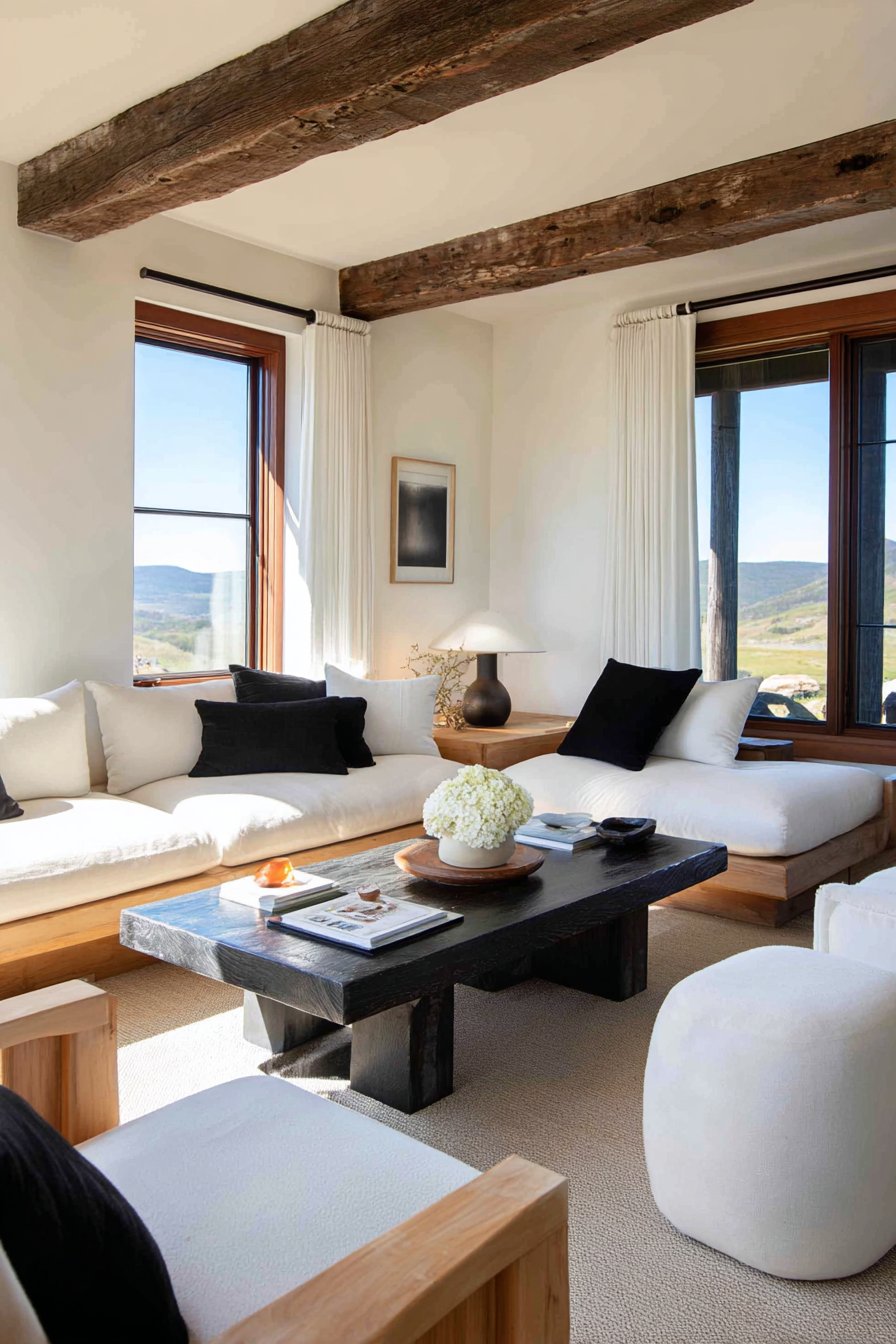
The serene living room embodies Japandi principles through low-profile furniture that emphasizes horizontal lines and connection to earth. Floor cushions or low sofas maintain sight lines and create the grounded feeling characteristic of Japanese interiors. Natural materials dominate—a low wooden coffee table with simple joinery details, bamboo blinds layered behind the white curtains for light control, and stone or ceramic accessories in organic forms. A neutral color palette with black accents provides the limited palette both Japanese and Scandinavian traditions favor, creating calm through restraint rather than abundance.
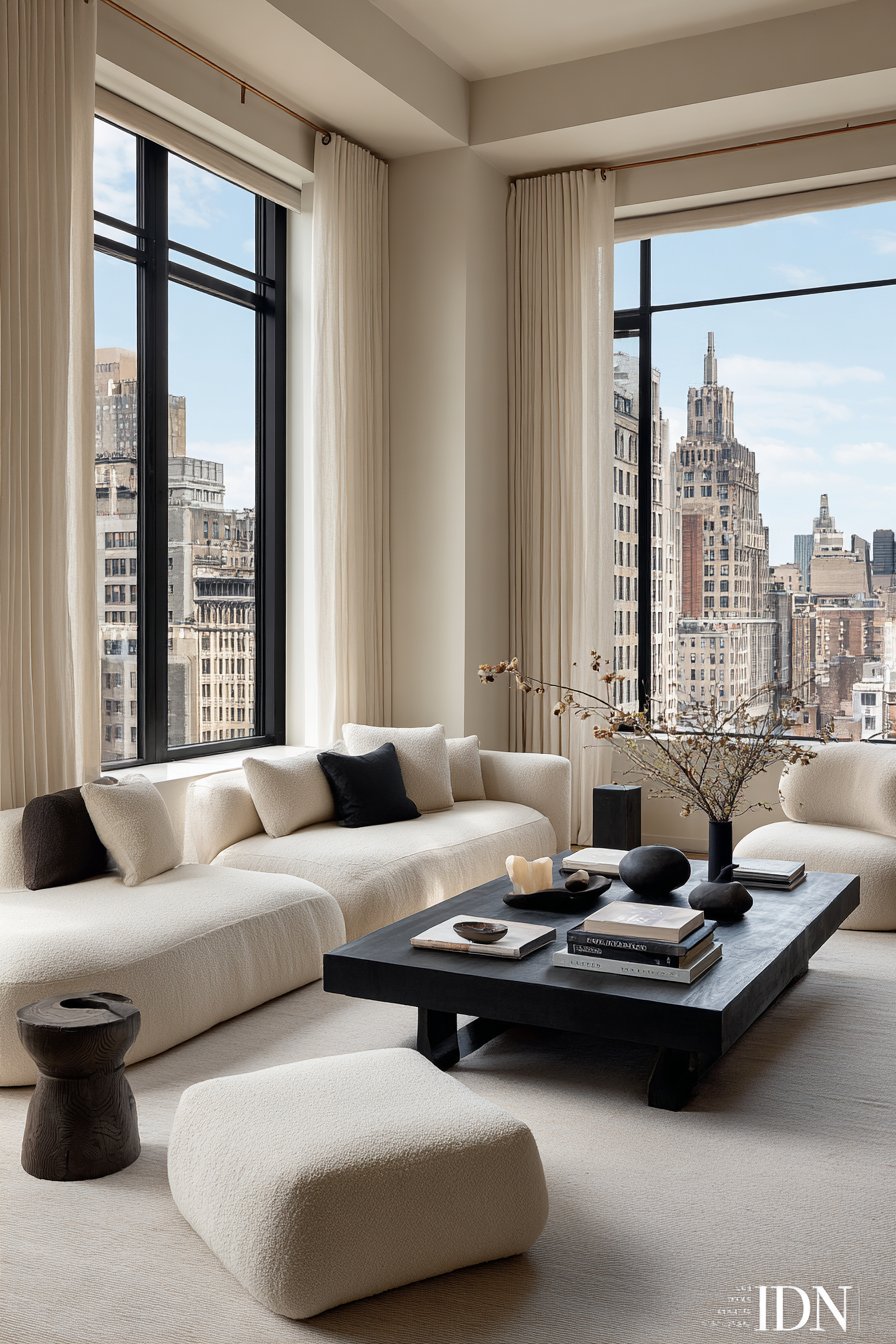
The beauty of Japandi design lies in its “less is more” philosophy, and these simple white linen curtains exemplify that principle. They serve their function without calling attention to themselves, their presence quiet yet essential. The natural wood rods add warmth and textural interest without ornament or fuss. This restraint allows the quality of materials and craftsmanship to shine—the linen’s weave becomes visible and appreciated, the wood’s grain provides subtle decoration, and the overall effect remains peaceful and intentional. Every element earns its place through function and beauty rather than filling space.
Key Design Tips:
- Choose white or natural linen curtains in simple styles that emphasize material quality over decoration
- Select wooden rods in finishes that coordinate with other wood tones throughout the space
- Maintain the minimalist aesthetic by limiting decorative hardware to essential functional elements
- Create balance between Japanese and Scandinavian influences through material and furniture choices
- Embrace negative space as a design element rather than feeling compelled to fill every area
18. Garden Room Brightness with Multiple Window Treatments
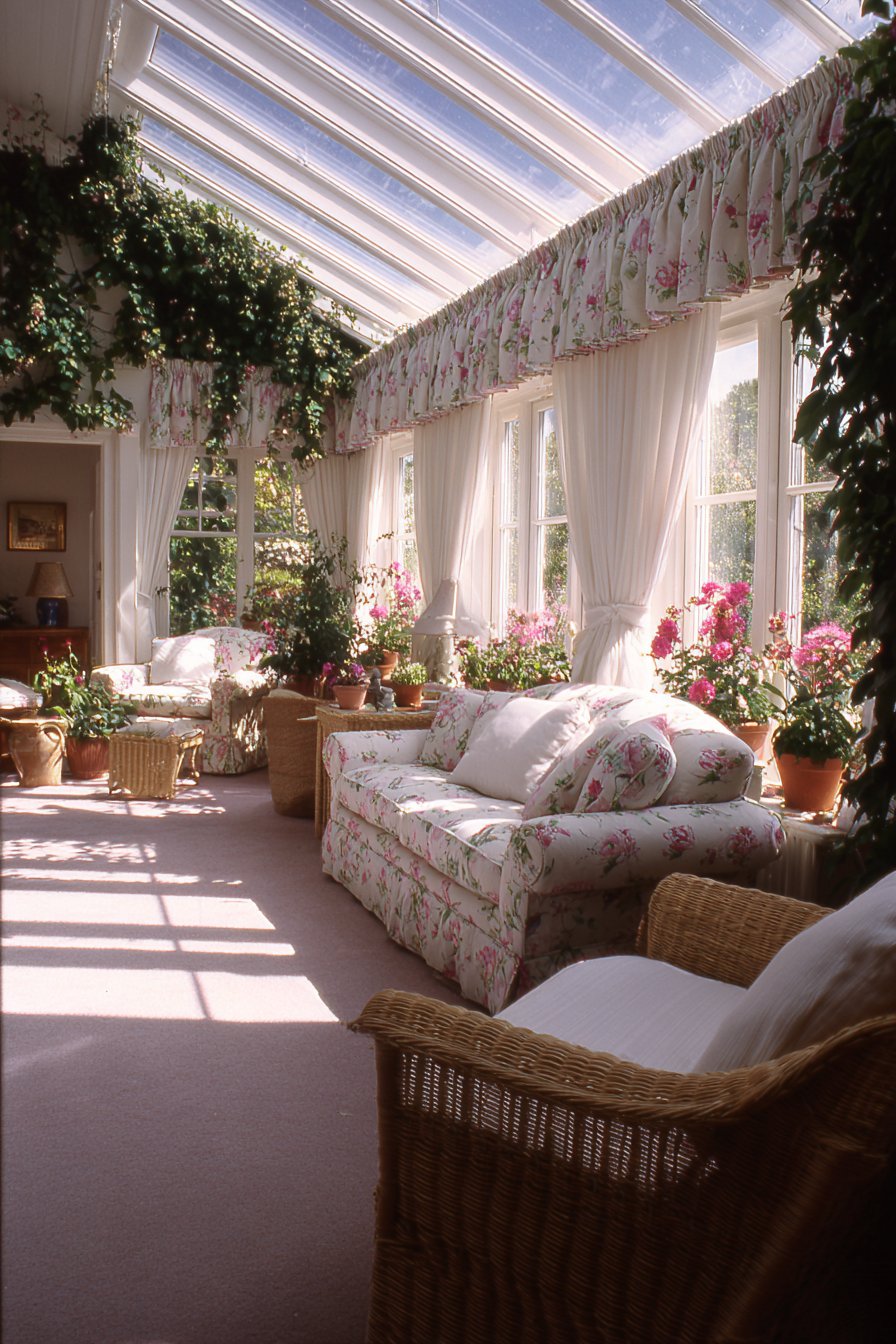
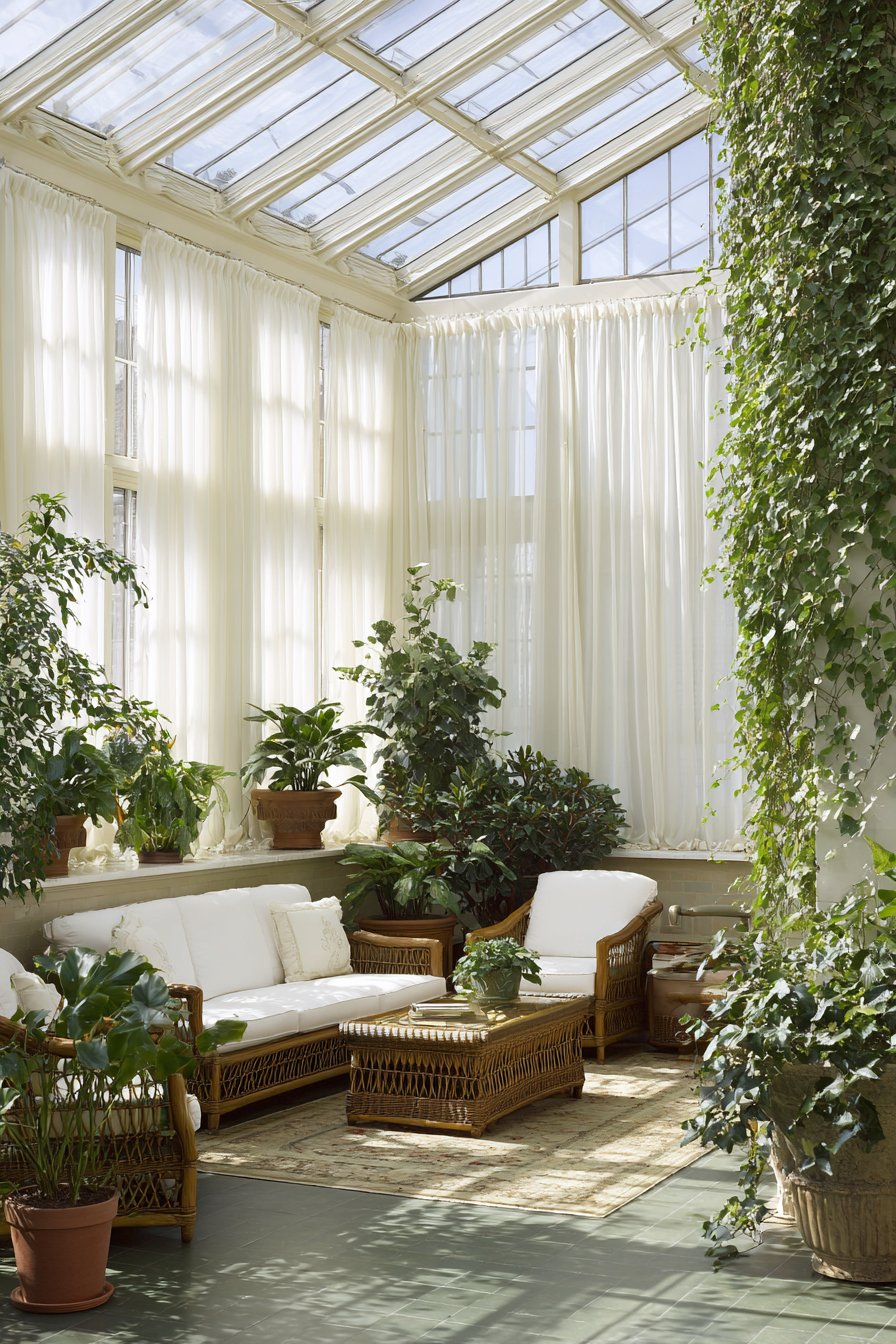
Sunroom conversions or garden rooms present unique challenges with their abundant windows requiring both light management and cohesive design. White tab-top curtains on multiple windows create visual unity while providing flexible control over intense sunlight. The tab-top style offers casual ease appropriate for relaxed garden room living, with fabric loops slipping over rods for simple installation and adjustment. Repeating white curtains across numerous windows prevents the visual chaos that would result from different treatments, instead creating rhythmic repetition that feels orderly and intentional.
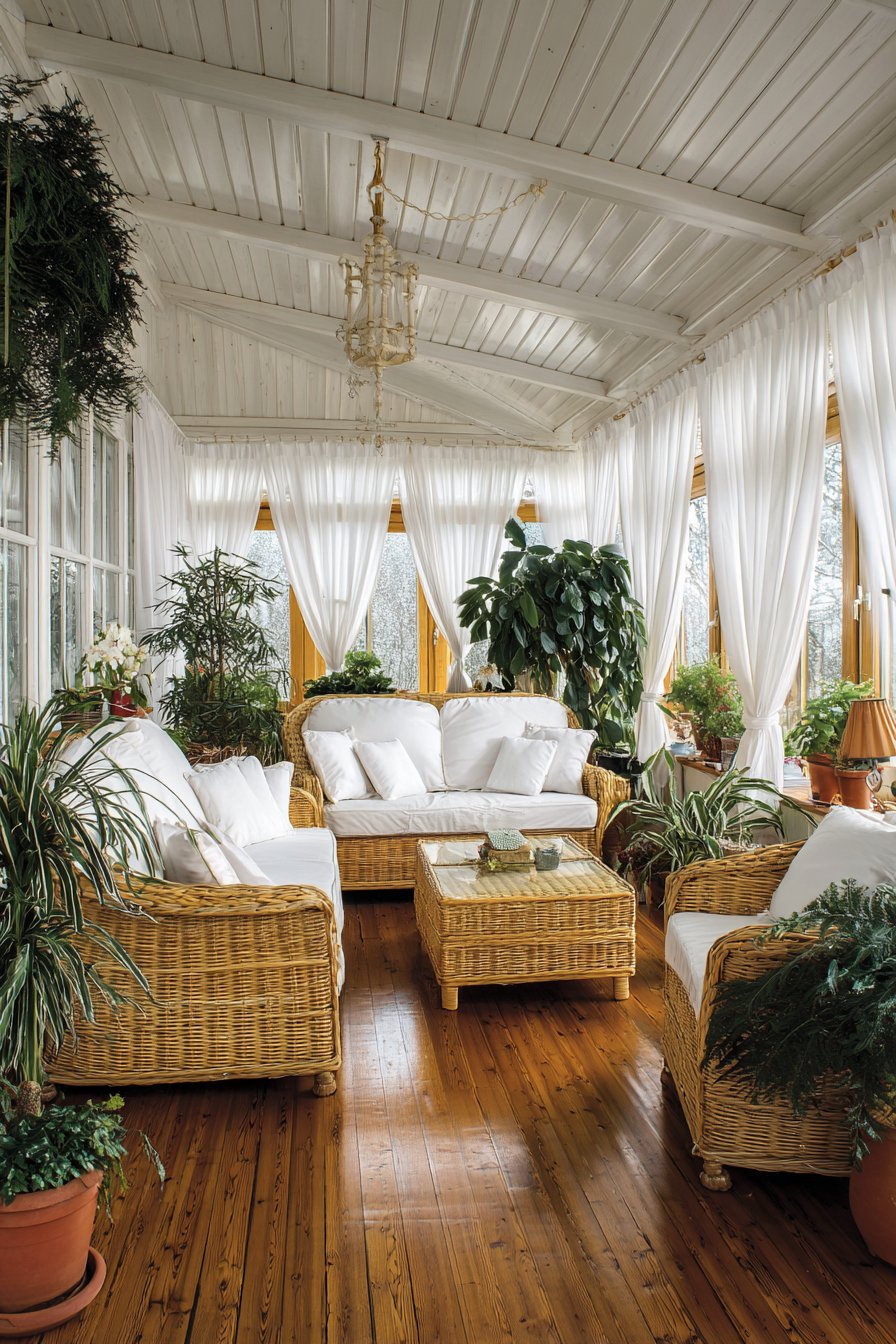
The light-filled sunroom embraces its connection to outdoors through abundant greenery and natural materials. Wicker furniture with plump white cushions provides comfortable seating that suits the indoor-outdoor nature of the space. Terra cotta pots in various sizes house thriving plants—ferns, palms, flowering specimens—creating an indoor garden atmosphere. The floor, whether tile or sealed concrete, withstands moisture from watering and humidity from plants. Against this abundance of texture and organic forms, the white tab-top curtains provide visual rest, their clean color and simple style preventing overstimulation despite the busy plant life.
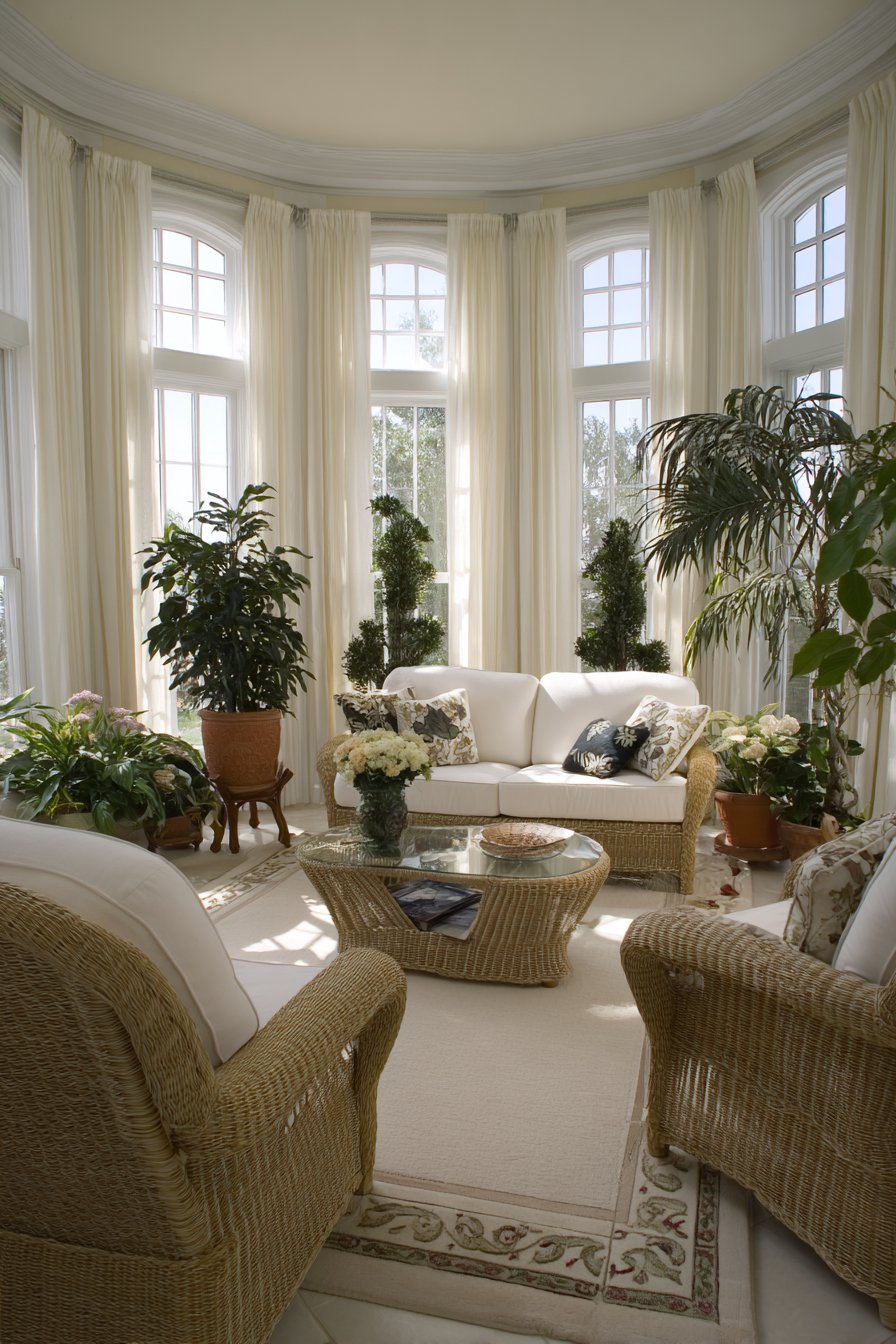
Strategic curtain placement proves essential in sunrooms where light intensity varies throughout the day. South and west-facing windows may require closed curtains during afternoon hours to prevent overheating and sun damage to furnishings and plants, while east and north windows can remain open to provide diffused natural light. The white curtains reflect rather than absorb heat, helping maintain comfortable temperatures. Their presence softens the hard surfaces of glass and architectural elements, creating a more finished, intentional appearance than bare windows would achieve. This practical beauty characterizes the best garden room designs.
Key Design Tips:
- Use consistent white curtain style across all windows for visual unity in multi-window spaces
- Choose moisture-resistant fabrics appropriate for higher humidity levels in plant-filled rooms
- Install curtains on individual rods for independent control of each window’s light and heat
- Maintain the white color scheme to maximize light reflection and keep greenhouse effects manageable
- Balance abundant plant life with simple white curtains that provide visual breathing room
19. Rustic Lodge Character with Organic Burlap
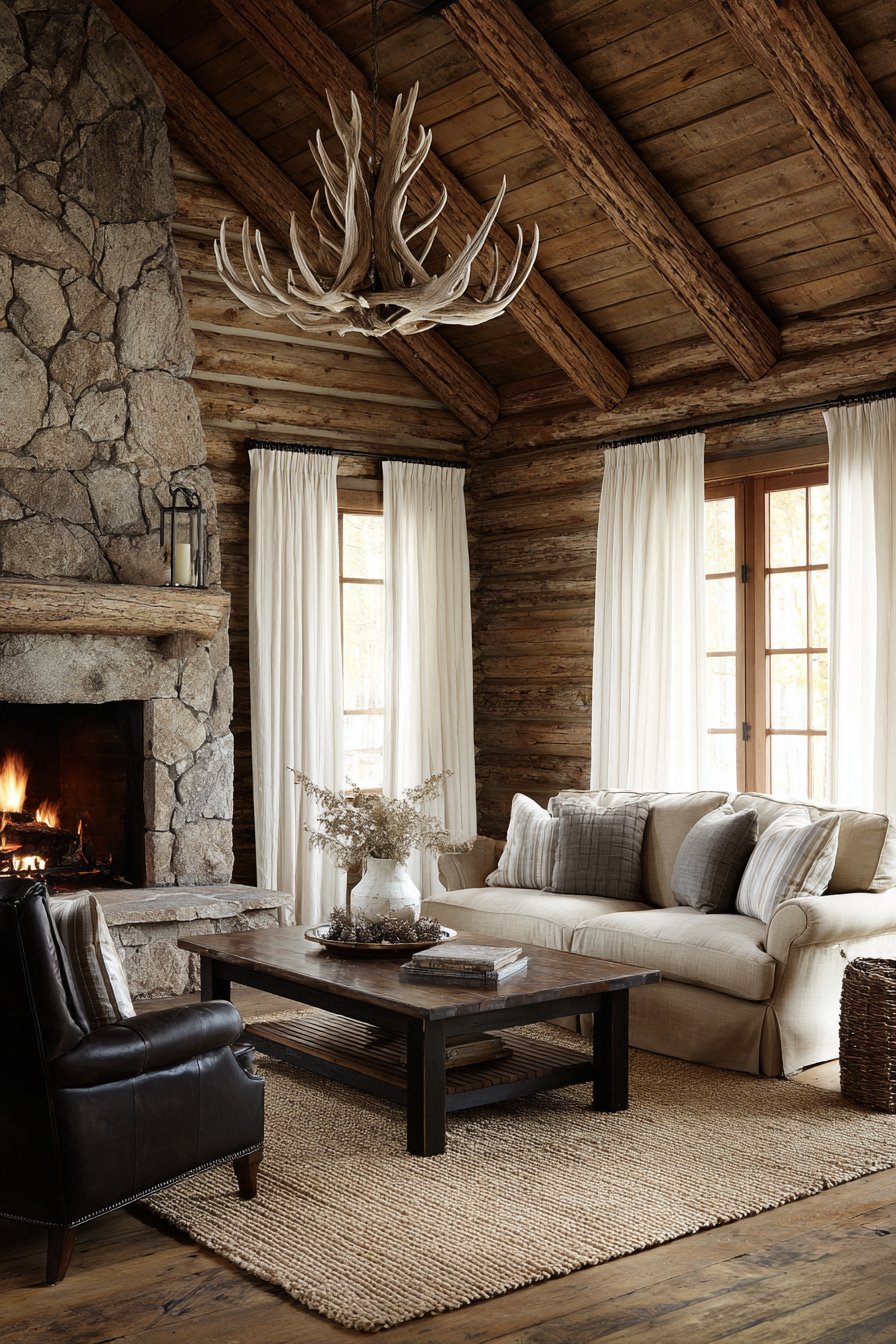
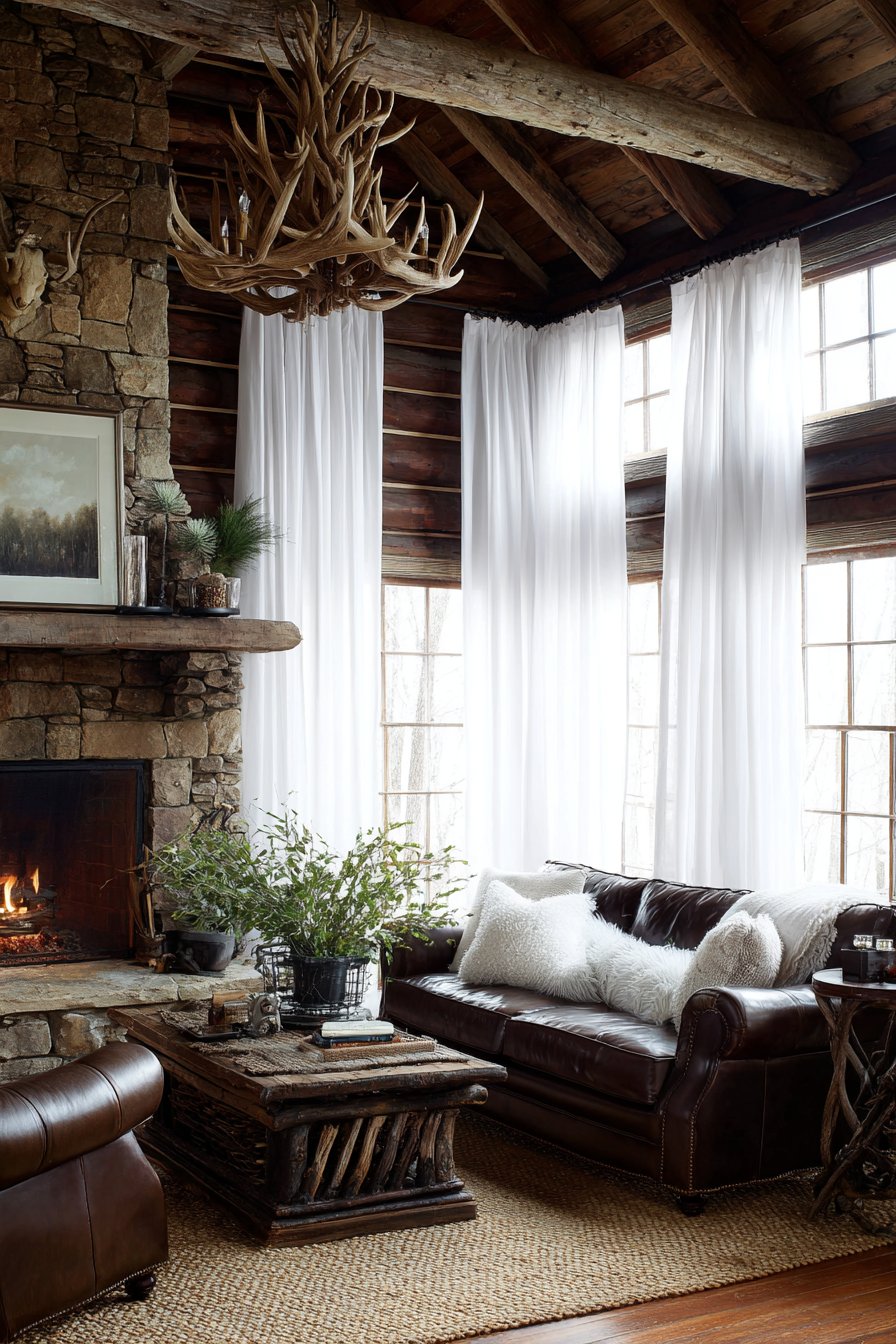
Rustic lodge aesthetics embrace raw natural materials and masculine design, with white burlap curtains adding organic texture while preventing spaces from becoming too dark. The nubby, loosely-woven burlap fabric introduces pronounced texture visible from across the room, its irregular weave creating shadow and depth. The white color choice balances the typically dark wood and stone materials common in lodge interiors, reflecting light that might otherwise be absorbed by heavy timbers and leather furnishings. These curtains soften the angular lines of log construction and stone work while maintaining the natural, unpretentious character essential to authentic rustic design.
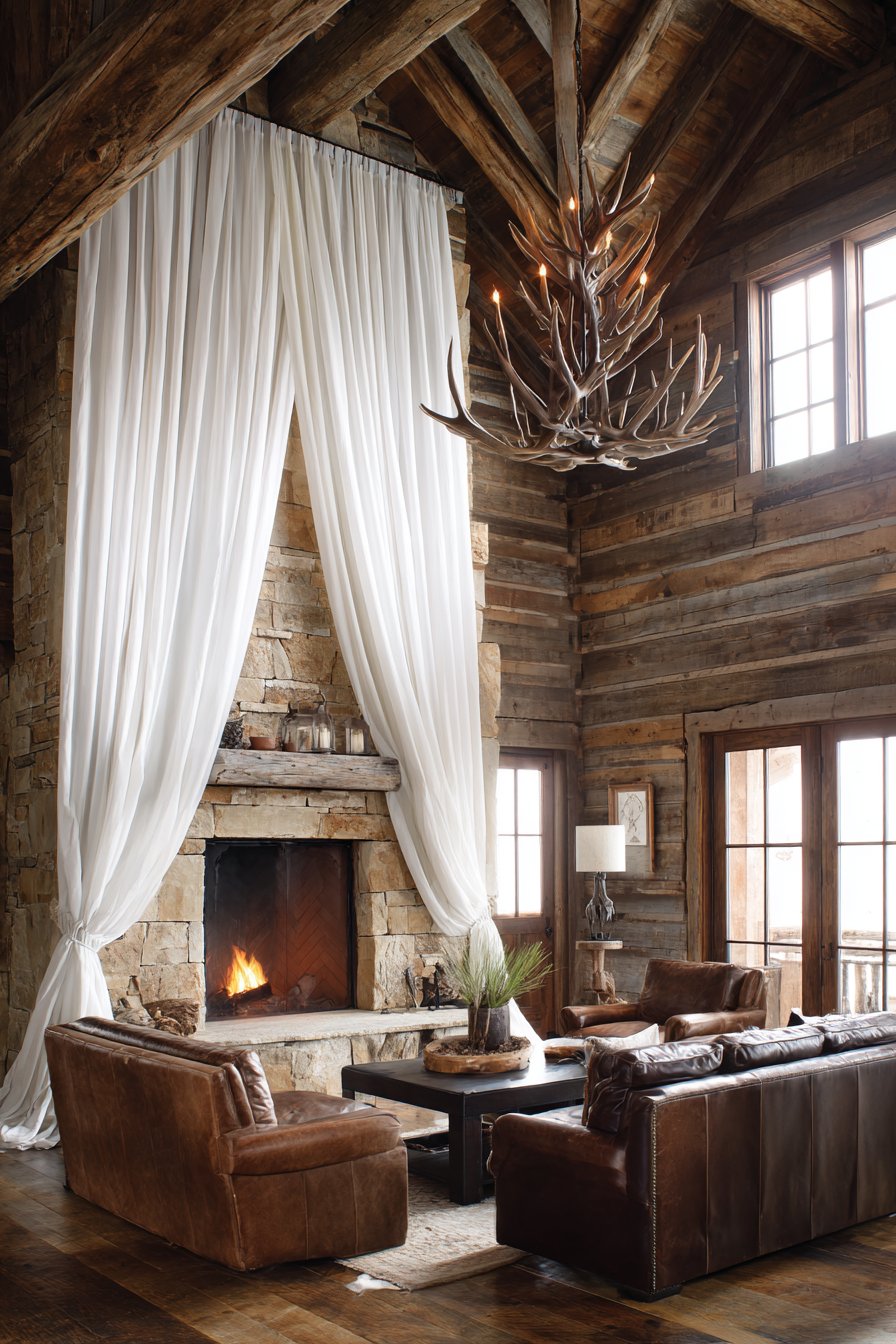
The cabin-style living room celebrates rustic materials through a prominent stone fireplace that anchors the space, its textured surface and natural color variations providing visual interest. Rich brown leather furniture develops beautiful patina over time, becoming more attractive with age and use. An antler chandelier overhead introduces organic sculptural elements while providing ambient lighting. Plaid throws, animal hide rugs, and wooden accessories complete the lodge atmosphere. Against these substantial, earthy elements, the white burlap curtains stand out as lighter notes that prevent the space from feeling cave-like despite the deliberately cozy, enclosed feeling lodge design seeks.
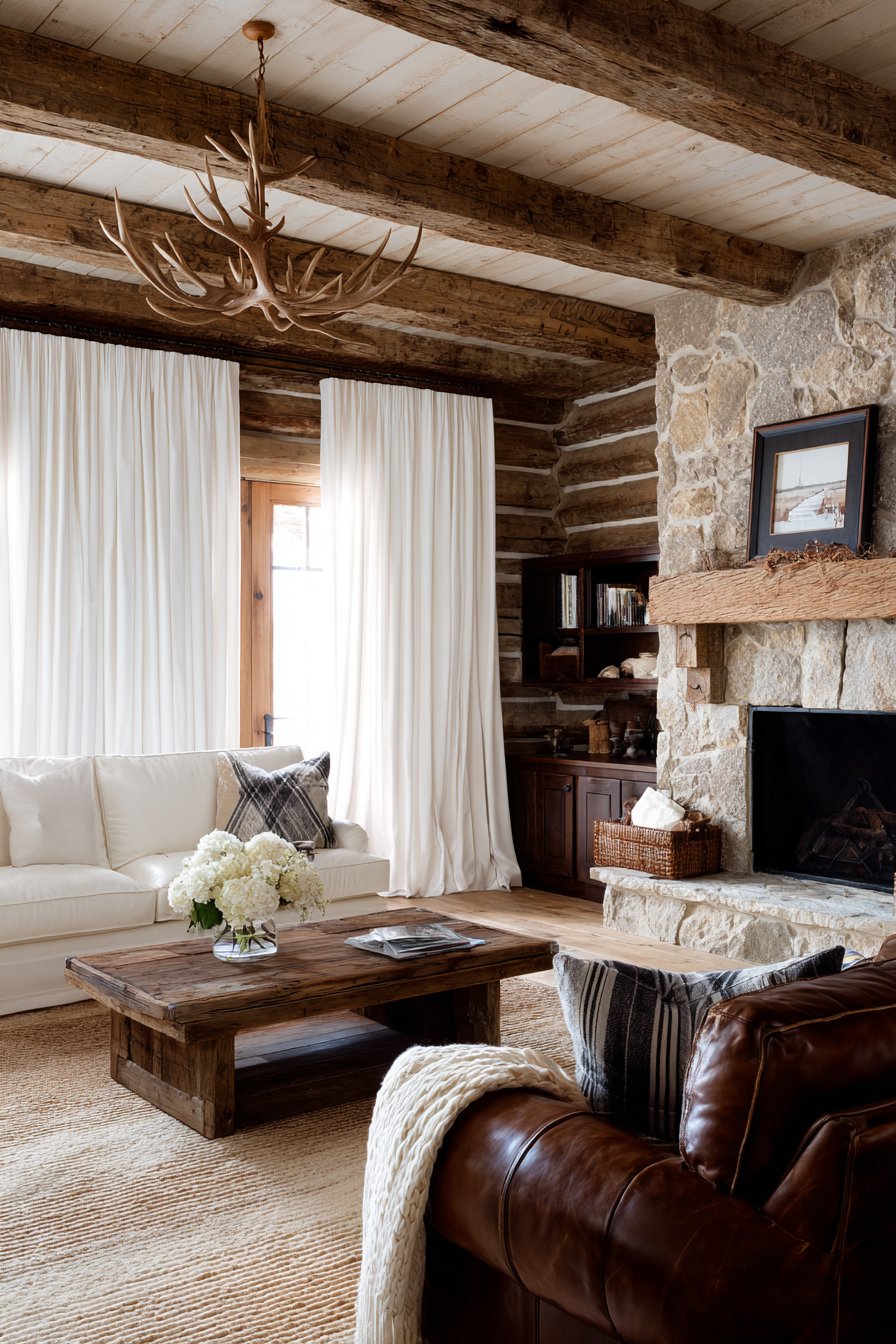
The coarse texture of burlap curtains filters light uniquely, creating dappled patterns as sunshine passes through the loose weave. This textured light quality enhances the rustic atmosphere, reminiscent of filtered forest light. The white color ensures adequate brightness despite burlap’s relatively heavy weight and dense texture compared to sheers or fine linens. These curtains prove that rustic design can incorporate white elements without sacrificing authenticity—the key lies in choosing materials like burlap that maintain organic, natural character rather than refined, delicate fabrics that would feel out of place in lodge settings.
Key Design Tips:
- Choose white burlap or similar coarse natural fabrics that maintain rustic character while lightening dark spaces
- Embrace the irregular texture and loose weave as design features rather than imperfections
- Balance white curtains with dark wood, leather, and stone elements for authentic lodge aesthetic
- Allow natural material aging on leather and wood while keeping white burlap curtains clean for contrast
- Consider the light-filtering qualities of coarse weaves that create interesting shadow patterns
20. Contemporary Edge with Geometric Black Trim
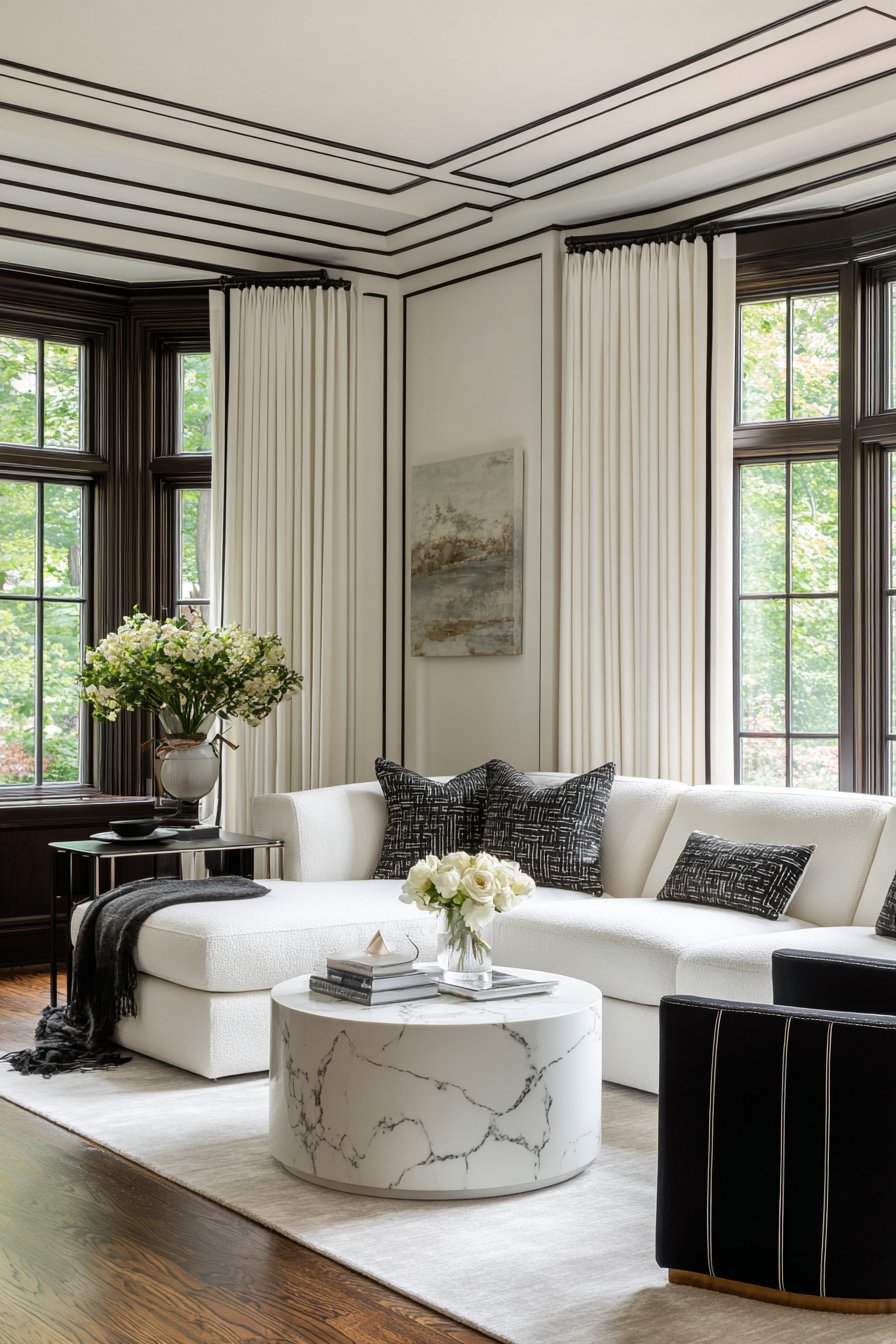
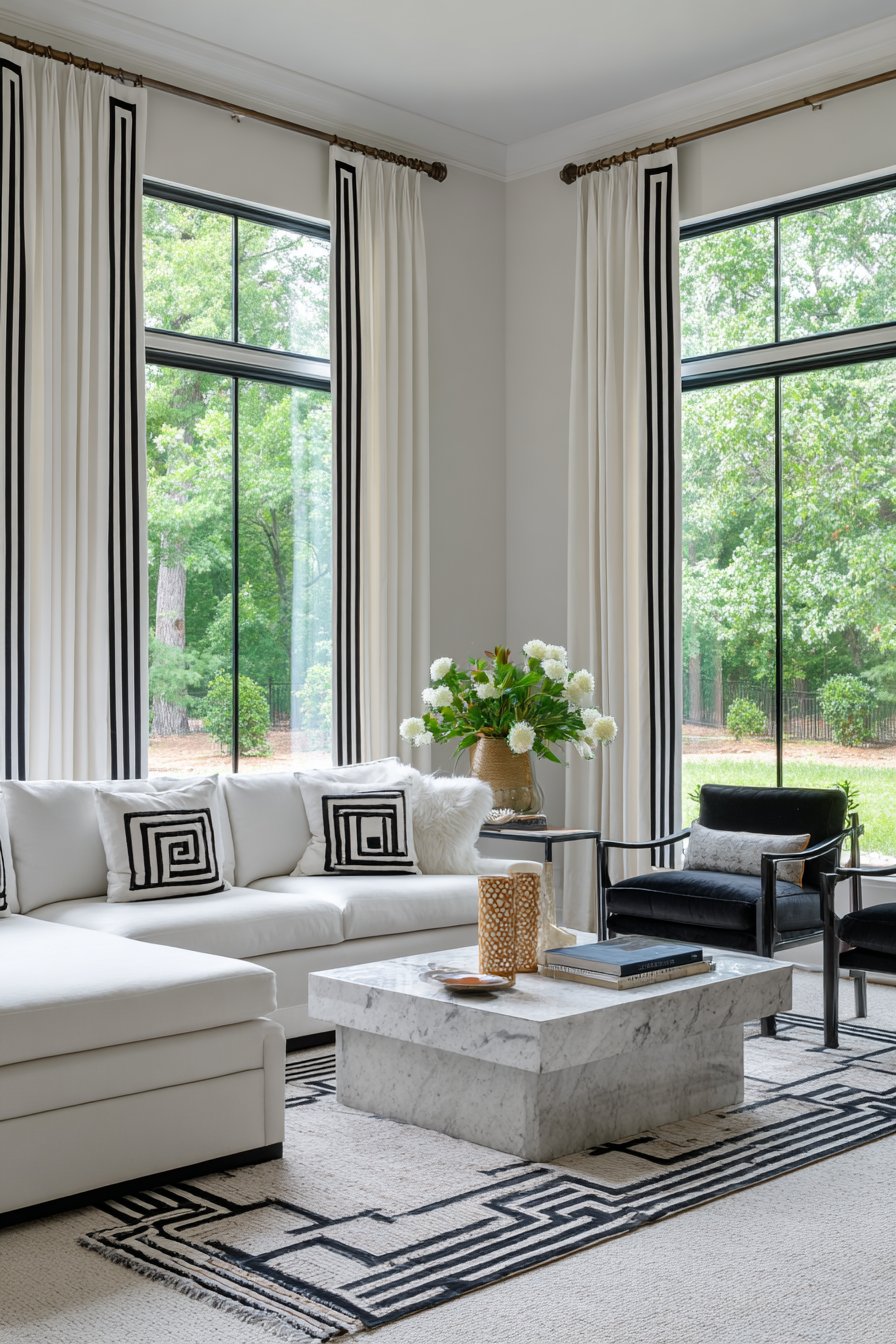
Bold contemporary design welcomes graphic elements, and white curtains with geometric black trim create striking architectural interest. These custom-detailed curtains transform from simple window coverings into statement pieces through the addition of black ribbon or fabric strips applied in clean geometric patterns—perhaps a single wide stripe along the leading edge, Greek key patterns along the hem, or modern color-blocking effects. The high-contrast black-and-white combination reads as sophisticated and modern, immediately signaling deliberate design choices rather than default window treatments.
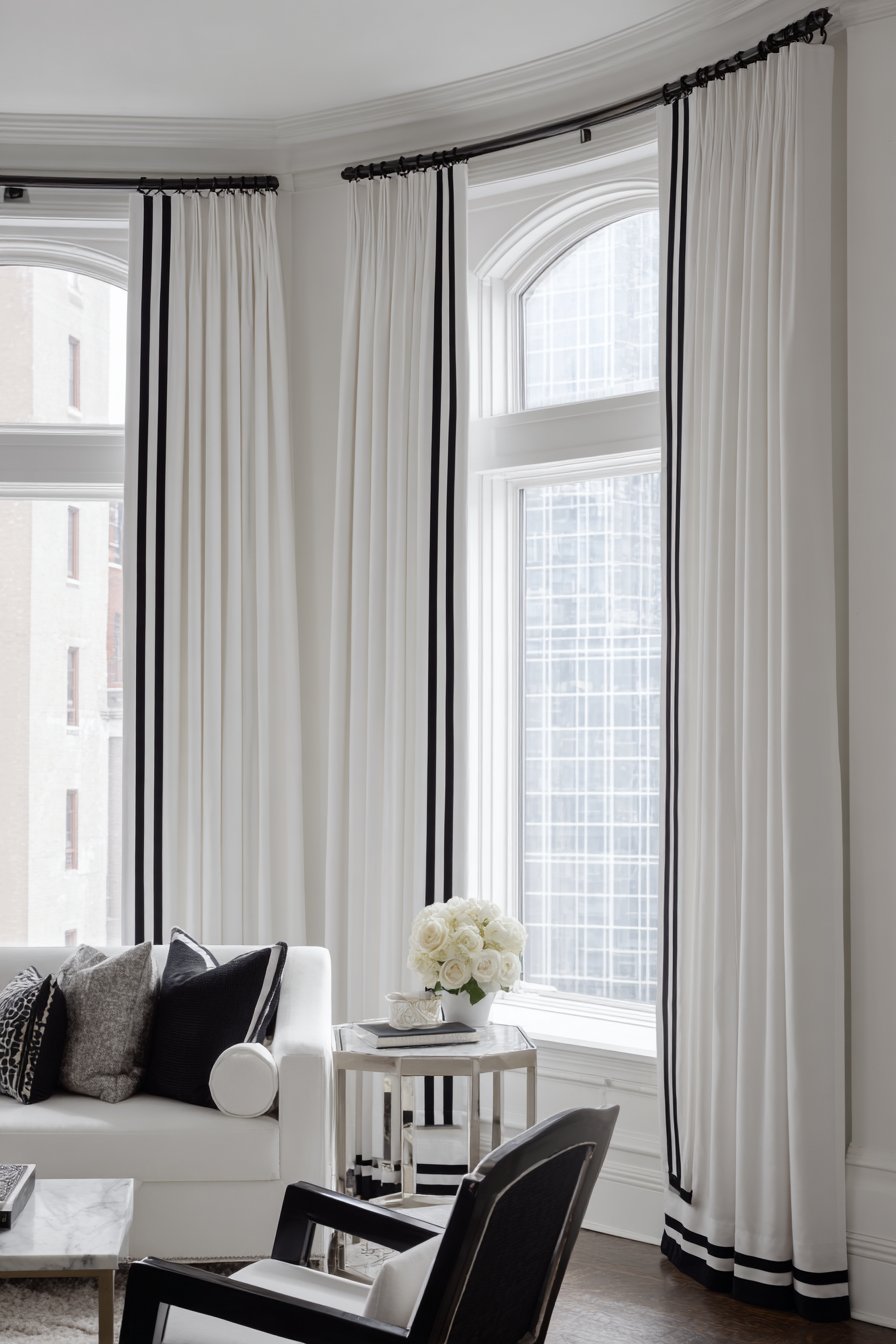
The monochromatic living room provides the perfect canvas for these graphic curtains. A white sectional sofa creates generous seating while maintaining the light, airy feeling that monochromatic schemes can achieve. Black accent chairs introduce necessary contrast and visual weight, preventing the space from floating away in all-white ethereality. A white marble coffee table with black veining bridges the two colors, its natural stone patterns echoing the geometric curtain details. Accessories in black, white, and occasional metallic accents maintain the limited palette while adding variety through form and texture rather than color.
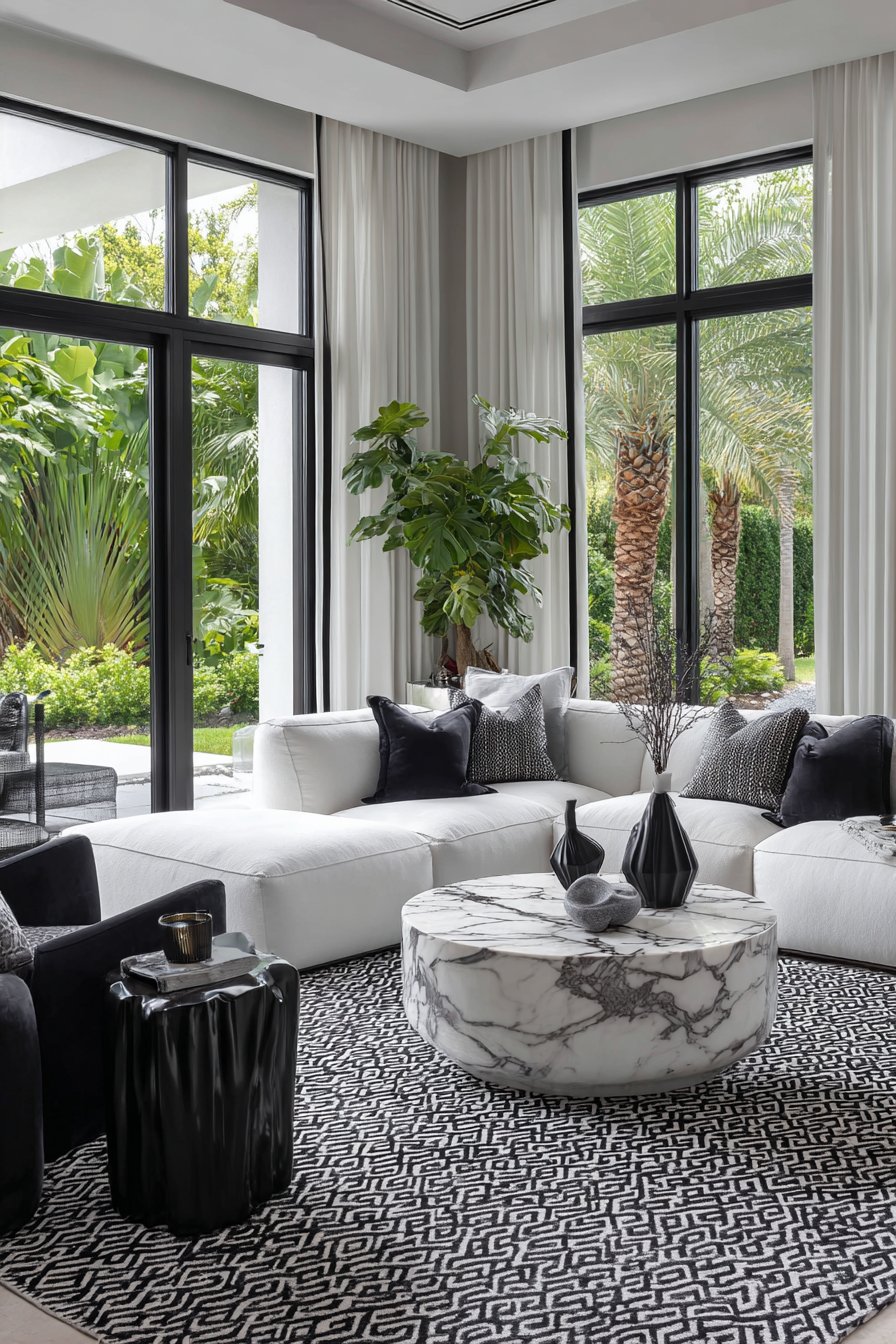
The bordered white curtains function as architectural elements in this contemporary space, their clean lines and geometric details reinforcing the modern aesthetic. The black trim draws the eye, creating frames around windows that emphasize their proportions and positions within walls. This graphic quality gives the curtains presence despite their relatively simple construction—the power lies in the contrast and clean execution rather than elaborate fabrication. Professional installation ensures perfect alignment of borders and stripes, critical to achieving the polished look that makes this contemporary detail successful.
Key Design Tips:
- Apply black trim with precision—uneven or misaligned details undermine the contemporary aesthetic
- Maintain the monochromatic palette throughout the space to maximize the impact of black-and-white contrast
- Choose simple geometric patterns that read as modern rather than traditional or ornate
- Coordinate the curtain trim width and placement with other architectural details and proportions
- Consider custom fabrication for perfect execution of bordered or trimmed curtain designs
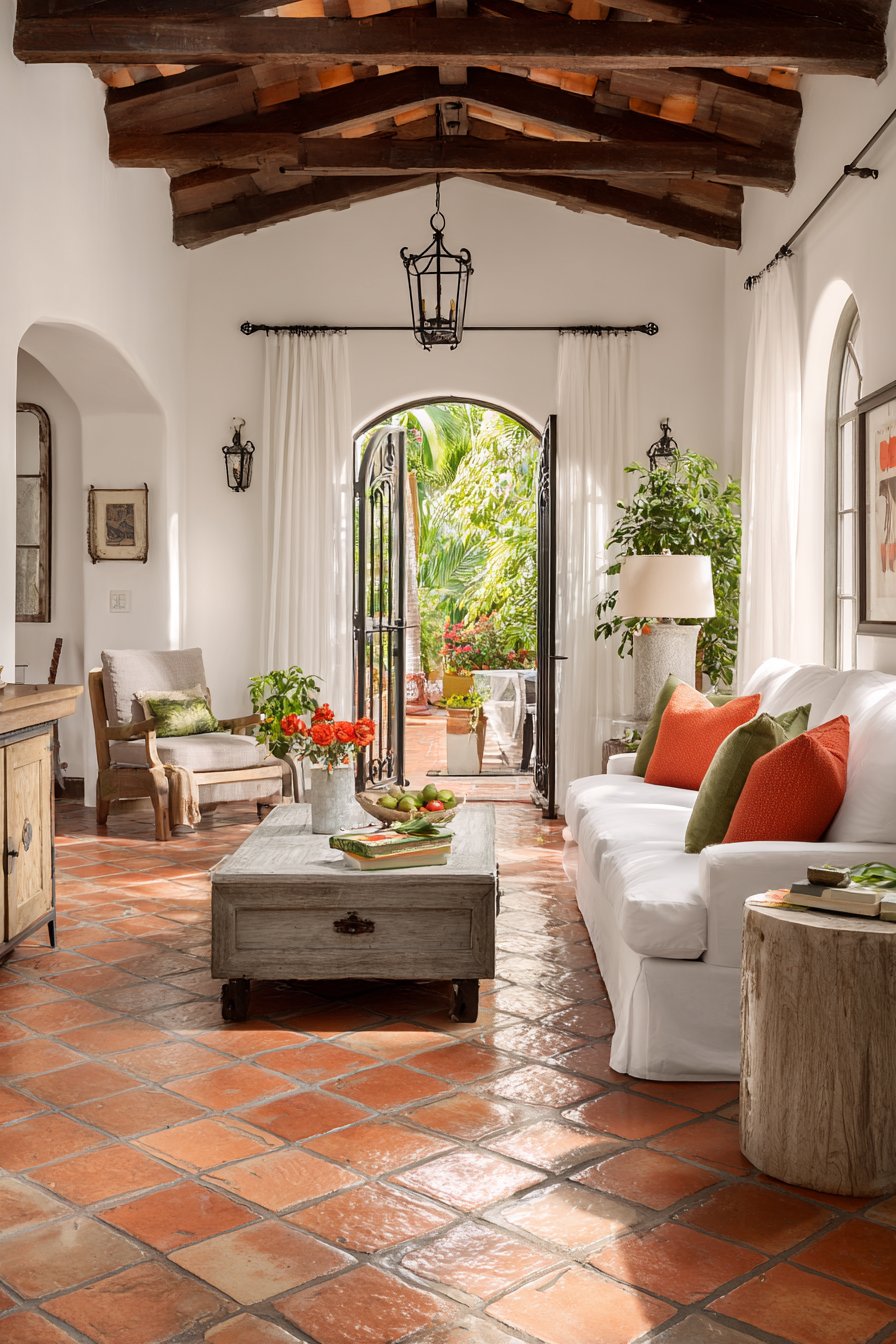
21. Mediterranean Breeze with Gauze and Arched Windows
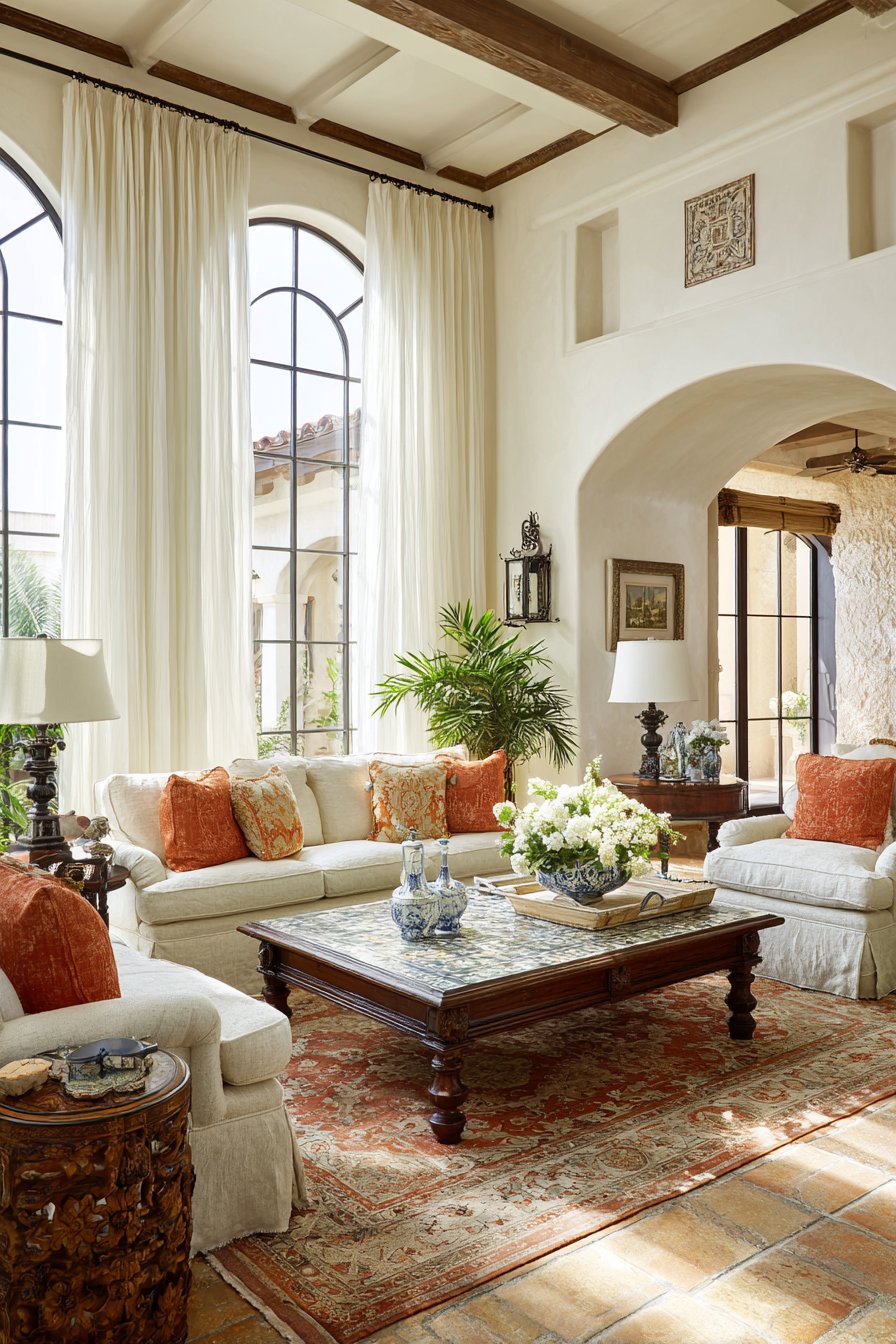
Mediterranean design celebrates indoor-outdoor living and relaxed elegance, beautifully embodied in lightweight white gauze curtains billowing through arched windows. These curtains capture the essence of Mediterranean lifestyle—open to breezes, connected to landscape, and effortlessly elegant without formality. The gauze fabric’s extreme lightness allows even gentle air movement to set the curtains dancing, creating living, breathing elements within the room. When positioned in arched windows characteristic of Mediterranean architecture, these flowing curtains emphasize the graceful curves while their white color complements the lime-washed walls and sun-bleached palette typical of the style.
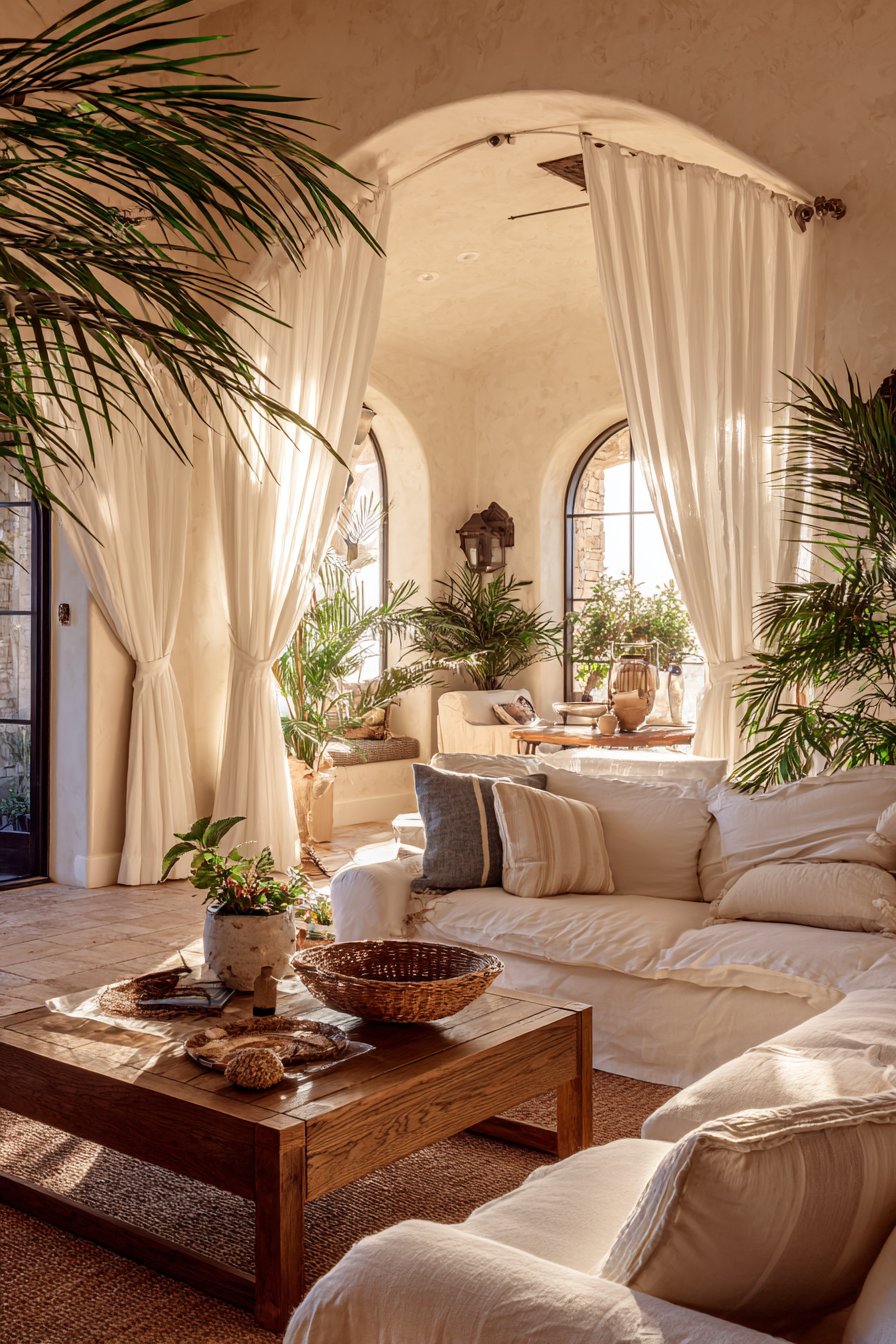
The Mediterranean-inspired living room embraces the region’s traditional materials and colors. Terracotta tile floors in warm orange-red tones ground the space with earthy permanence, their cool surface providing relief during hot summers. Wrought iron accents—perhaps in chandelier, candle holders, or furniture details—introduce the hand-forged metalwork characteristic of Spanish and Italian design. Whitewashed walls reflect light and heat while creating a neutral backdrop for vibrant tile work, colorful ceramics, and rich wood tones. The lightweight white gauze curtains soften these strong architectural elements, their ethereal quality providing counterpoint to solid stone and iron.
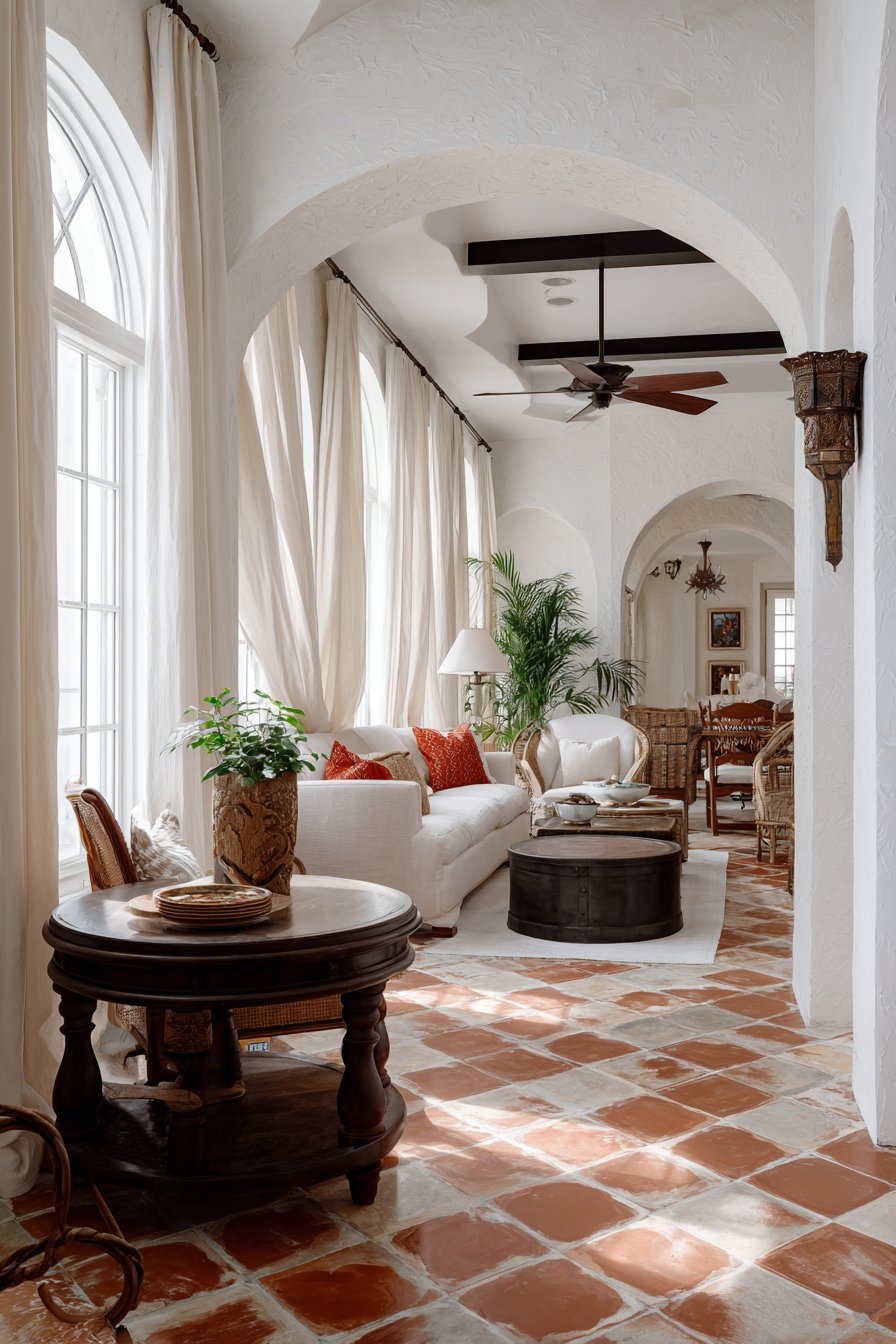
The indoor-outdoor connection essential to Mediterranean living finds perfect expression in these billowing white curtains. They blur the boundary between interior and exterior, allowing outdoor air and light to penetrate while providing shade and privacy. As breezes shift throughout the day—cool morning air, warm afternoon winds, evening cooling—the curtains respond, creating ever-changing patterns and movement. This dynamic quality keeps the space feeling alive and connected to natural cycles rather than sealed and static. The white color maintains the bright, sun-washed aesthetic that makes Mediterranean interiors so appealing, especially in warm climates.
Key Design Tips:
- Choose the lightest weight gauze or voile fabrics that respond to minimal air movement
- Install curtains in arched windows to emphasize beautiful Mediterranean architectural details
- Maintain the sun-bleached white and neutral palette characteristic of coastal Mediterranean design
- Incorporate traditional materials like terracotta, wrought iron, and whitewashed surfaces
- Embrace the indoor-outdoor connection by positioning furniture to enjoy breezes flowing through white curtains
Why These White Curtain Designs Represent the Best Living Room Ideas
The twenty-one white curtain approaches detailed throughout this article represent comprehensive solutions for virtually every design style, architectural setting, and functional need. Each concept demonstrates how white curtains transcend their role as simple window coverings to become integral design elements that shape atmosphere, control light, define style, and enhance daily living. From the minimalist serenity of Scandinavian sheers to the glamorous luxury of velvet drapes, from space-saving apartment solutions to grand Mediterranean statements, white curtains prove their versatility while maintaining timeless appeal.
These designs excel because they address both aesthetic and practical considerations. The layered dual-treatment approach provides light control flexibility while creating dimensional interest. Thermal curtains deliver energy savings wrapped in elegant damask patterns. Motorized systems offer unprecedented convenience without sacrificing contemporary style. Weather-resistant outdoor curtains extend living spaces beyond traditional boundaries. Each solution considers how people actually live—the need for privacy without darkness, the desire for beauty alongside function, the requirement for adaptability as needs change throughout days and seasons.
The enduring appeal of white curtains lies in their ability to enhance rather than dictate design direction. They partner beautifully with bold color schemes, providing visual rest and brightness. They support monochromatic interiors without disappearing into blandness, their varying textures and fabrications creating interest through subtle means. They bridge style transitions, allowing homeowners to update furnishings and accessories while maintaining cohesive window treatments. This adaptability makes white curtains wise long-term investments that transcend temporary trends.
Material choices among these twenty-one concepts demonstrate white curtains’ remarkable range. Crisp Belgian linen brings Scandinavian authenticity. Flowing gauze creates Mediterranean romance. Substantial velvet delivers glamorous luxury. Practical canvas provides transitional versatility. Textured burlap maintains rustic character. Each material brings unique qualities—draping characteristics, light filtration, textural interest, practical durability—proving that “white curtains” encompasses diverse options rather than a single generic solution.
The technical aspects of curtain selection and installation emerge as critical success factors throughout these designs. Proper measurement ensuring accurate floor breaks, strategic rod placement maximizing perceived window height, appropriate fullness creating beautiful folds, quality hardware supporting fabric weight—these details separate professional-looking results from disappointing amateur attempts. The investment in proper installation, whether professional or carefully executed DIY, pays dividends in appearance and longevity.
Light management capabilities distinguish exceptional white curtain designs from merely adequate ones. Sheer fabrics maximize daylight penetration while providing privacy. Blackout-lined options deliver complete darkness when needed. Layered treatments offer graduated control throughout changing conditions. The white color choice amplifies these light-managing properties, reflecting rather than absorbing illumination to brighten spaces naturally. Understanding how different white fabrics interact with light—the glow of backlit linen, the luminous quality of silk, the diffusion through gauze—enables informed decisions matching curtains to specific room conditions and user needs.
Style versatility across these twenty-one concepts proves white curtains’ universal applicability. Traditional interiors gain elegance through formal pleating and luxurious fabrics. Contemporary spaces benefit from clean lines and minimal details. Bohemian rooms incorporate macramé and casual tie-tops. Industrial lofts find softness in gauze against brick. Mediterranean homes embrace flowing lightweight fabrics. Each major design style finds appropriate white curtain expression, demonstrating that this seemingly simple choice accommodates remarkable variety.
Practical functionality considerations including privacy provision, temperature regulation, sound dampening, and UV protection emerge as significant benefits beyond aesthetic appeal. Thermal curtains reduce energy costs while maintaining beauty. Substantial fabrics provide acoustic improvements in open-plan homes. UV-resistant treatments protect furnishings from sun damage. Privacy controls range from sheer filtering to complete blackout depending on fabric choice and lining options. These practical benefits compound white curtains’ value proposition.
The psychological impact of white curtains deserves recognition alongside their physical properties. White’s association with cleanliness, freshness, and new beginnings creates positive emotional responses. The increased brightness white curtains provide improves mood and energy levels, particularly important in climates with limited sunlight. The sense of spaciousness they create reduces feelings of confinement in smaller homes. These subtle psychological benefits contribute significantly to overall well-being and satisfaction with living spaces.
Maintenance considerations favor white curtains when proper care protocols are established. Modern fabric treatments resist staining while maintaining softness. Regular vacuuming prevents dust accumulation. Appropriate washing or professional cleaning maintains brightness. The visible nature of soil on white fabrics encourages regular maintenance that extends lifespan rather than allowing neglect until severe cleaning becomes necessary. Quality white curtains properly maintained remain beautiful for years, making them economical choices despite potentially higher initial investment.
Conclusion
White curtains represent one of interior design’s most powerful yet understated tools, capable of transforming living rooms across all styles, sizes, and settings. The twenty-one concepts explored throughout this comprehensive guide demonstrate how thoughtful curtain selection—considering fabric, texture, installation, and style—creates significant impact on both appearance and functionality. From sheer minimalist panels to luxurious layered treatments, from practical thermal solutions to romantic ruffled details, white curtains offer solutions for every design challenge and personal preference.
The key to success lies in understanding that “white curtains” encompasses remarkable diversity rather than a single generic option. Consider your room’s specific needs: Does it require maximum light or temperature control? Would it benefit from formal elegance or casual comfort? Does the architecture suggest traditional or contemporary treatments? Answering these questions guides selection toward curtains that enhance rather than simply cover windows.
Experiment with these ideas in your own home, adapting concepts to suit your unique circumstances. Perhaps Scandinavian sheers would brighten a dim north-facing room, or thermal damask would reduce energy costs in an older home. Maybe geometric black-trim curtains would provide the contemporary edge your space needs, or flowing gauze would capture that Mediterranean vacation feeling year-round. The beauty of white curtains lies in their forgiving nature—they enhance virtually any design direction you choose to explore.
As you consider updating your living room window treatments, remember that white curtains represent investment in both immediate beauty and long-term versatility. They brighten spaces, create atmosphere, provide practical benefits, and adapt as your style evolves. Whether you select ready-made panels or invest in custom fabrication, choose quality materials and proper installation to ensure your white curtains deliver years of satisfaction. Transform your living room with the timeless elegance and remarkable versatility that only white curtains can provide.


