
Creating a formal living room that balances sophistication with comfort requires thoughtful consideration of every design element, from furniture placement to lighting schemes. These spaces serve as the heart of refined entertaining, where careful attention to traditional design principles meets contemporary functionality. The art of formal interior design lies in understanding how classic elements—luxurious fabrics, symmetrical arrangements, and quality craftsmanship—can transform any space into an elegant sanctuary that reflects both personal style and timeless appeal.
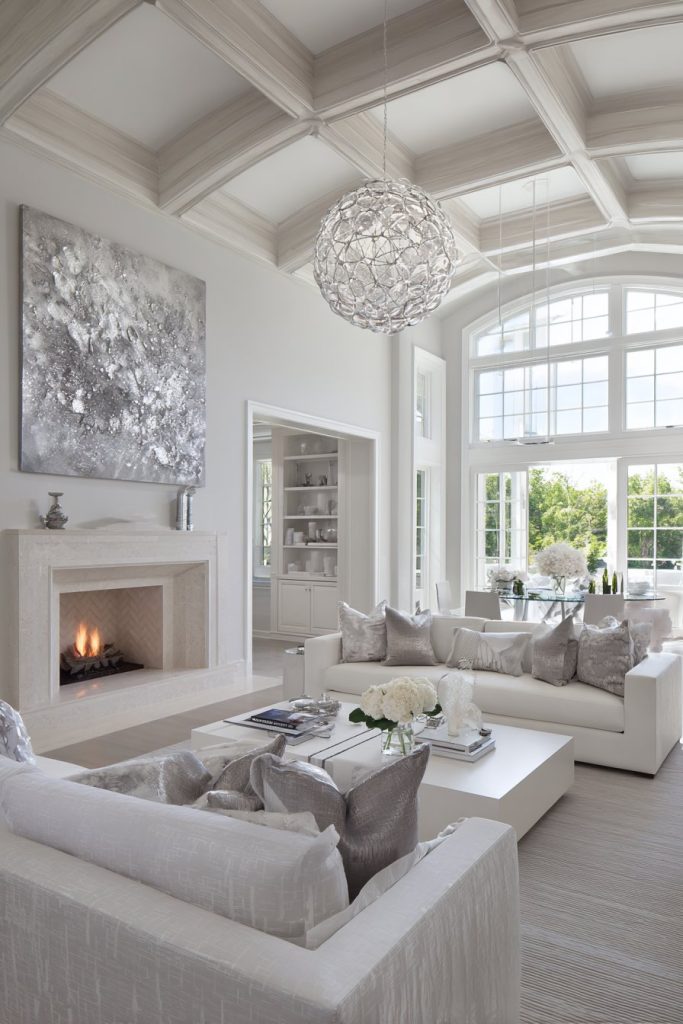
The formal living room represents more than just a gathering space; it embodies the homeowner’s commitment to creating an environment where conversation flows naturally, where every piece has purpose, and where the overall composition speaks to refined taste. Whether your home features grand architectural details or more modest proportions, the principles of formal design can be adapted to create spaces that feel both impressive and inviting. From rich velvet upholstery to carefully curated lighting schemes, each element contributes to an atmosphere of understated luxury that stands the test of time.
Throughout this comprehensive guide, we’ll explore twenty distinct approaches to formal living room design, each offering unique insights into how traditional elements can be combined to create spaces that are both functionally sound and visually stunning. These designs showcase the versatility of formal styling, demonstrating how different color palettes, furniture arrangements, and decorative elements can be orchestrated to achieve that perfect balance of elegance and livability that defines truly exceptional interior spaces.

1. Sophisticated Cream Velvet Elegance
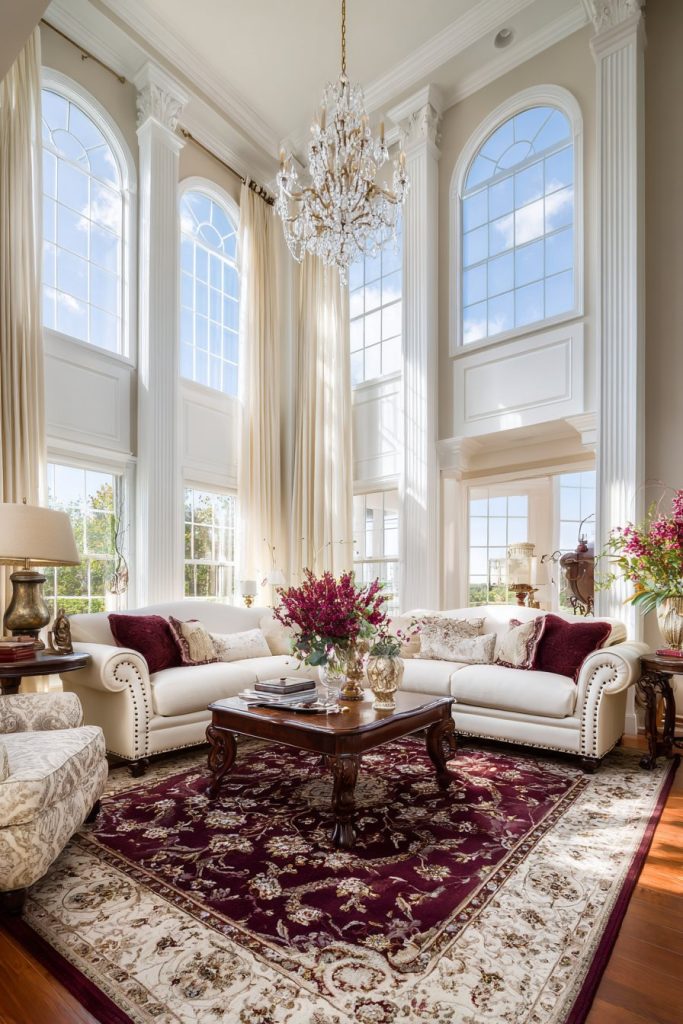
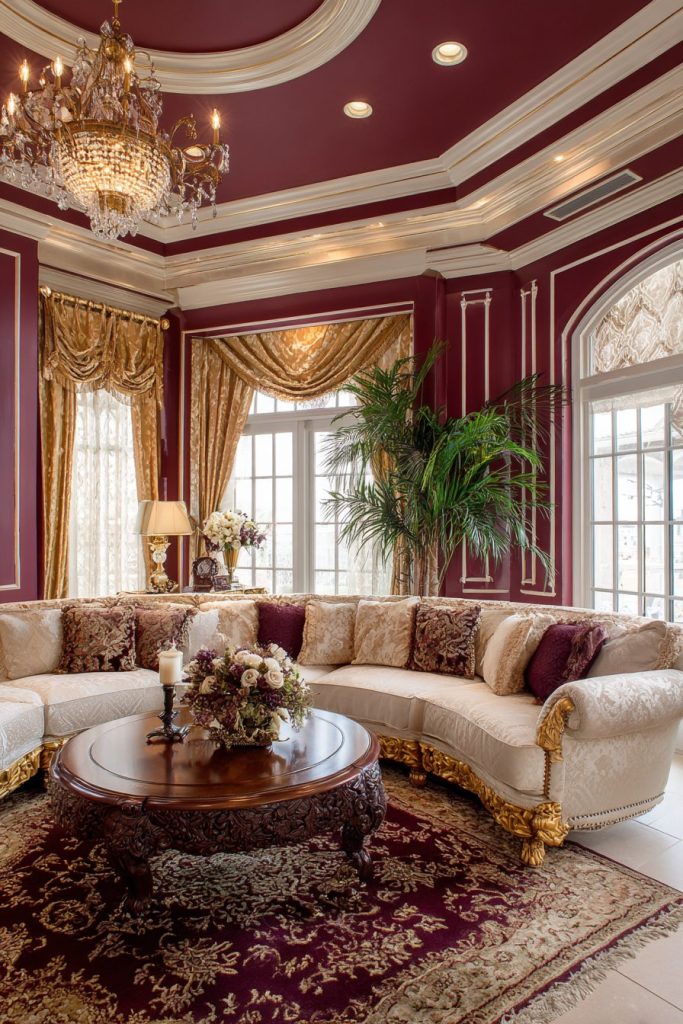
The foundation of this exquisite formal living room rests upon an elegant cream velvet sectional sofa, its rolled arms and nailhead trim speaking to traditional craftsmanship while providing the comfort modern families demand. The mahogany coffee table, with its intricate carved details, serves as both functional centerpiece and artistic statement, demonstrating how quality furniture pieces can anchor an entire room’s design narrative. The interplay between the soft, luxurious velvet and the rich, warm wood creates a tactile experience that invites both relaxation and admiration.
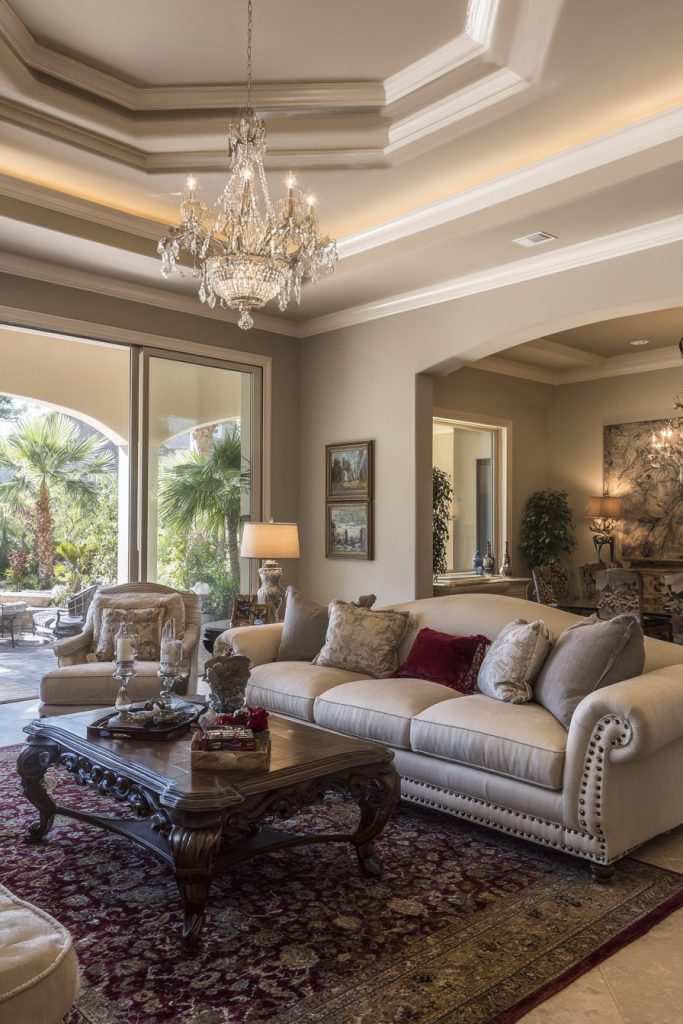
The Persian area rug in deep burgundy and gold establishes the room’s color foundation while providing the necessary visual weight to anchor the substantial seating arrangement. This careful selection demonstrates the importance of proportion in formal design—the rug’s scale and pattern complement rather than compete with the furniture, creating a harmonious foundation that supports the room’s overall elegance. The rich burgundy tones add depth and warmth to the neutral palette while the gold accents provide subtle glamour that elevates the space without overwhelming its refined sensibility.
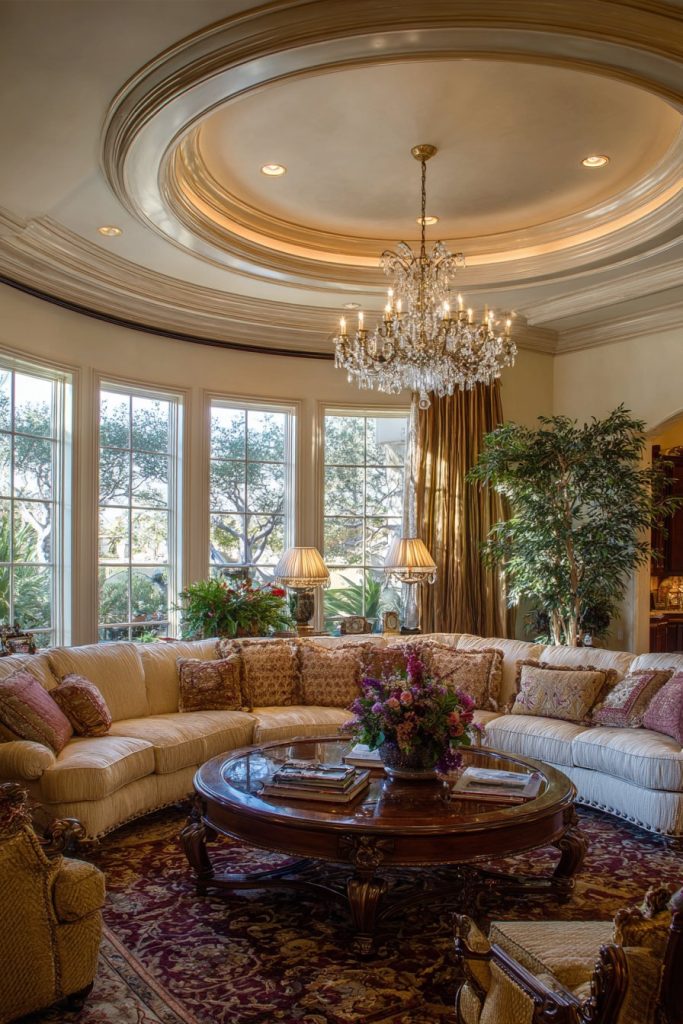
Lighting design plays a crucial role in this sophisticated environment, with the crystal chandelier providing ambient illumination that creates sparkle and movement throughout the space. The addition of table lamps with silk shades offers task lighting for reading and conversation while contributing to the layered lighting scheme that characterizes well-designed formal spaces. The natural daylight streaming through the windows highlights the rich textures and formal symmetry, creating a dynamic interplay between artificial and natural light sources that brings the room to life throughout the day.
Key Design Elements:
- Select velvet upholstery in neutral tones for timeless appeal and luxurious texture
- Incorporate nailhead trim details to add traditional sophistication to furniture pieces
- Choose Persian or Oriental rugs with rich colors to anchor seating arrangements
- Layer lighting sources combining chandeliers, table lamps, and natural light for optimal ambiance
- Position furniture to create clear sight lines and promote conversation flow
2. Classic Symmetrical Fireplace Focus
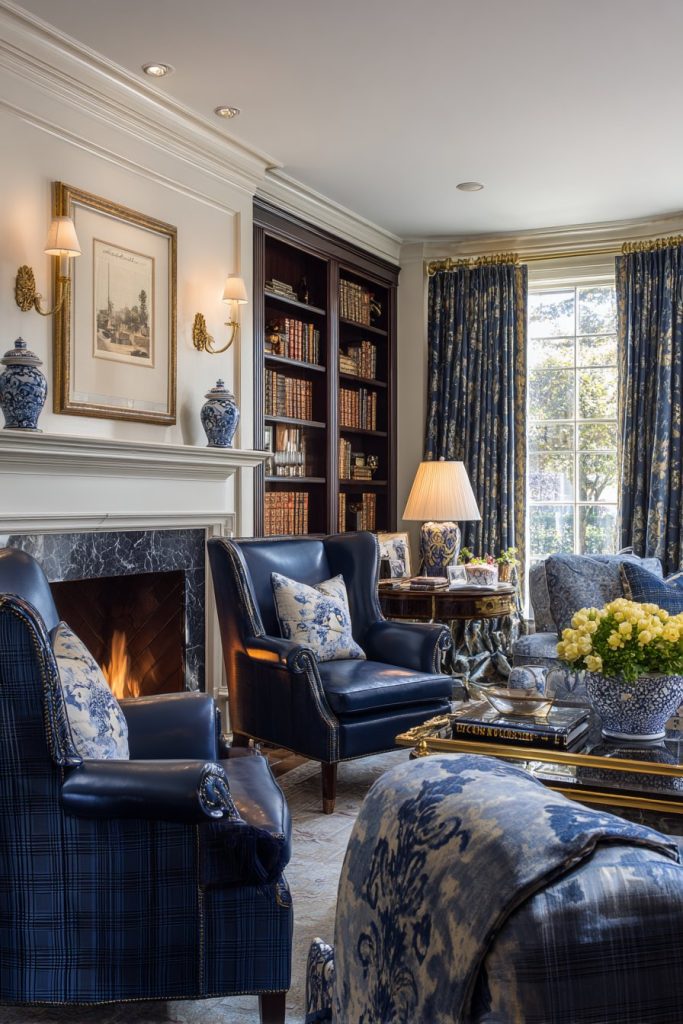
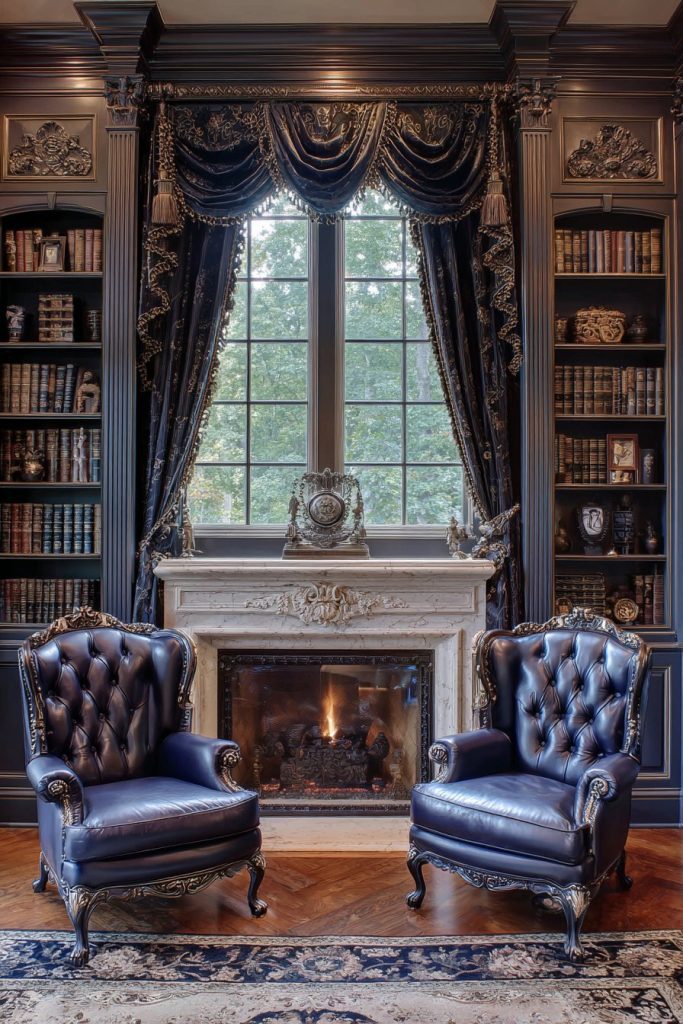
The power of symmetrical design reaches its pinnacle in this thoughtfully composed formal living room, where matching wingback chairs in navy blue leather create perfect balance on either side of a stunning marble fireplace mantel. This classical approach to furniture placement demonstrates the enduring appeal of traditional design principles, where visual equilibrium creates a sense of order and refinement that feels both comfortable and impressive. The navy blue leather adds richness and durability while maintaining the sophisticated color palette that defines formal spaces.
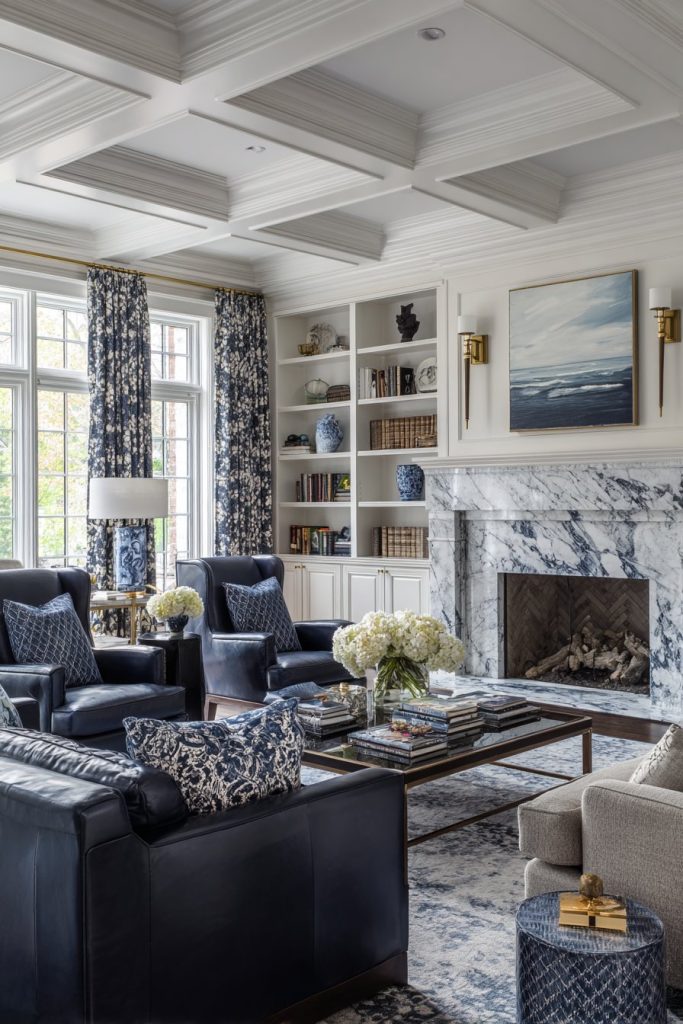
Built-in bookcases with crown molding extend the room’s architectural vocabulary, providing storage and display opportunities while reinforcing the space’s commitment to traditional craftsmanship. The careful arrangement of leather-bound volumes and decorative objects within these built-ins creates visual interest at multiple levels, drawing the eye upward and emphasizing the room’s vertical proportions. This integration of storage and display functionality demonstrates how formal design can be both beautiful and practical, accommodating the needs of daily living while maintaining aesthetic integrity.
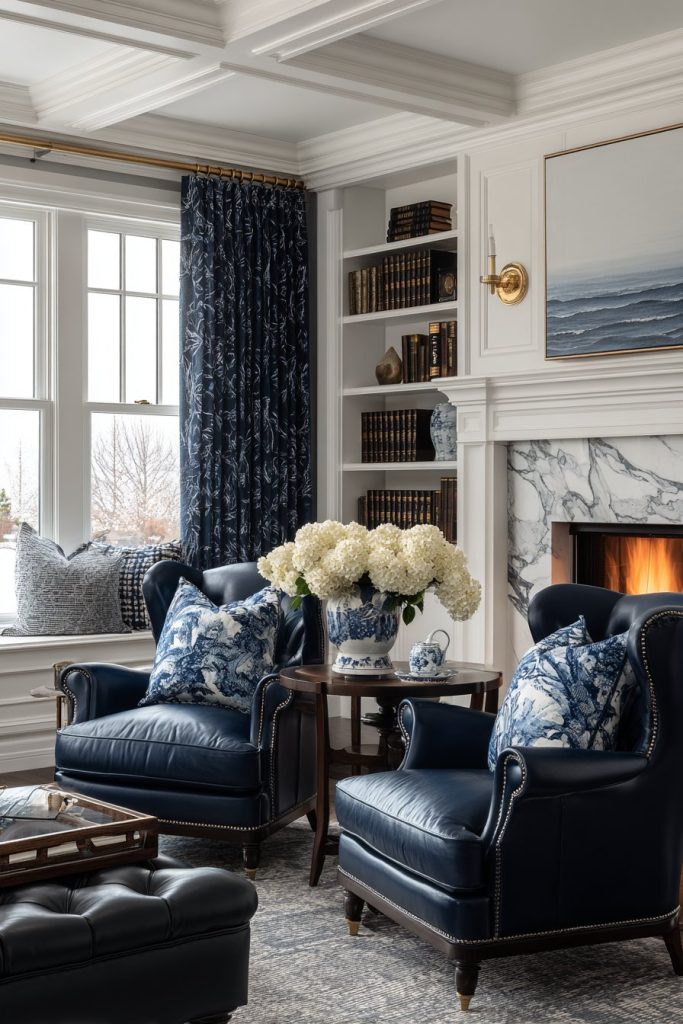
The window treatments in this space exemplify the importance of fabric selection in formal design, with heavy drapery in coordinating navy featuring gold tiebacks that echo the room’s refined color scheme. These substantial window coverings provide privacy and light control while adding another layer of luxury through their quality materials and expert tailoring. The professional interior photography captures how balanced exposure can emphasize architectural details, showing how proper lighting design enhances rather than overwhelms the space’s timeless elegance.
Key Design Elements:
- Arrange furniture symmetrically around focal points like fireplaces for classical balance
- Choose leather upholstery in rich colors for durability and sophisticated appeal
- Install built-in storage with architectural details to maximize functionality
- Coordinate window treatments with overall color scheme using quality fabrics
- Display books and decorative objects thoughtfully to create visual interest at multiple levels
3. Emerald Green Chesterfield Luxury
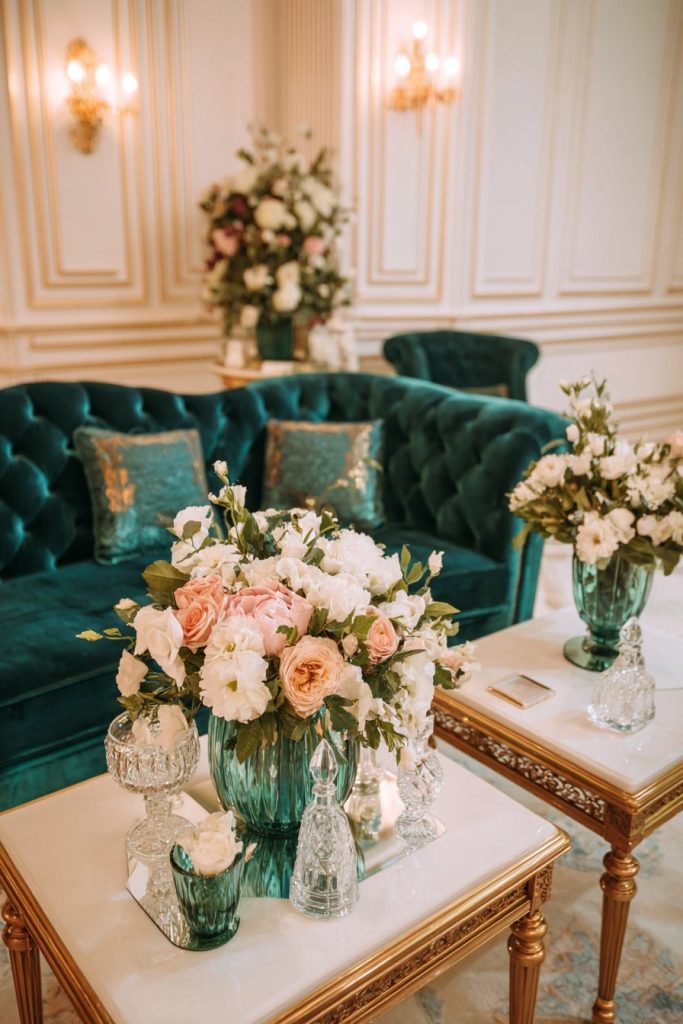
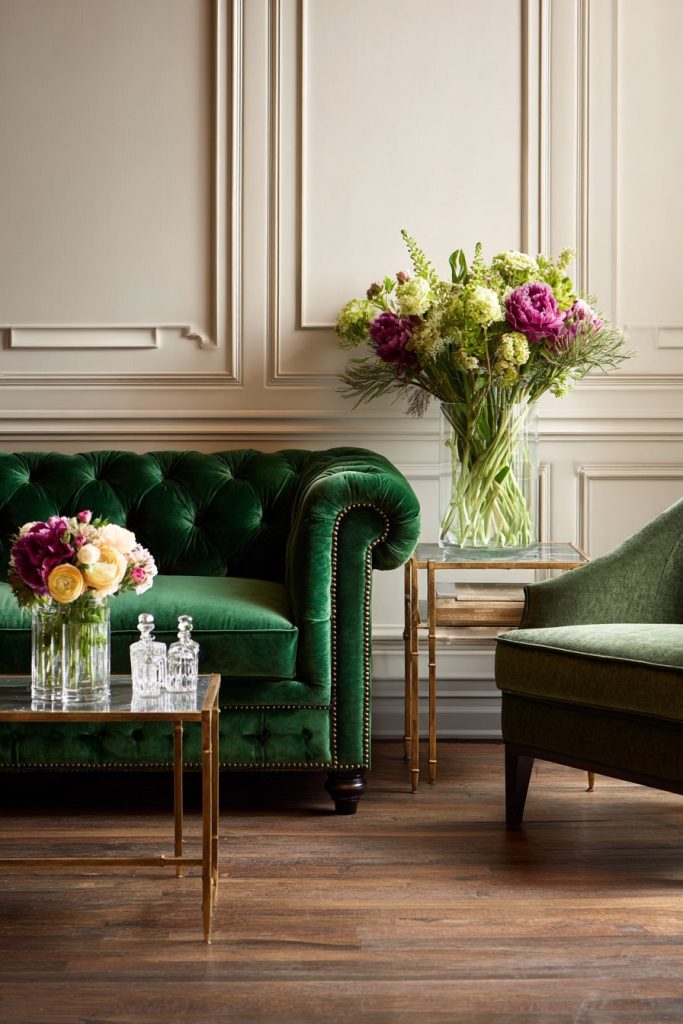
The commanding presence of a tufted Chesterfield sofa in rich emerald green velvet immediately establishes this formal living room’s commitment to both traditional style and bold color choices. This iconic furniture piece, with its deep button tufting and rolled arms, represents the pinnacle of English furniture craftsmanship while providing the substantial seating that formal entertaining requires. The emerald green color choice demonstrates how jewel tones can elevate a neutral space, adding personality and warmth while maintaining the sophisticated atmosphere that defines formal design.
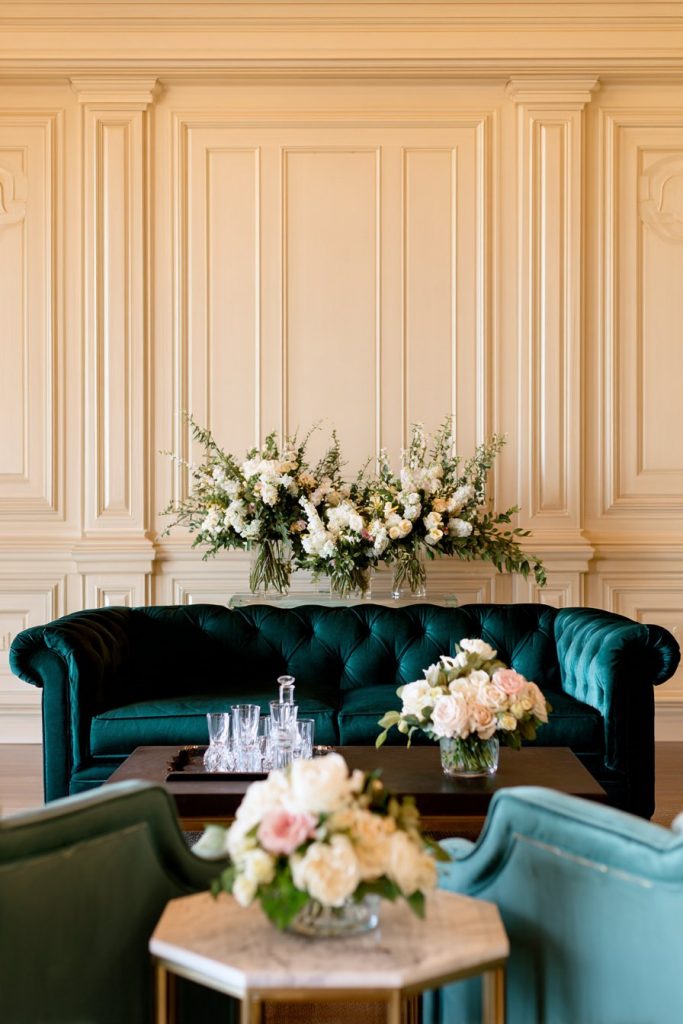
The matching armchairs positioned opposite the Chesterfield create an intimate conversation area that encourages social interaction while maintaining the room’s formal structure. Antique brass side tables with marble tops provide both practical surfaces and decorative elements, their mixed materials adding textural interest and reflecting the room’s commitment to quality craftsmanship. The inclusion of crystal decanters and fresh floral arrangements on these surfaces adds layers of sophistication, demonstrating how accessories can enhance rather than clutter formal spaces.
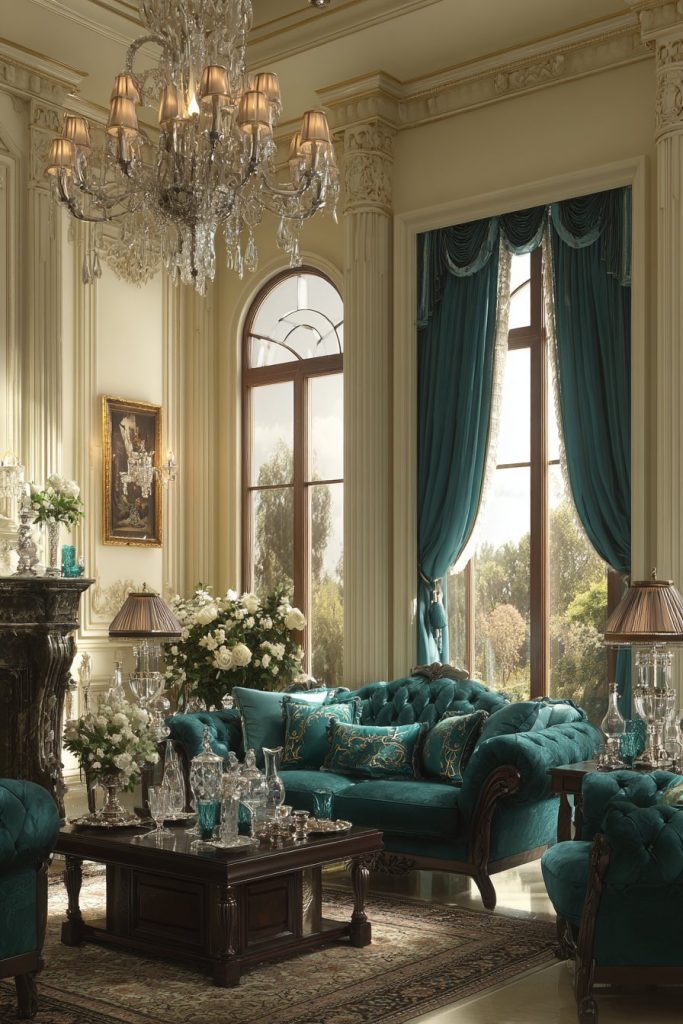
The architectural detailing in this room, including wainscoting painted in warm cream with darker accent walls above, provides visual interest and historical authenticity that supports the formal furniture pieces. This two-tone wall treatment creates depth and dimension while providing a neutral backdrop that allows the emerald green upholstery to take center stage. The refined color palette and luxurious material combinations work together to create a space that feels both grand and intimate, perfect for formal entertaining or quiet contemplation.
Key Design Elements:
- Select statement furniture pieces in rich jewel tones for dramatic impact
- Choose traditional forms like Chesterfield sofas for authentic formal appeal
- Incorporate mixed materials including brass, marble, and crystal for textural variety
- Use two-tone wall treatments to add architectural interest and visual depth
- Balance bold colors with neutral backgrounds to maintain sophisticated harmony
4. Open Floor Plan Conversation Areas
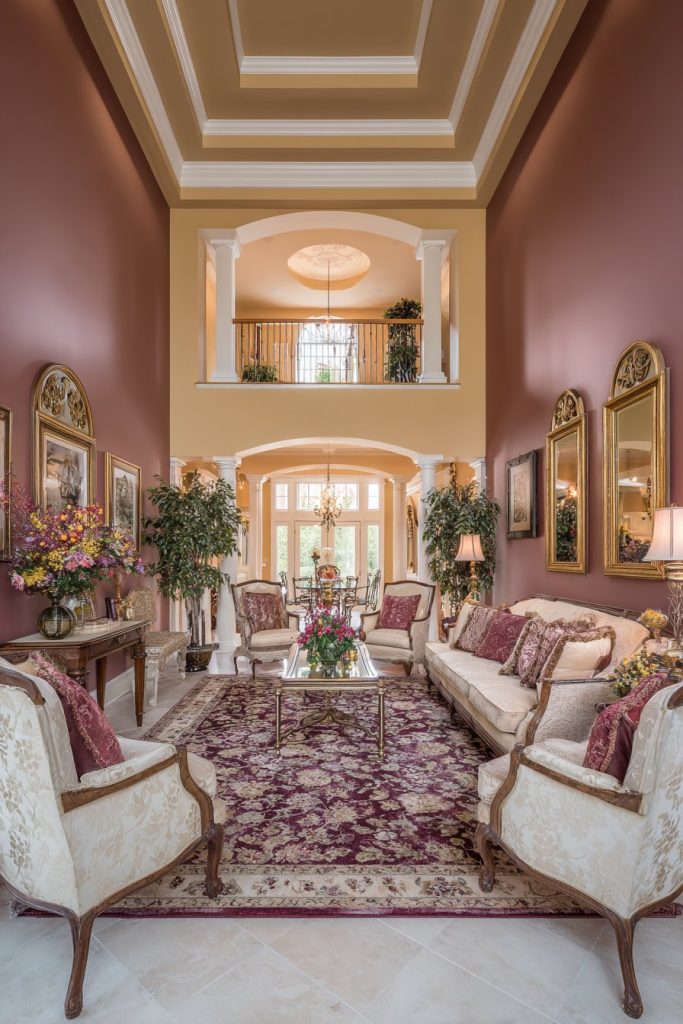
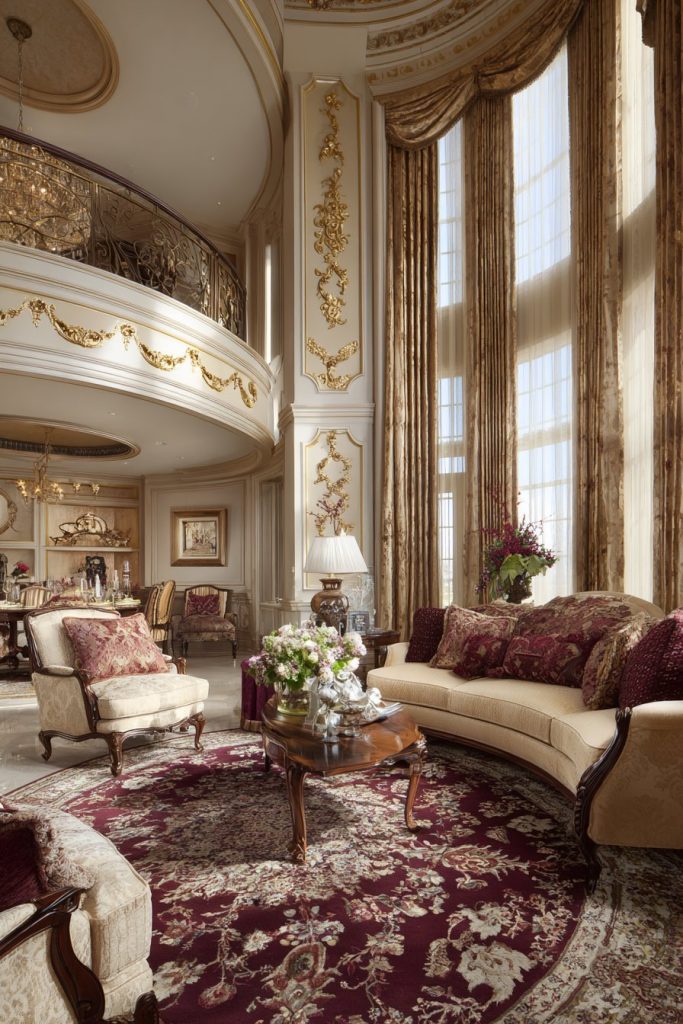
The challenge of creating formal living spaces within open floor plans finds its solution in this masterfully designed room, where distinct conversation areas are defined through the strategic use of a large traditional Oriental rug in burgundy and cream. This approach demonstrates how area rugs can function as room dividers in open spaces, creating intimate zones within larger areas while maintaining visual flow and connection between different functional areas. The rug’s substantial size and traditional pattern provide the necessary visual weight to anchor the furniture arrangement while contributing to the room’s formal character.
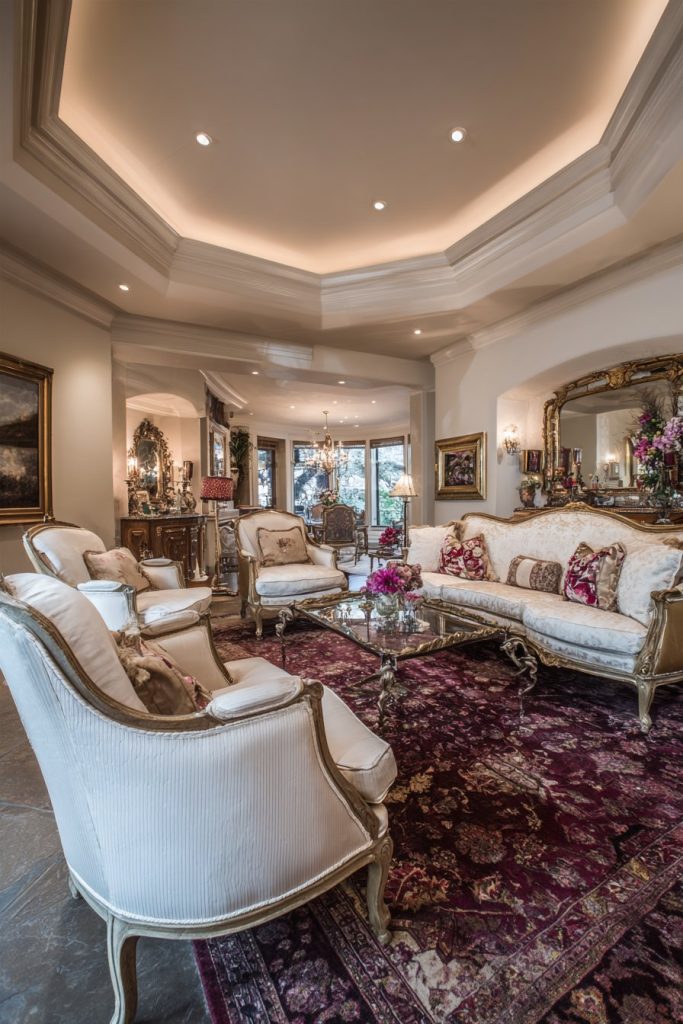
French bergère chairs in cream silk upholstery face a camelback sofa with coordinating throw pillows, creating a seating arrangement that promotes conversation while showcasing traditional French furniture forms. The combination of these classic pieces demonstrates how different furniture styles can work together when united by a consistent color palette and commitment to quality craftsmanship. The silk upholstery adds luxury and refinement while the coordinating throw pillows provide opportunities for seasonal updates and personal expression within the formal framework.
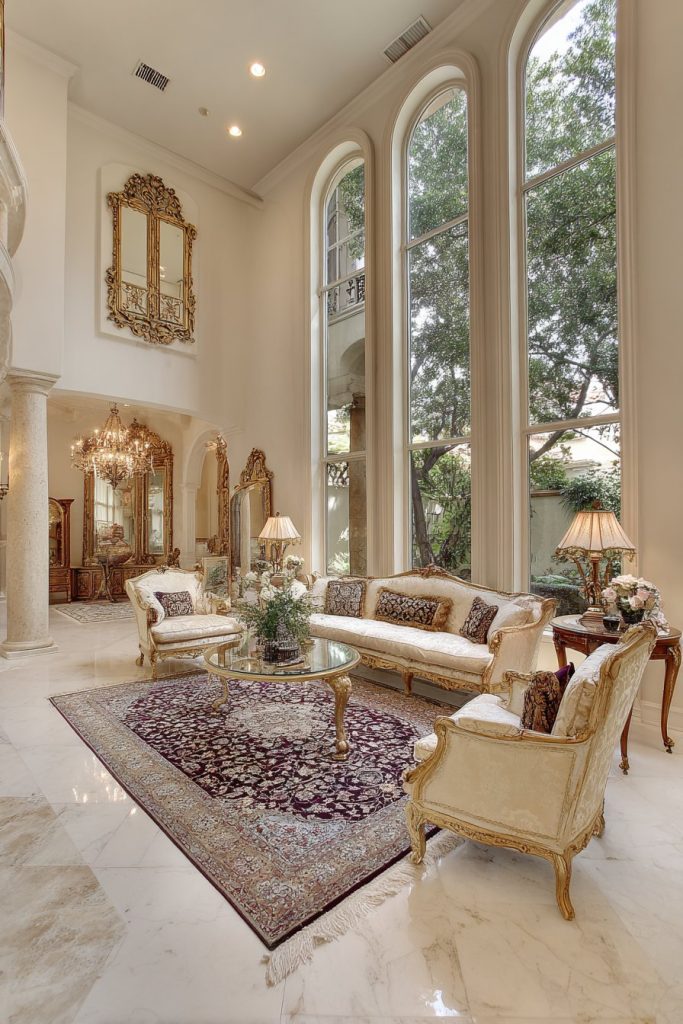
Ornate gold-framed mirrors positioned throughout the space serve multiple functions, reflecting light to brighten the room while adding glamorous decorative elements that enhance the formal atmosphere. These reflective surfaces create the illusion of expanded space while multiplying the impact of the room’s lighting scheme, demonstrating how mirrors can be both functional and decorative in formal design. The wide-angle architectural photography captures how professional lighting can emphasize texture details and highlight the formal flow between different areas of the open space.
Key Design Elements:
- Use large area rugs to define conversation areas in open floor plans
- Select furniture pieces with traditional forms and quality craftsmanship
- Incorporate mirrors strategically to reflect light and create spatial expansion
- Coordinate upholstery colors while varying textures for visual interest
- Plan lighting to highlight architectural flow and emphasize formal proportions
5. Grand Piano Centerpiece Elegance
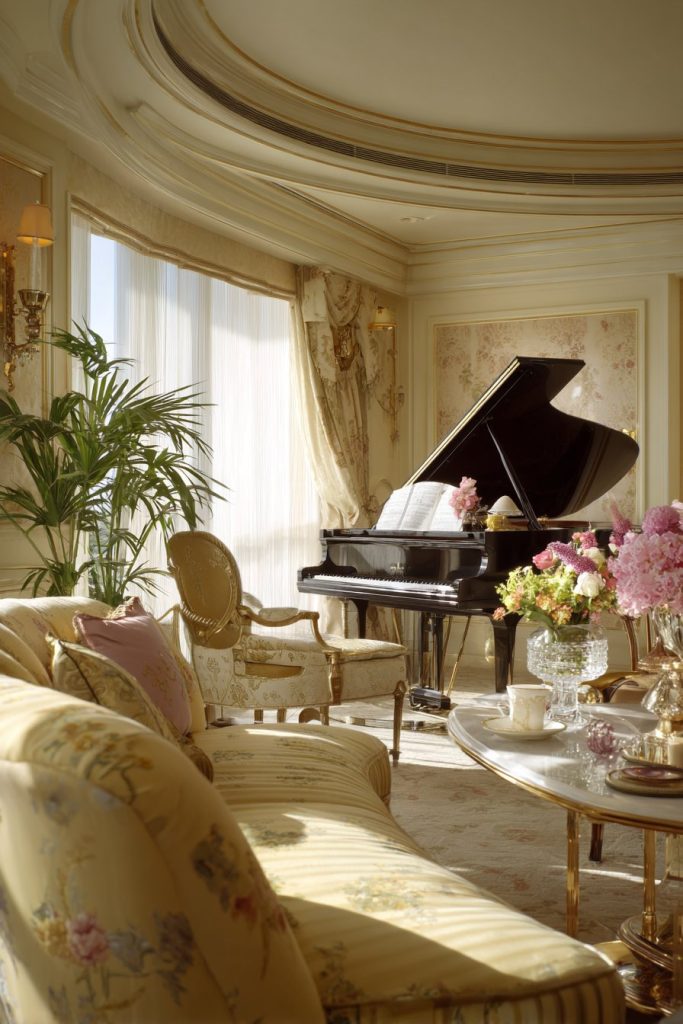
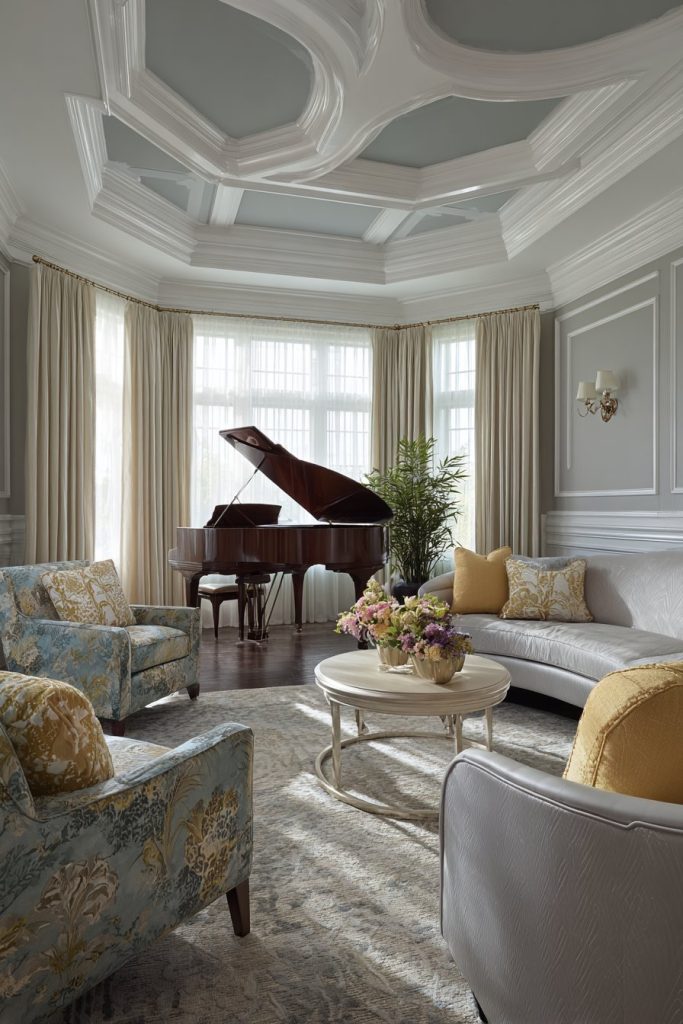
The inclusion of a grand piano as the centerpiece transforms this formal living room into a space that celebrates both musical and visual artistry, demonstrating how large-scale furniture pieces can serve as both functional instruments and sculptural elements. The piano’s commanding presence requires careful consideration of surrounding furniture placement, with a curved settee and accent chairs in coordinating jewel tones creating intimate seating areas that complement rather than compete with the instrument’s visual weight. This arrangement shows how formal spaces can accommodate both entertainment and musical performance while maintaining their sophisticated character.
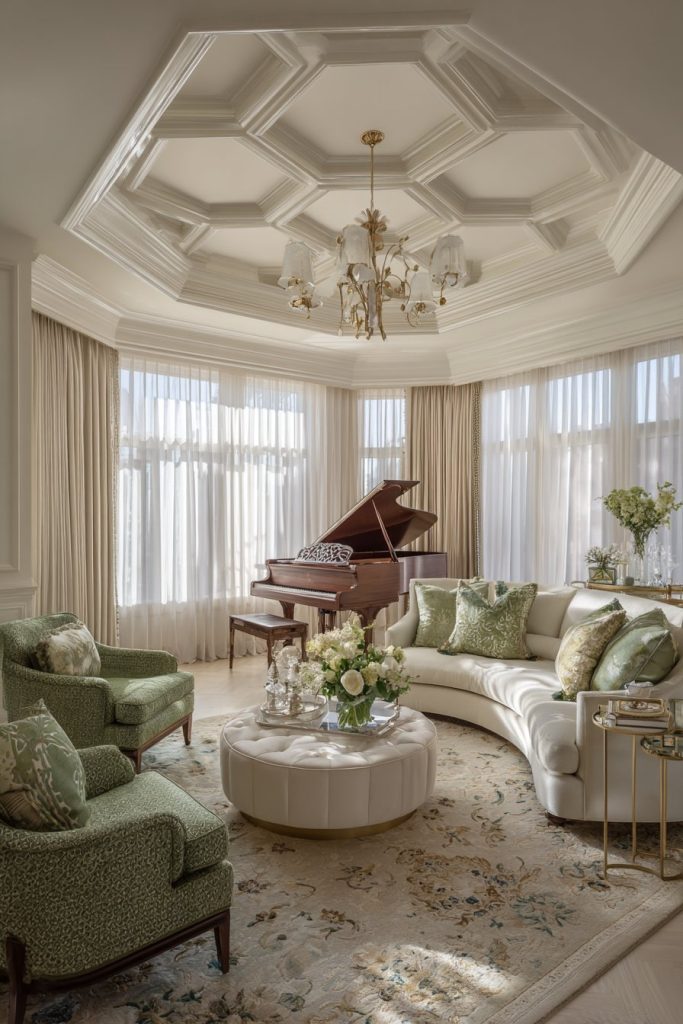
The architectural details in this room, including crown molding and coffered ceiling treatments, provide the necessary grandeur to match the piano’s impressive scale while adding visual interest at the ceiling level. These traditional architectural elements demonstrate how structural details can enhance formal design, creating a sense of importance and permanence that supports the room’s commitment to classical elegance. The coffered ceiling adds depth and dimension while the crown molding provides a finished, polished appearance that speaks to quality construction and attention to detail.
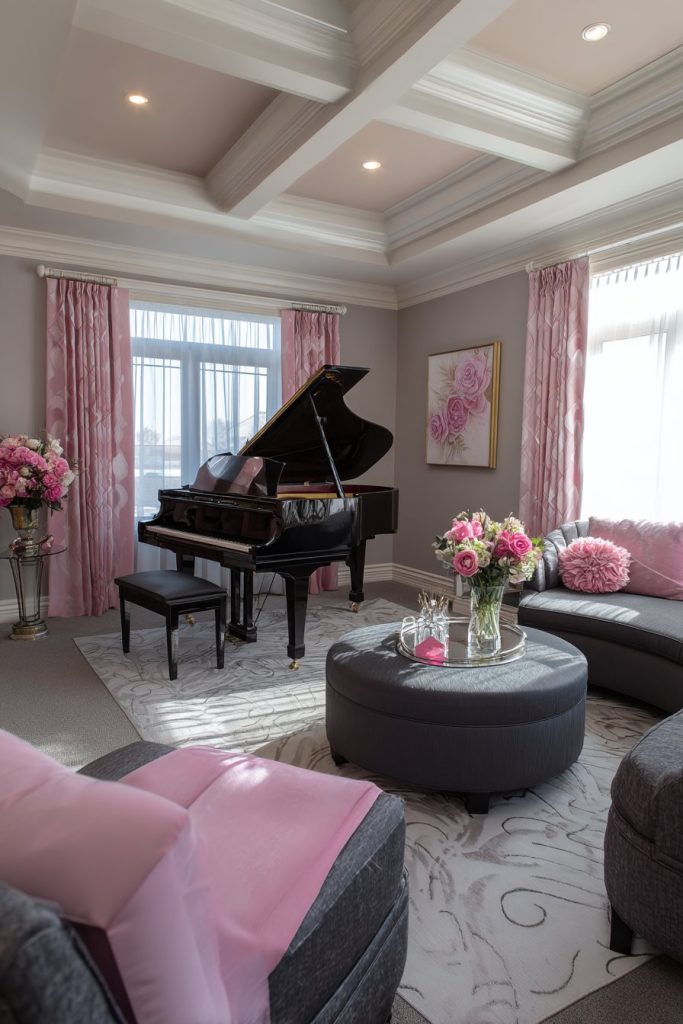
Fresh flower arrangements in crystal vases provide color accents and natural beauty that soften the room’s formal structure while maintaining its elegant character. The choice of crystal containers reinforces the space’s commitment to quality materials while the fresh flowers add life and fragrance that make the formal environment feel welcoming and lived-in. The interior design photography captures how golden hour lighting streaming through sheer curtains creates an inviting yet sophisticated atmosphere, demonstrating the importance of natural light in formal spaces.
Key Design Elements:
- Position large-scale pieces like pianos as focal points with supporting furniture arranged around them
- Include architectural details like crown molding and coffered ceilings for added grandeur
- Use fresh flowers in quality containers to add natural beauty and life to formal spaces
- Select jewel-toned upholstery to add richness and personality to neutral backgrounds
- Plan window treatments to filter natural light while maintaining privacy and elegance

6. Monochromatic Taupe and Cream Serenity
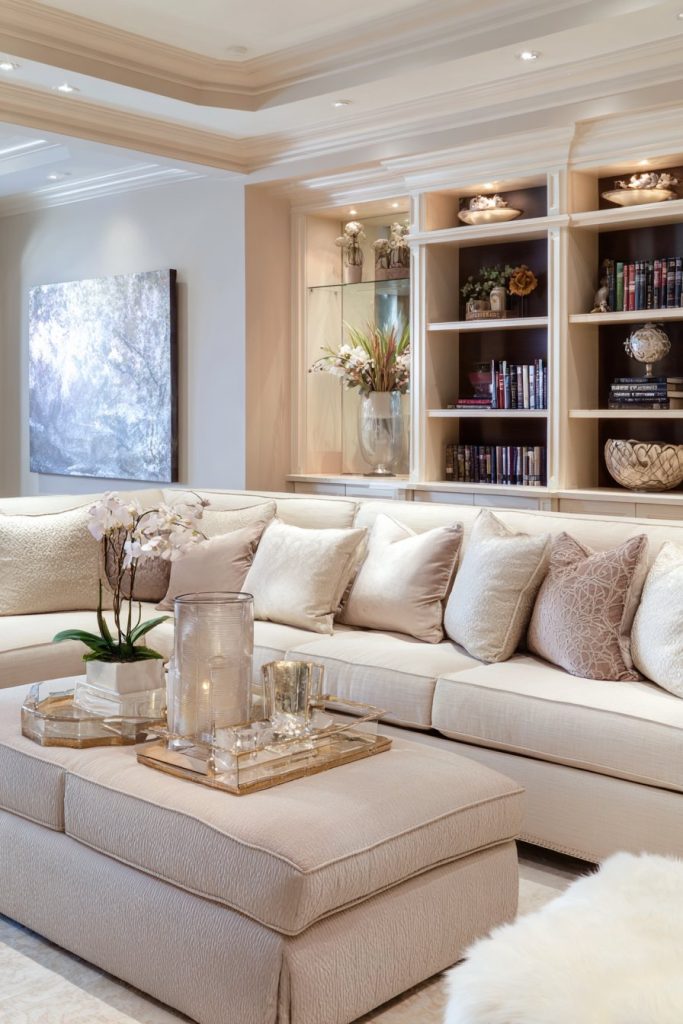
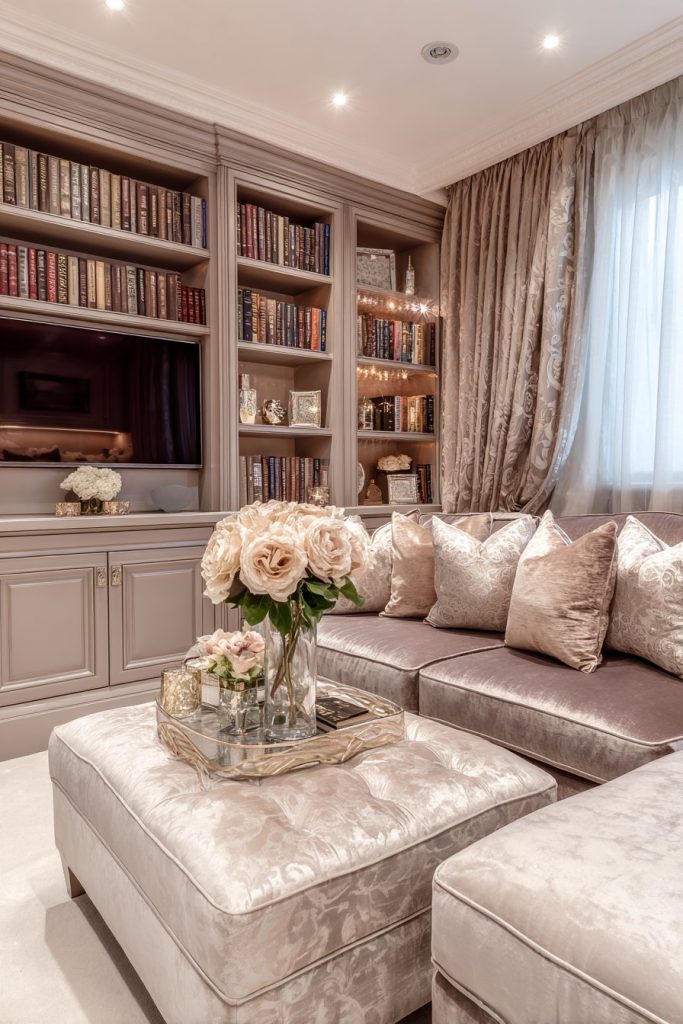
The sophisticated restraint of a monochromatic color scheme in shades of taupe and cream demonstrates how limiting the palette can actually expand the design possibilities, creating a formal living room that emphasizes texture, form, and proportion over bold color statements. The large sectional sofa with down-filled cushions and decorative welting provides both comfort and visual interest through its expert tailoring and attention to construction details. This approach shows how quality craftsmanship can create visual appeal even within a restricted color range, proving that formal design doesn’t require bright colors to achieve impact.
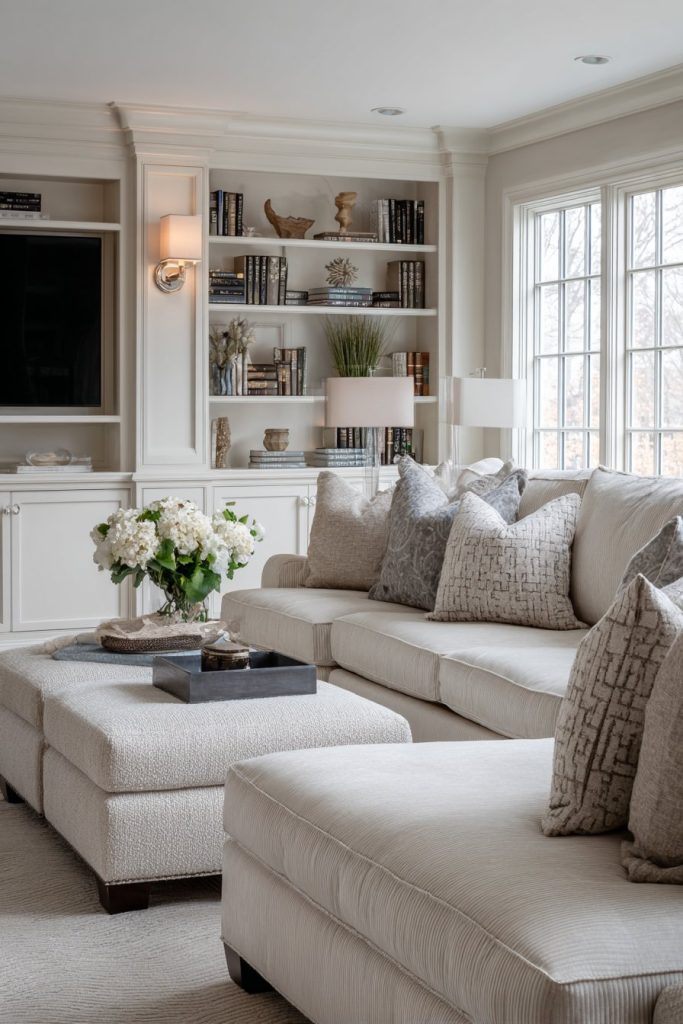
The matching ottoman serves dual purposes as both additional seating and coffee table, demonstrating the practical flexibility that modern formal rooms require while maintaining the aesthetic coherence that defines successful design. This multi-functional approach reflects contemporary living needs while respecting traditional formal principles, showing how classic design can adapt to modern lifestyles without losing its essential character. The ottoman’s substantial size and quality construction make it suitable for both everyday use and formal entertaining.
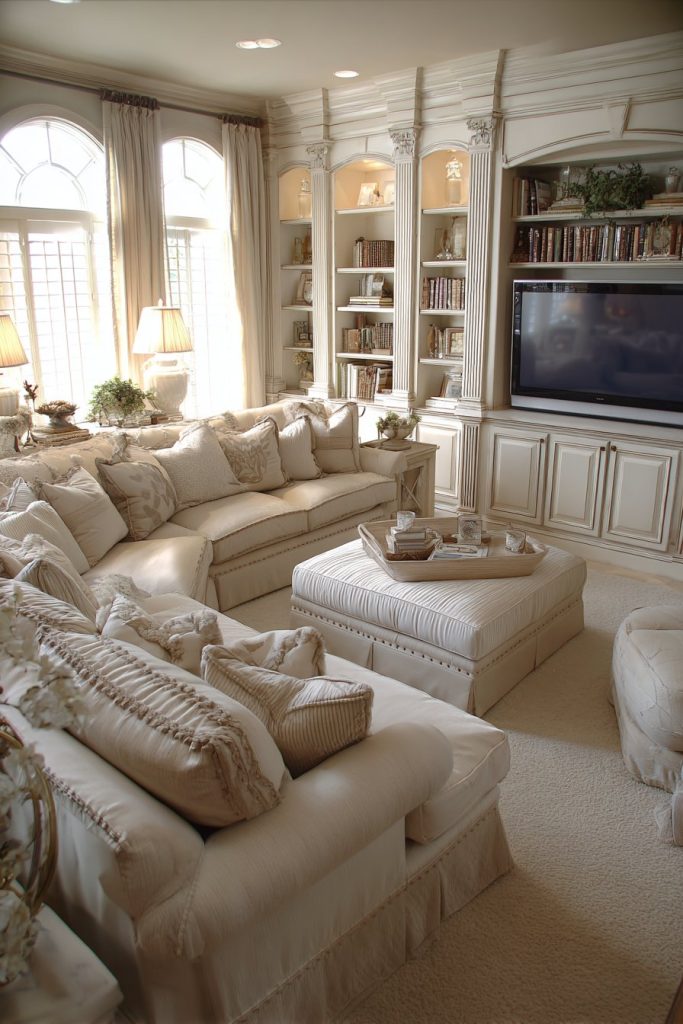
Built-in entertainment centers with traditional styling provide necessary storage for modern electronics while maintaining the room’s formal character through careful attention to architectural details and proportions. The integration of contemporary technology within traditional design frameworks demonstrates how formal spaces can accommodate modern conveniences without compromising their sophisticated atmosphere. Professional interior photography captures how soft diffused lighting can highlight tonal variations and rich textures within monochromatic schemes, proving that subtle color differences can create significant visual impact.
Key Design Elements:
- Embrace monochromatic color schemes to emphasize texture and form over bold color
- Select furniture with high-quality construction details like welting and down-filled cushions
- Choose multi-functional pieces like ottomans that serve both seating and table functions
- Integrate modern technology storage within traditional architectural frameworks
- Use varied textures within similar color tones to create visual interest and depth
7. English Country Chintz Charm
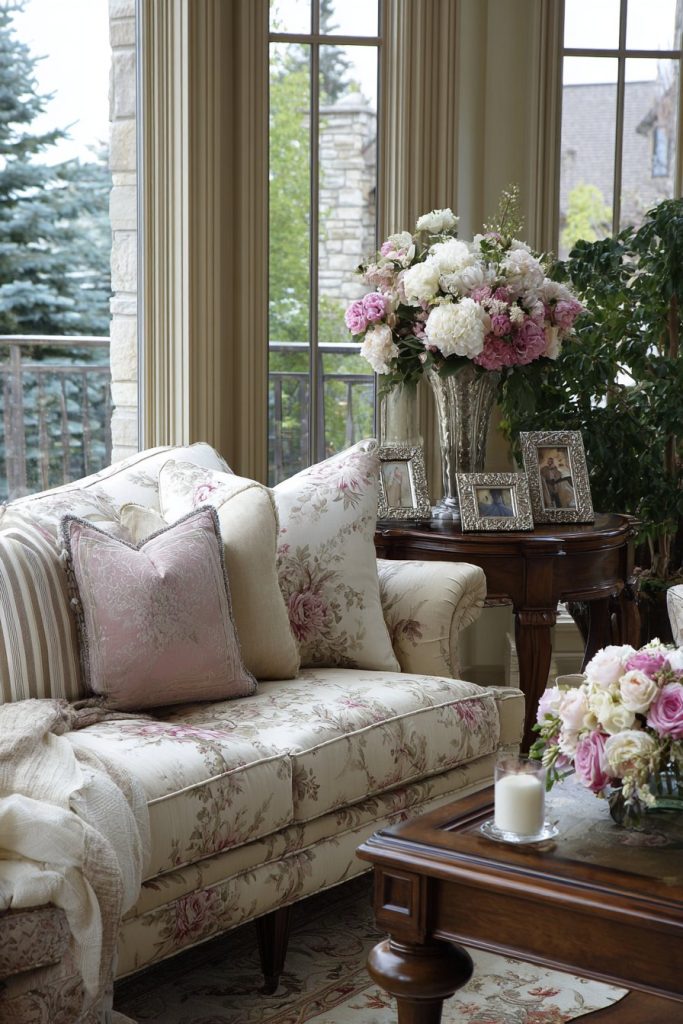
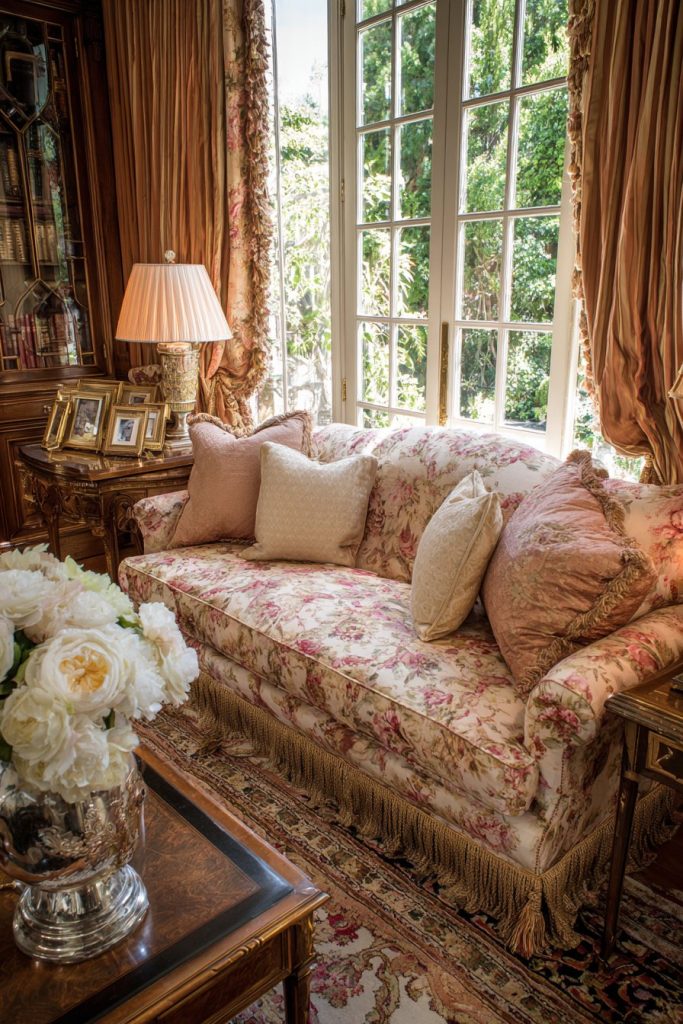
The timeless appeal of traditional English country styling finds perfect expression in this formal living room, where a rolled-arm sofa in floral chintz fabric creates a foundation of pattern and color that defines the entire space’s character. The chintz fabric, with its traditional floral motifs and glazed finish, represents centuries of English decorative tradition while providing the durability and beauty that formal spaces require. This fabric choice demonstrates how traditional patterns can feel fresh and relevant when used in quality applications and supported by complementary design elements.
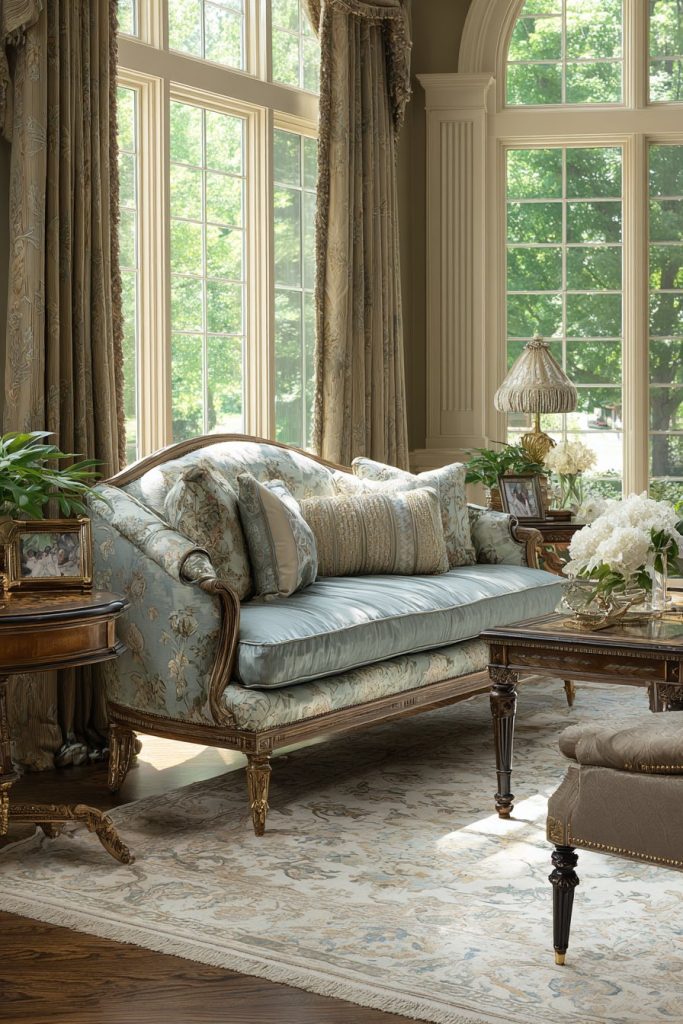
Solid coordinating chairs provide visual relief from the patterned sofa while maintaining color continuity throughout the seating arrangement, showing how successful formal design balances pattern and solid elements to create visual harmony without monotony. The combination of patterned and solid upholstery allows for flexibility in accessorizing and seasonal updates while maintaining the room’s essential character. Antique wooden side tables provide practical surfaces while contributing to the room’s traditional aesthetic through their authentic period styling and quality construction.
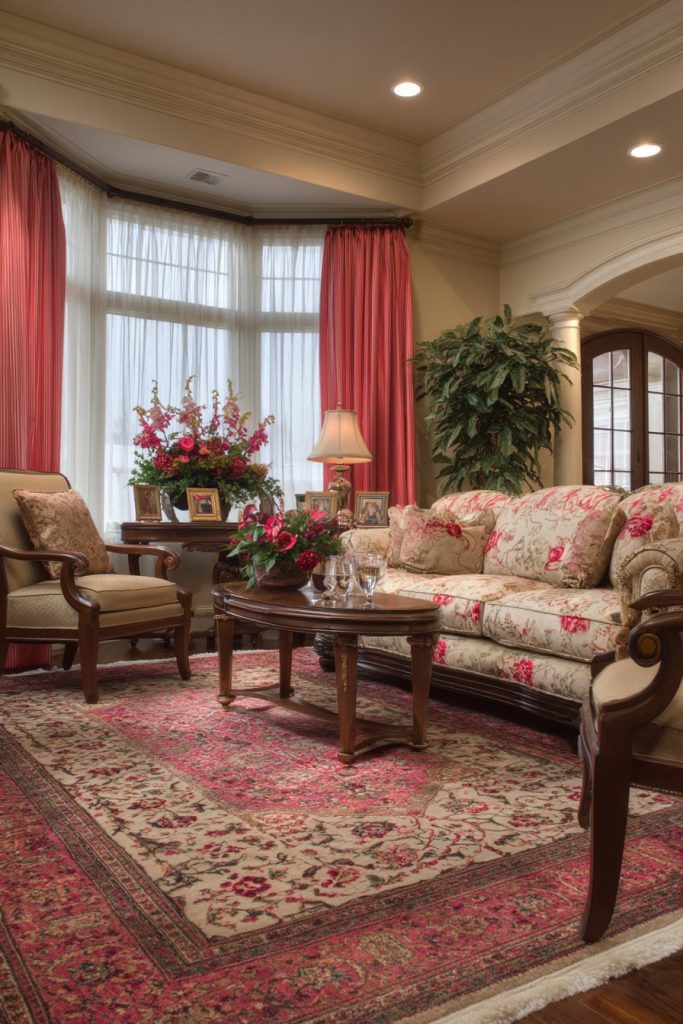
The Persian runner defines the seating area while maintaining the formal layout, demonstrating how traditional floor coverings can organize space while adding another layer of pattern and color to the room’s design scheme. The display of family photos in silver frames on the side tables adds personal touches that make the formal space feel welcoming and lived-in, showing how formal design can accommodate family life and personal expression. Interior design photography with natural window lighting emphasizes the classic patterns and warm, inviting formality that characterizes successful English country styling.
Key Design Elements:
- Incorporate traditional chintz fabrics for authentic English country appeal
- Balance patterned upholstery with solid coordinating pieces for visual harmony
- Select antique or antique-style wooden furniture for authentic traditional character
- Display personal items like family photos to add warmth to formal spaces
- Use Persian or traditional runners to define seating areas within larger rooms
8. Contemporary Traditional Fusion
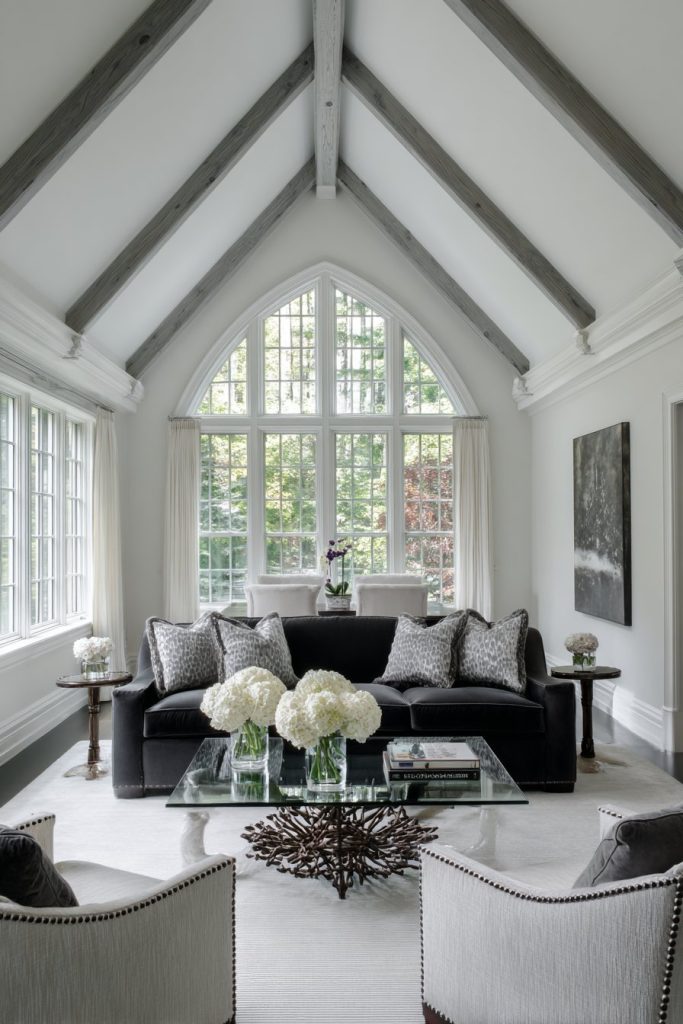
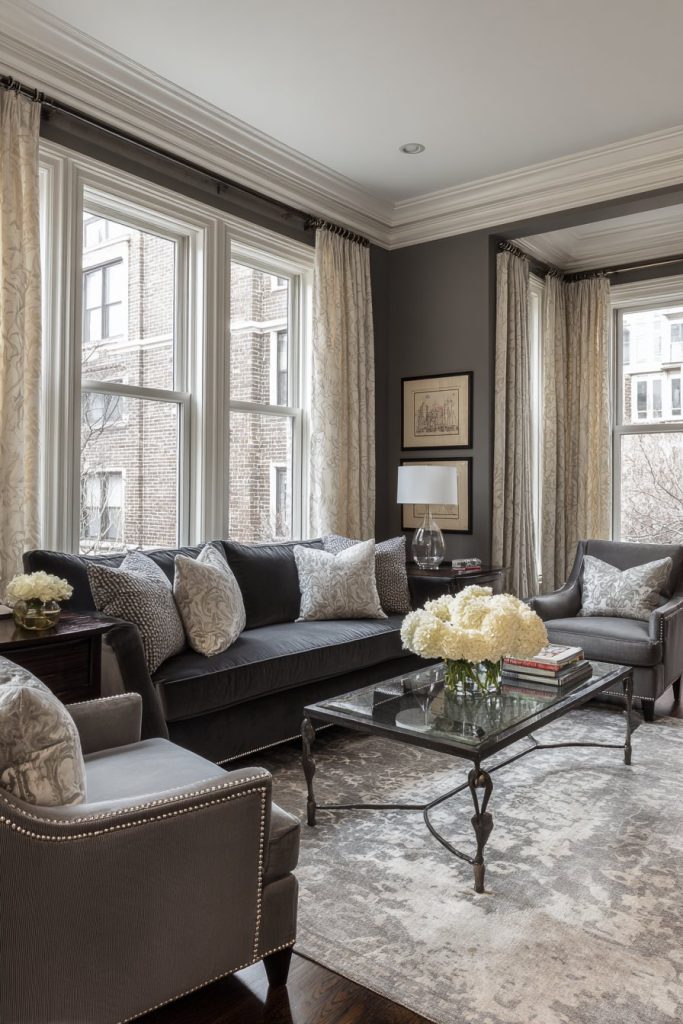
The successful marriage of contemporary comfort with traditional formality creates a living room that speaks to modern sensibilities while respecting classical design principles, proving that formal spaces can evolve to meet contemporary needs without losing their essential character. The clean-lined sofa in charcoal grey provides the comfort and scale that modern families require while maintaining the substantial presence that formal rooms demand. This approach demonstrates how traditional room functions can be served by furniture that reflects contemporary manufacturing techniques and lifestyle needs.
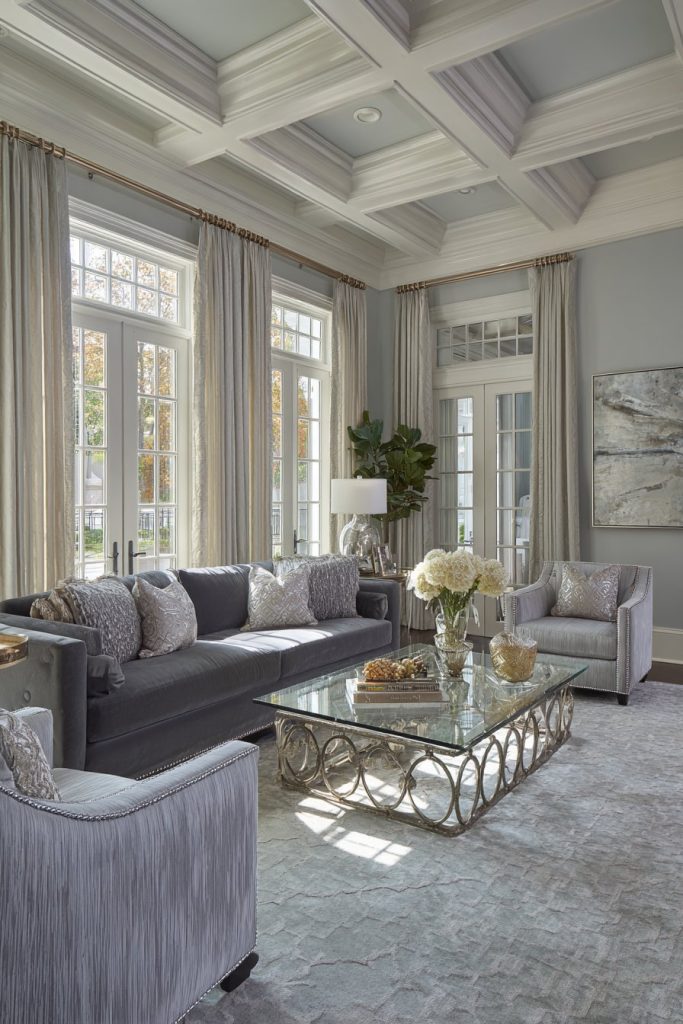
Matching accent chairs with nailhead detail bridge the gap between traditional and contemporary styling, incorporating classical decorative elements while maintaining the clean lines that characterize modern design. The nailhead trim adds texture and visual interest while referencing traditional upholstery techniques, showing how historical details can be incorporated into contemporary furniture forms. The glass-top coffee table with ornate metal base maintains visual lightness while providing necessary surface area, demonstrating how mixed materials can create furniture pieces that serve multiple design functions.
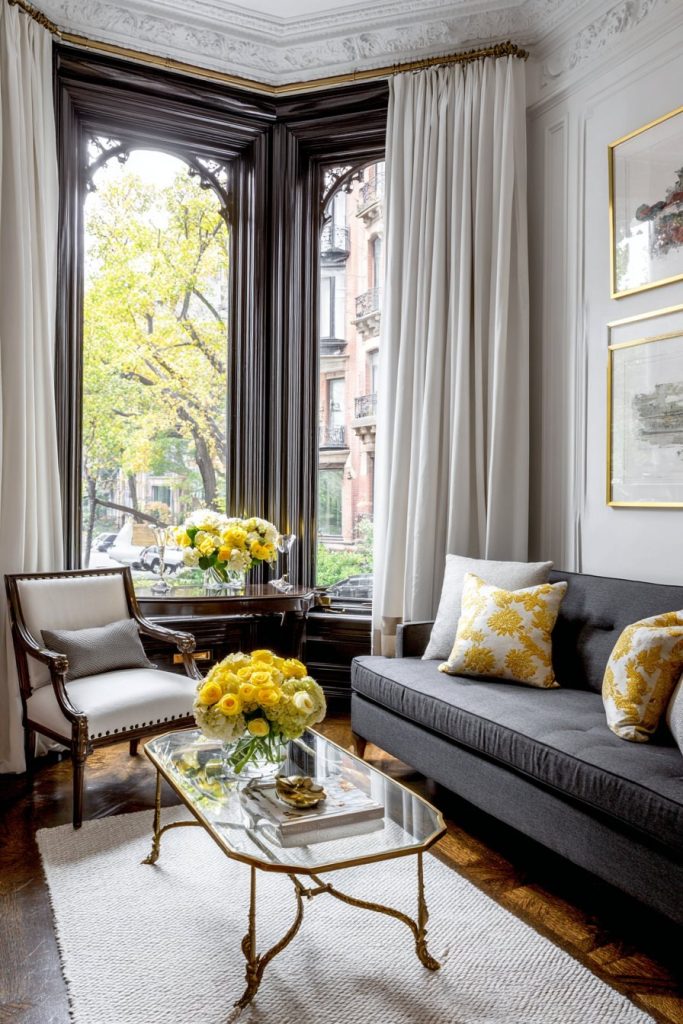
The neutral area rug grounds the space while allowing the architectural molding and trim work to shine, showing how floor coverings can support rather than compete with a room’s architectural features. This restraint in pattern and color allows the room’s structural elements to take center stage while providing the comfort and sound absorption that area rugs contribute to living spaces. Wide-angle interior photography captures how modern comfort and formal elegance can coexist successfully when careful attention is paid to proportion, scale, and material selection.
Key Design Elements:
- Select contemporary furniture with clean lines that maintain formal proportions
- Incorporate traditional details like nailhead trim for historical reference
- Choose glass-top tables to maintain visual lightness in furniture arrangements
- Use neutral rugs to support rather than compete with architectural features
- Balance modern manufacturing with traditional craftsmanship details
9. French-Inspired Silk Sophistication
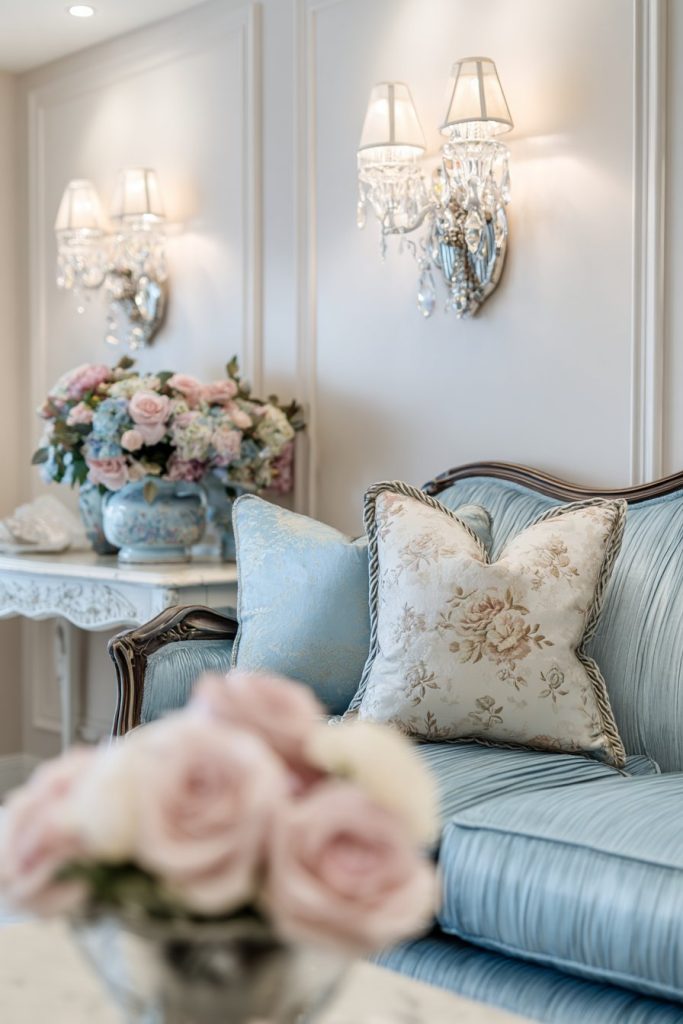
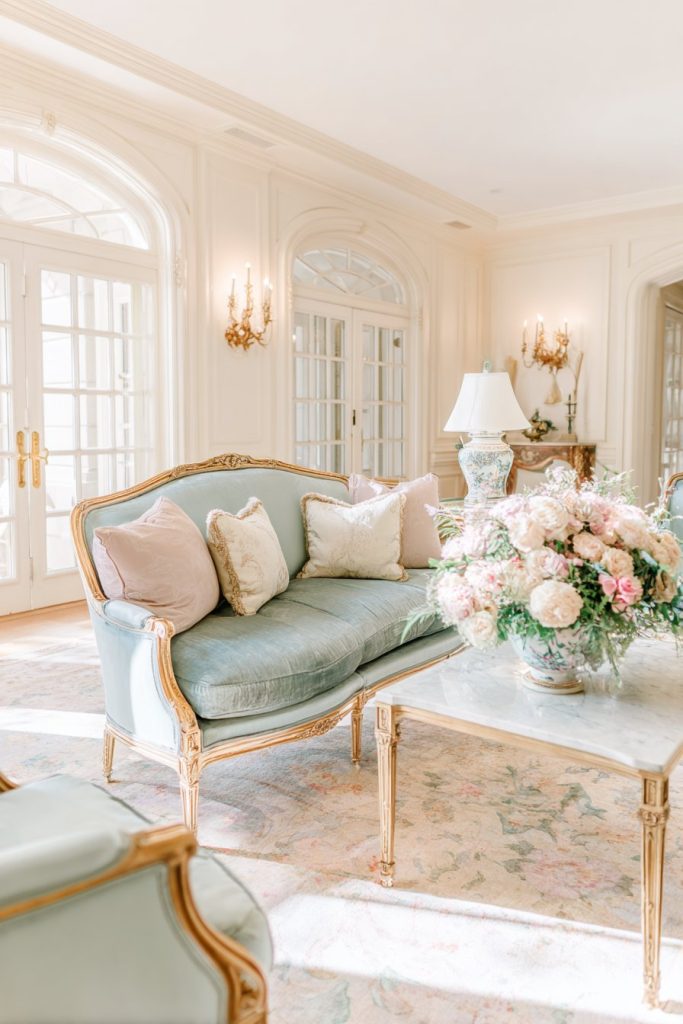
The refinement of French decorative arts reaches its pinnacle in this formal living room, where a camelback sofa in pale blue silk establishes the space’s commitment to both traditional French forms and luxurious materials. The camelback silhouette, with its graceful curves and elegant proportions, represents centuries of French furniture design evolution while providing the comfortable seating that contemporary living requires. The pale blue silk upholstery adds color and luxury while maintaining the sophisticated restraint that characterizes the best French interior design.
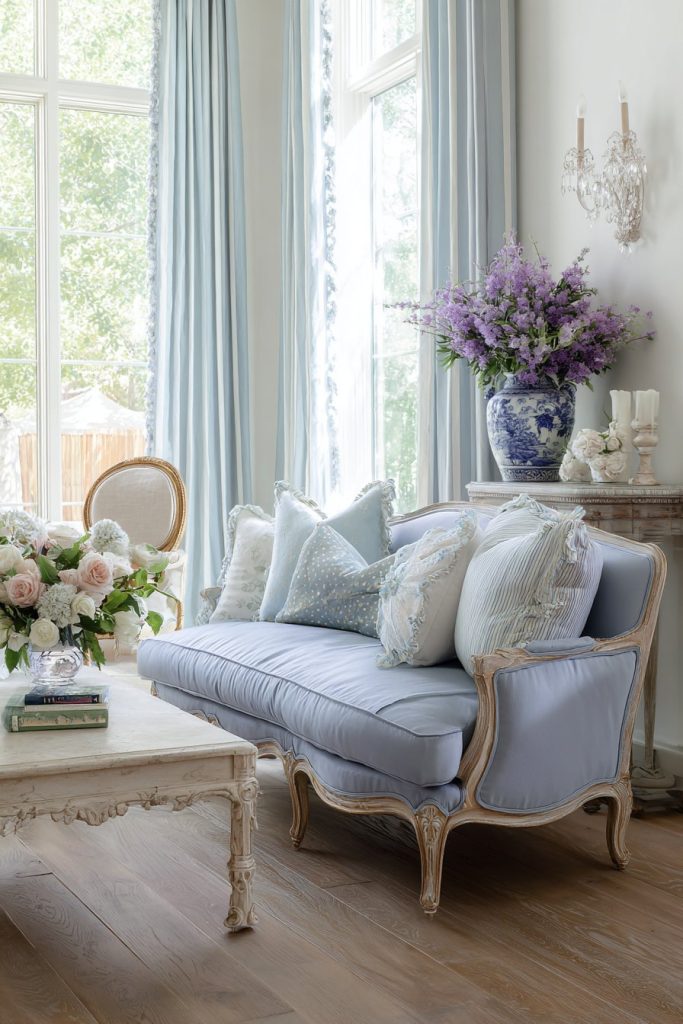
Matching bergère chairs with carved wooden frames demonstrate the importance of consistent styling within formal spaces, their authentic French forms and quality construction contributing to the room’s overall design narrative. The carved wooden frames add textural interest and showcase traditional craftsmanship while the upholstered seats provide comfort for extended conversation and relaxation. The marble-topped console table provides display space for decorative porcelain and fresh flowers, showing how traditional French furniture forms can accommodate both decorative and practical needs.
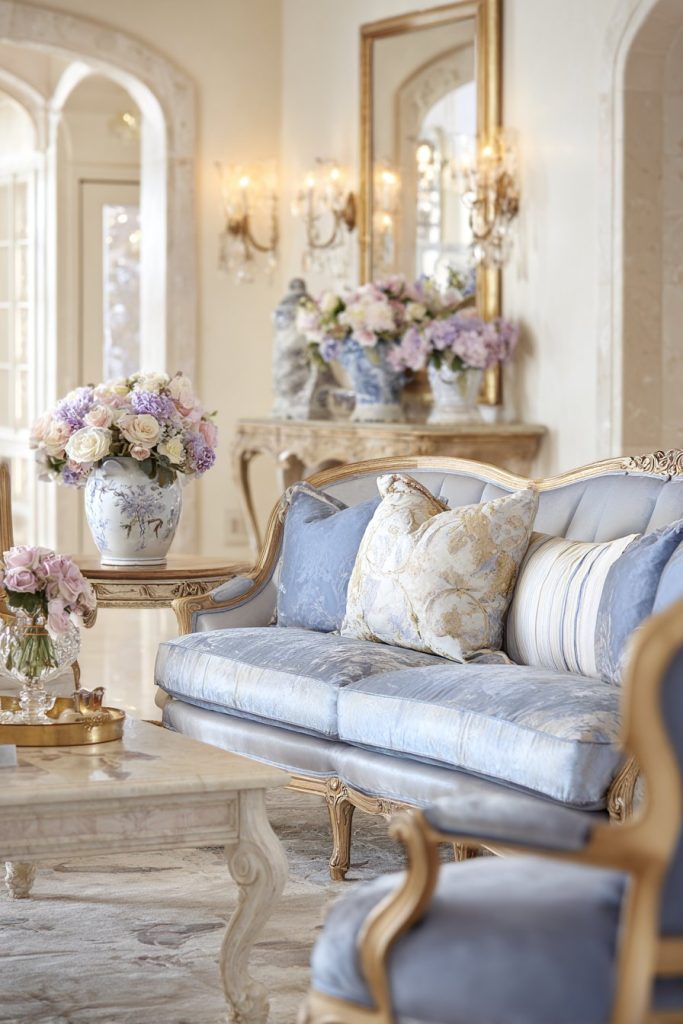
Crystal sconces provide elegant wall lighting that supplements natural light while adding sparkle and glamour that enhances the room’s sophisticated atmosphere. These lighting fixtures demonstrate how decorative elements can serve functional purposes while contributing to the overall design scheme, their crystal construction echoing the quality materials used throughout the space. Professional interior photography with soft natural light highlights the refined color palette and authentic period details, showing how proper lighting can enhance rather than overpower the subtle beauty of French-inspired design.
Key Design Elements:
- Choose furniture with authentic French forms like camelback sofas and bergère chairs
- Select silk upholstery in refined colors for luxury and sophisticated appeal
- Incorporate carved wooden details to showcase traditional craftsmanship
- Use crystal lighting fixtures to add elegance and visual interest
- Display fresh flowers and quality decorative objects to enhance the refined atmosphere
10. Layered Lighting Mastery
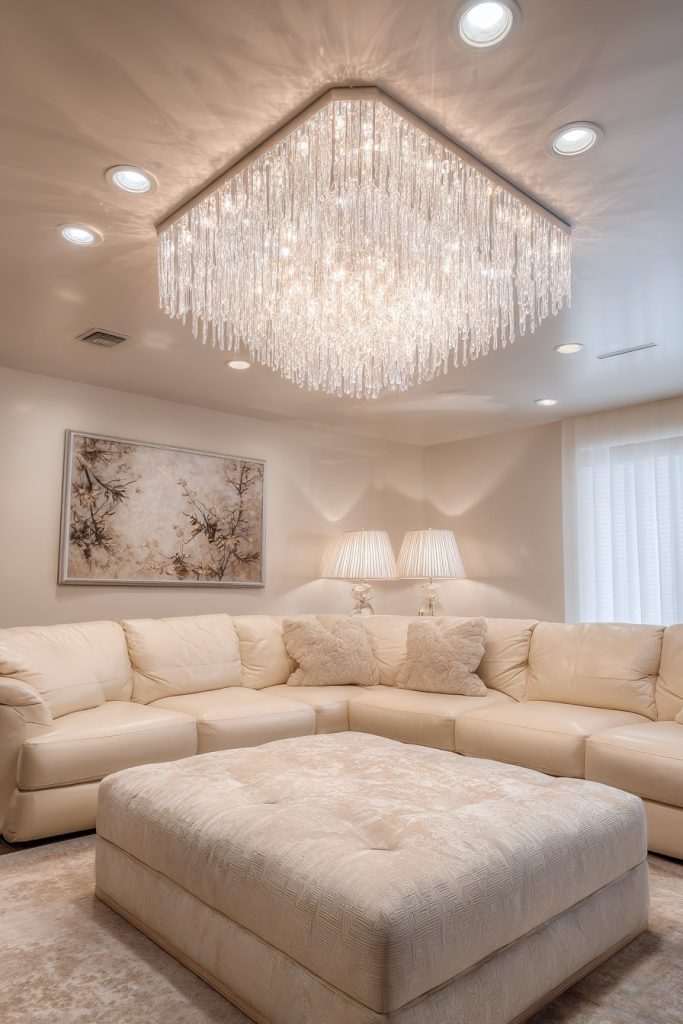
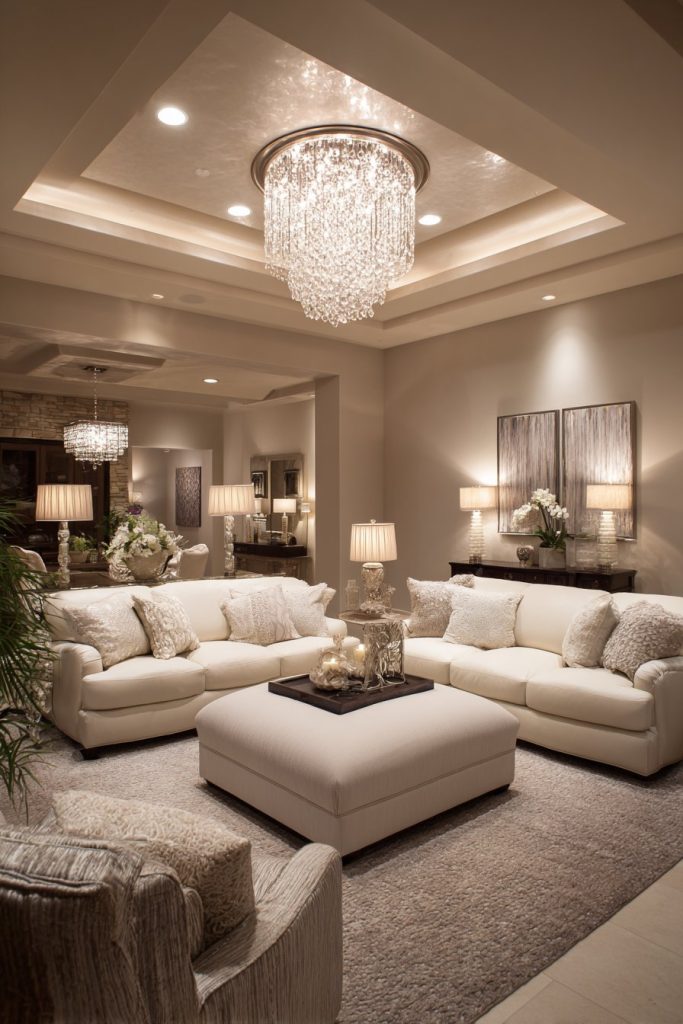
The sophisticated interplay of multiple lighting sources creates a formal living room environment that adapts to different activities and times of day, demonstrating how proper lighting design can enhance both functionality and atmosphere in traditional spaces. The statement crystal chandelier provides ambient lighting while serving as a decorative focal point that adds glamour and sparkle to the room’s overall design. This central lighting element establishes the space’s formal character while providing the general illumination necessary for conversation and entertaining.
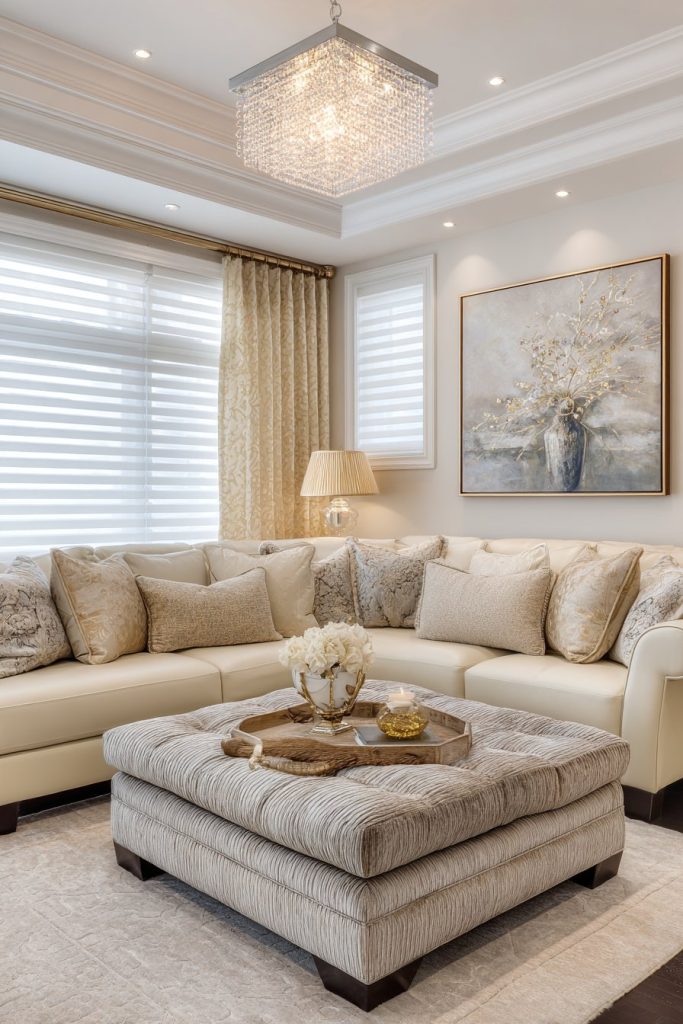
Matching table lamps with pleated shades offer task lighting for reading and close work while contributing to the room’s symmetrical design scheme, their consistent styling reinforcing the formal arrangement of furniture and accessories. The pleated shades add textural interest while providing soft, diffused light that complements the chandelier’s more dramatic illumination. Recessed ceiling lights provide additional ambient lighting that can be controlled separately, allowing for flexible lighting schemes that adapt to different uses and preferences throughout the day.
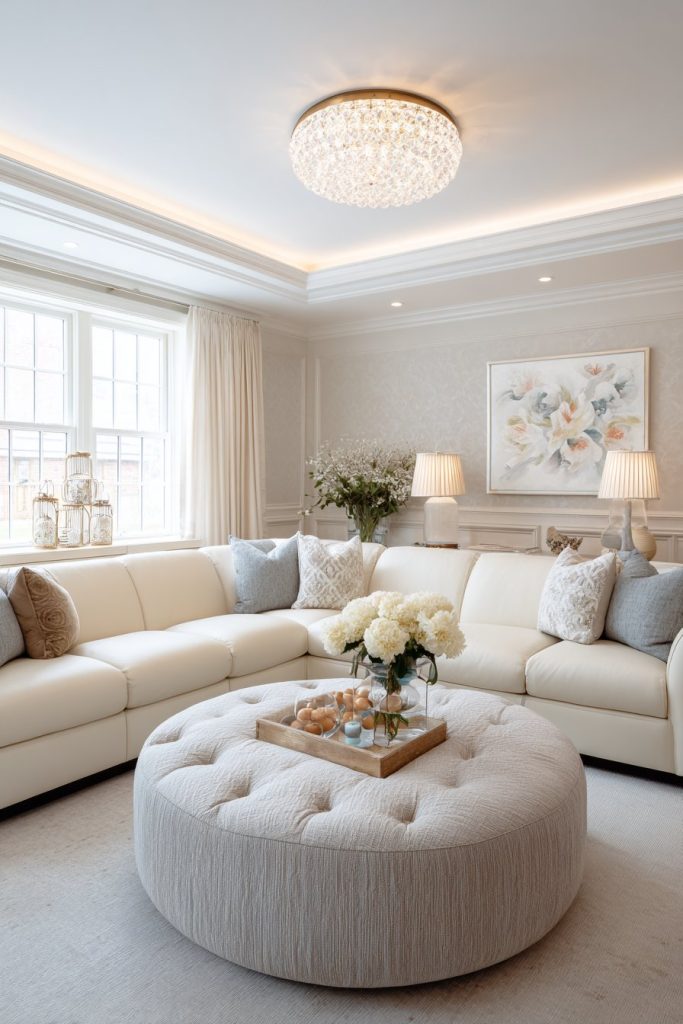
The cream leather sectional with rolled arms provides ample seating around a large square ottoman in coordinating fabric, creating a furniture arrangement that prioritizes both comfort and conversation while maintaining the formal proportions that define traditional design. The leather upholstery adds durability and sophistication while the rolled arms reference traditional furniture forms. Interior design photography captures how each lighting layer contributes to the formal ambiance, demonstrating the importance of planning multiple light sources to create truly successful formal environments.
Key Design Elements:
- Plan multiple lighting layers including ambient, task, and accent lighting
- Select a statement chandelier as both light source and decorative focal point
- Use matching table lamps to reinforce symmetrical furniture arrangements
- Include recessed lighting for flexible ambient illumination control
- Choose leather upholstery for durability and sophisticated appeal in high-use seating
11. Custom Window Seat Comfort
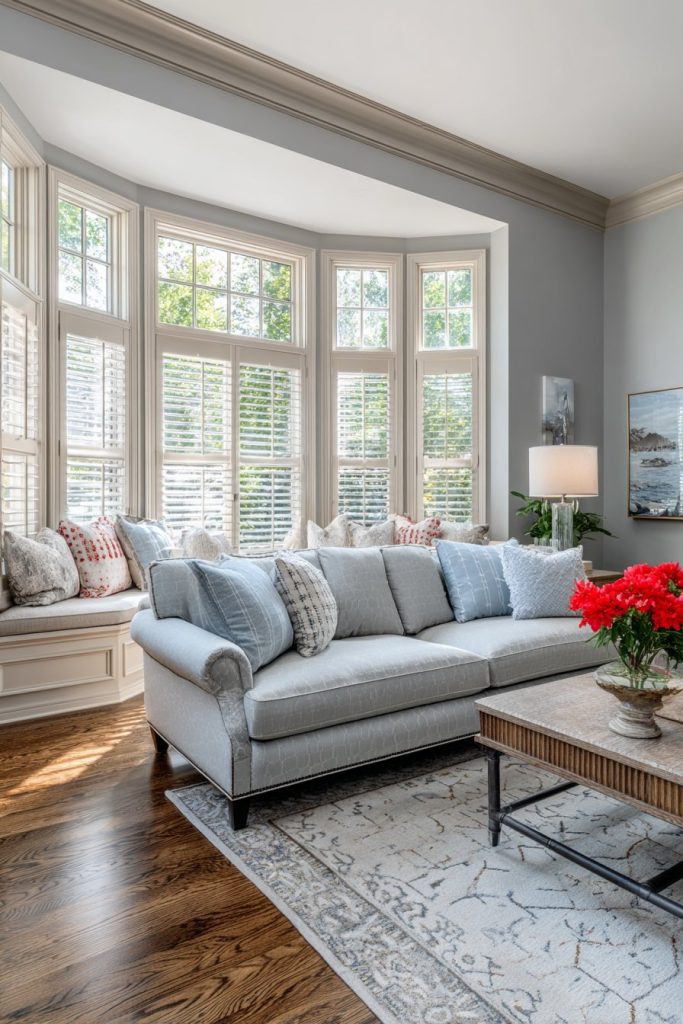
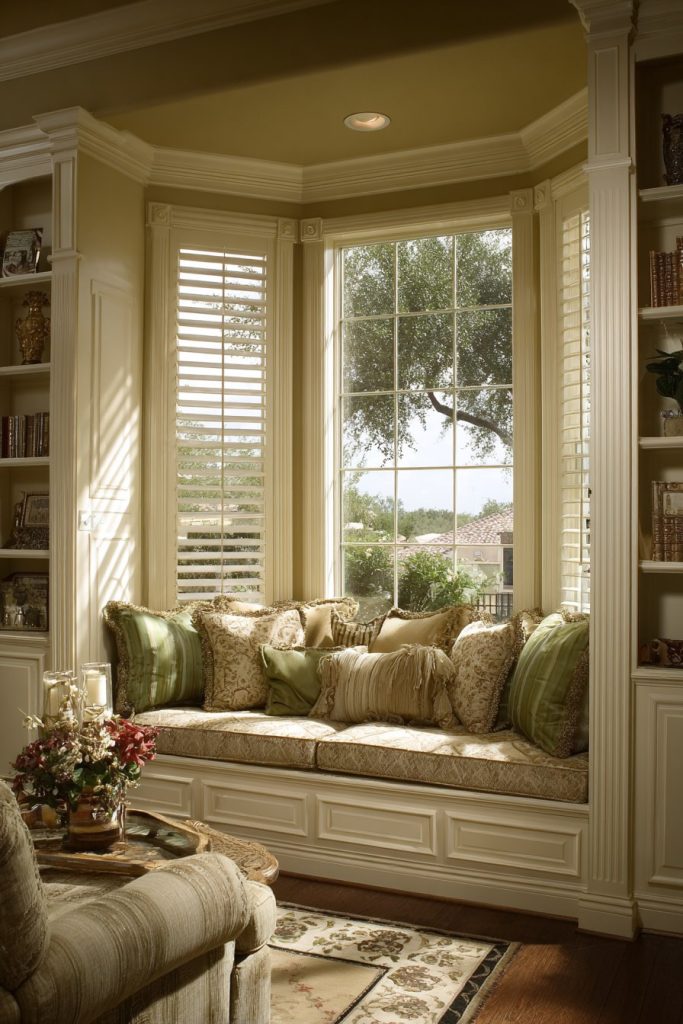
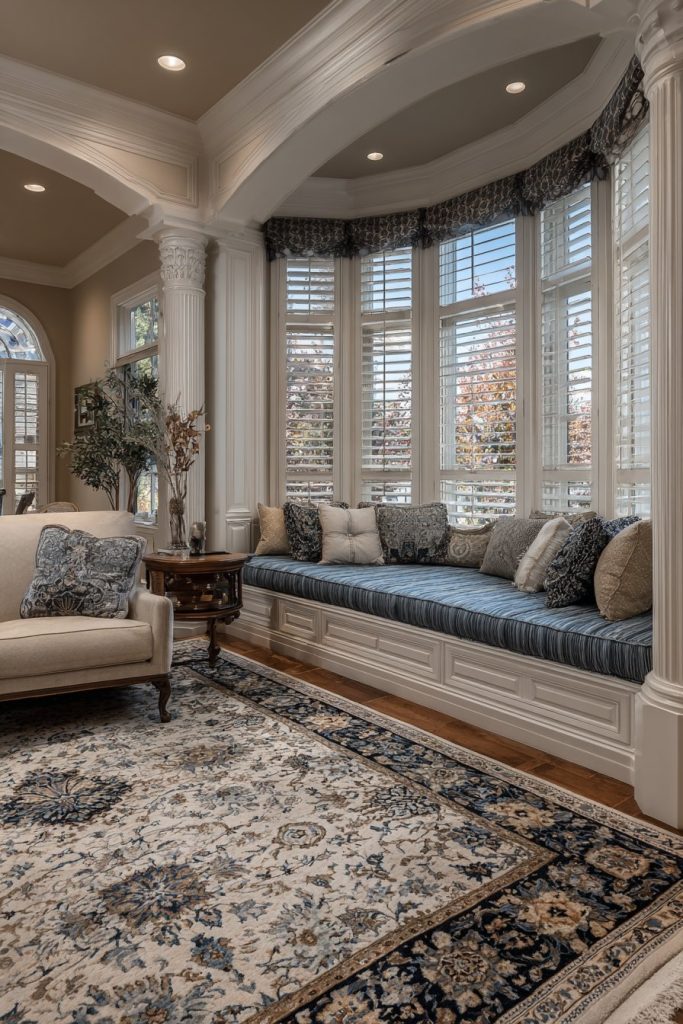
The integration of built-in window seats with custom cushions demonstrates how architectural elements can be both functional and decorative, creating additional seating while emphasizing the room’s commitment to custom millwork and attention to detail. These window seats, flanking a large bay window with plantation shutters, provide comfortable seating for reading and contemplation while maximizing the natural light that streams into the space. The custom cushions in coordinating fabrics tie the built-in elements to the room’s overall design scheme while providing the comfort necessary for extended use.
The central seating area, featuring a traditional sofa with matching loveseat arranged for conversation, creates the primary furniture grouping while the window seats provide supplementary seating and intimate spaces for individual activities. This arrangement demonstrates how formal rooms can accommodate both group entertainment and individual pursuits, showing the flexibility that well-designed traditional spaces can offer. The hardwood floors with decorative inlay border add architectural interest while providing a durable and elegant foundation that supports the room’s formal character.
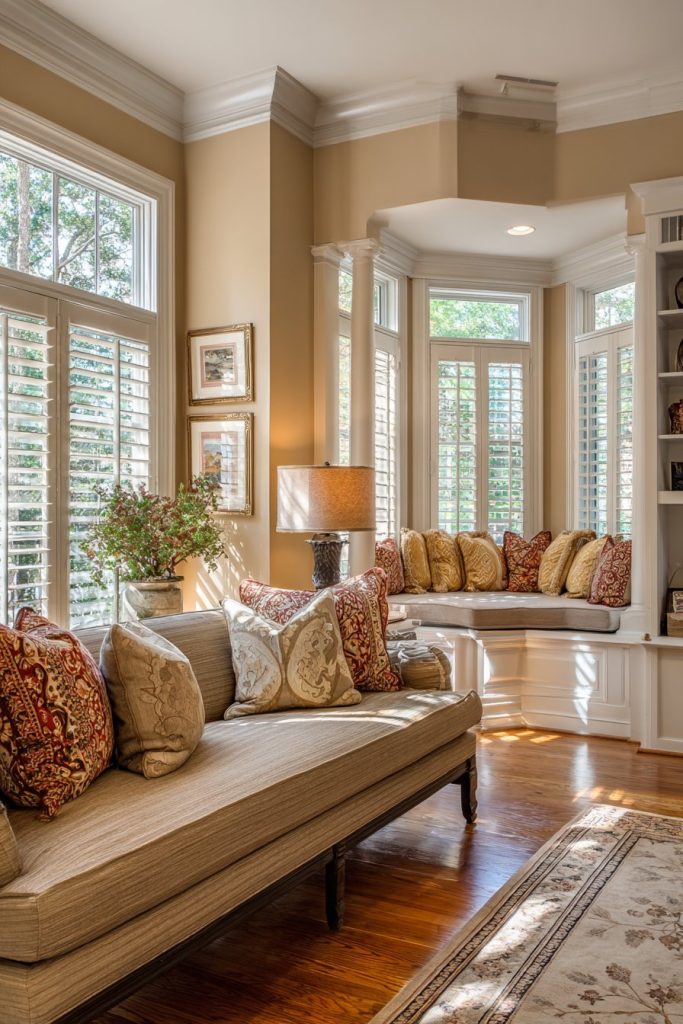
Plantation shutters provide light control and privacy while adding architectural detail that complements the room’s built-in elements, their clean lines and quality construction contributing to the space’s overall sense of craftsmanship and attention to detail. The shutters can be adjusted to control natural light throughout the day, allowing the room’s occupants to create different moods and atmospheres as needed. Wide-angle photography captures how custom millwork and thoughtful use of natural light can create formal yet comfortable spaces that feel both impressive and livable.
Key Design Elements:
- Incorporate built-in window seats to maximize seating and architectural interest
- Use custom cushions in coordinating fabrics to tie built-ins to overall design
- Arrange traditional furniture pieces to create conversation areas
- Install plantation shutters for light control and architectural detail
- Include decorative floor inlays to add architectural interest and visual boundaries
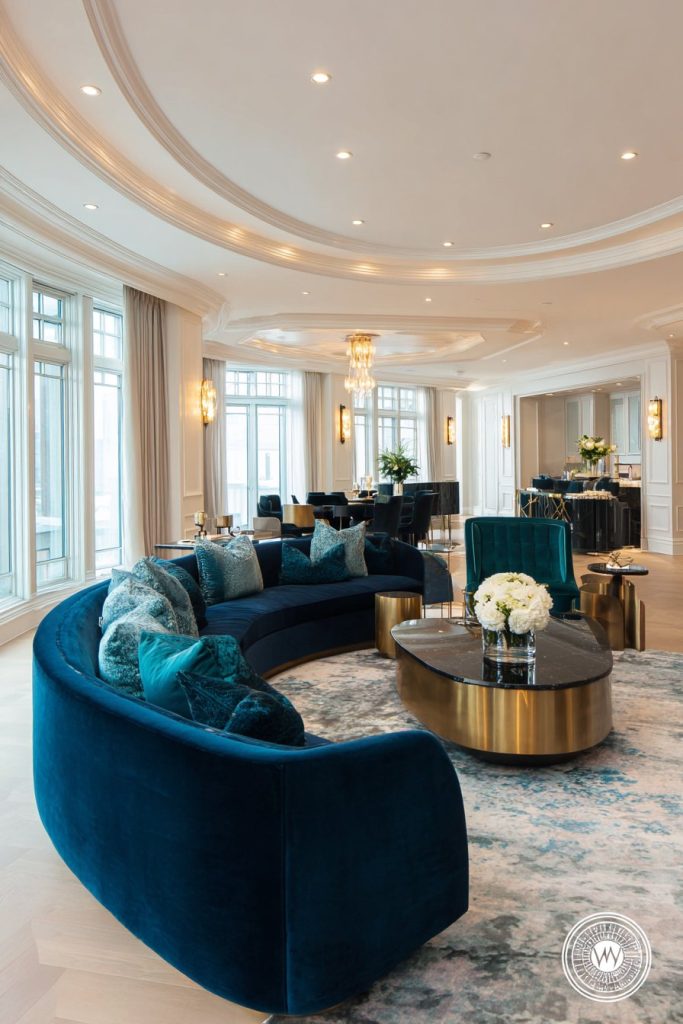
12. Rich Jewel Tone Drama
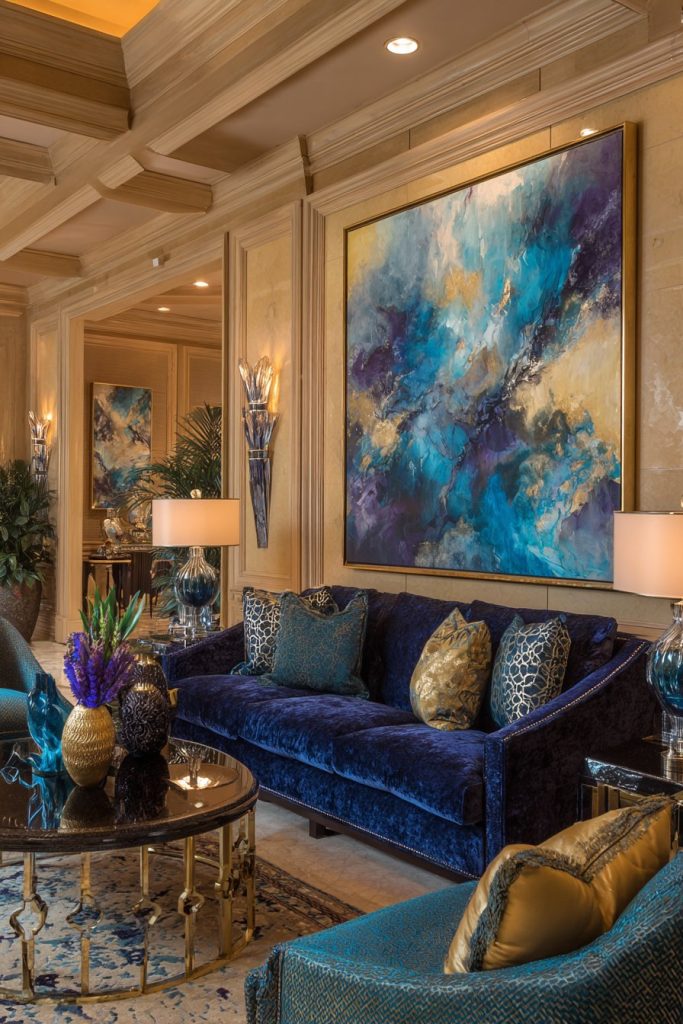
The bold use of jewel tones creates a formal living room that celebrates color and luxury while maintaining the sophisticated restraint that defines successful traditional design, proving that formal spaces can embrace dramatic color without sacrificing elegance or refinement. The deep sapphire blue velvet sofa serves as the room’s anchor, its rich color and luxurious texture establishing the space’s commitment to both comfort and visual impact. This bold color choice demonstrates how jewel tones can create warmth and intimacy within formal settings while providing the visual weight necessary to support traditional furniture arrangements.
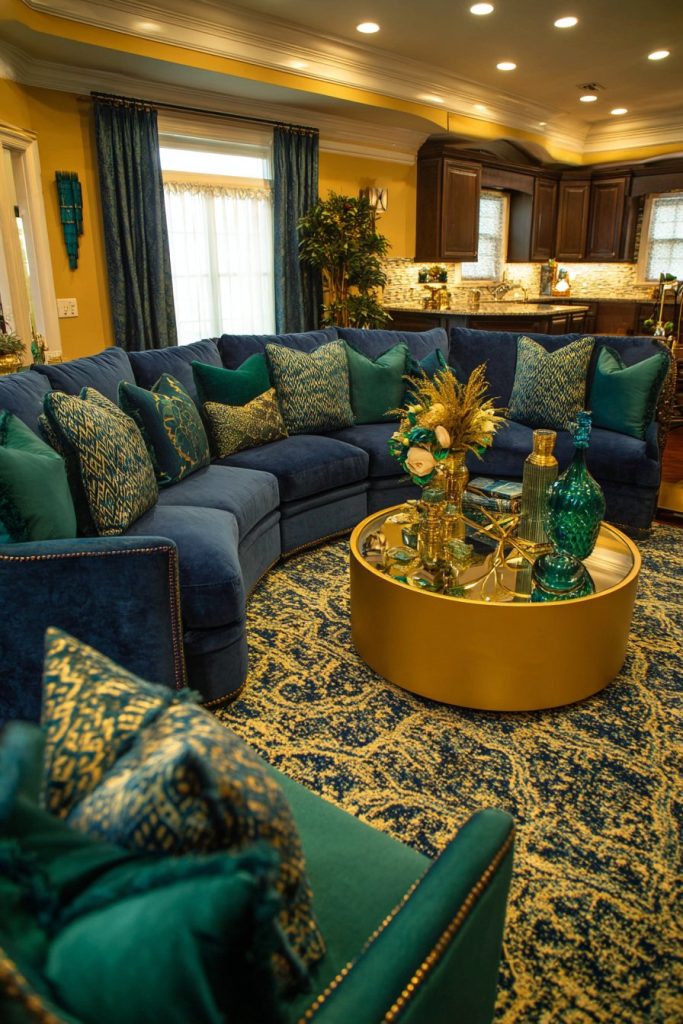
Emerald green accent chairs complement the sapphire sofa while adding variety and visual interest to the seating arrangement, their rich color contributing to the room’s jewel-toned palette while providing comfortable seating for conversation and relaxation. The gold metallic accents throughout the space add glamour and light reflection that prevents the rich colors from feeling heavy or overwhelming, showing how metallic elements can balance and enhance deep color schemes. The Persian area rug ties the colors together while providing pattern interest that adds another layer of visual complexity to the sophisticated design scheme.
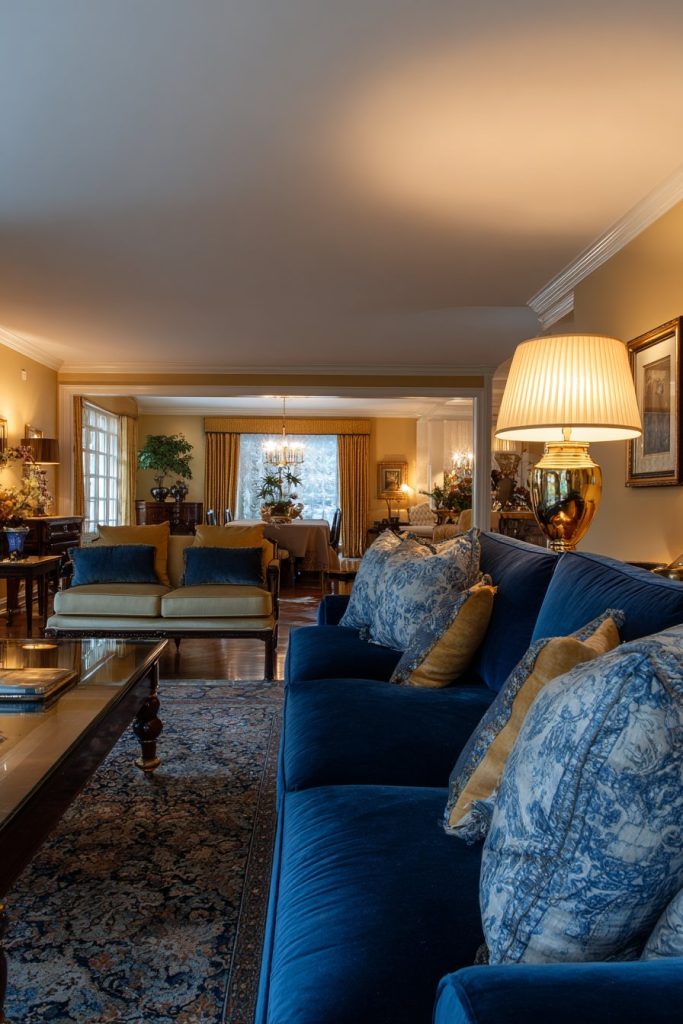
Crown molding painted in warm cream provides contrast against the rich wall colors while adding architectural detail that enhances the room’s formal character, demonstrating how traditional architectural elements can support and frame bold color choices. The cream-colored trim creates visual breathing space that prevents the rich colors from overwhelming the space while maintaining the room’s commitment to traditional proportions and classical design principles. Interior design photography with professional lighting emphasizes how luxurious color combinations and formal symmetry can work together to create spaces that feel both grand and intimate.
Key Design Elements:
- Embrace jewel tones like sapphire and emerald for dramatic impact in formal settings
- Balance rich colors with metallic accents to add light and prevent visual heaviness
- Use Persian or Oriental rugs to tie color schemes together while adding pattern
- Paint architectural trim in neutral colors to provide visual contrast and breathing space
- Plan professional lighting to enhance rich colors without creating overwhelming darkness
13. Dual Seating Area Sophistication
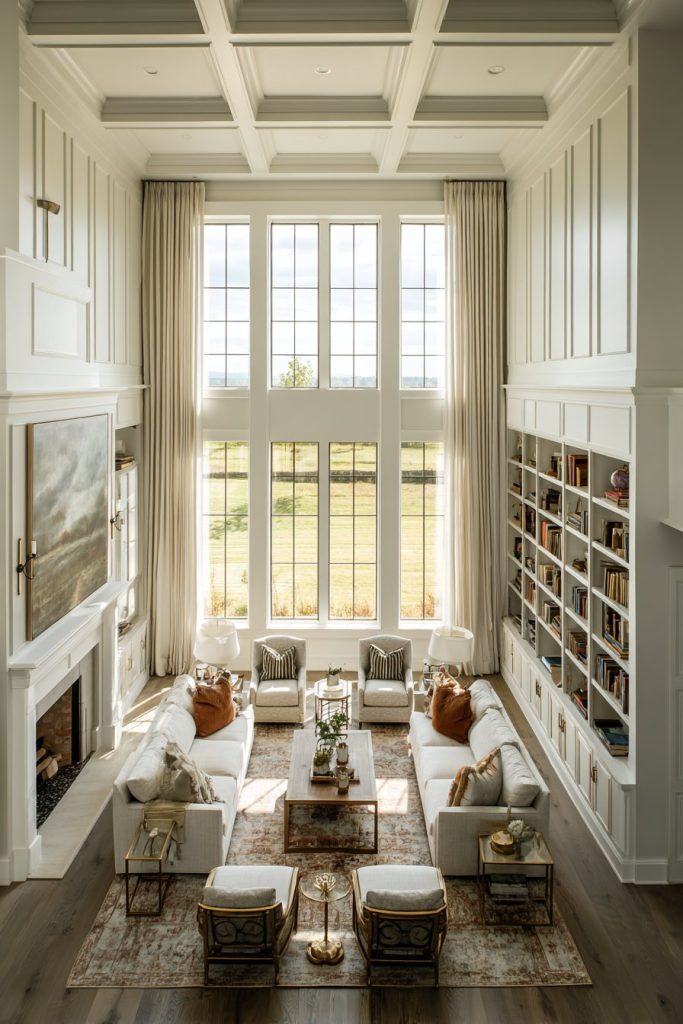
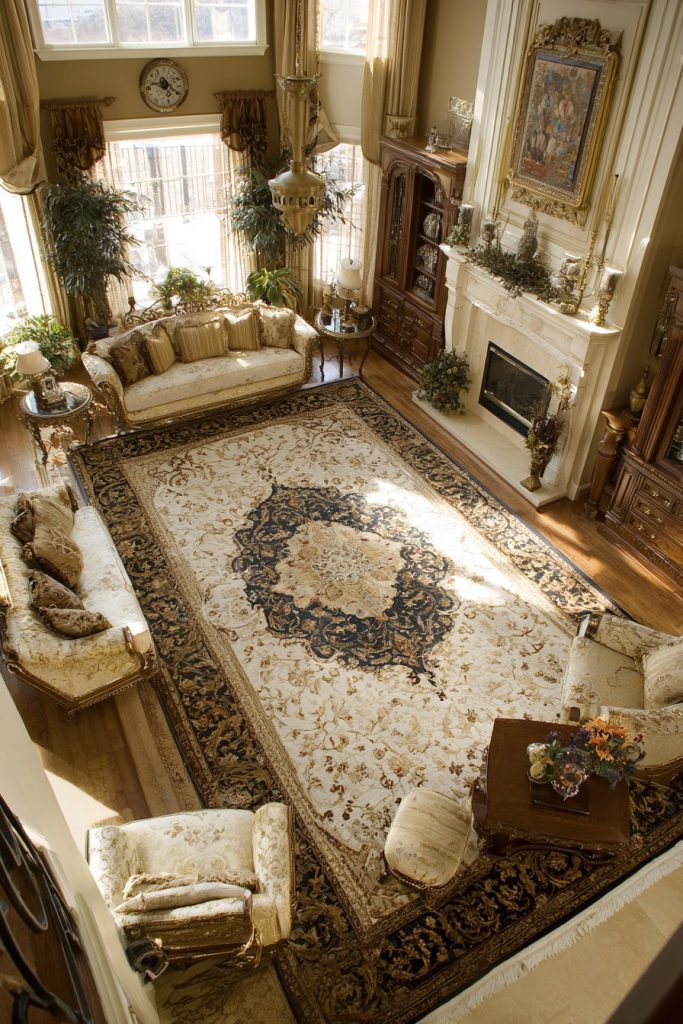
The challenge of creating multiple conversation areas within one large formal space finds its solution in this expertly planned room, where dual seating areas are anchored by coordinating area rugs and centered around different focal points to create distinct yet harmonious zones. One area focuses on a fireplace as its central element, while another revolves around built-in bookcases, demonstrating how different architectural features can support separate but complementary seating arrangements. This approach shows how large formal spaces can accommodate multiple activities while maintaining visual unity and design coherence.
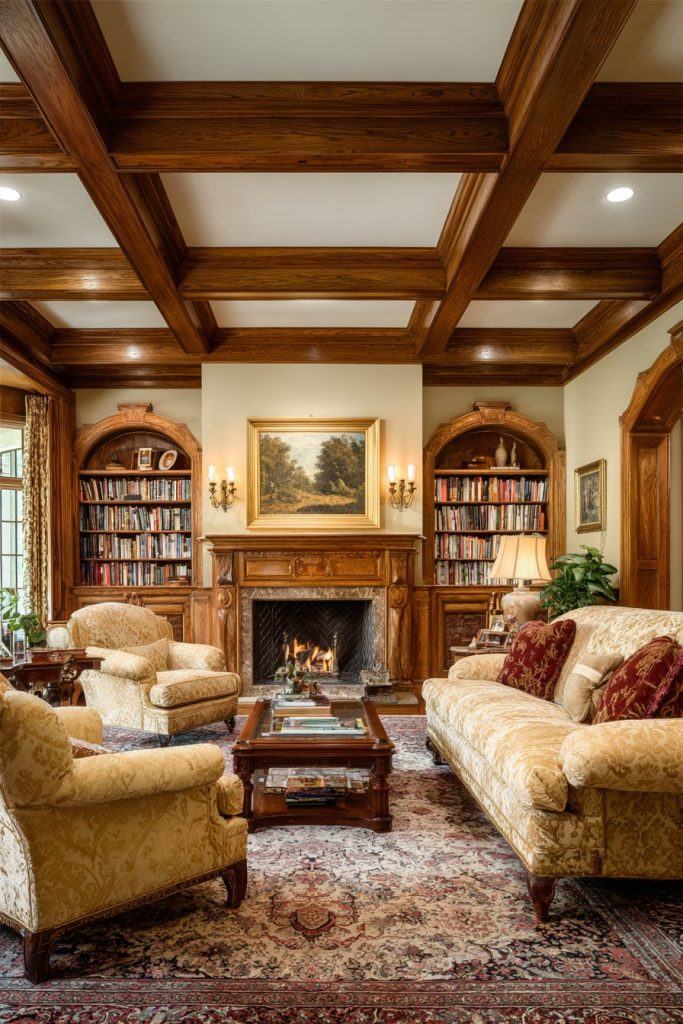
Matching furniture pieces in cream and gold create visual continuity between the two seating areas while preventing the large space from feeling disjointed or overwhelming, their consistent styling and color palette providing the necessary unity to tie different zones together. The repeated use of specific furniture forms and finishes creates rhythm and balance throughout the space while allowing each area to maintain its distinct character and function. The built-in bookcases provide storage and display opportunities while serving as an architectural focal point that justifies the second seating arrangement.
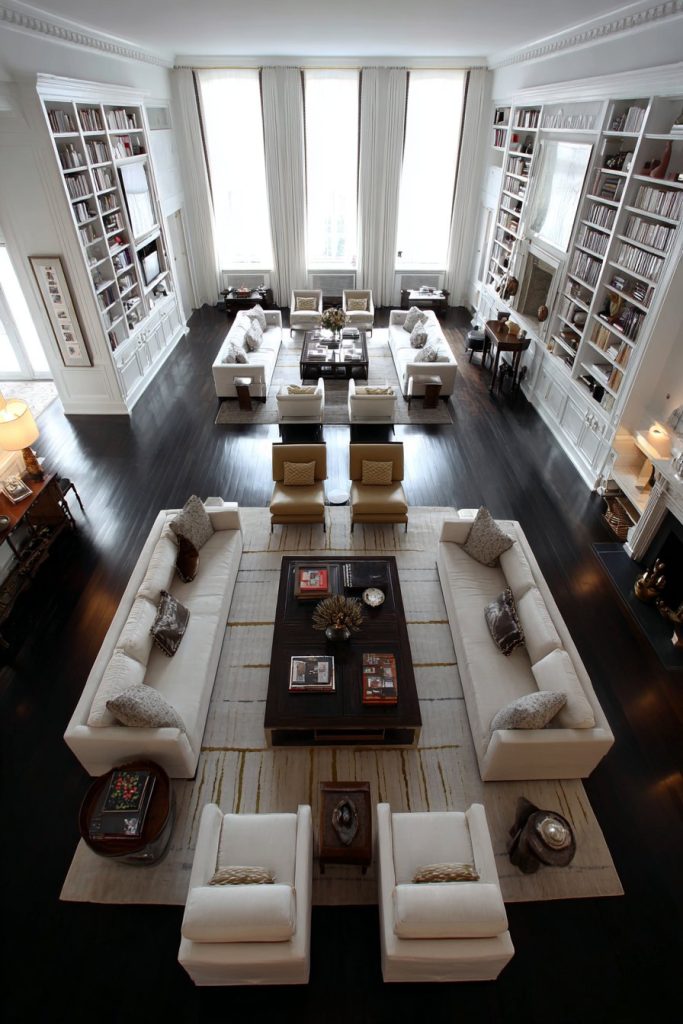
The formal flow and balanced proportions captured in architectural photography demonstrate how proper planning can create spaces that feel both grand and intimate, accommodating large groups for entertaining while providing comfortable settings for smaller gatherings. The unified design scheme, implemented through consistent color choices and repeated furniture forms, creates visual harmony that allows the eye to move smoothly between different areas of the room. Natural lighting highlights how careful attention to proportion and scale can create formal spaces that feel welcoming rather than intimidating.
Key Design Elements:
- Create multiple seating areas around different architectural focal points
- Use coordinating area rugs to define and anchor separate conversation zones
- Repeat furniture pieces and colors to create visual continuity between areas
- Plan sight lines to maintain connection between different seating zones
- Balance grand scale with intimate proportions for optimal comfort and function
14. Textural Monochromatic Sophistication
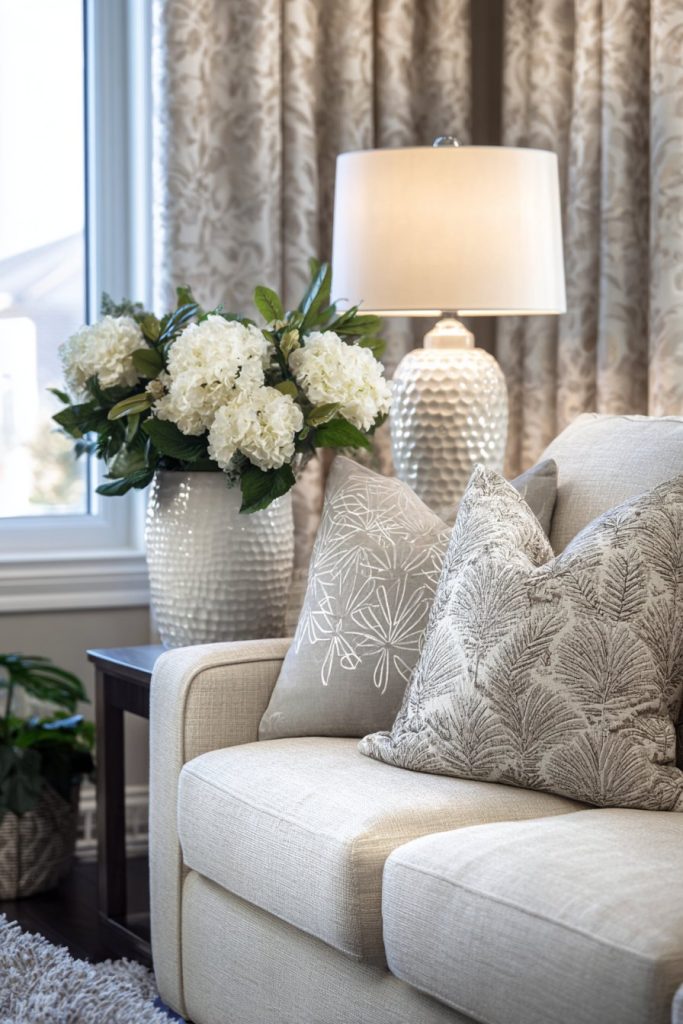
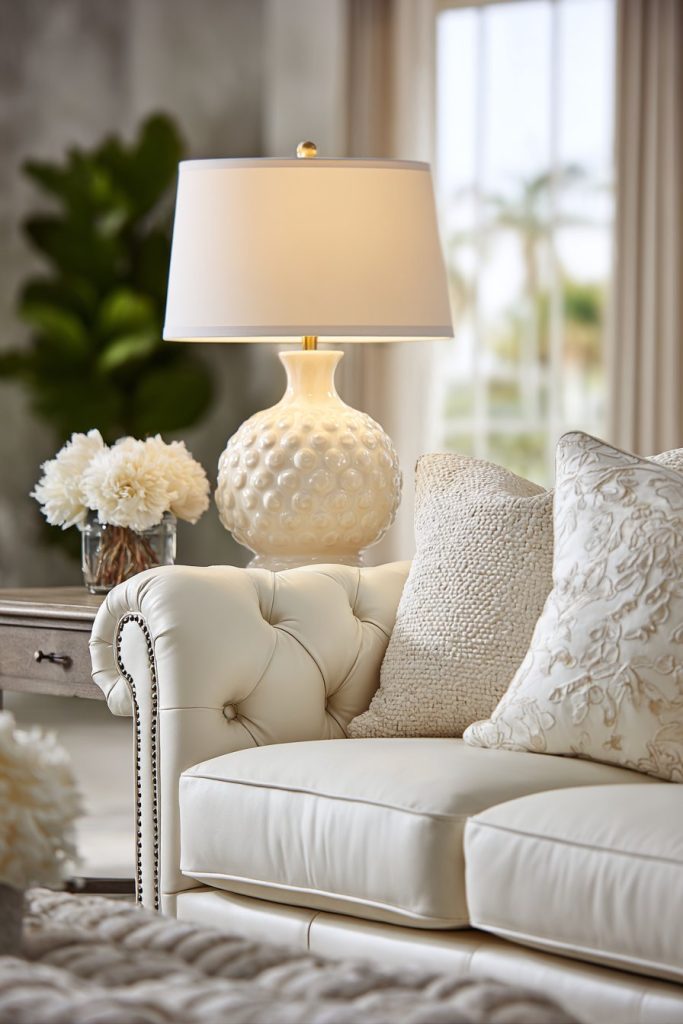
The sophisticated exploration of texture within a neutral palette demonstrates how monochromatic design can achieve visual interest and depth without relying on bold color contrasts, creating a formal living room that emphasizes tactile variety and material quality over dramatic color statements. The cream linen sofa with contrast welting provides both comfort and visual interest through its expert tailoring and attention to construction details, showing how quality craftsmanship can create appeal within restricted color ranges. The contrast welting adds definition and architectural interest while maintaining the monochromatic scheme’s essential unity.
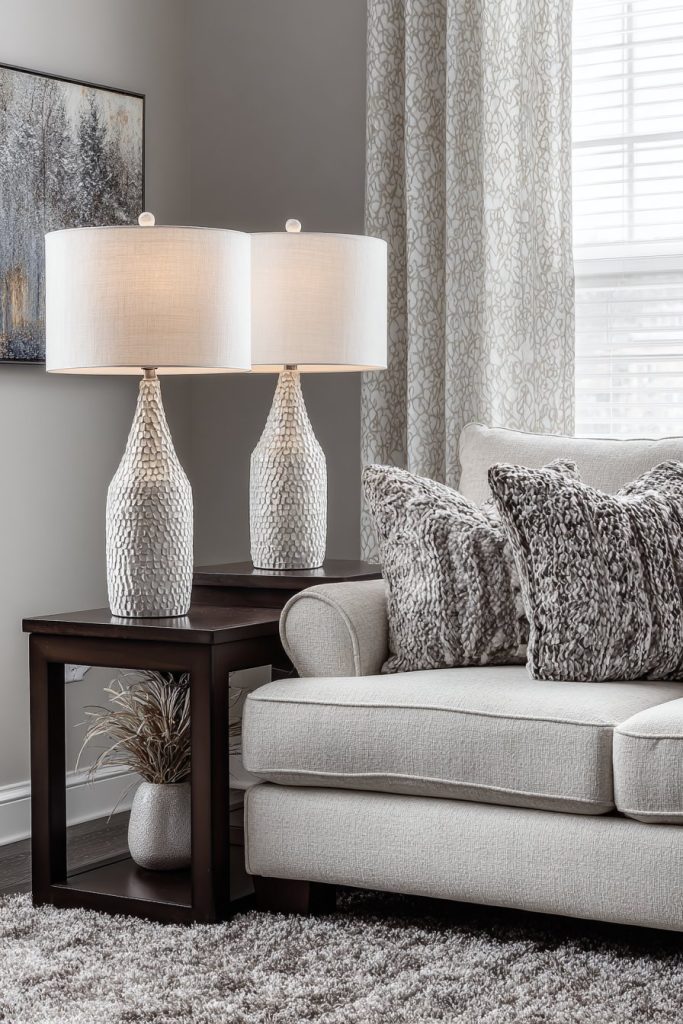
The nubby wool area rug contributes another textural element while providing comfort underfoot and sound absorption that enhances the room’s acoustic properties, demonstrating how floor coverings can serve multiple functions while contributing to the overall design narrative. The rug’s texture adds visual weight and warmth to the space while its neutral color supports the monochromatic scheme. Silk drapery with subtle pattern provides privacy and light control while adding another layer of luxury through quality materials and expert installation, their subtle pattern adding visual interest without disrupting the room’s serene color palette.
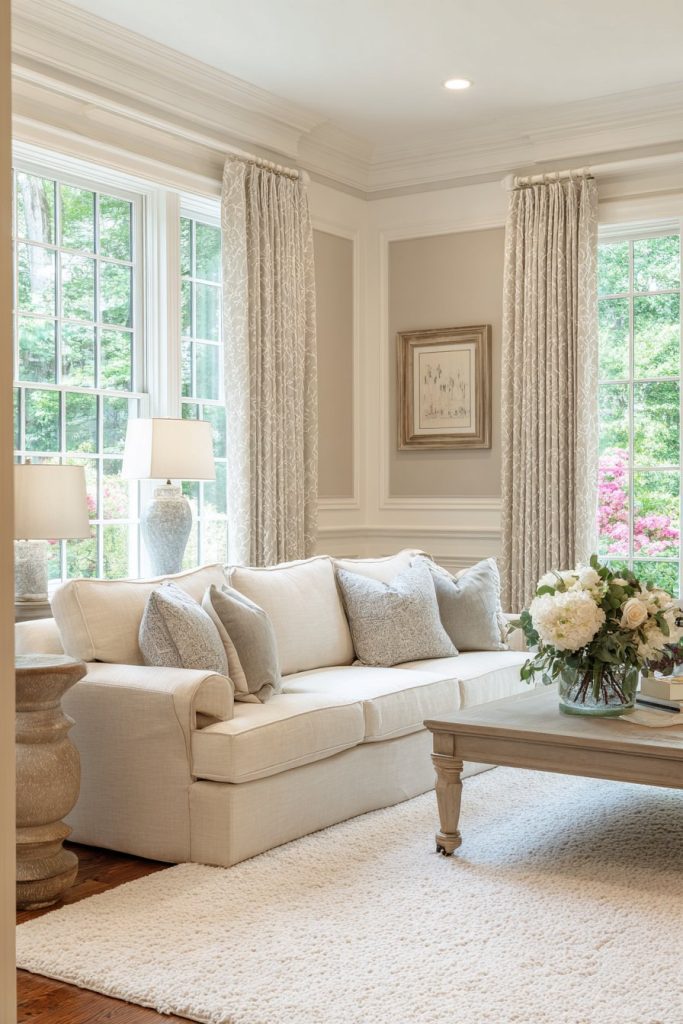
Matching table lamps with textured ceramic bases provide both task lighting and decorative elements that enhance the room’s commitment to textural variety, their consistent styling reinforcing the formal arrangement while their textured surfaces adding visual and tactile interest. The ceramic construction adds another material to the room’s palette while the matching design creates symmetry and balance. Professional interior photography emphasizes how sophisticated texture play can create compelling monochromatic formal design that feels rich and varied despite its limited color range.
Key Design Elements:
- Focus on textural variety within monochromatic color schemes for visual interest
- Use contrast welting and construction details to add definition to neutral upholstery
- Select area rugs with interesting textures that contribute to the room’s tactile appeal
- Choose window treatments with subtle patterns that enhance rather than compete with texture
- Include textured lamp bases and accessories to add visual and tactile variety
15. Fireplace-Centered Traditional Comfort
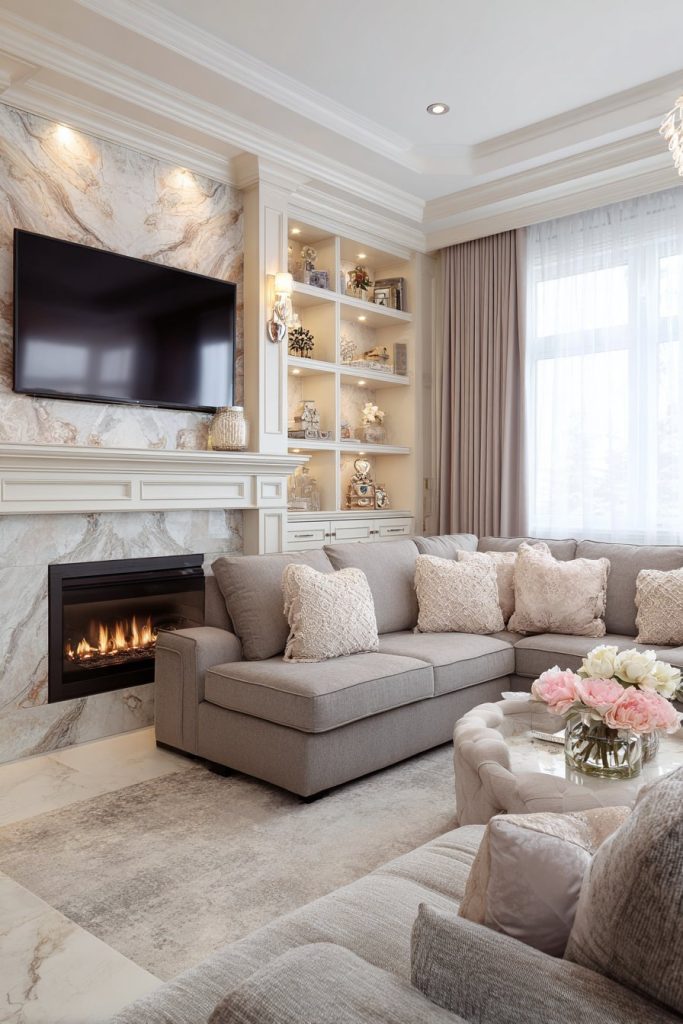
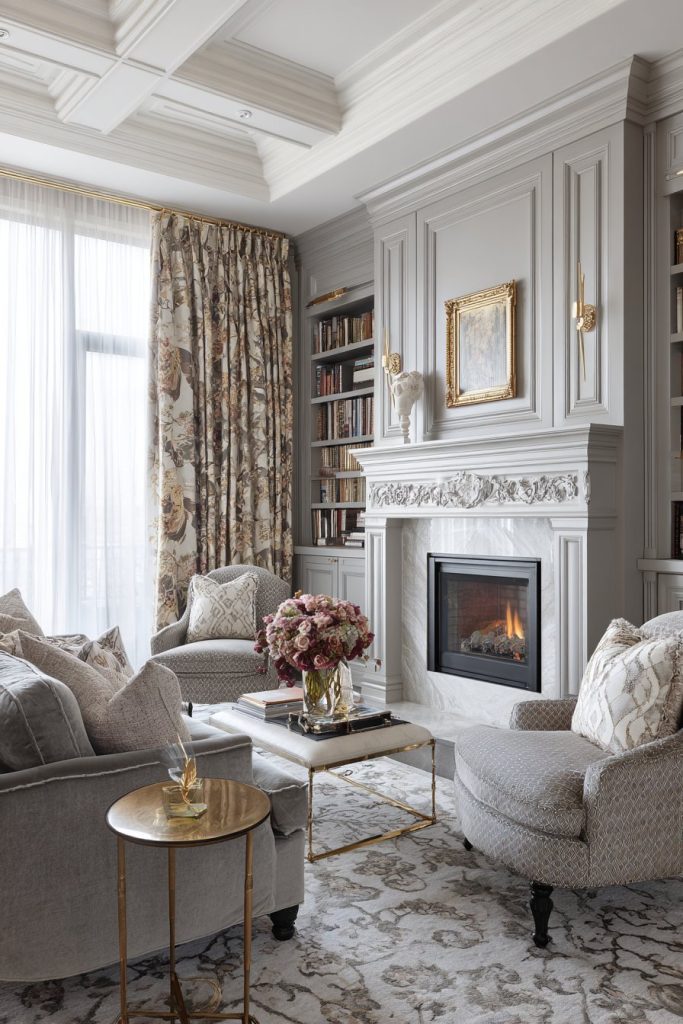
The classic appeal of fireplace-centered furniture arrangement finds modern expression in this formal living room, where a large sectional sofa in warm grey flanked by matching armchairs creates a substantial seating group that promotes conversation while emphasizing the fireplace as the room’s natural focal point. This traditional approach to furniture placement demonstrates how time-tested arrangement principles continue to create successful formal spaces, the symmetrical placement of chairs creating balance while the sectional provides the seating capacity that modern families require. The warm grey color choice adds sophistication while maintaining the neutral palette that allows architectural features to take center stage.
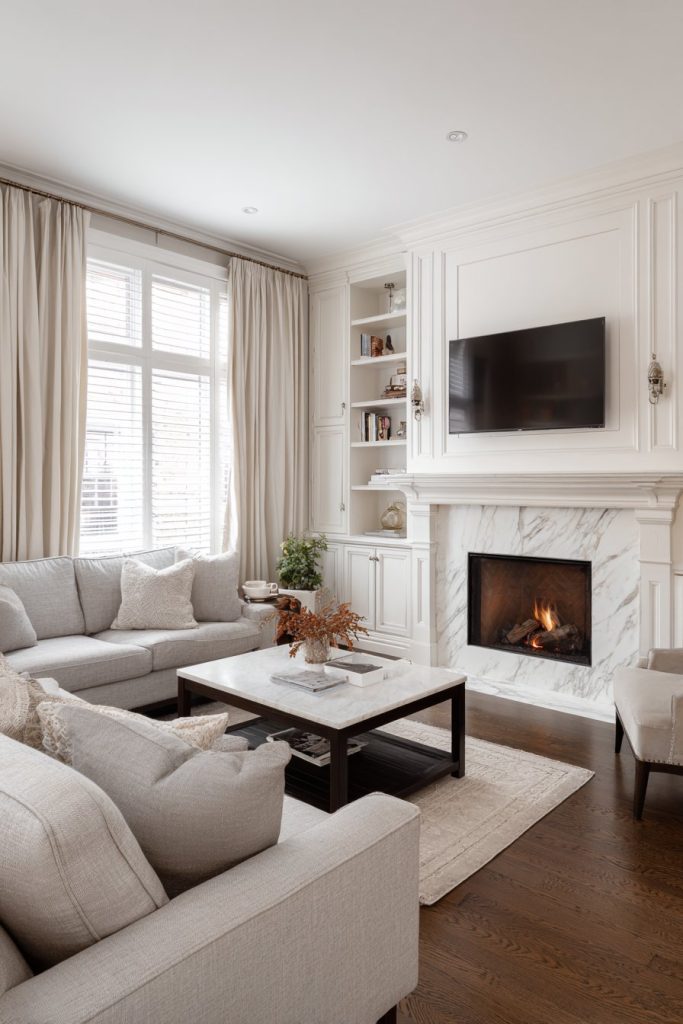
The marble-surround fireplace with decorative mantel styling serves as both functional heating element and architectural focal point, its quality materials and traditional proportions contributing to the room’s formal character while providing the visual anchor that successful furniture arrangements require. The mantel provides display space for decorative objects and seasonal arrangements while the marble surround adds luxury and permanence that supports the room’s traditional aesthetic. Built-in cabinetry provides storage while maintaining the room’s formal proportions, demonstrating how practical needs can be accommodated within traditional design frameworks.
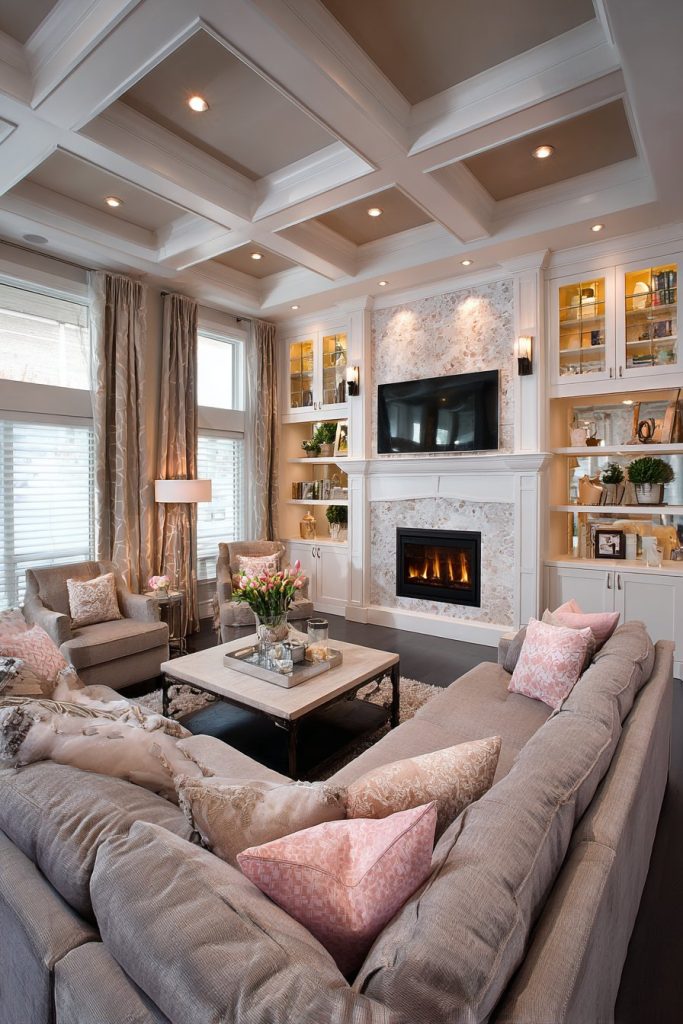
The balance of natural and artificial lighting creates an environment that adapts to different times of day and various activities, showing how successful formal design considers both aesthetic and functional lighting needs. The natural light from windows supplements artificial lighting sources to create a layered lighting scheme that enhances the room’s architectural features while providing comfortable illumination for reading and conversation. Interior design photography captures how classic elegance and functional formality can coexist when careful attention is paid to traditional proportions and quality materials.
Key Design Elements:
- Center furniture arrangements around fireplaces for traditional focal point emphasis
- Use sectional sofas to provide modern seating capacity within traditional arrangements
- Select marble surrounds and quality mantel treatments for luxury and permanence
- Include built-in cabinetry that maintains formal proportions while providing storage
- Plan layered lighting that combines natural and artificial sources for optimal function
16. Traditional Upholstery Craftsmanship
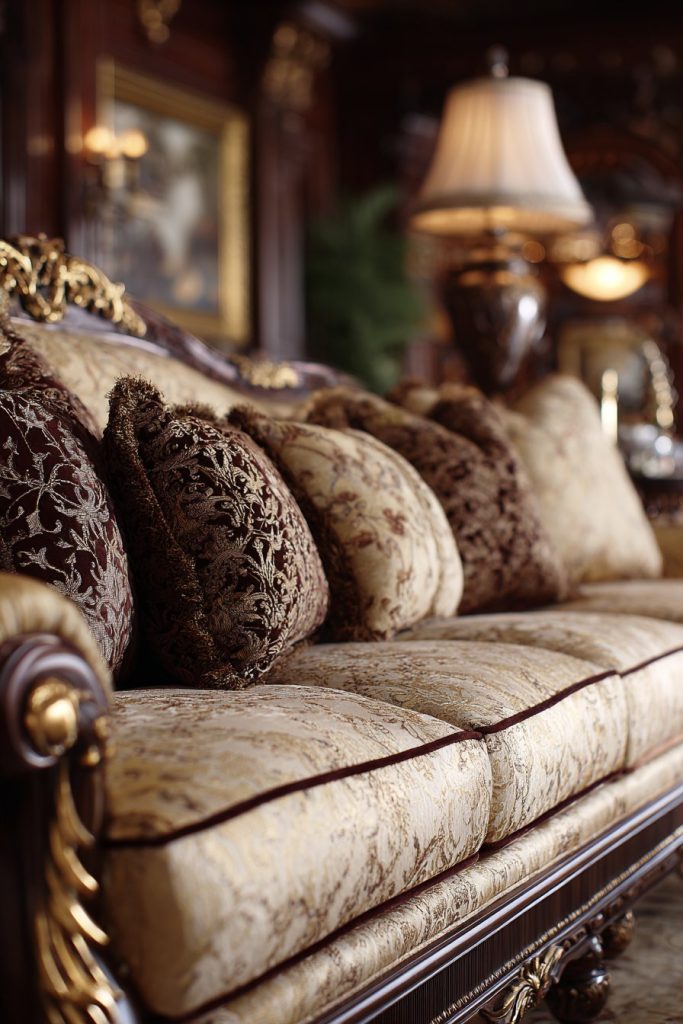
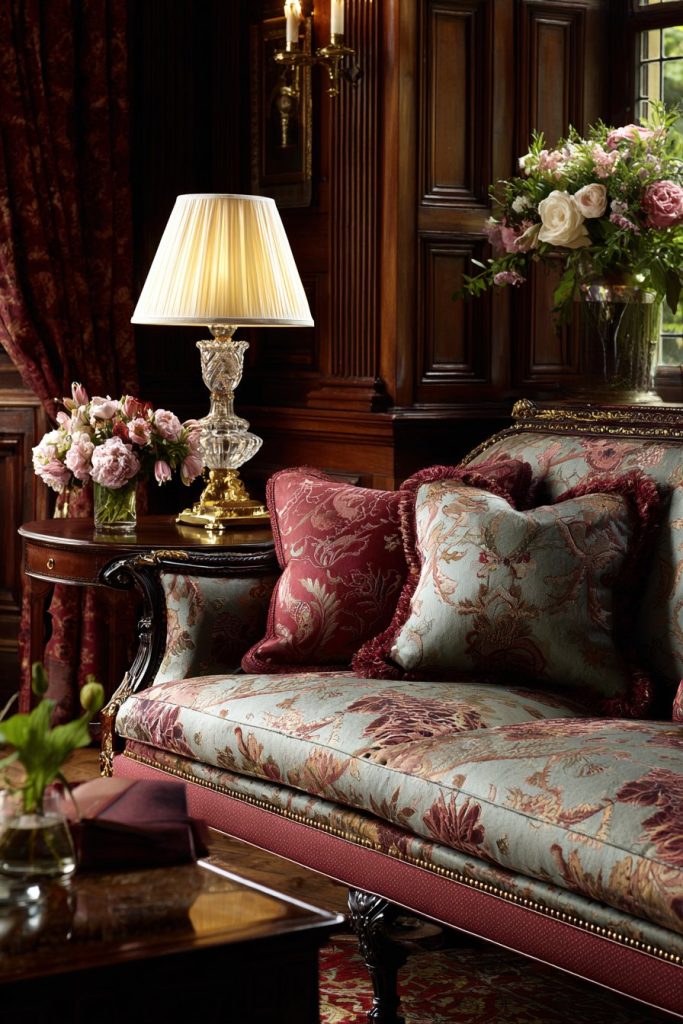
The attention to traditional upholstery techniques and details creates a formal living room that celebrates quality craftsmanship while providing the comfort and durability that contemporary living requires, demonstrating how historical construction methods can enhance modern furniture pieces. The rolled-arm sofa featuring contrast piping showcases expert tailoring while the coordinating throw pillows in complementary patterns add visual interest and opportunities for seasonal updates. The contrast piping adds definition and architectural interest while highlighting the quality construction that defines superior upholstery work.
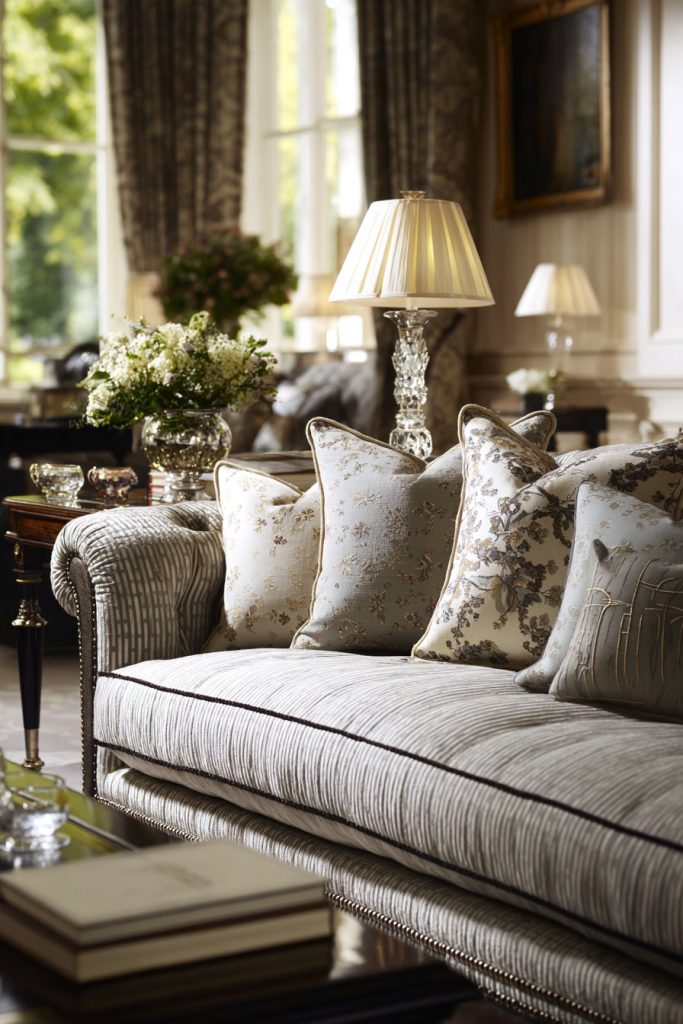
Mahogany side tables with brass hardware provide surfaces for crystal table lamps while contributing to the room’s traditional aesthetic through their authentic materials and period-appropriate styling, their rich wood tones adding warmth and depth to the neutral upholstery palette. The brass hardware adds metallic accents that reflect light and provide visual interest while referencing traditional furniture construction techniques. The crystal table lamps add glamour and sparkle while providing task lighting for reading and close work, their quality construction and materials supporting the room’s commitment to traditional luxury.
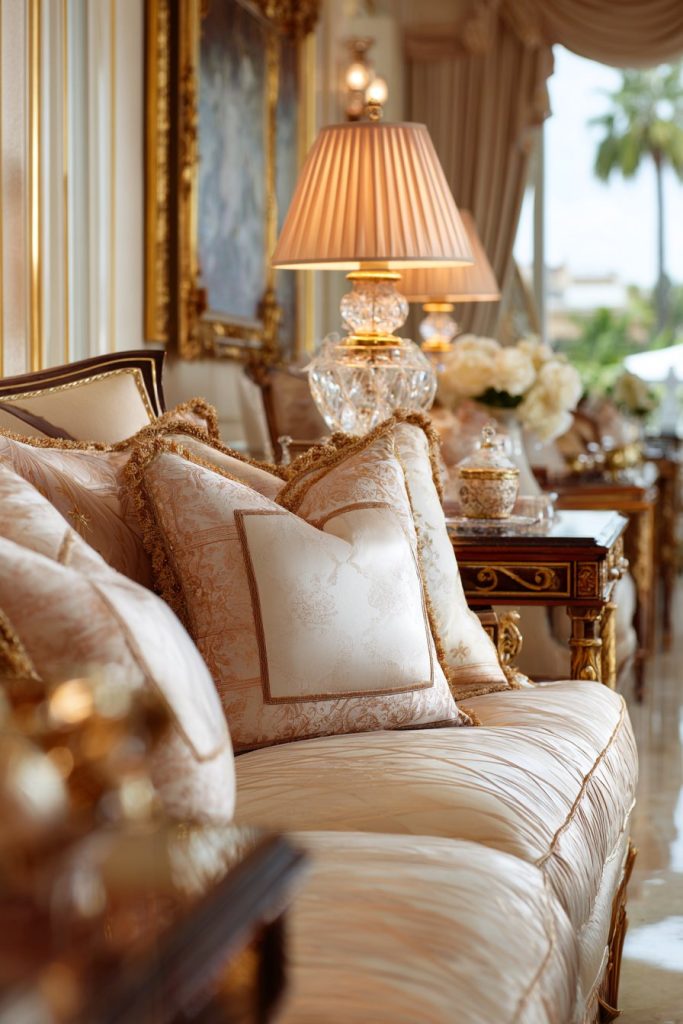
The wide-angle interior photography captures attention to traditional craftsmanship details while soft lighting highlights the quality materials and formal styling that define successful traditional design. The careful documentation of construction details like contrast piping and brass hardware demonstrates how these elements contribute to the overall success of formal interiors. The antimacassar details and traditional upholstery techniques referenced in this design show how historical methods can create furniture pieces that are both beautiful and functional, proving that traditional craftsmanship remains relevant in contemporary formal design.
Key Design Elements:
- Emphasize traditional upholstery techniques like contrast piping for quality and visual interest
- Select coordinating throw pillows in complementary patterns for flexibility and seasonal updates
- Choose mahogany furniture with brass hardware for authentic traditional appeal
- Include crystal table lamps for task lighting and decorative sparkle
- Document and celebrate craftsmanship details that define quality traditional furniture
17. L-Shaped Conversation Intimacy
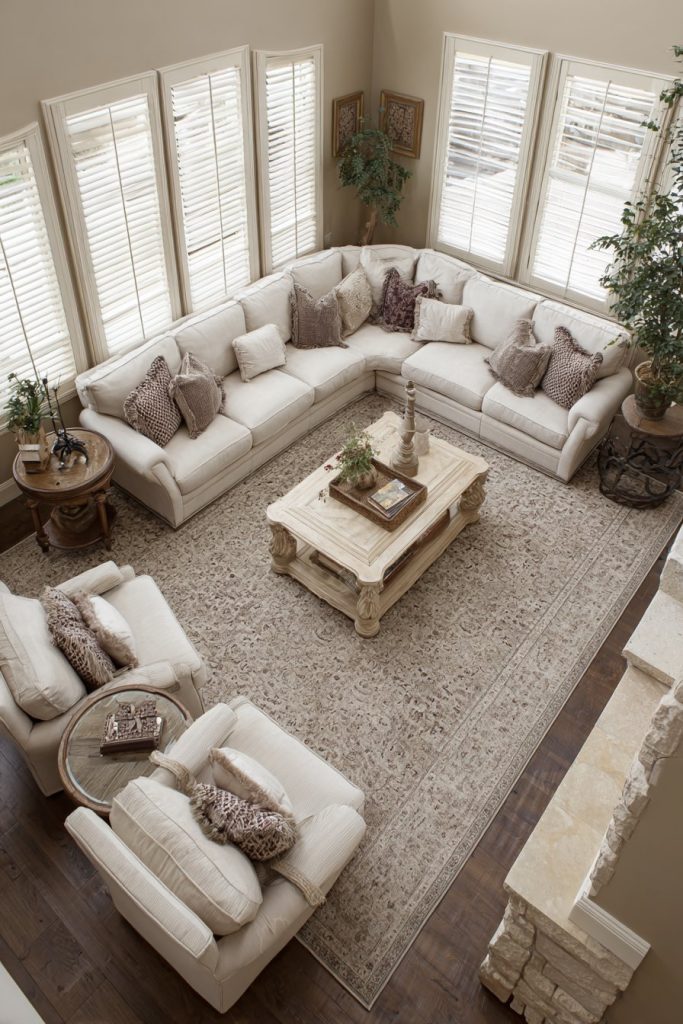
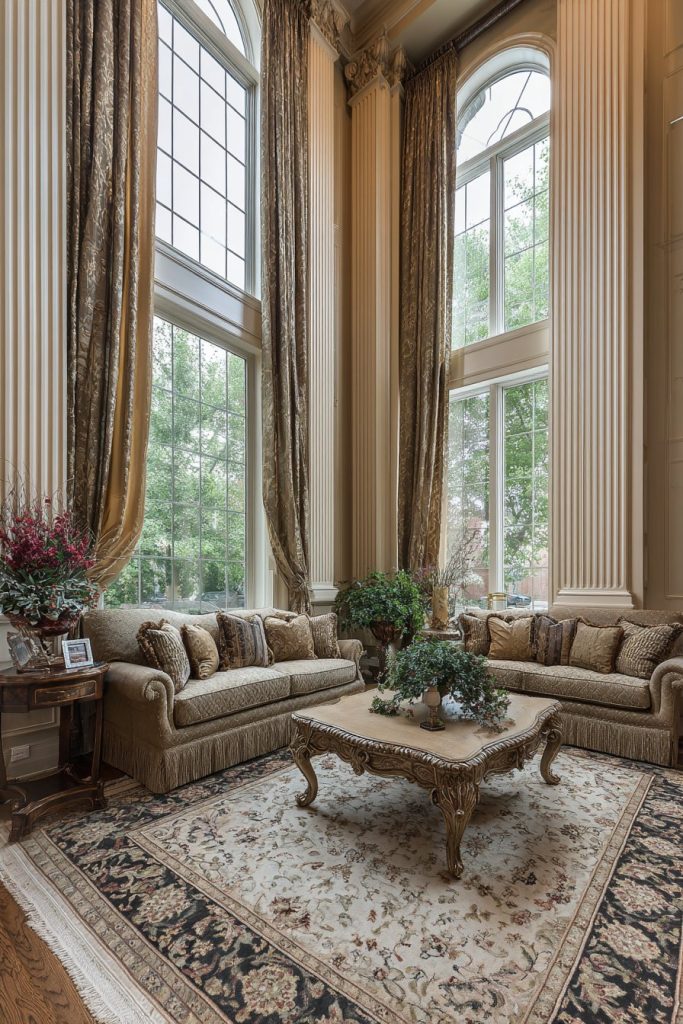
The strategic use of an L-shaped seating configuration creates an intimate conversation area that promotes social interaction while maintaining the formal structure that defines traditional design, showing how furniture arrangement can influence both function and atmosphere in formal spaces. The matching sofa and loveseat in coordinating fabrics create visual unity while providing flexible seating options that can accommodate both large and small groups, their consistent styling maintaining design coherence while their varied sizes offering functional flexibility. The large traditional area rug defines the conversation area while providing comfort underfoot and sound absorption that enhances the acoustic properties of the space.
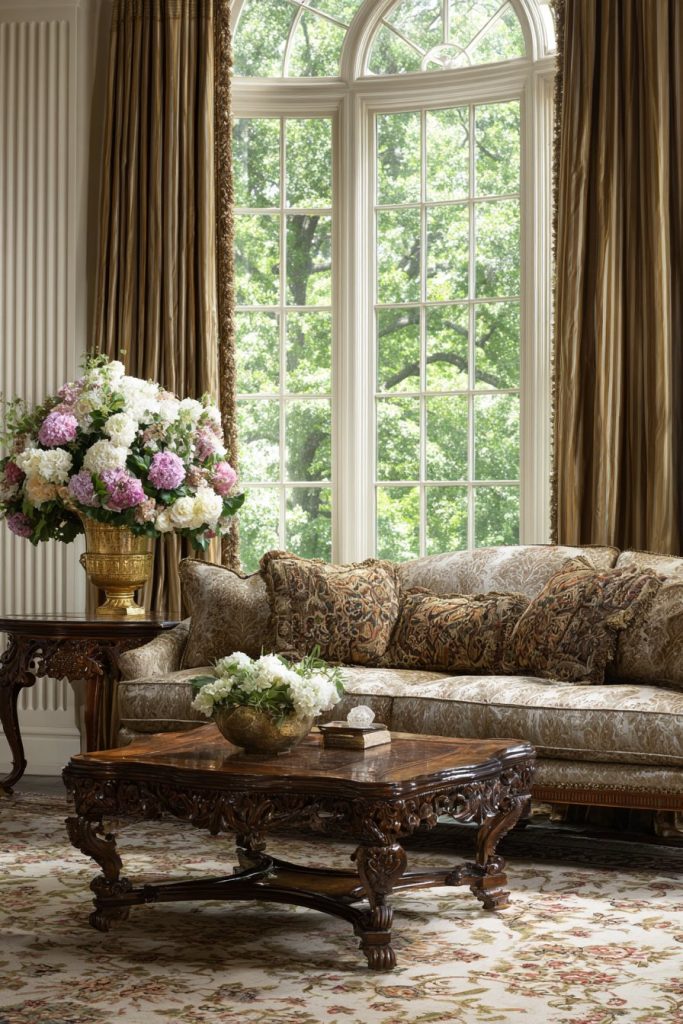
The ornate coffee table with carved details serves as the seating arrangement’s centerpiece, its substantial size and decorative elements providing both practical surface area and visual interest that anchors the furniture grouping. The carved details add textural interest and showcase traditional craftsmanship while the table’s proportions are carefully scaled to serve the surrounding seating without overwhelming the arrangement. The professional interior photography captures how formal symmetry and traditional proportions can create seating arrangements that feel both impressive and comfortable, demonstrating the importance of proper scale and proportion in furniture selection and placement.
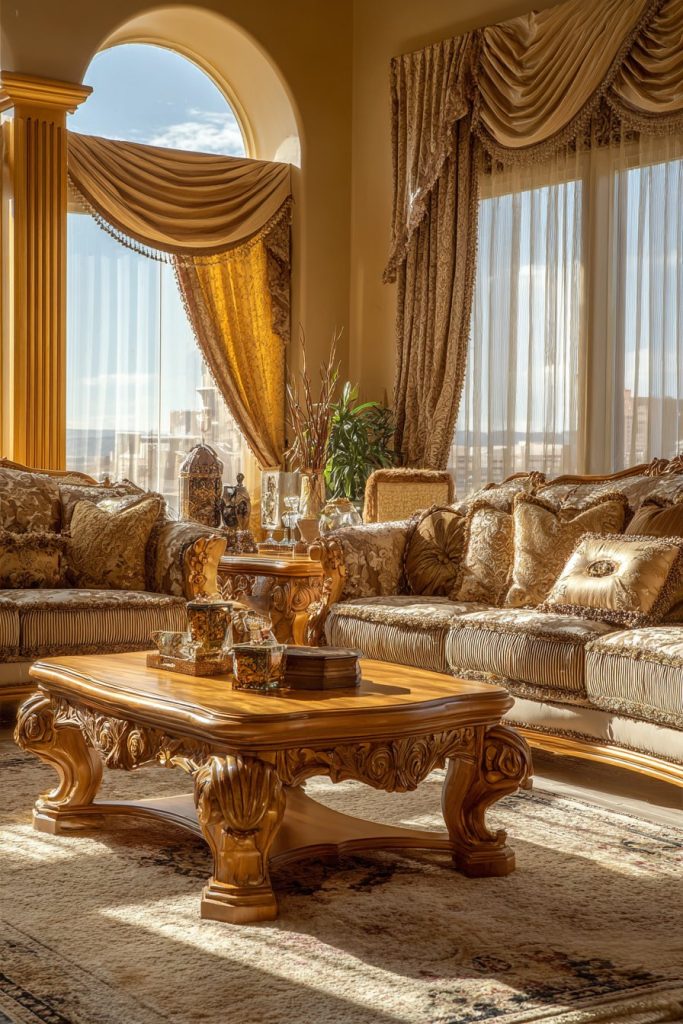
The conversation area defined by the large traditional rug demonstrates how floor coverings can organize space while adding pattern and color that enhance the overall design scheme, their substantial size providing the necessary visual weight to anchor the substantial furniture pieces. The traditional pattern adds historical reference while the rug’s colors tie together the various elements of the room’s design palette. The L-shaped configuration promotes conversation by creating an intimate seating arrangement that encourages social interaction while maintaining the formal character that defines traditional design.
Key Design Elements:
- Create L-shaped seating arrangements to promote intimate conversation within formal settings
- Use matching furniture pieces in coordinating fabrics for visual unity and design coherence
- Select ornate coffee tables with carved details as conversation area centerpieces
- Choose large traditional rugs to define seating areas and provide pattern interest
- Plan seating configurations that encourage social interaction while maintaining formal structure
18. Integrated Formal Dining Flow
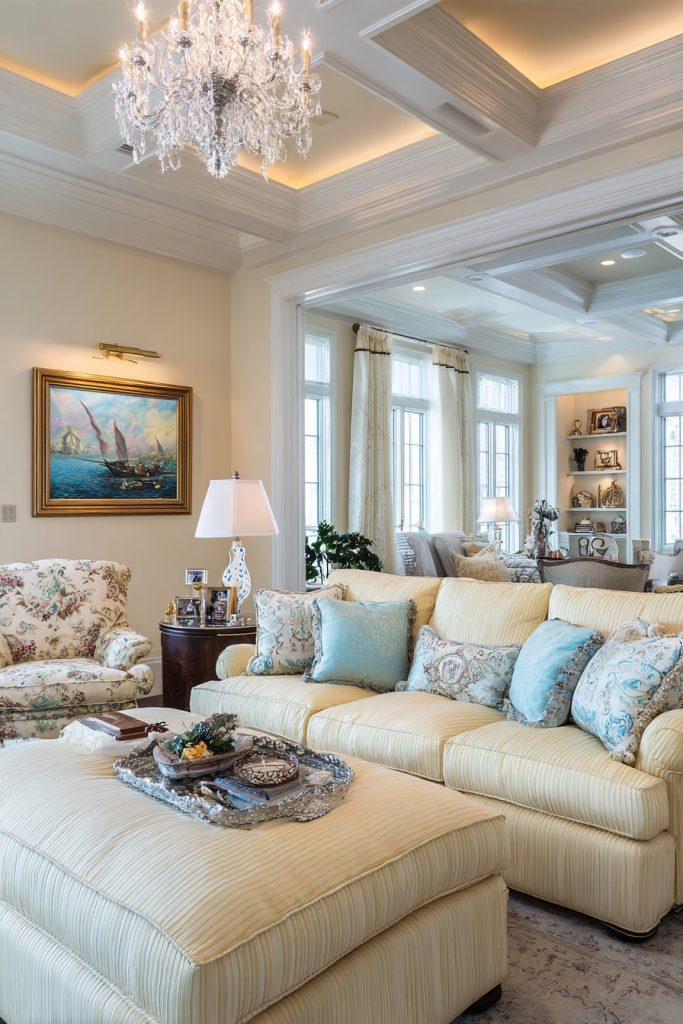
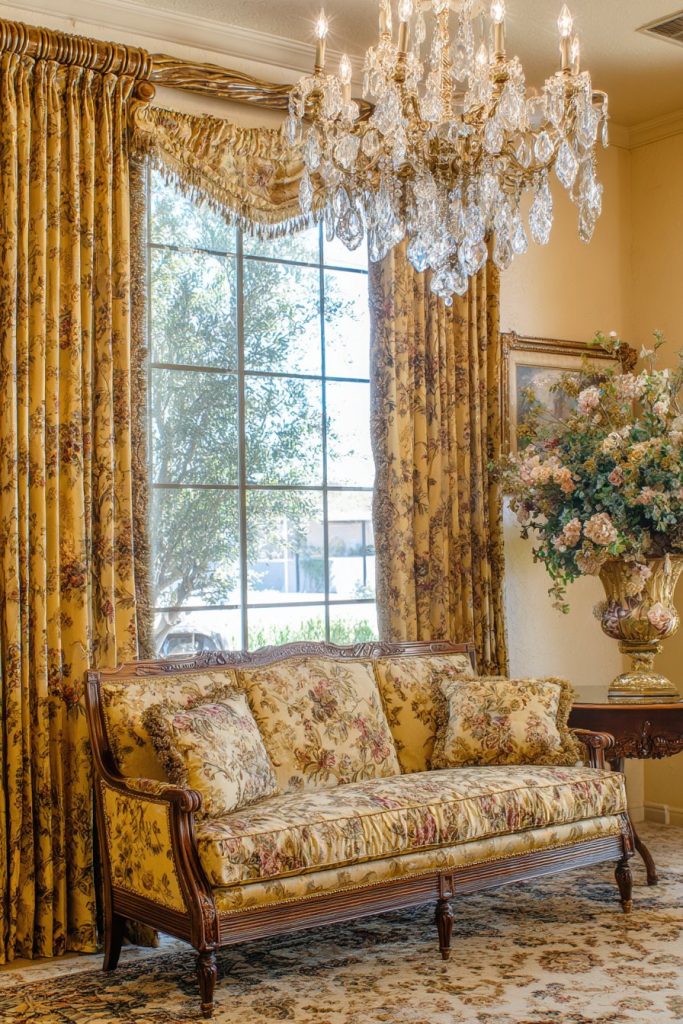
The seamless integration of formal dining and living spaces demonstrates how consistent design principles can create visual flow between different functional areas while maintaining the distinct character that each space requires. Coordinating furniture pieces and a consistent color palette throughout both areas create visual continuity that allows the eye to move smoothly between spaces while recognizing their different functions. The cream and gold theme extends from upholstered seating to window treatments and decorative accessories, showing how a unified color scheme can tie together different areas within an open floor plan.
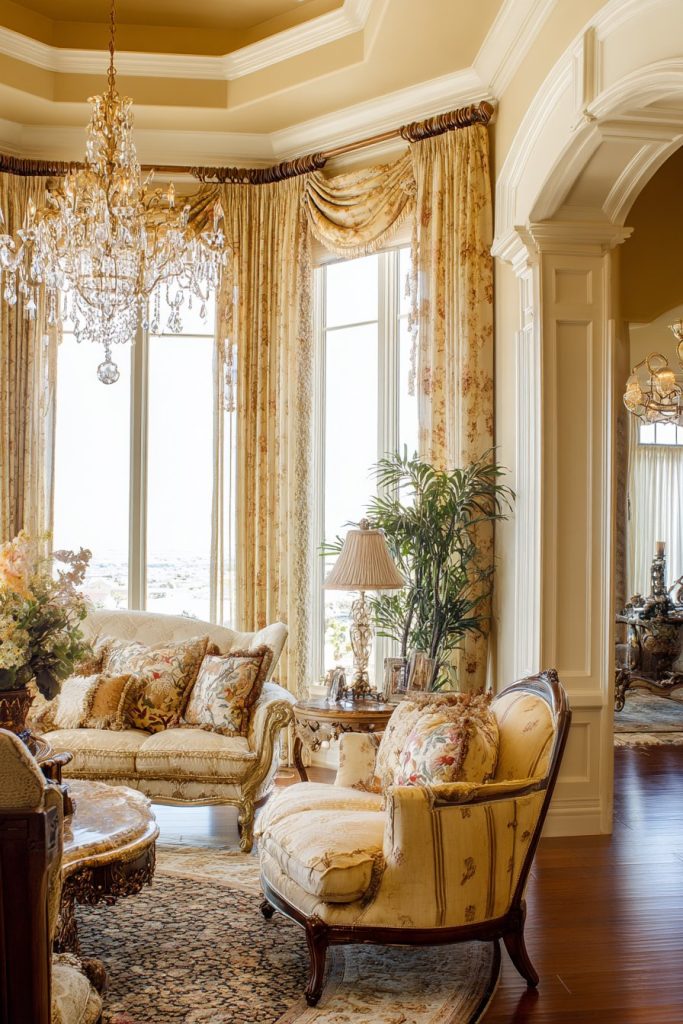
The crystal chandelier provides overhead lighting while maintaining sight lines between spaces, its substantial size appropriate for the combined area while its elegant styling supporting both dining and living functions. The chandelier’s position and scale demonstrate how lighting fixtures can serve multiple areas when properly planned and positioned, their quality construction and traditional styling contributing to both spaces’ formal character. The architectural photography shows how formal flow and elegant continuity can be achieved when careful attention is paid to sight lines and visual connections between different functional areas.
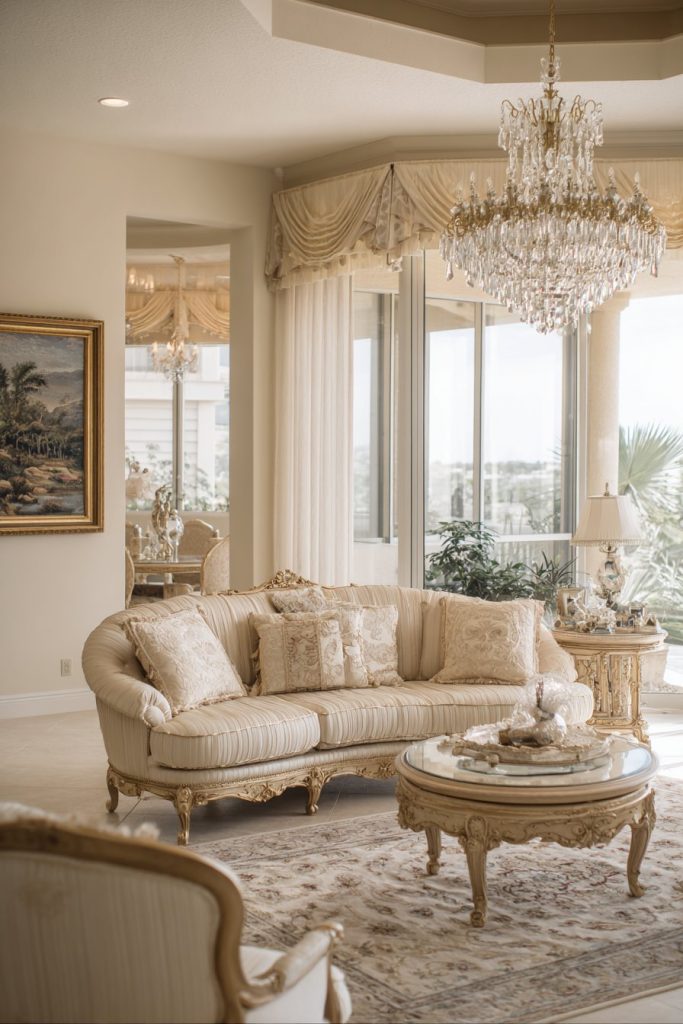
The coordination of window treatments and decorative accessories creates a unified design narrative that spans both dining and living areas, demonstrating how consistent styling can create cohesive environments within larger spaces. The quality materials and expert installation of window treatments add luxury and light control to both areas while their coordinated styling reinforces the visual connection between different functional zones. This integrated approach shows how formal design principles can be applied to contemporary open floor plans without sacrificing the elegance and sophistication that define traditional formal spaces.
Key Design Elements:
- Maintain consistent color palettes across connected formal spaces for visual unity
- Select lighting fixtures that serve multiple areas while maintaining appropriate scale
- Coordinate window treatments and accessories to create design continuity between spaces
- Plan sight lines to connect different functional areas while maintaining their distinct characters
- Use quality materials and expert installation to support formal character throughout connected spaces
19. Seasonal Decorating Flexibility
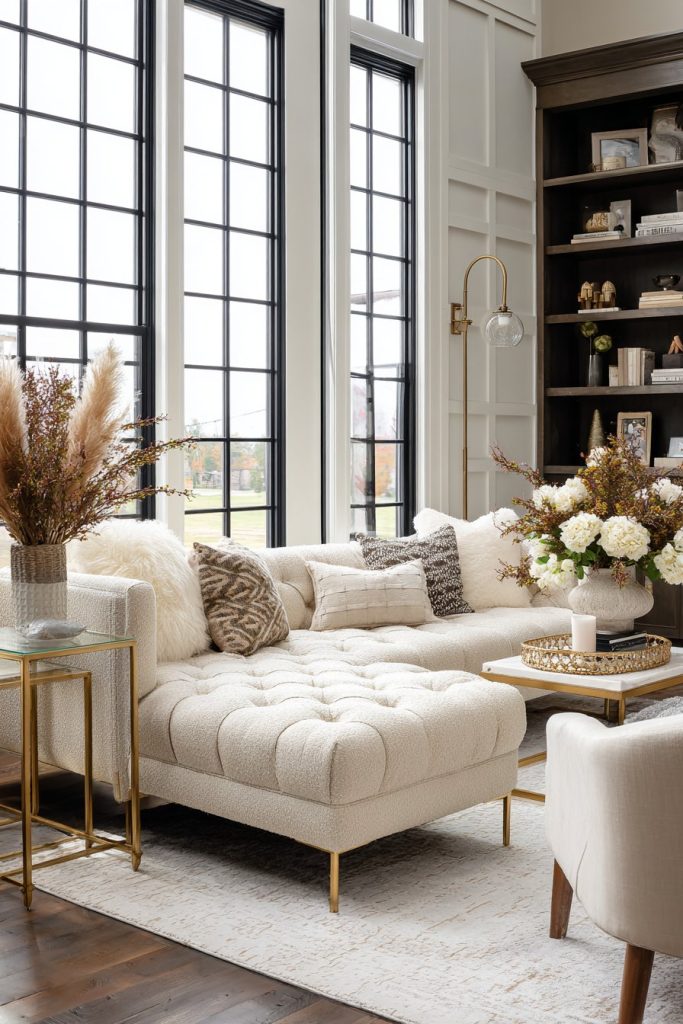
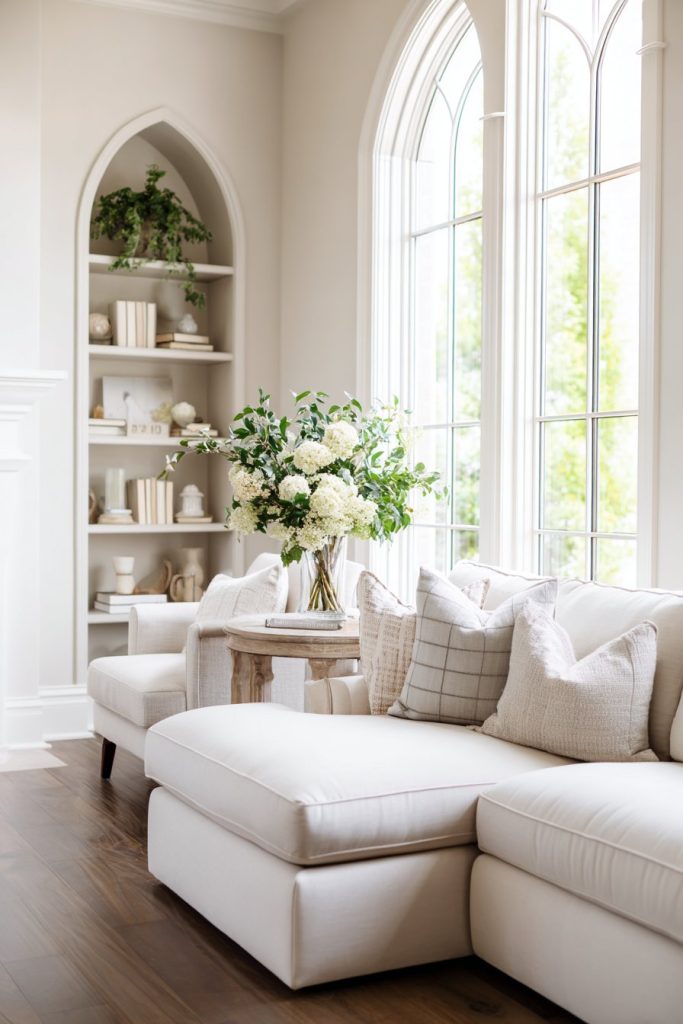
The foundation of timeless neutral base furniture creates a formal living room that can adapt to seasonal changes and personal preferences while maintaining its essential elegance and sophisticated character, demonstrating how smart design choices can create spaces that remain fresh and current over time. The cream sectional sofa and coordinating chairs provide substantial seating in neutral colors that support rather than compete with seasonal accessories and decorative elements. This approach shows how investment in quality neutral furniture can provide long-term value and design flexibility.
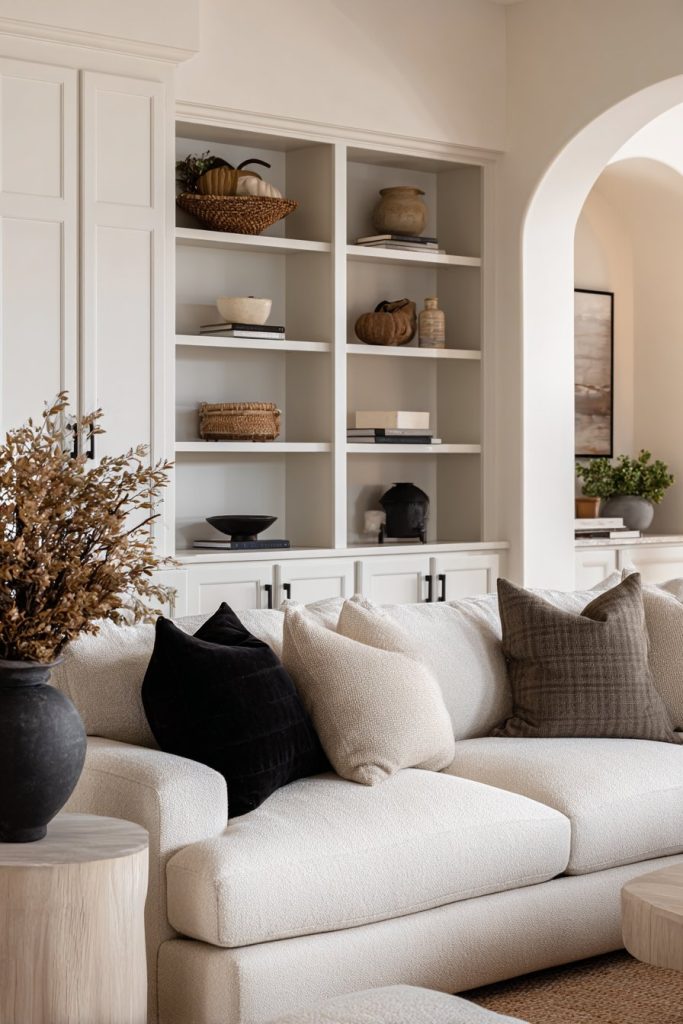
Built-in shelving displays rotating seasonal accessories while providing storage and display opportunities that can be updated throughout the year, their architectural styling and quality construction contributing to the room’s formal character while offering practical functionality. The ability to change decorative displays allows the room to reflect different seasons and occasions while maintaining its fundamental design integrity. The interior design photography captures how the timeless formal foundation can support various decorative approaches, proving that well-designed formal spaces can be both sophisticated and adaptable.
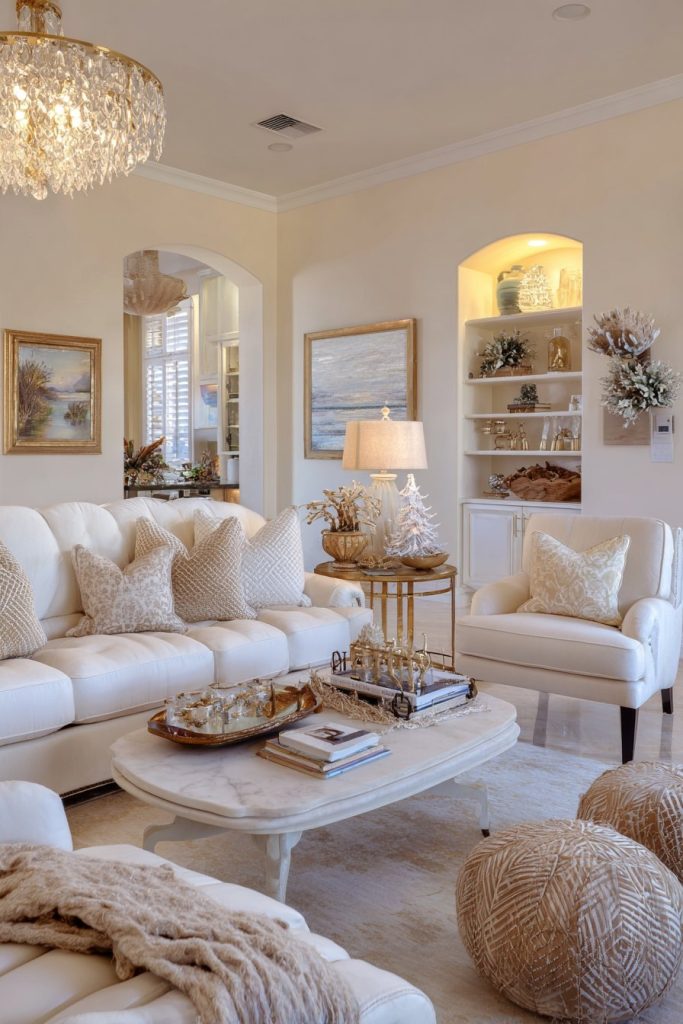
The adaptable elegance of this space demonstrates how formal design can embrace change while maintaining its essential character, showing that traditional spaces need not be static or unchanging to be successful. The neutral color palette and quality construction create a foundation that can support various decorative approaches while the built-in elements provide organizational structure for seasonal displays. Natural lighting highlights how the adaptable formal foundation remains beautiful and functional regardless of the specific decorative elements displayed.
Key Design Elements:
- Invest in quality neutral furniture pieces that provide long-term design flexibility
- Include built-in shelving for rotating seasonal displays and storage
- Choose cream and neutral color palettes that support various decorative approaches
- Plan for seasonal updates through changeable accessories rather than major furniture pieces
- Create timeless foundations that can adapt to changing tastes and seasonal preferences
20. Grand Scale Burgundy Luxury
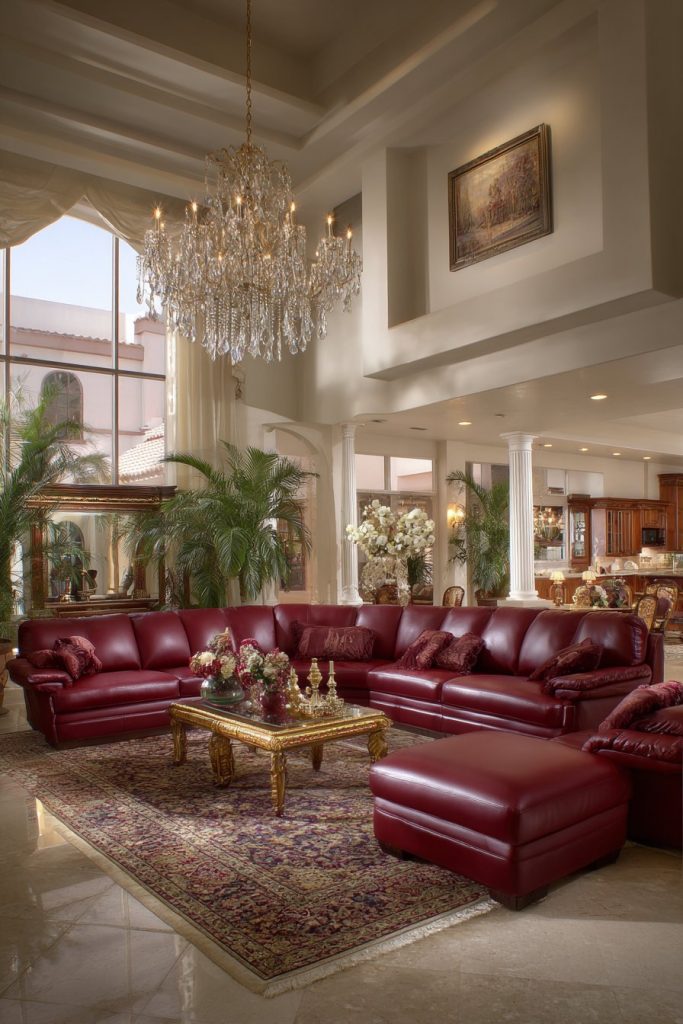
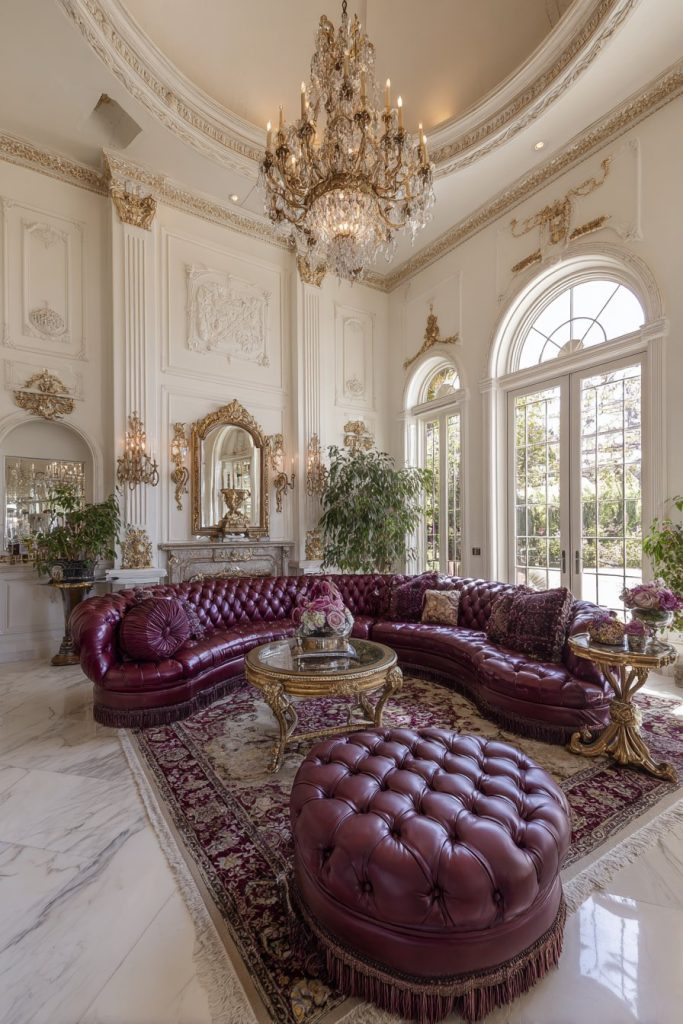
The impressive scale of this formal living room demonstrates how large spaces can maintain intimacy and comfort while showcasing the grandeur that defines the most successful formal interiors, proving that size and elegance can coexist when proper attention is paid to proportion and material selection. The large sectional sofa arrangement in rich burgundy leather commands attention while providing the substantial seating that grand-scale entertaining requires, its deep color and luxurious material contributing to the space’s sense of importance and permanence. The burgundy leather adds richness and durability while creating the visual weight necessary to furnish large-scale spaces successfully.

Matching accent chairs and ottoman extend the seating arrangement while maintaining color and material continuity that prevents the large space from feeling disjointed or overwhelming, their consistent styling creating rhythm and balance throughout the expansive room. The ottoman provides additional seating and surface area while its substantial size ensures it remains proportional to the surrounding furniture pieces. The ornate area rug defines the seating area while providing pattern and color that anchor the substantial furniture pieces, its large scale and traditional design supporting the room’s formal character while adding warmth and comfort underfoot.
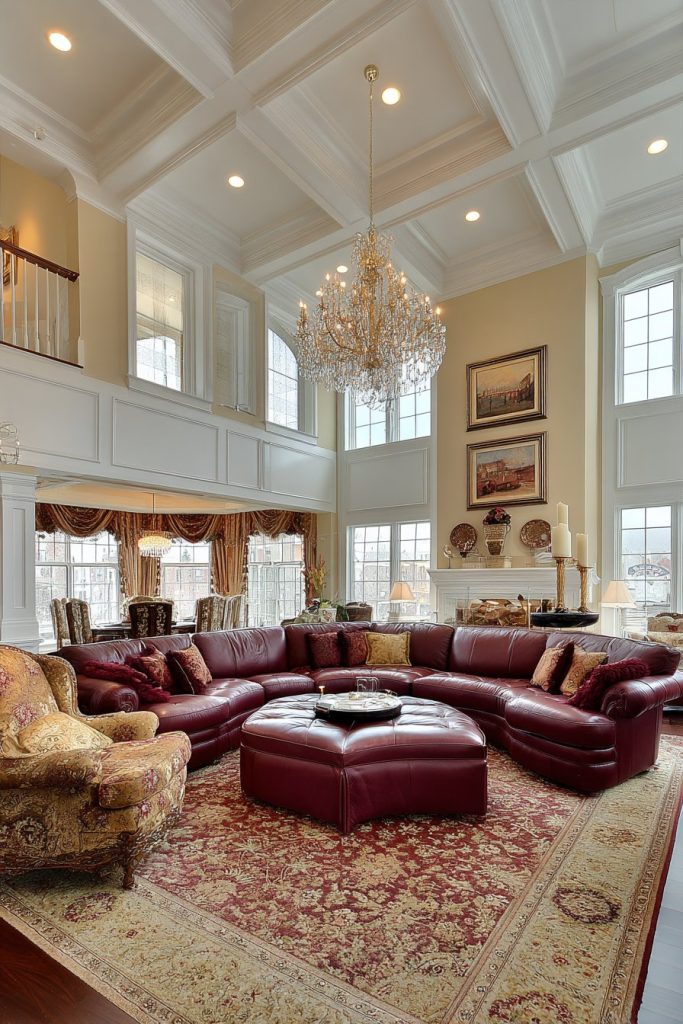
The crystal chandelier provides appropriate scale for the room’s impressive height while adding sparkle and glamour that enhances the space’s luxurious character, its substantial size ensuring adequate illumination for the large space while its quality construction supporting the room’s commitment to traditional luxury. The wide-angle interior photography captures how impressive proportions and formal grandeur can create spaces that feel both majestic and welcoming when careful attention is paid to scale and proportion. Professional lighting emphasizes how luxurious materials and traditional styling can work together to create formal spaces that truly impress while remaining comfortable and functional for daily use.
Key Design Elements:
- Scale furniture proportionally to room size for proper visual balance in large spaces
- Choose rich colors like burgundy leather for visual weight and luxury appeal
- Select substantial area rugs that can anchor large furniture arrangements effectively
- Install chandeliers with appropriate scale for high ceilings and large rooms
- Plan professional lighting to emphasize luxurious materials and grand proportions
Why These Formal Living Room Designs Represent the Best in Traditional Elegance
These twenty formal living room designs showcase the finest principles of traditional interior design while demonstrating how classical elements can be adapted to meet contemporary needs and lifestyles. Each design represents a different approach to achieving the perfect balance of sophistication and comfort that defines successful formal spaces, proving that traditional design remains relevant and desirable in modern homes.
The cream velvet elegance design demonstrates how neutral luxury can create timeless appeal, while the symmetrical fireplace focus shows the enduring power of classical furniture arrangement principles. The emerald green Chesterfield proves that bold color choices can enhance rather than diminish formal sophistication, and the open floor plan conversation areas illustrate how traditional design can adapt to contemporary architectural trends.
The grand piano centerpiece design celebrates the integration of musical and visual arts, while the monochromatic taupe serenity explores how texture can create interest within restricted color palettes. The English country chintz styling connects us to centuries of decorative tradition, and the contemporary traditional fusion bridges historical and modern design sensibilities.
French-inspired elegance, layered lighting mastery, custom architectural elements, and rich jewel tone drama each contribute unique perspectives on how formal design can address different aesthetic preferences while maintaining essential principles of quality, proportion, and craftsmanship. The dual seating areas, textural sophistication, and fireplace-centered arrangements demonstrate various approaches to organizing formal spaces for optimal function and visual appeal.
Traditional upholstery craftsmanship, conversation-focused arrangements, and integrated dining flow show how formal design can accommodate practical needs while celebrating quality construction and materials. Seasonal flexibility and grand scale luxury prove that formal design can be both adaptable and impressive, meeting the varied needs of contemporary families while maintaining the sophisticated character that makes formal rooms so appealing.
These designs succeed because they understand that formal living rooms serve multiple functions in modern homes—they must accommodate both intimate family gatherings and large-scale entertaining, provide comfortable daily living while maintaining impressive appearance, and reflect personal taste while respecting traditional design principles. The best formal living room ideas achieve this balance through careful attention to proportion, quality materials, expert craftsmanship, and thoughtful planning that considers both aesthetic and functional requirements.
The enduring appeal of these traditional living room designs lies in their commitment to principles that have proven successful over centuries of interior design evolution. Quality furniture construction, attention to architectural detail, sophisticated color coordination, and careful lighting design create environments that feel both timeless and current, proving that the best formal design transcends temporary trends to create spaces of lasting beauty and functionality.
Conclusion
Creating the perfect formal living room requires understanding how traditional design principles can be adapted to contemporary lifestyles while maintaining the sophistication and elegance that make these spaces so appealing. These twenty designs demonstrate that formal doesn’t mean uncomfortable, traditional doesn’t mean outdated, and sophisticated doesn’t mean impractical. The key lies in balancing quality materials with expert craftsmanship, classical proportions with modern comfort, and timeless styling with personal expression.
Whether you prefer the bold drama of jewel tones or the serene sophistication of monochromatic schemes, the grand scale of luxury or the intimate charm of English country styling, these designs prove that formal living rooms can accommodate diverse tastes while maintaining their essential character. The investment in quality furniture, attention to architectural detail, and commitment to proper proportion and scale create spaces that will remain beautiful and functional for generations.
We encourage you to experiment with these ideas in your own home, adapting the principles and approaches that resonate with your personal style and practical needs. Remember that the most successful formal living rooms reflect their owners’ personalities while respecting the timeless principles that make traditional design so enduringly appealing. Start with quality foundation pieces, pay attention to lighting and proportion, and build your formal space gradually, allowing it to evolve into the sophisticated sanctuary that truly represents your vision of elegant living.


