
The living room serves as the heart of any home—a sanctuary where we unwind after long days, entertain cherished guests, and create lasting memories with loved ones. At the center of this essential space often sits the sofa, arguably the most significant furniture piece that defines both the room’s aesthetic and functionality. In recent years, green sofas have emerged as a captivating design choice, offering a refreshing departure from traditional neutrals while bringing the calming, rejuvenating qualities of nature indoors. From soft sage to rich emerald, green sofas provide versatility that complements virtually any design style, whether you’re drawn to minimalist Scandinavian aesthetics, opulent maximalist interiors, or anything in between.
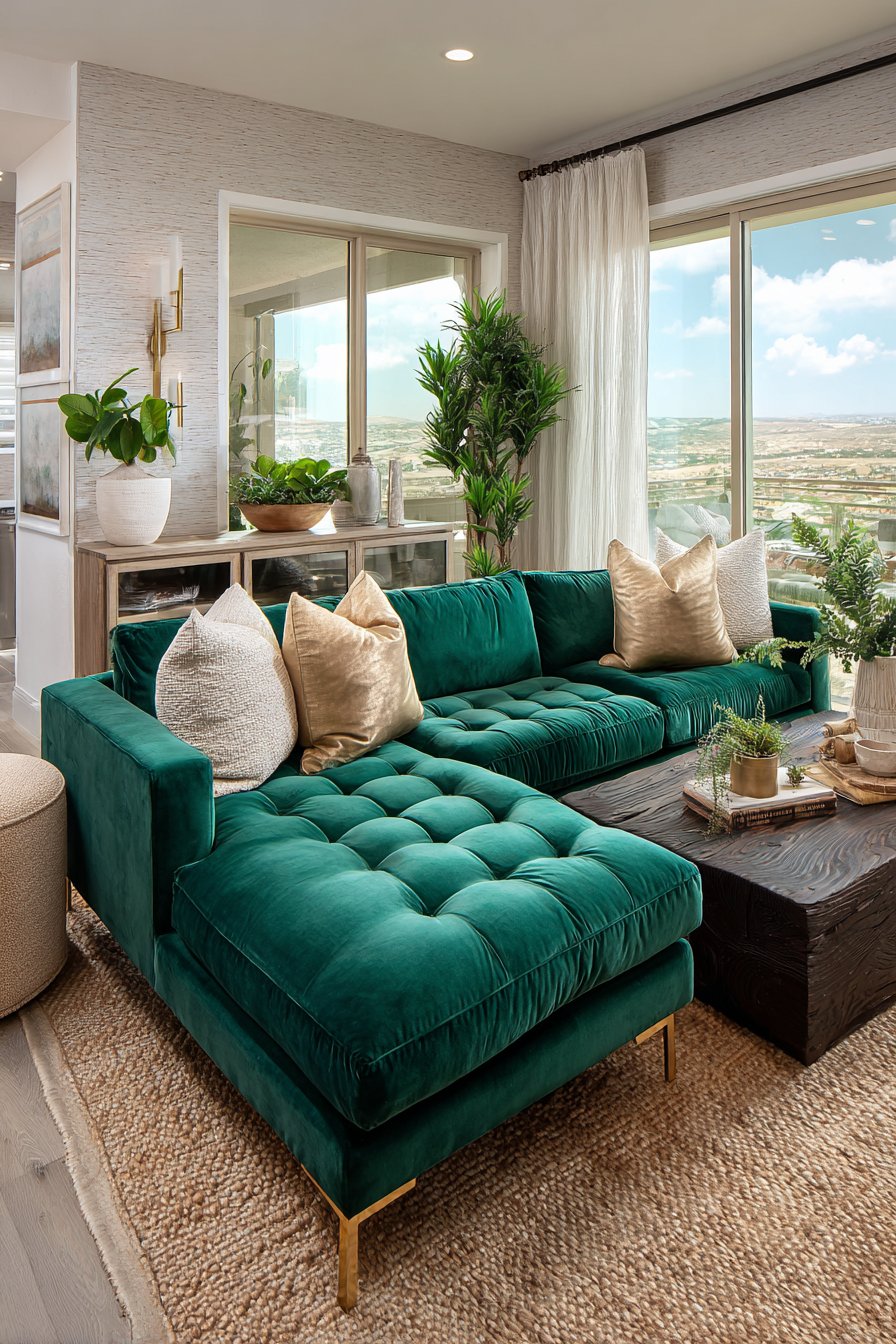
The beauty of incorporating a green sofa into your living room lies in its remarkable adaptability and the psychological benefits it offers. Green, associated with growth, harmony, and renewal, creates spaces that feel both energizing and peaceful—a rare combination that few colors can achieve. Whether you’re working with a compact apartment or a sprawling open-concept space, a green sofa can serve as either a subtle accent or a bold statement piece, depending on the shade and styling you choose. The key is understanding how to balance this vibrant furniture element with complementary colors, textures, and design principles that enhance rather than overwhelm your space.
In this comprehensive guide, we’ll explore twenty-five distinctive green sofa living room concepts, each offering unique approaches to incorporating this versatile furniture piece into your home. From practical storage solutions to luxurious art deco inspired spaces, these designs demonstrate how green sofas can anchor rooms of various sizes, styles, and purposes. You’ll discover actionable design tips, material recommendations, and styling strategies that will empower you to create a living room that reflects your personal taste while maintaining the comfort and functionality essential to everyday living.

1. Modern Sage Green Minimalism
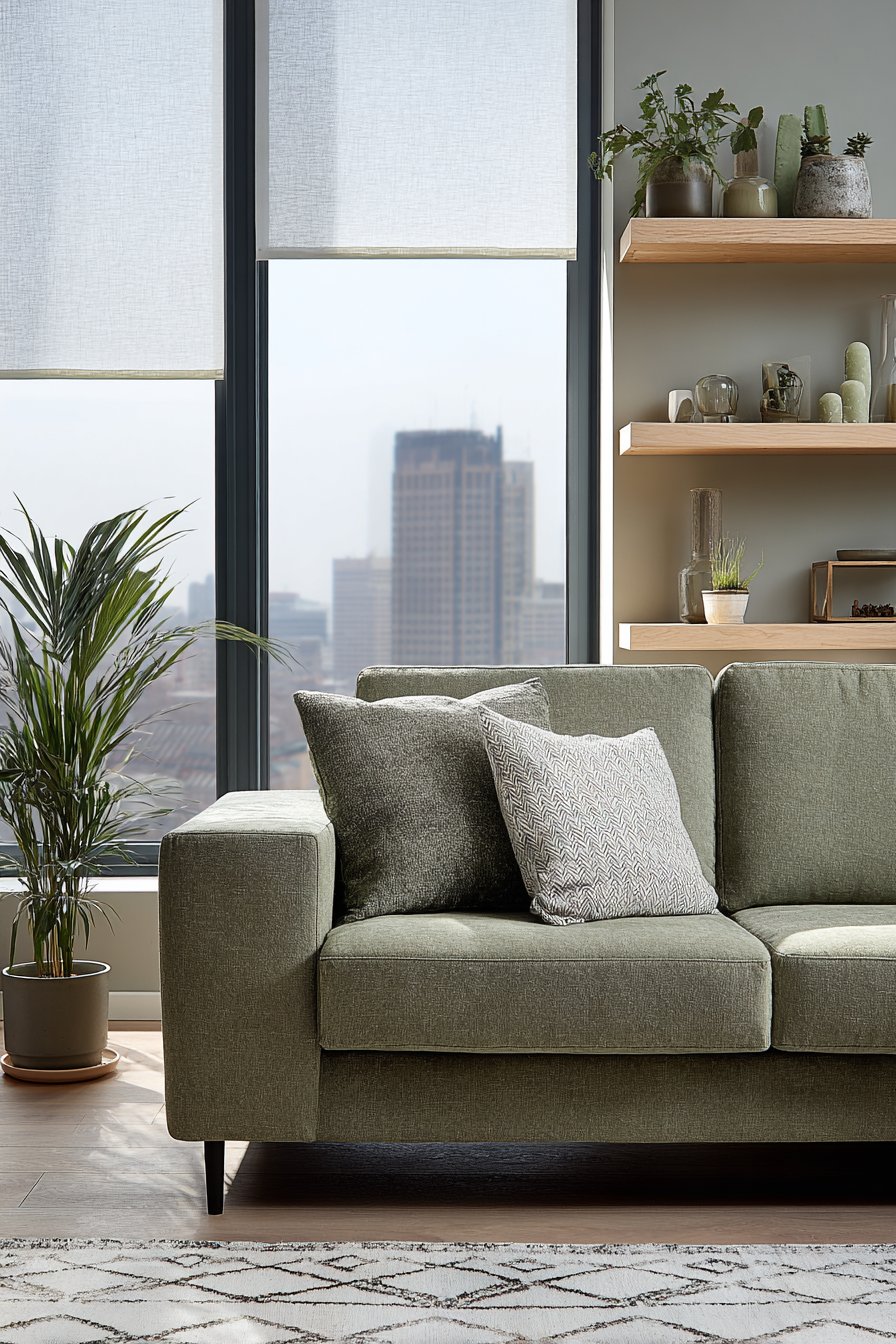
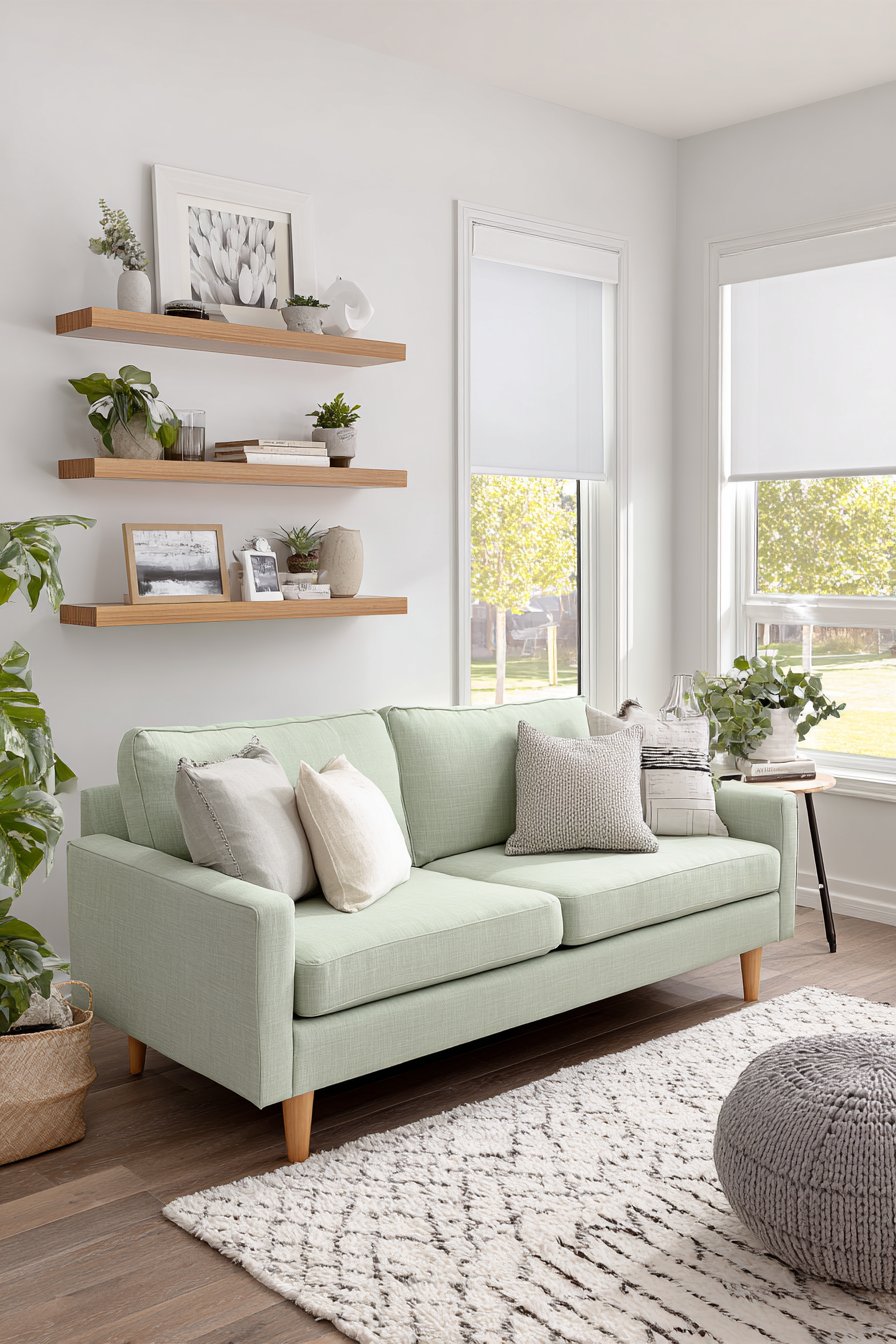
A modern living room featuring a sage green linen sofa represents the perfect marriage of contemporary aesthetics and natural tranquility. The clean lines and tapered wooden legs of the sofa create a sense of airiness, while the soft sage hue provides just enough color to prevent the space from feeling stark or clinical. Natural oak floating shelves mounted on crisp white walls display carefully curated decor items—perhaps a few pottery pieces, small succulents in minimal planters, and a couple of thoughtfully chosen books. This intentional curation prevents visual clutter while adding personality to the space.
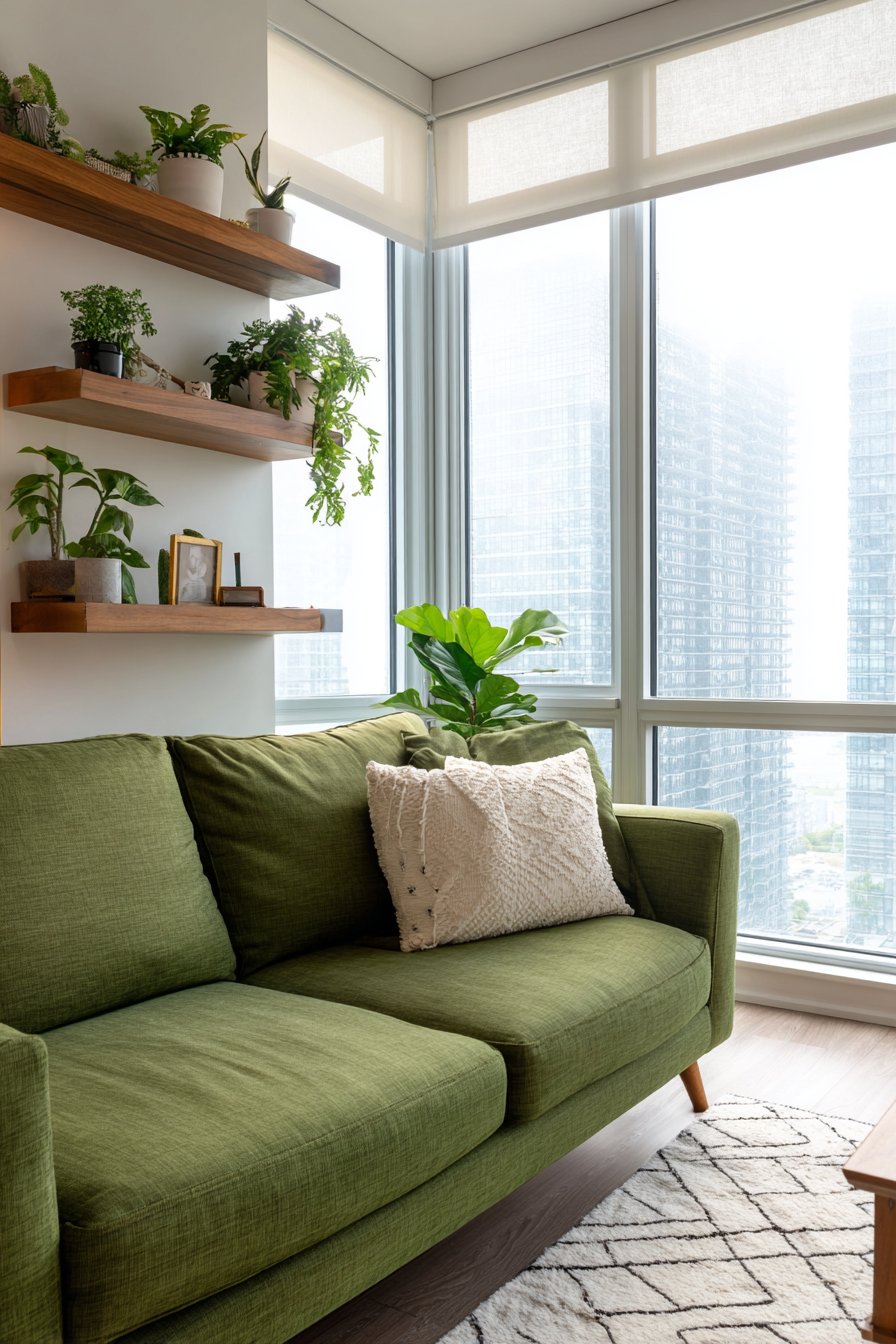
The geometric wool rug in cream and grey tones serves multiple purposes in this design. It anchors the seating area, defines the living space boundaries, and introduces subtle pattern without competing with the sofa’s gentle green hue. Large windows dressed with simple white roller shades allow abundant natural light to flood the room, highlighting the beautiful texture of the linen upholstery and creating gentle shadows that add depth throughout the day. The quality of light in this space transforms constantly, making the sage green appear slightly different from morning to evening—sometimes more grey, sometimes more vibrant.
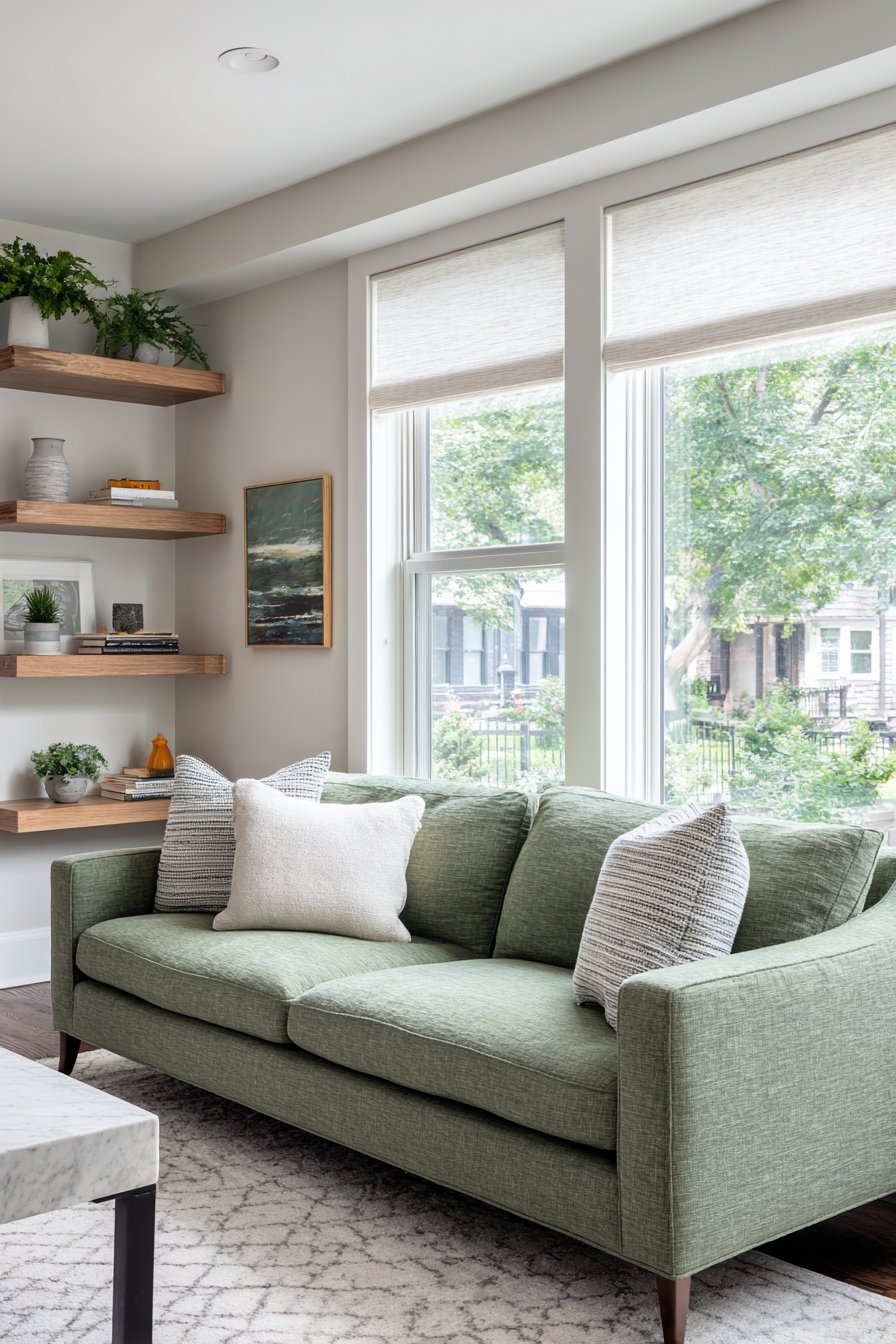
The beauty of this minimalist approach lies in its restraint. Every element serves a purpose, and nothing is superfluous. The sage green sofa becomes the quiet focal point—not through bold drama, but through its perfect proportions and the quality of its materials. The visible texture of the linen fabric adds tactile interest that invites touch, while the natural oak elements throughout the space create warmth that prevents the room from feeling cold or impersonal.
Key Design Tips: Choose a sage green shade that has grey undertones for maximum versatility and longevity. Invest in high-quality linen upholstery that will develop a beautiful patina over time. Keep window treatments minimal to maximize natural light, which is essential for showcasing the sofa’s subtle color variations. Limit decorative objects to a carefully selected few, ensuring each piece has both aesthetic value and personal significance. Consider the sofa’s leg style carefully—tapered wooden legs maintain the airy feel essential to minimalist design.
2. Forest Green Velvet Richness
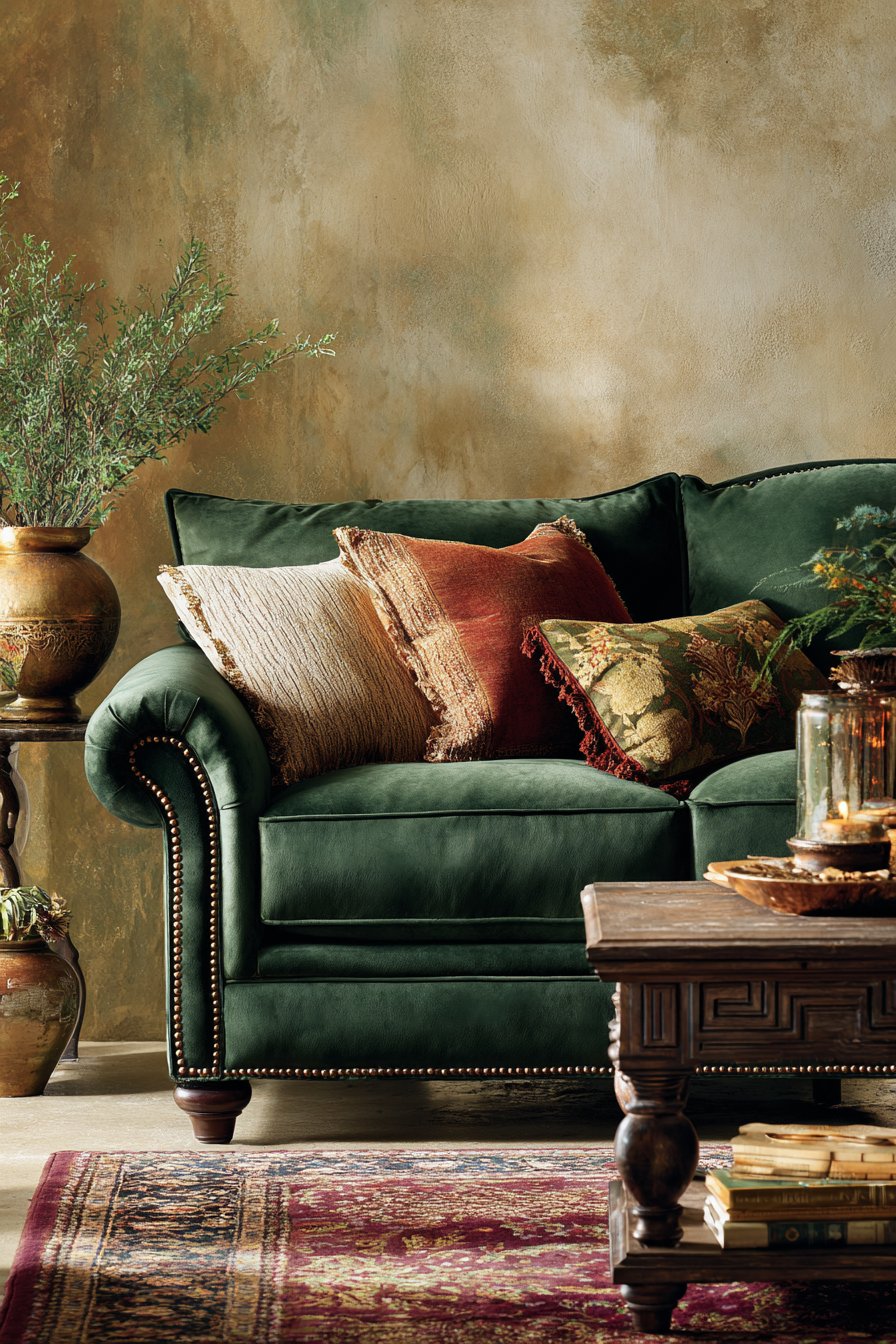
Step into a living room where luxury meets comfort, anchored by a sumptuous forest green velvet sofa with rolled arms and gleaming nailhead trim. This isn’t just furniture—it’s a statement of refined taste and appreciation for quality craftsmanship. The deep, jewel-toned green of the velvet catches light in mesmerizing ways, appearing darker in shadows and luminous where light hits the pile of the fabric. The tactile experience of velvet adds a sensory dimension that elevates the entire room, inviting guests to sink into comfort while surrounded by beauty.
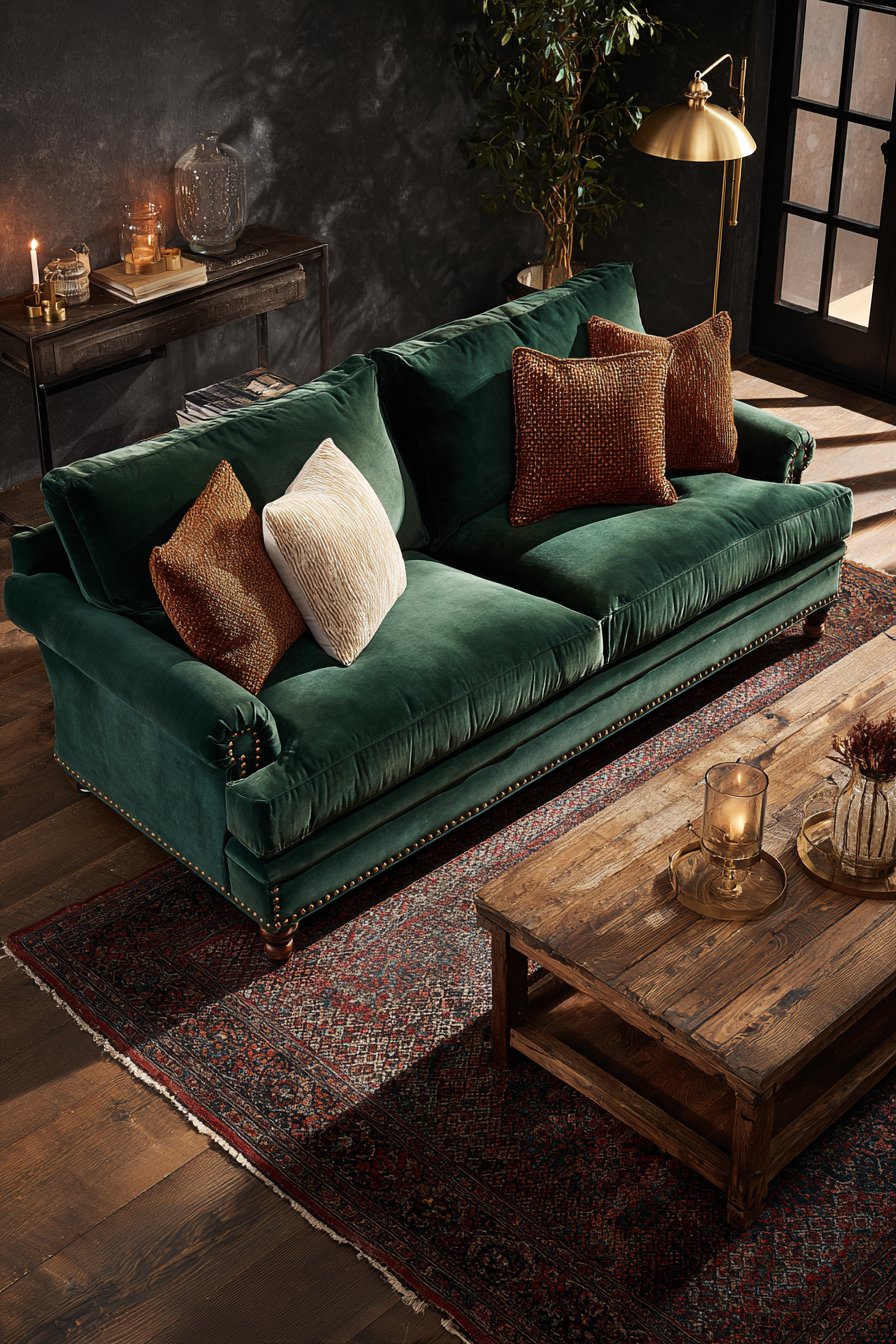
The styling of this sofa demonstrates sophisticated layering techniques. Textured throw pillows in rust, cream, and gold tones create visual interest while complementing the green’s natural warmth. A vintage-inspired brass floor lamp positioned beside the sofa provides both ambient and task lighting, its warm metallic finish echoing the gold accents scattered throughout the pillows. The reclaimed wood coffee table introduces organic texture and a sense of history, while its weathered finish contrasts beautifully with the velvet’s pristine surface.
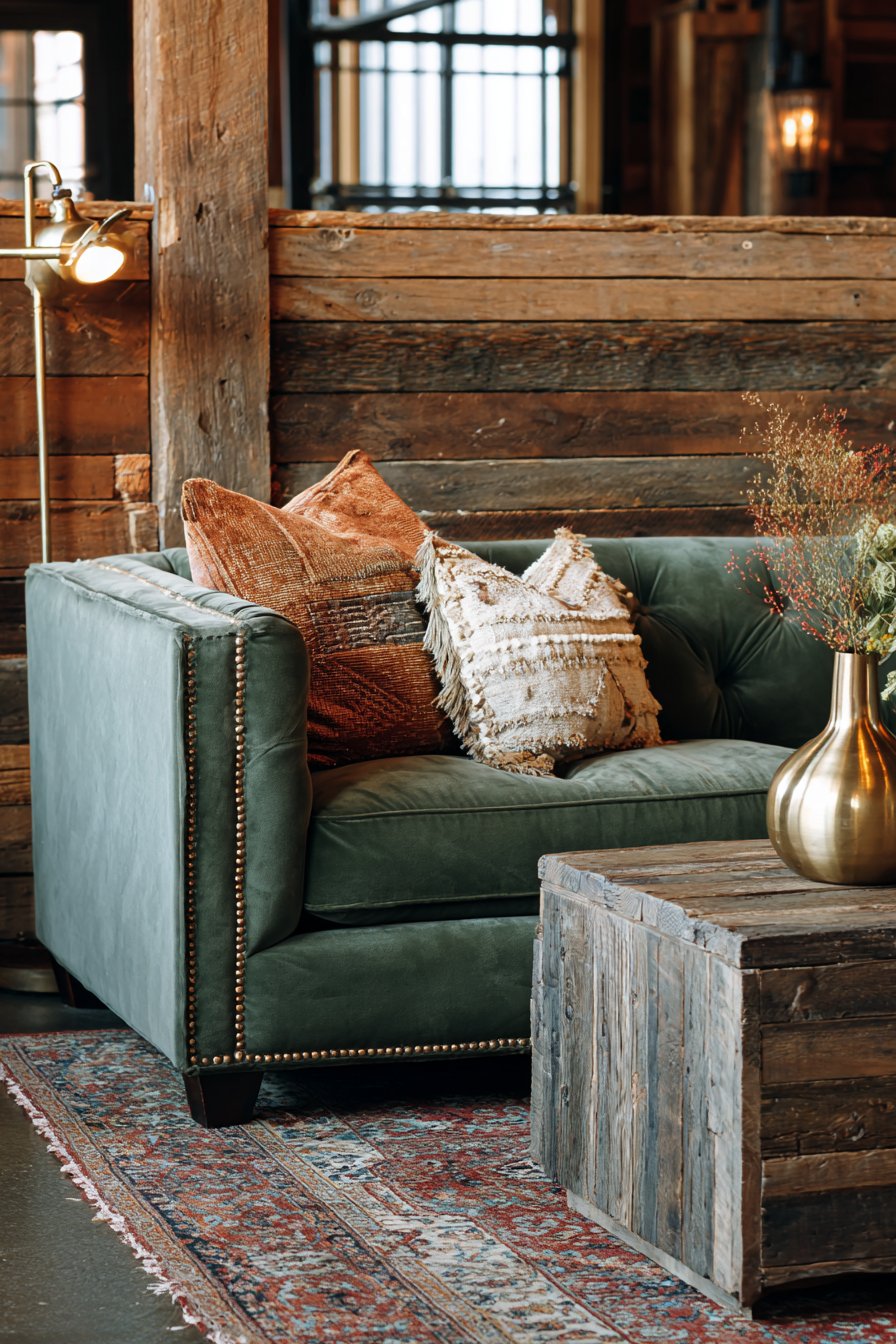
The Persian-style area rug beneath the coffee table incorporates burgundy and cream patterns that harmonize with the overall color scheme while adding another layer of visual richness. This isn’t a minimalist space—it’s a room that celebrates abundance, texture, and the art of thoughtful composition. The forest green sofa serves as the anchor that allows all these elements to coexist harmoniously, its substantial presence and rich color providing the visual weight necessary to ground the layered design.
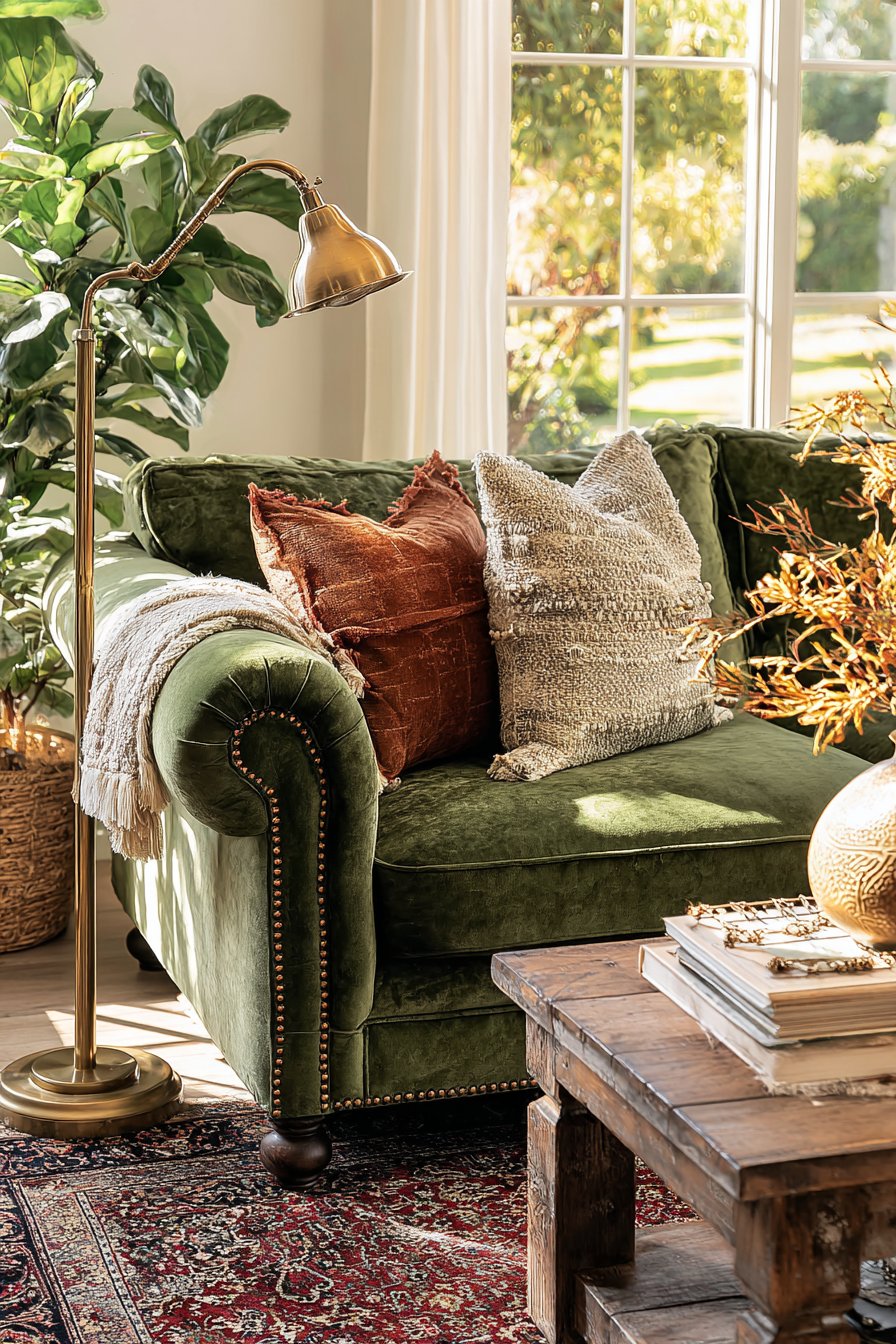
Key Design Tips: Invest in the highest quality velvet you can afford, as cheaper versions will show wear quickly and lack the depth of color that makes this design work. Use metallic accents strategically—brass, gold, and copper all complement forest green beautifully. Layer textures generously, mixing smooth velvet with rough wood, soft textiles with hard metals. Choose a rug with traditional patterns that echo the room’s color palette without exactly matching it. Position lighting to highlight the velvet’s light-catching properties, creating dramatic shadows and highlights that showcase the fabric’s luxurious nature.
3. Scandinavian Mint Green Serenity
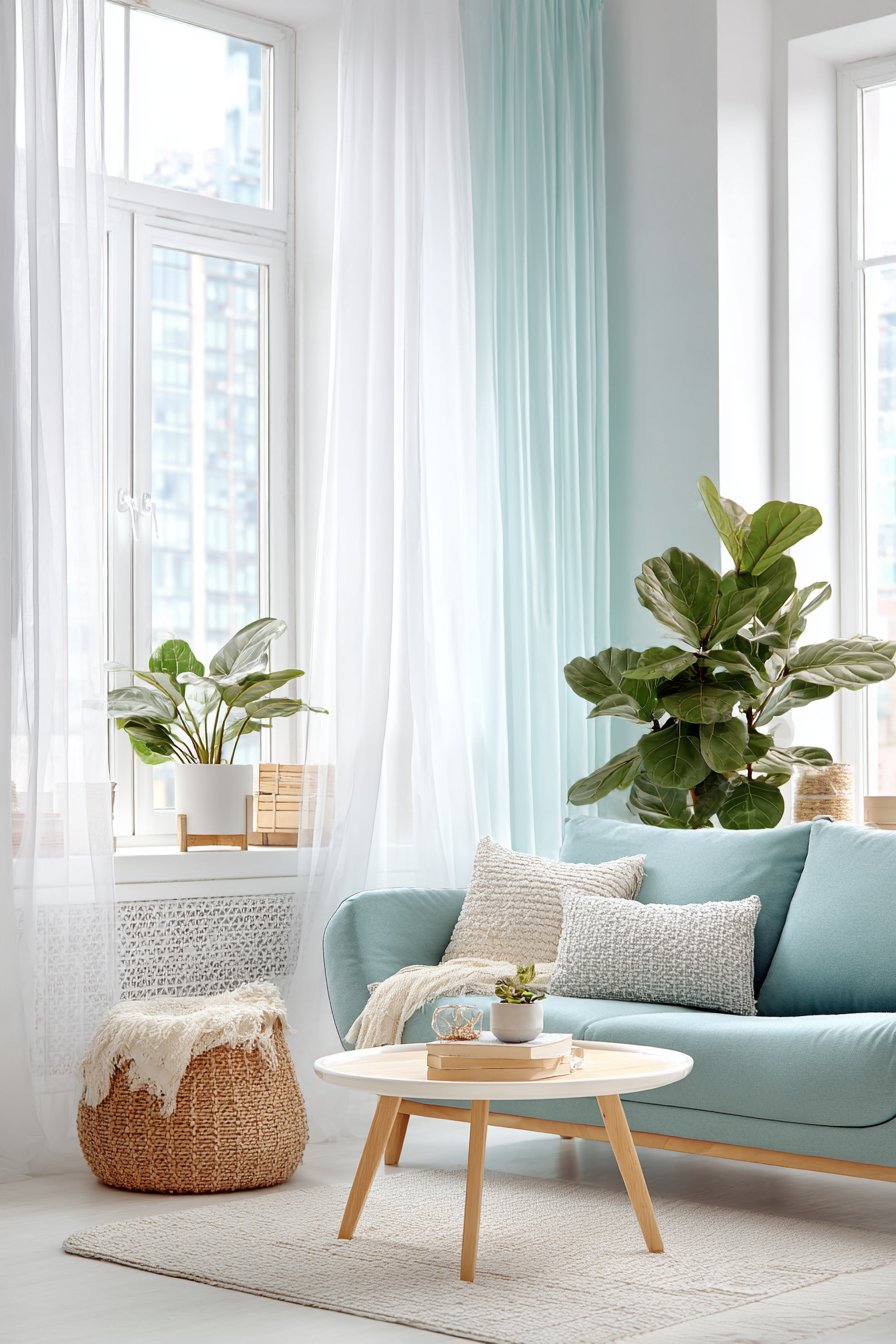
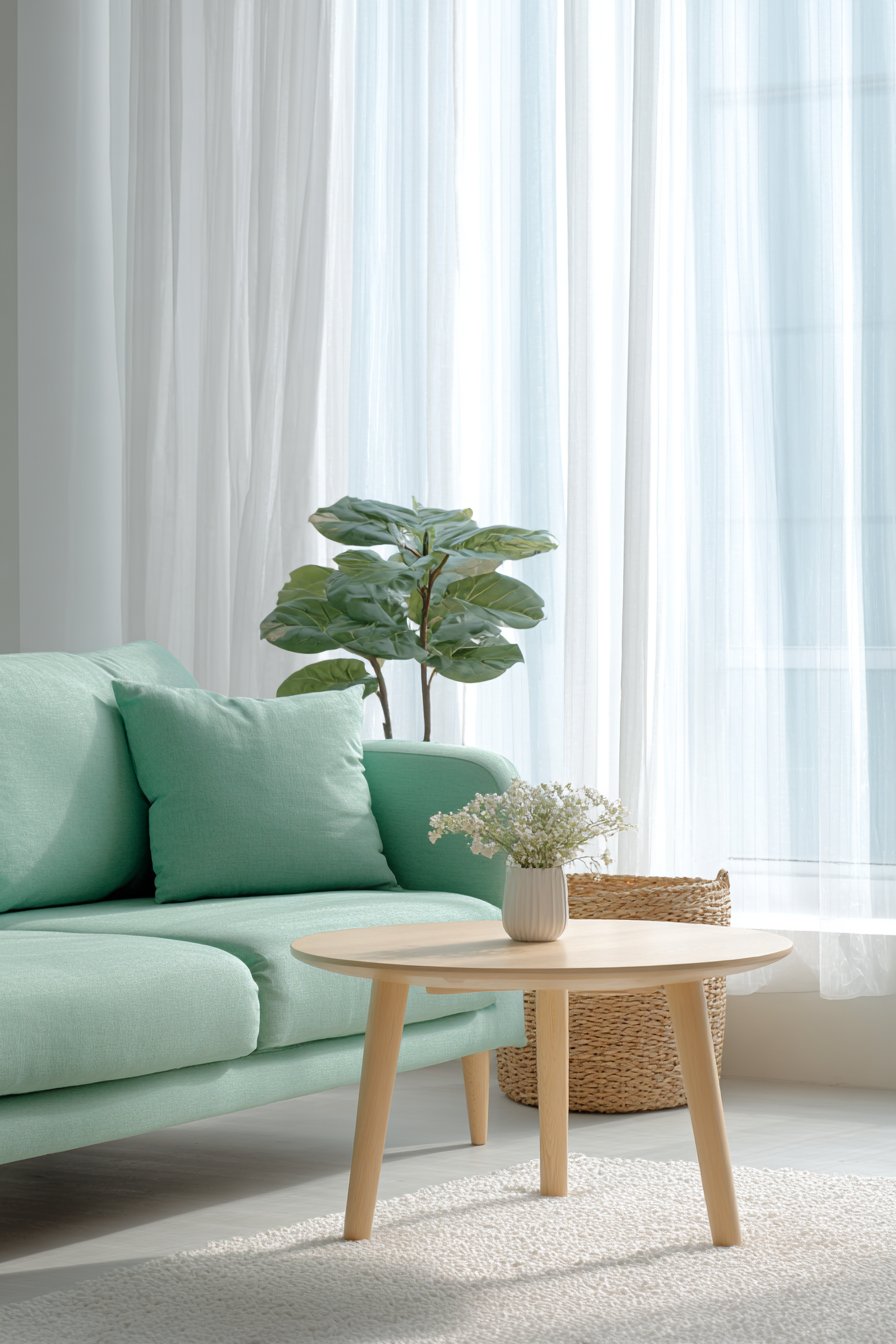
The Scandinavian approach to design celebrates simplicity, functionality, and connection to nature—principles perfectly embodied in a living room featuring a mint green fabric sofa with light birch legs. This isn’t the stark, cold minimalism some associate with Nordic design; rather, it’s a warm, inviting interpretation that uses subtle color and natural materials to create spaces that nurture well-being. The mint green hue is soft and soothing, reminiscent of early spring growth and new beginnings, while the birch legs connect the piece to Scandinavian forests and craftsmanship traditions.
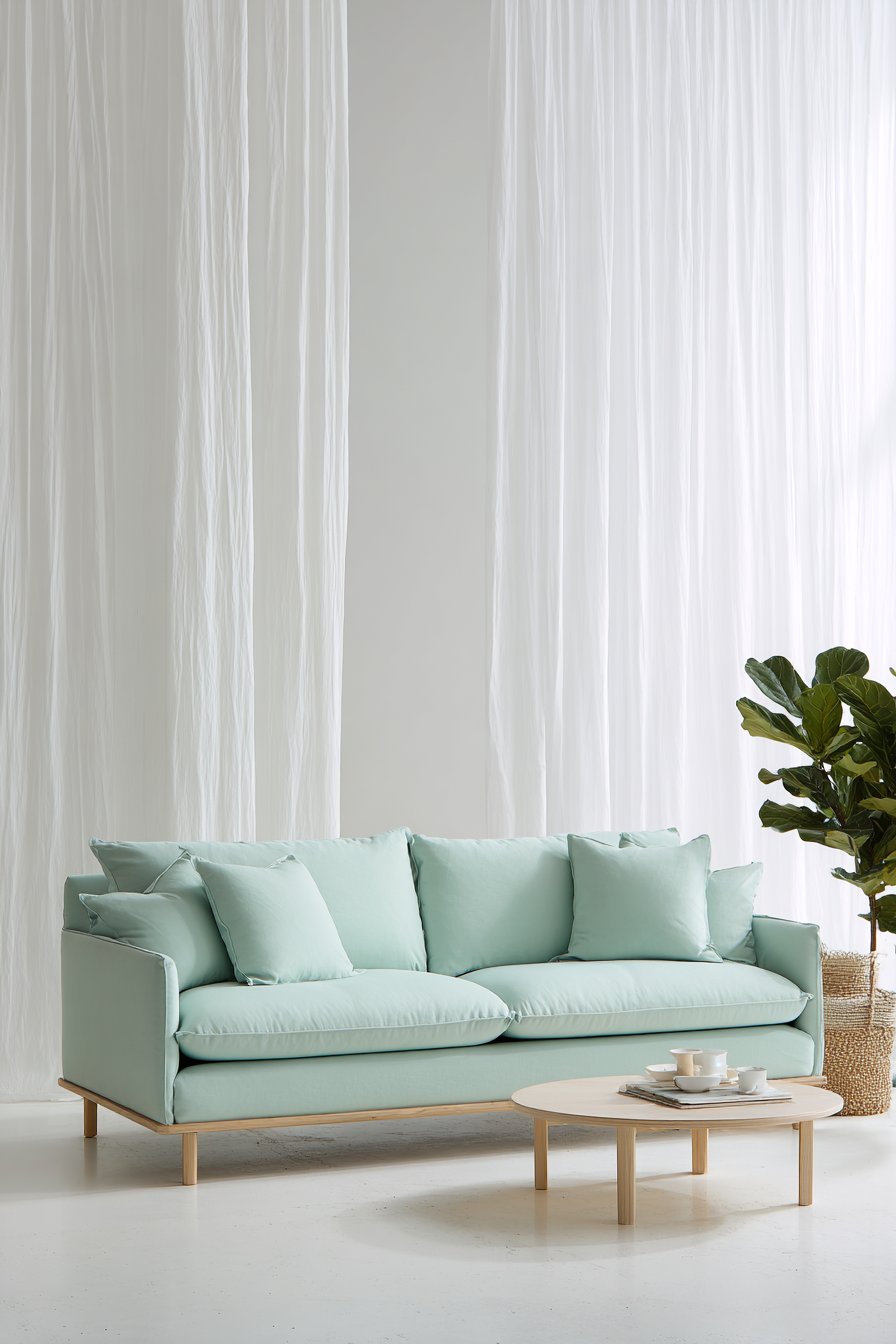
White walls serve as a clean canvas that reflects and amplifies the abundant natural light essential to Scandinavian interiors. A simple round coffee table in blonde wood continues the natural material theme while its circular shape softens the angular lines of the sofa and room architecture. Woven basket storage tucked beneath or beside furniture pieces demonstrates the Scandinavian commitment to functional beauty—everything serves a purpose, and beauty emerges from well-designed functionality rather than applied decoration.
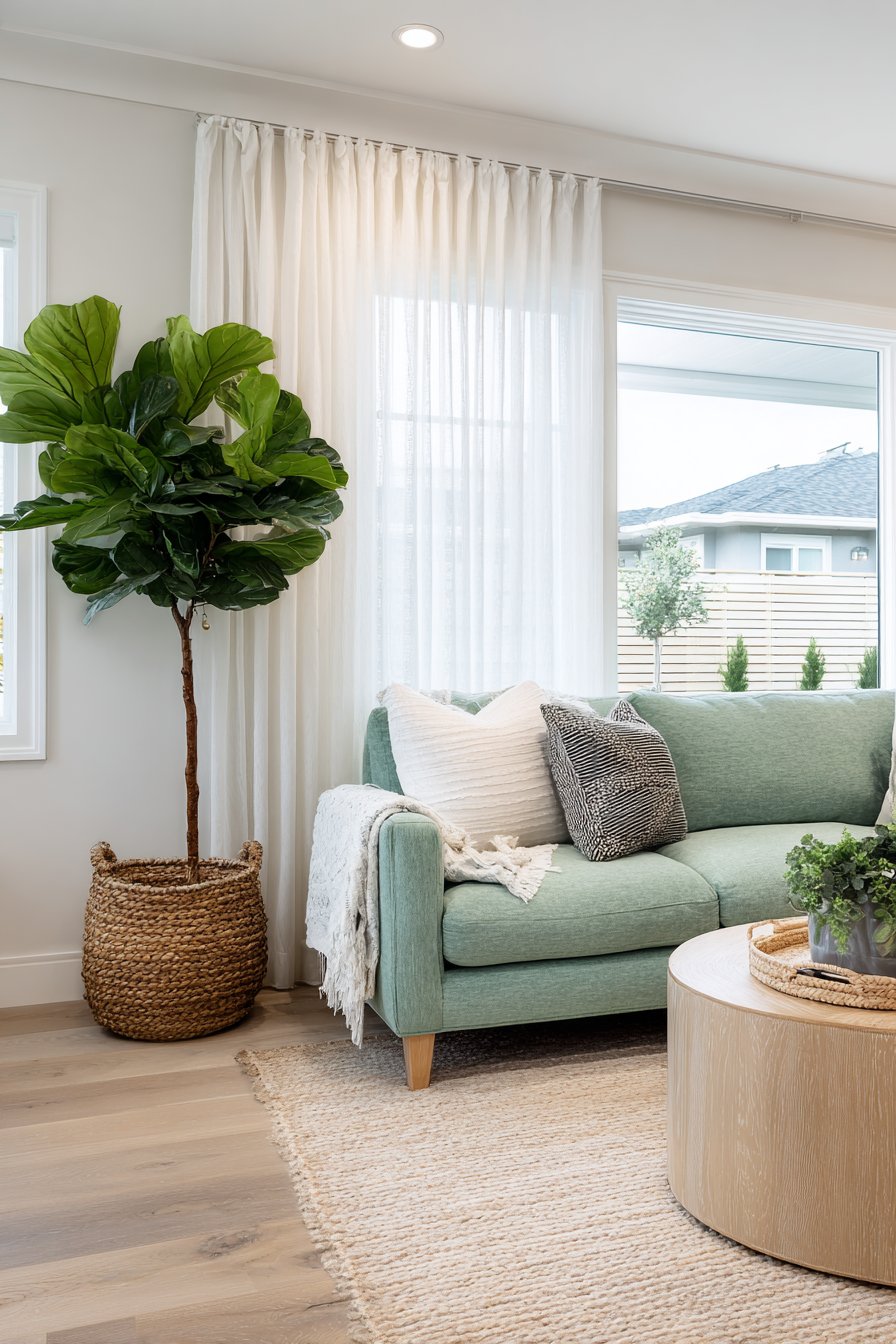
The single fiddle leaf fig plant isn’t merely decorative; it represents the Nordic philosophy of bringing nature indoors, particularly important in climates where outdoor access may be limited for portions of the year. Sheer white curtains diffuse bright natural light, creating an even, gentle illumination that eliminates harsh shadows while maintaining the room’s connection to the outdoors. This is a space designed for living—for reading in afternoon light, for quiet conversations, for the peaceful moments that constitute a well-lived life.
Key Design Tips: Embrace negative space as a design element rather than something to fill with furniture or accessories. Choose furniture with visible legs to maintain the airy feel characteristic of Scandinavian design. Invest in quality natural materials rather than synthetic alternatives—the difference is both visible and tactile. Keep the color palette limited, using variations of white, grey, and natural wood tones to support rather than compete with the mint green sofa. Prioritize natural light above all else, using minimal window treatments that allow maximum sunlight penetration while providing necessary privacy.
4. Bohemian Olive Green Eclecticism
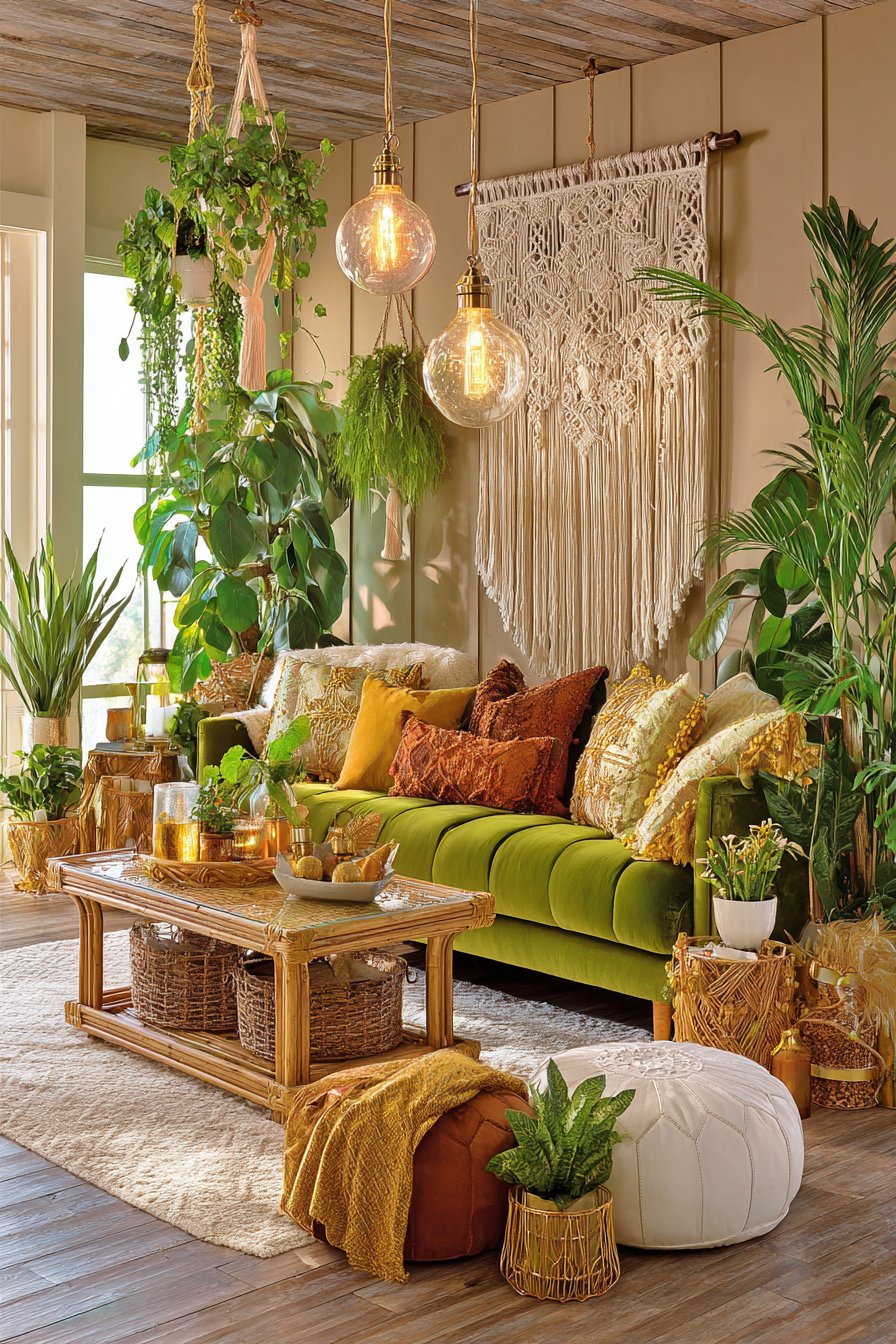
A bohemian living room centered around an olive green velvet sofa celebrates individuality, collected treasures, and the beauty of imperfection. This design philosophy rejects matching sets and coordinated collections in favor of pieces gathered over time, each with its own story and character. The olive green provides an earthy foundation that can accommodate the riot of colors, patterns, and textures characteristic of bohemian style. Adorned with an eclectic mix of throw pillows in terracotta, mustard, and cream, the sofa becomes a canvas for personal expression and creative combination.
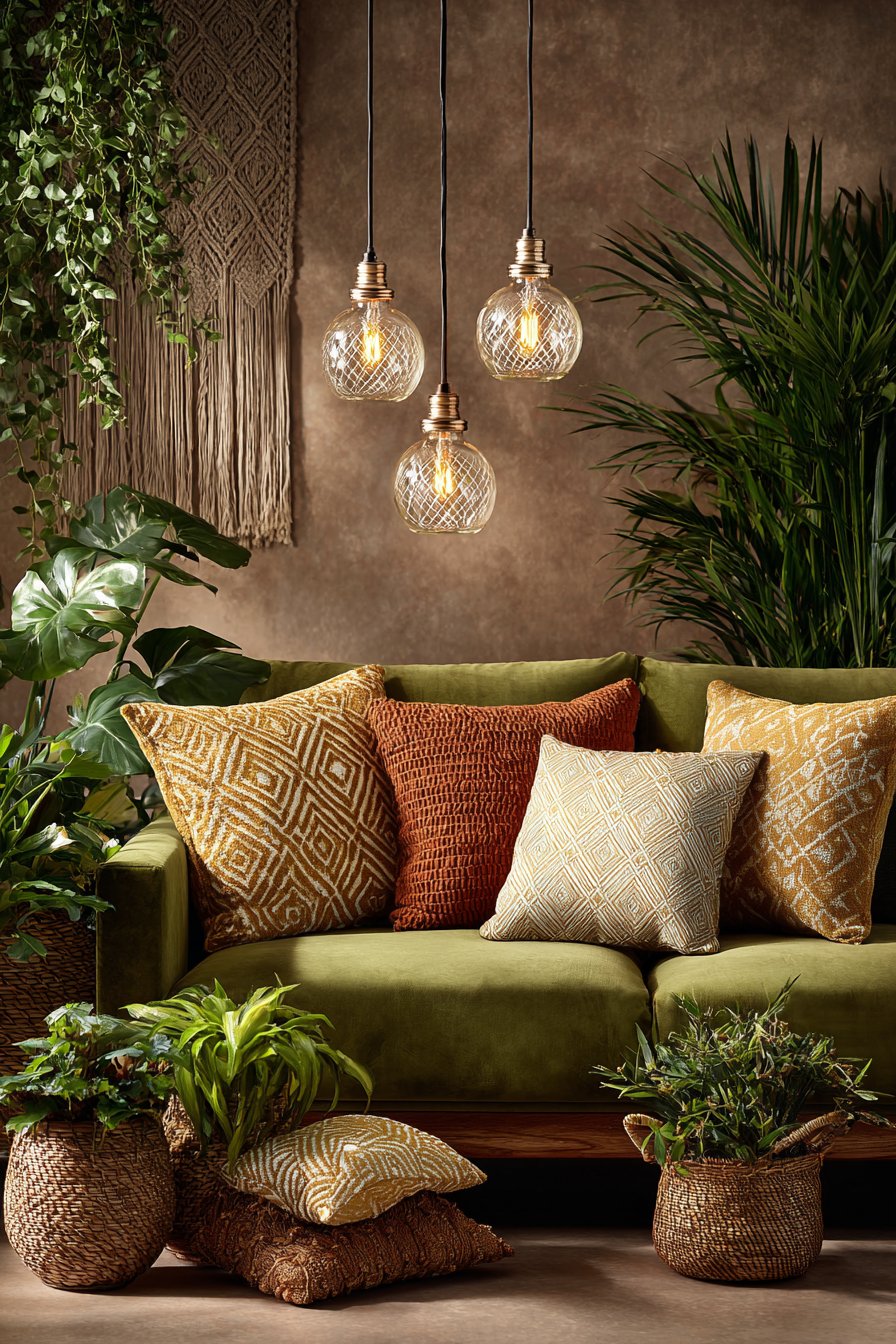
Macrame wall hangings suspended above the sofa demonstrate the bohemian appreciation for handcrafted items and artisanal techniques. These textile arts add vertical interest while their cream or natural fiber colors complement without competing with the busy pillow arrangement below. Layered textiles throughout the space—perhaps a vintage kilim draped over the sofa’s arm, a chunky knit throw folded nearby, woven wall hangings at various heights—create the sense of abundance and comfort central to bohemian aesthetics.
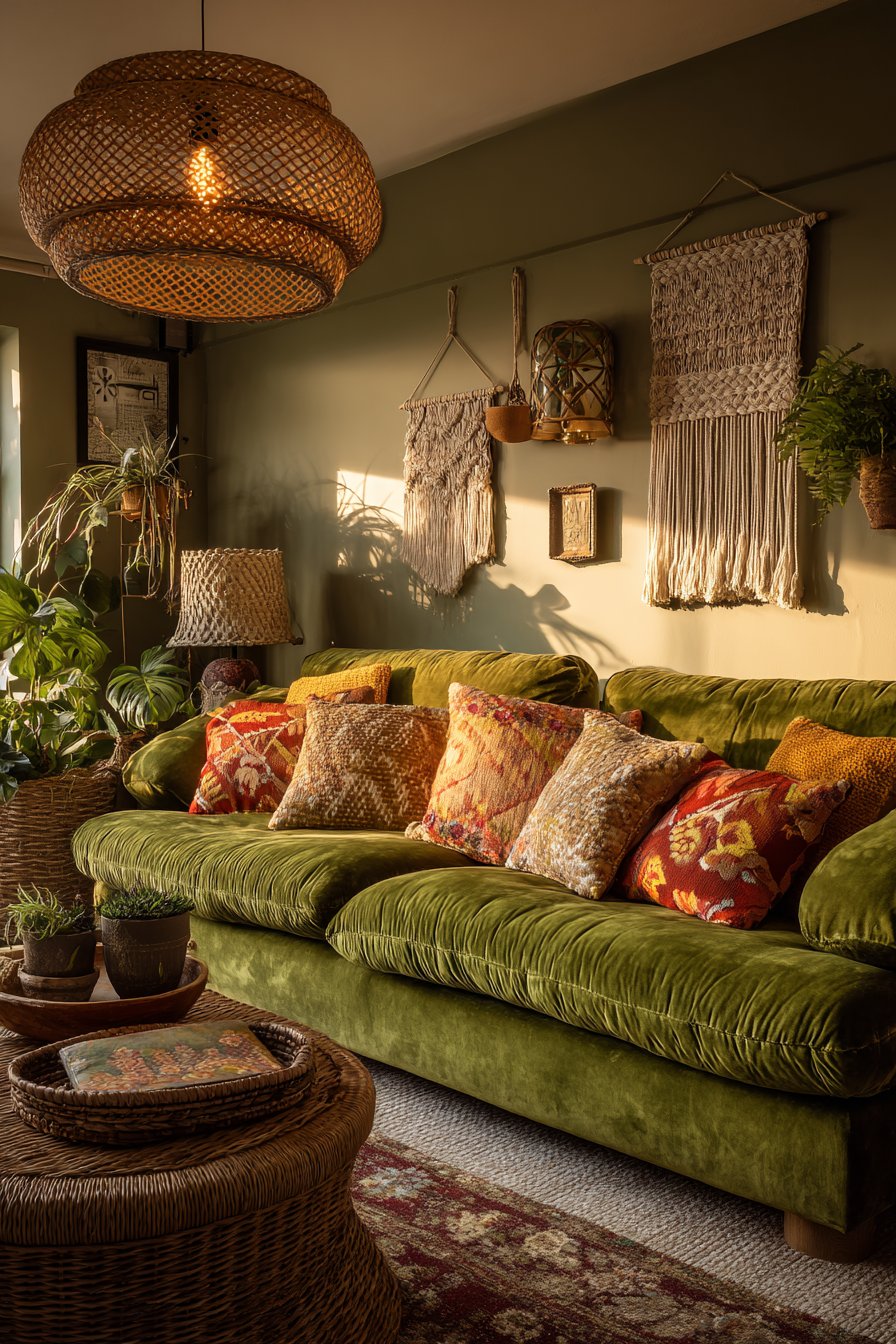
The rattan coffee table introduces natural texture and a casual, relaxed vibe that invites putting feet up and settling in for long conversations. Multiple potted plants of varying sizes and species create an indoor garden atmosphere, their greenery echoing and enhancing the olive tone of the sofa while purifying the air and connecting the space to nature. Warm Edison bulb pendant lighting creates a golden hour ambiance regardless of actual time, casting a flattering glow that makes the space feel perpetually sunset-touched and magical.
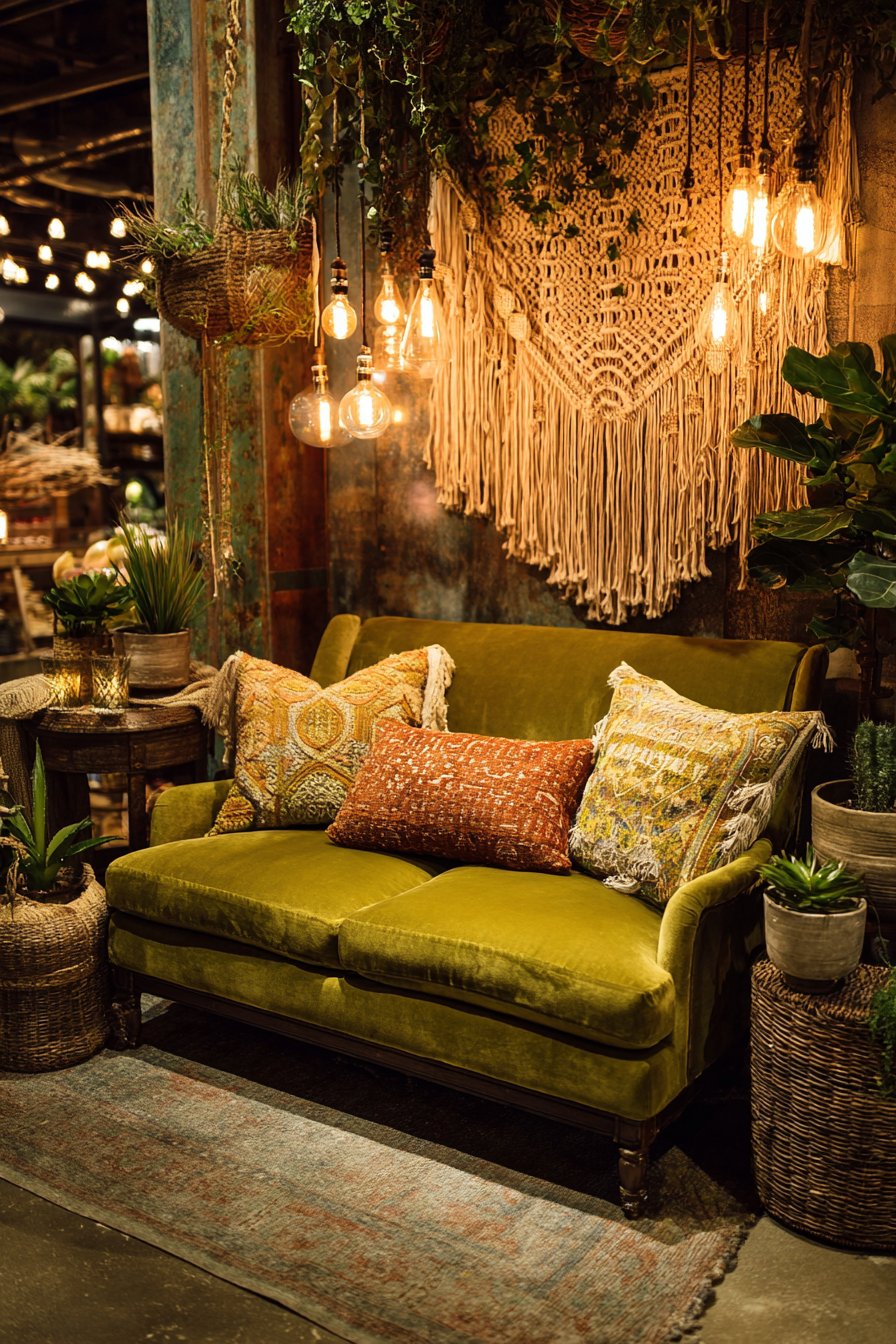
Key Design Tips: Don’t be afraid to mix patterns boldly—florals with geometrics, traditional with contemporary—as long as colors coordinate. Incorporate global textiles and artifacts from your travels or cultures you admire, but do so respectfully and authentically. Layer lighting at multiple levels, using floor lamps, table lamps, string lights, and candles to create adjustable ambiance. Embrace plants enthusiastically, mixing large floor plants with hanging varieties and tabletop succulents. Allow the space to evolve organically over time rather than completing it all at once—bohemian style should feel collected, not decorated.
5. Compact Hunter Green Efficiency
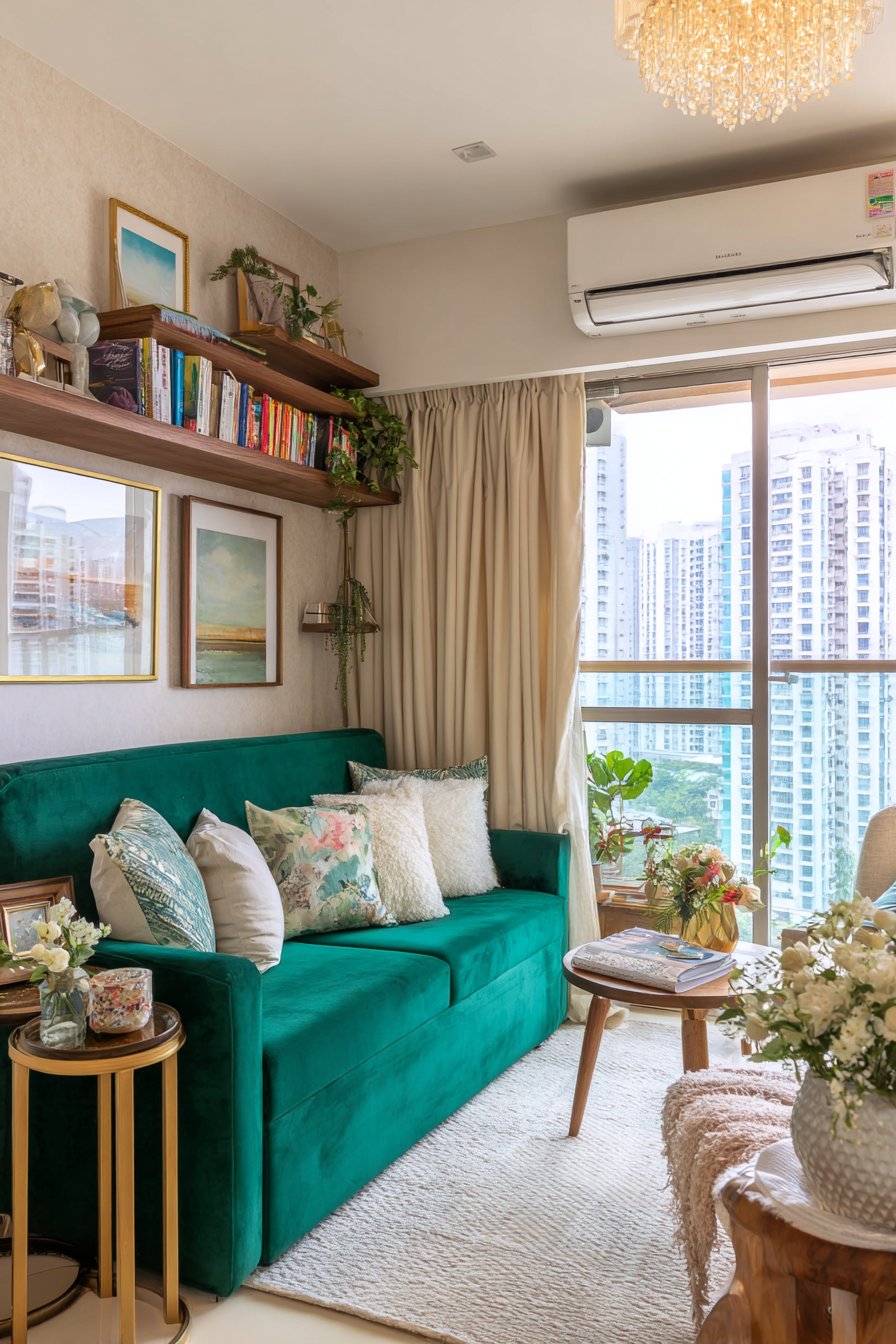
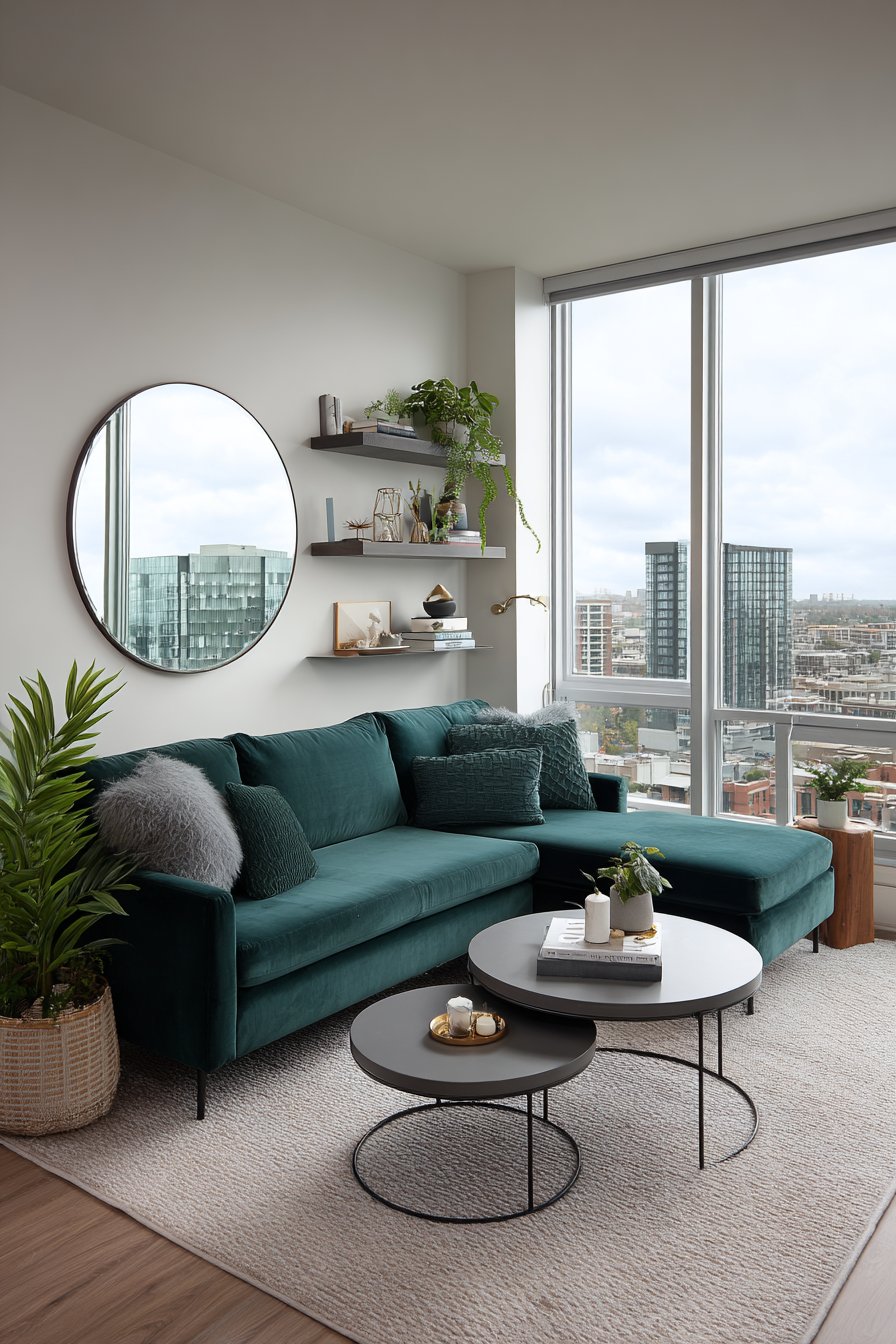
Small apartment living demands creative solutions that maximize every square inch without sacrificing style or comfort. A compact hunter green sofa with built-in storage underneath exemplifies this principle, providing comfortable seating while utilizing often-wasted space beneath cushions for storing throws, books, or seasonal items. The deep hunter green color adds visual weight and sophistication to the small space, proving that limited square footage doesn’t require pale, receding colors—bold choices can actually define and enhance compact rooms when executed thoughtfully.
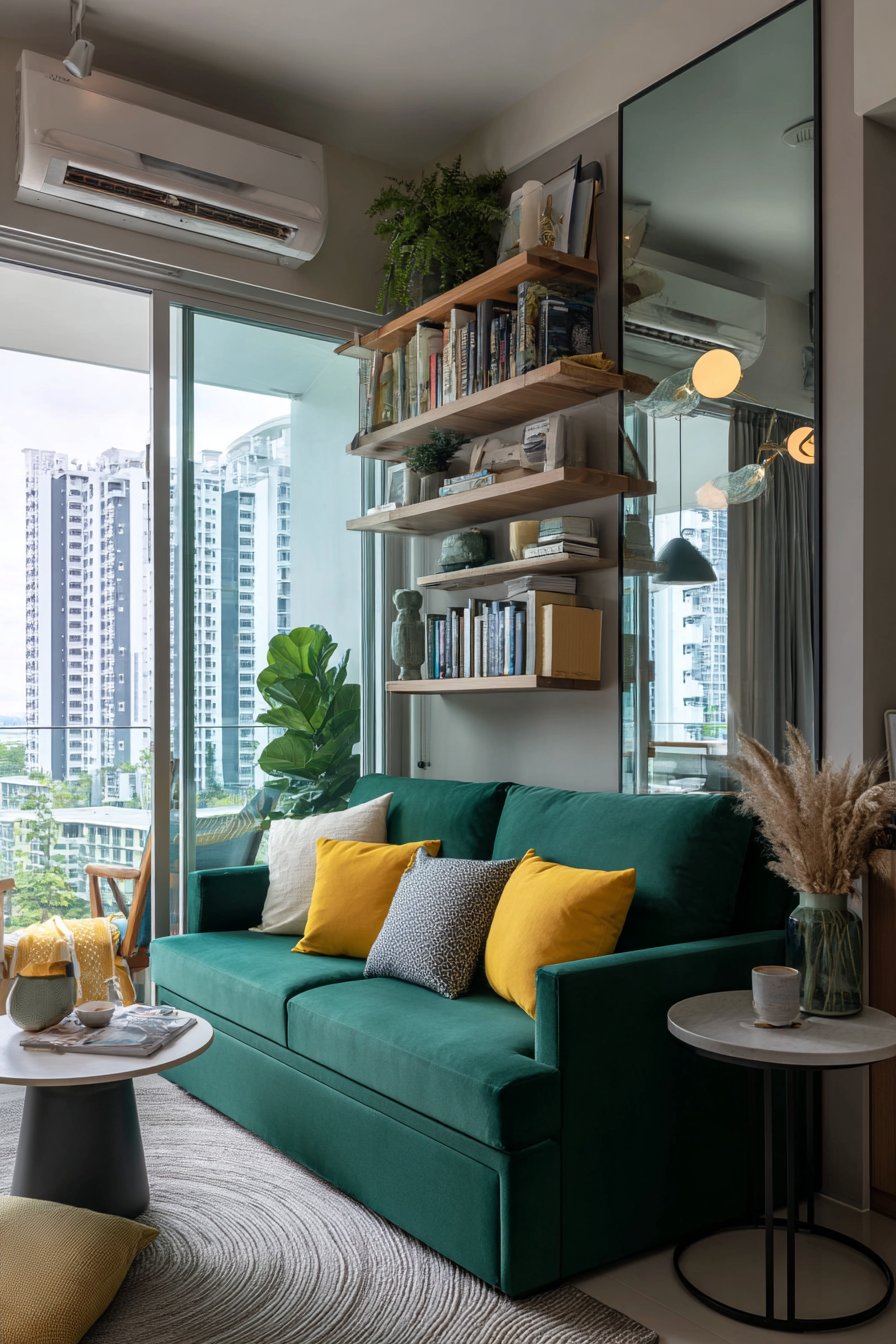
Wall-mounted floating shelves climb the vertical space above and around the sofa, drawing the eye upward and creating the illusion of height while providing essential storage and display area. These shelves hold books arranged both vertically and horizontally, small plants that add life without consuming floor space, and carefully selected decorative objects that reflect the inhabitant’s personality. The key is curation—in small spaces, every visible item must justify its presence through beauty, function, or both.
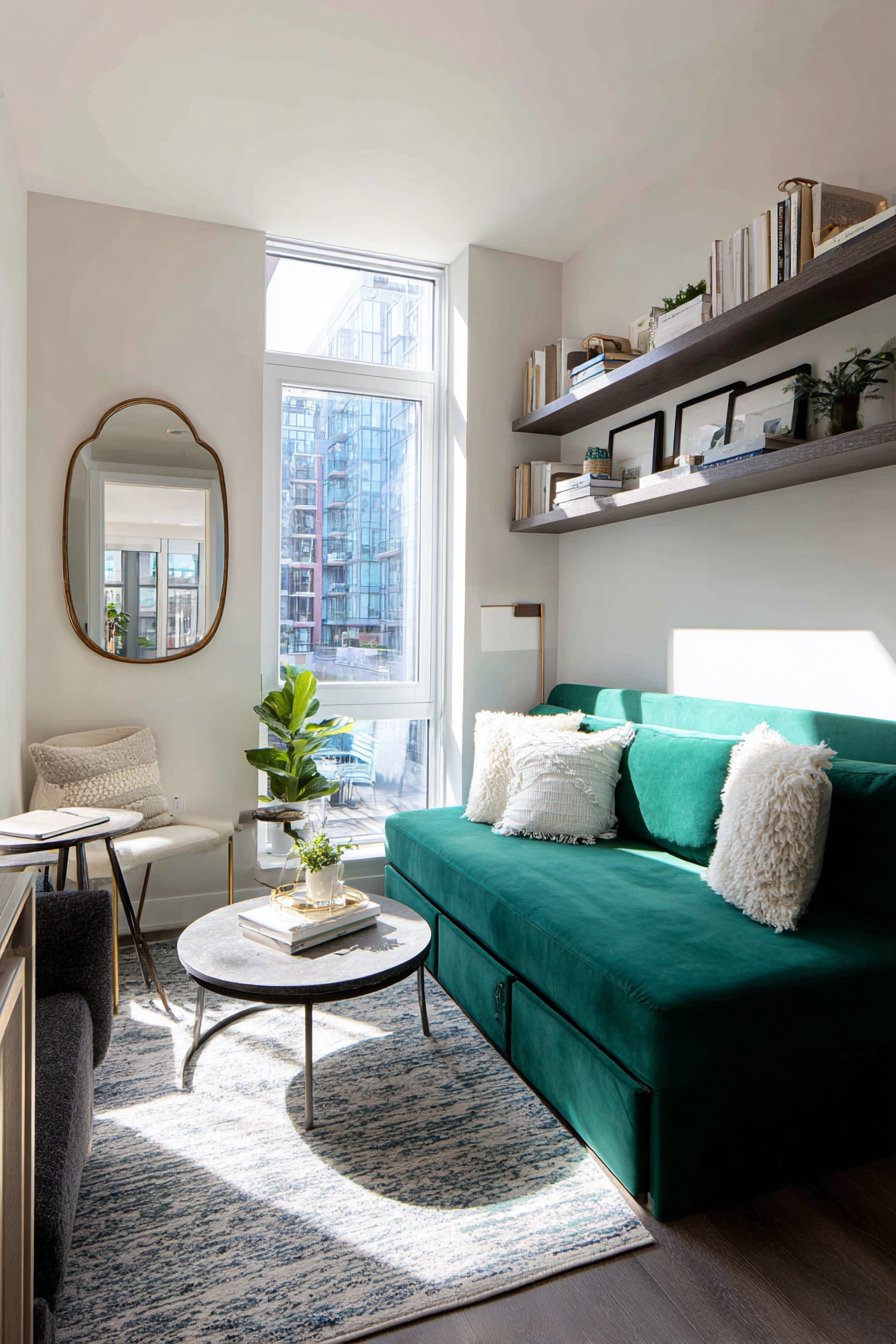
A small round coffee table and slim side table maintain the room’s functionality without creating the crowding that larger, bulkier furniture would cause. The round shape is particularly clever in small spaces, eliminating sharp corners that can impede movement while creating better flow patterns for foot traffic. A large mirror mounted on an adjacent wall performs double duty, reflecting natural light from the window to brighten the space while creating the illusion of expanded square footage—a classic design trick that works particularly well when the mirror reflects both the window and the handsome hunter green sofa.
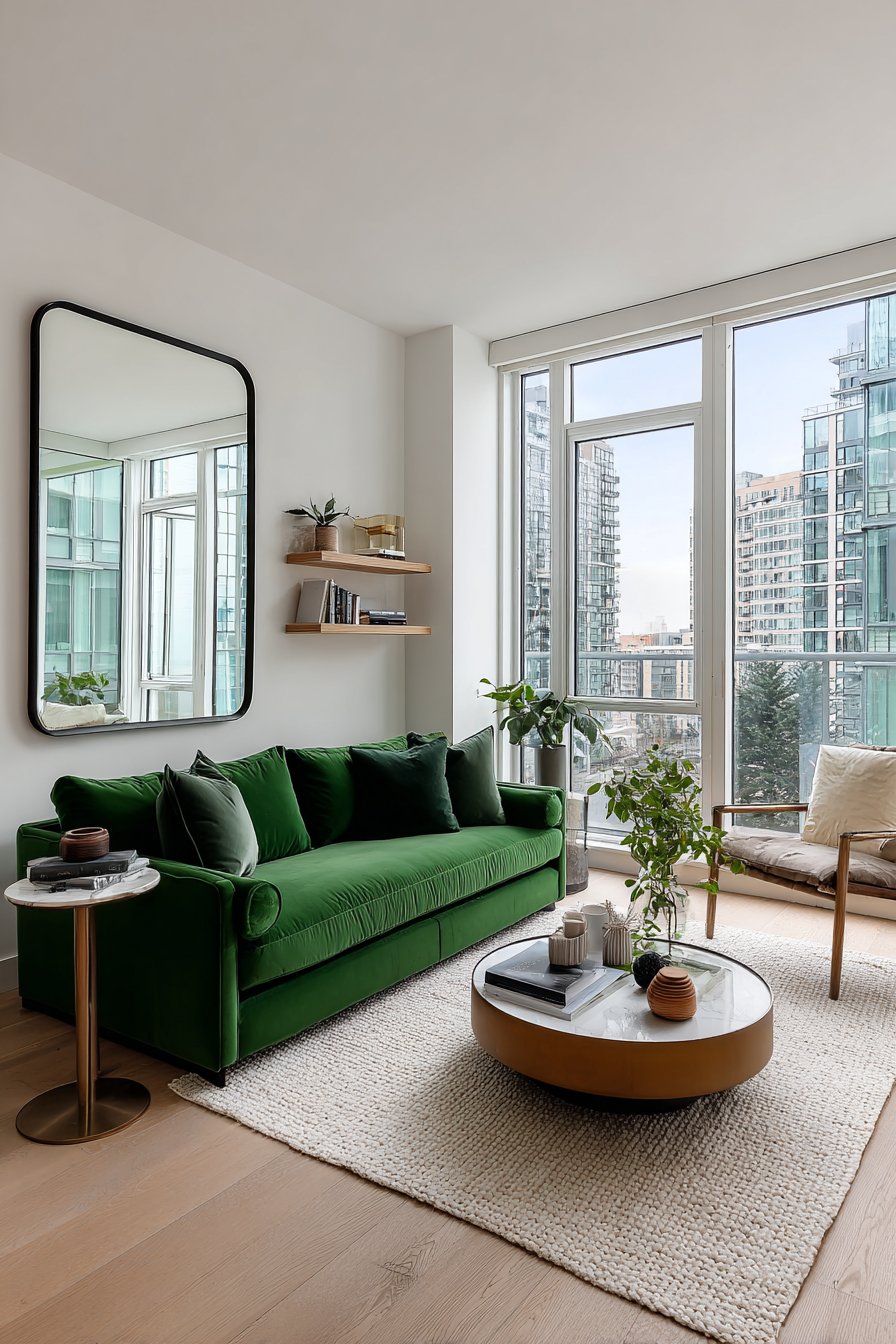
Key Design Tips: Choose furniture with exposed legs to create visual lightness and allow light to flow beneath pieces. Utilize vertical space aggressively with floor-to-ceiling shelving and wall-mounted storage. Select a bold sofa color to create a focal point rather than trying to make furniture “disappear” with neutral tones. Use mirrors strategically to reflect light and create depth, positioning them to reflect the room’s best features. Keep the floor as clear as possible, avoiding area rugs in very small spaces where they can make the room feel choppy and even smaller.

6. Transitional Teal Green Sophistication
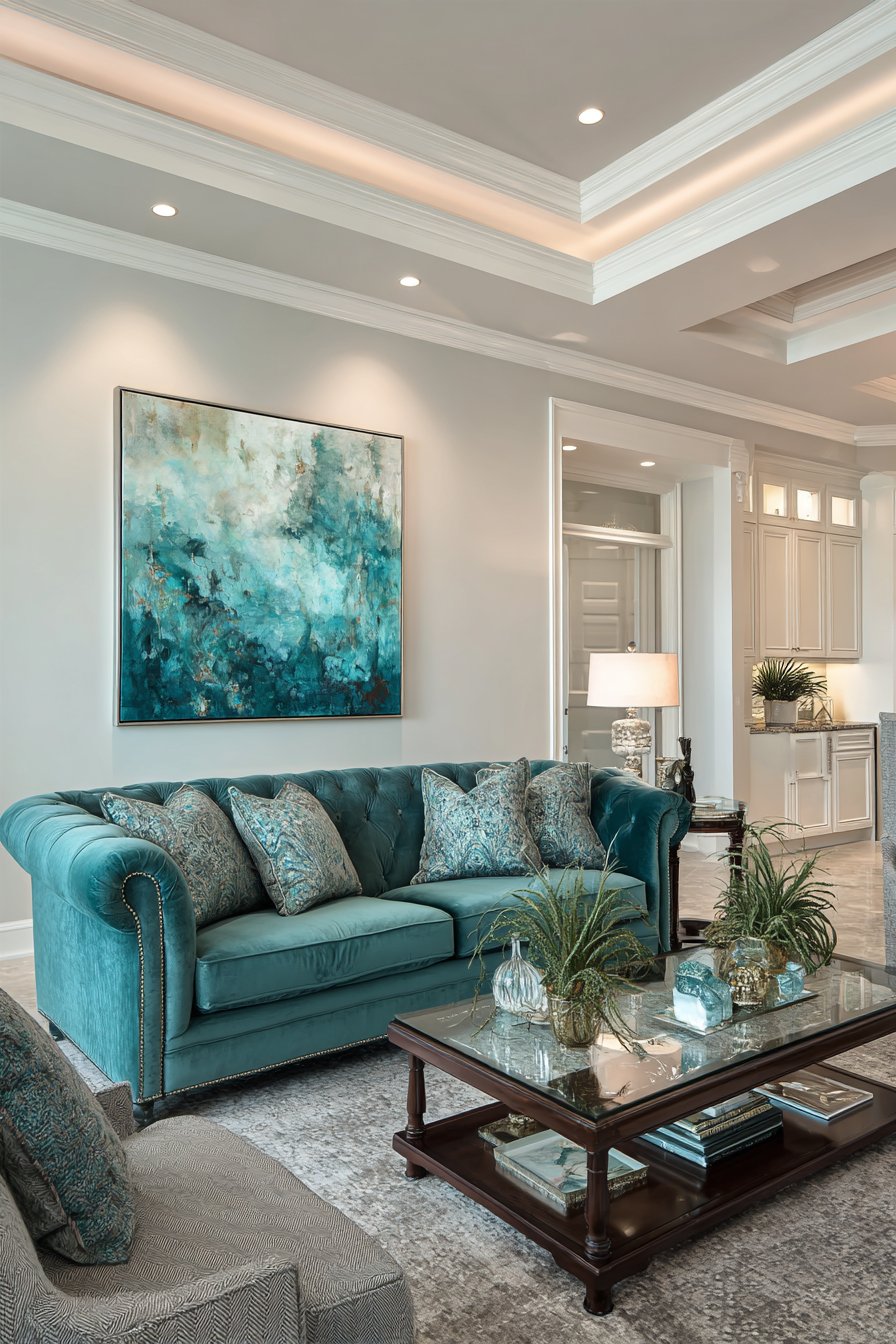
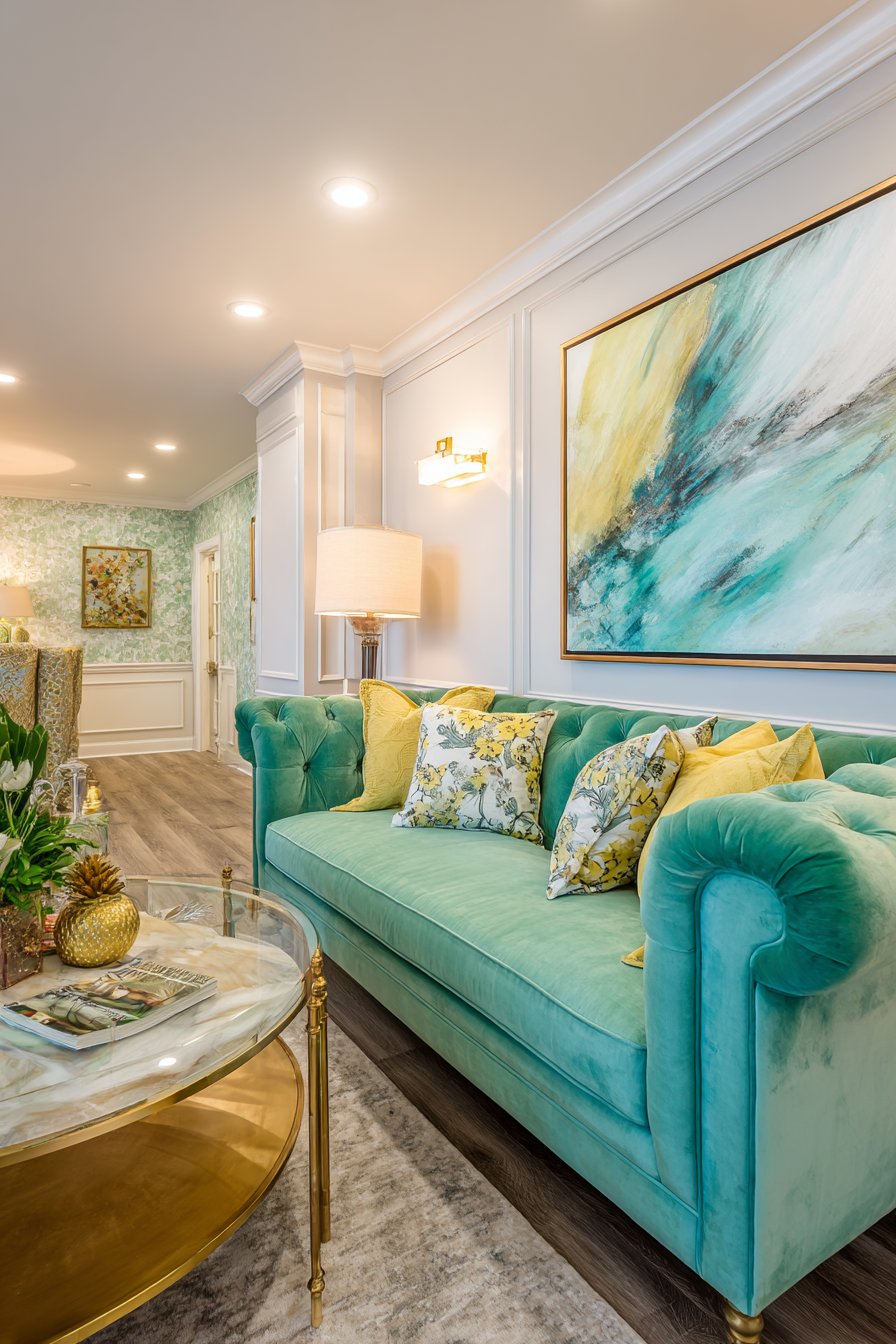
The transitional style bridges traditional elegance and contemporary sensibility, creating spaces that feel both timeless and current. A teal green tufted sofa with rolled arms and turned legs embodies this balanced approach, combining classic furniture silhouettes with a fresh, modern color choice. The button tufting adds texture and visual interest while referencing traditional upholstery techniques, yet the teal green hue prevents the piece from reading as dated or overly formal.
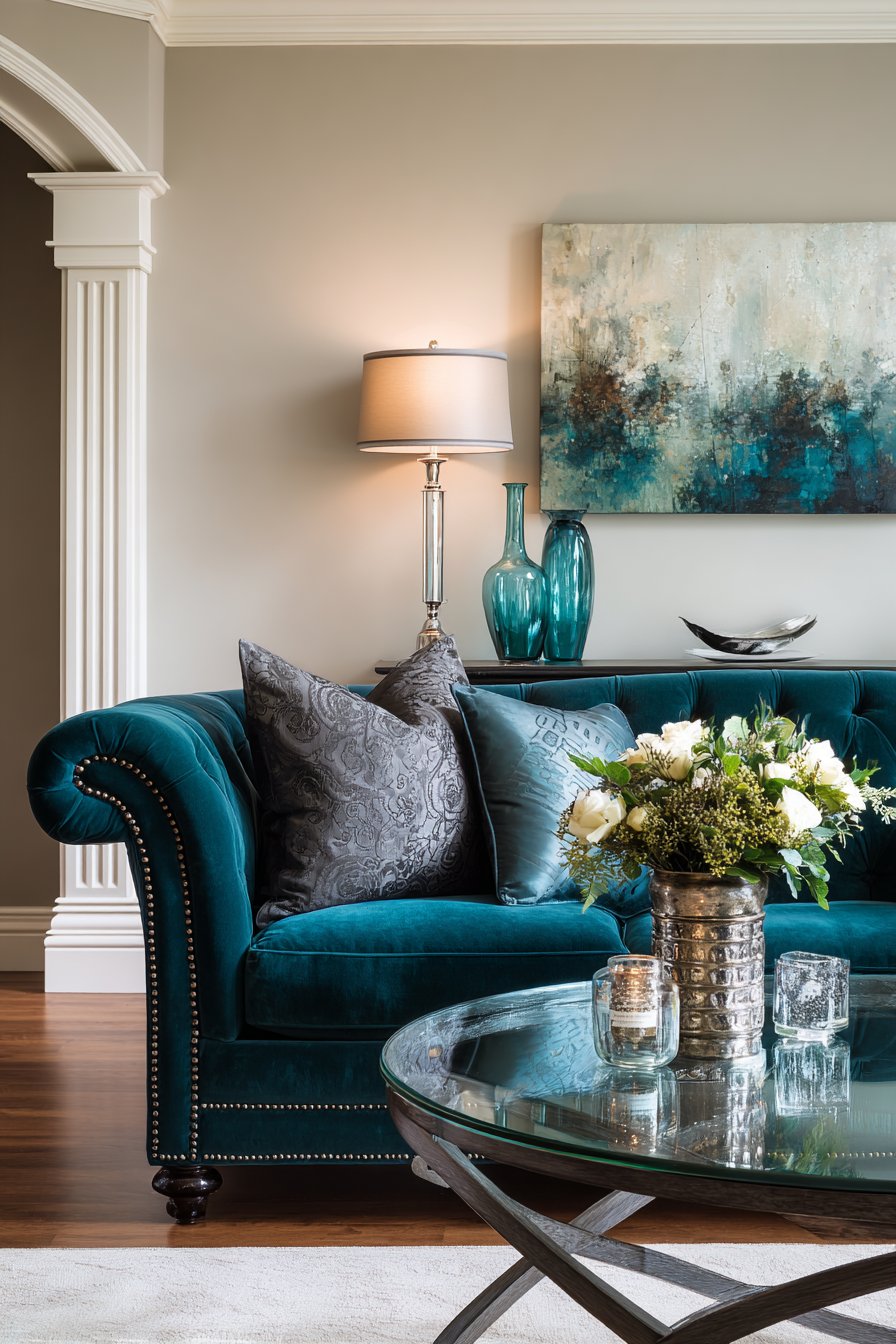
Traditional crown molding frames the ceiling, adding architectural interest and connecting the space to classical design principles, while modern abstract art hung above the sofa injects contemporary energy and color. This juxtaposition—old and new, classic and current—defines successful transitional design. The glass-top coffee table with an antique brass base literally bridges these aesthetics, its transparent surface maintaining visual openness while the ornate brass base nods to vintage furniture traditions.
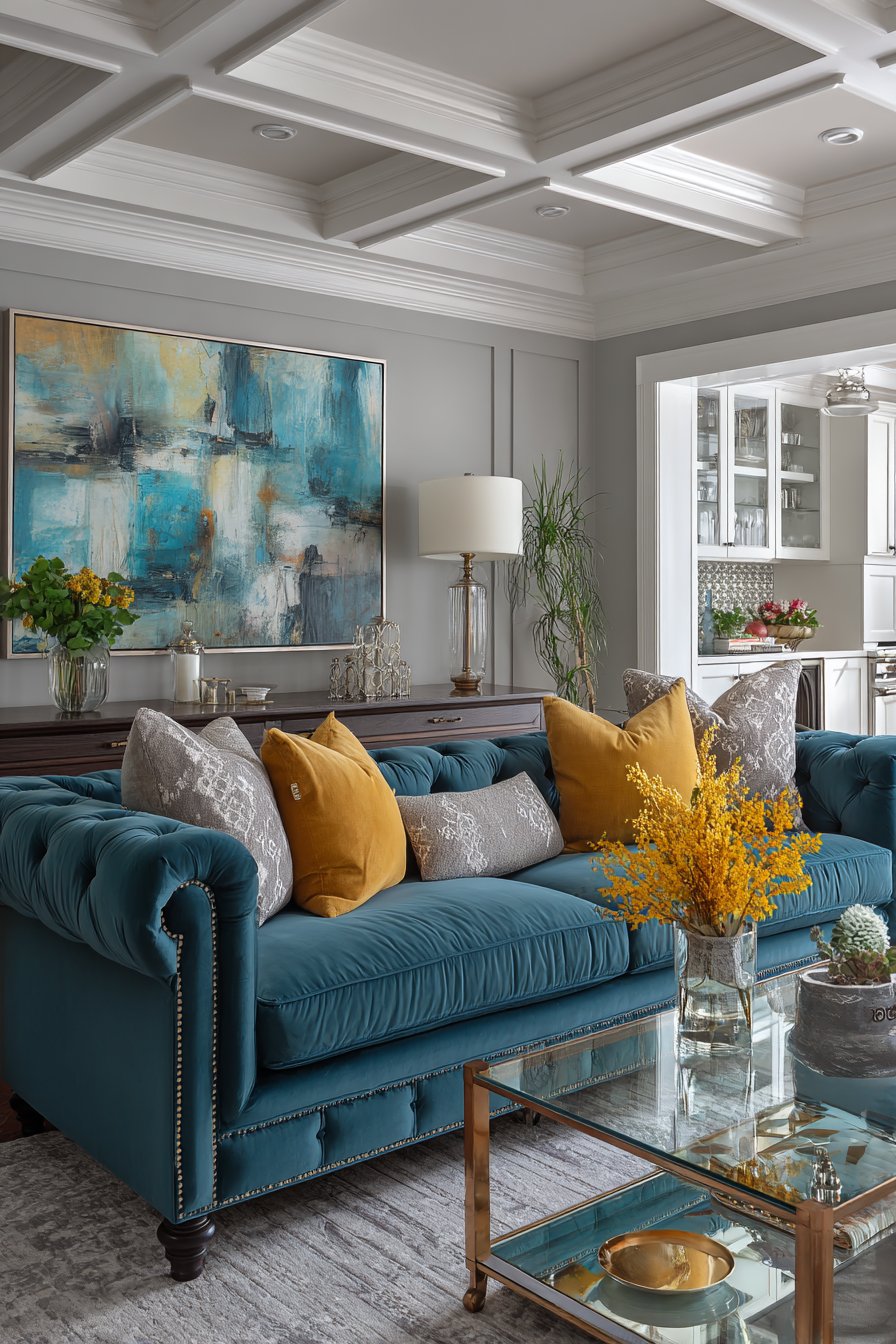
Layered lighting represents another transitional principle: the classic table lamp with its fabric shade and traditional proportions sits comfortably beside recessed ceiling fixtures that provide modern, unobtrusive ambient light. This lighting diversity ensures the room functions well for various activities—reading, entertaining, watching television—while the mix of lighting styles reinforces the room’s transitional character. The teal green sofa anchors all these elements, its sophisticated color choice and quality construction communicating that this is a space designed for both beauty and longevity.
Key Design Tips: Balance every traditional element with a contemporary counterpart to maintain equilibrium. Invest in classic furniture shapes in updated colors or materials rather than trendy silhouettes. Choose quality over quantity—fewer, better pieces in transitional spaces. Mix metal finishes thoughtfully, perhaps using brass and chrome together rather than matching everything. Maintain a cohesive color palette that allows traditional and contemporary elements to coexist harmoniously, using the green sofa as the anchor that ties everything together.
7. Industrial Emerald Green Edge
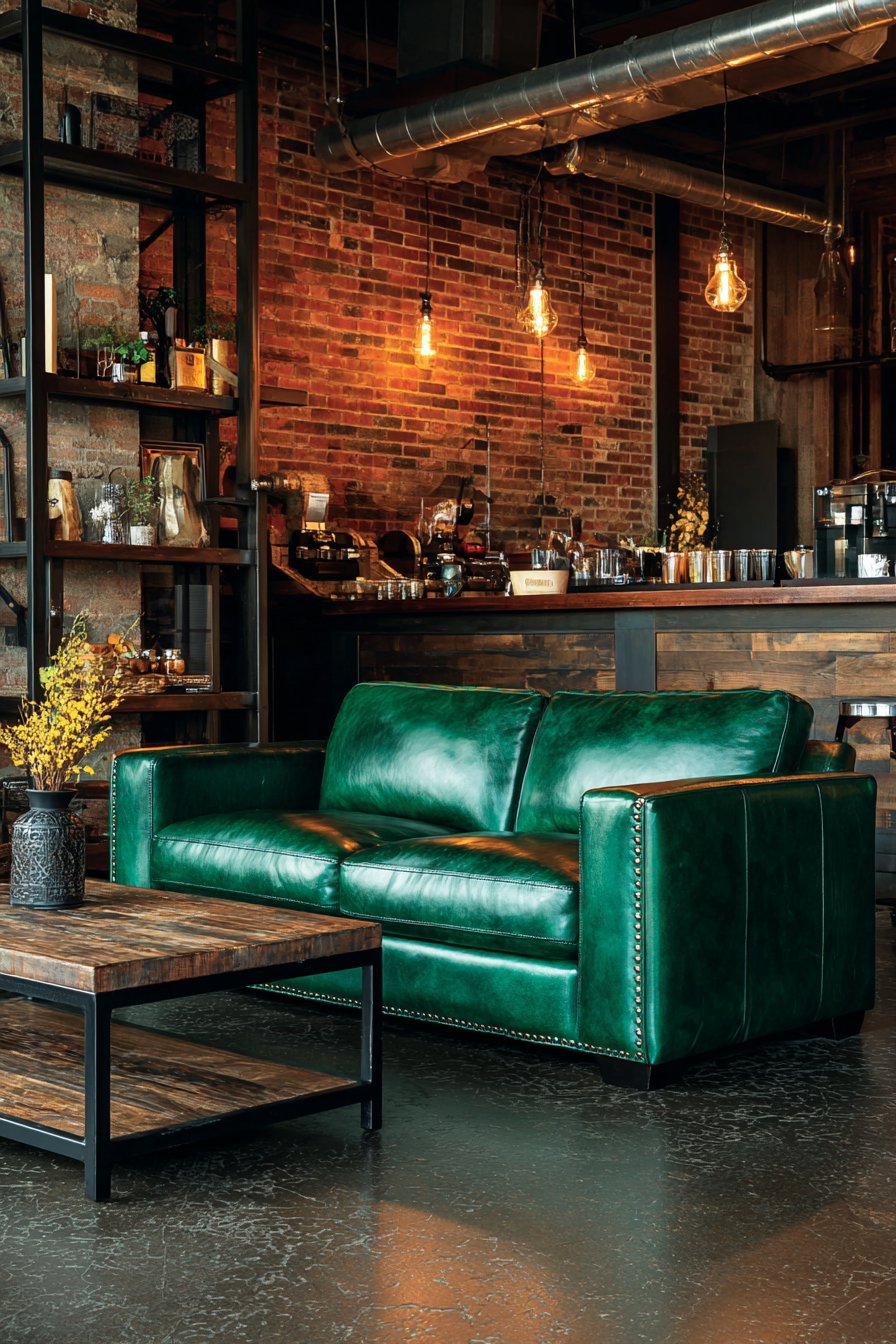
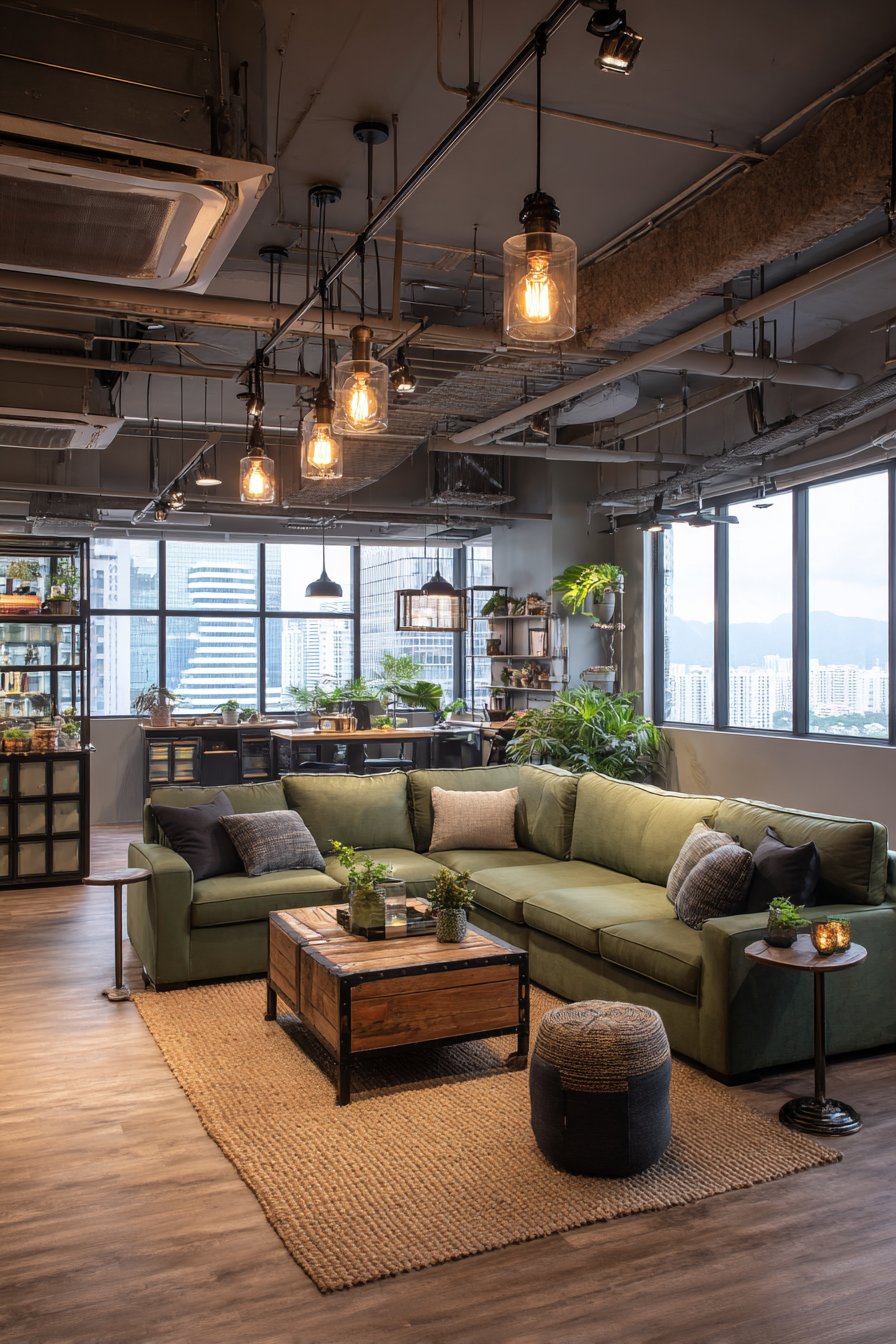
Industrial design celebrates raw materials, exposed infrastructure, and urban aesthetics—principles dramatically realized in a living room featuring a deep emerald green leather sofa with an exposed metal frame and riveted details. This isn’t the refined leather of traditional design; it’s tougher, more utilitarian, with visible stitching and metal hardware that reference factory equipment and industrial furniture. The emerald green color transforms what could be harsh or cold into something rich and inviting, proving that industrial style needn’t sacrifice comfort or visual warmth.
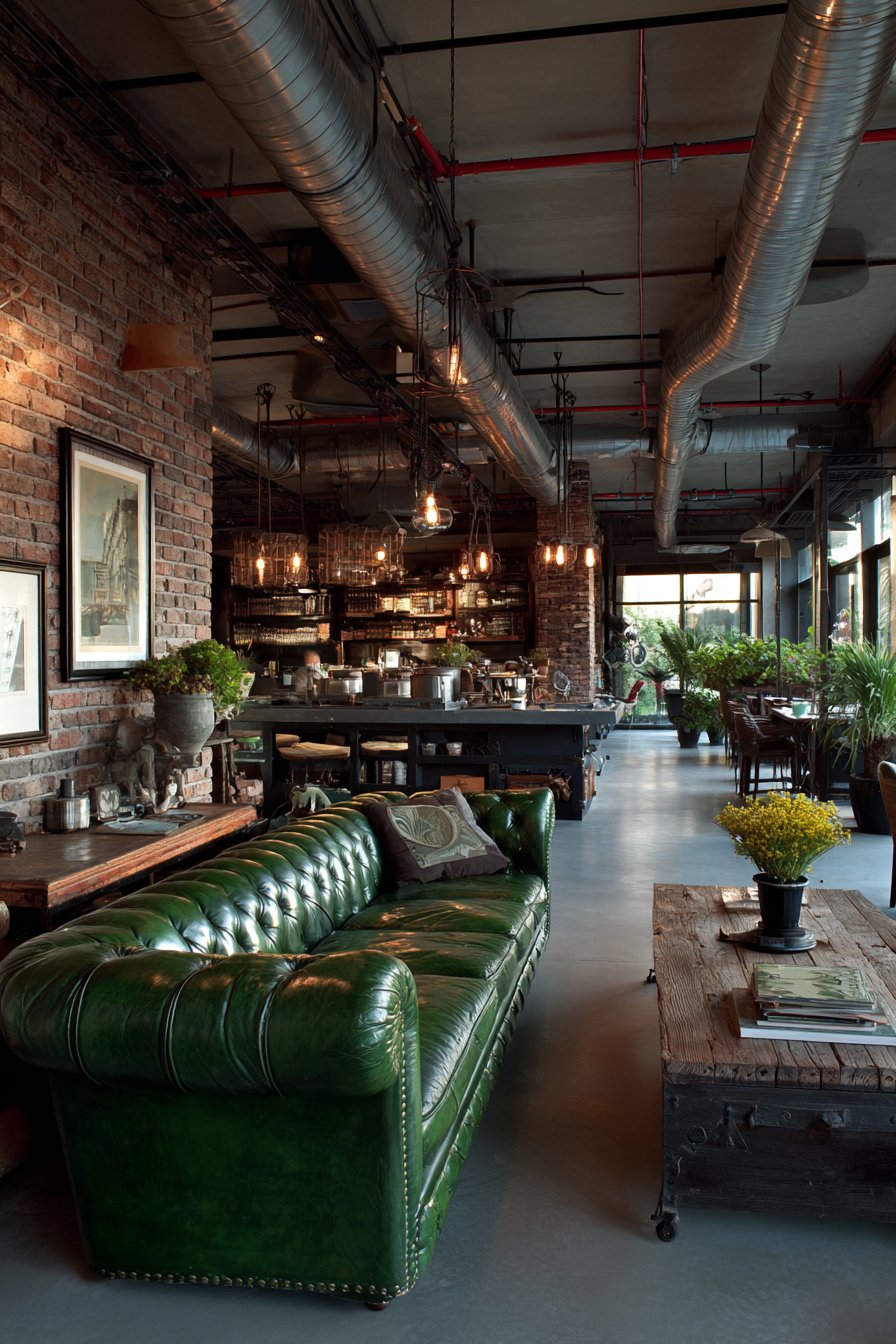
The exposed brick accent wall behind the sofa provides textural contrast and authentic industrial character. Each brick tells a story of age and use, their varied colors and imperfect surfaces adding organic variation to the space. If authentic exposed brick isn’t available, high-quality brick veneer or even skillfully applied brick wallpaper can achieve similar visual impact. The key is ensuring the texture reads as genuine rather than applied decoration.
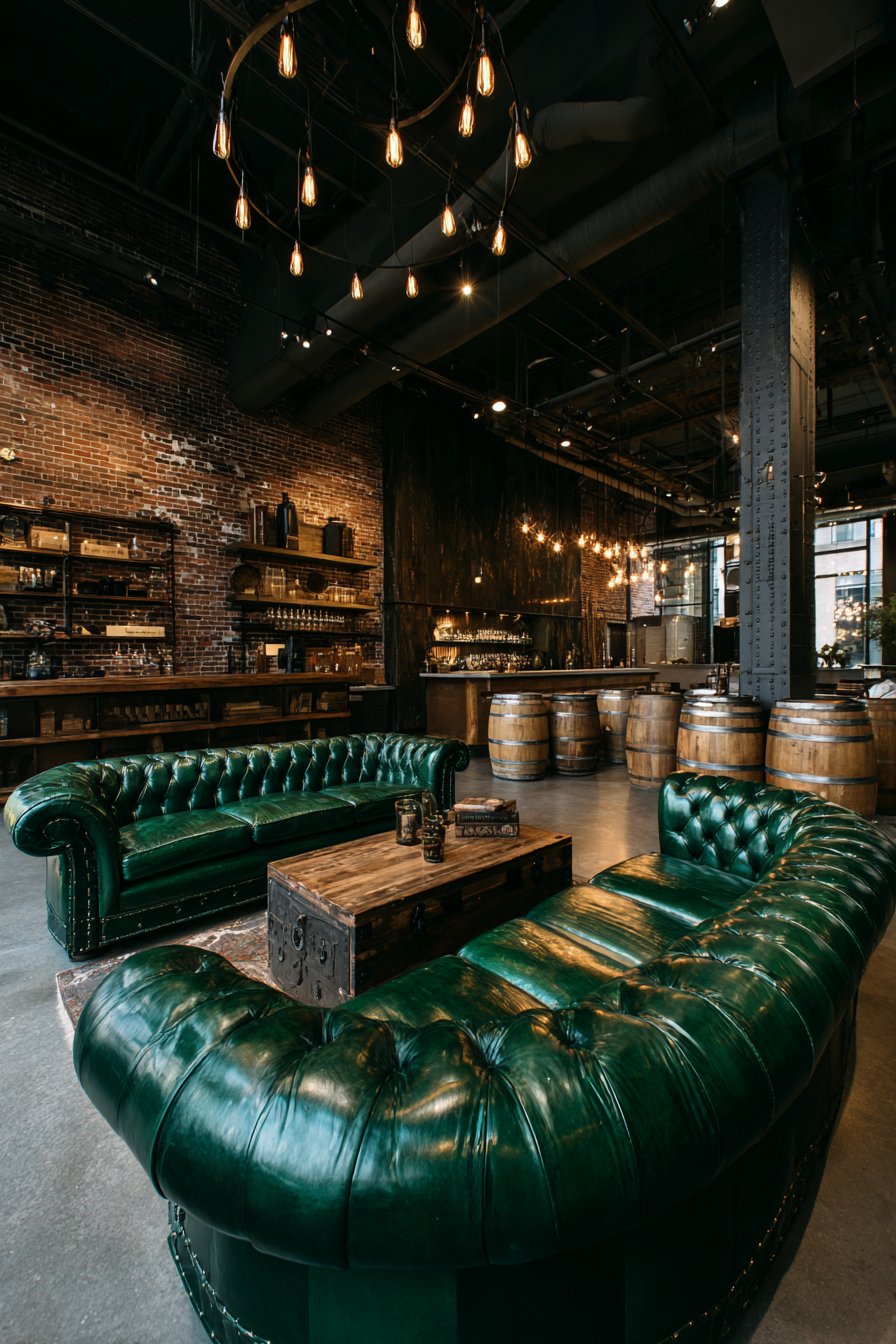
Black metal and reclaimed wood coffee table embodies industrial design principles through its honest materials and visible construction methods. Polished concrete floors amplify the urban aesthetic while their smooth, reflective surface bounces light around the space, preventing it from feeling too dark or cave-like. Edison bulb track lighting and metal pipe shelving reinforce the industrial theme while providing essential illumination and storage. The emerald green leather sofa becomes the unexpected jewel in this industrial setting, its rich color and luxurious material creating compelling contrast with the rough, utilitarian surroundings.
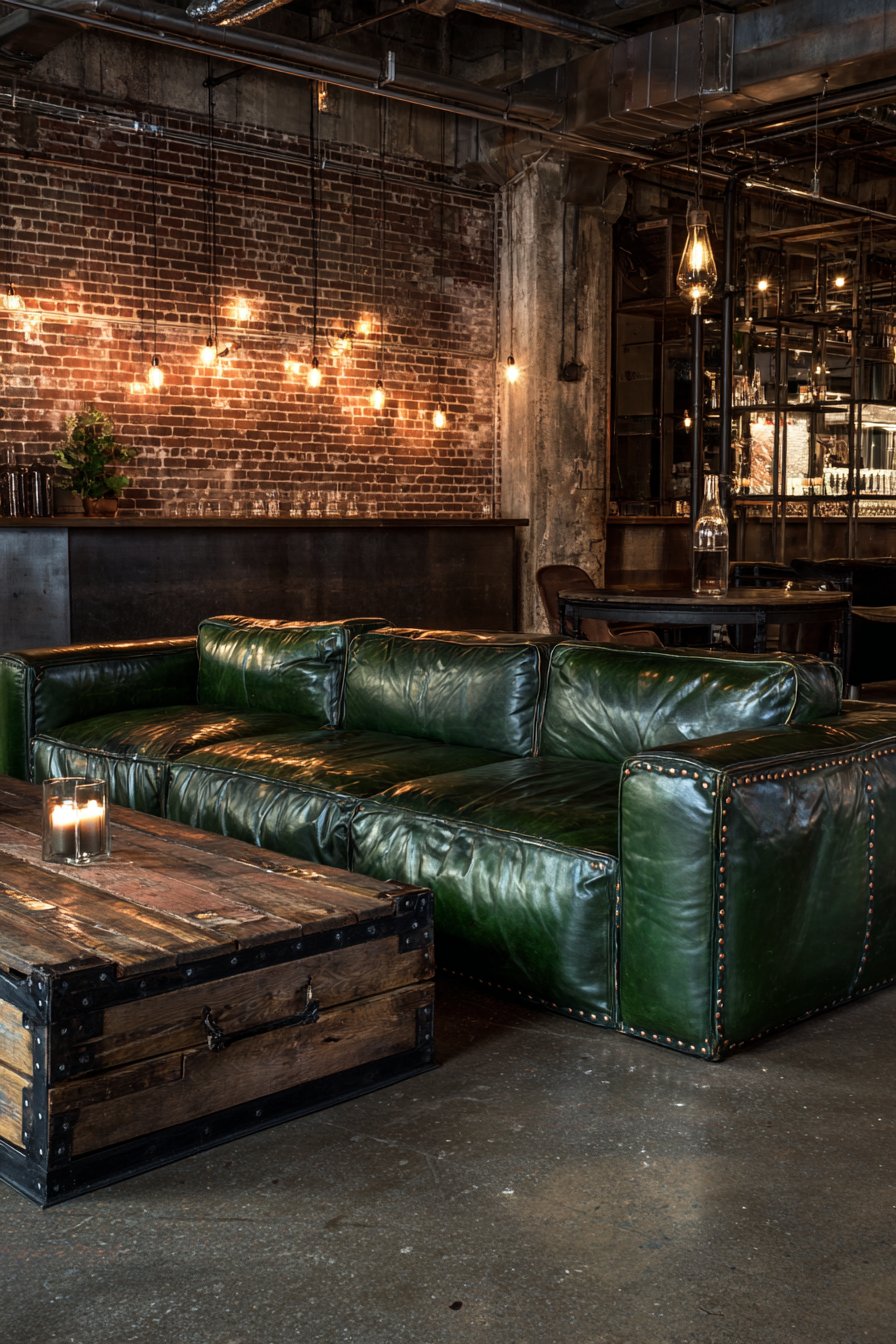
Key Design Tips: Embrace exposed materials rather than hiding them—exposed brick, ductwork, concrete, and metal pipes all contribute to authentic industrial character. Choose furniture that shows its construction methods, with visible welding, rivets, or joinery. Balance hard surfaces (concrete, brick, metal) with soft textiles on the sofa to maintain livability. Use oversized lighting fixtures to emphasize vertical space and industrial scale. Select a rich, saturated sofa color to prevent the space from feeling too cold or austere, ensuring the industrial edge doesn’t overwhelm comfort and warmth.
8. Coastal Seafoam Green Breeziness
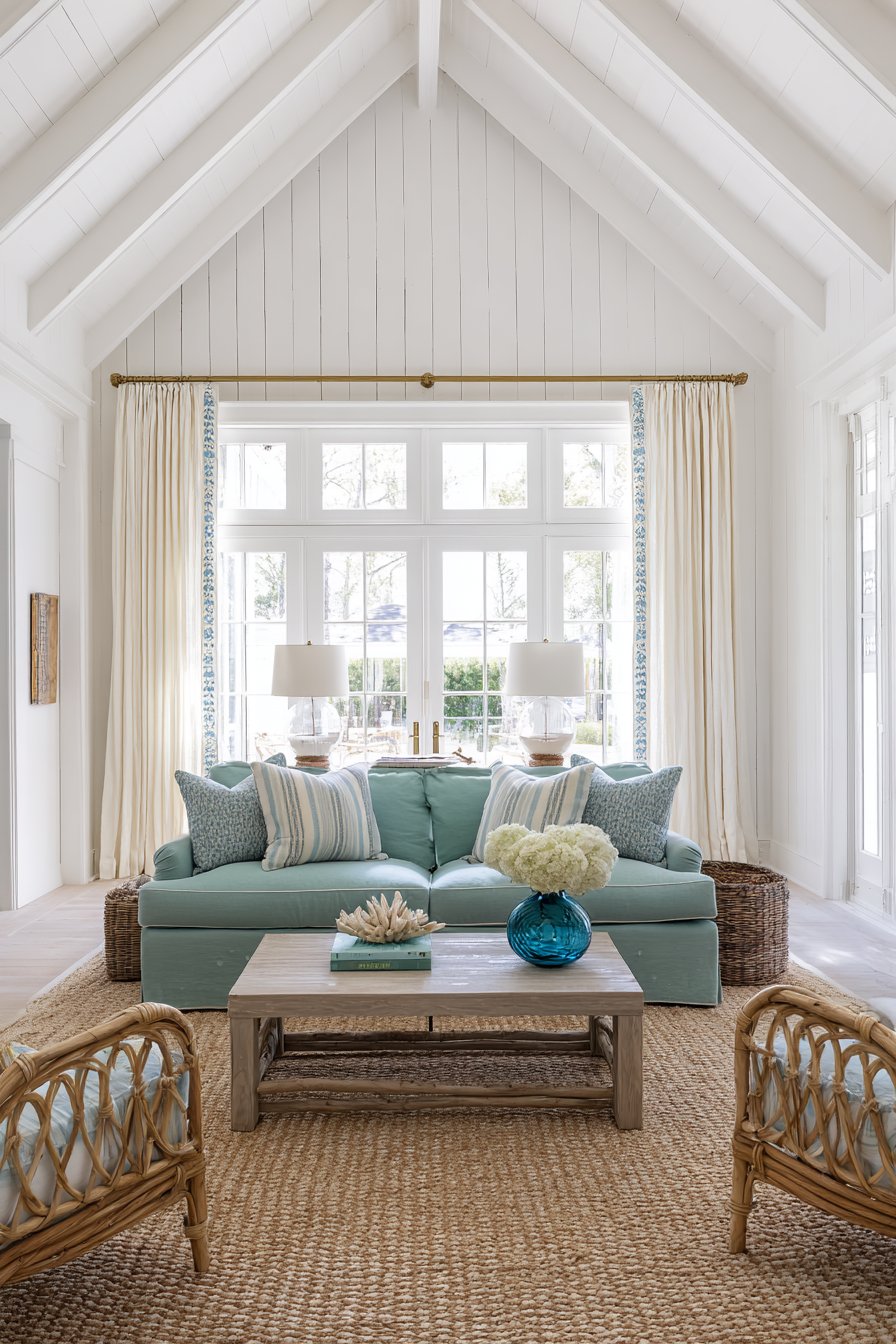
Coastal design evokes the relaxed, sun-bleached beauty of beachside living, creating spaces that feel perpetually on vacation. A seafoam green linen sofa with slipcover styling and relaxed cushions perfectly captures this aesthetic, its soft green-blue hue reminiscent of shallow coastal waters and sea glass. The slipcover construction communicates casual elegance—this is furniture designed for real life, for sandy feet and wet bathing suits, for the comfortable informality of summer living.
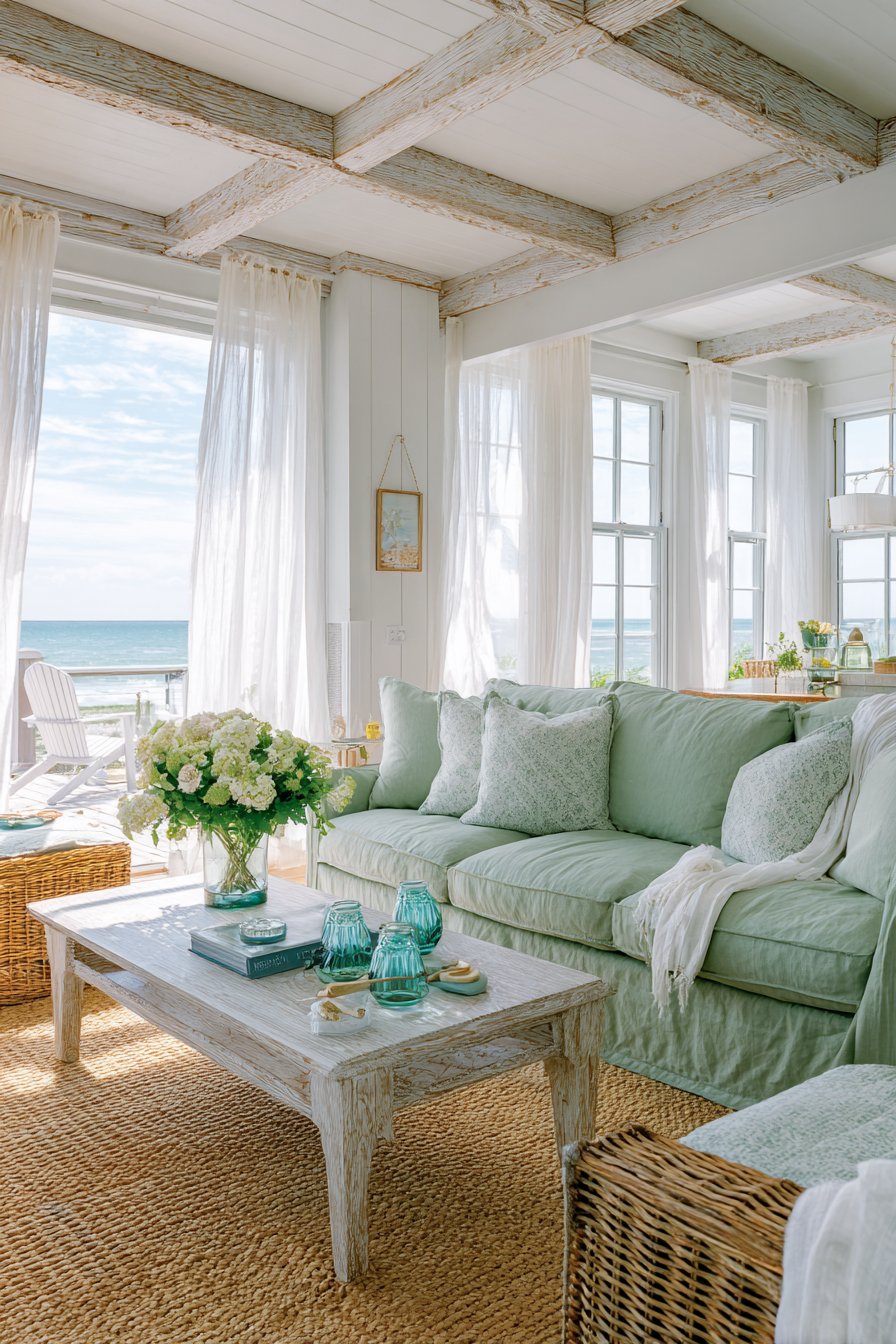
White shiplap walls create the quintessential coastal backdrop, their horizontal lines suggesting beach houses and seaside cottages while their pristine white finish reflects abundant natural light. The driftwood-finish coffee table appears weathered by sun and salt, its pale, silvered wood suggesting found treasures from beach walks. This connection to nature and organic materials grounds coastal design, preventing it from becoming merely a collection of blue and white decorative objects.
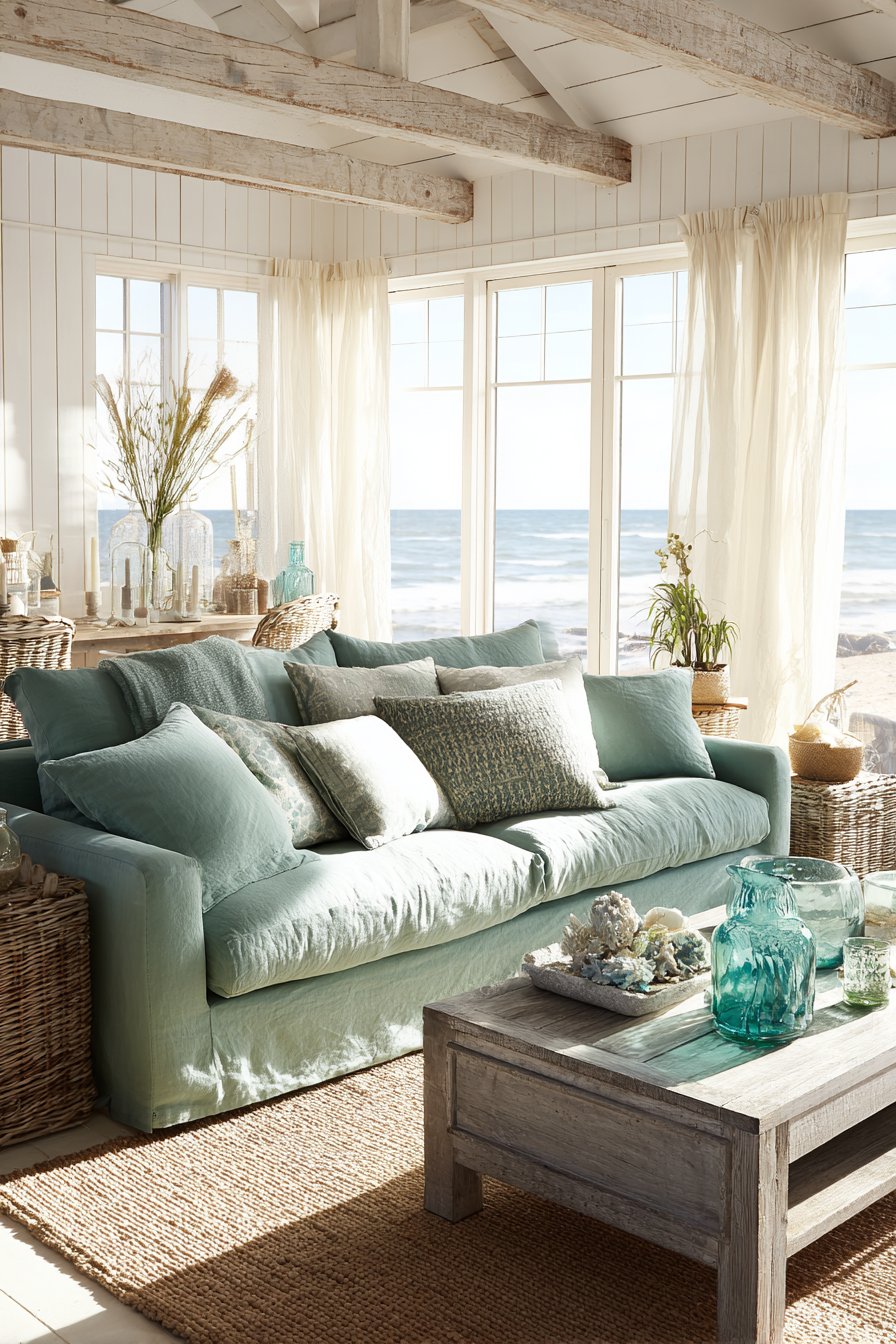
Natural fiber rugs in sisal or jute add texture underfoot while maintaining the neutral, natural palette essential to coastal aesthetics. Wicker accent chairs introduce additional seating without weight, their open-weave construction maintaining the airy feel. Blue-green glass accessories—perhaps in the form of vintage bottles, modern sculptures, or decorative bowls—catch and refract light while echoing ocean colors. Abundant natural light through gauze curtains creates the sun-drenched atmosphere characteristic of coastal spaces, making the seafoam green sofa appear to glow from within like shallow water illuminated by sunlight.
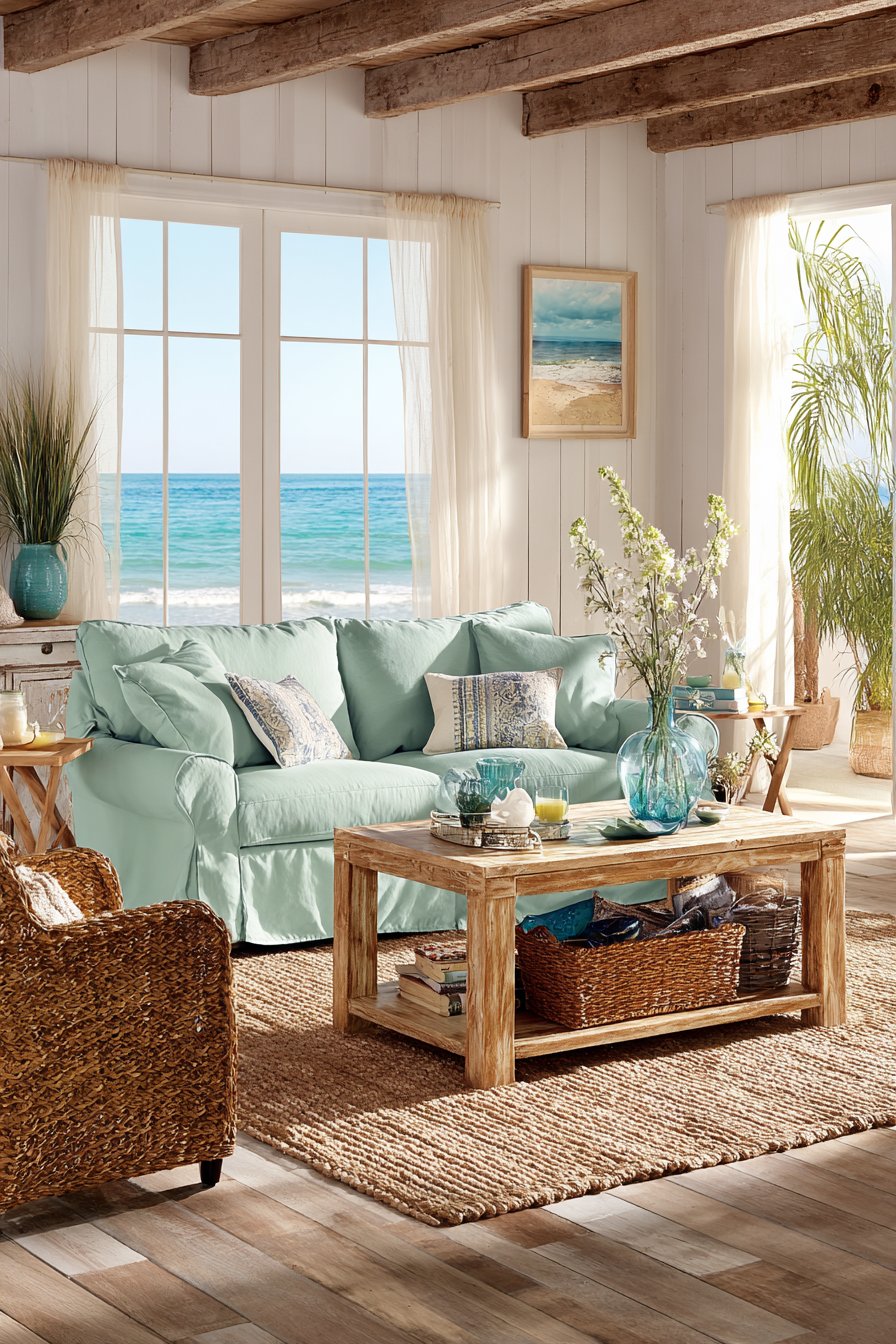
Key Design Tips: Keep the palette limited to whites, sandy neutrals, and blue-greens to maintain coastal cohesion. Embrace natural, unfinished materials like raw wood, natural fiber textiles, and organic materials. Maximize natural light through minimal window treatments, using only what’s necessary for privacy. Incorporate ocean-inspired accessories sparingly—a few carefully chosen pieces suggest the coast without becoming literal or kitschy. Choose furniture with relaxed, casual proportions and slipcovers that can be removed for cleaning, acknowledging that coastal living involves sand, moisture, and the outdoors coming inside.
9. Maximalist Emerald Green Opulence
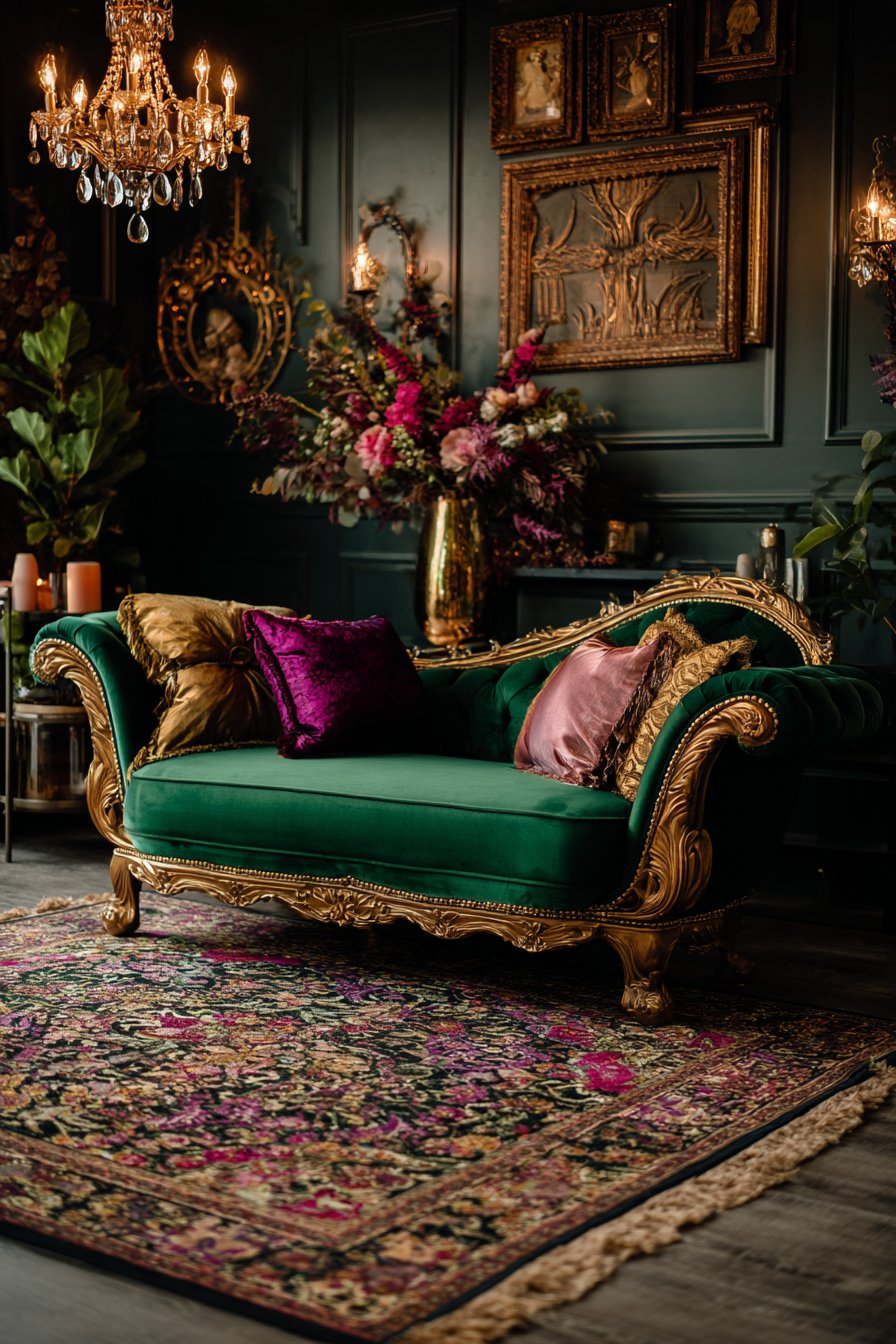
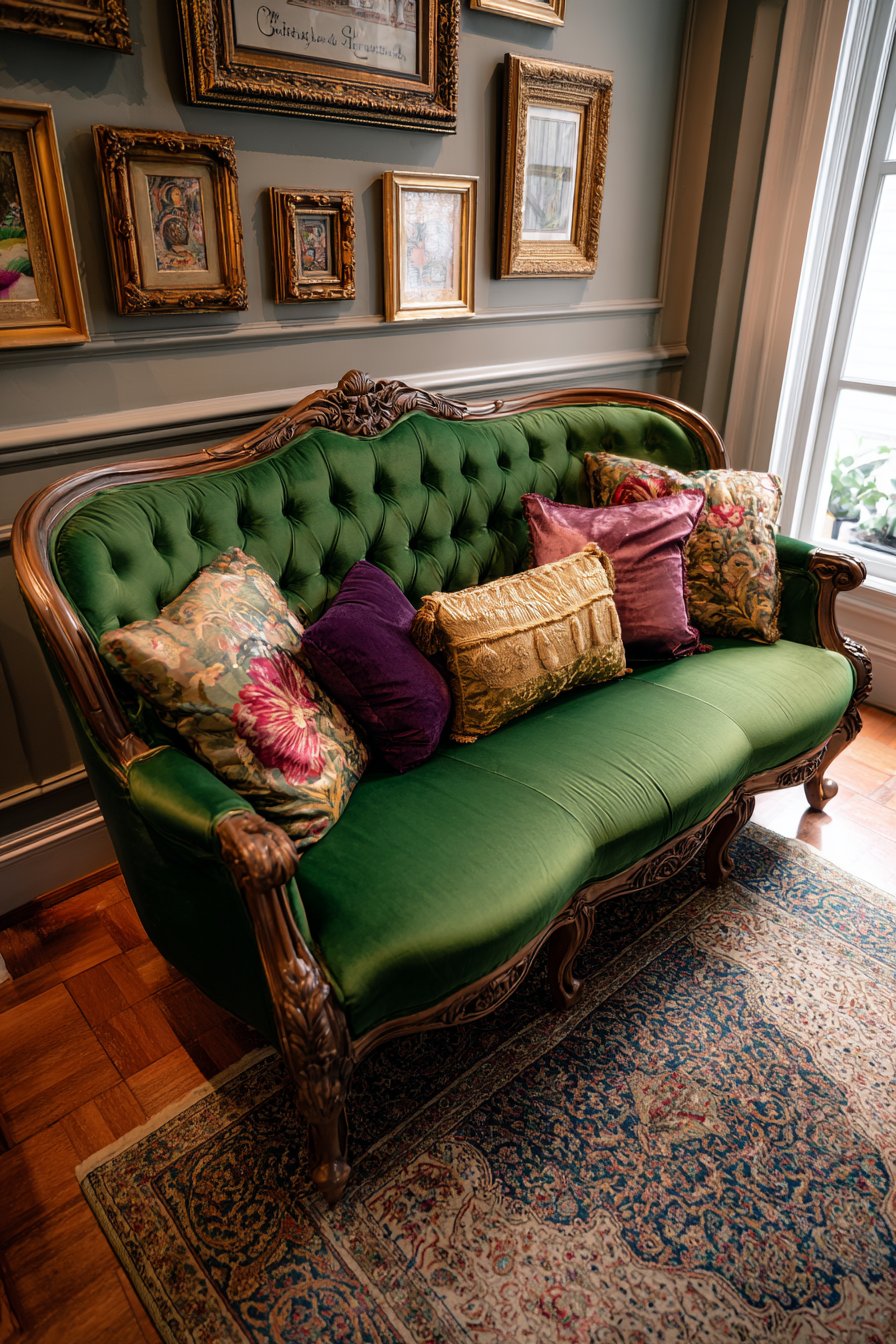
Maximalism celebrates abundance, pattern, color, and the philosophy that more is more. An emerald green velvet sofa with ornate carved wooden legs and decorative trim serves as the throne in this opulent space, its jewel-toned richness demanding attention and admiration. The velvet pile catches light dramatically, appearing to shift from deep forest to brilliant emerald depending on viewing angle and illumination. This isn’t furniture that fades into the background—it’s a statement piece that announces the room’s maximalist intentions.
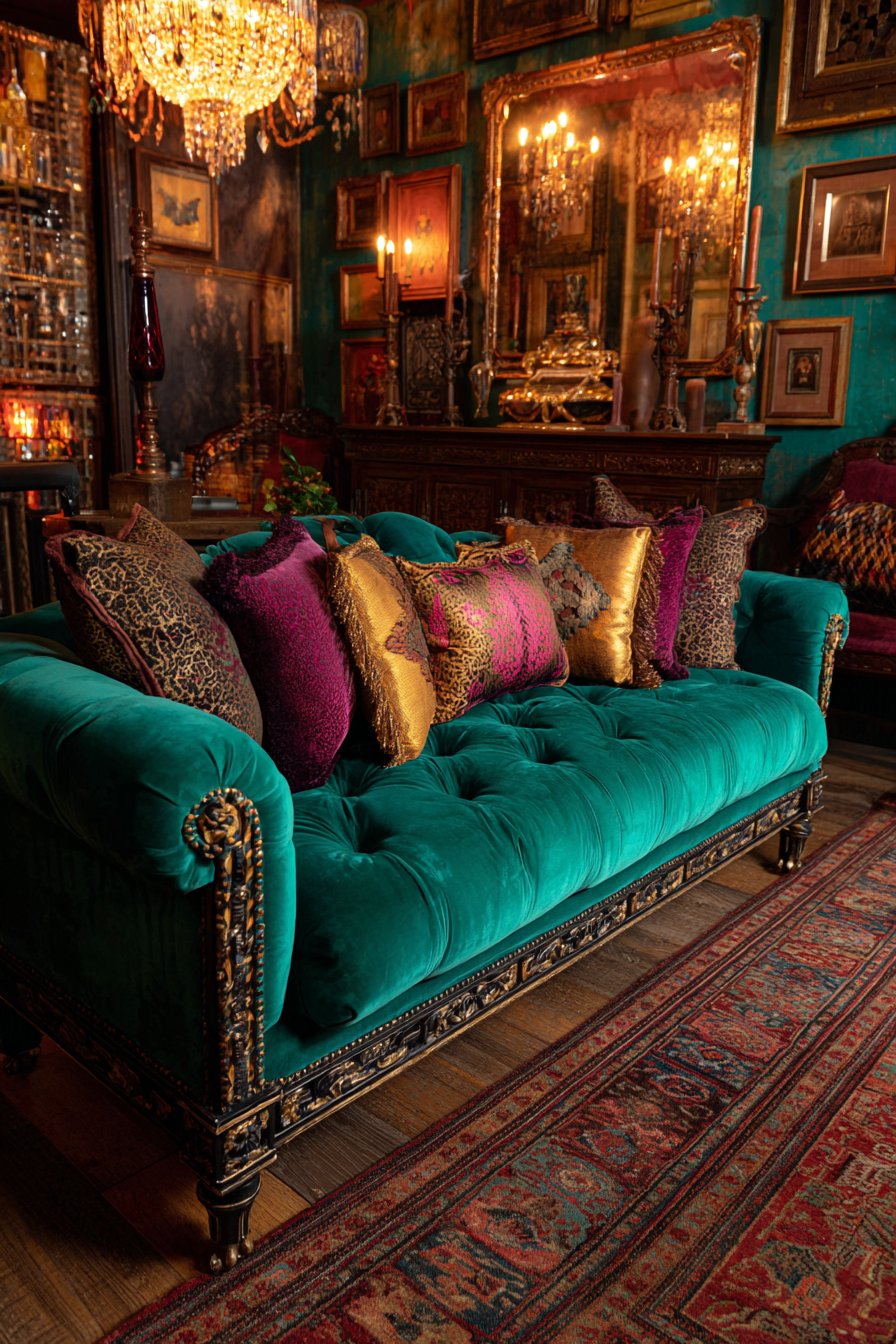
Layering silk and velvet pillows in rich purples, golds, and pinks across the sofa demonstrates maximalist principles at work. Each pillow contributes its own color, pattern, and texture, creating a sumptuous pile that invites sinking in while providing visual feast. An antique oriental rug beneath the coffee table introduces even more pattern and color, its complex design and rich hues complementing rather than competing with the emerald sofa. The key to successful maximalist design is finding the thread that connects all the elements—in this case, a commitment to saturated jewel tones and luxurious materials.
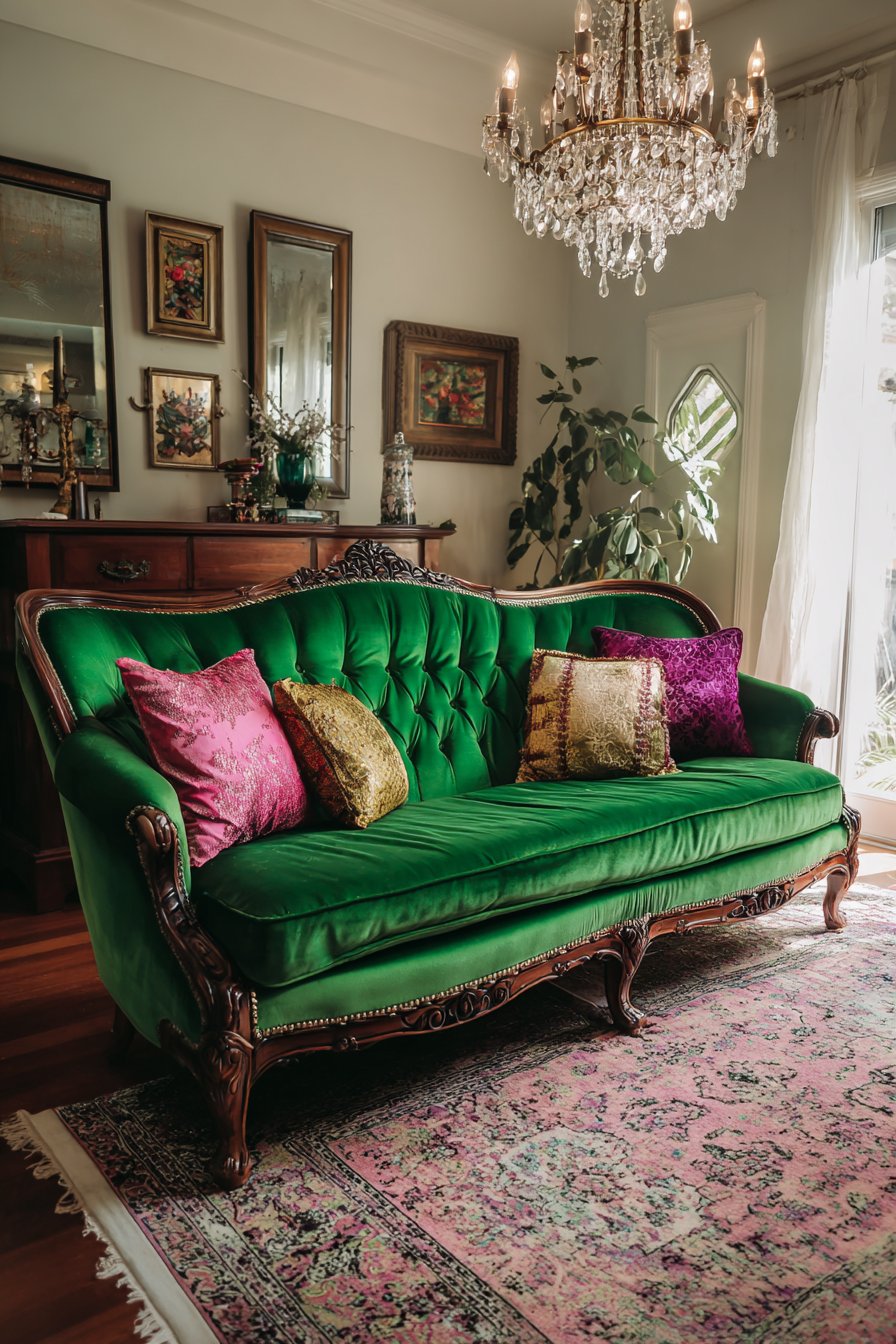
Gallery walls of ornate frames climb the walls around the sofa, displaying art, mirrors, and perhaps even three-dimensional objects in a salon-style arrangement. A crystal chandelier overhead provides sparkle and glamour, its prismatic elements scattering rainbow light across surfaces. Warm tungsten lighting creates pools of golden illumination that enhance the space’s luxurious character while highlighting the emerald velvet’s depth. This is a room designed for drama, for dinner parties and cocktail hours, for the pleasure of surrounding oneself with beautiful things collected over time.
Key Design Tips: Choose a cohesive color story even when using many colors—jewel tones, pastels, or earth tones, for example. Layer textures aggressively, mixing velvet, silk, leather, fur, and other tactile materials. Don’t be afraid of pattern-on-pattern—florals with stripes, damasks with geometrics—as long as colors coordinate. Incorporate metallics generously through frames, fixtures, and accessories. Curate collections on walls and surfaces, grouping similar items or creating visual narratives. Ensure adequate lighting to showcase all the beautiful details, using multiple light sources at varying heights.
10. Mid-Century Modern Kelly Green Nostalgia
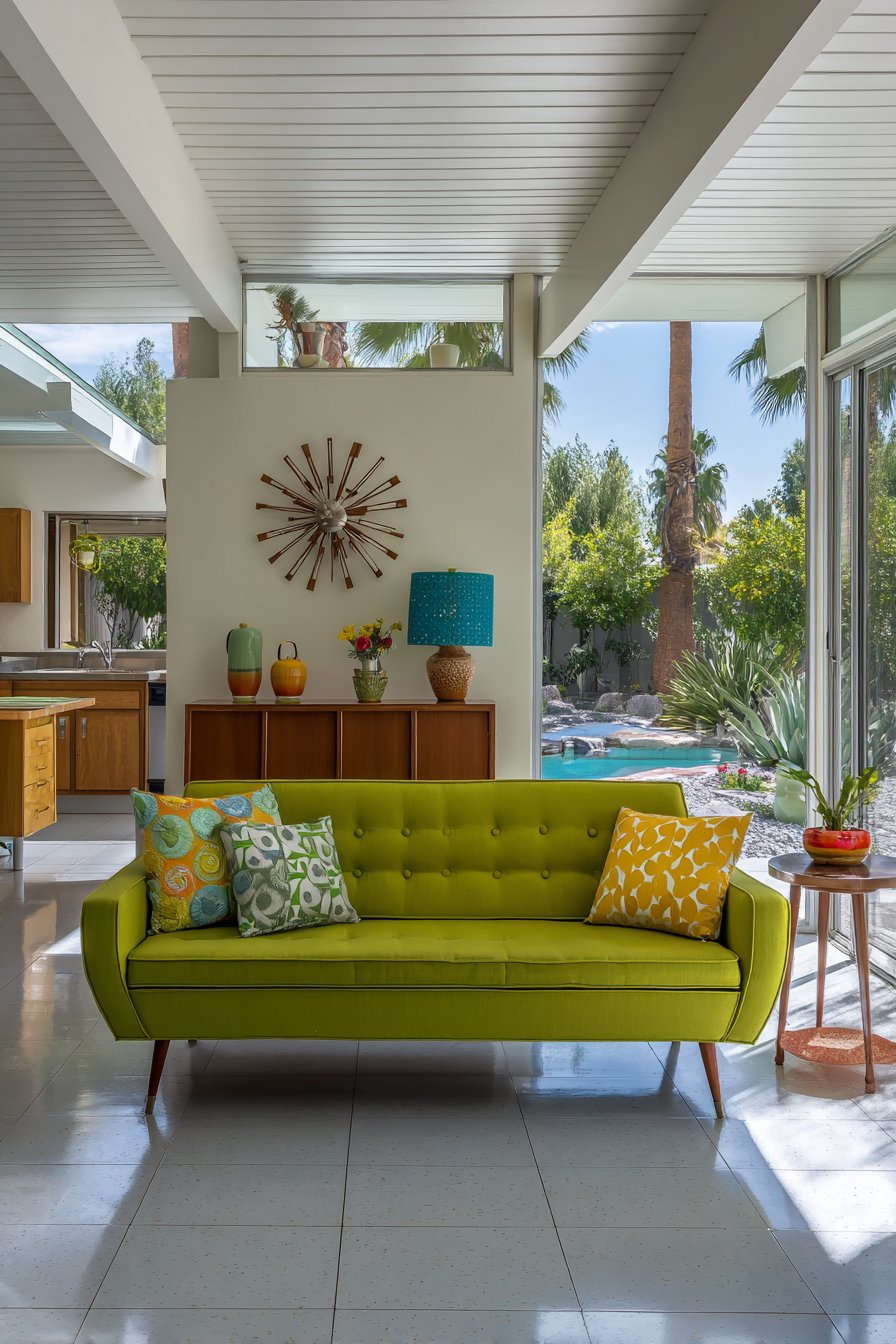
Mid-century modern design from the 1950s and 60s continues to captivate with its clean lines, organic forms, and optimistic color palette. A vintage-inspired kelly green sofa with tapered splayed legs and button-back cushions channels this iconic era, its vibrant green hue recalling the bold color choices popular in post-war design. The button-back construction and neat proportions demonstrate the mid-century commitment to both comfort and visual elegance, proving that functional furniture can also be beautiful.
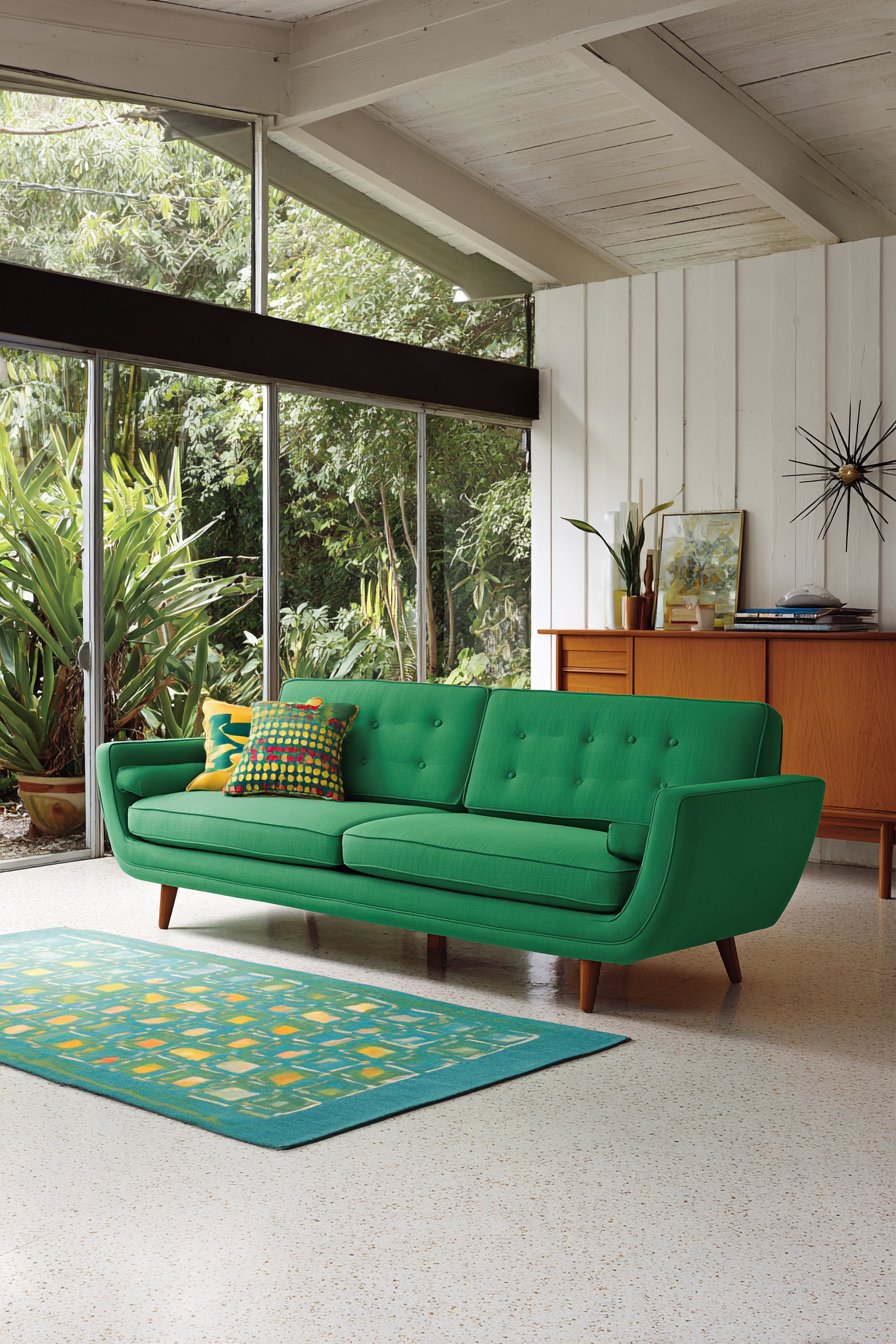
A teak credenza positioned along one wall provides storage while exemplifying the warm wood tones and precise joinery characteristic of mid-century case goods. Molded plywood chairs—perhaps Eames reproductions or vintage finds—contribute sculptural presence and additional seating, their organic curves contrasting with the sofa’s straighter lines. These chairs aren’t just furniture; they’re design icons that communicate the owner’s appreciation for modern design history.
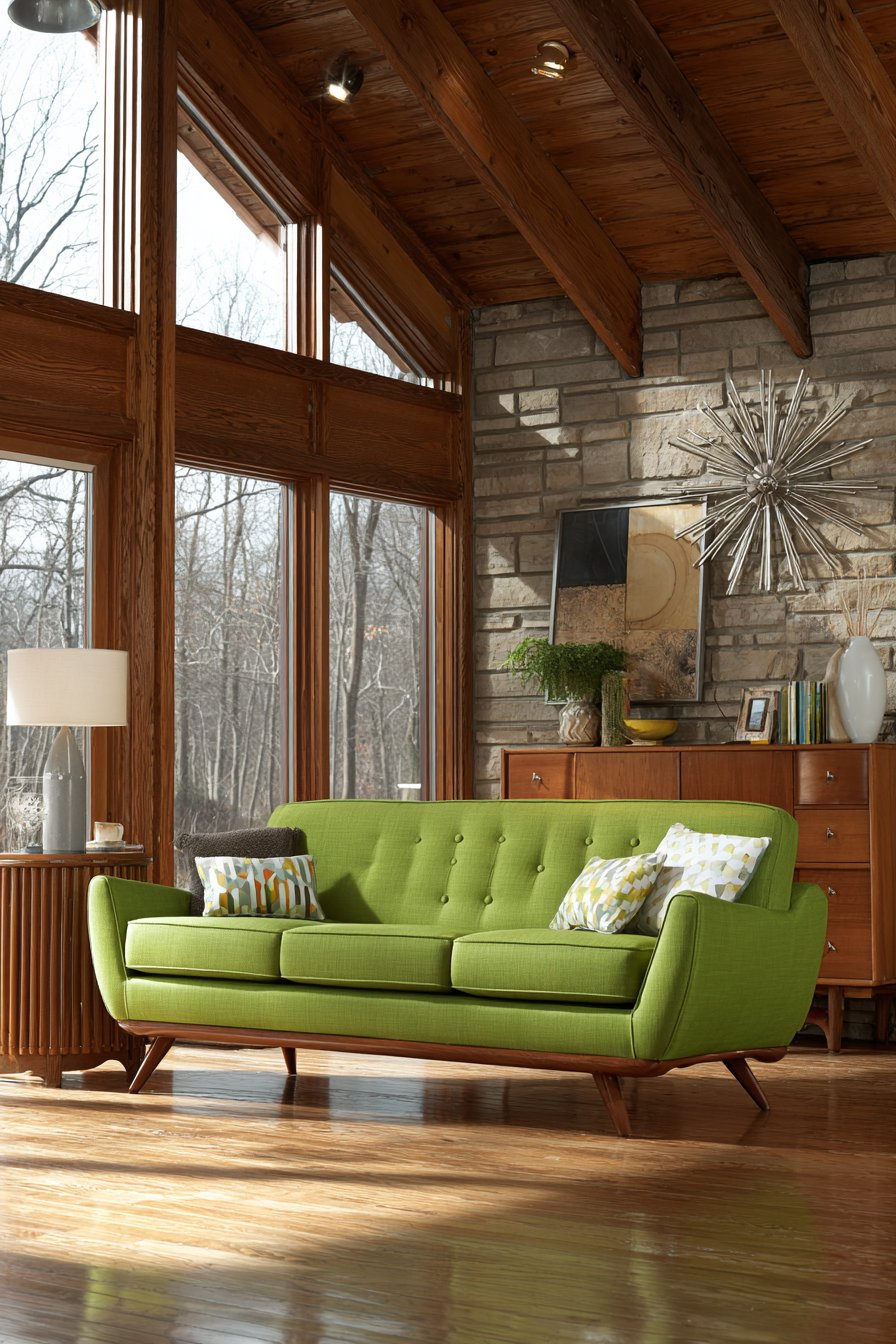
A starburst clock mounted on the wall and geometric throw pillows on the kelly green sofa reinforce the retro aesthetic through period-appropriate decorative elements. Large picture windows with minimal treatment flood the space with natural light, reflecting the mid-century love of indoor-outdoor connection and transparency. The lack of heavy drapery or fussy window treatments maintains clean lines while showcasing the sofa’s vibrant color against abundant daylight. This is a space that honors design history while remaining thoroughly livable in contemporary life.
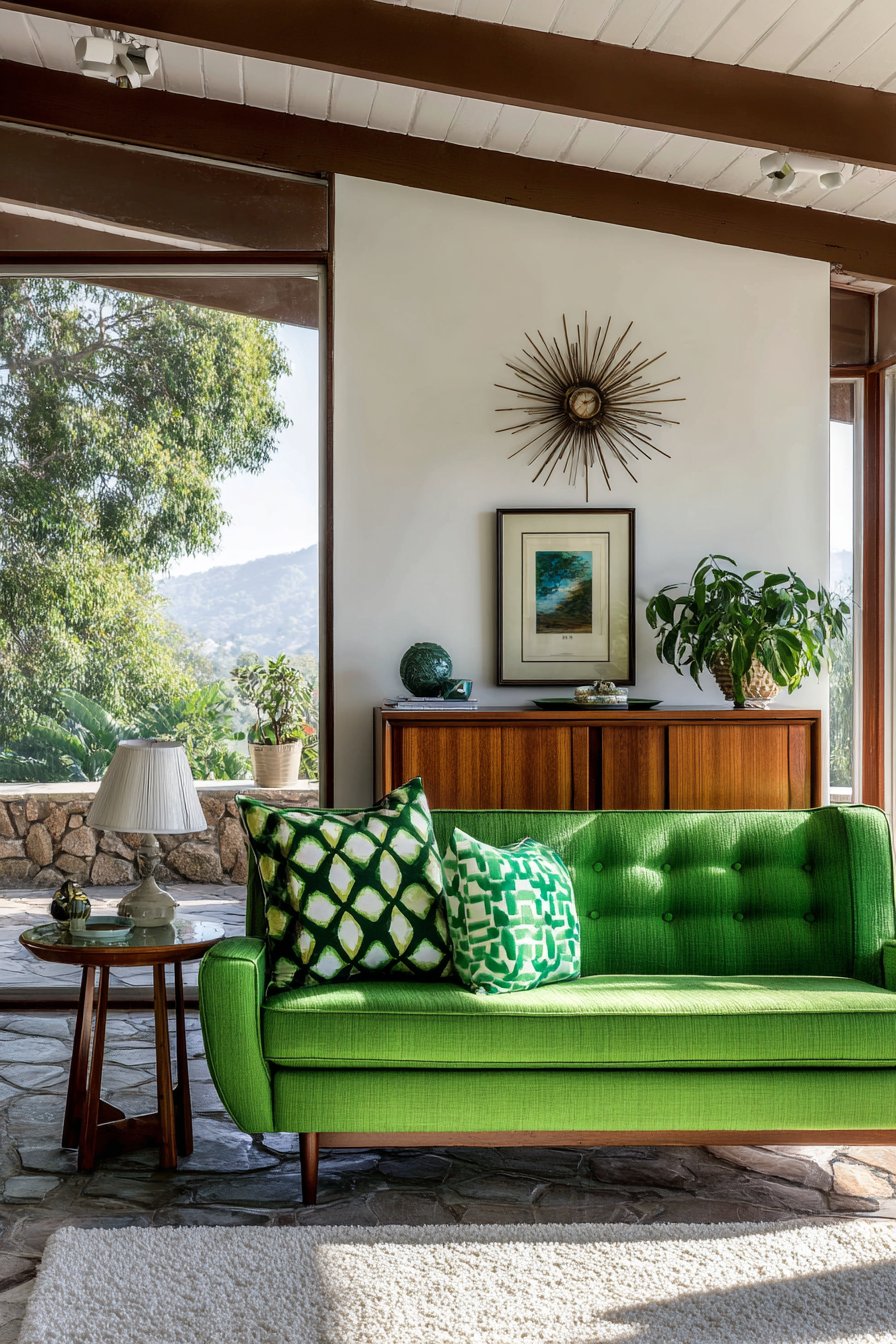
Key Design Tips: Source authentic vintage pieces when possible, or choose high-quality reproductions that respect original designs. Maintain clean lines throughout the space, avoiding fussy details or excessive ornamentation. Incorporate period-appropriate colors like kelly green, burnt orange, teak brown, and mustard yellow. Choose furniture with exposed tapered legs to maintain the era’s characteristic lightness. Display period accessories like starburst clocks, abstract art, and geometric patterns. Keep window treatments minimal to honor the mid-century love of natural light and transparency.
11. Farmhouse Sage Green Coziness
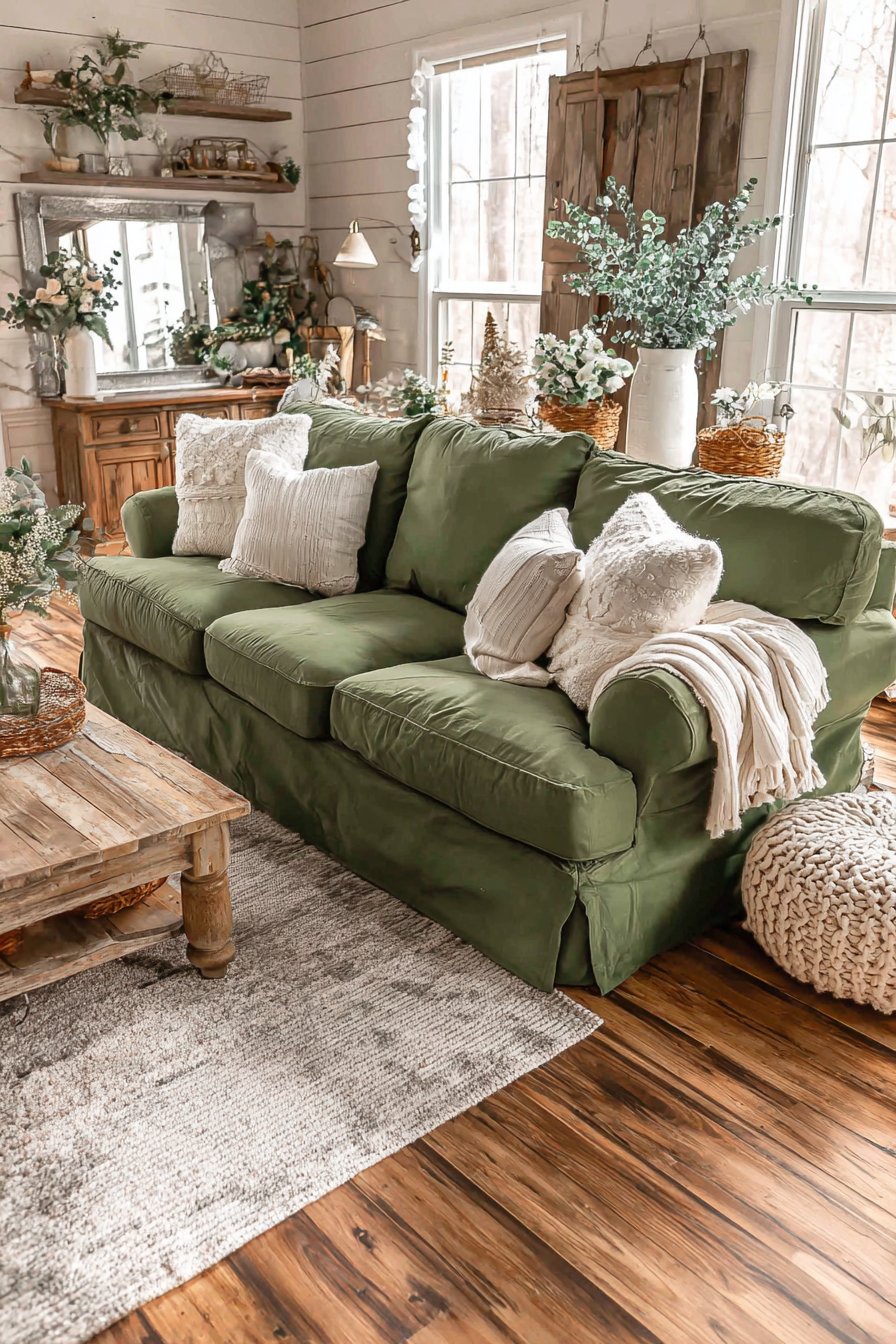
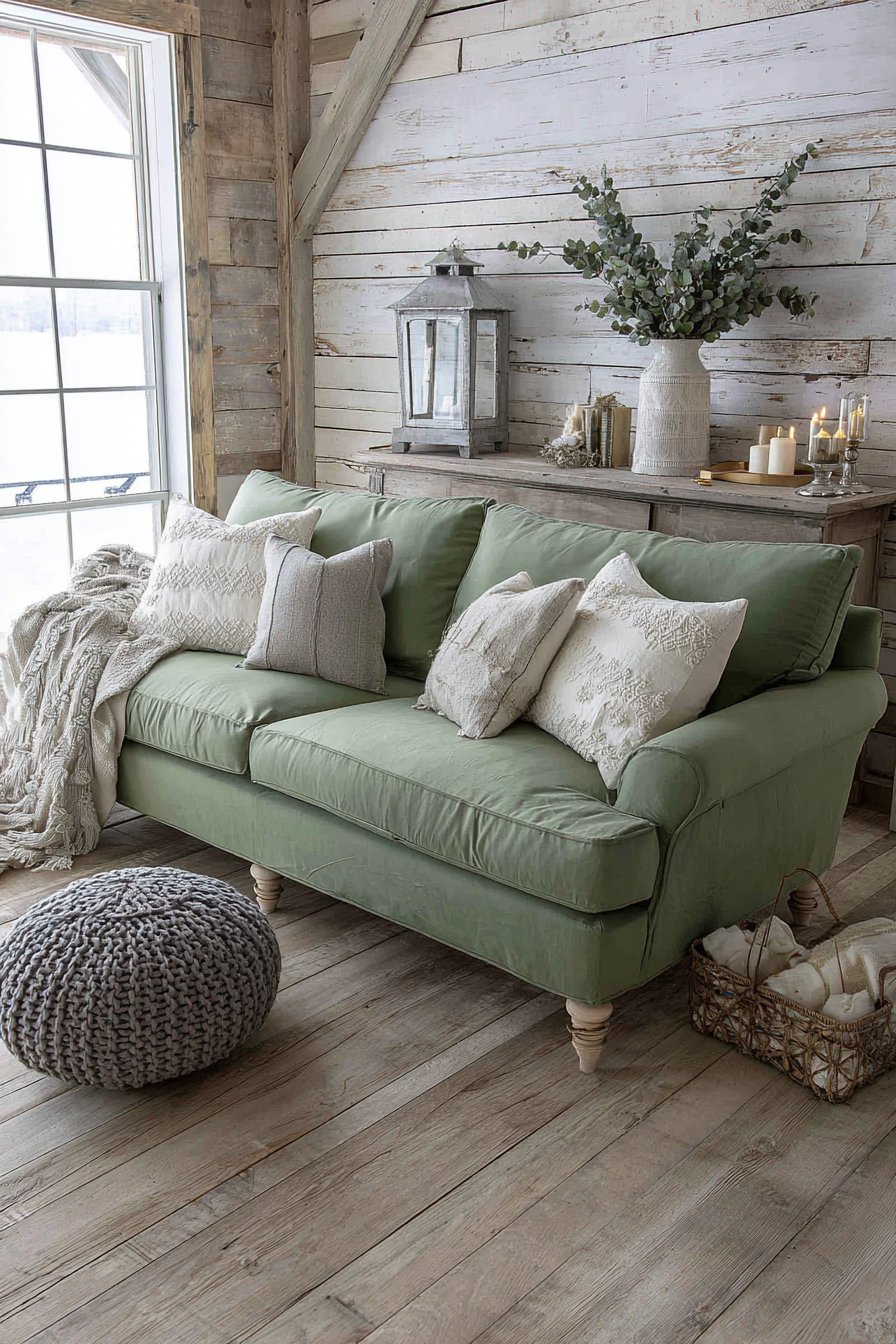
Modern farmhouse design combines rustic charm with contemporary comfort, creating spaces that feel both collected-over-time and thoughtfully designed. A sage green linen sofa with neutral slipcover styling and distressed white oak legs embodies this aesthetic perfectly, its soft green hue suggesting herbs from a kitchen garden while the slipcover construction communicates practical elegance. The distressed finish on the legs adds character and a sense of history, as if the piece has been loved and used for years.
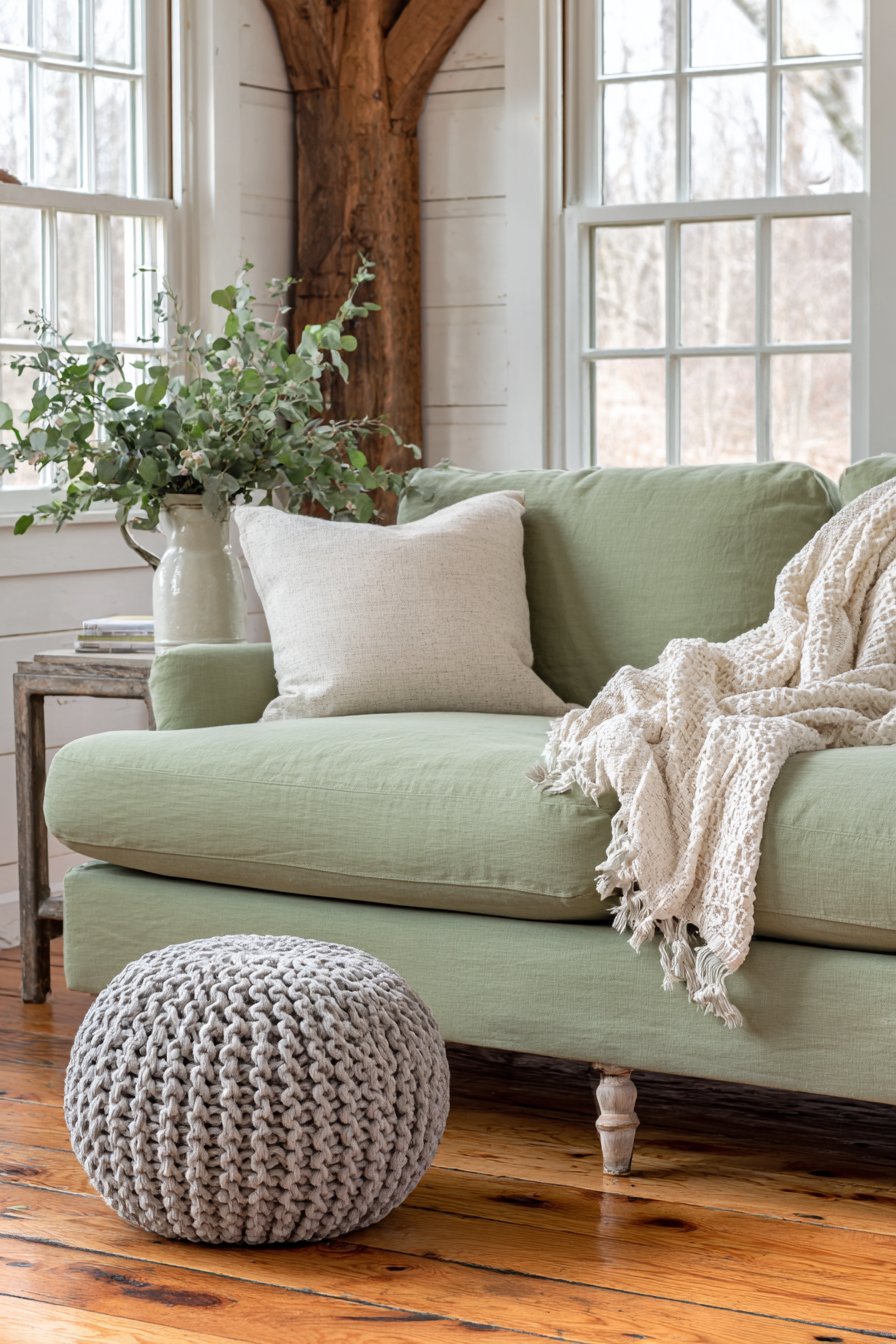
Shiplap accent walls painted soft white provide the quintessential farmhouse backdrop, their horizontal planking adding subtle texture and interest without overwhelming the space. This architectural detail connects contemporary farmhouse design to its agricultural roots while providing the clean, bright surfaces that make modern farmhouse feel fresh rather than dated. Galvanized metal accents—perhaps in the form of planters, light fixtures, or decorative objects—reference farm equipment and utilitarian objects while adding cool metallic contrast to the warm wood tones.
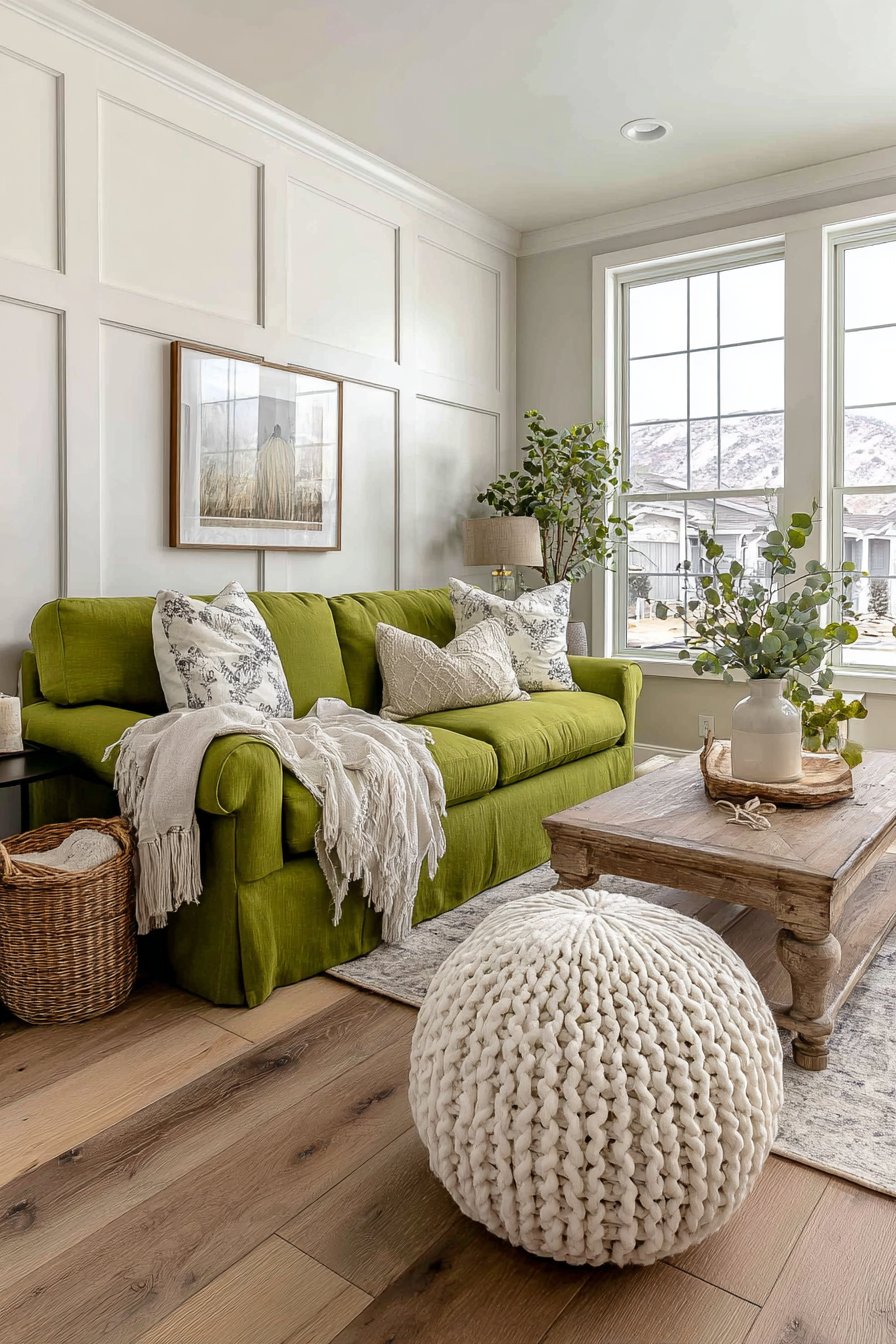
Cotton throw blankets in natural colors drape casually over the sage green sofa, ready for curling up on chilly evenings. Fresh eucalyptus arranged in simple ceramic vases brings the garden indoors while providing subtle fragrance and organic movement. Wide-plank wood flooring in honey tones adds warmth underfoot while its substantial proportions suggest reclaimed barn wood or vintage flooring. A chunky knit pouf provides flexible seating or footrest function while its oversized scale and handmade quality reinforce the farmhouse commitment to craftsmanship and comfort.
Key Design Tips: Choose furniture with relaxed, comfortable proportions rather than formal or stiff silhouettes. Incorporate galvanized metal, aged wood, and natural fibers to create authentic farmhouse character. Keep the color palette neutral with soft greens, whites, creams, and natural wood tones. Display fresh flowers or greenery regularly to maintain connection to agricultural roots. Mix vintage finds with new pieces to create the collected-over-time feeling. Prioritize comfort and livability over perfection—farmhouse style should feel lived-in and welcoming.
12. Contemporary Moss Green Architecture
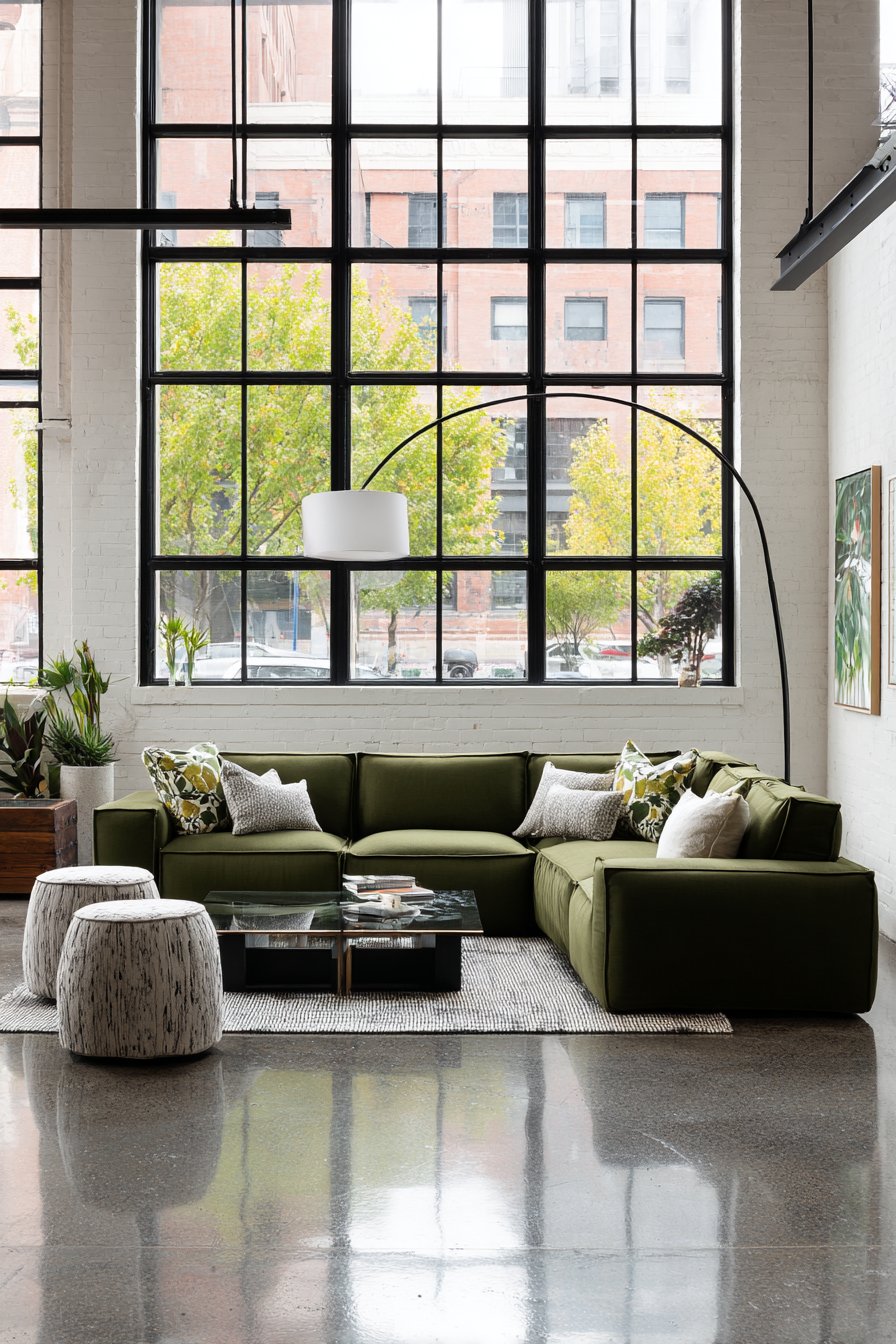
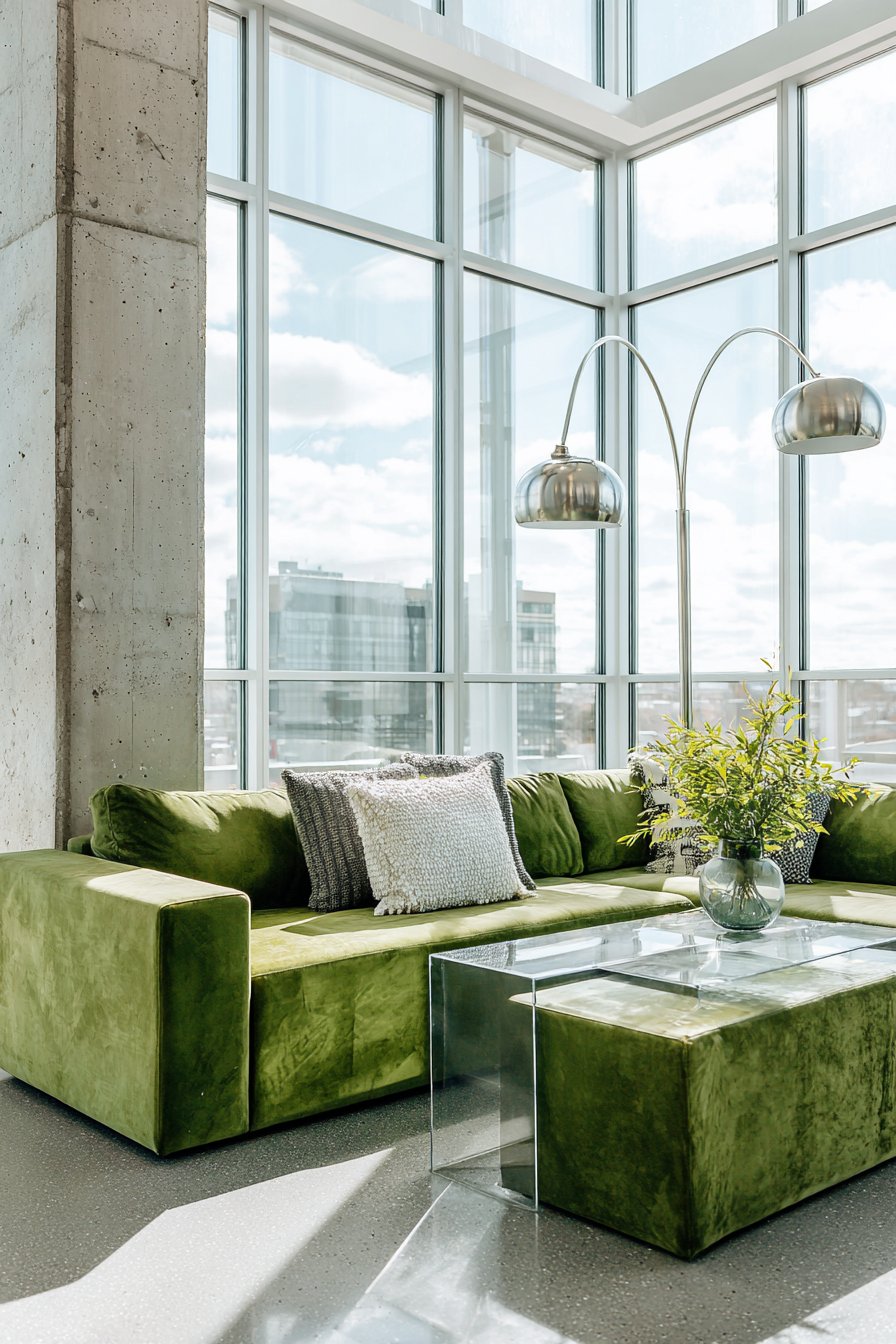
Contemporary design emphasizes clean lines, minimal ornamentation, and architectural thinking applied to interiors. A moss green modular sofa with low profile and geometric form exemplifies this approach, its sophisticated green hue providing color without excess while its modular construction allows flexible arrangement. The low profile maintains horizontal emphasis and visual calm, while the geometric form demonstrates contemporary design’s appreciation for pure shapes and thoughtful proportions.
Polished concrete floors provide an industrial-influenced foundation that reads as sophisticated rather than unfinished, their smooth surface reflecting light and creating visual spaciousness. Floor-to-ceiling windows create a gallery-like backdrop, dissolving boundaries between interior and exterior while flooding the space with natural light. This transparency is characteristic of contemporary design’s commitment to openness and connection to surroundings.
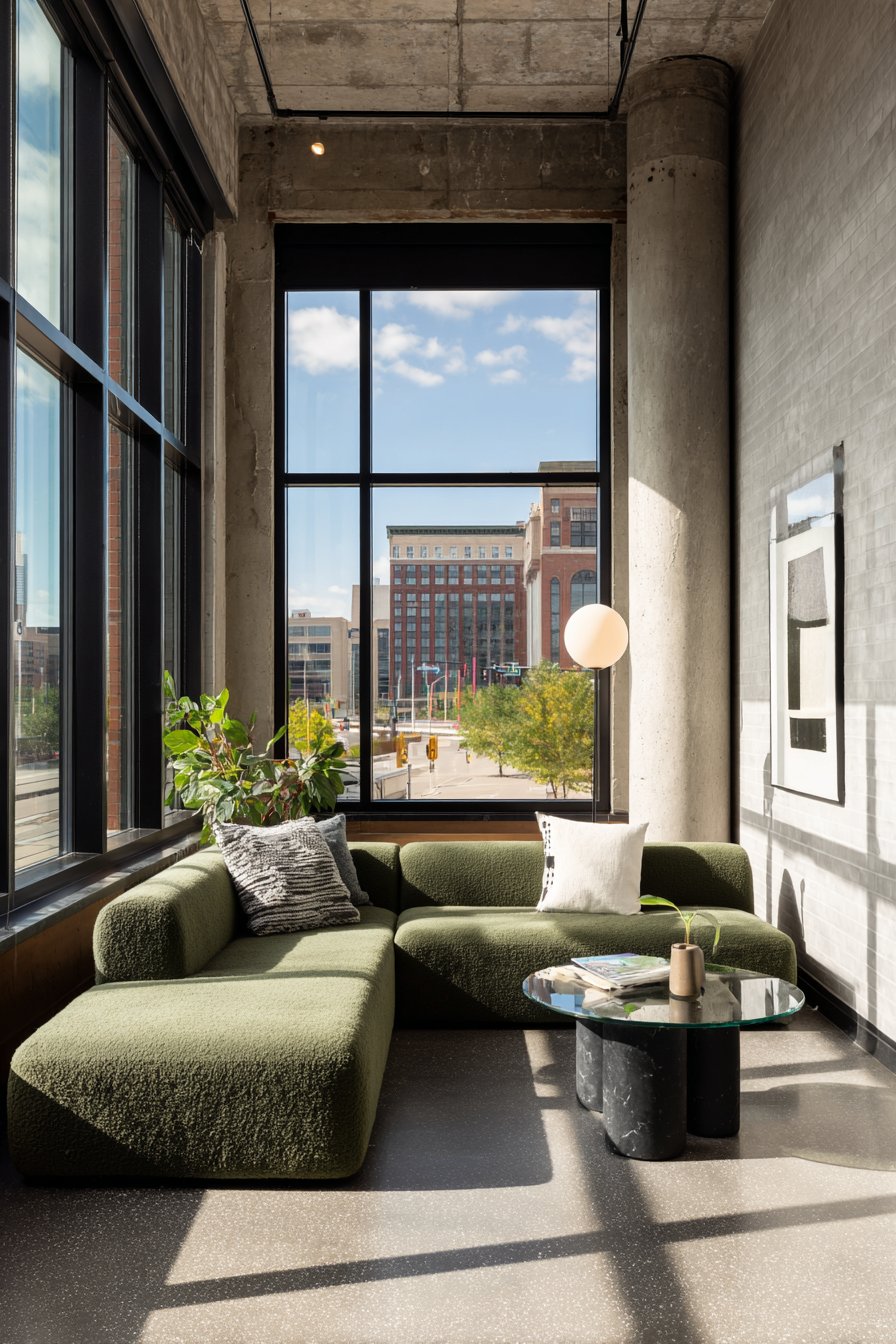
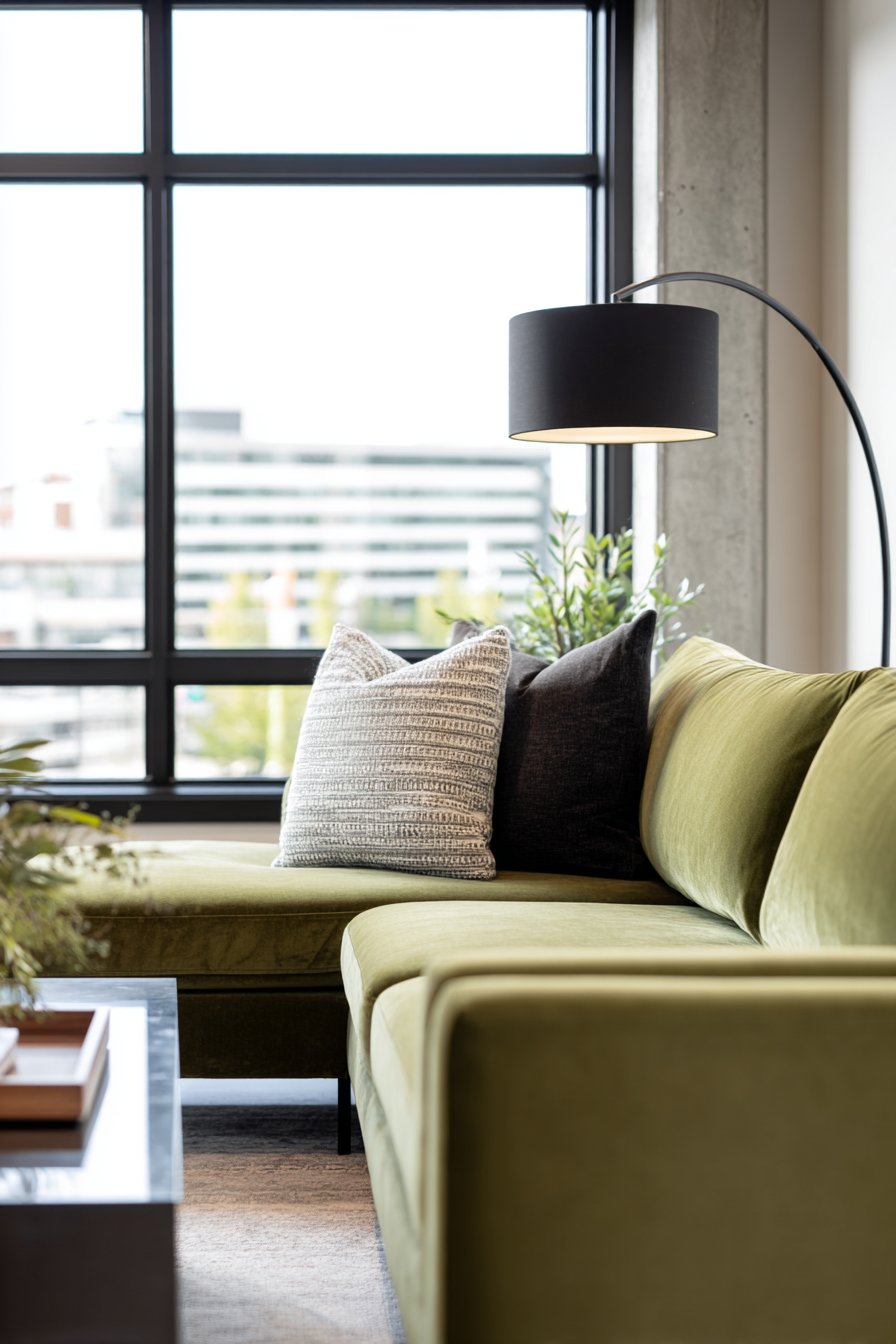
The moss green sofa is accented with monochromatic pillows in slightly varied shades, creating tonal interest without introducing additional colors. A single sculptural floor lamp provides both illumination and art object status, its clean lines and interesting form contributing to the room’s curated, gallery-like atmosphere. The minimal coffee table in smoked glass maintains the uncluttered aesthetic while providing necessary function, its transparency preserving sightlines and visual spaciousness. Natural light and shadow play throughout the day, creating ever-changing compositions that showcase the moss green sofa’s sophisticated color and the space’s architectural qualities.
Key Design Tips: Edit ruthlessly, including only essential furniture and carefully selected accessories. Choose furniture with clean, geometric forms and minimal ornamentation. Incorporate architectural materials like concrete, glass, and steel to emphasize structural thinking. Maximize natural light through large windows and minimal treatments. Create tonal interest through variations of a single color rather than introducing many colors. Select statement lighting that functions as sculpture. Maintain clear sightlines and open flow throughout the space.
13. Traditional Forest Green Library
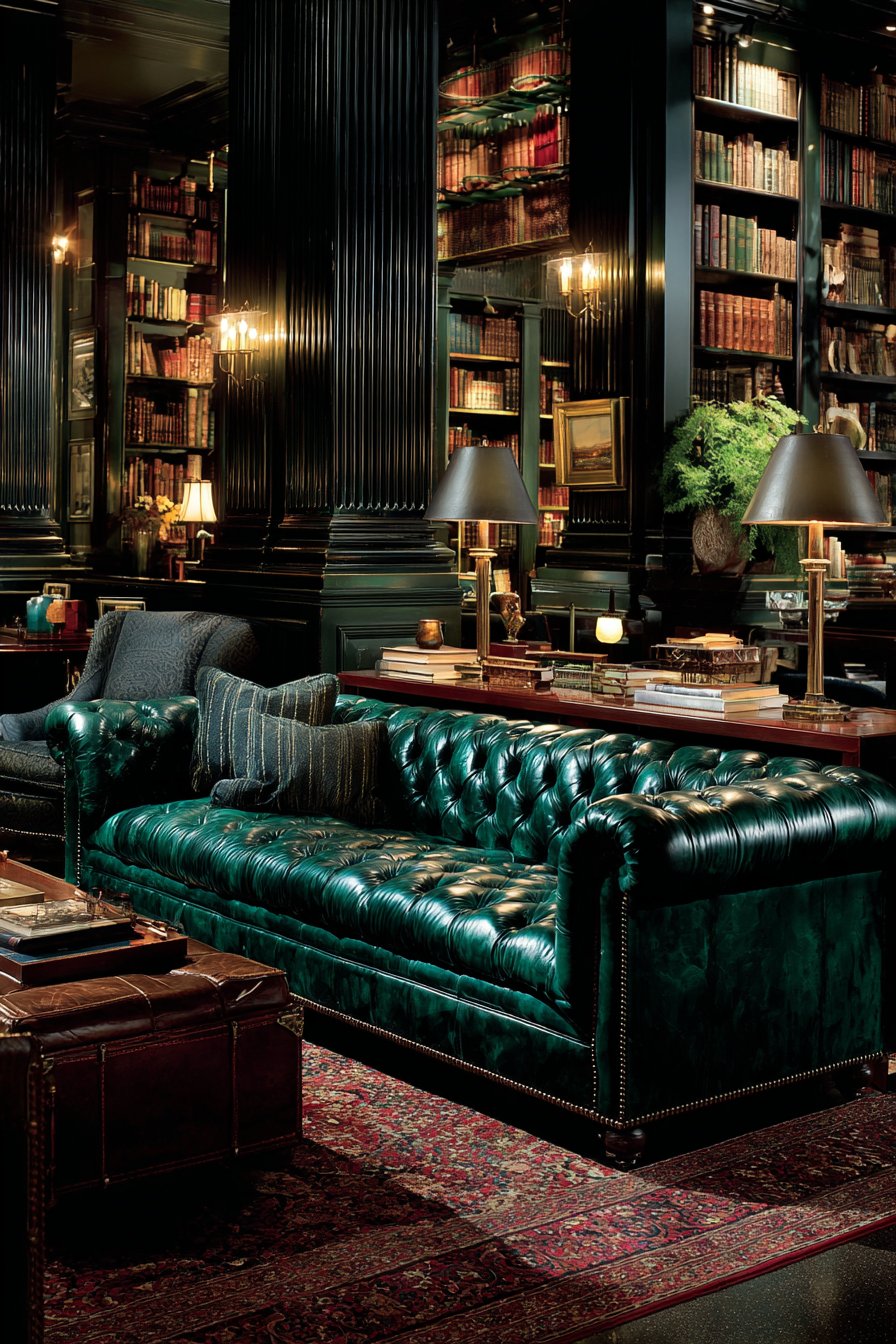
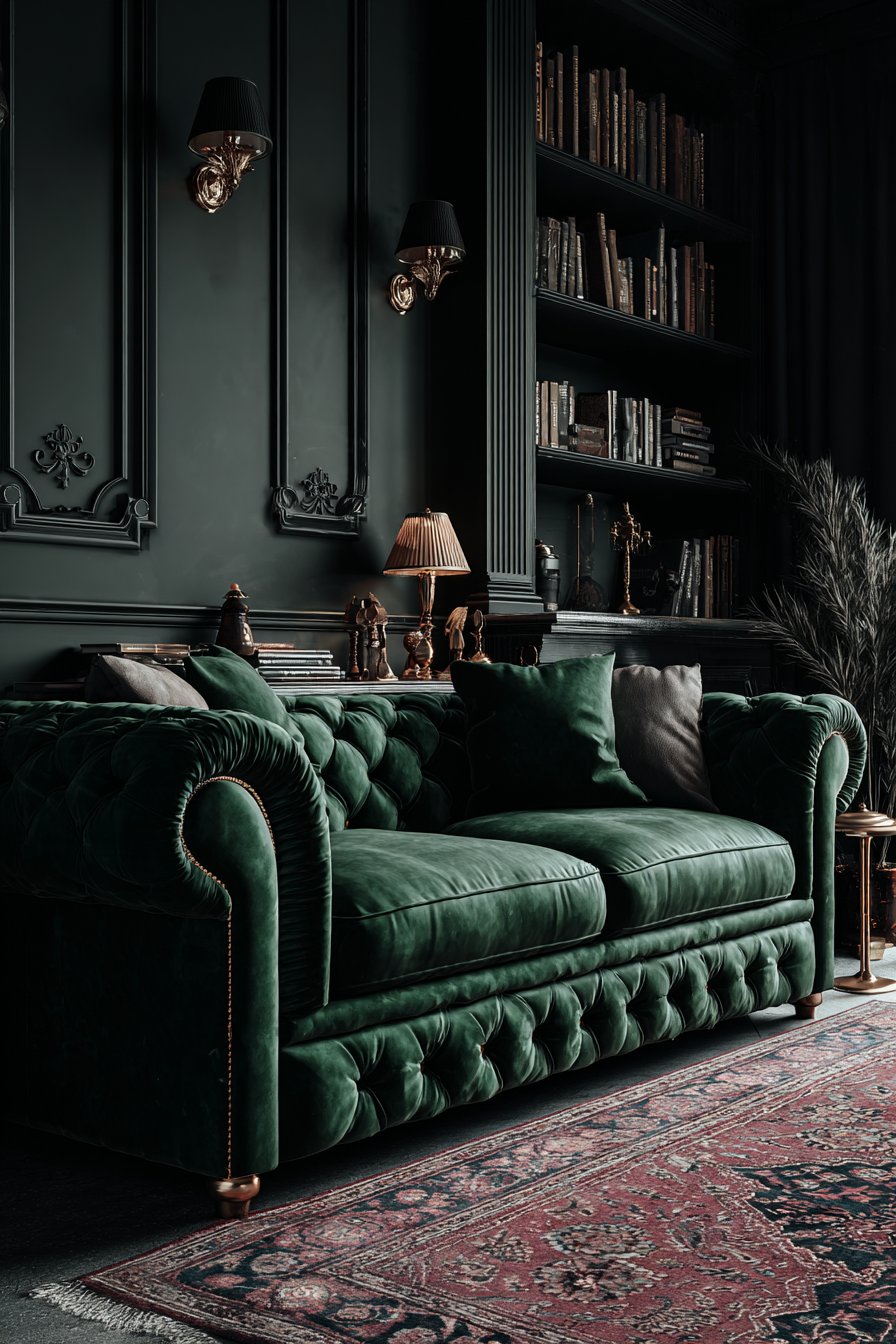
Traditional design honors classical proportions, quality materials, and timeless elegance, creating spaces that feel established and enduring. A forest green velvet Chesterfield sofa with deep diamond tufting and scrolled arms represents traditional upholstery at its finest, its complex button work and curved details requiring skilled craftsmanship. The forest green color adds richness while maintaining the sophisticated restraint characteristic of traditional interiors, avoiding the brighter, more casual greens that would feel inappropriate in this formal context.
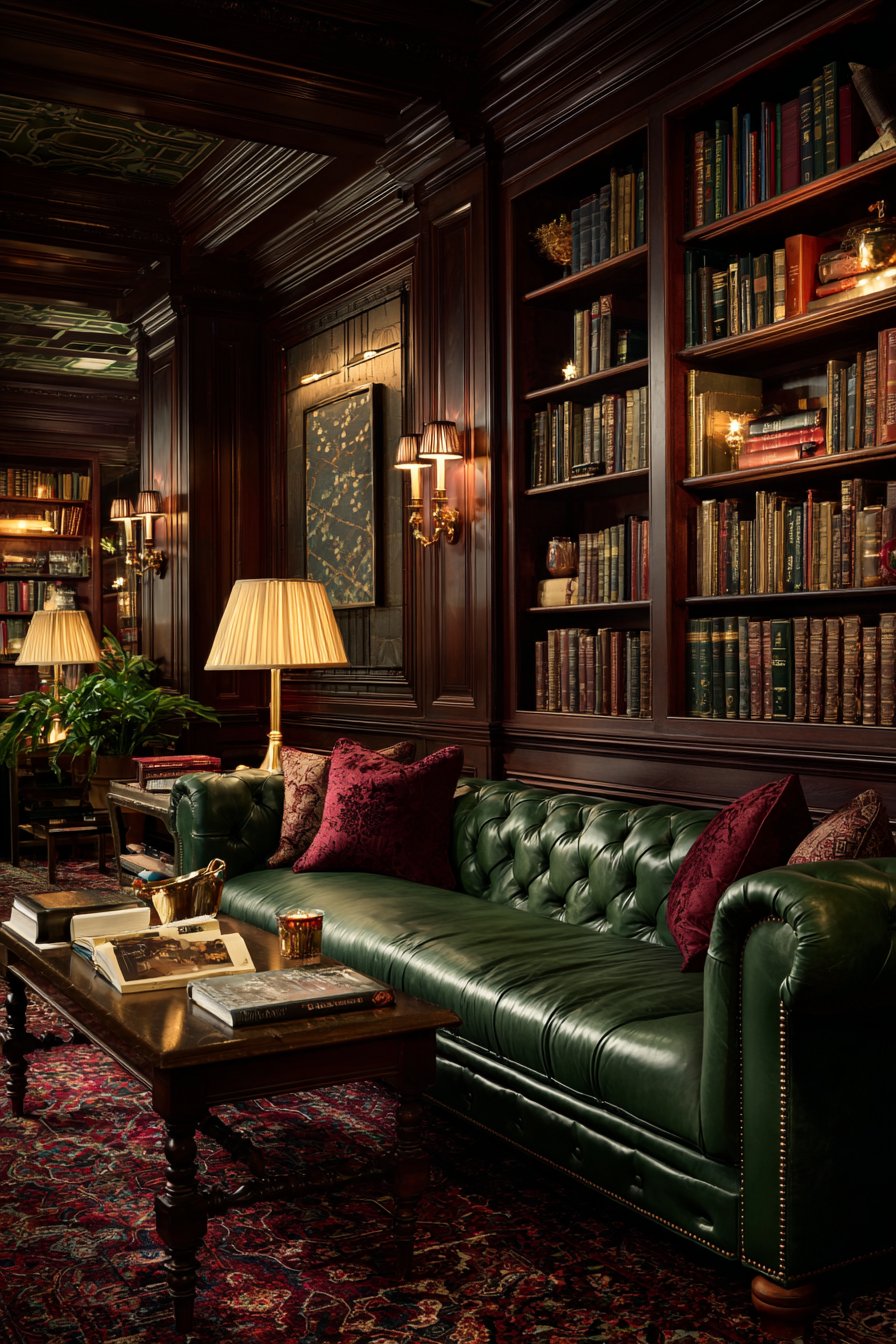
Dark wood paneling and built-in bookshelves create a library-like atmosphere that envelops the space in warmth and gravitas. These architectural details communicate permanence and quality, suggesting a room designed to last generations rather than following passing trends. The bookshelves, filled with leather-bound volumes and collected treasures, provide both function and beauty while reinforcing the room’s scholarly, cultured character.
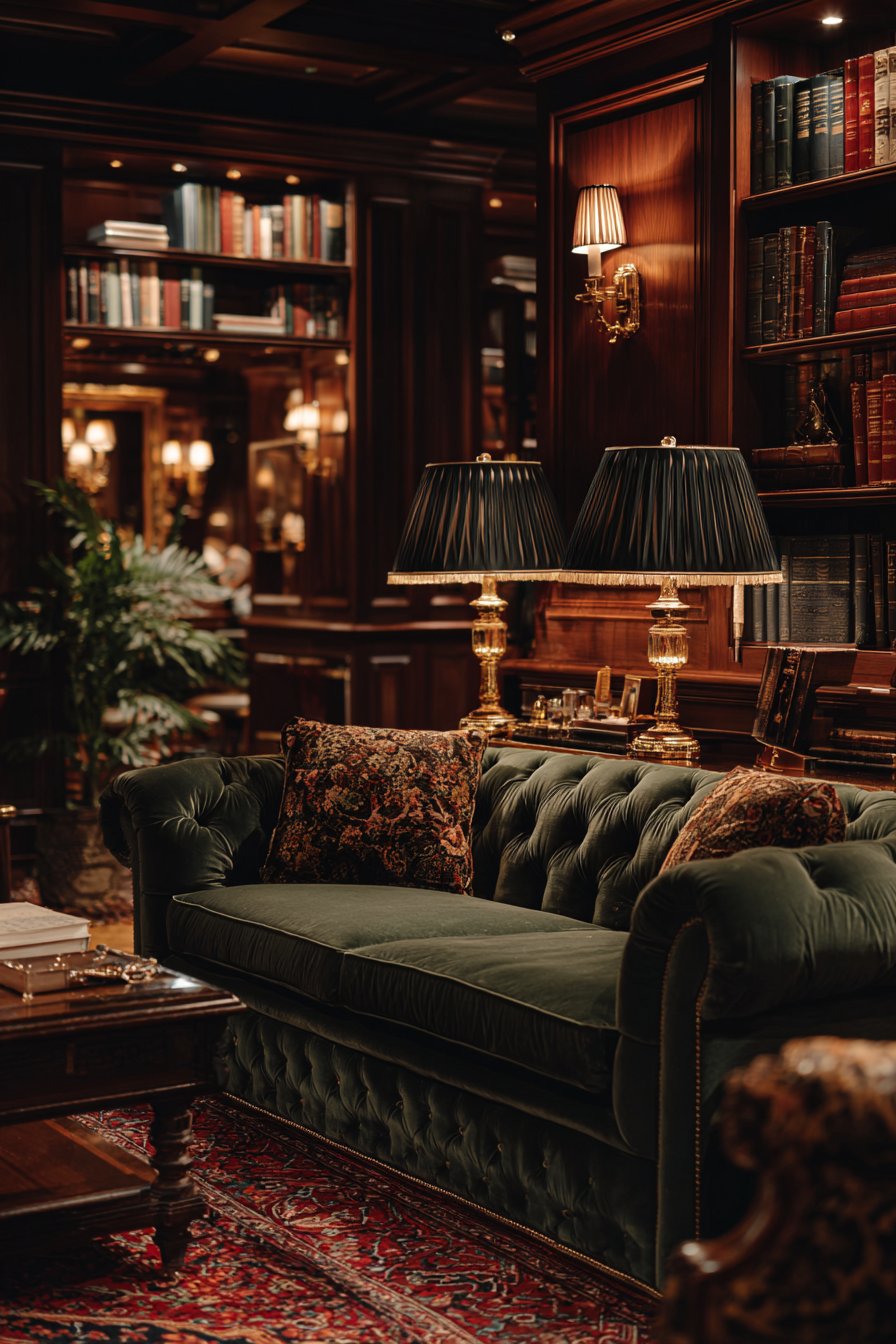
A Persian rug in burgundy and navy tones grounds the seating area while adding pattern and additional richness to the already layered space. Brass table lamps with fabric shades provide warm, focused light perfect for reading, their traditional proportions and quality materials echoing the room’s overall aesthetic. Warm ambient lighting from wall sconces creates intimate shadows and highlights, making the space feel like a private retreat from the modern world. This is a room designed for contemplation, for reading important books, for conversations about meaningful subjects—the forest green Chesterfield sofa inviting occupants to settle in and stay awhile.
Key Design Tips: Invest in quality furniture with excellent construction and durable materials that will last decades. Incorporate architectural details like wood paneling, crown molding, and built-in shelving. Choose traditional furniture silhouettes like Chesterfields, wingbacks, and camelback sofas. Layer rugs, particularly oriental or Persian styles, to add pattern and warmth. Use warm, focused lighting rather than bright overhead illumination. Display books and collected objects that reflect intellectual interests and cultural sophistication. Maintain a rich but restrained color palette anchored by deep, saturated greens, burgundies, and navy blues.
14. Biophilic Olive Green Garden
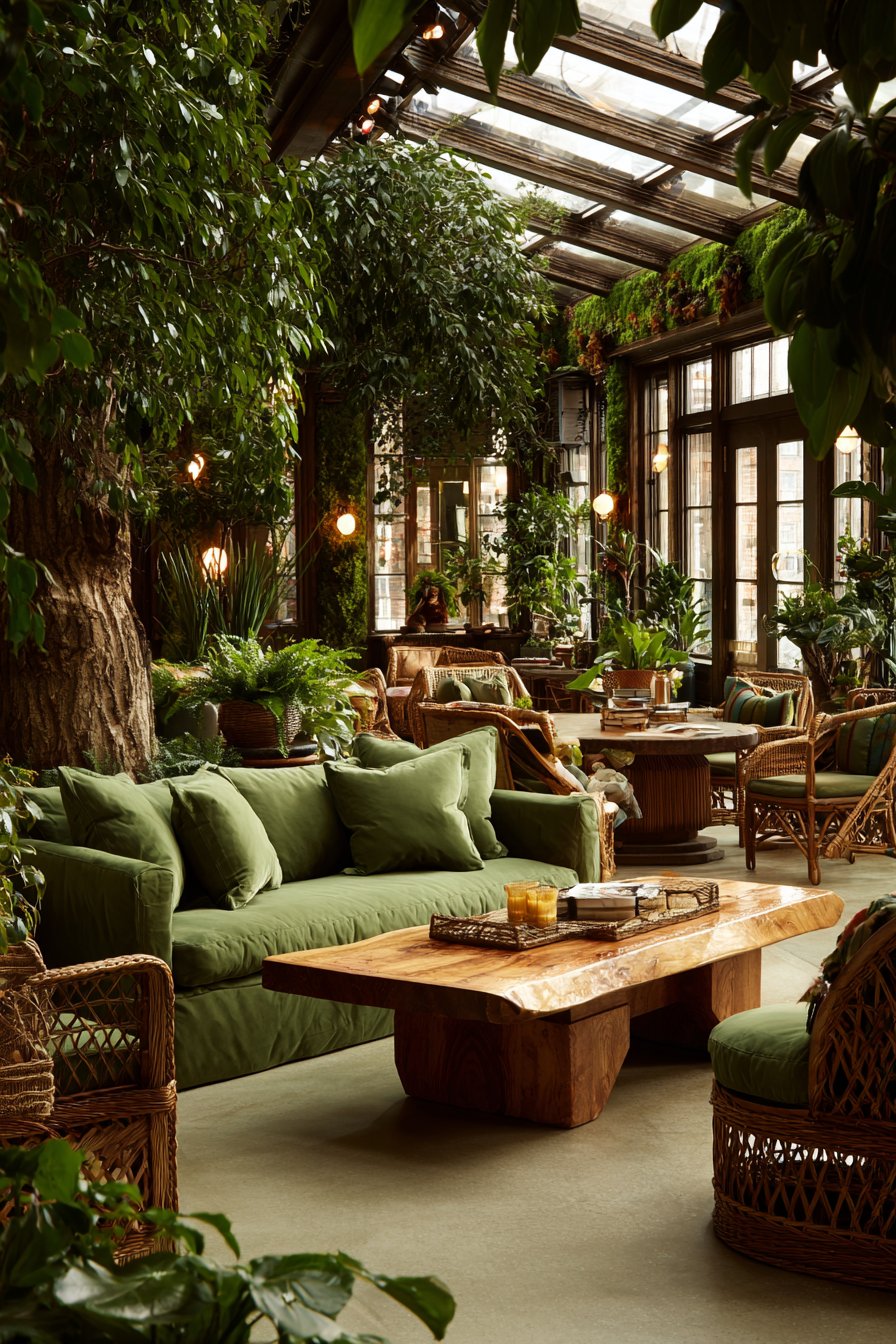
Biophilic design consciously incorporates natural elements and systems into built environments, recognizing humans’ innate need for connection with nature. An olive green organic cotton sofa surrounded by abundant indoor plants of varying heights brings this philosophy to life, creating a living room that feels more like a conservatory or indoor garden. The olive green color establishes immediate connection to nature, echoing the varied greens of the surrounding foliage while the organic cotton upholstery supports sustainable, health-conscious material choices.
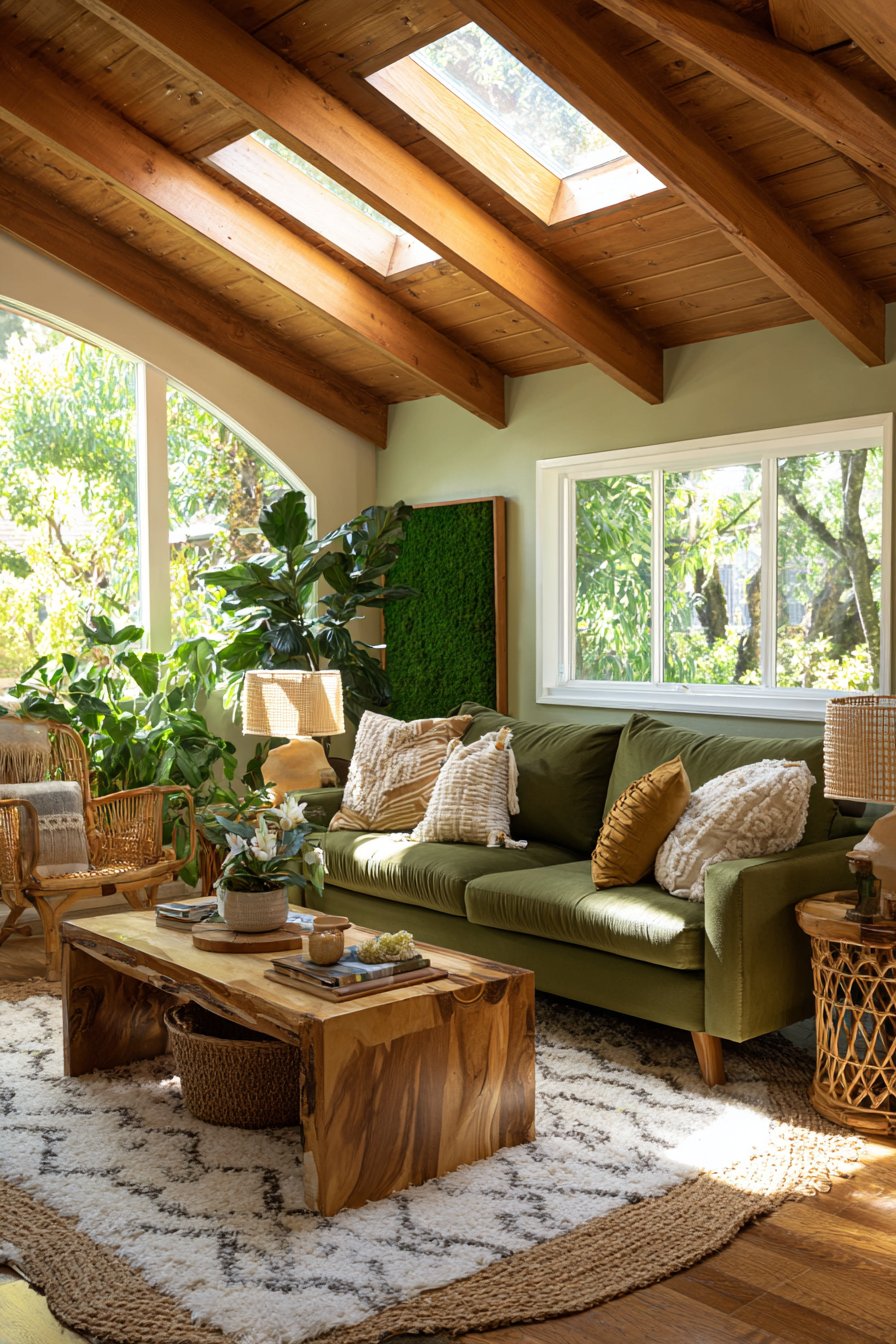
A living moss wall behind the sofa creates a dramatic natural backdrop that purifies air, absorbs sound, and provides ever-changing organic texture. This isn’t static decoration—it’s a living system that grows and changes, requiring care and attention just like the other plants in the space. The presence of so much living greenery improves air quality while providing psychological benefits documented in biophilic design research: reduced stress, improved focus, enhanced creativity, and general sense of wellbeing.
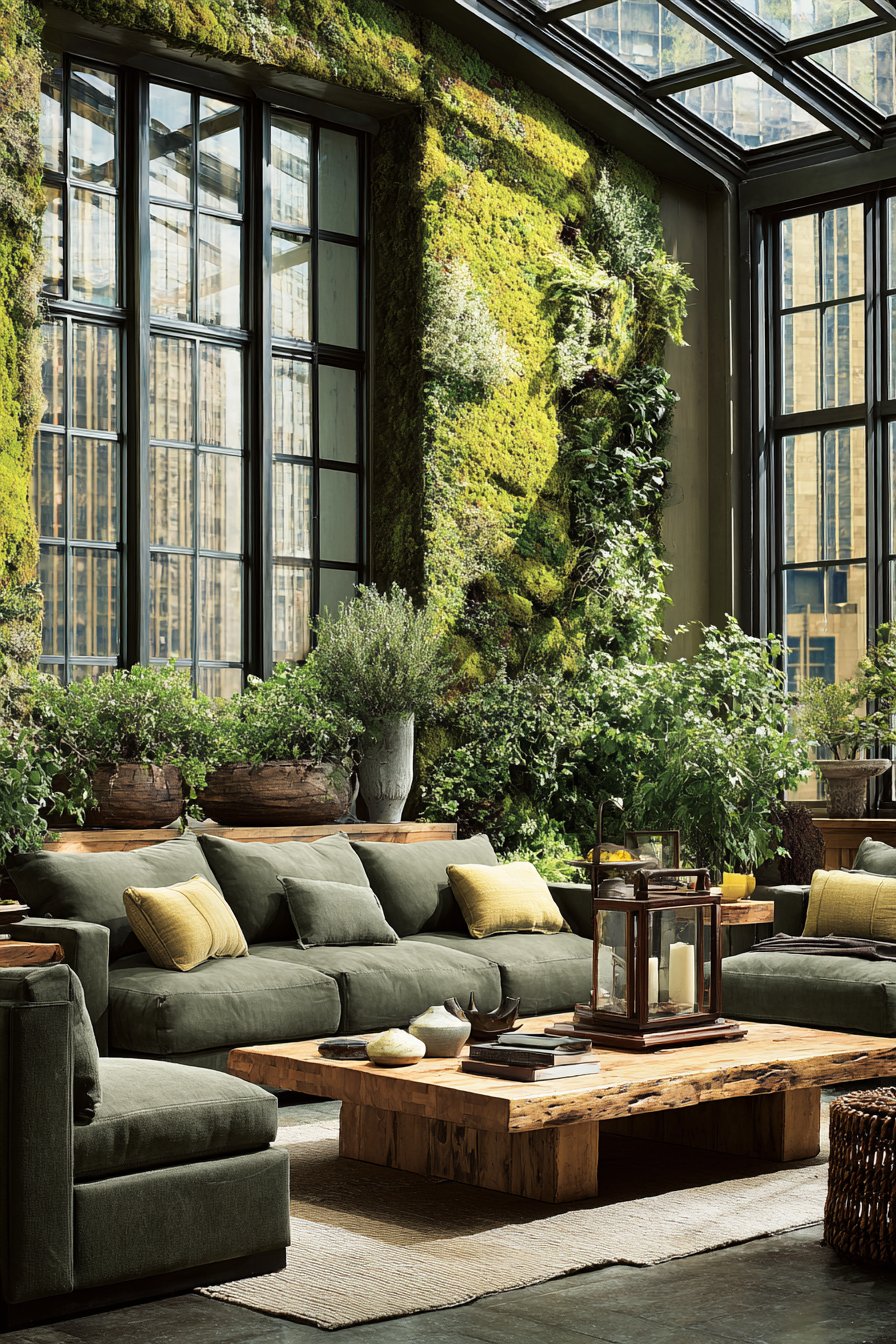
Natural wood coffee table with live edge detail celebrates the tree’s original form, its irregular edge preserving the boundary between bark and air. Rattan accent pieces introduce additional natural materials and textures while their lighter weight and open construction prevent the abundance of plants from making the space feel heavy or oppressive. Skylights and large windows provide the ample natural light essential for plant health while creating connection to exterior conditions—clouds moving overhead, changing seasons, progression from dawn to dusk. The olive green sofa becomes a comfortable perch from which to enjoy this indoor garden, a place to sit surrounded by living beauty.
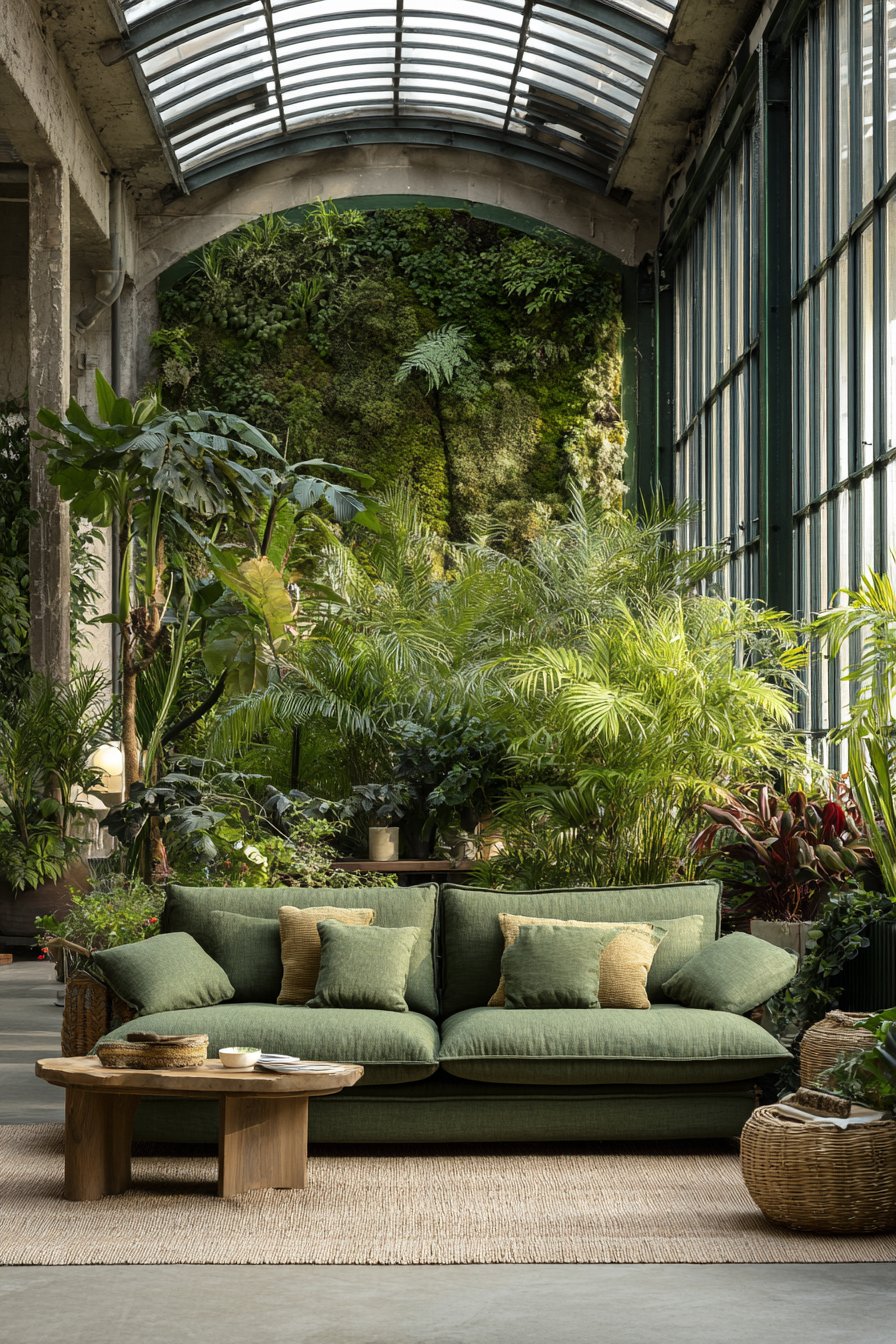
Key Design Tips: Choose plants suited to your space’s light conditions and your maintenance abilities—success requires matching plants to environment. Incorporate plants at multiple heights from floor to ceiling, creating layers of green. Use natural, sustainable materials throughout—wood, cotton, linen, rattan, jute. Ensure adequate natural light for plant health through windows, skylights, or supplemental grow lights. Consider living walls or vertical gardens to maximize greenery in limited space. Choose an earthy green sofa tone that complements rather than competes with plant foliage. Maintain good air circulation to prevent moisture problems from plant transpiration.
15. Eclectic Peacock Green Worldliness
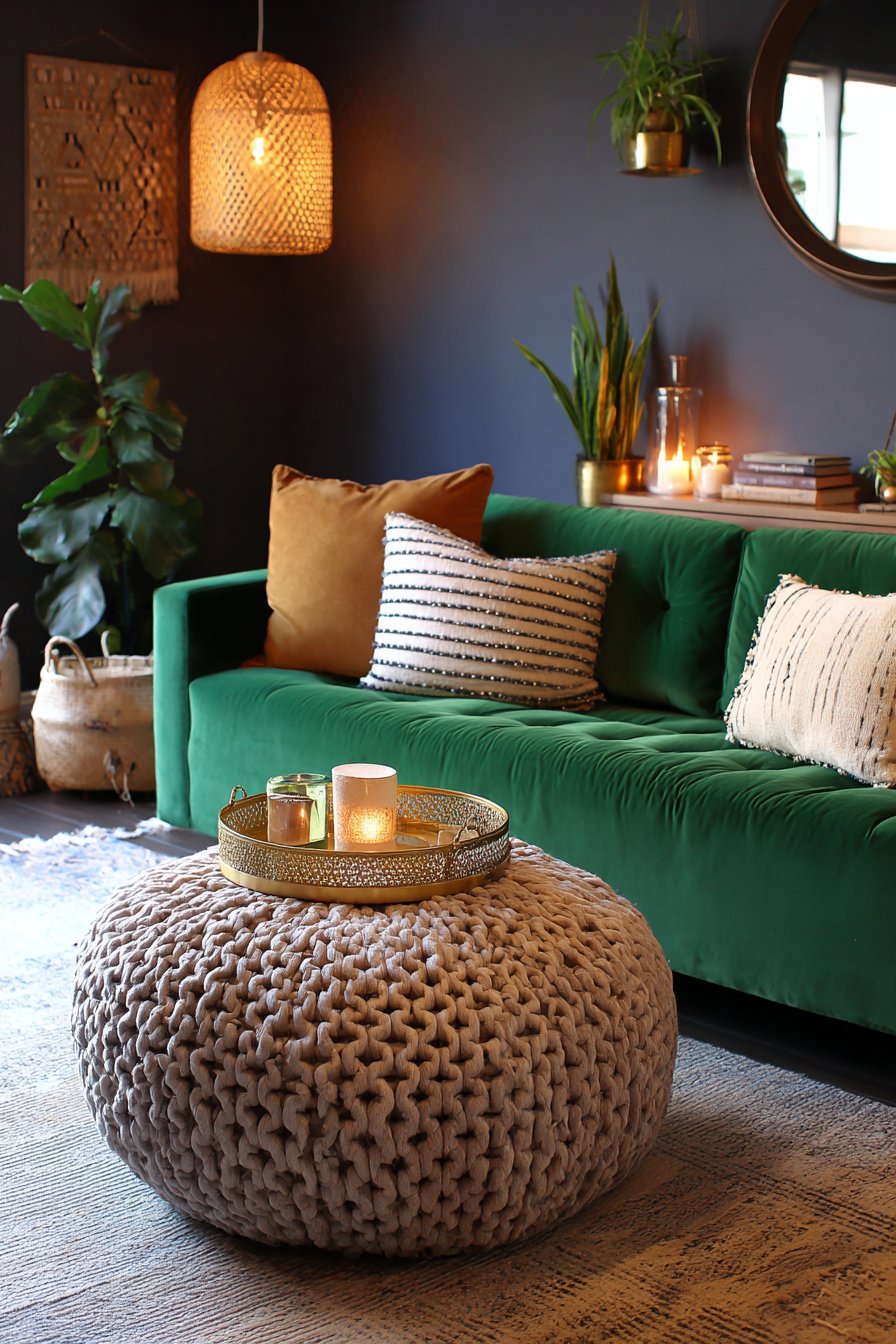
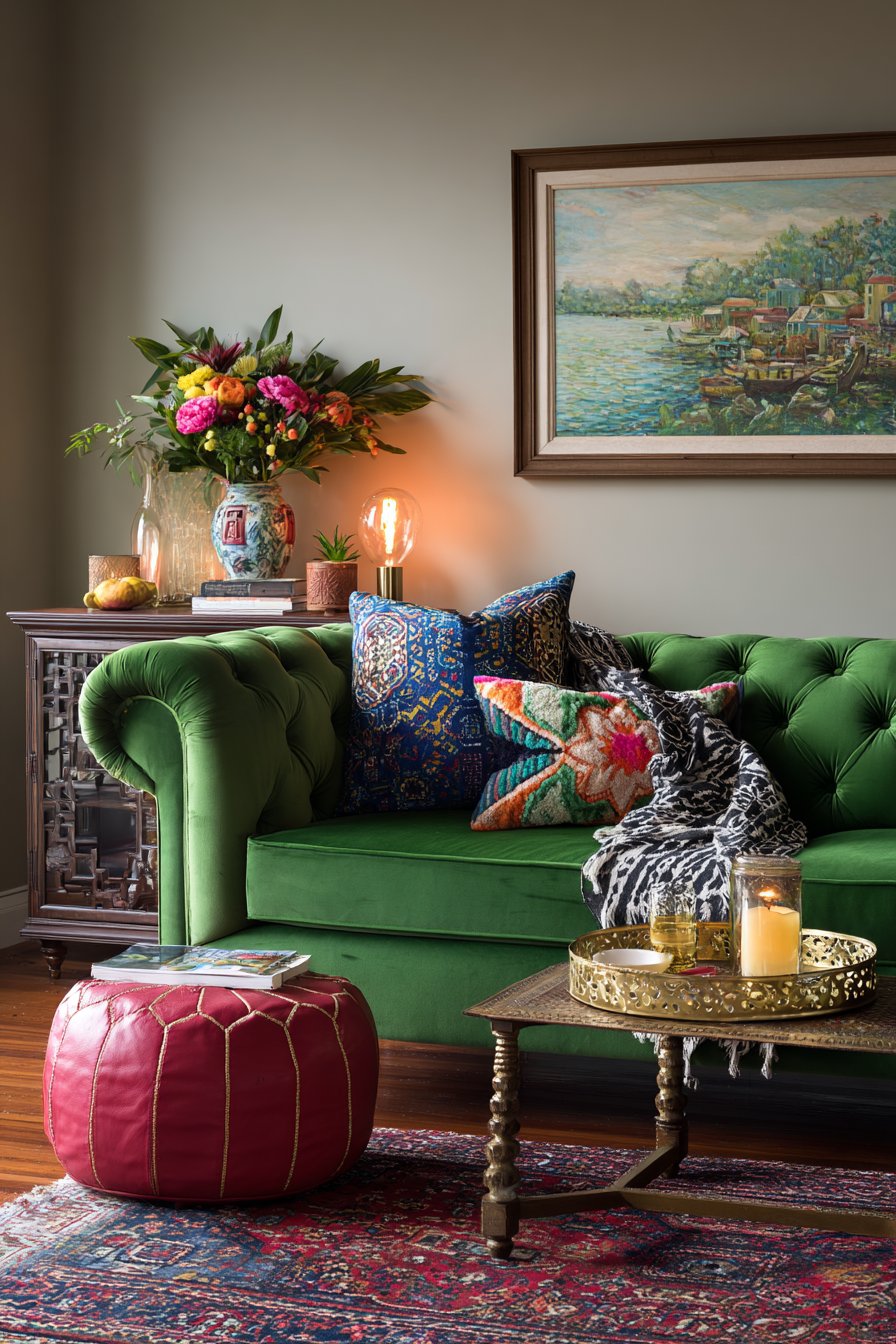
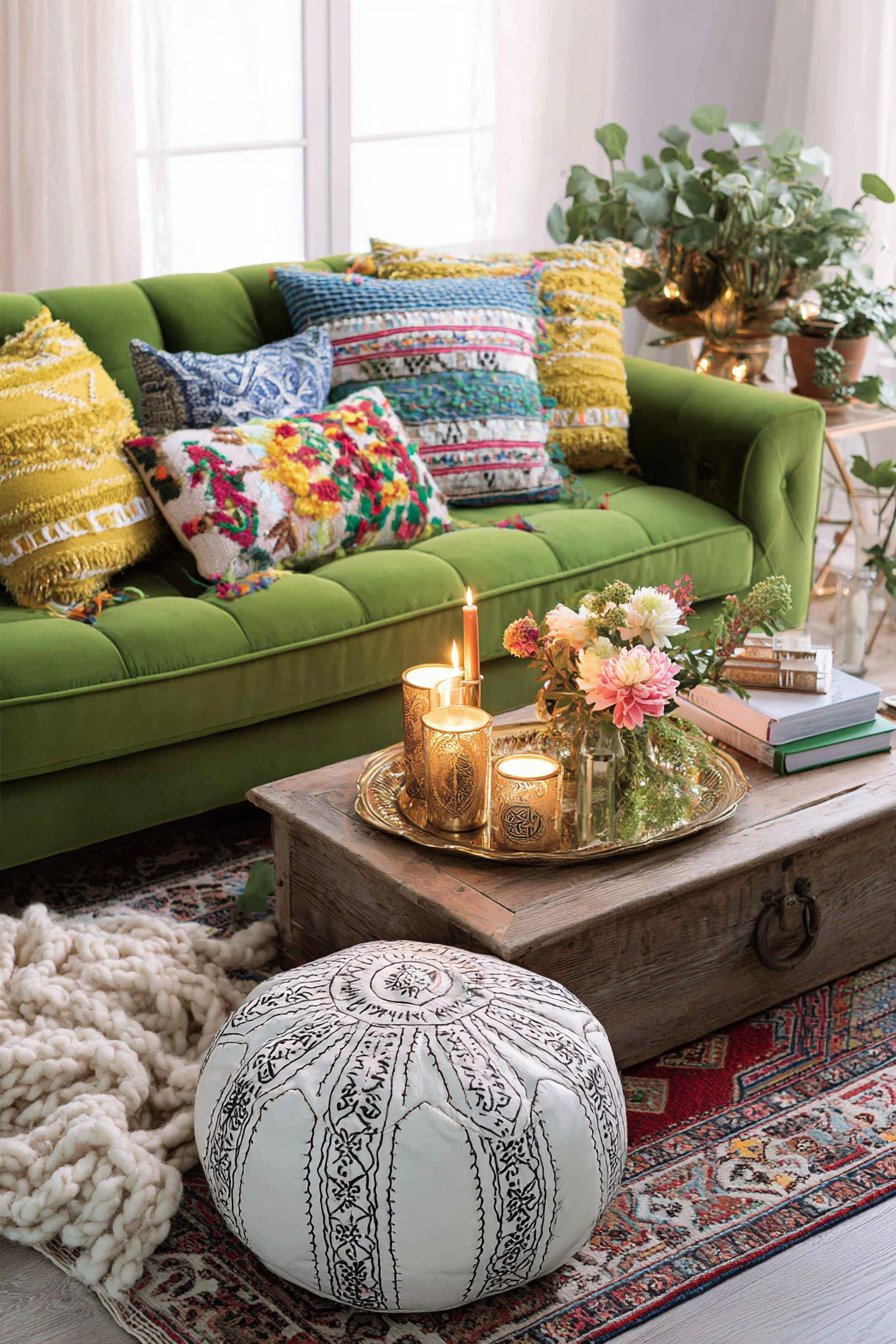
Eclectic design celebrates personal style by artfully combining elements from different periods, cultures, and aesthetics into cohesive, characterful spaces. A peacock green velvet sofa anchors this global-inspired room, its rich blue-green hue providing the foundation for layers of cultural influences. The velvet’s luxurious texture and jewel-tone color can accommodate the Moroccan pouf’s intricate embroidery, the Indian block-print pillow’s complex patterns, and the African mudcloth throw’s geometric designs without any single element overwhelming the others.
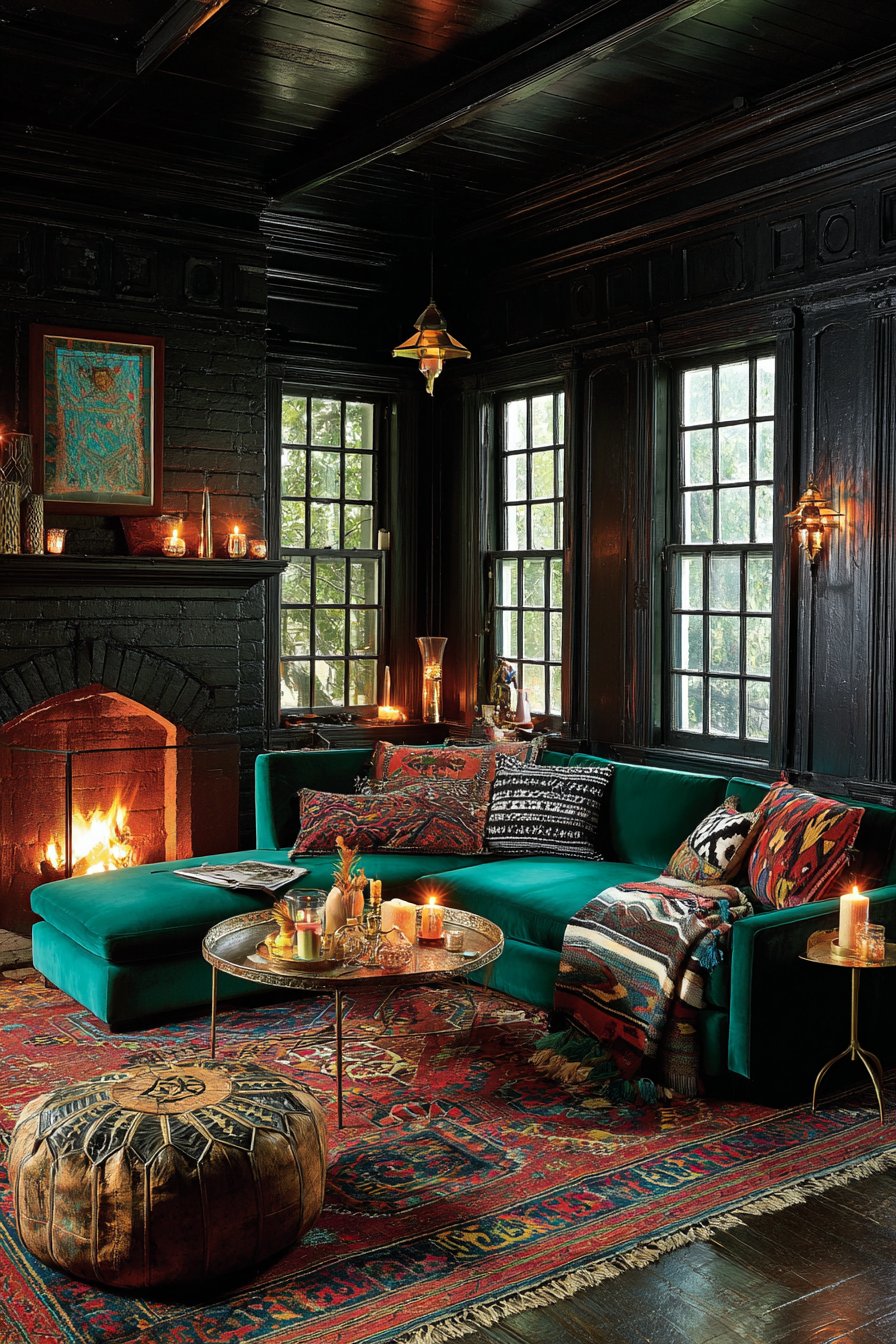
The art of successful eclectic design lies in finding connecting threads that allow diverse elements to coexist harmoniously. In this space, the thread might be a commitment to handcrafted objects, a specific color palette of jewel tones and earth colors, or simply the owner’s travels and experiences. A vintage Turkish kilim rug introduces even more pattern and cultural reference while its flat weave and geometric motifs complement rather than compete with the other textiles. A brass Moroccan tray table provides functional surface while its handcrafted details and warm metallic finish add another layer of global influence.
Warm Edison lighting and candles create ambient glow that enhances the space’s collected, intimate character. This isn’t the bright, even illumination of retail spaces—it’s the varied, warm lighting of homes around the world where candles, lanterns, and lamps create pools of golden light. The peacock green sofa holds its own amidst all these diverse elements, its substantial presence and rich color providing the visual weight necessary to anchor the composition while its elegant form prevents the space from feeling chaotic or cluttered.
Key Design Tips: Choose pieces you genuinely love from your travels or cultural interests rather than buying “coordinated” global collections. Find connecting threads—color, pattern scale, material, or era—that allow diverse elements to coexist. Layer textiles generously, mixing patterns and textures from different traditions. Incorporate handcrafted objects that show the maker’s hand and skill. Use warm, varied lighting rather than bright overhead illumination. Allow the collection to evolve organically as you travel, learn, and discover rather than completing it all at once. Choose a sophisticated neutral or jewel-tone sofa that can accommodate diverse global textiles and artifacts.
16. Minimalist Celadon Green Zen
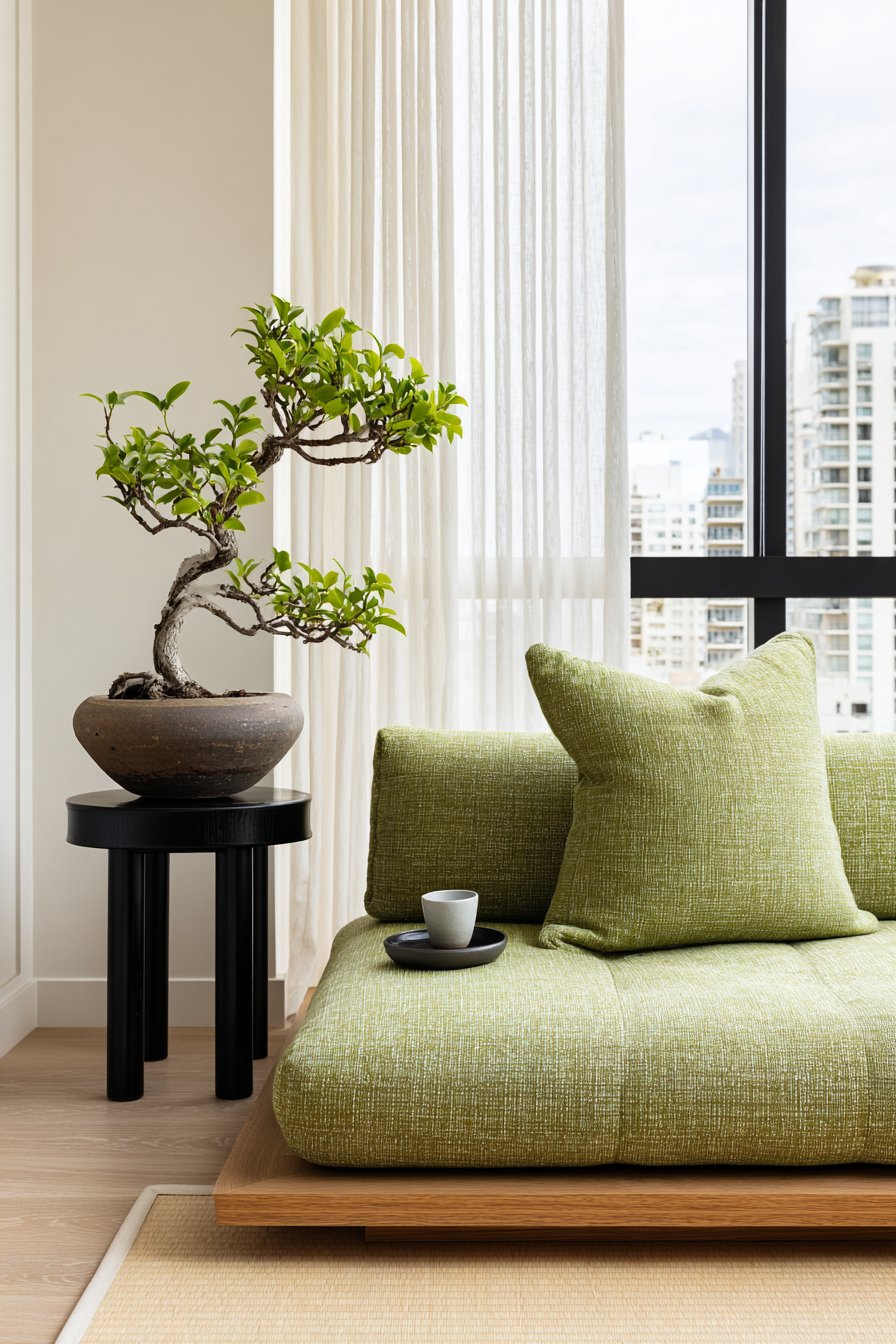
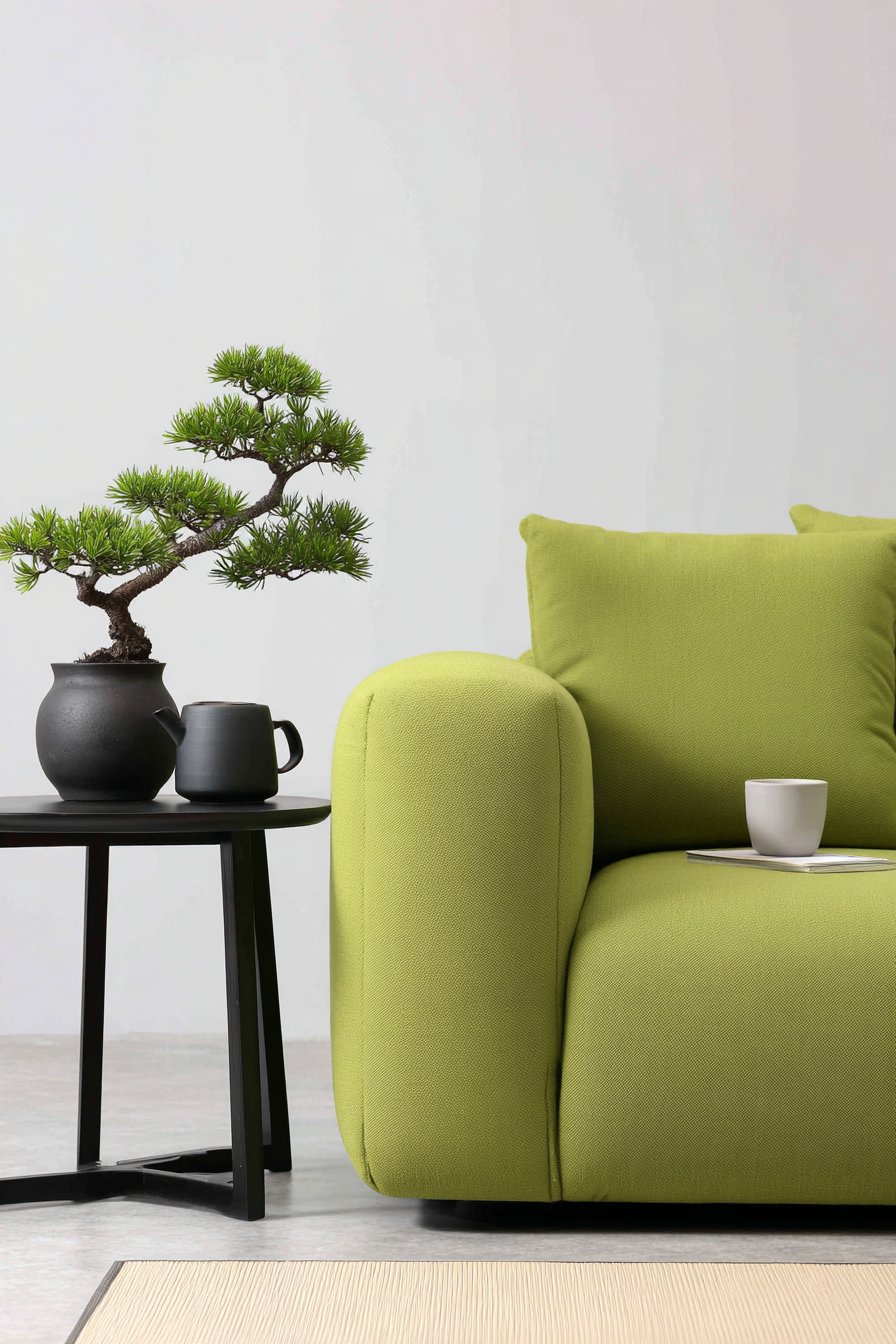
Japanese-inspired minimalism emphasizes simplicity, tranquility, and mindful appreciation of negative space—principles beautifully realized in a living room featuring a celadon green sofa with low profile and simple lines. The celadon hue references traditional Japanese ceramics, its soft grey-green color promoting calm and contemplation. The low profile keeps the visual center of gravity near the floor, creating stability and grounding while the simple lines reject any unnecessary ornamentation or decoration.
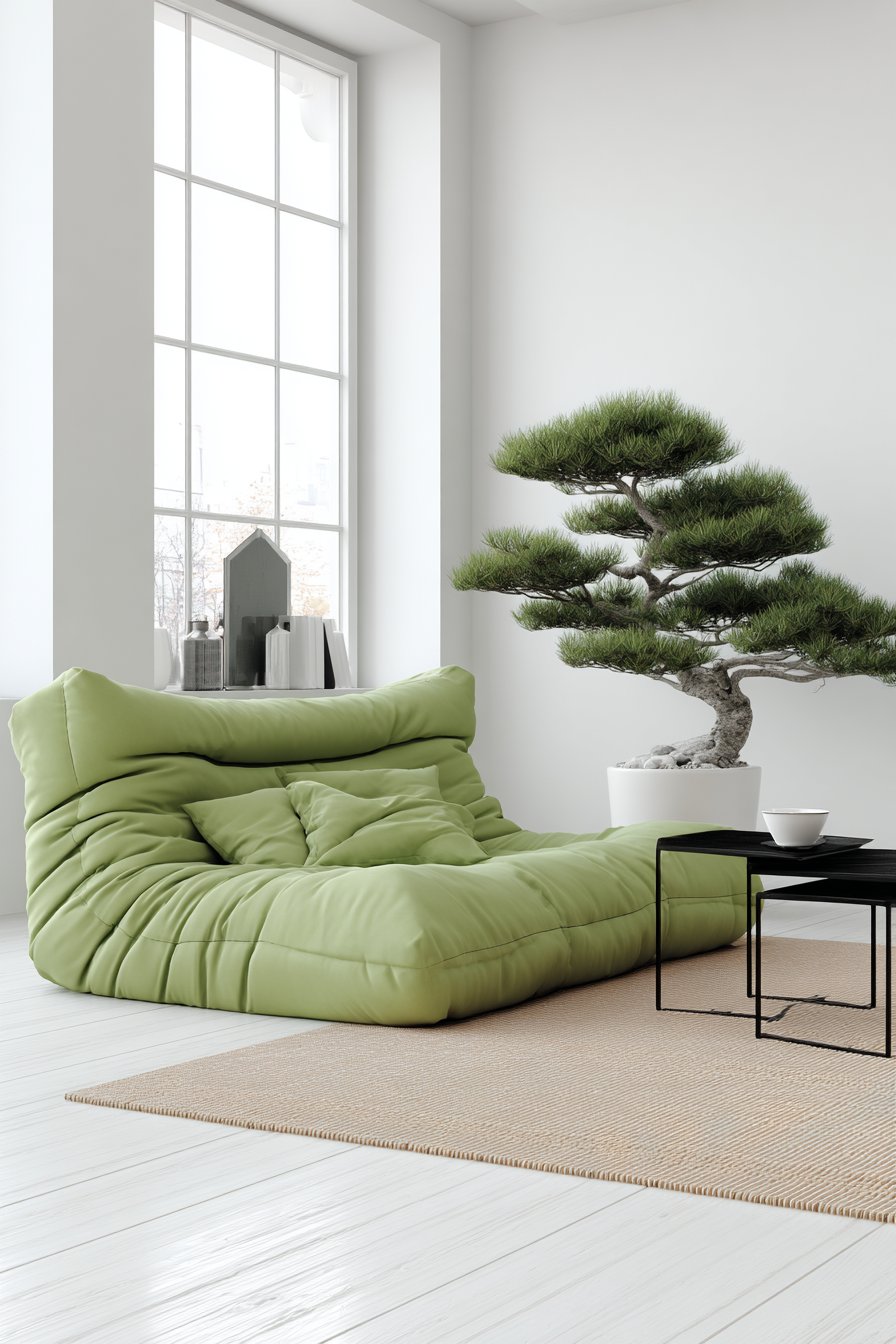
A tatami-style floor mat defines the seating area while referencing traditional Japanese flooring systems. Its neutral color and natural fiber construction maintain the space’s organic, minimal character. A single bonsai tree displayed on a simple stand becomes a focal point worthy of contemplation, its miniature form representing nature while its carefully pruned shape demonstrates human intervention and care—the harmonious relationship between nature and culture central to Japanese aesthetics.
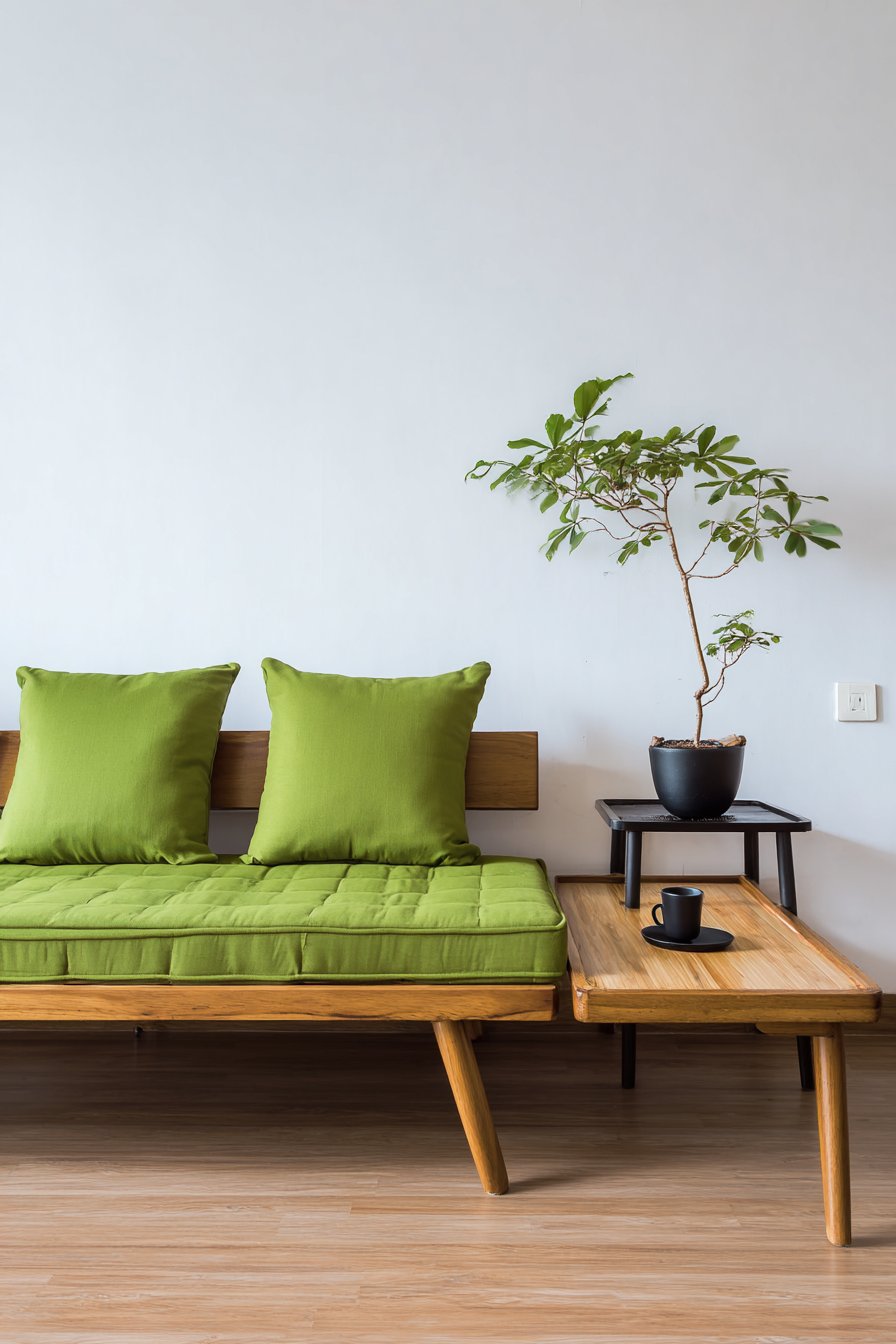
White walls and minimal window treatment allow natural light to become the primary design element, changing throughout the day and seasons to create ever-shifting conditions within the space. A small black lacquer side table holds a single ceramic cup—perhaps for tea ceremony or simply daily enjoyment—its glossy surface and precise edges contrasting with the organic textures elsewhere. This is a space designed for presence and awareness, where the celadon green sofa provides comfortable seating for meditation, reading, or simply being still in a busy world.
Key Design Tips: Embrace negative space as essential rather than empty, allowing room for visual rest. Choose furniture with low profiles and simple, clean lines. Limit possessions to essentials and objects worthy of contemplation. Display single, meaningful objects rather than collections or groupings. Maximize natural light through minimal window treatments. Use natural materials in their near-original states—wood showing grain, stone showing texture. Maintain a limited palette of neutrals with perhaps one subtle color like celadon green. Create spaces for specific activities—sitting, reading, contemplating—rather than multipurpose areas.
17. Open Concept Pistachio Green Definition
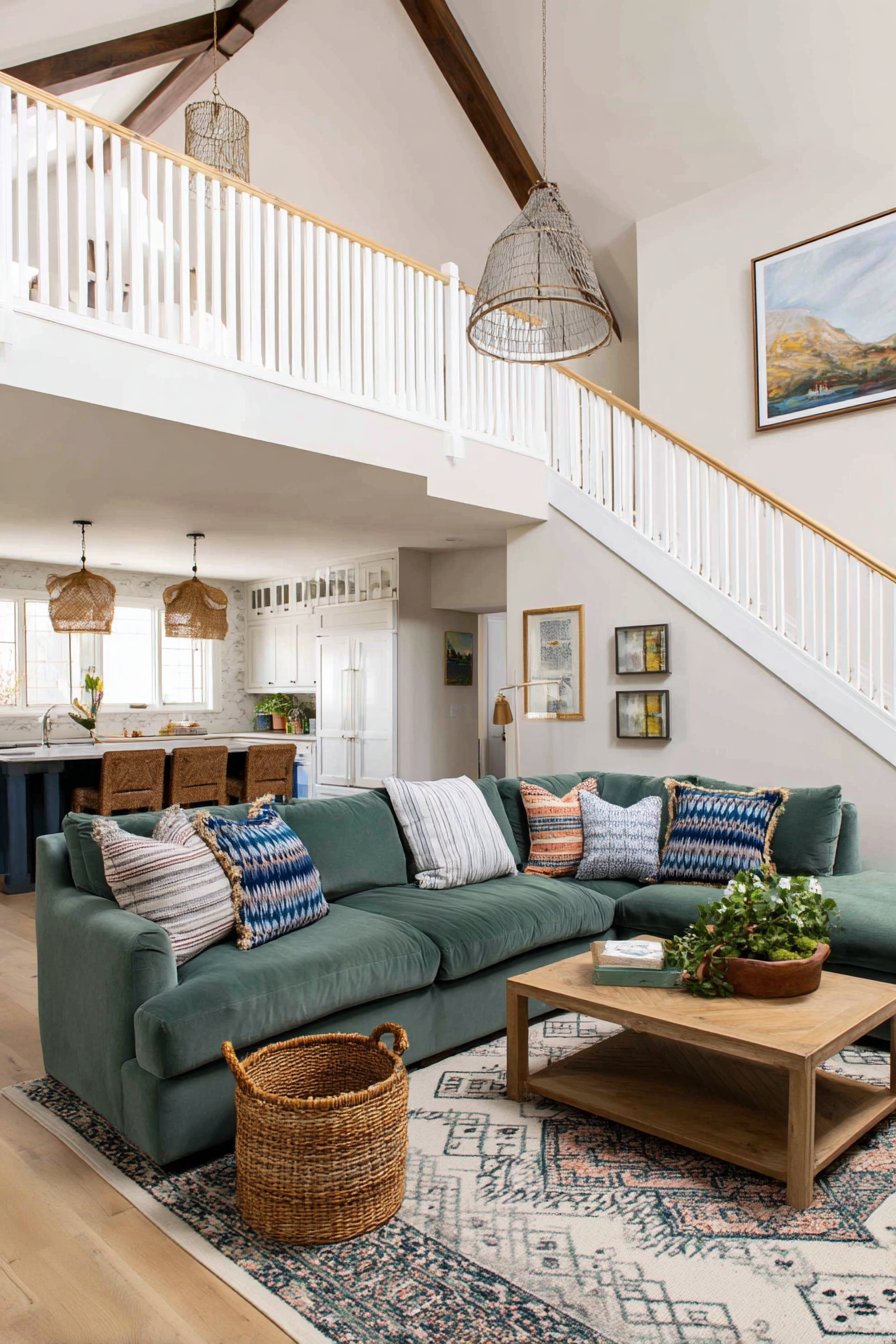
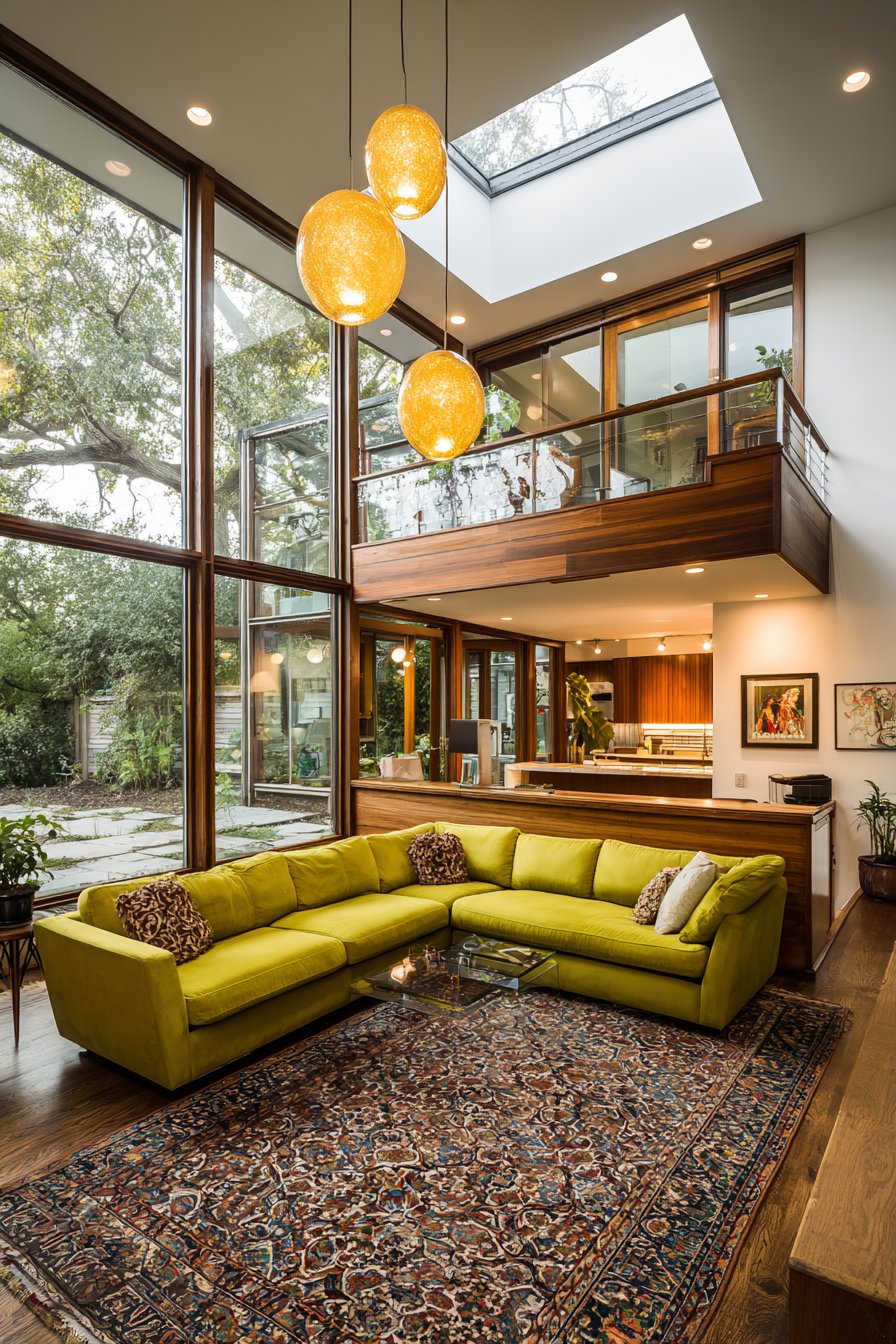
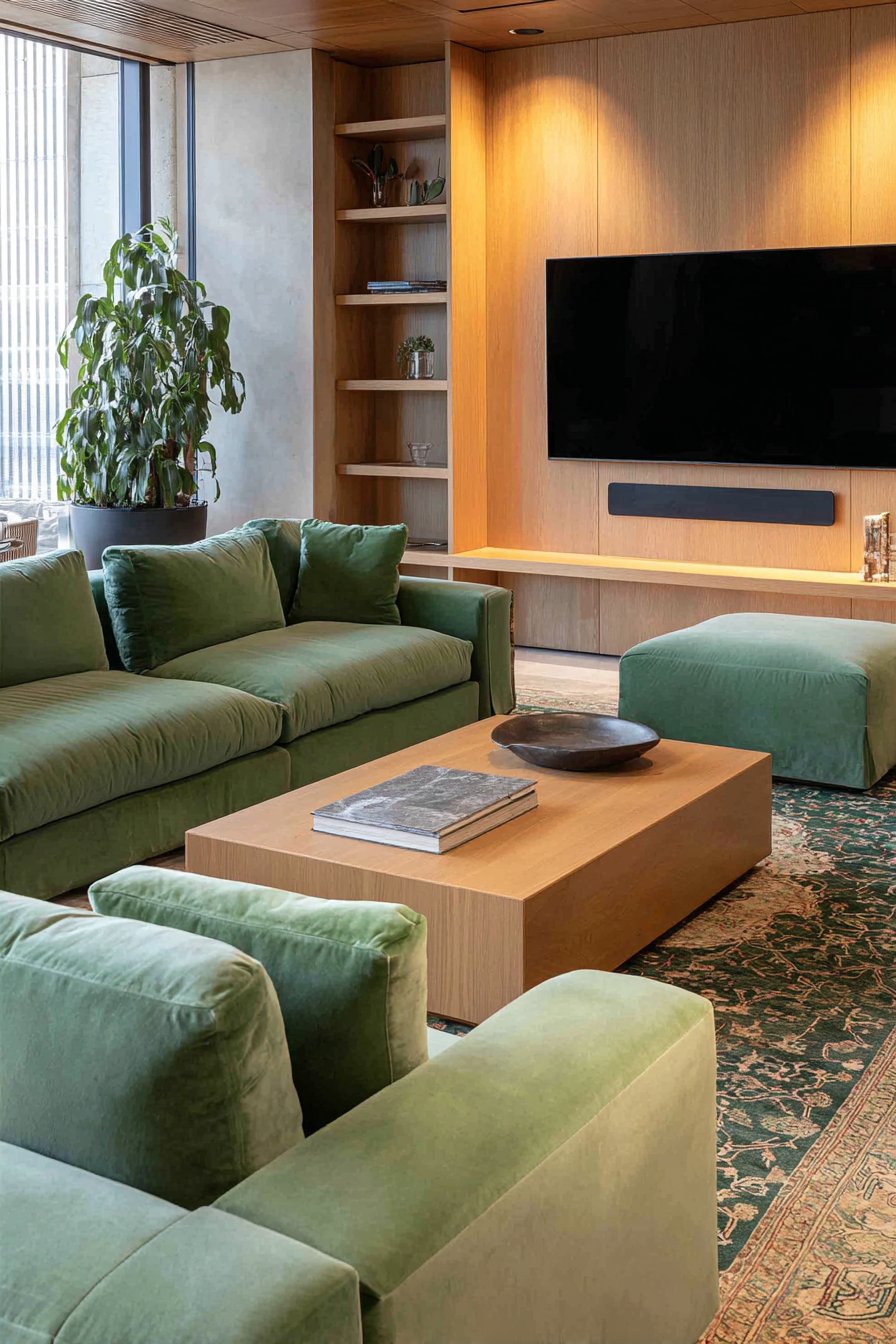
Open concept living presents unique design challenges, particularly creating distinct zones for different activities without using walls. A pistachio green sectional sofa brilliantly solves this challenge, its L-shaped configuration defining the living zone within a larger space while maintaining visual connection to other areas. The pistachio green color is bright enough to create presence without being so bold it dominates the entire open space, and its cheerful warmth invites gathering while maintaining sophisticated appeal.
Light oak flooring flows throughout the open space, visually connecting different zones while its natural warmth and varied grain provide organic interest. A large area rug grounds the seating area beneath and around the sectional, using color, pattern, or texture to further define the living zone’s boundaries. This layering—sectional creating physical boundary, rug creating visual boundary—effectively establishes the living area without requiring walls or partitions.
Pendant lighting suspended above the sectional marks the living space boundary from above while providing necessary illumination for reading or conversation. The pendant’s position and style can reinforce the living area’s definition while contributing to the overall design aesthetic—perhaps a modern geometric pendant for contemporary spaces or a woven natural fiber pendant for organic, casual interiors. The pistachio green sectional demonstrates how thoughtful furniture selection and placement can create functional zones in open spaces while maintaining the flow and connection that makes open concept living appealing.
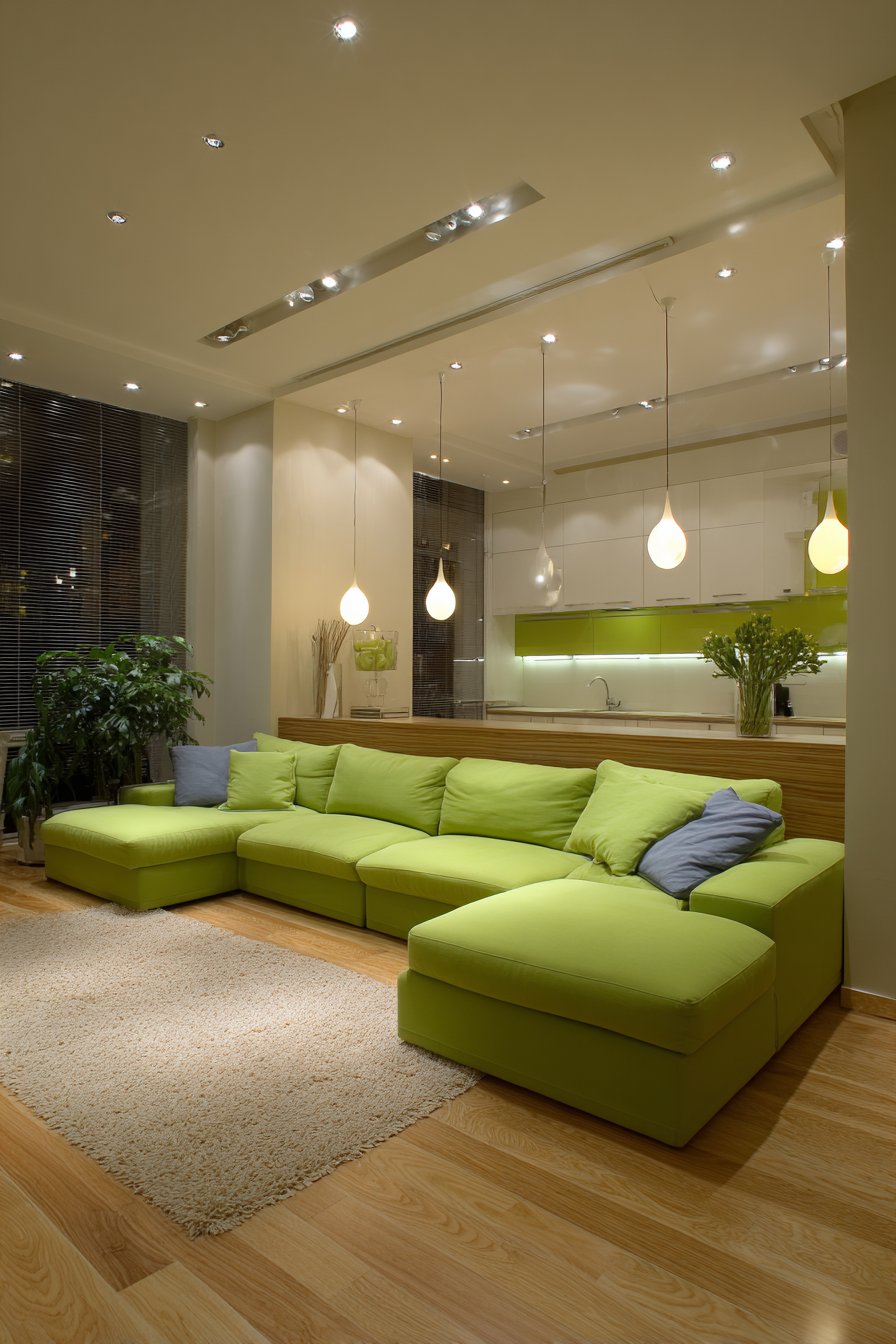
Key Design Tips: Choose a sectional configuration that creates natural boundaries without blocking sightlines entirely. Use area rugs to define zones within larger spaces, ensuring rugs are large enough to anchor furniture groupings. Position lighting to mark zone boundaries from above while providing necessary illumination. Maintain consistent flooring throughout open spaces to preserve visual connection. Select a sofa color that creates presence without overwhelming the entire space—medium saturation colors like pistachio green work well. Ensure the sectional back presents an attractive view from other zones, as it will be visible from multiple directions. Create conversation-friendly arrangements even within open layouts.
18. Luxe Emerald Green Glamour
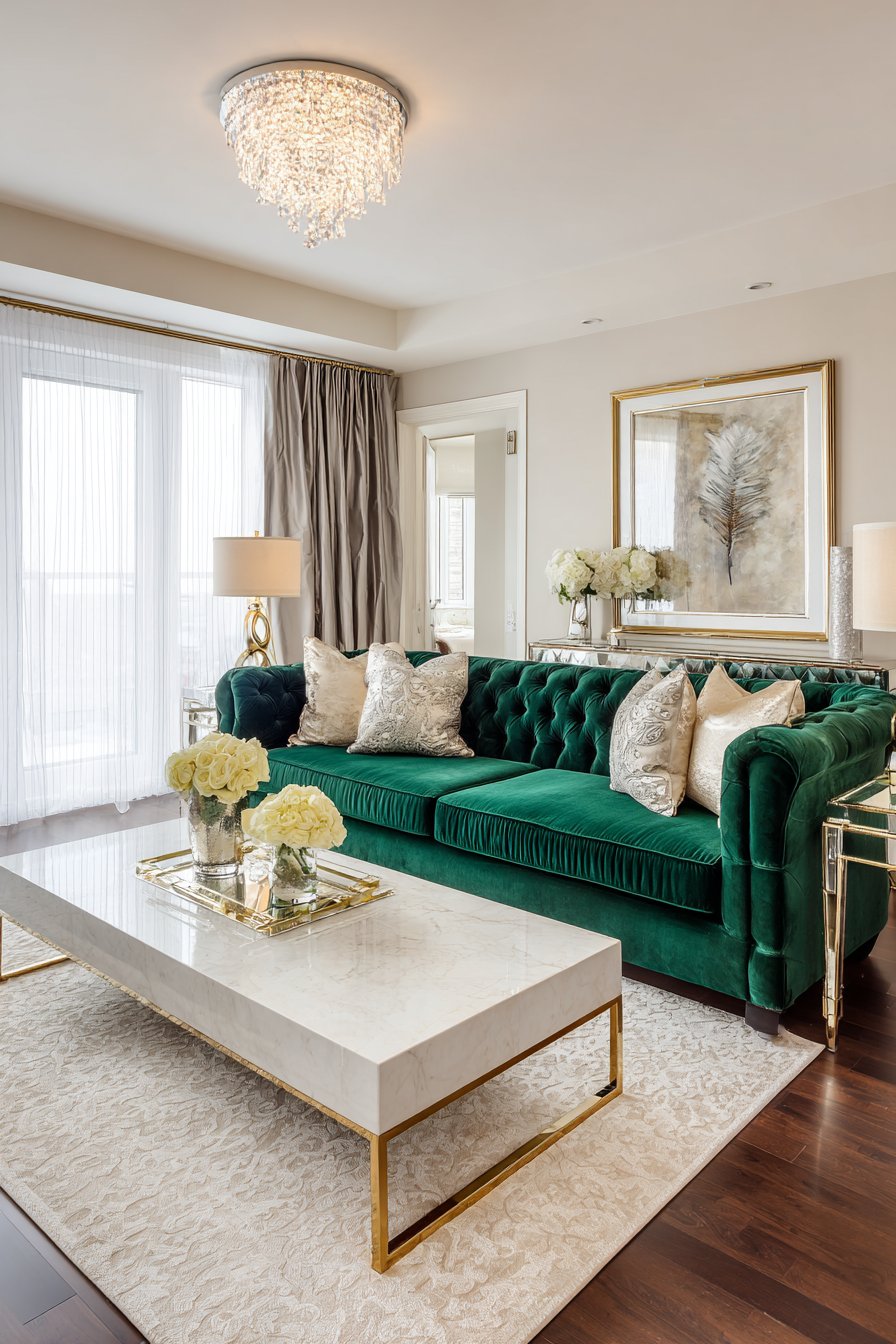
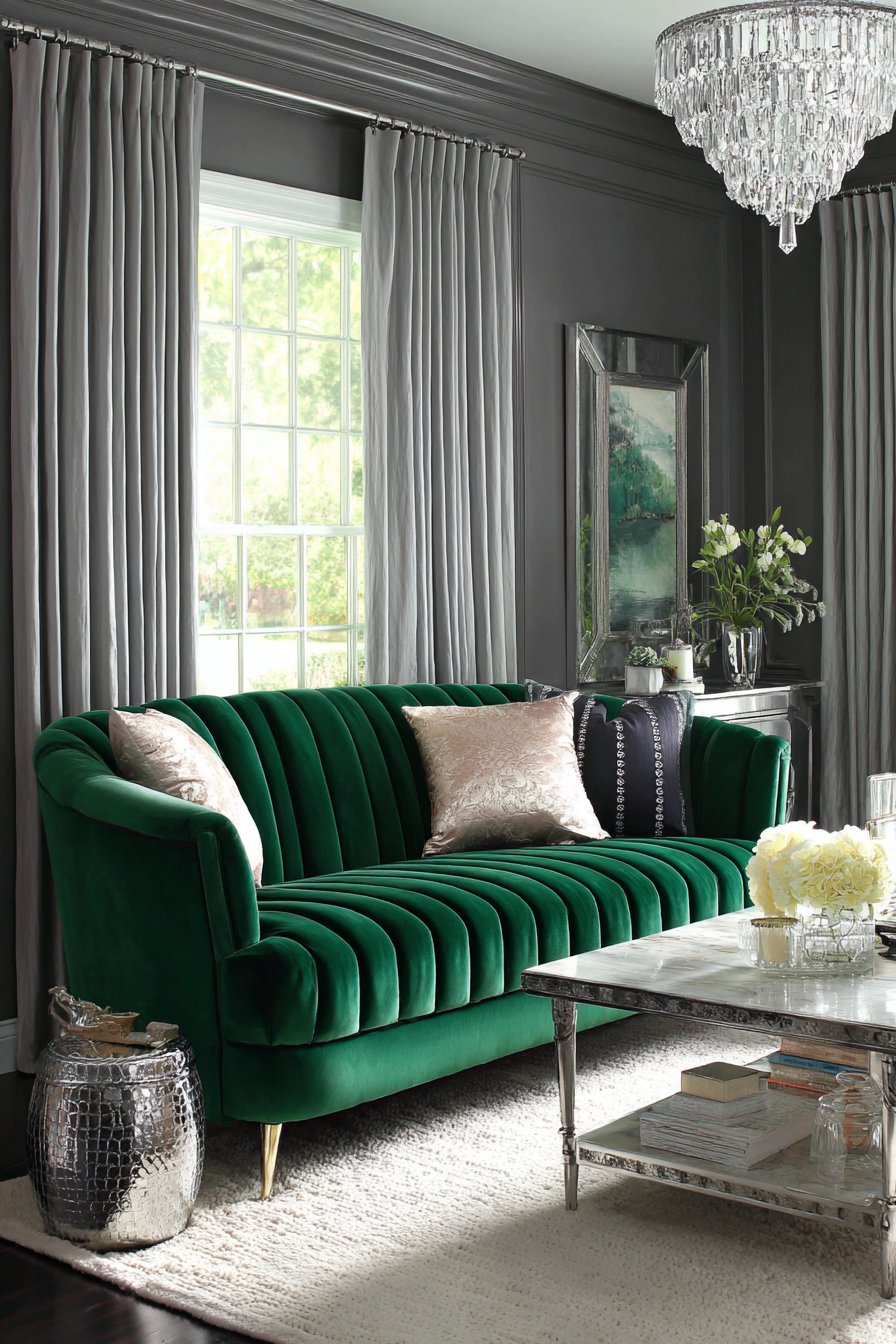
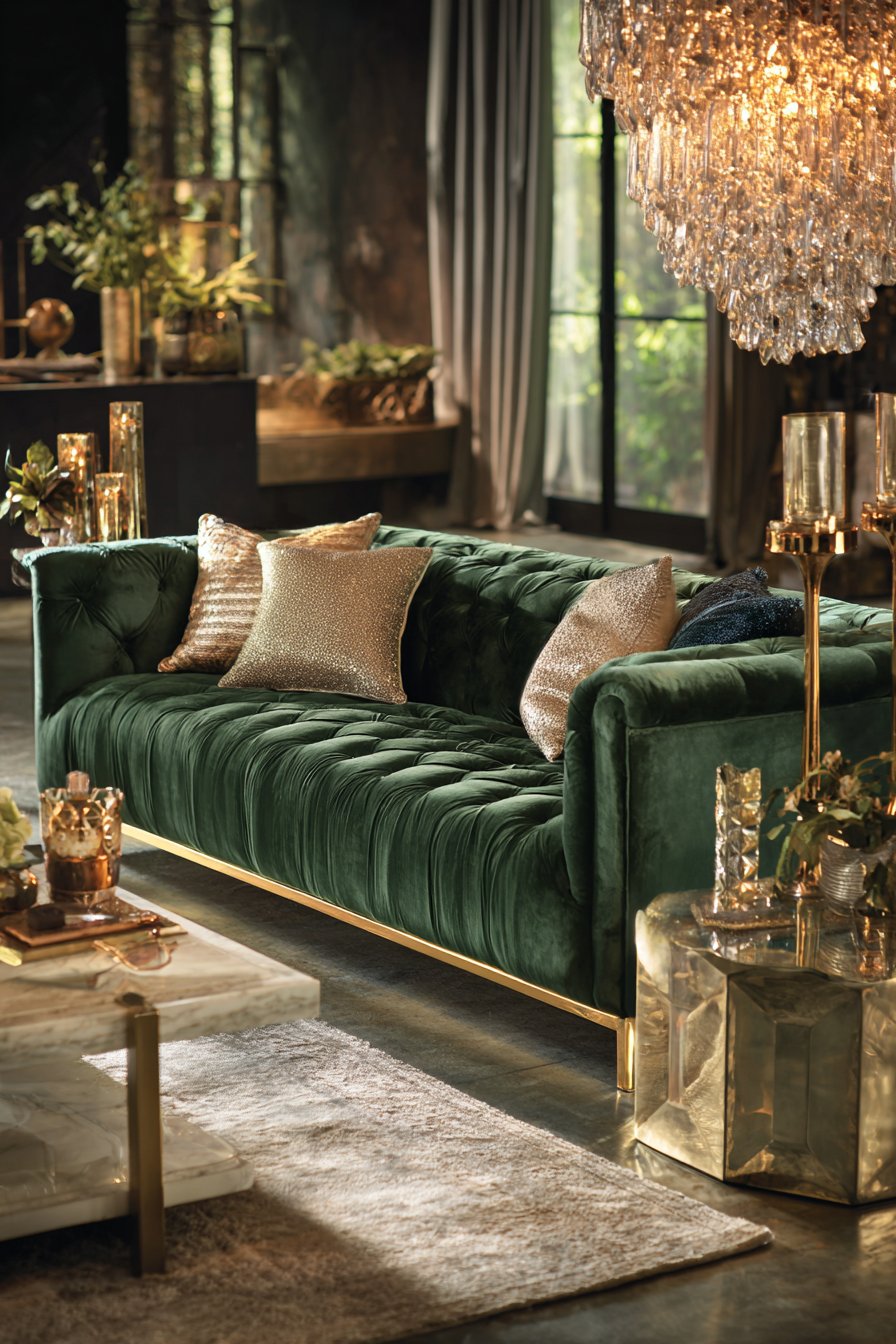
Luxury design celebrates quality materials, meticulous craftsmanship, and unapologetic elegance—principles magnificently embodied in an emerald green velvet sofa with gold-finished metal legs and channel tufting details. The channel tufting creates vertical linear patterns across the seat and back, adding sophisticated texture while showcasing the velvet’s light-catching properties. The gold-finished metal legs provide subtle contrast and a touch of glamour, elevating the piece from simply beautiful to genuinely luxurious.
A marble coffee table with brass inlay demonstrates the commitment to premium materials characteristic of luxury interiors. The marble’s natural veining creates organic pattern and variation, while the brass inlay adds geometric precision and metallic shimmer. Silk velvet pillows in champagne and navy enhance the emerald sofa’s opulent character while introducing complementary colors that read as sophisticated rather than matchy or coordinated.
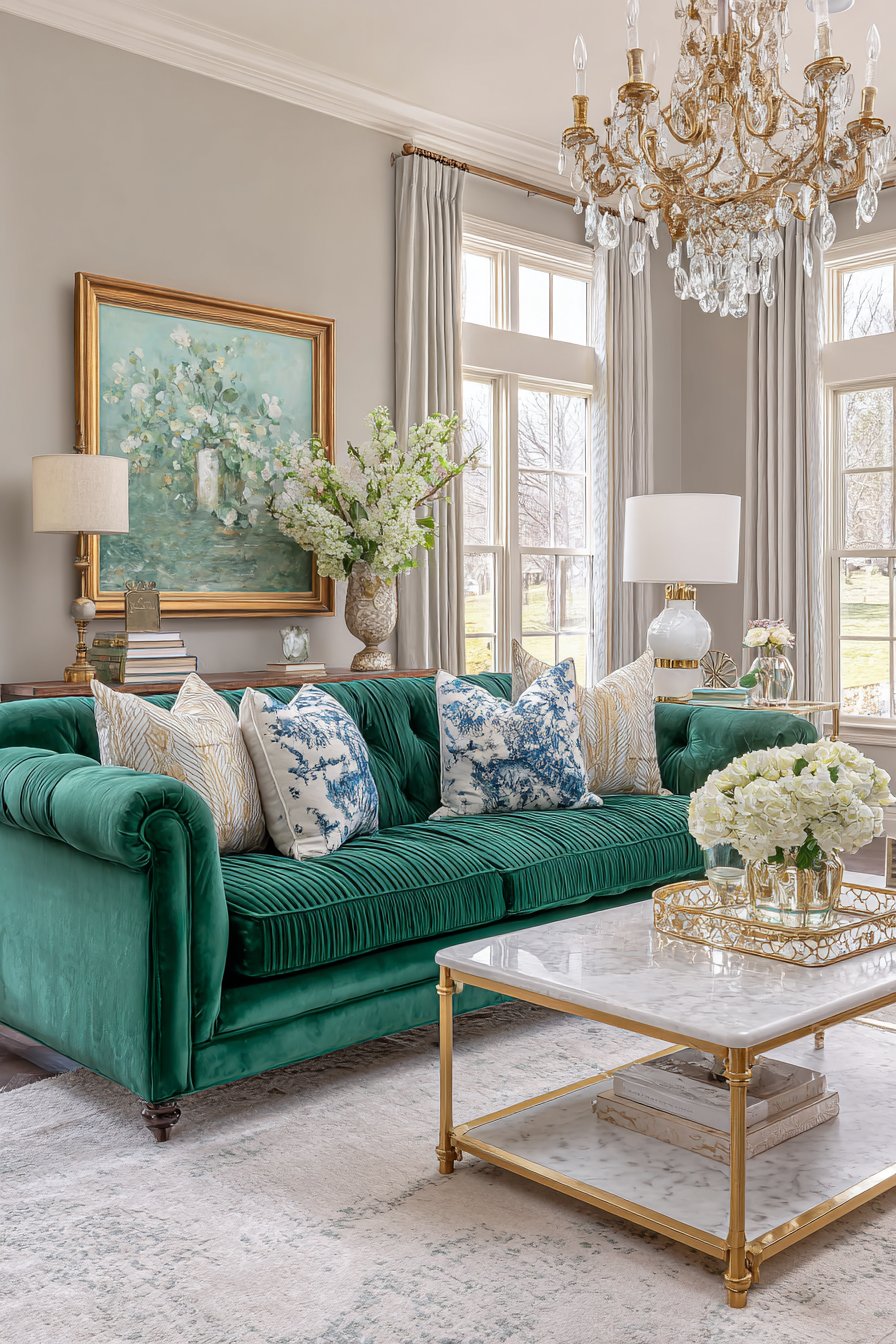
A crystal chandelier overhead provides both illumination and jewelry for the room, its prismatic elements scattering rainbow light across surfaces and creating sparkle that animates the space. A mirrored accent table reflects and multiplies light while adding another layer of glamour through its reflective surfaces. Plush cream area rug and floor-to-ceiling drapery in dove grey silk complete the elegant scene, their luxurious materials and expert installation communicating that this is a space where quality matters above all else. The emerald green sofa serves as the jewel in this carefully composed setting, its rich color and sumptuous texture making it the natural focal point.
Key Design Tips: Invest in the finest materials you can afford—quality is visible and tactile in luxury spaces. Choose furniture with excellent proportions and expert construction rather than trendy silhouettes. Incorporate metallic finishes strategically through legs, hardware, and accessories. Layer textures generously, mixing velvet, silk, marble, crystal, and other luxe materials. Ensure excellent lighting that can create drama and highlight beautiful materials. Install window treatments professionally with proper lining and heading styles. Maintain a sophisticated color palette of jewel tones, metallics, and rich neutrals. Pay attention to details like trim, tufting, and finishing touches that communicate quality and care.
19. Smart Storage Sage Green Organization
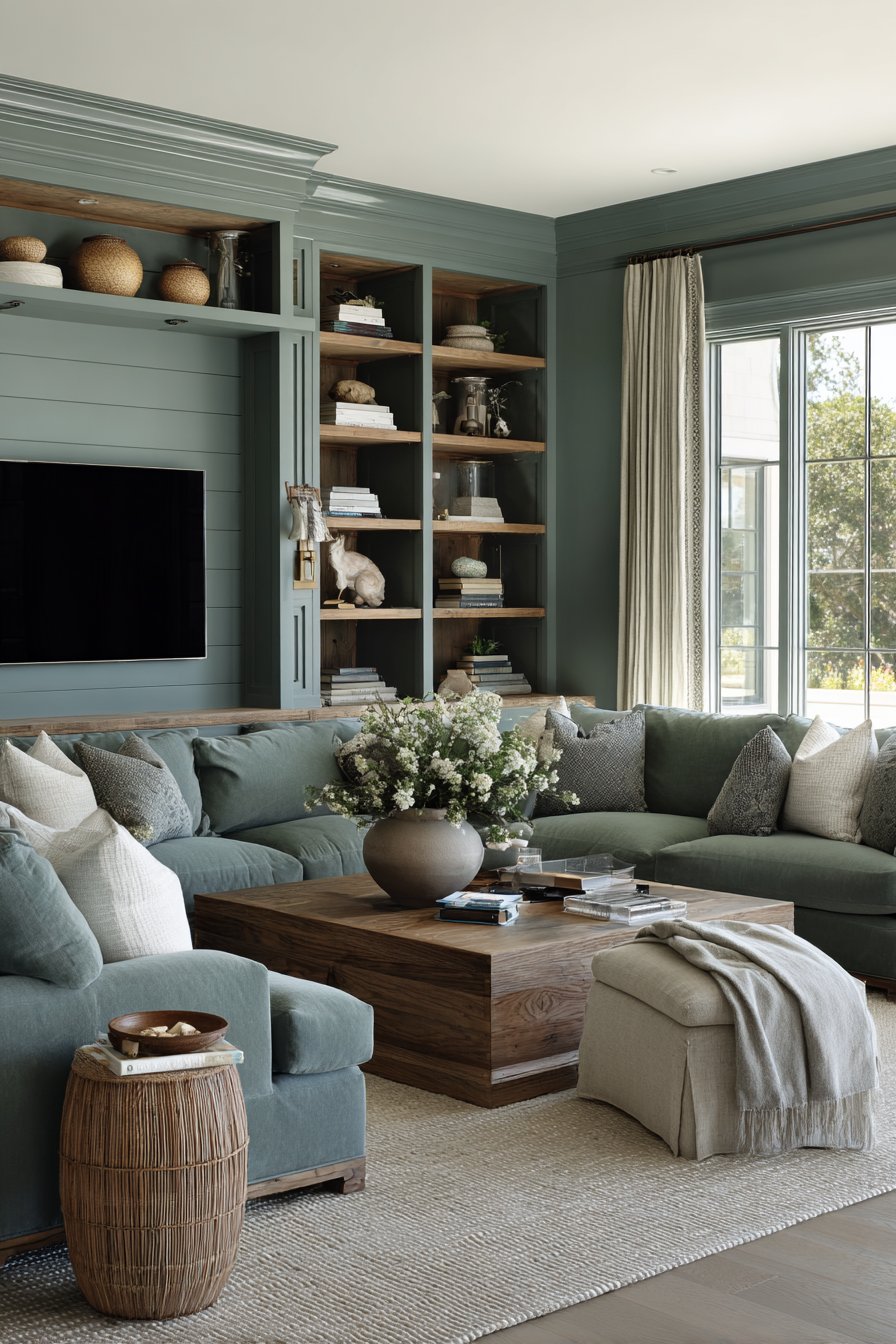
Modern living often requires furniture that works harder, providing multiple functions within single pieces. A sage green sofa with built-in side storage compartments and lift-up console exemplifies this smart design approach, offering comfortable seating while incorporating practical storage for remote controls, magazines, throws, or other living room necessities. The sage green color maintains sophisticated aesthetics while the storage features address real-life needs, proving that functional furniture needn’t sacrifice beauty.
Custom built-in shelving flanking the sofa provides both display and concealed storage, with open shelves showcasing books and decorative objects while closed cabinets hide less attractive necessities. This combination of open and closed storage prevents the space from feeling too minimalist and sparse or too cluttered and busy. The built-ins create a cohesive, furniture-quality look while maximizing storage capacity in ways that freestanding pieces cannot match.
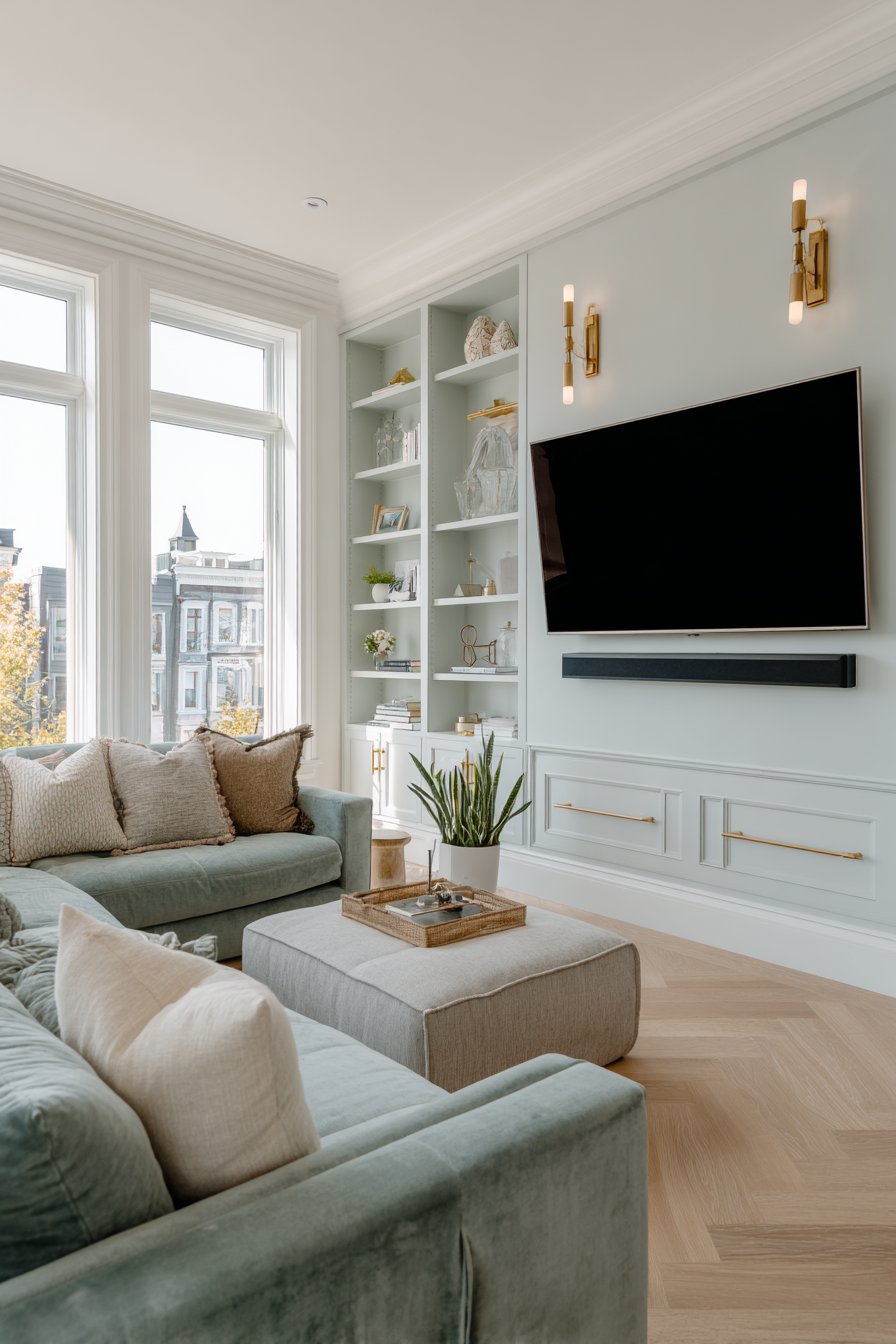
An ottoman coffee table with hidden storage maintains the organized aesthetic while providing flexible function—it can serve as coffee table, footrest, or extra seating depending on needs. Wall-mounted TV and integrated cable management systems keep technology tidy and unobtrusive, preventing the tangle of cords and clutter that often accumulates around entertainment centers. The sage green sofa with its integrated storage becomes the centerpiece of this well-organized room, demonstrating that thoughtful design can address practical needs while maintaining visual appeal and comfort.
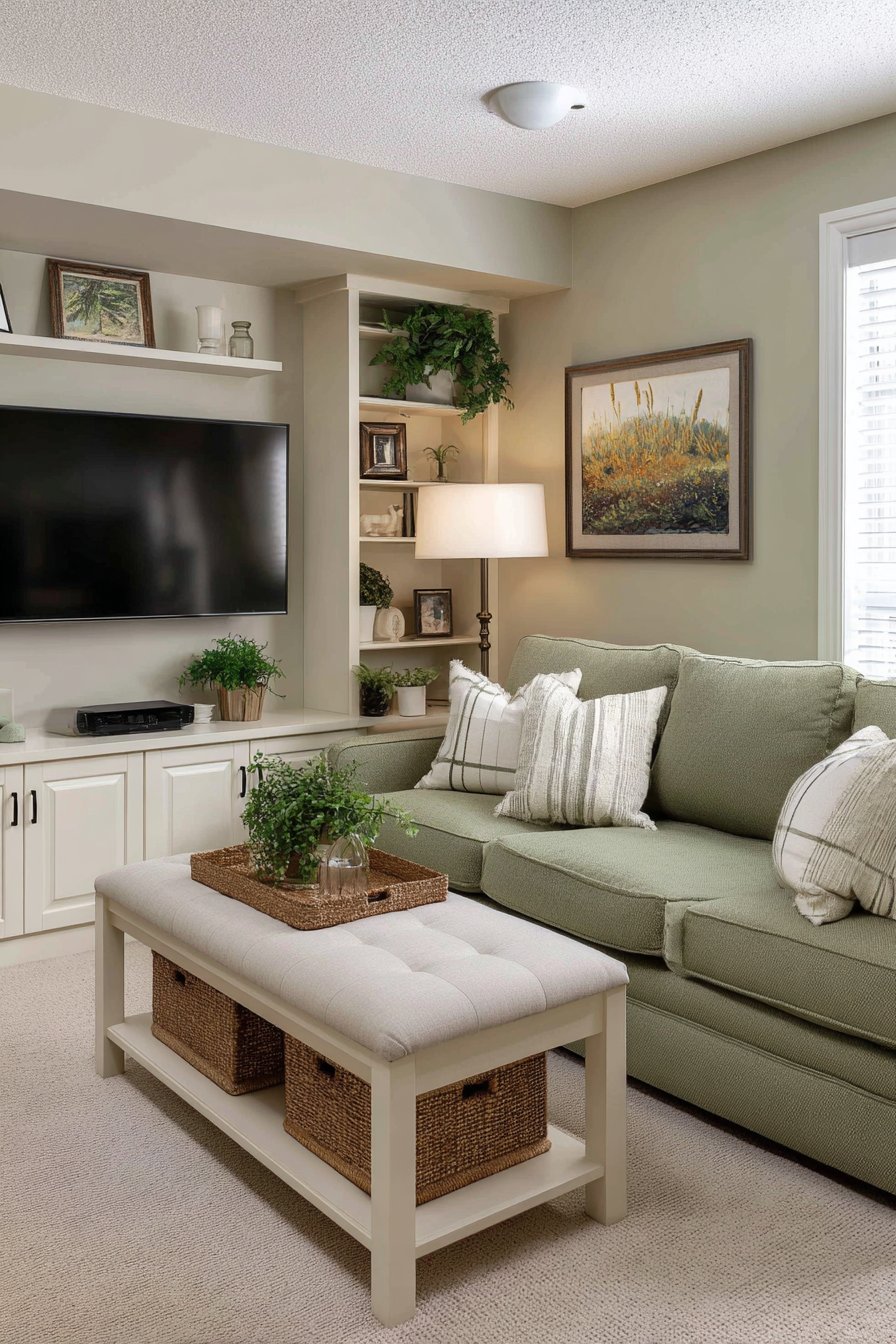
Key Design Tips: Choose furniture with integrated storage to maximize space efficiency without adding more pieces. Incorporate both open and closed storage to balance display with concealment. Invest in cable management solutions to keep technology cords organized and hidden. Build in storage whenever possible for the most seamless, space-efficient solutions. Select an ottoman that can serve multiple purposes—seating, footrest, coffee table, storage. Maintain consistent style between furniture and built-ins for cohesive appearance. Choose a calming sofa color like sage green that won’t compete with the organized systems but will provide sophisticated anchor.
20. Art Deco Emerald Green Theatre
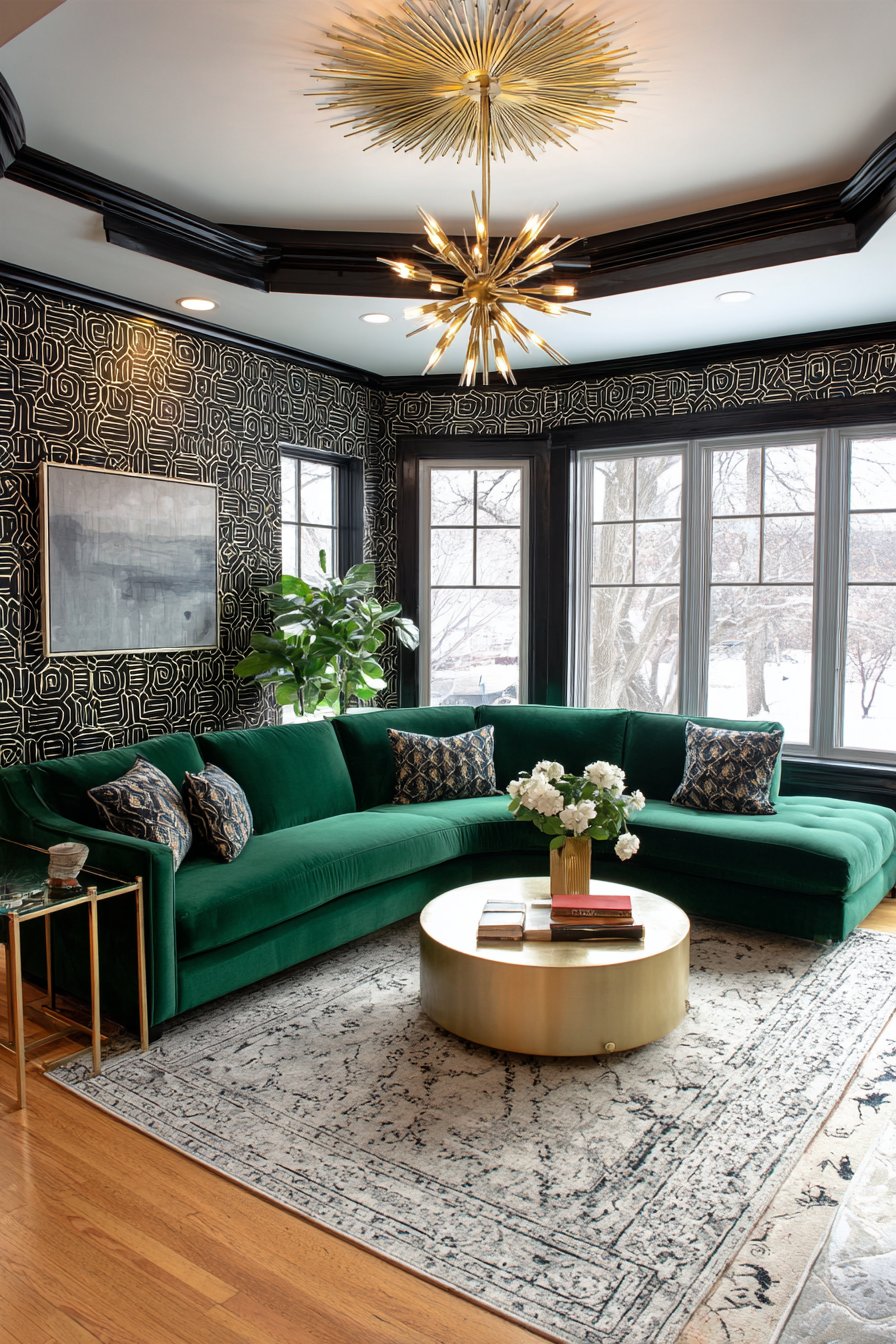
Art Deco design from the 1920s and 30s celebrates geometric forms, luxurious materials, and theatrical glamour—an aesthetic dramatically realized in a living room featuring an emerald green velvet sofa with curved silhouette and gold-leafed wooden accents. The curved form references the streamlined shapes characteristic of Art Deco furniture while the emerald velvet and gold leaf communicate the era’s love of luxury and spectacle. This isn’t furniture that fades into the background—it’s designed to be admired, to make statements, to create drama.
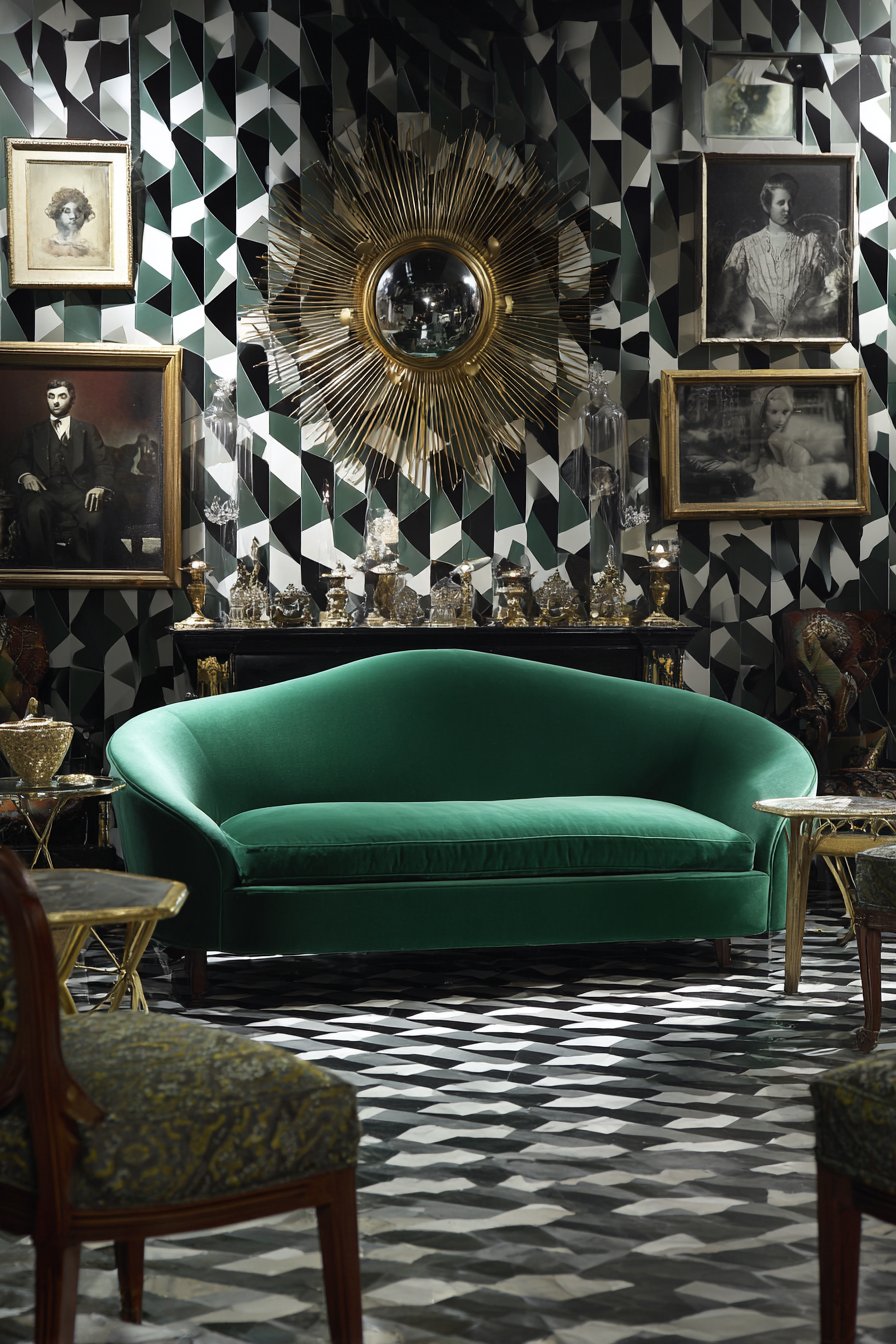
Geometric black and gold wallpaper creates a dramatic backdrop that would overwhelm lesser furniture but perfectly complements the emerald sofa’s theatrical presence. The pattern’s strong lines and metallic elements reference Art Deco’s love of geometric precision and glamorous materials. Mirrored side tables multiply light and space while adding another layer of sparkle and sophistication characteristic of the era. A sunburst mirror—an Art Deco icon—radiates on the wall, its geometric rays and metallic finish epitomizing the style’s optimistic, forward-looking character.
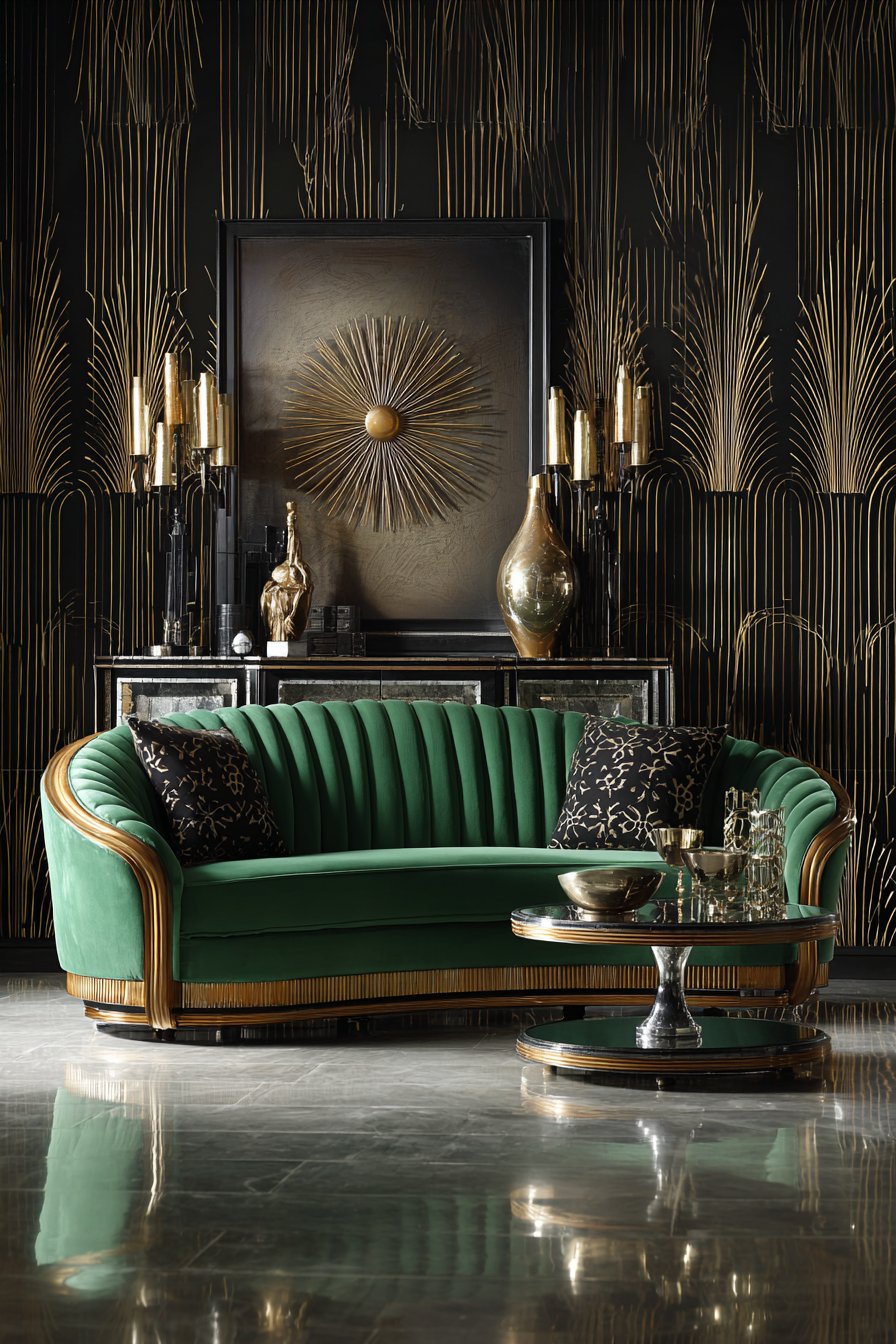
A tiered brass chandelier provides illumination while serving as sculptural centerpiece, its geometric form and metallic finish embodying Art Deco principles. The lighting it casts creates drama and shadow, highlighting the emerald velvet’s depth while the gold accents throughout catch and reflect light to create constant sparkle. This is a space designed for entertaining, for cocktail parties and elegant gatherings, for living with style and panache. The emerald green sofa commands attention as the jewel in this carefully orchestrated theatrical setting.
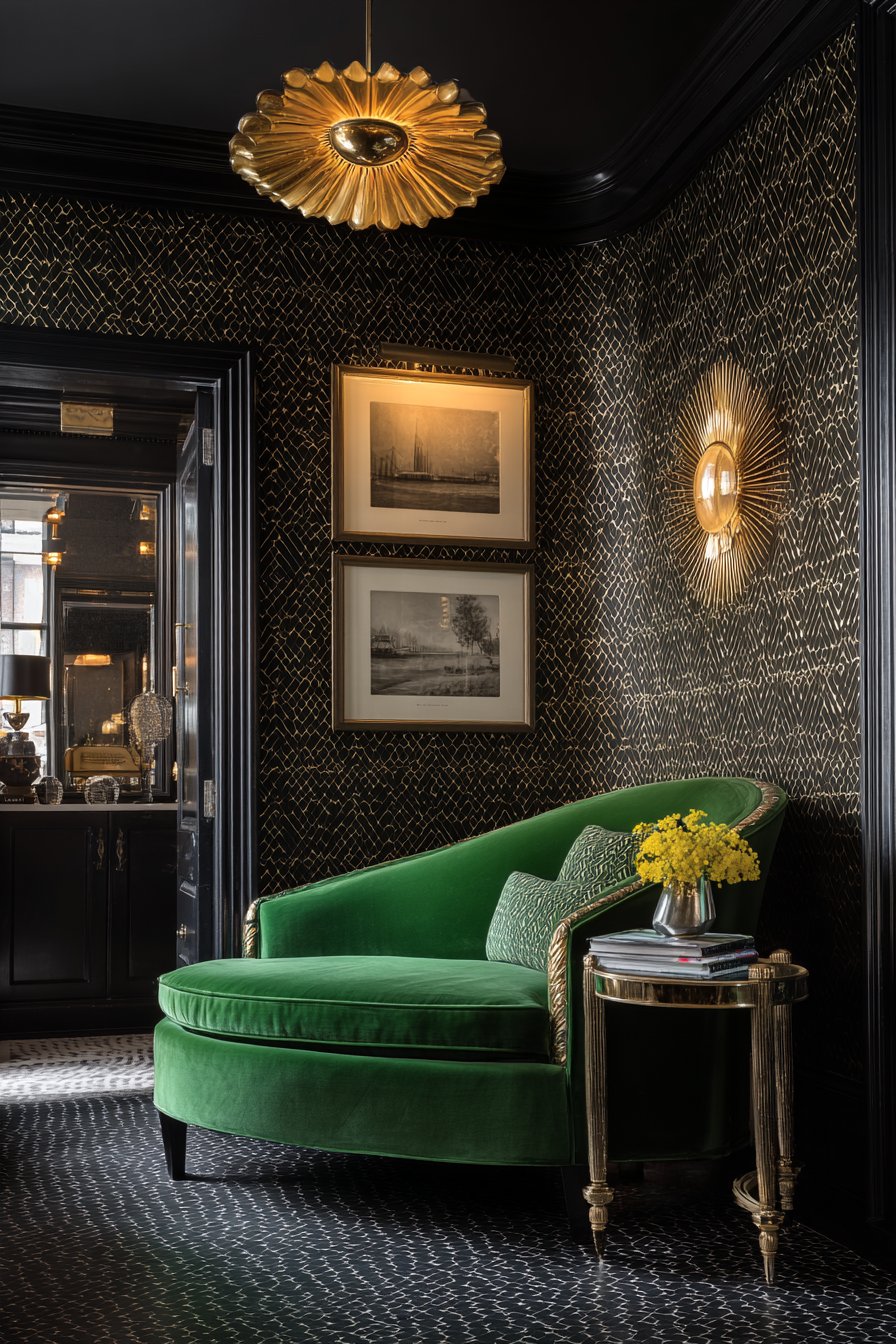
Key Design Tips: Embrace geometric patterns and forms throughout the space. Choose luxurious materials like velvet, lacquer, chrome, and gold leaf. Incorporate mirrors generously to multiply light and create glamour. Select furniture with curved, streamlined forms characteristic of Art Deco style. Use bold color contrasts—emerald and gold, black and cream, navy and silver. Install dramatic lighting fixtures that function as sculptural elements. Create symmetrical arrangements that emphasize Art Deco’s love of balanced composition. Don’t shy away from theatrical elements—Art Deco celebrates spectacle and glamour.
21. Natural Materials Moss Green Earth
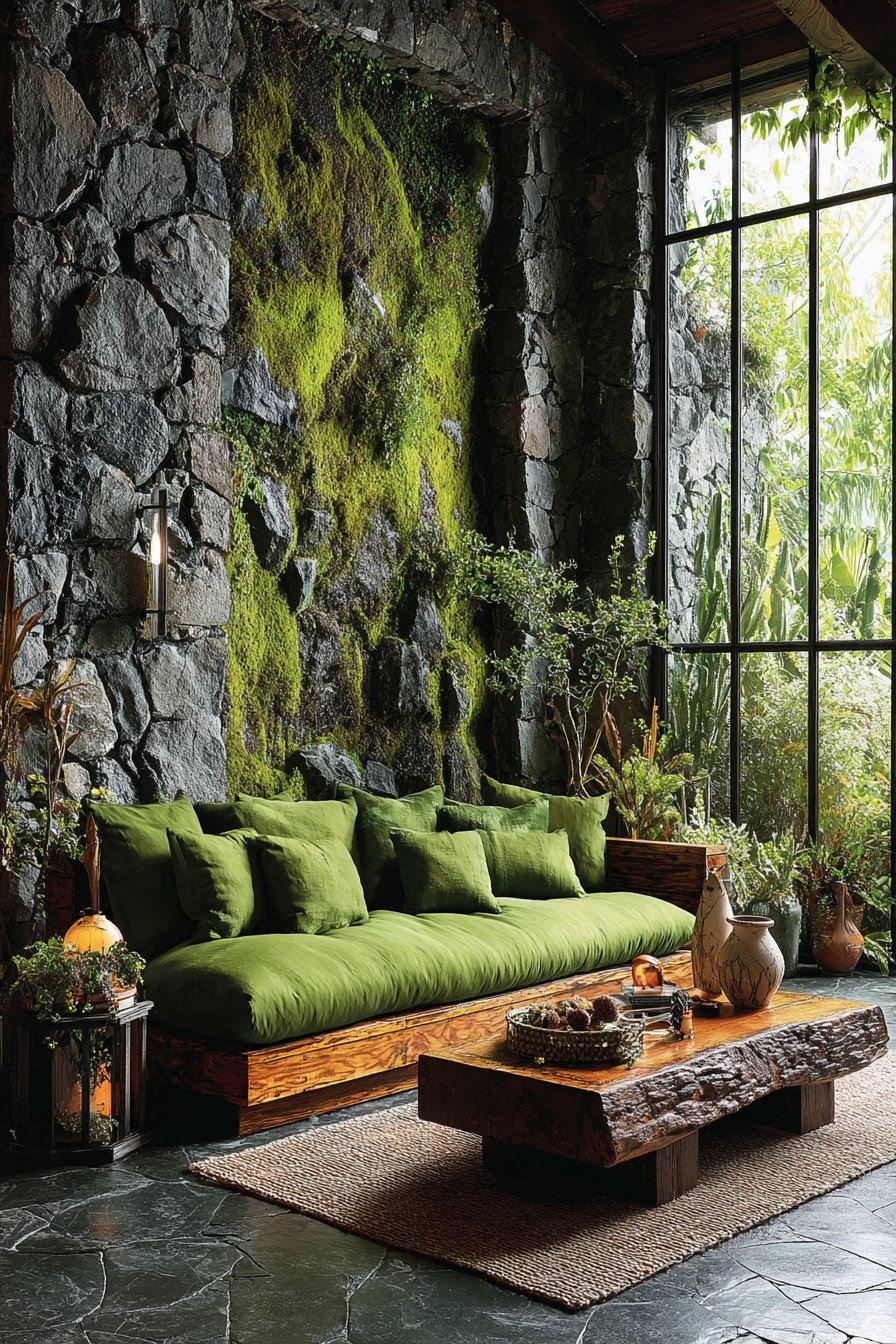
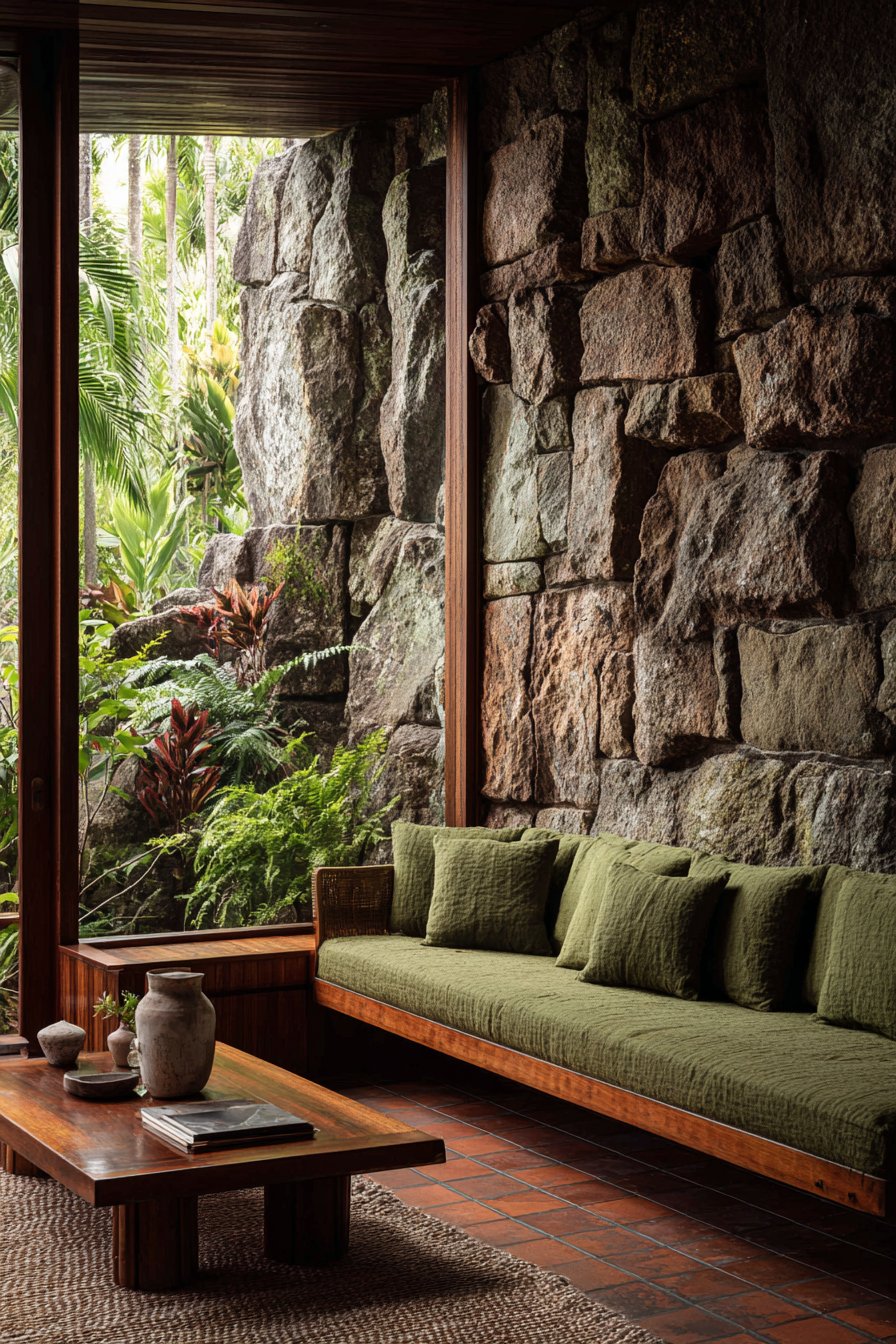
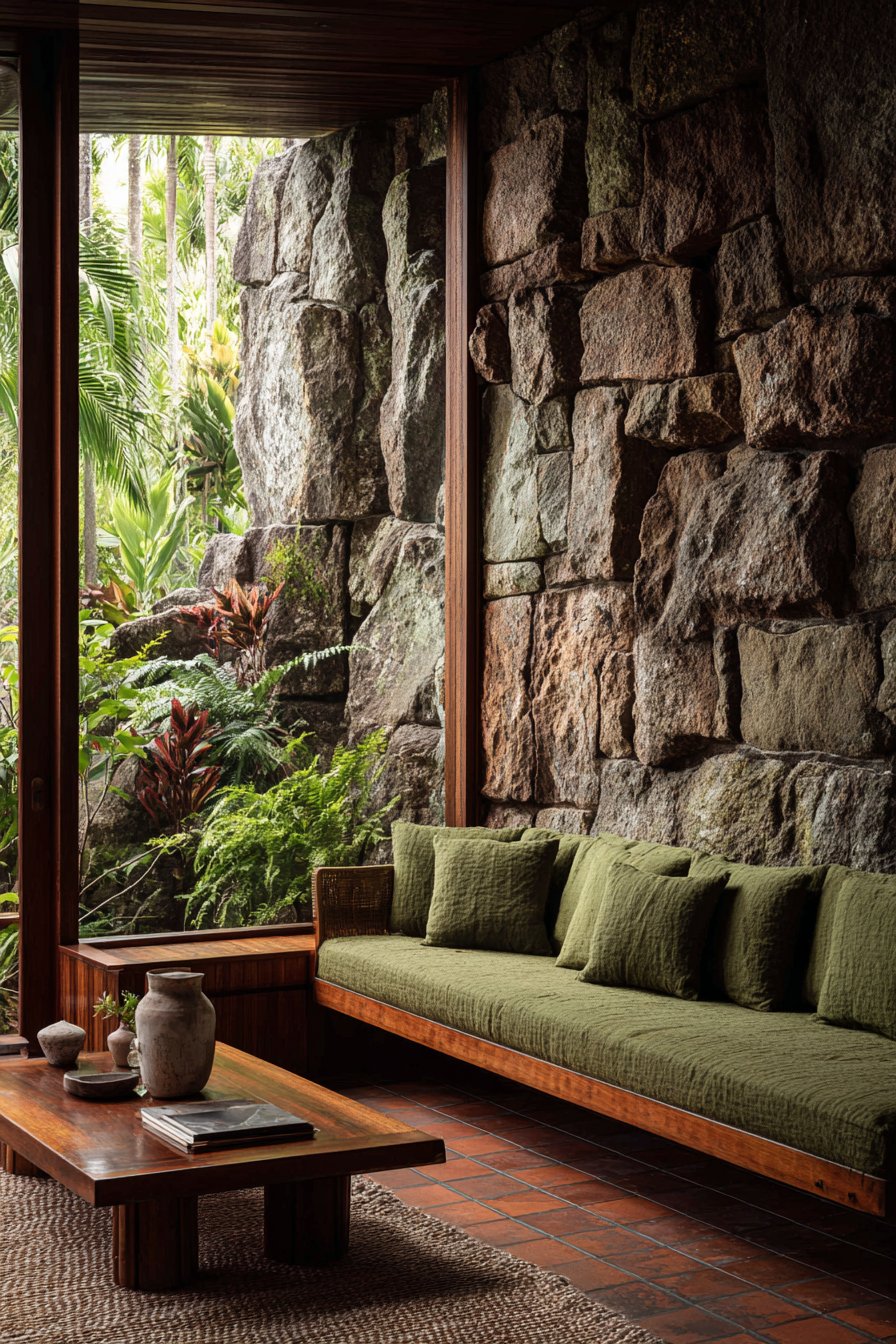
Connecting to nature through material choices creates spaces that feel grounded, authentic, and psychologically nourishing. A moss green linen sofa with exposed oak frame and loose cushions celebrates natural materials in their near-original states, the linen showing its characteristic texture and slight irregularity while the oak frame displays beautiful grain patterns and natural color variations. The moss green hue reinforces the nature connection, its earthy tone suggesting forest floors and growing things.
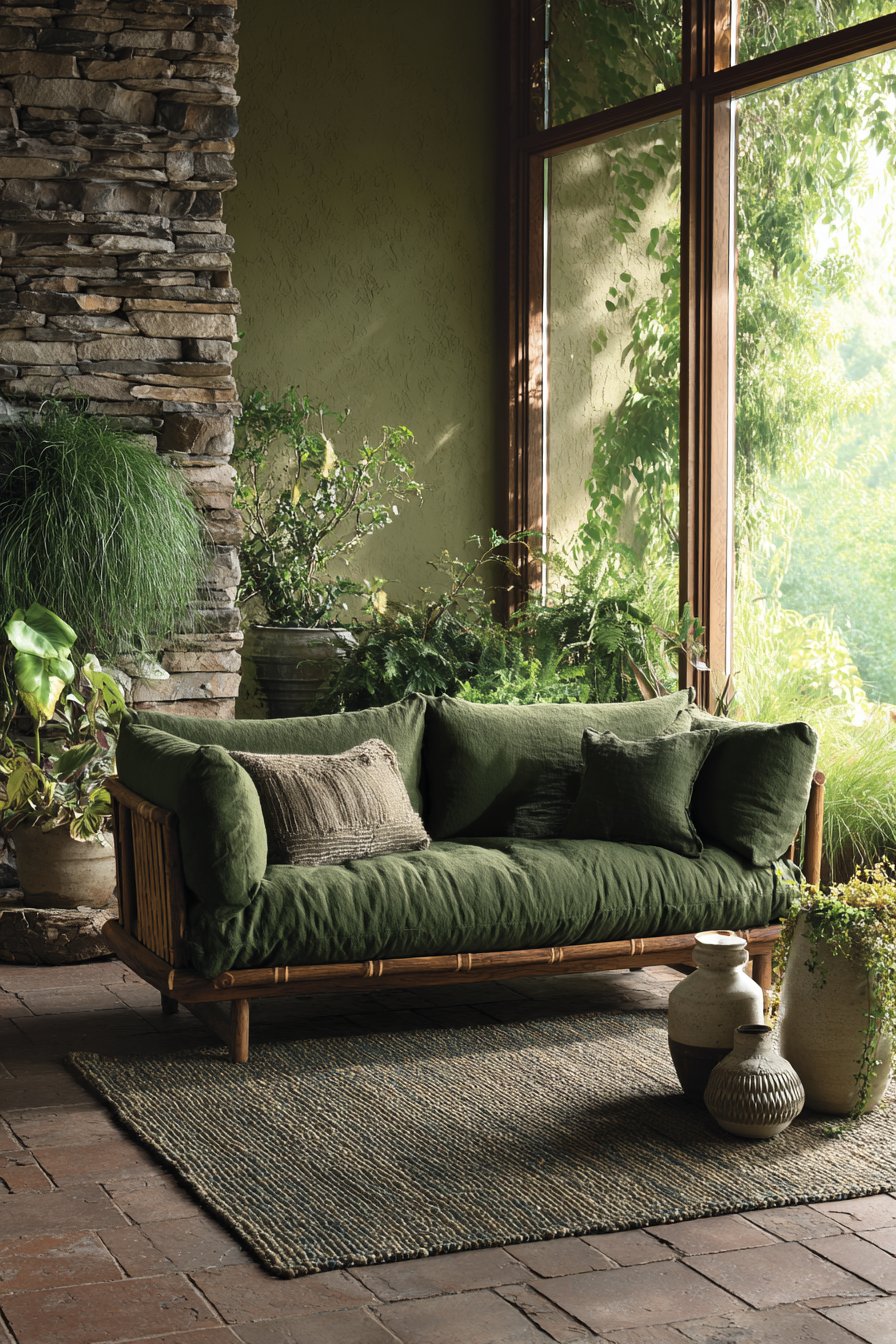
A stone accent wall creates dramatic textural interest while bringing literal earth elements indoors. Whether natural stacked stone, river rock, or cut stone veneer, the wall’s varied surfaces catch light differently throughout the day, creating ever-changing shadow patterns and visual interest. Terracotta floor tiles in warm clay tones continue the earth element theme while their natural color variations and slight imperfections communicate authentic material rather than manufactured uniformity.
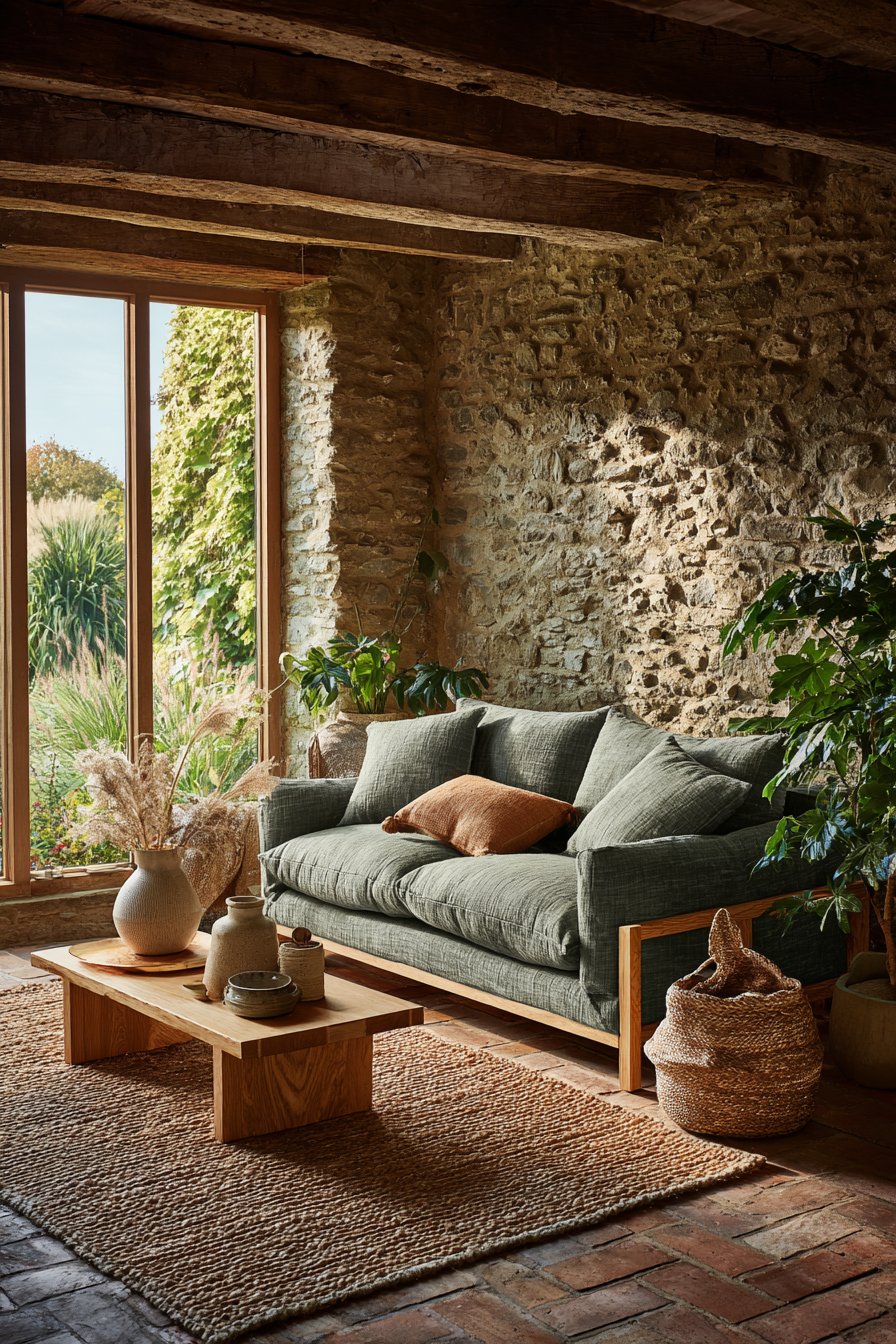
Handwoven wool rug, ceramic vessels, and live-edge wood coffee table emphasize organic textures and artisanal craftsmanship. These pieces show the maker’s hand and nature’s influence—the rug’s slight irregularities from hand weaving, the ceramic’s glaze variations from kiln firing, the coffee table’s preserved natural edge showing where tree met air. Large windows frame garden views, dissolving boundaries between interior and exterior while bringing changing seasonal beauty indoors. The moss green sofa becomes a comfortable perch from which to appreciate both the curated natural materials inside and the living nature visible outside.
Key Design Tips: Choose materials in near-original states that show natural variation and organic characteristics. Incorporate earth elements literally through stone, clay, or mineral materials. Display handcrafted objects that show the maker’s touch and skill. Use natural color palettes of earth tones, stone colors, and plant-inspired greens and browns. Maximize views to actual nature through window placement and minimal treatments. Select textured materials—linen, wool, raw wood, stone—rather than smooth, processed surfaces. Choose furniture that celebrates rather than hides its materials and construction. Maintain connection to seasonal changes through materials that age beautifully and views that change with nature’s cycles.
22. Compact Hunter Green Impact
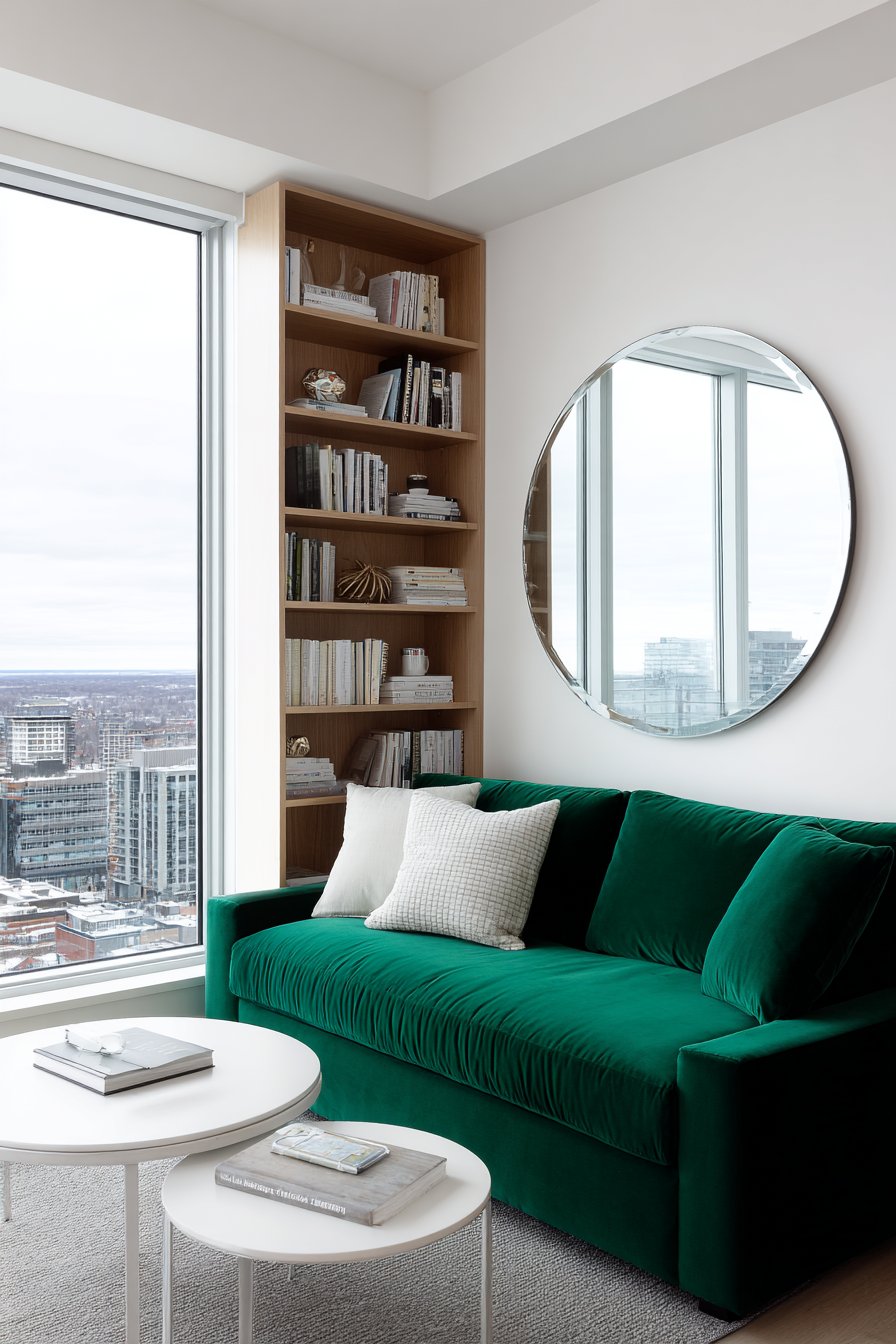
Small living rooms present unique challenges, requiring furniture that creates impact without overwhelming limited square footage. A loveseat-sized hunter green velvet sofa positioned against the longest wall demonstrates how bold color choices can actually enhance small spaces rather than shrinking them. The hunter green provides sophisticated drama and visual interest, proving that conventional wisdom about using only pale colors in small rooms is outdated—rich, saturated colors can define and enhance compact spaces when applied thoughtfully.
Vertical storage solutions and wall-mounted shelves climb upward, utilizing often-wasted vertical space while keeping the floor clear and maintaining visual openness. These storage systems provide necessary function without consuming precious square footage, their upward orientation drawing the eye up and creating the illusion of height. Round nesting coffee tables provide flexibility that fixed rectangular tables cannot match—they can be separated for different uses or nested together to minimize footprint when not needed.
A large landscape mirror positioned strategically on a wall perpendicular to the window visually expands the space while reflecting both the hunter green sofa and natural light from the window. This classic design technique effectively doubles the perceived space, making the room feel substantially larger than its actual dimensions. The mirror also brightens the space by bouncing light around, particularly important in small rooms where lighting can otherwise feel cramped or dim. The hunter green sofa makes a statement that gives the small room personality and presence, proving that limited square footage needn’t mean limited style.
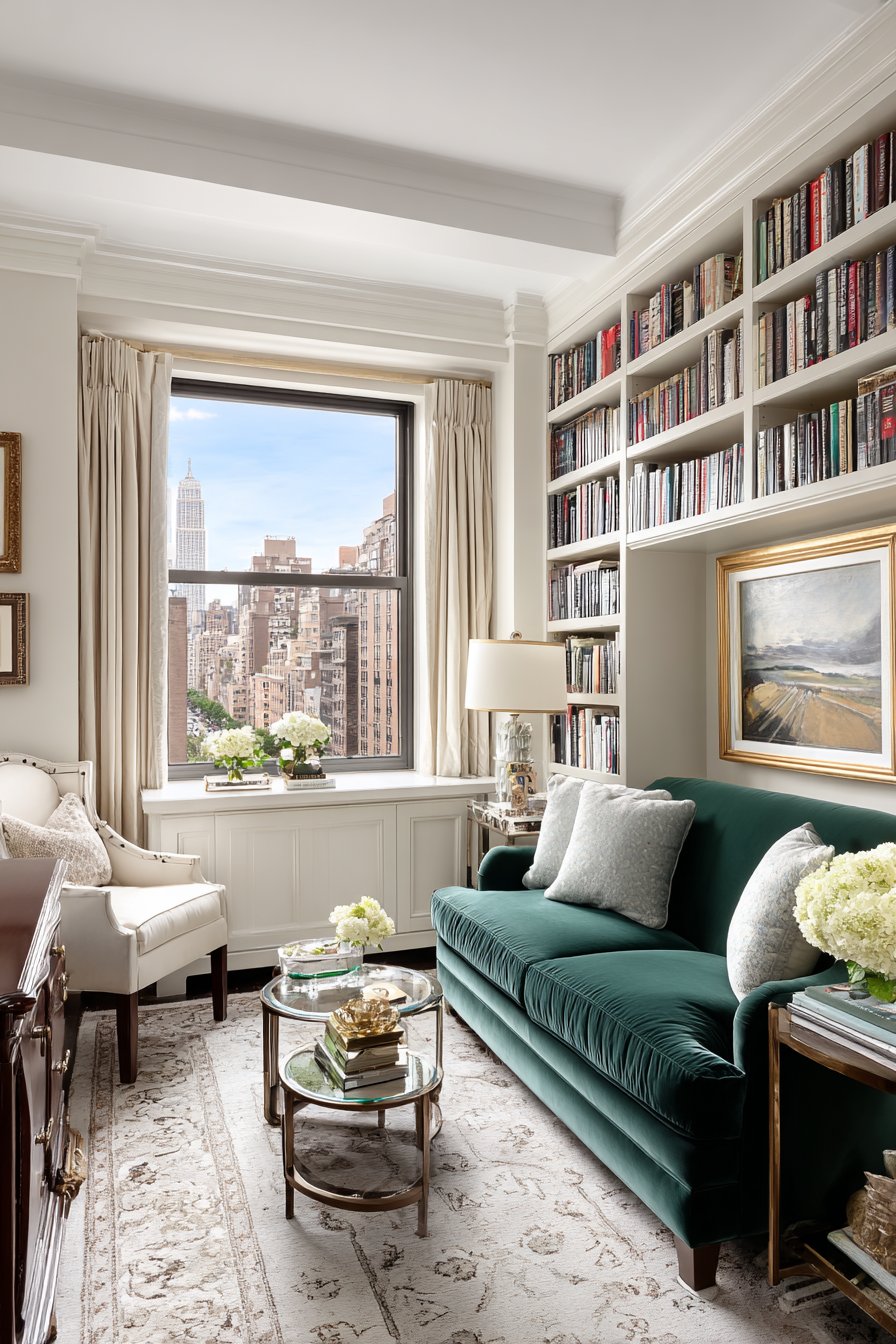
Key Design Tips: Choose bold, saturated colors to create presence and personality in small spaces. Utilize vertical space aggressively with floor-to-ceiling shelving and wall-mounted storage. Select furniture scaled appropriately for the room—a loveseat rather than full sofa if necessary. Use mirrors strategically to reflect light and create illusion of expanded space. Choose round or oval furniture shapes to improve flow in tight spaces. Keep floors clear with wall-mounted and elevated storage to maintain visual openness. Position furniture against walls to maximize central floor space. Select multi-functional pieces like nesting tables that adapt to different needs.
23. Layered Lighting Teal Green Ambiance
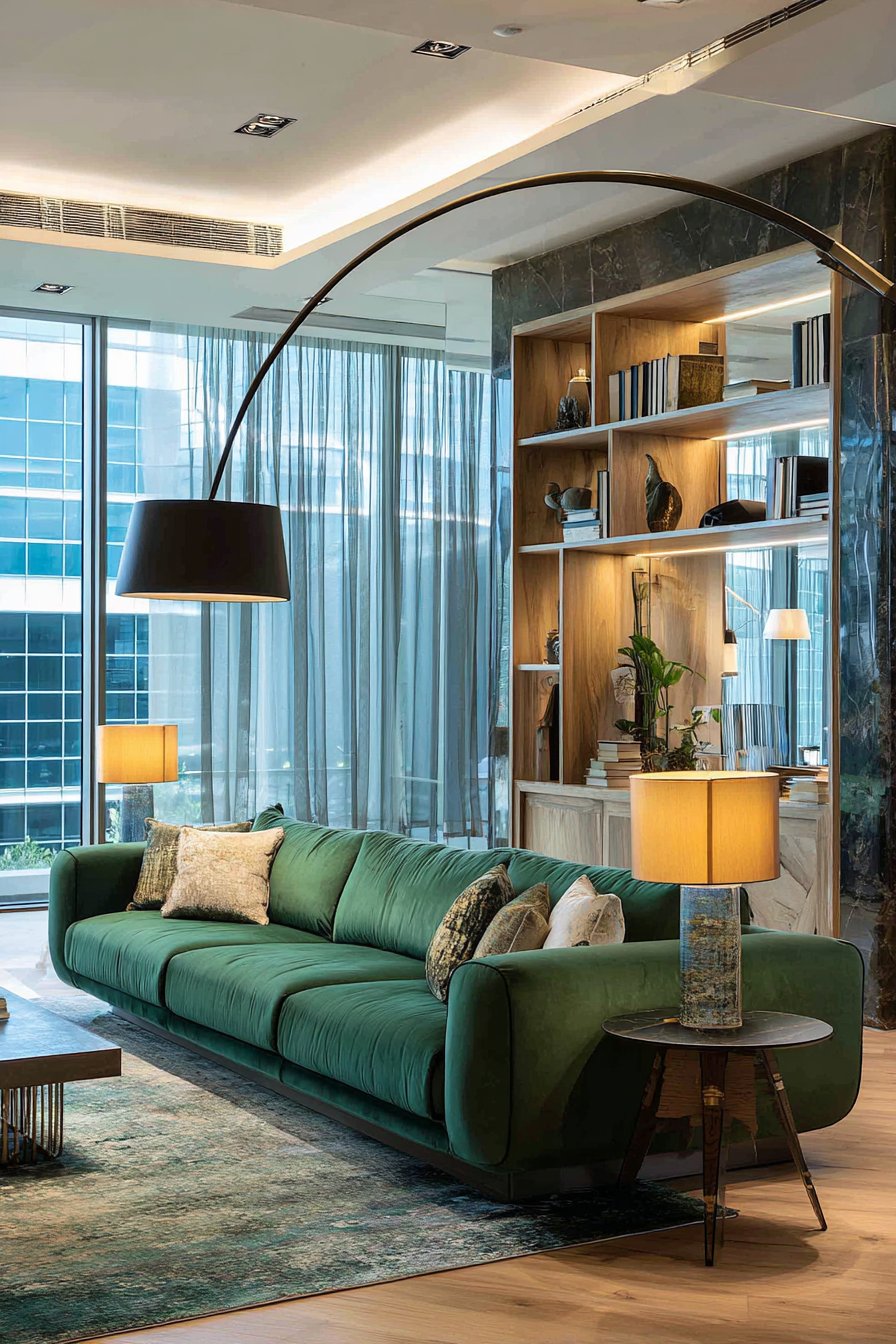
Successful interior lighting requires layering multiple sources at different heights and intensities, creating flexible systems that can accommodate various activities and moods. A teal green fabric sofa serves as the centerpiece of this thoughtfully illuminated space, positioned to benefit from multiple complementary light sources. Recessed ceiling lights provide ambient illumination—the foundational layer that ensures the room is adequately lit for safe movement and basic activities.
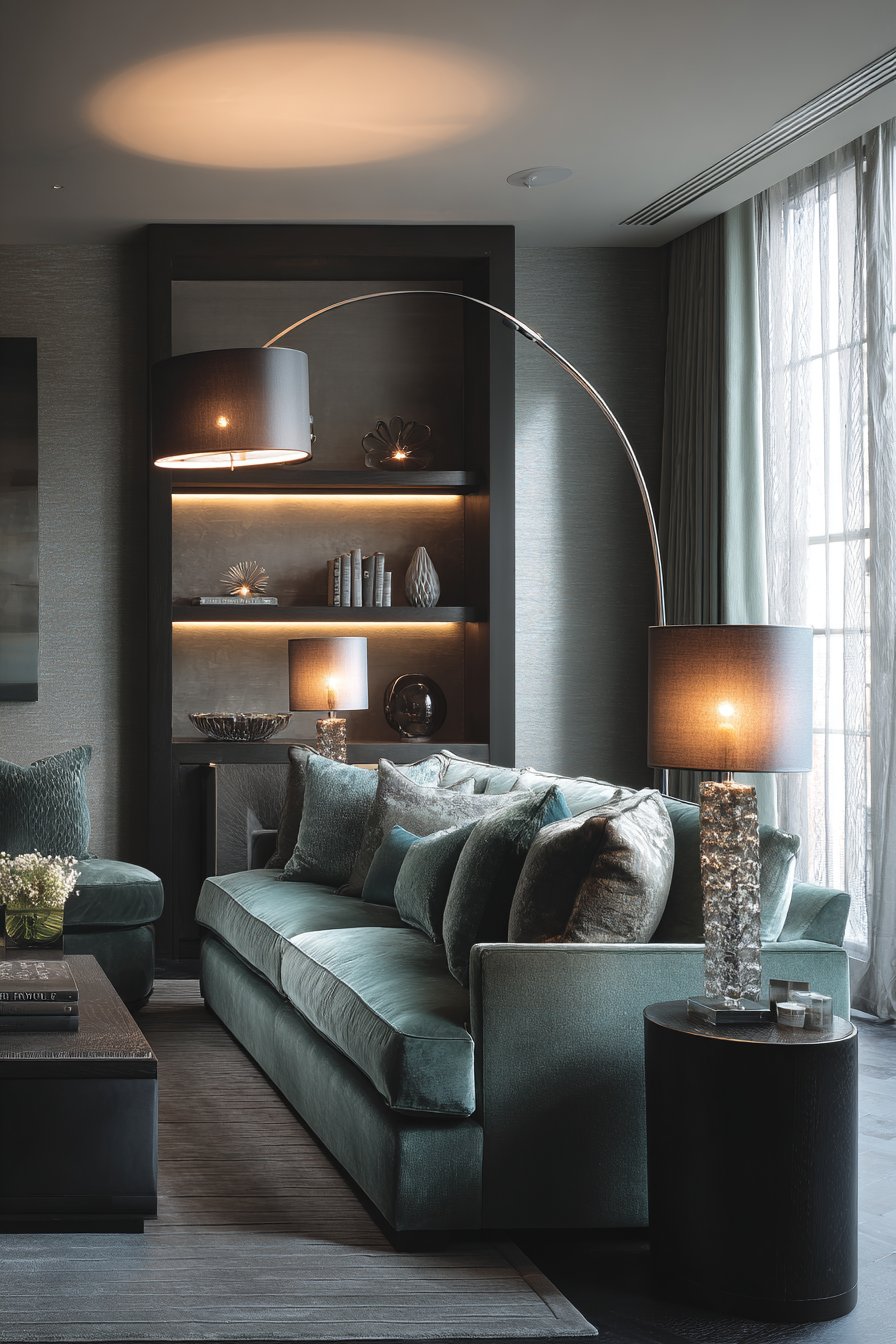
A dramatic arc floor lamp curves over the teal green sofa, providing task lighting ideal for reading or detailed work while making a sculptural statement. The arc form allows the light source to hover over the seating area without requiring side table placement, a space-efficient solution that also creates visual interest through its sweeping curve. Table lamps positioned on side consoles contribute additional task lighting while adding decorative presence at mid-level height, creating visual interest at human scale.
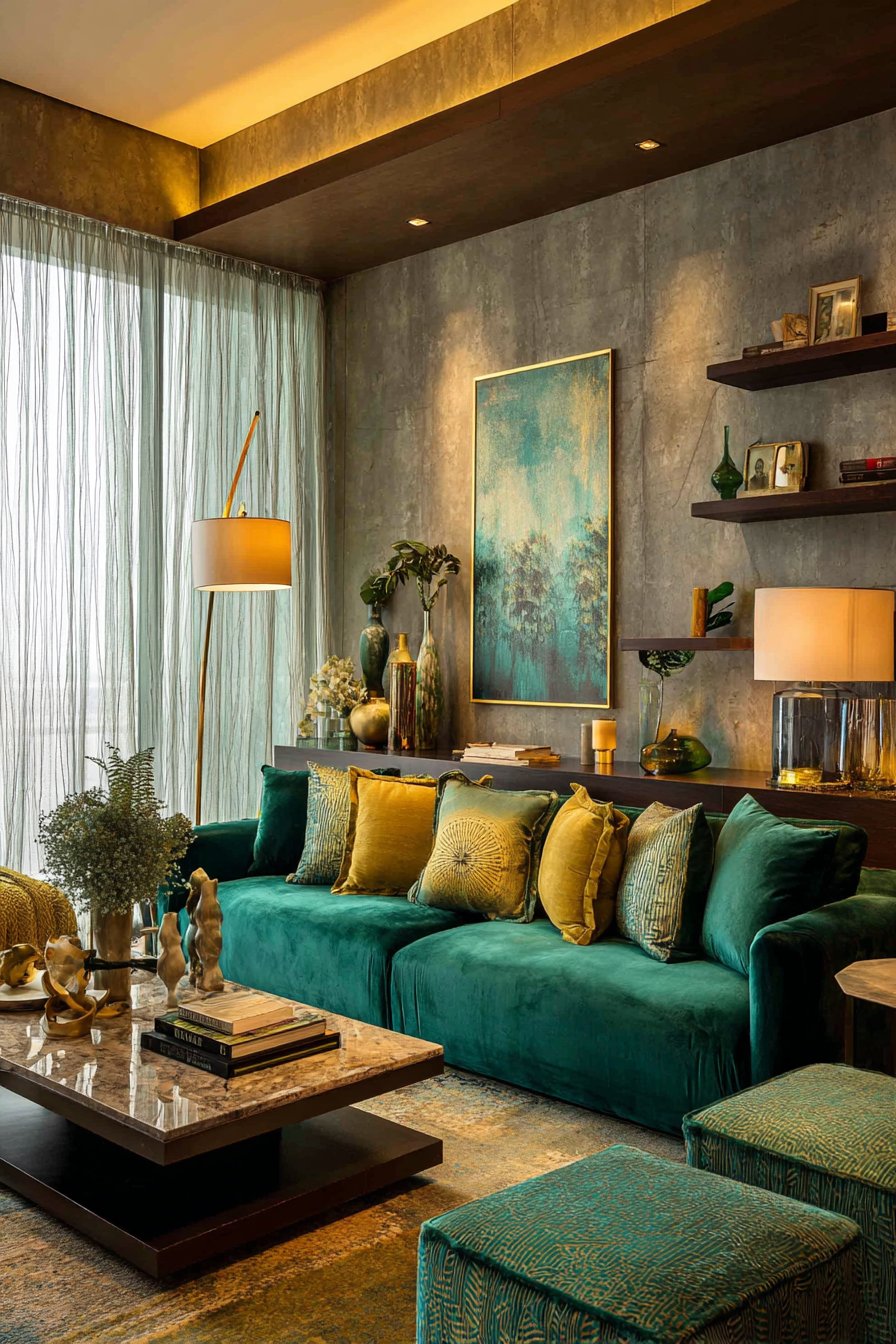
LED strip lighting concealed behind floating shelves creates subtle accent lighting that highlights displayed objects while adding depth and dimension to the walls. This indirect lighting technique adds sophistication and professional quality to the overall lighting scheme. Natural light from sheer-curtained windows balances all these artificial sources, its changing quality throughout the day creating varied lighting conditions that keep the space interesting and dynamic. The teal green sofa fabric responds differently to each light source—appearing more blue in cool light, more green in warm light—demonstrating how varied lighting creates visual interest through a single furniture piece.
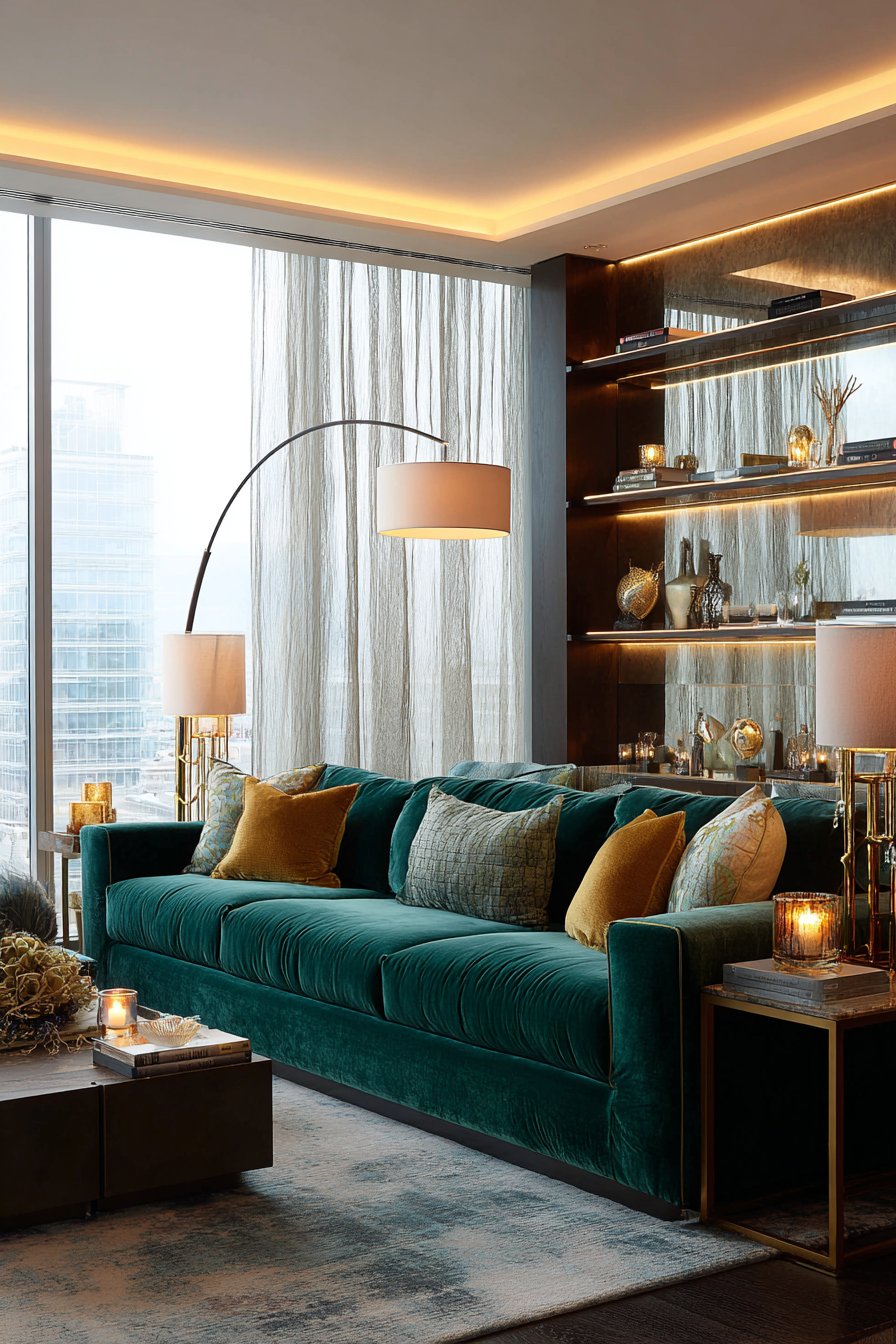
Key Design Tips: Plan for ambient, task, and accent lighting in every room for maximum flexibility. Position task lighting near seating areas for reading and detailed work. Use dimmers on all light sources to allow intensity adjustments for different activities and times of day. Incorporate lighting at multiple heights—ceiling, floor, table, and accent level. Choose light bulb color temperatures thoughtfully, using warmer tones (2700-3000K) for living spaces. Install lighting on separate circuits or switches for ultimate control. Consider how lighting affects sofa fabric color and texture, testing samples under various lighting conditions. Use indirect lighting techniques like LED strips to create depth and visual interest without glare.
24. Monochromatic Green Verdant Sophistication
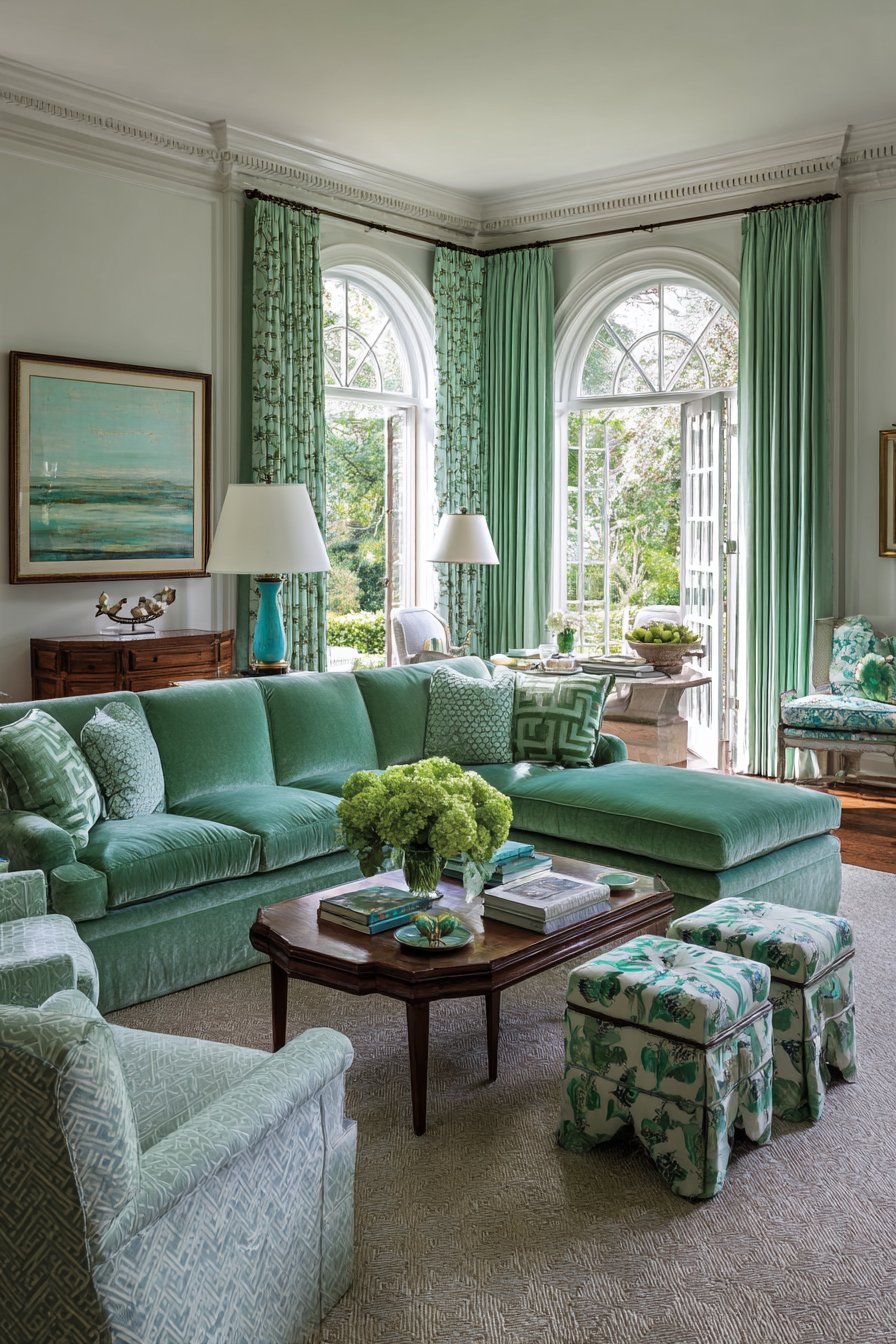
Monochromatic color schemes create sophisticated, cohesive spaces by using variations of a single color, achieving impact through tonal variation rather than contrasting colors. A kelly green velvet sofa serves as the saturated focal point in this verdant living room, its vibrant hue providing the pure, intense version of green that anchors the entire scheme. Surrounding elements in sage, mint, and forest green create tonal harmony while ensuring the space doesn’t read as monotonous or flat.
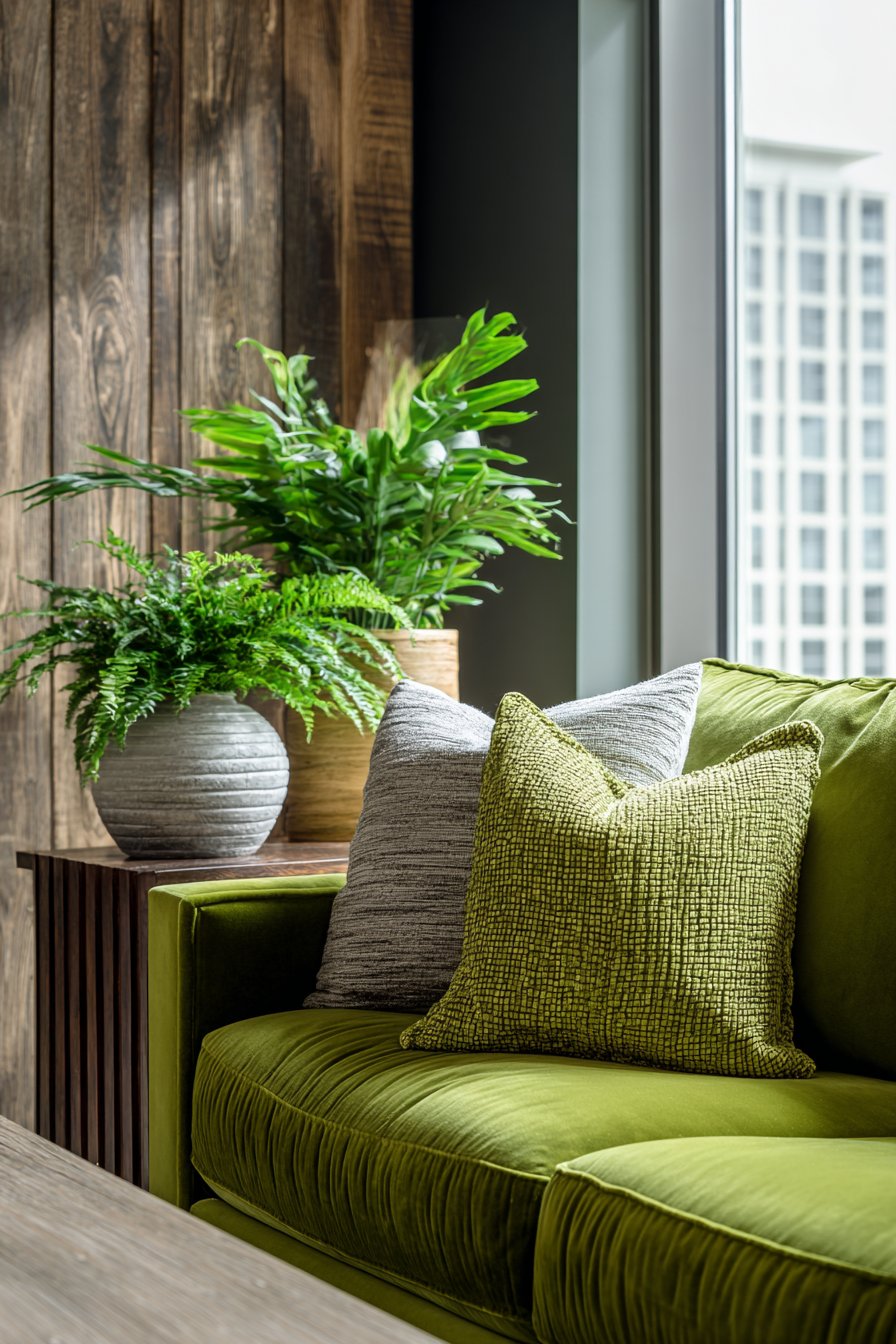
The success of monochromatic schemes depends on incorporating varied textures to create visual interest that color variety would otherwise provide. Smooth velvet on the kelly green sofa contrasts with rough linen in sage green pillows, nubby wool in mint green throws, and perhaps smooth leather in forest green accent chairs. These textural variations catch light differently, creating the visual complexity necessary to prevent monotony even when working within a single color family.
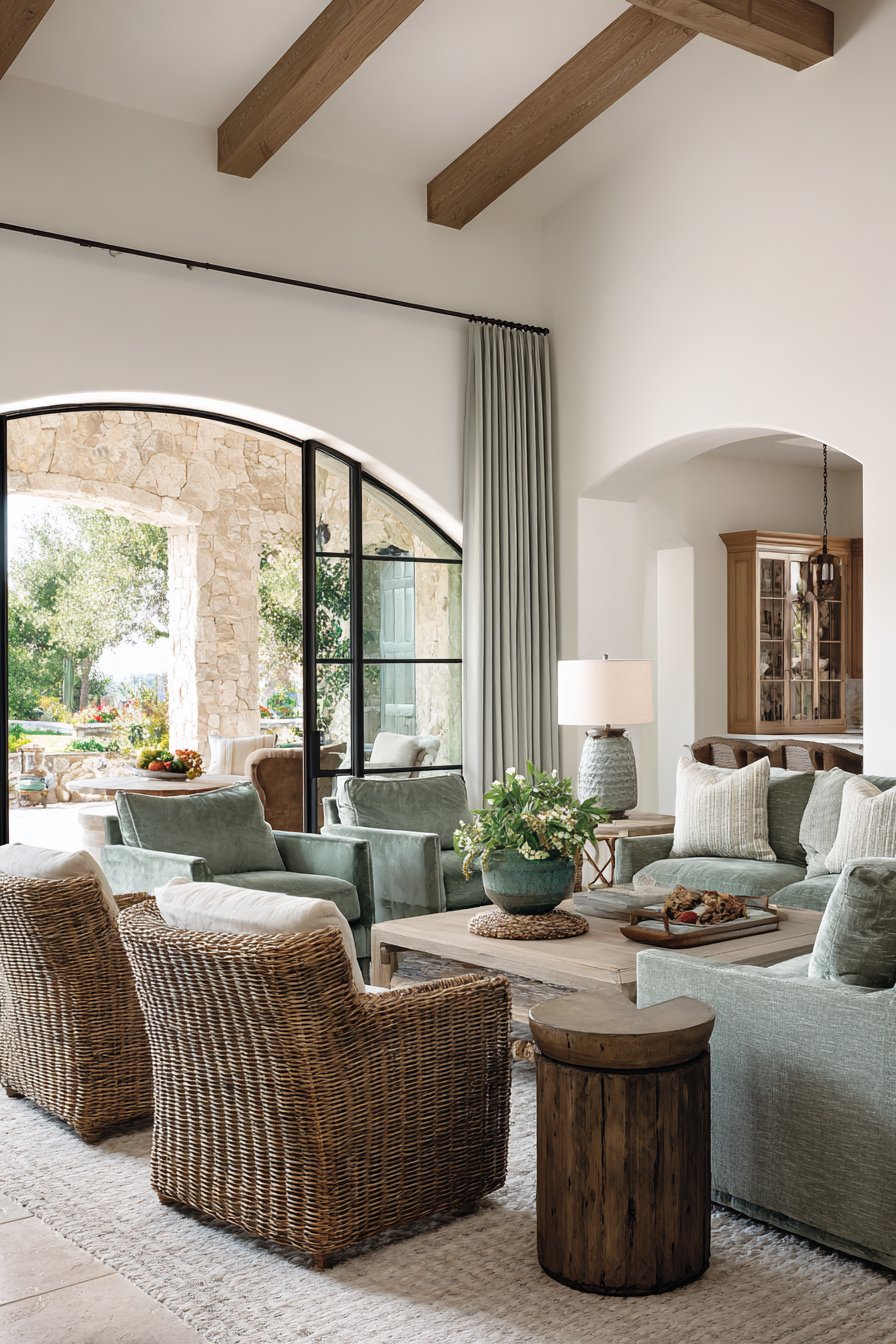
Natural materials in wood and stone provide essential neutral relief, their earth tones and organic textures preventing the green-on-green from becoming overwhelming or oppressive. A blonde wood coffee table or grey stone accent wall gives the eye a place to rest while maintaining the overall sophisticated atmosphere. Bright natural light from large windows is essential to successful monochromatic schemes, ensuring the various green tones remain distinct and beautiful rather than muddy or indistinct. The kelly green sofa remains the star, its saturated color providing the focal point while the surrounding tonal variations create depth and interest.
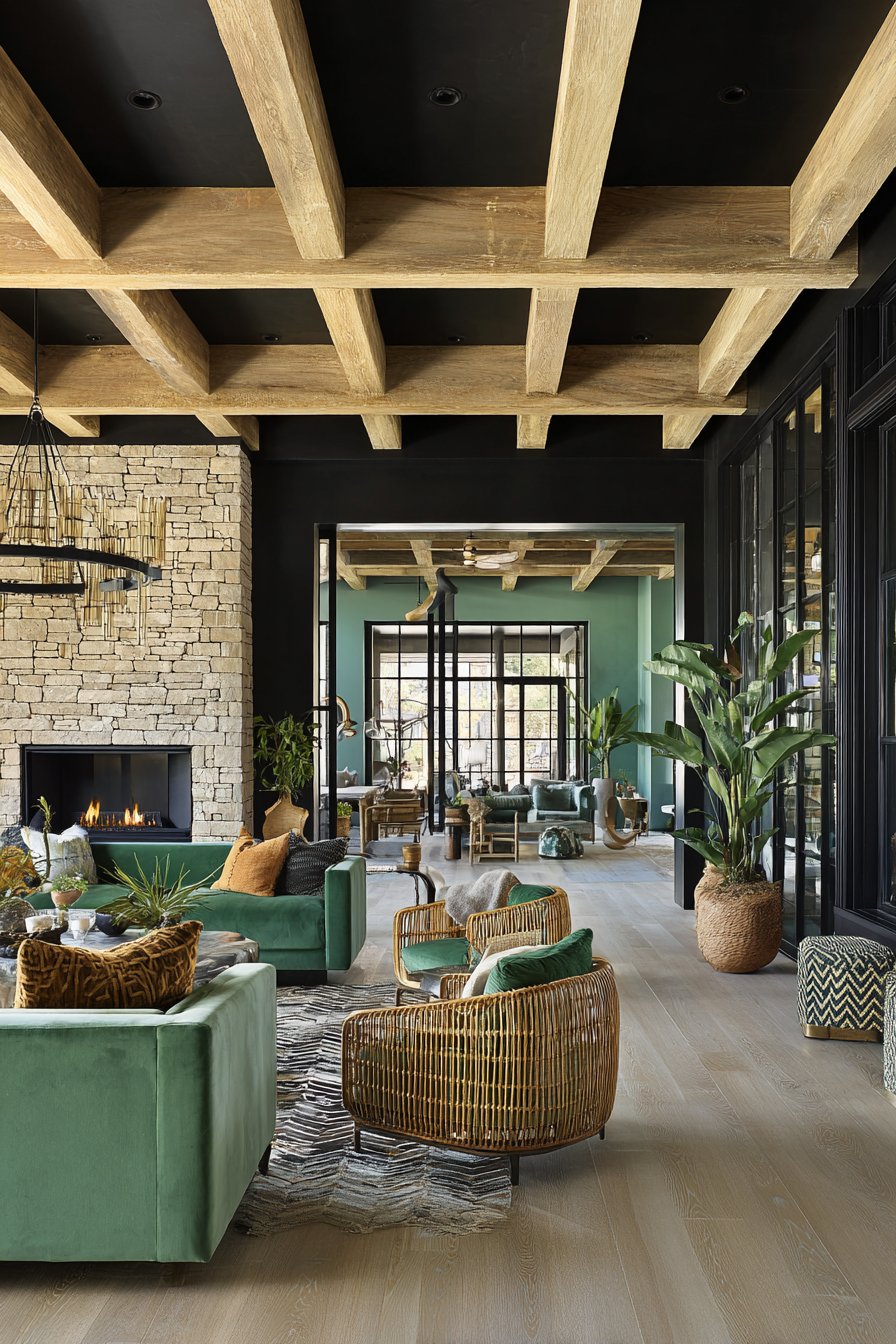
Key Design Tips: Choose one saturated, pure version of your color for the main focal point. Incorporate at least 4-5 different tones or shades of your chosen color for adequate variation. Vary textures aggressively to create visual interest that color variety would otherwise provide. Include neutral elements in natural materials to provide visual relief. Ensure excellent natural light to showcase color variations—monochromatic schemes suffer in dim conditions. Consider the undertones of your various shades, ensuring they’re compatible (all warm or all cool). Test samples together in your actual room lighting before committing. Use the 60-30-10 rule even within a single color, with 60% dominant tone, 30% secondary tone, and 10% accent tone.
25. Reading Nook Seafoam Green Literature
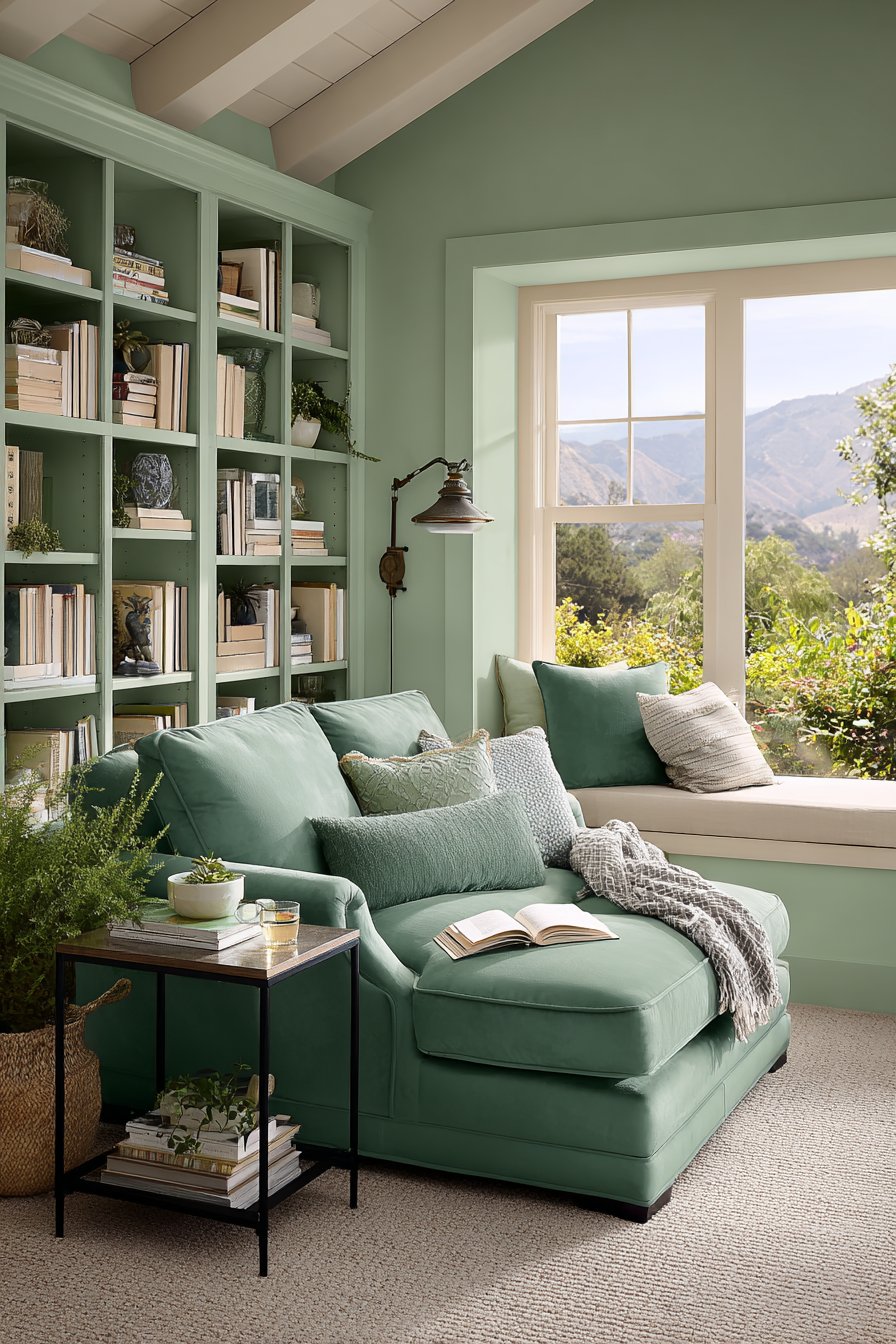
Creating dedicated spaces for specific activities enhances both functionality and daily pleasure, particularly for beloved pursuits like reading. A seafoam green sofa with deep seating and plush cushions positioned near floor-to-ceiling bookshelves transforms a living room corner into a dedicated reading sanctuary. The seafoam green color promotes calm focus appropriate for reading while the deep seating ensures comfort during extended reading sessions. The plush cushions provide lumbar support and adjust to individual preferences, acknowledging that comfortable reading requires thoughtful ergonomics.
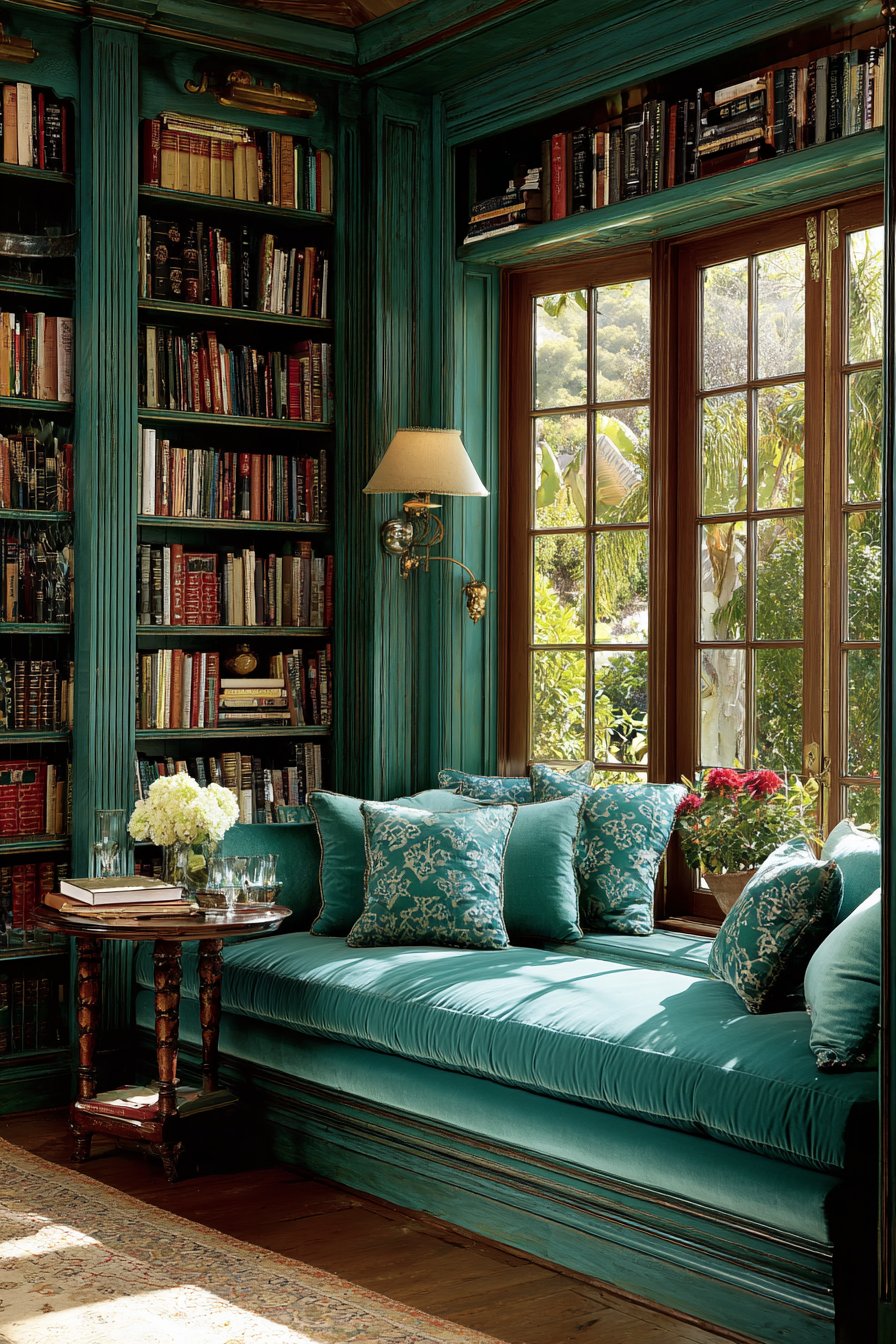
Floor-to-ceiling bookshelves flanking or adjacent to the sofa create a library atmosphere that celebrates literature and learning. These aren’t purely decorative—they’re working shelves filled with actual books organized by whatever system brings the reader joy, whether that’s by color, genre, author, or completely idiosyncratic personal logic. An adjustable reading lamp mounted on the adjacent wall provides focused light that can be directed precisely where needed without creating glare or eye strain.
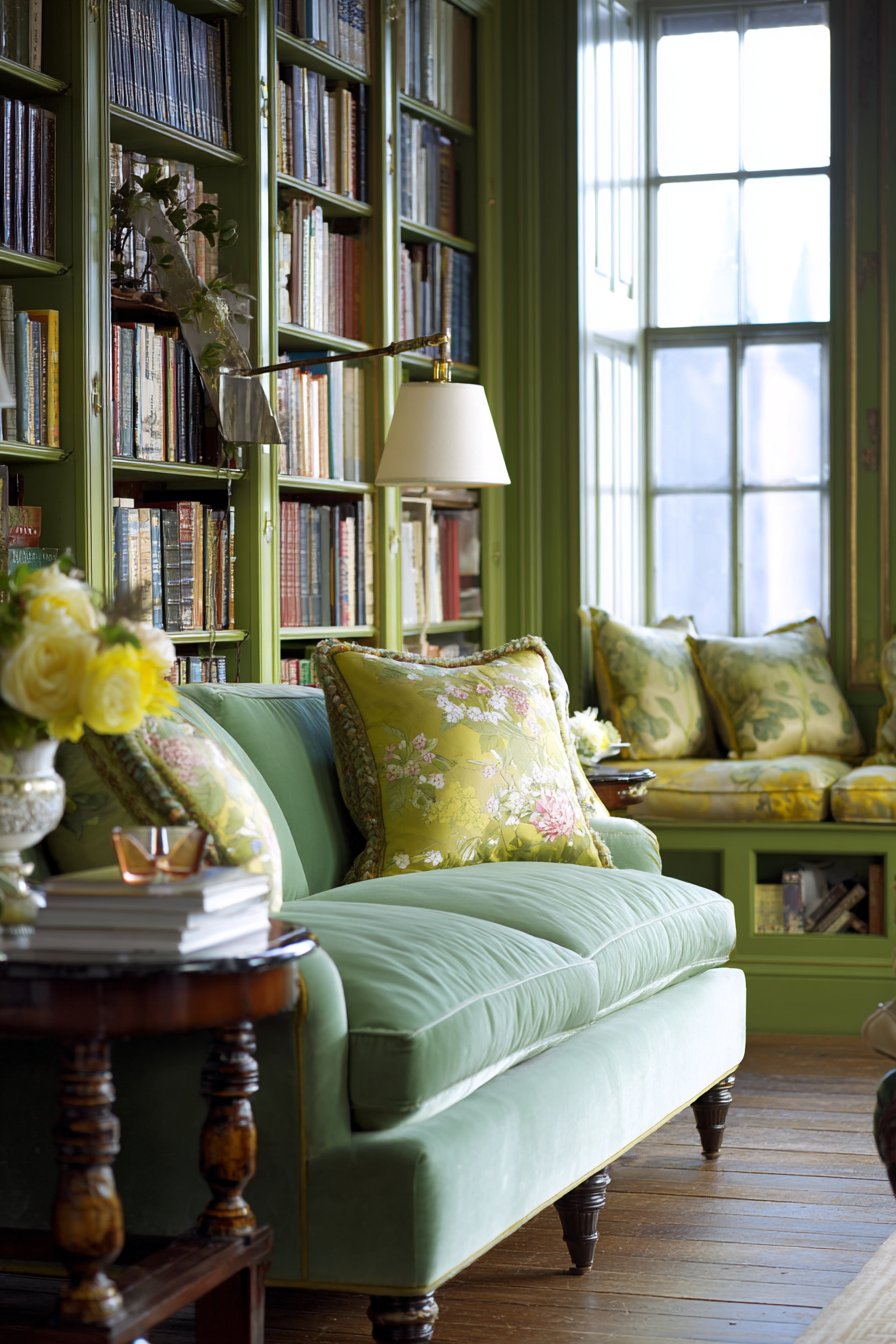
A small side table positioned within easy reach holds current reading material, reading glasses, perhaps a cup of tea or coffee, and a notebook for capturing thoughts or favorite passages. A window seat with coordinating seafoam green cushions extends the reading zone, providing alternative seating and natural light during daytime reading. The seafoam green sofa anchors this dedicated reading environment, its comfortable proportions and calming color making it the natural destination for settling in with a good book and losing track of time.
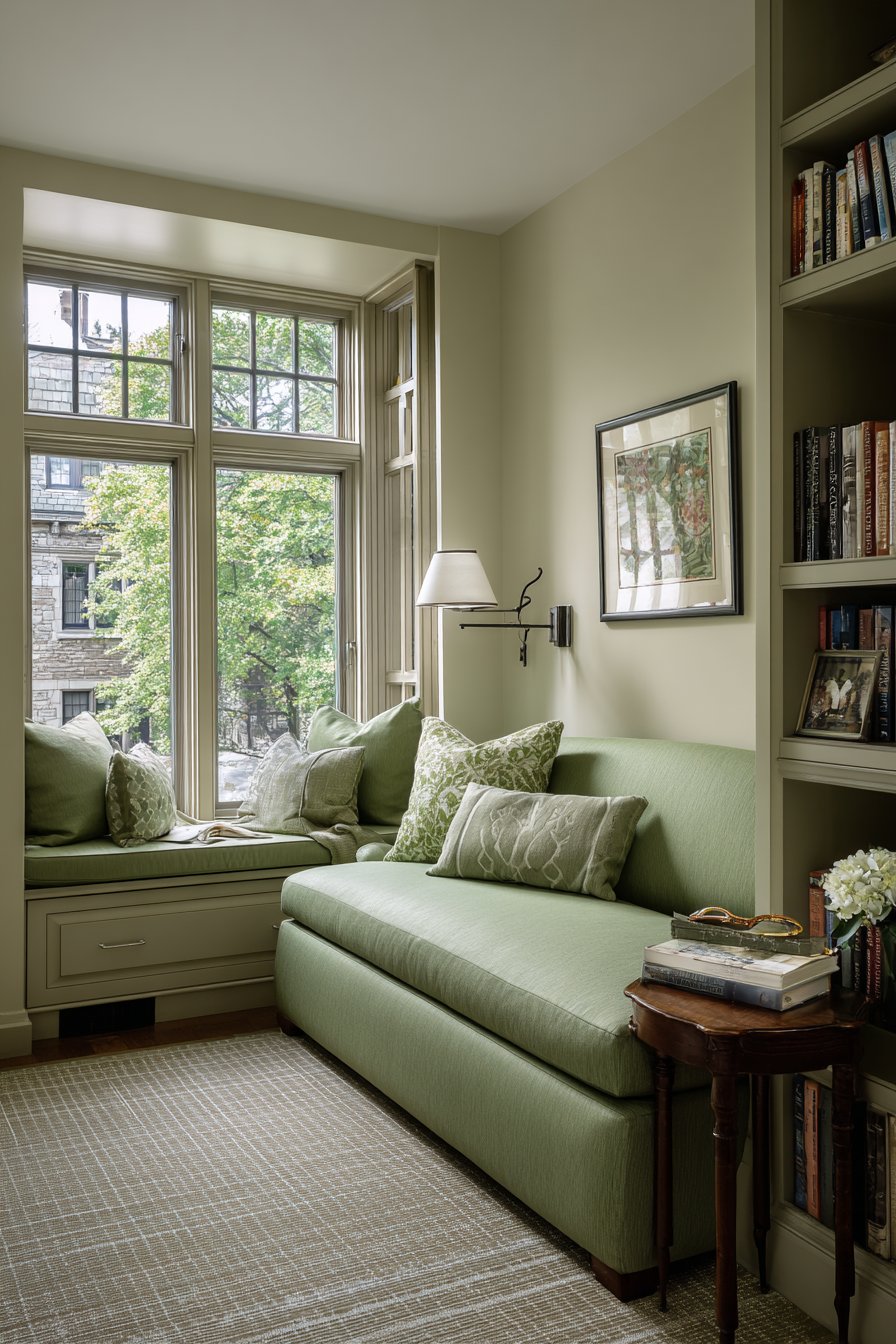
Key Design Tips: Choose seating with deep dimensions and excellent lumbar support for comfortable extended reading. Position reading furniture to maximize natural daylight during the day. Install adjustable task lighting for evening reading without eye strain. Include nearby surface for books, drinks, and reading accessories. Fill surrounding shelves with actual books you want to read or revisit. Consider a footrest or ottoman to support legs during long reading sessions. Choose calming colors like seafoam green that promote focus without distraction. Create visual connection between reading spot and book collection to inspire reading. Minimize digital distractions in the reading zone to protect focused time with physical books.
Why These Green Sofa Living Room Designs Represent the Best in Interior Design
The twenty-five green sofa living room designs presented in this comprehensive guide represent excellence in interior design for numerous compelling reasons, each contributing to their status as exemplary approaches to residential space creation. These concepts demonstrate sophisticated understanding of color theory, spatial dynamics, material selection, and the psychological impacts of our living environments, making them valuable resources for anyone seeking to create or refresh their living spaces.
Color Psychology and Biophilic Benefits: Green sofas offer unique advantages rooted in color psychology and our innate connection to nature. Green occupies the center of the visible spectrum, making it inherently balanced and easy for eyes to process without causing fatigue. Research in environmental psychology consistently demonstrates that exposure to green reduces stress, lowers blood pressure, and promotes feelings of calm and renewal. By incorporating green sofas into living rooms—spaces where we seek relaxation and restoration—these designs leverage scientifically documented benefits of color on human wellbeing. The biophilic design principles evident in several concepts, particularly the indoor garden room with olive green sofa, acknowledge our evolutionary need for connection with natural elements, creating environments that support both physical and psychological health.
Versatility Across Design Styles: These green sofa concepts brilliantly demonstrate the color’s remarkable versatility across virtually every established design aesthetic. From the clean-lined Scandinavian minimalism with mint green to the opulent maximalist approach featuring emerald velvet, green proves itself adaptable to wildly different stylistic contexts. This versatility makes green sofas practical long-term investments—as tastes evolve or homes change, a quality green sofa can transition between different design schemes through simple accessory and styling adjustments. The mid-century modern kelly green concept shows how the color channels retro authenticity, while the contemporary moss green design demonstrates its facility with current trends. This stylistic flexibility explains why green sofas appear throughout design history and continue gaining popularity.
Sophisticated Alternative to Neutral Predictability: While neutral sofas in grey, beige, or cream certainly have their place, the green sofa concepts presented here offer sophisticated alternatives that provide personality and visual interest without the commitment of more extreme color choices. Sage green and seafoam provide subtle color that reads nearly neutral in certain lights, offering an accessible entry point for those hesitant about bold color. Meanwhile, emerald and hunter green satisfy desires for dramatic statements while maintaining the sophistication and timelessness that bright or trendy colors often lack. These designs demonstrate how green occupies a sweet spot between boring predictability and risky boldness, offering “just enough” color to create character without overwhelming spaces or limiting future design flexibility.
Material and Texture Showcasing: The various fabric and material choices across these green sofa concepts—linen, velvet, leather, organic cotton—demonstrate how green beautifully showcases different textile characteristics. Velvet’s pile catches light magnificently in emerald or forest green, creating depth and visual drama impossible with flat-weave fabrics. Linen’s natural texture reads beautifully in sage or mint, its slight irregularities and organic character enhanced by earthy green tones. These designs prove that material selection matters enormously, with fabric choice influencing not just tactile experience but visual impact and maintenance practicality. The industrial emerald leather sofa demonstrates green’s unexpected compatibility with tougher materials, while the coastal seafoam linen shows its natural affinity with casual, relaxed textiles.
Scale and Space Adaptability: These twenty-five concepts successfully address living rooms of dramatically different sizes and configurations, from compact apartments requiring space-saving loveseats to open-concept spaces utilizing sectionals as room dividers. The small apartment hunter green design demonstrates how bold color actually enhances limited square footage by creating presence and personality, while the open concept pistachio sectional shows how green sofas can define functional zones without requiring walls. This range proves that green sofas work regardless of spatial constraints, with appropriate selection of scale, shade, and configuration ensuring success in diverse situations. The compact designs particularly showcase clever storage integration and vertical space utilization, addressing real-world challenges of contemporary living.
Lighting Interaction and Transformative Qualities: Green’s unique relationship with light—appearing differently under natural daylight, warm incandescent, cool fluorescent, and LED illumination—creates living spaces that transform throughout the day and under various lighting conditions. The layered lighting teal green concept explicitly addresses this phenomenon, showing how different light sources affect perception of green fabric. Morning light might render sage green cooler and more grey-toned, while evening lamplight brings out warmer, earthier qualities. This transformative nature keeps spaces visually interesting and dynamic, preventing the stagnation that can occur with colors that appear identical regardless of illumination. Several designs emphasize natural light maximization specifically because green responds so beautifully to sunlight, its organic origins making it seem most alive and beautiful in natural illumination.
Sustainable and Timeless Investment: Quality green sofas represent sustainable design choices on multiple levels. The color’s timelessness means green sofas remain stylistically relevant across decades, avoiding the waste of replacing furniture when colors fall out of fashion. Several concepts specifically feature organic cotton, linen, and sustainable materials, acknowledging growing consumer demand for environmentally conscious choices. Green’s association with nature and sustainability creates psychological alignment between color choice and ecological values, particularly meaningful for environmentally conscious homeowners. The traditional forest green library and mid-century kelly green concepts show green sofas that have remained beautiful and relevant for generations, demonstrating that quality green upholstery transcends temporary trends to achieve genuine longevity.
Emotional and Psychological Atmosphere Creation: Beyond mere aesthetics, these green sofa designs create specific emotional atmospheres tailored to different living goals. The zen celadon concept promotes meditation and mindfulness through its minimal aesthetic and calming color. The cozy farmhouse sage green design cultivates feelings of comfort, security, and connection to simpler times. The luxurious emerald velvet concept creates glamorous sophistication perfect for those who love entertaining and spectacle. This emotional versatility—green’s ability to support such diverse psychological states depending on shade and styling—makes it exceptionally powerful for residential design where emotional experience matters as much as visual appeal.
Practical Maintenance Considerations: Several designs acknowledge the practical realities of living with upholstered furniture, incorporating slipcovers, darker shades that hide minor stains, and durable fabrics appropriate for high-use spaces. The coastal seafoam slipcover design specifically addresses families with children or pets, acknowledging that beautiful living spaces must also be livable and maintainable. Hunter green and forest green shades prove particularly practical, hiding the minor wear and fading inevitable with daily use while maintaining sophisticated appearance. These practical considerations demonstrate that excellent design balances aesthetic ambitions with real-world functionality, creating spaces that remain beautiful despite regular use.
Cultural and Historical Depth: Green’s rich history in interior design—from Victorian parlors to mid-century modern rooms to contemporary spaces—gives green sofas cultural depth and design legitimacy. The traditional Chesterfield concept references this history directly, while the Art Deco emerald design channels 1920s glamour. Understanding these historical references enriches appreciation of contemporary green sofa applications, connecting current choices to design lineages and cultural movements. This historical awareness elevates green sofa selection from simple color preference to participation in ongoing design conversations spanning centuries.
These green sofa living room concepts represent the best in interior design because they thoughtfully address the multiple dimensions that constitute successful residential spaces: visual beauty, psychological comfort, practical functionality, sustainable responsibility, cultural awareness, and personal expression. They demonstrate that superior design isn’t about following rigid rules or chasing trends, but rather about understanding principles—color theory, spatial dynamics, material properties, human psychology—and applying them creatively to create spaces that enhance daily life. Whether drawn to minimalist serenity or maximalist abundance, compact efficiency or spacious luxury, traditional elegance or contemporary edge, these diverse green sofa concepts offer proven approaches to creating living rooms that truly live up to their name—spaces for living well, comfortably, and beautifully.
Conclusion
The journey through these twenty-five distinctive green sofa living room designs reveals the extraordinary versatility, sophistication, and practical wisdom that this furniture choice offers contemporary homeowners. From the whisper-soft sage minimalism that calms overactive minds to the jewel-toned emerald maximalism that celebrates abundance and beauty, green sofas prove themselves capable of anchoring spaces across every imaginable style, scale, and purpose. What emerges clearly from this comprehensive exploration is that green transcends simple color preference to offer genuine design advantages: psychological benefits documented by environmental psychology research, biophilic connections that support wellbeing, practical versatility that accommodates evolving tastes, and timeless appeal that ensures lasting relevance.
As you contemplate implementing these ideas in your own living spaces, remember that successful design balances inspiration with personal authenticity. These concepts provide frameworks, principles, and proven approaches, but your living room should ultimately reflect your unique lifestyle, aesthetic preferences, and daily realities. Perhaps you’re drawn to the organized efficiency of the sage green storage design, or maybe the theatrical glamour of the Art Deco emerald concept speaks to your love of entertaining. You might combine elements from several designs—the coastal style’s relaxed slipcovers with the industrial aesthetic’s exposed materials, creating something entirely your own. The beauty of design lies precisely in this creative interpretation, in taking established principles and adapting them to your specific circumstances and preferences.
Begin your green sofa journey by carefully considering which shade of green resonates most strongly with you and suits your space’s lighting conditions. Test fabric samples in your actual room at different times of day, observing how morning light, afternoon sun, and evening lamplight affect the color’s appearance. Consider your lifestyle honestly—do you need durable, cleanable fabrics for active family life, or can you indulge in delicate materials for a more formal space? Think about scale carefully, ensuring your sofa fits proportionally within your room without overwhelming or underwhelming the space. Most importantly, choose quality construction and materials that will provide years of comfortable use and maintain their beauty despite daily life.
Your living room represents your home’s heart, the space where life’s important moments unfold—quiet mornings with coffee and newspapers, animated conversations with dear friends, cozy evenings with family, peaceful solitude after demanding days. The furniture that anchors this essential space deserves careful consideration and thoughtful selection. A green sofa, chosen wisely and styled beautifully, can transform your living room from merely functional space into genuine sanctuary—a place that nurtures, inspires, and welcomes in equal measure. Let these diverse designs inspire your creativity, inform your decisions, and empower you to create a living room that truly enhances your daily life. The perfect green sofa living room awaits your personal interpretation and creative expression.


