
Green has emerged as one of the most versatile and sophisticated colors in contemporary interior design, offering a perfect balance between nature’s tranquility and bold design statement. When it comes to dining rooms, green creates an atmosphere that’s both welcoming and refined, making every meal feel like a special occasion. The psychological impact of green is profound – it promotes relaxation, stimulates appetite, and creates a connection to the natural world that modern living often lacks.
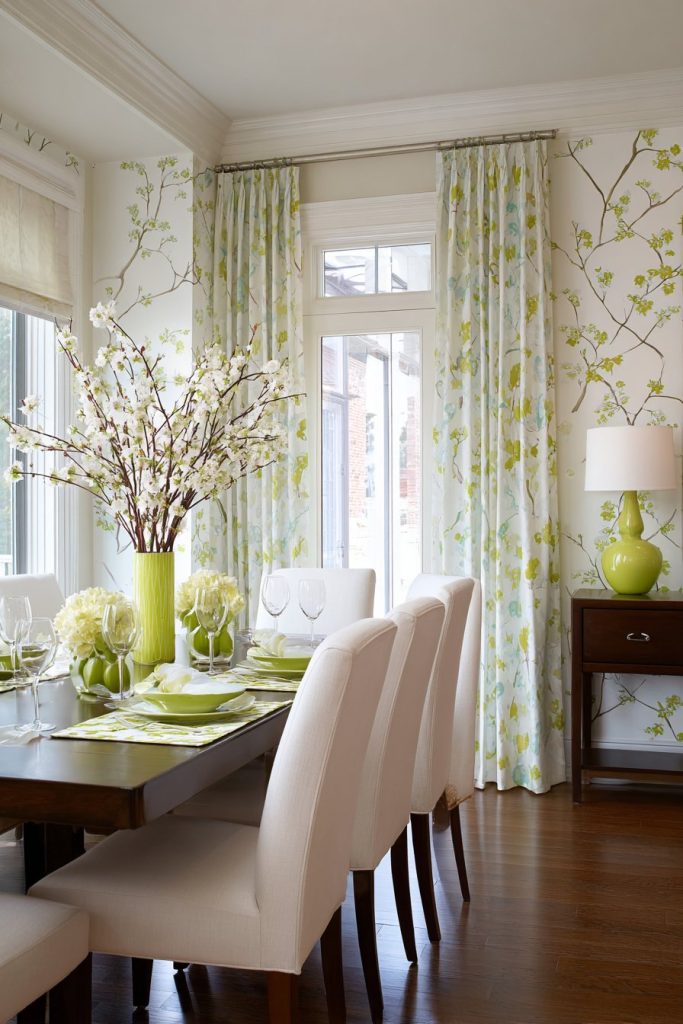
The beauty of incorporating green into your dining room lies in its incredible versatility. From deep forest greens that evoke luxury and drama to soft sage tones that whisper serenity, each shade tells a different story and serves a unique purpose in your home’s narrative. Whether you’re drawn to traditional elegance, modern minimalism, or eclectic bohemian style, green adapts beautifully to any design philosophy while maintaining its inherent sophistication.
In this comprehensive guide, we’ll explore twenty distinct approaches to green dining room design, each offering unique insights into color application, material selection, and spatial composition. These ideas span multiple design styles and budgets, ensuring that every homeowner can find inspiration that resonates with their personal aesthetic and lifestyle needs.

1. Sophisticated Forest Green Elegance
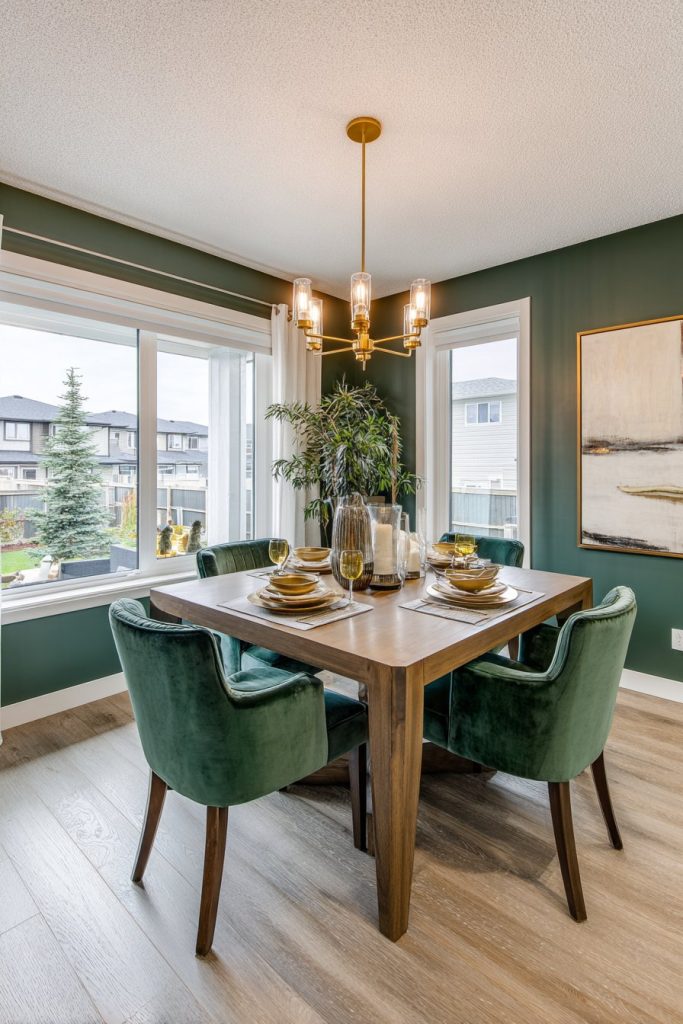
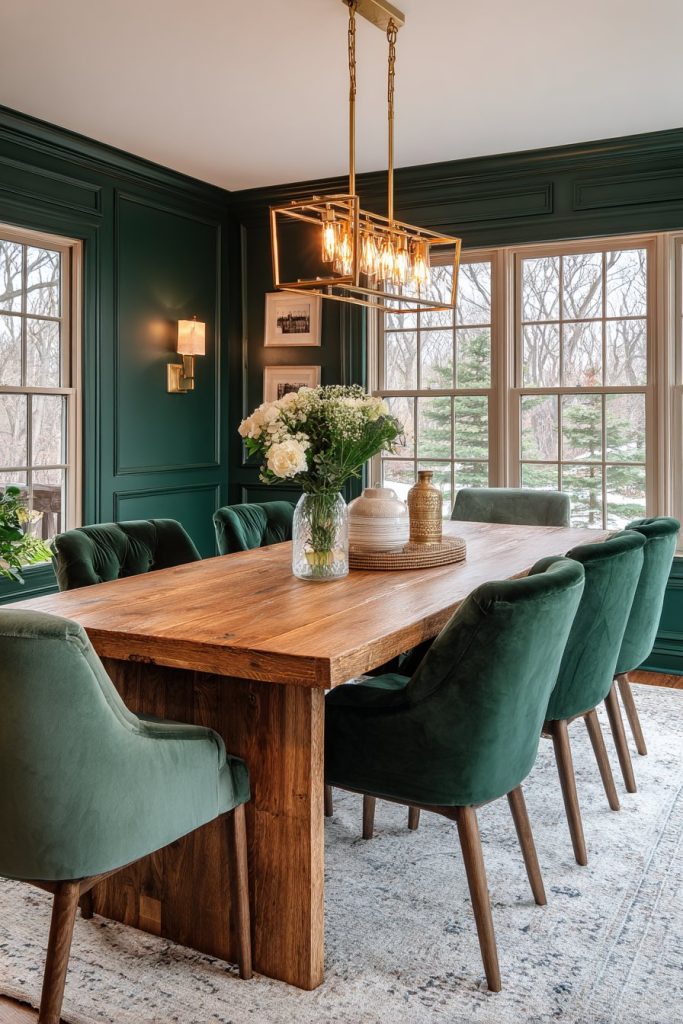
Deep forest green walls create an envelope of luxury that transforms any dining space into a sophisticated retreat. This rich, saturated color works particularly well with natural oak furniture, creating a beautiful contrast between the warmth of wood grain and the depth of verdant walls. The natural oak dining table becomes a stunning focal point, its honey-colored tones appearing to glow against the dramatic backdrop.
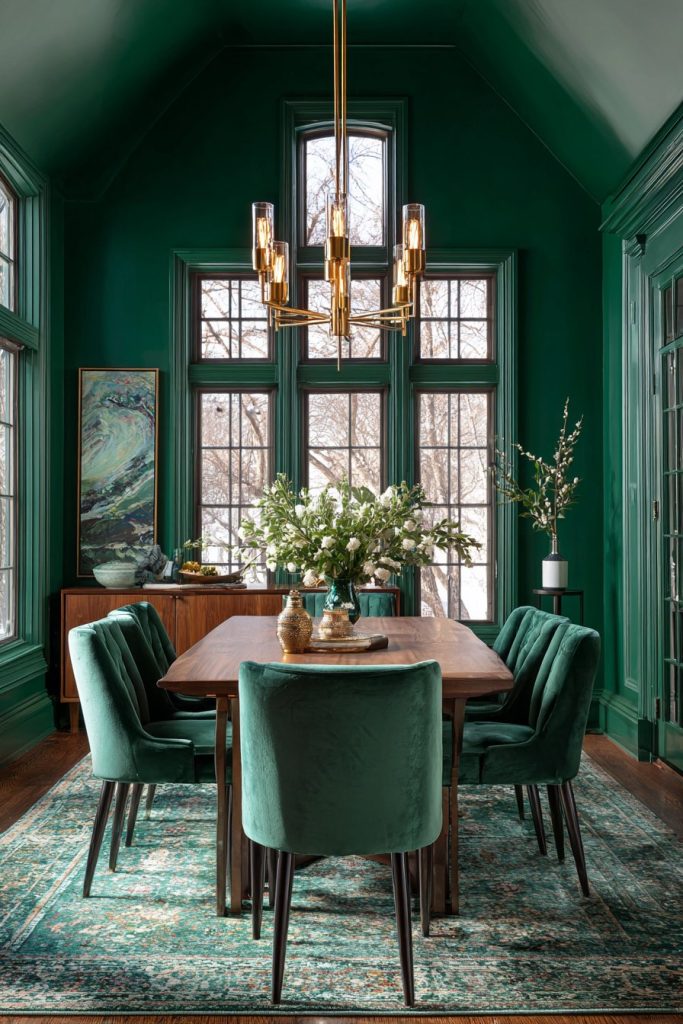
Sage green velvet upholstery on dining chairs adds layers of texture and visual interest while maintaining the cohesive color story. The tactile quality of velvet brings an element of luxury that invites guests to linger over meals, while the slightly lighter sage tone prevents the space from feeling too heavy or overwhelming. This careful gradation of green tones creates sophisticated depth that professional designers often employ in high-end projects.
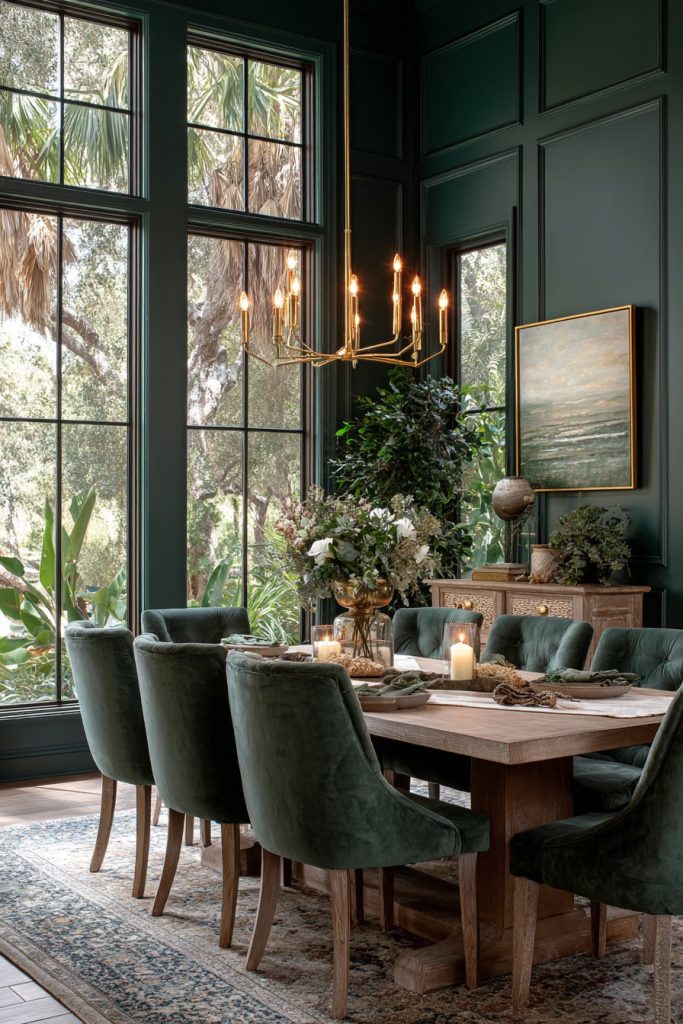
Brass fixtures provide the perfect metallic accent for this color palette, offering warmth that complements both the green walls and natural wood elements. A brass chandelier with Edison bulbs creates ambient lighting that enhances the room’s cozy yet elegant atmosphere. The warm glow of Edison bulbs adds vintage charm while providing the perfect light temperature to make green walls appear rich and inviting rather than cold or institutional.
Key Design Tips:
- Use multiple shades of green to create depth and prevent monotony in your color scheme
- Incorporate warm brass fixtures to add metallic warmth that complements green tones beautifully
- Choose natural wood furniture to ground the space and provide organic contrast to painted surfaces
- Layer different textures like velvet, wood grain, and metal to create visual and tactile interest
2. Modern Emerald Accent Wall Drama
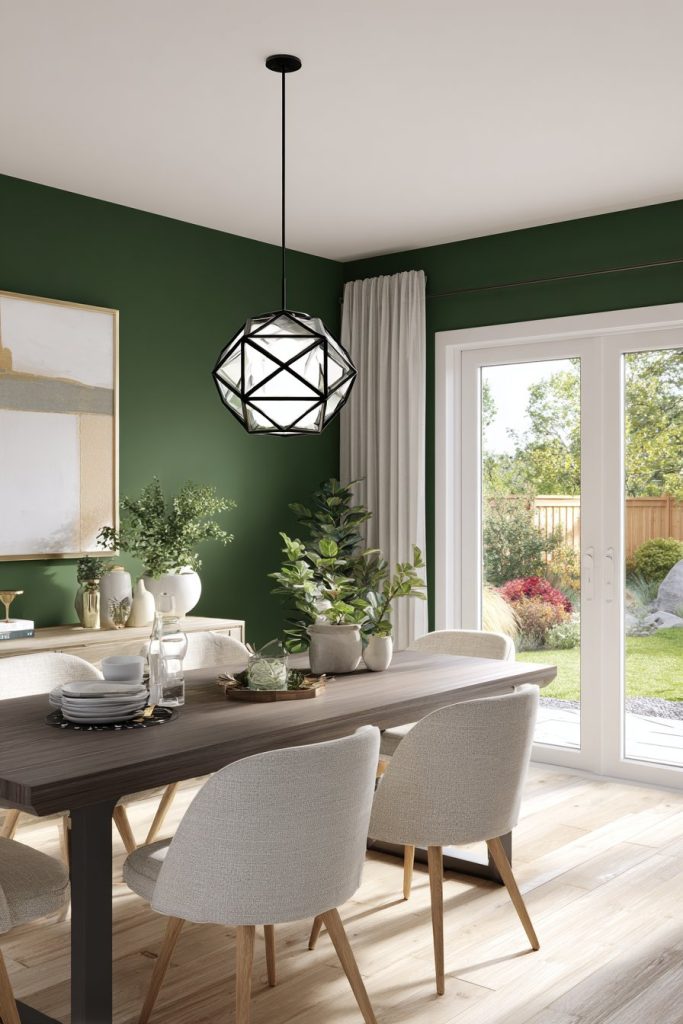
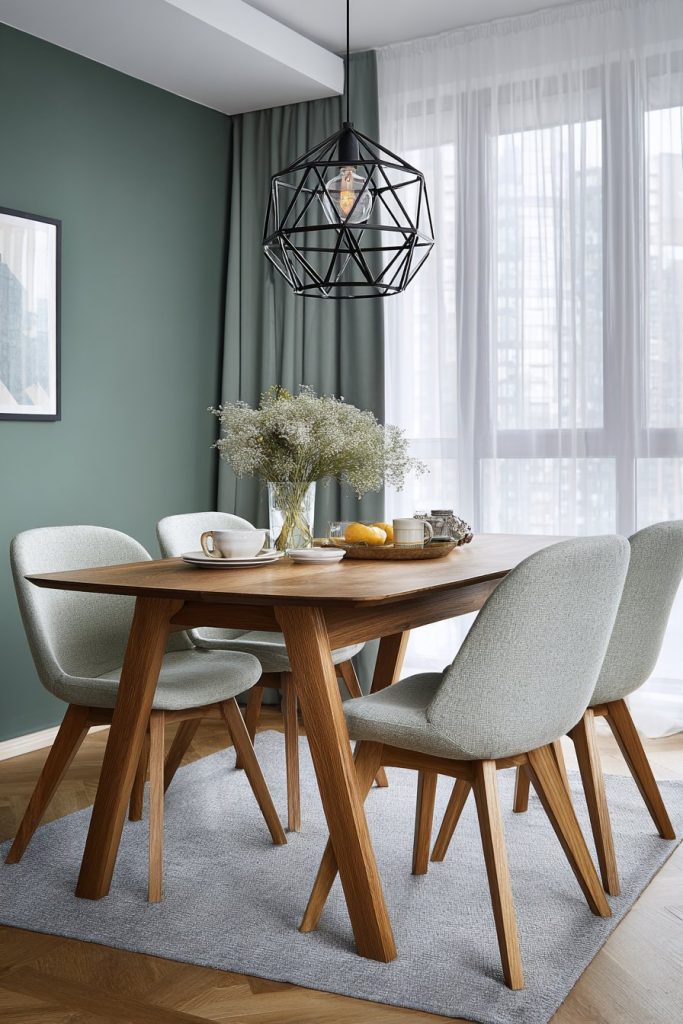
An emerald green accent wall serves as a bold focal point that can transform an ordinary dining room into an extraordinary space. This approach allows you to experiment with dramatic color while maintaining balance through neutral complementary walls in soft sage green. The contrast between the vibrant emerald and subtle sage creates visual depth that makes the room appear larger and more dynamic.
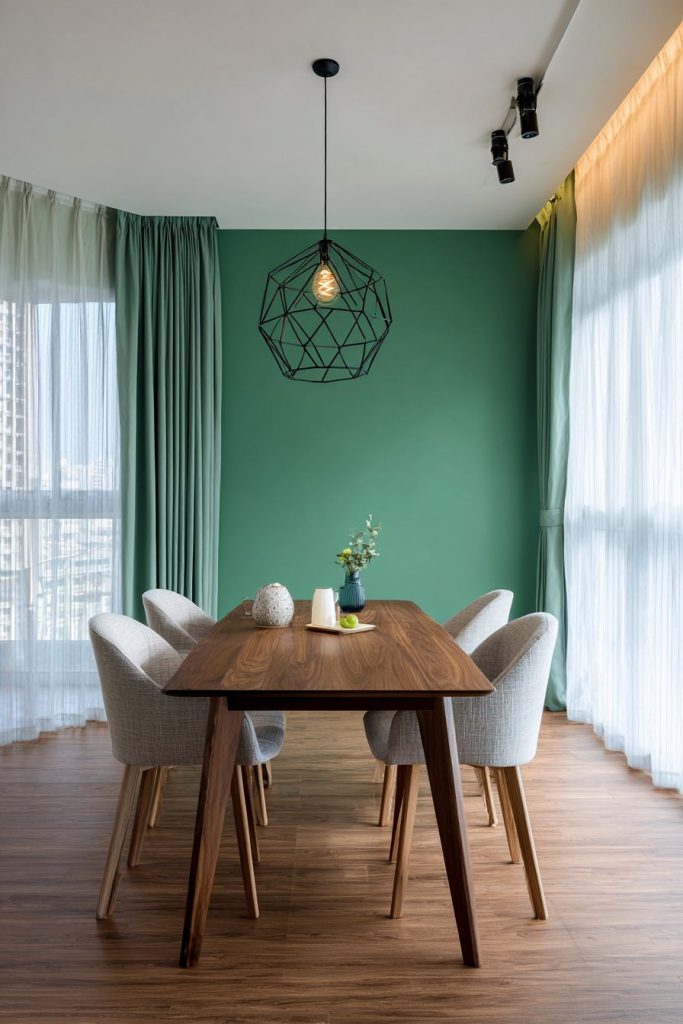
Walnut furniture provides the perfect counterpoint to emerald green, with its rich chocolate tones creating a sophisticated color harmony. The natural grain patterns in walnut add organic texture that softens the boldness of the emerald wall, while the wood’s inherent warmth prevents the space from feeling too contemporary or cold. This combination of materials creates a timeless appeal that transcends fleeting design trends.
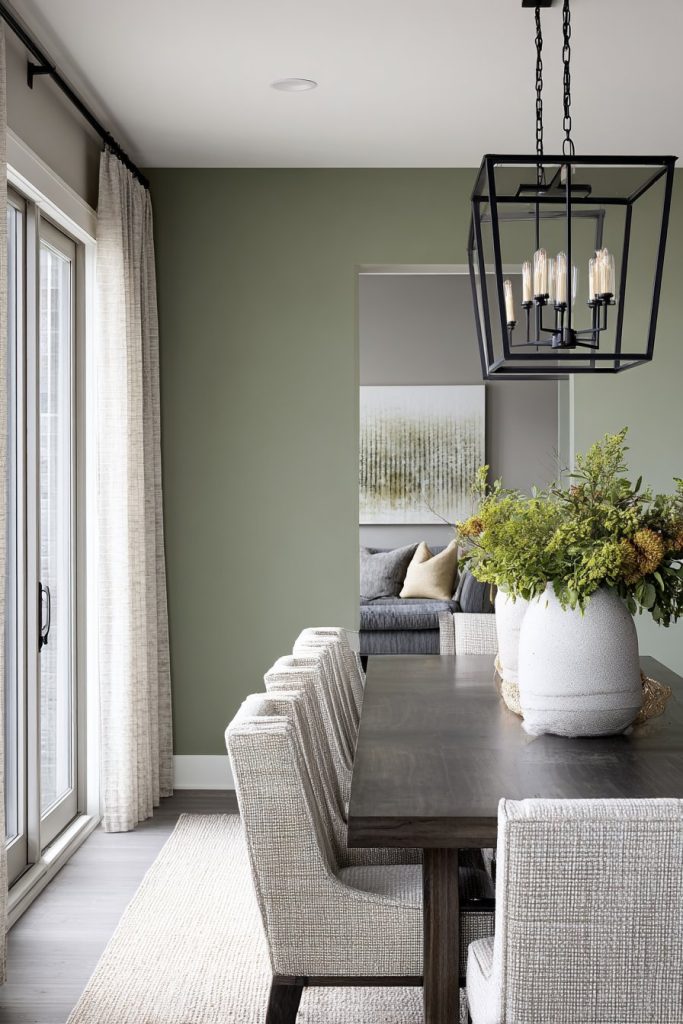
Contemporary dining chairs upholstered in natural linen introduce a neutral element that allows both the emerald wall and walnut table to shine. Linen’s relaxed texture adds casual elegance that makes the space feel approachable despite its dramatic color choices. The natural fibers also contribute to the room’s organic feel, connecting the space to natural elements even in an urban setting.
Key Design Tips:
- Limit accent walls to one per room to maintain focus and prevent overwhelming the space
- Use complementary neutral colors on remaining walls to balance dramatic color choices
- Select furniture in warm wood tones to soften bold wall colors and add natural warmth
- Incorporate natural fabrics like linen to add texture and casual sophistication
3. Farmhouse Olive Green Charm
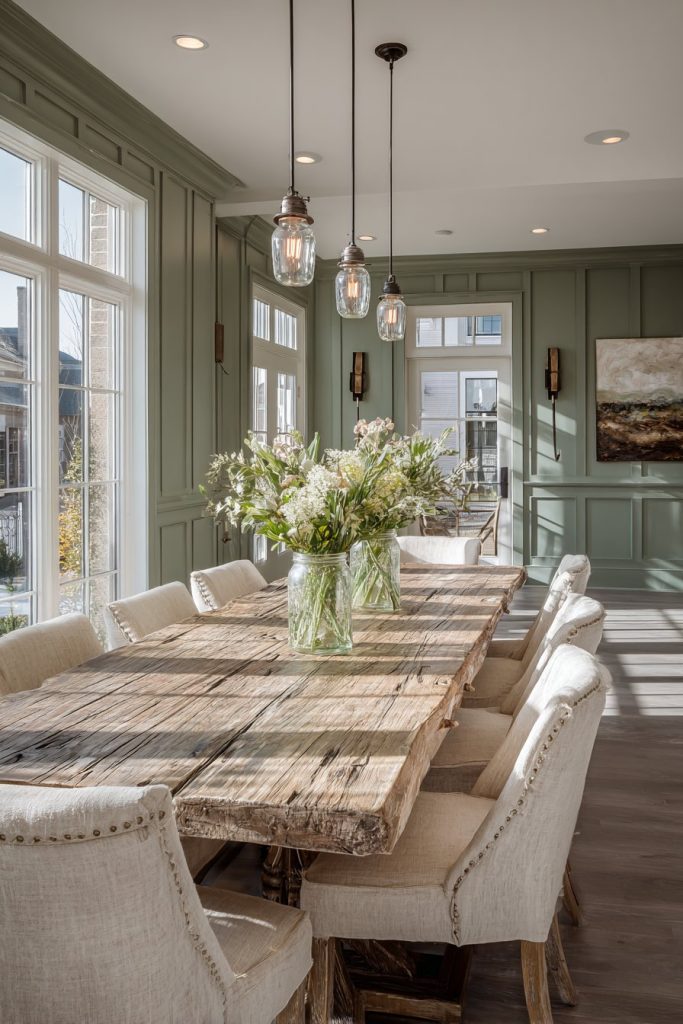
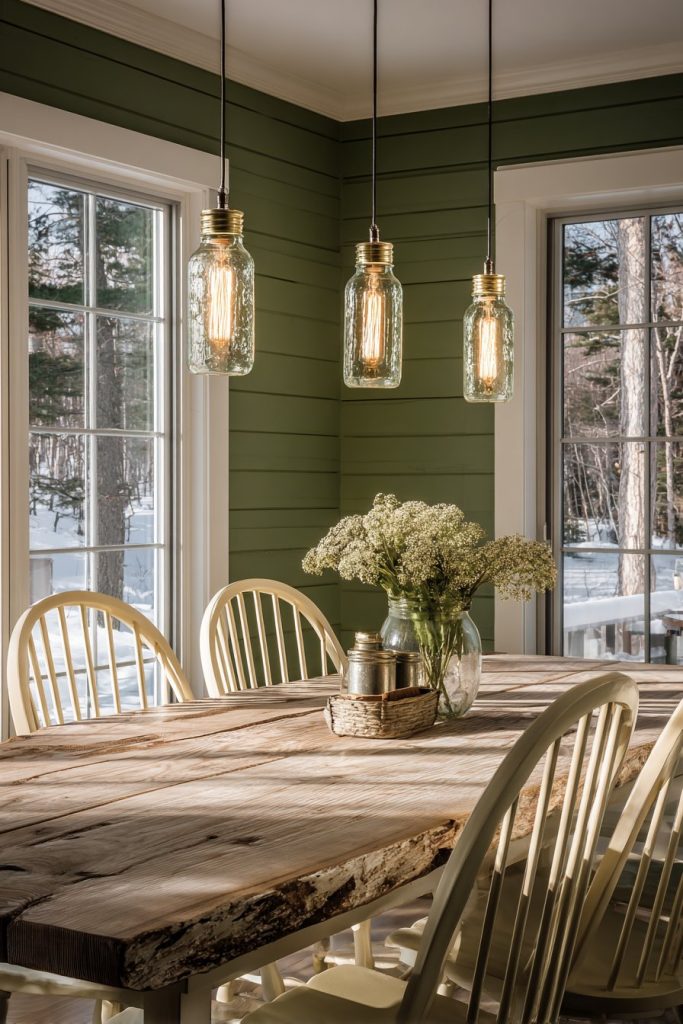
Muted olive green on shiplap walls creates the perfect foundation for authentic farmhouse style that feels both nostalgic and fresh. This earthy green tone evokes the rolling countryside and connects the dining space to agricultural traditions while maintaining modern livability. The horizontal lines of shiplap add architectural interest and movement that prevents solid color walls from appearing flat or monotonous.
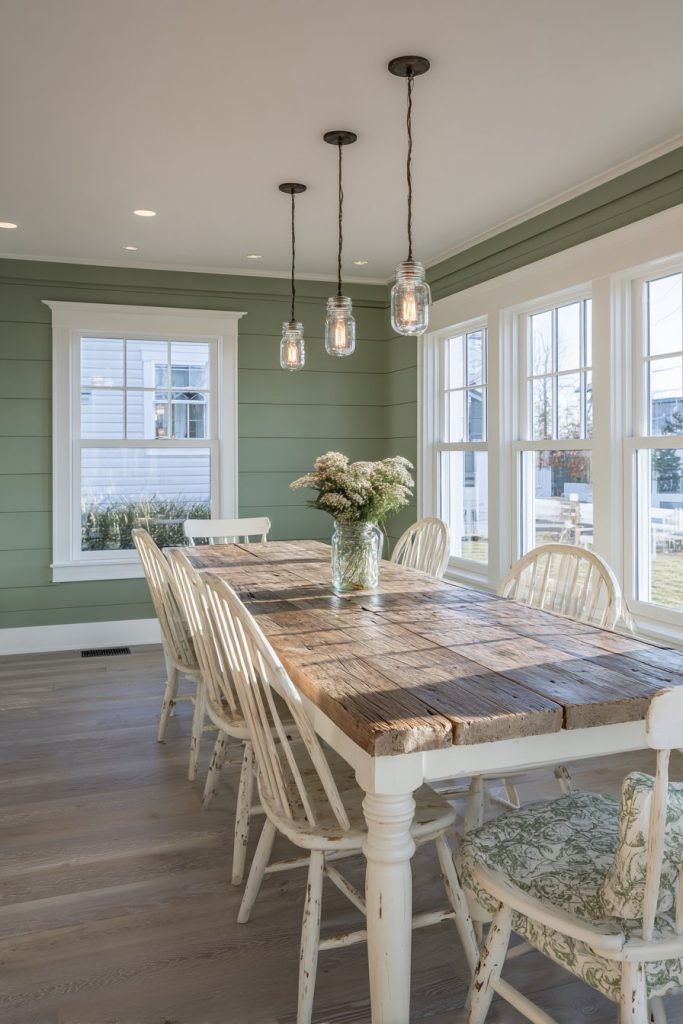
Reclaimed wood dining tables bring genuine character and history to farmhouse-style spaces. Each piece tells a story through its weathered surface, nail holes, and natural edge grain that machine-made furniture simply cannot replicate. The contrast between the smooth olive green walls and the textured, weathered wood creates visual tension that keeps the eye engaged and interested.
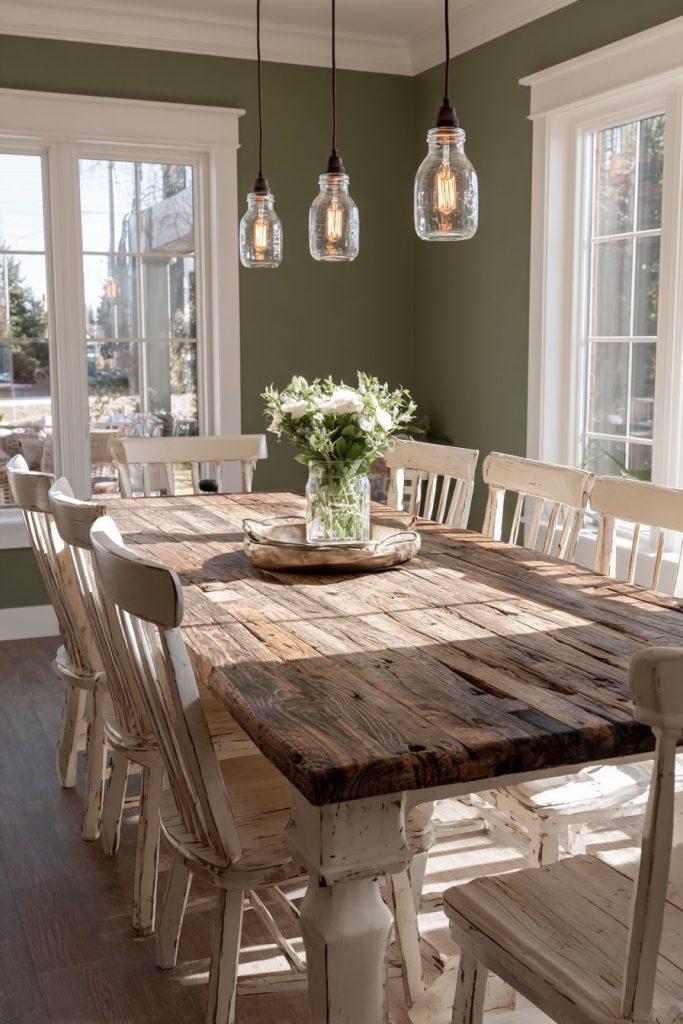
Windsor-style chairs painted in distressed cream provide the perfect seating solution that balances comfort with authentic period style. The distressed finish adds age and character while the cream color brightens the space and prevents it from becoming too dark or heavy. This combination of olive green, natural wood, and cream creates a classic farmhouse palette that feels both timeless and current.
Key Design Tips:
- Choose authentic architectural details like shiplap to enhance the farmhouse aesthetic
- Incorporate reclaimed materials whenever possible to add genuine character and history
- Use distressed finishes to create the appearance of age and authentic wear
- Balance dark colors with lighter accents to prevent spaces from feeling too heavy
4. Hunter Green Wainscoting Elegance
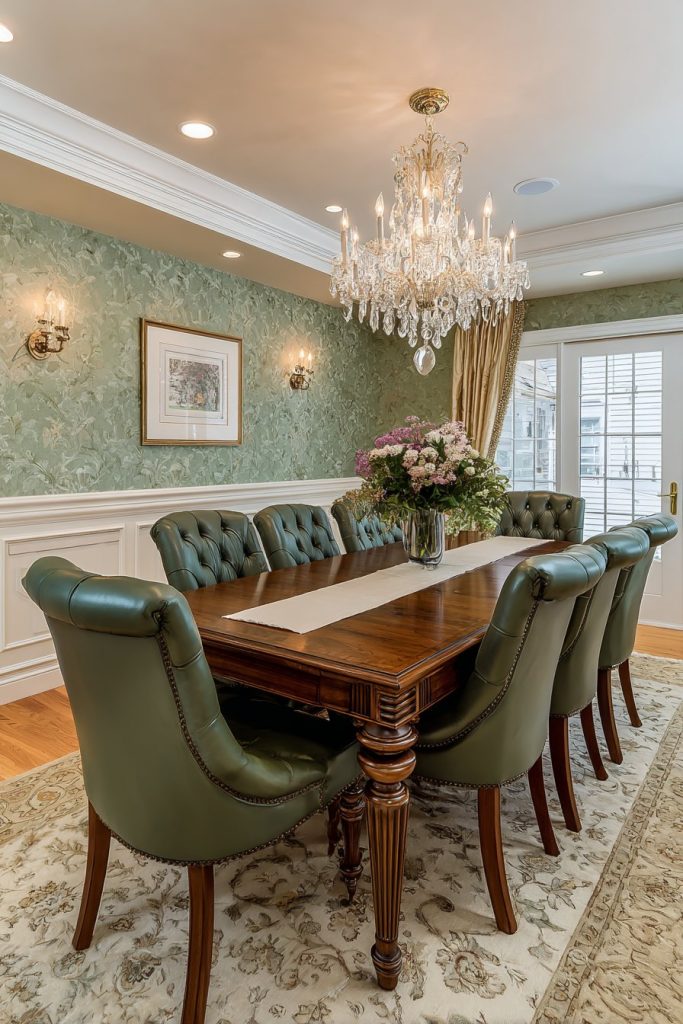
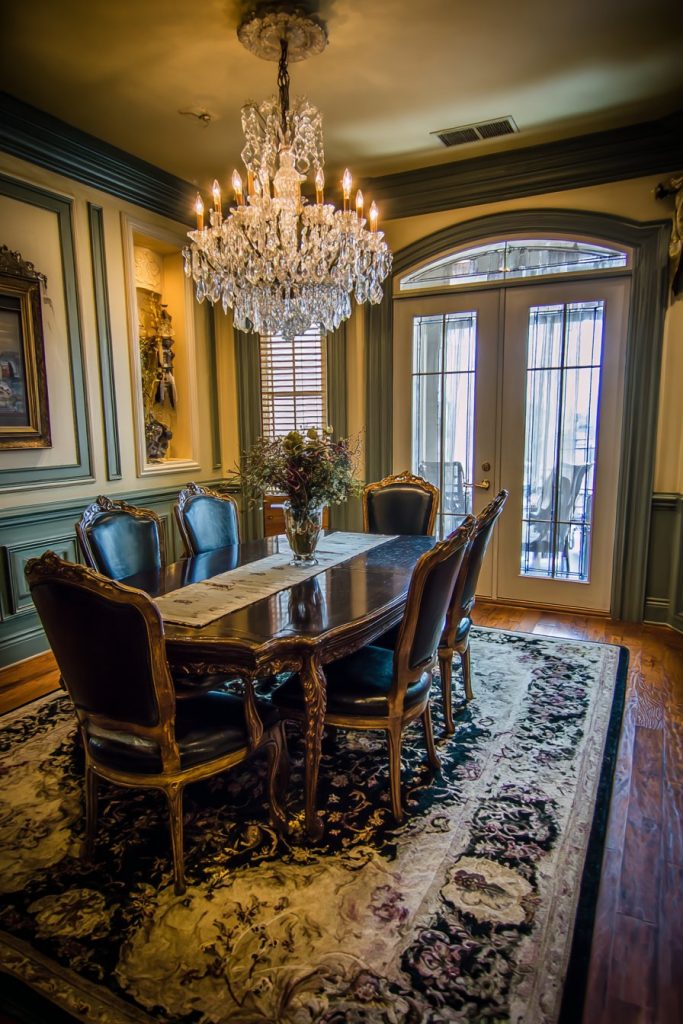
Traditional hunter green wainscoting creates sophisticated visual weight in the lower portion of the room while allowing lighter colors above to maintain an open, airy feeling. This classic approach to color application follows traditional design principles that have been proven effective for centuries. The horizontal division created by wainscoting also makes rooms appear more spacious by drawing the eye horizontally rather than emphasizing vertical limitations.
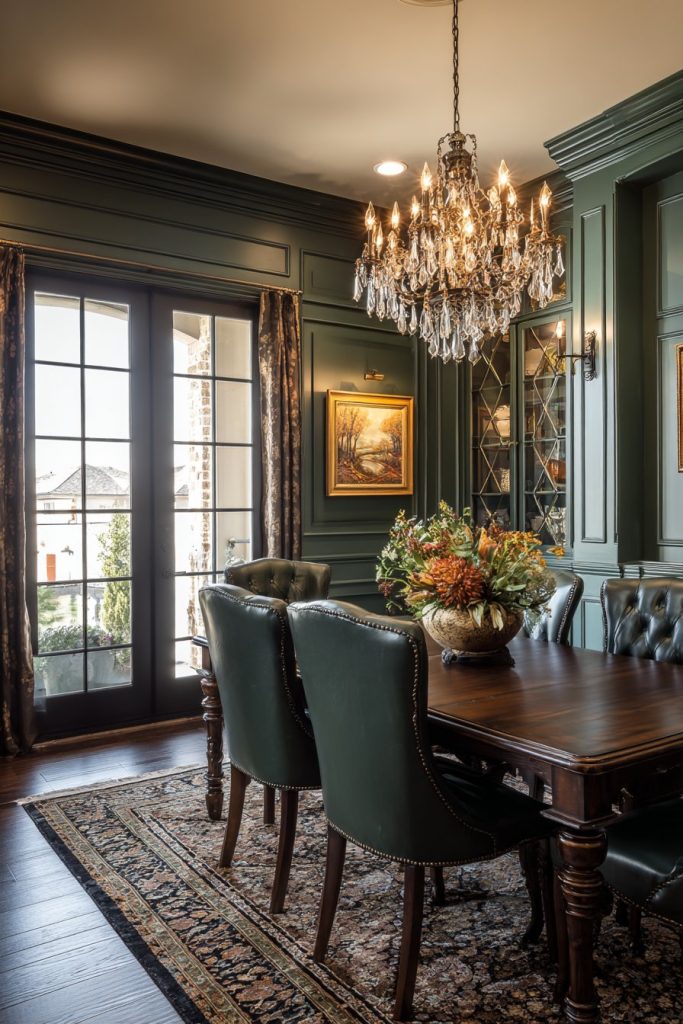
Formal mahogany dining furniture provides the gravitas and elegance that hunter green demands. The deep reddish-brown tones in mahogany create a rich color harmony with hunter green that feels both luxurious and grounded in tradition. Turned legs and carved details on mahogany pieces add architectural interest that complements the formality of wainscoting and crown molding.
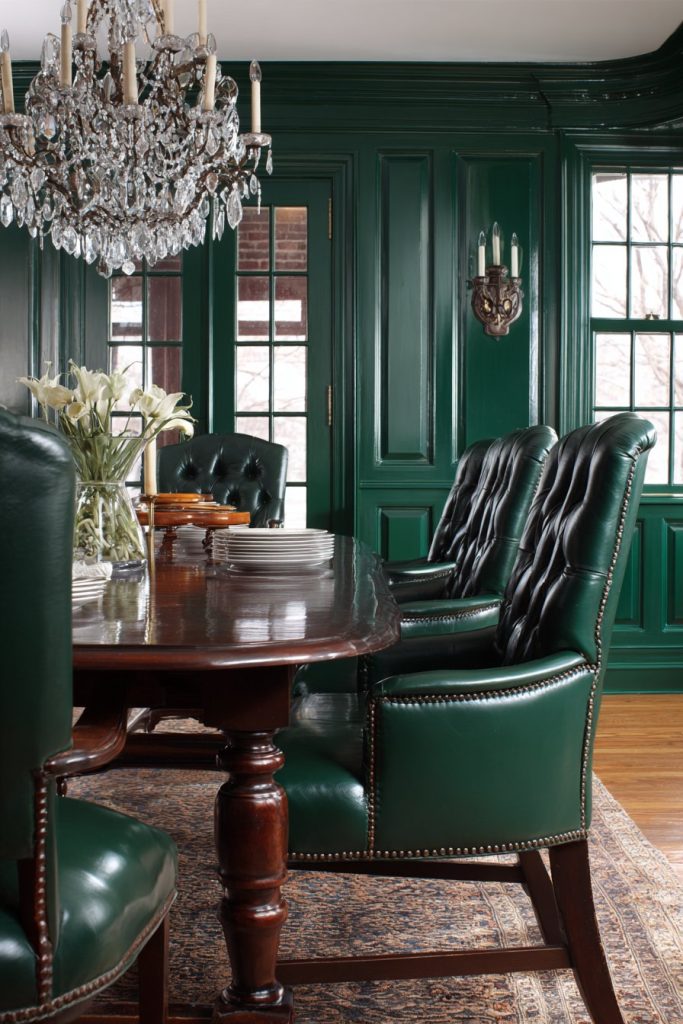
Deep green leather upholstery on dining chairs creates a monochromatic green scheme that feels intentional and sophisticated rather than accidental. Leather’s durability makes it practical for dining room use while its rich patina develops character over time. The slight variations in leather grain and color add subtle texture that prevents the monochromatic scheme from appearing flat or uninteresting.
Key Design Tips:
- Use wainscoting to add architectural interest and create elegant room proportions
- Choose formal furniture styles that complement traditional color applications
- Incorporate quality materials like leather and mahogany that age beautifully over time
- Maintain consistent color temperatures throughout metallic and fabric choices
5. Mint Green Small Space Solutions
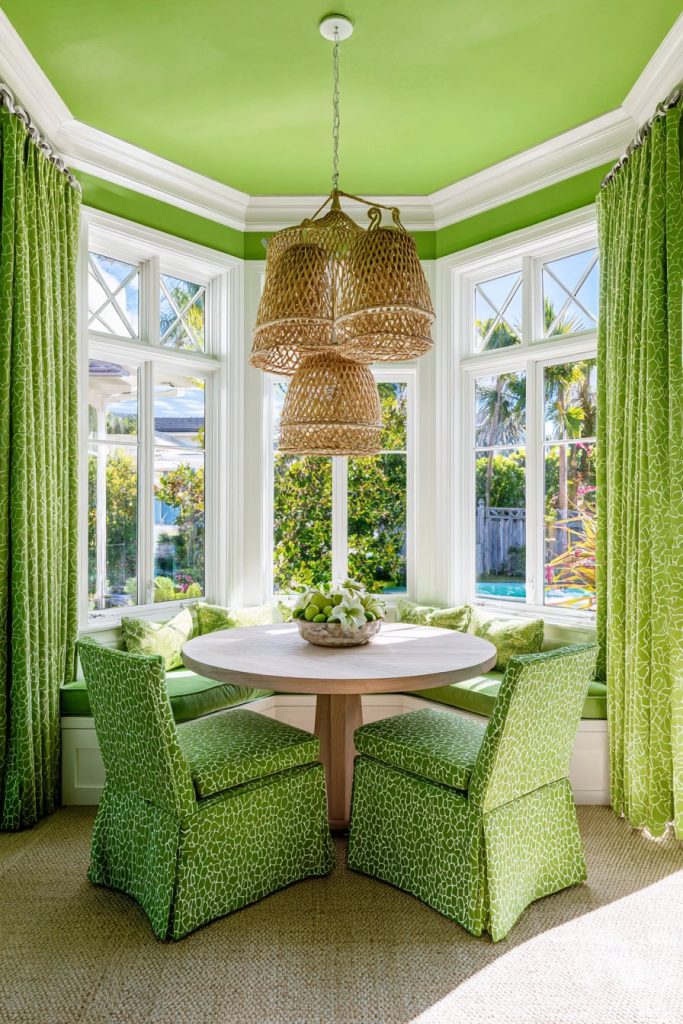
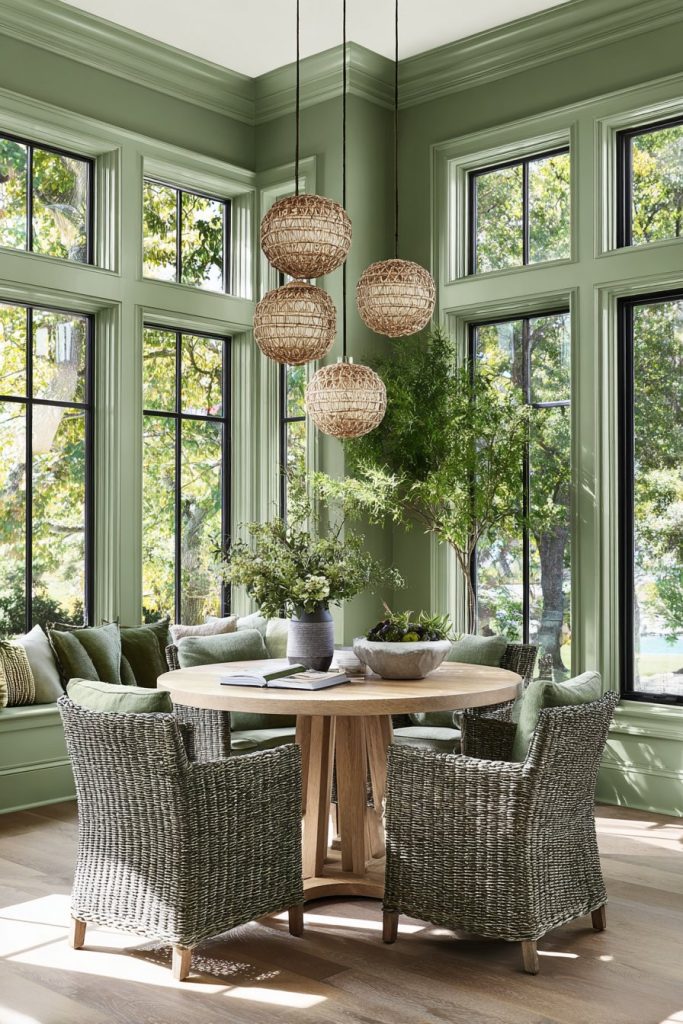
Mint green walls in smaller dining spaces create an illusion of expanded space while maintaining color impact. This fresh, light green tone reflects natural light beautifully, making compact rooms feel brighter and more open than neutral colors might achieve. The psychological effect of mint green also promotes relaxation and appetite stimulation, making it ideal for intimate dining experiences.
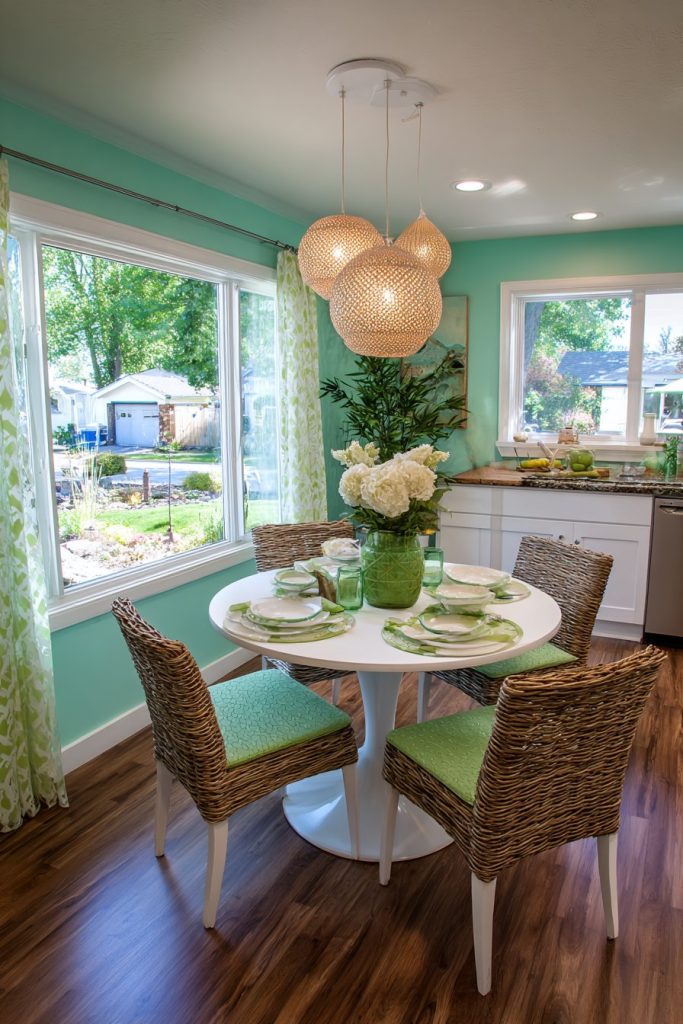
Round pedestal tables maximize seating capacity in limited square footage while their curved edges create better traffic flow than rectangular alternatives. White oak construction adds natural warmth while the light wood tone prevents the space from feeling cramped or dark. Pedestal bases also provide more legroom and flexibility in chair placement than traditional four-legged tables.
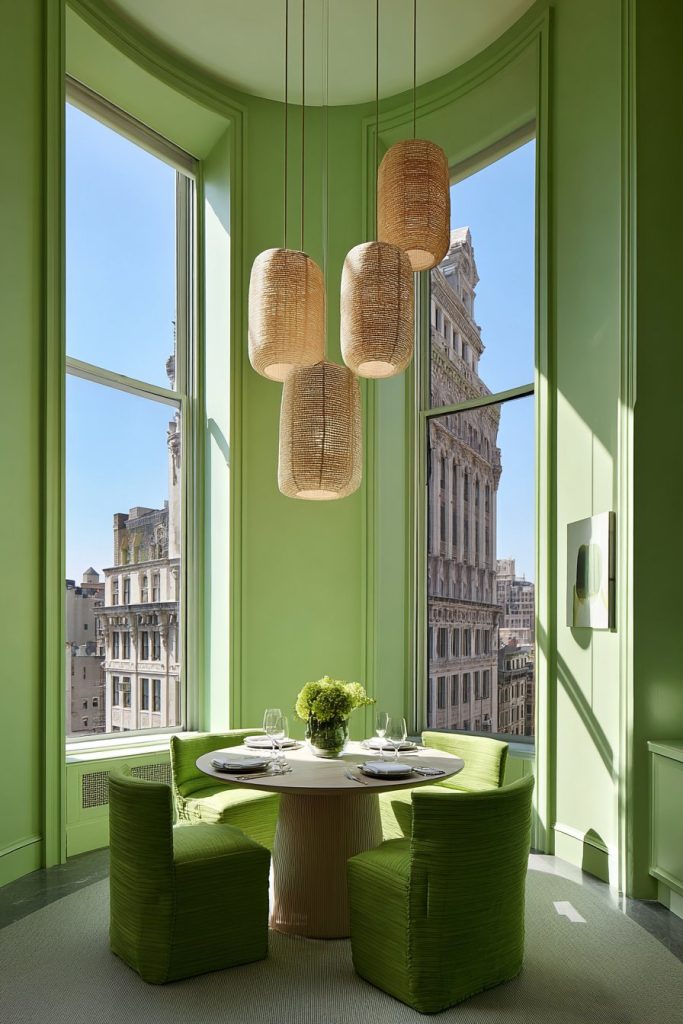
Woven green fabric on compact dining chairs introduces texture and pattern that adds visual interest without overwhelming the small space. The repetition of green in both walls and upholstery creates color continuity that makes the room feel larger and more cohesive. Woven textures also add casual comfort that makes small spaces feel more inviting and less formal.
Key Design Tips:
- Use light green tones in small spaces to maximize the sense of openness
- Choose round tables to improve traffic flow and maximize seating in compact areas
- Repeat colors strategically to create cohesion and visual expansion
- Maximize natural light with minimal window treatments to enhance bright color choices

6. Contemporary Dark Green Drama
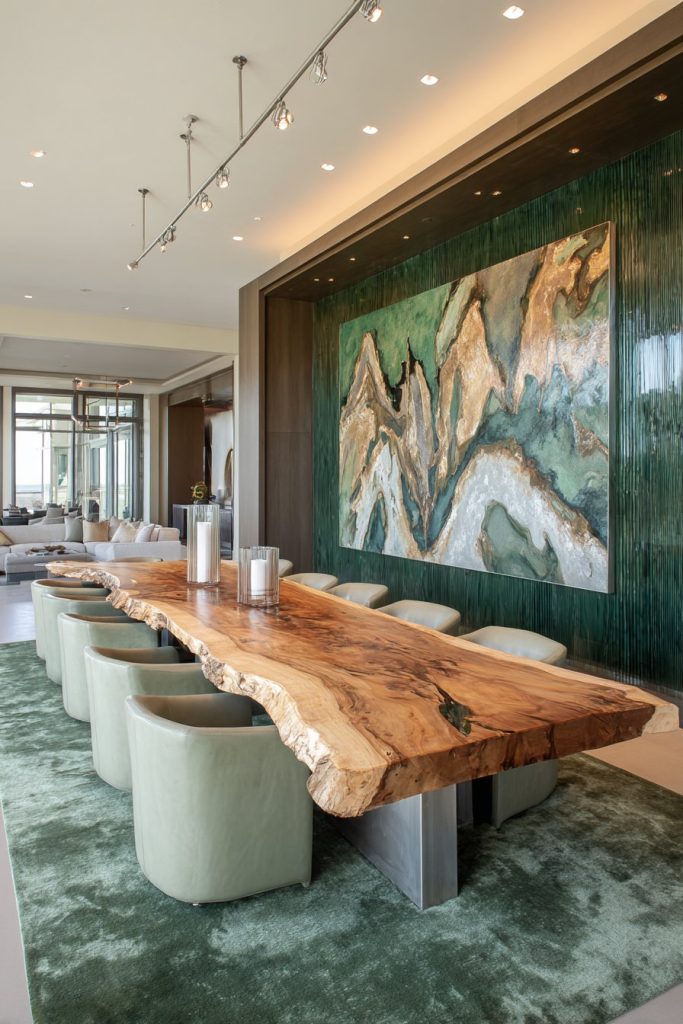
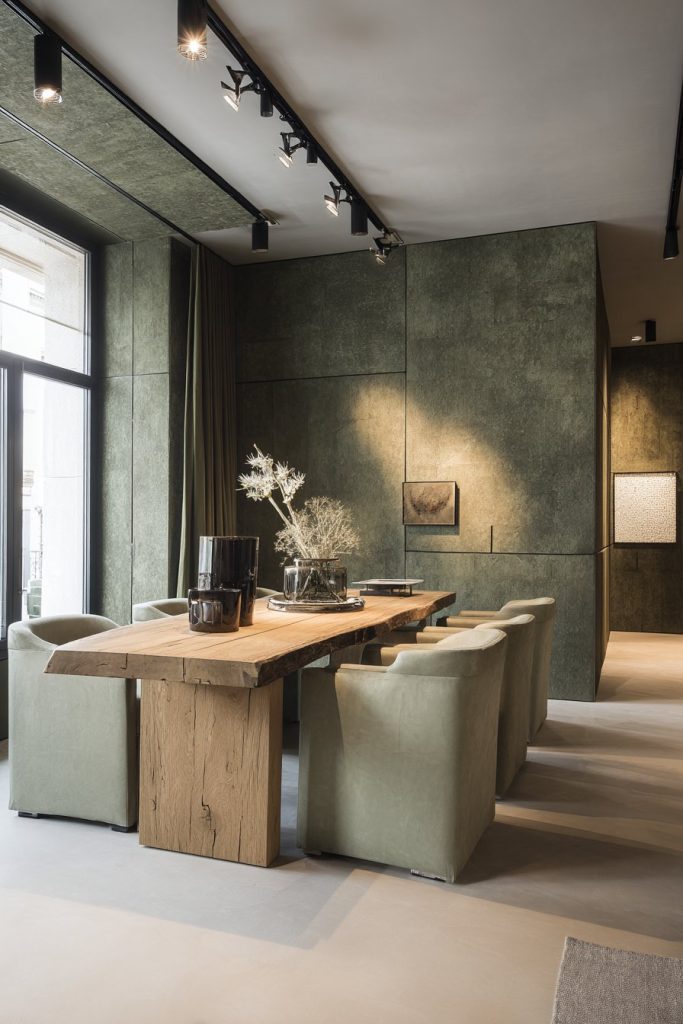
Dramatic dark green feature walls with vertical wood paneling create sophisticated texture and visual interest that elevates contemporary dining spaces. The vertical orientation of the paneling draws the eye upward, making rooms appear taller while the deep green color adds richness and depth. This combination of color and texture creates a luxurious backdrop that works particularly well with modern furniture styles.
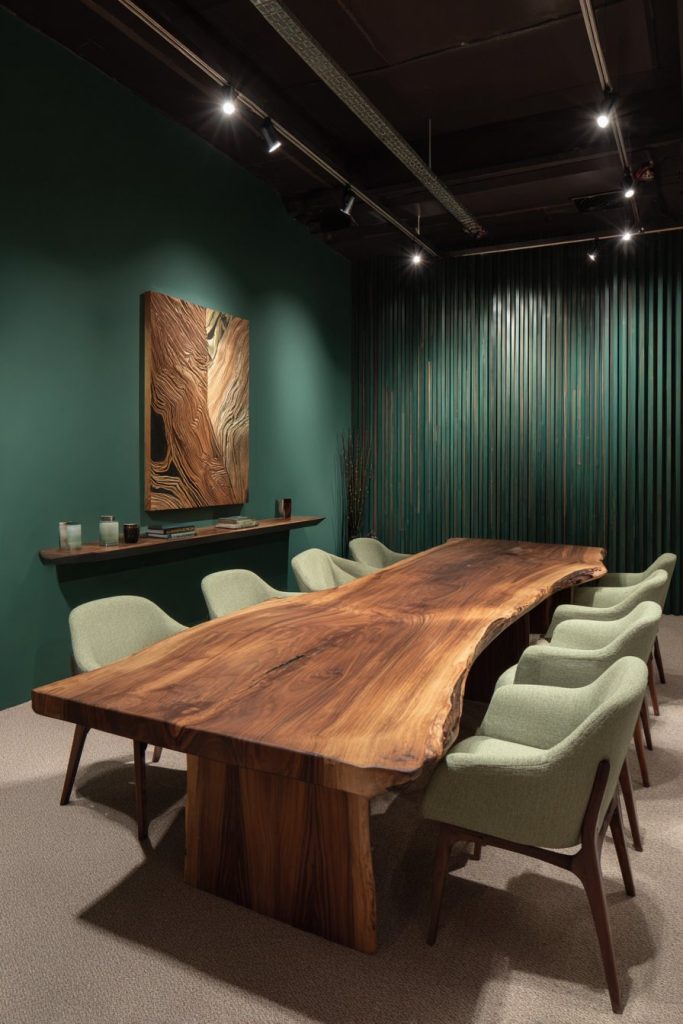
Live-edge walnut dining tables bring organic contrast to the geometric precision of vertical paneling. The natural, irregular edge of live-edge wood softens the contemporary aesthetic while maintaining the sophisticated material palette. Walnut’s rich grain patterns and warm chocolate tones create beautiful color harmony with dark green while adding natural texture that prevents the space from feeling too sleek or cold.
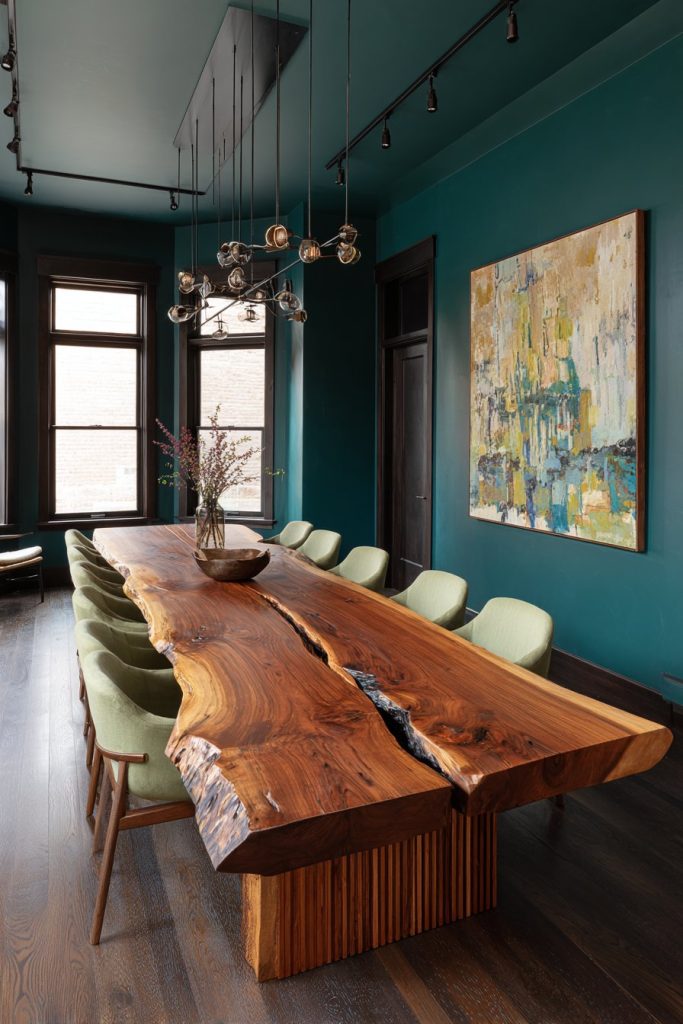
Track lighting systems provide flexibility in highlighting artwork and creating ambient lighting zones throughout the dining space. Adjustable spots allow you to emphasize different elements depending on the occasion, from intimate dinner lighting to bright illumination for family activities. This flexibility makes contemporary spaces more livable and adaptable to different uses and moods.
Key Design Tips:
- Use vertical elements to create the illusion of height in contemporary spaces
- Incorporate live-edge furniture to add organic contrast to geometric design elements
- Install flexible lighting systems that adapt to different activities and moods
- Balance dark colors with strategic lighting to prevent spaces from feeling too heavy
7. Scandinavian Eucalyptus Serenity
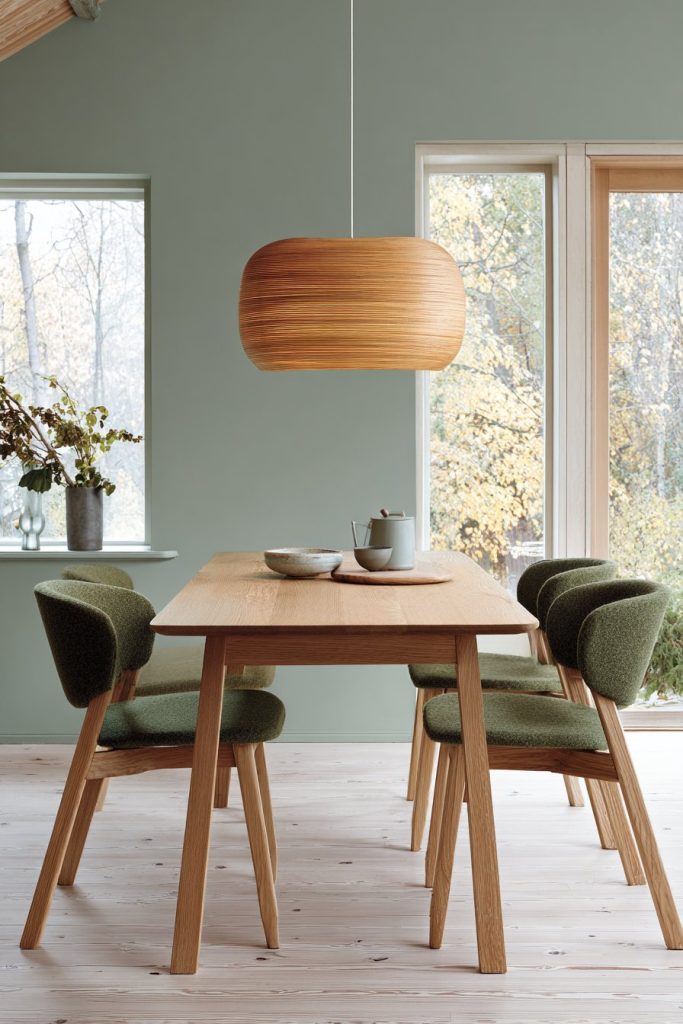
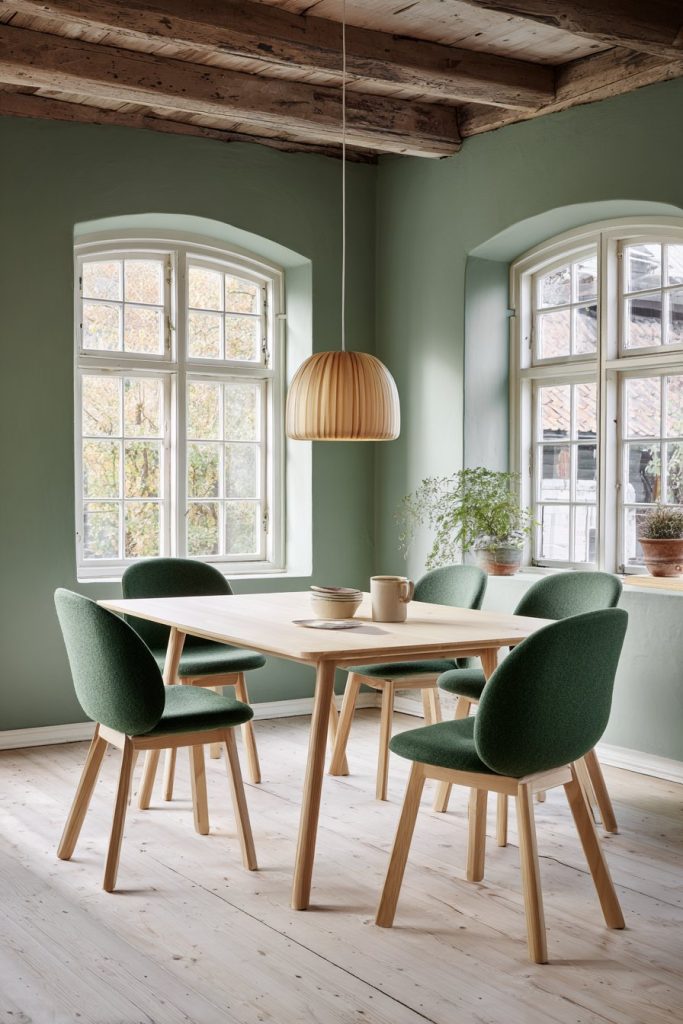
Soft eucalyptus green walls embody the Scandinavian principle of bringing nature indoors while maintaining the clean, minimalist aesthetic that defines Nordic design. This gentle green tone promotes tranquility and well-being while providing enough color interest to prevent the space from feeling stark or institutional. The subtle blue undertones in eucalyptus green create a calming atmosphere perfect for mindful dining experiences.
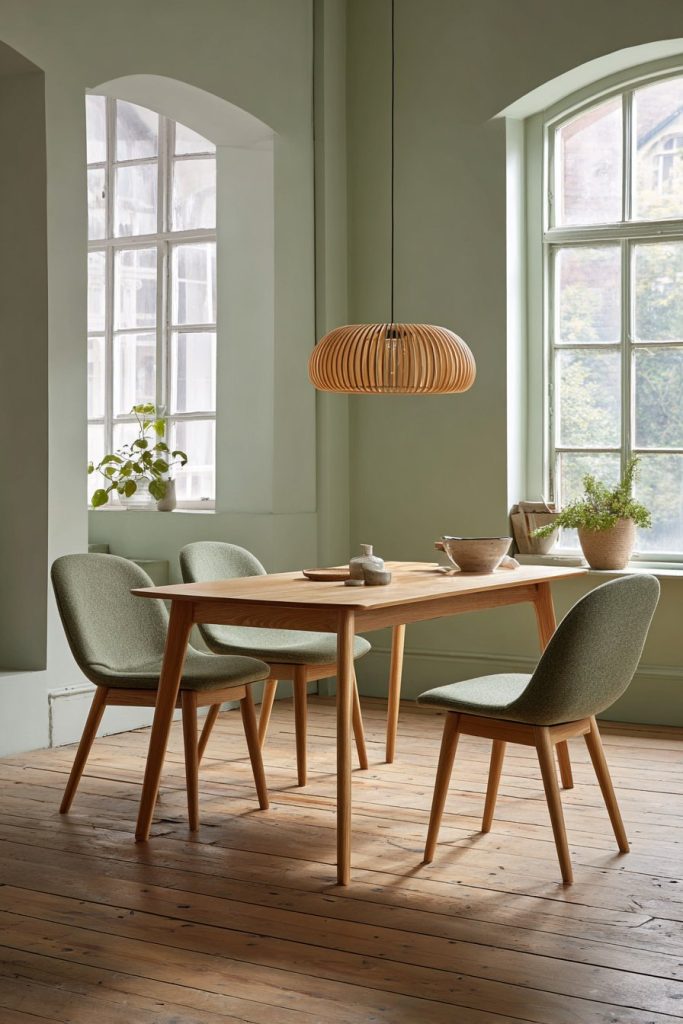
Light wood flooring and furniture maintain the bright, airy feeling essential to Scandinavian design while adding natural warmth and texture. White oak’s prominent grain patterns and honey-colored tones create visual interest without overwhelming the serene color palette. The consistency of light wood throughout the space creates cohesion while the natural variations in grain prevent monotony.
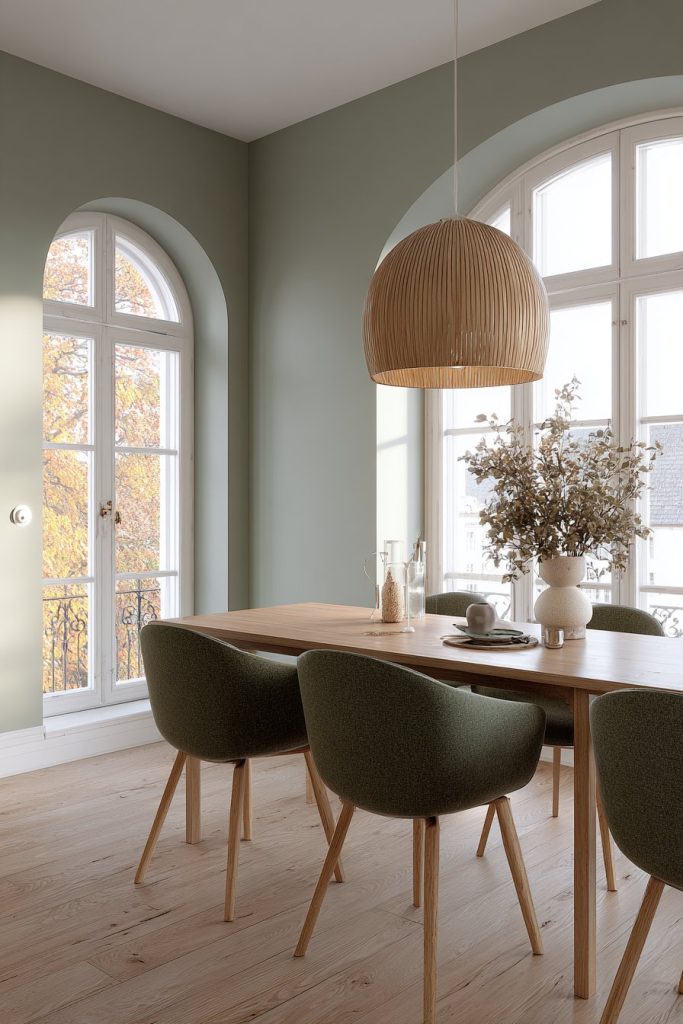
Forest green wool upholstery on dining chairs provides comfort and durability while introducing a deeper green tone that adds visual weight and sophistication. Wool’s natural texture and temperature regulation make it ideal for dining chair upholstery, while the darker green creates subtle contrast that defines seating areas without disrupting the room’s serene atmosphere.
Key Design Tips:
- Embrace natural light as a key design element in Scandinavian-inspired spaces
- Use light wood consistently throughout furniture and flooring for cohesion
- Choose natural fabrics like wool that contribute to the organic, comfortable atmosphere
- Maintain color restraint while allowing natural materials to provide visual interest
8. Traditional Sage Green Sophistication
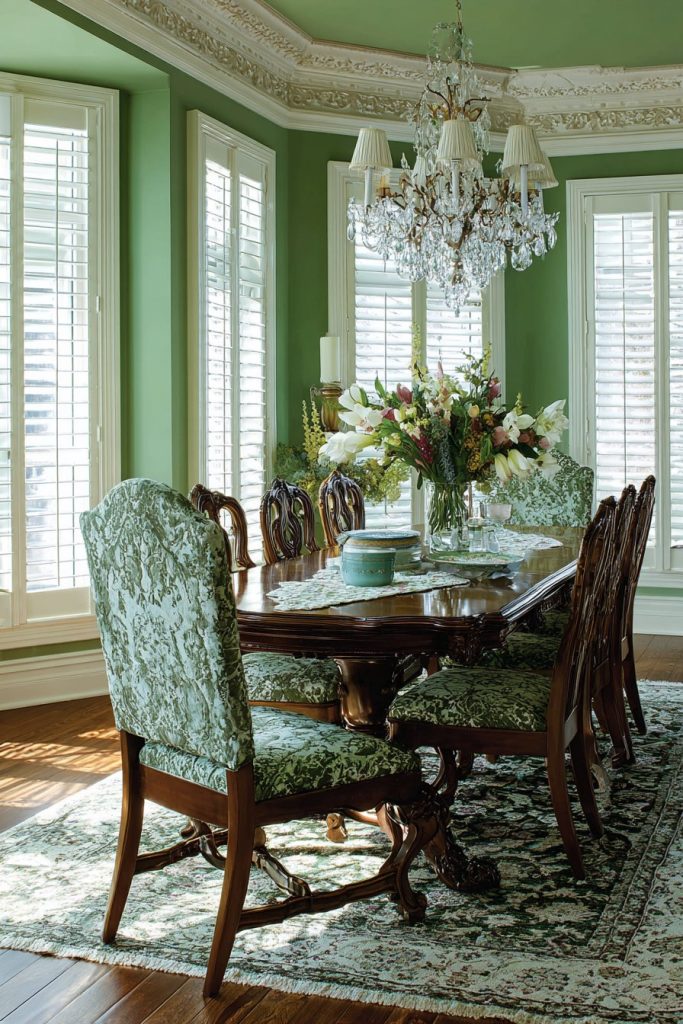
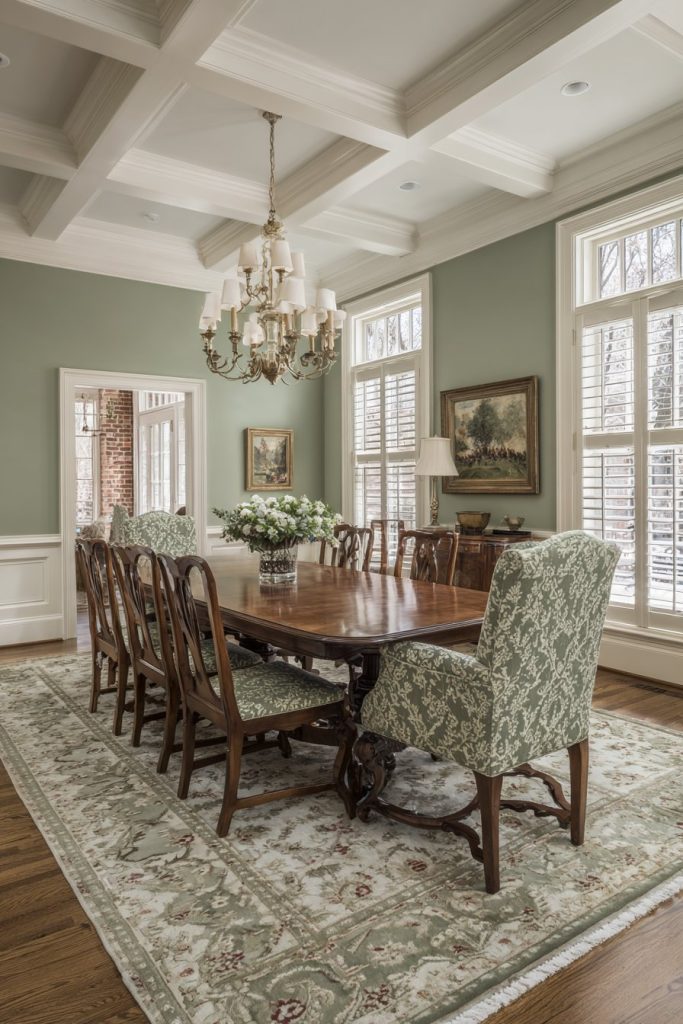
Sage green walls with decorative white molding create the perfect backdrop for traditional dining room elegance. This classic color combination has been used in fine homes for centuries because it creates sophistication without overwhelming the space or competing with furniture and artwork. The contrast between sage green and crisp white trim adds architectural definition that enhances the room’s proportions and character.
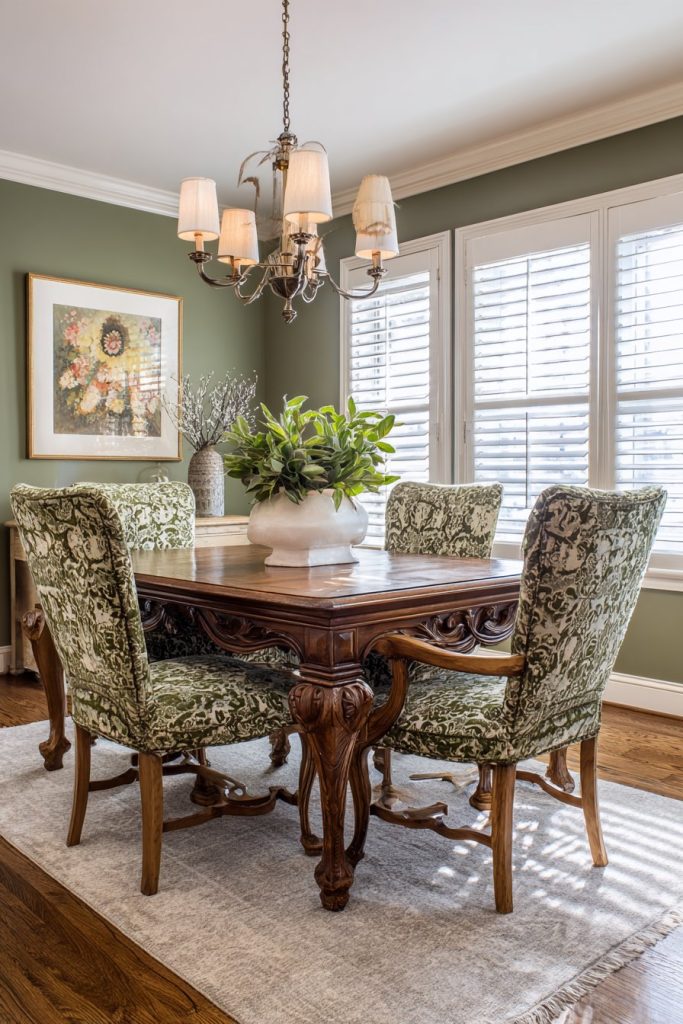
Antique mahogany dining tables with carved details serve as magnificent focal points that anchor traditional dining rooms with their substantial presence and rich history. The deep reddish-brown tones in aged mahogany create beautiful color harmony with sage green while the carved details add artistic interest that reflects the craftsmanship of earlier eras. These pieces often become family heirlooms that gain character and value over time.
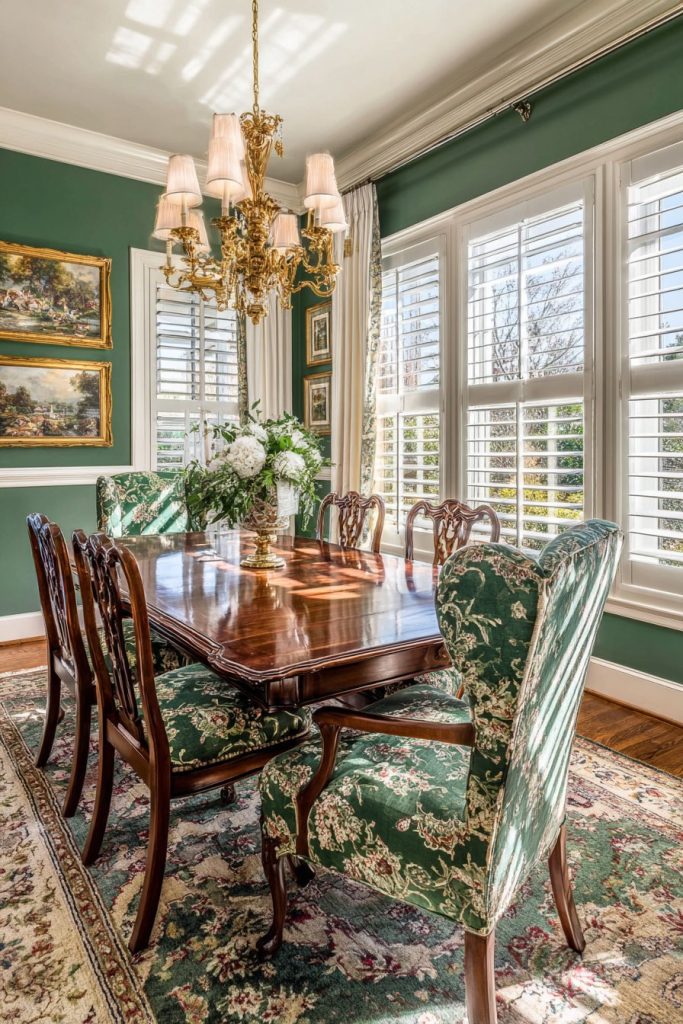
Queen Anne-style chairs with green damask upholstery represent the height of traditional dining room elegance. The curved lines and cabriole legs of Queen Anne furniture add grace and movement to the space while damask fabric patterns introduce subtle texture and visual interest. The repetition of green in both walls and upholstery creates color continuity while different shades and textures prevent monotony.
Key Design Tips:
- Invest in quality antique pieces that add authentic character and lasting value
- Use decorative molding to add architectural interest and define color boundaries
- Choose traditional fabric patterns like damask that complement period furniture styles
- Maintain consistent color temperatures in both paint and fabric choices
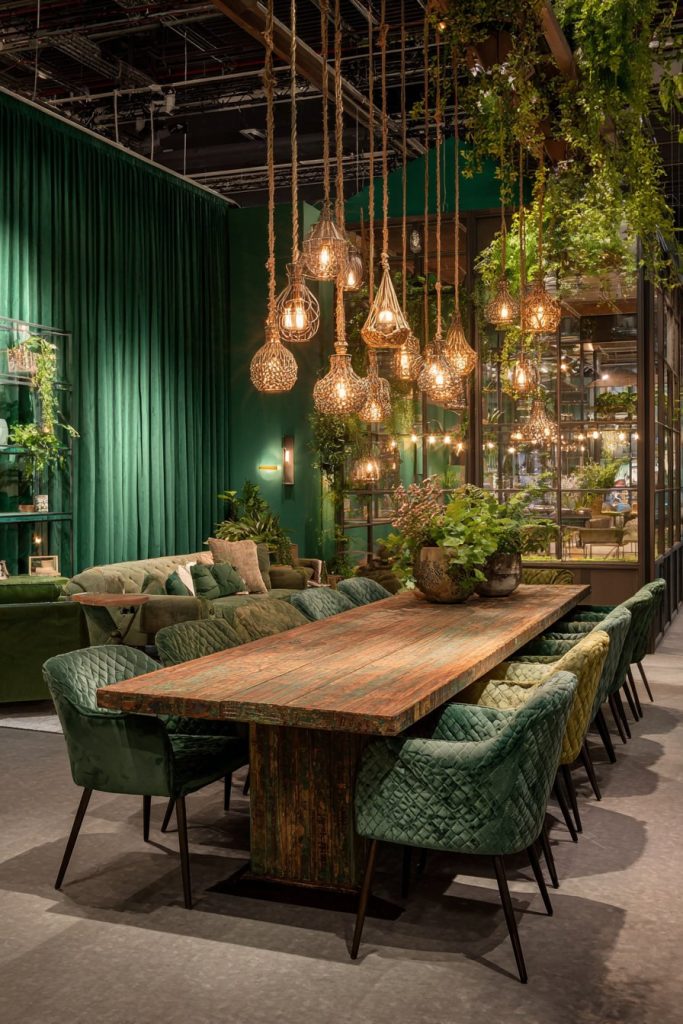
9. Bohemian Jade Green Eclecticism
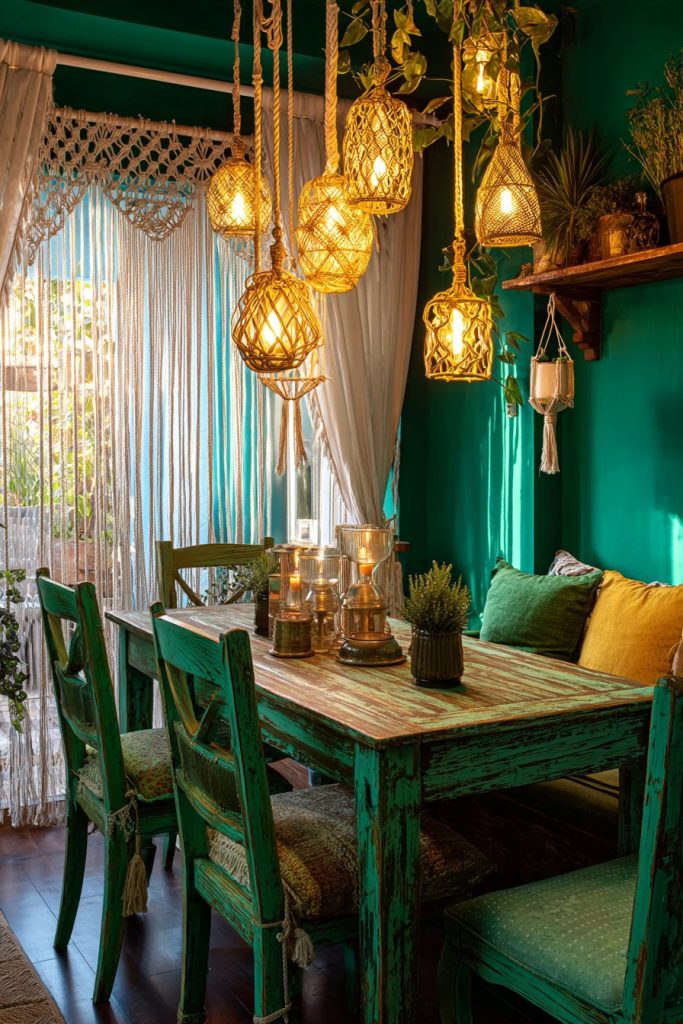
Deep jade green walls provide a rich backdrop for the collected, eclectic aesthetic that defines bohemian style. This saturated green tone creates drama and sophistication while serving as a unifying element that ties together diverse furniture pieces and decorative objects. Jade green’s slight blue undertones add depth and complexity that prevents the color from appearing flat or one-dimensional.
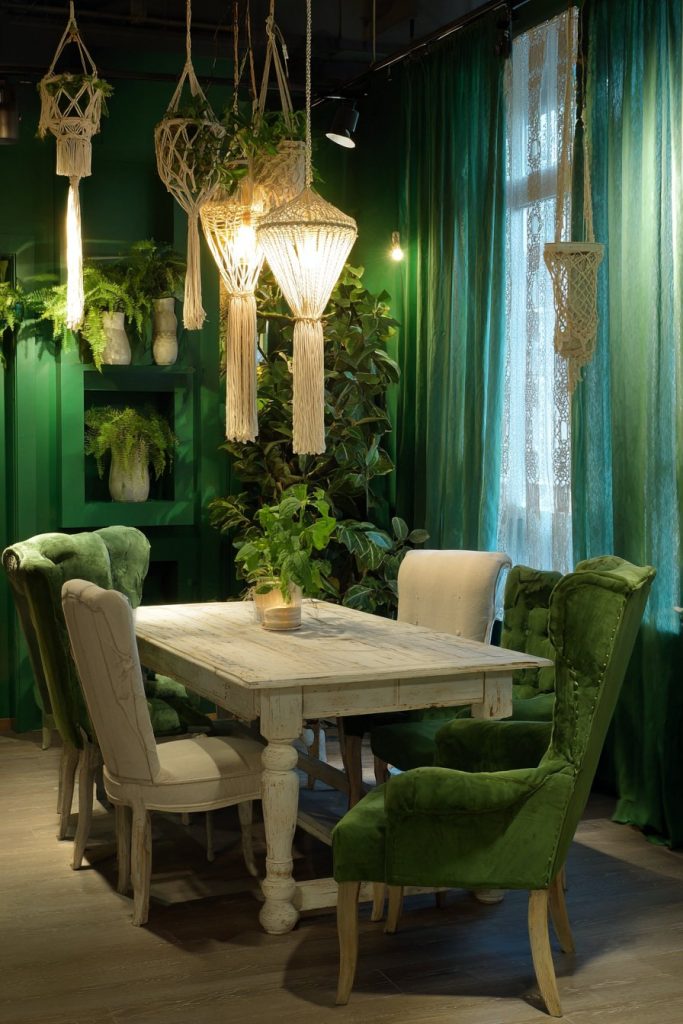
Vintage wooden dining tables with distressed finishes embody the bohemian appreciation for objects with history and character. The weathered surface tells stories of previous owners and uses while the distressed finish adds texture and visual interest that mass-produced furniture cannot replicate. These imperfections become design features that contribute to the authentic, lived-in feeling that bohemian style celebrates.
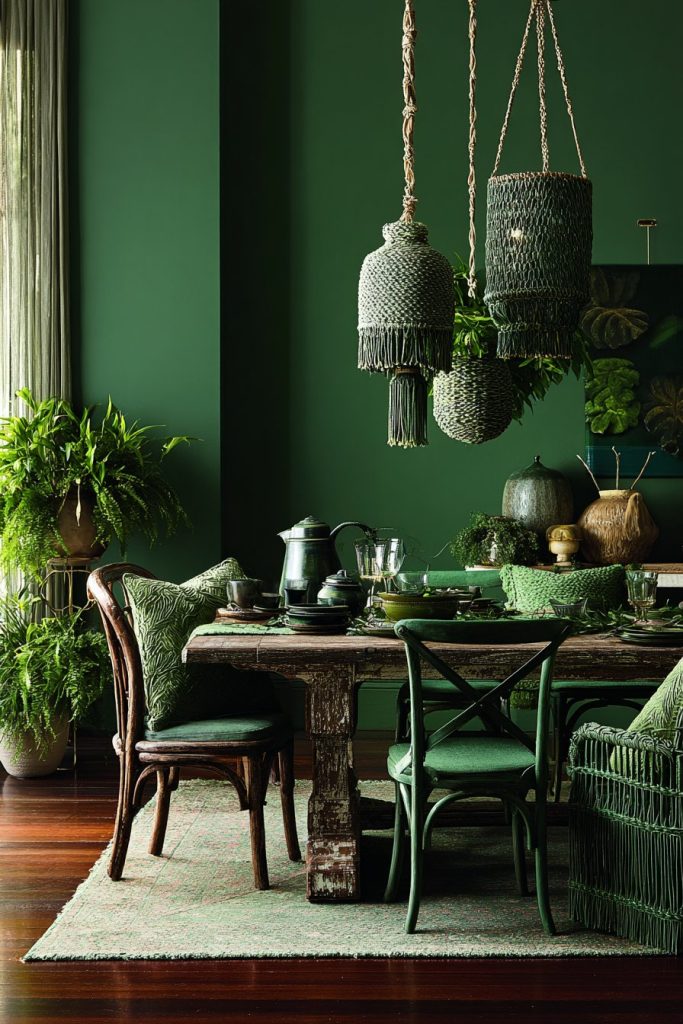
Mismatched dining chairs in various shades of green create the curated chaos that makes bohemian spaces so visually engaging. This approach requires a confident eye for color and proportion, but when successful, creates spaces that feel personal and unique. The variety of green tones adds depth to the color scheme while the different chair styles reflect the bohemian appreciation for individuality over conformity.
Key Design Tips:
- Embrace imperfection as a design feature rather than a flaw to be hidden
- Collect pieces over time rather than purchasing complete matching sets
- Layer textures and patterns to create the rich, collected feeling of bohemian style
- Use color variations within the same hue family to create depth and interest
10. Industrial Olive Green Edge
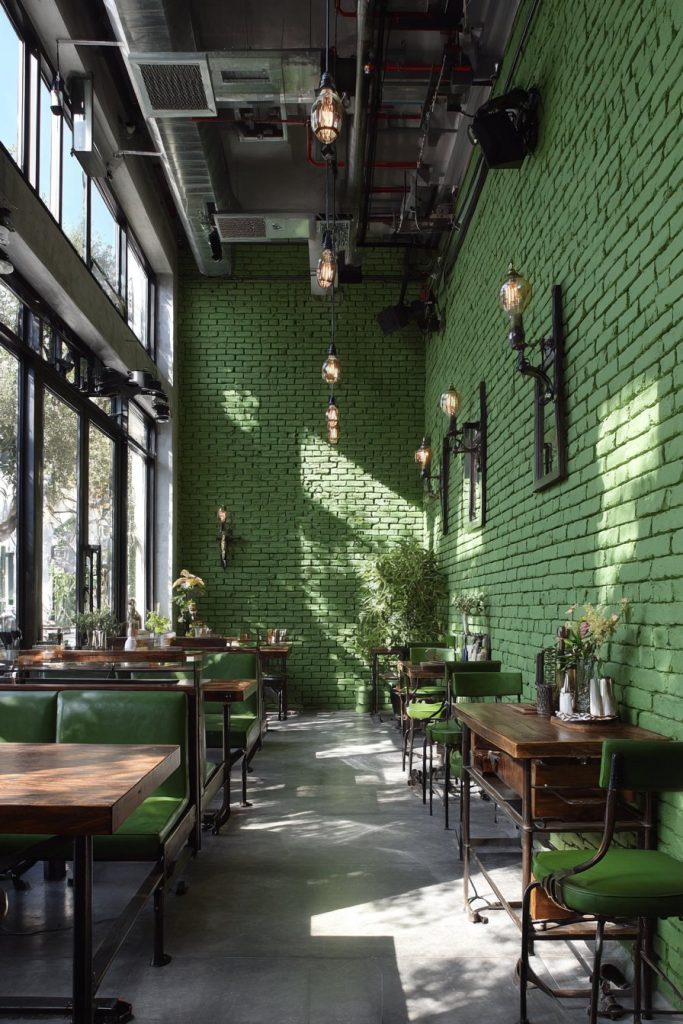
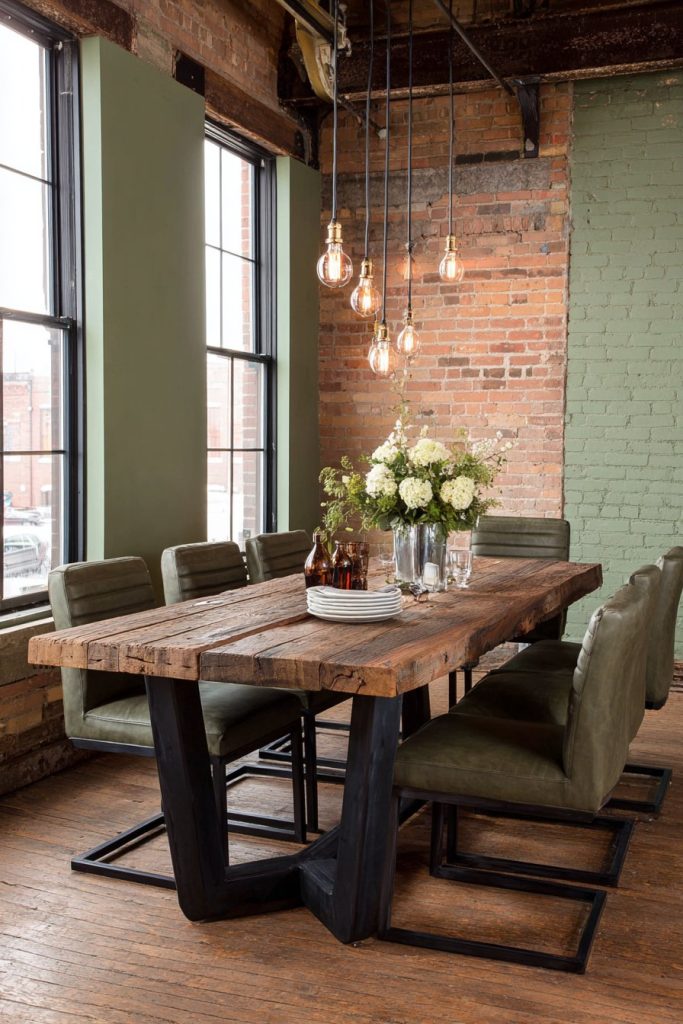
Exposed brick walls painted in matte olive green create the perfect fusion of industrial authenticity and contemporary color sophistication. This approach preserves the textural interest of brick while updating the color palette for modern living. Olive green’s earthy undertones complement the industrial aesthetic while adding warmth that prevents the space from feeling cold or institutional.
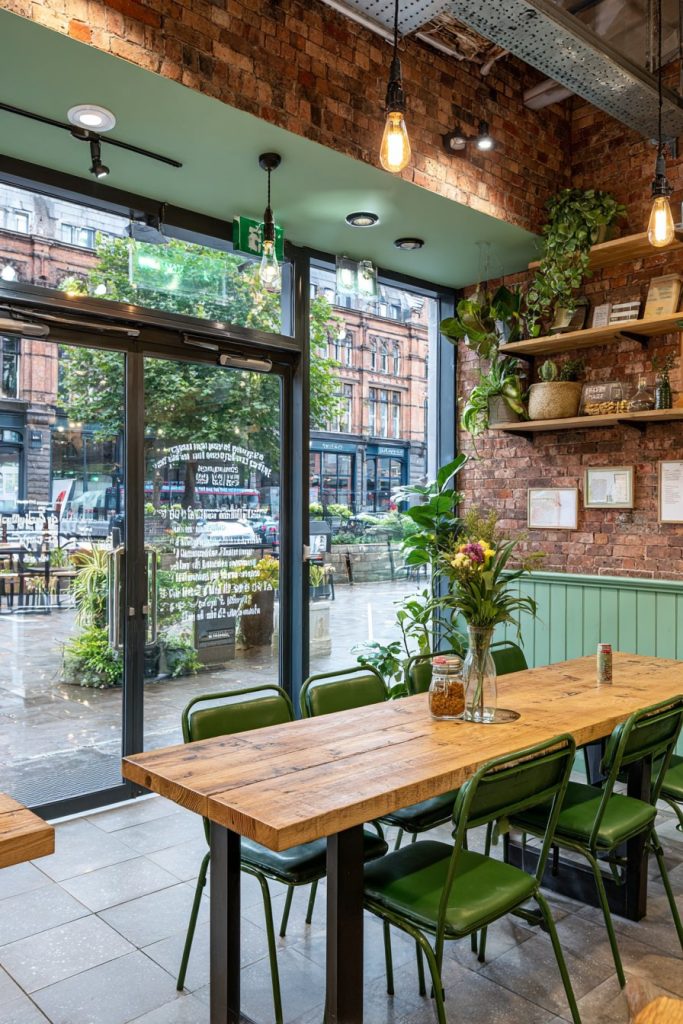
Raw steel dining table bases paired with reclaimed wood tops represent the marriage of industrial materials with natural elements that defines contemporary industrial style. The contrast between smooth steel and weathered wood creates visual tension that keeps the eye engaged while the combination of materials adds both durability and character. This approach to furniture design celebrates honest materials and functional beauty.
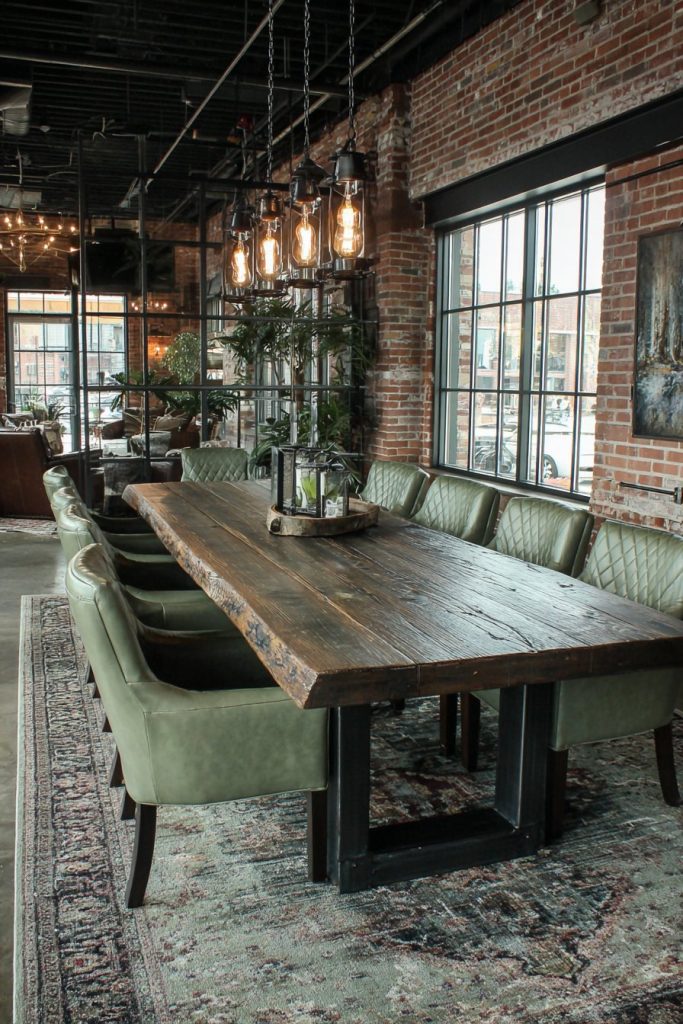
Metal dining chairs with green leather seats provide comfortable seating that maintains the industrial aesthetic while introducing color and softness. The patina that develops on metal over time adds character while leather upholstery improves with age and use. This combination of materials creates furniture that becomes more beautiful and comfortable over time rather than showing wear as deterioration.
Key Design Tips:
- Preserve original architectural elements like exposed brick whenever possible
- Combine industrial materials with natural elements to add warmth and comfort
- Choose materials that age well and develop character over time
- Use matte paint finishes to complement the raw, unfinished quality of industrial design
11. Coastal Seafoam Freshness
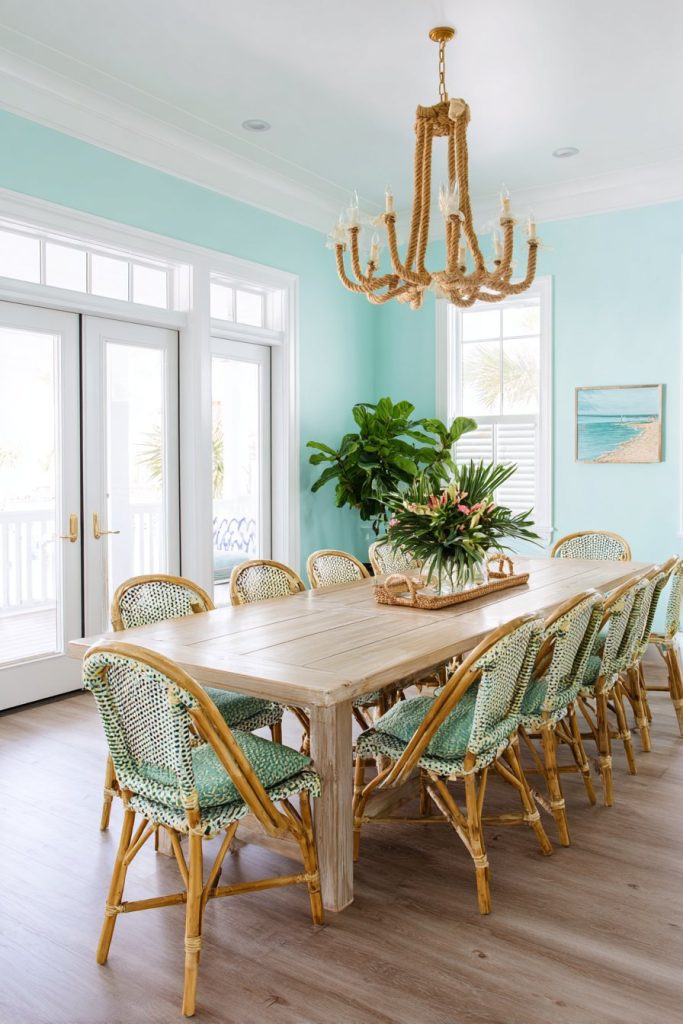
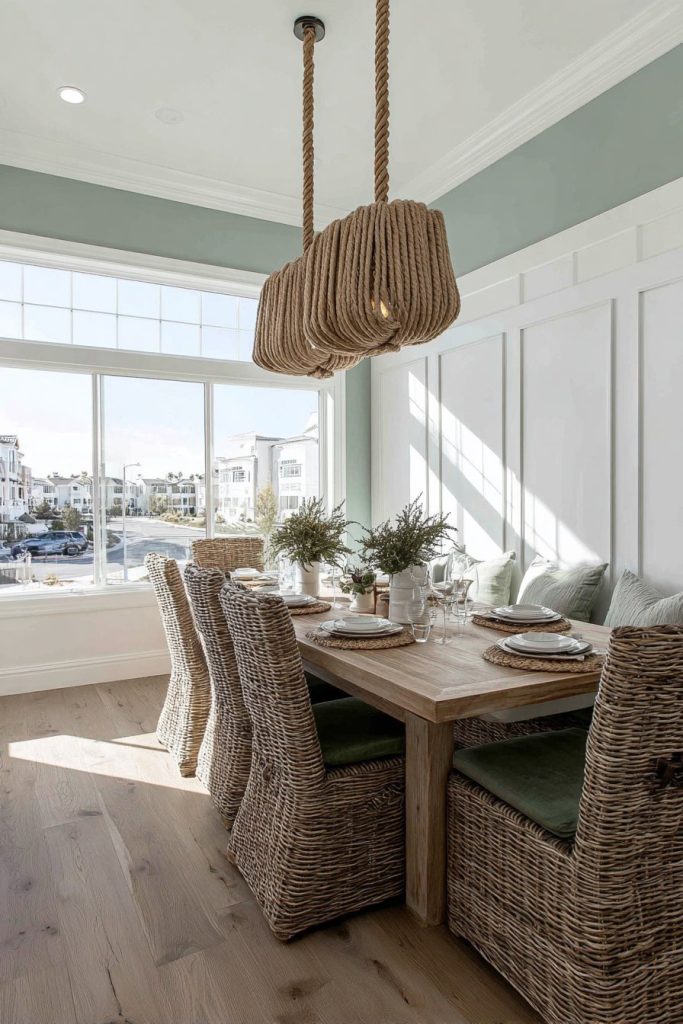
Seafoam green walls with white beadboard wainscoting capture the essence of coastal living while creating a fresh, relaxed dining atmosphere. This combination evokes ocean waves and sea glass while maintaining the clean, casual elegance that defines coastal style. The horizontal lines of beadboard add architectural interest while the white color brightens the space and creates visual contrast.
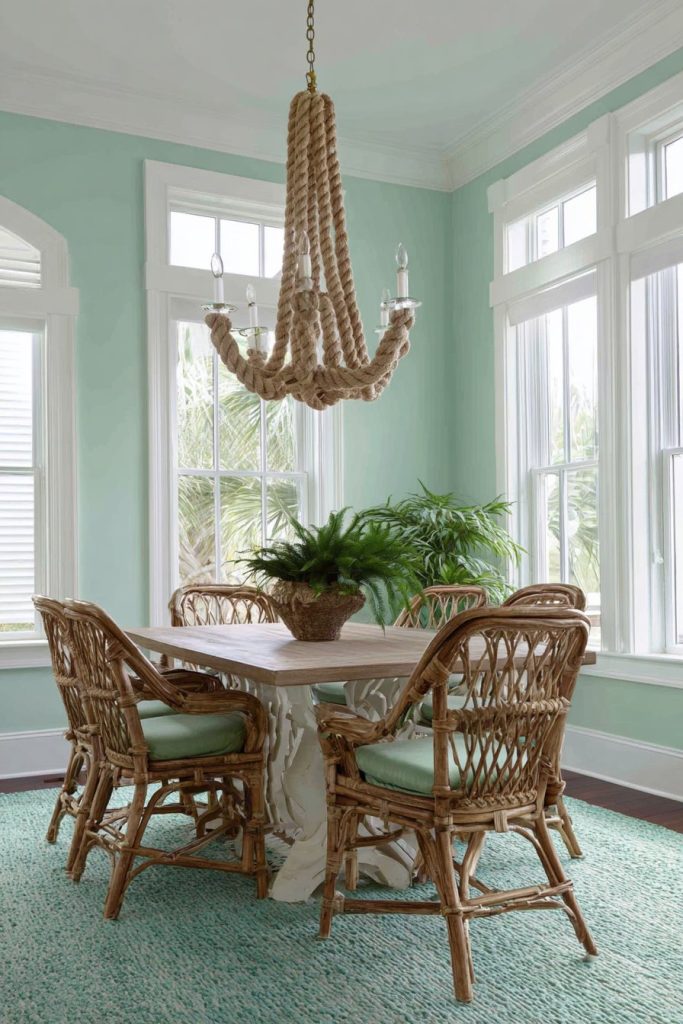
Weathered teak dining tables bring authentic coastal character with their natural resistance to moisture and beautiful aging process. Teak’s natural oils protect it from water damage while creating a silvery patina over time that enhances its coastal appeal. The warm honey tones in new teak gradually fade to sophisticated gray that complements seafoam green beautifully.
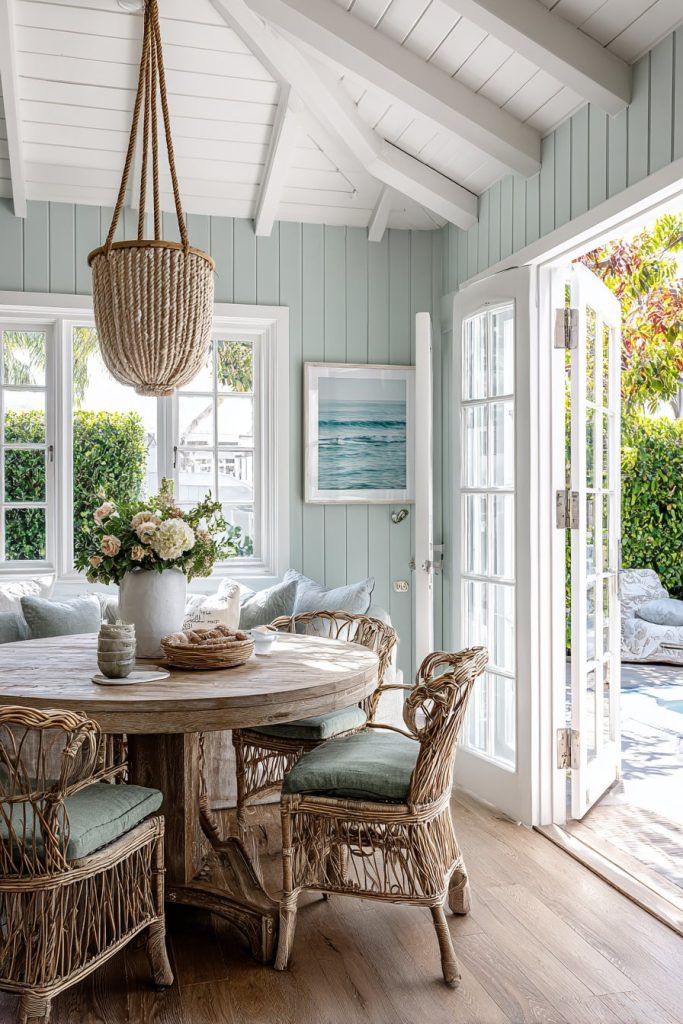
Rattan dining chairs with green cushions provide comfortable seating that reinforces the coastal theme while adding natural texture and casual comfort. Rattan’s organic curves and woven texture create visual interest while remaining lightweight and practical for everyday use. The green cushions tie the seating to the wall color while providing comfort and seasonal flexibility.
Key Design Tips:
- Use natural materials that withstand coastal moisture and develop attractive patina
- Incorporate white accents to brighten spaces and create fresh, clean contrast
- Choose furniture with organic curves that echo natural coastal forms
- Layer natural textures like rattan and weathered wood to enhance coastal authenticity
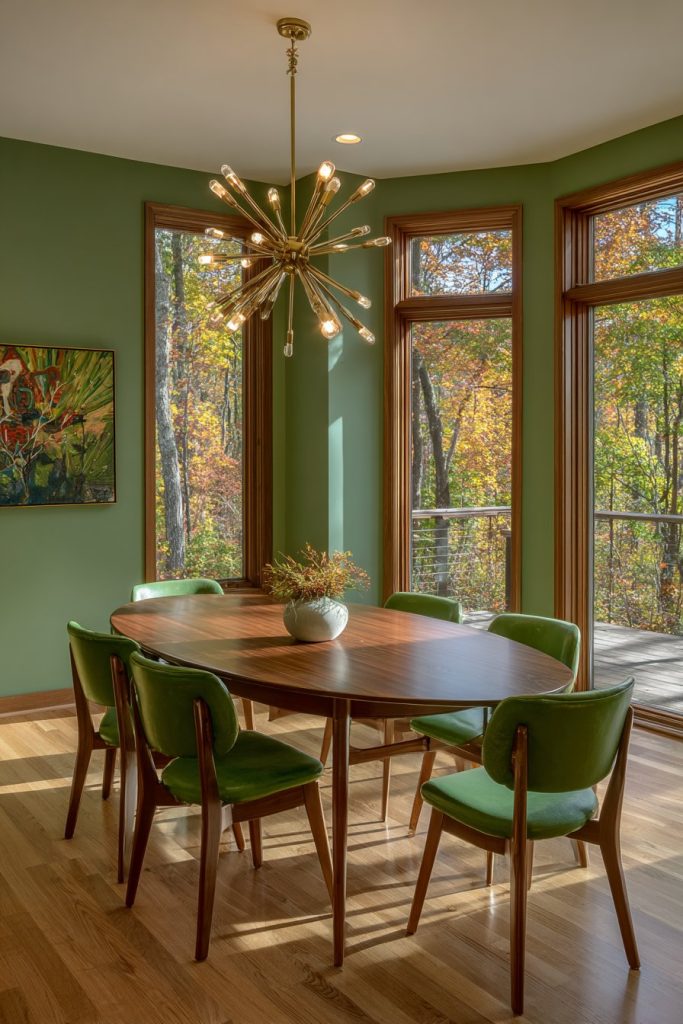
12. Mid-Century Chartreuse Innovation
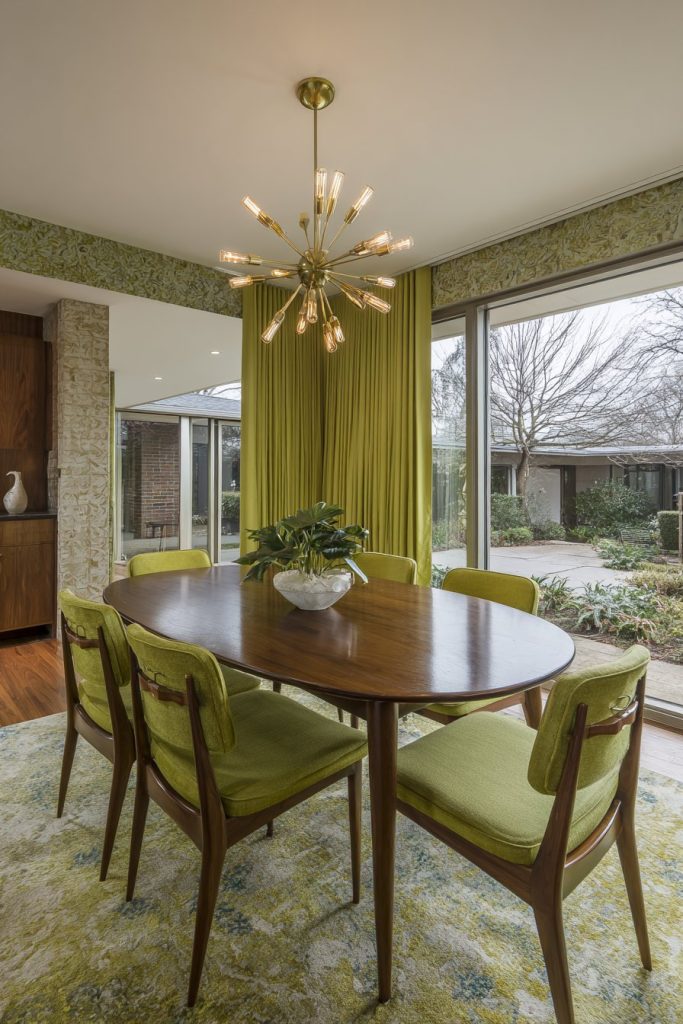
Muted chartreuse green walls create the perfect backdrop for authentic mid-century modern furniture while maintaining the era’s commitment to bold color choices. This yellow-green tone captures the optimism and innovation of the 1950s and 60s while remaining sophisticated enough for contemporary living. Chartreuse’s unique position between yellow and green makes it particularly effective at enhancing the rich tones in walnut furniture.
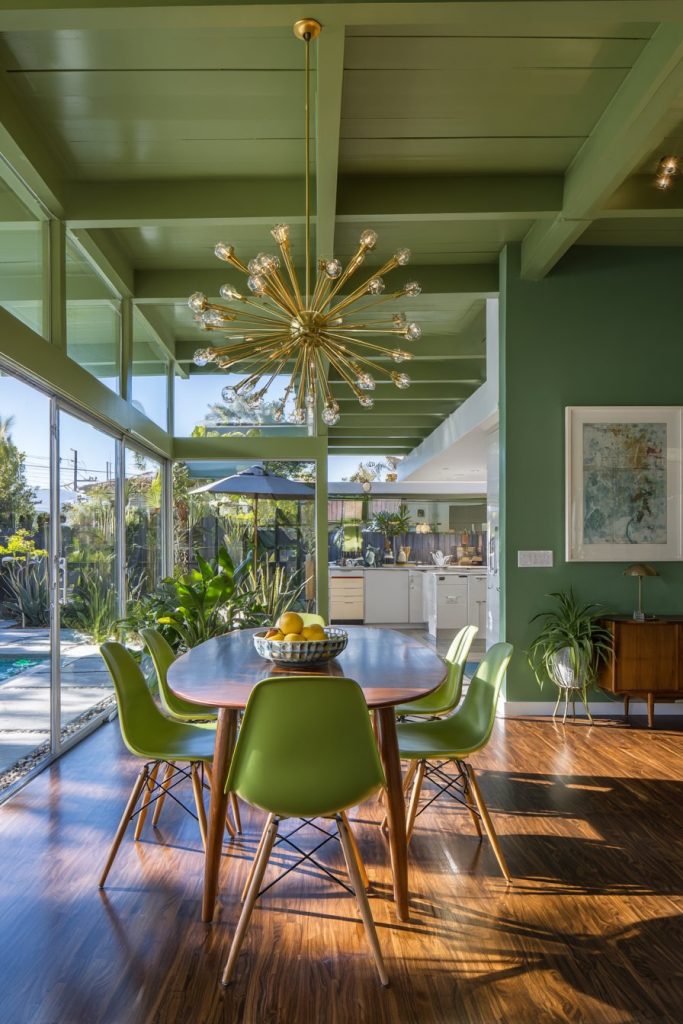
Walnut furniture pieces with clean lines and tapered legs represent the pinnacle of mid-century design philosophy that prioritized function, honest materials, and geometric beauty. The rich chocolate tones and prominent grain patterns in walnut create stunning contrast against chartreuse walls while the simple, elegant forms maintain the period’s commitment to uncluttered design.
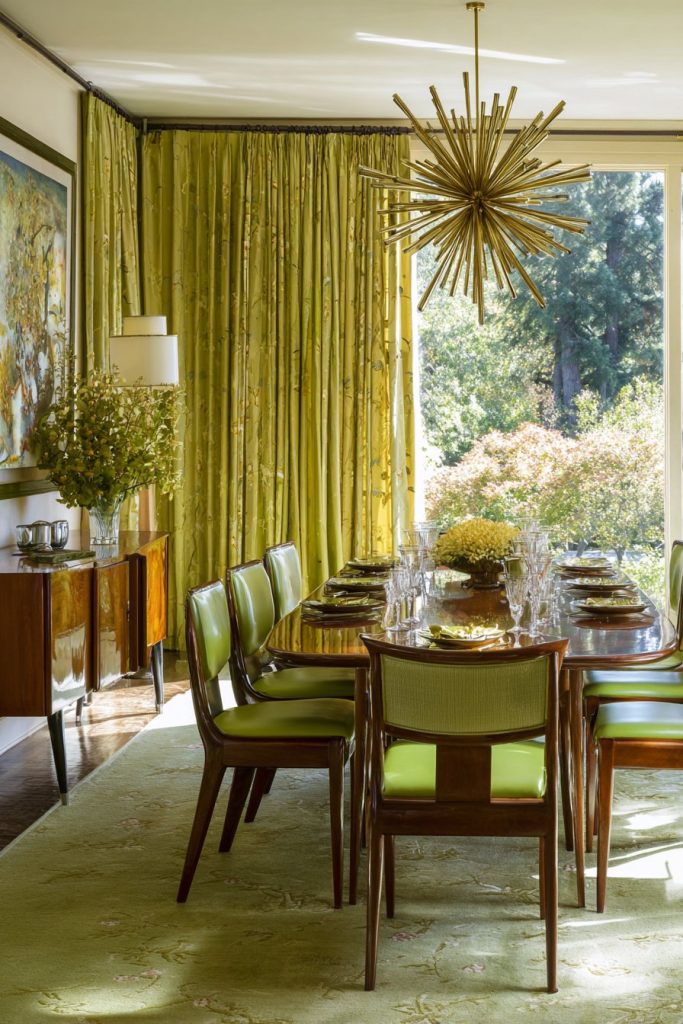
Upholstered dining chairs featuring green vinyl seats and wooden frames perfectly capture mid-century modern materials and construction techniques. Vinyl’s durability and easy maintenance made it ideal for modern living while its smooth surface provided striking contrast to natural wood grains. The combination of organic wood frames with synthetic upholstery materials reflects the era’s enthusiasm for new technologies and materials.
Key Design Tips:
- Embrace bold color choices that reflect mid-century optimism and innovation
- Choose furniture with clean lines and minimal ornamentation
- Combine natural and synthetic materials to capture the era’s material experimentation
- Use geometric forms in furniture and lighting to maintain period authenticity
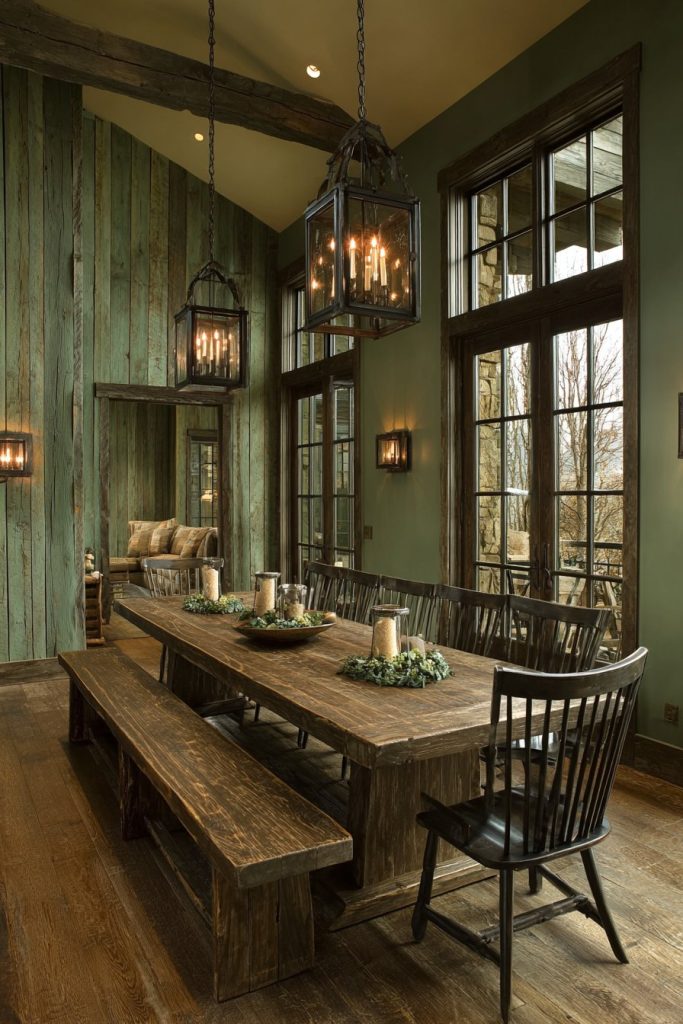
13. Rustic Sage Green Authenticity
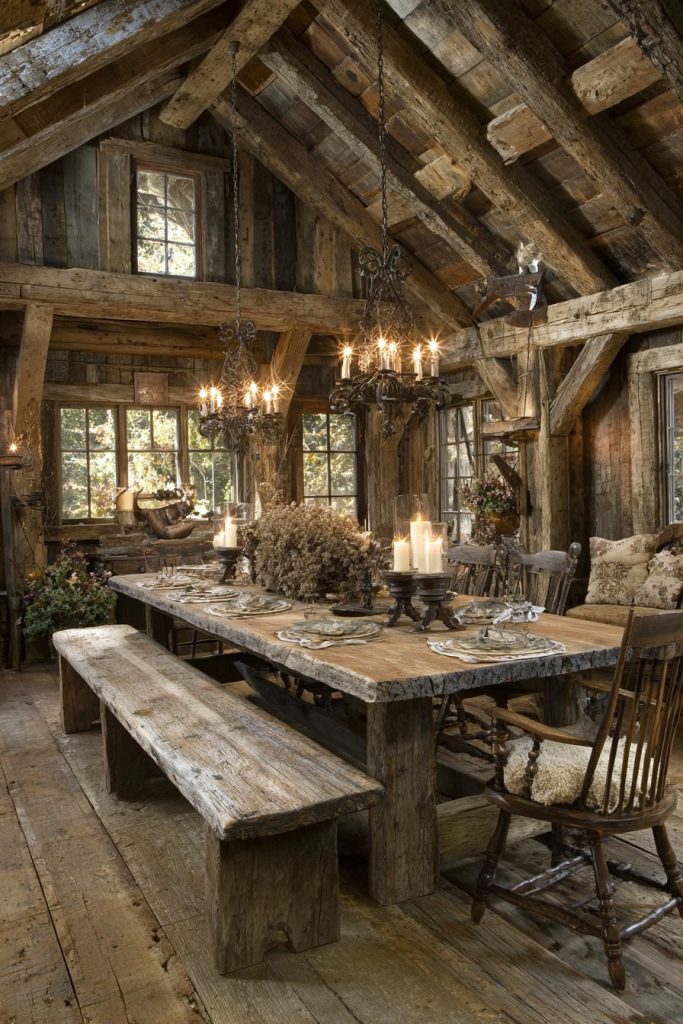
Reclaimed barn wood walls stained in sage green preserve the natural grain patterns while updating the color for contemporary living. This approach maintains the authentic texture and character of weathered wood while creating a cohesive color story that feels both rustic and refined. The visible grain patterns add visual interest and texture that prevents solid-colored walls from appearing flat or artificial.
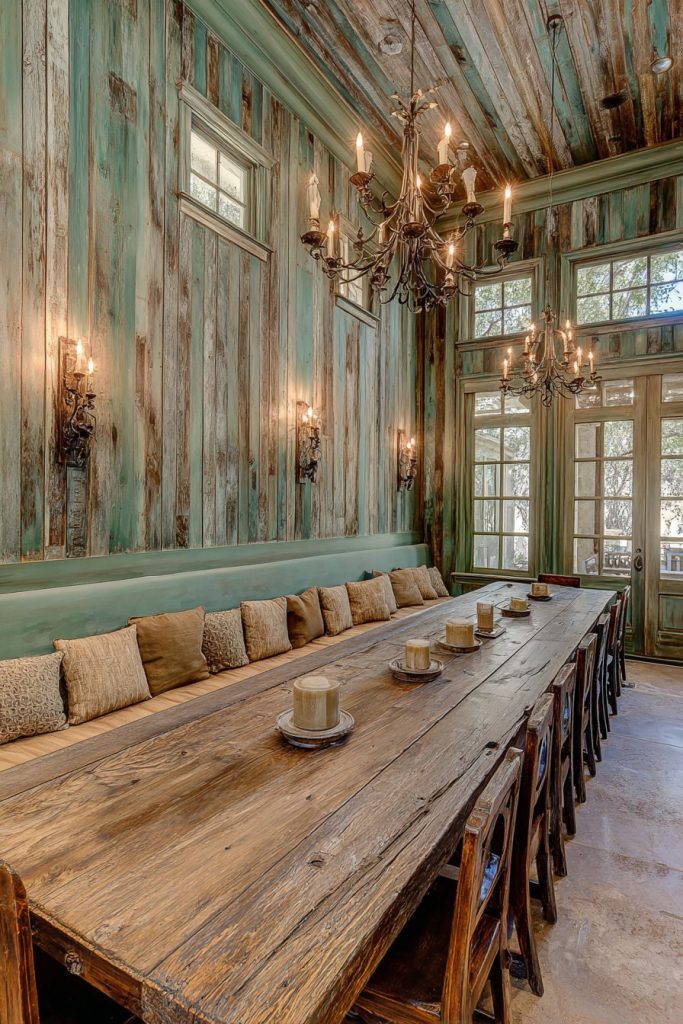
Massive farmhouse dining tables in distressed oak provide the substantial presence that rustic spaces require while accommodating large gatherings comfortably. The weathered surface and substantial construction reflect the practical origins of farmhouse furniture while the generous proportions create opportunities for family-style dining and entertaining. These pieces often become the heart of the home where meals, conversations, and activities naturally gather.
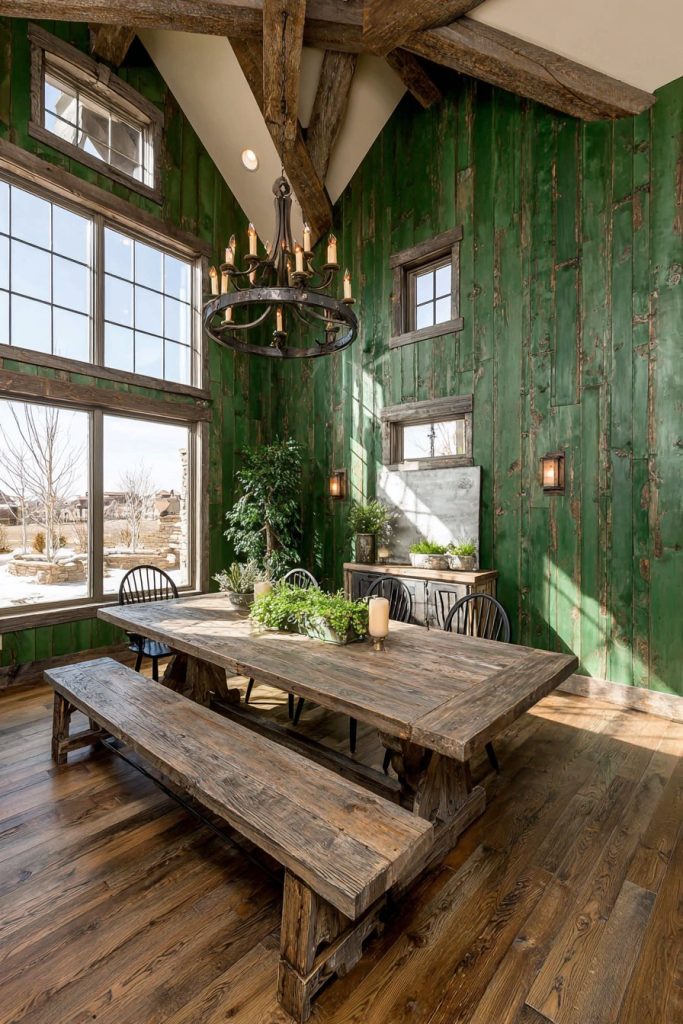
Wrought iron chandeliers with candle-style bulbs provide ambient lighting that enhances the rustic atmosphere while maintaining practical illumination levels. The handcrafted quality of wrought iron work adds artisanal character while candle-style bulbs create warm, flickering light that mimics historical lighting methods. This combination creates atmosphere that makes every meal feel special and memorable.
Key Design Tips:
- Preserve natural wood grain even when applying color stains or treatments
- Choose substantial furniture that reflects the practical origins of rustic style
- Use handcrafted lighting fixtures to add artisanal character and warm illumination
- Embrace weathered finishes that show the beauty of age and use
14. Luxurious Emerald Velvet Opulence
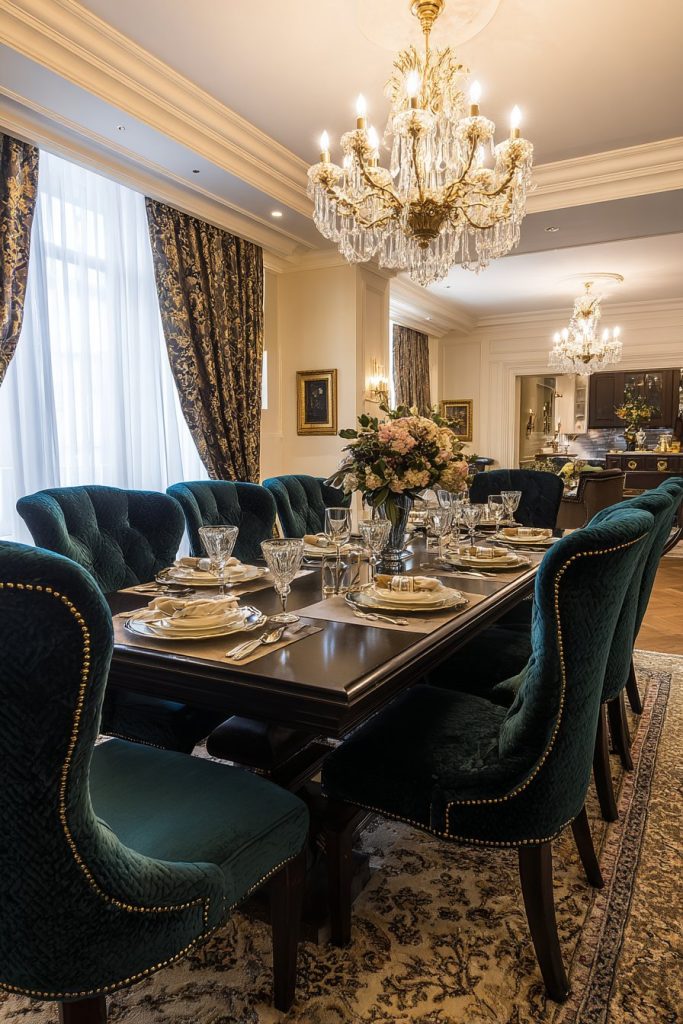
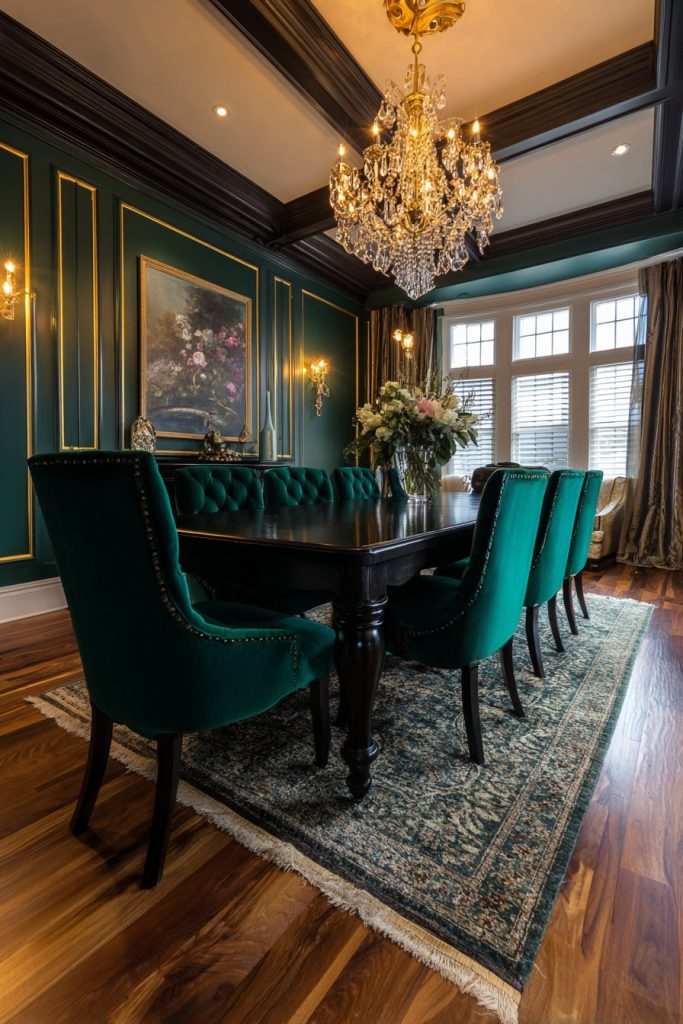
Rich emerald green velvet wall panels with gold trim details create the ultimate expression of dining room luxury and sophistication. This approach to wall treatment transforms ordinary drywall into custom upholstery that adds both visual drama and acoustic softness. The tactile quality of velvet invites touch while the deep emerald color creates richness that changes throughout the day as lighting conditions shift.
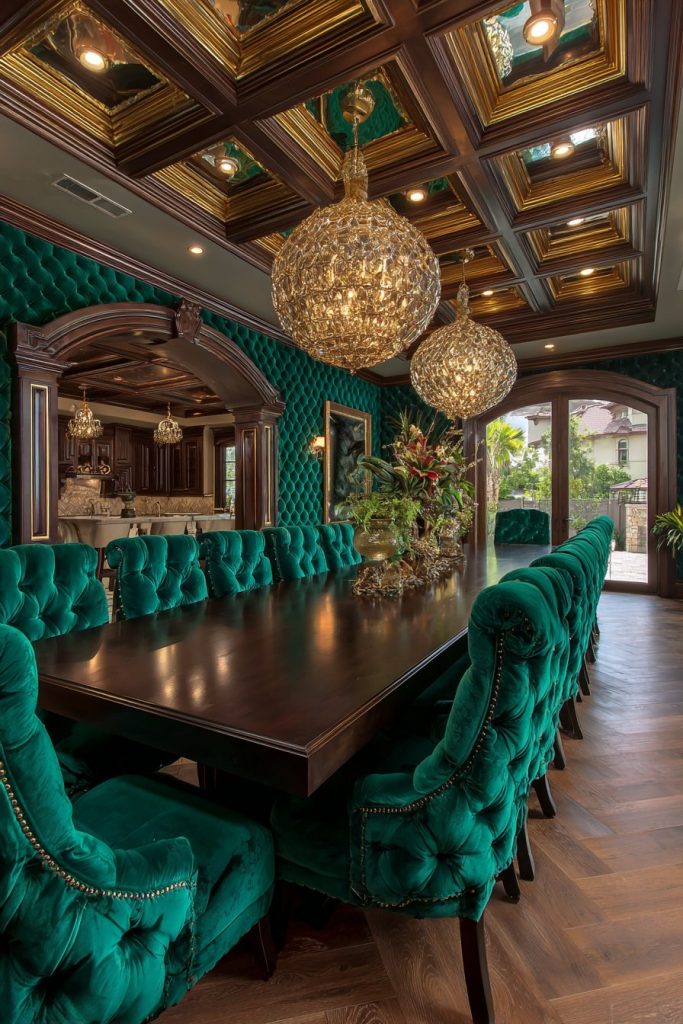
Polished ebony dining tables provide the perfect contrast to emerald green while maintaining the luxurious material palette. Ebony’s deep black color and mirror-like finish create sophisticated drama while reflecting light and color from surrounding surfaces. The substantial weight and premium cost of ebony furniture makes it a true investment piece that adds lasting value and prestige to formal dining rooms.
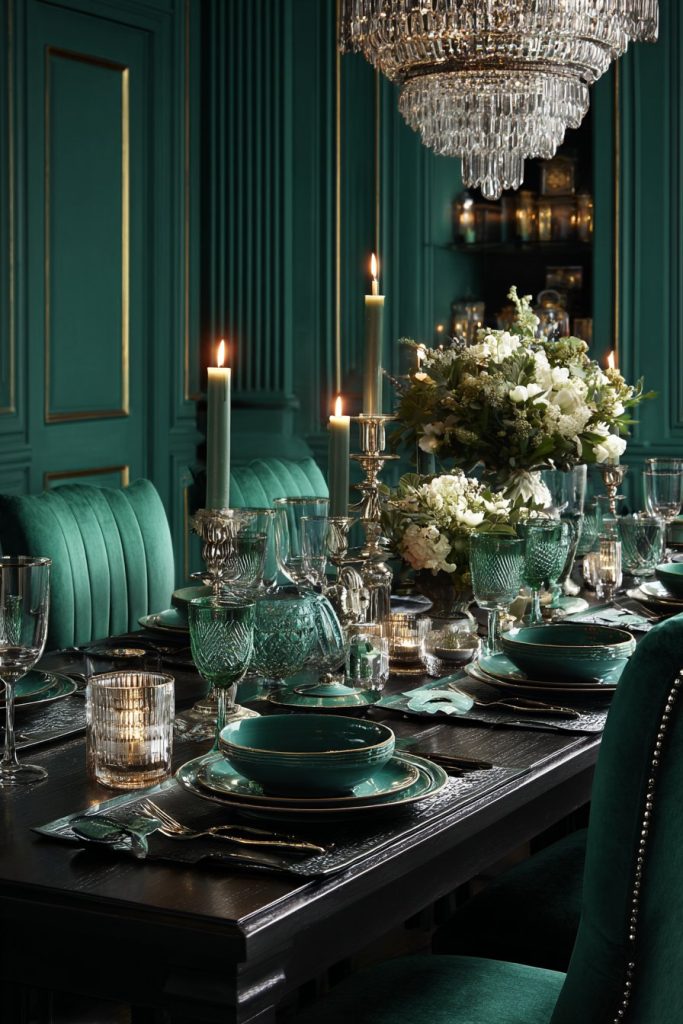
High-back dining chairs upholstered in matching emerald velvet with nailhead trim create a cohesive seating arrangement that feels like custom-designed luxury furniture. The repetition of velvet in both walls and seating creates textural continuity while nailhead trim adds metallic accents that catch and reflect light. High backs provide comfort and create a sense of enclosure that enhances intimate dining experiences.
Key Design Tips:
- Invest in premium materials like velvet and ebony that justify the luxury aesthetic
- Use consistent textures throughout the room to create cohesive sophistication
- Add metallic accents through trim and hardware to enhance light reflection
- Consider acoustic benefits of soft furnishings in formal dining spaces
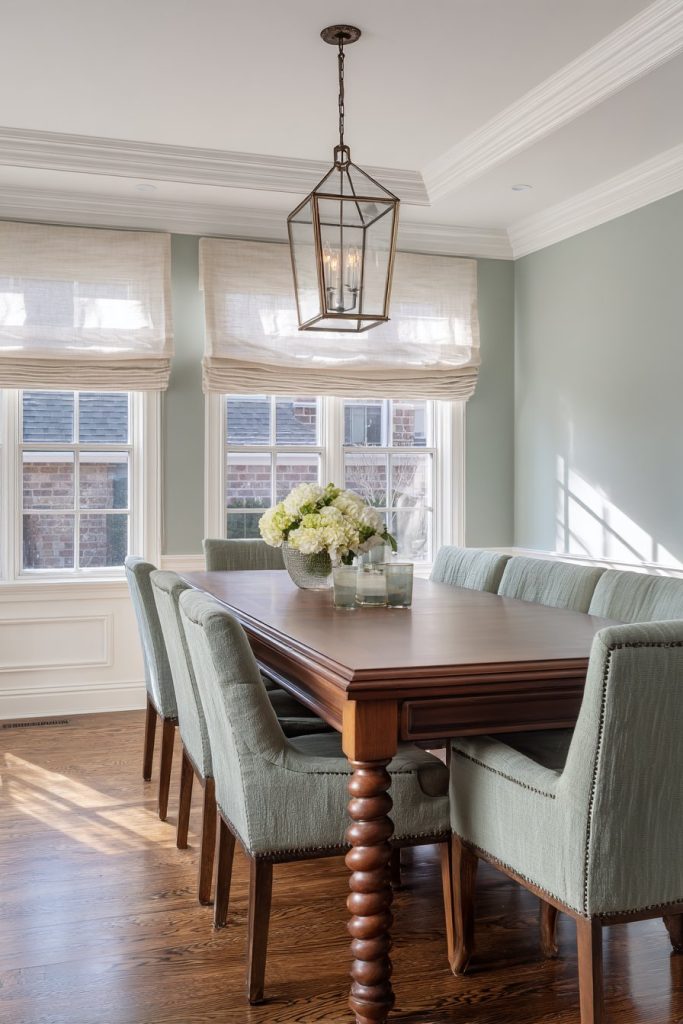
15. Transitional Sage Balance
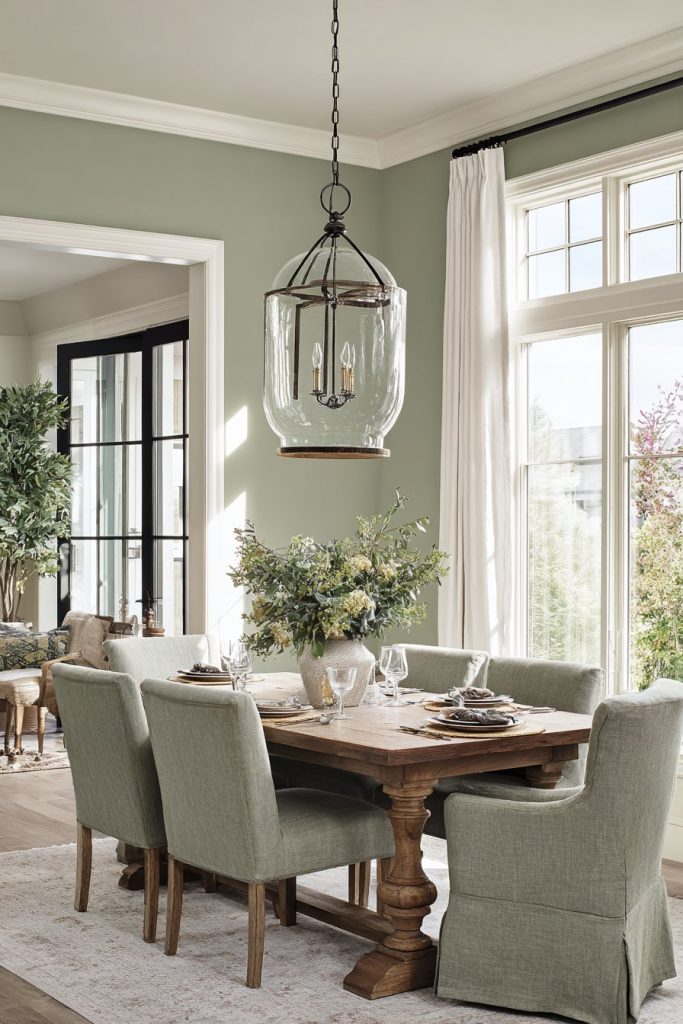
Soft sage green walls with white chair rail molding create the perfect foundation for transitional style that blends traditional and contemporary elements seamlessly. This approach allows homeowners to incorporate both antique and modern pieces while maintaining visual coherence through consistent color choices. Chair rail molding adds architectural definition while creating opportunities for two-tone color schemes that add visual interest.
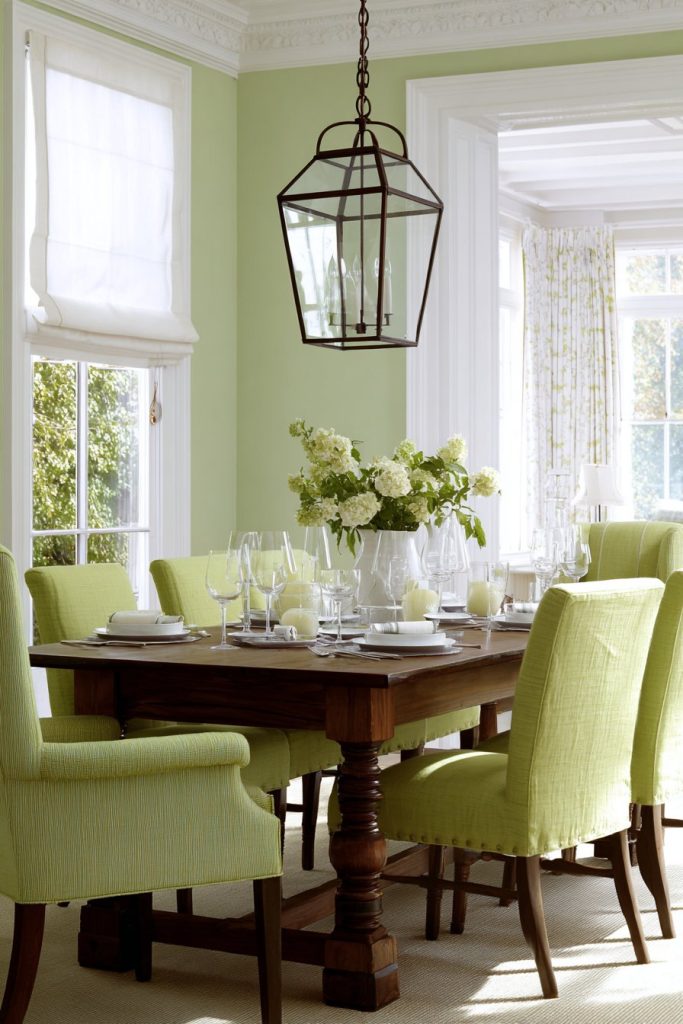
Cherry wood dining tables with traditional turned legs provide warmth and formality while remaining compatible with both traditional and contemporary accessories. Cherry’s reddish undertones create beautiful color harmony with sage green while the wood’s ability to darken and develop patina over time ensures that the furniture will continue to improve with age. Traditional construction details add authenticity while clean lines maintain contemporary appeal.
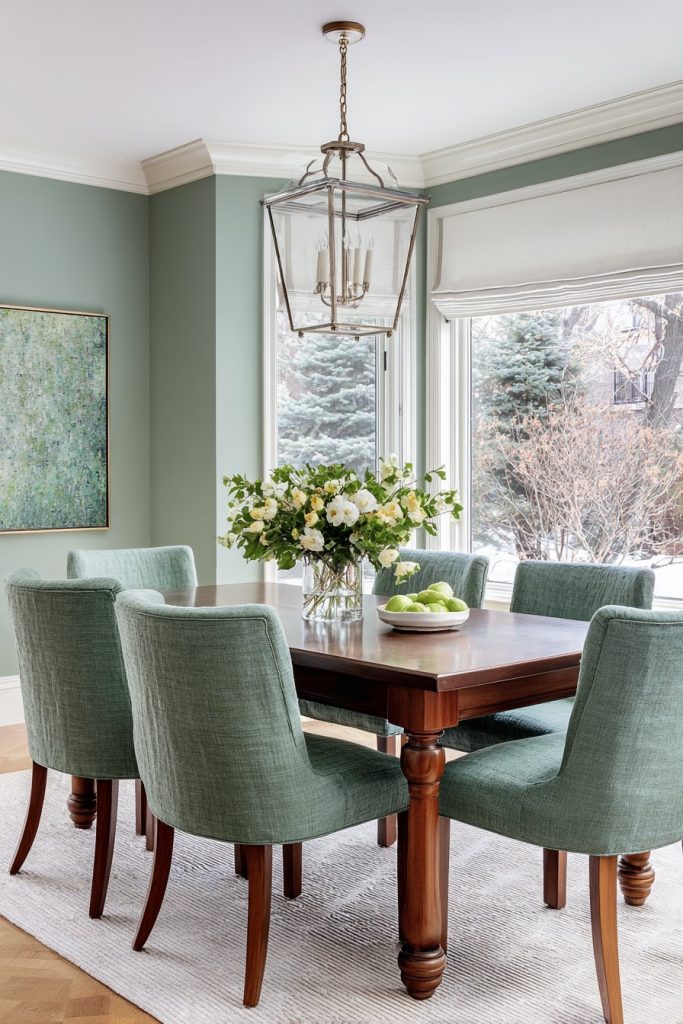
Upholstered dining chairs in green linen fabric provide comfort and casual elegance that works equally well with formal and relaxed dining scenarios. Linen’s natural texture and relaxed drape add organic softness while the green color maintains color continuity throughout the space. Natural fiber upholstery also provides durability and easy maintenance that makes it practical for everyday use.
Key Design Tips:
- Use architectural details like chair rail molding to create visual interest and definition
- Choose furniture with classic proportions that work with multiple decorating styles
- Select natural fabrics that add texture while maintaining sophisticated appearance
- Balance formal and casual elements to create versatile, livable spaces
16. Eclectic Forest Green Personality
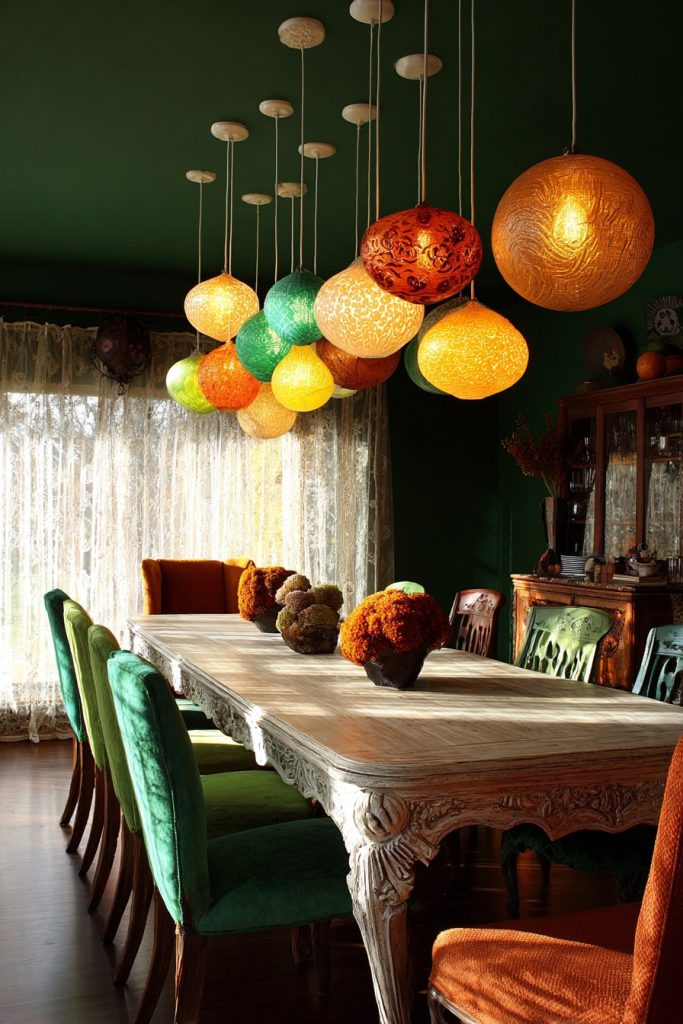
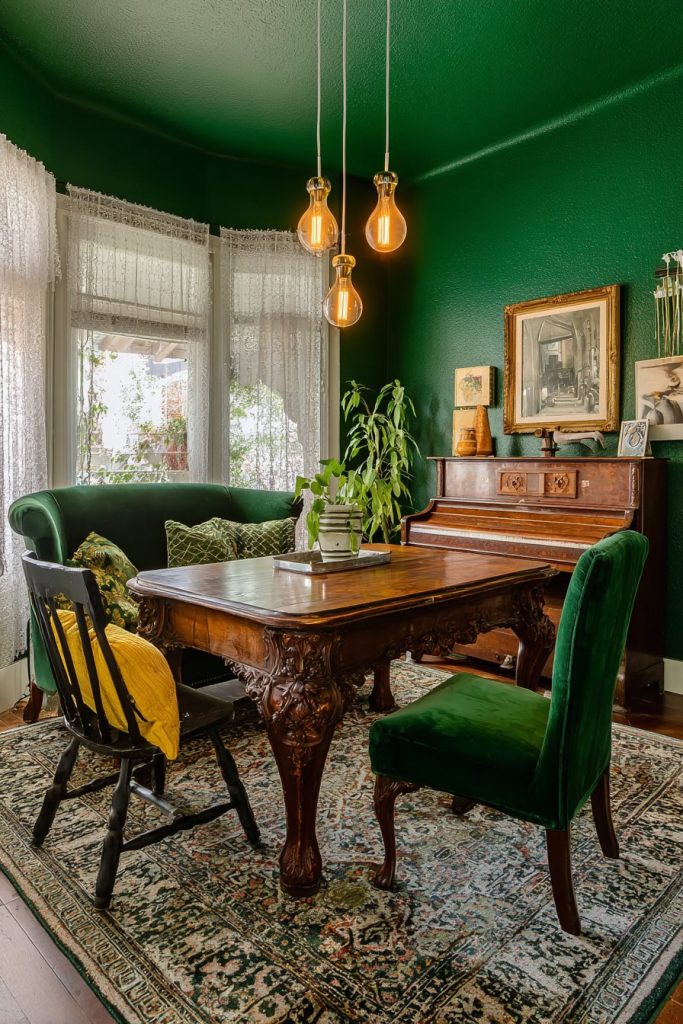
Deep forest green walls provide a sophisticated backdrop for the collected, personal aesthetic that defines eclectic decorating style. This rich color creates unity among diverse furniture pieces while providing enough drama to make statement pieces shine. Forest green’s natural associations also create a calming environment that makes eclectic collections feel curated rather than chaotic.
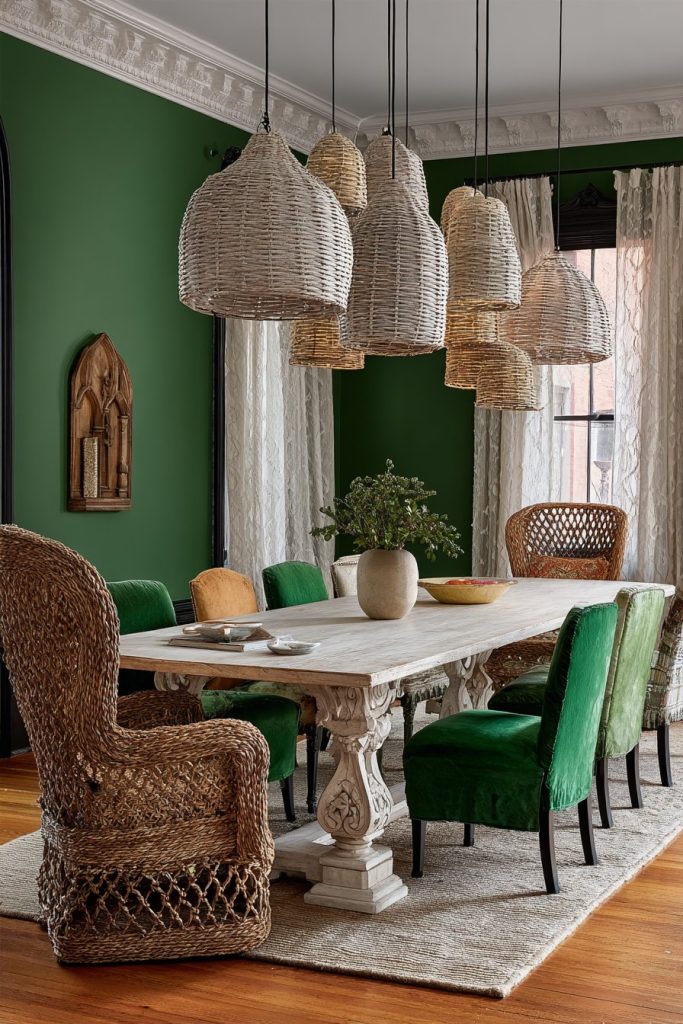
Antique French provincial dining tables with ornate carved legs bring European elegance and historical character to eclectic spaces. The elaborate carving work represents centuries of furniture-making tradition while the weathered finish adds authenticity that cannot be manufactured. These pieces often serve as anchor points around which other collected pieces can be arranged and displayed.
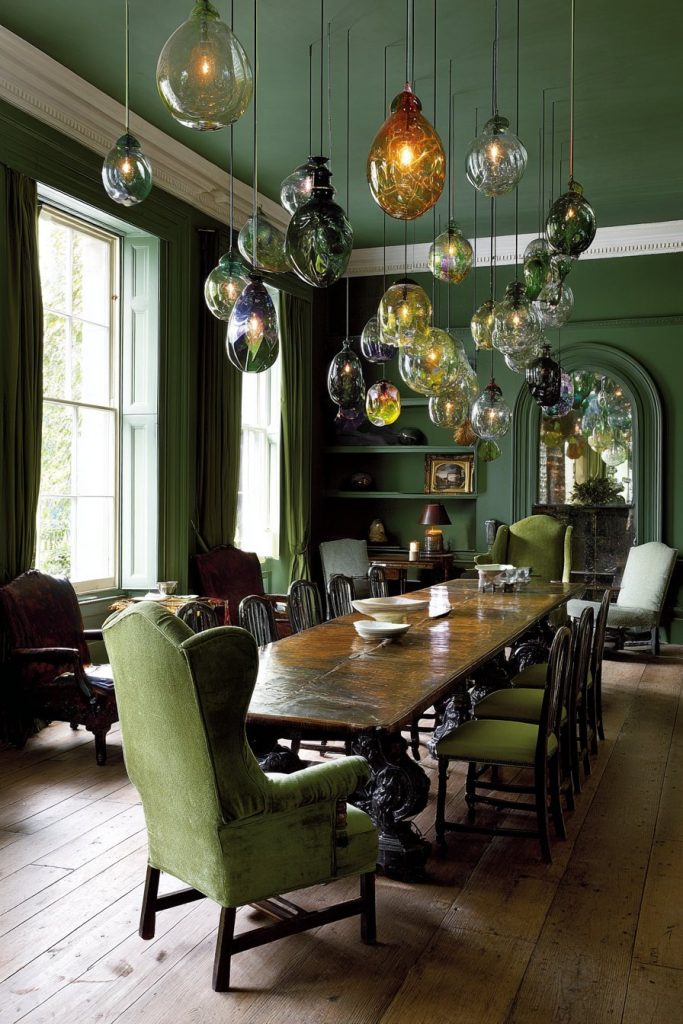
Mixed dining chairs including green velvet wingbacks and painted wooden chairs create the visual variety that makes eclectic spaces so engaging and personal. This approach requires confidence in color and proportion relationships but allows for the expression of individual taste and the incorporation of meaningful pieces collected over time. The variety prevents the space from feeling too formal or prescribed while maintaining color relationships that create coherence.
Key Design Tips:
- Collect pieces over time rather than purchasing complete matched sets
- Use color relationships to create coherence among diverse furniture styles
- Incorporate meaningful pieces that reflect personal history and interests
- Balance variety with unity to prevent eclectic spaces from appearing chaotic
17. Minimalist Mint Zen
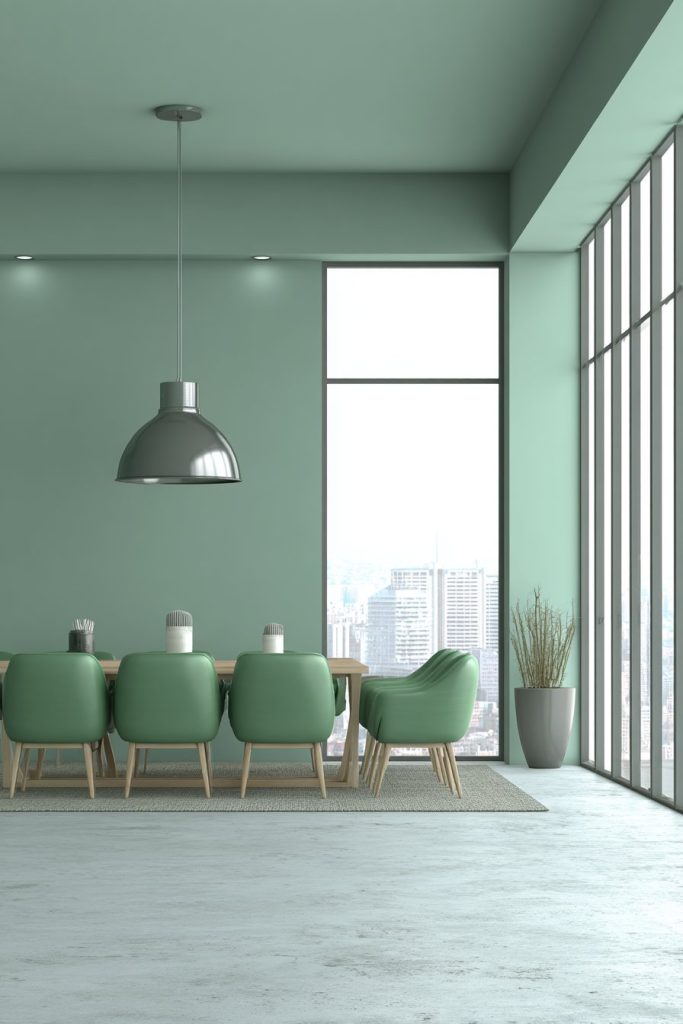
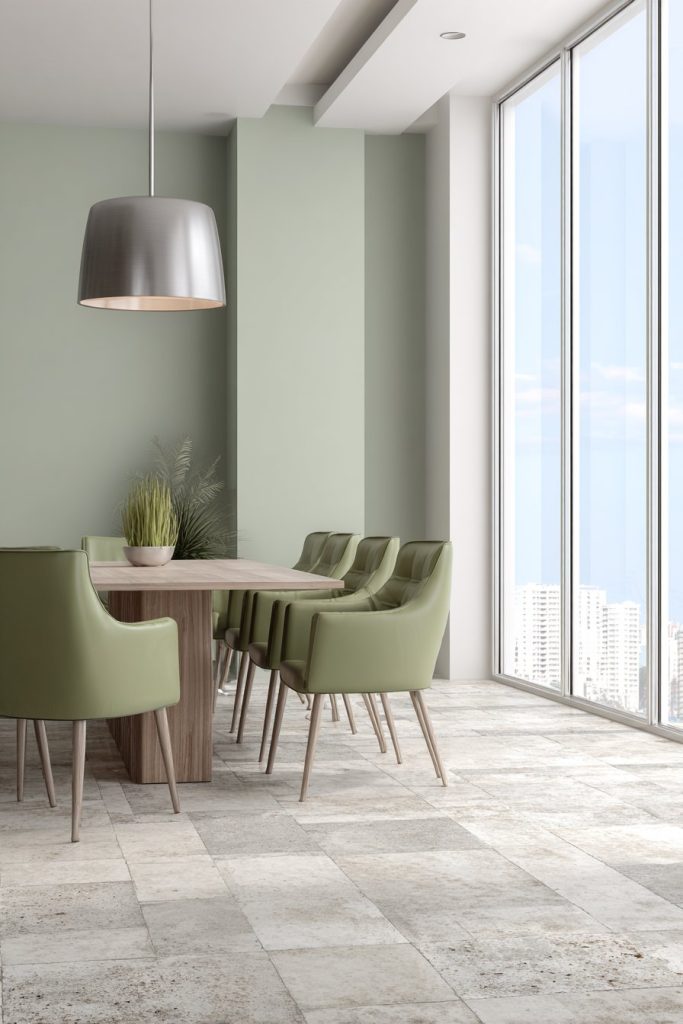
Pale mint green walls with concrete floors create the perfect foundation for minimalist design that emphasizes space, light, and essential elements. This color combination promotes tranquility while providing enough visual interest to prevent stark minimalism from feeling cold or institutional. Concrete floors add industrial authenticity while their smooth surface and neutral color allow furniture and wall color to dominate the visual composition.
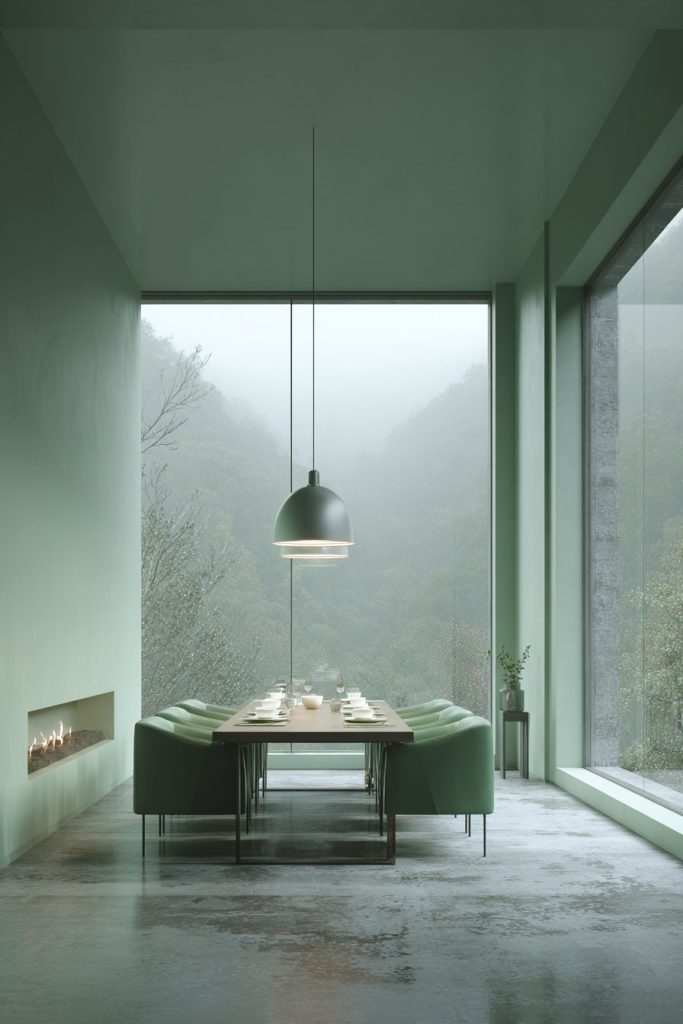
Sleek rectangular dining tables in light oak provide functional beauty without unnecessary ornamentation or detail. The clean lines and light wood tone maintain the minimalist aesthetic while natural grain patterns add subtle texture and visual interest. Light oak’s honey tones create warmth that prevents minimalist spaces from feeling cold while the simple form maintains the uncluttered appearance essential to the style.
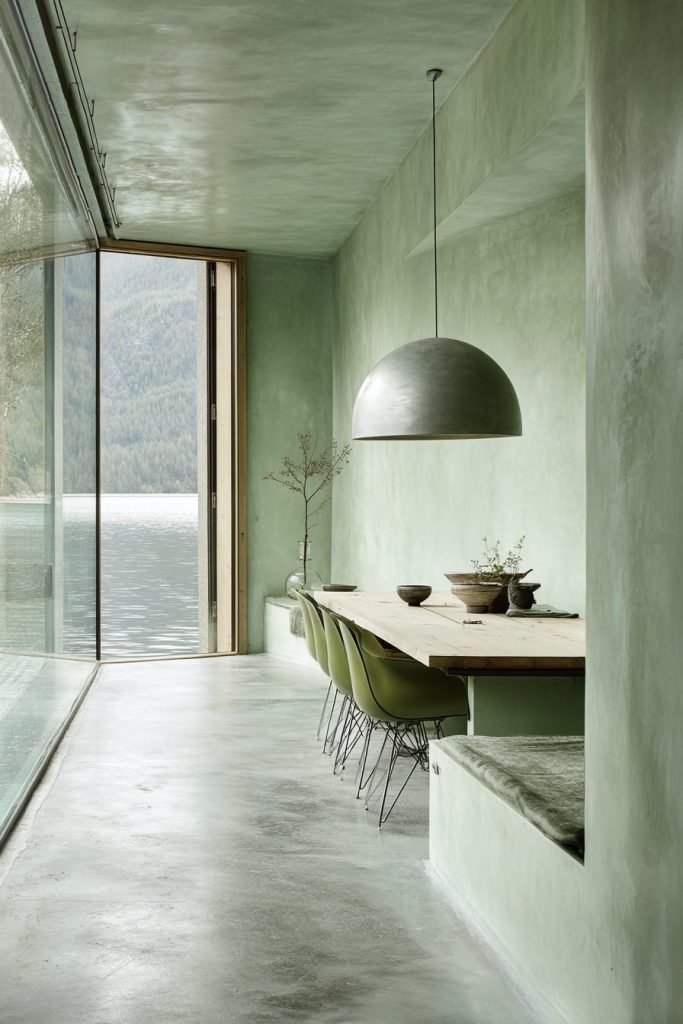
Modern dining chairs in forest green leather provide comfortable seating that adds color depth while maintaining the minimalist commitment to essential elements. Leather’s smooth surface and clean lines complement the minimalist aesthetic while the forest green color creates subtle contrast that defines seating areas. Quality leather also improves with age, developing patina that adds character without compromising the clean aesthetic.
Key Design Tips:
- Emphasize quality over quantity in furniture and accessory choices
- Use natural materials that add warmth without visual clutter
- Maintain clean lines throughout furniture and architectural elements
- Allow space to breathe by avoiding overcrowding with furniture or accessories
18. Country Olive Green Comfort
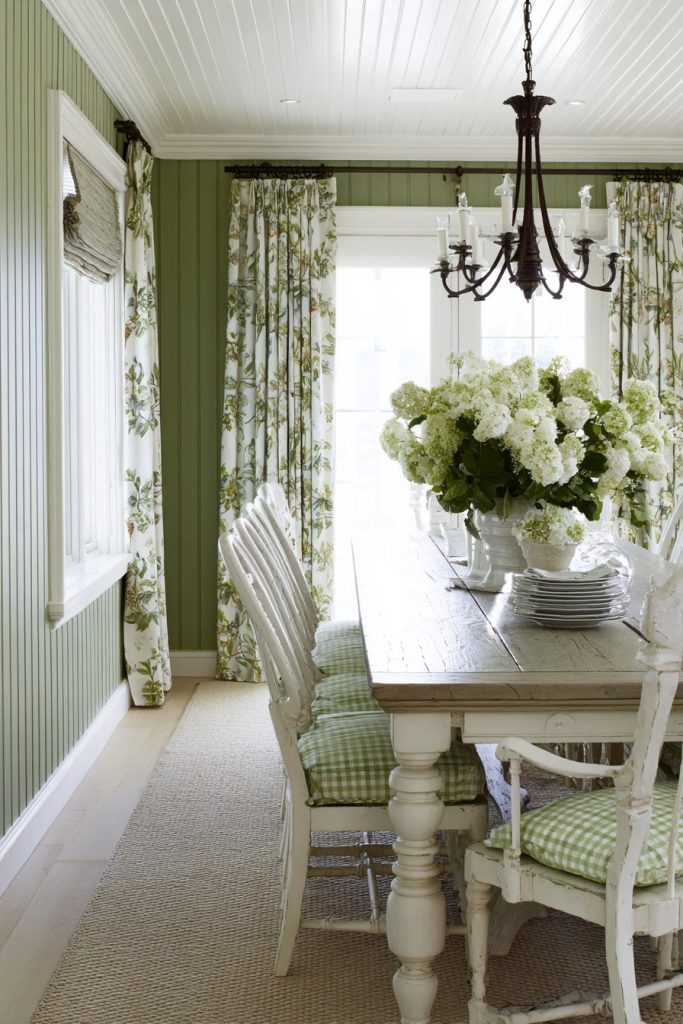
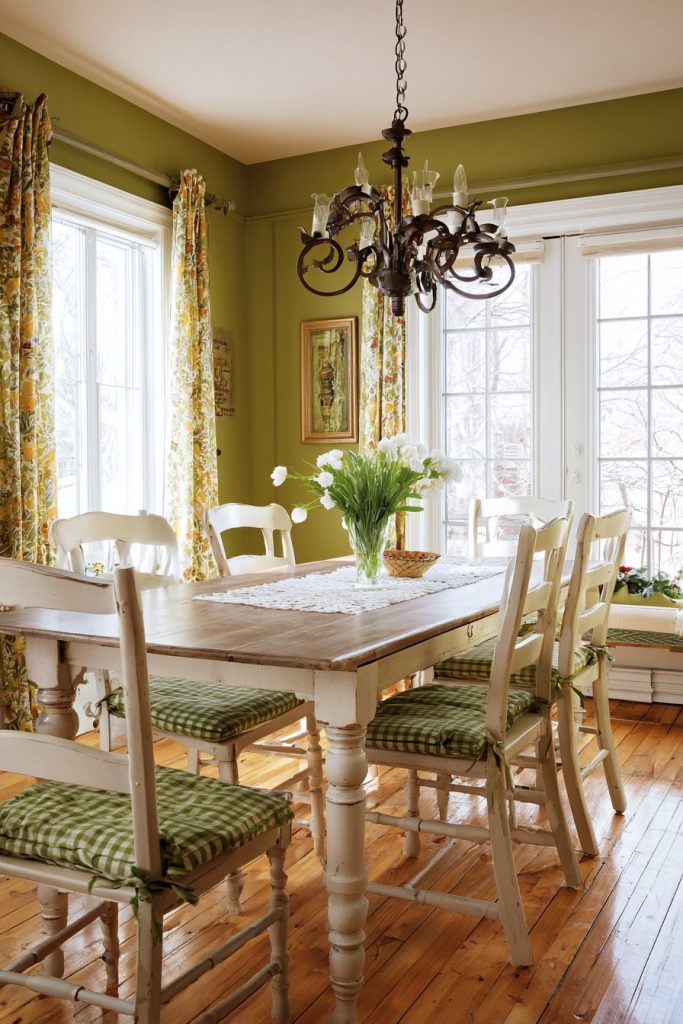
Warm olive green walls with white trim and beadboard details create the welcoming atmosphere that defines country style dining rooms. This earthy green tone evokes kitchen gardens and countryside landscapes while maintaining sophisticated color depth that prevents country style from appearing unsophisticated. White trim adds crisp definition while beadboard wainscoting provides architectural interest and traditional authenticity.
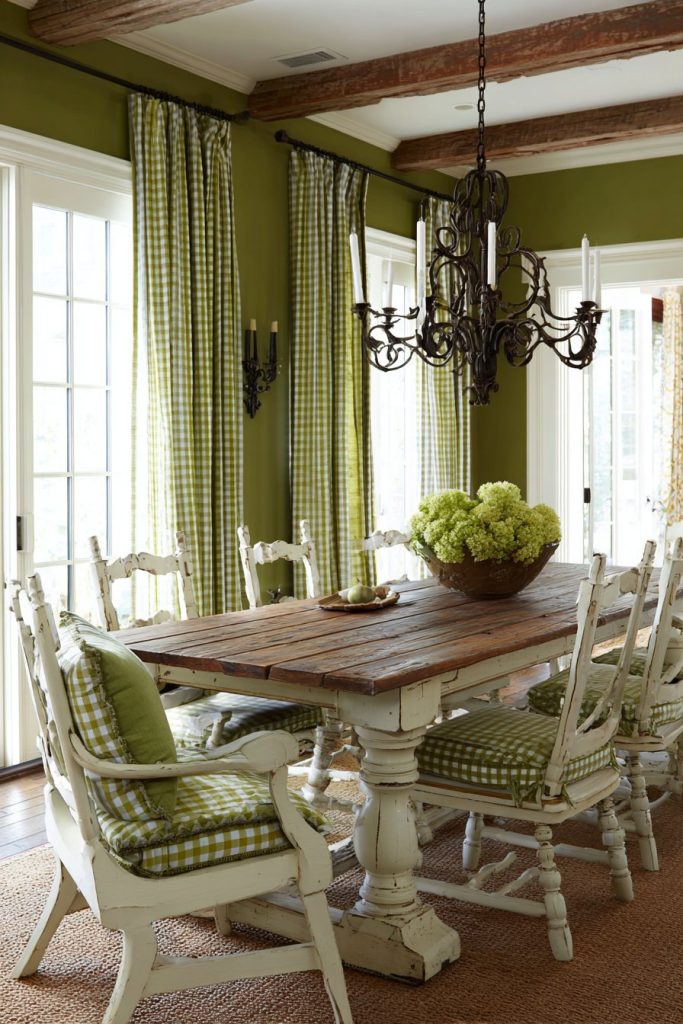
Farmhouse dining tables with turned legs and plank tops represent the practical origins of country furniture while providing generous surface area for family-style dining and food preparation. The substantial construction and weathered finish reflect the honest craftsmanship of rural furniture makers while the simple design allows the natural beauty of wood grain to dominate the aesthetic. These pieces often become family gathering places that accommodate both daily meals and special celebrations.
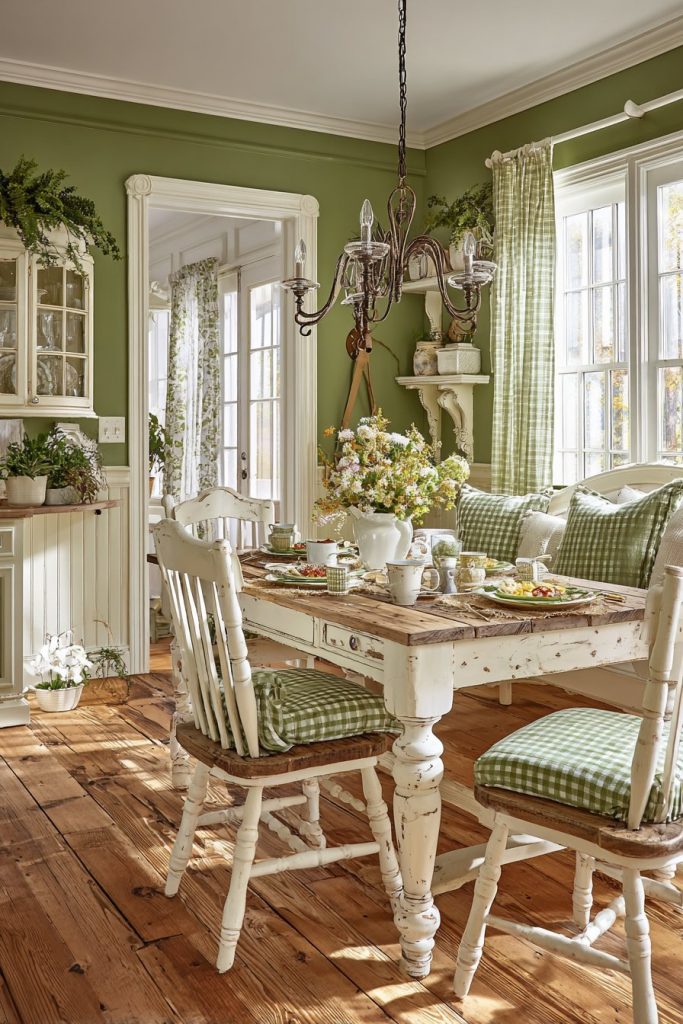
Ladderback chairs painted in distressed cream with green gingham cushions provide comfortable seating that perfectly captures country style’s emphasis on comfort and practicality. The distressed paint finish adds age and character while green gingham fabric introduces pattern and color that ties the seating to the wall color. Removable cushions provide seasonal flexibility and easy maintenance that makes country style practical for everyday living.
Key Design Tips:
- Use practical furniture that reflects country style’s emphasis on function over form
- Incorporate traditional patterns like gingham that add visual interest without overwhelming
- Choose distressed finishes that create the appearance of age and authentic wear
- Emphasize comfort through cushioned seating and relaxed arrangements
19. Contemporary Teal Geometry
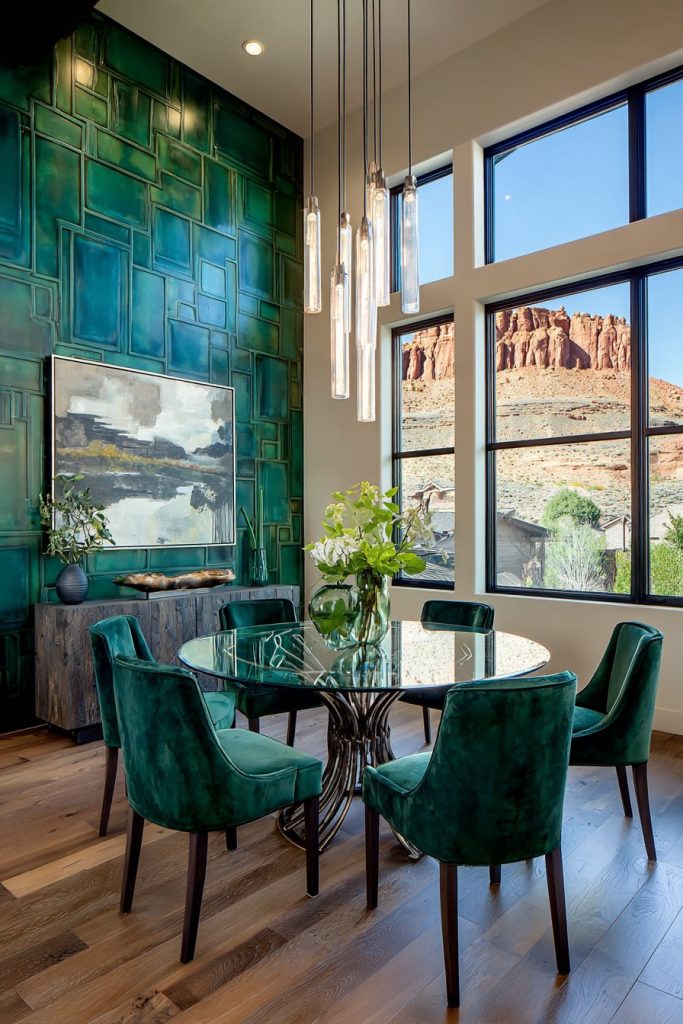
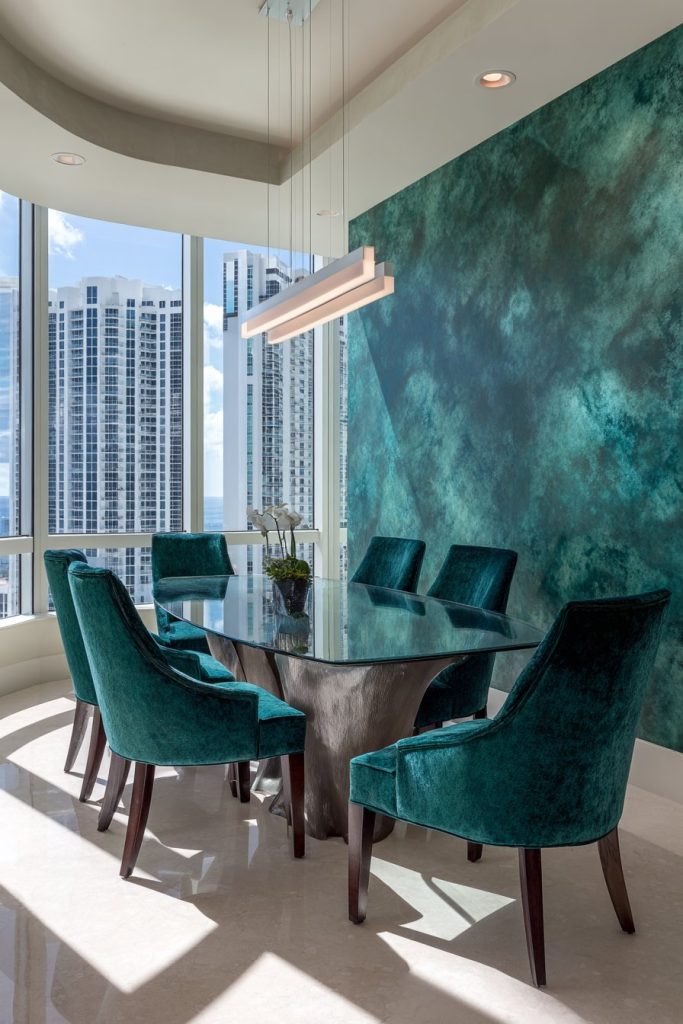
Deep teal green geometric wallpaper creates a striking accent wall that serves as artwork and architectural feature simultaneously. This approach allows for dramatic pattern and color impact while maintaining design restraint through limitation to a single wall. Geometric patterns add contemporary sophistication while teal’s blue-green composition creates color depth that changes throughout the day as lighting conditions shift.
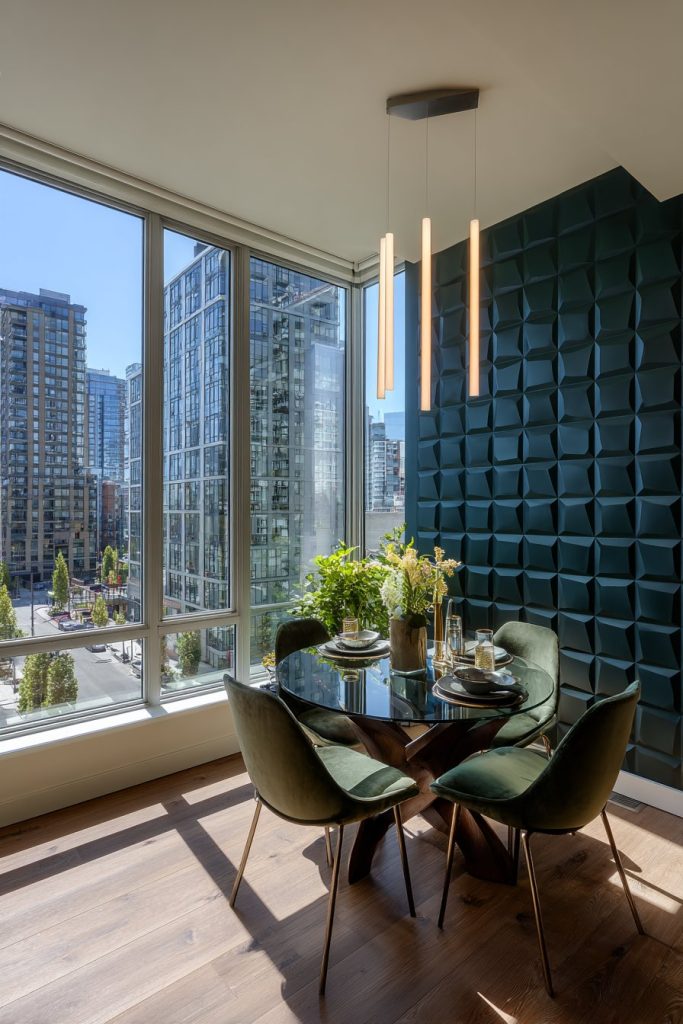
Glass-top dining tables with sculptural metal bases provide transparent functionality that allows the geometric wallpaper to remain the visual focus while adding contemporary sophistication. The transparency of glass prevents the table from competing with the patterned wall while sculptural bases add artistic interest that complements the geometric theme. This combination creates visual lightness that prevents pattern-heavy spaces from feeling overwhelming.
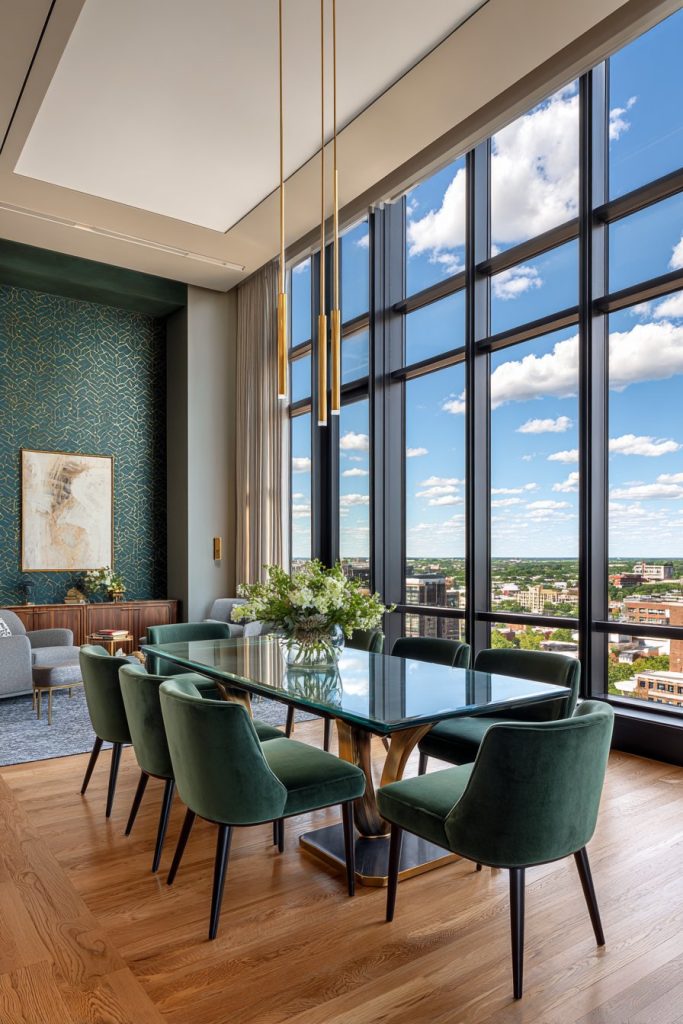
Modern dining chairs upholstered in emerald green fabric provide comfortable seating that maintains color relationships while introducing solid color that balances the geometric pattern. The rich emerald tone complements teal while providing enough contrast to define seating areas clearly. Solid upholstery prevents pattern competition while maintaining the contemporary aesthetic through clean lines and minimal detail.
Key Design Tips:
- Limit patterned walls to single accent walls to maintain design balance
- Use transparent furniture to prevent competition with strong pattern elements
- Balance patterns with solids in upholstery and accessory choices
- Choose geometric patterns that complement contemporary furniture styles
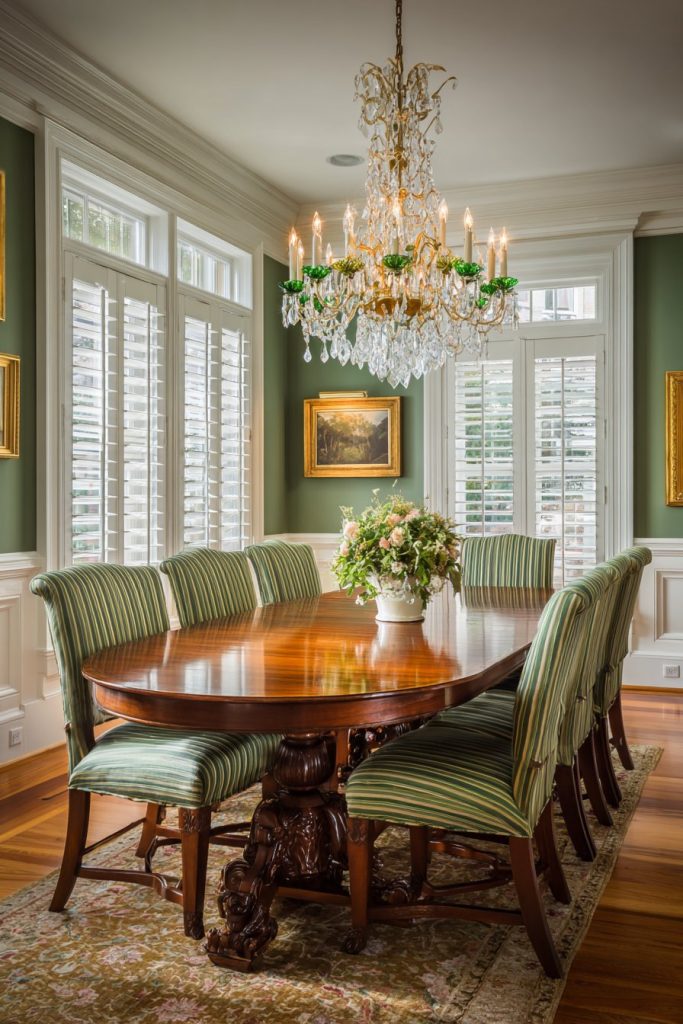
20. Classic Hunter Green Tradition
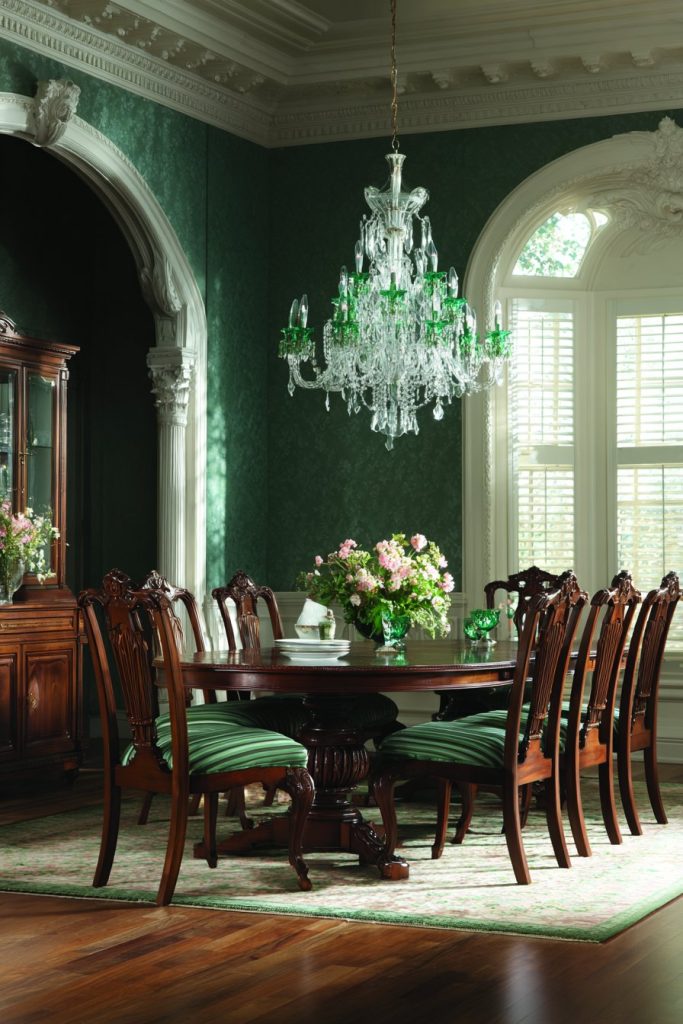
Traditional hunter green walls with white crown molding and chair rail details represent the pinnacle of classic American dining room design. This sophisticated color combination has been used in fine homes for centuries because it creates elegance without overwhelming furniture or artwork while providing a rich backdrop that enhances both formal entertaining and family dining. The architectural details add definition and visual interest that elevate the space beyond simple painted walls.
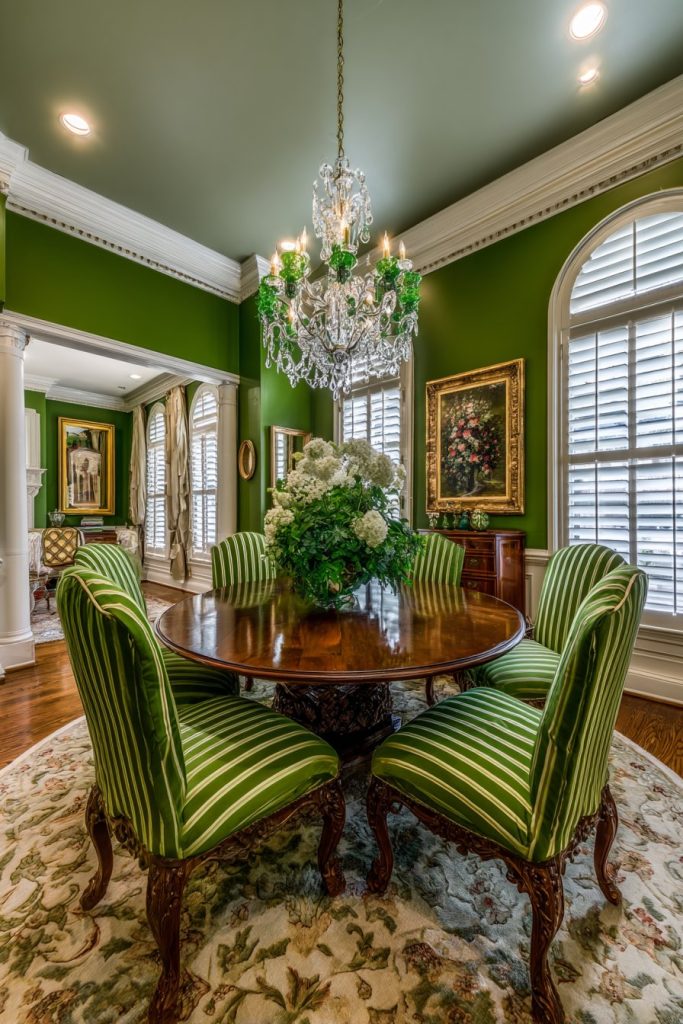
Formal oval dining tables in mahogany with carved pedestal bases provide the substantial presence that classic dining rooms require while accommodating large gatherings comfortably. The oval shape promotes conversation while eliminating sharp corners that can interfere with traffic flow. Mahogany’s rich reddish-brown tones create beautiful color harmony with hunter green while carved details add artistic interest that reflects traditional craftsmanship values.
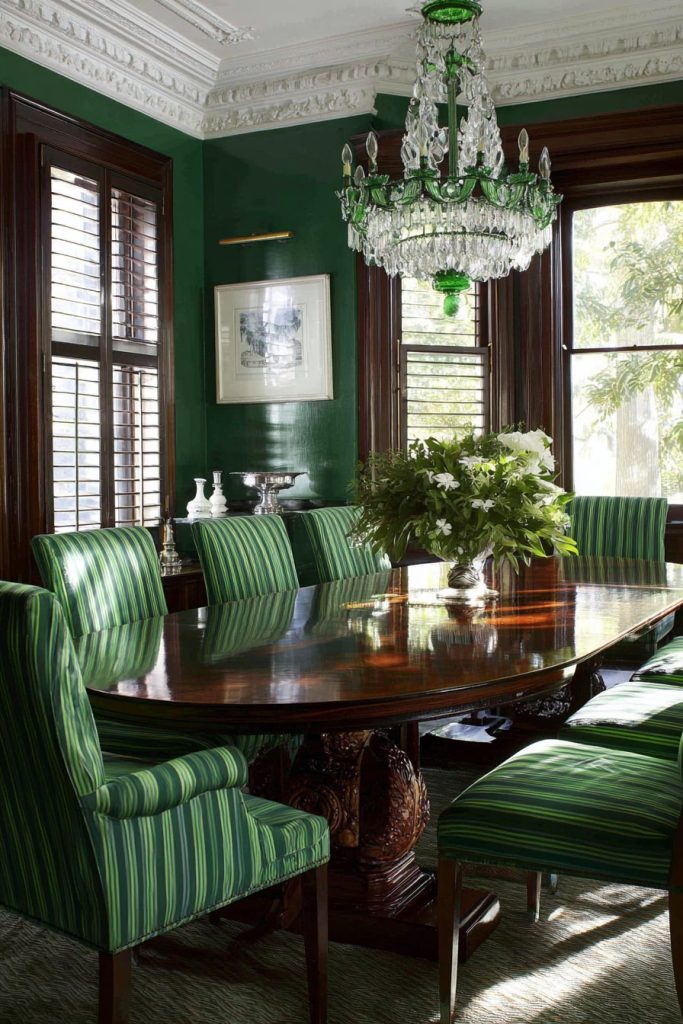
Eight dining chairs upholstered in green striped fabric provide ample seating for formal entertaining while maintaining pattern interest that prevents large seating groups from appearing monotonous. Striped fabric adds subtle pattern that complements solid wall color while the green tone maintains color continuity throughout the space. Quality upholstery construction ensures comfort during extended dinner parties and formal meals.
Key Design Tips:
- Use architectural details like crown molding to create elegance and visual definition
- Choose oval tables for large seating groups to promote conversation and improve traffic flow
- Incorporate subtle patterns in upholstery to add interest without overwhelming solid colors
- Plan for formal entertaining with adequate seating and quality construction throughout
Why These Green Dining Room Ideas Are the Best Design Solutions
These twenty green dining room concepts represent the most effective approaches to incorporating this versatile color into dining spaces because they address the fundamental challenges of color application, spatial design, and lifestyle functionality. Each design demonstrates proven color theory principles while adapting to different architectural styles, budget levels, and personal preferences that real homeowners face when planning dining room renovations.
The sophistication of forest green elegance lies in its ability to create luxury without ostentation, making it perfect for homeowners who want impressive dining spaces that remain comfortable for daily use. This approach proves that deep, saturated colors can work in residential settings when balanced with appropriate lighting, natural materials, and metallic accents that prevent spaces from feeling heavy or overwhelming.
Modern emerald accent wall applications demonstrate how bold color choices can be incorporated into contemporary homes without overwhelming smaller spaces or committing to color throughout entire rooms. This technique allows homeowners to experiment with dramatic color while maintaining flexibility for future design changes, making it ideal for those who want impact without permanent commitment.
Farmhouse olive green charm addresses the growing desire for authentic, comfortable spaces that reflect simpler living values while maintaining modern functionality. This approach proves that country style can be sophisticated and current rather than outdated or unsophisticated, appealing to homeowners who want relaxed elegance rather than formal intimidation.
The traditional hunter green wainscoting approach remains timelessly effective because it follows architectural principles that have been proven successful across centuries and multiple design movements. This technique creates sophisticated proportions while allowing for color impact without overwhelming furniture or artwork, making it ideal for homeowners who want classic elegance that transcends design trends.
Small space mint green solutions address the real challenges of contemporary living where dining rooms often serve multiple functions within limited square footage. These designs prove that color can enhance rather than diminish spatial perception while creating distinct dining zones within open floor plans, making them essential for modern urban and suburban living situations.
Contemporary dark green drama meets the needs of homeowners who want sophisticated, adult spaces that make strong design statements while remaining livable for everyday use. This approach demonstrates how contemporary design can incorporate rich color and natural materials without sacrificing clean lines or modern functionality, appealing to design-conscious homeowners who reject stark minimalism.
The Scandinavian eucalyptus serenity concept addresses the growing interest in wellness-focused design that promotes mental health and emotional well-being through color psychology and natural material connections. This approach proves that healthy design can be beautiful and sophisticated rather than clinical or institutional, making it perfect for health-conscious homeowners who want beauty and wellness integration.
Bohemian jade green eclecticism serves homeowners who want to express individual personality through collected, meaningful objects rather than designer-coordinated room sets. This approach demonstrates how strong color can unify diverse elements while allowing for personal expression and gradual collection building, appealing to creative individuals who want unique, non-formulaic spaces.
Industrial olive green edge concepts meet the needs of homeowners in converted lofts, urban condominiums, and modern homes with industrial architectural elements that require design approaches celebrating rather than hiding structural features. These designs prove that industrial elements can be warm and comfortable rather than cold or institutional, making them ideal for urban professionals who want sophisticated yet comfortable living spaces.
The coastal seafoam freshness approach addresses the desire for relaxed, vacation-inspired living that promotes daily stress relief and emotional restoration. This design philosophy proves that coastal style can be sophisticated and current rather than clichéd or themed, appealing to homeowners who want everyday spaces that feel like retreat destinations.
These green dining room ideas represent the best design solutions because they balance aesthetic impact with practical functionality, proving that beautiful spaces can also be livable, maintainable, and adaptable to changing needs over time.
Conclusion
Green dining rooms offer unlimited possibilities for creating spaces that nourish both body and soul through thoughtful color application, material selection, and spatial design. From dramatic deep forest tones that create luxury and sophistication to gentle mint shades that promote serenity and openness, green adapts beautifully to every design style, budget level, and lifestyle requirement.
The key to successful green dining room design lies in understanding color relationships, embracing natural materials, and creating lighting schemes that enhance rather than compete with your chosen green tones. Whether you prefer the timeless elegance of traditional hunter green with mahogany furniture or the contemporary sophistication of emerald accent walls with walnut tables, success depends on committing fully to your vision while maintaining balance through complementary colors and textures.
These twenty design approaches provide starting points for your own green dining room journey, but remember that the best design solutions reflect your personal lifestyle, entertaining preferences, and aesthetic values. Take inspiration from multiple concepts, adapt ideas to your specific space constraints and budget realities, and don’t be afraid to experiment with different shades of green until you find the perfect tone that makes every meal feel like a celebration in your beautifully designed dining space.


