
Transforming an attic into a functional living space offers exciting possibilities for any home. These often-overlooked areas can become cozy bedrooms, inspiring home offices, or creative studios with proper planning. The key lies in addressing both practical concerns and aesthetic goals simultaneously.
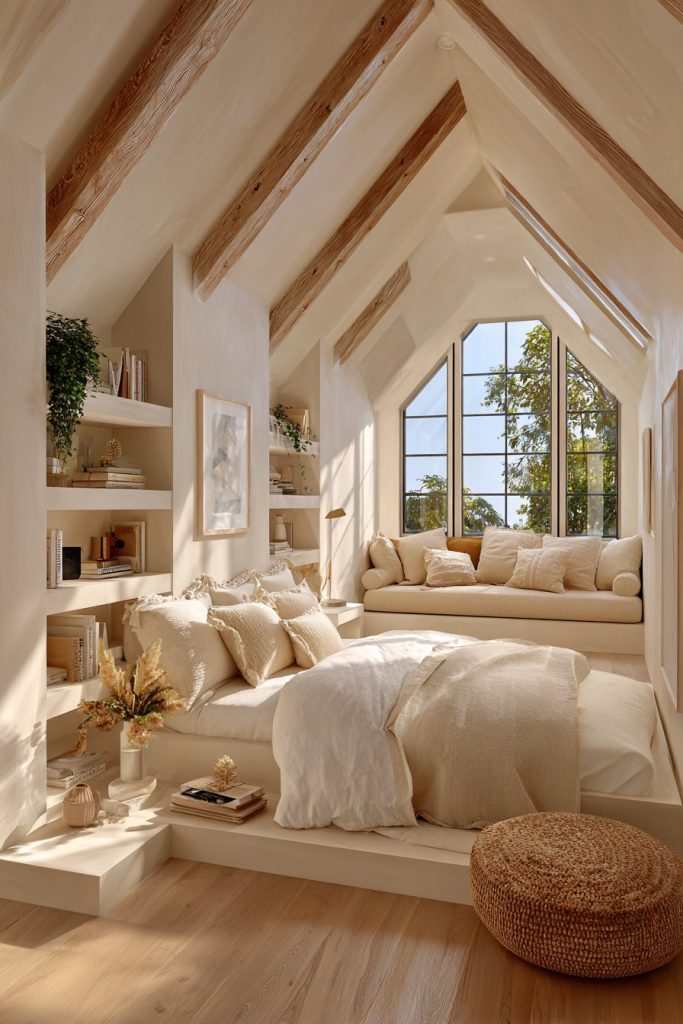
Attic rooms present unique challenges that require thoughtful solutions. Sloped ceilings, limited natural light, and temperature regulation demand special attention. However, these same characteristics create opportunities for distinctive design elements that set attic spaces apart. Smart insulation choices paired with creative decorating strategies turn awkward angles into architectural features.
This article explores seven essential tips for creating beautiful, comfortable attic rooms. Each strategy balances functional requirements with design appeal. Whether you’re converting unused storage space or refreshing an existing attic room, these approaches help maximize potential while ensuring year-round comfort.

1. Proper Insulation for Comfort and Efficiency
Effective insulation forms the foundation of any successful attic conversion. Thermal regulation becomes critical in attic spaces where temperatures fluctuate dramatically. Without adequate insulation, summer heat becomes unbearable while winter brings uncomfortable cold. This directly impacts both livability and energy costs throughout the year.
Choose insulation materials based on your climate and attic structure. Spray foam insulation offers superior coverage around irregular framing and tight corners. Alternatively, batt insulation provides cost-effective solutions for standard joist spacing. Consider R-values appropriate for your region—northern climates require higher ratings. Professional installation ensures proper vapor barriers and prevents moisture accumulation issues.
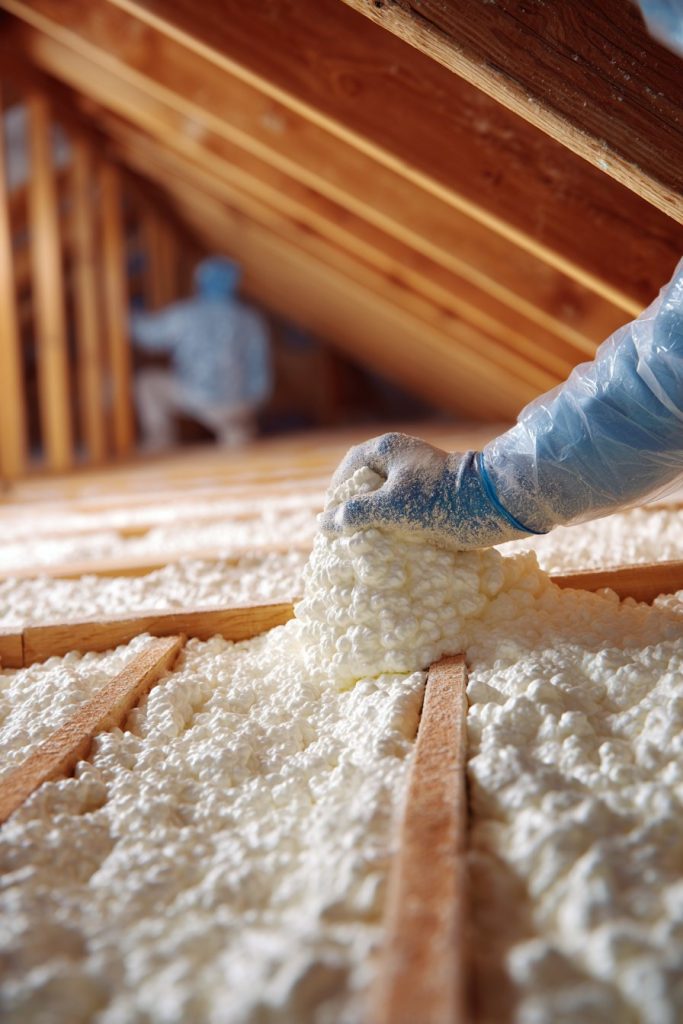
Insulation investment pays dividends beyond comfort. Properly insulated attics reduce heating and cooling expenses by up to 30 percent. Soundproofing benefits also improve privacy for bedroom or office conversions. Address insulation before decorating to avoid future disruptions and maximize long-term satisfaction.
- Install insulation with minimum R-38 rating for optimal thermal performance
- Seal all air leaks around chimneys, vents, and roof penetrations first
- Add rigid foam boards between rafters for enhanced efficiency
- Consider reflective insulation barriers to deflect radiant heat
- Hire certified professionals to ensure building code compliance
- Maintain proper ventilation channels to prevent moisture problems
2. Maximize Natural Light with Strategic Window Treatments
Natural light transforms attic rooms from dark storage spaces into inviting living areas. Dormer windows and skylights become focal points that define the room’s character. However, direct sunlight through roof windows creates intense glare and heat. Strategic window treatments balance light control with maintaining visual openness throughout the space.
Choose treatments that complement sloped architecture rather than fighting against it. Cellular shades designed for skylights provide insulation benefits while controlling light levels. Top-down bottom-up blinds offer flexible privacy options for dormer windows. Avoid heavy drapes that overwhelm small spaces and block precious natural light unnecessarily.
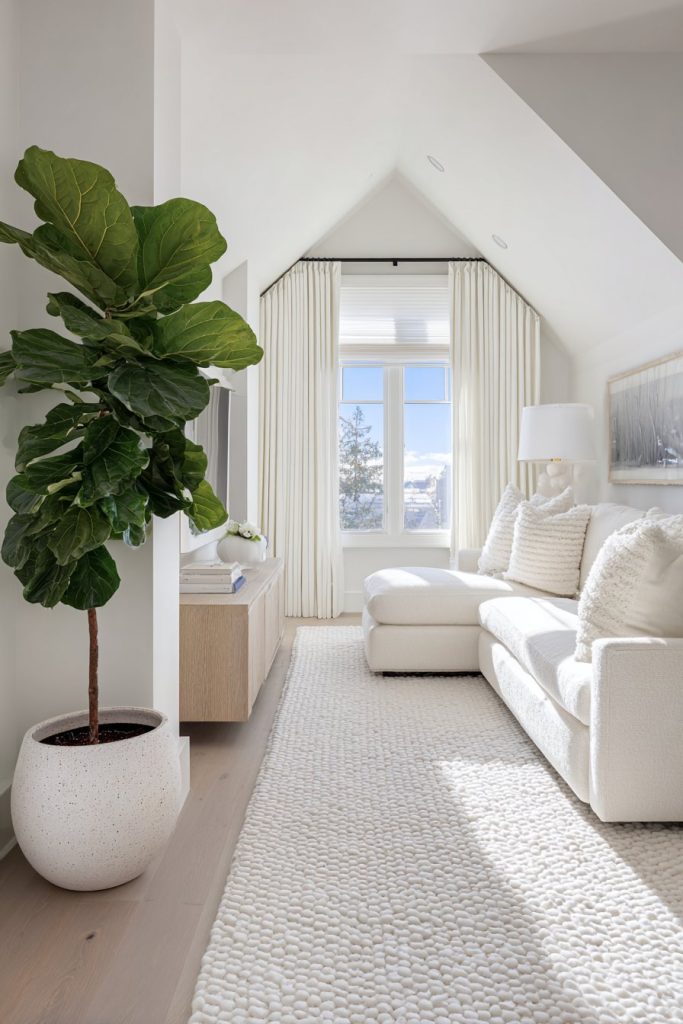
Consider automated solutions for hard-to-reach skylights. Motorized blinds operated by remote control or smartphone apps provide convenient light management. Light-filtering fabrics soften harsh sunlight while maintaining brightness. This creates comfortable working or relaxing environments throughout different times of day.
- Install skylight blinds with honeycomb construction for energy efficiency
- Use sheer curtains on dormer windows to maximize daylight penetration
- Choose light-colored window treatments to reflect rather than absorb heat
- Consider blackout options for bedroom conversions requiring darkness
- Add window film to reduce UV damage without blocking views
- Position mirrors opposite windows to amplify natural light distribution
3. Choose Low-Profile Furniture for Sloped Ceilings
Sloped ceilings create unique spatial challenges requiring thoughtful furniture selection. Low-profile pieces work with attic architecture rather than competing for limited headroom. Standard-height furniture often looks awkward or becomes unusable under angled rooflines. Strategic placement and appropriately scaled pieces maximize both function and visual harmony.
Measure ceiling heights carefully before purchasing furniture items. Platform beds without tall headboards fit comfortably under slopes while maintaining style. Low-backed sofas and chairs positioned in lower ceiling areas create cozy reading nooks. Reserve full-height spaces near dormers or gable walls for tall storage units.
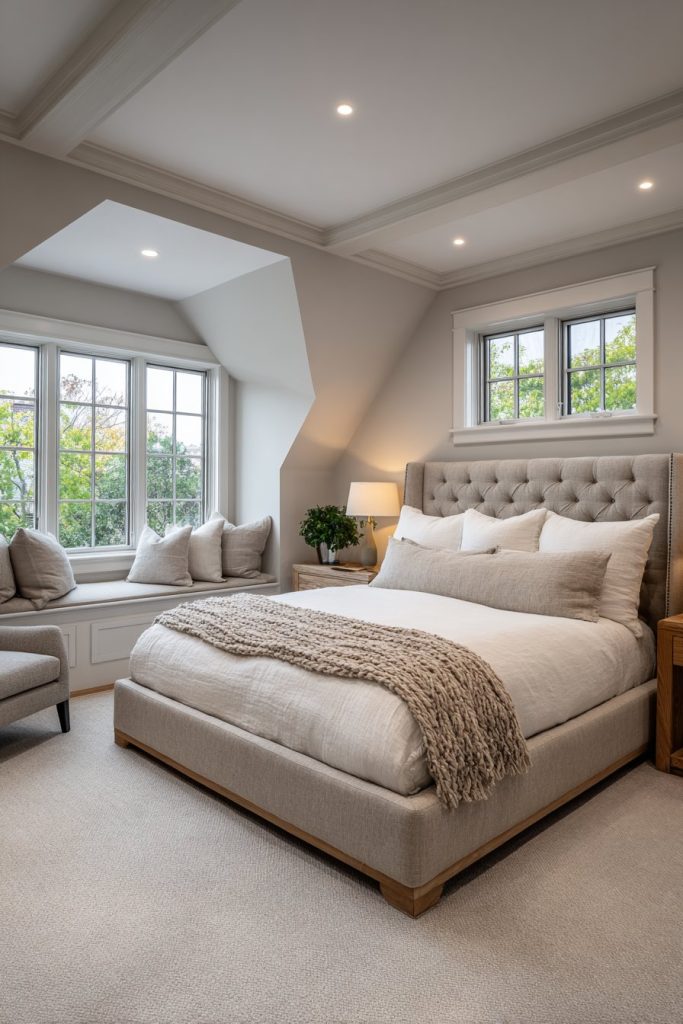
Custom built-in furniture maximizes every inch of available space efficiently. Knee-wall storage transforms awkward low-ceiling areas into practical storage solutions. Window seats with hidden compartments combine seating with organization. These permanent installations appear intentional rather than making the space feel constrained.
- Keep furniture height below 36 inches in sloped areas
- Position beds parallel to slopes for better headroom when sitting
- Use modular furniture that adapts to irregular wall angles
- Install low-profile lighting fixtures to avoid head clearance issues
- Choose furniture with visible legs to create airiness
- Measure doorway access carefully for furniture delivery planning
4. Create Multi-Functional Spaces
Attic rooms often serve multiple purposes due to limited square footage. Flexible design strategies allow spaces to adapt throughout the day or as needs change. Single-purpose rooms waste valuable converted space in smaller homes. Smart planning creates areas that work harder without feeling cluttered or confused.
Define zones within the attic using furniture arrangement and area rugs. A home office area near windows provides natural light for daytime work. Sleeping zones positioned away from traffic flow maintain privacy and quiet. Use bookcases or screens as subtle dividers that maintain openness while establishing distinct functions.
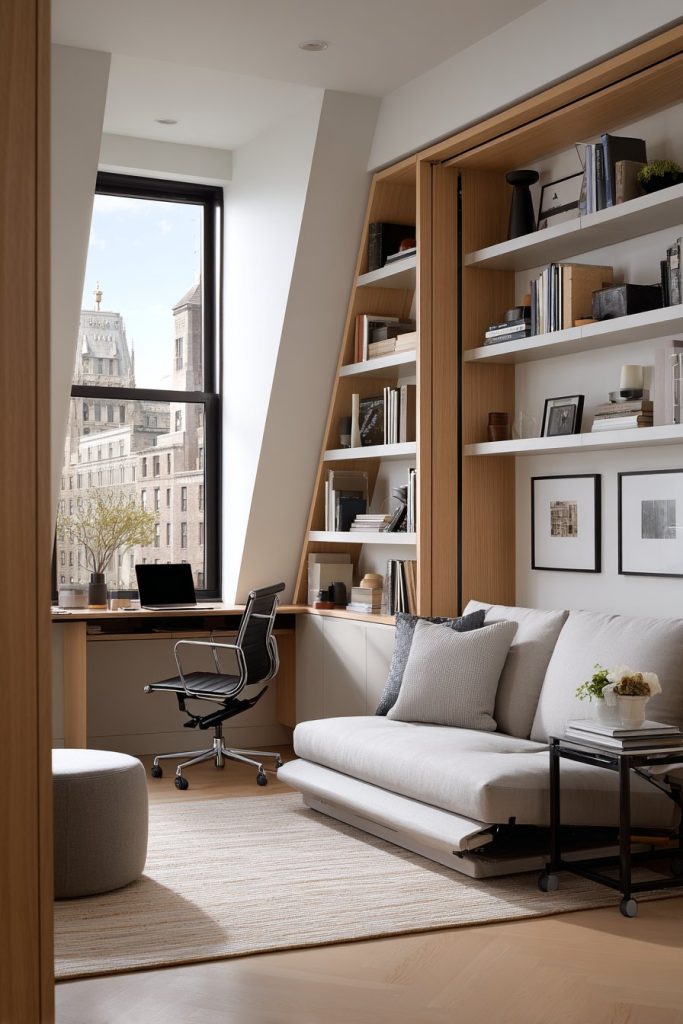
Invest in transformable furniture pieces that serve dual roles effectively. Murphy beds fold away to reveal workspace or play areas during daytime. Storage ottomans provide seating, hidden storage, and impromptu tables when needed. Nesting tables expand for entertaining then tuck away to preserve floor space.
- Install a fold-down desk that disappears when not needed
- Use room dividers on casters for flexible space reconfiguration
- Choose sleeper sofas for guest room office combinations
- Add rolling storage carts that move between functional zones
- Install murphy bed hardware for professional space-saving solutions
- Create dedicated storage for each function to minimize clutter
5. Use Light Colors to Enhance Space
Color choices dramatically impact how attic rooms feel and function. Light, neutral palettes reflect available light and make spaces feel larger and airier. Dark colors absorb light and emphasize awkward angles in unflattering ways. Strategic color use transforms cramped attics into inviting retreats that feel surprisingly spacious.
Paint walls, ceilings, and trim in coordinating light shades. White or cream tones create seamless surfaces that minimize visual breaks from sloped ceilings. Soft grays and warm beiges provide subtle sophistication without heaviness. Consider painting ceiling slopes lighter than walls to draw eyes upward and enhance perceived height.
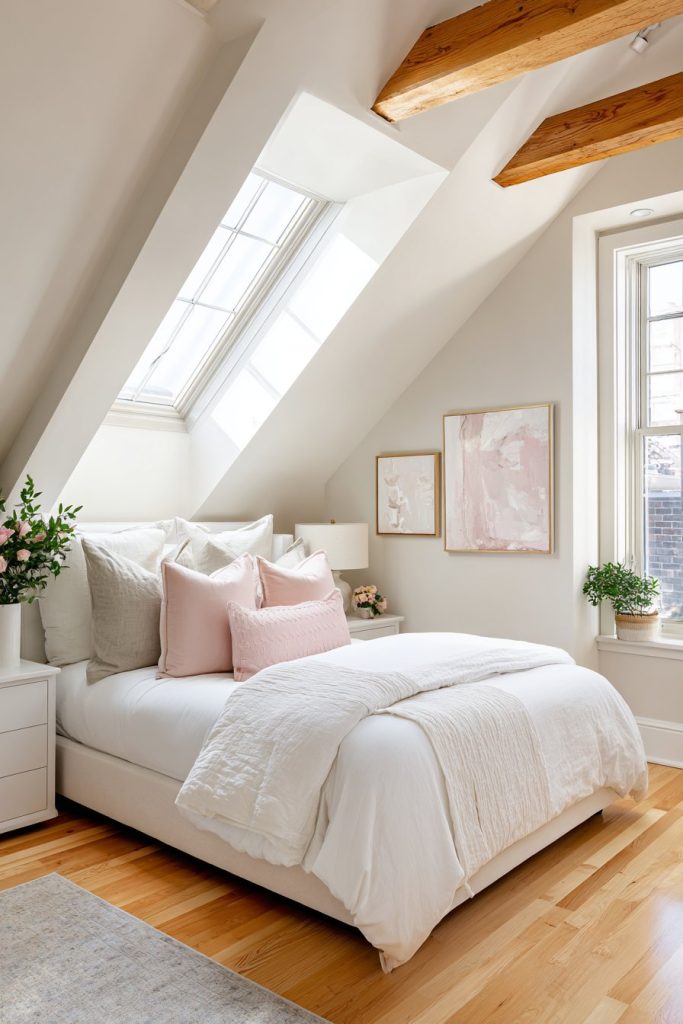
Add personality through accessories rather than overwhelming wall colors. Accent pillows, artwork, and textiles introduce color without permanent commitment. This approach allows easy updates as trends change or preferences evolve. Maintain restraint with bold patterns that can make tight spaces feel chaotic.
- Choose paint colors with high light reflectance values above 60
- Use consistent colors throughout to create visual continuity
- Paint exposed beams white to blend rather than contrast
- Add pops of color through easily changeable accessories
- Consider soft pastels for subtle color without overwhelming space
- Test paint samples in different lighting conditions before committing

6. Add Built-In Storage Solutions
Storage challenges plague most attic conversions due to irregular wall angles. Custom built-ins transform difficult spaces into highly functional storage that appears architectically intentional. Freestanding furniture leaves gaps and wasted space under slopes. Integrated storage solutions maximize every cubic inch while maintaining clean, finished appearances.
Knee walls under sloped ceilings offer prime opportunities for drawer banks. Pull-out storage makes deep spaces accessible without crawling into awkward corners. Built-in closets with angled doors follow rooflines perfectly while providing hanging space. These permanent additions increase home value beyond their immediate practical benefits.
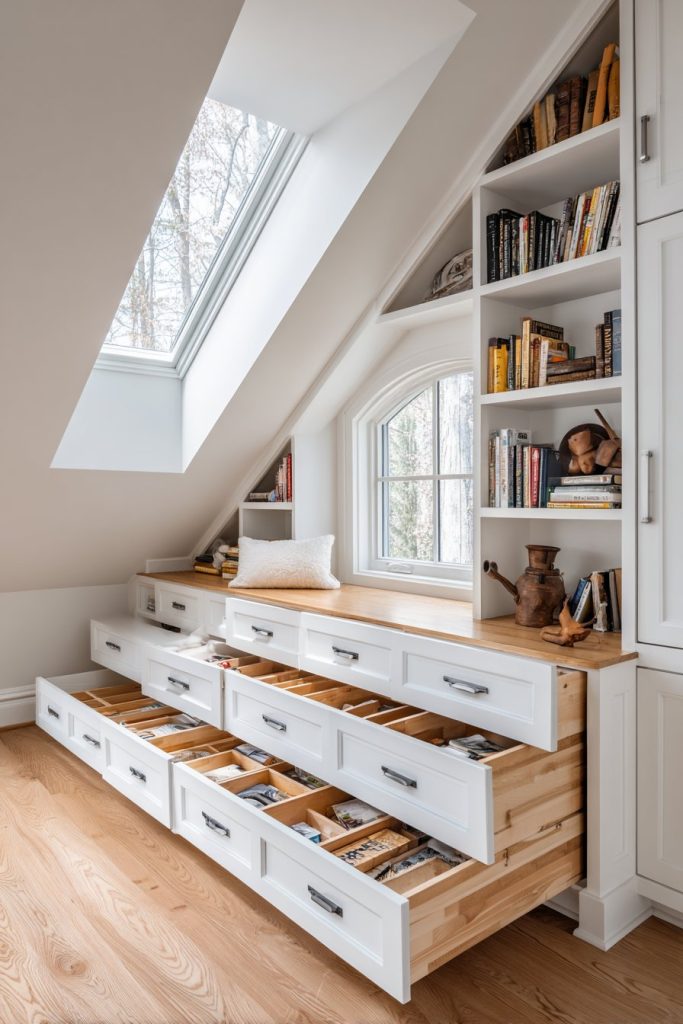
Open shelving celebrates architectural angles rather than hiding them awkwardly. Floating shelves installed along slopes create display areas for books and decorative items. Built-in window seats with lift-up tops combine comfortable seating with hidden storage. Consider hiring finish carpenters for professional results that look intentional and refined.
- Install drawer units in knee walls for maximum accessibility
- Build closets with sliding doors to save floor space
- Add shelving at varying heights to accommodate ceiling slopes
- Create window seats with hydraulic lifts for easy access
- Use vertical dividers in deep storage to maintain organization
- Finish built-ins to match wall colors for seamless integration
7. Incorporate Proper Ventilation and Climate Control
Temperature regulation remains challenging in attic spaces without dedicated climate systems. Proper ventilation prevents stuffiness and moisture problems that compromise comfort and health. Standard HVAC systems often struggle to efficiently heat or cool distant attic rooms. Supplemental solutions ensure year-round comfort without excessive energy consumption.
Install ceiling fans to circulate air and reduce temperature stratification. Energy-efficient mini-split systems provide heating and cooling without requiring extensive ductwork modifications. Portable dehumidifiers control moisture in humid climates where condensation becomes problematic. Address ventilation needs early in conversion planning for optimal system integration.
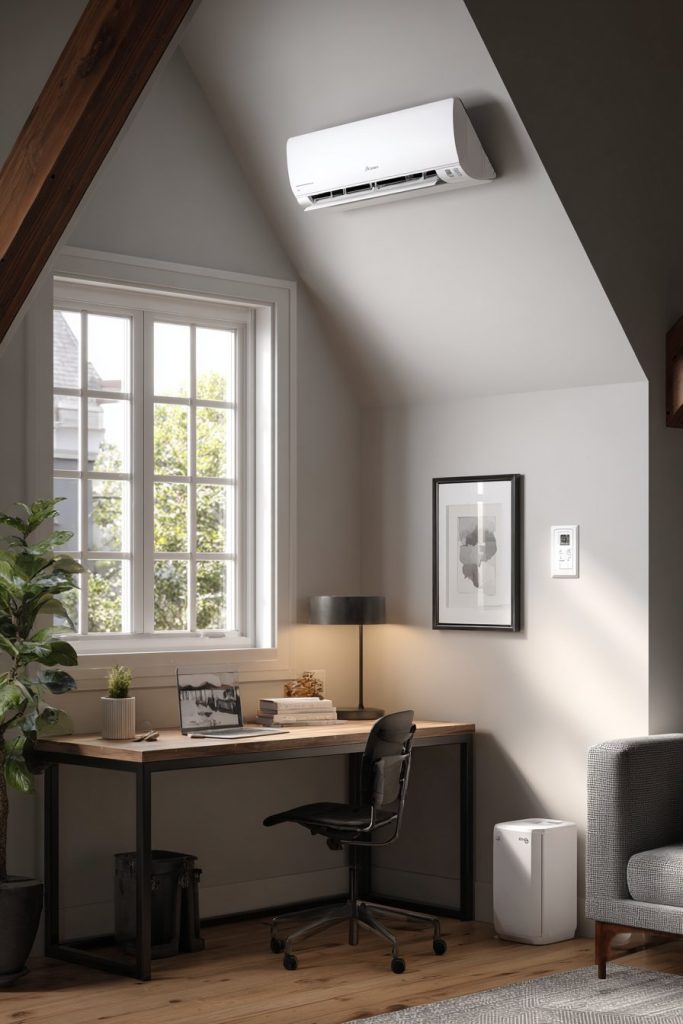
Consider smart thermostats that learn usage patterns and optimize comfort. Zoned temperature control allows independent attic settings without affecting main living areas. Ensure adequate fresh air exchange through operable windows or mechanical ventilation systems. Comfortable climate control transforms seasonal attic spaces into year-round functional rooms.
- Install a ductless mini-split system for efficient temperature control
- Add a ceiling fan to improve air circulation and comfort
- Ensure ridge vents and soffit vents remain unobstructed by insulation
- Use a programmable thermostat to manage heating and cooling costs
- Consider adding a small dehumidifier in humid climates
- Install carbon monoxide and smoke detectors for safety compliance
Conclusion
Successfully insulating and decorating attic rooms requires balancing practical necessities with aesthetic vision. These seven strategies address common challenges while creating spaces that feel intentional and inviting. Proper insulation and climate control establish comfort foundations that make design elements shine.
Embrace your attic’s unique architectural features rather than fighting against them. Thoughtful planning transforms awkward angles into distinctive character that sets these rooms apart. Start with essential infrastructure improvements, then layer in personal style through furniture and accessories. Your converted attic becomes a favorite retreat that adds valuable living space and enhances your entire home.


