
The heart of every home lies in the seamless connection between kitchen and dining spaces, where culinary creativity meets social gathering. These interconnected areas serve as the foundation for daily rituals, family bonding, and memorable entertaining experiences. Thoughtful interior design in these spaces transcends mere functionality, creating environments that inspire both the chef and the host while reflecting the unique personality and lifestyle of the inhabitants.
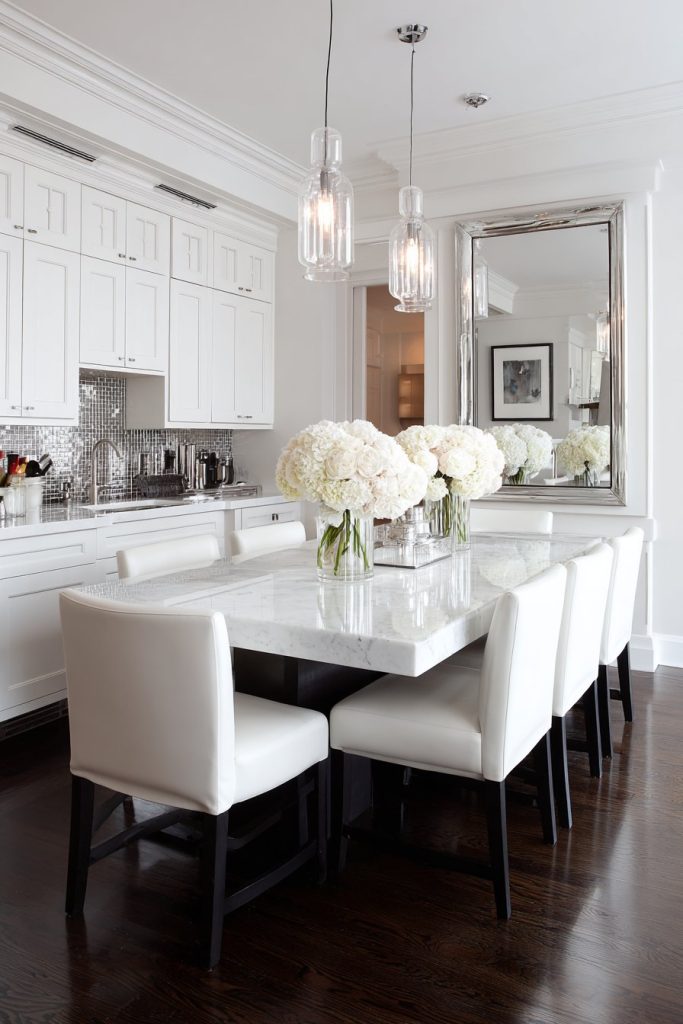
In today’s evolving home design landscape, the boundaries between kitchen and dining room continue to blur, giving rise to innovative layouts that maximize both efficiency and aesthetic appeal. From open-concept arrangements that promote fluid conversation to compact solutions that make the most of limited square footage, modern design approaches cater to diverse living situations and personal preferences. The key lies in understanding how different materials, lighting techniques, and spatial arrangements work together to create cohesive environments that are both practical and visually stunning.
This comprehensive exploration presents twenty distinct design concepts that showcase the remarkable versatility of kitchen and dining room combinations. Each approach offers unique insights into how color palettes, textures, lighting strategies, and furniture selections can transform these essential spaces into extraordinary environments that enhance daily living while making bold design statements.

1. Open-Concept Modern Elegance with Marble Sophistication
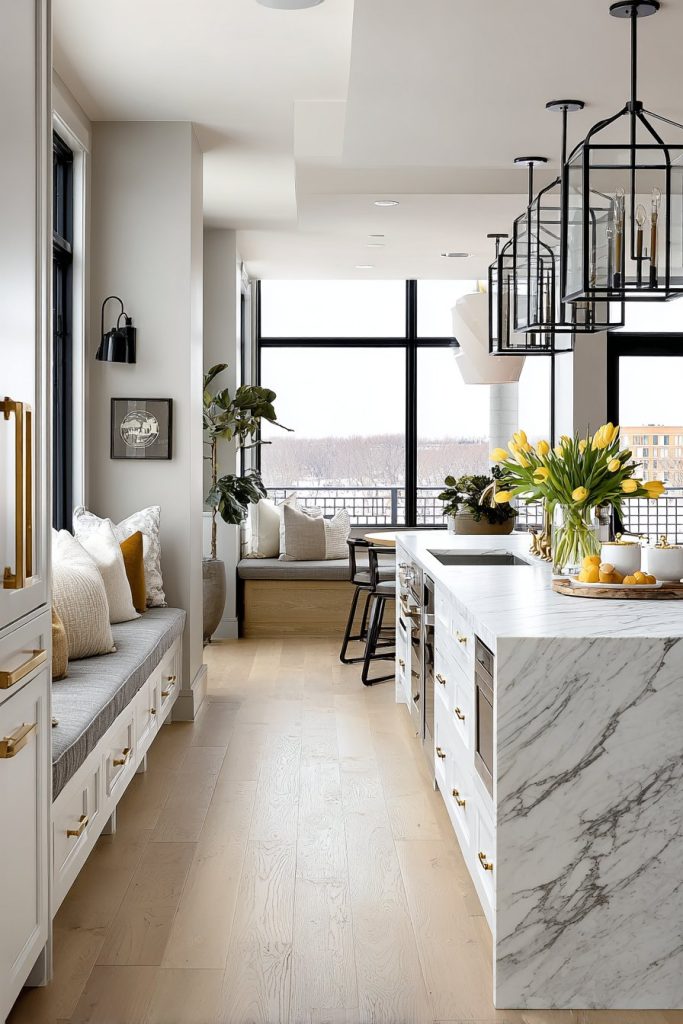
The contemporary open-concept kitchen and dining room represents the pinnacle of modern living, where a magnificent marble-topped island serves as both functional workspace and casual dining destination. This design philosophy embraces the beauty of uninterrupted sightlines while maintaining distinct zones through careful material selection and lighting placement. The substantial island becomes a sculptural element that anchors the space, its veined marble surface catching and reflecting light throughout the day.
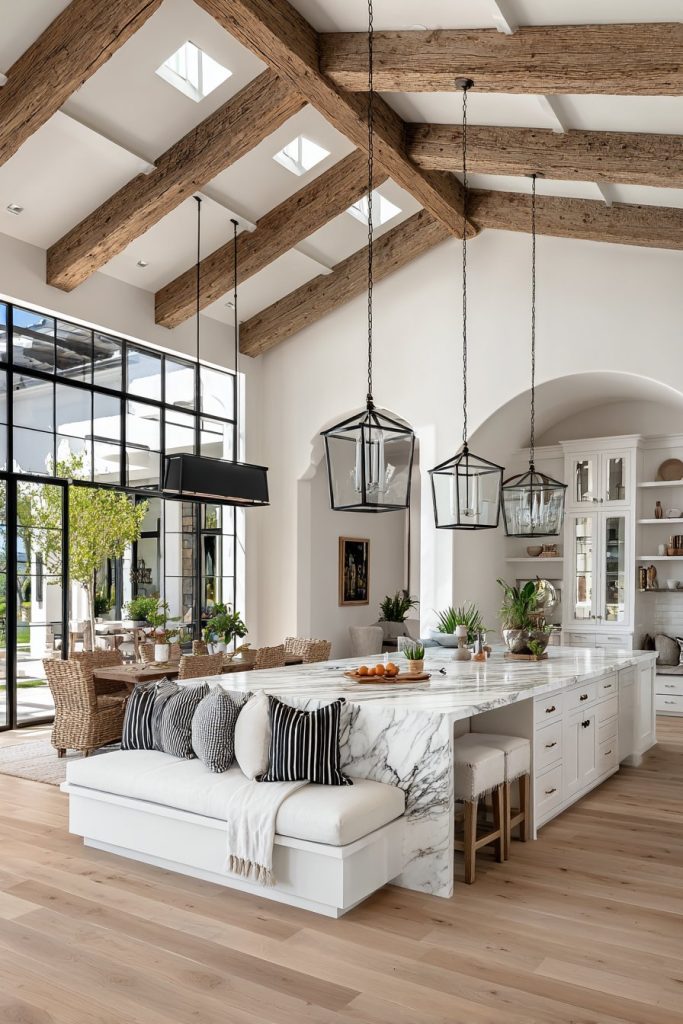
Pendant lights with sleek black metal frames create visual punctuation marks above the island, establishing a clear boundary between cooking and dining activities without erecting physical barriers. These fixtures serve dual purposes, providing task lighting for food preparation while creating intimate pools of light for casual meals. The strategic positioning of these pendants ensures optimal illumination for both functional and aesthetic purposes.
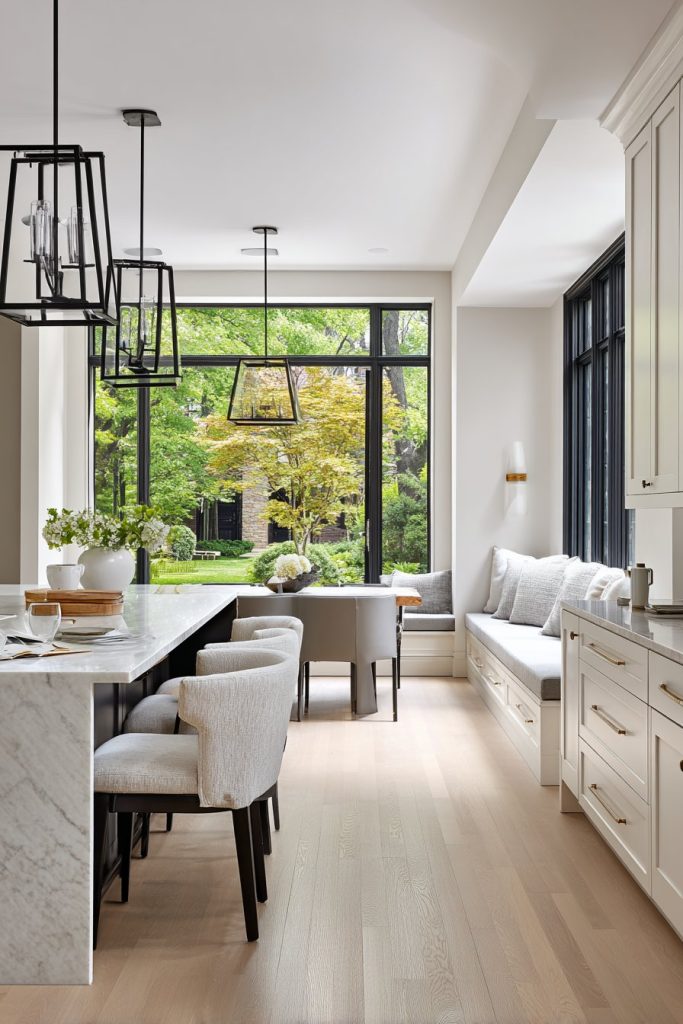
White cabinetry with warm brass hardware introduces timeless elegance while maintaining the clean, uncluttered aesthetic essential to modern design. The brass accents add warmth and sophistication, preventing the white surfaces from feeling cold or sterile. Built-in bench seating along one wall of the dining area maximizes seating capacity while maintaining the streamlined appearance that defines contemporary style.
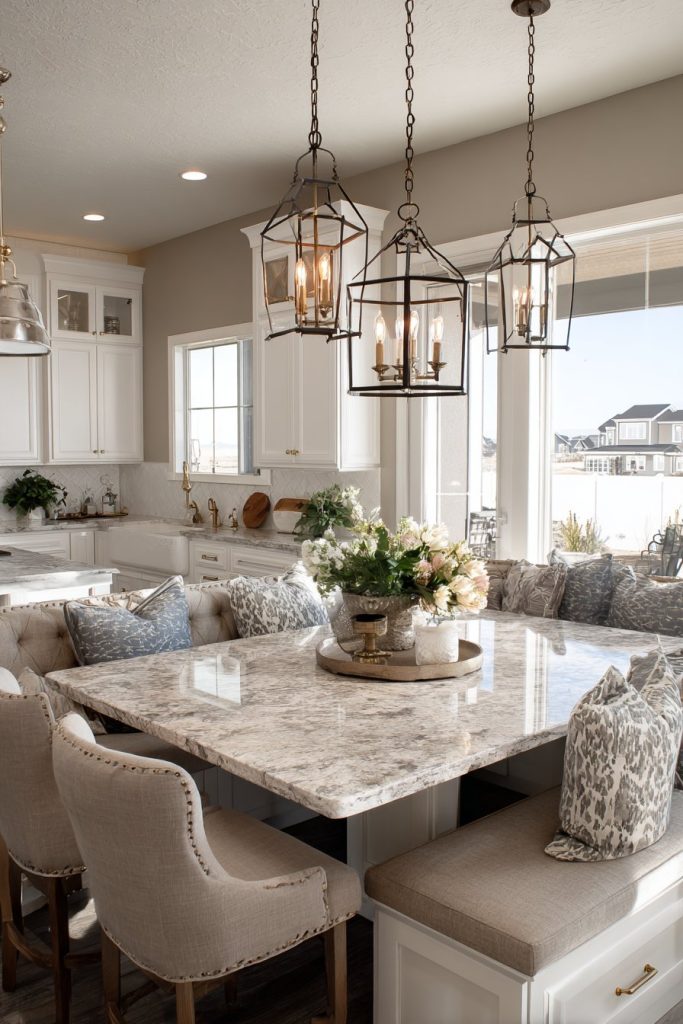
Natural light floods through expansive windows, creating dynamic patterns of light and shadow that change throughout the day. This abundant daylight reduces reliance on artificial lighting during daytime hours while highlighting the beautiful material choices and architectural details. The seamless flow between kitchen and dining areas promotes easy entertaining and family interaction.
Key Design Tips:
- Use a substantial island to anchor open-concept spaces while providing multiple functions
- Select pendant lighting that complements both task and ambient lighting needs
- Incorporate brass hardware to add warmth to white cabinetry
- Position built-in seating to maximize space efficiency without compromising style
- Emphasize natural light through strategic window placement and minimal window treatments
2. Compact Galley Kitchen with Efficient Dining Integration
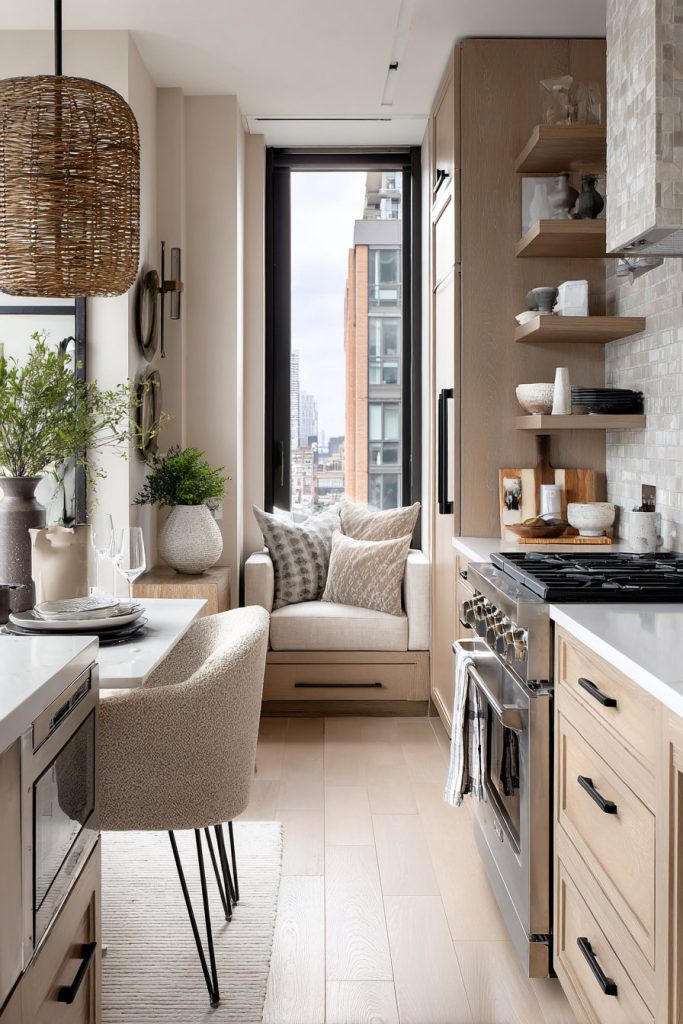
Small spaces demand creative solutions, and the galley kitchen with adjacent dining nook exemplifies intelligent space planning at its finest. This configuration transforms potential limitations into design opportunities by embracing the linear nature of galley layouts while creating a cozy dining environment that feels separate yet connected. The compact design maximizes every square inch without sacrificing style or functionality.
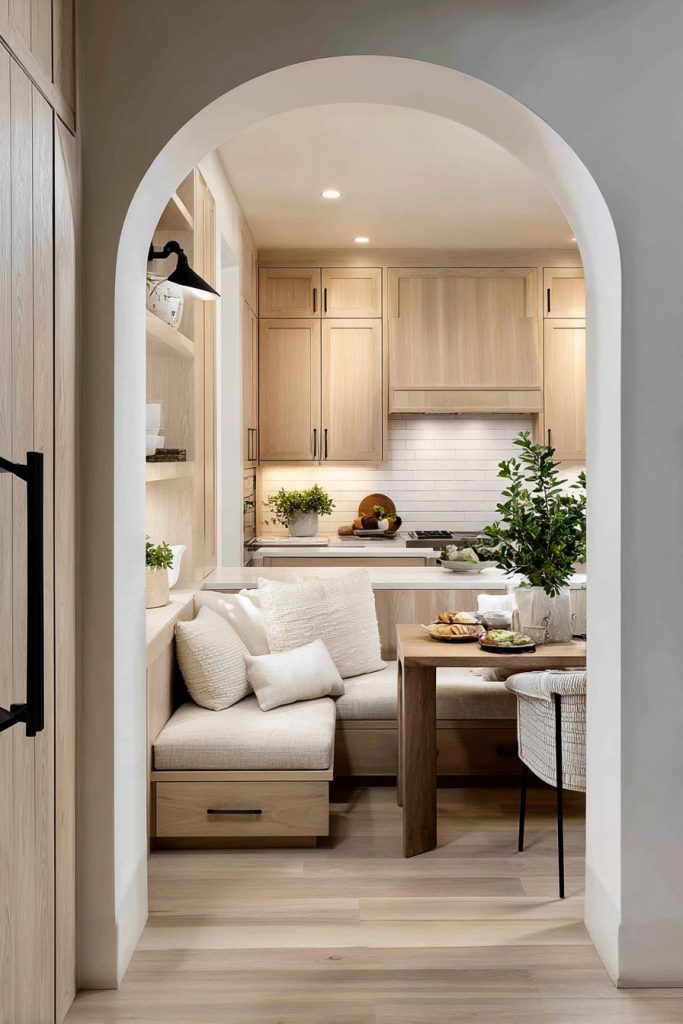
Light oak cabinetry extends floor to ceiling, providing abundant storage while maintaining visual lightness through its natural wood tones. The vertical emphasis of tall cabinets draws the eye upward, creating an illusion of greater height and spaciousness. Strategic placement of storage solutions ensures that every kitchen essential has its designated place, maintaining the clean, organized appearance essential in smaller spaces.
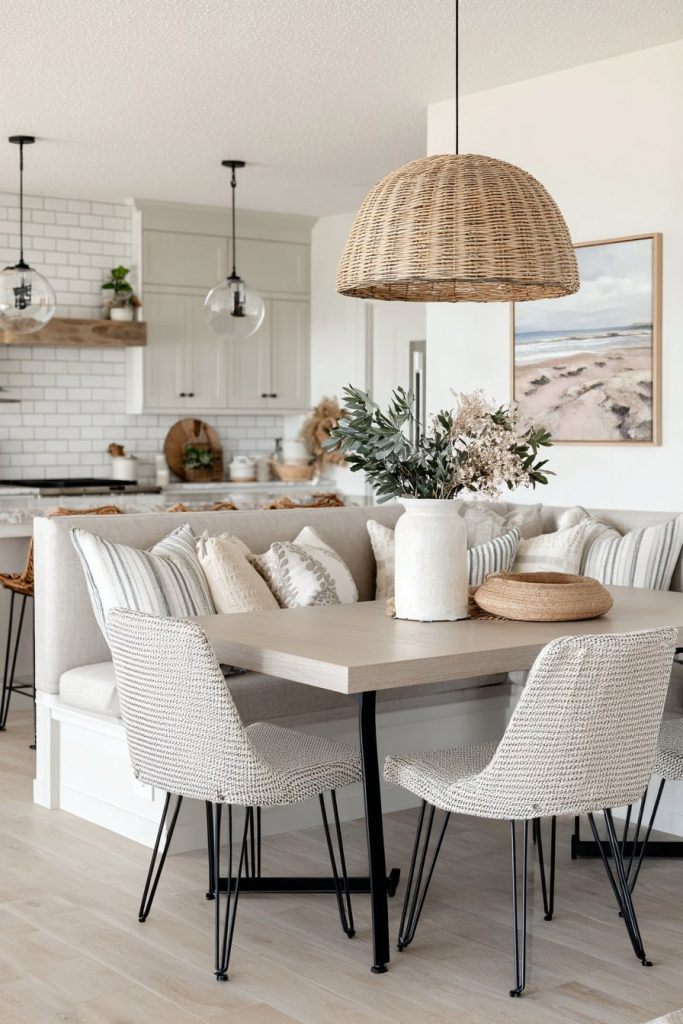
The narrow dining table with hairpin legs introduces mid-century modern style while maintaining the open, airy feeling crucial in compact areas. These slender metal legs create visual lightness, allowing light to flow freely underneath and around the table. Built-in banquette seating along one wall eliminates the need for individual chairs, saving valuable floor space while providing comfortable seating for family meals.
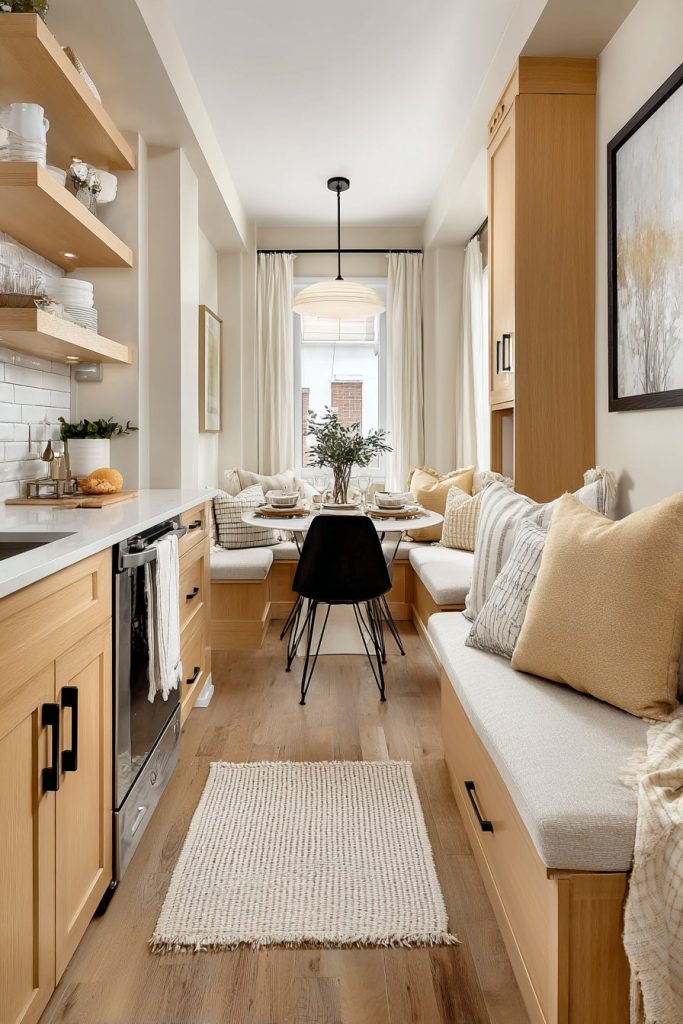
Subway tile backsplash in pristine white reflects available light throughout the space, brightening both kitchen and dining areas. This classic tile choice provides timeless appeal while serving the practical purpose of light reflection, essential in spaces where natural light may be limited. The clean lines of subway tile complement both the galley kitchen’s linear nature and the dining area’s streamlined aesthetic.
Key Design Tips:
- Maximize vertical storage with floor-to-ceiling cabinetry in light wood tones
- Choose furniture with slender profiles to maintain visual openness
- Install built-in seating to save floor space and create custom solutions
- Use light-colored backsplash materials to reflect and amplify available light
- Select narrow dining tables that accommodate daily needs without overwhelming the space
3. Authentic Farmhouse Charm with Rustic Character
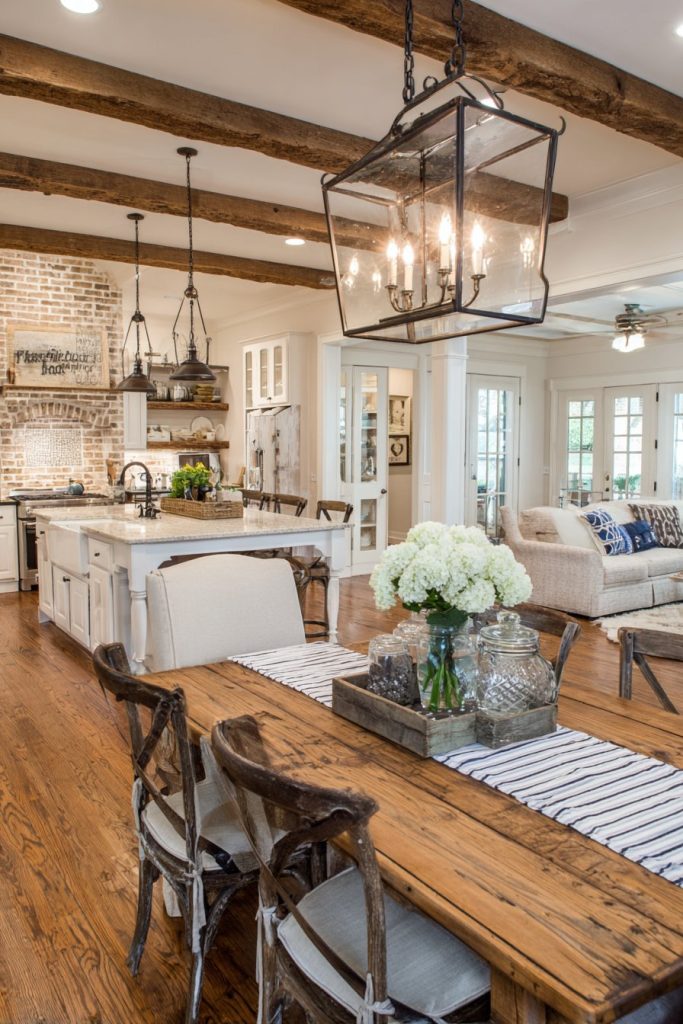
The farmhouse kitchen and dining room combination celebrates authentic rural traditions while creating spaces that feel both historical and thoroughly livable. This design approach embraces imperfection and patina as beautiful elements, creating environments that tell stories through carefully selected vintage pieces and time-worn materials. The large wooden farmhouse table serves as the undisputed centerpiece, its substantial presence commanding attention while providing generous space for family gatherings.
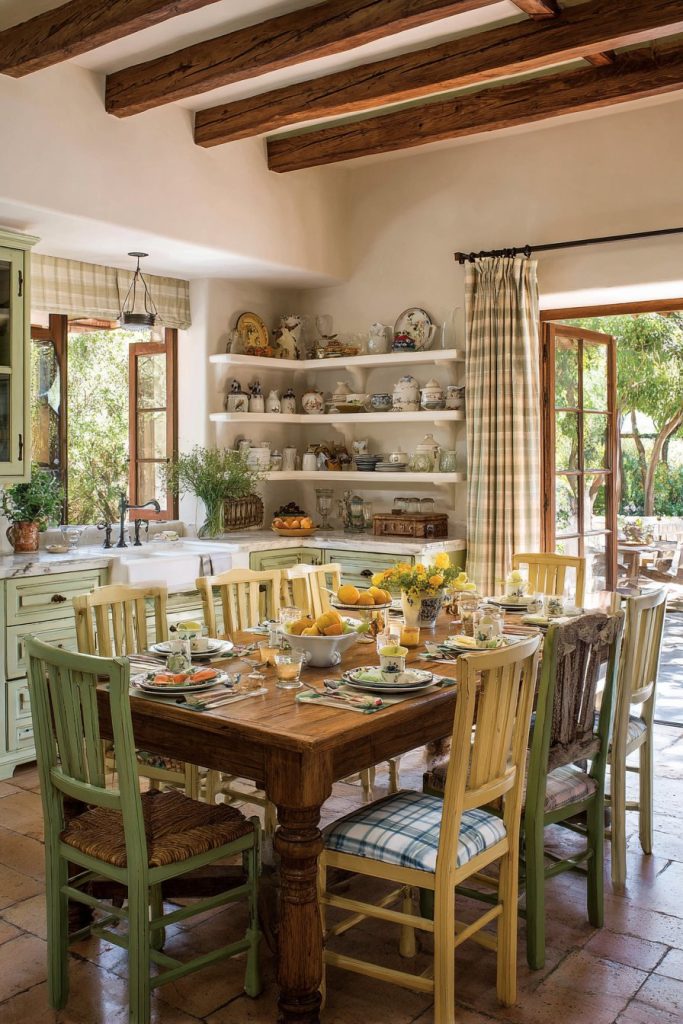
Mismatched vintage chairs surrounding the farmhouse table create visual interest while reflecting the collected-over-time aesthetic that defines authentic farmhouse style. Each chair contributes its own character and history, yet the overall composition feels intentional and harmonious. This approach to seating eliminates the predictability of matching sets while adding personality and charm that mass-produced furniture cannot provide.
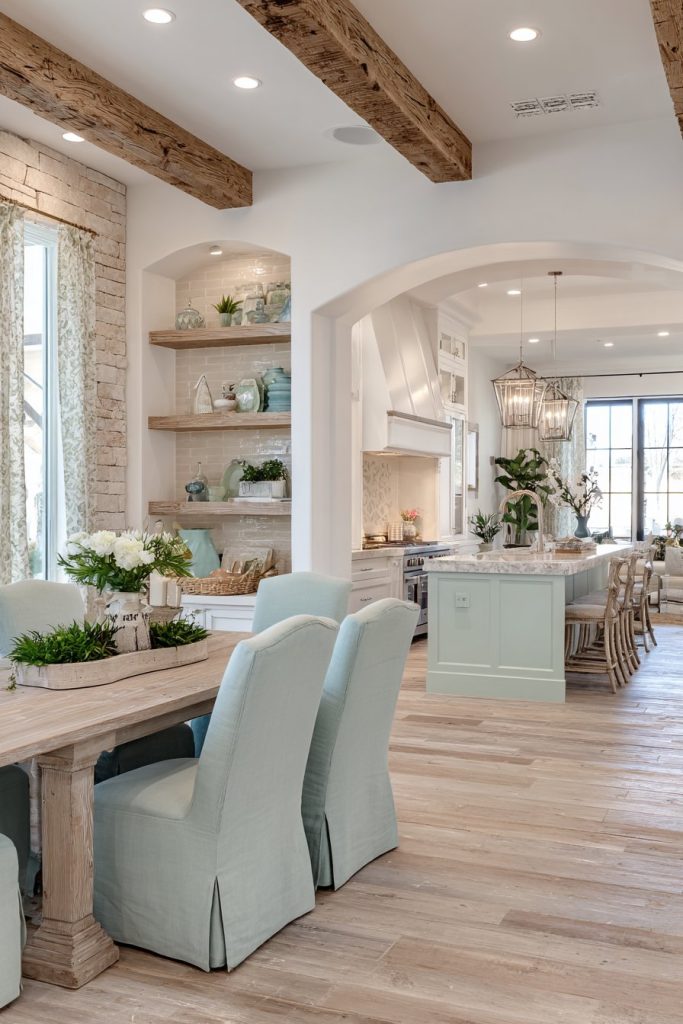
Open shelving throughout the kitchen displays beautiful ceramic dishes and practical mason jars, transforming everyday items into decorative elements. This storage solution reflects the farmhouse philosophy of functional beauty, where necessary items contribute to the overall aesthetic rather than being hidden away. The varied shapes, sizes, and textures of displayed items create visual rhythm and interest.
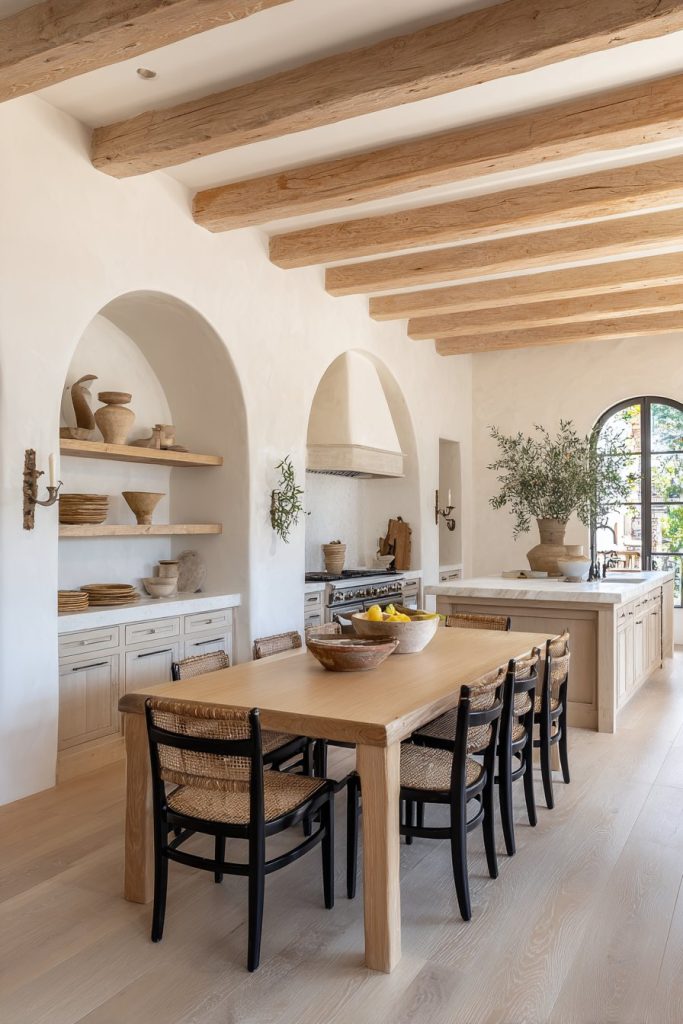
The classic apron-front sink anchors the kitchen workspace, its generous proportions accommodating large pots and serving pieces while providing authentic period detail. This sink style represents both form and function, offering practical advantages for food preparation and cleanup while serving as a focal point that reinforces the farmhouse theme. Exposed wooden beams overhead tie the spaces together structurally and visually, adding architectural interest while celebrating traditional building techniques.
Key Design Tips:
- Select a substantial farmhouse table as the dining room’s focal point and gathering place
- Mix vintage chairs for authentic character and visual interest
- Display functional items on open shelving to create decorative elements
- Install an apron-front sink for both practical benefits and period authenticity
- Expose structural elements like wooden beams to add architectural character
4. Contemporary Sophistication with Material Contrast
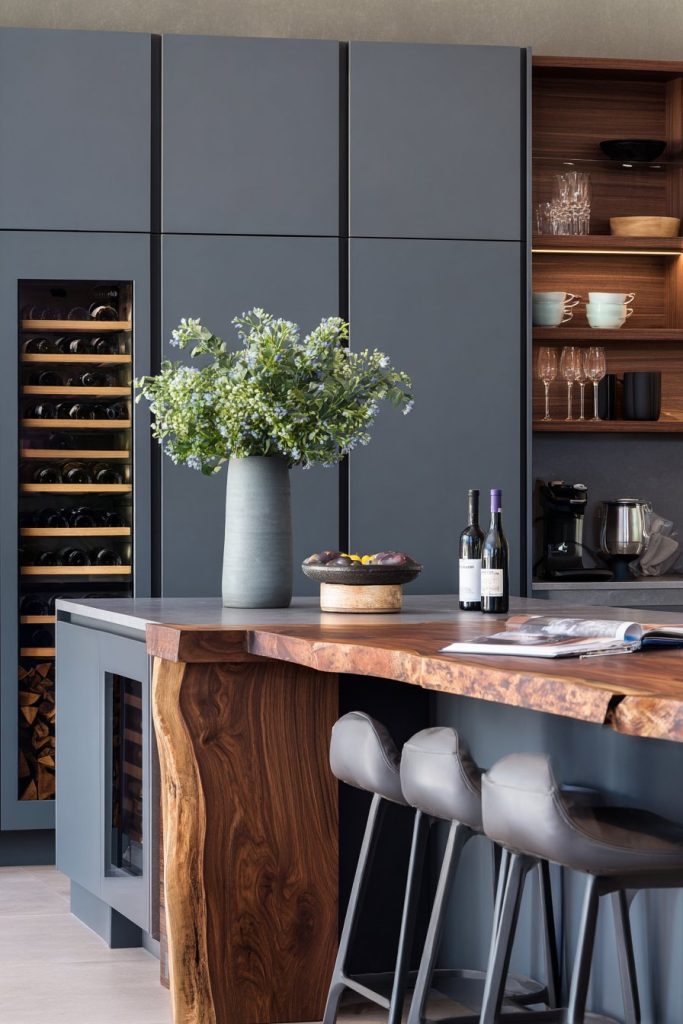
The contemporary kitchen and dining room design showcases sophisticated material choices and clean architectural lines that define modern luxury living. Sleek handleless cabinetry in rich matte charcoal creates dramatic visual weight while maintaining the minimalist aesthetic essential to contemporary style. This bold color choice provides striking contrast against lighter elements while offering practical benefits in terms of showing fewer fingerprints and wear marks.
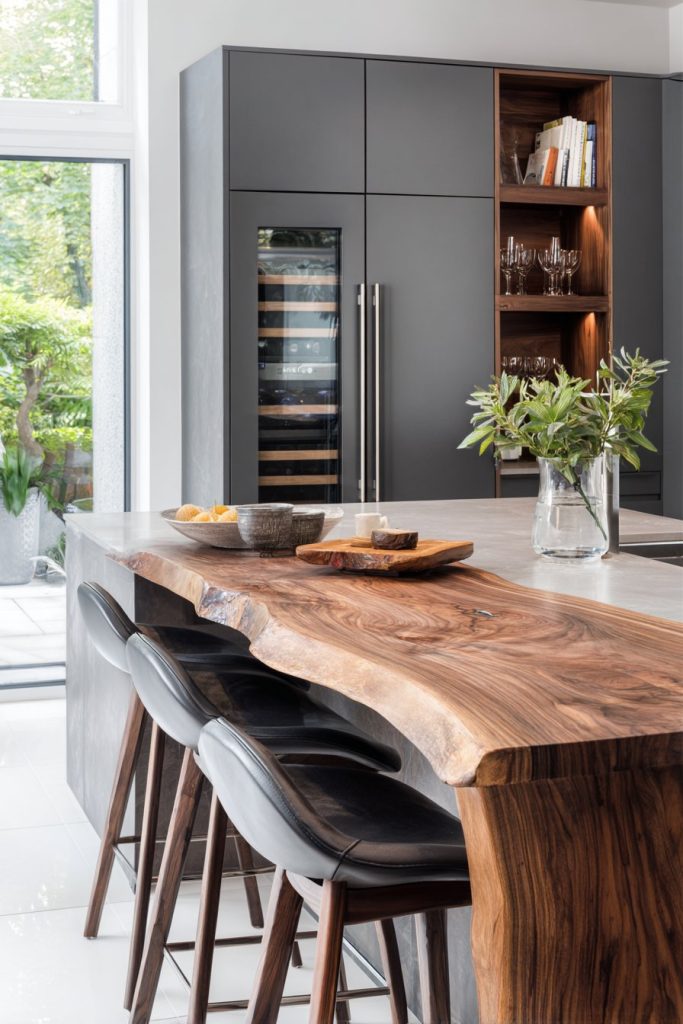
The live-edge walnut dining table introduces organic beauty and natural texture into the carefully controlled contemporary environment. This spectacular piece celebrates the inherent beauty of wood grain and natural edge characteristics, creating a stunning focal point that softens the space’s more geometric elements. The table’s substantial presence anchors the dining area while providing a warm counterpoint to the kitchen’s sleek surfaces.
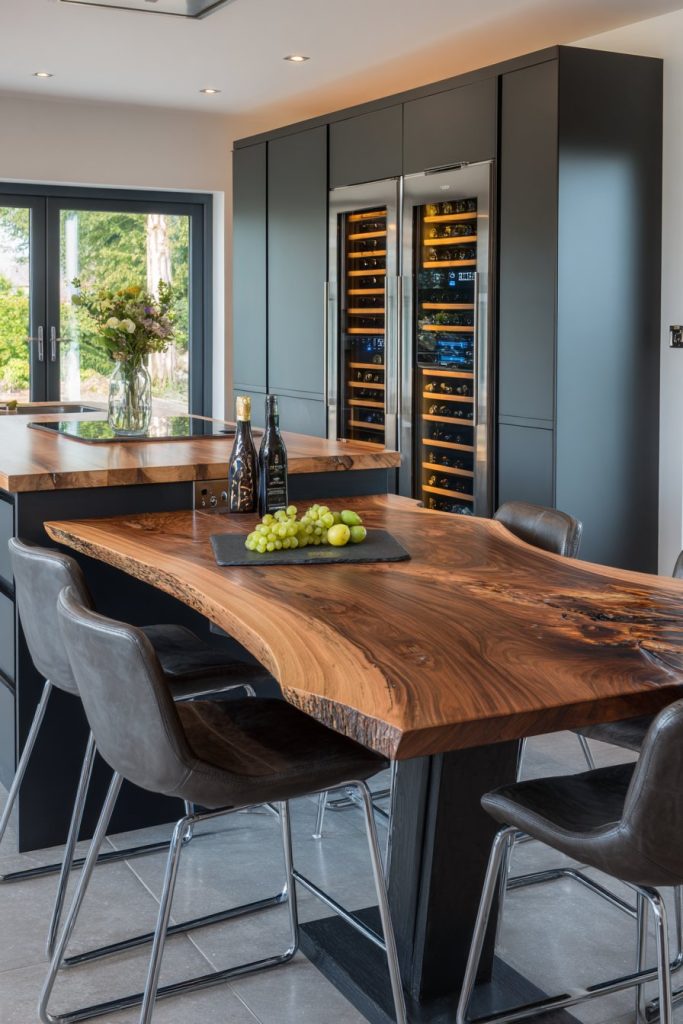
An integrated wine cooler within the kitchen island speaks to modern entertaining needs while maintaining the seamless appearance that defines contemporary design. This thoughtful inclusion eliminates the need for separate wine storage while keeping beverages at optimal serving temperature. The island extends to create a breakfast bar with modern bar stools, providing casual dining options and promoting easy interaction between kitchen and dining areas.
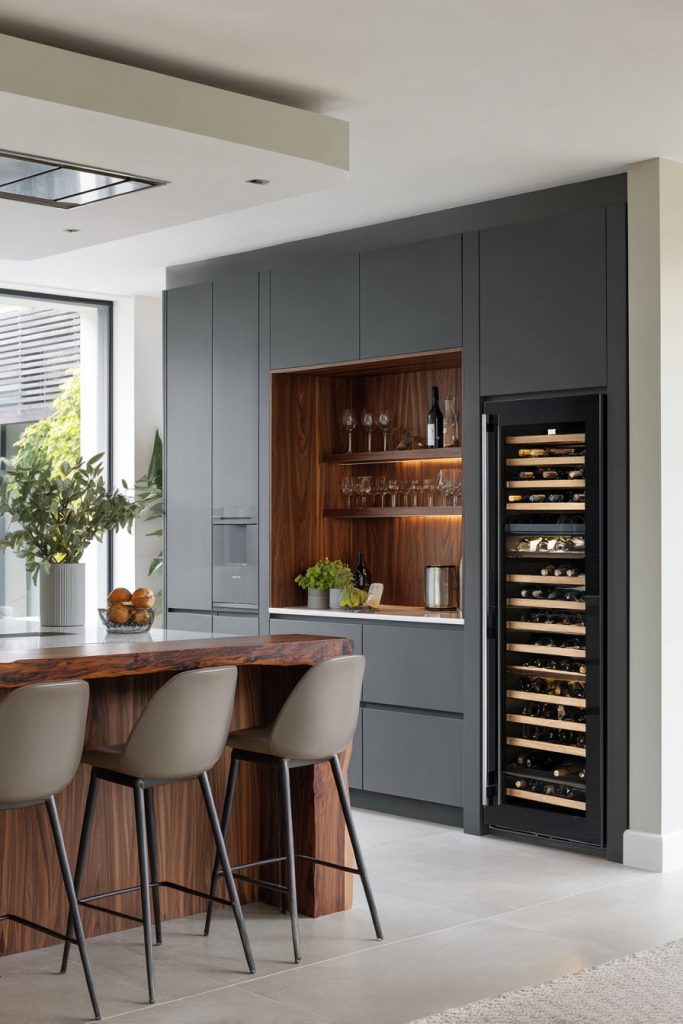
Large format porcelain tiles create visual continuity between kitchen and dining spaces while offering practical benefits in terms of maintenance and durability. These oversized tiles minimize grout lines, creating cleaner sight lines and easier maintenance. The sophisticated material palette combines natural wood grain with smooth contemporary surfaces, creating textural interest without compromising the clean aesthetic.
Key Design Tips:
- Choose handleless cabinetry in bold colors for dramatic contemporary impact
- Incorporate live-edge wood elements to add organic beauty to geometric spaces
- Integrate appliances like wine coolers to maintain seamless cabinet lines
- Extend islands to create casual dining and interaction opportunities
- Use large format tiles to minimize visual interruption and ease maintenance
5. Scandinavian Simplicity with Functional Beauty
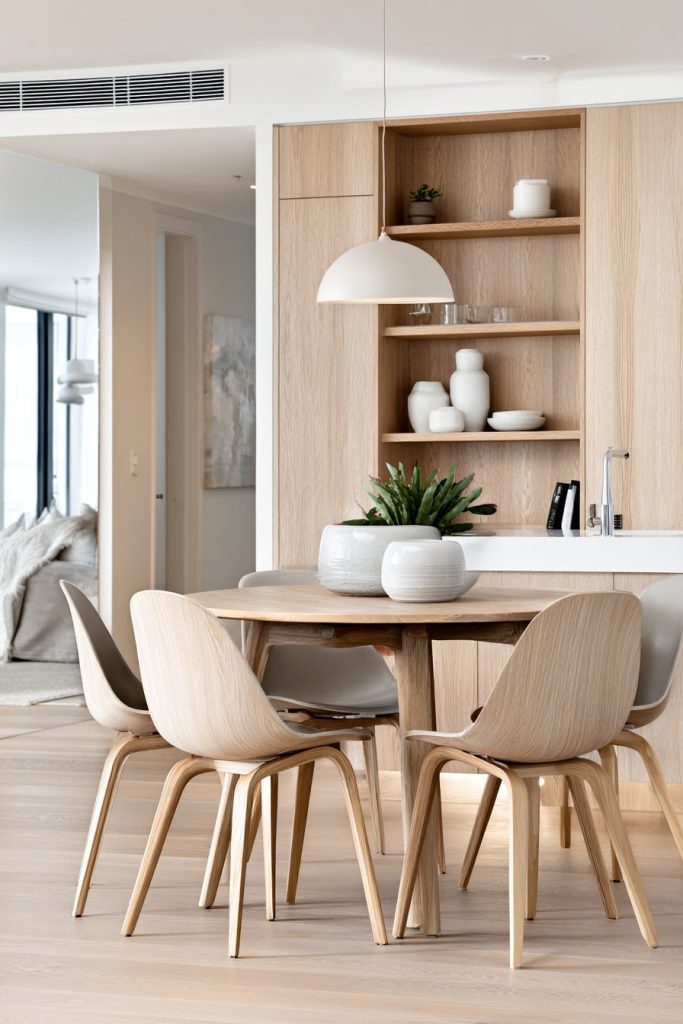
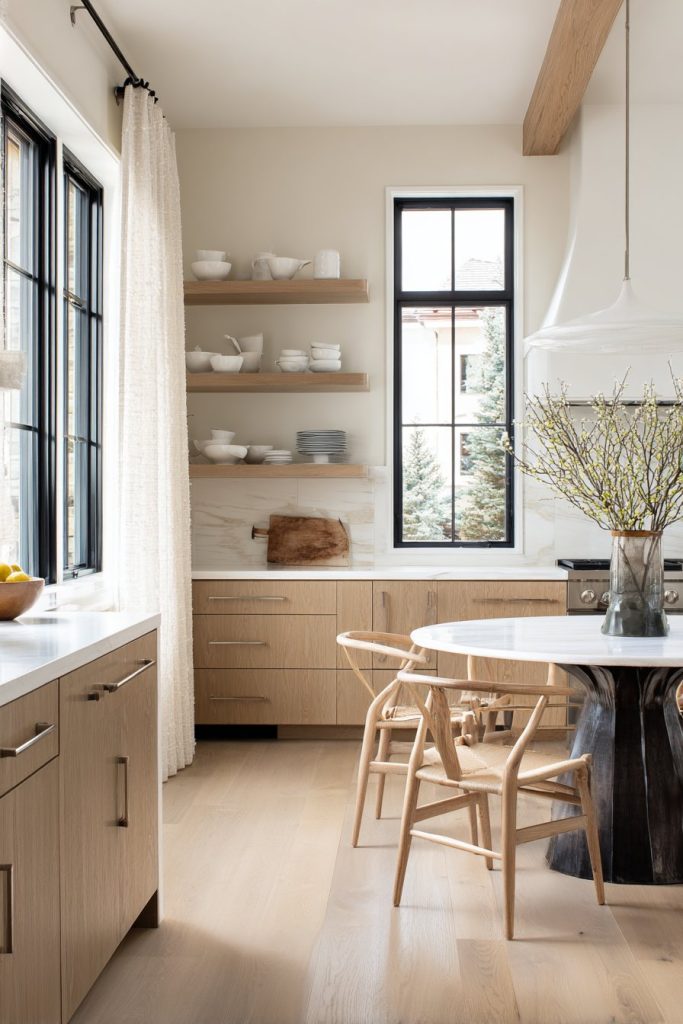
Scandinavian design principles create kitchen and dining spaces that embody the perfect balance of functionality and understated beauty. Light wood cabinetry throughout the kitchen establishes the foundation for this aesthetic, celebrating natural materials while providing abundant storage in clean, geometric forms. The pale wood tones create warmth without overwhelming the space, allowing other design elements to shine while maintaining the serene atmosphere essential to Scandinavian style.
The round dining table in matching pale oak promotes intimate conversation and creates a softer counterpoint to the kitchen’s linear elements. Round tables naturally encourage social interaction while taking up less visual space than rectangular alternatives. This shape choice reflects Scandinavian values of simplicity and functionality, providing maximum seating capacity in minimal floor space while creating a more fluid traffic flow around the dining area.
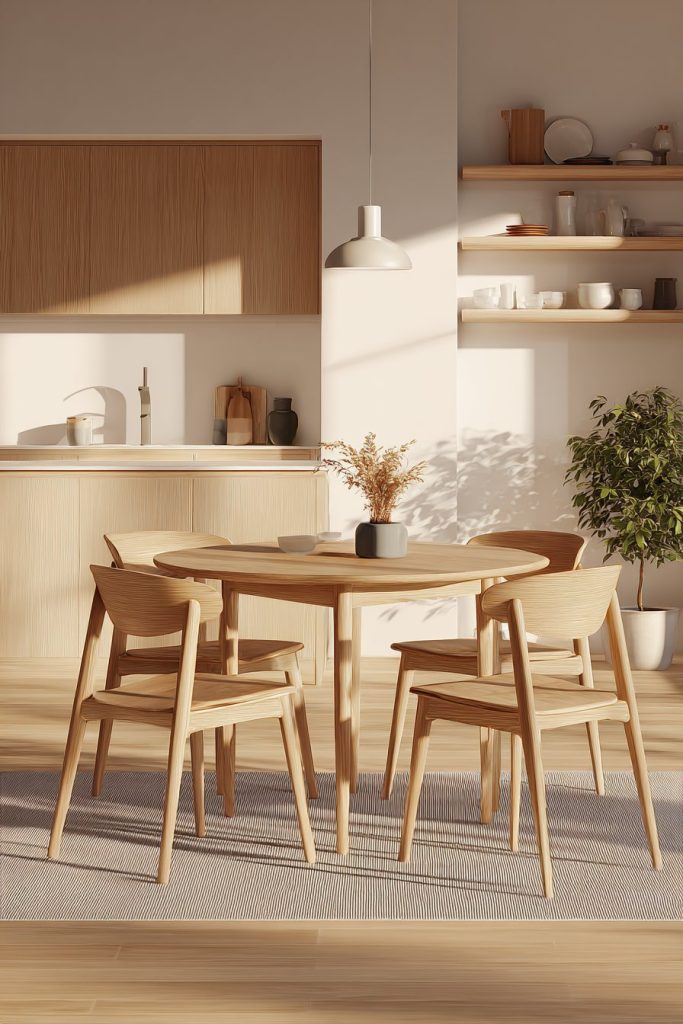
Minimal upper cabinetry paired with extensive open shelving creates the light, airy feeling that defines Scandinavian interiors. This approach reduces visual weight while displaying beautiful white ceramics that contribute to the overall aesthetic. The carefully curated display of simple, functional pottery reflects the Scandinavian appreciation for beautiful everyday objects and the philosophy that utilitarian items can also serve decorative purposes.
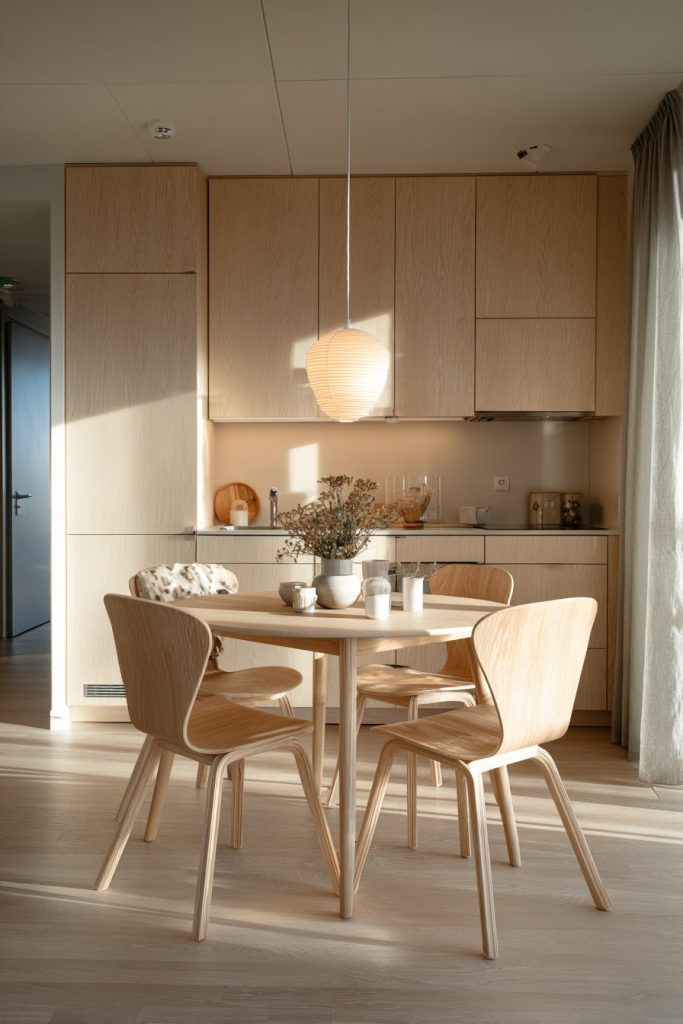
A single pendant light over the dining table creates intimate ambiance while maintaining the minimalist aesthetic. This restrained approach to lighting reflects Scandinavian design principles that favor quality over quantity. The fixture provides focused illumination for dining while contributing to the overall design without overwhelming the space with unnecessary decorative elements.
Key Design Tips:
- Select light wood cabinetry to create warmth while maintaining visual lightness
- Choose round dining tables to promote conversation and improve traffic flow
- Minimize upper cabinetry in favor of open shelving for an airy feeling
- Display simple white ceramics to reinforce clean, functional aesthetics
- Use single statement light fixtures rather than multiple decorative elements

6. Industrial Loft Character with Raw Materials
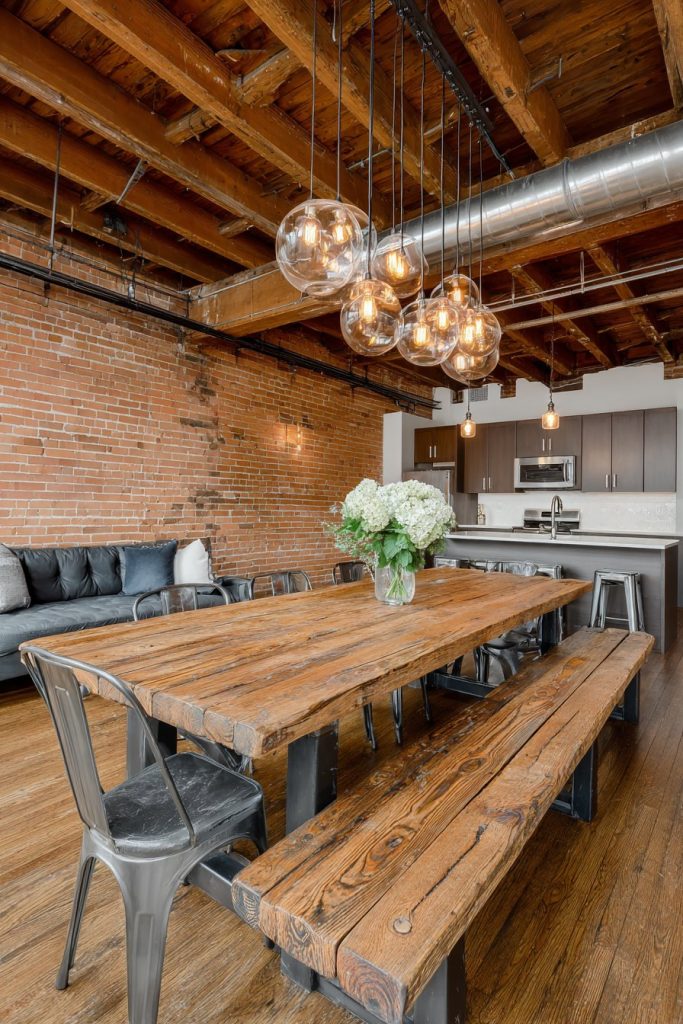
The industrial kitchen and dining room design celebrates the beauty of raw materials and utilitarian aesthetics within converted loft spaces. Exposed brick walls provide textural richness and historical character that cannot be replicated in new construction. These weathered surfaces tell stories of previous industrial uses while creating warm, earthy backdrops that ground the space and provide visual interest through their varied textures and color variations.
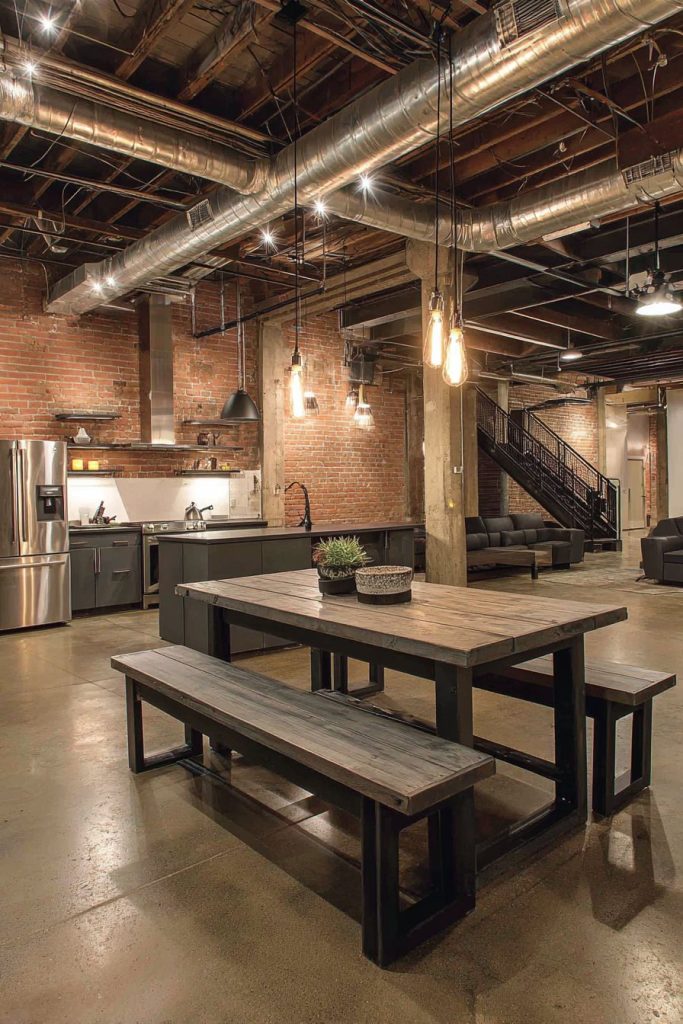
Steel beam ceilings embrace the structural realities of industrial buildings while adding dramatic architectural elements that define the space’s character. These exposed structural components celebrate honest construction while providing opportunities for creative lighting solutions. The interplay between the warm brick walls and cool steel elements creates visual tension that energizes the entire space.
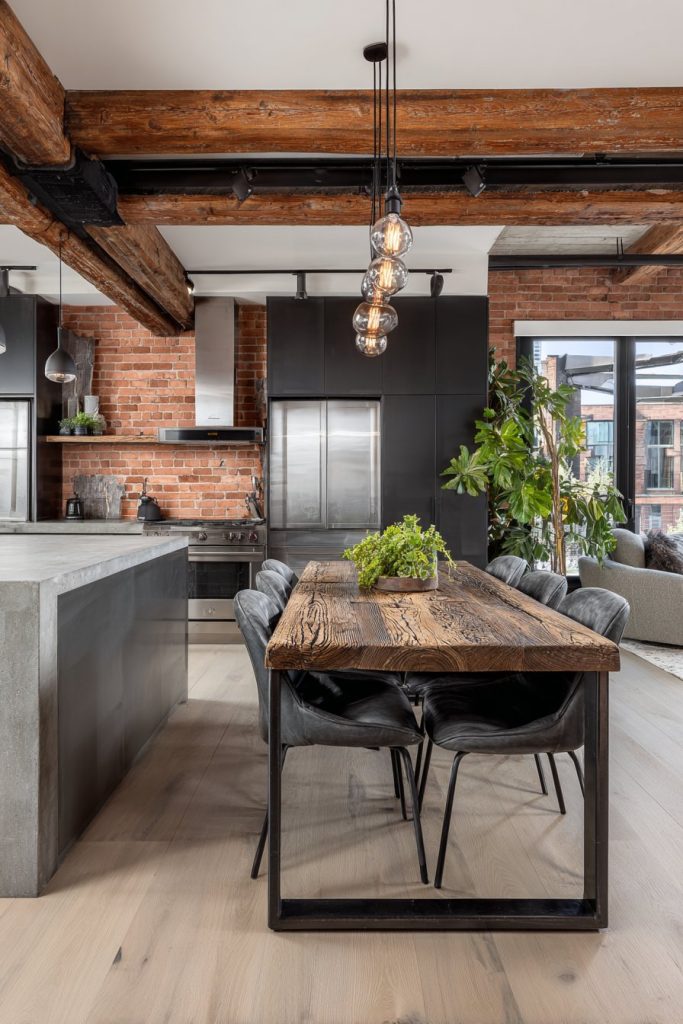
Stainless steel appliances and concrete countertops reinforce the industrial theme while providing practical surfaces that can withstand heavy use. These material choices reflect the utilitarian nature of industrial design while offering modern functionality. The concrete surfaces develop beautiful patina over time, adding to the authentic industrial character while providing durable work surfaces for serious cooking endeavors.
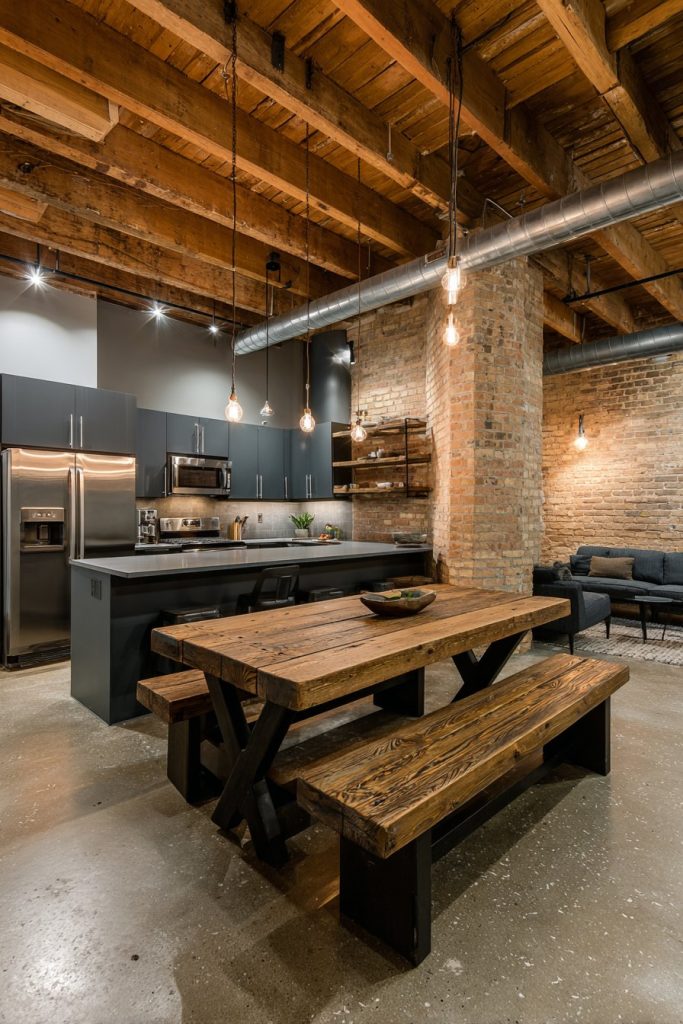
The reclaimed wood dining table with metal legs bridges old and new industrial elements, celebrating salvaged materials while providing contemporary functionality. This combination of aged wood and industrial metal creates a focal point that embodies the industrial aesthetic’s appreciation for honest materials and functional beauty. Edison bulb fixtures throughout the space provide warm ambient lighting that softens the harder industrial elements while maintaining period authenticity.
Key Design Tips:
- Celebrate exposed brick walls as textural focal points and historical elements
- Embrace structural steel beams as architectural features rather than hiding them
- Choose industrial materials like concrete and stainless steel for authenticity
- Combine reclaimed wood with metal elements for authentic industrial character
- Use Edison bulb lighting to add warmth while maintaining industrial authenticity
7. Transitional Balance with Timeless Appeal
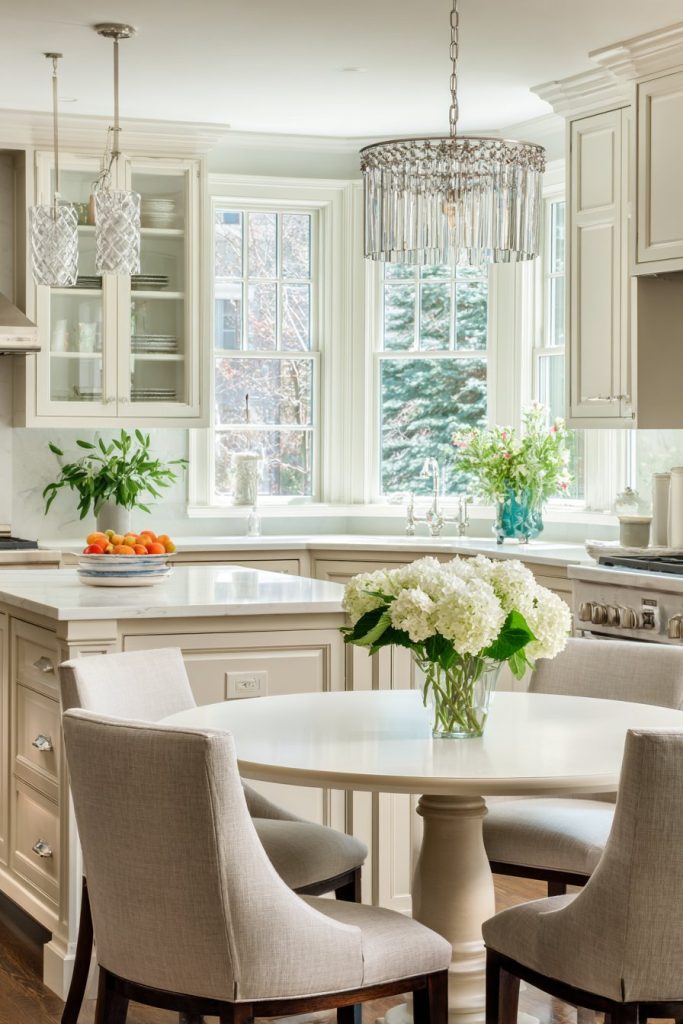
Transitional design creates kitchen and dining spaces that successfully bridge traditional and contemporary aesthetics, resulting in environments that feel both current and timeless. The large center island with integrated seating serves multiple functions while creating a natural bridge between kitchen and dining areas. This substantial piece provides workspace, storage, and casual dining opportunities while maintaining sight lines between the two spaces.
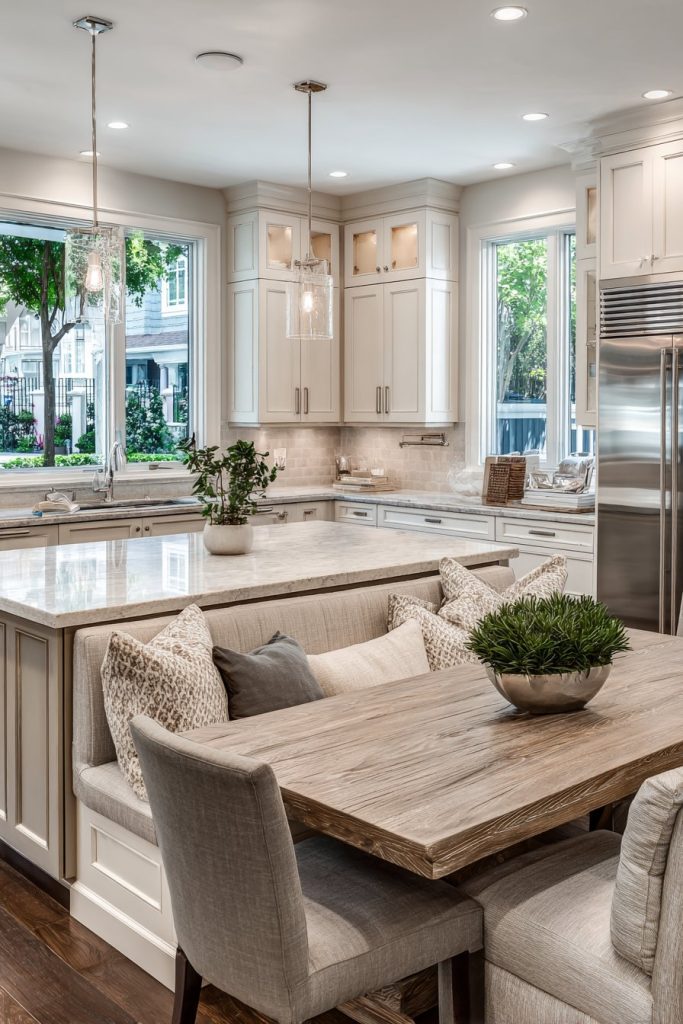
Cream-colored cabinetry with traditional panel doors establishes classic proportions and detailing while maintaining neutrality that works with various decorating styles. These warm, creamy tones provide a sophisticated backdrop that complements both traditional and contemporary furnishings. The panel door construction adds visual interest and traditional character without overwhelming the space with excessive ornamentation.
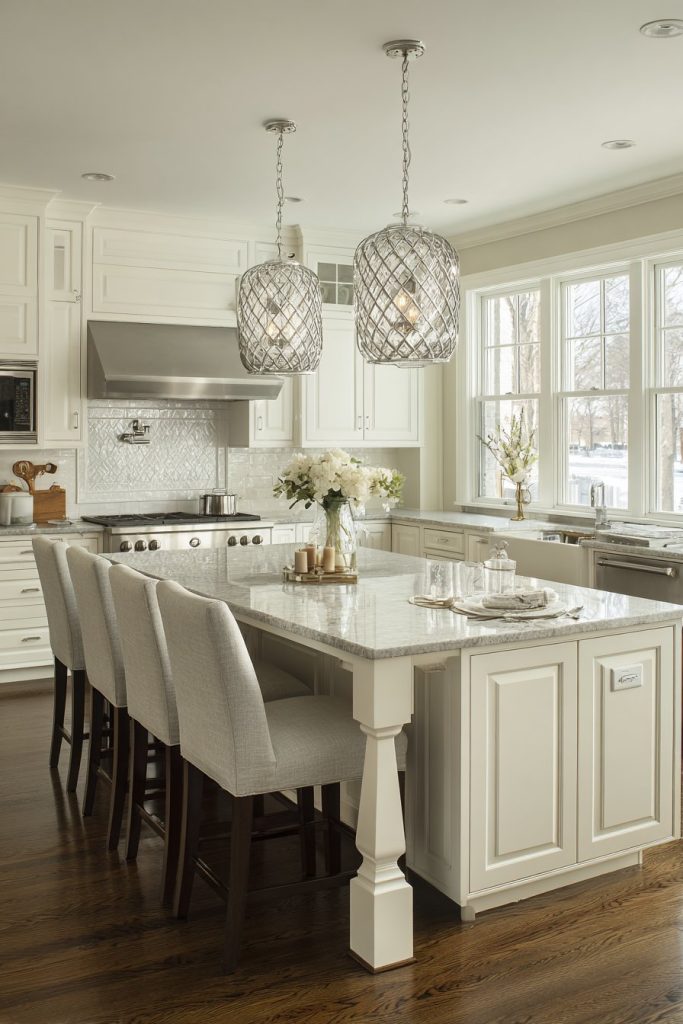
Contemporary stainless steel appliances introduce modern functionality while maintaining clean lines that don’t compete with traditional cabinetry details. This combination of old and new elements exemplifies successful transitional design, where modern conveniences integrate seamlessly with classic aesthetic elements. The stainless steel surfaces provide practical durability while reflecting light throughout the space.
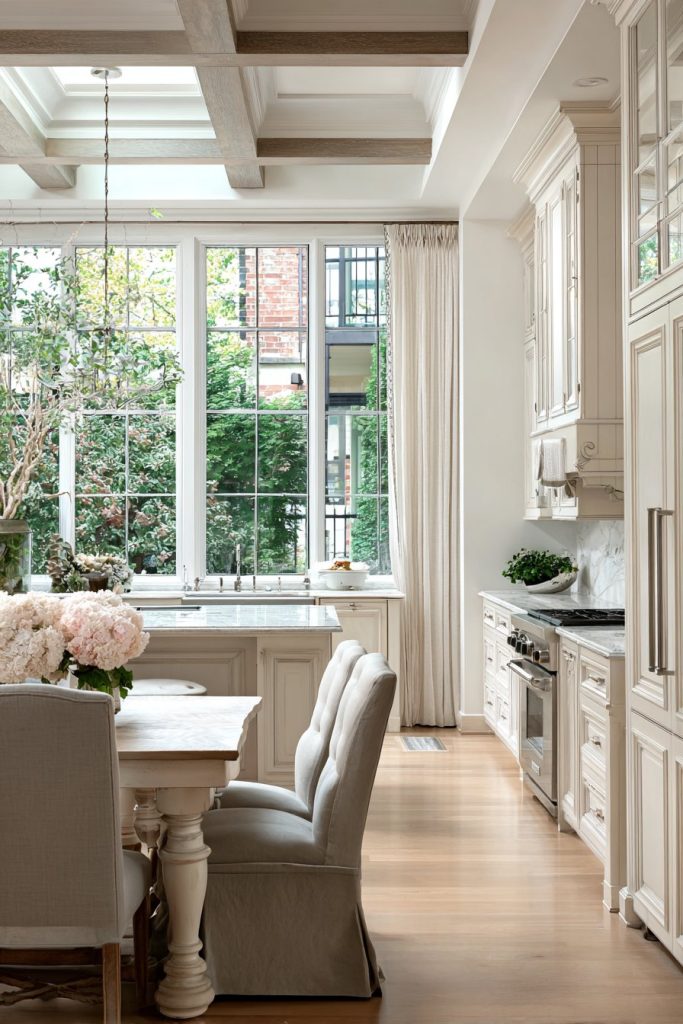
The classic pedestal dining table with upholstered chairs creates a formal dining environment that complements the kitchen’s transitional aesthetic. The pedestal base maximizes legroom while providing visual lightness, and upholstered chairs add comfort and softness to balance harder kitchen surfaces. Neutral tones throughout maintain cohesion while allowing flexibility in decorative accessories and seasonal changes.
Key Design Tips:
- Use substantial islands to bridge kitchen and dining areas functionally and visually
- Combine traditional cabinetry details with contemporary appliances for balanced style
- Choose neutral color palettes that work with both traditional and modern elements
- Select classic furniture pieces that provide timeless appeal and lasting value
- Incorporate upholstered seating to add comfort and visual softness
8. Mediterranean Warmth with Artisanal Details
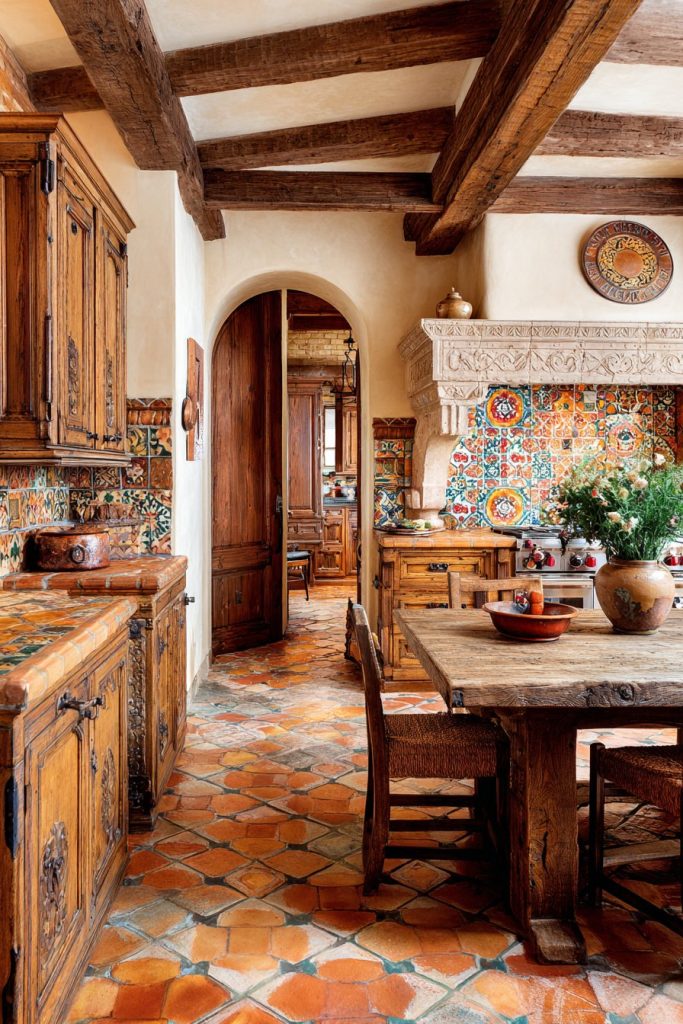
Mediterranean-inspired kitchen and dining rooms evoke the warmth and craftsmanship of coastal European living through carefully selected materials and artisanal details. Terracotta tile flooring establishes an authentic foundation that provides both beauty and practicality in kitchen environments. These earthy tiles develop beautiful patina over time while providing slip-resistant surfaces that can withstand kitchen spills and heavy traffic.
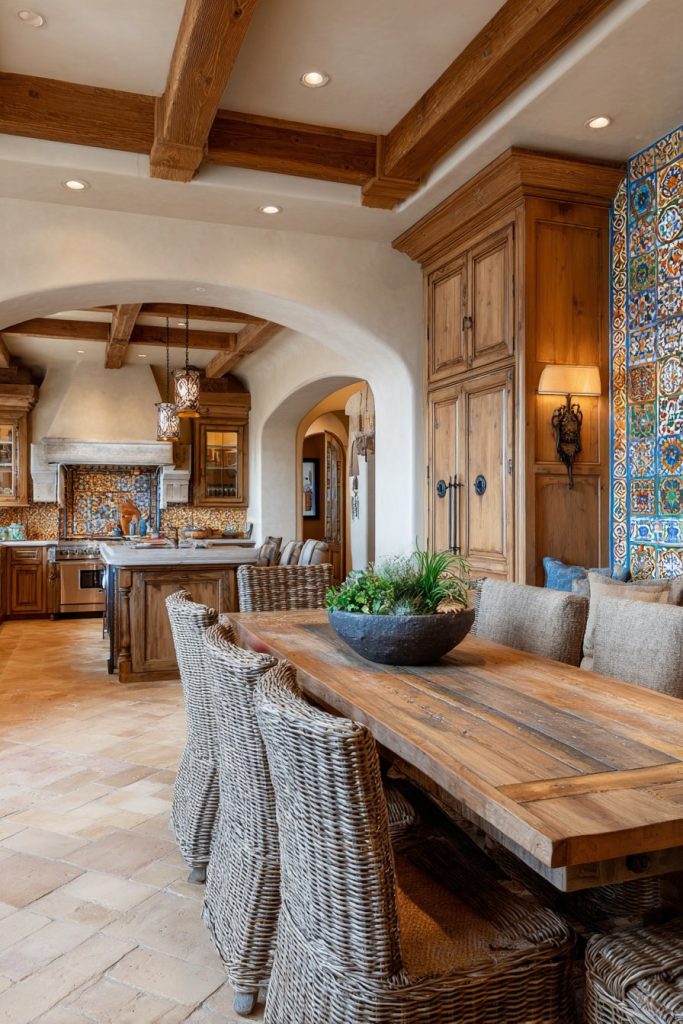
Warm wood cabinetry featuring decorative corbels and wrought iron hardware introduces Old World craftsmanship details that distinguish Mediterranean style from other design approaches. These hand-forged hardware pieces and carved wooden supports reflect traditional building techniques while providing functional beauty. The rich wood tones create warmth and depth that complement the terracotta flooring and other Mediterranean elements.
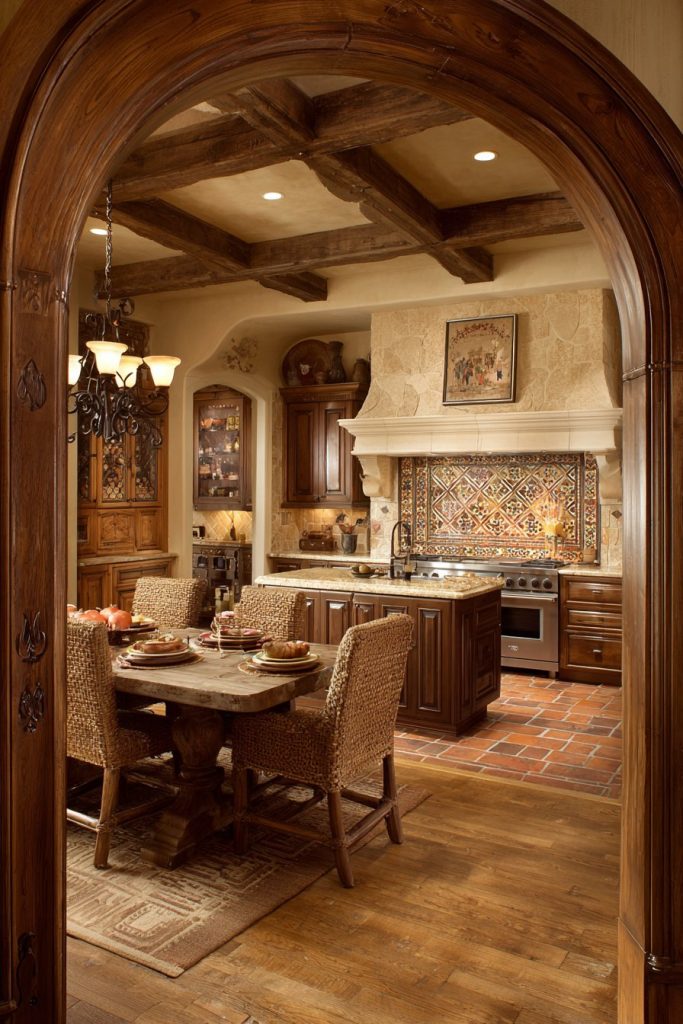
The dining table crafted from reclaimed wood with rustic finish celebrates the Mediterranean appreciation for materials that show their age and history. Surrounded by woven rush-seat chairs, this combination creates casual elegance that invites long, leisurely meals. The natural materials and handcrafted construction reflect Mediterranean values of authenticity and connection to traditional craftsmanship.
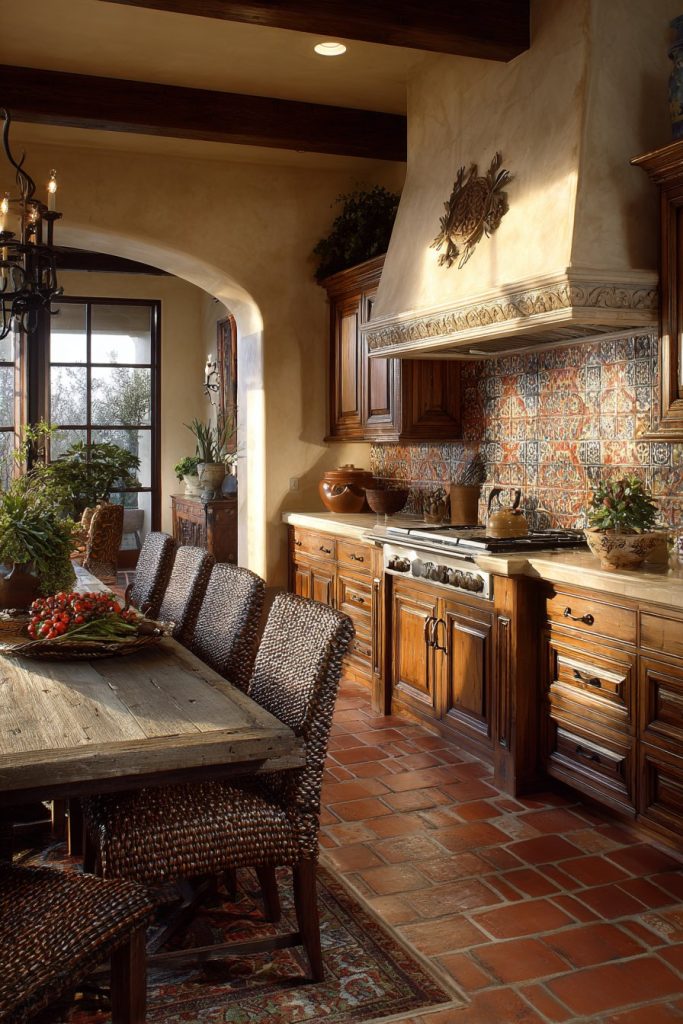
Hand-painted ceramic tiles creating a colorful backsplash behind the range serve as functional art that protects walls while adding personality and cultural authenticity. These artisanal tiles often feature traditional patterns and motifs that have been passed down through generations, creating connections to Mediterranean heritage and craftsmanship traditions.
Key Design Tips:
- Install terracotta tile flooring for authentic Mediterranean character and durability
- Incorporate decorative corbels and hand-forged hardware for Old World charm
- Choose reclaimed wood furniture to celebrate materials with history and patina
- Add hand-painted ceramic tiles as functional art elements
- Select natural fiber furnishings like rush-seat chairs for authentic texture
9. Minimalist Serenity with Pure Forms
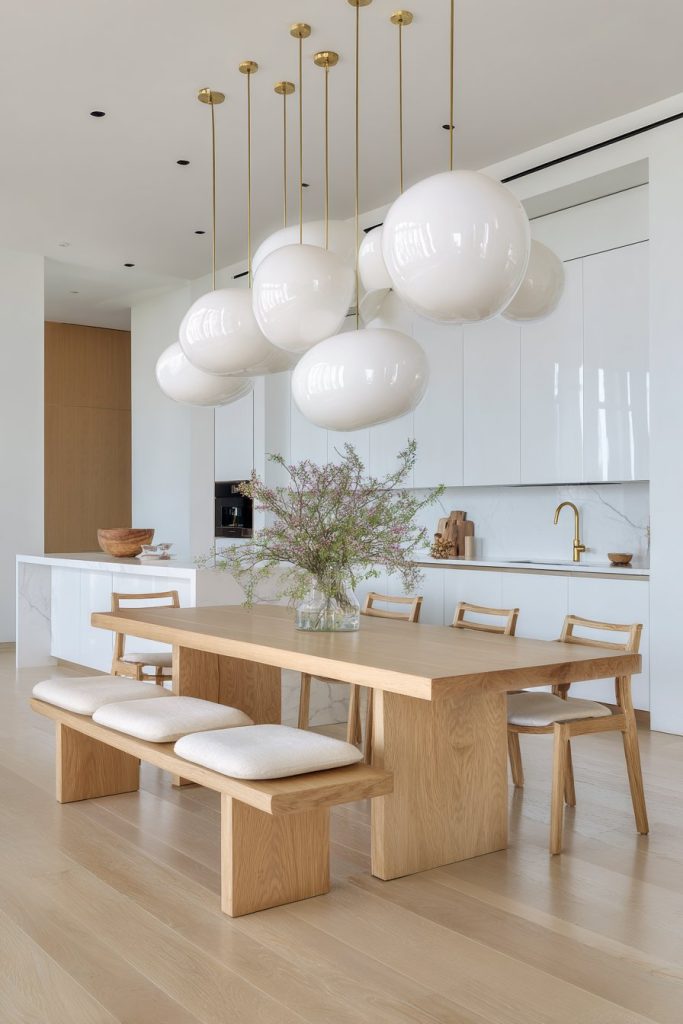
Minimalist kitchen and dining design creates serene environments through careful editing and emphasis on pure forms and clean lines. White cabinetry with integrated handles eliminates visual clutter while providing abundant storage in sleek, uninterrupted surfaces. This handle-free approach requires precise engineering and high-quality hardware but results in cabinet faces that appear as continuous planes rather than collections of individual doors and drawers.
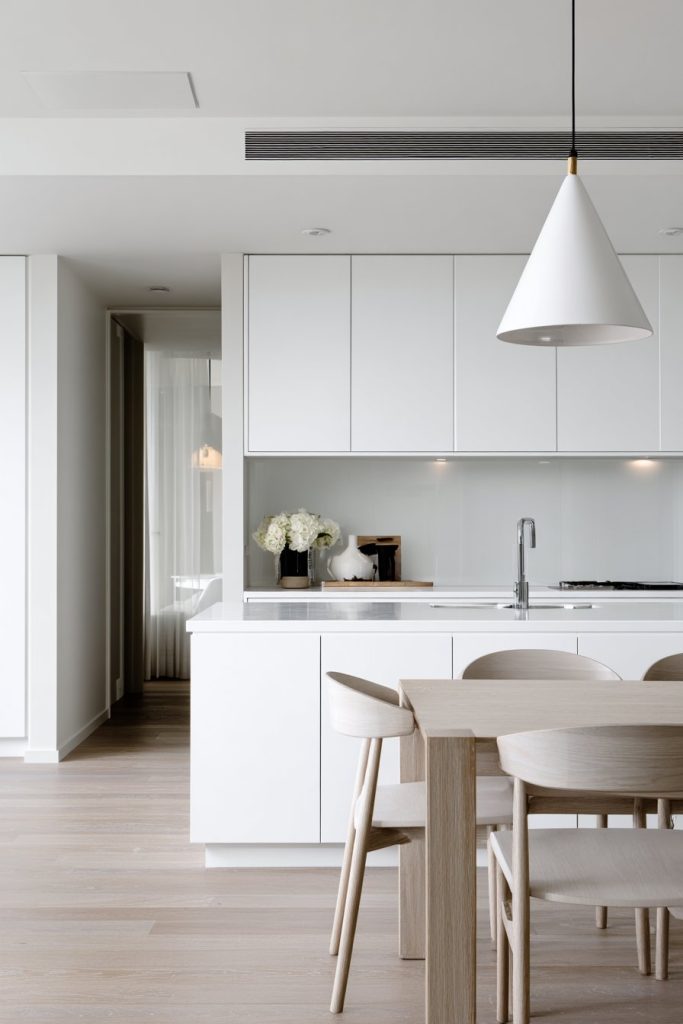
The simple rectangular dining table in light oak introduces natural warmth while maintaining the geometric clarity essential to minimalist design. This straightforward form provides maximum function without unnecessary ornamentation, embodying minimalist principles that celebrate honest materials and purposeful design. The light oak finish complements the white cabinetry while adding organic warmth to prevent the space from feeling cold or sterile.
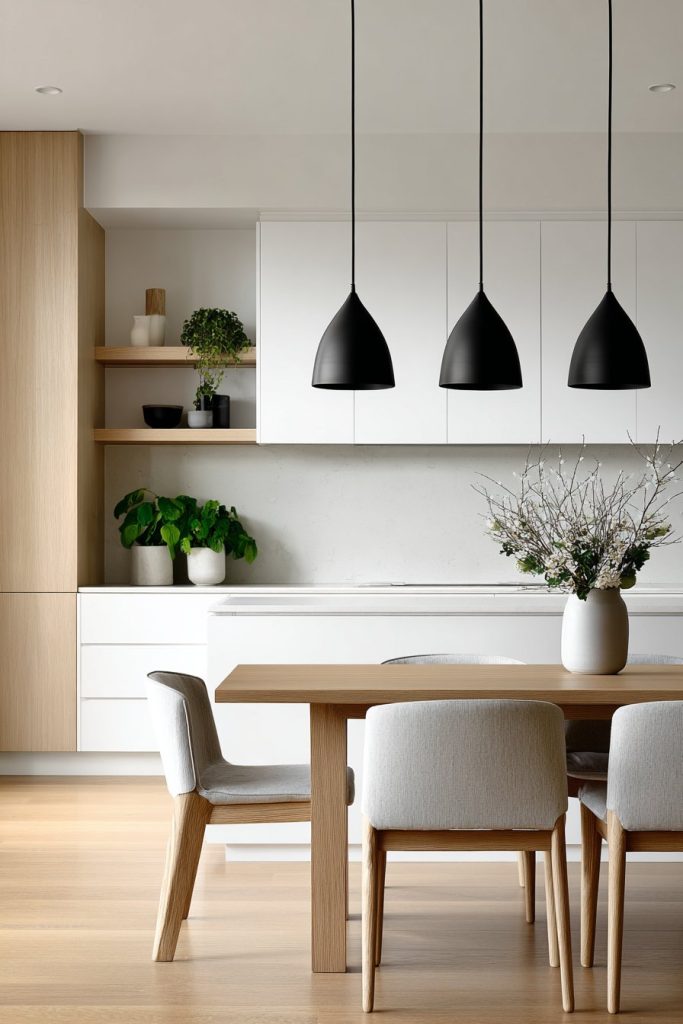
Concealed storage solutions throughout the kitchen maintain the clean aesthetic by hiding necessary items while keeping them easily accessible. This approach requires careful planning and investment in quality storage systems but results in spaces that feel calm and uncluttered. The seamless quartz countertop contributes to the clean aesthetic while providing durable, low-maintenance work surfaces.
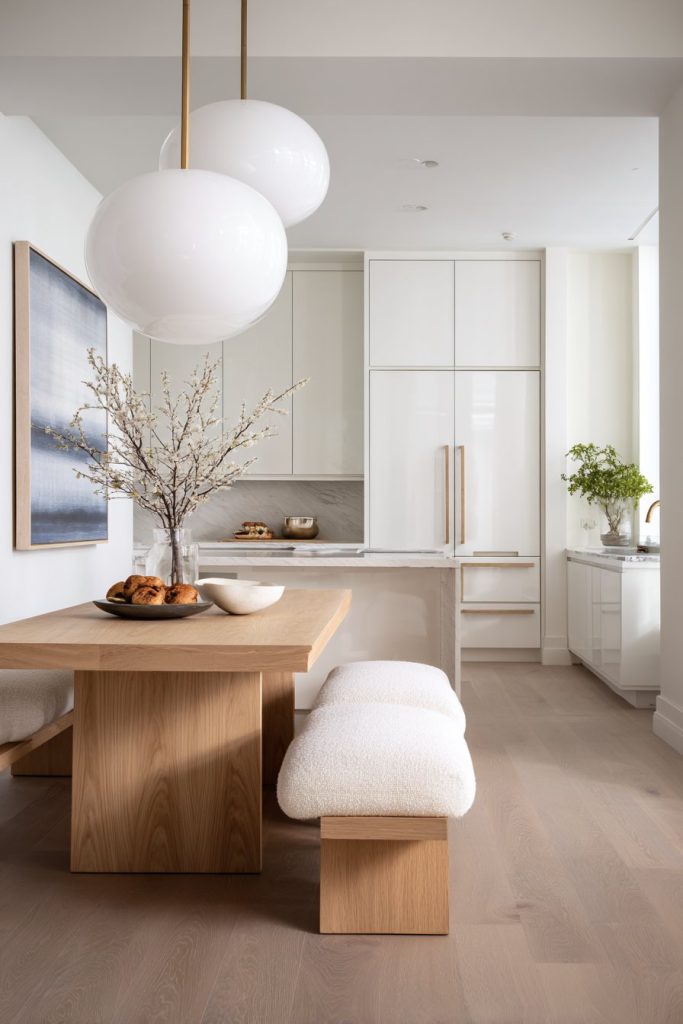
Pendant lights with simple geometric forms provide focused task lighting without introducing unnecessary decorative elements. These fixtures exemplify minimalist design principles by performing their function beautifully without calling attention to themselves. The geometric simplicity of these lights complements the overall design while providing adequate illumination for both cooking and dining activities.
Key Design Tips:
- Choose integrated cabinet handles to eliminate visual clutter and create clean lines
- Select furniture with simple geometric forms that emphasize function over decoration
- Invest in concealed storage solutions to maintain uncluttered appearances
- Use seamless countertop materials for continuous, uninterrupted surfaces
- Select lighting fixtures with simple geometric forms that provide function without decoration
10. Eclectic Collection with Curated Character
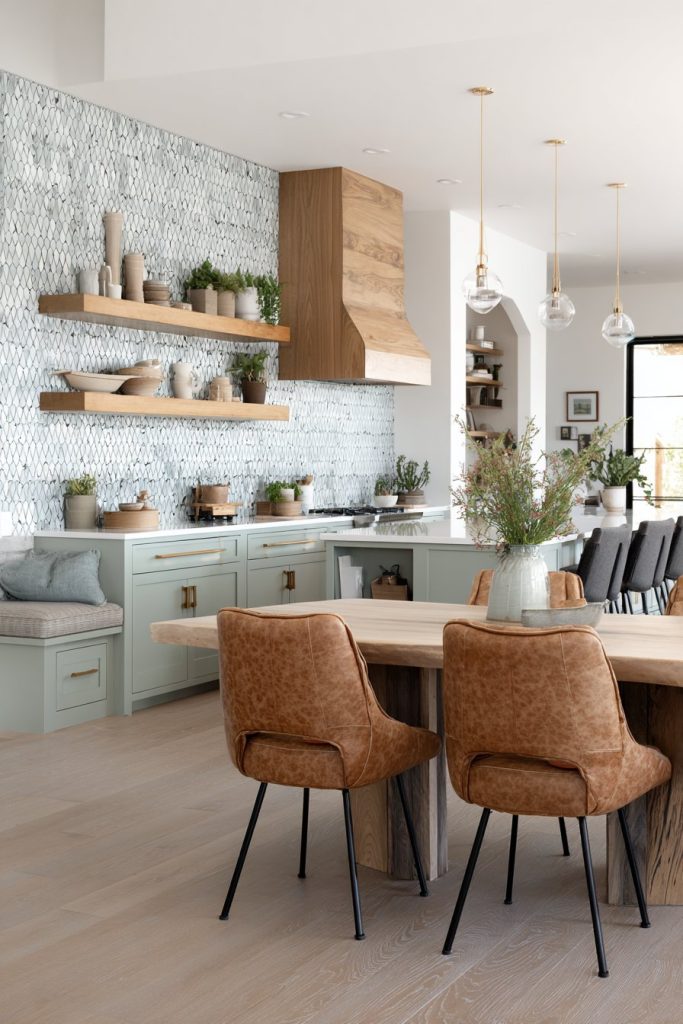
Eclectic kitchen and dining design celebrates personal collections and individual taste through thoughtful combinations of vintage and contemporary elements. This approach requires confidence and restraint, as successful eclectic spaces appear collected over time rather than decorated all at once. Colorful patterned tiles as backsplash create focal points that reflect personal taste while providing practical wall protection in cooking areas.
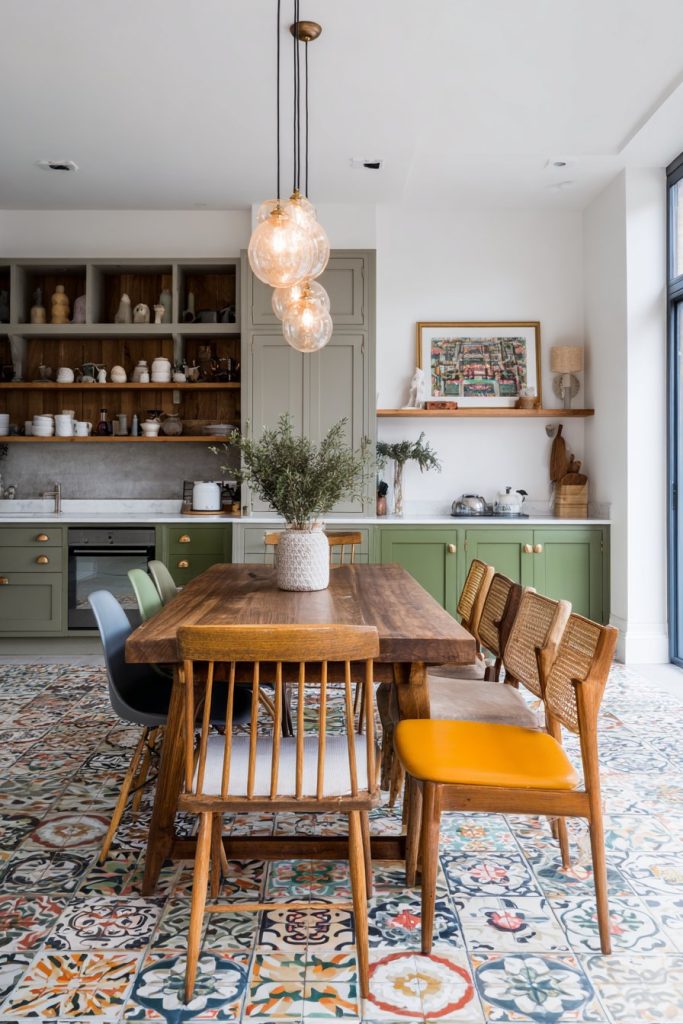
The mix of dining chairs in different styles around a mid-century modern table exemplifies successful eclectic design, where varied elements unite through careful color coordination and scale relationships. Each chair contributes its own character while working harmoniously with the others to create a cohesive seating arrangement that tells a story about the inhabitants’ travels, interests, and collecting habits.
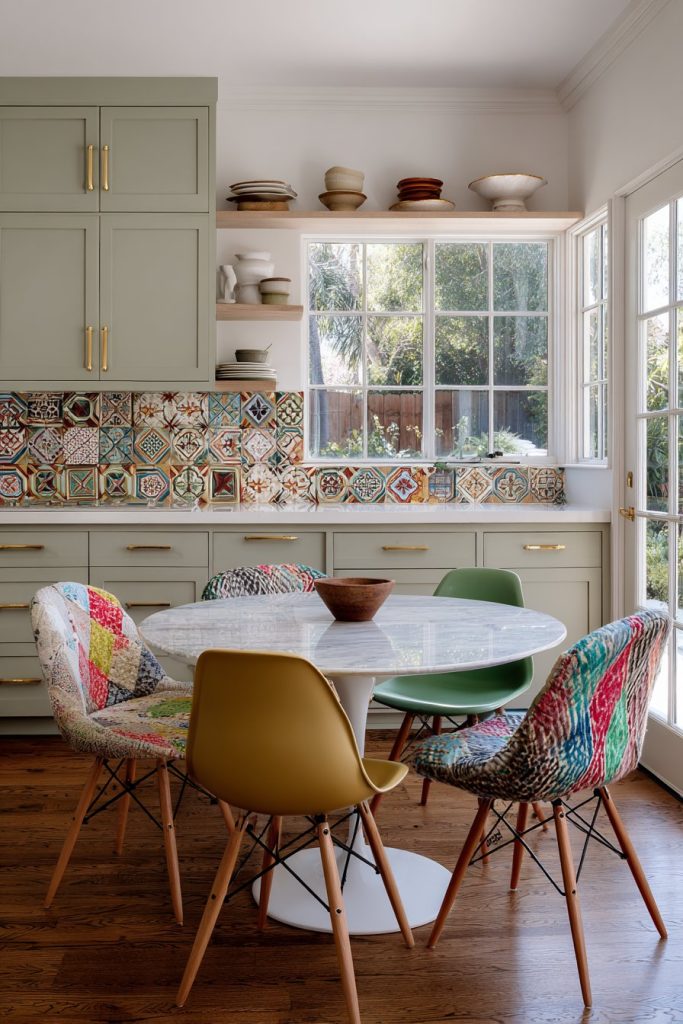
Painted cabinetry in sophisticated sage green with brass hardware provides a unifying element that grounds the eclectic collection of accessories and furniture pieces. This distinctive color choice creates personality and warmth while providing a sophisticated backdrop for varied collections. The brass hardware adds warmth and richness while complementing other metallic elements throughout the space.
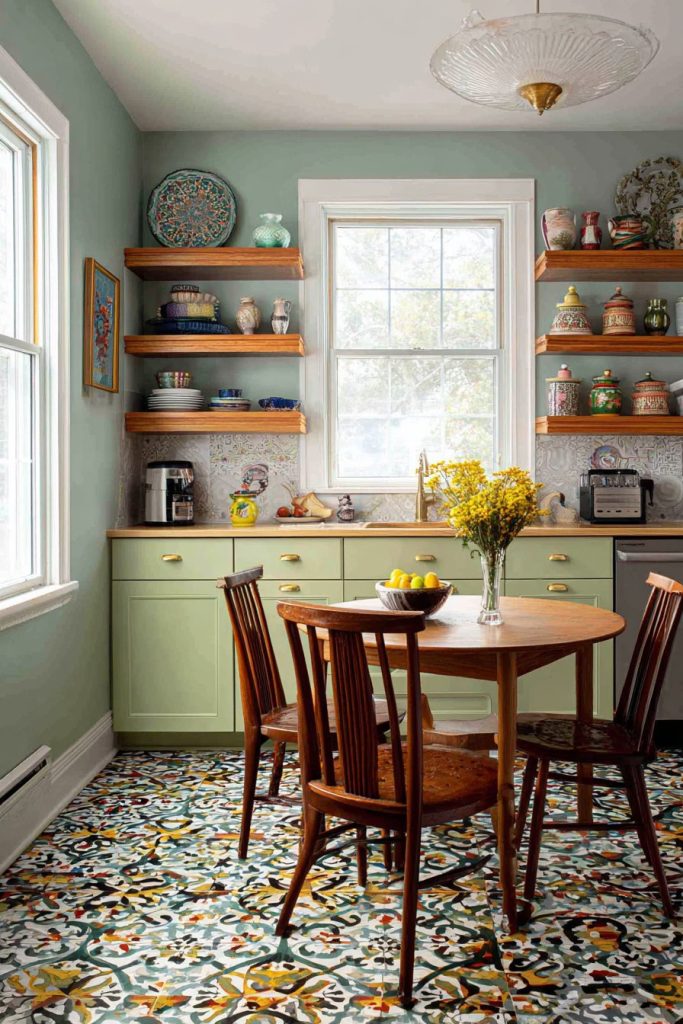
Open shelving displays carefully curated ceramics and collected objects that reflect personal interests and travels. This approach transforms functional storage into decorative display, where everyday items contribute to the overall aesthetic. The key to successful eclectic display lies in editing collections carefully and grouping items thoughtfully to create visual rhythm and interest without overwhelming the space with clutter.
Key Design Tips:
- Use colorful patterned tiles as focal points that reflect personal style
- Mix furniture styles carefully, uniting different pieces through color and scale
- Choose distinctive cabinet colors that provide grounding for eclectic collections
- Display personal collections on open shelving as decorative elements
- Edit carefully to achieve curated rather than cluttered appearances
11. Coastal Relaxation with Weathered Beauty
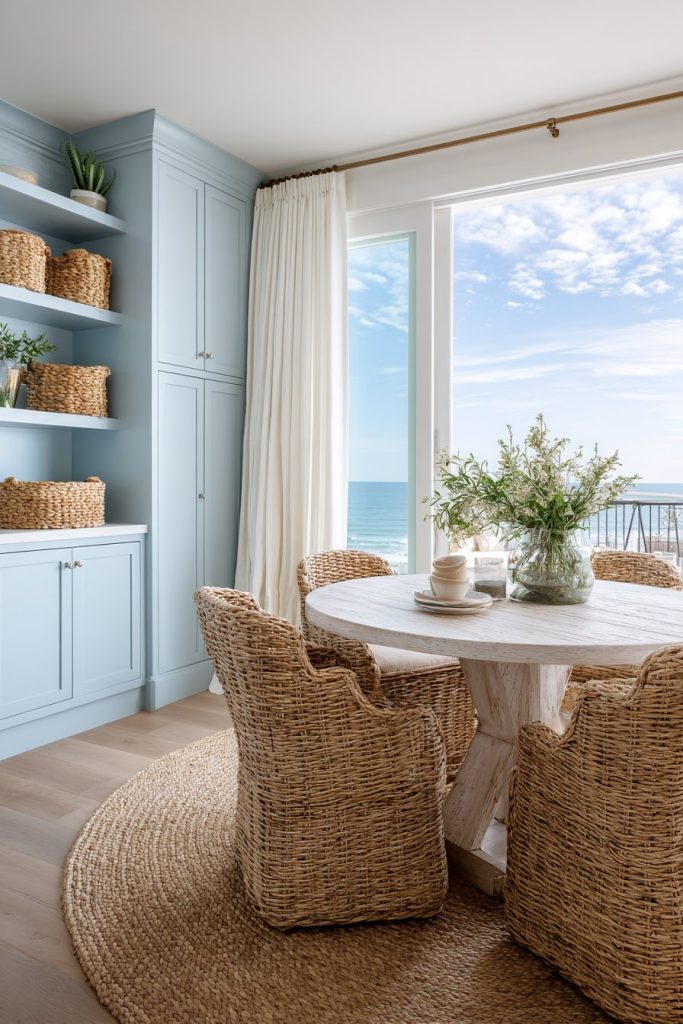
Coastal-inspired kitchen and dining rooms capture the relaxed elegance of seaside living through carefully selected materials and colors that evoke ocean and sky. Light blue cabinetry reminiscent of weathered driftwood establishes the coastal color palette while providing practical storage in beautiful, sea-inspired tones. This soft blue-gray color creates tranquility while reflecting the natural patina that develops on wood exposed to salt air and sun.
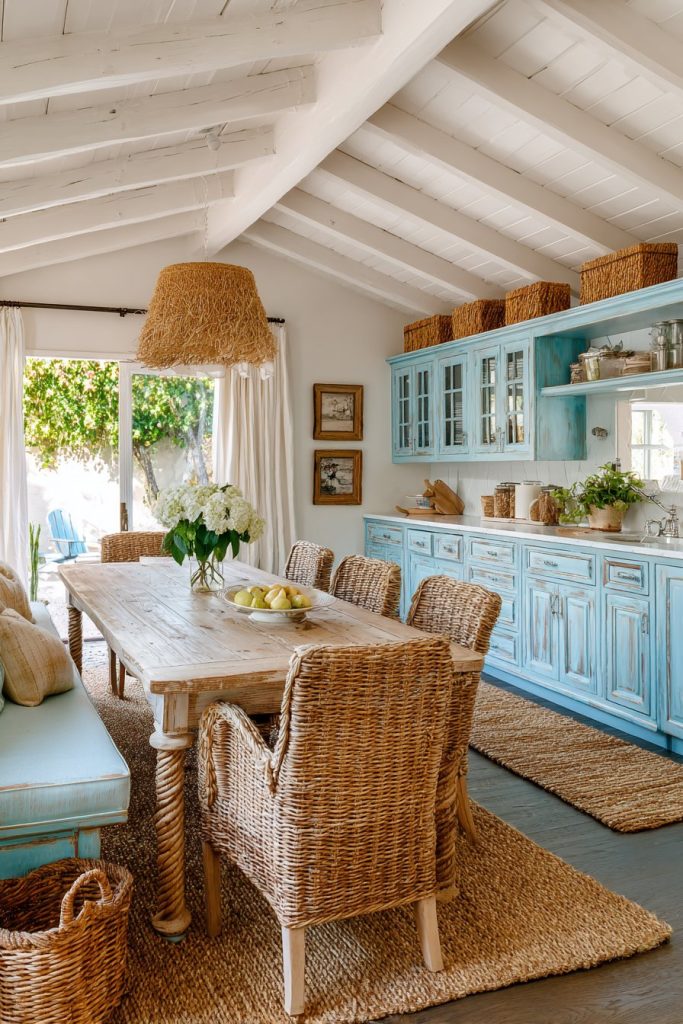
The whitewashed wooden dining table with rope-wrapped legs introduces authentic nautical details that reinforce the coastal theme without becoming overly literal or theatrical. These rope details add textural interest while celebrating traditional boat-building and maritime craftsmanship. The whitewashed finish suggests sun-bleached wood found on beaches, creating connections to coastal environments.
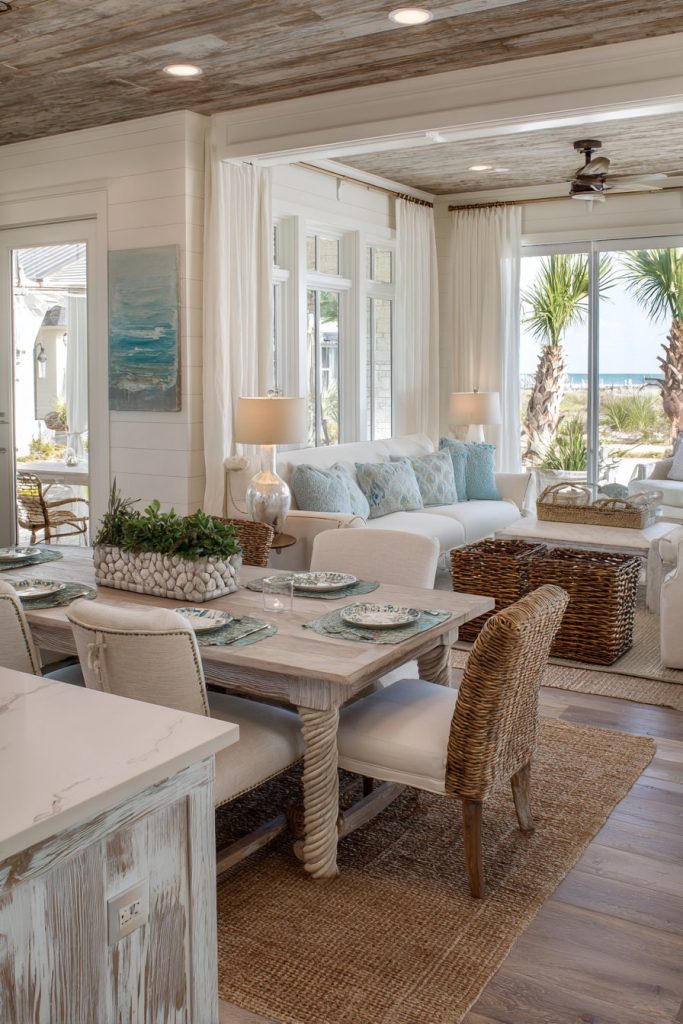
Natural fiber rugs define the dining area while adding texture and warmth that complements the coastal color palette. These woven materials introduce organic textures that ground the space and provide acoustic benefits in open-plan layouts. Woven baskets throughout the space provide stylish storage solutions that reinforce the natural, handcrafted aesthetic while serving practical purposes.
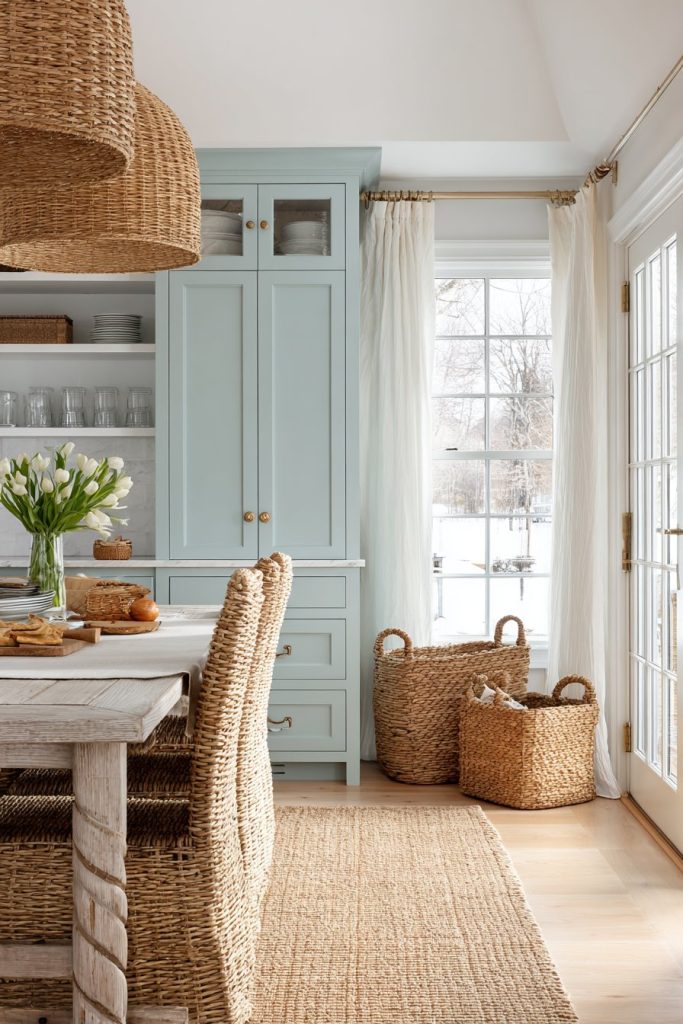
Large windows with sheer white curtains maximize natural light while maintaining privacy and softening harsh sunlight when necessary. This approach to window treatments maintains the open, airy feeling essential to coastal style while providing flexibility for light control. The abundance of natural light reflects the coastal lifestyle’s emphasis on connecting with outdoor environments and natural rhythms.
Key Design Tips:
- Choose soft blue-gray cabinet colors that evoke weathered coastal wood
- Incorporate nautical details like rope wrapping for authentic coastal character
- Use natural fiber rugs and baskets to add organic texture and practical storage
- Maximize natural light with large windows and minimal window treatments
- Select whitewashed finishes that suggest sun-bleached coastal materials
12. Traditional Elegance with Timeless Craftsmanship
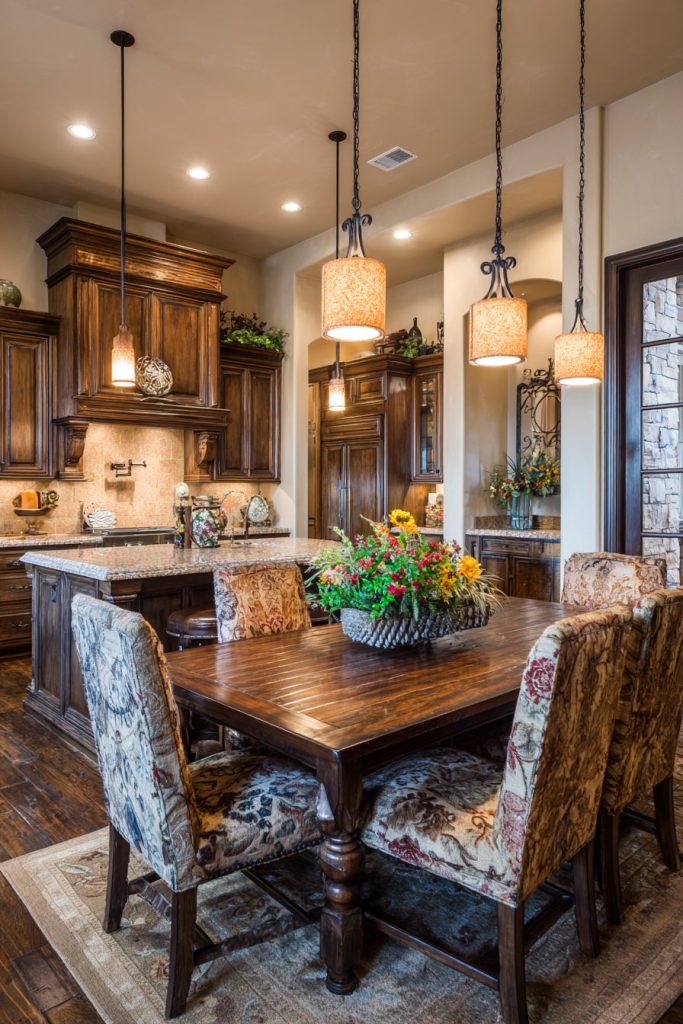
Traditional kitchen and dining design celebrates time-tested proportions, quality materials, and refined craftsmanship that creates spaces with lasting appeal and sophisticated character. Rich cherry wood cabinetry with raised panel doors and crown molding details establishes formal elegance while providing abundant storage in beautiful, well-proportioned units. This classic cabinet construction showcases traditional woodworking techniques while creating visual weight and importance appropriate to formal spaces.
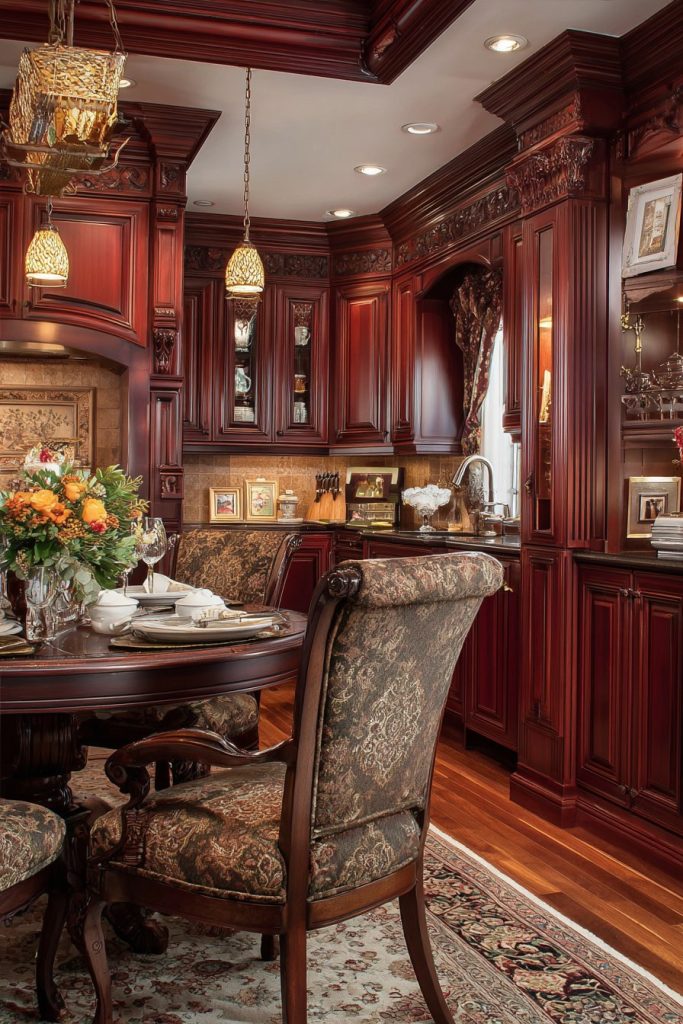
The formal dining room features a mahogany table with upholstered chairs in classic patterns that reflect traditional design principles of symmetry, proportion, and refined material selection. This furniture combination creates elegant environments suitable for special occasions while providing daily beauty that enhances ordinary meals. The rich wood grains and traditional upholstery patterns add visual interest and sophistication.
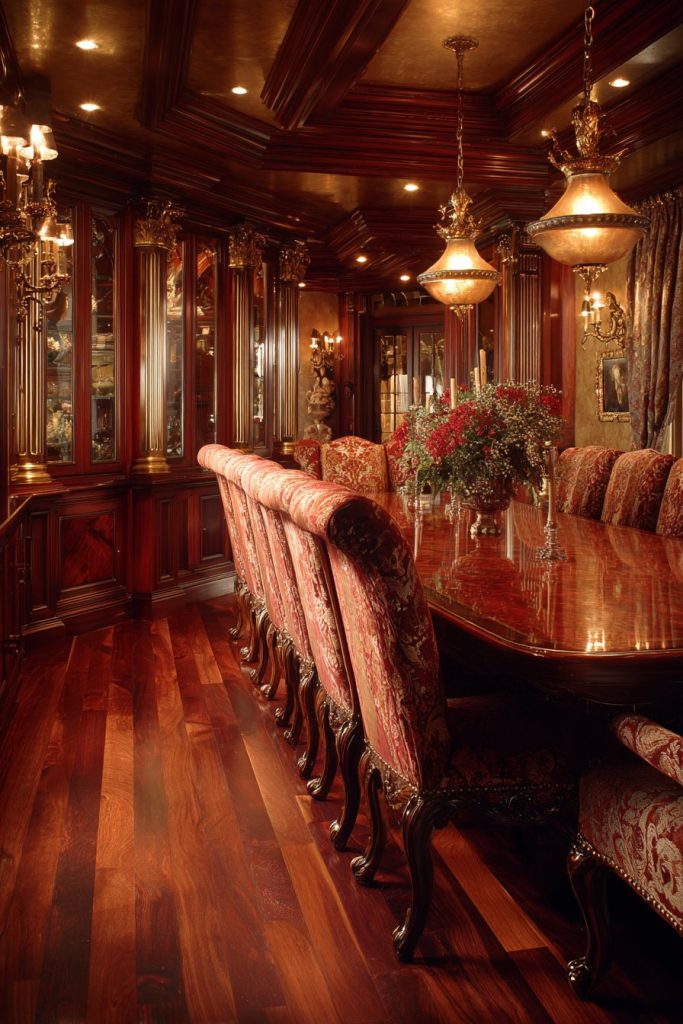
Pendant lights with fabric shades provide warm ambient lighting that complements the traditional aesthetic while offering practical illumination for both cooking and dining activities. These fixtures combine function with decoration, providing necessary light while contributing to the overall design through their traditional forms and warm light quality. The fabric shades soften harsh light while adding textural interest.
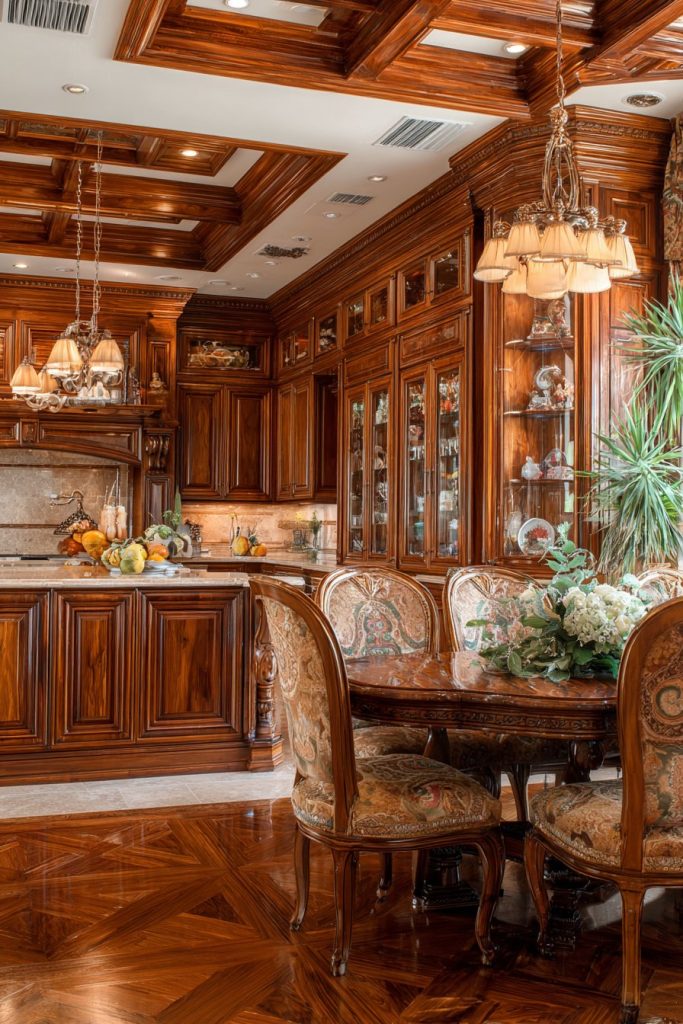
Crown molding details throughout both kitchen and dining areas create architectural interest while reflecting traditional building practices that emphasized craftsmanship and attention to detail. These millwork elements add visual weight and importance to the spaces while creating smooth transitions between walls and ceilings. The careful proportions and quality construction of these details distinguish traditional design from more casual approaches.
Key Design Tips:
- Invest in quality wood cabinetry with traditional construction details
- Choose formal dining furniture that creates special-occasion elegance
- Select lighting fixtures that combine function with traditional decorative elements
- Add crown molding and millwork details for architectural sophistication
- Use rich wood grains and classic upholstery patterns for visual interest
13. Entertainment-Focused Open Plan Design
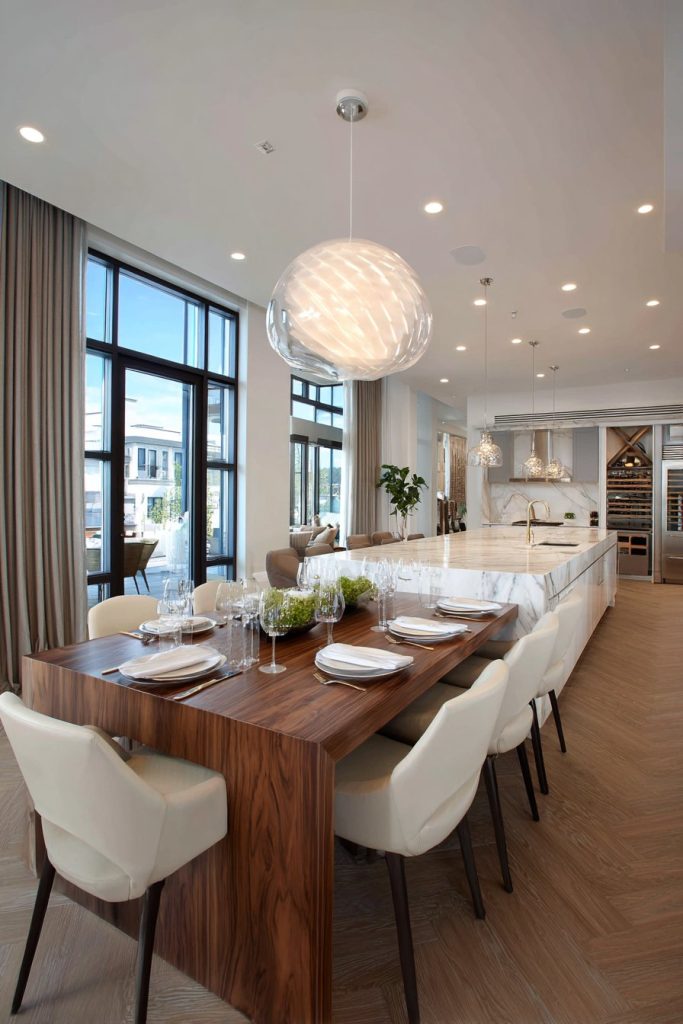
Open-plan kitchen and dining design optimized for entertaining creates environments where hosts can interact with guests while preparing meals and beverages. The large island with seating for six serves as a natural gathering point where guests can enjoy cocktails and conversation while meals are prepared. This substantial piece anchors the space while providing multiple functions that support various entertaining scenarios.
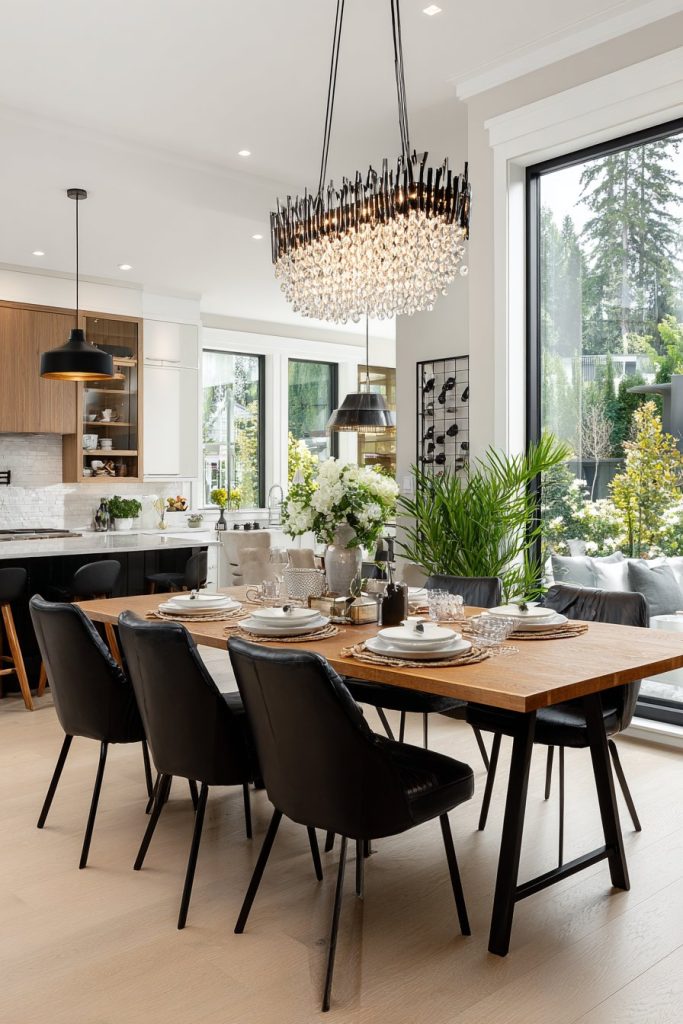
Professional-grade appliances throughout the kitchen enable serious cooking for large groups while maintaining the aesthetic appeal necessary in open-plan environments where kitchen equipment remains visible during entertaining. These high-performance appliances provide restaurant-quality cooking capabilities while featuring attractive designs that complement rather than detract from the overall aesthetic.
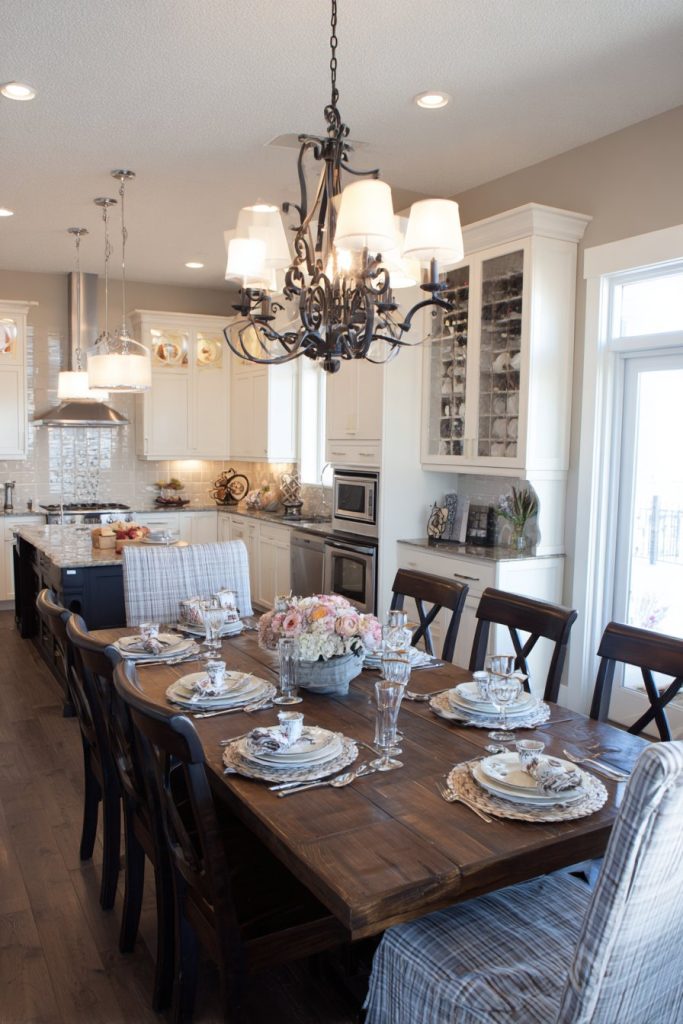
The separate dining table positioned for easy conversation flow allows seamless transition from casual island seating to formal dining without interrupting social interaction. This thoughtful positioning enables hosts to move easily between cooking and socializing while maintaining connections with guests throughout the evening. The strategic placement also allows for multiple conversation groups during larger gatherings.
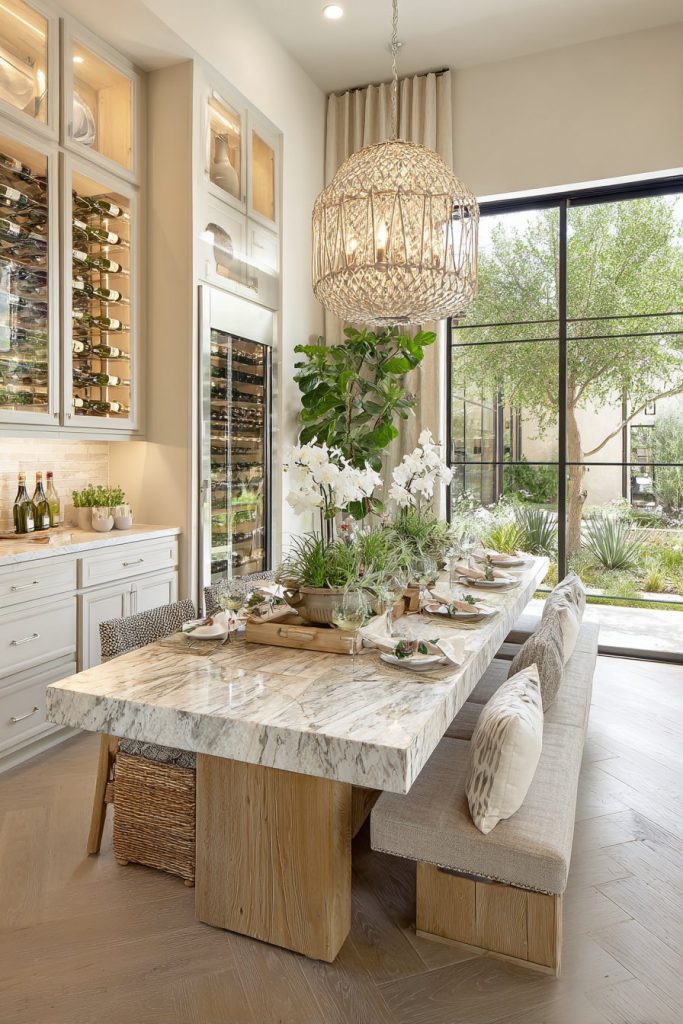
Built-in wine storage and statement chandelier in the dining area support entertaining needs while adding dramatic focal points that enhance the room’s visual impact. These elements demonstrate thoughtful planning for entertaining requirements while contributing to the overall design aesthetic. The wine storage keeps beverages at optimal serving temperature while displaying collections attractively.
Key Design Tips:
- Design substantial islands with generous seating for casual entertaining
- Invest in professional-grade appliances that perform well for large groups
- Position dining tables to promote easy conversation flow throughout the space
- Include built-in wine storage for entertaining convenience and display
- Add statement lighting fixtures that enhance both function and drama
14. Rustic Authenticity with Aged Character
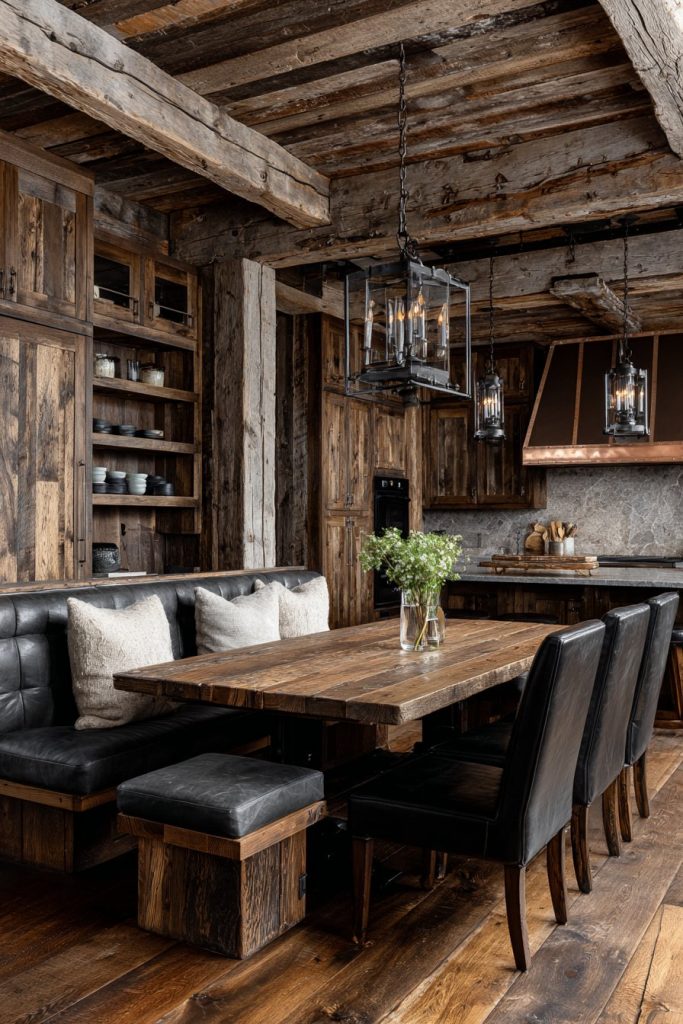
Rustic kitchen and dining design celebrates authentic aged materials and handcrafted details that create environments with genuine character and warmth. Reclaimed barn wood cabinetry brings history and patina that cannot be manufactured, creating visual interest through varied wood grains, nail holes, and weathering patterns that tell stories of previous uses. This authentic material choice provides environmental benefits while adding irreplaceable character.
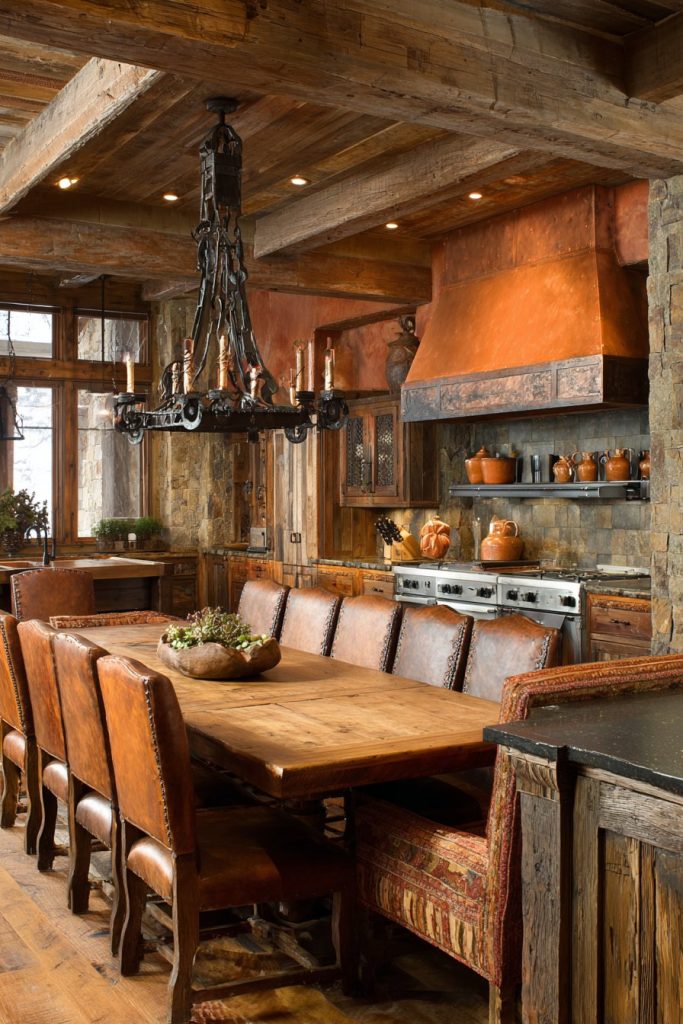
The massive farmhouse table capable of seating eight serves as both functional furniture and sculptural centerpiece that commands attention and respect. This substantial piece accommodates large family gatherings while providing visual weight that anchors the dining area. The generous proportions reflect rural traditions of hospitality and family-centered living where large tables accommodated extended families and frequent guests.
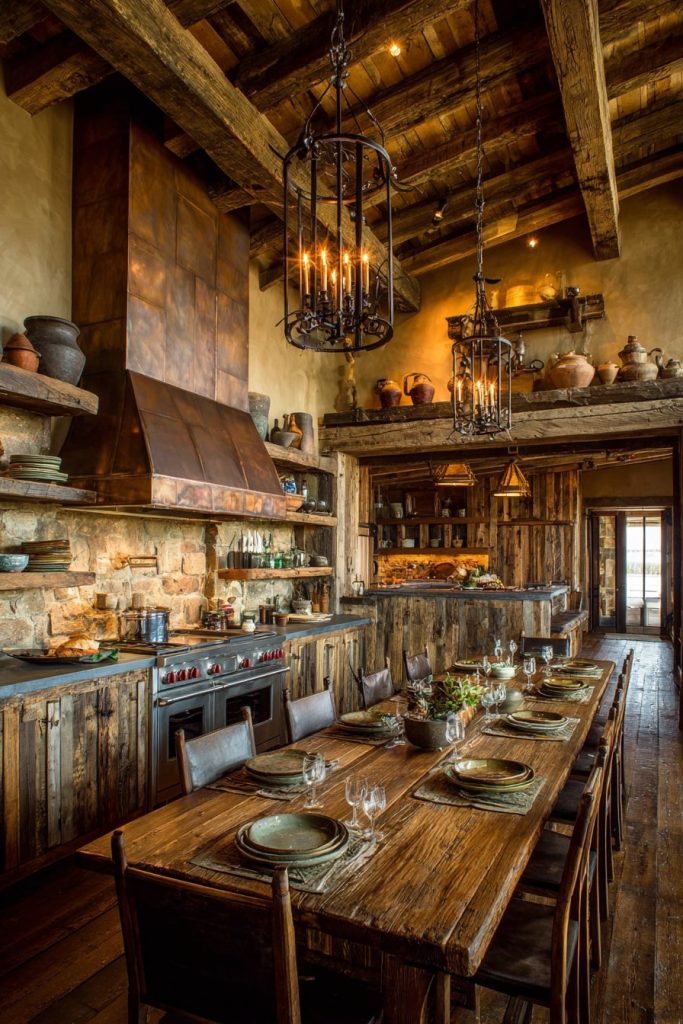
A vintage-style range with copper hood creates a dramatic focal point while providing serious cooking capabilities for family-sized meals. The copper material develops beautiful patina over time while providing excellent heat conduction and traditional craftsmanship appeal. This combination of form and function exemplifies rustic design principles that celebrate beautiful utility.
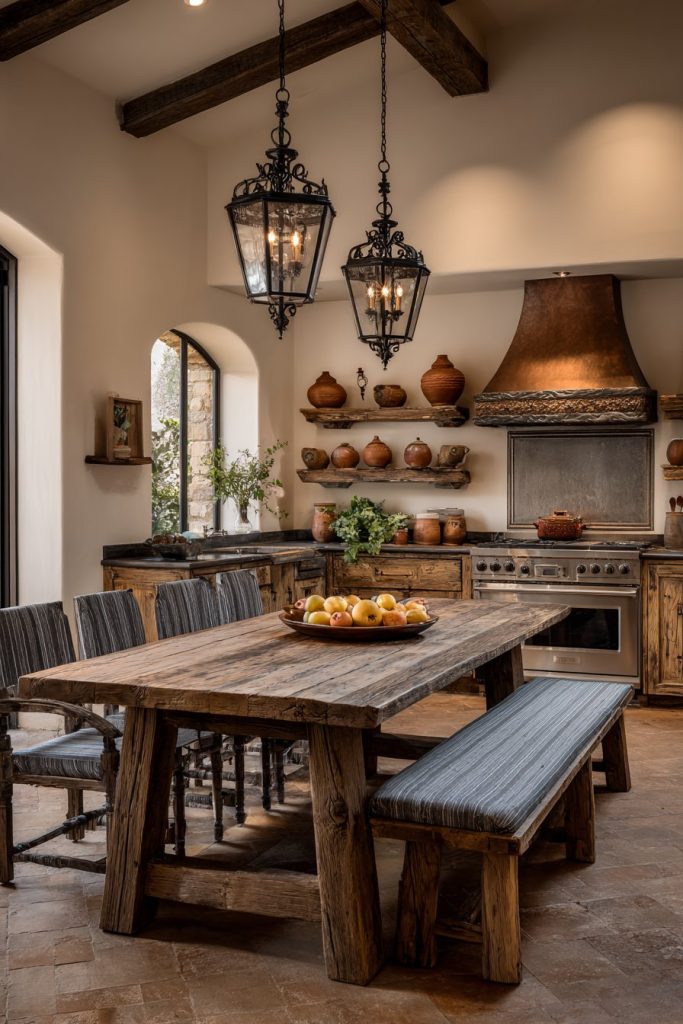
Open shelving throughout displays rustic pottery and handcrafted accessories that reinforce the authentic character while providing practical storage. These displays celebrate handmade objects and traditional crafts while contributing to the overall aesthetic through their varied forms and natural materials. Wrought iron chandeliers provide atmospheric lighting that complements the rustic materials while adding dramatic focal points.
Key Design Tips:
- Source authentic reclaimed wood materials for irreplaceable character and patina
- Choose substantial farmhouse tables that accommodate large family gatherings
- Install vintage-style ranges with traditional materials like copper for focal points
- Display handcrafted pottery and accessories to reinforce authentic character
- Use wrought iron lighting fixtures for dramatic, traditional illumination
15. Art Deco Glamour with Geometric Drama
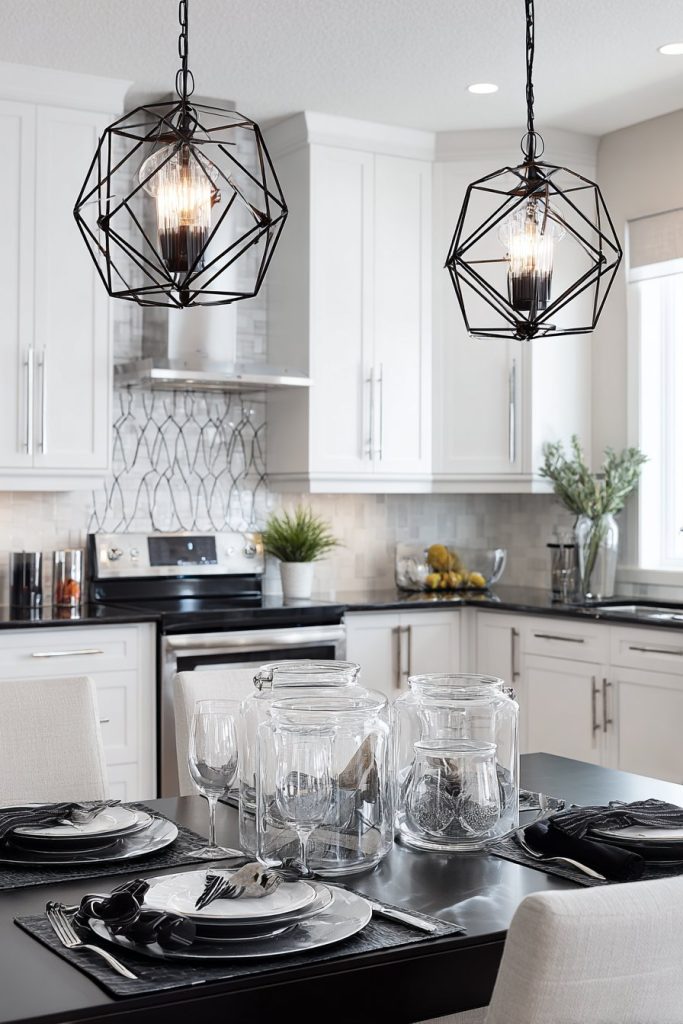
Art Deco-inspired kitchen and dining design brings sophisticated glamour and geometric drama to contemporary living spaces through bold patterns, luxurious materials, and angular forms that define this distinctive style period. Geometric patterns in tile backsplash create striking focal points that celebrate the mathematical precision and artistic boldness characteristic of Art Deco design. These patterns add visual energy while providing practical wall protection in cooking areas.
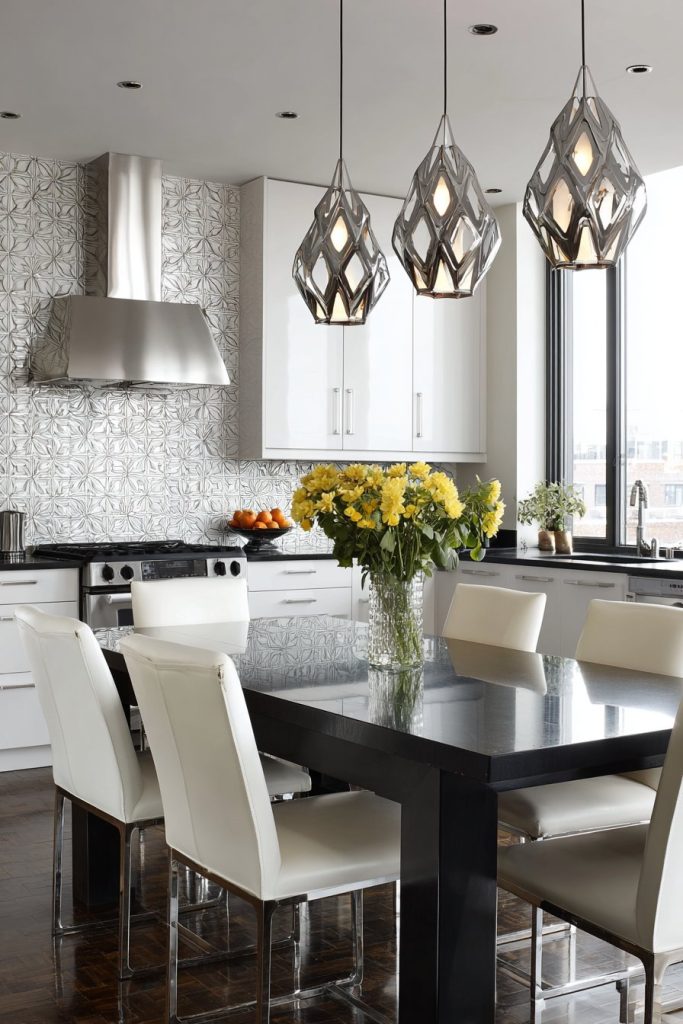
The glossy black dining table with chrome accents embodies Art Deco’s celebration of modern materials and industrial aesthetics, creating dramatic contrast while reflecting light throughout the space. This bold color combination requires confidence but results in sophisticated elegance that commands attention. The chrome details add metallic sparkle that enhances the glamorous atmosphere essential to Art Deco style.
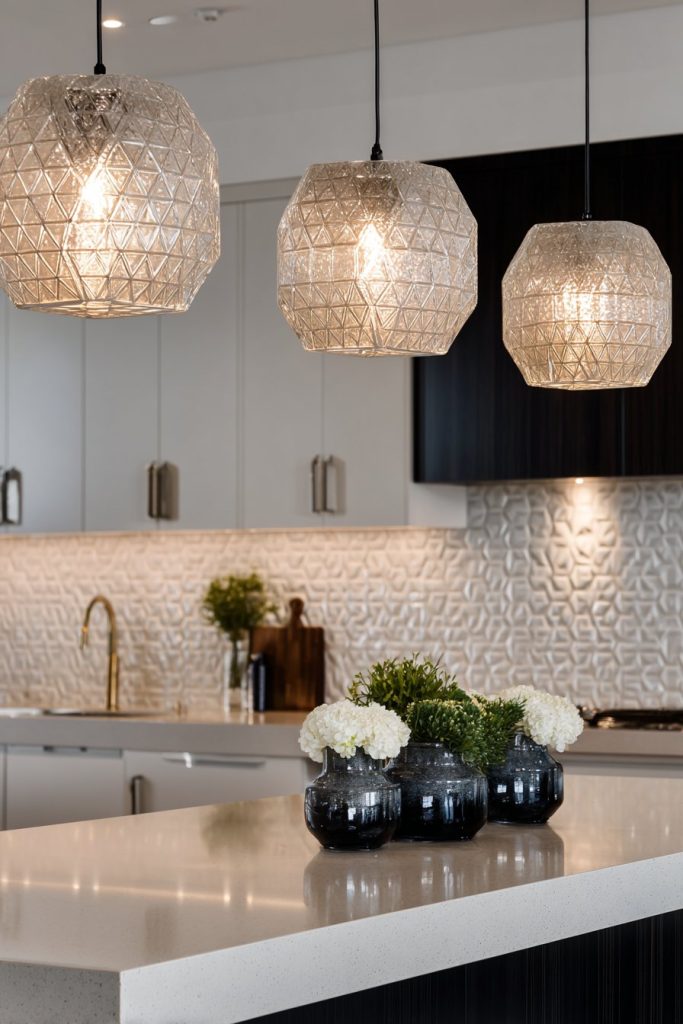
Streamlined cabinetry with metallic hardware and integrated lighting reflects Art Deco’s emphasis on smooth, flowing lines and built-in convenience features. These design elements create seamless appearances while incorporating practical storage and illumination solutions. The integrated lighting eliminates the need for additional fixtures while providing task illumination where needed.
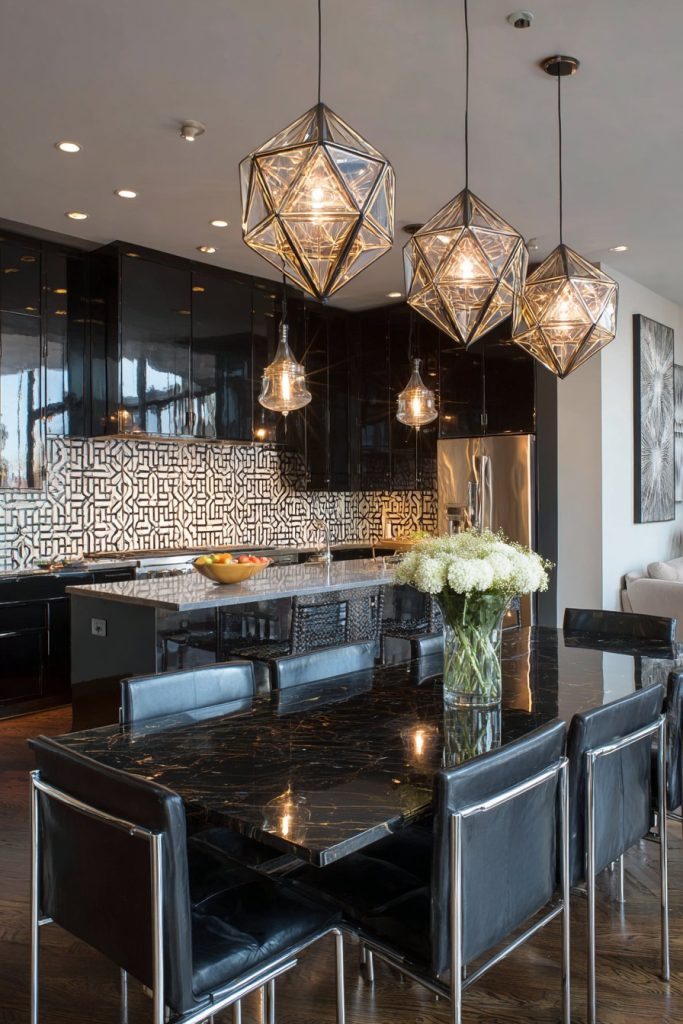
Bold pendant lights with angular designs create dramatic focal points that exemplify Art Deco’s celebration of geometric forms and luxurious materials. These statement fixtures provide necessary illumination while serving as sculptural elements that enhance the overall design impact. The angular forms complement the geometric patterns used throughout while adding vertical interest and drama.
Key Design Tips:
- Incorporate bold geometric patterns in backsplash tiles for authentic Art Deco character
- Choose glossy black furniture with chrome accents for sophisticated contrast
- Select streamlined cabinetry with integrated lighting for seamless appearances
- Install angular light fixtures that serve as both function and sculptural elements
- Use metallic hardware and accents to add glamorous sparkle throughout
16. Country Comfort with Handcrafted Warmth
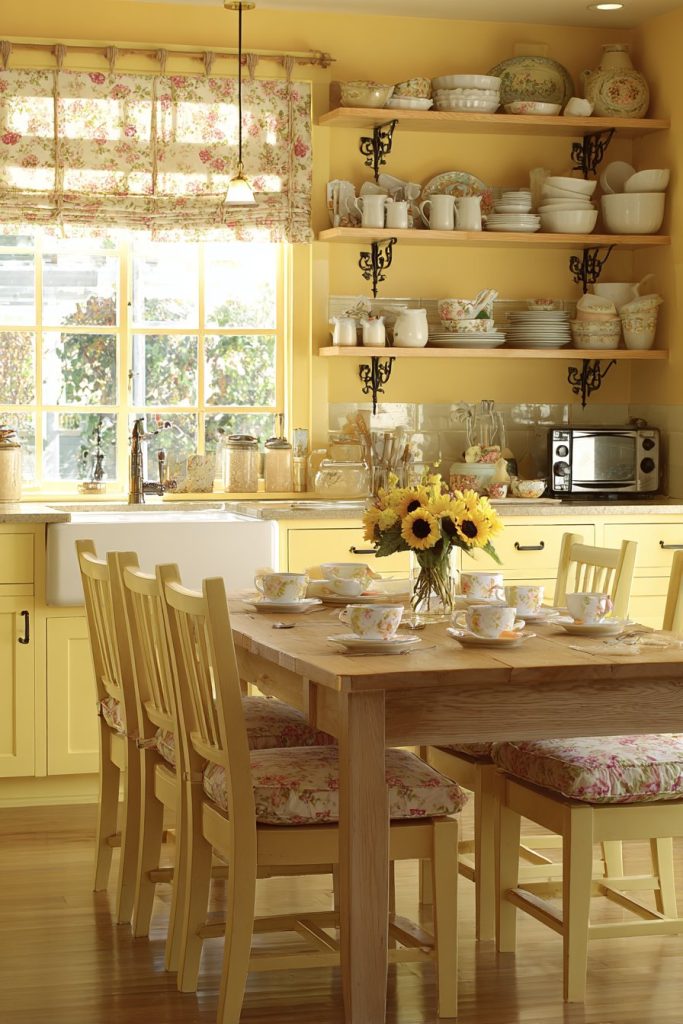
Country kitchen and dining design creates welcoming environments through soft colors, handcrafted details, and traditional patterns that evoke rural comfort and hospitality. Painted cabinetry in soft butter yellow establishes warmth and cheerfulness while providing practical storage in colors that complement country decorating traditions. This gentle color choice creates optimism while working beautifully with natural wood elements and traditional accessories.
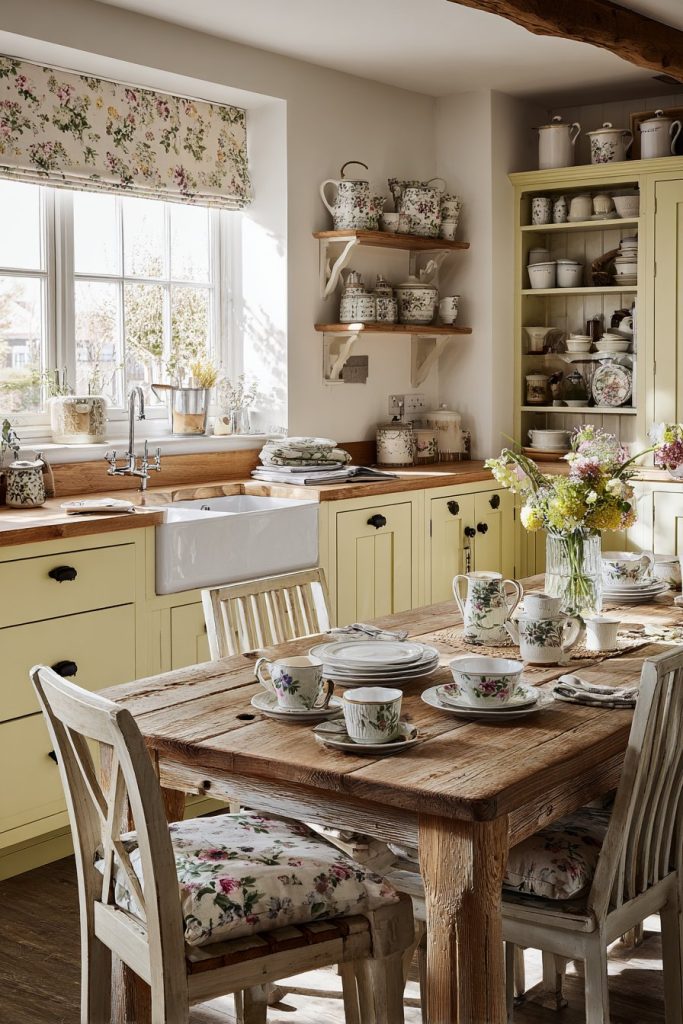
The pine dining table with ladder-back chairs represents classic country furniture construction and proportions that have remained popular for generations due to their comfort and visual appeal. These traditional forms provide durability and timeless style while creating casual elegance appropriate for daily family life. The natural wood finishes celebrate honest materials and traditional craftsmanship.
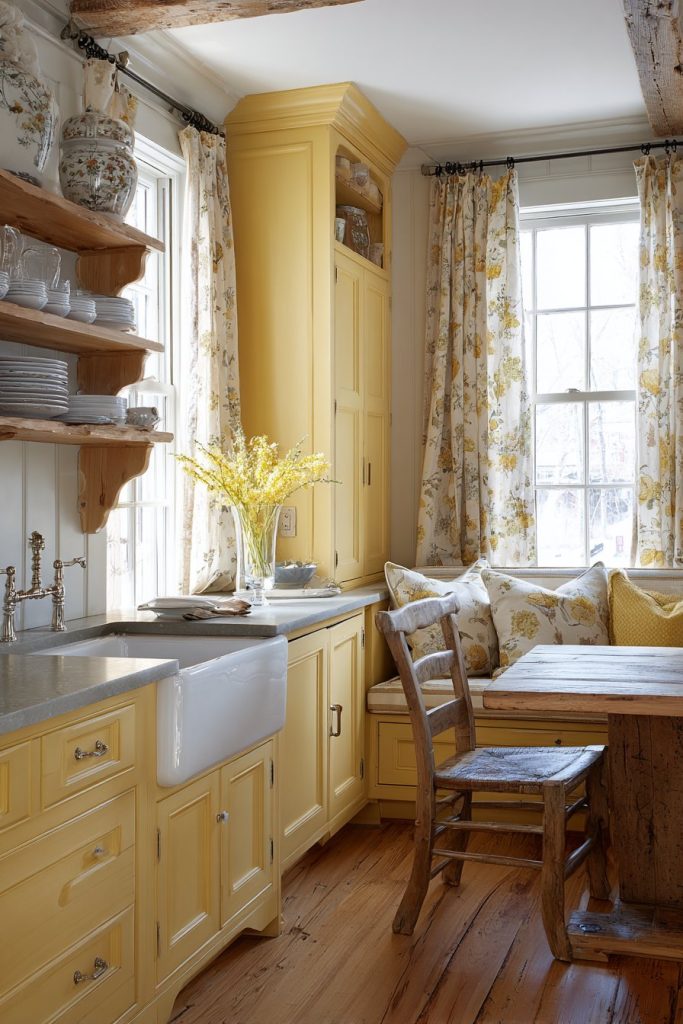
A farmhouse sink with decorative brackets and vintage-inspired hardware reinforces country authenticity while providing practical advantages for food preparation and cleanup. This traditional sink style accommodates large pots and serving pieces while serving as a focal point that anchors the kitchen workspace. Open shelving displays everyday dishes and accessories as decorative elements.
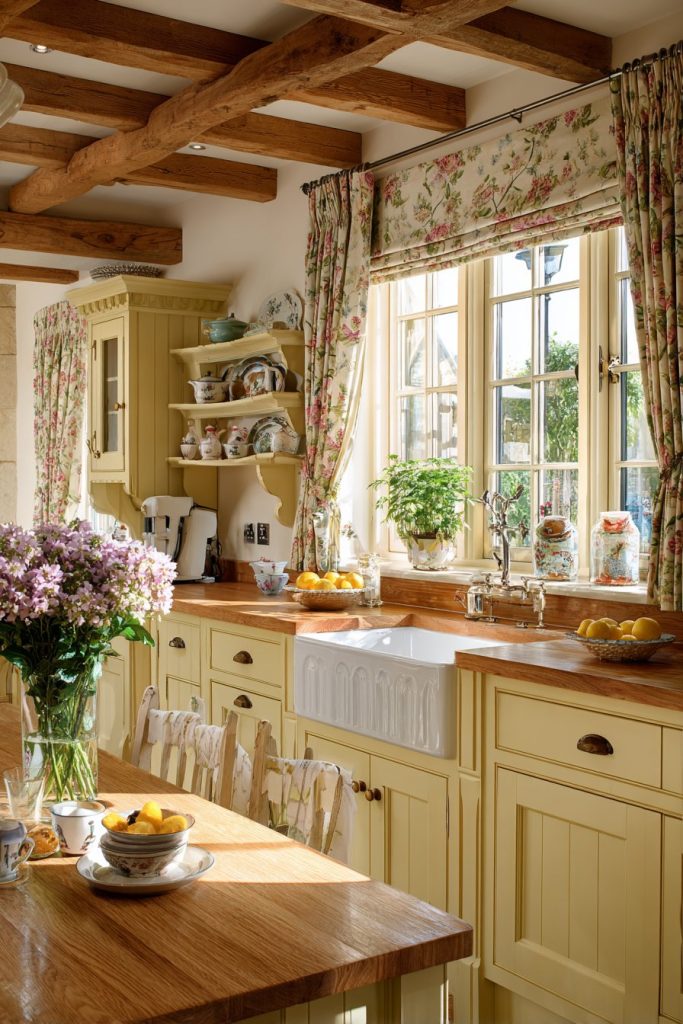
Floral patterns in window treatments and cushions add traditional country charm while introducing softness and visual interest that balances harder architectural elements. These textile elements provide opportunities to introduce color and pattern while maintaining the gentle, welcoming atmosphere that defines country style. The handcrafted appearance of these details reinforces authentic country character.
Key Design Tips:
- Paint cabinetry in soft, warm colors that create cheerful, welcoming environments
- Choose traditional furniture forms like ladder-back chairs for timeless country appeal
- Install farmhouse sinks for both practical benefits and authentic country character
- Add open shelving to display everyday items as decorative elements
- Incorporate floral patterns in textiles for traditional country charm and softness
17. Modern Luxury with Sophisticated Materials
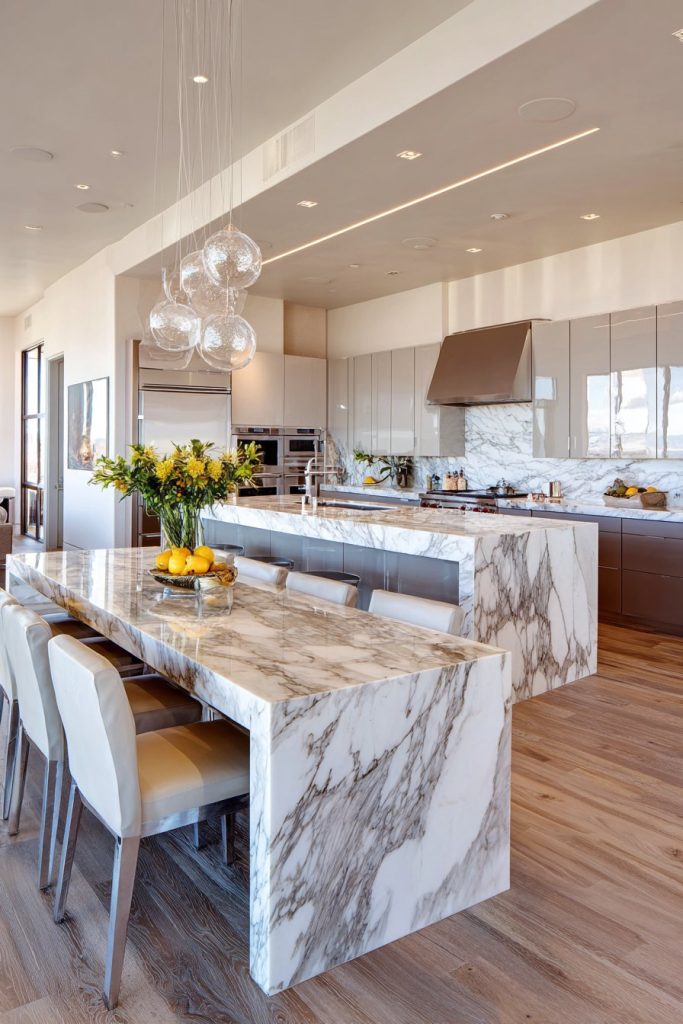
Modern kitchen and dining design emphasizes sophisticated material choices and clean architectural lines that create environments of understated luxury and contemporary elegance. The waterfall edge quartz island creates dramatic visual impact while providing durable, low-maintenance surfaces for food preparation. This continuous material application eliminates visual interruption while showcasing the beauty of natural stone patterns in contemporary form.
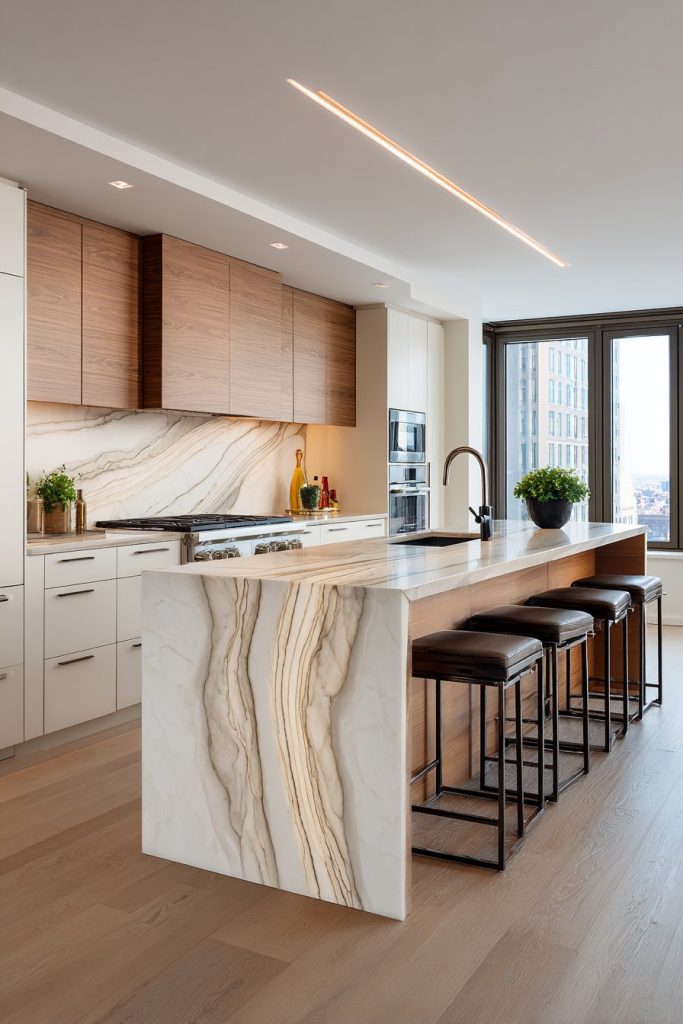
The sleek dining table with metal legs and glass top embodies modern design principles of transparency and structural honesty while providing practical surfaces that complement the kitchen’s sophisticated material palette. This combination of materials creates visual lightness while maintaining durability and easy maintenance essential for daily use. The transparent qualities allow light to flow freely while maintaining clean sight lines.
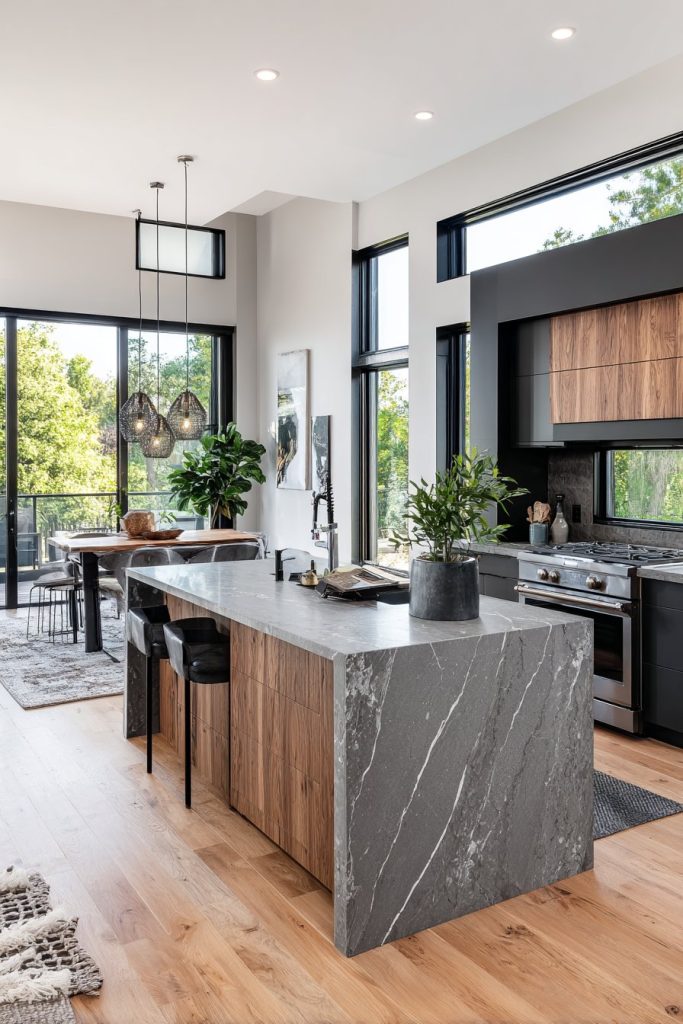
Flat-panel cabinetry in two-tone finishes creates visual interest while maintaining the clean, geometric forms essential to modern design. This approach allows for sophisticated color combinations while avoiding the ornate details that characterize traditional styles. State-of-the-art appliances integrate seamlessly with cabinetry to maintain uninterrupted surfaces and clean aesthetic lines.
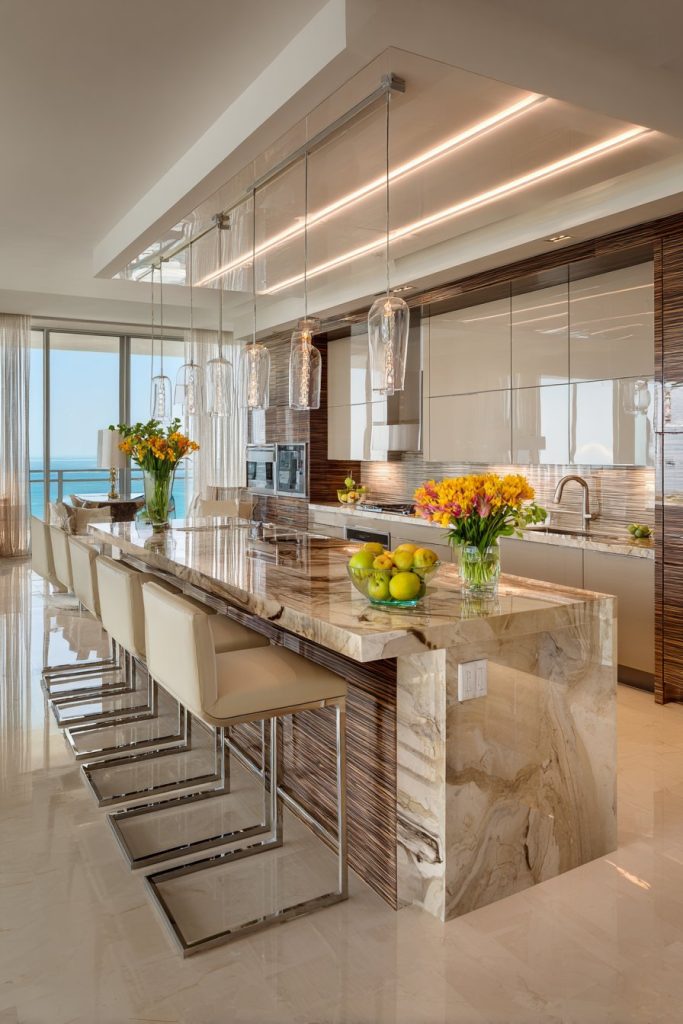
Linear LED lighting provides clean, contemporary illumination that eliminates shadows while creating even light distribution throughout both cooking and dining areas. This advanced lighting technology offers energy efficiency while providing the precise light control necessary for both task and ambient illumination. The linear forms complement the clean architectural lines while providing subtle accent lighting.
Key Design Tips:
- Choose waterfall edge islands for dramatic impact and contemporary sophistication
- Select transparent dining furniture to maintain visual lightness and flow
- Use flat-panel cabinetry in two-tone finishes for modern visual interest
- Integrate state-of-the-art appliances to maintain clean, uninterrupted surfaces
- Install linear LED lighting for even illumination and contemporary aesthetics
18. Bohemian Eclecticism with Layered Textures
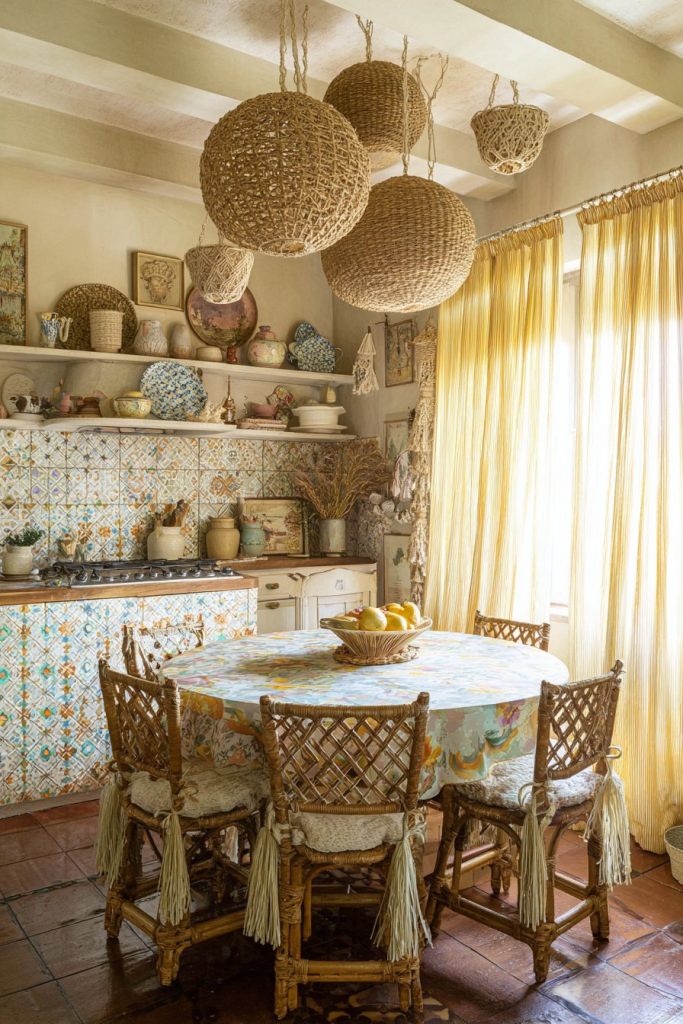
Bohemian kitchen and dining design celebrates artistic expression and global influences through layered textures, vibrant colors, and collected objects that reflect well-traveled lifestyles and creative sensibilities. Colorful patterned tiles throughout create visual energy while reflecting the bohemian appreciation for handcrafted objects and artistic expression. These tiles often feature traditional patterns from various cultures, creating globally-inspired environments.
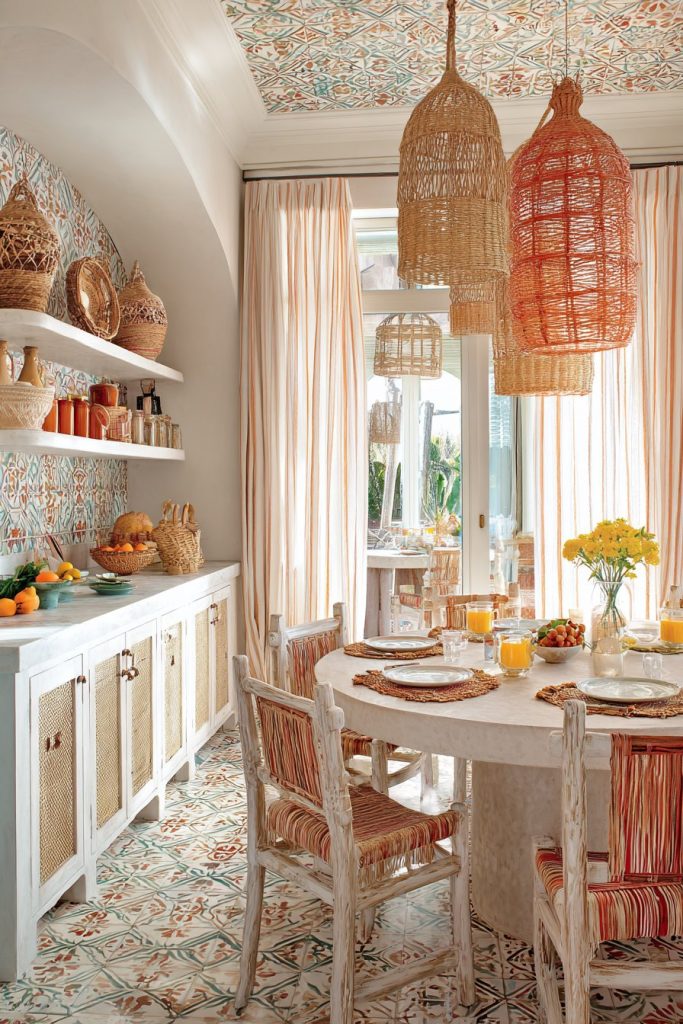
Open shelving displays eclectic collections of pottery, textiles, and artifacts that tell stories of travels and interests while providing practical storage for kitchen essentials. This approach transforms necessary storage into personal galleries where everyday objects contribute to the overall aesthetic. The varied shapes, colors, and textures create visual rhythm while reflecting individual taste and collecting habits.
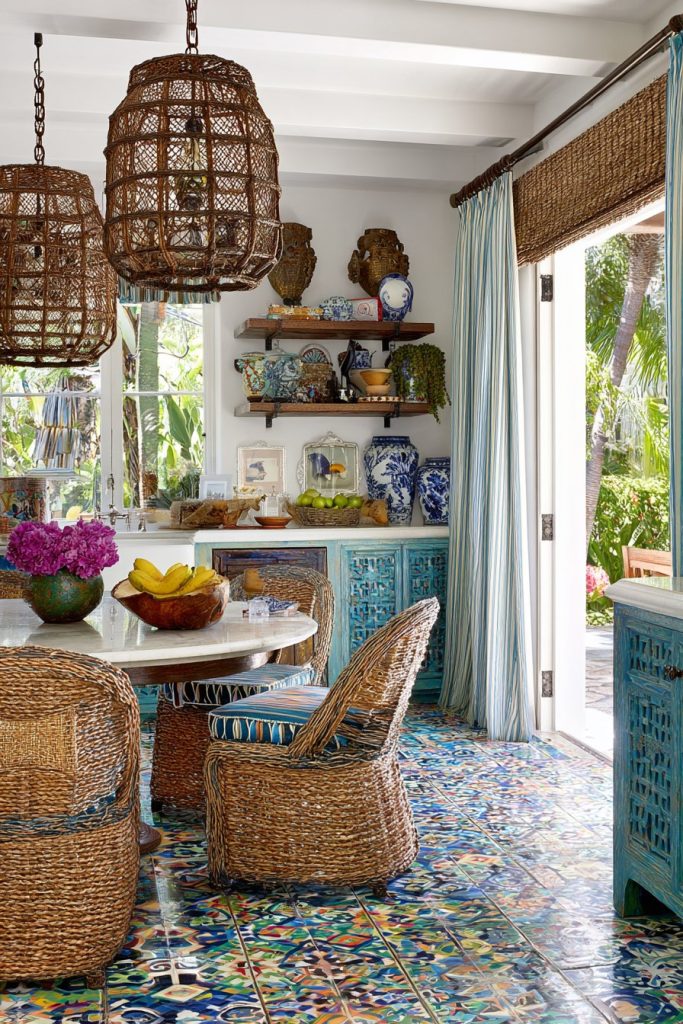
The round dining table surrounded by mismatched vintage chairs exemplifies bohemian design principles that celebrate individuality and authentic character over matching sets and formal coordination. Each chair contributes its own story and character while working harmoniously with others to create comfortable, inviting seating arrangements. This approach eliminates the predictability of matched furniture sets.
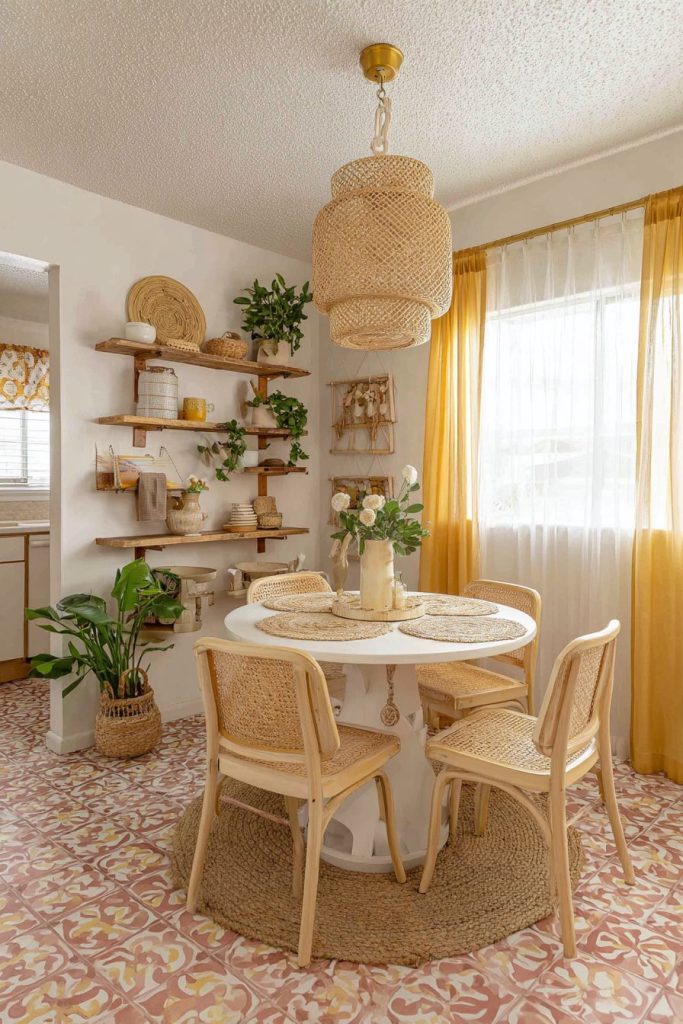
Macrame plant hangers and woven textiles throughout add organic textures and handcrafted elements that reinforce bohemian values of artistic expression and connection to natural materials. These elements introduce movement and visual interest while celebrating traditional crafts and artistic techniques. Natural light filtering through flowing curtains creates dynamic light patterns that enhance the layered, collected aesthetic.
Key Design Tips:
- Use colorful patterned tiles to create visual energy and global influences
- Display eclectic collections on open shelving as personal gallery spaces
- Mix vintage chairs for individual character and authentic bohemian appeal
- Add macrame and woven textiles for organic texture and handcrafted elements
- Use flowing curtains to create dynamic natural light patterns
19. Luxury Sophistication with Premium Craftsmanship
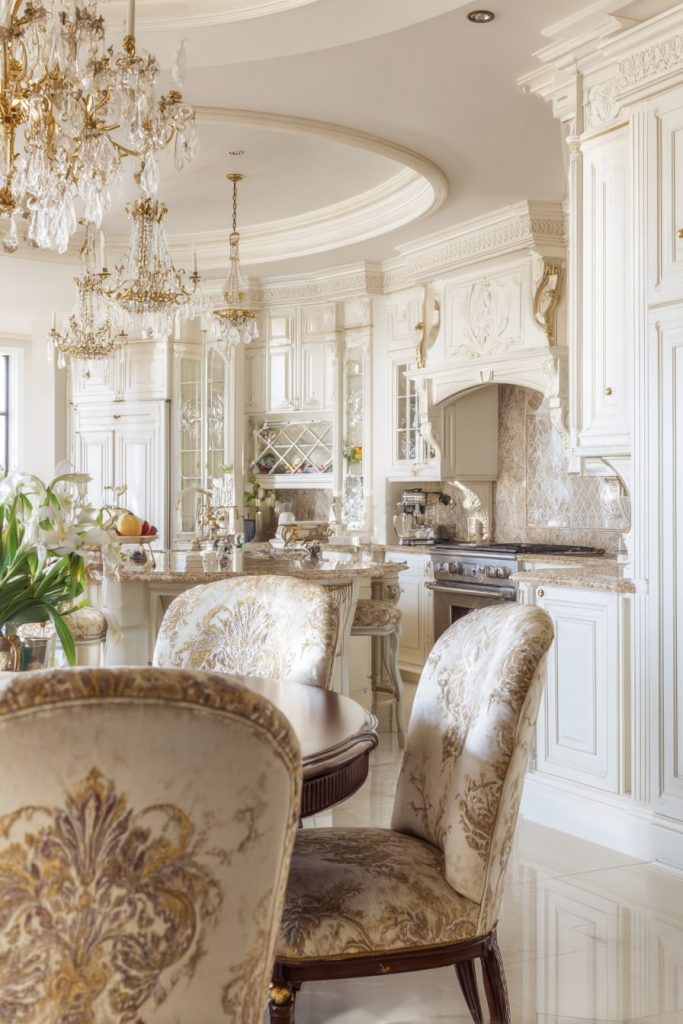
Luxury kitchen and dining design showcases premium materials, expert craftsmanship, and sophisticated details that create environments of exceptional beauty and lasting value. Custom cabinetry with intricate millwork details demonstrates the highest levels of woodworking artistry while providing storage solutions tailored to specific needs and preferences. These handcrafted elements distinguish luxury spaces through their attention to detail and quality construction.
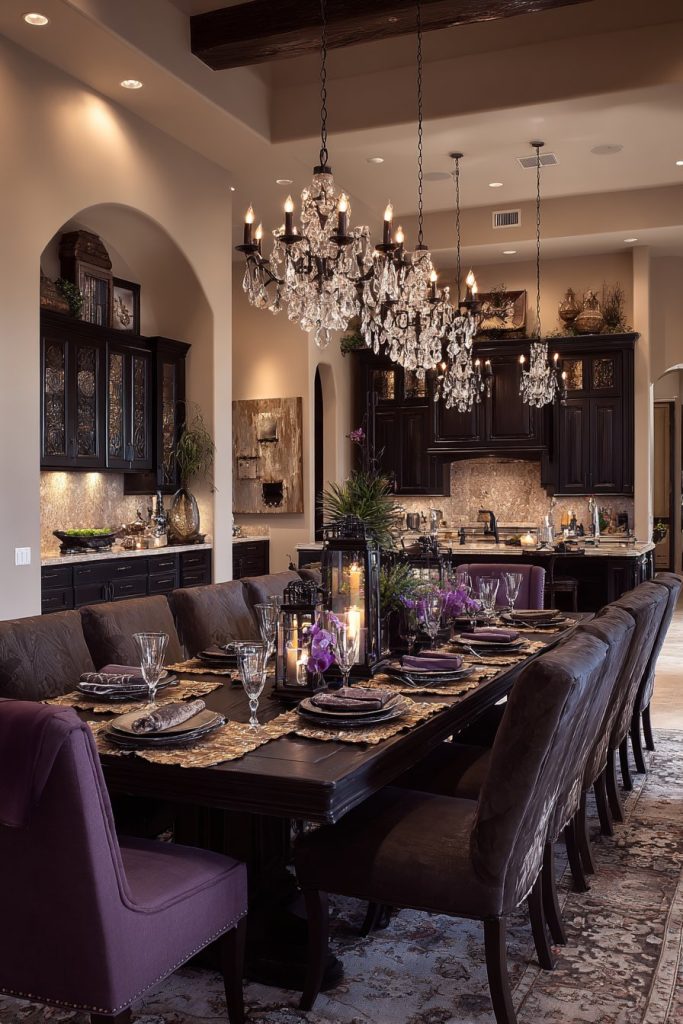
The formal dining table with upholstered chairs in rich fabrics creates elegant environments suitable for special occasions while providing daily beauty that enhances ordinary meals. Premium upholstery materials and expert construction ensure both comfort and durability while contributing to the sophisticated aesthetic through rich textures and colors. This investment in quality furniture provides lasting value and timeless appeal.
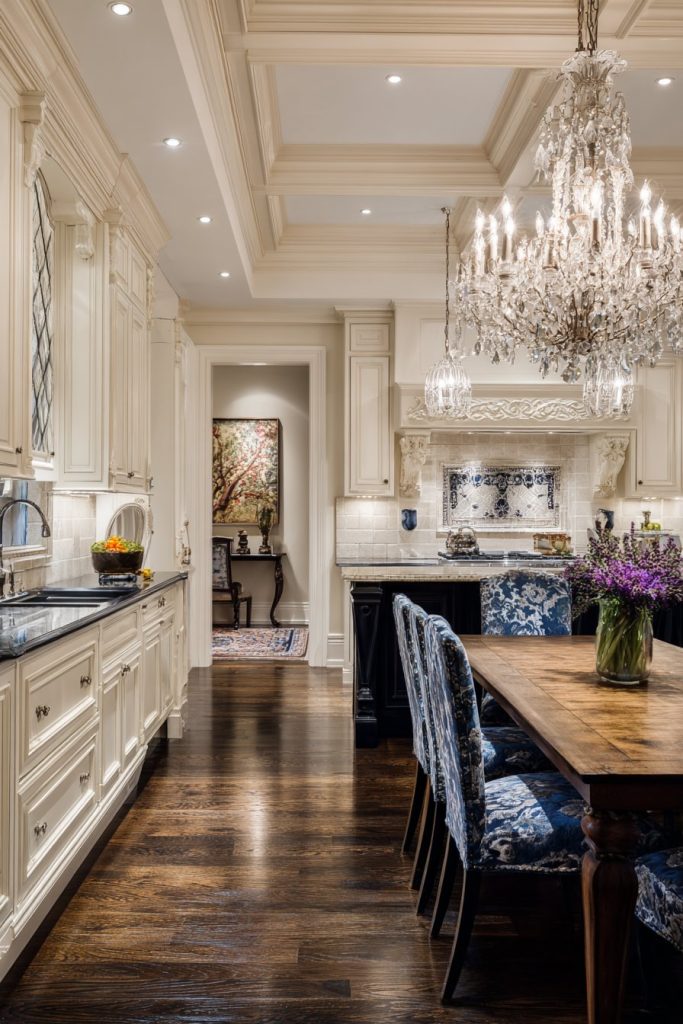
Premium appliances throughout the kitchen combine superior performance with attractive design, enabling serious cooking while maintaining aesthetic appeal necessary in luxury environments. These high-end appliances often feature advanced technology and professional-grade capabilities while incorporating attractive finishes and design details that complement the overall aesthetic.
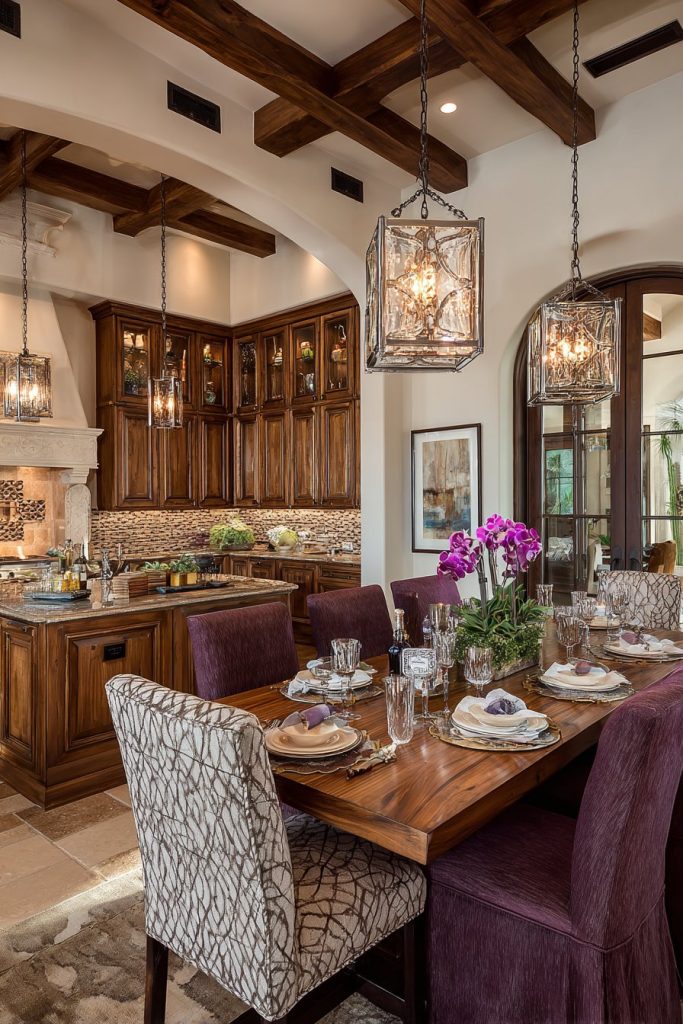
Natural stone countertops and butler’s pantry provide both practical advantages and luxury amenities that enhance both daily use and entertaining capabilities. These premium materials offer durability and beauty while supporting various cooking and serving needs. Crystal chandeliers throughout provide elegant lighting that complements the sophisticated materials while adding sparkle and glamour.
Key Design Tips:
- Invest in custom cabinetry with intricate millwork for exceptional craftsmanship
- Choose formal dining furniture with premium upholstery for lasting luxury
- Select premium appliances that combine superior performance with attractive design
- Include butler’s pantries and natural stone surfaces for luxury functionality
- Add crystal chandeliers for elegant lighting and sophisticated sparkle
20. Small Apartment Efficiency with Smart Solutions
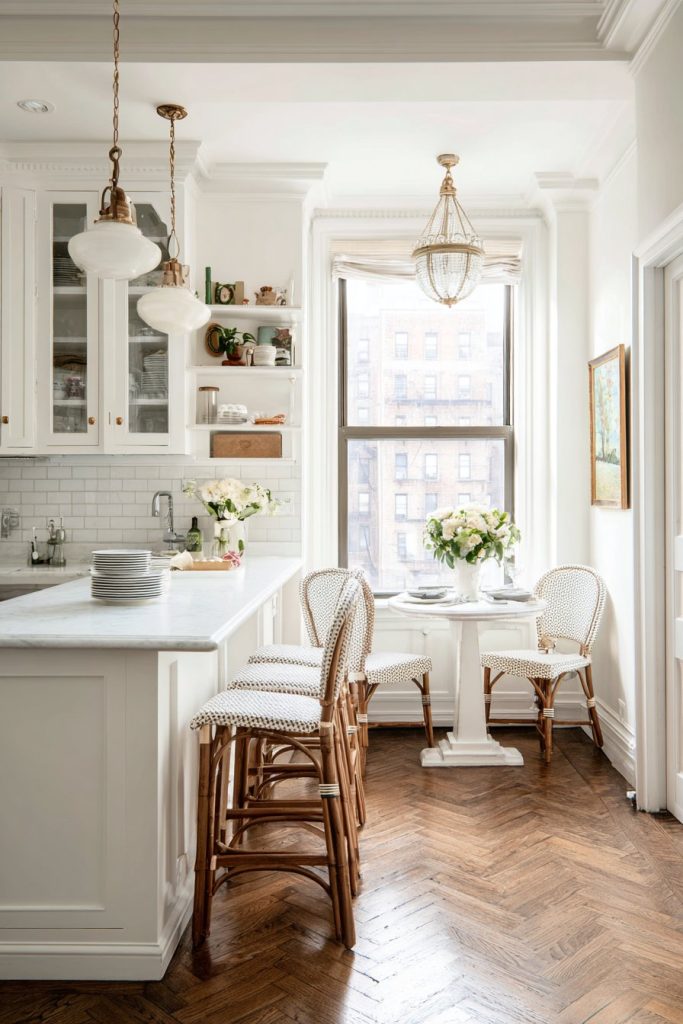
Small apartment kitchen and dining design maximizes functionality through clever space-saving solutions and multi-purpose furniture that create surprising comfort and style within limited square footage. The compact kitchen peninsula doubles as dining counter with bar stools, eliminating the need for separate dining furniture while providing both food preparation workspace and casual eating area. This dual-purpose design maximizes utility while maintaining clean sight lines.
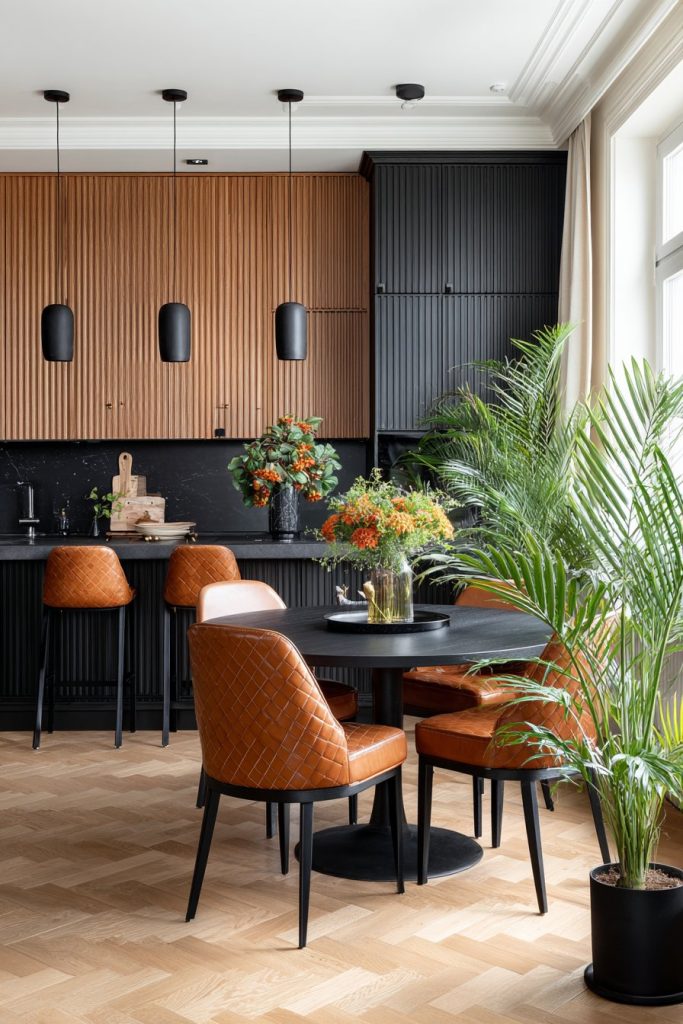
Wall-mounted shelving and magnetic strips provide abundant storage without consuming valuable floor space, essential in small apartments where every square foot matters. These vertical storage solutions keep necessary items easily accessible while maintaining the open feeling crucial in compact spaces. Strategic placement ensures functionality without creating visual clutter.
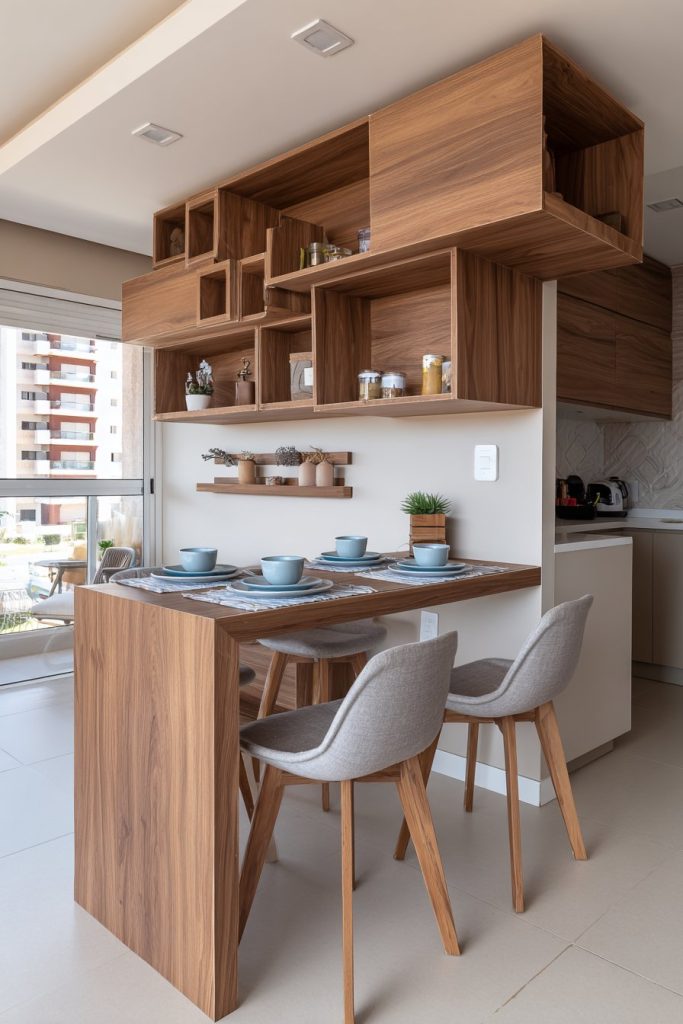
A small bistro table fits perfectly in available corner space for more formal dining when entertaining or special occasions require traditional seating arrangements. This flexible approach allows for both casual and formal dining options without overwhelming limited space with oversized furniture. The bistro table can serve multiple purposes including workspace or additional storage surface when not used for dining.
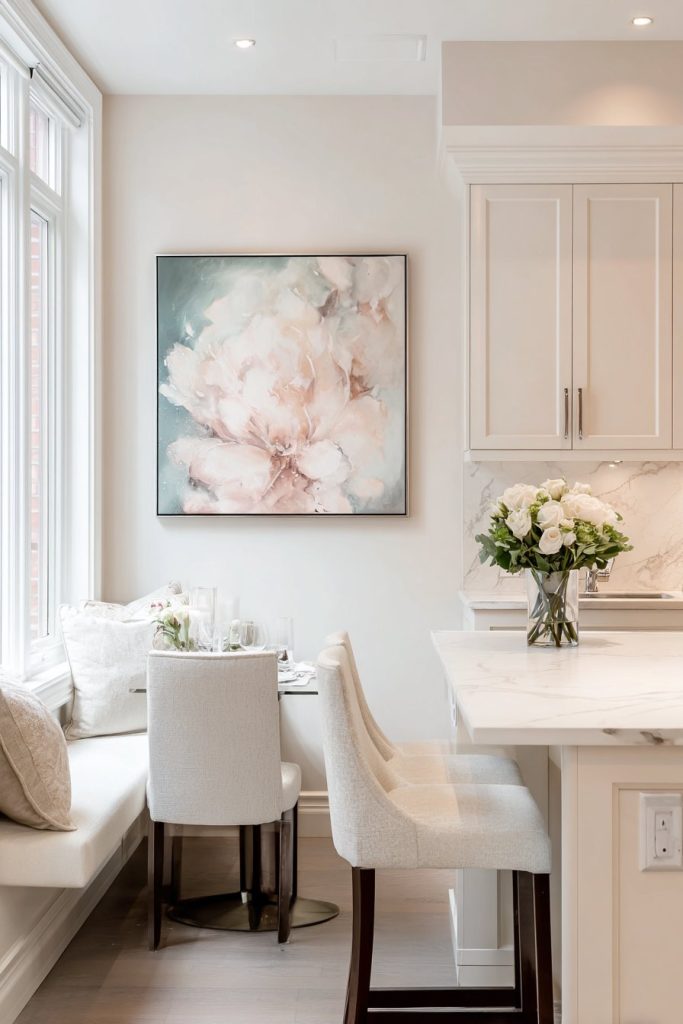
Clever space-saving solutions throughout demonstrate how thoughtful planning and creative storage can create surprisingly functional and attractive environments even within severe space constraints. These solutions often require custom planning and creative thinking but result in homes that feel much larger than their actual square footage suggests.
Key Design Tips:
- Use kitchen peninsulas as dual-purpose workspace and dining counters
- Install wall-mounted storage to maximize vertical space without consuming floor area
- Choose small bistro tables that provide formal dining options without overwhelming space
- Implement magnetic strips and vertical storage for maximum efficiency
- Select multi-purpose furniture that serves several functions simultaneously
Why These Kitchen and Dining Room Ideas Represent the Best in Modern Design
These twenty kitchen and dining room concepts represent the pinnacle of contemporary interior design excellence, each addressing specific lifestyle needs while showcasing innovative approaches to space planning, material selection, and aesthetic integration. The open-concept modern design leads the way in contemporary living by eliminating barriers between cooking and socializing, creating homes that support modern family dynamics and entertaining styles. This approach has become increasingly popular as homeowners seek spaces that promote interaction and flexibility.
The compact galley kitchen solution demonstrates exceptional space efficiency, proving that small spaces can deliver both functionality and style without compromise. This design approach has become essential as urban living continues to emphasize smaller footprints and efficient use of available space. The intelligent storage solutions and multi-purpose elements showcase how thoughtful planning can overcome spatial limitations.
Farmhouse charm continues to captivate homeowners seeking authentic character and connection to traditional craftsmanship. This enduring style provides emotional warmth and historical connection that many contemporary approaches cannot match. The emphasis on natural materials, handcrafted details, and time-worn patina creates environments that feel collected over time rather than designed all at once.
Contemporary sophistication appeals to homeowners who appreciate clean lines, innovative materials, and cutting-edge technology integrated seamlessly into living spaces. The emphasis on material contrast and architectural drama creates environments that feel both current and timeless, avoiding trendy elements that quickly become dated.
Scandinavian functionality has gained international recognition for its perfect balance of beauty and practicality, creating environments that promote wellbeing through thoughtful design and natural materials. This approach emphasizes quality over quantity while celebrating the inherent beauty of simple, honest materials and purposeful design.
Industrial loft character transforms former commercial spaces into dramatic residential environments that celebrate structural honesty and raw materials. This approach appeals to urban dwellers who appreciate the authenticity of exposed construction elements and the character that comes from adaptive reuse of existing buildings.
Transitional balance provides timeless appeal by successfully combining traditional and contemporary elements, creating environments that feel both current and classic. This approach offers flexibility for homeowners who appreciate traditional craftsmanship but desire modern convenience and updated aesthetics.
Mediterranean warmth brings artisanal character and Old World charm to contemporary homes through carefully selected materials and traditional construction techniques. This style provides emotional warmth and cultural connection while offering practical benefits in terms of durability and natural beauty.
Minimalist serenity creates peaceful environments through careful editing and emphasis on pure forms, appealing to homeowners seeking refuge from busy modern life. This approach requires discipline and quality materials but results in spaces that promote calm and focus through visual simplicity.
Eclectic character celebrates individual taste and personal collections, creating homes that reflect the inhabitants’ interests, travels, and collecting habits. This approach requires confidence and restraint but results in highly personalized environments that cannot be replicated in showrooms or magazines.
Coastal relaxation brings vacation-home comfort to everyday living through materials and colors that evoke seaside environments. This style provides emotional connection to natural environments while creating relaxed, comfortable living spaces that promote wellbeing and stress reduction.
Traditional elegance offers time-tested proportions and quality craftsmanship that provide lasting beauty and sophisticated character. This approach appeals to homeowners who appreciate classical proportions, quality materials, and refined details that improve with age.
Entertainment-focused design addresses modern lifestyle needs by creating environments optimized for hosting and social interaction. These spaces recognize that contemporary homes must support various social activities while maintaining aesthetic appeal and functional efficiency.
Rustic authenticity celebrates genuine aged materials and handcrafted details that provide irreplaceable character and environmental responsibility through adaptive reuse of existing materials. This approach appeals to homeowners seeking connection to traditional craftsmanship and sustainable design practices.
Art Deco glamour brings sophisticated drama and geometric beauty to contemporary homes through bold patterns, luxurious materials, and angular forms that create unforgettable visual impact. This distinctive style appeals to homeowners who appreciate bold design statements and historical reference.
Country comfort provides welcoming warmth through soft colors, traditional patterns, and handcrafted details that create emotionally nurturing environments. This timeless approach appeals to homeowners seeking refuge from urban stress and connection to simpler living traditions.
Modern luxury showcases sophisticated materials and clean architectural lines that create environments of understated elegance and contemporary sophistication. This approach appeals to homeowners who appreciate quality materials, advanced technology, and refined aesthetics.
Bohemian eclecticism celebrates artistic expression and global influences through layered textures, vibrant colors, and collected objects that reflect creative sensibilities and well-traveled lifestyles. This approach appeals to homeowners who value individual expression and cultural diversity.
Luxury sophistication demonstrates premium materials, expert craftsmanship, and sophisticated details that provide exceptional beauty and lasting value. This approach represents the highest levels of design achievement through quality materials, expert construction, and timeless proportions.
Small apartment efficiency proves that thoughtful planning and creative solutions can create surprisingly functional and attractive environments even within severe space constraints. This approach has become increasingly important as urban living continues to emphasize efficient use of limited space.
Each of these design approaches offers unique advantages while addressing specific lifestyle needs, spatial constraints, and aesthetic preferences. The variety demonstrates that successful kitchen and dining room design depends not on following trends but on understanding how different approaches can create environments that support daily life while providing lasting beauty and satisfaction.
Conclusion
The twenty kitchen and dining room design concepts presented here demonstrate the remarkable versatility and creative potential available to homeowners seeking to transform these essential spaces. From the dramatic openness of contemporary design to the intimate warmth of farmhouse style, each approach offers unique solutions to common challenges while creating environments that reflect personal taste and support modern living requirements.
The key to successful kitchen and dining room design lies in understanding how different elements work together to create cohesive environments that are both beautiful and functional. Material selection, lighting design, spatial planning, and color coordination all contribute to the overall success of these spaces, with each element supporting and enhancing the others to create unified environments.
Whether working with generous spaces that allow for dramatic design statements or compact areas that require creative efficiency solutions, these design concepts provide inspiration and practical guidance for creating kitchen and dining rooms that enhance daily life while providing lasting beauty. The emphasis on quality materials, thoughtful planning, and attention to detail ensures that these spaces will continue to provide satisfaction and functionality for years to come.
The most successful approach involves carefully considering lifestyle needs, spatial constraints, and personal preferences while selecting design elements that work harmoniously to create environments that feel both intentional and authentic. By drawing inspiration from these diverse approaches while adapting them to specific circumstances, homeowners can create kitchen and dining spaces that truly reflect their individual needs and aesthetic preferences while providing the functionality essential for modern living.


