
Creating the perfect large dining room is both an art and a science, requiring careful consideration of scale, functionality, and aesthetic appeal. When you’re blessed with generous square footage, the possibilities for design become endless, offering opportunities to create truly spectacular spaces that serve as the heart of your home’s entertainment and family life. Large dining rooms present unique challenges and exciting possibilities that smaller spaces simply cannot accommodate, from grand statement pieces to multiple seating arrangements that can adapt to any occasion.

The key to successful large dining room design lies in understanding how to balance grandeur with intimacy, ensuring that your space feels both impressive and welcoming. Whether you’re planning formal dinner parties for sixteen guests or creating a versatile family hub that transitions seamlessly between casual breakfast and elegant entertaining, the right design approach can transform your expansive dining area into a masterpiece of both form and function.
From traditional elegance to contemporary minimalism, industrial chic to coastal charm, the world of large dining room design offers an incredible array of styles and approaches. Each design philosophy brings its own unique character and practical benefits, allowing you to create a space that truly reflects your personality while maximizing the potential of your generous room dimensions.

1. Grand Formal Elegance with Crystal Chandelier Centerpiece

The epitome of sophisticated dining room design begins with a magnificent rectangular walnut dining table that commands attention while comfortably seating twelve guests. This grand approach to large dining room design emphasizes the importance of proportion and scale, where every element works in harmony to create an atmosphere of refined luxury. The rich, deep tones of walnut wood provide warmth and sophistication, while the substantial size ensures that the table becomes the natural focal point of the expansive space.
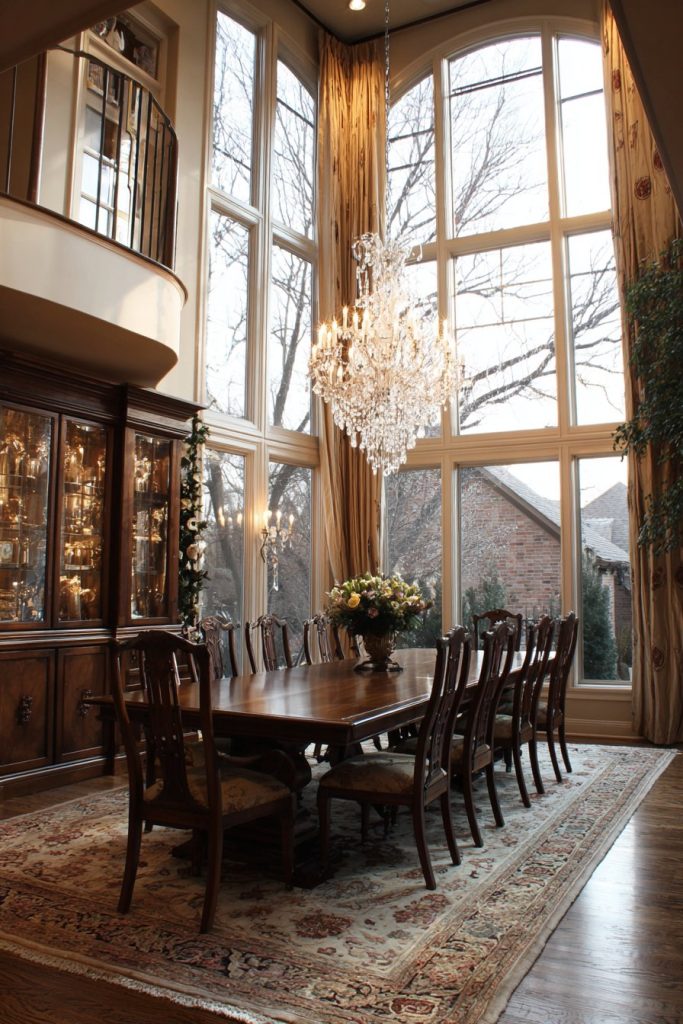
Floor-to-ceiling windows draped in elegant fabric create a dramatic backdrop while flooding the room with natural light during daytime hours. The interplay between natural and artificial lighting becomes crucial in such a large space, where a statement crystal chandelier serves as both functional illumination and artistic centerpiece. The chandelier’s positioning directly above the dining surface ensures optimal lighting for meals while creating beautiful refractive patterns that dance across the room’s surfaces.
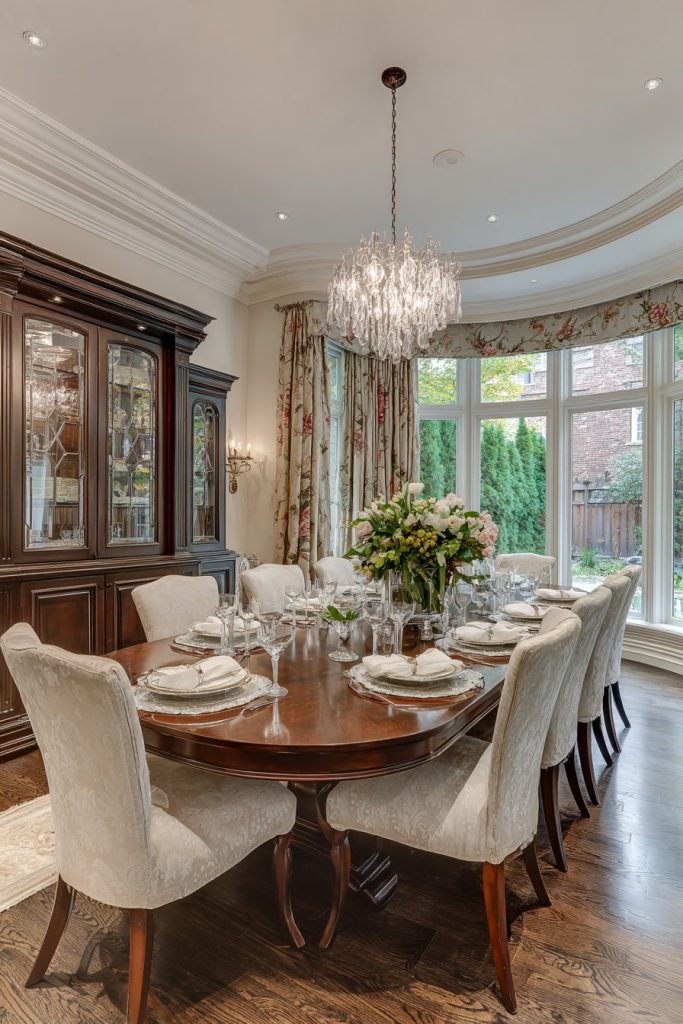
Built-in china cabinets line one wall, providing both practical storage and display opportunities for fine dinnerware and family heirlooms. These custom storage solutions maximize the room’s functionality while maintaining the clean, uncluttered aesthetic essential for formal dining spaces. The generous proportions allow for comfortable circulation around the table, ensuring that serving and conversation flow naturally throughout the space.

Key Design Tips:
- Choose a dining table that’s proportional to your room size – in large spaces, substantial furniture prevents the room from feeling empty
- Invest in quality window treatments that can control natural light while adding textural interest
- Position your chandelier 30-36 inches above the table surface for optimal lighting without obstruction
- Include built-in storage solutions to maintain the clean lines essential for formal dining
- Use rich wood tones to add warmth and sophistication to large, potentially cold spaces
2. Open-Concept Kitchen Integration with Live-Edge Drama
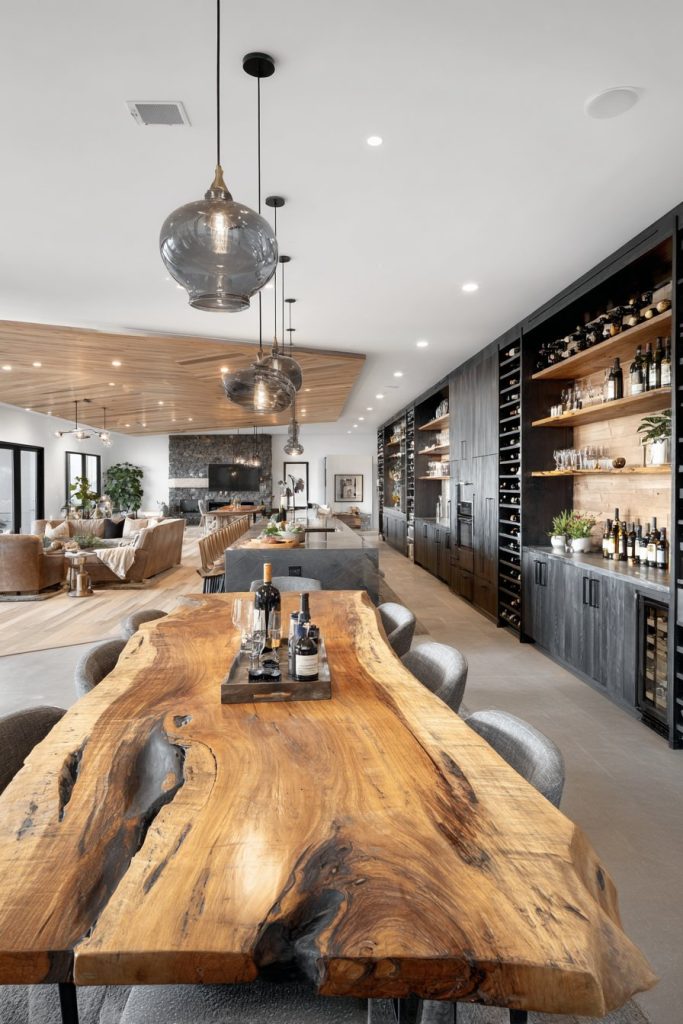
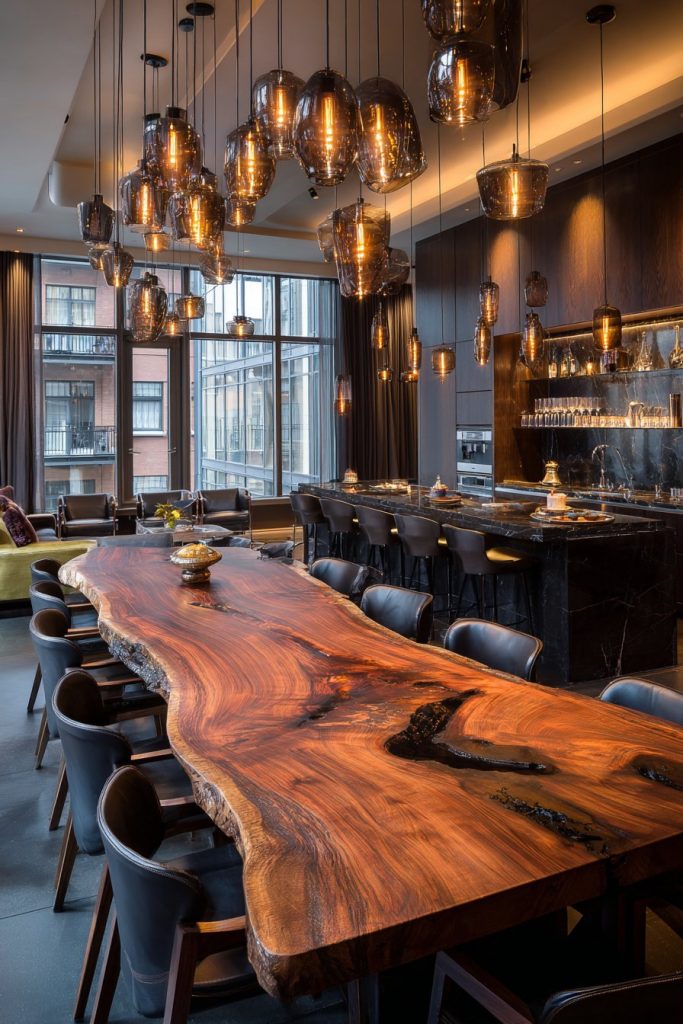
Modern large dining room ideas often embrace the open-concept philosophy, creating seamless connections between cooking, dining, and entertaining areas. A massive live-edge dining table becomes the star of this design approach, showcasing the natural beauty of wood grain while accommodating multiple conversation areas within the expansive space. The organic edge of the table softens the potentially overwhelming scale of a large room while providing a stunning focal point that celebrates natural materials.
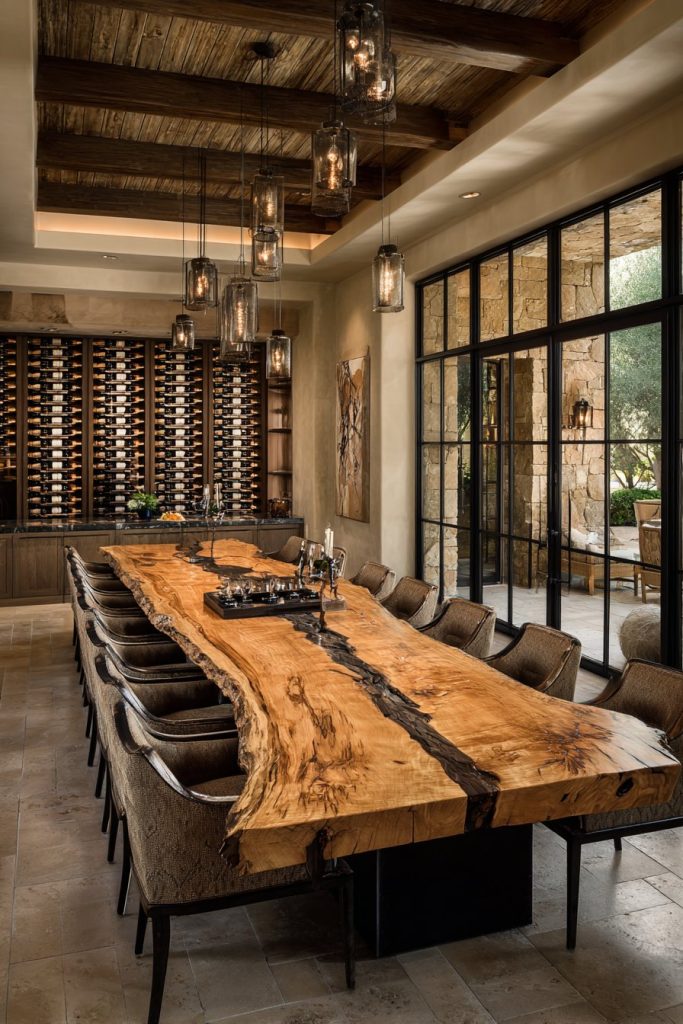
The integration with kitchen areas requires careful planning to ensure that cooking aromas, sounds, and activities enhance rather than detract from the dining experience. Dedicated buffet zones with built-in serving stations create logical flow patterns for entertaining, while wine storage solutions add both functionality and sophisticated appeal. The key to success lies in creating distinct zones within the open space while maintaining visual continuity throughout.
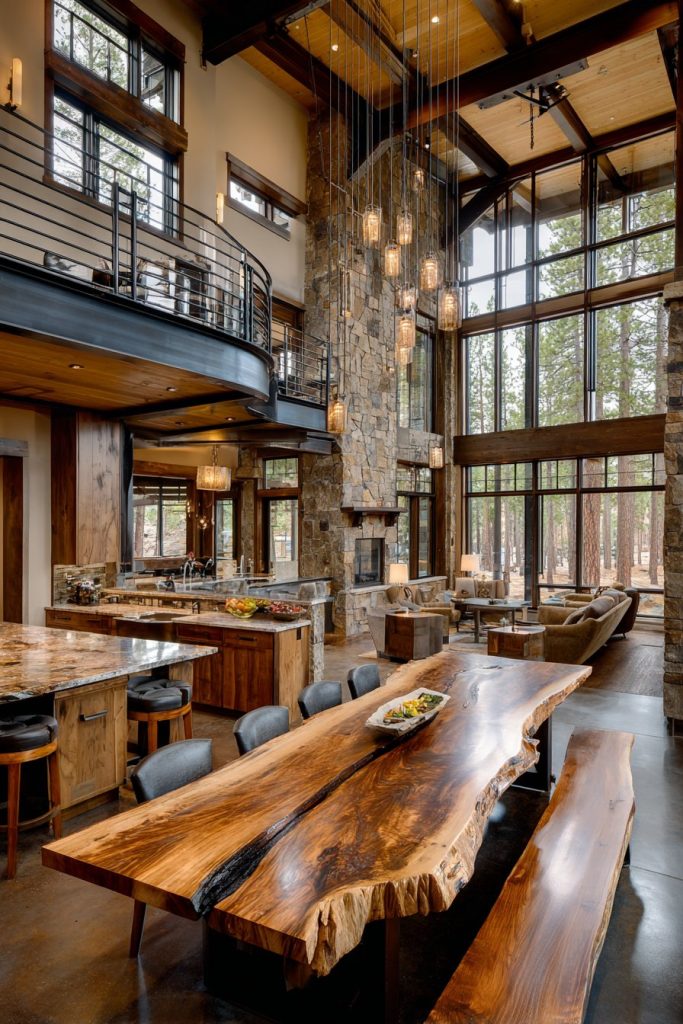
Pendant lighting plays a crucial role in defining intimate zones within the larger space, using multiple fixtures to create pools of warm light that guide the eye and establish comfortable gathering areas. The careful placement of these lighting elements helps to break up the potentially overwhelming scale of a large open-concept area while maintaining the airy, connected feeling that makes these spaces so appealing.
Key Design Tips:
- Use live-edge tables to bring natural beauty and organic shapes into large, geometric spaces
- Create distinct zones with lighting and furniture placement while maintaining visual flow
- Include dedicated serving areas with built-in storage to support entertaining functions
- Plan for multiple conversation areas within the larger space to accommodate various group sizes
- Consider kitchen integration carefully to ensure cooking activities complement rather than compete with dining
3. Dual-Zone Dining with Formal and Casual Areas
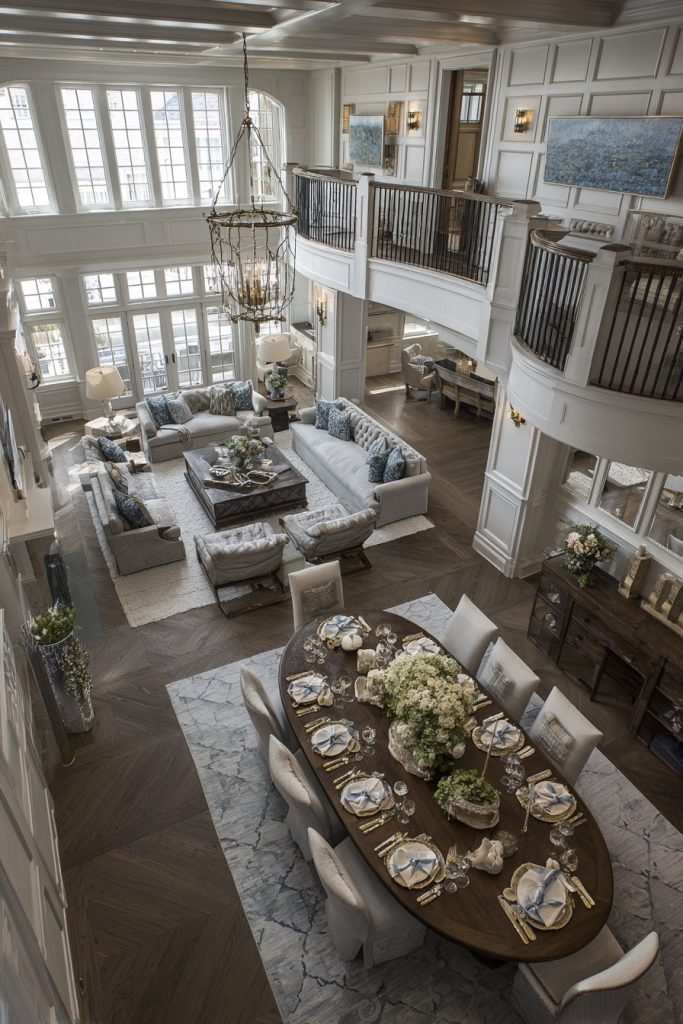
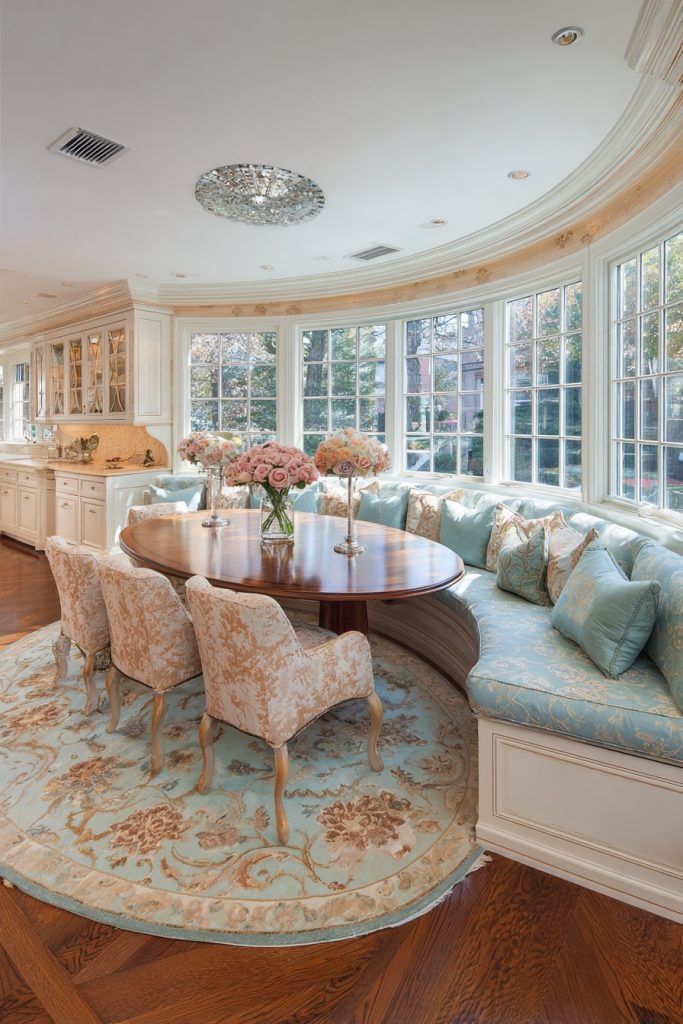
Large dining rooms offer the unique opportunity to create multiple dining experiences within a single space, addressing the reality that modern families need both formal entertaining capabilities and casual everyday dining solutions. The dual-zone approach features an elegant oval table for eight in the formal area, paired with a cozy breakfast nook with banquette seating for family meals and casual gatherings.
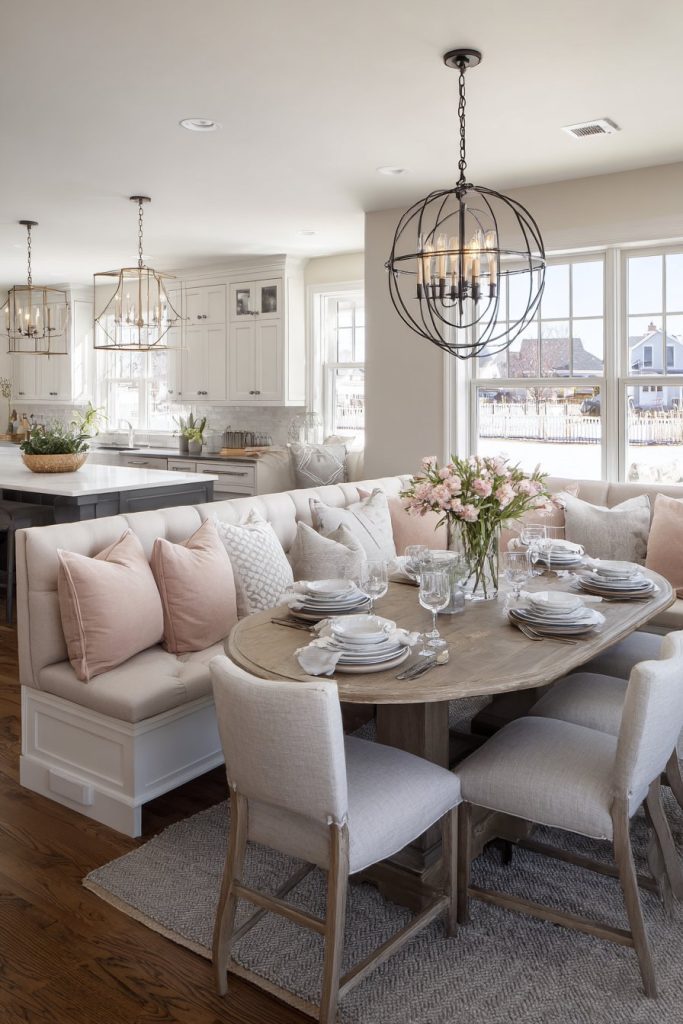
Rich hardwood flooring unifies the entire space while area rugs help define each distinct dining zone, creating visual boundaries without physical barriers. This approach maximizes the versatility of large square footage, allowing the room to adapt to different occasions and group sizes throughout the day. The formal zone maintains traditional elegance with upholstered chairs and sophisticated table settings, while the casual area embraces comfort with built-in seating and relaxed styling.
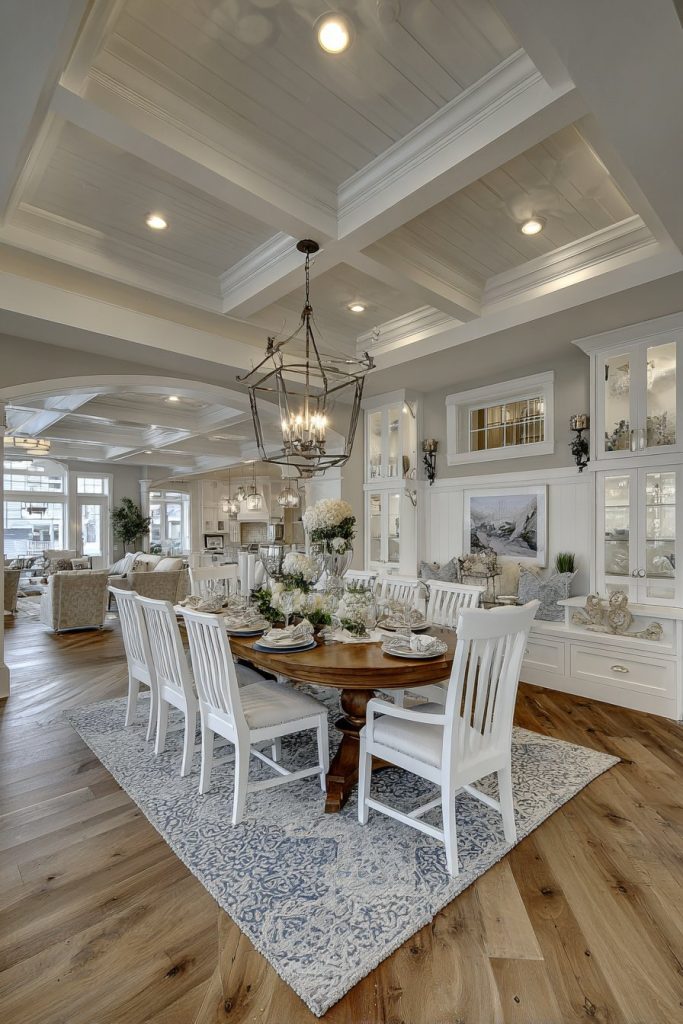
The key to successful dual-zone design lies in creating harmony between the two areas while allowing each to maintain its distinct character. Consistent color palettes, complementary furniture styles, and unified lighting approaches help tie the spaces together while allowing each zone to serve its intended purpose effectively.
Key Design Tips:
- Use area rugs to define separate zones within the larger space without creating physical barriers
- Choose complementary furniture styles that share common elements while serving different functions
- Maintain consistent flooring throughout the space to create visual unity
- Plan for different lighting needs in each zone to support their distinct functions
- Consider built-in seating for casual areas to maximize space efficiency and comfort
4. Cathedral Ceilings with Rustic Farmhouse Character
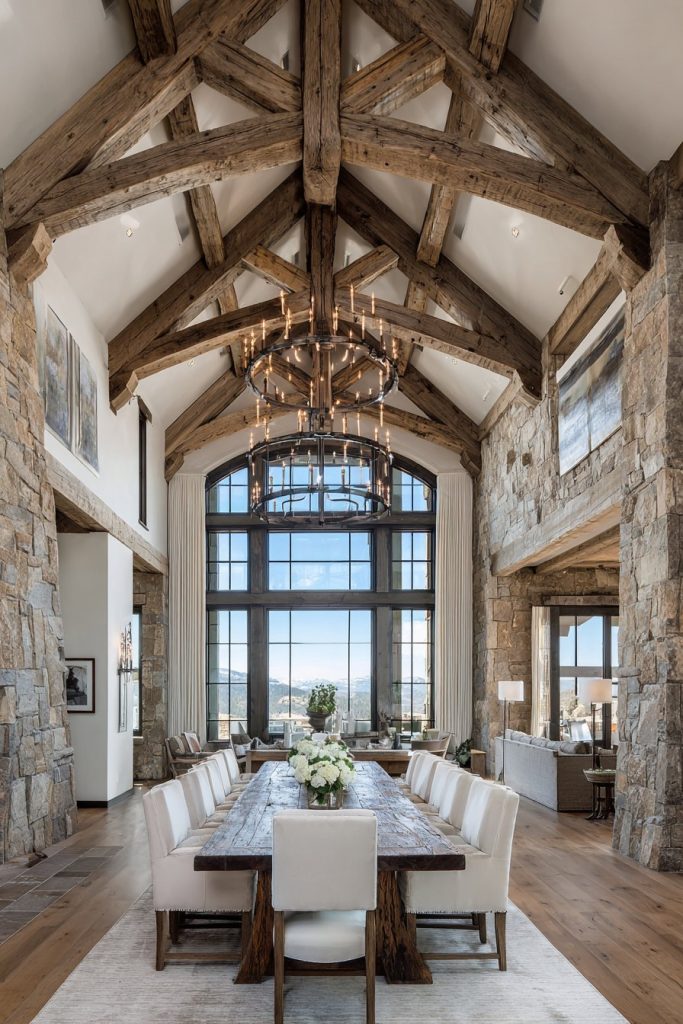
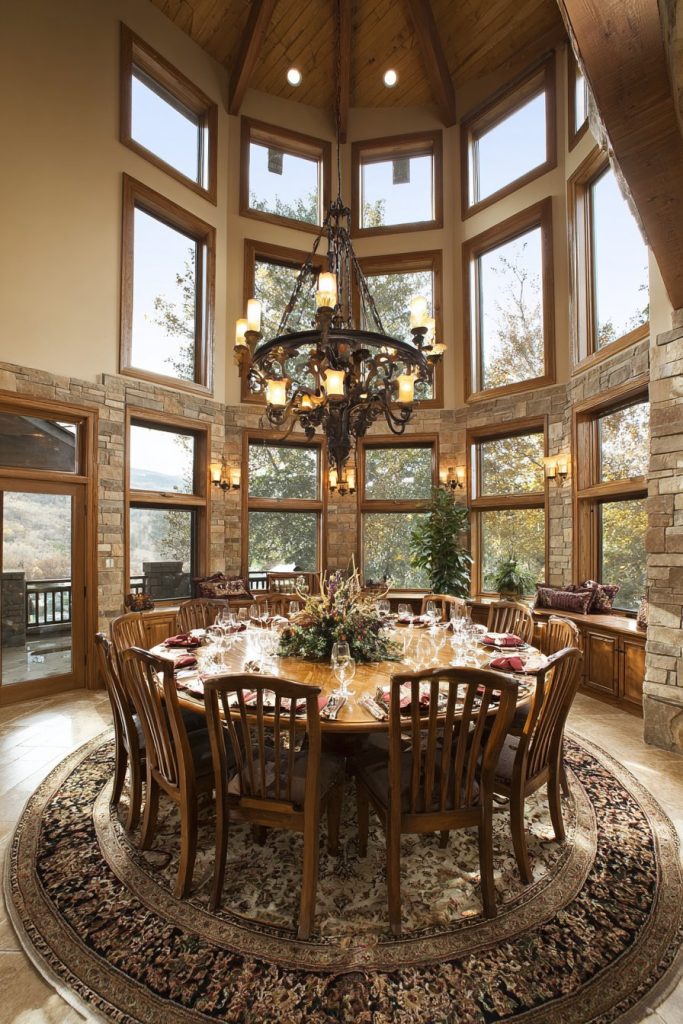
Double-height ceilings with exposed wooden beams create one of the most dramatic possibilities for large dining room design, where vertical space becomes as important as floor area. A substantial farmhouse-style dining table that seats ten anchors the room at ground level while exposed beams draw the eye upward, creating a sense of grandeur that’s both rustic and sophisticated. The interplay between horizontal and vertical elements creates visual interest while maintaining the cozy, welcoming atmosphere essential for dining spaces.
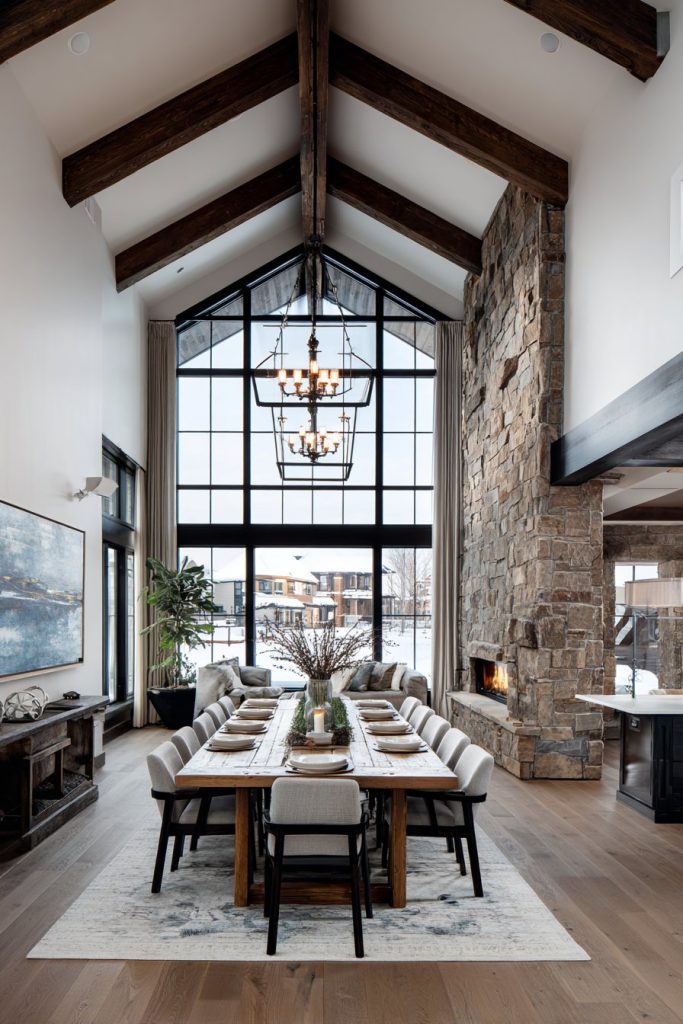
The two-story window wall becomes a defining feature, flooding the room with natural light while providing stunning views that change throughout the day and seasons. This abundance of natural light requires careful consideration of window treatments and artificial lighting to ensure the space remains comfortable and functional during evening hours. A rustic chandelier scaled appropriately for the soaring ceiling provides intimate lighting at table level while complementing the room’s architectural drama.
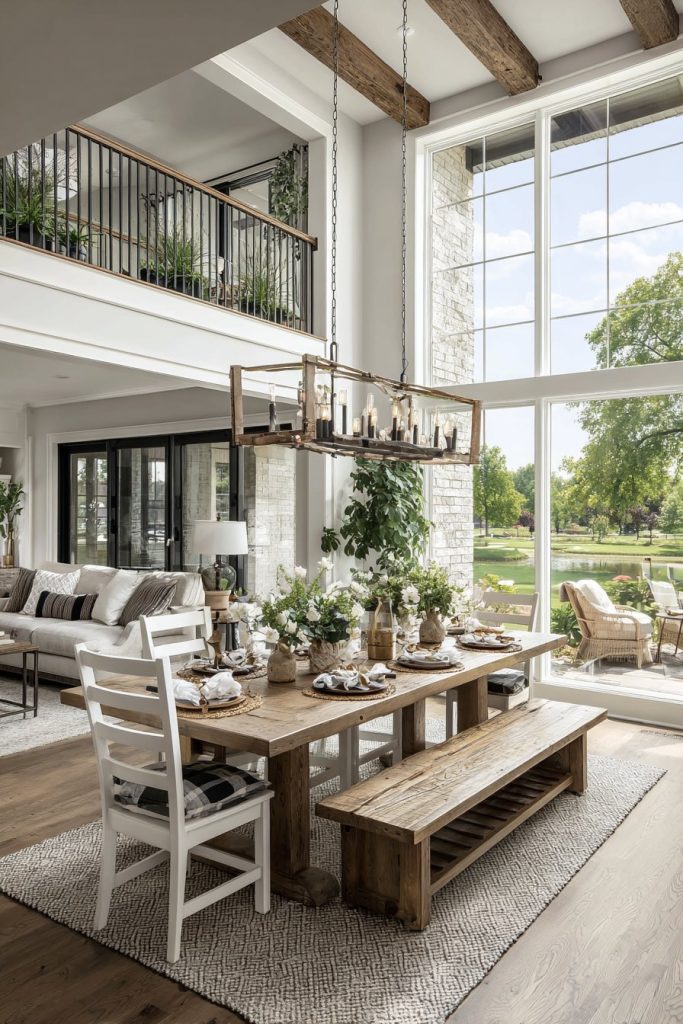
The challenge of heating and cooling such a large vertical space requires careful planning, but the rewards include an unforgettable dining experience that feels both grand and intimate. The natural materials and rustic styling prevent the space from feeling cold or institutional, while the substantial furniture grounds the room and creates human-scale comfort within the impressive architecture.
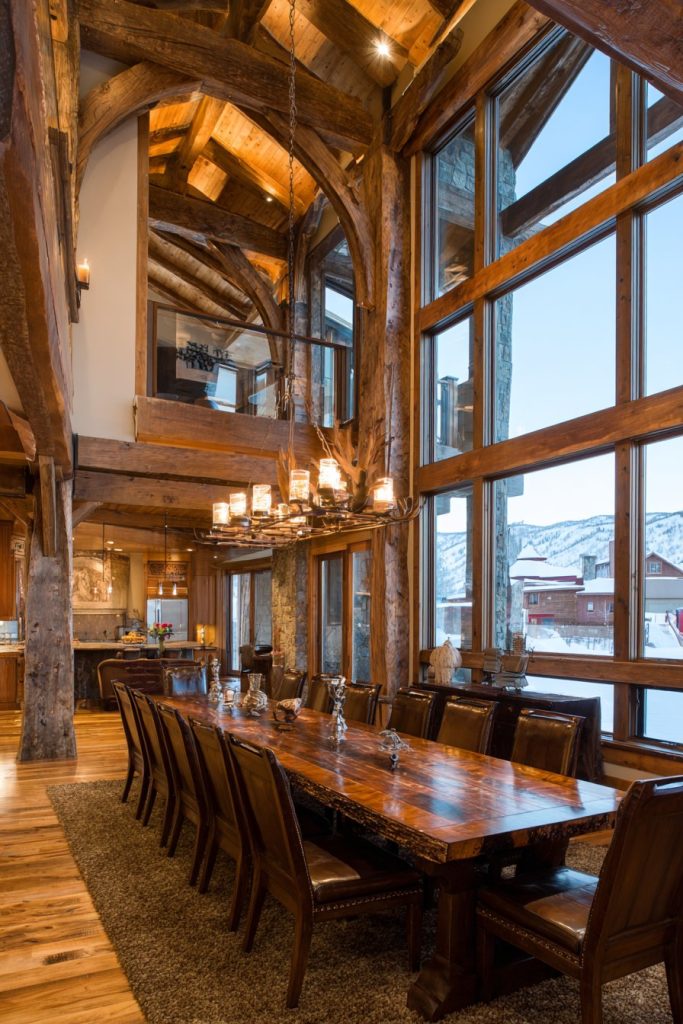
Key Design Tips:
- Scale lighting fixtures appropriately for high ceilings – larger spaces need substantial fixtures
- Use exposed beams to add architectural interest and define the ceiling plane
- Plan for window treatments on large window walls to control light and provide privacy
- Choose substantial furniture that won’t be overwhelmed by high ceilings
- Consider heating and cooling needs for large vertical spaces during design phase
5. Flexible Modular Furniture for Adaptable Entertaining

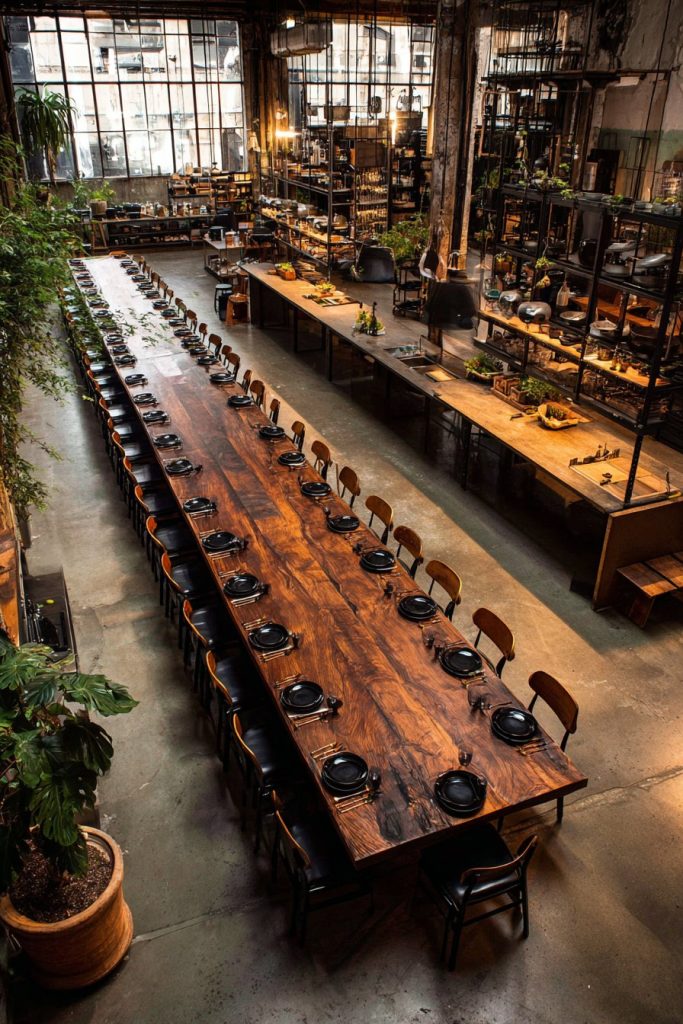
The ultimate expression of large dining room versatility comes through modular furniture systems that can expand from intimate seating for six to banquet-style arrangements for sixteen guests. This approach maximizes the investment in your dining space by creating multiple configuration possibilities that adapt to changing needs throughout the year. Rolling bar carts and expandable serving surfaces add functional flexibility while maintaining the clean aesthetic essential for sophisticated entertaining.
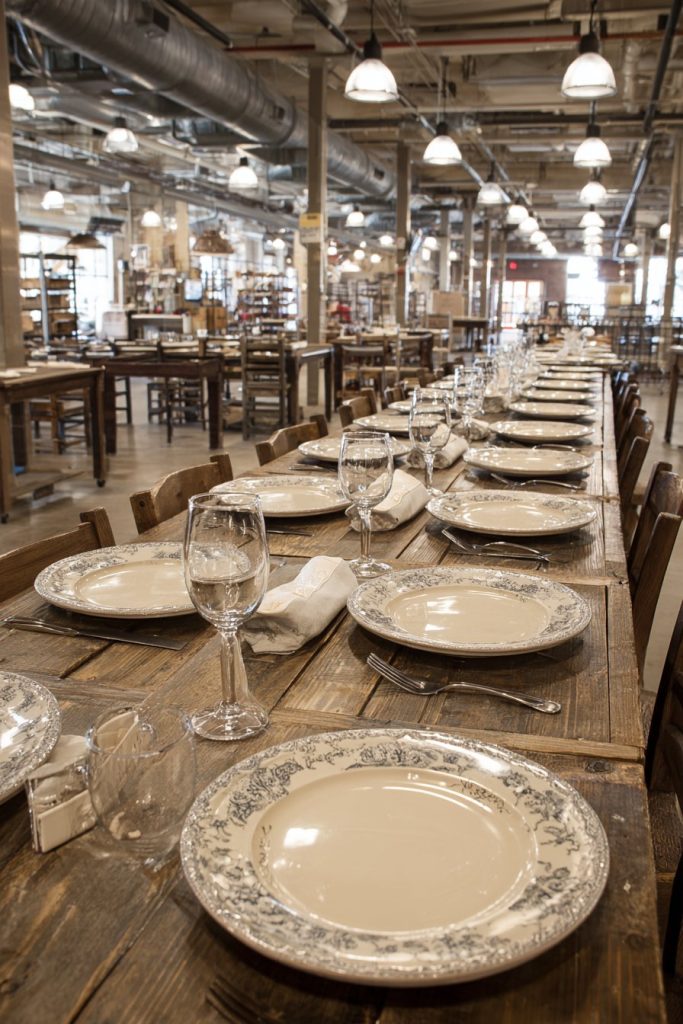
Multiple lighting zones with dimmable fixtures allow for various dining moods, from bright and energetic for large parties to soft and intimate for romantic dinners. The ability to control different areas of lighting independently ensures that the space can be customized for any occasion while maintaining energy efficiency. This technical approach to lighting design transforms a large dining room from a single-purpose space into a multi-functional entertainment hub.
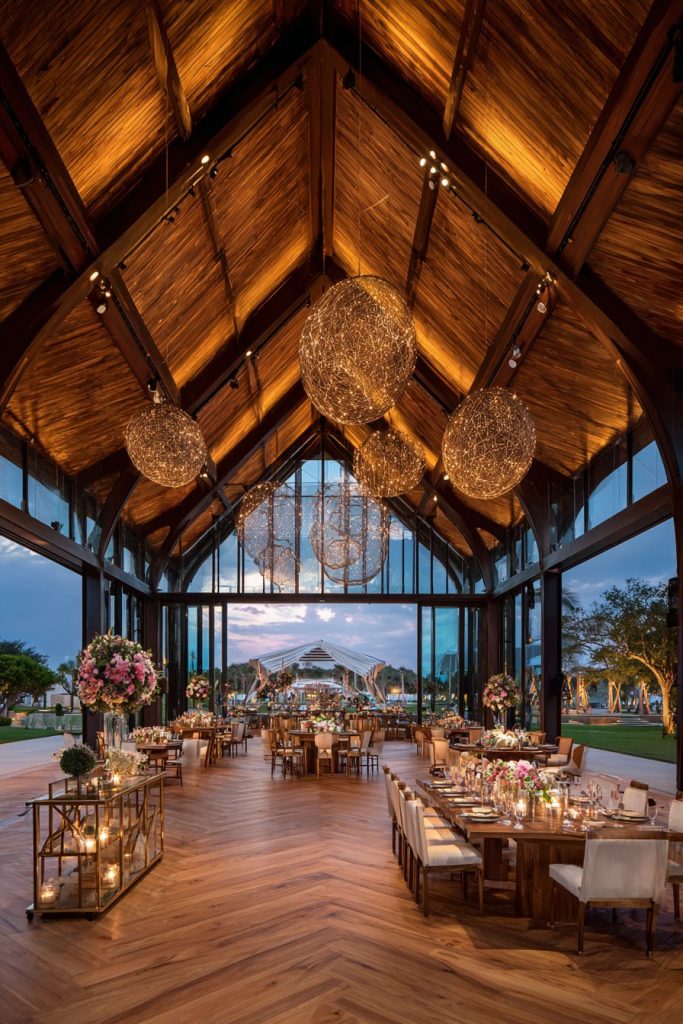
The key to successful modular design lies in choosing pieces that look intentional and cohesive in every configuration. Quality construction and timeless styling ensure that expanded arrangements look planned rather than improvised, while storage solutions for additional pieces keep the space organized when not in use.
Key Design Tips:
- Invest in quality modular furniture that looks intentional in every configuration
- Plan storage solutions for additional pieces when not in use
- Install dimmable lighting systems with multiple zones for maximum flexibility
- Choose expandable serving surfaces that integrate seamlessly with your design
- Consider rolling furniture for easy reconfiguration without heavy lifting

6. Kitchen Island Integration with Garden Views

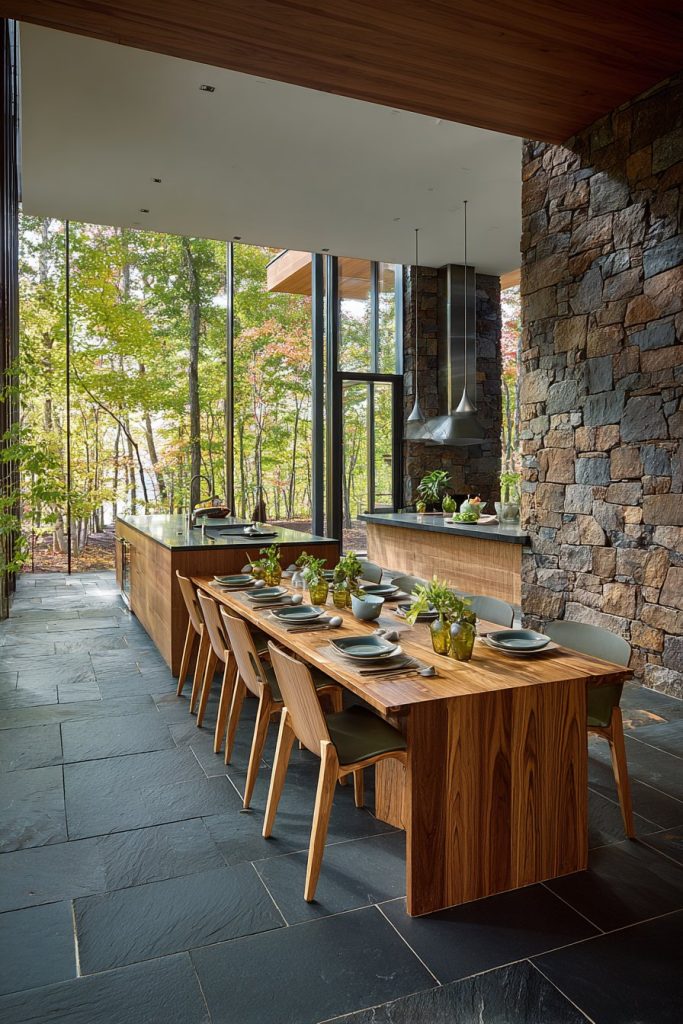
The integration of a central kitchen island that doubles as casual dining space represents one of the most practical approaches to large dining room design, especially in homes where cooking and entertaining are closely linked activities. This design philosophy embraces the reality of modern living while taking advantage of generous floor plans that allow for easy circulation between cooking, serving, and formal dining areas.
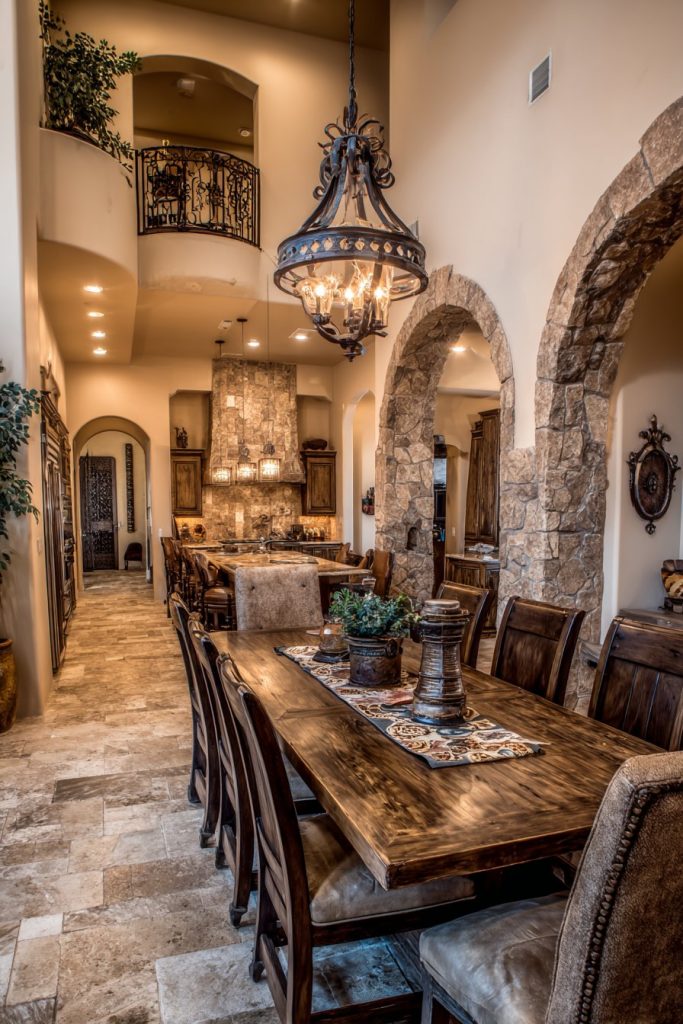
Natural stone flooring provides the durability essential for high-traffic entertaining while adding sophisticated texture and visual interest to the expansive space. The material choice becomes particularly important in large rooms where floor surfaces play a significant role in defining the overall aesthetic. Stone’s natural variations and substantial presence help ground the design while providing practical benefits for busy entertaining spaces.

The positioning of the formal dining table to capture garden views creates a natural focal point while connecting interior and exterior spaces. This relationship with outdoor areas becomes especially important in large dining rooms, where windows and views help prevent the space from feeling closed-in or overwhelming. The flow between functional zones ensures that the space works as efficiently as smaller, more compact designs while offering the luxury of generous proportions.
Key Design Tips:
- Choose durable flooring materials like natural stone for high-traffic entertaining areas
- Position dining tables to take advantage of the best views available
- Plan circulation patterns between kitchen, serving, and dining areas for efficient entertaining
- Use kitchen islands as casual dining space to maximize functionality
- Connect interior and exterior spaces through window placement and outdoor views
7. Window Seating with Conversation-Friendly Round Table
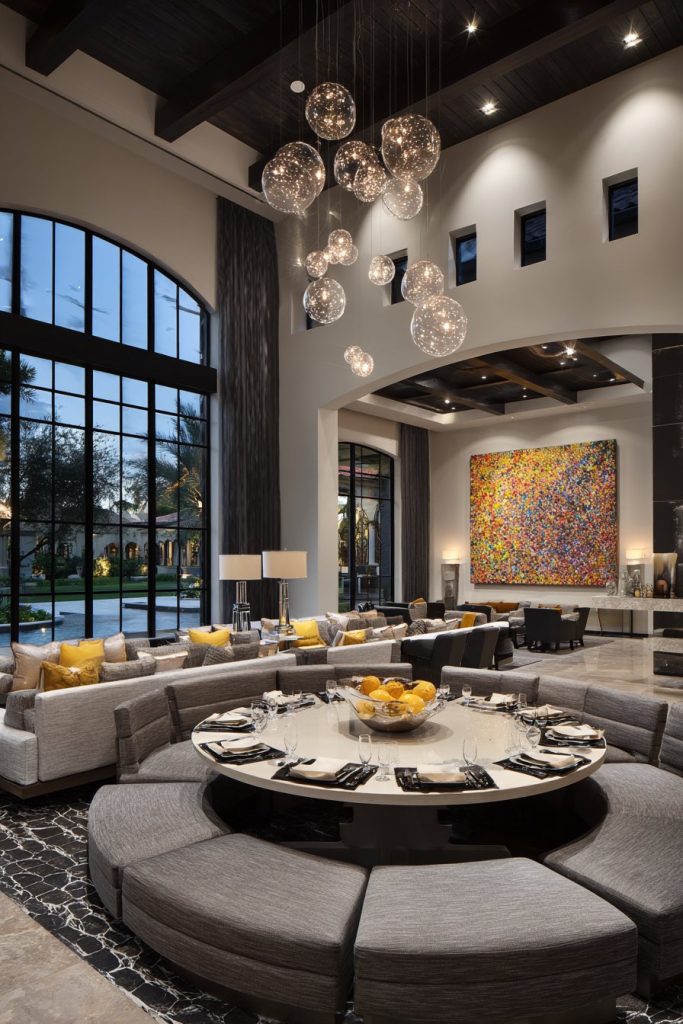
Built-in window seating with storage beneath represents an elegant solution for maximizing both seating and storage in large dining rooms while creating intimate gathering spots that complement the main dining area. A substantial round dining table that promotes conversation among twelve guests becomes the centerpiece, while the window seating provides additional casual seating and a cozy reading nook during non-dining hours.
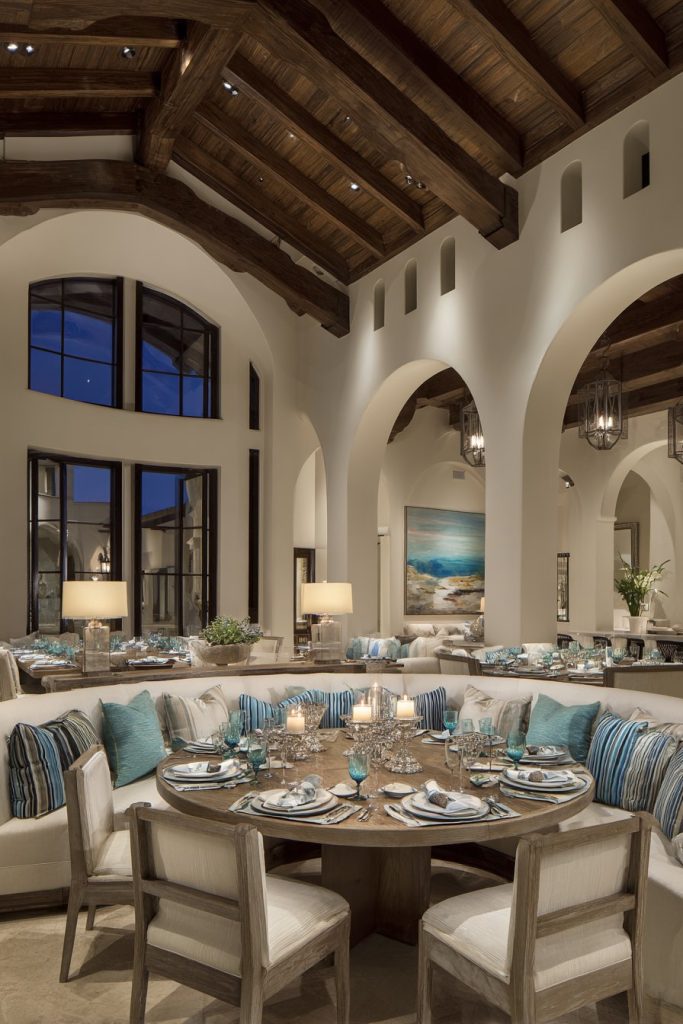
The circular table shape encourages conversation and creates a more intimate dining experience despite the large number of seats, making it ideal for family gatherings and dinner parties where social interaction is paramount. The generous room dimensions allow for comfortable circulation around the round table while providing space for displaying artwork and family collections that personalize the space and reflect the homeowners’ interests.
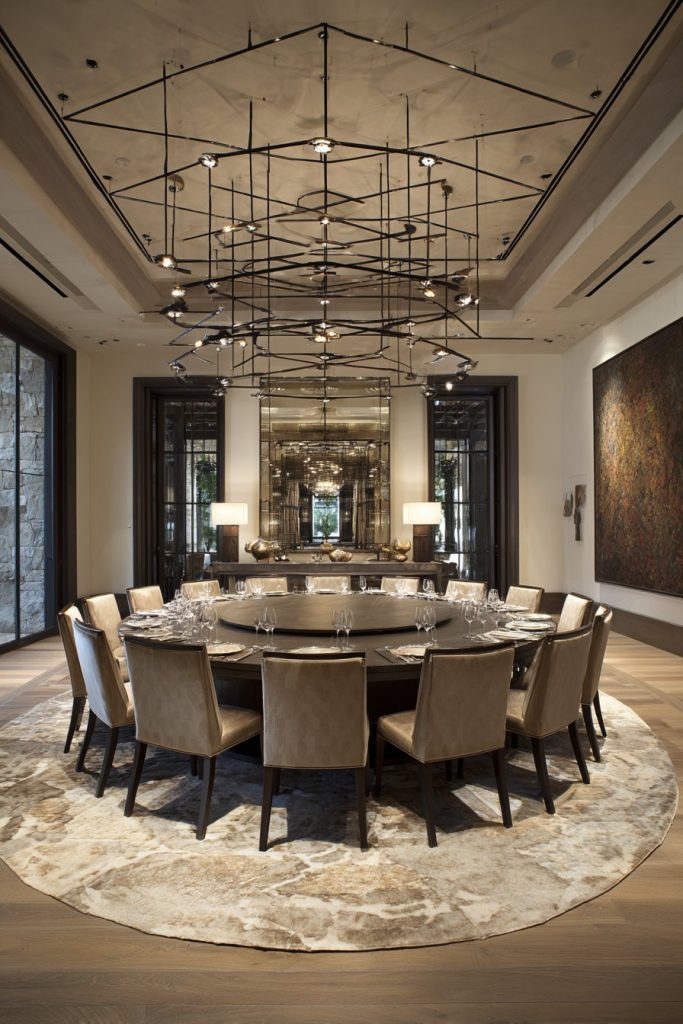
Layered lighting from recessed fixtures and table lamps creates ambiance throughout the large space while avoiding the harsh, institutional feeling that can plague large rooms with inadequate lighting design. The combination of ambient, task, and accent lighting ensures that every area of the room is both functional and visually appealing regardless of the time of day or season.
Key Design Tips:
- Include built-in seating with storage to maximize functionality in large spaces
- Choose round tables for large groups to encourage conversation and interaction
- Plan for artwork display to personalize large walls and add visual interest
- Use layered lighting with multiple sources to create ambiance and avoid harsh shadows
- Consider storage solutions that integrate seamlessly with your design aesthetic
8. Traditional Elegance with Coffered Ceilings

The pinnacle of traditional dining room design combines coffered ceilings with rich wainscoting to create an atmosphere of timeless sophistication that never goes out of style. An extendable dining table in rich mahogany provides the flexibility to accommodate both intimate family dinners and larger formal gatherings, while upholstered chairs ensure comfort during extended dining experiences. This approach to large dining room design celebrates craftsmanship and attention to detail.
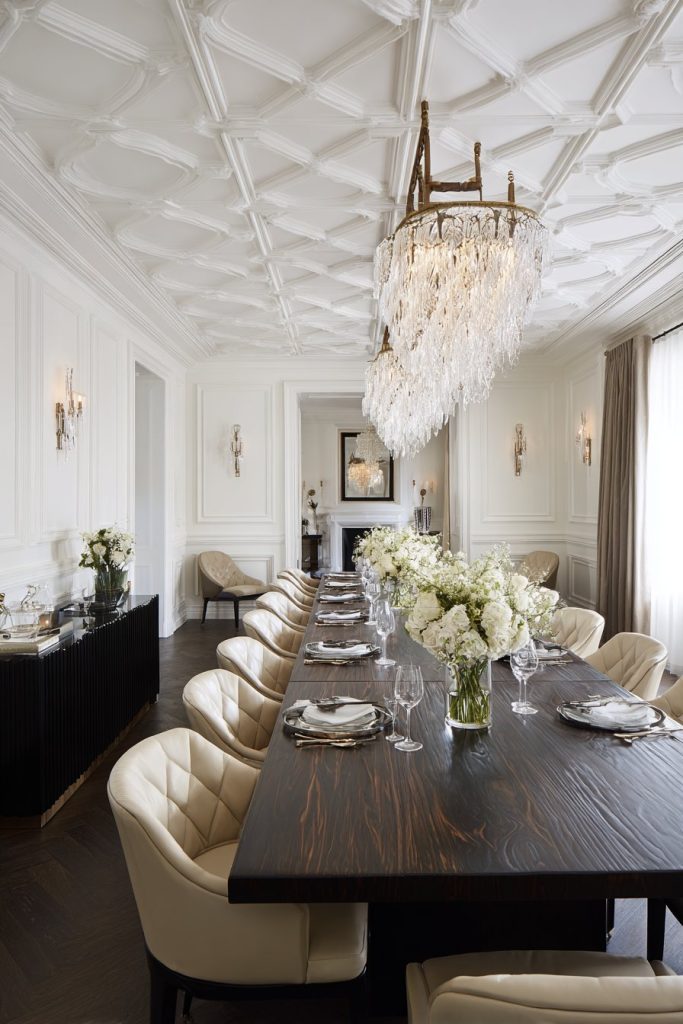
The separate sideboard area provides essential serving and storage functions while maintaining the clean lines and formal aesthetic crucial for traditional design. Crystal sconces add elegant ambient lighting while a grand chandelier serves as the room’s focal point, creating layers of illumination that enhance the sophisticated atmosphere. The interplay between natural and artificial light becomes particularly important in traditional spaces where ambiance is paramount.
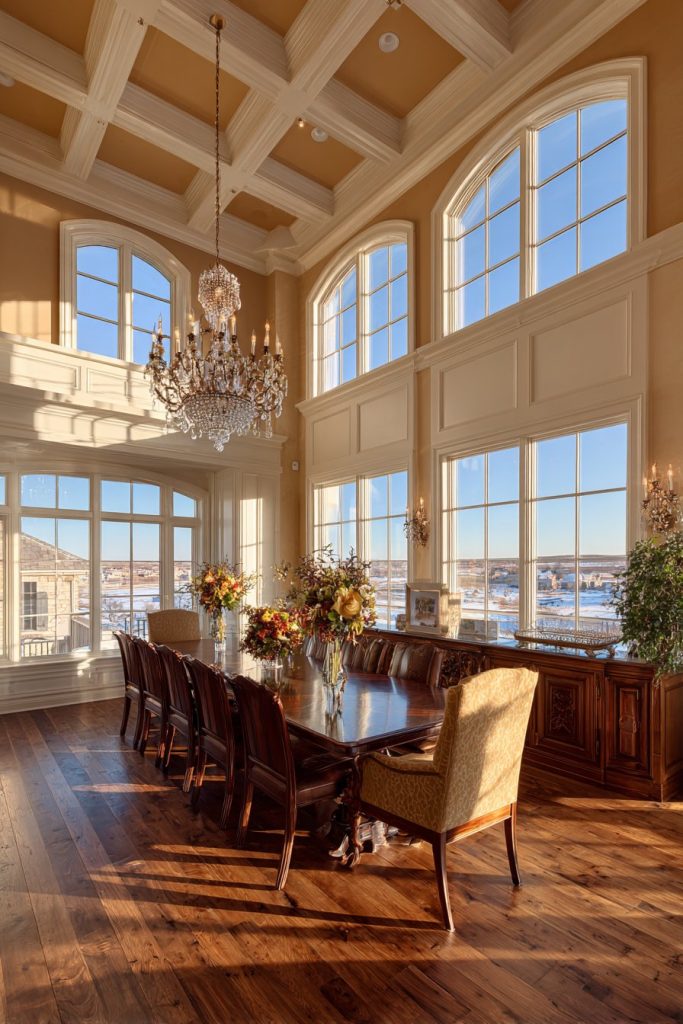
The success of traditional design in large spaces requires careful attention to proportion and scale, ensuring that architectural details like coffered ceilings and wainscoting enhance rather than overwhelm the room’s dimensions. Quality materials and expert craftsmanship justify the investment while creating a dining space that will remain beautiful and functional for generations.

Key Design Tips:
- Invest in quality architectural details like coffered ceilings and wainscoting for lasting beauty
- Choose extendable tables for maximum flexibility in formal dining spaces
- Use crystal lighting fixtures to add elegance and create beautiful light patterns
- Include dedicated serving areas with built-in storage for formal entertaining
- Focus on craftsmanship and materials that will age beautifully over time
9. Industrial Modern with Urban Sophistication

The industrial-modern approach to large dining room design embraces the raw beauty of urban loft spaces while creating sophisticated entertaining areas that celebrate both form and function. A concrete dining table that seats fourteen makes a bold statement while providing the durability and substantial presence necessary for large-scale entertaining. The industrial aesthetic works particularly well in large spaces where the scale allows for bold materials and dramatic design elements.
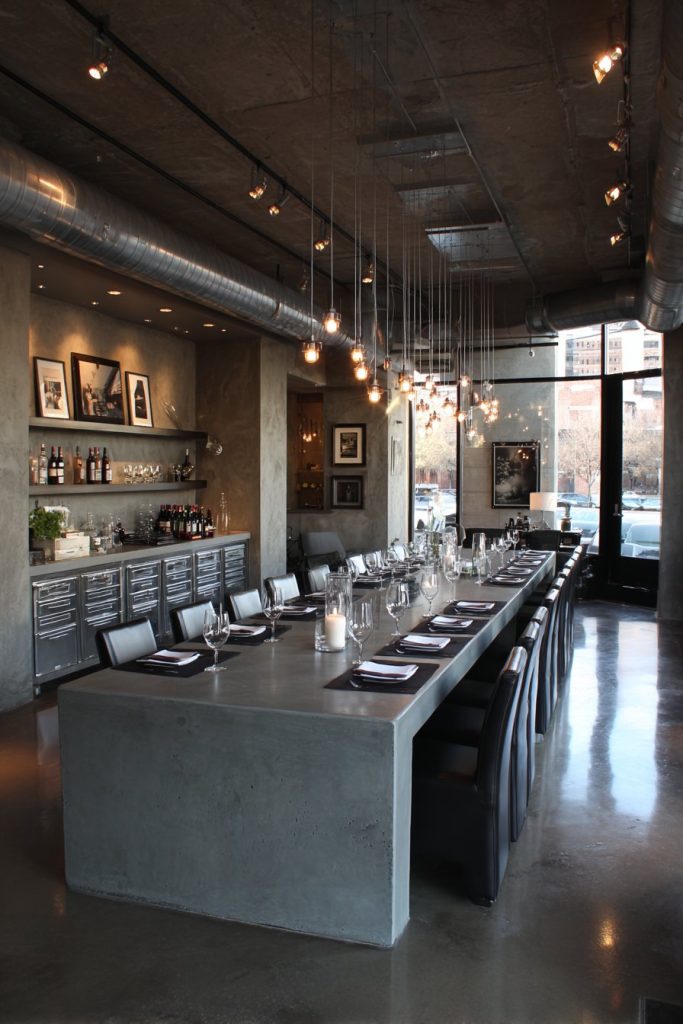
Exposed ductwork and high ceilings become design features rather than obstacles, celebrating the architectural honesty that defines industrial style. Rolling metal storage units provide flexible functionality while maintaining the clean, utilitarian aesthetic essential for this design approach. The key lies in balancing industrial elements with warm, welcoming touches that make the space suitable for dining and entertaining.

Pendant lighting with Edison bulbs creates warm pools of light throughout the open floor plan while maintaining the industrial aesthetic through material choices and fixture design. The careful placement of these lighting elements helps define different areas within the large space while maintaining the open, airy feeling that makes industrial loft spaces so appealing.

Key Design Tips:
- Embrace architectural elements like exposed ductwork as design features
- Choose substantial materials like concrete for furniture that can handle the scale of large spaces
- Use industrial lighting fixtures like Edison bulb pendants for authentic character
- Include mobile storage solutions for flexibility in large, open spaces
- Balance industrial elements with warm materials to create inviting dining spaces
10. Indoor-Outdoor Integration with Glass and Light

The seamless integration of indoor and outdoor dining spaces represents one of the most exciting possibilities for large dining room design, where floor-to-ceiling sliding doors can effectively double your entertaining area while connecting your home to its natural surroundings. A glass dining table surrounded by mixed seating options accommodates various group sizes while maintaining the airy, open feeling essential for indoor-outdoor living.

Built-in planters bring greenery indoors while maintaining the connection to nature that defines this design approach. The careful selection and placement of plants helps soften the potentially stark feeling of large glass and concrete surfaces while improving air quality and creating natural focal points throughout the space. The integration of living elements requires careful consideration of lighting and maintenance needs.

The success of indoor-outdoor design depends heavily on climate considerations and the orientation of your home, but when executed properly, these spaces provide unparalleled flexibility for entertaining while creating year-round connections to nature. The glass dining table reflects light and views while providing substantial seating capacity without visually overwhelming the space.

Key Design Tips:
- Use glass furniture to maintain visual lightness in large spaces
- Plan for indoor-outdoor flow with appropriate door systems and level transitions
- Include built-in planters to bring nature indoors and soften hard surfaces
- Consider climate control for spaces that open to the outdoors
- Choose mixed seating to accommodate different group sizes and activities
11. Mid-Century Modern with Geometric Sophistication

The clean lines and sophisticated simplicity of mid-century modern design translate beautifully to large dining spaces, where a sleek walnut dining table for ten becomes the centerpiece beneath a geometric pendant light fixture that celebrates the era’s love of bold, sculptural forms. The generous room dimensions allow for the inclusion of additional seating areas with vintage lounge chairs that provide comfortable spaces for pre and post-dinner conversation.
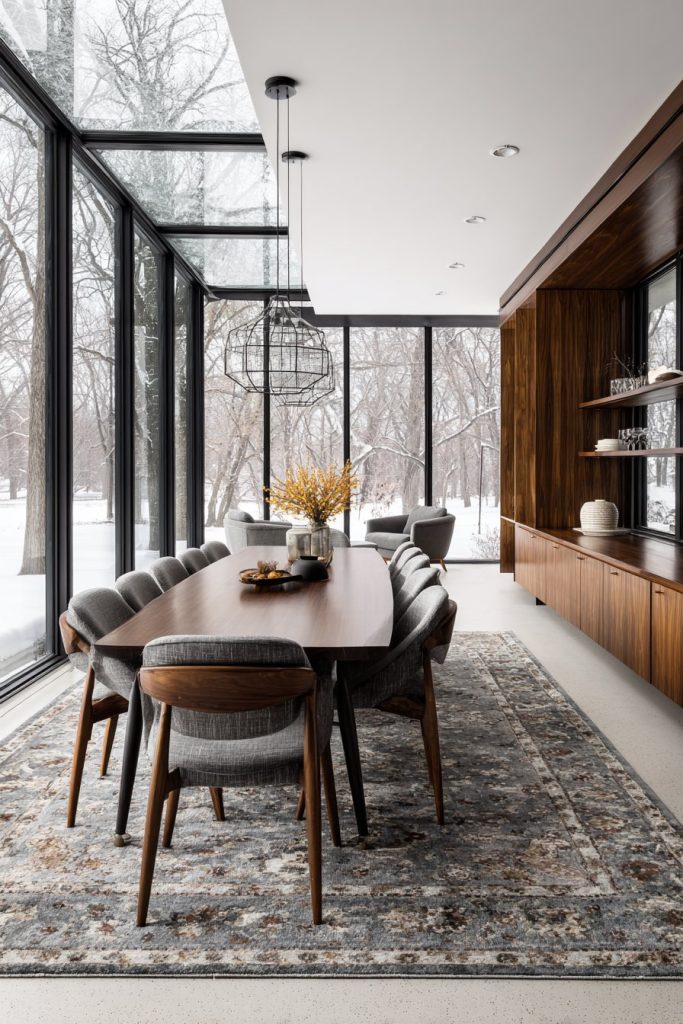
Built-in credenza storage along one wall provides both practical storage and display opportunities while maintaining the clean, uncluttered aesthetic essential for mid-century design. The integration of storage solutions into the architecture helps maximize floor space while creating opportunities to display period-appropriate accessories and artwork that enhance the overall design narrative.

Large windows with minimal window treatments maximize natural light while maintaining the clean aesthetic that defines mid-century modernism. The careful balance between natural and artificial light becomes particularly important in this design style, where the interplay of light and shadow creates visual interest while supporting the overall aesthetic goals.

Key Design Tips:
- Choose walnut furniture for authentic mid-century modern appeal
- Use geometric light fixtures as sculptural focal points
- Include conversation areas with vintage seating for complete entertaining spaces
- Minimize window treatments to maximize natural light and maintain clean lines
- Integrate storage solutions into the architecture for uncluttered aesthetics
12. Scandinavian Minimalism with Natural Materials

The serene simplicity of Scandinavian design creates remarkably peaceful large dining spaces where a light oak dining table that expands to seat twelve becomes the focal point surrounded by simple wooden chairs with natural wool cushions. This approach to large dining room design emphasizes quality over quantity, natural materials over synthetic alternatives, and functionality over ornamentation.
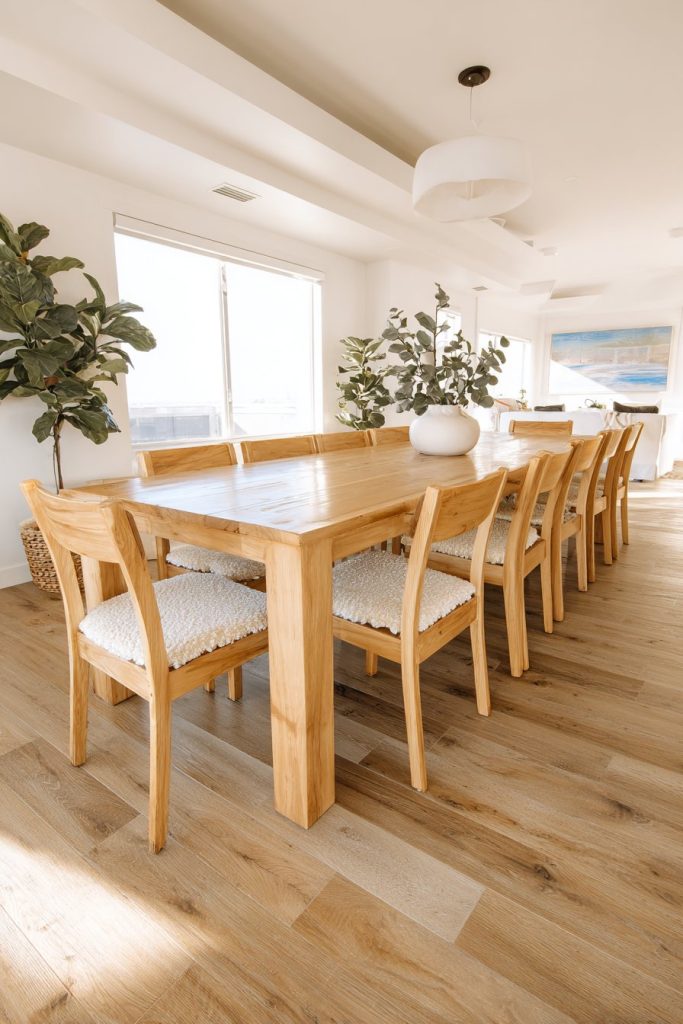
White walls and blonde wood flooring create an airy foundation while the strategic placement of house plants adds life and color without overwhelming the minimalist aesthetic. The careful curation of elements ensures that every piece serves both functional and aesthetic purposes, creating spaces that feel both complete and uncluttered despite their generous proportions.

A simple pendant light provides focused task lighting while abundant natural light fills the room, creating the bright, airy atmosphere essential for Scandinavian design. The emphasis on natural light requires careful consideration of window placement and artificial lighting to ensure the space remains functional during darker months while maintaining its essential character.

Key Design Tips:
- Use light wood tones throughout the space for authentic Scandinavian appeal
- Keep color palettes neutral with white walls and natural wood accents
- Include house plants strategically for natural color and life
- Choose expandable furniture for maximum flexibility in minimalist spaces
- Maximize natural light with large windows and minimal window treatments
13. Mediterranean Warmth with Rustic Authenticity

The warm, inviting atmosphere of Mediterranean design creates exceptionally welcoming large dining spaces where a rustic wooden dining table for fourteen guests becomes the heart of family gatherings and celebrations. Built-in arched niches provide opportunities for displaying ceramics and decorative objects while dedicated wine storage areas celebrate the region’s culinary traditions and enhance entertaining capabilities.
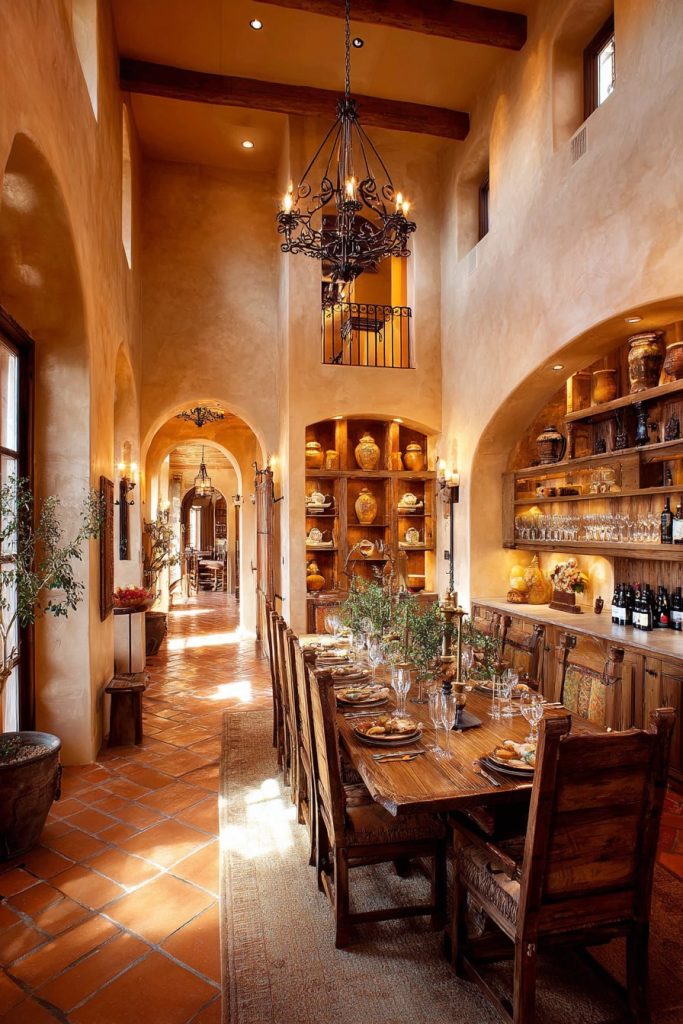
Terra cotta tile flooring and textured plaster walls create authentic warmth while providing the durability necessary for busy family spaces. The natural materials age beautifully while requiring minimal maintenance, making them ideal choices for large dining areas that see frequent use. The wrought iron chandelier adds both functional lighting and authentic period character that ties the design together.

The success of Mediterranean design lies in its ability to create spaces that feel both grand and intimate, welcoming both large family gatherings and quiet dinners with equal comfort. The emphasis on natural materials and traditional craftsmanship creates timeless appeal while the generous proportions allow for the kind of large-scale entertaining that defines Mediterranean hospitality.

Key Design Tips:
- Use terra cotta flooring for authentic Mediterranean character and durability
- Include built-in niches for displaying ceramics and decorative objects
- Choose wrought iron fixtures for authentic period lighting
- Create dedicated wine storage to support entertaining and celebrate culinary traditions
- Use textured plaster walls to add visual interest and authentic character
14. Contemporary Luxury with Sophisticated Materials

The pinnacle of contemporary dining room design combines luxurious materials with sophisticated styling to create spaces that feel both current and timeless. A marble-top dining table surrounded by velvet upholstered chairs in jewel tones creates a stunning focal point while providing the comfort and elegance necessary for formal entertaining. The statement art wall provides visual interest while built-in bar areas with backlighting add both functionality and dramatic appeal.
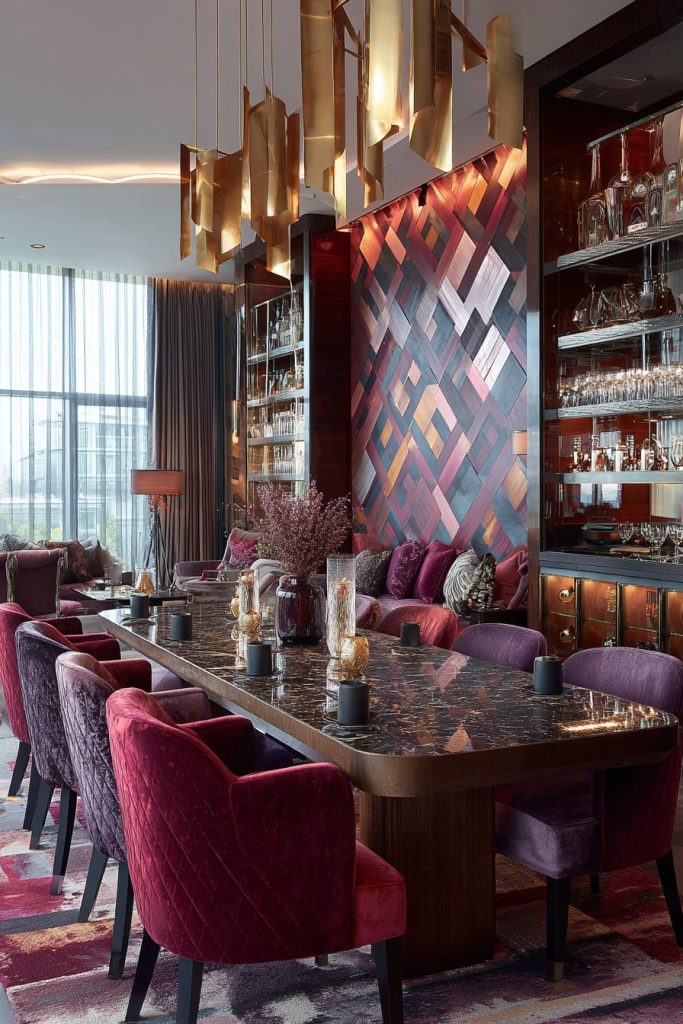
Multiple seating areas allow for pre and post-dinner socializing, transforming the dining room from a single-purpose space into a complete entertainment suite. The careful planning of these additional areas ensures that the room can accommodate various activities throughout an evening while maintaining its primary function as a dining space.
Dramatic lighting from sculptural fixtures creates visual interest throughout the generous space while providing the functional illumination necessary for dining and entertaining. The interplay between ambient and accent lighting allows for mood adjustment throughout the evening while highlighting the sophisticated material palette and architectural features.

Key Design Tips:
- Choose luxurious materials like marble and velvet for sophisticated appeal
- Use jewel tones to add richness and visual interest to neutral spaces
- Include statement art to personalize large wall areas
- Plan multiple seating areas for complete entertaining functionality
- Use sculptural lighting as functional art pieces throughout the space
15. Coastal Serenity with Ocean-Inspired Design

The relaxed elegance of coastal design creates remarkably peaceful large dining spaces where weathered wood dining tables that seat twelve capture the essence of seaside living while built-in window seats with storage provide both additional seating and practical storage solutions. The positioning of the dining area to capture ocean views transforms meals into memorable experiences while connecting the interior space to its natural surroundings.

Natural fiber rugs and linen window treatments enhance the relaxed seaside atmosphere while providing the softness and texture necessary to prevent large spaces from feeling cold or unwelcoming. The careful selection of natural materials creates authentic coastal character while ensuring that the space remains comfortable and inviting regardless of the season or weather conditions.

The success of coastal design in large spaces depends on maintaining the balance between casual comfort and sophisticated styling, ensuring that the space feels both relaxed and refined. The emphasis on natural materials and ocean views creates timeless appeal while the generous proportions allow for the kind of relaxed entertaining that defines coastal living.

Key Design Tips:
- Use weathered wood for authentic coastal character
- Position dining areas to capture the best available views
- Include built-in window seating for additional seating and storage
- Choose natural fiber materials for rugs and window treatments
- Connect interior and exterior spaces through material choices and view planning
16. English Country Elegance with Traditional Charm

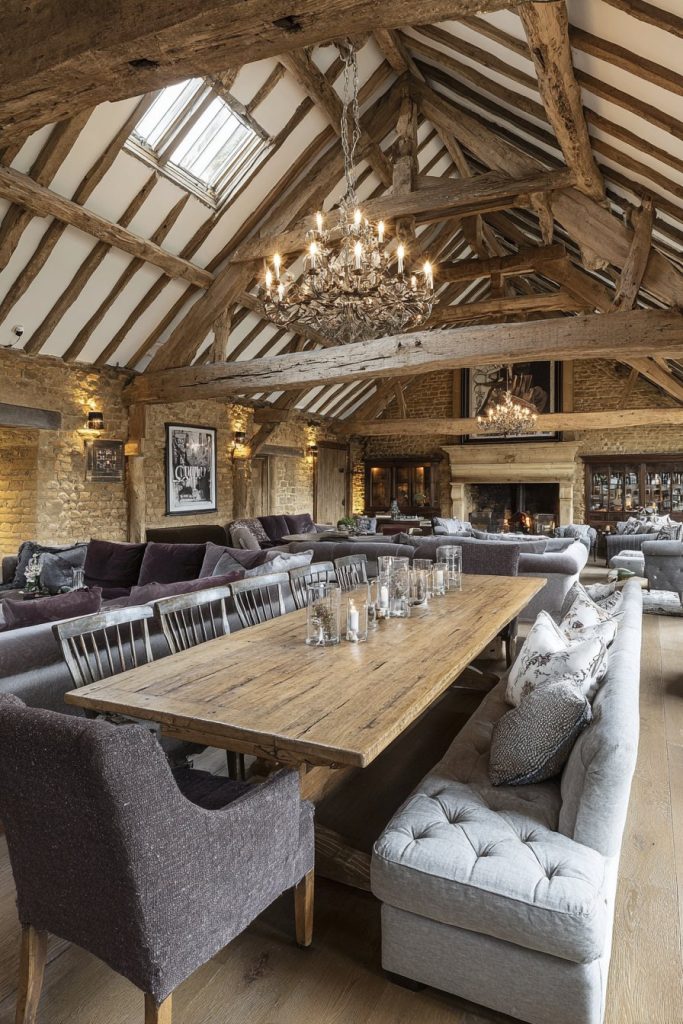
The timeless appeal of traditional English country design creates exceptionally welcoming large dining spaces where substantial oak refectory tables surrounded by Windsor chairs and upholstered bench seating provide both comfort and authenticity. Exposed ceiling beams and large stone fireplaces create architectural interest while built-in Welsh dressers provide both storage and display opportunities for china collections and family heirlooms.
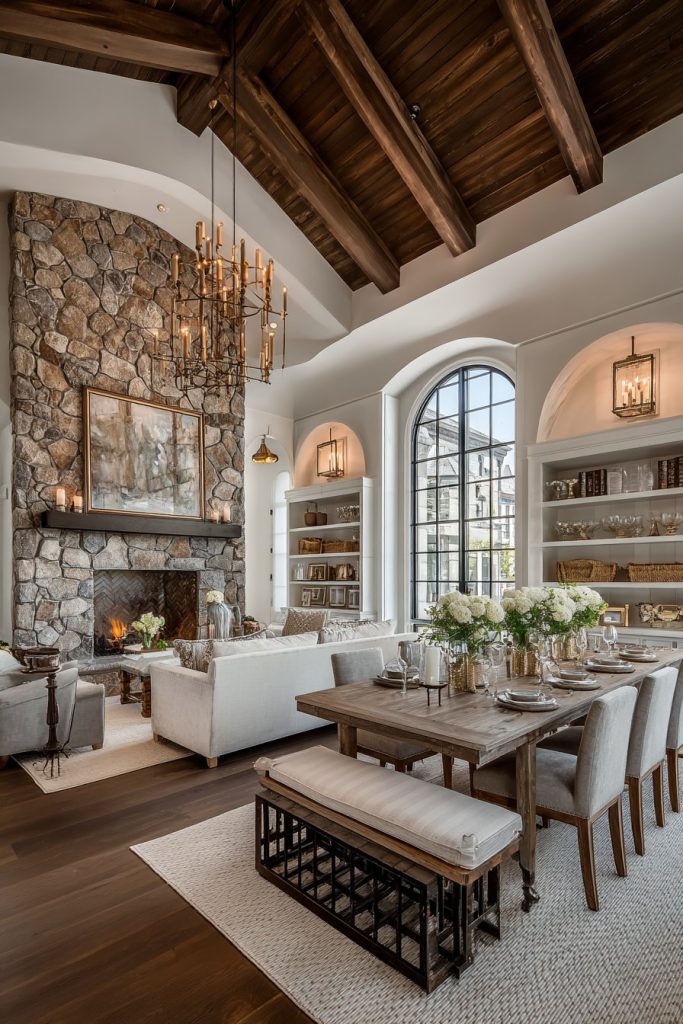
The layered lighting from chandeliers and wall sconces creates intimate pools of light throughout the generous space while maintaining the warm, welcoming atmosphere essential for English country design. The careful balance between ambient and accent lighting ensures that the space remains functional while supporting the overall aesthetic goals of comfort and tradition.

The success of English country design lies in its ability to create spaces that feel both grand and comfortable, combining formal elegance with casual livability in ways that work for modern families while honoring traditional design principles. The emphasis on quality craftsmanship and natural materials creates lasting beauty while the generous proportions accommodate both intimate family meals and formal entertaining.
Key Design Tips:
- Choose substantial oak furniture for authentic English country appeal
- Include exposed ceiling beams for architectural character
- Use layered lighting from multiple sources for intimate ambiance
- Include built-in storage like Welsh dressers for both function and authenticity
- Combine formal and casual seating for maximum comfort and flexibility
17. Art Deco Glamour with Geometric Sophistication

The dramatic elegance of Art Deco design creates stunning large dining spaces where black lacquer dining tables for ten guests make bold statements beneath geometric brass chandeliers that celebrate the era’s love of luxury and sophisticated craftsmanship. Mirrored built-ins reflect light and create visual depth while dedicated cocktail preparation areas support the entertaining lifestyle that defines Art Deco living.
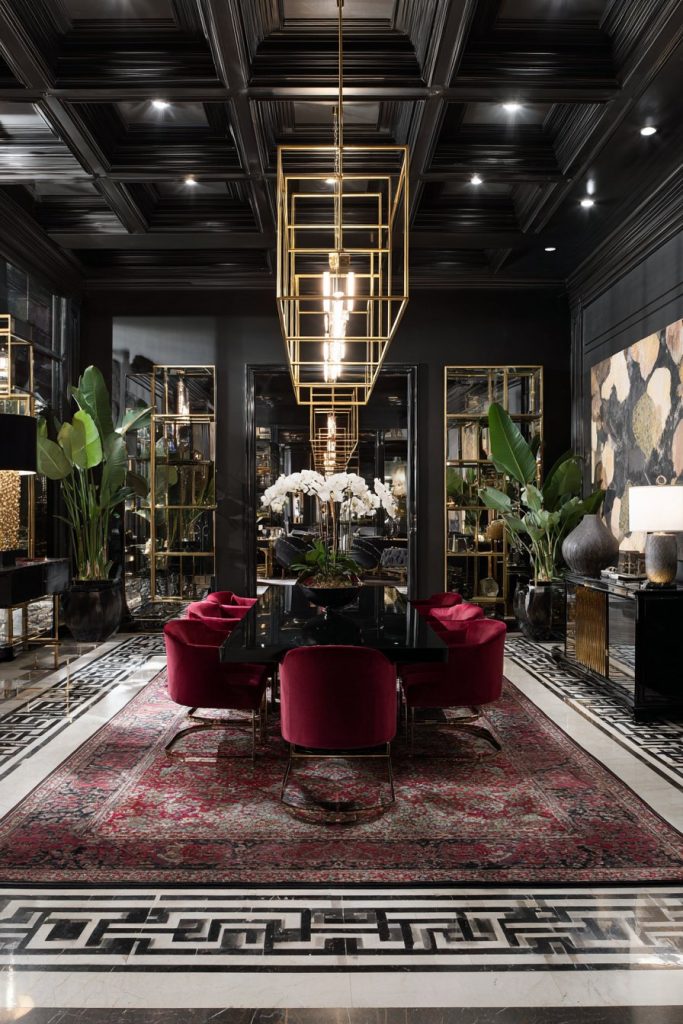
Rich burgundy and gold accents add luxury throughout the space while maintaining the sophisticated color palette essential for Art Deco design. The careful selection of materials and finishes creates authentic period character while ensuring that the space feels both glamorous and comfortable for modern entertaining needs.

The success of Art Deco design in large spaces depends on maintaining the balance between dramatic sophistication and functional comfort, ensuring that the space serves both aesthetic and practical purposes. The emphasis on geometric forms and luxurious materials creates timeless appeal while the generous proportions allow for the kind of formal entertaining that defines Art Deco style.

Key Design Tips:
- Use black lacquer furniture for authentic Art Deco sophistication
- Include geometric brass fixtures for period-appropriate lighting
- Add mirrored surfaces to reflect light and create visual depth
- Choose rich accent colors like burgundy and gold for luxury appeal
- Include cocktail preparation areas for complete entertaining functionality
18. Bohemian Eclectic with Global Influences

The collected-over-time aesthetic of bohemian design creates remarkably personal large dining spaces where large round dining tables surrounded by mismatched vintage chairs in rich jewel tones celebrate individuality and global influences. Layered textiles, hanging plants, and collections of global artwork displayed on gallery walls create visual interest while reflecting the homeowners’ travels and interests.
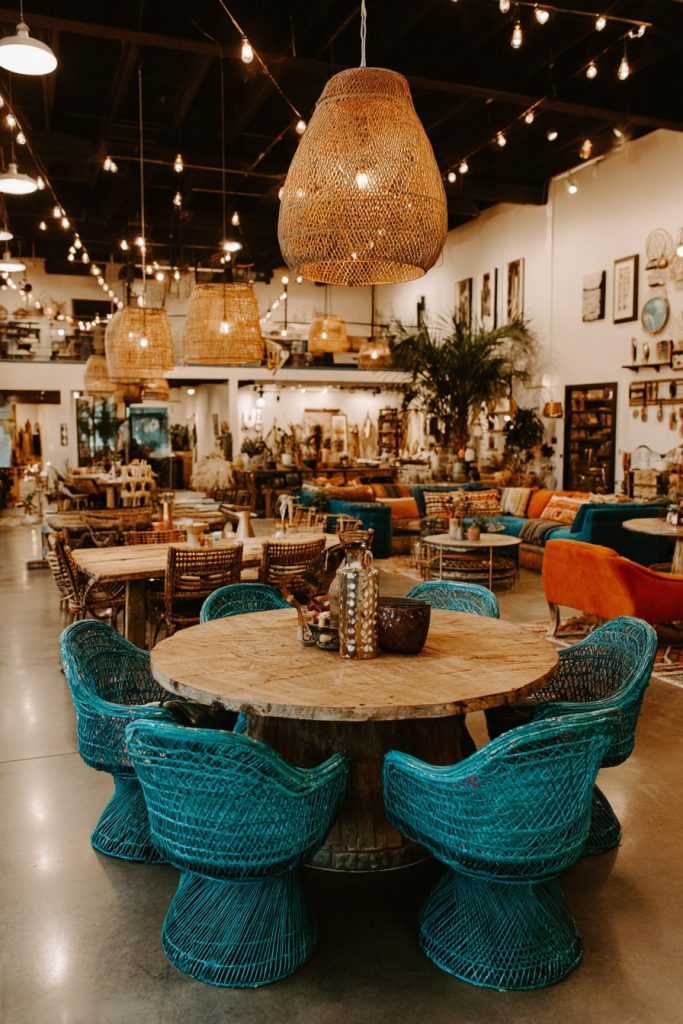
Multiple light sources from pendant fixtures and floor lamps create intimate ambiance throughout the expansive space while avoiding the harsh, institutional feeling that can plague large rooms with inadequate lighting design. The careful layering of different lighting types ensures that the space remains both functional and atmospheric regardless of the time of day or activity.

The success of bohemian design lies in its ability to create spaces that feel both collected and cohesive, combining elements from different cultures and time periods in ways that feel intentional rather than chaotic. The emphasis on personal expression and global influences creates unique spaces while the generous proportions allow for the kind of creative expression that defines bohemian style.

Key Design Tips:
- Mix vintage furniture in rich jewel tones for authentic bohemian character
- Layer textiles throughout the space for warmth and visual interest
- Include hanging plants to add life and natural elements
- Display global artwork to reflect personal interests and travels
- Use multiple light sources to create intimate ambiance in large spaces
19. Transitional Versatility with Neutral Sophistication

The sophisticated flexibility of transitional design creates remarkably adaptable large dining spaces where rectangular dining tables in two-tone finishes can extend to seat sixteen guests while maintaining the clean, uncluttered aesthetic essential for modern living. Built-in storage solutions and serving stations with wine refrigeration provide both functionality and sophisticated appeal while flexible seating options including dining banquettes accommodate various group sizes and activities.
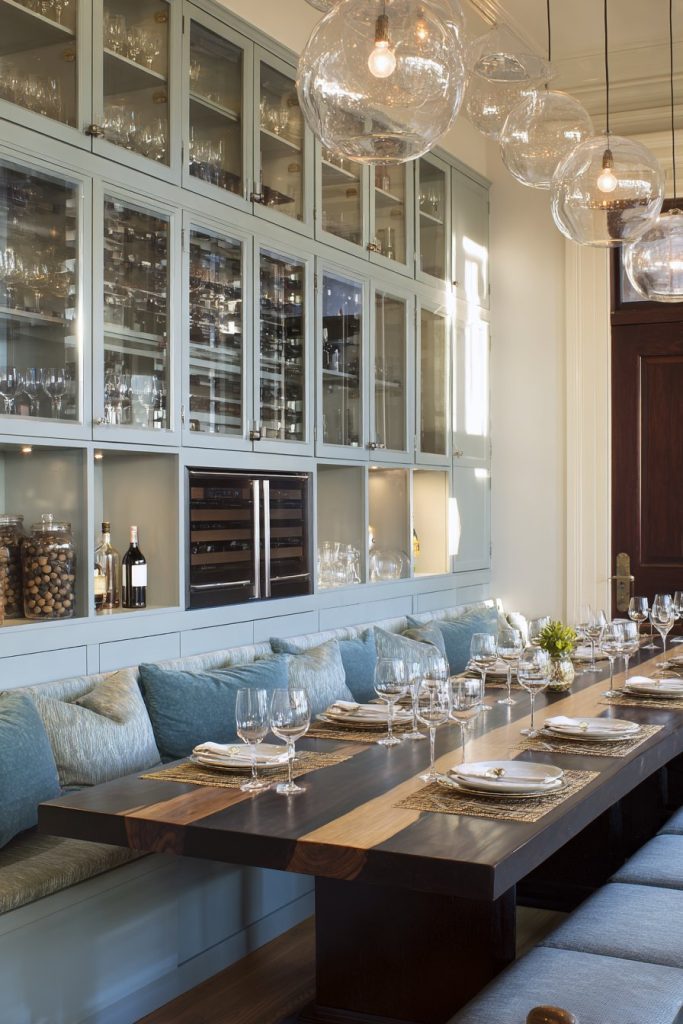
The neutral color palette with natural textures creates sophisticated versatility while ensuring that the space can adapt to changing needs and preferences over time. The careful selection of materials and finishes creates timeless appeal while providing the flexibility necessary for busy modern families who need spaces that can serve multiple purposes.

The success of transitional design lies in its ability to combine the best elements of traditional and contemporary styles while creating spaces that feel both current and timeless. The emphasis on flexibility and adaptability makes transitional design particularly well-suited for large dining spaces that need to serve multiple functions while maintaining sophisticated appeal.

Key Design Tips:
- Choose two-tone furniture for sophisticated transitional appeal
- Include built-in storage for maximum functionality and clean aesthetics
- Use neutral color palettes for timeless versatility
- Plan flexible seating options including banquettes for maximum adaptability
- Include wine storage for sophisticated entertaining capabilities
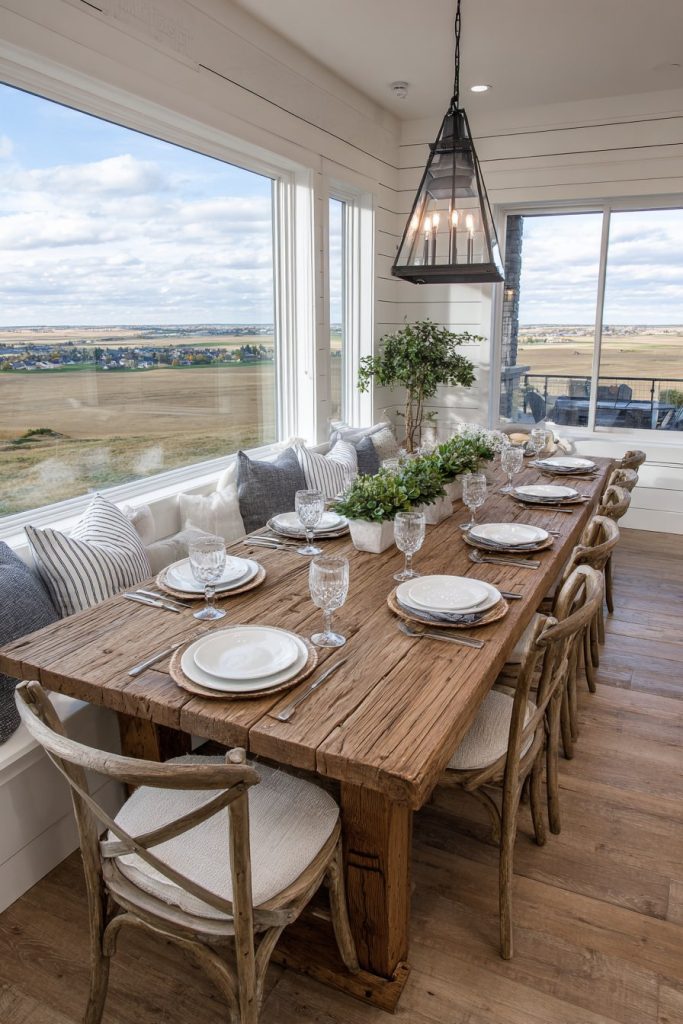
20. Modern Farmhouse with Reclaimed Character

The authentic charm of modern farmhouse design creates exceptionally welcoming large dining spaces where massive reclaimed wood dining tables that accommodate fourteen diners become the centerpiece beneath statement barn-style chandeliers that celebrate rustic craftsmanship. Shiplap accent walls and built-in corner banquette seating provide both visual interest and practical functionality while sliding barn doors offer the ability to separate the space when needed for different activities.
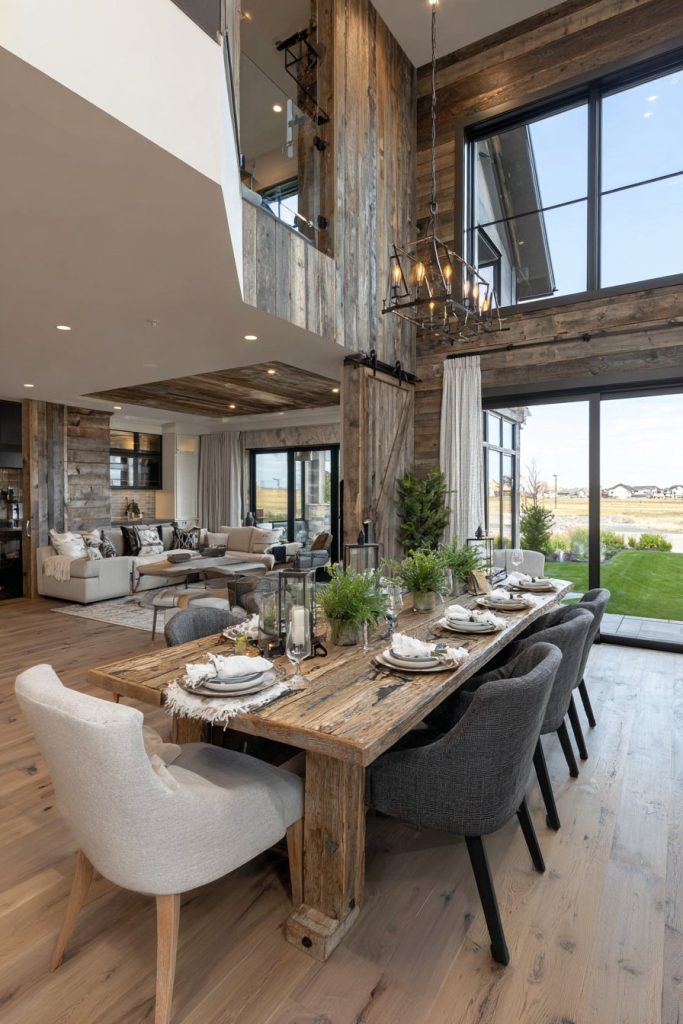
Mixed metal fixtures and vintage accessories add authentic character while maintaining the clean, uncluttered aesthetic essential for modern farmhouse design. The careful balance between rustic elements and contemporary functionality creates spaces that feel both authentic and current, honoring traditional craftsmanship while meeting modern needs.

The success of modern farmhouse design lies in its ability to create spaces that feel both grand and comfortable, combining rustic charm with contemporary functionality in ways that work for busy modern families while maintaining authentic character. The emphasis on reclaimed materials and traditional craftsmanship creates lasting beauty while the generous proportions accommodate both intimate family meals and large gatherings.
Key Design Tips:
- Use reclaimed wood for authentic farmhouse character and sustainability
- Include shiplap accent walls for visual interest and period authenticity
- Choose barn-style lighting for dramatic rustic appeal
- Add built-in banquette seating for space efficiency and comfort
- Use sliding barn doors for flexible space separation when needed
Why These Large Dining Room Designs Excel
Each of these twenty large dining room ideas represents a carefully considered approach to maximizing the potential of generous dining spaces while addressing the unique challenges that come with expansive square footage. The grand formal elegance approach excels because it embraces the scale of large rooms while maintaining intimate dining experiences through careful furniture placement and lighting design. Open-concept integration succeeds by creating seamless flow between kitchen and dining areas, maximizing functionality while maintaining visual connection throughout the space.
The dual-zone dining concept excels in its versatility, allowing families to enjoy both casual everyday meals and formal entertaining within the same space. Cathedral ceiling designs make the most of vertical space while creating dramatic architectural interest that transforms dining into a memorable experience. Flexible modular furniture approaches succeed by adapting to changing needs throughout the year, maximizing the investment in dining room furniture and accessories.
Kitchen island integration works particularly well in modern homes where cooking and entertaining are closely linked activities, while window seating designs maximize both seating and storage while creating intimate gathering spots. Traditional elegance with coffered ceilings provides timeless sophistication that never goes out of style, while industrial modern approaches celebrate the honesty of materials and architectural elements.
Indoor-outdoor integration excels by effectively doubling entertaining space while connecting homes to their natural surroundings. Mid-century modern designs succeed through their emphasis on clean lines and quality materials, while Scandinavian minimalism creates peaceful, functional spaces through careful curation and natural materials. Mediterranean warmth provides authentic character while supporting large-scale entertaining and family gatherings.
Contemporary luxury approaches excel through sophisticated material choices and careful attention to lighting design, while coastal serenity creates relaxing spaces that connect interior design to natural surroundings. English country elegance provides timeless charm through quality craftsmanship and traditional materials, while Art Deco glamour creates dramatic sophistication through geometric forms and luxurious finishes.
Bohemian eclectic designs succeed by celebrating personal expression and global influences while maintaining cohesive overall design, and transitional versatility excels through sophisticated flexibility that adapts to changing needs over time. Finally, modern farmhouse approaches provide authentic character through reclaimed materials while meeting contemporary functionality requirements.
Conclusion
Large dining room design represents one of the most exciting opportunities in home design, offering the space and flexibility to create truly spectacular entertaining and family gathering spaces. Whether you’re drawn to the timeless elegance of traditional design, the clean sophistication of contemporary approaches, or the authentic charm of rustic styles, the key to success lies in understanding how to balance scale with intimacy, functionality with beauty, and personal expression with timeless appeal.
The twenty design approaches presented here offer a comprehensive range of possibilities, from formal entertaining spaces that can accommodate large dinner parties to flexible family hubs that adapt to changing needs throughout the day and year. Each approach addresses the unique challenges of large spaces while maximizing their incredible potential for creating memorable dining experiences.
Remember that the best large dining room design is one that reflects your personal style while meeting your practical needs, whether you’re planning intimate family dinners or grand entertaining events. Take inspiration from these ideas while adapting them to your specific space, lifestyle, and aesthetic preferences. With careful planning and attention to detail, your large dining room can become the heart of your home’s entertainment and family life for years to come.


