
The media wall has evolved from a simple TV stand into a sophisticated design statement that defines modern living spaces. As our homes increasingly serve as entertainment hubs, work environments, and relaxation sanctuaries, the media wall has become the focal point that anchors these multifunctional spaces. A thoughtfully designed media wall does more than house your television and electronics—it creates visual harmony, maximizes storage, and reflects your personal style while seamlessly integrating technology into your home’s aesthetic.
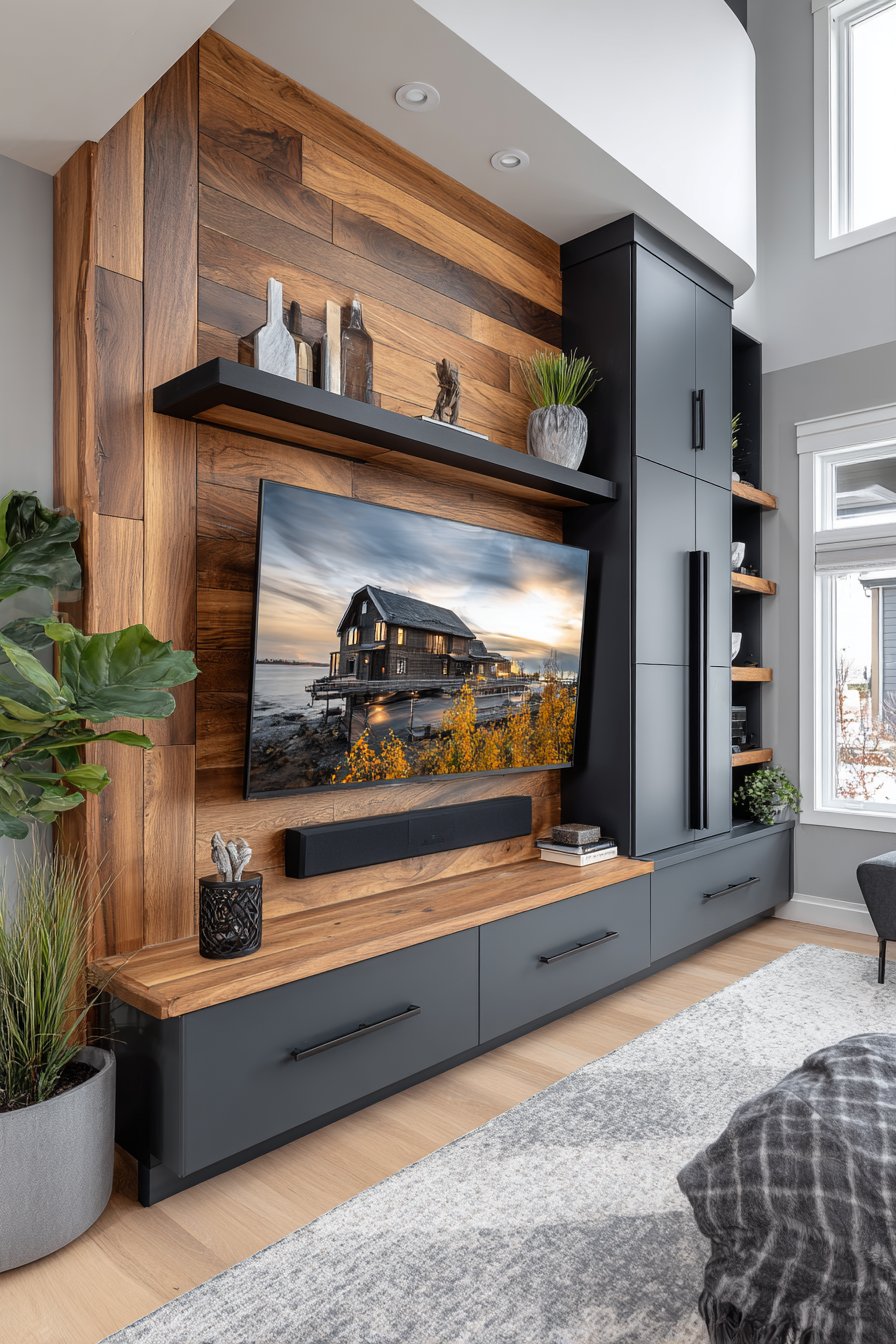
Today’s media walls represent the perfect marriage of form and function, blending cutting-edge technology with timeless design principles. Whether you’re drawn to the clean lines of Scandinavian minimalism, the warmth of rustic farmhouse charm, or the boldness of contemporary maximalism, there’s a media wall solution that speaks to your unique taste and lifestyle. The beauty of modern media wall design lies in its versatility; it can transform a blank wall into an architectural feature, provide clever storage solutions for small spaces, or serve as a stunning gallery backdrop for your entertainment system.
In this comprehensive guide, we’ll explore twenty-seven innovative media wall ideas that showcase the breadth of possibilities available to homeowners today. From budget-friendly DIY solutions to luxurious custom installations, sustainable designs to smart-home integrations, each concept offers distinct advantages and appeals to different design sensibilities. Whether you’re renovating an entire room or simply looking to refresh your entertainment area, these ideas will inspire you to create a media wall that’s both beautiful and brilliantly functional.

1. Minimalist Floating Console with Acoustic Paneling
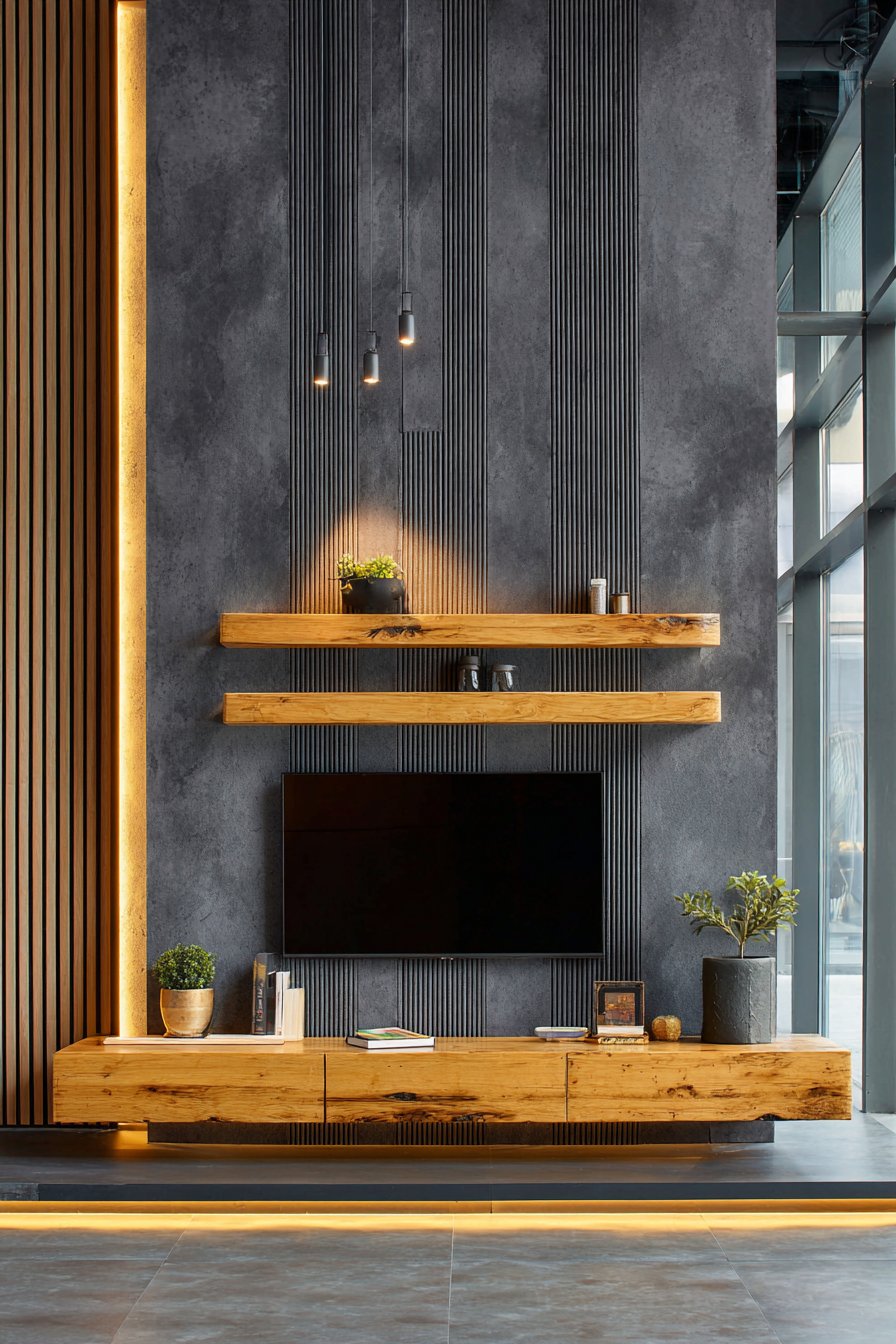
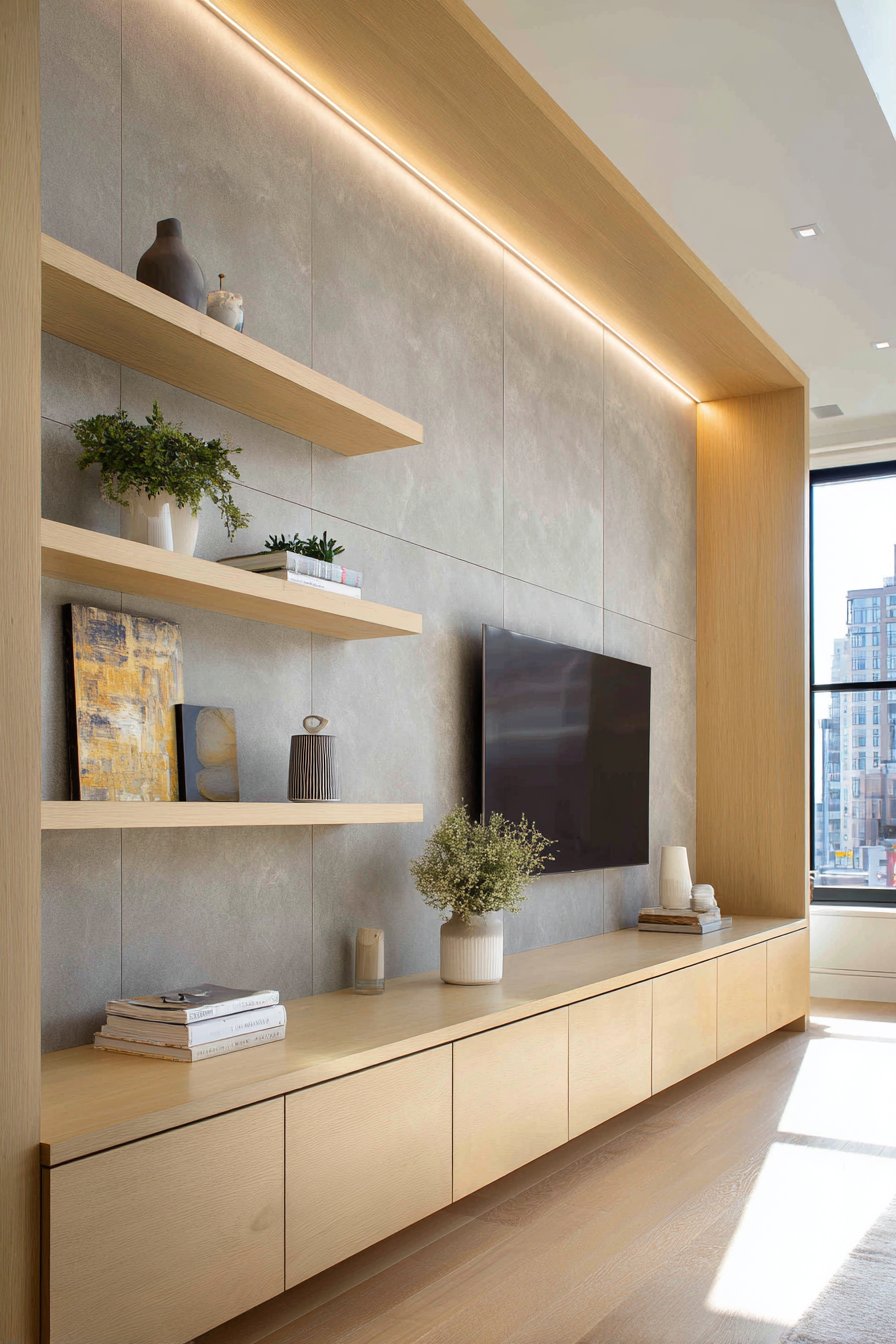
Step into a space where modern minimalism meets acoustic sophistication. This media wall concept centers on a sleek floating TV console crafted from natural oak, its clean horizontal lines creating an uncluttered foundation for your entertainment system. The true genius of this design lies in the floor-to-ceiling grey textured acoustic panel that spans the entire wall behind the television, serving dual purposes as both a striking visual element and a functional sound-dampening feature that enhances your viewing experience.
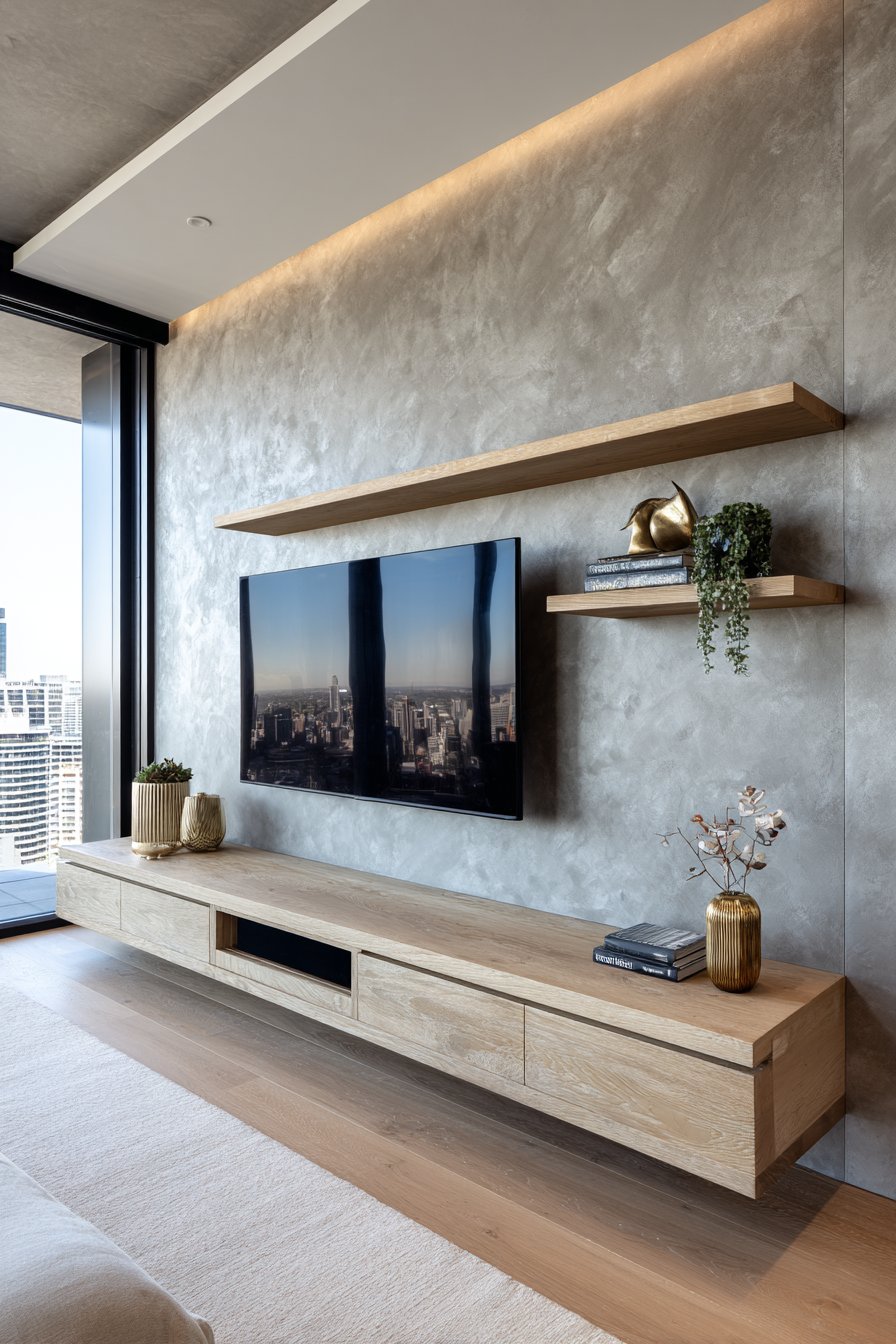
The slim floating shelves positioned on either side of the console maintain the minimalist aesthetic while providing just enough display space for carefully curated items—perhaps a small succulent in a concrete planter, a single design book with a beautiful spine, or a sculptural object that adds personality without creating visual chaos. The integrated cable management system keeps unsightly wires hidden, maintaining the clean lines that define this approach. Recessed LED strip lighting creates a subtle glow behind the console, adding depth and drama while serving as practical ambient lighting for evening viewing.
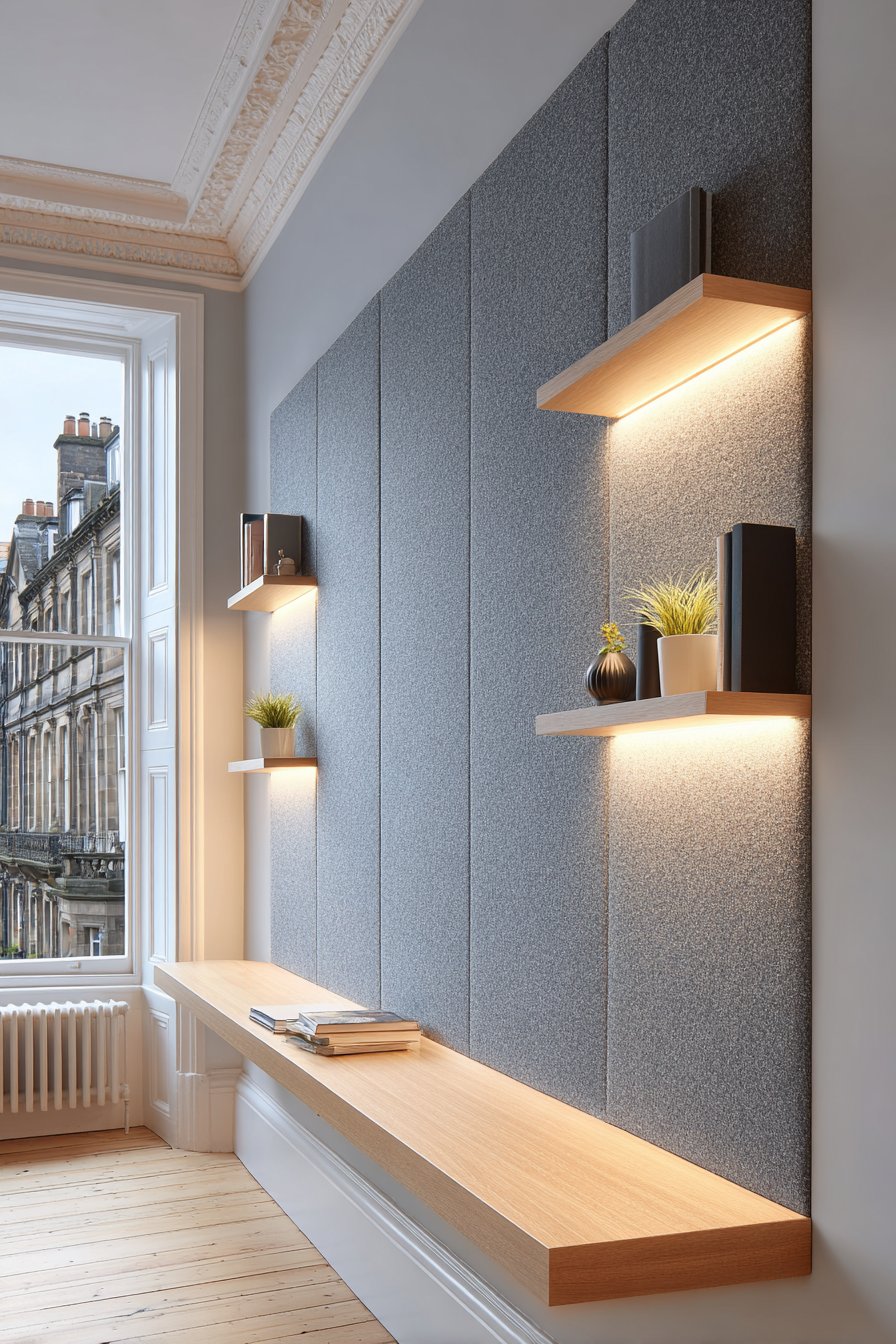
What makes this design particularly appealing is its ability to make technology disappear into the architecture. The acoustic paneling, with its subtle texture and sophisticated grey tone, transforms what could be a purely functional element into a design feature that adds tactile interest and visual depth. Natural light from adjacent windows washes across the space during daylight hours, while the LED strips provide a soft glow for evening entertainment. The wide-angle perspective reveals how every element works together to create a sense of spaciousness and tranquility.
Key Design Tips:
- Select acoustic panels with subtle texture to add visual interest without overwhelming the minimalist aesthetic
- Ensure floating console has adequate depth to house media components while maintaining sleek profile
- Position LED strip lighting to create a floating effect without causing screen glare
- Limit shelf displays to 2-3 items per shelf to maintain minimalist integrity
- Choose console wood tone that complements your flooring for visual continuity
2. Geometric Black Cube Shelving System
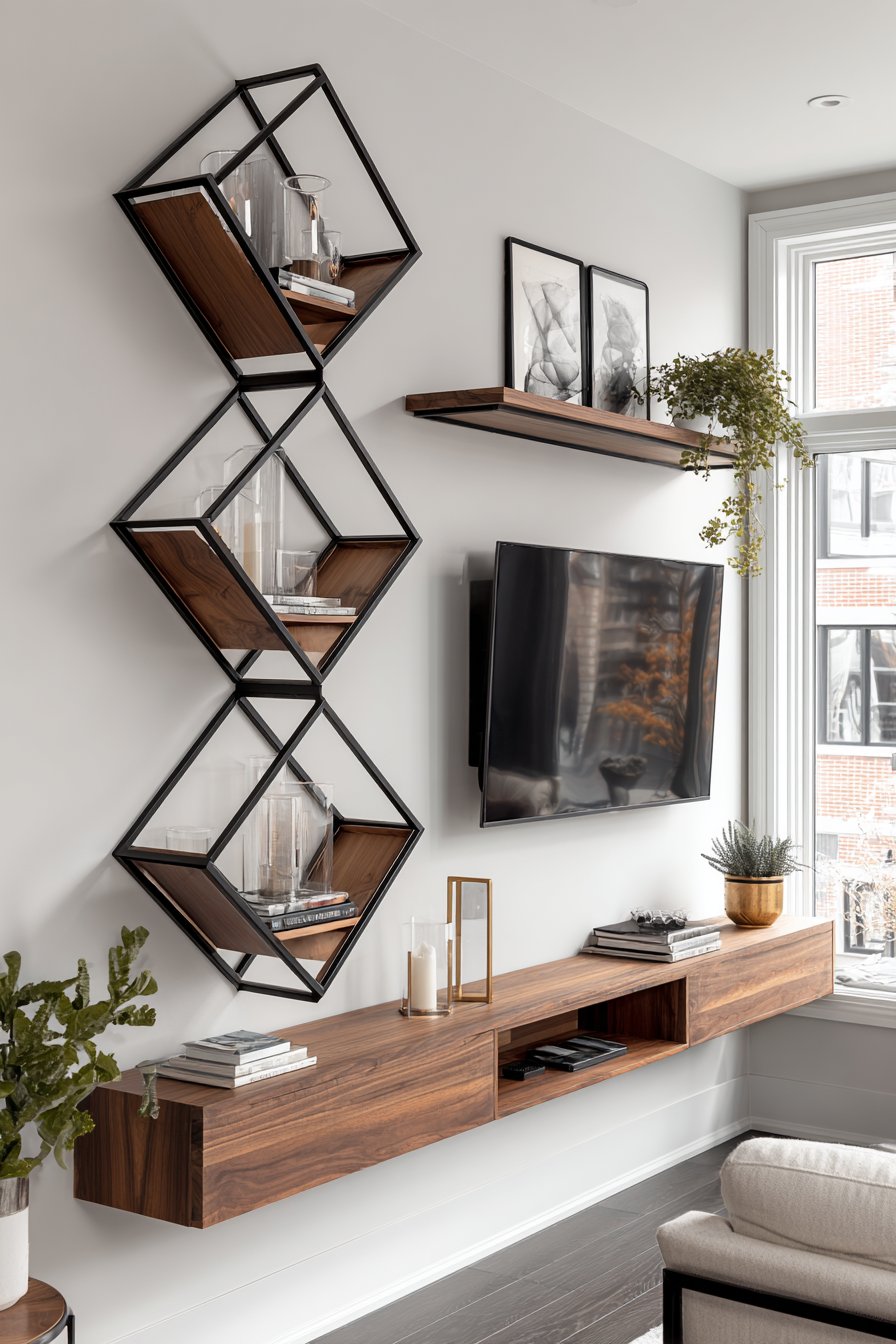
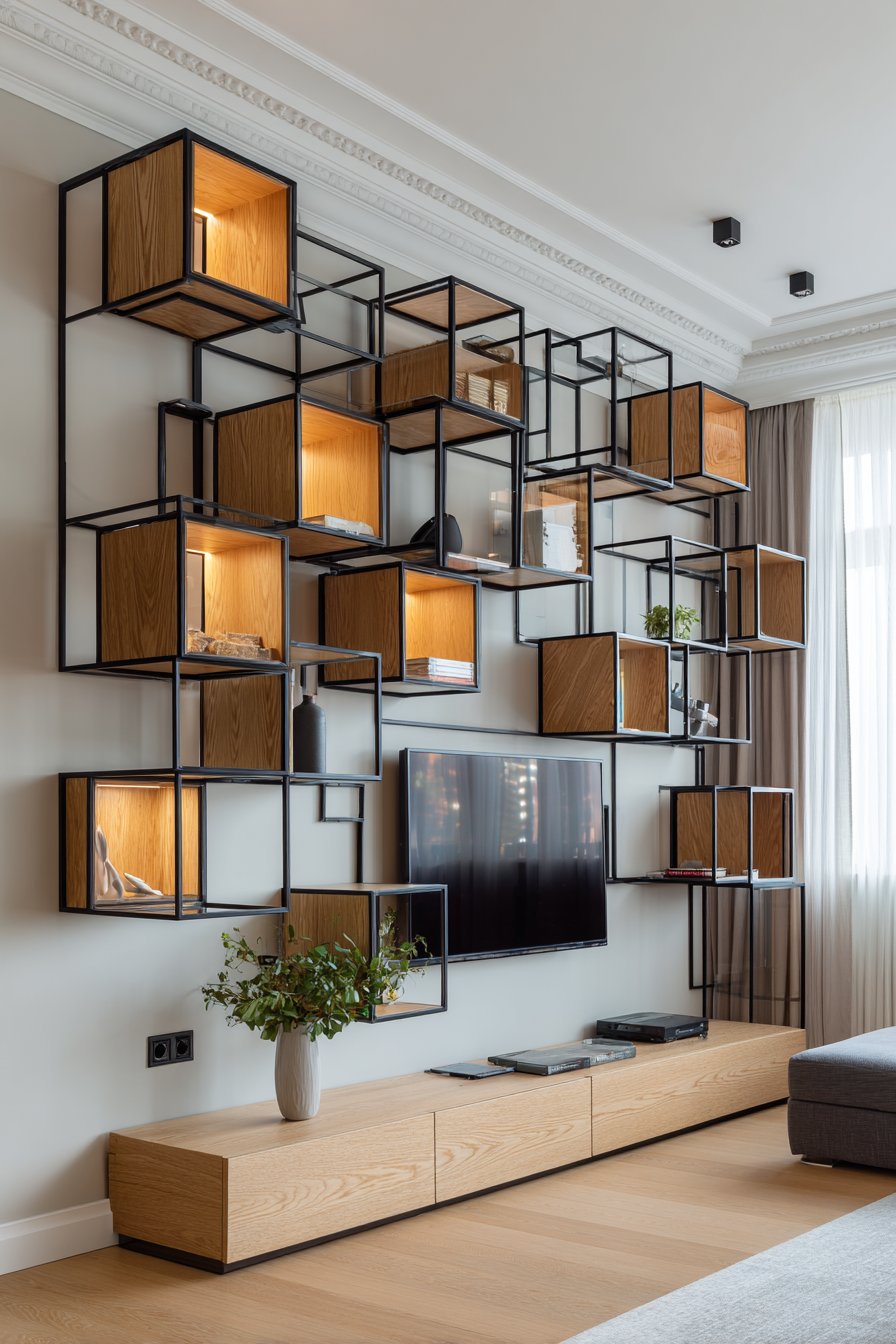
Contemporary design embraces bold geometry in this striking media wall featuring an asymmetrical arrangement of open cube shelving in matte black metal frames. The television becomes part of a larger composition, surrounded by perfectly proportioned squares that create visual rhythm and dynamic interest. This approach transforms storage into sculpture, with each cube serving as both functional space and design element. The matte black framework provides strong visual definition, creating a graphic quality that commands attention while maintaining sophistication.
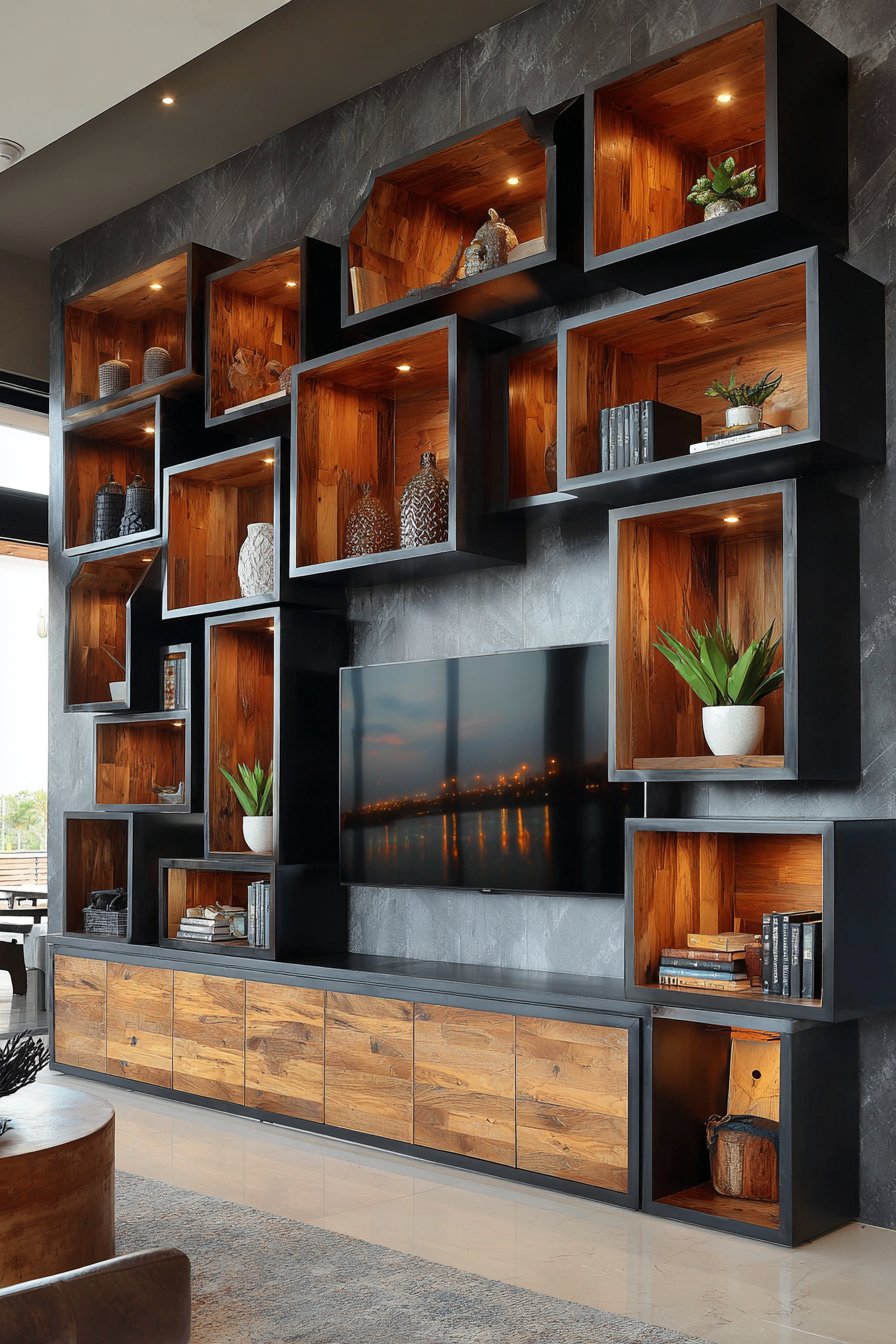
The genius of this design lies in the warm wood backing within each cube, which prevents the black metal from feeling too cold or industrial. This contrast between dark metal and natural wood creates warmth and depth, making the installation feel approachable despite its bold geometry. Some cubes house media equipment, others display carefully selected books arranged both vertically and horizontally, while a few showcase decorative objects and small plants that introduce organic elements into the structured composition.
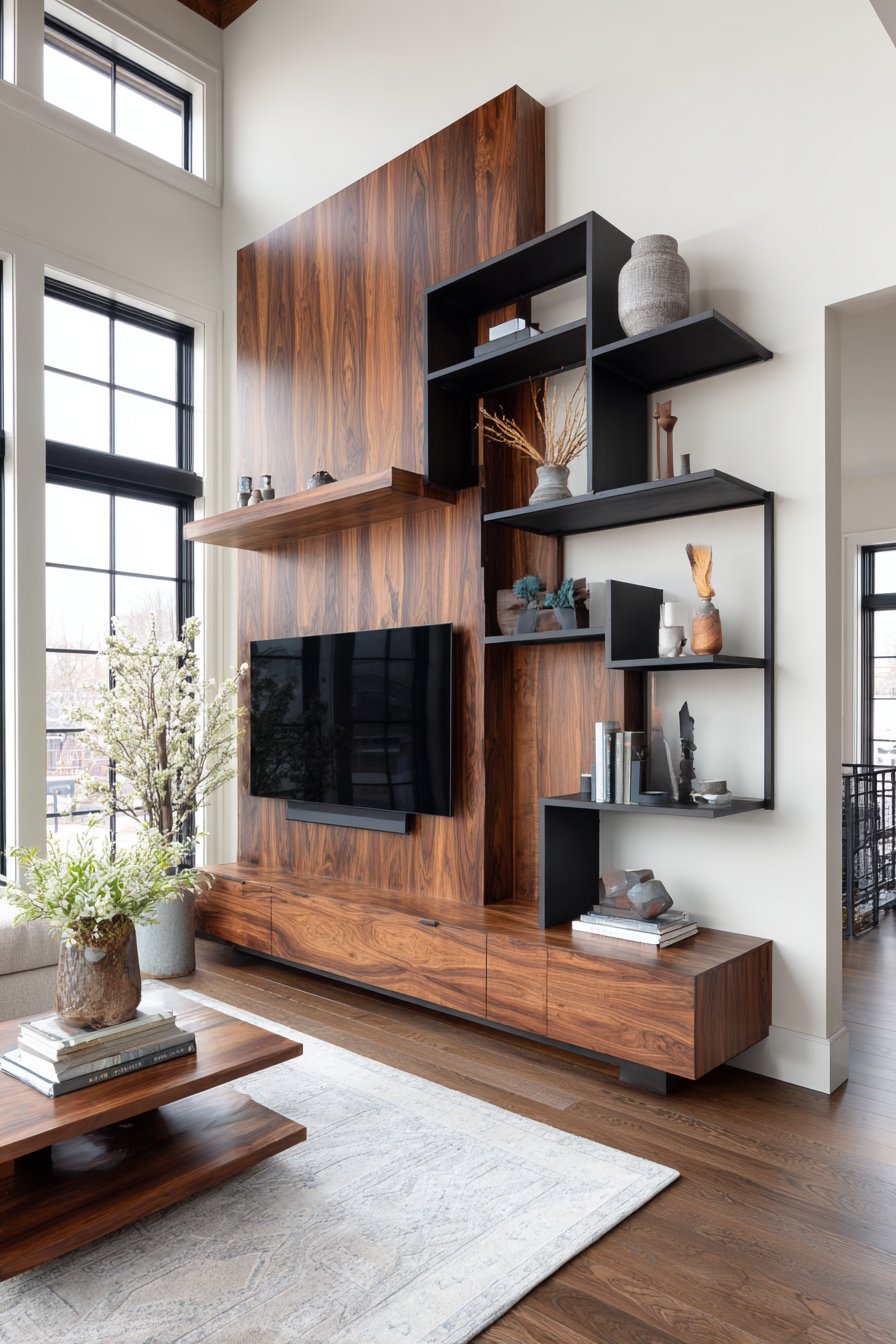
Integrated lighting within select cubes adds another layer of sophistication, highlighting displayed items and creating focal points that draw the eye through the composition. The asymmetrical arrangement feels intentional yet organic, as if the cubes have grown naturally across the wall rather than being rigidly placed. This flexibility allows you to adjust the configuration based on your storage needs and aesthetic preferences. The balanced exposure in professional interior photography captures how the interplay between dark framework and natural wood elements creates a dynamic yet harmonious whole.
Key Design Tips:
- Plan your cube arrangement on paper first to ensure balanced asymmetry
- Include cubes of varying depths to accommodate different storage needs
- Install LED puck lights in upper cubes to highlight displayed objects
- Use wood backing that matches or coordinates with existing furniture
- Leave some cubes partially empty to prevent visual clutter
- Secure all cube units properly to wall studs for safety and stability
3. Reclaimed Barn Wood Rustic Feature Wall
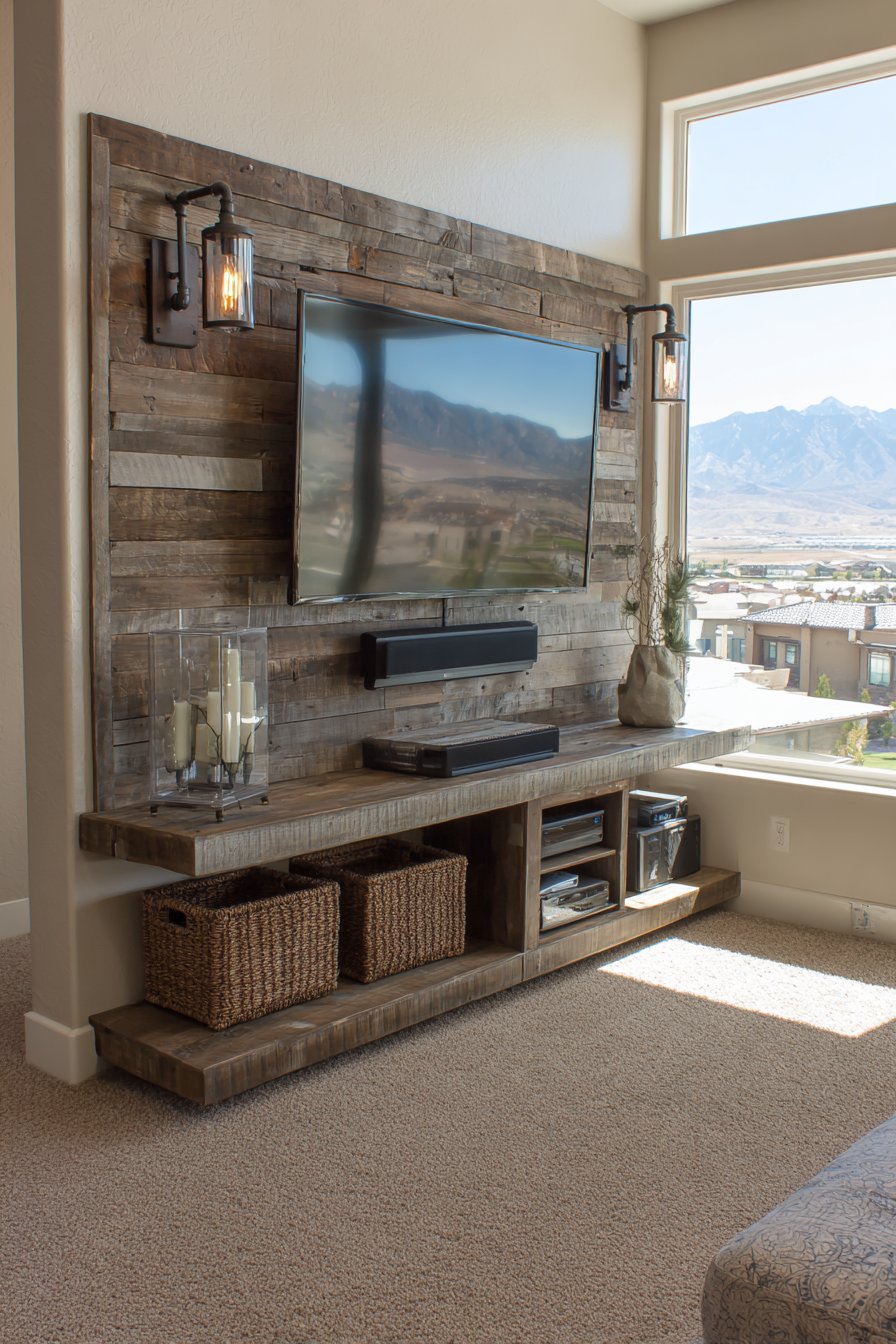
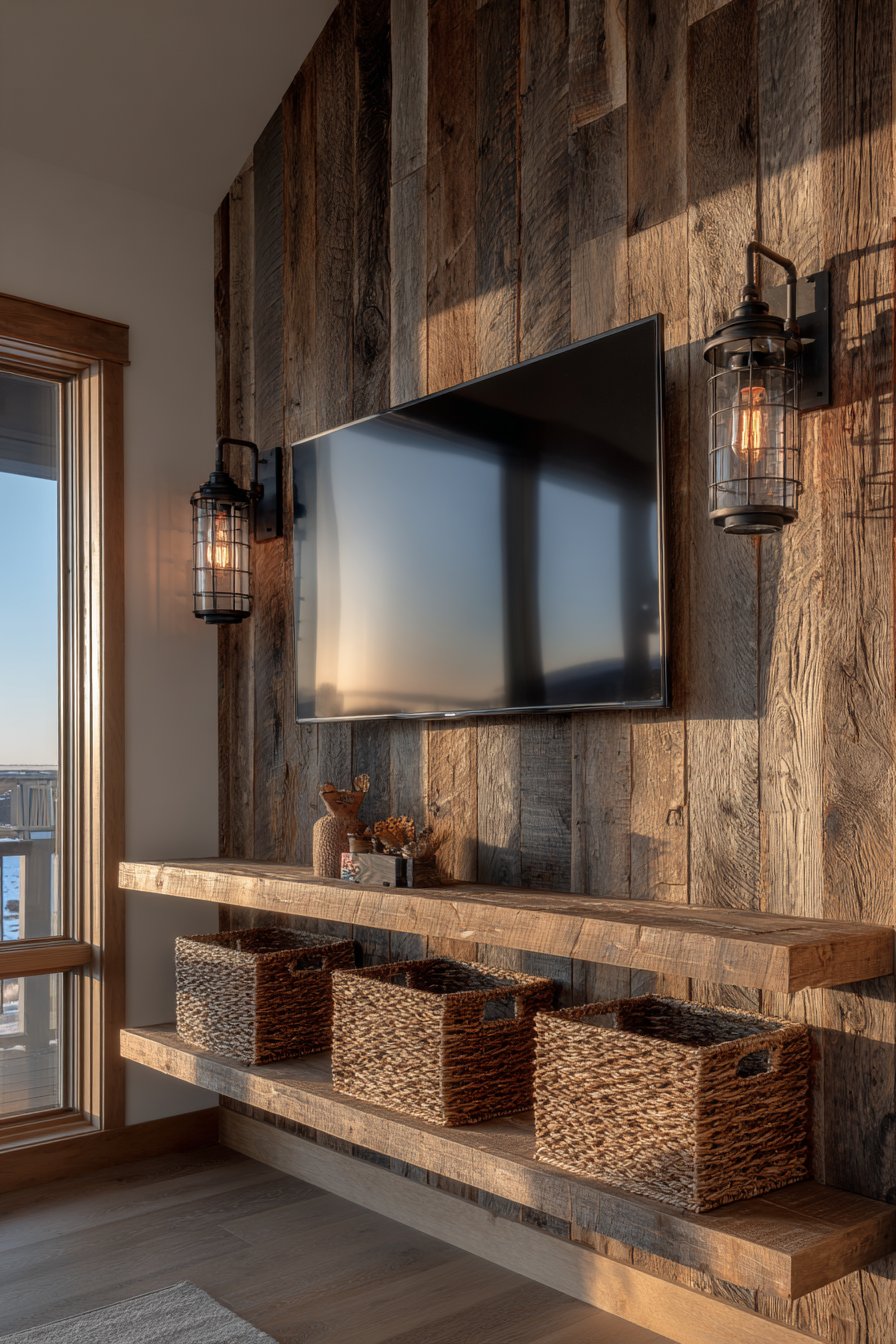
Embrace the authentic character of weathered materials with this rustic media wall that celebrates the beauty of reclaimed barn wood. Horizontal planks with genuine patina, nail holes, and color variations create a textured backdrop that tells a story of age and history. This isn’t manufactured distressing—it’s the real thing, with each board bearing the marks of decades spent protecting barns and outbuildings across rural America. The television appears to float against this richly textured surface, the sleek modern technology creating an intentional contrast with the aged wood.
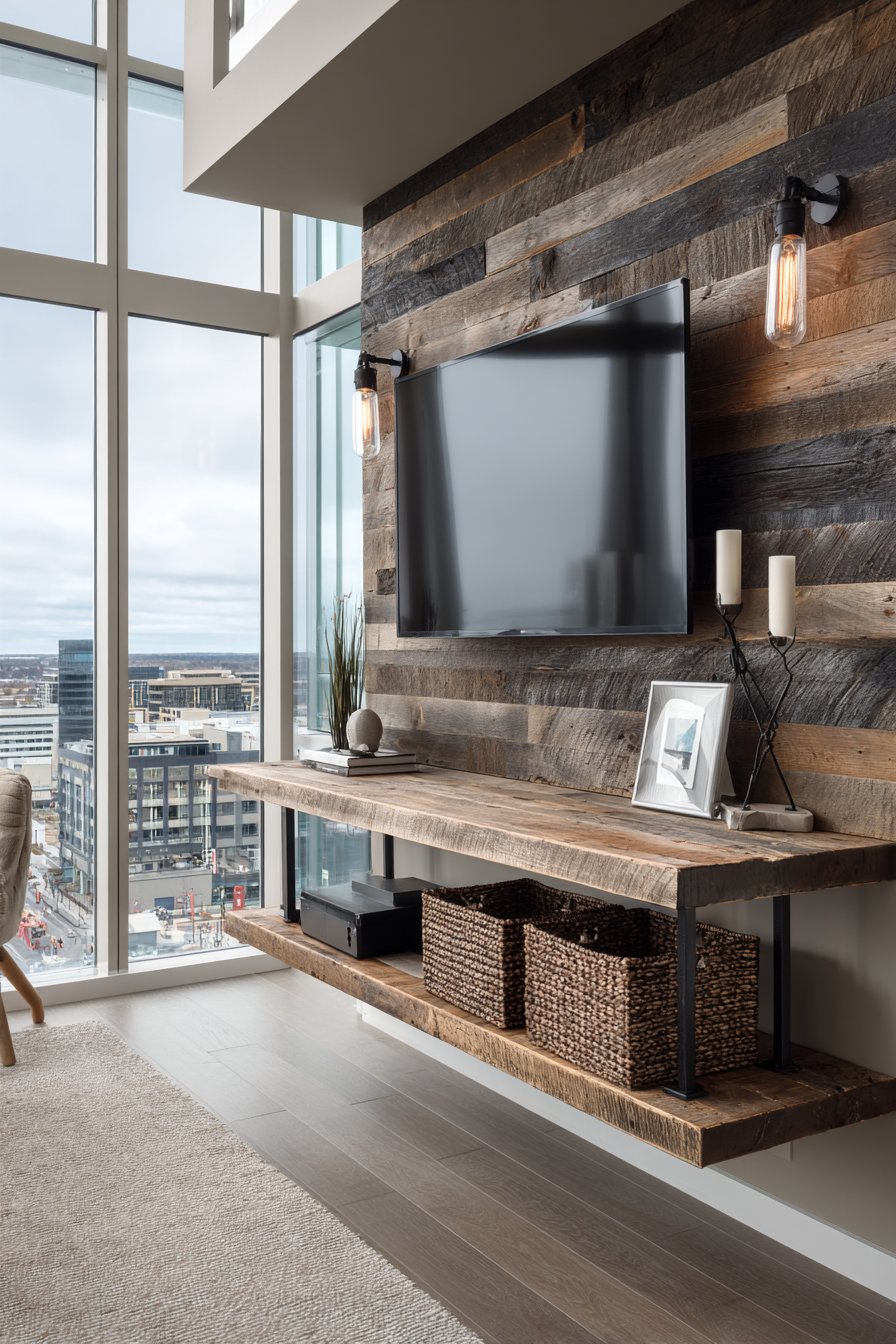
A chunky floating shelf constructed from matching reclaimed lumber sits below the television, its substantial proportions and visible saw marks emphasizing the rustic aesthetic. Industrial-style pipe brackets support the shelf, their raw metal finish and utilitarian form adding to the authentic industrial-rustic fusion. Woven storage baskets tucked onto the shelf provide concealed storage for remotes, gaming controllers, and other accessories while introducing natural fiber textures that complement the wood. Warm Edison bulb sconces flanking the television cast a golden glow that emphasizes the wood grain and creates inviting ambiance for evening viewing.
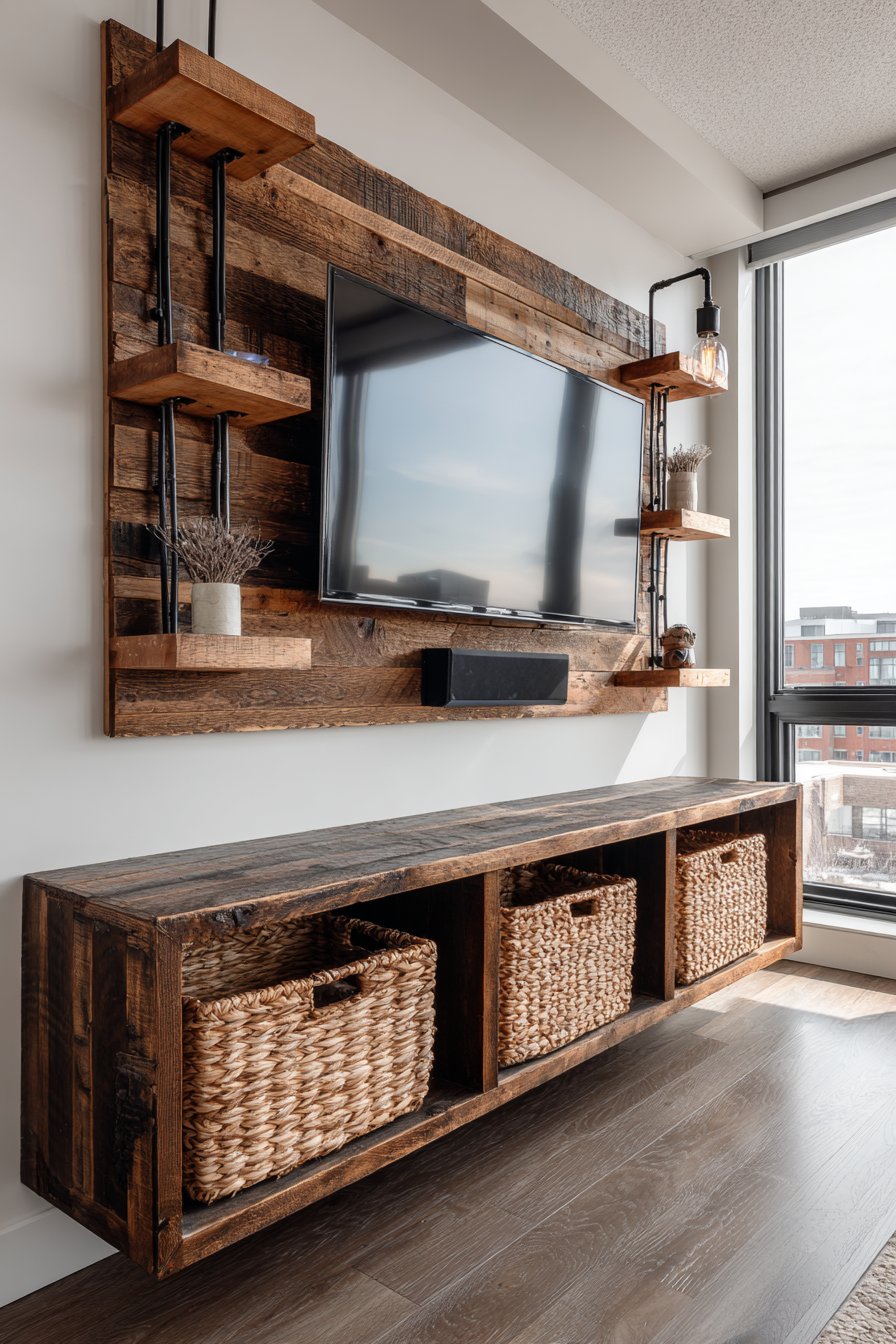
Natural lighting from nearby windows creates gentle shadows that dance across the varied surface of the wood planks throughout the day, constantly revealing new details in the grain patterns and weathering. This is a media wall that improves with age and looks even better in person than in photographs. The authentic weathered character of the materials creates a space that feels collected over time rather than purchased all at once, offering a refreshing alternative to the perfection of modern manufactured furniture.
Key Design Tips:
- Source reclaimed wood from reputable suppliers who properly treat and prepare materials
- Seal wood planks with clear matte finish to protect from dust while preserving authentic appearance
- Vary plank widths for more authentic barn wall appearance
- Ensure shelf brackets are rated to support weight of media components
- Choose Edison bulbs with warm color temperature (2200K-2700K) for authentic glow
- Allow wood tones to vary naturally rather than trying to match perfectly
4. Scandinavian White Lacquer Simplicity
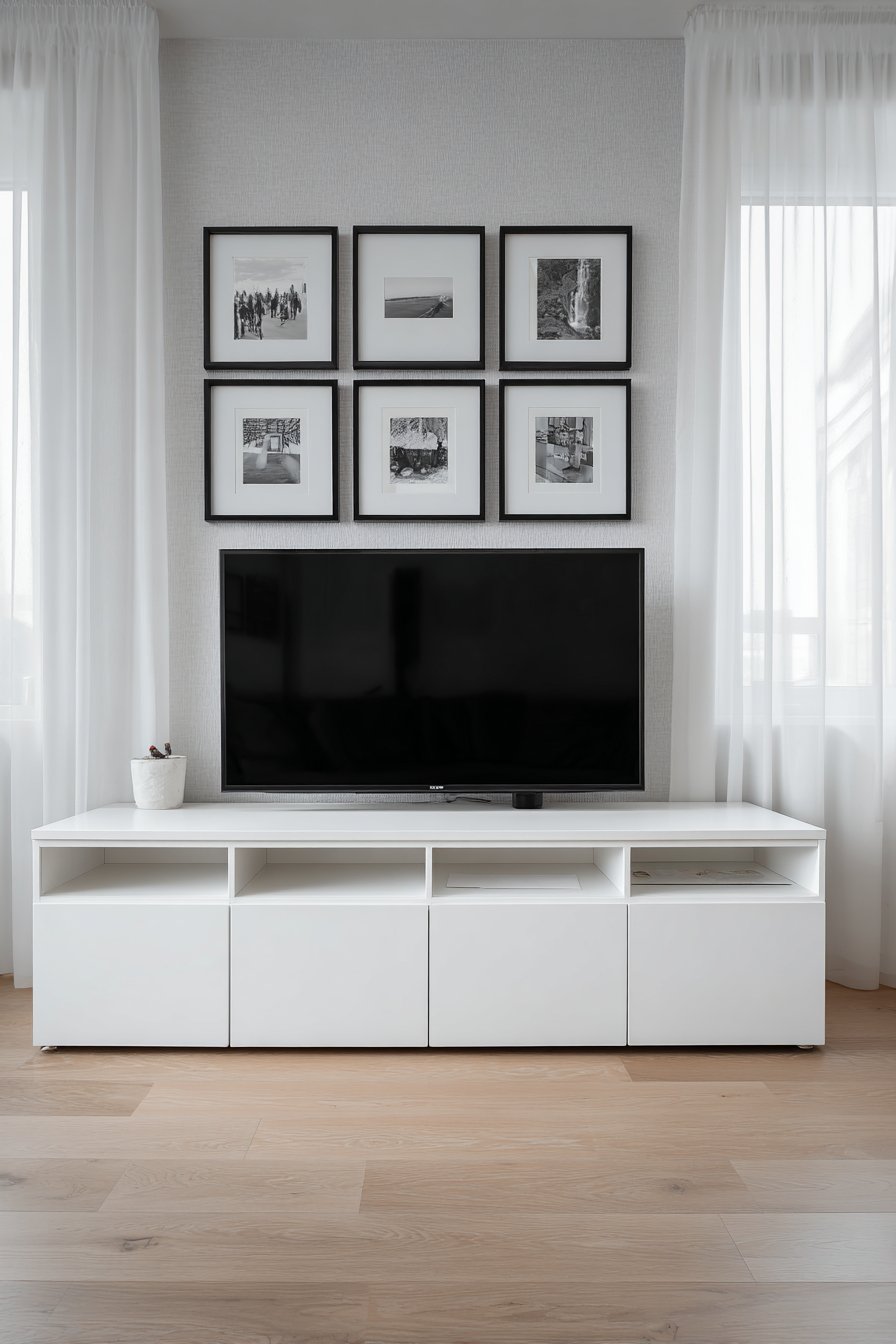
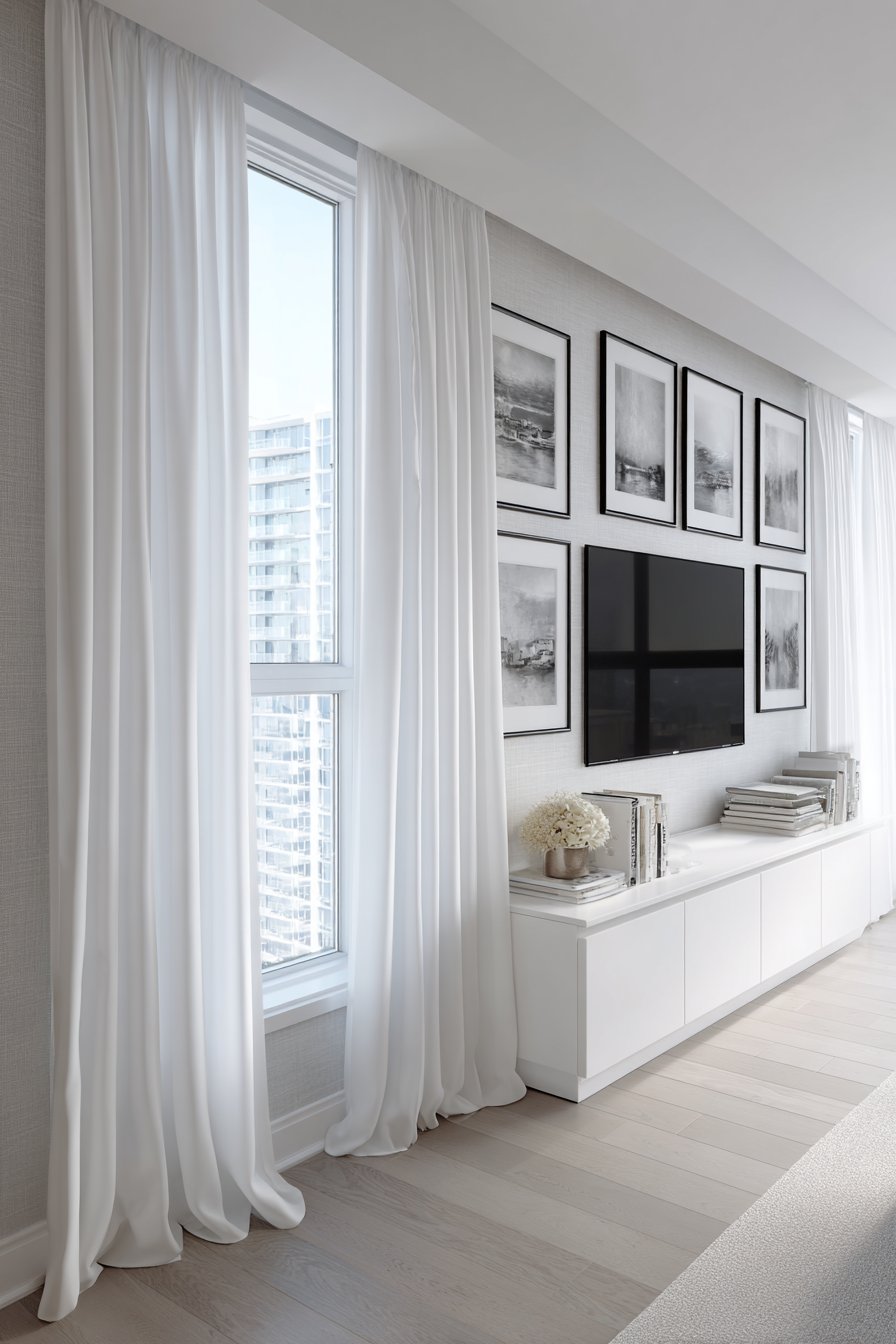
Nordic design principles shine in this serene media wall that embodies the Scandinavian philosophy of functional beauty. A low-profile media console in pristine white lacquer sits cleanly against a soft grey textured wall, its hidden storage compartments maintaining the uncluttered appearance that defines this aesthetic. The console’s clean lines and handleless doors create a seamless surface interrupted only by subtle push-to-open mechanisms. Above, a simple mounted television becomes part of a carefully considered gallery wall arrangement featuring black and white photography in slim black frames.
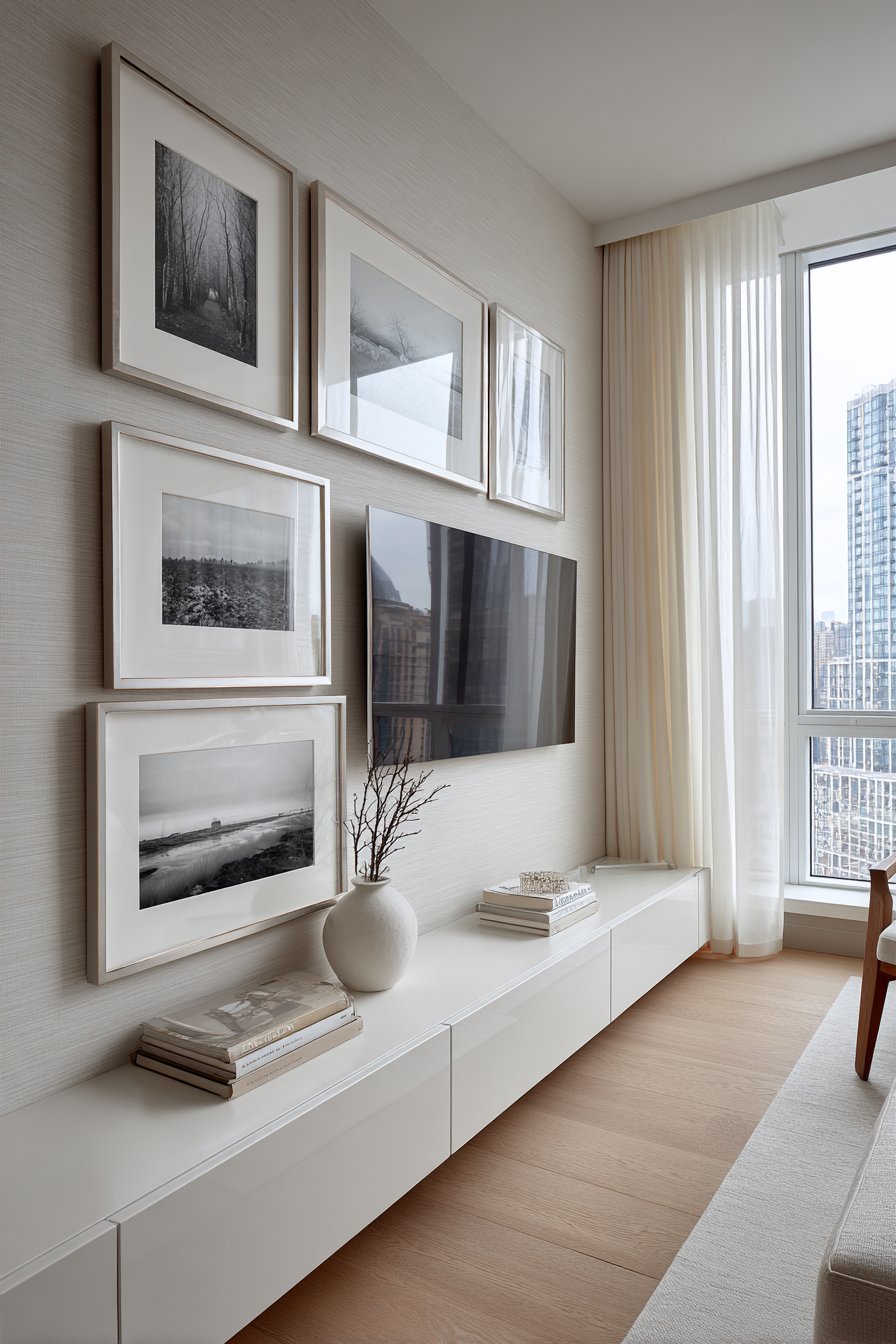
The genius of this Scandinavian approach lies in its restraint—every element serves a purpose, nothing is superfluous, and the overall effect is one of calm and clarity. Light ash wood flooring adds warmth through natural material while maintaining the light, airy feeling essential to Nordic interiors. The grey wall provides just enough contrast to define the space without disrupting the serene palette. Sheer white curtains filter natural daylight, creating the soft, diffused illumination that characterizes Scandinavian homes and makes spaces feel larger and more welcoming.
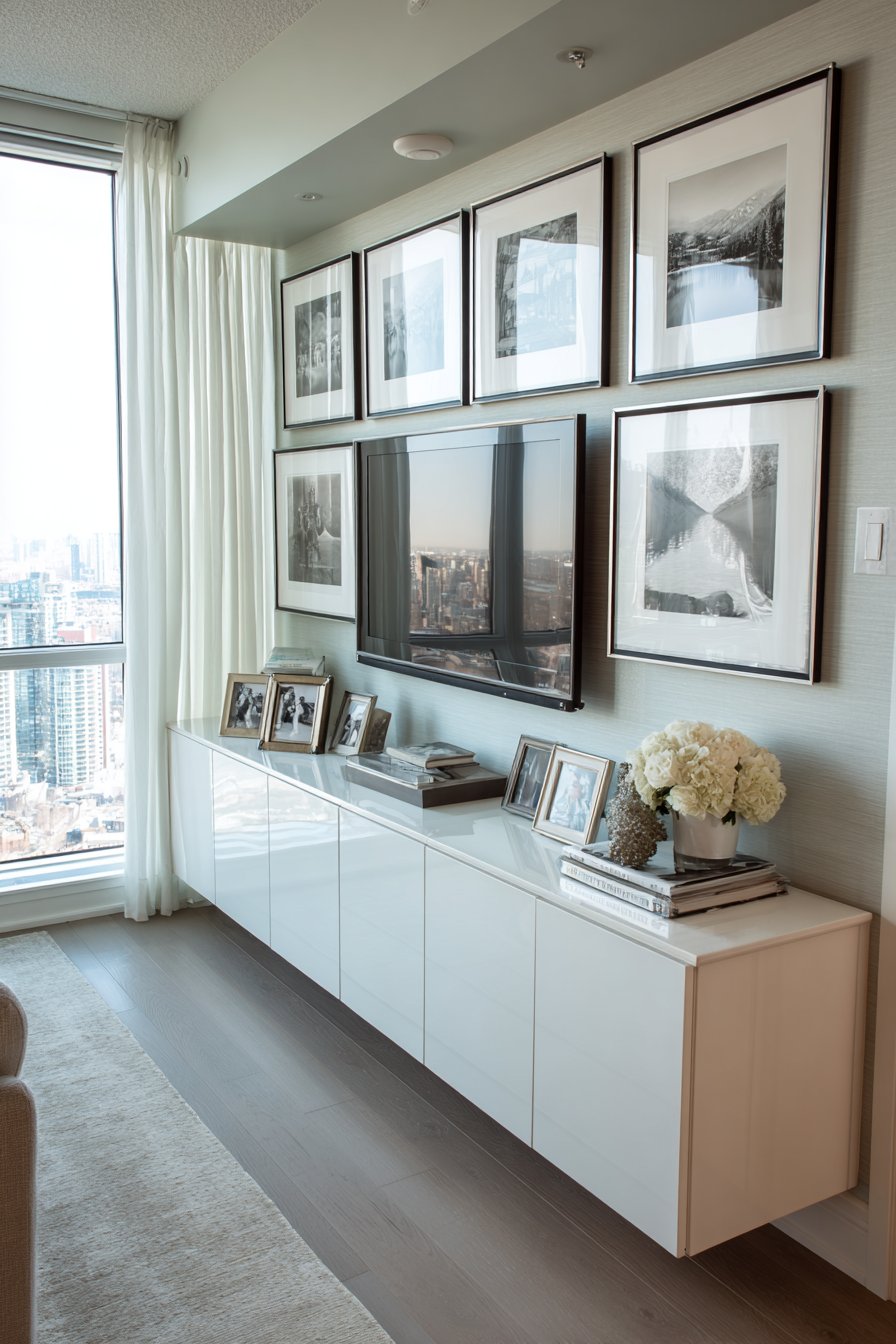
The gallery arrangement flanking the television demonstrates the Scandinavian appreciation for art and personal expression within minimalist frameworks. Black and white photography adds visual interest without introducing color complexity, while the slim frames maintain the clean aesthetic. This is design that breathes, where negative space is valued as much as the objects themselves. The wide-angle interior photography showcases how every element contributes to the overall sense of spaciousness and tranquility, proving that minimalism doesn’t mean cold or unwelcoming.
Key Design Tips:
- Select media console with soft-close mechanisms for whisper-quiet operation
- Maintain 2-4 inches between gallery frames for proper negative space
- Use identical frame styles for gallery cohesion
- Position console at proper height for comfortable viewing (typically 24-30 inches from floor to TV bottom)
- Limit color palette to whites, greys, and natural wood tones
- Incorporate one or two textile elements (throw, cushion) for softness
5. Industrial Loft with Exposed Brick Character
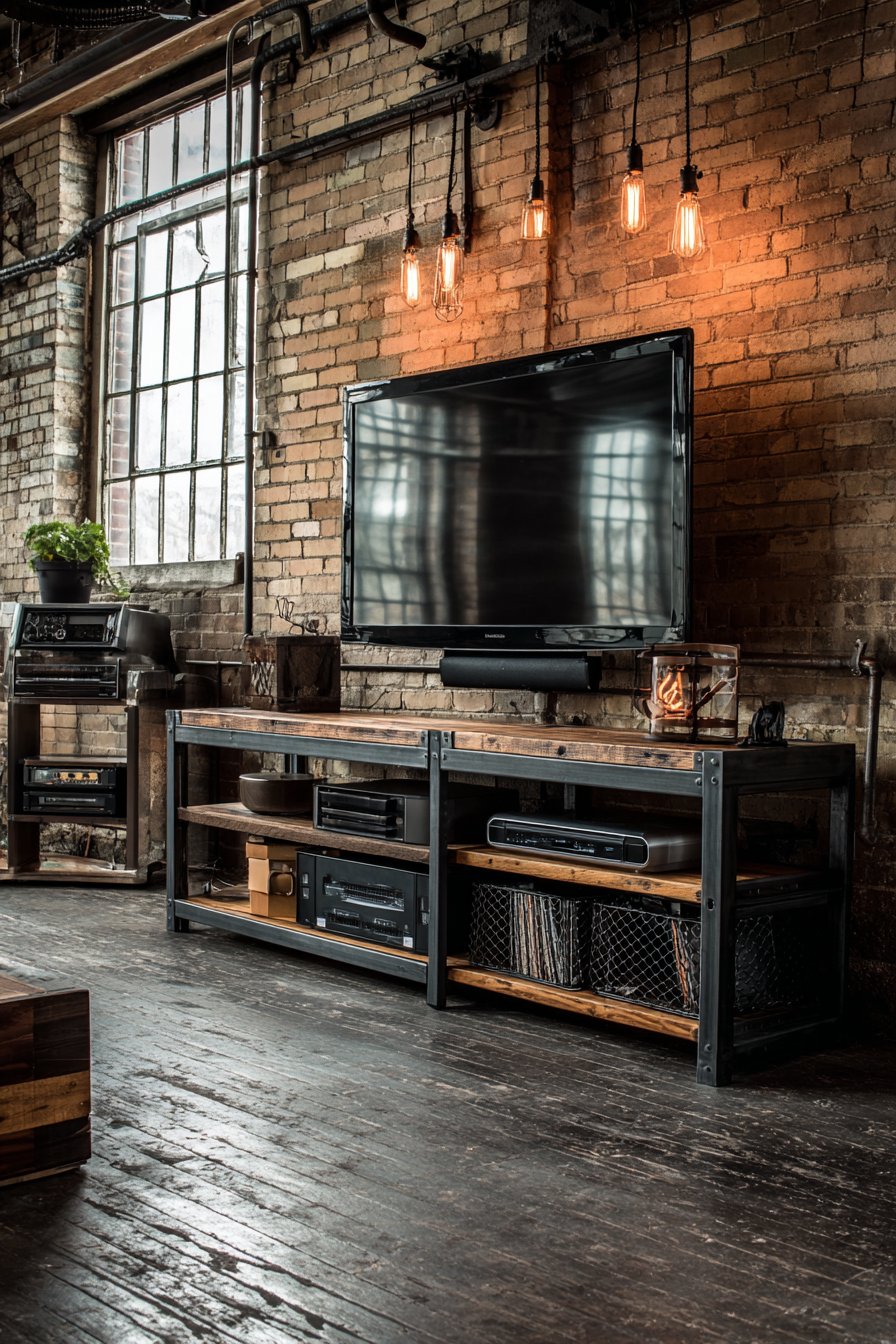
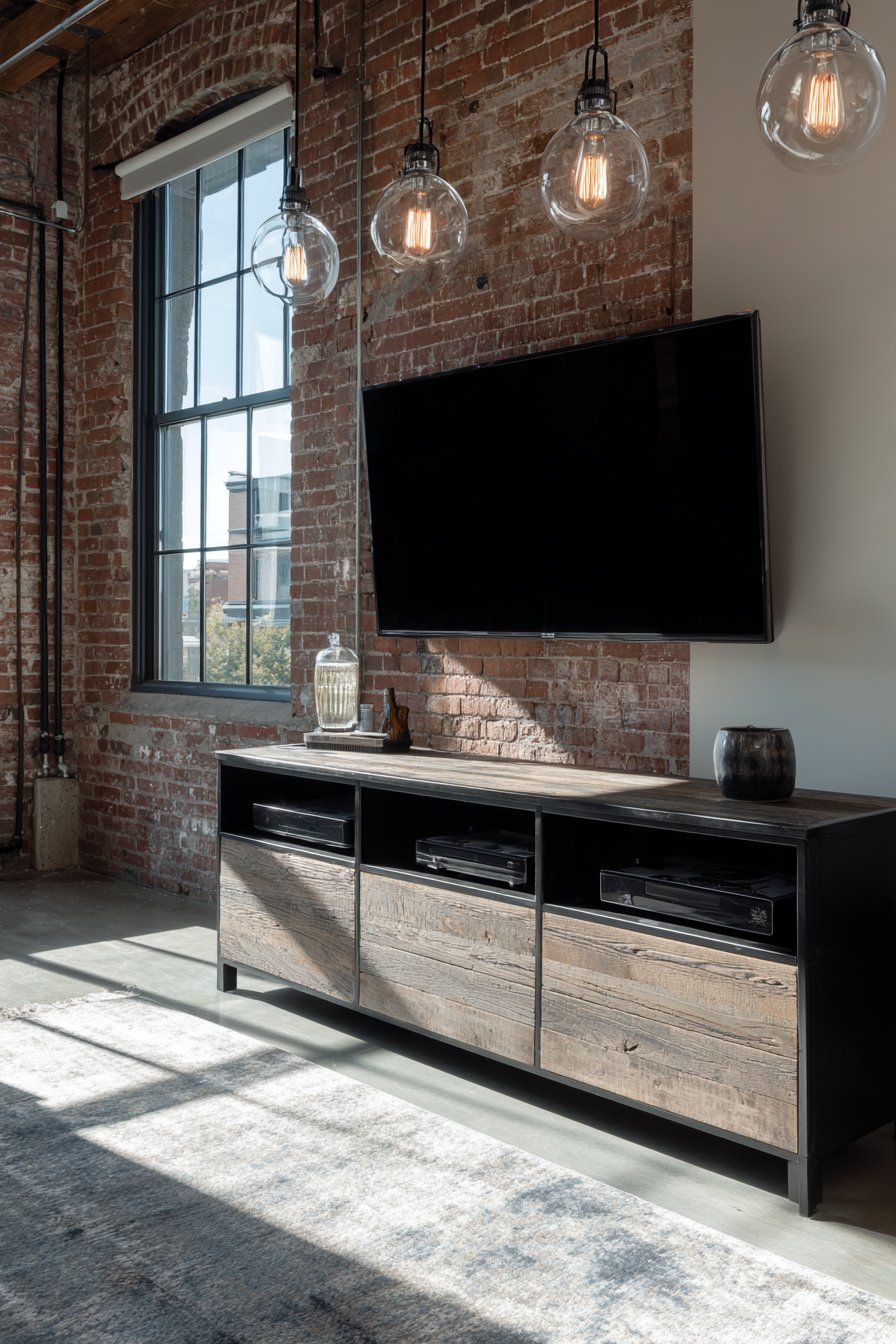
Raw authenticity defines this industrial media wall where exposed brick becomes the hero of the design story. The rough texture and varied tones of genuine brick create a backdrop rich with character and urban edge. Rather than hiding the building’s bones, this approach celebrates them, allowing the television to appear almost as if it’s floating against decades-old masonry. Visible Edison bulb pendant lights hang at varying heights, their warm filament glow and fabric-wrapped cords adding to the factory-inspired aesthetic.
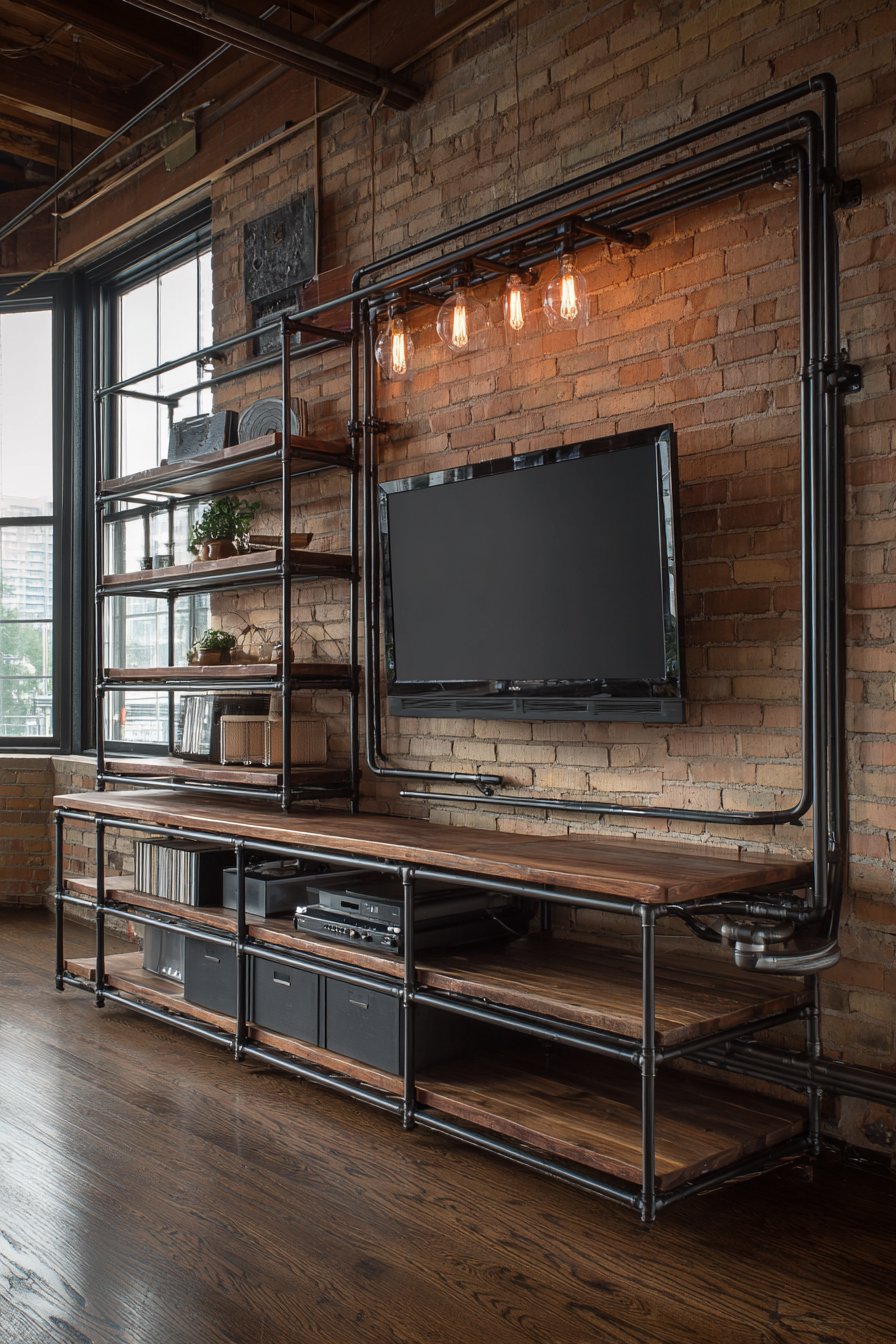
A custom welded steel shelving unit demonstrates the industrial commitment to honest materials and visible construction. The raw metal finish shows weld marks and slight surface variations that prove its handcrafted origins, while thick wood plank shelves provide warm contrast and practical storage surface. This isn’t delicate furniture—it’s substantial, built to last, and makes no apologies for its utilitarian roots. The shelves hold vintage audio equipment and vinyl records, their analog nature perfectly complementing the old-meets-new aesthetic of the space.
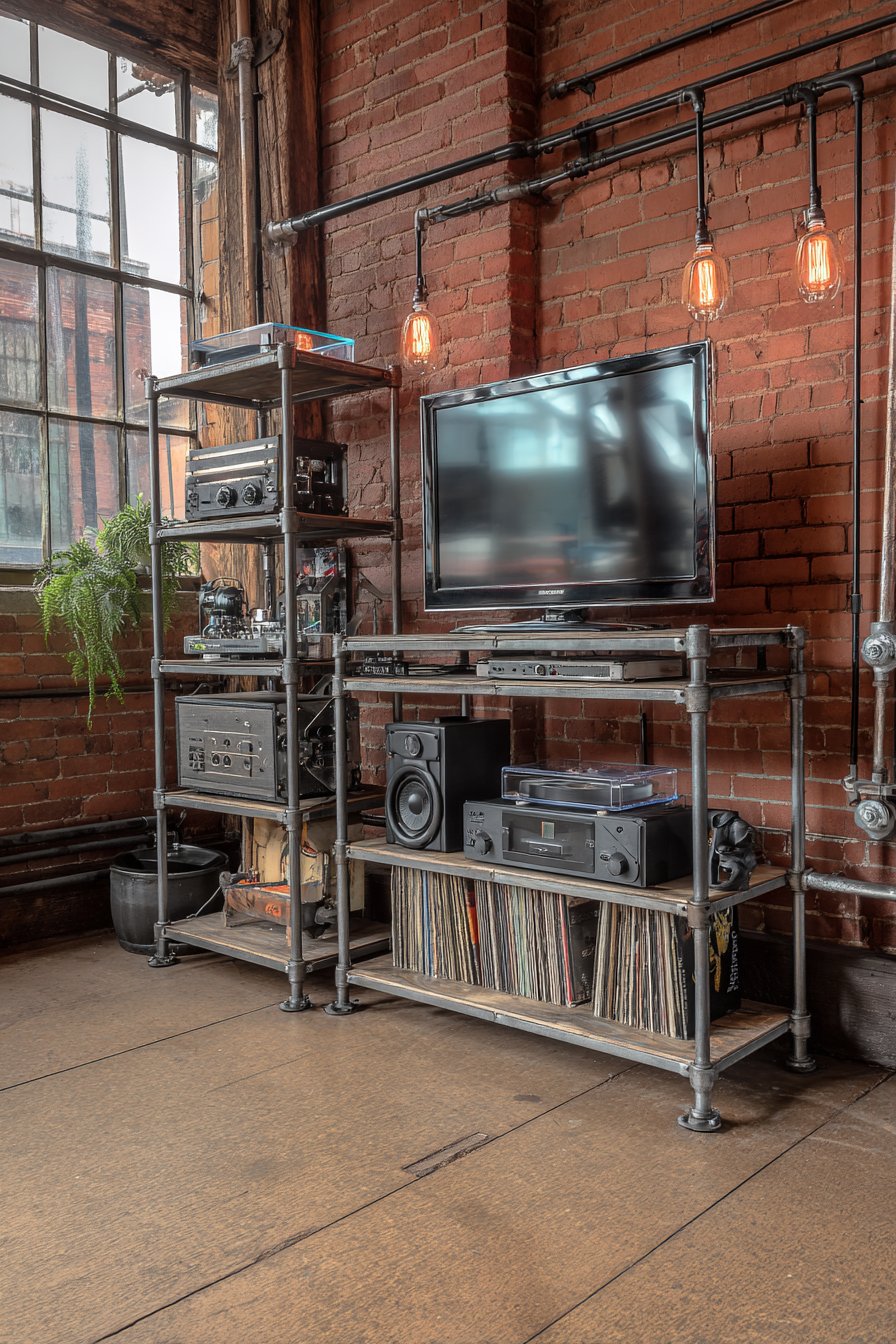
Black metal conduit pipes running along the wall serve dual purposes as both functional cable management and intentional design elements. Rather than hiding the infrastructure of modern technology, this approach embraces it, turning necessary components into visual features. Natural light streaming through tall factory-style windows creates dramatic shadows and highlights the texture of the brick, while the contrast between modern electronics and industrial materials creates visual tension that energizes the space.
Key Design Tips:
- Clean and seal exposed brick to prevent dust while maintaining authentic appearance
- Use proper mounting hardware rated for brick installation
- Ensure steel shelving is professionally welded for safety and stability
- Choose wood planks with substantial thickness (minimum 2 inches) for appropriate scale
- Install dimmer switches on Edison bulb fixtures for adjustable ambiance
- Embrace patina and wear rather than trying to make materials look new
- Route cables through conduit for authentic industrial look and fire safety

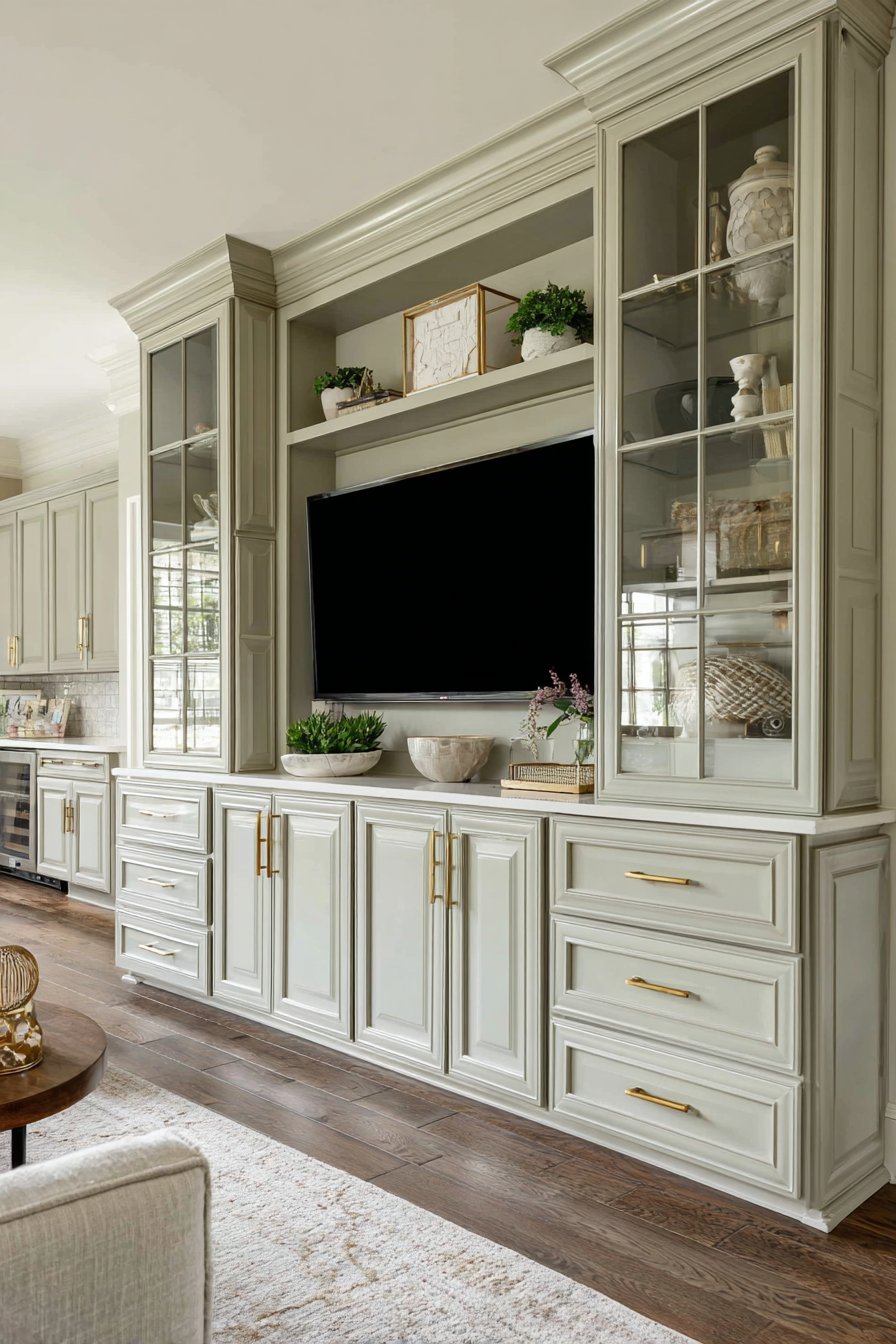
6. Built-In Traditional Elegance with Sage Green Cabinetry
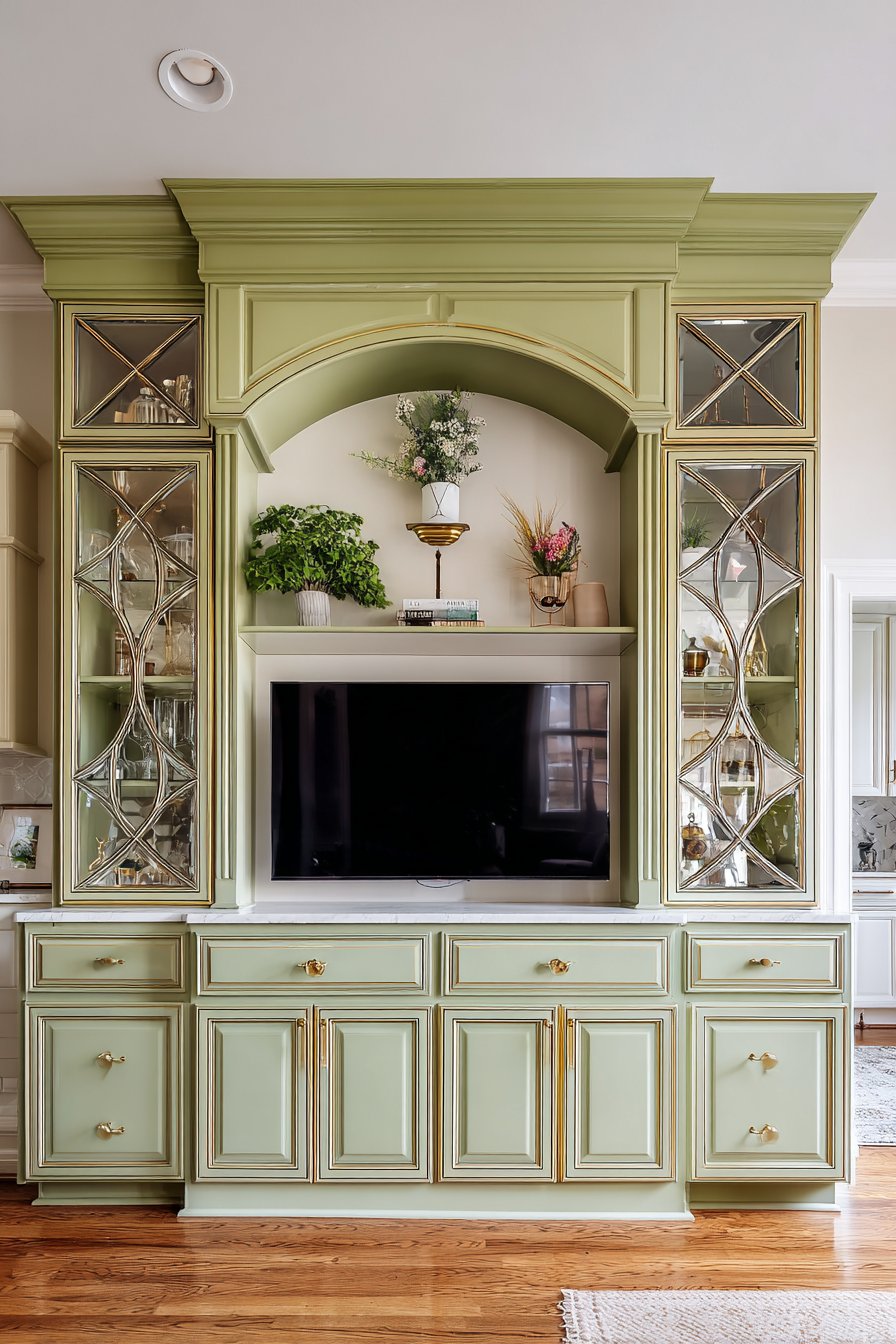
Sophisticated tradition meets contemporary color in this custom built-in media wall featuring floor-to-ceiling cabinetry in soft sage green. The centered television sits within a carefully proportioned recessed niche, framed by symmetrical closed storage cabinets below and glass-front display shelving above. This balanced, formal arrangement creates architectural presence and transforms the media wall into a room’s focal point. The sage green finish offers a fresh alternative to traditional wood tones while maintaining the refined character expected of built-in cabinetry.
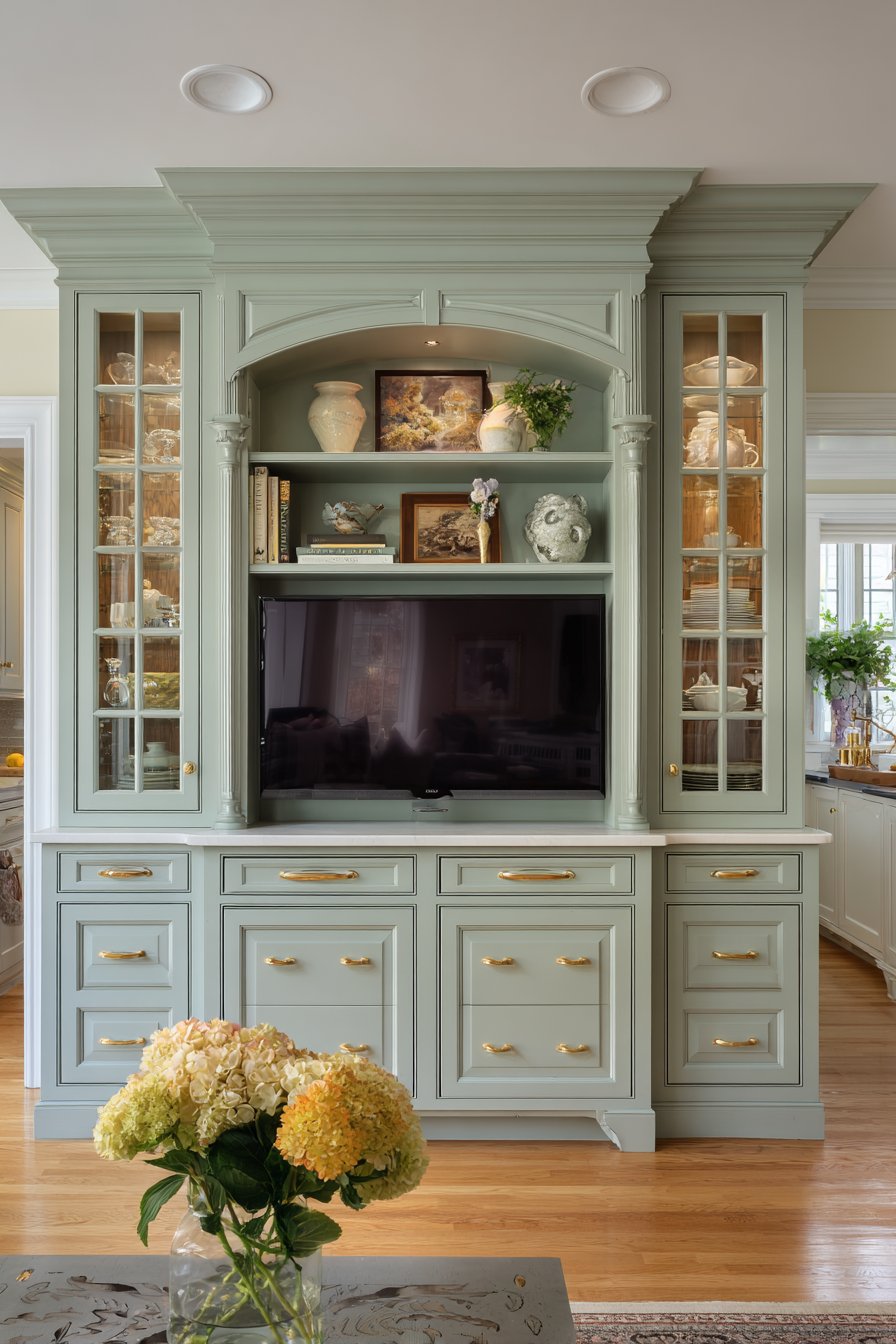
Brass hardware accents catch and reflect light, adding jewelry-like detail to the cabinet faces. The warm metallic finish creates subtle sparkle and visual interest while nodding to traditional design sensibilities. Interior lighting within the glass-front cabinets illuminates carefully curated decorative items—perhaps leather-bound books, ceramic vessels, or family photographs in coordinating frames. This illumination creates depth and draws attention to displayed items while adding ambient lighting to the room.
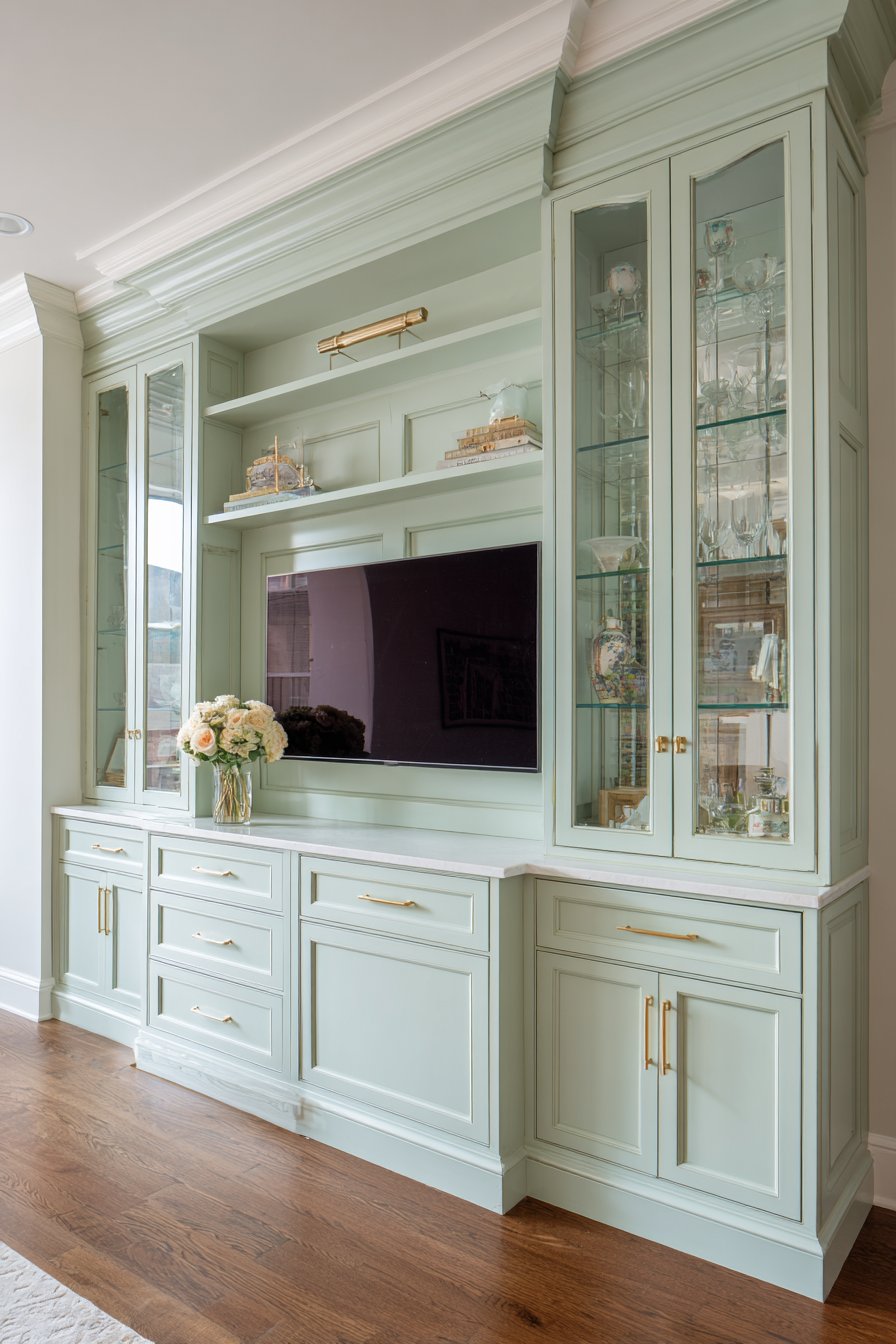
Crown molding and detailed trim work add architectural gravitas, connecting the built-in unit to the room’s existing millwork and creating a sense that the media wall has always been part of the home’s design. The soft sage green serves as a sophisticated neutral that works with both warm and cool color schemes, while the combination of open and closed storage allows you to display beautiful items while concealing less attractive necessities. Professional interior photography with soft diffused lighting captures how the traditional elegance and sophisticated color choice create a media wall that feels both timeless and fresh.
Key Design Tips:
- Ensure cabinet proportions relate to ceiling height for balanced appearance
- Install glass shelving with proper support brackets rated for displayed items
- Use LED tape lighting inside glass cabinets to avoid heat buildup
- Select brass hardware finish that coordinates with other room metallics
- Paint cabinet interiors in coordinating neutral to showcase displayed items
- Ensure recessed TV niche has adequate depth and ventilation
- Consider soft-close hinges and drawer glides for quality feel
7. Corner-Mounted Space-Saving Solution
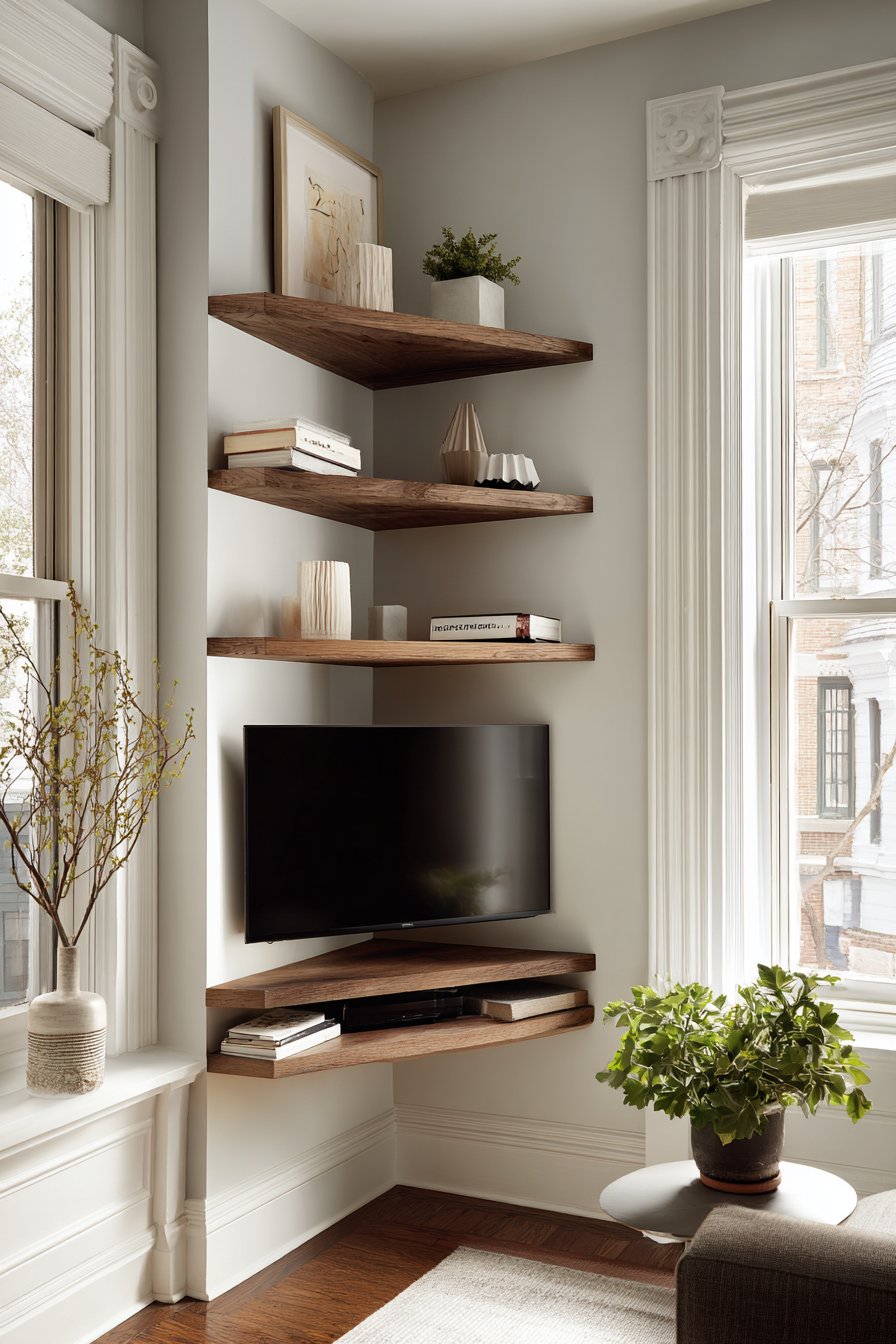
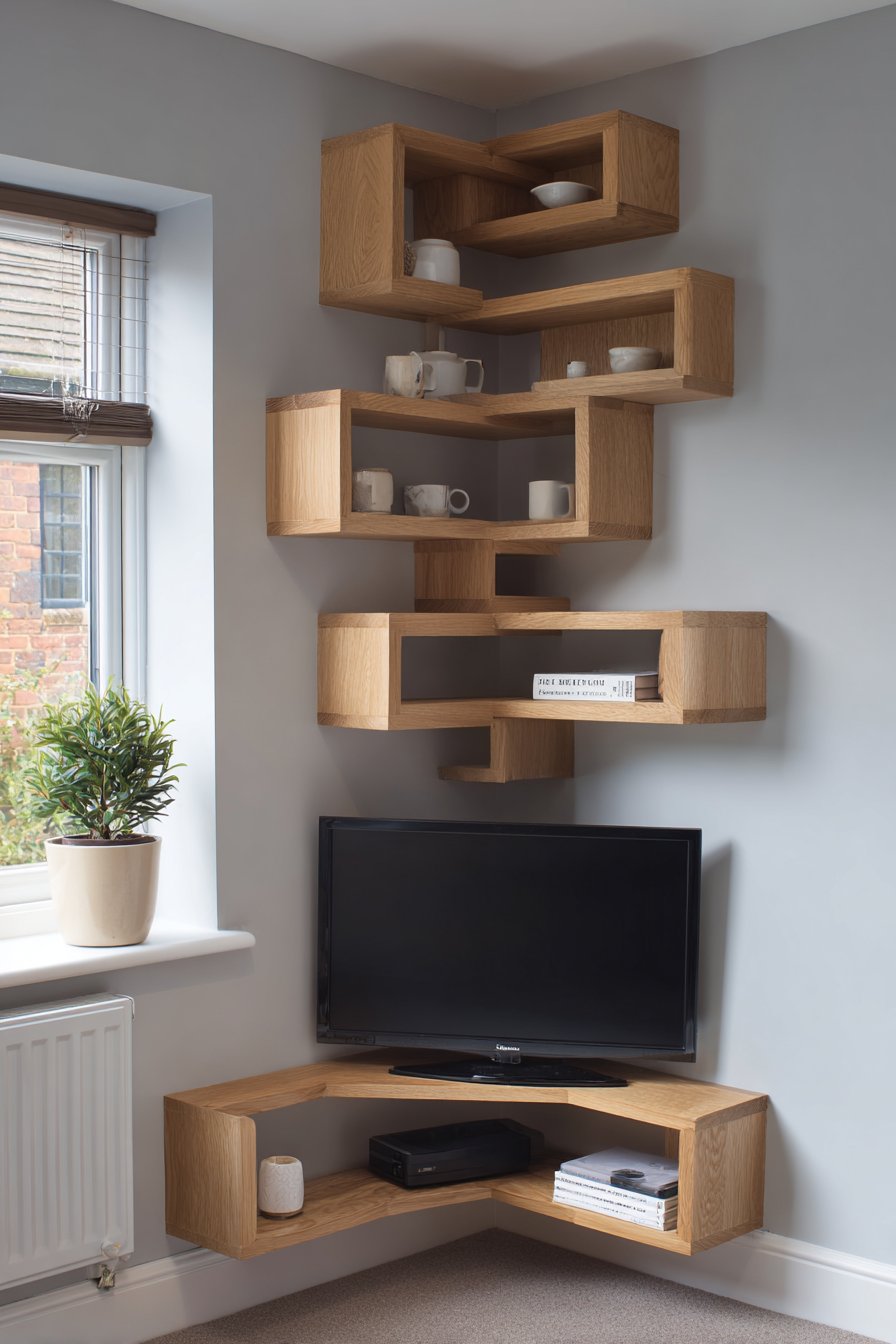
Maximize every inch of available space with this clever corner media wall designed for small apartments and compact rooms. The corner-mounted television makes ingenious use of often-wasted angular space, while custom floating shelves follow the wall’s geometry to create integrated storage and display areas. This approach transforms an awkward corner into a functional entertainment center that feels intentional rather than compromised. The angular shelves add architectural interest while providing practical surfaces for a media streaming device, a few carefully chosen books, and minimal decorative accents.
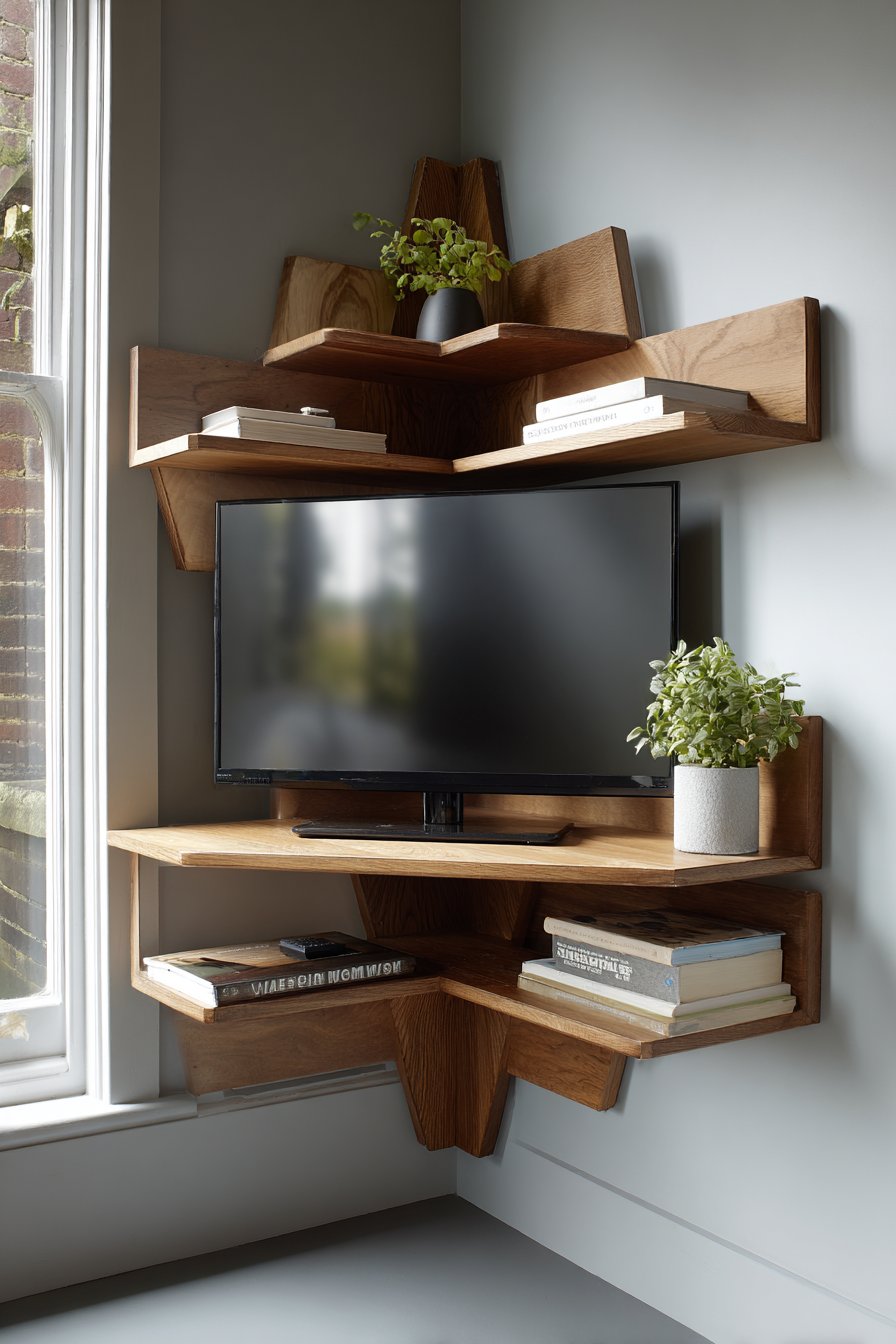
Light grey walls keep the compact space feeling open and airy, preventing the corner arrangement from feeling cramped or claustrophobic. Natural wood shelf material introduces warmth and texture without visual heaviness, while the floating installation maintains clean lines and floor space—crucial in small rooms where every square foot counts. A small potted plant adds life and softness, while one or two framed photos personalize the space without creating clutter.
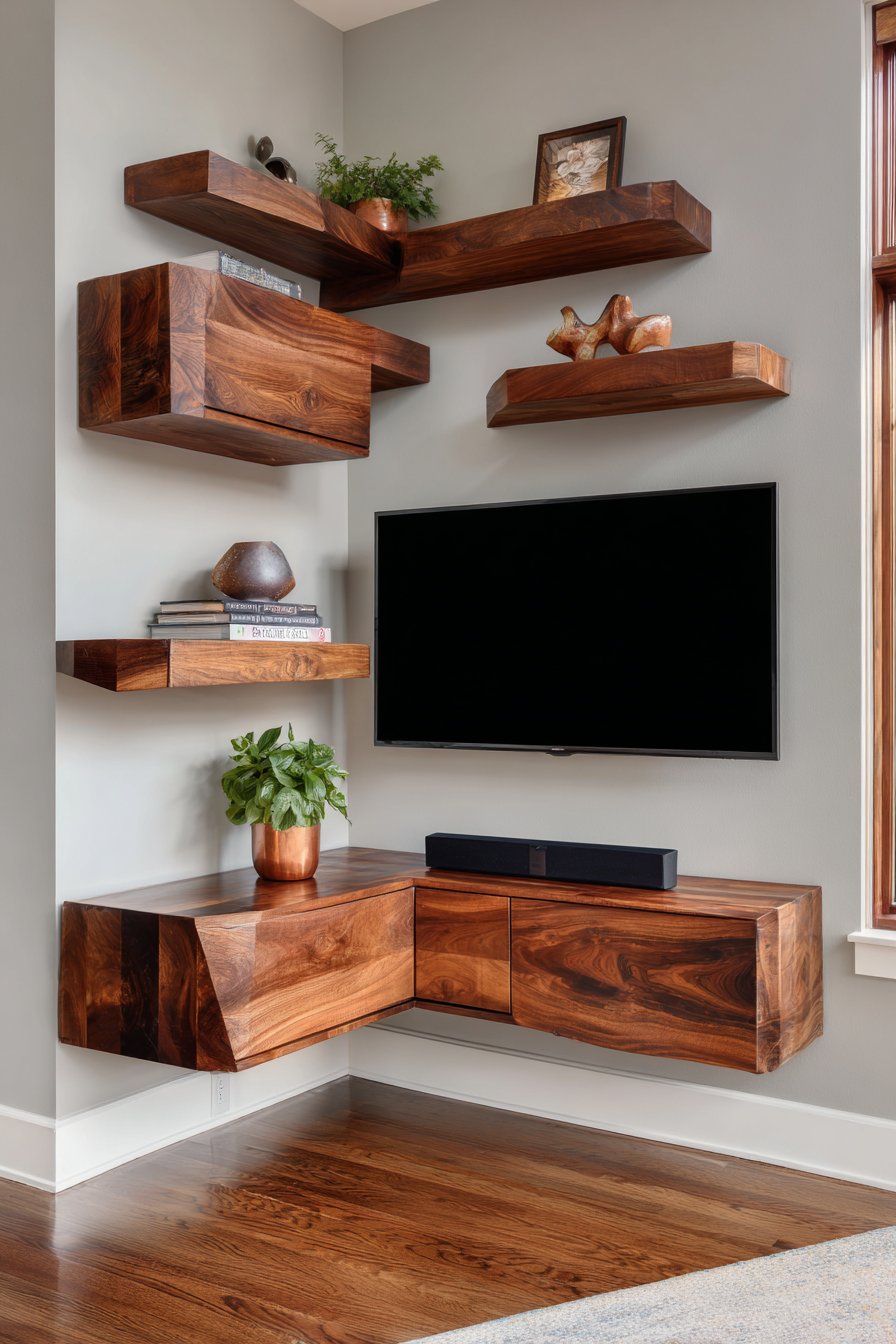
This design proves that spatial constraints can inspire creative solutions rather than limiting possibilities. The corner mounting actually creates better viewing angles from multiple seating positions in a small room, while the geometric shelf arrangement adds visual interest that a standard flat wall installation might lack. Interior photography captures how the design optimizes challenging corner space while balanced natural lighting prevents shadows that could make the corner feel dark.
Key Design Tips:
- Use articulating TV mount for adjustable viewing angles
- Ensure corner shelves are securely anchored to studs in both walls
- Keep shelf depths shallow (6-8 inches) to prevent overwhelming small spaces
- Limit display items to 2-3 objects per shelf in small spaces
- Choose lighter wood tones to maintain airy feeling
- Paint walls light neutral colors to maximize light reflection
- Consider corner shelf arrangement that steps up or down for dynamic interest
8. Mid-Century Modern Teak and Brass
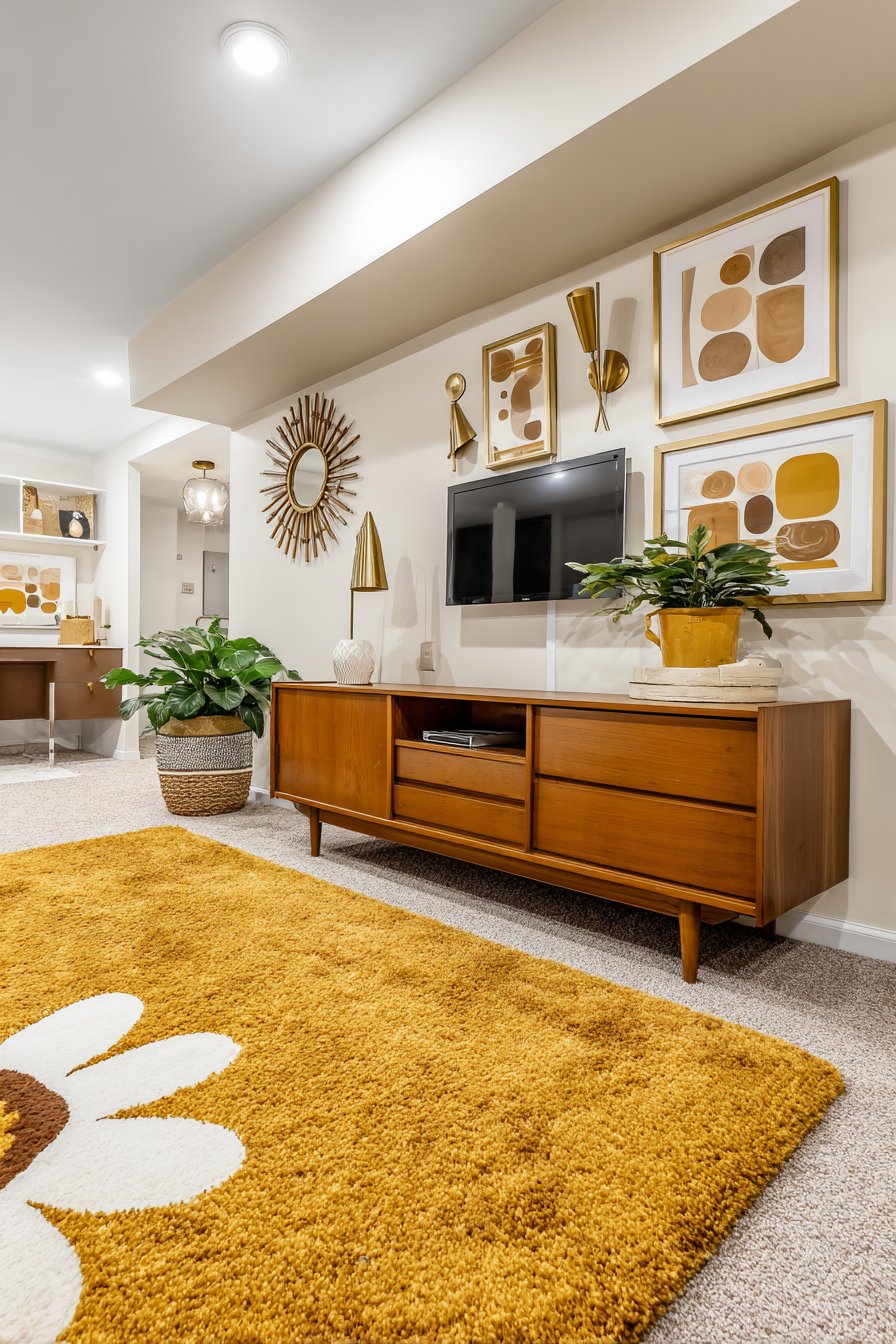
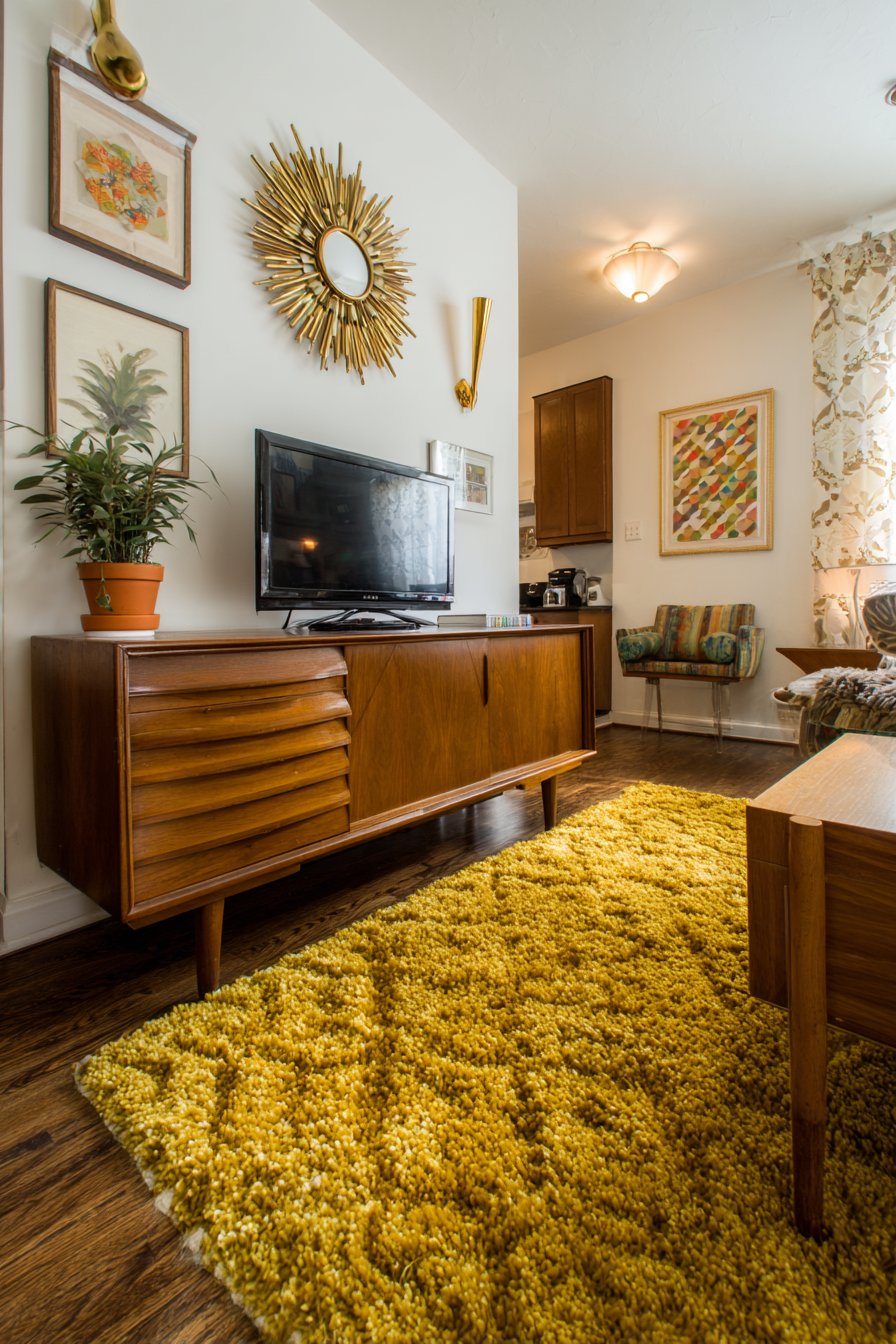
Travel back to the golden age of design with this mid-century modern media wall featuring a vintage-inspired teak credenza with characteristic tapered legs serving as the television console. The warm honey tones of teak wood glow with natural beauty, while the credenza’s clean lines and sliding doors exemplify the form-follows-function philosophy of 1950s and 60s design. Above the mounted television, a sunburst mirror catches light and creates a focal point, its radiating spokes embodying the optimistic, atomic-age aesthetic of the era.
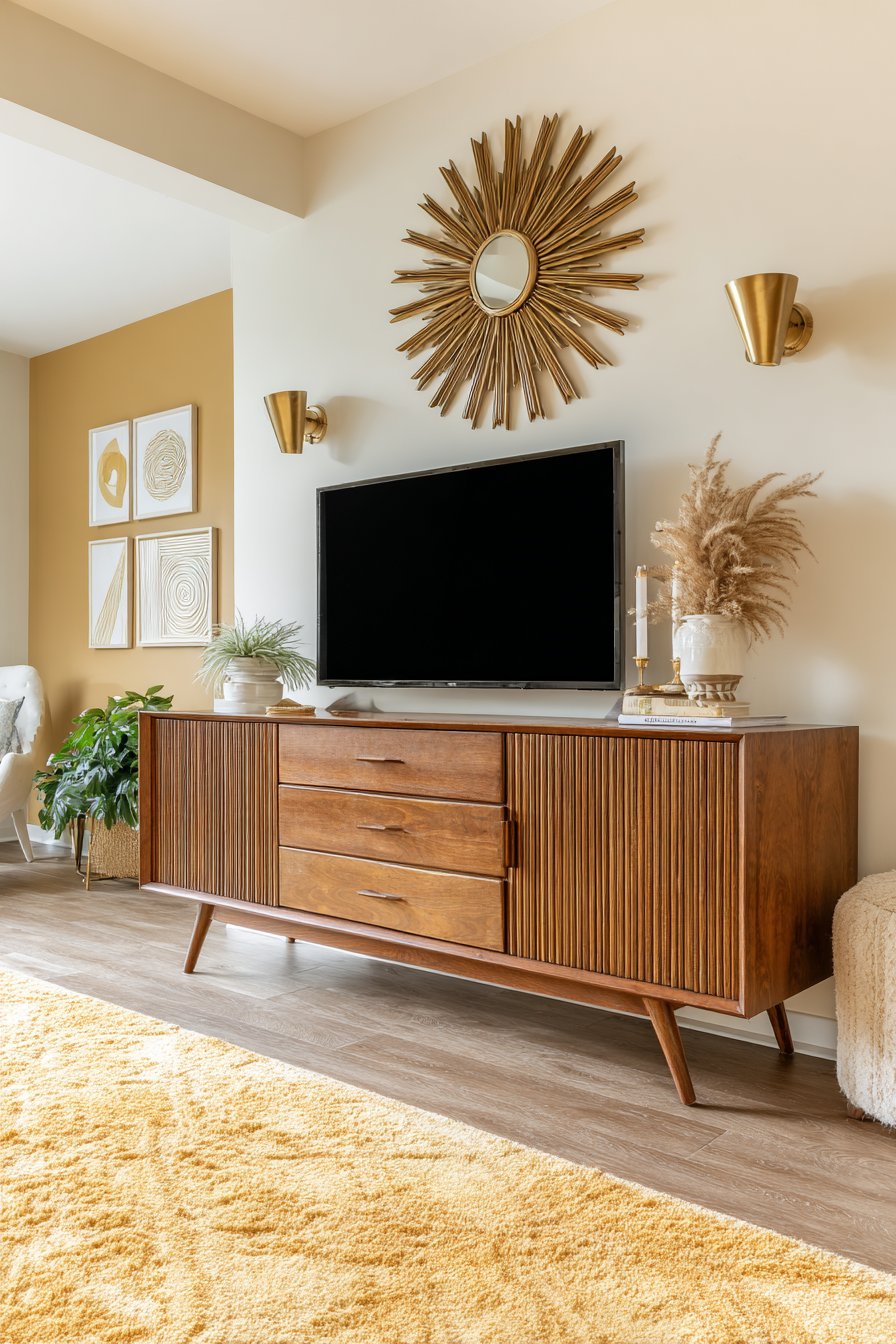
Abstract geometric art pieces flanking the television create a curated gallery arrangement that celebrates mid-century’s love of bold forms and colors. The surrounding wall painted in warm off-white provides a neutral backdrop that allows the wood tones and art to shine. Brass cone-shaped wall sconces add both functional and decorative lighting, their metallic finish and sculptural form perfectly capturing the period’s aesthetic. Below, a shag area rug in authentic mustard yellow anchors the space and adds textural contrast to the smooth wood surfaces.
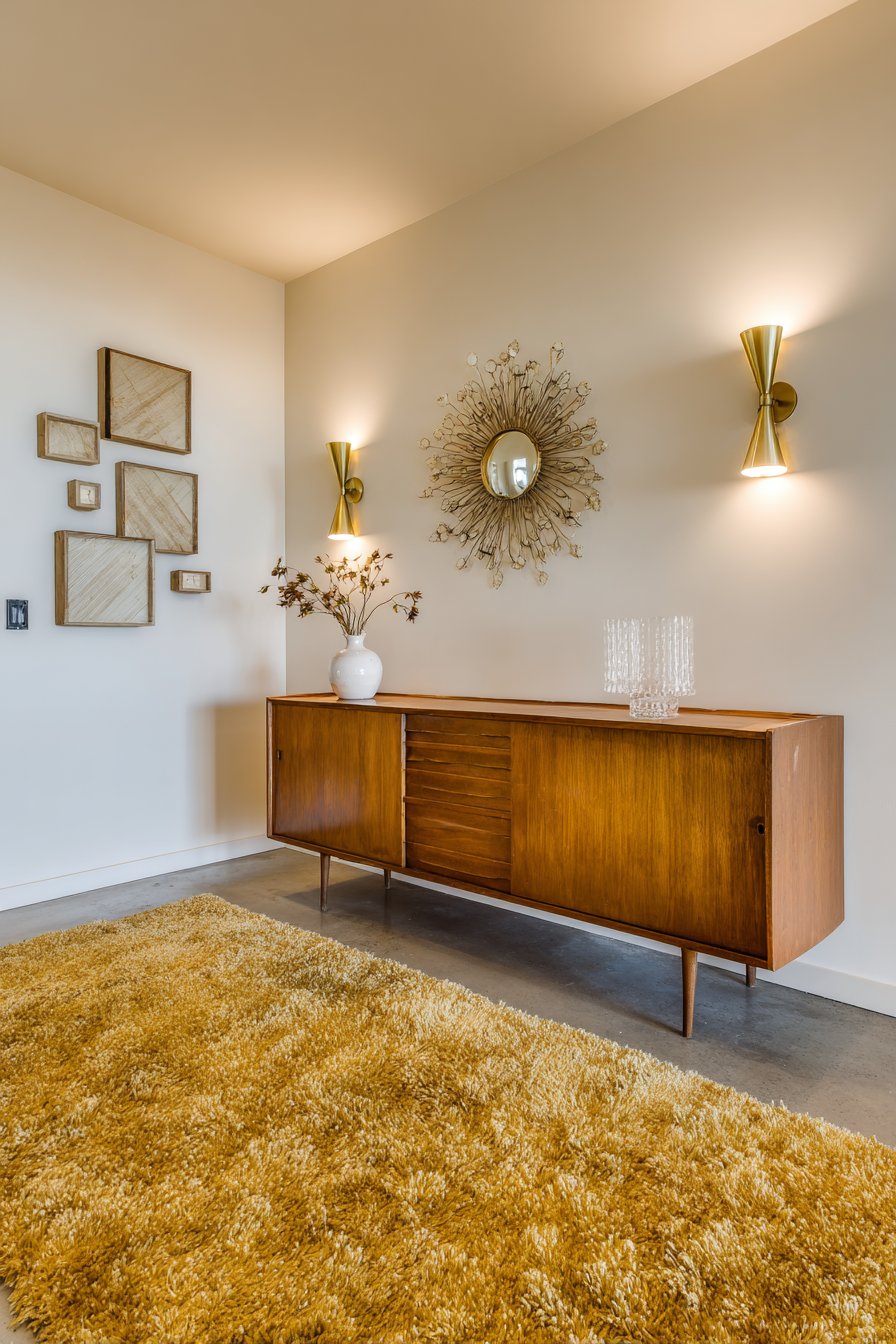
This design succeeds by committing fully to authentic mid-century principles rather than cherry-picking elements. The attention to period-appropriate materials, forms, and colors creates a cohesive aesthetic that feels transported from another era rather than merely inspired by it. Wide-angle interior design photography captures how every element works together to create an authentic retro atmosphere that remains fresh and relevant decades after these pieces were first designed.
Key Design Tips:
- Source authentic vintage pieces or high-quality reproductions
- Ensure teak credenza has adequate ventilation for modern electronics
- Position sunburst mirror to reflect light without creating TV glare
- Choose art with geometric patterns and period-appropriate colors
- Install brass sconces with warm-toned bulbs (2700K-3000K)
- Add one or two authentic vintage accessories for credibility
- Maintain period color palette (mustard, orange, teal, avocado)
9. Farmhouse Sliding Barn Door Concealment
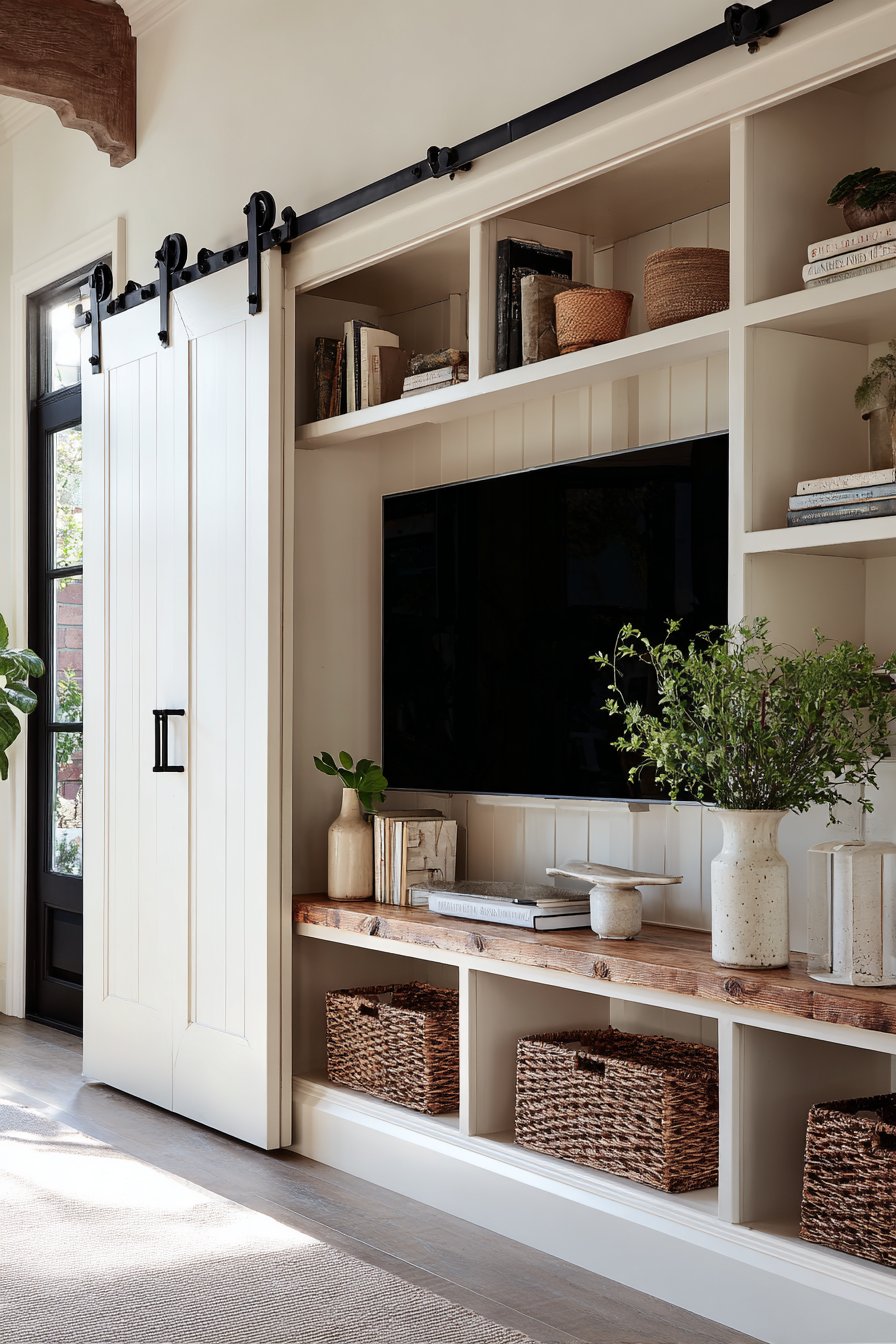
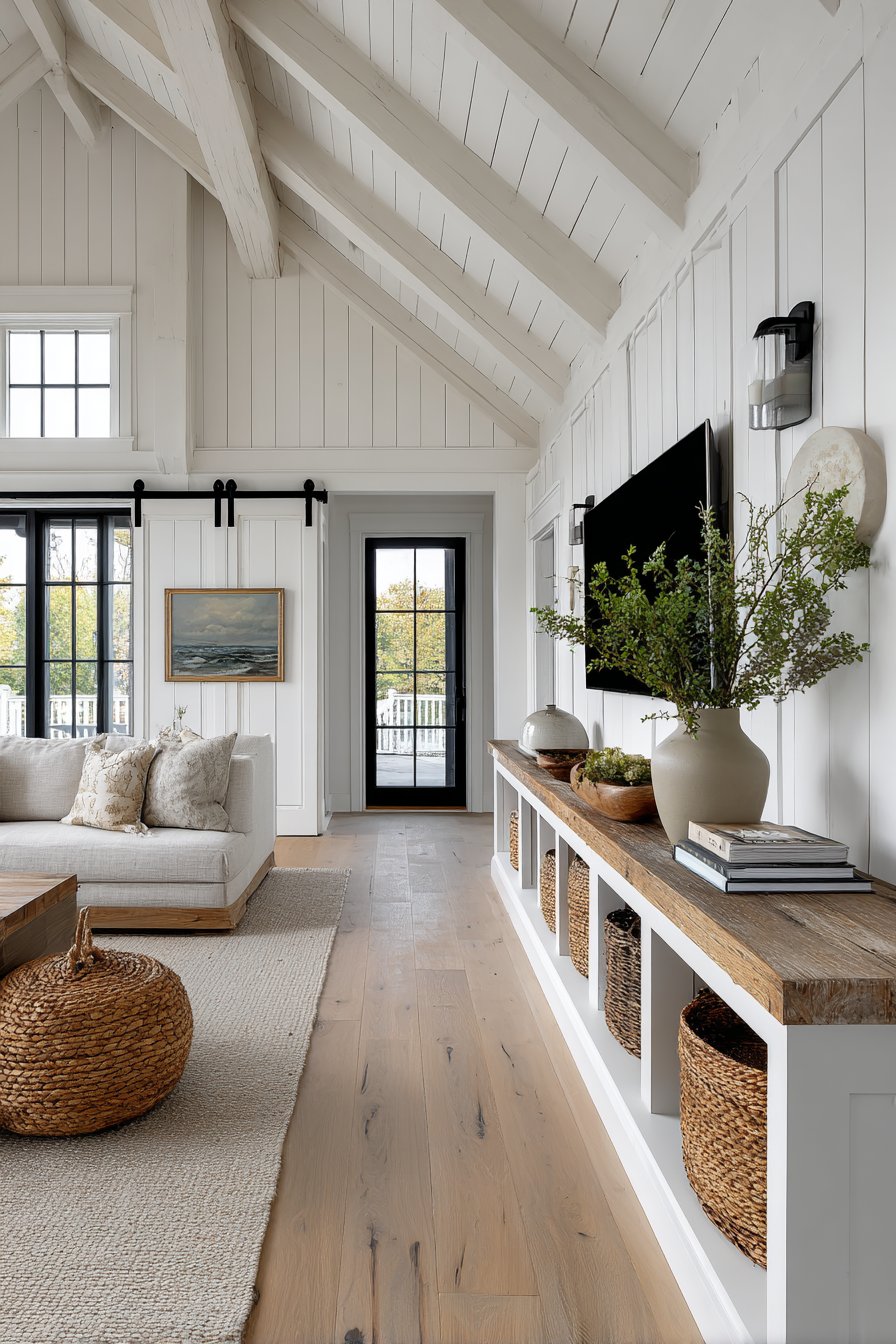
Rustic charm meets practical function in this farmhouse media wall featuring crisp white shiplap paneling that creates a classic backdrop. The genius of this design lies in the rustic sliding barn door that conceals the television when not in use, transforming the media wall into a decorative focal point that doesn’t announce its technological purpose. The exposed black metal hardware and track provide visual interest while demonstrating the functional beauty that defines farmhouse style.
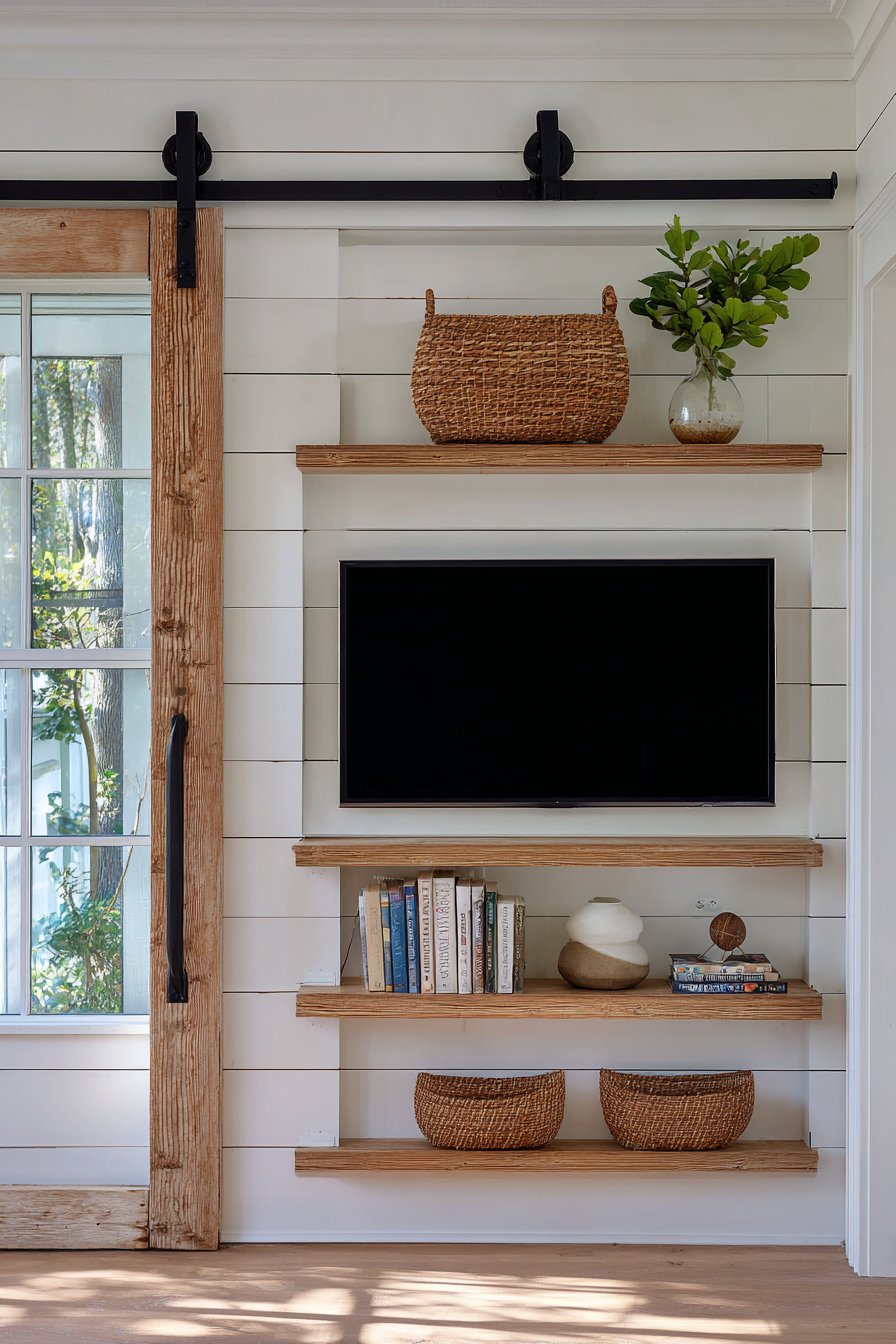
Open shelving constructed from thick pine boards with visible knots flanks the barn door, providing display space for woven baskets that offer concealed storage, vintage books with worn spines that add character, and simple greenery in white ceramic vessels. The natural wood grain and rustic imperfections in the pine boards create warmth and texture against the painted shiplap. This is design that celebrates handcrafted quality and the beauty of natural materials—nothing feels mass-produced or generic.
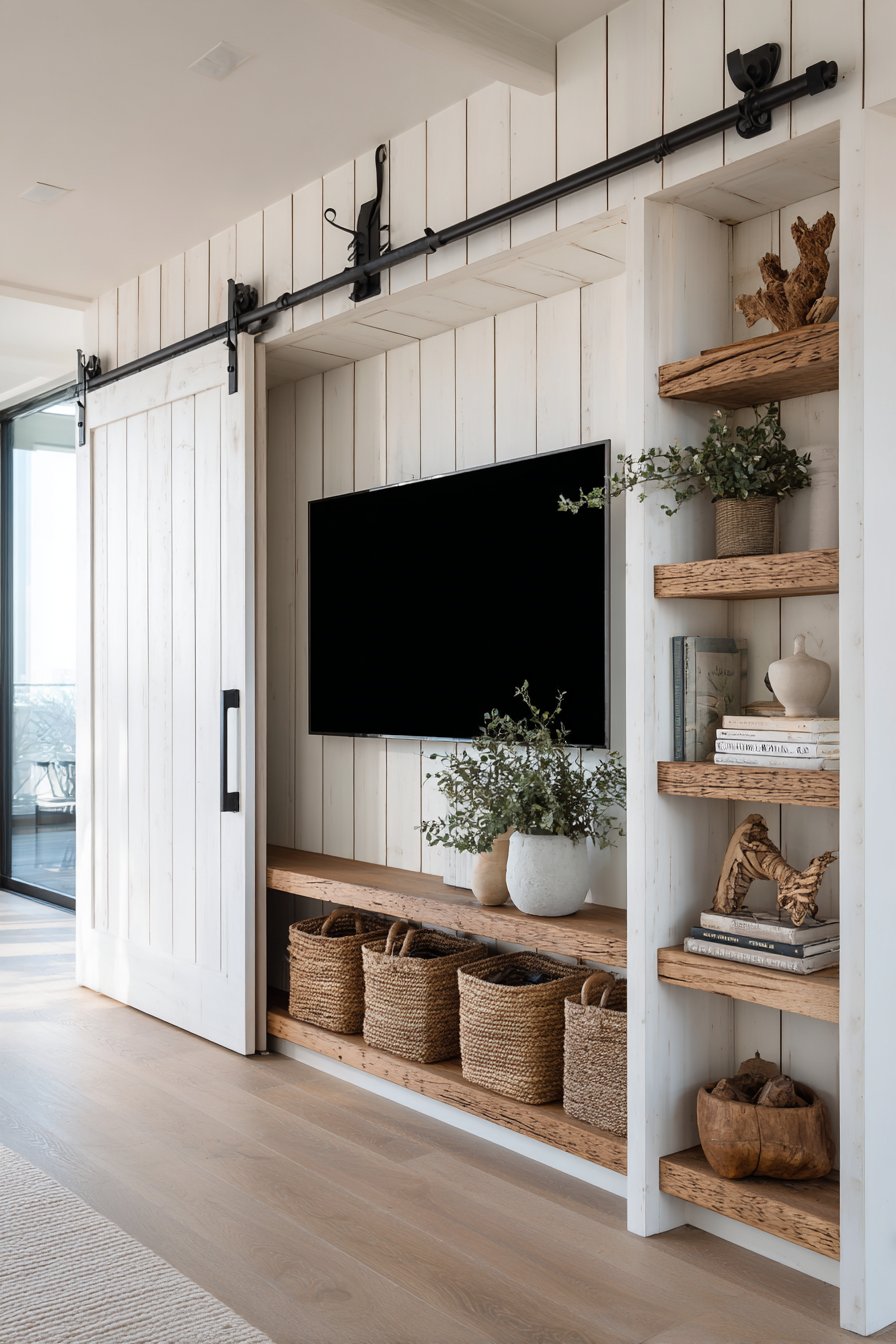
Soft natural lighting from nearby windows highlights the texture of both the shiplap grooves and the wood grain, creating subtle shadows that add depth and dimension throughout the day. Professional interior photography showcases the practical charm and lived-in warmth that defines modern farmhouse style—spaces that feel collected over time, comfortable from day one, and ready to welcome family and friends. The sliding door mechanism operates smoothly and silently, making it practical for daily use rather than just a decorative feature.
Key Design Tips:
- Install barn door hardware that can support TV weight plus door weight
- Ensure barn door track extends far enough beyond TV width for full access
- Use shiplap boards with authentic spacing (typically 1/8-inch gaps)
- Select pine boards with natural character marks rather than perfect grain
- Paint shiplap with durable satin or semi-gloss finish for easy cleaning
- Add small chalkboard or hooks to barn door exterior for added function
- Include door stops or bumpers to protect wall when sliding
10. Luxurious Marble and Backlit Onyx
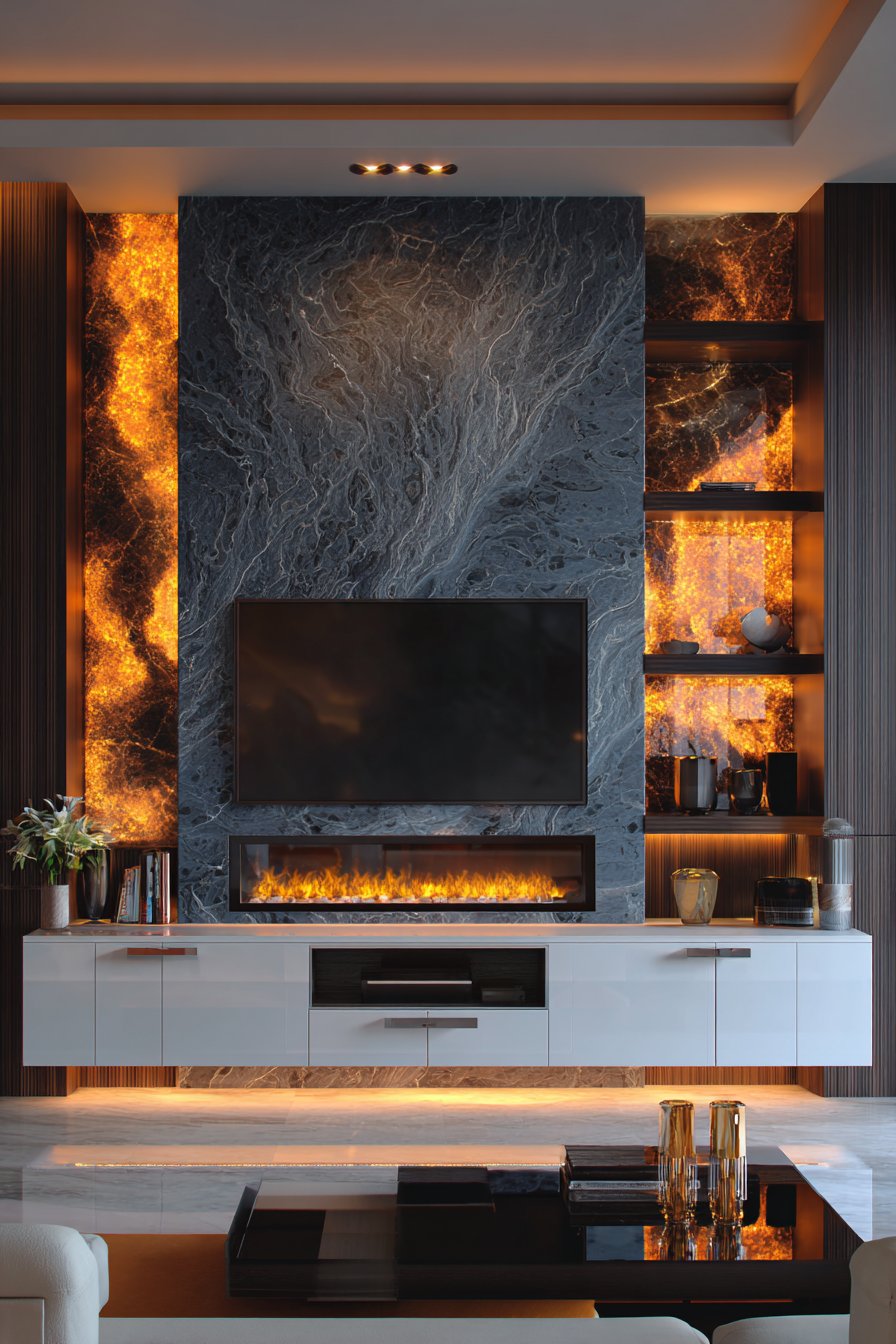
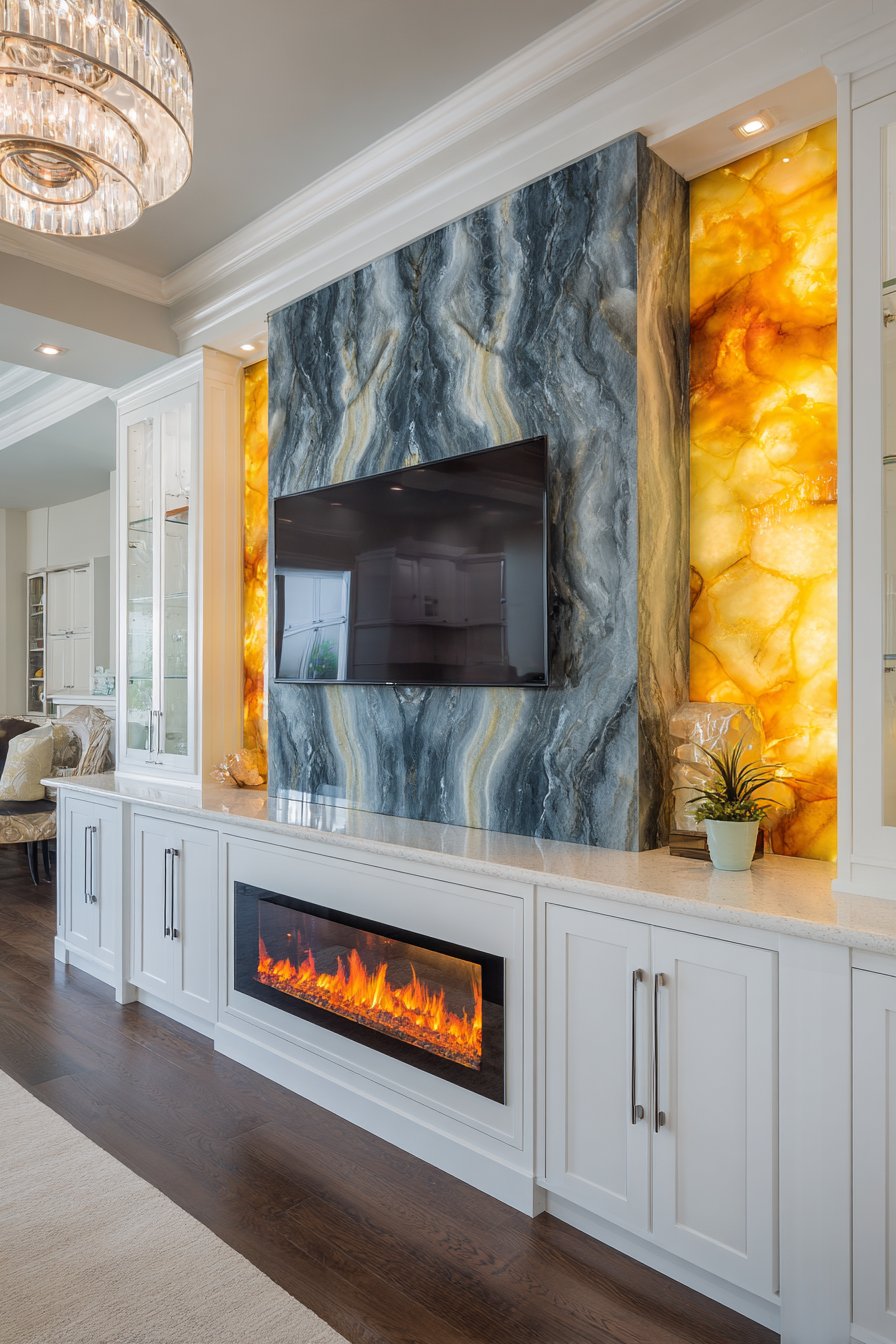
Elevate your space to five-star luxury with this dramatic media wall featuring a full-height marble accent wall in deep grey with striking white veining. The natural stone creates immediate visual impact and architectural presence that commands attention. The large mounted television becomes jewelry set against this luxurious backdrop, its technology enhanced rather than diminished by the opulent materials surrounding it. Custom-designed built-in units incorporate backlit onyx panels flanking the TV, their translucent quality and amber glow creating an ethereal, almost mystical effect.
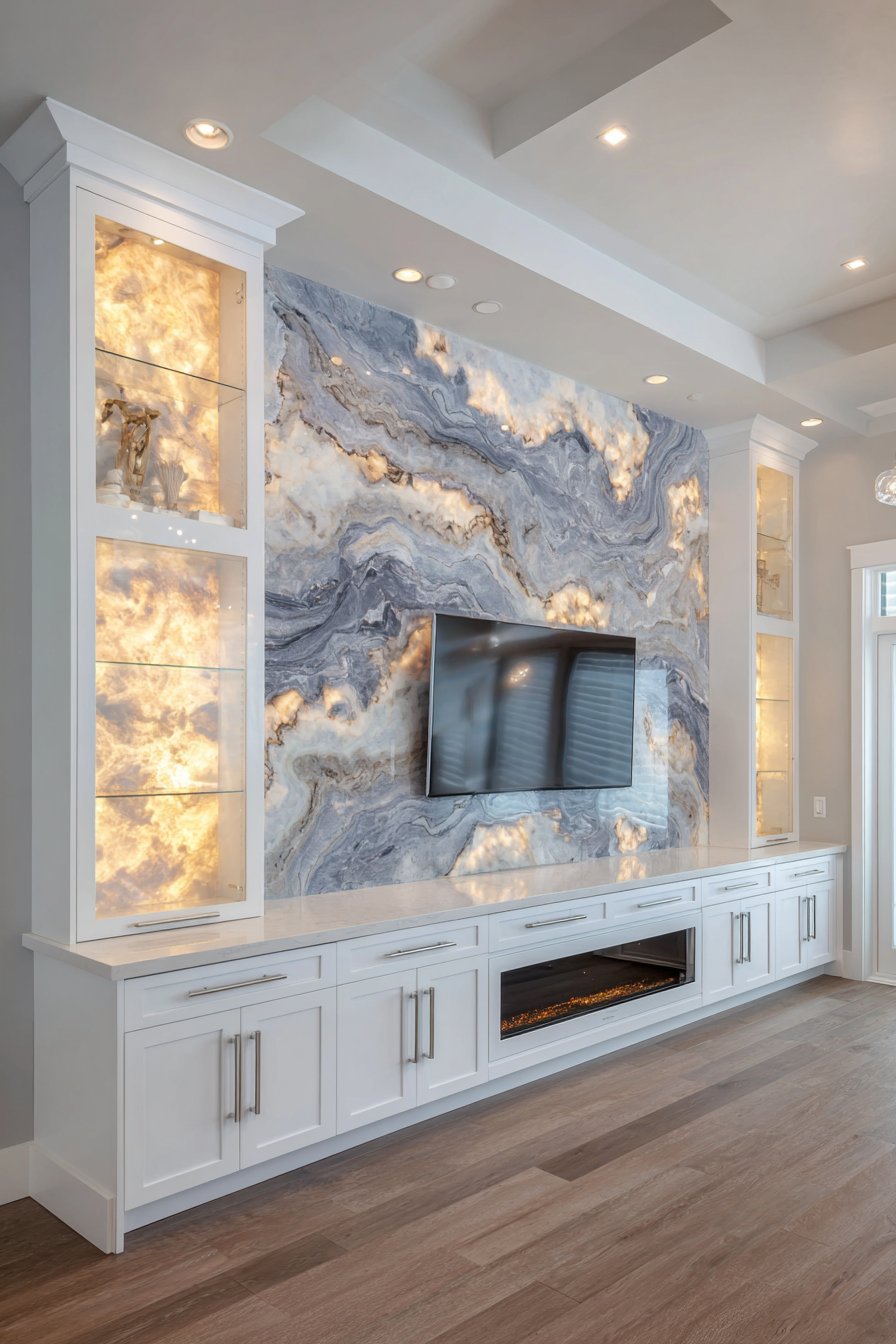
High-gloss white lacquered cabinets below the television provide concealed storage while maintaining the sophisticated aesthetic. The reflective surface of the lacquer creates interesting light play and makes the space feel more expansive. The combination of matte marble, glossy lacquer, and glowing onyx creates a symphony of surface finishes that adds depth and visual complexity. Recessed ceiling lighting with dimmer controls allows you to adjust the ambiance from bright and energizing to soft and intimate, adapting the space to different moods and activities.
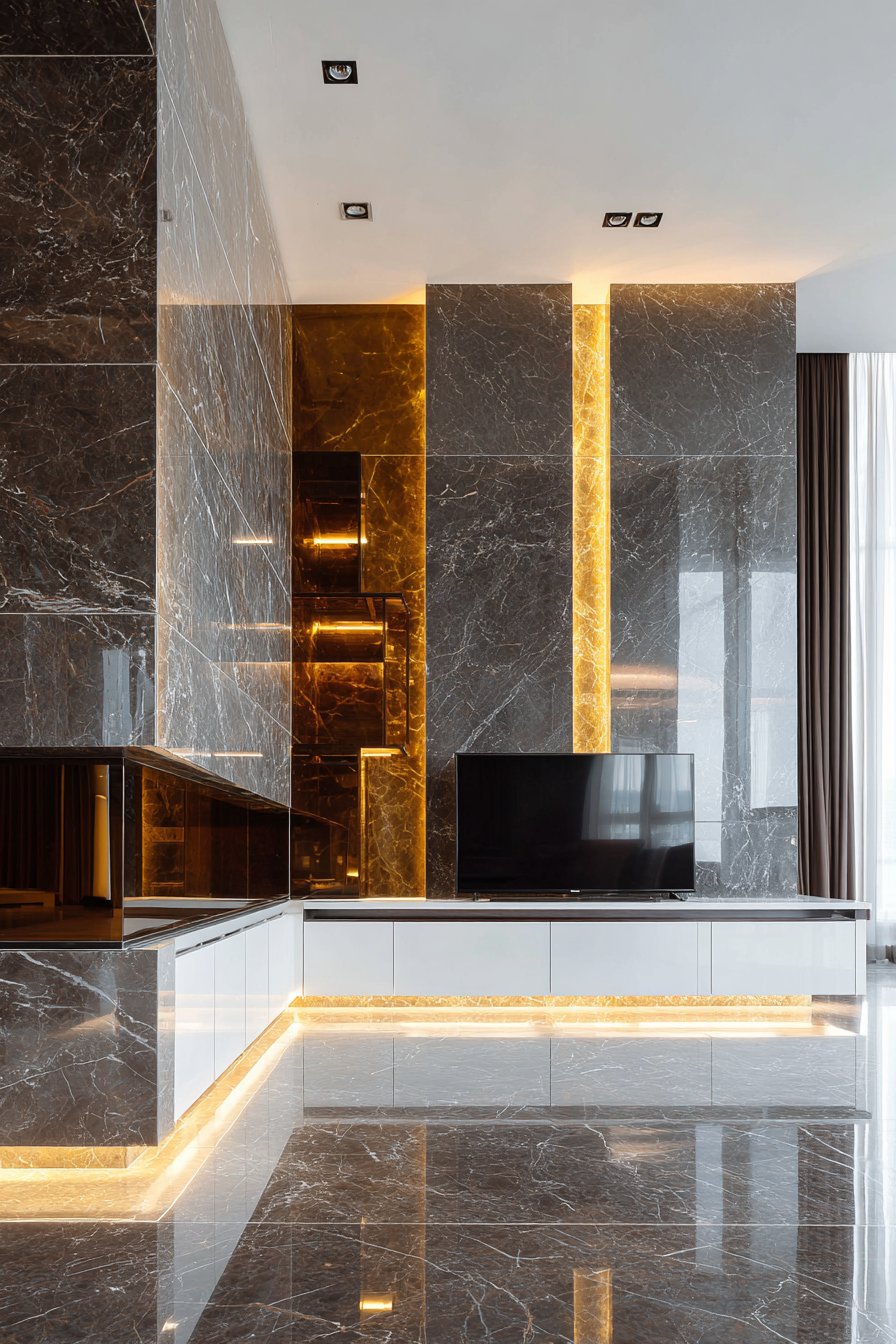
Interior design photography with balanced exposure captures the interplay of luxurious materials and dramatic lighting effects that define this approach. This is media wall design for those who view their home as a personal sanctuary deserving of hotel-level luxury. The installation requires professional execution and premium materials, but the result is a space that elevates everyday activities to experiences.
Key Design Tips:
- Select marble slabs with dramatic veining for maximum impact
- Ensure onyx panels are properly supported and have adequate LED backlighting
- Install dimmers on all lighting circuits for maximum flexibility
- Use professional stone installers for proper sealing and mounting
- Ensure adequate TV ventilation despite surrounding cabinetry
- Coordinate white lacquer with pure white rather than off-white for crispness
- Consider heated marble panels for added luxury in cold climates
11. Whitewashed Coastal Serenity
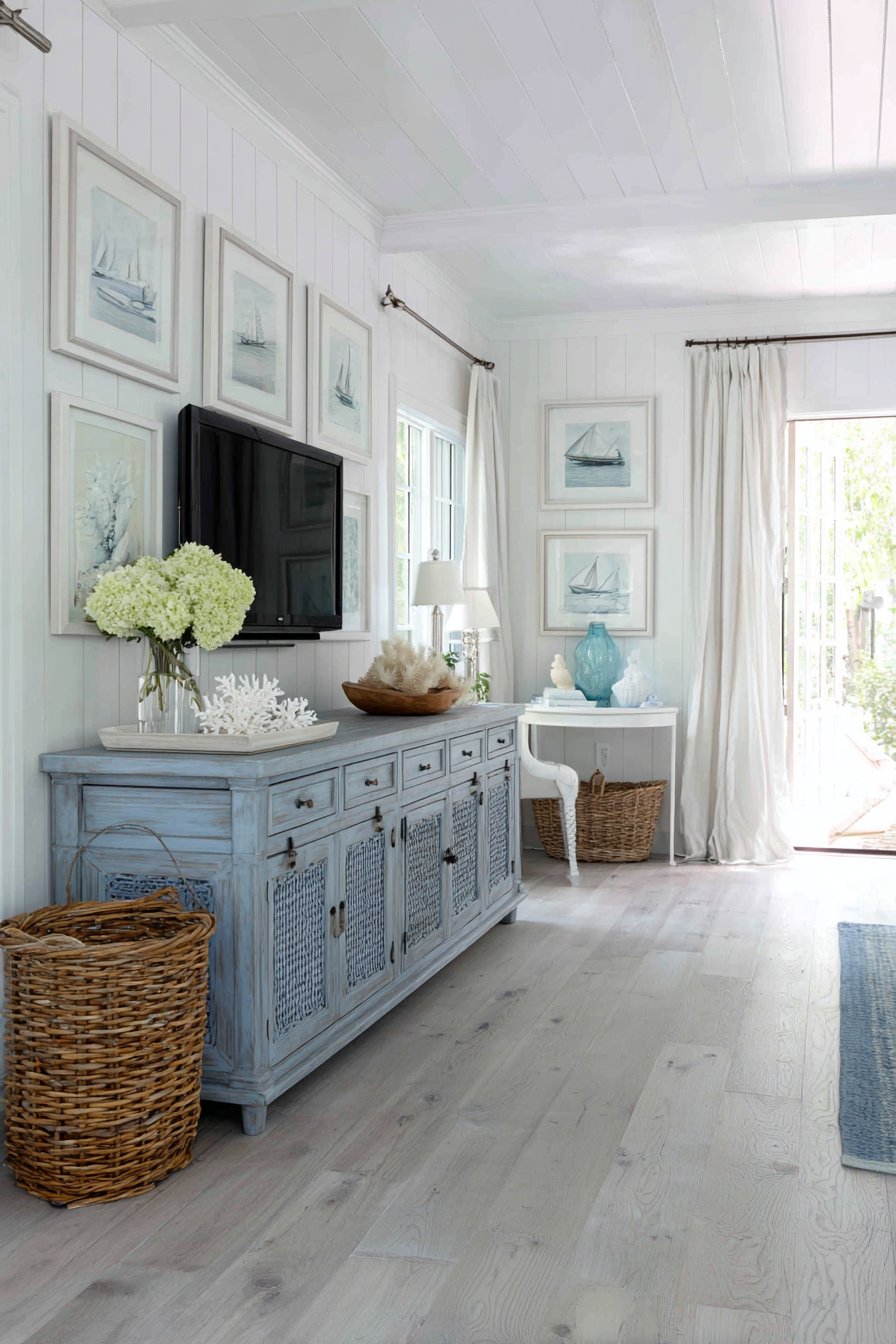
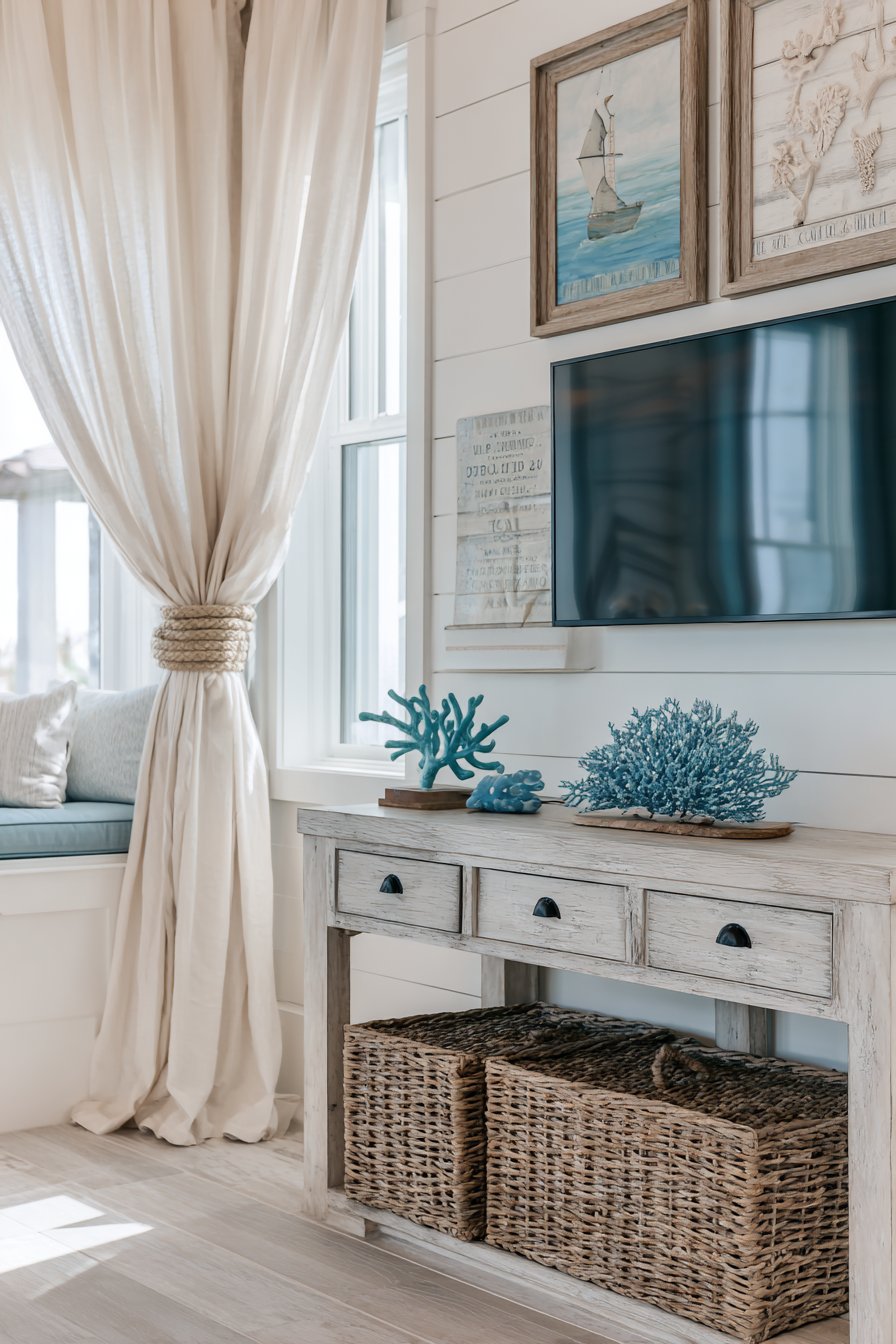
Bring beachside tranquility into your home with this coastal-inspired media wall featuring whitewashed shiplap walls that evoke the weathered beauty of seaside cottages. The driftwood grey media console with its naturally worn appearance and rope-pull drawer handles captures the organic, found-object aesthetic of coastal design. Woven wicker basket inserts provide storage solutions that feel appropriately casual and beachy while maintaining organization.
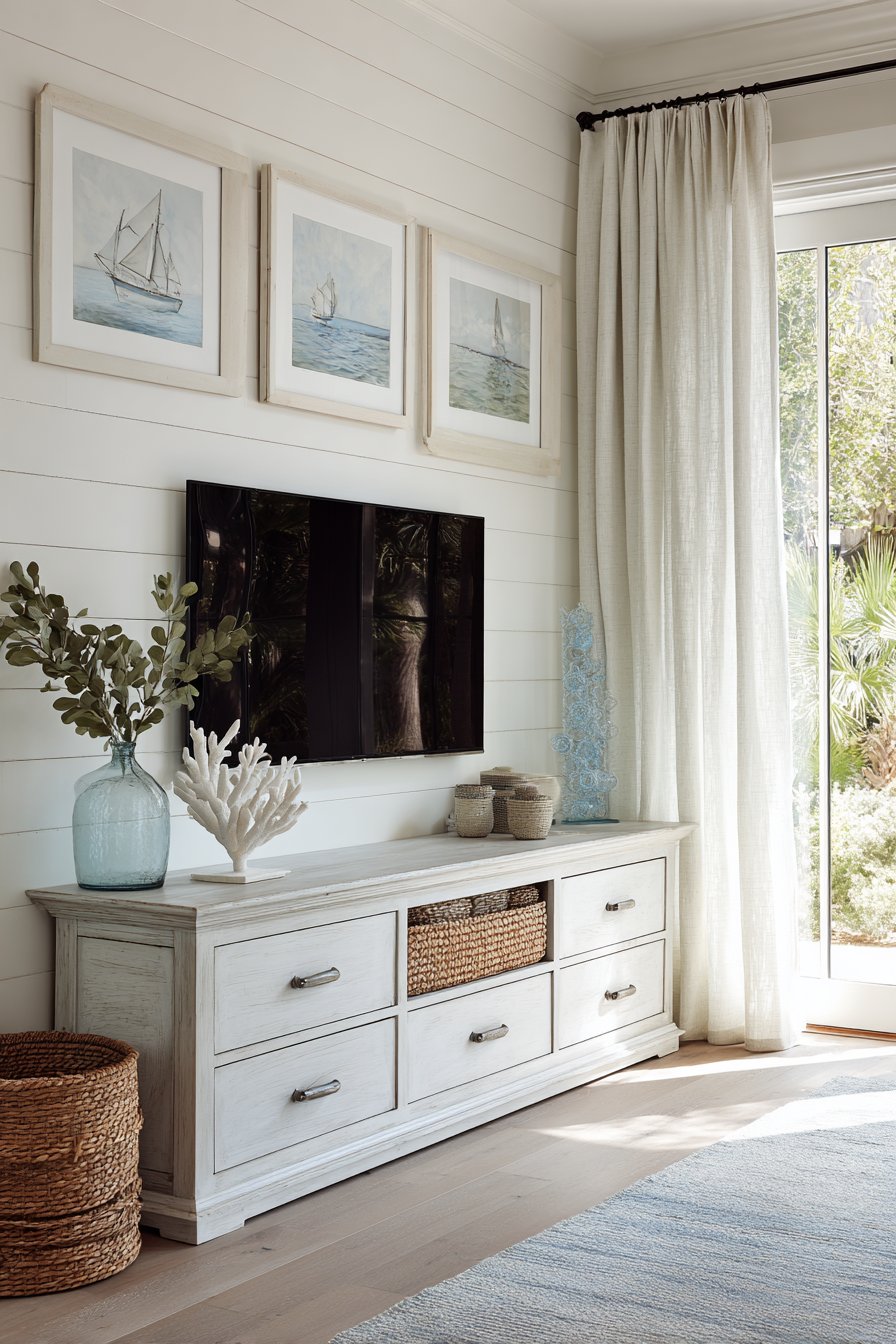
The mounted television sits above the console, flanked by casual nautical-themed artwork that doesn’t veer into cliché—perhaps abstract seascapes in soft blues and greens, or photographs of coastal landscapes printed on natural canvas. Sea glass blue decorative accents and natural coral pieces add authentic coastal character without feeling like a theme park. These are elements you might collect during beach walks, bringing personal meaning and organic beauty to the space.
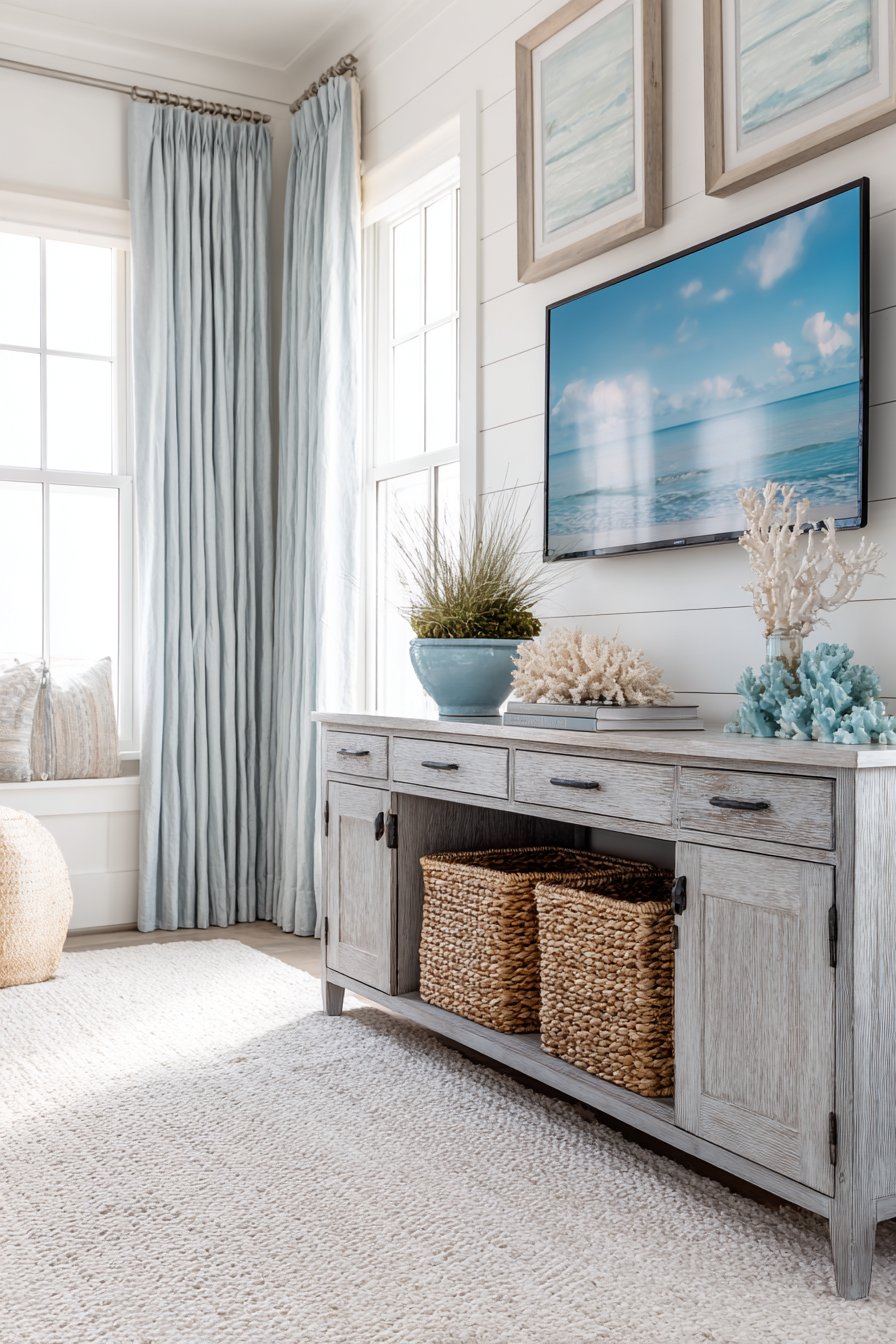
Sheer linen curtains filter bright natural light, creating the airy, sun-washed atmosphere essential to coastal design. The light seems to bounce and glow throughout the space, reinforcing the beach-house feeling even if you’re miles from actual coastline. Wide-angle interior photography emphasizes the light, breezy palette and natural textures that make coastal design feel perpetually vacation-ready.
Key Design Tips:
- Choose weathered wood finishes rather than pristine painted pieces
- Incorporate rope, wicker, and natural fiber materials
- Limit color palette to whites, soft blues, sandy neutrals, and driftwood greys
- Display found objects like shells, driftwood, and sea glass
- Use lightweight, breezy fabrics for window treatments
- Avoid overly themed or cutesy nautical elements
- Maximize natural light with strategic mirror placement
12. High-Contrast Black and White Contemporary
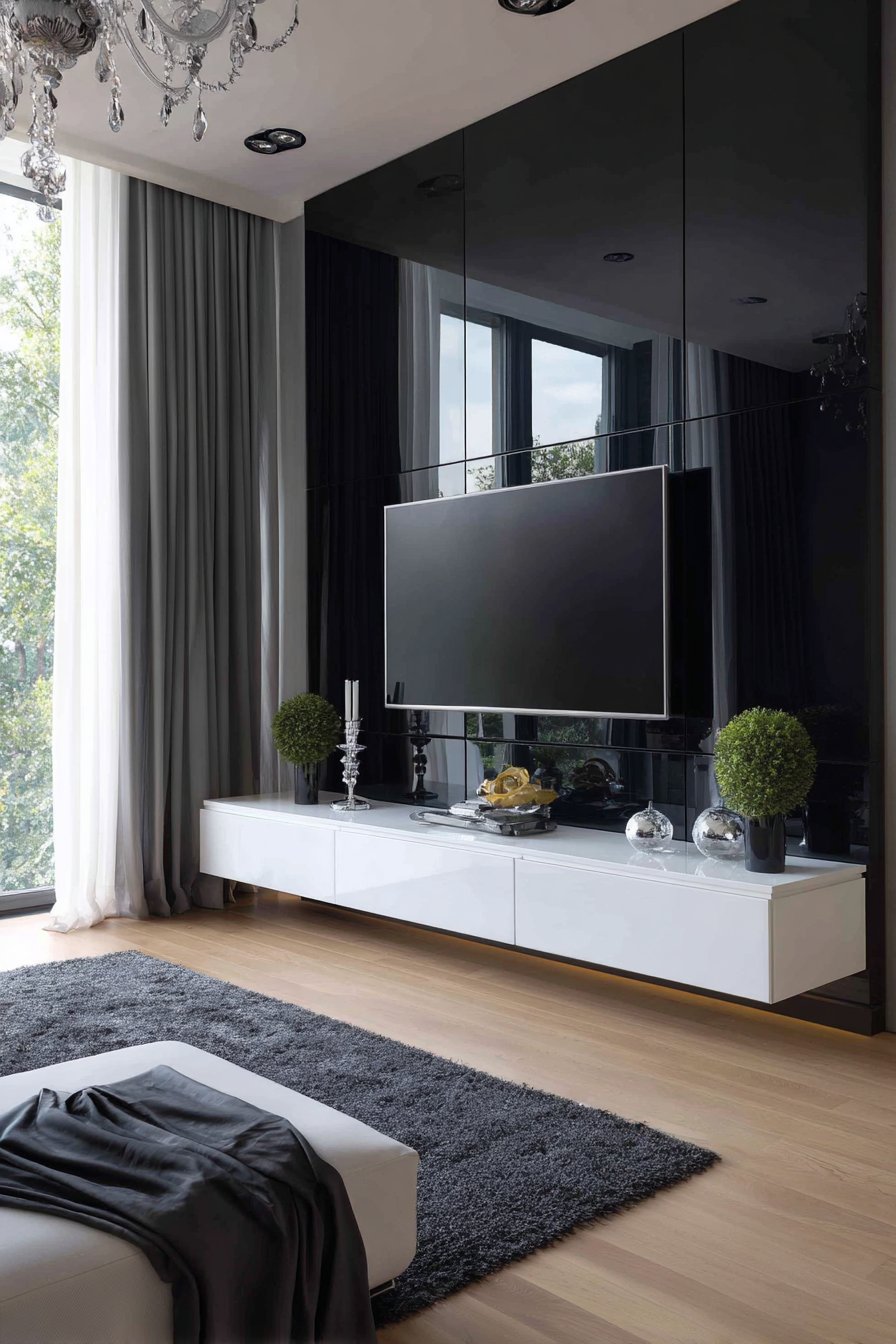
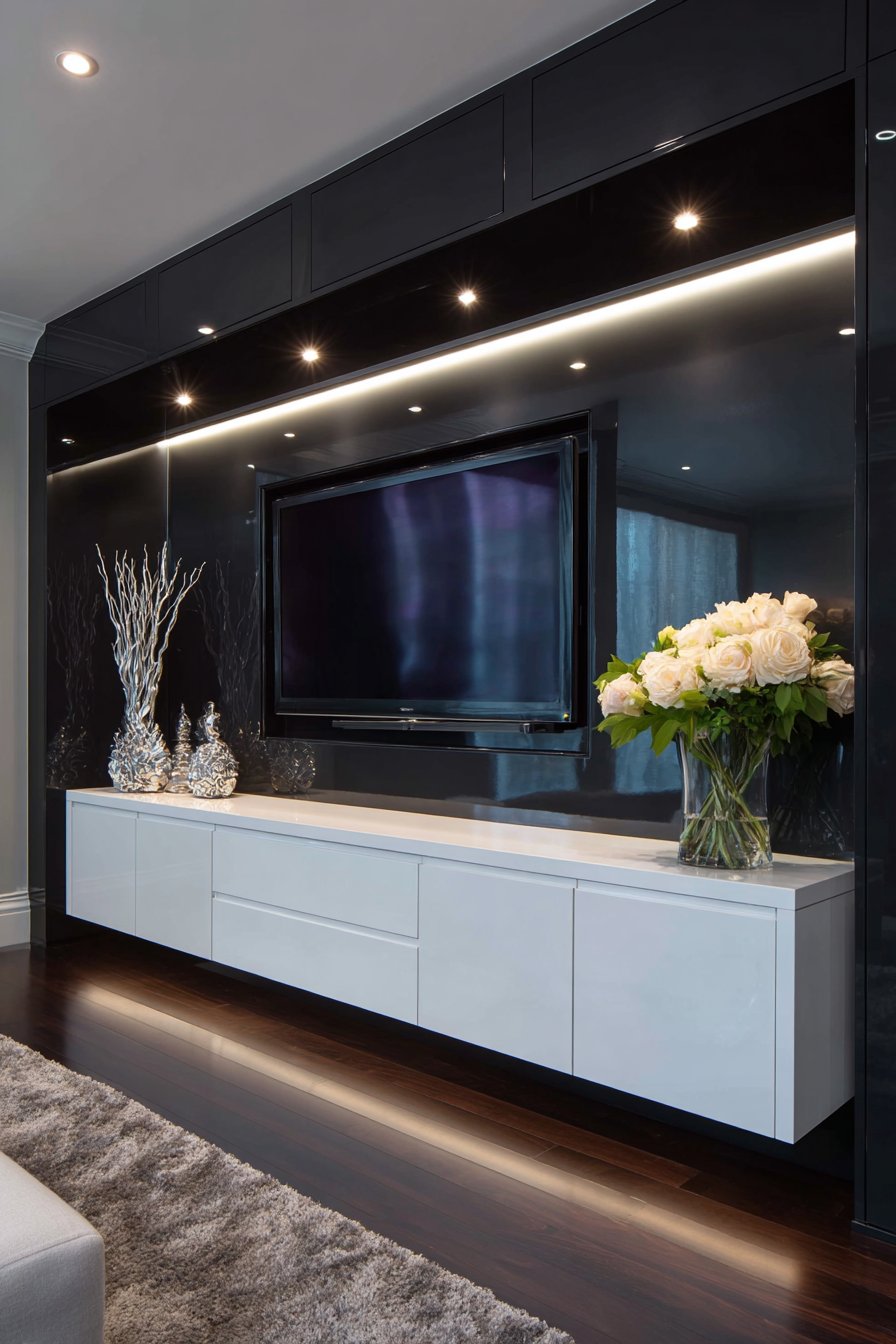
Make a bold statement with this contemporary media wall featuring a sleek black accent wall with high-gloss finish that reflects ambient light like liquid glass. The dark backdrop creates drama and sophistication while making the television screen disappear when turned off—a clever optical trick that many designers appreciate. A floating media unit in contrasting pristine white maintains the modern minimalist aesthetic with touch-latch doors that eliminate visible hardware.
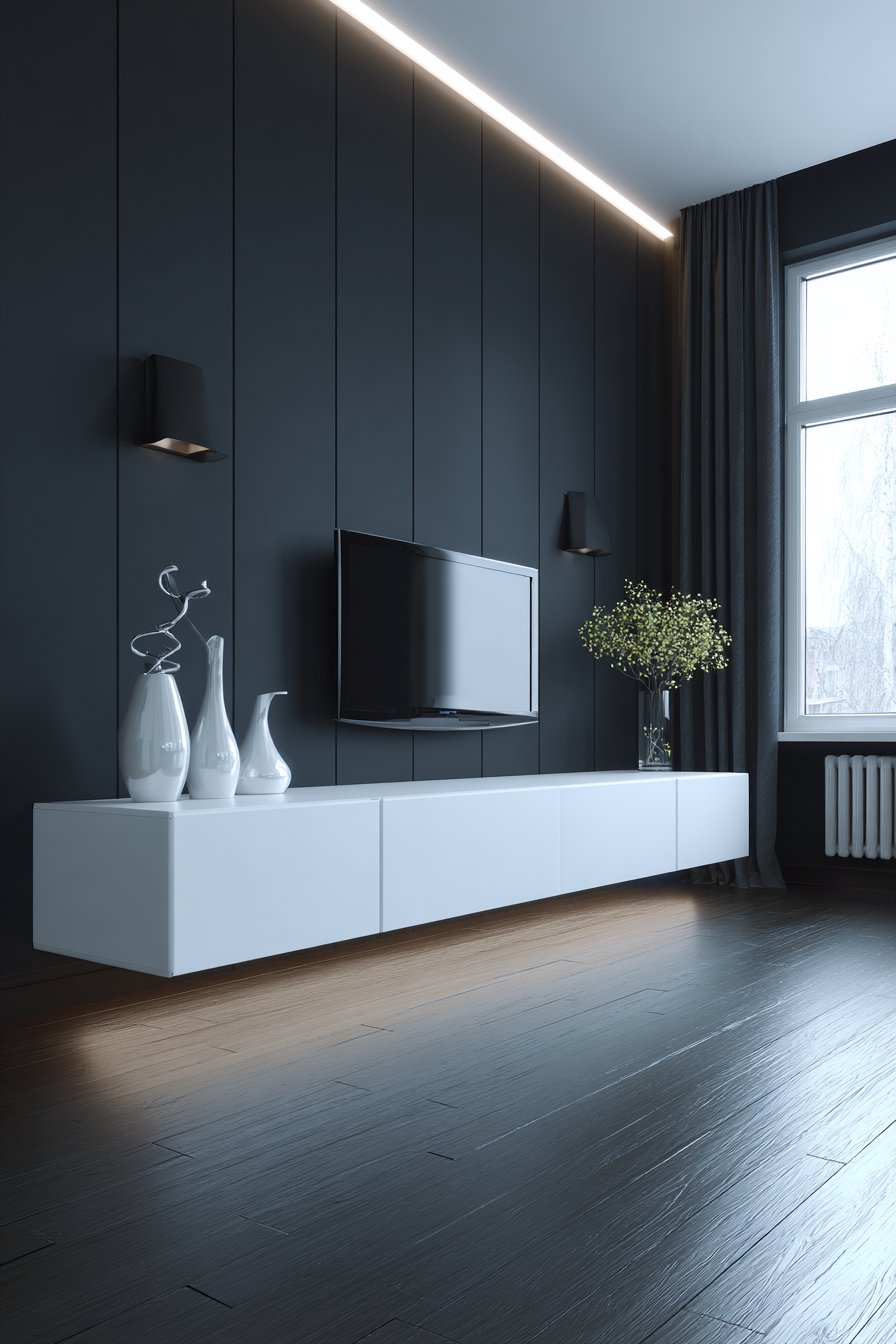
Integrated LED strips along the top and bottom edges of the console create a dramatic floating effect, as if the white cabinetry is levitating against the dark wall. This subtle lighting adds depth dimension and serves as practical ambient lighting for evening viewing. The mounted television appears to hover within the dark backdrop, creating a seamless integration of technology and architecture. Chrome and glass decorative accents complete the sophisticated look, their reflective surfaces catching and playing with light.
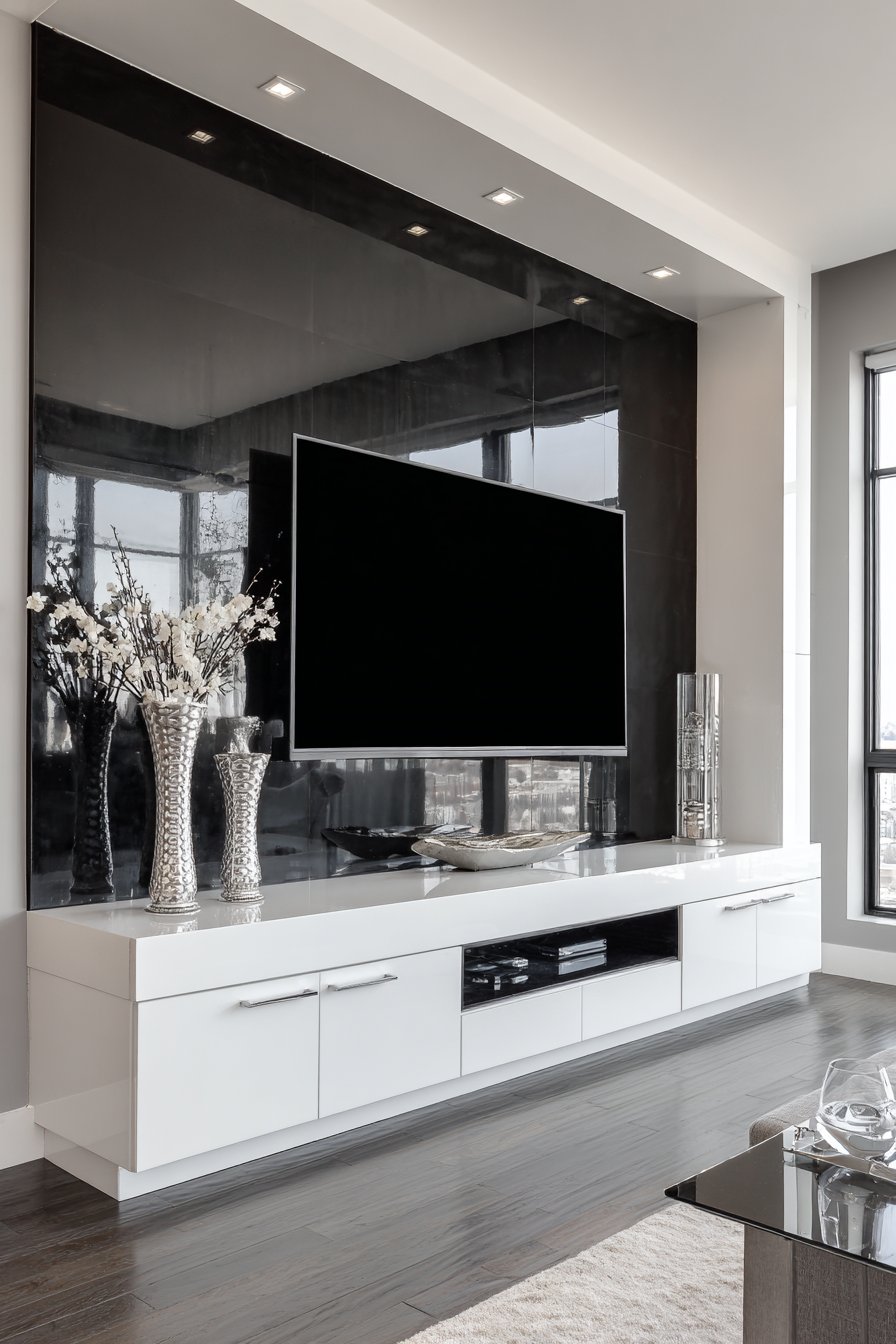
Professional interior photography requires careful exposure balancing to capture both the deep black and pure white surfaces without losing detail in either. The high contrast creates graphic impact and modern edge that appeals to those who appreciate bold design moves. This is not a subtle or safe choice—it’s a confident design statement that transforms the media wall into room-defining architecture.
Key Design Tips:
- Use high-gloss paint or lacquer panels for maximum reflectivity
- Clean glossy black surfaces regularly to maintain impact
- Install LED strips with adjustable color temperature
- Ensure adequate ventilation behind floating white unit
- Use anti-glare screen protector if black wall creates reflections
- Limit colorful accessories to maintain high-contrast purity
- Consider motorized blinds to control natural light and reflections
13. Layered Bohemian Texture and Plants
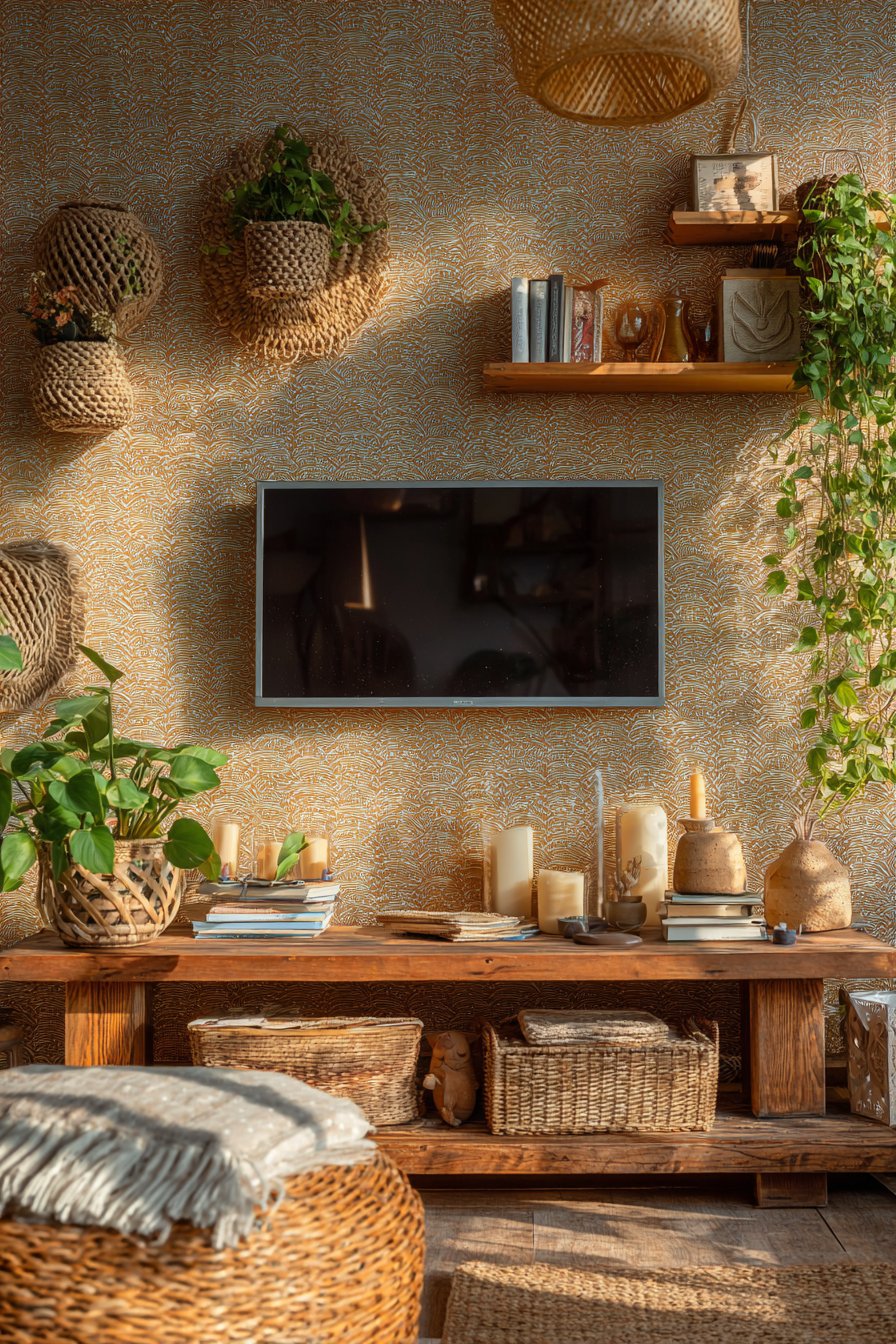
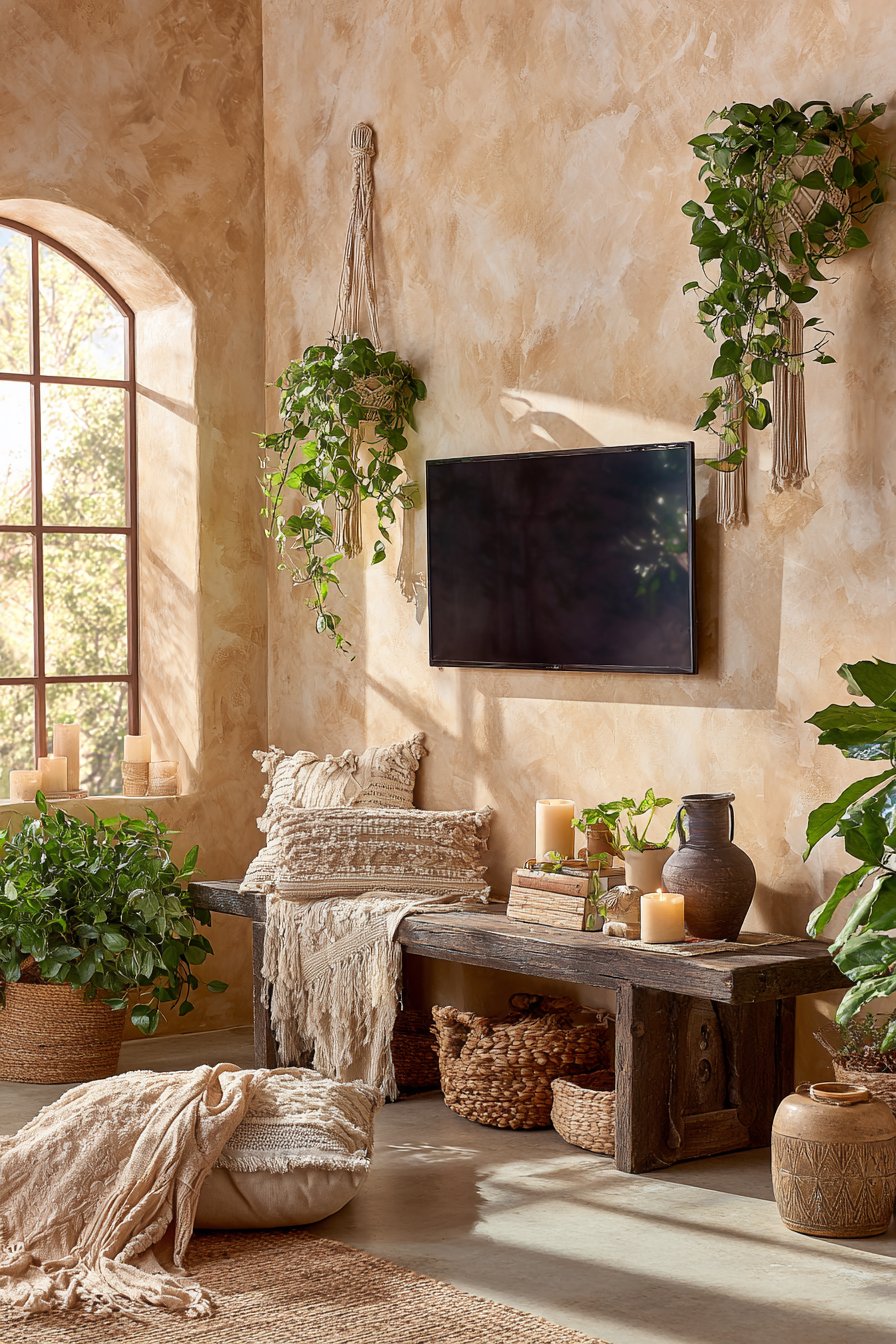
Embrace eclectic, globally-inspired design with this bohemian media wall where the television mounts on textured natural fiber wallpaper in warm beige tones. The grasscloth or jute wallpaper adds organic texture and depth while providing a neutral backdrop that prevents the space from feeling chaotic despite the layered accessories. Macramé wall hangings flank the TV, their intricate knotwork and dangling fringe adding handcrafted artisan quality that defines bohemian style.
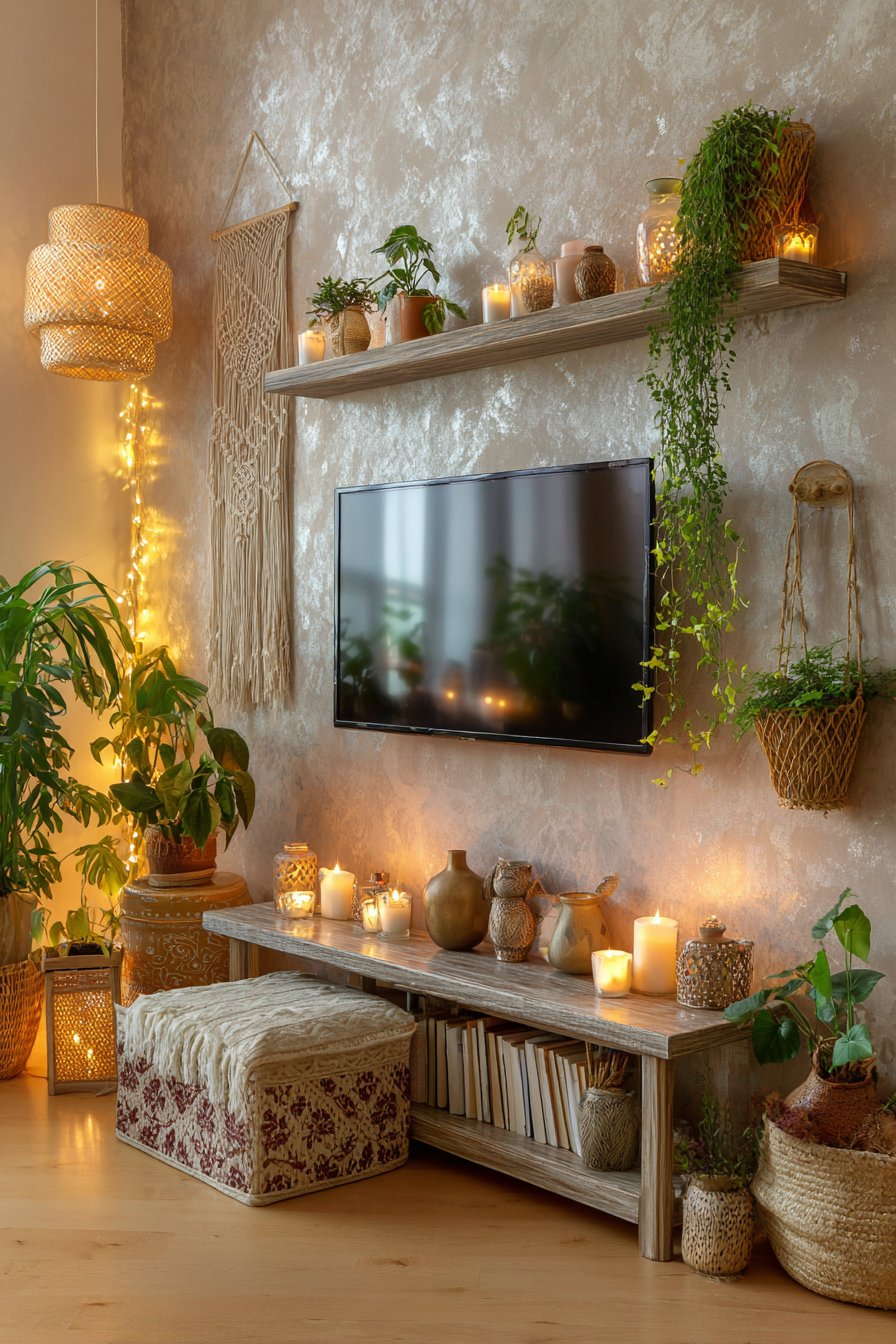
Woven baskets mounted as wall planters hold trailing pothos and spider plants, bringing life and movement to the composition. The plants soften the technology, create better air quality, and add the natural elements essential to bohemian design philosophy. A low vintage wooden bench serves as the media console, its weathered finish and simple lines displaying an eclectic mix of ceramics, stacks of art books, and candles in various heights and textures.
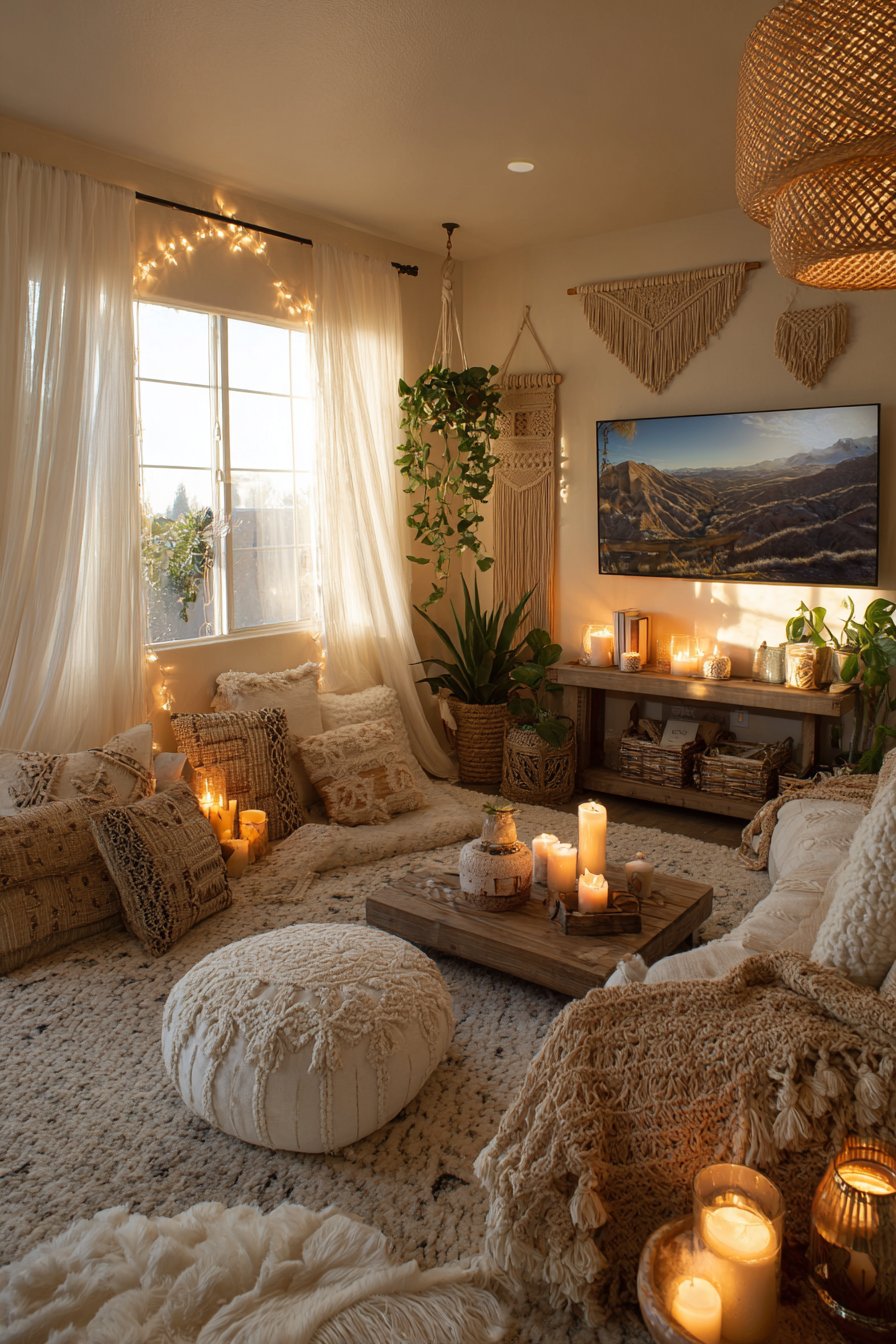
Layered textiles and warm ambient lighting from string lights create a cozy, collected atmosphere that invites relaxation. This is design that looks curated over time rather than purchased in a single shopping trip—each piece has a story and contributes to the overall narrative of wanderlust and creativity. Interior design photography captures the relaxed, globally-inspired aesthetic while natural lighting emphasizes the rich textures that make bohemian design so tactilely appealing.
Key Design Tips:
- Layer textures through wallpaper, textiles, woven elements, and plants
- Mix patterns freely but maintain cohesive warm color palette
- Include handcrafted and vintage elements for authenticity
- Hang plants at varying heights for visual interest
- Use warm-toned lighting (2200K-2700K) for cozy ambiance
- Don’t match—embrace eclectic mixing of styles and origins
- Display meaningful objects and travel souvenirs
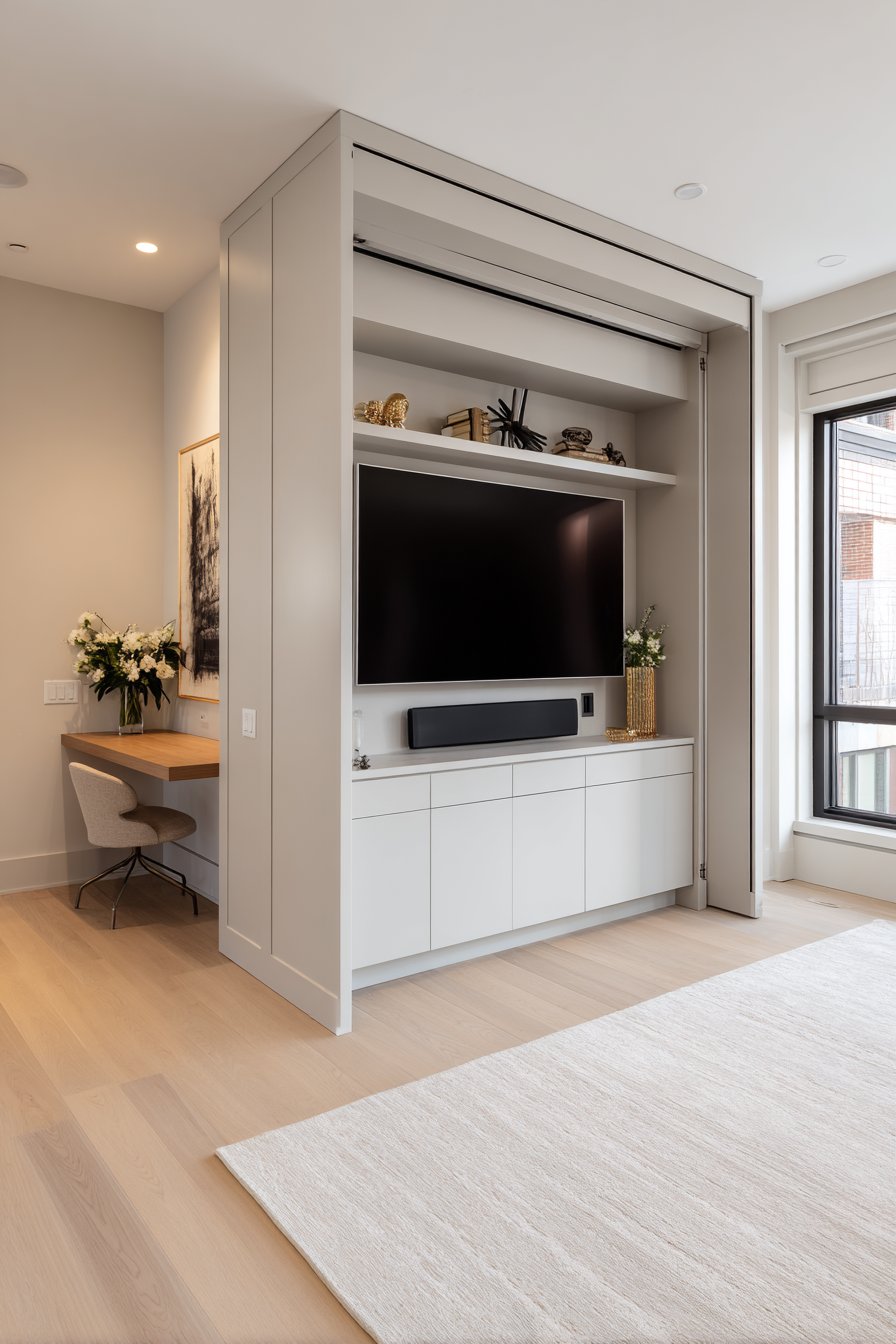
14. Smart Hidden Motorized Panels
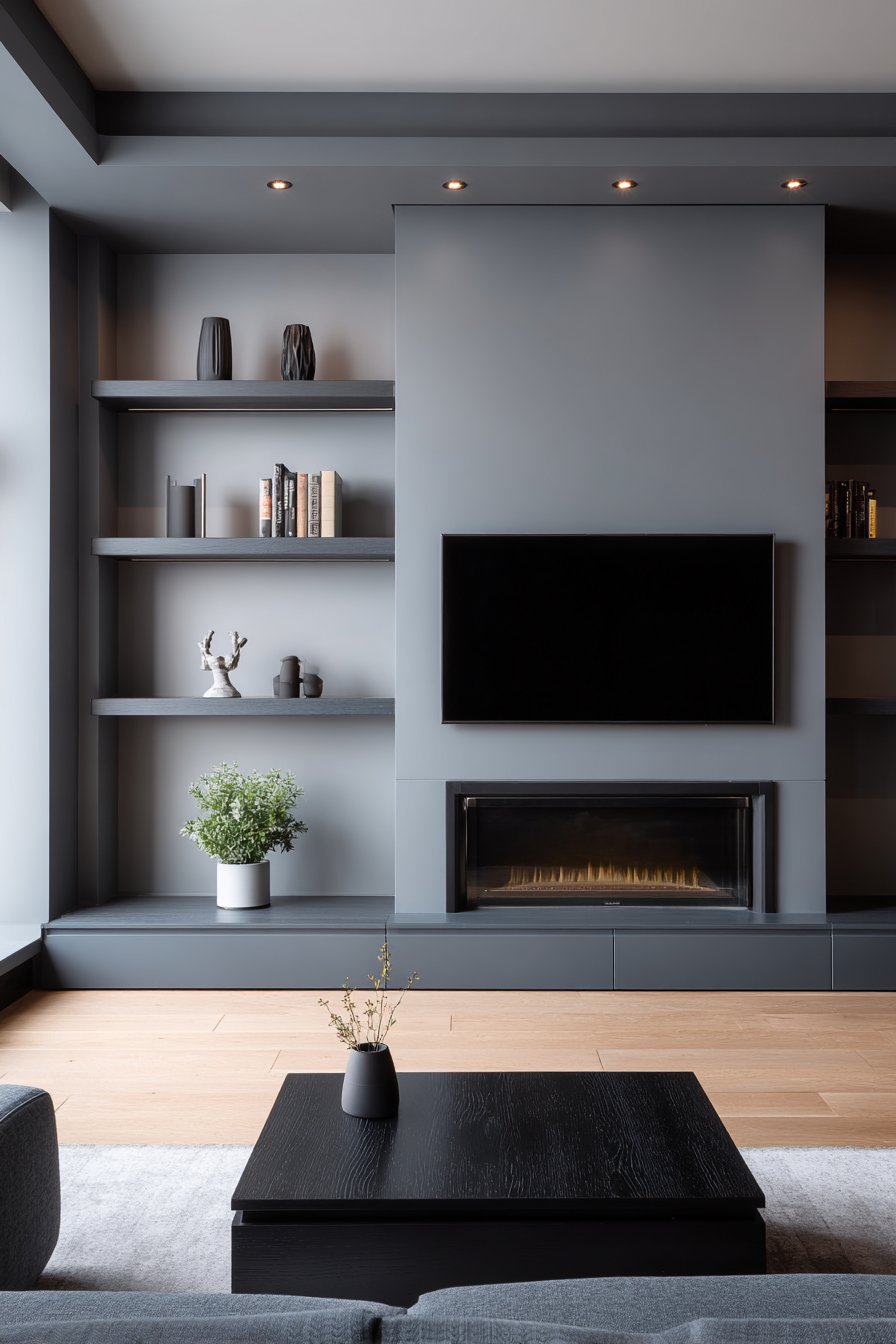
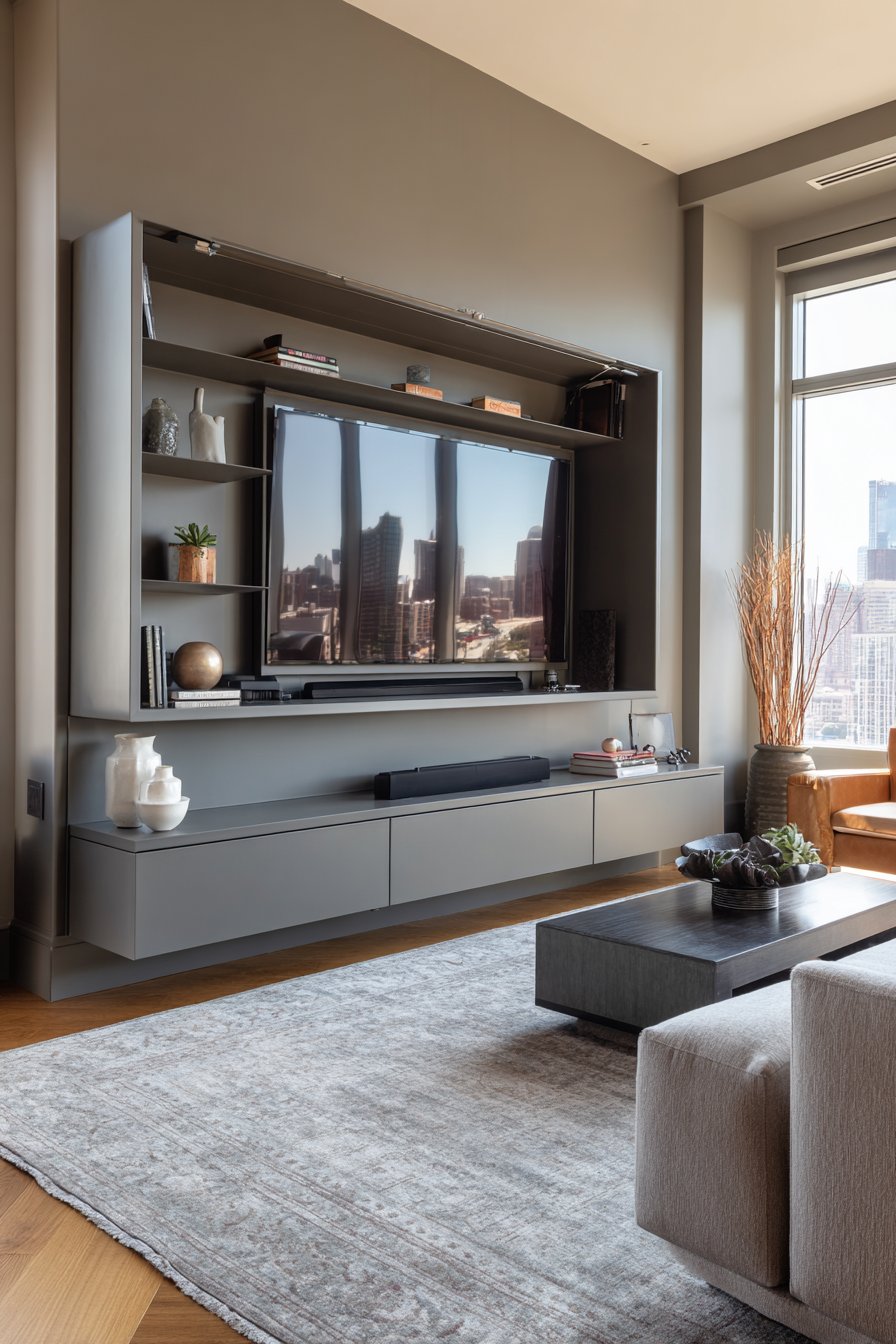
Welcome to the future with this innovative media wall incorporating hidden motorized panels that slide open to reveal the television and media equipment only when needed. The panels match the surrounding wall finish in smooth matte grey, creating a seamless, uninterrupted surface when closed that prioritizes architecture over technology. This approach appeals to those who want entertainment technology available but not visually dominant in their daily lives.
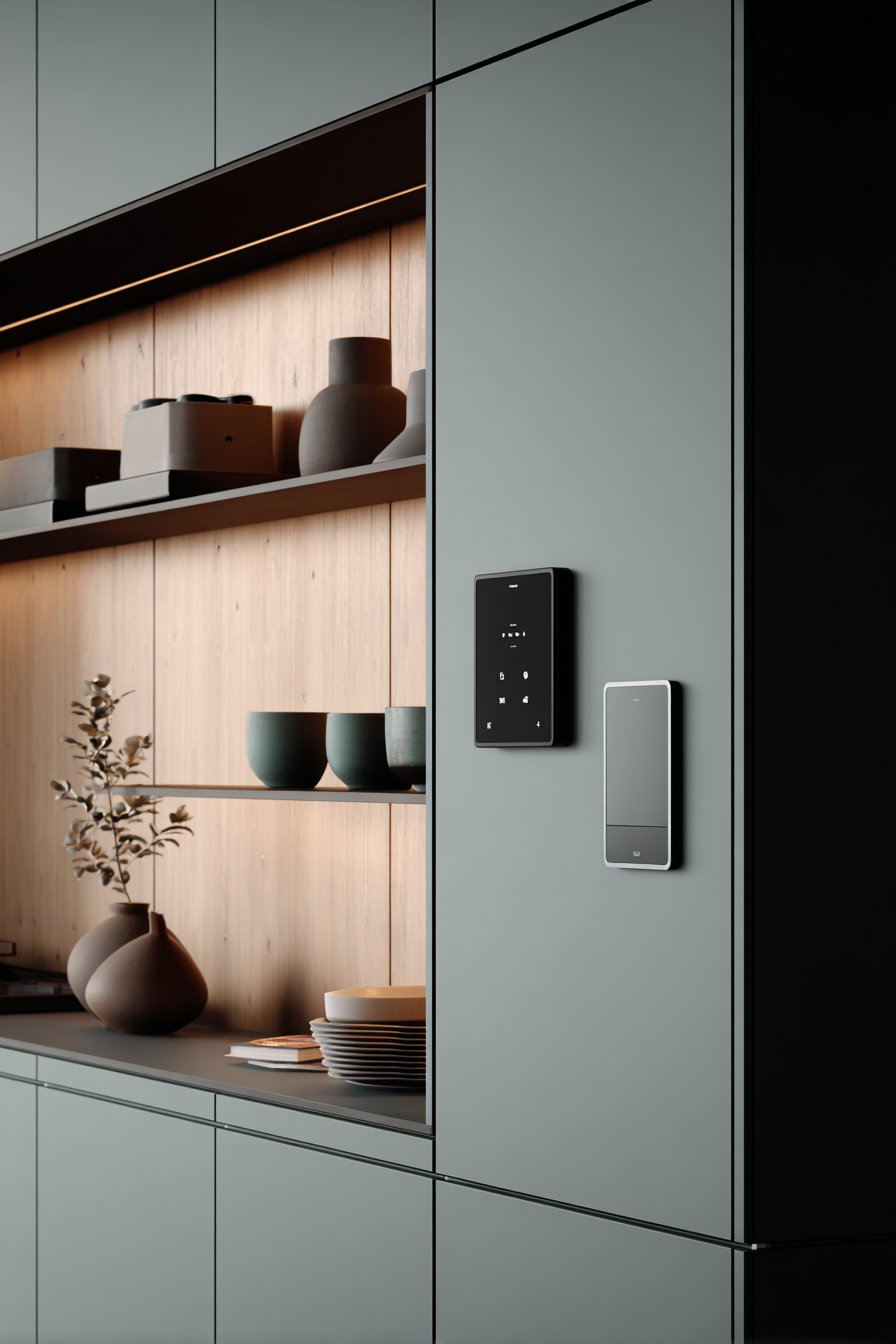
Integrated touch-screen control panels and voice-activated lighting systems demonstrate sophisticated technology integration without visible wires or controls cluttering the clean aesthetic. Minimalist floating shelves with invisible mounting hardware provide limited display space for a few carefully selected decorative objects—perhaps a single sculptural piece, a small plant, or one beautiful book. The restraint in styling allows the innovative concealment system to be the star.
Professional interior photography showcases the transformative nature of the installation, capturing both the closed state where technology disappears completely and the open state where the entertainment center emerges. The motorized panels operate whisper-quietly with programmable settings that can automatically reveal the TV at scheduled times or with simple voice commands. This represents the pinnacle of smart home integration where technology serves human needs without visual intrusion.
Key Design Tips:
- Hire professional installers experienced with motorized systems
- Ensure adequate power supply and backup battery systems
- Program multiple preset positions for different panel configurations
- Include manual override for system failures
- Soundproof panel mechanisms to maintain quiet operation
- Use high-quality motors rated for thousands of cycles
- Plan for regular maintenance and system updates
15. Rich Traditional Cherry Wood Built-Ins
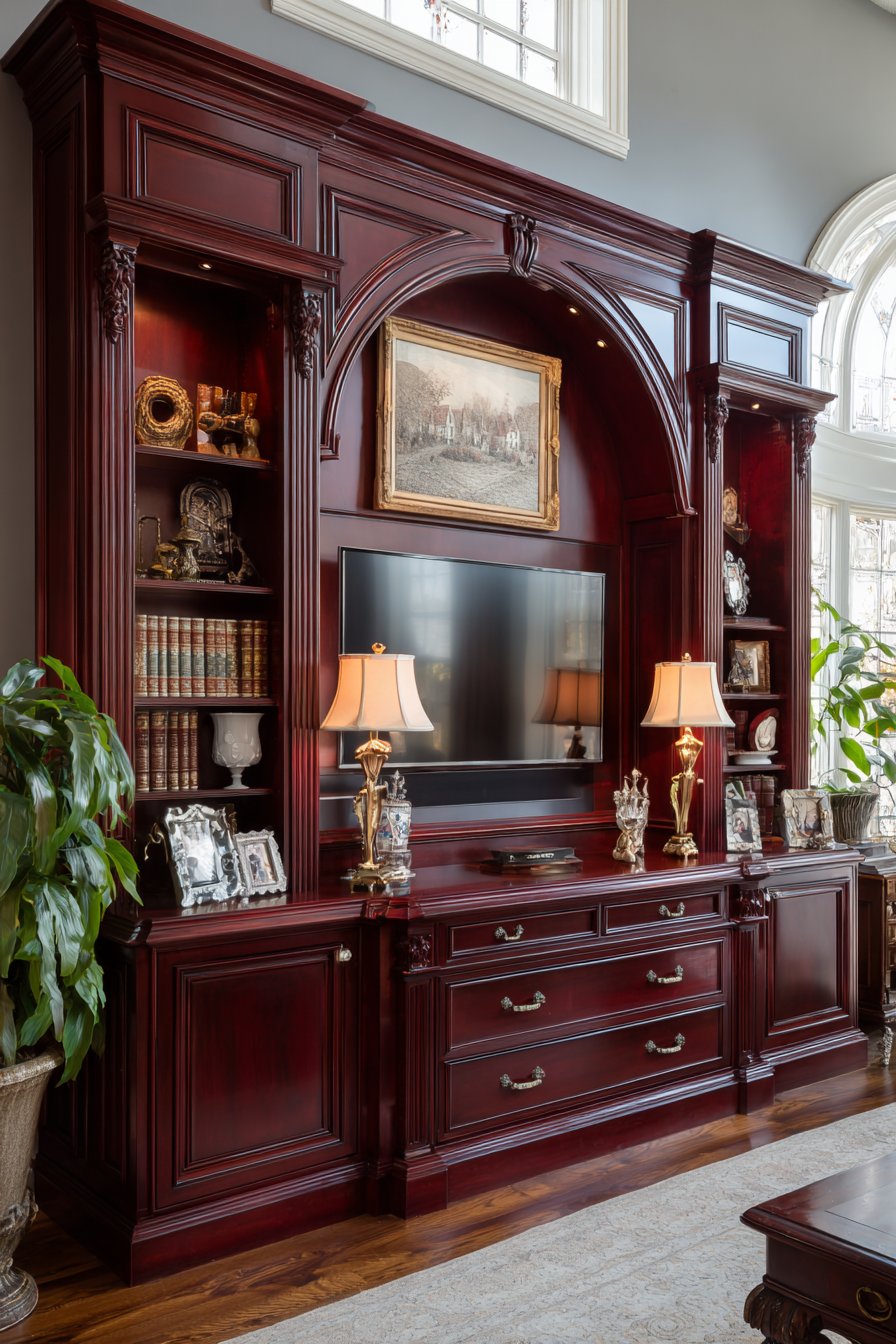
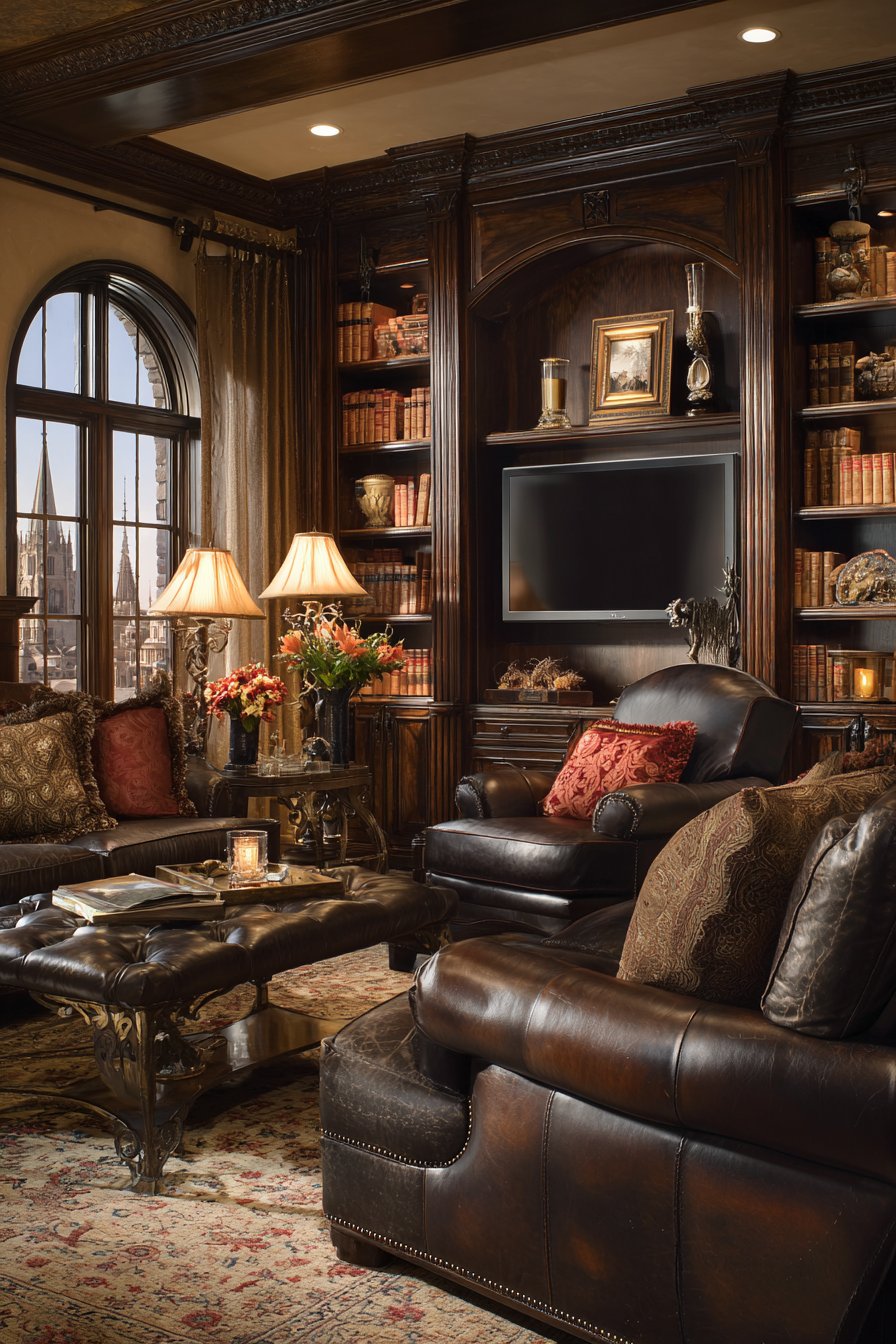
Timeless elegance defines this traditional media wall featuring rich dark cherry wood built-in cabinetry with raised panel doors and decorative crown molding. The television sits within a centered arched niche that frames it like fine art, while adjustable shelving on either side displays leather-bound books, family photographs in polished silver frames, and classic decorative accessories like brass candlesticks or porcelain figurines. Antique brass hardware adds authentic period detail and jewelry-like accents to cabinet faces.
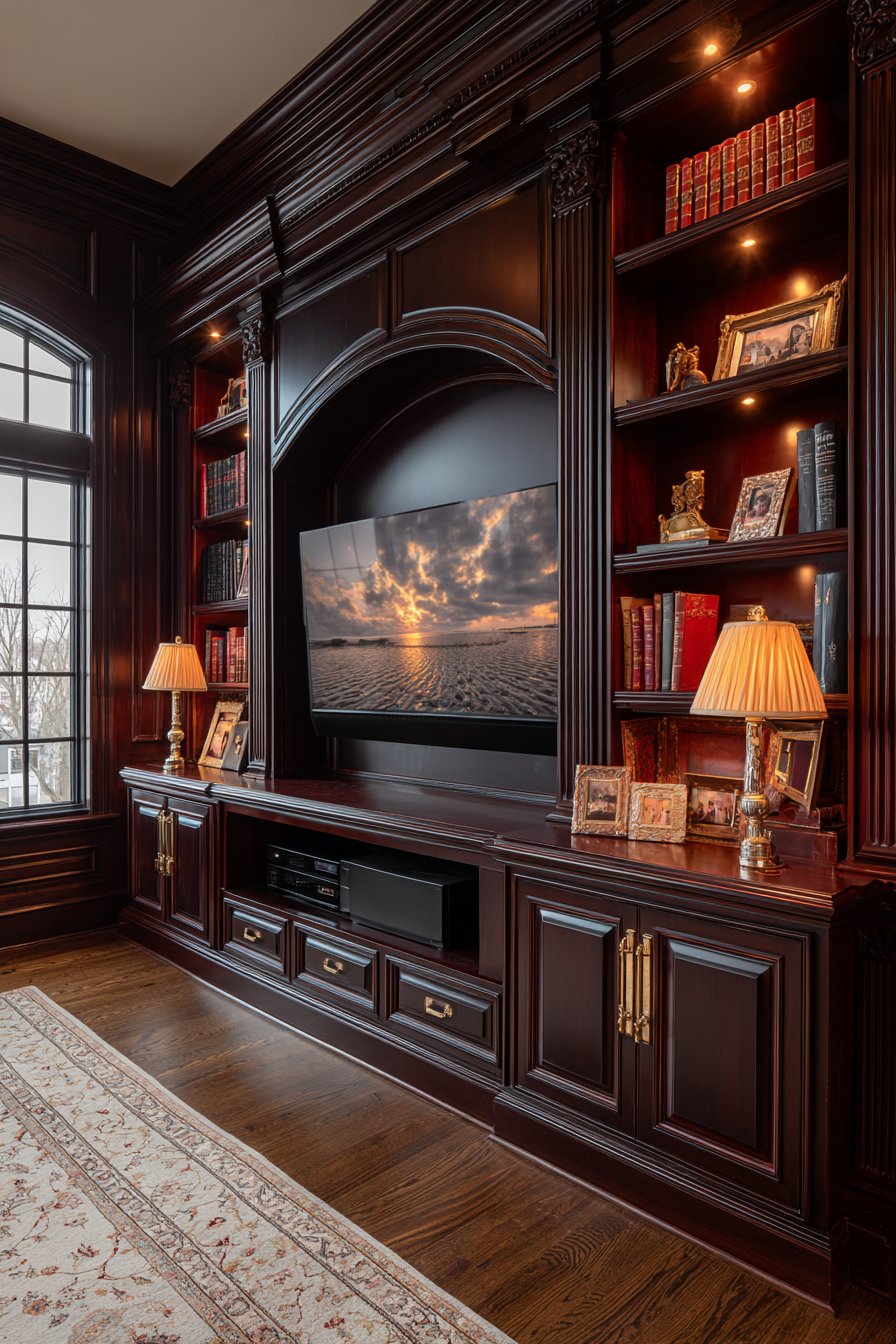
The craftsmanship evident in the custom millwork elevates this media wall beyond mere storage to become genuine furniture—pieces that will increase in value and beauty as the cherry wood develops its characteristic warm patina over decades. Warm table lamps with cream silk shades provide soft accent lighting that supplements the natural daylight, creating a layered lighting scheme appropriate for a traditional interior. The formality and symmetry create a sense of order and permanence.
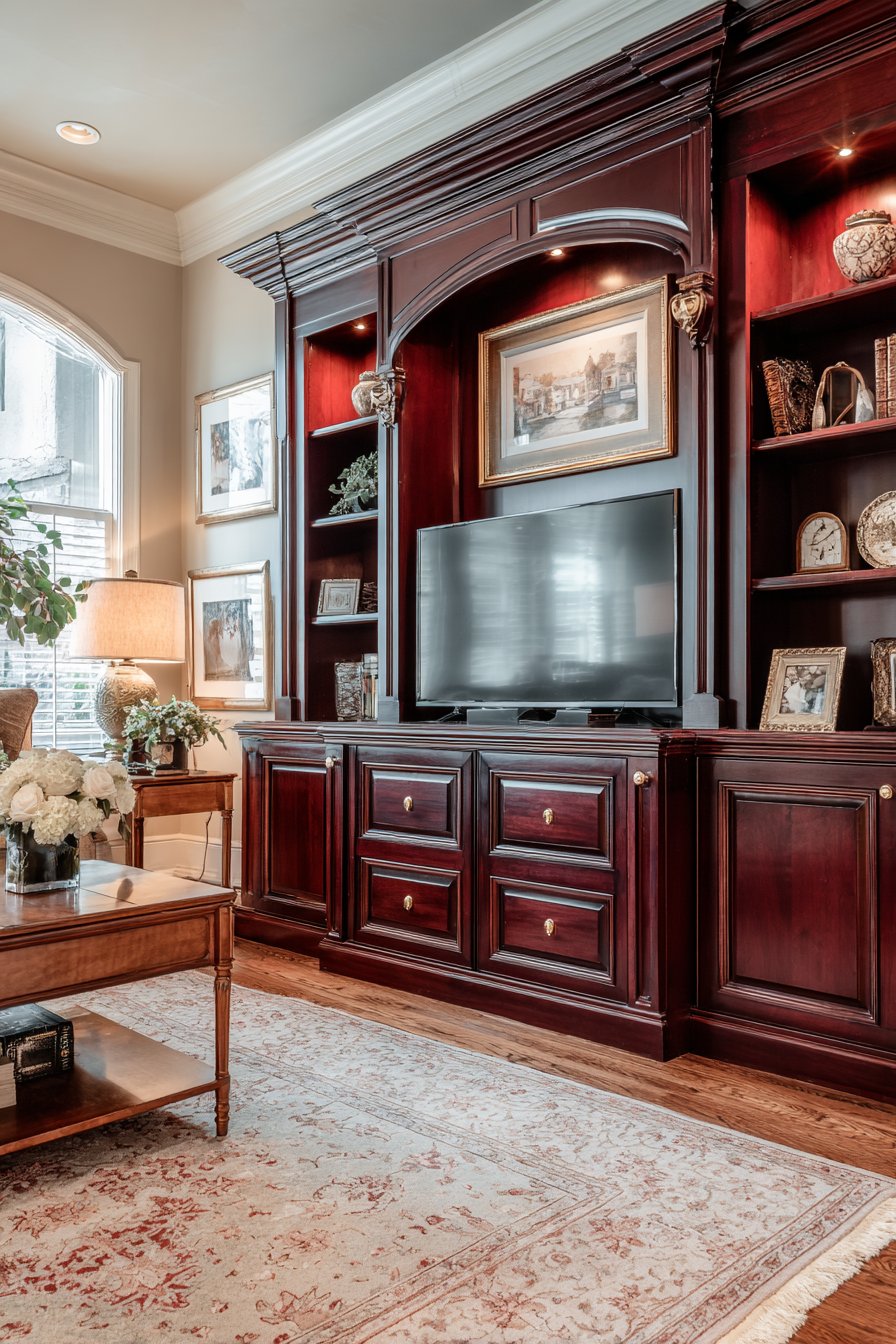
Interior design photography with natural window light supplemented by warm artificial lighting captures the timeless elegance and expert craftsmanship of traditional cabinetry. This approach appeals to those who view furniture as investment pieces and prefer classic design that transcends trends. The rich wood tones and formal arrangement create gravitas and sophistication suitable for formal living rooms or refined family rooms.
Key Design Tips:
- Select cherry or mahogany for authentic traditional appearance
- Ensure proper proportion between cabinet heights and ceiling
- Include adjustable shelving for flexibility
- Use brass hardware rather than nickel for traditional authenticity
- Display books spine-out in varying heights for visual interest
- Incorporate interior cabinet lighting
- Allow TV niche adequate depth for equipment ventilation
- Polish wood regularly to develop rich patina
16. Double-Sided Room Divider Innovation
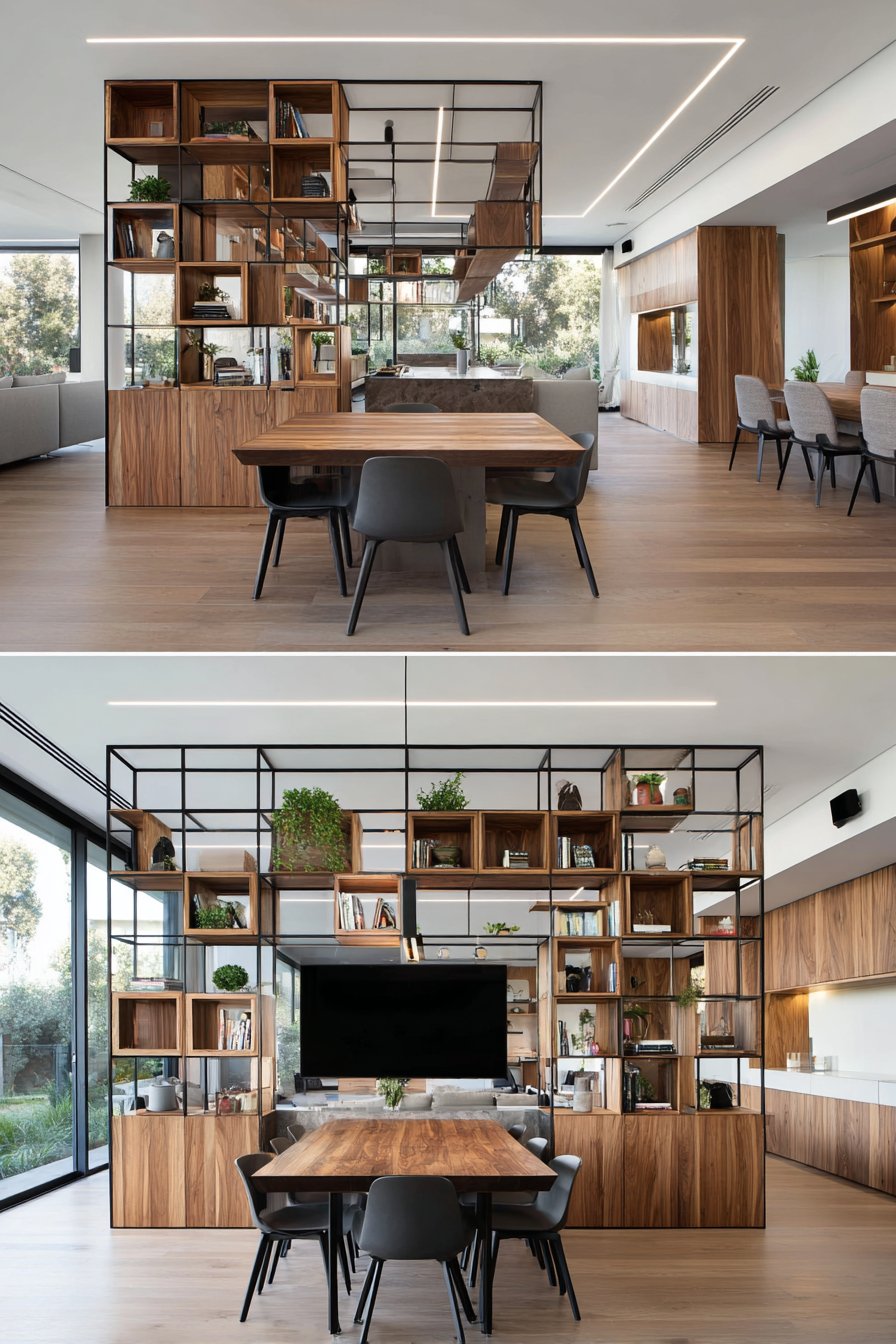
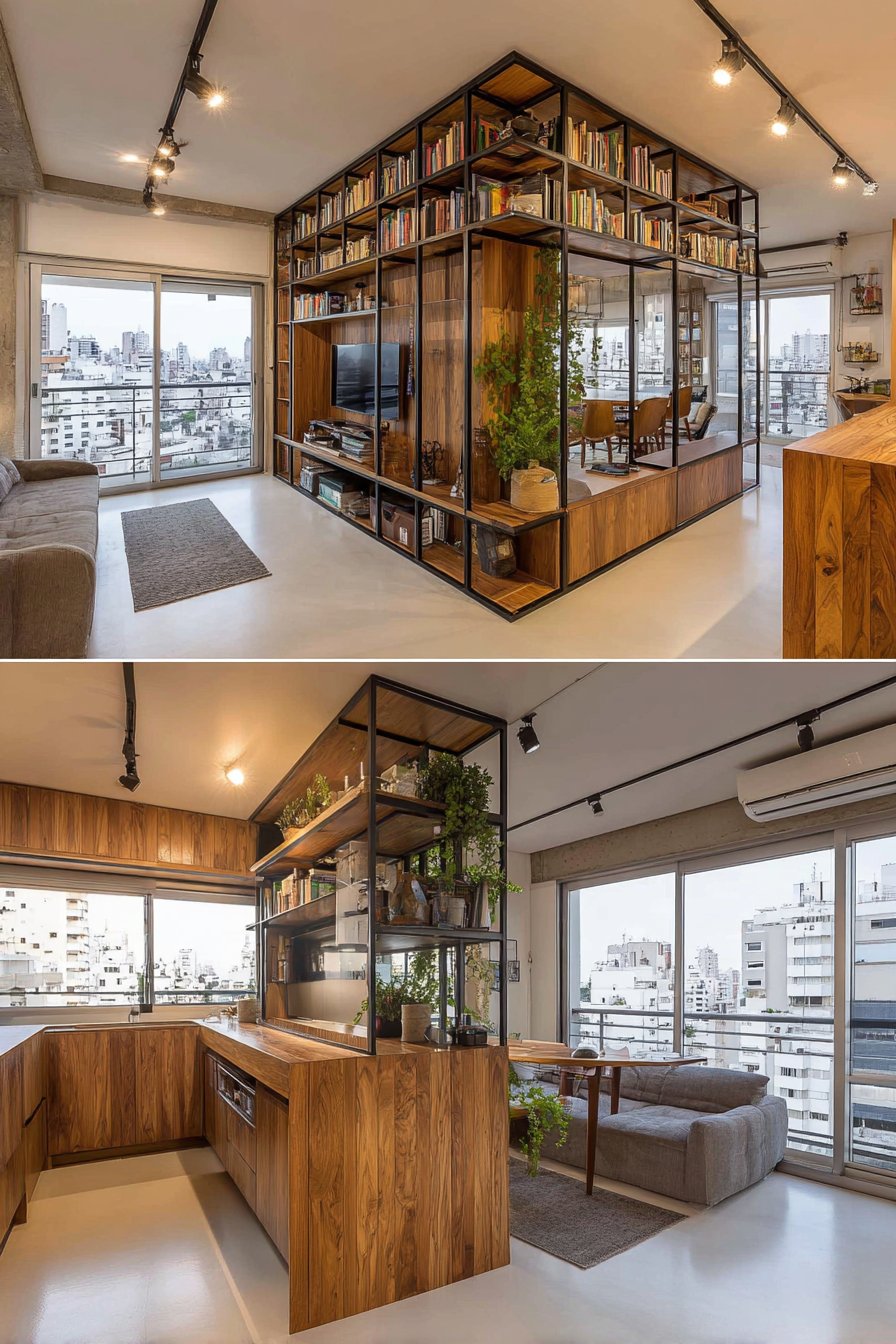
Maximize functionality with this innovative open concept media wall that serves as a room divider between living and dining areas. The double-sided unit features the television visible from the living room side while open shelving accessible from both sides displays books, plants, and decorative objects. This multifunctional design solution creates separation without solid walls, maintaining sightlines and light flow while defining distinct zones.
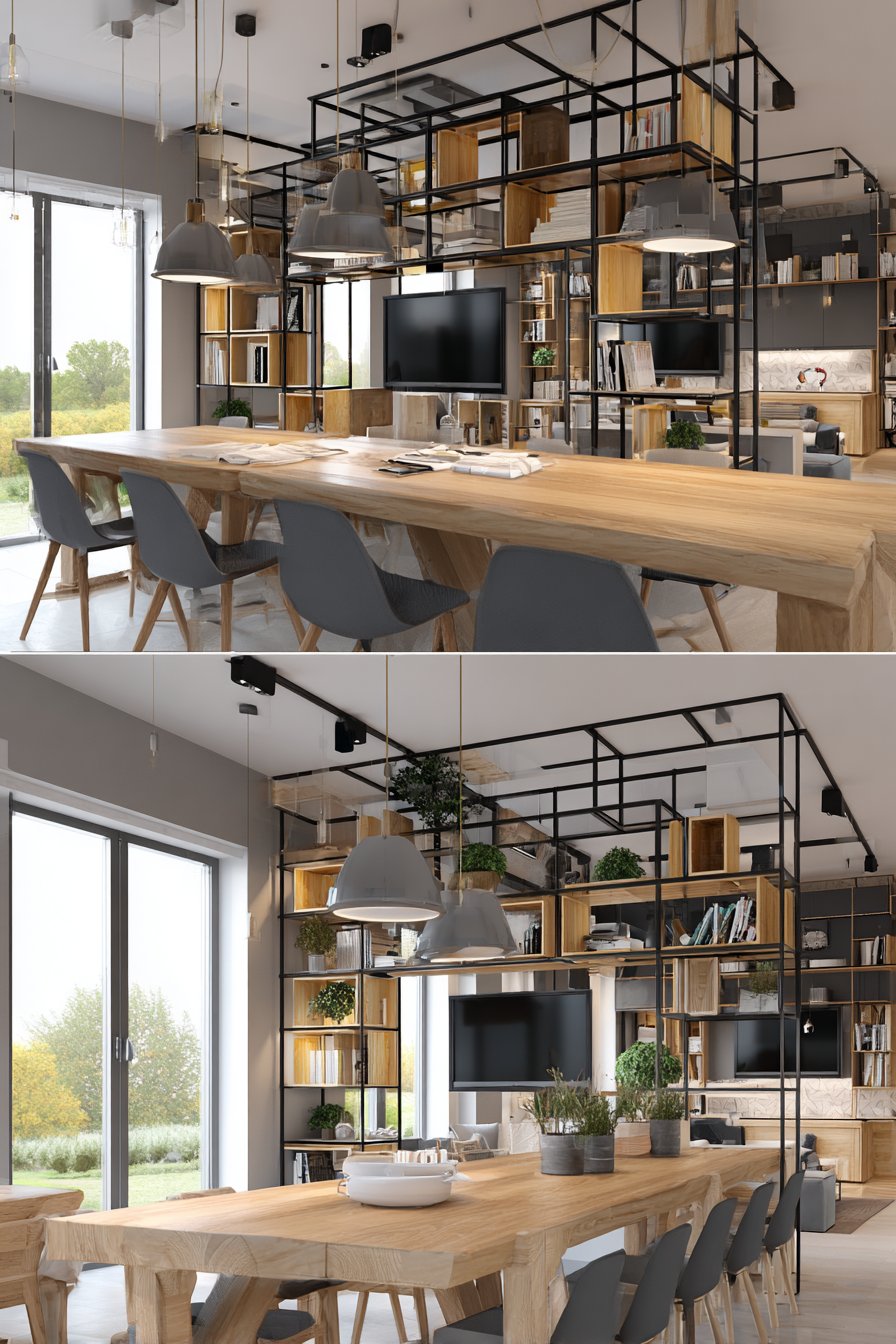
The structure uses a sophisticated mix of natural walnut and matte black metal framework that provides strength and visual interest. The wood adds warmth and organic beauty while the metal framework creates structure and contemporary edge. The open design prevents the divider from blocking natural light or making either space feel smaller, while the display shelving adds function to both rooms. Strategic placement of plants and objects creates visual screening while maintaining the airy, open feeling.
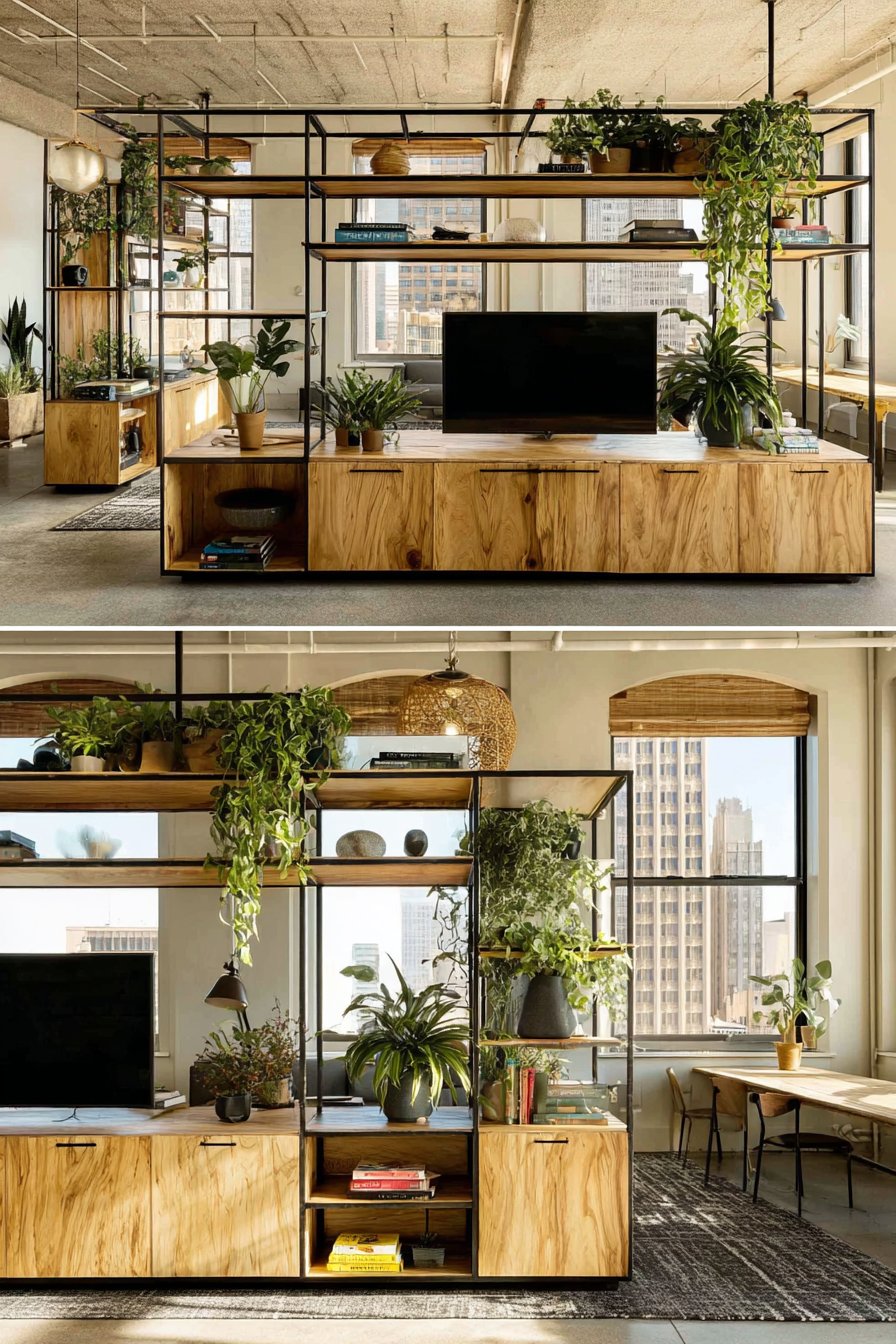
Wide-angle interior photography showing both sides of the installation demonstrates how this solution works in real space. You can watch television from the living room while someone in the dining area can access books or decorative items from their side. This represents sophisticated spatial planning that maximizes both square footage and functionality—essential in modern homes where open plans demand creative zoning solutions.
Key Design Tips:
- Ensure structural support is adequate for double-sided weight
- Plan sight lines carefully so TV is comfortably viewable from seating
- Include closed storage on at least one side for practical function
- Route cables through floor or ceiling to avoid visible wires
- Balance display items to look intentional from both sides
- Anchor unit securely to floor and/or ceiling
- Consider swivel TV mount for viewing flexibility
- Maintain adequate clearance for comfortable passage
17. Zen Japanese Minimalism
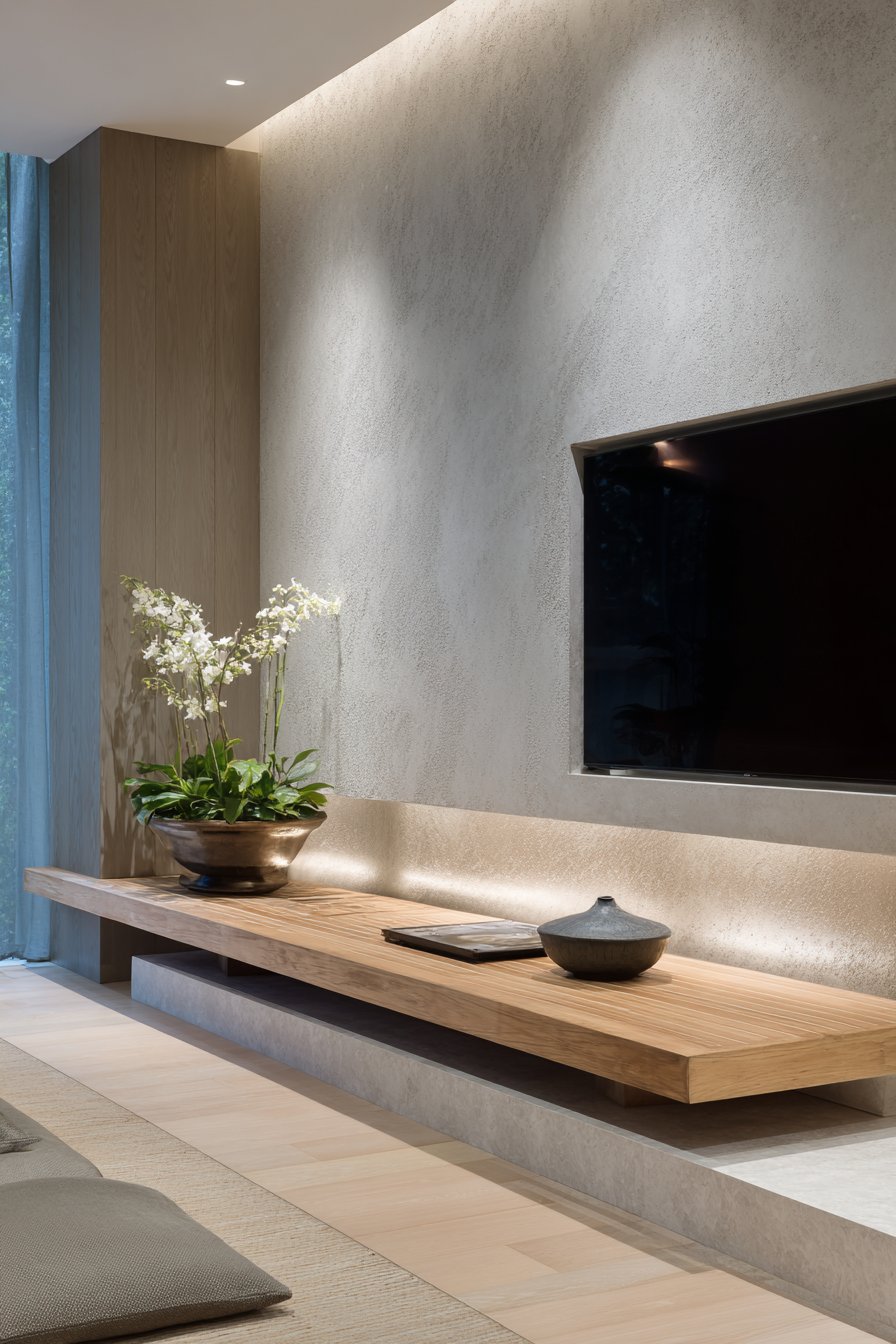
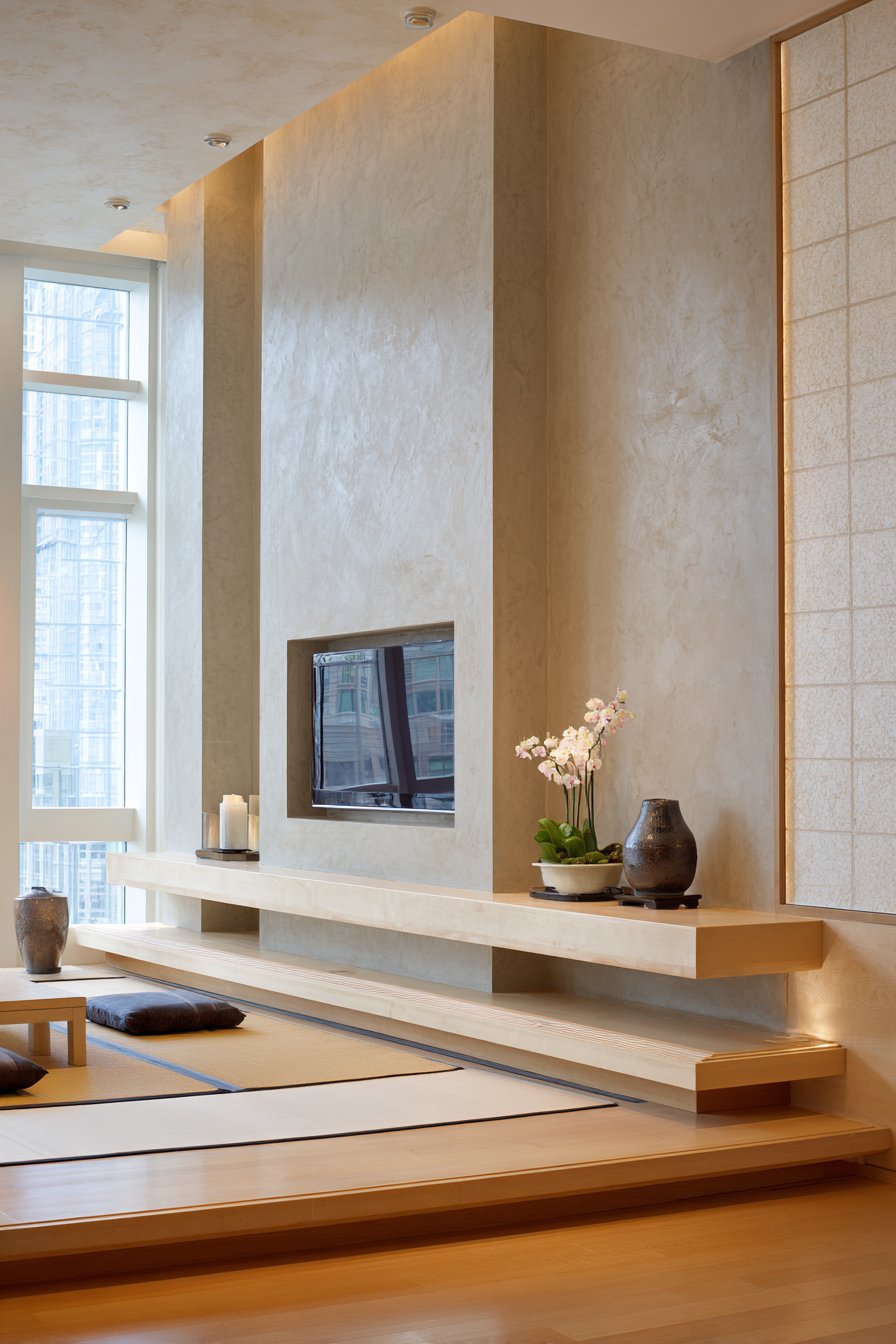
Find tranquility in this minimalist Japanese-inspired media wall featuring a low platform media console in light bamboo with sliding shoji-style screen panels that can conceal the television when not in use. The surrounding wall finished in smooth plaster with a subtle warm grey tone creates a serene, meditative backdrop. Every element reflects the Japanese aesthetic principles of simplicity, natural materials, and mindful restraint.
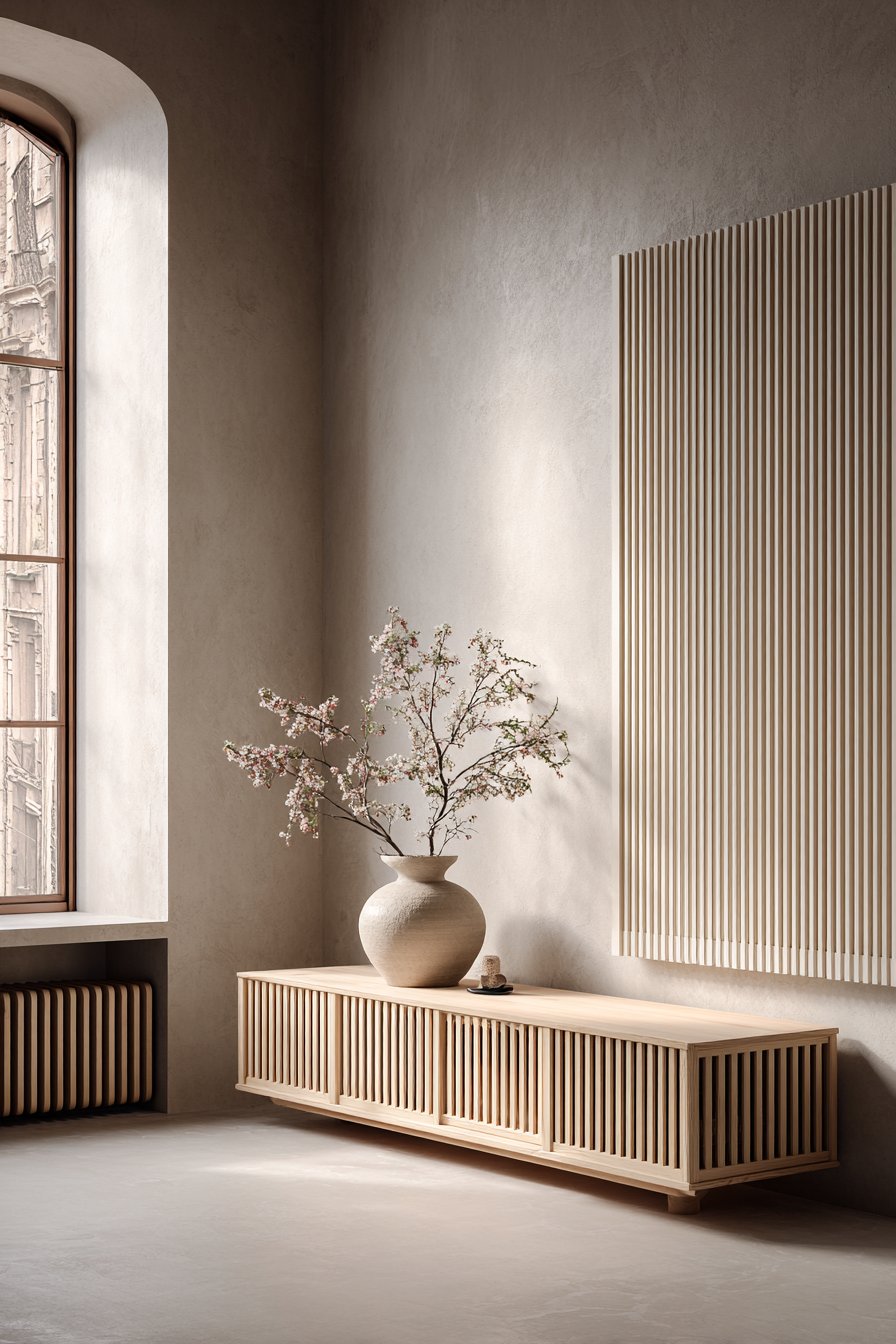
A single ikebana flower arrangement and one carefully selected ceramic piece provide restrained decoration that honors the Japanese concept of ma—the intentional use of negative space. These items aren’t random accessories but meaningful objects given room to breathe and be appreciated. Natural light filters through translucent window treatments creating soft, meditative ambiance that changes throughout the day, connecting inhabitants to natural rhythms.
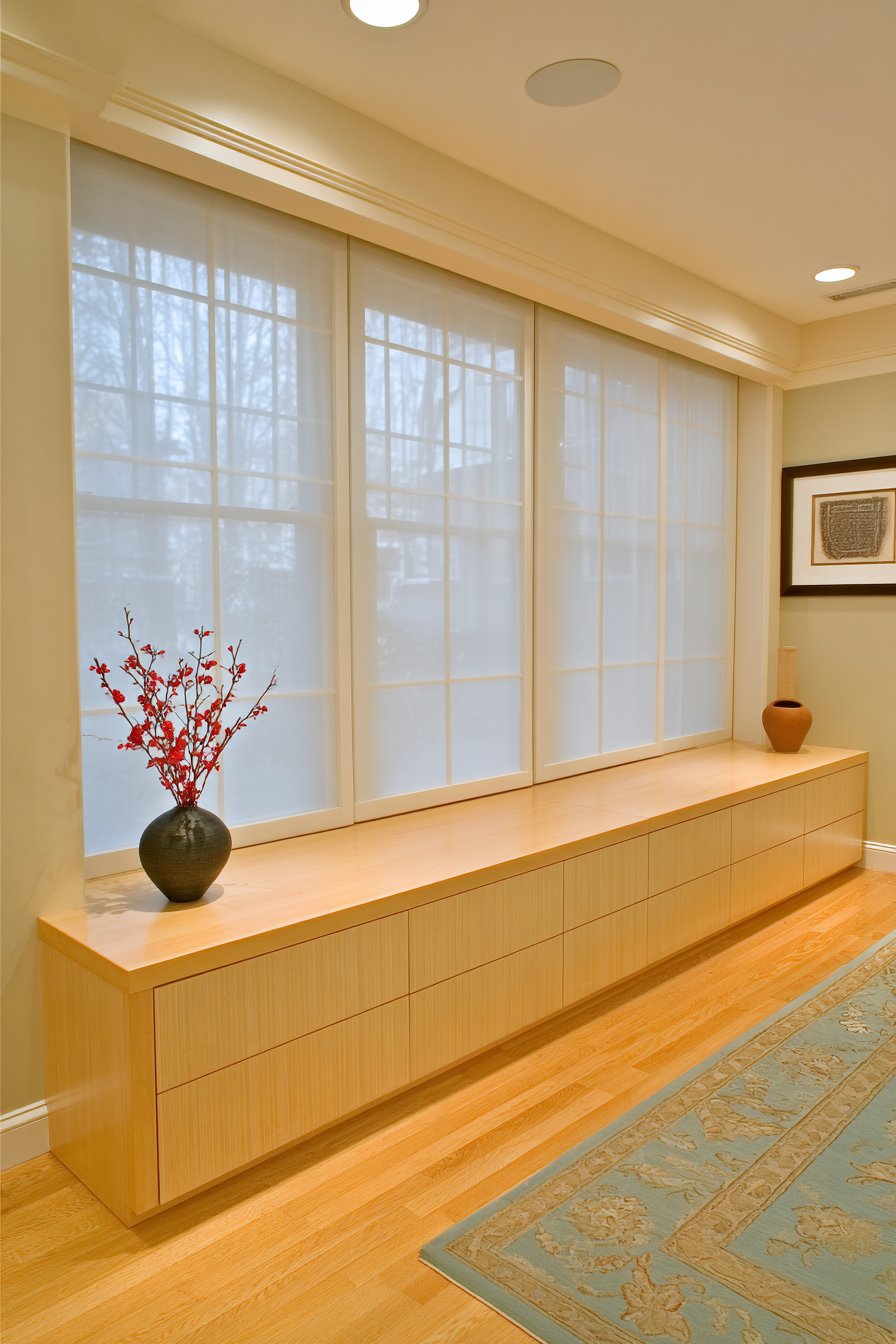
Interior design photography emphasizing negative space, clean lines, and the mindful simplicity of Japanese aesthetic principles reveals how less becomes more. This approach requires discipline—resisting the urge to fill space and instead allowing emptiness to be a positive element. The low furniture height, natural materials, and commitment to simplicity create a calming environment that promotes focus and reduces visual stress.
Key Design Tips:
- Keep console height low (12-18 inches) in Japanese style
- Use natural materials in their authentic state
- Display only one or two meaningful objects
- Incorporate sliding panels rather than doors
- Choose warm-toned neutral colors for walls
- Allow abundant negative space in design
- Include nature element (plant, branch, stone)
- Remove all non-essential items from view
18. Glamorous Art Deco Geometry
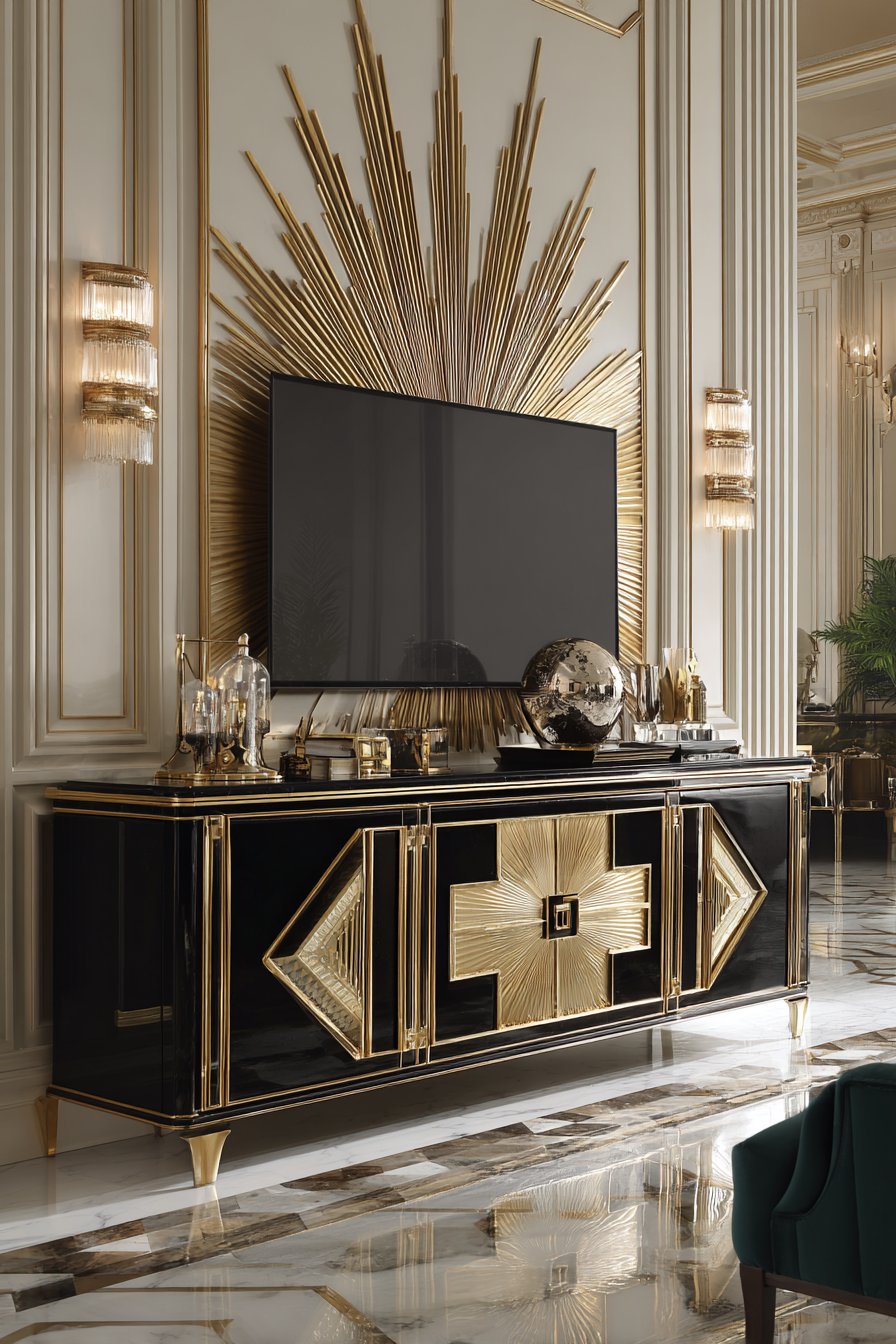
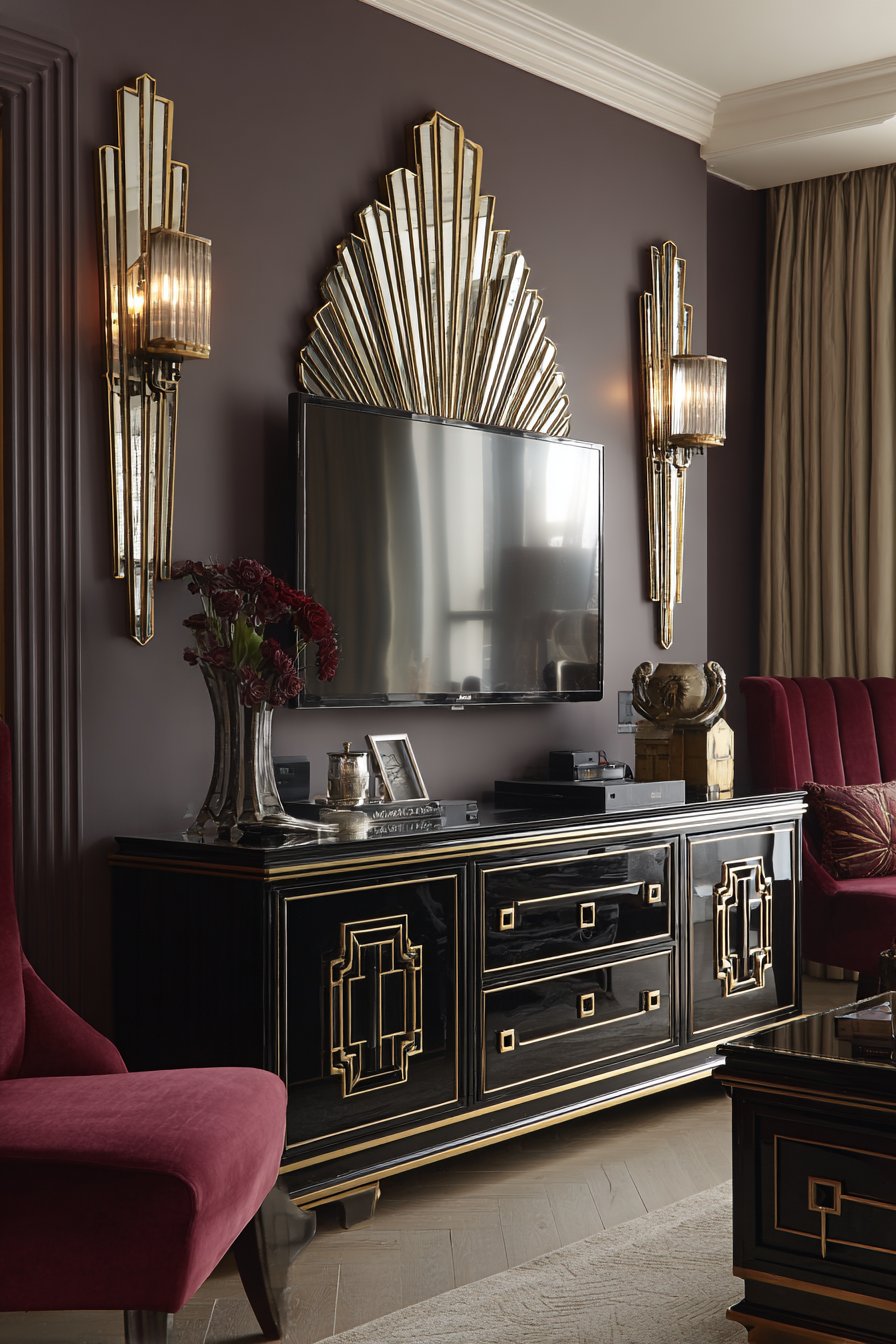
Step into 1920s glamour with this art deco media wall showcasing geometric mirrored panels arranged in an elaborate sunburst pattern around the mounted television. The mirrors multiply light and create visual drama while the geometric arrangement embodies the art deco love of symmetry and mathematical precision. The media console features glossy black lacquer finish with gold leaf accents and stylized geometric hardware that captures the opulent, jazz-age aesthetic.
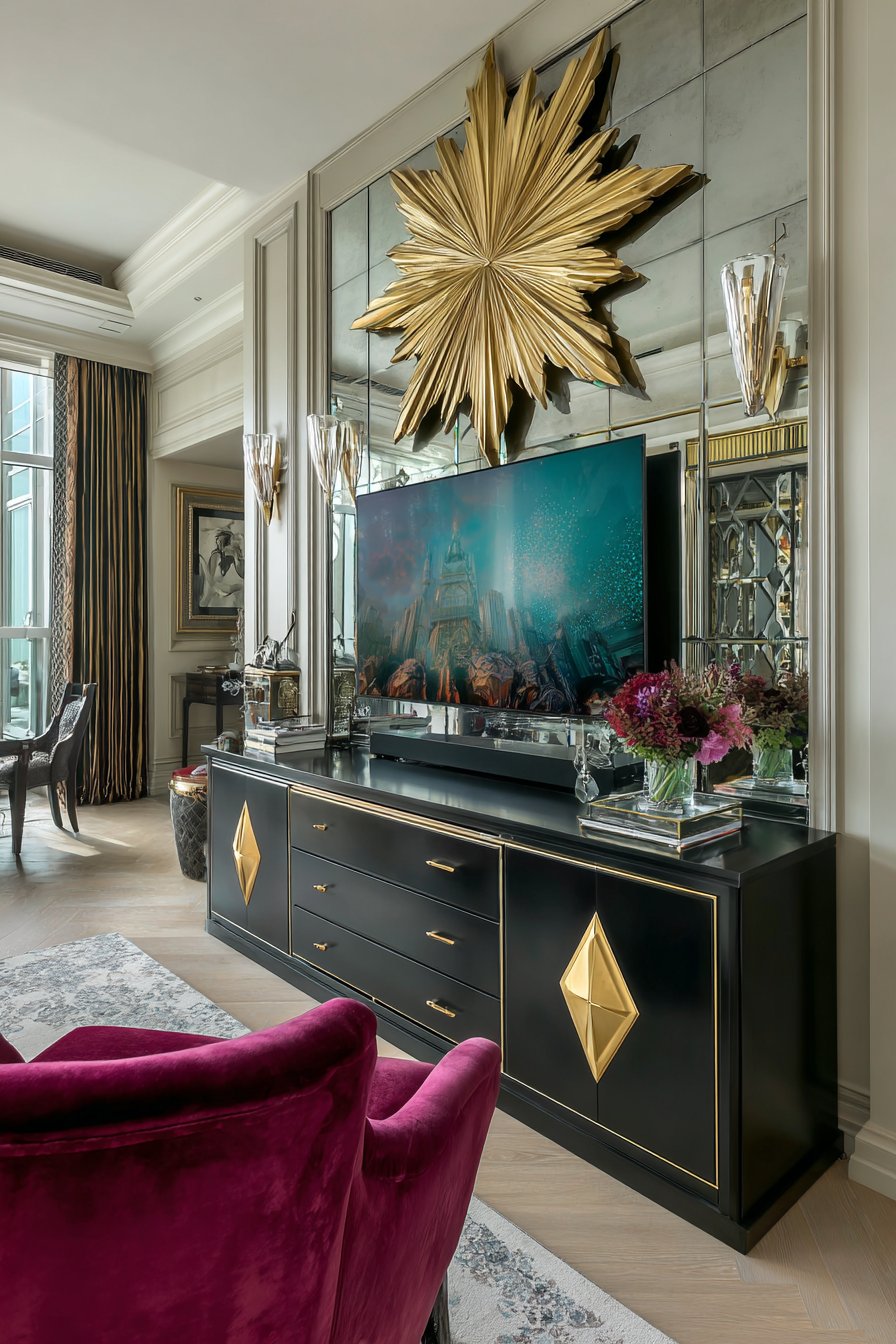
Vertical fluted details on adjacent walls add dimensional texture that plays with light and shadow, creating visual interest without pattern or color. The consistent geometry creates rhythm and sophistication. A pair of vintage-style brass wall sconces with frosted glass shades provide ambient lighting while referencing period-appropriate fixtures. Rich jewel-tone velvet seating visible in the frame completes the glamorous aesthetic—perhaps an emerald green sofa or sapphire blue chair that adds the bold color art deco celebrated.
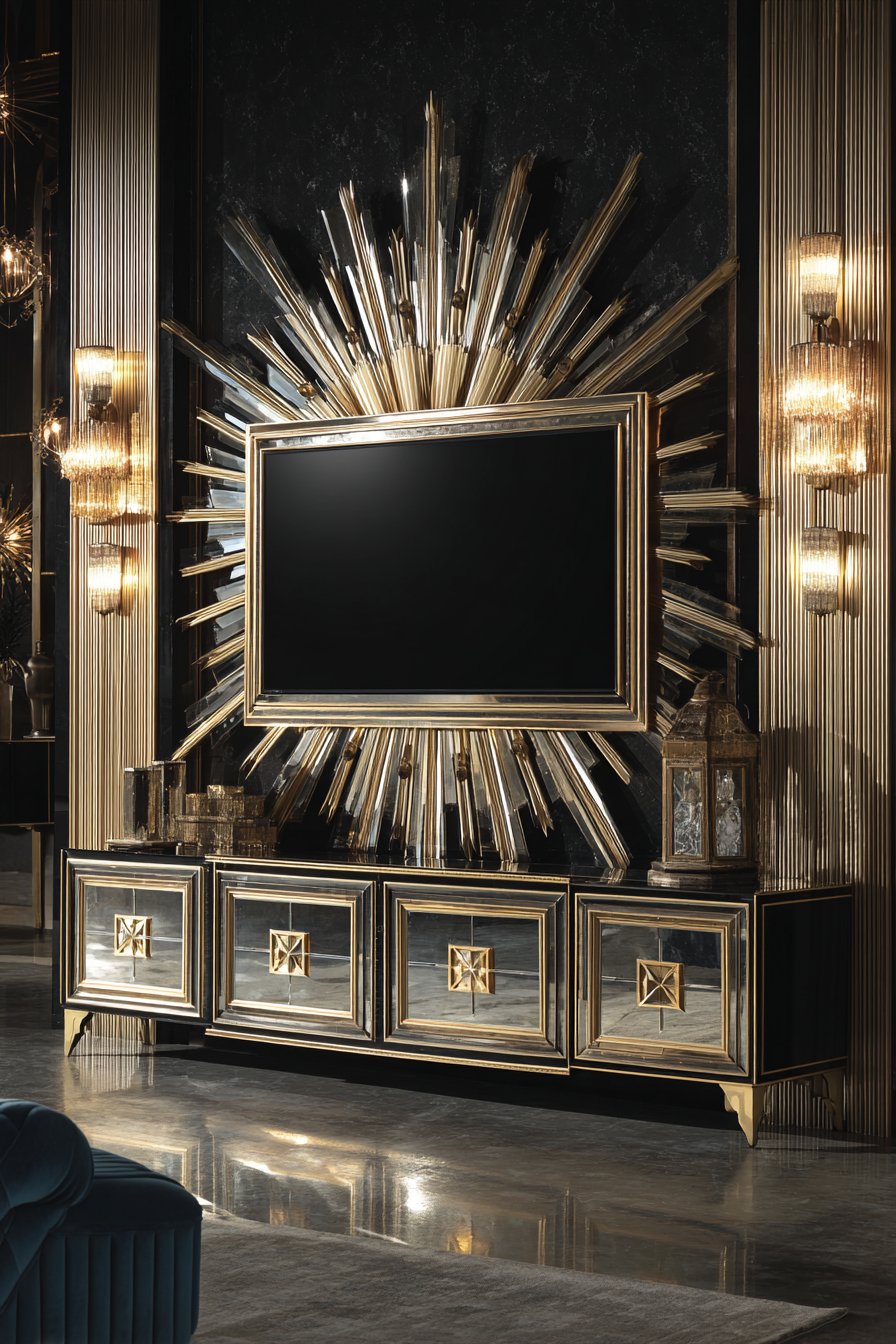
Professional interior photography capturing the reflective surfaces and luxurious materials requires carefully balanced lighting to show dimension without excessive glare. This approach appeals to those who appreciate the opulence and optimism of the art deco era—a time when design celebrated progress, luxury, and geometric beauty. The result is a media wall that feels transported from a 1920s Parisian apartment or a luxury ocean liner.
Key Design Tips:
- Arrange mirrored panels to avoid TV screen reflections
- Use genuine brass with lacquer protection to prevent tarnishing
- Select black lacquer with deep, glossy finish
- Incorporate geometric patterns consistently throughout space
- Add jewel-tone accents through upholstery or accessories
- Install fluted wall panels professionally for clean lines
- Use period-appropriate lighting fixtures
- Include one or two authentic art deco accessories
19. Intentional Eclectic Material Mix
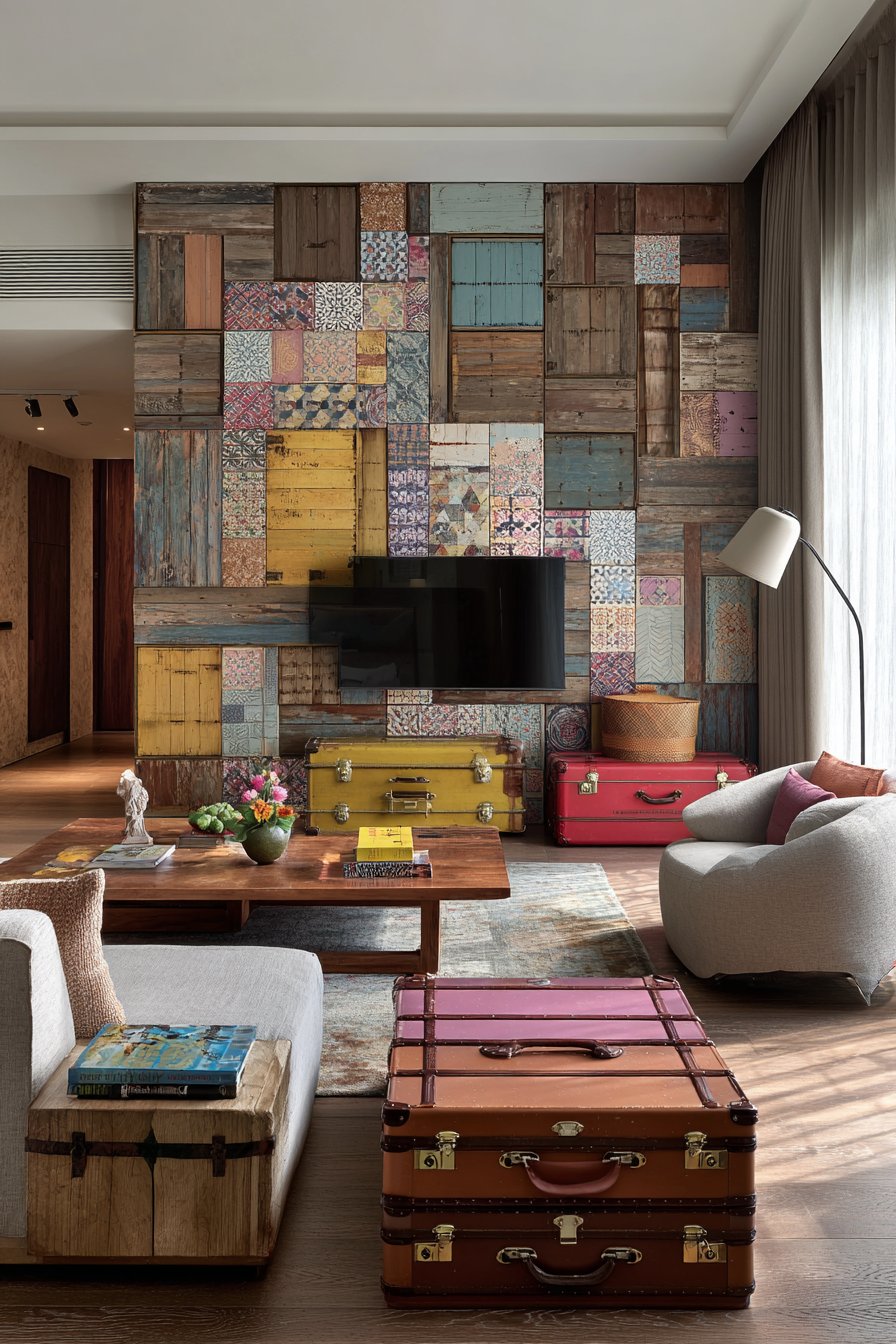
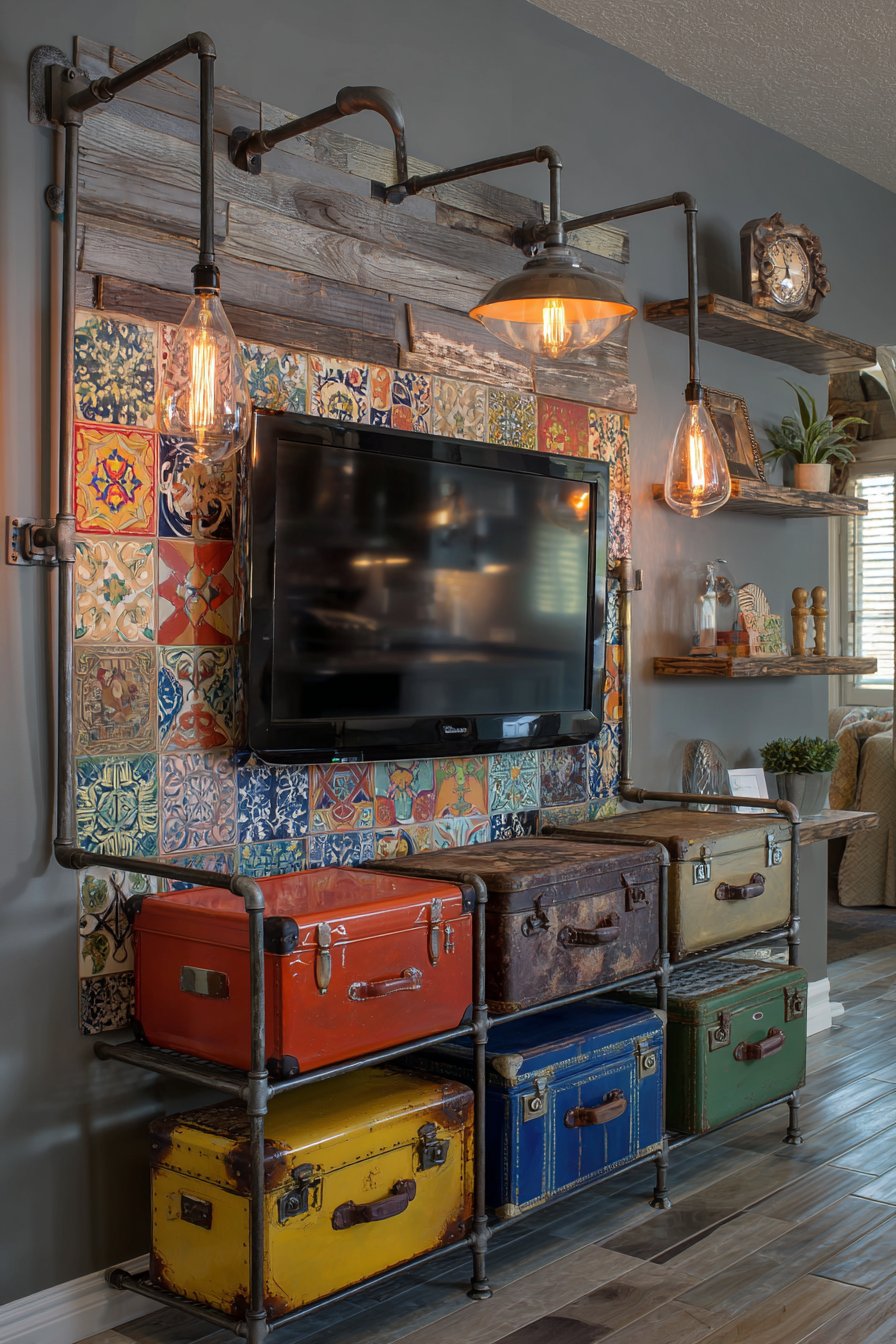
Celebrate creative individuality with this eclectic media wall combining seemingly disparate materials into a cohesive, personality-filled composition. A reclaimed wood accent wall section provides warmth and texture, while industrial metal pipe shelving adds utilitarian edge. Vintage suitcases stacked as quirky storage introduce unexpected function and conversation-starting character. Colorful ceramic tiles creating a patchwork effect around the television mount add handcrafted artistic quality and vibrant color.
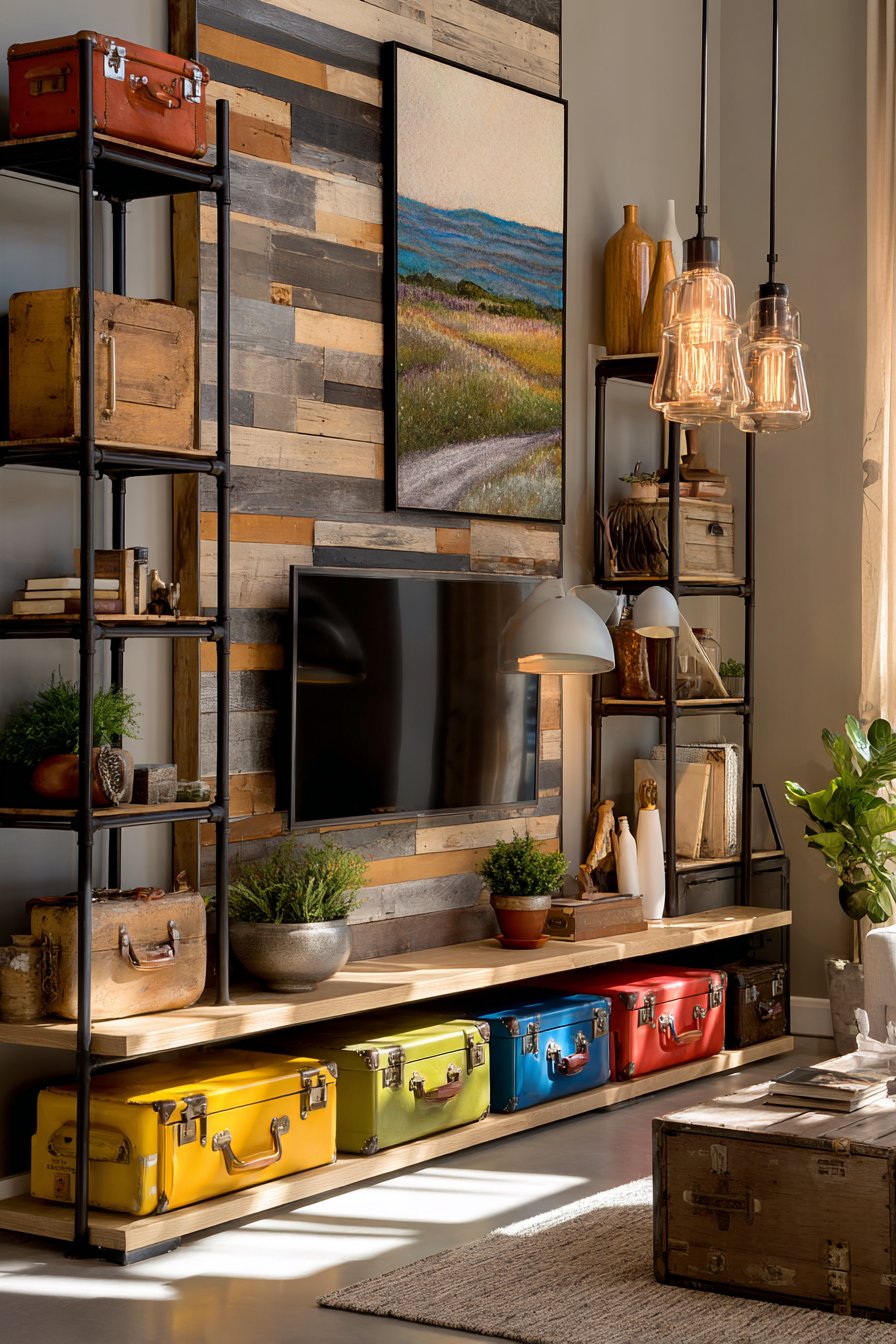
The intentionally mismatched approach creates personality and visual interest while maintaining functional storage and display. This is design for collectors, travelers, and creative spirits who resist cookie-cutter solutions. Various lighting sources including Edison bulbs suspended at different heights and a modern arc lamp create layered illumination that can be adjusted for different moods and activities. The mixing of vintage and contemporary lighting reinforces the eclectic philosophy.
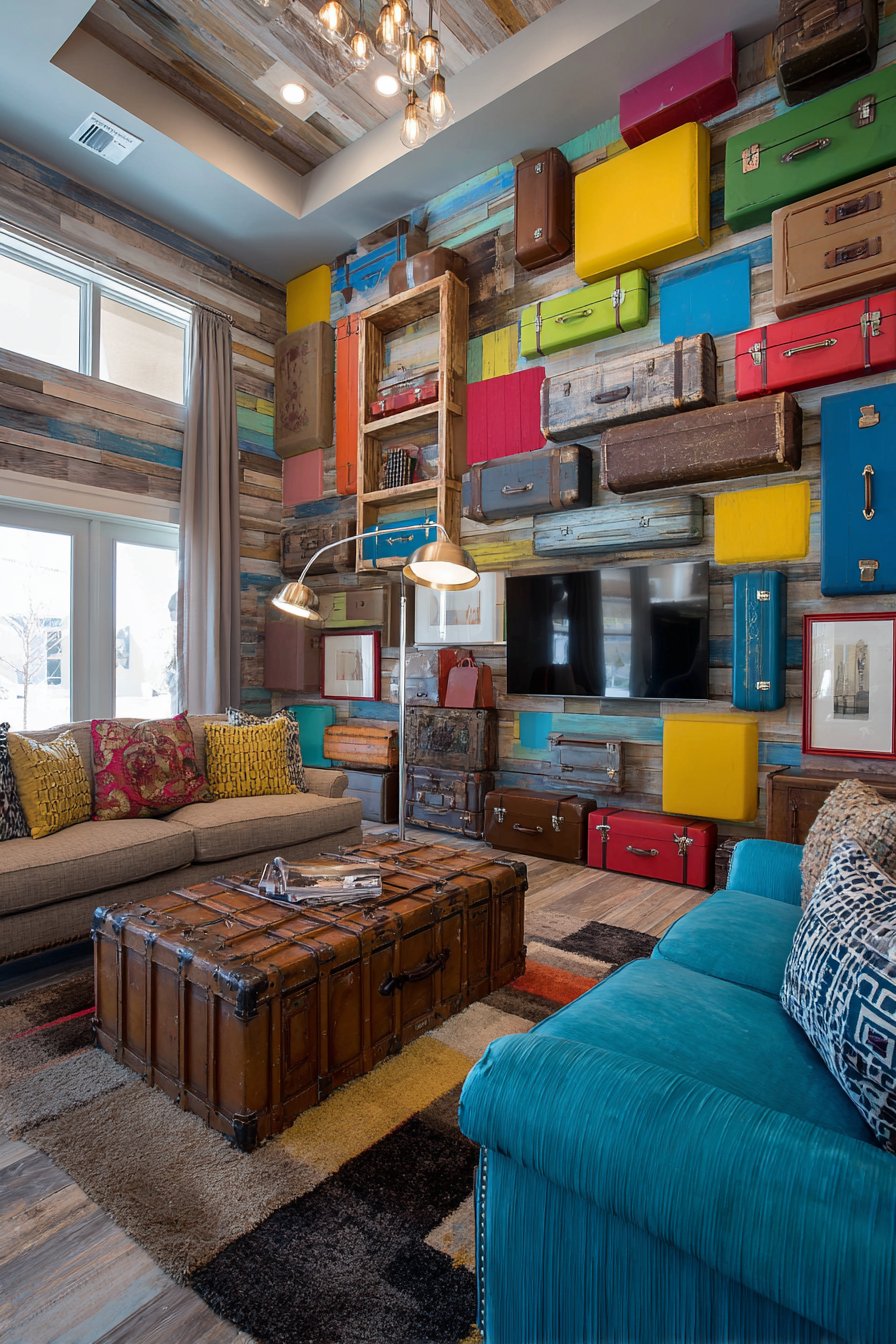
Interior design photography capturing the curated chaos and creative material mixing requires balanced composition that shows the method within the madness. Natural daylight highlighting the diverse textures reveals how different materials can coexist harmoniously when united by color story or intentional arrangement. This approach requires confidence and vision—not everything goes with everything, but with careful curation, diverse elements can create a cohesive whole that feels authentically personal.
Key Design Tips:
- Establish unifying element (color palette, material, or style thread)
- Mix time periods and styles intentionally rather than randomly
- Ensure structural elements (shelving, mounting) are professionally installed
- Balance busy areas with calm spaces to avoid visual chaos
- Display collections in organized groupings rather than scattered
- Use varied lighting types for flexibility
- Include pieces with personal meaning or history
- Edit regularly to prevent overcrowding
20. Sophisticated Transitional Balance
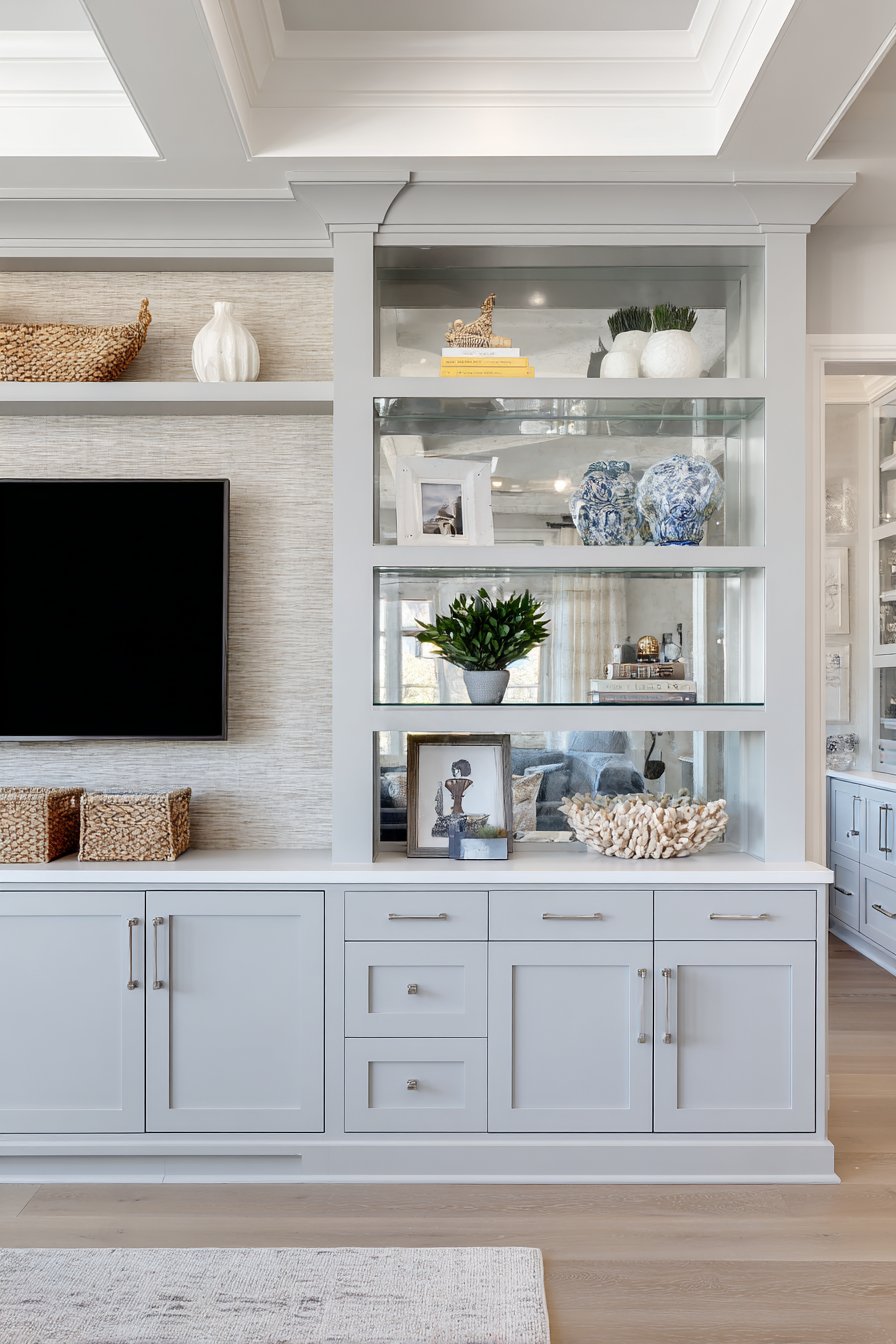
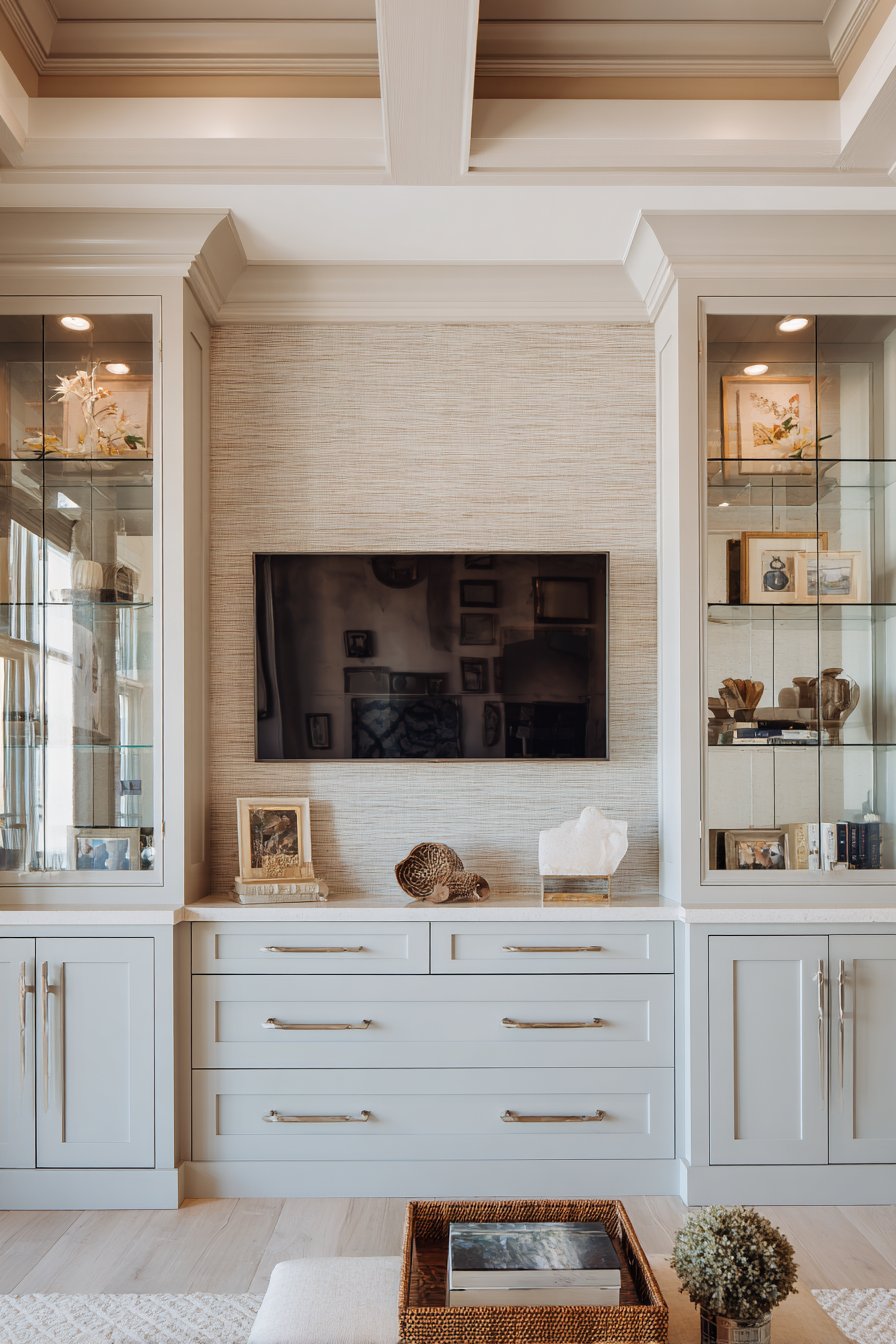
Bridge traditional and contemporary design with this transitional media wall that honors both aesthetics without committing fully to either. Custom built-ins in soft grey-blue with simple shaker-style doors flank the mounted television, the color choice feeling fresh and current while the door style nods to traditional craftsmanship. The television sets against subtle grasscloth wallpaper in neutral beige that adds organic texture without pattern dominance.
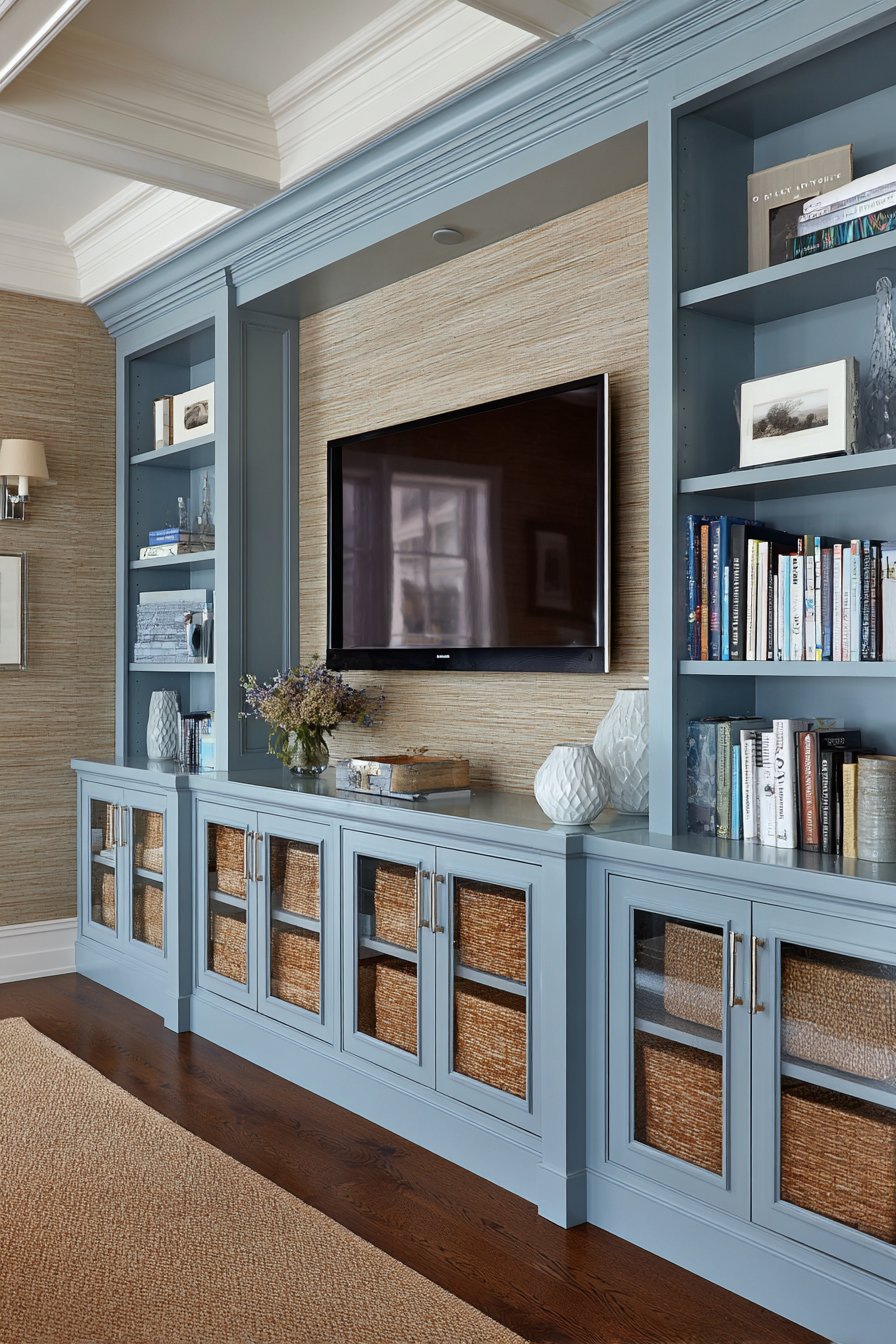
Brushed nickel hardware and glass cabinet fronts displaying organized media and decorative items bridge classic and modern sensibilities. The metallic finish reads contemporary but the glass-front cabinet style references traditional display furniture. Crown molding adds architectural detail that traditional interiors require while maintaining clean lines that prevent the space from feeling fussy or dated. This careful balance creates design that feels current but won’t look dated in five or ten years.
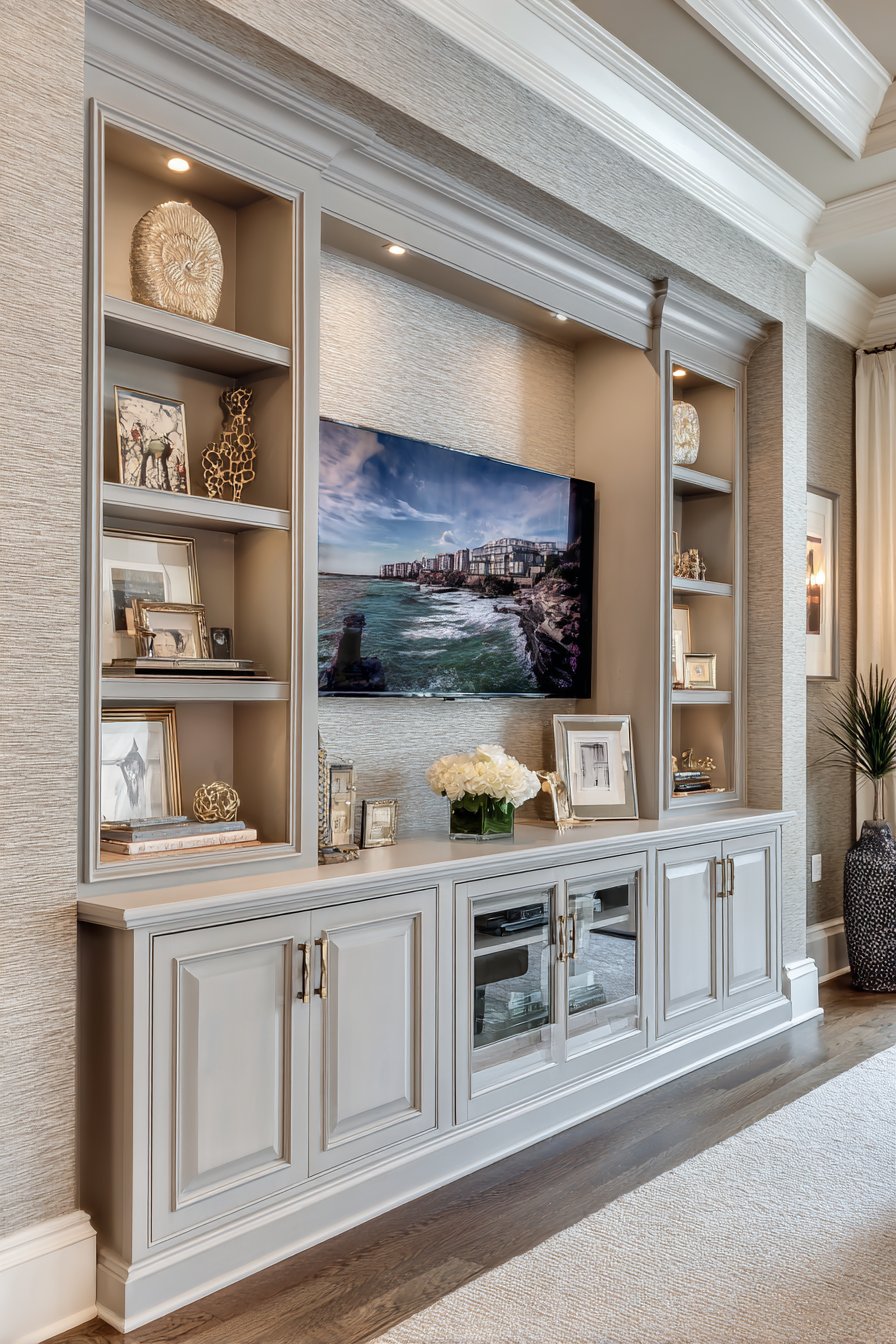
Professional interior photography with soft natural lighting and balanced exposure showcases how traditional elements and contemporary updates can harmoniously coexist. The grey-blue color provides sophistication without the heaviness of traditional dark wood, while the shaker-style doors provide classic detail without ornate carving. This approach appeals to those who appreciate both traditional quality and contemporary sensibility—design that feels established without feeling old.
Key Design Tips:
- Choose updated traditional colors (grey-blue, sage, soft taupe)
- Use simple traditional door styles (shaker, flat panel with trim)
- Incorporate contemporary hardware finishes
- Add subtle texture through wallpaper or paint techniques
- Include both open and closed storage
- Use crown molding in appropriate scale for ceiling height
- Display mix of traditional and contemporary accessories
- Maintain symmetry in cabinet arrangement
21. Budget-Conscious DIY Creativity
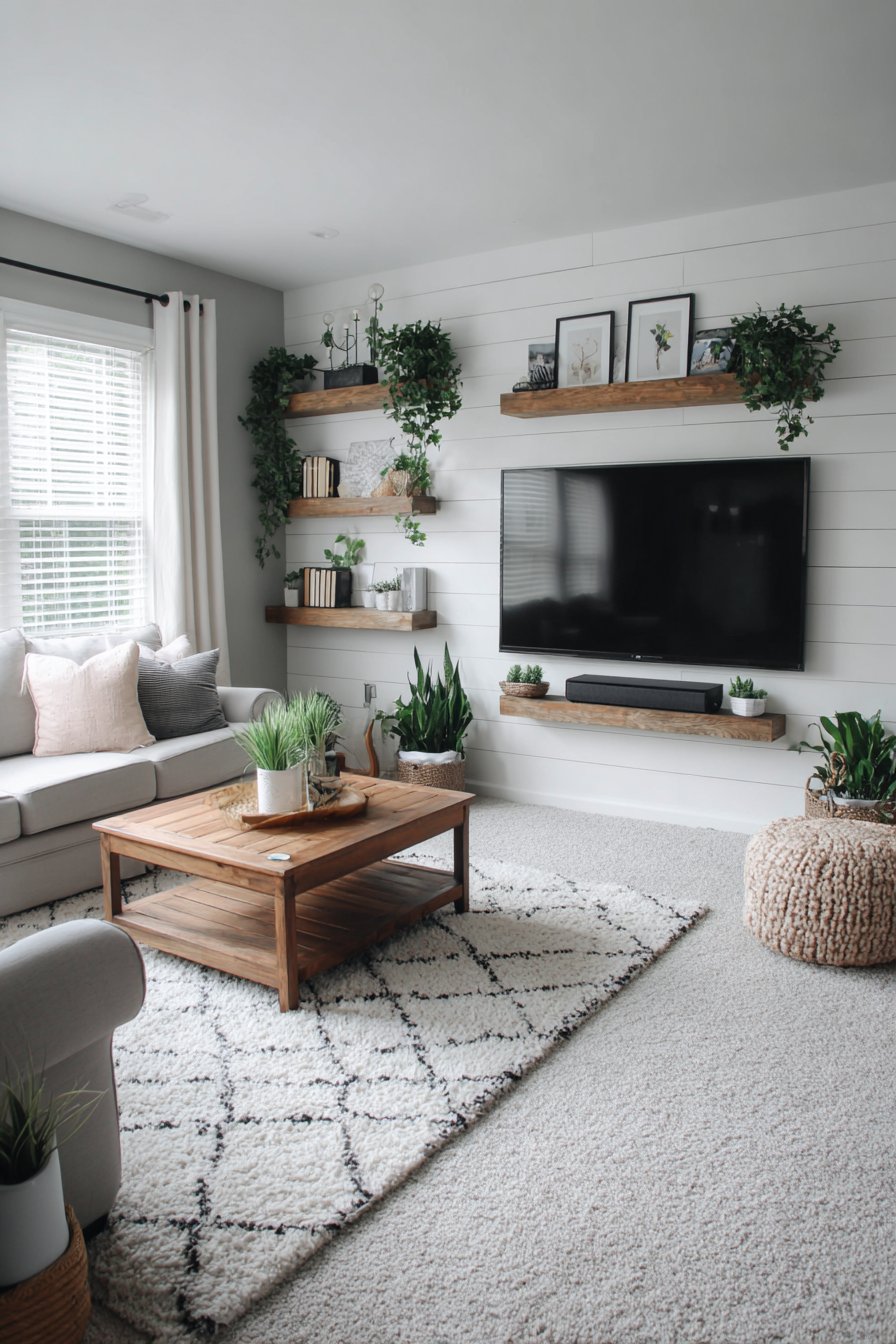
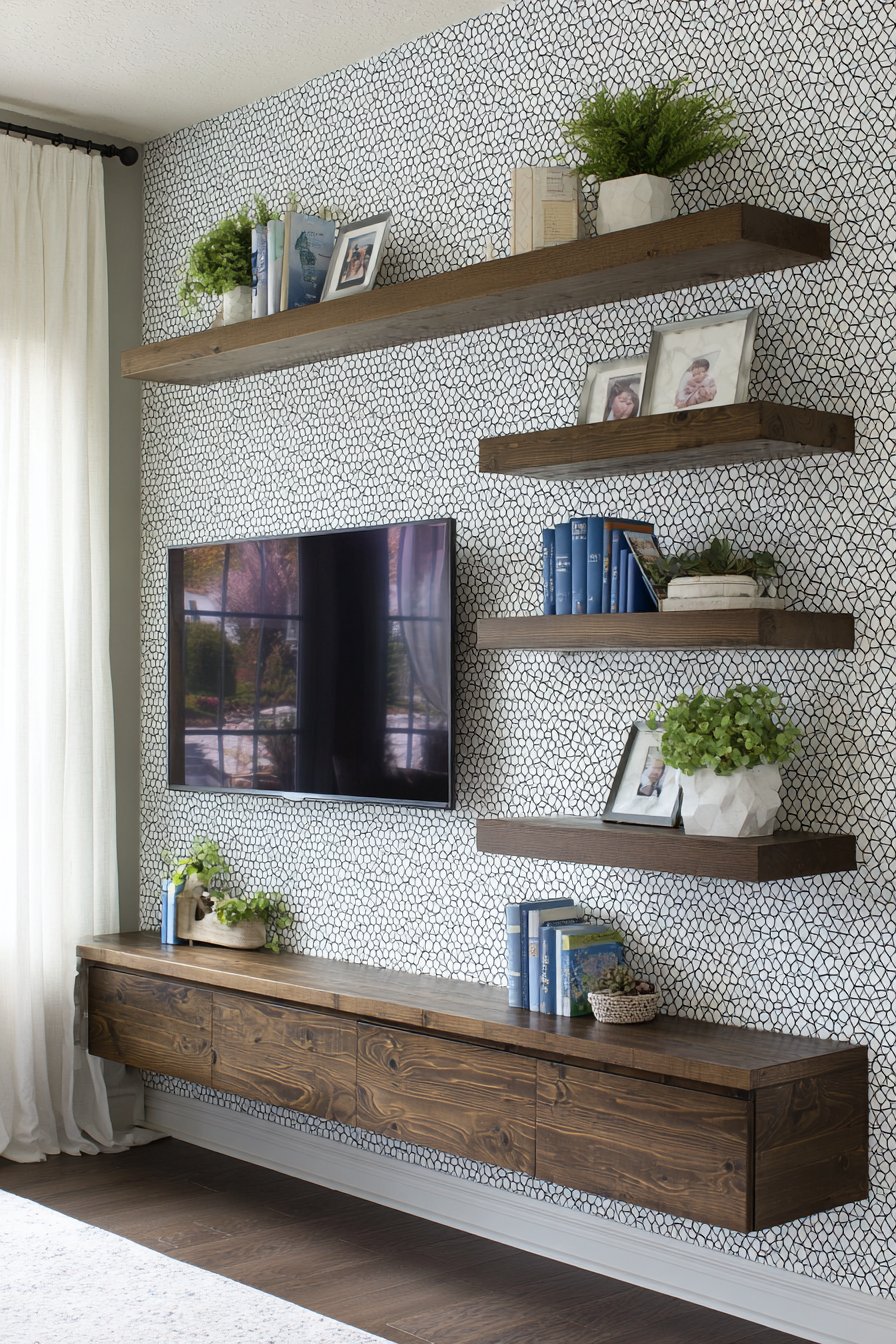
Prove that style doesn’t require unlimited budget with this affordable media wall demonstrating clever DIY solutions. Floating shelves made from pine boards stained in dark walnut arrange asymmetrically around the mounted television, creating visual interest without expensive custom cabinetry. The shelves display affordable decor finds including thrifted books with interesting covers, small potted succulents that propagate easily, and framed family photos that personalize the space.
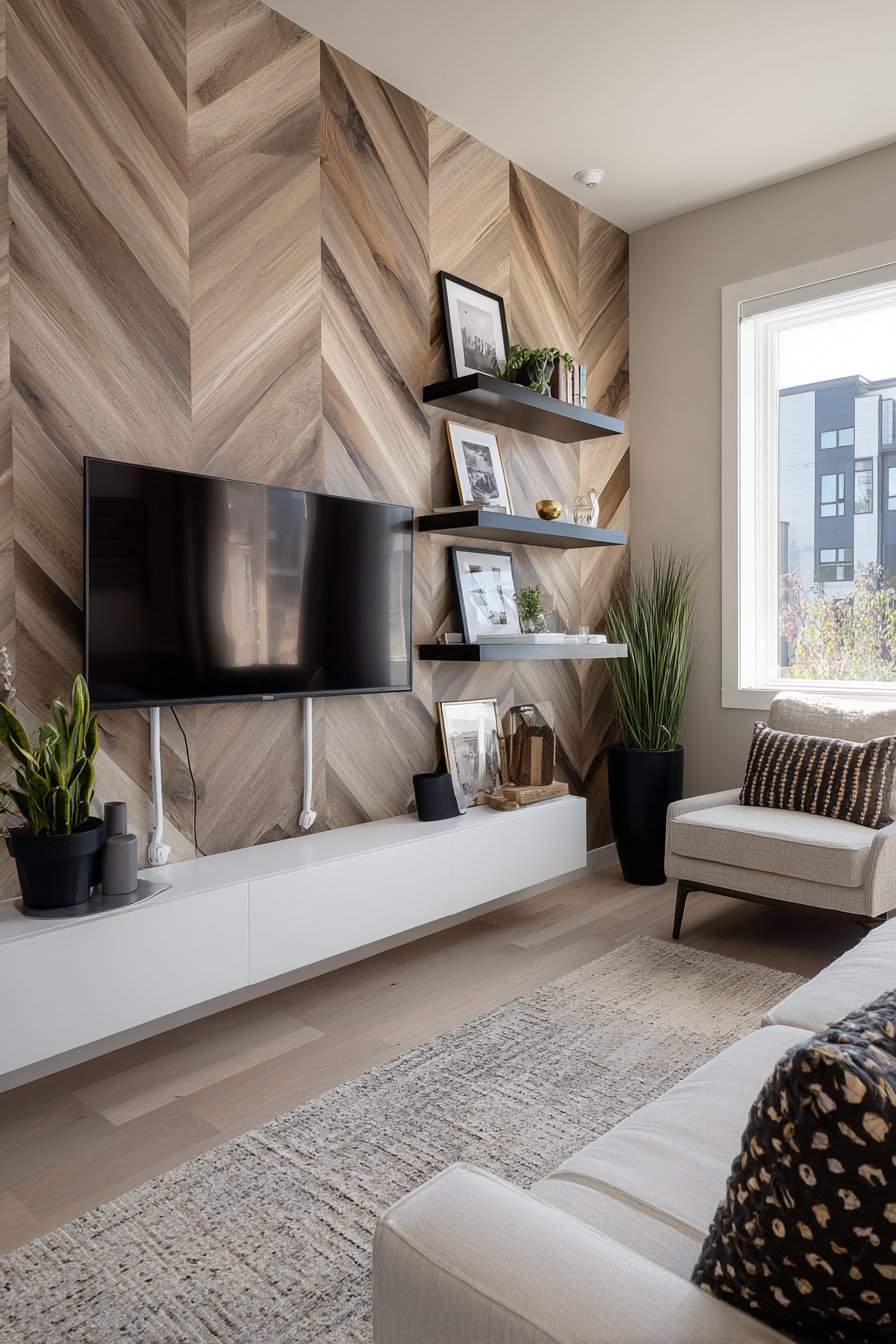
Cable management achieved through simple white cord covers painted to match the wall maintains the clean aesthetic without expensive built-in solutions. Peel-and-stick wood-look wallpaper behind the TV creates an accent without permanent installation or the expense of real wood planking—perfect for renters or those hesitant to commit to permanent changes. Natural window lighting supplemented by inexpensive clip-on LED shelf lights provides practical illumination.
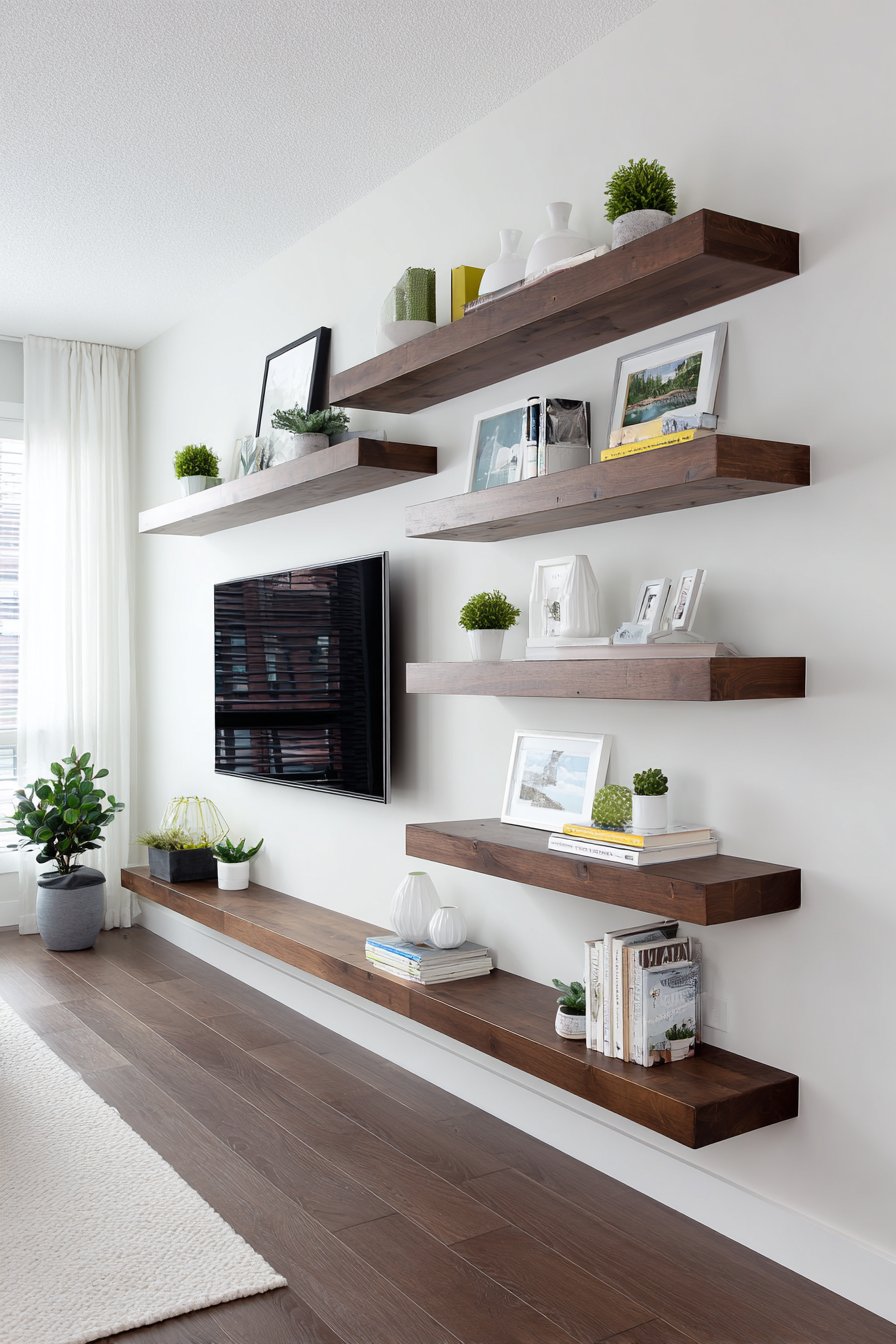
Interior photography showing achievable, cost-effective design solutions proves that beautiful spaces don’t require professional designers or unlimited budgets. With creativity, patience, and willingness to DIY, anyone can create a stylish media wall. Shopping secondhand stores, using coupons, tackling projects yourself, and choosing affordable alternatives creates spaces with as much personality and function as high-budget installations.
Key Design Tips:
- Use standard lumber sizes to avoid custom cutting fees
- Shop sales, clearance, and secondhand for accessories
- Learn basic DIY skills through free online tutorials
- Use peel-and-stick products for renter-friendly updates
- Paint rather than replace when possible
- Propagate plants from cuttings rather than buying
- Frame personal photos rather than purchasing art
- Prioritize quality on structural elements, save on accessories
22. Multipurpose Apartment Wall Unit
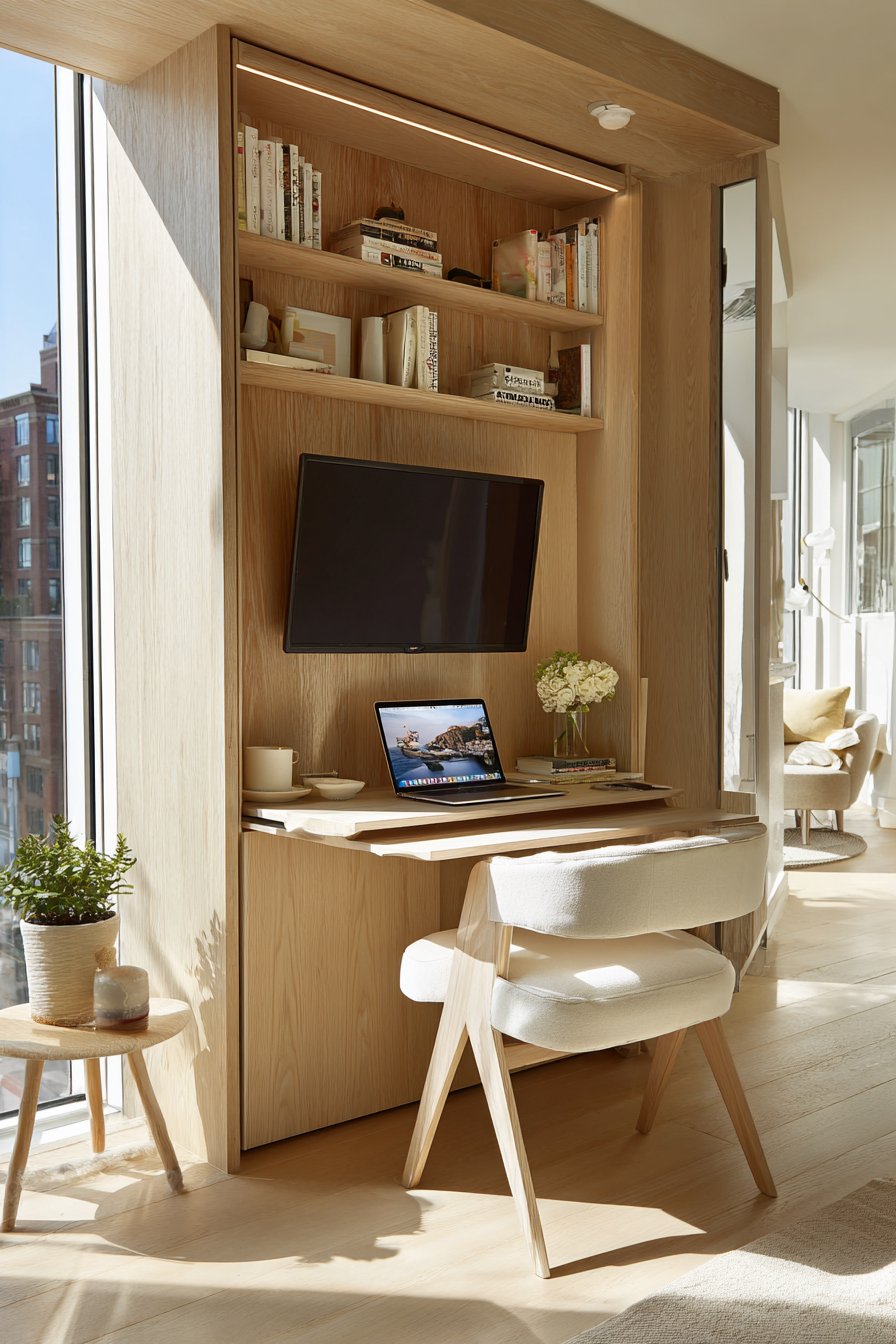
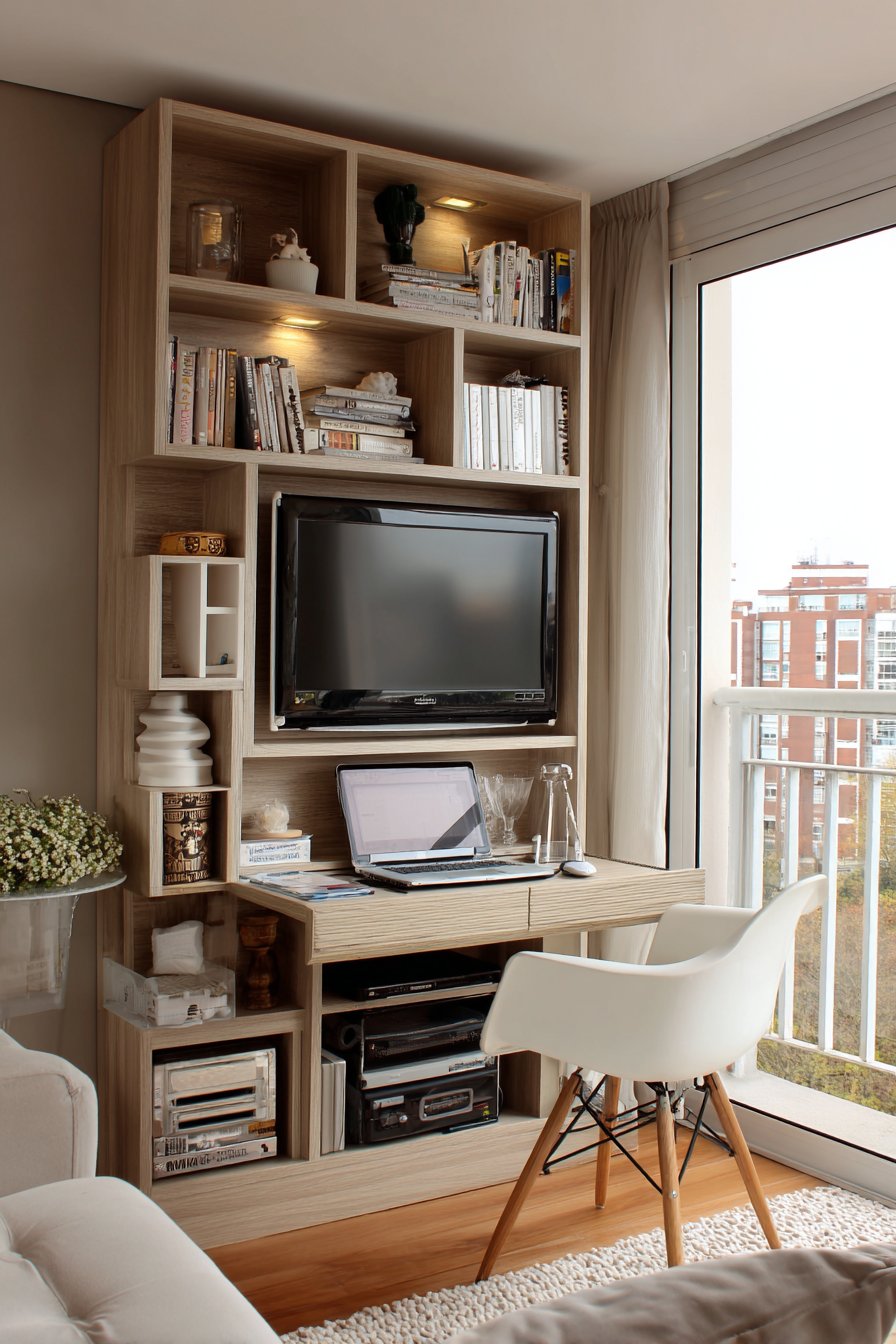
Maximize limited square footage with this ingenious small apartment media wall featuring a multi-functional wall unit where entertainment center integrates with fold-down desk workspace and hidden storage compartments. The compact design uses vertical space efficiently with the mounted television, floating laptop shelf that folds away when not needed, and slim storage cubbies all contained within a narrow footprint that doesn’t overwhelm the small room.
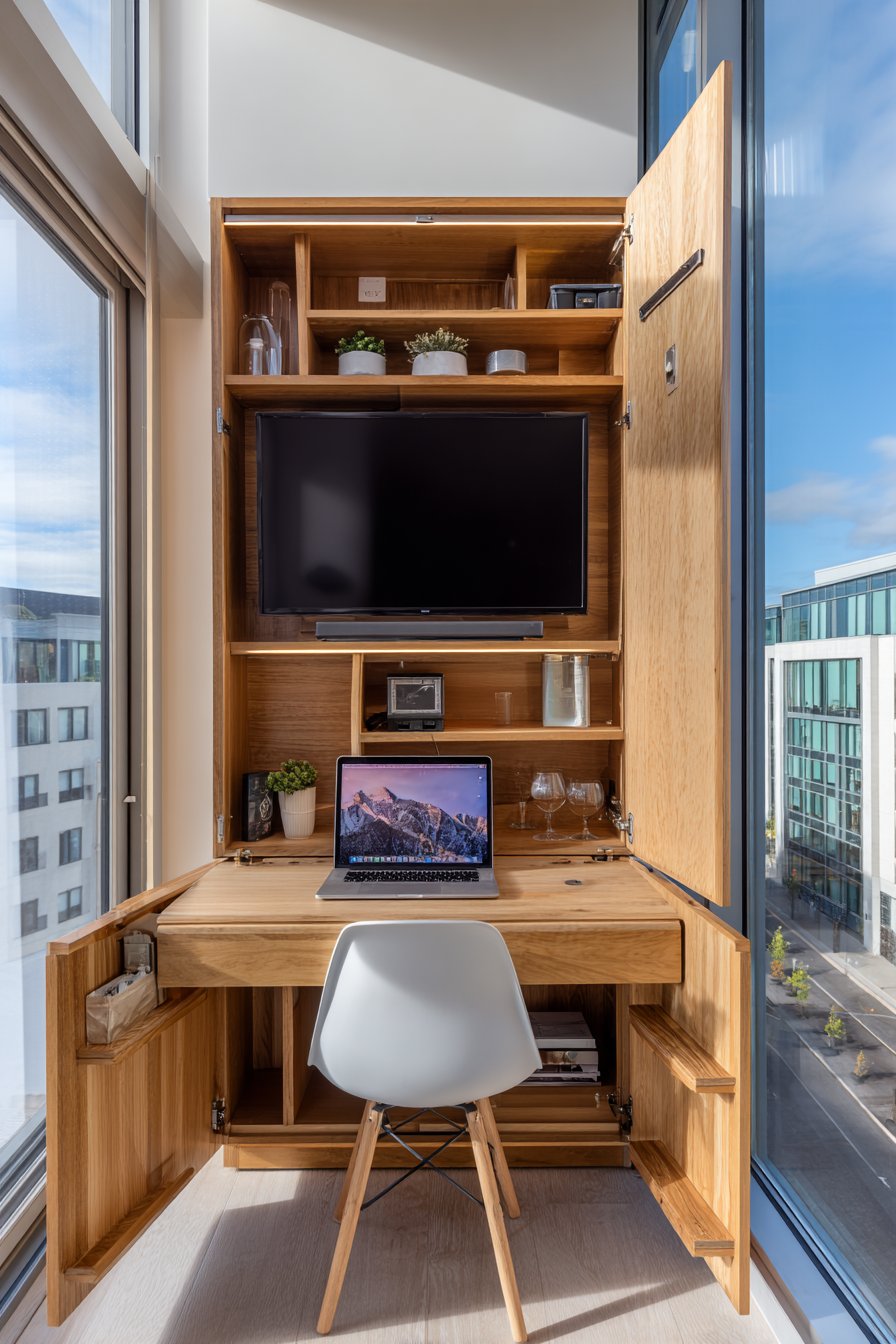
Light oak finish keeps the small space feeling open and prevents the furniture from visually dominating. The wood tone reads warm and natural without the visual weight of darker finishes. Integrated LED task lighting serves both entertainment and work functions—watching television in the evening and completing laptop work during the day. This flexibility is essential in small apartments where every piece of furniture must earn its place through multiple functions.
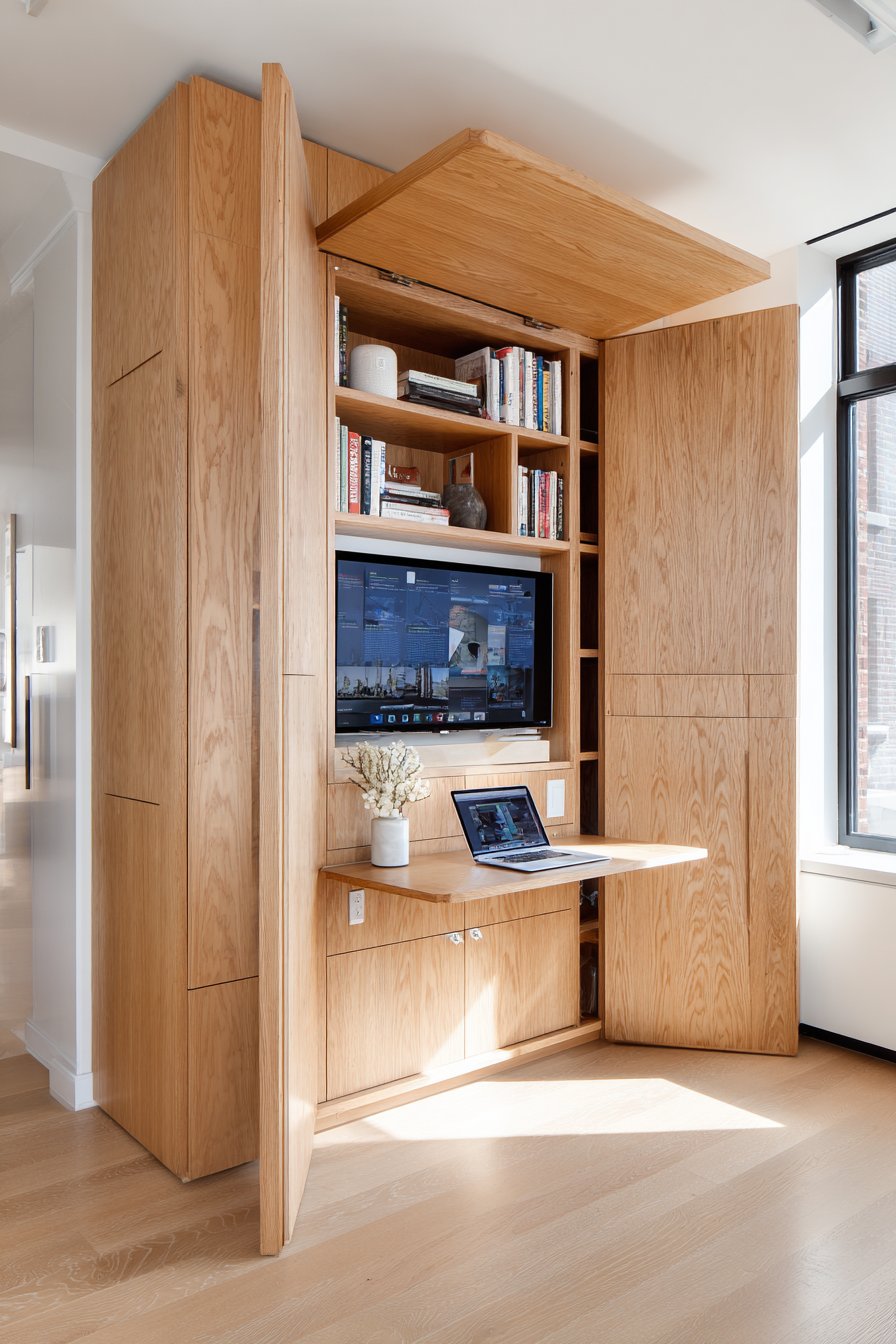
Wide-angle interior design photography demonstrates how space-saving solutions can look stylish while solving practical challenges. The fold-down desk provides a proper workspace without requiring a separate desk that would crowd the room. Storage cubbies keep small apartment essentials organized and accessible. Natural light from a nearby window supplements the LED task lighting. This proves that small space living doesn’t mean sacrificing style or function.
Key Design Tips:
- Measure space carefully before purchasing or building
- Choose light wood finishes in small spaces
- Ensure fold-down desk has sturdy hinges rated for repeated use
- Include power outlets within unit for devices
- Use vertical space fully but leave breathing room near ceiling
- Incorporate closed storage to reduce visual clutter
- Position task lighting to avoid screen glare
- Choose slim profile furniture (12-16 inches deep maximum)
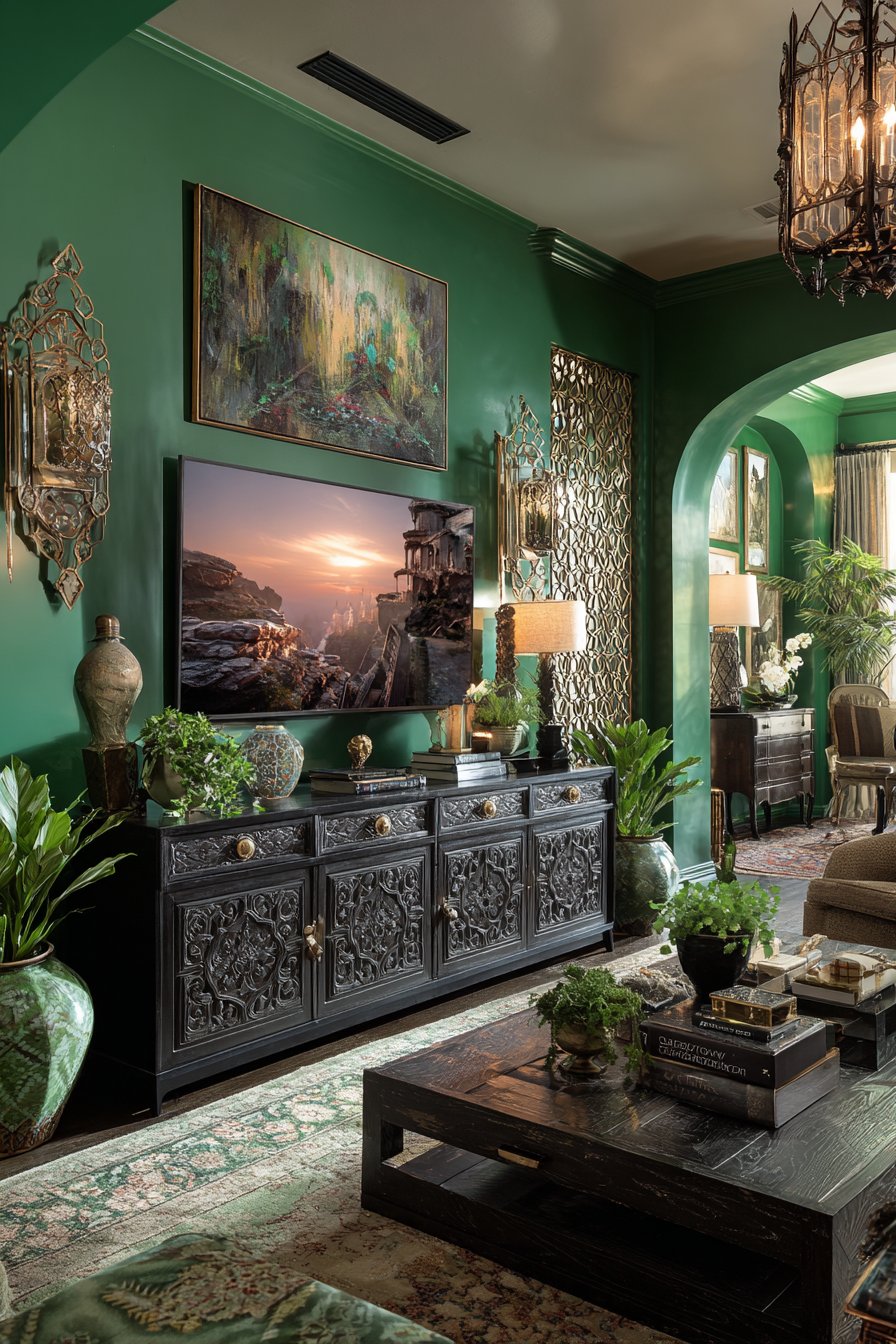
23. Bold Maximalist Emerald and Gold
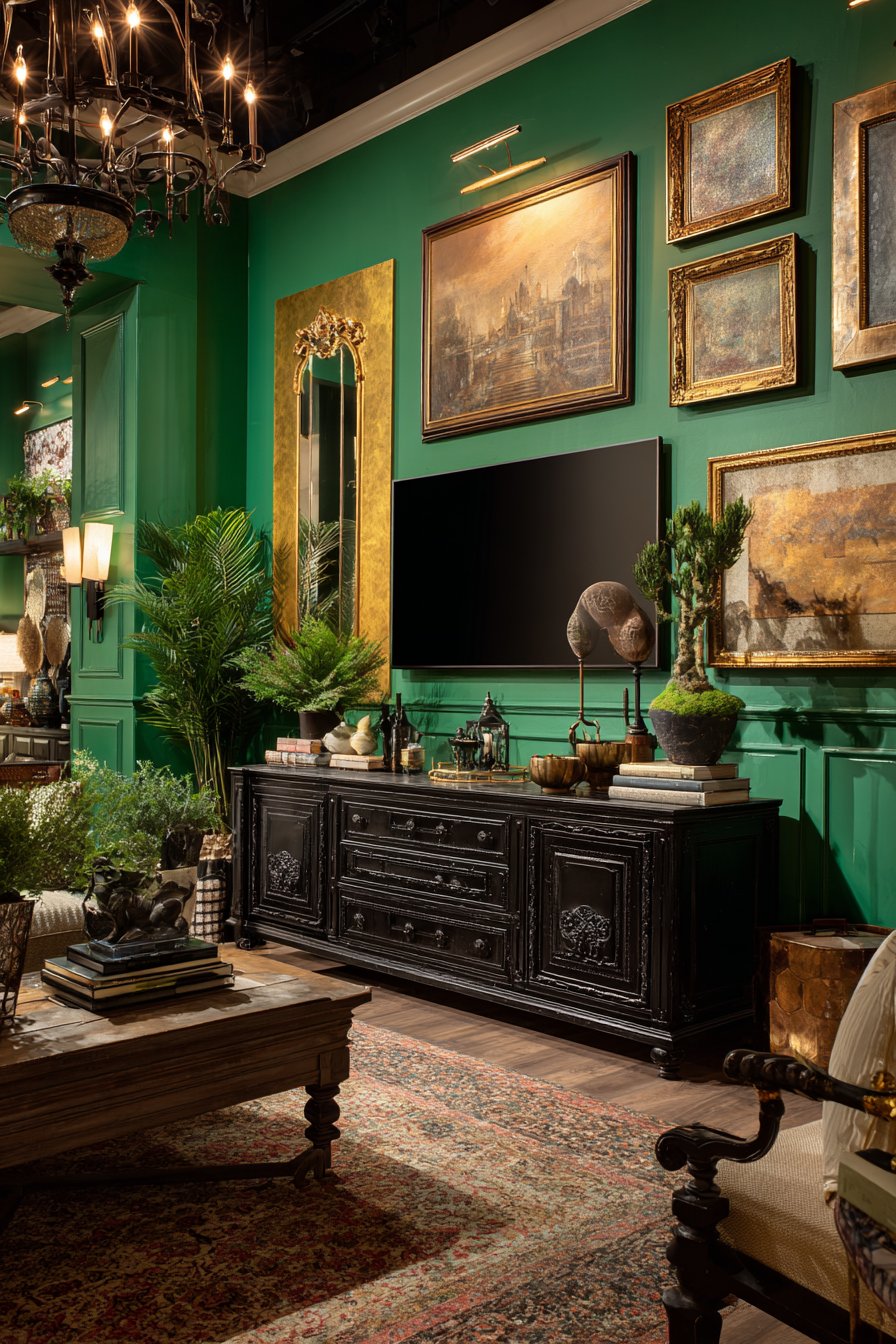
Embrace abundance with this maximalist media wall showcasing bold emerald green walls that create saturated color drama. Gold metallic wallpaper accent panels frame the television, their reflective surface catching and multiplying light while adding opulent decoration. Ornate gold-framed mirrors and eclectic art pieces surround the screen in an intentional salon-style arrangement that fills the wall with visual richness.
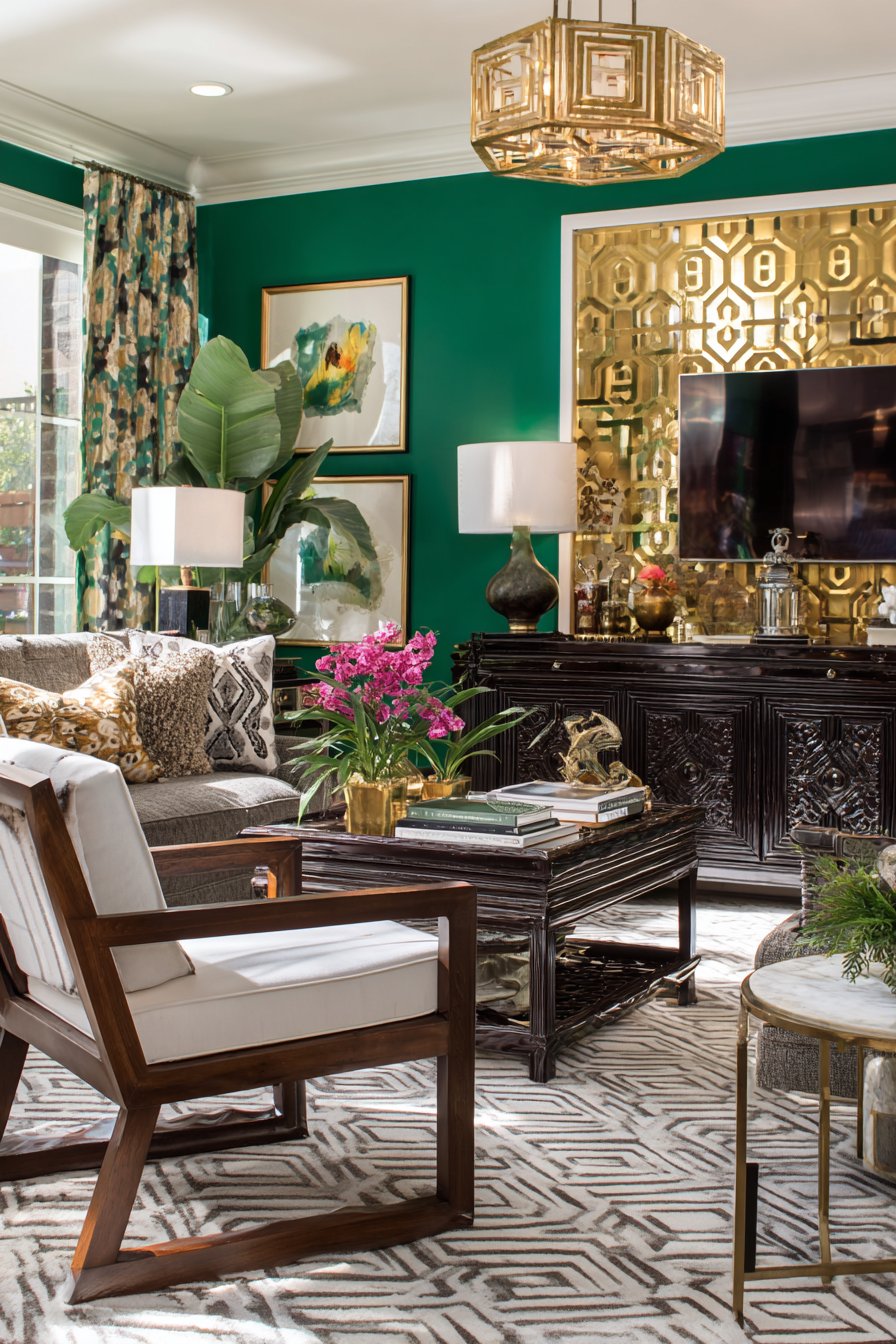
The media console features intricate carved details in dark finish with decorative brass handles that add jewelry-like detail. Multiple decorative objects, stacks of art books, and plants create abundant visual interest across every surface. This isn’t minimalism—it’s the opposite, celebrating collected treasures and layered decoration. Multiple lighting sources including a statement chandelier, decorative sconces, and accent lights create rich, adjustable ambiance.
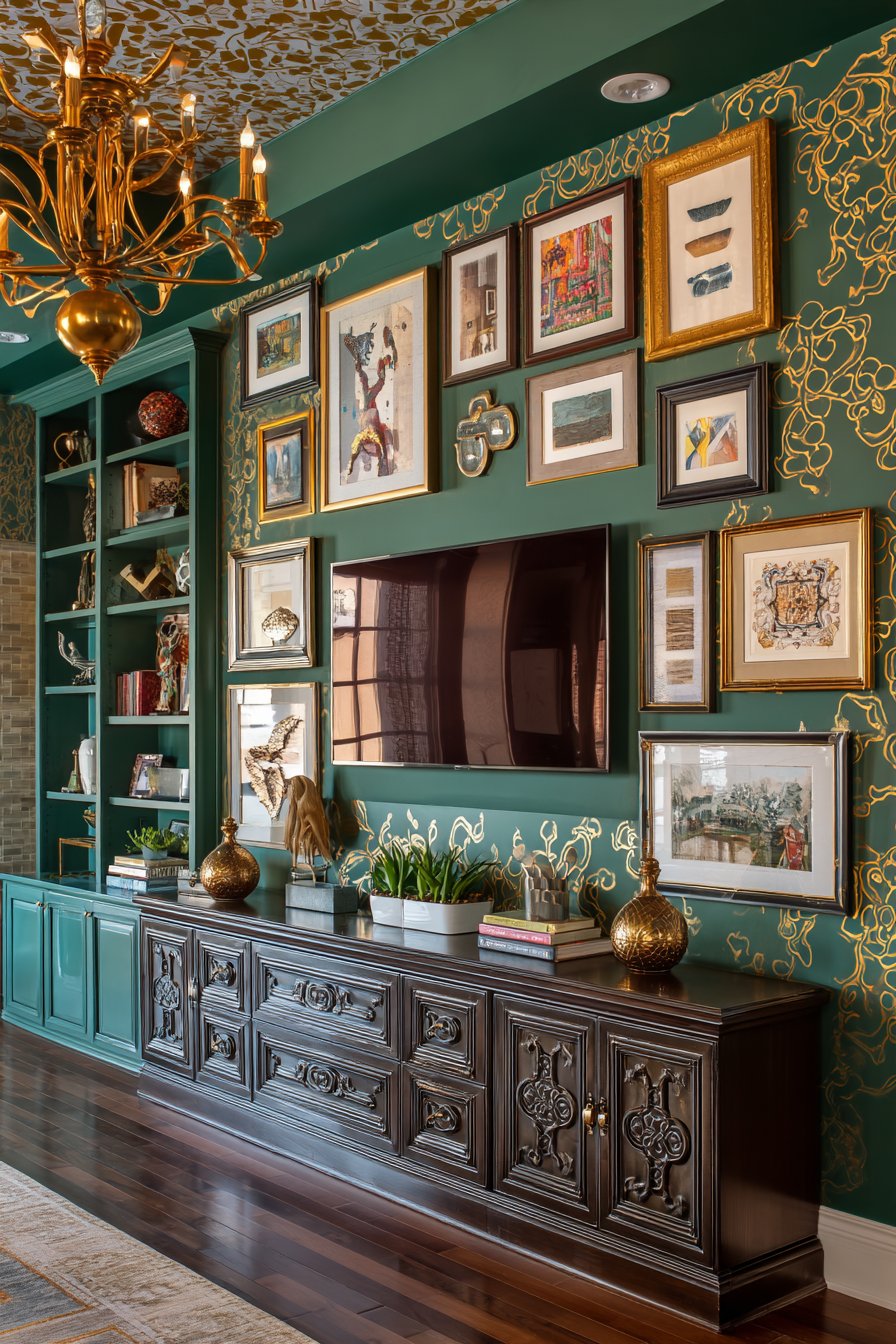
Professional interior photography capturing the bold layered aesthetic requires careful exposure management to maintain detail in both dark and light areas while accurately rendering the saturated emerald color. This approach appeals to maximalists, collectors, and those who view more as more. The result is a space that feels deeply personal, visually stimulating, and unapologetically abundant.
Key Design Tips:
- Choose one bold wall color as anchor
- Layer lighting types for flexibility
- Display collections in organized groupings
- Mix metallics (gold, brass, bronze) for richness
- Include varied textures to prevent flatness
- Use symmetry in furniture even if accessories are eclectic
- Embrace pattern mixing with confidence
- Edit occasionally to prevent true chaos
24. Sustainable Living Plant Wall
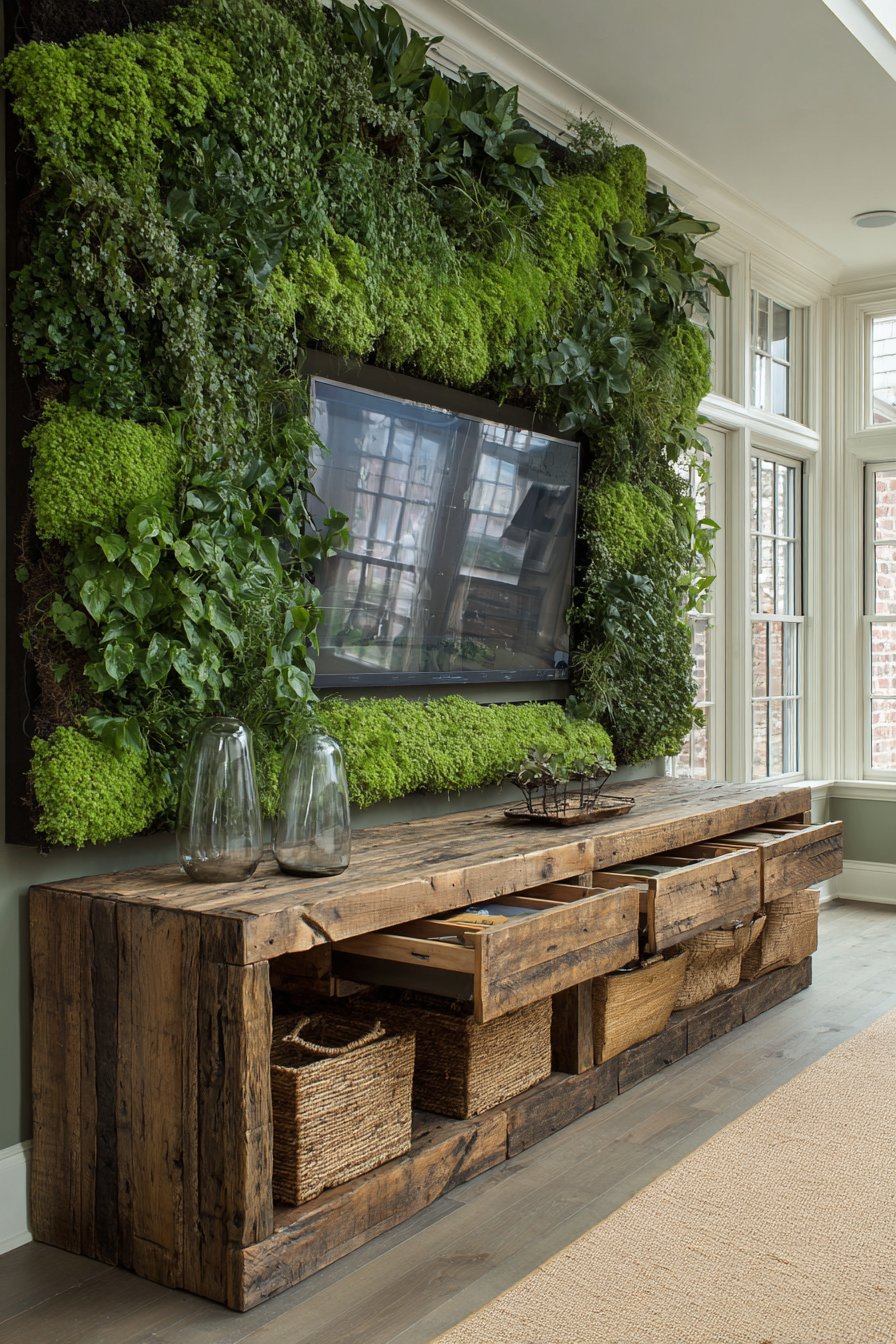
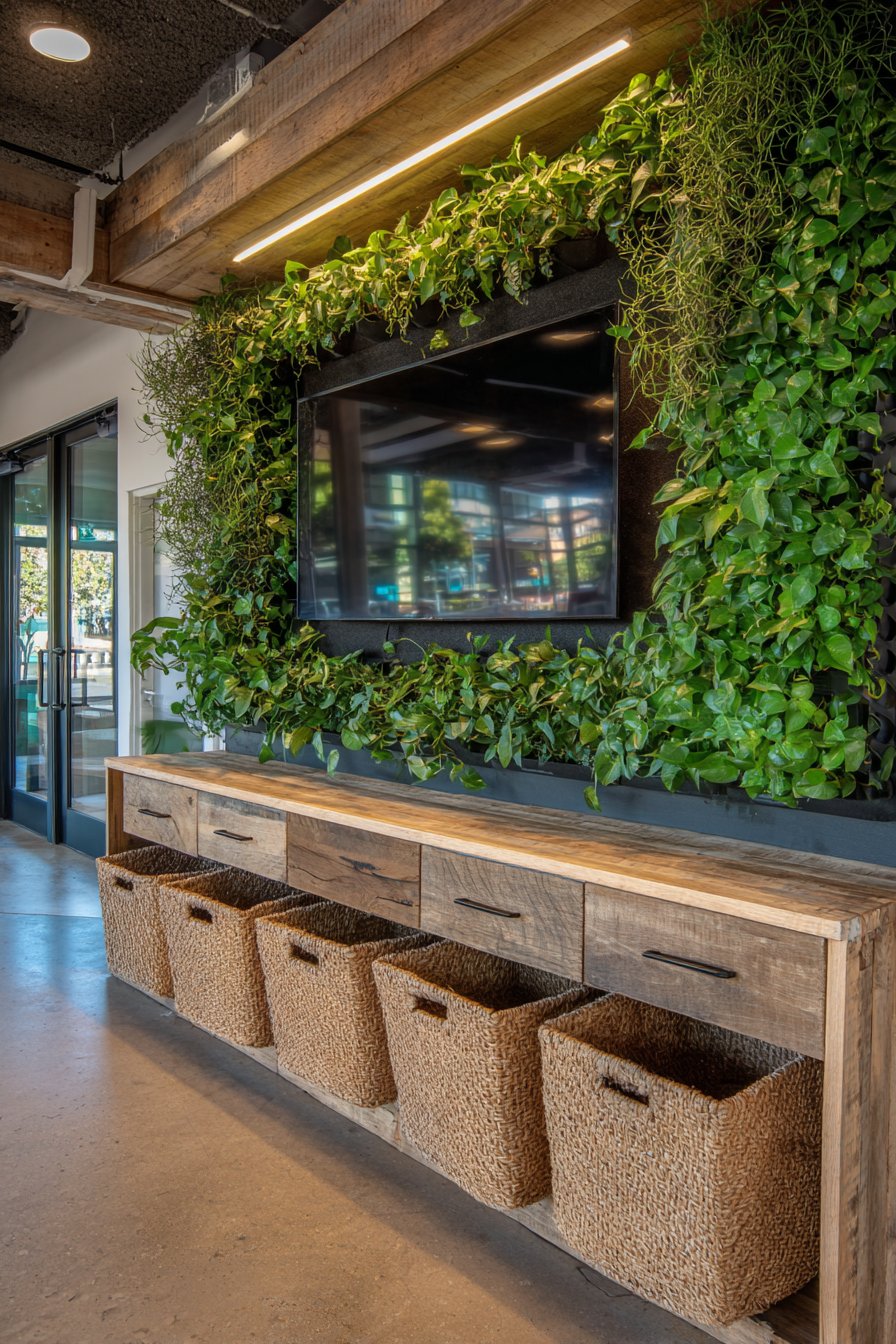
Combine entertainment with environmental consciousness in this sustainable media wall incorporating reclaimed materials and eco-friendly elements. The television mounts on a living plant wall system with integrated drip irrigation, surrounded by air-purifying plants including pothos, philodendron, and ferns that improve indoor air quality while creating a stunning green backdrop. The plants soften the technology while bringing nature indoors.
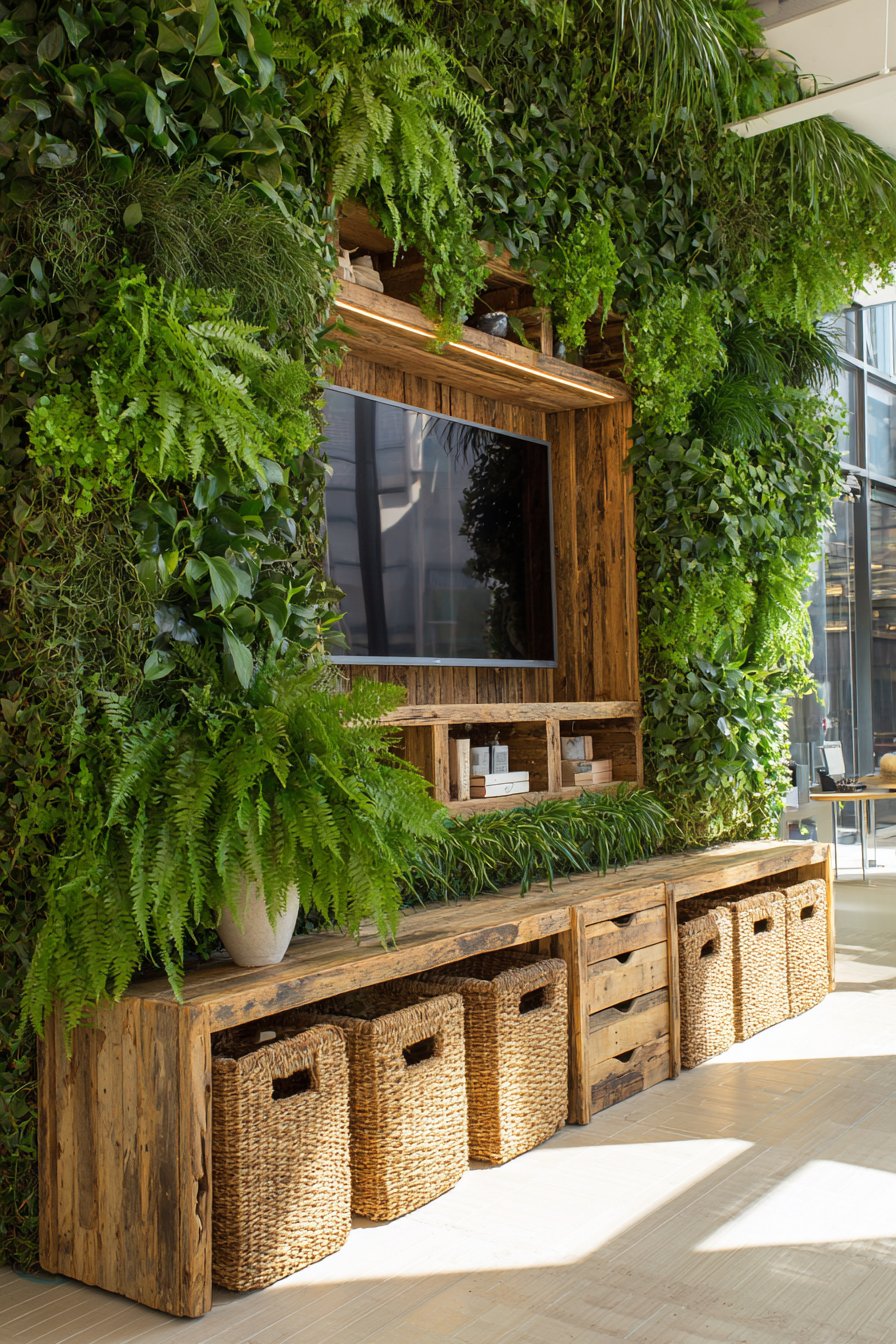
The media console features FSC-certified wood with natural oil finish rather than chemical-laden lacquers, while bamboo drawer organizers provide interior storage solutions using rapidly renewable materials. Energy-efficient LED bias lighting behind the screen reduces eye strain during viewing while consuming minimal electricity. Natural jute baskets provide storage that’s both beautiful and biodegradable.
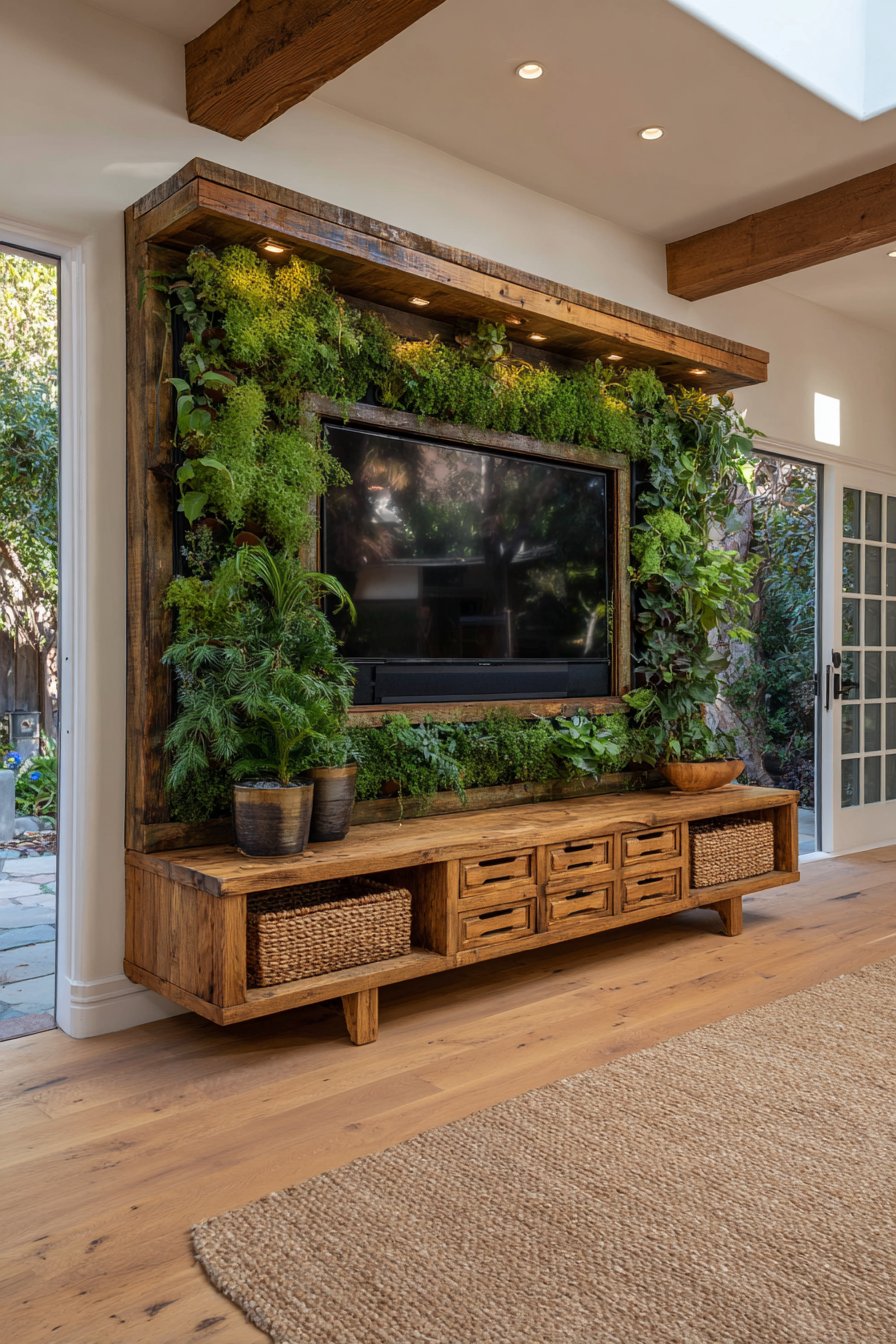
Interior design photography with natural lighting emphasizes the biophilic design approach—connecting humans with nature even in technology-focused spaces. This represents the future of conscious design where environmental impact is considered alongside aesthetics and function. The living wall requires regular maintenance but rewards with fresh oxygen production, natural humidity regulation, and unmatched organic beauty.
Key Design Tips:
- Install living wall system with proper drainage and irrigation
- Choose low-maintenance tropical plants for indoor conditions
- Use LED grow lights if natural light is insufficient
- Select furniture with environmental certifications (FSC, Greenguard)
- Avoid VOC-containing paints and finishes
- Include plants that remove common indoor air pollutants
- Use natural, renewable materials (bamboo, jute, cork)
- Compost plant trimmings rather than disposing
25. Gaming-Optimized RGB Setup
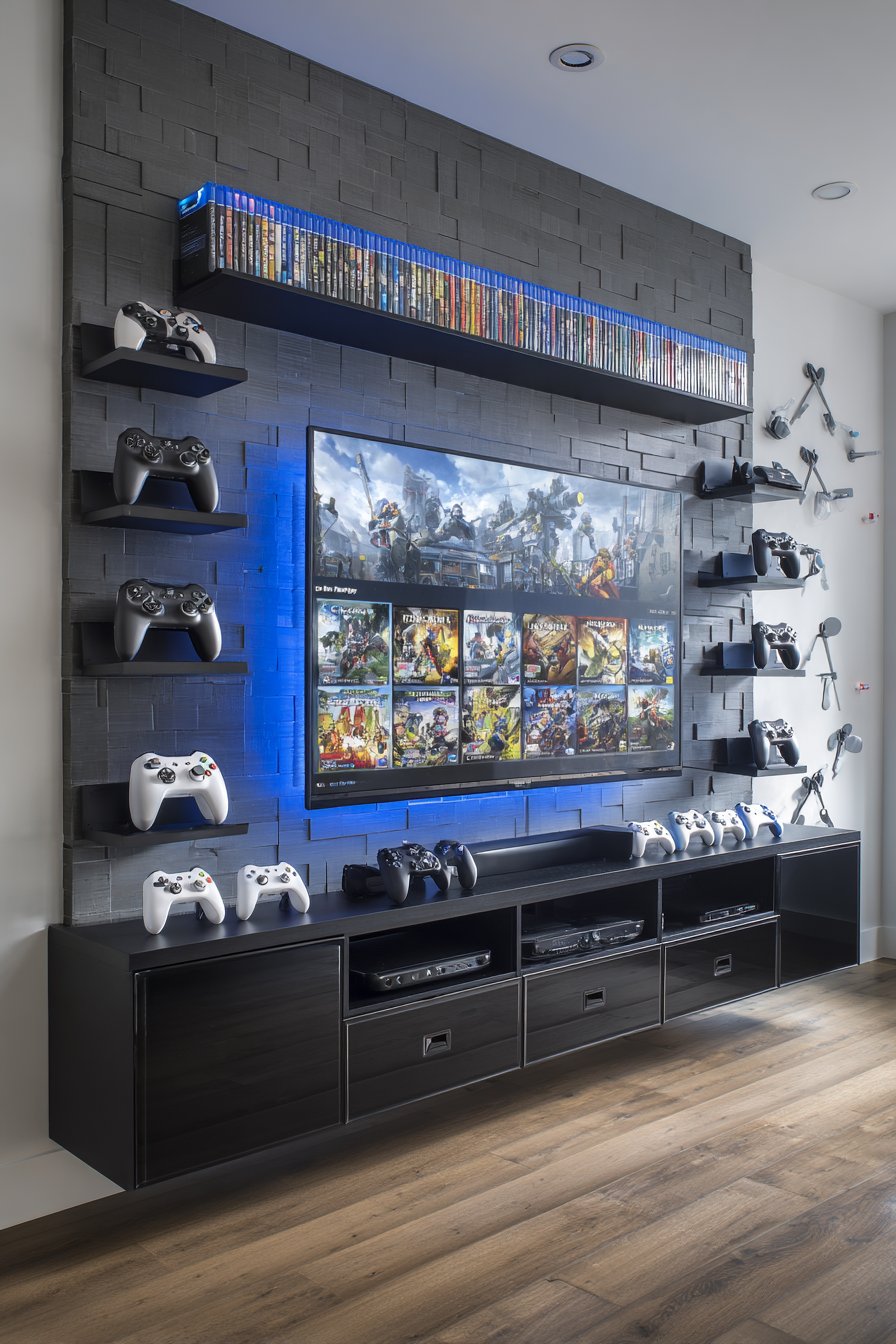
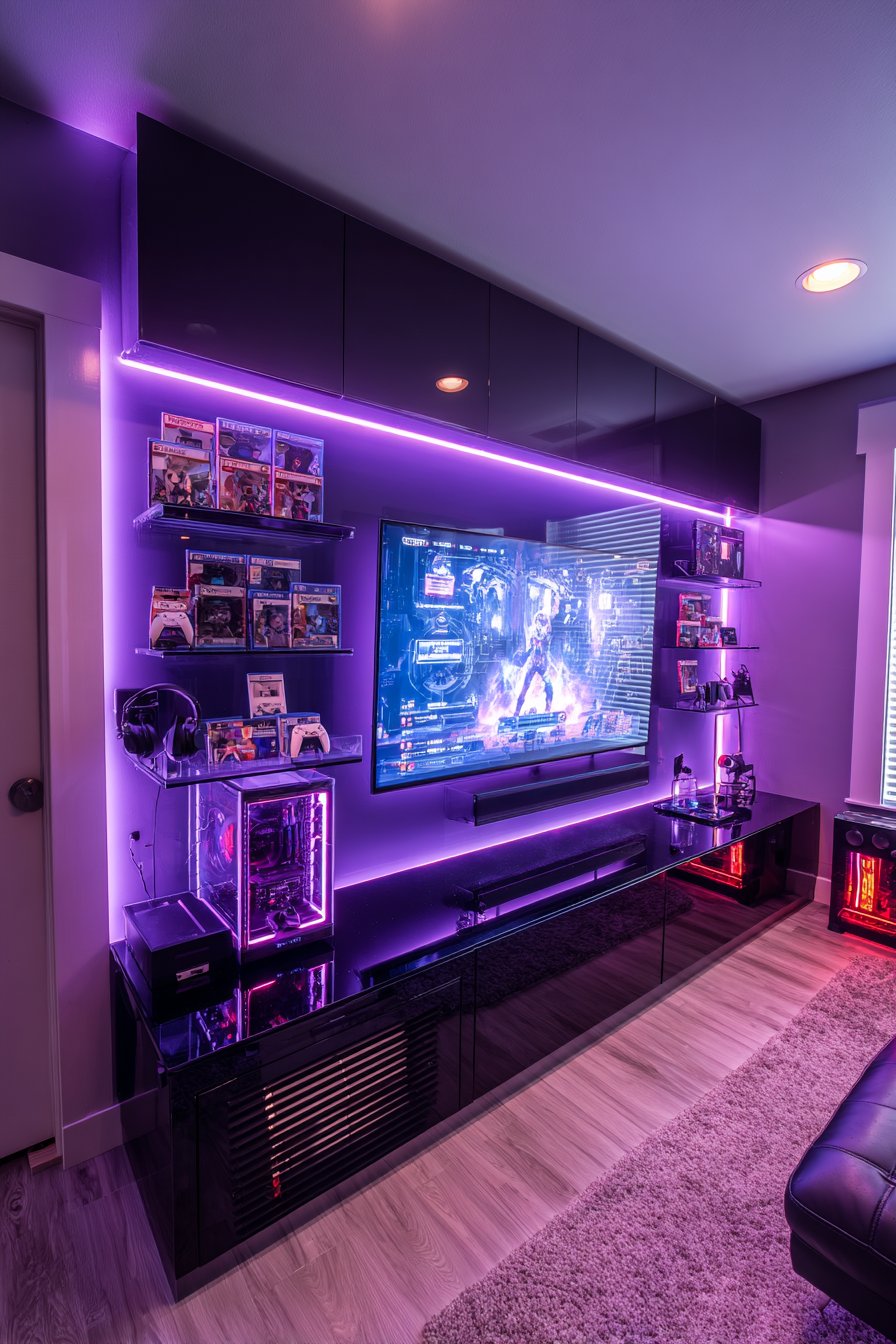
Create the ultimate gaming environment with this specialized media wall featuring RGB LED strip lighting that changes colors to match on-screen content, creating an immersive viewing experience. The lighting mounts behind the television and around floating shelves, responding dynamically to game action. The custom gaming setup includes dedicated display shelves for console collections arranged chronologically or by preference, controller charging stations that keep devices powered and organized, and headphone hangers that prevent cord tangling.
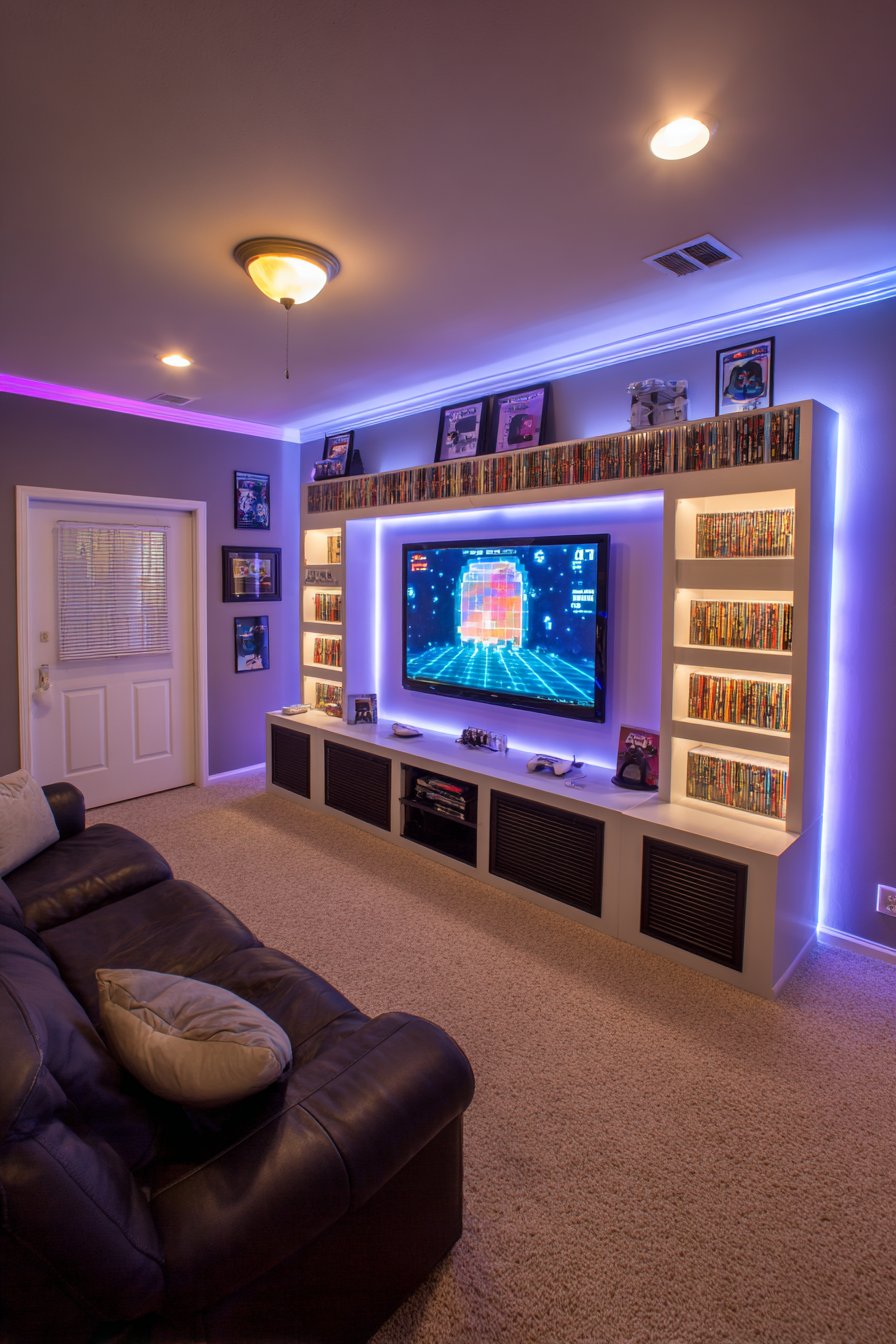
Cable management channels keep numerous gaming-related wires organized without visible chaos—essential when multiple consoles, controllers, and accessories require connectivity. A sleek black media console with ventilated compartments prevents equipment overheating during extended gaming sessions, while internal organization systems keep games and accessories accessible but neat. Professional interior photography captures the immersive lighting effects while maintaining clear view of the functional gaming organization system.
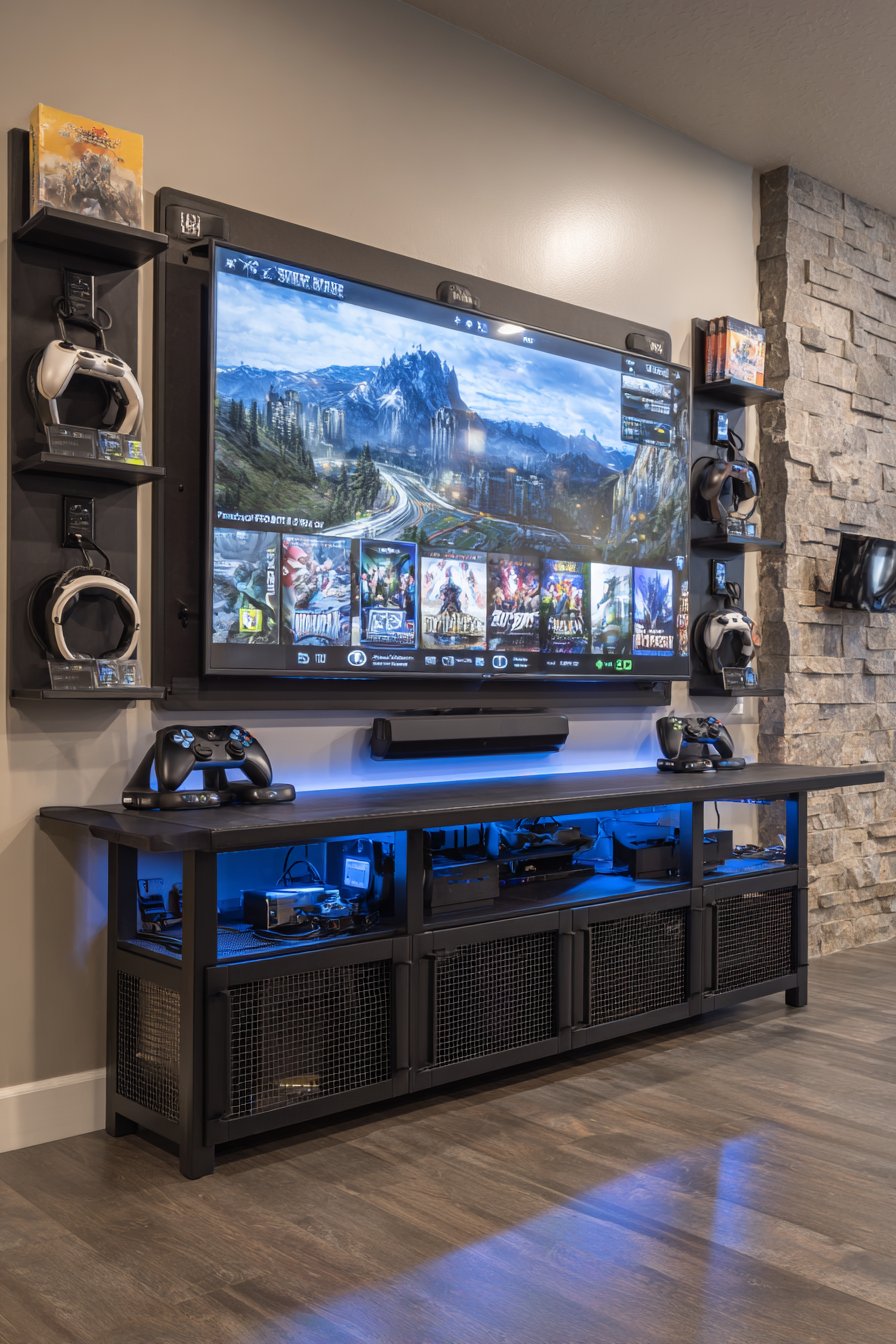
This design recognizes that gaming is a serious hobby deserving of proper setup rather than afterthought arrangement. The RGB lighting isn’t just decorative—it reduces eye strain and increases immersion. The organization systems keep expensive equipment protected and accessible. This is purpose-built design for dedicated gamers.
Key Design Tips:
- Choose RGB LED systems compatible with gaming platforms
- Include adequate ventilation for heat-generating equipment
- Organize cables with labeled channels for easy troubleshooting
- Install surge protectors rated for gaming equipment value
- Position shelves for game display without sun damage
- Include seating at proper distance and height for gaming
- Use bias lighting to reduce eye strain
- Create charging station for multiple controllers
26. Library-Integrated Wood Panel Concealment
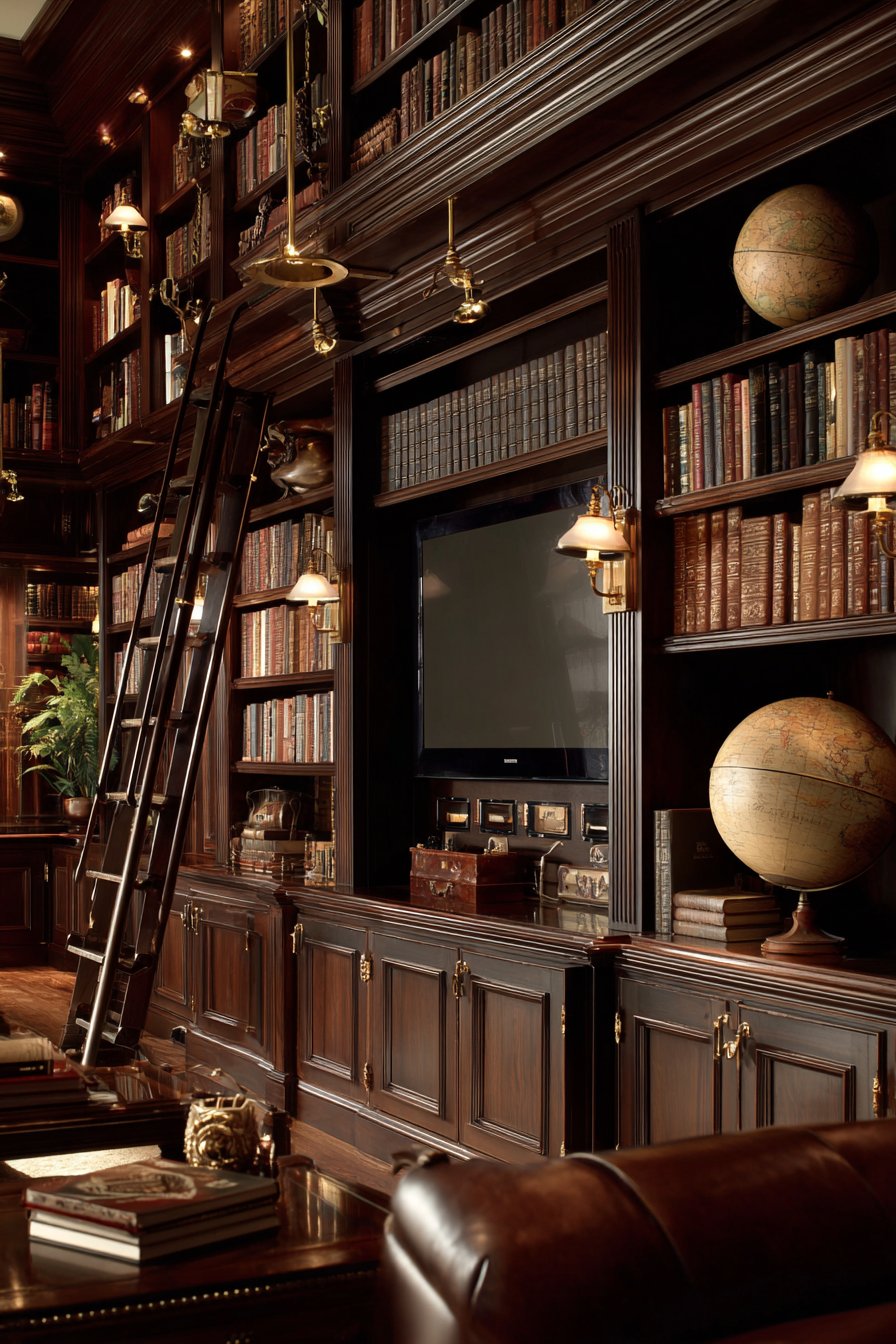
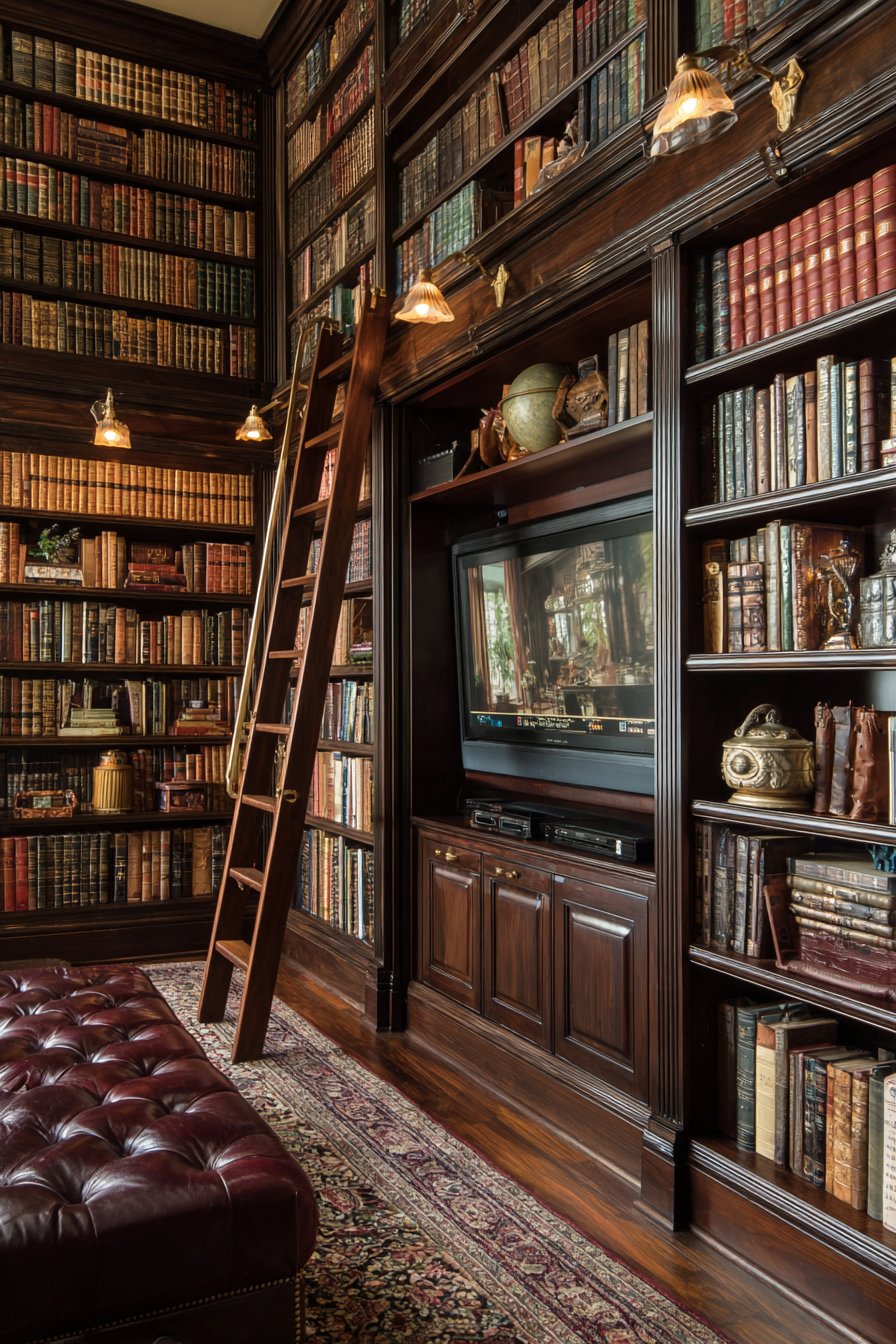
Create sophisticated media wall where floor-to-ceiling dark wood bookshelves surround the television, which discretely integrates behind retractable wood panel doors that match the surrounding bookcases. Rolling library ladder provides access to upper shelves filled with hardcover books organized by subject or aesthetically by spine color. When the television isn’t in use, the space reads as a traditional library or study rather than entertainment center.
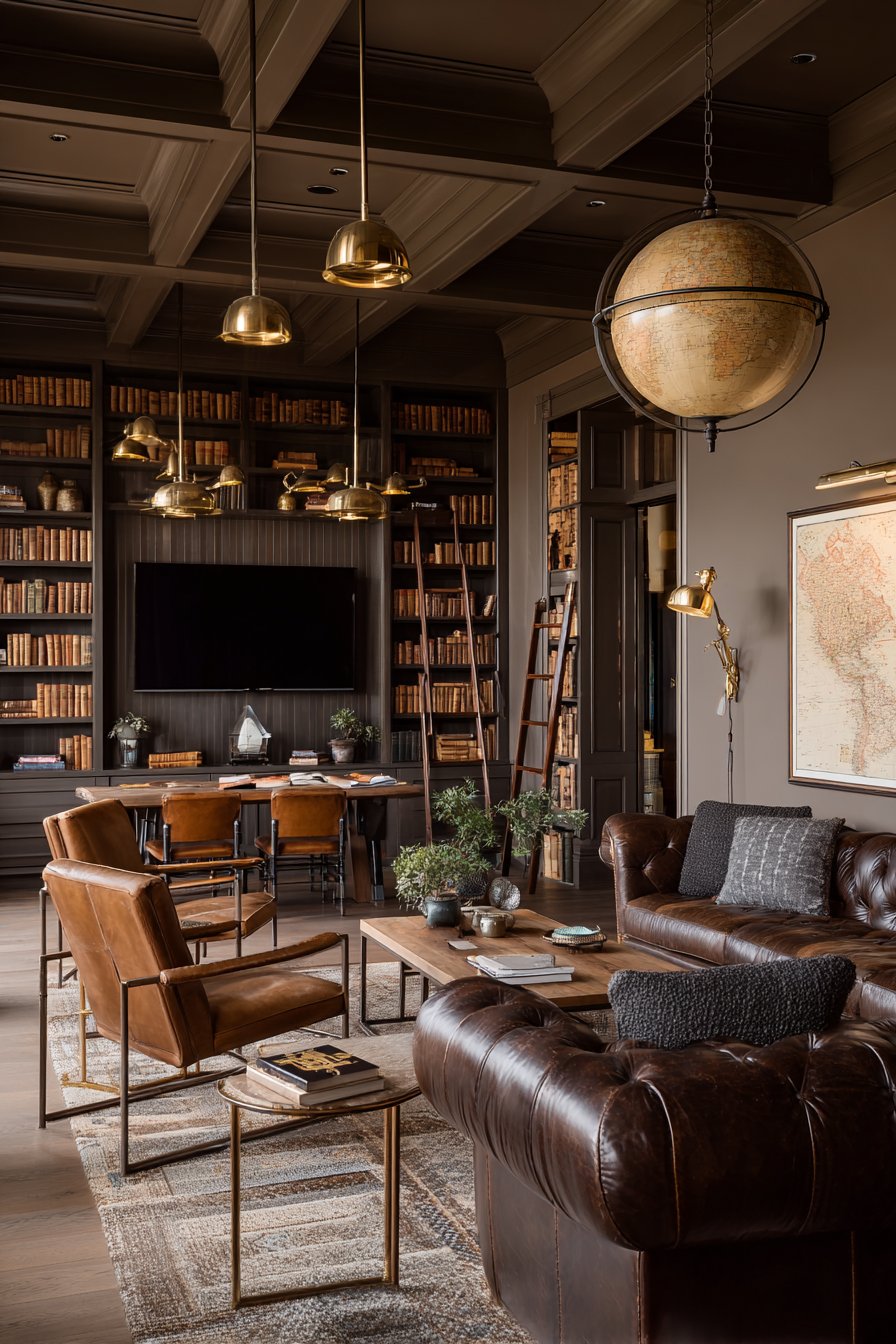
Leather-bound volumes, brass bookends, and vintage globes create scholarly atmosphere that celebrates literature and learning. Warm overhead lighting from traditional brass fixtures supplements adjustable reading lamps positioned on shelves for functional task lighting. The book collection becomes architectural feature and the television becomes optional technology rather than room-defining element.
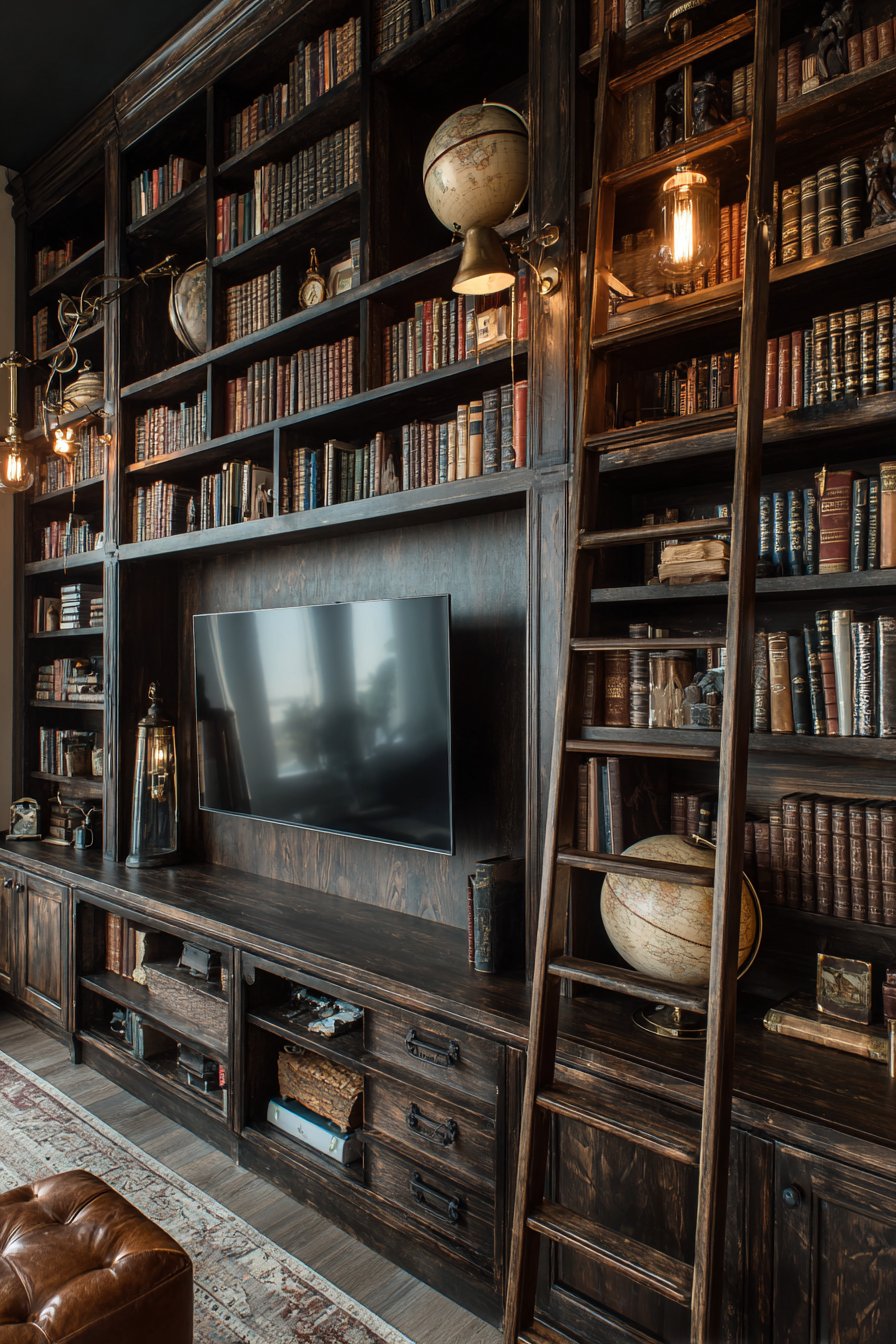
Interior design photography captures the refined study aesthetic with the television subtly incorporated into the literary setting. This approach appeals to bibliophiles and those who want technology available but not dominant in their homes. The retractable panels operate smoothly and blend seamlessly when closed, making the television virtually invisible.
Key Design Tips:
- Ensure retractable doors have smooth, reliable mechanisms
- Include library ladder with proper mounting hardware
- Organize books for visual appeal and easy access
- Use adjustable shelving to accommodate varying book heights
- Include closed storage for less attractive media components
- Install adequate lighting for reading function
- Choose substantial wood species (oak, mahogany, walnut)
- Leave some shelves partially empty to prevent overwhelm
27. Flexible Modular Cube Configuration
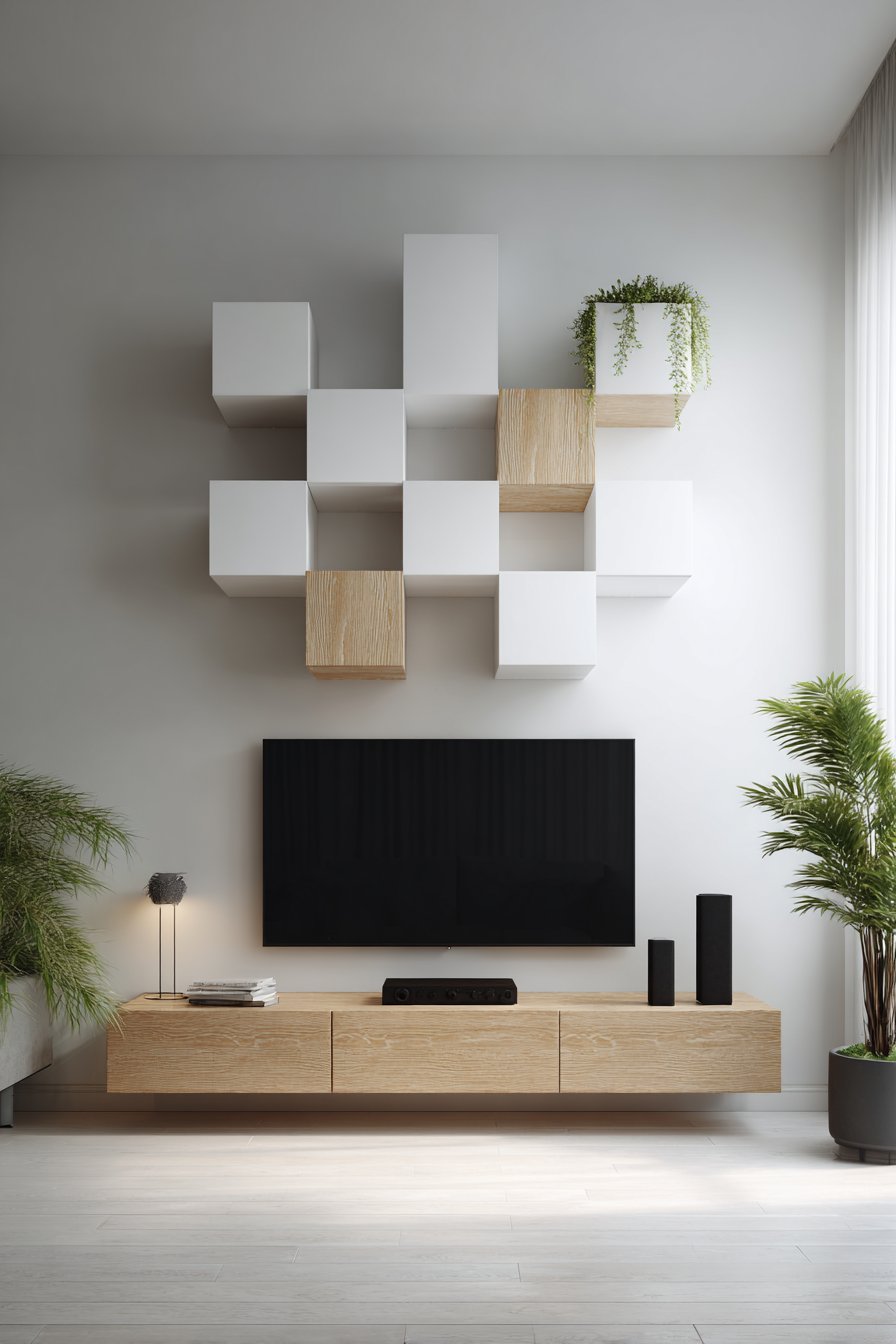
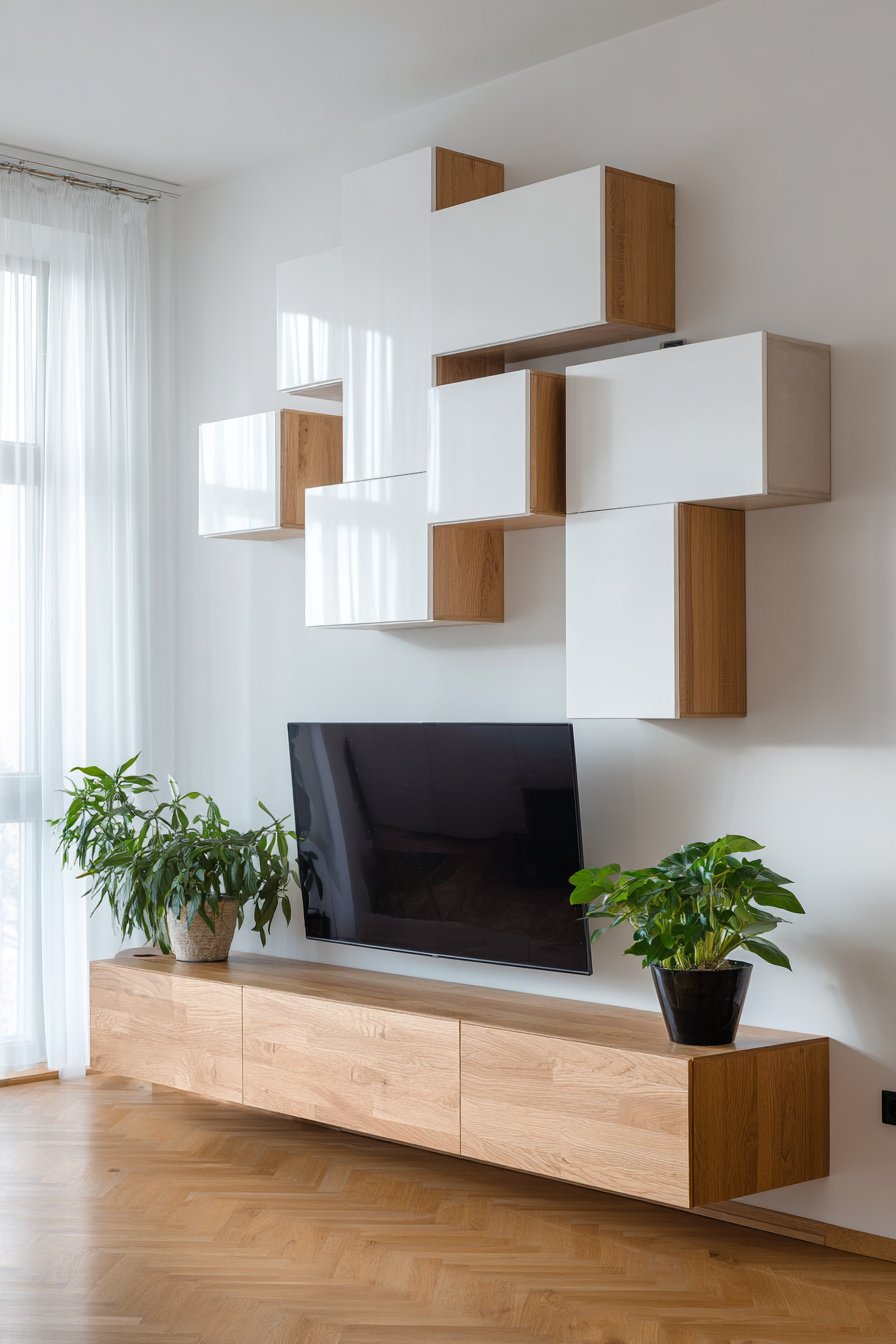
Embrace adaptability with this flexible modular media wall using customizable cube storage systems that rearrange based on changing needs. Individual units in matte white and natural oak finish stack and configure differently as life evolves—perfect for renters, growing families, or anyone who values flexibility. Some cubes contain doors for concealed storage, some remain open for display, and some fit with media equipment.
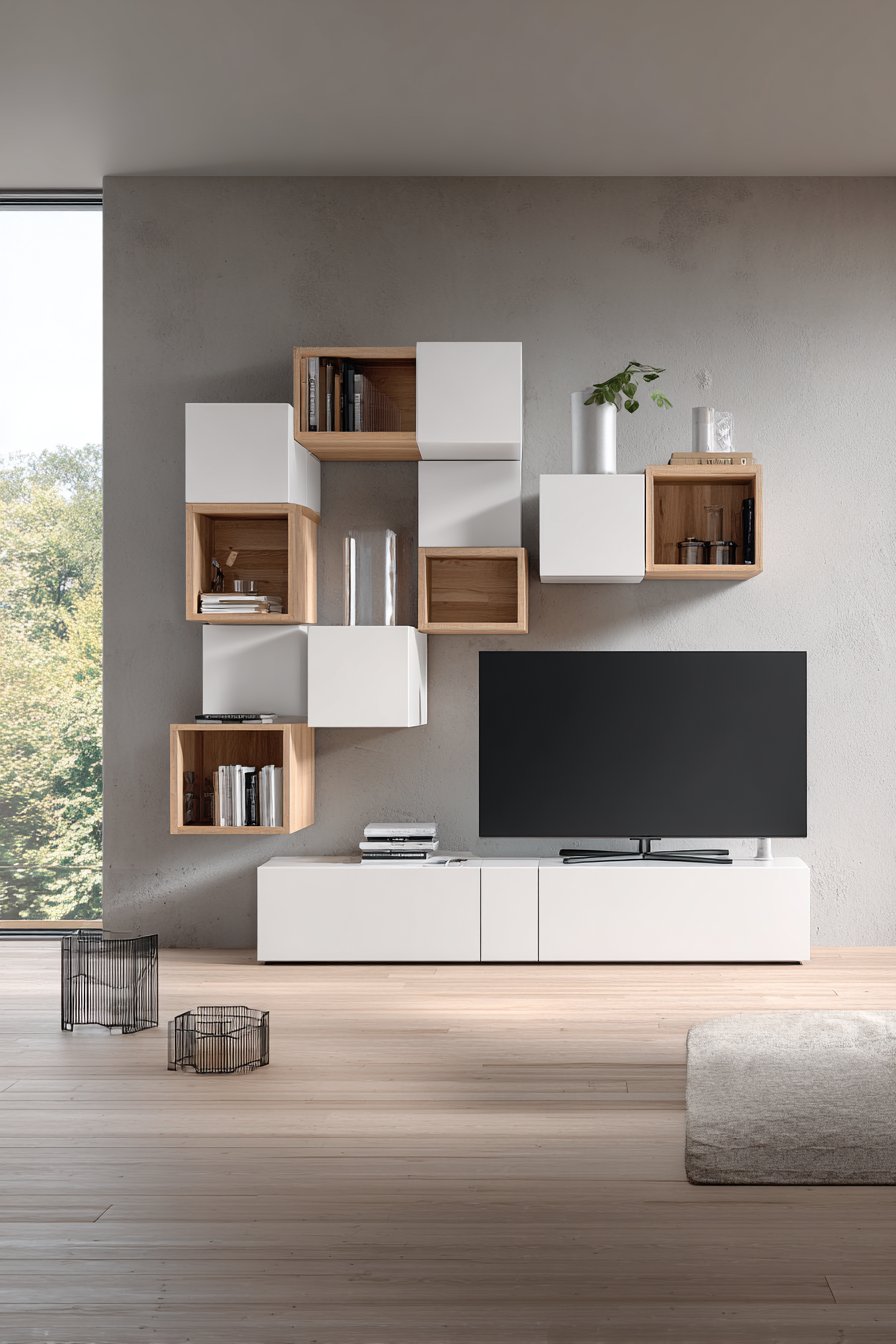
The television mounts to the wall with the modular units arranged around it in an asymmetric contemporary pattern that can be reconfigured when needs change. Perhaps you need more closed storage now but anticipate needing display space later—the modular system adapts. Adding, subtracting, or rearranging units takes minutes rather than requiring renovation. This versatile solution works across various life stages and housing situations.
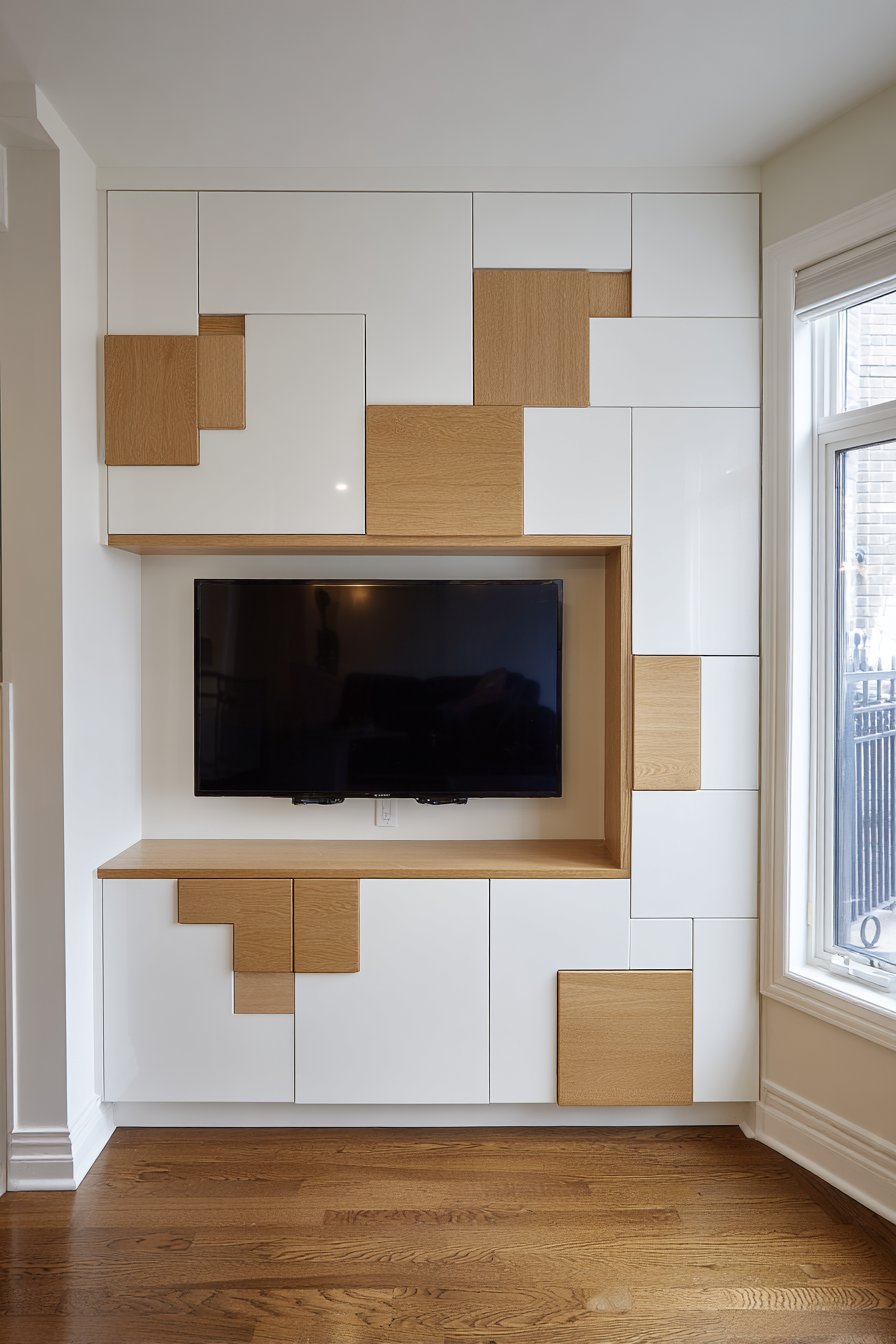
Wide-angle interior photography shows multiple arrangement possibilities, demonstrating how the same components create different configurations. The two-tone color scheme prevents the cubes from feeling too uniform while maintaining visual cohesion. Balanced natural room lighting ensures the flexibility doesn’t sacrifice style—this looks intentional and designed rather than temporary or makeshift.
Key Design Tips:
- Choose quality modular system with durable construction
- Anchor tall configurations to wall for safety
- Mix open and closed units for visual interest
- Maintain color story even when rearranging
- Plan configurations on graph paper before purchasing
- Include adequate closed storage for practical needs
- Use cable channels that accommodate reconfiguration
- Invest in quality that will last through multiple arrangements
Why These Media Wall Ideas Represent the Best in Contemporary Home Design
These twenty-seven media wall concepts represent the breadth and sophistication of contemporary interior design, demonstrating that entertainment centers can be so much more than utilitarian furniture. From the serene simplicity of Scandinavian minimalism to the bold drama of art deco glamour, from budget-conscious DIY solutions to luxurious marble installations, these designs prove that there’s a perfect media wall solution for every style preference, budget level, and spatial constraint.
The best media wall designs share several critical characteristics regardless of aesthetic style. First, they integrate technology seamlessly rather than making electronics the dominant visual element. Whether through concealment systems like sliding barn doors and retractable panels, or through design harmony where the television becomes part of a larger composition, successful media walls balance function with beauty. Second, they provide adequate storage—both open display space for decorative items and closed compartments for less attractive components like cables, remotes, and media players. Third, they incorporate thoughtful lighting design that serves both functional needs and aesthetic goals, from LED bias lighting that reduces eye strain to accent lights that highlight displayed objects.
Material selection plays a crucial role in media wall success. Natural wood brings warmth and organic texture that prevents technology-focused spaces from feeling cold or sterile. The reclaimed barn wood design and Japanese bamboo console demonstrate how authentic materials add character and depth. Metal elements—whether industrial pipe shelving, brass art deco accents, or sleek matte black frameworks—introduce different visual weights and surface qualities. Stone and marble provide luxury and permanence, while painted surfaces offer color flexibility and clean backgrounds. The most successful designs often combine multiple materials thoughtfully, like the natural oak and matte black geometric cube system or the walnut and metal room divider.
Color strategy significantly impacts media wall effectiveness. Neutral palettes create versatile backdrops that allow displayed items and the television content itself to become the color story, as seen in the Scandinavian white design and minimalist grey acoustic panel approach. Bold color choices like the maximalist emerald green or soft sage built-ins make the media wall itself an architectural statement that defines room character. The high-contrast black and white contemporary design demonstrates how color can create drama and visual impact without requiring expensive materials or complex construction.
Smart storage solutions differentiate exceptional media walls from merely adequate ones. The small apartment multipurpose unit shows how vertical space and fold-down features maximize limited square footage. The traditional cherry built-ins demonstrate how combination of open shelving and closed cabinetry accommodates both display and concealment needs. The gaming-optimized design proves that specialized storage for hobby-specific equipment elevates functionality. Even budget-conscious solutions can incorporate clever organization through simple floating shelves and basket storage.
Spatial flexibility represents an increasingly important consideration in media wall design. The modular cube system acknowledges that life circumstances change and furniture should adapt accordingly—perfect for renters, growing families, or anyone who resists permanent commitments. The double-sided room divider demonstrates how media walls can serve multiple spaces and functions simultaneously, maximizing value in open-concept layouts. The corner-mounted solution proves that challenging architectural features can inspire creative problem-solving rather than representing limitations.
Technology integration extends beyond simply mounting a television. The smart home design with motorized panels, touch controls, and voice activation represents the cutting edge of home automation where technology serves human needs without visual intrusion. The gaming setup with RGB lighting and specialized equipment storage acknowledges that modern entertainment encompasses much more than passive television viewing. The sustainable design with living plant walls and eco-friendly materials demonstrates how environmental consciousness can coexist with technology.
Style authenticity matters more than trend-chasing. The mid-century modern design succeeds because it commits fully to period-appropriate materials, forms, and colors rather than cherry-picking superficial elements. The industrial loft celebrates genuine exposed brick and welded steel rather than manufactured distressing. The bohemian design layers authentic global textiles and handcrafted elements rather than mass-produced “boho” accessories. The farmhouse sliding barn door uses real shiplap and functional hardware rather than plastic imitations. Authentic materials and genuine style commitment create spaces with lasting appeal beyond momentary trends.
Lighting design deserves special attention in media wall planning. Natural light considerations determine placement and screen protection strategies. Ambient lighting from chandeliers, sconces, and table lamps creates overall room illumination. Task lighting serves specific functions like reading shelves or working at integrated desks. Accent lighting highlights displayed objects and architectural features. Bias lighting behind televisions reduces eye strain and creates floating effects. The most successful media walls incorporate multiple lighting types with dimmer controls for complete flexibility.
Personal expression transforms generic storage into meaningful home design. The eclectic mixed-material approach celebrates collections and travel memories. The library-integrated design honors book collections and literary appreciation. The bohemian plant-filled design reflects connection with nature and global cultures. The art deco geometric mirrors demonstrate appreciation for specific historical periods. The coastal driftwood console evokes beach memories and vacation serenity. The best media walls tell personal stories through material choices, displayed objects, and overall aesthetic direction.
Budget consciousness doesn’t require sacrificing style. The DIY floating shelf design proves that beautiful spaces can emerge from affordable materials and personal labor. Thrifted accessories, propagated plants, and framed personal photos cost little but create authentic personality. Peel-and-stick products enable temporary transformations perfect for rental properties. Strategic investment in structural elements like television mounts and sturdy shelving, while economizing on decorative accessories, creates a balanced approach accessible to varied budgets.
Professional execution matters for complex installations. Custom built-ins require precise measurements and skilled carpentry. Motorized systems need professional electrical integration and programming. Living plant walls demand irrigation systems and horticultural knowledge. Marble installations require specialized stone cutting and mounting. While DIY approaches work beautifully for floating shelves and simple arrangements, knowing when to hire professionals prevents expensive mistakes and ensures safe, lasting results.
Maintenance considerations impact long-term satisfaction. High-gloss black surfaces show fingerprints and require regular cleaning. Living plant walls need consistent watering and pruning. Open shelving collects dust and requires frequent attention. Sustainable designs may need specialized care for natural materials. Smart home systems require software updates and occasional troubleshooting. Understanding maintenance requirements before committing to specific designs prevents future frustration.
Scale appropriateness ensures media walls enhance rather than overwhelm spaces. The small apartment corner solution acknowledges spatial constraints while maintaining function and style. The luxury marble installation suits large rooms with high ceilings where substantial elements feel appropriate. The low Japanese console reflects cultural proportions and human-scale furniture traditions. The vertical modular system maximizes height in rooms where width is limited. Properly scaled media walls feel intentional rather than forced.
These designs collectively demonstrate that media wall planning deserves the same thoughtful attention as kitchen renovations or bedroom redesigns. These aren’t afterthoughts or purely functional necessities—they’re opportunities to create beautiful, personalized spaces that reflect individual style while serving practical entertainment needs. Whether you’re drawn to minimalist simplicity or maximalist abundance, traditional elegance or contemporary edge, there’s a media wall approach that will transform your space and elevate your daily living experience.
Conclusion
The evolution of media wall design from simple TV stands to sophisticated entertainment centers reflects our changing relationship with technology and home spaces. These twenty-seven concepts demonstrate that successful media walls balance aesthetic beauty with practical function, integrate technology thoughtfully rather than making it visually dominant, and provide flexible solutions for diverse lifestyles and budgets. Whether you’re working with a compact apartment corner or a spacious great room wall, embracing minimalist principles or maximalist abundance, these ideas offer inspiration and practical guidance.
The key to creating your ideal media wall lies in honest assessment of your needs, preferences, and constraints. Consider how you actually use your entertainment space—do you need gaming equipment storage or traditional book display? Does your family require abundant closed storage or do you prefer open shelving? Would motorized concealment serve your lifestyle or would you prefer your television visible? Is your priority budget-consciousness, environmental sustainability, or luxury materials? Answering these questions honestly guides you toward solutions that will genuinely enhance your daily life.
Remember that media wall design isn’t static—the modular and flexible approaches demonstrate how installations can evolve with changing needs. Start with foundational elements like proper television mounting and adequate cable management, then build gradually as budget allows and vision clarifies. Whether you tackle projects yourself or engage professionals, whether you invest substantially or economize creatively, the goal remains creating a space that serves your needs while reflecting your personal style. Let these ideas inspire you to transform your entertainment wall into a beautiful, functional focal point that enhances your home for years to come.


